Article

Influence of Fillers and Ionic Liquids on the Crosslinking and Performance of Natural Rubber Biocomposites


by
Magdalena Maciejewska
* and
Anna Sowińska
*
Institute of Polymer and Dye Technology, Lodz University of Technology, Stefanowskiego Street 12/16, 90-924 Lodz, Poland
*
Authors to whom correspondence should be addressed.
Polymers 2021, 13(10), 1656; https://doi.org/10.3390/polym13101656
Submission received: 22 April 2021 / Revised: 14 May 2021 / Accepted: 17 May 2021 / Published: 19 May 2021
(This article belongs to the Special Issue Natural Additives as Modificators of Polymer Biocomposites)

Abstract

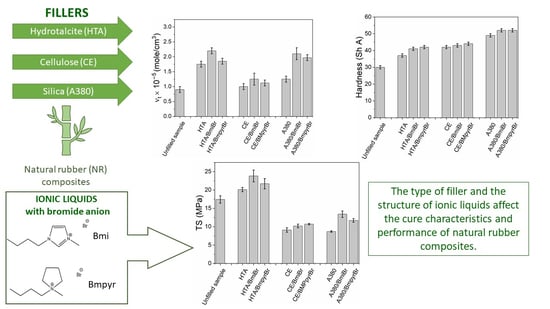
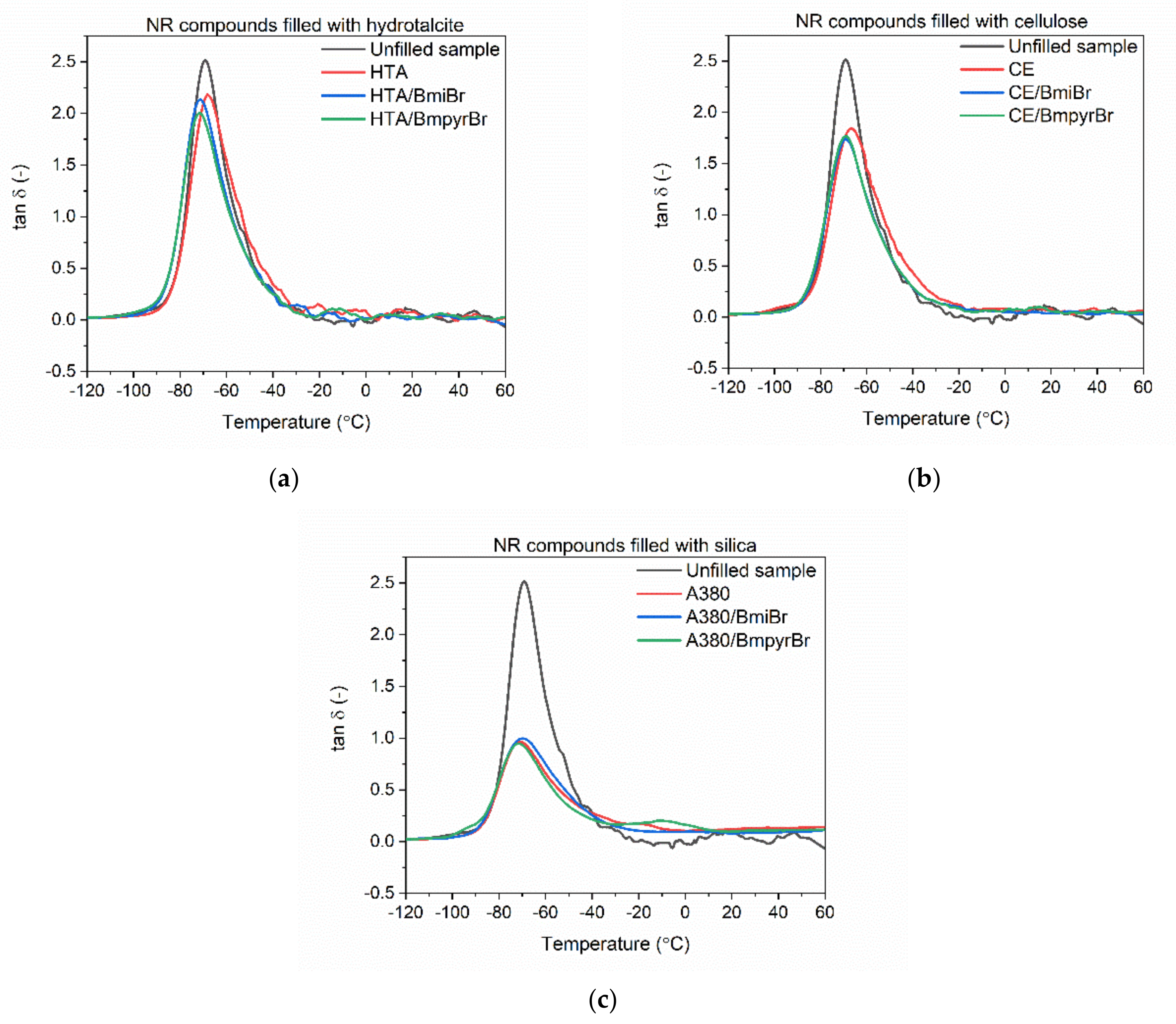
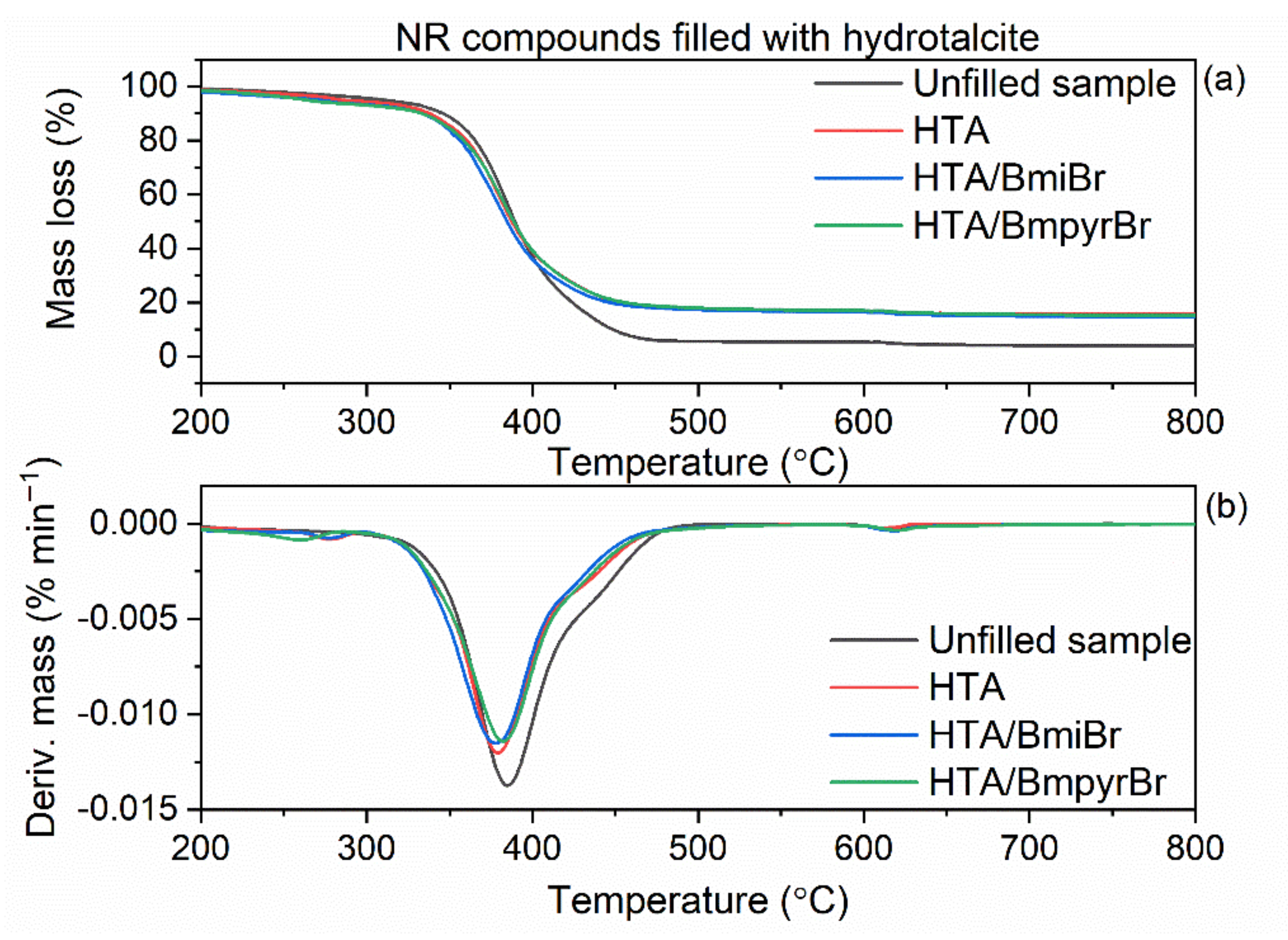
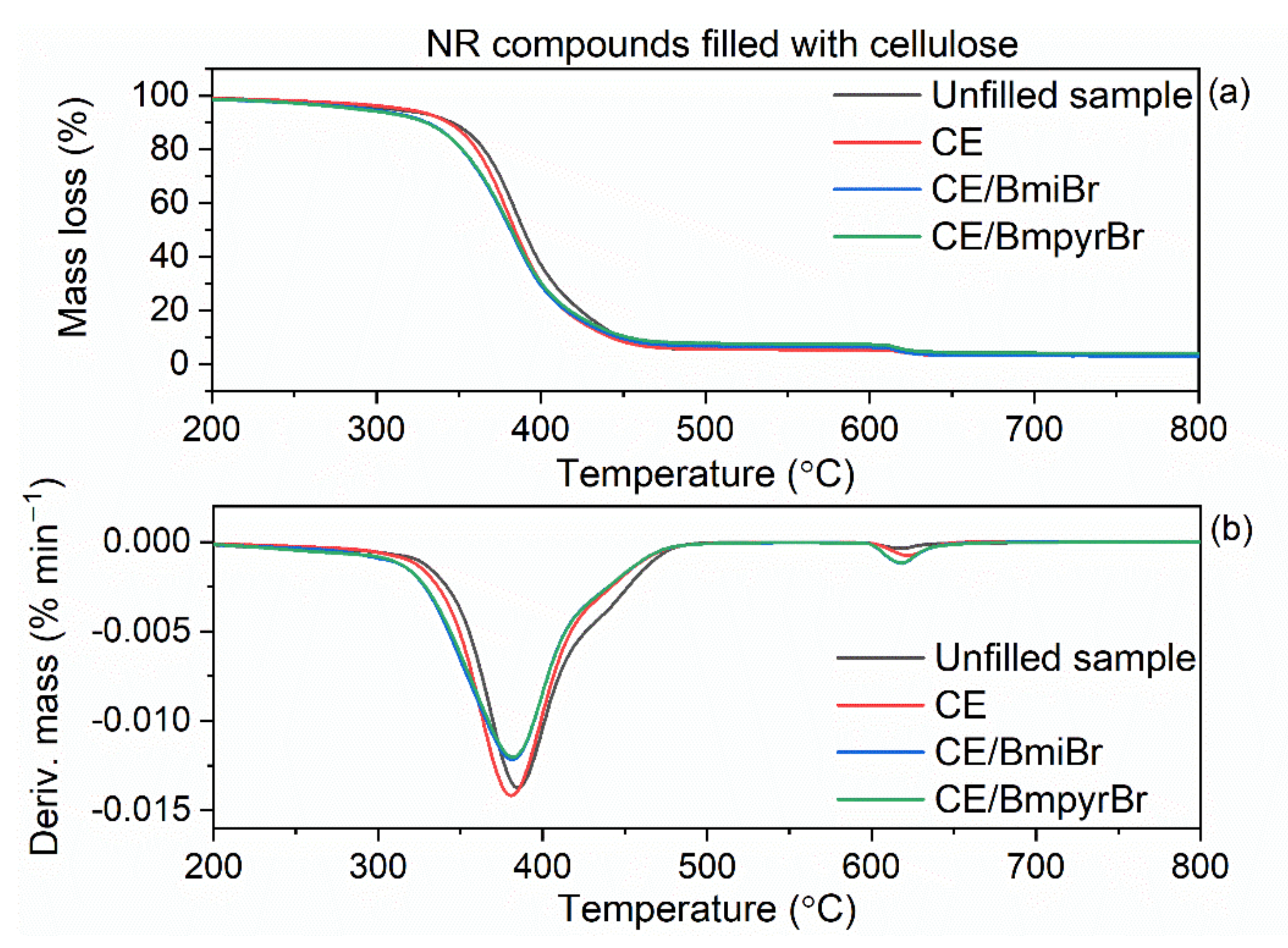
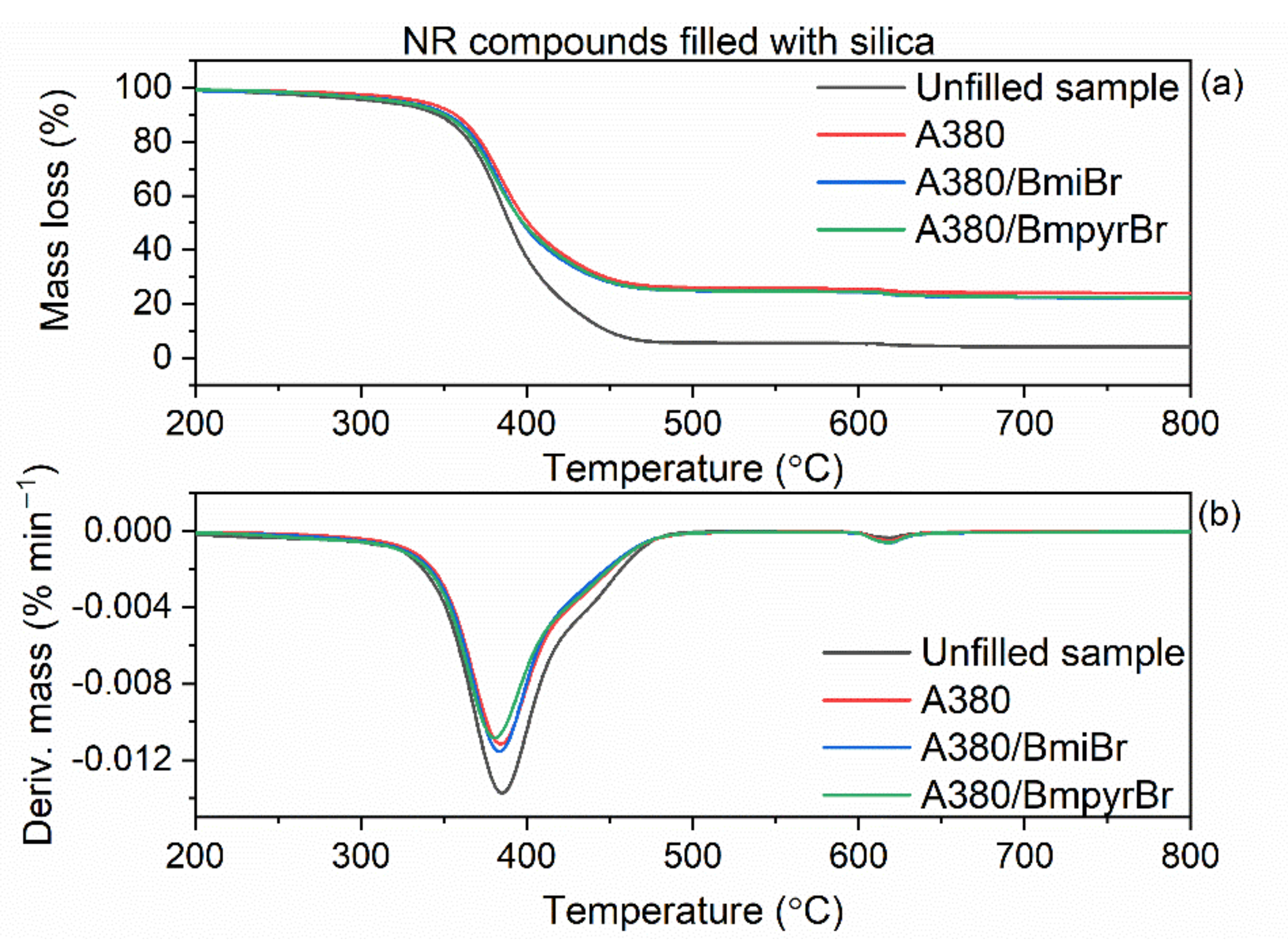
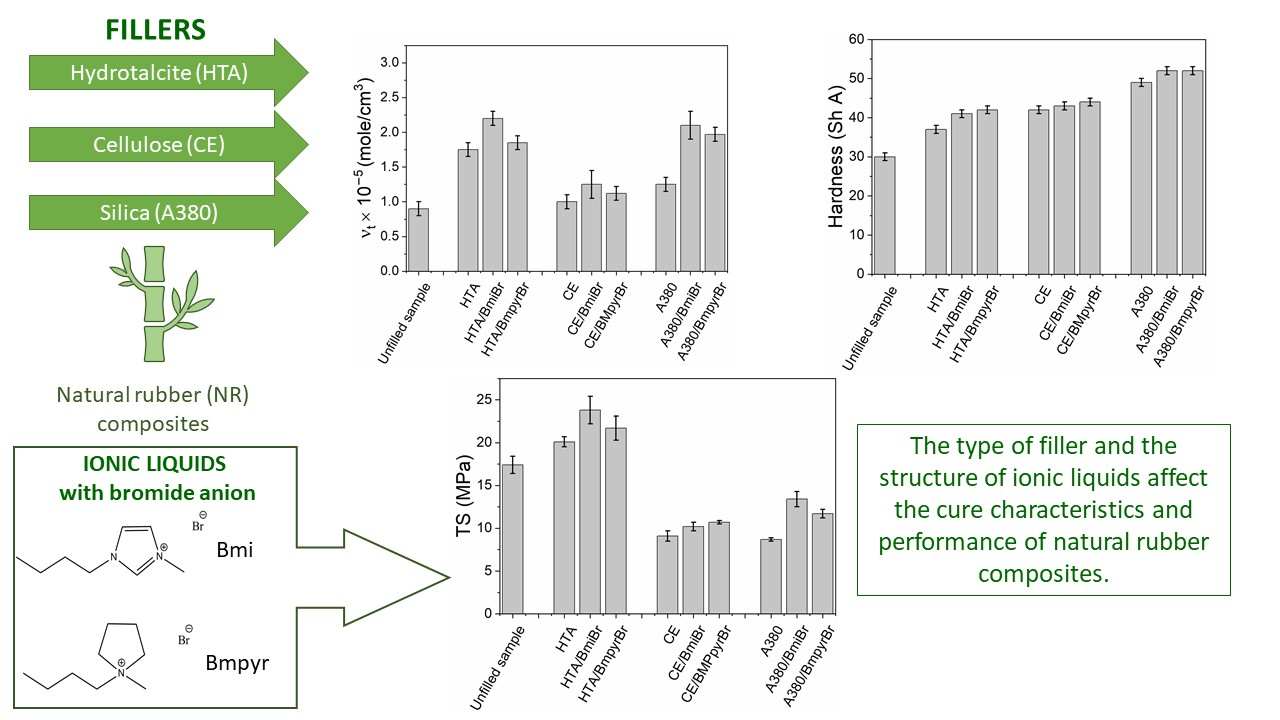
This work concerns the effect of fillers and ionic liquids on the cure characteristics of natural rubber (NR) compounds, as well as the mechanical and thermal properties of the vulcanizates. Three types of white filler were applied, such as cellulose, nanosized silica and hydrotalcite, to modify the performance of NR composites. Additionally, ionic liquids (ILs) with bromide anion and different cations, i.e., 1-butyl-3-methylimidazolium (Bmi) and 1-butyl-3-methylpyrrolidinium (Bmpyr), were used to improve the cure characteristics of NR compounds and functional properties of the vulcanizates. The type of filler and the structure of ILs were proved to affect the rheometric properties and cure characteristics of NR compounds as well as the performance of the NR vulcanizates. Owing to the adsorption of curatives onto the surface, silica reduced the activity of the crosslinking system, prolonging the optimal vulcanization time of NR compounds and reducing the crosslinking degree of the elastomer. However, silica-filled NR exhibited the highest thermal stability. Hydrotalcite increased the crosslink density and, consequently, the mechanical properties of the vulcanizates, but deteriorated their thermal stability. ILs beneficially influenced the cure characteristics of NR compounds, as well as the crosslink density and mechanical performance of the vulcanizates, particularly those filled with silica. Cellulose did not significantly affect the vulcanization of NR compounds and crosslink density of the vulcanizates compared to the unfilled elastomer, but deteriorated their tensile strength. On the other hand, cellulose improved the thermal stability and did not considerably alter the damping properties of the vulcanizates.
Keywords: ionic liquids; natural rubber; cellulose; hydrotalcite; silica ionic liquids; natural rubber; cellulose; hydrotalcite; silica
Graphical Abstract