
Article

Self-Assembly of Gold Nanocrystals into Discrete Coupled Plasmonic Structures
Tyndall National Institute, University College Cork, Cork, Ireland
*
Author to whom correspondence should be addressed.
Crystals 2016, 6(9), 117; https://doi.org/10.3390/cryst6090117
Submission received: 25 July 2016 / Revised: 25 August 2016 / Accepted: 31 August 2016 / Published: 14 September 2016
(This article belongs to the Special Issue Colloidal Nanocrystals: Synthesis, Characterization and Application)

Abstract

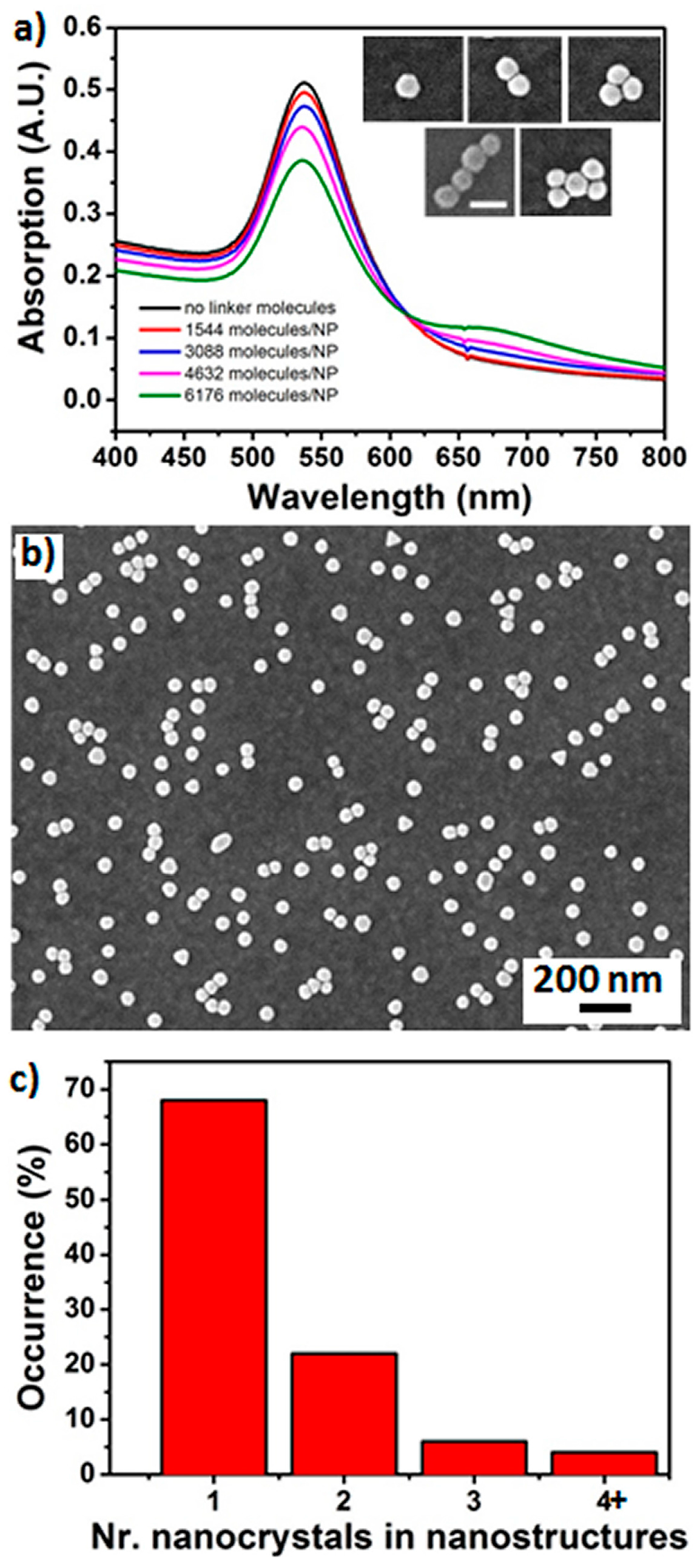
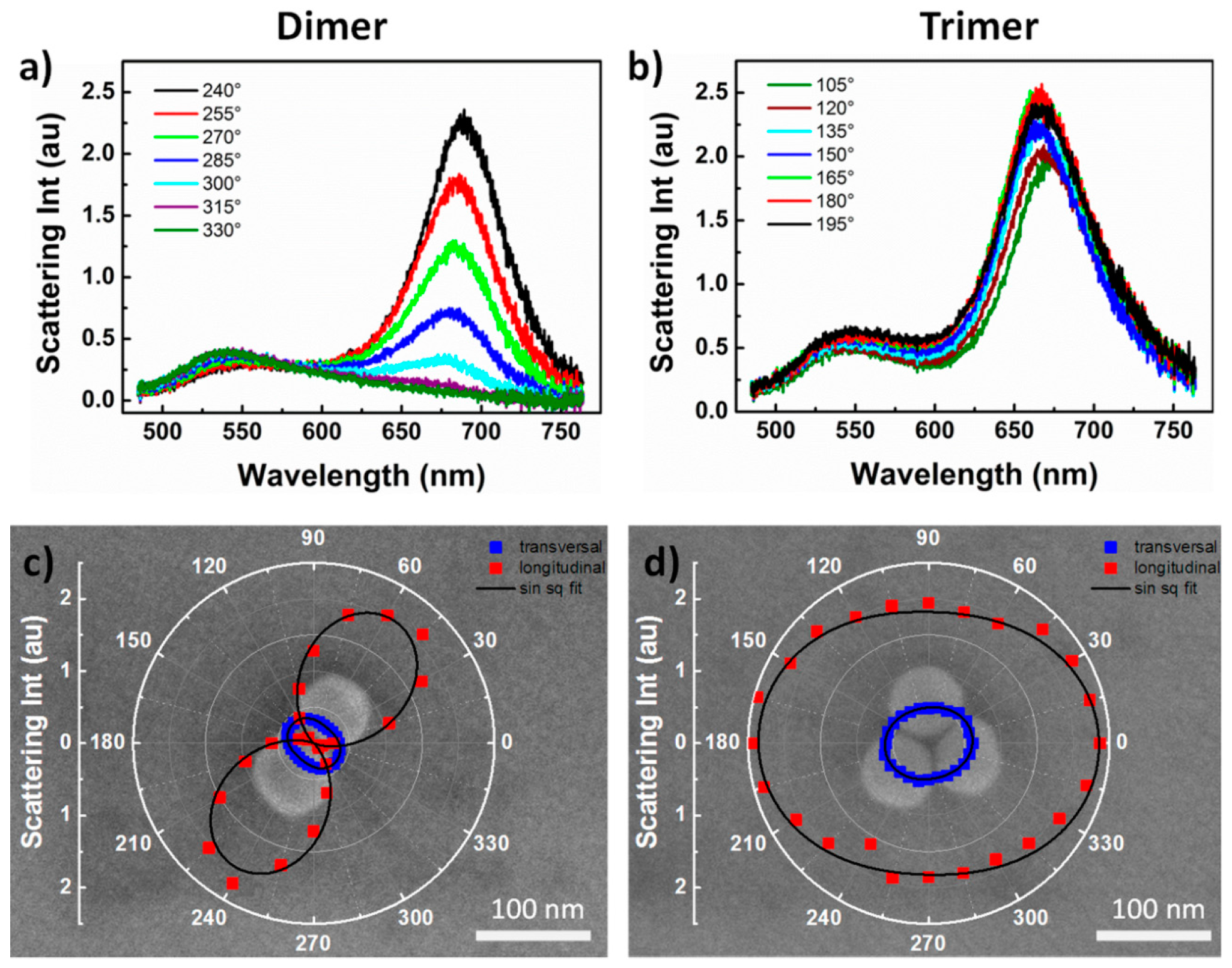
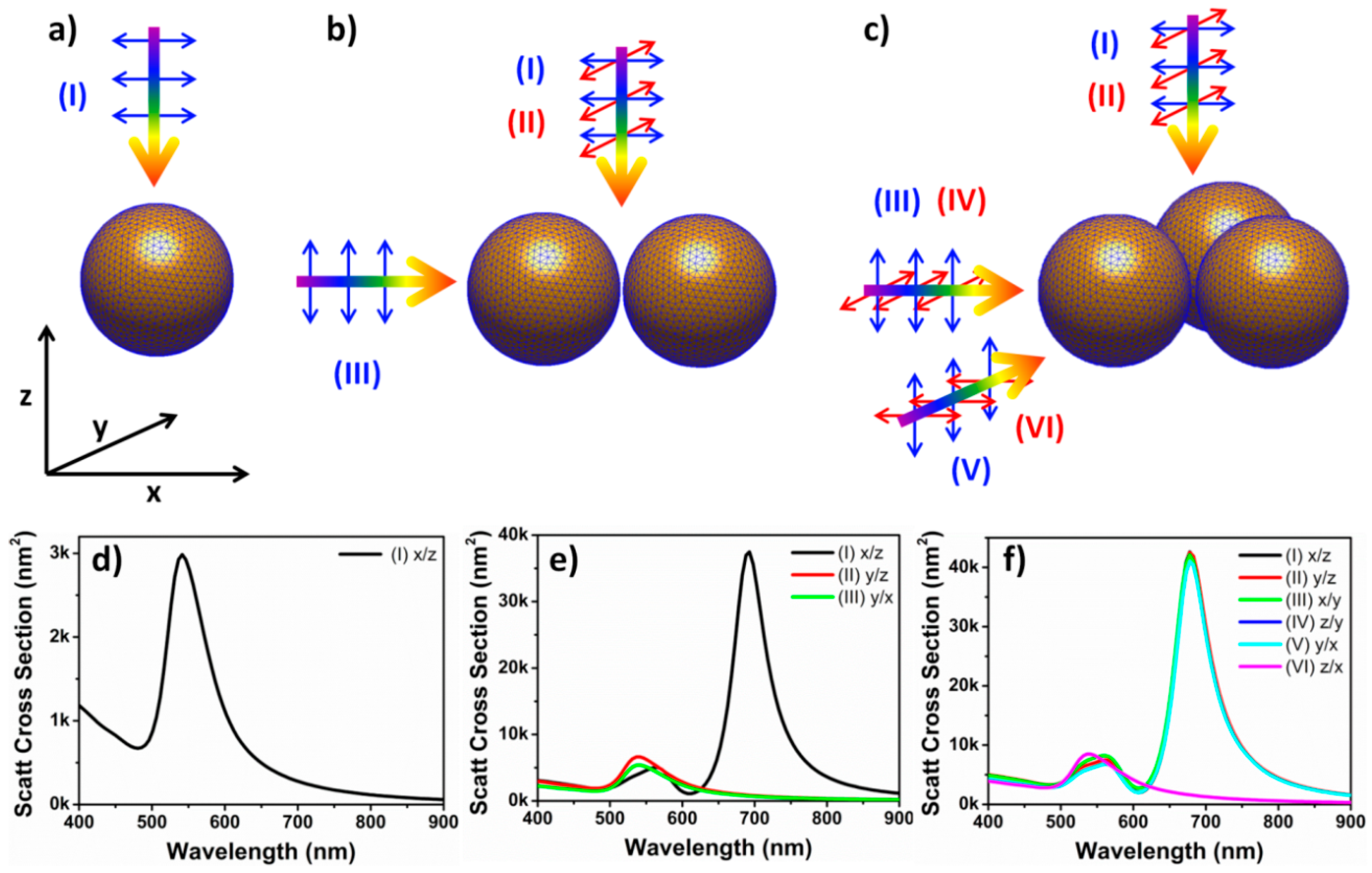
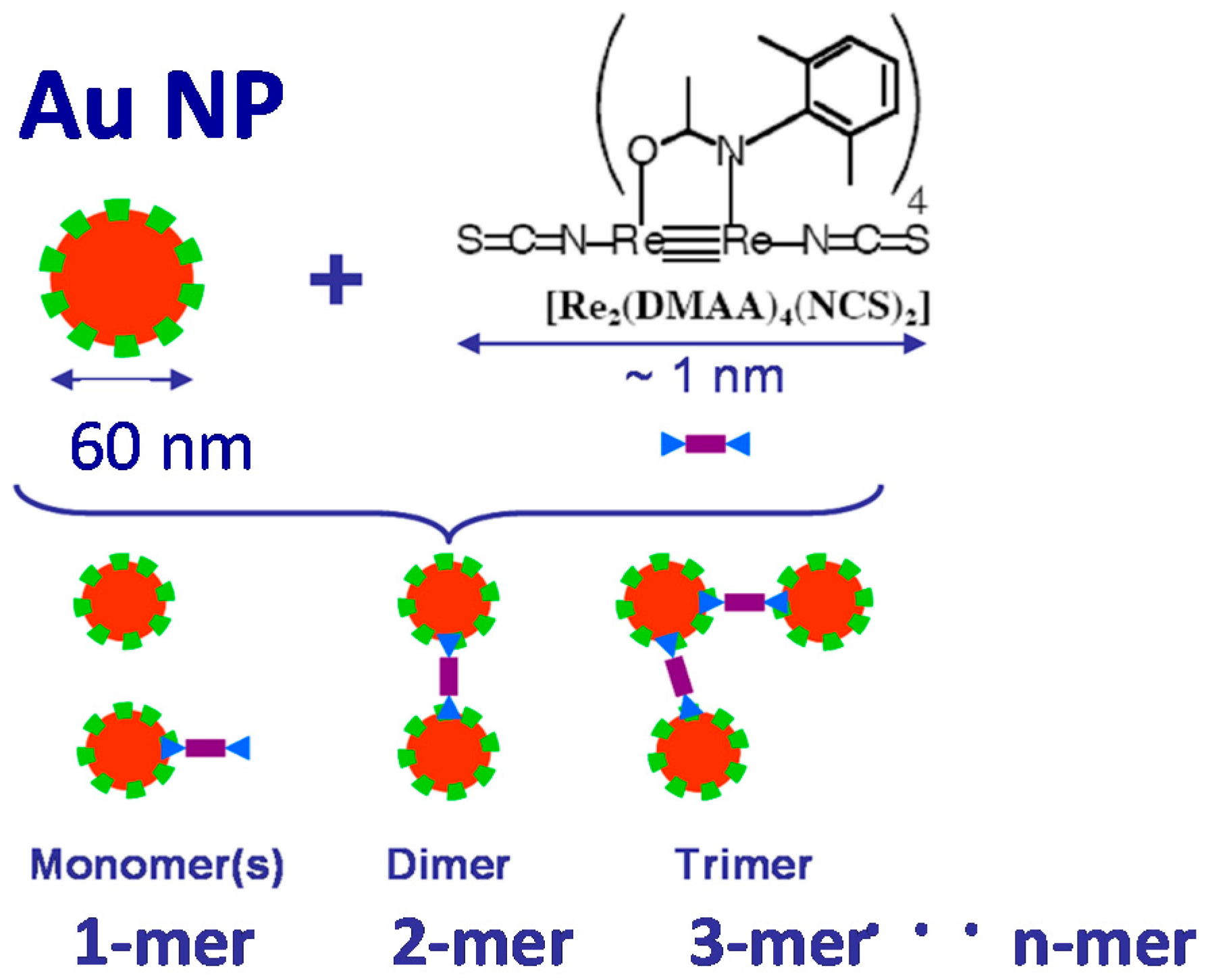
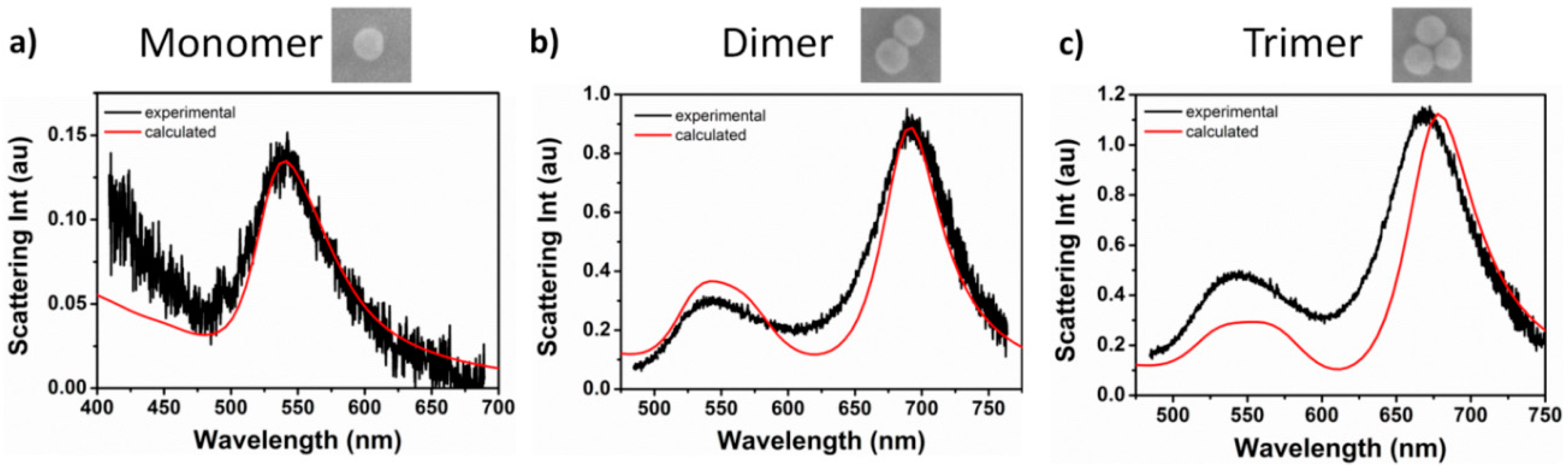
Development of methodologies for the controlled chemical assembly of nanoparticles into plasmonic molecules of predictable spatial geometry is vital in order to harness novel properties arising from the combination of the individual components constituting the resulting superstructures. This paper presents a route for fabrication of gold plasmonic structures of controlled stoichiometry obtained by the use of a di-rhenium thio-isocyanide complex as linker molecule for gold nanocrystals. Correlated scanning electron microscopy (SEM)—dark-field spectroscopy was used to characterize obtained discrete monomer, dimer and trimer plasmonic molecules. Polarization-dependent scattering spectra of dimer structures showed highly polarized scattering response, due to their highly asymmetric D∞h geometry. In contrast, some trimer structures displayed symmetric geometry (D3h), which showed small polarization dependent response. Theoretical calculations were used to further understand and attribute the origin of plasmonic bands arising during linker-induced formation of plasmonic molecules. Theoretical data matched well with experimentally calculated data. These results confirm that obtained gold superstructures possess properties which are a combination of the properties arising from single components and can, therefore, be classified as plasmonic molecules.
Keywords: plasmonics; gold nanocrystals; self-assembly; plasmonic molecules; coupled structures plasmonics; gold nanocrystals; self-assembly; plasmonic molecules; coupled structures