


Abstract
In this study, five Fe-rich scoria-based glass compositions were prepared using natural scoria, recycled glass cullet, limestone, and magnesite through the melt-quenching technique at a temperature of 1400 °C for 2 h. The effect of Fe2O3 content (2.9–14.5 wt%) on the thermal behavior, crystallization, density, and predicted optical properties of glass was investigated. Differential thermal analysis revealed that increasing Fe2O3 content leads to a variation in glass transition (Tg = 632–669 °C) and an increase in softening temperatures (Ts = 711–737 °C), accompanied by an expanded thermal stability window (∆T = Tx − Tg) up to 254 °C, indicating enhanced resistance to crystallization and improved thermal stability. The density measurement showed a non-monotonic variation with composition, due to the combined effect of Fe2O3 enrichment and network structural modification. The crystallization behavior of the Fe-rich scoria-based glass (H50) was further studied after heat treatment at 900 °C and at 950 °C using XRD and SEM analysis. The heated samples exhibited the formation of crystalline phases including diopside, gehlenite, wollastonite, maghemite, and anorthite. While SEM observation revealed progressive crystal growth and microstructural densification with increasing heat treatment temperature, indicating the transformation from glass to glass–ceramic. In addition, a semi-empirical optical assessment based on literature-derived models suggested increased absorptance from 97.26% to 98.83% and reduced reflectance with increasing Fe2O3 content. However, these optical parameters show theoretical estimates and require experimental validation. These findings demonstrate the potential of Fe-rich scoria-based glasses as thermally stable materials for high-temperature and energy-related applications while using natural and industrial waste sources.
1. Introduction
Glasses and glass–ceramics have attracted considerable attention for high-temperature and functional applications due to their excellent thermal stability, optical properties, compositional flexibility, electrical properties and chemical durability [1,2,3,4,5,6]. Their properties can be modified over a wide range through compositional modification, which makes them appropriate for several applications such as energy systems, construction thermal storage, electronics, and advanced ceramic technology [7,8,9,10,11,12,13,14,15]. In particular, thermal stability and crystallization characteristics of glass materials are critical parameters that determine their processing properties, performance, and potential for glass–ceramic production.
Iron-containing silicate glass constitutes an important material due to the multifunctional role of iron ions (Fe2+ and Fe3+) in the glass structure. Iron oxides may participate as a network former or a network modifier based on composition and state which affect viscosity, thermal stability, crystallization behavior, density, color, and optical properties. The coexistence of Fe2+ and Fe3+ ions in the glass matrix can significantly change the structural arrangement of the silicate network and affect the nucleation and growth of crystalline phases during heat treatment [16,17,18,19,20]. As a result, Fe-rich glasses have been extensively investigated for their thermal stability, crystallization properties, and potential technological applications.
In recent years, research has focused on the creation and development of affordable and sustainable glass materials made from abundant natural minerals and industrial waste sources. Several natural and industrial waste sources such as basalt, slag, fly ash, and recycled cullet glass have been successfully used as precursors for glass and glass–ceramic production [21,22,23]. The utilization of waste-derived raw materials reduces production costs and contributes to environmental protection. However, the fabrication of these systems requires carefully controlled melting conditions, precise compositional adjustments, and the use of high-purity raw materials to obtain adequate homogeneity and mechanical strength. These waste materials usually contain significant amounts of iron-bearing oxides which can affect the thermal, optical, and structural properties of the resulting glass. For example, basalt glass, which naturally contains 20–25 wt% Fe2O3, has been reported to exhibit solar absorptance exceeding 95% with excellent thermal stability [2]. However, the fabrication of these glass systems requires carefully controlled melting conditions, precise compositional adjustments, and the use of high-purity raw materials to obtain adequate homogeneity and mechanical strength.
Scoria is a vesicular volcanic rock chemically similar to basalt and represents abundant, underutilized, and low-cost raw materials [24,25,26,27]. Scoria is rich in major network-forming oxides (SiO2, Al2O3) and modifying oxides (CaO, MgO, Fe2O3), making it highly suitable for glass formation without extensive compositional modification. A few earlier studies have shown that scoria-made glass, ceramic, and glass–ceramic exhibit favorable mechanical and thermal properties, such as high hardness, resistance to devitrification, and good chemical durability [24,25,26,27]. The relatively high content of iron in scoria, typically ranging from 10 to 20 wt%, provides an opportunity to investigate the effect of Fe2O3 on glass formation, thermal stability, and crystallization behavior. Furthermore, scoria could enhance compositional control, reduce melting temperature, and improve the homogeneity of the glass when combined with industrial products like glass cullet, limestone, and magnesite. Such combinations can also support circular economic principles by valorizing waste materials, reducing carbon emissions, and conserving natural resources. This is in alignment with global efforts toward environmentally responsible materials for renewable energy technology.
Despite several investigations that have examined basaltic and other iron-rich glass systems, a systematic study of how the Fe2O3 content influences thermal stability and crystallization characteristics of scoria-based glasses remains unexplored. In particular, understanding the relationship between iron content, thermal stability, phase evolution, and microstructural development is essential for optimizing these materials for high-temperature applications and controlled glass–ceramic production.
Therefore, the present study aims to prepare a series of Fe-rich scoria-based glass compositions produced using natural scoria and industrial wastes. The effect of Fe2O3 content (2.9–14.5 wt%) on the thermal stability, density, crystallization behavior, and microstructural evolution of scoria-based glasses was investigated. Differential Thermal Analysis (DTA) was carried out to determine the characteristic thermal parameters and resistance crystallization, while X-ray diffraction analysis (XRD) and scanning electron microscopy (SEM) were used to examine phase formation and microstructural features after heat treatment. In addition, the optical properties were evaluated using a semi-empirical model to provide preliminary insight into the potential optical behavior of scoria-based glasses. Therefore, the results of the present study will contribute to understanding Fe-rich scoria-based glass systems and their potential as sustainable materials for high-temperature and energy-related applications.
2. Experimental Procedure
2.1. Raw Material
The raw materials employed in this study included scoria, glass cullet, limestone, and magnesite. Scoria was collected from a local volcanic deposit, while glass cullet was obtained from recycled waste glass. Limestone and magnesite sourced from commercial suppliers served as calcium and magnesium oxide sources in the glass batch formulation. About 10 kg of each raw material was crushed, milled, and sieved to obtain fine powders with particle sizes below 64 μm, ensuring homogeneous mixing prior to melting and batching. The X-ray fluorescence, a Phillips X-ray fluorescence analyzer (model pw/2404) equipped with an Rh target X-ray tube, was used to analyze the chemical composition (the oxide minerals wt%) of all raw materials, and the results are presented in Table 1. For the XRF analysis, 8 g of lithium borate and 1 g of raw material were mixed thoroughly in a platinum crucible as most oxides dissolve best in lithium borate salts. The mixture was then placed in a fusion system for 20 min to form a glass disk. The chemical composition of scoria was revealed to be suitable for glass formation due to the high silica and alumina contents.
Table 1.
Chemical analyses of the raw materials used in the batch preparation.
2.2. Batch Preparation
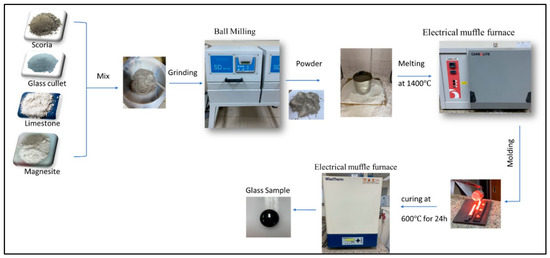
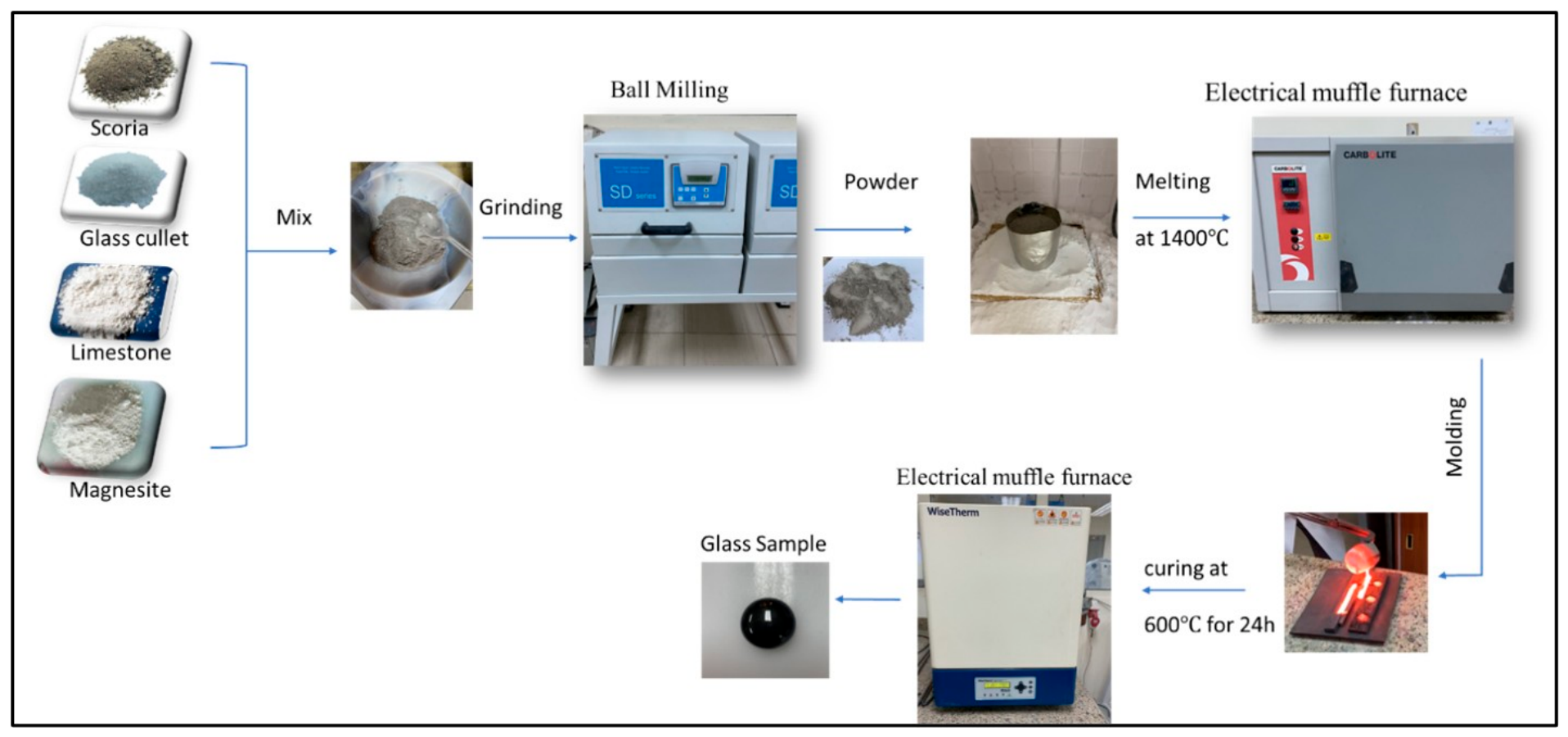
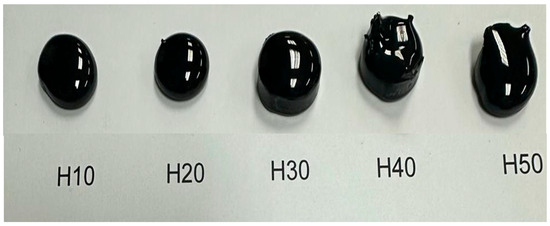
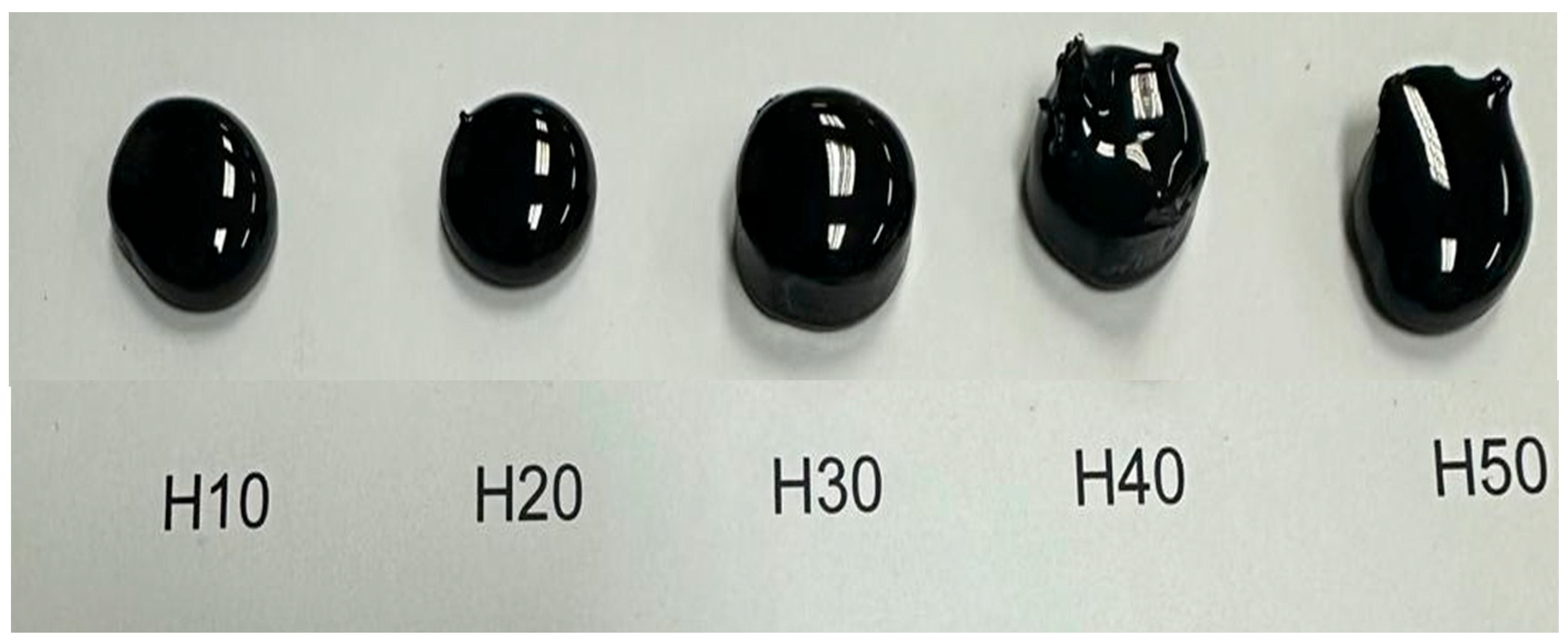
Five glass compositions (H10–H50) were designed with progressively increasing Fe2O3 content (2.9–14.5 wt%) to examine the effect of iron concentration on thermal and optical properties. The batch compositions were prepared by mixing scoria, limestone, glass cullet, and magnesite at calculated proportions with the oxide percentages listed in Table 2. Each powdered batch was milled for 30 min in high-energy ball milling to obtain a homogenized mixture. Then, the batches were melted in a clean platinum crucible using a Globar electric furnace at a temperature of 1400 °C for 2 h. After melting, the resultant bubble-free melts were cast into preheated steel rods and disk molds to avoid thermal shock to the glass samples. Then the samples were transferred to an electric muffle furnace for annealing at 600 °C and kept inside the furnace until the temperature gradually dropped to room temperature to obtain strain-free dark glass specimens as shown in Figure 1. All the prepared glasses have a black opaque color based on their composition as shown in Figure 2. The density of the glass samples was determined by Archimedes using ethylene glycol as the immersion fluid.
Table 2.
Chemical compositions and the corresponding batches (wt%) of the studied glasses.
Figure 1.
Schematic of the glass preparation process.
Figure 2.
Glass specimens.
2.3. Differential Thermal Analysis, XRD, and SEM
Differential Thermal Analysis (DTA) was carried out to determine the thermal behavior of the prepared glass samples, including the glass transition (Tg), softening (Ts), and crystallization onset (Tx) temperatures. DTA measurements were performed using a Perkin-Elmer Micro differential thermal analyzer over the temperature range of room temperature (RT) to 1000 °C. About 60 mg of powdered glass was used for each measurement, with Al2O3 powder employed as reference material. All DTA scans were maintained at a heating rate of 20 °C/ min with a sensitivity setting of 8 μv/cm, under the following nitrogen atmosphere: 30 mL/m. The Tg and Tx values were identified from the inflection points corresponding to endothermic and exothermic peaks in the DTA curves. The thermal stability parameter (∆T = Tx − Tg) was calculated to evaluate resistance to crystallization and suitability for high-temperature applications.
Based on the DTA results, the evolution from an amorphous to a crystalline structure was investigated by applying heat treatment to the most Fe-rich composition, sample H50. Heat treatments were performed at temperatures of 900 °C and 950 °C for 2 h with a heating rate of 10 K/min in order to induce crystallization and examine its effect on microstructure and optical properties. The microstructural features of the heat-treated samples were studied using scanning electron microscopy (SEM) model Quanta FEG250, FEI, operating at an acceleration voltage of 20 kV, which covered the fracture surfaces of freshly broken samples with gold (Au) layers to minimize charging effects and observe the internal microstructure. Phase identification of the crystalline phases formed after heat treatment was examined by X-ray diffraction analysis (XRD) using Bruker CD8–ADVANCE with nickel-filtered Cu Kα radiation. Following heat treatment, the sample was ground and sieved to obtain powder with a particle size of 60 microns to place it on a glass holder of an X-ray machine. After that, the device was turned on to collect the data and draw a relationship between 2 theta and intensity for each sample. XRD patterns were studied at 2θ values between 4° and 80° with a scan rate of 10°/min.
2.4. Theoretical Optical Assessment
The optical performance of the scoria-based glasses was theoretically estimated using a semi-empirical model adapted from previously reported basalt-based glass systems to calculate solar absorptance (A), thermal emissivity (R), and selectivity (S) as a function of Fe2O3 concentration. This model was selected because of its basalt and scoria silicate-based composition and similar iron-bearing phases. Due to the opaque nature of the prepared glasses, optical transmittance was assumed to be negligible (T ≈ 0) which is consistent with a previous study of basalt and Fe-rich black glasses.
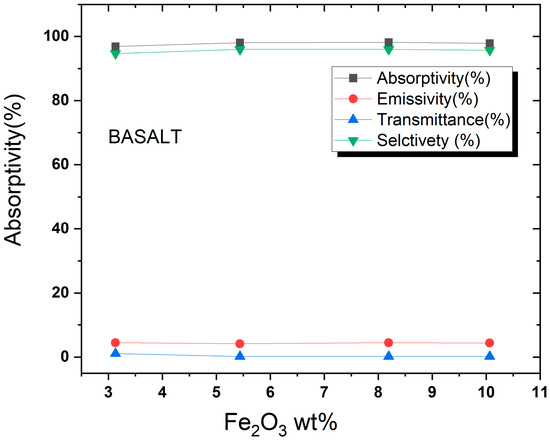
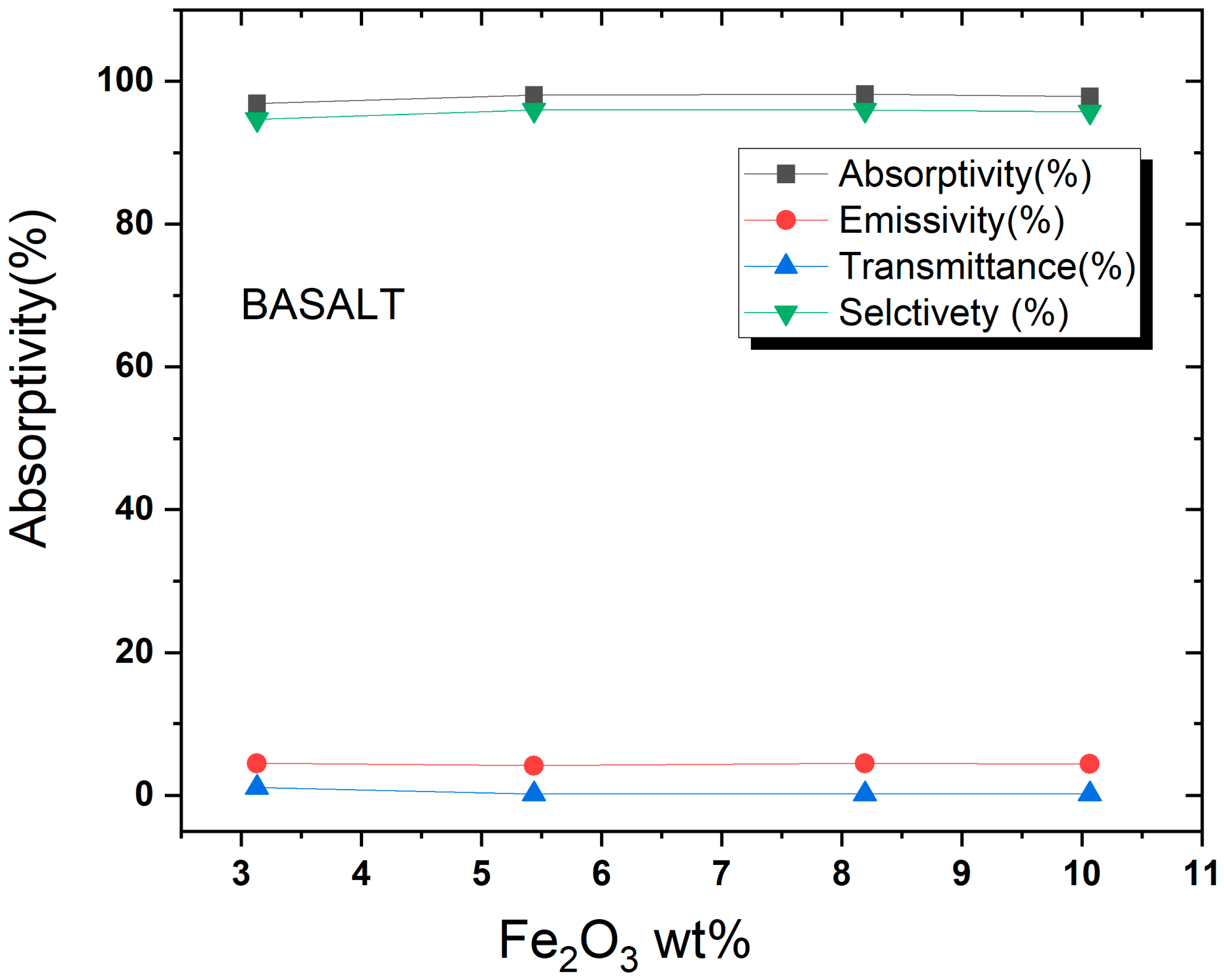
A reference basaltic glass with approximately 10.07 wt% Fe2O3 and an absorptance of 98% was used as the baseline as shown in Figure 3 [2,3]. Based on compositional trends reported in the literature, the solar absorptance (%) and emissivity (%) were expressed as linear functions of Fe2O3 content (F, wt%) by Equations (1) and (2):
which F = Fe2O3 content (wt%), thermal emissivity (ε) was considered separately from solar absorptance, noting that emissivity is calculated by mid-infrared (2.5–25 μm) phonon absorption and reflectance mechanisms rather than electronic transitions.
A(F) = 0.135 F + 96.87
ε(F) = 0.0020 F + 4.36
Figure 3.
The modeling of the optical properties of basalt glass composition as a function of iron oxide content in the previous study [3].
Since scoria glass samples are opaque black, transmittance was assumed to be zero:
using energy balance relations (A + R + T = 1), the reflectance (R) was calculated by Equation (4):
T(F) = 0
R(F) = 1 − A(F)
The optical selectivity (S), a key parameter for solar thermal absorbers which describes the balance between solar energy absorption and thermal radiation losses [28,29], was determined from Equation (5):
S(F) = A(F) − 0.5 ε(F)
3. Results and Discussion
3.1. Thermal Properties
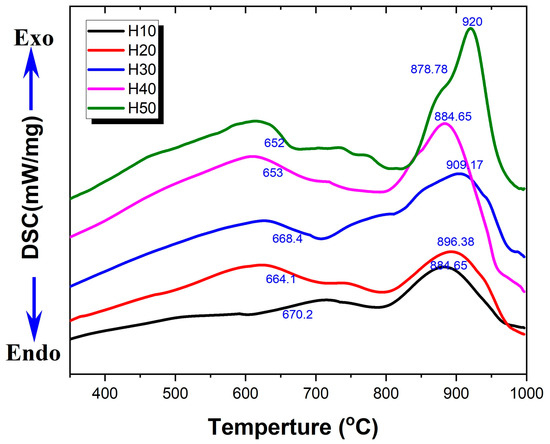
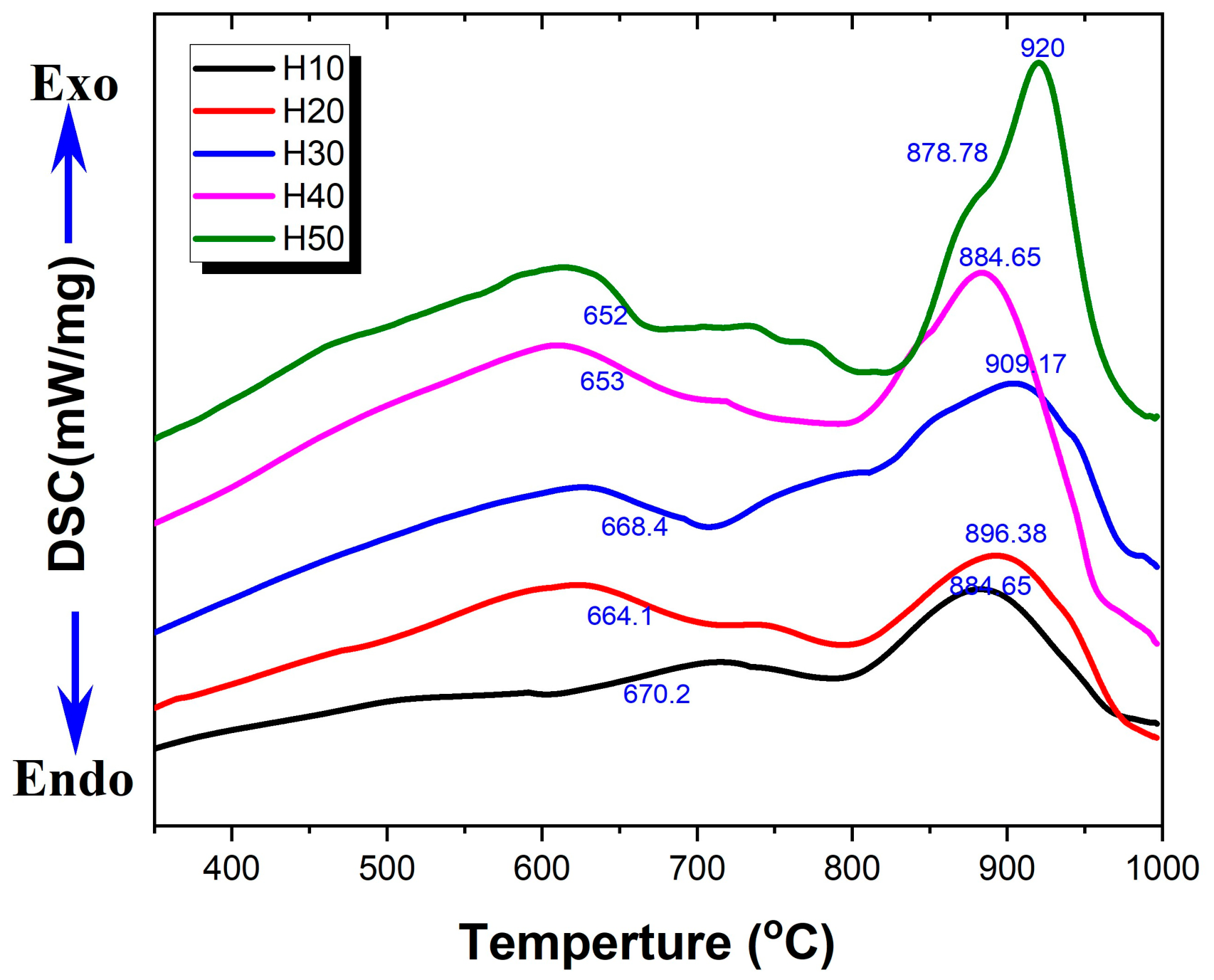
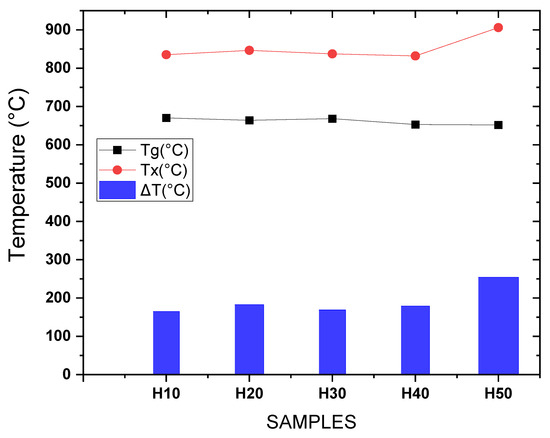
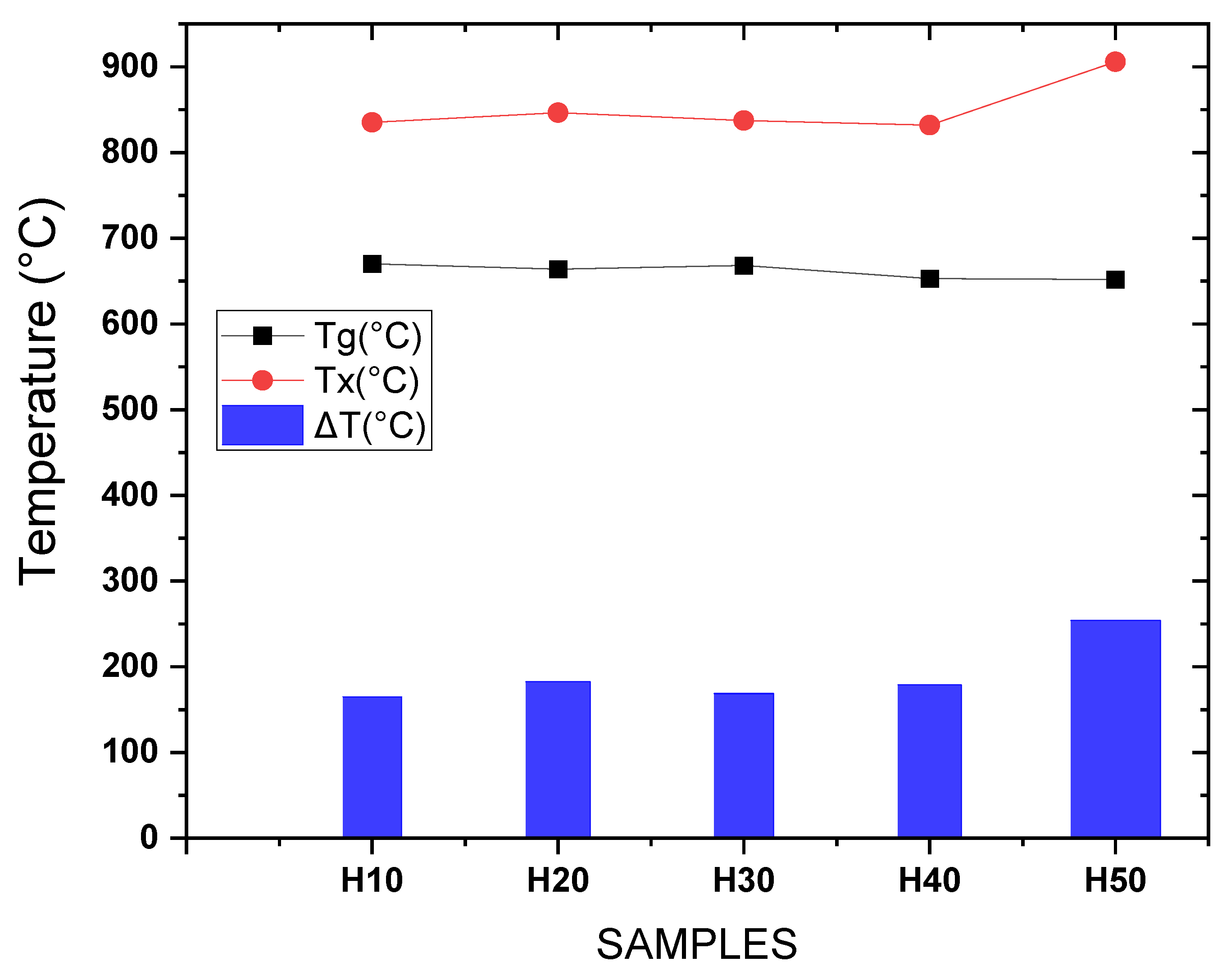
The differential thermal analysis (DTA) curves of the scoria-based glass samples (H10–H50) showed the endothermic and exothermic features associated with glass transition, crystallization, and softening processes as shown in Figure 4. The endothermic peaks, associated with the glass transition region (Tg), were observed between 652.0 and 670. 2 °C. The crystallization onset temperatures (Tx) corresponding to the beginning of cyclization were found between 831 °C and 905 °C, whereas crystallization peak temperatures (Tp) corresponding to the maximum crystallization (major exothermic peak) appeared in the range of 884–920 °C as summarized in Table 3 and Figure 5. All compositions show good thermal stability at high temperatures, as confirmed by the measured softening temperatures (Ts) that were found between 782.4 and 864.3 °C.
Figure 4.
DTA of the five glass samples.
Table 3.
Characteristic thermal parameters (Tg, Tx, Tp, and ΔT) and density of the studied glasses with literature data for glass-based basalt.
Figure 5.
The plotted comparison of the glass transition temperature (Tg), crystallization onset temperature (Tx), and thermal stability parameter (ΔT = Tx − Tg) for the five glass samples (H10–H50).
With increasing Fe2O3 content from 2.9 wt% in H10 to 14.5 wt% in H50, a slight decrease in Tg was observed, accompanied by an increase in Ts and Tx. The reduction in Tg suggests a decrease in viscosity near the glass transition, which makes melt processing easier and lowers the energy required for shaping and forming. In contrast, the increase in Tx compared to Tg significantly widens the processing window and delays crystallization, ensuring thermal stability of the glass during shaping and high-temperature operation. The thermal stability (ΔT = Tx − Tg) increased from ~165 °C in H10 to 253.9 °C in H50. The thermal stability (ΔT) is usually used to assess the resistance of glass to devitrification and the sustainability of glass–ceramic processing. The larger values indicate wider window processing between glass transition and crystallization which allows greater flexibility without producing unwanted crystallization. Therefore increases in ΔT and Fe2O3 content suggest improved thermal stability and enhanced glass-forming ability of Fe-rich compositions. The observed thermal behavior indicates that Fe2O3 significantly influences the crystallization kinetics of the scoria-based glass system. Although the detailed structural role of iron was not directly investigated in the present study, the increase in Tx and ΔT suggests that increasing Fe2O3 content contributes to delaying crystallization and improving thermal resistance. These findings are consistent with previous studies on Fe-rich silicate and basaltic glasses, in which increasing Fe2O3 content can shift crystallization peaks to higher temperatures and enhance the thermal stability [30,31]. The decrease in Tg with increasing Fe2O3 suggests that all glass becomes less polymerized. This result could be attributed to the simultaneous decrease in Al2O3 and MgO as well as the presence of iron ions in modifier-type settings. At the same time, the increase in ΔT demonstrates enhanced resistance to crystallization. Therefore, thermal stability and Tg do not always change in the same way.
Overall, the DTA results demonstrate that all investigated compositions have good thermal stability, and the Fe-rich glasses (H50) show the highest resistance to crystallization. These properties are appropriate for high-temperature applications and for the controlled production of glass–ceramics through subsequent heat-treatment processes.
3.2. Density and Structural Considerations
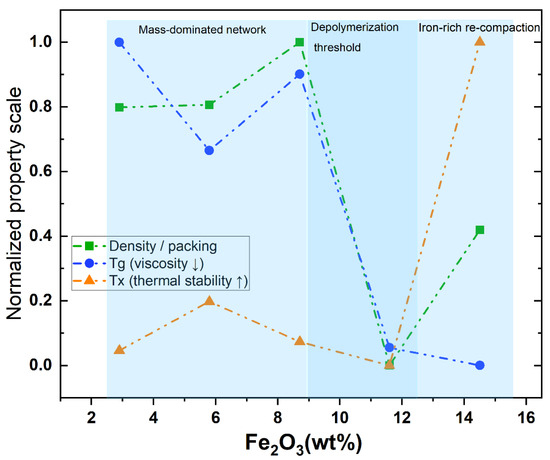
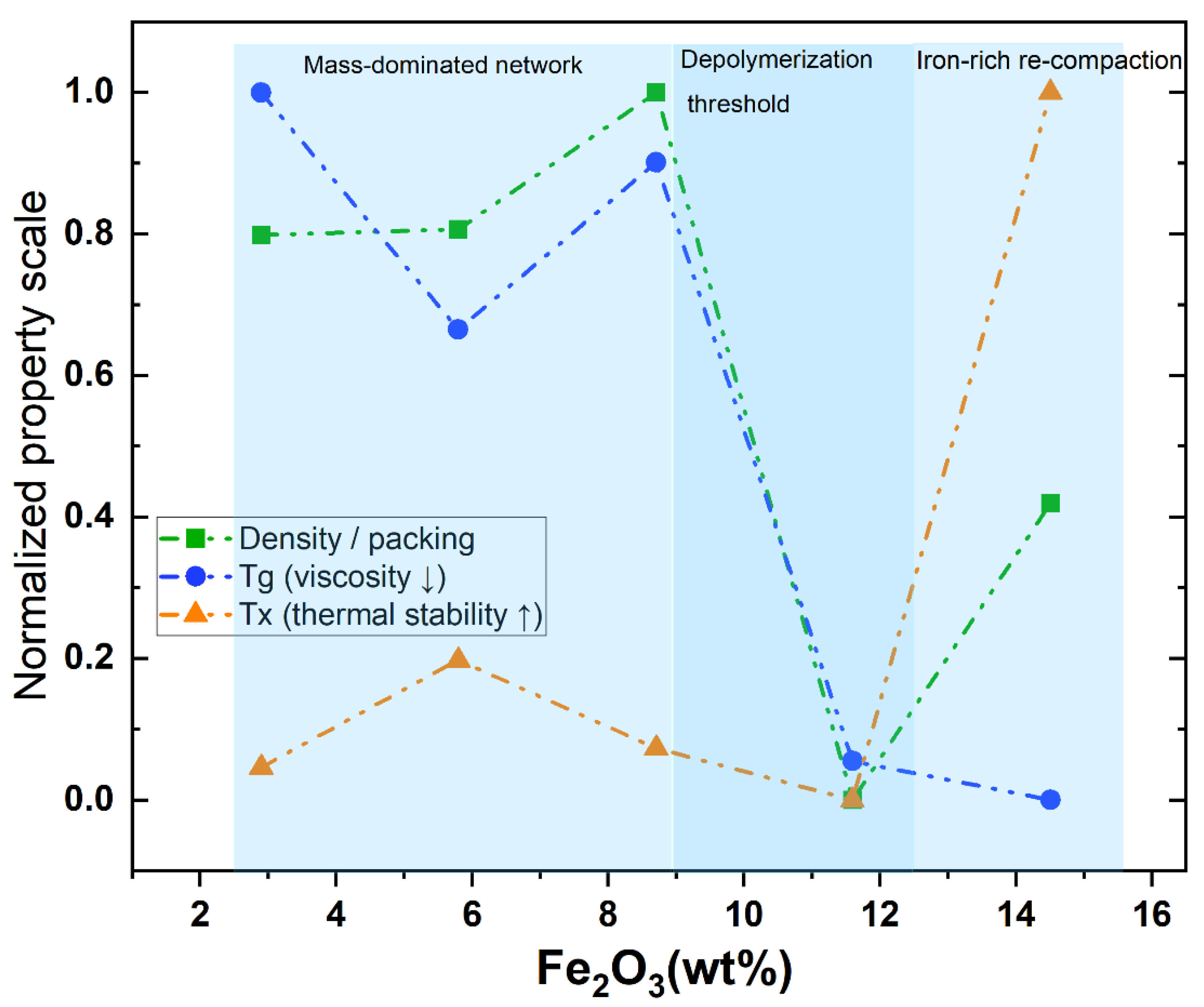
The density values of the investigated glasses are presented in Table 3 and illustrated in Figure 6. The density does not increase monotonically with iron content, although Fe2O3 has a high molar mass. This result can be interpreted based on compositional trends and established glass chemistry which affect both the mass and structural properties of the glass network.
Figure 6.
Structure–thermal property diagram showing the influence of Fe2O3 content on normalized glass transition temperature (Tg), crystallization onset temperature (Tx), and density of scoria-derived glasses.
The density showed gradual increases as Fe2O3 content increased from H10 to H30. This behavior is consistent with previous studies which were attributed to the relatively high molecular weight and density of iron oxide compared with other oxide content in the glass compositions. The results from the simultaneous reduction in Al2O3 and MgO, which leads to gradually depolymerization of the silicate network. Up to H30, the mass contribution of Fe2O3 dominates and density increases. Nerveless, sample H40 showed a decrease in density despite the continued increase in Fe2O3 content. This result suggests that density is not only affected by composition but also by structural rearrangement inside the glass network. Simultaneous changes in the amounts of Al2O3 and MgO and other network-forming or modifying oxides could change the packing efficiency of the glass structure, resulting in variations in molar volume which partially offset the mass contributions of Fe2O3. This effect is partially compensated by an increase in Fe2O3 content, which leads to a slight density recovery at H50. Therefore, it appears that the combined effects of compositional and structural changes within the glass network are responsible for overall density behavior. These variations in density are consistent with the thermal behavior which the glass transition temperature showed a slight decrease with increasing Fe2O3 content, but the thermal stability parameter (ΔT) increased significantly [32]. In conclusion, the evolution of non-monotonic density shows a transition from mass-dominated to structure-dominated behavior, driven by the Fe2O3-induced network depolymerization and Al2O3 depletion. However, it would be required to use spectroscopic techniques such as FTIR and Raman spectroscopy to investigate the structure and determine the relationship between glass structure, iron coordination environment, and density evolution.
3.3. Effect of Heat Treatment on Structural and Microstructural Properties
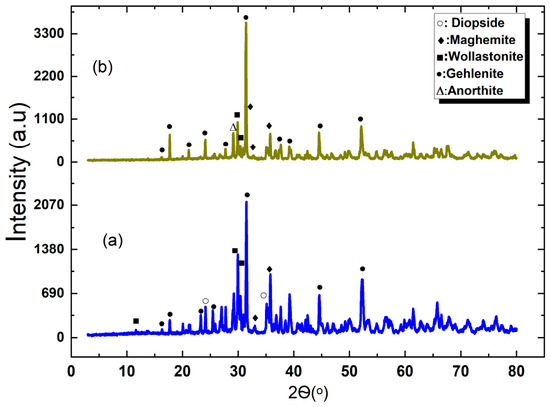
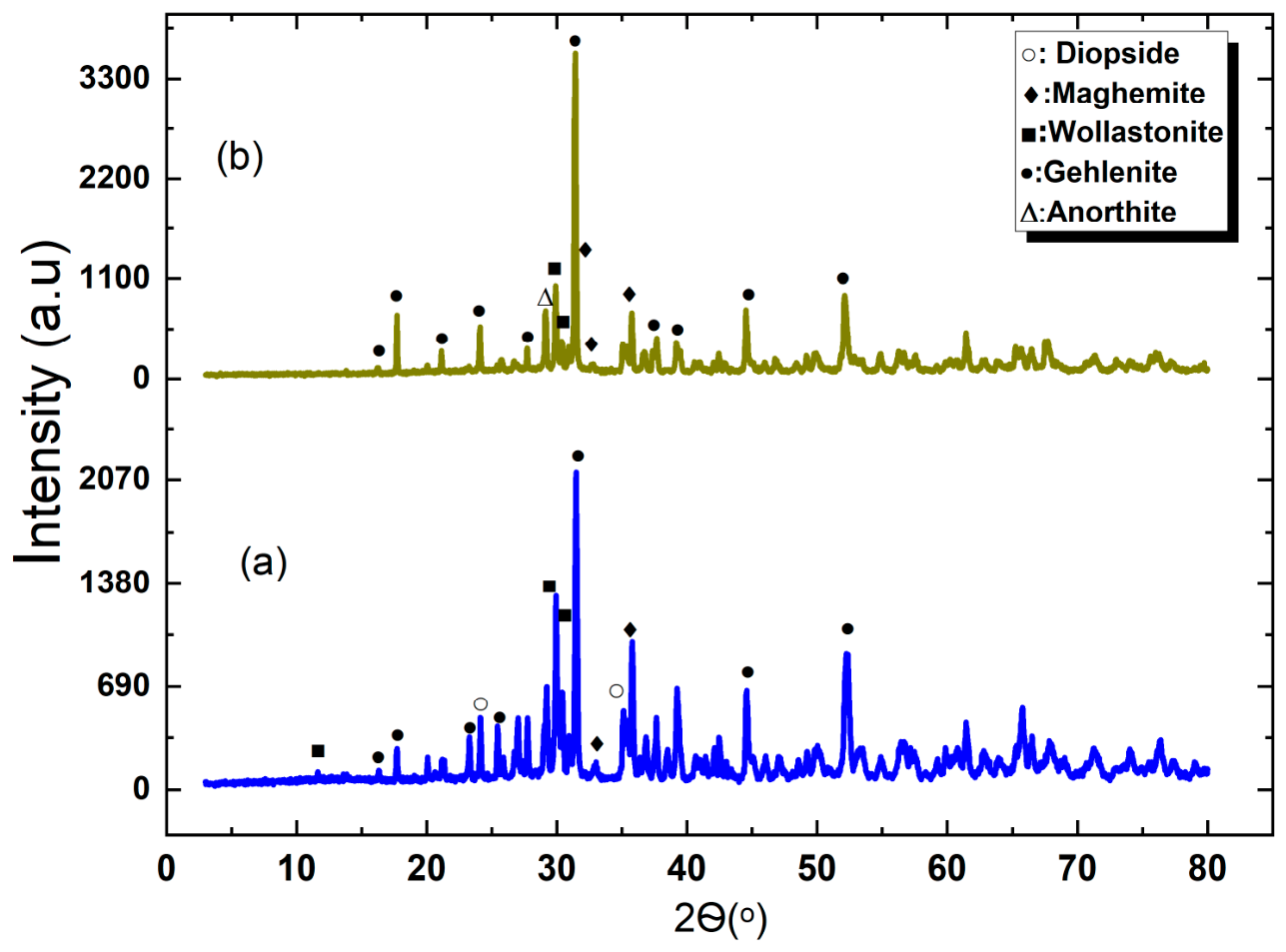
The sample H50 was selected for studying the effect of heat treatment at 900 °C and 950 °C on the structural properties of the Fe-rich scoria-based glass. The crystallization behavior of the sample H50 was characterized using XRD after heat treatment at 900 °C and 950 °C. The corresponding diffraction patterns were displayed in Figure 7. After heat treatment at 900 °C, the XRD peaks can be observed that correspond to crystalline phases like diopside (CaMgSi2O6) (ICDD No.22-534), gehlenite (Ca2Al2SiO7) (ICDD No. 25-1123), wollastonite (CaSiO3) (ICDD No. 10-489), maghemite (γ-Fe2O3) (ICDD No.25-1402), and anorthite (CaAl2Si2O8) (ICDD No.20-20). The intensity of crystalline peaks is relatively lower, indicating partial crystallization and residual amorphous content. At 950 °C, the diffraction peaks of sample H50 become sharper and more intense, indicating enhanced crystallization and crystal growth as shown in Figure 7. A higher fraction of diopside and wollastonite suggests increased nucleation and growth of these phases. Moreover, the reduction in the amorphous background indicates that the glassy matrix gradually transforms into crystalline phases. The observed phase composition is consistent with the chemical composition of the glasses that includes significant amounts of SiO2, CaO, MgO, Al2O3, and Fe2O3. The formation of diopside and wollastonite is commonly reported in CaO–MgO–SiO2 glass systems. Whereas anorthite and gehlenite are preferred in compositions rich in aluminosilicate. The presence of maghemite indicates that the glass is of an iron-rich nature and demonstrates the participation of iron-containing species during the crystallization process. Controlled heat treatment encourages the development of various crystalline phases while maintaining structural integrity. This makes these compositions attractive candidates for producing glass–ceramic materials from natural volcanic resources and industrial waste materials.
Figure 7.
The XRD patterns of glass samples H50 after heated at (a) 900 °C, (b) and 950 °C for 2 h 2θ (°).
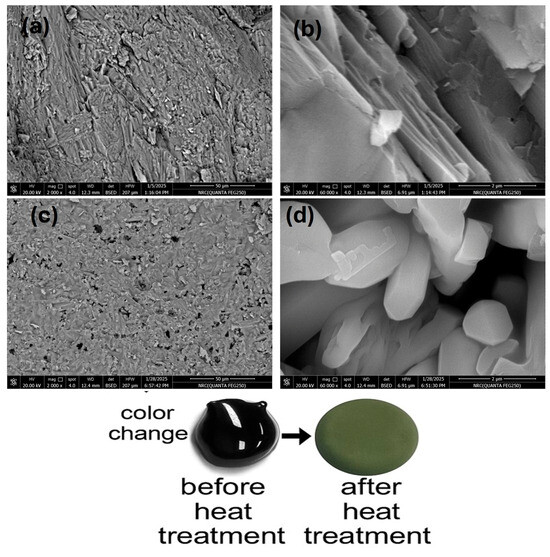
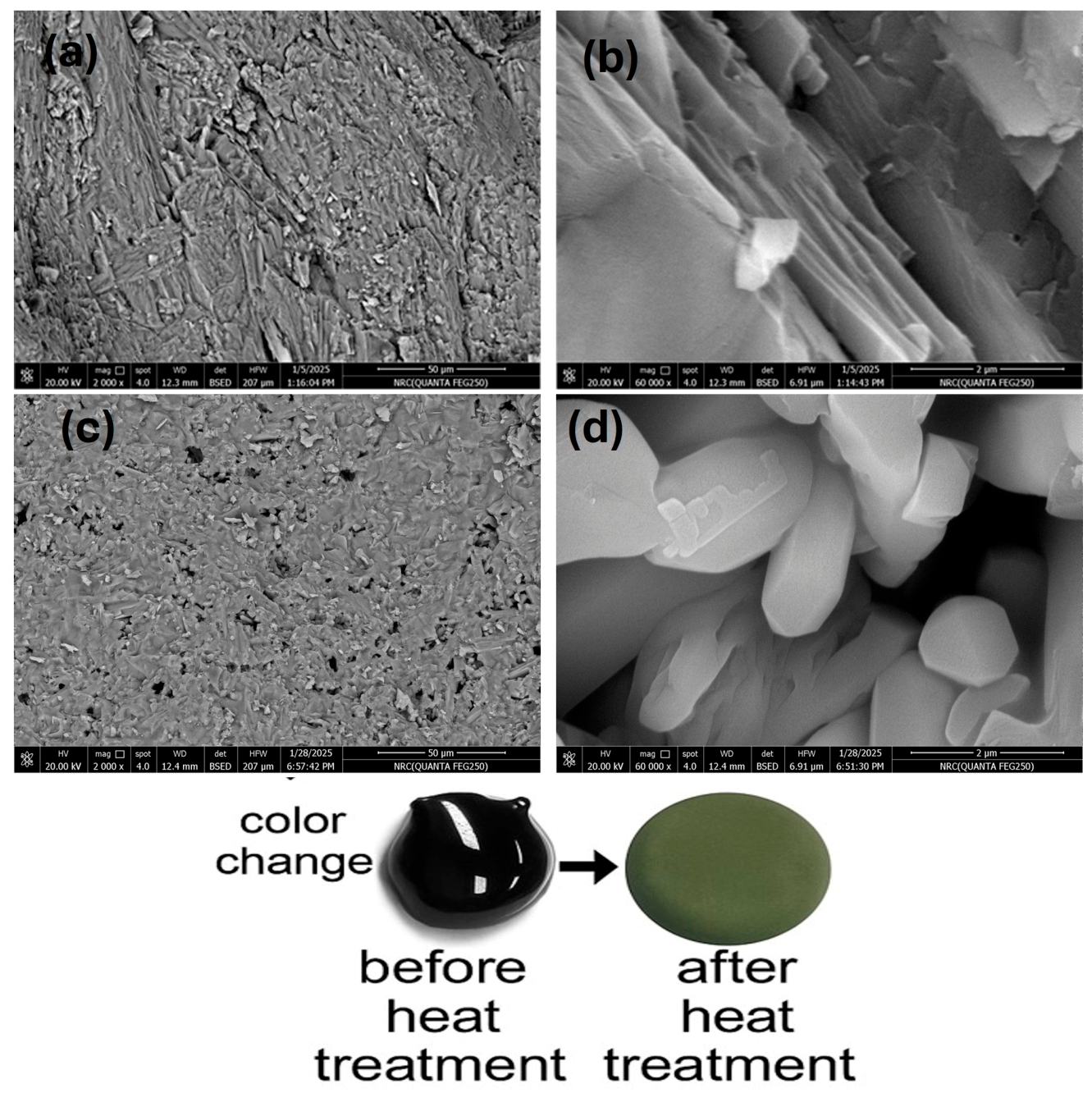
The microstructural changes associated with crystallization were examined by SEM. The micrographs of sample H50 heat-treated at 900 °C and 950 °C are displayed in Figure 8. The microstructure of sample H50, that was heat treated at 900 °C, shows a more fragmented and less densified structure. In particular, there is an irregular grain arrangement with smaller crystallites which indicates that nucleation had occurred, but crystal growth remained limited. The heterogeneous distribution of crystallites suggests that crystallization was still at an intermediate stage, consistent with the partial crystallization shown in the XRD peaks.
Figure 8.
SEM images showing the microstructural evolution of sample H50 after heat treatment (a,b) at 900 °C, recorded at 2000× and 60,000× magnifications, respectively. (c,d) at 950 °C, recorded at 2000× and 60,000× magnifications, respectively.
The sample heat-treated at 950 °C showed a significantly more developed microstructure. A higher density of crystalline phases was observed with increased grain growth and enhanced interconnection between crystalline phases. The microstructure became denser and more homogeneous, indicating the continued conversion of the residual glass phase into crystalline products as shown in Figure 8. The reduction in amorphous content observed by SEM is consistent with the increase in diffraction peak intensity detected by XRD. The microstructural changes show that increasing heat treatment temperature enhances crystal nucleation and subsequent crystal growth. At 950 °C, the formation of a denser and more uniform microstructure suggested enhanced crystallization kinetics and greater phase development. These findings are consistent with the results of the thermal analysis, which showed that the Fe-rich glass composition had a wide processing window and good thermal stability. The results of XRD and SEM confirm that controlled heat treatment enables the transformation of the parent glass into a multiphase glass–ceramic. Such microstructural development is important for modifying the physical and functional properties of scoria-derived glass–ceramics. Also, it highlights the potential of these materials for high-temperature and engineering applications.
3.4. Theoretical Calculation of Optical Properties
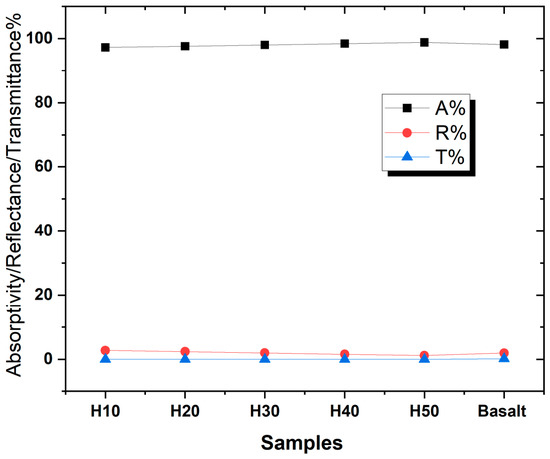
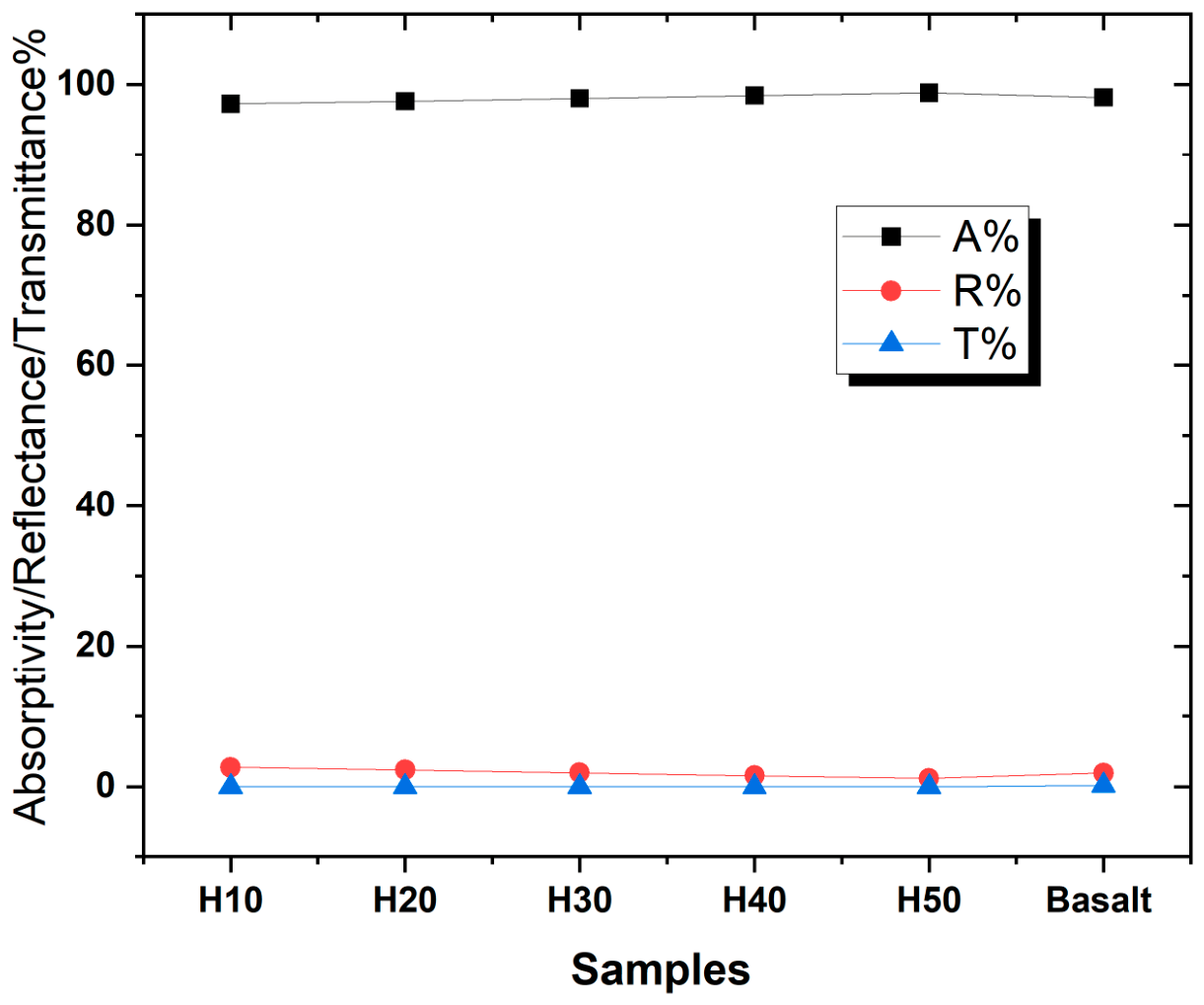
The optical performance (including absorptance, reflectance, emissivity, and selectivity) was theoretically evaluated based on Fe2O3 content. It used a semi-empirical modeling approach based on compositional parameters and published optical data for basaltic glasses as a function of Fe2O3 content. Table 4 and Figure 9 show that absorptance increased from 97.26% to 98.83% (H10–H50), while reflectance decreased with Fe2O3 content. The transmittance was assumed to be T = 0 for all scoria glass compositions due to the opaque nature of the samples. This behavior is consistent with previously reported behavior of Fe-rich silicate and basaltic glasses, where increasing iron content is associated with enhanced absorption of incident solar radiation [11]. The increase in calculated absorptance with Fe2O3 content may be attributed to the increasing contribution of iron-related electronic transitions within the glass matrix [9,10,11].
Table 4.
Optical properties for the scoria glass samples.
Figure 9.
The optical properties of scoria glass composition as a function of iron oxide content.
The average emissivity in Table 4 shows a slight decrease from 4.37% to about 4.39% with iron oxide addition. This consistently low emissivity can be attributed to the presence of iron oxide (Fe2O3), which acts as an integral structural and electronic constituent rather than a surface modification. Compared with earlier research it indicates that incorporating scoria and iron oxide directly into the glass is more effective in optimizing optical performance than applying iron oxide as a surface coating. For example, iron oxide was previously applied as an individual coat, which produced an emissivity of 20% and an absorption of 89%. Also, cobalt oxide was used to increase the absorption to 94% and to reduce the emissivity to 15% [28]. In contrast, basaltic glass and the present scoria-based glass achieve significantly higher absorptance and lower emissivity without the need for multilayer or doped coating structures [3].
The results of the calculated optical selectivity value summarized in Table 4 further show the promising performance of the prepared glasses. All glasses show very similar selectivity values due to their fully opaque nature, with the highest value observed for H50 (~96.63%). For comparison, titanium/aluminum oxide cermet coating was reported previously as one of the best coatings for solar absorbers [33,34] with an average absorption of 93% and emission of 9%. The aluminum nitride was another of the best coatings for high temperature with 91% absorbance and 13% emissivity after annealing at 500 °C [35]. Nevertheless, compared to the existing glasses, both coatings have comparatively lower optical properties, suggesting that the current glass has high optical properties.
Overall, the theoretical evaluation shows a positive correlation between Fe2O3 content and the predicted optical performance of the investigated glasses. However, experimental validation using UV–Vis–NIR spectroscopy and infrared emissivity measurements would be necessary to confirm the predicted optical behavior of the current composition.
3.5. Correlation Between Composition, Thermal Stability, and Optical Assessment
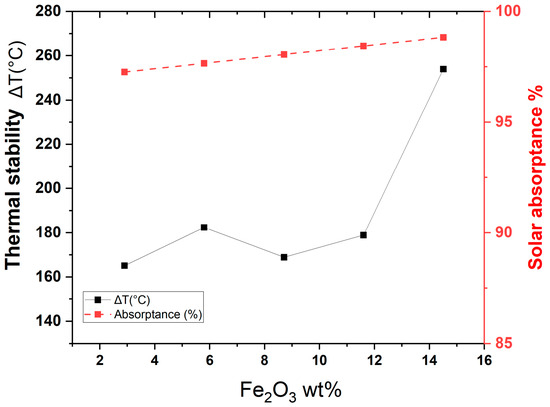
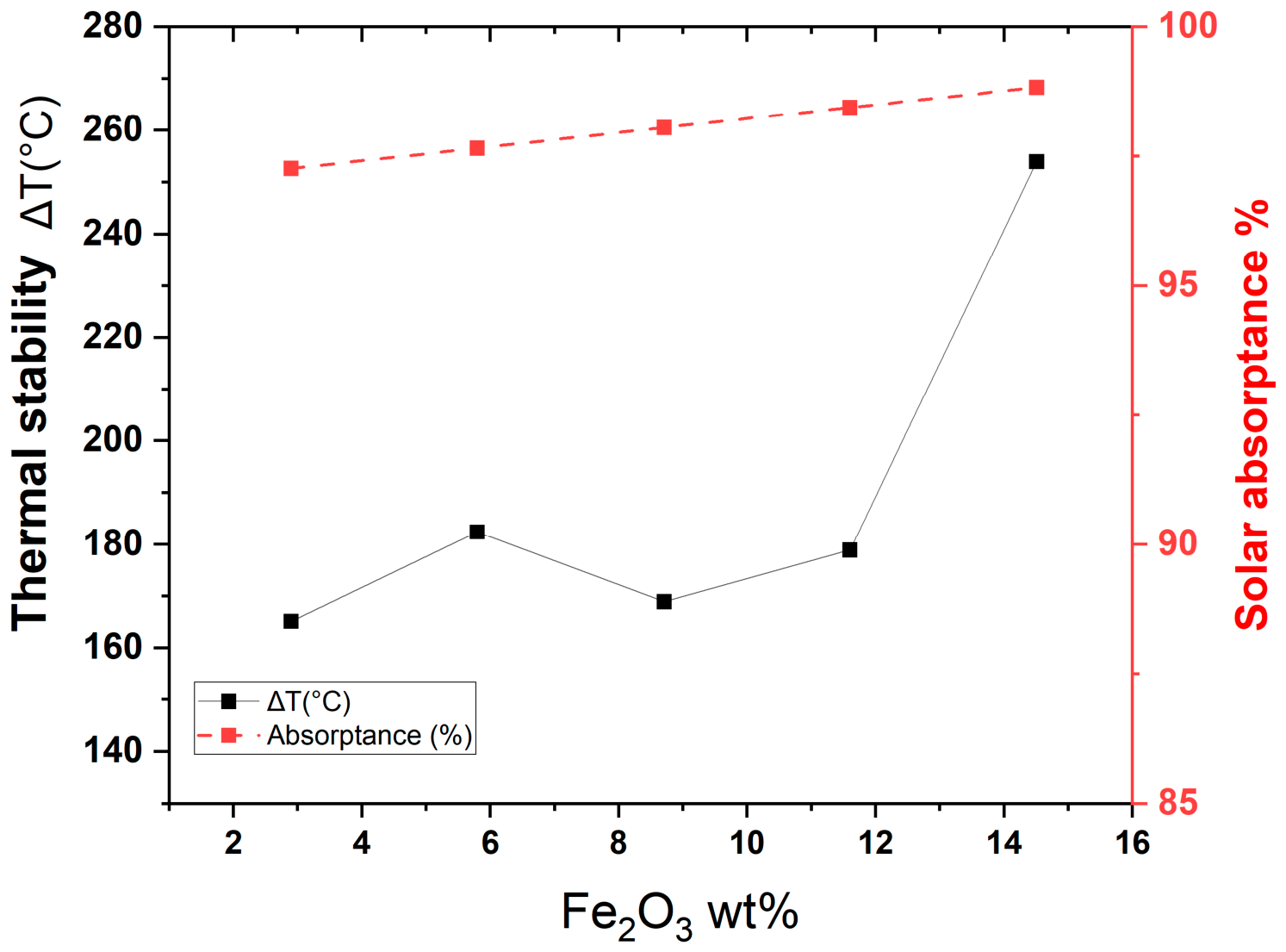
The combined results of thermal and theoretical optics provide insight into the effect of Fe2O3 content on the performance of the investigated scoria-based glasses. As the Fe2O3 content increases from 2.9 wt% (H10) to 14.5 wt% (H50), a significant increase in the thermal stability parameter (ΔT = Tx − Tg) was observed together with an increase in the estimated solar absorptance. The increase in ΔT from approximately 165 °C to 254 °C indicates enhanced resistance to crystallization during heating. A wider processing window is generally advantageous for glass production because it reduces the possibility of unwanted devitrification during shaping and thermal processing. At the same time, the theoretical optical assessment predicts improved solar absorption as the content of Fe2O3 increases. Consequently, Fe-rich compositions show a good combination of thermal stability and predicted photothermal performance.
The relationship between Fe2O3 content, thermal stability, and estimated solar absorptance is shown in Figure 10. Both parameters show a positive correlation with increasing Fe2O3 content, indicating that iron oxide plays an important role in determining the functional properties of the glass system. From a compositional perspective, iron oxide contributes not only to the physical and thermal properties of the glass but also to its predicted optical response.
Figure 10.
The correlation between Fe2O3 content, thermal stability, and solar absorptance of the scoria-based glass system.
Sample H50 showed the highest thermal stability and the calculated absorptance of the investigated compositions. These findings suggest that Fe-rich scoria-based glasses could be promising candidates for applications requiring thermally stable and dark-colored glass materials.
4. Conclusions
Fe-rich scoria-based glass compositions were successfully synthesized using natural scoria in combination with recycled glass cullet, limestone, and magnesite as cost-effective and sustainable raw materials. The effect of Fe2O3 content on the thermal stability, crystallization, density, and predicted optical properties of scoria-based glass was investigated.
The main findings of this study can be summarized as follows:
- Increasing Fe2O3 concentration significantly affects the thermal behavior of glasses, indicating its critical role in controlling the structure and crystallization of glasses.
- The thermal stability (∆T = Tx − Tg) increased from 165.1 to 254 °C, demonstrating excellent thermal stability and resistance to crystallization for high-temperature applications and glass–ceramic production.
- Density measurements showed a non-monotonic compositional dependence due to the combined effect of Fe2O3 enrichment and network structural modification.
- Heat treatment of the Fe-rich scoria-based glass (H50) at 900 °C and at 950 °C promoted controlled crystallization and the formation of crystalline phases including diopside, gehlenite, wollastonite, maghemite, and anorthite, as confirmed by XRD.
- SEM observation revealed progressive crystal growth and microstructural densification with increasing heat treatment temperature, indicating the transformation from glass to glass–ceramic.
- A semi-empirical optical assessment based on literature-derived models suggested increased absorptance from 97.26% to 98.83% and reduced reflectance with increasing Fe2O3 content.
- The results demonstrate that scoria-based glass systems with high Fe2O3 content have thermal stability and controllable crystallization behavior while providing a sustainable route for the utilization of natural and recycled industrial resources. These characteristics highlight their potential for glass–ceramic and other high-temperature materials applications.
Funding
This research received no external funding.
Institutional Review Board Statement
Not applicable.
Informed Consent Statement
Not applicable.
Data Availability Statement
The data supporting this study’s findings are accessible from the corresponding author upon reasonable request.
Acknowledgments
The author would like to acknowledge the technical support they received from the Saudi Geological Survey and the Center for Nanotechnology at KFUPM.
Conflicts of Interest
The authors declare no conflict of interest.
References
- Khater, G.A.; El-Kheshen, A.A.; Farag, M.M.; Shendy, H.; Nasralla, N.H.S. Preparation and characterization of low-cost albite and wollastonite glass-ceramics based on natural raw materials. Next Mater. 2025, 9, 101183. [Google Scholar] [CrossRef] [Scilit]
- Khater, G.A.; Gomaa, M.M.; Kang, J.; Yue, Y.; Mahmoud, M.A. Thermal, electrical and physical properties of glasses based on basaltic rocks. Silicon 2020, 12, 645–653. [Google Scholar] [CrossRef] [Scilit]
- El Mahallawy, N.A.; Ragab, K.S.; Megahed, H.; Khater, G.A. Novel solar absorber from cement industry waste. Sol. Energy Mater. Sol. Cells 2025, 280, 113308. [Google Scholar] [CrossRef] [Scilit]
- Alraddadi, S.; Assaedi, H. Thermal and mechanical properties of glass–ceramics based on slate and natural raw materials. Silicon 2023, 15, 1871–1882. [Google Scholar]
- Khater, G.A.; El-Kheshen, A.A.; Farag, M.M. Synthesise and characterization of cordierite and wollastonite glass—Ceramics derived from industrial wastes and natural raw materials. Materials 2022, 15, 3534. [Google Scholar] [CrossRef] [Scilit] [PubMed]
- Höland, W.; Beall, G.H.; Smith, C.M. Glass-ceramics: From ideas to products. J. Am. Ceram. Soc. 2025, 108, e20086. [Google Scholar]
- Shendy, H.; Khater, G.A.; Shahien, M.G.; Zayed, A.M. Preparation of innovative glass-ceramic materials based on mica schist within the CaO–MgO–Al2O3–SiO2 system. Open Ceram. 2024, 17, 100545. [Google Scholar] [CrossRef] [Scilit]
- Deubener, J.; Höland, W. Nucleation and crystallization of glasses and glass-ceramics. Front. Mater. 2017, 4, 14. [Google Scholar] [CrossRef] [Scilit]
- Santos, G.; Benzarti, Z.; Cavaleiro, D.; Figueiredo, L.; Carvalho, S.; Devesa, S. Optimization of black nickel coatings’ electrodeposit onto steel. Coatings 2024, 14, 1125. [Google Scholar] [CrossRef] [Scilit]
- Khater, G.A.; Nabawy, B.S.; Kang, J.; Yue, Y.; Mahmoud, M.A. Magnetic and electrical properties of glass and glass-ceramics based on weathered basalt. Silicon 2020, 12, 2921–2940. [Google Scholar] [CrossRef] [Scilit]
- Colak, S.C.; Birdogan, S.; Aral, E.; Kılıc, G. Formation of black glass to be used in solar collectors as absorbent and CuO and Fe2O3’s effect on this glass. Int. J. Hydrogen Energy 2009, 34, 5196–5200. [Google Scholar] [CrossRef] [Scilit]
- Kumar, M.; Sivaiah, P.; Kumar, A.; Kumar, D.; Pandey, S.; Singh, A.K.; Ahmed, F.D.; Hasnain, S.M. Simulation of metal ceramic single layer coatings for solar energy applications. Mater. Sci. Energy Technol. 2024, 7, 85–90. [Google Scholar] [CrossRef] [Scilit]
- Sato, T.; Tanaka, M. Black Synthetic Quartz Glass and Process for Producing the Black Synthetic Quartz Glass. WO2008105191A1. 17 January 2008. Available online: https://patents.google.com/patent/WO2008105191A1/en (accessed on 1 January 2020).
- Tripanagnostopoulos, Y.; Souliotis, M.; Nousia, T.H. Solar collectors with colored absorbers. Sol. Energy 2000, 68, 343–356. [Google Scholar] [CrossRef] [Scilit]
- Colak, S.C. Production and investigation of black glasses as absorber materials: Transition metal ions doped silicate glasses. Phys. B Condens. Matter 2018, 550, 354–359. [Google Scholar] [CrossRef] [Scilit]
- Sable, D.B.; Khirade, P.P.; Birajdar, S.D.; Pandit, A.A.; Jadhav, K.M. Effect of iron oxide (Fe2O3) on the structural, optical, electrical, and dielectric properties of SrO–V2O5 glasses. Glass Phys. Chem. 2017, 43, 302–312. [Google Scholar] [CrossRef] [Scilit]
- Meo, S. Effect of cement dust exposure on phagocytic function of polymorphonuclear neutrophils in cement mill workers. Int. J. Occup. Med. Environ. Health 2008, 21, 133–139. [Google Scholar] [CrossRef] [Scilit] [PubMed]
- Mishra, R.K.; Avinashi, S.K.; Shweta Kumari, S.; Gautam, C. Synergistic effect of Fe2O3 doping on physical, structural, optical, and radiation shielding characteristics of the glasses in a system (30-x) BaO–30TiO2–40SiO2–xFe2O3 (0 ≤ x≤ 6) for optoelectronic applications. J. Inorg. Organomet. Polym. Mater. 2024, 34, 1379–1402. [Google Scholar]
- Aloraini, D.A.; Almuqrin, A.; Albarzan, B.; Shaaban, K.S.; Wahab, E.A. Impact of Fe2O3 on Structural Properties, Nonlinear Optical Behavior, and Radiation Shielding Efficiency of Lead Phosphate Glasses: Aloraini, Almuqrin, Albarzan, Shaaban, and Wahab. JOM 2025, 77, 9894–9909. [Google Scholar] [CrossRef] [Scilit]
- Henaish, A.M.A.; Issa, S.A.; Zakaly, H.M.; Tekin, H.O.; Abouhaswa, A. Characterization of optical and radiation shielding behaviors of ferric oxide reinforced bismuth borate glass. Phys. Scr. 2021, 96, 075801. [Google Scholar] [CrossRef] [Scilit]
- Michalski, J.R.; Kraft, M.D.; Sharp, T.G.; Williams, L.B.; Christensen, P.R. Mineralogical constraints on the high-silica Martian surface component observed by TES. Icarus 2005, 174, 161–177. [Google Scholar] [CrossRef] [Scilit]
- Liu, C.; Tong, X.; Yang, C.; Jiang, L.; Li, Y.; Zhang, L.; Ding, B.; Liu, Z.; Huang, H.; Li, H. Preparation and dielectric properties of the amorphous basaltic glass. Silicon 2022, 14, 3623–3628. [Google Scholar]
- Horgan, B.H.; Smith, R.J.; Cloutis, E.A.; Mann, P.; Christensen, P.R. Acidic weathering of basalt and basaltic glass: 1. Near-infrared spectra, thermal infrared spectra, and implications for Mars. J. Geophys. Res. Planets 2017, 122, 172–202. [Google Scholar] [CrossRef] [Scilit]
- Alraddadi, S.; Assaedi, H. Phase Evolution, Mechanical, and Electrical Properties of Lightweight Ceramic Prepared Using Scoria at Low Temperature. Crystals 2024, 14, 929. [Google Scholar] [CrossRef] [Scilit]
- Alraddadi, S. Crystal Structure, Microstructure, and Dielectric and Electrical Properties of Ceramic Material Prepared Using Volcanic Ash. Crystals 2024, 14, 817. [Google Scholar] [CrossRef] [Scilit]
- Alraddadi, S.; Saeed, A.; Assaedi, H. Effect of thermal treatment on the structural, electrical, and dielectric properties of volcanic scoria. J. Mater. Sci. Mater. Electron. 2020, 31, 11688–11699. [Google Scholar] [CrossRef] [Scilit]
- Eldera, S.S.; Aldawsari, S.; Hamzawy, E.M. Utilization of waste glass with natural pozzolan in the production of self-glazed glass-ceramic materials. Nanotechnol. Rev. 2023, 12, 20220565. [Google Scholar] [CrossRef] [Scilit]
- Uma, C.S.; Malhotra, L.K.; Chopra, K.L. Cobalt oxide-iron oxide selective coatings for high temperature applications. Bull. Mater. Sci. 1986, 8, 385–389. [Google Scholar] [CrossRef] [Scilit]
- El-Depsy, A.; Shawky, A.M. Calculation of reflectance and transmittance of coating with optical rough surfaces. In Proceedings of the of the 8th Conference on Nuclear and Particle Physics, Hurghada, Egypt, 20–24 November 2011; pp. 271–280. [Google Scholar]
- Gahmousse, A.; Ferria, K.; Rubio, J.; Cornejo, N.; Tamayo, A. Influence of Fe2O3 on the structure and near-infrared emissivity of aluminosilicate glass coatings. Appl. Phys. A 2020, 126, 732. [Google Scholar] [CrossRef] [Scilit]
- Khater, G.A.; Saudi, H.A.; Abd-Allah, W.M. Glass and glass-ceramics based on weathered basaltic rock for radiation shielding applications. Silicon 2022, 14, 7449–7459. [Google Scholar]
- Li, X.; Zang, X.; Xing, X.; Li, J.; Ma, Y.; Li, T. Effect of Fe2O3 on the crystallization behavior of glass-ceramics produced from secondary nickel slag. Metals 2022, 12, 164. [Google Scholar] [CrossRef] [Scilit]
- Mahallawy, N.; Shoeib, M.; Eletriby, S. Effect of Sol-Gel Process Parameters on Optical Properties of CuCoMnO x Selective Coat for Solar Energy Applications. J. Am. Sci. 2016, 12, 41–48. [Google Scholar]
- Joly, M.; Antonetti, Y.; Python, M.; Gonzalez, M.; Gascou, T.; Hessler, A.; Schueler, A. Energy-efficient sol-gel process for production of nanocomposite absorber coatings for tubular solar thermal collectors. In Proceedings of CISBAT 2013 Cleantech for Smart Cities and Buildings; EPFL: Lausanne, Switzerland, 2013; Volume 1, pp. 11–16. [Google Scholar]
- Jaworske, D.A.; Shumway, D.A. Solar selective coatings for high temperature applications. In Space Technology and Applications International Forum-STAIF 2003 (No. CP-654); American Institute of Physics: College Park, MD, USA, 2003. [Google Scholar]

Disclaimer/Publisher’s Note: The statements, opinions and data contained in all publications are solely those of the individual author(s) and contributor(s) and not of MDPI and/or the editor(s). MDPI and/or the editor(s) disclaim responsibility for any injury to people or property resulting from any ideas, methods, instructions or products referred to in the content. |
© 2026 by the author. Licensee MDPI, Basel, Switzerland. This article is an open access article distributed under the terms and conditions of the Creative Commons Attribution (CC BY) license.