1. Introduction
Aluminum–silicon (Al-Si) alloys occupy a leading position among casting materials. Eutectic and hypereutectic alloys are used for casting pistons for internal combustion engines due to their low weight, good casting properties, dimensional stability, heat resistance and wear resistance. During operation, pistons undergo various cyclic and thermomechanical loads, which requires the two-component alloys to be alloyed with various chemical elements to give them the necessary properties [
1,
2]. Magnesium is one of the main alloying elements in the Al-Si system. Its influence is expressed in increasing the mechanical properties of the alloys without deteriorating their corrosion resistance. Interacting with silicon, magnesium forms the intermetallic phase Mg
2Si, forming the Al–Si–Mg
2Si eutectic, which has a microhardness of 600 μHV
20/10. Magnesia also participates in the α-solid solution. Another major alloying element is copper, which is used to improve the strength (formation of the CuAl
2 phase), machinability and heat resistance of alloys. Due to its high price and conflicting opinions about the positive influence of nickel on the structure and properties of this type of alloys, its use as an alloying element is debatable. In order to improve the mechanical properties, heat resistance and structural characteristics of alloys, alloying with Mn, Cr, Co, Mo, V and Zr has also been used [
3,
4,
5,
6,
7,
8]. Each of these elements has a positive influence (spheroidization) on the harmful iron-containing phases. It is known that the mechanical properties of piston aluminum–silicon alloys depend both on the size, amount and distribution of eutectic silicon and on the amount, size and shape of the primary silicon crystals [
9,
10,
11,
12,
13,
14,
15,
16]. This necessitates the application of modifying treatment in order to influence the crystals of free and eutectic silicon, and, depending on the type of alloy, Na is used for eutectic and hypoeutectic compositions, and P for the hypereutectic ones. By conducting metallurgical treatment, the mechanical properties of these alloys are improved, which expands their range of application [
17]. To obtain the necessary complex of physical and mechanical properties, Al-Si alloys are subjected to the T6 heat treatment [
18,
19,
20,
21]. Of particular importance for obtaining structures that provide the necessary mechanical and operational properties of the alloys are the operating parameters of the hardening regimes and subsequent artificial aging. The highest mechanical properties are revealed by alloys subjected to artificial aging at temperatures in the range of 150 ÷ 200 °C. This is explained by the formation of dispersed particles of the intermediate (metastable) phase θ′, having a tetragonal crystal lattice and a coherent connection with the α-phase. With increasing temperature (200 ÷ 400 °C), coagulation of θ′, formation of the stable θ phase and disruption of the coherent connection between the α-phase and the θ-phase are observed.
The investigation of the mechanical properties of Al-Si alloys shows hardness under 1 GPa [
22,
23]. The lower hardness and insufficient wear resistance of aluminum and its alloys restrict their broader application in various fields. To overcome this limits surface protective coatings are applied. Aluminum alloys are exposed to aggressive corrosion reactions and surface protective layers like hard coatings are applied [
24]. A review is made of the recent research reports of preparing wear-resistant coatings through one-step methods (such as anodic oxidation, micro-arc oxidation, cold spraying, plasma spraying, and electrodeposition) and two-step methods (anodic oxidation and physical vapor deposition, micro-arc oxidation and sealing, magnetron sputtering, and plasma nitriding) for Al-based alloys. Among the known methods magnetron sputtering is characterized with superior sputtering and deposition rates, higher ionization efficiency, and sustained discharge at lower operating pressures and voltages [
25]. CrN coatings offer perfect protection against sticking and surface scratching of aluminum alloy tools [
7]. The thickness of the CrN coating influences the corrosion resistance [
26]. Sputtering of Cr/CrN coatings with different nitrogen composition led to different microstructure and protective properties and investigation is necessary for their optimization [
27]. The addition of Al element could significantly enhance the mechanical properties, oxidation and corrosion resistance of CrN coatings. CrAlN is considered as the most promising nitride coating material for high-temperature applications and has great potential as protective coating for Al alloy components [
28]. Deposition of thin layers at temperatures under 200 °C through magnetron sputtering in a closed-field configuration led to a high-quality, uniform and dense morphology [
29]. The mechanical properties of CrAlN thin layers deposited on special AlSiCu alloys with this technology are still not well researched.
About 23% of carbon dioxide emissions occur due to road transport. This requires a focus on finding new technologies that lead to carbon-free mobility. In recent years, ammonia has been gaining increasing popularity as an alternative fuel for internal combustion engines. The main technical problems when using ammonia fuel include its high auto-ignition (combustion) temperature, which reaches 650 °C, as well as a high compression ratio between 35:1 and 100:1 for the successful ignition of ammonia without the use of other fuel. Ammonia and the intermediate products obtained during its combustion are corrosively aggressive to the aluminum alloys used to produce the piston–cylinder groups for internal combustion engines. The solution of these problems and meeting the specific operating conditions of ICEs with ammonia fuel is a priority for the development of new promising materials. Such materials can be new non-standardized Al-Si alloys with increased mechanical properties, with a coating applied to them with high refractoriness, hardness and wear resistance.
The aim of the presented study is to evaluate both the hardness and elastic modulus of a hard CrAlN coating deposited through unbalanced close-field magnetron sputtering, as well as its microstructure and adhesion strength on a specially designed AlSi21Cu5MgCr alloy. The hardness measurements have to provide information about the protective properties of the layer and the ameliorated quality of the alloy. The modulus of elasticity has to show the similarity of the elastic properties of the alloy and coating. The adhesion measurements will present the coating’s strength relative to the substrate under progressive loading. The microstructure and the elemental composition will reveal the nature of both materials and whether their protective layer will improve the physical properties of the substrate alloy. All the investigated data will generalize if CrAlN thin layers are appropriate for protection of the new developed AlSi21Cu5MgCr alloy and for improving its mechanical and physical properties.
2. Materials and Methods
The object of this study is the non-standardized hypereutectic aluminum–silicon alloy AlSi21Cu5MgCr with the chemical composition shown in
Table 1. The alloy was melted in a laboratory electric resistance furnace under a layer of covering–refining flux with a composition of 10 KCl: 50 NaCl: 10 Na
3AlF
6, in an amount of 0.5 wt% relative to the mass of the melt, modified with 0.04 wt% P, introduced into the melt through the CuP10 ligature at a temperature of 830 °C, at which temperature the alloy was degassed by purging with argon for 3 min.
After casting, the experimental castings were subjected to the T6 heat treatment (quenching with subsequent artificial aging). The recommended heating temperature for homogenizing the structure of this type of alloys is 20–50 °C lower than the temperature of the solidus line of the system (577 °C). Heating to temperatures of 20–30 °C below this temperature is risky due to the possibility of obtaining defects from overheating and burning of grain boundaries. Therefore, a heating temperature of 510–515 °C was chosen for conducting the technological process, which is high enough for the complete dissolution of the primary intermetallics formed in the crystallization process in the α-solid solution. Usually, the holding time at the selected working temperature is within 4–8 h, and for this reason, the holding time chosen by us at the working temperature is 6 h and 30 min. To obtain a saturated solid solution, the quenching was carried out in a cooling medium—water with a temperature of 20 °C. The artificial aging process was carried out at a working temperature of 190 °C, with the holding time at this temperature being 12 h. The microstructure of the alloys was studied using a Leica DM ILM microscope (Wetzlar, Germany) with the help of software and a module for grain measurement and phase analysis. The microsections were wet ground on sandpaper with the numbers 240, 320, 400, 600, 800 and 1000 and mechanically polished with diamond paste and lubricant. The microstructure of the samples was developed with Keller’s reagent (PACE Technologies, Tucson, AZ, USA) (1 part HF, 1.5 parts HCl, 2.5 parts HNO3, 95 parts H2O). The macrohardness of the studied alloy and the microhardness of the α-solid solution were measured. After the heat treatment, test specimens were fabricated for the application of Cr/CrN/CrAlN coating.
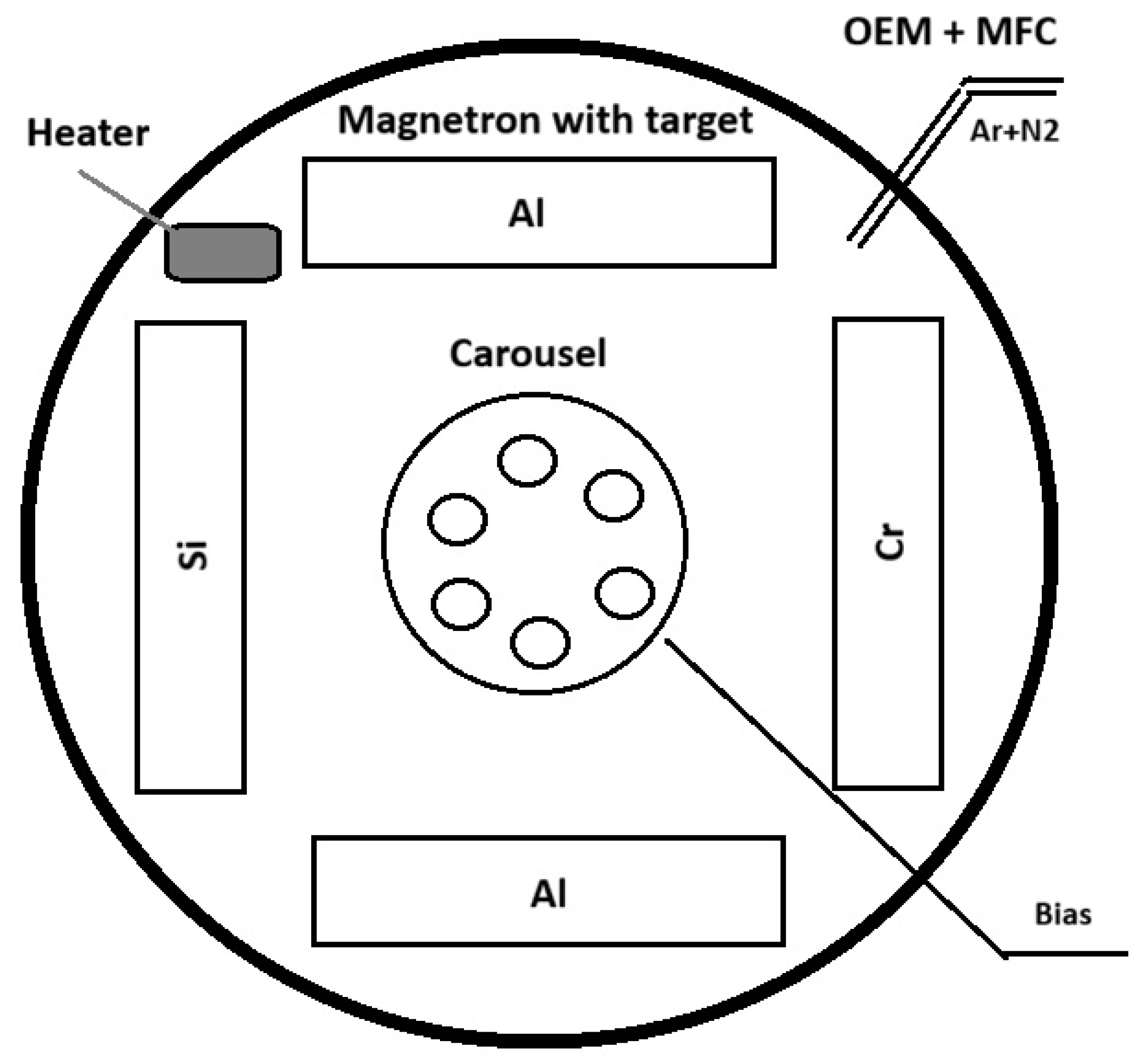
The semi-industrial equipment UDP850/4 shown in
Figure 1 is situated at the Central Laboratory of Applied Physics. It was used for the deposition of Cr/CrN/CrAlN hard coatings. Standard rectangular Cr (99.99%) and two Al (99.99%) targets were sputtered. One Si target was working at a safety current setpoint of 0.5 A, insignificantly sputtering Si. The experimental AlSi21Cu5MgCr alloy was pre-cleaned in a special alkaline solution and subsequently rinsed in deionised water.
The base pressure was 3.8 × 10
−3 Pa. Argon (Ar) was used as a working inert gas with a flow rate of 25 sccm. An optical emission monitoring (OEM) with a feedback control system, based on the metal chromium emission line was used for control of the nitrogen flow. During the deposition of the coating, pulse direct current was applied to the corresponding targets. The rotation speed of the sample holder was fixed at 5 rpm. Supporting −70 V bias voltage was applied to the substrate. The substrate temperature was in the range of 140–215 °C. The temperature was controlled by plasma and the setpoint of the carbon heater. The deposition process started after Ar plasma cleaning with a bias voltage of −500 V for 30 min. The bias was controlled in the Pulse DC regime (pulse frequency
f 250 × 10
3 Hz and pause 2.5 × 10
−6 s). A Cr adhesion layer was deposited onto the substrates. A CrN transition layer was firstly deposited with gradually increasing nitrogen flow and after that the power of the Al targets gradually reached the setpoint value. The gradually introduced interlayers are necessary to ensure the smooth transition between the soft substrate and the harder protective layer, as well as the proper adhesion of the coating with the substrate. The main CrAlN layer was deposition time was 90 min. The deposition process parameters are summarized in
Table 2.
Nanoindentation was used to characterize nanohardness. Using Anton Paar equipment (Anton Paar, Graz, Austria) indentations were made under normal loads of 10, 20, 30, 40, 50 and 100 mN. The values of 30–100 N show the influence of the substrate hardness on the complex hardness in depth. The load of 20 mN was chosen as representative for the characterization. The measured hardness at this load is slightly influenced by the roughness of the sample surface and by the substrate hardness. The penetration depth at 20 mN is around the 10% value (235 nm) of the coating thickness. To guarantee substrate-independent value at lower penetration depth a control nanoindentation at 10 mN was made corresponding to penetrating under 9% of the coating thickness. Five measurements were made at 20 mN load. The highest and lowest results were eliminated and the average value of the other three measurements was taken as a representative value. The Poisson ratio of the coating used for the calculations was 0.25.
Scratch test was used to characterize the adhesion with Anton Paar micro-indentation equipment (Anton Paar, Graz, Austria). A progressive scratch up to 30 N was applied. The length was 1mm and the speed was 10 N/min.
The thickness of the coatings was determined using a compact Calotest CAT2 (Anton Paar, Graz, Austria) equipped with a light microscopy (Anton Paar Tritec SA, Corcelles, Switzerland) with a magnification of 10×. A depression in the shape of a spherical crater (calotte) was abraded into the sample surface. The rotation speed was 1200 rpm. A steel ball with a diameter of 20 mm was used. The coating thickness was calculated using specialized Video Software Version 9.0.12 after the examination of the obtained crater. Five measurements were done in different surface positions, one in the center and four at the controversy positions. The average value and the standard deviations were calculated.
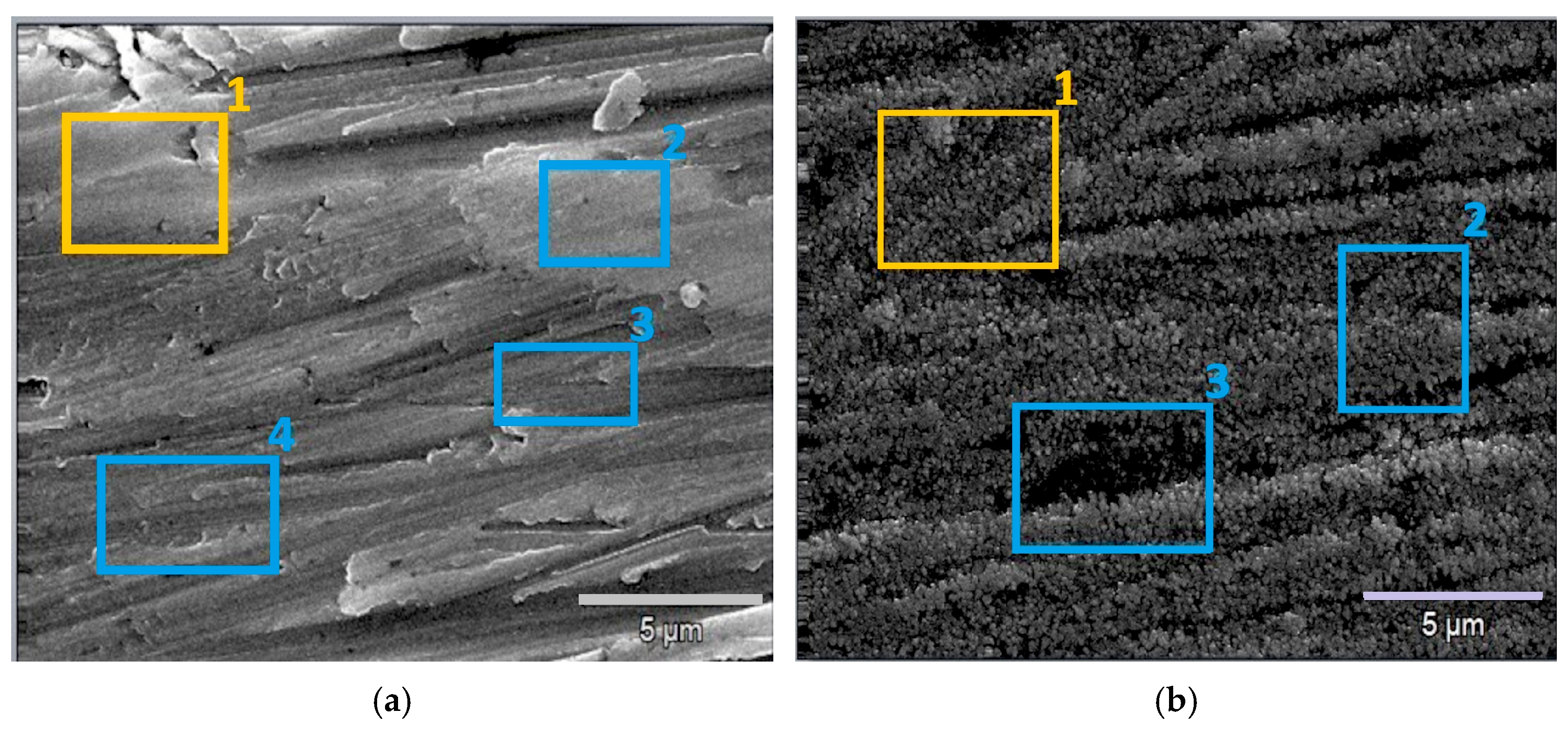
Scanning electron microscopy SU-5000 (Hitachi, Tokyo, Japan) and energy-dispersive X-ray (Thermo Scientific, Waltham, MA, USA) spectroscopy analyses were used to investigate the morphology of the sample surface and to identify the element composition within the total surface and several rectangular subareas. Surface images were obtained in secondary electrons (morphology contrast) and backscattered electrons (density contrast) at an operating voltage of 5 kV and 15 kV, respectively.
3. Results
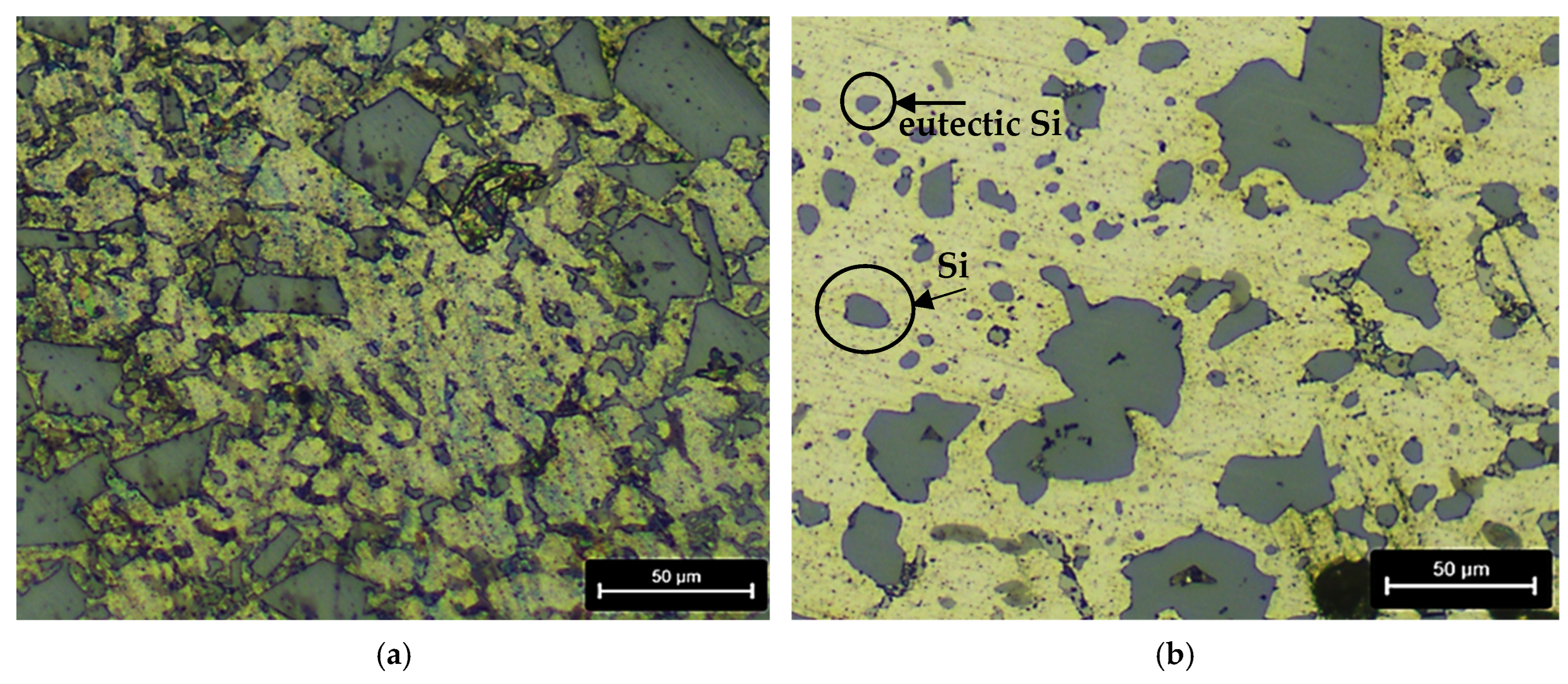
The structure of the studied alloy AlSi21Cu5MgCr modified with 0.04 wt%P before being subjected to heat treatment is shown in
Figure 2a. For the studied alloy, five different representative microstructural fields were analyzed. In each field, the linear dimensions of the visible primary separated silicon crystals, as well as of the eutectic silicon, were measured. For crystals with approximately equilibrium or irregular morphology, the size was determined by a characteristic conditional diameter. For crystals with a more pronounced rectangular or elongated shape, the two main dimensional characteristics were measured—length and width, and their average value was used as a representative size of the individual crystal. The values obtained from all measured fields were statistically processed, and the average size of the silicon crystals was determined as the arithmetic mean value. The primary silicon crystals are evenly distributed in the observed plane of the metallographic section, they are in the form of plates with rounded corners with a conditional average diameter of 32.4 µm. The silicon crystals in the composition of the eutectic are in the form of needles with an average linear size of 8.6 µm as they are located in dendritic crystals of the α-solid solution. After heat treatment, a decrease in the size of the free silicon crystals to a conditional average diameter of 26.9 µm was registered. No significant difference in the size of the eutectic silicon crystals (8 µm) was observed, but they changed their shape—from plate-like to spheroidized (
Figure 2b).
The AlSi21Cu5MgCr alloy before heat treatment showed macrohardness of 128.5 HV
10/10 and microhardness of 122 µHV
50/10. After heat treatment, the measured values of both parameters increased, with the macrohardness reaching 168.5 HV
10/10 and the microhardness of the α-phase reaching 154 µHV
50/10. The macrohardness value of the alloy is significantly higher than that required for this type of alloy: 95 ÷ 137 HV (90 ÷ 130 HB) [
30]. This shows that in the heating process before quenching, the alloying elements are dissolved in the α-solid solution and after quenching a saturated solid solution is fixed. In the process of artificial aging, strengthening phases have formed and separated, which contribute to the increased microhardness and macrohardness values of the alloy.
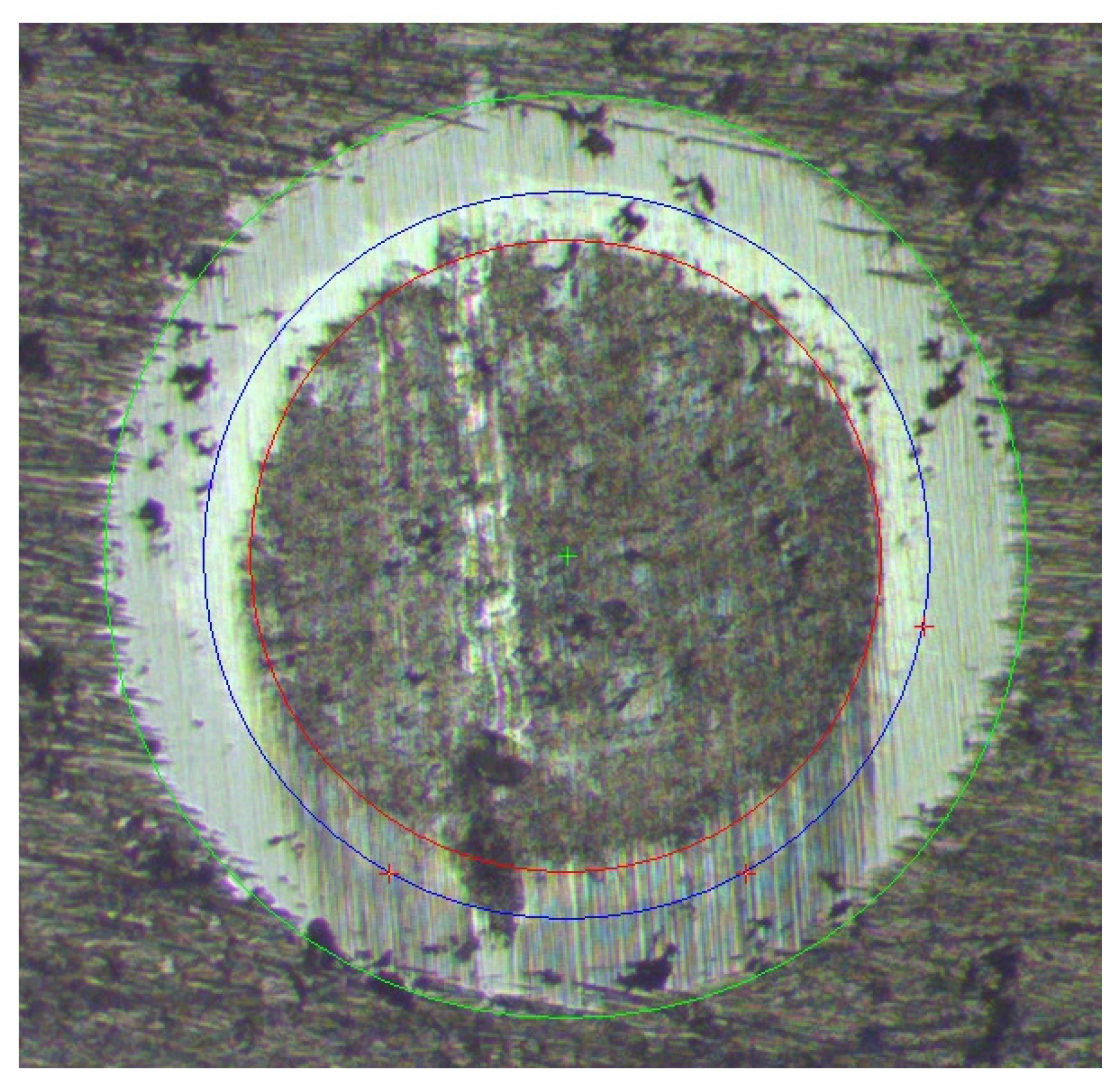
An image of the calotte, obtained by the calottes in the center of the sample surface is shown in
Figure 3. The average value of the measured total thickness D in the different five surface locations of the Cr/CrN/CrAlN coating is 2.35 microns. The measured values of the thickness with 5% error, the calculated average value and the standard deviation STD are shown in
Table 3. The adhesive and transition Cr/CrN layers have thickness of 0.67 microns and the main CrAlN layer of 1.69 microns.
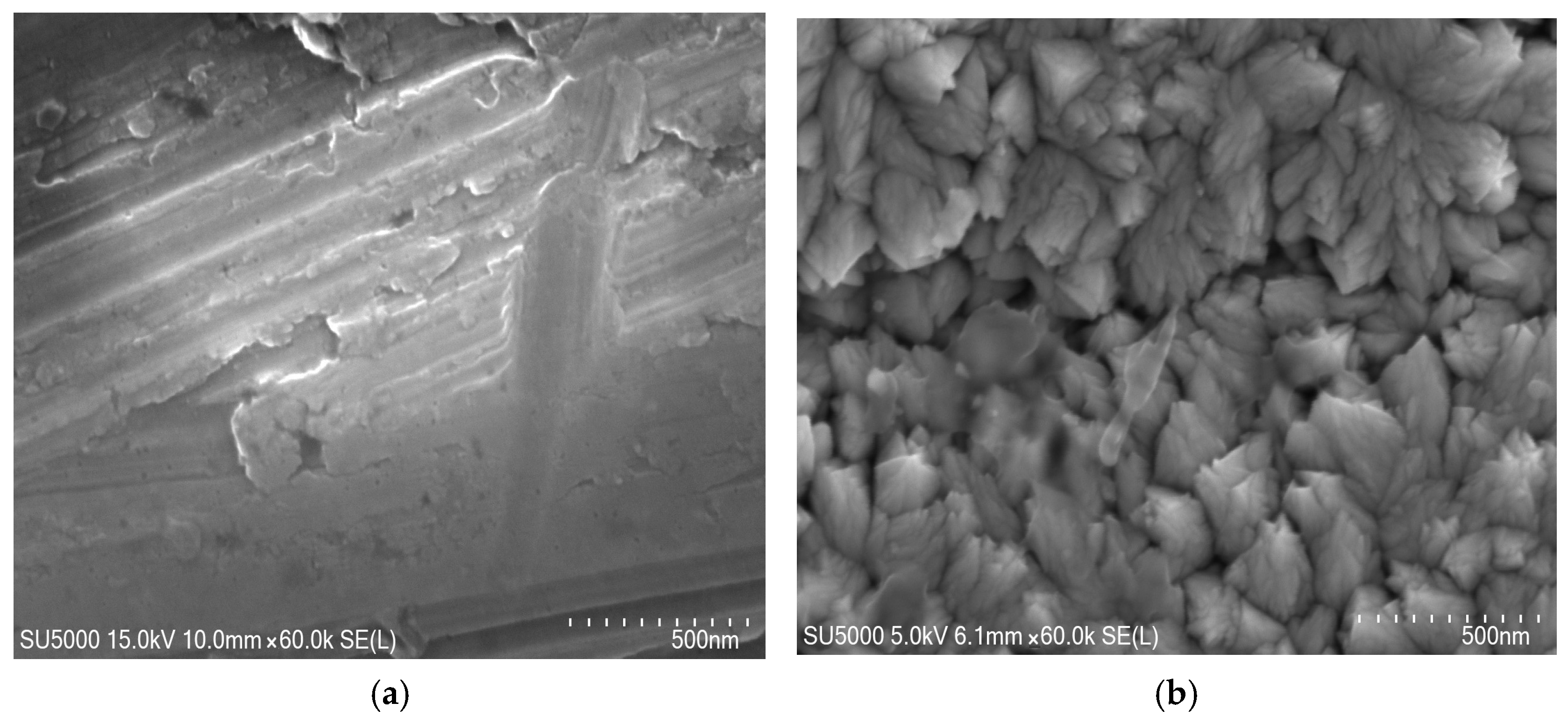
Figure 4a and
Figure 5a and
Table 4 present the morphology and composition of the AlSiMgCu alloy as total surface spectrum and within the chosen rectangular subareas. The surface of the substrate is uneven with lighter and darker areas. The amount of magnesium in the alloy composition is 1.12 wt%, and the results of the conducted EDS show 26.2–35 at% in certain areas. This is due to the so-called liquation (chemical inhomogeneity) in the volume of the casting or in the crystals themselves. The mechanism of increasing the mechanical properties of aluminum alloys is due to the formation and separation of secondary intermetallics (including the magnesium-containing ones). Their distribution in the volume of the solid alloy is a process that is almost impossible to control and this is the reason for the obtained results. The elemental composition varies over the measured areas and deviates from the total spectrum. The surface morphology of the investigated areas of the CrAlN coating is shown in
Figure 4b and
Figure 5b. The elemental composition is given in
Table 5. The coating morphology is compact and equally distributed. The grain geometry is floury type, well packed and with small intergranular pores. The elemental composition estimated in the three different rectangular subareas shows values close to this of the total spectrum of the sample coating surface. This result reveals that in addition to the protection function the coating equalizes the surface material properties.
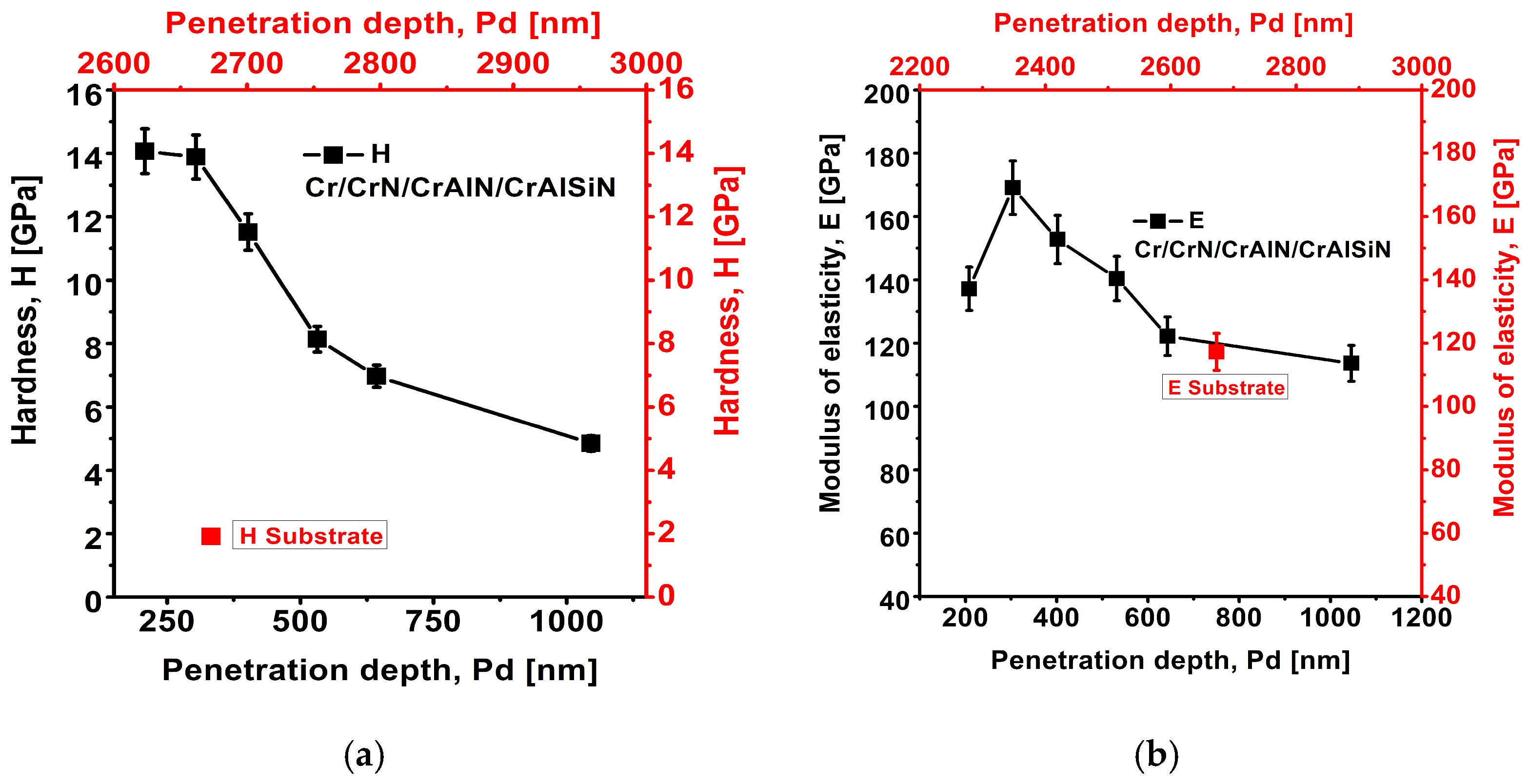
The hardness of the CrAlN layer and the substrate is compared in
Figure 6a. The hardness of the AlSiMgCu alloy is around 2 GPa that is a low value typical for Al-based alloys but higher from the hardness of AlSi21Cu5MgCr alloys developed and characterized by other researchers [
31,
32]. The measured hardness of the CrAlN hard coating is seven times higher than the AlSiMgCu alloy. The measured nanohardness of the coating according to the 10% depth rule of the coating thickness, where the substrate does not influence the result, is about 14 GPa. With an increase in the indentation loads and the penetration depth, the hardness decreases gradually to about 5 GPa, which is also a higher value than the substrate hardness. Depending on the Al composition CrAlN coatings could have hardness over 30 GPa [
33] when deposited on high-speed steel or WC. When deposited by sputtering on AlSi-based alloys, the increased hardness could reach four [
34] and seven [
35] times higher values in comparison with the substrate. With other PVD methods where the ionization energy is higher the hardness could reach even 30 GPa [
28]. As the obtained result is about seven times higher than the substrate one the CLFUBMS technique could be accepted as competitive with the other PVD sputtering methods.
Figure 6b shows the modulus of elasticity in dependance on the penetration depth. At a penetration depth where the substrate does not influence the result, the measured values are between 135 GPa and 170 GPa. With an increase in the penetration depth, the modulus of elasticity decreases to 110–120 GPa. The modulus of elasticity of the AlSiMgCu alloy is about 110 GPa. The close results for both the nitride coating and the substrate alloy indicate good similarity in the elastic properties and further support the smooth transition between the materials. The modulus of elasticity of CrAlN hard coatings is in the range of 300–520 GPa [
36]. Data for modulus of elasticity of CrAlN hard coating on AlSi21Cu5MgCr alloy are limited. The coatings deposited by CAD PVD technology show values between 210 GPa and 280 GPa in dependence on the nitrogen flow [
28].
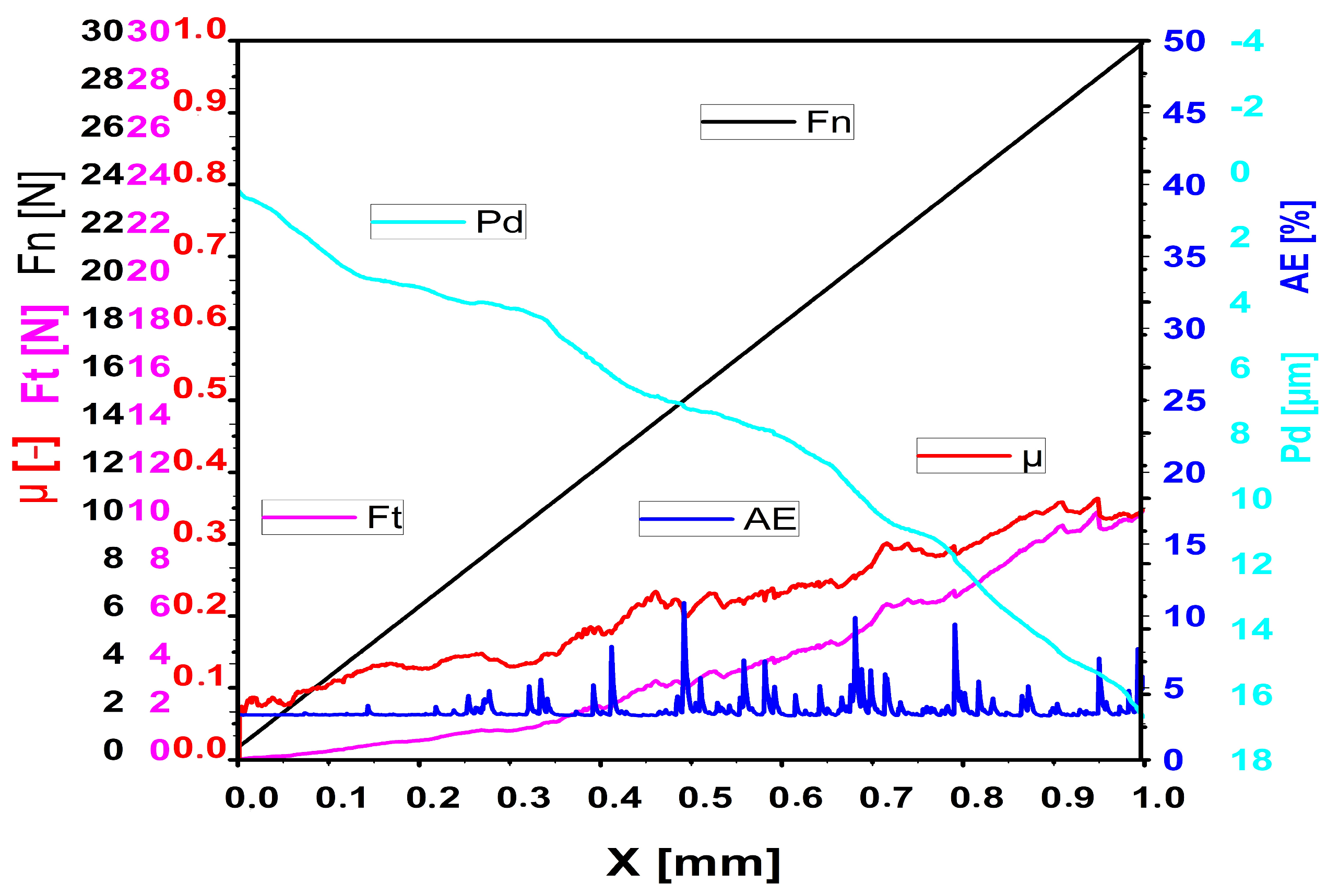
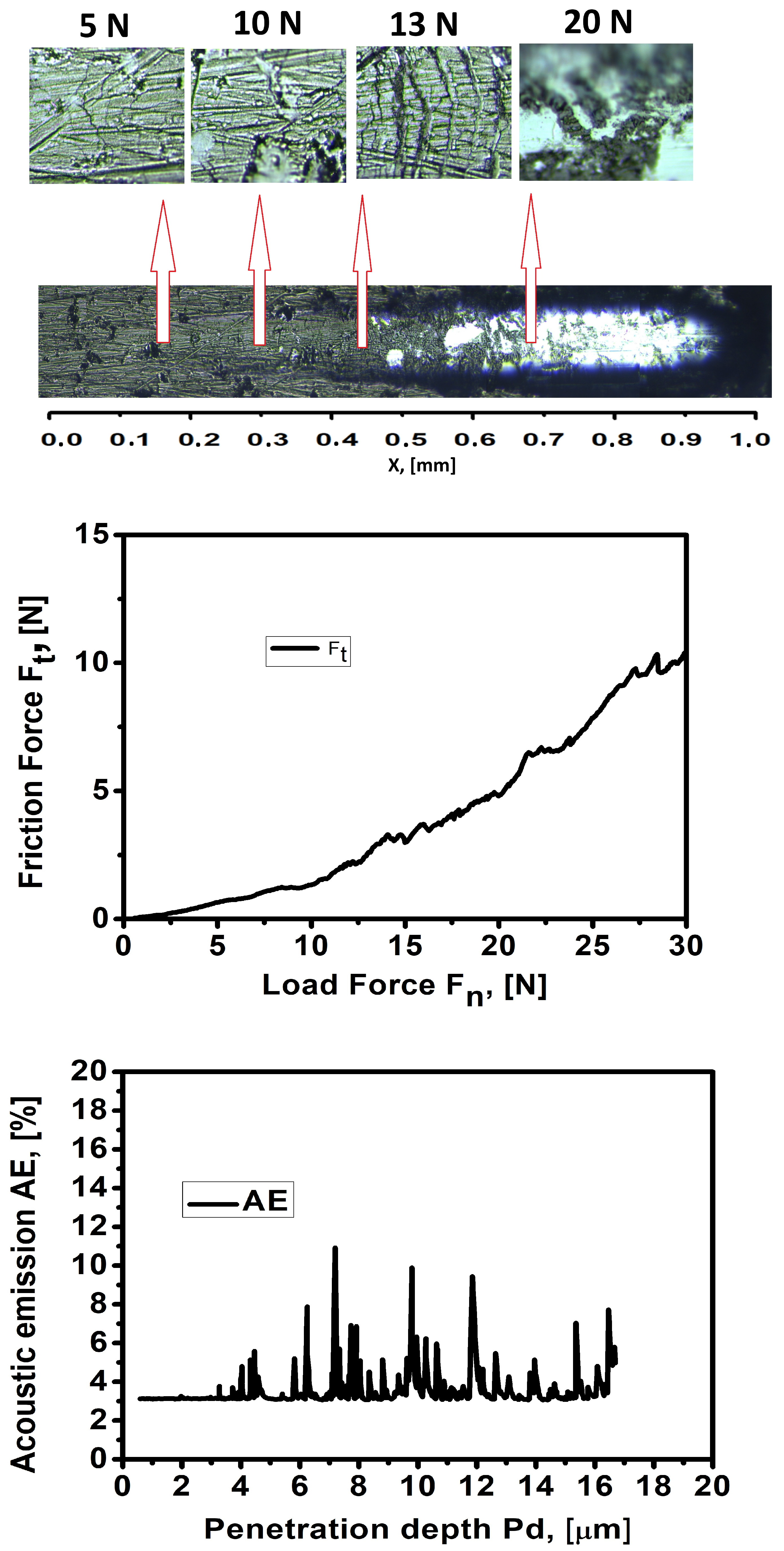
Figure 7 shows the trends of the scratch test including normal force Fn[N] (progressive during the test), tangential force Ft[N] (the resistance of the material against the indenter), penetration depth Pd[μm] (displacement of the indenter measuring elastic recovery), acoustic emission AE [%] (the noise during the measurement), and coefficient of friction against the diamond indenter μ[−] (determined as the ratio Ft/Fn). After the scratch test the surface is panoramically observed with an objective of ×20 magnification and the picture is also included. The different failure modes are identified with objective with magnification ×100. The pictures correspond to the loads where the failure mode appears. The failure modes are classified according to schematic representation of the scratch channel obtained during the scratch test [
37]. During the scratch test the classified critical loads are generalized in three LC groups. L
C1 defines the cohesive failures including the lowest critical load. It characterized the tensile and conformal cracks where the coating remains fully adhered to the substrate. L
C2 defines the stage at which the coating has first delamination and spallation with exposing small patches of the underlying substrate, L
C3 show the load at which the coating is fully removed leaving the substrate completely bare. The first surface cohesive failures appeared like lateral cracks at L
C1 load of 5 N. At the load of 10 N their size increased and the first single arc tensile crack was observed under the microscope. Increasing the load with 3 N lead to seria of arc tensile cracks. After the L
C2 load of 20 N the cohesive failure started to transform to adhesive edge thin film spalling and partly coating break-through. This process went until the end of the scratch test where the higher loads of 30 N will transform L
C2 to the fully exposer L
C3 load. The acoustic emission AE signal was not smooth and the picks have maximum height of 10% [
38]. The penetration depth Pd is changing its value without any sudden drops or picks. The friction force Ft has linearly increasing trend at the beginning followed by not straight and with small deviations trend reaching the value of about 10 N. These are related to the process of cohesive and adhesive failures. The friction coefficient trend followed the Ft one. The measured value of the friction coefficient against the diamond indenter was about 0.3 at the end of the scratch test. The adhesion test of the CAD PVD CrAlN coating on Al alloys showed that the initial cracks started at loads of about 7 N. Depending on the nitrogen pressure during the deposition process the fully delamination of the coating was in the loads range of 10–16 N. This lower adhesive strength is explained with the internal stress of the coating especially at higher nitrogen content [
28]. The magnetron sputtered CrAlN hard coating on Si-Al alloys showed adhesion strength of 2.3 N [
34] and 2.5 N [
35]. The comparison of the results shows that CLFUBMS technique allows deposition of CrAlN hard coatings on AlSi based alloys with improved adhesion strength. The adhesion of DLC-based films and W-C:H films on Si-Mg alloys shown critial loads with crack formation L
c1—2.8–3.5 N, chiping of the coating along the track sides L
c2 6.8–8.3 N, chipping of the coating across the entire track width L
c3 9.2–16.1 N and conitnius delamination of the coating L
Dealm 11.2–17.1 N [
39]. The adhesion of Cr-based coatings on AlSI4140 substrates shown that L
c1 is 8.5 N for Cr/(Cr,N) layer, 5 N for Cr/CrN/Cr(Al,N) layer and 1.3 N for CrN/Cr(Al,N) layers. The point at which the damage become continuous the force L
c2 is 11 N, 7.8 N and 2.5 N correspondingly showing that the multilayer structure and the interface design re playing a dominant role in adhesion properties [
40]. Further optimization of the adhesion properties of the research alloy could be made with multilayer Cr-based coatings based on the developed CrAlN hard coating.
4. Discussion
A non-standardized piston hypereutectic alloy AlSi21Cu5MgCr has been developed, in the composition of which no nickel has been added. This element is critical due to its high price, and the effect of its use is entirely on the heat resistance of the alloys. To improve the operational properties, a PVD coating Cr/CrN/CrAlN has been applied to the alloy. After carrying out the metallurgical treatment of the alloy and the subsequent heat treatment, a structure with modified free silicon crystals was obtained, which has the dimensions of 26.9 µm, fully meeting the recommended critical size of ≈30 µm. The eutectic silicon crystals are spheroidized and the have dimensions of 8 µm, which in turn ignores their notching effect on the matrix, i.e., they do not act as stress concentrators. All this is the basis for obtaining increased mechanical properties of the studied alloy AlSi21Cu5MgCr.
One of the many advantages of applying hard coatings through unbalanced magnetron sputtering is the possibility of working at lower substrate temperatures, which is of great importance for aluminum alloys. Aluminum alloys obtain the highest mechanical performance when the artificial aging process is carried out at temperatures in the range of 150 ÷ 200 °C. This is explained by the formation of dispersed particles of the intermediate (metastable) phase θ′, having a tetragonal crystal lattice and a coherent connection with the α-phase. With increasing temperature (200 ÷ 400 °C) the coagulation of θ′ is observed, the formation of the stable θ phase and the disruption of the coherent connection between the α-phase and the θ-phase. This leads to a decrease in the mechanical and deterioration of the operational properties of the alloys. The Cr/CrN/CrAlN coating was applied to test bodies of the studied alloy at a substrate temperature in the range of 140–215 °C. At this operating temperature, diffusion processes in the substrate should not occur, which would negatively affect its structure and properties. The applied coating has a thickness of 2.35 µm, i.e., a value in the range typical for industrial coatings (2–5 µm). The morphology of the coating is compact and evenly distributed, and no deviations in the elemental composition are observed. This in turn is of extremely important importance, because when studying the elemental composition of the alloy, a deviation was registered in different areas. This phenomenon is typical for this type of alloys, because the distribution of the formed secondary intermetallics obtained in the process of artificial aging is uneven in the volume of the alloy. The applied coating has a hardness of 14 GPa, i.e., a value about seven times higher than that of the studied AlSi21Cu5MgCr alloy. With increasing loads and penetration depth, a gradual decrease in the hardness of the coating in depth was recorded and reached a value of about 5 GPa, which is also higher than the hardness of the studied substrate. The elastic modulus of the applied coating has measured values in the range of 135 GPa and 170 GPa. With increasing penetration depth, the elastic modulus decreases to 110 ÷ 120 GPa, values identical to the elastic modulus of the AlSi21Cu5MgCr alloy, which is about 110 GPa. The close values of the elastic moduli of the nitride coating and the studied alloy are an indication of good similarity in elastic properties and further support the smooth transition between the materials.
Currently, various technological methods are used to improve the performance properties of the working surfaces of parts made of conventional aluminum alloys [
41,
42,
43,
44,
45,
46]. A pilot study is presented to develop functional structures for a new generation of internal combustion engines operating on eco-fuels. At present, in the literature we have studied, there is no data on the study of such a system (hypereutectic Al-Si alloy/nitride coating), which also determines the novelty of the present study. A non-standardized hypereutectic aluminum–silicon alloy has been developed, which has increased mechanical properties as a result of the used unconventional combination of alloying elements and a nitride coating has been applied to it in order to improve its operational properties. The system thus created also implies its use in friction pairs operating at elevated temperatures and at the same time subjected to cyclic thermomechanical loads. The industrial application is in the direction of using the presented system in engines operating with alternative eco-fuels, but also as an alternative to the systems previously used in certain engines (racing cars): pistons made of plastically deformed aluminum alloys with a DLS coating applied to them.




 ,
,