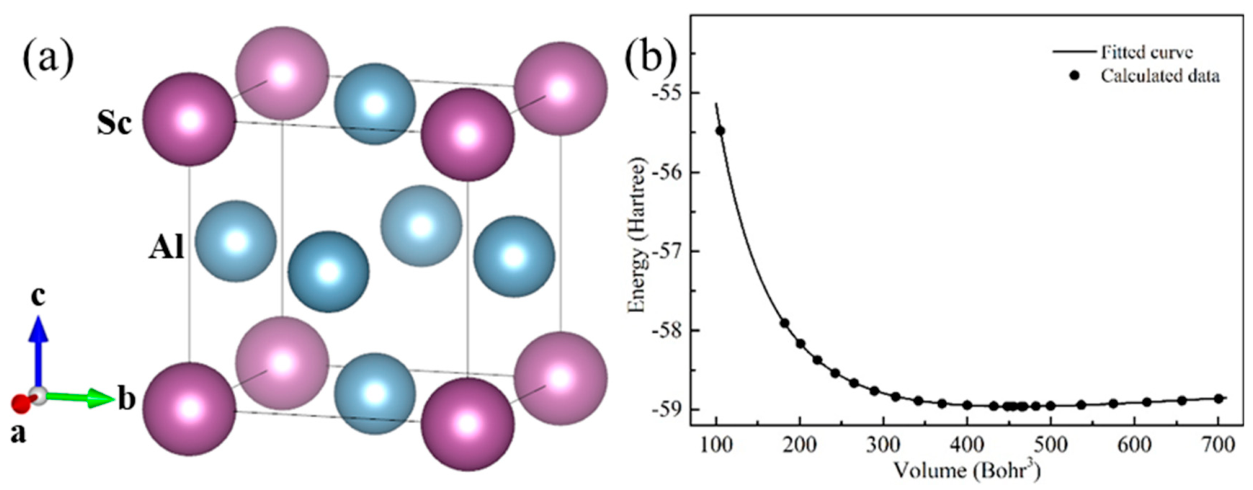
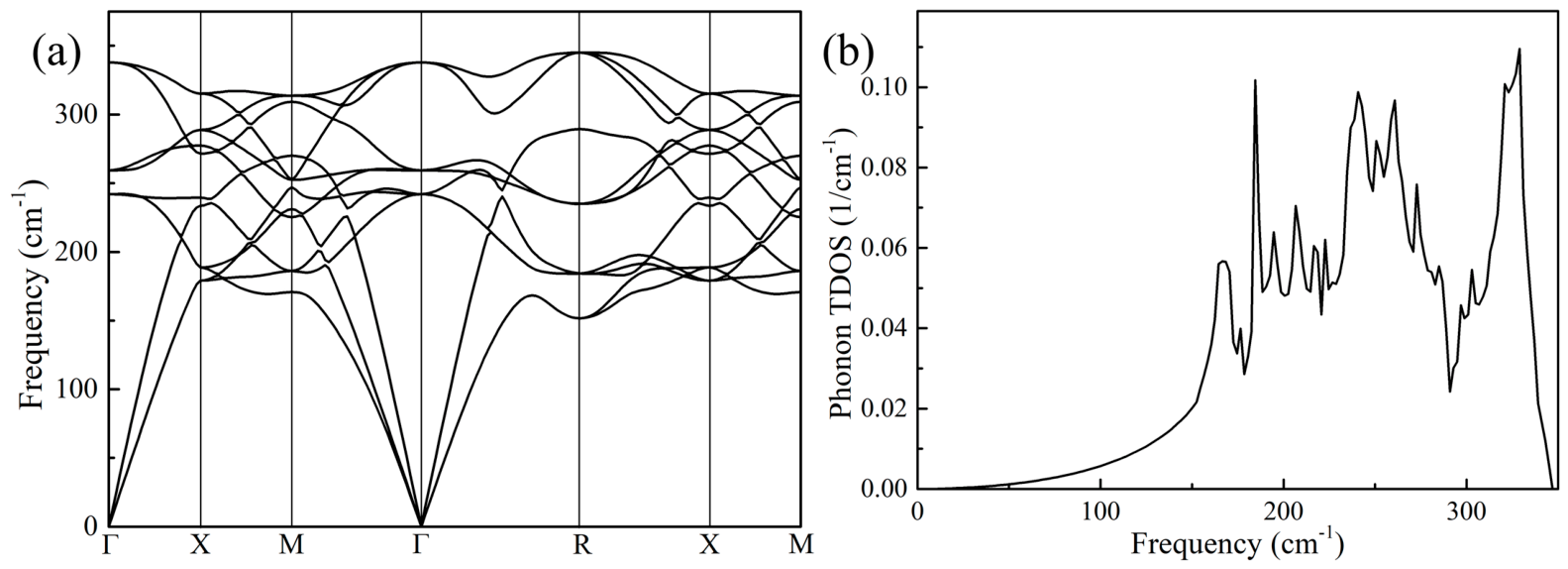
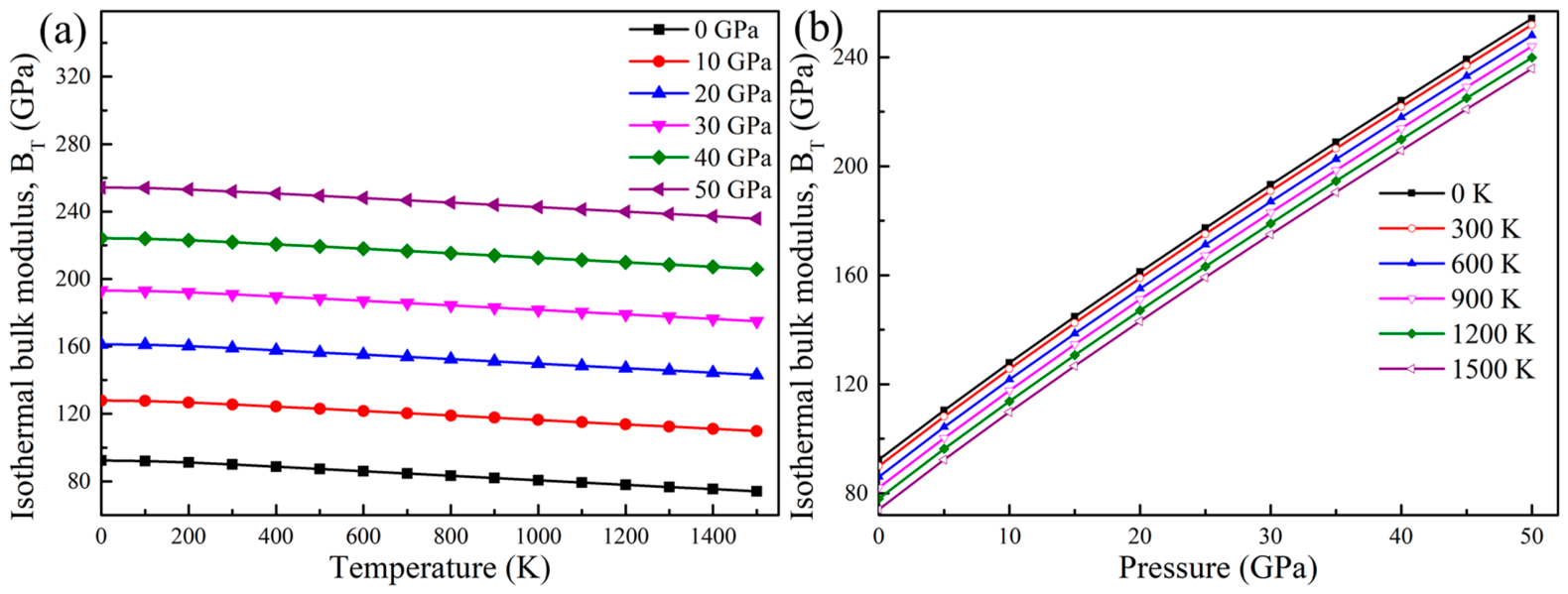
First-Principles Investigation into the Elastic Anisotropy and Thermodynamic Properties of the L12-Type ScAl3 Phase in Aluminum Alloys


Abstract
1. Introduction
2. Computational Methods
3. Results and Discussion
3.1. Elastic Properties of ScAl3

| Elastic Properties | C11/ GPa | C12/ GPa | C44/ GPa | BH/ GPa | GH/ GPa | G/B | E/ GPa | ν | HV/ GPa [30] | AU | Refs. |
|---|---|---|---|---|---|---|---|---|---|---|---|
| Cal. | 191.29 | 41.86 | 74.02 | 91.67 | 74.30 | 0.81 | 175.48 | 0.181 | 15.30 | 0.0001 | This work |
| Exp. | 182.6 | 45.9 | 68.4 | 91.5 | 68.4 | 0.75 | 164.2 | 0.20 | 13.16 | — | Ref. [24] |
| Cal. | 188.0 | 43.7 | 71.4 | 91.8 | 71.9 | 0.78 | 170.7 | 0.19 | 14.38 | — | Ref. [25] |
| Cal. | 181.5 | 37.8 | 71.0 | 85.7 | 71.6 | 0.84 | 167.6 | 0.17 | 15.43 | — | Ref. [28] |
| Young’s Modulus | Linear Compressibility | Shear Modulus | Poisson’s Ratio | |||||
|---|---|---|---|---|---|---|---|---|
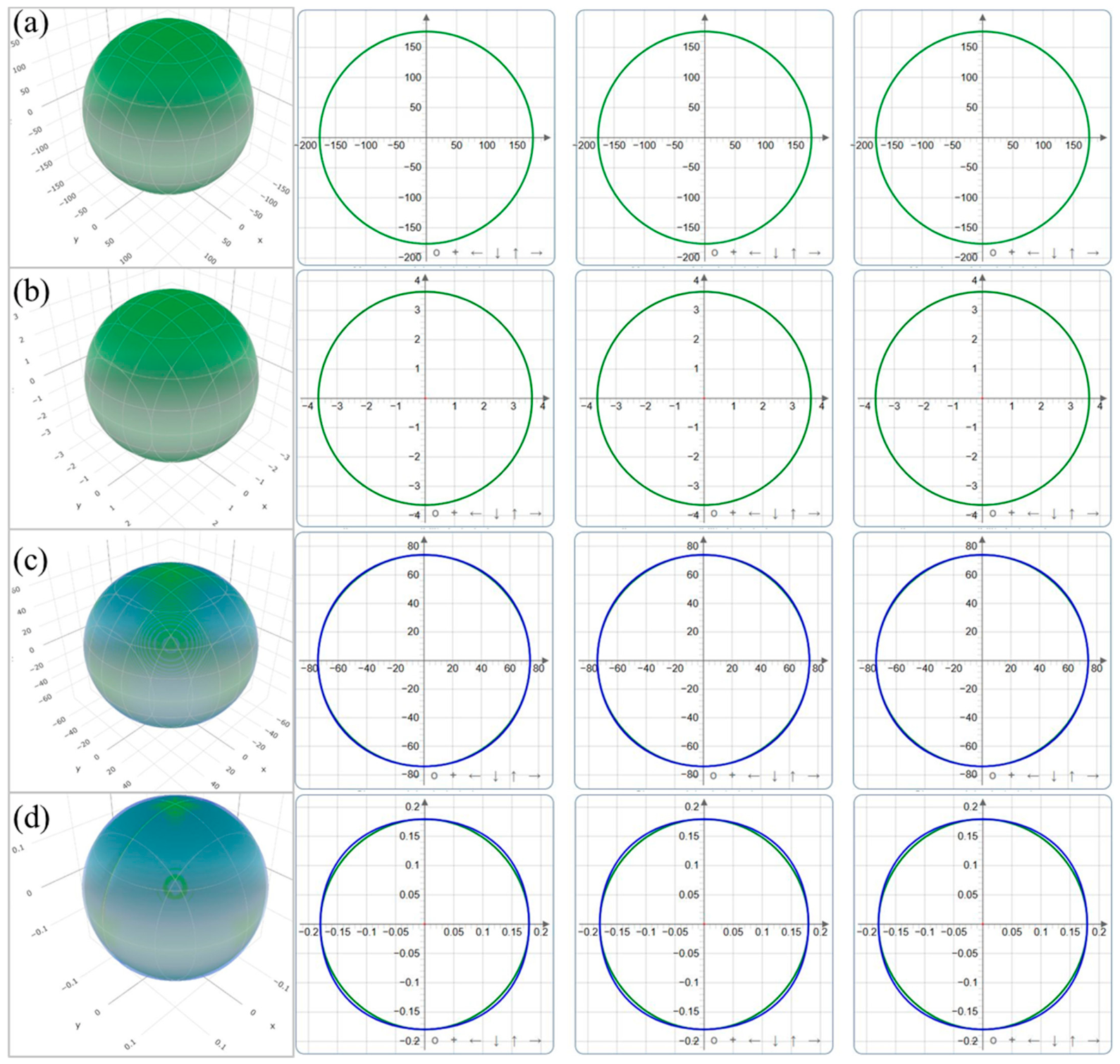
| Value | Emin/GPa 174.96 | Emax/GPa 176.26 | βmin/TPa−1 3.6364 | βmax/TPa−1 3.6364 | Gmin/GPa 74.018 | Gmax/GPa 74.715 | νmin 0.1785 | νmax 0.1841 |
| Anisotropy | 1.007 | 1.0000 | 1.009 | 1.031 | ||||
| Axis | −0.5774 0.5774 0.5773 | −0.0000 −0.0000 1.0000 | 0.7934 0.0000 0.6088 | 0.0000 0.0000 1.0000 | 0.0000 0.0000 1.0000 | 0.7071 −0.0002 0.7071 | 0.7071 −0.0003 −0.7071 | 0.7071 −0.0002 0.7071 |
| Second axis | 1.0000 0.0002 −0.0000 | 0.7071 −0.0006 −0.7071 | 0.0002 1.0000 −0.0002 | 0.7071 −0.0006 −0.7071 | ||||
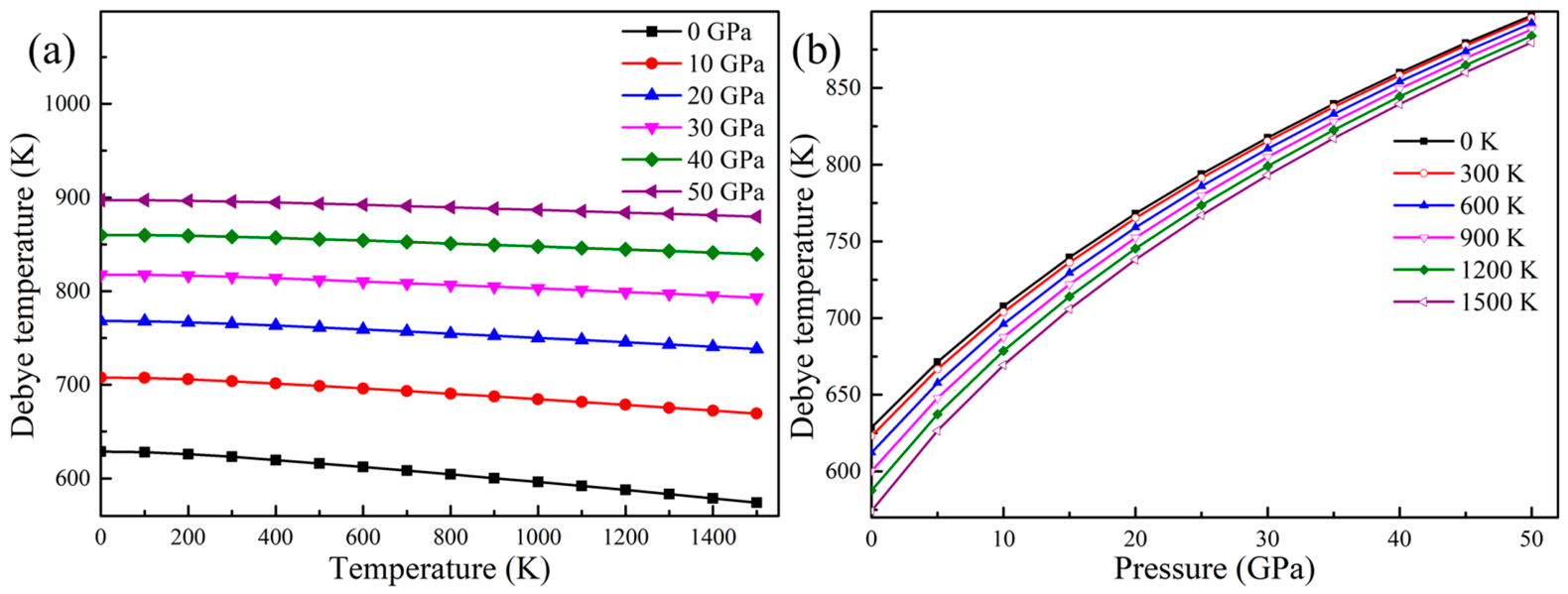
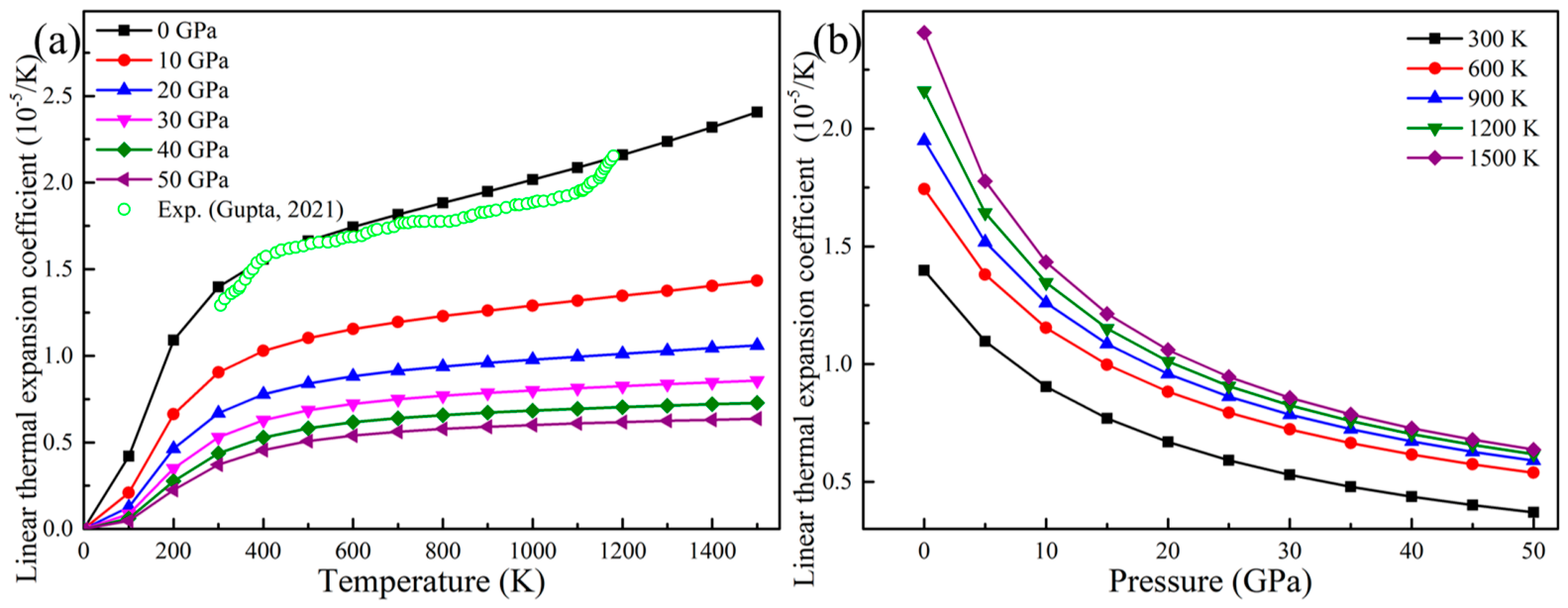
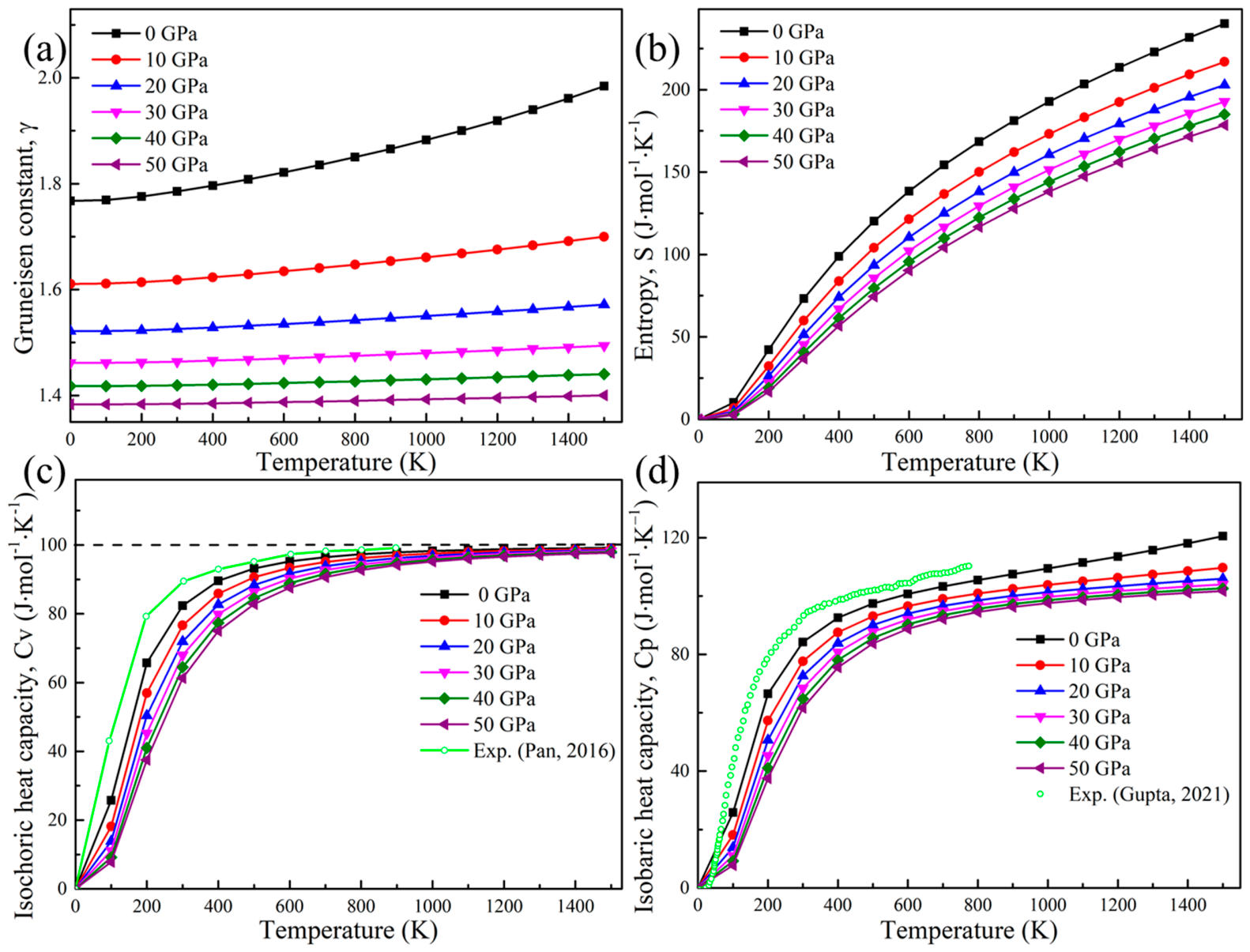
3.2. Thermodynamic Properties of ScAl3
4. Conclusions
Author Contributions
Funding
Data Availability Statement
Conflicts of Interest
References
- Liu, H.Y.; Zhang, H.; Meng, X.J.; Wang, Q.; Zou, Y.; Deng, H.; Yin, H.; Wu, X.; Cao, S.; Hu, Q. Extraordinary tensile strength in laser powder bed fusion manufactured Al-Mn-Mg-Sc-Zr alloy with stable Al3Sc nano-precipitates at high temperatures. J. Alloys Compd. 2025, 1016, 178991. [Google Scholar]
- Pan, L.L.; Bao, H.; Xiang, K.Y.; Lei, X.; Zhang, Z.; Ding, L.; Jia, Z. Effect of homogenization heating rate on Al3(Zr, Sc) dispersoids and mechanical properties of spray formed Al-Zn-Mg-Cu-Zr-(Sc) alloys. J. Alloys Compd. 2026, 1053, 186171. [Google Scholar] [CrossRef]
- Yang, H.B.; Li, Y.; Cheng, K.M.; Liu, Y.; Wu, J.; Liu, H.; Wang, J.; Zhao, D.; Song, L.; Zhou, J.; et al. Grain refinement effect of Al-Sc-B master alloy for Zr/Sc containing Al alloys. Mater. Lett. 2025, 390, 138426. [Google Scholar]
- Peng, J.F.; Wang, W.L.; Zeng, J.; Yuan, S.J.; Liu, L.G.; Ji, J.Y. Al3Sc phase uniform distribution and aluminum grains refinement in Al-2Sc alloy achieved by NdFeB permanent magnet stirring. J. Rare Earths 2025, 43, 1535–1547. [Google Scholar] [CrossRef]
- Fang, C.M.; Que, Z.P.; Fan, Z. Effects of Si solution on stability of early 3d transition-metal tri-aluminides, Al3T (T = Sc, Ti and V). JOM 2025, 77, 1091–1102. [Google Scholar]
- Masthong, A.; Eskin, D.; Limmaneevichitr, C.; Pandee, P.; Diewwanit, O.; Chankitmunkong, S. Aging-induced enhancement of corrosion resistance in Al-4Ni-1Mn alloys through Al3(Sc, Zr) precipitates. J. Alloys Compd. 2025, 1026, 180474. [Google Scholar] [CrossRef]
- Kloos, C.; Gießelmann, E.C.J.; Kickelbick, G.; Janka, O. Studies of the oxidation behavior of scandium aluminide intermetallics. Inorganica Chim. Acta 2026, 598, 123172. [Google Scholar] [CrossRef]
- Hou, S.H.; Feng, J.; Chen, S.; Zhang, F.; Li, D.Q. Effect of Ti, Sc and Zr additions on microstructure and mechanical properties of rheo-diecasting Al-6Zn-2Mg-2Cu alloys. China Foundry 2023, 20, 125–133. [Google Scholar]
- Zakharov, V.V. Kinetics of decomposition of the solid solution of scandium in aluminum in binary Al-Sc alloys. Met. Sci. Heat Treat. 2015, 57, 410–414. [Google Scholar]
- Dai, X.; Xia, C.; Peng, X.; Ma, K. Structure and properties of an ultra-high strength 7xxx aluminum alloy contained Sc and Zr. J. Univ. Sci. Technol. Beijing Miner. Metall. Mater. 2008, 15, 276–279. [Google Scholar]
- Asta, M.; Ozoliņš, V. Structural, vibrational, and thermodynamic properties of Al-Sc alloys and intermetallic compounds. Phys. Rev. B 2001, 64, 094104. [Google Scholar] [CrossRef]
- Galav, K.L.; Joshi, K.B. Ab initio investigations of structural and electronic properties of AlSc3. Int. J. Comput. Mater. Sci. Eng. 2014, 03, 1450019. [Google Scholar] [CrossRef]
- Reshak, A.H.; Charifi, Z.; Baaziz, H. Ab-initio calculation of structural, electronic, and optical characterizations of the intermetallic trialuminides ScAl3 compound. J. Solid State Chem. 2010, 183, 1290–1296. [Google Scholar] [CrossRef]
- Duan, Y.H.; Huang, B.; Sun, Y.; Peng, M.J.; Zhou, S.G. The phase stability, thermodynamics properties and electronic structures of L12-type Al3Sc and Al3Y under high pressures. Chin. Phys. Lett. 2014, 31, 088101. [Google Scholar] [CrossRef]
- Pan, R.K.; Wang, H.C.; Shao, L.; Zheng, J.; Pan, X.Z.; Tang, B.Y. Temperature dependence of elastic properties of L12-Al3Sc: A first-principles study. Comput. Mater. Sci. 2026, 111, 424–429. [Google Scholar] [CrossRef]
- Harada, Y.; Dunand, D.C. Thermal expansion of Al3Sc and Al3(Sc0.75X0.25). Scr. Mater. 2003, 48, 219–222. [Google Scholar] [CrossRef]
- Cannon, J.F.; Hall, H.T. Effect of high pressure on the crystal structures of lanthanide trialuminides. J. Less Common Met. 1975, 40, 313–328. [Google Scholar] [CrossRef]
- Blake, N.; Hopkins, M.A. Constitution and age hardening of Al-Sc alloys. J. Mater. Sci. 1985, 20, 2861–2867. [Google Scholar] [CrossRef]
- Clark, S.J.; Segall, M.D.; Pickard, C.J.; Hasnip, P.J.; Probert, M.I.J.; Refson, K.; Payne, M.C. First principles methods using CASTEP. Z. Kristallogr. 2005, 220, 567–570. [Google Scholar]
- Perdew, J.P.; Ruzsinszky, A.; Csonka, G.I.; Vydrov, O.A.; Scuseria, G.E.; Constantin, L.A.; Zhou, X.L.; Burke, K. Restoring the density-gradient expansion for exchange in solids and surfaces. Phys. Rev. Lett. 2008, 100, 136406. [Google Scholar] [CrossRef]
- Xu, J.H.; Freeman, A.J. Phase stability and electronic structure of ScAl3 and ZrAl3 and of Sc-stabilized cubic ZrAl3 precipitates. Phys. Rev. B 1990, 41, 12553. [Google Scholar]
- Birch, F. Finite elastic strain of cubic crystals. Phys. Rev. 1947, 71, 809. [Google Scholar] [CrossRef]
- Liu, Q.J.; Liu, Z.T.; Feng, L.P. Elasticity, electronic structure, chemical bonding and optical properties of monoclinic ZrO2 from first-principles. Phys. B 2011, 406, 345–350. [Google Scholar]
- Hyland, J.R.W.; Stiffler, R.C. Determination of the elastic constants of polycrystalline Al3Sc. Scr. Metall. Mater. 1991, 25, 473–477. [Google Scholar] [CrossRef]
- Mao, Z.; Seidman, D.N.; Wolverton, C. First-principles phase stability, magnetic properties and solubility in aluminum-rare-earth (Al-RE) alloys and compounds. Acta Mater. 2011, 59, 3659–3666. [Google Scholar] [CrossRef]
- Du, X.; Liu, F.; Li, J.; Wu, E. First principle calculations of XAl3 (X = Sc, Ti, Fe, Ni, Y, Zr and Ta) compounds: Elastic and thermodynamic properties. Optoelectron. Adv. Mat. 2015, 9, 754–761. [Google Scholar]
- Peng, M.; Wang, R.; Wu, Y.; Yang, A.; Duan, Y. Elastic anisotropies, thermal conductivities and tensile properties of MAX phases Zr2AlC and Zr2AlN: A first-principles calculation. Vacuum 2022, 196, 110715. [Google Scholar] [CrossRef]
- Fu, L.; Ke, J.L.; Zhang, Q.; Tang, B.Y.; Peng, L.M.; Ding, W.J. Mechanical properties of L12 type Al3X (X = Mg, Sc, Zr) from first-principles study. Phys. Status Solidi B 2012, 249, 1510–1516. [Google Scholar] [CrossRef]
- Thompson, R.P.; Clegg, W.J. Predicting whether a material is ductile or brittle. Curr. Opin. Solid State Mater. Sci. 2018, 22, 100–108. [Google Scholar] [CrossRef]
- Tian, Y.; Xu, B.; Zhao, Z. Microscopic theory of hardness and design of novel superhard crystals. Int. J. Refract. Met. Hard Mater. 2012, 33, 93–106. [Google Scholar] [CrossRef]
- Gaillac, R.; Pullumbi, P.; Coudert, F.X. ELATE: An open-source online application for analysis and visualization of elastic tensors. J. Phys. Condens. Matter 2016, 28, 275201. [Google Scholar] [CrossRef] [PubMed]
- Cacciamani, G.; Riani, P.; Borzone, G.; Parodi, N.; Saccone, A.; Ferro, R.; Pisch, A.; Schmid-Fetzer, S. Thermodynamic measurements and assessment of the Al-Sc system. Intermetallics 1999, 7, 101–108. [Google Scholar]
- Otero-de-la-Roza, A.; Abbasi-Pérez, D.; Luaña, V. Gibbs2: A new version of the quasiharmonic model code. II. Models for solid-state thermodynamics, features and implementation. Comput. Phys. Commun. 2011, 182, 2232–2248. [Google Scholar] [CrossRef]
- Xu, Y.; Tian, M.; Hu, C.; Han, Z.; Zhou, S.; Cao, Y. Structural, electronic, mechanical, and thermodynamic properties of Cu-Ti intermetallic compounds: First-principles calculations. Solid State Commun. 2022, 352, 114814. [Google Scholar] [CrossRef]
- Gupta, A.; Tas, B.; Korbmacher, D.; Dutta, B.; Neitzel, Y.; Grabowski, B.; Hickel, T.; Esin, V.; Divinski, S.V.; Wilde, G.; et al. A combined experimental and first-principles based assessment of finite-temperature thermodynamic properties of intermetallic Al3Sc. Materials 2021, 14, 1837. [Google Scholar]


Disclaimer/Publisher’s Note: The statements, opinions and data contained in all publications are solely those of the individual author(s) and contributor(s) and not of MDPI and/or the editor(s). MDPI and/or the editor(s) disclaim responsibility for any injury to people or property resulting from any ideas, methods, instructions or products referred to in the content. |
© 2026 by the authors. Licensee MDPI, Basel, Switzerland. This article is an open access article distributed under the terms and conditions of the Creative Commons Attribution (CC BY) license.
Share and Cite
Cao, H.; Qiao, J. First-Principles Investigation into the Elastic Anisotropy and Thermodynamic Properties of the L12-Type ScAl3 Phase in Aluminum Alloys. Crystals 2026, 16, 357. https://doi.org/10.3390/cryst16060357
Cao H, Qiao J. First-Principles Investigation into the Elastic Anisotropy and Thermodynamic Properties of the L12-Type ScAl3 Phase in Aluminum Alloys. Crystals. 2026; 16(6):357. https://doi.org/10.3390/cryst16060357
Chicago/Turabian StyleCao, Huiyun, and Jian Qiao. 2026. "First-Principles Investigation into the Elastic Anisotropy and Thermodynamic Properties of the L12-Type ScAl3 Phase in Aluminum Alloys" Crystals 16, no. 6: 357. https://doi.org/10.3390/cryst16060357
APA StyleCao, H., & Qiao, J. (2026). First-Principles Investigation into the Elastic Anisotropy and Thermodynamic Properties of the L12-Type ScAl3 Phase in Aluminum Alloys. Crystals, 16(6), 357. https://doi.org/10.3390/cryst16060357