Article

Transformation Behavior of 9Ni Steel Under Continuous Cooling Conditions: Experiments and Simulation

Liaoning Provincial Key Laboratory of Energy Storage and Utilization, Yingkou Institute of Technology, Yingkou 115014, China
*
Author to whom correspondence should be addressed.
Crystals 2026, 16(3), 202; https://doi.org/10.3390/cryst16030202
Submission received: 3 February 2026 / Revised: 8 March 2026 / Accepted: 12 March 2026 / Published: 16 March 2026
(This article belongs to the Section Crystalline Metals and Alloys)

Abstract

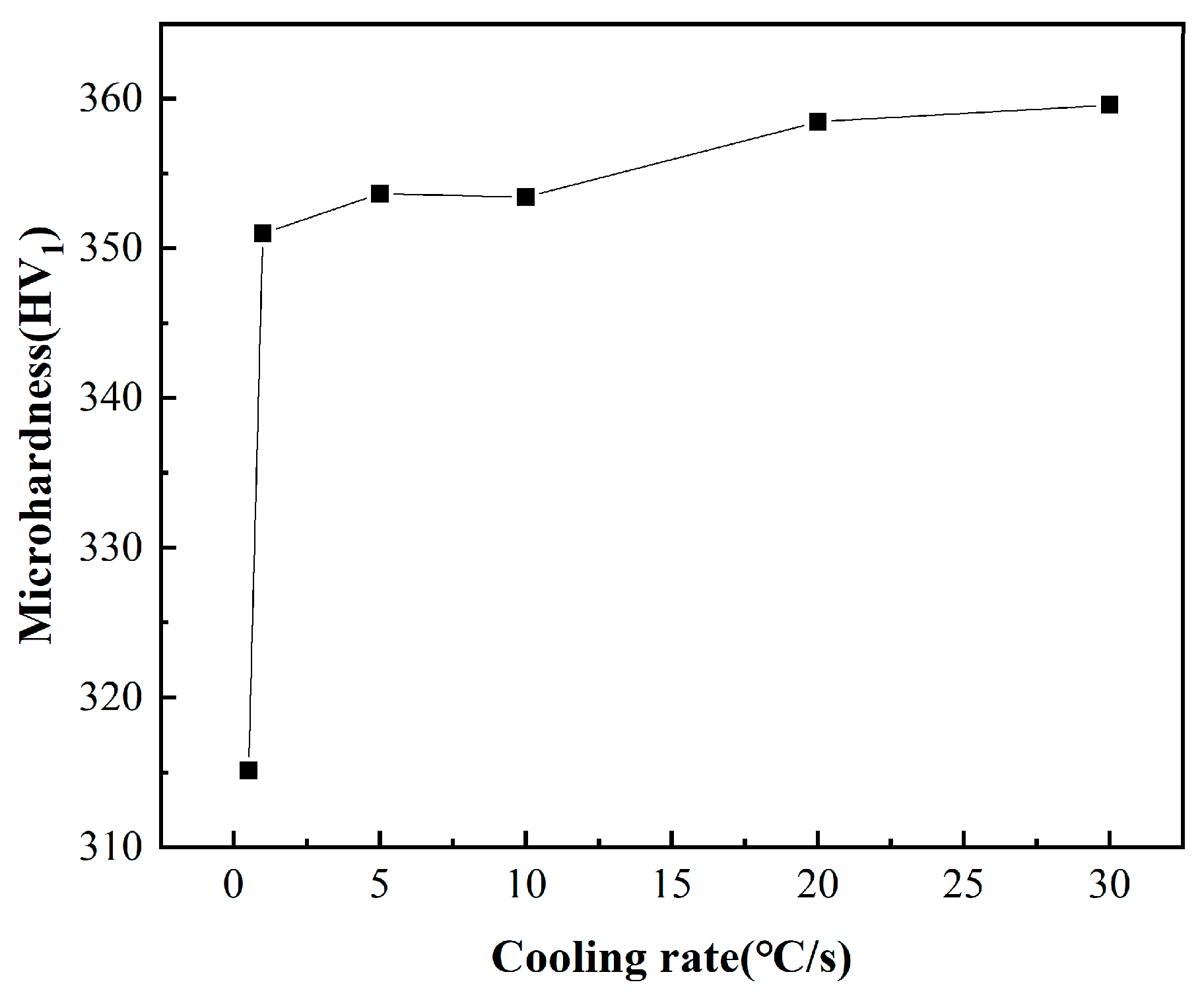
To investigate the effect of cooling rate on the phase transformation behavior and mechanical properties of 9Ni steel, a 7 mm thick industrial 9Ni steel plate was selected as the research object in this study. The JMatPro software was employed to simulate and calculate key parameters, including the thermodynamic phase diagram, CCT curve, and mechanical properties. Meanwhile, static thermal simulation experiments at cooling rates ranging from 0.5 to 30 °C/s were conducted on a Gleeble-3500 thermal simulation testing machine. Microstructure characterization and property tests were carried out using a metallographic microscope, scanning electron microscope (SEM), and Vickers hardness tester, and the experimental CCT curve was subsequently plotted and compared with the simulation results. The results revealed that the microstructure of 9Ni steel changed regularly with the cooling rate. With the increase in cooling rate, the ferrite content decreased continuously, the bainite content increased initially and then decreased, and the martensite content increased continuously. At a cooling rate of 30 °C/s, the martensite content reached approximately 90%. The microhardness of 9Ni steel initially sharply increased and then stabilized with the increase in cooling rate, stabilizing at 359 HV1 at a cooling rate of 30 °C/s. The phase transformation law of the measured CCT curve is highly consistent with the simulation results, verifying the reliability and accuracy of JMatPro for predicting the phase transformation behavior and mechanical properties of 9Ni steel. This study provides a theoretical basis and data support for the precise optimization of the heat treatment process of 9Ni steel and has important practical significance for enhancing its service performance in cryogenic engineering applications.

1. Introduction

9Ni steel is an ultra-low alloy, high-strength structural steel with excellent cryogenic toughness. It maintains stable toughness even at the liquid nitrogen temperature of −196 °C and also has good weldability and fatigue resistance. It is the core material for extreme low-temperature working conditions, such as liquefied natural gas (LNG) storage tanks, low-temperature pressure vessels, and polar engineering equipment [1,2,3]. With the accelerated transformation of the global energy structure, LNG storage and transportation facilities are developing towards large-scale and high-parameterization, imposing increasingly stringent requirements on the cryogenic mechanical property stability, microstructure uniformity, and process adaptability of 9Ni steel [4,5].
As a key parameter of the cooling process after steel heat treatment and rolling, the cooling rate directly regulates the nucleation and growth kinetics of undercooled austenite, alters the grain size, phase composition, and microstructure morphology of phase transformation products, and ultimately dominates the core mechanical properties of the material, such as cryogenic toughness, strength, and hardness [6,7,8,9,10,11,12,13,14]. At present, most studies on 9Ni steel focus on the optimization of the welding processes, the regulation of material properties by heat treatment parameters, and the microstructure and property evolution behavior in low-temperature environments. Chen et al. [15] studied the microstructure, mechanical properties, and corrosion behavior of TIG-welded 9Ni steel joints in a simulated marine environment, and clarified the corrosion failure mechanism and property regulation ideas of welded joints under marine low-temperature working conditions. Guo et al. [16] optimized the girth weld of 9Ni steel for LNG storage tanks by adopting the TIP-TIG welding process and confirmed that this process can significantly improve the cryogenic toughness of the weld. Qu et al. [17] carried out a systematic study on the welding process of 9Ni steel, providing a reference for the formulation of practical engineering welding schemes. Zhang et al. [18] investigated the microstructural characteristics and localized corrosion behavior of electron beam-welded 9Ni steel joints and found that the joint can be clearly divided into three regions: the weld zone (WZ), heat-affected zone (HAZ), and base metal (BM). Each region exhibits unique microstructural and electrochemical features, among which the HAZ shows the poorest corrosion resistance due to its fine-grained microstructure and high residual stresses. This study provides a theoretical basis for the corrosion protection of welded joints. Rios et al. [19] conducted physical simulation and microstructural characterization of the welded HAZ of 9Ni steel pipes, offering important support for understanding the microstructural evolution law of the HAZ during the welding process. Hou et al. [20] analyzed the influence and mechanism of heat treatment on the properties of 9Ni steel/S30408 stainless steel clad plates, and clarified the correlation between heat treatment process parameters and the interface bonding strength and low-temperature mechanical properties of clad plates. Su et al. [21] explored the evolution law of microstructure and mechanical properties of 9Ni steel under the QT heat treatment process. Kinney et al. [22] systematically characterized the microstructural characteristics of lath martensite in quenched 9Ni steel plates, laying a foundation for the study of the microstructure evolution mechanism. Song et al. [23] revealed the regulation mechanism of the QLT process on the microstructure and properties of 9Ni steel and confirmed that the QLT process can effectively improve the strength-toughness matching of materials. Sun et al. [24] achieved an excellent combination of strength and toughness by regulating the heterogeneous structure of low-Ni LNG tank steel, providing a new idea for the performance optimization of 9Ni steel and similar cryogenic steels. Yang et al. [25] analyzed the effect of quenched microstructure on the formation behavior of reversed austenite in 9Ni steel. Terasaki et al. [26] revealed the internal relationship among variant groups, effective grain size, and elastic strain energy during the phase transformation of 9Ni steel. Zhang et al. [27] explored the effect of microstructure uniformity on the ultra-low temperature impact fracture mechanism of high-strength 9Ni steel and concluded that microstructure uniformity is a key factor in improving the ultra-low temperature toughness of materials. Zhang et al. [28] studied the effect of microstructural characteristics on the impact fracture behavior of cryogenically treated 9Ni steel and obtained the difference law of low-temperature fracture modes of materials under different microstructural states. Zhang et al. [29] clarified the effect of martensitic transformation and dislocation slip in austenite on the micromechanical behavior of 9Ni steel based on the crystal plasticity finite element method. Cota Araujo et al. [30] carried out research on the low-cycle fatigue mechanism of quenched 9Ni martensitic steel containing retained austenite films and found that retained austenite can promote matter flowing at interfaces, and that the Coffin–Manson curve exhibits a bilinear characteristic, providing a new perspective for understanding the fatigue failure mechanism of 9Ni steel. Da Silva de Sa et al. [31] studied the effect of heat treatment on the environment-assisted cracking susceptibility of 9% Ni steel, providing a performance evaluation basis for the application of 9Ni steel in harsh environments. However, there is still an obvious gap in the systematic characterization of the entire continuous cooling transformation (CCT) process of 9Ni steel, particularly in the quantitative correlation between cooling rate, microstructure, and properties over a wide cooling rate range. This gap restricts the precise design of process parameters for 9Ni steel under extreme working conditions.
The JMatPro material property simulation software is based on a thermodynamic database and phase transformation kinetic physical models, with its reliability validated in the process simulation of various metallic materials [32,33,34,35,36,37,38,39]. The reliability of its simulation results provides effective support for shortening the process research and development cycle and reducing the test cost of 9Ni steel. In this study, a two-way coupled research idea of “numerical simulation–experimental verification” is adopted to systematically explore the phase transformation behavior and property laws of 9Ni steel in a wide cooling rate range of 0.5–30 °C/s. On the one hand, JMatPro simulation can predict the key phase transformation temperatures, phase composition proportions, and property change trends in advance, providing a scientific basis for experimental design and reducing the randomness of tests. On the other hand, static thermal simulation tests can accurately reproduce the microstructure transformation in the actual cooling process and systematically test the microhardness at different cooling rates. Finally, a quantitative relationship between cooling rate, microstructure, and properties is established; the reliability of the simulation results is verified by test data, and the model parameters are modified to make the research conclusions more credible. The purpose of this study is to provide a theoretical basis and data support for the optimization of the heat treatment process of 9Ni steel and to offer important practical guidance for promoting the engineering application of high-performance 9Ni steel in various cryogenic fields.

2. Experiment

2.1. Experimental Materials

The experimental material was a 7 mm thick industrially rolled 9Ni steel plate, which was rolled from a 240 mm thick 9Ni steel casting blank by a controlled rolling process. A SPECTROLAB M7 direct-reading spectrometer (SPECTRO Analytical Instruments GmbH & Co. KG, Kleve, Germany) was used to detect the chemical composition of the test steel at multiple points and take the average value. The main chemical composition is shown in Table 1. According to GB/T 24510-2017, Nickel alloy steel plates for low-temperature pressure vessels [40], the content of each element meets the standard requirements. The 9Ni steel employed in this study featured a low carbon content, and its 9.08 wt% nickel content formed a low-carbon, high-nickel austenite stabilization system. This composition ratio directly determines the carbon stabilization degree and phase transformation characteristics of the material. The low carbon content could effectively prevent the excessive precipitation of carbides; C atoms mainly existed in the form of interstitial solid solution in the austenite lattice, realizing interstitial solid solution strengthening. Only a small amount of C atoms would be segregated at the martensite lath boundaries and dislocations, thus avoiding the deterioration of cryogenic toughness induced by intergranular carbide precipitation [22].

2.2. Research Methods

2.2.1. Numerical Simulation

In this study, the JMatPro software (Version 7.0, Sente Software Ltd., Guildford, UK, 2013) was used for numerical simulation. Within the software interface, the material type was selected as general steel, and the mass fractions of each element in 9Ni steel were input. During the calculation process, the built-in material database of the software was used without constructing or modifying the database parameters so as to ensure the reliability and comparability of the calculation results. The Thermodynamic Properties module of the software was utilized, and the “Step Temperature” function was chosen. The calculation temperature range was set from 20 °C to 1600 °C to calculate the thermodynamic phase diagram of 9Ni steel, thus clarifying its equilibrium phase composition and characteristic phase transformation temperatures. Within the Phase Transformations module, the continuous cooling transformation (CCT) curve was calculated using the “Advanced CCT” function. The experimentally determined grain size of 10.5 ASTM grade was used as the input parameter, and the austenitization temperature was set to 800 °C (consistent with the experimental process). Subsequently, the decomposition behavior of austenite at different cooling rates, as well as the evolution laws of room-temperature phase composition and mechanical properties, were systematically analyzed.

2.2.2. Static Thermal Simulation Experiment

The static thermal simulation experiments were carried out on a Gleeble-3500 thermal simulation testing machine (Dynamic Systems Inc., Poestenkill, NY, USA). The processed samples were cylindrical with dimensions of φ3 mm × 10 mm. They were heated to 800 °C at a rate of 10 °C/s and held at this temperature for 3 min to achieve complete austenitization. In accordance with GB/T 6394-2017 Test Methods for Average Grain Size of Metals [41], the austenite grain size under this condition was determined by the combined method of parallel specimen quenching–freezing and linear intercept, with the measured austenite grain size being 10.5 ASTM grade. Then, they were cooled to room temperature at cooling rates of 0.5 °C/s, 1 °C/s, 5 °C/s, 10 °C/s, 20 °C/s, and 30 °C/s, respectively. During the experiment, the closed-loop temperature control system of the Gleeble-3500 testing machine was used to accurately control the cooling process, ensuring a linearly constant cooling rate throughout the entire cooling stage. The dilatation–temperature–time curve of the samples during cooling was recorded, and the phase transformation start and end temperatures under each cooling rate were determined by combining the tangent method.
The thermal simulation samples cooled to room temperature were cut along the diameter to obtain a rectangular cross-section of 3 mm × 10 mm. After inlaying, grinding, and polishing, the samples were corroded. The microstructure of the cross-section was observed by an Axioscope 5 metallographic microscope (OM) (Carl Zeiss Microscopy GmbH, Göttingen, Niedersachsen, Germany) and a scanning electron microscope (SEM) (Carl Zeiss Microscopy GmbH, Göttingen, Niedersachsen, Germany). The microhardness of the cross-section was tested by an HV-1000 Vickers hardness tester (Shanghai Yanrun Optical-Mechanical Technology Co., Ltd., Shanghai, China) with a load of 1000 g and a loading time of 10 s. Five different areas of each sample were tested, and the average value was taken as the final hardness value to minimize measurement errors.

3. Simulation Results and Analysis

3.1. Simulation and Analysis of Thermodynamic Phase Diagram

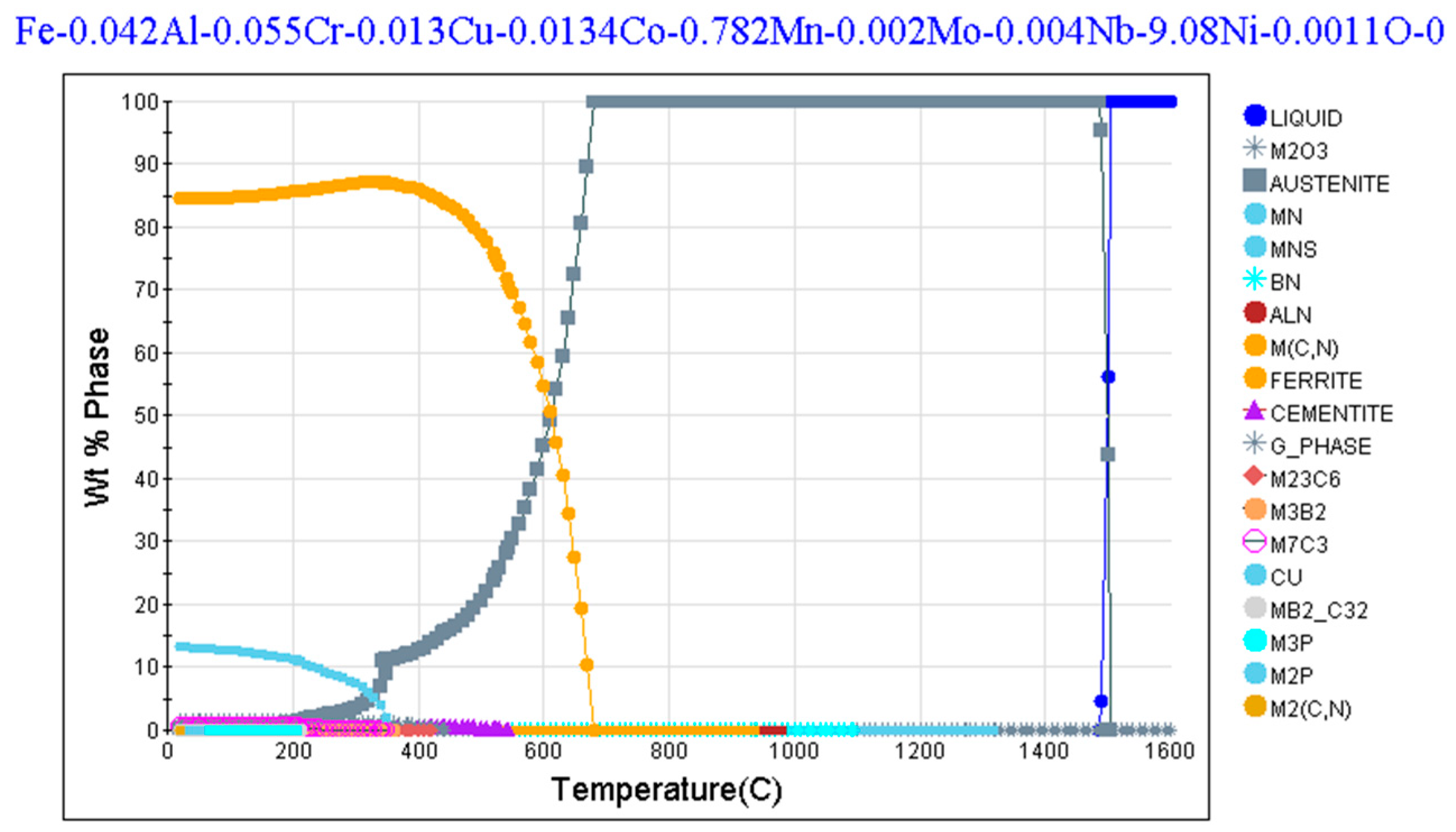
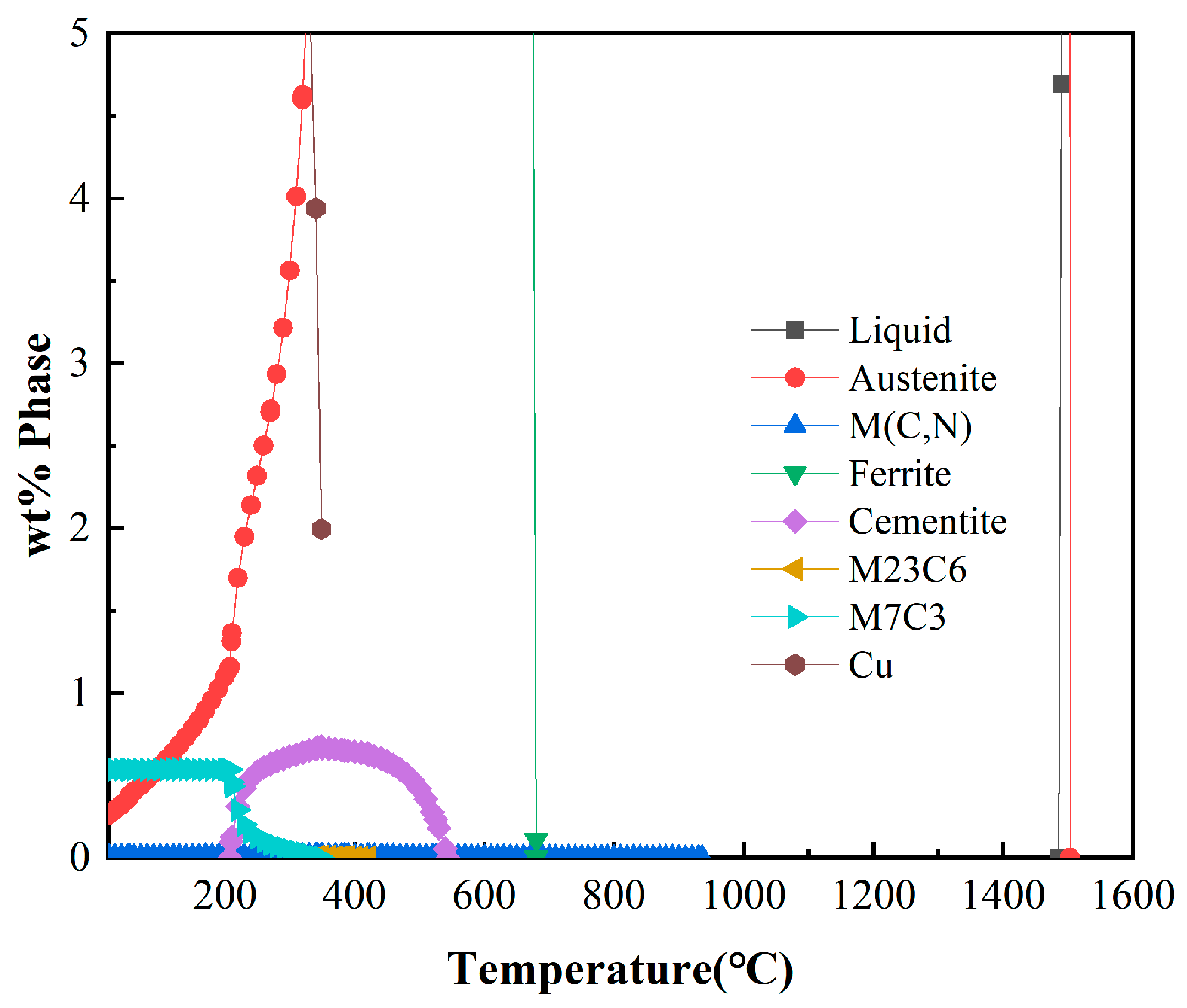
To clarify the phase composition and evolution law of 9Ni steel at different temperatures, the JMatPro software was used to simulate and calculate its thermodynamic phase diagram, the results of which are presented in Figure 1. Meanwhile, to further quantitatively evaluate the evolution law of the main phases in the low concentration range, the mass fraction–temperature curves of the main phases of 9Ni steel within the concentration range of 0–5 wt% were plotted based on the original data simulated by JMatPro, as presented in Figure 2. As observed in Figure 1 and Figure 2, the equilibrium phase diagram of 9Ni steel includes 19 different phase regions, such as liquid phase, austenite, ferrite, oxide phase, sulfide, nitride, copper phase, G phase, boride, various carbides, and phosphide. The liquidus temperature is 1600.0 °C, at which the alloy mainly exists in the liquid phase; as the temperature decreases to 1500.0 °C, austenite begins to precipitate, and the alloy enters the liquid–solid two-phase region; when the temperature drops to 1490.0 °C, the liquid phase disappears completely, and the transformation from liquid phase to solid phase is completed. When the temperature continues to drop to 930.0 °C, carbide M (C,N) begins to precipitate, and the alloy enters the carbide precipitation temperature range; ferrite begins to transform and precipitate from austenite at 680.0 °C, forming an austenite–ferrite two-phase region. Cementite exists stably in the temperature range of 540.0–210.0 °C with a maximum content of 0.67%, and the precipitation of this phase has a significant impact on the hardness and strength of the alloy. When the temperature drops to room temperature, the equilibrium phase composition of 9Ni steel is dominated by the ferrite phase with a content as high as 84.54%; the copper phase is the second largest phase after ferrite with a content of 13.25%, which can improve the alloy strength through age hardening. The content of carbide M7C3 is 0.53%, and as one of the main strengthening phases, it significantly enhances the hardness and wear resistance of the alloy; the content of residual austenite is 0.26%. A small amount of residual austenite can improve the toughness of the alloy and avoid brittle fracture, and thus acts as a key phase for regulating the cryogenic performance of 9Ni steel.

3.2. Simulation Results and Analysis of CCT Curve

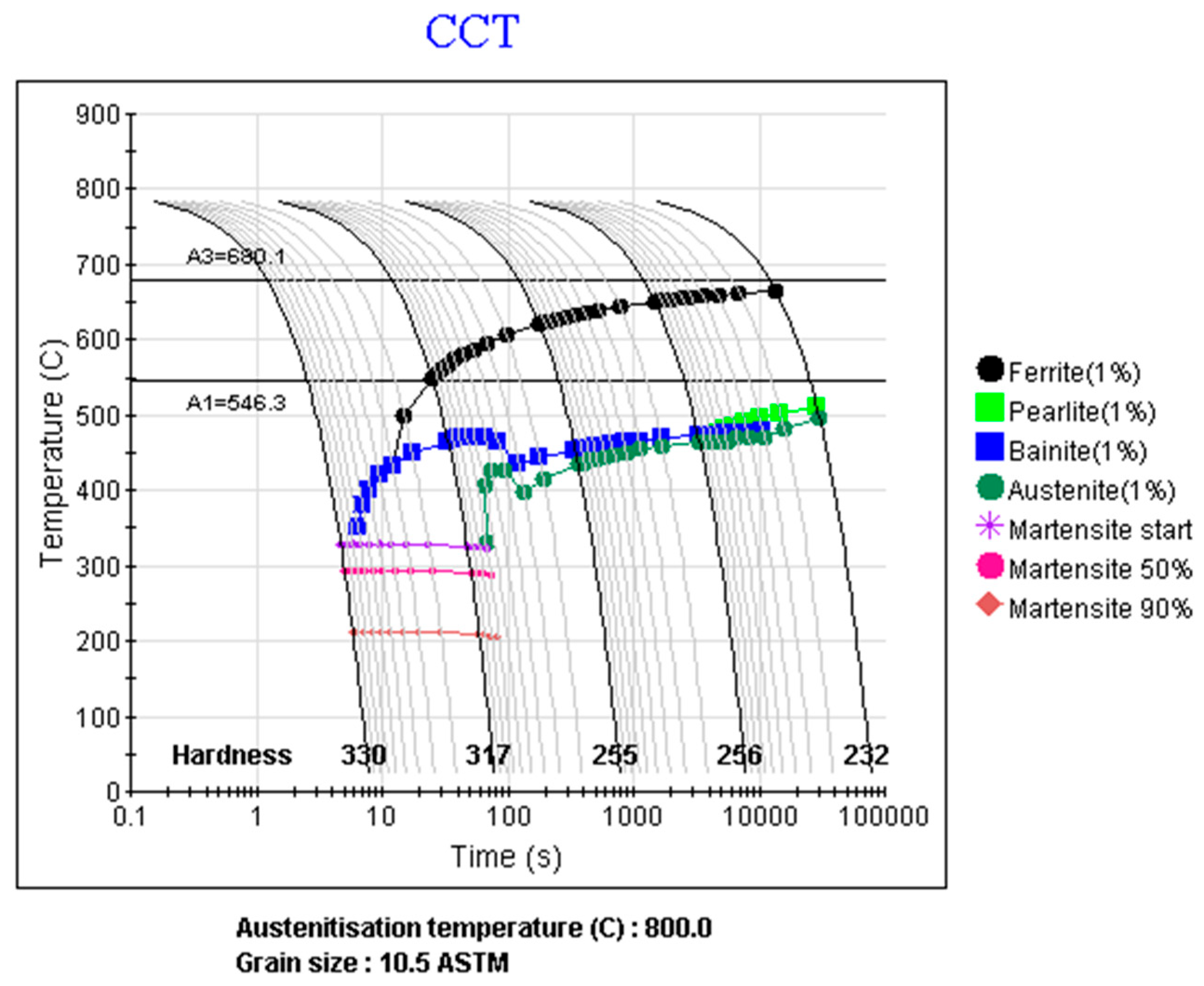
The continuous cooling transformation (CCT) curve of undercooled austenite of 9Ni steel calculated using JMatPro software is shown in Figure 3, and the room-temperature phase composition contents at different cooling rates are presented in Table 2. As indicated in Figure 3 and Table 2, during the continuous cooling process of 9Ni steel, the temperature ranges for the transformation of ferrite, pearlite, and bainite are 668.2–775.5 °C, 592.4–638.1 °C, and 456.8–589.3 °C, respectively. The martensite start temperature (Ms) is 342.7 °C, and the martensite finish temperature (Mf) is 228.5 °C. At a cooling rate of 0.5 °C/s, the room-temperature microstructure is dominated by ferrite and bainite, with a bainite content of 17.90% and only a negligible amount of pearlite. When the cooling rate is 1 °C/s, pearlite disappears completely, and the ferrite content only exhibits a slight fluctuation. When the cooling rate further increases to 5 °C/s, the ferrite content drops sharply to 53.23%, while the bainite content reaches 46.77%. When the cooling rate increases to 10 °C/s, the ferrite content continues to decrease, the bainite content reaches its peak value of 62.40%, and a certain amount of martensite as well as a trace of retained austenite appear simultaneously. When the cooling rate increases to 20 °C/s, martensite becomes the dominant phase, accounting for 69.27%, and the bainite content decreases to 27.57%, with only a trace amount of ferrite and retained austenite remaining. When the cooling rate reaches 30 °C/s, the martensite content is as high as 88.85%, the bainite content is merely 9.55%, ferrite almost disappears, and the retained austenite content stabilizes at approximately 0.23%. It can be seen that with the increase in cooling rate, the ferrite content decreases continuously, the bainite content first increases and then decreases, and the martensite content increases continuously. This regularity indicates that the cooling rate is a key factor regulating the room-temperature phase composition of 9Ni steel, and the gradient transformation of ferrite–bainite–martensite microstructures can be achieved by adjusting the cooling rate.

3.3. Simulation Results and Analysis of Mechanical Properties

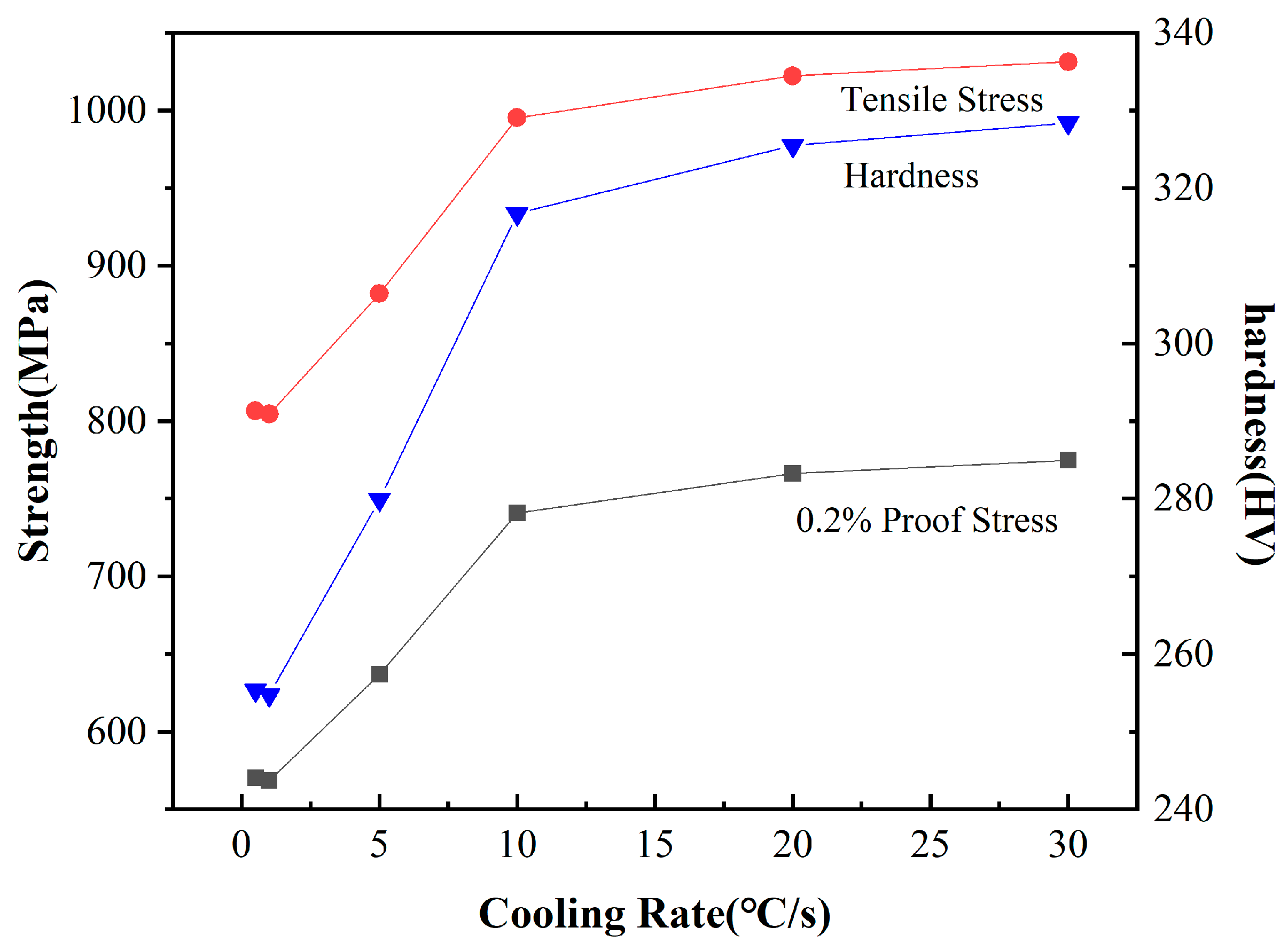
The simulated mechanical properties of 9Ni steel are presented in Figure 4. It can be seen from the figure that the yield strength, tensile strength, and microhardness exhibit identical variation trends with increasing cooling rate. When the cooling rate increases from 0.5 °C/s to 10 °C/s, the yield strength, tensile strength, and microhardness increase sharply. This is attributed to the continuous decrease in ferrite content and the gradual increase in bainite and martensite contents with increasing cooling rate, which enhances the synergistic effect of grain refinement strengthening and dislocation strengthening, thereby remarkably improving the overall strengthening effect of the microstructure. When the cooling rate exceeds 20 °C/s, the increasing rates of yield strength, tensile strength, and microhardness gradually slow down, and all three properties basically tend to stabilize. This is because the core microstructural transformation under high-speed cooling is a martensitic transformation; the strengthening effects brought by the supersaturated solid solution of martensite and dislocation tangling enable the material properties to reach a peak and remain stable. At a cooling rate of 30 °C/s, the tensile strength, 0.2% proof stress, and hardness can reach 1031 MPa, 775 MPa, and 328 HV, respectively.

4. Experimental Results and Analysis

4.1. Microstructure Analysis

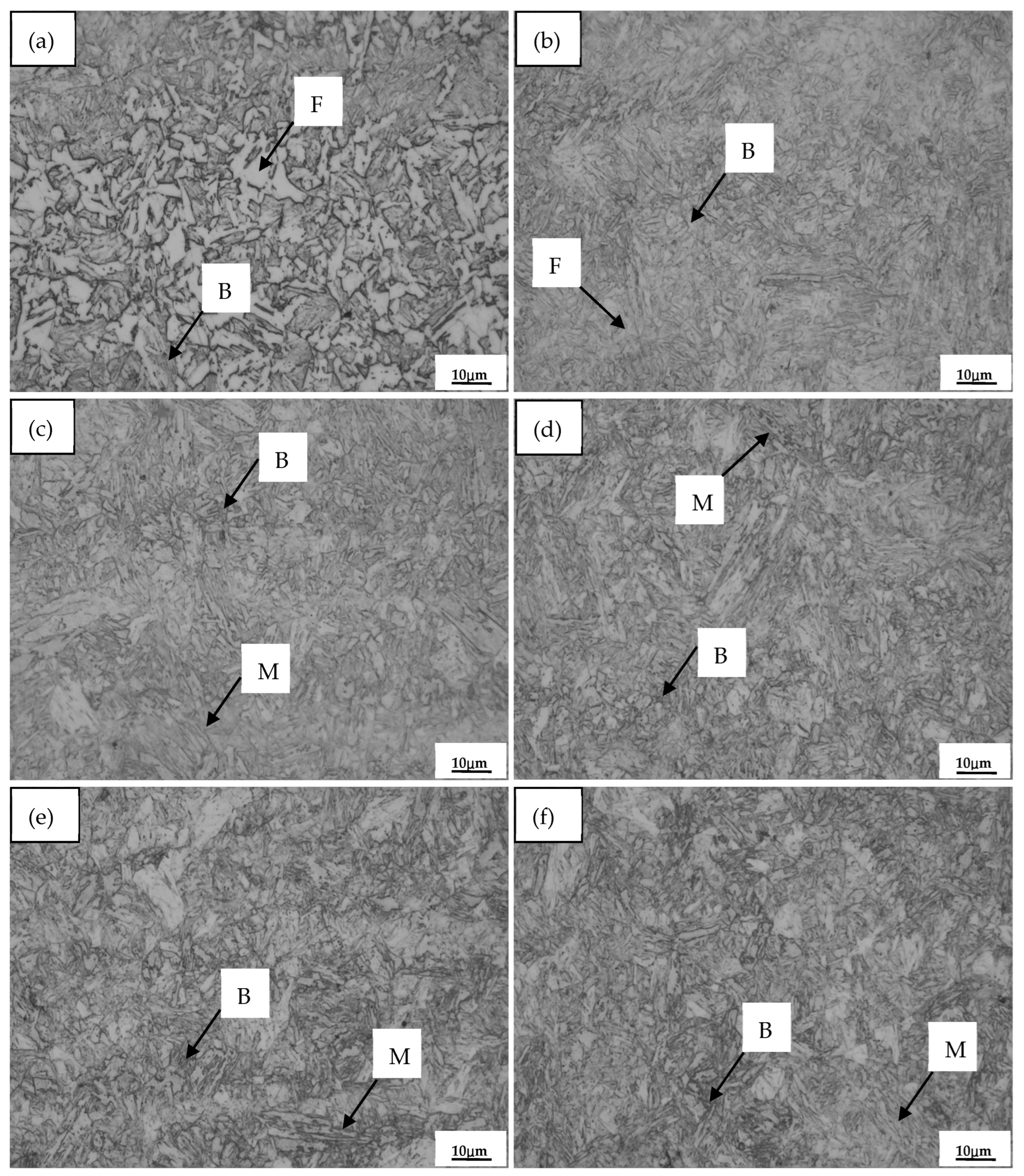
The room-temperature microstructures of 9Ni steel at different cooling rates are shown in Figure 5. It can be seen from the figure that when the cooling rate is 0.5 °C/s, the microstructure contains a large number of white irregular blocky ferrite with a content of approximately 28.8%, accompanied by a high proportion of granular and lath-like bainite. When the cooling rate increases to 1 °C/s, the microstructure is dominated by granular and lath-like bainite. The mixed microstructure of granular bainite and lath-like bainite can achieve a balance between strength and toughness [42,43]. Meanwhile, a small amount of lath martensite appears, and the white ferrite regions are extremely scarce, accounting for approximately 7%, with a significantly reduced size. When the cooling rate increases to 5 °C/s, distinct segregation bands appear in the microstructure, with fine-grained martensite primarily distributed within these segregated regions. This phenomenon stems from the inherent compositional segregation of the 9Ni steel plate (a metallurgical defect inherited from casting and rolling processes). As the cooling rate increases, the phase transformation driving force is enhanced, which magnifies the difference in phase transformation behavior between the segregated regions and the matrix. Notably, the segregated regions are typically enriched in austenite-stabilizing alloying elements, thus exhibiting a stronger tendency to preferentially form martensite, while the matrix retains a higher proportion of bainite or ferrite. When the cooling rate increases to 10 °C/s, the bainite content decreases gradually to approximately 58.2%, while the martensite content increases correspondingly, and blocky ferrite almost disappears. When the cooling rate exceeds 20 °C/s, the bainite content continues to decrease, and the microstructure is gradually dominated by lath martensite. When the cooling rate reaches 30 °C/s, the lath martensite content in the microstructure exceeds 90%; as the cooling rate increases, the size of martensite lath bundles decreases, exhibiting a significant microstructural refinement effect. This is consistent with the key microstructural characteristics of quenched 9Ni steel reported by Kinney et al. [22], and lath martensite is the critical microstructure for achieving the matching of strength and cryogenic toughness in 9Ni steel. In addition, when analyzing the formation behavior of reversed austenite in 9Ni steel, Yang et al. [25] proposed that an increased quenching cooling rate can suppress ferrite precipitation and promote martensitic transformation, with a small amount of retained austenite remaining stable. This conclusion is also in good agreement with the regulation law of cooling rate on the phase transformation of 9Ni steel in the present study.
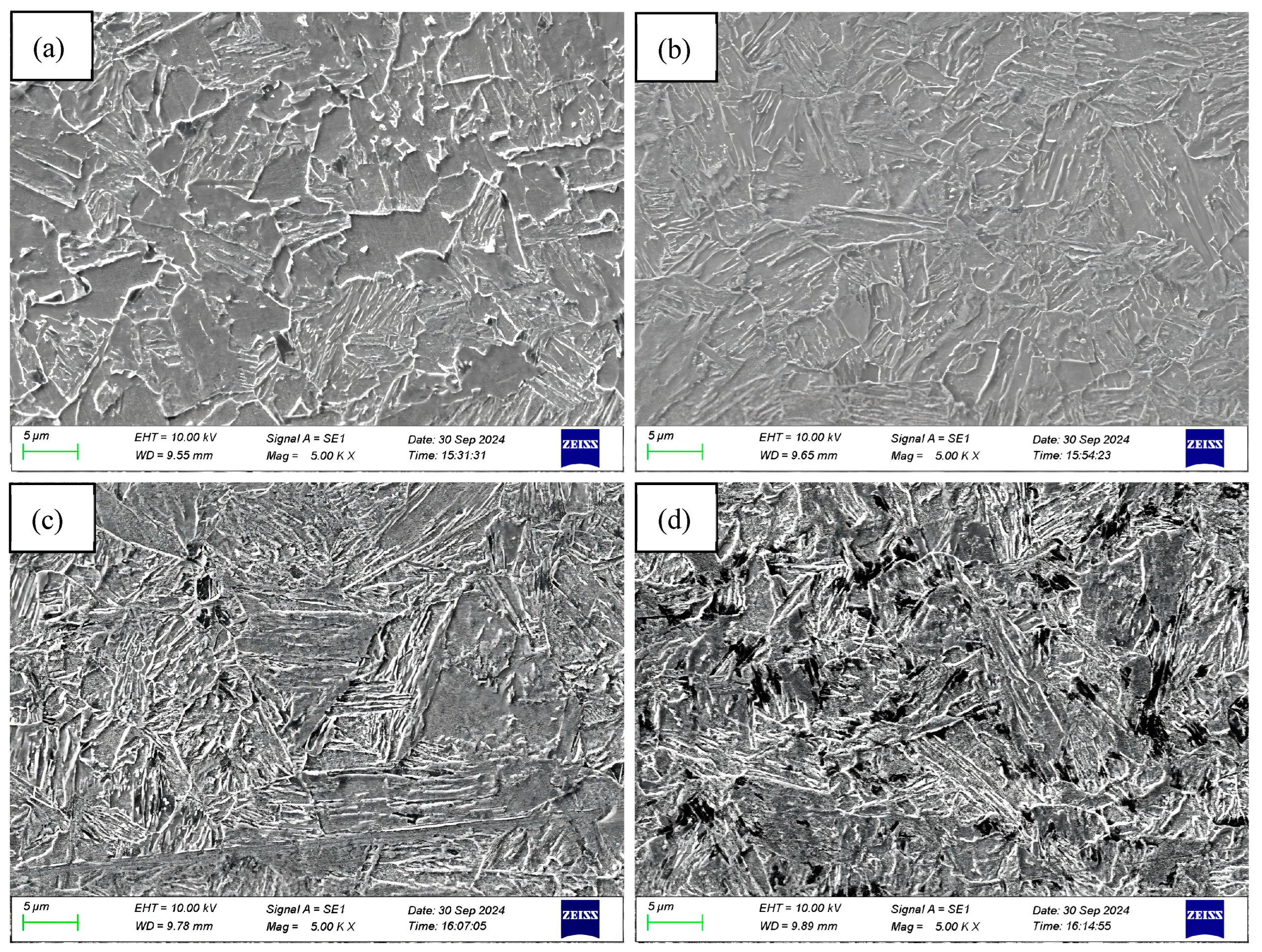
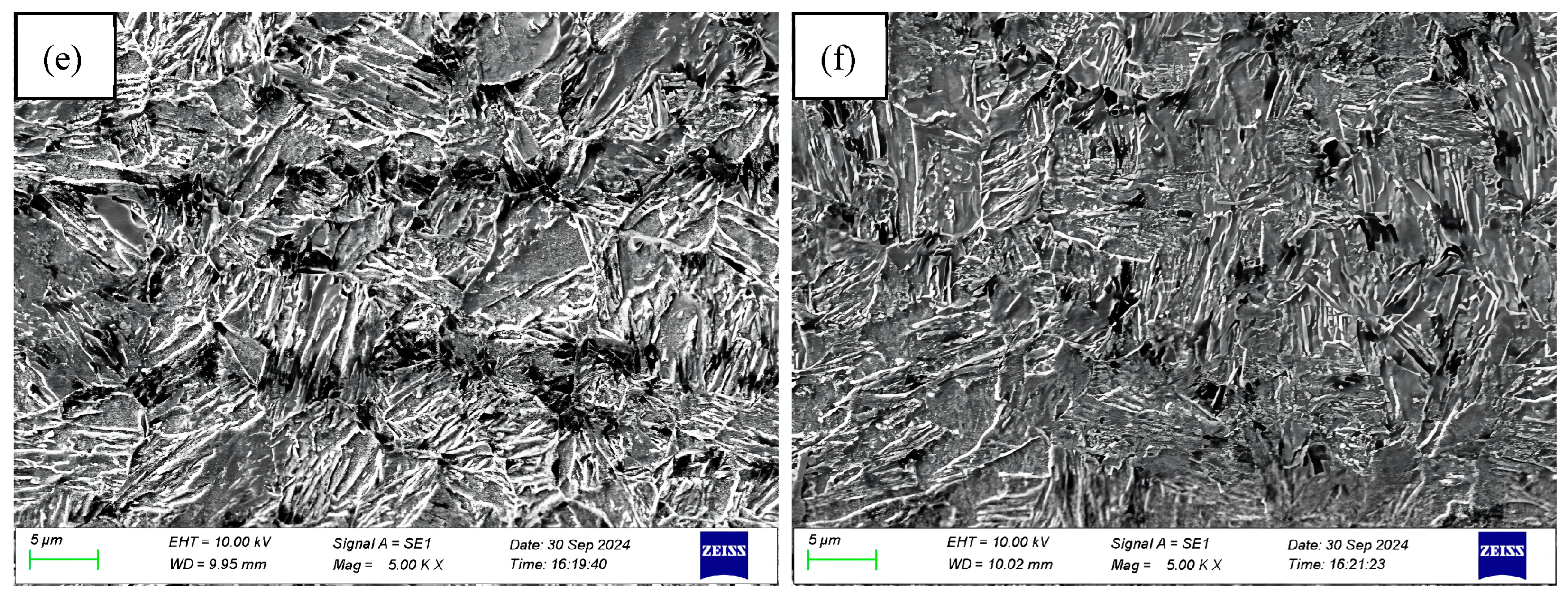
Figure 6 shows the scanning electron microscopy (SEM) morphologies of 9Ni steel under different cooling rates. It can be seen that the microstructural evolution is consistent with the optical microscopy (OM) observations presented in Figure 5. At low cooling rates, the microstructure is mainly composed of blocky ferrite, lath-like bainite, and a small amount of granular bainite. The ferrite grains are relatively coarse, with a maximum size of up to 16 μm. Meanwhile, the bainite lath bundles are loosely arranged with relatively wide laths, having an average width of approximately 0.94 μm. This is attributed to sufficient atomic diffusion under low cooling rates. The nucleation and growth of ferrite and bainite are not significantly restricted, resulting in a relatively coarse microstructure. When the cooling rate increases to 1 °C/s, the microstructure is significantly refined; the bainite content increases markedly, and the average lath width decreases to approximately 0.63 μm. With a further increase in the cooling rate to 10 °C/s, a bainite–martensite dual-phase microstructure is obtained. Martensite exists in the form of parallel lath bundles, which interweave with bainite laths without distinct boundaries. Compared with bainite laths, martensite laths are finer and more densely packed. At a cooling rate of 30 °C/s, the microstructure is dominated by lath martensite. The martensite bundles become finer and shorter, with an average lath width of approximately 0.42 μm, and are separated by high-angle grain boundaries. A distinct contrast between bright and dark regions can be observed within the martensite laths under SEM, which is a typical characteristic of high dislocation density inside the laths. A small amount of residual bainite lath forms at the boundaries of martensite lath bundles and acts as an inter-bundle phase. Meanwhile, a very small amount of thin-film retained austenite can be observed at the martensite lath boundaries, distributed continuously or discontinuously. This is because the rapid nucleation of martensite at high cooling rates imposes strong mechanical confinement on the untransformed austenite, hindering its subsequent transformation and enabling its retention at room temperature. The refinement of martensite laths can effectively improve the comprehensive mechanical properties of 9Ni steel. In particular, the increased grain boundary area can impede crack propagation, thereby significantly enhancing the cryogenic toughness of the material.

4.2. CCT Curve Analysis

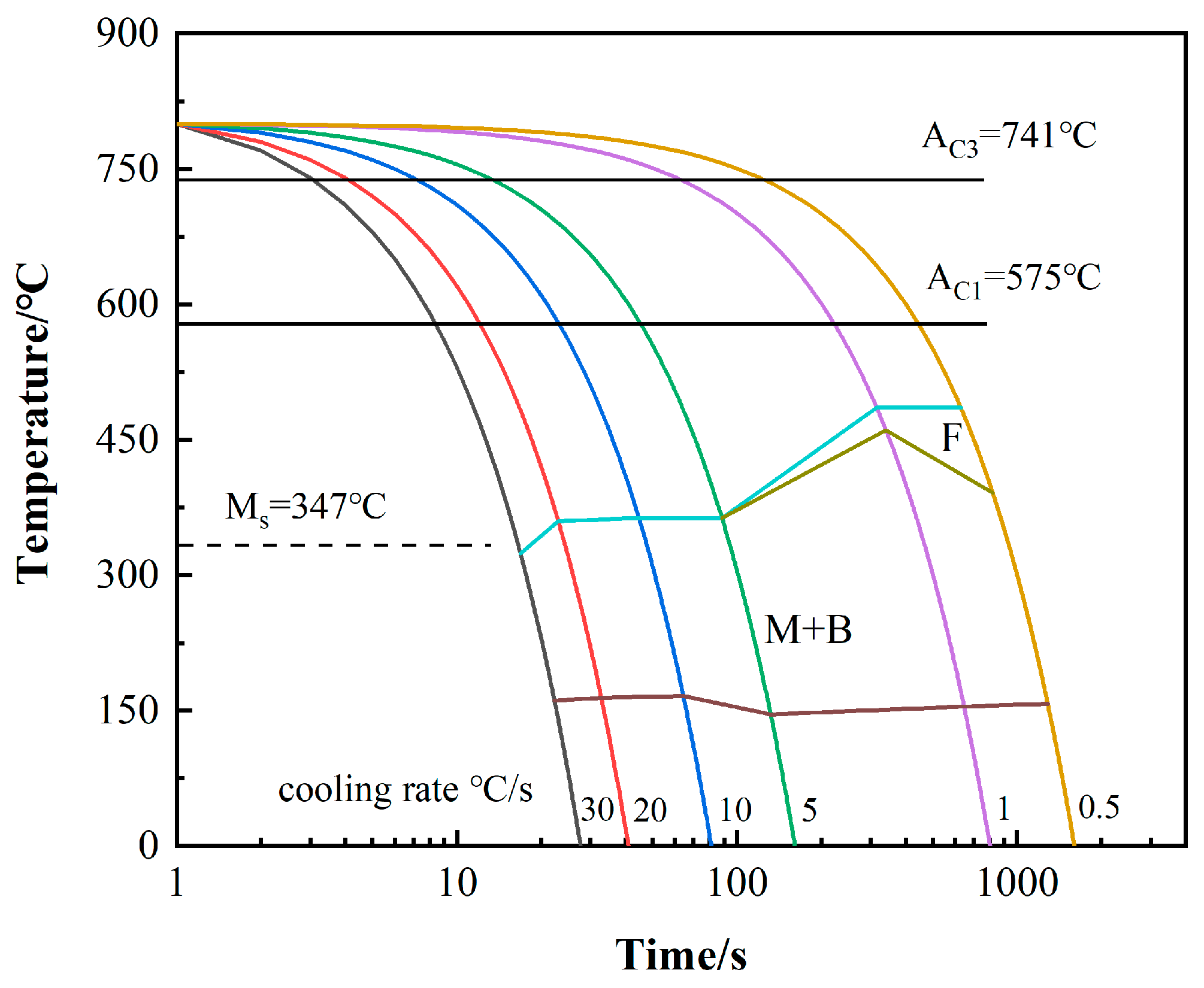
Based on the inflection points of the curves for thermal expansion and temperature variation with time of 9Ni steel at different cooling rates obtained from thermal simulation tests, the tangent method was adopted to determine the phase transformation temperatures at various cooling rates. Combined with the metallographic microstructure morphologies, the continuous cooling transformation (CCT) curve of 9Ni steel was plotted, as presented in Figure 7. It can be seen from the curve that the phase transformation start temperature decreases gradually with increasing cooling rate. When the cooling rate ranges from 0.5 to 5 °C/s, the microstructure is mainly ferrite and bainite, and the ferrite content decreases gradually with the increase in cooling rate. When the cooling rate increases to above 10 °C/s, the microstructure is dominated by bainite and martensite. When the cooling rate reaches 30 °C/s, the phase transformation start temperature is close to the martensitic transformation start temperature (Ms). By comparing and analyzing the experimentally measured CCT curve (Figure 7) with the JMatPro simulation results (Figure 3), we observe that the phase transformation laws of the two are highly consistent. The experimentally measured Ms of 9Ni steel is 347 °C, and the deviation from the simulated value (Ms = 342.7 °C) is 4.3 °C. This deviation falls within the reasonable range for phase transformation simulation of metallic materials and is mainly related to practical factors such as the idealized assumptions of the simulation database, slight segregation of alloying elements during experiments, and differences in austenite grain size. The comparison between the experimental results and simulated results confirms that the numerical simulation using JMatPro is highly feasible and valuable for formulating heat treatment schedules of steels. By inputting the actual chemical composition of the material, the CCT curve, characteristic phase transformation temperatures, and phase composition at different cooling rates can be accurately simulated. This enables the advanced prediction of microstructural evolution corresponding to different heat treatment cooling processes, providing a scientific and efficient theoretical basis for the preliminary selection and optimization of heat treatment parameters. In engineering practice, the JMatPro simulation method can be used to quickly determine the cooling rate corresponding to the target microstructure, greatly reducing the number of trial-and-error experiments, shortening the process development cycle, and lowering experimental costs. Meanwhile, combined with a small number of verification experiments to correct simulation deviations, an efficient research and development mode of “numerical modeling—experimental verification—process optimization” can be established, which provides important engineering guidance for the precise design of heat treatment processes for steels.

4.3. Microhardness Analysis

Figure 8 shows the microhardness curve of 9Ni steel at different cooling rates. It can be seen from the figure that the microhardness increases with increasing cooling rate. When the cooling rate is 0.5 °C/s, the microhardness is relatively low due to the large amount of blocky ferrite present in the microstructure. When the cooling rate is 1 °C/s, the microstructure is dominated by granular bainite and lath-like bainite. The strengthening effect of bainite leads to a substantial increase in microhardness, and lath martensite begins to appear in the microstructure at the same time. With the cooling rate further increasing to 5 °C/s, ferrite almost disappears, and the microstructure is mainly composed of lath-like bainite, accompanied by an increase in martensite content, resulting in a continuous rise in microhardness. When the cooling rate exceeds 10 °C/s, the martensite content increases gradually while the bainite content starts to decrease, and the phase transformation strengthening effect of martensite further enhances the microhardness. When the cooling rate continues to increase to 30 °C/s, the microstructure is still dominated by lath martensite, and the refinement of lath bundles results in a slight increase in microhardness, which stabilizes at approximately 359 HV1, corresponding to a tensile strength of approximately 1170 MPa, which meets the application requirements of 9Ni steel in the field of cryogenic steel structures. A comparison between the experimentally measured microhardness (Figure 8) and the JMatPro simulation results (Figure 4) reveals a consistent variation trend: a rapid increase at low cooling rates followed by gradual stabilization at high cooling rates. This trend corresponds well to the dynamic microstructural evolution from ferrite—bainite to bainite—martensite. The dual agreement between quantitative trends and qualitative mechanisms confirms that the JMatPro simulation model can accurately capture the intrinsic correlation of “cooling rate—microstructural evolution—hardness response” in 9Ni steel. This consistency also provides effective mutual verification with the simulated variation law of mechanical properties, further validating the reliability of JMatPro numerical simulation. The model can not only predict microstructural evolution through phase transformation kinetics but also accurately forecast the microhardness trend based on microstructural characteristics.

5. Conclusions

  • In the thermodynamic phase diagram, CCT curves of 9Ni steel were simulated and calculated using JMatPro, and the phase transformation characteristic parameters were determined as follows: the liquidus temperature was 1600.0 °C, A1 = 546.5 °C, A3 = 680.1 °C, the martensite start temperature (Ms) was 342.7 °C, and the martensite finish temperature (Mf) was 228.5 °C. At a cooling rate of 30 °C/s, the martensite content in the microstructure can reach 88.85%, with a corresponding microhardness of 328 HV.
  • The experimental results show that the microstructure of 9Ni steel evolves regularly with the cooling rate. When the cooling rate ranges from 0.5 to 5 °C/s, the microstructure is dominated by blocky ferrite and bainite, the ferrite content decreases gradually, the bainite content increases gradually, and a small amount of martensite precipitates simultaneously. When the cooling rate is 10 °C/s, the bainite content reaches a peak and then decreases, while the martensite content increases continuously. When the cooling rate is 20 °C/s, martensite gradually becomes the dominant phase. When the cooling rate is 30 °C/s, the martensite content exceeds 90% with refined lath bundles.
  • The microhardness of 9Ni steel increases sharply at first and then tends to stabilize with increasing cooling rate, which is highly consistent with the microstructural evolution. At a cooling rate of 30 °C/s, the microhardness stabilizes at approximately 359 HV1, which satisfies the engineering requirements for cryogenic steel structures.
  • The experimentally measured CCT curve, microstructural evolution, and microhardness variation are highly consistent with JMatPro simulation results, verifying the reliability and accuracy of the software in predicting the phase transformation behavior and mechanical properties of 9Ni steel. It serves as an efficient tool for the heat treatment process design and optimization of 9Ni steel, enabling accurate prediction of microstructure and properties via key material parameters to reduce trial-and-error experiments, shorten the R&D cycle, and cut costs. Furthermore, with good universality and expandability based on its mature thermodynamic database and phase transformation kinetic models, JMatPro can be extended to other high-strength low-alloy steels, cryogenic steels, and alloys, providing theoretical and technical support for the precise heat treatment design of metallic materials and showing promising engineering application prospects.

Author Contributions

W.H.: conceptualization, methodology, investigation, writing—original draft, and writing—review and editing; L.G.: experimental supervision and guidance; X.L.: data curation, formal analysis, and validation. Y.P.: experimental execution; B.Z.: software, visualization, and writing—visualization. All authors have read and agreed to the published version of the manuscript.

Funding

This work was supported by the Foundation of Liaoning Provincial Key Laboratory of Energy Storage and Utilization (CNNK202523, 50,000 RMB), Youth Project of Yingkou Institute of Technology (QNL202423, 5000 RMB), “Yingkou Talent Program” Youth Top-Tier Talent Project (YKYCQB202508, 50,000 RMB), Liaoning Provincial Department of Education Project (JYTMS20230062, 50,000 RMB), and the 2023 Liaoning Provincial Joint Fund Project Doctoral Scientific Research Initiation Project (2023-BSBA-308, 50,000 RMB).

Data Availability Statement

The raw data supporting the conclusions of this article will be made available by the authors on request.

Acknowledgments

We appreciate the technical support provided by the experimental platform of Yingkou Institute of Technology during the static thermal simulation experiments and microstructure characterization. Special thanks are given to the colleagues in the research team for their valuable discussions and suggestions throughout the study.

Conflicts of Interest

The authors declare no conflicts of interest.

References

  1. Kyun, Y.K.; Taek, B.O.; Hoon, J.K. Effects of Crack Tip Constraint on the Fracture Toughness Assessment of 9% Ni Steel for Cryogenic Application in Liquefied Natural Gas Storage Tanks. Materials 2020, 13, 5250. [Google Scholar] [CrossRef]
  2. Gook, S.; El Batahgy, A.M.; Gumenyuk, A.; Biegler, M.; Rethmeier, M. Application of Hybrid Laser Arc Welding for Construction of LNG Tanks Made of Thick Cryogenic 9% Ni Steel Plates. Lasers Manuf. Mater. Process. 2023, 10, 659–680. [Google Scholar] [CrossRef]
  3. Hany, S.; Duponchel, B.; Poupin, C.; Abou Kais, A.; Dewael, D.; Vogt, J.B.; Abi Aad, E. Microstructural and Mechanical Properties of 9%Ni Steels Used for the Construction of LNG Storage Tanks. Adv. Mater. Res. 2014, 3187, 1953–1957. [Google Scholar] [CrossRef]
  4. Yarlagadda, B.; Iyer, G.; Binsted, M.; Patel, P.; Wise, M.; McLeod, J. The future evolution of global natural gas trade. iScience 2024, 27, 108902. [Google Scholar] [CrossRef] [PubMed]
  5. Zhao, J.; Ding, J.H.; Liu, X.F.; Wang, Y.C.; Chen, L.J.; Zhang, Q. Recent advances in LNG storage and transportation technologies: A focus on large-scale and high-efficiency systems. J. Nat. Gas. Sci. Eng. 2022, 104, 104789. [Google Scholar]
  6. An, T.; Liu, W.Y.; Li, T.Y.; Zhang, Y.; Li, J.W. Continuous cooling transformation behavior of V microalloyed hot-bent X80 pipeline steel. J. Phys. Conf. Ser. 2024, 2842, 012040. [Google Scholar] [CrossRef]
  7. Wang, C.Y.; Cao, C.X.; Zhang, J.; Wang, H.; Cao, W.Q. Effect of Al Additions and Cooling Rate on the Microstructure and Mechanical Properties of Austenite FeMnAlC Steels. Materials 2022, 15, 3574. [Google Scholar] [CrossRef]
  8. Wang, H.C.; Cao, L.J.; Li, Y.J.; Schneider, M.; Detemple, E.; Eggeler, G. Effect of cooling rate on the microstructure and mechanical properties of a low-carbon low-alloyed steel. J. Mater. Sci. 2021, 56, 11098–11113. [Google Scholar] [CrossRef]
  9. Wen, Z.L.; Li, L.J.; Li, J.Y.; Peng, Z.W.; Gao, J.X. Effect of cooling rate on the microstructure and mechanical properties of a high copper high nickel low carbon steel. J. Phys. Conf. Ser. 2021, 2044, 012007. [Google Scholar] [CrossRef]
  10. Fu, B.; Lu, M.Y.; Yang, W.Y.; Li, L.F.; Zhao, Z.Y. Effect of Cooling Rate on the Microstructure and Mechanical Properties of C-Mn-Al-Si-Nb Hot-Rolled TRIP Steels. OP Conf. Ser. Mater. Sci. Eng. 2017, 281, 012001. [Google Scholar] [CrossRef]
  11. Zeisig, J.; Schädlich, N.; Hufenbach, J.; Wendrock, H.; Kimme, J.; Kühn, U. Effect of cooling rate on precipitation behaviour and transformation characteristics of a novel FeCrVBC cast alloy. J. Alloys Compd. 2020, 816, 152544. [Google Scholar] [CrossRef]
  12. Gounzari, M.; Belkassmi, Y.; Kotri, A.; Gueraoui, K.; Lmouchter, M. Mechanical properties of binary CoCr metallic glass: A molecular dynamics study. Phys. Scr. 2026, 101, 085901. [Google Scholar] [CrossRef]
  13. Gui, S.S.; Lu, Q.; Li, D.; Jiang, H.Y.; Wang, Q.D.; Cai, H.S. Effects of Al-5Ti-1B-xCe refiners on microstructure and tensile properties of Al-5.0Mg-3.0Zn-1.0Cu alloy at different cooling rates. Mater. Sci. Eng. A 2026, 954, 149820. [Google Scholar]
  14. Mahore, S.; Shah, A.; Sharma, S.; Tripathi, A. Influence of thermo-mechanical processing on the corrosion performance of Ti-6Al-4V alloy: Role of cooling rate and degree of deformation. Colloids Surf. A Physicochem. Eng. Asp. 2026, 732, 139220. [Google Scholar] [CrossRef]
  15. Chen, H.S.; Han, L.T.; Peng, H.W.; Leng, X.S. Microstructures, mechanical properties and corrosion behaviors of TIG-welded 9Ni steel joint in simulated marine environment. J. Mater. Res. Technol. 2025, 39, 108–123. [Google Scholar] [CrossRef]
  16. Guo, Y.; Yang, S.Y.; Zhou, C.; Xia, F.L.; Ruan, J.F. Low-Temperature Toughness Enhancement of 9% Ni Steel Girth Welds in LNG Storage Tanks via a TIP–TIG Welding Process. J. Mater. Eng. Perform. 2023, 33, 7098–7110. [Google Scholar]
  17. Qu, Z.X.; Xia, L.Q.; Wang, X.J. The Study on Welding Technology of 9Ni Steel. Mater. Sci. Forum 2018, 941, 516–523. [Google Scholar] [CrossRef]
  18. Zhang, J.Z.; Han, L.T.; Ke, W.P.; Zhao, L.; Wang, X.; Leng, X.S.; Chen, H.S. Microstructural Characteristics and Localized Corrosion Behavior of Electron Beam Welded 9Ni Steel Joints. J. Mater. Sci. 2026, 61, 8260–8270. [Google Scholar] [CrossRef]
  19. Rios, M.C.G.; Payão Filho, J.d.C.; Farias, F.W.C.; Passos, A.V.; Moraes e Oliveira, V.H.P. Microstructural Characterization of the Physical Simulated and Welded Heat-Affected Zone of 9% Ni Steel Pipe. J. Mater. Res. Technol. 2022, 17, 3033–3046. [Google Scholar] [CrossRef]
  20. Hou, J.; Gao, B.; Liu, C.R.; Huang, Z.Q. Analysis of the influence and mechanism of heat treatment on the performance of 9Ni Steel/S30408 SS composite plates. Mater. Des. 2025, 259, 114866. [Google Scholar] [CrossRef]
  21. Su, H.; Zhao, X.Q.; Pan, T.; Lei, X.R.; Wang, Q.F. Microstructure and Mechanical Properties in QT-Treated 9Ni Steel. Adv. Mater. Res. 2012, 562–564, 39–42. [Google Scholar] [CrossRef]
  22. Kinney, C.C.; Pytlewski, K.R.; Khachaturyan, A.G.; Morris, J.W. The microstructure of lath martensite in quenched 9Ni steel. Acta Mater. 2014, 69, 372–385. [Google Scholar] [CrossRef]
  23. Song, S.; Lu, S.; Zhang, L.; Wang, S.Y.; Zheng, S.J.; Xu, Z.D.; Xi, Y.L.; Yu, W.Z.; Li, M.N. Mechanistic Study on the Effect of QLT Process on Microstructure and Properties of 9Ni Steel. Steel Res. Int. 2025, 97, 344–353. [Google Scholar] [CrossRef]
  24. Sun, Y.; Wu, Z.L.; Ji, Y.F.; Wang, P.J.; Wu, S.W.; Gao, G.M.; Liu, Z.Y. The Excellent Combination of Strength and Toughness Can Be Achieved by Adjusting the Heterogeneous Structure of Low-Ni Liquefied Natural Gas Tank Steel. Mater. Charact. 2025, 230, 115750. [Google Scholar] [CrossRef]
  25. Yang, Y.H.; Zhang, X.J.; Yuan, S.Q.; Li, J. Effect of Quenching Microstructure on the Formation of Reversed Austenite in 9Ni Steel. Mater. Sci. Forum 2014, 788, 277–281. [Google Scholar] [CrossRef]
  26. Terasaki, H.; Moriguchi, K.; Tomio, Y.; Yamagishi, H.; Morito, S. Correlation Among the Variant Group, Effective Grain Size, and Elastic Strain Energy During the Phase Transformation in 9Ni Steels. Metall. Mater. Trans. 2017, 48, 5761–5765. [Google Scholar] [CrossRef]
  27. Zhang, D.Z.; Xu, T.F.; Xu, J.K.; Li, W.J.; Zhang, H.L.; Hou, J.P. Effect of microstructural homogeneity on ultra-low temperature impact fracture mechanism of high-strength 9%Ni steel. Mater. Des. 2025, 256, 114318. [Google Scholar] [CrossRef]
  28. Zhang, H.L.; Li, X.L.; Zhao, Q.B. Effect of microstructural characteristics on the impact fracture behavior of cryogenic 9Ni steel. Mater. Res. Express 2023, 10, 106510. [Google Scholar] [CrossRef]
  29. Zhang, W.X.; Cong, Y.B.; Wang, J.; Hou, J.P.; Zhang, D.Z.; Xu, J.K.; Li, W.J. Revealing the effects of martensitic transformation and dislocation slip in austenite on the micromechanical behaviors of a 9Ni steel using crystal plasticity finite element method. Int. J. Plast. 2024, 174, 103869. [Google Scholar] [CrossRef]
  30. Cota Araujo, M.A.; Vogt, J.B.; Bouquerel, J. Retained Austenite-Aided Cyclic Plasticity of the Quenched 9Ni Steel. Int. J. Fatigue 2021, 152, 106445. [Google Scholar] [CrossRef]
  31. da Silva de Sa, J.; da Silva Gama, R.; Gomes, J.A.C.P. The Effect of Heat Treatment on Environment Assisted Cracking Susceptibility of 9% Ni Steel. Corros. Eng. Sci. Technol. 2021, 56, 179–188. [Google Scholar] [CrossRef]
  32. Yu, Y.H.; Hou, J.X.; Zhu, P.; Zhang, J.L. Microstructure and properties of iron-based surfacing layer based on JmatPro software simulation calculation. Vibroengineering Procedia 2023, 50, 180–186. [Google Scholar]
  33. Yu, P.; Song, R.B.; Xiong, W.M.; Huo, W.F.; Wei, C.; Liu, Z.J.; Qin, S. Phase Transformation Law of Nb Microalloyed Steel at Different Cooling Rates. Mater. Sci. Forum 2021, 6114, 396–403. [Google Scholar] [CrossRef]
  34. Geng, X.X.; Wang, H.; Xue, W.H.; Xiang, S.; Huang, H.L.; Meng, L.; Ma, G. Modeling of CCT diagrams for tool steels using different machine learning techniques. Comput. Mater. Sci. 2020, 171, 109235. [Google Scholar] [CrossRef]
  35. Sun, R.C.; Mi, G.B. Influence of Alloying Elements Content on High Temperature Properties of Ti-V-Cr and Ti-Al-V Series Titanium Alloys: A JMatPro Program Calculation Study. J. Phys. Conf. Ser. 2023, 2639, 012019. [Google Scholar] [CrossRef]
  36. Hu, M.J.; Chi, Q.; Huo, C.Y.; Yang, S.K.; Lei, D.; Li, M.V. High-throughput computing designed wire-powder co-deposition SAAM of optimized CrMo steel: Microstructure, mechanical properties and corrosion behavior. Int. J. Press. Vessel. Pip. 2026, 219, 105698. [Google Scholar] [CrossRef]
  37. Yong, S.; Chen, J.B.; Wang, T.L.; Yang, J.S. Design and validation of superhard and hard-to-be-machined Mo-V high-speed steel for mill roll ring based on digital simulation. Eng. Comput. 2026, 43, 363–381. [Google Scholar] [CrossRef]
  38. Krbata, M.; Kohutiar, M.; Escherova, J.; Klučiar, P.; Studeny, Z.; Trembach, B.; Beronská, N.; Breznická, A.; Timárová, L. Continuous Cooling Transformation of Tool Steels X153CrMoV12 and 100MnCrW4: Analysis of Microstructure and Hardness Changes. Appl. Mech. 2025, 6, 16. [Google Scholar] [CrossRef]
  39. Erişir, E.; Ayhan, İ.İ.; Güney, C.; Alan, E.; Dürger, N.B.; Ün, S. Microstructure and Phase Transformations in High-Strength Bainitic Forging Steel. J. Mater. Eng. Perform. 2021, 30, 3458–3467. [Google Scholar] [CrossRef]
  40. GB/T 24510-2017; Nickel Alloy Steel Plates for Low-Temperature Pressure Vessels. Standardization Administration of China: Beijing, China, 2017.
  41. GB/T 6394-2017; Test Methods for Average Grain Size of Metals. Standardization Administration of China (SAC): Beijing, China, 2017.
  42. Zhang, Y.; Cao, Y.; Huang, G.J.; Wang, Y.Y.; Li, Q.L.; He, J. Influence of Martensite/Bainite Dual Phase-Content on the Mechanical Properties of EA4T High-Speed Axle Steel. Materials 2023, 16, 4657. [Google Scholar] [CrossRef]
  43. Wang, B.S.; Chen, N.N.; Cai, Y.; Guo, W.; Wang, M. Effect of Microstructure on Impact Toughness and Fatigue Performance in Coarse-Grained Heat-Affected Zone of Bainitic Steel Welds. J. Mater. Eng. Perform. 2022, 32, 3678–3689. [Google Scholar] [CrossRef]
Figure 1. Thermodynamic phase diagram of 9Ni steel calculated using JMatPro software.
Crystals 16 00202 g001
Figure 2. Mass fraction–temperature curves of the main phases of 9Ni steel within the concentration range of 0–5 wt%.
Crystals 16 00202 g002
Figure 3. The CCT curve of 9Ni steel was calculated using JMatPro software.
Crystals 16 00202 g003
Figure 4. Mechanical properties of 9Ni steel calculated by the JMatPro software.
Crystals 16 00202 g004
Figure 5. Room-temperature microstructure of 9Ni steel at different cooling rates. (a) 0.5 °C/s; (b) 1 °C/s; (c) 5 °C/s; (d) 10 °C/s; (e) 20 °C/s; (f) 30 °C/s. F: ferrite; B: bainite; M: martensite.
Crystals 16 00202 g005
Figure 6. SEM images of 9Ni steel under different cooling rates. (a) 0.5 °C/s; (b) 1 °C/s; (c) 5 °C/s; (d) 10 °C/s; (e) 20 °C/s; (f) 30 °C/s.
Crystals 16 00202 g006aCrystals 16 00202 g006b
Figure 7. CCT curve of 9Ni steel. Colored lines denote cooling rates (30–0.5 °C/s). AC3, AC1, and Ms are critical transformation temperatures. “F” and “M+B” indicate ferrite and martensite–bainite regions, respectively.
Crystals 16 00202 g007
Figure 8. Microhardness of 9Ni steel at different cooling rates.
Crystals 16 00202 g008
Table 1. Main chemical composition of 9Ni steel (wt%).
CNiSiMnPSAlCrCuN
0.0489.080.1830.7820.0050.00170.0420.0550.0130.0025
Table 2. Room-temperature phase composition of 9Ni steel at different cooling rates.
Cooling Rate/(°C/s)0.515102030
Ferrite/%82.0882.7953.2313.142.981.37
Pearlite/%0.02-----
Bainite/%17.9017.2146.7762.4027.579.55
Retained Austenite/%---0.070.180.23
Martensite/%---24.3969.2788.85
Disclaimer/Publisher’s Note: The statements, opinions and data contained in all publications are solely those of the individual author(s) and contributor(s) and not of MDPI and/or the editor(s). MDPI and/or the editor(s) disclaim responsibility for any injury to people or property resulting from any ideas, methods, instructions or products referred to in the content.