Skip to Content
CrystalsCrystals
  • Article
  • Open Access

13 March 2026

Effect of Sulfur on Hot Corrosion Behavior of Nickel-Based Superalloys at 900 °C

,
,
,
,
,
,
and
1
School of Materials Science and Engineering, Xi’an Shiyou University, Xi’an 710065, China
2
State Key Laboratory of Oil and Gas Equipment, CNPC Tubular Goods Research Institute, Xi’an 710077, China
3
Northwest Branch of National Petroleum and Natural Gas Pipeline Network Group Co., Ltd., Xi’an 710018, China
*
Author to whom correspondence should be addressed.
This article belongs to the Section Crystalline Metals and Alloys

Abstract

Nickel-based superalloys are extensively used in fabricating high-temperature gas turbine components, owing to their superior high-temperature strength, excellent structural stability, and remarkable hot corrosion resistance. The influence of impurity sulfur content on their hot corrosion performance is a core scientific issue in hot-end component compositional design and smelting. This study investigated chromium (Cr)-rich nickel-based superalloys with sulfur (S) contents of 3 ppm, 16 ppm, and 42 ppm via XRD, SEM, and an EPMA, focusing on their hot corrosion behavior under a 100% Na2SO4 deposit at 900 °C. The results indicated that their hot corrosion products were basically identical, forming a Cr-dominated outer oxide layer rich in Ti, Co, and Ni, an Al2O3-based inner corrosion zone, and a CrSx-dominated sulfide layer. With increasing sulfur content, the outer layer thickness decreased from approximately 30 μm to less than 20 μm, pores in the outer oxide layer increased in quantity and size, and internal sulfides and nitrides accumulated. The average depth of spallation increased from 55 μm for the S3 alloy to 80 μm for the S16 alloy, with the S42 alloy showing even more extensive spallation. The alloy’s hot corrosion performance deteriorated notably with increasing S content. The mechanism of sulfur’s effect on hot corrosion behavior is that sulfur in the alloy segregates at oxide film defects, enhancing defect stability and increasing their quantity and size. These defects serve as rapid diffusion channels for corrosive media, thereby accelerating the alloy’s hot corrosion rate.

1. Introduction

Nickel-based superalloys [1,2] have been widely used in manufacturing high-temperature structural components due to their excellent high-temperature strength and good structural stability [3,4]. However, these components operate in aggressive environments where corrosive species such as sodium, sulfur, and vanadium from fuel and air deposit on component surfaces, leading to accelerated degradation known as hot corrosion [5,6,7,8]. This catastrophic failure mechanism significantly compromises the mechanical properties and service life of superalloy components [9,10,11,12]. According to the difference in temperature at which corrosion occurs, hot corrosion can be divided into two types [13]. When the temperature is 600–750 °C, it is called low-temperature (Type-II) hot corrosion, and when the temperature is 800–950 °C, it is called high-temperature (Type-I) hot corrosion [14,15].
With the continuous increase in gas turbine inlet temperature, higher requirements are placed on the hot corrosion resistance of nickel-based alloys in alloy composition design [16]. The hot corrosion resistance of nickel-based superalloys is strongly influenced by alloy composition. As we all know, Cr [17] and Ti [18] are indispensable elements in improving the hot corrosion resistance of superalloys. Cr is particularly critical, with studies showing that alloys containing more than 15–20 wt.% Cr typically exhibit superior resistance due to the formation of protective Cr2O3 scales [17]. Ti also plays a beneficial role, with optimal Ti content in the range of 3–5 wt.% promoting the formation of protective TiO2 [18]. Alloys with a higher content of aluminum have good oxidation resistance [19], while it can be detrimental to hot corrosion performance when present at high levels (>4 wt.%) due to acidic fluxing of Al2O3 in molten salts. With balanced Cr, Ti, and Al contents, alloys also exhibit superior hot corrosion resistance [20]. In recent years, Re was found to increase the activity of chromium (Cr) and titanium (Ti), which significantly improved the hot corrosion resistance of a nickel-based superalloy [21].
Sulfur is considered to be an element that is harmful to superalloys [22,23] as it has a significant impact on their microstructure and properties. Due to the limitations of the smelting process, sulfur impurities in cast superalloys cannot be completely removed. It is known that a Ni-base superalloy containing a trace amount of sulfur has reduced high-temperature oxidation resistance. Advanced superalloys form protective Al2O3 [24,25] and Cr2O3 [26,27,28] through the selective oxidation of Al and Cr, achieving good protection effects. Good adhesion between the oxide scale and the alloy is the key to maintaining oxidation resistance [29]. The influence of sulfur on the adhesion of oxide scale during the oxidation process has been investigated by several researchers.
Smialek and James observed the degradation of scale adhesion related to residual sulfur content [30,31]. They found that increasing the sulfur content significantly reduced the adhesion between the alloy substrate and the oxide scale. After cyclic oxidation testing, the adhesion level of the oxide scale was inversely related to the sulfur content. Smith et al. [32] investigated the cyclic oxidation behavior of several nickel-based superalloys with different sulfur contents. Their results showed that the spallation rate of the oxide scale decreased with decreasing sulfur content. After cyclic oxidation at 1200 °C, the oxide scale on the alloy containing 4.3 ppm S spalled almost completely due to the non-uniform distribution of sulfur, whereas the surface of the sample with 0.1 ppm S remained intact. Sarioglu [33] found that an improvement in the long-term adhesion of the oxide scale to the substrate can be achieved by reducing the sulfur content to a level in the range of 1 ppm or lower. Fedorova et al. [34] used scratch tests to quantify the effect of sulfur content on the adhesion of multi-layered oxide scales. Sulfur severely degraded the cyclic oxidation performance of the single-crystal nickel-based superalloy AM1, mainly due to the reduced adhesion of the oxide scale formed on the alloy surface. Sarioglu et al. [35] studied the influence of sulfur content on the cyclic oxidation behavior of nickel-based superalloys and found that desulfurization effectively improved the adhesion of Al2O3 scales. To achieve long-term adhesion between the oxide scale and the substrate, the sulfur content should be reduced to 1 ppm or below. Zhang [36] examined the effect of ppm-level sulfur on the oxidation behavior of a single-crystal nickel-based superalloy. At 1000 °C, the isothermal oxidation mass gain increased significantly with increasing sulfur content. The mechanism is that rapid diffusion of sulfur impairs the integrity, compactness, uniformity, and continuity of the protective oxide scale; accelerates the inward diffusion of O, N, and other elements; and the outward diffusion of Ta; promotes nitride formation; reduces the adhesion between the oxide scale and the substrate; and thus deteriorates the oxidation resistance of the alloy. Yun [37] studied the cyclic oxidation behavior of superalloy samples with different ppm-level sulfur contents. They observed that sulfur induced oxide scale spallation by promoting the formation of voids along oxide grain boundaries. The segregation of sulfur at oxide grain boundaries lowers the surface energy of voids and promotes their nucleation and growth. Consequently, the degree of oxide scale spallation increases with increasing sulfur content.
In summary, the existing literature on the effect of trace sulfur on the environmental performance of nickel-based superalloys mostly focuses on high-temperature oxidation performance. Hot corrosion differs fundamentally from oxidation, involving additional degradation mechanisms such as salt fluxing, sulfidation, and the formation of complex multi-layered corrosion structures. Compared with the effect of sulfur on the oxidation performance of alloys, its effect on hot corrosion performance has been far less studied. In particular, the effect of sulfur content on corrosion products, internal sulfides, and adhesion of oxide scale remains unclear. It is of great scientific and engineering significance to study the hot corrosion behavior of alloys with different sulfur contents, as this would help to control the sulfur content in hot corrosion-resistant superalloys and improve the melting process and design of nickel-based superalloys with better temperature-bearing ability. Therefore, this study systematically investigated the hot corrosion behavior of Cr-rich nickel-based superalloys with three controlled sulfur levels (3 ppm, 16 ppm, and 42 ppm) in Na2SO4 at 900 °C.

2. Materials and Methods

2.1. Preparation of Materials

The chemical compositions of the experimental alloys are listed in Table 1. The base alloy is a typical hot-corrosion-resistant superalloy, which is characterized by a high Cr content of 19 wt.%. Different S contents of 3, 16, and 42 ppm were tested in this study. The lowest level, 3 ppm S, represents the minimum sulfur content achievable by current manufacturing techniques for this specific alloy composition. The upper limit of 42 ppm was chosen to represent the maximum allowable sulfur impurity level in commercial-grade alloys of this type, beyond which the alloy is often rejected for critical hot-end component applications. The intermediate value of 16 ppm was selected to establish a trend within this technically relevant range. The hot corrosion specimens were cut to dimensions of Φ14 mm × 2 mm by electro-spark wire-electrode cutting from the as-heat-treated rods. The surfaces of all of these specimens were prepared by grinding with #800 SiC paper and subsequently cleaned in alcohol before the hot corrosion test. For each alloy, three parallel samples were applied to guarantee the accuracy of the test. The size and weight of each sample were measured by a micrometer and an electronic balance with an accuracy of 0.1 mg. Each sample was measured three times and the average value was taken. After measurement, cleaning with anhydrous ethanol was performed again.
Table 1. The nominal chemical compositions of the experimental alloys in wt.% (analyzed by inductively coupled plasma optical emission spectroscopy, ICP-OES).

2.2. Hot Corrosion Test

The hot corrosion test was performed by the salt-recoating method and conducted at 900 °C. The specimens were sprayed with a saturated Na2SO4 aqueous solution on all surfaces and dried on a heated Ni plate. A salt deposit formed on the sample.
Every specimen was weighed after being coated with salt to make sure a 0.3~0.5 mg/cm2 layer of salt was deposited on the sample surface. Then, each sample was put into an Al2O3 crucible and further into the muffle furnace for hot corrosion. The test was paused every 20 h and the samples were removed from the furnace for weight monitoring, morphology inspection, and salt re-coating. In order to ensure the measurements were as accurate as possible, the time between when they were taken out of the furnace and weighed was 1 h in every cycle. The value of the mass change was the average of three parallel samples.

2.3. Sample Analysis

After the corrosion test, X-ray diffraction (XRD 6100, Shimadzu Corporation, Kyoto, Japan) with Cu Kα radiation (λ = 1.5406 Å) was carried out to identify the phase structures of the specimen surfaces, with a scanning rate of 2°/min over a 2θ range of 10–85°. The surface roughness and three-dimensional morphology of the corrosion products were characterized using a Zeiss LSM 700 laser confocal microscope (LSM, 700, Carl Zeiss AG, Oberkochen, Germany). The corroded specimens were encapsulated in epoxy resin using the vacuum-impregnated cold mounting process [38] and prepared for observation of their cross-sections after grinding and polishing. After curing, the mounted samples were ground using SiC papers from #240 to #2000 grit, followed by polishing with 3 μm and 1 μm diamond suspensions. Between each step, the samples were cleaned ultrasonically in ethanol to minimize cross-contamination. Microstructures were examined using a TESCAN scanning electron microscope (SEM, TESCAN Mira 3, TESCAN, Brno, Czech Republic) equipped with an Oxford Instruments X-Max 50 energy-dispersive spectroscopy (EDS, X-Max 50, Oxford Instruments, High Wycombe, UK) detector for elemental analysis, operating at an accelerating voltage of 20 kV. Quantitative elemental distribution maps were obtained using an electron probe microanalyzer (EPMA, 1720H, Shimadzu Corporation, Kyoto, Japan) operating at an accelerating voltage of 15 kV.

3. Results

3.1. Macroscopic Morphologies and Hot Corrosion Kinetics

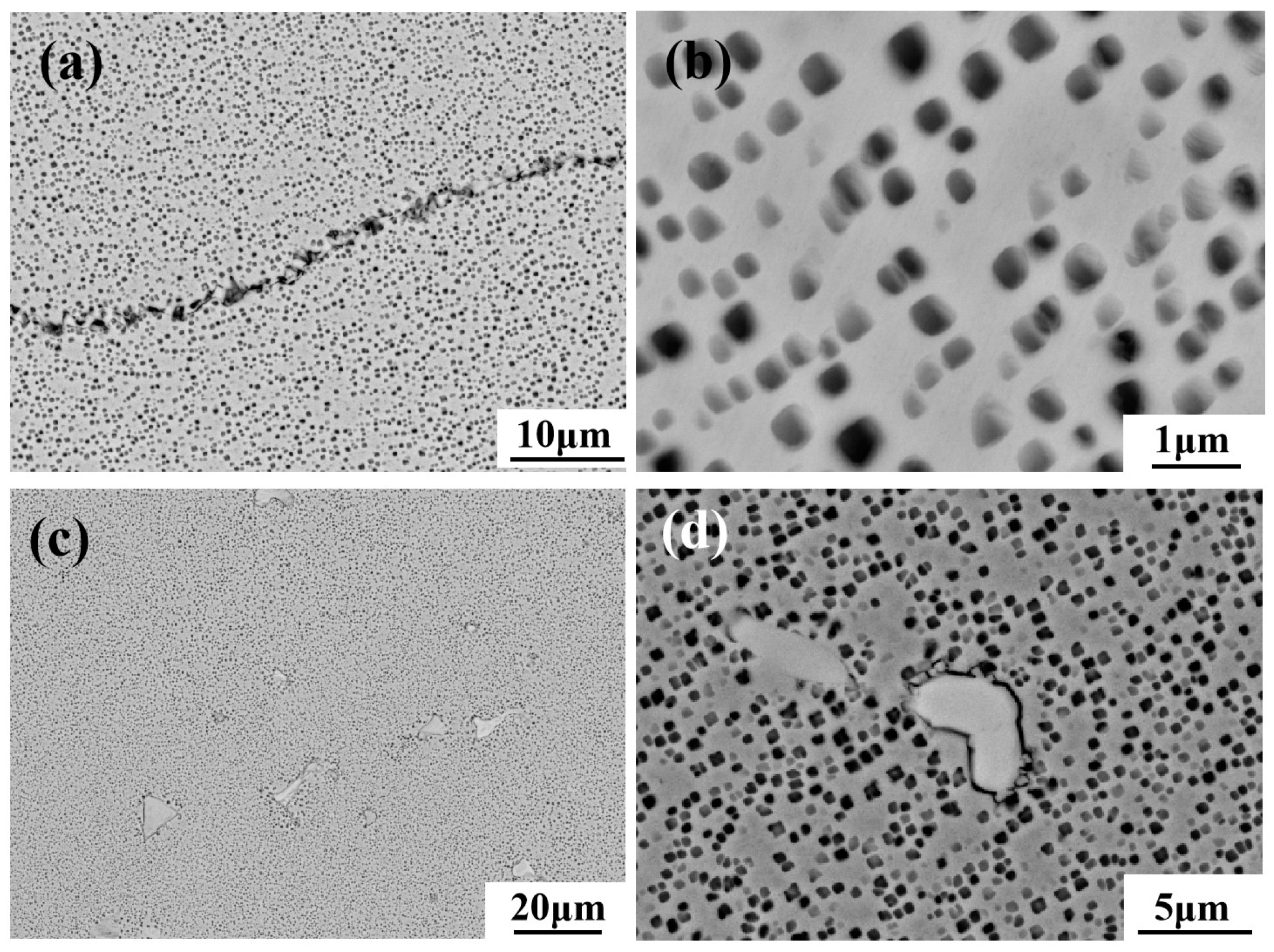
The standard heat treatment microstructures of the S3, S16, and S42 alloys were similar. Only the microstructure of the S3 alloy is illustrated in Figure 1. After standard heat treatment, the eutectics were almost eliminated, the grain boundaries were clear, and the γ′ was in the form of cubic. The increase in S content did not lead to any additional phases or microstructure variation.
Figure 1. Typical SEM micrographs of the cross-sectional microstructure of the S3 alloy after standard heat treatment. (a) Morphology of a grain boundary; (b) morphology of γ′; (c) distribution of carbides; (d) morphology of carbides.
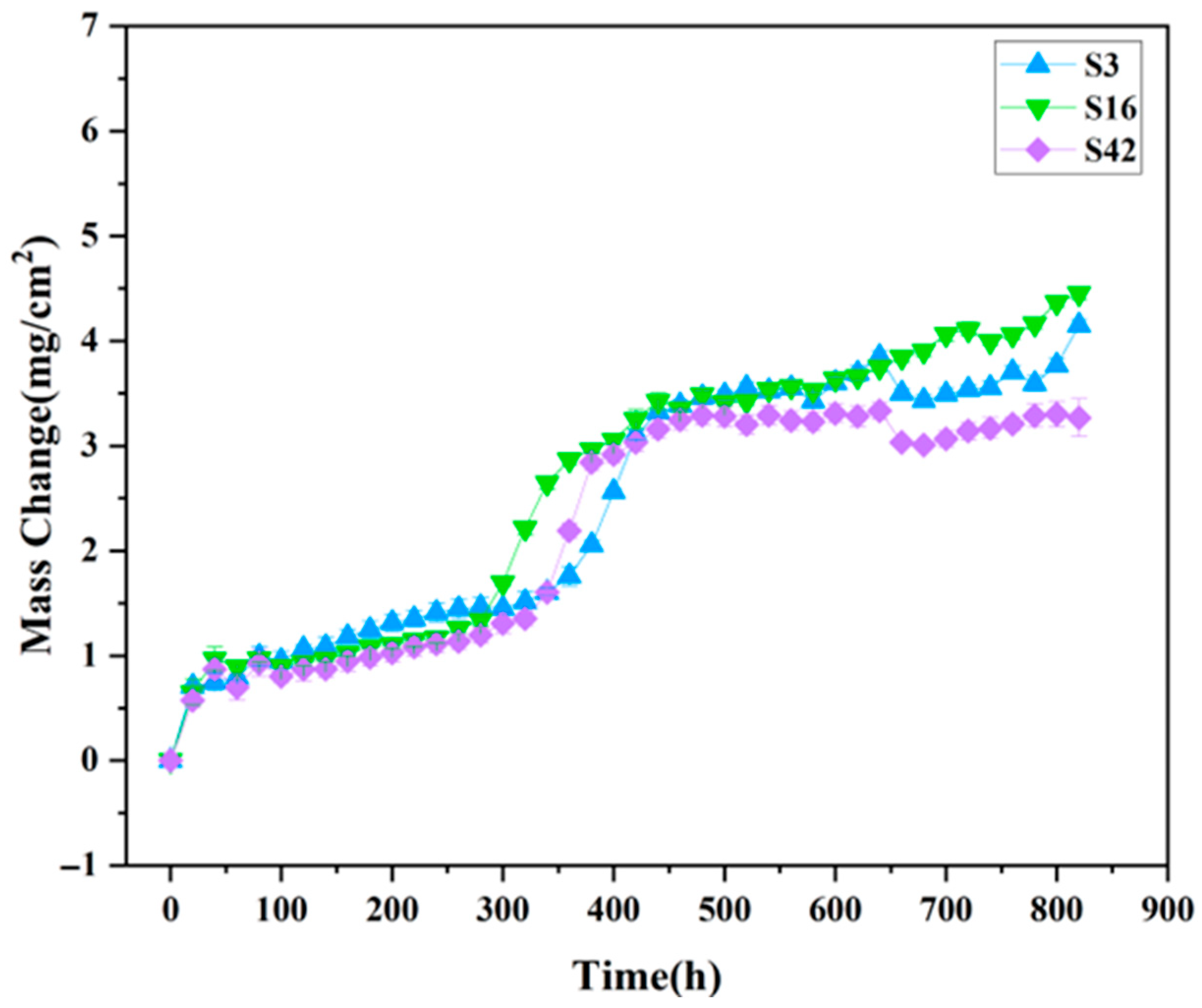
The hot corrosion kinetic curves of the experimental alloys are shown in Figure 2. By fitting the curves with different kinetic models, it was found that, during the first stage (0–300 h), all three alloys exhibited a parabolic law; the parabolic rate constants are listed in Table 2. The parabolic rate constant for S3 is notably higher than those for S16 and S42. This suggests that during the initial incubation stage, a lower sulfur content actually leads to slightly faster oxidation. However, the increase in sulfur content did not significantly change the hot corrosion incubation period of the alloy. The second stage is between 320–640 h. During this stage, the three alloys entered the accelerated corrosion period, and the weight gain of the alloys increased sharply. At the end of this period, the weight gains of the three alloys all exceeded 3 mg/cm2. The kinetics remain parabolic but with dramatically increased rate constants, approximately five orders of magnitude higher than stage I. In this stage, S16 exhibits the highest parabolic rate constant, followed by S42, while S3 shows the lowest rate constant. During stage III (660–820 h), the kinetics transition to linear behavior, indicating that the protective oxide scale has been severely compromised and corrosion proceeds at a constant rate. The linear rate constant for S16 is higher than that for S3 and S42. A detailed analysis of the kinetic curve accompanying the microstructure will be carried out below in the Discussion.
Figure 2. Weight gain versus time curves for the experimental alloys with a surface coating of 0.3–0.5 mg/cm2 Na2SO4 at 900 °C.
Table 2. Fitting results of the kinetic curves.
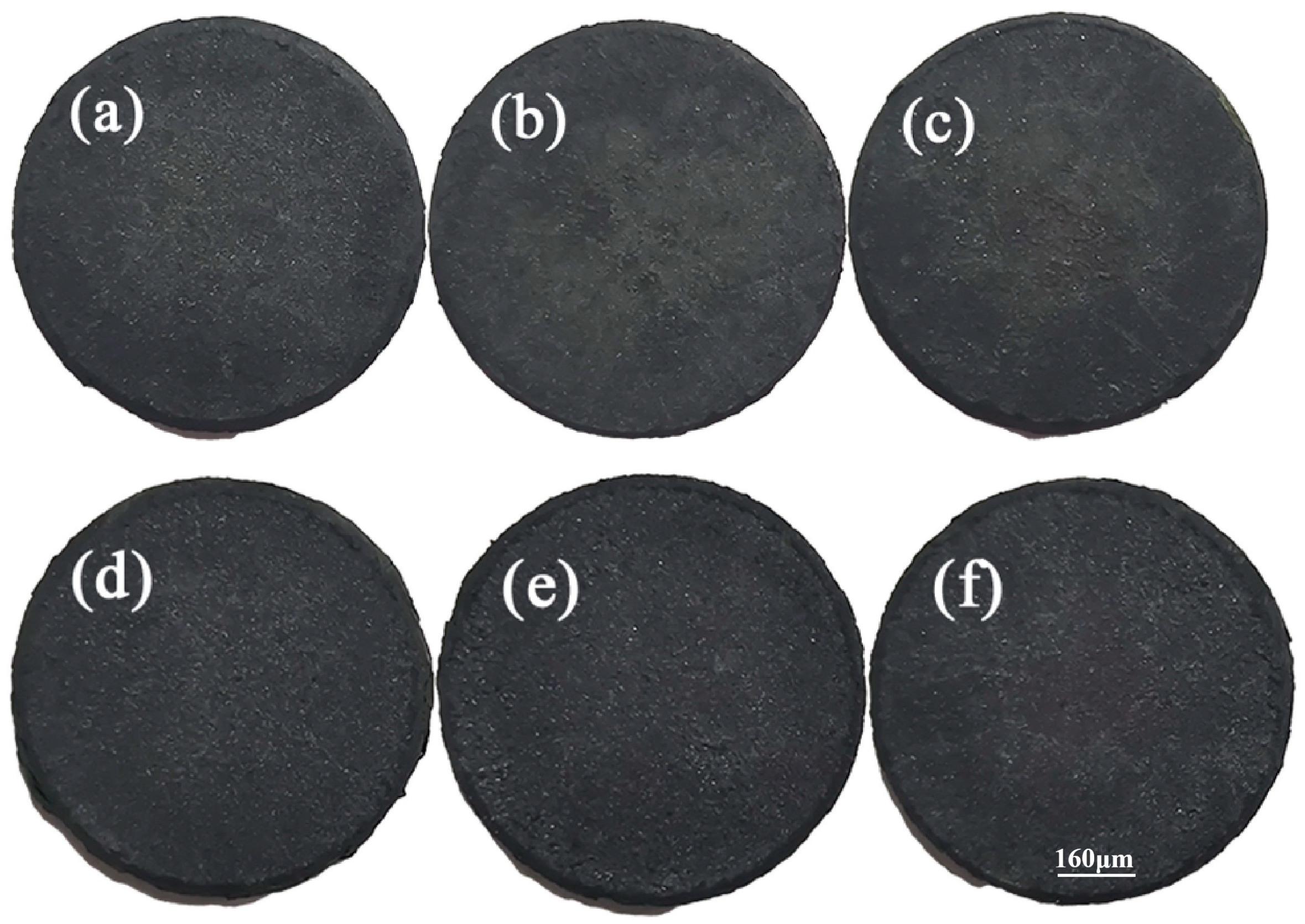
The macroscopic morphologies of the experimental alloys after hot corrosion at 900 °C for 640 h and 820 h are shown in Figure 3. The surface morphologies of the three alloys were extremely similar after the same length of time under hot corrosion. After 820 h, all the samples presented a dark gray morphology, the sample surface and edges were still intact, and there was no visible oxide scale peeling.
Figure 3. Optical photographs of the macroscopic specimens corroded at 900 °C with a surface coating of Na2SO4: (a) S3 for 640 h. (b) S16 for 640 h. (c) S42 for 640 h. (d) S3 for 820 h. (e) S16 for 820 h. (f) S42 for 820 h.

3.2. Phase Analysis

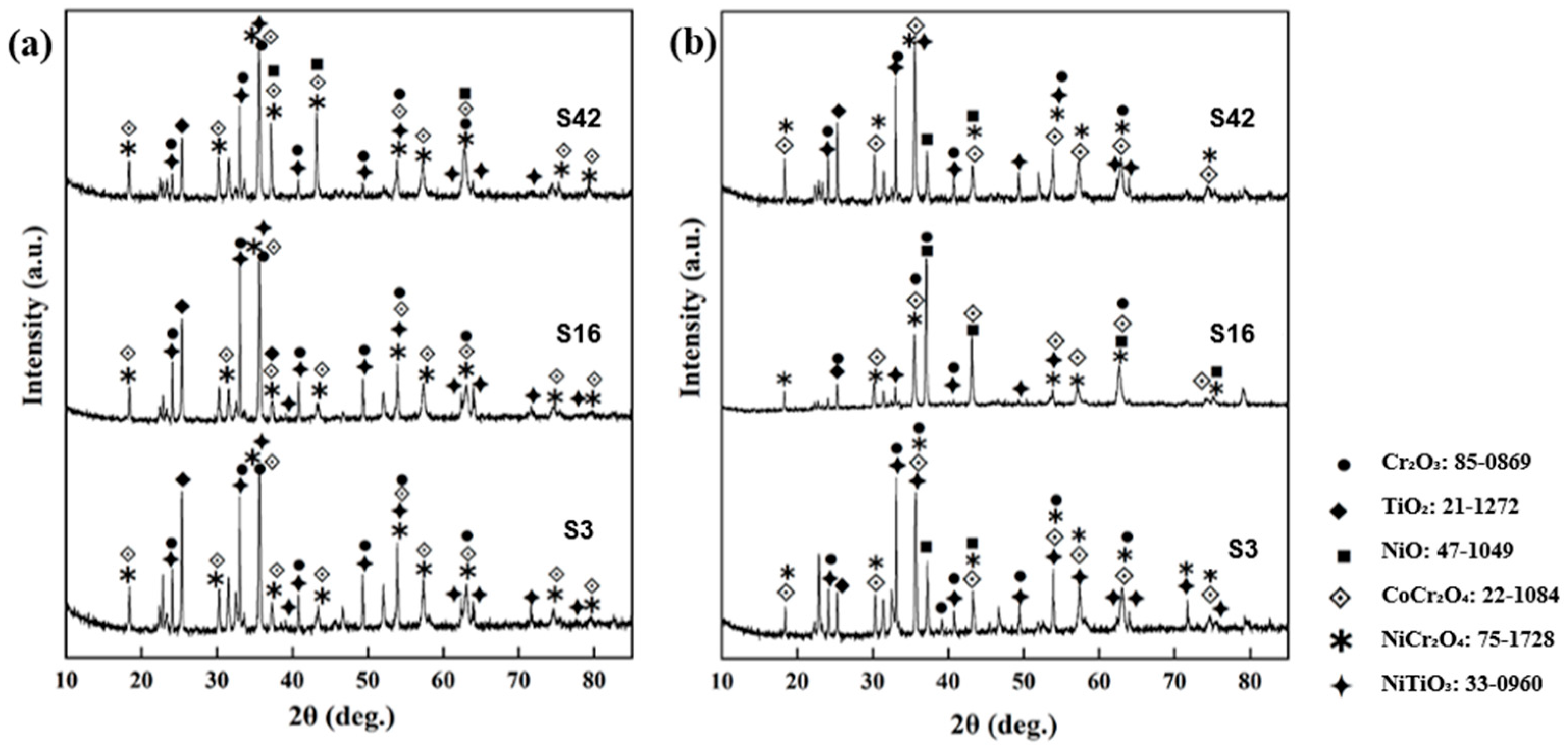
XRD patterns and phase analyses of the corrosion products on samples with different corrosion times at 900 °C are provided in Figure 4 and Table 3. After 640 h of hot corrosion, the composition of the corrosion products of the three alloys was similar. The corrosion products were Cr2O3, NiTiO3, NiCr2O4, CoCr2O4, and TiO2. Additionally, NiO appeared in the S42 alloy. After 820 h, the types of corrosion products on the alloy surface had rarely changed. Compared with 640 h, NiO appeared on all alloys except S42.
Figure 4. XRD patterns of samples corroded for different times at 900 °C. (a) 640 h and (b) 820 h.
Table 3. XRD results of the samples corroded for 640 h and 820 h.

3.3. Surface and Cross-Sectional Morphologies

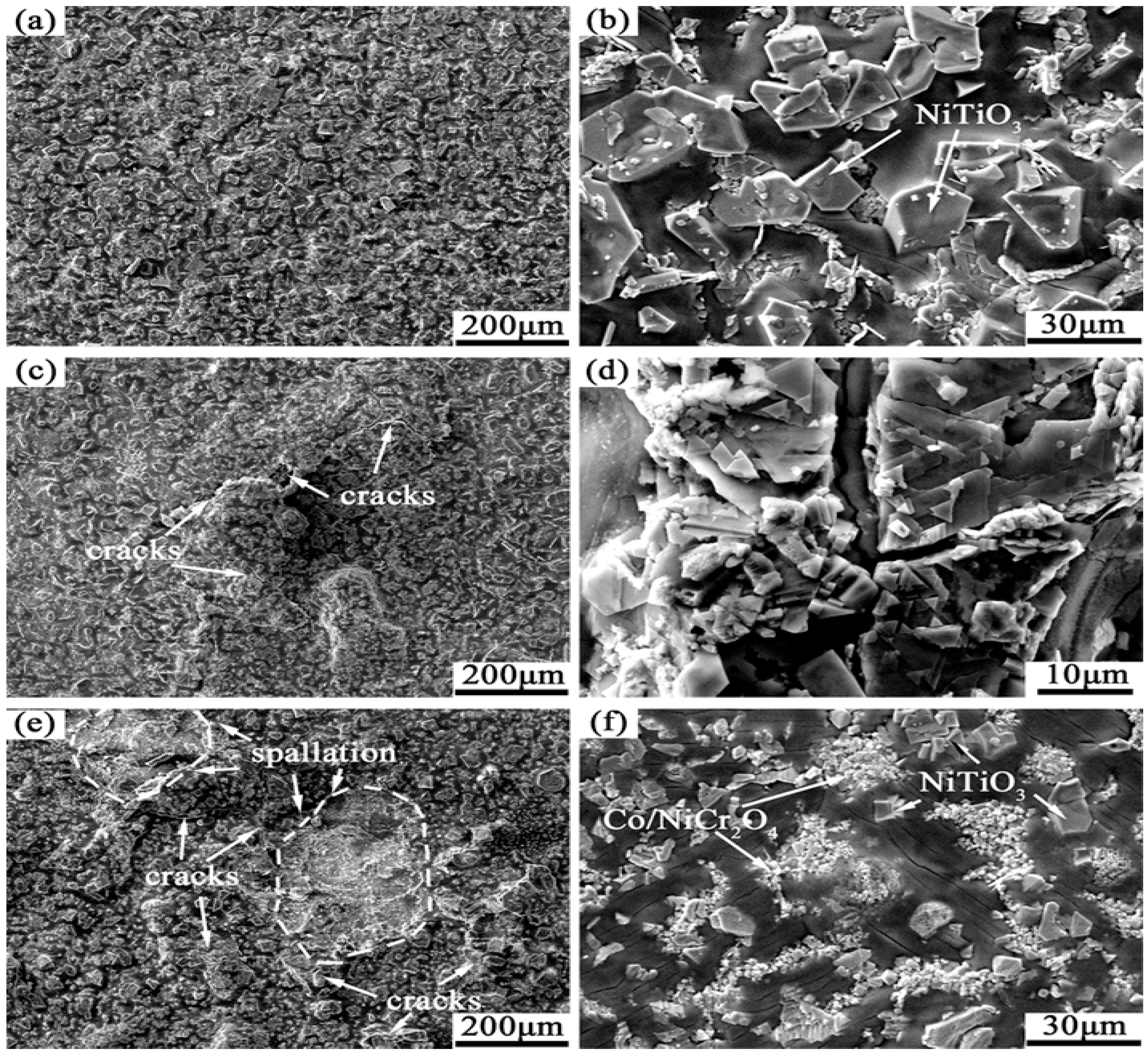
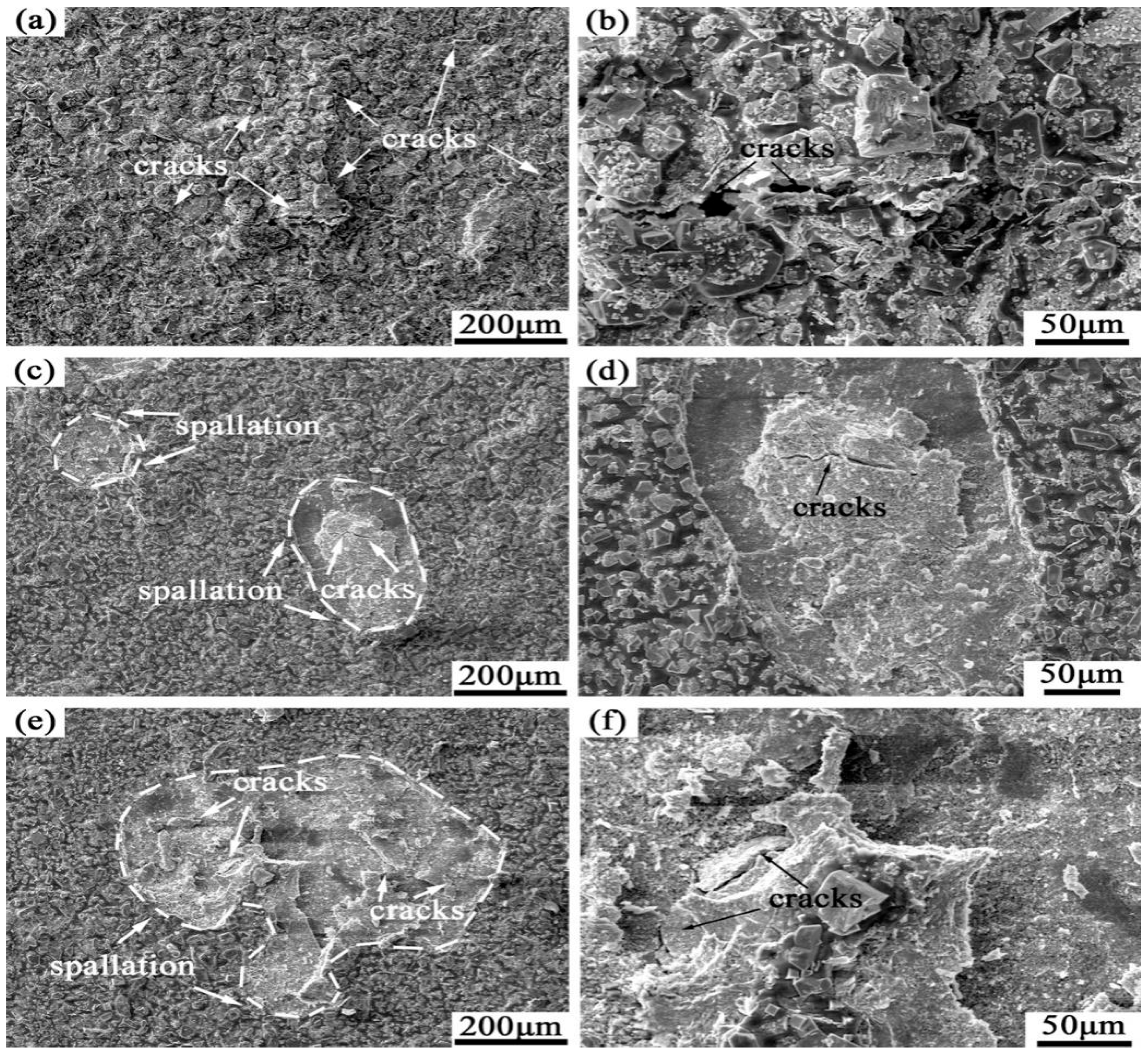
The surface morphologies of the experimental alloys with different sulfur contents after hot corrosion for 640 h are illustrated in Figure 5. Comparing the surface morphologies of the three alloys at lower multiples, it can be found that with the increase in S content, the cracks and bulges in the outer oxide layer on the surface of the alloys increased significantly. The surface of the S3 alloy was covered by relatively dense gray massive corrosion products (Figure 5a). Cracks and protrusions appeared on the surface of the S16 alloy. A protrusion with a width of 200 μm (Figure 5c) and a crack with a width of 4.5 μm (Figure 5d) can be observed. The cracks become channels for the corrosive medium’s rapid penetration into the alloy, making it easier for the matrix to be damaged by the molten salt. For the S42 alloy, more cracks appeared on the outer oxide layer, and spallation occurred. A spallation with a width of 200 μm (Figure 5e) can be observed. Combined with the results of XRD and EDS, the main products of the three alloys were blocky NiTiO3 and cluster-like (Co,Ni)Cr2O4. Compared with the S3 alloy, the surface morphology of S16 was nearly unchanged, while the amount of NiTiO3 on the surface of the S42 alloy decreased significantly and the amount of (Co,Ni)Cr2O4 increased significantly.
Figure 5. Morphologies of the surfaces of the corroded samples after 640 h at 900 °C. (a,b) S3. (c,d) S16. (e,f) S42.
The surface morphologies of the corrosion products after 820 h of hot corrosion are presented in Figure 6. Cracks and bulges appeared on the surface of the S3 alloy, and the size of the blocky NiTiO3 in the outer oxide layer became larger. The cracks on the S16 alloy continued to expand and accumulate, resulting in the appearance of scattered spallation. The width of the protrusion on S3 was about 200 μm (Figure 6a), while it was about 270 μm for S16 (Figure 6c). On the S42 alloy, a large area of spallation (approximately 670 μm in Figure 6e) was observed and cracks were also observed in the exposed subsurface. EDS analysis of the subsurface layers revealed mainly oxides of Cr, Co, and Ni.
Figure 6. Morphologies of the corrosion scales formed on the samples with different S contents after 820 h at 900 °C. The edge of the spalled area is indicated by a white dashed line in the figure. (a,b) S3. (c,d) S16. (e,f) S42.
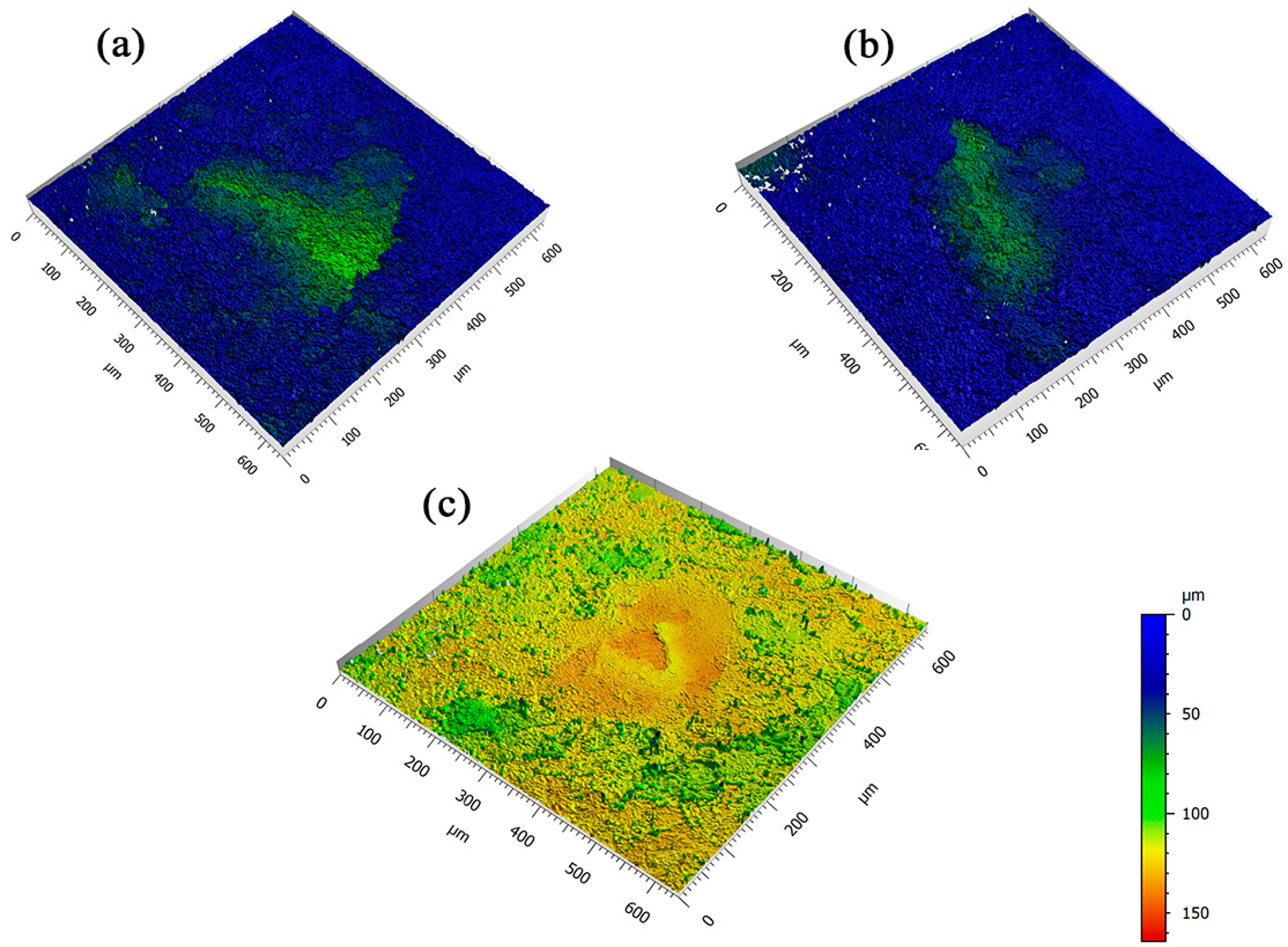
In order to more intuitively understand the degree of spallation, the samples were scanned with a laser confocal scanning microscope. The results are shown in Figure 7. The lowest point in the figure is represented by red, and the highest point is represented by blue. The spalled regions of the S3 and S16 alloys appear light green, and the average depth of the spallation of the two alloys was measured to be about 55 μm and 80 μm. S42 has a larger and deeper spalling area than S3 and S16. This is similar to the SEM results, clearly indicating that the increase in S content promotes the peeling of corrosion products.
Figure 7. The three-dimensional surface corrosion morphology of the samples with different S contents after 820 h at 900 °C. (a) S3. (b) S16. (c) S42. The color scale represents height: red (lowest, spalled regions) to blue (highest, intact oxide). Quantitative measurements indicate average spallation depths of approximately 55 μm for S3, 80 μm for S16, and exceeding 100 μm for S42, demonstrating a clear correlation between sulfur content and surface degradation severity.
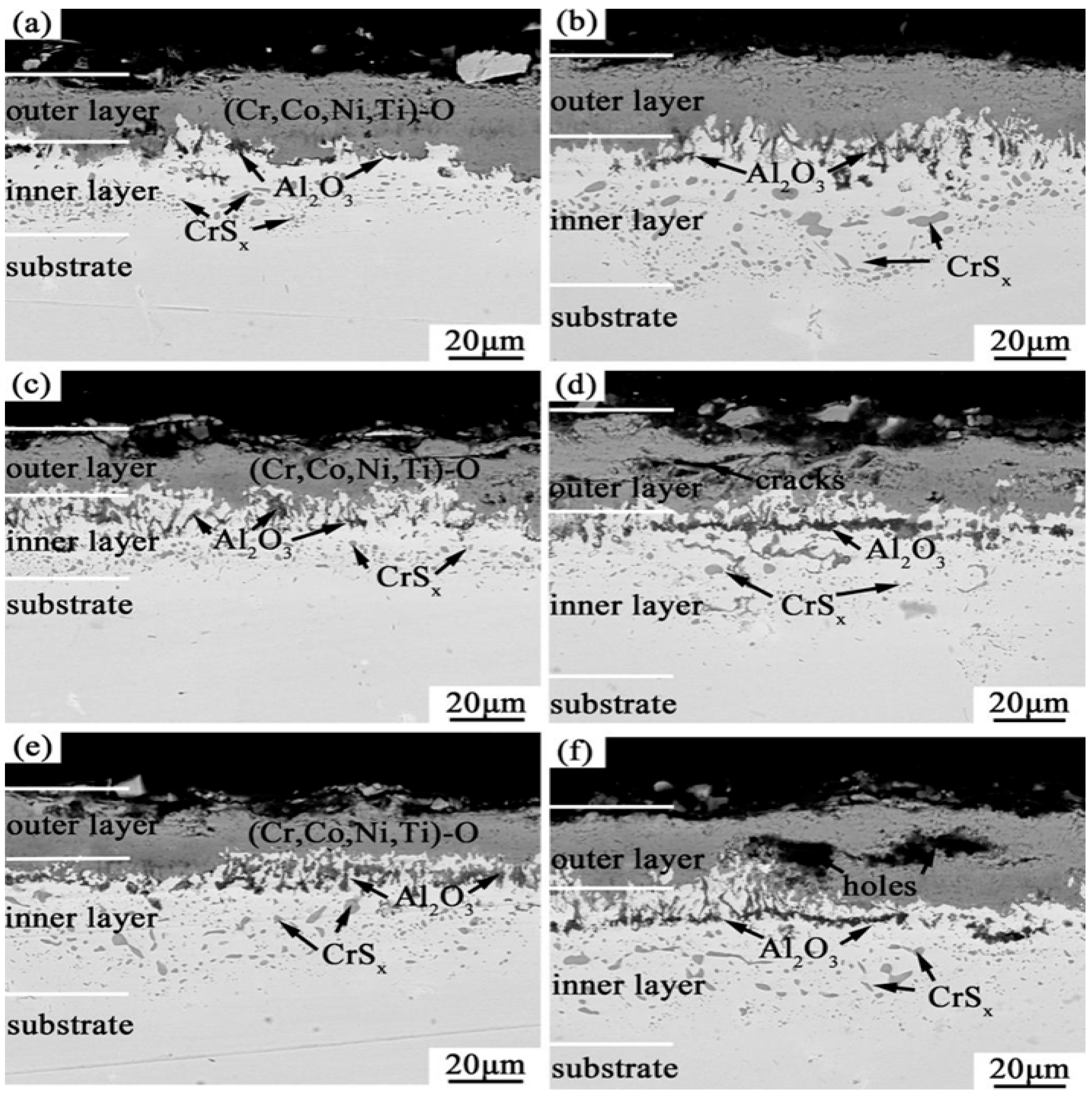
Figure 8 shows the cross-sections of the experimental alloys corroded at 900 °C for 640 h and 820 h. The cross-sections of the three alloys all show a typical three-layer structure. The outer layer consisted of oxides of Cr, Co, Ni, and Ti. The inner corrosion zone comprised a Ni-based matrix with dispersed Al2O3 and CrSx particles. By measuring the layer thickness at 20 different locations across multiple cross-sectional SEM images, the average thickness of the outer layer and the penetration depth of the inner corrosion zone were obtained. There were obvious differences in the three-layer structure of the three alloys. The outer layer of the S3 alloy was complete and dense, without visible cracks and bulges. Its thickness was uniform, about 30.1 ± 2.3 μm. The penetration of inner corrosion products was 31.2 ± 5.6 μm. For S16, cracks, holes, and peeling oxide scale fragments appeared in the outer layer. The thickness of the outer oxide layer was uneven, with an average value of 22.5 ± 4.1 μm. The thickness of the inner corrosion zone was about 37.2 ± 4.3 μm. The thickness of the outer layer was smaller than S3, while the thickness of the inner corrosion zone was larger than S3. For S42, a hole with a size of about 30 μm appeared in the center of the outer layer, which almost divided the outer layer into two parts, and the inner part was directly exposed in the hole. The values of the outer oxide layer and the inner corrosion zone were 22.3 ± 6.5 μm and 44.2 ± 4.9 μm, respectively. Relatively continuous Al2O3 was found in the inner layer of the S3 alloy (Figure 8a); the sulfide size was small and the distribution was relatively uniform. The amount of Al2O3 particles of S16 increased significantly, with some areas interconnecting. The sulfide distribution area tended to aggregate. For S42, a dispersed Al2O3 layer could be observed; the size of the sulfide particles increased and the distribution range was wider.
Figure 8. Morphologies and microstructures of the cross-sections of samples corroded for 640 h at 900 °C. Different layers have been illustrated by white line. (a,b) S3. (c,d) S16. (e,f) S42.
At 820 h, the cross-sectional morphologies of all alloys still show a three-layer structure, and the corrosion products are consistent with those at 640 h. For the S3 alloy, the structure of the corrosion layer showed almost no change. Cracks appeared in the outer layer of the S16 alloy. Holes appeared in the S42 alloy. The outermost layer of both alloys spalled off to a certain extent. The thickness of the outer layer of S16 and S42 was obviously smaller than that of the S3 alloy, their inner layer was thickened to different degrees compared with 640 h, and the sulfide layer was further enlarged.
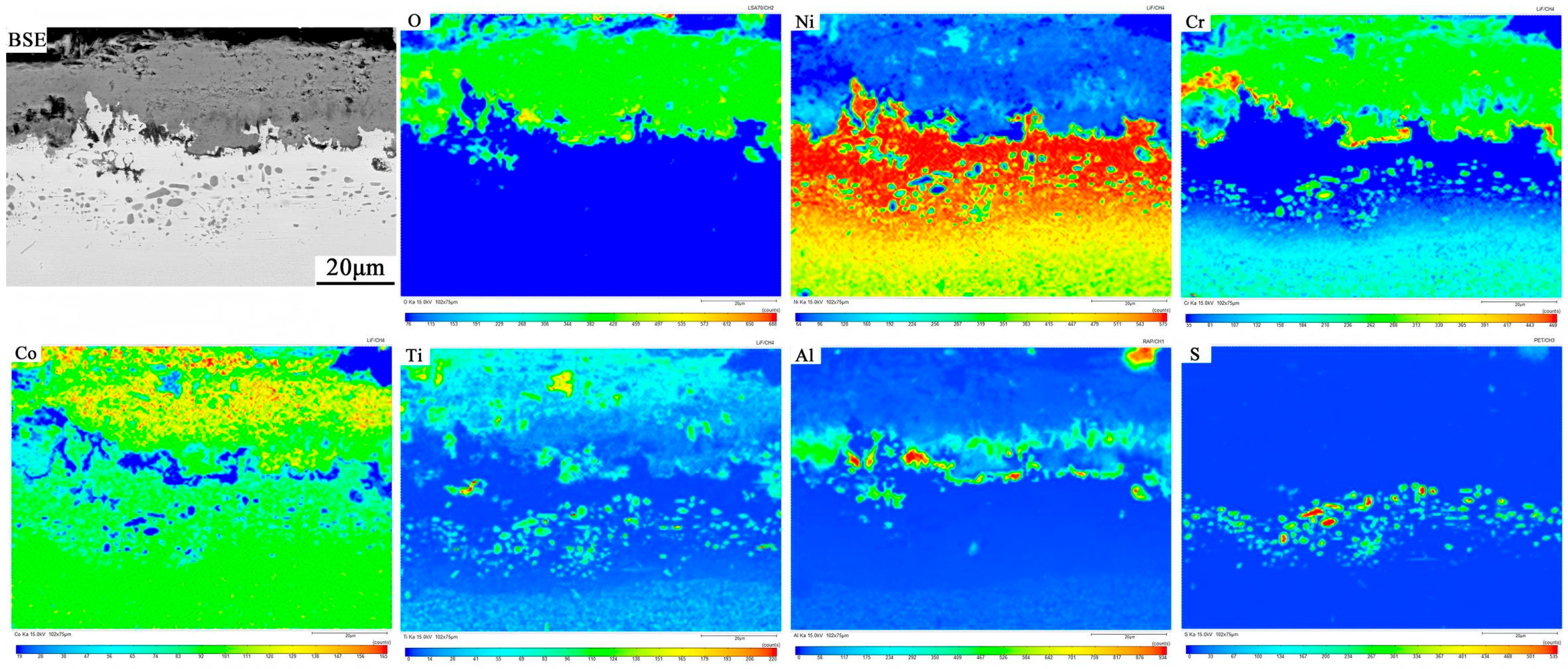
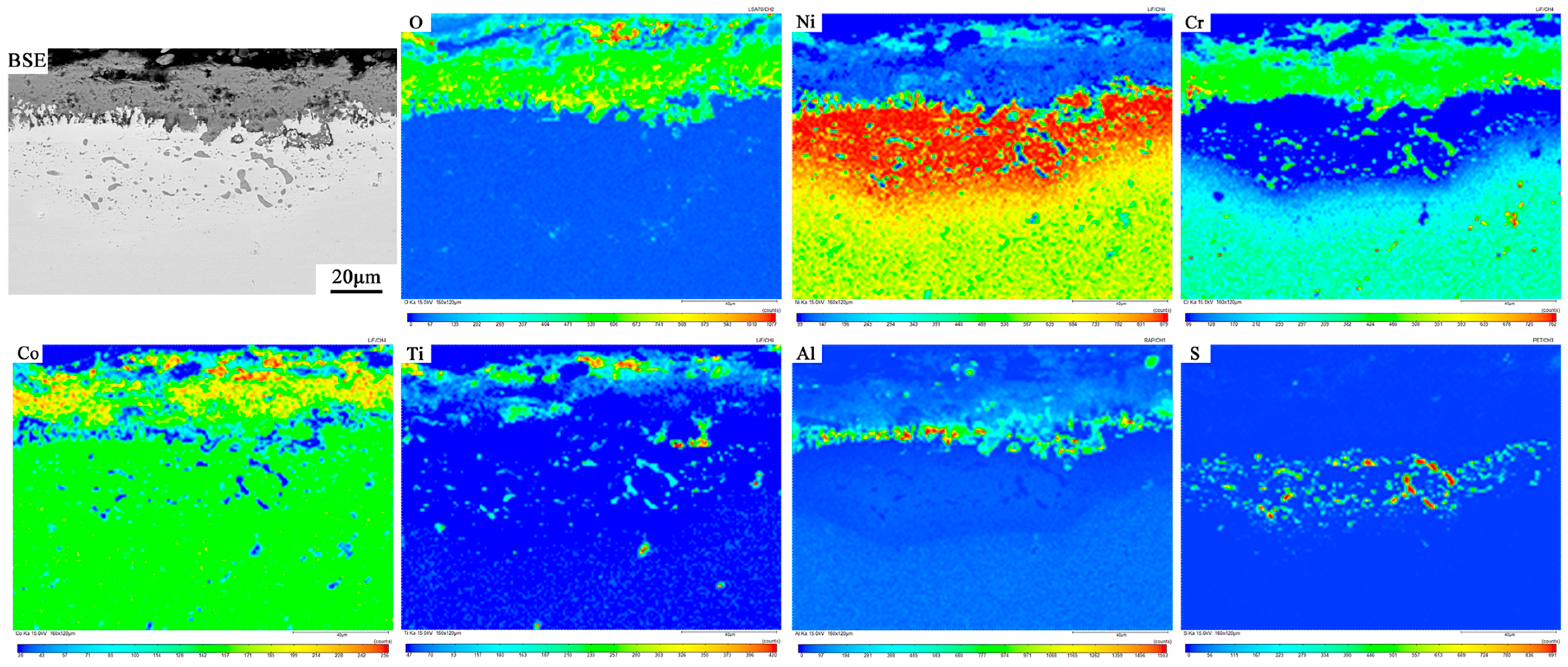
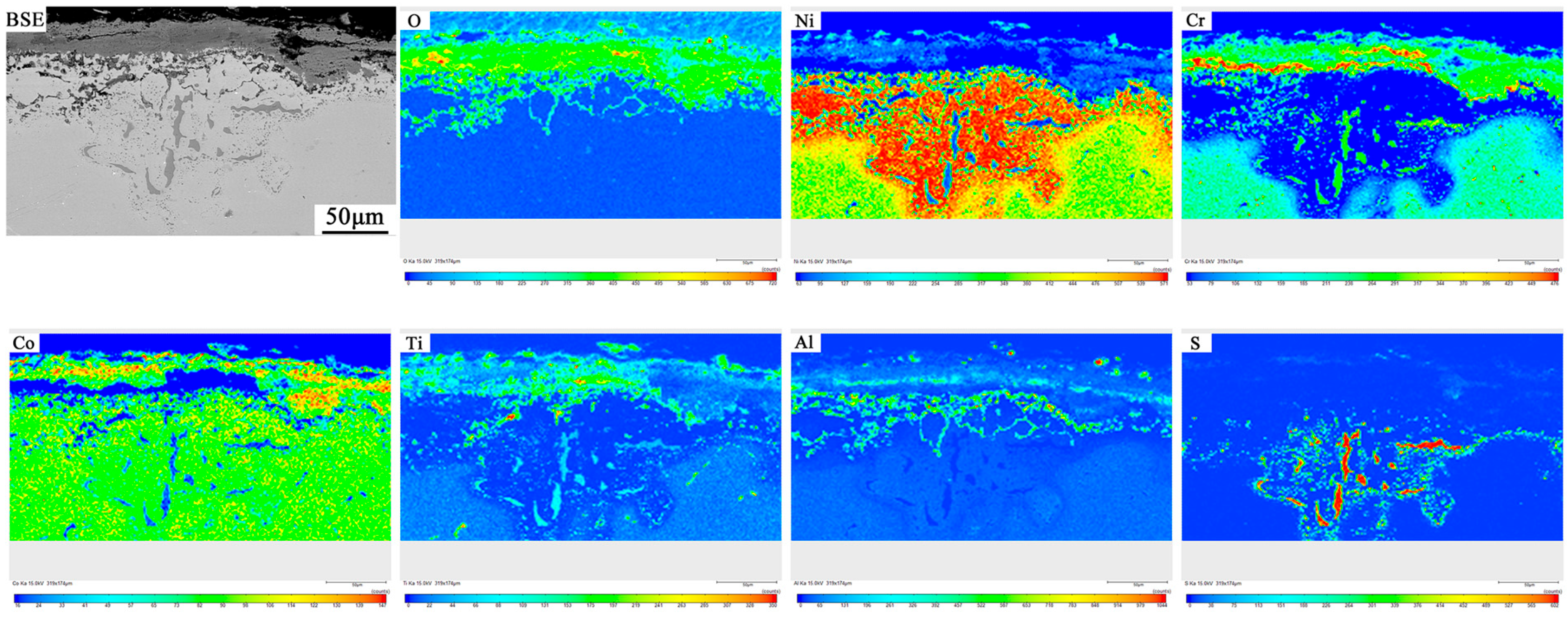
In order to further understand the corrosion products and the element distribution in different regions of the cross-sections, an EPMA was used, as shown in Figure 9, Figure 10 and Figure 11. The outermost layer of the three alloys was rich in Cr, Co, and Ti, with Cr being enriched at the bottom of the outer oxide layer to a certain extent. A relatively continuous Al-rich layer can be observed in S3 and S16, while the Al element distribution of the S42 alloy was relatively loose. The sulfides were mainly sulfides of Cr and Ti. With the increase in sulfur content, the amount of sulfides increased.
Figure 9. Secondary electron micrograph and corresponding X-ray micrograph of the S3 alloy corroded for 640 h at 900 °C.
Figure 10. Secondary electron micrograph and corresponding X-ray micrograph of the S16 alloy corroded for 640 h at 900 °C.
Figure 11. Secondary electron micrograph and corresponding X-ray micrograph of the S42 alloy corroded for 640 h at 900 °C.

4. Discussion

4.1. Hot Corrosion Process

Hot corrosion can be regarded as accelerated oxidation caused by salt deposits. Hot corrosion is similar to atmospheric corrosion caused by thinner electrolytes at certain temperatures [39]. The melting point of pure Na2SO4 is 884 °C. When the hot corrosion temperature reaches 900 °C, a layer of molten Na2SO4 can form on the alloy surface. Na2SO4 can be decomposed into the basic product Na2O and the acidic product SO3, and SO3 can be decomposed into S and O2. O2 generated by decomposition, together with O2 in the air, promotes external oxidation and internal oxidation of the alloy. The released S diffuses into the alloy, resulting in internal sulfide, while the O2- in Na2O causes alkaline melting of the outer oxide scales [40].
N a 2 S O 4 = N a 2 O + S O 3
S O 3 = 1 2 S 2 + 3 2 O 2
At the beginning of hot corrosion, the surface of the sample was oxidized, and the mass of the alloy increased quickly. After the initial transition period, a three-layer structure, containing an outer oxide layer enriched in Ti, Co, and Ni, an inner Al2O3 layer, and an inner sulfide layer, formed on the surface of the sample. Due to the relatively high Cr content in this alloy, the oxide layer was dominated by Cr2O3. The high stability of Cr2O3 in molten salt guarantees superior hot corrosion performance in this alloy.
The experimental alloys contained a certain amount of Ti. With the progress of hot corrosion, the Ti element continuously diffused outward to form TiO2. Meanwhile, other alloying elements in the alloy were also oxidized, and solid-state reactions occurred between the different oxides to generate spinels [6]. Compared with NiO, spinels such as NiTiO3 and NiCr2O4 have a more compact structure and electrical neutrality, which offers effective hot corrosion resistance. During the initial stage, S content did not affect the corrosion products. The corrosion products were mainly Cr2O3, NiTiO3, NiCr2O4, and TiO2.
N i O + C r 2 O 3 = N i C r 2 O 4
N i O + T i O 2 = N i T i O 3
Compared with metal ions, oxygen ions can easily diffuse through the initial oxide layer formed on the alloy surface and reach the interface of the oxide layer/substrate, where the oxygen partial pressure is lower than that of air. According to the theory of Ni-Cr-Al ternary alloy oxidation, a lower oxygen partial pressure will be more favorable for the selective oxidation of Al2O3. Thus, an Al2O3 layer was formed at the interface of the outer oxide layer and the substrate.
With the consumption of O2 in the oxidation reaction, the Reactions (1) and (2) proceeded to the right, leading to an increase in S activity. Thus, it was easier for S to penetrate the initially formed inner and outer oxide layers and reach the matrix, resulting in the formation of a S concentration gradient in the matrix. Both oxygen gradients and sulfur gradients exist simultaneously in the matrix. If the oxygen partial pressure inside the alloy is lower than a certain critical value, the sulfide can exist stably. Therefore, in the lower-partial-pressure region, which is in front of the inner oxide layer, a sulfide layer forms. Thus, a typical hot corrosion three-layer structure was formed.
With increased corrosion time, the oxidation of the sample continued, while the fluxing of the outer oxide layer occurred simultaneously. Due to the outstanding hot corrosion resistance of Cr2O3, the interior of the alloy matrix was protected by the Cr2O3 scale. Sufficient Cr content in the experimental alloys facilitated the alloys to regenerate Cr2O3. However, repeated fluxing and peeling may lead to the depletion of Cr in the alloy matrix, resulting in the formation of less protective NiO. After the NiO was damaged by fluxing, the corrosive medium entered the matrix, causing serious internal corrosion.
C r 2 O 3 + 2 N a 2 O + 3 2 O 2 = 2 N a 2 C r O 4
Since sulfides are less stable than oxides, sulfides will be oxidized when oxygen gradually diffuses into the inner sulfide layer through holes and cracks:
4CrS + 3O2 = 2Cr2O3 + 2S2 ΔG900 °C = −1,338,348.6 J
Some of the S released by Reaction (6) was concentrated on the surface of the internal pores, and the rest of the S continued to diffuse into the matrix to form new sulfides in the frontier region. Oxidation and sulfidation occurred repeatedly and alternately, resulting in the continuous development of corrosion into the alloy. The Reactions (1) and (2) proceeded to the right, and O2− continued to accumulate, resulting in an increase in the alkalinity of the molten salt. When the alkalinity of the molten salt reaches a certain level, the outer oxide scale is dissolved, and a melting reaction occurs, forming a loose and porous oxide layer.
During the hot corrosion process, the internal corrosion zone of the S16 and S42 alloys evolved into a network of Al2O3 (Figure 8). The generation of these network oxides was related to the diffusion behavior of O in the alloy matrix. Martinez-Villafane et al. studied the internal oxidation of Ni-Al; they found that the diffusion rate of O along the oxide/alloy interface is 102–103 times higher than that in the Ni lattice [41,42,43]. During hot corrosion, O rapidly diffused along the existing oxide/alloy interface to the internal corrosion front, where new internal oxides were formed. Due to the existence of microsegregation in superalloys, a small concentration field difference in the internal oxidation front changes the direction of the inward extension of the internal oxide, which finally grows into a network shape. The diffusion rate of O along the oxide/alloy interface is rapid, so the growth rate of the inner network oxide is also fast. Once the inner network oxide starts to form, the alloy will be quickly consumed.
By combining the kinetic curves and microstructures, the following corrosion process can be ascertained. During stage I (0–300 h), all three alloys exhibit parabolic kinetics, indicating that a protective oxide scale was formed. The parabolic rate constant for S3 is notably higher than those for S16 and S42. This suggests that during the initial incubation stage, lower sulfur content actually leads to slightly faster oxidation, which may be related to the formation of a more complete and protective oxide layer on S3. The similar rate constants for S16 and S42 indicate that once sulfur exceeds 16 ppm, a further increase has a minimal effect on the incubation stage kinetics. The higher initial oxidation rate of S3 may contribute to the earlier establishment of a protective Cr2O3-rich scale, as observed in Figure 8a. During stage II (320–640 h), the kinetics remain parabolic but with dramatically increased rate constants—approximately five orders of magnitude higher than stage I. This sharp increase corresponds to the breakdown of the initial protective scale and the onset of accelerated corrosion involving sulfidation and fluxing mechanisms, as discussed above in Section 4.1. In this stage, S16 exhibits the highest parabolic rate constant, followed by S42, while S3 shows the lowest rate constant. This trend indicates that higher sulfur content promotes accelerated corrosion during stage II. The higher rate constants for high-sulfur alloys correlate directly with the increased pore and crack density observed in Figure 5 and Figure 8, where sulfur-stabilized defects provide rapid diffusion channels for corrosive species. The non-monotonic behavior (S16 > S42) was attributed to extensive spallation in S42 during this stage, which periodically removes corrosion products and temporarily exposes fresh surface, leading to weight fluctuations that affect the parabolic fitting. During stage III (660–820 h), the kinetics transition to linear behavior, indicating that the protective oxide scale has been severely compromised and corrosion proceeds at a constant rate. The linear rate constant for S16 is higher than that for S3 and S42. This suggests that S16 experiences the most severe steady-state corrosion, while S42 exhibits the lowest linear rate. The apparent decrease in corrosion rate for S42 in the final stage can be explained by the extensive spallation observed in Figure 6f and Figure 7c. The severe scale loss in S42 results in the exposure of fresh metal surface, followed by rapid re-oxidation, which leads to weight gain–loss cycles that may lower the net linear fitting slope. Additionally, after extensive spallation, the corrosion process may become limited by the availability of reactive elements (Cr, Al) in the near-surface region, contributing to the reduced rate.

4.2. S Effect

4.2.1. Distinguishing the Roles of Sulfur from Different Sources

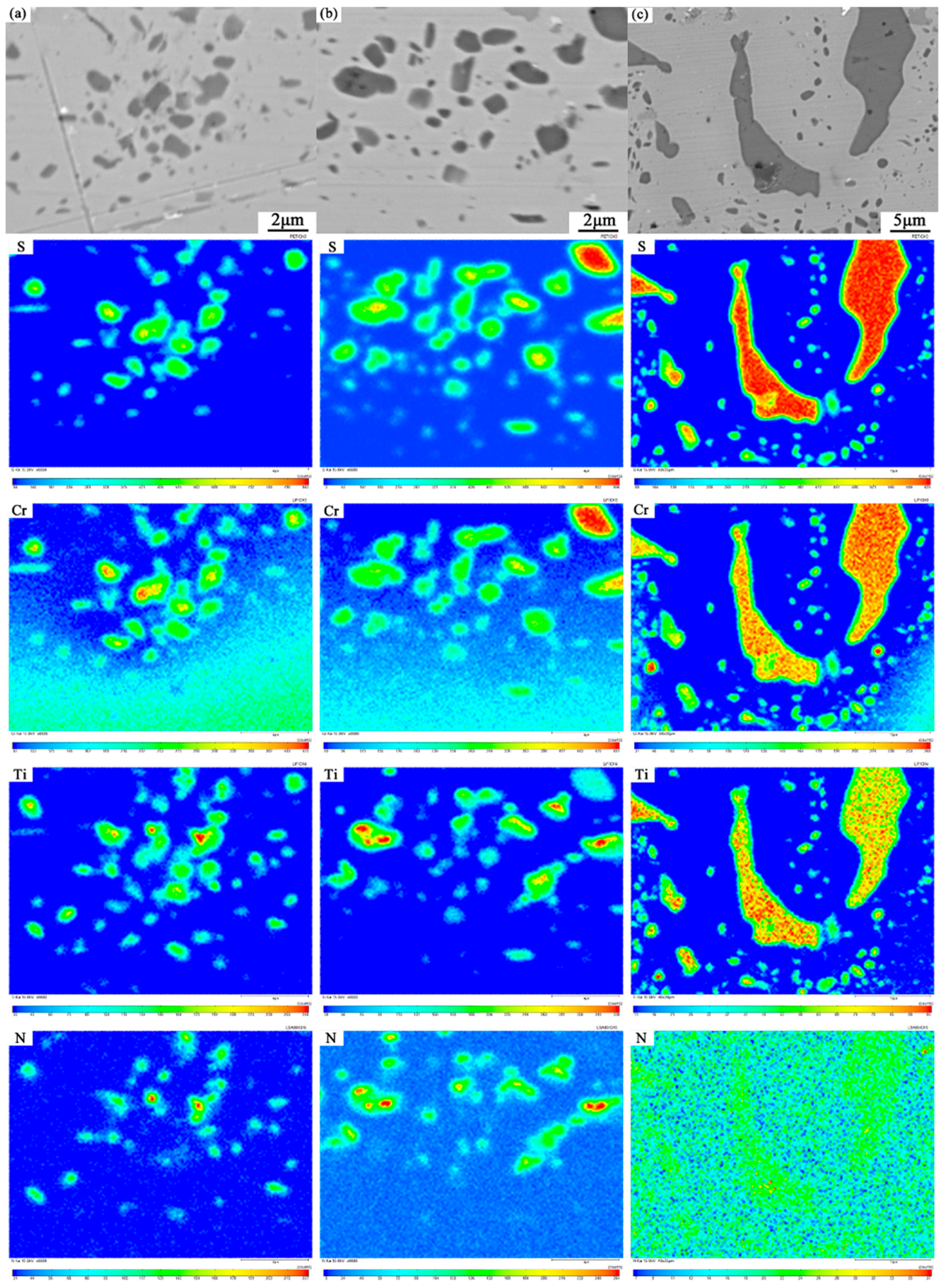
From the analysis of the experimental results, it can be seen that the differences in hot corrosion behavior of alloys with different S contents are mainly as follows: first, with increased S content in the alloy, the integrity of the oxide layer was deteriorated after hot corrosion, and cracks and holes appeared. Secondly, the internal Al2O3 layer evolved into a network structure in alloys with high sulfur content. Thirdly, the amount of sulfides increased with the increase in S content. The distribution of elements in the sulfide layer of the three alloys after hot corrosion for 640 h is given in Figure 12, which was obtained by an EPMA. The sulfides of the three alloys were mainly Cr and Ti sulfides. As the sulfur content in the alloys increased, both the amount of sulfides and the size of the sulfides increased. In addition, the enrichment of Ti and N (nitrogen) elements also appeared in the sulfide layer of the three alloys, and the nitride TiN was formed. With the increase in sulfur content, the content of nitride increased.
Figure 12. EPMA images of the sulfide layer of alloys with different sulfur content corroded for 640 h at 900 °C. (a) S3. (b) S16. (c) S42.
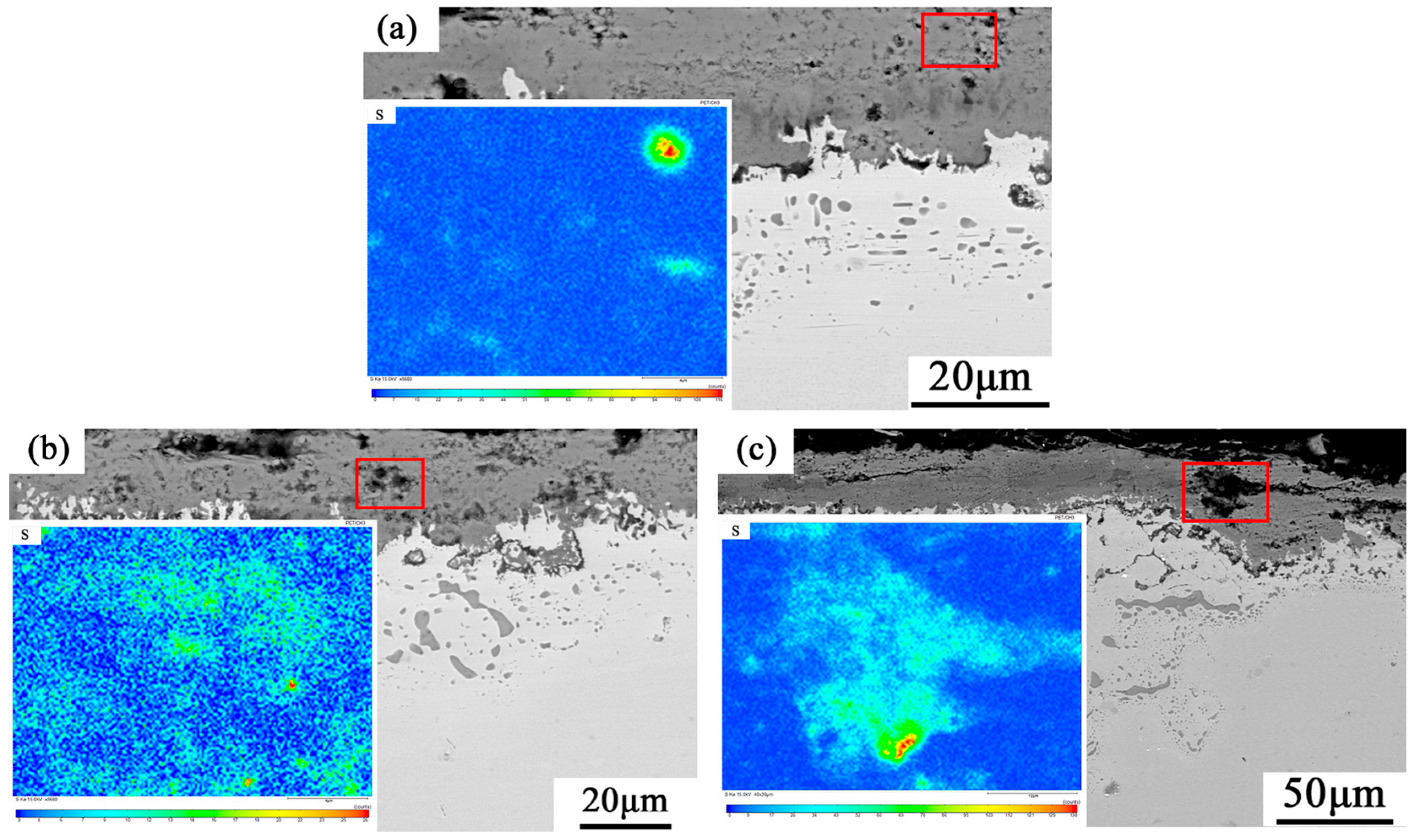
The holes in the outer oxide scale were an obvious difference in the hot corrosion behavior of alloys with different S contents. For further investigation, the distribution of sulfur content around the holes was analyzed using the EPMA. The results showed that sulfur had accumulated in the pores (Figure 13). With the increase in sulfur content in the alloy, more sulfur accumulated in the pores.
Figure 13. Local EPMA images of oxide layers of alloys with different sulfur content corroded for 640 h at 900 °C. The areas circled by red rectangle are where EPMA characterization was performed. (a) S3. (b) S16. (c) S42.
It is important to distinguish between the two sources of sulfur involved in the hot corrosion process, as they play fundamentally different roles in the degradation mechanism.
The molten salt deposit (Na2SO4) decomposes according to Reactions (1) and (2), providing a continuous external supply of sulfur. This sulfur diffuses inward through the oxide scale and reacts with alloying elements to form the internal sulfides observed in the inner corrosion zone (Figure 9, Figure 10, Figure 11 and Figure 12). As shown in the EPMA elemental maps (Figure 9, Figure 10 and Figure 11), the sulfides are predominantly CrSx and Ti-rich sulfides, which constitute the innermost layer of the three-layer corrosion structure. Thus, sulfur from salt decomposition is primarily responsible for the sulfidation front that penetrates the alloy matrix.
In contrast, the ppm-level sulfur originally present in the alloy (3, 16, and 42 ppm) plays a different but equally critical role. Rather than forming new sulfide phases, this sulfur segregates to existing interfaces and defects within the oxide scale. Direct evidence is provided in Figure 13, where EPMA analysis reveals clear sulfur accumulation at pore sites within the oxide layer. The degree of sulfur enrichment correlates with the bulk sulfur content, with the S42 alloy showing the most pronounced segregation. This observation is consistent with studies by Molins [44], who demonstrated that sulfur segregation occurs at both intact Al2O3/bondcoat interfaces and void surfaces, and that the concentration of interfacial voids depends on the initial sulfur content in the superalloy. Furthermore, Rouzou [45] successfully differentiated sulfur coming from the superalloy from sulfur trapped in the coating layer using SIMS depth profiling, confirming that indigenous alloy sulfur plays a distinct role in interfacial segregation.
It is worth noting that while sulfur from salt decomposition is primarily responsible for the advancing sulfidation front, a portion of it may also be incorporated into the oxide scale, particularly at defect sites and grain boundaries, as has been observed in other alloy systems [46]. However, the strong correlation between the bulk alloy sulfur content and the degree of sulfur enrichment at pore sites (Figure 13) underscores the dominant role of indigenous alloy sulfur in stabilizing and propagating these defects. Therefore, while both sulfur sources contribute to the overall degradation, alloy impurity sulfur is the key factor controlling the mechanical integrity of the oxide scale, whereas sulfur from the salt governs the internal sulfidation process.

4.2.2. Effect of S

Some studies have pointed out that the S content in the alloy drastically affects the amount of pores in the outer oxide scale [47], and that an increase in the impurity S content will increase the nucleation rate of the pores in the outer oxide scale [48]. In one study, thermodynamic calculations showed that the evaporation of solid solution S on the metal surface was a strongly exothermic reaction [49]. Once S started to segregate, the surface free energy of the pore decreased further, which promoted the formation and growth of voids. The segregation of S and the formation of holes were mutually reinforcing processes. The formula for nucleation of holes was as follows:
r c = 2 γ Δ G
where rc is the critical radius for hole nucleation, γ is the surface free energy, and ΔG is the change in Gibbs free energy required for nucleation. With the continuous accumulation of sulfur in voids, the amount of voids in the outer oxide scale continued to increase, and eventually, larger defects appeared in the outer oxide scale.
Mclean [50] conducted a theoretical analysis on the surface equilibrium segregation of S. Miyahara measured S segregation on Ni’s surface and gave the isothermal equation for the segregation of S in metallic Ni:
θ 1 θ = α C s 1 C s e x p Q S R T
where θ is the surface fraction of sulfur, CS is the original content of sulfur, QS is the enthalpy of sulfur segregation, α is a constant, and T is the K temperature. Smialek [51] used the data measured by Miyahara to fit Equation (8) and obtained the values α = 0.189, QS = 137 kJ·mol−1·K−1 in Ni. Therefore, the isothermal equation of sulfur segregation in Ni is as follows:
θ 1 θ = 0.19 C s 1 C s e x p ( 137 R T )
Equilibrium surface segregation isotherms of sulfur in metal Ni with different S contents can be obtained from the above Equation (9). According to the measurement of S segregation in the PWA1480 alloy by Smialek [52], the surface content of S showed an extreme value when the temperature was about 900 °C and then decreased with the increase in temperature. It can be seen that the content of S on the Ni surface is related both to its original content and temperature. The extreme value of 900 °C is exactly the temperature at which hot corrosion occurs. Therefore, even a ppm-level S content in the alloy will still have a great impact on the hot corrosion performance. The quantitative surface topography data (Figure 7) provides additional support for this mechanism. The measured increase in spallation depth from 55 μm for the S3 alloy to 80 μm for the S16 alloy, as well as the extensive spallation observed for the S42 alloy, directly correlates with the increased density of pores and cracks observed in the cross-sectional images (Figure 8). This correlation confirms that sulfur-induced defect formation at the oxide scale leads to progressive mechanical degradation of the protective layer, ultimately resulting in large-scale spallation.
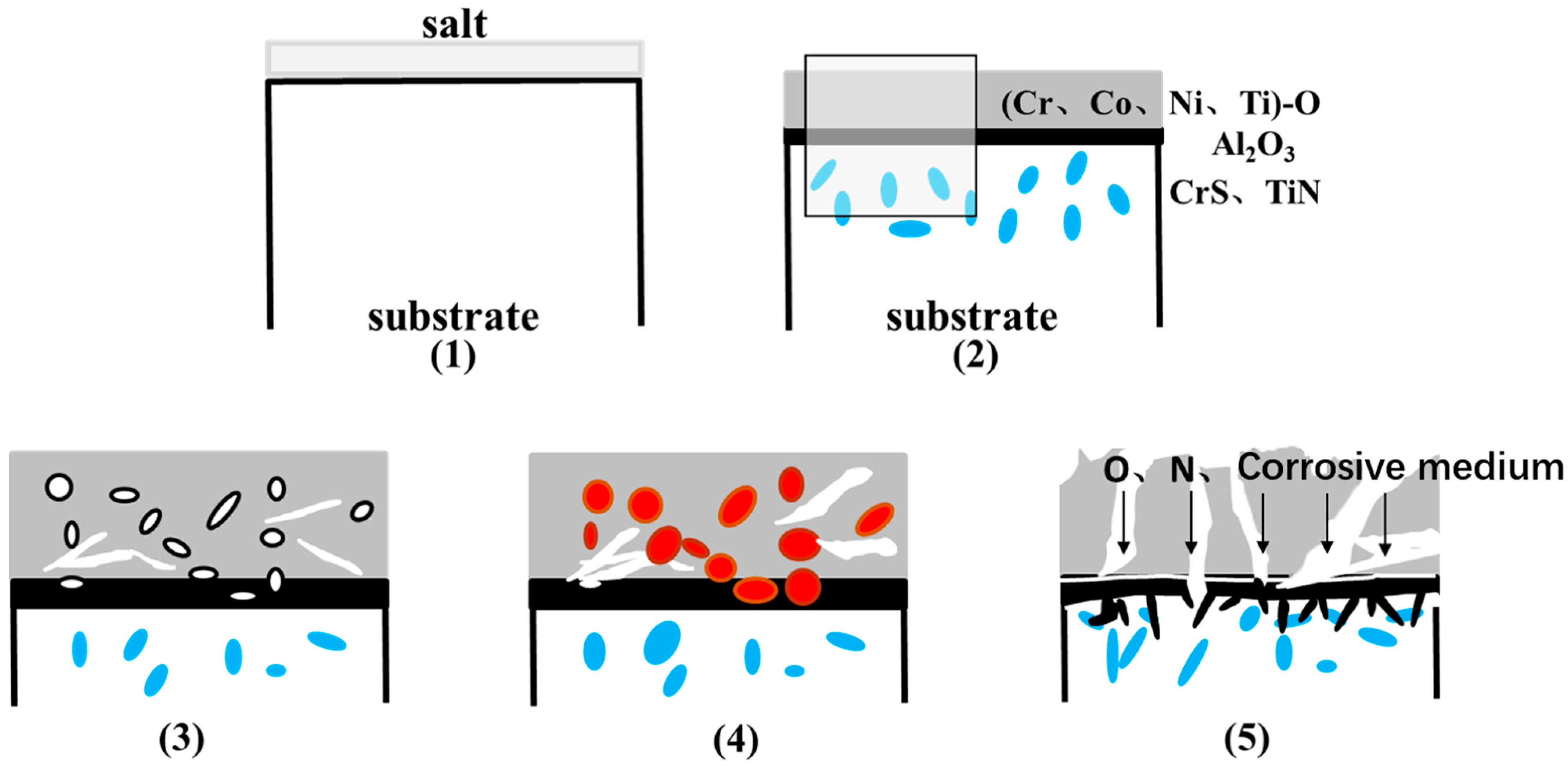
Figure 14 summarizes the influence mechanism of S on the hot corrosion of S3, S16, and S42 alloys. At high temperature, the molten salt deposited on the surface of the alloy promoted the formation of a three-layer structure including an outer Cr2O3 oxide layer, an inner Al2O3 layer, and an inner Cr/Ti sulfide layer.
Figure 14. Schematic diagram of the mechanism for the effect of S on hot corrosion of S3, S16, and S42 alloys. (1) Before hot corrosion (white represents the substrate). (2) A stable oxide layer is formed. Dark gray represents the outer oxide layer enriched in Cr, Ti, Co, and Ni. The light blue dots represent inner Al2O3 and CrSx. (3) Enlarged view of the area selected by the black rectangle in image (2). Holes and cracks (white dots and stripes) appear in the outer oxide layer. (4) The accumulation of s (red dots) appears at the holes. (5) Cracks penetrating the outer oxide scale are formed.
Due to defects such as pores and microcracks in the outer oxide scale and the scale/substrate interface, the sulfur in the alloy tended to segregate at the defects, which increased the stability of the defects and the number of defects. The existence of pores promoted the cracking and peeling of the outer oxide scale. They provided a fast diffusion channel for air and corrosive media. Therefore, the corrosive medium and air passed through the oxide layer and reached the substrate to further corrode the matrix and accelerate the corrosion. Oxygen had a fast diffusion rate at the oxide/alloy interface, resulting in a large amount of consumption of metal elements in the alloy and the formation of a dispersed network of Al2O3. For the S42 alloy, more dispersed N elements appeared in the cross-sections after hot corrosion. Because the N elements came from the air, it provided conclusive evidence that the air entered the alloy matrix through the defects of the outer oxide layer. With the increase in oxide layer defects, the N diffused into the alloy more easily. N combined with Ti formed the stable nitride TiN. The massive formation of internal nitrides leads to volume changes in the matrix, which can introduce high stress in the oxide layer and may even destroy the layer. A study showed that the main cause of nitriding was mechanical creep damage leading to cracking and spalling of the protective oxide [53].
It should be noted that the present findings are based on a limited experimental scope (three sulfur concentrations and a single temperature). While consistent trends were observed, future studies incorporating a broader range of sulfur levels and multiple temperatures are needed to establish the generalizability of these results.

5. Conclusions

The hot corrosion behavior of S3, S16, and S42 alloys with different sulfur contents in molten sodium sulfate at 900 °C was investigated, and the following conclusions are drawn based on the analysis of the experimental results.
(1)
The compositions of the hot corrosion products of the S3, S16, and S42 alloys with different S contents were almost the same, and the corrosion scales were mainly composed of an outer oxide layer dominated by Cr and rich in Ti, Co, and Ni, with an inner Al2O3 layer and an inner sulfide layer.
(2)
The increase in S content deteriorated the hot corrosion resistance of the alloy. Qualitative observations indicate that with increased S content, the amount and size of pores and cracks in the outer oxide scale increased, as well as the content of internal sulfide and internal nitride.
(3)
The mechanism by which S affects the hot corrosion behavior was that the sulfur in the alloy tended to segregate at the defects in the outer oxide scale, increasing the stability of the defects and increasing the amount of defects. These defects provided a fast channel for the diffusion of the corrosion medium, resulting in the acceleration of hot corrosion.

Author Contributions

D.Y. performed all experimental work and drafted the original manuscript; W.F. carried out partial experimental work and revised the original manuscript; Y.S., Q.G. and R.P. provided experimental support and conducted data analysis; fitting and analysis of data, X.S.; X.Z. secured funding support and revised the original manuscript; J.C. obtained funding support and edited the manuscript. All authors have read and agreed to the published version of the manuscript.

Funding

This work was funded by the National Natural Science Foundation of China under grant No. 51901179 and the Science and Technology Projects of Xizang Autonomous Region of China under grant No. XZ202502ZY0041.

Institutional Review Board Statement

Not applicable.

Data Availability Statement

Data are contained within the article.

Conflicts of Interest

Authors Xiaolong Su was employed by the company Northwest Branch of National Petroleum and Natural Gas Pipeline Network Group Co., Ltd. The remaining authors declare that the research was conducted in the absence of any commercial or financial relationships that could be construed as potential conflicts of interest.

References

  1. Guo, C.; Wang, J.; Wang, Y.; Wang, D.; Tan, C.; Zhang, H.; Chen, P.; Sun, J.; Lv, Z. Nickel-based superalloy matrix composites fabricated by laser additive manufacturing: A critical review of recent advances and overcoming challenges. J. Alloys Compd. 2025, 1048, 185331. [Google Scholar] [CrossRef]
  2. Wang, R.; You, W.; Zhang, B.; Su, X.; Lv, Z.; Li, M.; Liu, H.; Hu, D. Spatiotemporal characterization and prediction of microstructure evolution and deformation behavior under creep-oxidation interaction in nickel-based single crystal superalloys. J. Mater. Sci. Technol. 2026, 255, 209–225. [Google Scholar] [CrossRef]
  3. Tan, Z.; Wang, X.; Ye, L.; Hou, G.; Li, R.; Yang, Y.; Liu, J.; Liu, J.; Yang, L.; Wang, B.; et al. Effects of rhenium on the microstructure and creep properties of novel nickle-based single crystal superalloys. Mater. Sci. Eng. A 2019, 761, 138042. [Google Scholar] [CrossRef]
  4. Jan, M.B.; Chai, M. Machine learning approaches for creep rupture life prediction of metallic materials: A comprehensive review. Int. J. Press. Vessel. Pip. 2026, 219, 105690. [Google Scholar] [CrossRef]
  5. Mostafavi, H.; Moghanaki, S.K. Environmentally-assisted fatigue in compressor blades of a power plant gas turbine. Eng. Fail. Anal. 2026, 183, 110277. [Google Scholar] [CrossRef]
  6. Song, P.; Liu, M.; Jiang, X.; Feng, Y.; Wu, J.; Zhang, G.; Wang, D.; Dong, J.; Chen, X.-Q.; Lou, L. Influence of alloying elements on hot corrosion resistance of nickel-based single crystal superalloys coated with Na2SO4 salt at 900 °C. Mater. Des. 2021, 197, 109197. [Google Scholar] [CrossRef]
  7. Sun, Z.; Jiang, X.; Qiu, C.; Cheng, S.; Liu, X.; Li, H.; Liu, X.; Wang, Y.; Dong, J.; Lou, L. The investigations of rejuvenation heat treatment on the microstructure and mechanical properties of a serviced gas turbine blade. J. Alloys Compd. 2023, 948, 169759. [Google Scholar] [CrossRef]
  8. Mourad, A.-H.I.; Almomani, A.; Sheikh, I.A.; Elsheikh, A.H. Failure analysis of gas and wind turbine blades: A review. Eng. Fail. Anal. 2023, 146, 107107. [Google Scholar] [CrossRef]
  9. Chowdhury, T.S.; Mohsin, F.T.; Tonni, M.M.; Mita, M.N.H.; Ehsan, M.M. A critical review on gas turbine cooling performance and failure analysis of turbine blades. Int. J. Thermofluids 2023, 18, 100329. [Google Scholar] [CrossRef]
  10. Zhang, Y.; Li, Z.; Liu, W.; Liu, Y.; Chen, L. Microstructure characteristics and corrosion behaviors of Mg alloys under various multiple-passes hot-rolling deformation. Chem. Eng. J. 2025, 524, 169715. [Google Scholar] [CrossRef]
  11. Wu, J.; Liu, D.; Zhang, X.; Zhou, K.; Li, M.; Liu, Y.; Yang, Z. Enhancing hot salt corrosion fatigue resistance of TC11 alloy through plasma zirconizing compound treatment. Int. J. Fatigue 2026, 204, 109391. [Google Scholar] [CrossRef]
  12. Chen, Z.; Li, S.; Wu, M.; Pei, Y.; Gong, S.; Zhang, H. Effects of Different Surface Native Pre-Oxides on the Hot Corrosion Properties of Nickel-Based Single Crystal Superalloys. Materials 2020, 13, 5774. [Google Scholar] [CrossRef]
  13. Zhang, C.; Li, Y.; Ji, H.; Zhang, C.; Niu, X.; Li, S.; Bao, Z.; Zhu, S.; Wang, F. Hot corrosion and interdiffusion behavior of refurbished (Ni,Pt)Al coating on Ni-based superalloy. Corros. Sci. 2025, 247, 112773. [Google Scholar] [CrossRef]
  14. Jiang, C.; Yang, Y.; Zhang, Z.; Bao, Z.; Chen, M.; Zhu, S.; Wang, F. A Zr-doped single-phase Pt-modified aluminide coating and the enhanced hot corrosion resistance. Corros. Sci. 2018, 133, 406–416. [Google Scholar] [CrossRef]
  15. Li, X.; Wang, X.; Yang, Y.; Lu, Z.; Chen, J.; Cui, T.; Shoji, T. Image-based quantification of magnetic field-induced heterogeneity of pitting corrosion on X70 pipeline steel. Eng. Fail. Anal. 2026, 183, 110244. [Google Scholar] [CrossRef]
  16. Yang, S.; Gao, S.; Xue, W.; Wu, B.; Duan, D. Oxidation and hot corrosion behaviors of NiAlTa protective material for turbine single crystal blade tips. Corros. Sci. 2024, 230, 111899. [Google Scholar] [CrossRef]
  17. Huang, T.; Yu, R.; Zhang, X.; Gao, B.; Yue, S.; Hu, H.; Wu, K. Hot corrosion behavior of Fe-Cr-Ni based alloys in molten chlorides using Ti as purification agent. J. Alloys Compd. 2025, 1031, 181046. [Google Scholar] [CrossRef]
  18. Cui, M.; Ding, X.; Wu, Y.; Lian, Y.; Gu, Y.; Jiao, J.; Yang, J.; Zhang, J. Study on the hot corrosion behavior of TiVCrNiSi/TiVCrNiSi (N) alternate coatings at 550 °C. Surf. Coat. Technol. 2025, 513, 132506. [Google Scholar] [CrossRef]
  19. Zhang, H.; Wan, L.; Yan, X.; Zhang, Y.; Guo, F.; Yang, J.; Hou, G.; Cao, H.; He, Y.; Zheng, G. Structure-involved critical alloy design strategy for enhancing antioxidation performance of porous Fe-Cr-Al materials. Corros. Sci. 2024, 235, 112173. [Google Scholar] [CrossRef]
  20. Bürgel, R.; Grossmann, J.; Lüsebrink, O.; Mughrabi, H.; Pyczak, F.; Singer, R.F.; Volek, A. Development of a new alloy for directional solidication of lage industrial gas turbine blades. Superalloys 2004, 2004, 25–34. [Google Scholar]
  21. Chang, J.; Wang, D.; Liu, X.; Lou, L.; Zhang, J. Effect of Rhenium Addition on Hot Corrosion Resistance of Ni-Based Single Crystal Superalloys. Met. Mater. Trans. A 2018, 49, 4343–4352. [Google Scholar] [CrossRef]
  22. Kang, C.; Luo, H.; Ma, W.; Shi, D. Effect of surface treatment and synergistic effect of O and S elements on hot corrosion behavior of GH738 superalloy. J. Mater. Res. Technol. 2023, 26, 462–476. [Google Scholar] [CrossRef]
  23. Wang, M.; Zhao, W.; Li, X.; Li, J.; Suo, S.; Lv, C.; Lin, X.; Sun, J. Comparative study on corrosion behavior of pack and hot-dip aluminized steels in high-temperature H2–H2S–CO2–H2O environments: Insights into layer structure and degradation mechanisms. Mater. Chem. Phys. 2026, 349, 131754. [Google Scholar] [CrossRef]
  24. Yu, X.; Zhuo, H.; Wu, L.; Zhang, J.; Zhang, Y.; Yang, C.; Han, J.; Lu, Y.; Yang, S.; Wang, C.; et al. A novel low-density Co-Ni-Al-Nb-based multicomponent superalloy with superior medium-to-high temperature mechanical properties and oxidation resistance. J. Alloys Compd. 2025, 1040, 183495. [Google Scholar] [CrossRef]
  25. Mu, Y.; Liang, J.; Xi, Z.; Li, J.; Zhou, Y.; Shi, L.; Lei, L.; Yang, S.; Sun, X. Compositional gradient-driven design of additively manufactured nickel-based superalloys for enhanced 900 °C strength-ductility synergy via Ti/Al optimization. Mater. Today Commun. 2025, 49, 113751. [Google Scholar] [CrossRef]
  26. Hou, M.; Lu, F.; Li, L.; Lu, S.; He, S.; Wang, D.; Zhang, J.; Feng, Q. Effect of high-Cr content on the coarsening behavior of γ′ precipitates in Ni-based single crystal superalloys: A comparative study with rhenium-containing superalloys. Scr. Mater. 2026, 272, 117080. [Google Scholar] [CrossRef]
  27. Liu, D.; Dong, R.; Zhang, X.; Zhang, Y.; Hou, H.; Zhao, Y. High-temperature oxidation behavior of Ni-Cr-W and Ni-Cr-Fe superalloys: A comparative study at 1000 °C. J. Alloys Compd. 2025, 1025, 180271. [Google Scholar] [CrossRef]
  28. Zaiser, E.; Meng, W.; Zhou, X.; Mantha, L.; Pavel, M.J.; Neumeier, S.; Long, Y.; Weaver, M.L.; Gault, B.; Wu, Y.; et al. Cr-induced phase instability and hierarchical microstructure development in Co-based superalloys. J. Mater. Sci. Technol. 2026, 261, 309–321. [Google Scholar] [CrossRef]
  29. Oluwasegun, K.M.; Ajide, O.O.; Tanaka, T.; Zhang, L.; Ojo, O.A. Hot Corrosion Performance of Single-Crystal CMSX-4 and CMSX-486 Superalloys in the Mixture of Na2SO4-NaCl Melts. J. Mater. Eng. Perform. 2019, 28, 5509–5520. [Google Scholar] [CrossRef]
  30. Smialek, J.L. Effect of Sulfur Removal on AI2O3 Scale Adhesion. Mater. Trans. A 1991, 22, 739–752. [Google Scholar] [CrossRef]
  31. Smialek, J.L.; Tubbs, B.K. Effect of Sulfur Removal on Scale Adhesion to PWA 1480. Met. Mater. Trans. A 1995, 26, 427–435. [Google Scholar] [CrossRef]
  32. Smith, M.; Frazier, W.; Pregger, B. Effect of sulfur on the cyclic oxidation behavior of a single crystalline, nickel-base superalloy. Mater. Sci. Eng. A 1995, 203, 387–398. [Google Scholar] [CrossRef]
  33. Sarioglu, C.; Stiger, M.J.; Blachere, J.R.; Janakiraman, R.; Schumann, E.; Ashary, A.; Pettit, F.S.; Meier, G.H. The Effects of Reactive Element Additions, Sulfur Removal, and Specimen Thickness on the Oxidation Behaviour of Alumina-Forming Ni-and Fe-Base Alloys. Mater. Sci. Forum 1997, 251, 405–412. [Google Scholar] [CrossRef]
  34. Fedorova, E.; Monceau, D.; Oquab, D. Quantification of growth kinetics and adherence of oxide scales formed on Ni-based superalloys at high temperature. Corros. Sci. 2010, 52, 3932–3942. [Google Scholar] [CrossRef]
  35. Sarıoğlu, C.; Stinner, C.; Blackere, J.; Birks, N.; Pettit, F.; Meier, G.; Smialek, J. The control of sulfur content in nickel-base single crystal superalloys and its effects on cyclic oxidation resistance. Miner. Met. Mater. Soc. 1996, 96, 71–80. [Google Scholar]
  36. Zhang, Z.; Zhang, S.; Wang, D.; Wang, D.; Chen, L.; Lou, L.; Zhang, J. Effect of ppm Level Sulfur Addition on Isothermal Oxidation Behavior of a Nickel-Base Single Crystal Superalloy. Foundry 2019, 68, 232–236. [Google Scholar]
  37. Yun, D.W.; Seo, S.; Jeong, H.; Yoo, Y. The cyclic oxidation behaviour of Ni-based superalloy GTD-111 with sulphur impurities at 1100 °C. Corros. Sci. 2015, 90, 392–401. [Google Scholar] [CrossRef]
  38. Kumawat, M.K.; Parlikar, C.; Alam, Z.; Das, D.K. Type-I Hot Corrosion of Ni-Base Superalloy CM247LC in Presence of Molten Na2SO4 Film. Met. Mater. Trans. A 2020, 52, 378–393. [Google Scholar] [CrossRef]
  39. Hu, S.; Finklea, H.; Liu, X. A review on molten sulfate salts induced hot corrosion. J. Mater. Sci. Technol. 2021, 90, 243–254. [Google Scholar] [CrossRef]
  40. Rapp, R. Hot corrosion of materials: A fluxing mechanism? Corros. Sci. 2002, 44, 209–221. [Google Scholar] [CrossRef]
  41. Martínez-Villafañe, A.; Stott, F.; Chacon-Nava, J.; Wood, G. Enhanced Oxygen Diffusion Along Internal Oxide–Metal Matrix Interfaces in Ni–Al Alloys During Internal Oxidation. Oxid. Met. 2002, 57, 267–279. [Google Scholar] [CrossRef]
  42. Stott, F.; Wood, G.; Whittle, D.; Bastow, B.; Shida, Y.; Martínez-Villafañe, A. The transport of oxygen to the advancing internal oxide front during internal oxidation of nickel-base alloys at high temperature, the transport of oxygen. Solid State Ion. 1984, 12, 365–374. [Google Scholar] [CrossRef]
  43. Whittle, D.P.; Shida, Y.; Wood, G.C.; Stott, F.H.; Bastow, B.D. Enhanced diffusion of oxygen during internal oxidation of nickel-base alloys. Philos. Mag. A. 1982, 46, 931–949. [Google Scholar] [CrossRef]
  44. Molins, R.; Hou, P.Y. Characterization of chemical and microstructural evolutions of a NiPtAl bondcoat during high temperature oxidation. Surf. Coat. Technol. 2006, 201, 3841–3845. [Google Scholar] [CrossRef]
  45. Isabelle, R.; Régine, M.; François, J.; Rémy, L. Study of the sulfur segregation for a TBC system. Mater. Sci. Forum 2004, 461, 101–108. [Google Scholar] [CrossRef]
  46. Régine, R.; Rouzou, I.; Hou, P. A TEM study of sulfur distribution in oxidized Ni40Al and its effect on oxide growth and adherence. Mater. Sci. Eng. A 2007, 454, 80–88. [Google Scholar] [CrossRef]
  47. Hou, P.; Priimak, K. Interfacial Segregation, Pore Formation, and Scale Adhesion on NiAl Alloys. Oxid. Met. 2005, 63, 113–130. [Google Scholar] [CrossRef]
  48. Yu, C.; Liu, H.; Ullah, A.; Bao, Z.; Zhu, S.; Wang, F. High-temperature performance of (Ni,Pt)Al coatings on second-generation Ni-base single-crystal superalloy at 1100 °C: Effect of excess S impurities. Corros. Sci. 2019, 159, 108115. [Google Scholar] [CrossRef]
  49. Grabke, H.; Wiemer, D.; Viefhaus, H. Segregation of sulfur during growth of oxide scales. Appl. Surf. Sci. 1991, 47, 243–250. [Google Scholar] [CrossRef]
  50. McLean, D.; Maradudin, A. Grain Boundaries in Metals. Phys. Today 1958, 11, 35–36. [Google Scholar] [CrossRef]
  51. Smialek, J.L. Oxidation Reststance and Crmcal Sulfur Content of Single Crystal Superalloys. J. Eng. Gas Turbines Power. 1998, 120, 370–374. [Google Scholar] [CrossRef]
  52. Smialek, J.; Jayne, D.; Schaeffer, J.; Murphy, W. Effects of hydrogen annealing, sulfur segregation and diffusion on the cyclic oxidation resistance of superalloys: A review. Thin Solid Film 1994, 253, 285–292. [Google Scholar] [CrossRef]
  53. Kanesund, J.; Brodin, H.; Johansson, S. High temperature corrosion influence on deformation and damage mechanisms in turbine blades made of IN-792 during service. Eng. Fail. Anal. 2020, 110, 104388. [Google Scholar] [CrossRef]
Disclaimer/Publisher’s Note: The statements, opinions and data contained in all publications are solely those of the individual author(s) and contributor(s) and not of MDPI and/or the editor(s). MDPI and/or the editor(s) disclaim responsibility for any injury to people or property resulting from any ideas, methods, instructions or products referred to in the content.

Article Metrics

Citations

Article Access Statistics

Multiple requests from the same IP address are counted as one view.