
Enhancing 4H-SiC Lapping Performance: Diamond and Boron Carbide Composite Abrasives Effects on Material Removal and Subsurface Damage

Abstract
1. Introduction
2. Materials and Methods
3. Results and Discussion
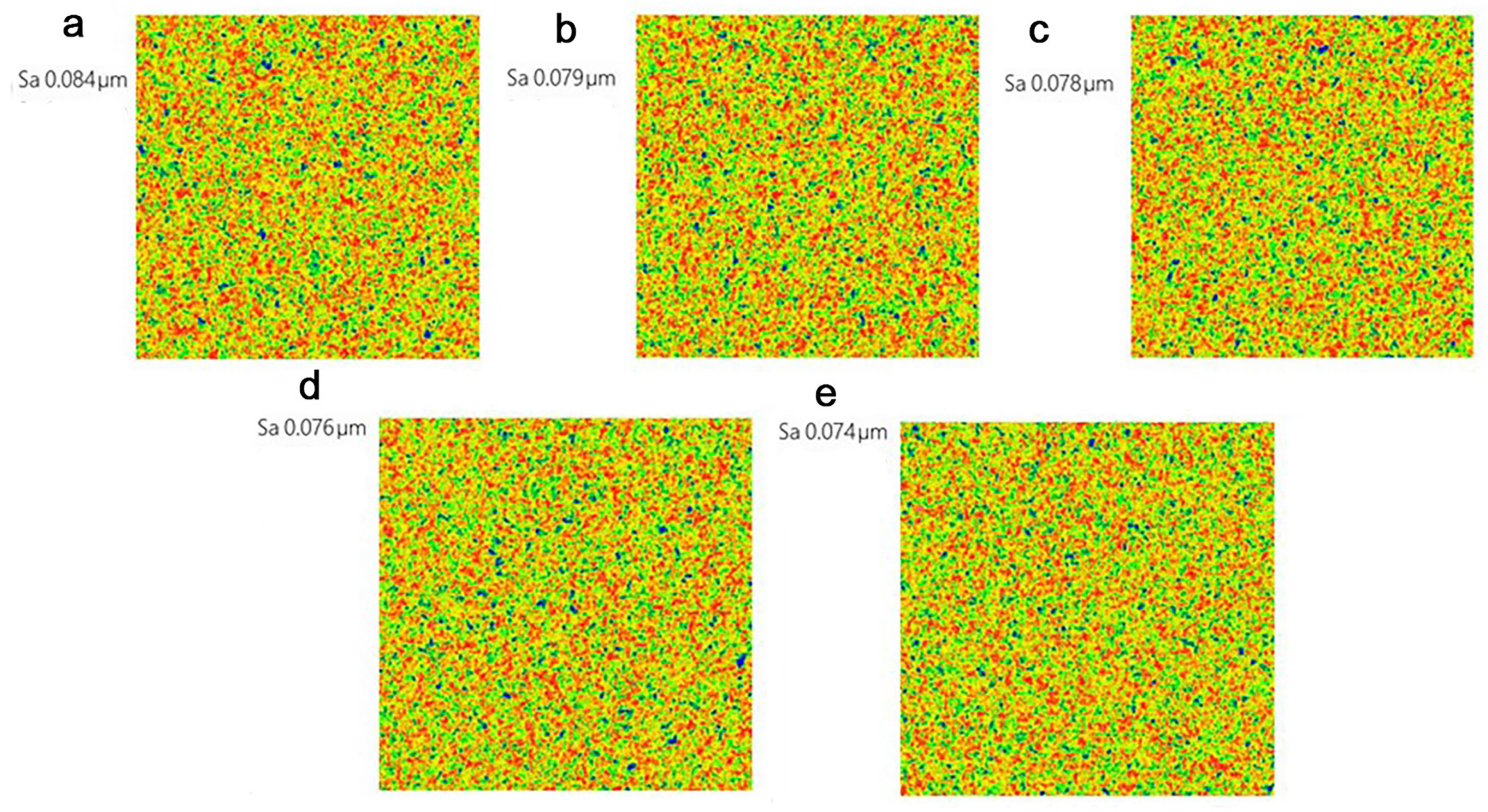
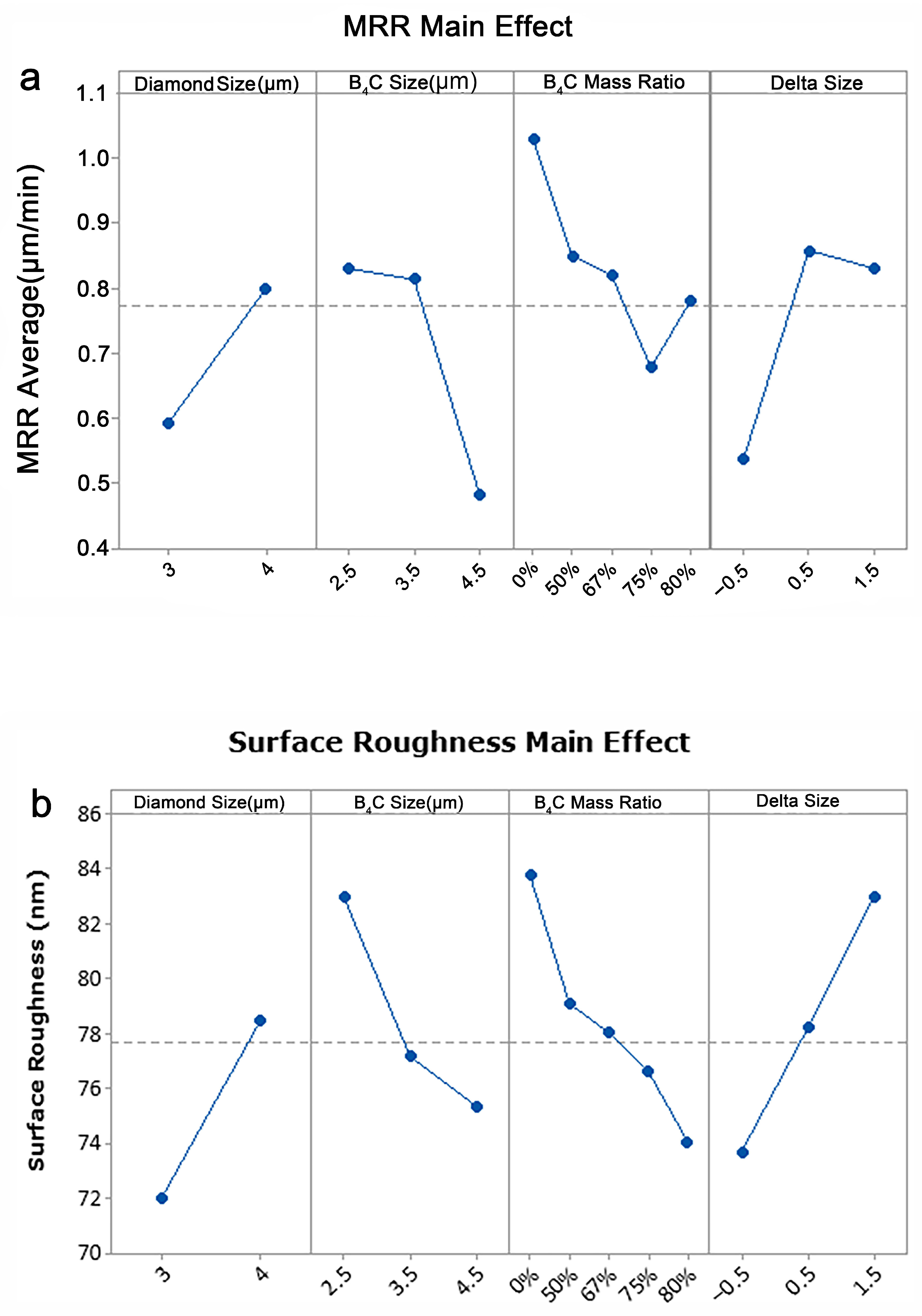
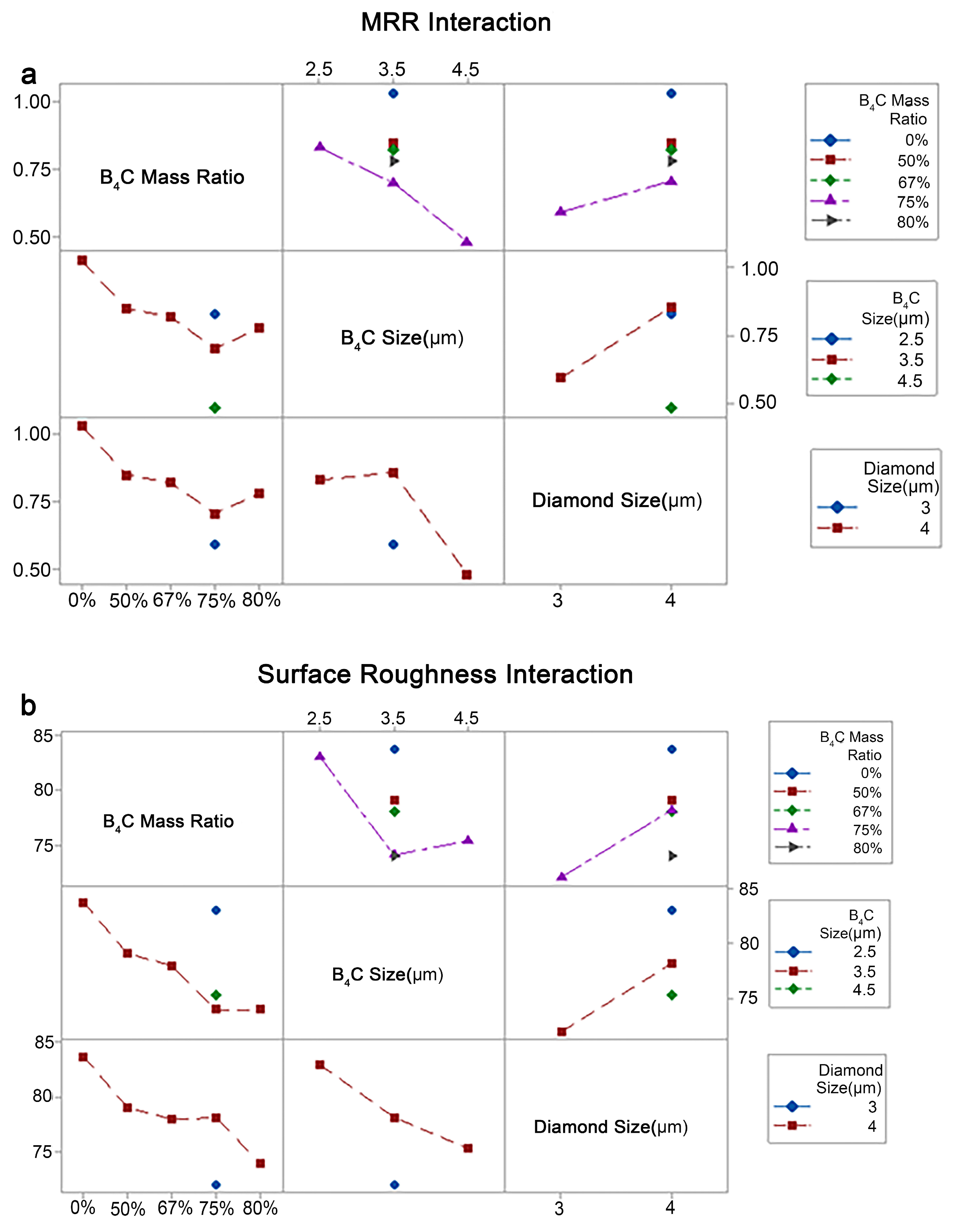
3.1. The Influence of Diamond and Boron Carbide Mass Ratio on Material Removal Rate and Surface Roughness
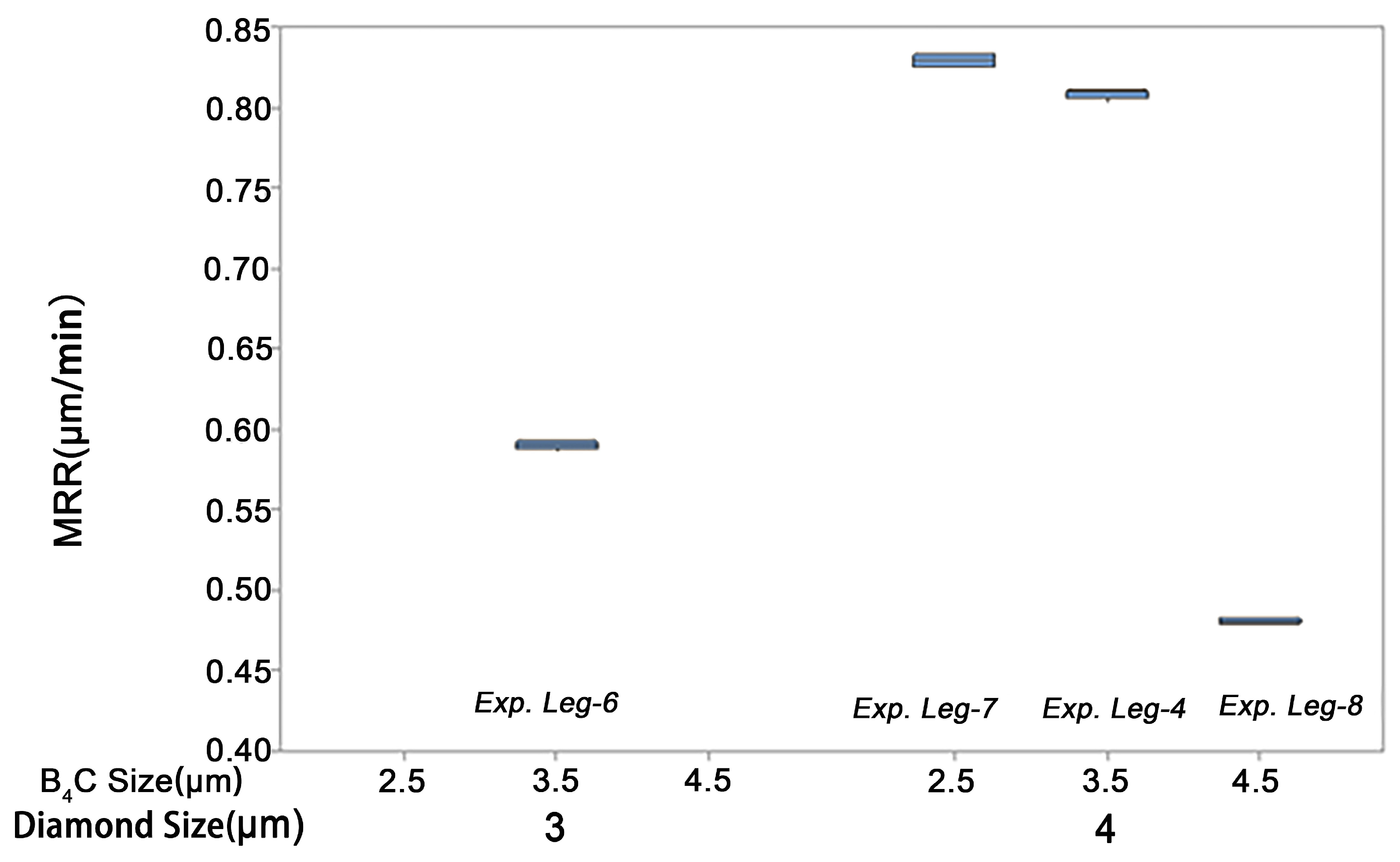
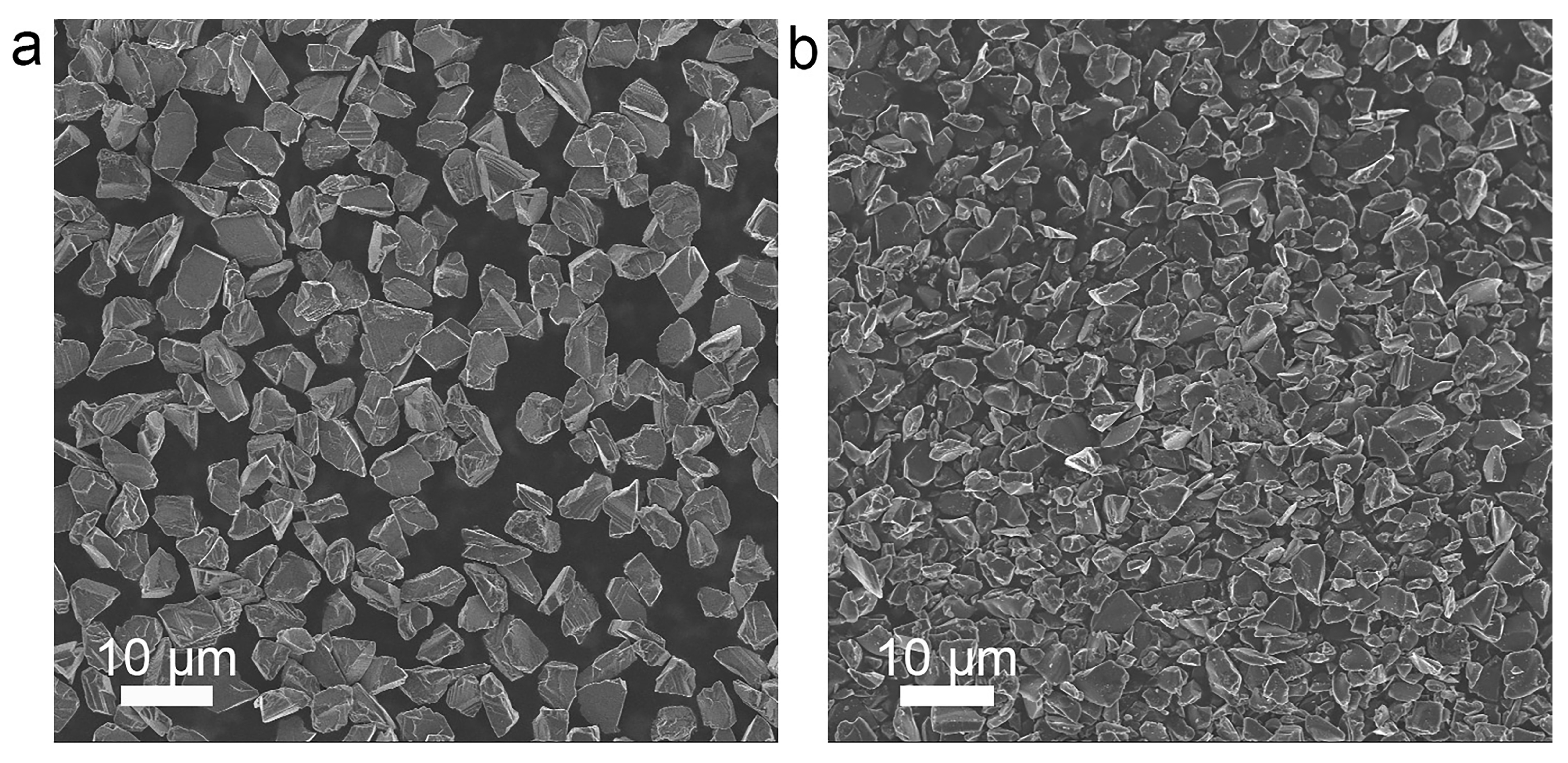
3.2. The Influence of Diamond and Boron Carbide Powder Size on Material Removal Rate and Roughness
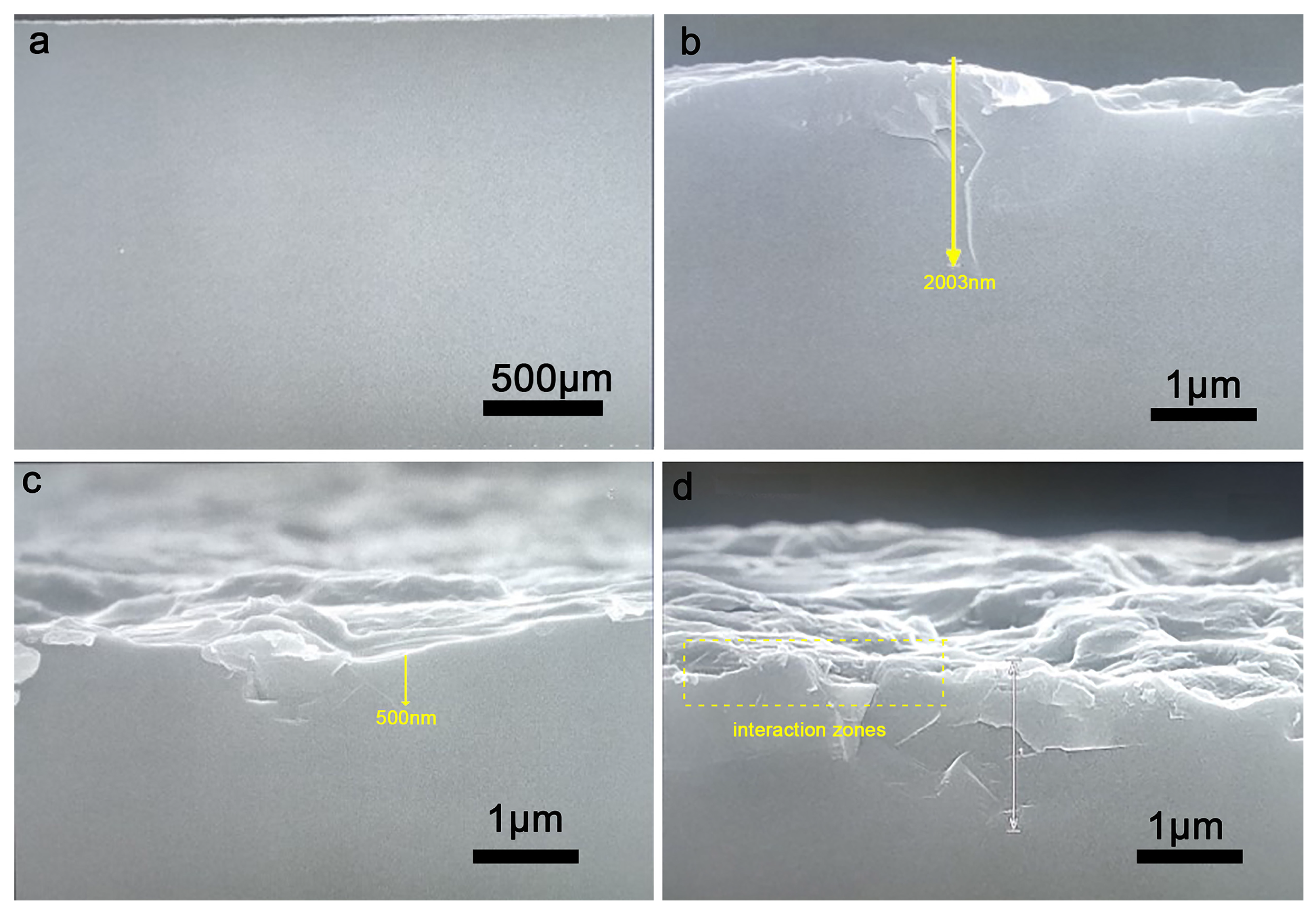
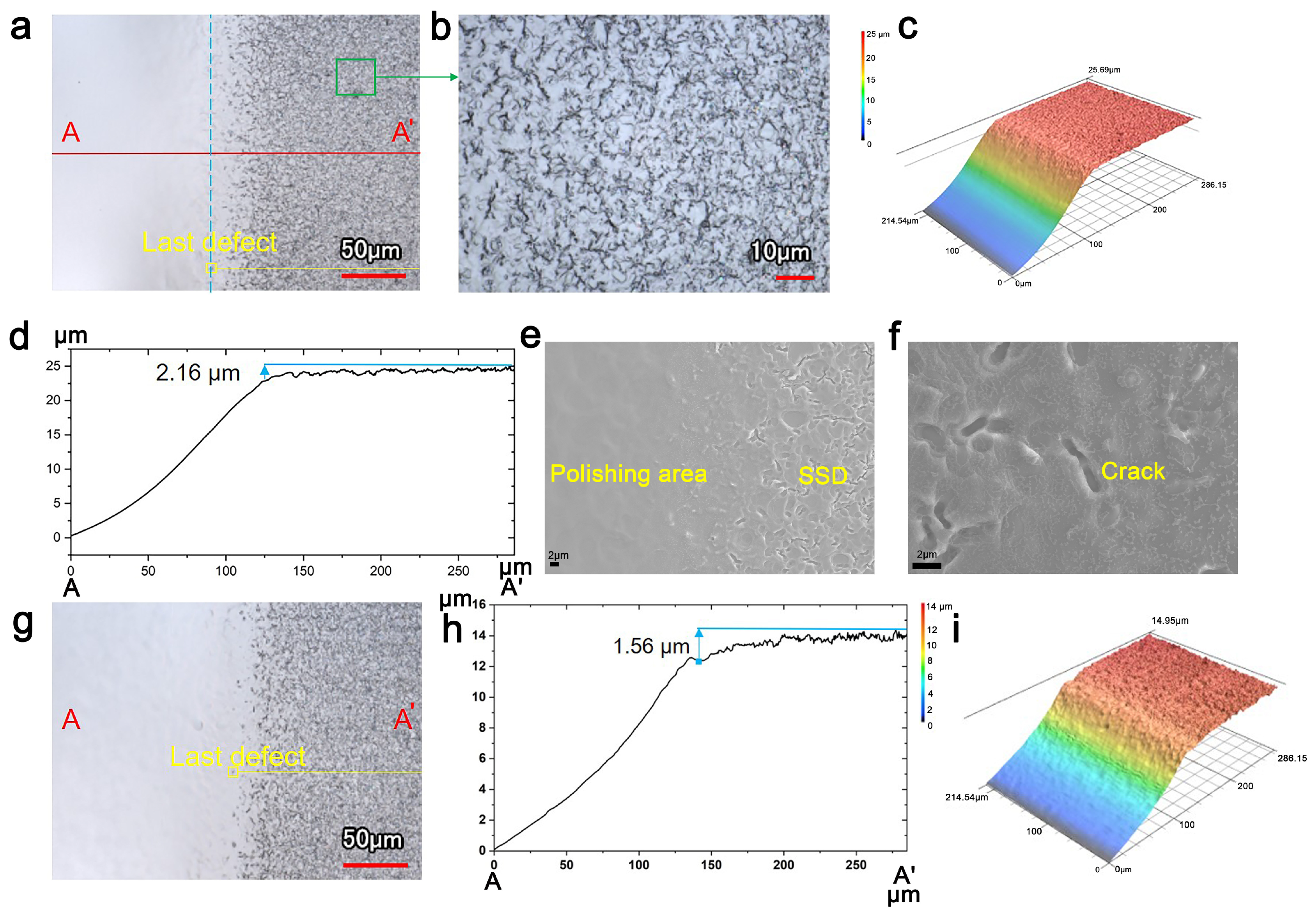
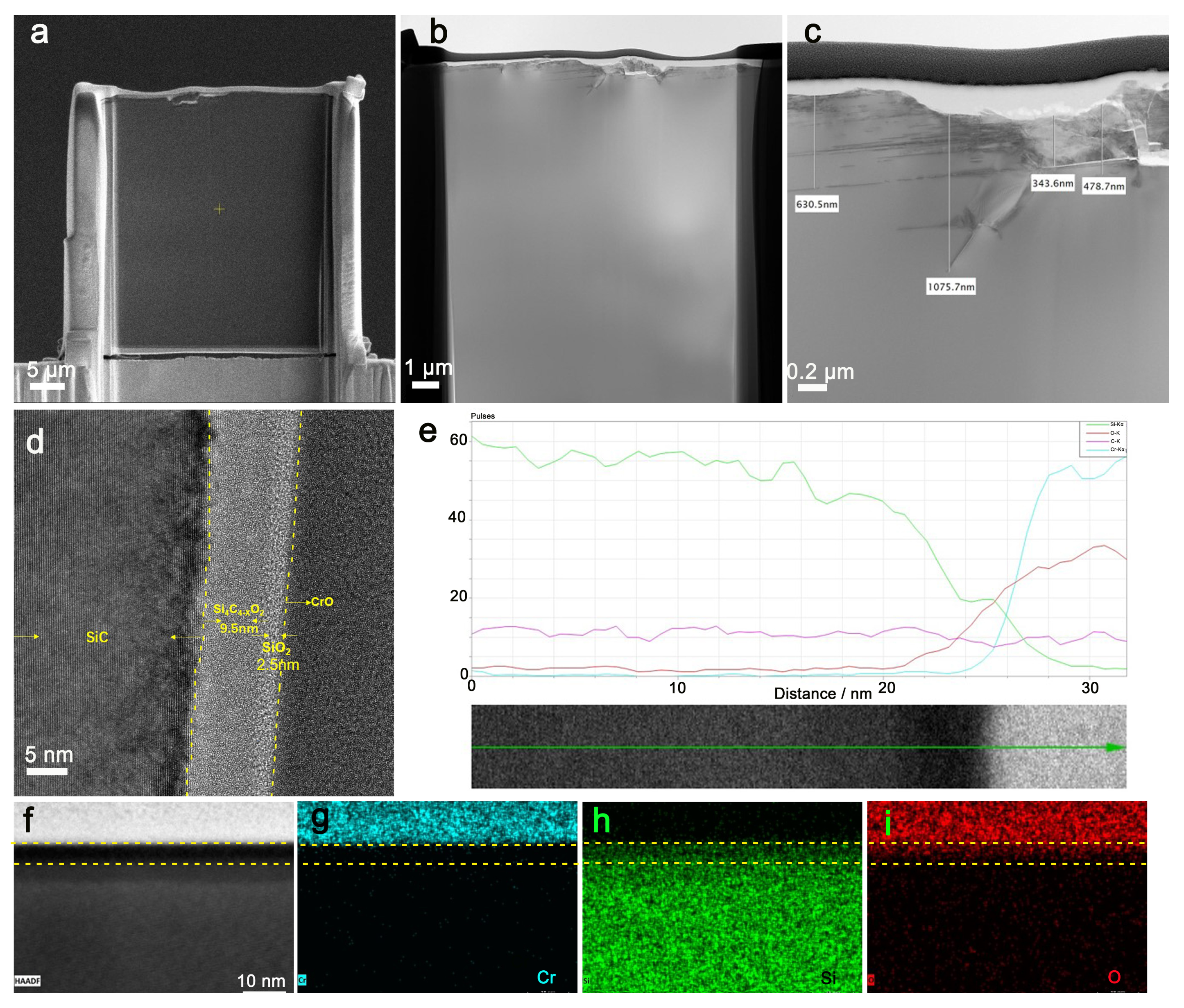
3.3. Subsurface Mechanical Damage Characterization
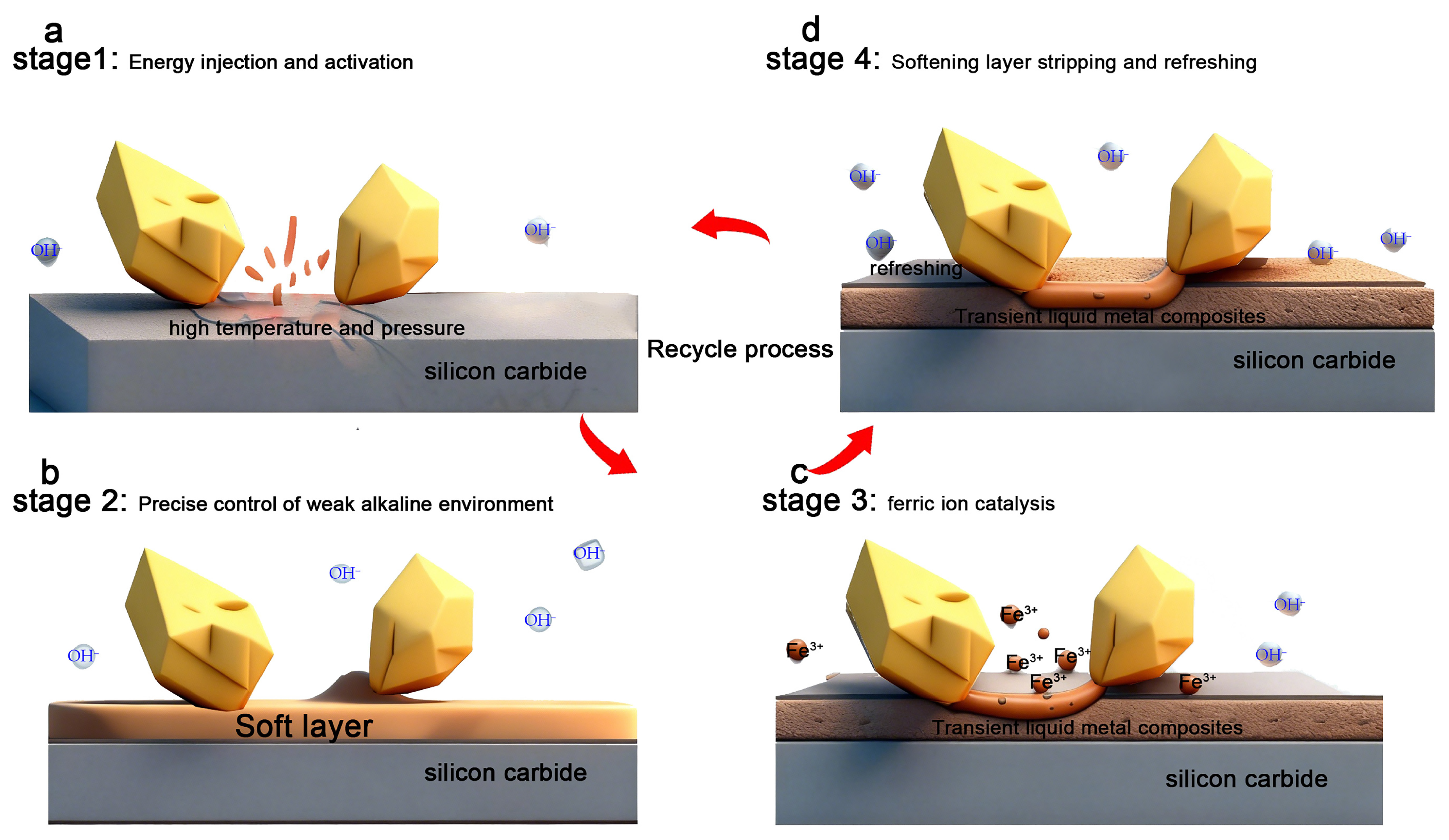
3.4. Material Removal Mechanism
- Stage 1: energy injection and reactor initiation.
- Stage 2: precise interface regulation in a weakly alkaline environment.
- Stage 3: Iron-catalyzed transient liquid phase reaction.
- Stage 4: Precise delamination of the softened layer and system refresh.
3.5. Lapping in the SiC Process Chain
4. Conclusions
- The abrasive mixing ratio is key to balancing efficiency and quality. Increasing the proportion of B4C effectively improves surface roughness. However, exceeding 75 wt% leads to a significant decrease in the material removal rate (MRR) and worse total thickness variation (TTV).
- Abrasive particle size governs the depth of subsurface damage. Larger diamond particles increase the MRR but exacerbate subsurface damage (SSD). Smaller B4C particles (e.g., 2.5 μm) help maintain a higher MRR while contributing to worse surface quality.
- Optimal processing parameters are recommended. To achieve a balance between efficiency and surface integrity, a slurry formulation with a diamond-to-B4C mass ratio of approximately 1:3 (i.e., 75 wt.% B4C) and a particle size difference of about 0.5 μm is proposed.
Supplementary Materials
Author Contributions
Funding
Data Availability Statement
Acknowledgments
Conflicts of Interest
References
- Ma, G.; Li, S.; Liu, F.; Zhang, C.; Jia, Z.; Yin, X. A review on precision polishing technology of single-crystal SiC. Crystals 2022, 12, 101. [Google Scholar] [CrossRef]
- Yu, Y.; Hu, Z.; Wang, W.; Zhao, H.; Lu, J.; Xu, X. The double-side lapping of SiC wafers with semifixed abrasives and resin–combined plates. Int. J. Adv. Manuf. Technol. 2020, 108, 997–1006. [Google Scholar]
- Guo, F.; Shao, C.; Chen, X.; Xie, X.; Yang, X.L. Shape modulation due to sub-surface damage difference on N-type 4H–SiC wafer during lapping and polishing. Mater. Sci. Semicond. Process. 2022, 152, 107124. [Google Scholar] [CrossRef]
- Shi, D.; Zhao, T.C.; Ma, T.F.; Pan, J.P. Study on improving the precise machinability of single crystal SiC by an ultrasonic-assisted hybrid process. Materials 2021, 14, 7320. [Google Scholar] [CrossRef]
- Luo, Q.F.; Lu, J.; Tian, Z.G.; Feng, J. Controllable material removal behavior of 6H-SiC wafer in nanoscale polishing. Appl. Surf. Sci. 2021, 562, 150219. [Google Scholar] [CrossRef]
- Zhang, Z.S.; Cai, H.; Gan, D.; Hu, W.; Yang, J.; Liu, X.; Guo, Y.; Guo, L.; Wang, W.; Chen, X. A new method to characterize underlying scratches on SiC wafers. CrystEngComm 2019, 21, 1200–1204. [Google Scholar] [CrossRef]
- Yin, T.; Doi, T.; Kurokawa, S.; Zhou, Z.; Feng, K.P. Polishing characteristics of MnO2 polishing slurry on the si-face of SiC wafer. Int. J. Precis. Eng. Manuf. 2018, 19, 1773–1780. [Google Scholar] [CrossRef]
- Ji, P.X.; Zhang, K.M.; Zhang, Z.Z.; Zhao, M.; Li, R.; Hao, D.; Moro, R.; Ma, Y.; Ma, L. A general strategy for polishing SiC wafers to atomic smoothness with arbitrary facets. Mater. Sci. Semicond. Process. 2022, 144, 106628. [Google Scholar] [CrossRef]
- Lu, J.; Xu, Y.C.; Zhang, Y.H.; Xu, X.P. The effects of SiO2 coating on diamond abrasives in sol-gel tool for SiC substrate polishing. Diam. Relat. Mater. 2017, 76, 123–131. [Google Scholar] [CrossRef]
- He, Z.B.; Huang, H.; Yin, F.; Xu, X.P. Development of a brazed diamond wire for slicing single-crystal SiC ingots. Int. J. Adv. Manuf. Technol. 2017, 91, 189–199. [Google Scholar] [CrossRef]
- Gao, Y.F.; Chen, Y. Sawing stress of SiC single crystal with void defect in diamond wire saw slicing. Int. J. Adv. Manuf. Technol. 2019, 103, 1019–1031. [Google Scholar] [CrossRef]
- Gao, Y.F.; Chen, Y.; Ge, P.Q.; Zhang, L.; Bi, W. Study on the subsurface microcrack damage depth in electroplated diamond wire saw slicing SiC crystal. Ceram. Int. 2018, 44, 22927–22934. [Google Scholar] [CrossRef]
- Zhang, Y.L.; Xie, X.Z.; Huang, Y.A.; Hu, W.; Long, J.Y. Internal modified structure of silicon carbide prepared by ultrafast laser for wafer slicing. Ceram. Int. 2023, 49, 5249–5260. [Google Scholar] [CrossRef]
- Zhang, Y.; Zhang, L.F.; Chen, K.Y.; Liu, D.; Lu, D.; Deng, H. Rapid subsurface damage detection of SiC using inductivity coupled plasma. Int. J. Extrem. Manuf. 2021, 3, 035202. [Google Scholar] [CrossRef]
- Zhao, S.; Chen, Z.M.; Pan, P.; Wang, H.H. Oriented Lapping of SiC Wafers. J. Synth. Cryst. 2010, 39, 366–368. [Google Scholar]
- Zhang, X.; Zhu, R.Z.; Zhang, X.Q.; Wang, M.; Pi, X. Influence of abrasive morphology and dispersion medium on lapping quality of 4H-SiC wafers. J. Synth. Cryst. 2023, 52, 49–55. [Google Scholar]
- Pan, J.S.; Yan, Q.S.; Li, W. Analysis on surface performance of 6H-SiC monocrystalline wafer with single-sided lapping method. Diam. Abras. Eng. 2014, 34, 2–6. [Google Scholar]
- Tsai, M.-Y.; Li, K.-Y.; Ji, S.-Y. Novel abrasive-impregnated pads and diamond plates for the grinding and lapping of single-crystal silicon carbide wafers. Appl. Sci. 2021, 11, 1783. [Google Scholar] [CrossRef]
- Guo, Y.J.; Jing, L.; Xu, L. Tribochemical action on the tribochemical mechanical lapping (0001) C plane of the SiC single-crystal substrate. Int. J. Mod. Phys. B 2022, 36, 2240027. [Google Scholar]
- Zhang, X.; Liu, X.; Wang, Y.; Zhu, R.; Zhang, X.; Zhang, Y.; Wang, R.; Yang, D.; Pi, X.D. Optimizing the flatness of 4H-silicon carbide wafers by tuning the sequence of lapping. Semicond. Sci. Technol. 2023, 3, 034001. [Google Scholar] [CrossRef]
- Fang, L.; Xiao, Y.; Yan, G.; Ao, Z.; Yang, M. Surface prediction and experimental study of single crystal SiC fixed abrasive lapping. Laser Optoelectron. Prog. 2025, 21, 2116002. [Google Scholar]
- Chen, J.P.; Zhu, Y.W.; Wang, J.B.; Peng, Y.; Yao, J.; Ming, S. Relationship between mechanical properties and processing performance of agglomerated diamond abrasive compared with single diamond abrasive. Diam. Relat. Mater. 2019, 100, 107595. [Google Scholar] [CrossRef]
- Yin, J.; Bai, Q.; Zhang, B. Methods for detection of subsurface damage: A review. Chin. J. Mech. Eng. 2018, 31, 41. [Google Scholar] [CrossRef]
- Liu, L.L.; Zhao, Z.Y.; Zhang, S.T.; Yu, T.; Yang, G. Tetragonal structure BC4 as a superhard material. J. Phys. Chem. C 2017, 121, 10119–10123. [Google Scholar] [CrossRef]
- Geng, W.H.; Yang, G.; Zhang, X.Q.; Zhang, X.; Wang, Y.; Song, L.; Chen, P.; Zhang, Y.; Pi, X.; Yang, D.; et al. Identification of subsurface damage of 4H-SiC wafers by combining photo-chemical etching and molten-alkali etching. J. Semicond. 2022, 43, 102801. [Google Scholar] [CrossRef]
- Li, H.H.; Cui, C.C.; Lu, J. Mueller matrix ellipsometric characterization of nanoscale subsurface damage of 4H-SiC wafers: From grinding to CMP. Front. Phys. 2021, 9, 820637. [Google Scholar] [CrossRef]
- Yan, Q.S.; Chen, S.K.; Pan, J.S. Surface and subsurface damage characteristics and material removal mechanism in 6H-SiC wafer grinding. Mater. Res. Innov. 2014, 18, 742–746. [Google Scholar] [CrossRef]
- Zhou, Y.; Huang, Y.; Li, J.; Zhu, F.Z. The effect of contact types on SiC polishing process. Mater. Sci. Semicond. Process. 2022, 147, 106709. [Google Scholar] [CrossRef]
- Malkin, S.; Guo, C. Thermal analysis of grinding. Ann. CIRP 2007, 56, 760–782. [Google Scholar] [CrossRef]
- Huang, Y.; Zhou, Y. Understanding of the effect of wear particles removal from the surface on grinding silicon carbide by molecular dynamics simulations. Diam. Relat. Mater. 2023, 137, 110150. [Google Scholar] [CrossRef]
- Daviau, K.; Lee, K. High-pressure, high-temperature behavior of silicon carbide: A review. Crystals 2018, 8, 217. [Google Scholar] [CrossRef]
- Friedrichs, P.; Burte, E.P.; Schörner, R. Interface properties of metal-oxide-semiconductor structures on n-type 6H and 4H-SiC. J. Appl. Phys. 1996, 79, 7814–7819. [Google Scholar] [CrossRef]
- He, J.; Zhang, H.; Chen, J.; Liu, Y.; Wang, J.; Yao, F. Mechanistic study of the effect of Fe on the oxidation behavior of FeCoCrNi high-entropy alloys in high-temperature steam. J. Phys. Conf. Ser. 2025, 3013, 012017. [Google Scholar] [CrossRef]
- Hauffe, K. The mechanism of oxidation of metals and alloys at high temperatures. Prog. Met. Phys. 1953, 4, 71–104. [Google Scholar] [CrossRef]
- Lu, K.; Lu, J. Nanostructured surface layer on metallic materials induced by surface mechanical attrition treatment. Mater. Sci. Eng. A 2004, 375–377, 38–45. [Google Scholar] [CrossRef]
- Meng, B.; Zhang, Y.; Zhang, F. Material removal mechanism of 6H-SiC studied by nano-scratching with Berkovich indenter. Appl. Phys. A 2016, 122, 247. [Google Scholar] [CrossRef]
- Chen, X.; Pan, J.; Zhang, H.; Liu, Y. Synthesis of CeO2 composite particles for chemical mechanical polishing of single-crystal SiC substrates and their polishing applications: A review. Appl. Mater. Interfaces 2026, 18, 4685–4700. [Google Scholar] [CrossRef]
- Je, H.; Kang, S.; Kim, S. Challenges and innovations in chemical mechanical polishing in the more-than-moore era. Int. J. Precis. Eng. Manuf.-Green Technol. 2026. [Google Scholar] [CrossRef]
- Li, A.; Zhou, J.; Niu, X.; Liu, Z.; Ma, Q.; Song, S.; Wang, M.; Hu, B. Advances and challenges in chemical mechanical polishing of silicon carbide: Materials, mechanisms, and future directions. J. Mater. Chem. C 2025, 13, 22921–22952. [Google Scholar] [CrossRef]
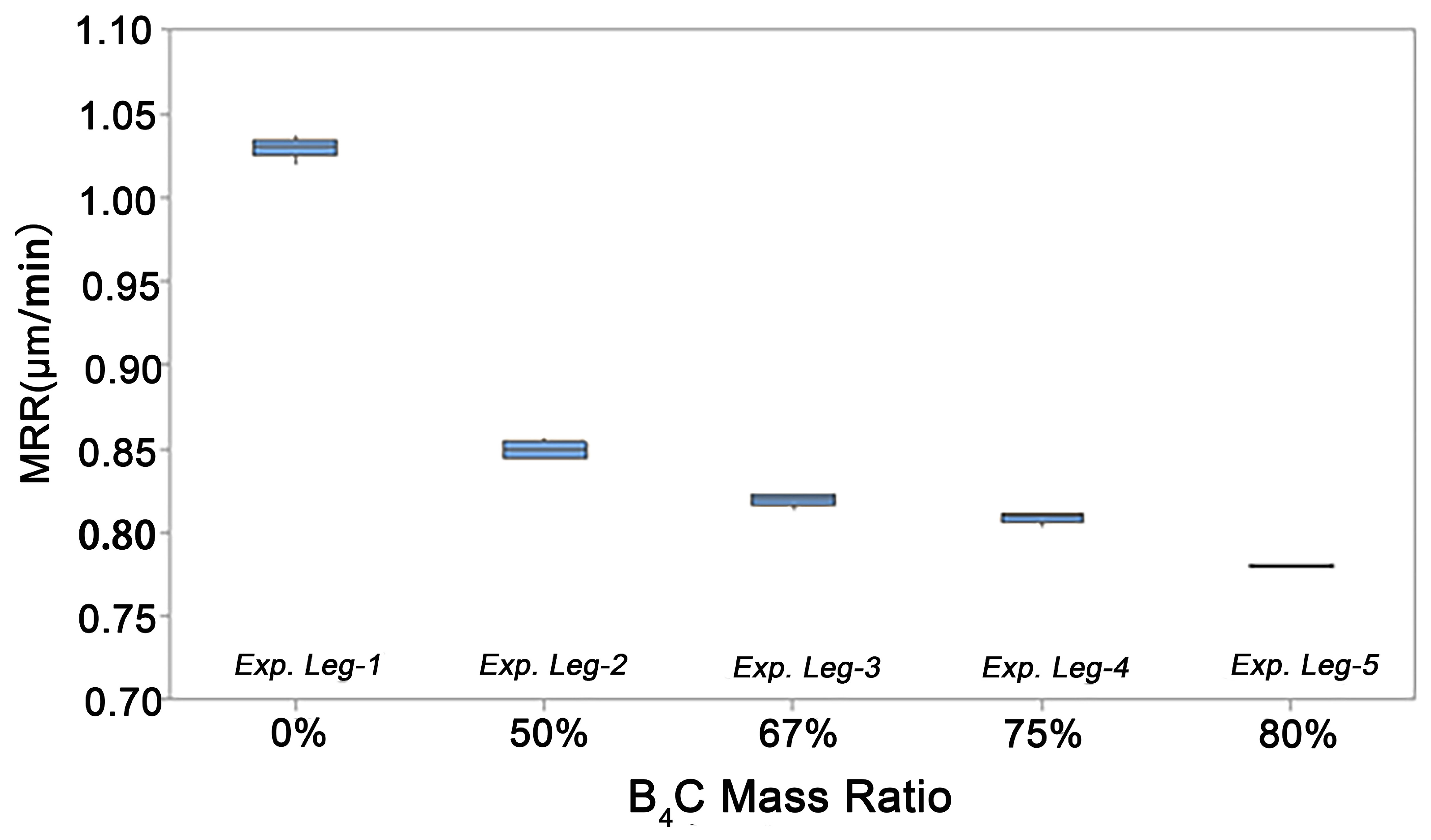



| Sample | Size of Diamond (μm) | Size of B4C (μm) | B4C Mass Ratio |
|---|---|---|---|
| Leg-1 | 4 | 3.5 | 0% |
| Leg-2 | 4 | 3.5 | 50% |
| Leg-3 | 4 | 3.5 | 67% |
| Leg-4 | 4 | 3.5 | 75% |
| Leg-5 | 4 | 3.5 | 80% |
| Leg-6 | 3 | 3.5 | 75% |
| Leg-7 | 4 | 2.5 | 75% |
| Leg-8 | 4 | 4.5 | 75% |
Disclaimer/Publisher’s Note: The statements, opinions and data contained in all publications are solely those of the individual author(s) and contributor(s) and not of MDPI and/or the editor(s). MDPI and/or the editor(s) disclaim responsibility for any injury to people or property resulting from any ideas, methods, instructions or products referred to in the content. |
© 2026 by the authors. Licensee MDPI, Basel, Switzerland. This article is an open access article distributed under the terms and conditions of the Creative Commons Attribution (CC BY) license.
Share and Cite
Sui, X.; Zhang, D.W.; Zhang, L. Enhancing 4H-SiC Lapping Performance: Diamond and Boron Carbide Composite Abrasives Effects on Material Removal and Subsurface Damage. Crystals 2026, 16, 142. https://doi.org/10.3390/cryst16020142
Sui X, Zhang DW, Zhang L. Enhancing 4H-SiC Lapping Performance: Diamond and Boron Carbide Composite Abrasives Effects on Material Removal and Subsurface Damage. Crystals. 2026; 16(2):142. https://doi.org/10.3390/cryst16020142
Chicago/Turabian StyleSui, Xiaoming, David Wei Zhang, and Lin Zhang. 2026. "Enhancing 4H-SiC Lapping Performance: Diamond and Boron Carbide Composite Abrasives Effects on Material Removal and Subsurface Damage" Crystals 16, no. 2: 142. https://doi.org/10.3390/cryst16020142
APA StyleSui, X., Zhang, D. W., & Zhang, L. (2026). Enhancing 4H-SiC Lapping Performance: Diamond and Boron Carbide Composite Abrasives Effects on Material Removal and Subsurface Damage. Crystals, 16(2), 142. https://doi.org/10.3390/cryst16020142