Article

Bio-Purines as Co-Formers in Resveratrol Amorphous Systems

1
School of Chemical Engineering, Fuzhou University, Fuzhou 350116, China
2
School of Resources and Chemical Engineering, Sanming University, Sanming 365004, China
3
School of Education and Music, Sanming University, Sanming 365004, China
*
Authors to whom correspondence should be addressed.
Crystals 2026, 16(2), 126; https://doi.org/10.3390/cryst16020126
Submission received: 31 December 2025 / Revised: 5 February 2026 / Accepted: 7 February 2026 / Published: 9 February 2026

Abstract

In the organic biomineralization of guanine (GUA), amorphous GUA is utilized to enhance its solubility, facilitating its transport for the formation of biominerals, and GUA nanocrystals are employed to protect tissues from ultraviolet damage. These principles of GUA biomineralization inspire us to improve the solubility and photostability of trans-resveratrol (RES) using bio-purines, which limits its bioavailability. Bio-purines, such as GUA, hypoxanthine (HYP), and adenine (ADE), were used as co-formers in the amorphous systems of RES. Amorphous RES-2Purines with a 1:2 molar ratio were prepared via the neat ball-milling method and confirmed by powder X-ray diffraction, Raman spectroscopy, and diffuse reflectance spectroscopy. The stability, dissolution profiles, and photostability of RES-2Purines were comprehensively compared. RES-2Purines show high amorphous-to-crystalline transformation temperatures (>100 °C), confirmed by the differential scanning calorimetry-thermogravimetric analysis. Both RES-2HYP and RES-2ADE show an enhanced RES solubility (about 1.6-fold that of raw RES) in water and the simulated gastric fluid (pH 1.2). RES-2Purines can recrystallize quickly after being dispersed in water, which limits the solubility enhancements of RES-2Purines. RES-2Purines have better photostability than raw RES. Bio-purines are promising co-formers for amorphous systems to enhance the solubility and photostability of poorly water-soluble compounds.

1. Introduction

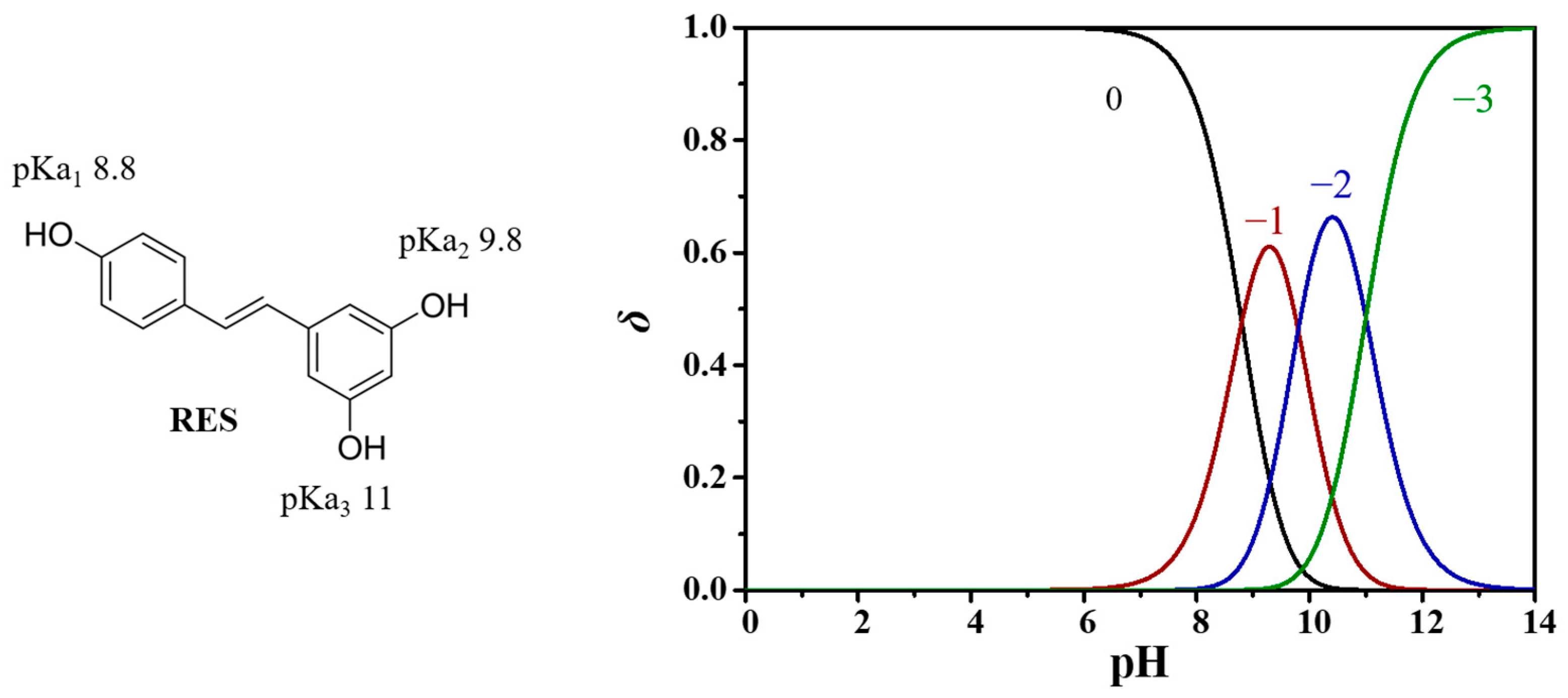
Resveratrol (RES, Scheme 1) is a non-flavonoid polyphenolic compound present in red grapes [1,2], which is famous for its antioxidant, anti-inflammatory, and numerous metabolic regulatory properties [3]. RES can be readily synthesized through various chemical methods [4], facilitating its commercial utilization. However, its poor aqueous solubility and low stability reduce its bioavailability, restricting its uptake and applications [5,6,7,8]. As shown in Scheme 1, RES has three acidic hydrogen atoms of phenolic hydroxyl groups, and the pKa1, pKa2, and pKa3 of RES are 8.8, 9.8, and 11.4, respectively. For acid–base equilibrium systems, the distribution fraction (δ) quantifies the proportions of different species existing in the systems. For RES, the δ of different RES species can be calculated using Equations (1)–(4), as shown below. The changes in pH value can lead to changes in the δ of RES species.
δ R E S = [ H + ] 3 [ H + ] 3 + K a 1 [ H + ] 2 + K a 1 K a 2 [ H + ] + K a 1 K a 2 K a 3
δ R E S = K a 1 [ H + ] 2 [ H + ] 3 + K a 1 [ H + ] 2 + K a 1 K a 2 [ H + ] + K a 1 K a 2 K a 3
δ R E S 2 = K a 1 K a 2 [ H + ] [ H + ] 3 + K a 1 [ H + ] 2 + K a 1 K a 2 [ H + ] + K a 1 K a 2 K a 3
δ R E S 3 = K a 1 K a 2 K a 3 [ H + ] 3 + K a 1 [ H + ] 2 + K a 1 K a 2 [ H + ] + K a 1 K a 2 K a 3
An amorphous strategy is a highly effective approach to enhance the aqueous solubility of poorly water-soluble drugs [9,10,11]. The current amorphous drug systems include mature amorphous solid dispersions (ASDs) and emerging co-amorphous systems (CAM). The RES contents in its reported binary ASDs are not sufficiently high [12]. For example, the product with 50% RES and polyvinylpyrrolidone (PVP) contained RES nanocrystals, and the product with 30% RES became an ASD [13]. One promising strategy to prepare amorphous RES involves preparing a drug–drug–polymer ternary ASD [14], and the other method is to formulate CAM. Some CAM systems of RES have been reported, with matrine, piperine, and paclitaxel as co-formers [15,16,17]. Based on the fact that RES is unstable under alkaline conditions [18], the co-formers should be acidic or neutral in the development of RES CAM. The traditional acidic co-formers, such as organic acids and acidic amino acids, lack aromatic rings and exhibit inferior CAM formation abilities. Nucleotides may be potential acidic co-formers for CAM [19].
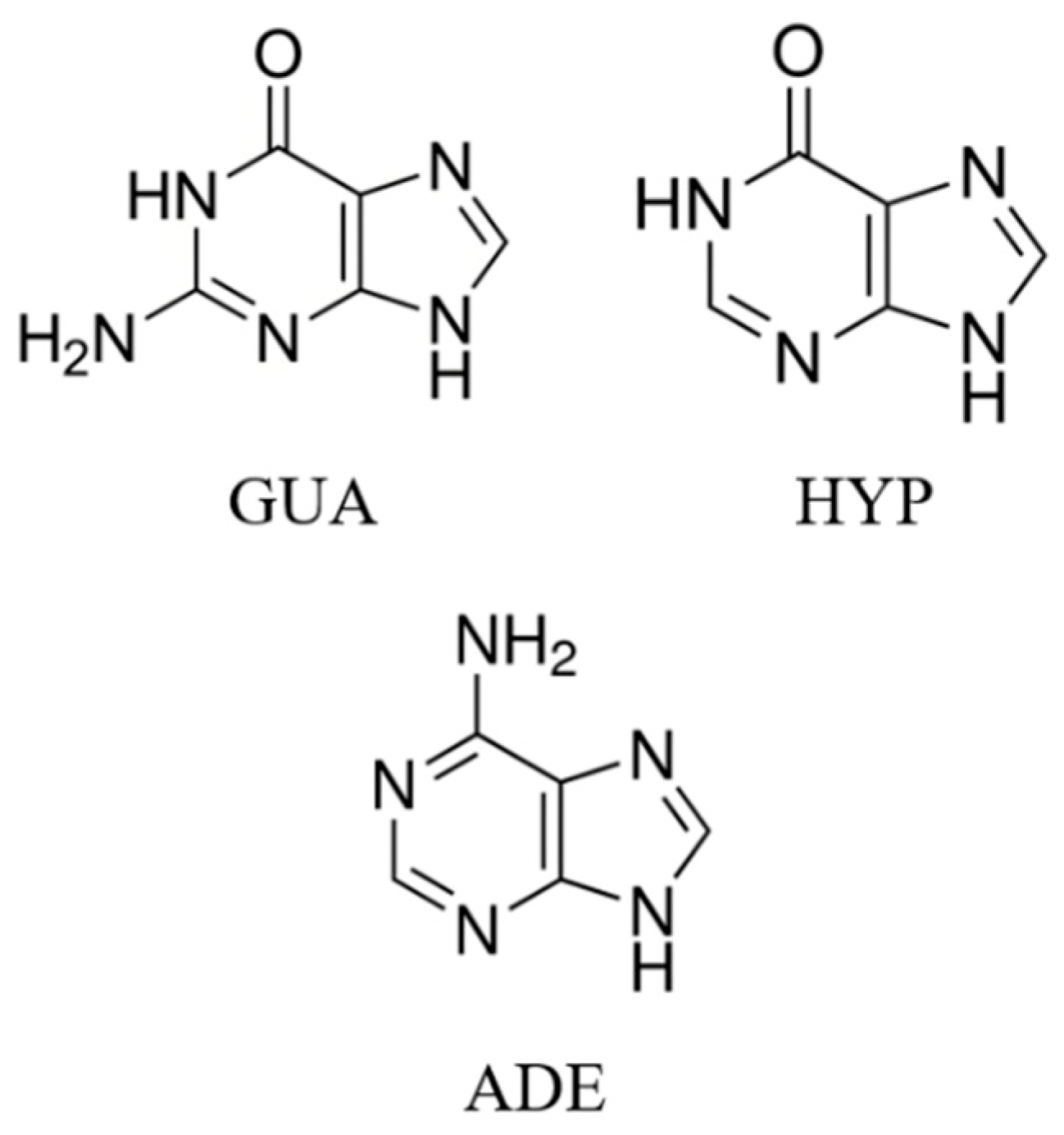
Guanine (GUA) is one of the most important organic biominerals, whose amorphous phase has been found in living organisms and synthesized in laboratories [20,21]. Amorphous GUA in an organism is utilized to enhance the solubility of GUA. GUA nanocrystals in iridocyte have been proven to absorb ultraviolet radiation and scatter light [22]. We propose that the solubility and photostability of RES can be simultaneously improved by using bio-purines, such as GUA, hypoxanthine (HYP), and adenine (ADE) (Scheme 2), etc., as co-formers for amorphous systems.

2. Materials and Methods

2.1. Materials

Resveratrol (RES, trans, 99%), guanine (GUA, 98%), hypoxanthine (HYP, 98%), glutamic acid (GLU, 99%), aspartic acid (ASP, 98%), and tryptophan (TRP, 99%) were bought from Shanghai Aladdin Biochemical Technology Co., Ltd. (Shanghai, China). Adenine (ADE, 98%) was bought from Energy Chemical (Anhui Zesheng Technology Co., Ltd., Anqing, China). Polyvinylpyrrolidone K30 (PVP) was bought from Shanghai Macklin Biochemical Technology Co., Ltd. (Shanghai, China). Soluplus® was a repackaged product from BASF Chemicals Co., Ltd. (Ludwigshafen, Rhineland-Palatinate, Germany).

2.2. Methods

RES Amorphous Systems Preparations. An amount of 0.5 g of raw RES (raw-RES) and a specific mass of bio-purine (GUA, HYP, or ADE) (the mole ratios of RES-Purine were 1:1, 1:2, or 1:3) were subjected to a neat ball milling process for 2 h using a planetary ball mill equipment (Changsha Tianchuang Powder Technology Co., Ltd. Changsha, Hunan, China, XQM-1) with four 100 mL stainless steel jars, and the rotational speed was 670 rpm. The material of the ball milling balls used was zirconium dioxide, and the total mass of the ball milling balls was ~88 g, specifically, including 1 × Φ15 mm, 1 × Φ12 mm, 7 × Φ7 mm, 13 × Φ8 mm, and 63 × Φ5 mm. The experimental conditions of the neat ball-milling method are based on our previous works [23]. The prepared samples were characterized by powder X-ray diffraction (PXRD, Philips X’pert Pro, PANalytical, Almelo, The Netherlands, Cu Kα, 40 kV, 30 mA, 5–30°, 4°·min−1).
Stability. For thermal stability, RES samples were tested by differential scanning calorimetry–thermogravimetric analysis (DSC-TGA, NETZSCH STA 449F3, NETZSCH, Free State of Bavaria, Germany) in a dry N2 atmosphere, with a heating rate of 10 °C·min−1. Moreover, RES samples (~100 mg) were also heated at 100 °C or 150 °C for 1 h and then characterized by PXRD, as mentioned above. For storge stability, RES samples were sealed and stored in a plastic centrifuge tube and kept in a dark environment in the laboratory at room temperature (~26 ± 2 °C) for a certain period of time (two weeks or one month). Subsequently, they were characterized by PXRD. For moisture stability, RES samples (~100 mg) were exposed in the air (26 ± 2 °C, ~60% RH ± 5% RH) for one day and then characterized by PXRD. The environmental temperature and humidity were controlled by an air conditioner and a dehumidifier, respectively. For aqueous dispersion stability, RES samples containing 100 mg of RES were dispersed into 1 mL of water for 15 min, and then the products collected by filtering the suspension were characterized by PXRD.
Working Curve. Approximately 10 mg of raw-RES was completely dissolved in 1 L water (10 μg·mL−1), and then the solution was diluted to prepare aqueous solutions with RES concentrations of 2, 4, 6, and 8 μg·mL−1. These solutions were measured using a UV–vis spectrophotometer (Shimadzu UV-2550, Shimadzu, Kyoto, Japan, cuvette path length of 10 mm, Figure S1). The absorbance values at 307 nm of these solutions were measured, and the working curve was obtained by linear fitting of the absorbance–concentration data.
Dissolution Profiles. Dissolution experiments were conducted in our lab in the same way as the solubility tests [24,25]. RES samples containing 100 mg of RES, e.g., 100 mg of raw-RES, 220 mg of RES-2HYP, 232 mg of RES-2GUA, and 218 mg of RES-2ADE, were placed at the bottom of the beaker, and then 100 mL of water or pH 1.2 HCl solution kept at 37 °C were added. Then, the samples were kept standing in a water bath at 37 °C away from light during the dissolution experiment process, except when the supernatant was taken out at intervals of 1, 2, 4, 6, 8, 10, and 24 h. Each time, 1 mL of the supernatant was directly diluted tenfold with the dissolution medium and then the diluted solutions were immediately measured by UV–vis spectroscopy. Dissolution experiments were carried out in parallel three times. RES concentrations were calculated by the aforementioned working curve. RES concentration measurements are not affected by the presence of bio-purines (Figure S2). The averages and standard deviations were calculated using EXCEL software with the average and STDEV functions, and the diagrams were drawn using Origin Pro 9 software.
Photostability. For the RES aqueous solution, 20 μg·mL−1 RES solution was exposed to a tungsten filament lamp (Guangdong Foshan, HL6420, 300 W, FSL, Foshan, China) for 0, 0.5, 1, 2, 4, and 6 h. The distance between the tungsten filament lamp and the RES samples was ~ 15 cm. Then, the concentration of RES was measured directly by UV–vis spectroscopy. For the RES solids, the samples containing ~10 mg RES were uniformly placed on transparent glass slides within a 20 × 40 mm range and then exposed to the same light conditions. The residual RES contents were measured by dissolving the samples into 500 mL of water before the UV–vis spectroscopy test. The photostability of the RES samples was only tested for 6 h, as the 300 W lamp used here is not safe for overnight experiment. The stability of the aqueous solution in the dark environment was tested for 24 h. The experiments on the RES solids were performed in triplicate.
Characterization. The samples were conventionally characterized by a scanning electron microscope (SEM, Thermo Fisher Scientific Apreo 2C, 2 kV, Thermo Fisher Scientific, Waltham, MA, USA), attenuated total reflectance Fourier transform IR spectroscopy (ATR-IR, Shimadzu IRAffinity-1S, Shimadzu, Kyoto, Japan, ATR accessory, 4000–400 cm−1), confocal laser Raman spectroscopy (Raman, Thermo Fisher Scientific, Waltham, MA, USA, DXR3xi, 532 nm laser, 40 mW, 0.1 s, 1000 scans, 3400–50 cm−1), and diffuse reflectance spectroscopy (DRS, Shimadzu UV-2700, 200–800 nm, Shimadzu, Kyoto, Japan).

3. Results

3.1. RES Amorphous Systems Preparations

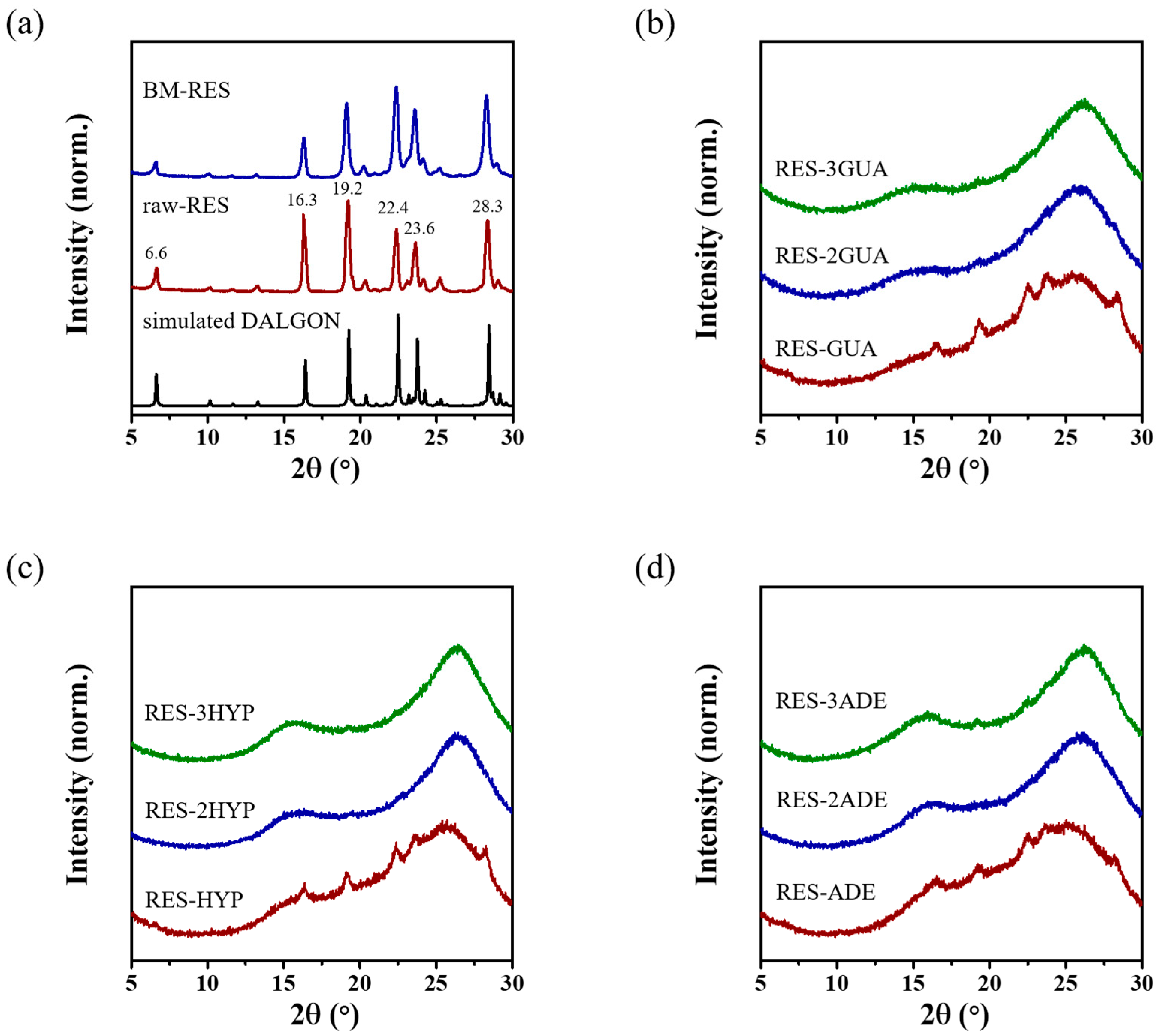
The powder X-ray diffraction (PXRD) pattern of raw RES (raw-RES) shows sharp diffraction peaks at 6.6°, 13.2°, 16.3°, 19.2°, 22.4°, 23.6°, and 28.2° (Figure 1a), indicating that raw-RES is in a crystalline state. Its pattern is consistent with the reported RES Form I, which is also the commonly commercial polymorph of RES [26,27,28]. RES Form I belongs to the monoclinic crystal system with a space group of P21/c and lattice parameters of a = 4.379 Å, b = 9.216 Å, c = 26.681 Å, and β = 92.748°. Raw-RES after being neat ball milled (BM-RES) can maintain its form, and its PXRD pattern exhibits the diffraction peaks same as those of raw-RES with a little broader full width at half maximum (FWHM). The ball-milling products of the mixtures of raw-RES and bio-purines as co-formers were characterized by PXRD (Figure 1b–d). The PXRD patterns indicate that RES-GUA, RES-HYP, and RES-ADE, with the molar ratio of RES-Purine of 1:1, are the mixtures of amorphous phases and RES Form I, as the characteristic diffraction peaks of RES Form I at 2θ values of 16.3°, 19.2°, and 22.4° can be observed. When the molar ratio of RES-Purine was adjusted to 1:2 or 1:3, the products became completely amorphous. RES-2Purine samples were chosen as the representative products, considering their relatively high-RES contents (Table S1). RES-2GUA, RES-2HYP, and RES-2ADE are completely amorphous and have RES contents of 43%, 46%, and 46%, respectively.
A ΔpKa analysis between RES and bio-purines was used here to determine whether the RES-2Purine samples were amorphous or amorphous salts. When the ΔpKa (14 − pKa (acid) − pKb (base)) between the drug and the co-former is <−1, the drug and co-former usually form a co-crystal or amorphous phase because there is no significant proton transfer occurring [29,30]. RES plays the role of the acidic component (pKa1 = 8.8, pKa2 = 9.8, pKa3 = 11.4) [31] in our systems, and pKa (acid) is 8.8. pKa1 (GUAH+), pKa2 (GUA), and pKa3 (GUA) are 3.3, 9.2, and 12.3 [32]. The isoelectric point (pI) of GUA solution is 6.3, indicating that GUA is a weak acid co-former. The pKb (base) of GUA is 14 − 3.3 = 10.7. The ΔpKa between RES and GUA can be calculated as ΔpKa = 14 − 8.8 − 10.7 = −5.5, which is <−1. pKa1 (HYPH+), pKa2 (HYP), and pKa3 (HYP) are 2.2, 8.8, and 12.0 [33,34]. The pI of the HYP solution is 5.5, and HYP belongs to an acid co-former. The pKb (base) of HYP is 11.8. The ΔpKa between RES and HYP is −6.6, which is also <−1. pKa1 (ADEH+) and pKa2 (ADE) are 4.2 and 9.8 [35,36]. The pI of the ADE solution is 7.0, which indicates that ADE is a neutral co-former. The pKb (base) of ADE is 9.8. The ΔpKa between RES and ADE is −4.6, which is <−1. Thus, RES-2GUA, RES-2HYP, and RES-2ADE can be largely identified as not being amorphous salts.
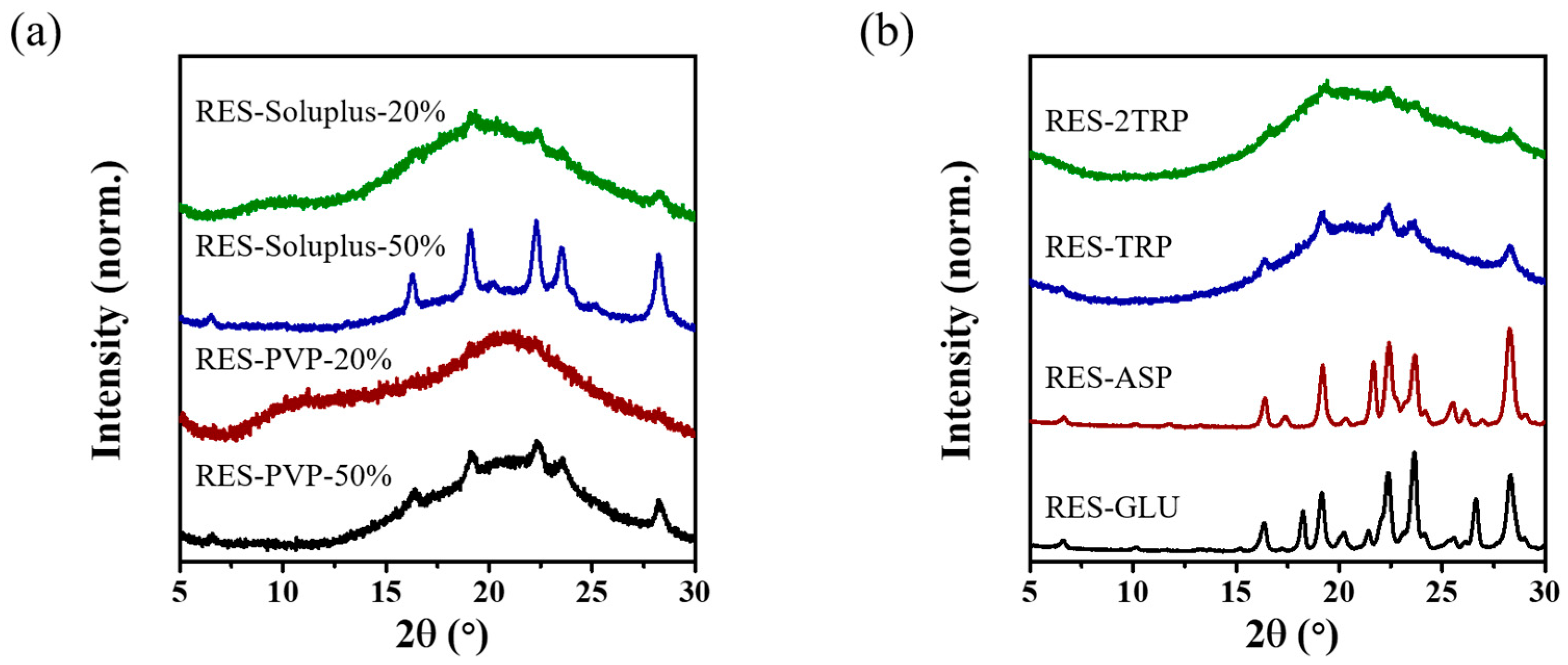
The experimental results of the system of RES and PVP (Figure 2a) are consistent with the reported results. When the RES content is 50%, the PXRD pattern indicates that the neat ball-milled product is a mixture of RES Form I and amorphous phase. When the RES content is reduced to 20%, the PXRD pattern indicates that the product becomes almost amorphous, with a very weak diffraction peak at 19.2°, which can be basically regarded as an ASD. While Soluplus is selected as the polymer, no ASD can be formed with an RES content of 50%. For RES-Soluplus-20%, the existence of diffraction peaks at 19.2°, 22.6°, 23.6°, and 28.3° is significant, although the sample is mainly composed of an amorphous phase. For the RES binary ASD, it is challenging to prepare ASD with high-RES loadings. Glutamic acid (GLU) and aspartic acid (ASP) are acidic amino acids, which are usually used as acidic co-formers. There is almost no amorphous signal shown in the PXRD pattern of the neat ball-milled RES with equimolar GLU or ASP (Figure 2b), indicating that GLU and ASP are not suitable for preparing RES amorphous systems. Tryptophan (TRP) is a neutral amino acid and can be as the co-former. The PXRD patterns of the neat ball-milled RES and TRP with the molar ratios of 1:1 and 1:2 indicate that they are a mixture of RES Form I and amorphous phase. Although TRP can induce partial amorphization of RES, it is unable to form an amorphous system with RES.
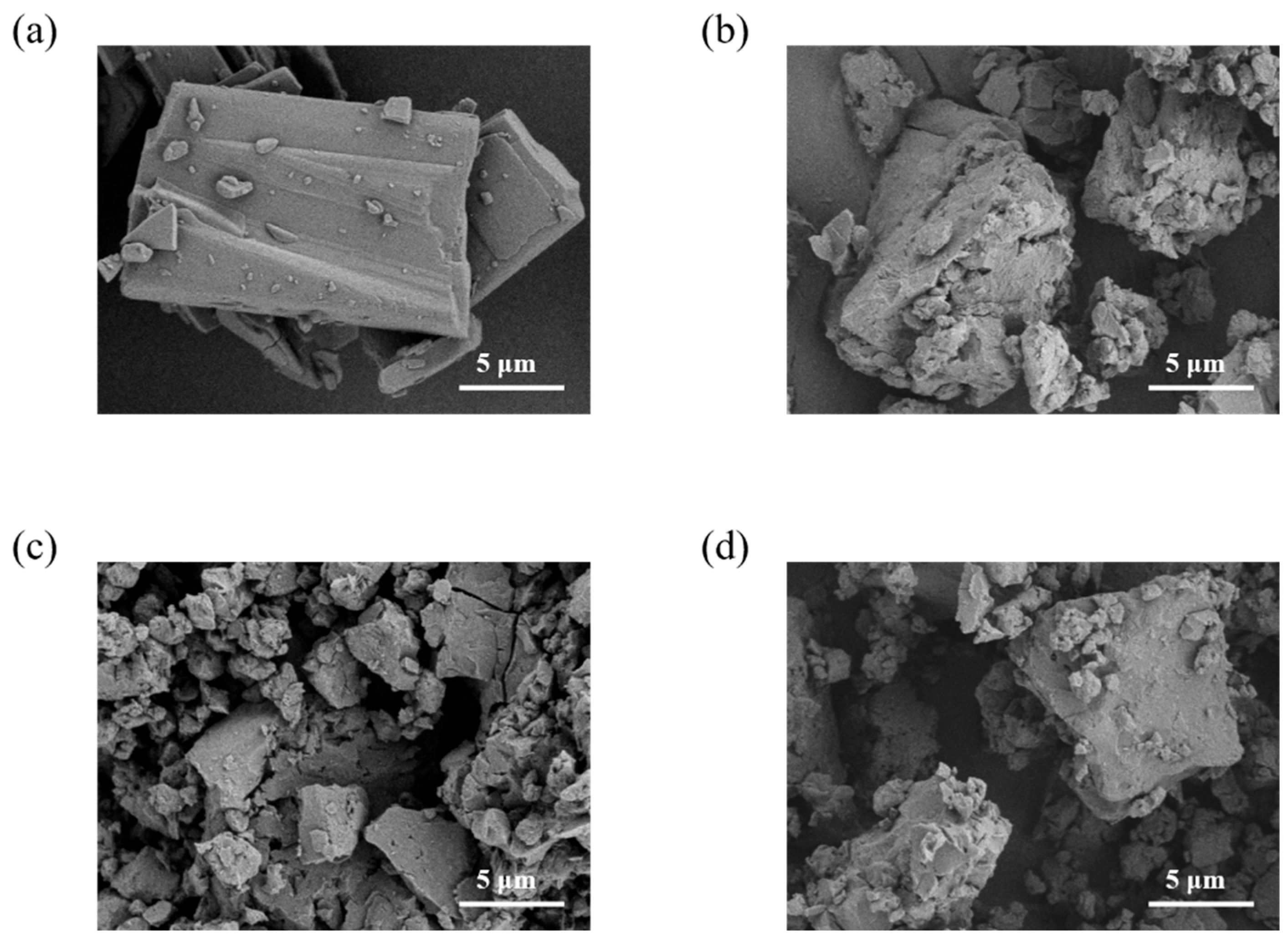
Raw-RES consists of micro crystals with a mainly columnar morphology, observed by a scanning electron microscope (SEM) (Figure 3a). The particle sizes of RES-2GUA, RES-2HYP, and RES-2ADE are all less than 10 μm (Figure 3b–d) due to the use of a neat ball-milling preparation process. It is notable that the sizes of RES-2GUA and RES-2ADE are larger than those of RES-2HYP, indicating that amorphous particles in RES-2GUA and RES-2ADE are prone to agglomeration. RES-2HYP may have a more significant effect in terms of stability and solubility improvement due to its better dispersibility.

3.2. Stability

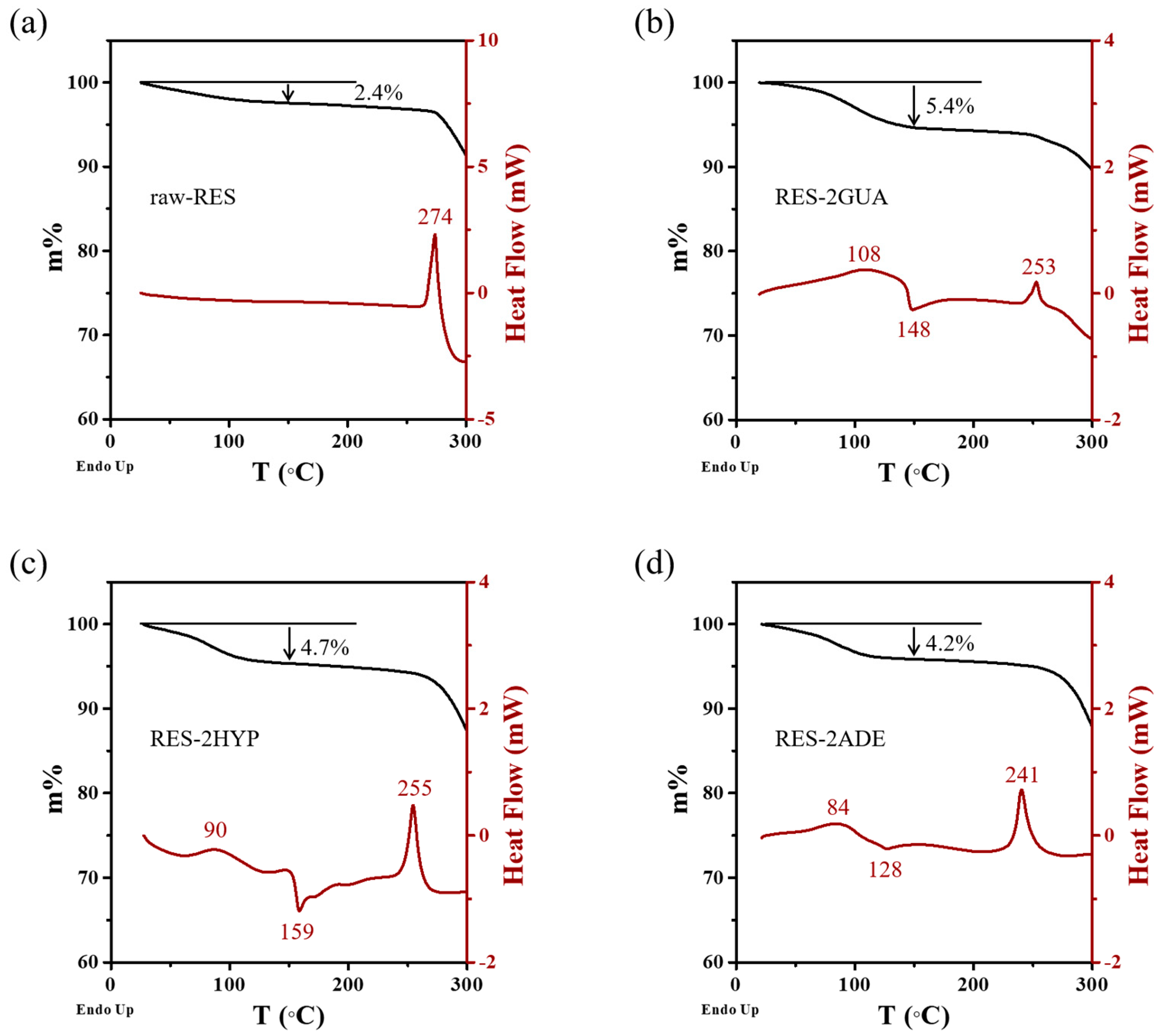
The TG curve obtained from the differential scanning calorimetry–thermogravimetric analysis (DSC-TGA, Figure 4a) test reveals that raw-RES shows a slight weight loss of 2.4% up to 150 °C, attributed to the adsorbed water, and degrades near 250 °C. The DSC curve exhibits a single endothermic peak at 274 °C, corresponding to the melting point of RES Form I. The DSC-TGA analysis indicates that raw-RES rapidly degrades shortly after reaching its melting point. The DSC-TGA curves of RES-2GUA, RES-2HYP, and RES-2ADE are similar (Figure 4b–d). All the TG curves show a water-loss step before 200 °C and thermal decomposition after 250 °C. All the DSC curves reveal a dehydration endothermic peak, an amorphous-to-crystalline transformation exothermic peak, and a melting endothermic peak. RES-2GUA, RES-2HYP, and RES-2ADE have moisture contents of 5.4%, 4.7%, and 4.2%; dehydration temperatures of 108 °C, 90 °C, and 84 °C; amorphous-to-crystalline transformation temperatures of 148 °C, 159 °C, and 128 °C; and melting temperatures around 250 °C, respectively. The amorphous-to-crystalline transformation temperature suggests that RES-2HYP may possess the best thermal stability. The decrease in the melting point may be attributed to the smaller RES crystal particles formed during the amorphous-to-crystalline transformation process.
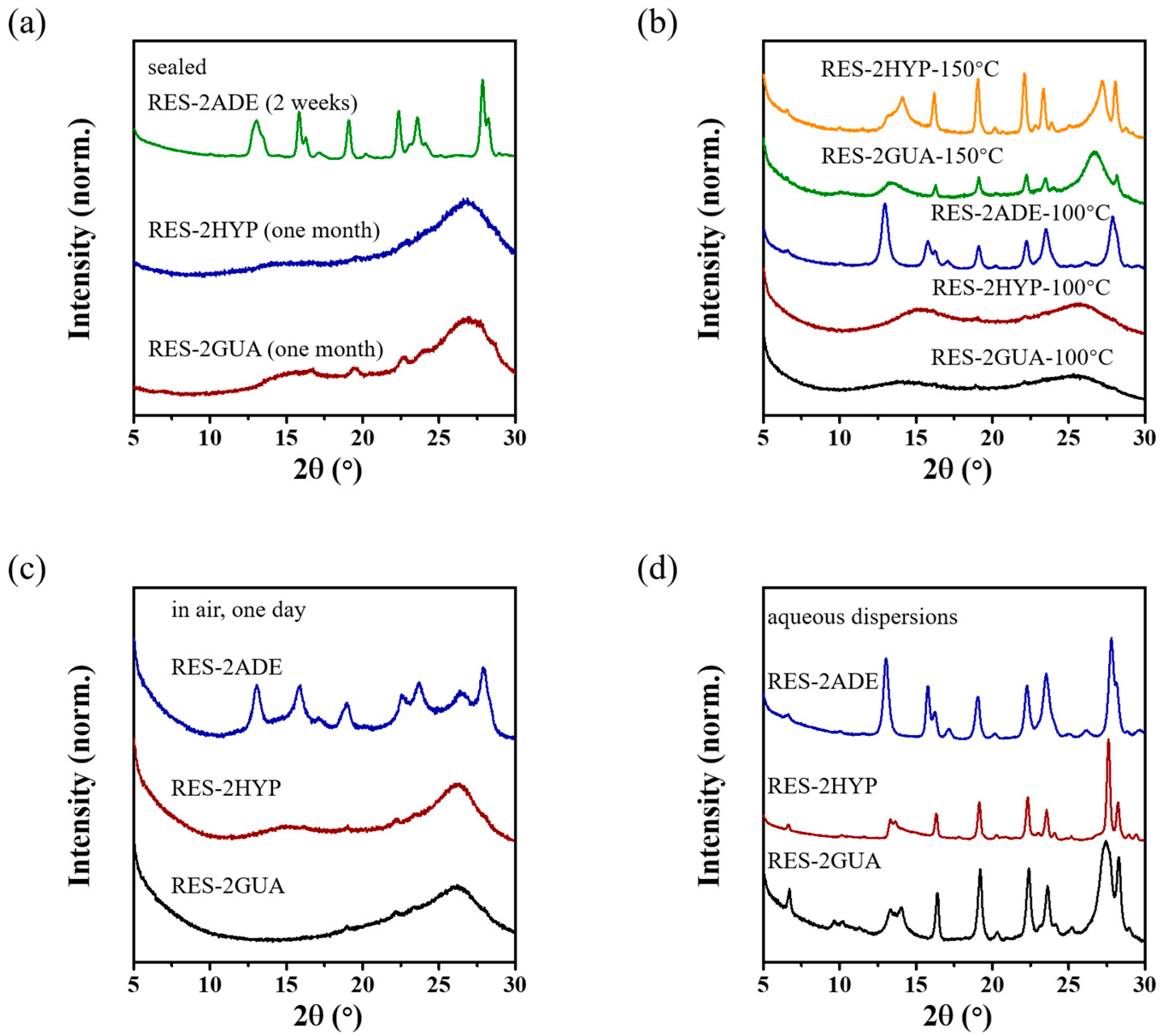
RES-2HYP maintains its amorphous PXRD pattern after one month of sealed storage (Figure 5a), indicating that RES-2HYP has relatively good stability under low-humidity conditions. RES-2GUA partially crystallizes after one month of sealed storage, and RES-ADE completely crystallizes into RES Form I and metastable ADE Form II, with the characteristic diffraction peaks at 13.0, 15.8, 17.2, and 27.8° [37] only after 2 weeks of sealed storage. The storage stability order is RES-2HYP > RES-2GUA > RES-2ADE. RES-2GUA and RES-2HYP remain amorphous after being heated at 100 °C for 1 h, whereas RES-2ADE undergoes crystallization, with the appearance of the characteristic peaks of RES Form I and ADE Form II in the PXRD pattern (Figure 5b). RES-2GUA and RES-2HYP also undergo crystallization when heated at 150 °C. RES-2GUA would recrystallize into a mixture of RES Form I and poorly crystalized anhydrous GUA (with hump diffraction peaks at 14.0 and 27.4°). RES-2HYP would recrystallize into a mixture of RES Form I and HYP Form II (with a characteristic diffraction peak at 14.1°) [25]. The thermal-induced crystallization processes are consistent with the DSC-TGA results. After 1 day of air exposure (26 ± 2 °C, ~60% RH ± 5% RH), RES-2GUA and RES-2HYP are still amorphous, while RES-2ADE exhibits crystallization into a mixture of RES Form I and ADE Form II (Figure 5c). When dispersed in water (Figure 5d), RES-2GUA recrystallizes into a mixture of RES Form I and anhydrous GUA (with the characteristic diffraction peaks at 14.0 and 27.4°). However, we cannot confirm whether it is the α or β phase [38]. RES-2HYP would recrystallize into a mixture of RES Form I and HYP Form III (with the diffraction peaks at 13.3, 13.7, and 27.6°), while RES-2ADE would recrystallize into a mixture of RES Form I and ADE Form II. RES in all RES-2Purine would crystallize into Form I, indicating that RES-2Purine would be unstable when taken orally, which is not beneficial for practical applications.

3.3. Spectroscopic Analysis

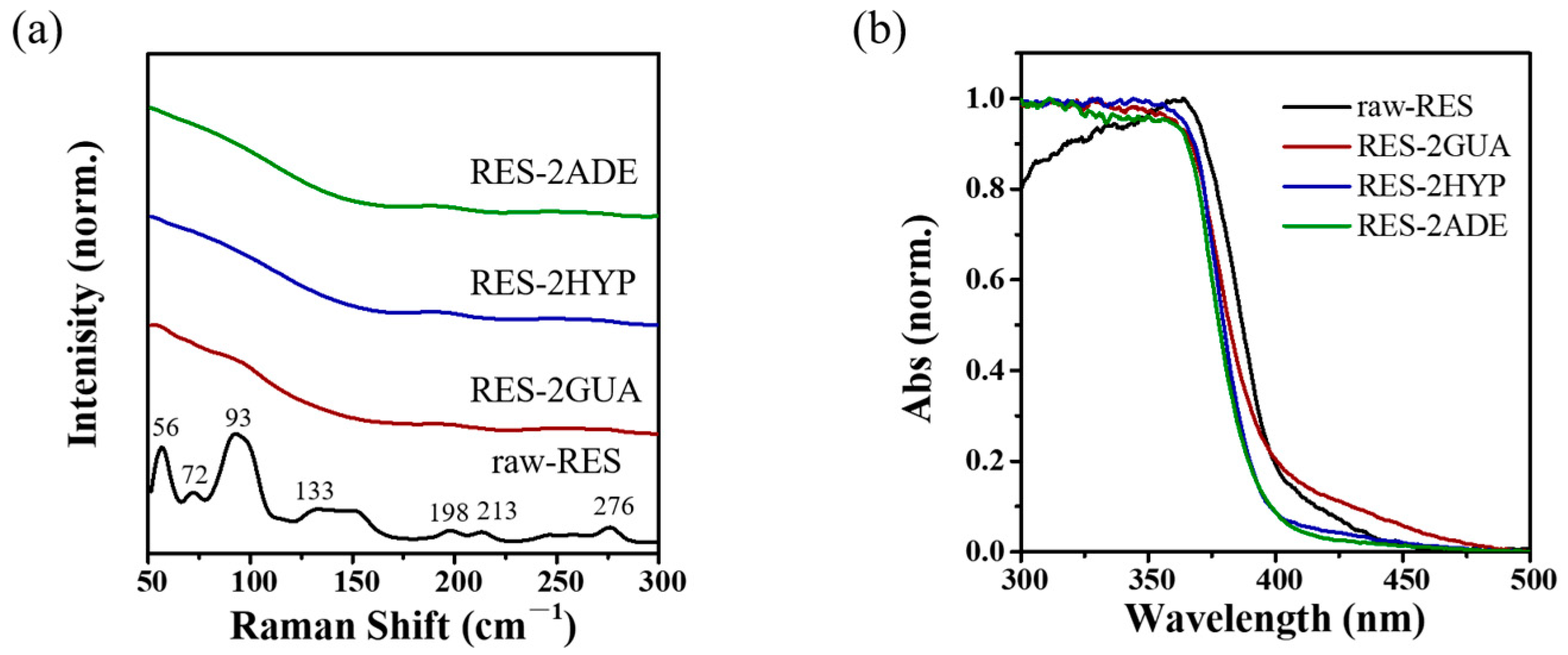
Low-frequency Raman (LFR) spectroscopy can be used to distinguish between amorphous and crystalline forms [39]. In the range of 300–50 cm−1, raw-RES exhibits the characteristic LFR bands at 56, 72, 93, 133, 198, 213, and 276 cm−1 (Figure 6a), indicating that raw-RES is in a crystalline state. None of RES-2GUA, RES-2HYP, and RES-2ADE has LFR bands, demonstrating their amorphous characteristics. The diffuse reflectance spectroscopy (DRS) results show that the cut-off wavelengths of RES-2Purine are shorter than those of raw-RES (Figure 6b). The band gaps of RES-2Purine are larger than those of raw-RES. An obvious tailing phenomenon can be observed for RES-2GUA, indicating that RES-2GUA is oxidized or degraded during the preparation process.
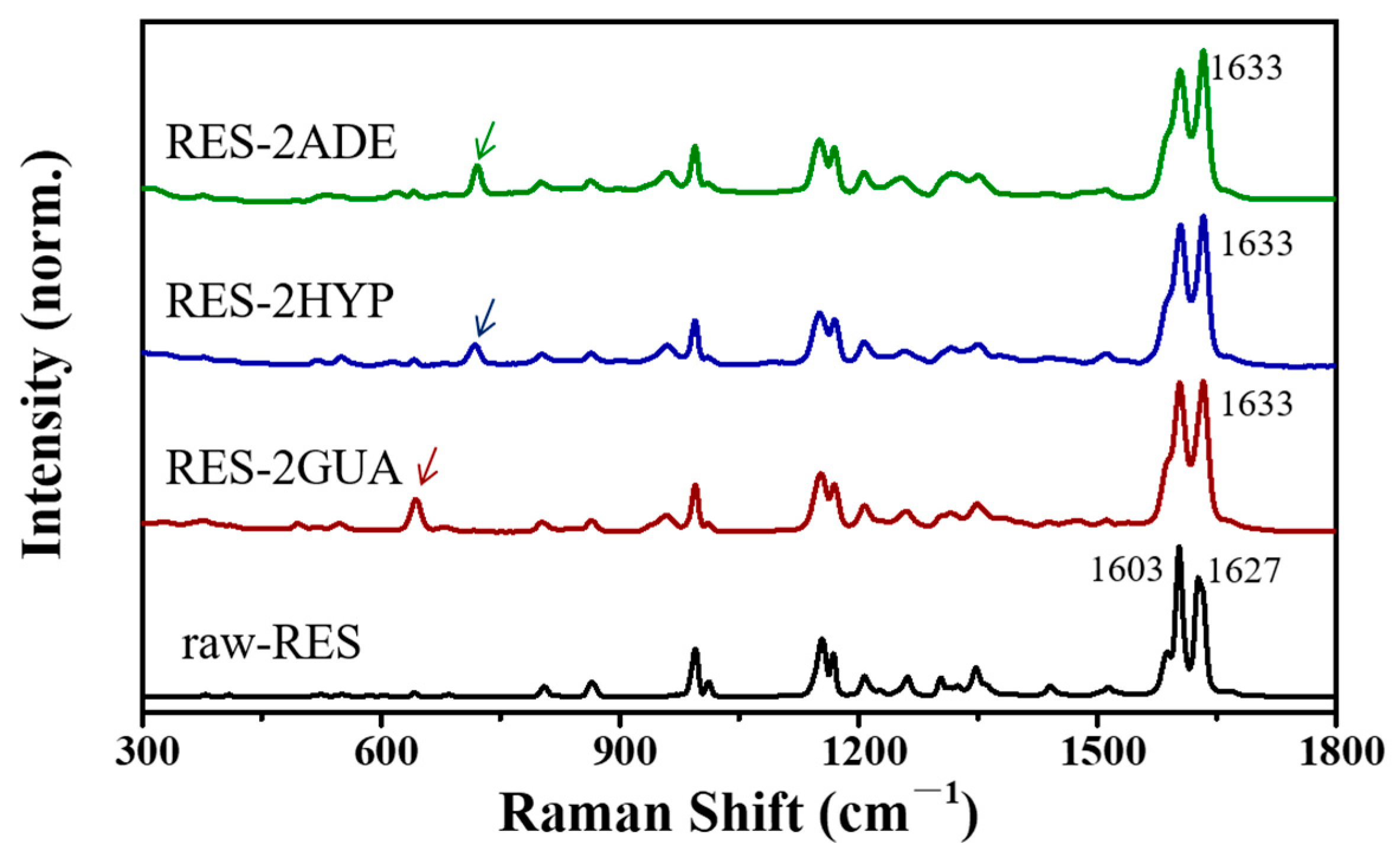
The IR spectroscopy results reveal that most of the bands of raw-RES are also present in the spectra of RES-2GUA, RES-2HYP, and RES-2ADE (Figure S3 and Table S2). Because the IR activity of bio-purines is relatively strong and has strong interference with the signals of RES, the specific RES bands at 1462, 1381, and 964 cm−1 are obscured for RES-2Purine samples. The detected IR bands of RES-2Purine exhibit minimal differences (<8 cm−1) compared with those of raw-RES, indicating that IR spectroscopy could not distinguish between the amorphous and crystalline states. The Raman spectroscopy results show that the bio-purine signals are weak, as indicated by the arrows (Figure 7 and Table S3). The mid-frequency Raman (MFR) bands of RES-2GUA, RES-2HYP, and RES-2ADE are almost identical to those of raw-RES, and only the MFR band at 1633 cm−1 of RES-2Purine is significantly different (>4 cm−1) from the band at 1627 cm−1 of raw-RES. The ratio of the peaks at 1630 cm−1 and 1605 cm−1, relating to the ring stretching vibrations [40,41], has been used as a function of crystallinity. The fully crystalline RES exhibits a peak ratio of 0.76, and the amorphous solid dispersions show a value of 1.1 [41]. Here, raw-RES has a peak ratio of 0.81, while RES-2GUA, RES-2HYP, and RES-2ADE exhibit peak ratios of 1.01, 1.06, and 1.15, respectively, indicating that the RES-2Purine phases are amorphous.

3.4. Dissolution Profiles

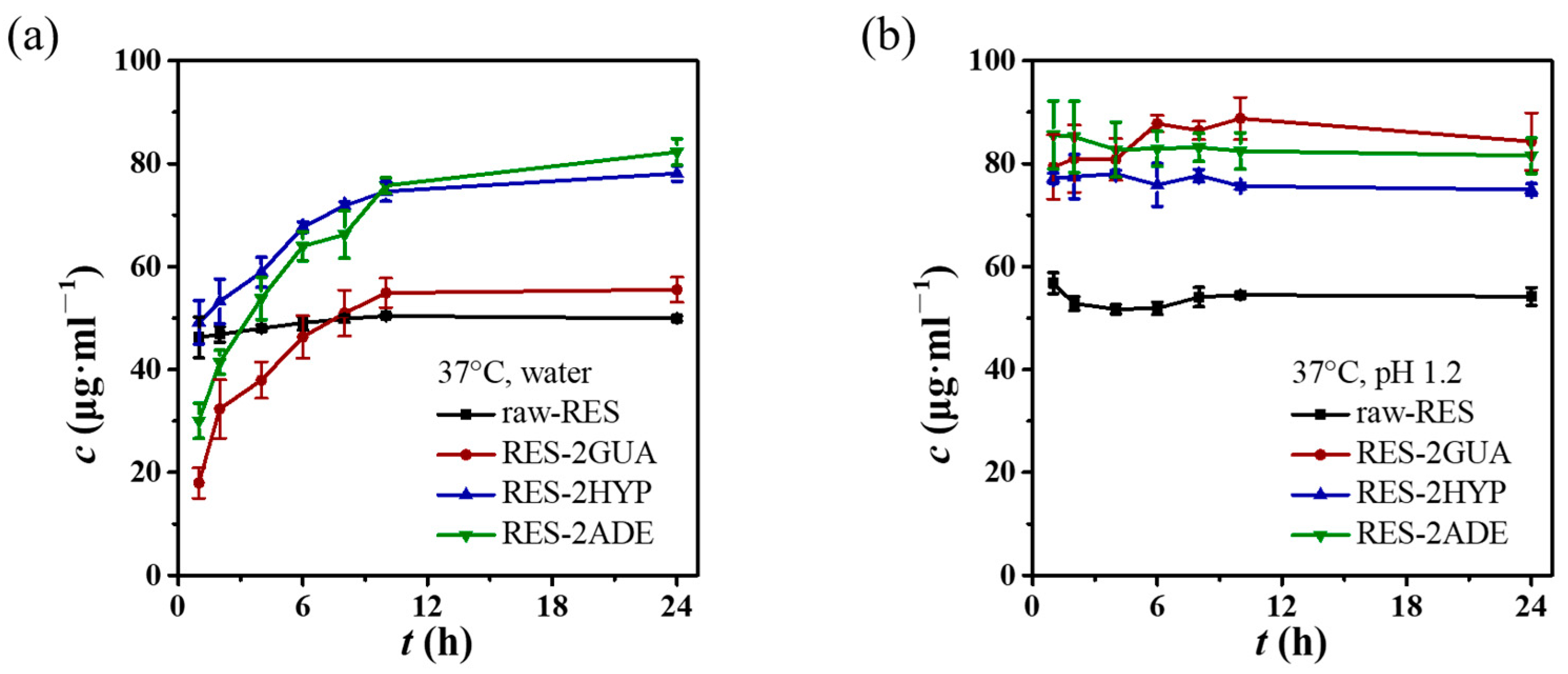
The dissolution profile of raw-RES in water reaches the equilibrium within 1 h, with the RES dissolution concentrations of 46 ± 4 μg·mL−1 at 1 h and 50 ± 1 μg·mL−1 at 24 h (Figure 8a). RES-2GUA shows almost no solubilization effect, with RES concentrations of 18 ± 4 μg·mL−1 at 1 h and 55 ± 2 μg·mL−1 at 24 h. RES-2HYP and RES-2ADE show enhanced dissolution profiles, with 49 ± 4 μg·mL−1 and 30 ± 3 μg·mL−1 at 1 h and 78 ± 1 μg·mL−1 and 82 ± 3 μg·mL−1 (1.6-fold that of raw-RES) at 24 h, respectively. In the dissolution medium of the simulated gastric fluid (diluted HCl aqueous solution with pH 1.2), the dissolution profile of raw-RES is similar to that in water, with RES concentrations of 54 ± 2 μg·mL−1 at 24 h (Figure 8b). RES-2Purine exhibits the enhanced dissolution profiles and reaches equilibrium within 1 h. The RES concentrations of RES-2GUA, RES-2HYP, and RES-2ADE are 79 ± 6, 77 ± 1, and 86 ± 7 μg·mL−1 at 1 h and 84 ± 6, 75 ± 1, and 82 ± 3 μg·mL−1 at 24 h, respectively. RES-2Purine shows good dissolution characteristics in the acidic media, reaching the maximum dissolution concentration within 1 h and remaining stable. However, the solubility enhancement of RES-2Purine is still limited because RES in all RES-2Purine may rapidly transform into RES Form I during the dissolution process, as shown in Figure 5d.

3.5. Photostability

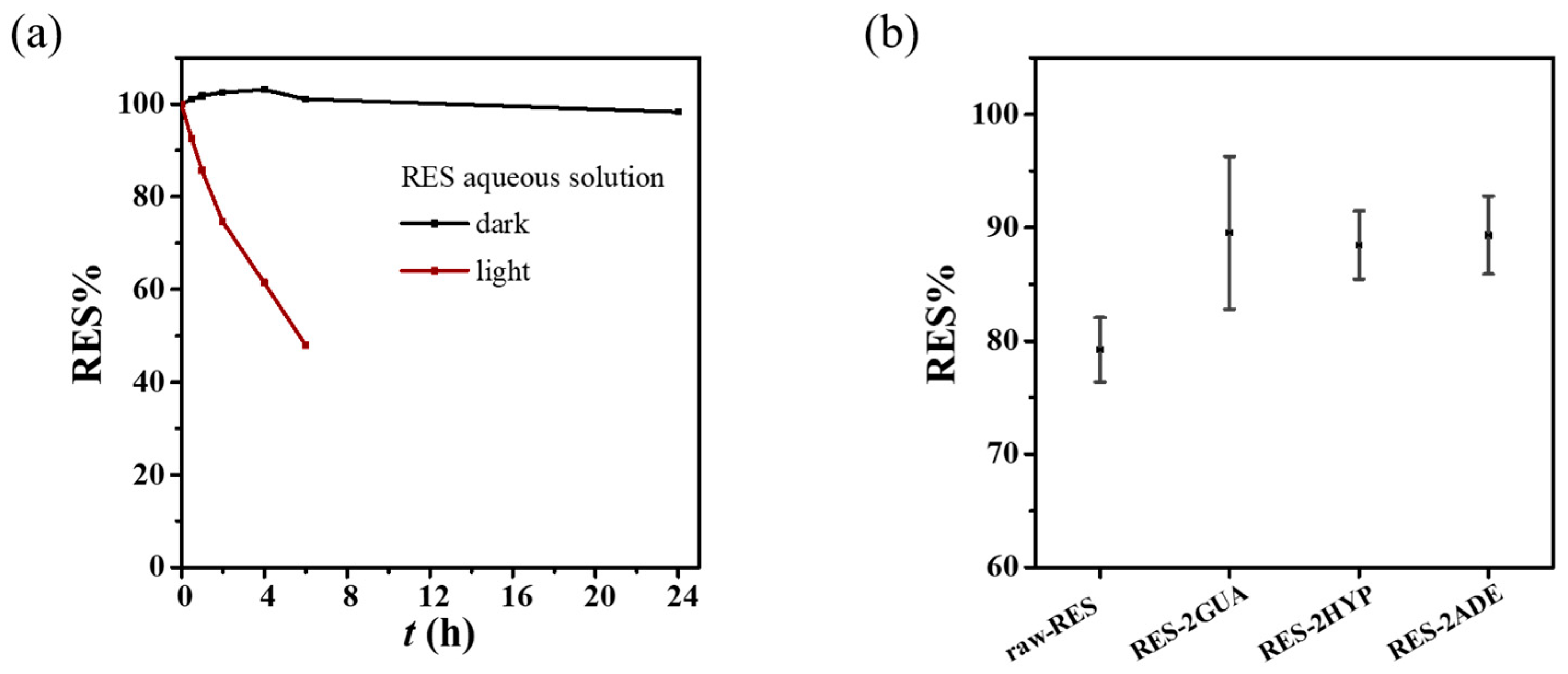
The RES aqueous solution of 20 μg·mL−1 is stable under dark conditions, and no significant degradation is observed within 24 h (Figure 9a). The UV–vis spectrum of the solution obtained at 24 h is almost the same as that of the fresh solution (Figure S4a). More than 50% of RES decompose within 6 h under light conditions. When conducting the dissolution experiment of RES samples, it is necessary to provide light-protected experimental conditions. The residual RES% can be estimated using the absorbance at 307 nm (Figure S4b), as the RES solutions with residual RES% from 100% to 75% show similar UV–vis spectra.
The solid raw-RES undergoes degradation under light conditions, and the residual RES content is 79 ± 3% after 6 h of light exposure (Figure 9b). The residual RES contents are 90 ± 7%, 88 ± 3%, and 89 ± 3%, respectively, in RES-2GUA, RES-2HYP, and RES-2ADE under the same light-exposure conditions. RES-2Purine exhibits better photostability than raw-RES, indicating that bio-purines could partially mitigate photodegradation.

4. Discussion

4.1. Bio-Purines as Co-Formers

CAM is a promising technology aimed at enhancing the solubility of poorly water-soluble drugs, but the suitable co-formers for CAM are still limited. Bio-purines, as a new class of CAM co-formers, possess remarkable characteristics. Firstly, bio-purines are essential components of organisms, which usually implies low toxicity. Nevertheless, the dosage still needs to be controlled when using them. For example, ADE has obvious nephrotoxicity and should be controlled in the human diet [42,43]. GUA and HYP are of low toxicity, but large doses of GUA and HYP are not safe for individuals with gout [44]. Secondly, bio-purines are planar molecules with strong π-π stacking interactions, which are absent in traditional co-formers such as organic acids and amino acids. These planar bio-purine molecules are surrounded by hydrogen bond donors and acceptors. Both π-π stacking and hydrogen bonding interactions render bio-purines that are good co-formers for CAM systems. The anisotropic structural characteristics of bio-purines can also ensure the coexistence of π-π stacking and hydrogen bonding interactions. There are few reports on the ASD and CAM of high-content RES, and we propose that the formation of amorphous RES requires the simultaneous presence of both π-π stacking and hydrogen-bonding interactions in the co-formers because RES solids exhibit π-π stacking and hydrogen-bonding interactions simultaneously. Although co-formers such as TRP and phenylalanine possess both π-π stacking and hydrogen-bonding interactions, the large steric hindrance of the side chain on their aromatic rings inhibits the promotion of intermolecular interactions with planar rigid RES molecules, thereby preventing the formation of amorphous systems (Figure 2). In this work, the preparation of amorphous systems of RES-Purine failed, while the amorphous systems of RES-2Purine were successfully prepared, indicating that the intermolecular interactions between RES and bio-purine at a 1:1 molar ratio are insufficient (Figure 1). Theoretically, the number of hydrogen bond donors and acceptors in bio-purines is sufficient to pair with RES in a 1:1 molar ratio. Considering that a RES molecule contains two benzene ring structures and a bio-purine molecule has one purine ring, the π-π stacking interaction between RES and bio-purine at a 1:1 molar ratio is insufficient. Thus, RES-2Purine compared with RES-Purine, enables the preparation of RES amorphous systems.
Thirdly, bio-purines can absorb ultraviolet light and scatter light effectively [45]. Bio-purines have potential as anti-ultraviolet or anti-light ingredients, which is a classical organic biomineralization strategy in the GUA biominerals. The absorbance and scattering of light by bio-purines can reduce the intensity of light irradiation for RES in the amorphous systems, enhancing the photostability of RES (Figure 9).
However, there are still some problems for bio-purines as co-formers in the CAM system. Due to their high melting points, it is challenging to determine the glass transition temperature (Tg) of their amorphous phases, which is highly influenced by the amorphous-to-crystalline transformation process. Until recently (2024), the Tg of anhydrous amorphous calcium carbonate was reported at 339 °C using a fast-scanning DSC with a heating rate of 500 K·s−1, which can separate the endothermic glass transition signature from the exothermic crystallization event since crystallization is shifted to higher temperatures [46]. It is not easy to determine the Tg in our system, composed of high-melting-point components. The difficulty in measuring Tg limits the determination of CAM using this type of co-formers, because a single Tg is generally regarded as a key criterion for the formation of homogeneous co-amorphous phases.

4.2. Hydrogen Bonds Analysis of Bio-Purines

Since GUA, HYP, and ADE have similar rings, the properties of forming amorphous systems with RES depend on the differences in their hydrogen-bond donors and acceptors. GUA has four hydrogen-bond donors and four hydrogen-bond acceptors, HYP has four donors and two acceptors, and ADE has three donors and three acceptors.
The dehydration temperatures of RES-2Purine are proportional to the water content of RES-2Purine (Figure 4). RES-2GUA has the highest water content and highest dehydration temperature. We proposed that the water contents of RES-2Purine are determined by the water absorption capacities of RES-2Purine, which are highly related to the quantities of hydrogen-bond acceptors and donors. GUA molecules possess the largest number of hydrogen-bond acceptors and donors, causing the highest water content. Although HYP and ADE molecules have the same number of hydrogen-bond acceptors and donors, HYP molecules have different quantities of hydrogen-bond donors and acceptors, leading to a mismatch in hydrogen-bond formation and causing the extra water-absorption capacity. Thus, RES-2ADE had the lowest water content and lowest dehydration temperature.
There is no clear correlation observed between the dehydration temperature and the amorphous-to-crystalline transformation temperature of RES-2Purine. We propose that RES mainly plays the role of hydrogen-bond donor with -OH groups. The hydrogen-bond acceptors in bio-purines are more effective in stabilizing the amorphous phase of RES. The GUA and HYP molecules possess an equal number of acceptors, which is greater than that of ADE. Moreover, HYP molecules have fewer donors than those of GUA, which can minimize the interferences with the function of acceptors. Consequently, RES-2HYP exhibits the highest amorphous-to-crystalline transformation temperature, while RES-2ADE has the lowest.

4.3. Enhanced RES Solubility and Stability

RES-2Purine systems demonstrate better solubility and photostability compared to raw-RES (Figure 8 and Figure 9). RES-2HYP seems better than RES-2GUA and RES-2ADE. RES-2HYP has a high amorphous-to-crystalline transition temperature. RES-2HYP does not have tailing in its DRS spectrum and is composed of smaller particles.
Although the amorphous RES was stabilized by using bio-purines, RES-2Purine can recrystallize quickly after being dispersed in water. The solubility enhancements of RES-2Purine are limited due to the recrystallization process. For instance, the solubility of RES-2HYP in water is only 1.6 times that of raw-RES. The reported CAM system of RES and piperine [15] shows a dissolution concentration of 15 μg·mL−1 at 37 °C, and the reported CAM system of RES and paclitaxel [17] has a dissolution concentration of 43 μg·mL−1 at 25 °C. The co-crystal of RES and piperine [15] exhibits an enhanced solubility of 98 μg·mL−1 at 37 °C. Therefore, the solubilization effect of RES-2Purine is just modest compared with the reported CAM systems of RES.
Although RES-2HYP has improvements in multiple aspects, the present RES amorphous systems are still not suitable for commercial use because of the insufficient solubility and photostability. If the prepared amorphous systems of RES can remain stable while dispersed in water, a significant enhancement in RES solubility can be expected. It is necessary to introduce other solubilization techniques to further enhance the solubility and photostability of RES.

5. Conclusions

Bio-purines, including GUA, HYP, and ADE, were used as co-formers in the RES amorphous systems via a neat ball-milling method. RES-2Purine amorphous systems were prepared and confirmed by powder X-ray diffraction, Raman spectroscopy and diffuse reflectance spectroscopy. The thermal stability of RES-2Purine amorphous systems was characterized by differential scanning calorimetry–thermogravimetric analysis. RES-2Purine shows improvements in stability, dissolution profiles, and photostability. Bio-purines are promising co-formers for amorphous systems of poorly water-soluble compounds to enhance their solubility and photostability.

Supplementary Materials

The following supporting information can be downloaded at https://www.mdpi.com/article/10.3390/cryst16020126/s1, Figure S1: UV–vis spectra of RES aqueous solutions at different concentrations and the fitted working curve at 307 nm; Figure S2: UV–vis spectra of saturated GUA,10 μg·mL−1 HYP, and 10 μg·mL−1 ADE aqueous solutions, 10 μg·mL−1 RES aqueous solution without bio-purines and with saturated GUA, 100 μg·mL−1 HYP, and 100 μg·mL−1 ADE aqueous solutions; Table S1: Mass ratios of RES in different RES-Purine samples; Figure S3: ATR-IR spectroscopy of raw-RES, RES-2GUA, RES-2HYP, and RES-2ADE; Table S2: Main IR bands of the RES samples; Table S3: Main mid-frequency Raman bands of the RES samples; Figure S4: UV–vis spectra of 20 μg·mL−1 RES aqueous solution in the dark at 0 and 24 h and under light at 0, 1, 2, 4, and 6 h.

Author Contributions

Conceptualization, methodology, supervision, resources, F.C., Y.L. (Yongming Liu) and R.X.; project administration, investigation, data curation, validation, Y.L. (Yuhang Liu); resources, Z.W.; visualization, writing—original draft preparation, F.C.; writing—review and editing, R.X.; funding acquisition, F.C., Y.L. (Yongming Liu) and R.X. All authors have read and agreed to the published version of the manuscript.

Funding

This research was funded by the National Natural Science Foundation of China [grant number 22005175], the Natural Science Foundation of Fujian Province [grant number 2025J011059, 2020J01374].

Data Availability Statement

The original contributions presented in this study are included in the article/Supplementary Material; further inquiries can be directed to the corresponding authors.

Conflicts of Interest

The authors declare no conflicts of interest.

Abbreviations

AbbreviationFull Name
ADEadenine
ASDamorphous solid dispersions
ASPaspartic acid
CAMco-amorphous systems
GLUglutamic acid
GUAguanine
HYPhypoxanthine
PVPpolyvinylpyrrolidone K30
REStrans-resveratrol
neat ball milled mixtures of RES and X-substance with a molar ratio of 1:nRES-nX, e.g., RES-Purine, RES-2Purine
TRPtryptophan

References

  1. Rauf, A.; Imran, M.; Butt, M.S.; Nadeem, M.; Peters, D.G.; Mubarak, M.S. Resveratrol as an anti-cancer agent: A review. Crit. Rev. Food Sci. Nutr. 2018, 58, 1428–1447. [Google Scholar] [CrossRef]
  2. Wątroba, M.; Szukiewicz, D. Anti-inflammatory properties of resveratrol. Int. J. Mol. Sci. 2025, 26, 11710. [Google Scholar] [CrossRef]
  3. Meng, Q.; Li, J.; Wang, C.; Shan, A. Biological function of resveratrol and its application in animal production: A review. J. Anim. Sci. Biotechnol. 2023, 14, 25. [Google Scholar] [CrossRef]
  4. Hong, H.; Ruonan, L.; Wenhua, O. A mini review on the chemical synthesis of resveratrol. Mini-Rev. Org. Chem. 2020, 17, 546–558. [Google Scholar] [CrossRef]
  5. Li, T.; Guo, Q.; Qu, Y.; Li, Y.; Liu, H.; Liu, L.; Zhang, Y.; Jiang, Y.; Wang, Q. Solubility and physicochemical properties of resveratrol in peanut oil. Food Chem. 2022, 368, 130687. [Google Scholar] [CrossRef] [PubMed]
  6. Song, Y.; Zhang, J.; Zhu, L.; Zhang, H.; Wu, G.; Liu, T. Recent advances in nanodelivery systems of resveratrol and their biomedical and food applications: A review. Food Funct. 2024, 15, 8629–8643. [Google Scholar] [CrossRef] [PubMed]
  7. Arora, D.; Jaglan, S. Therapeutic applications of resveratrol nanoformulations. Environ. Chem. Lett. 2018, 16, 35–41. [Google Scholar] [CrossRef]
  8. Dikmetas, D.N.; Yenipazar, H.; Can Karaca, A. Recent advances in encapsulation of resveratrol for enhanced delivery. Food Chem. 2024, 460, 140475. [Google Scholar] [CrossRef] [PubMed]
  9. Chavan, R.B.; Thipparaboina, R.; Kumar, D.; Shastri, N.R. Co amorphous systems: A product development perspective. Int. J. Pharm. 2016, 515, 403–415. [Google Scholar] [CrossRef]
  10. Wang, H.; Zhao, P.; Ma, R.; Jia, J.; Fu, Q. Drug–drug co-amorphous systems: An emerging formulation strategy for poorly water-soluble drugs. Drug Discov. Today 2024, 29, 103883. [Google Scholar] [CrossRef]
  11. Moseson, D.E.; Tran, T.B.; Karunakaran, B.; Ambardekar, R.; Hiew, T.N. Trends in amorphous solid dispersion drug products approved by the U.S. Food and Drug Administration between 2012 and 2023. Int. J. Pharm. X 2024, 7, 100259. [Google Scholar] [CrossRef] [PubMed]
  12. Yu, C.; Zhang, C.; Guan, X.; Yuan, D. The solid dispersion of resveratrol with enhanced dissolution and good system physical stability. J. Drug Delivery Sci. Technol. 2023, 84, 104507. [Google Scholar] [CrossRef]
  13. Pajzderska, A.; González, M.A.; Jarek, M.; Mielcarek, J.; Wąsicki, J. Physical stability and molecular mobility of resveratrol in a polyvinylpyrrolidone matrix. Molecules 2025, 30, 1909. [Google Scholar] [CrossRef]
  14. Paul, S.K.; Kumari, D.; Destino, J.; Chauhan, H. Design, development, and characterization of high drug-loaded drug-drug-polymer ternary amorphous solid dispersions. AAPS PharmSciTech 2025, 26, 125. [Google Scholar] [CrossRef]
  15. Han, J.; Li, L.; Yu, Q.; Zheng, D.; Song, Y.; Zhang, J.; Gao, Y.; Heng, W.; Qian, S.; Pang, Z. Self-gelation involved in the transformation of resveratrol and piperine from a co-amorphous system into a co-crystal system. CrystEngComm 2022, 24, 5733–5747. [Google Scholar] [CrossRef]
  16. Hu, D.; Chen, X.; Li, D.; Zhang, H.; Duan, Y.; Huang, Y. Sustained release of co-amorphous matrine-type alkaloids and resveratrol with anti-COVID-19 potential. Pharmaceutics 2022, 14, 603. [Google Scholar] [CrossRef] [PubMed]
  17. Huang, P.; Niu, W.-M.; Liu, L.; Wang, G.; Chen, J.; Dong, Z.; Tong, J. Enhanced anti-tumor efficacy of paclitaxel by the co-amorphous technology with resveratrol. J. Pharm. Sci. 2025, 114, 103844. [Google Scholar] [CrossRef]
  18. Liu, Q.; Li, Y.; Chu, Z.; Zhao, Y.; Si, T.; Yang, B. Encapsulation of resveratrol with acyclic cucurbit[n]urils: Characterization/stability enhancement/antioxidant efficacy/anticancer activity. J. Mol. Liq. 2024, 414, 126087. [Google Scholar] [CrossRef]
  19. Liu, X.; Shen, L.; Zhou, L.; Wu, W.; Liang, G.; Zhao, Y.; Wu, W. Nucleotides as new co-formers in co-amorphous systems: Enhanced dissolution rate, water solubility and physical stability. Eur. J. Pharm. Biopharm. 2024, 200, 114333. [Google Scholar] [CrossRef]
  20. Gur, D.; Politi, Y.; Sivan, B.; Fratzl, P.; Weiner, S.; Addadi, L. Guanine-based photonic crystals in fish scales form from an amorphous precursor. Angew. Chem., Int. Ed. 2013, 52, 388–391. [Google Scholar] [CrossRef] [PubMed]
  21. Chen, F.; Wu, B.; Elad, N.; Gal, A.; Liu, Y.; Ma, Y.; Qi, L. Controlled crystallization of anhydrous guanine β nano-platelets via an amorphous precursor. CrystEngComm 2019, 21, 3586–3591. [Google Scholar] [CrossRef]
  22. Teyssier, J.; Saenko, S.V.; van der Marel, D.; Milinkovitch, M.C. Photonic crystals cause active colour change in chameleons. Nat. Commun. 2015, 6, 6368. [Google Scholar] [CrossRef]
  23. Lin, S.; Wang, Y.; Huang, C.; Niu, Y.; Liu, Y.; Xiao, W.; Chen, F.; Xue, R. Co-amorphous salts of luteolin-arginine/lysine with enhanced solubility. Mater. Chem. Phys. 2026, 352, 132014. [Google Scholar] [CrossRef]
  24. Ma, X.; Su, H.; Liu, Y.; Chen, F.; Xue, R. Superior solubility of anhydrous quercetin and polymer physical mixtures compared to amorphous solid dispersions. RSC Adv. 2025, 15, 9348–9358. [Google Scholar] [CrossRef]
  25. Hu, H.; Ren, S.; Gan, F.; Xue, R.; Chen, F. Three polymorphs of hypoxanthine obtained by evaporation from three distinct solvents. CrystEngComm 2025, 27, 2920–2930. [Google Scholar] [CrossRef]
  26. Caruso, F.; Tanski, J.; Villegas-Estrada, A.; Rossi, M. Structural basis for antioxidant activity of trans-resveratrol:  Ab initio calculations and crystal and molecular structure. J. Agric. Food Chem. 2004, 52, 7279–7285. [Google Scholar] [CrossRef] [PubMed]
  27. Zarychta, B.; Gianopoulos, C.G.; Pinkerton, A.A. Revised structure of trans-resveratrol: Implications for its proposed antioxidant mechanism. Bioorg. Med. Chem. Lett. 2016, 26, 1416–1418. [Google Scholar] [CrossRef]
  28. Chadha, R.; Dureja, J.; Karan, M. Tempering trans-resveratrol from the molecule to crystal level: A contemporary approach toward polymorphic pursuits and morphological insights. Cryst. Growth Des. 2016, 16, 605–616. [Google Scholar] [CrossRef]
  29. Cruz-Cabeza, A.J.; Lusi, M.; Wheatcroft, H.P.; Bond, A.D. The role of solvation in proton transfer reactions: Implications for predicting salt/co-crystal formation using the ΔpKa rule. Faraday Discuss. 2022, 235, 446–466. [Google Scholar] [CrossRef]
  30. Quintano, M.; Moura, R.T.; Kraka, E. The pKa rule in light of local mode force constants. Chem. Phys. Lett. 2023, 826, 140654. [Google Scholar] [CrossRef]
  31. López-Nicolás, J.M.; García-Carmona, F. Aggregation state and pKa values of (E)-resveratrol as determined by fluorescence spectroscopy and UV−visible absorption. J. Agric. Food Chem. 2008, 56, 7600–7605. [Google Scholar] [CrossRef]
  32. Li, C.-R.; Wittig, N.K.; Køppen Christensen, T.E.; Østergaard, M.; Garrevoet, J.; Birkedal, H.; Amstad, E. Confinement-controlled crystallization of guanine. Chem. Mater. 2024, 36, 6038–6046. [Google Scholar] [CrossRef]
  33. Sun, X.; Lee, J.K. Acidity and proton affinity of hypoxanthine in the gas phase versus in solution:  Intrinsic reactivity and biological implications. J. Org. Chem. 2007, 72, 6548–6555. [Google Scholar] [CrossRef]
  34. Costas, M.E.; Acevedo-Chávez, R. Density functional theory study of hypoxanthine tautomerism in both the isolated state and a modeled-ideal aqueous solution at several heterocyclic protonation levels. J. Solution Chem. 2012, 41, 864–878. [Google Scholar] [CrossRef]
  35. Close, D.M. Calculated pKa’s of the DNA base radical ions. J. Phys. Chem. A 2013, 117, 473–480. [Google Scholar] [CrossRef]
  36. Yoshimoto, T.; Seki, M.; Okabe, H.; Matsuda, N.; Wu, D.; Futamata, M. Three distinct adsorbed states of adenine on gold nanoparticles depending on pH in aqueous solutions. Chem. Phys. Lett. 2022, 786, 139202. [Google Scholar] [CrossRef]
  37. Stolar, T.; Lukin, S.; Požar, J.; Rubčić, M.; Day, G.M.; Biljan, I.; Jung, D.Š.; Horvat, G.; Užarević, K.; Meštrović, E.; et al. Solid-state chemistry and polymorphism of the nucleobase adenine. Cryst. Growth Des. 2016, 16, 3262–3270. [Google Scholar] [CrossRef]
  38. Brenman-Begin, D.; Church, J.R.; Sahoo, S.; Eyal, Z.; Biran, I.; Kampf, N.; Barzilay, Y.; Kossoy, A.; Houben, L.; Sapir, L.; et al. The molecular basis of growth control in guanine crystals. Small 2026, e10102. [Google Scholar] [CrossRef]
  39. Fan, Y.; Xue, R.; Chen, F. Explanation and prediction for the product of trehalose dihydrate selective dehydration process using mid-frequency Raman difference spectra. Vib. Spectrosc. 2024, 130, 103626. [Google Scholar] [CrossRef]
  40. Billes, F.; Mohammed-Ziegler, I.; Mikosch, H.; Tyihák, E. Vibrational spectroscopy of resveratrol. Spectrochim. Acta Part A 2007, 68, 669–679. [Google Scholar] [CrossRef]
  41. Wegiel, L.A.; Mosquera-Giraldo, L.I.; Mauer, L.J.; Edgar, K.J.; Taylor, L.S. Phase behavior of resveratrol solid dispersions upon addition to aqueous media. Pharm. Res. 2015, 32, 3324–3337. [Google Scholar] [CrossRef]
  42. Clifford, A.J.; Story, D.L. Levels of purines in foods and their metabolic effects in rats. J. Nutr. 1976, 106, 435–442. [Google Scholar] [CrossRef]
  43. Ha, S.; Son, M.; Kim, J.; Kim, D.; Kim, M.-J.; Yoo, J.; Kim, B.M.; Kim, D.; Chung, H.Y.; Chung, K.W. Gender differences in adenine diet-induced kidney toxicity: The impact of 17β-estradiol on renal inflammation and fibrosis. Int. J. Mol. Sci. 2025, 26, 1358. [Google Scholar] [CrossRef] [PubMed]
  44. Wu, B.; Roseland, J.M.; Haytowitz, D.B.; Pehrsson, P.R.; Ershow, A.G. Availability and quality of published data on the purine content of foods, alcoholic beverages, and dietary supplements. J. Food Compos. Anal. 2019, 84, 103281. [Google Scholar] [CrossRef]
  45. Serrano-Andrés, L.; Merchán, M. Are the five natural DNA/RNA base monomers a good choice from natural selection?: A photochemical perspective. J. Photochem. Photobiol. C 2009, 10, 21–32. [Google Scholar] [CrossRef]
  46. Bissbort, T.; Hess, K.-U.; Wilding, M.; Schawe, J.E.K.; Purgstaller, B.; Goetschl, K.E.; Sturm, S.; Müller-Caspary, K.; Sturm, E.V.; Schmahl, W.; et al. The glass transition temperature of anhydrous amorphous calcium carbonate. Am. Mineral. 2024, 109, 1303–1306. [Google Scholar] [CrossRef]
Scheme 1. Molecular structure and the δ-pH diagram of trans-resveratrol (RES).
Crystals 16 00126 sch001
Scheme 2. Molecular structures of guanine (GUA), hypoxanthine (HYP), and adenine (ADE). In this work, inspired by the organic biomineralization of GUA, bio-purines were used as co-formers in RES amorphous systems. Amorphous RES-2Purine (1:2 molar ratio) systems were prepared via a neat ball-milling method. The stability, spectral characteristics, dissolution profiles, and photostability of RES-2Purine were compared. RES-2HYP exhibits good stability, a 1.6-fold increase in solubility, and enhanced photostability. Bio-purines are a good option for amorphous systems to simultaneously improve the solubility and photostability of drugs.
Crystals 16 00126 sch002
Figure 1. The neat ball-milling products of the mixtures of RES and bio-purines with different molar ratios (1:1, 1:2, and 1:3) of RES-purines. Powder X-ray diffraction (PXRD) patterns of (a) raw RES (raw-RES) and ball-milled raw-RES (BM-RES), (b) RES-1, 2, 3 GUA, (c) RES-1, 2, 3 HYP, and (d) RES-1, 2, and 3 ADE. The CIF file of RES Form I was downloaded from the Cambridge Crystallographic Data Centre (CCDC) with the number DALGON and used for the simulation. The PXRD pattern simulation was conducted in Mercury 4.2.0 Windows software (Freely downloaded from CCDC).
Crystals 16 00126 g001
Figure 2. PXRD patterns of (a) neat ball-milled RES and PVP or Soluplus mixtures with RES mass ratios of 50% (RES-PVP-50%, RES-Soluplus-50%) and 20% (RES-PVP-20%, RES-Soluplus-20%), (b) neat ball-milled RES and glutamic acid (GLU) or aspartic acid (ASP) mixtures with a molar ratio of 1:1, neat ball-milled RES and tryptophan (TRP) mixtures with molar ratios of 1:1 and 1:2.
Crystals 16 00126 g002
Figure 3. Scanning electron microscope (SEM) images with a magnification of 2000 of (a) raw-RES, (b) RES-2GUA, (c) RES-2HYP, and (d) RES-2ADE. The scale bar is 5 μm.
Crystals 16 00126 g003
Figure 4. Differential scanning calorimetry–thermogravimetric analysis (DSC-TGA) curves of (a) raw-RES, (b) RES-2GUA, (c) RES-2HYP, and (d) RES-2ADE obtained in a dry N2 atmosphere with a heating rate of 10 °C·min−1. The black lines are the TGA curves, and the red lines are the DSC curves.
Crystals 16 00126 g004
Figure 5. Stability of RES-2Purine. PXRD patterns of RES-2GUA, RES-2HYP, and RES-2ADE after (a) 2 weeks or 1 month of sealed storage in a plastic centrifuge tube; (b) being heated at 100 °C or 150 °C for 1 h in the air; (c) 1 day of air exposure (26 ± 2 °C, ~60% RH ± 5% RH); and (d) dispersion in water for 15 min with a RES dispersed concentration of 100 mg·mL−1.
Crystals 16 00126 g005
Figure 6. (a) Low-frequency Raman (LFR) spectroscopy and (b) diffuse reflectance spectroscopy (DRS) of raw-RES, RES-2GUA, RES-2HYP, and RES-2ADE.
Crystals 16 00126 g006
Figure 7. Mid-frequency Raman (MFR) spectroscopy of raw-RES, RES-2GUA, RES-2HYP, and RES-2ADE. Bio-purine signals are indicated by the arrows.
Crystals 16 00126 g007
Figure 8. Dissolution profiles of raw-RES, RES-2GUA, RES-2HYP, and RES-2ADE in the media of (a) water and (b) a pH 1.2 solution at 37 °C.
Crystals 16 00126 g008
Figure 9. Photostability of RES solutions and solid samples. The residual RES contents of (a) 20 μg·mL−1 RES solution after being exposed in the dark or under light for a certain period, and (b) raw-RES and RES-2Purine after being exposed to light for 6 h.
Crystals 16 00126 g009
Disclaimer/Publisher’s Note: The statements, opinions and data contained in all publications are solely those of the individual author(s) and contributor(s) and not of MDPI and/or the editor(s). MDPI and/or the editor(s) disclaim responsibility for any injury to people or property resulting from any ideas, methods, instructions or products referred to in the content.