1. Introduction
Additive manufacturing (AM) enables near-net-shape production of metallic components with geometries that are difficult or uneconomical to fabricate by conventional methods, while reducing material waste and enhancing design flexibility [
1,
2,
3,
4,
5,
6,
7,
8]. Among structural metals, titanium alloys are particularly attractive because they combine high specific strength with low density, excellent corrosion resistance and (for selected grades) biocompatibility [
1,
3,
9,
10]. Ti-6Al-4V remains the most widely used titanium alloy and finds extensive applications in biomedical implants, where mechanical integrity and biological response are essential [
7,
9,
11]. Its strength-to-weight ratio and structural stability also make Ti-6Al-4V a preferred choice for high-performance aerospace components, where mass reduction is a key driver [
3,
9,
12,
13]. Recent progress in AM has further expanded the design space by enabling topology optimization and lattice-based geometries in Ti-6Al-4V, improving stiffness-to-weight performance while reducing material usage and post-processing needs [
2,
14,
15].
Among metal AM technologies, Powder Bed Fusion with Laser Beam/Metals (PBF-LB/M) is widely adopted for producing high-density Ti-based components. In PBF-LB/M, a laser selectively melts successive powder layers, enabling near-full densification and fine control over geometry and microstructure through locally tailored thermal histories [
2,
16]. Part quality is governed by melt-pool stability and track/layer overlap, which in turn depend on the delivered energy and the scanning conditions. A widely used descriptor to capture these effects is the volumetric energy density (VED), defined as
where P is laser power, v is scan speed, h is hatch spacing, and t is layer thickness.
While VED provides a convenient metric for preliminary screening, the relationship between VED and densification is often nonlinear and depends on the material’s thermophysical properties and specific process settings. For example, Buhairi et al. [
9] reported optimal VED values of 55–65 J/mm
3 for Ti-6Al-4V, achieving high densification. In contrast, Paraschiv et al. [
8] showed that for IN 625, relative density rapidly increased at low VED and plateaued near 99.6% within the 60–100 J/mm
3 range, while excessive energy input caused keyhole porosity and spatter-related defects [
8]. These findings underscore that VED does not uniquely predict melt-pool dynamics: different power–speed combinations may yield identical VED but result in distinct melt-pool geometries, thermal gradients, and solidification pathways.
Minimizing process-induced defects—such as gas pores, keyhole voids, and lack-of-fusion (LOF) flaws—remains a major challenge in PBF-LB/M. These defects act as stress concentrators and significantly reduce performance under cyclic loading [
4,
5,
7,
9,
10]. Beyond process parameter effects, scanning strategy also plays a critical role by affecting heat input distribution and local thermal gradients, which in turn influence microstructural anisotropy and defect formation [
17]. For instance, Zheng et al. [
18] showed pronounced changes in mechanical response and grain morphology as a function of scan path. Consequently, achieving porosity levels below ~0.1% is often targeted in fatigue-critical applications [
19]. To meet such thresholds, advanced parameter optimization and/or post-processing steps such as hot isostatic pressing (HIP) are frequently required [
5]. While HIP can markedly improve fatigue performance by closing internal pores, a relative density of ~99.9% is typically already sufficient for stable monotonic tensile properties; beyond this level, further densification provides only small gains in static strength [
20]. Efforts to reduce defect content include both systematic experimental screening and data-driven approaches. For instance, Gaussian process models have been used to predict porosity with quantified uncertainty [
21] while Lee et al. [
1] demonstrated an active-learning framework that simultaneously optimized processing and heat-treatment parameters for Ti-6Al-4V, achieving improvements in both strength and ductility. Such approaches underscore the benefit of combining targeted experimentation with predictive modeling.
Under optimized conditions, PBF-LB/M Ti-6Al-4V typically exhibits high strength and moderate anisotropy, often fulfilling or exceeding specification limits in aerospace and biomedical standards [
2]. Uhlmann et al. [
22] reported similar Vickers hardness values in XY and XZ planes (316 HV30 and 320 HV30, respectively), corresponding to about 88–89% of a conventionally processed Ti-6Al-4V (~360 HV30). However, significant variability remains across the literature, attributed to differences in machine platform, powder condition, scan strategy, and parameter selection [
9], highlighting the need for platform-specific qualification.
Surface roughness is another critical aspect. As-built surfaces often show elevated roughness due to partially fused particles, balling, stair-stepping and spatter [
11,
23]. Melt-pool instability and Marangoni-driven flow further aggravate surface waviness. These features degrade fatigue life and geometric fidelity. While post-processing (e.g., machining, polishing) can reduce roughness below 1 µm, it adds cost and may alter subsurface structure. Therefore, optimizing as-built roughness through parameter control remains important, especially for applications with strict surface constraints. Despite notable advances, reproducibility in metal AM remains a concern [
15,
21]. Variations in porosity, microstructure, and mechanical performance have been reported even for builds using the same machine, parameters, and powder batch. Factors such as laser calibration, gas flow uniformity, scan strategy, and powder handling introduce variability [
7,
9]. Consequently, parameter sets must be validated per system and feedstock, with machine-specific databases being crucial for robust process development.
In this context, a clear gap remains between parameter screening based on global energy metrics and the requirements of robust process qualification on industrial equipment. While VED is frequently used as a convenient first-order descriptor, it is not a unique predictor of melt-pool stability or defect formation: different laser power–scan speed pairings can yield the same nominal VED yet generate different thermal histories and track-to-track overlap conditions. Several studies on LPBF Ti-6Al-4V have therefore reported that identical nominal VED values may still lead to distinct porosity and microstructural outcomes depending on the specific power–speed pairing [
9,
24,
25]. However, open and systematic datasets that preserve explicit power–speed pairings at constant hatch spacing and layer thickness while concurrently reporting densification/porosity, as-built surface roughness, hardness, and tensile performance remain scarce, particularly for newer-generation industrial systems [
26].
Accordingly, the aim of this study is to provide a platform-specific process–property map for PBF-LB/M Ti-6Al-4V manufactured on a DMG MORI LASERTEC 30 SLM (2nd generation) by systematically varying laser power and scan speed under a consistent build strategy and characterization protocol. The work correlates power–speed combinations with relative density, metallographic porosity, top/side as-built roughness, hardness, and tensile properties in order to delineate a low-defect processing window suitable for qualification on the investigated system. In addition, contour exposure was intentionally omitted to establish a reproducible core/hatch baseline, enabling clear attribution of bulk and surface trends to the primary power–speed settings. The resulting dataset is intended as a reference for subsequent fine optimization and for future inter-platform comparison studies under controlled parameter definitions.
2. Materials and Methods
A plasma-atomized Ti-6Al-4V Grade 23 ELI powder (TEKMAT™ Ti64-53/20-A) supplied by Tekna Advanced Materials Inc. (Sherbrooke, QC, Canada) was used as feedstock. According to the supplier, the particle size distribution was 20–53 µm (ASTM B214 [
27]), with a tap density ≥ 2.7 g·cm
−3 (ASTM B527 [
28]) and an apparent density ≥ 2.30 g·cm
−3 (ASTM B212 [
29]). The Hall flow rate was ≤40 s/50 g (ASTM B213 [
30]), indicating adequate flowability for PBF-LB/M processing. The certified and experimentally verified chemical compositions complied with ASTM B348 Grade 23 [
31] requirements (
Table 1 and
Table 2).
The chemical composition of the as-built specimens was analyzed using a FEI Inspect F50 scanning electron microscope (FEI Company, Brno, Czech Republic) coupled with an EDAX APEX 2i EDS system equipped with an Apollo X SDD detector (EDAX Inc., Ametek, Mahwah, NJ, USA) (SEM–EDS), to assess local compositional variations. Due to the semi-quantitative nature of SEM–EDS and its limited sensitivity to light elements, bulk oxygen was not measured by this method. Instead, bulk chemical analysis (
Table 2) was performed using spark optical emission spectrometry (spark-OES) with a Hitachi OE720 spectrometer (Hitachi High-Tech Analytical Science GmbH, Ratingen, Germany). Due to instrumental limitations, interstitials like oxygen were not detected by OES and are thus not included in the reported values.
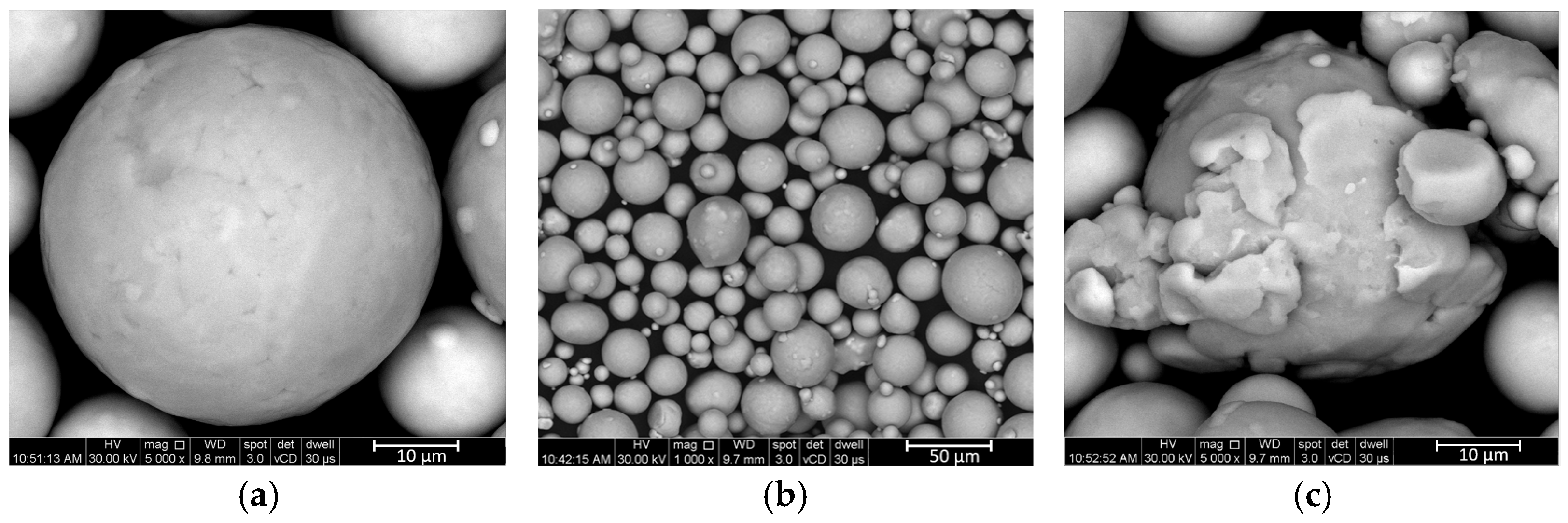
Figure 1 shows SEM micrographs of the powder, revealing predominantly spherical particles with smooth surfaces and minimal satellite formation.
2.1. PBF-LB/M Machine
Prismatic and cylindrical Ti-6Al-4V specimens were built on a Ti-6Al-4V substrate plate using a DMG MORI LASERTEC 30 SLM (2nd Generation; DMG MORI, Bielefeld, Germany), equipped with a 600 W ytterbium fiber laser (focus spot 50–80 µm) and a build volum of 300 × 300 × 300 mm3. Processing was performed under argon with oxygen content maintained below 0.1% to limit oxidation and oxygen uptake, which is particularly important for Ti-6Al-4V because interstitial oxygen can shift the strength–ductility balance and influence melt-pool behavior. A low-oxygen atmosphere also mitigates spatter-/condensate-related disturbances, thereby reducing near-surface defects and as-built roughness.
The 200 °C preheat temperature was selected to reduce thermal gradients, thereby mitigating residual-stress accumulation and lowering the risk of distortion or cracking. Powder deposition was performed using a precision rubber recoater. A closed-loop argon circulation system was used to remove condensates and metallic vapors. The machine was operated through the CELOS control interface (Version 1.9.0, DMG MORI ADDITIVE, 2021), integrating build preparation, and process management.
2.2. Specimen Manufacturing
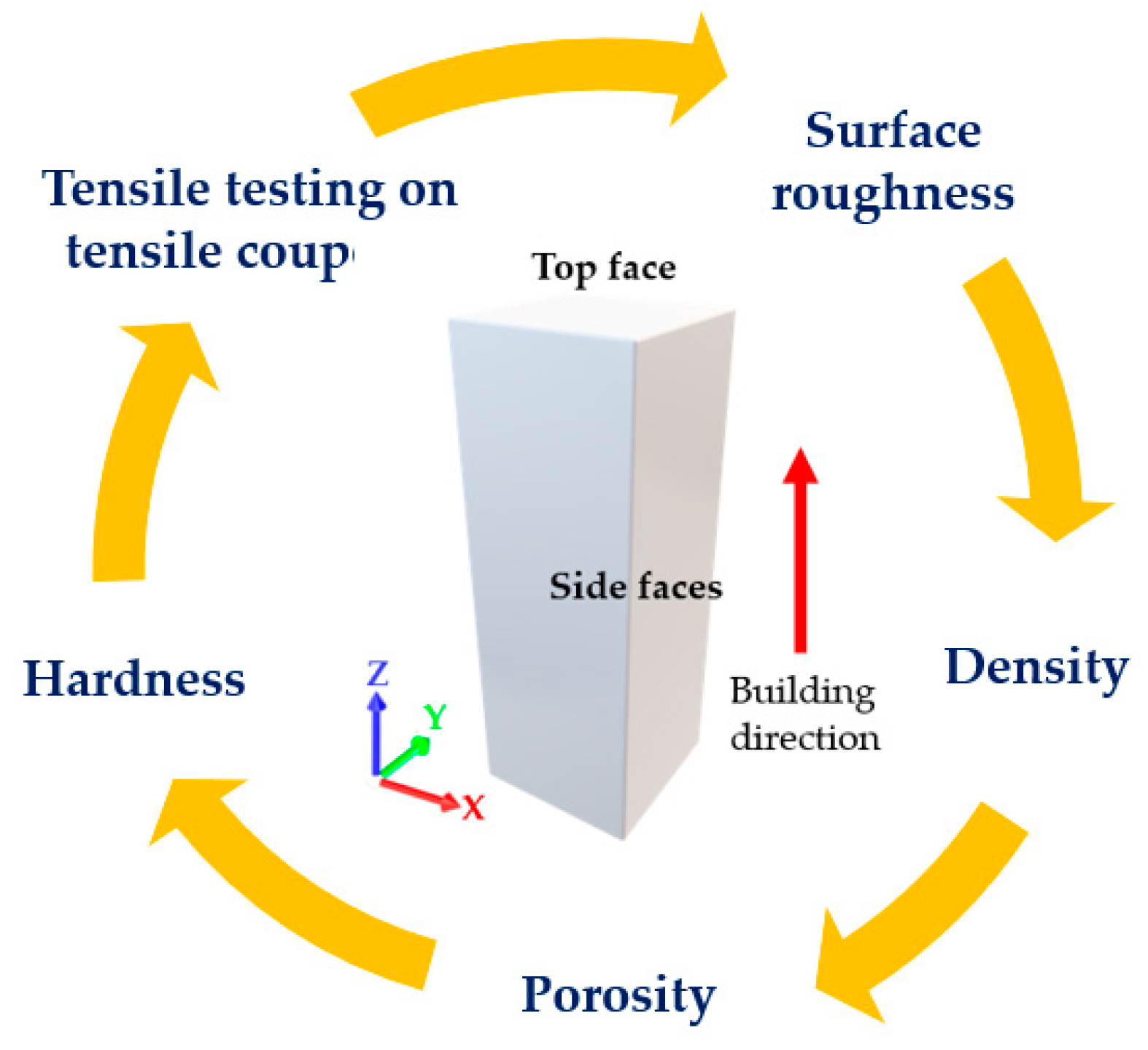
The experimental workflow is summarized in
Figure 2, from specimen fabrication to density, surface roughness, porosity, hardness, and tensile characterization.
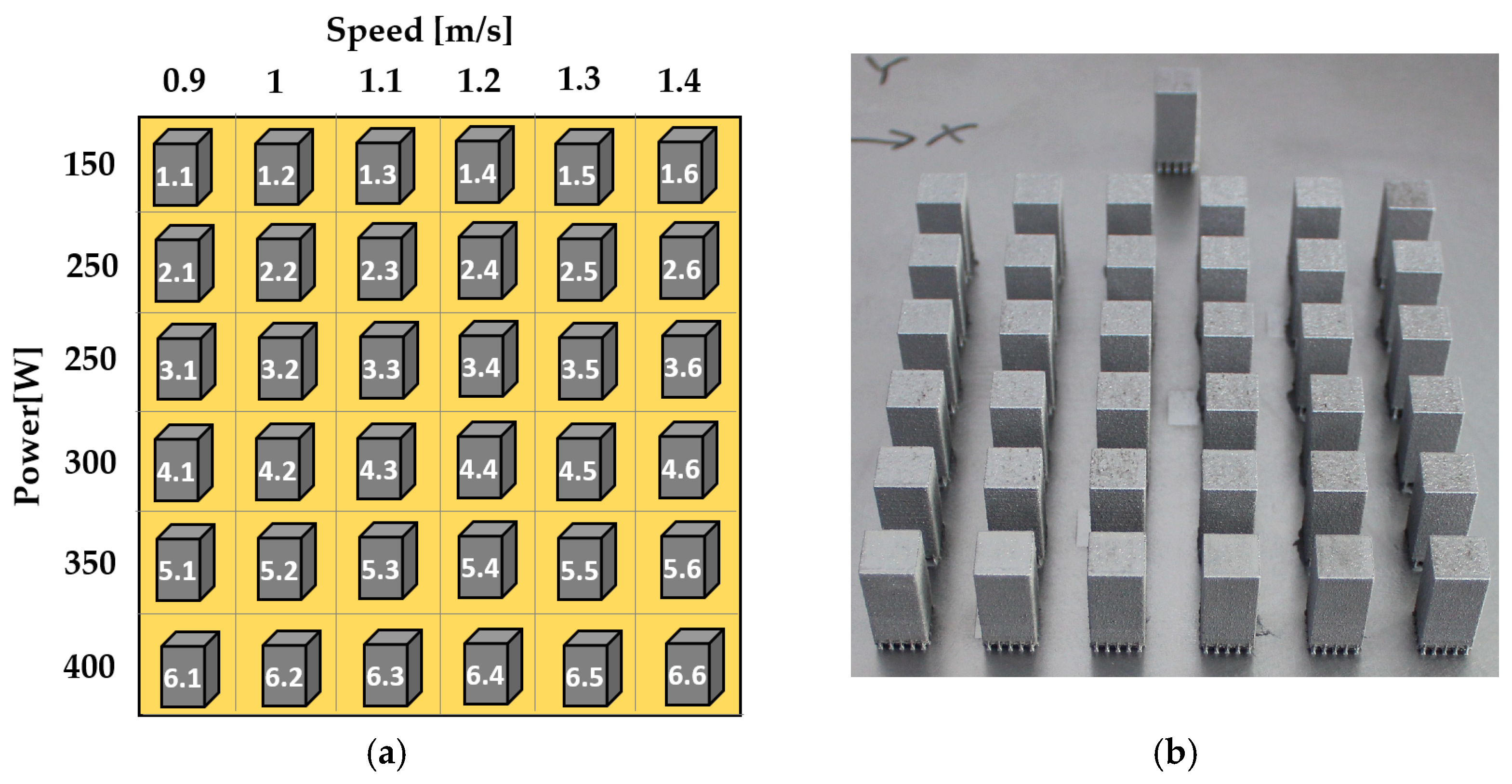
The design of experiments was aimed at capturing process transitions from insufficient bonding (lack-of-fusion) to stable near-full density conditions, under a consistent and industrially relevant parameter matrix (
Figure 3). Coupons (10 × 10 × 20 mm
3) were produced in a single build. Laser power and scan speed were varied over 150–400 W and 900–1400 mm·s
−1, respectively, spanning VED = 19–81 J·mm
−3. All other parameters were kept constant: 50 µm layer thickness, 0.11 mm hatch spacing, and a 70 µm laser spot size. The corresponding VED values are reported in
Table 3.
Layer thickness and hatch spacing were held constant to isolate the influence of the laser power–scan speed pairing on melt-pool stability and track overlap. Because both parameters directly affect energy distribution and remelting, varying them alongside power and speed would confound whether changes in density/porosity and roughness arise from overlap-related lack-of-fusion or from shifts in the melt-pool regime. The selected values (t = 50 µm, h = 0.11 mm) are representative of industrial Ti-6Al-4V LPBF practice and provide a robust basis for qualification. The power–speed domain was selected for span processing conditions typically associated with insufficient bonding and reduced track overlap (lack-of-fusion), a stable near-full-density regime, and higher-energy conditions where melt-pool instability and gas entrapment become more likely (keyhole-prone behavior). The selected increments (50 W and 100 mm·s−1) provided sufficient resolution to localize the low-defect window while keeping the experimental matrix feasible (36 parameter sets assessed by Archimedes density and metallographic porosity). Finer local increments (e.g., 10–20 W) may enable subsequent refinement around the optimum and will be considered in follow-up work, together with a targeted assessment of contour-parameter effects.
Contour exposure was intentionally omitted to isolate the intrinsic effects of the hatch/core parameter set on porosity, as-built roughness, and mechanical response. This choice avoids confounding because contour passes are commonly executed with a distinct parameter set and scan sequence and can strongly influence surface formation via localized remelting and an altered thermal history at the part boundary [
33].
A bidirectional scanning strategy with 90° rotation between consecutive layers was used to promote uniform energy distribution and mitigate thermal-history variation. By alternating the scan orientation, the measured bulk properties become less sensitive to directional effects, supporting a fair comparison between parameter sets when correlating density/porosity with tensile response. Additional samples were produced using the manufacturer’s standard parameter (279 W, 1170 mm·s−1 (1.17 m·s−1); VED = 43 J·mm−3), with all other parameters kept constant (t = 50 µm, h = 0.11 mm, spot size = 70 µm; same scan strategy).
After fabrication, the specimens were detached from the build plate, ultrasonically cleaned in ethanol, and air-dried. Bulk chemical composition was measured by optical emission spectrometry metals analyzer. The reported values correspond to the average of three burns performed on each sample.
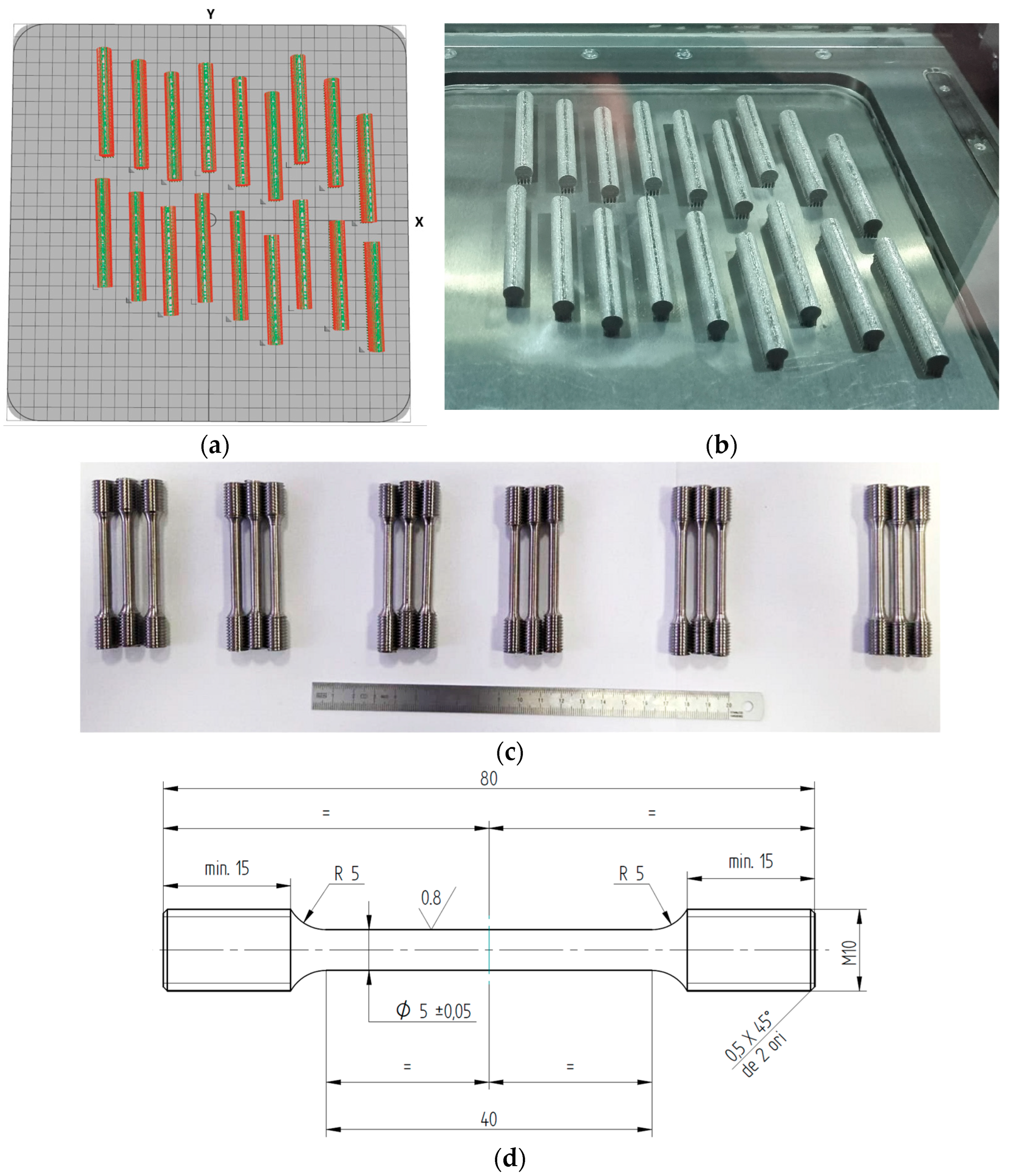
Surface roughness was measured first using a contact stylus profilometer, followed by bulk density measurements via Archimedes’ method. Transverse (XY) and longitudinal (XZ) sections were then prepared for metallographic analysis to quantify porosity and subsequently used for Vickers hardness measurements. Based on the density results, an optimal parameter window was identified and used to fabricate tensile specimens in the XY plane (
Figure 4).
2.3. Surface Roughness Measurement
As-built surface roughness was measured using a MarSurf PS 10 portable profilometer (Mahr GmbH, Göttingen, Germany) over an evaluation length of 8 mm, in accordance with ISO 4288 [
34]. Measurements were performed on both top and side surfaces, along two orthogonal directions (0° and 90°) relative to the principal in-plane measurement direction defined for each surface. Accordingly, the roughness values reported here should be interpreted as a hatch/core baseline, while contour-based surface-finish optimization was outside the scope of this work.
2.4. Density Measurements
Bulk density was measured using Archimedes’ method following ISO 3369 [
35], using an analytical balance (Ohaus Pioneer PX224, Ohaus Corporation, Parsippany, NJ, USA) with a precision of ±0.0001 g, equipped with a solid-body density kit. Archimedes’ method was selected as a high-throughput screening metric for the full parameter matrix. Distilled water was used as the immersion medium, and density corrections were applied based on the measured liquid temperature using standard water density–temperature data. Each reported density value represents the mean of three consecutive measurements; repeatability was verified when deviations exceeded 0.0025 g·cm
−3. Relative density was calculated using the theoretical density of Ti-6Al-4V (4.43 g·cm
−3, ASTM B311 [
36]), consistent with common practice in PBF-LB/M studies [
37]. Because Archimedes density provides an indirect assessment of internal defects, metallography and image-based porosity quantification were used as complementary validation.
2.5. Metallographic and SEM-EDS Analysis
Prismatic coupons were sectioned in the XY plane (transverse to the build direction, BD) and the XZ plane (longitudinal to BD) using an abrasive cut-off wheel under coolant. Samples were ground using SiC papers from P200 to P1200 and polished with diamond suspensions (3 µm and 1 µm). Unetched cross-sections were imaged at 50× for porosity quantification. For microstructural revelation, specimens were etched with Keller’s reagent (95 mL H2O, 2.5 mL HNO3, 1.5 mL HCl, 1.0 mL HF) for 4 s, rinsed with ethanol, and air-dried. Optical micrographs were acquired using a Zeiss Axio Vert.A1 MAT (Carl Zeiss Microscopy GmbH, Jena, Germany) under consistent illumination and calibration.
Surface morphology and elemental composition were investigated by SEM using a FEI Inspect F50 (FEI Company, Brno, Czech Republic) equipped with an EDAX APEX 2i EDS system and an Apollo X SDD detector (EDAX Inc., AMETEK, Mahwah, NJ, USA).
2.6. Porosity Measurement
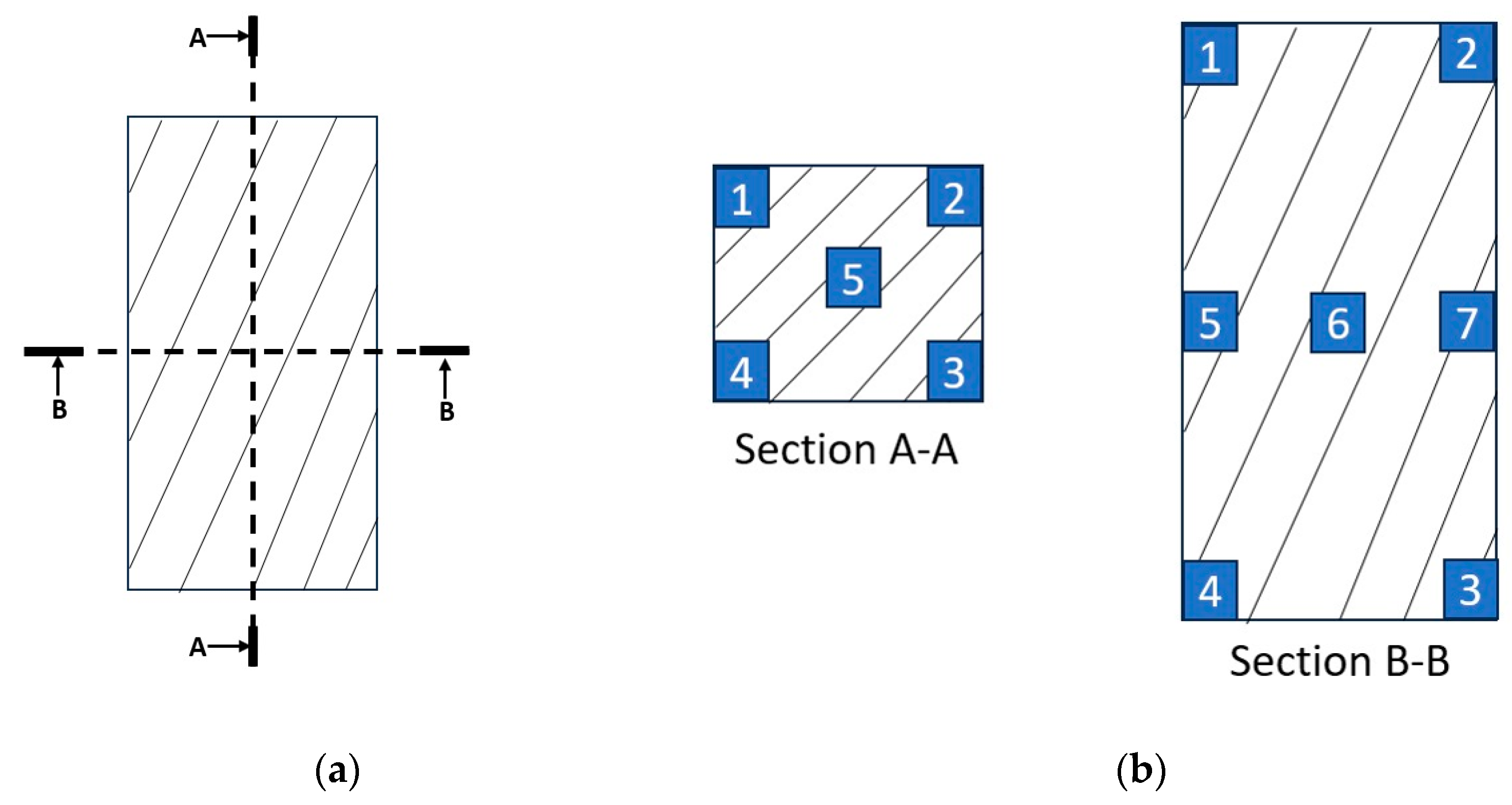
Porosity was quantified on polished, unetched cross-sections using optical microscopy (Zeiss Axio Vert.A1 MAT). The sectioning locations are illustrated in
Figure 5. Specifically, porosity was evaluated on a transverse section (A–A, XY plane) taken at the mid-length of the prismatic specimen and on a longitudinal section (B–B, XZ plane) through the specimen axis. This two-plane approach was selected to capture both build-parallel and build-perpendicular pore distributions. The same cutting, mounting, polishing, and imaging protocol was applied to all specimens. Optical images were acquired at 50× magnification, each corresponding to an analyzed area of approximately 3.31 mm
2. The images were contrast-adjusted, converted to 16-bit grayscale, and binarized such that pores were segmented as black features against a white metallic matrix. Quantitative analysis was performed in Scandium software (Version 2021.1, Olympus Soft Imaging Solutions GmbH, Münster, Germany) on twelve representative fields per specimen (five in the XY plane and seven in the XZ plane), sampling both central and edge/corner regions (
Figure 5). The resulting porosity values represent a 2D area-fraction estimate used for comparative assessment across conditions and were cross-checked against Archimedes density measurements.
2.7. Hardness Testing
Vickers hardness (HV30) was measured using an EMCO TEST M4C/R hardness tester (EMCO-TEST Prüfmaschinen GmbH, Kuchl, Austria) in accordance with SR EN ISO 6507-1 [
38]. Measurements were carried out on metallographically prepared cross-sections using a 30 Kgf load with a diamond pyramid indenter. Three indentations were performed per section, with a minimum spacing of 1 mm between indents. The reported value corresponds to the average of the three measurements for each section.
2.8. Tensile Testing
Room-temperature tensile tests were conducted according to ASTM E8M [
39] using an Instron 3369 universal testing machine (Instron, Norwood, MA, USA) equipped with a 50 kN load cell. A nominal strain rate of 0.005 mm·mm
−1·min
−1 was applied up to the yield point, followed by 0.25 mm·mm
−1·min
−1 until fracture. Axial strain was recorded using an Epsilon Model 3542 extensometer with a 25 mm gauge length. Total elongation was determined from the change in distance between gauge marks measured before testing and after failure.
3. Results
3.1. Surface Roughness Analysis
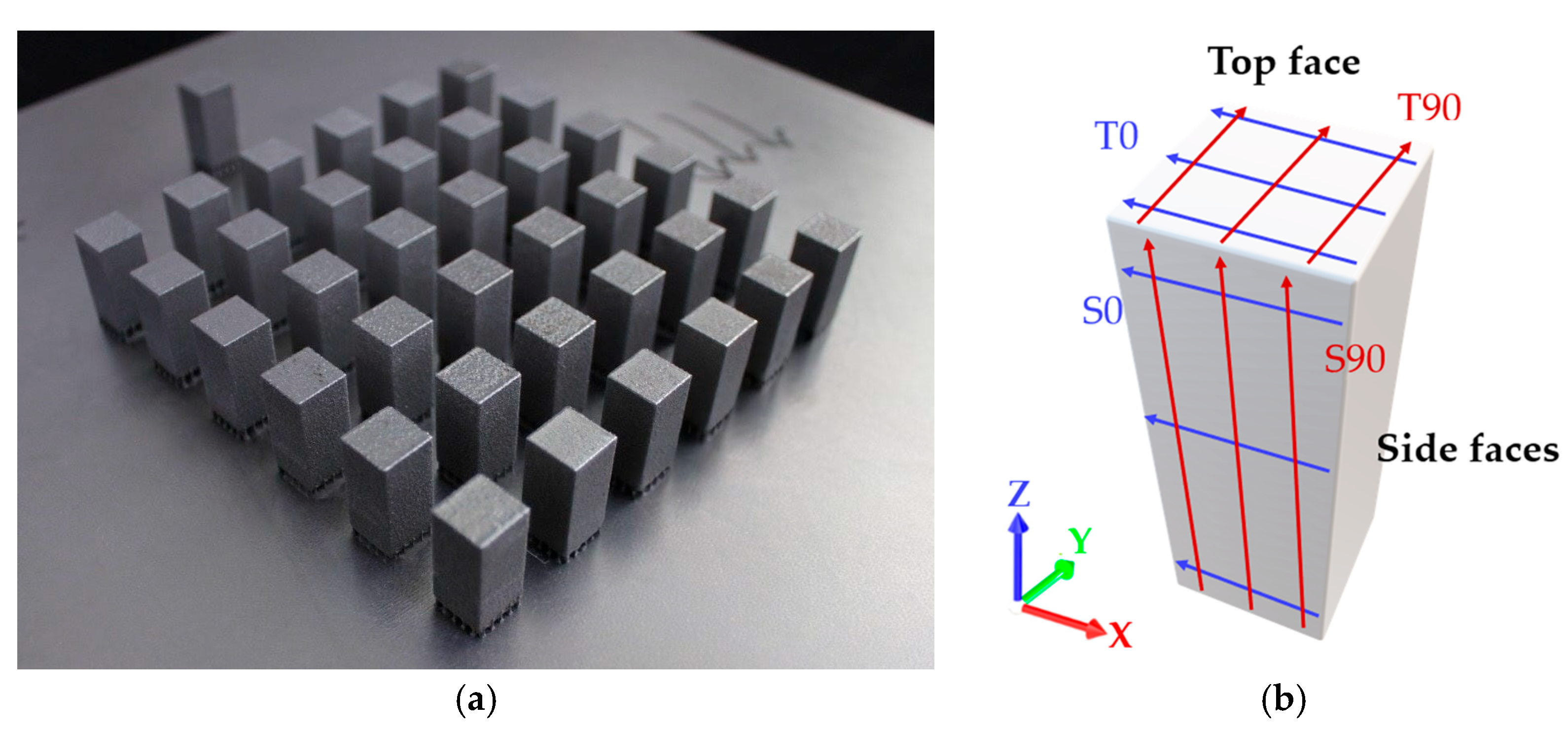
Prismatic Ti-6Al-4V specimens (
Figure 6a,b) were produced in a single PBF-LB/M build by varying laser power from 150 to 400 W and scan speed from 0.9 to 1.4 m·s
−1 within the parameter domain defined in
Figure 3. After removal from the build plate, the specimens were cleaned and support structures were removed by machining.
Surface roughness was evaluated on the top surface (T0°, T90°) and side surface (S0°, S90°), as schematically indicated in
Figure 6b. The corresponding Ra and Rz values are reported in
Table 4,
Table 5,
Table 6 and
Table 7. Values reported as ‘>25 µm’ (Ra) and ‘>140 µm’ (Rz) indicate measurements exceeding the profilometer limit, whereas ‘n.m.’ denotes an invalid out-of-range profilometer trace for which no reliable bound could be.
Contour scannig was intentionally omitted to isolate the intrinsic effects of the core/hatch processing parameters. Therefore, the reported roughness value reflect the surface conditions generated solely by the hatch/core exposure strategy; surface finish optimization using contour passes was outside the scope of the present study.
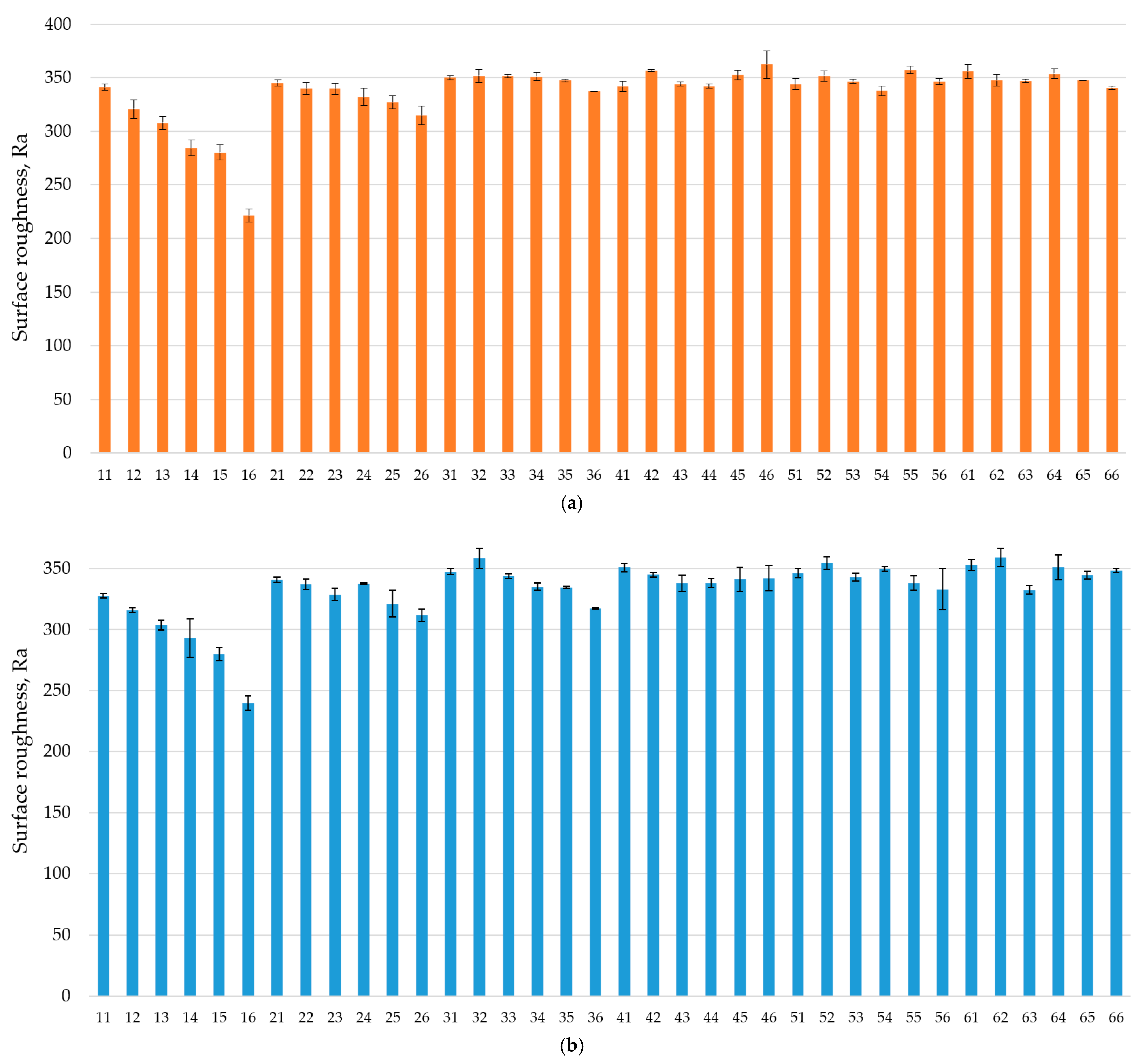
Overall, top surfaces exhibited lower roughness than side surfaces, consistent with their different formation mechanisms relative to the build direction. For the top surface, Ra values spanned approximately 3–15 µm. The lowest top-surface roughness (Ra = 4–6 µm) was generally obtained in the higher-power and lower-to-moderate-scan speed region (notably around 300–400 W and 0.9–1.0 m·s−1). Top-surface Rz values followed the same trend, reaching their minimum in the same parameter region.
In contrast, side-surface roughness was systematically higher and showed a larger scatter across the parameter space. Side-surface Ra typically ranged from about 13 µm up to values exceeding the measurement limit (>25 µm) for several conditions, and Rz frequently approached or exceeded 140 µm in the most unfavorable cases. These outliers indicate severe surface irregularities under certain parameter combinations; notably, side surfaces remained comparatively rough even when top-surface roughness improved, highlighting that optimizing core parameters alone may not fully control sidewall quality.
Directional effects between orthogonal measurement orientations (T0°/T90° and S0°/S90°) were present but generally modest, indicating limited roughness anisotropy at the measurement scale. However, the side surface maintained higher Ra and Rz than the top surface for nearly all parameter sets, confirming that surface orientation with respect to the build direction is a dominant factor in as-built roughness in the present configuration.
3.2. Density
Bulk density was measured using the Archimedes’ method, and the mean values and standard deviations are summarized in
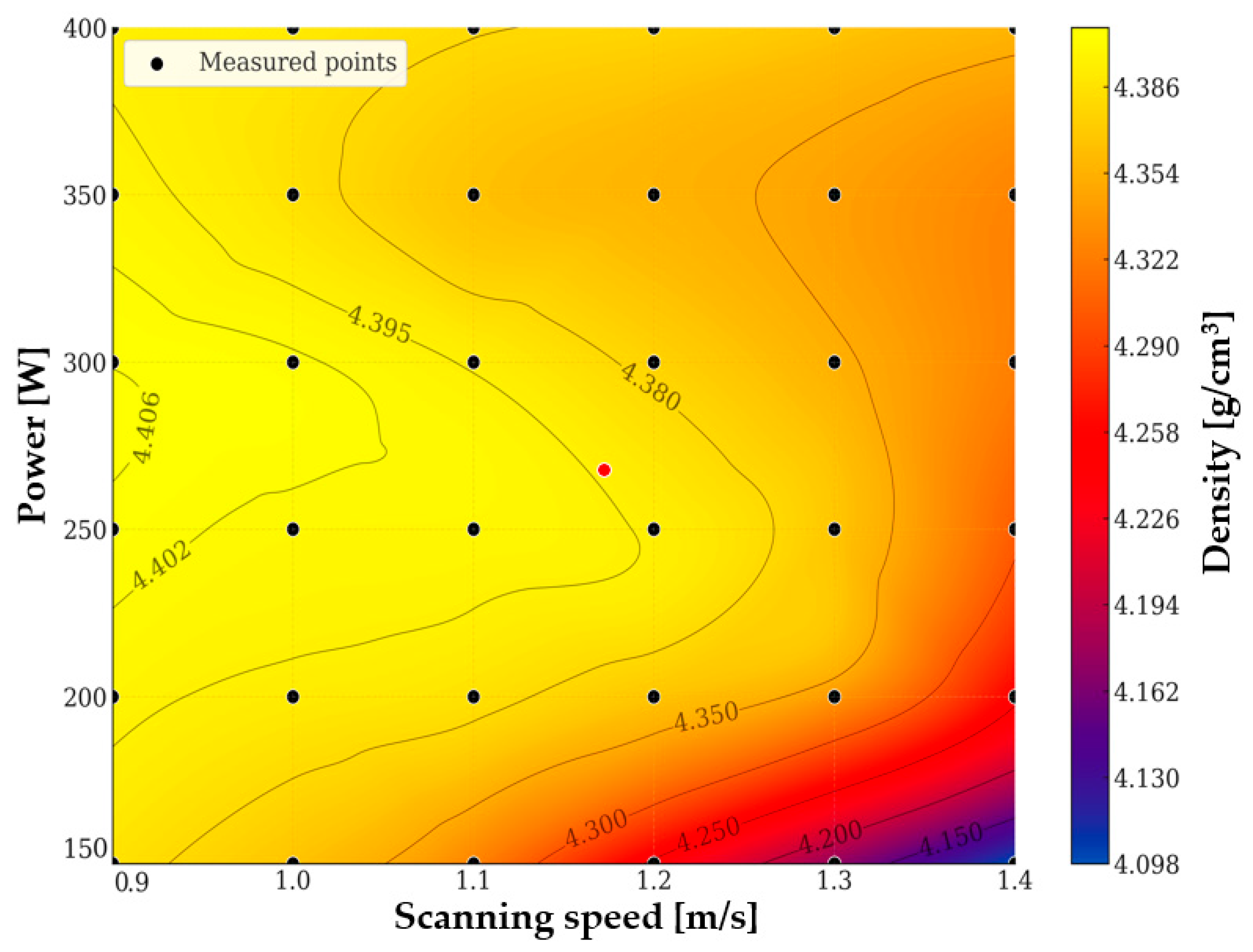
Table 8. To visualize the combined influence of laser power and scan speed, a relative density map is provided in
Figure 7, where color gradients and contour lines represent density variations across the parameter space and the black markers indicate the experimentally tested conditions. The red marker indicates the manufacturer default parameter set (279 W, 1.17 m·s
−1), for which a measured density of ρ = 4.4039 ± 0.0012 g/cm
3 was obtained.
The measured density ranged from 4.0981 to 4.4058 g·cm
−3, corresponding to 92.6–99.5% of the theoretical density of Ti-6Al-4V (4.43 g·cm
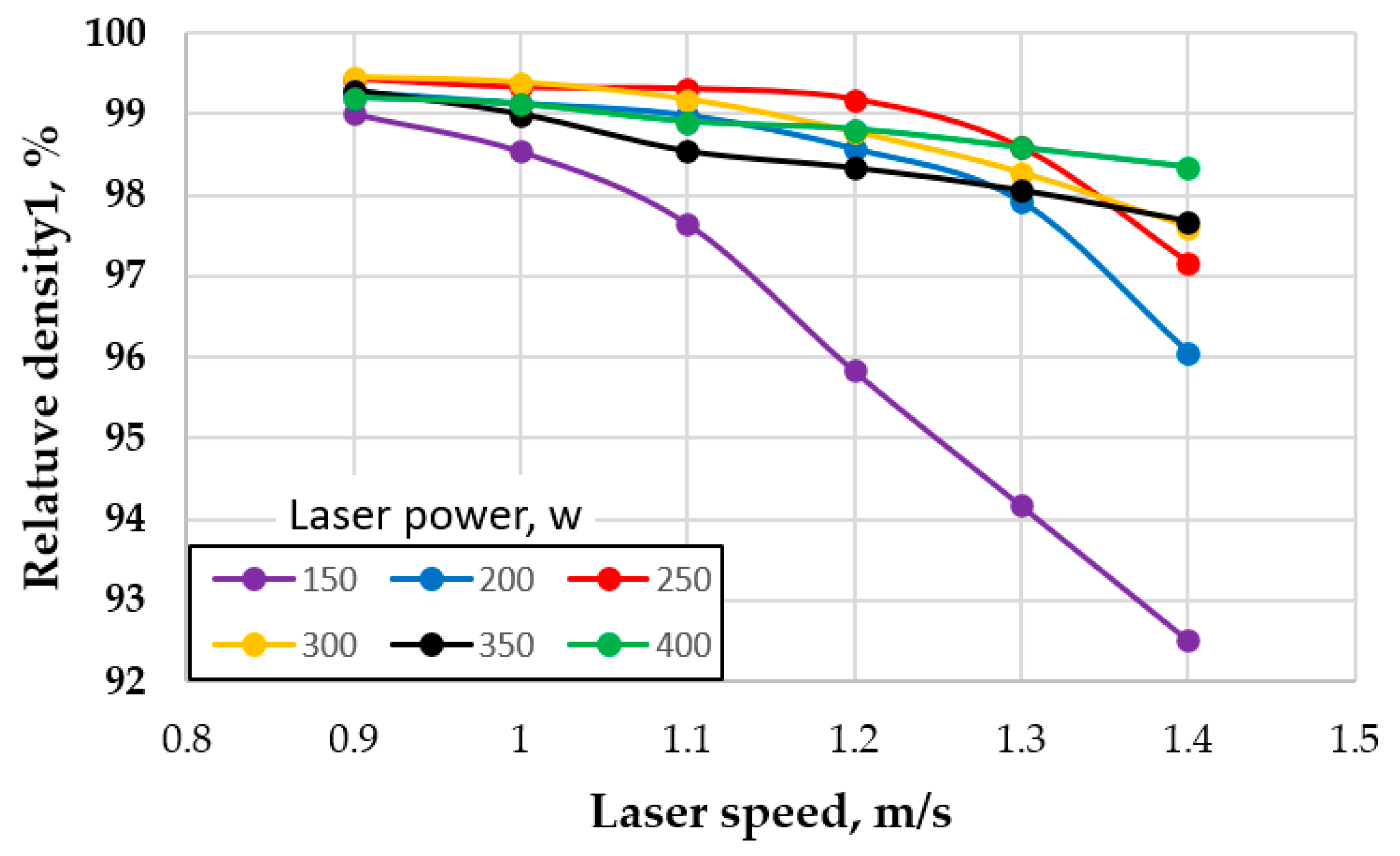
−3). The highest densification was obtained for laser powers of approximately 250–300 W combined with scan speeds of 0.9–1.0 m·s
−1, where the relative density reached ~99.4–99.5% (
Table 8). This region represents a stable processing window, where sufficient energy input ensures melt track overlap and interlayer, leading to near-full consolidation.
In contrast, under low-energy conditions (e.g., 150 W at 1.3–1.4 m·s
−1), density decreased markedly and sharply to 4.10 g·cm
−3 (~92.6%), indicating incomplete melting and weak fusion between layers. Outside the optimal window, the density map (
Figure 7) shows a progressive reduction in densification with increasing scan speed at a constant power, confirming that scan speed critically influence the effective energy input per unit length.
Figure 8 illustrates the combined effect of laser power and scanning speed on the relative density of PBF-LB/M Ti-6Al-4V samples.
These observations were corroborated by metallographic and image-based porosity analyses (
Section 3.3), which confirmed that relative density directly reflects changes in internal defect content.
3.3. Porosity
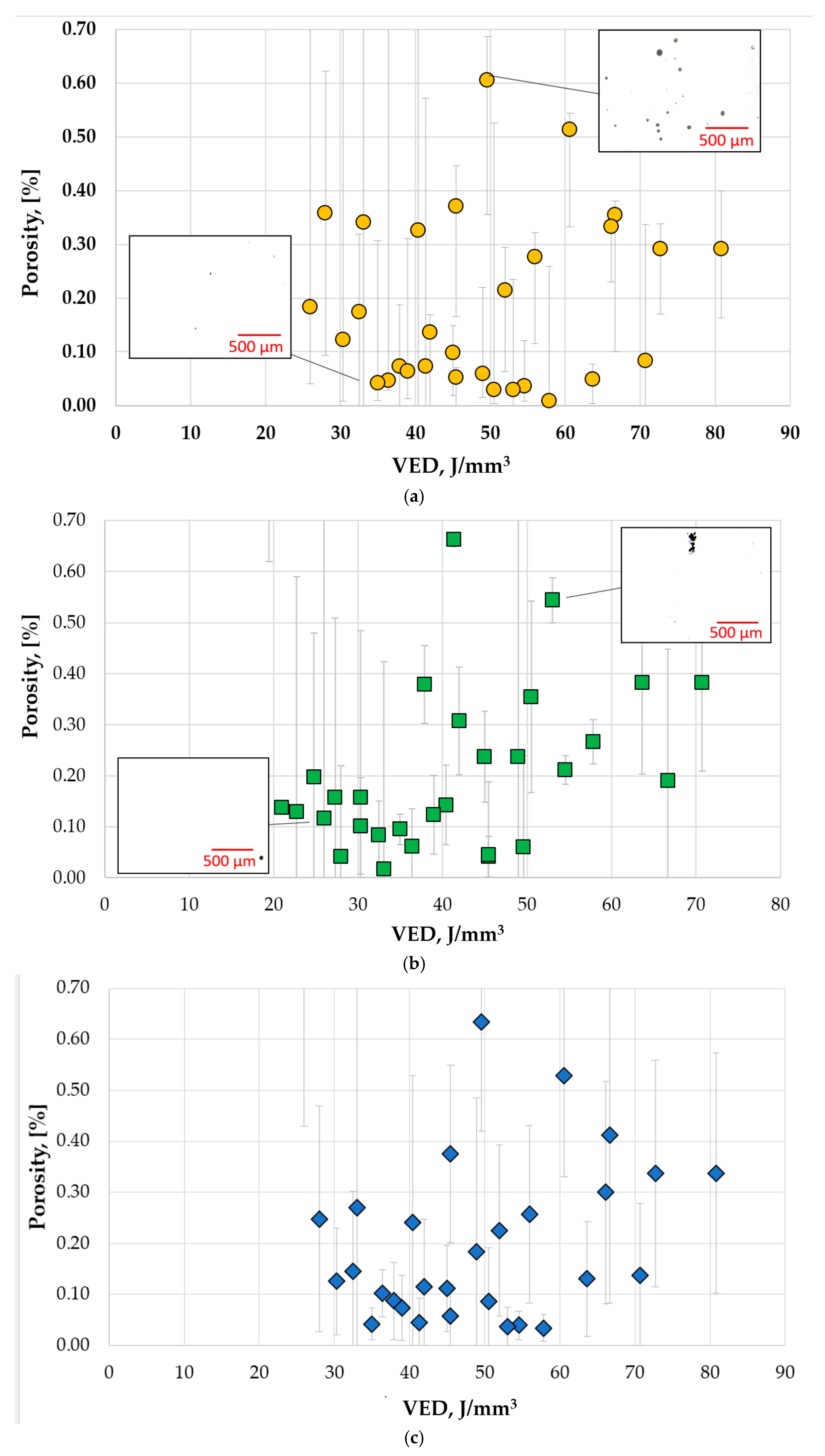
Porosity was quantified via optical microscopy on polished cross-sections transverse (XY) and longitudinal (XZ) sections (
Figure 9). Total porosity values for all process conditions are summarized in
Table 9.
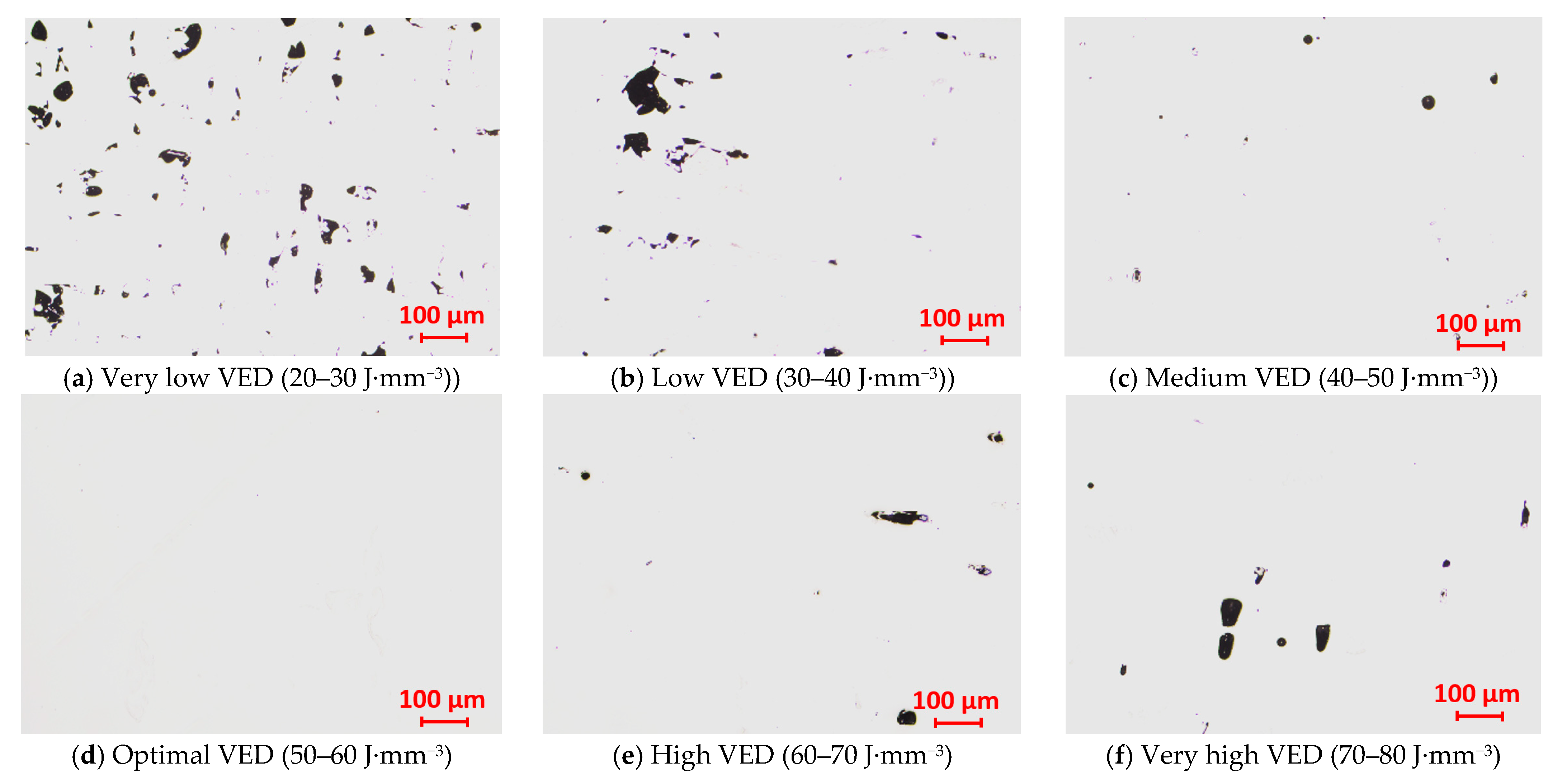
Representative pore morphologies across the energy-input range are shown in
Figure 10. At very low energy input (20–30 J·mm
−3), irregular lack-of-fusion (LOF) pores dominate. Within the optimized window (50–60 J·mm
−3), pores were sparse, small and predominantly rounded. At higher energy input (>60 J·mm
−3), isolated keyhole-like pores appear, suggesting a transition toward unstable melt-pool behavior.
The porosity trends were consistent with the density measurements (
Section 3.2). Increased porosity and reduce density were evident under low-energy, consistent with LOF defects. Samples with total porosity above 0.7% were excluded from mechanical testing. The minimum porosity (0.04–0.15%) was obtained within the 50–60 J·mm
−3 range, while both lower and higher energy input increased defect content. Notably, similar VED values produce different porosity levels depending on the laser power–scan speed combination, indicating that porosity is more sensitive to the specific thermal history than to VED alone. Optical-porosity results showed increased scatter, especially outside the optimal window, due to defect heterogeneity: lack-of-fusion regions and occasional rounded pores can coexist with comparatively dense areas within the same specimen, causing field-to-field variability.
3.4. Metallographic and SEM-EDS Analysis
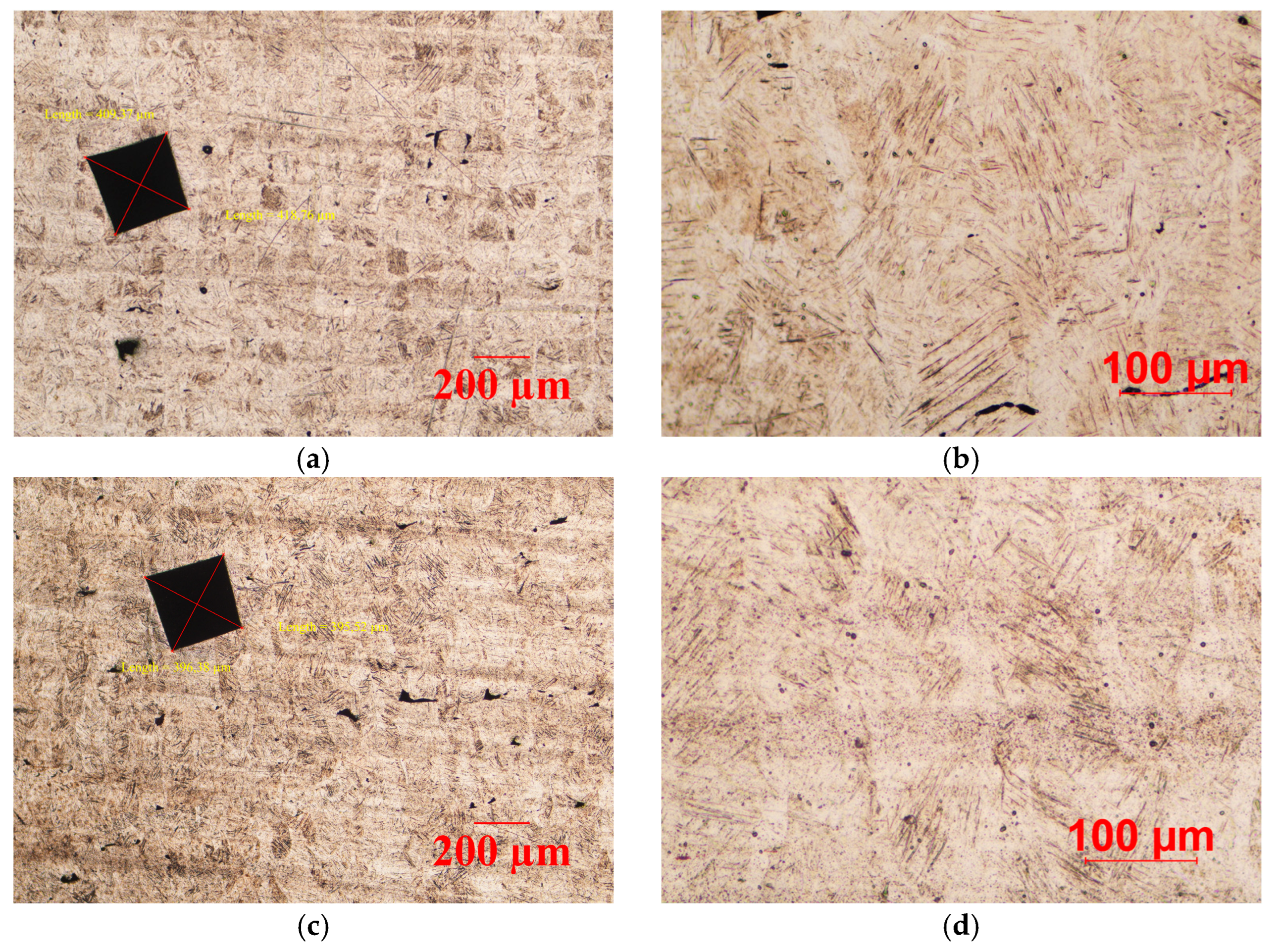
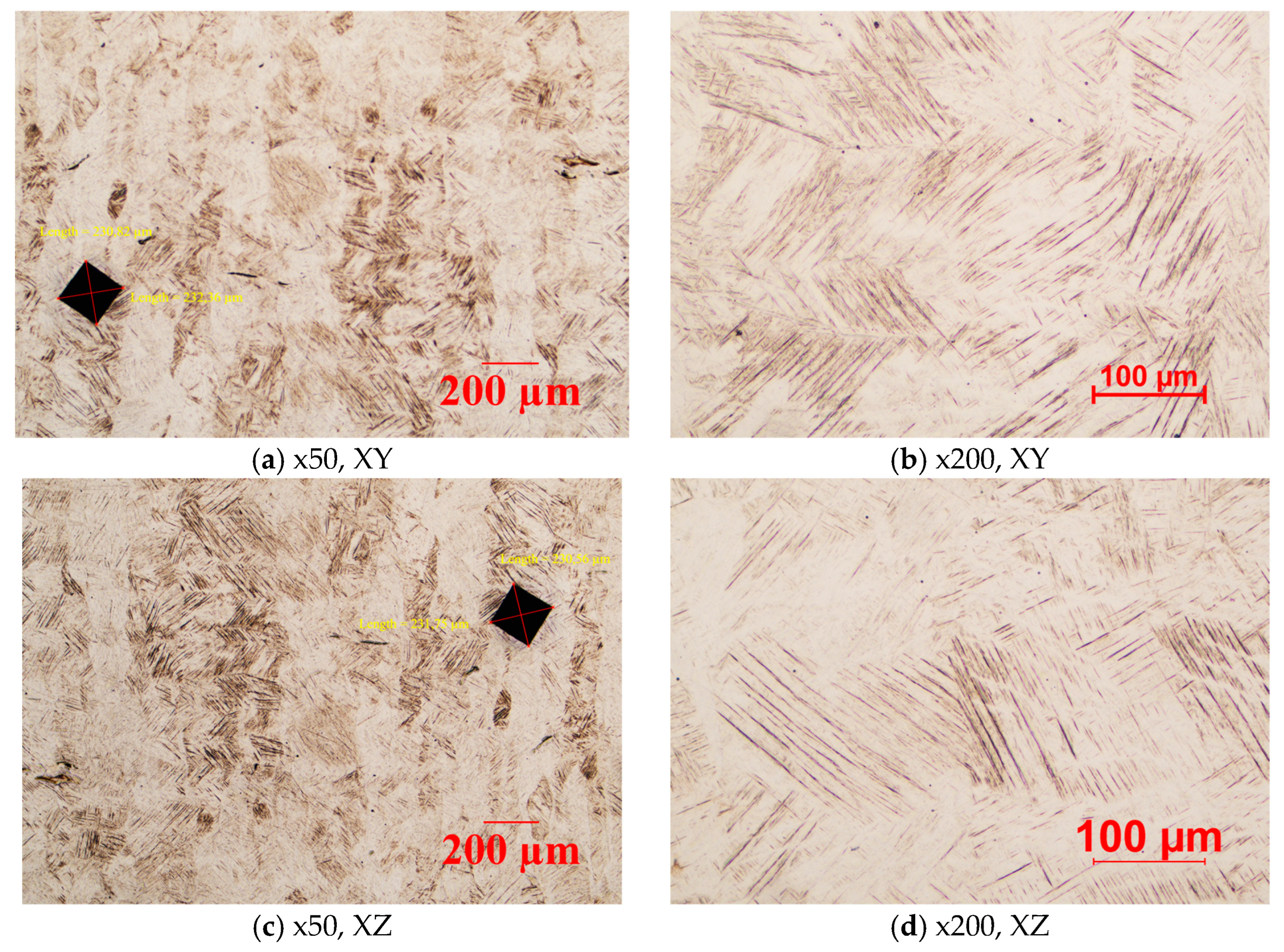
Optical metallography revealed predominantly acicular α′ microstructure in all samples (
Figure 11 and
Figure 12). Clear differences were observed between specimens produced at low energy input and those fabricated within the optimal processing window.
At low VED (~30 J·mm
−3), the microstructure was heterogeneous and discontinuous, with fragmented α′ colonies and prominent lack-of-fusion (LOF) defects. In the XY plane, acicular α′ colonies appeared truncated or poorly developed, and dark regions indicated unmelted powder and incomplete consolidation. In the XZ plane, α′ laths followed melt-pool boundaries, with elongated interlayer voids reflecting inadequate bonding between successive layers. These features are characteristic of LOF-type porosity arising from insufficient melting and unstable melt-pool dynamics under low energy input conditions [
40]. In contrast, within the optimal window (50–60 J·mm
−3, corresponding to 250–300 W and 0.9–1.0 m·s
−1), the microstructure became more continuous and uniform in both sections. Pores were few, small, and nearly spherical (
Figure 12a–d), corresponding to the high relative density (99.5%) and low porosity (0.1–0.3%). In the XZ plane, α′ laths extended across melt-pool boundaries with improved continuity, indicating enhanced interlayer bonding and significantly reduced defect populations. No keyhole-type porosity was identified in the examined fields.
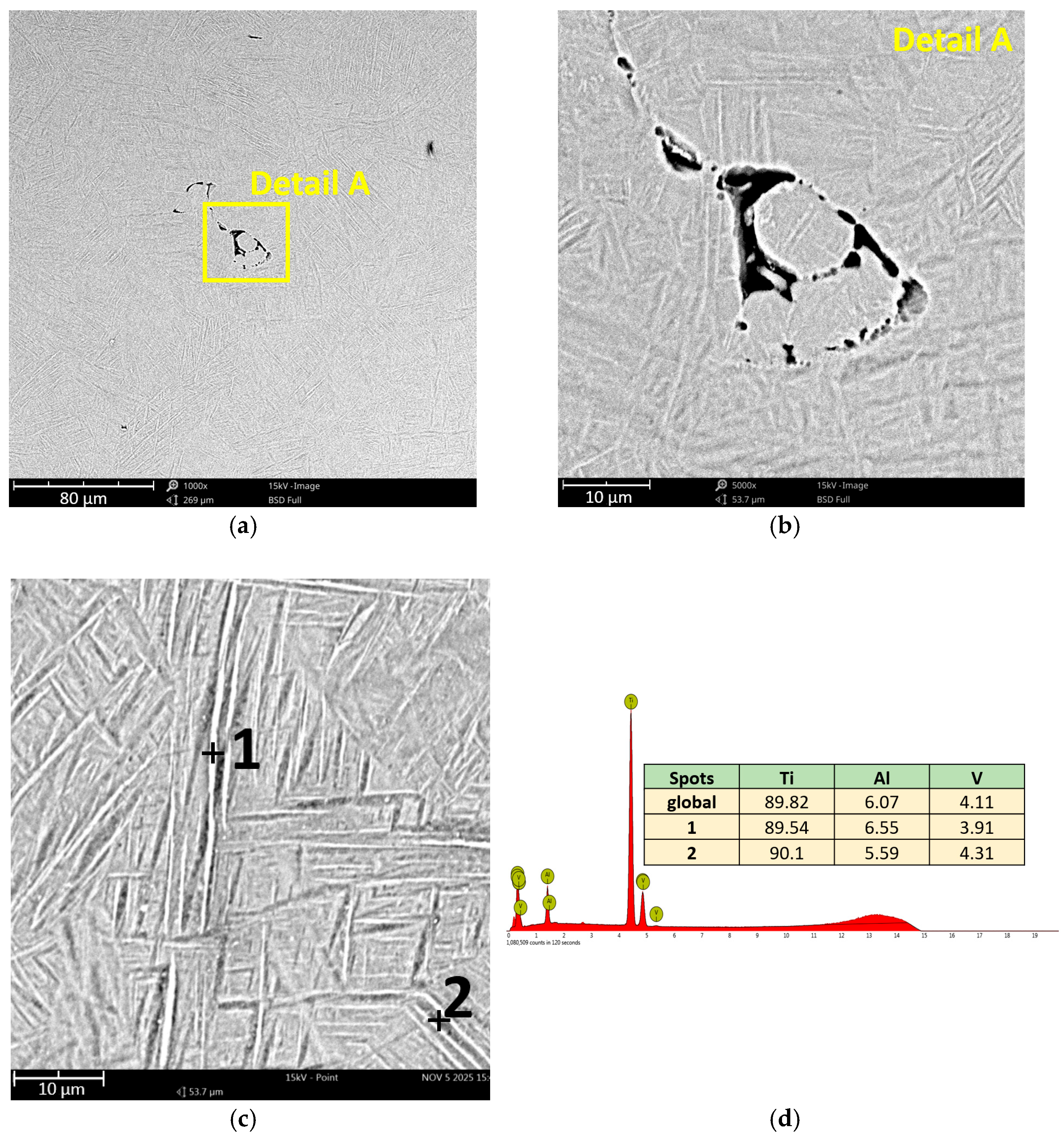
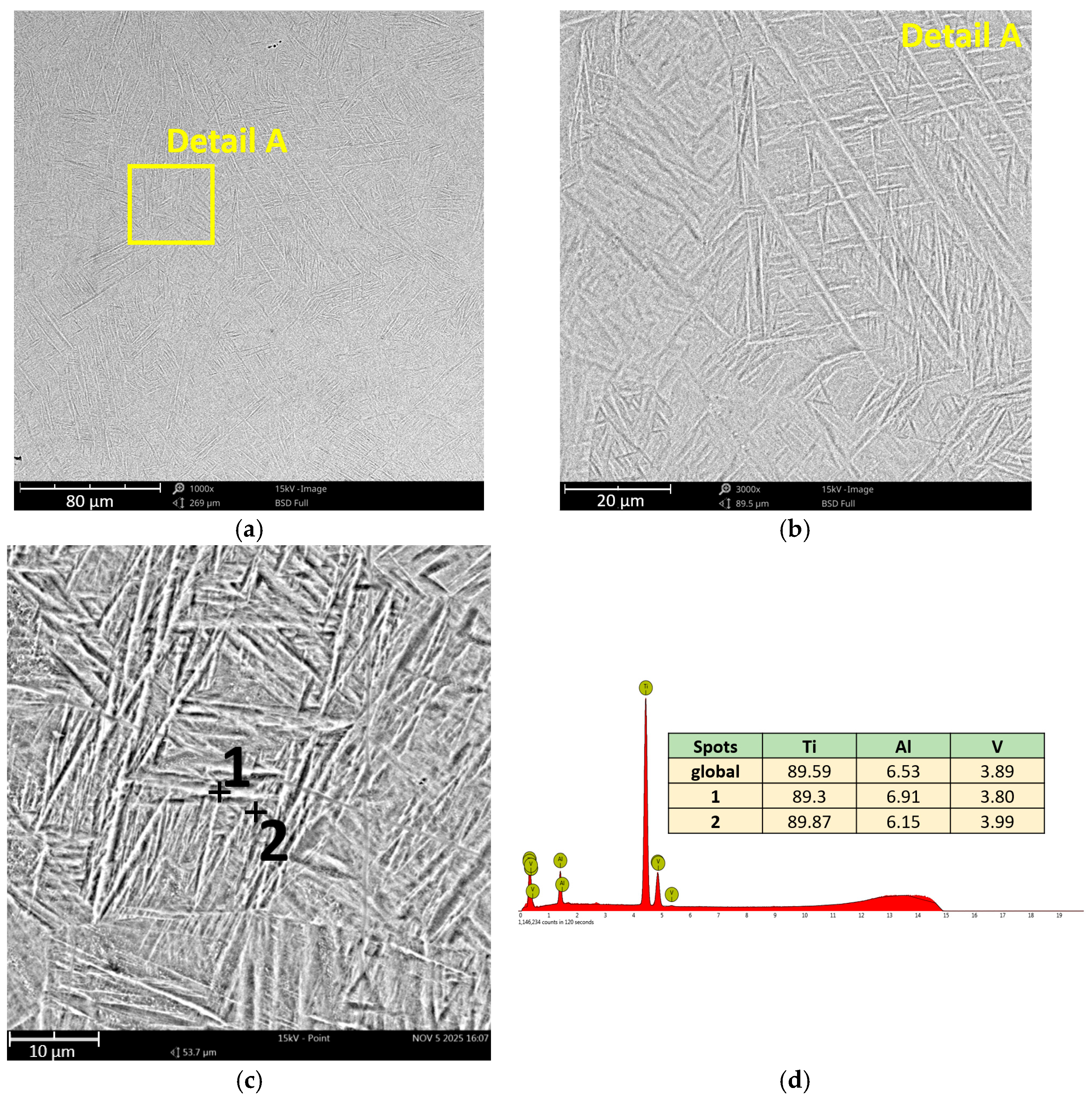
SEM observations (
Figure 13 and
Figure 14) supported the optical microscopy results. In the low-VED specimen, LOF defects were clearly visible: irregular pores and partially fused regions interrupted the acicular morphology (
Figure 13a,b). The surrounding microstructure consisted predominantly of martensitic α′ laths within columnar prior-β grains, a typical morphology in as-built PBF-LB/M Ti-6Al-4V processed under rapid solidification conditions [
40,
41]. In the optimized condition (~61 J·mm
−3), SEM images showed a denser, more refined acicular architecture with significantly fewer defects (
Figure 14a,b), in line with the porosity and density results.
EDS point analyses (
Figure 13c,d and
Figure 14c,d) indicated no measurable compositional differences between the selected locations in the low-VED sample (points #1 and #2), with spectra aligning with the nominal Ti–Al–V composition within the resolution of the technique. For the optimal-VED sample, localized vanadium enrichment and corresponding aluminum depletion were observed in selected microstructural features, suggesting the presence of β-phase regions embedded within an α′/α matrix [
9]. Due to the semi-quantitative nature of SEM–EDS and its limited sensitivity to light elements, especially oxygen, this method was not used for bulk chemical analysis. Instead, oxygen was considered a process-dependent factor governed by the initial powder specification and the inert atmosphere of the LPBF chamber. This approach is consistent with findings from the literature. Dietrich et al. [
42] demonstrated that although oxygen uptake affects strength and ductility, moderate fluctuations in oxygen content within a single build do not significantly influence part density. Comprehensive reviews on LPBF-processed Ti-6Al-4V [
43] confirm that oxygen primarily impacts absolute mechanical properties rather than relative densification behavior. Therefore, within the context of this study, oxygen-related effects are not expected to alter the comparative trends discussed, which are mainly driven by processing conditions.
3.5. Vickers Measurements
Vickers hardness (HV30) was measured on metallographically prepared cross-sections in both the transverse (XY) and longitudinal (XZ) planes. The results are summarized in
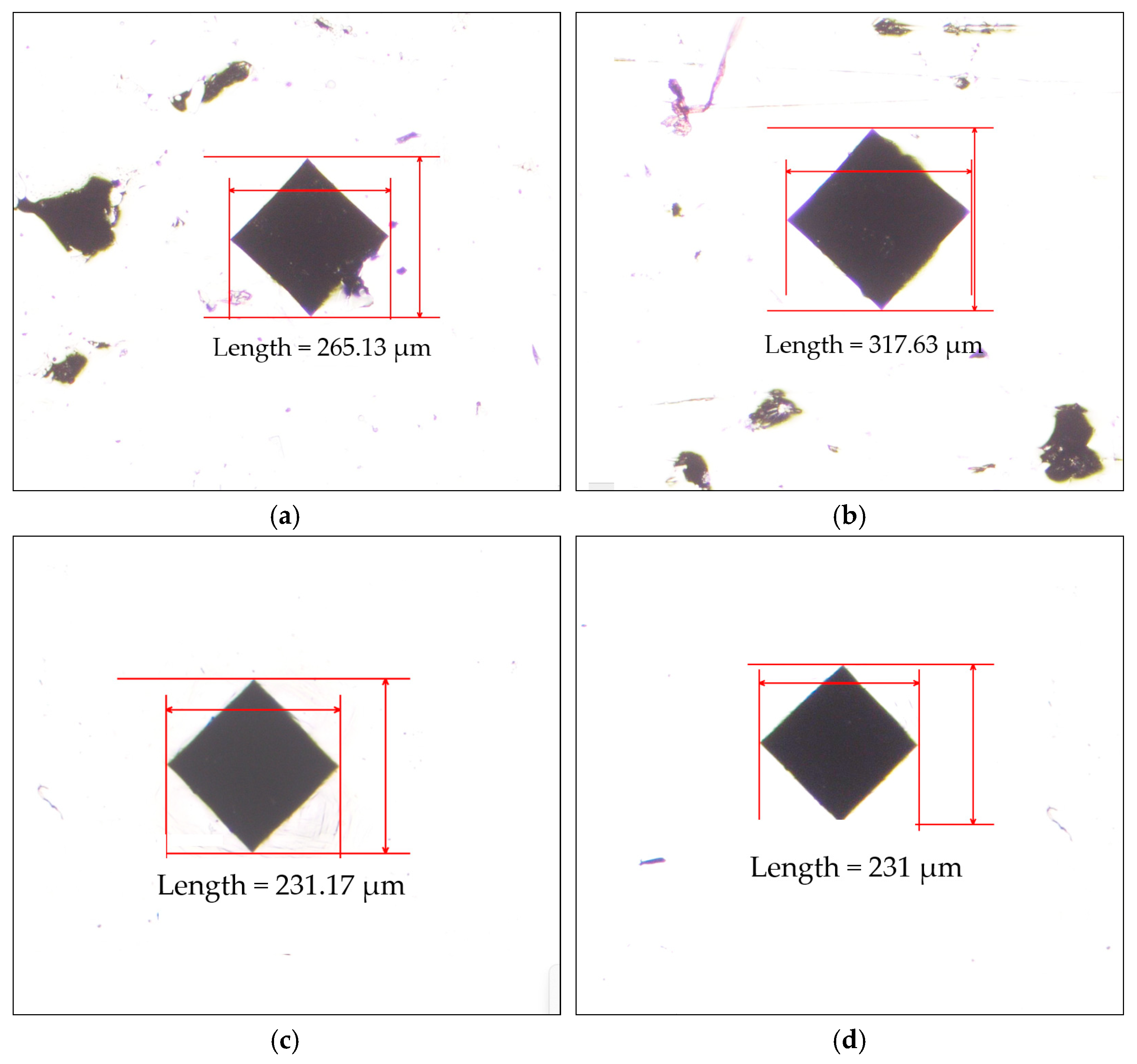
Figure 15, while representative indentations under low- and high-energy conditions are shown in
Figure 16.
Across the investigated parameter space, hardness HV30 ranged from 280 to 360. In the XY (top) plane, hardness varied between 280 and 353 HV30, whereas in the XZ (side) plane, values ranged from 284 to 360 HV30. The highest hardness levels (360 HV30) were recorded for the highest-energy condition (400 W, 0.9 m·s−1), corresponding to near-complete consolidation. In contrast, the lowest values (280 HV30) were observed under low-energy conditions (150 W combined with 1.3–1.4 m·s−1), consistent with incomplete melting and increased defect content. A modest anisotropy between sectioning planes was observed, with hardness values in the XZ direction being slightly higher than those in the XY plane. Nevertheless, the overall differences remained limited and within ±10 HV, suggesting minor directional dependence at the macrohardness scale. These findings are consistent with the literature reports for PBF-LB/M Ti-6Al-4V, where as-built hardness is primarily governed by the formation of a fine, martensitic α′ microstructure, combined with the degree of porosity. As such, the hardness trends reinforce the conclusion that stable processing conditions promote both densification and mechanical integrity.
Overall, hardness showed a positive correlation with densification. Specimens exhibiting lower density and higher porosity tended to display reduced hardness values, reflecting localized deformation around internal defects. However, even among samples with high relative density (99.4–99.5%), a measurable spread in HV30 was evident. This indicates that hardness is influenced not only by porosity but also by factors such as microstructural morphology and defect distribution.
3.6. Tensile Testing Results
Tensile coupons were manufactured within the optimized PBF-LB/M processing window established in
Section 3.1,
Section 3.2,
Section 3.3,
Section 3.4 and
Section 3.5, corresponding to 250–300 W and 0.9–1.0 m·s
−1 (VED ≈ 50–60 J·mm
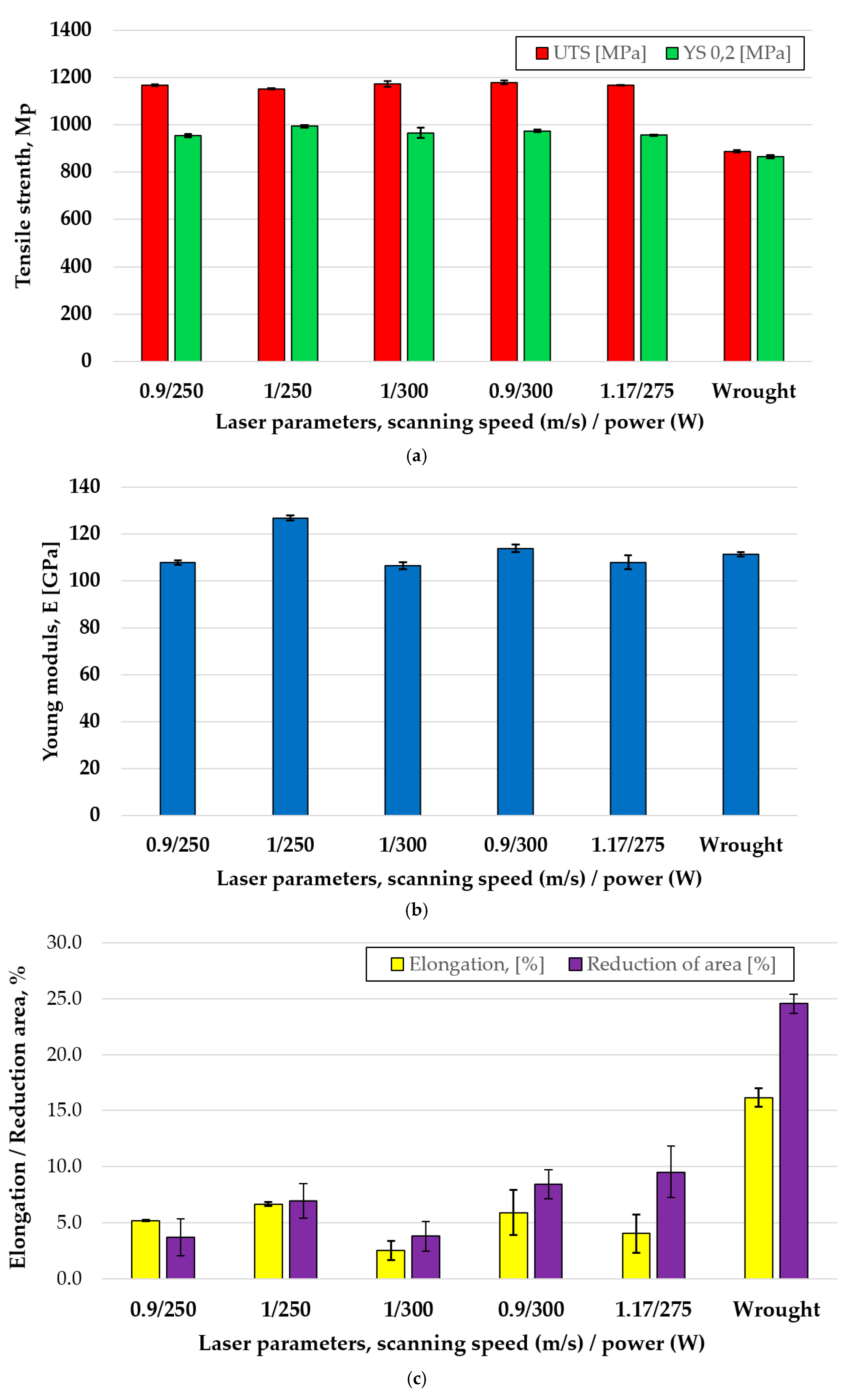
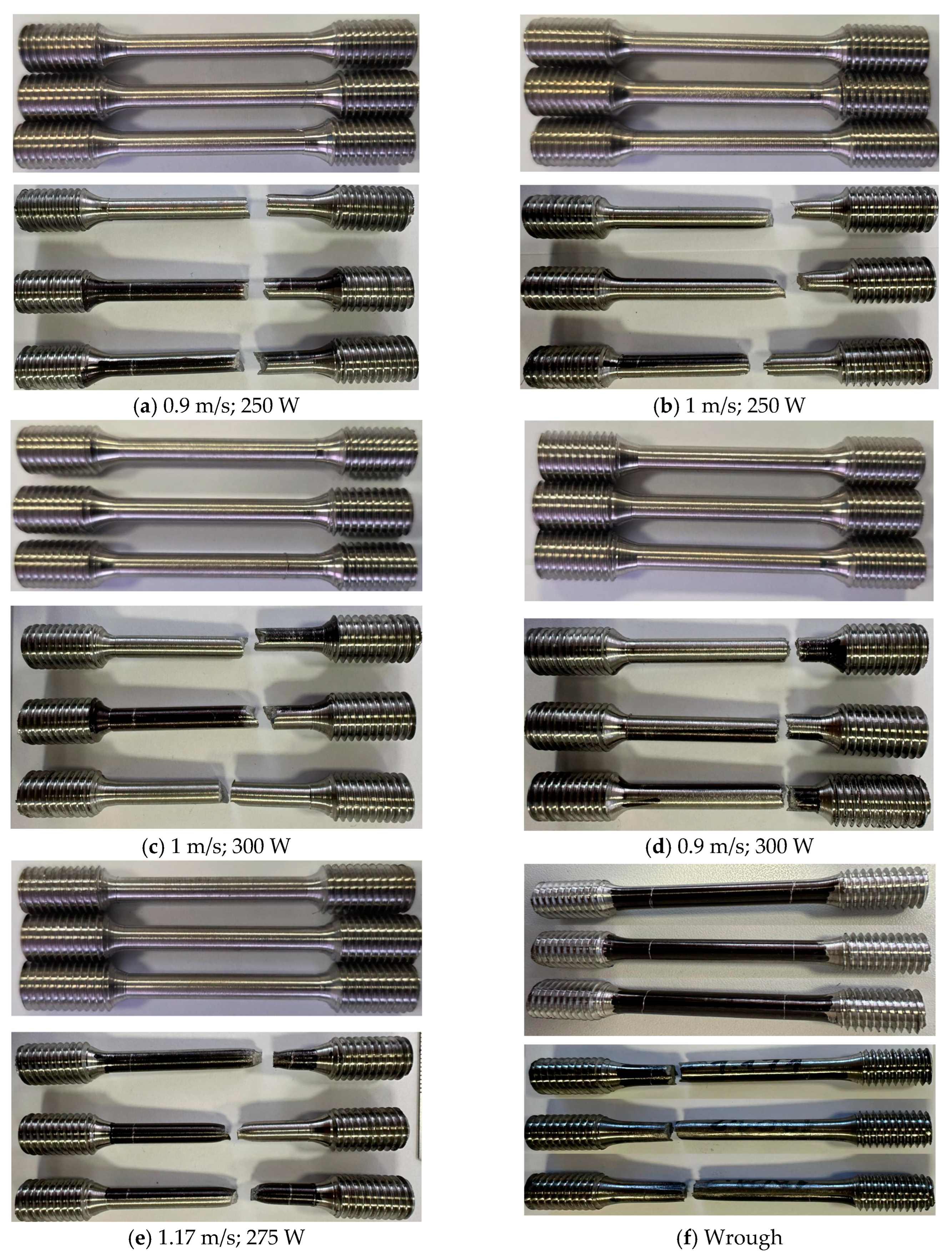
−3). For benchmarking, specimens produced using the manufacturer’s default preset parameters (marked with *) and conventionally processed wrought Ti-6Al-4V were tested under the same conditions. The tensile results are summarized in
Table 10 and graphically presented in
Figure 17, with representative specimens before and after fracture shown in
Figure 18.
Samples fabricated within the optimized parameter window exhibited ultimate tensile strength (UTS) of 1150–1180 MPa and 0.2% yield strength (YS
0.2) of 955–994 MPa. The elastic modulus varied from 107 to 127 GPa, with elongation to fracture between 2.5% and 6.7%, and reduction in area between 3.7% and 9.5%. The elongation to fracture varied between 2.5% and 6.7%. The relatively low elongation is characteristic of LPBF Ti-6Al-4V in the as-built state and is associated with the formation of α′ martensite during rapid solidification. This microstructure is widely reported to reduce ductility and increase brittleness, often yielding elongation values below 10% in the absence of post-processing [
25,
44,
45,
46].
While the strength-related properties (UTS, YS
0.2) remained within a narrow range across samples with similar relative density (~99.4–99.5%), ductility exhibited more substantial variation. These differences can be attributed to process-induced variations in microstructure and localized defect distribution. As Voisin et al. [
44] noted, strain-to-failure in LPBF Ti-6Al-4V is particularly sensitive to porosity location and morphology, even in high-density samples. In the present study, this sensitivity is amplified by the lack of post-build heat treatment and the predominance of brittle α′ martensite.
Laskowska et al. [
47] reported a simultaneous increase in strength and elongation with increased laser power at constant scan speed, consistent with the present findings. Zheng et al. [
18] further demonstrated that scanning strategies can introduce anisotropy in grain morphology and orientation, affecting tensile behavior. Despite comparable strength values, similar scatter in ductility has been extensively documented for as-built LPBF Ti-6Al-4V specimens [
48].
Mitigation strategies to enhance ductility include post-build heat treatments to transform α′ into a more ductile α + β structure, hot isostatic pressing (HIP) to close internal defects, and surface treatments to reduce stress concentrators [
45,
47]. These methods, while effective, were outside the scope of this work, which focused on isolating the intrinsic influence of core processing parameters.
By comparison, the wrought Ti-6Al-4V reference tested in this study showed UTS ≈ 888 MPa, YS0.2 ≈ 888 MPa, E ≈ 111.5 GPa, elongation ≈ 16.2%, and reduction in area ≈ 24.6%. Compared to this baseline, the optimized PBF-LB/M specimens exhibited significantly higher strength but lower ductility, as expected for the as-built condition.
Overall, the tensile results confirm that the identified processing window (VED ≈ 50–60 J·mm
−3) enables the fabrication of highly consolidated Ti-6Al-4V parts that meet or exceed mechanical strength requirements in relevant aerospace and biomedical standards (e.g., ASTM F136–13 [
49], AMS 6932 [
50]).
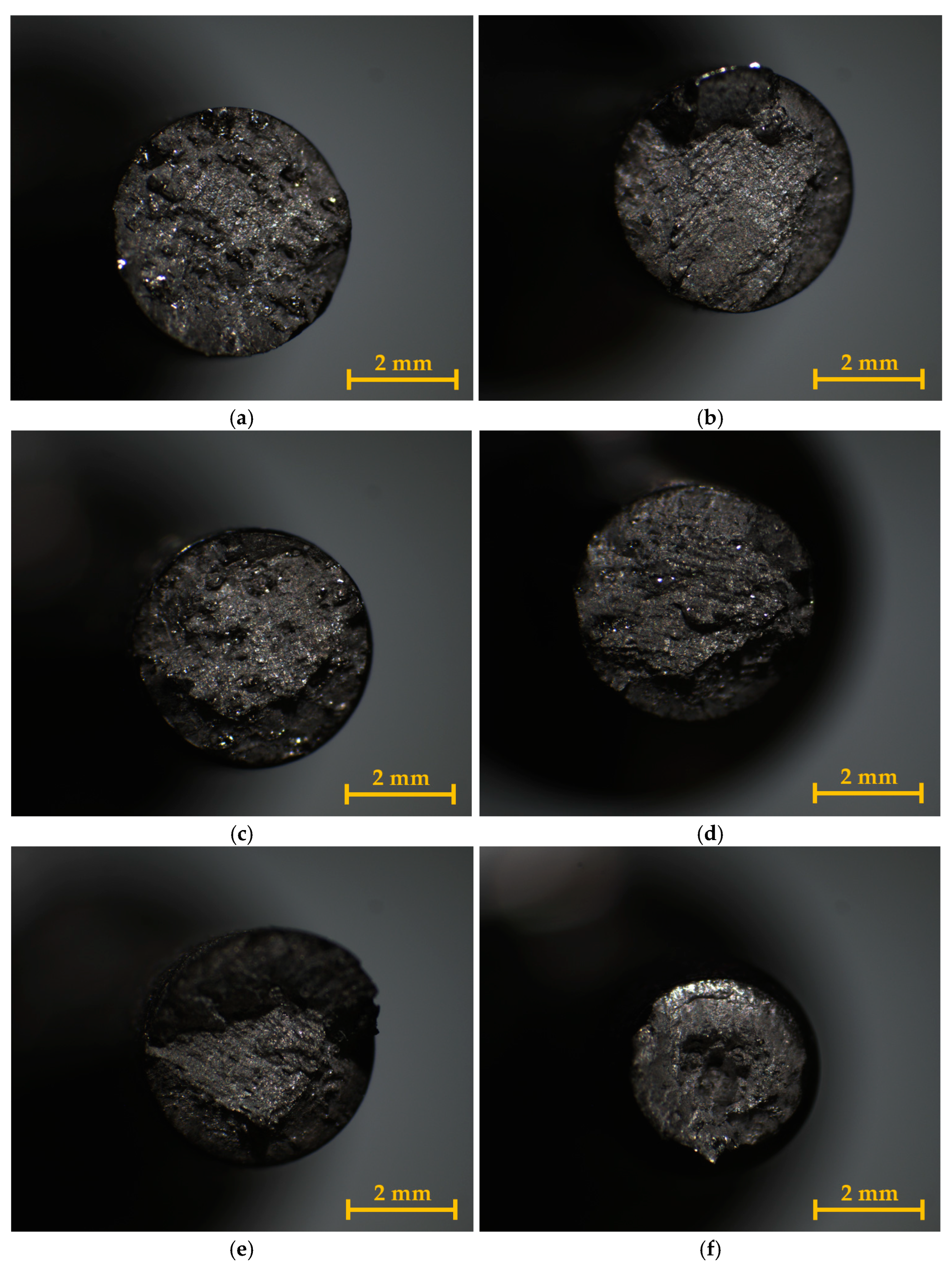
Fractographic analysis (
Figure 19) further supported these observations.
The as-built specimens displayed relatively flat fracture surfaces with minimal necking, indicative of quasi-brittle failure modes. The literature correlates such morphologies with mixed cleavage and shallow dimple features in as-built LPBF Ti-6Al-4V. By contrast, the wrought specimen exhibited a pronounced cup-and-cone profile with extensive necking, consistent with fully ductile fracture behavior (elongation = 16%, reduction in area = 24%) [
48]. The stark difference in fracture morphology between as-built and wrought specimens underscores the limited plasticity of the LPBF-produced parts in the absence of post-processing. Treatments such as annealing and HIP are expected to improve ductility and transition fracture behavior toward that of conventionally processed Ti-6Al-4V [
51].
4. Discussion
All key aspects of as-built part quality—densification, surface roughness, and mechanical performance—were strongly influenced by the PBF-LB/M process parameters. A proper balance between laser power and scan speed was essential for achieving complete melting, stable melt-pool behavior, and reliable interlayer bonding. Within the evaluated process space (constant hatch spacing and layer thickness, no contour scans), a stable processing window was identified at 250–300 W and 0.9–1.0 m·s−1 (VED = 50–60 J·mm−3), yielding near-full densification (99.5%) and minimal internal defects.
Relative density increased non-linearly with energy input. In general, increasing laser power at lower scan speeds enhances heat accumulation and can stabilize melting, which favors consolidation and reduces defect formation [
52]. Densification peaked within the aforementioned VED range, consistent with the literature reports by Buhairi et al. [
9], Pal et al. [
53], Palmeri et al. [
54], who reported similar optimal VED ranges (~55–69 J·mm
−3). In contrast, Liu et al. [
55] demonstrated that the required VED for densification is alloy-dependent, with TA15 requiring VED ~100 J·mm
−3 for 99.7% density. These findings confirm the importance of platform- and alloy-specific process mapping. For comparison with prior reports,
Table 11 summarizes relative density–VED data for as-built LPBF Ti-6Al-4V from the literature.
Porosity measurements followed the same trend as relative density. The pore morphologies (
Figure 11) support the densification results: lack-of-fusion (LOF) defects prevail at insufficient energy input, whereas the optimized window yields near-full consolidation with only sparse, mostly small and rounded pores. At higher energy input, occasional rounded (gas-entrapped/keyhole-like) pores were observed, indicating that the defect population is governed by the specific power–speed combination and melt-pool stability rather than by VED alone. Within the optimized window (250–300 W, 0.9–1.0 m·s
−1), porosity was very low (0.1–0.3%), consistent with near-full consolidation.
The porosity fraction determined from 2D metallographic cross-sections was consistent with the Archimedes-based density results, with small differences attributable to sampling statistics and to the different sensitivity of each approach to open versus closed porosity. Increased scatter in the optical-porosity values (
Figure 9,
Table 6) was observed mainly outside the optimal window, which is expected given the heterogeneous spatial distribution of LPBF defects: localized LOF regions and occasional rounded pores can coexist with comparatively dense areas within the same specimen, leading to field-to-field variability. Overall, the agreement between methods confirms that the VED = 50–60 J·mm
−3 range—achieved predominantly at 250–300 W and 0.9–1.0 m·s
−1—is effective in minimizing internal defects on the investigated system.
Importantly, VED alone did not guarantee identical outcomes: different power–speed combinations yielding similar nominal VED produced distinct consolidation behavior. In practice, low-power/high-speed combinations may remain prone to lack-of-fusion porosity if melt-pool penetration and overlap are insufficient, whereas high-power/low-speed conditions can shift melting toward less stable regimes with increased risk of gas entrapment [
9]. Accordingly, VED is best treated as a first-order screening metric, while process qualification should be based on explicit laser power–scan speed windows validated by defect-sensitive measures (e.g., Archimedes density and metallographic porosity).
Metallographic and SEM–EDS observations further support the densification trends. At low energy input (30 J·mm
−3), insufficient melting and shallow melt pools produced heterogeneous regions with disrupted α′ lamellar continuity and interlayer lack-of-fusion features. In contrast, samples produced within the optimized 50–60 J·mm
−3 VED range exhibited a dense acicular microstructure with a basket-weave morphology inside the prior-β grains, reflecting uniform solidification, effective interlayer bonding, and stable melt-pool dynamics [
25]. SEM–EDS investigations confirmed a predominantly α′/α matrix, with localized β-phase-associated chemical signatures in vanadium-enriched regions. These findings are consistent with earlier reports on as-built LPBF Ti-6Al-4V, where minimal in situ tempering effects are expected at higher energy inputs [
9]. Moreover, the observed microstructural evolution aligns with the results reported by Han et al. [
60], who documented progressive refinement of α′ laths and morphological changes in prior-β grains as the input energy increased.
Surface roughness was likewise governed by energy input and melt-pool stability. The lowest top-surface roughness values (Ra = 4–6 µm) were obtained within the optimized power–speed window, whereas insufficient energy input or excessive scan speed increased (Ra = 10–15 µm) due to incomplete melting, partially fused particle adhesion and balling/spatter-related surface irregularities, consistent with prior reports for Ti-6Al-4V LPBF/PBF-LB/M [
9,
61]. Since contour scans were omitted, the reported values reflect the contribution of the core/hatch parameters to the as-built surface state. In practice, dedicated contour strategies can further reduce roughness, especially on side surfaces, by locally remelting the boundary, albeit at the cost of increased build time. For example, Hassanin et al. [
7] showed that applying a contour scan (outline pass) in combination with an island scanning strategy and optimized parameters (e.g., 175 W, 1914 mm/s, 53 µm hatch spacing) resulted very low surface roughness—approximately Ra = 2.6 µm on top surfaces and 4.3 µm for side surfaces.
Vickers hardness (HV30) provided an additional, bulk-sensitive indicator of build quality and showed a clear dependence on processing conditions. Across the investigated parameter space, HV30 ranged from 220 to 360, increasing with higher energy input and improved consolidation. For example, specimens fabricated at the lowest energy input (VED = 19 J·mm
−3) showed 220–230 HV, while those produced in the optimal range (VED = 50–60 J·mm
−3) reached 350 HV or higher. This trend reflects a dense, predominantly α′-martensitic microstructure, whereas the presence of process-induced defects such as porosity or lack-of-fusion reduces local hardness by promoting localized deformation [
22]. Only minimal hardness anisotropy was observed between the two investigated sectioning planes; the difference between XZ (side) and XY (top) measurements remained within ±10 HV, indicating negligible orientation dependence at the HV30 scale
Overall, the hardness response reflects the combined effect of (i) microstructural strengthening associated with the fine acicular α′ architecture typical of as-built Ti-6Al-4V processed by LPBF/PBF-LB [
25,
35] and (ii) a reduced effective indentation response when residual defects and porosity are present within or near the indentation volume [
25].
Similar hardness values were reported by Uhlmann et al. deformation [
22] (316 HV in the XY plane and 320 HV in the XZ plane), while Gao et al. [
62] measured significantly higher values (374 HV) under different parameters, highlighting the variability across platforms and process windows.
Macro- and microhardness values reported in the literature are summarized in
Table 12. It is important to note that hardness depends not only on microstructure and defect content but also on the applied load—thus, microhardness values (e.g., HV0.5–HV1) are not directly comparable to HV30 measurements. In the present work, the maximum hardness of 360 HV is consistent with a fine acicular α′ microstructure typical of dense LPBF Ti-6Al-4V [
22].
Tensile testing confirmed that optimized PBF-LB/M processing can produce Ti-6Al-4V with high strength in as-built state, comparable to (and in terms of UTS, slightly higher than) typical wrought ranges reported in
Table 12. Specimens manufactured within the optimized window (250–300 W, 0.9–1.0 m·s
−1, VED ≈ 50–60 J·mm
−3) exhibited UTS = 1150–1180 MPa and YS0.2 = 955–994 MPa, with an elastic modulus of 107–127 GPa. These values indicate a well-consolidated material state and fall within the strength range commonly reported for as-built Ti-6Al-4V produced by PBF-LB/M (
Table 12), where high strength is typically associated with a predominantly α′ martensitic microstructure in the absence of post-build heat treatment [
18,
24]. A representative comparison is provided by Gao et al. [
62], who reported UTS = 1230 MPa and YS = 1000 MPa for LPBF Ti-6Al-4V under comparable as-built conditions. At the same time,
Table 12 shows substantial scatter across the literature (including differences in yield strength, UTS and elongation) even under nominally similar as-built state, building direction and Ti-6Al-4V feedstock conditions. This variability is generally attributed to platform-specific thermal histories and scan strategies, differences in powder condition (batch-to-batch variability and reuse), oxygen/interstitial pickup, defect population characteristics (size/shape distribution and location, not only total porosity), as well as specimen preparation and testing methodology [
25]. Therefore, comparisons with the literature are most meaningful when interpreted as physically consistent ranges rather than strict numerical matching to individual studies.
As expected, the increased strength was accompanied by reduced ductility. Within the same optimal window, elongation ranged from ~2.5% to 6.7%, with a reduction in area of ~3.7–9.5%. These values are below typical wrought elongation levels of 10–15% (
Table 12) and are consistent with prior observations for as-built LPBF/PBF-LB Ti-6Al-4V, where limited ductility is commonly linked to α′ martensite, residual stress, and the sensitivity of early plasticity to small defect populations [
18,
44,
57]. The limited ductility is primarily attributed to the predominance of a fine α′-martensitic microstructure formed under rapid solidification and the absence of post-build heat treatment [
3]. Nevertheless, elongation values up to ~6% remain within the spread reported for as-built laser powder bed fusion Ti-6Al-4V (
Table 12) and may be acceptable where strength is the primary requirement. The overall mechanical response is also consistent with the standard minima summarized in
Table 12 (ASTM F3001 [
63], ASTM F2924 [
32], ASTM F136 [
49]), which the present work exceeds in terms of YS
0.2 and UTS.
Fracture observations further support the tensile response. The PBF-LB/M specimens exhibited limited macroscopic necking and relatively flat fracture profiles, consistent with restricted plastic deformation in the as-built state. Similar behavior has been widely reported for as-built PBF-LB/M Ti-6Al-4V and is typically associated with the combined influence of the α′ martensitic microstructure, residual stresses, and process-induced defects, including lack-of-fusion [
24]. After post-processing treatments such as stress relief and/or HIP, the fracture mode typically evolves toward a more ductile morphology as α′ transforms toward an α + β structure and internal pores is reduced or closed [
48]. In contrast, the wrought Ti-6Al-4V reference displayed pronounced necking and a cup-and-cone profile, indicating fully ductile behavior.
The present study is intentionally scoped as a screening process–property map on a single industrial PBF-LB/M platform and a fixed scan strategy, using a single powder batch. As such, it does not capture the full variability introduced by other scan strategies, platform types, powder reuse, post-processing or inter-batch differences. Furthermore, fatigue or fracture toughness testing and three-dimensional porosity quantification (e.g., XCT) were outside the scope of this work. These limitations, while inherent to the study design, do not affect the primary objective of establishing a baseline process–property map under controlled input conditions.
5. Conclusions
This study establishes a platform-specific process map for PBF-LB/M Ti-6Al-4V manufactured on DMG MORI LASERTEC 30 SLM (2nd generation) by systematically varying laser power and scan speed, while maintaining hatch spacing and layer thickness constant. An optimal processing window was identified at 250–300 W and 0.9–1.0 m·s−1, corresponding to a VED of 50–60 J·mm−3. Within this window, near-full densification was achieved, with a relative density of 99.5% and metallographic porosity of 0.1–0.3%.
Within the same window, the as-built material exhibited high mechanical strength UTS = 1150–1180 MPa; YS0.2 = 955–994 MPa), surpassing those of wrought Ti-6Al-4V. The elongation to fracture ranged from 2.5 to 6.7%, reflecting the limited ductility associated with the α′-martensitic microstructure formed under rapid solidification. The corresponding hardness values reached up to 360 HV30.
Pore morphology evolved across the parameter space: irregular LOF defects were dominated at low energy input, while rounded or keyhole-type pores emerged at higher energy input, indicating that defect formation depends on the specific power–speed combination rather than on VED alone. Accordingly, similar VED values, obtained with different power–speed combinations produced different porosity levels and mechanical responses, confirming that VED is a useful first-order descriptor but does not uniquely predict consolidation and part quality. These results underline the need for explicit power–speed process mapping for parameter selection and qualification on a given platform.
By intentionally omitting contour scans, the present dataset isolates the intrinsic effect of core/hatch parameters and provides a controlled baseline for subsequent refinement and model calibration; surface-finish improvements can be addressed through dedicated contour strategies and/or post-processing depending on application requirements.
Overall, this work provides a machine-specific process–property dataset that offers experimentally validated guidance for producing dense and mechanically reliable PBF-LB/M Ti-6Al-4V components and supports future data-driven optimization and inter-platform comparison studies. Future work will directly compare first- and second-generation LASERTEC 30 SLM systems under identical processing parameters to quantify repeatability in density/porosity and mechanical performance and to assess system-specific variability in PBF-LB/M processing.




 ,
,