Article

Fabrication and Characterization of PLA-Based Ceramic Composite Filaments for FDM 3D Printing

Faculty of Materials Engineering and Ceramics, Department of Ceramics and Refractories, AGH University of Krakow, 30 Mickiewicz Av., 30-059 Krakow, Poland
*
Author to whom correspondence should be addressed.
Crystals 2026, 16(1), 46; https://doi.org/10.3390/cryst16010046
Submission received: 6 November 2025 / Revised: 28 December 2025 / Accepted: 29 December 2025 / Published: 9 January 2026
(This article belongs to the Section Crystal Engineering)

Abstract

This study investigated the fabrication and characterization of polylactic acid (PLA)-based ceramic composite filaments for fused deposition modeling (FDM) 3D printing. Boron carbide (B4C) and silicon carbide (SiC) were incorporated into PLA at various weight fractions (1–40 wt. % for B4C and 1–20 wt. % for SiC) to produce composite filaments using a commercial extruder. The rheological properties, thermal stability, and printability of the filaments were evaluated. Filaments with low ceramic content exhibited satisfactory quality, whereas those with higher loadings required reprocessing to improve their dimensional stability and surface morphology. Successful printing was achieved with SiC contents of up to 8 wt. % using single-extruded filaments and up to 20 wt. % using double-extruded filaments. Rheological tests revealed that filaments with low ceramic content exhibited shear-thinning behavior, whereas those with higher loadings displayed nearly Newtonian-like behavior. Thermal analysis using thermogravimetric analysis (TGA) and differential scanning calorimetry (DSC) determined the optimal processing temperature range for the composite filaments to be between 200 °C and 270 °C. High-temperature microscopy was used to study the temperature behavior of the B4C-containing filaments and set the optimum printing temperature. The results demonstrate the feasibility of producing PLA-based ceramic composite filaments for FDM 3D printing with the potential to tailor the thermal and functional properties of the printed parts for specific applications.

1. Introduction

Currently, materials are being sought, and their properties and applications are expected to advance technology, industry, and science. Additive manufacturing (AM) is an important technology. This is a relatively new method for manufacturing materials using computer modeling. This allows the printing of geometrically complex shapes. This is particularly true for ceramics, for which previous molding methods were difficult and time-consuming. Combining the advantages of ceramics with the flexibility of 3D printing can yield products with unusual mechanical, thermal, and functional properties that can be tailored to specific applications [1].
Boron carbide (B4C) and silicon carbide (SiC) are materials for 3D printing that may be of particular interest. They combine the unique properties of this compound, such as its hardness, abrasion resistance, and low density, with technological opportunities [2,3,4,5,6].
Combining materials with unusual properties with rapidly advancing additive technology contributes to making life easier and improves the areas of the industry. In this study, we focus on the most common 3D printing method, fused deposition modeling (FDM) [7,8,9,10], and its use in the development of modern materials involving boron carbide (B4C) and silicon carbide (SiC) for 3D printing.
This study examines the possibilities of producing and using PLA-based compounds with boron carbide or SiC additives as filaments for 3D printing using the fused deposition modeling (FDM) method. Compounds containing various proportions of B4C (1–40% by weight) and SiC (1–20% by weight) were examined. The rheological properties, thermal stability (TGA and DSC analyses), and printability of the fibers were evaluated. The thermal softening properties of fibers containing boron carbide were investigated using high-temperature microscopy. The results show the possibility of producing PLA-based ceramic composite fibers for 3D printing using the FDM method, with the potential to adapt the mechanical, thermal, and functional properties of printed parts to specific applications.

2. Materials and Methods

2.1. Raw Material Mixture Preparation

Commercially available silicon carbide (D50, abcr GmbH, Karlsruhe, Germany) with an average grain size of 2 μm and boron carbide (Grade HS, HC) (STARCK) with a grain size below 1.2 μm were used as ceramic phases in these studies. Transparent polylactic acid (PLA) (Ingeo Biopolymer 4043D, NatureWorks (Plymouth, MN, USA)) was used as the composite binder. The compositions of the powder mixtures used for preparation are listed in Table 1. Mixtures with different ceramic phase contents (SiC 1 wt. %–20 wt. %, B4C 1 wt. %–40 wt. %) were prepared in a ball mill for one hour, where PLA granules acted as the grinding medium [11,12]. Commercially available silicon carbide and boron carbide powders were used as ceramic components in this study. Silicon carbide, sourced from abcr GmbH, had an average grain size of 2 μm (D50), whereas boron carbide obtained from H.C.Starck (Munich, Germany) was of Grade HS quality. Transparent polylactic acid (PLA), specifically Ingeo Biopolymer 4043D from NatureWorks, was used as the composite binder. Powder mixtures were prepared with varying ceramic phase contents, ranging from 1 wt. % to 20 wt. % for silicon carbide and 1 wt. % to 40 wt. % for boron carbide. The experimentally determined values of maximum ceramic phase content in mixtures allowed us to obtain mixtures and filaments suitable for analysis—they achieved the required degree of homogeneity and printability. The compositions are listed in Table 1.
The preparation of the powder mixtures involved a unique ball milling process. Instead of using conventional grinding media, PLA granules were employed as the grinding medium during the one-hour ball milling process. As referenced in previous studies [11,12], this innovative approach is likely to serve multiple purposes. This ensures thorough mixing of the ceramic powders with the PLA binder while simultaneously reducing the risk of contamination that might occur with traditional grinding media. Additionally, this method may contribute to a more uniform distribution of ceramic particles within the PLA matrix, potentially enhancing the overall properties of the resulting composite material.

2.2. Filament Fabrication and 3D Printing (FDM and 3D Pen)

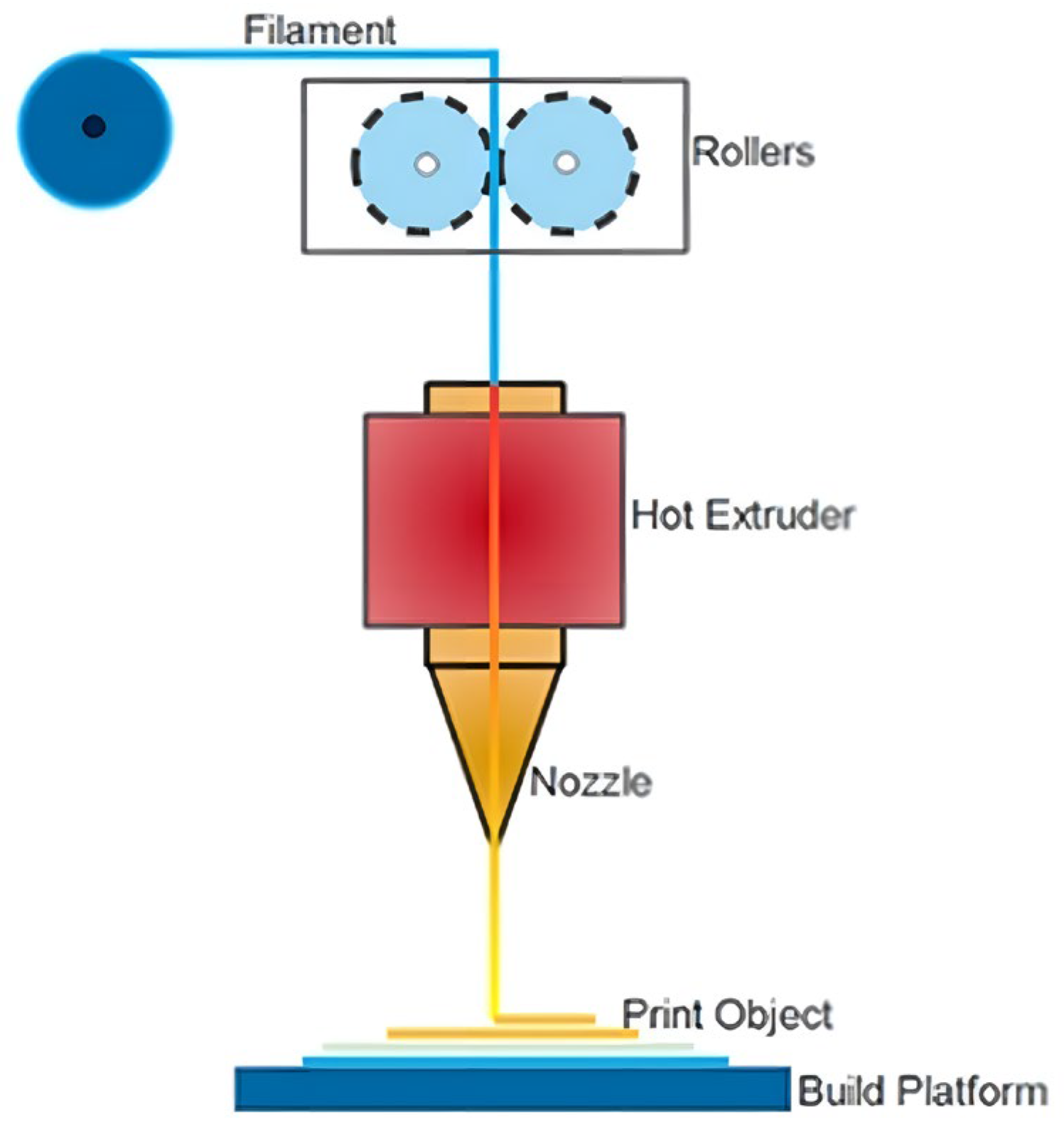
Filaments from the obtained polymer–ceramic mixtures were produced using a commercial extruder (3Devo Filament Maker ONE). When the filaments exhibited dimensional inconsistencies or surface roughness, they were mechanically processed using a saw (Dremel MS20-1/5, (Mount Prospect, IL, USA) and subsequently remelted to improve the quality. The printed models were designed using the 3D Rhino 8 software and subsequently exported to G-code using PrusaSlicer (Prague, Czech Republic). The composite filaments were printed using a commercial 3D printer (Prusa MK3S+, Prague, Czech Republic) and 3D pen (3Doodler Flow, WobbleWorks, Inc.; Boston, MA, USA) [11,12]. A schematic of the printing system is shown in Figure 1.

2.3. Filament Manufacturing and FDM Printing

The rheological properties of the molten composite filaments were analyzed using a rheometer (Anton Paar MCR 301, Anton Paar GmbH; Graz, Austria). Viscosity is the tendency of a fluid to resist flow and is defined as the relationship between shear stress and shear rate [14].
η = τ γ
where
η —dynamic viscosity [ P a · s ];
τ —shear stress [Pa];
γ —shear rate [ s 1 ].
Thermal analysis of the prints was conducted using differential scanning calorimetry (DSC) and thermogravimetric (TG) analysis using a thermal analyzer (NETZSCH STA 449F3 STA449F3A-0206-M, NETZSCH-Gerätebau GmbH; Selb, Germany) [11,12].
The thermal softening process was monitored using a high-temperature microscope. The test was performed on filaments using only boron carbide additives [15].

3. Results

3.1. Mixing Process

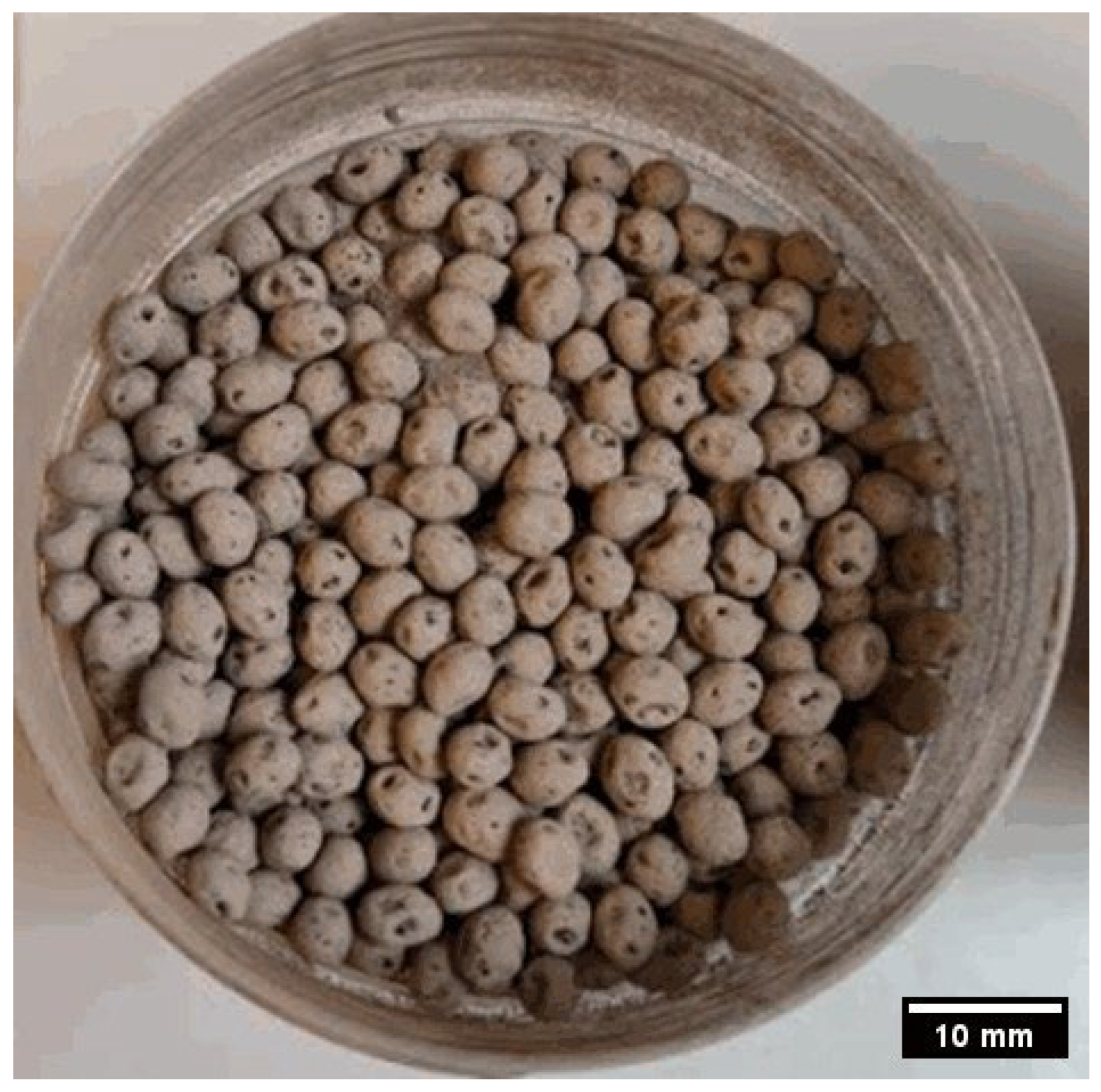
The preparation of polymer–ceramic mixtures with excellent homogeneity is crucial for obtaining high-quality filaments suitable for 3D printing. In both the SiC–PLA and B4C–PLA systems, at low concentrations of the ceramic phase, the mixing process resulted in a satisfactory dispersion of the reinforcing particles (Figure 2). A similar yet slightly modified mixing approach was employed in [16], where a DCM-based mixture was added to the ceramic powder and PLA granules. The purpose of this addition is to enhance the adhesion of ceramic particles to the polymer surface. Prior to filament fabrication, the material was thoroughly dried to ensure its stability. However, in mixtures with a higher ceramic content (above 10%), ceramic powder separation increased, which had a significant impact on the subsequent processing of the samples.

3.2. Filament Extrusion

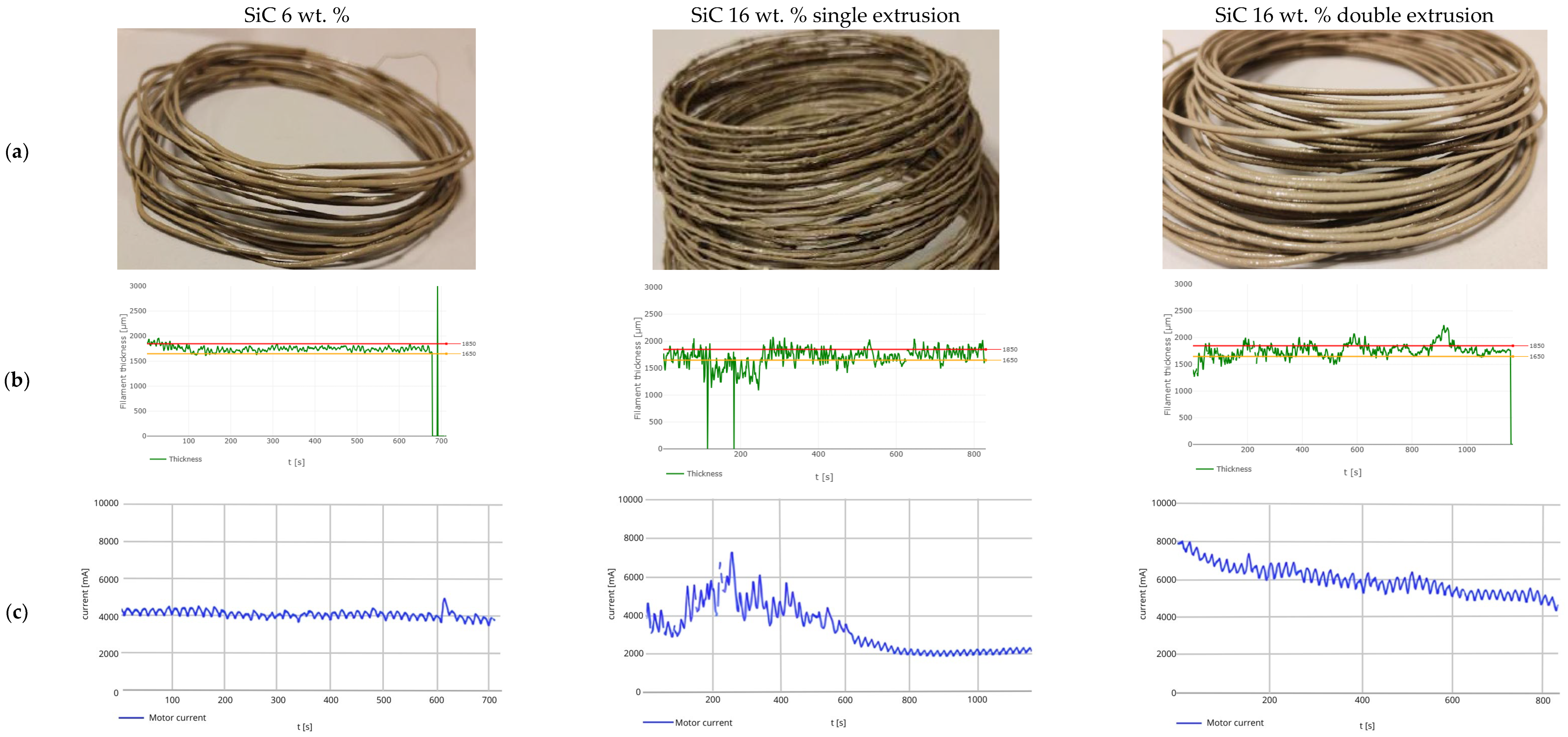
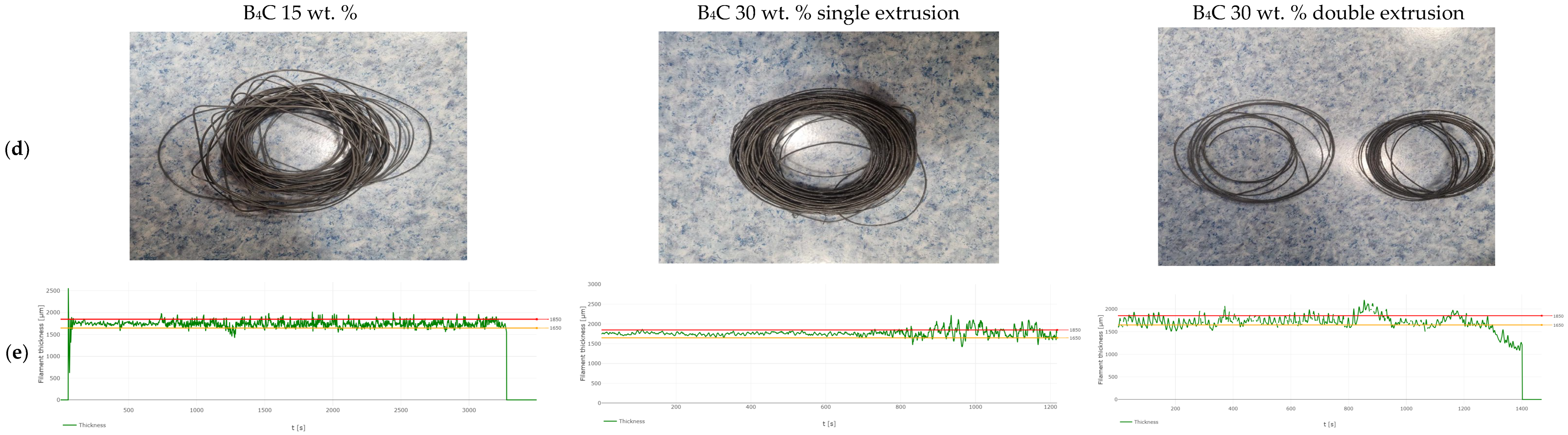
Extrusion parameters such as the heating temperature in individual zones, screw rotation speed, and filament winding rate are critical factors in determining the quality of the extruded filament. To obtain high-quality filament with a diameter of 1.75 mm ± 0.1 mm, the heating temperatures were set in the range of 170 to 190 °C, and the screw speed was maintained at 3–4 RPM. The values of those parameters were selected based on the previous experiments. For filaments reinforced with SiC and B4C powders at low weight fractions, the resulting fibers exhibited satisfactory quality in terms of dimensional stability and surface morphology. However, as the concentration of loosely bound SiC and B4C particles increased, filament diameter fluctuations became more pronounced. This effect was attributed to the formation of ceramic agglomerates within the polymer matrix, which led to surface roughness in filament geometry. A similar effect was observed in [17], where, despite the use of polylactic acid (PLA), which was further milled into finer fractions, the surface texture of filaments containing approximately 20 wt. % of ceramic filler also exhibited significant roughness. Unfortunately, the filaments produced in this manner exhibit significant limitations in practical applications owing to pronounced processing issues. Consequently, filaments containing more than 8 wt. % SiC were selected for reprocessing. The material was first cut into 1–2 cm segments and subsequently subjected to a second extrusion cycle. The filaments obtained after double extrusion exhibited markedly improved surface texture and dimensional stability, which significantly enhanced their potential for use in 3D printing. The results for these cases are presented in Figure 3. Despite the improved filament quality, the reprocessing route introduced additional complications in the fabrication process, primarily owing to clogging of the screw extruder. This was attributed to the altered geometry and packing behavior of the reprocessed feedstock.

3.3. Additive Manufacturing

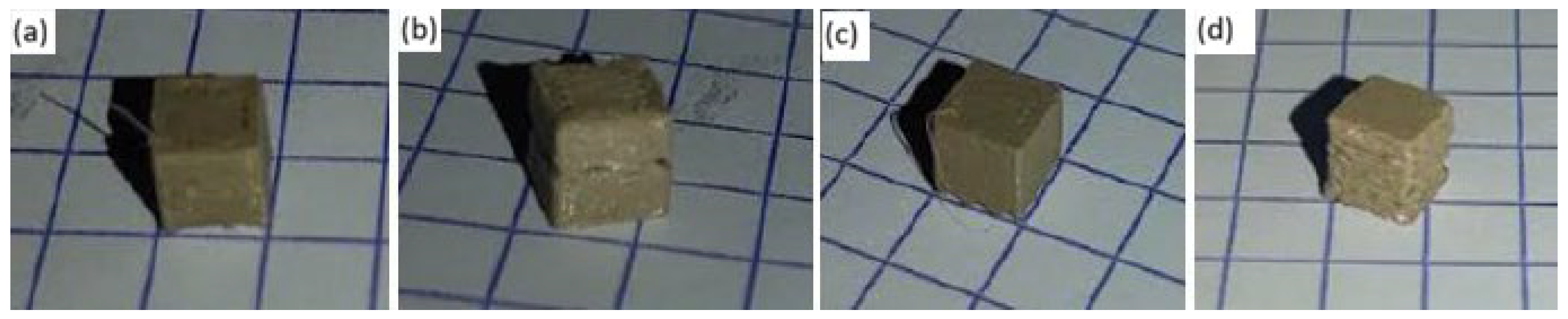
Printing parameters such as nozzle temperature, bed temperature, printing speed, nozzle diameter, and quality of the supplied filament play a crucial role in determining the printability and final quality of the printed objects. For SiC-reinforced composite filaments, the optimal printing conditions were determined to be a nozzle temperature of 225–235 °C, bed temperature of 60 °C, nozzle diameter of 0.6 mm, and printing speed set to approximately 90% of the maximum. The values of those parameters were selected based on the previous experiments. Using filaments obtained through a single extrusion process, successful printing was achieved with SiC contents up to 8 wt.%. However, attempts to print with a higher ceramic content resulted in unsatisfactory outcomes, primarily owing to the frequent clogging of the nozzle and hot end caused by SiC agglomerates (Figure 4). In agreement with [18], which emphasized that minimizing the surface roughness of 3D-printed parts is a critical aspect of print quality control, efforts were made to address the observed issues through targeted modifications of the process. To overcome these limitations and enable printing with an increased ceramic phase content, the filament was subjected to secondary extrusion. This approach allowed for the successful printing of filaments containing up to 20 wt. % SiC, while maintaining, or in some cases even improving, the surface quality of the printed components. The results for both the sample groups are shown in Figure 5. The surface roughness of the prints containing ceramic powder was noticeably higher than that of parts fabricated from pure PLA. A contrasting scenario was reported in [19], where the addition of metallic powder led to a reduction in surface roughness. This improvement was attributed to changes in the thermal expansion coefficient, which likely influenced the solidification behavior and surface finish during the printing process. The printing parameters of SiC-reinforced composite filaments significantly affect the printability and quality of the final objects. Optimal conditions were established at a nozzle temperature of 225–235 °C, bed temperature of 60 °C, nozzle diameter of 0.6 mm, and printing speed of approximately 90% of the maximum. Single extrusion filaments allowed successful printing with SiC contents of up to 8 wt. %, but higher ceramic content led to nozzle clogging due to SiC agglomerates. To address this limitation and improve the print quality, a secondary extrusion process was implemented, enabling successful printing of filaments with up to 20 wt. % SiC content while maintaining or enhancing surface quality.
The surface roughness of prints containing ceramic powder was notably higher than that of the pure PLA parts. This observation contrasts with findings reported for metallic powder additions, where surface roughness decreased owing to changes in thermal expansion coefficients affecting solidification behavior and surface finish. The difference in outcomes between ceramic and metallic additives highlights the complex interplay between material properties and printing parameters in determining the final quality of 3D-printed objects. These findings underscore the importance of tailoring printing processes and parameters to specific material compositions to achieve optimal results in the AM of composite materials. A ‘successful print’ means that the printing process ran smoothly without any technical issues, especially without clogging the nozzle or hot end, and that the resulting part had an acceptable surface quality, particularly in terms of roughness.

3.4. Rheological Tests

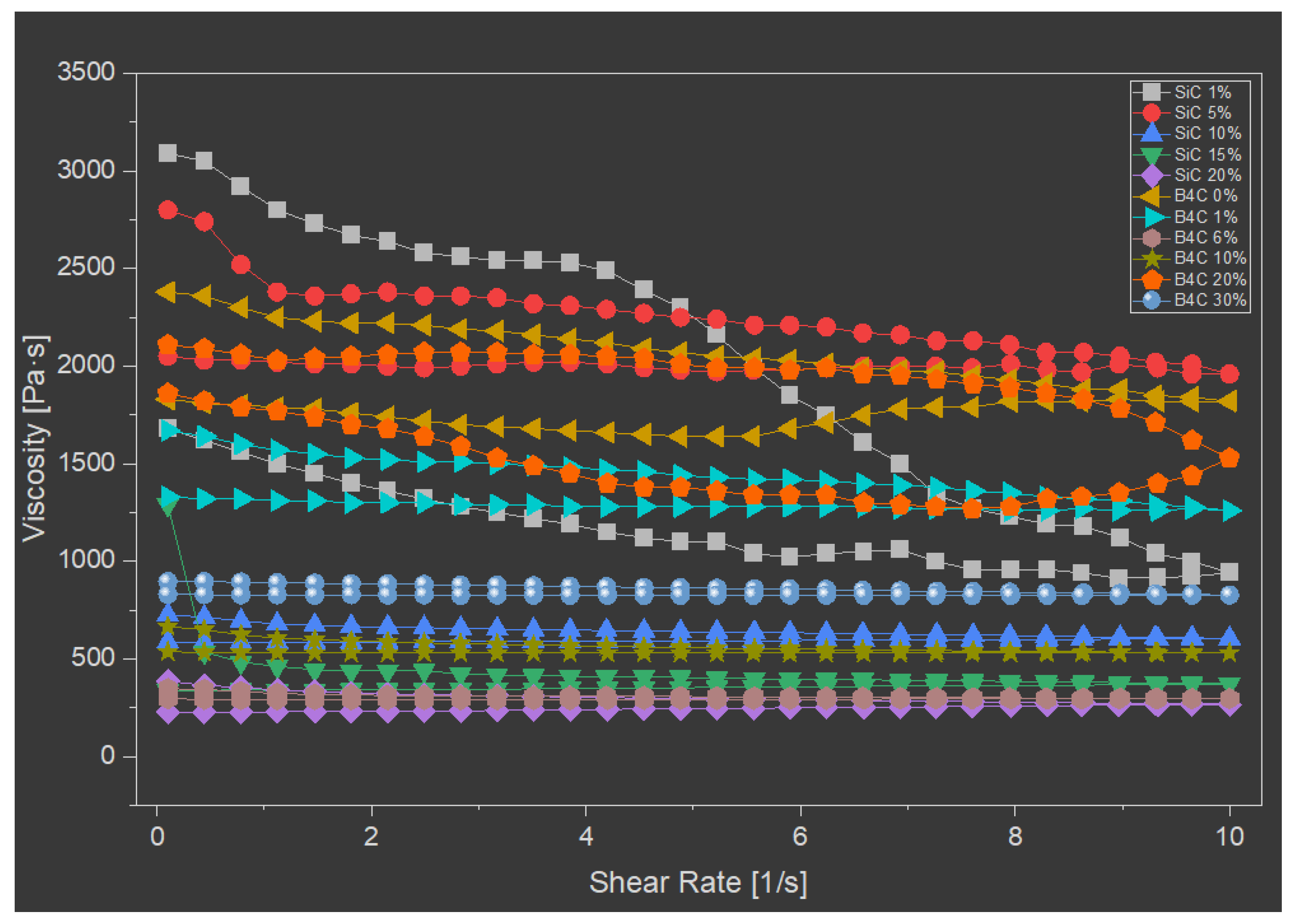
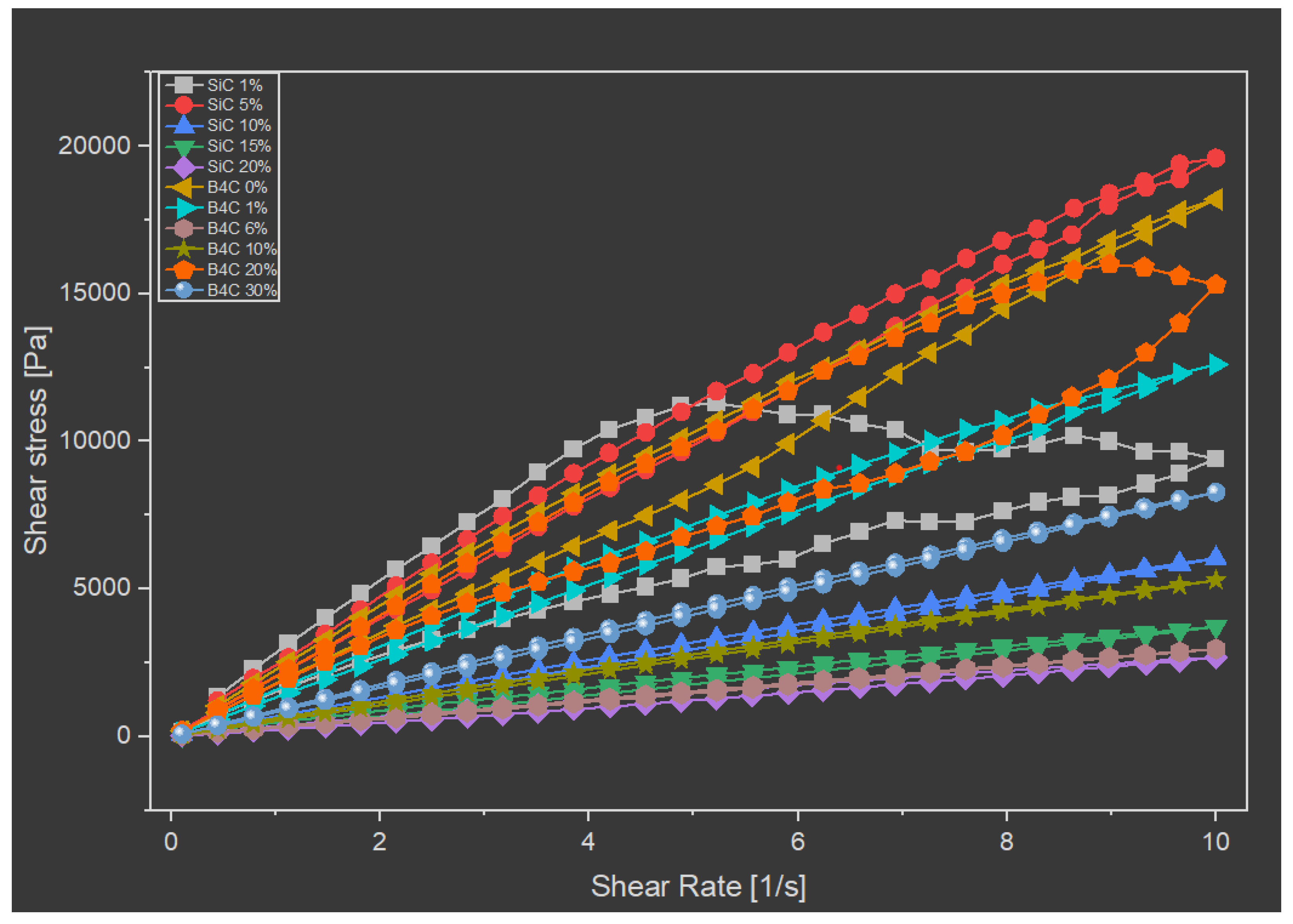
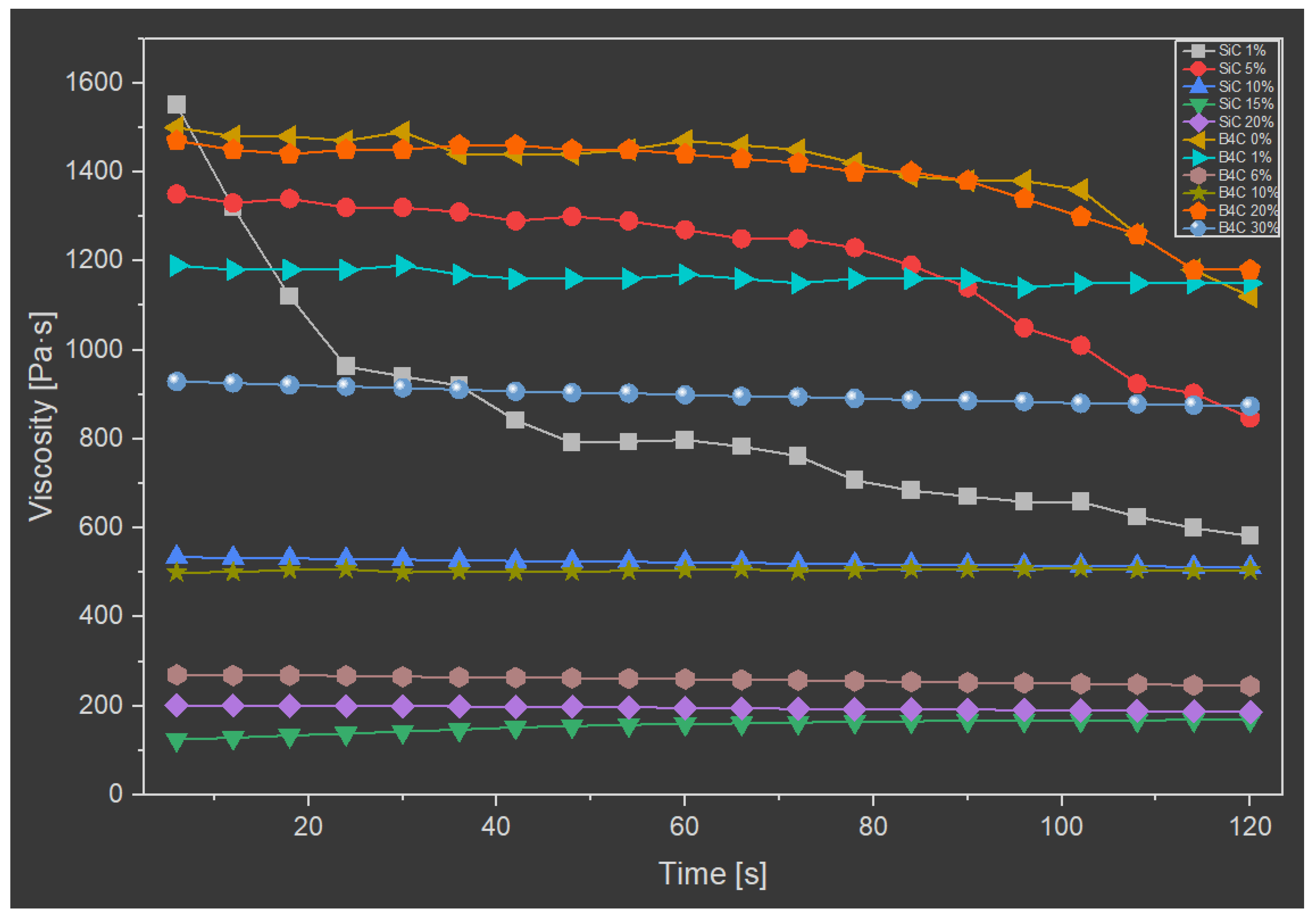
Understanding key parameters, such as the viscosity of composite filaments, the flow behavior of the molten material, and the determination of melting temperatures, is essential for addressing the challenges encountered during filament extrusion and subsequent 3D printing processes [20].To achieve high-quality prints using thermoplastic materials, it is highly desirable for molten polymers and composites to exhibit shear-thinning behavior, which facilitates smooth flow during extrusion and precise layer deposition [21]. Based on the rheological investigations presented in Figure 6 and Figure 7, it can be observed that filaments containing up to 5 wt. % silicon carbide exhibits significantly higher viscosity than those with a higher ceramic phase content. A similar trend is evident in the flow behavior of the molten composites: samples with low SiC content behave like typical thermoplastic materials, displaying shear-thinning characteristics, whereas those with higher ceramic loadings (above ~10 wt. %) tend to exhibit nearly constant viscosity regardless of the applied shear rate, indicating a transition toward Newtonian-like behavior. As shown in Figure 8, filaments with a higher ceramic fraction demonstrated greater rheological stability, which may translate into improved processability during extrusion and printing. Both trends appeared to be consistent with the filament production method: the samples subjected to double extrusion showed reduced viscosity, most likely owing to a more uniform dispersion of the ceramic phase within the polymer matrix. The change in the flow characteristics observed in the filaments with a higher SiC content may result from exceeding a critical composite reinforcement threshold, beyond which the ceramic particles form a continuous or semi-continuous structure that prevents the polymer matrix from behaving like a conventional thermoplastic melt. The measurements were carried out for each share on a representative group of 10 sets. The experimental error was less than 5%, which can be considered negligible.
The results of the thermal analysis of the boron carbide were similar. The samples with boron carbide contents of 1, 6, 10, 20, and 30 wt. % were tested. The samples with boron carbide contents of 10, 20, and 30 wt. % were tested after being remelted twice, while the 1 and the 6 wt. % samples were single-melted. The measurements were carried out for each share on a representative group of 10 sets. The experimental error was less than 5%, which can be considered negligible.
Figure 6 and Figure 7 clearly show higher viscosity and shear stress values for the samples after double remelting. The 1 wt. % boron carbide sample, despite the slight addition of ceramics, showed a lower viscosity than the 20 wt. % sample. The 6 wt. % carbide sample exhibited the lowest viscosity and deformation properties after a single remelting process.
After melting, the filaments exhibited the lowest viscosities. After double melting, the samples showed higher viscosities than those of the single-melted materials. In Figure 6 (for analyzed PLA/B4C compositions), the lowest viscosity and deformation properties were observed for the 6 wt. % carbide sample after a single melt.
Measurements were carried out for mixtures containing higher proportions of the ceramic phase after single extrusion, but their results were arbitrarily deemed not to meet the specified requirements, and in terms of value, they differed significantly from the values obtained for lower proportions of ceramic phases. Only the use of double extrusion allowed values comparable to those obtained for single extruded mixtures with lower ceramic phase content to be obtained. Among the insufficient parameters arbitrarily defined as ‘insufficient’ was homogeneity determined by visual observation—after single extrusion, the samples with a higher proportion of ceramic phases showed significantly lower homogeneity than samples after single extrusion.
It should be noted that there is no direct correlation between viscosity and nozzle clogging. The apparent relationship is mainly due to the design of the machine and its tendency to clog at specific ceramic phase contents, and is not related to viscosity.

3.5. Thermal Analysis

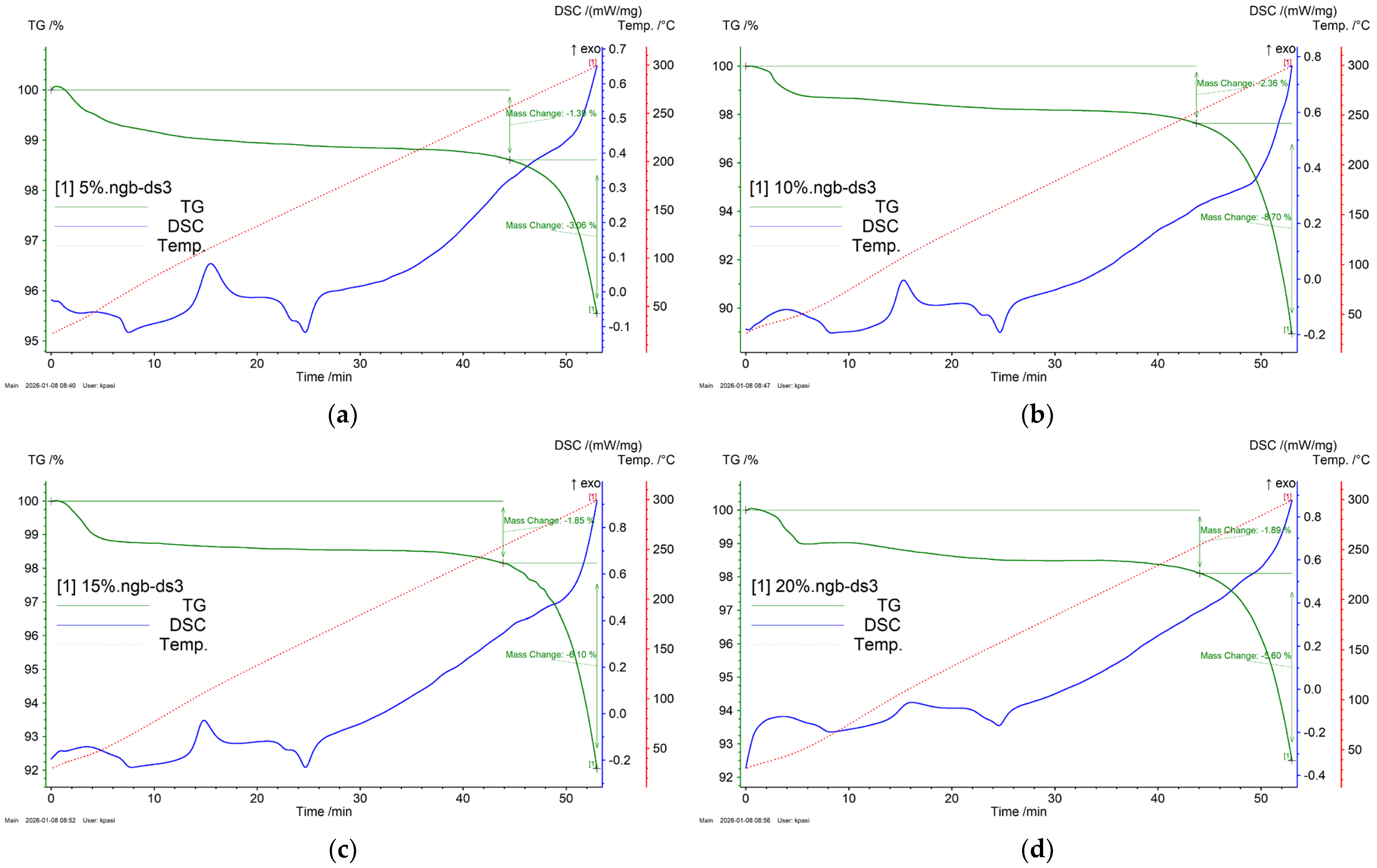
Following the successful fabrication of the 3D-printed models, thermal analysis was conducted to verify the adequacy of the temperature parameters applied during processing. Thermogravimetric analysis (TGA) was performed to evaluate the thermal stability of the polymer matrix and determine the onset of material degradation [22]. Differential scanning calorimetry (DSC) was used to assess the melting and glass transition temperatures and estimate the degree of crystallinity of the composite materials [23]. As illustrated in Figure 6, during the thermal analysis, the key parameter for interpreting the thermogravimetric (TGA) curves was the change in mass. By identifying the temperature range in which mass loss remains minimal or nearly constant, it is possible to determine whether a given composite material can be considered thermally stable. Above 270 °C, all the tested filaments exhibited pronounced mass loss, corresponding to the onset of polymer degradation. By comparing the TGA curves of the filaments with varying SiC contents, it can be concluded that the thermal stability window for the PLA/SiC composite filaments lies between 200 and 270 °C. This experimentally determined stability range is consistent with previously reported values for polymer–ceramic filaments presented in [22]. Analysis of the DSC curves revealed progressive suppression of thermally induced transitions, such as PLA crystallization and melting, with increasing ceramic phase content. This observation suggests that the ceramic filler interferes with the chain mobility of the polymer matrix, thereby affecting its thermal transition. The measurement results were recorded in a dedicated programme which automatically generated a graph.
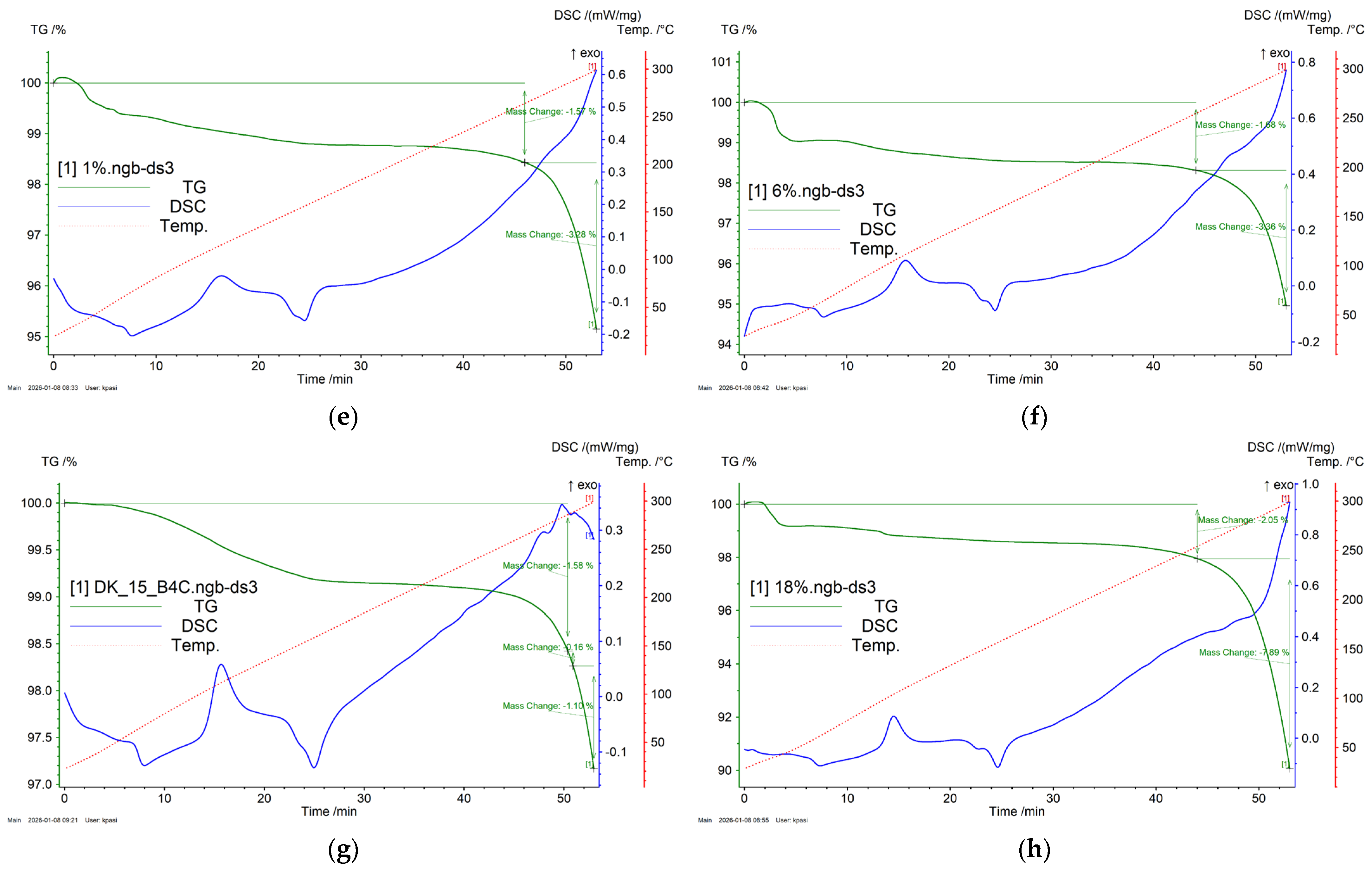
In Figure 9e,f, a decrease in the weight of the samples to 95% of their original weight was observed. The measurement of lower percentages of boron carbide had a higher variability than the measurement of samples with higher percentages of boron carbide.
The highest mass loss at high measurement temperatures can be seen in Figure 9 (g) and (h) in the samples with 15 and 18 wt. % boron carbide content. In these two cases, the curve is clearly flattened. At approximately 290 °C, a drastic jump was noticeable, suggesting an oxidation reaction of boron carbide [24]. The highest mass stability was observed for the samples in the temperature range 260–270 °C [25,26,27]. The higher mass-loss variability observed for the samples with a lower B4C content results from the larger fraction of PLA phase, which is inherently more sensitive to small differences in moisture uptake, decomposition pathways, and mixing uniformity. Because B4C is thermally stable and essentially inert in the tested temperature range, its reduced proportion amplifies the relative impact of these fluctuations on the TG signal. In the samples with a higher B4C content, the ceramic phase effectively stabilizes the thermal response by limiting both the absolute and relative amount of volatile material. Consequently, minor sample-to-sample differences produce significantly larger mass-loss deviations when the B4C fraction is low [28,29].

3.6. Determining the Optimal Printing Temperature

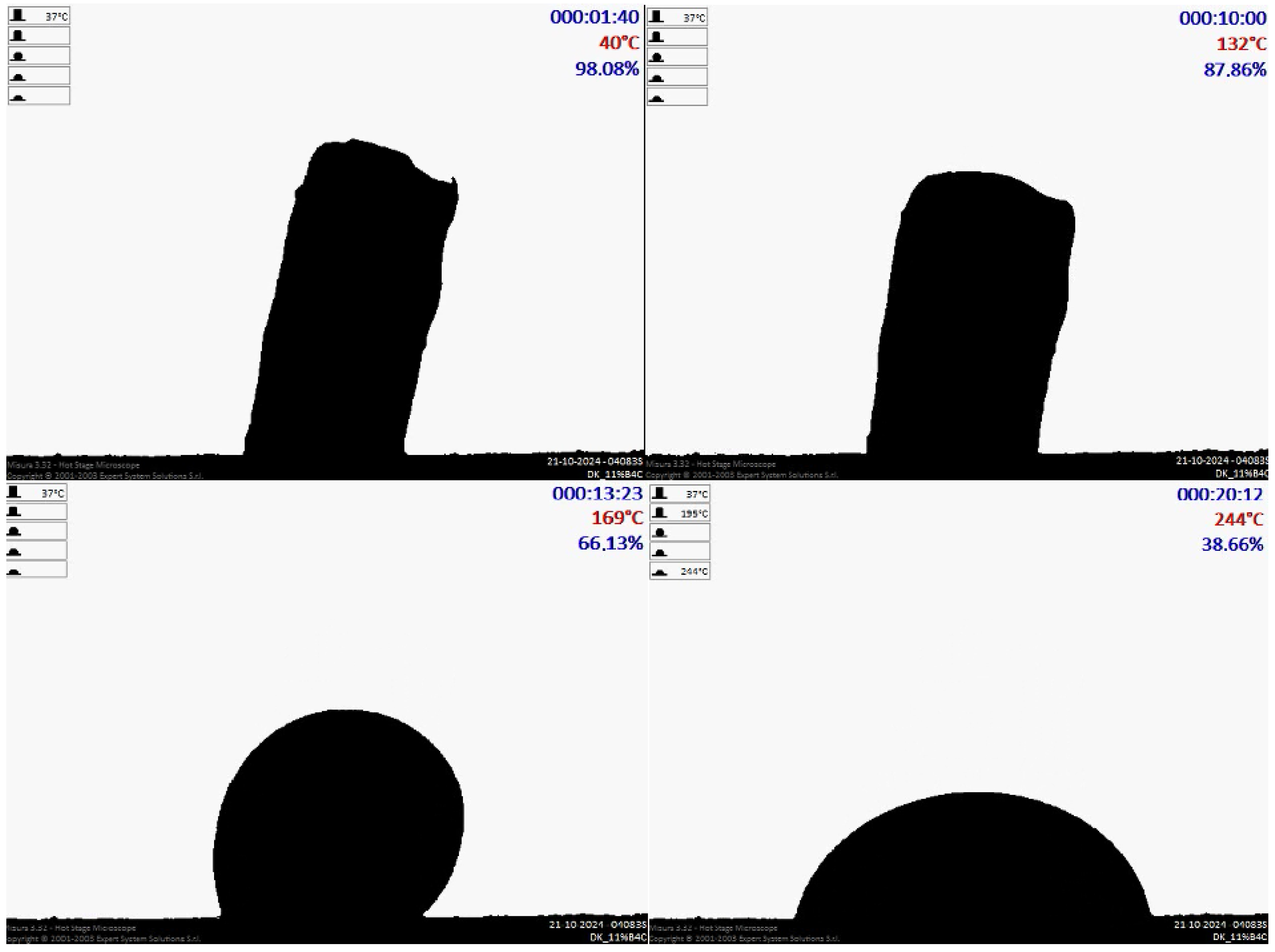
High-temperature microscopy allowed the shape of the samples to be studied as the temperature was increased. By increasing the temperature, the shape of the sample changed, making it possible to determine the characteristic temperatures of the firing curve [15]. The test was performed using a high-temperature microscope in the temperature range of 25–250 °C only for the boron carbide samples, which provides valuable insights into the behavior of materials under varying thermal conditions. As the temperature increased, the samples underwent morphological changes that could be observed and analyzed. This technique is particularly useful for determining the characteristic temperatures of the firing curve, which are critical points in the thermal behavior of the material [15]. These temperatures may include the initial deformation, softening, hemispherical, and flow temperatures, each representing a specific stage in the response of the material to heat.
For the boron carbide samples, high-temperature microscopy tests were conducted within a specific temperature range of 25–250 °C. This range was chosen to capture the relevant thermal transitions of boron carbide without exceeding its thermal stability limits (Figure 10). By observing the shape changes of boron carbide samples throughout this temperature range, researchers can gain a deeper understanding of their thermal properties, phase transitions, and potential applications in high-temperature environments. This information is crucial for optimizing the processing and use of boron carbide in various industrial and technological applications. The results of the analyses carried out for the PLA/SiC mixtures showed similar values and trends to those presented in the analyses for PLA/B4C mixtures. For this reason, to reduce the number of graphs and tables, only the results for the PLA/B4C system are presented, but the results for the second group of PLA/SiC mixtures showed a similar trend.
In this study, thermal softening temperature was used to determine the optimum extrusion parameters for the filaments. Similarly to the TG and DSC measurements, the results varied depending on carbide content.
In the summary of characteristic temperatures in Table 2, we noticed a significant decrease in the thermal softening temperature for 11%, 13%, and 17% content.

4. Summary and Conclusions

This study investigated the fabrication and characterization of polylactic acid (PLA)-based ceramic composite filaments containing boron carbide (B4C) and silicon carbide (SiC) for fused deposition modeling (FDM) 3D printing. Composite filaments with various weight fractions of B4C (1–40 wt. %) and SiC (1–20 wt. %) were produced using a commercial extruder. The rheological properties, thermal stability, and printability of the filaments were evaluated.
  • Boron and silicon carbide affect the brittleness of the filaments, making them considerably more difficult to print. Printing requires higher temperatures than pure PLA extrusion to produce ceramic-containing filaments.
  • The viscosity of the fabricated filaments was investigated to optimize the printing parameters. During the analysis, two groups of samples were distinguished according to multiple remelting of the filaments. In the case of B4C additives, rheological tests clearly indicated a higher viscosity of the double-melted filaments than that of the single-melted filaments. Single-melted filaments exhibit a lower viscosity than pure PLA. The opposite was observed for the SiC samples.
  • Thermal analysis using TG measurements and high-temperature microscopy was used to determine the optimal FDM processing conditions. The results indicated that the optimal printing temperature range for the analyzed ceramic composite filaments is 200–270 °C, with the highest thermal stability observed up to approximately 260 °C.
  • As the proportion of ceramic increased, the oxidation reaction of boron carbide to heavier boron oxide (B2O3) and the simultaneous evaporation of the polymer intensified, resulting in cumulative weight loss. This can have a negative impact on printing at elevated temperatures, causing shape distortion, the occurrence of voids, and disruption of layer connections during printing.
The results demonstrated the feasibility of producing PLA-based ceramic composite filaments for FDM 3D printing with tailored thermal and functional properties for specific applications.

Author Contributions

Conceptualization, D.K.; methodology, D.K. and Ł.W.; software, D.K. and D.S.A.; validation, D.K. and Ł.W.; formal analysis, D.K., K.M. (Krzysztof Malata), Z.K., K.M. (Krystian Misieńko), J.D., W.B., Z.S., A.W. and Ł.W.; investigation, D.K., K.M. (Krzysztof Malata), Z.K., K.M. (Krystian Misieńko), J.D., W.B., Z.S., A.W., D.S.A. and N.P.O.; resources, W.B., Z.S. and Z.P.; data curation, Z.S.; writing—original draft preparation, K.M. (Krzysztof Malata), Z.K. and K.M. (Krystian Misieńko); writing—review and editing, Z.P.; visualization, D.K. and Z.P.; supervision, Z.P.; project administration, D.K.; funding acquisition, D.K. All authors have read and agreed to the published version of the manuscript.

Funding

Procedure Supporting the Hiring of the Best Candidates for the Positions of Assistant, Associate and Professor of the University HABILITATION PACKAGE -Edition II-A number 9679 (principal investigator Dawid Kozień). The work was carried out in the framework of “Excellence Initiative—Research University” by the AGH University of Krakow, project ID:12256. This research was supported by a grant from the National Center for Research and Development (LIDER XIII; Grant No. 0024/L-13/2022). This research was funded by the National Science Centre, Poland (NCN), grant number 2024/55/D/ST11/02206, entitled “Additive forming of gas turbine blades based on boron carbide and intermetallic additives for applications in the aerospace and energy industries”.

Data Availability Statement

The data presented in this study are available on request from the corresponding author.

Conflicts of Interest

The authors declare no conflicts of interest.

References

  1. Hassanin, H.; Essa, K.; Elshaer, A.; Imbaby, M.; El-Mongy, H.H.; El-Sayed, T.A. Micro-fabrication of ceramics: Additive manufacturing and conventional technologies. J. Adv. Ceram. 2021, 10, 1–27. [Google Scholar] [CrossRef]
  2. Pelz, J.S.; Ku, N.; Shoulders, W.T.; Meyers, M.A.; Vargas-Gonzalez, L.R. Multi-material additive manufacturing of functionally graded carbide ceramics via active, in-line mixing. Addit. Manuf. 2021, 37, 101647. [Google Scholar] [CrossRef]
  3. Wang, Y.; Liu, Z.; Gu, H.; Cui, C.; Hao, J. Improved mechanical properties of 3D-printed SiC/PLA composite parts by microwave heating. J. Mater. Res. 2019, 34, 3412–3419. [Google Scholar] [CrossRef]
  4. Gyekenyesi, A.P.; Ranaiefar, M.; Halbig, M.C.; Singh, M. Design of Experiments Methodology for Fused Filament Fabrication of Silicon-Carbide-Particulate-Reinforced Polylactic Acid Composites. Macromol 2025, 5, 60. [Google Scholar] [CrossRef]
  5. Kovalev, D.Y.; Konovalihin, S.V. Boron Carbide; Elsevier: Amsterdam, The Netherlands, 2017; pp. 42–44. [Google Scholar] [CrossRef]
  6. Gosset, D. Basic Properties of Boron Carbide. In Comprehensive Nuclear Materials, 2nd ed.; Elsevier: Amsterdam, The Netherlands, 2020; pp. 539–553. [Google Scholar] [CrossRef]
  7. Miao, W.-J.; Wang, S.-Q.; Wang, Z.-H.; Wu, F.-B.; Zhang, Y.-Z.; Ouyang, J.-H.; Wang, Y.-M.; Zou, Y.-C. Additive manufacturing of advanced structural ceramics for tribological applications: Principles, techniques, microstructures, and properties. Lubricants 2025, 13, 112. [Google Scholar] [CrossRef]
  8. Mazur, J.; Sobczak, P.; Panasiewicz, M.; Łusiak, P.; Krajewska, M.; Findura, P.; Obidziński, S.; Żukiewicz-Sobczak, W. Mechanical properties and biodegradability of samples obtained by 3D printing using FDM technology from PLA filament with by-products. Sci. Rep. 2025, 15, 5847. [Google Scholar] [CrossRef]
  9. Iqbal, H.; Fernandes, Q.; Idoudi, S.; Basineni, R.; Billa, N. Status of Polymer Fused Deposition Modeling (FDM)-Based Three-Dimensional Printing (3DP) in the Pharmaceutical Industry. Polymers 2024, 16, 386. [Google Scholar] [CrossRef] [PubMed]
  10. Elsonbaty, A.A.; MRashad, A.; Abass, O.Y.; Abdelghany, T.Y.; MAlfauiomy, A. A Survey of Fused Deposition Modeling (FDM) Technology in 3D Printing. J. Eng. Res. Rep. 2024, 26, 304–312. [Google Scholar] [CrossRef]
  11. Zhao, D.; Bi, G.; Chen, J.; Quach, W.; Feng, R.; Salminen, A.; Niu, F. A critical review of direct laser additive manufacturing ceramics. Int. J. Miner. Met. Mater. 2024, 31, 2607–2626. [Google Scholar] [CrossRef]
  12. Dadkhah, M.; Tulliani, J.-M.; Saboori, A.; Iuliano, L. Additive manufacturing of ceramics: Advances, challenges, and outlook” Additive manufacturing of ceramics: Advances, challenges, and outlook. J. Eur. Ceram. Soc. 2023, 43, 15. [Google Scholar] [CrossRef]
  13. Winarso, R.; Anggoro, P.; Ismail, R.; Jamari, J.; Bayuseno, A. Application of fused deposition modeling (FDM) on bone scaffold manufacturing process: A review. Heliyon 2022, 8, e11701. [Google Scholar] [CrossRef]
  14. Izak, P. Rheology of Ceramic Suspensions; AGH Publishing House: Krakow, Poland, 2012. [Google Scholar]
  15. Liew, L.-A.; Liu, Y.; Luo, R.; Cross, T.; An, L.; Bright, V.M.; Dunn, M.L.; Daily, J.W.; Raj, R. Fabrication of SiCN MEMS by photopolymerization of pre-ceramic polymer. Sens. Actuators A Phys. 2002, 95, 120–134. [Google Scholar] [CrossRef]
  16. Zerankeshi, M.M.; Sayedain, S.S.; Tavangarifard, M.; Alizadeh, R. Developing a novel technique for the fabrication of PLA-graphite composite filaments using FDM 3D printing process. Ceram. Int. 2022, 48, 31850–31858. [Google Scholar] [CrossRef]
  17. Liu, W.; Wu, N.; Pochiraju, K. Shape recovery characteristics of SiC/C/PLA composite filaments and 3D printed parts. Compos. Part A Appl. Sci. Manuf. 2018, 108, 1–11. [Google Scholar] [CrossRef]
  18. Jin, Y.; Wan, Y.; Zhang, B.; Liu, Z. Modeling of the chemical finishing process for polylactic acid parts in fused deposition modeling and investigation of its tensile properties. J. Mech. Work. Technol. 2017, 240, 233–239. [Google Scholar] [CrossRef]
  19. Jiang, D.; Ning, F.; Wang, Y. Additive manufacturing of biodegradable iron-based particle reinforced polylactic acid composite scaffolds for tissue engineering. J. Mech. Work. Technol. 2021, 289, 116952. [Google Scholar] [CrossRef]
  20. Haq, R.H.A.; bin Wahab, S.; Jaimi, N.I. Fabrication Process of Polymer Nano-Composite Filament for Fused Deposition Modeling. Appl. Mech. Mater. 2013, 465–466, 8–12. [Google Scholar] [CrossRef]
  21. Özden, I.; Iveković, A.; Kocjan, A. Additive manufacturing of ceramics from thermoplastic feedstocks. Open Ceram. 2021, 6, 100129. [Google Scholar] [CrossRef]
  22. Vidakis, N.; Petousis, M.; Velidakis, E.; Mountakis, N.; Tzounis, L.; Liebscher, M.; Grammatikos, S.A. Enhanced Mechanical, Thermal and Antimicrobial Properties of Additively Manufactured Polylactic Acid with Optimized Nano Silica Content. Nanomaterials 2021, 11, 1012. [Google Scholar] [CrossRef]
  23. Vaes, D.; Van Puyvelde, P. Semi-crystalline feedstock for filament-based 3D printing of polymers. Prog. Polym. Sci. 2021, 118, 101411. [Google Scholar] [CrossRef]
  24. Zhang, Y.; Zhang, Y.; Gong, H.; Yu, J.; Zhao, J.; Zhang, Z.; Zhang, Y. Microwave-assisted sol–gel synthesis of neutron-absorbed nano-sized 10B-enriched B4C powders. J. Sol-Gel Sci. Technol. 2016, 80, 683–689. [Google Scholar] [CrossRef]
  25. Provin, C.; Monneret, S.; Gall, H.L.; Corbel, S. Three-Dimensional Ceramic Microcomponents Made Using Microstereolithography. Adv. Mater. 2003, 15, 994–997. [Google Scholar] [CrossRef]
  26. Passinger, S.; Saifullah, M.S.M.; Reinhardt, C.; Subramanian, K.R.V.; Chichkov, B.N.; Welland, M.E. Direct 3D Patterning of TiO2 Using Femtosecond Laser Pulses. Adv. Mater. 2007, 19, 1218–1221. [Google Scholar] [CrossRef]
  27. Pham, T.A.; Kim, D.; Lim, T.; Park, S.; Yang, D.; Lee, K. Three-Dimensional SiCN Ceramic Microstructures via Nano-Stereolithography of Inorganic Polymer Photoresists. Adv. Funct. Mater. 2006, 16, 1235–1241. [Google Scholar] [CrossRef]
  28. Salminen, J.; Sairanen, H.; Patel, S.; Ojanen-Saloranta, M.; Kajastie, H.; Palkova, Z.; Heinonen, M. Effects of Sample Handling and Transportation on the Moisture Content of Biomass Samples. Int. J. Thermophys. 2018, 39, 66. [Google Scholar] [CrossRef]
  29. Mendonça, J.; Brau, H.-P.; Nogues, D.; Candeias, A.; Podor, R. Development of a microfurnace dedicated to in situ scanning electron microscope observation up to 1300 °C. II. Study of the thermal response of samples. Rev. Sci. Instrum. 2024, 95, 053705. [Google Scholar] [CrossRef] [PubMed]
Figure 1. Schematic of the FDM printing process [13].
Crystals 16 00046 g001
Figure 2. Morphology of PLA/SiC mixture containing 20 wt. % SiC after mechanical mixing.
Crystals 16 00046 g002
Figure 3. Comparison of filaments containing 6% and 16% SiC, including reprocessed 16% SiC samples: (a) filament morphology; (b) diameter profile; (c) power consumption during extrusion (data extracted from dedicated extruder software DevoVision) and comparison of filaments containing for B4C 15%, 30% with one extrusion, and 30% with two extrusions: (d) filament morphology; (e) diameter profile.
Crystals 16 00046 g003aCrystals 16 00046 g003b
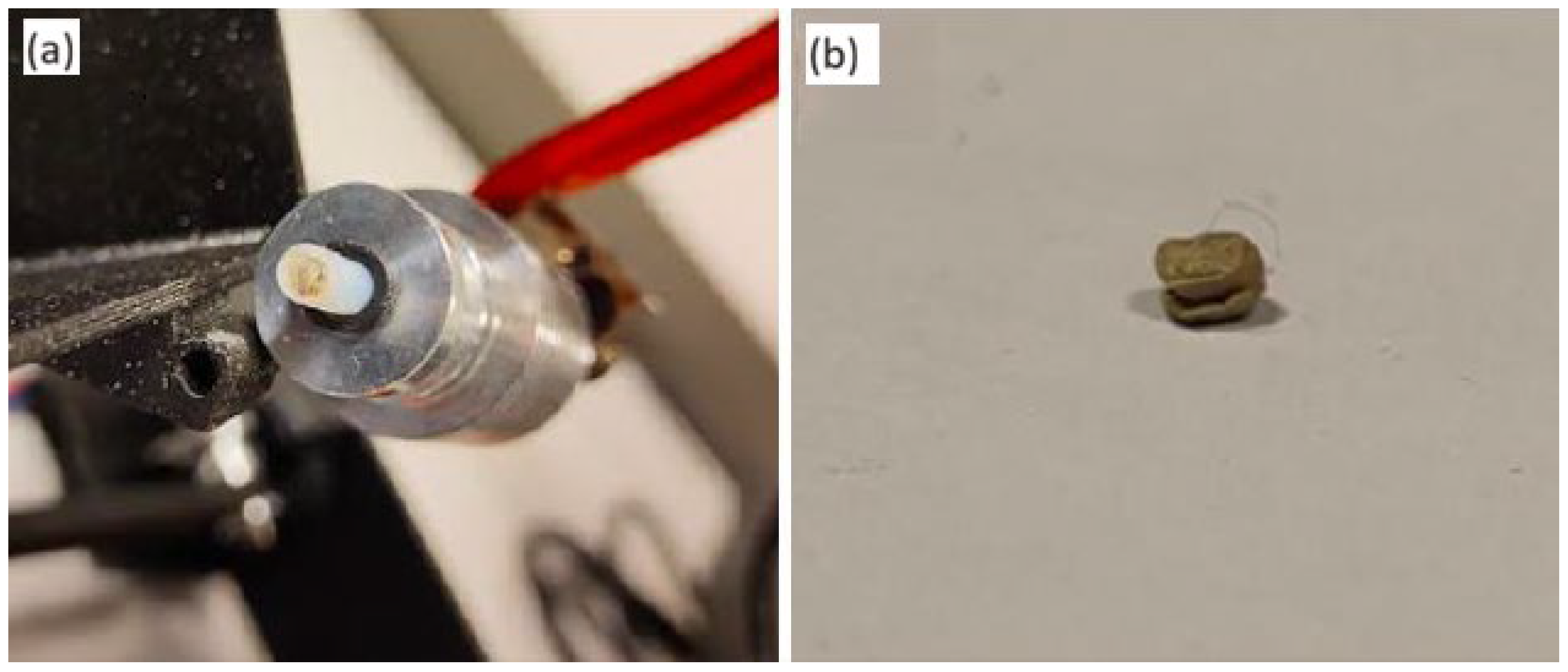
Figure 4. (a) Clogged hot end preventing further extrusion and continuation of the printing process; (b) fragment of melted filament obstructing the free movement of the filament through the PTFE tube.
Crystals 16 00046 g004
Figure 5. Models printed using filaments with varying SiC content: (a) 3 wt. % SiC, single extrusion, (b) 7 wt. % SiC, single extrusion, (c) 11 wt. % SiC, double extrusion, (d) 20 wt. % SiC, double extrusion.
Crystals 16 00046 g005
Figure 6. Dependence of viscosity on shear rate for PLA/SiC composites containing 1, 5, 10, 15, and 20 wt. % silicon carbide and PLA/B4C composites containing 0, 1, 6, 10, 20, and 30 wt. % boron carbide.
Crystals 16 00046 g006
Figure 7. Shear stress versus shear rate for prints containing 1, 5, 10, 15, and 20 wt. % SiC and containing 0, 1, 6, 10, 20, and 30 wt. % boron carbide.
Crystals 16 00046 g007
Figure 8. Time-dependent viscosity measured at a constant shear rate of 10 s−1 for PLA/SiC composites containing 1, 5, 10, 15, and 20 wt. % silicon carbide and for PLA/B4C composites containing 0, 1, 6, 10, 20, and 30 wt. % boron carbide.
Crystals 16 00046 g008
Figure 9. TGA/DSC plots of 3D printed models from filaments with different SiC contents: (a) 5 wt. % SiC; (b) 10 wt. % SiC; (c) 15 wt. % SiC; (d) 20 wt. % SiC; and different B4C contents: (e) 1 wt. % B4C; (f) 6 wt. % B4C; (g) 15 wt. % B4C; (h) 18 wt. % B4C.
Crystals 16 00046 g009aCrystals 16 00046 g009b
Figure 10. Image of a sample of 11% B4C recorded using a high-temperature microscope.
Crystals 16 00046 g010
Table 1. Composition of the PLA granulate and ceramic powder (wt. %).
PLASiCPLAB4C
991991
982982
973973
964964
955955
946946
937937
928928
919919
90109010
89118911
88128812
87138713
86148614
85158515
84168416
83178317
82188218
81198119
80208020
7030
6040
Table 2. Thermal softening measurement results.
SampleTemperature [°C]
Thermal SofteningMeltingFloating
1%5960245
5%6061241
6%6162252
11%3739244
13%3739245
17%4748244
18%7576248
40%8283239
Disclaimer/Publisher’s Note: The statements, opinions and data contained in all publications are solely those of the individual author(s) and contributor(s) and not of MDPI and/or the editor(s). MDPI and/or the editor(s) disclaim responsibility for any injury to people or property resulting from any ideas, methods, instructions or products referred to in the content.