Article

Comparative Analysis of Physicochemical Properties for Three Crystal Forms of Cordycepin and Their Interconversion Relationship

1
National Engineering Technique Research Center for Biotechnology, State Key Laboratory of Materials-Oriented Chemical Engineering, College of Biotechnology and Pharmaceutical Engineering, Nanjing Tech University, Nanjing 211816, China
2
Jiangsu Institute of Industrial Biotechnology, Co., Ltd., 11 Yaogu Avenue, Nanjing 210044, China
3
Biology + Joint Research Center, School of Chemical Engineering and Technology, Zhengzhou University, Zhengzhou 450001, China
4
School of Life Science and Technology, Nanyang Normal University, Nanyang 473061, China
*
Authors to whom correspondence should be addressed.
Crystals 2025, 15(12), 1043; https://doi.org/10.3390/cryst15121043
Submission received: 9 November 2025 / Revised: 29 November 2025 / Accepted: 29 November 2025 / Published: 6 December 2025
(This article belongs to the Section Crystal Engineering)

Abstract

Cordycepin (3′-deoxyadenosine, 3′-dA), the flagship nucleoside antibiotic from Cordyceps militaris, exerts potent anti-inflammatory, antimicrobial, and antitumor activity but is rapidly inactivated by human adenosine deaminase (ADA). While prodrugs, ADA inhibitors, and nanocarriers have been pursued to prolong its half-life, the influence of solid form on delivery performance remains unexplored. Here, three polymorphs—anhydrate-I (flake-like), anhydrate-II (rod-like), and a previously unreported monohydrate (fibrillar)—were prepared, characterized (PXRD, TG-DSC, FTIR), and subjected to equilibrium solubility, slurry-conversion, and humidity-sorption mapping. The monohydrate dehydrates at 144 °C and sequentially transforms to anhydrate-I → anhydrate-II (ΔH = −127.5 J g−1), establishing a monotropic relationship between the two anhydrous forms. Solubility displays a bell-shaped profile versus water activity: the monohydrate is stable above aw 0.8, whereas anhydrate-II predominates below aw 0.2. In model immediate-release tablets, anhydrate-II achieves complete dissolution within 10 min, whereas the monohydrate sustains release for 30 min. Hygroscopicity tests show the monohydrate absorbs <6% water up to 75% RH without structural change, whereas anhydrate-I converts to the monohydrate above 63% RH. The quantitative humidity–crystal form–performance correlations provide a rational platform for crystal form selection and the design of stable, efficacious cordycepin solid dosage forms.

1. Introduction

In the fields of pharmaceutical development and formulation, the polymorphism of active pharmaceutical ingredients (APIs) profoundly impacts their stability, solubility, bioavailability, and overall pharmacodynamic properties. Cordycepin, the first nucleoside antibiotic isolated from fungi, exhibits antibacterial, anti-inflammatory, antiviral, antitumor, immunomodulatory, metabolism-improving, and free radical-scavenging activities. Furthermore, it demonstrates efficacy in inducing apoptosis in various cancer cells and delaying carcinogenesis [1,2]. Owing to the hydrophilic properties and lipophilicity conferred by its purine ring and deoxyribose structure, cordycepin is soluble in water, hot ethanol, and methanol, but insoluble in diethyl ether, chloroform, and benzene [3,4]. Cordycepin was identified as the core component of Cordyceps militaris in 1951 [5]. Studies indicate that cordycepin stability is significantly influenced by environmental conditions: it remains stable long-term under dark, anhydrous storage, but degrades readily in solution when exposed to temperature and pH variations [6]. The most viable current production method involves metabolic harvesting through fermentation of artificially cultured strains. Duan et al. enhanced cordycepin biosynthesis by modifying glycolytic and pentose phosphate pathways in Yarrowia lipolytica [7]; Masuda et al. reported that the Cordyceps militaris mutant G81-3 achieves cordycepin titers up to 14.3 g/L, with subsequent crystallization during late-stage fermentation enabling product recovery [8]. However, as an adenosine analogue, cordycepin is susceptible to rapid deamination by adenosine deaminase (ADA) in humans via shared metabolic pathways [9]. Given its predisposition to degradation and short half-life, achieving controlled slow-release delivery constitutes a critical pharmaceutical challenge.
From the perspective of drug release, formulation design represents one approach to modulate release profiles. Hate et al. investigated formulation-dependent drug release behaviors [10]. Alternatively, harnessing crystal form differences constitutes another strategic dimension. Blagden et al. demonstrated that APIs polymorphism critically influences drug dissolution and release kinetics [11]. Polymorphic forms exert significant influences on drug stability [12,13]. Consequently, exploring the polymorphs of cordycepin and investigating the physicochemical properties of different crystal forms as well as their interconversion relationships are of great necessity for the development of cordycepin-based pharmaceuticals.
Currently documented polymorphs include Form I [14] and Form II [15], which are anhydrous forms. In this study, two new monohydrate crystal forms of cordycepin were identified through experiments. The unit cell structure of one of these crystal forms has been resolved, and its crystal data have been deposited in the Cambridge Crystallographic Data Centre (CCDC) with the deposition number 2248593. However, due to its extremely poor stability, this crystal form will not be further discussed in this paper. This study focuses on the other monohydrate crystal form, which exhibits relatively stable thermodynamic properties. A comparative analysis of its physical properties with those of other cordycepin crystal forms was conducted, and its dissolution behavior was investigated. In addition, we conducted a comprehensive investigation into the morphology, crystal structure, thermodynamic properties, crystal form transformation, solubility, and dissolution behavior of different cordycepin crystal forms through powder X-ray diffraction (PXRD), thermogravimetric analysis (TGA), and infrared spectroscopy (IR), etc. We elaborate on the phase transition mechanisms, interconversion relationships, and sensitivity to environmental humidity of these crystal forms. The research aims to deepen the understanding of cordycepin’s polymorphic behavior and provide fundamental data for subsequent industrial pharmaceutical development of cordycepin, such as formulation design.

2. Experiments

2.1. Materials

The chemicals and reagents involved in this manuscript are shown in Table 1.

2.2. Preparation of Various Crystal Forms of Cordycepin

Preparation of Anhydrate-I: Crude cordycepin (~20 g·L−1) was dissolved in 90% (v/v) isopropanol/water at 40 °C. The solution was cooled slowly to 5 °C and the resulting slurry was held at this temperature for 2 h to afford anhydrate-I.
Preparation of Anhydrate-II: Crude cordycepin (~50 g·L−1) was dissolved in 60% (v/v) ethanol/water at 35 °C. After slow cooling to 5 °C, the slurry was aged for 2 h to yield anhydrate-II.
Preparation of Monohydrate: Crude cordycepin (~18 g·L−1) was dissolved in pure water at 40 °C. The solution was cooled to 5 °C to obtain its monohydrate.

2.3. Crystal Transformation Testing: Slurry Conversion Experiments

Slurry conversion experiments were performed on various cordycepin powders under different solvent systems (including binary solvent systems such as ethanol–water or isopropanol–water mixtures) and different pH conditions. First, solvent systems with varying ethanol–water ratios, isopropanol–water ratios, and pH levels were prepared and added to separate 20 mL glass vials with stoppers. Next, an excess of cordycepin powders with distinct crystal forms was added to each vial, and stirring was initiated. The process was maintained at the preset temperature for 24 h to ensure the achievement of thermodynamic equilibrium. Excess solids in the equilibrated saturated solution were collected by filtration; after drying, these solids were characterized using powder X-ray diffraction (PXRD).

2.4. Solubility Testing

The solubility of cordycepin was determined using the static equilibrium method. Binary ethanol–water or isopropanol–water mixtures of predetermined volume ratios were prepared in 25 mL conical flasks. Each composition was run in triplicate. An excess cordycepin powder was added to every flask, and the vessels were immersed in a thermostatic water bath (±0.1 °C) equipped with magnetic stirring. Slurries were equilibrated at 150 r/min for more than 6 h, then left undisturbed for a further 3 h at the same temperature to ensure complete phase separation.
Supernatant aliquots were withdrawn with a calibrated micropipette, filtered through 0.22 μm organic-phase membranes, and diluted quantitatively. The diluted solutions were analyzed via UV–VIS spectrophotometry to determine cordycepin concentrations. The residual solid was isolated by gravity filtration, dried in a 40 °C forced-air oven, and gently ground. Powder X-ray diffraction (PXRD) confirmed that the solid phase remained in the stable solid form throughout the solubility measurement.

2.5. Wettability Testing

First, 1.00 g of different solid cordycepin crystalline powders was weighed and evenly spread in uncovered Petri dishes. Next, the Petri dishes containing the samples were placed in multiple stability chambers, maintaining the same temperature (25 °C) across different experimental groups while adjusting the relative humidity. The weight changes of each powder over time were recorded. Each experimental group was conducted in triplicate, with periodic weighing to calculate the percentage of weight gain in order to evaluate hygroscopicity. PXRD was used to monitor the structural transformation of cordycepin powders before and after the experiment.

2.6. Tablet Preparation and Dissolution Testing

Dissolution studies on cordycepin monohydrate and anhydrate-II were performed with a model immediate-release tablet. The composition (w/w) was: Active pharmaceutical ingredient (API) 8.9%, mannitol 13.3%, polysaccharide 17.8%, magnesium stearate 0.9%, microcrystalline cellulose 59%. Excipients were first milled, blended, granulated with food-grade ethanol, wet-screened, dried, lubricated, and then compressed into 10 mm, 0.45 g tablets.
Dissolution was carried out in 900 mL of pH 1.2 HCl (simulated gastric fluid) or pH 6.8 phosphate buffer (simulated intestinal fluid), thermostatic at 37 ± 0.5 °C and agitated at 75 r/min (USP apparatus II). At 5, 10, 15, 20, 25, 30, 45, and 60 min, 2 mL aliquots were withdrawn and immediately replaced with an equal volume of pre-warmed medium. Samples were filtered (0.22 µm) and analyzed by HPLC.
Cordycepin was quantified on an Agilent 1200 system equipped with a 4.6 × 250 mm, 5 µm C18 column maintained at 30 °C. The mobile phase consisted of 0.01 M KH2PO4-methanol (75:25, v/v) delivered at 1.0 mL min−1. Injection volume was 20 µL and detection was by UV absorbance at 254 nm (retention time 16.4 min). Calibration was performed with external standards covering the entire dissolution range.

2.7. Characterization

Powder X-ray Diffraction (PXRD): Phase identification was conducted on a Bruker D8 Advance diffractometer (Bruker, Billerica, MA, USA) equipped with Cu Kα radiation (λ = 1.5406 Å). Diffraction patterns were recorded over a 2 θ range of 5–45° with a scan rate of 10°/min and step size of 0.02°.
Thermogravimetric-Differential Scanning Calorimetry (TG-DSC): Simultaneous thermal analysis was performed under nitrogen purge (10 mL/min flow rate) across 25–500 °C at a heating rate of 10 °C/min. Prior to analysis, samples were pre-dried at 50 °C for 2 h under ambient pressure to eliminate surface-adsorbed moisture. Calibration was executed using an empty crucible as reference, with approximately 3 mg of sample loaded for testing.
Fourier Transform Infrared Spectroscopy (FTIR): Vibrational spectra were acquired on a Nicolet iS5 spectrometer (Thermo Fisher Scientific, Waltham, MA, USA). Scans were accumulated over 64 cycles at 4 cm−1 resolution across 4000–400 cm−1 to characterize functional group vibrations.

2.8. Calculation Methods

The percentage weight gain is calculated according to the hygroscopicity test guidelines (Equation (1)).
w i g h t % = m 3 m 2 m 2 m 1 × 100 %
m1 denotes the mass of the weighing bottle (unit: g); m2 represents the total mass after adding an appropriate amount of the test sample (unit: g); m3 corresponds to the mass recorded at a specified time (unit: g).
Equations for calculating cumulative drug dissolution/release (Equations (2)–(5)):
C u m u l a t i v e   a m o u n t ( % ) = T o t a l   a m o u n t   d i s s o l v e d L a b e l e d   a m o u n t × 100 %
C u m u l a t i v e   a m o u n t ( % ) = C 1 × 900 L a b e l e d   a m o u n t × 100 %
C u m u l a t i v e   a m o u n t ( % ) = C 1 × 900 + C 2 × S a m p l i n g   v o l u m e L a b e l e d   a m o u n t × 100 %
C u m u l a t i v e   a m o u n t ( % ) = C 1 × 900 + ( C 1 + C 2 ) × S a m p l i n g   v o l u m e L a b e l e d   a m o u n t × 100 %
C1 denotes the concentration (converted to mg/mL) determined by liquid chromatographic analysis from the first sampling, C2 represents the concentration from the second sampling, and subsequent concentrations C3, C4 … follow accordingly for the fourth, fifth, and subsequent samplings, with a fixed dissolution medium volume of 900 mL.

3. Results and Discussion

3.1. Morphology and PXRD Analysis of Various Solid Forms of Cordycepin

The morphologies of different cordycepin solid forms obtained are shown in Figure 1. Anhydrate-I crystallizes as well-defined flakes, whereas anhydrate-II adopts a regular rod-like habit. A previously unreported monohydrate was isolated and characterized for the first time in this study. This phase displays a distinctive fibrous morphology, presenting a significant challenge in obtaining single crystals of sufficient quality for single-crystal X-ray diffraction (SCXRD) analysis.
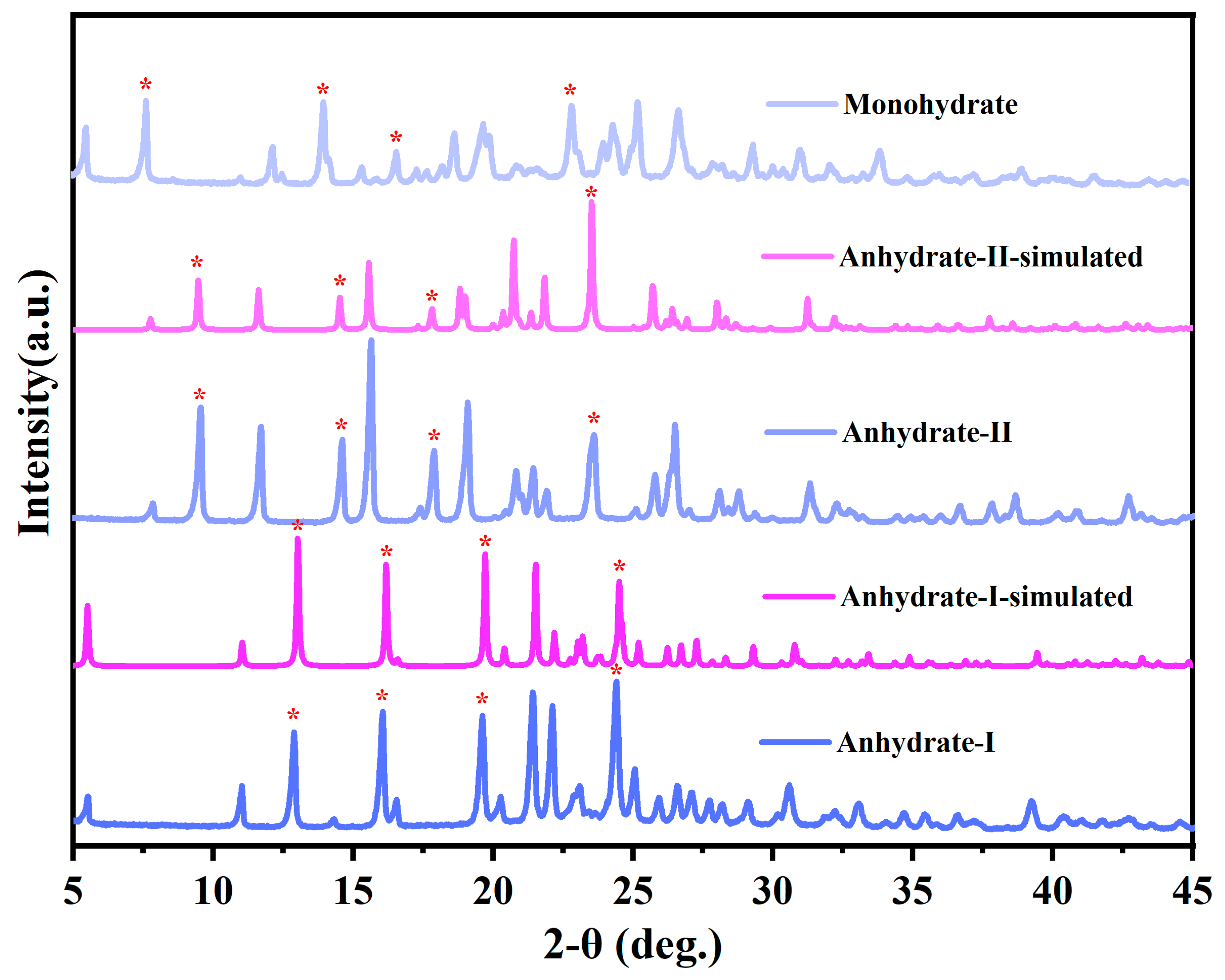
The PXRD patterns of cordycepin anhydrates I and II, together with that of the monohydrate, are shown in Figure 2. The characteristic peaks of the two cordycepin anhydrates are consistent with the reported literature [14,15]. The monohydrate exhibits characteristic reflections at 2 θ = 5.6°, 7.7°, 12.2°, 14.1°, 19.7°, and 23.0°. All experimental patterns are in excellent agreement with their respective simulated profiles from single crystal X-ray diffraction.

3.2. Thermodynamic Behaviors of the Three Crystal Forms

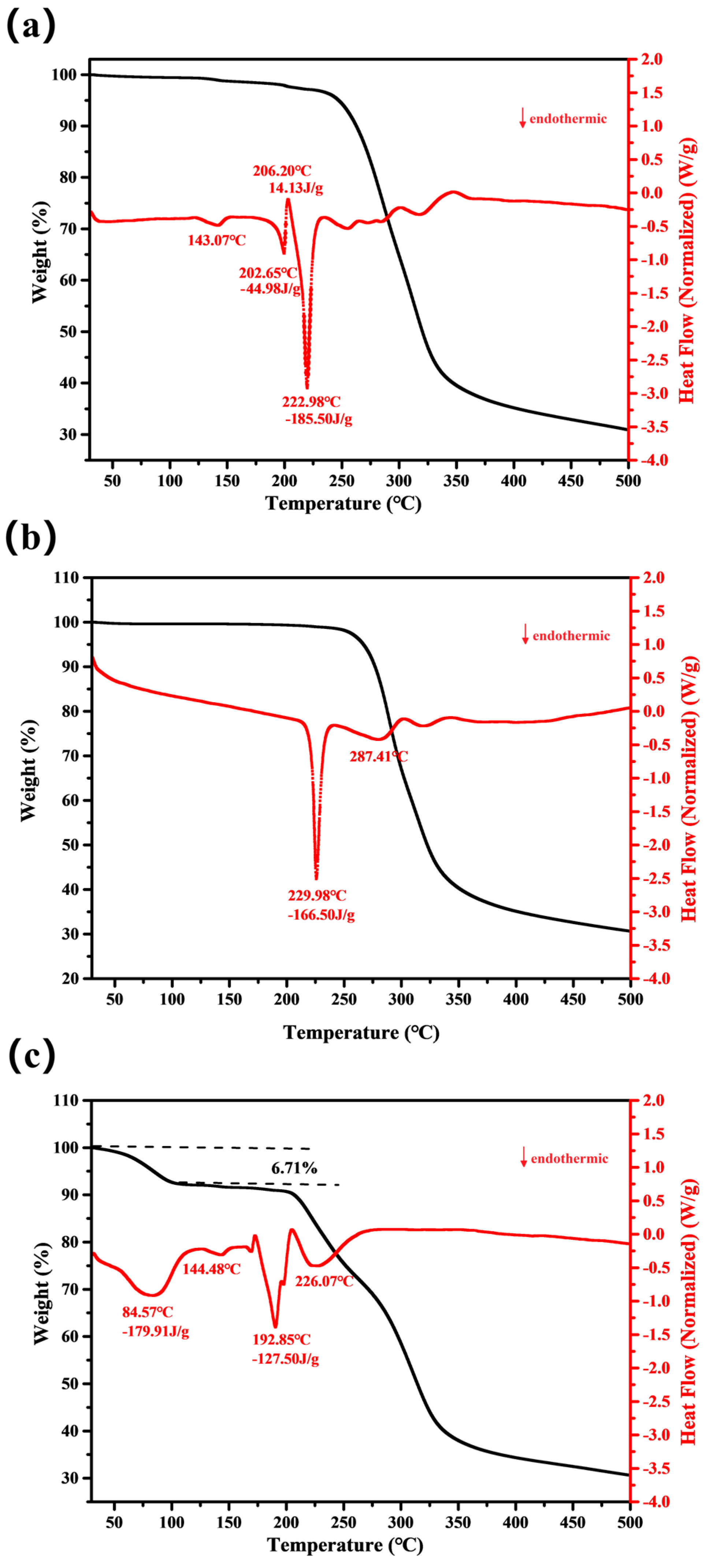
TG-DSC results of cordycepin anhydrate-I, anhydrate-II, and the hydrate are shown in Figure 3a–c.
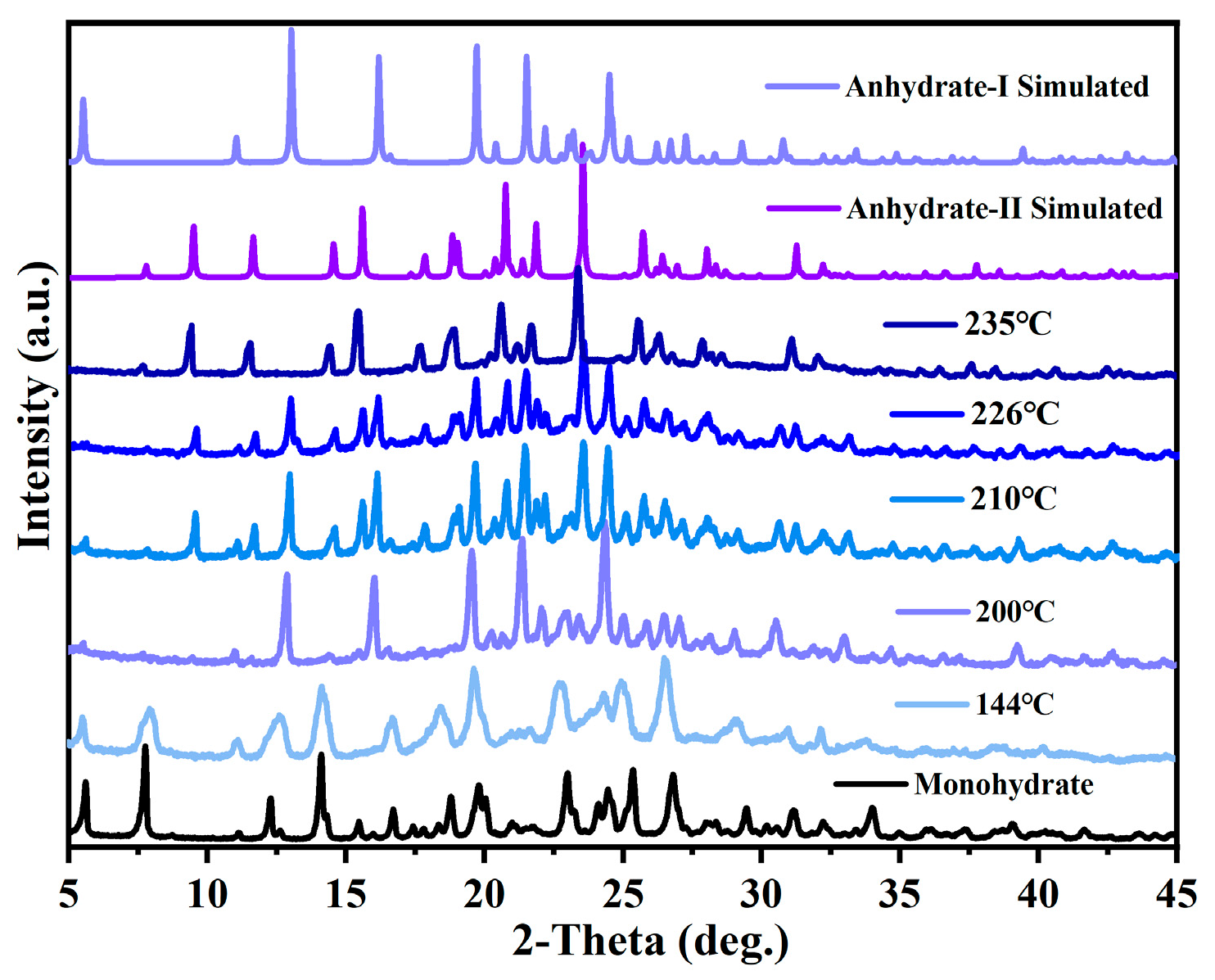
Variable-temperature PXRD of the cordycepin hydrate (Figure 4) corroborates the phase transitions. At 144 °C the monohydrate loses crystallinity, and weak reflections attributable to anhydrate-I appear. Between 200 and 235 °C these reflections intensify, while new peaks characteristic of anhydrate-II emerge and become dominant.
Figure 3a shows that there is no obvious weight loss step before the decomposition of anhydrate-I. A small endothermic peak appears at around 143 °C, which is speculated to be the melting peak of anhydrate-I. An endotherm at around 200 °C marks the solid–solid transition to anhydrate-II. A further endotherm peak at ~220 °C represents the melting of the newly formed anhydrate-II, accompanied by simultaneous decomposition. Figure 3b captures the thermodynamic behavior of anhydrate-II. A sharp melting endotherm occurs at 229 °C with an enthalpy value ΔH = −166.50 J/g, and rapid mass loss begins at 287 °C, signaling concurrent melting and decomposition.
Thermogravimetric analysis (Figure 3c) indicates a mass loss of 6.71% for the hydrate, in excellent agreement with the theoretical water content of a monohydrate (6.68%), confirming its stoichiometry.
After the dehydration of monohydrate, it progressively transforms into anhydrate-I. The resulting powder melts at ~144 °C, and subsequently incrementally transforms to anhydrate-II at around 200 °C, with an enthalpy value ΔH = −127.50 J/g. The newly formed anhydrate-II powder melts at ~226 °C, again accompanied by decomposition. The transformation and decomposition temperatures of the phases derived from the monohydrate are relatively lower than those of the pure anhydrates, which is attributed to the following reasons: (i) the loss of lattice water disrupts the original packing and facilitates structural re-organization, and (ii) the resulting solids may contain lattice defects or hydration remnants that act as impurities, further accelerating the thermal events. Figure 3c also reveals that melting, decomposition, and recrystallization occur simultaneously. In addition, anhydrate-I, which melts at the lower temperature, exhibits a smaller enthalpy of fusion than anhydrate-II. According to the “melting heat rule” of Burger and Ramberger [16], these observations confirm that the two anhydrous polymorphs are monotropically related.

3.3. Comparative Infrared Spectra for Three Cordycepin Crystal Forms

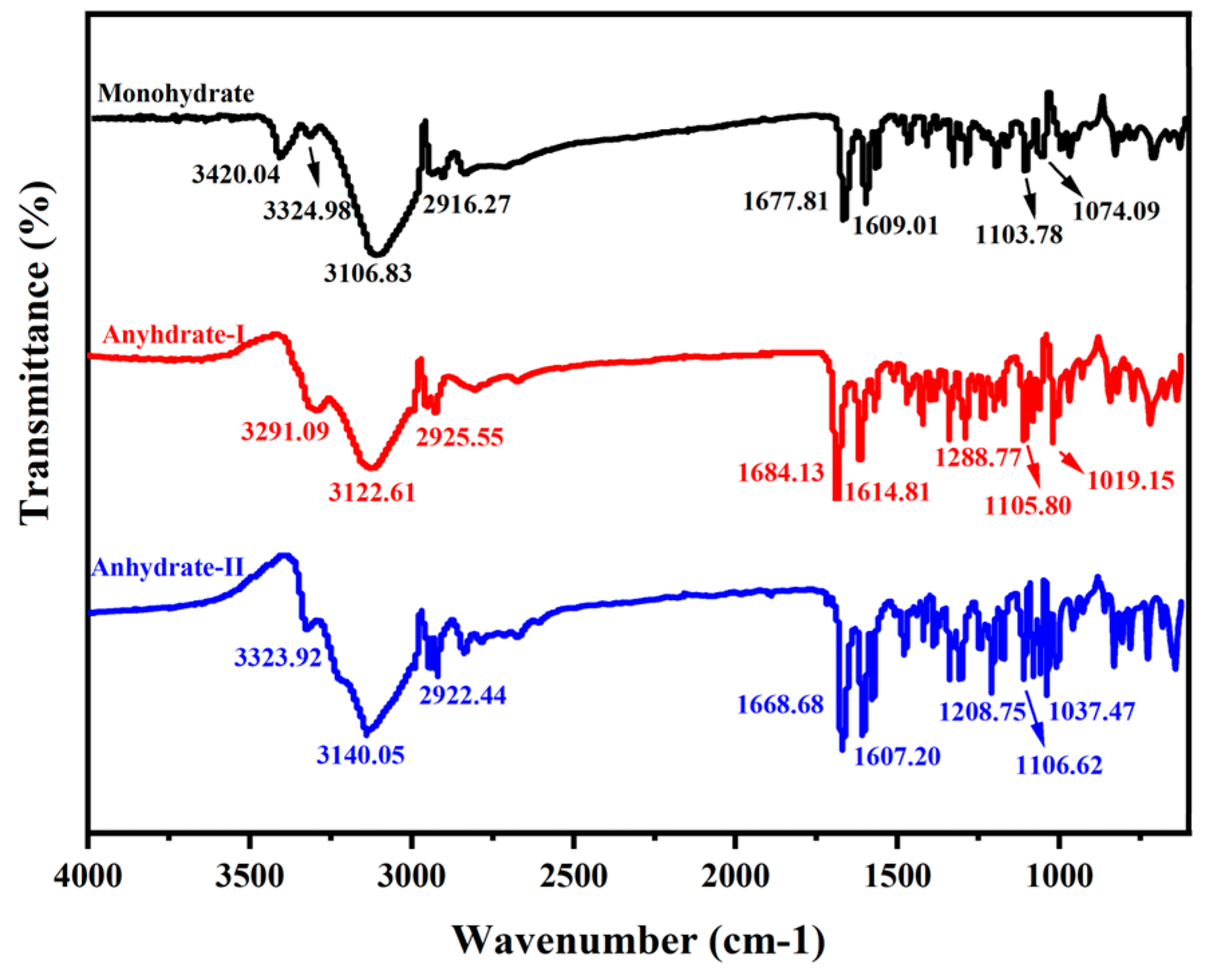
Figure 5 presents the FTIR spectra of cordycepin anhydrate-I, anhydrate-II, and the monohydrate. An obvious absorption at 3420 cm−1, observed only for the monohydrate, is ascribed to the O–H stretching vibration of lattice water and immediately distinguishes this form from the two anhydrates. The N–H stretch of the primary amine (nominal 3300 cm−1) is red-shifted to 3140 cm−1 (anhydrate-I) and 3123 cm−1 (anhydrate-II); in the monohydrate, the band is displaced further to 3107 cm−1. These progressive red shifts reflect the increasing strength of hydrogen bonding that follows the hierarchy O-H…O > N-H…N > O-H…N and correlates with shorter donor–acceptor distances in the monohydrate lattice. An additional low-frequency shoulder at 3291 cm−1 in anhydrate-I testifies to the strongest amino hydrogen bonds in this form.
The ν(OH) envelope of the ribose hydroxyls (3140–3096 cm−1) is likewise sensitive to hydrogen-bond geometry: the highest frequency (3140 cm−1) observed for anhydrate-II signals the weakest O–H···N contacts, whereas the lower positions in anhydrate-I and, more markedly, in the monohydrate denote stronger and more numerous hydrogen bonds.
Other diagnostic bands include: 2920 cm−1 (ν(CH, CH2)); 1684–1668 cm−1 (ν(C=N) of the purine ring); 1614–1603 cm−1 (δ(NH2)); and ~1100 cm−1 (ν(C–OH) of the primary alcohol). Despite identical molecular composition, differences in packing alter unit-cell parameters and modulate both intermolecular hydrogen-bond networks and intramolecular bond strengths. These structural variations are sensitively reported by vibrational spectroscopy; hence, the observed band shifts constitute a reliable qualitative fingerprint for distinguishing the three crystal forms.

3.4. Influence of Water Activity on Solubility and Crystal Forms for Cordycepin

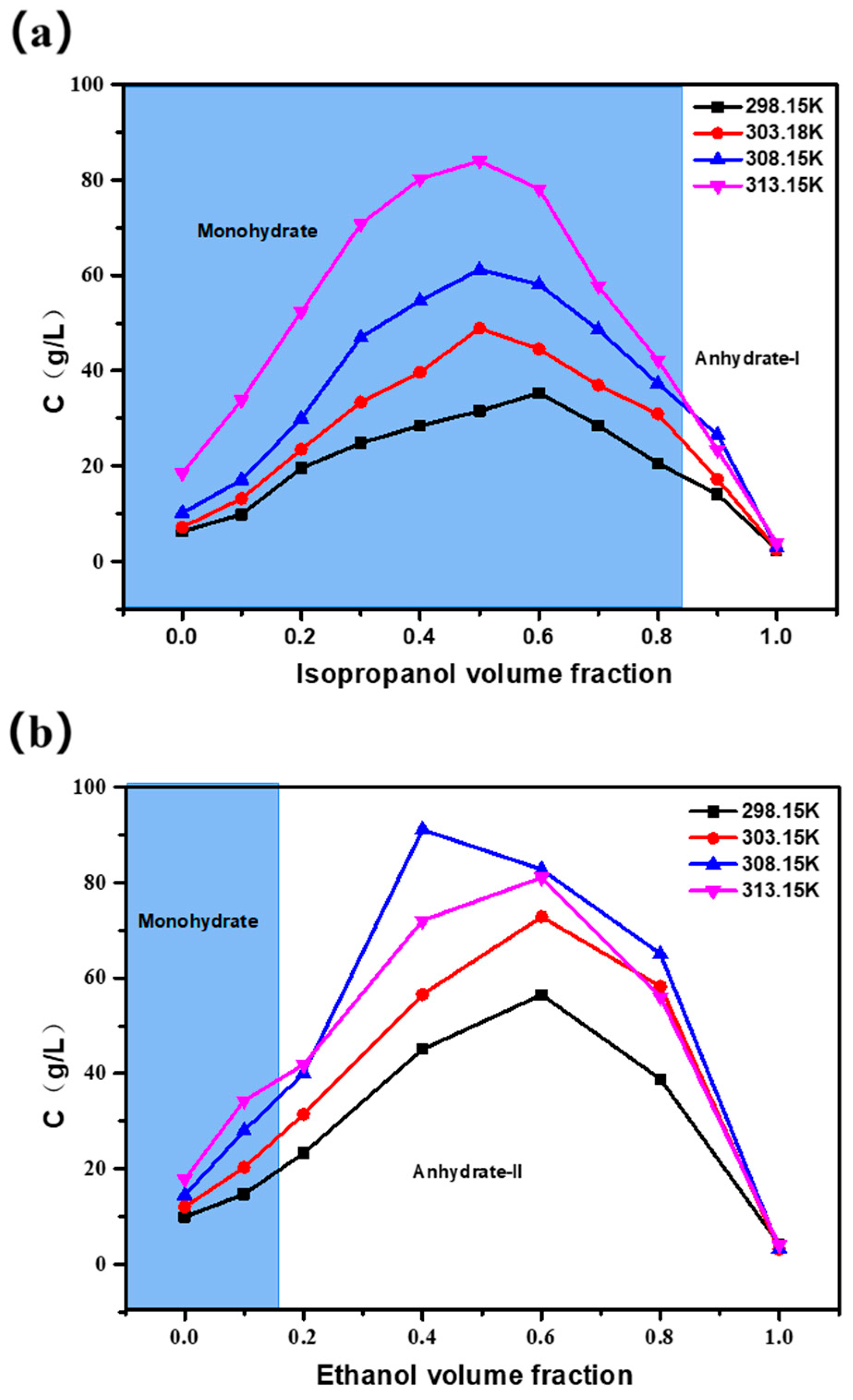
The equilibrium solubilities of cordycepin powders as a function of binary-solvent composition at the temperature range from 298.15 K to 313.15K are shown in Figure 6. From Figure 6a (isopropanol–water), As the content of isopropanol reaches more than 80% (v/v), the monohydrate loses its lattice water and anhydrate-I becomes the stable phase. The monohydrate solubility exhibits a bell-shaped profile (first increase and then decrease), peaking around 50% (v/v) isopropanol and decreasing on either side of this ratio; meanwhile, the solubility of anhydrate-I decreases monotonically with increasing isopropanol content.
From Figure 6b (ethanol–water), it was found that as the content of ethanol reaches more than 20% (v/v), the monohydrate dehydrates to anhydrate-II. The monohydrate solubility rises slightly with ethanol content, whereas anhydrate-II displays the same bell-shaped solubility curve (first increase and then decrease), reaching a maximum around 50% (v/v) ethanol. The bell-shaped behavior is attributed to that the cordycepin molecule contains multiple polar functional groups (amino and hydroxyl groups), and the intramolecular hydrogen bonding effect is relatively stronger, leading to the significant synergistic solvation effect [17], also known as the solvency phenomenon [18]. This synergistic effect is more pronounced in water–ethanol than in water–isopropanol, consistent with the lower ethanol threshold for dehydration. PXRD of the residual solids (Figure S1a,b) confirms that the solubility maxima arise from solvation phenomena rather than from solid form transformation.

3.5. Transformation Relationship Among Various Cordycepin Crystal Forms

There is a scarcity of reports in the literature addressing whether cordycepin crystals undergo mutual transformation and the specific conditions governing such transformation. To verify the transformation relationship between cordycepin crystal forms, powder X-ray diffraction (PXRD) patterns were measured under different solvent systems and pH conditions—specifically within the pH range where cordycepin exists in its molecular state. Additionally, the crystal forms of residual solids generated during the aforementioned solubility tests were characterized.
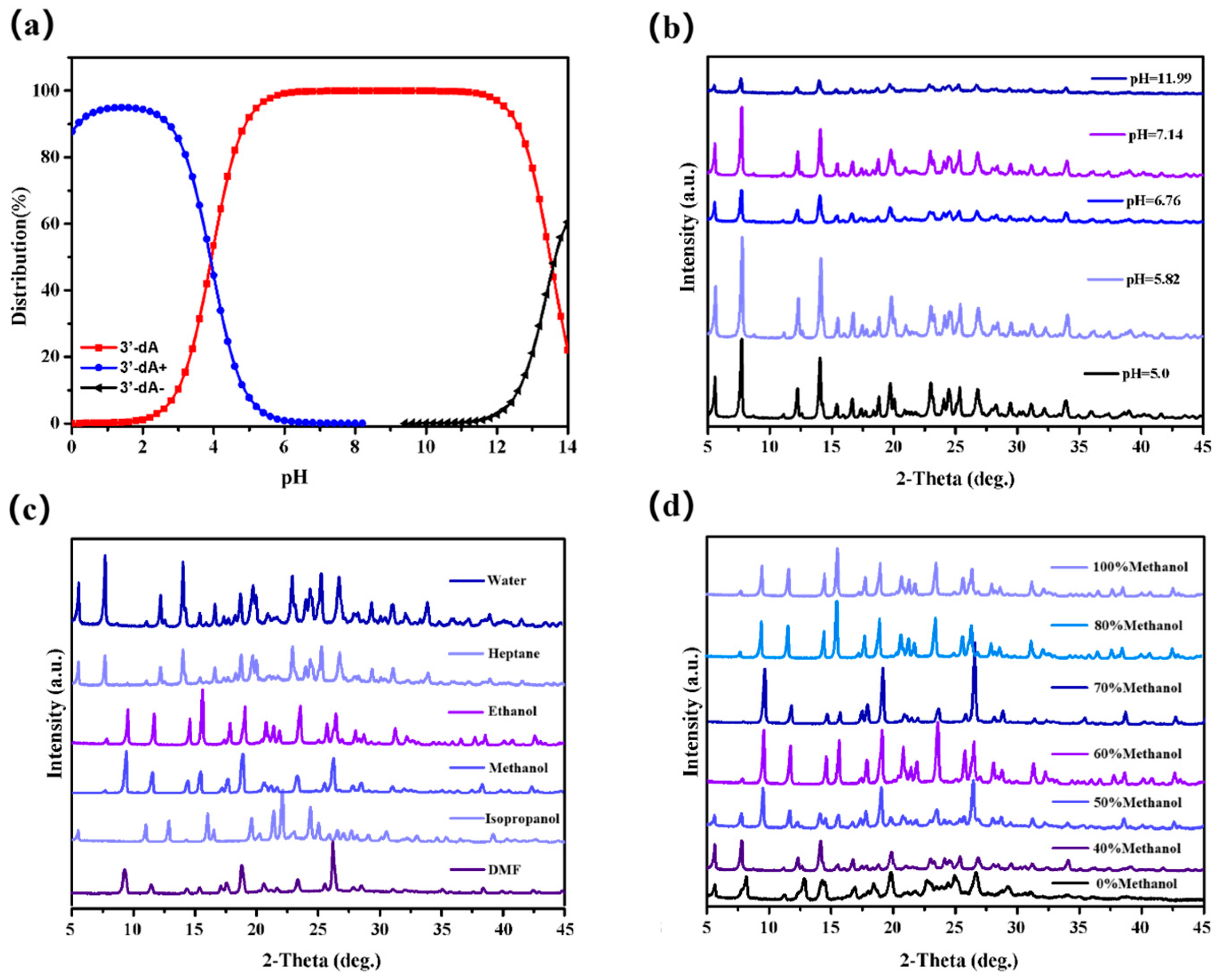
Following crystal slurry transformation and solubility experiments, the resulting solids were collected and subjected to PXRD analysis; the results are presented in Figure 7 and Figure S1. Calculation of the species distribution curve of cordycepin under varying pH conditions revealed that the molecular state dominates within the pH range of 5.0–12.0 (Figure 7a). Further investigation confirmed that cordycepin maintains a stable monohydrate crystal form in aqueous solutions with pH values ranging from 5.0 to 11.99.
In crystal transformation experiments across different solvent systems (Figure 7c), the monohydrate was identified as the stable form in water and low-polarity solvents (e.g., n-heptane). In contrast, anhydrous forms were obtained in methanol, ethanol, isopropanol, and N,N-dimethylformamide (DMF) solutions: anhydrate-I was specifically detected in isopropanol, while anhydrate-II was observed in the other aforementioned solvents. These results indicate that the monohydrate predominates in high-water-content systems, whereas anhydrous forms are favored in low-water-content environments—a trend consistent with the dependence of hydrate stability on water activity in pharmaceutical crystal systems.
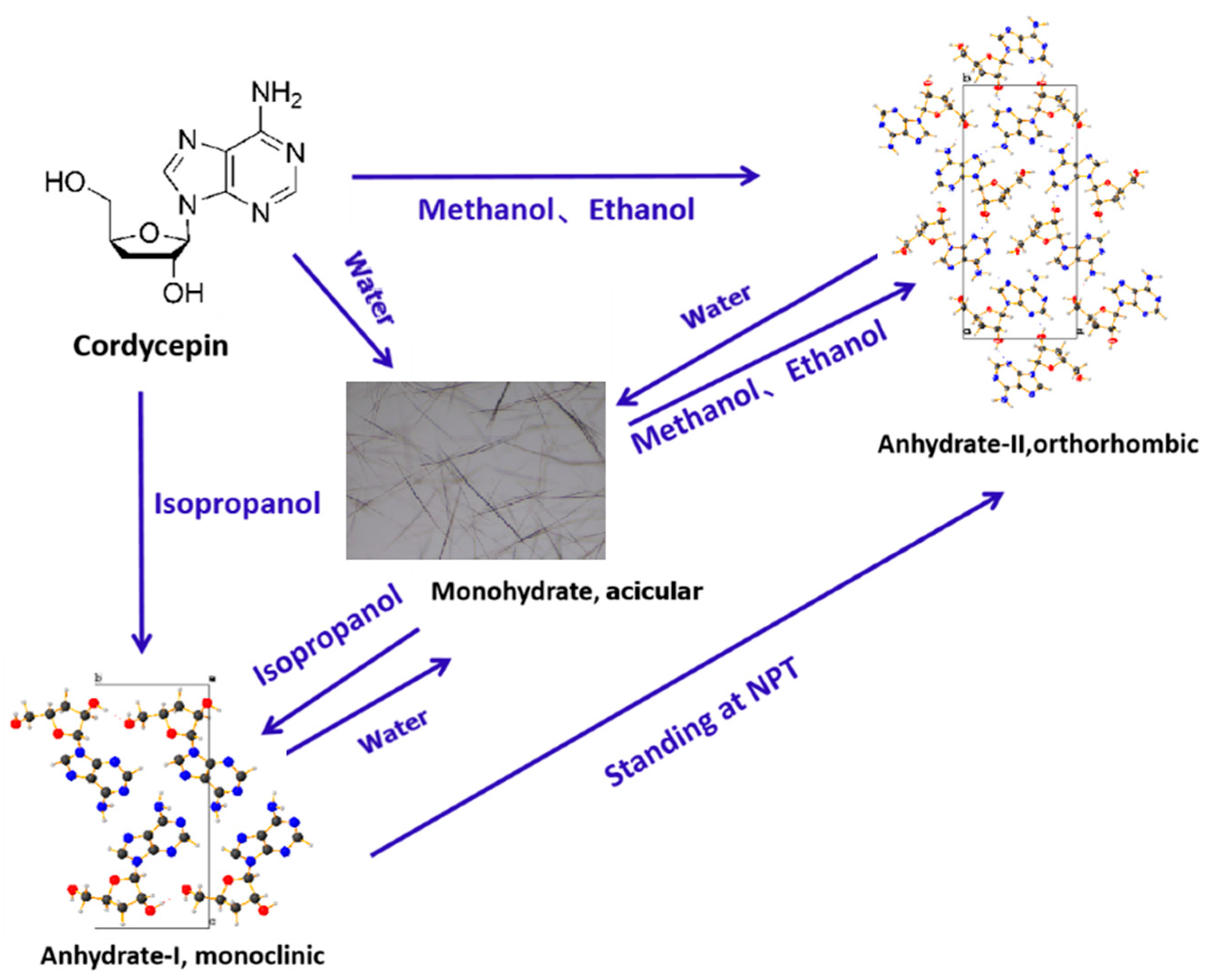
From the aforementioned crystal transformation experimental conditions, the transformation relationships among the three cordycepin crystal forms can be summarized as follows: Anhydrate-I is readily obtained in isopropanol, whereas in methanol or ethanol systems, the thermodynamically stable crystal form—anhydrate-II—tends to be produced. In water-rich solvent systems, the stable crystal form is the monohydrate. Regarding the thermodynamic transformation relationships among the three crystal forms, anhydrate-I and anhydrate-II exhibit a monotropic relationship. Reversible transformations occur between the anhydrous forms (anhydrate-I and anhydrate-II) and the monohydrate. The overall transformation relationships are shown in Figure 8.

3.6. Hygroscopicity Experiments of Different Crystal Forms

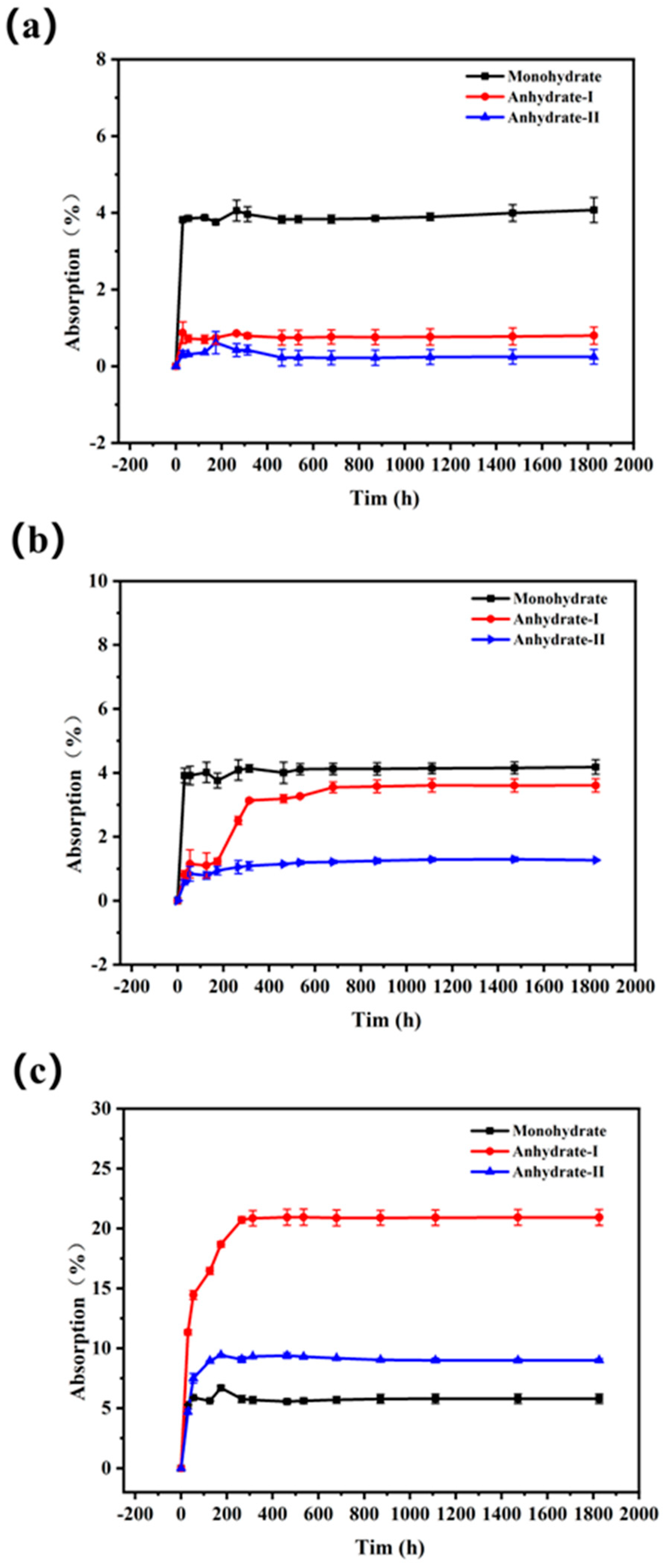
Figure 9 presents the results of exposing three cordycepin crystal forms to varying humidity conditions at 25 °C. The key findings are summarized as follows:
For anhydrate-I: At 43% relative humidity (RH), it shows a weight gain of 0.80%, indicating almost no hygroscopicity, and eventually transforms into Anhydrate II. At 63% RH, a weight gain of 3.61% is observed (exhibiting hygroscopicity); at 75% RH, the weight gain reaches 20.92% (indicating strong hygroscopicity), reflecting high sensitivity to environmental humidity. After 400 h, anhydrate-I reaches adsorption saturation and is ultimately converted to the monohydrate.
For anhydrate-II: At 43% RH, it exhibits a weight gain of 0.24% (almost no hygroscopicity) and retains its original crystal form. At 63% RH, a weight gain of 1.27% is noted (slight hygroscopicity) with no change in crystal form. At 75% RH, it shows a weight gain of 9.00% (exhibiting hygroscopicity) but is less affected by environmental humidity than anhydrate-I. After 200 h, anhydrate-II reaches adsorption saturation and transforms into the monohydrate.
For the monohydrate: At 43% RH, it shows a weight gain of 4.07% (exhibiting hygroscopicity) while maintaining its crystal form. At 63% RH, a weight gain of 4.18% is observed (exhibiting hygroscopicity) with no change in crystal form. At 75% RH, the weight gain is 5.80% (exhibiting hygroscopicity), but overall, the monohydrate is less sensitive to environmental humidity. It reaches near-adsorption saturation within 200 h, with the weight gain percentage stabilizing at approximately 4%. These characteristics indicate that among the three crystal forms of cordycepin, its monohydrate is relatively less affected by environmental humidity. Within the experimental range of 43-75% RH, it exhibits the highest structural stability, thus making it more suitable for storage and application.

3.7. Dissolution Behaviors In Vitro of Anhydrate-II and Monohydrate of Cordycepin

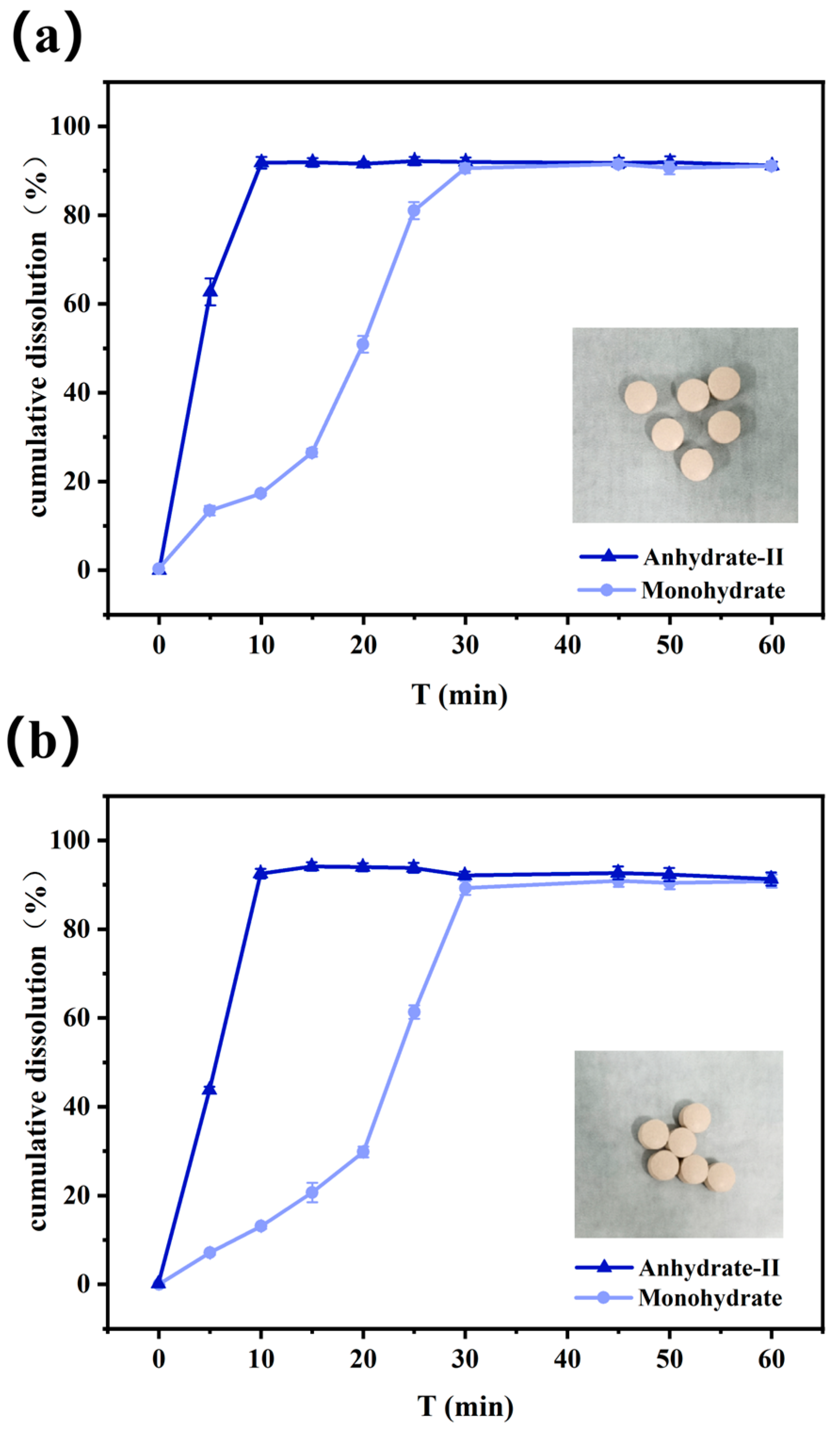
Dissolution studies on the two stable cordycepin crystal forms (monohydrate and anhydrate-II) were performed with a model immediate-release tablet. The preparation and composition of tablets was described in Section 2.6. After compaction using a multi-punch tablet press, tablets with a diameter of 10 mm, weight of 0.45 g per tablet, and hardness of approximately 50 N were obtained and are shown in the insets of Figure 10. Figure 10 presents the dissolution profiles of the two cordycepin crystal forms, with corresponding experimental data provided in Tables S1 and S2. Analysis of the dissolution curves reveals the following: Anhydrate-II achieves complete drug release within 10 min, exhibiting a rapid release rate. In contrast, the monohydrate delays the complete release of cordycepin until 30 min, making it the optimal crystal form for sustained-release applications. Notably, both crystal forms share a common dissolution characteristic: their release rate is faster in gastric fluid than in intestinal fluid, showing the higher solubility under the low pH conditions typical of gastric fluid.

4. Conclusions

This study aimed to investigate the polymorphism of cordycepin, clarify the physicochemical properties of its different crystal forms and their interconversion relationships, and provide a basis for the rational design of cordycepin solid dosage forms. Three crystal forms of cordycepin—anhydrate-I (flake-like), anhydrate-II (rod-like), and a previously unreported monohydrate (fibrillar)—were prepared through controlled crystallization, and comprehensively characterized using PXRD, TG-DSC, and FTIR.
Key results demonstrated that the monohydrate (with a water content of 6.71% verified by TG) had distinct advantages in stability: it maintained structural integrity over a pH range of 5.0–11.99 and at 75% RH (weight gain ≤ 5.8%), which was superior to anhydrate-I (20.92% weight gain at 75% RH). Thermal analysis showed the monohydrate dehydrated at 84 °C to form metastable anhydrate-I, which further transformed into anhydrate-II at 200 °C (ΔH = −127.5 J g−1), confirming a monotropic relationship between the two anhydrates. Solubility studies revealed the monohydrate had maximum solubility in 50% (v/v) isopropanol–water, while anhydrate-II peaked in 50% (v/v) ethanol–water, attributed to the synergistic solvation effect. In dissolution tests, anhydrate-II achieved complete release within 10 min (rapid-release property), while the monohydrate sustained release for 30 min (suitable for controlled-release formulations).
In conclusion, this work defines the solvent- and temperature-induced interconversion pathways of cordycepin polymorphs. The monohydrate is optimal for aqueous stability and controlled release, while anhydrate-II is suitable for rapid-dissolution applications. These findings offer a predictive framework for cordycepin polymorph selection, promoting the development of cordycepin-based pharmaceuticals.

Supplementary Materials

The following supporting information can be downloaded at: https://www.mdpi.com/article/10.3390/cryst15121043/s1, Figure S1: Crystal paste conversion experiment under different conditions; Figure S2: The PXRD pattern of another monohydrate crystal form; Table S1: The average value of six groups of dissolution data for anhydrate-II and monohydrate in artificial gastric juice (pH 1.2); Table S2: The average value of six groups of dissolution data for anhydrate-II and monohydrate in artificial intestinal fluid (pH 6.8).

Author Contributions

Conceptualization, S.L., F.Z. and P.J.; Methodology, S.L., K.Z. (Keke Zhang) and P.J.; Validation, C.T.; Formal analysis, X.Z.; Investigation, X.Z.; Resources, Q.W.; Data curation, W.L.; Writing—original draft, W.L.; Writing—review & editing, P.Y.; Visualization, K.Z. (Ke Zhang); Supervision, Q.W.; Funding acquisition, P.Y. All authors have read and agreed to the published version of the manuscript.

Funding

This research was supported by the National Key R&D Program of China 2022YFC2105400.

Data Availability Statement

The data that support the findings of this study are available from the corresponding author, Pengpeng Yang, upon reasonable request.

Acknowledgments

The authors thank the following institutions for providing access to experimental data in this article: Nanjing Tech University; National Engineering Technique Research Center for Biotechnology; Zhengzhou University; Jiangsu Institute of Industrial Biotechnology, Co., Ltd.

Conflicts of Interest

Author Chenglun Tang was employed by the Jiangsu Institute of Industrial Biotechnology, Co., Ltd. The remaining authors declare that the research was conducted in the absence of any commercial or financial relationships that could be construed as a potential conflict of interest.

References

  1. Jiang, Q.; Lou, Z.; Wang, H.; Chen, C. Antimicrobial Effect and Proposed Action Mechanism of Cordycepin Against Escherichia Coli and Bacillus Subtilis. J. Microbiol. 2019, 57, 288–297. [Google Scholar] [CrossRef] [PubMed]
  2. Kong, W.; Liu, W.; Wang, M.; Hui, W.; Feng, Y.; Lu, J.; Miranbieke, B.; Liu, H.; Gao, F. Cordycepin Exhibits Anti-bacterial and Anti-inflammatory Effects Against Gastritis in Helicobacter Pylori-Infected Mice. Pathog. Dis. 2022, 80, ftac005. [Google Scholar] [CrossRef] [PubMed]
  3. Ng, T.B.; Wang, H.X. Pharmacological actions of Cordyceps, a Prized Folk Medicine. J. Pharm. Pharmacol. 2005, 57, 1509–1519. [Google Scholar] [CrossRef] [PubMed]
  4. Wen, Q.; Yang, P.; Wang, J.; Zhang, X.; Huang, L.; Ying, H.; Zheng, C. Quantitative Analysis of Cordycepin’s Solvent-Dependent Thermodynamics: Decoding Hydrogen-Bonding Interactions via COSMO-RS σ-profiling. J. Mol. Liq. 2025, 438, 128727. [Google Scholar] [CrossRef]
  5. Tuli, H.S.; Sharma, A.K.; Sandhu, S.S.; Kashyap, D. Cordycepin: A Bioactive Metabolite with Therapeutic Potential. Life Sci. 2013, 93, 863–869. [Google Scholar] [CrossRef] [PubMed]
  6. Rottman, F.; Guarino, A.J. The Inhibition of Purine Biosynthesis de novo in Bacillus Subtilis by Cordycepin. Biochim. Biophys. Acta 1964, 80, 640–647. [Google Scholar] [CrossRef] [PubMed]
  7. Duan, X.Y.; Liu, H.H.; Song, L.P.; Wang, C.; Yang, H.; Lu, X.Y.; Ji, X.J.; Tian, Y. Efficient Production of Cordycepin by Engineered Yarrowia Lipolytica from Agro-Industrial Residues. Bioresour. Technol. 2023, 377, 128964. [Google Scholar] [CrossRef] [PubMed]
  8. Masuda, M.; Das, S.K.; Hatashita, M.; Fujihara, S.; Sakurai, A. Efficient Production of Cordycepin by the Cordyceps Militaris Mutant G81-3 for Practical Use. Process Biochem. 2014, 49, 181–187. [Google Scholar] [CrossRef]
  9. Tsai, Y.-J.; Lin, L.-C.; Tsai, T.-H. Pharmacokinetics of Adenosine and Cordycepin, a Bioactive Constituent of Cordyceps Sinensis in Rat. J. Agric. Food Chem. 2010, 58, 4638–4643. [Google Scholar] [CrossRef] [PubMed]
  10. Hate, S.S.; Thompson, S.A.; Singaraju, A.B. Impact of Sink Conditions on Drug Release Behavior of Controlled-Release Formulations. J. Pharm. Sci. 2025, 114, 520–529. [Google Scholar] [CrossRef] [PubMed]
  11. Blagden, N.; de Matas, M.; Gavan, P.T.; York, P. Crystal Engineering of Active Pharmaceutical Ingredients to Improve Solubility and Dissolution Rates. Adv. Drug Deliv. Rev. 2007, 59, 617–630. [Google Scholar] [CrossRef] [PubMed]
  12. Yanan, Z.; Jingkang, W.; Yan, X.; Ting, W.; Xin, H. The Effects of Polymorphism on Physicochemical Properties and Pharmacodynamics of Solid Drugs. Curr. Pharm. Des. 2018, 24, 2375–2382. [Google Scholar] [CrossRef] [PubMed]
  13. Roque-Flores, R.L.; Guzei, I.A.; Matos, J.d.R.; Yu, L. Polymorphs of the Antiviral Drug Ganciclovir. Acta Crystallogr. C 2017, 73, 1116–1120. [Google Scholar] [CrossRef] [PubMed]
  14. Radwan, M.M.; Wilson, H.R. The Structure of Cordycepin. Acta Crystallogr. Sect. B 1980, 36, 2185–2187. [Google Scholar] [CrossRef]
  15. Karthe, P.; Gautham, N.; Kumar, A.; Katti, S.B. β-d-3′-Deoxyadenosine (Cordycepin). Acta Crystallogr. Sect. C 1997, 53, 1694–1696. [Google Scholar] [CrossRef]
  16. Burger, A.; Ramberger, R. On the Polymorphism of Pharmaceuticals and Other Molecular Crystals. I: Theory of thermodynamic rules. Microchim. Acta 1979, 72, 259–271. [Google Scholar] [CrossRef]
  17. Domanńska, U.; Kniaź, K. Solubility of Normal Alkanoic Acids in Selected Organic Binary Solvent Mixtures. Negative Synergetic Effect. Fluid Phase Equilibria 1990, 58, 211–227. [Google Scholar] [CrossRef]
  18. Rubino, J.T.; Yalkowsky, S.H. Cosolvency and Cosolvent Polarity. Pharm. Res. 1987, 4, 220–230. [Google Scholar] [CrossRef] [PubMed]
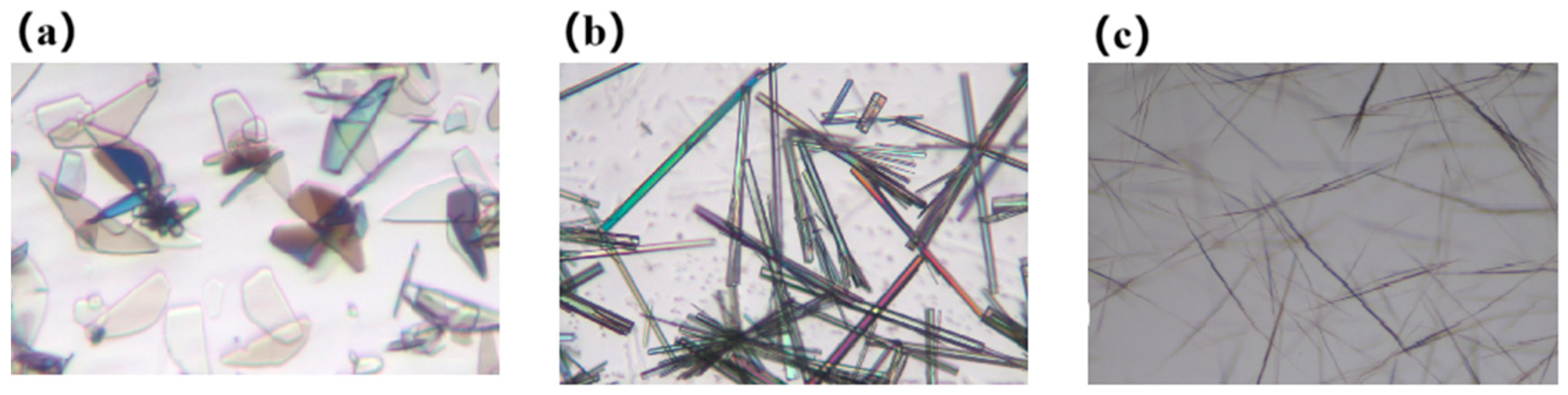
Figure 1. Polarized-light micrographs of cordycepin solid forms: (a) anhydrate-I; (b) anhydrate-II; (c) monohydrate.
Crystals 15 01043 g001
Figure 2. PXRD patterns of cordycepin solid forms: anhydrate-I, anhydrate-II, and monohydrate. (The red asterisks marked in the figure are the characteristic peaks of this crystal form).
Crystals 15 01043 g002
Figure 3. TG-DSC traces of cordycepin: (a) anhydrate-I; (b) anhydrate-II; and (c) monohydrate.
Crystals 15 01043 g003
Figure 4. Variable-temperature PXRD patterns of cordycepin monohydrate and its solid form transformation.
Crystals 15 01043 g004
Figure 5. The IR patterns of three crystal forms of cordycepin.
Crystals 15 01043 g005
Figure 6. Solubility curves for cordycepin crystalline powders as a function of solvent composition: (a) isopropanol–water mixtures; (b) ethanol–water mixtures.
Crystals 15 01043 g006
Figure 7. Ion distribution curves in pure water of cordycepin (a) and crystal form conversion experiments under different conditions (bd) (3′-dA denotes cordycepin).
Crystals 15 01043 g007
Figure 8. The transformation relationships among three cordycepin crystal forms. (NTP means normal temperature and pressure).
Crystals 15 01043 g008
Figure 9. Hygroscopicity experiment diagrams of three cordycepin crystal forms under various RH conditions: (a) 43% RH, (b) 63% RH, (c) 75% RH.
Crystals 15 01043 g009
Figure 10. The cumulative dissolution curves of two stable crystal forms of cordycepin under (a) artificial simulated gastric juice (pH 1.2) and (b) artificial simulated intestinal fluid (pH 6.8).
Crystals 15 01043 g010
Table 1. Experimental chemicals and reagents.
Chemicals ReagentsManufacturerSpecification
Pure waterPrepared in our laboratory5.0 M Ω (20 °C)
Ultra-pure water
Methanol
Ethanol
Isopropanol
Cordycepin (standard)
Cordycepin (crude)
Cordycepin
Sodium hydroxide
Hydrochloric acid
Phosphoric acid
Starch
Microcrystalline cellulose
Mannitol
Prepared in our laboratory HUSHI
HUSHI
HUSHI
Shanghai Yuan Ye
LIFEGENERON
Laboratory self-made
Aladdin
Mclean
Mclean
Laboratory self-made
Shanghai Yuan ye
Mclean
18.2 M Ω (20 °C)
GR, ≥99.7%
AR, ≥99.7%
AR, ≥99.7%
≥98%
≥85%
≥95%
AR, ≥99.9%
AR, ≥99.7%
85%
HPLC ≥ 98%
Food-level
≥98%
Edible alcoholHua Xing95%
Disclaimer/Publisher’s Note: The statements, opinions and data contained in all publications are solely those of the individual author(s) and contributor(s) and not of MDPI and/or the editor(s). MDPI and/or the editor(s) disclaim responsibility for any injury to people or property resulting from any ideas, methods, instructions or products referred to in the content.