Article

Stress-Based Model for Calculating the Opening Angle of Notch Cracks in a Magnesium Alloy under Multiaxial Fatigue


1
Mechanical Engineering Institute (IDMEC), Instituto Superior Técnico, Universidade de Lisboa, 1, 1049-001 Lisboa, Portugal
2
Mechanical Engineering Department, Instituto Superior de Engenharia de Lisboa, Instituto Politécnico de Lisboa, 1, 1959-007 Lisboa, Portugal
*
Authors to whom correspondence should be addressed.
Crystals 2024, 14(3), 211; https://doi.org/10.3390/cryst14030211
Submission received: 19 January 2024 / Revised: 10 February 2024 / Accepted: 19 February 2024 / Published: 23 February 2024
(This article belongs to the Special Issue Fatigue Behavior in Metals and Alloys)

Abstract

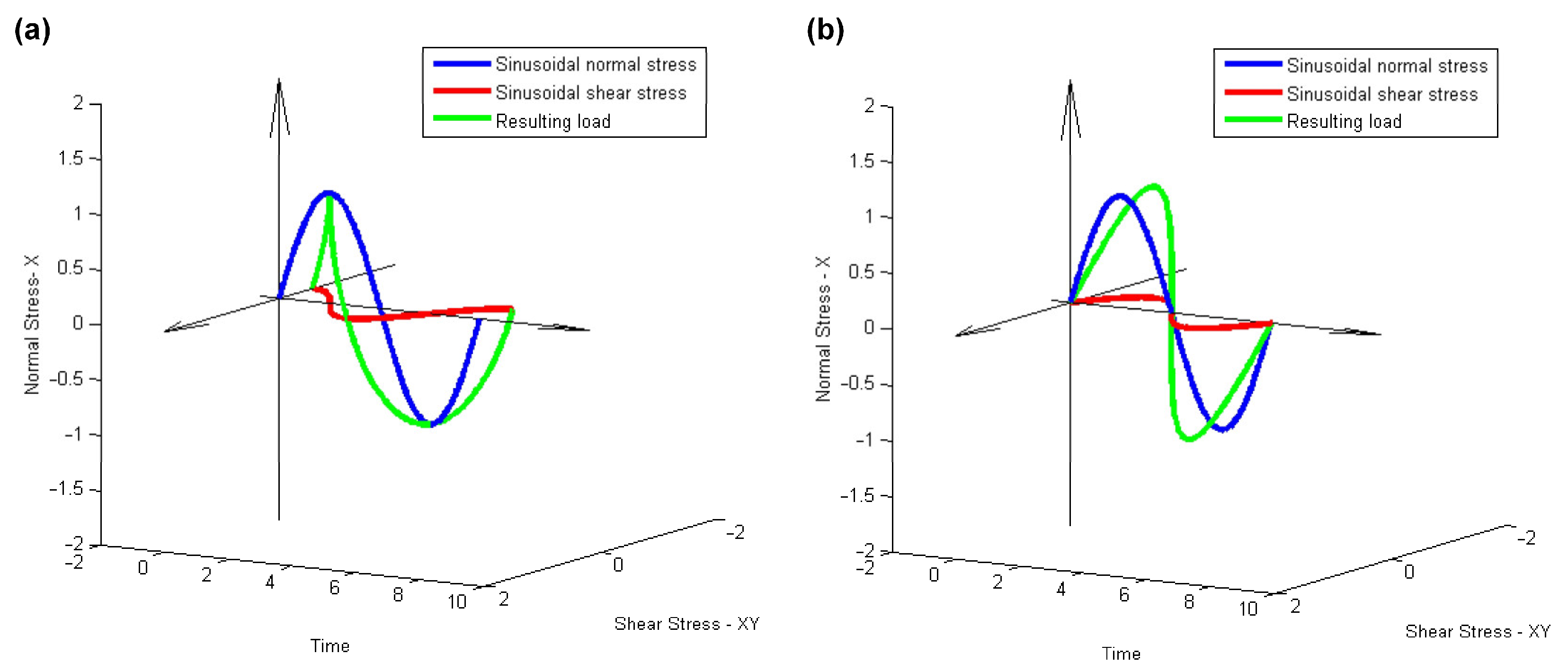
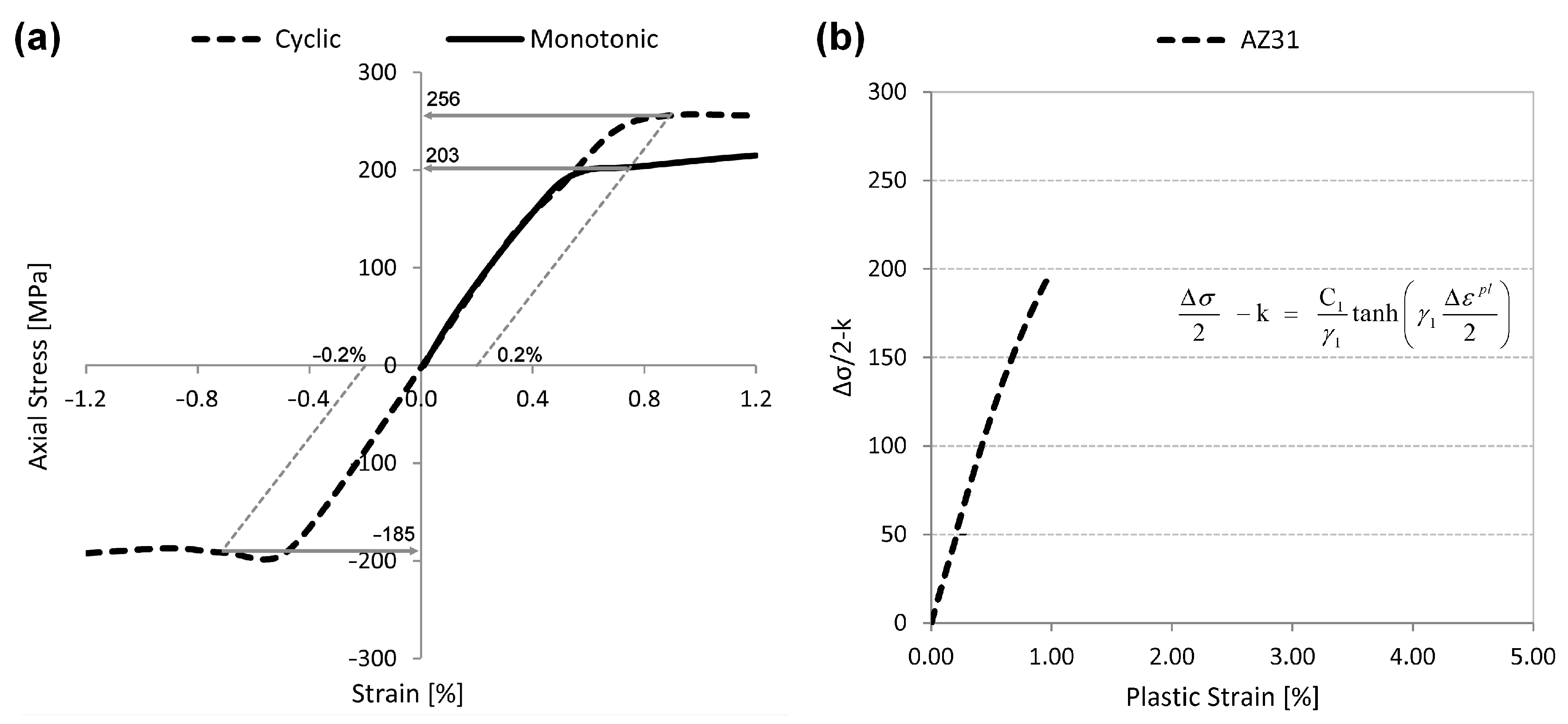
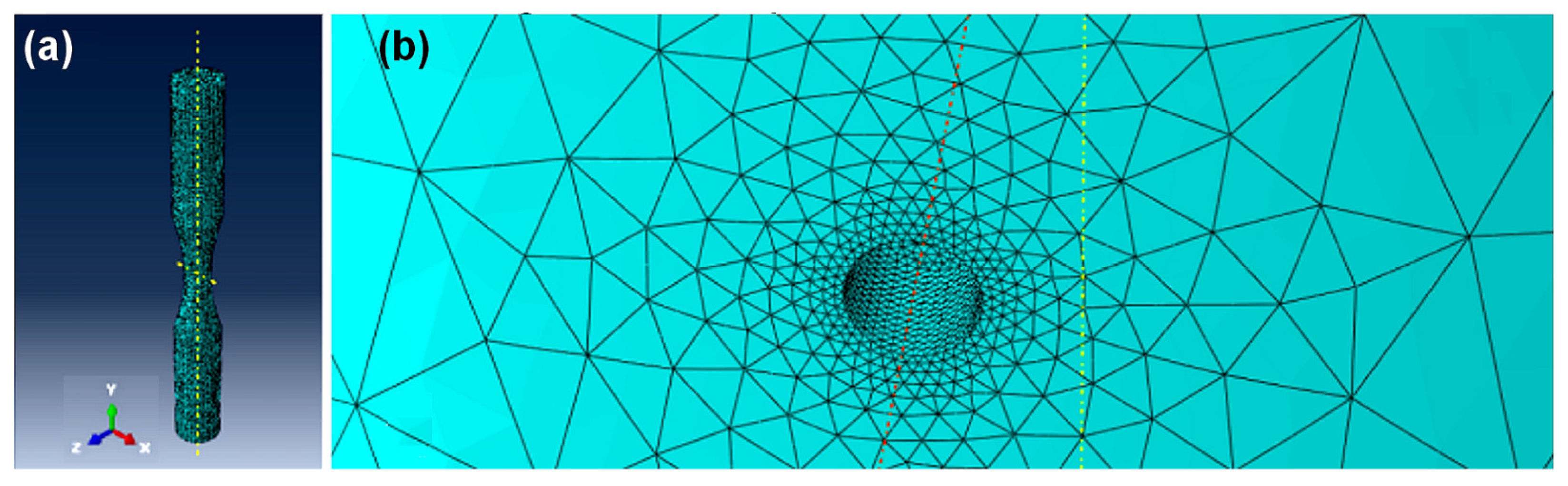
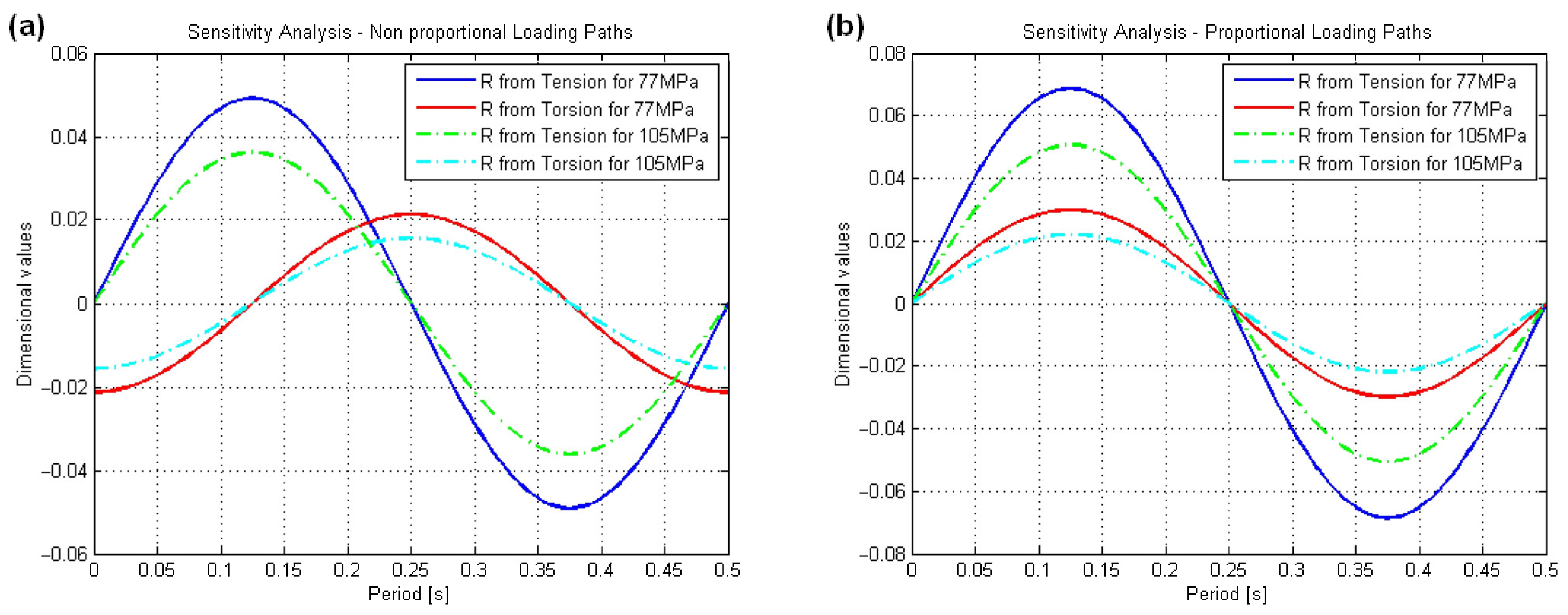
This paper presents a model to calculate the opening angle of crack initiation in notched fractures subjected to multiaxial loading. To validate the proposed model, a study was performed on polished AZ31B-F magnesium alloy specimens under multiaxial high-cycle fatigue loading. The specimens exhibited a notch in the smaller cross-sectional area, which was created with a special drilling jig to promote the formation of fatigue cracks in this localized area of the specimen. The load paths used in the experiments and numerical analyses were proportional and non-proportional, resulting in different stress states in the crack front opening, which were determined by finite element analysis to validate the proposed model. To obtain more accurate numerical results for these estimates, these finite element analyses were performed using the nonlinear Chaboche plasticity model of ABAQUS® 2021 software. A sensitivity analysis was also performed to determine which load component—axial or torsional—has a greater influence on the fatigue strength and contributes significantly to the crack opening process. The results show that the type of load path and the stress level of each load component—axial and torsional—has a strong influence on the opening angle of the notch crack and the fatigue lifetime of the specimen. This result is confirmed not only by the experimentally determined fatigue strength, but also by a fractographic analysis performed on the surface of the specimens for both load paths. Moreover, the results show an acceptable correlation between the experimental results and the estimates obtained with the proposed model and the stresses obtained with the finite element analysis.
Keywords: multiaxial fatigue; notch crack opening angle; AZ31B-F magnesium alloy; stress-based model multiaxial fatigue; notch crack opening angle; AZ31B-F magnesium alloy; stress-based model