Article

Differences in ITO Interface Characteristics Change According to the Formation of Aromatic-Ring and Aliphatic Self-Assembled Monolayers

1
Department of Materials Science and Engineering, Changwon National University, 20 Changwondaehak-ro, Uichang-gu, Changwon-si 51140, Gyeongsangnam-do, Korea
2
Division of Materials Science and Engineering, Silla University, 140 Baegyang-daero (Blvd.) 700beon-gil (Rd), Sasang-gu, Busan 46958, Korea
3
Department of Mechatronics Convergence, Changwon National University, 20 Changwondaehak-ro, Uichang-gu, Changwon-si 51140, Gyeongsangnam-do, Korea
*
Author to whom correspondence should be addressed.
Authors contributed equally to this work.
Crystals 2021, 11(1), 26; https://doi.org/10.3390/cryst11010026
Submission received: 2 December 2020 / Revised: 23 December 2020 / Accepted: 25 December 2020 / Published: 30 December 2020

Abstract

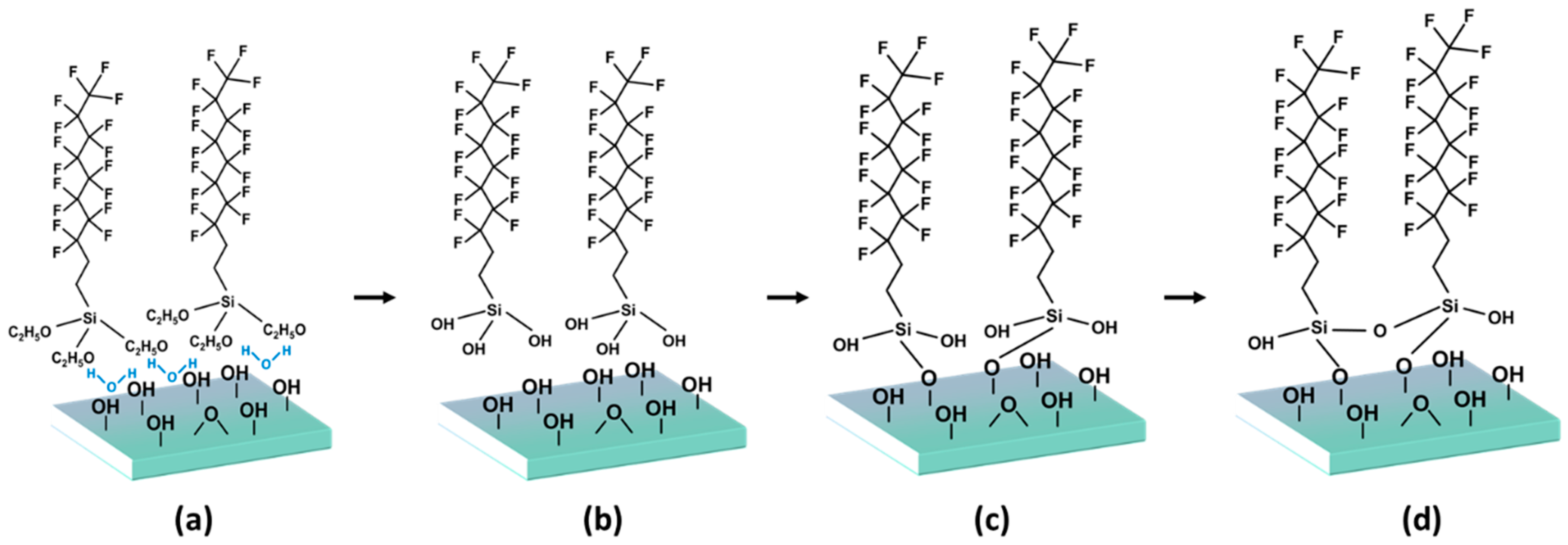
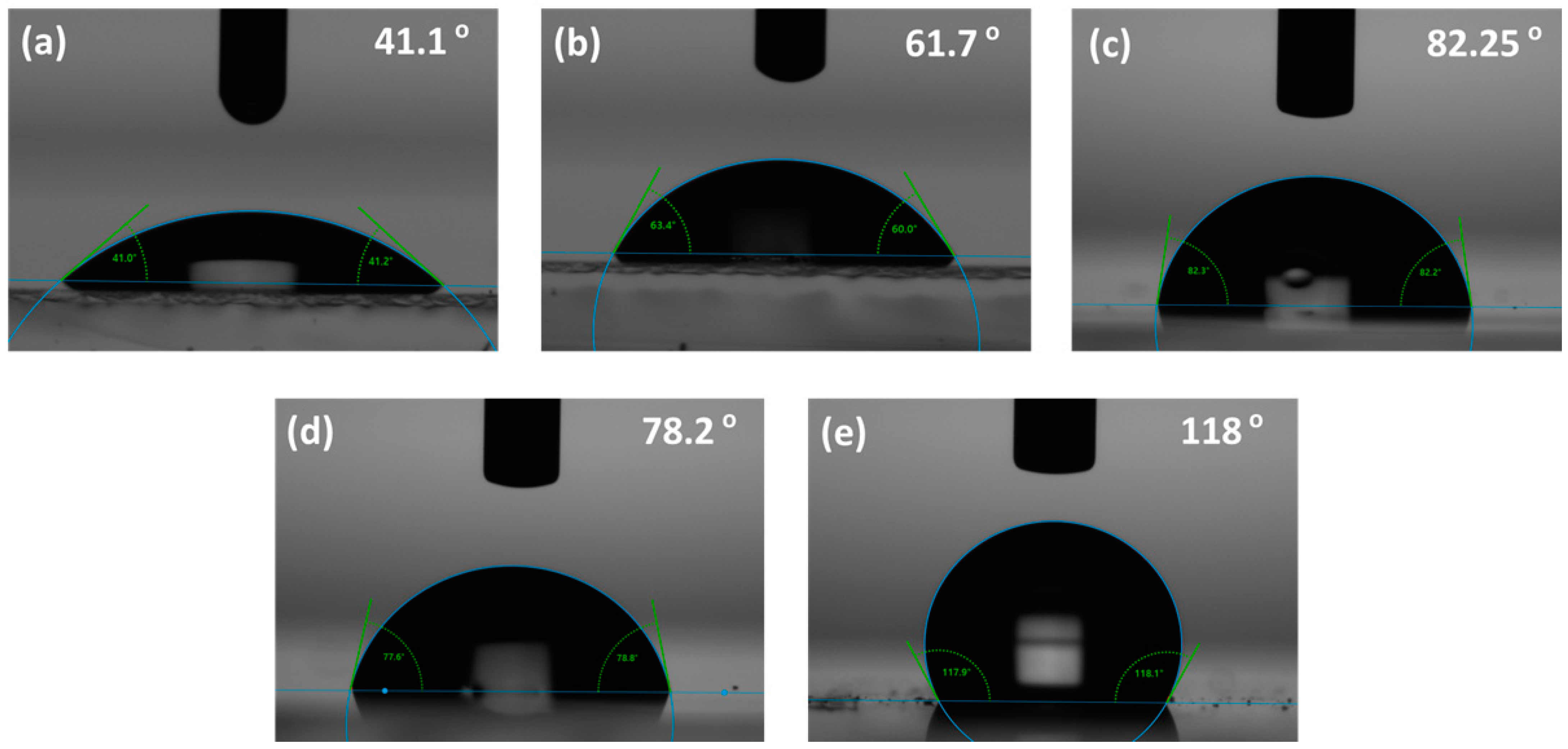
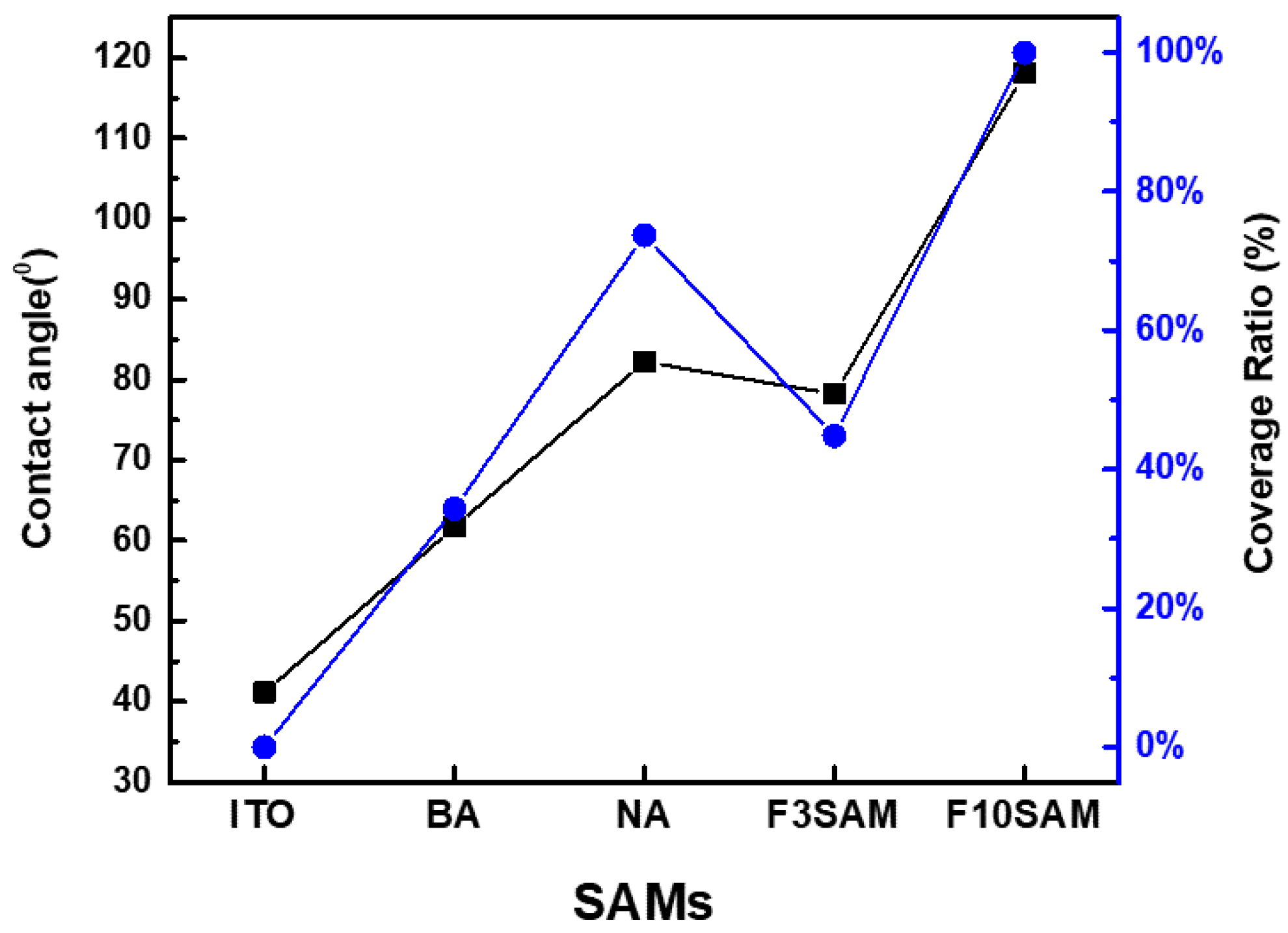
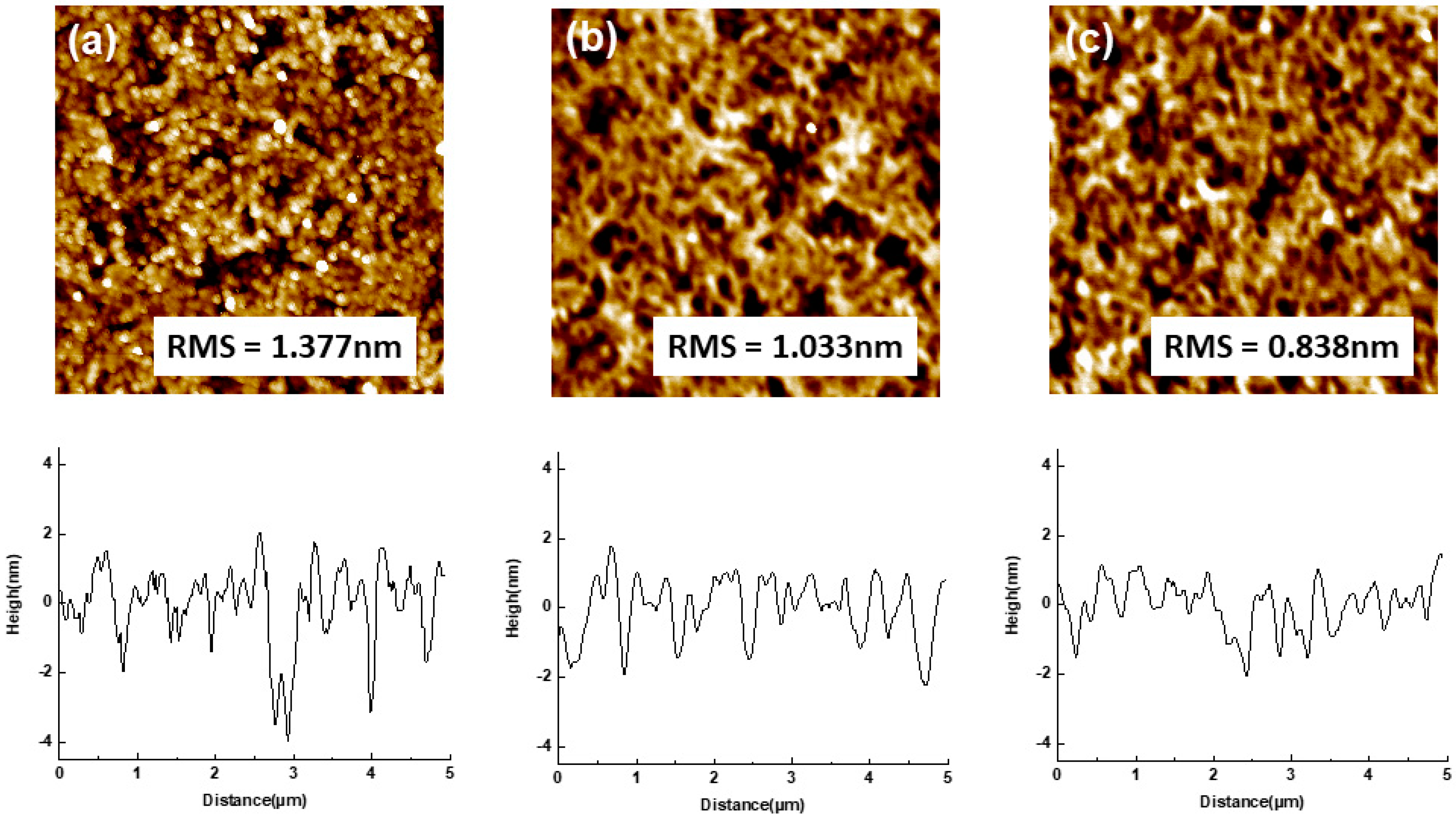
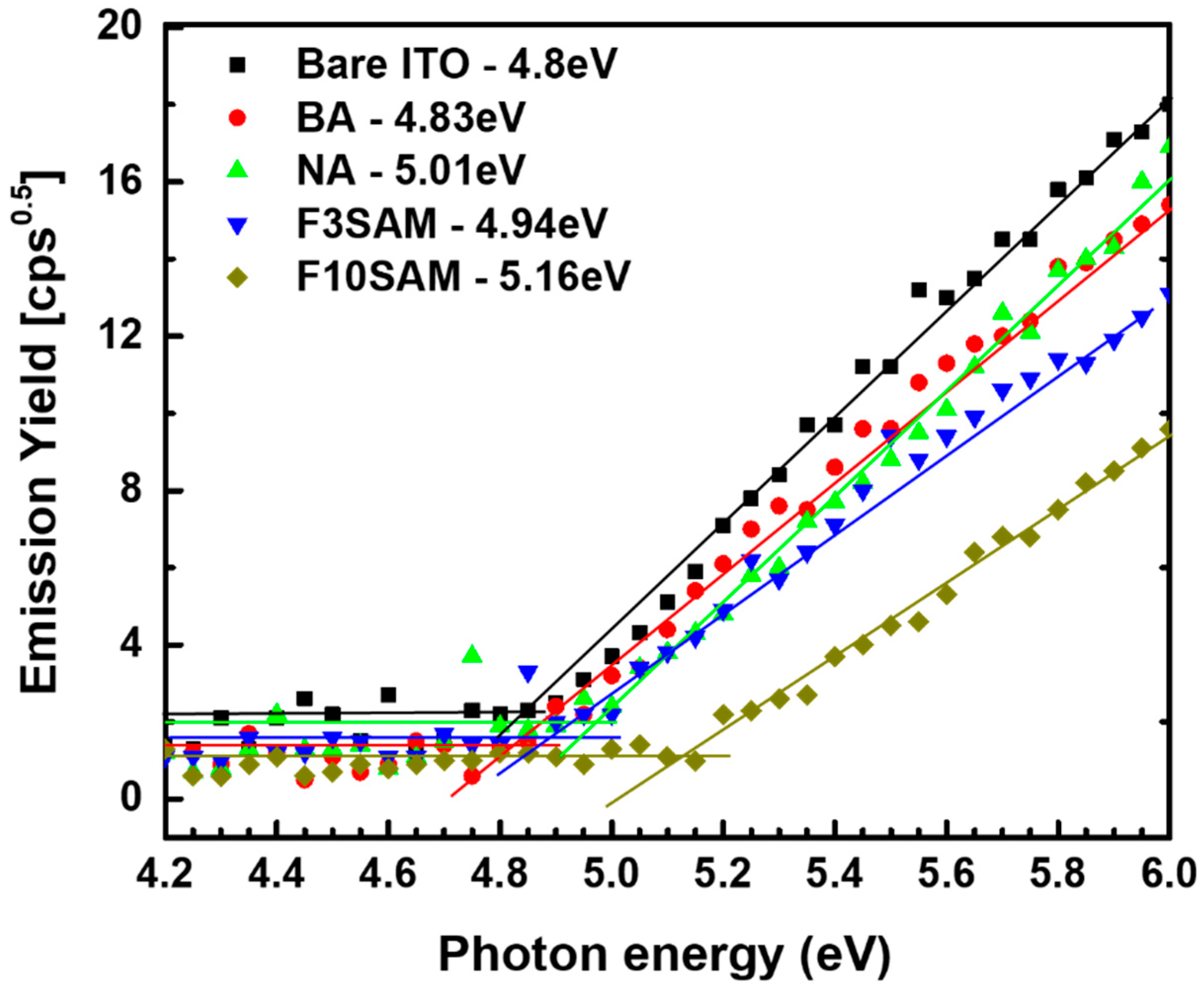
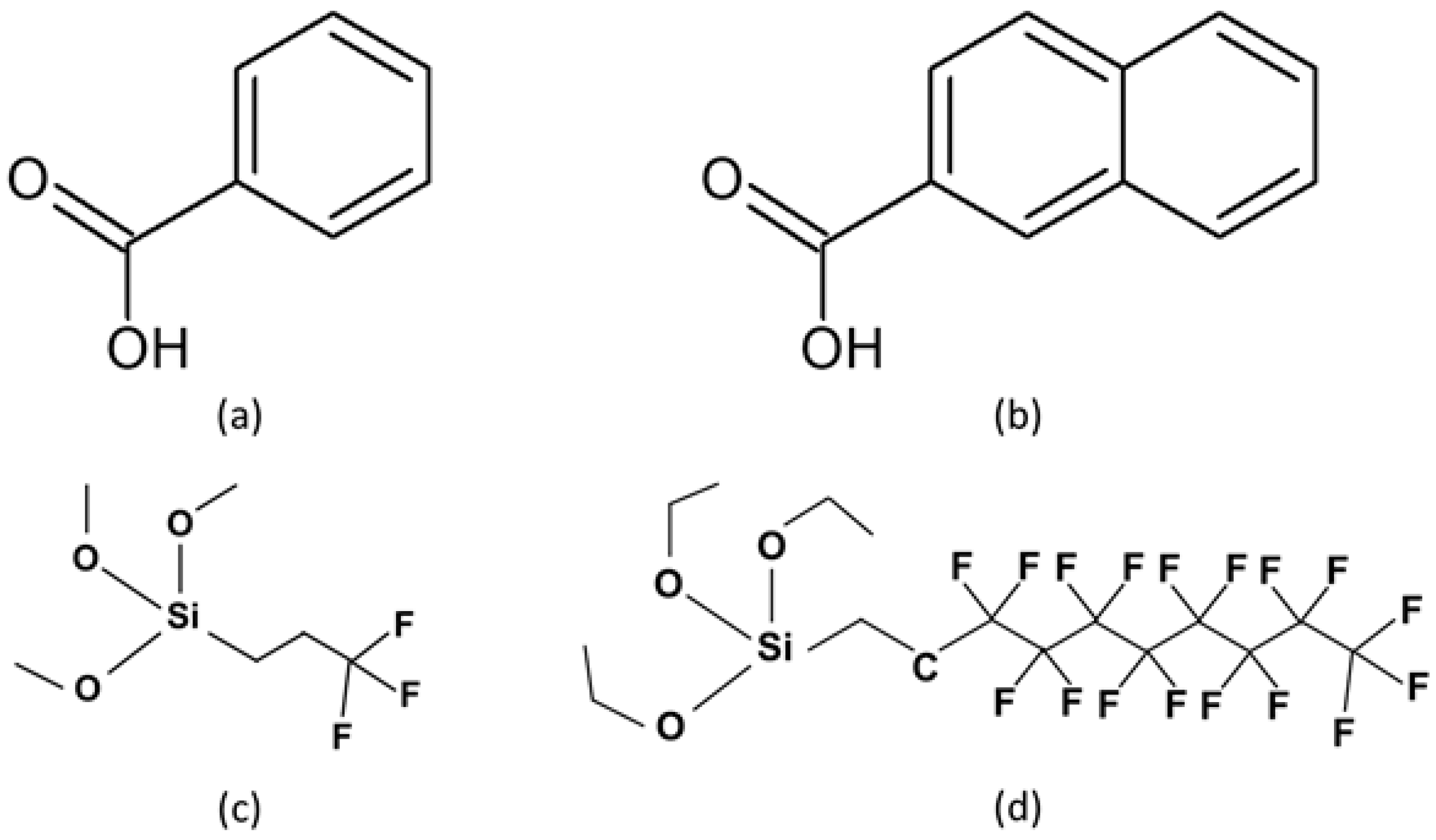
Herein, we confirm the performance difference according to the structure of self-assembling monolayer (SAM) and investigate the characteristics of the indium tin oxide (ITO) surface when ITO substrates are deposited by (3,3,3-trifluoropropyl)trimethoxysilane (F-3SAM) and (heptadecafluoro-1,1,2,2-tetrahydrodecyl)triethoxysilane (F-10SAM) having different chain lengths with trifluoromethyl group as terminal functional group, as well as SAM benzoic acid (BA) and 2-naphthoic acid (NA) with benzene ring forms. Through these, it is possible to control the wetting properties, surface roughness, and work function of the ITO surface. Wetting characteristics, average roughness, and changes in work function of the ITO surface were characterized by contact angle measurement, atomic force microscopy (AFM), and UV photoelectron spectroscopy (UPS). The measured contact angles were 41.1°, 82.25°, and 118° for the bare ITO, NA, and F-10SAM, respectively, the average roughnesses of the SAM-modified surfaces were 1.377, 1.033, and 0.838 nm for the bare ITO, NA, and F-10SAM, respectively. The work function of the ITO surface modified with NA and F-10SAM increased from 0.21 and 0.36 eV to 5.01 and 5.16 eV, respectively. As a result, the surface properties of ITO were better for aliphatic SAM than for aromatic ring SAM.
Keywords: self-assembled monolayers; hole injection layer; organic light-emitting diodes self-assembled monolayers; hole injection layer; organic light-emitting diodes