Article

Mesh-Engineered Photocatalyst/Hydrogel Composite for Sustainable Removal of PM2.5-Bound Polycyclic Aromatic Hydrocarbons


by
Sujitra Tandorn
1,2,
Pasu Inphak
1,
Pongpen Kaewdee
1,2,
Chanidapha Thiraphatchotiphum
1,
Attakorn Asanakham
3,4,
Tanongkiat Kiatsiriroat
3,4,
Gobwute Rujijanagul
5,6,7 and
Chamnan Randorn
1,7,*
1
Department of Chemistry, Faculty of Science, Chiang Mai University, Chiang Mai 50200, Thailand
2
Office of Research Administration, Chiang Mai University, Chiang Mai 50200, Thailand
3
Department of Mechanical Engineering, Faculty of Engineering, Chiang Mai University, Chiang Mai 50200, Thailand
4
Research Group for Renewable Energy, Faculty of Engineering, Chiang Mai University, Chiang Mai 50200, Thailand
5
Department of Physics and Materials Science, Faculty of Science, Chiang Mai University, Chiang Mai 50200, Thailand
6
Multidisciplinary Research Institute, Chiang Mai University, Chiang Mai 50200, Thailand
7
Center of Excellence in Materials Science and Technology, Chiang Mai University, Chiang Mai 50200, Thailand
*
Author to whom correspondence should be addressed.
Catalysts 2026, 16(9), 794; https://doi.org/10.3390/catal16090794
Submission received: 15 July 2026 / Revised: 27 August 2026 / Accepted: 31 August 2026 / Published: 2 September 2026

Abstract

Airborne polycyclic aromatic hydrocarbons (PAHs) are toxic pollutants that pose significant risks to human health. In this study, a photocatalyst-based polyacrylamide/zinc oxide (PAM/ZnO) hydrogel composite mesh with an open-mesh architecture was successfully fabricated via photoinduced polymerization of acrylamide, in which ZnO served as both the photoinitiator and photocatalyst. The resulting composite exhibited a three-dimensional interconnected porous structure with ZnO particles uniformly distributed throughout the polyacrylamide hydrogel matrix. The hydrogel exhibited typical swelling–deswelling behavior, reaching an equilibrium swelling ratio of 2.71 within 360 min, along with good water-retention capability. The photocatalytic performance of the PAM/ZnO hydrogel composite mesh was evaluated through the degradation of particulate matter (PM)-bound PAHs generated from incense smoke. The concentrations of two- to five-ring PAHs progressively decreased with increasing ultraviolet irradiation time. Complete degradation of naphthalene was achieved after 4 h of UV irradiation, whereas all detected five-ring PAHs were completely removed after 8 h. Furthermore, the mesh-engineered architecture exhibited excellent air permeability with an exceptionally low pressure drop (<120 Pa), even with multiple mesh layers, enabling energy-efficient continuous air recirculation. These characteristics, together with the photocatalytic degradation of particle-bound PAHs, make the PAM/ZnO hydrogel composite mesh a promising platform for sustainable air purification.

1. Introduction

Airborne particulate matter (PM) is one of the most significant air pollutants affecting environmental quality and human health. PM comprises a heterogeneous mixture of solid particles and liquid droplets suspended in the atmosphere, originating from both natural and anthropogenic sources, including industrial processes, vehicle emissions, biomass burning, and domestic combustion [1,2]. Fine particulate matter, particularly PM2.5, is of particular concern because it can remain suspended in the air for prolonged periods and penetrate deep into the respiratory tract, where it may induce adverse health effects, including respiratory and cardiovascular diseases. Moreover, PM2.5 serves as a carrier for various toxic contaminants, such as heavy metals, microorganisms, and polycyclic aromatic hydrocarbons (PAHs), thereby increasing the potential health risks associated with PM exposure [3,4].
Polycyclic aromatic hydrocarbons (PAHs) are a class of organic compounds composed of two or more fused aromatic rings. They are widely distributed in various environmental media, including soil, water, and air, and are primarily generated through the incomplete combustion of organic materials such as coal, biomass, and fossil fuels [5,6]. In the atmosphere, high-molecular-weight PAHs preferentially adsorb onto particulate matter (PM) because of their low vapor pressure, facilitating their atmospheric transport and subsequent inhalation into the human respiratory system. As a result, PM-bound PAHs are considered one of the most hazardous groups of organic pollutants because of their mutagenic and carcinogenic properties, posing significant risks to human health [7,8]. However, currently available air filtration technologies still have important limitations. Conventional air filters, such as HEPA and activated carbon filters, primarily remove particulate matter and air pollutants through physical capture or adsorption. Toxic constituents, particularly PAHs, accumulate on the filter surface because these filters lack the ability to degrade them. Consequently, spent filters become hazardous waste, posing a risk of secondary pollutant release into the environment. In addition, the need for frequent filter replacement and disposal increases the operational and maintenance costs of air filtration systems [9,10]. Therefore, the development of air filtration materials capable of not only capturing particulate matter but also degrading PAHs is essential for the detoxification of airborne pollutants. Such multifunctional materials can minimize the accumulation of hazardous contaminants on filter surfaces, reduce the generation of hazardous waste, and improve the sustainability and long-term performance of air purification systems.
In recent years, photocatalytic processes have gained considerable attention as a promising technology for environmental remediation because they can effectively degrade toxic pollutants into harmless products. Under light irradiation, these pollutants can be completely mineralized into carbon dioxide (CO2) and water (H2O), making photocatalysis a sustainable and environmentally friendly approach for pollutant removal [11,12]. For organic dye pollutants, T. Imboon et al. [13] synthesized an Fe-ZnO/GO composite for the removal of rhodamine B (RhB) and reported that 99.32% of RhB was degraded within 24 h under UV light irradiation. Similarly, a ZnO–graphene hybrid photocatalyst was found to be effective for the degradation of methylene blue (MB), achieving a removal efficiency of 93% within 130 min under UV-visible light irradiation [14]. For the photocatalytic degradation of PAHs, several studies have reported the development of photocatalyst-based materials for the degradation of PAHs. These materials can effectively degrade various PAH compounds. For example, X. Yang et al. [15] reported that a GO/Ag3PO4 composite photocatalyst degraded naphthalene, phenanthrene, and pyrene in water, achieving removal efficiencies of 98.6%, 82.1%, and 100%, respectively. In another study, H. Dong et al. [16] synthesized a graphene quantum dot (GQD)/TiO2/α-FeOOH composite photocatalyst and applied it to the degradation of fluoranthene in contaminated soil, achieving a removal efficiency of 67.37% after 24 h of sunlight irradiation. Similarly, the photocatalytic degradation of naphthalene and anthracene in aqueous solution was investigated using CdS/ZnO nanocomposites [17], yielding removal efficiencies of 98.75% for naphthalene within 180 min and 96.13% for anthracene within 300 min under visible-light irradiation. Furthermore, H. A. Chanuan et al. [18] reported that a graphene oxide (GO)/ZnO nanocomposite achieved an 86.06% removal efficiency for phenanthrene within 120 min under UV light irradiation.
However, most previous studies have focused on the degradation of PAHs in soil and aqueous systems, whereas only a few have investigated the photocatalytic degradation of airborne PAHs. Existing photocatalytic air filtration materials are generally fabricated by immobilizing photocatalysts, such as TiO2, onto solid supporting substrates, including quartz fiber filters [19], electrospun nanofibrous membranes [20], and fiberglass materials [21]. Nevertheless, immobilizing photocatalysts on solid substrates often reduces the accessible photocatalytic surface area and increases airflow resistance and pressure drop because of their dense structure, thereby decreasing photocatalytic efficiency and limiting their practical application in air purification. [22]. Conventional air filters generally improve particulate removal by increasing fiber packing density or reducing pore size, which inevitably increases airflow resistance and energy consumption. While such an approach is effective for single-pass particle capture, it is less suitable for photocatalytic air purification systems that require continuous airflow and prolonged exposure of pollutants to photocatalytic surfaces. Therefore, engineering an open mesh architecture with minimal airflow resistance offers an alternative strategy, enabling repeated air circulation with low energy demand while providing multiple opportunities for particle deposition and subsequent photocatalytic degradation of particle-bound contaminants. Despite these potential advantages, photocatalytic hydrogel composites with mesh-engineered architectures for the treatment of PM2.5-bound organic pollutants remain largely unexplored.
In this study, we report the fabrication of a photocatalyst-based polyacrylamide/zinc oxide (PAM/ZnO) hydrogel composite with a mesh structure via the self-initiated photopolymerization of acrylamide, using ZnO, which performs dual functions as both the self-photoinitiator and photocatalyst. The mesh architecture was designed to facilitate continuous air circulation while enabling the capture and photocatalytic degradation of PM2.5-bound PAHs. The structure, swelling behavior, pressure drop, and photocatalytic performance of the composite were systematically investigated to evaluate its potential for sustainable air purification.

2. Results and Discussion

2.1. Preparation and Characterization of PAM/ZnO Hydrogel Composite Mesh

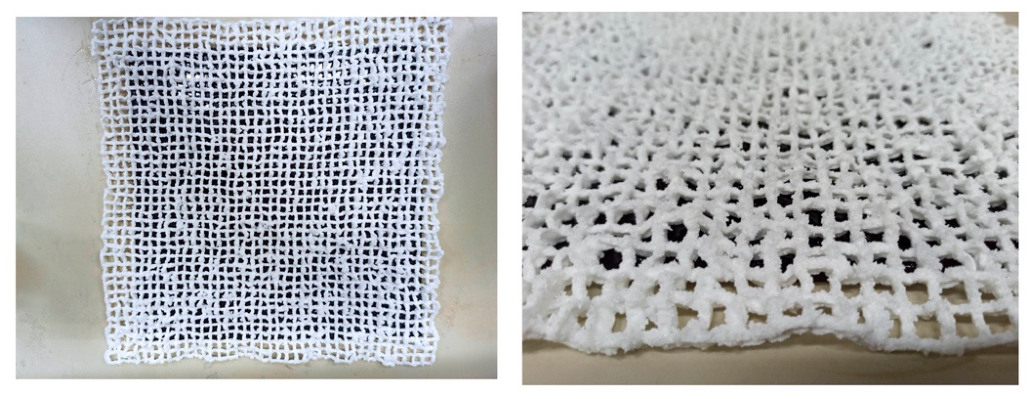
PAM/ZnO hydrogel composite mesh was prepared through self-initiated polymerization of acrylamide using ZnO as self-photo-initiator, and NMBA as crosslinker. Upon light irradiation, the photocatalyst generates free radicals, which subsequently attack the double-bond sites of the AM monomers, initiating polymer chain propagation. NMBA facilitates crosslinking between adjacent polymer chains, resulting in the formation of a three-dimensional hydrogel network. After completion of the polymerization process, the PAM/ZnO hydrogel composite mesh was formed and adhered to the acrylic mold template. The resulting hydrogel was then removed from the mold, as shown in Figure 1.
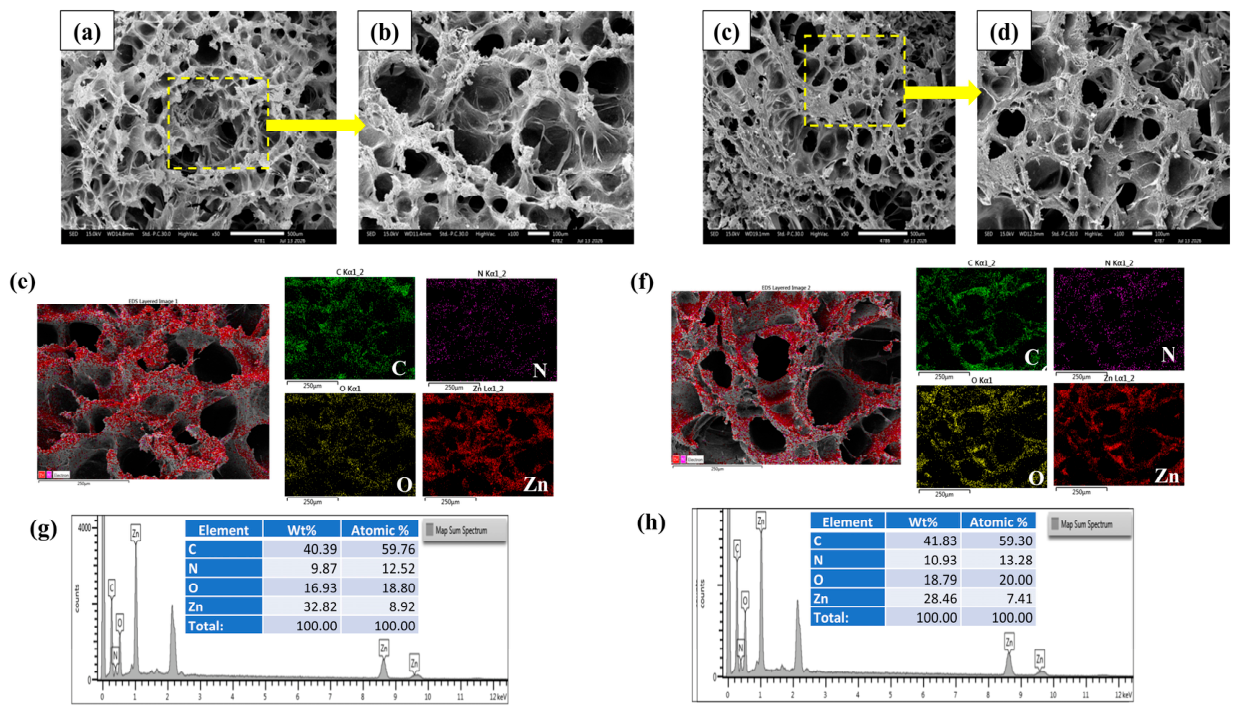
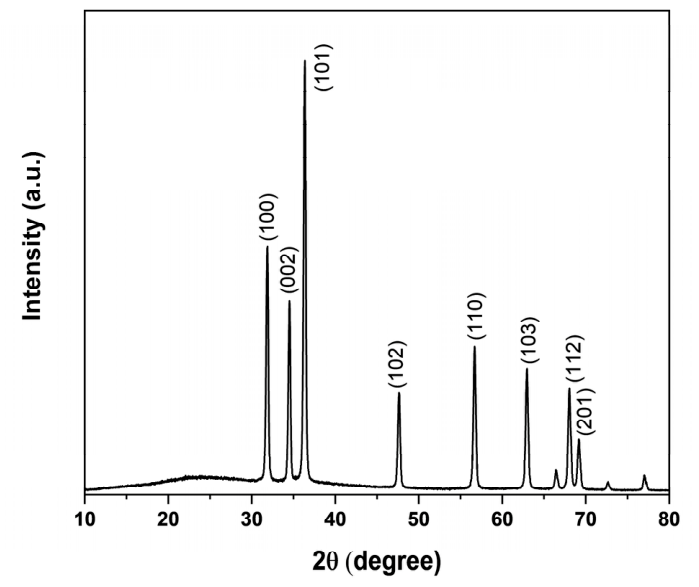
SEM images of the surface and cross-sectional morphologies of the PAM/ZnO hydrogel composite mesh (Figure 2a–d) revealed a three-dimensional interconnected porous network. The polyacrylamide hydrogel matrix served as a supporting framework, within which ZnO particles were uniformly distributed and embedded throughout the polymeric structure. Furthermore, elemental mapping analysis showed the presence of C, N, O, and Zn across both the surface and internal regions of the hydrogel composite mesh, indicating the successful incorporation of ZnO into the hydrogel matrix (Figure 2e–h). The XRD pattern of the PAM/ZnO hydrogel composite mesh (Figure 3) exhibited the characteristic diffraction peaks of ZnO at 2θ values of 31.9°, 34.6°, 36.2°, 47.7°, 56.6°, 62.8°, 67.9°, and 69.2°, corresponding to the (100), (002), (101), (102), (110), (103), (112), and (201) crystal planes, respectively. These diffraction peaks are in good agreement with the standard JCPDS card No. 36-1451 [23,24,25]. A broad diffraction peak observed at approximately 22° was attributed to the amorphous structure of polyacrylamide [26,27]. These results confirm the presence of both ZnO and polyacrylamide in the hydrogel composite mesh.
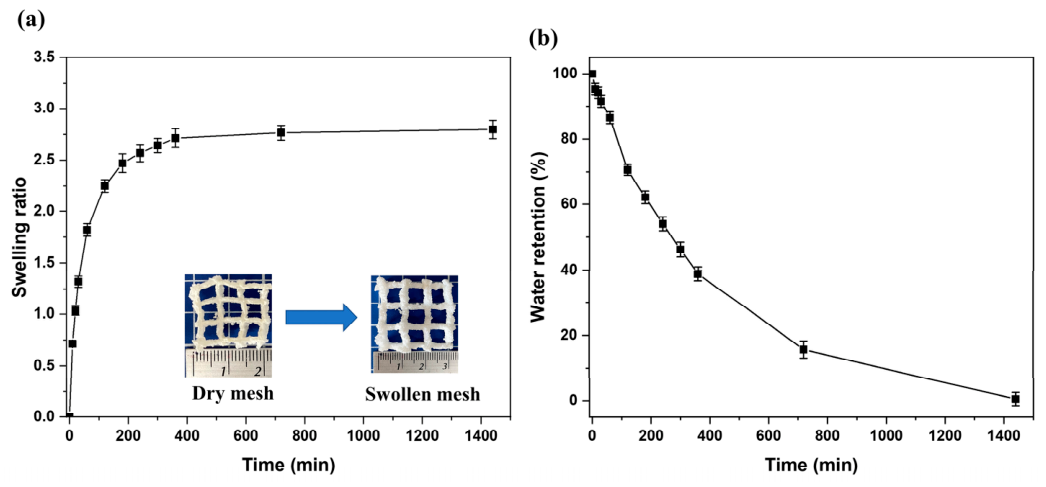
The swelling behavior of the hydrogel composite mesh was investigated, as illustrated in Figure 4a. The results showed a rapid increase in the swelling ratio within the first 120 min, indicating fast diffusion of water molecules into the hydrogel network. After this initial stage, the swelling rate gradually decreased, suggesting progressive saturation of the polymer network with water over time. Finally, a near-equilibrium swelling state was reached after approximately 360 min, with a swelling ratio of 2.71. This behavior is consistent with the dimensional changes observed in the hydrogel sheets. The initial dry hydrogel had a size of 1.8 × 1.8 cm. After 120 min of immersion in water, the material expanded significantly to 2.8 × 2.8 cm, confirming rapid water uptake during the early swelling stage. However, extending the swelling time to 1440 min resulted in only a slight further increase in size, reaching 3.0 × 3.0 cm, indicating that the swelling equilibrium had nearly been achieved.
In contrast, the water retention capacity of the hydrogel composite mesh gradually decreased with time due to evaporation of absorbed water from the material surface (Figure 4b). After 12 h, the retained water content decreased to 15.68%, and after 24 h, nearly all absorbed water had been lost, with the retained water content reduced to 0.54%, resulting in a rigid appearance. Nevertheless, the hydrogel maintained its structural integrity and could still be handled without fracture. Overall, these results demonstrate that the as-prepared hydrogel composite mesh exhibits typical swelling–deswelling behavior characteristic of hydrogel materials.

2.2. Photocatalytic Activity of PAM/ZnO Hydrogel Composite Mesh

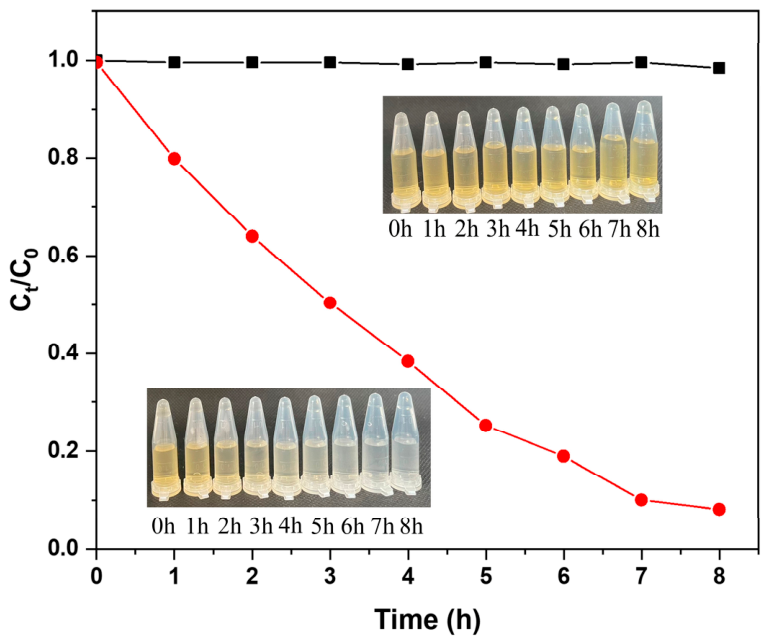
The photocatalytic activity of the as-prepared hydrogel composite mesh for the degradation of methyl orange (MO) under UV irradiation was evaluated by monitoring changes in the dye color and concentration. As shown in Figure 5, the PAM/ZnO hydrogel composite mesh exhibited excellent photocatalytic activity toward MO degradation. Approximately 91.82% of the MO dye was degraded after 8 h of UV irradiation, as evidenced by the gradual color change in the MO solution from yellow to colorless and the corresponding decrease in dye concentration with increasing irradiation time. In contrast, the MO dye solution without the hydrogel composite mesh (control experiment) showed no significant changes in color or concentration with degradation efficiency of 0.78% under the same UV irradiation conditions. These results demonstrate the efficient photocatalytic performance of the hydrogel composite mesh in degrading organic dye pollutants, highlighting its potential application for the degradation of other organic contaminants.

2.3. The Photocatalytic Degradation Capability of PAM/ZnO Hydrogel Composite Mesh Toward Polycyclic Aromatic Hydrocarbon (PAH)-Bound Particulate Matter (PM)

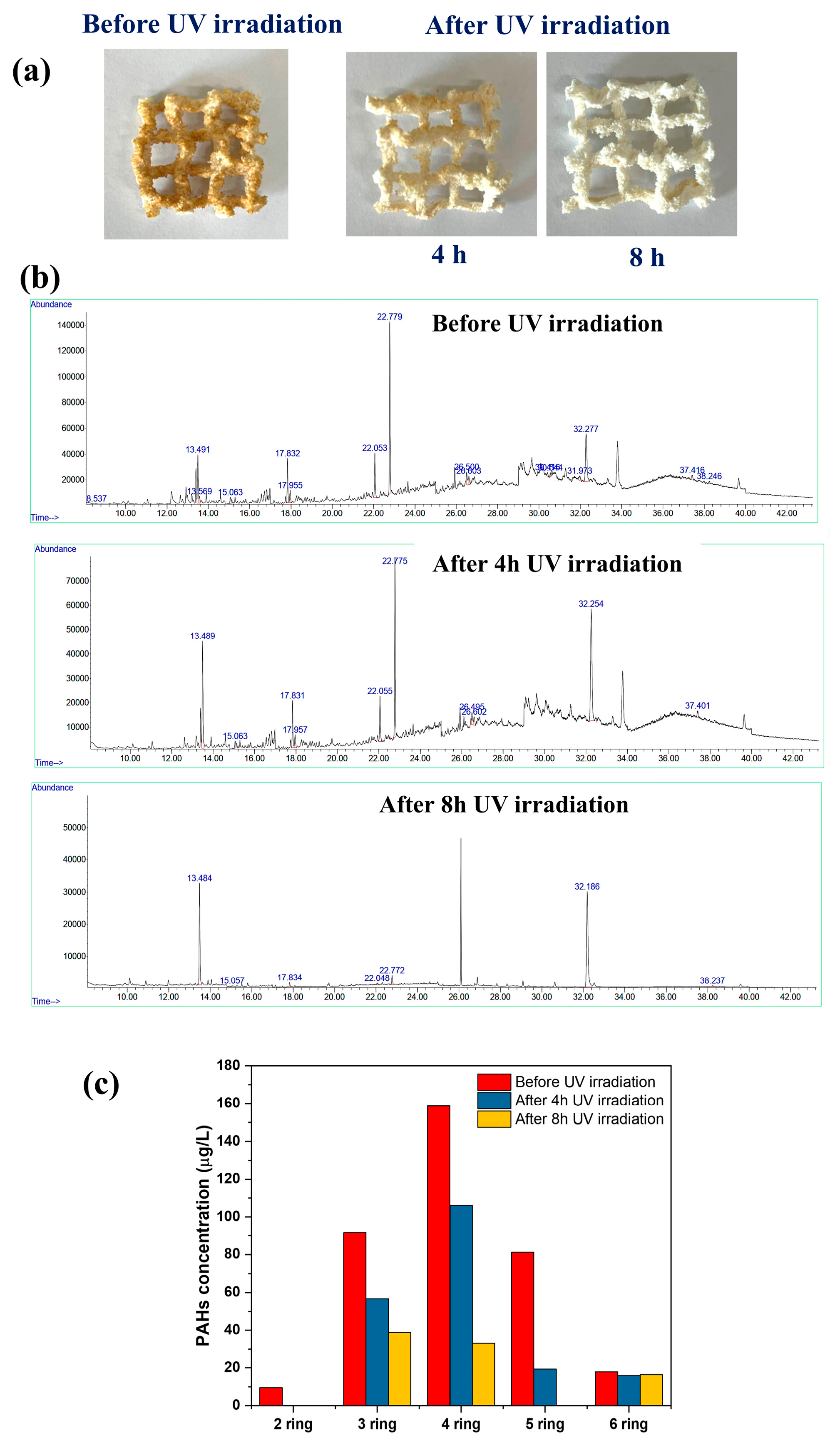
The hydrogel composite mesh was exposed to incense smoke, with the PM2.5 concentration measured at approximately 500–600 μg/m3. After exposure, the surface of the material changed from white to brown, indicating the deposition of particulate matter. When the as-prepared hydrogel composite mesh was subsequently irradiated under UVA light for 4 and 8 h, the brown deposits on the surface gradually diminished and eventually disappeared with increasing irradiation time (Figure 6a). This observation may be attributed to the degradation of organic components, particularly polycyclic aromatic hydrocarbons (PAHs), which are major constituents of particulate matter. To further investigate this phenomenon, the extraction and quantitative analysis of PAHs-bound to PM derived from incense smoke deposited on the hydrogel composite mesh were performed before and after UV light irradiation.
The GC chromatograms of the hydrogel composite mesh before and after UV light irradiation for 4 and 8 h are presented in Figure 6b. A marked reduction in the peak intensities of PAHs was observed following UV irradiation, indicating the effective degradation of PAHs bound to PM emitted from incense smoke. To further evaluate this effect, the concentrations of PM-bound PAHs deposited on the hydrogel composite mesh were quantified before and after irradiation at different exposure times. Fourteen PAHs were detected in particulate matter (PM) emitted from incense smoke. Among these, four-ring PAHs, including pyrene (Pyr) and fluoranthene (Flt), together with three-ring PAHs, namely phenanthrene (Phen) and anthracene (Anth), were the predominant species, accounting for 23%, 10%, 10%, and 7% of the total PAHs concentration, respectively. The predominance of three- and four-ring PAHs is consistent with previous studies, which have similarly reported these compounds as the major constituents of particle-phase PAHs in incense smoke [28,29,30].
The statistical significance of differences in PAH concentrations in PM samples before and after UV irradiation at different time intervals was evaluated using a paired t-test. The results revealed a significant reduction in PAH concentrations following UV irradiation for both 4 and 8 h (p < 0.05). After 4 h of UV exposure, Nap (a two-ring PAH) was completely degraded. The concentrations of three-, four-, and five-ring PAHs also decreased significantly. A similar trend was observed after 8 h of UV irradiation, where the concentrations of three- and four-ring PAHs further decreased, while five-ring PAHs were completely degraded. In contrast, the six-ring PAH BghiP exhibited only a slight reduction after both 4 and 8 h of irradiation (Figure 6c). This lower degradation efficiency may be attributed to its highly condensed molecular structure, consisting of six fused benzene rings, which results in a relatively high molecular weight, low water solubility, and low volatility, making it more resistant to degradation [31,32].
The photocatalytic activity of the hydrogel composite mesh is primarily attributed to the incorporated ZnO, which generates reactive oxygen species (ROS) under UV irradiation. Upon UV irradiation, ZnO absorbs photons with sufficient energy to generate electron–hole pairs. The photogenerated holes (h+) can react with surface-adsorbed H2O or OH to produce highly reactive hydroxyl radicals (OH), while the photogenerated electrons (e) can reduce adsorbed O2 to form superoxide radicals (O2•−). These reactive species, together with the photogenerated h+, can attack and oxidize organic pollutants. In particular, OH and O2•− can react with the aromatic structures of PAHs, promoting the opening of their aromatic rings and subsequent oxidation and decomposition into smaller and less harmful intermediates, such as aldehydes, ketones, and carboxylic acids. Further oxidation of these intermediates can ultimately lead to mineralization into CO2 and H2O [33,34].

2.4. Pressure Drop of PAM/ZnO Hydrogel Composite Mesh

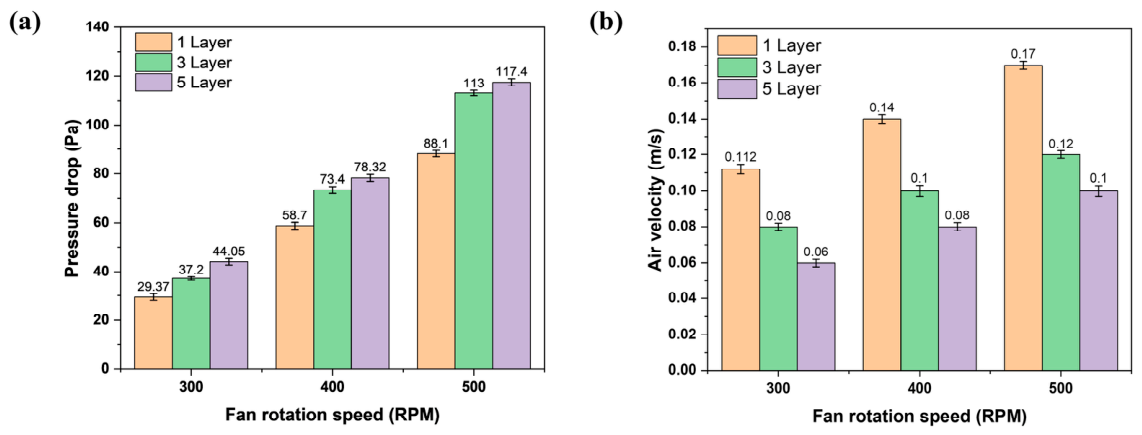
Pressure drop is a key parameter in practical air purification systems. Ideally, air filters should exhibit a low pressure drop to ensure efficient airflow. In contrast, a high pressure drop leads to increased energy consumption because more power is required to drive the airflow [35,36]. As shown in Figure 7a, the pressure drop increased with increasing fan rotation speed. This behavior can be attributed to the higher face velocity of air passing through the hydrogel composite mesh, which increases frictional resistance and inertial losses within the porous structure thereby increasing flow resistance and resulting in a larger pressure differential across the filter [37,38]. The corresponding air velocities at different fan rotation speeds are shown in Figure 7b.

2.5. Comparison of the As-Prepared Hydrogel Composite with Other Air Filters

Compared with previously reported air filtration materials, including electrospun polymer membranes, biopolymer-based filters, and polymer–MOF composite filters, as summarized in Table 1, the hydrogel composite mesh exhibited a lower pressure drop than those reported for most other filtration materials. Notably, the pressure drop remained below 120 Pa even at higher fan speeds and with multiple mesh layers, demonstrating its potential for low-resistance air filtration applications. This low airflow resistance is advantageous for continuous air circulation because it can reduce the energy required to drive airflow. Although the open structure of the mesh may not achieve the highest single-pass particle filtration efficiency, it facilitates airflow with minimal resistance. This characteristic is particularly beneficial for continuous-flow air purification, where prolonged operation and low energy consumption are important considerations. Furthermore, the hydrogel composite mesh exhibited photocatalytic activity toward PAHs associated with PM2.5. Most of the four- and five-ring PAHs, including BaA, Chr, BbF, BkF, BaP, and DahA, were completely degraded after 8 h of UV irradiation. The combination of low airflow resistance and photocatalytic activity makes the hydrogel composite mesh promising for continuous-flow photocatalytic air purification systems, particularly outdoor air-cleaning installations where long-term operation and energy efficiency are critical.

3. Materials and Methods

3.1. Materials and Chemicals

Acrylamide (AM) and zinc oxide (ZnO) were purchased from Merck KGaA, Darmstadt, Germany. while N,N′-methylenebisacrylamide (NMBA) was obtained from Sigma-Aldrich, St. Louis, MO, USA. These chemicals were used to prepare the precursor solution for the PAM/ZnO hydrogel composite mesh sheet. The chemical and reagents used for the extraction and analysis of PAHs were as follows: dichloromethane (DCM) and hexane (HEX), purchased from RCI Lab Scan, Bangkok, Thailand. A mixture of 16 standard PAH components, consisting of naphthalene (Nap), acenaphthylene (Acy), acenaphthene (Ace), fluorene (Flu), phenanthrene (Phen), anthracene (Anth), fluoranthene (Flt), pyrene (Pyr), benzo[a]anthracene (BaA), chrysene (Chr), benzo[b]fluoranthene (BbF), benzo[k]fluoranthene (BkF), benzo[a]pyrene (BaP), indeno [1,2,3-c,d]pyrene (Ind), dibenzo[a,h]anthracene (DahA), and benzo[g,h,i]perylene (BghiP), was purchased from Restek, Bellefonte, PA USA. Two internal standards, namely acenaphthene-d10 (Ace-d10) and perylene-d12 (Per-d12), were acquired from Sigma-Aldrich. All chemicals and reagents used in this study were analytical grade.
A transparent acrylic sheet (25 × 25 cm) was used as the mold template for material fabrication. The sheet was engraved with square grooves measuring 1.5 mm in width and 2 mm in depth, with a spacing of 5 mm between adjacent grooves.

3.2. Preparation of PAM/ZnO Hydrogel Composite Mesh

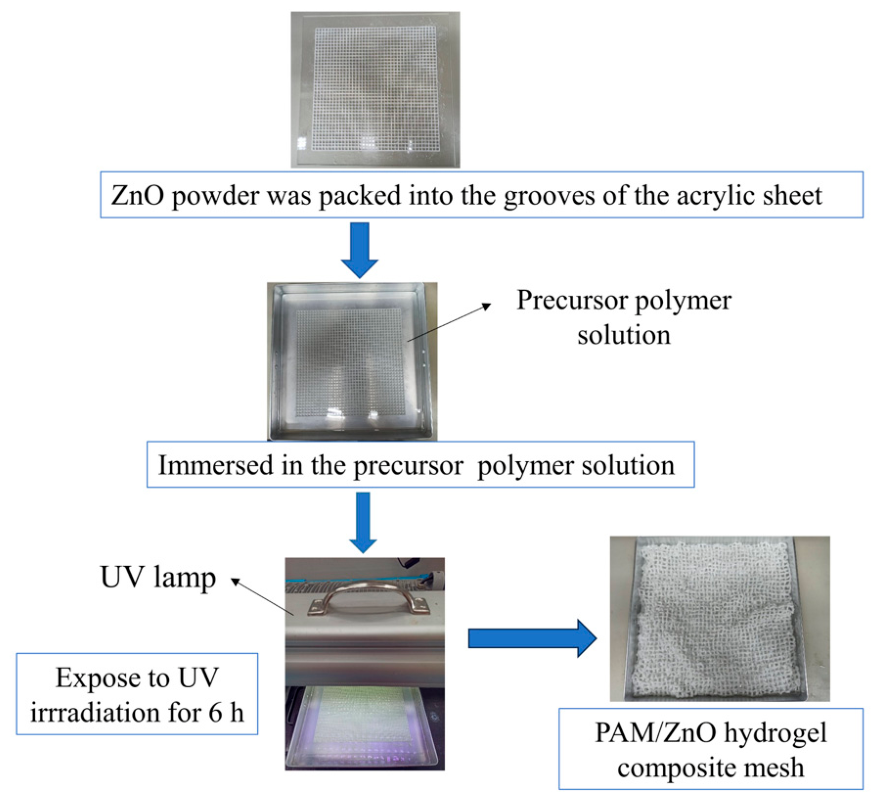
The preparation conditions were based on our previous study [45]. Initially, the desired amount of AM 3.55 wt% was dissolved in 1 L deionized water, followed by the addition of NMBA at 17 wt% relative to the AM amount, and the mixture was stirred using a magnetic stirrer until a clear and homogeneous solution was obtained. The resulting solution was then poured into a container. Meanwhile, 50 g of ZnO powder was packed into the grooves of the acrylic sheet, which was subsequently immersed in the prepared precursor solution and exposed to UV irradiation for 5–6 h to initiate the polymerization of the acrylamide monomer. As a result, the polyacrylamide hydrogel composite was formed and adhered to the acrylic sheet. Finally, the hydrogel composite mesh sheet was removed from the acrylic mold and washed several times with deionized water. The obtained hydrogel composite mesh was designated as PAM/ZnO hydrogel composite mesh. The schematic of preparation procedure is illustrated in Figure 8.

3.3. Characterization of PAM/ZnO Hydrogel Composite Mesh

The morphology and elemental distribution of the PAM/ZnO mesh were investigated using scanning electron microscopy (SEM; JEOL JSM-IT300, JEOL Ltd.,Tokyo, Japan) and energy-dispersive X-ray spectroscopy (EDS; Oxford Instruments X-Max20, Oxford Instruments, High Wycombe, UK), respectively. The phase structure was analyzed using an X-ray diffractometer (Rigaku MiniFlex 600, Rigaku Corporation, Tokyo, Japan), and the diffraction patterns were recorded over a 2θ range of 10–80°. Moreover, the water absorption and retention properties of the as-prepared hydrogel composite mesh were evaluated. For the water absorption analysis, the hydrogel composite mesh was cut into small pieces and dried until a constant weight was achieved. The dry weight of the hydrogel composite mesh (Wd) was then recorded. Subsequently, the mesh was immersed in deionized water for various time intervals ranging from 10 to 1440 min. At each predetermined time interval, the weight of the swollen hydrogel composite mesh (Ws) was recorded after removal of excess water on surface of the hydrogel composite mesh by blotting with tissue paper. The water absorption capacity was evaluated in terms of the swelling ratio, which was calculated using the following equation:
S w e l l i n g   r a t i o = W s W d W d
where Wd and Ws are the weight of hydrogel composite mesh before and after water absorption, respectively.
To examine the water-holding capacity or water retention of the PAM/ZnO hydrogel composite mesh, the experiment was conducted by first immersing the hydrogel composite mesh in deionized water for 24 h. The experiments were conducted at room temperature (approximately 35–40 °C) and a relative humidity (RH) of 40–50%. The weight of the fully swollen mesh (W1) was then recorded. Subsequently, the mesh was placed at room temperature, and its weight (W2) was measured at different time intervals. The water retention capacity was determined using Equation (2):
W a t e r   r e t e n t i o n % = W 2 W 0 W 1 W 0 × 100
where W0 is the initial dry weight of the hydrogel composite mesh, and W1 and W2 are the weights of the swollen hydrogel composite mesh after 24 h of immersion and at a given time interval, respectively.
All experiments were conducted in triplicate, and the results are presented as mean values ± standard deviation (SD), with error bars representing the standard deviation.

3.4. Preliminary Study of the Photocatalytic Activity of PAM/ZnO Hydrogel Composite Mesh

Methyl orange (MO) was used as a representative model of organic pollutant. Prior to the experiment, a small piece of the mesh was immersed in an MO solution at a concentration of 1 × 10⁻⁵ M and kept under dark conditions for 24 h to achieve adsorption–desorption equilibrium, which was defined as C0 (0 h). Subsequently, the mixture was exposed to UVA light for various irradiation times (1, 2, 3, 4, 5, 6, 7 and 8 h). The MO concentration after reaching adsorption–desorption equilibrium (C0) and the remaining MO concentration after UV irradiation were determined using a UV–Vis spectrophotometer by measuring the absorbance at the maximum wavelength (λmax) of 463 nm. In addition, a control experiment without the hydrogel composite mesh was performed under identical conditions.

3.5. Evaluation of the Photocatalytic Degradation Capability of PAM/ZnO Hydrogel Composite Mesh Toward Polycyclic Aromatic Hydrocarbon (PAH)-Bound Particulate Matter (PM)

Incense burning was used as the emission source of particulate matter (PM). The hydrogel composite mesh was initially exposed to incense smoke and subsequently irradiated under UVA light using 240 W LED UV lamp, with a wavelength of 365 nm, positioned above the sample. The distance between the light source and the sample was approximately 200 mm for 4 and 8 h. The experiment was conducted at ambient temperature. For PAHs analysis, the extraction and analytical procedures were conducted following a previously reported method [46]. Briefly, the mesh was extracted in a DCM-HEX solvent mixture using an ultrasonic bath for 45 min, after which the mesh was removed by filtration. The filtrate was then pre-concentrated, followed by the addition of an internal standard. The concentrations of PAHs associated with PM deposited on the material were determined by GC–MS (Agilent 7820A-5977E, Agilent Technologies Inc., Santa Clara, CA, USA) operating in selective ion monitoring (SIM) mode. Quantification was carried out by comparing the peak area ratios of the target PAHs to the internal standard against calibration curves established from PAHs standard solutions. The calibration curves were constructed using seven standard PAHs concentrations in the range of 1–250 μg/L.

3.6. Pressure Drop Measurement

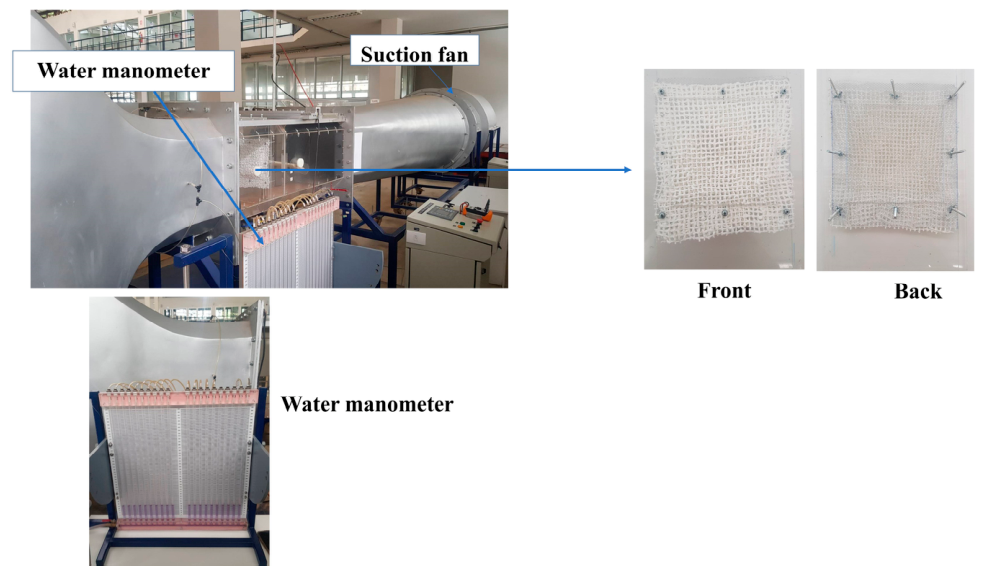
In this experiment, the air pressure drop was measured using a water manometer with a measurement range of 0–400 mmH2O. A PAM/ZnO hydrogel composite mesh (25 × 25 cm) was mounted in a wind tunnel equipped with a suction fan, as illustrated in Figure 9. The wind speed was adjusted by varying the fan rotation speed to 300, 400, and 500 RPM, and the corresponding pressure drop across the mesh was measured to evaluate its air resistance.

4. Conclusions

This study reported the successful preparation of a photocatalyst-based polyacrylamide/zinc oxide (PAM/ZnO) hydrogel composite mesh with an open-mesh architecture through the photo-initiated polymerization of acrylamide in the presence of N,N′-methylenebisacrylamide (NMBA) as the crosslinking agent, with ZnO acting as both the photoinitiator and photocatalyst. This process produced a three-dimensional interconnected porous hydrogel network with uniformly dispersed ZnO particles throughout the polyacrylamide matrix. The hydrogel exhibited typical swelling–deswelling behavior, reaching an equilibrium swelling ratio of 2.71 after 360 min while maintaining excellent structural stability. Its applicability for air purification was further investigated through the degradation of particulate matter (PM)-bound polycyclic aromatic hydrocarbons (PAHs) generated from incense smoke. Following PM exposure, the mesh surface became brown, and the brown coloration gradually faded under UV irradiation, suggesting the degradation of deposited organic contaminants. To confirm this observation, GC–MS analysis was performed and revealed significant reductions in PAH concentrations after 4 and 8 h of UV irradiation compared with those before irradiation. The concentrations of two-, three-, four-, and five-ring PAHs gradually decreased with increasing UV irradiation time. After 4 h of irradiation, the two-ring PAH naphthalene (Nap) was completely degraded, while five-ring PAHs were entirely removed after 8 h. Furthermore, the hydrogel composite mesh maintained a low pressure drop (<120 Pa), even when stacked in multiple layers, owing to its open-mesh architecture and interconnected porous network. These findings demonstrate that the PAM/ZnO hydrogel composite mesh is a promising multifunctional material for practical air purification, combining efficient photocatalytic degradation of PM-bound PAHs with high air permeability and low pressure drop.

Author Contributions

Conceptualization, C.R.; methodology, S.T., P.I., P.K., C.T. and A.A.; validation, C.R., A.A., T.K. and G.R.; investigation, C.R., S.T., A.A., T.K. and G.R.; data curation, S.T., P.I., P.K., C.T. and A.A.; writing—original draft preparation, S.T. and C.R.; writing—review and editing, S.T., A.A. and C.R.; supervision, C.R. All authors have read and agreed to the published version of the manuscript.

Funding

This research received no external funding.

Data Availability Statement

The original contributions presented in this study are included in the article. Further inquiries can be directed to the corresponding author.

Acknowledgments

The authors would like to acknowledge the CMU Proactive Researcher Program, Chiang Mai University [contract number 782/2567 (ST); contract number 737/2567 (PK)]. This work was supported by the Fundamental Fund 2026, Chiang Mai University. Also, we would like to acknowledge the Department of Mechanical Engineering, Faculty of Engineering, Chiang Mai University, for providing the equipment used for pressure drop and air velocity measurements.

Conflicts of Interest

The authors declare no conflicts of interest.

References

  1. Tavella, R.A.; da Silva Júnior, F.M.R.; Santos, M.A.; Miraglia, S.G.E.K.; Pereira Filho, R.D. A Review of Air Pollution from Petroleum Refining and Petrochemical Industrial Complexes: Sources, Key Pollutants, Health Impacts, and Challenges. Chem. Eng. 2025, 9, 13. [Google Scholar] [CrossRef] [Scilit]
  2. Ahmad, S.; Zeb, B.; Ditta, A.; Alam, K.; Shahid, U.; Shah, A.U.; Ahmad, I.; Alasmari, A.; Sakran, M.; Alqurashi, M. Morphological, Mineralogical, and Biochemical Characteristics of Particulate Matter in Three Size Fractions (PM10, PM2.5, and PM1) in the Urban Environment. ACS Omega 2023, 8, 31661–31674. [Google Scholar] [CrossRef] [Scilit] [PubMed]
  3. Hamanaka, R.B.; Mutlu, G.M. Particulate Matter Air Pollution: Effects on the Respiratory System. J. Clin. Investig. 2025, 135, e194312. [Google Scholar] [CrossRef] [Scilit] [PubMed]
  4. Mahroos, F.; Habiba, S.; Lazreg, I.K.; Kanan, S.; Samara, F. Characterization and Health Risk Assessment of Chemical and Microbial Pollutants in Particulate Matter from Dust Prone Regions. Sci. Rep. 2025, 15, 23601. [Google Scholar] [CrossRef] [Scilit] [PubMed]
  5. Patel, A.B.; Shaikh, S.; Jain, K.R.; Desai, C.; Madamwar, D. Polycyclic Aromatic Hydrocarbons: Sources, Toxicity, and Remediation Approaches. Front. Microbiol. 2020, 11, 562813. [Google Scholar] [CrossRef] [Scilit] [PubMed]
  6. Montano, L.; Baldini, G.M.; Piscopo, M.; Liguori, G.; Lombardi, R.; Ricciardi, M.; Esposito, G.; Pinto, G.; Fontanarosa, C.; Spinelli, M.; et al. Polycyclic Aromatic Hydrocarbons (PAHs) in the Environment: Occupational Exposure, Health Risks and Fertility Implications. Toxics 2025, 13, 151. [Google Scholar] [CrossRef] [Scilit] [PubMed]
  7. Alharbi, H.A.; Rushdi, A.I.; Bazeyad, A.; Al-Mutlaq, K.F. Polycyclic Aromatic Hydrocarbons in Atmospheric PM2.5 and PM10 of Riyadh City, Saudi Arabia: Levels, Temporal Variation, and Health Impacts. Toxics 2025, 13, 424. [Google Scholar] [CrossRef] [Scilit] [PubMed]
  8. Beygisangchin, M.; Jakmunee, J.; Kamarudin, S.K.; Baghdadi, A.H.; Saetang, S.; Thipprasert, S. A Critical Review of Polycyclic Aromatic Hydrocarbons and Their Adverse Effects on Human Health: Insights from the Past Six Years. Environ. Sci. Eur. 2026, 38, 87. [Google Scholar] [CrossRef] [Scilit]
  9. Tapia-Brito, E.; Riffat, J.; Wang, Y.; Wang, Y.; Ghaemmaghami, A.M.; Coleman, C.M.; Erdinç, M.T.; Riffat, S. Experimental Study of the Purification Performance of a MopFan-Based Photocatalytic Air Cleaning System. Build. Environ. 2023, 240, 110422. [Google Scholar] [CrossRef] [Scilit] [PubMed]
  10. Ouf, F.X.; Mocho, V.M.; Pontreau, S.; Wang, Z.; Ferry, D.; Yon, J. Clogging of Industrial High Efficiency Particulate Air (HEPA) Filters in Case of Fire: From Analytical to Large-Scale Experiments. Aerosol Sci. Technol. 2014, 48, 939–947. [Google Scholar] [CrossRef] [Scilit]
  11. Talaiekhozani, A.; Rezania, S.; Kim, K.H.; Sanaye, R.; Amani, A.M. Recent Advances in Photocatalytic Removal of Organic and Inorganic Pollutants in Air. J. Clean. Prod. 2021, 278, 123895. [Google Scholar] [CrossRef] [Scilit]
  12. Ajmal, Z.; Haq, M.U.; Naciri, Y.; Djellabi, R.; Hassan, N.; Zaman, S.; Murtaza, A.; Kumar, A.; Al-Sehemi, A.G.; Algarni, H.; et al. Recent Advancement in Conjugated Polymers Based Photocatalytic Technology for Air Pollutants Abatement: Cases of CO2, NOx, and VOCs. Chemosphere 2022, 308, 136358. [Google Scholar] [CrossRef] [Scilit] [PubMed]
  13. Imboon, T.; Sugio, K.; Khumphon, J.; Sridawong, L.; Gowri, V.M.; Yamada, K.; Shima, M.; Thongmee, S. Synergistic Effects of Fe-Doped ZnO and Graphene Oxide for Enhanced Photocatalytic Performance and Tunable Magnetic Properties. ACS Omega 2025, 10, 34571–34587. [Google Scholar] [CrossRef] [Scilit] [PubMed]
  14. Rao, M.S.; Chaudhary, Y.; Jaihindh, D.P.; Lin, Y.F.; Rakesh, B.; Sankaran, K.J. ZnO-Graphene Nanohybrids for Photocatalytic Degradation of Methylene Blue Dye. Diam. Relat. Mater. 2025, 159, 112791. [Google Scholar] [CrossRef] [Scilit]
  15. Yang, X.; Cai, H.; Bao, M.; Yu, J.; Lu, J.; Li, Y. Insight into the Highly Efficient Degradation of PAHs in Water over Graphene Oxide/Ag3PO4 Composites under Visible Light Irradiation. Chem. Eng. J. 2018, 334, 355–376. [Google Scholar] [CrossRef] [Scilit]
  16. Dong, H.; Yin, B.; Li, J.; Guo, W.; Meng, D.; Zhu, X.; Zhang, G.; Zhang, G.; Xin, Y.; Chen, Q. Photocatalytic Remediation of Fluoranthene Contaminated Soil by Eco-Friendly GQDs/TiO2/α-FeOOH Composite Photocatalyst: Efficiency, Influence Factors, Mechanism, and Toxicity Analysis. Sep. Purif. Technol. 2025, 357, 130045. [Google Scholar] [CrossRef] [Scilit]
  17. Qiu, T.; Chen, G. Degradation of Naphthalene and Anthracene Using the CdS/ZnO with Enhanced Photocatalytic Activities. Environ. Technol. Innov. 2024, 36, 103741. [Google Scholar] [CrossRef] [Scilit]
  18. Chauhan, H.A.; Rafatullah, M.; Ali, K.A.; Umar, M.F.; Khan, M.A.; Jeon, B.H. Photocatalytic activity of graphene oxide/zinc oxide nanocomposite derived from rice husk for the degradation of phenanthrene under ultraviolet-visible light. J. Water Process Eng. 2022, 47, 102714. [Google Scholar] [CrossRef] [Scilit]
  19. Sohara, K.; Yamauchi, K.; Sun, X.; Misawa, K.; Sekine, Y. Photocatalytic Degradation of Polycyclic Aromatic Hydrocarbons in Fine Particulate Matter (PM2.5) Collected on TiO2-Supporting Quartz Fibre Filters. Catalysts 2021, 11, 400. [Google Scholar] [CrossRef] [Scilit]
  20. Abdallah, S.M.; Hawash, H.B.; Hamdy, A.; Omran, N.A.; Hagar, M.; Shehata, N.; Hassanin, A.H.; Shalaby, E.S.A. Eco-Friendly Electrospun Nanofibers for Air Filtration Enhanced by TiO2 Nanoparticles Reactive Phases for Superior Capturing the Emitted Polycyclic Aromatic Hydrocarbons (PAHs). J. Ind. Eng. Chem. 2025, 141, 645–659. [Google Scholar] [CrossRef] [Scilit]
  21. Schnabel, T.; Dutschke, M.; Schuetz, F.; Hauser, F.; Springer, C. Photocatalytic Air Purification of Polycyclic Aromatic Hydrocarbons: Application of a Flow-through Reactor, Kinetic Studies and Degradation Pathways. J. Photochem. Photobiol. A Chem. 2022, 430, 113993. [Google Scholar] [CrossRef] [Scilit]
  22. Ho, W. Efficient Photocatalytic Degradation of NO by Ceramic Foam Air Filters Coated with Mesoporous TiO2 Thin Films. Chin. J. Catal. 2015, 36, 2109–2118. [Google Scholar] [CrossRef] [Scilit]
  23. Yu, Z.; Tang, D.; Lv, H.; Feng, Q.; Zhang, Q.; Jiang, E.; Wang, Q. Fabrication of Thermo Responsive Fibrous ZnO/PNIPAM Nanocomposites with Switchable Photocatalytic Activity. Colloids Surf. A Physicochem. Eng. Asp. 2015, 471, 117–123. [Google Scholar] [CrossRef] [Scilit]
  24. Fouda, A.; Saied, E.; Eid, A.M.; Kouadri, F.; Alemam, A.M.; Hamza, M.F.; Alharbi, M.; Elkelish, A.; Hassan, S.E.D. Green Synthesis of Zinc Oxide Nanoparticles Using an Aqueous Extract of Punica Granatum for Antimicrobial and Catalytic Activity. J. Funct. Biomater. 2023, 14, 205. [Google Scholar] [CrossRef] [Scilit] [PubMed]
  25. Saxena, P.; Pramila, K.M.; Agarwal, P. Fabrication of Ternary ZnO–Cu2O-Chitosan Nanocomposite for Efficient Photocatalytic Degradation of Organic Pollutants. Hybrid. Adv. 2026, 13, 100682. [Google Scholar] [CrossRef] [Scilit]
  26. Moztahida, M.; Lee, D.S. Photocatalytic Degradation of Methylene Blue with P25/Graphene/Polyacrylamide Hydrogels: Optimization Using Response Surface Methodology. J. Hazard. Mater. 2020, 400, 123314. [Google Scholar] [CrossRef] [Scilit] [PubMed]
  27. Kumar, A.; Sharma, G.; Thakur, M.; Pathania, D. Sol–Gel Synthesis of Polyacrylamide-Stannic Arsenate Nanocomposite Ion Exchanger: Binary Separations and Enhanced Photo-Catalytic Activity. SN Appl. Sci. 2019, 1, 123314. [Google Scholar] [CrossRef] [Scilit]
  28. Yang, T.T.; Lin, S.T.; Lin, T.S.; Hong, W.L. Characterization of Polycyclic Aromatic Hydrocarbon Emissions in the Particulate Phase from Burning Incenses with Various Atomic Hydrogen/Carbon Ratios. Sci. Total Environ. 2012, 414, 335–342. [Google Scholar] [CrossRef] [Scilit] [PubMed]
  29. Lin, T.-C.; Chang, F.-H.; Hsieh, J.-H.; Chao, H.-R.; Chao, M.-R. Characteristics of Polycyclic Aromatic Hydrocarbons and Total Suspended Particulate in Indoor and Outdoor Atmosphere of a Taiwanese Temple. J. Hazard. Mater. 2002, A95, 1–12. [Google Scholar] [CrossRef] [Scilit] [PubMed]
  30. Yang, T.T.; Ho, S.C.; Chuang, L.T.; Chuang, H.C.; Li, Y.T.; Wu, J.J. Characterization of Particulate-Phase Polycyclic Aromatic Hydrocarbons Emitted from Incense Burning and Their Bioreactivity in RAW264.7 Macrophage. Environ. Pollut. 2017, 220, 1190–1198. [Google Scholar] [CrossRef] [Scilit] [PubMed]
  31. Harasym, J.; Nizio, E. Environmental Behavior, Toxicological Pathways, and Risk Assessment of Polycyclic Aromatic Hydrocarbons (PAHs): From Molecular Structure to Human Health. Molecules 2026, 31, 2211. [Google Scholar] [CrossRef] [Scilit] [PubMed]
  32. Abdel-Shafy, H.I.; Mansour, M.S.M. A Review on Polycyclic Aromatic Hydrocarbons: Source, Environmental Impact, Effect on Human Health and Remediation. Egypt. J. Pet. 2016, 25, 107–123. [Google Scholar] [CrossRef] [Scilit]
  33. Yang, Z.R.; Zhen, Y.H.; Feng, Y.; Jiang, X.L.; Qin, Z.; Yang, W.J.; Qie, Y.Y. Polyacrylonitrile@TiO2 Nanofibrous Membrane Decorated by MOF for Efficient Filtration and Green Degradation of PM2.5. J. Colloid Interface Sci. 2023, 635, 598–610. [Google Scholar] [CrossRef] [Scilit] [PubMed]
  34. Li, T.; Wang, M.; Hao, Y. Highly Efficient Photodegradation of Magnetic GO-Fe3O4@SiO2@CdS for Phenanthrene and Pyrene: Mechanism Insight and Application Assessment. Sci. Total Environ. 2023, 857, 159254. [Google Scholar] [CrossRef] [Scilit] [PubMed]
  35. Ji, X.; Huang, J.; Teng, L.; Li, S.; Li, X.; Cai, W.; Chen, Z.; Lai, Y. Advances in Particulate Matter Filtration: Materials, Performance, and Application. Green Energy Environ. 2023, 8, 673–697. [Google Scholar] [CrossRef] [Scilit]
  36. Kim, H.J.; Kim, Y.J.; Seo, Y.J.; Choi, J.H.; Koo, H.Y.; Choi, W.S. Hybrid Bead Air Filters with Low Pressure Drops at a High Flow Rate for the Removal of Particulate Matter and HCHO. Polymers 2022, 14, 422. [Google Scholar] [CrossRef] [Scilit] [PubMed]
  37. Zhang, C.; Jiao, W.; Liu, Y.; Qi, G.; Yuan, Z.; Zhang, Q. CFD Simulation of Dry Pressure Drop in a Cross-Flow Rotating Packed Bed. Appl. Sci. 2021, 11, 10099. [Google Scholar] [CrossRef] [Scilit]
  38. Xu, Z. Characteristics of Air Filters. In Fundamentals of Air Cleaning Technology and Its Application in Cleanrooms; Springer: Berlin/Heidelberg, Germany, 2014; pp. 185–265. [Google Scholar]
  39. Lu, J.; Wang, R.; Hu, M.; Cai, K.; Du, X.; Cheng, J.; Hu, H.; Zhou, H.; Xu, B. Bifunctional Photocatalyst/Hydrogel Composites: Synergistic Effects and Degradation Mechanisms for the Degradation of Benzo(a)pyrene in Smoked Sausages. Food Chem. 2025, 463, 141468. [Google Scholar] [CrossRef] [Scilit] [PubMed]
  40. Chen, H.; Sun, L.M.; Wang, T.; Zhou, J.; Sun, J.; Wang, Z.; He, X.; Yi, C.; Guo, J.; Shang, J.; et al. Thermally Activated ZIF-8-Based Nanofibrous Membranes for Visible-Light Photocatalytic Formaldehyde Degradation and Bacterial Inactivation toward Integrated Indoor-Air Purification. Chem. Eng. J. 2026, 539, 177265. [Google Scholar] [CrossRef] [Scilit]
  41. Jagajeevan, V.; Sivakumar, V.L. Visible-Light-Active CeO2–TiO2–ZnO Z-scheme Photocatalytic Filters for Simultaneous Removal of Indoor Particulate Matter and Volatile Organic Compounds. Prog. Eng. Sci. 2026, 3, 100289. [Google Scholar] [CrossRef] [Scilit]
  42. Hu, J.; Xiong, Z.; Liu, Y.; Lin, J. A Biodegradable Composite Filter Made from Electrospun Zein Fibers Underlaid on the Cellulose Paper Towel. Int. J. Biol. Macromol. 2022, 204, 419–428. [Google Scholar] [CrossRef] [Scilit] [PubMed]
  43. Liu, C.; Hsu, P.C.; Lee, H.W.; Ye, M.; Zheng, G.; Liu, N.; Li, W.; Cui, Y. Transparent Air Filter for High-Efficiency PM 2.5 Capture. Nat. Commun. 2015, 6, 6205. [Google Scholar] [CrossRef] [Scilit] [PubMed]
  44. Guo, J.; Hanif, A.; Shang, J.; Deka, B.J.; Zhi, N.; An, A.K. PAA@ZIF-8 Incorporated Nanofibrous Membrane for High-Efficiency PM2.5 Capture. Chem. Eng. J. 2021, 405, 126584. [Google Scholar] [CrossRef] [Scilit]
  45. Lamkhao, S.; Tandorn, S.; Rujijanagul, G.; Randorn, C. A Practical Approach Using a Novel Porous Photocatalyst/Hydrogel Composite for Wastewater Treatment. Mater. Today Sustain. 2023, 23, 100482. [Google Scholar] [CrossRef] [Scilit]
  46. Inphak, P.; Kaewdee, P.; Randorn, C.; Thiraphatchotiphum, C.; Asanakham, A.; Kiatsiriroat, T.; Tandorn, S. Multifunctional PAM/ZnO PolyHIPE Hydrogel Composite Beads for Air Purification: Synergistic Particulate Matter Filtration and Photocatalytic Remediation of Airborne PAHs. Appl. Catal. B Environ. Energy 2026, 381, 125825. [Google Scholar] [CrossRef] [Scilit]
Figure 1. PAM/ZnO hydrogel composite mesh.
Catalysts 16 00794 g001
Figure 2. SEM images of the (a,b) surface and (c,d) cross-sectional morphologies, elemental mapping and corresponding elemental distributions of the (e) surface and (f) cross-section, and EDX spectra of the (g) surface and (h) cross-section of the PAM/ZnO hydrogel composite mesh.
Catalysts 16 00794 g002
Figure 3. XRD pattern of PAM/ZnO hydrogel composite mesh.
Catalysts 16 00794 g003
Figure 4. (a) Swelling behavior and (b) water retention properties of the PAM/ZnO hydrogel composite mesh.
Catalysts 16 00794 g004
Figure 5. Photocatalytic degradation of methyl orange (MO) by the PAM/ZnO hydrogel composite mesh.
Catalysts 16 00794 g005
Figure 6. (a) Photographs of the PAM/ZnO hydrogel composite mesh after adsorption of incense smoke, before and after UV irradiation; (b) GC chromatograms of PAHs extracted from the PAM/ZnO hydrogel composite mesh before and after UV irradiation; and (c) comparison of the total concentrations of two-, three-, four-, five-, and six-ring PAHs adsorbed on the PAM/ZnO hydrogel composite mesh before and after UV irradiation.
Catalysts 16 00794 g006
Figure 7. Pressure drops (a) and velocities (b) of the PAM/ZnO hydrogel composite mesh at different fan rotation speeds with varying numbers of mesh layers.
Catalysts 16 00794 g007
Figure 8. Schematic illustration of the preparation procedure of the PAM/ZnO hydrogel composite mesh.
Catalysts 16 00794 g008
Figure 9. Experimental setup for measuring the pressure drop across the PAM/ZnO hydrogel composite mesh.
Catalysts 16 00794 g009
Table 1. Comparison of the performance of the as-prepared hydrogel composite mesh with other air filtration materials.
MaterialPollutantEfficiency (%)Pressure Drop (Pa)Light SourceInitial ConcentrationRef.
PAM/ZnO hydrogel composite meshPAHsNap 100%
Ace 100%
Flu 27.05%
Phen 64.3%
Anth 100%
Pyr 79.42%
BaA 100%
Chr 100%
BbF 100%
BkF 100%
BaP 100%
DahA 100%
BghiP 8.34%
29–88 (1 layers)
37–113 (3 layers)
44–117 (5 layers)
UV light
(8 h)
9.52–84.27 μg/LThis study
TiO2/quartz fiberPAHsPhen 37%
Anth 50%
Pyr 46%
BaA 45%
Chr 46%
BbF 56%
BkF 58%
BaP 60%
BghiP 48%
-UV light
(24 h)
9.3–196 ng/filter[19]
ST/SiO2-Mn hydrogel compositePAHsBaP (88.5%)-UV light
(240 min)
50 μg/mL[39]
Polystyrene/ZIF-8 nanofiberFormaldehyde90.4%122.4–182.6Visible light (1 h)-[40]
CeO2/ZnO/TiO2 compositeToluene80%72Visible light (90 min)50 mg/L[41]
Electrospun Zein fiberPM99%109--[42]
Polyacrylonitrile (PAN) filterPM95%133-250 μg/m3[43]
Polyacrylic acid (PAA)/ZIF-8 membranePM99.6%146.3-94.9 mg/m3[44]
PAN/TiO2/ZIF-8 nanofibrous membranePM99%34--[33]
Disclaimer/Publisher’s Note: The statements, opinions and data contained in all publications are solely those of the individual author(s) and contributor(s) and not of MDPI and/or the editor(s). MDPI and/or the editor(s) disclaim responsibility for any injury to people or property resulting from any ideas, methods, instructions or products referred to in the content.