Article

A p–n Junction-Assisted Z-Scheme Cu2O–SnO2/g-C3N4 Heterojunction for Highly Efficient Visible-Light Photocatalysis

1
Anhui Provincial Academy of Eco-Environmental Science Research, Hefei 230061, China
2
College of Resources and Environment, Anhui Agricultural University, Hefei 230036, China
*
Authors to whom correspondence should be addressed.
†
These authors contributed equally to this work.
Catalysts 2026, 16(8), 707; https://doi.org/10.3390/catal16080707
Submission received: 15 June 2026 / Revised: 27 July 2026 / Accepted: 28 July 2026 / Published: 4 August 2026

Abstract

In semiconductor photocatalysis, the strong redox ability of a wide band gap and the broad light absorption range of a narrow band gap are a pair of irreconcilable trade-offs. By combining semiconductors with different band gap widths and band edge positions, both of these advantages can be achieved simultaneously. A ternary Cu2O-SnO2/g-C3N4 (CuSnCN) composite photocatalyst was prepared through the hydrothermal and calcination method. Structural analyses confirm the successful integration of truncated octahedral Cu2O, spherical SnO2, and layered g-C3N4, which extends the visible-light response to 650 nm. The optimized system achieves a remarkable 96.58% degradation of methyl orange (80 min, 0.2 g/L catalyst, pH = 3) through dual heterojunction synergies: p–n junctions (Cu2O/g-C3N4 and SnO2/g-C3N4) and Z-scheme charge transfer (SnO2/Cu2O), with •O2−/h+ identified as the dominant reactive species. This work establishes a tunable heterojunction platform for the elimination of multiple pollutants through engineered radical-generation pathways.

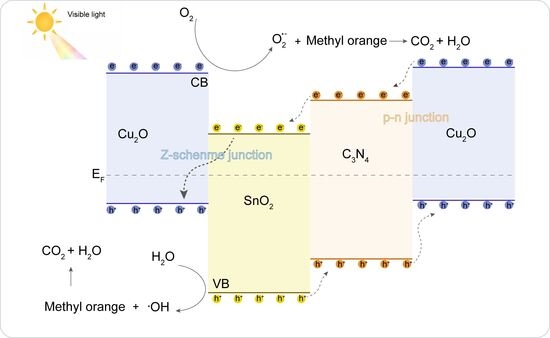
Graphical Abstract

1. Introduction

The accelerating trajectory of industrialization in recent decades has precipitated a critical accumulation of recalcitrant organic pollutants in aquatic ecosystems, with conventional remediation methodologies constrained by inherent limitations including elevated chemical stability of contaminants and suboptimal degradation kinetics [1,2], thereby impeding thorough purification. This paradigm has elevated the development of efficient, sustainable organic pollutant treatment technologies to a central research imperative within environmental science [3,4]. Photocatalytic remediation has emerged as a technologically auspicious solution, distinguished by its ecological compatibility, economic viability, and operational simplicity [5].
Traditional inorganic semiconductors, burdened by wide band gap configurations that restrict photon absorption to ultraviolet spectra, demonstrate severely compromised solar energy conversion efficiency. Compounding these limitations, inherent material deficiencies such as rapid photogenerated carrier recombination rates and pronounced photocorrosion phenomena further curtail practical implementation viability. To transcend these thermodynamic and kinetic barriers, research efforts have pivoted toward engineering narrow-band gap semiconductors and heterojunction composite architectures. Graphitic carbon nitride (g-C3N4), for instance [6], has garnered substantial research interest in photocatalytic hydrogen evolution and pollutant degradation due to its visible-light responsiveness, non-toxicity, and exceptional chemical stability. Nevertheless, g-C3N4 systems remain plagued by inefficient charge carrier separation. Similarly, while cuprous oxide (Cu2O) exhibits promising visible-light activity, its practical deployment is hindered by photocorrosion susceptibility and rapid exciton recombination dynamics [7,8].
This technological impasse has catalyzed intensive investigation into heterojunction engineering as a strategic pathway to enhance charge separation efficiency and broaden spectral absorption profiles, critical determinants of solar energy utilization optimization. SnO2 is an n-type semiconductor with a band gap of about 3.6 eV which possesses the properties of unique optical transparency, eco-friendliness, and a low cost. Yu et al. demonstrated enhanced photocatalytic performance through fabrication of SnO2/Cu2O p–n heterojunction thin films [9,10], achieving 93.7% methylene blue degradation efficiency in aqueous systems. Concurrently, Tian et al. developed g-C3N4-Cu2O hybrids via hydrothermal synthesis coupled with calcination-exfoliation protocols [11,12,13,14], exhibiting superior degradation efficacy toward rhodamine B, tetracycline, and 4-chlorophenol contaminants. Despite these advances, ternary composite systems remain underexplored in current research paradigms [15,16].
The present study pioneers a novel ternary Cu2O-SnO2/g-C3N4 composite architecture, synergistically integrating the visible-light harvesting capacity of Cu2O [17,18], the electron transport superiority of SnO2 [19,20,21]. and the structural robustness of g-C3N4 [22,23,24,25]. Comprehensive material characterization was conducted through XRD, XPS, SEM, TEM, DRS, PL, BET, FTIR, and EPR. Photocatalytic performance was rigorously evaluated through methyl orange degradation kinetics under visible-light irradiation, establishing structure–activity relationships critical for advanced environmental remediation applications.

2. Results and Discussion

2.1. XRD Analysis

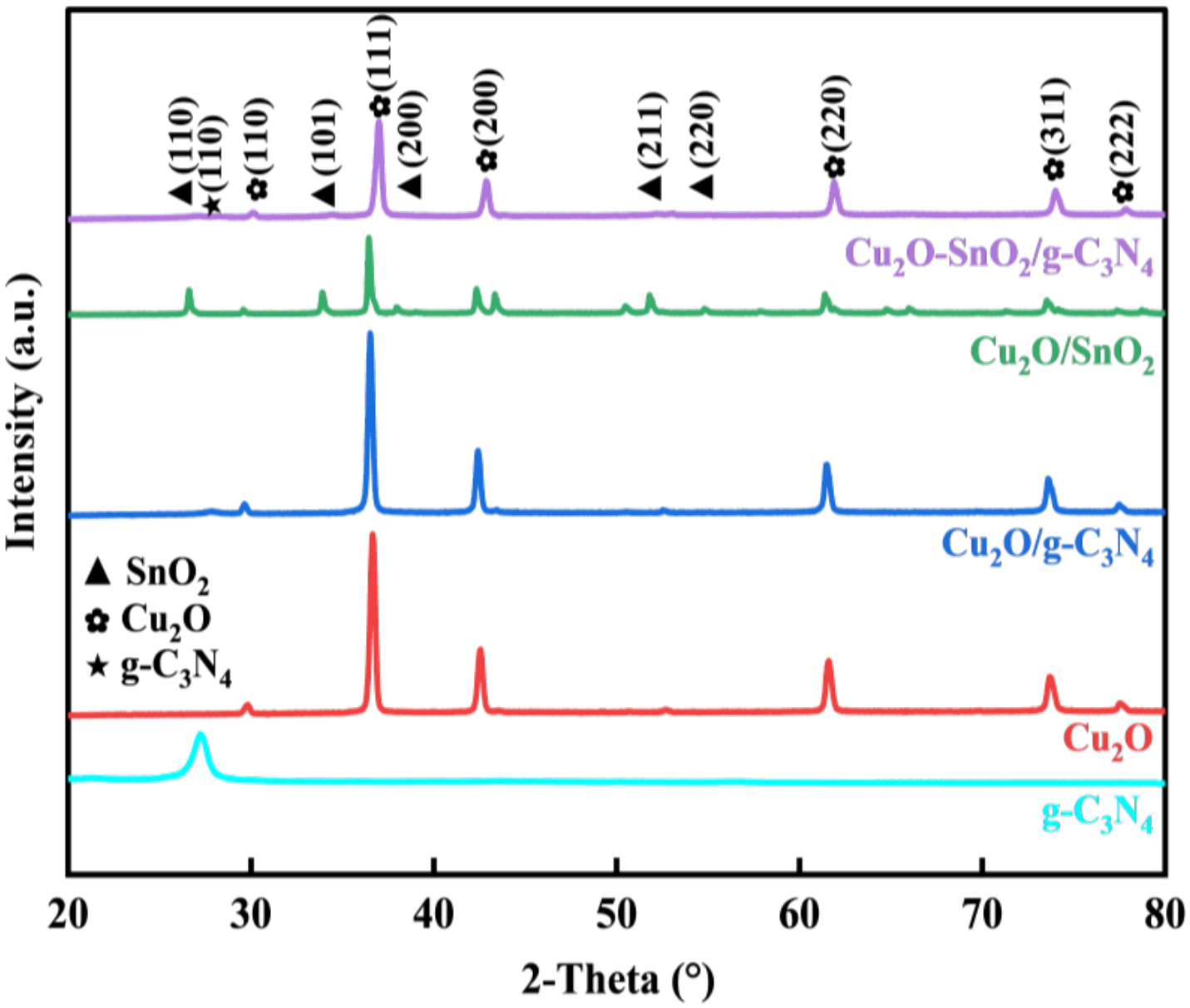
The XRD patterns of the synthesized samples are shown in Figure 1. All of the prepared samples—Cu2O, Cu2O/g-C3N4, Cu2O/SnO2, and Cu2O-SnO2/g-C3N4—demonstrated well-defined crystallographic phases. The pristine Cu2O exhibited characteristic diffraction peaks at 2θ values of 29.55°, 36.5°, 42.4°, 61.34°, 73.53°, and 77.32°, corresponding to (110), (111), (200), (220), (311), and (222) crystallographic planes of Cu2O (JCPDS No. 05-0667, space group Pn-3m, cell parameter a = 4.270 Å), respectively [12]. A distinct characteristic peak located at 27.28° can be assigned to the (110) crystal plane of g-C3N4 (JCPDS No. 87-1523) [26]. For the Cu2O/SnO2 binary composite, tetragonal SnO2 manifested distinct Bragg diffractions at 2θ values of 26.58°, 33.86°, 37.94°, 51.76°, and 54.74°, which can be indexed to (110), (101), (200), (211), and (220) crystal planes of rutile-phase SnO2 (JCPDS No. 070-4177, space group P42-mnm), respectively [27]. Notably, the Cu2O/g-C3N4 hybrid displayed a weak (110) interlayer stacking peak of g-C3N4 at 27.74° (JCPDS No. 087-1526, P-6m2, hexagonal) superimposed on the Cu2O signature [28]. This g-C3N4 signal underwent significant attenuation in the CuSnCN ternary composite, suggesting both effective dispersion of graphitic carbon nitride within the heterostructure and possible lattice strain effects arising from interfacial interactions. Crucially, no other characteristic diffraction peaks were found, confirming the successful integration of Cu2O, SnO2, and g-C3N4 without detectable solid-state reactions during synthesis.

2.2. FTIR Analysis

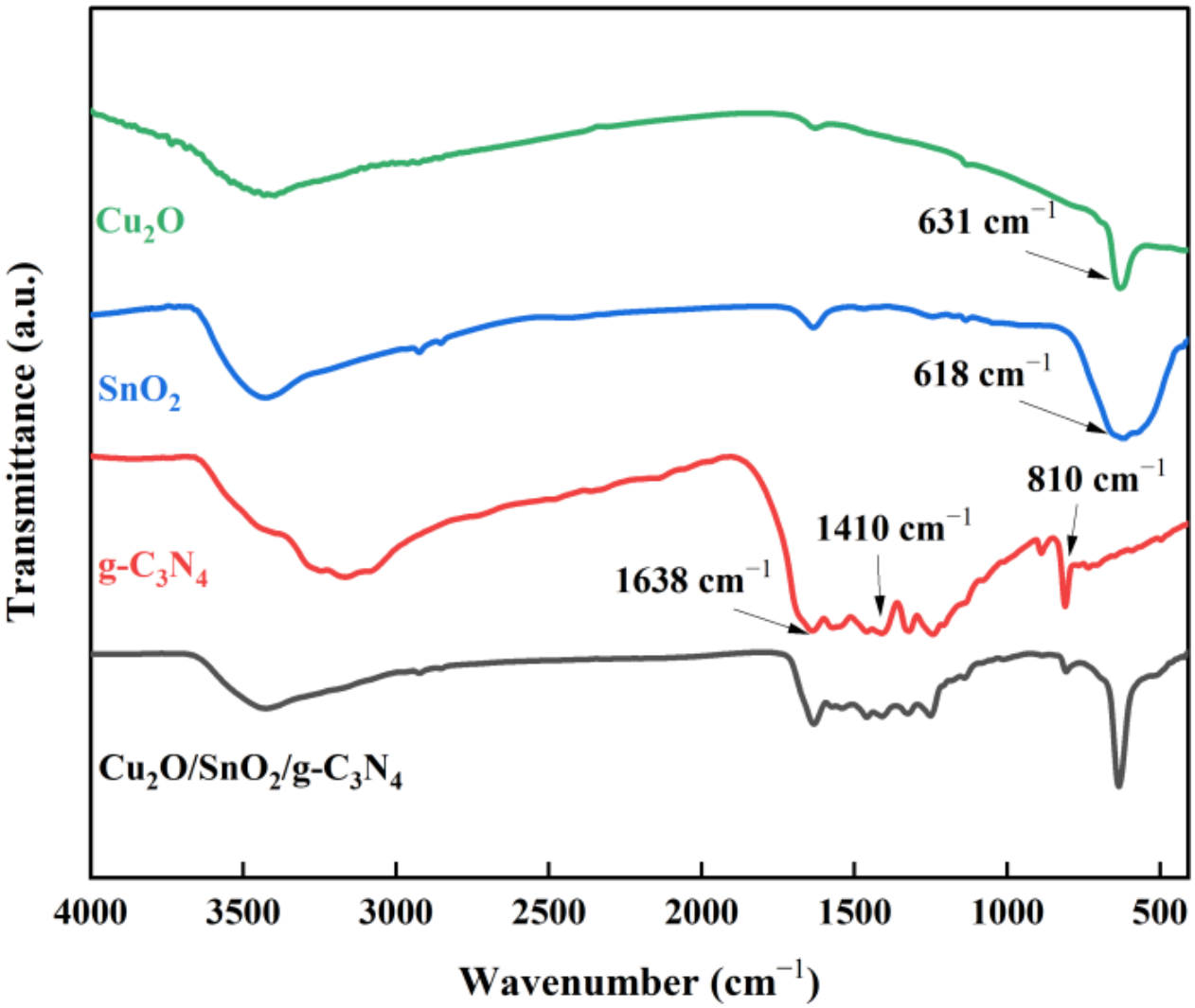
The FTIR spectra shown in Figure 2 exhibits characteristic adsorption bands for the prepared Cu2O, Cu2O/SnO2, Cu2O/g-C3N4, and Cu2O-SnO2/g-C3N4 samples. A characteristic peak around 810 cm−1 was observed, indicating the triazine unit stretching vibrations in g-C3N4. Additionally, peaks at 1410 and 1638 cm−1 can be identified as the stretching vibrations of aromatic C–N and C=N heterocyclic bonds [13]. Cu2O showed a Cu–O stretching vibration peak at 631 cm−1, while SnO2 featured a broad Sn–O–Sn band range 553–645 cm−1 and hydroxyl-adsorbed water signatures at 3424 cm−1. For the Cu2O-SnO2/g-C3N4 composite, the simultaneous presence of the characteristic peaks of Cu2O, SnO2, and g-C3N4 confirms that these three components were successfully coupled [29].

2.3. SEM and TEM Analysis

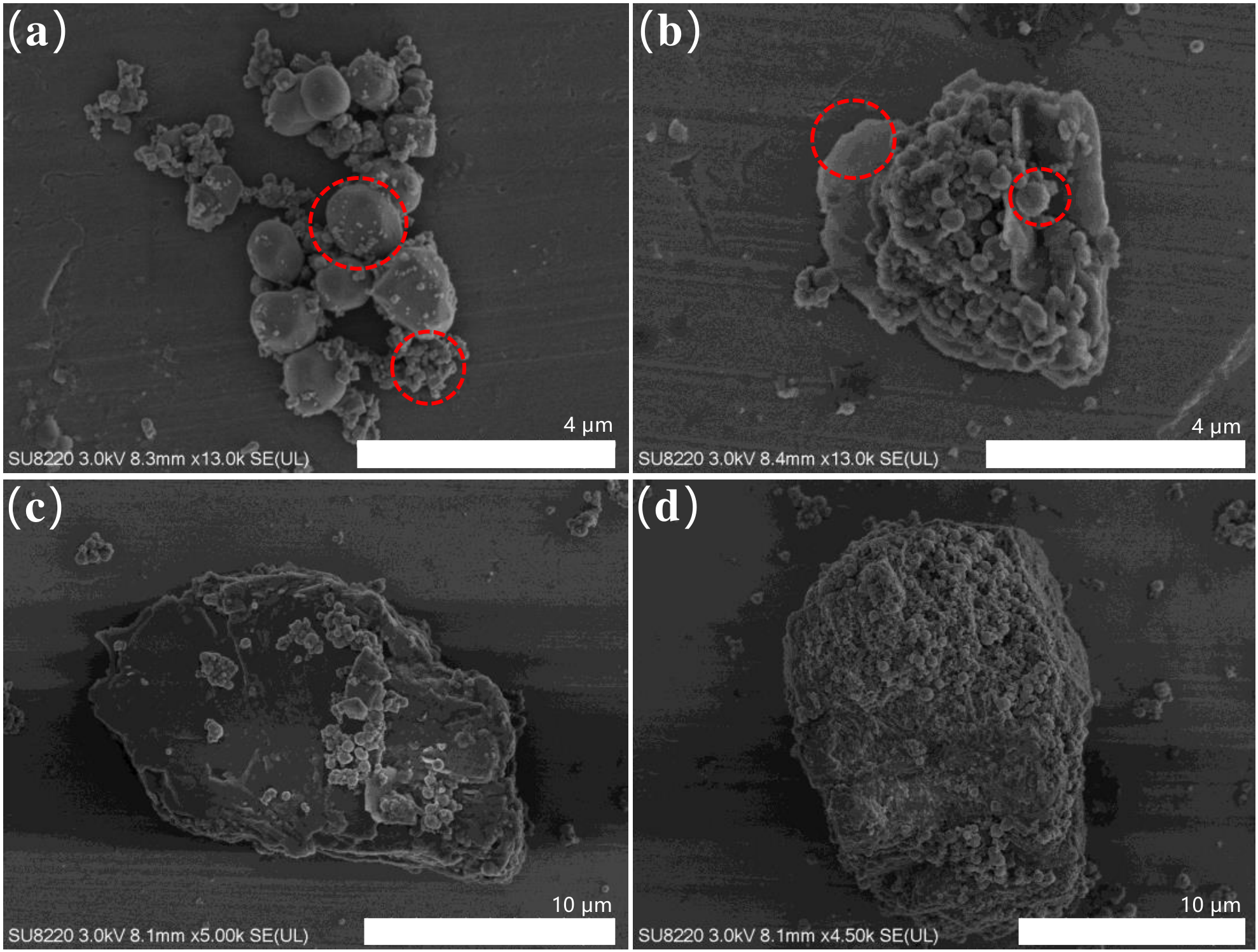
Figure 3 shows the SEM images of the prepared samples. Distinct microstructural features can be observed. In the Cu2O-SnO2 composite, truncated-octahedral Cu2O crystals can be observed, with spherical SnO2 nanoparticles randomly attached to the surface of Cu2O and forming a tight interface contact. In the magnified SEM image (Figure S1), the Cu2O crystal appeared as a {100}-truncated and {110}-truncated octahedral structure, which possessed 6 (100) crystal planes, 8 (111) crystal planes, and 12 (110) crystal planes. The Cu2O/g-C3N4 composite exhibited smooth g-C3N4 nanosheets interspersed with truncated octahedral Cu2O crystallites [18]. The ternary CuSnCN composite demonstrated intimate integration of all components—octahedral Cu2O, layered g-C3N4, and spherical SnO2—forming interconnected architectures conducive to pollutant adsorption and interfacial electron transfer [30].
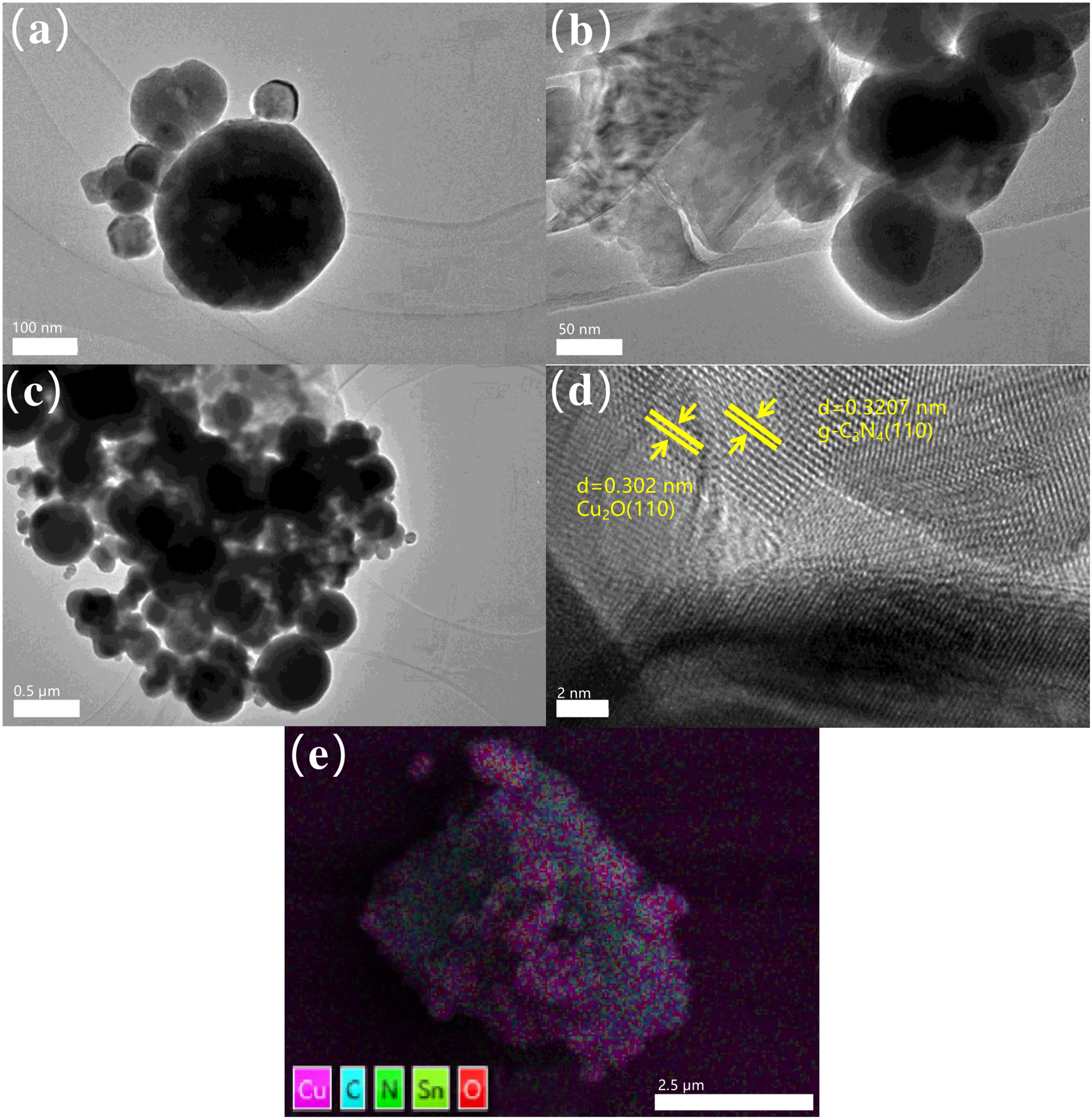
Figure 4a–c presents TEM images of Cu2O/SnO2, Cu2O/g-C3N4, and CuSnCN, respectively. The image of Cu2O/SnO2 is displayed in panel (a), where dark polyhedral Cu2O crystallites are surrounded by light-toned SnO2 nanoparticles. The morphology of Cu2O/g-C3N4 gives the appearance that Cu2O crystals covered the g-C3N4 nanosheets with irregular perimeters [31]. The SEM image of the ternary Cu2O-SnO2/g-C3N4 composite demonstrates Cu2O crystals and SnO2 particles being closely contacted by the g-C3N4 sheets, indicating the formation of a heterojunction. The HRTEM image in Figure 4d shows lattice fringes of 0.302 nm and 0.3207 nm, ascribed to the (110) plane of Cu2O and the (110) plane of g-C3N4, respectively [32]. Figure 4e shows the EDS mapping of the ternary composite, verifying a homogeneous distribution of C, N, O, and Sn across the composite. The elevated Cu signal is attributed to the copper substrate.

2.4. XPS Analysis

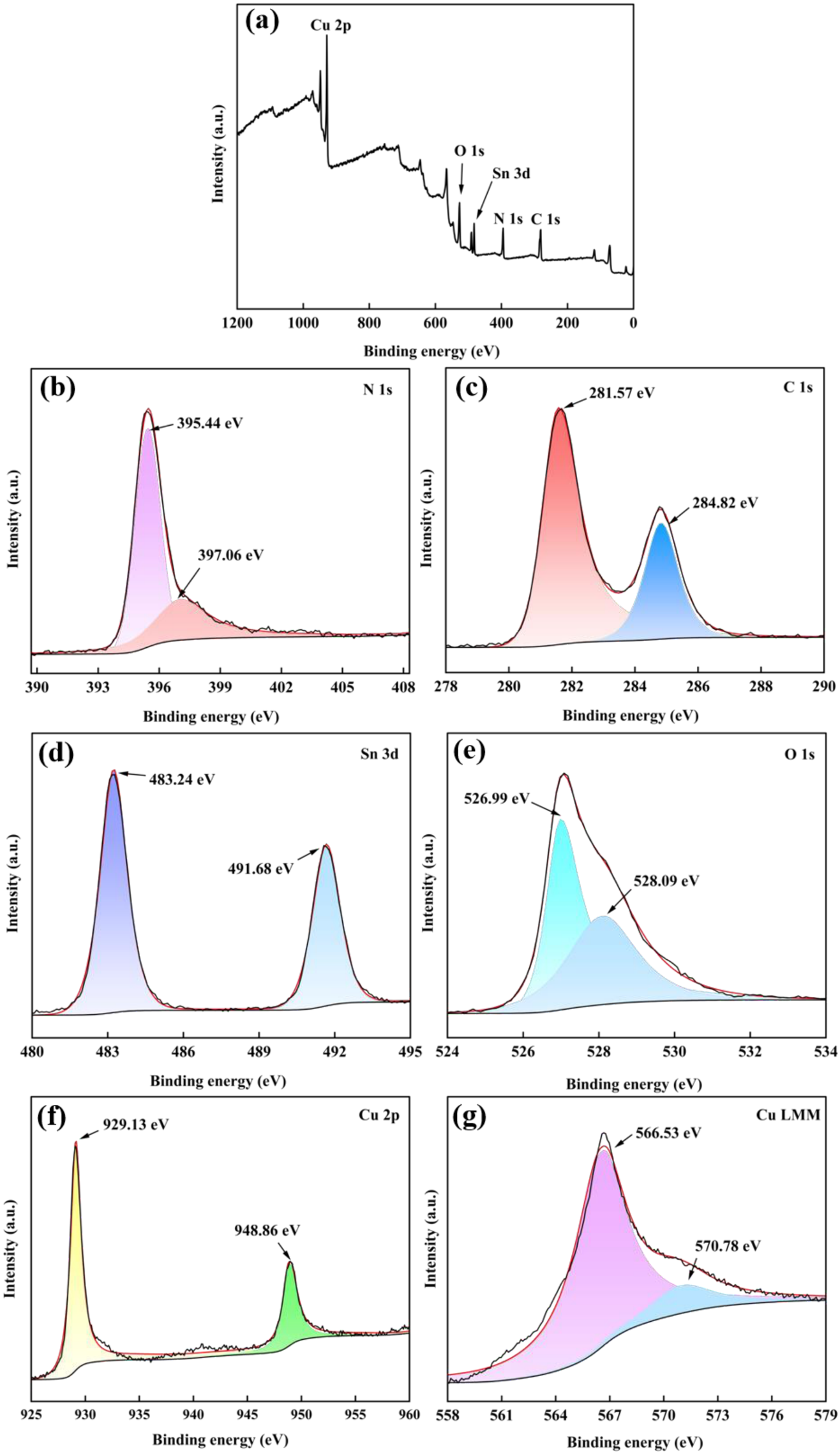
Figure 5a presents the survey XPS spectra of CuSnCN. Characteristic peaks corresponding to Cu 2p, C 1s, N 1s, O 1s, and Sn 3d were observed, confirming the presence of C, N, O, Cu, and Sn elements. Deconvolution of the N 1s spectrum (Figure 5b) yielded two distinct peaks at 395.44 eV and 397.06 eV, which were assigned to sp2-hybridized N in C–N=C and tertiary N–(C)3, respectively. The C 1s spectrum (Figure 5c) displayed two characteristic signals at 281.57 eV (C–C) and 284.82 eV (C–N–C/aromatic N–(C) [33]. For the Sn 3d spectrum (Figure 5d), the peaks located at 483.24 eV (3d5/2) and 491.68 eV (3d3/2) verify the existence of Sn4+ in SnO2. The O 1s spectrum (Figure 5e) was deconvoluted into two components, which are attributed to lattice oxygen from SnO2 (526.99 eV) and Cu2O (528.09 eV). The Cu 2p spectrum (Figure 5f) showed characteristic signals of Cu+ at 929.13 eV (2p3/2) and 948.86 eV (2p1/2). This result is further supported by the Cu-LMM Auger peaks at 566.53 eV and 570.78 eV (Figure 5g) [34,35]. Overall, all the above results demonstrate the successful synthesis of this ternary composite material.

2.5. UV-Vis DRS Analysis

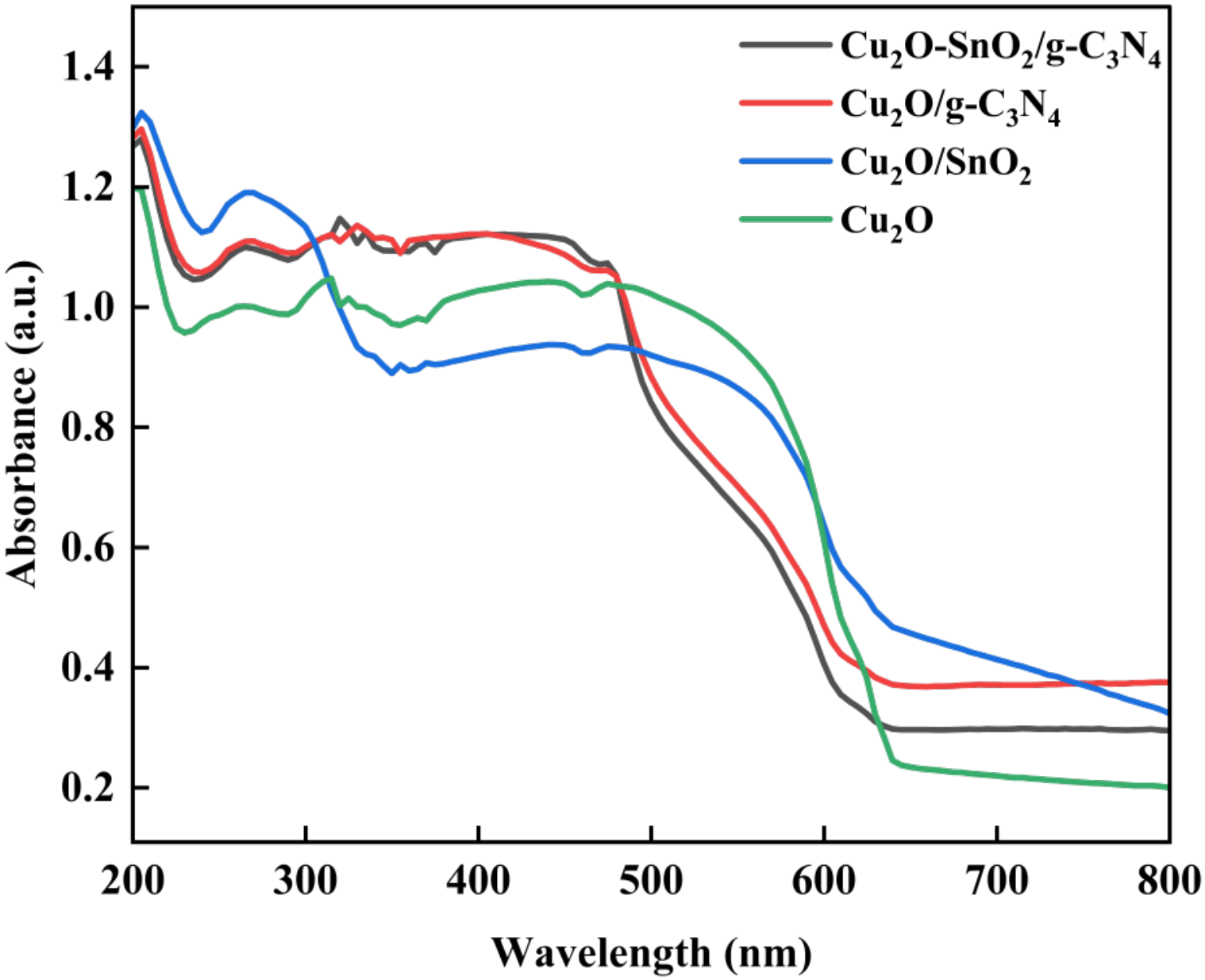
The UV-Vis diffuse reflectance spectra (DRS) of Cu2O, Cu2O/SnO2, Cu2O/g-C3N4, and the ternary CuSnCN composite were recorded in the wavelength range from 200 to 800 nm to evaluate their light harvesting properties. As shown in Figure 6, all samples exhibited significant absorption in the visible-light region. The pristine Cu2O and Cu2O/SnO2 displayed characteristic absorption edges at approximately 590 nm, which is consistent with the intrinsic band gap absorption of Cu2O [15]. Compared with the pure Cu2O, the Cu2O/SnO2 composite exhibited a slightly broadened absorption edge, suggesting electronic interactions between the two semiconductor components. The absorption edges of the ternary material CuSnCN and the binary material Cu2O/g-C3N4 showed little difference, indicating that the introduction of SnO2 did not significantly alter the optical absorption threshold. In the 400–500-nm range, the absorption intensity of CuSnCN was slightly higher than that of Cu2O/g-C3N4, which may be attributed to the higher spatial separation efficiency of photogenerated electron–hole pairs and the reduced recombination rate in the Cu2O-SnO2/g-C3N4 ternary heterojunction (which combined the p–n and Z-scheme heterojunctions). This extended optical response can be attributed to the synergistic interaction among Cu2O, SnO2, and g-C3N4, which effectively modifies the electronic structure of the composite and promotes visible-light utilization. The observed redshift suggests that the construction of the ternary heterojunction is beneficial for improving visible-light harvesting and may contribute to enhanced photocatalytic performance [36].
The optical band gap energies of the samples were estimated from Tauc plots according to the following relationship [37]:
(αℎν)1/n = A(ℎν − Eg)
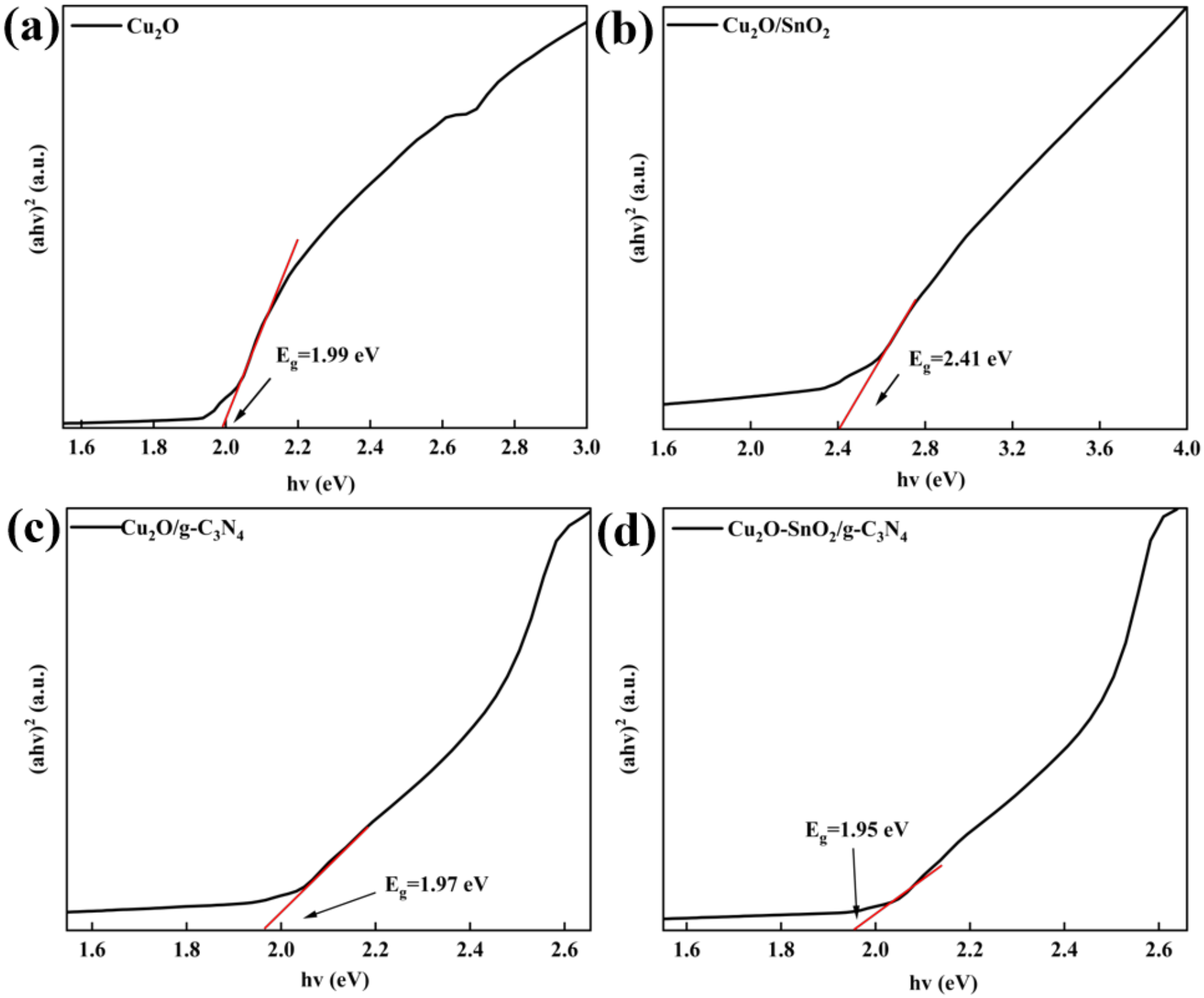
where α, hν, A, and Eg denote the absorption coefficient, photon energy, proportionality constant, and band gap energy, respectively. The value of n depends on the types of electronic transition (relatively, n = 1/2 for a direct transition and n = 2 for an indirect transition) [26]. The calculated band gap energies of Cu2O, Cu2O/SnO2, Cu2O/g-C3N4, and Cu2O-SnO2/g-C3N4 were 1.99, 2.41, 1.97, and 1.95 eV, respectively (see Figure 7). The Cu2O-SnO2/g-C3N4 ternary heterostructure exhibited the smallest band gap energy among the samples, suggesting a more favorable visible-light absorption capability. This result is consistent with the redshift observed in the UV–Vis DRS spectra and indicates that the construction of the ternary heterojunction can effectively modulate the electronic structure of the composite, thereby enhancing its photocatalytic potential.

2.6. BET Analysis

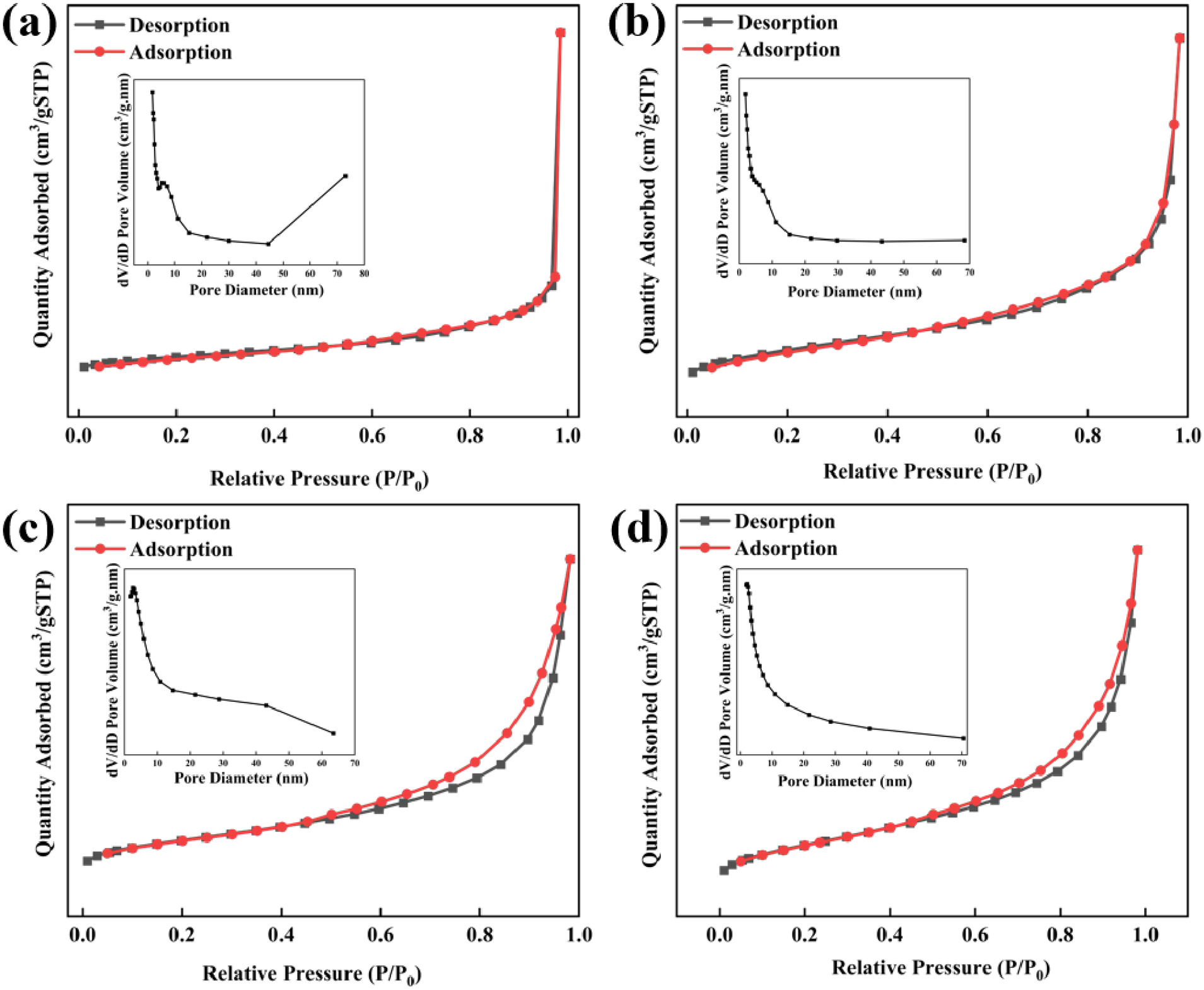
The N2 adsorption–desorption isotherms of all samples (Figure 8a–d) can be classified as type-IV isotherms with H3 hysteresis loops, which are characteristic of mesoporous materials containing slit-shaped pores formed by the aggregation of plate-like particles. The pronounced separation between the adsorption and desorption branches indicates the presence of mesopores with relatively broad pore size distributions and complex pore networks. In addition, the steep desorption branches suggest the existence of non-rigid pore structures associated with the stacking of lamellar particles, which is consistent with the typical characteristics of H3-type hysteresis loops [38,39,40]. These results confirm the mesoporous nature of all samples and indicate that the introduction of different components does not significantly alter the fundamental pore structure. The well-developed mesoporous architecture is expected to facilitate mass transfer and provide abundant accessible surface sites, which are beneficial for photocatalytic reactions.
Table 1 summarizes the BET specific surface areas and pore volumes of Cu2O, g-C3N4, Cu2O/g-C3N4, and the CuSnCN ternary composite. Notably, CuSnCN possesses the highest specific surface area and pore volume among all samples, suggesting that the incorporation of SnO2 and g-C3N4 effectively tailors the porous structure and increases the accessible surface of the composite [22,41]. A larger surface area can provide more exposed active sites and adsorption centers, whereas a higher pore volume favors the diffusion and transport of reactants and intermediates within the catalyst framework. These features are beneficial for improving photocatalytic reaction kinetics and may partially account for the superior photocatalytic activity of the CuSnCN composite.

2.7. PL Analysis

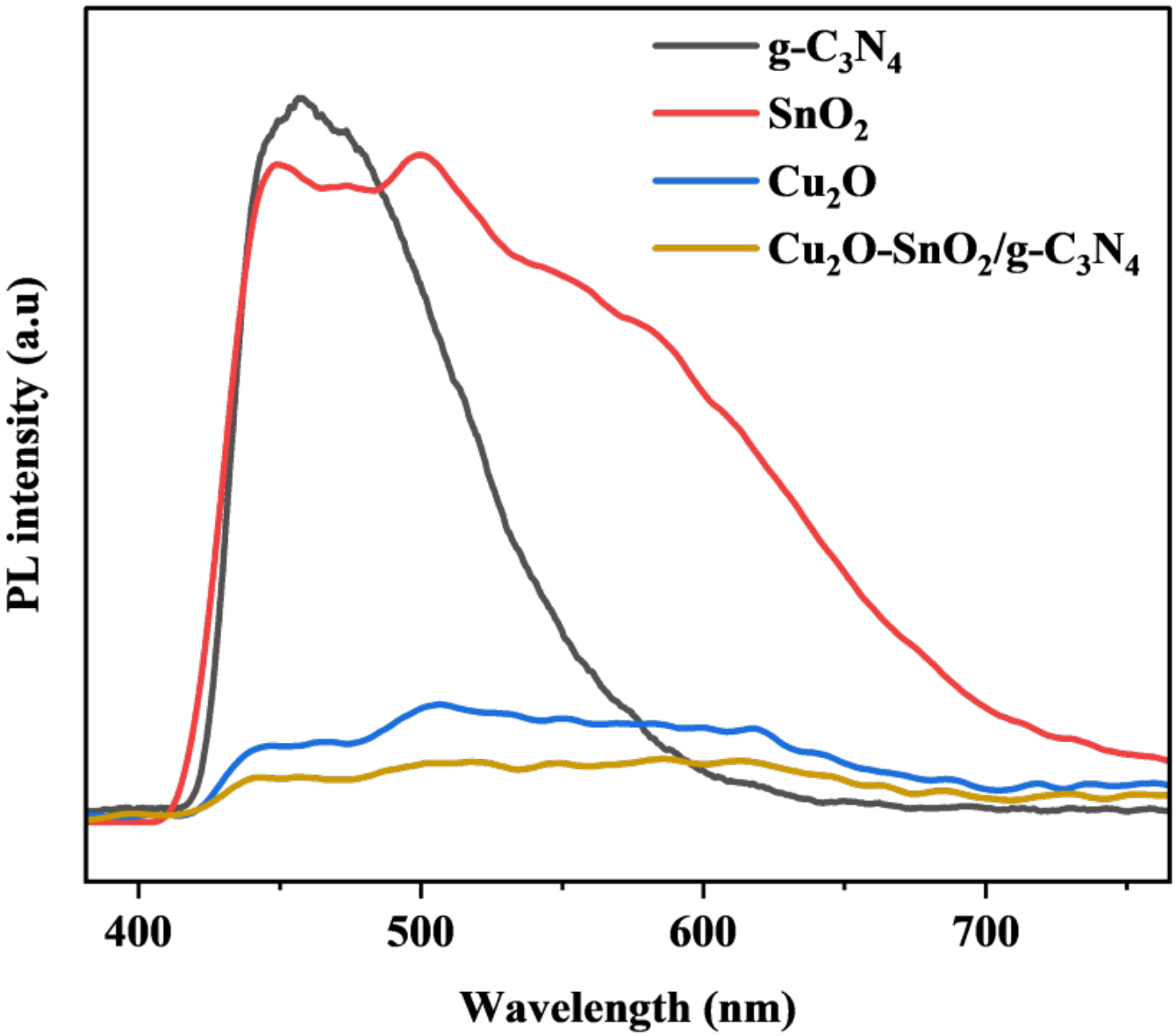
Photoluminescence (PL) spectroscopy was employed to investigate the separation and recombination behavior of photogenerated charge carriers. Generally, a lower PL emission intensity indicates a lower recombination rate of photogenerated electron–hole pairs and thus more efficient charge separation. As shown in Figure 9, the PL spectra of g-C3N4, SnO2, Cu2O, and CuSnCN were recorded under an excitation wavelength of 370 nm. The emission intensity followed the order of g-C3N4 > SnO2 > Cu2O > CuSnCN. Notably, the CuSnCN ternary composite exhibited the lowest PL intensity among all samples, indicating a significant suppression of charge carrier recombination after the formation of the heterostructure. This result suggests enhanced charge separation efficiency and prolonged carrier lifetimes in the CuSnCN composite. The improved charge separation can be attributed to the synergistic interaction among Cu2O, SnO2, and g-C3N4. The formation of a Cu2O/SnO2 p–n heterojunction may generate an internal electric field that promotes directional migration of charge carriers, while the Cu2O/g-C3N4 interface facilitates efficient interfacial charge transfer. As a result, the recombination of photogenerated electron–hole pairs is effectively inhibited, which is beneficial for enhancing photocatalytic activity [23,42,43].

2.8. The Photocatalytic Activity and Stability

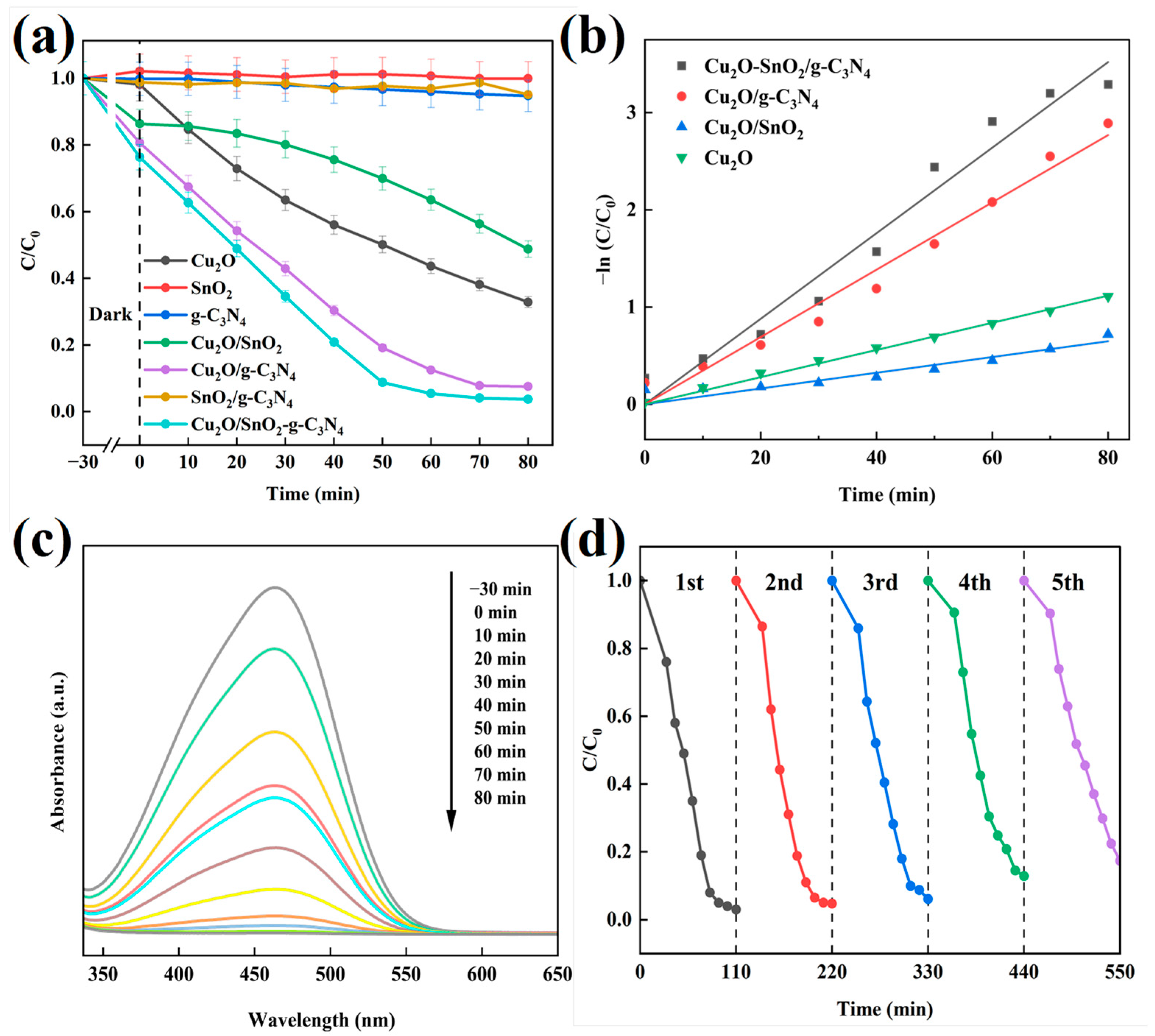
The photocatalytic activities of Cu2O, SnO2, and g-C3N4, their binary composites, and the CuSnCN ternary composite were evaluated through the degradation of methyl orange (MO, 20 mg L−1) under visible-light irradiation (Figure 10a). Before illumination, the catalyst suspensions were stirred in the dark for 30 min to reach adsorption–desorption equilibrium. CuSnCN and Cu2O/g-C3N4 exhibited the highest adsorption capacities, removing approximately 15–18% of the MO, whereas the adsorption efficiencies of Cu2O and Cu2O/SnO2 were 8.2% and 6.5%, respectively. The remaining samples showed negligible adsorption behavior. Under visible-light irradiation, CuSnCN exhibited the highest photocatalytic activity, achieving 96.58% degradation of MO within 80 min. For comparison, the degradation efficiencies of Cu2O/g-C3N4, Cu2O, and Cu2O/SnO2 were 94.44%, 65.94%, and 49.20%, respectively, while SnO2, g-C3N4, and SnO2/g-C3N4 displayed only marginal photocatalytic activity (<5%). The markedly enhanced performance of CuSnCN highlights the synergistic effect of the ternary heterojunction, which facilitates visible-light utilization, promotes interfacial charge separation, and suppresses electron–hole recombination. Consequently, more reactive species can be generated and participate in the degradation of MO, leading to superior photocatalytic performance. Kinetic analysis of MO degradation (Figure 10b) revealed good linearity, indicating that the process follows pseudo-first-order reaction kinetics. The apparent rate constant of CuSnCN reached 0.044 min−1, which was approximately 3.15 times higher than that of Cu2O and 5.42 times higher than that of Cu2O-SnO2 (Table S1). The comparison of the as-prepared ternary composite for dye degradation efficiency of previously reported Cu2O- or g-C3N4-based photocatalysts is shown in Table 2.
The recyclability and long-term stability of CuSnCN were assessed through five successive photocatalytic degradation cycles under identical reaction conditions (Figure 10d). After each run, the catalyst was collected by centrifugation, washed with deionized water and ethanol to remove residual species, and then regenerated before reuse. As the number of cycles increased, the degradation efficiency of MO gradually decreased from 96.58% in the first cycle to 82.63% after the fifth cycle. Specifically, degradation efficiencies of 93.50%, 90.04%, and 85.50% were obtained in the second, third, and fourth cycles, respectively. The moderate loss of activity is likely associated with inevitable catalyst loss during the recovery process and the partial blockage of active sites by adsorbed intermediates. Nevertheless, CuSnCN maintained 85.6% of its original photocatalytic activity after five cycles, indicating excellent structural stability and reusability. The XRD diffraction patterns (Figure S4) after five photocatalytic cycling experiments show that the intensities of all characteristic peaks exhibited almost no change, and the peak broadening also remained nearly unchanged, indicating that the synthesized ternary photocatalyst was relatively stable in nature. The favorable cycling performance demonstrates the robustness of the ternary heterostructure and highlights its potential for practical wastewater treatment and environmental remediation applications.

2.9. Mechanism Analysis

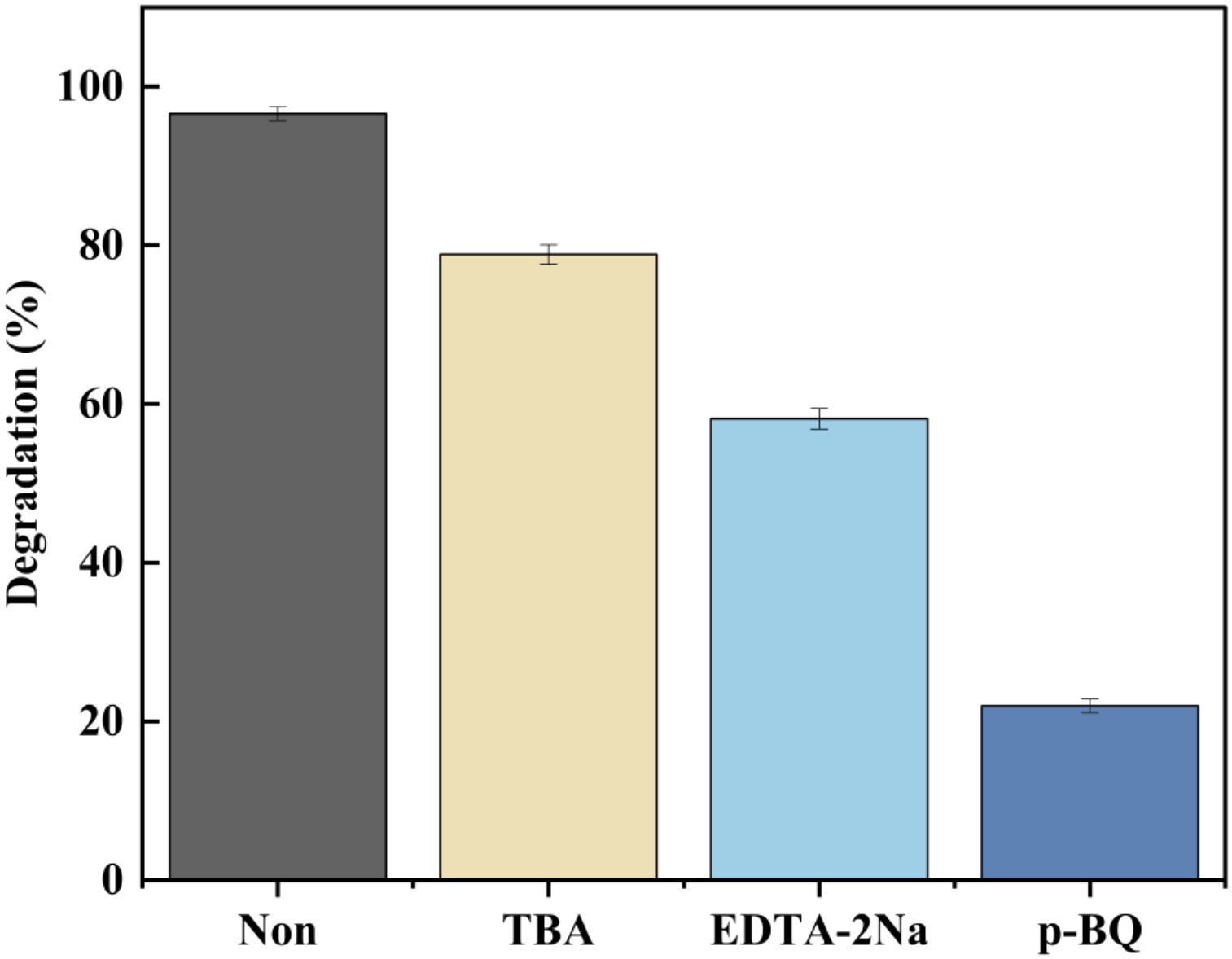
To identify the dominant reactive species involved in the photocatalytic degradation of methyl orange (MO) over CuSnCN under visible-light irradiation, radical trapping experiments were performed using different scavengers, as shown in Figure 11. Tert-butanol (TBA), p-benzoquinone (p-BQ), and EDTA-2Na were employed as scavengers for hydroxyl radicals (•OH), superoxide radicals (•O2−), and photogenerated holes (h+), respectively. In the absence of scavengers, CuSnCN achieved a MO degradation efficiency of 96.58%. Upon the addition of p-BQ or EDTA-2Na, the photocatalytic degradation efficiency decreased markedly, indicating that •O2− radicals and photogenerated holes play dominant roles in the degradation process. In contrast, the introduction of TBA resulted in only a slight decrease in photocatalytic activity, suggesting that •OH radicals contribute negligibly to MO degradation. These results demonstrate that •O2− and h+ are the primary active species responsible for the photocatalytic degradation of MO over CuSnCN, whereas •OH radicals play a minor role. The enhanced generation and utilization of these reactive species can be attributed to the efficient separation and transfer of photogenerated charge carriers within the ternary heterostructure, which is consistent with the PL results discussed above.
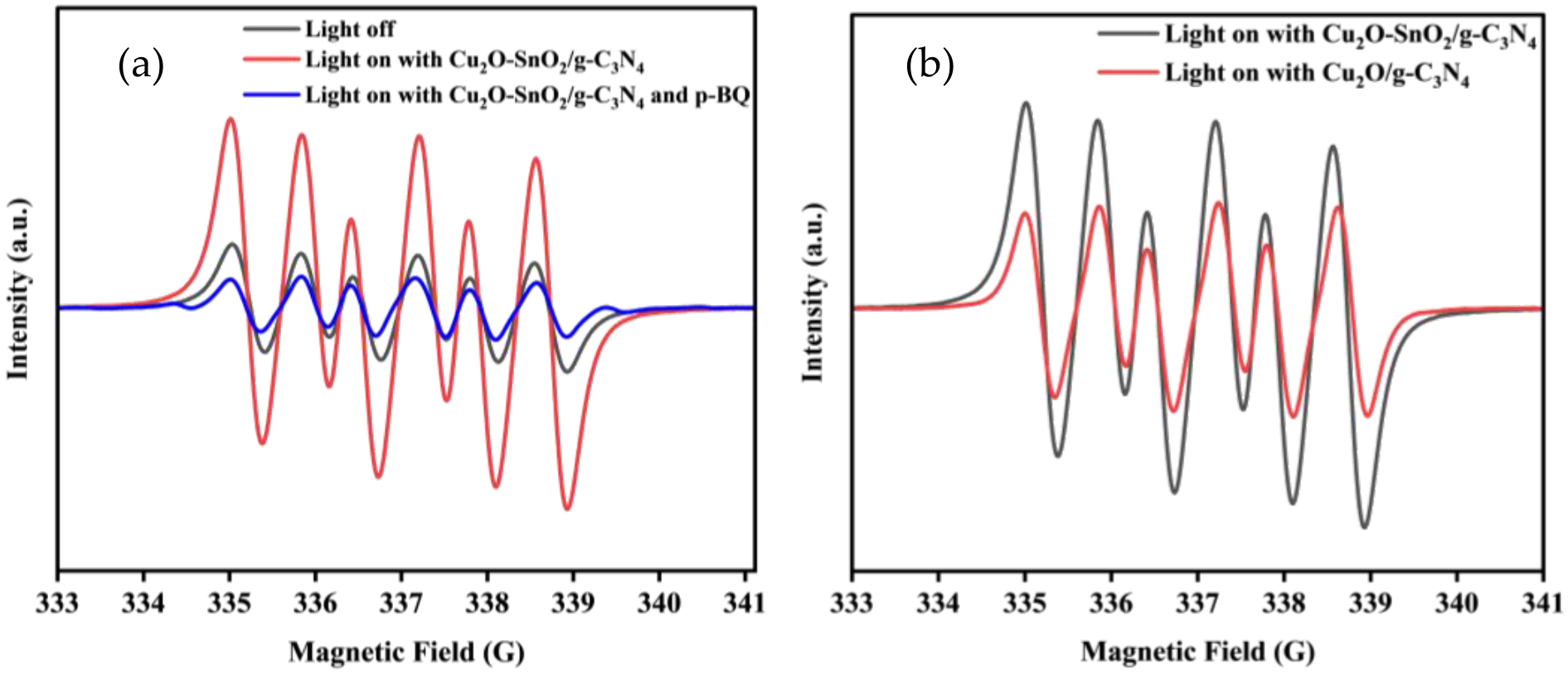
To further verify the generation of active free radicals during the photocatalytic degradation process, electron paramagnetic resonance (EPR) analysis was conducted on the composite photocatalyst. In the CuSnCN composite material, the photogenerated free radicals were captured via DMPO, resulting in a characteristic signal belonging to DMPO–•O2− (Figure 12a). After adding p-BQ, this characteristic peak was inhibited under both dark and light conditions, indicating that •O2− free radicals might be generated during the photocatalytic degradation process of CuSnCN. Additionally, the optimal component Cu2O/g-C3N4 from the binary system was selected for a control test (Figure 12b). Its characteristic peak intensity under light was significantly lower than that of CuSnCN, further confirming that the construction of CuSnCN effectively enhanced the photocatalytic degradation performance.
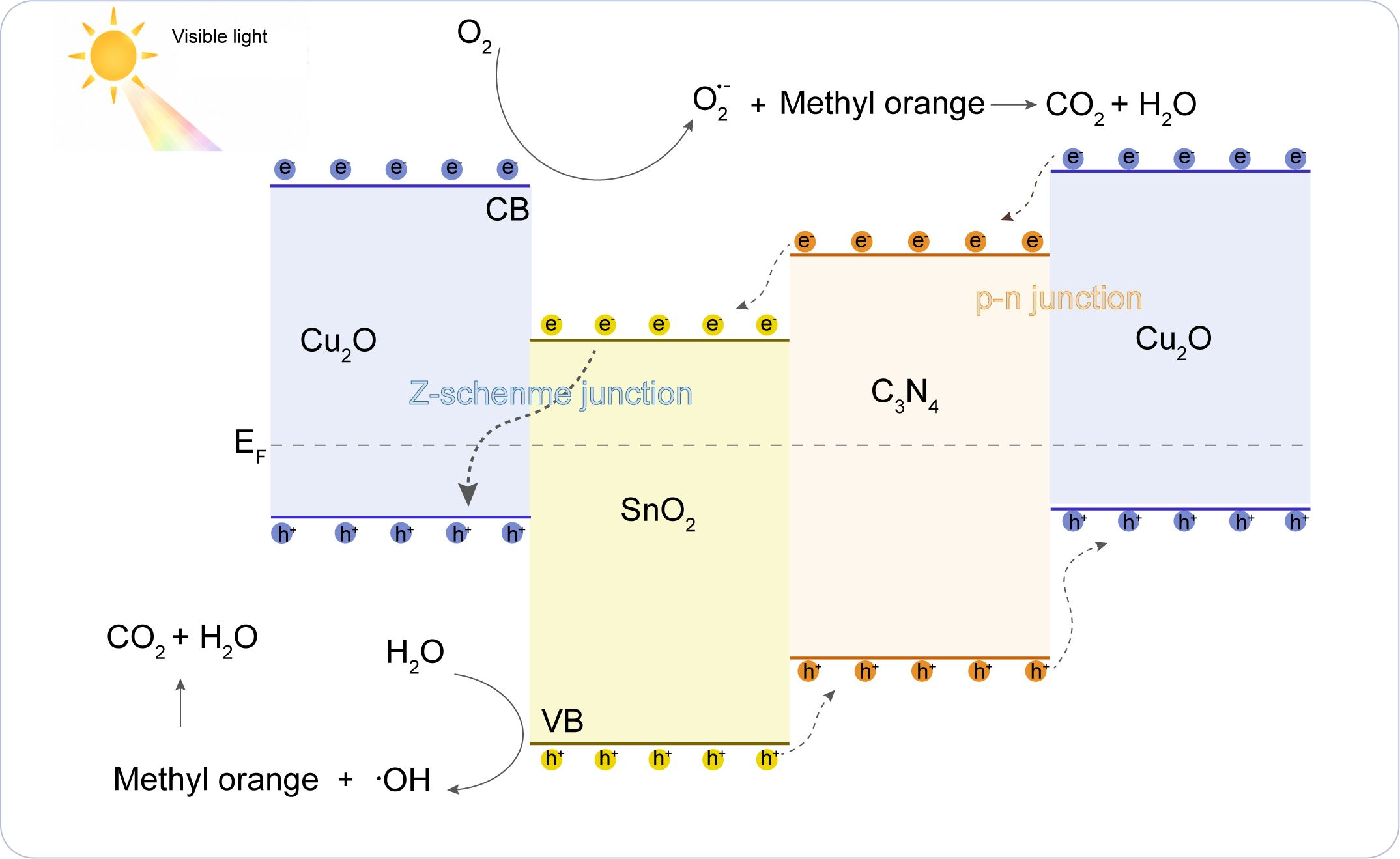
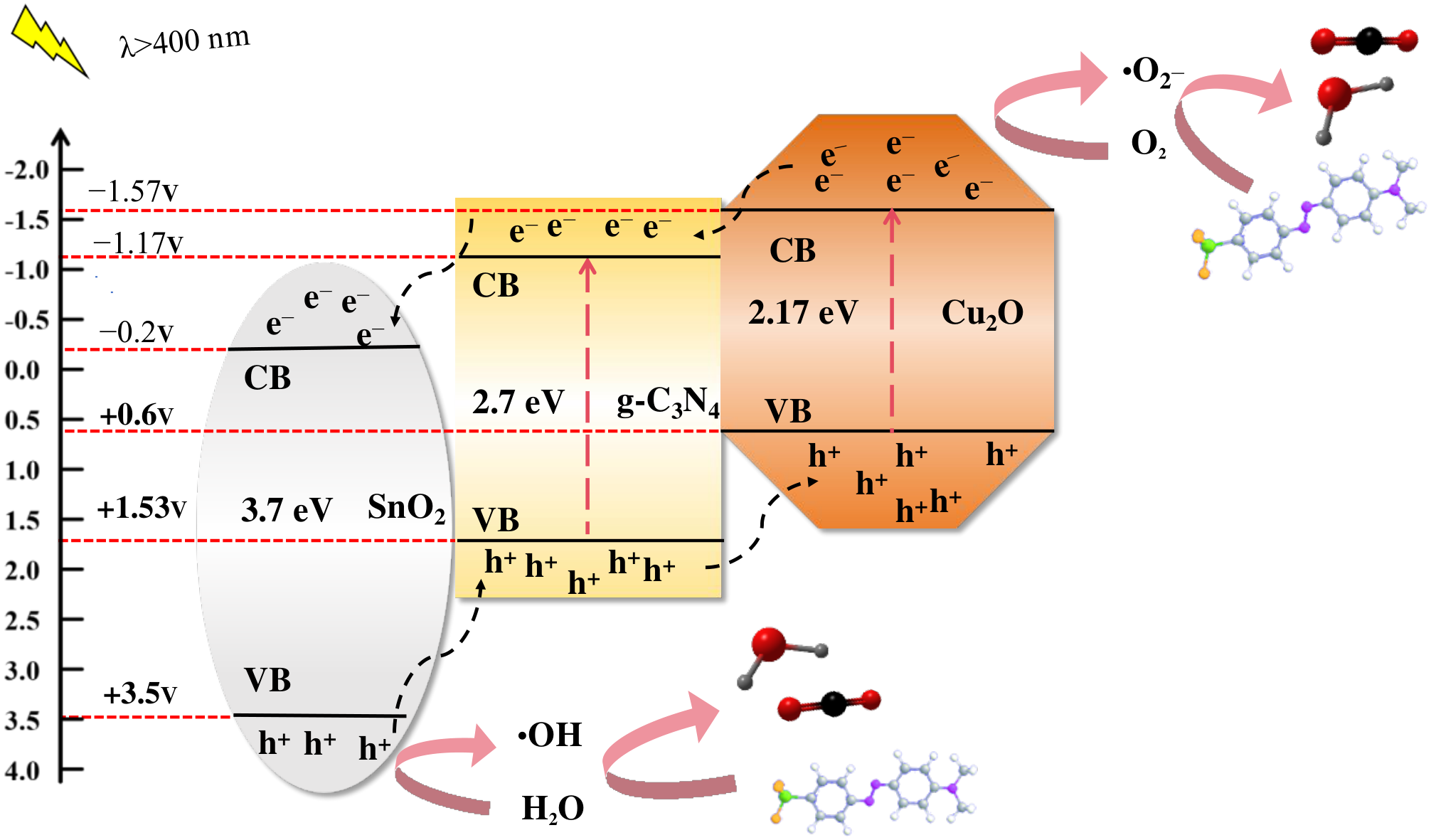
Based on the radical trapping results and band structure analysis, a plausible photocatalytic mechanism for MO degradation over the CuSnCN ternary composite is proposed and illustrated in Figure 13. The band edge of the conduction and valance bands of as-prepared catalysts could be calculated by following Mulliken electronegativity theory. Namely, EVB = χ − Ee + 0.5Eg, and ECB = EVB − Eg. χ is the absolute electronegativity of the as-specified compound. Ee is the free-electron energy for the hydrogen scale (~4.5 eV vs. NHE) [26,50]. The conduction band (CB) potentials of Cu2O, g-C3N4, and SnO2 were estimated to be −1.57, −1.17, and −0.30 V, while their corresponding valence band (VB) potentials were 0.60, 1.53, and 3.50 V, respectively. Under visible-light irradiation, Cu2O and g-C3N4 can be readily excited to generate electron-hole pairs due to their relatively narrow band gaps, whereas SnO2 exhibited negligible photoexcitation because of its wide band gap (~3.7 eV). The intimate interfacial contact among the three semiconductor components promoted efficient charge transfer and separation. A p–n heterojunction formed between the p-type Cu2O and n-type g-C3N4, facilitating the migration of photogenerated charge carriers and suppressing their recombination. Meanwhile, the favorable band alignment enabled a Z-scheme charge transfer pathway, in which electrons with lower reduction capabilities recombined with holes possessing lower oxidation capabilities at the heterojunction interface. As a result, highly reductive electrons were retained in the CB of Cu2O, while strongly oxidative holes accumulated in the VB of SnO2. This charge transfer mode not only enhances charge separation efficiency but also preserves the strong redox ability of the photogenerated carriers.
Consequently, the accumulated electrons in the CB of Cu2O can react with dissolved oxygen to generate •O2− radicals, while the holes retained in the VB can either directly participate in the reaction or react with H2O to form •OH, which are subsequently involved in the oxidation of MO (Equations (2)–(7)). This interpretation is consistent with the radical trapping experiments, which identified •O2− and h+ as the dominant reactive species. Therefore, the synergistic coupling of the p–n heterojunction and Z-scheme charge transfer mechanism endows the CuSnCN ternary composite with enhanced visible-light utilization, efficient charge separation, and superior photocatalytic activity [51,52,53,54,55].
Cu2O-SnO2/g-C3N4 + hν → (e−) + (h+)
Cu2O(e−) + O2 → Cu2O + •O2−
(h+) + H2O → •OH + H+
MO + •O2− → degraded products → CO2 + H2O
MO + (h+) → degraded products → CO2 + H2O
MO + •OH → degraded products → CO2 + H2O

3. Materials and Methods

3.1. Materials

Melamine powder (C3H6N6, ≥99%), hexadecyl trimethyl ammonium bromide (CTAB, ≥99%), copper chloride dihydrate (CuCl2•2H2O), sodium hydroxide (NaOH, ≥97%), ascorbic acid (AH2, ≥99.7%), tert-butyl alcohol (TBA, ≥99.5%), p-benzoquinone (p-BQ, ≥98%), ethylenediamine tetraacetic acid disodium salt (EDTA-2Na), and hydrochloric acid (HCl) were purchased from Sinopharm Chemical Reagent Co., Ltd (Beijing, China). Tin(IV) chloride pentahydrate (SnCl•5H2O, ≥99.7%) was purchased from Macklin Chemical Reagent Co., Ltd (China, Shanghai). Methyl orange (MO) was obtained from Aladdin Holdings Group Co., Ltd (China, Shanghai). All reagents were used without further purification. Deionized water was used to create all of our aqueous solutions.

3.2. Preparation of CuSnCN

First, 2 g of tin(IV) chloride pentahydrate was dissolved in 20 mL of deionized water under stirring for 10 min. Meanwhile, 1 g of NaOH was dissolved in 20 mL of deionized water. The NaOH solution was then added dropwise into the tin(IV) chloride solution, and the mixture was stirred for 30 min. The resulting mixture was transferred into a 50 mL Teflon-lined stainless-steel autoclave, which was placed in an oven and maintained at 150 °C for 12 h. After cooling to room temperature, the product was washed alternately with anhydrous ethanol and deionized water three times to remove impurities. It was then dried at 80 °C for 3–5 h, ground into a white powder, and stored for further use.
Graphitic carbon nitride (g-C3N4) nanosheets were synthesized via a thermal polycondensation method. Typically, 1 g of melamine was placed in a covered quartz boat, heated in a muffle furnace to 550 °C at a ramp rate of 5 °C min−1, and maintained at this temperature for 4 h. After naturally cooling to room temperature, the product was taken out. The resulting material exhibited a porous morphology, which was then ground into a yellow powder using an agate mortar and stored for subsequent use.
Then, 0.05 g of SnO2 and g-C3N4 were dispersed in 10 mL of deionized water under stirring for 30 min. Subsequently, 1.822 g of CTAB dissolved in 10 mL of deionized water was mixed for an additional 30 min, followed by the sequential addition of 0.85 g of CuCl2·2H2O with continued agitation for another 30 min. A titration with a solution of NaOH (2.5 mol/L) was performed until blue flocs formed. The mixture was stirred for an additional 30 min before introducing 25 mL of a 0.1 mol/L ascorbic acid solution to facilitate a reaction lasting one hour.

3.3. Characterization

Various characterization techniques were employed to analyze the structure and photophysical properties of the composite materials. The crystal phase was determined via powder X-ray diffraction analysis (miniflex600, Rigaku corporation, Tokyo, Japan), with the scanning range being from 20° to 80° (2θ). The surface chemical composition was detected using X-ray photoelectron spectroscopy (ESCALAB250Xi, ThermoScientific, Waltham, MA, USA, monochromatic Al target Ka radiation, hv = 1486.6 eV, beam spot—400 μm, full spectrum scan = 0–1200 eV) and Fourier transform infrared spectroscopy (NicoletiS20, ThermoScientific, USA, wavenumber range of 4000–500 cm−1). The samples were dispersed in ethanol and coated onto copper sheets, and a 5-nm conductive layer was sprayed on. The morphological characteristics were studied using a scanning electron microscope (SU8220, Hitachi, Tokyo, Japan) and transmission electron microscope (JEM-2100F, JEOL, Tokyo, Japan). The optical properties were evaluated via ultraviolet-visible absorption spectroscopy (Japanese Shimadzu Corporation, Kyoto, Japan, UV-2550, 200–800-nm wavelength range) and photoluminescence measurement (Perkin Elmer fluorescence spectrometer, Shelton, CT, USA, 450-W xenon lamp, excitation wavelength of 370 nm, emission wavelength scan range of 300–800 nm)). The pore structure characteristics, including the specific surface area, were quantitatively analyzed via a nitrogen physical adsorption experiment (Micromeritics ASAP2460 (Micromeritics corporation, Norcross, GA, USA), N2 adsorption-desorption isotherms at 77K, 200 °C vacuum degassing for 7 h (vacuum degree < 10 umHg)), and the water body organic pollutant degradation efficiency was determined using the Multi NC3100 total organic carbon analyzer (Analytik Jena AG, Jena, Germany, samples were pre-treated with a 0.45-m filter membrane and acidified with hydrochloric acid (pH ≤ 2)). The degradation mechanism was analyzed using Electron Spin Resonance (ESR) Spectra of JES-FA200 ESR (JEOL, Japan, microwave power employed: 1 mW; sweep width ranged from 223 to 423 mT).

3.4. Photocatalytic Activity Tests

A 20-mg aliquot of the photocatalyst was dispersed in 50 mL of methyl orange (MO) solution (prepared at an initial concentration of 20 mg/L). The suspension was transferred to a quartz photocatalytic reactor and underwent 30 min of magnetic stirring under dark conditions to establish adsorption-desorption equilibrium prior to illumination. Following the dark adaptation phase, the reaction system was irradiated with a 5-W LED light source. At 10-min intervals, 3-mL aliquots were collected and immediately filtered through 0.45-μm syringe membranes to remove particulate matter. The filtrates were subsequently analyzed using UV-Vis spectrophotometry with absorbance measurements recorded at λ = 464 nm. Photocatalytic degradation efficiency was quantified by normalizing the temporal absorbance values against the untreated MO reference solution, which was maintained under identical conditions without photocatalyst exposure.

4. Conclusions

A Cu2O–SnO2/g-C3N4 ternary heterojunction photocatalyst was successfully fabricated and exhibited markedly enhanced visible-light photocatalytic activity toward methyl orange degradation. The optimized CuSnCN composite achieved a degradation efficiency of 96.58% and an apparent reaction rate constant of 0.044 min−1, outperforming the corresponding single-component and binary photocatalysts. The enhanced performance is attributed to the synergistic effects of the ternary heterostructure, including improved visible-light harvesting, an enlarged surface area, and more efficient separation and transfer of photogenerated charge carriers. Radical trapping and band structure analyses revealed that •O2− and h+ were the dominant reactive species and that a p–n junction-assisted Z-scheme charge transfer pathway was responsible for the superior photocatalytic activity. This work provides an effective strategy for constructing highly efficient ternary heterojunction photocatalysts and offers valuable insights into the rational design of visible-light-driven photocatalytic systems for environmental remediation.

Supplementary Materials

The following supporting information can be downloaded at: https://www.mdpi.com/article/10.3390/catal16080707/s1. Figure S1: SEM image of Cu2O/SnO2. Figure S2: TEM image of Cu2O-SnO2/g-C3N4. Figure S3: EDS mapping diagram; SEM image of Cu2O/SnO2. Figure S4: The XRD patterns of the ternary composite post reaction. Figure S5: Effect of different pH on photocatalytic MO degradation performance. Figure S6: Effect of CuSnCN dosage on photocatalytic degradation of MO. Figure S7: Effect of initial MO concentration on photocatalytic degradation of MO. Figure S8: Influence of co-existing anions on photocatalytic degradation of MO. Ref. [56] is cited in the Supplementary Materials File. Table S1: The rate constants (k) for the photocatalytic degradation of MO over the as-prepared samples. Table S2: The total organic carbon measurement for the Cu2O–SnO2/g-C3N4 photocatalysis.

Author Contributions

Conceptualization, Z.H.; formal analysis, J.H.; investigation, M.X.; writing—original draft preparation, J.H.; writing—review and editing, Z.H.; supervision, Y.Z. All authors have read and agreed to the published version of the manuscript.

Funding

This work was financially supported by the National Key Research and Development Program of China (2023YFD2302900).

Data Availability Statement

Data is contained within the article or Supplementary Materials.

Acknowledgments

The authors thank Jiafu Chen (University of Science and Technology of China) and Xing Zhang (Anhui University) for their help in characterization of the samples.

Conflicts of Interest

The authors declare no conflicts of interest.

References

  1. Zou, W.; Zhang, L.; Liu, L.; Wang, X.; Sun, J. Engineering the Cu2O–Reduced Graphene Oxide Interface to Enhance Photocatalytic Degradation of Organic Pollutants under Visible Light. Appl. Catal. B 2016, 181, 495–503. [Google Scholar] [CrossRef] [Scilit]
  2. Lv, J.; Xie, J.; Mohamed, A.G.A.; Zhang, X.; Feng, Y.; Jiao, L.; Zhou, E.; Yuan, D.; Wang, Y. Solar Utilization beyond Photosynthesis. Nat. Rev. Chem. 2022, 7, 91–105. [Google Scholar] [CrossRef] [Scilit] [PubMed]
  3. Kessler, F.K.; Zheng, Y.; Schwarz, D.; Merschjann, C.; Schnick, W.; Wang, X.; Bojdys, M.J. Functional Carbon Nitride Materials—Design Strategies for Electrochemical Devices. Nat. Rev. Mater. 2017, 2, 17030. [Google Scholar] [CrossRef] [Scilit]
  4. Pornrungroj, C.; Mohamad Annuar, A.B.; Wang, Q.; Rahaman, M.; Bhattacharjee, S.; Andrei, V.; Reisner, E. Hybrid Photothermal–Photocatalyst Sheets for Solar-Driven Overall Water Splitting Coupled to Water Purification. Nat. Water 2023, 1, 952–960. [Google Scholar] [CrossRef] [Scilit]
  5. Wang, Q.; Pornrungroj, C.; Linley, S.; Reisner, E. Strategies to Improve Light Utilization in Solar Fuel Synthesis. Nat. Energy 2021, 7, 13–24. [Google Scholar] [CrossRef] [Scilit]
  6. Shoran, S.; Dahiya, S.; Chaudhary, S.; Nehra, S.P.; Sharma, A. Unveiling the exceptional photocatalytic activity of SmO/g-C3N4 nanocomposites for dye industries wastewater treatment. J. Mol. Struct. 2025, 1328, 141279. [Google Scholar] [CrossRef] [Scilit]
  7. Qiu, Y.; Zhang, Y.; Zhang, R.; Huang, M.; Tan, K.B.; Zhan, G.; Fu, G.; Li, Q.; Huang, J. Internally Hollow Cu2O Nanoframes with the Abundance of {110} Facets Enhance Direct Propylene Epoxidation. Nat. Commun. 2025, 16, 7802. [Google Scholar] [CrossRef] [Scilit] [PubMed]
  8. Wu, Y.A.; McNulty, I.; Liu, C.; Lau, K.C.; Liu, Q.; Paulikas, A.P.; Sun, C.-J.; Cai, Z.; Guest, J.R.; Ren, Y.; et al. Facet-Dependent Active Sites of a Single Cu2O Particle Photocatalyst for CO2 Reduction to Methanol. Nat. Energy 2019, 4, 957–968. [Google Scholar] [CrossRef] [Scilit]
  9. Yu, X.; Yang, M.; Wei, Y.; Liu, Z.; Wang, K.; Zhao, N.; Chen, L.; Niu, J. Preparation of Visible Light Responsive SnO2/Cu2O p–n Heterojunction and Its Photocatalytic Degradation of Methylene Blue. Integr. Ferroelectr. 2024, 240, 878–890. [Google Scholar] [CrossRef] [Scilit]
  10. Song, F.; Zhang, R.; Qi, Q.; Ma, L.; Wang, G.; Wang, W.; Fan, J. Construction of SnO2/g-C3N4/TiO2 Ternary Type-II Heterojunctions for Boosted Photocatalytic Hydrogen Evolution. J. Environ. Chem. Eng. 2026, 14, 123137. [Google Scholar] [CrossRef] [Scilit]
  11. Rahman, M.Z.; Qiao, L. Cracking the Z-Scheme Water-Splitting Puzzles. Nat. Rev. Chem. 2025, 9, 205. [Google Scholar] [CrossRef] [Scilit] [PubMed]
  12. Li, J.; Guo, C.; Li, L.; Gu, Y.; BoK-Hee, K.; Huang, J. Construction of Z-Scheme WO3-Cu2O Nanorods Array Heterojunction for Efficient Photocatalytic Degradation of Methylene Blue. Inorg. Chem. Commun. 2022, 138, 109248. [Google Scholar] [CrossRef] [Scilit]
  13. Xue, S.; Wu, C.; Pu, S.; Hou, Y.; Tong, T.; Yang, G.; Qin, Z.; Wang, Z.; Bao, J. Direct Z-Scheme Charge Transfer in Heterostructured MoO3/g-C3N4 Photocatalysts and the Generation of Active Radicals in Photocatalytic Dye Degradations. Environ. Pollut. 2019, 250, 338–345. [Google Scholar] [CrossRef] [Scilit] [PubMed]
  14. Isaev, A.B.; Shabanov, N.S.; Magomedova, A.G.; Nidheesh, P.V.; Oturan, M.A. Electrochemical Oxidation of Azo Dyes in Water: A Review. Environ. Chem. Lett. 2023, 21, 2863–2911. [Google Scholar] [CrossRef] [Scilit]
  15. Wang, Z.; Ma, W.; Chen, C.; Ji, H.; Zhao, J. Probing Paramagnetic Species in Titania-Based Heterogeneous Photocatalysis by Electron Spin Resonance (ESR) Spectroscopy—A Mini Review. Chem. Eng. J. 2011, 170, 353–362. [Google Scholar] [CrossRef] [Scilit]
  16. Feng, J.; Li, H.; Zheng, K.; Zeng, Y.; Xie, G.; Wang, X. Synergy between Horseradish Peroxidase HRP and Edible Gelatin: A Simple Way to Remove Phenols and Dyes Simultaneously from Wastewater. Biochem. Eng. J. 2025, 218, 109692. [Google Scholar] [CrossRef] [Scilit]
  17. Chen, R.; Pang, S.; An, H.; Zhu, J.; Ye, S.; Gao, Y.; Fan, F.; Li, C. Charge Separation via Asymmetric Illumination in Photocatalytic Cu2O Particles. Nat. Energy 2018, 3, 655–663. [Google Scholar] [CrossRef] [Scilit]
  18. Zhang, D.; Yang, J.; Wang, J.; Yang, J.; Qiao, G. Construction of Cu2O-Reduced Graphene Oxide Composites with Enhanced Photoelectric and Photocatalytic Properties. Opt. Mater. 2020, 100, 109612. [Google Scholar] [CrossRef] [Scilit]
  19. de Moraes, N.P.; Pereira, R.A.; da Silva, T.V.C.; da Silva, B.H.B.; de Assis, G.P.; Campos, T.M.B.; Thim, G.P.; de Vasconcelos Lanza, M.R.; de Freitas, L.; Rodrigues, L.A. Cross-Linked Cellulose Beads as an Eco-Friendly Support for ZnO/SnO2/Carbon Xerogel Hybrid Photocatalyst: Exploring the Synergy between Adsorption and Photocatalysis under Simulated Sunlight. Int. J. Biol. Macromol. 2024, 254, 127826. [Google Scholar] [CrossRef] [Scilit] [PubMed]
  20. Wang, C.; Zhao, J.; Wang, N.; Wu, J.; Liang, B. Enhancing Visible-Light Photocatalytic Activity of SnO2 via Sulfur/Chlorine Co-Doping: For Efficient Degradation of Organic Pollutants. Ceram. Int. 2026, 52, 15974–15983. [Google Scholar] [CrossRef] [Scilit]
  21. Feng, J.; Zhao, X.; Jiang, S.; Shen, L.; Lin, H. Electrospinning Spatial Building of a Secondary S-Scheme Heterojunction in Cs3Bi2Br9@g-C3N4-SnO2/PAN Nanofiber for Real-Time Monitoring Photocatalysis. Small 2026, 22, e73249. [Google Scholar] [CrossRef] [Scilit] [PubMed]
  22. Xie, Z.; Feng, Y.; Wang, F.; Chen, D.; Zhang, Q.; Zeng, Y.; Lv, W.; Liu, G. Construction of Carbon Dots Modified MoO3/g-C3N4 Z-Scheme Photocatalyst with Enhanced Visible-Light Photocatalytic Activity for the Degradation of Tetracycline. Appl. Catal. B 2018, 229, 96–104. [Google Scholar] [CrossRef] [Scilit]
  23. Yang, Y.-J.; Sun, B.-W.; Qian, D.-J.; Chen, M. Fabrication of Multiporphyrin@g-C3N4 Nanocomposites via Pd(II)-Directed Layer-by-Layer Assembly for Enhanced Visible-Light Photocatalytic Activity. Appl. Surf. Sci. 2019, 478, 1027–1036. [Google Scholar] [CrossRef] [Scilit]
  24. Liu, J.; Wan, Y.; Wang, H.; Zhang, Y.; Xu, M.; Song, X.; Zhou, W.; Zhang, J.; Ma, W.; Huo, P. Enhanced Activation of Peroxymonosulfate by ZIF-67/g-C3N4 S-Scheme Photocatalyst under Visible Light Assistance for Degradation of Polyethylene Terephthalate. Environ. Pollut. 2024, 360, 124682. [Google Scholar] [CrossRef] [Scilit] [PubMed]
  25. Ren, W.; Yang, J.; Zhang, J.; Li, W.; Sun, C.; Zhao, H.; Wen, Y.; Sha, O.; Liang, B. Recent Progress in SnO2/g-C3N4 Heterojunction Photocatalysts: Synthesis, Modification, and Application. J. Alloys Compd. 2022, 906, 164372. [Google Scholar] [CrossRef] [Scilit]
  26. Vignesh, S.; Palanisamy, G.; Srinivasan, M.; Elavarasan, N.; Bhuvaneswari, K.; Venkatesh, G.; Pazhanivel, T.; Ramasamy, P.; Manthrammel, M.A.; Shkir, M. Fabricating SnO2 and Cu2O Anchored on g-C3N4 Nanocomposites for Superior Photocatalytic Various Organic Pollutants Degradation under Simulated Sunlight Exposure. Diam. Relat. Mater. 2021, 120, 108606. [Google Scholar] [CrossRef] [Scilit]
  27. Meem, U.S.A.; Jahan, R.A.; Uddin, M.K.; Syed, I.M. Functional Development and Enhanced Photocatalytic Efficiency of GO-Supported SnO2 by Optimizing Composition. J. Mater. Sci. Mater. Eng. 2026, 21, 34–48. [Google Scholar] [CrossRef] [Scilit]
  28. Mosleh, S.; Reza Rahimi, M.; Ghaedi, M.; Dashtian, K.; Hajati, S. Sonochemical-Assisted Synthesis of CuO/Cu2O/Cu Nanoparticles as Efficient Photocatalyst for Simultaneous Degradation of Pollutant Dyes in Rotating Packed Bed Reactor: LED Illumination and Central Composite Design Optimization-All Databases. Ultrason. Sonochem. 2018, 40, 601–610. [Google Scholar] [CrossRef] [Scilit] [PubMed]
  29. Li, Y.; Fu, M.; Wang, R.; Wu, S.; Tan, X. Efficient Removal TC by Zn@SnO2/PI via the Synergy of Adsorption and Photocatalysis under Visible Light. Chem. Eng. J. 2022, 444, 136567. [Google Scholar] [CrossRef] [Scilit]
  30. He, Z.; Xia, Y.; Tang, B.; Jiang, X.; Su, J. Fabrication and Photocatalytic Property of ZnO/Cu2O Core-Shell Nanocomposites. Mater. Lett. 2016, 184, 148–151. [Google Scholar] [CrossRef] [Scilit]
  31. Huang, M.; Zhang, R.; Yang, Z.; Chen, J.; Deng, J.; Fakhri, A. Synthesis of Co3S4-SnO2/Polyvinylpyrrolidone-Cellulose Heterojunction as Highly Performance Catalyst for Photocatalytic and Antimicrobial Properties under Ultra-Violet Irradiation. Int. J. Biol. Macromol. 2020, 162, 220–228. [Google Scholar] [CrossRef] [Scilit] [PubMed]
  32. Chen, X.; Cui, K.; Hai, Z.; Kuang, W.; Wang, L.; Zhang, J.; Tian, X. Hydrothermal Synthesis of Cu2O with Morphology Evolution and Its Effect on Visible-Light Photocatalysis. Mater. Lett. 2021, 297, 129921. [Google Scholar] [CrossRef] [Scilit]
  33. Florent, M.; Giannakoudakis, D.A.; Bandosz, T.J. Detoxification of Mustard Gas Surrogate on ZnO2/g-C3N4 Composites: Effect of Surface Features’ Synergy and Day-Night Photocatalysis. Appl. Catal. B 2020, 272, 119038. [Google Scholar] [CrossRef] [Scilit]
  34. Wang, H.; Zhao, R.; Hu, H.; Fan, X.; Zhang, D.; Wang, D. 0D/2D Heterojunctions of Ti3 C2 MXene QDs/SiC as an Efficient and Robust Photocatalyst for Boosting the Visible Photocatalytic NO Pollutant Removal Ability. ACS Appl. Mater. Interfaces 2020, 12, 40176–40185. [Google Scholar] [CrossRef] [Scilit] [PubMed]
  35. Wang, D.; Wang, W.; Wang, Q.; Guo, Z.; Yuan, W. Spatial Separation of Pt and IrO2 Cocatalysts on SiC Surface for Enhanced Photocatalysis. Mater. Lett. 2017, 201, 114–117. [Google Scholar] [CrossRef] [Scilit]
  36. Wang, Z.; Wang, J.; Iqbal, W.; Yang, L.; Shi, M.; Chang, N.; Qin, C. Controllable Fabrication and Enhanced Photocatalysis of Cu2O NP@g-C3N4 NT Composite on Visible-Light-Driven Degradation of Organic Dyes in Water. Mater. Today Sustain. 2022, 20, 100239. [Google Scholar] [CrossRef] [Scilit]
  37. Liu, Y.; Ma, Z. TiOF2/g-C3N4 Composite for Visible-Light Driven Photocatalysis. Colloids Surf. A 2021, 618, 126471. [Google Scholar] [CrossRef] [Scilit]
  38. Channei, D.; Nakaruk, A.; Khanitchaidecha, W.; Jannoey, P.; Phanichphant, S. Adsorption and Photocatalytic Processes of Mesoporous SiO2-Coated Monoclinic BiVO4. Front. Chem. 2018, 6, 415. [Google Scholar] [CrossRef] [Scilit] [PubMed]
  39. Chu, D.; Mo, J.; Peng, Q.; Zhang, Y.; Wei, Y.; Zhuang, Z.; Li, Y. Enhanced Photocatalytic Properties of SnO2 Nanocrystals with Decreased Size for Ppb-Level Acetaldehyde Decomposition. ChemCatChem 2011, 3, 371–377. [Google Scholar] [CrossRef] [Scilit]
  40. Zhang, Y.C.; Du, Z.N.; Li, K.W.; Zhang, M.; Dionysiou, D.D. High-Performance Visible-Light-Driven SnS2 /SnO2 Nanocomposite Photocatalyst Prepared via In Situ Hydrothermal Oxidation of SnS2 Nanoparticles. ACS Appl. Mater. Interfaces 2011, 3, 1528–1537. [Google Scholar] [CrossRef] [Scilit] [PubMed]
  41. Xiong, H.; Yin, K.; Wang, L.; Wang, J.; Hai, Z. Obvious Enhancement of Visible Photocatalytic Performance of Cu2O Modified with TiO2-g-C3N4: A Strategy to Achieve Synergistic Effect of p–n Junction and Z-Scheme. Opt. Mater. 2023, 138, 113727. [Google Scholar] [CrossRef] [Scilit]
  42. Pooja, P.; Chin, A. Remarkably Fast and Reusable Photocatalysis by UV Annealed Cu2O–SnO2 p–n Heterojunction. Chemosphere 2024, 349, 140787. [Google Scholar] [CrossRef] [Scilit] [PubMed]
  43. Yang, L.; Liu, Y.; Tan, P.; Lu, Y.; Ding, Q.; Pan, J. Anchoring TiO2@CsPbBr3 on g-C3N4 Nanosheet for Enhanced Photocatalytic Degradation Activity of Tetracycline Hydrochloride. Diam. Relat. Mater. 2023, 133, 109727. [Google Scholar] [CrossRef] [Scilit]
  44. Rana, A.; Sonu; Sudhaik, A.; Chawla, A.; Raizada, P.; Kaushik, A.K.; Ahamad, T.; Kaya, S.; Kumar, N.; Singh, P. Integrating BiOI/g-C3N4 /Bi2WO6 Derived Dual S-Scheme Photocatalyst with Biochar for Emerging Adsorption for Photocatalysis: Multicharge Migration and Mechanistic Insights. Ind. Eng. Chem. Res. 2024, acs.iecr.4c00101. [Google Scholar] [CrossRef] [Scilit]
  45. Ho, W.; Tay, Q.; Qi, H.; Huang, Z.; Li, J.; Chen, Z. Photocatalytic and Adsorption Performances of Faceted Cuprous Oxide (Cu2O) Particles for the Removal of Methyl Orange (MO) from Aqueous Media. Molecules 2017, 22, 677. [Google Scholar] [CrossRef] [Scilit] [PubMed]
  46. Manalu, S.P.; Natarajan, T.S.; De Guzman, M.; Wang, Y.-F.; Chang, T.-C.; Yen, F.-C.; You, S.-J. Synthesis of Ternary G-C3N4 /Bi2 MoO6 /TiO2 Nanotube Composite Photocatalysts for the Decolorization of Dyes under Visible Light and Direct Sunlight Irradiation. Green Process. Synth. 2018, 7, 493–505. [Google Scholar] [CrossRef] [Scilit]
  47. Duan, P.; Su, R.; Xu, X.; Li, Q.; Gao, B. Preparation of Cu2O-Fe3O4@carbon Nanocomposites Derived from Natural Polymer Hydrogel Template for Organic Pollutants Degradation. J. Taiwan Inst. Chem. Eng. 2019, 102, 456–464. [Google Scholar] [CrossRef] [Scilit]
  48. Babu, B.; Cho, M.; Byon, C.; Shim, J. Sunlight-Driven Photocatalytic Activity of SnO2 QDs-g-C3N4 Nanolayers. Mater. Lett. 2018, 212, 327–331. [Google Scholar] [CrossRef] [Scilit]
  49. Rajeswari, R.; Thanikaikarasan, S.; Mukkannan, A. Reusable SnO2/g-C3N4/Cellulose Acetate Films for Photocatalytic Treatment of Dye-Contaminated Wastewater. J. Nanopart. Res. 2026, 28, 97–115. [Google Scholar] [CrossRef] [Scilit]
  50. Wang, T.; Zhang, D.; Shi, H.; Zheng, J.; Wang, H.; Lichtfouse, E. Double Z-Scheme Biochar-Based g-C3N4/Bi2WO6/Ag3PO4 Nanocomposite for Efficient Removal of Antibiotics and Synergistic Mechanisms. Commun. Chem. 2026, 9, 105. [Google Scholar] [CrossRef] [Scilit] [PubMed]
  51. Wan, S.; Wang, W.; Cheng, B.; Luo, G.; Shen, Q.; Yu, J.; Zhang, J.; Cao, S.; Zhang, L. A Superlattice Interface and S-Scheme Heterojunction for Ultrafast Charge Separation and Transfer in Photocatalytic H2 Evolution. Nat. Commun. 2024, 15, 9612. [Google Scholar] [CrossRef] [Scilit] [PubMed]
  52. Wang, C.; Zhao, J.; Xing, B. Environmental Source, Fate, and Toxicity of Microplastics. J. Hazard. Mater. 2021, 407, 124357. [Google Scholar] [CrossRef] [Scilit] [PubMed]
  53. Ayaz, M.; Khan, A.H.A.; Song, K.; Ali, A.; Yousaf, S.; Kazmi, A.; Rashid, A. Integration of Physio-Biological Methods for Remediation of Dyes and Toxic Metals from Textile Wastewater. Bioresour. Technol. Rep. 2025, 29, 102044. [Google Scholar] [CrossRef] [Scilit]
  54. Iqbal, T.; Bilal, H.; Afsheen, S.; Rizvi, H.I.; Kausar, S.; Munir, R.M.; El-Serehy, H.A.; Al-Maswari, B.M. Investigation of Sustainable Ag-WO3 Nanoparticles for Environmental & Photocatalytic Remediation against Methyl Orange and Its Antimicrobial Efficiency. Mater. Today Commun. 2025, 42, 111250. [Google Scholar] [CrossRef] [Scilit]
  55. Mammo, F.K.; Amoah, I.D.; Gani, K.M.; Pillay, L.; Ratha, S.K.; Bux, F.; Kumari, S. Microplastics in the Environment: Interactions with Microbes and Chemical Contaminants. Sci. Total Environ. 2020, 743, 140518. [Google Scholar] [CrossRef] [Scilit] [PubMed]
  56. Wang, Z.-H.; Cai, Q.-Y.; Ye, T.-M.; Guo, Y.-N.; Geng, Z.; Yang, X.; Yu, H.-B. BiPO4/Ag3PO4 p–n Heterojunction with Enhanced Photocatalytic Activity under Simulated Sunlight Irradiation. Chin. J. Inorg. Chem. 2017, 33, 1196–1204. [Google Scholar] [CrossRef]
Figure 1. XRD patterns of Cu2O, Cu2O/SnO2, Cu2O/g-C3N4, and Cu2O-SnO2/g-C3N4.
Catalysts 16 00707 g001
Figure 2. FTIR spectra of Cu2O, Cu2O/SnO2, Cu2O/g-C3N4, and Cu2O-SnO2/g-C3N4.
Catalysts 16 00707 g002
Figure 3. (a) Cu2O/SnO2, (b) Cu2O/g-C3N4, and SEM image of (c,d) Cu2O-SnO2/g-C3N4. The circles in panels a and b show the typical morphologies of the two components in the composite.
Catalysts 16 00707 g003
Figure 4. TEM images of (a) Cu2O/SnO2, (b) Cu2O/g-C3N4, and (c) Cu2O-SnO2/g-C3N4. (d) HRTEM images of CuSnCN and (e) EDS spectral information image of CuSnCN.
Catalysts 16 00707 g004
Figure 5. (a) XPS gross spectra of CuSnCN. Fine spectrum of (b) N 1s, (c) C 1s, (d) Sn 3d, (e) O 1s, and (f) Cu 2p. (g) Auger spectrum of Cu LMM.
Catalysts 16 00707 g005
Figure 6. UV-vis DRS absorption spectra of Cu2O, Cu2O/SnO2, Cu2O/g-C3N4, and Cu2O-SnO2/g-C3N4.
Catalysts 16 00707 g006
Figure 7. The band gap energy of (a) Cu2O, (b) Cu2O/SnO2, (c) Cu2O/g-C3N4, and (d) Cu2O-SnO2/g-C3N4.
Catalysts 16 00707 g007
Figure 8. Adsorption and desorption isotherm diagram of (a) Cu2O, (b) g-C3N4, (c) Cu2O/g-C3N4, and (d) Cu2O-SnO2/g-C3N4.
Catalysts 16 00707 g008
Figure 9. PL spectra of Cu2O, SnO2, g-C3N4, and Cu2O-SnO2/g-C3N4.
Catalysts 16 00707 g009
Figure 10. (a) MO efficiency diagram of photocatalytic degradation of different materials, (b) degradation kinetics analysis diagram, (c) photodegradation of MO concentration in the presence of prepared CuSnCN under visible illumination, the spectra lines labeled with different colors decline in sequence, which corresponds to the progressive increase in reaction time of the photocatalytic process (from the start of the adsorption equilibrium test), and (d) CuSnCN five-cycle test diagram.
Catalysts 16 00707 g010
Figure 11. Effects of different scavengers on the photocatalytic degradation of MO over CuSnCN.
Catalysts 16 00707 g011
Figure 12. (a) The DMPO-•O2− species formed in the methanol system in the presence of CuSnCN. (b) Comparative diagram of CuSnCN and Cu2O/g-C3N4 samples under methanol system.
Catalysts 16 00707 g012
Figure 13. Schematic diagram of a p–n junction-assisted Z-scheme heterojunction in CuSnCN composite. The red straight arrows represent the photoexcitation of electrons from the valence band to the conduction band within the semiconductor material, while the black curved dashed arrows denote the transfer of electrons or holes across the semiconductor interfaces.
Catalysts 16 00707 g013
Table 1. Specific surface areas and pore sizes of different samples.
SampleSBET (m2 g−1)Porevolume (cm3/g)
Cu2O2.17570.014329
g-C3N43.83040.012750
Cu2O/g-C3N418.67580.066077
CuSnCN20.83480.61548
Table 2. The comparison of the as-prepared ternary composite for dye degradation efficiency of previously reported Cu2O or g-C3N4 based photocatalysts.
No.PhotocatalystsLight SourcePollutantPhotocatalytic EfficacyRef.
1Cu2O–SnO2/g-C3N45-W LED, λ > 420 nmmethyl orange (MO)96.58% in 80 min, 0.044 min−1This work
2g-C3N4/Bi2WO6
/BiOI/Biochar
Halogen lamp, 420 nmmethyl blue87.53% in 60 min[44]
3Cu2O (octahedral)Xe-lamp, 420–700 nm, 300 Wmethyl orange~93%, in more than 200 min[45]
4g-C3N4/SnO2-Cu2O300-W xenon lampmethylene blue (MB) and rhodamine B (RhB)~90.3% for MB in 100 min, ~94.5% for RhB in 75 min, rate constant 0.0328 min−1[26]
5g-C3N4/Bi2MoO6/TiO2Fluorescent lamp methylene blue (MB)73.61% in 300 min, 0.0159 min−1[46]
6Cu2O-Fe3O4@CN300-W xenon lampmethylene blue (MB)95.1% in 250 min, rate constant 0.0127 min−1[47]
7SnO2 QDs-g-C3N4 nanolayersUnder sunlightmethyl orange (MO)94% in 180 min, [48]
8SnO2/g-C3N4/cellulose acetate300-W xenon lamp, λ > 420 nmmethyl orange (MO)80.95% in 90 min[49]
Disclaimer/Publisher’s Note: The statements, opinions and data contained in all publications are solely those of the individual author(s) and contributor(s) and not of MDPI and/or the editor(s). MDPI and/or the editor(s) disclaim responsibility for any injury to people or property resulting from any ideas, methods, instructions or products referred to in the content.