Article

A Preliminary Study of Cobalt-Catalyzed C—H/N—H Annulation in a Non-Conventional Solvent

by
Mohamed Hedi Belhaj
,
Jesper G. Wiklander
,
Subban Kathiravan
* and
Ian A. Nicholls
*
Bioorganic & Biophysical Chemistry Laboratory, Linnaeus University Centre for Biomaterials Chemistry, Department of Chemistry & Biomedical Sciences, Linnaeus University, SE-391 82 Kalmar, Sweden
*
Authors to whom correspondence should be addressed.
Catalysts 2026, 16(8), 693; https://doi.org/10.3390/catal16080693
Submission received: 19 June 2026 / Revised: 26 July 2026 / Accepted: 28 July 2026 / Published: 30 July 2026

Abstract

This study investigates the influence of a non-ionic deep eutectic solvent on a cobalt-catalyzed C—H activation reaction. In this context, we demonstrate the feasibility of a cobalt-catalyzed one-step activation of Csp2—H and N—H bonds in benzosulfonamides, directed by aminoquinoline, with symmetrical 1,3-diynes for the synthesis of benzosultams. Rather than serving solely as a solvent replacement, the non-ionic deep eutectic solvent acts as a structured hydrogen-bonding reaction medium compatible with cobalt-catalyzed C—H activation. The study demonstrates that cobalt-catalyzed C—H activation can proceed with substrate-dependent product selectivity under these conditions, although further optimization is required to improve conversion and catalytic efficiency. These findings provide initial insights into solvent effects on cobalt-catalyzed C—H activation under non-conventional reaction media.

1. Introduction

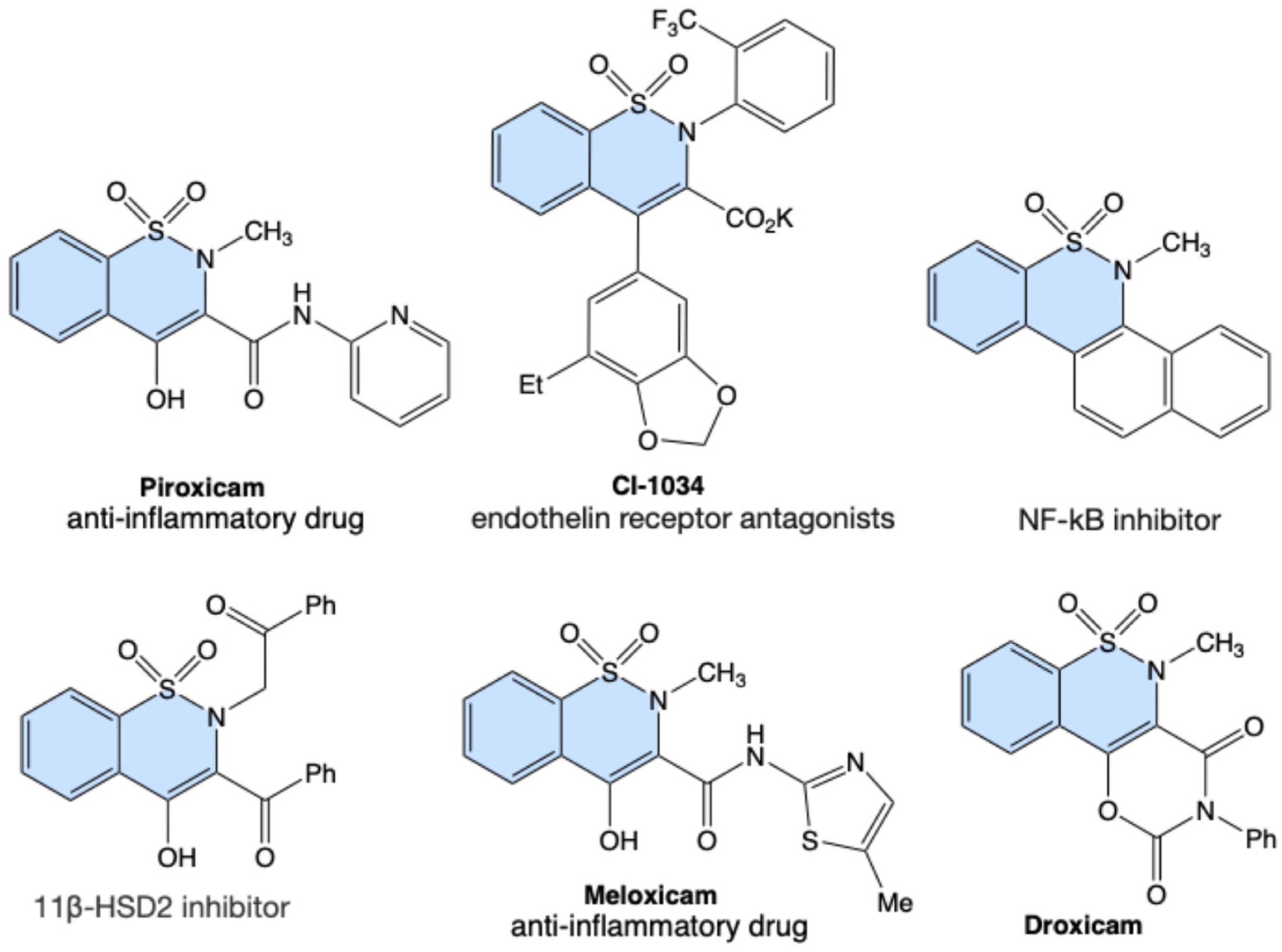
Benzosultams have gained significant attention in organic chemistry and pharmaceutical research due to their diverse biological activities and potential therapeutic applications, including as antibacterial, antifungal, anti-inflammatory, and anticancer agents (Figure 1) [1]. In addition to their medicinal importance, sultams also serve as valuable intermediates in organic synthesis, enabling the construction of more complex molecules through various chemical transformations, making them versatile scaffolds in drug discovery and development [2] and as chiral auxiliaries [3]. Because of their structural and pharmacological importance, considerable efforts have been devoted to developing efficient synthetic methods for benzosultams.
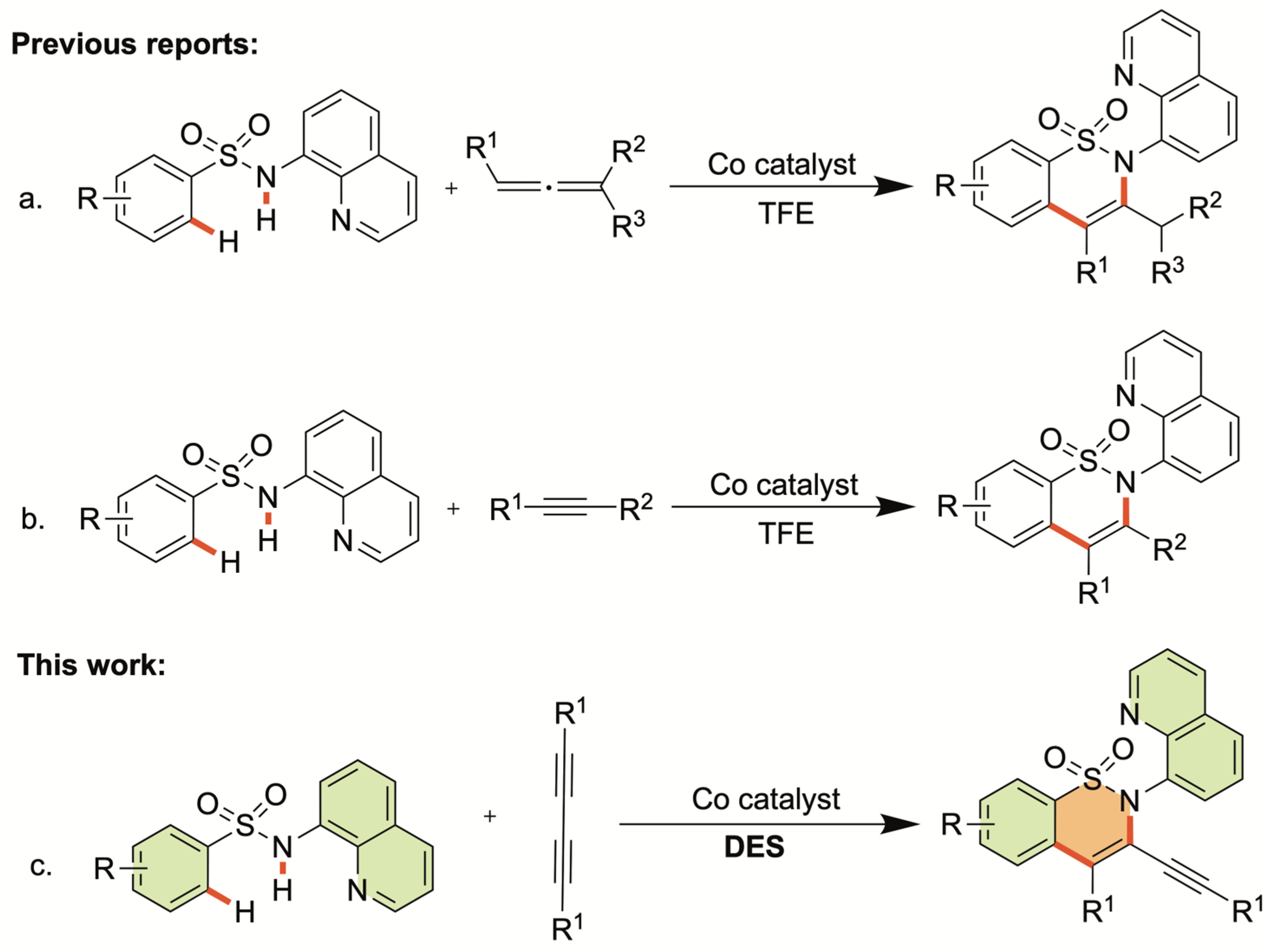
Transition metal-catalyzed C—H activation has enabled efficient construction of sultam scaffolds, including cobalt-catalyzed annulation of aryl sulfonamides directed by 8-aminoquinoline auxiliaries [4,5]. However, these reactions are typically optimized in molecular solvents such as fluorinated alcohols [4,6]. The behavior of such catalytic cycles in highly hydrogen-bonding reaction media remains largely unexplored. Notably, Rao et al. reported a cobalt-catalyzed regioselective annulation of aryl sulfonamides with allenes through C—H activation (Scheme 1a) [7], and Ribas et al. developed a complementary cobalt-catalyzed synthesis of benzosultams using an 8-aminoquinoline directing group (Scheme 1b) [5]. In both cases, the reactions were performed in trifluoroethanol (TFE), a fluorinated solvent often employed for its high polarity and ability to stabilize charged intermediates. While TFE can enhance catalytic efficiency, its toxicity, poor biodegradability, and environmental persistence raise sustainability concerns [8]. Although cobalt-catalyzed annulations of aryl sulfonamides with allenes and alkynes have been reported, the present study focuses on symmetrical 1,3-diynes as coupling partners to evaluate their compatibility with a DES reaction medium (Scheme 1).
Environmental and regulatory pressure to reduce volatile organic solvents has motivated the search for alternative reaction media [9]. Deep eutectic solvents (DESs) represent an attractive option due to their low toxicity, tunability, and simple preparation from benign components [10]. However, DESs are not merely greener solvents; their extensive hydrogen-bonding networks create structured reaction environments that may influence catalytic processes [11]. Despite the broad use of DESs in extraction, biomass processing, and electrochemistry, their application in transition-metal-catalyzed C—H activation particularly with earth-abundant cobalt catalysts, remains largely unexplored [12]. To address this question, we investigated cobalt-catalyzed C—H activation in a urea-based non-ionic DES. This approach enables evaluation of how a structured hydrogen-bonding reaction medium influences cobalt-catalyzed annulation rather than serving solely as a replacement for conventional molecular solvents. As part of our broader interest in sustainable and base-metal catalysis [13,14,15], this study explores the compatibility of urea-based DESs with cobalt-catalyzed C—H/N—H annulation reactions for the synthesis of benzosultams and provides an initial assessment of their potential as alternative reaction media (Scheme 1c).

2. Results & Discussion

2.1. Optimization of Standard Reaction Conditions

The primary objective of this screening was to determine whether the cobalt catalytic manifold remained operative in a structured hydrogen-bonding deep eutectic solvent (DES) environment rather than to establish improved performance over conventional molecular solvents. Accordingly, conventional and previously reported reaction media were included as reference systems to evaluate the compatibility of DES with cobalt-catalyzed C—H activation. We began by examining the reaction using sulfonamide 1b and symmetrical 1,3-diyne 2 as standard substrates. Reaction parameters were varied to identify effective conditions. Using our previously developed conditions as a benchmark [4,6,13], we explored a series of solvents to assess their suitability.
Water was first tested as the solvent; however, no reaction occurred due to the poor solubility of the amide. Although heating the reaction mixture improved dissolution of the starting materials, it did not result in product formation (Entry 1, Table 1). We then examined commercially available water-based surfactants such as TPGS-750M, but these also failed to produce the desired product (Entry 2, Table 1). Trifluoroethanol (TFE) afforded the expected product in 27% yield (Entry 3, Table 1). While this solvent is not desirable, it served as a reference when ethylene glycol, a greener solvent, was evaluated; however, no product was obtained (Entry 4, Table 1).
Our group has previously developed urea- and acetamide- based non-ionic DESs and demonstrated their utility in several chemical applications, including free-radical polymer synthesis, heterocycle synthesis, and cobalt extraction [14,15,16]. An initial attempt using an acetamide (AA)–N-methylacetamide (NMA) DES provided the expected product in 24% yield (Entry 5, Table 1). Encouraged by this result, we examined other DESs from this family of non-ionic systems. A DES composed of NMA and N-methylurea (NMU) delivered only 7% yield (Entry 6, Table 1), whereas a DES formed from NMA and N,N′-dimethylurea (N,N′-DMU) gave a more promising 26% yield (Entry 7, Table 1), comparable to that obtained using TFE. The comparable performance of TFE and NMA/N,N′-DMU DES suggests that the cobalt catalytic system remains active in a hydrogen-bonding non-ionic reaction medium. The present study focused on amide/urea-based DESs because these systems provide highly structured hydrogen-bonding environments and have previously demonstrated utility in catalytic transformations. A systematic evaluation of other DES families, including alcohol-based eutectic mixtures, was beyond the scope of the current feasibility study and would be valuable for understanding the relationship between DES composition and catalytic performance. Because the objective was feasibility rather than preparative optimization, parameters such as oxidant identity, base variation, and stoichiometry were not systematically optimized once catalytic turnover had been demonstrated.
The observation that the NMA/N,N′-DMU DES afforded a yield comparable to that obtained in TFE indicates that the structured hydrogen-bonding DES does not inhibit the cobalt-catalyzed annulation process despite its markedly different physicochemical environment. Although the present study does not establish a general performance advantage of DES over TFE across a broad substrate scope, these results demonstrate the feasibility of employing a non-ionic DES as an alternative reaction medium to a fluorinated molecular solvent while maintaining catalytic reactivity. A more comprehensive substrate-by-substrate comparison between DES and conventional solvents will be the subject of future investigations.

2.1.1. Scope of Sulfonamide and 1,3-Diynes

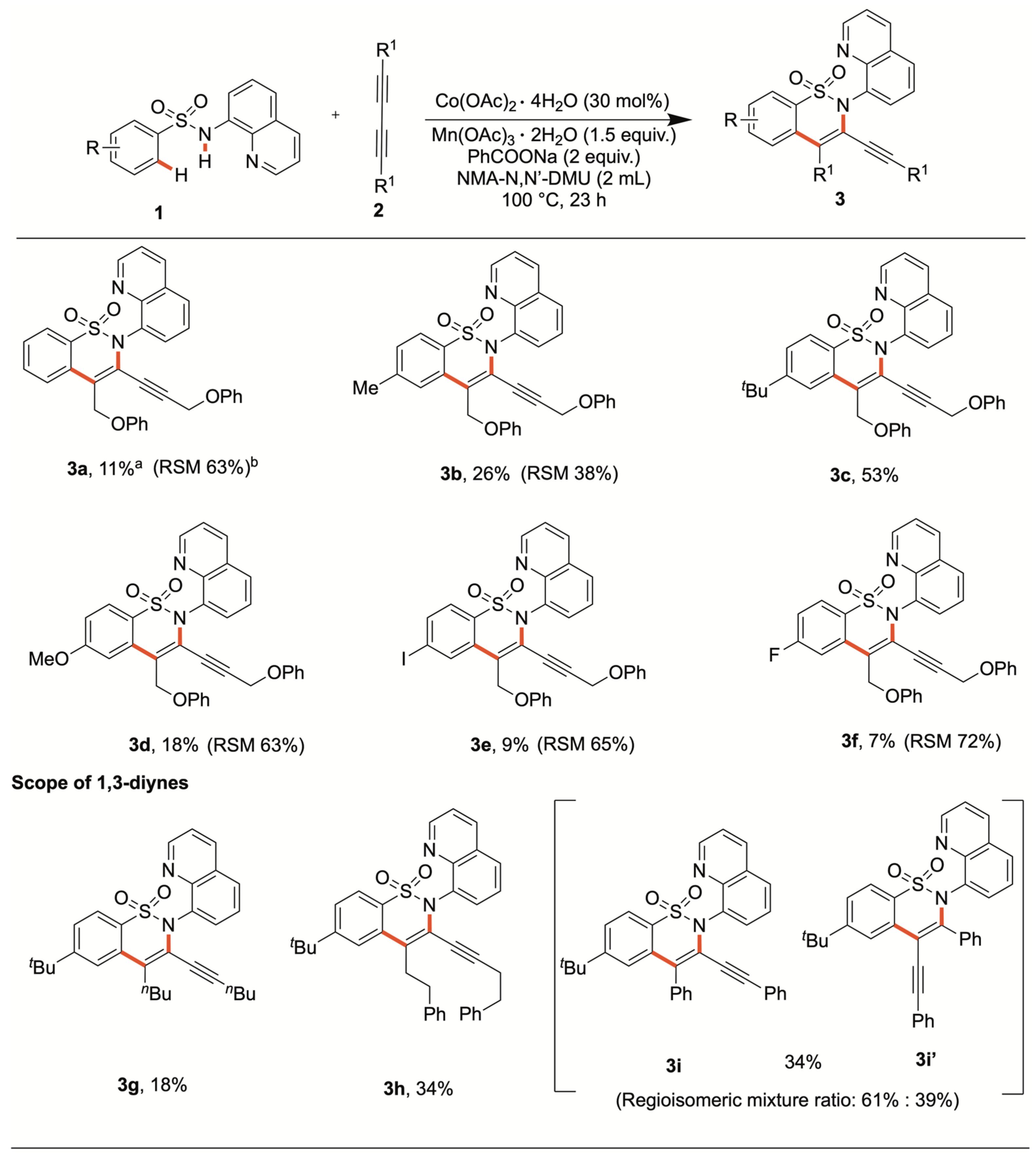
With the standard reaction conditions in hand, we examined the substrate scope to evaluate the substrate tolerance and limitations of this cobalt-catalyzed C—H activation process (Scheme 2). The scope was designed to probe electronic and steric effects rather than to establish a preparative protocol. A range of aminoquinoline-derived amides and symmetrical 1,3-diynes were tested under the standard conditions.
Our investigation revealed that the nature of the amide substituent significantly influenced the reaction outcome. The unsubstituted amide delivered product 3a in a modest 11% yield, with 63% of recovered starting material (RSM). Para-methyl substitution slightly improved the reactivity, affording 3b in 26% yield (38% RSM). Interestingly, introduction of a bulkier tert-butyl group at the para-position (1c) led to a notable increase in yield, providing 3c in 53%. In contrast, the para-methoxy substrate gave 3d in only 18% yield with 63% RSM. Similarly, halogenated substrates 1e and 1f afforded even lower yields (9% and 7%) accompanied by high recovery of starting material (65% and 72%, respectively).
These RSM data suggest that the low isolated yields are mainly associated with incomplete conversion rather than extensive formation of undesired side products. The observed mass balance suggests that the cobalt catalytic system remains compatible with the DES environment, while the factors influencing conversion efficiency require further investigation. These observations suggest that the DES medium does not completely suppress the catalytic activity or significantly promote competing side reactions. Consistent with this interpretation, the mass balance largely corresponded to recovered starting material, and minimal by-product formation was observed by TLC and NMR analysis. Thus, the catalytic process appears to remain selective, although conversion efficiency is limited under the current DES reaction conditions.
We then evaluated the reactivity of symmetrical 1,3-diynes. These substrates generally participated in the annulation to afford benzosultam derivatives in moderate yields. For example, dodeca-5,7-diyne (2g), a linear aliphatic diyne, produced 3g in 18% yield, demonstrating tolerance toward long-chain alkyl substituents. Likewise, 1,8-diphenylocta-3,5-diyne (2h) afforded 3h in 34%, indicating that extended conjugation does not inhibit the annulation process. Notably, 1,4-diphenyl-1,3-diyne (2i) furnished a regioisomeric mixture of 3i and 3i′ in a combined yield of 34%, suggesting that steric and electronic effects of the diyne partner influence regioselectivity. While most of the examined diynes afforded a predominant regioisomer, the formation of a regio isomeric mixture with 2i indicates that regioselectivity is substrate-dependent and is influenced by the steric and electronic characteristics of the diyne partner.

2.1.2. Utilizing the DES for C—H Activation of Phosphonamide and Carboxamide with 1,3-Diyne

Driven by our interest in expanding the scope of cobalt-catalyzed C—H activation in deep eutectic solvents (DES), we extended our study to include 1,3-diyne annulation reactions with substrates structurally related to benzenesulfonamides. These substrates included arylphosphonamide (4) and arylcarboxamide (6). Conducting these additional reactions provides further insight into the behavior of directed aromatic C—H activation with 1,3-diynes, as the differing electronic characteristics and steric profiles of sulfonamide, phosphonamide, and carboxamide directing groups may significantly influence the efficiency and selectivity of the transformation.
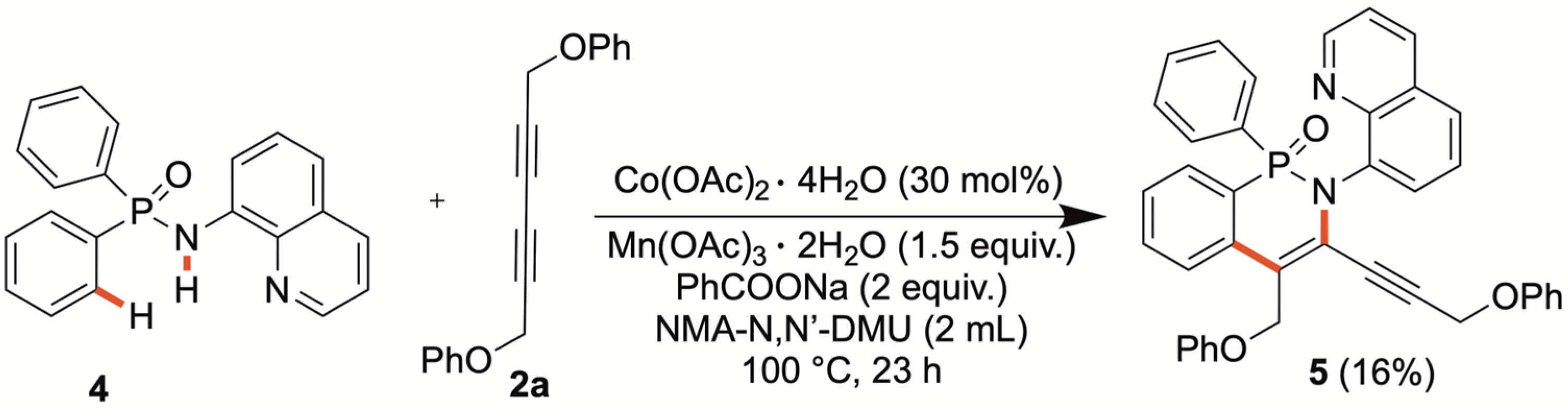
The cobalt-catalyzed C—H and N—H bond activation of phosphonic amide (4) with 1,3-diyne 2a, was successfully carried out in the newly developed non-ionic deep eutectic solvent (DES), NMA-N,N′-DMU (Scheme 3). This reaction led to the formation of the benzene-fused δ-phospholactam (5), albeit in a modest yield of 16%. Thin-layer chromatography (TLC) analysis of the crude reaction mixture revealed a significant amount of unreacted starting materials, which likely contributes to the observed low product yield.
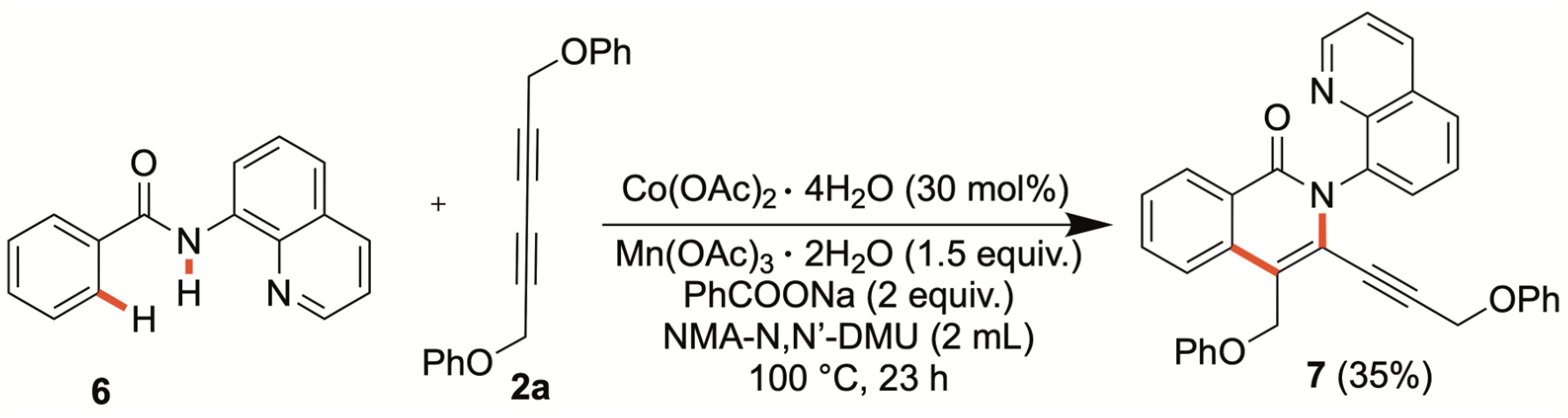
We then extended our investigation to carboxamide (Scheme 4). Three different non-ionic deep eutectic solvents were screened for the reaction, and NMA–N,N′-DMU once again provided the highest yield, affording the product in 35% yield. The other DESs tested, AA–NMA and NMA–NMU, yielded the desired product in 29% and 17%, respectively.
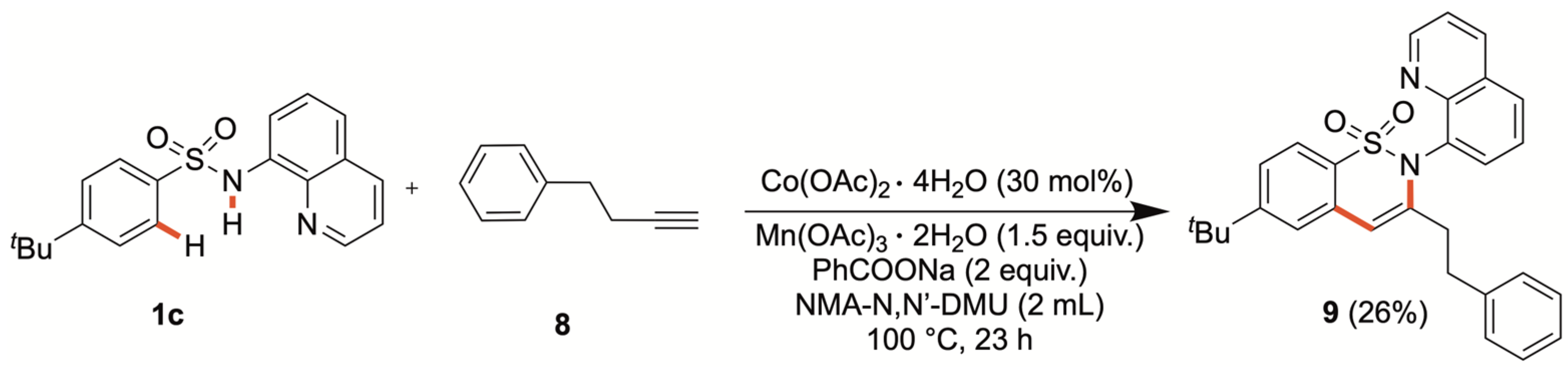
To further broaden the substrate scope, we applied the previously established experimental protocol used for the condensation of benzenesulfonamides with 1,3-diynes to a reaction involving sulfonamide (1c) and a terminal alkyne (8), as shown in Scheme 5. The reaction exhibited comparable reactivity, and the corresponding product was obtained in a yield of 26%.
The regioisomeric products obtained from alkyne (8) were assigned using detailed 2D NMR analysis (HSQC, HMBC, COSEY and NOESY; see Supporting Information).
Finally, to provide an initial assessment of the environmental profile of the reaction medium, we calculated the E-factor. Using a higher-yielding substrate combination (3c, 53% yield), the DES protocol delivers an intrinsic E-factor of 3.59 (reagents only), supporting the feasibility of an amide-based DES as an alternative medium for this C—H activation.

3. Proposed Mechanism

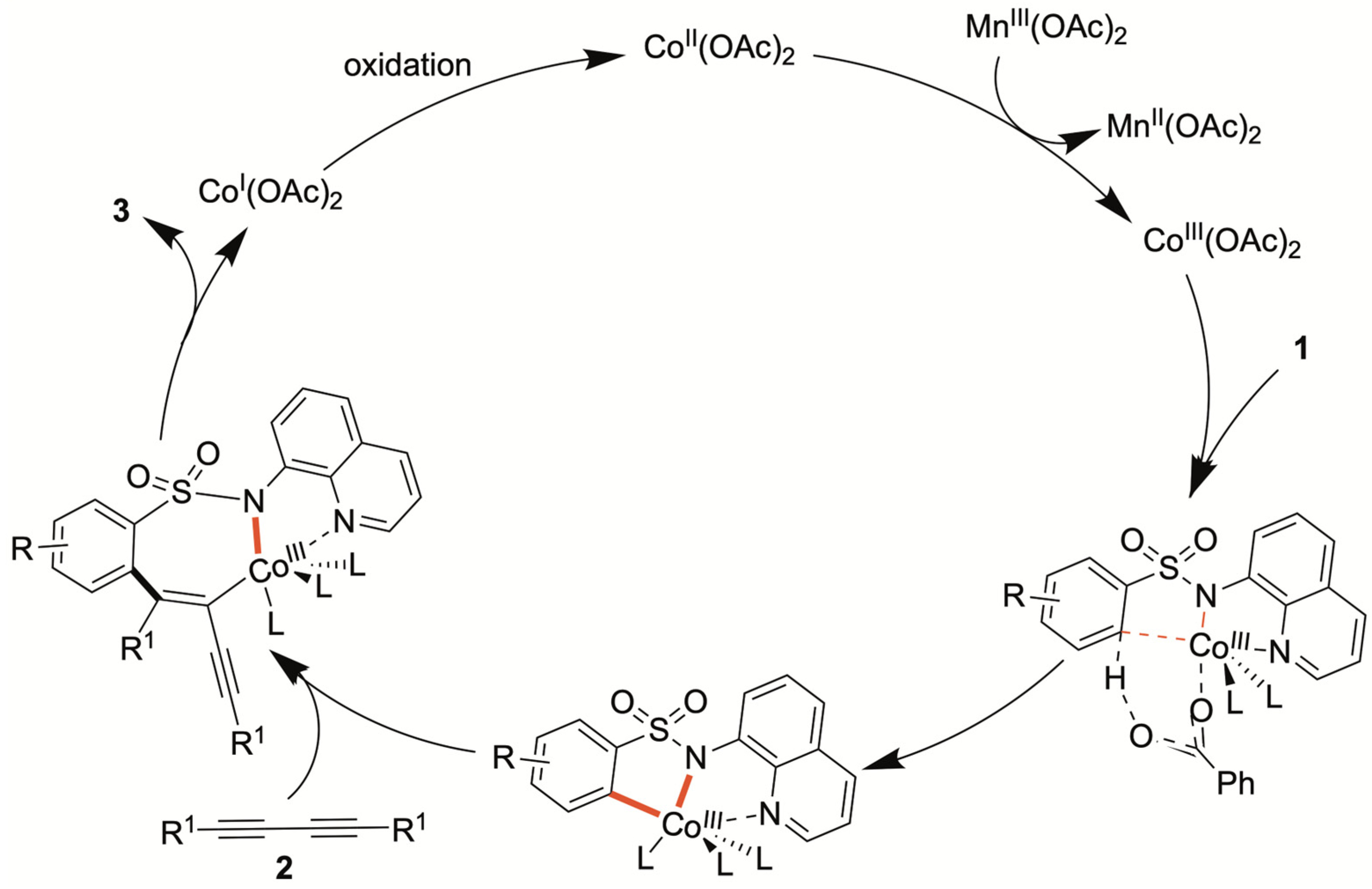
The proposed catalytic cycle is based on literature-established cobalt(III)-mediated C—H activation pathways and is used here to rationalize the experimentally observed behaviour in the DES environment rather than to propose a new mechanism (Figure 2) [4,5,6,13]. Although direct mechanistic investigations under DES conditions were not performed in the present study, the proposed pathway is consistent with previously reported cobalt-catalyzed C—H activation processes and the experimental observations obtained herein. The assignment is further supported by experimental observations, including 2D NMR analysis of products. We propose that the reaction begins with oxidation of the Co(II) precatalyst by the Mn(III) oxidant to generate a Co(III) species. This Co(III) complex coordinates to the bidentate auxiliary of the sulfonamide along with carboxylate ligands, stabilizing the metal centre in its higher oxidation state. The reaction then proceeds via an intramolecularly assisted concerted metalation–deprotonation pathway, forming a six-membered cyclic transition state. The regioselectivity arises from preferential insertion of the polarized 1,3-diyne into the cobalt–carbon bond. Coordination of the diyne followed by migratory insertion is expected to be influenced by the electronic and steric properties of the diyne partner.
The regioselectivity of the annulation is likely governed primarily by steric and electronic factors associated with diyne insertion into the cobalt-carbon bond. Although the hydrogen-bonding environment of the DES may influence the reaction environment, its specific contribution to regioselectivity remains unclear. Consequently, a major annulation pathway is favoured for most substrates, although regioisomeric mixtures may arise depending on the diyne structure. The observation of predominant regioisomer formation for most substrates suggests that diyne insertion is influenced by steric and electronic factors. However, the formation of regioisomeric mixtures for specific diyne substrates indicates that additional substrate-dependent effects influence the selectivity outcome. Thus, the DES environment may influence catalytic efficiency, while the observed regioselectivity appears to be primarily controlled by substrate-dependent factors.
Following C—H activation, the 1,3-diyne coordinates through π-complexation, undergoes migratory insertion, and furnishes the mono-annulated sultam intermediate. Subsequent reductive elimination is proposed to release the sultam product and generates a lower-valent cobalt species, which undergoes reoxidation to generate the active cobalt catalyst.
The requirement for prolonged reaction times together with recovery of starting material suggests that the DES environment reduces catalytic efficiency. Nonetheless, the specific role of the solvent in individual catalytic steps remains unclear. The observed reactivity is consistent with previously reported Co(III)/Co(I)-based C—H activation pathways.

4. Materials and Methods

General information: All chemicals and reagents were purchased from Chemtronica (Uppsala, Sweden) and Sigma-Aldrich (St. Louis, MO, USA) and used as received unless otherwise stated. The amides and 1,3-diynes were prepared according to previously reported procedures and confirmed by NMR analysis [6]. Silica gel (60 Å) was used for purification of crude mixtures. Gradient elution was performed using mixtures of petroleum ether and ethyl acetate or petroleum ether and acetone, with TLC analysis performed on silica gel sheets (aluminum foils with a 254 nm fluorescence indicator) purchased from Sigma-Aldrich (St. Louis, MO, USA). All NMR spectra were recorded on a Bruker Avance 400 Ascend spectrometer (Bruker BioSpin, Billerica, MA, USA). CDCl3 was used as the NMR solvent. Chemical shifts (δ) are reported in ppm, with spectra referenced to residual non-deuterated solvent signals or TMS. HRMS data were obtained from Stockholm University and recorded on a Waters I-Class UPLC coupled with a XEVO G2-XS QToF instrument (Waters Corporation, Milford, MA, USA) using MSE acquisition mode, 50–1200 m/z, in positive or negative ESI mode. IR spectra were recorded using an Agilent Cary 630 FTIR spectrometer equipped with an ATR accessory (Agilent Technologies, Santa Clara, CA, USA). Melting points (uncorrected) were recorded using a Stuart Scientific SMP1 melting point apparatus (Stuart Equipment, Staffordshire, UK). Chemical structures were drawn using ChemDraw Professional 22.0 (ChemDraw 22.2.0.3348) (PerkinElmer Informatics, Waltham, MA, USA). NMR spectra were processed using MestReNova 14.2 (Mestrelab Research, Santiago de Compostela, Spain). Compounds 5, 7 and 9 are known [17,18], and their analytical data are consistent with those previously reported in the literature. The NMR and HRMS spectra of all synthesized compounds are provided in the Supplementary Materials.
General procedure for the preparation of non-ionic deep eutectic liquids: Non-ionic deep eutectic solvents were prepared in a test tube following a previously reported procedure. The mixture was heated to 65–80 °C and stirred continuously for 30 min until a homogeneous liquid formed.
General procedure for the synthesis of benzosultams: In a thoroughly dried reaction tube equipped with a magnetic stir bar, sulfonamide 1 (0.285 mmol), Co(OAc)2·4H2O (30 mol %), 1,3-diyne 2 (0.19 mmol), Mn(OAc)3·2H2O (1.5 equiv.), and PhCOONa (2 equiv.) were combined. Following this, the deep eutectic liquid (2 mL) was introduced to the reaction mixture. The reaction mixture was stirred at 100 °C for 23 h. Upon completion of the reaction, 2 mL of deionized water and 5 mL of ethyl acetate were added to the reaction tube, and the mixture was subjected to sonication for approximately 15 min. The mixture was then transferred to a separation funnel, and an additional 5 mL of ethyl acetate was added. After thorough mixing, the organic phase, which contained the desired organic compounds, was extracted. The aqueous phase was subsequently washed twice with 10 mL of ethyl acetate. The combined organic extracts were collected and dried over magnesium sulfate. Following filtration and solvent evaporation, the product was purified using flash column chromatography on silica gel using petroleum ether/acetone (70:30) or petroleum ether/ethyl acetate (60:40) as the eluent, to obtain the desired product (3). The same general procedure was applied to the C—H activation of both phosphonamide and carboxamide substrates.
4-(phenoxymethyl)-3-(3-phenoxyprop-1-yn-1-yl)-2-(quinolin-8-yl)-2H-benzo[e][1,2]thiazine 1,1-dioxide (3a):
The crude reaction mixture was purified by flash column chromatography on silica gel using petroleum ether/acetone (70:30, v/v) to afford compound 3a in 11%. MP: 99–104 °C. 1H NMR (400 MHz, CDCl3) δ 8.76 (dd, J = 4.2, 1.8 Hz, 1H), 8.14 (dd, J = 8.4, 1.8 Hz, 1H), 7.94–7.82 (m, 4H), 7.78 (dd, J = 7.4, 1.5 Hz, 1H), 7.69 (td, J = 7.8, 1.4 Hz, 1H), 7.58 (dd, J = 7.8, 1.1 Hz, 2H), 7.50 (t, J = 7.8 Hz, 2H), 7.43–7.35 (m, 2H), 7.35–7.29 (m, 2H), 7.10 (dd, J = 8.7, 7.2 Hz, 3H), 7.06–6.98 (m, 3H), 6.92 (dddt, J = 9.1, 6.6, 3.5, 1.8 Hz, 2H), 6.58–6.50 (m, 2H), 5.41–5.24 (m, 3H), 4.45 (d, J = 8.6 Hz, 2H). 13C NMR (101 MHz, CDCl3) δ 158.5, 157.0, 151.1, 145.5, 135.8, 133.8, 133.6, 132.6, 132.0, 131.3, 129.7, 129.5, 129.3, 129.3, 129.2, 129.0, 128.6, 128.5, 126.7, 125.9, 125.8, 122.2, 121.9, 121.7, 121.4, 115.3, 114.4, 94.3, 80.1. HRMS m/z [M + H]+ Calcd for [C34H24N2O4S+] 545.6325, found = 545.6323.
6-methyl-4-(phenoxymethyl)-3-(3-phenoxyprop-1-yn-1-yl)-2-(quinolin-8-yl)-2H-benzo[e][1,2]thiazine 1,1-dioxide (3b)
The crude reaction mixture was purified by flash column chromatography on silica gel using petroleum ether/acetone (70:30, v/v) to afford compound 3b in 26%. MP = 113–116 °C; 1H NMR (400 MHz, CDCl3) δ 8.79 (dd, J = 4.2, 1.7 Hz, 1H), 8.14 (dd, J = 8.4, 1.7 Hz, 1H), 7.87–7.75 (m, 3H), 7.68–7.63 (m, 1H), 7.50 (dd, J = 8.2, 7.4 Hz, 1H), 7.42–7.27 (m, 5H), 7.14–7.07 (m, 2H), 7.07–6.99 (m, 3H), 6.95–6.87 (m, 1H), 6.57–6.49 (m, 2H), 5.29 (s, 2H), 4.42 (d, J = 8.2 Hz, 2H), 2.50 (s, 3H). 13C NMR (101 MHz, CDCl3) δ 158.6, 157.0, 151.1, 145.5, 142.6, 135.8, 133.7, 132.6, 131.2, 131.1, 129.6, 129.6, 129.5, 129.5, 129.3, 129.0, 126.8, 126.0, 125.8, 121.9, 121.9, 121.7, 121.4, 115.4, 114.9, 114.4, 94.2, 80.2, 66.5, 55.5, 22.0. HRMS m/z [M + H]+ Calcd for [C34H26N2O4S+] 559.1613, found = 559.1685.
6-(tert-butyl)-4-(phenoxymethyl)-3-(3-phenoxyprop-1-yn-1-yl)-2-(quinolin-8-yl)-2H-benzo[e][1,2]thiazine 1,1-dioxide (3c)
The crude reaction mixture was purified by flash column chromatography on silica gel using petroleum ether/acetone (70:30, v/v) to afford compound 3c in 53%. MP = 139–141 °C. 1H NMR (400 MHz, CDCl3) δ 8.83 (dd, J = 4.2, 1.7 Hz, 1H), 8.15 (dd, J = 8.3, 1.7 Hz, 1H), 7.92–7.87 (m, 1H), 7.84 (d, J = 8.3 Hz, 2H), 7.76 (dd, J = 7.4, 1.4 Hz, 1H), 7.60 (dd, J = 8.3, 1.8 Hz, 1H), 7.49 (dd, J = 8.2, 7.4 Hz, 1H), 7.39 (dd, J = 8.3, 4.2 Hz, 1H), 7.37–7.27 (m, 3H), 7.15–7.08 (m, 2H), 7.06–7.00 (m, 3H), 6.92 (t, J = 7.3 Hz, 1H), 6.55 (d, J = 7.6 Hz, 2H), 5.34 (d, J = 3.3 Hz, 2H), 4.44 (d, J = 9.9 Hz, 2H), 1.36 (s, 9H). 13C NMR (101 MHz, CDCl3) δ 158.5, 157.1, 155.6, 151.1, 145.5, 135.8, 133.8, 132.2, 131.1, 131.0, 129.6, 129.6, 129.5, 129.3, 129.0, 126.5, 126.1, 125.8, 122.8, 122.3, 121.7, 121.7, 121.4, 121.4, 115.4, 114.5, 94.2, 80.2, 66.7, 55.5, 35.3, 31.1. HRMS m/z [M + H]+ Calcd for [C37H32N2O4S+] 601.2083, found = 601.2153.
6-methoxy-4-(phenoxymethyl)-3-(3-phenoxyprop-1-yn-1-yl)-2-(quinolin-8-yl)-2H-benzo[e][1,2]thiazine 1,1-dioxide (3d)
The crude reaction mixture was purified by flash column chromatography on silica gel using petroleum ether/ethyl acetate (60:40, v/v) to afford compound 3d in 18%. MP = 84–88 °C. 1H NMR (400 MHz, CDCl3) δ 8.80 (dd, J = 4.2, 1.7 Hz, 1H), 8.14 (dd, J = 8.3, 1.8 Hz, 1H), 7.88–7.74 (m, 3H), 7.50 (dd, J = 8.2, 7.4 Hz, 1H), 7.41–7.36 (m, 1H), 7.35–7.30 (m, 3H), 7.14–6.99 (m, 6H), 6.95–6.89 (m, 1H), 6.56–6.51 (m, 2H), 5.28 (s, 2H), 4.42 (d, J = 8.1 Hz, 2H), 3.86 (s, 3H). 13C NMR (101 MHz, CDCl3) δ 162.3, 158.5, 157.0, 151.1, 145.5, 135.8, 134.6, 133.7, 131.2, 129.6, 129.5, 129.3, 129.0, 127.3, 126.4, 125.8, 123.9, 121.7, 121.4, 121.4, 121.4, 115.4, 114.8, 114.4, 110.2, 94.4, 80.2, 66.7, 55.6, 55.5. HRMS m/z [M + H]+ Calcd for [C34H26N2O5S+] 575.1636, found = 575.1635
6-iodo-4-(phenoxymethyl)-3-(3-phenoxyprop-1-yn-1-yl)-2-(quinolin-8-yl)-2H-benzo[e][1,2]thiazine 1,1-dioxide (3e)
The crude reaction mixture was purified by flash column chromatography on silica gel using petroleum ether/acetone (70:30, v/v) to afford compound 3e in 9%. MP = 71–74 °C. 1H NMR (400 MHz, CDCl3) δ 8.73 (dd, J = 4.2, 1.7 Hz, 1H), 8.25 (d, J = 1.5 Hz, 1H), 8.14 (dd, J = 8.3, 1.7 Hz, 1H), 7.88 (ddd, J = 18.1, 8.3, 1.5 Hz, 2H), 7.79 (td, J = 6.9, 6.4, 1.5 Hz, 2H), 7.60 (d, J = 8.2 Hz, 1H), 7.54–7.46 (m, 2H), 7.39 (dd, J = 8.3, 4.2 Hz, 1H), 7.35–7.29 (m, 2H), 7.15–7.07 (m, 2H), 7.07–6.99 (m, 3H), 6.96–6.90 (m, 1H), 6.57–6.52 (m, 2H), 5.26 (s, 2H), 4.45 (d, J = 6.5 Hz, 2H).13C NMR (101 MHz, CDCl3) δ 158.4, 157.0, 151.1, 145.3, 137.3, 135.8, 134.7, 134.2, 133.5, 132.8, 131.4, 129.8, 129.5, 129.3, 129.0, 128.5, 127.6, 125.8, 123.2, 121.8, 121.6, 121.5, 121.0, 115.5, 114.7, 99.0, 95.1, 79.9, 66.3, 55.5. HRMS m/z [M + H]+ Calcd for [C33H23IN2O4S+] 671.0496, found = 671.0515
6-fluoro-4-(phenoxymethyl)-3-(3-phenoxyprop-1-yn-1-yl)-2-(quinolin-8-yl)-2H-benzo[e][1,2]thiazine 1,1-dioxide (3f)
The crude reaction mixture was purified by flash column chromatography on silica gel using petroleum ether/acetone (70:30, v/v) to afford compound 3f in 7%. MP = 167–169 °C. 1H NMR (400 MHz, CDCl3) δ 8.74 (dd, J = 4.2, 1.7 Hz, 1H), 8.15 (dd, J = 8.4, 1.7 Hz, 1H), 7.94–7.78 (m, 3H), 7.58 (dd, J = 10.3, 2.4 Hz, 1H), 7.51 (dd, J = 8.2, 7.4 Hz, 1H), 7.39 (dd, J = 8.3, 4.2 Hz, 1H), 7.36–7.28 (m, 2H), 7.26 (td, J = 8.3, 2.4 Hz, 1H), 7.11 (dd, J = 8.7, 7.3 Hz, 2H), 7.07–6.99 (m, 2H), 7.03–6.97 (m, 1H), 6.97–6.89 (m, 1H), 6.58–6.51 (m, 1H), 5.26 (s, 2H), 4.45 (d, J = 6.6 Hz, 2H). 19F NMR (376 MHz, CDCl3) δ −105.34, −105.36, −105.36, −105.37, −105.38, −105.38, −105.39, −105.41. 13C NMR (101 MHz, CDCl3) δ 164.7 (d, J = 251.6 Hz), 158.5, 157.2, 151.3, 145.5, 136.0, 135.7 (d, J = 9.4 Hz), 133.6, 131.6, 130.0, 129.9 (d, J = 2.9 Hz), 129.7, 129.5, 129.2, 128.7, 128.0, 127.0, 125.9, 124.8 (d, J = 10.0 Hz), 122.0, 121.7, 121.6, 121.4 (d, J = 2.7 Hz), 116.2 (d, J = 23.4 Hz), 115.5, 114.6, 112.8 (d, J = 24.7 Hz), 95.3, 80.1, 66.6, 55.6. HRMS m/z [M + H]+ Calcd for [C33H23N2O4S+] 563.1436, found = 563.1435.
6-(tert-butyl)-4-butyl-3-(hex-1-yn-1-yl)-2-(quinolin-8-yl)-2H-benzo[e][1,2]thiazine 1,1-dioxide (3g):
The crude reaction mixture was purified by flash column chromatography on silica gel using petroleum ether/acetone (70:30, v/v) to afford compound 3g in 18%. MP = 117–120 °C; 1H NMR (400 MHz, CDCl3) δ 8.77 (dd, J = 4.2, 1.7 Hz, 1H), 8.06 (dd, J = 8.3, 1.7 Hz, 1H), 7.75 (dd, J = 8.2, 1.4 Hz, 1H), 7.71 (d, J = 8.2 Hz, 1H), 7.64–7.58 (m, 2H), 7.48–7.41 (m, 2H), 7.30 (dd, J = 8.3, 4.2 Hz, 1H), 2.95–2.88 (m, 2H), 1.92 (t, J = 6.8 Hz, 2H), 1.64–1.55 (m, 2H), 1.40 (q, J = 7.4 Hz, 2H), 1.33 (s, 10H), 0.89 (t, J = 7.3 Hz, 5H), 0.76–0.68 (m, 2H), 0.51 (t, J = 7.2 Hz, 3H). 13C NMR (101 MHz, CDCl3) δ 154.9, 150.9, 145.8, 135.6, 134.9, 132.9, 131.6, 130.6, 129.0, 128.8, 126.9, 125.7, 125.1, 124.0, 121.9, 121.8, 121.8, 121.5, 99.3, 75.5, 35.3, 31.3, 31.2, 29.8, 29.8, 22.5, 21.2, 18.9, 14.0, 13.3. HRMS m/z [M + H]+ Calcd for [C31H36N2O2S+] 501.2571, found = 501.2570.
6-(tert-butyl)-4-phenethyl-3-(4-phenylbut-1-yn-1-yl)-2-(quinolin-8-yl)-2H-benzo[e][1,2]thiazine 1,1-dioxide (3h)
The crude reaction mixture was purified by flash column chromatography on silica gel using petroleum ether/acetone (70:30, v/v) to afford compound 3h in 34%. MP = 97–99 °C. 1H NMR (400 MHz, CDCl3) δ 8.87 (dd, J = 4.2, 1.7 Hz, 1H), 8.19 (ddd, J = 8.3, 3.7, 1.7 Hz, 1H), 7.92–7.81 (m, 2H), 7.79–7.74 (m, 1H), 7.69 (d, J = 1.8 Hz, 1H), 7.61–7.52 (m, 2H), 7.42 (dd, J = 8.3, 4.1 Hz, 1H), 7.36–7.27 (m, 3H), 7.27–7.21 (m, 3H), 7.20–7.13 (m, 3H), 6.93–6.86 (m, 2H), 3.23 (ddd, J = 8.9, 6.5, 4.1 Hz, 2H), 2.98 (ddt, J = 15.7, 10.0, 7.3 Hz, 2H), 2.33 (t, J = 2.5 Hz, 3H), 1.42 (s, 9H). 13C NMR (101 MHz, CDCl3) δ 155.1, 151.0, 145.8, 141.7, 140.0, 135.8, 134.7, 132.8, 131.5, 130.9, 129.0, 128.5, 128.3, 128.3, 128.0, 126.3, 126.2, 126.1, 125.8, 125.4, 124.4, 121.9, 121.6, 121.6, 99.1, 75.9, 35.8, 35.3, 34.2, 32.6, 31.2, 31.2, 21.3. HRMS m/z [M + H]+ Calcd for [C39H36N2O2S+] 597.2571, found = 597.2570.
6-(tert-butyl)-4-phenyl-3-(phenylethynyl)-2-(quinolin-8-yl)-2H-benzo[e][1,2]thiazine 1,1-dioxide + 6-(tert-butyl)-3-phenyl-4-(phenylethynyl)-2-(quinolin-8-yl)-2H-benzo[e][1,2]thiazine 1,1-dioxide (3i & 3i′)
The crude reaction mixture was purified by flash column chromatography on silica gel using petroleum ether/acetone (70:30, v/v) to afford compound 3i & 3i′ in 34%. MP: 120–132 °C. 1H NMR (400 MHz, CDCl3) δ 8.94 (ddd, J = 19.3, 4.2, 1.7 Hz, 2H), 8.35 (d, J = 1.8 Hz, 1H), 8.22 (dd, J = 8.3, 1.7 Hz, 1H), 8.08–7.89 (m, 9H), 7.81 (d, J = 8.3 Hz, 1H), 7.70–7.55 (m, 5H), 7.55–7.46 (m, 4H), 7.46–7.40 (m, 3H), 7.40–7.31 (m, 6H), 7.30–7.22 (m, 5H), 7.18–7.10 (m, 3H), 7.08–7.01 (m, 2H), 6.55–6.50 (m, 2H), 1.51 (s, 6H), 1.26 (s, 9H). 13C NMR (101 MHz, CDCl3) δ 155.7, 155.2, 151.1, 150.8, 147.3, 145.7, 145.3, 136.5, 136.0, 135.6, 135.0, 134.7, 134.3, 134.0, 133.1, 131.5, 131.2, 131.1, 131.0, 130.9, 130.6, 130.0, 129.4, 129.4, 129.3, 129.1, 128.8, 128.8, 128.5, 128.4, 128.1, 128.1, 128.1, 128.0, 127.9, 127.2, 125.9, 125.8, 125.7, 125.5, 124.7, 124.5, 124.3, 123.4, 121.8, 121.7, 121.6, 106.7, 97.8, 94.7, 86.1, 85.0, 35.5, 35.2, 31.2, 31.0. HRMS m/z [M + H]+ Calcd for [C35H28N2O2S+] 541.1945, found = 541.1943.
6-(tert-butyl)-3-phenethyl-2-(quinolin-8-yl)-2H-benzo[e][1,2]thiazine 1,1-dioxide (9)
The crude reaction mixture was purified by flash column chromatography on silica gel using petroleum ether/acetone (70:30, v/v) to afford compound 9 in 26%. 1H NMR (400 MHz, CDCl3) δ 8.79 (dd, J = 4.2, 1.7 Hz, 1H), 8.09 (dd, J = 8.3, 1.7 Hz, 1H), 7.80 (dd, J = 8.3, 1.5 Hz, 1H), 7.67–7.60 (m, 2H), 7.47 (dd, J = 8.2, 7.3 Hz, 1H), 7.39 (dd, J = 8.3, 1.8 Hz, 1H), 7.37–7.29 (m, 2H), 7.12–7.00 (m, 3H), 6.90–6.85 (m, 2H), 6.34 (s, 1H), 2.90 (s, 1H), 2.83 (t, J = 8.0 Hz, 2H), 2.32 (qt, J = 15.4, 7.9 Hz, 2H), 1.30 (s, 9H). 13C NMR (101 MHz, CDCl3) δ 155.4, 151.4, 145.9, 143.7, 140.8, 135.9, 133.5, 132.9, 130.8, 129.5, 128.5, 128.4, 128.3, 126.0, 125.9, 124.7, 123.6, 121.9, 121.7, 109.5, 36.5, 35.1, 34.1, 31.2, 31.2. HRMS m/z [M + H]+ Calcd for [C29H28N2O2S+] 469.1944, found = 469.1941.


5. Conclusions

This work does not aim to replace optimized organic-solvent protocols for benzosultam synthesis. Instead, it demonstrates that directed cobalt-catalyzed C—H activation is compatible with a structured hydrogen-bonding deep eutectic solvent while providing selective annulation for several substrates, with regioisomeric outcomes depending on the diyne structure. The moderate yields are associated with incomplete conversion, as evidenced by the recovery of starting materials, indicating that further optimization of the reaction medium is required. The successful application of this methodology to the synthesis of benzosultams, together with phosphonamide- and carboxamide-derived analogues, demonstrates the compatibility of this reaction medium to related substrate classes. Ongoing efforts in our laboratory focused on the design and development of new deep eutectic solvents to improve substrate solubility and enhance catalytic performance. Accordingly, the present results should be viewed as a proof-of-concept investigation of cobalt-catalyzed C—H activation in a structured non-conventional reaction medium rather than as a fully optimized synthetic methodology. These findings provide a foundation for the future development of deep eutectic solvents for base-metal-catalyzed C—H functionalization.

Supplementary Materials

The following supporting information can be downloaded at: https://www.mdpi.com/article/10.3390/catal16080693/s1, NMR and HRMS spectra of the synthesized compounds.

Author Contributions

I.A.N. funding acquisition (VR and KK), Conceptualization and methodology, S.K. and I.A.N.; synthesis and formal analysis, M.H.B. 2D NMR analysis, J.G.W. Solvent preparation S.K. All authors have read and agreed to the published version of the manuscript.

Funding

This research was funded by Linnaeus University, Swedish Institute, Swedish Research Council, grant number 2023-03406; the Helge Ax:son Johnson Foundation, grant numbers 2019-0318 and 2022-0317; the Swedish Knowledge Foundation, Synergi22, grant No. 20230019; and the Crafoord Foundation, grant numbers 2019-0925 and 2020-0775.

Data Availability Statement

The original contributions presented in this study are included in the article/Supplementary Material. Further inquiries can be directed to the corresponding author(s).

Acknowledgments

The authors gratefully acknowledge the funding sources and Linnaeus University for support. M.H.B. acknowledges the Swedish Institute for a student scholarship. The authors acknowledge the use of OpenAI’s ChatGPT (GPT-4/GPT-5 model, OpenAI, https://chat.openai.com/) for assistance with language editing and improving the clarity of the manuscript. The authors take full responsibility for the content and scientific accuracy of the manuscript.

Conflicts of Interest

The authors declare no conflicts of interest.

References

  1. Chong, Y.K.; Ong, Y.S.; Yeong, K.Y. Unveiling sultam in drug discovery: Spotlight on the underexplored scaffold. RSC Med. Chem. 2024, 15, 1798–1827. [Google Scholar] [CrossRef] [PubMed]
  2. Lad, N.P.; Kulkarni, S.; Sharma, R.; Mascarenhas, M.; Kulkarni, M.R.; Pandit, S.S. Piperlongumine derived cyclic sulfonamides (sultams): Synthesis and in vitro exploration for therapeutic potential against HeLa cancer cell lines. Eur. J. Med. Chem. 2017, 126, 870–878. [Google Scholar] [CrossRef] [PubMed]
  3. Michelet, B.; Castelli, U.; Appert, E.; Boucher, M.; Vitse, K.; Marrot, J.; Guillard, J.; Martin-Mingot, A.; Thibaudeau, S. Access to Optically Pure Benzosultams by Superelectrophilic Activation. Org. Lett. 2020, 22, 4944–4948. [Google Scholar] [CrossRef] [PubMed]
  4. Dhillon, P.; Anaspure, P.; Wiklander, J.G.; Kathiravan, S.; Nicholls, I.A. Diyne-steered switchable regioselectivity in cobalt(II)-catalysed C(sp2)–H activation of amides with unsymmetrical 1,3-diynes. Org. Biomol. Chem. 2022, 21, 1942–1951. [Google Scholar] [CrossRef] [PubMed]
  5. Planas, O.; Whiteoak, C.J.; Company, A.; Ribas, X. Regioselective Access to Sultam Motifs through Cobalt-Catalyzed Annulation of Aryl Sulfonamides and Alkynes using an 8-Aminoquinoline Directing Group. Adv. Synth. Catal. 2015, 357, 4003–4012. [Google Scholar] [CrossRef]
  6. Kathiravan, S.; Nicholls, I.A. Cobalt Catalyzed, Regioselective C(sp2)–H Activation of Amides with 1,3-Diynes. Org. Lett. 2017, 19, 4758–4761. [Google Scholar] [CrossRef] [PubMed]
  7. Lan, T.; Wang, L.; Rao, Y. Regioselective Annulation of Aryl Sulfonamides with Allenes through Cobalt-Promoted C–H Functionalization. Org. Lett. 2017, 19, 972–975. [Google Scholar] [CrossRef] [PubMed]
  8. Kaminsky, L.S.; Fraser, J.M.; Seaman, M.; Dunbar, D. Rat liver metabolism and toxicity of 2,2,2-trifluoroethanol. Biochem. Pharmacol. 1992, 44, 1829–1837. [Google Scholar] [CrossRef] [PubMed]
  9. Jessop, P.G. Searching for green solvents. Green Chem. 2010, 13, 1391–1398. [Google Scholar] [CrossRef]
  10. Alonso, D.A.; Baeza, A.; Chinchilla, R.; Guillena, G.; Pastor, I.M.; Ramón, D.J. Deep Eutectic Solvents: The Organic Reaction Medium of the Century. Eur. J. Org. Chem. 2016, 2016, 612–632. [Google Scholar] [CrossRef]
  11. Francisco, M.; van den Bruinhorst, A.; Kroon, M.C. Low-transition-temperature mixtures (LTTMs): A new generation of designer solvents. Angew. Chem. Int. Ed. 2013, 52, 3074–3085. [Google Scholar] [CrossRef] [PubMed]
  12. Wtulich, J.; Nicholls, I.A.; Kathiravan, S. Ruthenium-catalysed late-stage C–H alkynylation of carboxylic acids using sustainable deep eutectic solvents. New J. Chem. 2025, 49, 6666–6673. [Google Scholar] [CrossRef]
  13. Kathiravan, S.; Nicholls, I.A. Cobalt-Catalyzed Oxidative Annulation of Benzothiophene-[b]-1,1-dioxide through Diastereoselective Double C–H Activation. Org. Lett. 2019, 21, 9806–9811. [Google Scholar] [CrossRef] [PubMed]
  14. Suriyanarayanan, S.; Olsson, G.D.; Kathiravan, S.; Ndizeye, N.; Nicholls, I.A. Non-Ionic Deep Eutectic Liquids: Acetamide–Urea Derived Room Temperature Solvents. Int. J. Mol. Sci. 2019, 20, 2857. [Google Scholar] [CrossRef] [PubMed]
  15. Ndizeye, N.; Suriyanarayanan, S.; Nicholls, I.A. Polymer synthesis in non-ionic deep eutectic solvents. Polym. Chem. 2019, 10, 5289–5295. [Google Scholar] [CrossRef]
  16. Suriyanarayanan, S.; Babu, M.P.; Murugan, R.; Muthuraj, D.; Ramanujam, K.; Nicholls, I.A. Highly Efficient Recovery and Recycling of Cobalt from Spent Lithium-Ion Batteries Using an N-Methylurea–Acetamide Nonionic Deep Eutectic Solvent. ACS Omega 2023, 8, 6959–6967. [Google Scholar] [CrossRef] [PubMed]
  17. Dey, A.; Volla, C.M.R. Traceless Bidentate Directing Group Assisted Cobalt-Catalyzed sp2-C–H Activation and [4+2]-Annulation Reaction with 1,3-Diynes. Org. Lett. 2020, 22, 7480–7485. [Google Scholar] [CrossRef] [PubMed]
  18. Si, X.-J.; Zhao, X.; Wang, J.; Wang, X.; Zhang, Y.; Yang, D.; Song, M.-P.; Niu, J.-L. Cobalt-catalyzed enantioselective C–H/N–H annulation of aryl sulfonamides with allenes or alkynes: Facile access to C–N axially chiral sultams. Chem. Sci. 2023, 14, 7291–7303. [Google Scholar] [CrossRef] [PubMed]
Figure 1. Representative bioactive benzosultams.
Catalysts 16 00693 g001
Scheme 1. Co-catalyzed synthesis of benzosultams. (a) Cobalt catalyzed C—H activation of sulfonamides with allenes; (b) Cobalt catalyzed C—H activation of sulfonamides with alkynes; (c) Cobalt catalyzed C—H activation of sulfonamides with 1,3-diynes.
Catalysts 16 00693 sch001
Scheme 2. Scope of sulfonamide and 1,3-diyne. a Isolated yield of the product, b RSM (%) calculated from isolated recovered starting material.
Catalysts 16 00693 sch002
Scheme 3. C—H activation of phosphonamide with 1,3-diyne in DES.
Catalysts 16 00693 sch003
Scheme 4. C—H activation of carboxamide with 1,3-diyne in DES.
Catalysts 16 00693 sch004
Scheme 5. C—H activation of sulfonamide with terminal alkyne in DES.
Catalysts 16 00693 sch005
Figure 2. Proposed mechanism.
Catalysts 16 00693 g002
Table 1. Standard conditions.
Catalysts 16 00693 i001
EntrySolventIsolated Yield (%)
1WaterNR
2TPGS-750-MNR
3TFE27
4Ethylene glycolNR
5AA-NMA24
6NMA-NMU7
7NMA-N,N′-DMU26
Reaction conditions: 1b (0.285 mmol), 2 (0.19 mmol), Co(OAc)2·4H2O (30 mol%), Mn(OAc)3·2H2O (1.5 equiv), PhCOONa (2 equiv), NMA-N,N′-DMU (2 mL), 100 °C, 23 h. NR—no reaction. The yields are based on isolated product weight.
Disclaimer/Publisher’s Note: The statements, opinions and data contained in all publications are solely those of the individual author(s) and contributor(s) and not of MDPI and/or the editor(s). MDPI and/or the editor(s) disclaim responsibility for any injury to people or property resulting from any ideas, methods, instructions or products referred to in the content.