Article

Integrated Extractive Fermentation and Aqueous Two-Phase Systems Enable Efficient Production and Purification of an Extracellular Protease from Aspergillus sp. UCP1287


by
Raphael Luiz Andrade Silva
1,
Kethylen Barbara Barbosa Cardoso
1,
Luiz Henrique Svintiskas Lino
1,
Maria Eduarda Luiz Coelho de Miranda
1,
Bárbara Cibele Souza Lima
1,
Thiago Pajeú Nascimento
2,
Marcela Silvestre Outtes Wanderlei
1,
Ana Lúcia Figueiredo Porto
3 and
Romero Marcos Pedrosa Brandão Costa
1,*
1
Integrated Laboratory of Applied Biotechnology, Institute of Biological Sciences, University of Pernambuco, Arnóbio Marques, Recife 50100-130, PE, Brazil
2
Campus Professora Cinobelina Elvas, Federal University of Piaui, Rodovia BR 135, km 3, Bom Jesus 64900-000, PI, Brazil
3
Laboratory of Bioactives Products Technology, Department of Morphology and Animal Physiology, Federal Rural University of Pernambuco—UFRPE, Dom Manoel de Medeiros Street, s/n, Dois Irmãos, Recife 52171-900, PE, Brazil
*
Author to whom correspondence should be addressed.
Catalysts 2026, 16(7), 646; https://doi.org/10.3390/catal16070646 (registering DOI)
Submission received: 29 January 2026 / Revised: 28 February 2026 / Accepted: 26 June 2026 / Published: 16 July 2026
(This article belongs to the Section Biocatalysis)

Abstract

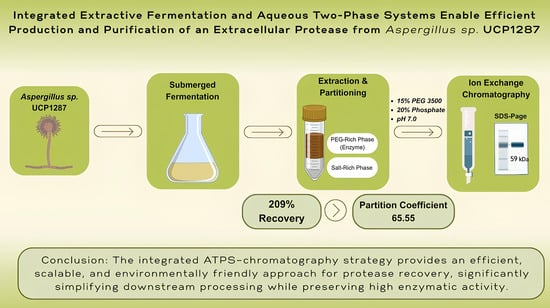
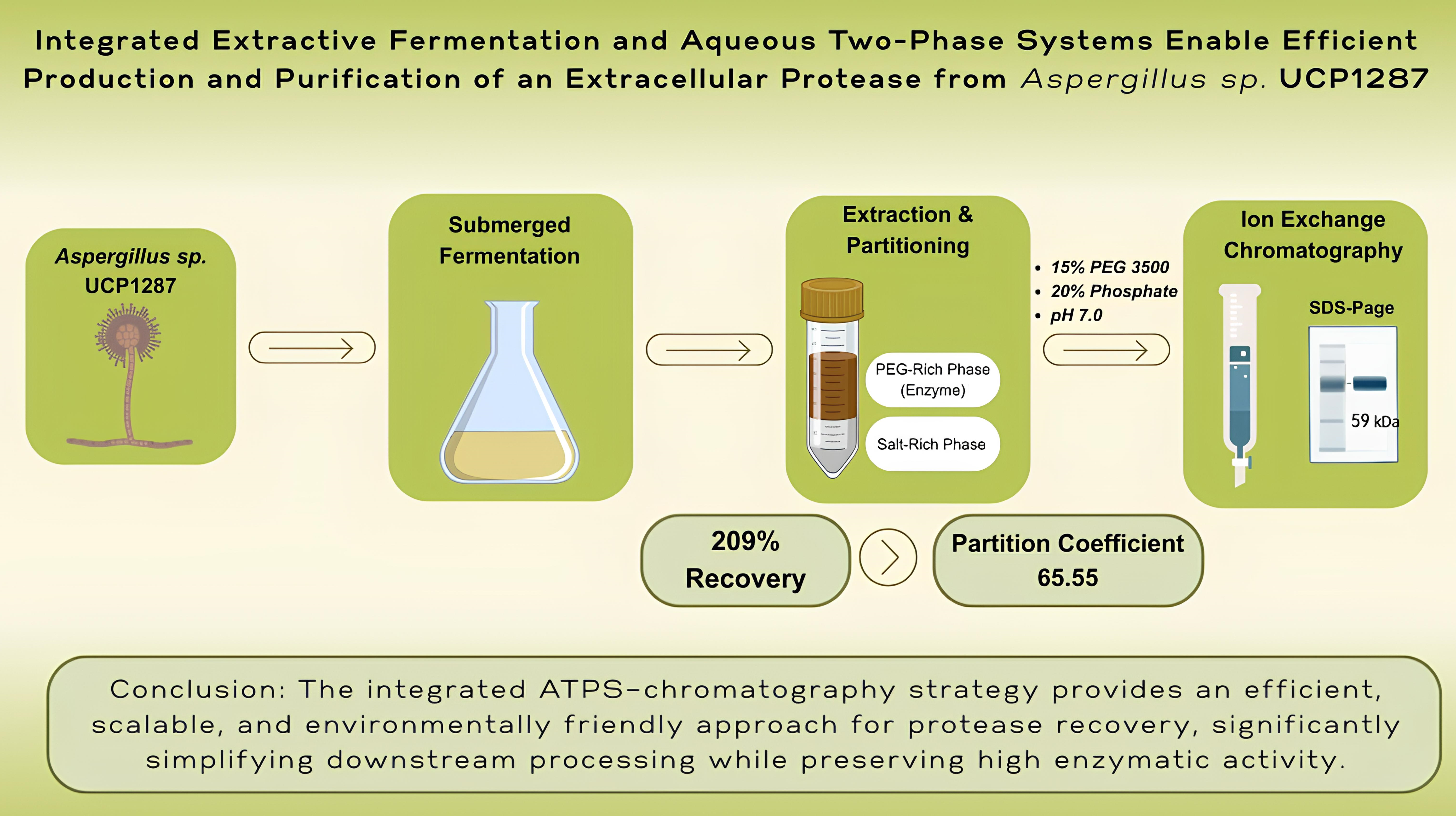
Proteases are among the most commercially important industrial enzymes, yet their large-scale production is often limited by complex and costly downstream processing. In this study, an integrated bioprocess was developed for the production, in situ recovery, and purification of an extracellular protease produced by Aspergillus sp. (SIS 22/UCP 1287) under submerged fermentation. Enzyme extraction was coupled directly to fermentation using a polyethylene glycol (PEG)–phosphate aqueous two-phase system (ATPS), aiming to enhance recovery while preserving enzymatic activity. The effects of PEG molecular weight, polymer and phosphate concentrations, and pH on enzyme partitioning were systematically investigated through a full factorial experimental design. Low-molecular-weight PEG and near-neutral pH conditions significantly favored enzyme migration to the PEG-rich phase. Under optimized conditions (15% PEG 3500, 20% phosphate, pH 7.0), the ATPS achieved a partition coefficient of 65.55, enzyme recovery of 209%, and a purification factor of 1.64. Subsequent purification by DEAE–Sephadex ion-exchange chromatography yielded a tenfold increase in specific activity, with optimal elution at 0.5 M NaCl. SDS–PAGE analysis confirmed the homogeneity of the purified protease, revealing a single band at approximately 59 kDa. Overall, the proposed integrated ATPS–chromatography strategy represents a robust, scalable, and environmentally friendly platform that significantly simplifies downstream processing while maintaining high enzyme activity, highlighting its potential for industrial and biotechnological applications.

Graphical Abstract

1. Introduction

Biotechnology has experienced remarkable growth in recent decades, consolidating itself as a multibillion-dollar global industry with applications in pharmaceuticals, agriculture, food technology, and industrial processes. The global biotechnology market was valued at approximately USD 295 billion in 2019 and exceeded USD 1 trillion in 2021, with projections indicating continued expansion driven by increased investment in research and development and growing demand for innovative and sustainable biotechnological solutions [1,2,3]. One of the most dynamic areas within biotechnology is the discovery and optimization of industrial enzymes, which increasingly depends on interdisciplinary approaches combining microbiology, biochemistry, chemical engineering, and molecular biology. Advances in these fields, together with improved screening methods that simulate industrial conditions, have enabled the rapid identification and development of tailor-made enzymes suited to specific industrial applications [4].
Enzymes are highly specific biocatalysts produced by all living organisms that accelerate biochemical reactions essential to life, including digestion, respiration, and metabolism. Their ability to operate efficiently under mild temperature and pH conditions makes them ideal catalysts for industrial processes, particularly in food technology, where they enable selective modification of raw materials without destroying essential nutrients [5,6]. Beyond the food industry, enzymes play vital roles in textile processing, pharmaceuticals, cosmetics, and bioenergy production [7,8].
Microbial enzymes have gained attention for their industrial potential, as they can be produced in large quantities through controlled fermentation processes and are more amenable to genetic manipulation compared to enzymes from plant or animal sources [9,10]. Proteases constitute the largest share of the global enzyme market, representing approximately 60% of total enzyme sales, followed by amylases [11]. Brazil, despite its vast biodiversity, still imports most of the enzymes it consumes, highlighting the need to explore native microbial strains as alternative enzyme producers [12,13].
Industrial enzymatic processes are generally simple, energy-efficient, and cost-effective, making them attractive for large-scale applications [14,15]. Microbial enzyme production is typically achieved by either submerged fermentation (SmF) or solid-state fermentation (SSF). SmF, the predominant technique in Western industries, offers advantages such as controlled pH and temperature, improved oxygen transfer, and easier recovery of extracellular enzymes [16,17]. In SmF, microorganisms grow in a liquid medium with soluble nutrients and high water content (>95%), favoring high enzymatic yields and reproducibility [18]. However, conventional SmF often requires additional downstream steps for product recovery, which has driven growing interest in extractive fermentation strategies that integrate enzyme production with in situ separation, improving productivity, stability, and overall process efficiency [19,20].
Enzyme purification is a critical and complex step in enzyme production, directly impacting enzyme stability, purity, and economic feasibility. The choice of purification method depends on the enzyme’s intended application, required purity, stability, and cost considerations. Multiple strategies are often combined to achieve optimal results, as no single protocol fits all enzymes due to their heterogeneous nature [21,22]. Conventional purification techniques rely on differences in solubility, charge distribution, molecular weight, and hydrophobicity. Among these, ion-exchange chromatography is one of the most widely applied due to its high selectivity, simplicity, and scalability [23,24]. This method separates proteins based on electrostatic interactions between charged amino acid residues and oppositely charged groups immobilized on a stationary matrix. Adjusting the ionic strength and pH of the mobile phase enables efficient elution of target enzymes without compromising protein integrity [25,26].
Another efficient and environmentally friendly purification alternative is aqueous two-phase systems (ATPS), particularly those formed by polyethylene glycol (PEG) and inorganic salts such as phosphate. ATPS enables mild, non-denaturing partitioning of biomolecules, offering high selectivity, recyclability, and compatibility with industrial-scale bioprocesses [27,28]. Recent studies have demonstrated the efficiency of PEG–phosphate systems in purifying proteases, lipases, and other hydrolases with significant recovery rates and preserved enzymatic activity [29,30]. The combination of ion-exchange chromatography and ATPS represents a robust, cost-effective approach for the recovery and concentration of microbial proteases with potential biotechnological applications [31,32].
In this context, the present study addresses a key limitation in industrial protease production by developing an integrated bioprocess that combines submerged fermentation with in situ recovery using a polyethylene glycol–phosphate aqueous two-phase system (ATPS). Although ATPS has been extensively investigated as a post-fermentation purification strategy, its direct incorporation into fungal fermentation systems for simultaneous production and extraction of extracellular proteases remains insufficiently explored. The originality of this work lies in the systematic evaluation of critical physicochemical parameters—PEG molecular weight, polymer and salt concentrations, and pH—through factorial experimental design to elucidate their influence on enzyme partitioning behavior and stabilization within an extractive fermentation framework. Furthermore, the study integrates optimized ATPS conditions with ion-exchange chromatography as a complementary purification step, aiming to streamline downstream processing. By bridging enzyme production and recovery within a unified operational strategy, this work contributes to the advancement of scalable and sustainable platforms for industrial protease manufacturing.

2. Results and Discussion

2.1. Growth of Aspergillus sp. and Protease Production Under Extractive Fermentation

The filamentous fungus Aspergillus sp. (SIS 22/UCP 1287) demonstrated effective adaptation to the MS-2 medium under extractive fermentation conditions. After 72 h of cultivation at 30 °C, the crude broth exhibited a protease activity of 20.80 U mL−1 and a specific activity of 163.8 U mg−1. Based on the total cultivation time, the volumetric productivity reached 0.29 U mL−1 h−1, indicating sustained extracellular enzyme secretion throughout submerged growth. These values confirm that the biphasic system did not impair fungal metabolism or secretory capacity [33,34].
The integration of a polyethylene glycol (PEG)–phosphate aqueous two-phase system (ATPS) directly into the cultivation medium enabled simultaneous enzyme production and primary recovery. In this configuration, the PEG-rich phase acted as a liquid extractant, favoring the partitioning of the secreted protease away from the biomass-containing phase. Although enzyme migration was quantitatively evaluated in Section 2.2, the maintenance of catalytic activity in the crude system suggests that the biphasic environment did not promote detectable denaturation during cultivation.
From a process engineering perspective, the in situ recovery strategy reduces the need for post-fermentation clarification steps and may contribute to process intensification by coupling upstream and primary downstream operations. The compatibility between fungal growth and phase formation was evidenced by the absence of macroscopic phase disruption or visible growth inhibition during the 72 h cultivation period. This behavior indicates that the selected PEG molecular weight and phosphate concentration were within a tolerance range that preserves fungal physiological stability.
The use of soybean filtrate as a complex nitrogen and carbon source likely contributed to protease biosynthesis, as plant-derived substrates are known to support robust extracellular enzyme production in Aspergillus niger and Aspergillus oryzae [35,36]. In such systems, protease secretion is frequently associated with nutrient availability and extracellular protein induction mechanisms, which may explain the consistent enzyme activity observed.
Previous studies employing PEG–phosphate and PEG–sulfate ATPS have reported 1.5- to 3-fold improvements in protease recovery relative to conventional extraction approaches [37,38]. In the present study, the integration of extractive fermentation with subsequent optimization of partition parameters (Section 2.2) provides experimental evidence that the ATPS can operate not merely as a downstream purification step but as a process-integrated recovery platform. This configuration aligns with current trends in bioprocess intensification, where phase-forming systems are used to enhance operational efficiency while preserving enzyme activity.

2.2. Partitioning Behavior in PEG–Phosphate Aqueous Two-Phase System

The partitioning of the protease in the PEG–phosphate aqueous two-phase system (ATPS) was investigated through a full 24 factorial design evaluating the effects of four variables—PEG molecular weight (MPEG), PEG concentration (CPEG), phosphate concentration (CFOSF), and pH—on enzyme recovery, partition coefficient (K), and purification factor (PF). Analysis of variance (ANOVA, p < 0.05) revealed that MPEG was the dominant factor influencing enzyme distribution, followed by pH and the MPEG × CFOSF interaction.
The complete experimental matrix and results are presented in Table 1, which summarizes the effects of these parameters on partition performance. Runs with low MPEG (400 g mol−1) consistently produced the highest partition coefficients (K > 40) and recovery yields (Y > 150%), whereas systems containing high-molecular-weight PEG (8000 g mol−1) exhibited drastically reduced recovery (Y < 60%). The central-point assays (runs 17–20) confirmed excellent model reproducibility, with PF values between 1.0 and 1.6, indicating consistent performance near the optimized region.
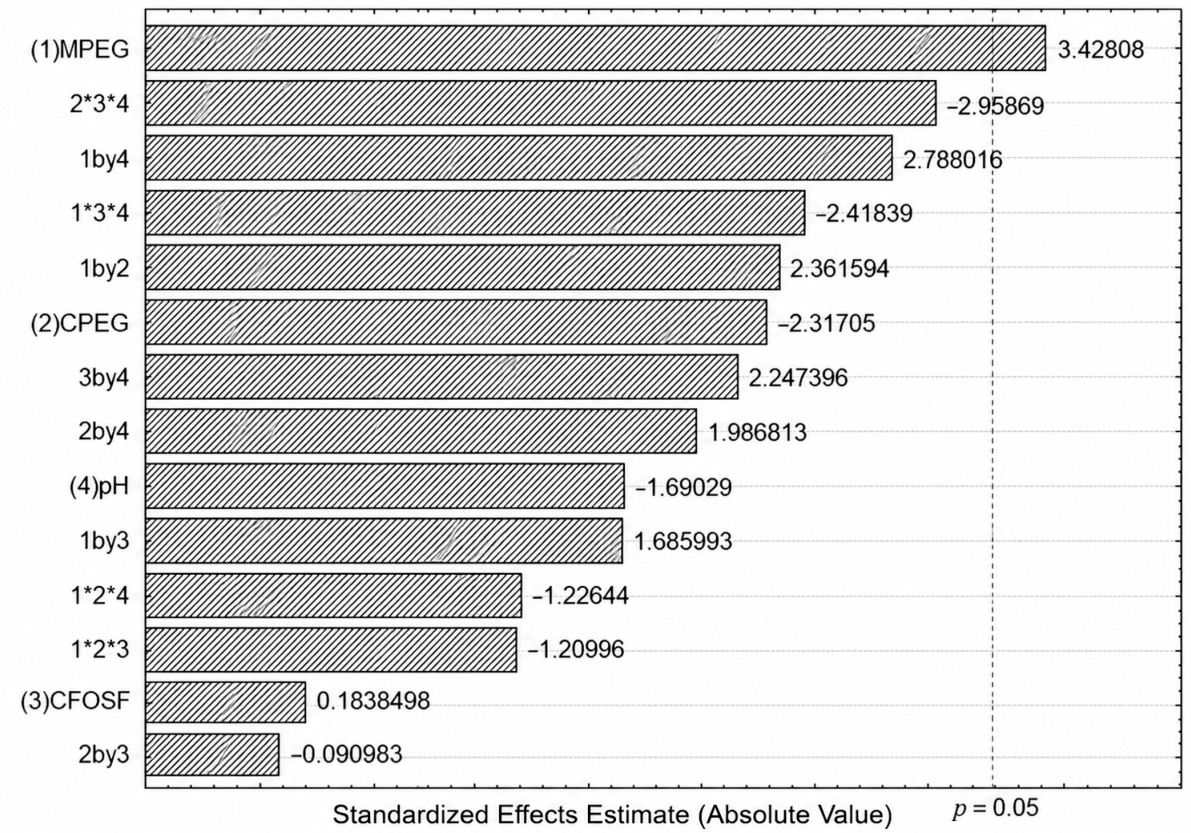
The Pareto chart (Figure 1) quantitatively demonstrated that MPEG exhibited the most significant negative standardized effect (−3.43; p < 0.05), confirming that decreasing the polymer’s molecular weight favored enzyme migration to the PEG-rich phase. This inverse relationship between PEG molecular weight and partition efficiency has been well documented for fungal hydrolases and attributed to the excluded-volume effect, as PEG chain length increases, water availability and enzyme diffusivity decrease, hindering solvation and mobility [39,40].
Through multiple studies, low-molecular-weight polyethylene glycols (PEGs), such as PEG-400, have demonstrated the ability to form dynamic hydrogen-bonding networks with water and complementary polymers. This property results in less structured and more flexible aqueous environments compared with those generated by higher-molecular-weight PEGs or polyelectrolytes. Such a loosely organized molecular arrangement increases the mobility of the aqueous phase and facilitates more dynamic intermolecular interactions [41,42,43,44,45,46,47].
The structural flexibility and continuous hydrogen-bond formation explain the enhanced affinity of low-molecular-weight PEGs for enzymes and their ability to preserve catalytic conformation and biological activity. In contrast, high-molecular-weight PEGs tend to interact more strongly with hydrophobic protein surfaces, potentially inducing protein precipitation or denaturation [48]. Consequently, the combination of high free volume, increased molecular mobility, and dynamic hydrogen bonding renders low-molecular-weight PEGs particularly effective in systems that require reversible interactions and preservation of biomolecular functionality in aqueous environments [41,42].
Figure 2 shows that MPEG and its interactions with pH (1 × b × 4) and phosphate concentration (2 × 3 × 4) were also significant at the 95% confidence level, confirming the synergistic effects of electrostatics and polymer hydrodynamics. A decrease in PEG molecular weight combined with slightly acidic to neutral pH (6.0–7.0) enhanced both recovery and specific activity. These conditions likely favor the protonation state of charged residues near the enzyme’s surface, improving solubility and affinity for PEG via hydrogen bonding [49,50].
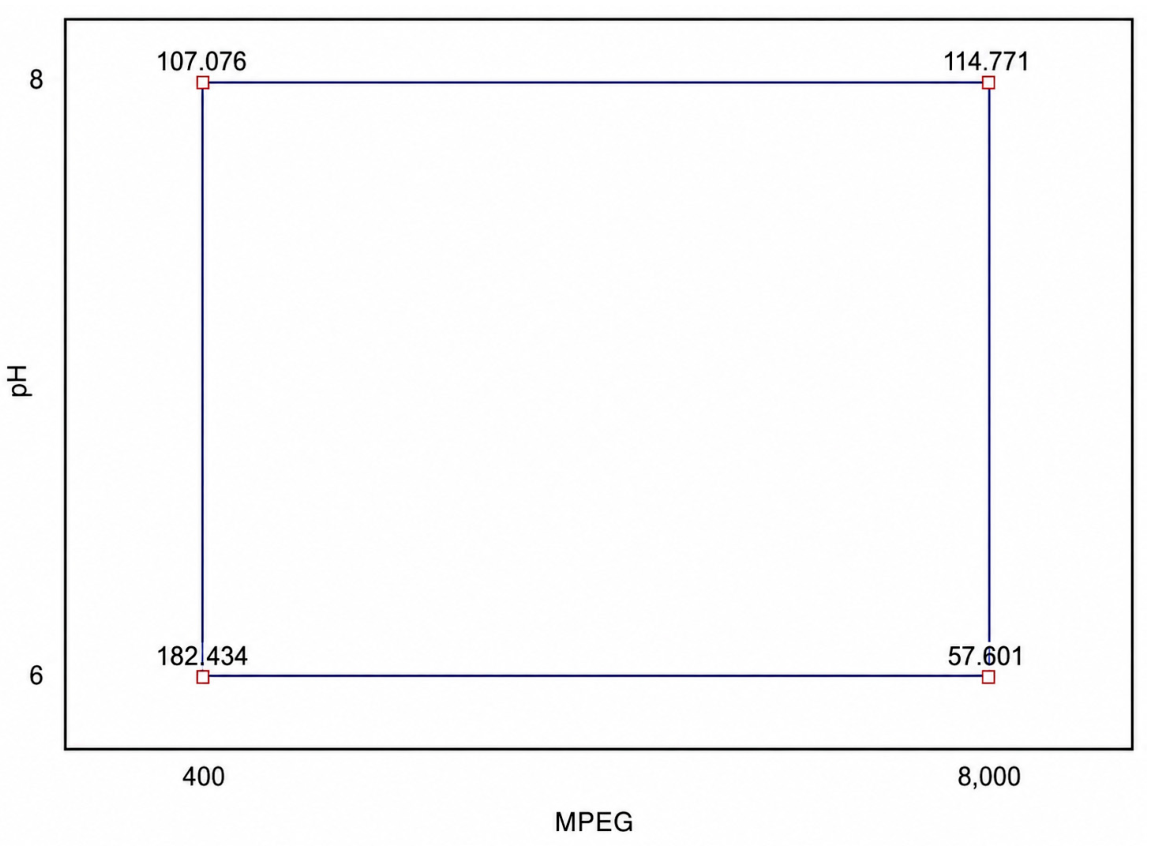
To visualize these effects, the response-surface plot (Figure 3) illustrates the joint influence of pH and MPEG on enzyme recovery. The figure clearly shows that systems containing low-molecular-weight PEG (400 g mol−1) yielded the highest recovery (>180%), especially at pH 6.0–6.5, whereas higher MPEG (8000 g mol−1) markedly reduced recovery regardless of pH. This pattern corroborates that the protease preferentially partitions into the PEG-rich phase, characteristic of enzymes with basic isoelectric points (pI > 7) that display hydrophobic patches exposed to the solvent. Such enzymes interact more strongly with the neutral polymer phase through hydrophobic and van der Waals contacts [51,52].
Under optimized conditions—15% PEG 3500, 20% phosphate, and pH 7.0—the system achieved a partition coefficient (K) = 65.55, recovery yield (Y %) = 209, and purification factor (PF) = 1.64. Recovery yields above 100% are frequently attributed to the removal of reversible inhibitors or to conformational activation caused by preferential hydration of PEG around the protein surface [53,54,55].
These findings confirm that the PEG–phosphate ATPS provides an energetically favorable microenvironment for protease stabilization and enrichment, delivering extraction efficiencies comparable to multi-step chromatographic processes while maintaining mild physicochemical conditions [56,57].

2.3. Ion-Exchange Chromatography and Active Fraction Identification

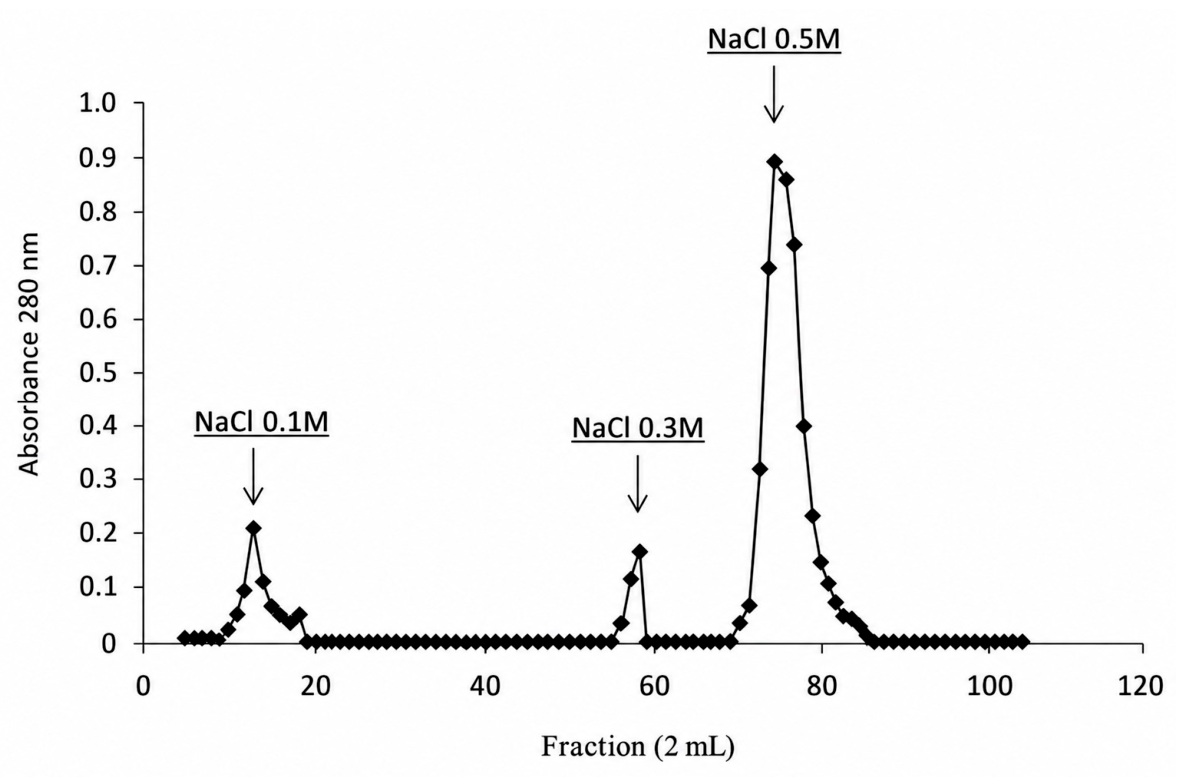
To refine purification, the PEG-rich extract was applied to a DEAE–cellulose ion-exchange column (Figure 4). Three major peaks were detected at NaCl concentrations of 0.1 M, 0.3 M, and 0.5 M. Proteolytic activity was systematically evaluated for all collected fractions across the entire elution profile using the azocasein assay, including fractions exhibiting low absorbance at 280 nm. This comprehensive analysis allowed full mapping of enzymatic activity distribution throughout the chromatographic process.
Among the detected fractions, the 0.5 M NaCl fraction (Fraction II) exhibited the highest absorbance at 280 nm (≈0.9 AU) and corresponded to the fraction with maximum proteolytic activity. Fractions eluted at 0.1 M and 0.3 M NaCl showed minimal or residual enzymatic activity, indicating that the majority of catalytically active protease was selectively retained and eluted at higher ionic strength. The selective elution of active protease at 0.5 M NaCl suggests moderate anionic affinity, compatible with its alkaline nature and slightly basic isoelectric point. Similar elution profiles have been reported for Aspergillus fumigatus alkaline protease [58] and Aspergillus parasiticus thermolabile protease [59].
The narrow elution peak at 0.5 M NaCl reflects enhanced resolution and purity, as weaker protein–matrix interactions are disrupted at this ionic strength. This step achieved a 10.23-fold increase in specific activity relative to the PEG-phase crude extract, calculated as the ratio between the purified fraction and the crude extract specific activities (Table 2). demonstrating the complementarity between ATPS and ion-exchange chromatography.
Comparable enrichment factors (8–12×) were reported by Yao et al. [60] and Zheng et al. [61], confirming that DEAE-based separation remains one of the most reliable approaches for fungal protease purification.
Industrial alkaline proteases produced by Bacillus licheniformis, Bacillus subtilis, and filamentous fungi such as Aspergillus sp. have been widely reported to exhibit specific activities ranging from several hundred to a few thousand U mg−1, depending on substrate and assay conditions [62,63,64]. Under casein-based or chromogenic substrate assays, reported values commonly fall within the 500–3000 U mg−1 range for industrially relevant formulations. The specific activity obtained in the present study (1676.6 U mg−1) falls within this reported interval, indicating catalytic performance comparable to commercially relevant alkaline proteases.

2.4. Molecular Characterization by SDS–PAGE

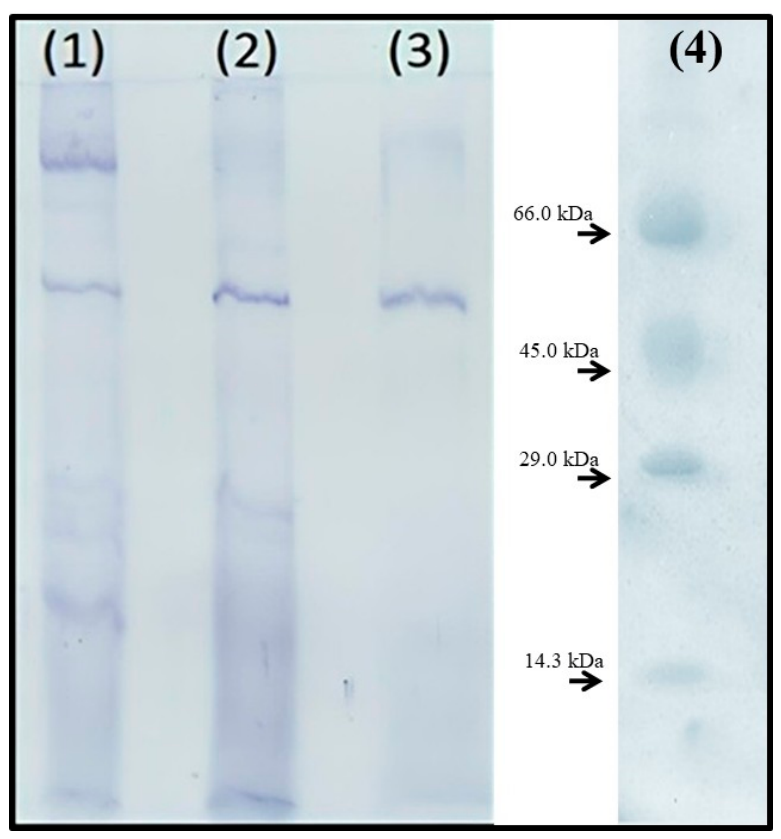
SDS–PAGE analysis (Figure 5) was employed to confirm the homogeneity and to estimate the molecular mass of the purified protease, as this technique is widely used to assess enzyme purity and structural integrity, where the presence of a single band indicates a homogeneous preparation [65,66,67,68]. Lane (1) corresponds to the crude PEG extract, showing multiple faint protein bands, indicative of contaminant proteins. Lane (2) represents an intermediate fraction obtained after ATPS, evidencing partial enrichment of the target enzyme. In contrast, Lane (3) exhibited a single, well-defined band at approximately 59 kDa, confirming the successful purification of the protease. The observed molecular mass falls within the range commonly reported for extracellular alkaline proteases from Aspergillus species, which typically vary between 33 and 65 kDa, although broader molecular mass distributions (23–124 kDa) have been described in the literature [68,69]. Such variability in molecular mass among Aspergillus proteases is frequently attributed to genetic diversity and post-translational modifications, including glycosylation and differential processing of pre-proenzymes [68,69,70,71,72]. Slight variations in apparent molecular weight can result from glycosylation or different processing of the pre-proenzyme [68,73]. The disappearance of lower-intensity bands after the chromatographic step indicates efficient removal of contaminating proteins, confirming the synergistic purification effect of the integrated ATPS + DEAE system.

2.5. Integrated Process Performance and Mechanistic Insights

The overall bioprocess integrating extractive fermentation, PEG–phosphate ATPS, and ion-exchange chromatography proved highly effective in combining high productivity with simplified downstream recovery. The preferential migration of the protease to the PEG-rich phase is attributed to hydrophobic and electrostatic interactions influenced by the enzyme’s pI. The observed negative effect of PEG molecular weight on partitioning supports a model where smaller PEG molecules reduce steric hindrance, enhancing enzyme–polymer contact and diffusivity.
This interpretation aligns with the preferential hydration theory, in which PEG acts as a stabilizing agent by excluding water molecules from the enzyme’s immediate environment, promoting compact folding and enhanced catalytic activity [74]. Furthermore, the 0.5 M NaCl elution peak (Figure 1) indicates moderate anionic affinity, characteristic of alkaline proteases with partially exposed acidic residues.
High recovery values (>200%) observed in the ATPS step may reflect the elimination of reversible inhibitors and conformational stabilization induced by PEG–protein interactions [38,72]. Similar activation phenomena have been reported for proteases from Clostridium, Aspergillus tamarii, and Bacillus species, where PEG polymers promoted increased catalytic efficiency due to microenvironmental modulation of surface charge distribution and structural stabilization [75].
From an economic perspective, the proposed integrated ATPS + DEAE strategy demonstrates competitive feasibility when compared to commercially available alkaline proteases. Industrial proteases represent approximately 60% of the global enzyme market, with a market value exceeding USD 3 billion, largely driven by their extensive application in detergents and other biotechnological sectors [76]. Although direct commercial pricing data are rarely detailed in scientific literature, techno-economic analyses indicate that large-scale production of extracellular proteases can result in very low costs when normalized by activity unit. For example, optimized industrial systems have reported production costs of approximately USD 0.24 per 106 U of protease activity, highlighting the potential for highly cost-effective manufacturing at scale [77]. Furthermore, overall enzyme production costs per kilogram are strongly influenced by downstream processing intensity, with simpler purification schemes and higher extracellular yields substantially reducing final unit costs [78].
In the present study, the cost estimation of the purification process indicates a production cost per activity unit that falls within or below the lower range reported for commercial fungal proteases, particularly when considering the integration of extractive fermentation with primary recovery in a single ATPS step. The reduction in downstream processing stages, lower solvent consumption, and partial in situ purification contribute significantly to cost minimization.
Ultimately, this integrated strategy not only improves economic performance but also enhances enzyme yield, catalytic activity, and purity under mild physicochemical conditions. By avoiding thermal or harsh chemical treatments commonly associated with conventional purification methods, the process preserves structural integrity and functional stability of the protease. Such characteristics reinforce its industrial scalability and environmental compatibility, while expanding its potential application in detergent, biomedical, and food biotechnology sectors, where enzyme stability and activity are critical parameters [79,80,81].

3. Materials and Methods

3.1. Microorganism, Sporulation, and Maintenance

The filamentous fungus Aspergillus sp. (SIS 22/UCP 1287) was employed in this study as the biological source for protease production. The strain was obtained from the North–Northeast Network of Filamentous Fungi from Caatinga Soils (RENNORFUN/SISBIOTA) project and was kindly provided by Professor Galba Maria de Campos Takaki from the Catholic University of Pernambuco (Recife, Brazil). For strain maintenance and sporulation, Czapek Dox Agar (CDA) (Sigma-Aldrich, St. Louis, MO, USA) medium was used, prepared and sterilized in an autoclave at 121 °C and 1 atm for 20 min prior to inoculation. The cultures were incubated at 30 °C until complete sporulation was achieved, ensuring the physiological integrity, purity, and viability of the fungal strain for subsequent fermentation and enzyme production assays.

3.2. Inoculum Preparation

The fungus was subcultured on Czapek Dox Agar plates and incubated for seven days at 30 °C to promote conidia formation. For spore collection, 10 mL of a sterile NaCl (0.9%, w/v) and Tween 80 (0.01%, v/v) solution was added to the plates. Spore concentration was determined using a Neubauer counting chamber and adjusted to a final concentration of 1 × 10⁴ spores/mL for inoculation.

3.3. Protease Production by Extractive Fermentation

Protease production was carried out using extractive fermentation in the MS-2 culture medium, previously described by Porto et al. [82]. The composition of the medium per 100 mL of distilled water was as follows: 50 mL soybean filtrate (4%, w/v), NH4Cl (0.1%, w/v), MgSO4·7H2O (0.06%, w/v), yeast extract (0.1%, w/v), glycerol (1%, w/v), K2HPO4 (0.435%, w/v), and 1 mL of a mineral solution containing 100 mg each of FeSO4·7H2O, MnCl2·4H2O, and ZnSO4·H2O. The fermentation was performed under agitation at 30 °C for 72 h. After cultivation, the fermented broth was subjected to in situ extraction using a polyethylene glycol (PEG)/phosphate aqueous two-phase system, enabling simultaneous enzyme production and recovery while maintaining protease stability under mild, non-denaturing conditions.

3.4. 24-Full Factorial Design

An aqueous two-phase system (ATPS) composed of polyethylene glycol (PEG) and phosphate salt was employed for further enzyme extraction. The coded and actual values of the independent variables evaluated in the experimental design are presented in Table 3. The effects of PEG molecular weight (400, 3350, and 8000 g/mol), PEG concentration (12.5–17.5%, w/w), phosphate concentration (15–25%, w/w), and pH (6.0, 7.0, and 8.0) were evaluated using a full 24 factorial design. Systems were prepared in 15 mL conical tubes containing the specified PEG and salt concentrations, to which 20% (w/w) of the crude enzyme extract was added. The total system mass was adjusted to 10 g with distilled water. After vortexing for 1 min, the mixtures were left to separate by decantation for 60 min at 25 ± 1 °C. Each phase was analyzed for protein concentration and protease activity to determine partition coefficient (K), purification factor (PF), and enzyme recovery (Y%). The experimental conditions under which each system was studied, as described by Porto et al. [83].

3.5. Determination of Partition Coefficient, Recovery Yield, and Purification Factor

The partition coefficient, K (dimensionless parameter), in the aqueous two-phase system was defined as the ratio between the specific activity (AE, U mL−1) in the PEG-rich phase (AEp) and that in the salt-rich phase (AEs) (Equation (1)).
K = A E p A E s
The purification factor (PF) was calculated as the ratio between the specific activity of the target phase and the specific activity of the crude extract. The specific activity (U mg−1) was defined as the ratio of the enzymatic activity in the target phase (U mL−1) to the corresponding protein concentration in that phase (mg mL−1) (Equation (2)).
F P = A E A E c r u d e
Enzyme recovery (Y%) was determined as the ratio between the product of the phase volume (Vf) and its specific activity (AEf) and the product of the crude extract volume (Ve) and its specific activity (AEcrude), expressed as a percentage (Equation (3)).
Y % = A E f . V f A E c r u d e . V e × 100

3.6. Purification by Ion-Exchange Chromatography

The protease-rich extract obtained after the aqueous two-phase system was subjected directly to ion-exchange chromatography using a DEAE–cellulose column (Sigma-Aldrich, St. Louis, MO, USA). The column was equilibrated with 0.1 M Tris–HCl buffer (pH 8.0) at room temperature (25 °C) and operated at a flow rate of 20 mL h−1. Adsorbed proteins were eluted using stepwise NaCl solutions with increasing ionic strength (0.1–0.5 M). Fractions of 2 mL were collected, and protein elution was monitored by measuring absorbance at 280 nm. Fractions exhibiting proteolytic activity were pooled and subsequently analyzed for protein concentration and enzymatic activity.

3.7. Protease Activity Assay

Protease activity was determined following the modified method of Ginther [84], with 1% azocasein as a substrate. Briefly, 0.8 mL of the enzyme sample was incubated with 0.2 mL of 1.8 N NaOH, and the absorbance was measured at 420 nm using a UV–Vis spectrophotometer (Shimadzu UV-1800, Shimadzu Corporation, Kyoto, Japan). Enzymatic activity was expressed in units per milliliter (U/mL), where one unit corresponds to the amount of enzyme required to produce a 0.01 increase in absorbance under the assay conditions.

3.8. Protein Concentration Determination

Total protein concentration was measured using the Bradford [85] method with bovine serum albumin (BSA) as a standard. Calibration curves were established using protein concentrations ranging from 0.1 to 1.0 mg/mL. All measurements were conducted in triplicate.

3.9. Polyacrylamide Gel Electrophoresis (SDS–PAGE)

The molecular characterization of the purified protease was carried out using sodium dodecyl sulfate–polyacrylamide gel electrophoresis (SDS–PAGE) according to Laemmli [86]. A 5% stacking gel and a 12.5% resolving gel were used. Following electrophoresis, gels were stained with Coomassie Brilliant Blue G-250 to visualize protein bands. Molecular weights were estimated using standard protein markers (Bio-Rad Laboratories, Hercules, CA, USA).

3.10. Data Analysis

The quality of model fitting was evaluated using the coefficient of determination (R2) and multiple regression analysis to validate the predictive accuracy of the model. Statistical significance was assessed by ANOVA at a 95% confidence level (p < 0.05). All analyses were performed using Statistica 8.0 software [87].

4. Conclusions

In conclusion, this work demonstrates that the integration of extractive fermentation with downstream purification provides an effective and scalable approach to produce fungal proteases. The use of a polyethylene glycol–phosphate aqueous two-phase system enabled efficient in situ recovery of the target enzyme from the fermented broth, yielding high partition coefficients while preserving enzymatic activity. Subsequent purification by DEAE–Sephadex ion-exchange chromatography, with optimal elution at 0.5 M NaCl, resulted in a homogeneous protease preparation with an apparent molecular mass of approximately 59 kDa, as confirmed by SDS–PAGE analysis. The strong influence of PEG molecular weight on enzyme partitioning highlights the importance of system design for maximizing purification efficiency. Overall, the combined strategy represents a robust, cost-effective, and industrially relevant bioprocess aligned with principles of process intensification. By integrating fermentation and primary recovery into a single operation, the platform reduces downstream unit operations, solvent consumption, processing time, and energy demand, thereby improving overall process efficiency and sustainability. The mild physicochemical conditions employed during ATPS partitioning preserve enzyme structure and functionality, avoiding thermal or harsh chemical treatments typical of conventional purification routes.
From an application standpoint, the purified alkaline protease exhibits strong potential for use in detergent formulations, protein hydrolysis in food biotechnology, and other industrial sectors where catalytic efficiency and operational stability are critical. Beyond this specific enzyme, the proposed extractive fermentation framework can be extended to other extracellular biocatalysts, contributing to the development of sustainable, scalable, and economically optimized enzyme manufacturing systems. Thus, aqueous two-phase systems may serve not only as purification tools but also as strategic components in next-generation integrated biorefineries and intensified bioprocess platforms.

Author Contributions

Conceptualization, R.L.A.S. and R.M.P.B.C.; methodology, R.L.A.S., K.B.B.C., L.H.S.L., M.E.L.C.d.M. and B.C.S.L.; software, K.B.B.C.; validation, K.B.B.C. and M.E.L.C.d.M.; formal analysis, R.L.A.S., K.B.B.C., L.H.S.L., M.E.L.C.d.M. and B.C.S.L.; investigation, R.L.A.S., K.B.B.C., L.H.S.L., M.E.L.C.d.M. and B.C.S.L.; resources, T.P.N., A.L.F.P., M.S.O.W. and R.M.P.B.C.; data curation, R.L.A.S., K.B.B.C., L.H.S.L., M.E.L.C.d.M. and B.C.S.L.; writing—original draft preparation, R.L.A.S.; writing—review and editing, K.B.B.C., T.P.N. and M.S.O.W.; visualization, T.P.N., A.L.F.P., M.S.O.W. and R.M.P.B.C.; supervision, T.P.N., A.L.F.P., M.S.O.W. and R.M.P.B.C.; project administration, T.P.N., A.L.F.P., M.S.O.W. and R.M.P.B.C.; funding acquisition, A.L.F.P. and R.M.P.B.C. All authors have read and agreed to the published version of the manuscript.

Funding

This study was financed by the Foundation for Science and Technology Support of the State of Pernambuco (FACEPE, Brazil) under grants APQ-1629-5.01/25, APQ-0870-5.01/22, APQ-1635-5.02/22, and APQ-0623-5.01/21.

Data Availability Statement

The original contributions presented in this study are included in the article. Further inquiries can be directed to the corresponding author.

Acknowledgments

The authors gratefully acknowledge the University of Pernambuco (UPE) and the Integrated Laboratory of Applied Biotechnology (LIBA) for providing the infrastructure and facilities necessary for the development of this research.

Conflicts of Interest

The authors declare no conflicts of interest.

References

  1. Aghmiuni, S.K.; Siyal, S.; Wang, Q.; Duan, Y. Assessment of factors affecting innovation policy in biotechnology. J. Innov. Knowl. 2020, 5, 180–190. [Google Scholar] [CrossRef]
  2. Ahmed, T.; Suzauddula, M.; Safwa, S.M.; Talukder, S.; Sharma, M.; Inbaraj, B.S.; Sridhar, K. Biotechnological tools in microbial vitamins and carotenoids production. In Microbial Vitamins and Carotenoids in Food Biotechnology; Academic Press: Cambridge, MA, USA, 2024; pp. 63–104. [Google Scholar]
  3. Veeragurunathan, V.; Mantri, V.A.; Grace, P.G.; Gurumoorthy, U. Seaweed biotechnology implications to aquaculture. In Frontiers in Aquaculture Biotechnology; Academic Press: Cambridge, MA, USA, 2023; pp. 219–237. [Google Scholar]
  4. Sujitha, P.; Shanthi, C. Importance of enzyme specificity and stability for the application of proteases in greener industrial processing: A review. J. Clean. Prod. 2023, 425, 138915. [Google Scholar] [CrossRef]
  5. Aslam, M.U.; Aslam, E.; Shahbaz, M. Food Chemistry and Enzymatic Reactions: Understanding the Role of Enzymes in Food Processing: A Narrative Review. Insights-J. Health Rehabil. 2025, 3, 835–841. [Google Scholar] [CrossRef]
  6. Khade, S.M.; Srivastava, S.K.; Kamble, L.H.; Srivastava, J. Food enzymes: General properties and kinetics. In Novel Food Grade Enzymes; Springer Nature: Singapore, 2022; pp. 1–15. [Google Scholar]
  7. Farhan, M.; Hasani, I.W.; Khafaga, D.S.; Ragab, W.M.; Kazi, R.N.A.; Aatif, M.; Fahim, Y.A. Enzymes as catalysts in industrial biocatalysis: Advances in engineering, applications, and sustainable integration. Catalysts 2025, 15, 891. [Google Scholar] [CrossRef]
  8. Erdem, E.; Woodley, J.M. Using enzymes for catalysis under industrial conditions. ACS Catal. 2024, 14, 18436–18441. [Google Scholar] [CrossRef]
  9. Tripathi, C.; Yadav, T. Recent approaches and innovations for enzyme engineering used in industrial biotechnology. In Microbial Bioprocesses; Springer: Singapore, 2023; pp. 161–175. [Google Scholar]
  10. Gavrilescu, M. From pollutants to products: Microbial cell factories driving sustainable biomanufacturing and environmental conservation. Chem. Eng. J. 2024, 500, 157152. [Google Scholar] [CrossRef]
  11. Munawar, A.; Shaheen, M.; Ramzan, S.; Masih, S.A.; Jabeen, F.; Younis, T.; Aslam, M. Diversity and enzymatic potential of indigenous bacteria from unexplored contaminated soils in Faisalabad. Heliyon 2023, 9, e14877. [Google Scholar] [CrossRef]
  12. Correa, C.; Alves, Y.A.; Souza, C.G.; Boloy, R.A.M. Brazil and the world market in the development of technologies for second-generation ethanol production. Alex. Eng. J. 2023, 67, 153–170. [Google Scholar] [CrossRef]
  13. Cesário, L.M.; Pires, G.P.; Pereira, R.F.S.; Fantuzzi, E.; Xavier, A.S.; Cassini, S.T.A.; Oliveira, J.P. Optimization of lipase production using fungal isolates from oily residues. BMC Biotechnol. 2021, 21, 65. [Google Scholar] [CrossRef] [PubMed]
  14. Zhao, L.; Lai, J.; Zhang, S.; Dai, M.; Zong, E.; Xu, Y.; Li, X. Enzymatic synthesis of sucrose esters: Advances and challenges in high-efficiency and regioselective catalysis. Enzyme Microb. Technol. 2025, 195, 110806. [Google Scholar] [CrossRef]
  15. Ferreira, P.; Fernandes, P.A.; Ramos, M.J. Modern computational methods for rational enzyme engineering. Chem Catal. 2022, 2, 2481–2498. [Google Scholar] [CrossRef]
  16. Mokrani, S.; Nabti, E.H. Recent status in production, biotechnological applications, commercial aspects, and future prospects of microbial enzymes: A comprehensive review. Int. J. Agric. Sci. Food Technol. 2024, 10, 006–020. [Google Scholar] [CrossRef]
  17. Mohanasrinivasan, V.; Diksha, D.; Suganthi, V.; Selvarajan, E.; Devi, C.S. Process optimization for enhanced α-amylase production by submerged and solid-state fermentation using Bacillus pumilus. Res. J. Pharm. Biol. Chem. Sci. 2014, 5, 1784–1800. [Google Scholar]
  18. Amenaghawon, A.N.; Ayere, J.E.; Amune, U.O.; Otuya, I.C.; Abuga, E.C.; Anyalewechi, C.L.; Darmokoesoemo, H. Advances in biosynthesis and applications of oxalic acid from bio-derived substrates. Environ. Res. 2024, 251, 118703. [Google Scholar] [CrossRef] [PubMed]
  19. Kee, P.E.; Yim, H.S.; Kondo, A.; Lan, J.C.W.; Ng, H.S. Extractive fermentation using aqueous biphasic systems for keratinase recovery. J. Taiwan Inst. Chem. Eng. 2022, 137, 104232. [Google Scholar] [CrossRef]
  20. Santos, A.G.; Buarque, F.S.; Ribeiro, B.D.; Coelho, M.A.Z. Extractive fermentation for lipase and citric acid production. Process Biochem. 2022, 122, 374–385. [Google Scholar] [CrossRef]
  21. Bhatia, S.; Singh, A.; Batra, N.; Singh, J. Microbial production and applications of α-galactosidase. Int. J. Biol. Macromol. 2020, 150, 1294–1313. [Google Scholar] [CrossRef] [PubMed]
  22. Bedade, D.; Pawar, S. Downstream processing of biotechnology products. In Basic Biotechniques for Bioprocess and Bioentrepreneurship; Academic Press: Cambridge, MA, USA, 2023; pp. 377–390. [Google Scholar]
  23. Chaudhary, S.; Singh, R.; Mishra, S.; Talwar, B.; Balhara, K. From sea to supplement: Algal protein extraction methods and functional benefits. Int. J. Biol. Macromol. 2025, 328, 147750. [Google Scholar] [CrossRef] [PubMed]
  24. Gamal, M.; Ibrahim, M.A.; Mousa, S.; Zhang, F.; Warda, M. Cation exchanger synthesis for camel lactoferrin purification. Int. J. Biol. Macromol. 2025, 309, 143110. [Google Scholar] [CrossRef] [PubMed]
  25. Sun, J.; Chen, Y.; Yang, Y.; Chen, H.; Zhang, J.; Wang, S.; Bai, D.; Sun, Z.; Song, J.; Dai, L. Research Progress on Bioactive Peptides from Animal Sources: A Comprehensive Review. Food Chem. 2025, 490, 145006. [Google Scholar] [CrossRef] [PubMed]
  26. Zhao, Z.; Liu, Z.; Jiang, Q.; Zhang, X.; Ma, W.; Han, D. Optimization of earthworm fibrinolytic enzyme extraction. J. Chromatogr. B 2024, 1242, 124186. [Google Scholar] [CrossRef]
  27. Vieira, L.B.; Casimiro, M.W.; Santos, R.G. Surface tension of aqueous amoxicillin–PEG systems. Colloid Interface Sci. Commun. 2018, 24, 93–97. [Google Scholar] [CrossRef]
  28. Fakhari, M.A.; Rahimpour, F.; Taran, M. Response Surface Methodology Optimization of Partitioning of Xylanase from Aspergillus niger by Metal Affinity Polymer–Salt Aqueous Two-Phase Systems. J. Chromatogr. B 2017, 1063, 1–10. [Google Scholar] [CrossRef] [PubMed]
  29. Zhang, X.; Cai, Z.; Zong, W. Extraction of acesulfame potassium using PEG-based ATPS. J. Food Compos. Anal. 2025, 149, 108765. [Google Scholar]
  30. Guimarães, M.B.; Helbourn, C.C.B.R.; Pereira, J.F.B.; Magalhães, P.O. Production, extraction, and purification of L-asparaginase from Penicillium sizovae: Aqueous biphasic systems as an effective pre-concentration strategy. Sep. Purif. Technol. 2025, 378, 134547. [Google Scholar] [CrossRef]
  31. de Melo Oliveira, V.; Cunha, M.N.C.; Assis, C.R.D.; Batista, J.M.S.; Nascimento, T.P.; Santos, J.F.; Porto, A.L.F. Separation and partial purification of collagenolytic protease. Biocatal. Agric. Biotechnol. 2020, 24, 101509. [Google Scholar] [CrossRef]
  32. Ding, X.; Wang, Y.; Zeng, Q.; Chen, J.; Huang, Y.; Xu, K. Guanidinium ionic liquid ATPS for protein purification. Anal. Chim. Acta 2014, 815, 22–32. [Google Scholar] [CrossRef] [PubMed]
  33. Bekavac, N.; Benković, M.; Jurina, T.; Valinger, D.; Gajdoš Kljusurić, J.; Jurinjak Tušek, A.; Šalić, A. Advancements in aqueous two-phase systems for enzyme extraction, purification, and biotransformation. Molecules 2024, 29, 3776. [Google Scholar] [CrossRef] [PubMed]
  34. Muniasamy, R.; Venkatachalam, P.; Rangarajan, V.; Samal, S.; Rathnasamy, S. A comprehensive perspective on sustainable bioprocessing through extractive fermentation: Challenges and prospects. Rev. Environ. Sci. Biotechnol. 2023, 22, 715–737. [Google Scholar] [CrossRef]
  35. Chen, C.; Hou, S.; Wu, C.; Cao, Y.; Tong, X.; Chen, Y. Improving protein utilization and fermentation quality of soy sauce by adding protease. J. Food Compos. Anal. 2023, 121, 105399. [Google Scholar] [CrossRef]
  36. Mu, Y.; Kang, H.; Song, X.; Cao, C.; Sun-Waterhouse, D.; Waterhouse, G.I.N.; Zhao, M.; Su, G. Soybean protein isolate hydrolysate addition during fermentation of soybean meal with Aspergillus oryzae enhances the release of umami components in subsequent hydrolysis process. Food Biosci. 2025, 71, 107105. [Google Scholar] [CrossRef]
  37. Saha, N.; Sarkar, B.; Sen, K. Aqueous biphasic systems as a green platform for biomolecule extraction. J. Mol. Liq. 2022, 363, 119882. [Google Scholar] [CrossRef]
  38. e Silva, G.M.M.; Marques, D.D.A.V.; Porto, T.S.; Filho, J.L.L.; Teixeira, J.A.C.; Pessoa-Júnior, A.; Porto, A.L.F. Extraction of fibrinolytic proteases from Streptomyces sp. DPUA1576 using PEG-phosphate aqueous two-phase systems. Fluid Phase Equilib. 2013, 339, 52–57. [Google Scholar] [CrossRef]
  39. Li, M.; Peeples, T.L. Purification of hyperthermophilic archaeal amylolytic enzyme (MJA1) using thermoseparating aqueous two-phase systems. J. Chromatogr. B 2004, 807, 69–74. [Google Scholar] [CrossRef]
  40. González-Amado, M.; Tavares, A.P.M.; Freire, M.G.; Soto, A.; Rodríguez, O. Recovery of lactose and proteins from cheese whey using polyethylene glycol/sulfate aqueous two-phase systems. Sep. Purif. Technol. 2021, 255, 117686. [Google Scholar] [CrossRef]
  41. Bovaldinova, K.A.; Feldstein, M.M.; Sherstneva, N.E.; Moscalets, A.P.; Khokhlov, A.R. Thermo-switchable pressure-sensitive adhesives with tunable adhesion. Polymer 2017, 125, 10–20. [Google Scholar] [CrossRef]
  42. Feldstein, M.M.; Shandryuk, G.A.; Platé, N.A. Relation of glass transition temperature to hydrogen bonding in PVP blends. Part 1. Effects of hydroxyl group number in plasticizer molecule. Polymer 2001, 42, 971–979. [Google Scholar] [CrossRef]
  43. Tsivintzelis, I.; Kontogeorgis, G.M. Modeling vapor–liquid equilibria of polymer–solvent mixtures with hydrogen bonding. Fluid Phase Equilib. 2009, 280, 100–109. [Google Scholar] [CrossRef]
  44. Orekhov, D.V.; Kazantsev, O.A.; Sivokhin, A.P.; Savinova, M.V. Acid-catalyzed hydrolysis of polyethylene glycol methacrylates. Eur. Polym. J. 2018, 100, 18–24. [Google Scholar] [CrossRef]
  45. Ura, T.; Oyama, T.; Nishimura, C. Bench-top NMR of water signals as a non-destructive tool for biomacromolecule characterization. Protein Expr. Purif. 2025, 239, 106855. [Google Scholar] [PubMed]
  46. Kitano, H.; Nagaoka, K.; Tada, S.; Gemmei-Ide, M. Structure of water near amphoteric polymers revealed by Raman spectroscopy. J. Colloid Interface Sci. 2007, 313, 461–468. [Google Scholar] [CrossRef] [PubMed]
  47. Semmeq, A.; Del Galdo, S.; Chiarini, M.; Daidone, I.; Casieri, C. Structural and dynamic behavior of concentrated aqueous PEG solutions. J. Mol. Liq. 2024, 411, 125654. [Google Scholar] [CrossRef]
  48. Ling, J.S.K.; Lau, S.Y.; Anboo, S.; Yılmaz, M. Effectiveness of polyethylene glycol and glutaraldehyde as enhancers for lipase-immobilized hybrid organic–inorganic nanoflowers. Bioprocess Biosyst. Eng. 2025, 48, 1349–1362. [Google Scholar] [CrossRef] [PubMed]
  49. Rahimpour, F.; Hatti-Kaul, R.; Mamo, G. RSM and ANN modeling of aqueous two-phase systems for xylanase purification. Process Biochem. 2016, 51, 452–462. [Google Scholar] [CrossRef]
  50. Mendes, A.A.; Oliveira, P.C.; de Castro, H.F. Properties and applications of porcine pancreatic lipase. J. Mol. Catal. B Enzym. 2012, 78, 119–134. [Google Scholar] [CrossRef]
  51. Enriquez-Ochoa, D.; Meléndez-Martínez, D.; Aguilar-Yáñez, J.M.; Licona-Cassani, C.; Mayolo-Deloisa, K. ATPS-based recovery of metalloproteases and PLA2 toxins. Bioresour. Bioprocess. 2021, 8, 136. [Google Scholar] [CrossRef] [PubMed]
  52. da Silva, A.V.; do Nascimento, J.M.; Rodrigues, C.H.; Nascimento, D.C.S.; Costa, R.M.P.B.; de Araújo Viana Marques, D.; Leite, A.C.L.; Figueiredo, M.D.V.B.; Pastrana, L.; Converti, A.; et al. Partial purification of fibrinolytic and fibrinogenolytic protease from Gliricidia sepium seeds by aqueous two-phase system. Biocatal. Agric. Biotechnol. 2020, 27, 101669. [Google Scholar] [CrossRef]
  53. Zhao, H.; Wu, S.; Zhang, Z.; Chen, R.; Li, K.; Xiao, M.; Yin, Y.; Wang, P.; Zhang, R. A three-step process for purification and stability evaluation of analytical-grade phycocyanin from Spirulina. Algal Res. 2025, 92, 104387. [Google Scholar] [CrossRef]
  54. Sala, L.; Gautério, G.V.; Younan, F.F.; Brandelli, A.; Moraes, C.C.; Kalil, S.J. Integration of ultrafiltration into ATPS for keratinase purification. Process Biochem. 2014, 49, 2016–2024. [Google Scholar] [CrossRef]
  55. Rosso, B.U.; de Albuquerque Lima, C.; Porto, T.S.; de Oliveira Nascimento, C.; Pessoa, A.; Converti, A.; Carneiro-Da-Cunha, M.D.G.; Porto, A.L.F. Partitioning and extraction of collagenase from Penicillium aurantiogriseum in poly(ethylene glycol)/phosphate aqueous two-phase system. Fluid Phase Equilib. 2012, 335, 20–25. [Google Scholar] [CrossRef]
  56. Poornima, S.; Divya, P.; Karmegam, N.; Karthik, V.; Subbaiya, R. Aqueous two-phase partitioning and characterization of xylanase produced by Streptomyces geysiriensis from low cost lignocellulosic substrates. J. Biosci. Bioeng. 2020, 130, 571–576. [Google Scholar] [CrossRef] [PubMed]
  57. Qu, F.; Qin, H.; Dong, M.; Zhao, D.X.; Zhao, X.Y.; Zhang, J.H. Selective separation of proteins in aqueous two-phase systems. Chin. Chem. Lett. 2009, 20, 1100–1102. [Google Scholar] [CrossRef]
  58. Hernández-Martínez, R.; Gutiérrez-Sánchez, G.; Bergmann, C.W.; Loera-Corral, O.; Rojo-Domínguez, A.; Huerta-Ochoa, S.; Prado-Barragán, L.A. Purification and characterization of a thermodynamically stable serine protease from Aspergillus fumigatus. Process Biochem. 2011, 46, 2001–2006. [Google Scholar] [CrossRef]
  59. Tunga, R.; Shrivastava, B.; Banerjee, R. Purification and characterization of a protease from solid-state cultures of Aspergillus parasiticus. Process Biochem. 2003, 38, 1553–1558. [Google Scholar] [CrossRef]
  60. Yao, H.; Liu, S.; Chang, R.; Liu, T.; Ma, D.; Han, X.; Mao, J. Purification, characterisation and visualisation of soybean protein hydrolysis by aspergillopepsin I from mangrove Aspergillus tubingensis. Int. Biodeterior. Biodegrad. 2024, 191, 105798. [Google Scholar] [CrossRef]
  61. Zheng, L.; Yu, X.; Wei, C.; Qiu, L.; Yu, C.; Xing, Q.; Deng, Z. Production and characterization of a novel alkaline protease from a newly isolated Neurospora crassa through solid-state fermentation. LWT 2020, 122, 108990. [Google Scholar] [CrossRef]
  62. Rao, M.B.; Tanksale, A.M.; Ghatge, M.S.; Deshpande, V.V. Molecular and Biotechnological Aspects of Microbial Proteases. Microbiol. Mol. Biol. Rev. 1998, 62, 597–635. [Google Scholar] [CrossRef] [PubMed]
  63. Gupta, R.; Beg, Q.; Lorenz, P. Bacterial alkaline proteases: Molecular approaches and industrial applications. Appl. Microbiol. Biotechnol. 2002, 59, 15–32. [Google Scholar] [CrossRef] [PubMed]
  64. Contesini, F.J.; de Melo, R.R.; Sato, H.H. An overview of Bacillus proteases: From production to application. Crit. Rev. Biotechnol. 2018, 38, 321–334. [Google Scholar] [CrossRef] [PubMed]
  65. Yadav, S.K.; Bisht, D.; Tiwari, S.; Darmwal, N.S. Purification, biochemical characterization and performance evaluation of an alkaline serine protease from Aspergillus flavus MTCC 9952 mutant. Biocatal. Agric. Biotechnol. 2015, 4, 667–677. [Google Scholar] [CrossRef]
  66. Thumar, J.; Singh, S.P. Two-step purification of a highly thermostable alkaline protease from salt-tolerant alkaliphilic Streptomyces clavuligerus strain Mit-1. J. Chromatogr. B 2007, 854, 198–203. [Google Scholar] [CrossRef]
  67. Agrebi, R.; Haddar, A.; Hmidet, N.; Jellouli, K.; Manni, L.; Nasri, M. BSF1 fibrinolytic enzyme from a marine bacterium Bacillus subtilis A26: Purification, biochemical and molecular characterization. Process Biochem. 2009, 44, 1252–1259. [Google Scholar] [CrossRef]
  68. Niyonzima, F.N.; More, S.S. Purification and characterization of a detergent-compatible protease from Aspergillus terreus. 3 Biotech 2015, 5, 61–70. [Google Scholar] [PubMed]
  69. Jain, N.; Bhargava, A.; Sabat, D.; Panwar, J. Unveiling the potential of metal-tolerant fungi for efficient enzyme production. Process Biochem. 2014, 49, 1858–1866. [Google Scholar] [CrossRef]
  70. Haddar, A.; Bougatef, A.; Agrebi, R.; Sellami-Kamoun, A.; Nasri, M. A novel surfactant-stable alkaline serine protease from Bacillus mojavensis A21: Purification and characterization. Process Biochem. 2009, 44, 29–35. [Google Scholar] [CrossRef]
  71. Jayashree, S.; Annapurna, B.; Jayakumar, R.; Sa, T.; Seshadri, S. Screening and characterization of alkaline protease produced by a pink pigmented facultative methylotrophic strain. J. Genet. Eng. Biotechnol. 2014, 12, 111–120. [Google Scholar] [CrossRef]
  72. Batista, J.M.; Brandão-Costa, R.M.; da Cunha, M.N.C.; Rodrigues, H.O.; Porto, A.L.F. Purification and biochemical characterization of an extracellular fructosyltransferase-rich extract produced by Aspergillus tamarii. Biocatal. Agric. Biotechnol. 2020, 26, 101647. [Google Scholar] [CrossRef]
  73. Vasudhevan, P.; Arul, D.; Lo, H.M.; Singh, S.; Varshney, D. Biorefinery-based production of marine-derived alkaline protease from Bacillus subtilis: A promising biocatalyst for biomedical and detergent applications. Biomass Bioenergy 2025, 202, 108198. [Google Scholar] [CrossRef]
  74. Ni, K.; Liu, A.; Ding, Y.; Ye, X. Thermal properties of glycinin under crowded molecular environments. Int. J. Biol. Macromol. 2024, 263, 130192. [Google Scholar] [CrossRef] [PubMed]
  75. Neves, M.L.C.; Porto, T.S.; Souza-Motta, C.M.; Spier, M.R.; Soccol, C.R.; Moreira, K.A.; Porto, A.L.F. Partition and recovery of phytase from Absidia blakesleeana using PEG–citrate aqueous two-phase systems. Fluid Phase Equilib. 2012, 318, 34–39. [Google Scholar] [CrossRef]
  76. Troncoso, F.D.; Sánchez, D.A.; Ferreira, M.L. Production of plant proteases and new biotechnological applications: An updated review. ChemistryOpen 2022, 11, e202200017. [Google Scholar] [CrossRef] [PubMed]
  77. Putra, I.G.E.P.; Ulfah, M.; Nurhayati, N.; Helianti, I. Coproduction of alkaline protease and xylanase from genetically modified Indonesian local Bacillus halodurans CM1 using corncob as an inducing substrate. Saudi J. Biol. Sci. 2024, 31, 103947. [Google Scholar] [CrossRef] [PubMed]
  78. Ferreira, R.G.; Azzoni, A.R.; Freitas, S. Techno-economic analysis of the industrial production of a low-cost enzyme using E. coli: The case of recombinant β-glucosidase. Biotechnol. Biofuels 2018, 11, 81. [Google Scholar] [CrossRef] [PubMed]
  79. Sarkar, A.; Hasan, M.F.A.; Miah, M.S.; Mahmud, A.; Alam, M. Comparative assessment of ultrasound- and enzyme-assisted extraction of rice bran protein. Appl. Food Res. 2025, 5, 101468. [Google Scholar] [CrossRef]
  80. Joo, H.; Lee, H.Y.; Sim, H.Y.; Jung, C.D.; Choi, J.H.; Lee, J.C.; Myung, S. Sustainable removal of phenolic impurities from lignocellulosic-biomass-derived sugars using immobilized laccase and membrane filtration. Sep. Purif. Technol. 2025, 380, 135475. [Google Scholar]
  81. Li, Q.; Xue, J.; Ma, X.; Han, J.; Wu, J.; Bao, X.; Wang, L.; Wang, Y. An Integrated Purification and Immobilization Strategy for ELP-Fusion β-Glucosidase by Its Thermosensitivity and Hydrophobicity. J. Biotechnol. 2025, 407, 1–11. [Google Scholar] [CrossRef] [PubMed]
  82. Porto, A.L.F.; Campos-Takaki, G.M.; Lima Filho, J.L. Effects of culture conditions on protease production by Streptomyces clavuligerus grown on soybean flour medium. Appl. Biochem. Biotechnol. 1996, 60, 115–122. [Google Scholar] [CrossRef]
  83. Porto, T.S.; Pessôa-Filho, P.A.; Neto, B.B.; Filho, J.L.L.; Converti, A.; Porto, A.L.F.; Pessoa, A. Removal of proteases from Clostridium perfringens fermented broth by aqueous two-phase systems (PEG/citrate). J. Ind. Microbiol. Biotechnol. 2007, 34, 547–552. [Google Scholar] [CrossRef] [PubMed]
  84. Ginther, C.L. Sporulation and the production of serine protease and cephamycin C by Streptomyces lactamdurans. Antimicrob. Agents Chemother. 1979, 15, 522–526. [Google Scholar] [CrossRef] [PubMed]
  85. Bradford, M.M. A rapid and sensitive method for the quantitation of microgram quantities of protein utilizing the principle of protein–dye binding. Anal. Biochem. 1976, 72, 248–254. [Google Scholar] [CrossRef] [PubMed]
  86. Laemmli, U.K. Cleavage of structural proteins during the assembly of the head of bacteriophage T4. Nature 1970, 227, 680–685. [Google Scholar] [CrossRef] [PubMed]
  87. StatSoft, Inc. STATISTICA (Data Analysis Software System), version 8.0; StatSoft Inc.: Tulsa, OK, USA, 2008.
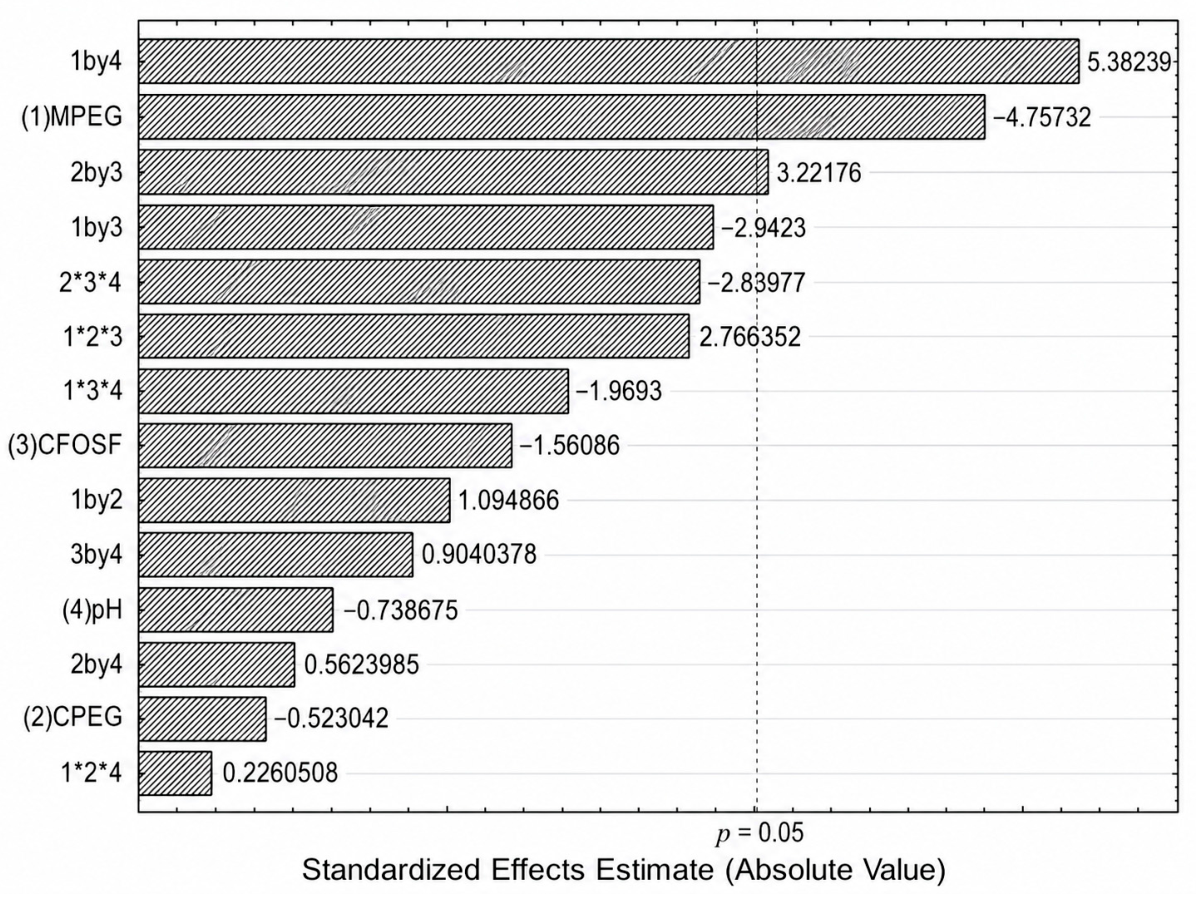
Figure 1. Pareto chart of standardized effects obtained from the 24 full factorial design. Factor coding: (1) PEG molecular weight (MPEG), (2) PEG concentration (CPEG), (3) phosphate concentration (CFOSF), and (4) pH. Interaction terms (e.g., 1 × 3, 2 × 3, 1 × 2 × 3) represent combined effects among the corresponding coded variables.
Catalysts 16 00646 g001
Figure 2. Pareto chart of standardized effects (absolute values) obtained from the 24 full factorial design for enzyme recovery (Y, %) in the PEG-rich phase. Factor coding: (1) PEG molecular weight (MPEG), (2) PEG concentration (CPEG), (3) phosphate concentration (CFOSF), and (4) pH. Interaction terms (e.g., 1 × 3, 2 × 3, 1 × 2 × 3) represent combined effects among the corresponding coded variables. Bars extending beyond the vertical reference line indicate statistically significant effects at p ≤ 0.05. The sign associated with each effect reflects its positive or negative influence on enzyme recovery.
Catalysts 16 00646 g002
Figure 3. Response-surface plot showing the interactive effect of PEG molecular weight (MPEG) and pH on protease recovery in the PEG–phosphate aqueous two-phase system.
Catalysts 16 00646 g003
Figure 4. Chromatogram of protease from Aspergillus sp., obtained by ion-exchange chromatography using DEAE–Sephadex resin. Elution was performed using a stepwise NaCl gradient (0.1 M, 0.3 M, and 0.5 M) in 0.1 M Tris–HCl buffer (pH 8.0).
Catalysts 16 00646 g004
Figure 5. SDS–PAGE profile of protease purification. Lane (1): crude extract obtained from the PEG-rich phase; Lane (2): partially purified fraction recovered after the aqueous two-phase system (ATPS); Lane (3): purified protease, exhibiting a single protein band, suggesting successful purification. Lane (4): molecular weight marker. Arrows indicate the position of standard proteins corresponding to bovine serum albumin (69.0 kDa), ovalbumin (45.0 kDa), carbonic anhydrase (29.0 kDa), and lysozyme (14.0 kDa).
Catalysts 16 00646 g005
Table 1. Full 24 factorial design matrix with conditions and results for protease partitioning in the PEG–phosphate ATPS.
AssaypHMPEG a (g/mol)CPEG (%) bCFOSF (%) cK dY e (%)FP fAE (U/mL) g
1640012.515109.67198.260.84417.78
26800012.5151.2060.340.27133.65
3640017.51520.41164.530.57280.80
46800017.5152.9976.740.32157.46
5640012.52530.92170.230.82404.53
66800012.52519.8037.080.1887.04
7640017.52523.92155.840.85423.37
86800017.5259.2915.350.0837.96
9 *840012.515----
108800012.5152.52134.380.51254.87
11840017.51518.54141.330.31156.87
128800017.51517.15143.270.48235.95
13840012.52546.77209.490.87433.29
148800012.52522.6057.970.23116.90
15840017.52510.3636.600.0837.91
168800017.52517.7982.570.24117.57
17 (C)73350152039.12162.461.26625.88
18 (C)73350152040.44158.061.20594.94
19 (C)73350152050.30122.881.01503.05
20 (C)73350152065.55182.011.64812.40
(a) MPEG = PEG molecular weight; (b) CPEG = PEG concentration; (c) CFOSF = phosphate concentration; (d) K = partition coefficient; (e) Y = recovery in PEG phase; (f) PF = purification factor; (g) AE = specific activity. * Run 9 showed no phase separation under the tested conditions; therefore, partitioning parameters could not be determined.
Table 2. Enzymatic and protein analyses derived from the protease production process by Aspergillus sp.
SampleProtein Concentration (µg mL−1) (µg/mL)Protease Activity (U/mL)Specific Activity (U)
Crude Extract127.2520.80163.80
DEAE–Sephadex Fraction (0.5 M NaCl)53.5089.701676.6
Table 3. Coded and real values of the independent variables used in the 24 full factorial design for protease partitioning in the PEG–phosphate aqueous two-phase system.
FactorsCoded Levels
+10−1
PEG Molecular Weight (MPEG)40033508000
PEG Concentration (CPEG)12.51517.5
Phosphate Concentration (CFOSF)152025
pH678
Disclaimer/Publisher’s Note: The statements, opinions and data contained in all publications are solely those of the individual author(s) and contributor(s) and not of MDPI and/or the editor(s). MDPI and/or the editor(s) disclaim responsibility for any injury to people or property resulting from any ideas, methods, instructions or products referred to in the content.