Article

Halogen-Substituted Co(II) Phthalocyanines as Efficient Catalysts for Benzyl Alcohol Oxidation: Steric Effects on Activity and Selectivity


1
Department of Chemistry, Faculty of Science, Karadeniz Technical University, Trabzon 61080, Türkiye
2
Department of Chemistry, Institue of Science, Karadeniz Technical University, Trabzon 61080, Türkiye
3
Wastewater Control Directorate, Trabzon Municipality, Trabzon 61100, Türkiye
*
Authors to whom correspondence should be addressed.
Catalysts 2026, 16(6), 554; https://doi.org/10.3390/catal16060554 (registering DOI)
Submission received: 4 May 2026 / Revised: 23 May 2026 / Accepted: 2 June 2026 / Published: 16 June 2026

Abstract

Steric effects refer to the effect of the size and spatial arrangement of atoms or groups on the reactions, interactions, and catalytic activities of molecules. The incorporation of Cl (chlorine) and Br (bromine) atoms as substituents into phthalocyanine (Pc) structures can have important catalytic effects. These effects arise mainly from their electronic and steric properties, which influence the behavior of the central metal ion and the overall catalyst performance. In this work, Co(II)PcQBr2 was synthesized and characterized by spectral techniques. The catalytical activity of Co(II)PcQBr2 was then evaluated for the oxidation of benzyl alcohol. The effects of the substrate/catalyst ratio, oxidant/catalyst ratio, oxidant type and temperature on the oxidation reaction of benzyl alcohol were investigated. Both catalysts exhibited high TON, TOF and total conversion yields in the presence of H2O2 as the oxidant at 50 °C. (substrate/oxidant/catalyst:1000/500/1). When the total product conversions were calculated for both catalysts, Co(II)PcQBr2 was found to have a lower product conversion (88.7%, with a TON of 914 and a TOF of 457 ) than Co(II)PcQCl2. Moreover, Co(II)PcQCl2 was determined to have higher selectivity of benzyl benzoate (94.0%, with a TON of 940 and a TOF of 470 ). The larger size of the Br atom compared to that of the Cl atom was observed to reduce catalytic activity. Considering the size of the Cl atom, it was concluded that steric effects favor the formation of benzyl benzoate by inhibiting possible side reactions, thus increasing the catalytic activity.

1. Introduction

Cobalt phthalocyanine (CoPc) is an important organometallic compound with a wide range of applications due to its unique chemical, electronic, and catalytic properties. It not only acts as an efficient electrocatalyst and oxidation catalyst but is also widely used as an electrochemical sensor and in organic electronics [1,2,3,4,5,6,7,8]. The cobalt center in CoPc plays a central and critical role in determining the chemical reactivity, electronic behavior, and functional properties of the molecule. Specifically, the cobalt ion serves as the active catalytic site in the Oxygen Reduction Reaction (ORR) in fuel cells, the oxidation of organic pollutants in environmental remediation, and the electrocatalytic reduction in small molecules such as O2, NO, or CO2 [9,10,11,12,13,14].
Halogen atom substitution on the phthalocyanine ring can significantly alter its electronic, optical, chemical, and physical properties. These effects depend on the type, number, and position of the halogen atoms on the Pc macrocycle [15,16,17,18]. The electron-withdrawing effect of halogens can modify the redox behavior of the central metal ion, such as Co2+ in Co(II)Pc [19,20,21,22]. Steric bulk from Cl or Br atoms can inhibit aggregation in solution by preventing close contact between macrocycles, thereby improving solubility and allowing better processing in organic solvents. Consequently, Cl or Br substitution enhances the stability of phthalocyanine, partly due to reduced aggregation and tighter shielding of the macrocycle [23,24,25]. It has been reported that chlorine and bromine substitutions introduce steric hindrance that impacts molecular planarity, packing, and functional properties [18,26,27]. While these effects may negatively influence charge transport, they can be advantageous for solubility, aggregation control, and tuning catalytic selectivity [28,29].
Despite the promising properties of halogen-substituted CoPc, the effects of bulky substituents on catalytic performance in alcohol oxidation reactions remain insufficiently understood. Optimizing the activity and selectivity of CoPc-based catalysts requires a detailed investigation of how steric and electronic modifications influence catalytic behavior. This gap in knowledge represents a key problem in the rational design of highly efficient CoPc catalysts for selective oxidation reactions.
In this work, 5,7-dibromoquinolin-8-yl-oxy-substituted Co(II) phthalocyanine (Co(II)PcQBr2) was synthesized and characterized. Co(II)PcQBr2 and Co(II)PcQCl2 [30] were then tested as catalysts in the oxidation of benzyl alcohol under varying substrate amounts, oxidant amounts, oxidant types, and reaction temperatures. The reaction conditions under which both catalysts exhibited their highest activity were determined. Additionally, the effects of steric halogen atoms on catalyst activity and selectivity were systematically evaluated. Because precipitation of solid crystals was observed in samples from reactions catalyzed by Co(II)PcQCl2, these samples were further analyzed using NMR spectroscopy to identify the products formed. The main contribution of this study lies in providing insights into how steric hindrance and electronic effects introduced by halogen substituents influence the catalytic efficiency and selectivity of CoPc derivatives. These findings offer guidance for the rational design of next-generation CoPc-based catalysts for selective oxidation reactions and related applications in electrocatalysis and organic synthesis.

2. Results and Discussion

2.1. Synthesis and Characterization

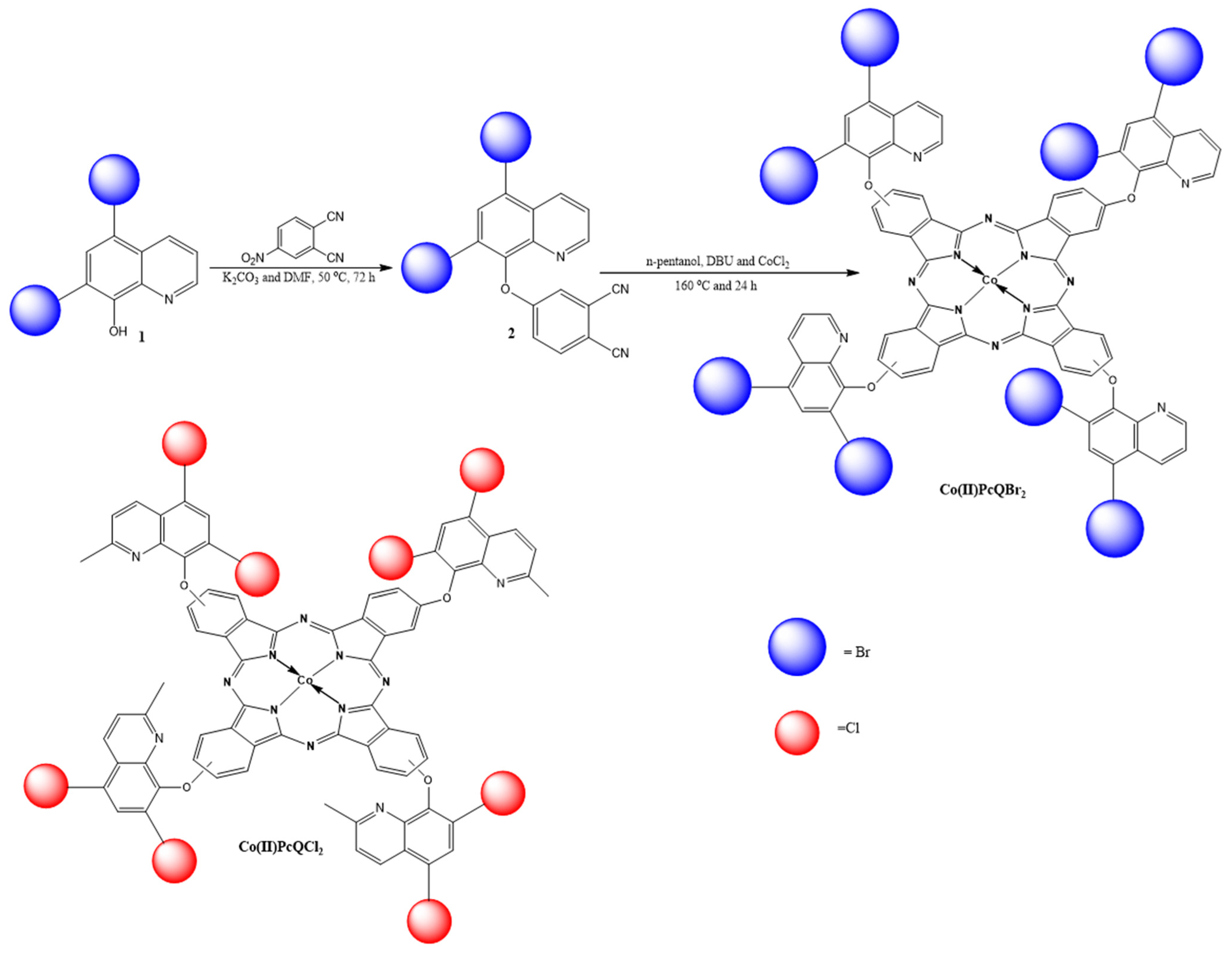
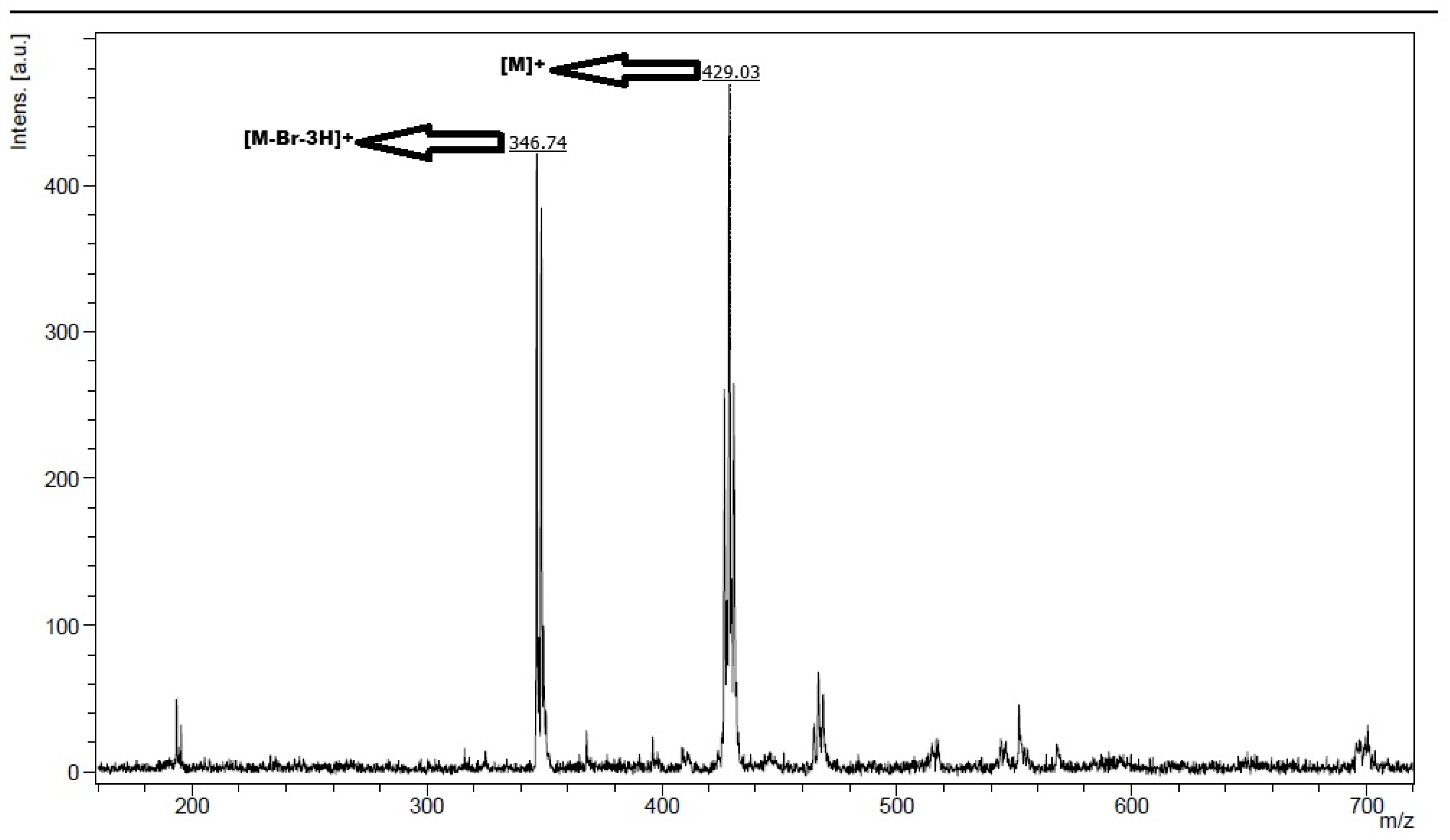
5,7-dibromoquinolin-8-ol (1) and 4-nitrophthalonitrile were reacted under an inert atmosphere in dry DMF solution with the addition of dry K2CO3 [31,32]. As a result of the nucleophilic aromatic substitution reaction (Figure 1), 4-[(5,7-dibromoquinolin-8-yl)oxy]phthalonitrile (2) was obtained with a yield of 78%. The observation of the C≡N stretching vibration frequency at 2232 cm−1, which is not present in the starting compound but is present in the FT-IR spectrum of 4-[(5,7-dibromoquinolin-8-yl)oxy]phthalonitrile (2), is crucial for structural determination. The aromatic C-H vibration frequency of the compound’s structure was observed just above 3000 cm−1, while the aliphatic C-H stretching vibration frequency was just below 3000 cm−1. The 1H-NMR spectrum of 4-[(5,7-dibromoquinolin-8-yl)oxy]phthalonitrile (2) shows aromatic protons at 8.89 (s, 1H, ArH), 8.58 (d, 1H, ArH), 8.40 (s, 1H, ArH), 8.09 (d, 1H, ArH), 7.82 (d, 1H, ArH), 7.80 (d, 1H, ArH), 7.45 (d, 1H, ArH), and 7.43 (d, 1H, ArH) ppm, supporting the structure (Supplementary Figure S1). In the 13C-NMR spectrum, the signals belonging to the carbon atoms in the aromatic ring are at 166.11 (ArC-Br), 163.63 (ArC-Br), 157.69 (ArC-O), 150. 94 (ArC-O), 146.93 (ArC-N), 141.38 (ArC-N), 133.24 (ArC), 129. 25 (ArC), 126.10 (ArC), 124.92 (ArC), 122.19 (ArC), 121.84 (ArC), 121.07 (ArC) and 120.50 ppm, while the signals for the carbon atoms in the C≡N groups are at 115. 83 and 113.44 ppm, supporting the structure (Supplementary Figure S2). The observation of the molecular ion peak at 429.036 [M]+ and the fragment ion peak at 346.79 [M-Br-3H]+ in the mass spectrum of the 4-[(5,7-dibromoquinolin-8-yl)oxy]phthalonitrile (2), obtained by the MALDI-TOF technique, supports the structure of the compound (Figure 2).
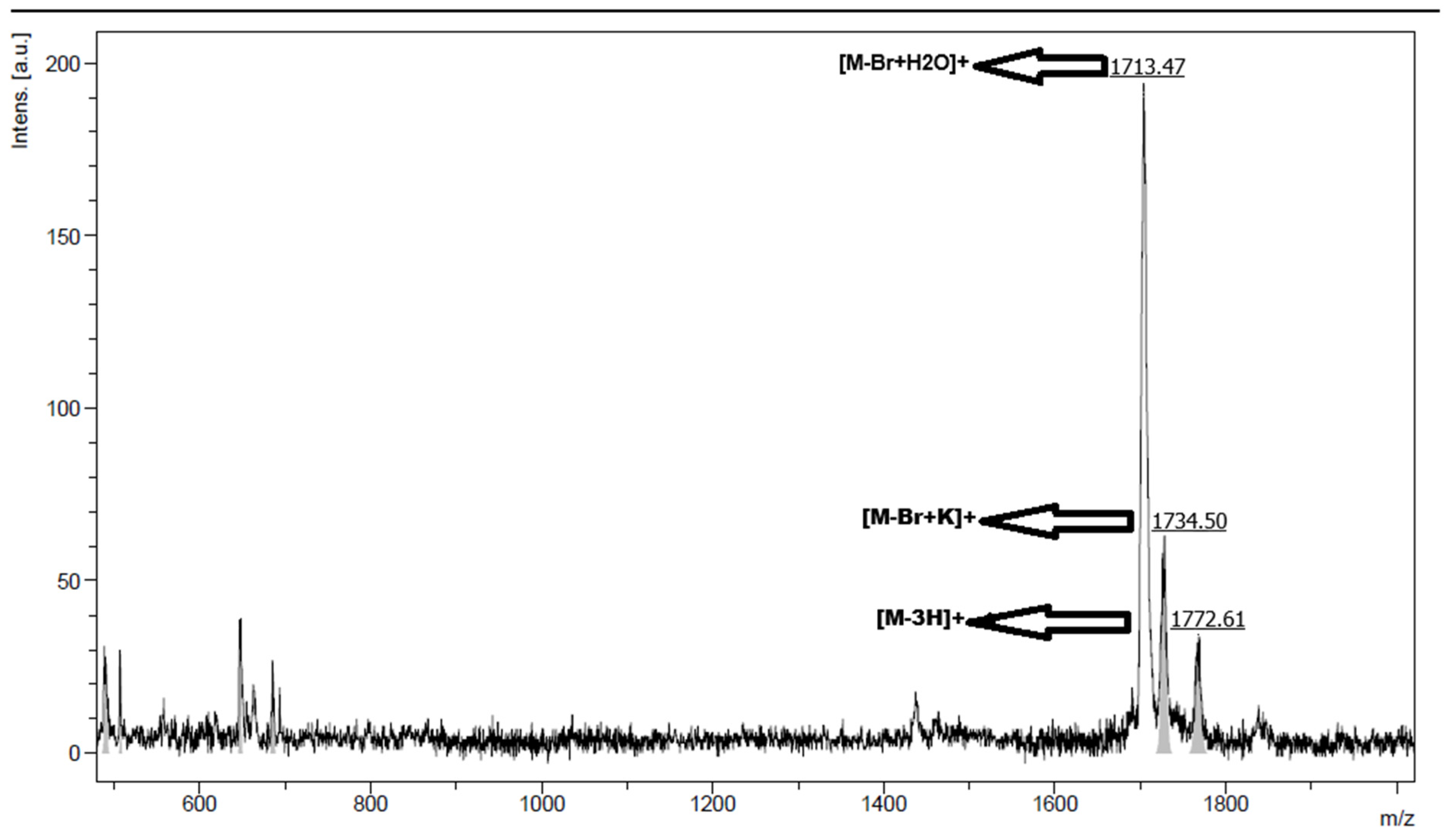
4-[(5,7-dibromoquinolin-8-yl)oxy]phthalonitrile (2) was boiled at 160 °C for 24 h in the presence of n-pentanol, DBU, and dry CoCl2 under an inert atmosphere to obtain 2(3), 9(10), 16(17), 23(24)-tetrakis-[(5,7-dibromoquinolin-8-yl)oxy] phthalocyaninato cobalt(II) (Co(II)PcQBr2) with a yield of 51%. The crude product was purified by column chromatography using a chloroform: ethanol solvent system (98:2). 1H-NMR and 13C-NMR spectra of metallophthalocyanines containing paramagnetic metal centers such as Co+2 cannot be obtained [33]. In the FT-IR spectrum of 2(3), 9(10), 16(17), 23(24)-tetrakis-[(5,7-dibromoquinolin-8-yl)oxy] phthalocyaninato cobalt(II) (Co(II)PcQBr2), the disappearance of the C≡N stretching vibration frequency at 2232 cm−1, which is distinctive of 4-[(5,7-dibromoquinolin-8-yl)oxy]phthalonitrile (2), supports the formation of phthalocyanine compounds in terms of FT-IR spectroscopy. A key property of phthalocyanine compounds is the absorption bands observed in the Q-band region of the UV-Vis spectrum, which are influenced by the presence or absence of metal ions in the central cavity. The Q-band observed at 684 (5.12) in the UV-Vis spectrum of compound 2(3), 9(10), 16(17), 23(24)-tetrakis-[(5,7-dibromoquinolin-8-yl)oxy] phthalocyaninato cobalt(II) (Co(II)PcQBr2) confirmed the structure (Supplementary Figure S3). The observation of fragment ion peaks at 1713.47 [M-Br+H2O]+, 1734.50 [M-Br+K]+ and 1772.61 [M-3H]+ in the mass spectrum of 2(3), 9(10), 16(17), 23(24)-tetrakis-[(5,7-dibromoquinolin-8-yl)oxy] phthalocyaninato cobalt(II) (Co(II)PcQBr2) obtained by the MALDI-TOF technique supports the structure of the compound (Figure 3).

2.2. Catalytical Studies

The catalytic activities of Co(II)PcQBr2 and Co(II)PcQCl2 were investigated in the oxidation reaction of benzyl alcohol with different oxidants (H2O2, TBHP and m-CPBA) The effects of the substrate/catalyst ratio, oxidant/catalyst ratio, oxidant type and temperature on the oxidation reaction of benzyl alcohol were investigated. Samples taken from the reaction medium every 30 min for 120 min were analyzed by GC using the standard addition method. According to the analysis results of the samples taken from the reaction media, benzaldehyde was identified as the by-product and benzyl benzoate as the main product of the oxidation reaction of benzyl alcohol (Figure 4). The former serves as a precursor molecule for producing many pharmaceutical chemicals and is also used as a sweetener, whereas the latter is utilized in the treatment of scabies and in the paint industry [34]. All oxidation reactions were repeated separately under the established optimum conditions without the use of oxidants or catalysts.
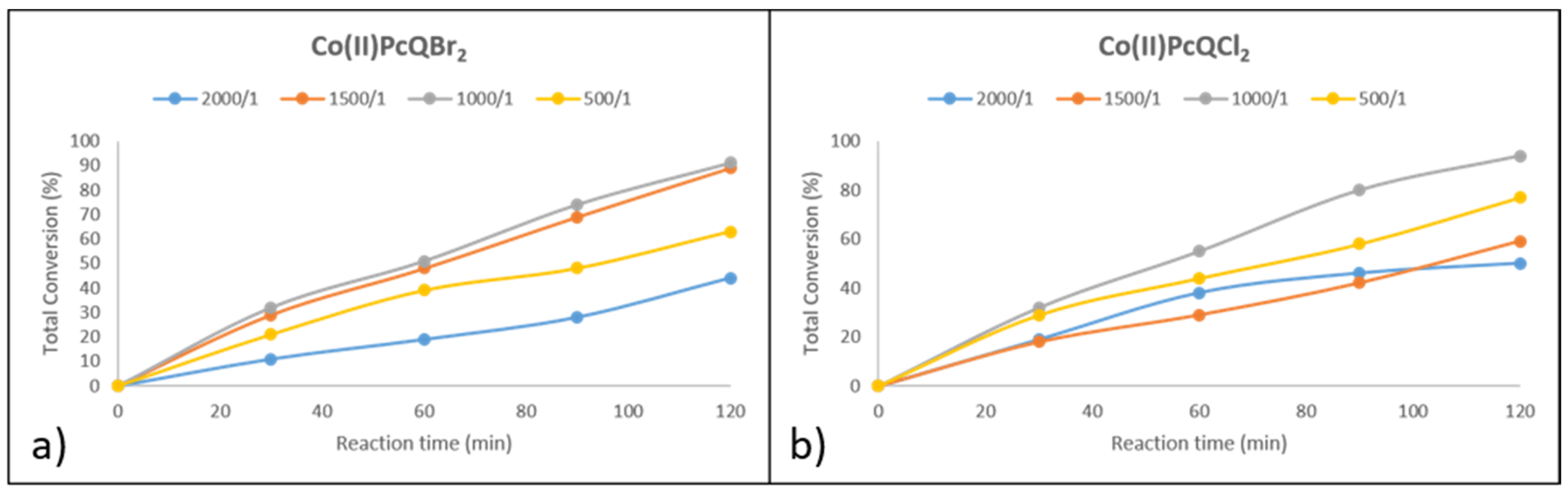
To determine the effect of the substrate/catalyst ratio on the oxidation reaction of benzyl alcohol, 6.78 × 10⁻⁷ mol of Co(II)PcQBr2 and Co(II)PcQCl2 was used as the catalyst. Oxidation studies were conducted with four different amounts of substrate (benzyl alcohol): 3.39 × 10⁻⁴ mol, 6.78 × 10⁻⁴ mol, 10.17 × 10⁻⁴ mol, and 13.56 × 10⁻⁴ mol, while keeping a constant catalyst amount. The reactions were performed at 50 °C for 120 min using 3.39 × 10⁻⁴ mol H2O2. Figure 5a,b illustrate the total conversions obtained at different substrate/catalyst ratios. As a result of the evaluation of the samples taken from the reaction media using GC, when the substrate/catalyst ratio was 1000/1, the total product conversion of benzyl alcohol reached 88.7% for Co(II)PcQBr2 and 94% for Co(II)PcQCl2 (Figure 5a,b). When the substrate/catalyst ratio was 1000/1 (6.78 × 10⁻⁴ mol of benzyl alcohol was used), 70.4% benzyl benzoate conversion for Co(II)PcQBr2 and 87.4% benzyl benzoate conversion for Co(II)PcQCl2 were identified. When this ratio changed to 1500/1, the total product conversion decreased to 58.4% for Co(II)PcQBr2 and 80.4% for Co(II)PcQCl2, and when it reached 2000/1, it fell further to 60.7% for Co(II)PcQBr2 and 50.4% for Co(II)PcQCl2 (Table 1 and Table 2). This decline in total product conversion suggests that the catalytic quantity for the oxidation reaction of benzyl alcohol is inadequate in the face of increasing substrate amounts, and that the optimal catalytic amount occurs at a substrate/catalyst ratio of 1000/1.
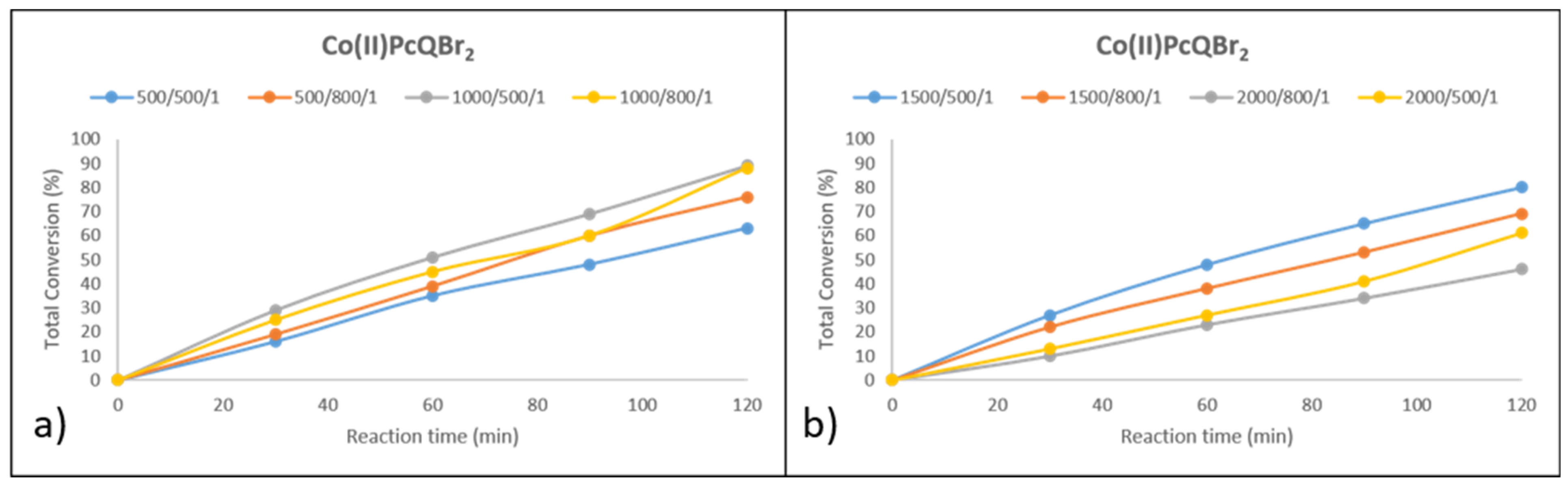
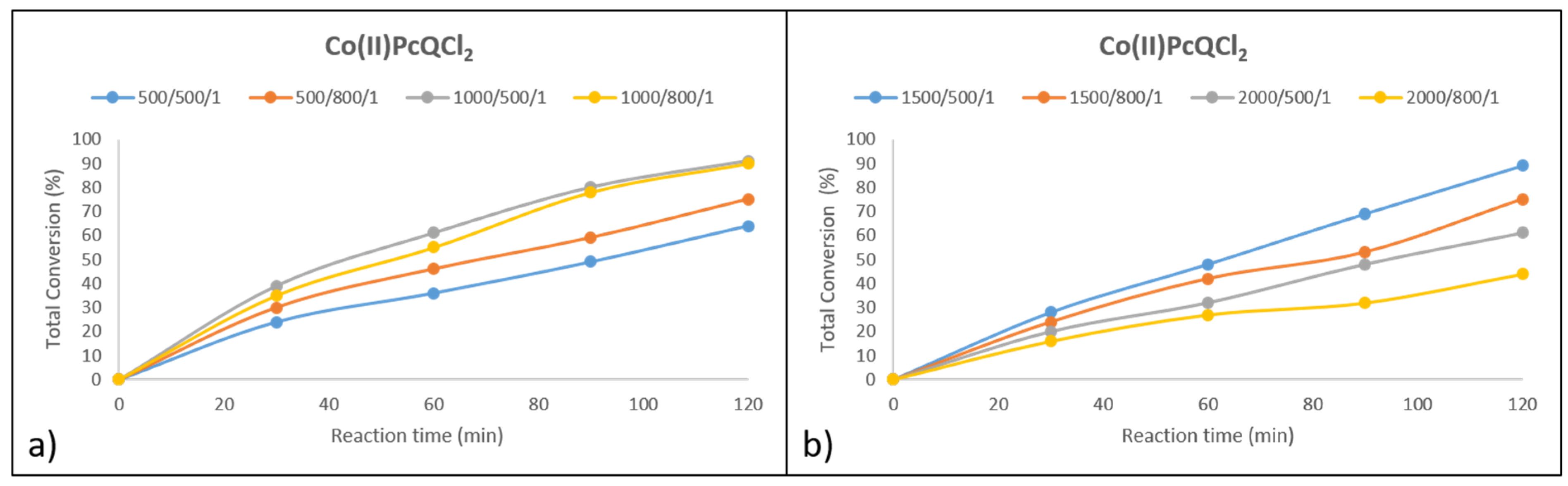
To determine the effect of the oxidant/catalyst ratio on the oxidation reaction of benzyl alcohol, we used the substrate/oxidant/catalyst ratios of 500/500/1, 500/800/1, 1000/500/1, 1000/800/1, 1500/500/1, 1500/800/1, and 2000/500/1 2000/800/1500/1. Reactions were carried out using 6.78 × 10⁻⁷ mol of Co(II)PcQBr2 and Co(II)PcQCl2 at 50 °C for 120 min (Figure 6a,b). It is known from the literature that higher conversion rates will be obtained in oxidation reactions with increasing amounts of oxidant [35]. In this study, when the substrate/oxidant/catalyst ratio was 1000/500/1, total conversions of 88.7% and 94.0% were achieved for Co(II)PcQBr2 and Co(II)PcQCl2, respectively, corresponding to TON values of 914 and 940 and TOF values of 457 and 470 (Table 1 and Table 2). Although Co(II)PcQBr2 had a lower total product conversion than Co(II)PcQCl2, it still achieved a total product conversion of 88.5%, with a TON of 905, and a TOF of 452, when the oxidant/cat ratio was 800/1. Increasing the substrate/oxidant/catalyst ratio to 1000/800/1 was intended to enhance the total product conversion; however, no significant decrease in either total conversion or benzyl benzoate selectivity was observed at the oxidant/catalyst ratio of 800/1. (Figure 7a,b). This demonstrates that oxidation is negatively affected when an excess oxygen source is added to the medium [36].
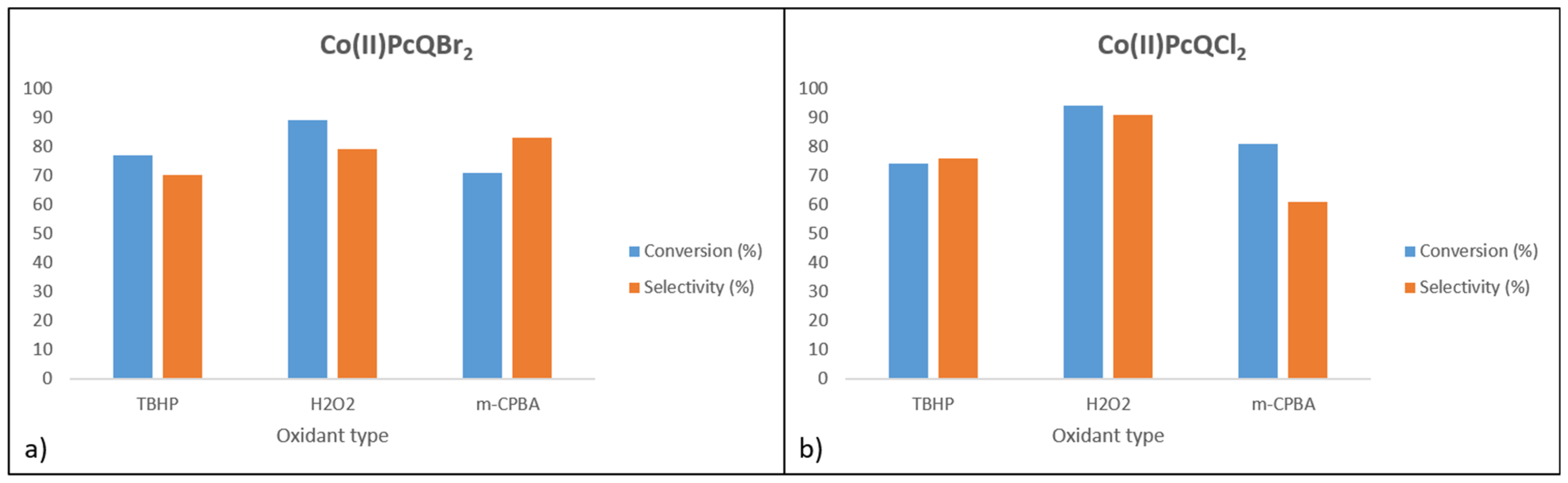
To determine the effect of oxidant type on the oxidation reaction of benzyl alcohol, catalytic studies were conducted using three different oxidants: 6.78 × 10⁻⁷ mol of Co(II)PcQBr2 and Co(II)PcQCl2, 6.78 × 10⁻⁴ mol of benzyl alcohol, 3.39 × 10⁻⁴ mol of H2O2, TBHP, and m-CPBA. Figure 8a,b show the total product conversions and benzyl benzoate selectivity obtained in the three different oxidation states. When the results were examined, it was determined that both catalysts worked actively when H2O2 was used as the oxidant, resulting in high conversion and benzyl benzoate selectivity. When m-CPBA was used, a total product conversion of 70.6% and a benzyl benzoate selectivity of 82.7% was achieved with the Co(II)PcQBr2 catalyst, while the same catalyst could reach a total product conversion of 77.5% and a benzyl benzoate selectivity of 70.0% in the presence of TBHP. Similarly, with the Co(II)PcQCl2 catalyst, a total product conversion of 80.8% and a benzyl benzoate selectivity of 61.1% were obtained in the presence of m-CPBA, while a total product conversion of 74.3% and a benzyl benzoate selectivity of 75.9% were obtained in the presence of TBHP.
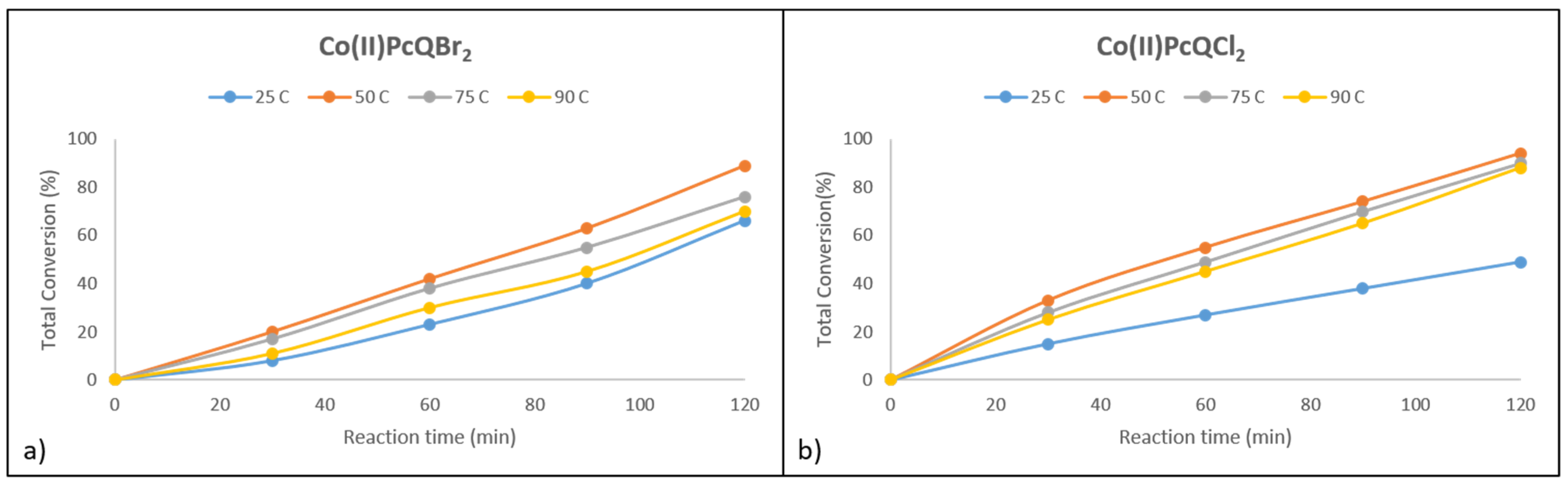
To determine the effect of temperature on the oxidation reaction of benzyl alcohol, catalytic studies were carried out at four different temperatures: 25 °C, 50 °C, 75 °C, and 90 °C. The reactions utilized 6.78 × 10⁻⁷ mol Co(II)PcQBr2 and Co(II)PcQCl2, 6.78 × 10⁻⁴ mol benzyl alcohol, and 3.39 × 10⁻⁴ mol oxidant, all carried out over 120 min (Figure 9a,b). Based on the results obtained for both catalysts, increasing the temperature from 25 °C to 50 °C led to increases in both total conversion and benzyl benzoate selectivity. However, when the temperature was further increased from 50 °C to 75 °C and then to 90 °C, both total conversion and benzyl benzoate selectivity decreased. Therefore, the optimum temperature for the oxidation reaction of benzyl alcohol was established as 50 °C for both catalysts.
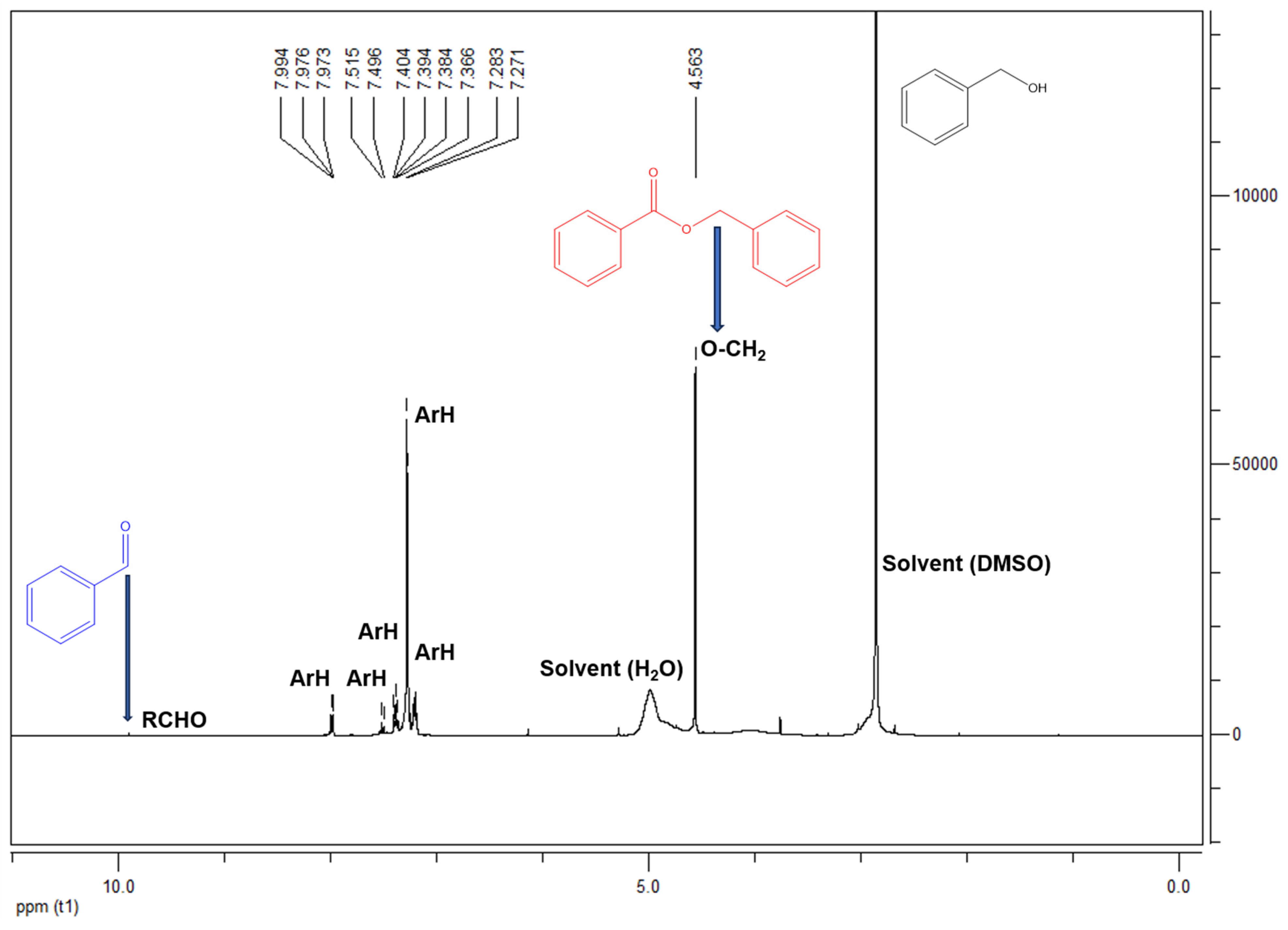
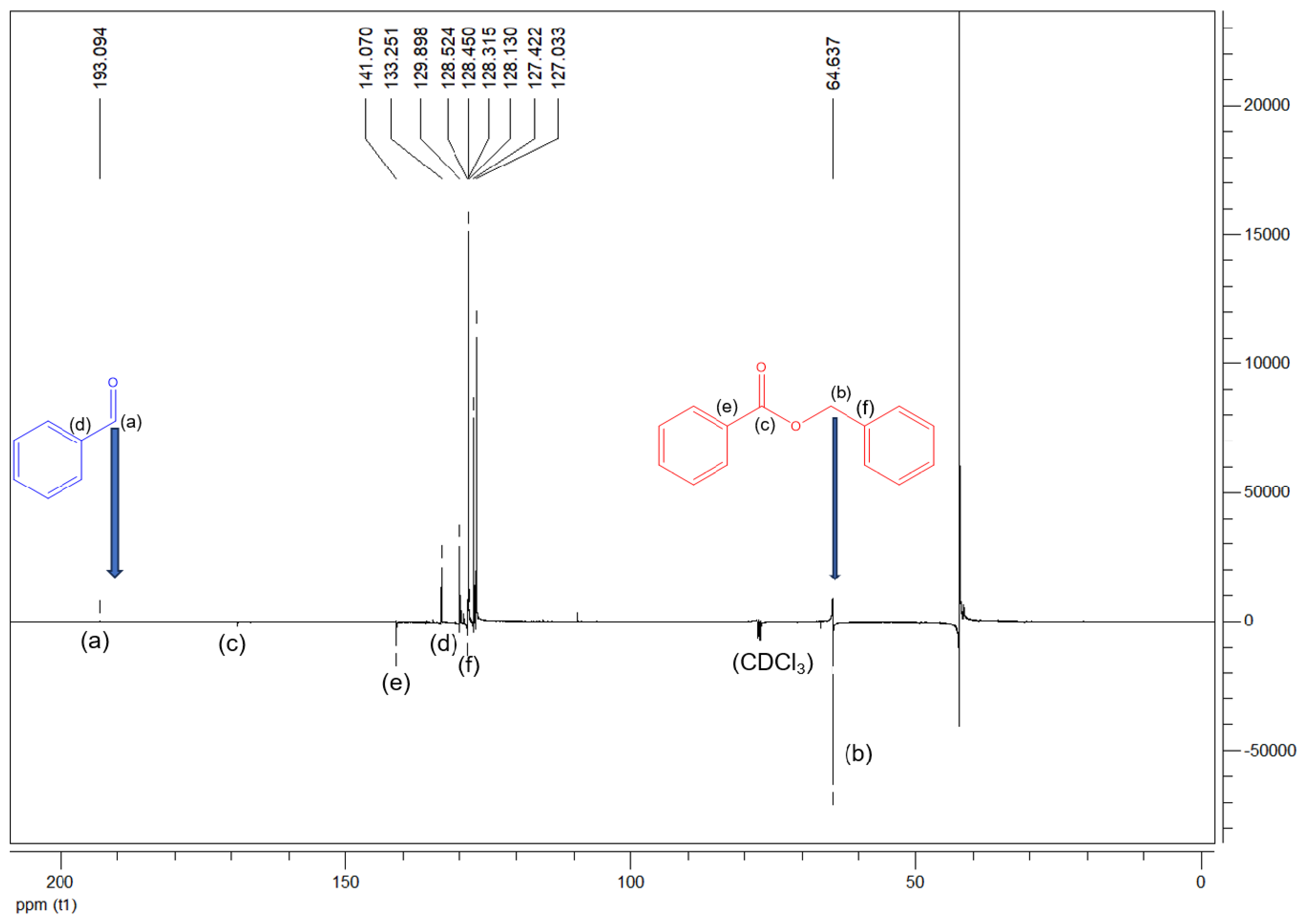
At the end of the catalytic reactions with Co(II)PcQCl2, utilizing a substrate/oxidant/catalyst ratio of 1000/500/1 at 50 °C for 120 min, the solid sample mixture drawn from the reaction medium was evaluated through 1H-NMR (400 MHz, DMSO-d6, ppm) and 13C(APT)-NMR (400 MHz, CDCl3, ppm) spectra (Figure 10 and Figure 11). The resonance of the proton (HC=O) associated with the aldehyde functional group at approximately 10 ppm indicates the presence of benzaldehyde in the reaction mixture, while the peak corresponding to the -CH2-O- group observed at 4.56 ppm indicates the presence of benzyl benzoate. Upon examining the 13C(APT)- NMR spectrum derived from the reaction mixture, the identification of a total of four quaternary carbon atoms belonging to benzyl benzoate, including one aliphatic carbon (b), one carbonyl group carbon (c), and two aromatic carbons (e and f), confirms the presence of benzyl benzoate in the environment. Additionally, the signal corresponding to the aldehyde carbonyl carbon atom (a) at 193 ppm provides further scientific evidence for the presence of benzaldehyde.
Radical scavenger experiments were conducted to elucidate the underlying reaction mechanism and to identify the nature of the active oxidative species involved in the oxidation of benzyl alcohol catalyzed by Co(II)PcQBr2 and Co(II)PcQCl2. Such studies are essential for distinguishing between radical-mediated and non-radical pathways, particularly in oxidation systems employing peroxide-based oxidants. Moreover, scavenger tests provide insight into the contribution of specific reactive oxygen species, such as hydroxyl or superoxide radicals, to the overall catalytic performance. These findings are crucial for understanding the role of the cobalt center and the influence of peripheral substituents on the catalytic mechanism [9,37,38]. A detailed evaluation of the data presented in Table 3 reveals that the presence of radical scavengers has a pronounced impact on the catalytic performance of both the Co(II)PcQBr2 and Co(II)PcQCl2 systems, thereby providing strong mechanistic insights into the oxidation process. Under scavenger-free conditions, Co(II)PcQCl2 exhibits superior catalytic activity (94.0% total conversion and 91.0% selectivity) compared to Co(II)PcQBr2 (88.7% total conversion and 79.3% selectivity), indicating a more efficient and selective catalytic pathway for the chloro-substituted complex.
The addition of tert-butanol, a well-known hydroxyl radical (•OH) scavenger, resulted in a substantial decrease in both benzyl benzoate formation and overall conversion for both catalysts (e.g., from 88.7% to 45.2% for Co(II)PcQBr2 and from 94.0% to 52.1% for Co(II)PcQCl2). This pronounced inhibition strongly suggests that •OH radicals play a dominant role in the oxidation mechanism. An even more dramatic suppression was observed in the presence of TEMPO, where total conversion dropped to 20.8% and 25.4% for Co(II)PcQBr2 and Co(II)PcQCl2, respectively. This behavior confirms that the reaction proceeds predominantly through a free-radical pathway, as TEMPO efficiently quenches radical intermediates and interrupts the catalytic cycle.
The incorporation of p-benzoquinone, a superoxide radical (O2) scavenger, leads to a moderate decline in catalytic activity (e.g., to 58.7% and 70.3% total conversion for Co(II)PcQBr2 and Co(II)PcQCl2, respectively), indicating that superoxide species also contribute to the reaction, although their role is secondary compared to hydroxyl radicals. In contrast, the addition of sodium azide caused only a limited reduction in conversion and selectivity, suggesting that singlet oxygen (1O2) does not significantly participate in the oxidation process under the applied conditions.
Furthermore, the consistent decrease in TON and TOF values in the presence of scavengers corroborates the suppression of active reactive species responsible for efficient catalytic turnover. Notably, the Co(II)PcQCl2 system retains relatively higher activity than its bromo analog even in the presence of scavengers, implying a more robust catalytic cycle and possibly a more efficient generation or utilization of reactive oxygen species. Overall, these results provide compelling evidence that the oxidation of benzyl alcohol over both catalysts follows a predominantly hydroxyl radical-driven, Fenton-like mechanism, with a minor contribution from superoxide species and negligible involvement of singlet oxygen.
When placed on the phthalocyanine ring as substituents, steric atoms with large volumes, such as bromine and chlorine atoms, can make it difficult for the substrate to reach the reactive centers. This generally results in a decrease in catalytic activity. However, halogenated phthalocyanines generally have a lower tendency to aggregate (i.e., their tendency to cluster with each other is reduced). Substituents containing steric atoms reduce phthalocyanine aggregation, thus making the catalyst more active. In this study, the high activity of both catalysts reveals the effect of aggregation, while the lower activity of Co(II)PcQBr2 compared to Co(II)PcQCl2 confirms the steric effect. On the other hand, when the activities of both catalysts are evaluated, Co(II)PcQCl2 has a higher selectivity toward benzyl benzoate. It is thought that the steric hindrance of the Cl atom may have increased product selectivity by preventing side reactions.
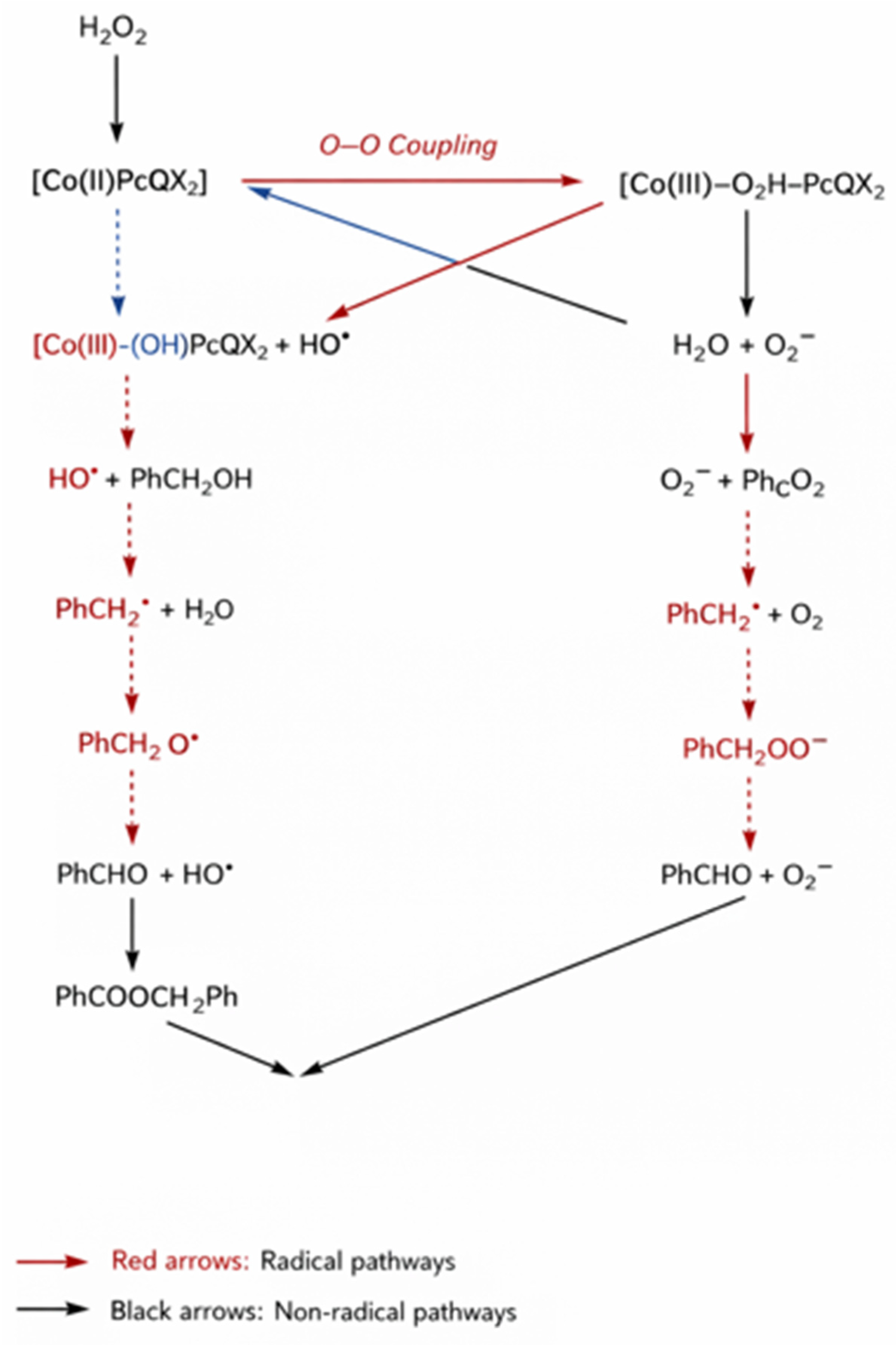
In the literature, some interesting studies have reported the use of differently substituted metal phthalocyanines in the oxidation of benzyl alcohol [39,40,41,42,43,44,45,46,47,48,49,50,51]. In these studies, it is observed that phthalocyanines with different central atoms, such as Co(II), Cu(II), and Fe(II), and various side groups at peripheral and non-peripheral positions have been utilized as catalysts. Some recent studies have shown that heterogeneous catalysts are developed using various support materials (carbon nanomaterials, carbon nanotubes, MCM-41, silica-based nanostructures, graphitic carbon nitrides, etc.) to enhance the catalytic performance of phthalocyanine compounds [52,53,54,55,56,57]. Based on the data from our work and the literature, a reaction mechanism was proposed for the conversion of benzyl alcohol to benzaldehyde and benzyl benzoate through catalytic oxidation. The proposed mechanism, illustrated in Figure 12, highlights the radical-mediated oxidation of benzyl alcohol catalyzed by Co(II)PcQBr2 and Co(II)PcQCl2 in the presence of H2O2. Initially, the Co(II) center activates hydrogen peroxide to generate reactive oxygen species, primarily hydroxyl radicals (•OH), via a Fenton-like pathway. These radicals abstract a benzylic hydrogen from benzyl alcohol, forming a benzyl radical intermediate, which subsequently undergoes further oxidation to yield benzaldehyde or directly reacts to form benzyl benzoate. The schematic also indicates the minor involvement of superoxide radicals (O2) and the negligible participation of singlet oxygen, consistent with the scavenger test results. Red arrows trace the radical pathways, while black arrows depict non-radical processes. Notably, peripheral substituents (Br or Cl) modulate the electron density around the cobalt center, influencing the efficiency of reactive oxygen species generation and thereby affecting overall conversion and product selectivity. This figure effectively summarizes the key mechanistic steps and rationalizes the observed catalytic performance differences between the two phthalocyanine complexes [58,59].

3. Experimental

3.1. Materials

All solvents were dried and purified as described in the reported procedure [31]. 2(3), 9(10), 16(17), 23(24)-Tetrakis-[(5,7-dichloro-2-methylquinoline-8-yl)oxy] phthalocyaninato cobalt(II) (Co(II)PcQCl2) was designed and prepared in the literature [30]. 4-Nitrophthalonitrile was purchased from commercial suppliers (Sigma-Aldrich, Merck KGaA, St. Louis, MO, USA). The data were analyzed using OriginPro 2024 (OriginLab Corporation, Northampton, MA, USA). Information on all materials, methods, devices and the temperature program used for the oxidation analysis of benzyl alcohol are given in the Supplementary Files.

3.2. Synthesis of 4-[(5,7-Dibromoquinolin-8-yl)oxy]phthalonitrile (2)

5,7-dibromoquinolin-8-ol (1) (4 g, 17.46 mmol), 4-nitrophthalonitrile (2) (3.02 g, 17.46 mmol), and 40 mL of dry DMF were added to a 250 mL reaction flask under a nitrogen atmosphere and stirred at 50 °C for 15 min. After the reaction mixture had completely dissolved, dry K2CO3 (2.41 g, 17.46 mmol) was added to the reaction content in small portions over 2 h. Once the dissolved oxygen in the reaction medium was removed, the reaction continued under a nitrogen atmosphere at 50 °C for 72 h with stirring. At the end of this period, the reaction mixture was cooled to room temperature, poured onto 200 g of ice, stirred at room temperature for 2 h and filtered through a crucible. The crude product formed was crystallized from ethanol. The solid product obtained was washed with cold ethyl alcohol, filtered, and dried in a vacuum desiccator to yield a brown solid. Yield: 2.50 g (78%). Molecular formula C17H7Br2N3O, IR (KBr tablet), ν/cm−1 3072 (ArH), 3040 (ArH), 2978 (Alip.H), 2232 (C≡N), 1597, 1489, 1441, 1343, 1279, 1251, 1228, 1154, 1098, 1065, 932, 847, 794, 787. 1H-NMR (CDCl3), (δ:ppm): 8.07 (d, 1H, ArH-N), 7.83 (s, 1H, Ar-H), 7.70–7.63 (d, 1H, Ar-H), 7.51 (d, 1H, Ar-H), 7.32 (d, 1H, Ar-H), 7.02 (d, 1H, Ar-H), 6.66 (d, 1H, Ar-H). 13C-NMR (CDCl3), (δ:ppm): 166.11, 163.63, 157.69, 150.94, 146.93, 141.38, 133.24, 129.25, 126.10, 124.92, 122.19, 121.84, 121.07, 120.50, 115.83, 113.44. MALDI-TOF-MS (m/z): Calculated: 429.06; Found: 429.036 [M]+, 346.79 [M-Br-3H]+.

3.3. Synthesis of 2(3), 9(10), 16(17), 23(24)-Tetrakis-[(5,7-Dibromoquinolin-8-yl)oxy] Phthalocyaninato Cobalt(II) (Co(II)PcQBr2)

In a Schlenk tube, 4-[(5,7-dibromoquinolin-8-yl)oxy]phthalonitrile (2) (800 mg, 0.45 mmol), 6 mL of n-pentanol, 8–10 drops of DBU, and CoCl2 (15.0 mg, 0.112 mmol) were added and stirred under a nitrogen atmosphere at 160 °C for 24 h. The reaction mixture was cooled to room temperature, and 40 mL of ethanol was added to the green content, which was stirred at room temperature for one hour. The precipitated green crude product was filtered from the crucible and dried in a vacuum desiccator. The solid product obtained was purified using column chromatography with a CHCl3: C2H5OH (98:2 v/v) solvent system on a basic alumina-loaded column. The appropriate fractions were determined and combined using thin-layer chromatography. The combined fractions were evaporated to dryness under reduced pressure in the evaporator. The green-colored product was precipitated by the addition of ethyl alcohol, filtered, washed with diethyl ether, and dried in a vacuum desiccator. Yield: 352 mg, 51%. IR (KBr pellet), νmax/cm−1: 3054 (Ar–CH), 2946–2892 (Alif. C-H), 1610, 1588, 1522, 1472, 1430, 1365, 1302, 1288, 1246, 1192, 1052, 988, 803, 756, 661, 544. UV-Vis (CHCI3): λmax, nm (log ε): 677 (5.02), 612 (4.98). MALDI-TOF-MS (m/z): Calculated: 1775.19.; Found: 1713.47 [M-Br+H2O]+, 1734.50 [M-Br+K]+ and 1772.61 [M-3H]+. Solubility:CHCl3, CH2Cl2, DMF, and DMSO.

3.4. Catalytic Procedure

Benzyl alcohol as the substrate, Co(II)PcQBr2 and Co(II)PcQCl2 (6.78 × 10⁻⁷ mol) as the catalyst and 10 mL of DMSO as the solvent were added to a Schlenk vessel. It was heated to the desired temperature and monitored using a contact thermometer. Once the system had reached equilibrium, the amount of TBHP, H2O2, or m-CPBA was added as the oxidant. When the reaction temperature was attained, a sample was taken with a pipette, diluted with dichloromethane in a glass tube, and this point was noted as the start time of the reaction. As the reaction progressed, samples taken at various time intervals in the reaction medium and analyzed using gas chromatography to obtain the product distribution profile over time.
Radical scavenger experiments were performed under the optimized reaction conditions (substrate/catalyst ratio of 1000/1, 50 °C, H2O2 as the oxidant, DMSO as the solvent, and a reaction time of 120 min) to elucidate the reaction mechanism. In a typical procedure, benzyl alcohol (6.78 × 10⁻⁴ mol), catalyst (6.78 × 10⁻⁷ mol), and oxidant (3.38 × 10⁻⁴ mol) were introduced into the reaction medium, followed by the addition of an appropriate radical scavenger, including tert-butanol (t-BuOH), TEMPO, p-benzoquinone (p-BQ), or sodium azide (NaN3), in 1–5 equiv relative to the oxidant. The reaction mixture was stirred at the specified temperature, and aliquots were periodically withdrawn, quenched, and analyzed by GC to determine conversion and product selectivity. Control experiments were conducted under identical conditions in the absence of scavengers for comparison. The effect of each scavenger on catalytic performance was evaluated based on changes in conversion, selectivity, and turnover parameters (TON and TOF).

4. Conclusions

The present study demonstrates that Co(II)PcQBr2 and Co(II)PcQCl2 are highly efficient catalysts for the selective oxidation of benzyl alcohol to benzyl benzoate, with benzaldehyde as a minor by-product. Systematic investigations revealed that the substrate/catalyst ratio, oxidant/catalyst ratio, oxidant type, and reaction temperature critically influence both conversion and product selectivity. Optimal conditions were established at a substrate/catalyst ratio of 1000/1, an oxidant/catalyst ratio of 500/1, and a temperature of 50 °C, with H2O2 identified as the most effective oxidant. Under these conditions, Co(II)PcQCl2 achieved a total conversion of 94.0% and a benzyl benzoate selectivity of 91.0%, surpassing its bromo analog. Mechanistic insights from radical scavenger experiments strongly indicate that the oxidation proceeds predominantly via a hydroxyl radical-driven, Fenton-like pathway, with a minor contribution from superoxide species and negligible participation of singlet oxygen. The steric and electronic effects of the halogen substituents were found to modulate both activity and selectivity. While the larger bromine atoms slightly reduce overall conversion due to steric hindrance, the reduced aggregation of halogenated phthalocyanines ensures high catalytic efficiency. The chloro-substituted phthalocyanine, in particular, demonstrates enhanced product selectivity, likely due to the steric prevention of side reactions, highlighting the potential of peripheral substituents as tunable parameters in catalyst design.
Taken together, these findings not only provide a detailed understanding of the structure–activity relationships of halogenated Co(II) phthalocyanines but also underscore their practical potential as selective and robust catalysts for industrially relevant oxidation processes. The combination of high conversion, tunable selectivity, and a radical-mediated mechanism suggests that these catalysts could be further developed for the efficient production of fine chemicals and pharmaceutical intermediates, offering a sustainable alternative to conventional oxidation methods. Although the primary focus of this study remains strictly on benzyl alcohol oxidation to establish a clear fundamental baseline, the observed steric and electronic modulations of the phthalocyanine core offer valuable insights for broad catalytic applications. Specifically, the electronic properties and steric hindrance induced by the peripheral substituents are expected to similarly influence the coordination and activation of other aromatic or aliphatic alcohols. Future investigations will expand upon this versatility by evaluating these catalysts against a broader library of substrates to map the full extent of their catalytic boundaries.

Supplementary Materials

The following supporting information can be downloaded at: https://www.mdpi.com/article/10.3390/catal16060554/s1, Figure S1. 1H-NMR spectrum of 4-[(5,7-dibromoquinolin-8-yl)oxy]phthalonitrile. Figure S2. 13C-NMR spectrum of 4-[(5,7-dibromoquinolin-8-yl)oxy]phthalonitrile. Figure S3. Uv-Vis spectrum of 2(3), 9(10), 16(17), 23(24)-Tetrakis-[(5,7-dibromoquinolin-8-yl)oxy] phthalocyaninato cobalt(II) (Co(II)PcQBr2).

Author Contributions

Conceptualization, C.A. and E.T.S.; Methodology, C.A., G.G. and E.T.S.; Formal analysis, G.G., B.T., İ.U. and E.T.S.; Investigation, C.A., G.G., B.T., İ.U. and E.T.S.; Writing—original draft, C.A. and E.T.S.; Visualization, C.A.; Supervision, E.T.S.; Project administration, E.T.S.; Funding acquisition, G.G., B.T. and E.T.S. All authors have read and agreed to the published version of the manuscript.

Funding

This study was supported by the Research Fund of Karadeniz Technical University (Project no: FBA-2024-11045) Trabzon, Turkiye.

Data Availability Statement

The datasets used and/or analyzed during the current study are available from the corresponding author on reasonable request.

Conflicts of Interest

There are no conflicts of interest to declare.

References

  1. Szymczak, J.; Kryjewski, M. Porphyrins and Phthalocyanines on Solid-State Mesoporous Matrices as Catalysts in Oxidation Reactions. Materials 2022, 15, 2532. [Google Scholar] [CrossRef]
  2. Saka, E.T.; Biyiklioglu, Z.; Kantekin, H.; Tekintas, K. Synthesis, Aggregation, Photocatalytical and Electrochemical Properties of Axially 1-Benzylpiperidin-4-Oxy Units Substituted Silicon Phthalocyanine. J. Mol. Struct. 2020, 1199, 126994. [Google Scholar] [CrossRef]
  3. Li, Y.X.; Cheng, H.Y.; Wang, M.L.; Xu, J.X.; Guan, L. Highly Coordinative Molecular Cobalt-Phthalocyanine Electrocatalyst on an Oxidized Single-Walled Carbon Nanotube for Efficient Hydrogen Peroxide Production. Nano Res. 2024, 11, 2517–2527. [Google Scholar] [CrossRef]
  4. Erdol, Z.; Yuzer, C.; Kiliç, N.; İnce, M.; Ata, A.; Cakan, R.D. Tetraiodo Nickel Phthalocyanine Electrocatalyst Enables Superior Na–Se Battery Performances by Enhancing the Utilization of Na2Se. Electrochim. Acta 2023, 579, 233297. [Google Scholar] [CrossRef]
  5. Bhise, R.S.; Patil, Y.A.; Shankarling, G.S. Green Synthesis of the Copper and Iron Phthalocyanine-Based Metal–Organic Framework as an Efficient Catalyst for Methylene Blue Dye Degradation and Oxidation of Cyclohexane. React. Chem. Eng. 2023, 8, 3046–3059. [Google Scholar] [CrossRef]
  6. Liu, Z.Y.; Wu, M.X.; Ma, J.F. Cu–N4 in Copper Phthalocyanine@CFC Catalyst for Ammonia Oxidation Reaction Catalysis. Phys. Chem. Chem. Phys. 2023, 25, 7859–7868. [Google Scholar] [CrossRef]
  7. Mounesh, K.V.; Yatish, K.V.; Pandith, A.; Eldesoky, G.E.; Nagaraja, B.M. A Novel MWCNT-Encapsulated (2-Aminoethyl)piperazine-Decorated Zinc(II) Phthalocyanine Composite: Development of an Electrochemical Sensor for Detecting the Antipsychotic Drug Promazine in Environmental Samples. J. Mater. Chem. B 2023, 11, 10692–10705. [Google Scholar] [CrossRef]
  8. Kamalasekaran, K.; Magesh, V.; Atchudan, R.; Arya, S.; Sundramoorthy, A.K. Development of Electrochemical Sensor Using Iron(III) Phthalocyanine/Gold Nanoparticle/Graphene Hybrid Film for Highly Selective Determination of Nicotine in Human Salivary Samples. Biosensors 2023, 13, 839. [Google Scholar] [CrossRef]
  9. Akkol, C.; Saka, E.T.; Senocak, A. The performance of phthalocyanine-based catalysts for photocatalytic degradation of chlorophenols. Chem. Commun. 2026, 188, 116457. [Google Scholar] [CrossRef]
  10. Aralekallu, S.; Hadimane, S.; Nemekal, M.; Sannegowda, L.K. Organic Hybrid of Cobalt Phthalocyanine Embedded Graphene as an Efficient Catalyst for Oxygen Reduction Reaction. Fuel 2024, 361, 130736. [Google Scholar] [CrossRef]
  11. Li, W.; Chen, W.; Zhuo, H.; Yu, J.; Liu, X.; Zhang, Y.; Chen, Y. “Substituents Optimization” and “Push Effect” Dual Strategy for Design of Cobalt Phthalocyanine Catalyst on Oxygen Reduction Reaction. J. Mater. Sci. Technol. 2023, 257, 80–88. [Google Scholar] [CrossRef]
  12. Wang, Y.; Shen, H.; Shi, Z.; Xing, Q.; Pi, Y. Activation of Peroxymonosulfate by Sulfonated Cobalt(II) Phthalocyanine for the Degradation of Organic Pollutants: The Role of High-Valent Cobalt–Oxo Species. Chem. Eng. J. 2023, 455, 140671. [Google Scholar] [CrossRef]
  13. Akkol, C.; Caglar, Y.; Saka, E.T. Synthesis and Photocatalytic Evaluation of CoPc/g-C3N4 and CuPc/g-C3N4 Catalysts for Efficient Degradation of Chlorinated Phenols. Molecules 2026, 31, 213. [Google Scholar] [CrossRef]
  14. Chen, Y.; Gu, Y.; Li, N.; Lu, W.Y.; Chen, W.X. Efficient Oxidative Removal of Organic Pollutants by Ordered Mesoporous Carbon-Supported Cobalt Phthalocyanine. J. Nanomater. 2016, 2016, 6953587. [Google Scholar] [CrossRef]
  15. Bonegardt, D.; Klyamer, D.; Sukhikh, A.; Krasnov, P.; Popovetskiy, P.; Basova, T. Fluorination vs. Chlorination: Effect on the Sensor Response of Tetrasubstituted Zinc Phthalocyanine Films to Ammonia. Chemosensors 2021, 9, 137. [Google Scholar] [CrossRef]
  16. Gorbunova, E.A.; Kononenko, N.E.; Vasilevsky, P.N.; Saveliev, M.S.; Gerasimenko, A.Y.; Tarasevich, B.N.; Dubinina, T.V. Iodinated Lutetium(III) Phthalocyanine: Synthesis, Photochemical and Nonlinear Optical Properties. J. Photochem. Photobiol. A Chem. 2024, 454, 115745. [Google Scholar]
  17. Le, S.U.; Kim, J.C.; Mizuseki, H.; Kawazoe, Y. The Origin of the Halogen Effect on the Phthalocyanine Green Pigments. Chem.–Asian J. 2010, 5, 1341–1346. [Google Scholar] [CrossRef]
  18. Dai, G.L.; Chen, L.; Xie, F.M. Structures and Electronic Properties of Halogenated Au(III) Phthalocyanine AuPcX (X = Cl, Br): A Density Functional Theoretical Study. Comput. Mater. Sci. 2018, 152, 262–267. [Google Scholar]
  19. Zhang, J.; Li, J.; Ren, T.; Hu, Y.; Ge, J.; Zhao, D. Oxidative Desulfurization of Dibenzothiophene Based on Air and Cobalt Phthalocyanine in an Ionic Liquid. RSC Adv. 2014, 4, 3206–3210. [Google Scholar]
  20. Barandon, F.; Dialameh, S. Microwave Assisted Synthesis of Substituted Metallophthalocyanines and Their Catalytic Activity in Epoxidation Reaction. J. Porphyr. Phthalocyanines 2005, 9, 163–169. [Google Scholar]
  21. Zhang, X.; Liu, H.; An, P.; Shi, Y.; Han, J.; Yang, Z.; Long, C.; Guo, J.; Zhao, S.; Zhao, K.; et al. Delocalized Electron Effect on Single Metal Sites in Ultrathin Conjugated Microporous Polymer Nanosheets for Boosting CO2 Cycloaddition. Sci. Adv. 2020, 6, eaaz4824. [Google Scholar] [CrossRef]
  22. Bednarik, S.; Demuth, J.; Kernal, J.; Miletin, M.; Zimcik, P.; Novakova, V. Tuning Electron-Accepting Properties of Phthalocyanines for Charge Transfer Processes. Inorg. Chem. 2024, 63, 8799–8806. [Google Scholar] [CrossRef]
  23. Isci, U.; Dumoulin, F.; Ahsen, V.; Sorokin, A.B. Preparation of N-Bridged Diiron Phthalocyanines Bearing Bulky or Small Electron-Withdrawing Substituents. J. Porphyr. Phthalocyanines 2010, 14, 324–334. [Google Scholar] [CrossRef]
  24. Huang, J.-D.; Wang, S.; Lo, P.-C.; Fong, W.-P.; Kod, W.-H.; Ng, D.K.P. Halogenated Silicon(IV) Phthalocyanines with Axial Poly(ethylene glycol) Chains: Synthesis, Spectroscopic Properties, Complexation with Bovine Serum Albumin and In Vitro Photodynamic Activities. New J. Chem. 2004, 28, 348–354. [Google Scholar] [CrossRef]
  25. Revuelta-Maza, M.A.; Torres, T.; De la Torre, G. Synthesis and Aggregation Studies of Functional Binaphthyl-Bridged Chiral Phthalocyanines. Org. Lett. 2019, 21, 8183–8186. [Google Scholar] [CrossRef]
  26. Yalazan, H.; Ömeroğlu, I.; Çelik, G.; Kantekin, H.; Durmuş, M. Fluorinated Pyrazoline-Linked Axial Silicon Phthalocyanine, Alpha (α) and Beta (β) Zinc Phthalocyanines on Photophysicochemical Properties. Inorganica Chim. Acta 2023, 551, 121480. [Google Scholar] [CrossRef]
  27. Chen, J.; Zhu, C.J.; Xu, Y.; Zhang, P.W.; Liang, T.X. Advances in Phthalocyanine Compounds and Their Photochemical and Electrochemical Properties. Curr. Org. Chem. 2018, 22, 485–504. [Google Scholar] [CrossRef]
  28. Sahoo, S.R.; Sahu, S.; Sharma, S. Charge Transport and Prototypical Optical Absorptions in Functionalized Zinc Phthalocyanine Compounds: A Density Functional Study. J. Phys. Org. Chem. 2018, 31, e3785. [Google Scholar] [CrossRef]
  29. Nishi, M.; Hayata, Y.; Hoshino, N.; Hanasaki, N.; Akutagawa, T.; Matsuda, M. Intermolecular Interactions of Tetrabenzoporphyrin- and Phthalocyanine-Based Charge-Transfer Complexes. Dalton Trans. 2019, 48, 17723–17728. [Google Scholar]
  30. Demirbas, U.; Elmalı, N.; Koca, A.; Kantekin, H. Metallo-Phthalocyanines Bearing 5,7-Dichloro-8-Hydroxy-2-Methylquinoline Substituents: Synthesis, Electrochemistry and Spectroelectrochemistry. J. Organomet. Chem. 2025, 1013, 123599. [Google Scholar] [CrossRef]
  31. Demirbas, U.; Özçiftçi, Z.; Akçay, H.T. Novel Phthalocyanines Bearing Fluoro-Methylquinolin Substituents: Synthesis, Characterization, Photophysical and Photochemical Properties. J. Organomet. Chem. 2024, 1022, 123421. [Google Scholar] [CrossRef]
  32. Saka, E.T.; Kahriman, N. (E)-4-(4-(3-(2-Fluoro-5-(trifluoromethyl)phenyl)acryloyl)phenoxy)-Substituted Co(II) and Cu(II) Phthalocyanines and Their Catalytic Activities on the Oxidation of Phenols. J. Organomet. Chem. 2019, 895, 48–54. [Google Scholar]
  33. Tekintas, K.; Kesmez, Ö.; Bekircan, O.; Saka, E.T. Preparation, Characterization and Photocatalytic Activity of Novel 1,2,4-Triazole-Based Cu(II) and Zn(II) Phthalocyanines Modified TiO2 Nanoparticles. J. Mol. Struct. 2022, 1248, 131405. [Google Scholar] [CrossRef]
  34. Saberi, D.; Hashemi, H. TBAI-Catalyzed Oxidative Self-Coupling of Benzyl Bromides Under Solvent-Free Conditions: A New Pathway Toward Synthesis of Benzyl Benzoates. Catal. Commun. 2018, 106, 50–54. [Google Scholar]
  35. Saka, E.T.; Biyiklioglu, Z.; Kantekin, H.; Kani, I. Synthesis, Characterization and Catalytic Activity of Peripherally Tetra-Substituted Co(II) Phthalocyanines for Cyclohexene Oxidation. Appl. Organomet. Chem. 2013, 27, 59–67. [Google Scholar] [CrossRef]
  36. Aktaş, A.; Acar, İ.; Bıyıklıoğlu, Z.; Saka, E.T.; Kantekin, H. Synthesis, Electrochemistry of Metal-Free, Copper, Titanium Phthalocyanines and Investigation of Catalytic Activity of Cobalt, Iron Phthalocyanines on Benzyl Alcohol Oxidation Bearing 4-{2-[3-Trifluoromethyl)phenoxy]ethoxy} Groups. Synth. Met. 2014, 198, 212–220. [Google Scholar] [CrossRef]
  37. Pi, Y.J.; Yu, T.W.; Yao, W.; Xu, J.J.; Peng, Y.Y.; Cheng, C.W.; Li, Y.Q.; Li, J.L.; Wu, D.; Yu, Y.F. A strategy for fabricating a multifunctional hydrogel with enhanced adhesion and ROS-scavenging capabilities. Front. Mater. 2026, 12, 1698044. [Google Scholar] [CrossRef]
  38. Ma, X.T.; Liu, Y.; Guo, C.Z.; Si, Y.J. Mesopore-dominated N-doped carbon with high cerium loading to strengthen free radical scavenging for boosting the catalysis to oxygen reduction of zinc-air battery. J. Alloys Compd. 2026, 1052, 186155. [Google Scholar]
  39. Gök, H.Z.; Erdem, R.; Gök, Y. Selective Oxidation of Benzylic Alcohols to Aldehydes by C2-Symmetric Diol Substituted Cobalt Phthalocyanine-Mesoporous Silica Nanostructure. Inorg. Chem. Commun. 2025, 174, 113961. [Google Scholar]
  40. Eren, O.; Şahin, Z.; Dumoulin, F.; IşCi, Ü. μ-Nitrido Diiron Phthalocyanines: Electron-Withdrawing vs. Electron-Donating Substituent Effect on Oxidation Reaction Catalysis. J. Porphyr. Phthalocyanines 2024, 28, 806–813. [Google Scholar]
  41. Wang, L.Y.; Pang, D.; Zhou, M.; Liang, Q.; Li, Z.Y. Effect of Phthalocyanines Supported on Carbon Nanotube for the Catalytic Oxidation of Benzyl Alcohol. Solid State Sci. 2021, 113, 106546. [Google Scholar] [CrossRef]
  42. Qiu, S.; Li, Y.; Xu, H.; Liang, Q.; Zhou, M.; Rong, J.; Li, Z.; Xu, S. Efficient Catalytic Oxidation of Benzyl Alcohol by Tetrasubstituted Cobalt Phthalocyanine–MWCNTs Composites. Solid State Sci. 2022, 129, 106905. [Google Scholar]
  43. Öztürmen, B.A.; Akkol, C.; Saka, E.T.; Bıyıklıoğlu, Z. Synthesis of Water-Soluble Cobalt(II), Copper(II) Phthalocyanines and Their Usage as a Catalyst in the Photoxidation of Benzyl Alcohol in Biphasic Catalysis. Inorg. Chem. Commun. 2023, 158, 111647. [Google Scholar]
  44. Fazlı, H.; Akkol, C.; Osmanoğulları, S.C.; Biyiklioglu, Z.; Saka, E.T.; Bekircan, O. Synthesis of Water-Soluble Copper(II), Manganese(III) Phthalocyanines and Their Photocatalytic Performances in Benzyl Alcohol Photoxidation. J. Organomet. Chem. 2023, 983, 122553. [Google Scholar]
  45. Yalazan, H.; Akkol, C.; Saka, E.T.; Kantekin, H. Investigation of Photocatalytic Properties of Cobalt Phthalocyanines on Benzyl Alcohol Photoxidation. Appl. Organomet. Chem. 2023, 37, e6975. [Google Scholar]
  46. Şahin, Z.; Yüceel, Ç.; Yildiz, D.B.; Dede, Y.; Dumoulin, F.; IşCi, Ü. Phthalocyanine vs. Porphyrin: Experimental and Theoretical Comparison of the Catalytic Activity of N-Bridged Diiron Tetrapyrrolic Complexes for Alcohols Oxidation. Mol. Catal. 2024, 559, 113986. [Google Scholar] [CrossRef]
  47. Özer, M.; Yilmaz, F.; Erer, H.; Kani, İ.; Bekaroğlu, Ö. Synthesis, Characterization and Catalytic Activity of Novel Co(II) and Pd(II)-Perfluoroalkylphthalocyanine in Fluorous Biphasic System; Benzyl Alcohol Oxidation. Appl. Organomet. Chem. 2009, 23, 55–61. [Google Scholar]
  48. Çakır, V.; Saka, E.T.; Biyiklioğlu, Z.; Kantekin, H. Highly Selective Oxidation of Benzyl Alcohol Catalyzed by New Peripherally Tetra-Substituted Fe(II) and Co(II) Phthalocyanines. Synth. Met. 2014, 197, 233–239. [Google Scholar]
  49. Gök, H.Z.; Yılmaz, M.K. Peripherally 1,2-Dinaphthyl Ethanediol Substituted Phthalocyanine Complexes: Synthesis, Characterization, Aggregation, and Application in Benzyl Alcohol Oxidation at Room Temperature. Turk. J. Chem. 2019, 43, 1017–1029. [Google Scholar]
  50. Aktaş, A.; Acar, İ.; Saka, E.T.; Biyiklioğlu, Z. Synthesis of Polyfluoro Substituted Co(II), Fe(II) Phthalocyanines and Their Usage as Catalysts for Aerobic Oxidation of Benzyl Alcohol. J. Organomet. Chem. 2016, 815–816, 1–7. [Google Scholar]
  51. Gök, H.Z.; Gök, Y.; Yılmaz, M.K. Oxidation of Benzyl Alcohol by Novel Peripherally and Non-Peripherally Modular C2-Symmetric Diol Substituted Cobalt(II) Phthalocyanines. Appl. Organomet. Chem. 2020, 34, e5669. [Google Scholar] [CrossRef]
  52. Hamza, A.; Srinivas, D. Selective Oxidation of Benzyl Alcohol over Copper Phthalocyanine Immobilized on MCM-41. Catal. Lett. 2009, 128, 434–442. [Google Scholar]
  53. Gök, Y.; Arlı, O.T.; Gök, H.Z.; Erdem, R. Preparation of Mesoporous Silica Nanostructure Functionalized with Hydrobenzoin Substituted Phthalocyanine and Its Catalytic Performance in Benzyl Alcohol Oxidation. Appl. Organomet. Chem. 2024, 39, e7925. [Google Scholar] [CrossRef]
  54. Yin, Y.; Yang, H.; Xin, Z.; Zhang, C.; Xu, G.; Wang, Y.; Dong, G.; Zhang, X. β-CoPc/Cu-BDC Composites for Oxidation of Benzyl Alcohol to Benzaldehyde. J. Coord. Chem. 2020, 73, 1503–1515. [Google Scholar] [CrossRef]
  55. Chu, X.; Liu, H.; Yu, H.; Bai, L.; Yang, F.; Zhao, L.; Zhao, Z.; Jiao, Y.; Li, W.; Zhang, G.; et al. Improved Visible-Light Activities of Ultrathin CoPc/g-C3N4 Heterojunctions by N-Doped Graphene Modulation for Selective Benzyl Alcohol Oxidation. Mater. Today Energy 2022, 25, 100963. [Google Scholar]
  56. Rankin, K.N.; Liu, Q.; Hendry, J.; Yee, H.; Noureldin, N.A.; Lee, D.G. Mechanisms for the Oxidation of Para-Substituted Benzyl Alcohols and Benzyl Ethers by Permanganate. Tetrahedron Lett. 1998, 39, 1095–1098. [Google Scholar] [CrossRef]
  57. Campisi, S.; Ferri, M.; Chan-Thaw, C.E.; Trujillo, F.J.; Motta, D.; Tabanelli, T.; Villa, A. Metal–Support Cooperative Effects in Au/VPO for the Aerobic Oxidation of Benzyl Alcohol to Benzyl Benzoate. Nanomaterials 2019, 9, 299. [Google Scholar]
  58. Skupien, E.; Berger, R.J.; Santos, V.P.; Gascon, J.; Makkee, M.; Kreutzer, M.T.; Kapteijn, F. Inhibition of a Gold-Based Catalyst in Benzyl Alcohol Oxidation: Understanding and Remediation. Catalysts 2014, 4, 89–115. [Google Scholar] [CrossRef]
  59. Rodriguez-Reyes, J.C.; Friend, C.M.; Madix, R.J. Origin of the Selectivity in the Gold-Mediated Oxidation of Benzyl Alcohol. Surf. Sci. 2021, 606, 1129–1134. [Google Scholar]
Figure 1. Synthetic pathway for 2(3), 9(10), 16(17), 23(24)-tetrakis-[(5,7-dibromoquinolin-8-yl)oxy] phthalocyaninato cobalt(II) (Co(II)PcQBr2) and the structure of 2(3), 9(10), 16(17), 23(24)-tetrakis-[(5,7-dichloro-2-methylquinoline-8-yl)oxy] phthalocyaninato cobalt(II) (Co(II)PcQCl2) [30].
Catalysts 16 00554 g001
Figure 2. MALDI-TOF spectrum of 4-[(5,7-dibromoquinolin-8-yl)oxy]phthalonitrile.
Catalysts 16 00554 g002
Figure 3. MALDI-TOF spectrum of 2(3), 9(10), 16(17), 23(24)-tetrakis-[(5,7-dibromoquinolin-8-yl)oxy] phthalocyaninato cobalt(II) (Co(II)PcQBr2).
Catalysts 16 00554 g003
Figure 4. Oxidation products of benzyl alcohol with Co(II) phthalocyanine.
Catalysts 16 00554 g004
Figure 5. (a) Effect of the substrate/catalyst ratio on the oxidation reaction of benzyl alcohol using Co(II)PcQBr2 as the catalyst; (b) effect of the substrate/catalyst ratio on the oxidation reaction of benzyl alcohol using Co(II)PcQCl2 Co(II) phthalocyanine as the catalyst [reaction conditions: 6.78 × 10⁻⁷ mol Co(II)PcQBr2 and Co(II)PcQCl2, 3.39 × 10⁻⁴ mol H2O2, 50 °C, and 120 min].
Catalysts 16 00554 g005
Figure 6. (a) Effect of the oxidant/catalyst ratio on the oxidation reaction of benzyl alcohol using Co(II)PcQBr2 as the catalyst [reaction conditions: substrate/oxidant/catalyst ratios of 500/500/1, 500/800/1, 1000/500/1, and 1000/800/1; 6.78 × 10⁻⁷ mol of Co(II)PcQBr2, H2O2 (oxidant), benzyl alcohol (substrate), 50 °C, 120 min]. (b) Effect of the oxidant/catalyst ratio on the oxidation reaction of benzyl alcohol using Co(II)PcQBr2 as the catalyst [reaction conditions: substrate/oxidant/catalyst ratios of 1500/500/1, 1500/800/1, 2000/500/1, and 2000/800/1; 6.78 × 10⁻⁷ mol of Co(II)PcQBr2, H2O2 (oxidant), benzyl alcohol (substrate), 50 °C, 120 min].
Catalysts 16 00554 g006
Figure 7. (a) Effect of the oxidant/catalyst ratio on the oxidation reaction of benzyl alcohol using Co(II)PcQCl2 as the catalyst [reaction conditions: substrate/oxidant/catalyst ratios of 500/500/1, 500/800/1, 1000/500/1, and 1000/800/1; 6.78 × 10⁻⁷ mol of Co(II)PcQCl2, H2O2 (oxidant), benzyl alcohol (substrate), 50 °C, 120 min]. (b) Effect of the oxidant/catalyst ratio on the oxidation reaction of benzyl alcohol using Co(II)PcQCl2 as the catalyst [reaction conditions: substrate/oxidant/catalyst ratios of 1500/500/1, 1500/800/1, 2000/500/1, and 2000/800/1; 6.78 × 10⁻⁷ mol of Co(II)PcQCl2, H2O2 (oxidant), benzyl alcohol (substrate), 50 °C, 120 min].
Catalysts 16 00554 g007
Figure 8. (a) Effect of oxidant type on the oxidation reaction of benzyl alcohol using Co(II)PcQBr2 as the catalyst; (b) effect of oxidant type on the oxidation reaction of benzyl alcohol using Co(II)PcQCl2 as the catalyst [reaction conditions: 6.78 × 10⁻⁷ mol of Co(II)PcQBr2, 6.78 × 10⁻⁷ mol Co(II)PcQCl2, substrate/oxidant/catalyst ratio of 1000/500/1, 3.39 × 10⁻⁴ mol of oxidant, benzyl alcohol (substrate), 50 °C, 120 min].
Catalysts 16 00554 g008
Figure 9. (a) Effect of temperature on the oxidation reaction of benzyl alcohol using Co(II)PcQBr2 as the catalyst; (b) effect of temperature on the oxidation reaction of benzyl alcohol using Co(II)PcQCl2 as the catalyst [reaction conditions 6.78 × 10⁻⁷ mol of Co(II)PcQBr2, 6.78 × 10⁻⁷ mol of Co(II)PcQCl2, substrate/oxidant/catalyst ratio of 1000/500/1, 3.39 × 10⁻⁴ mol of oxidant, benzyl alcohol (substrate), 120 min].
Catalysts 16 00554 g009
Figure 10. 1H-NMR spectrum of a sample obtained from the reaction mixture using the Co(II)PcQCl2 catalyst (400 MHz, DMSO-d6, ppm) [reaction conditions: benzyl alcohol, 6.78 × 10⁻⁴ mol; H2O2: 3.39 × 10⁻⁴ mol; Co(II)PcQCl2: 6.78 × 10⁻⁷ mol; 50 °C; 120 min; 87.4% benzyl benzoate conversion; 6.6% benzaldehyde conversion].
Catalysts 16 00554 g010
Figure 11. 13C(APT)-NMR spectrum of a sample obtained from the reaction mixture using the Co(II)PcQCl2 catalyst (400 MHz, CDCl3, ppm). [Reaction conditions: benzyl alcohol, 6.78 × 10⁻⁴ mol; H2O2: 3.39 × 10⁻⁴ mol; Co(II)PcQCl2: 6.78 × 10⁻⁷ mol; 50 °C; 120 min; 87.4% benzyl benzoate conversion; 6.6% benzaldehyde conversion].
Catalysts 16 00554 g011
Figure 12. Proposed mechanism for the oxidation of benzyl alcohol to benzaldehyde and benzyl benzoate in the presence of cobalt phthalocyanines (Dashed arrows indicate proposed multistep transformations involving radical intermediates, X: Cl or Br atom).
Catalysts 16 00554 g012
Table 1. Catalytical results for benzyl alcohol oxidation with Co(II)PcQBr2.
Subs./Cat.Rxn Temp.
(°C)
Ox./CatOx. TypeBB Conversion (%)Total Conversion
(%)
BB Selectivity
(%)
TONTOF
(h−1)
500/150500/1H2O235.862.657.2321160
500/150800/1H2O256.375.574.6374187
1000/150500/1H2O270.488.779.3914457
1000/150800/1H2O268.988.577.8905452
1500/150500/1H2O259.680.474.11332666
1500/150800/1H2O250.369.372.51125562
2000/150500/1H2O241.660.768.51228614
2000/150800/1H2O224.445.953.1874437
1000/free cat.50500/1H2O217.033.650.6389194
1000/150Free ox.H2O214.328.051.0250125
1000/190500/1H2O227.770.339.4698349
1000/175500/1H2O234.375.945.2786393
1000/125500/1H2O250.469.372.7654327
1000/150500/1TBHP54.377.570.0843421
1000/150500/1m-CPBA58.470.682.7722361
BB: benzyl benzoate; TON (turnover number): mol of product/mol of catalyst; TOF (turnover frequency):TON/reaction time (h); substrate: benzyl alcohol; amount of substrate: 6.78 × 10⁻⁴ mol; amount of catalyst: 6.78 × 10⁻⁷ mol; amount of oxidant: 3.38 × 10⁻⁴ mol; reaction time: 120 min; solvent: DMSO.
Table 2. Catalytical results for benzyl alcohol oxidation with Co(II)PcQCl2.
Subs./Cat.Rxn Temp.
(°C)
Ox./CatOx. TypeBB Conversion (%)Total Conversion
(%)
BB Selectivity
(%)
TONTOF
(h−1)
500/150500/1H2O257.376.874.6384192
500/150800/1H2O248.958.383.8291145
1000/150500/1H2O287.494.091.0940470
1000/150800/1H2O261.770.587.5705352
1500/150500/1H2O246.258.479.1876438
1500/150800/1H2O245.855.780.9835417
2000/150500/1H2O237.550.474.41008504
2000/150800/1H2O239.651.976.31038519
1000/free cat.50500/1H2O218.618.610018693
1000/150Free ox.H2O212.515.083.315075
1000/190500/1H2O278.588.488.8884442
1000/175500/1H2O280.690.589.1905452
1000/125500/1H2O234.648.671.2486243
1000/150500/1TBHP56.474.375.9743371
1000/150500/1m-CPBA49.480.861.1808404
BB: benzyl benzoate; TON (turnover number): mol of product/mol of catalyst; TOF (turnover frequency):TON/reaction time (h); substrate: benzyl alcohol; amount of substrate: 6.78 × 10⁻⁴ mol; amount of catalyst: 6.78 × 10⁻⁷ mol; amount of oxidant: 3.38 × 10⁻⁴ mol; reaction time: 120 min; solvent: DMSO.
Table 3. Effect of radical scavengers on the oxidation of benzyl alcohol catalyzed by Co(II)PcQBr2 and Co(II)PcQCl2.
CatalystScavengerEquiv.BB Conversion (%)Total Conversion (%)BB Selectivity (%)TONTOF (h−1)
CoPcQBr2None70.488.779.3914457
CoPcQBr2t-BuOH528.645.263.3465232
CoPcQBr2TEMPO212.420.859.6212106
CoPcQBr2p-BQ240.358.768.6586293
CoPcQBr2NaN3261.579.877.1812406
CoPcQCl2None87.494.091.0940470
CoPcQCl2t-BuOH535.752.168.5521260
CoPcQCl2TEMPO215.925.462.6254127
CoPcQCl2p-BQ255.270.378.5703351
CoPcQCl2NaN3275.686.987.0869434
Substrate/catalyst ratio of 1000/1, 50 °C, H2O2 as the oxidant, DMSO as the solvent, and 120 min to elucidate the reaction mechanism. Benzyl alcohol (6.78 × 10⁻⁴ mol), catalyst (6.78 × 10⁻⁷ mol), and oxidant (3.38 × 10⁻⁴ mol), including tert-butanol (t-BuOH), TEMPO, p-benzoquinone (p-BQ), or sodium azide (NaN3), at 1–5 equiv relative to the oxidant.
Disclaimer/Publisher’s Note: The statements, opinions and data contained in all publications are solely those of the individual author(s) and contributor(s) and not of MDPI and/or the editor(s). MDPI and/or the editor(s) disclaim responsibility for any injury to people or property resulting from any ideas, methods, instructions or products referred to in the content.