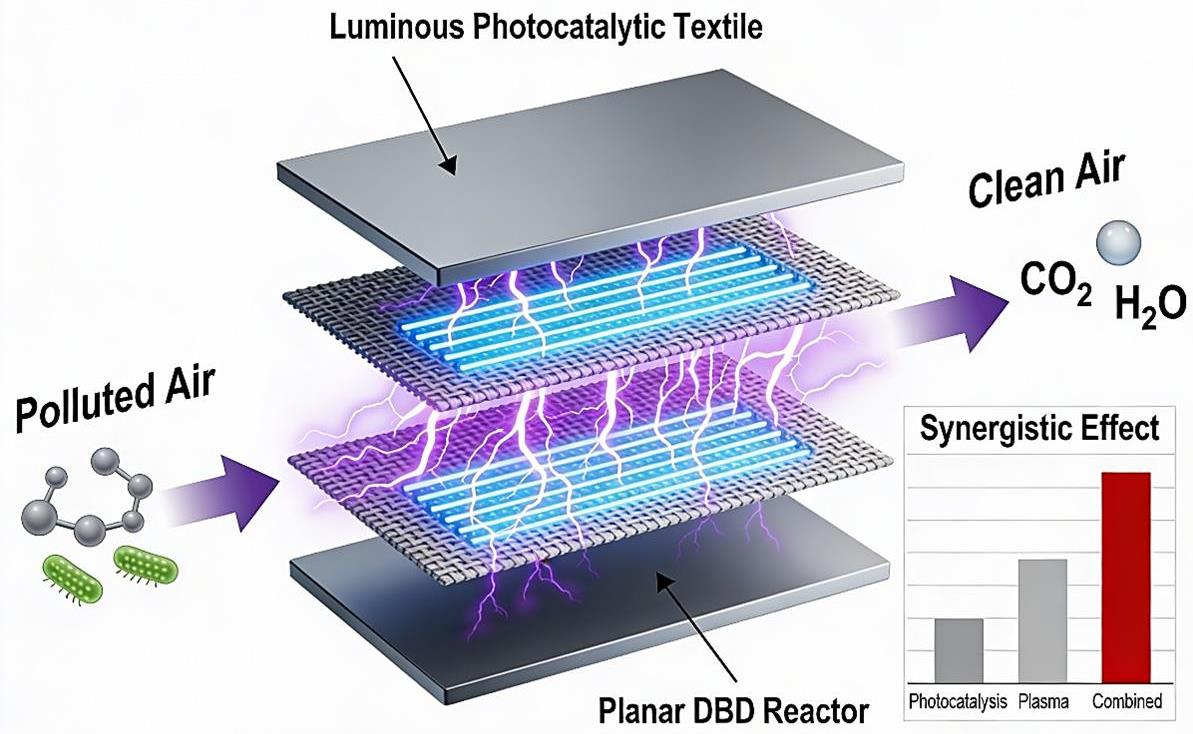
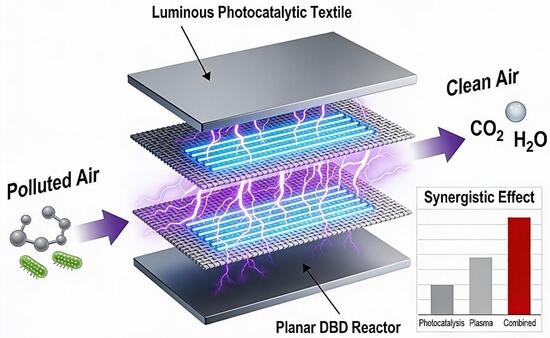
Unlocking the Synergy of Coupled Cold Plasma and Luminous Textile Photocatalysis for Indoor Air Purification: Simultaneous Elimination of Ethyl Acetate and Microorganisms

 ,
,  , , and
Abstract
1. Introduction
2. Materials and Methods
2.1. Target Contaminants
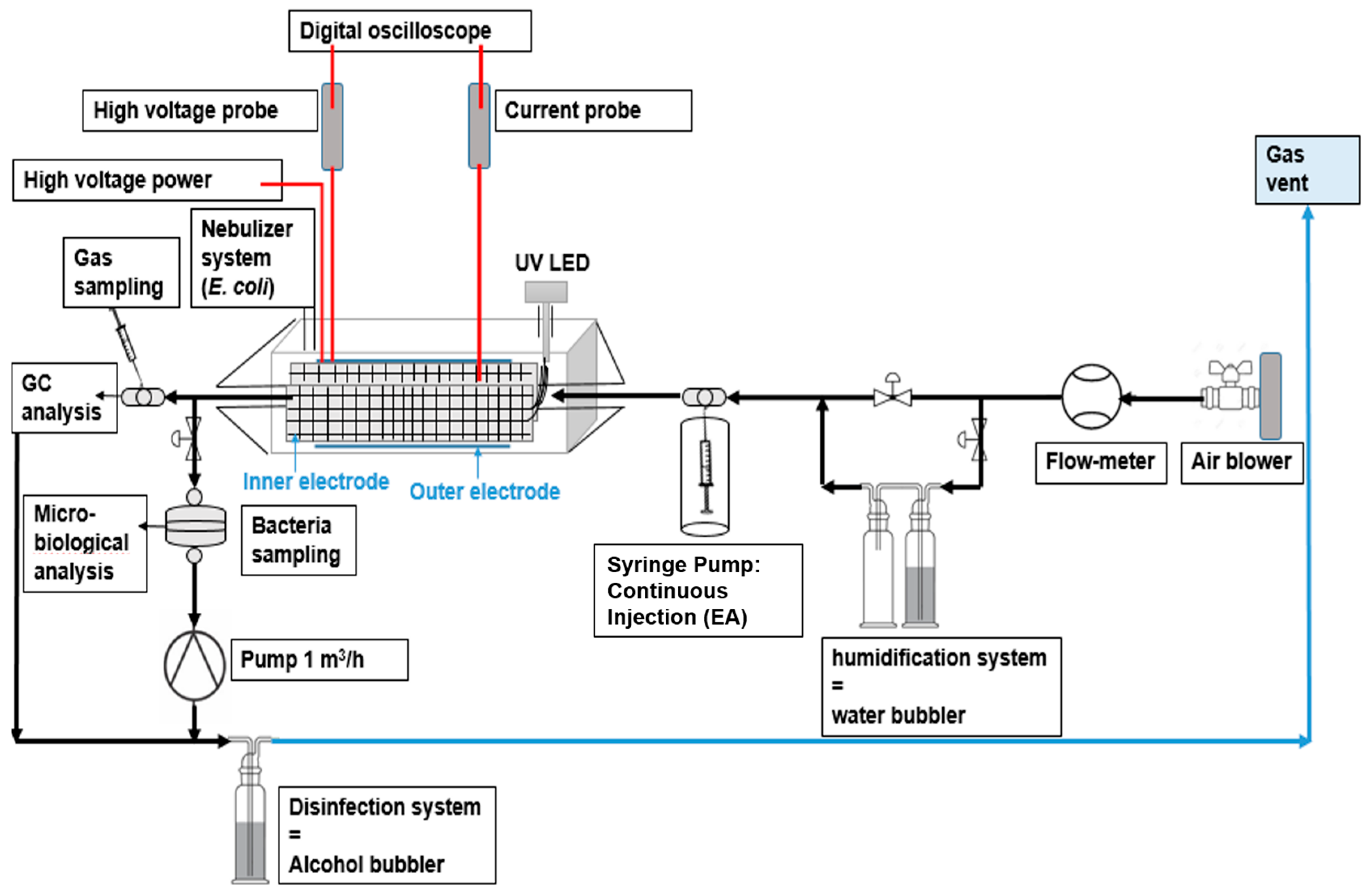
2.2. Plasma Rector Design
2.3. Pollutant Quantification
- (i)
- Prepare dilutions ranging from 10−1 to 10−5 with tryptone salt broth.
- (ii)
- To achieve a specific dilution, add 2000 µL of the solution to two Petri dishes (1000 µL per Petri dish) lined with Trypan agar.
- (iii)
- Place all Petri dishes into an incubator at 37 °C.
- (iv)
- Visually examine and count the colonies produced after incubation for 24 h.
3. Results and Discussions
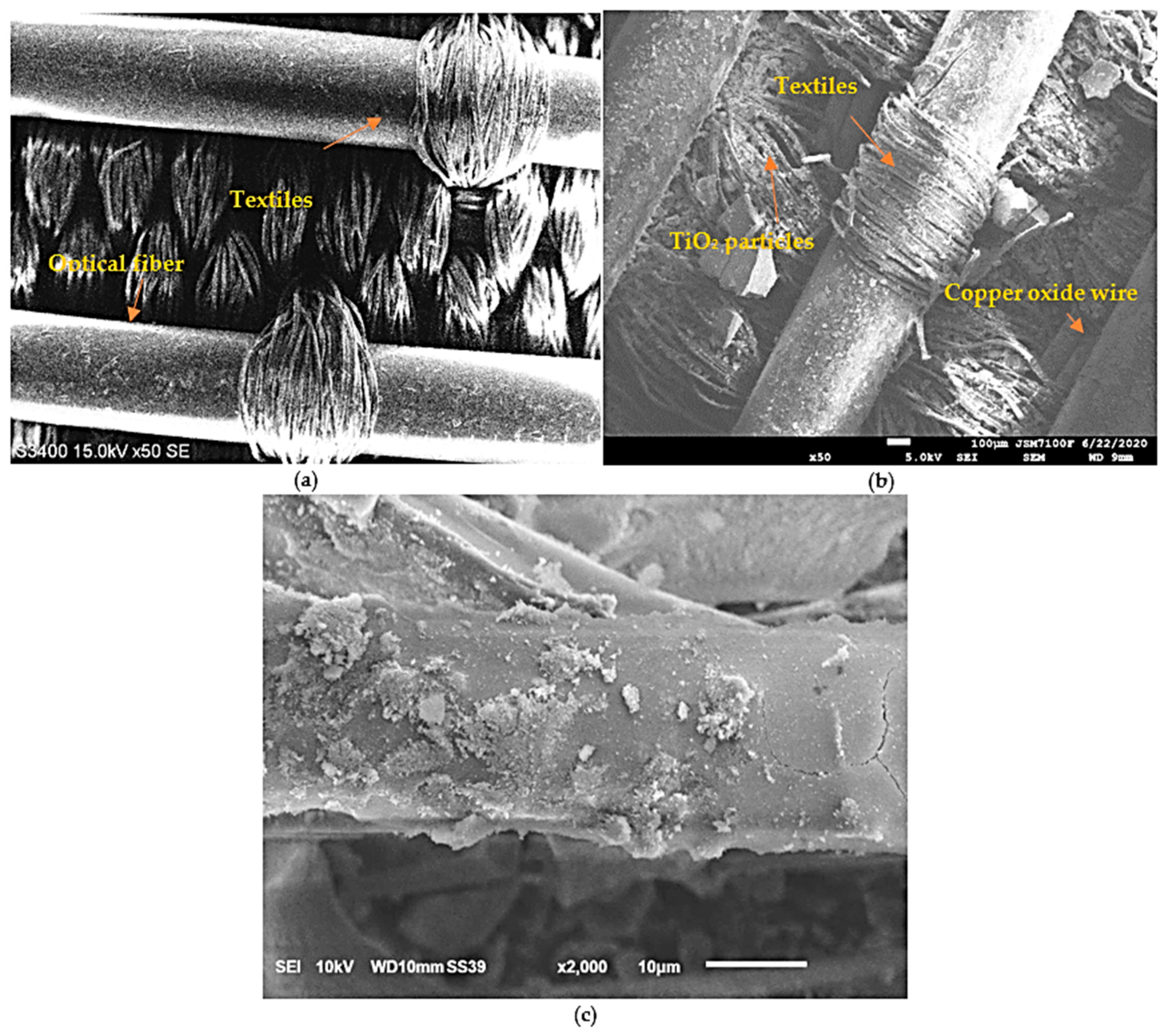
3.1. Characterizations of Luminous Textiles
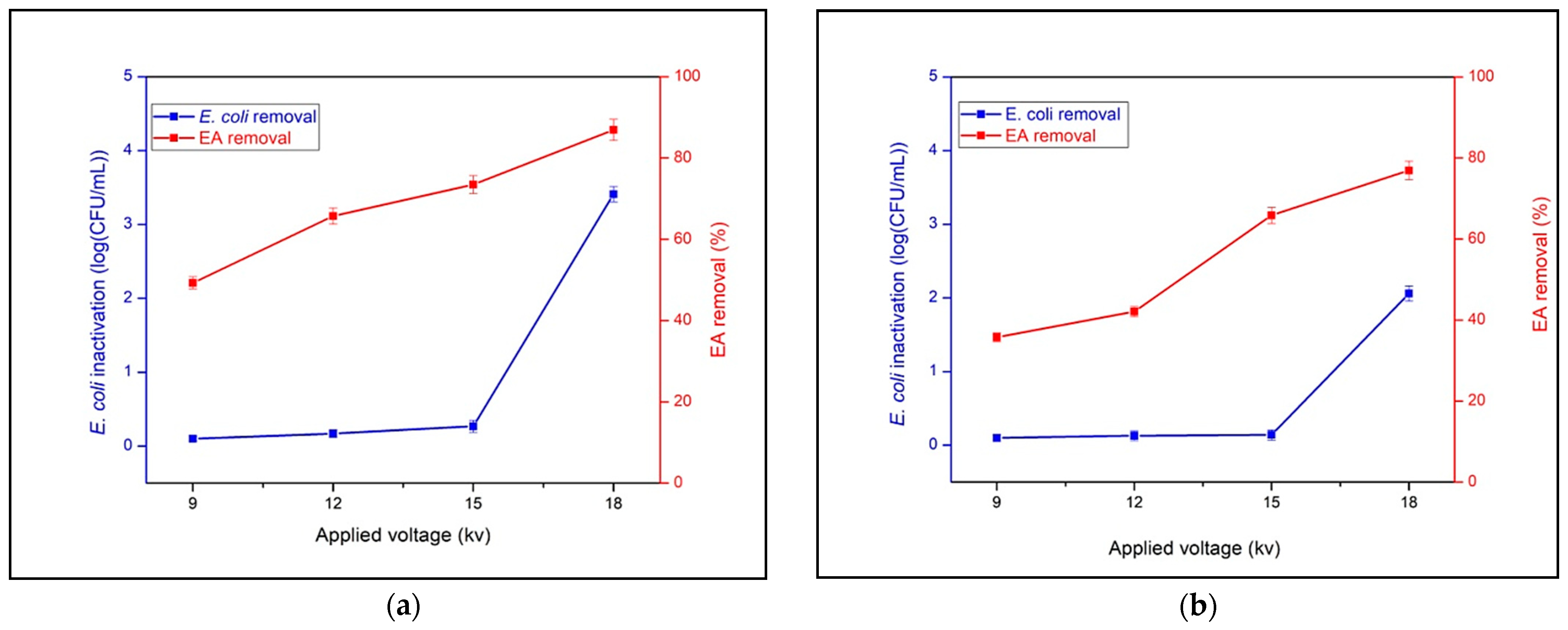
3.2. Removal of Pollutants by Non-Thermal Plasma
3.2.1. Influence of Voltage
3.2.2. Influence of Humidity
3.2.3. Influence of Air-Flow Rate
3.3. Removal of Pollutants by Combined Plasma Photocatalysis
3.4. Comparison Between Plasma, Photocatalysis, and Coupled Plasma/Photocatalysis Processes
4. Conclusions
Author Contributions
Funding
Data Availability Statement
Acknowledgments
Conflicts of Interest
References
- Hu, Y.; Shi, B.; Yuan, X.; Zheng, C.; Sha, Q.; Yu, Y.; Huang, Z.; Zheng, J. VOC emission caps constrained by air quality targets based on response surface model: A case study in the Pearl River Delta Region, China. J. Environ. Sci. 2023, 123, 430–445. [Google Scholar] [CrossRef]
- Wu, S.; Zhao, H.; Ling, W.; Tang, Z.; Zhang, J. In situ self-assembly encapsulation of CoFeOx nanoparticles in ordered mesoporous TiZrOx channels for enhanced catalytic combustion of o-dichlorobenzene. Fuel 2022, 311, 122496. [Google Scholar] [CrossRef]
- Wu, S.; Zhao, H.; Dong, F.; Ling, W.; Tang, Z.; Zhang, J. Construction of superhydrophobic Ru/TiCeO xcatalysts for the enhanced water resistance of o-dichlorobenzene catalytic combustion. ACS Appl. Mater. Interfaces 2021, 13, 2610–2621. [Google Scholar] [CrossRef] [PubMed]
- Wang, Y.; Wu, S.; Wu, G.; Fang, N.; Chu, Y.; Guo, J. The abundant oxygen vacancies of the Co–Ce mixed oxides towards catalytic combustion toluene. Microporous Mesoporous Mater. 2022, 343, 112158. [Google Scholar] [CrossRef]
- Jiménez-López, A.M.; Hincapié-Llanos, G.A. Identification of factors affecting the reduction of VOC emissions in the paint industry: Systematic literature review—SLR. Prog. Org. Coat. 2022, 170, 106945. [Google Scholar] [CrossRef]
- Wang, Y.; Ding, L.; Shi, Q.; Liu, S.; Qian, L.; Yu, Z.; Wang, H.; Lei, J.; Gao, Z.; Long, H.; et al. Volatile organic compounds (VOC) emissions control in iron ore sintering process: Recent progress and future development. Chem. Eng. J. 2022, 448, 137601. [Google Scholar] [CrossRef]
- Wang, R.; Duan, W.; Cheng, S.; Wang, X. Nonlinear and lagged effects of VOCs on SOA and O3 and multi-model validated control strategy for VOC sources. Sci. Total Environ. 2023, 887, 164113. [Google Scholar] [CrossRef] [PubMed]
- Pye, H.O.T.; Appel, K.W.; Seltzer, K.M.; Ward-Caviness, C.K.; Murphy, B.N. Human-Health Impacts of Controlling Secondary Air Pollution Precursors. Environ. Sci. Technol. Lett. 2022, 9, 96–101. [Google Scholar] [CrossRef]
- Zhu, G.; Xiao, Z.; Zhu, G. Fabrication and characterization of ethyl acetate–hydroxypropyl-β-cyclodextrin inclusion complex. J. Food Sci. 2021, 86, 3589–3597. [Google Scholar] [CrossRef]
- Gasparetto, H.; Nunes, A.L.B.; de Castilhos, F.; Salau, N.P.G. Soybean oil extraction using ethyl acetate and 1-butanol: From solvent selection to thermodynamic assessment. J. Ind. Eng. Chem. 2022, 113, 450–460. [Google Scholar] [CrossRef]
- Wang, C.; Zhang, Z.W.; Liu, H. Microwave-induced release and degradation of airborne endotoxins from Escherichia coli bioaerosol. J. Hazard. Mater. 2019, 366, 27–33. [Google Scholar] [CrossRef]
- Hu, M.; Guo, Y. The effect of air plasma on sterilization of escherichia coli in Dielectric Barrier Discharge. Plasma Sci. Technol. 2012, 14, 735–740. [Google Scholar] [CrossRef]
- Zhang, X.; Gao, B.; Elise, A.; Cao, C.; Li, Y. Adsorption of VOCs onto engineered carbon materials: A review. J. Hazard. Mater. 2017, 338, 102–123. [Google Scholar] [CrossRef]
- Deng, S.; Upadhyayula, V.K.K.; Smith, G.B.; Mitchell, M.C. Adsorption equilibrium and kinetics of microorganisms on single-wall carbon nanotubes. IEEE Sens. J. 2008, 8, 954–962. [Google Scholar] [CrossRef]
- Zhang, S.; You, J.; Kennes, C.; Cheng, Z.; Ye, J.; Chen, D.; Chen, J.; Wang, L. Current advances of VOCs degradation by bioelectrochemical systems: A review. Chem. Eng. J. 2018, 334, 2625–2637. [Google Scholar] [CrossRef]
- Tomatis, M.; Moreira, M.T.; Xu, H.; Deng, W.; He, J.; Parvez, A.M. Removal of VOCs from waste gases using various thermal oxidizers: A comparative study based on life cycle assessment and cost analysis in China. J. Clean. Prod. 2019, 233, 808–818. [Google Scholar] [CrossRef]
- Gan, G.; Fan, S.; Li, X.; Zhang, Z.; Hao, Z. Adsorption and membrane separation for removal and recovery of volatile organic compounds. J. Environ. Sci. 2023, 123, 96–115. [Google Scholar] [CrossRef]
- Trung Le, T.; Cabaltica, A.D.; Bui, V.M. Membrane separations in dairy processing. J. Food Res. Technol. 2014, 2, 1–14. [Google Scholar]
- Hajjaji, M.A.; Missaoui, K.; Trabelsi, K.; Bouzaza, A.; Hajjaji, A.; Bessais, B.; Assadi, A.A. Platinum nanoparticles decorated TiO2 nanotubes for VOCs and bacteria removal in simulated real condition: Effect of the deposition method on the photocatalytic degradation process efficiency. J. Photochem. Photobiol. A Chem. 2025, 458, 115975. [Google Scholar] [CrossRef]
- Karoui, S.; Assadi, A.A.; Meslem, A.; Abdelkrim, B. Simultaneous removal of microorganisms and ethyl acetate from fruit storage indoor air using a low-cost photoreactor based on luminous textiles. Food Biosci. 2024, 61, 104771. [Google Scholar] [CrossRef]
- Karoui, S.; Assadi, A.A.; Mubarak, N.M.; Amrane, A. TiO2-Copper on smart textiles in a prototype plug flow reactor for enhanced photocatalytic removal of contaminants in fruit storage environments. Food Biosci. 2025, 73, 107787. [Google Scholar]
- Saoud, W.A.; Kane, A.; Le Cann, P.; Gerard, A.; Lamaa, L.; Peruchon, L.; Brochier, C.; Bouzaza, A.; Wolbert, D.; Assadi, A.A. Innovative photocatalytic reactor for the degradation of VOCs and microorganism under simulated indoor air conditions: Cu-Ag/TiO2-based optical fibers at a pilot scale. Chem. Eng. J. 2021, 411, 128622. [Google Scholar] [CrossRef]
- Assadi, A.A.; Bouzaza, A.; Vallet, C.; Wolbert, D. Use of DBD plasma, photocatalysis, and combined DBD plasma/photocatalysis in a continuous annular reactor for isovaleraldehyde elimination—Synergetic effect and byproducts identification. Chem. Eng. J. 2014, 254, 124–132. [Google Scholar] [CrossRef]
- Malik, M.A.; Hughes, D. Ozone synthesis improves by increasing number density of plasma channels and lower voltage in a nonthermal plasma. J. Phys. D Appl. Phys. 2016, 49, 135202. [Google Scholar] [CrossRef]
- Jangra, R.; Ahlawat, K.; Mohan, M.K.; Prakash, R. Indoor air disinfection by non thermal atmospheric pressure plasma: A comparative study of performance in low and high humidity environments. Phys. Scr. 2024, 99, 085612. [Google Scholar] [CrossRef]
- Belkessa, N.; Assadi, A.A.; Bouzaza, A.; Nguyen-Tri, P.; Amrane, A.; Khezami, L. A review of non-thermal plasma -catalysis: The mutual influence and sources of synergetic effect for boosting volatile organic compounds removal. Environ. Res. 2024, 257, 119333. [Google Scholar] [CrossRef] [PubMed]
- Kvam, E.; Davis, B.; Mondello, F.; Garner, A.L. Nonthermal atmospheric plasma rapidly disinfects multidrug-resistant microbes by inducing cell surface damage. Antimicrob. Agents Chemother. 2012, 56, 2028–2036. [Google Scholar] [CrossRef]
- Sakudo, A.; Yagyu, Y.; Onodera, T. Disinfection and Sterilization Using Plasma Technology: Fundamentals and Future Perspectives for Biological Applications. Int. J. Mol. Sci. 2019, 20, 5216. [Google Scholar] [CrossRef]
- Huang, H.; He, L.; Wang, Y.; Chen, L.; Hu, H.; Zhang, M. Experimental study on toluene removal by a two-stage plasma-biofilter system. Plasma Sci. Technol. 2022, 24, 124011. [Google Scholar] [CrossRef]
- Huang, H.B.; Ye, D.Q.; Fu, M.L.; Da Feng, F. Contribution of UV light to the decomposition of toluene in dielectric barrier discharge plasma/photocatalysis system. Plasma Chem. Plasma Process. 2007, 27, 577–588. [Google Scholar] [CrossRef]
- Assadi, A.A.; Bouzaza, A.; Wolbert, D.; Petit, P. Isovaleraldehyde elimination by UV/TiO photocatalysis: Comparative study of the process at different reactors configurations and scales. Environ. Sci. Pollut. Res. 2014, 21, 11178–11188. [Google Scholar] [CrossRef] [PubMed]
- Taranto, J.; Frochot, D.; Pichat, P. Combining cold plasma and TiO2 photocatalysis to purify gaseous effluents: A preliminary study using methanol-contaminated air. Ind. Eng. Chem. Res. 2007, 46, 7611–7614. [Google Scholar] [CrossRef]
- Hajjaji, A.; Elabidi, M.; Trabelsi, K.; Assadi, A.A.; Bessais, B.; Rtimi, S. Bacterial adhesion and inactivation on Ag decorated TiO2-nanotubes under visible light: Effect of the nanotubes geometry on the photocatalytic activity. Colloids Surf. B Biointerfaces 2018, 170, 92–98. [Google Scholar] [CrossRef] [PubMed]
- Lee, M.; Shahbaz, H.M.; Kim, J.U.; Lee, H.; Lee, D.U.; Park, J. Efficacy of UV-TiO2 photocatalysis technology for inactivation of Escherichia coli K12 on the surface of blueberries and a model agar matrix and the influence of surface characteristics. Food Microbiol. 2018, 76, 526–532. [Google Scholar] [CrossRef] [PubMed]
- Abidi, M.; Hajjaji, A.; Bouzaza, A.; Trablesi, K.; Makhlouf, H.; Rtimi, S.; Assadi, A.A.; Bessais, B. Simultaneous removal of bacteria and volatile organic compounds on Cu2O-NPs decorated TiO2 nanotubes: Competition effect and kinetic studies. J. Photochem. Photobiol. A Chem. 2020, 400, 112722. [Google Scholar] [CrossRef]
- Vincent, G.; Queffeulou, A.; Marquaire, P.M.; Zahraa, O. Remediation of olfactory pollution by photocatalytic degradation process: Study of methyl ethyl ketone (MEK). J. Photochem. Photobiol. A Chem. 2007, 191, 42–50. [Google Scholar] [CrossRef]





| Pollutants | Methods | Operating Parameters | Degradation Results | References |
|---|---|---|---|---|
| Microorganisms | Photocatalysis Ag/TiO2-NTs | [E. coli] = 4 × 10⁶ CFU/mL Volume = 100 mL Time = 180 min | 1.6 log(CFU/mL) | [33] |
| Agar matrix surface + blueberry skin + UV-TiO2 and UV alone | [E. coli] = 7 log CFU/g UV intensity = 6.0 mW/cm2 Time = 30 s | 3.4 logCFU/g (UV alone) 4.6 logCFU/g (UV-TiO2) | [34] | |
| Photocatalysis Spherical batch reactor Ag/TiO2 | [VOC] = 4.4 g/m3 T = 50 at 100 °C Λ = 380–420 nm UV–vis light irradiation | Simultaneous treatment: E. coli: 99.7% (60 min) VOC: 100% (25 min) | [35] | |
| VOCs | Photocatalysis Cu/TiO2 | Air-flow rate = 1 m3/h [Butane-2,3-dione] = 10 mg/m3 H= 5% UV-A light | 52% | [22] |
| TiO2 fiberglass | Flow rate = 150–300 mL/min [Methyl-ethyl-ketone] = 1.5 mg/L UV light source | 10% | [36] | |
| TiO2 Ahlström-support | 40% | |||
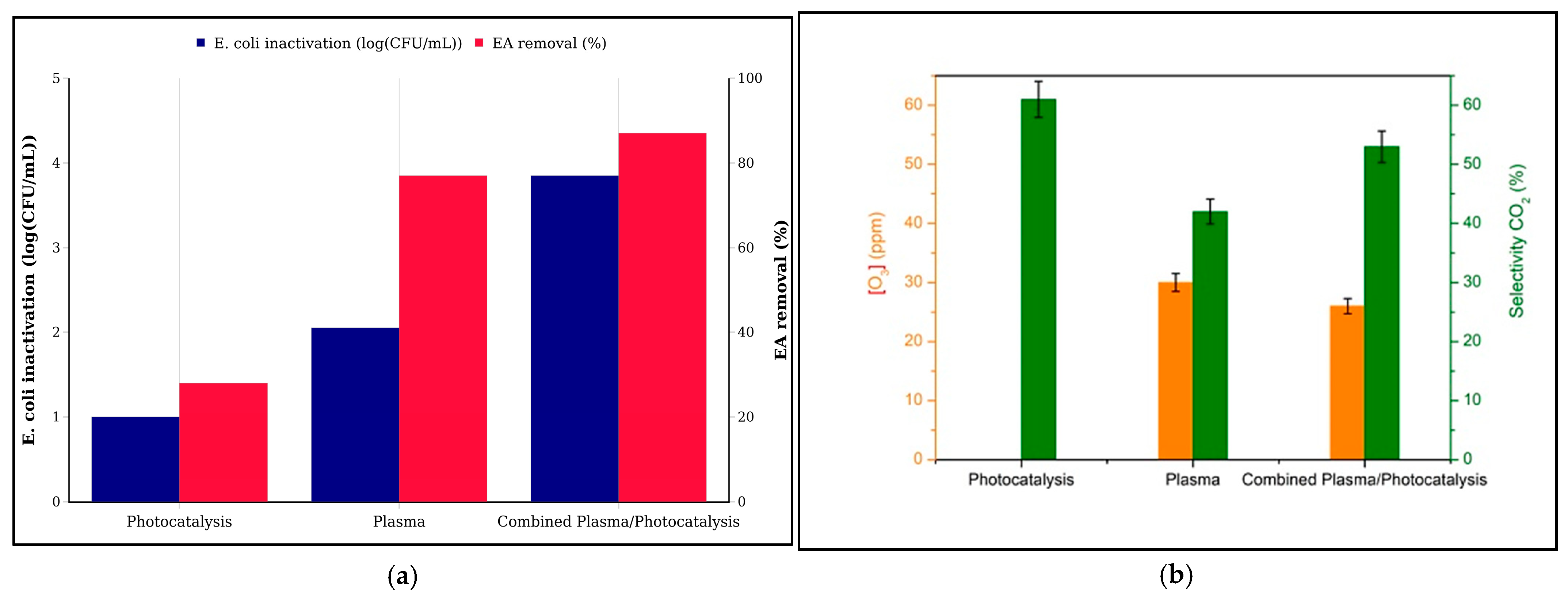
| E-coli + EA | Photocatalysis Cu/TiO2 | UV–vis light irradiation Applied voltage = 18 kV Air-flow rate = 1 m3/h RH = 70% Frequency = 50 Hz [EA] = 5 mg/m3 [E. coli] = 104 CFU/mL | Simultaneous treatment: EA: 28% E. coli: 1 log(CFU/mL) | [21] |
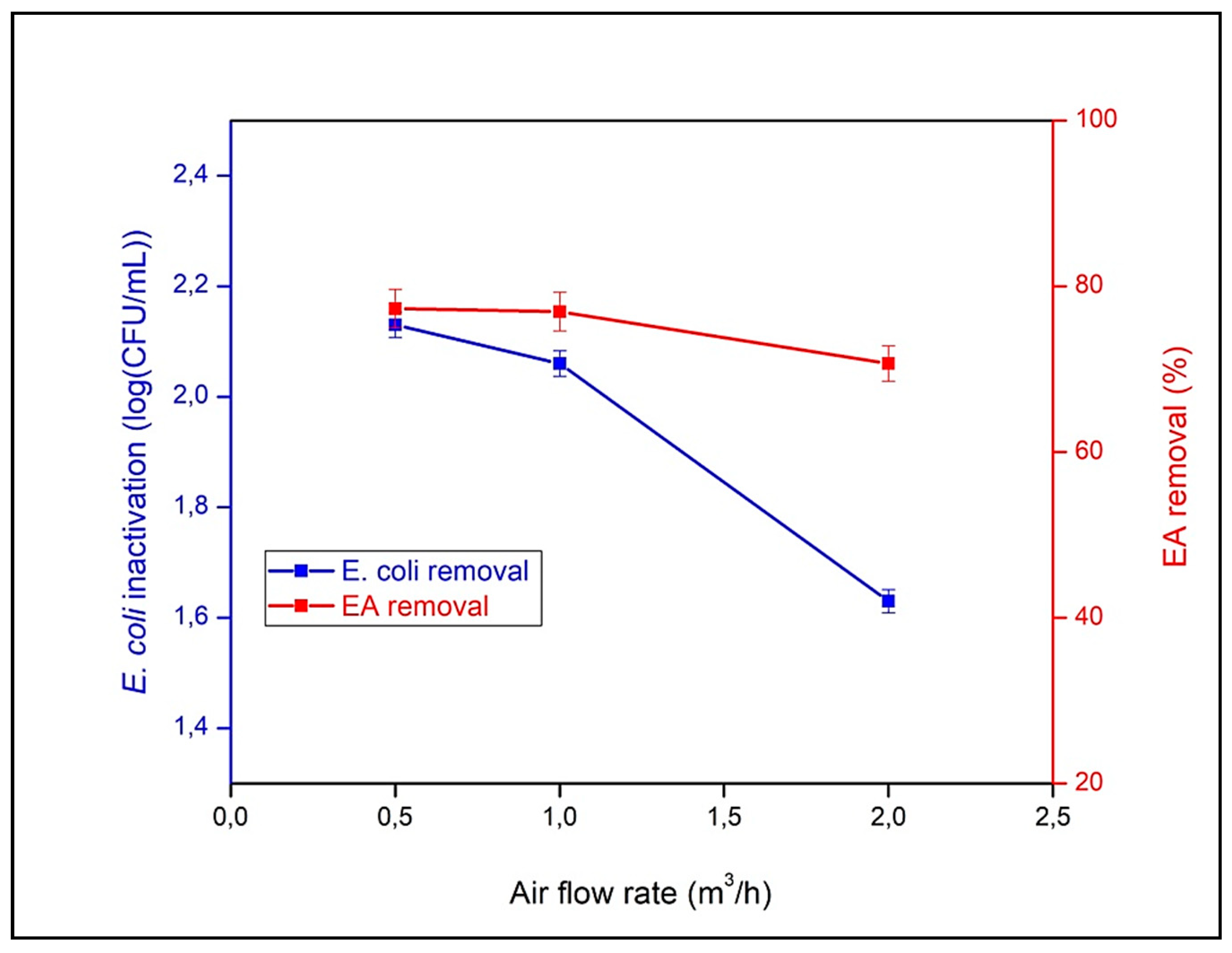
| Plasma | Simultaneous treatment: EA: 77% E. coli: 2.06 log(CFU/mL) | This work | ||
| Combined plasma/photocatalysis | Simultaneous treatment: EA: 87% E. coli: 3.86 log(CFU/mL) | This work |
Disclaimer/Publisher’s Note: The statements, opinions and data contained in all publications are solely those of the individual author(s) and contributor(s) and not of MDPI and/or the editor(s). MDPI and/or the editor(s) disclaim responsibility for any injury to people or property resulting from any ideas, methods, instructions or products referred to in the content. |
© 2026 by the authors. Licensee MDPI, Basel, Switzerland. This article is an open access article distributed under the terms and conditions of the Creative Commons Attribution (CC BY) license.
Share and Cite
Karoui, S.; Hajjaji, M.A.; Azzaz, A.A.; Baaloudj, O.; el Kebir, M.; Rahman, M.H.; Assadi, A.A. Unlocking the Synergy of Coupled Cold Plasma and Luminous Textile Photocatalysis for Indoor Air Purification: Simultaneous Elimination of Ethyl Acetate and Microorganisms. Catalysts 2026, 16, 541. https://doi.org/10.3390/catal16060541
Karoui S, Hajjaji MA, Azzaz AA, Baaloudj O, el Kebir M, Rahman MH, Assadi AA. Unlocking the Synergy of Coupled Cold Plasma and Luminous Textile Photocatalysis for Indoor Air Purification: Simultaneous Elimination of Ethyl Acetate and Microorganisms. Catalysts. 2026; 16(6):541. https://doi.org/10.3390/catal16060541
Chicago/Turabian StyleKaroui, Sarra, Mohamed Aziz Hajjaji, Ahmed Amine Azzaz, Oussama Baaloudj, Mohamed el Kebir, Mohammod Hafizur Rahman, and Amine Aymen Assadi. 2026. "Unlocking the Synergy of Coupled Cold Plasma and Luminous Textile Photocatalysis for Indoor Air Purification: Simultaneous Elimination of Ethyl Acetate and Microorganisms" Catalysts 16, no. 6: 541. https://doi.org/10.3390/catal16060541
APA StyleKaroui, S., Hajjaji, M. A., Azzaz, A. A., Baaloudj, O., el Kebir, M., Rahman, M. H., & Assadi, A. A. (2026). Unlocking the Synergy of Coupled Cold Plasma and Luminous Textile Photocatalysis for Indoor Air Purification: Simultaneous Elimination of Ethyl Acetate and Microorganisms. Catalysts, 16(6), 541. https://doi.org/10.3390/catal16060541