1. Introduction
Diesel engines are used in transportation, agriculture, and power generation because of their high efficiency, reliability, and fuel economy. However, diesel combustion generates harmful emissions like (CO), hydrocarbons (HC), nitrogen oxides (NO
x), and particulate matter (PM), which cause great environmental and health concerns [
1,
2]. Therefore, improving diesel combustion efficiency while minimizing engine emissions has become an active area of research.
Among the available improvement methods, fuel-borne nano-additives have gained increased attention because of their high surface-area-to-volume ratio, catalytic activity, and ability to alter combustion chemistry [
3,
4,
5]. Previous studies have shown that metal and metal-oxide nanoparticles can enhance atomization, accelerate oxidation reactions, minimize ignition delay, and achieve better combustion efficiency [
5,
6,
7]. Therefore, several nanoparticles have been investigated as diesel fuel additives to improve engine performance and reduce harmful emissions [
8,
9,
10].
Recent studies have focused on silver-based compounds, titanium dioxide (TiO
2), and cerium oxide (CeO
2). Silver-based compounds improve oxidation reactions and facilitate the conversion of incomplete combustion products [
11,
12]. TiO
2 is known for its catalytic activity, thermal stability, and it supports surface oxidation reactions [
6,
7]. CeO
2 can store and release oxygen through the reversible Ce
+4 and Ce
+3 redox reaction, which supports oxidation reactions and improves combustion characteristics [
13,
14,
15]. Although these materials have demonstrated promising performance individually, a systematic comparative evaluation of single, binary, and ternary nanocatalyst formulations under identical diesel engine operating conditions has not yet been comprehensively investigated.
Existing research has primarily concentrated on either single-component additives or binary combinations [
4,
16]. Recent studies in the energy and combustion field have increasingly shown that multi-component nanocatalyst systems can provide synergistic advantages compared with single-component additives, because they combine multiple catalytic functions such as oxygen buffering [
13,
17], surface-assisted oxidation [
18,
19], ignition enhancement [
20], and thermal stability [
13,
21]. In diesel-related applications, however, the available literature still focuses predominantly on single nanoparticles or binary combinations, while ternary nanocatalyst formulations remain comparatively underexplored, especially under identical operating conditions using conventional mineral diesel [
22]. Unlike previous studies that predominantly focus on single nanoparticles or binary combinations under varying experimental conditions, the present work establishes a unified and controlled experimental framework to directly compare single, binary, and ternary nanocatalyst systems under identical operating conditions using conventional mineral diesel. This approach enables a clearer identification of synergistic catalytic interactions and provides a more reliable interpretation of their influence on both combustion performance and emission characteristics. Furthermore, the integration of material characterization with engine performance and emission analysis provides a comprehensive structure–performance relationship that is often missing in existing studies. Therefore, a systematic comparison of single, binary, and ternary formulations is necessary to clarify whether the combined catalytic interaction can provide measurable benefits in both emission reduction and engine performance. Several studies highlight the beneficial effects of individual nanomaterials or binary nanocomposites on diesel engine performance and emissions [
8,
23]. Demir et al. [
24] showed a considerable decrease in CO and HC emissions as a result of the use of silver nanoparticle-doped biodiesel. Similarly, one study [
25] revealed that TiO
2-CeO
2 combinations can contribute to the reduction in NO
x emissions in diesel engines. In addition, this study used Ag-TiO
2 catalysts system to show improved catalysis stability and oxidation activity. These findings suggest that combining catalytic functionalities can enhance combustion-related processes and emission reduction.
However, many research highlights only emissions trends without providing a sufficiently integrated analysis of both engine performance parameters, such as brake-specific fuel consumption (BSFC) and brake thermal efficiency (BTE), and material characteristics of the nano-additives [
9,
26]. Therefore, a systematic comparative understanding of the combustion-related benefits of Ag-based, TiO
2-based and CeO
2-based formulations under conventional diesel engine operations is lacking.
To address these gaps, this study experimentally examines four nano-additive fuel formulations, including Ag, Ag/TiO2, Ce/TiO2, and Ag/Ce/TiO2, blended with conventional diesel fuel. The novelty of the current study is the comparative assessment of the ternary Ag/Ce/TiO2 formulation against single- and binary-component counterparts under the same operating conditions, supported by material characterization using X-ray diffraction (XRD), scanning electron microscopy (SEM) and Fourier transform infrared spectroscopy (FTIR). In contrast to several previous studies that concentrated on single nanoparticles or binary nanoparticles systems, this research compares single (Ag), binary (Ag/TiO2, Ce/TiO2) and ternary (Ag/Ce/TiO2) catalyst systems under identical experimental conditions using conventional diesel fuel. This comparative experimental strategy allows a clearer evaluation of the combined catalytic interaction between the constituent components and their influence on both performance of engine and characteristics of emission.
The specific objectives of this study are:
(1) to synthesize and characterize the proposed nano catalyst fuel.
(2) to evaluate their effects on CO, HC, NOx, and CO2 emissions.
(3) to investigate their influence on BSFC and BTE under different engine loads and nano catalyst fuel concentrations.
The results are discussed from the viewpoint of catalytic activity among the constituent components. As summarized in
Table 1, previous studies have investigated individual nanoparticles or binary catalyst combinations. Moreover, many studies have primarily focused on emission characteristics without comprehensively evaluating both engine performance and detailed material characterization. This research aims to address these limitations by examining a ternary nanocatalyst formulation and assessing its combustion related performance using conventional diesel fuel.
Based on the limitations of previous studies, the main contributions of this research can be summarized as follows:
Development and synthesis of four nanocatalyst formulations including Ag, Ag/TiO2, Ce/TiO2 and a ternary Ag/CeO2/TiO2 catalyst.
Comparative experimental evaluation of single-, binary- and ternary-component nanocatalysts under identical diesel engine-operating conditions.
Combing analysis of emission characteristics (CO, HC, NOx, CO2) and engine performance including BSFC and BTE.
Investigation of the combined catalytic behavior of Ag, TiO2 and CeO2 through structural characterization using XRD, SEM and FTIR.
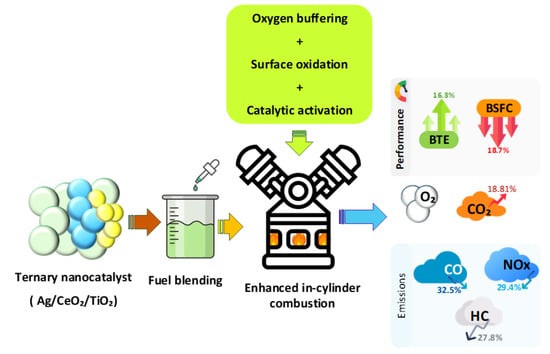
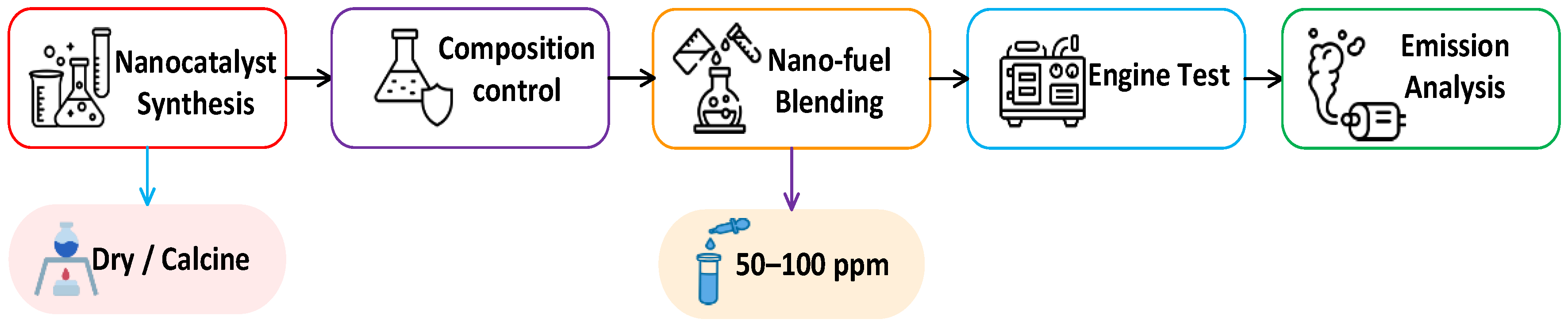
The overall experimental approach adopted in this research is shown in
Figure 1. The methodology includes four main phases: nanoparticles synthesis, nano-fuel preparation, diesel engine tests, and performance and emission analysis. This strategy provides a systematic method for evaluating the impact of different nanocatalyst formulations on combustion behavior and emission characteristics.
2. Results and Discussion
This section explains the structural characterization of the synthesized nanocatalysts, their impact on combustion behavior, emission characteristics, and engine performance.
2.1. Structural Characterization of Nanocatalysts
This study characterizes the nanocatalysts and evaluates their effects on combustion, emissions, and engine performance at different loads. The findings integrate the material characterization results of NP1 (Ag), NP2 (Ag/TiO
2), NP3 (Ce/TiO
2), and NP4 (Ag/CeO
2/TiO
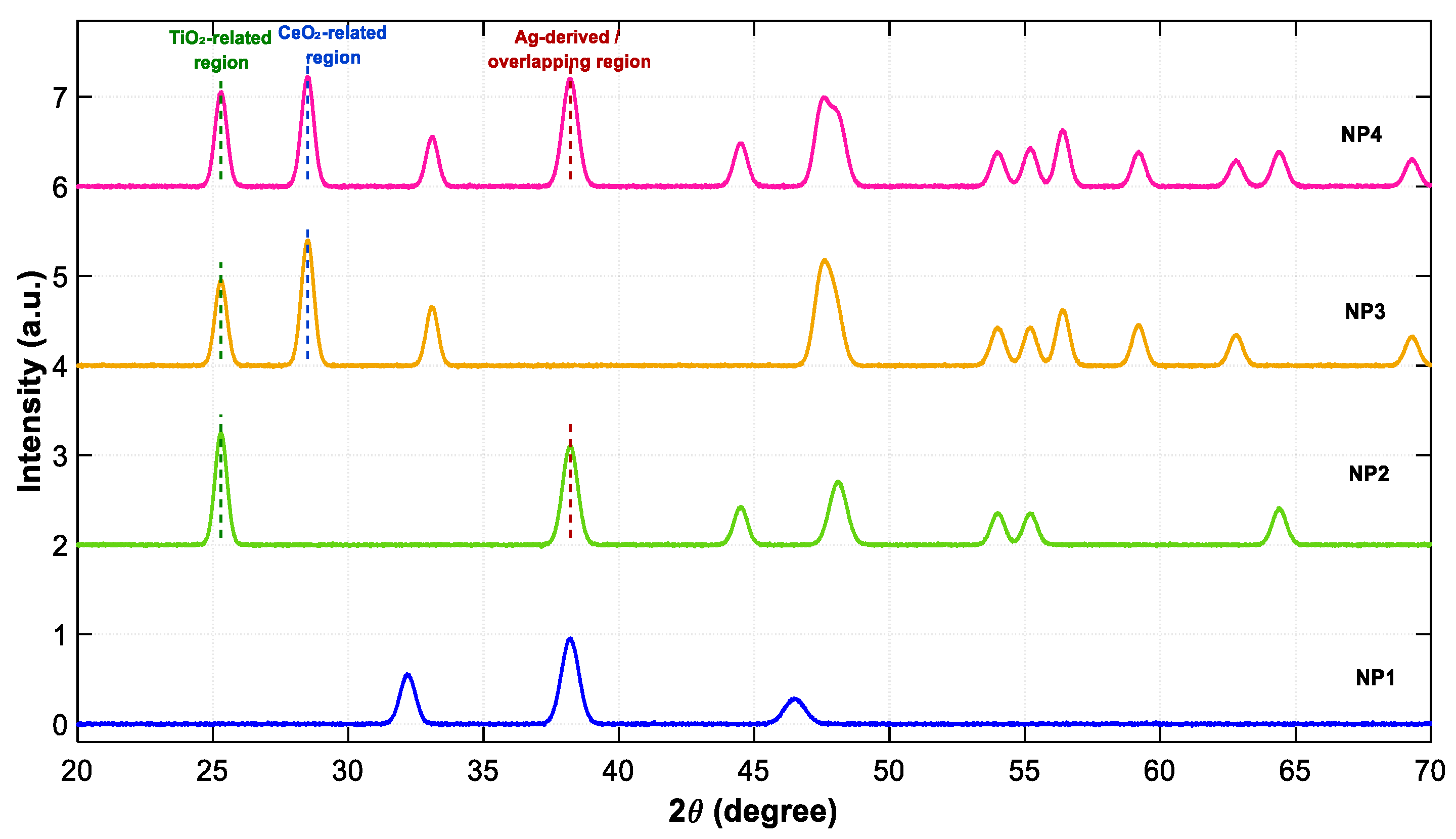
2) with combustion behavior analysis to explain the superior catalytic performance of the synthesized nanocatalysts. The structural characterization of the proposed nanocatalysts is evaluated by XRD, SEM, and FTIR analyses. The XRD patterns of NP1–NP4 are demonstrated in
Figure 2. Some diffraction peaks are located at identical or very close 2θ positions; therefore, the revised
Figure 2 uses consistent peak labeling, and overlapping reflections are indicated using combined phase notation where appropriate. Therefore, the XRD results are interpreted cautiously and used mainly for phase identification and relative comparison rather than precise phase quantification. The XRD patterns of NP1–NP4 exhibit formulation-dependent diffraction features. For TiO
2-containing samples (NP2–NP4), a reflection is observed near 25.3°, which is characteristic of the anatase TiO
2 (101) plane. Similarly, CeO
2-containing samples (NP3 and NP4) show a reflection near 28.5°, characteristic of the fluorite CeO
2 (111) plane. In contrast, NP1 does not exhibit TiO
2 or CeO
2 related reflections and is therefore attributed to Ag containing features. A reflection is consistently observed near 38° in Ag-containing samples (NP1, NP2, and NP4), which is commonly associated with silver-related phases. Considering the synthesis route and the presence of silver precursors, this feature supports the presence of Ag derived species within the nanocatalyst structure. However, due to peak overlap and the complexity of multi-component systems, the exact crystalline form of silver is not further specified. This suggests improved incorporation and structural integration of ceria within the ternary nanocatalyst compared to other formulations. It should be noted that the crystallite size estimation is based on peak broadening analysis and provides a relative comparison among samples rather than an exact absolute value. Although nanoscale particles may exhibit broadened peaks, crystalline phases can still be detected by XRD if sufficient crystalline phases are present. The smaller crystallite size observed for NP4 is associated with a higher surface-to-volume ratio, which can enhance catalytic activity and improve fuel–oxidizer interaction during combustion. However, the improvement in engine performance cannot be attributed solely to crystallite size reduction and is instead the result of combined structural and catalytic effects.
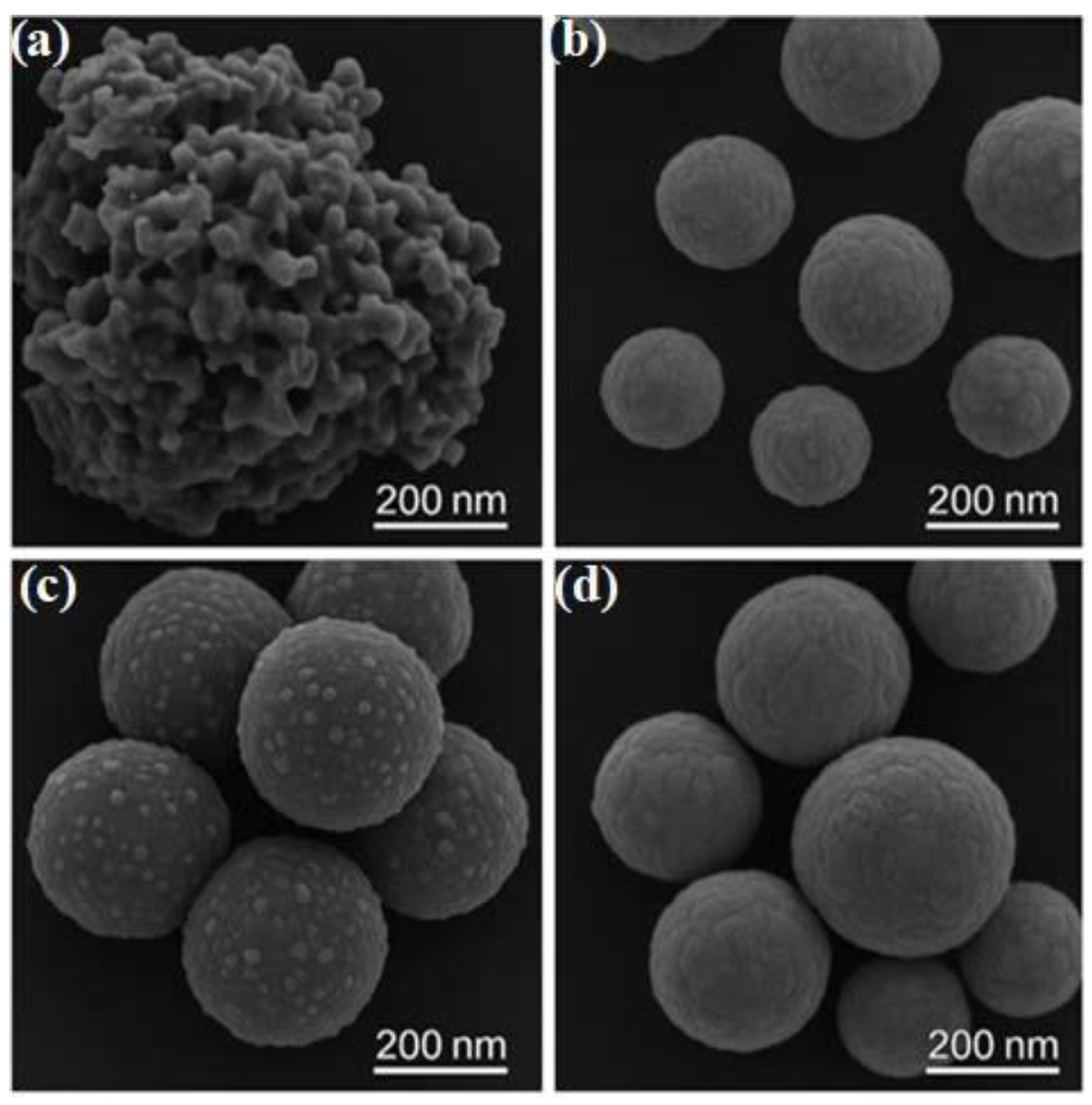
Figure 3 presents the SEM micrographs of NP1 to NP4 nanocatalyst samples, labeled as NP1 (Ag), NP2 (Ag/TiO
2), NP3 (Ce/TiO
2), and NP4 (Ag/CeO
2/TiO
2), respectively, in order to clearly demonstrate the correspondence between the images and the synthesized nanocatalyst formulations. Significant differences in particle morphology, surface texture, particle size, and agglomeration behavior can be observed among the samples. NP1 exhibited irregular particle distribution together with pronounced agglomeration, whereas NP2 and NP3 showed comparatively improved particle dispersion and more homogeneous morphologies due to the incorporation of TiO
2 and CeO
2 components. Although NP2 and NP4 displayed relatively more uniform particle distributions, this observation is based on qualitative SEM visualization and does not indicate the complete absence of agglomeration. Among all samples, NP4 demonstrated the most homogeneous morphology, reduced agglomeration tendency, and enhanced spherical particle structure, suggesting that the combined incorporation of Ag, CeO
2, and TiO
2 positively influenced the structural homogeneity and surface characteristics of the synthesized nanocatalyst system.
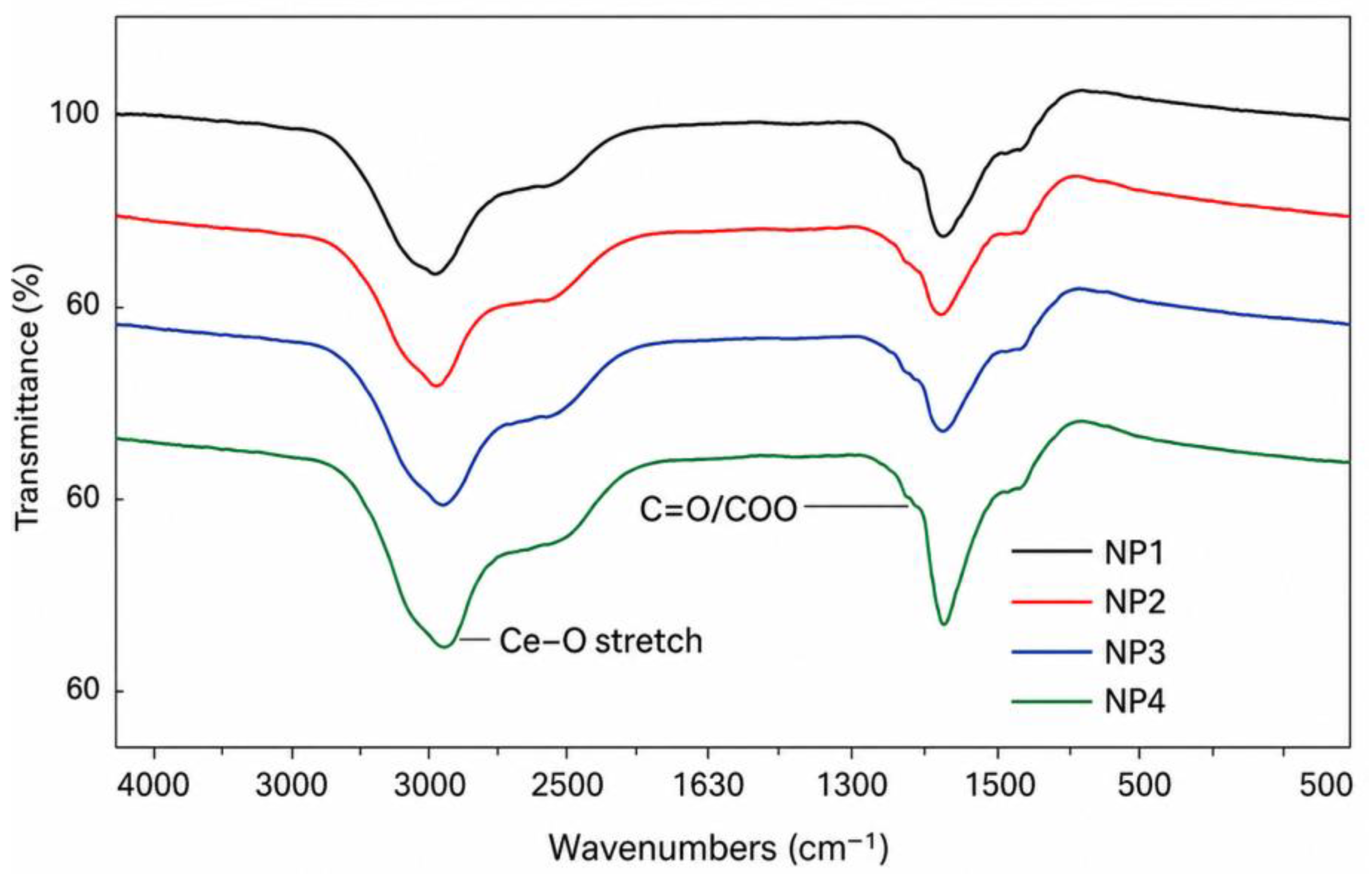
FTIR analysis confirmed the presence of functional groups and interactions among the nanoparticles and diesel fuel, as illustrated in
Figure 4. The main absorption bands at about 3400 cm
−1 and 1630 cm
−1 are related to hydroxyl and carboxyl groups, respectively; therefore, the surface was oxidized. Furthermore, NP4 depicts bands appearing around 500–600 cm
−1. The appearance of absorption bands in the range of 500–600 cm
−1 corresponds to Ce-O bonding, confirming the successful incorporation of CeO
2 into the composite structure. Compared to other formulations, the presence of these bands in NP4 indicates enhanced oxygen storage capability, which plays a key role in promoting oxidation reactions during combustion. Minor shifts in FTIR peaks are attributed to interactions between Ag, TiO
2, and CeO
2, indicating modified surface bonding environments and improved interfacial interaction.
2.2. Emission Characteristics
It should be noted that the presented results correspond to time averaged values obtained under steady state conditions. Measurements were recorded at 1 s intervals and averaged over approximately 2 min to reduce random fluctuations. Accordingly, the error bars shown in the figures represent the combined measurement uncertainty rather than the standard deviation of independent repeated experiments.
It is noteworthy that although three nanoparticle concentrations (50 ppm, 75 ppm, and 100 ppm) were prepared, the maximum improvement in engine performance was observed at the 100 ppm concentration. Therefore, the detailed comparative results discussed in this section are mainly based on the optimal concentration of 100 ppm, in order to highlight the maximum achievable performance improvement. The engine emission (CO, HC, NO
x, and CO
2) and performance metrics (BSFC and BTE) are analyzed to show the improvements in combustion by the proposed nanocatalyst. As evidenced by
Figure 2,
Figure 3 and
Figure 4, NP4 possesses the best structural integration, optimal crystallinity, and clearly defined bonding environments. These features improve oxygen release, oxidation reactions, and thermal redox processes that lead to cleaner burning. These structural advantages have been shown to improve combustion. This improvement can be mechanistically explained by the synergistic catalytic interaction among the constituent components of the nanocatalyst. Specifically, CeO
2 contributes through its reversible Ce
4+/Ce
3+ redox cycle, which provides oxygen buffering capacity and supports continuous oxidation of intermediate species during combustion. TiO
2 acts as a thermally stable support that enhances the dispersion of active sites and promotes surface-assisted oxidation reactions, particularly at elevated temperatures. In addition, Ag derived species facilitate rapid oxidation of incomplete combustion products through catalytic activation of oxygen species. The combined effect of these mechanisms promotes more complete fuel oxidation, leading to reduced CO and HC emissions, while the redox buffering behavior of CeO
2 helps moderate local flame temperature, contributing to the suppression of thermal NO
x formation. This mechanistic interpretation is consistent with the observed emission trends and performance improvements obtained for the NP4 formulation [
15,
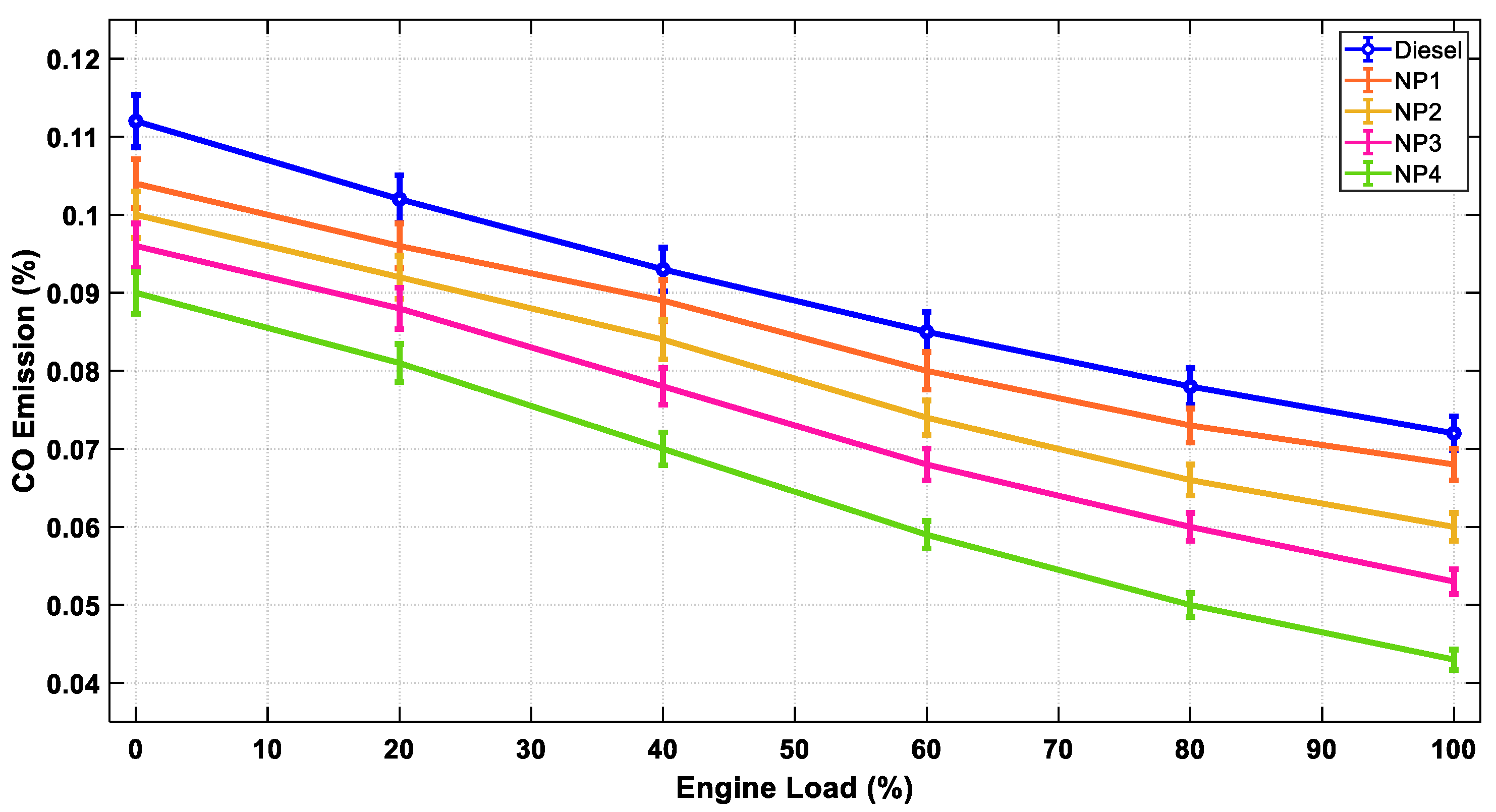
32]. This is clearly shown by the reduction in CO emissions. As shown by the data, there is a gradual reduction in CO emission with increasing nanoparticle concentration, especially at 100 ppm. Among all formulations, NP4 had the highest reduction in CO emission due to the synergistic effect of the three nanoparticles, especially the oxygen capacity of CeO
2, which enables continuous oxidation even under lean conditions [
15]. It is obvious from
Figure 5 that CO levels decrease when engine load increases. This indicates improved combustion efficiency at higher load conditions. This pattern corresponds with the results of Dinesha et al. [
33], who declared that there was a considerable reduction in CO emission due to the blending of CeO
2 with biodiesel. Demir et al. [
24] explain that the decomposition into nascent oxygen provides a catalytic role in the oxidation of CO into CO
2. Furthermore, TiO
2 introduced redox activity, contributing to its oxidative cracking at high temperatures [
34].
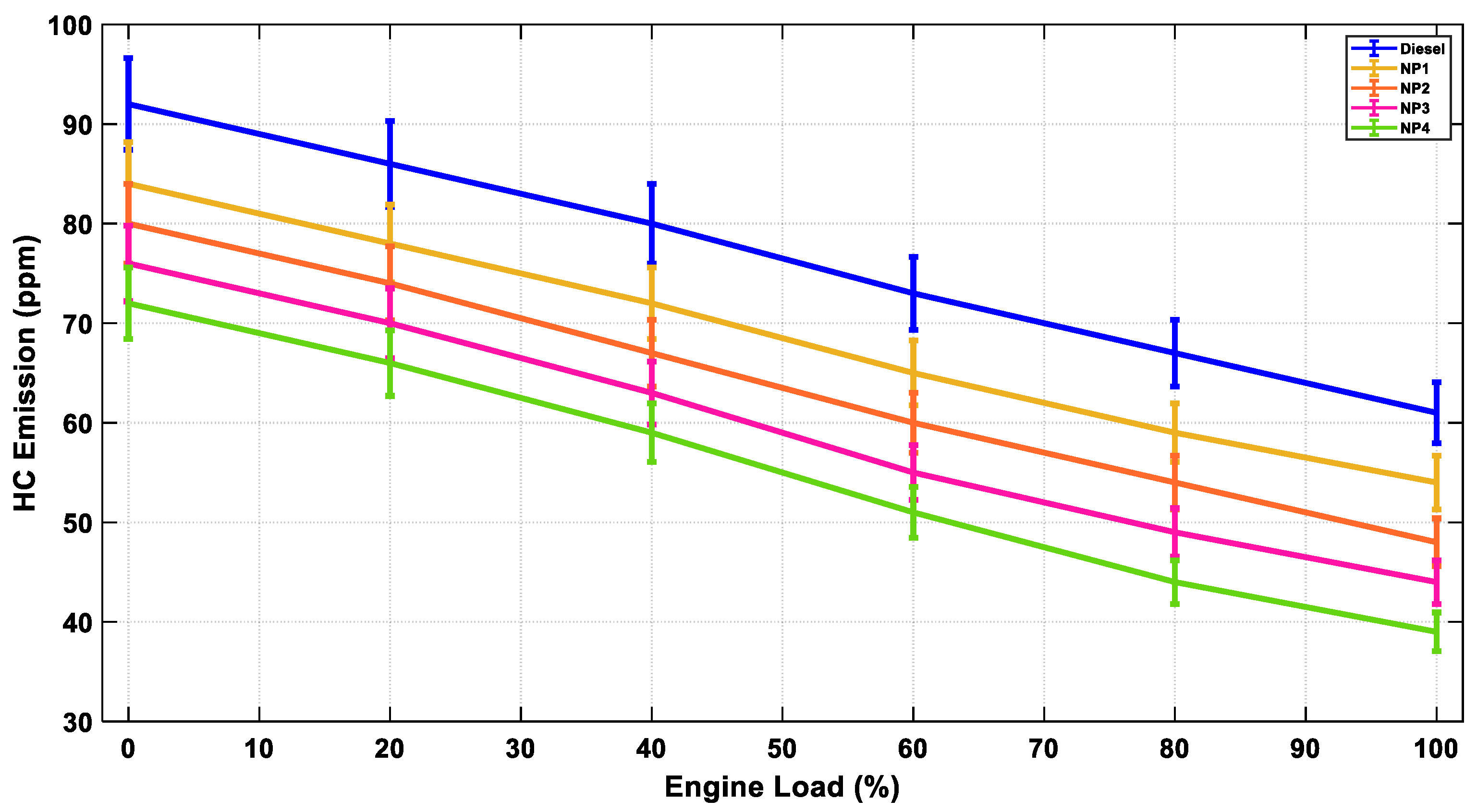
The main source of HC emissions is unburned and partially burned fuels, which are affected by fuel atomization, flame temperature, and turbulence. All nanoparticle-enhanced fuels showing a similar trend in HC emissions reduction indicate a higher degree of combustion. The lowest HC levels were recorded by NP4, as illustrated in
Figure 6. Enhanced combustion is likely caused by the better dispersion and sphericity of the nanoparticles in NP4, which gives rise to the interaction between the fuel and oxidizer [
32]. The combustion process is improved by the addition of TiO
2 and CeO
2 nanoparticles; therefore, this combination supports the burning of long-chain hydrocarbons and lessens the formation of unburned residues. As mentioned by [
6], AgNO
3 not only supports but also catalytically cracks carbonaceous structures, so it enhances the degradation of HC. Li et al. claim that TiO
2 supported by nano silver greatly enhances fuel ignition; thus, NP4 is proven to be effective [
17].
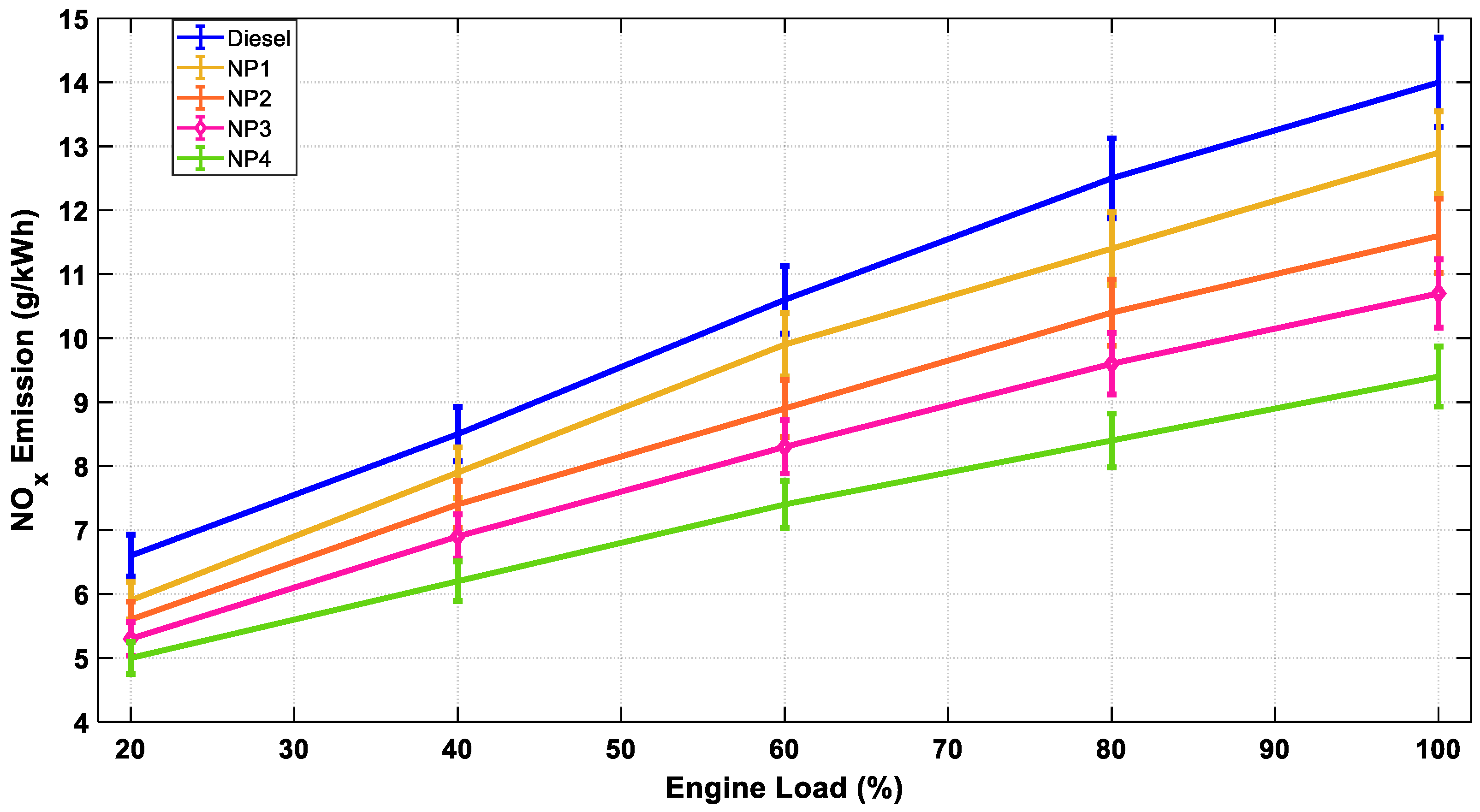
Figure 7 illustrates the variation of NO
x emissions with engine load for NP1–NP4 nanocatalyst formulations at a concentration of 100 ppm. This result highlights improvement in combustion control and thermal moderation. The CeO
2 in NP4 provides dynamic oxygen release through redox cycling between Ce
4+ and Ce
3+, stabilizing flame temperatures and mitigating thermal NO
x formation [
15]. The steady decline in NO
x with increasing load confirms that the nanoparticles are more effective under higher thermal stresses. As the load is increased in the engine, NO
x emission increases for all the fuels. However, NP4 shows the lowest NO
x emission in comparison with the other fuel formulations. This issue indicates that the ternary nanocatalyst system is more effective in controlling NO
x emissions at higher load conditions. A possible explanation for the simultaneous reduction in CO, HC, and NO
x in NP4 is the combined effect of oxidation enhancement and thermal moderation. The oxygen storage/release capability of CeO
2 supports the oxidation of incomplete combustion products, thereby reducing CO and HC emissions, while its redox buffering behavior can also moderate local combustion temperature and suppress thermal NO
x formation. In parallel, Ag-derived active species and TiO
2-supported catalytic surfaces may facilitate additional surface oxidation and NO reduction pathways. Since in-cylinder pressure, heat release rate, and flame temperature were not directly measured in this work, this mechanism should be interpreted as a literature-supported explanation rather than a direct thermodynamic confirmation.
CO
2 is a greenhouse gas but an increase in CO
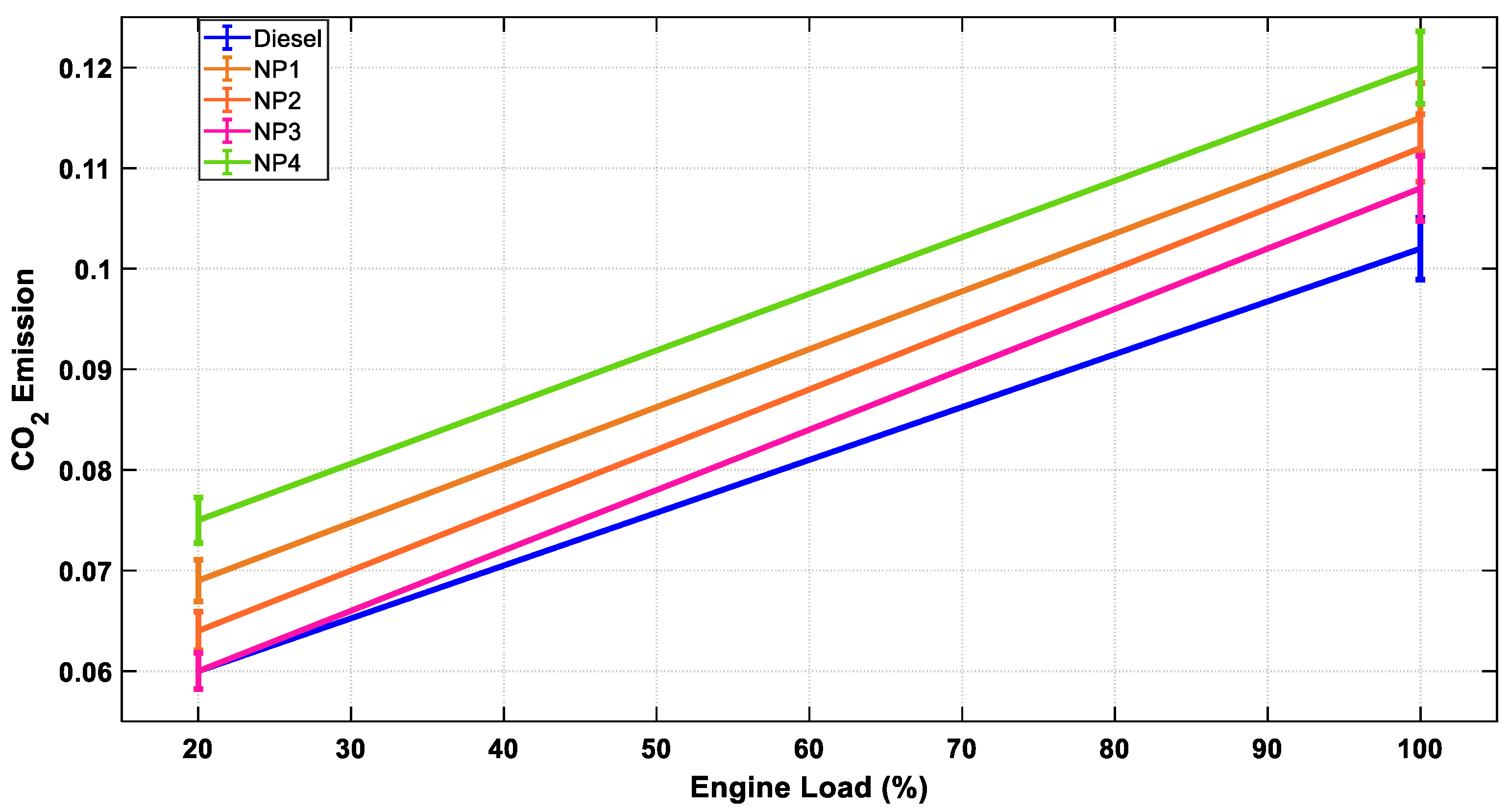
2 emissions usually indicates more complete combustion compared to CO or HC. All nanoparticle formulations increased the emission rate of CO
2; however, NP4 recorded the highest emission rate of CO
2, as shown in
Figure 8. CeO
2 in NP4 enhances oxidation by providing lattice oxygen. Therefore, this issue ensures that the carbon is fully oxidized to CO
2 rather than CO [
15]. Thermal and catalytic properties supported by TiO
2 and AgNO
3 contribute to partial oxidation and final breakdown of HC. Anish et al. report that the incorporation of CeO
2 in diesel blends raised CO
2 emissions by 9–11%. In this study, NP4 increased CO
2 emissions by 18.81% [
23].
2.3. BSFC Analysis
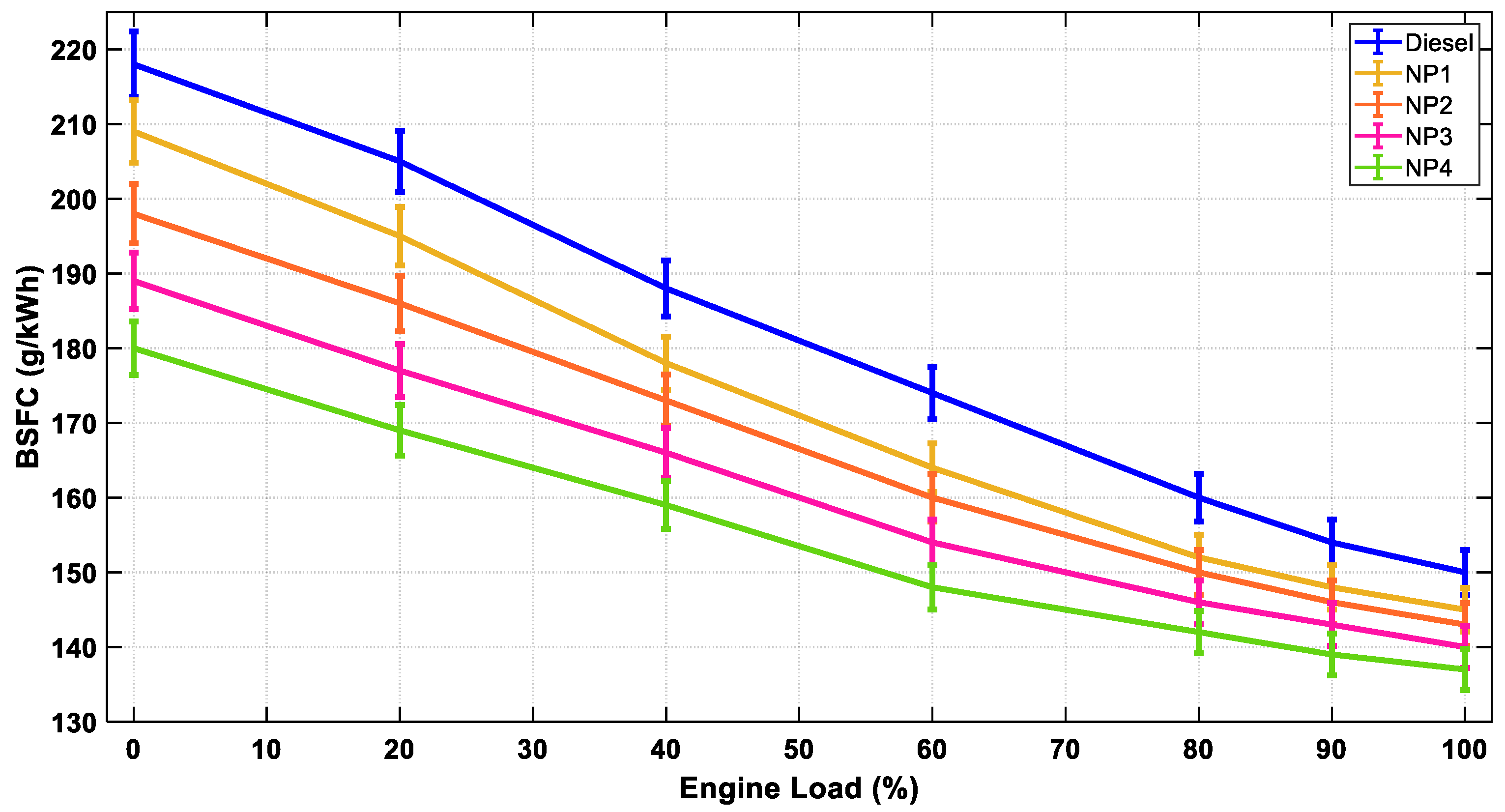
Figure 9 shows the BSFC, which denotes how efficiently fuel is converted into usable work. Across all blends, NP4 showed the highest reduction in BSFC values, especially at full engine load. The combination of AgNO
3-, TiO
2-, and CeO
2-enhanced atomization, promoted rapid ignition, and stabilized combustion temperature leads to a reduction in fuel consumption per unit of power output. Kumar et al. reported a 12–18% decrease in BEFC using CeO
2 additives. The 18.7% reduction in NP4 is greater than these values, showing the enhanced combustion efficiency achieved by the ternary catalyst, as shown in
Figure 9 [
23].
2.4. BTE Analysis
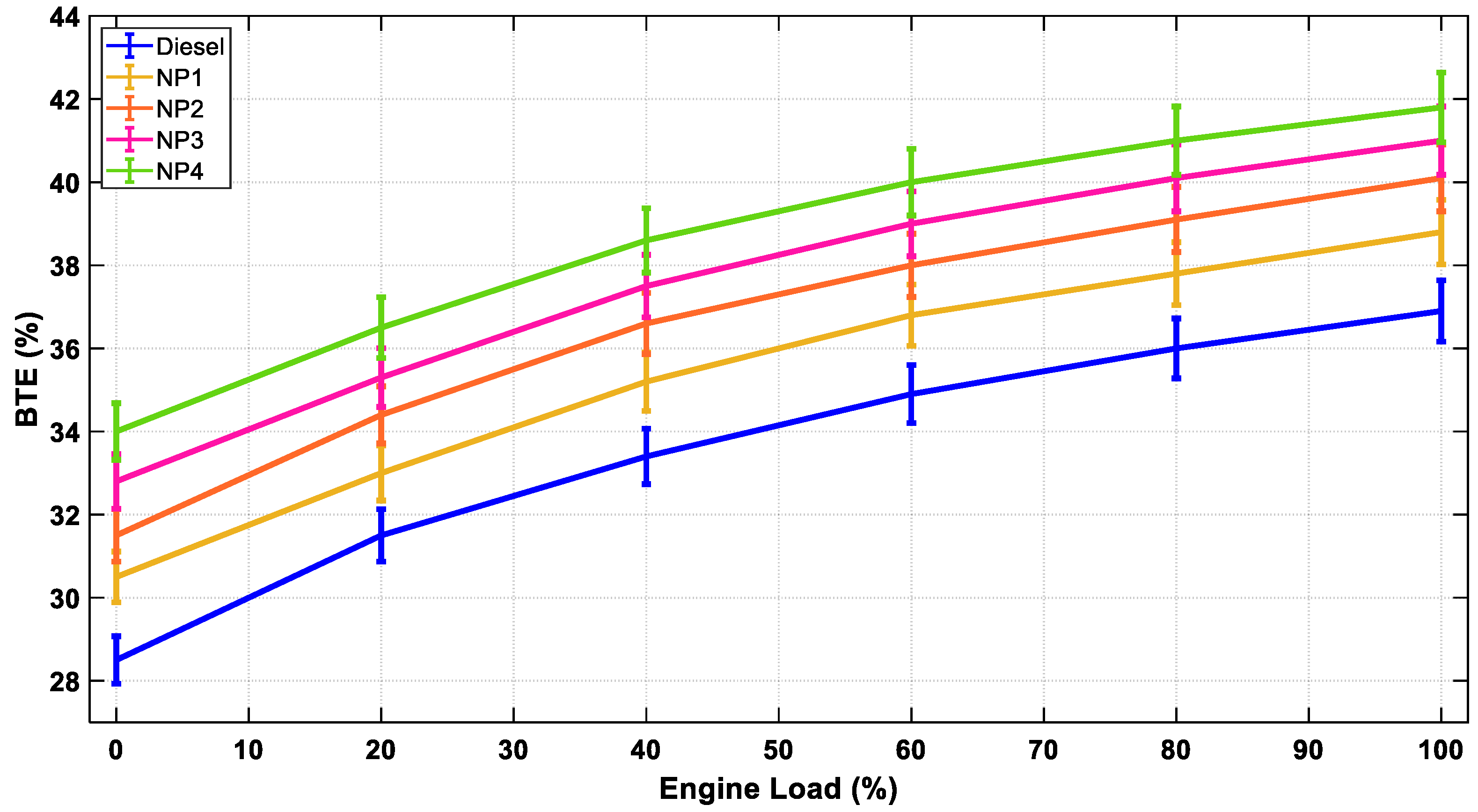
Figure 10 shows the rates of BTE and BSFC. NP4 illustrates the highest BTE. This enhancement is mainly due to stronger micro explosions, faster combustion, and catalytic oxidation, particularly in NP4. This is an agreement with previous studies [
9,
35], which report that nanocatalysts enhance heat release and increase combustion pressure.
2.5. Mechanical Interpretation of Catalyst Synergy
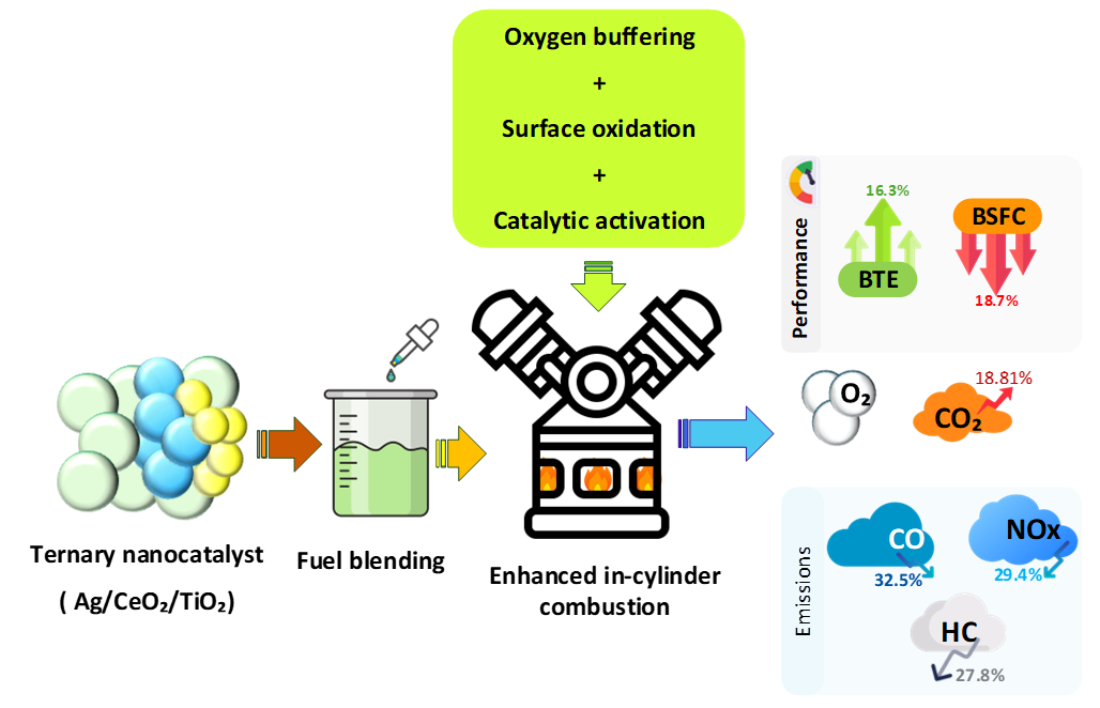
The results clearly show that the physicochemical properties of the nanocatalysts are the key factors in controlling the combustion characteristics and emissions. Among the examined formulations, NP4 had the best performance results because of the combined catalysts effects of its components. The XRD analysis indicates TiO2- and CeO2-related features in the NP4 nanocatalyst. The silver-related contribution is represented by a reflection near 38°, which is consistent with the presence of Ag-derived species. Due to peak overlap in this region, the exact crystalline form of silver is not further specified. The SEM images show uniformly shaped nanoparticles with minimal agglomeration, which enhanced the effective surface area for oxidation reactions. The improved combustion properties observed in NP4 can be attributed to the combined catalytic effect of its constituent material. Silver enhances oxidation reactions and supports the conversion of incomplete combustion products. TiO2 contributes to a thermally stable surface that enhances oxidation at high combustion temperatures. CeO2 contributes to oxygen storage and release by the reversible Ce4+ and Ce3+ redox cycle that supports oxidation under oxygen-deficient conditions. The combined action of these components enhances oxidation, reduces pollutant formation and improves engine performance. The combined effect of Ag nanoparticles derived from the AgNO3 precursor, TiO2, and CeO2 helped with emission mitigation. This improvement is mainly because of the oxygen storage and release capability of CeO2 through the reversible Ce4+ and Ce3+ redox cycle. The superior performance of NP4 compared to both Ag/TiO2 and CeO2/TiO2 indicates that the improvement is not simply the result of independent contributions from binary systems. Instead, it reflects a combined catalytic interaction among Ag, TiO2, and CeO2, where TiO2 provides structural support, CeO2 supplies oxygen-buffering capacity, and Ag enhances oxidation reactions. Moreover, the TiO2 prepares thermal stability and active surface sites that support oxidation at high combustion temperatures. Furthermore, The Ag nanoparticles act as effective oxidation catalysts for converting incomplete combustion products. This facilitated the rapid oxidation of incomplete combustion products. As a result, the NP4 formulation showed the best performance in reducing emissions. The emissions were reduced by 32.5% for CO, 27.8% for HC, and 29.4% for NOx. Moreover, BTE increased by 16.3%, indicating improved combustion efficiency. The reduction in BSFC by 18.7% indicates improved fuel utilization. The increase in CO2 emissions (18.81%) suggests complete oxidation. The combined catalytic effect of the three components in NP4 results in superior performance compared to individual and binary formulations. Therefore, it highlights the potential of ternary nanocatalysts for reducing diesel engine emissions.
3. Material and Methods
Four nanocatalyst formulations were prepared in this study, including NP1 (Ag), NP2 (Ag/TiO
2), NP3 (CeO
2/TiO
2) and NP4 (Ag/CeO
2/TiO
2). Silver nitrate (AgNO
3, 99.9% purity), titanium dioxide (TiO
2, anatase phase), cerium oxide (CeO
2, 99.5%), and polyvinylpyrrolidone (PVP) were purchased from Sigma-Aldrich (Darmstadt, Germany) and used without further purification.
Table 2 summarizes the compositional distribution of the active components used for the preparation of each nanocatalysts formulation. All formulations were synthesized using a controlled solution based method to ensure high dispersion, compositional homogeneity, and reproducibility. In the stock suspension, 10 g of AgNO
3 (58.85 mmol) was applied as the silver precursor. TiO
2 and CeO
2 were introduced in equal amounts depending on the formulation case (1 g, 2 g, or 3 g). The relative amounts of Ag, TiO
2 and CeO
2 used in the preparation of nanocatalysts were chosen based on the compositional range summarized in
Table 2. Silver nitrate (AgNO
3, 99.9% purity) was applied as the precursor compound for the synthesis of silver nanoparticles. Due to the mild calcination temperature (150 °C) and absence of XPS analysis, the exact oxidation state of silver cannot be conclusively determined; therefore, it is referred to as Ag-derived species. A stock solution of AgNO
3 was first prepared by dissolving 10 g of AgNO
3 in deionized water. This stock solution served as the precursor for the preparation of silver-containing nanocatalysts. From this suspension, the required amount of AgNO
3 precursor (200 mg) was used in each catalyst synthesis phase. While the compositional ranges in
Table 2 define the synthesis design space, fixed representative compositions were selected for experimental evaluation. These compositions were kept constant across all engine tests to ensure reproducibility and consistency of the results, as presented in
Table 3.
3.1. Synthesis of NP1: Silver Nanoparticles
First, 1.85 mmol of silver nitrate (AgNO3) was dissolved in deionized water to serve as the silver precursor solution. Polyvinylpyrrolidone (PVP, 1 wt% relative to the AgNO3 precursor mass) was added as a stabilizing and capping agent to regulate nanoparticle growth and prevent agglomeration. The solution was stirred at 500 rpm for 30 min to achieve a uniform mixture. Then, the pH was slowly adjusted to a mildly alkaline state ranging from pH 7 to 8 to support the formulation and stabilization of the silver species. The suspension was treated with ultrasonic treatment for 2 h in order to enhance particle dispersion. Lastly, the suspension was dried at 105 °C for 24 h to gain solid Ag nanoparticles (NP1).
3.2. Synthesis of NP2: Ag/TiO2 Nanoparticles
Silver nitrate solution (AgNO3, 200 mg; 1.18 mmol) was added to deionized water under magnetic stirring to achieve a uniform solution. Then, TiO2 powder in a range of 2.3–4.5 mg was gradually added into the solution under stirring to allow interaction between silver and the TiO2 support. The mixture was stirred at 500 rpm for 30 min and the pH was adjusted to a mild alkaline range between 7 and 9. The mixture was ultrasonicated for 2 h to improve dispersion and reduce particle agglomeration. Finally, the mixture was dried at 105 °C for 24 h to obtain Ag/TiO2 (NP2).
3.3. Synthesis of NP3: TiO2/CeO2 Nanoparticles
Cerium oxide (CeO2, 12.5–25 mg) and titanium dioxide (TiO2, 12.5–25 mg) were mixed with 100 mL of deionized water under magnetic stirring. The mixture was stirred at 500 rpm for 30 min, and the pH was adjusted to a mildly alkaline range of pH 7–9. Then the mixture was ultrasonicated for 2 h. Finally, the mixture was dried at 105 °C for 24 h to obtain TiO2/CeO2 (NP3).
3.4. Synthesis of NP4: Ag/CeO2/TiO2 Nanoparticles
Silver nitrate (AgNO3, 200 mg; 1.18 mmol) was dissolved in 100 mL of deionized water. Then, cerium oxide (CeO2; 2.1–4.2 mg) and titanium dioxide (TiO2; 2.1–4.2 mg) were added under magnetic stirring. The mixture was stirred at 500 rpm for 30 min, and the pH was adjusted to a mildly alkaline range of pH 7–9. After that, the mixture was ultrasonicated for 2 h. Then it was dried at 105 °C for 24 h and calcined at 150 °C for 24 h with a heating rate of 5 °C min−1. This mild calcination treatment helped to remove residual moisture and improved catalyst stability of the catalyst, without allowing nanoparticle agglomeration. The final product was Ag/CeO2/TiO2 nanocatalyst (NP4). Finally, the mixture was dried at 105 °C for 24 h to obtain Ag/CeO2/TiO2 nanoparticles. The drying step removes moisture, while calcination stabilizes the catalyst structure and promotes formation of Ag-derived species.
3.5. Preparation of Nano-Fuels
The nano-fuels were obtained by dispersing the synthesized nanocatalysts in diesel fuel at a concentration of 50 ppm, 75 ppm, and 100 ppm. The mixture was initially subjected to magnetic stirring at around 500 rpm for 20–30 min in order to obtain an initial dispersion of nanoparticles. Then, ultrasonication in an ultrasonic bath for 2 h was used to ensure a homogeneous nano-fuel mixture.
To improve dispersion stability and prevent nanoparticle agglomeration, a small number of surfactants (Span-80 or Tween-80, around 200 ppm) were added to the mixture. This procedure ensured stable dispersion of the nanocatalysts in the diesel fuel during the experimental testing period. The prepared nano-fuel mixtures were used immediately after preparation to avoid possible sedimentation during long-term storage. The nano-fuel was prepared immediately prior to testing to minimize the effects of long-term sedimentation and ensure consistent dispersion during the experimental measurements. The stability of the nano-fuel mixture was analyzed visually during the experimental period. There was no significant sedimentation or step separation observed during the test period. Although long-term stability tests like zeta potential measurement were not conducted in this research, the dispersion stability was enough for the duration of engine experiments. However, possible nanoparticle agglomeration during longer storage periods may affect dispersion homogeneity and consequently influence combustion and emission behavior. Therefore, this issue should be considered as a limitation of the present study, and future work should include a quantitative stability assessment, such as zeta potential and sedimentation analysis.
3.6. Characterization of the Material
The crystal structure of synthesized nanocatalysts was analyzed by XRD, Rigaku Ultima-IV (Akishima, Japan) with Cu Kα radiation at 30 mA and 40 kV. The surface morphology and particle distribution were examined by using a field emission scanning electron microscope; images of the nanoparticles were achieved using a field emission scanning electron microscope (FESEM, Zeiss VP Sigma 300, Jena, Germany). The microscope was operated at an acceleration voltage of 10 kV using an In-Lens (SE1) detector. Elemental composition and mapping were examined by energy-dispersive X-ray (EDX) at 20 kV with an SE2 detector. FTIR spectra were recorded in the range of 400–4000 cm−1 using the KBr pellet method. TEM analysis was not performed in the present study; therefore, nanoscale morphology was evaluated qualitatively using FESEM. Future work should include TEM analysis for precise particle size and lattice structure confirmation.
In addition, BET surface area analysis and XPS characterization were not performed in this study, which limits detailed evaluation of the surface area, active catalytic sites, and oxidation states of the constituent materials. However, the combined use of XRD, SEM, and FTIR provides complementary structural and chemical information that enables a qualitative interpretation of catalyst behavior. XRD analysis allows phase identification and relative crystallinity assessment, SEM provides insight into particle morphology and dispersion characteristics, and FTIR confirms surface functional groups and bonding interactions. Therefore, the interpretation of catalytic performance in this study is based on a combination of these techniques and supported by relevant literature, while avoiding over-interpretation. Future work should incorporate BET and XPS analyses to achieve a more comprehensive understanding of structure–property relationships.
3.7. Performance and Emission Measurement
Engine emissions were measured by a multi-gas analyzer capable of detecting CO, CO
2, NO
x, HC, and O
2. The gas analyzer used in this study did not include particulate matter (PM) measurement capability; therefore, particulate emissions are outside the scope of this work. The analyzer was calibrated before each test according to the instructions provided by the manufacturer. The measurement accuracy of the gas analyzer was about ±1–3% for CO and CO
2 and ±2–5% for NO
x and HC. In order to decrease measurement noise, emission data were collected every 1 s and averaged during the steady-state test period. For each operating condition, measurements were collected after the engine reached steady-state operation. The reported values correspond to averaged steady-state readings collected over the measurement interval to ensure stable and reliable data acquisition. Each experiment was repeated three times to ensure repeatability and minimize random errors in measurements. The reported values present the average of repeated measurements obtained during steady-state operation. The error bars shown in
Figure 5,
Figure 6,
Figure 7,
Figure 8,
Figure 9 and
Figure 10 represent the combined measurement uncertainty associated with the gas analyzer.
This includes the analyzer accuracy (±1–3% for CO and CO
2 and ±2–5% for NO
x and HC) and the residual fluctuations after time-averaging of the measured data. Since the emission data were recorded at 1 s intervals and averaged over approximately 2 min under steady-state conditions, the effect of random noise is significantly reduced. Therefore, the uncertainty shown in the figures primarily reflects the measurement accuracy of the analyzer rather than the statistical dispersion of independent repeated experiments. The main experimental parameters used in the diesel engine tests are shown in
Table 4.
3.8. Experimental Engine Setup
Experimental tests were conducted on a single-cylinder diesel generator rated at 4.4 kW and operating at a constant speed of 1500 rpm. The in-cylinder combustion temperature is significantly higher than the catalyst treatment temperature (150 °C); however, it was not directly measured in this study. Diesel combustion typically occurs at high temperatures, indicating that the catalyst operates under more severe thermal conditions during engine operation. The engine was examined under five different steady-state load conditions, including 0%, 25%, 50%, 75% and 100% of the rated load, in order to investigate the influence of nanocatalyst additives under different operating regimes. Each load condition was kept for 10 to 15 min before data acquisition to remove transient effects and ensure stable operation. BTE and BSFC were measured by a calibrated dynamometer and volumetric fuel meter. The reported values present averages obtained over a 2 min steady-state operation period. This part of the study was designed to analyze two main effects:
The compositional synergy among NP1 (Ag), NP2 (Ag/TiO2), NP3 (CeO2/TiO2) and NP4 (Ag/CeO2/TiO2) nanocatalyst formulations.
The impact of nanocatalyst concentration (50 to 100 ppm) on engine performance and emission characteristics.
It is notable that this study focuses on engine-out gaseous emissions and global engine performance indicators. In-cylinder combustion diagnostics such as cylinder pressure, ignition delay, and heat release rate were not considered in this experimental study. The main goal of this study is to examine the macroscopic influence of nanocatalyst additives on engine performance and emission characteristics under a controlled operating condition. Although detailed in-cylinder combustion diagnostics were not included in this experimental setup, the emission trends and performance indicators (BSFC, BTE) provide indirect information about combustion improvement.
4. Conclusions
This study presents a comparative experimental investigation of single (Ag), binary (Ag/TiO2 and CeO2/TiO2), and ternary (Ag/CeO2/TiO2) nanocatalyst additives for improving diesel engine combustion performance and emission characteristics under identical operating conditions. Among the investigated formulations, the ternary Ag/CeO2/TiO2 (NP4) nanocatalyst consistently demonstrated the best overall performance. Quantitatively, NP4 reduced CO, HC, and NOx emissions by 32.5%, 27.8%, and 29.4%, respectively, while increasing CO2 emissions by 18.81%, indicating more complete combustion. In addition, NP4 improved BTE by 16.3% and reduced BSFC by 18.7% compared to conventional diesel fuel. These improvements are attributed to synergistic catalytic interaction among the three components. Specifically, CeO2 provides oxygen storage and release capability through the Ce4+/Ce3+ redox cycle, TiO2 contributes a thermally stable catalytic surface that enhances oxidation reactions, and Ag promotes the oxidation of incomplete combustion products. The comparative analysis under identical conditions confirms that the ternary formulation provides a more effective catalytic mechanism than single and binary systems.
Despite these promising results, several limitations of this study should be acknowledged. The experiments were conducted using a single-cylinder diesel engine, and the analysis was limited to engine-out gaseous emissions (CO, HC, NOx, and CO2). Particulate matter (PM) emissions, soot characteristics, and detailed in-cylinder combustion parameters such as cylinder pressure, ignition delay, and heat release rate were not measured. Furthermore, the long-term durability of nanocatalysts under continuous engine operation was not evaluated. Although short-term dispersion stability was visually confirmed during the experimental period, potential changes in nanoparticle dispersion, agglomeration, and catalytic activity over extended operation may influence performance. Therefore, future work should include a quantitative stability assessment (such as zeta potential and sedimentation analysis) and long-term engine testing to evaluate catalyst durability and performance degradation.
However, under practical engine-operating conditions, variations in engine speed may affect fuel atomization, turbulence intensity, combustion residence time, micro-explosion behavior, and the effective catalytic interaction of the nanocatalysts. Therefore, the present findings should be interpreted within the controlled constant-speed condition adopted in this study, and future work should extend the analysis to variable-speed engine operation.
Future research should focus on extending the analysis to multi-cylinder engines and transient operating conditions, incorporating particulate matter (PM) and soot measurements, and performing detailed in-cylinder combustion diagnostics such as pressure analysis and heat release rate evaluation. In addition, long-term dispersion stability assessment using quantitative techniques (e.g., zeta potential and sedimentation analysis) is recommended. Further investigation of ternary nanocatalysts in advanced combustion modes such as HCCI and RCCI, along with durability and techno-economic analysis, will be essential to assess their practical applicability in real engine systems.