Article

Photo-Assisted Catalytic Degradation of 2,4,6-Trichlorophenol by Mixed Oxides Co3O4–CoFe2O4 Derived from Hydrotalcites


by
Esthela Ramos-Ramírez
1,*,
Norma Gutiérrez-Ortega
2,*,
Julio Castillo-Rodríguez
3,
Claudia Martínez-Gómez
1,
Israel Rangel-Vázquez
1,
Francisco Tzompantzi-Morales
3,
José María Solis-Murillo
4 and
Javier Vallejo-Montesinos
1
1
Departamento de Química, División de Ciencias Naturales y Exactas, Campus Guanajuato, Universidad de Guanajuato, Noria Alta s/n, Col. Noria Alta, Guanajuato C.P. 36050, Mexico
2
Departamento de Ingeniería Civil y Ambiental, División de Ingenierías, Campus Guanajuato, Universidad de Guanajuato, Av. Juárez 77, Centro Histórico, Guanajuato C.P. 36000, Mexico
3
Departamento de Química, Universidad Autónoma Metropolitana-Iztapalapa, Av. San Rafael Atlixco No. 186, Ciudad de México C.P. 09340, Mexico
4
Programa de Doctorado en Ciencias Químicas, División de Ciencias Naturales y Exactas, Noria Alta s/n, Col. Noria Alta, Universidad de Guanajuato, Guanajuato C.P. 36050, Mexico
*
Authors to whom correspondence should be addressed.
Catalysts 2026, 16(5), 441; https://doi.org/10.3390/catal16050441
Submission received: 1 April 2026 / Revised: 20 April 2026 / Accepted: 7 May 2026 / Published: 9 May 2026
(This article belongs to the Special Issue Advances in Photocatalytic Degradation, 2nd Edition)

Abstract

Currently, the search continues for solutions for the treatment of water contaminated by toxic compounds such as chlorophenols that are used in the manufacture of pesticides, insecticides, and the paper industry, among others, and that are considered persistent in the environment, in addition to being extremely toxic, especially 2,4,6-trichlorophenol, which is potentially carcinogenic. In this work, the use of thermally activated Co/Fe hydrotalcites as photocatalysts is presented. The catalysts were characterized by differential thermal and thermogravimetric analysis, X-ray diffraction, Fourier transform infrared spectroscopy, X-ray photoelectron spectroscopy, N2 physisorption, diffuse reflectance spectroscopy and photoluminescence. The catalysts were tested in the photo-assisted degradation of 80 mg/L of 2,4,6-trichlorophenol. The catalytic structures present are Co/Fe simple and mixed oxides. The results of the photocatalytic activity show that the materials have good photocatalytic activity with a degradation efficiency of 2,4,6-trichlorophenol, reaching a maximum capacity of 65% for oxides derived from hydrotalcites with a Co/Fe ratio of 2 and calcined at 500 °C, exceeding the activity shown by the reference catalyst, high-performance commercial titanium dioxide. The photocatalytic activity studied for the catalyst with the highest percentage of degradation is attributed to the presence of holes, as well as to the formation of oxidizing species such as superoxide and hydroxyl radicals that are determinants in the degradation mechanism.

1. Introduction

In recent years, the presence of recalcitrant organic pollutants in water bodies has increased considerably, affecting the ecological balance. These compounds are characterized by the priorities worldwide researched as highly persistent in the environment, so achieving their complete degradation is one of the research priorities worldwide. Within the families of recalcitrant toxic aromatic pollutants, phenols are of high priority considering that they are widely used by various industries and domestic applications, so their discharge into natural aqueous systems is extensive. Specifically, 2,4,6-trichlorophenol (2,4,6-TCP) is considered a potentially carcinogenic contaminant [1,2,3].
Among the main techniques developed for the degradation of recalcitrant organic compounds is oxidation, which uses agents such as H2O2, O3, ClO2, among others, which have the advantage of having good efficiencies, but with the disadvantages of generating toxic sludge, dangerous reaction intermediates, and high energy costs [4,5]. To avoid these operational drawbacks, photodegradation techniques have been developed using semiconductor materials that are characterized by efficiently degrading aromatic contaminants until they are mineralized [6,7]. TO2 is considered one of the most efficient photocatalysts used in photocatalysis; it has the disadvantage that it produces a wide variety of intermediates, limited degradation efficiency, and requires several hours of treatment [8].
A family of compounds that have aroused interest to be used as photocatalysts are hydrotalcite-type materials, which are structurally composed of inorganic layers that are chemically characterized by the formula [M1−x2+Mx3+(OH)2]x+(An−)x/n·mH2O, where M2+ is a divalent metal (M2+ is Mg2+, Ni2+, Co2+, Cu2+, Zn2+ or among others), M3+ are trivalent cations with which octahedral lattices with positive residual charge are structured (M3+ is Al3+, Fe3+, Cr3+ or among others), An− are anions that are housed in the interlayer space to compensate for the residual charge of the sheets (An− is O3, CO32−, SO42–, Cl, Br, I or, etc.) and m is the number of water molecules [9,10].
Hydrotalcites have emerged as one of the most promising families of compounds for the degradation of organochlorine compounds, due to their high cationic dispersion, memory effect, and compositional versatility. The composition and molar ratio of metals in hydrotalcites have a direct effect on their contaminant degradation capacity [11,12,13]. In this context, mixed materials derived from hydrotalcites containing transition metals, especially Co and Fe, have shown increasing interest due to their redox capacity, structural stability, and activation potential under irradiation for application in the degradation of various persistent organic compounds [14,15,16]. Recent studies have demonstrated that the photocatalytic performance of hydrotalcite-derived materials can be significantly enhanced through defect engineering and heterojunction formation. In particular, Co–Fe-based systems have attracted attention due to their redox flexibility (Co2+/Co3+ and Fe2+/Fe3+) and their ability to generate oxygen vacancies, which improve charge carrier separation and promote the formation of reactive oxygen species. However, the role of amorphous phases and their contribution to photocatalytic activity remains poorly understood, especially in systems derived from hydrotalcites calcined at moderate temperatures. Specifically, few studies have been reported on the degradation of 2,4,6-TCP using hydrotalcites containing transition metals, with Mg/Fe systems being the most studied [17,18]. Although Co/Fe hydrotalcites have been studied specifically for 2,4,6-TCP, the literature indicates that bimetallic combinations with Co improve electron transfer and oxygen activation in advanced oxidation processes, suggesting a high potential not yet fully exploited in the degradation of chlorophenols [19]. The objective of this research work is to test the photo-assisted catalytic degradation capacity of activated hydrotalcites of different Co/Fe ratios of 1, 2, 3 and 4 compared to the reference TiO2-P25 photocatalyst, for the decontamination of 2,4,6-trichlorophenol from aqueous systems, identifying the physicochemical properties of the activated material that give it the photocatalytic capacity.

2. Results and Discussion

2.1. Physicochemical Characterization of Photo-Assisted Catalysts

2.1.1. Differential Thermal Analysis (DTA) and Thermogravimetric Analysis (TGA)

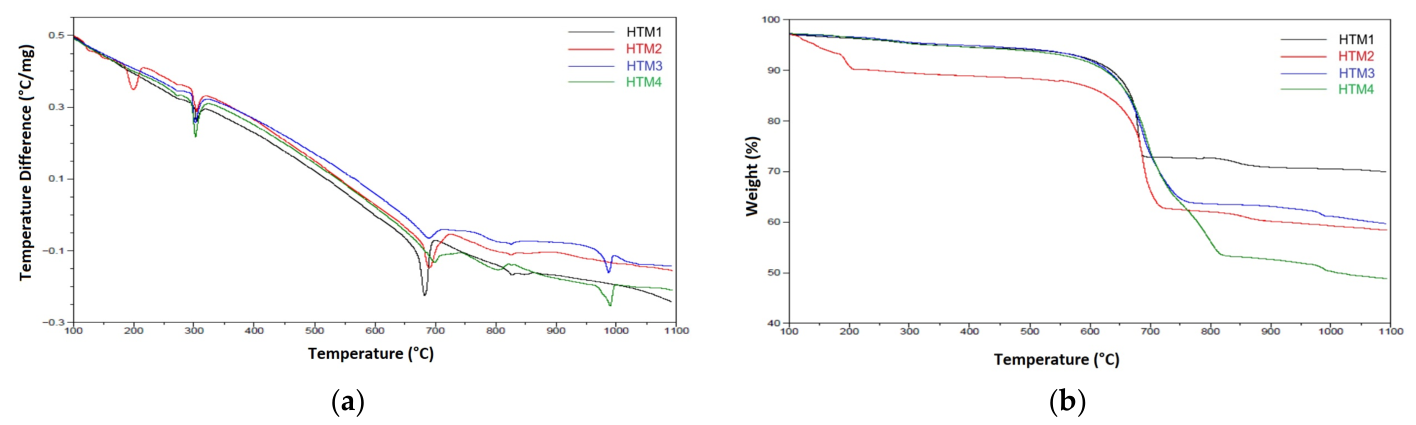
Figure 1 shows the thermal evolution profiles of hydrotalcites with different Co/Fe molar ratios as catalytic precursors. This technique allows us to identify both the weight loss associated with the decomposition of the synthesized material as a function of the heat treatment, as well as the type of reaction associated with this process. Specifically, Figure 1a shows differential thermal analysis (DTA), and Figure 1b shows thermogravimetric analysis (TGA). As can be seen, the different Co/Fe hydrotalcites synthesized as catalytic precursors show similar thermal evolutions, mainly in the signals associated with the dehydration of the molecules housed in the interlaminar space at 300 °C and the decarbonation and total dehydroxylation at 680 °C. Additionally, for the materials HTM3 and HTM4, an additional reaction at 998 °C associated with the crystallization of the cobalt ferrite spinel is observed.
With respect to the weight loss profiles of the different materials, it can be observed that the hydrotalcite precursor HTM2 presents a first weight loss associated with the elimination of water around 200 °C since it decreases up to 12% of its original weight, while the materials HTM1, HTM3 and HTM4 present a lower weight loss and a similar of 3.5%. The second weight loss occurs between 600 and 700 °C, which for HTM1 material contributes with a loss of 22%, HTM2 of 33%, HTM3 of 34.5% and HTM4 of 46.5%, the latter being the one that reached the highest total loss, losing 50% of its mass up to 1100 °C.
The general thermal decomposition profile, associated with mass loss and the type of endothermic and exothermic reactions are summarized in a general way for all synthesized materials according to Equations (1)–(3).
Co6Fe2(OH)16CO3·4H2O → Co6Fe2(OH)16CO3 + 4H2O↑      from 25 to 300 °C
Co6Fe2(OH)16CO3 → Co6Fe2O8(OH)2 + 7H2O↑ + CO2↑      from 300 to 500 °C
Co6Fe2O8(OH)2 + 5/6O2 → CoFe2O4 + 5/3Co3O4 + H2O↑      from 500 to 1000 °C
The proposal of the final products by an oxidation reaction of the mixed oxohydroxide in an oxidizing atmosphere [20] is raised in relation to the products identified by X-ray diffraction that are described in the following section, where the crystalline compound of the simple cobalt oxide Co3O4 is identified.

2.1.2. X-Ray Diffraction (XRD)

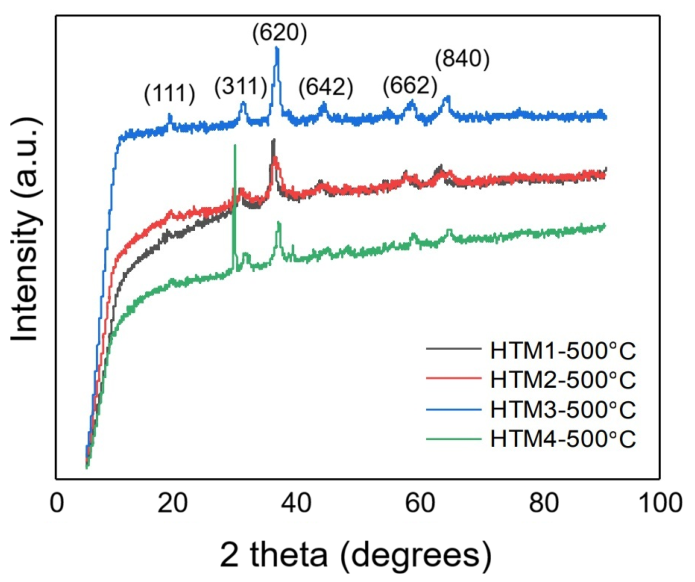
Figure 2 shows the X-ray diffraction patterns of oxides obtained from hydrotalites with different Co/Fe ratios activated at 500 °C. The XRD patterns confirm that, after calcination at 500 °C, the main crystalline phase corresponds to Co3O4, with a cubic structure according to JCPDS card No. 42-1467 [21]. It can be observed that, for all catalysts in general, no diffraction peaks associated with CoFe2O4 were detected, which suggests that this phase is either poorly crystalline or amorphous under these conditions.
It is well known that hydrotalcite-derived materials calcined at moderate temperatures can lead to the formation of mixed oxides with low crystallinity, which may not be detectable by XRD.
In this context, complementary characterization techniques were considered to support the presence of Co–Fe mixed oxide species. FTIR analysis shows characteristic bands associated with Fe–O–Co vibrations, indicating the formation of mixed oxide structures. Furthermore, XPS results reveal the coexistence of Co2+/Co3+ and Fe2+/Fe3+ species, as well as strong metal–oxygen interactions, which are consistent with a spinel-type CoFe2O4 local environment.
Therefore, although CoFe2O4 is not detected as a crystalline phase by XRD, the combined FTIR and XPS results support the formation of a poorly crystalline or amorphous Co–Fe mixed oxide phase.

2.1.3. Fourier Transform Infrared Spectroscopy (FTIR)

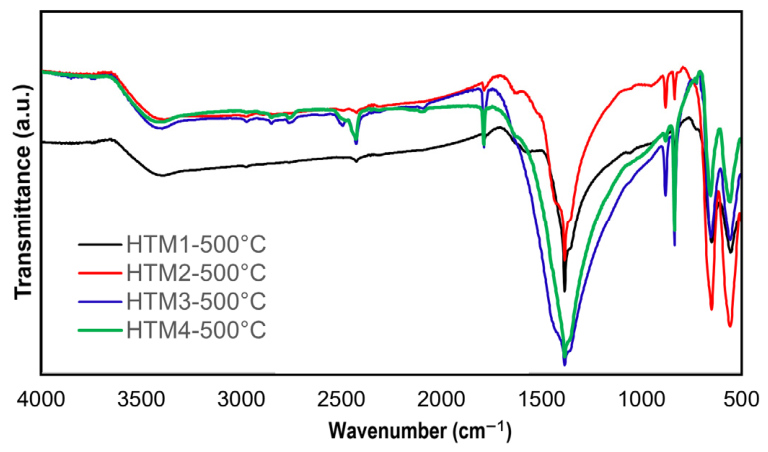
Figure 3 shows the FTIR spectra of hydrotalcites synthesized and activated at 500 °C in a range of 4000 to 500 cm−1, coinciding for all materials with similar vibration signals. Specifically, it can be observed that in the high-frequency region between 3700 and 3200 cm−1, the presence of broad, but low-intensity bands is associated with vibrations of surface hydroxyl groups and physiosorbed water, which indicates the presence of residual hydroxylated species even after heat treatment. The region of greatest interest to analyze by this technique corresponds to the one below 2000 cm−1, which allows identifying the vibration signals of the metals Co and Fe with the O in the different oxides that make up the material activated at that temperature.
In the low-frequency region (<2000 cm−1), characteristic bands of metal–oxygen vibrations are observed. The double signals in 1790 and 1383 cm−1, and 652 and 559 cm−1 can be associated with vibrations of M-O-M bonds, specifically Fe-O-Co. The signals at 9879 and 835 cm−1 correspond to the Co-O vibration, confirming the formation of mixed oxide-type phases after heat treatment at 500 °C. These results confirm the thermal decomposition profile at 500 °C, where the laminar structure of the synthesized hydrotalcites has collapsed, leading to the formation of mixtures of mixed oxides and simple oxides.

2.1.4. X-Ray Photoelectron Spectroscopy (XPS)

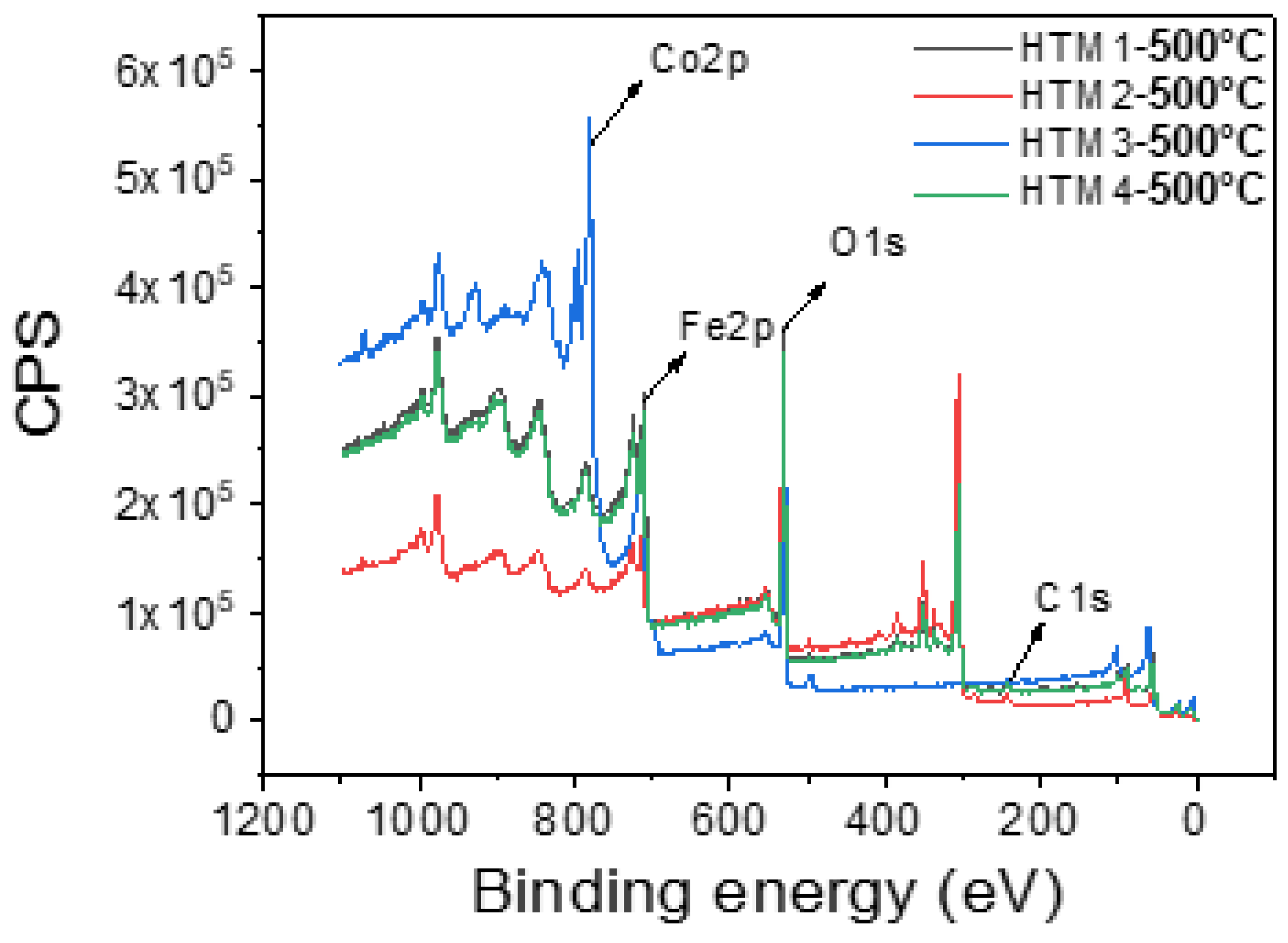
Figure 4 shows the sweeping spectrum of hydrotalcites synthesized and activated at 500 °C, in which only the presence of the elements Co, Fe, O and C can be observed, which confirms that there is no contamination with other trace elements. The calibration of the high-resolution spectra was with C 1s with a binding energy located at 285.0 eV, which is attributed to adventitious carbon.
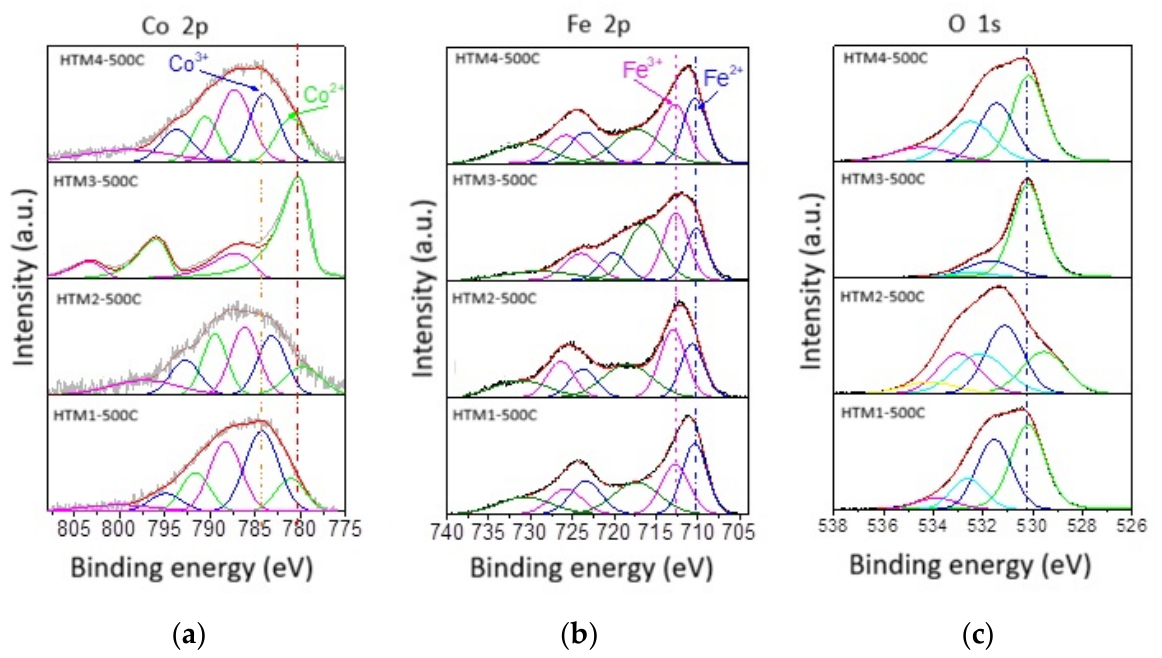
The high-resolution spectra for Co2p, Fe2p and O1s of the Co/Fe hydrotalcites HTM1, HTM2, HTM3 and HTM4 activated at 500 °C can be seen in Figure 5, and Table 1 shows the respective binding energies and their relative abundance corresponding to each of the species found after the deconvolution of the high-resolution XPS spectrum.
For oxygen species, four components are observed. The first component (O1) is assigned to the oxygen species in the structural network. The second (O2) corresponds to oxygen vacancies, and the third component (O3) corresponds to the presence of carbonates and water (O4). The importance of oxygen identification lies in the fact that, as it has been reported that the presence of oxygen vacancies or vacancies can be beneficial in photocatalytic activity [22,23,24,25], it is desirable to perform high-definition analysis of O1s in all activated materials. For hydrotalcite Co/Al activated at 500 °C HTM1-500 °C, a small presence of these vacancies is observed with a percentage of 18.37%, subsequently, these vacancies are greater in the HTM2-500 °C sample with 82.50%. With respect to the HTM3-500 °C and HTM4-500 °C samples, oxygen vacancies are lower with 60.93 and 34.02%, respectively. These oxygen vacancies can act as capturers of positively charged species, such as photogenerated voids. In this case, a percentage of these voids is captured by oxygen vacancies, reducing the probability that these voids will be recombined with electrons. By decreasing the recombination of these charge carriers, photocatalytic activity increases. Based on the values obtained for all the species obtained, it can be proposed that the best photocatalytic activity will potentially be found by the HTM2-500 °C material.
According to the analysis of the high-resolution spectra of the spin–orbit coupling of Co 2p3/2 and Co 2p1/2 of the HTM photocatalysts activated at 500 °C, it can be observed that only in HTM3-500 °C material Co2+ is present with a binding energy of 780.30 eV and in the other samples there is a mixture of Co2+ and Co3+ with different binding energy for each species as observed in Table 1. The high-resolution spectrum of the spin–orbital coupling of Fe 2p3/2 and Fe 2p1/2 can be seen in Figure 5. There is a mixture of two components corresponding to Fe2+ and Fe3+ with different binding energies as shown in Table 1. The results of the Co and Fe species present in the photocatalysts show that the thermal evolution of the hydrotalcite crystal lattice in an oxidizing atmosphere generates complex crystalline and amorphous mixtures with metals with different oxidation states that favor vacancies in the materials, activating the formation of catalytically active sites.

2.1.5. N2–BET Physisorption

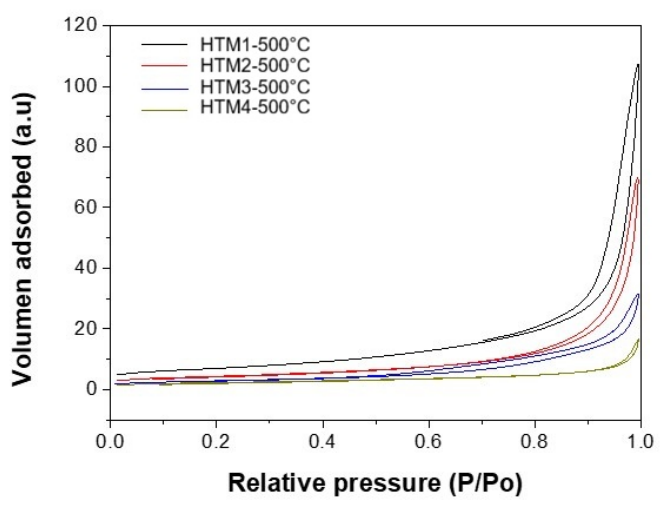
Figure 6 shows the adsorption–desorption isotherms of N2 for Co/Fe hydrotalcites activated at 500 °C. The physisorption isotherms of all materials belong to type 1V, according to the IUPAC classification, characteristic of mesoporous materials (pore size of 2–50 nm) with hysteresis curls H3 associated with materials with pores in the form of slits, typically originating from the aggregation of lamellar particles. This type of structure is consistent with the thermal profile described for hydrotalcite-derived materials, which, when calcined at temperatures above 500 °C, have a laminar structure that collapses due to dehydration and decarboxylation of the interlayer space, as well as partial dehydroxylation of the layer, with the subsequent formation of simple and mixed oxides with secondary porosity.
Table 2 shows the values associated with the textural properties of porosity (specific area, pore diameter and pore volume) obtained from the analysis of N2 physisorption by the BET method.
As shown by the values, photocatalysts show a trend of the value of the specific area in correlation with the molar ratio of Co/Fe metals; the specific area decreases as the Co/Fe ratio increases in the photocatalyst, presenting a maximum value of 24.5 and a minimum value of 8.0 m2/g. In all cases, the areas are less than 25 m2/g, which suggests the degree of collapse of the laminar structure associated with the thermal evolution towards simple and mixed metal oxides according to the thermal decomposition profile. Regarding the diameter of the pores, as the Co/Fe ratio increases, the pore diameter decreases, and as the pore size decreases, the adsorption potential increases.

2.1.6. UV-Vis Diffuse Reflectance Spectroscopy (DRS)

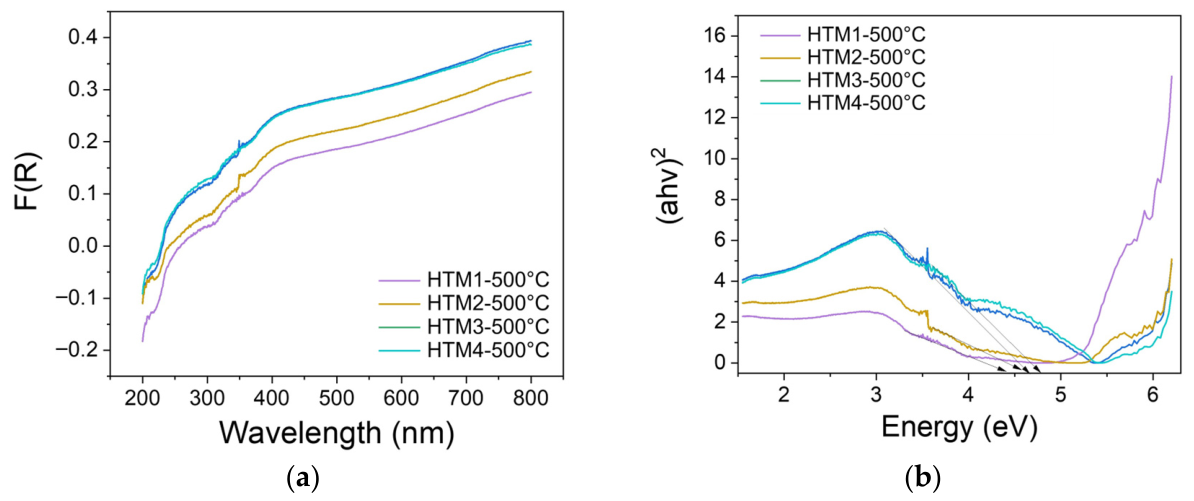
Figure 7 shows the UV-Vis diffuse reflectance spectra of the hydrotalcites Co/Fe activated at 500 °C, and Table 3 shows the values calculated for the energy of the bandgap Eg which was obtained by the Kubelka–Munk equation [F(R) = (1 − R)2/2R], extrapolating the absorption edges to F(R) = 0 where R is the converted reflectance (%).
The HTM1-500 °C material shows a slightly lower bandgap than the rest of the materials, with values of 4.39 eV, which would suggest that it is the material that has the best semiconductor properties intrinsically. Comparing the bandgap energy of the materials HTM2-500 °C and HTM3-500 °C, they are similar, with Eg values of 4.57 eV, which can be attributed to the fact that the electronic transitions of these materials are not modified with the relationship; however, for the material HTM4-500 °C a slightly higher value is obtained than the rest of the materials with 4.78 eV, which suggests that there is a greater absorption of electromagnetic radiation between 200 and 350 nm [26].
The band gap values obtained (4.39–4.78 eV) are higher than those typically reported for bulk Co3O4 or CoFe2O4. This behavior can be attributed to the complex nature of the materials, which consist of a mixture of crystalline Co3O4 and amorphous CoFe2O4 phases, as well as to the presence of defect states such as oxygen vacancies. In heterogeneous systems derived from hydrotalcites, the optical transitions obtained from Kubelka–Munk plots should be interpreted as apparent band gap energies, which may include contributions from charge-transfer transitions and defect-related states rather than purely intrinsic band-to-band transitions.
Additionally, the use of linear extrapolation methods may lead to an overestimation of Eg in multiphase materials. It is important to note that all materials are activated under UV irradiation (254 nm), which provides sufficient photon energy to overcome these band gaps. Therefore, the photocatalytic activity cannot be directly correlated with Eg values alone. Instead, the photocatalytic performance is more strongly influenced by factors such as oxygen vacancy concentration, charge carrier recombination rate, and surface properties, as confirmed by XPS, PL, and BET analyses.

2.1.7. Photoluminescence (PL)

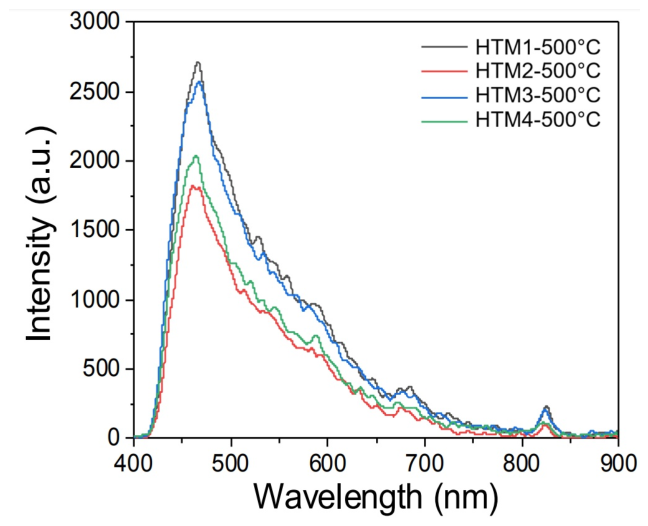
The photoluminescence spectra (PL) of the hydrotalcites Co/Fe activated at 500 °C are shown in Figure 8, which were obtained in order to corroborate the ease of recombination of the photogenerated species e-h+, considering that this is a key factor in photocatalytic processes. The HTM1-500 °C catalyst showed the highest intensity of PL compared to the rest of the materials, around 465 nm when released at 294 nm. This behavior indicates a high recombination rate of the photogenerated pair e-h+. However, the intensity of PL decreases at HTM2-500 °C, indicating a low recombination rate of charge carriers [27]. This result is associated with photocatalytic behavior, where the decrease in the recombination rate is due to the transfer of photogenerated charge carriers.

2.2. Determination of Photo-Assisted Catalytic Activity

2.2.1. Photo-Assisted Catalytic Degradation of 2,4,6-Trichlorophenol

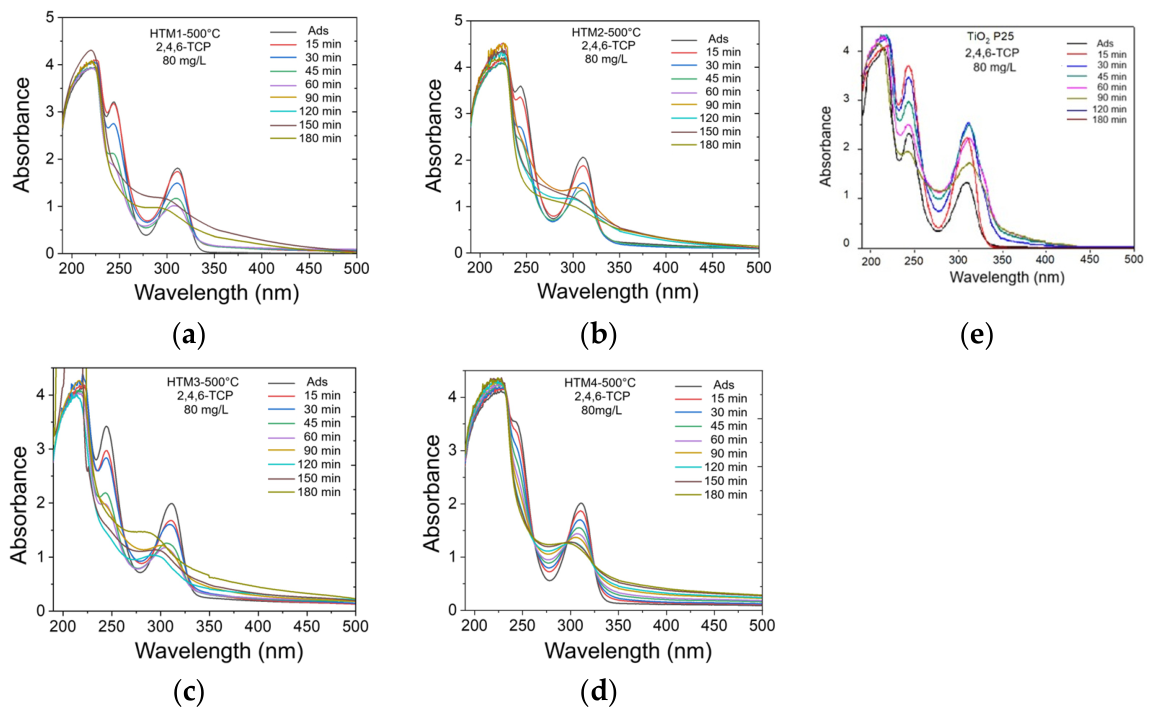
Figure 9 shows the ultraviolet–visible spectra of photo-assisted catalytic degradation of a solution with a concentration of 80 mg/L (equivalent to 80 ppm), of 2,4,6-trichlorophenol as a function of time, for a total degradation time of 180 min or 3 h, using HTM catalysts activated at 500 °C. In addition, the spectra used TiO2-P25 as a reference control of catalytic activity are shown, considering that at the level of research and industrial application, it is used for the degradation of water polluting compounds due to its excellent stability, non-toxicity, being a semiconductor material with high photooxidation power and low cost. The degradation of 2,4,6-trichlorophenol was monitored by scanning the UV-vis spectra of the compound, considering that they show three characteristic absorption bands, with the primary transition π→ π* assigned to the aromatic group between 208 and 220 nm, the secondary transition π→ π* to 243 nm due to the aromatic group, and the n→ π* transition attributed to the C-Cl link at 311 nm.
With respect to the photo-assisted catalytic degradation process using Co/Fe hydrotalcites activated at 500 °C, it can be observed that as time goes by, mainly the intensity of the second and third bands decreases, which is associated with the degradation of the molecule of 2,4,6-trichlorophenol, associated with the dechlorination and dehydroxylation of the polluting aromatic molecule, in a very similar way for all catalysts, but obtaining a greater decrease in the adsorption bands at 310.5 nm when HTM2-500 °C is used.
For the TiO2-P25 used as a reference photocatalyst in the degradation of 2,4,6-trichlorophenol, it is observed that the intensity of absorbance increases with irradiation time, which is the opposite of the behavior of Co/Fe hydrotalcites activated at 400 °C. The increase in signal strength may be due to the degradation process occurring by a different mechanism between different types of materials. Considering the degradation using TiO2 as a catalyst, the increase in the intensity of the band at 245 and 310.5 nm is due to the fact that intermediate products are produced that have higher absorptivity coefficients modifying the characteristic signals of 2,4,6-tetrachlorophenol, where the intermediates that are formed could be mainly of the catechol type, as well as benzoquinones and hydroxyquinones; all of them are compounds that preserve the aromatic ring by increasing the intensity of the signals.
Analyzing the behavior of photocatalysts over time, it was found that in most cases the degradation capacity after 90 min is insignificant, and for some catalysts it even stops, so for calculating the relative degradation rates and kinetic models, only the degradation values from 0 to 90 min of irradiation are considered.
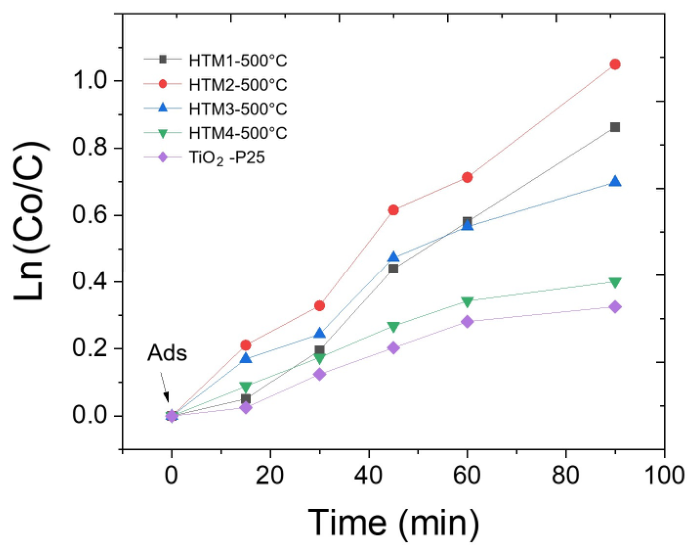
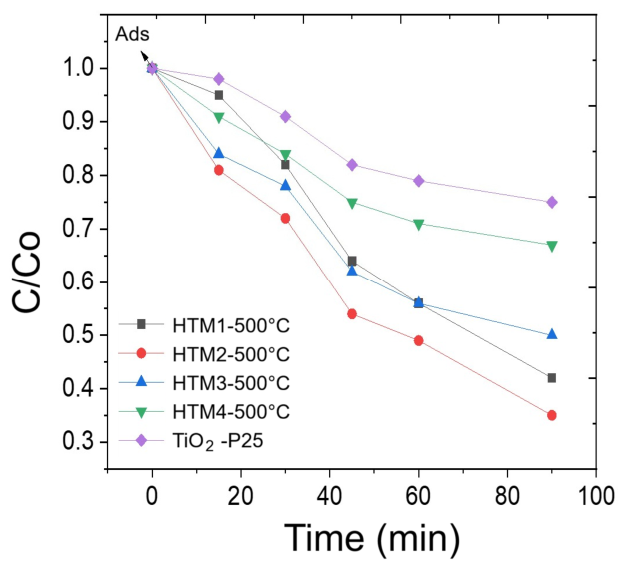
Figure 10 shows the graph of the relative degradation rate of 80 mg/L of 2,4,6-trichlorophenol with the different catalysts. With these results, it can be corroborated that the hydrotalcites Co/Fe activated at 500 °C using photoactivated catalysts show a good degradation of 2,4,6-trichlorophenol at 90 min, reaching removal percentages of 58% with HTM1-500 °C, 65% with HTM2-500 °C, 50% with HTM3-500 °C and 33% with HTM4-500 °C; all these values are higher than the 28% degradation that was achieved by TiO2-P25.
As you can see, the catalyst that has the best catalytic degradation capacity is HTM2-500 °C, which, from the first 15 min, shows a gradual degradation that remains constant, managing to degrade 65% after 90 min. This greater degradation capacity demonstrates that the physicochemical properties identified in the characterization of the material, specifically where it is observed that the Co/Fe ratio = 2, showed a greater amount of oxygen vacancies, as well as a low recombination rate.

2.2.2. Kinetic Model of Photo-Assisted Degradation of 2,4,6-Trichlorophenol

The kinetic analysis of the photo-assisted degradation of 2,4,6-trichlorophenol was performed assuming a pseudo-first-order model, consistent with the Langmuir–Hinshelwood mechanism under low concentration conditions (Equation (4)):
l n C 0 C = k t
where k is the apparent rate constant (min−1).
The half-life of the reaction (t1/2) was calculated using Equation (5):
t 1 / 2 = l n 2 k
The kinetic constants were obtained from the slope of the linear fitting of ln(C0/C) versus irradiation time. The fitting results showed good agreement with the pseudo-first-order model, with correlation coefficients (R2) higher than 0.95 for all photocatalysts.
The corrected kinetic parameters are summarized in Table 4. The HTM2-500 °C catalyst exhibited the highest reaction rate constant (k = 0.0248 min−1) and the shortest half-life (28 min), confirming its superior photocatalytic performance compared to the other materials. In contrast, HTM4-500 °C and TiO2-P25 showed significantly lower rate constants, indicating slower degradation kinetics.
Figure 11 shows the kinetic model fit of the relative degradation rate of 80 mg/L of 2,4,6-Trichlorophenol with the different catalysts, which corresponds in all cases to a pseudo-first-order degradation behavior considering the steady-state conditions corresponding to the Langmuir–Hinshelwood kinetic model [27].
Table 4 shows the kinetic data of the kinetic constant and the half-life of the photodegradation process of 2,4,6-trichlorophenol.
Kinetic analysis confirms that the degradation of 2,4,6-trichlorophenol follows a pseudo-first-order model, consistent with a Langmuir–Hinshelwood mechanism under low concentration conditions. The HTM2-500 °C catalyst exhibited the highest rate constant (k = 0.0248 min−1) and the shortest half-life (t1/2 = 28 min), indicating a faster reaction rate compared to the other materials. In contrast, HTM4-500 °C and TiO2-P25 showed the lowest k values, reflecting slower kinetics.
It is important to note that photocatalytic activity does not correlate directly with the band gap energy or the specific surface area. In contrast, the superior performance of the HTM2-500 °C material is associated with a higher concentration of oxygen vacancies and a lower electron–hole recombination rate, as evidenced by XPS and photoluminescence.
These results suggest that process efficiency is dominated by charge carrier dynamics and the generation of reactive species, rather than by the intrinsic optical properties of the material.

2.2.3. Detection of Hydroxyl Radicals by the Coumarin Method

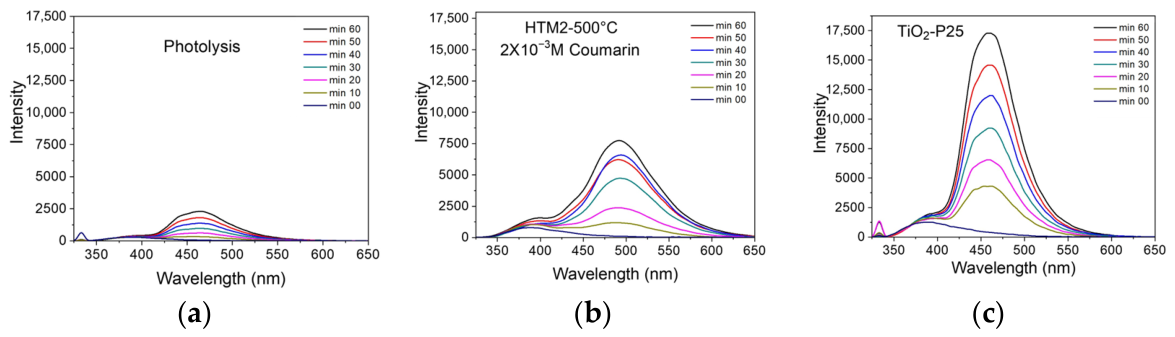
Figure 12 shows the spectra of 7-hydroxycoumarin adsorption associated with the catalytic activity generated by the presence and activity of hydroxyl radicals. As can be seen, TiO2-P25 presents signals of greater intensity, compared to the spectra of HTM2-500 °C and photolysis. The high capacity for hydroxyl radical formation is widely documented and reported, and it is due to this capacity that it is used as a reference photocatalyst. Specifically, the production of hydroxyl radicals using the HTM2-500 °C material compared to the reference catalyst is intermediate; however, the formation of hydroxyl radicals is significant, which would imply a relevant role in the degradation process of 2,4,6-trichlorophenol.

2.2.4. Identification of the Absence of Superoxide Radicals by Anoxic Atmosphere (Nitrogen Bubbling Reaction)

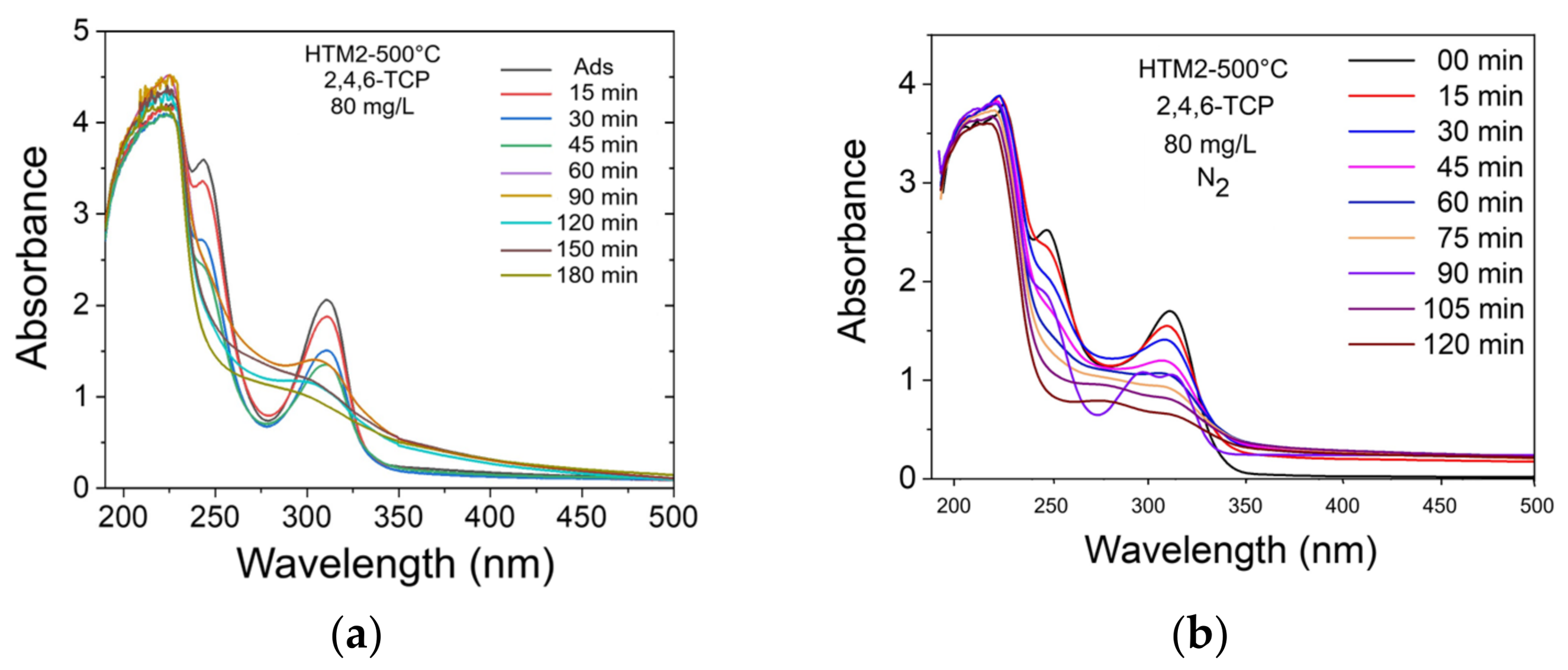
In this test, the air atmosphere of the standard degradation process was replaced by a nitrogen atmosphere to compare the effect of the degradation of 2,4,6-trichlorophenol without the possible formation of superoxide radicals. The results are presented in Figure 13, where it is observed that photocatalytic activity in a nitrogen atmosphere has a modification of the adsorption spectra compared to the reaction carried out with oxygen, slightly decreasing the degradation capacity, but not being very significant.

2.2.5. Influence of the Holes in the Photocatalytic Process by Ammonium Oxalate as a Hole Collector

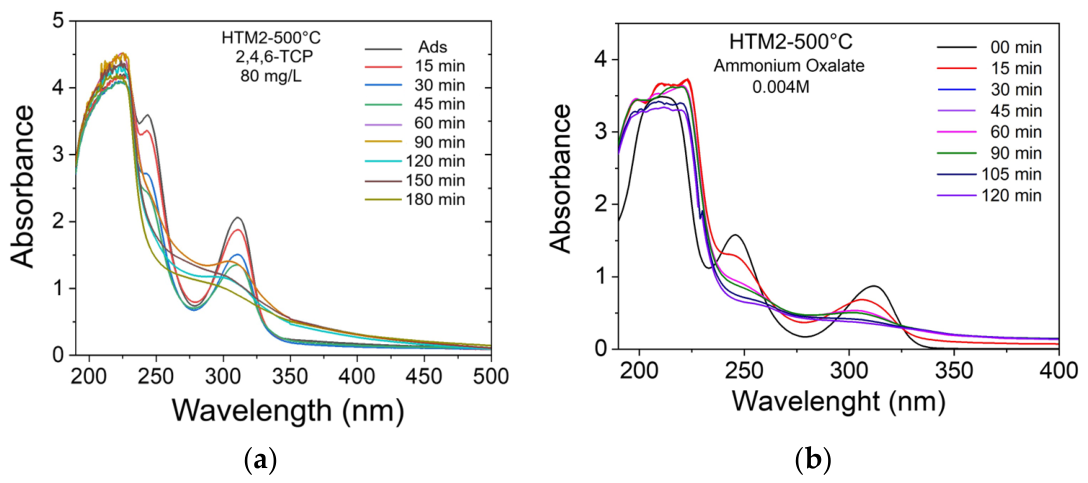
For this reaction, ammonium oxalate was used as a gap binder in the degradation process of 2,4,6-trichlorophenol using the HTM2-500 °C catalyst. Figure 14 shows the spectra of UV-Vis absorption spectra of the photodegradation of 2,4,6-trichlorophenol in the presence of ammonium oxalate with oxygen and nitrogen flow.
According to the results, it can be observed that the photocatalytic activity is modified by the presence of the hole collector, so it is attributed that the holes are determining species in the photocatalytic mechanism; however, the hydroxyl and superoxide radicals are the important ones in the photocatalytic reaction mechanism.
It is important to note that the photocatalytic activity in this study was evaluated based on UV-Vis spectroscopy by monitoring the decrease in absorbance at 311 nm, corresponding to the characteristic band of 2,4,6-trichlorophenol. While this method is suitable for tracking the degradation of the parent compound, it does not provide direct information about the formation of intermediate species or the degree of mineralization.
In particular, the increase in absorbance observed for TiO2-P25 suggests the formation of intermediate compounds with higher molar absorptivity, which may overlap with the characteristic absorption bands. Therefore, UV-Vis analysis alone may not fully represent the degradation pathway.
Complementary analytical techniques such as HPLC-MS/GC-MS, total organic carbon (TOC), chemical oxygen demand (COD), or chloride ion quantification would provide more direct evidence of mineralization and dechlorination. These analyses were not performed in the present study but will be considered in future work to further elucidate the degradation mechanism.
Although the photocatalytic performance of the synthesized materials was demonstrated, it is important to consider their stability and potential environmental impact. The catalysts are composed of mixed oxides (Co3O4 and CoFe2O4), which are generally characterized by low solubility in aqueous media due to their high thermodynamic stability and low solubility product constants (Ksp).
Under the experimental conditions used in this study (aqueous solution, near-neutral pH, and mild reaction conditions), significant metal leaching is not expected. However, no direct measurements of cobalt or iron dissolution were performed.

2.2.6. Proposal for a Reaction Mechanism

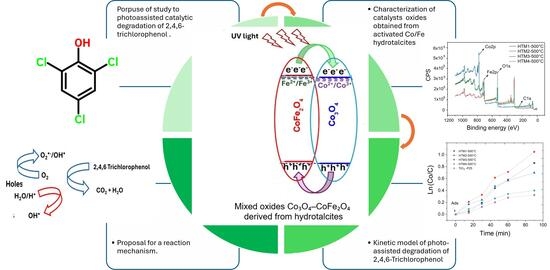
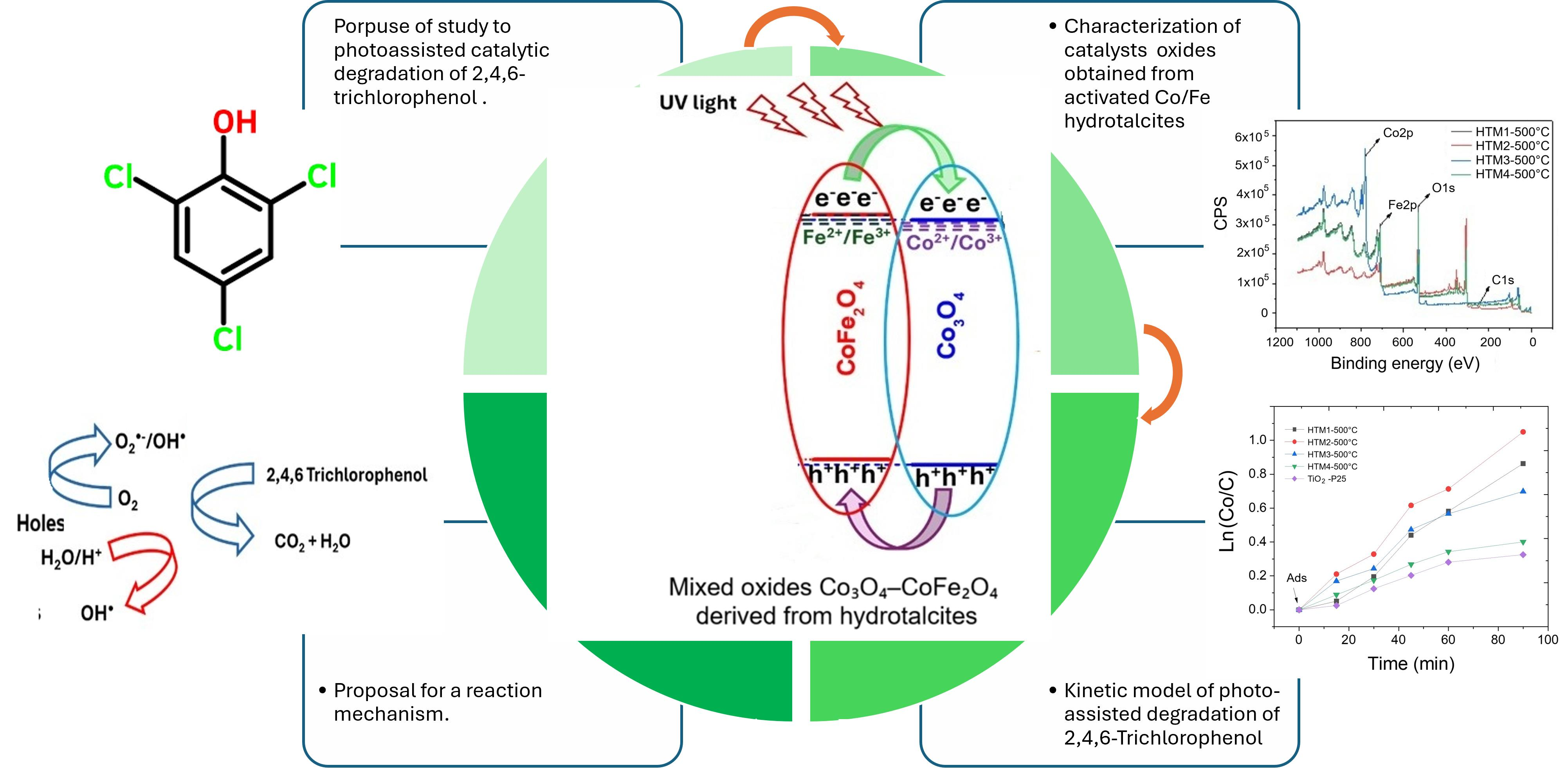
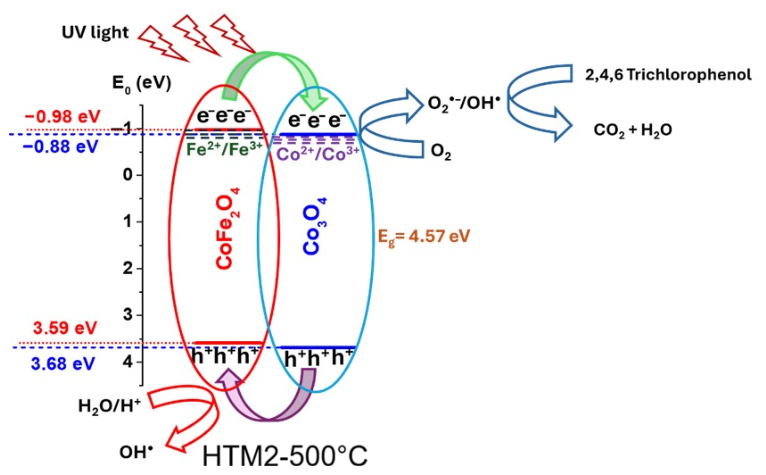
Figure 15 shows the possible mechanism by which the degradation reaction of 2,4,6 trichlorophenol is carried out according to the evidence for the presence of the holes, as well as the formation of the superoxide (O2) and hydroxyl (·OH).
The formation of these mixed oxides was due to the decomposition of Co/Fe hydrotalcites activated at 500 °C, as reported in the literature [28]. Therefore, the conduction and valence band potentials for each oxide (CoFe2O4 and Co3O4) were calculated according to the literature [15,29]. The conduction and valence band positions for CoFe2O4 are −0.98 eV and 3.59 eV, respectively, and for Co3O4 they are −0.88 eV and 3.68 eV, respectively. Photocatalytic activity is induced by the generation of charge carriers (electrons (e) and holes (h+)) using a UV light source.
Figure 15 shows the possible degradation mechanism of 2,4,6-trichlorophenol using a UV light source and a mixture of the amorphous oxides CoFe2O4 and Co3O4, based on evidence obtained through XRD, FTIR, and XPS characterization. Figure 15 illustrates that photogenerated electrons (e) are excited from the valence band to the conduction band, resulting in the creation of a hole (h+) in the valence band of the photoactive oxides. Electrons from the conduction band of CoFe2O4 can be transferred to the conduction band of Co3O4. Because the conduction band value of CoFe2O4 (−0.98 eV) is more negative than that of Co3O4 (−0.88 eV), this electron mobility could be beneficial by reducing the recombination of charge carriers (e and h+). At the same time, in the valence band, the photogenerated holes in Co3O4 (3.68 eV) are transferred to the valence band of CoFe2O4 (3.59 eV).
Other evidence supporting the mechanism proposed can be explained by considering the observations of XPS and PL discussed in the previous sections. The presence of a mixture of mixed oxides leads to the formation of a heterojunction, resulting in the generation of oxygen vacancies and varying relative abundances of Fe2+/Fe3+ and Co2+/Co3+ species in our system, as analyzed by XPS.
The generation of Fe2+/Fe3+ and Co2+/Co3+ species, as observed by XPS, and the oxygen vacancies act as electron traps, thus improving charge carrier separation. This observed effect can be correlated with the evidence provided by the PL analysis, where the emission spectrum intensity of the samples follows the following order from highest to lowest intensity: HTM1-500 °C > HTM3-500 °C > HTM4-500 °C > HTM2-500 °C. The decrease in intensity is correlated with the decrease in the rate of charge carrier recombination. Therefore, the proposed mechanism can be observed to follow a typical pathway, forming a heterojunction system that favors and improves charge carrier separation by increasing photocatalytic activity in the HTM2-500 °C system.
Based on the relative band positions and charge-transfer pathways, the system can be described as a type-II heterojunction between CoFe2O4 and Co3O4. This configuration promotes spatial separation of photogenerated electrons and holes, reducing recombination and enhancing photocatalytic efficiency. Additionally, oxygen vacancies act as electron trapping sites, further improving charge carrier dynamics.

3. Materials and Methods

3.1. Obtaining Photocatalysts

The Co/Fe hydrotalcite-type catalytic precursors (HTM) were synthesized by the procedure registered in the patent No 403088, of the Mexican Institute of Industrial Property [30]. A series of Co/Fe hydrotalcite-type catalytic precursors (HTM) samples was prepared by the coprecipitation method with a molar ratio Co2+/Fe3+ = 1, 2, 3 and 4 using a stoichiometric amount of cobalt nitrate hexahydrate (Sigma Aldrich 99.99% purity, St Louis, MO, USA) and iron nitrate nonahydrate (Sigma Aldrich 99.99% purity, St Louis, MO, USA). The aqueous solutions containing the metal salts were coprecipitated in a basic medium with an alkaline solution of 2M sodium hydroxide (Sigma Aldrich 98% purity, St Louis, MO, USA) and 1M sodium bicarbonate (Sigma Aldrich 99.95% purity, St Louis, MO, USA) at a constant pH of 11.5. After complete precipitation of the mixture, the precipitates were washed with water at room temperature until a pH of 9 was obtained. Subsequently, the precipitates were dried in an oven at 70 °C for 24 h to obtain the HTM catalytic precursors. The materials were identified as HTM1, HTM2, HTM3 and HTM4 corresponding to the Co/Fe ratio = 1, 2, 3 and 4 respectively.
The catalytically active phases were obtained by calcination of the precursors Co/Fe hydrotalcites (HTM) of different Co/Fe molar ratios (1, 2, 3 and 4) at 500 °C for 4 h. The calcination products of the layered double hydroxides were identified as corresponding to HTM1-500 °C, HTM2-500 °C, HTM3-500 °C and HTM4-500 °C.

3.2. Characterization of Catalysts

The oxides obtained from Co/Fe hydrotalcites HTM1, HTM2, HTM3 and HTM4 activated at 500 °C were characterized physicochemically. Differential thermal analysis (DTA) and thermogravimetric analysis (TGA) were carried out in Universal V4.5A TA Instruments SDT Q600 V20.5 Build 15 (New Castle, DE, USA) at a heating rate of 10 °C/min in an air atmosphere at a speed of 100 mL/min and using α-alumina as a reference standard. X-ray diffraction (XRD) patterns were obtained in an Inel Equinox powder diffractometer (Artenay, Orleans, France) with an X-ray tube, coupled with a copper anode using monochromatic CuKα radiation with a wavelength (λ) of 1.5418Ả. Fourier transform infrared spectroscopy (FTIR) was done using an Affinity-1 Shimadzu spectrophotometer equipped with a Total Reflectance attenuator (ATR) accessory (Kioto, Japan), in a wavenumber region from 500 to 4000cm−1. X-ray photoelectron spectroscopy (XPS) was done using a K-alpha Thermo Fischer scientific spectrometer (Waltham, MA, USA) with a monochromatic Al Kα radiation (1486.6 eV) as an X-ray source and was microfocused at the source to give a spot size on the sample of 400 μm in diameter, and to compensate for effects related to charge shifts; the C1s peak at 284.6 eV was used as an internal standard. N2-BET Physisorption method nitrogen adsorption–desorption isotherms are determined at −196 °C using a Micromeritics Tristar II plus instrument, with BET analysis, with prior degassing at 200 °C for 24 h. Diffuse reflectance spectroscopy (DRS) was used for the calculation for the band gap energy of the photocatalysts in a Agilent Cary-100 spectrometer with integration sphere (Santa Clara, CA, USA), in the range of 190 to 400 nm using barium sulfate (BaSO4) as reference, and using the Kubelka–Munk theory, which consists of plotting the energy of the photon against the square root of the Kubelka–Munk function multiplied by the energy of the photon and extrapolating the linear part with the abscissa axis. Finally, the photoluminescence (PL) technique was performed on Edinburgh instruments FSP920 fluorometer with detection in the visible (200–750 nm) through a Hamamatsu R928P photomultiplier tube and a 450 W Xenon lamp of Edinburgh instruments (Livingston, Scotland), where the emission spectra were obtained in the range of 400–700 nm using an excitation wavelength of λex = 350 nm.

3.3. Evaluation of Photo-Assisted Catalytic Activity in the Degradation of 2,4,6-Trichlorophenol

The photo-assisted catalytic degradation capacity of 2,4,6-trichlorophenol using thermally activated hydrotalcites at 500 °C, was determined under the following conditions: standard solution of 80 ppm of 2,4,6-trichlorophenol, in a Batch reactor at a controlled temperature of 25 °C with constant magnetic agitation of 700 rpm, with an airflow of 1 mL/s and a Uv light irradiation of λ = 254 nm and an emission of 2.5 mW/cm2 generated by a Pen-ray UV lamp inserted into a quartz tube. Prior to UV irradiation, 200 mg of the catalyst was placed in contact with the standard solution of 2,4,6-trichlorophenol for an interval of 1 h in darkness to verify the adsorption–desorption balance of the contaminant molecule with the catalyst. Once equilibrium was reached, irradiation was started for a period of 3 h. Additionally, a sample of 2,4,6-trichlorophenol solution was photolysed in the absence of a catalyst to determine the effect of radiation on the contaminant. In addition, for the comparison against a reference photocatalyst, commercial TiO2-P25 was used. In all cases, the degradation process of the contaminant was monitored by sampling the reactor aliquots at intervals of 15 min during the first hour, and then every 30 min until the 3 h of irradiation were completed. Degradation monitoring was performed using a Cary 100 UV-vis spectrophotometer in a wavelength range of 200 to 500 nm, and quantification was performed at a wavelength of 311 nm against a calibration curve.

4. Conclusions

Co/Fe hydrotalcite-derived mixed oxides exhibit significant photocatalytic activity for the degradation of 2,4,6-trichlorophenol, with performance strongly dependent on the Co/Fe ratio. The HTM2-500 °C catalyst demonstrated the highest efficiency, attributed not to band gap energy or surface area alone, but to the synergistic effect of oxygen vacancies, mixed oxidation states, and reduced charge carrier recombination.
Structural analysis confirmed the formation of crystalline Co3O4 and amorphous CoFe2O4, forming a heterojunction system that enhances charge separation. Kinetic analysis revealed pseudo-first-order behavior, with improved reaction rates directly linked to charge carrier dynamics.
These results highlight that defect engineering and heterostructure formation are key factors in optimizing photocatalytic performance, providing a promising strategy for the treatment of recalcitrant chlorinated pollutants in water.

Author Contributions

Conceptualization, E.R.-R., N.G.-O. and F.T.-M.; methodology, E.R.-R., N.G.-O., J.C.-R. and I.R.-V.; software C.M.-G. and J.V.-M.; formal analysis, E.R.-R., N.G.-O., F.T.-M. and J.M.S.-M.; investigation, C.M.-G. and E.R.-R.; resources, J.V.-M. and J.C.-R.; data curation, J.M.S.-M. and I.R.-V.; writing—original draft preparation, N.G.-O. and E.R.-R.; writing—review and editing, N.G.-O.; J.C.-R.; funding acquisition, E.R.-R. and N.G.-O. All authors have read and agreed to the published version of the manuscript.

Funding

This research received no external funding. Funding was received from the resources of the University of Guanajuato.

Data Availability Statement

Additional or complementary data to what is reported in this article may be requested directly from the corresponding authors.

Acknowledgments

We are especially grateful to the Directorate of Research and Graduate Support (DAIP) of the University of Guanajuato for their support in the development of this project. I would also like to thank SECIHTI and UAM-I for their technical support.

Conflicts of Interest

The authors declare no conflicts of interest.

References

  1. Holcombe, G.W.; Phipps, G.L.; Fiandt, J.T. Effects of phenol, 2,4-dimethylphenol, 2,4-dichlorophenol, and pentachlorophenol on embryo, larval, and early juvenile fathead minnows (Pimephales promelas). Arch. Environ. Contam. Toxicol. 1982, 11, 73–78. [Google Scholar] [CrossRef]
  2. Zheng, D.; Jiao, H.; Zhong, H.; Qiu, J.; Yan, X.; Duan, Q.; Chai, L. Chlorophenols in marine organisms from the southern coast of Hangzhou Bay, China, and an assessment of risks posed to human health. J. Oceanol. Limnol. 2018, 36, 726–737. [Google Scholar] [CrossRef]
  3. Yadav, S.; Rajpurohit, K.C.; Mahate, S. Evaluating the photocatalytic degradation efficacy of 2,4,6-trichlorophenol: Performance evaluation and influencing factors. J. Water Clim. Chang. 2024, 15, 1091–1109. [Google Scholar] [CrossRef]
  4. Benjumea-Hoyos, C.A.; Gutiérrez-Monsalve, J.A.; Saldarriaga, G.S. Advanced oxidation with ozone and hydrogen peroxide for the removal of dyes in agroindustrial wastewaters. Rev. Int. Contam. Ambient. 2025, 41, 55585. [Google Scholar] [CrossRef]
  5. Czaplicka, M. Photo-degradation of chlorophenols in the aqueous solution. J. Hazard. Mater. 2006, 134, 45–59. [Google Scholar] [CrossRef]
  6. Bobde, P.; Patel, R.K.; Panchal, D.; Sharma, A.; Sharma, A.K.; Dhodapkar, R.S.; Pal, S. Utilization of layered double hydroxides (LDHs) and their derivatives as photocatalysts for degradation of organic pollutants. Environ. Sci. Pollut. Res. 2021, 28, 59551–59569. [Google Scholar] [CrossRef]
  7. Liu, C.; Mao, S.; Shi, M.; Wang, F.; Xia, M.; Chen, Q.; Ju, X. Photocatalytic degradation of persistent organic pollutants by Co-Cl bond reinforced CoAl-LDH/Bi12O17Cl2 photocatalyst: Mechanism and application prospect evaluation. J. Hazard. Mater. 2021, 420, 126613. [Google Scholar] [CrossRef] [PubMed]
  8. Lazar, M.A.; Varghese, S.; Nair, S.S. Photocatalytic water treatment by titanium dioxide: Recent updates. Catalysts 2012, 2, 572–601. [Google Scholar] [CrossRef]
  9. Wang, Q.; O’Hare, D. Recent advances in the synthesis and application of layered double hydroxide (LDH) nanosheets. Chem. Rev. 2012, 112, 4124–4155. [Google Scholar] [CrossRef]
  10. Khan, A.; Tahir, M.; Khan, N. LDH-based nanomaterials for photocatalytic applications: A comprehensive review on the role of bi/trivalent cations, anions, morphology, defect engineering, memory effect, and heterojunction formation. J. Energy Chem. 2023, 84, 242–276. [Google Scholar] [CrossRef]
  11. Luo, L.; Hou, C.; Wang, L.; Zhang, W.; Wang, C.; Liu, J.; Wu, Y.; Wang, C. Layered Double Hydroxide-Based Photocatalysts for the Removal of Emerging Contaminants: Progress in Past Ten Years. Catalysts 2024, 14, 252. [Google Scholar] [CrossRef]
  12. Cai, Z.; Guo, Y.; Yang, C.; Li, Z.; Sun, S.; Yue, M.; Wang, X.; Zhang, M.; Wang, H.; Yao, Y.; et al. Tannic acid salt-modified CoFe-layered double hydroxide boosts stable seawater oxidation at an industrial-level current density. Chem. Front. 2025, 12, 154–160. [Google Scholar] [CrossRef]
  13. Samal, A.; Pal, S.; Das, N. A mini-review on magnesium alloy-based materials: Recent progress in photocatalysis, mechanistic insight & possibilities in photoreforming of plastic waste. J. Magnes. Alloy 2026, 17, 101992. [Google Scholar] [CrossRef]
  14. Serhal, C.A.; Khawaja, R.E.; Labaki, M.; Mallard, I.; Poupin, C.; Cousin, R.; Siffert, S. Influence of Co/Fe molar ratio on hydrotalcite catalysts prepared with or without microwave. J. Solid. State Chem. 2022, 309, 122943. [Google Scholar] [CrossRef]
  15. Zhang, N.; Zhang, B.; Wang, C.; Sui, H.; Zhang, N.; Wen, Z.; He, A.; Zhang, R.; Xue, R. Magnetic CoFe hydrotalcite composite Co metal–organic framework material efficiently activating peroxymonosulfate to degrade sulfamethoxazole: Oxygen vacancy-mediated radical and non-radical pathways. J. Colloid. Interface Sci. 2024, 671, 110–123. [Google Scholar] [CrossRef]
  16. Ma, K.Y.; Cheng, J.P.; Zhang, J.; Li, M.; Liu, F.; Zhang, X.B. Dependence of Co/Fe ratios in Co-Fe layered double hydroxides on the structure and capacitive properties. Electrochimica 2016, 198, 231–240. [Google Scholar] [CrossRef]
  17. Ramos-Ramírez, E.; Tzompantzi-Morales, F.; Gutiérrez-Ortega, N.; Mojica-Calvillo, H.G.; Castillo-Rodríguez, J. Photocatalytic Degradation of 2,4,6-Trichlorophenol by MgO–MgFe2O4 Derived from Layered Double Hydroxide Structures. Catalysts 2019, 9, 454. [Google Scholar] [CrossRef]
  18. Zhao, P.; Liu, X.; Tian, W.; Yan, D.; Sun, X.; Lei, X. Adsolubilization of 2,4,6-trichlorophenol from aqueous solution by surfactant intercalated ZnAl layered double hydroxides. Chem. Eng. J. 2015, 279, 597–604. [Google Scholar] [CrossRef]
  19. Wu, T.; Ren, X.; Zhao, X. Construction of Lamellar CoFe-LDHs@MoS2 to Promote Permonosulfate Properties Leading to Effective Photocatalytic Degradation of Norfloxacin. Catalysts 2024, 14, 860. [Google Scholar] [CrossRef]
  20. Abou Serhal, C.; Mallard, I.; Poupin, C.; Labaki, M.; Siffert, S.; Cousin, R. Effect of microwave irradiation parameters on Co/Fe hydrotalcite nanocatalysts for the total oxidation of VOCs. Eur. J. Inorg. Chem. 2019, 27, 1552–1560. [Google Scholar] [CrossRef]
  21. Castillo-Rodríguez, J.C.; Tzompantzi, F.; Tzompantzi-Flores, C.; Velásquez-Torres, M.E.; Gómez, R.; Santolalla-Vargas, C.E.; Lémus, M.A.Á.; Ramos-Ramírez, E.; Montes, G.D.Á. High photoactivity of ZrxOy-Bi2O2(CO3) composite materials prepared by one-step synthesis for efficient photodegradation of 4-chlorophenol in water. J. Photochem. Photobiol. A Chem. 2023, 435, 114285. [Google Scholar] [CrossRef]
  22. Tzompantzi-Flores, C.; Castillo-Rodríguez, J.C.; Gómez, R.; Tzompantzi, F.; Pérez-Hernández, R.; Tlapaya, V.D.L.L.; Santolalla-Vargas, C.E. Synthesis and characterization of ZnZr composites for the photocatalytic degradation of phenolic molecules: Addition effect of ZrO2 over hydrozincite Zn5(OH)6(CO3)2. J. Chem. Technol. Biotechnol. 2019, 94, 3428–3439. [Google Scholar] [CrossRef]
  23. Tzompantzi, F.; Castillo-Rodríguez, J.C.; Tzompantzi-Flores, C.; Gómez, R.; Santolalla-Vargas, C.E.; Frías-Márquez, M.; Ramos-Ramirez, E. Facile synthesis of ZrO2-Bi2O2(CO3) composite materials prepared in one-pot synthesis for high photoactivity in efficient hydrogen production. J. Photochem. Photobiol. A Chem. 2022, 423, 113594. [Google Scholar] [CrossRef]
  24. Sonia, H.; Kumari, S.; Chahal, S.; Devi, S.; Kumar, S.; Kumar, P.; Kumar, A. Efficient CoFe2O4/CeO2 nanocomposites for photocatalytic dye degradation. J. Mater. Sci. Mater. Electron. 2023, 34, 1870. [Google Scholar] [CrossRef]
  25. Brahimi, B.; Mekatel, E.; Özacar, M.; Trari, K. Photocatalytic and photoelectrochemical performance of CoFe2O spinel for visible-light-driven hydrogen generation. J. Mater. Sci. Mater. Electron. 2025, 36, 780. [Google Scholar] [CrossRef]
  26. Ao, Y.; Xu, L.; Wang, P.; Wang, C.; Hou, J.; Qian, J.; Li, Y. Graphene and TiO2 co-modified flower-like Bi2O2CO3: A novel multi-heterojunction photocatalyst with enhanced photocatalytic activity. Appl. Surf. Sci. 2015, 355, 411–418. [Google Scholar] [CrossRef]
  27. Yang, J.; Li, C.; Liang, D.; Liu, Y.; Li, Z.; Wang, H.; Huang, H.; Xia, C.; Zhao, H.; Liu, H.; et al. Central-collapsed structure of CoFeAl layered double hydroxides and its photocatalytic performance. J. Colloid Interface Sci. 2021, 590, 571–579. [Google Scholar] [CrossRef] [PubMed]
  28. Ou, B.; Wang, J.; Wu, Y.; Zhao, S.; Wang, Z. Efficient Removal of Cr (VI) by Magnetic and Recyclable Calcined CoFe-LDH/g-C3N4 via the Synergy of Adsorption and Photocatalysis under Visible Light. Chem. Eng. J. 2020, 380, 122600. [Google Scholar] [CrossRef]
  29. Oladipo, A.A.; Ifebajo, A.O.; Gazi, M. Magnetic LDH-Based CoO–NiFe2O4 Catalyst with Enhanced Performance and Recyclability for Efficient Decolorization of Azo Dye via Fenton-like Reactions. Appl. Catal. B 2019, 243, 243–252. [Google Scholar] [CrossRef]
  30. Ramos-Ramírez, E.; Gutiérrez-Ortega, N.L.; Monjaraz-Vallejo, J.J. Obtención de Ferrita de Cobalto para su Aplicación como Catalizador en la Optimización de las Reacciones de Esterificación y Transesterificación de Ácidos Grasos para el Proceso de Producción de Biodiesel. IMPI No 403088. World Intellectual Property Organization. Patent Scope. 2023. Available online: https://patentscope.wipo.int/search/es/detail.jsf?docId=MX194961824&redirectedID=true (accessed on 14 April 2026).
Figure 1. Thermal decomposition analysis for synthesized Co/Fe hydrotalcites HTM1, HTM2, HTM3 and HTM4: (a) Differential thermal analysis (DTA), and (b) thermogravimetric analysis (TGA).
Catalysts 16 00441 g001
Figure 2. X-ray diffraction patterns of oxides obtained from Co/Fe hydrotalcites HTM1, HTM2, HTM3 and HTM4 activated at 500 °C.
Catalysts 16 00441 g002
Figure 3. Fourier transform infrared spectra of oxides obtained from Co/Fe hydrotalcites HTM1, HTM2, HTM3 and HTM4 activated at 500 °C.
Catalysts 16 00441 g003
Figure 4. XPS survey spectrum of the oxides obtained from Co/Fe hydrotalcites HTM1, HTM2, HTM3 and HTM4 activated at 500 °C.
Catalysts 16 00441 g004
Figure 5. High-resolution spectra of the oxides obtained from Co/Fe hydrotalcites HTM1, HTM2, HTM3 and HTM4 activated at 500 °C: (a) Co 2p; (b) Fe 2p; (c) O1s.
Catalysts 16 00441 g005
Figure 6. N2 physisorption isotherms of oxides obtained from Co/Fe hydrotalcites HTM1, HTM2, HTM3 and HTM4 activated at 500 °C.
Catalysts 16 00441 g006
Figure 7. (a) UV-Vis diffuse reflectance spectra of oxides obtained from Co/Fe hydrotalcites HTM1, HTM2, HTM3 and HTM4 activated at 500 °C; (b) transformed by Kubelka–Munk for the calculation of band gap prohibited energy (Eg).
Catalysts 16 00441 g007
Figure 8. Photoluminescence spectra of the oxides obtained from hydrotalcites Co/Fe HTM1, HTM2, HTM3 and HTM4 activated at 500 °C.
Catalysts 16 00441 g008
Figure 9. Absorption spectra of 80 mg/L of 2,4,6-Trichlorophenol in the presence of catalysts photo-assisted under UV light over time: (a) HTM1-500 °C; (b) HTM2-500 °C; (c) HTM3-500 °C; (d) HTM4-500 °C; (e) TiO2-P25.
Catalysts 16 00441 g009
Figure 10. Relative degradation rate of 2,4,6-trichlorophenol using the oxides obtained from activated Co/Fe hydrotalcites, HTM1-500 °C, HTM2-500 °C, HTM3-500 °C, HTM4-500 °C, and TiO2-P25.
Catalysts 16 00441 g010
Figure 11. First-order pseudodegradation kinetics of 80 mg/L of 2,4,6-trichlorophenol in aqueous solution by oxides obtained from Co/Fe hydrotalcites activated at 500 °C, HTM1, HTM2, HTM3, HTM4 and TiO2-P25.
Catalysts 16 00441 g011
Figure 12. Fluorescence spectra of the 2,4,6-Trichlorophenol employed in the detection of OH· generated: (a) photolysis; (b) HTM2-500 °C; (c) TiO2-P25 photocatalysts without air bubbling.
Catalysts 16 00441 g012
Figure 13. Fluorescence Spectra of 2,4,6-trichlorophenol employed in the detection of superoxide radicals generated by the HTM2 photocatalyst: (a) in the presence of oxygen and (b) the absence of oxygen.
Catalysts 16 00441 g013
Figure 14. UV-Vis absorption spectra for the photodegradation of 2,4,6-trichlorophenol by the catalyst HTM2 in the presence of ammonium oxalate as a gap capturing agent in: (a) in the presence of O2, and (b) in the presence of N2.
Catalysts 16 00441 g014
Figure 15. Degradation mechanism of 2,4,6-trichlorophenol using HTM2 calcined at 500 °C.
Catalysts 16 00441 g015
Table 1. Binding energies and relative abundance for each of the species found in the oxides obtained from hydrotalcites Co/Al activated at 500 °C with different molar ratios (Co/Fe).
PhotocatalystCo 2p3/2Fe 2p3/2O1s
eV
Co2+Co3+Fe2+Fe3+O1O2O3O4O5
HTM1-500 °C781.11784.3710.39712.73530.19531.55532.6533.87
43.2556.7553.6546.3544.734.414.56.4
HTM2-500 °C779.74783.47710.7713.03529.57531.14532.1532.99534.13
48.9551.0545.3554.652129.623.119.56.8
HTM3-500 °C780.3-710.17712.63530.19531.71532.47
100-44.755.47618.75.3
HTM4-500 °C781.05783.7710.39712.73530.17531.45532.51534.46
46.7553.2549.850.239.526.523.510.5
Table 2. Values derived from N physisorption analysis (BET) of the oxides obtained from Co/Fe hydrotalcites HTM1, HTM2, HTM3 and HTM4 activated at 500 °C.
PhotocatalystSpecific Area (m2/g)Pore Volume (cm3/g)Pore Diameter (nm)
HTM1-500 °C24.50.133530.47
HTM2-500 °C15.20.084226.32
HTM3-500 °C9.70.003116.82
HTM4-500 °C8.00.019315.81
Table 3. Energy of the bandgap Eg of the oxides obtained from hydrotalcites Co/Fe HTM1, HTM2, HTM3 and HTM4 activated at 500 °C.
Photocatalyst Energy (eV)
HTM1-500 °C4.39
HTM2-500 °C4.57
HTM3-500 °C4.57
HTM4-500 °C4.78
Table 4. Degradation kinetics of 2,4,6-trichlorophenol using the oxides obtained from activated Co/Fe hydrotalcites.
CatalystK (min−1)t1/2 (min)Degradation (%)
HTM1-500 °C0.01933658
HTM2-500 °C0.02482865
HTM3-500 °C0.01933650
HTM4-500 °C0.00729733
TiO2-P250.0055 12728
Disclaimer/Publisher’s Note: The statements, opinions and data contained in all publications are solely those of the individual author(s) and contributor(s) and not of MDPI and/or the editor(s). MDPI and/or the editor(s) disclaim responsibility for any injury to people or property resulting from any ideas, methods, instructions or products referred to in the content.