Article

Solvothermal Synthesis of Perovskite-like Magnesium Zirconate Assisted by Deep Eutectic Solvent for Electrochemical Detection of Dopamine

1
Department of Chemistry, College of Sciences, University of Ha’il, Ha’il 55473, Saudi Arabia
2
Medical and Diagnostic Research Center, University of Ha’il, Ha’il 55473, Saudi Arabia
3
Department of Greenergy, National University of Tainan, Tainan 700, Taiwan
4
Department of Chemical Engineering and Biotechnology, National Taipei University of Technology, Taipei 10608, Taiwan
5
Department of Biology, College of Sciences, University of Ha’il, Ha’il 55473, Saudi Arabia
6
Department of Applied Sciences & Humanities, Faculty of Engineering & Technology, Jamia Millia Islamia, New Delhi 110025, India
7
Department of Chemistry, K. Ramakrishnan College of Technology, Samayapuram, Tiruchirapalli 621112, Tamil Nadu, India
*
Authors to whom correspondence should be addressed.
Catalysts 2026, 16(5), 389; https://doi.org/10.3390/catal16050389
Submission received: 24 March 2026 / Revised: 19 April 2026 / Accepted: 21 April 2026 / Published: 28 April 2026

Abstract

In this study, an electrochemical sensor based on magnesium zirconate (MgZrO3) synthesized using a deep eutectic solvent (DES)-assisted approach was developed for the detection of dopamine. The structural and morphological properties of MgZrO3 were characterized using X-ray diffraction, Fourier-transform infrared spectroscopy, field-emission scanning electron microscopy, energy-dispersive spectroscopy, and elemental mapping. The electrochemical performance of the MgZrO3-modified glassy carbon electrode (GCE) was evaluated using cyclic voltammetry and differential pulse voltammetry. The MgZrO3/GCE exhibited an enhanced redox response and a reduced oxidation potential for dopamine in phosphate-buffered solution (PBS, pH 7.0), indicating improved electrocatalytic activity compared to the bare electrode. This improvement is attributed to the material’s increased active surface area and facilitated charge transfer kinetics. Under optimized conditions, the sensor showed a linear response over a concentration range of 0.3–80 µM, with a detection limit of 127 nM and quantification limit of 423 nM. The MgZrO3/GCE also demonstrated good selectivity in the presence of common interfering species and was successfully applied for dopamine detection in biological samples, with satisfactory recovery results. The findings presented here contribute to the growing body of knowledge in the field and open up new possibilities for the development of advanced electrochemical sensors for neurotransmitter detection in clinical and research settings related to Breast Cancer Treatment.

Graphical Abstract

1. Introduction

Neurotransmitters are fast-acting chemical messengers that play a crucial role in transmitting, stabilizing, and amplifying signals between nerve cells throughout the body [1,2]. Among these, dopamine is a monoamine catecholamine neurotransmitter that plays a significant role in the human central nervous system. It regulates intercellular communication processes, including motivation, locomotion, attention, impulse control, and renal functions [3,4,5,6]. Owing to its essential physiological roles, dopamine has attracted considerable attention across various fields, including cancer biomarkers, photodynamic therapy, traumatic brain injury, and neurodevelopmental disorders [7,8,9]. Abnormal fluctuations in dopamine concentration within the central nervous system can lead to severe pathological conditions, such as Alzheimer’s disease and Parkinson’s disease, as well as neuropsychiatric disorders, including schizophrenia, bipolar disorder, depression, and anxiety disorders [10,11,12,13,14]. In recent years, neurodevelopmental and neuropsychiatric disorders have affected more than 1.5 billion people worldwide, including conditions such as post-traumatic stress disorder, many of which are associated with dysregulated dopamine levels in the body [15,16,17].
To evaluate the severe impact of abnormal dopamine levels, various conventional analytical detection techniques have been employed, including electrochemical sensing methods, liquid chromatography, capillary electrophoresis, colorimetric assays, fluorescence detection, and chemiluminescence [18,19,20,21,22,23,24]. Among these methods, electrochemical sensing offers several advantages, including superior stability, sensitivity, reliability, remote monitoring, and low detection costs, making it a preferred choice for dopamine detection [25,26,27,28]. However, the selection of electrode materials is crucial in constructing an effective electrochemical sensor for dopamine detection [29]. Several electrode materials have been developed for this purpose, specifically designed to provide a high electroactive surface area and excellent catalytic activity for the electrochemical detection [30,31,32,33]. For example, Chen et al. developed a three-dimensional graphene aerogel confined with yttrium vanadate for efficient electrochemical detection of dopamine [34]. Similarly, Sriram et al. proposed an electrode material based on a strontium pyrophosphate-hexagonal boron nitride composite for electrochemical sensing of dopamine [35]. Nonetheless, the construction of electrode materials with high sensitivity and selectivity for detecting dopamine at trace levels remains a challenge.
Perovskites have captivated numerous scientists due to their enhanced structural and compositional flexibility in their systems. In general, the perovskites are represented in the ABX3 formula, in which A and B are cations, and X are anions that are octahedrally coordinated to B sites [36,37,38]. Researchers have recently developed various transition binary metal oxides perovskites that have been widely consumed in electrochemical sensors. Among those perovskites, the ABO3 perovskites were widely explored as an excellent electrode material, which offers fascinating advantages, including a unique electrically active structure, excellent electronic conductivity, high design flexibility, enhanced catalytic efficiency, and chemical stability compared to other active electrode materials [39,40,41,42]. Although scientists around the globe have received intriguing interest in multicomponent perovskites due to their multifarious chemical and physical properties [43]. Incorporating transition metal onto the perovskite’s B site influences the electrocatalytic activity due to its excellent stability [44,45]. Inspired by this, researchers have developed several perovskites using Zr as a B-site transition metal due to their reasonable chemical and physical properties.
Additionally, the synthesis of functional nanomaterials often involves chemical routes that pose a significant threat to the environment. To address this concern, deep eutectic solvents (DESs) have garnered considerable attention from scientists in various fields. These innovative solvents, formed by combining a hydrogen bond acceptor and a hydrogen bond donor, possess unique properties and have demonstrated great potential in diverse applications [46,47,48,49,50]. Building upon these findings, our research focuses on the synthesis of magnesium zirconate (MgZrO3) using DES as a green solvent through a solvothermal method, followed by calcination techniques. The synthesized MgZrO3 material was characterized using standard spectroscopic and microscopic techniques. Notably, the electrochemical behavior of dopamine was studied using MgZrO3-modified electrodes, which exhibited excellent electrochemical performance compared to bare electrodes. This enhanced performance can be attributed to the material’s large specific surface area, high conductivity, and favorable surface sites. The electrochemical activity of the proposed electrode material for dopamine sensing was evaluated using the differential pulse voltammetry (DPV) method. The results demonstrated the outstanding electrocatalytic activity of MgZrO3, including a wide linear range, low detection limit (LOD), high selectivity, and enhanced sensitivity for dopamine detection. Importantly, real samples were also tested to assess the practicality of the developed sensor.

2. Result and Discussion

2.1. Material Characterization

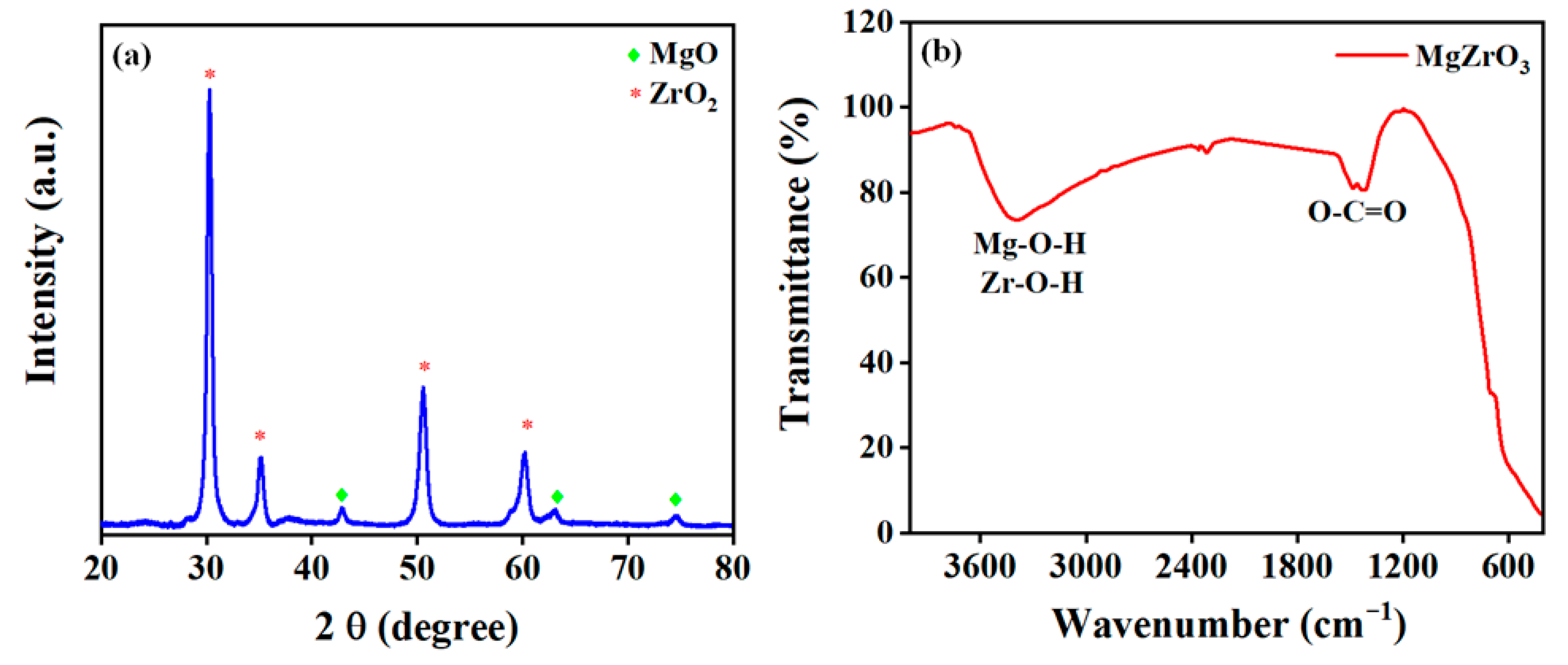
The crystalline phase purity of the synthesized MgZrO3 was analyzed by using XRD techniques, as illustrated in Figure 1a. Based on the XRD patterns, it is observed that the synthesized MgZrO3 exhibits the presence of both MgO (magnesia) and ZrO2 (zirconia) in the single phases. The prominent diffraction peaks (2θ) at 30.25°, 35.13°, 42.82°, 50.55°, 60.21°, 63.13°, and 74.49° can be attributed to the cubic magnesia and tetragonal zirconia phases. The crystallographic planes of the cubic magnesia and tetragonal zirconia phases are clearly indexed according to JCPDS card numbers 65–0476 and 79–1769, respectively. The absence of additional peaks in the XRD pattern indicates the high purity of the synthesized MgZrO3. The FT-IR spectra were employed to analyze the chemical bonding configurations of synthesized MgZrO3, as illustrated in Figure 1b. The FT-IR spectra of the synthesized MgZrO3 exhibit a broad peak in the range of 410–815 cm−1, confirming the vibrations between the metal-oxygen bonds, specifically attributed to Mg–O and Zr–O. The vibration bands observed at 1425 cm−1 correspond to the symmetric and asymmetric stretching vibrations of the carboxylate group, indicating the chemisorption of CO2 onto the surface of MgZrO3. The characteristic vibrational frequencies at 3400 cm−1 are associated with the stretching vibrations of –OH functional groups in Mg–OH and Zr–OH.
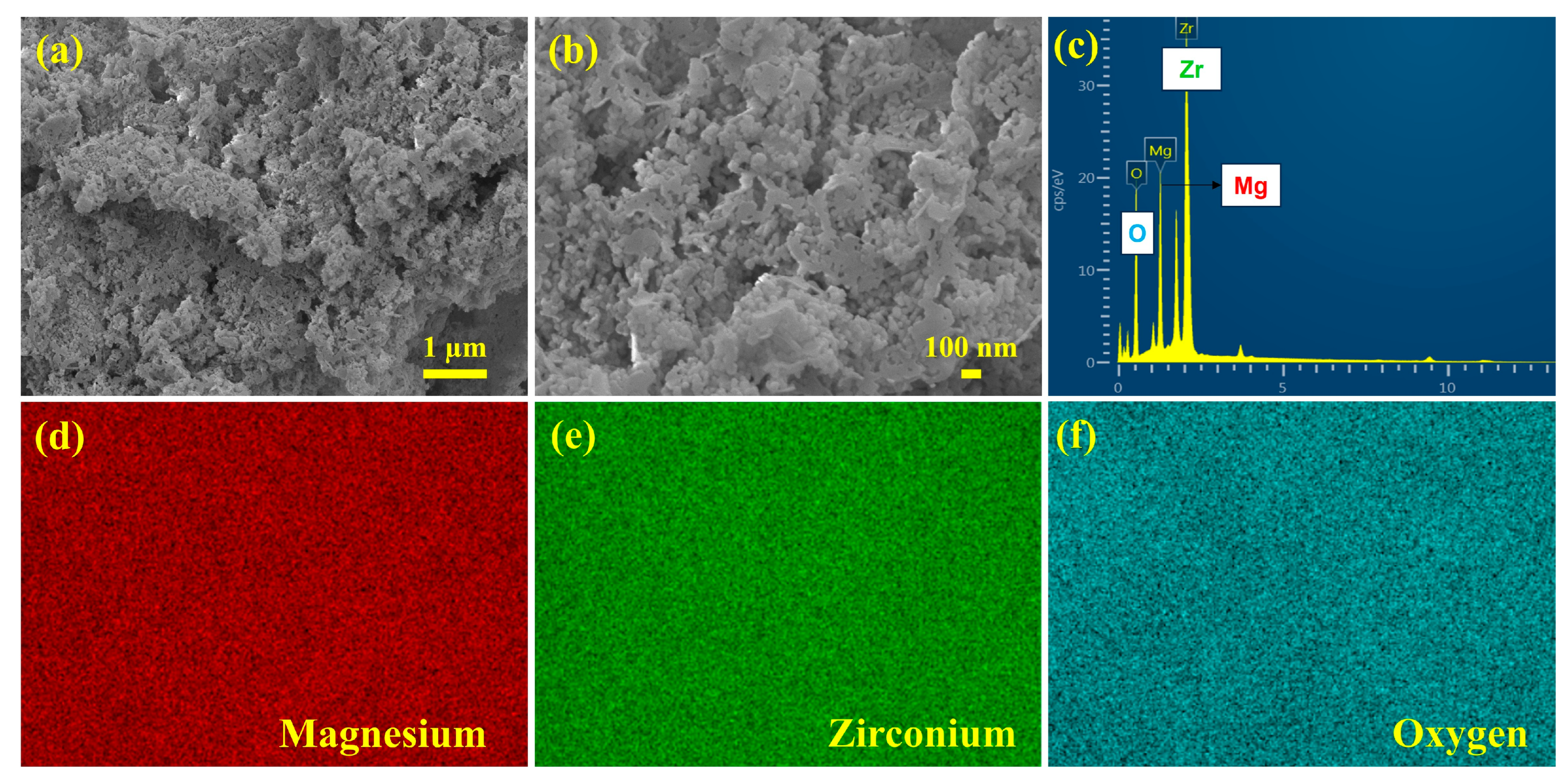
The surface morphologies of the synthesized MgZrO3 were examined using FE-SEM images, along with EDS and elemental mapping analyses. Figure 2a,b depicts the FE-SEM images of the synthesized MgZrO3, revealing a nanosponge-like morphology. The as-prepared nanosponges possess numerous active sites, which contribute to their superior electrocatalytic activity. The corresponding EDS spectrum in Figure 2c and elemental mapping in Figure 2d–f provide further confirmation of the presence of magnesium, zirconium, and oxygen elements in the as-synthesized MgZrO3, along with the uniform distribution of these elements on the nanosponges.

2.2. Electrochemical Measurements

2.2.1. Electrochemical Properties of Electrodes

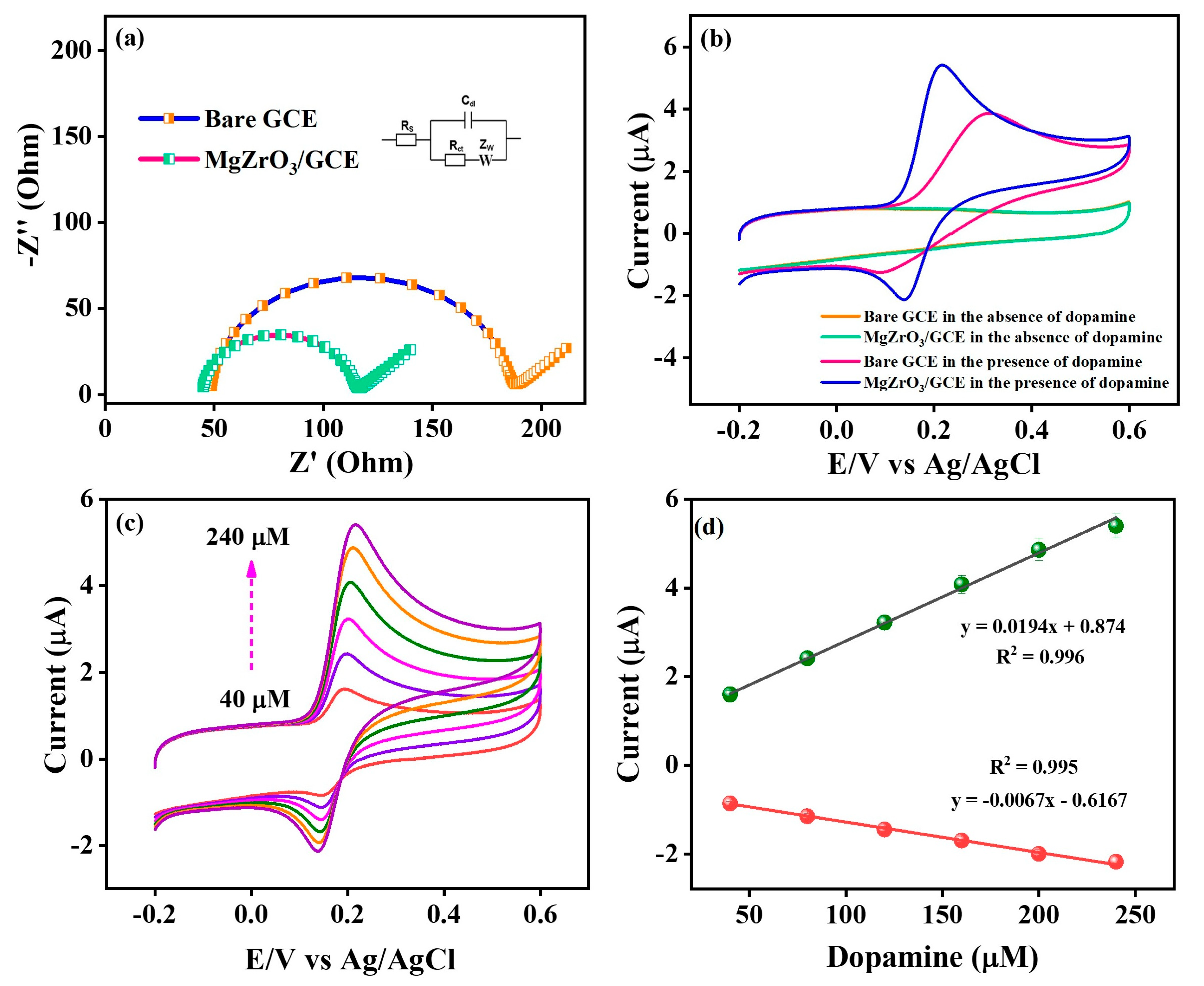
The electrochemical impedance spectroscopy (EIS) technique was employed to characterize the interface properties of the electrodes in a 0.1 M KCl solution, 5 mM [Fe(CN)6]3−/4−. As shown in Figure 3a, the Nyquist plots provide information on the electrodes’ charge-transfer ability, with the semicircle diameter representing the charge-transfer resistance. Additionally, the Randles equivalent circuit was used to fit all data obtained from the EIS spectra (inset in Figure 3a). The Randles equivalent circuit includes components such as capacitance (Cdl), charge-transfer resistance (Rct), solution resistance (Rs), and Warburg impedance (ZW). The Rct value observed at the MgZrO3/GCE was significantly smaller (65 Ω) compared to that of the bare GCE (137 Ω). This indicates a lower Rct value at the MgZrO3-modified electrode. The results from the EIS measurements suggest an enhanced catalytic activity of the MgZrO3/GCE, which can be attributed to the modification with MgZrO3.
Heterogeneous electron transfer rate constants (ket) were calculated from the EIS data using the following equation:
ket = RT/F2RctAC
where R is the universal gas constant (8.314 J K−1 mol−1), T is the absolute temperature (K), F is Faraday’s constant (96,485 C mol−1), Rct is the charge transfer resistance (Ω); A is the surface area of the electrode (cm2), and C is the concentration of the [Fe(CN)6]3−/4− solution (mol cm−3). Based on this analysis, the ket value for the bare GCE was calculated to be 9.2 × 10⁻⁶ cm s−1, which is significantly lower than that of the MgZrO3/GCE (1.95 × 10⁻⁵ cm s−1). This corresponds to approximately a 2.1-fold enhancement in electron transfer kinetics after MgZrO3 modification, consistent with the observed decrease in Rct value.
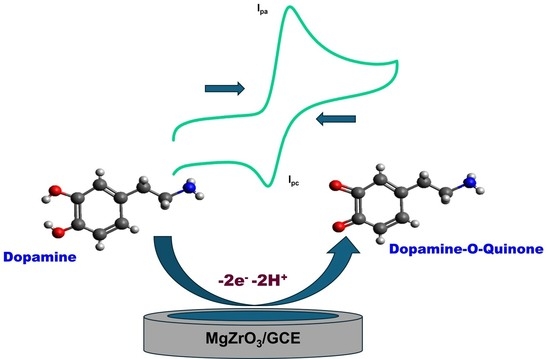
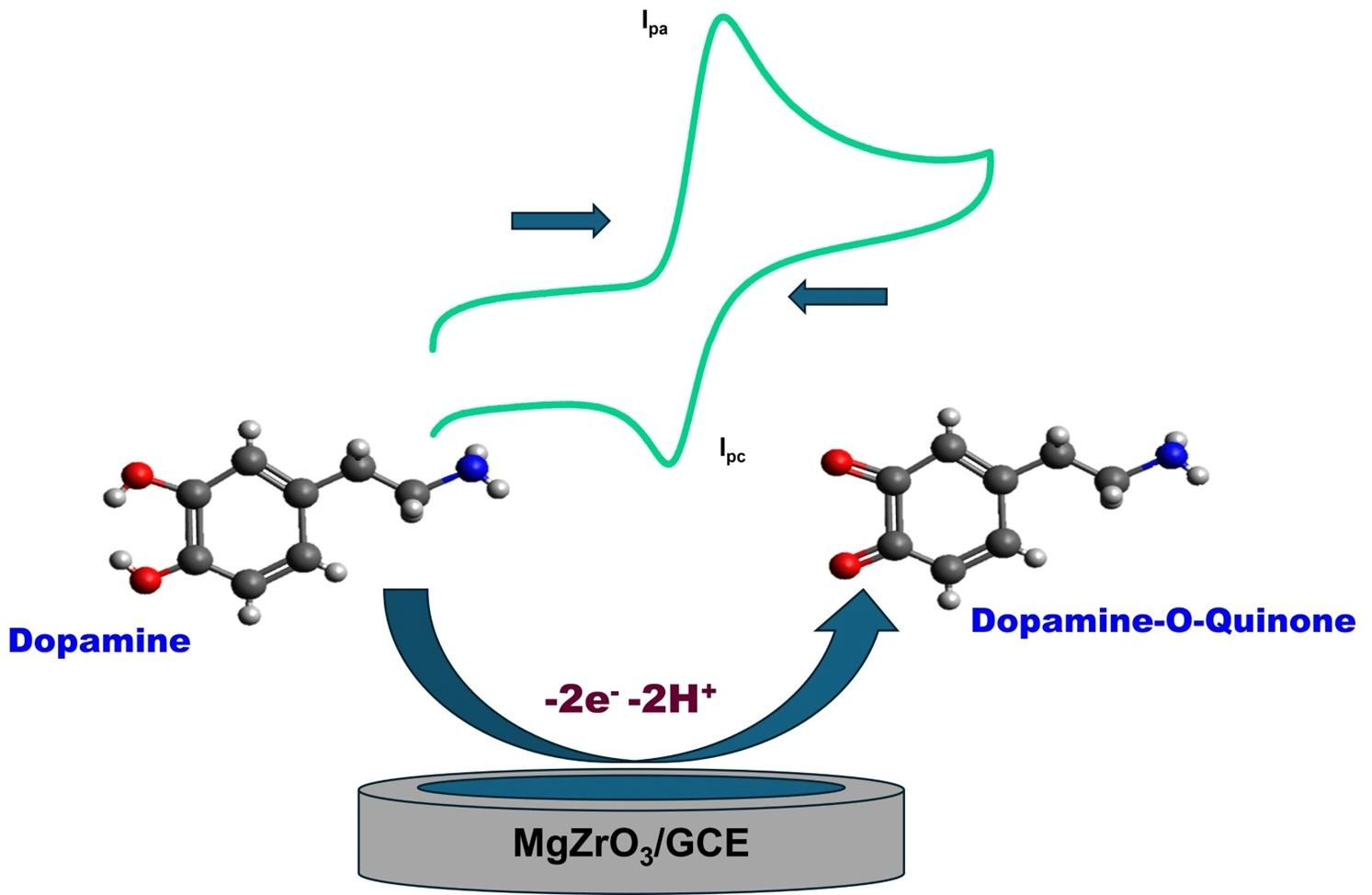
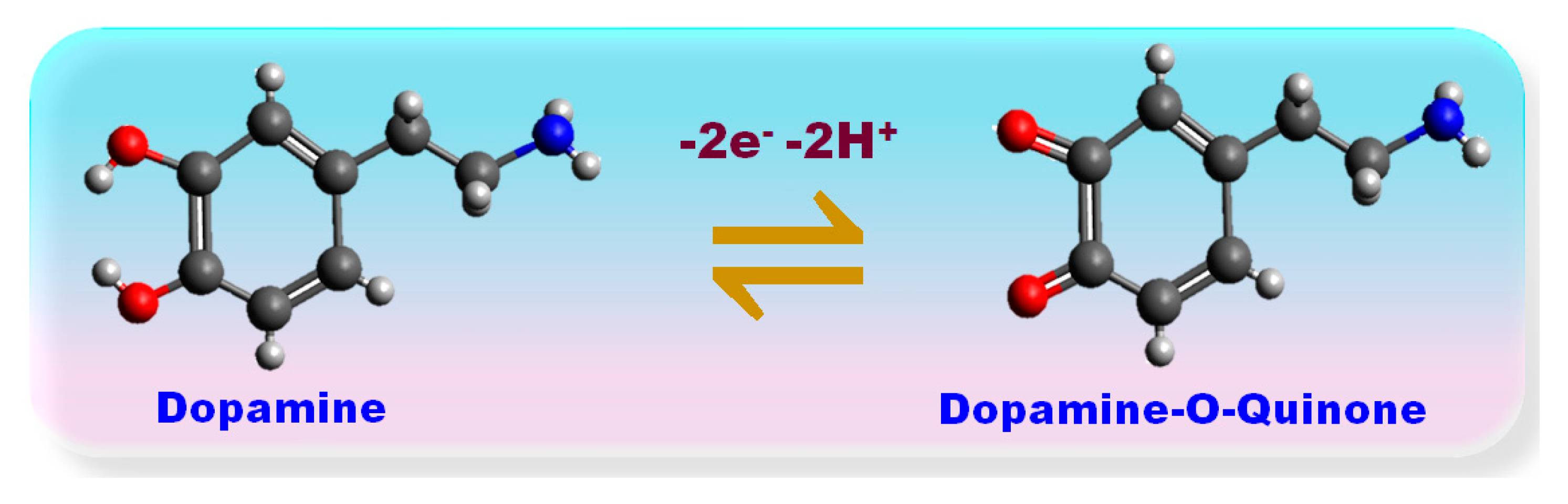
The electrocatalytic performance of bare GCE and MgZrO3-modified GCE was analyzed using cyclic voltammetry (CV) technique in the absence and presence of 240 μM dopamine in a 0.05 M PBS at pH 7, with a scan rate of 50 mV/s (Figure 3b). Control experiments were conducted to record the background currents of these electrodes, where no redox waves were observed within the scan potential range. The bare GCE exhibited a weak quasi-reversible redox response, indicating poor electrocatalytic ability towards dopamine. The anodic peak was observed at 0.31 V, and the cathodic peak was observed at 0.09 V. These potentials suggest slow electron transfer to dopamine, leading to a weak response. The electrochemical behavior suggests that dopamine is directly oxidized to dopamine-o-quinone with the two electrons and two protons. The overall electrochemical mechanism for dopamine detection is shown in Scheme 1. In contrast, the MgZrO3-modified GCE demonstrated an enhanced redox peak current with a shift in potential compared to the bare GCE. The anodic peak was observed at 0.21 V, and the cathodic peak was observed at 0.13 V. These results indicate that the MgZrO3/GCE exhibits improved electrocatalytic activity towards dopamine. A good performance of the MgZrO3-modified electrode can be attributed to its good conductivity, higher active surface area, numerous active sites, multiple redox reactions, and fast electron transfer ability. Figure S1 shows a bar diagram comparing the oxidation peak currents of different electrodes. The MgZrO3/GCE exhibited a larger peak current compared to the bare GCE, indicating its superior performance in the electrochemical detection of dopamine.

2.2.2. Influence of Concentration, pH, and Scan Rate

The electrocatalytic activities of the MgZrO3/GCE were studied using the CV method with a scan rate of 50 mV/s to determine the response to various concentrations of dopamine, as illustrated in Figure 3c. With an increase in the concentration of dopamine ranging from 40 to 240 μM, the corresponding redox peak currents showed a significant proportional increase. The obtained plots from CV analysis revealed good linear regression equations for dopamine (Figure 3d). These results further support the finding that the MgZrO3/GCE effectively facilitates the redox reaction of dopamine.
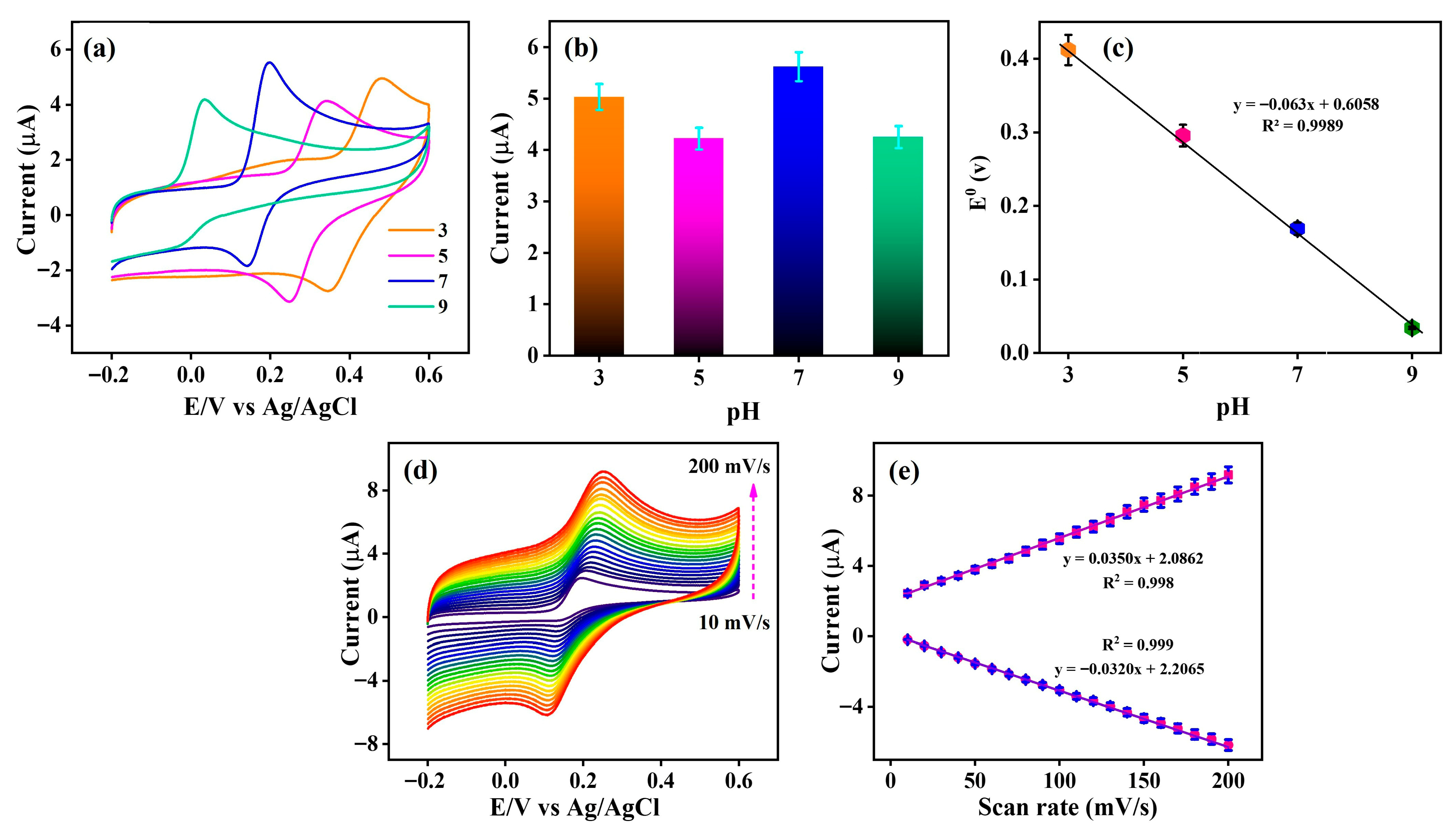
The performance of the electrochemical sensor is significantly influenced by the pH of the supporting electrolyte due to the deprotonation of the phenolic hydroxyl group in dopamine molecules. To investigate the electrochemical behavior of 240 μM dopamine at the MgZrO3/GCE, the CV measurements were conducted in 0.05 M PBS across a pH range of 3 to 9, as illustrated in Figure 4a. The results clearly demonstrate that as the pH of the electrolyte increased gradually from 3 to 7, the peak potential of dopamine shifted towards more negative values, while the peak current of dopamine gradually increased. However, when the pH was further increased to 9, the peak current of dopamine started to decrease. The oxidation current varies with pH, as shown in Figure 4b. The formal peak potential (E°) varies as a function of pH, as shown in Figure 4c. A linear dependence was observed with a slope of −63 mV pH−1, which is close to the theoretical Nernstian value of −59 mV pH−1. This result indicates that the electrochemical oxidation of dopamine involves an equal number of electrons and protons, supporting a two-electron and two-proton transfer mechanism. Based on these results, 0.05 M PBS (pH 7.0) was selected as the optimal supporting electrolyte for dopamine detection using the MgZrO3/GCE.
To investigate the kinetics of the electrochemical processes, CV measurements were performed in the presence of 240 μM dopamine at the MgZrO3-modified GCE over a scan rate range of 10–200 mV/s. As shown in Figure 4d, the redox peak currents increased with increasing scan rate, accompanied by a noticeable shift in peak potentials and an increase in peak-to-peak separation, indicating quasi-reversible electrochemical behavior. Furthermore, both the oxidation and reduction peak currents exhibited linear relationships with the scan rate within the investigated range (Figure 4e), suggesting that the electrochemical reactions at the MgZrO3/GCE are governed by a surface adsorption-controlled process. In contrast, no linear relationship was observed between the peak currents and the square root of the scan rate (Figure S2a), further supporting this conclusion. To substantiate the adsorption-controlled mechanism, a plot of the logarithm of peak current (log Ip) versus the logarithm of scan rate (log ν) was constructed (Figure S2b). The obtained slope value of ~1.1 is close to the theoretical value of 1 expected for adsorption-controlled processes, thereby confirming the surface-confined electrochemical kinetics of dopamine at the MgZrO3/GCE.

2.2.3. Electrochemical Detection of Dopamine

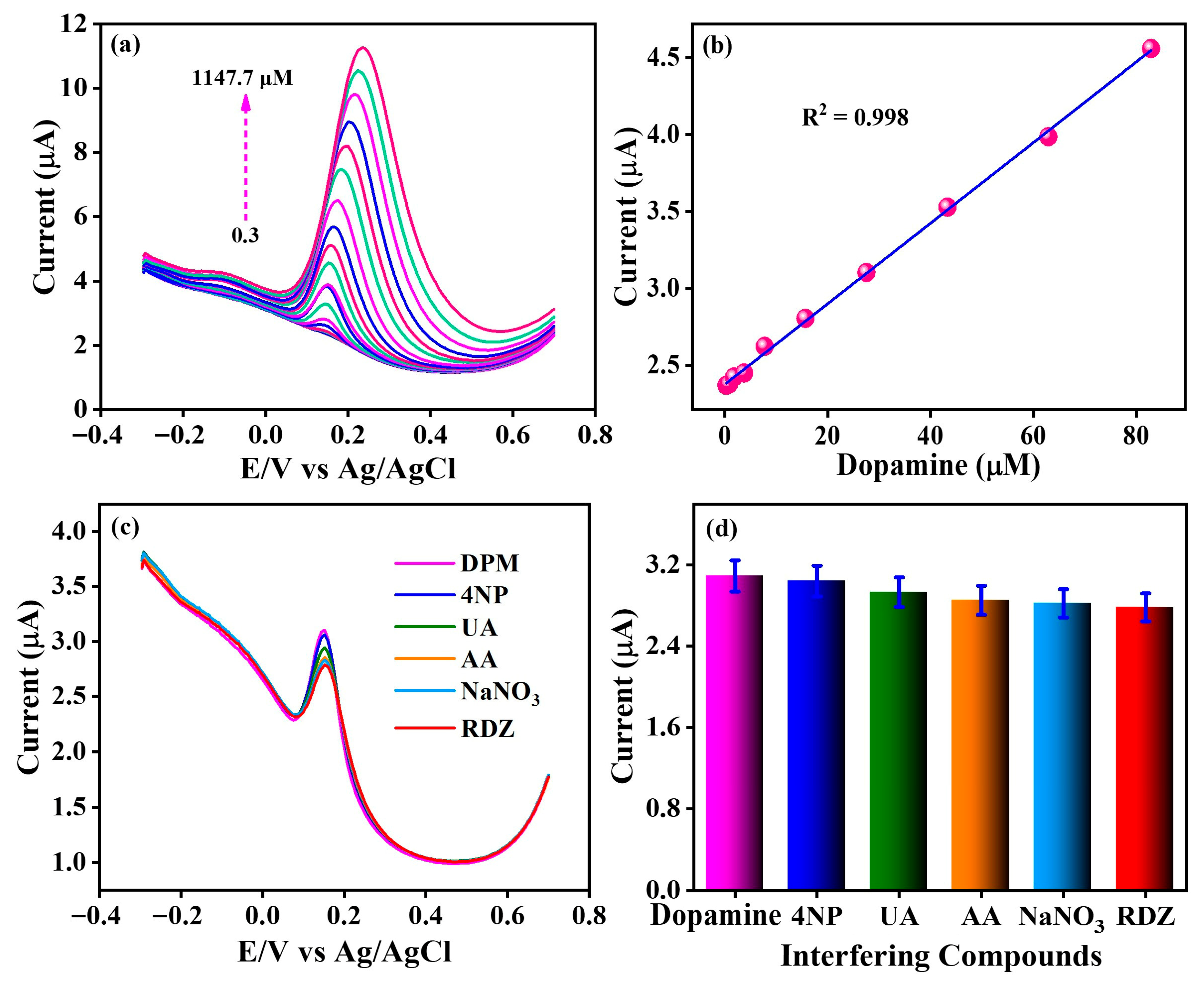
The quantitative electrochemical detection of dopamine on the MgZrO3-modified GCE was studied using the DPV method under optimal experimental conditions, as depicted in Figure 5a. As the concentration of dopamine increased within the range of 0.3 to 1147.7 μM, there was an observed increase in the peak current. A good linear relationship was obtained between the peak current and dopamine concentration in the range of 0.3 to 80 μM, as shown in Figure 5b, with a determination coefficient of 0.998. The LOD and limit of quantification (LOQ) were calculated using the following equations: LOD = 3 × (Noise)/S and LOQ = 10 × (Noise)/S, where S is the slope of the calibration curve. The LOD and LOQ of the MgZrO3/GCE for dopamine were determined to be 127 nM and 423 nM, respectively. To better position the performance of the developed sensor, a comprehensive comparison with recently reported electrochemical dopamine sensors was conducted (Table 1). As summarized, previously reported systems—including α-Fe2O3, GQDs/IL, Au@Cu-MOF, PANI-MgO, PLA/PEDOT/PANI, CuO/Cu2O, NFG, WSe2, CGC-500, NiMoO4/Mn(VO3)2, and POA@Ag NPs—exhibit diverse analytical characteristics, with linear detection ranges spanning from low micromolar to millimolar levels and LOD values typically ranging from 0.06 to 5.0 µM. In comparison, the MgZrO3/GCE exhibits an LOD of 127 nM than most reported systems, and maintains a wide and practically relevant linear range, particularly under near-physiological conditions (PBS, pH ~7.0). These results indicate that the proposed sensor provides competitive or superior analytical performance relative to many existing dopamine detection platforms. The enhanced sensing behavior of MgZrO3 can be attributed to its intrinsic physicochemical properties. Specifically, MgZrO3 offers a high surface area and abundant active sites, which facilitate efficient adsorption and oxidation of dopamine molecules. In addition, its favorable electronic structure promotes rapid electron transfer kinetics, leading to improved sensitivity and signal amplification. The stable oxide framework also contributes to good reproducibility and operational stability during electrochemical measurements. Overall, the MgZrO3/GCE demonstrates excellent electrochemical activity, high sensitivity, and reliable quantitative capability for dopamine detection, making it a promising candidate for practical sensing applications.

2.2.4. Selectivity, Reproducibility, Repeatability, and Stability

Selectivity is a crucial parameter for evaluating the performance of modified electrodes when applied to real samples. To assess the selectivity of the MgZrO3/GCE for dopamine detection, the electrochemical oxidation of dopamine was carried out in the presence of various potentially interfering substances and metal ions, including 4-nitrophenol (4-NP), uric acid (UA), ascorbic acid (AA), sodium nitrate (NaNO3), and ronidazole (RDZ). As depicted in Figure 4c, the presence of these interfering substances had negligible effects on dopamine detection. The results indicate that the variation in the peak current did not exceed 5% in the presence of individual interferent compounds (Figure 4d). Consequently, the MgZrO3/GCE exhibited a good anti-interference ability for dopamine detection, demonstrating its high selectivity.
To investigate the repeatability (intra-day precision) of the MgZrO3/GCE, five consecutive measurements were performed using the same modified electrode in the presence of dopamine under optimized conditions (Figure S3a). The corresponding oxidation peak currents exhibited minimal variation, with a relative standard deviation (RSD) of 1.62%, indicating acceptable repeatability of the MgZrO3/GCE. The reproducibility of the working electrode surface modification was evaluated using five independently prepared MgZrO3-modified electrodes (Figure S3b). The responses were highly consistent, with an RSD of 1.57%, confirming the reliability and consistency of the electrode fabrication process. Furthermore, the operational stability of the MgZrO3/GCE was assessed through continuous CV measurements over 100 cycles (Figure S3c). The results showed only a slight decrease in peak current (~8%), with no significant shift in peak potential, demonstrating that the electrode maintains stable electrochemical performance under repeated usage.

2.2.5. Practical Feasibility

To evaluate the practical applicability of the MgZrO3/GCE, dopamine was determined in biological samples using the DPV method (Figure S4a,b). Human blood serum and urine, which contain diverse metabolites reflecting physiological conditions, were selected as representative matrices. Before analysis, the samples were subjected to centrifugation, filtration, and dilution with PBS, without any additional pretreatment. Known concentrations of dopamine were spiked into the prepared samples, and recovery studies were performed. As summarized in Table S1, the recovery values obtained using the MgZrO3/GCE ranged from 96.00% to 99.00%, indicating good analytical accuracy. For comparison, the same samples were analyzed using a standard HPLC method, which yielded comparable recovery values within the range of 97–99.5%. The close agreement between the electrochemical sensor and HPLC results confirms the reliability and accuracy of the proposed method. In addition, the MgZrO3/GCE offers practical advantages, including simpler operation, rapid response, and lower cost compared to conventional HPLC techniques. These results demonstrate that the proposed sensor is well-suited for dopamine determination in complex biological matrices and holds strong potential for practical analytical applications.

3. Experimental Section

Chemical, reagents, and material characterization are listed in the ESI file.

3.1. Synthesis of DES

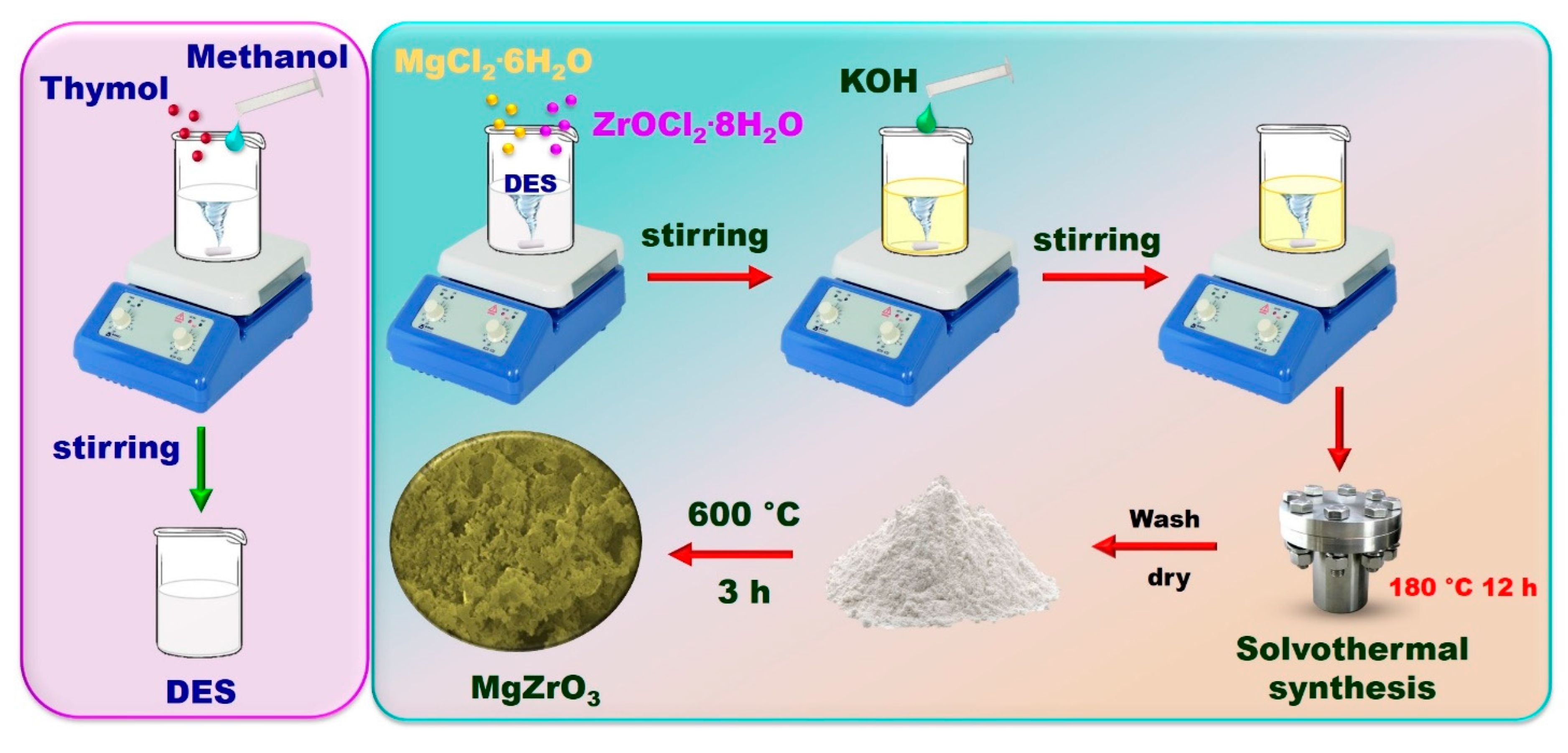
The DES solution was prepared by combining thymol and methanol in a 1:1 ratio in a glass beaker containing a magnetic pellet. The mixture was stirred continuously at room temperature using a magnetic stirrer until a transparent homogeneous solution was obtained. The resulting homogeneous solution was then utilized for the synthesis of MgZrO3.

3.2. Synthesis of MgZrO3

MgZrO3 nanosponges were synthesized via a solvothermal method followed by calcination. In a typical procedure, 0.05 M MgCl2 · 6H2O and ZrOCl2 · 8H2O were dissolved in 50 mL of the as-prepared DES under continuous stirring to obtain a homogeneous solution. Subsequently, a KOH solution was added dropwise, and the mixture was stirred continuously until a precipitate formed. The resulting suspension was then transferred into a Teflon-lined stainless-steel autoclave and maintained at 180 °C for 12 h. After naturally cooling to room temperature, the obtained product was collected and washed several times by centrifugation to remove residual ions and impurities. The collected precipitate was dried at 60 °C in a hot-air oven for 12 h. Finally, the dried white powder was calcined at 600 °C for 3 h in air to obtain MgZrO3 nanosponges. The overall synthesis process is illustrated in Scheme 2.

3.3. Fabrication of MgZrO3 Modified Electrode

The GCE was meticulously polished using alumina slurries and thoroughly rinsed with DI water. Next, 6 mg of MgZrO3 was dispersed in 1 mL of DI water and subjected to ultrasonication for 1 h to ensure proper dispersion. Subsequently, 6 µL of the dispersed MgZrO3 solution was deposited onto the surface of the GCE and allowed to air dry.

4. Conclusions

In this work, a MgZrO3-based electrochemical sensor was successfully developed via a DES-assisted solvothermal method, demonstrating a simple and effective approach for electrode modification. The improved electrochemical performance is attributed to enhanced interfacial electron transfer kinetics and increased availability of active sites. This is supported by EIS results, where the Rct decreased from 137 Ω for the bare GCE to 65 Ω for the MgZrO3/GCE, along with an increase in the ket from 9.2 × 10⁻⁶ to 1.95 × 10⁻⁵ cm s−1. Under optimized conditions, the MgZrO3/GCE showed a wide linear detection range of 0.3–80 µM, with a low LOD (127 nM) and LOQ (423 nM). The sensor also demonstrated good selectivity toward dopamine in the presence of common interfering species and achieved satisfactory recovery in real sample analysis, confirming its practical applicability. These results demonstrate the reliable performance of the MgZrO3/GCE, including good repeatability (RSD = 1.62%), reproducibility (RSD = 1.57%), and operational stability (~8% decrease after 100 cycles). Future studies may focus on extended long-term stability evaluation and validation in more complex biological matrices to further expand its practical applicability. Future work may focus on improving structural stability, scaling up the fabrication process, and exploring integration into portable sensing platforms. Overall, this study highlights the potential of DES-assisted MgZrO3 materials for electrochemical sensing and provides valuable insight into the design of efficient and reliable metal oxide-based sensors for neurotransmitter detection in clinical and analytical applications.

Supplementary Materials

The following supporting information can be downloaded at: https://www.mdpi.com/article/10.3390/catal16050389/s1, details of chemicals and reagents; material characterization; electrochemical measurement procedures; a bar diagram of the oxidation peak currents of different electrodes (Figure S1); (a) Plot of peak current (Ip) versus the square root of scan rate (ν12). (b) Plot of log Ip versus log ν (Figure S2); (a) Repeatability, (b) reproducibility, and (c) stability of the MgZrO3/GCE (Figure S3); DPV cures of (a) human serum, and (b) human urine of the MgZrO3/GCE (Figure S4) and Comparison of MgZrO3/GCE sensor with HPLC method for dopamine detection (n = 3) (Table S1).

Author Contributions

A.K.D.A. and T.-W.C. contributed to formal analysis, resources, and validation. S.-M.C. provided resources and software support. M.W.A.K. and S.S. were responsible for formal analysis and visualization. K.A. contributed to formal analysis and conceptualization. F.A. was responsible for conceptualization, writing—original draft preparation, and review and editing. L.M. contributed to formal analysis. M.V. carried out the investigation, data curation, and methodology development. All authors have read and agreed to the published version of the manuscript.

Funding

This research has been funded by Scientific Research Deanship at University of Hail, Saudi Arabia through project number RCP-25 039.

Data Availability Statement

The data used in this study are available from the corresponding author upon reasonable request.

Conflicts of Interest

The authors declare no conflicts of interest.

References

  1. Kokulnathan, T.; Anthuvan, A.J.; Chen, S.M.; Chinnuswamy, V.; Kadirvelu, K. Trace level electrochemical determination of the neurotransmitter dopamine in biological samples based on iron oxide nanoparticle decorated graphene sheets. Inorg. Chem. Front. 2018, 5, 705–718. [Google Scholar] [CrossRef]
  2. Teleanu, R.I.; Niculescu, A.G.; Roza, E.; Vladâcenco, O.; Grumezescu, A.M.; Teleanu, D.M. Neurotransmitters—Key factors in neurological and neurodegenerative disorders of the central nervous system. Int. J. Mol. Sci. 2022, 23, 5954. [Google Scholar] [CrossRef] [PubMed]
  3. Piccini, P.P. Dopamine transporter: Basic aspects and neuroimaging. Mov. Disord. Off. J. Mov. Disord. Soc. 2003, 18, S3–S8. [Google Scholar] [CrossRef]
  4. Xu, H.; Yang, F. The interplay of dopamine metabolism abnormalities and mitochondrial defects in the pathogenesis of schizophrenia. Transl. Psychiatry 2022, 12, 464. [Google Scholar] [CrossRef]
  5. Yaman, B. Perspective Chapter: The Role of Dopamine Receptors in Neuropsychiatric Diseases; IntechOpen: London, UK, 2023. [Google Scholar]
  6. Kibret, B.G.; Canseco-Alba, A.; Onaivi, E.S.; Engidawork, E. Crosstalk between the endocannabinoid and mid-brain dopaminergic systems: Implication in dopamine dysregulation. Front. Behav. Neurosci. 2023, 17, 1137957. [Google Scholar] [CrossRef]
  7. Grant, C.E.; Flis, A.L.; Ryan, B.M. Understanding the role of dopamine in cancer: Past, present and future. Carcinogenesis 2022, 43, 517–527. [Google Scholar] [CrossRef]
  8. Rostaminejad, B.; Karimi, A.R.; Dinari, M.; Hadizadeh, M. photosensitive chitosan-based injectable hydrogel chemically cross-linked by perylene bisimide dopamine with robust antioxidant and cytotoxicity enhancer properties for in vitro photodynamic therapy of breast cancer. ACS Appl. Bio Mater. 2023, 6, 1242–1251. [Google Scholar] [CrossRef] [PubMed]
  9. Wang, Z.; Luo, C.; Zhou, E.W.; Sandhu, A.F.; Yuan, X.; Williams, G.E.; Cheng, J.; Sinha, B.; Akbar, M.; Bhattacharya, P.; et al. Molecular toxicology and pathophysiology of comorbid alcohol use disorder and post-traumatic stress disorder associated with traumatic brain injury. Int. J. Mol. Sci. 2023, 24, 8805. [Google Scholar] [CrossRef] [PubMed]
  10. Pan, X.; Kaminga, A.C.; Wen, S.W.; Wu, X.; Acheampong, K.; Liu, A. Dopamine and dopamine receptors in Alzheimer’s disease: A systematic review and network meta-analysis. Front. Aging Neurosci. 2019, 11, 175. [Google Scholar] [CrossRef]
  11. You, H.; Mariani, L.L.; Mangone, G.; Le Febvre de Nailly, D.; Charbonnier-Beaupel, F.; Corvol, J.C. Molecular basis of dopamine replacement therapy and its side effects in Parkinson’s disease. Cell Tissue Res. 2018, 373, 111–135. [Google Scholar] [CrossRef]
  12. Kokulnathan, T.; Ahmed, F.; Chen, S.M.; Chen, T.W.; Hasan, P.; Bilgrami, A.L.; Darwesh, R. Rational confinement of yttrium vanadate within three-dimensional graphene aerogel: Electrochemical analysis of monoamine neurotransmitter (dopamine). ACS Appl. Mater. Interfaces 2021, 13, 10987–10995. [Google Scholar] [CrossRef]
  13. Van Rossum, I.; Tenback, D.; van Os, J. Bipolar disorder and dopamine dysfunction: An indirect approach focusing on tardive movement syndromes in a naturalistic setting. BMC Psychiatry 2009, 9, 16. [Google Scholar] [CrossRef]
  14. Dhanjai; Yu, N.; Mugo, S.M. Disposable capacitive biosensor for dopamine sensing. ChemistrySelect 2020, 5, 12470–12476. [Google Scholar] [CrossRef]
  15. McGrath, T.; Baskerville, R.; Rogero, M.; Castell, L. Emerging evidence for the widespread role of glutamatergic dysfunction in neuropsychiatric diseases. Nutrients 2022, 14, 917. [Google Scholar] [CrossRef] [PubMed]
  16. Morris-Rosendahl, D.J.; Crocq, M.A. Neurodevelopmental disorders—The history and future of a diagnostic concept. Dialogues Clin. Neurosci. 2020, 22, 65–72. [Google Scholar] [CrossRef] [PubMed]
  17. Nicastro, N.; Nencha, U.; Burkhard, P.R.; Garibotto, V. Dopaminergic imaging in degenerative parkinsonisms, an established clinical diagnostic tool. J. Neurochem. 2023, 164, 346–363. [Google Scholar] [CrossRef]
  18. Kokulnathan, T.; Ramaraj, S.; Chen, S.M.; Han-Yu, Y. Eco-friendly synthesis of biocompatible pectin stabilized graphene nanosheets hydrogel and their application for the simultaneous electrochemical determination of dopamine and paracetamol in real samples. J. Electrochem. Soc. 2018, 165, B240. [Google Scholar] [CrossRef]
  19. Palanisamy, S.; Thangavelu, K.; Chen, S.M.; Gnanaprakasam, P.; Velusamy, V.; Liu, X.H. Preparation of chitosan grafted graphite composite for sensitive detection of dopamine in biological samples. Carbohydr. Polym. 2016, 151, 401–407. [Google Scholar] [CrossRef]
  20. Milne, R.W.; Nation, R.L.; Reynolds, G.D.; Somogyi, A.A.; Van Crugten, J.T. High-performance liquid chromatographic determination of morphine and its 3-and 6-glucuronide metabolites: Improvements to the method and application to stability studies. J. Chromatogr. B Biomed. Sci. Appl. 1991, 565, 457–464. [Google Scholar] [CrossRef] [PubMed]
  21. Wey, A.B.; Thormann, W. Capillary electrophoresis–electrospray ionization ion trap mass spectrometry for analysis and confirmation testing of morphine and related compounds in urine. J. Chromatogr. A 2001, 916, 225–238. [Google Scholar] [CrossRef]
  22. Secor, K.E.; Glass, T.E. Selective amine recognition: Development of a chemosensor for dopamine and norepinephrine. Org. Lett. 2004, 6, 3727–3730. [Google Scholar] [CrossRef]
  23. Zhang, X.X.; Li, J.; Gao, J.; Sun, L.; Chang, W.B. Determination of morphine by capillary electrophoresis immunoassay in thermally reversible hydrogel-modified buffer and laser-induced fluorescence detection. J. Chromatogr. A 2000, 895, 1–7. [Google Scholar] [CrossRef] [PubMed]
  24. Zhang, L.; Teshima, N.; Hasebe, T.; Kurihara, M.; Kawashima, T. Flow-injection determination of trace amounts of dopamine by chemiluminescence detection. Talanta 1999, 50, 677–683. [Google Scholar] [CrossRef]
  25. Kokulnathan, T.; Wang, T.J.; Ahmed, F.; Alshahrani, T.; Arshi, N. Synergism of holmium orthovanadate/phosphorus-doped carbon nitride nanocomposite: Nonenzymatic electrochemical detection of hydrogen peroxide. Inorg. Chem. 2024, 63, 3019–3027. [Google Scholar] [CrossRef] [PubMed]
  26. Zhang, J.; Ma, Y.; Han, Y.; Xu, K.; Yao, S.; Shi, L.; Zhu, M. 3D porous structure assembled from MXene via breath figure method for electrochemical detection of dopamine. Chem. Eng. J. 2023, 452, 139414. [Google Scholar] [CrossRef]
  27. Sriram, B.; Baby, J.N.; Hsu, Y.F.; Wang, S.F.; George, M. Scheelite-type rare earth vanadates TVO4 (T= Ho, Y, Dy) electrocatalysts: Investigation and comparison of T site variations towards bifunctional electrochemical sensing application. Chem. Eng. J. 2023, 451, 138694. [Google Scholar] [CrossRef]
  28. Ankitha, M.; Shabana, N.; Arjun, A.M.; Muhsin, P.; Rasheed, P.A. Ultrasensitive electrochemical detection of dopamine from human serum samples by Nb2CTx-MoS2 hetero structures. Microchem. J. 2023, 187, 108424. [Google Scholar] [CrossRef]
  29. Prasad, G.V.; Jang, S.J.; Sekhar, Y.C.; Reddy, T.M.; Sarma, L.S.; Kim, H.B.; Kim, T.H. Fine-tuning of Pd–CeO2/rGO nanocomposite: A facile synergetic strategy for effective electrochemical detection of dopamine in pharmaceutical and biological samples. J. Electroanal. Chem. 2023, 941, 117544. [Google Scholar] [CrossRef]
  30. Wang, D.; An, J.; Chang, X.; Xu, Y.; Zhao, J.; Gao, L.; Zhang, P.; Li, X.; Nie, J.; Cui, H. Autogenous-reduction-engineered MOF/GO hybrids as a universal ternary nanocomposite platform for simultaneous electrochemical sensing of uric acid, dopamine and ascorbic acid. Electrochim. Acta 2026, 562, 148711. [Google Scholar] [CrossRef]
  31. Amara, U.; Mahmood, K.; Khan, M.; Nawaz, M.H. Polypyrrole enwrapped binary metal oxides nanostructures for in-vitro Dopamine detection from lacrimal fluid. Microchem. J. 2023, 185, 108254. [Google Scholar] [CrossRef]
  32. Dai, M.; Zhu, Q.; Han, D.; Niu, L.; Wang, Z. Sensitive and selective electrochemical sensor for the detection of dopamine by using AuPd@Fe2O3 nanoparticles as catalyst. Adv. Sens. Energy Mater. 2023, 2, 100048. [Google Scholar] [CrossRef]
  33. Mohiuddin, A.K.; Yasmin, S.; Jeon, S. CoxNi1− x double hydroxide decorated graphene NPs for simultaneous determination of dopamine and uric acid. Sens. Actuators A Phys. 2023, 355, 114314. [Google Scholar] [CrossRef]
  34. Kokulnathan, T.; Wang, T.J.; Kumar, E.A.; Duraisamy, N.; Lee, A.T. An electrochemical platform based on yttrium oxide/boron nitride nanocomposite for the detection of dopamine. Sens. Actuators B Chem. 2021, 349, 130787. [Google Scholar] [CrossRef]
  35. Priya, T.S.; Sasikumar, R.; Chen, T.W.; Chen, S.M.; Kim, B.; Kokulnathan, T. Deep eutectic solvents-mediated synthesis of barium stannate/halloysite nanotubes-based nanocomposite for electrochemical detection of hazardous 4-nitroaniline. Appl. Clay Sci. 2023, 244, 107103. [Google Scholar] [CrossRef]
  36. Priya, T.S.; Chen, T.W.; Chen, S.M.; Kokulnathan, T.; Lou, B.S.; Al-Onazi, W.A.; Al-Mohaimeed, A.M.; Elshikh, M.S.; Yu, J. Synthesis of perovskite-type potassium niobate using deep eutectic solvents: A promising electrode material for detection of bisphenol A. Chemosphere 2023, 318, 137948. [Google Scholar] [CrossRef]
  37. Yin, W.J.; Weng, B.; Ge, J.; Sun, Q.; Li, Z.; Yan, Y. Oxide perovskites, double perovskites and derivatives for electrocatalysis, photocatalysis, and photovoltaics. Energy Environ. Sci. 2019, 12, 442–462. [Google Scholar] [CrossRef]
  38. Mitzi, D.B. Introduction: Perovskites. Chem. Rev. 2019, 119, 3033–3035. [Google Scholar] [CrossRef]
  39. Sherlin, V.A.; Baby, J.N.; Sriram, B.; Hsu, Y.F.; Wang, S.F.; George, M. Construction of ANbO3 (A= na, K)/f-carbon nanofiber: Rapid and real-time electrochemical detection of hydroxychloroquine in environmental samples. Environ. Res. 2022, 215, 114232. [Google Scholar] [CrossRef]
  40. Ali, S.M. Smart perovskite sensors: The electrocatalytic activity of SrPdO3 for hydrazine oxidation. J. Electrochem. Soc. 2018, 165, B345. [Google Scholar] [CrossRef]
  41. Suvina, V.; Kokulnathan, T.; Wang, T.J.; Balakrishna, R.G. Unraveling the electrochemical properties of lanthanum cobaltite decorated halloysite nanotube nanocomposite: An advanced electrocatalyst for determination of flutamide in environmental samples. Ecotoxicol. Environ. Saf. 2020, 190, 110098. [Google Scholar] [CrossRef]
  42. Sriram, B.; Baby, J.N.; Hsu, Y.F.; Wang, S.F.; George, M.; Veerakumar, P.; Lin, K.C. Electrochemical sensor-based barium zirconate on sulphur-doped graphitic carbon nitride for the simultaneous determination of nitrofurantoin (antibacterial agent) and nilutamide (anticancer drug). J. Electroanal. Chem. 2021, 901, 115782. [Google Scholar] [CrossRef]
  43. Cao, F.; Dong, Q.; Li, C.; Chen, J.; Ma, X.; Huang, Y.; Song, D.; Ji, C.; Lei, Y. Electrochemical sensor for detecting pain reliever/fever reducer drug acetaminophen based on electrospun CeBiOx nanofibers modified screen-printed electrode. Sens. Actuators B Chem. 2018, 256, 143–150. [Google Scholar] [CrossRef]
  44. Flores-Lasluisa, J.X.; Huerta, F.; Cazorla-Amorós, D.; Morallón, E. Transition metal oxides with perovskite and spinel structures for electrochemical energy production applications. Environ. Res. 2022, 214, 113731. [Google Scholar] [CrossRef]
  45. Thomas, J.; Kunnathulli, A.P.; Vazhayil, A.; Thomas, N. Influence of the amount of carbon during the synthesis of LaFe0.8Co0.2O3/carbon hybrid material in oxygen evolution reaction. ACS Omega 2021, 6, 17566–17575. [Google Scholar] [CrossRef] [PubMed]
  46. Kokulnathan, T.; Wang, T.J.; Ahmed, F.; Kumar, S. Deep eutectic solvents-assisted synthesis of NiFe-LDH/Mo2C nanocomposite for electrochemical determination of nitrite. J. Mol. Liq. 2023, 369, 120785. [Google Scholar] [CrossRef]
  47. Kokulnathan, T.; Wang, T.J.; Ahmed, F.; Alshahrani, T. Hydrothermal synthesis of ZnCr-LDH/tungsten carbide composite: A disposable electrochemical strip for mesalazine analysis. Chem. Eng. J. 2023, 451, 138884. [Google Scholar] [CrossRef]
  48. Stanley, M.M.; Wang, S.F.; Sriram, B.; Baby, J.N.; George, M. Eutectic solvent-mediated synthesis of scheelite-type manganese molybdate nanosheets: Rapid and real-time electrochemical detection of p-methylaminophenol sulfate-metol. J. Environ. Chem. Eng. 2023, 11, 110185. [Google Scholar] [CrossRef]
  49. Sharma, A.; Lee, B.S. Toxicity test profile for deep eutectic solvents: A detailed review and future prospects. Chemosphere 2024, 350, 141097. [Google Scholar] [CrossRef]
  50. Deng, R.; Gao, M.; Zhang, B.; Zhang, Q. Solvent-Mediated Synthesis of Functional Powder Materials from Deep Eutectic Solvents for Energy Storage and Conversion: A Review. Adv. Energy Mater. 2024, 14, 2303707. [Google Scholar] [CrossRef]
  51. Fu, L.; Liu, X.; Cao, J.; Li, H.; Xie, A.; Liu, Y. Recent advance in electrochemical immunosensors for lung cancer biomarkers sensing. Rev. Anal. Chem. 2024, 43, 20230068. [Google Scholar] [CrossRef]
  52. Zhou, F.; Lim, H.N.; Ibrahim, I.; Endot, N.A.; Abdul Malek, E.; Gowthaman, N.S.K. Simultaneous Electrochemical Detection of Dopamine and Uric Acid via Au@ Cu-Metal Organic Framework. ChemPlusChem 2024, 89, e202300686. [Google Scholar] [CrossRef] [PubMed]
  53. Kumar, A.; Sharma, S.; Tripathi, C.S.P.; Guin, D. 2-dimensional magnesium oxide/polyaniline nanocomposite modified glassy carbon electrode for electrochemical detection of dopamine and 4-nitrophenol. ChemistrySelect 2024, 9, 202304435. [Google Scholar] [CrossRef]
  54. Borras, N.; Sánchez-Sanz, A.; Sans, J.; Estrany, F.; Pérez-Madrigal, M.M.; Alemán, C. Flexible electroactive membranes for the electrochemical detection of dopamine. Eur. Polym. J. 2023, 187, 111915. [Google Scholar] [CrossRef]
  55. Mondal, R.; Show, B.; Ahmed, S.F.; Mukherjee, N. Electrochemically selective detection of dopamine over serotonin by CuO/Cu2O bulk heterostructure electrode. Bull. Mater. Sci. 2024, 47, 62. [Google Scholar] [CrossRef]
  56. Zhao, S.Q.; Wang, G.S. Electrochemical sensor based on nitrogen-fluorine double doped graphene composite for dopamine detection. Fuller. Nanotub. Carbon Nanostruct. 2024, 32, 214–222. [Google Scholar] [CrossRef]
  57. Alhazmi, H.A.; Imran, M.; Ahmed, S.; Albratty, M.; Makeen, H.A.; Najmi, A.; Alam, M.S. Electrochemical detection of dopamine using WSe2 microsheets modified platinum electrode. Phys. Scr. 2023, 98, 105006. [Google Scholar] [CrossRef]
  58. Rana, D.S.; Sharma, R.; Gupta, N.; Sharma, V.; Thakur, S.; Singh, D. Development of metal free carbon catalyst derived from Parthenium hysterophorus for the electrochemical detection of dopamine. Environ. Res. 2023, 231, 116151. [Google Scholar] [CrossRef]
  59. Sobhaninasab, A.; Ghaderi, A.; Banafshe, H.R.; Bakhshi, M.; Sohouli, E.; Eshraghi, R.; Moradi Hasan-Abad, A.; Rahimi-Nasrabadi, M. New Synthesis and Characterization of NiMoO4/Mn(VO3)2 Heterostructures for Electrochemical Detection of Dopamine. Anal. Bioanal. Electrochem. 2023, 15, 506–515. [Google Scholar]
  60. Pandian, P.; Kalimuthu, R.; Arumugam, S.; Kannaiyan, P. Solid phase mechanochemical synthesis of Poly (o-anisidine) protected silver nanoparticles for electrochemical dopamine sensor. Mater. Today Commun. 2021, 26, 102191. [Google Scholar] [CrossRef]
Figure 1. (a) XRD patterns and (b) FT-IR spectra of MgZrO3.
Catalysts 16 00389 g001
Figure 2. (a,b) FE-SEM images, (c) EDS spectrum, and (df) elemental mapping images of MgZrO3.
Catalysts 16 00389 g002
Figure 3. (a) EIS analysis of electrodes in 0.1 M KCl solution containing 5 mM [Fe(CN)6]3−/4−. (b) CV curves of electrodes in the absence and presence of 240 μM dopamine at a scan rate of 50 mV/s. (c) CV curves of MgZrO3/GCE at different concentrations of dopamine. (d) Linear plots of the peak currents versus concentrations for dopamine.
Catalysts 16 00389 g003
Scheme 1. The electrochemical mechanism of dopamine.
Catalysts 16 00389 sch001
Figure 4. (a) CV curves of MgZrO3/GCE in different pHs of 0.05 M PBS containing 240 μM dopamine. (b) Effect of pH on the oxidation peak currents. (c) Linear relationship between the formal peak potential (E°) and pH (E° = f(pH)) for dopamine at the MgZrO3/GCE. (d) CV curves of MgZrO3/GCE at various scan rates. (e) Linear plots of the peak currents versus scan rate for dopamine.
Catalysts 16 00389 g004
Figure 5. (a) DPV responses of MgZrO3/GCE to different concentrations of dopamine. (b) Linearity of the corresponding oxidation peak currents versus dopamine concentration. (c) DPV response of dopamine in the presence of interference compounds on the MgZrO3/GCE. (d) Comparison of the peak reduction currents of dopamine in the presence of various interference compounds in the selectivity studies.
Catalysts 16 00389 g005
Scheme 2. The schematic illustration of the synthesis route for the MgZrO3.
Catalysts 16 00389 sch002
Table 1. Comparison of the performance of various electrochemical sensors for dopamine with the present work.
ElectrodesElectrolyte
(PBS)
Linear Range (µM)LOD
(µM)
Ref.
UiO-66/GO/PANI6.515–2101.68[30]
GQDs/IL7.00.2–150.06[51]
Au@Cu-MOF6.010–10003.4[52]
PANI-MgO7.05–800.75[53]
PLA/PEDOT/PANI7.40–102.2[54]
CuO/Cu2O7.00–200.388[55]
NFG6.01–500.3[56]
WSe27.55–1005.0[57]
CGC-5007.40.1–100.8[58]
NiMoO4/Mn(VO3)25.01–600.33[59]
POA@AgNPs6.05–450.83[60]
MgZrO37.00.3–800.127This work
Disclaimer/Publisher’s Note: The statements, opinions and data contained in all publications are solely those of the individual author(s) and contributor(s) and not of MDPI and/or the editor(s). MDPI and/or the editor(s) disclaim responsibility for any injury to people or property resulting from any ideas, methods, instructions or products referred to in the content.