Article

Molecular Dynamics Simulations of Functionalized UiO-66 in Transesterification Reactions

School of Energy and Power Engineering, University of Shanghai for Science and Technology, Shanghai 200093, China
*
Author to whom correspondence should be addressed.
Catalysts 2026, 16(4), 351; https://doi.org/10.3390/catal16040351
Submission received: 13 March 2026 / Revised: 9 April 2026 / Accepted: 10 April 2026 / Published: 14 April 2026

Abstract

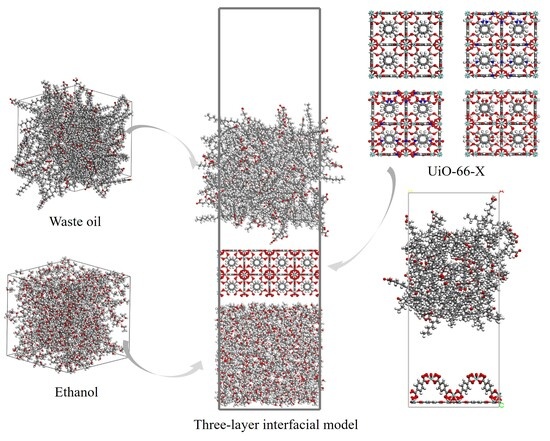
This study employs molecular dynamics simulations to investigate the influence of functionalized UiO-66 materials (with -H, -NH2, -NO2, and -(OH)2 groups) on the adsorption and diffusion behaviors of ethanol and waste oil before transesterification reactions. A multi-scale modeling approach, including a three-layer interfacial model, surface adsorption, and intra-framework adsorption, was utilized to systematically evaluate the effects of functionalization on structural properties, molecular diffusion, adsorption performance, and interfacial interactions. The simulation results reveal that functionalization enhances the intrinsic diffusivity of the metal–organic framework but generally suppresses the diffusion of ethanol and waste oil. The -(OH)2 group exhibits the most significant diffusion hindrance due to steric effects and strong hydrogen bonding. Adsorption of waste oil is dominated by coordination and hydrophobic interactions, while ethanol adsorption relies on hydrogen bonding. Within the framework, functionalization does not improve ethanol adsorption capacity; instead, pristine UiO-66 shows the highest uptake due to its optimal pore size. Adsorption energy calculations on the (002) surface indicate that the -NO2 group exhibits the strongest affinity for oleic acid, owing to its strong electronegativity and synergistic effects with metal sites. For polyunsaturated fatty acids, adsorption performance depends critically on the compatibility between the hydrophobic pore environment and molecular conformation. Ethanol adsorption is governed primarily by hydrogen bonding and metal coordination. This study provides molecular-level insights into the structure–function relationships governing pre-reaction adsorption and mass transport mechanisms of functionalized UiO-66 in transesterification reactions, providing a theoretical foundation for the rational design of efficient pre-reaction microenvironments in biodiesel catalysts.

Graphical Abstract

1. Introduction

The increasingly severe energy crisis and environmental pressures are compelling the global community to seek renewable and clean fuel alternatives. Biodiesel has emerged as a highly promising substitute or supplement for fossil diesel due to its excellent renewability, biodegradability, superior lubricity, and significant potential to reduce greenhouse gas and harmful pollutant emissions (e.g., sulfur oxides, particulate matter) [1,2]. Its core production pathway—the transesterification/esterification of oils and fats (such as vegetable oil, waste cooking oil, animal fats, microalgal oil) with short-chain alcohols catalyzed by catalysts—is relatively mature technologically, yet it continues to face ongoing challenges such as feedstock costs, catalyst efficiency and recovery, and process optimization [3,4]. The development of efficient, stable, and recyclable heterogeneous catalysts is key to achieving continuous breakthroughs in this field [5,6]. In recent years, metal–organic frameworks (MOFs) have opened new avenues for biodiesel catalysis owing to their ultra-high specific surface area, highly ordered and tunable pore structures, rich designability of active sites, and good chemical stability. Alexander et al. [7] showed the flexibility advantage of MOF in design, assembly and precise modification at the atomic and molecular levels. Jiang et al. [8] linked molecular building units by covalent bonds to make crystalline extended structures, which has given rise to metal–organic frameworks. Christian et al. [9] linked organic molecules through covalent bonds, porous COFs from light elements (boron, carbon, nitrogen, oxygen, and silicon) that are characterized by high architectural and chemical robustness. Among them, zirconium-based MOF UiO-66 and its derivatives have become one of the most promising platform materials for developing high-performance heterogeneous biodiesel catalysts [10], thanks to their unparalleled structural stability, highly tunable active sites (strong Lewis acidity, introducible Bronsted acid/base sites), and increasingly mature magnetic functionalization technologies [11,12,13]. Research has confirmed their significant advantages in catalytic activity (high conversion/yield), stability (water resistance, acid resistance, recyclability), ease of separation (especially magnetic materials), and adaptability to complex feedstocks [14]. Although challenges such as scaling costs, industrial molding, and long-term operational stability remain to be overcome, ongoing research focuses on the rational design of materials (precise construction of active centers, optimization of pore structures), development of green and low-cost synthesis and molding processes, and in-depth understanding of performance and deactivation mechanisms in practical reaction systems [15,16]. In the study of functionalization effects on adsorption properties of UiO-66, Hannebauer et al. [17] investigated the impact of functionalization on adsorption sites for molecules with varying polarity by synthesizing UiO-66 and its five functionalized derivatives and measuring their adsorption capacities for different polar molecules. Ali et al. [18] developed UiO-66@MCN and UiO-66@MCN/GAC and studied their arsenic adsorption. The UiO-66@MCN composite reached 232 mg/g capacity, rapid uptake, and 75% removal in column tests. pH 2–10 enhanced adsorption via inner-sphere complexation and Zr-OH sites. Deyko et al. [19] studied CH4, C2H6, and CO2 adsorption on UiO-66 vs. MOF-808 (Zr4+/Hf4+/Ce4+) and the metal center’s impact. MOF-808 showed higher capacities at pressure; adsorption followed Zr4+ ≥ Hf4+ > Ce4+. IAST selectivities were metal-independent. Zr-based MOFs that excelled in separation. In the field of biodiesel production catalysis, Wang et al. [20] synthesized the UiO-66-SO3H acid catalyst, which demonstrated high efficiency in catalyzing the production of biodiesel with high yield. Additionally, Macheli et al. [21] modified CaO with metal oxides to improve its catalytic performance for biodiesel production, providing novel mechanistic insights into synergistic adsorption and active site utilization. Zhao et al. [22] developed a novel hierarchical porous solid acid catalyst (2AIL@HP UIO-66-NH2) via acid/base self-assembly, showing excellent activity, stability, and tolerance in biodiesel production from low-grade oils, while demonstrating second-order kinetics, offering experimental reference for designing catalysts for large biomass molecule conversion. Amira et al. [23] presents a solvent-free sulfurization strategy using ammonium sulfate to significantly enhance the acidity and catalytic efficiency of UiO-66(Zr), achieving high conversion rates in esterification reactions while maintaining structural integrity. Ozcakir et al. [24] studied biodiesel production via sulfonated UiO-66 and the impact of hydrophobic support. Water absorption by byproducts reduced catalyst efficacy; thus, UiO-66’s hydrophobicity, stability, high surface area, and uniform pores were crucial. ANCOVA analysis and a Holm–Sidak test optimized esterification parameters: temperature, time, catalyst amount, and methanol/oleic acid rate. These efforts will greatly advance UiO-66-based catalysts from the laboratory to industrial application, providing a core driving force for the greening, efficiency, and economic viability of the biodiesel industry, thereby contributing to a more sustainable energy future [25].
This study employs molecular dynamics simulations to elucidate the pre-reaction mechanisms governing the adsorption and mass transport processes of biodiesel production by UiO-66 at multiple microscopic scales. Through a three-layer interface model, the internal adsorption of ethanol within the metal–organic framework, and a comparative analysis of the adsorption energies of waste oil components and ethanol on specific crystal facets, the diffusion and adsorption mechanisms of various functionalization modifications are systematically examined, with a specific focus on the pre-catalytic stages preceding the transesterification reactions.

2. Results and Discussion

2.1. Model Verification

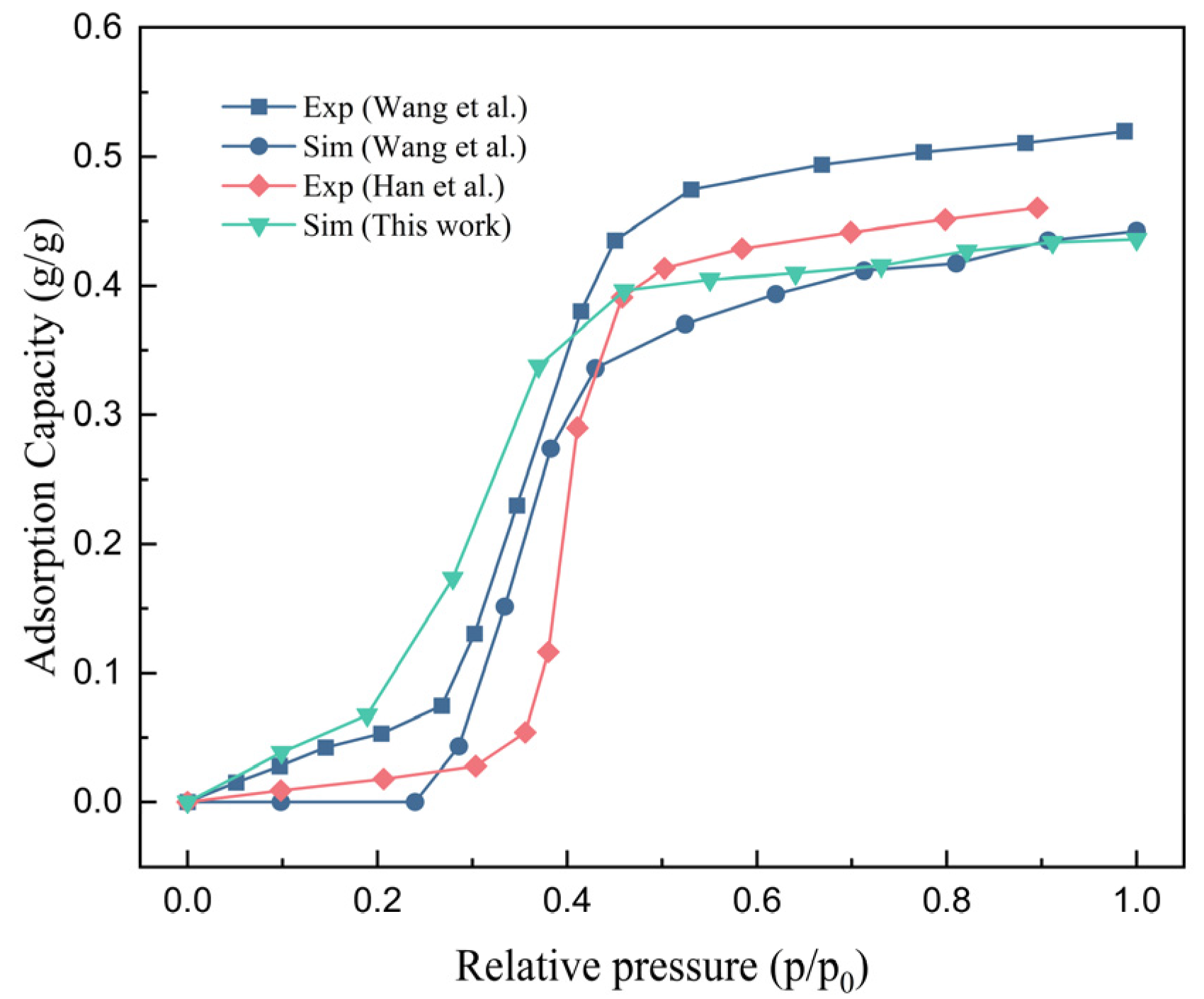
To validate the reliability of the model parameters, this study compared and analyzed the simulated adsorption isotherm of water in UiO-66 at 30 °C with experimental isotherm data, along with values from the literature. Given that the simulation results typically represent the absolute adsorption amount, while the experimental measurements reflect the excess adsorption amount, the following formula was applied to convert the absolute adsorption amount obtained from simulations into the excess adsorption amount to ensure comparability between the two.
n e = n a ρ g V
where n e is the excess adsorption capacity, g/g; n a is the absolute adsorption capacity, g/g; ρ g is the adsorbed gas density, g/cm3; and V is the crystal structure pore volume, cm3/g.
As shown in Figure 1, the simulated water adsorption isotherms of UiO-66 exhibit a type V characteristic according to the IUPAC classification, and the trend agrees well with experimental observations. To evaluate the rationality of the simulation results, the obtained isotherms were compared with data from the literature. The results indicate that the adsorption isotherms from this study are generally consistent with those reported in the literature. However, the experimentally measured adsorption capacities are generally higher than the simulated values. The main reasons for this discrepancy include the following: (1) Under experimental conditions, water molecules are adsorbed not only within the internal pores of UiO-66 but also in interparticle voids and on external surfaces, whereas the simulation only considers adsorption within the pores. (2) Structural defects, which are inevitable in experimentally synthesized UiO-66, can enhance its adsorption capacity, while the idealized structure used in the simulations does not account for the effects of such defects. Differences between simulations can be attributed to variations in the structural models and the selection of force field parameters and simulation software [26]. Despite the discrepancies caused by the above factors, the deviation of the simulated UiO-66 adsorption isotherms remains within an acceptable range (at a relative pressure of 1, the deviation between our simulation and that of Wang et al. is 2%, while the deviation from Han et al.’s experimental data is 6%), indicating that the model parameters selected in this study are reasonable and reliable, and the force field settings can be applied to subsequent simulations.

2.2. Mean Square Displacement and Diffusion Coefficient

The mean square displacement (MSD) is a statistical measure of the evolution of particle trajectories over time, describing the displacement of all particles in a system from their initial positions at any given moment [28]. It captures the dynamic behavior of the system and characterizes its collective diffusion capacity [29]. The MSD is calculated as the square root of the average of the squared displacements.
M S D = < r t r ( 0 ) 2 >
where r t represents the displacement at time t, r ( 0 ) denotes the initial displacement, and < > indicates the ensemble average over all atoms in the system.
According to Einstein’s diffusion law, the relationship between the mean square displacement and the diffusion coefficient D is given by
D = lim t 1 6 t < r t r ( 0 ) 2 >
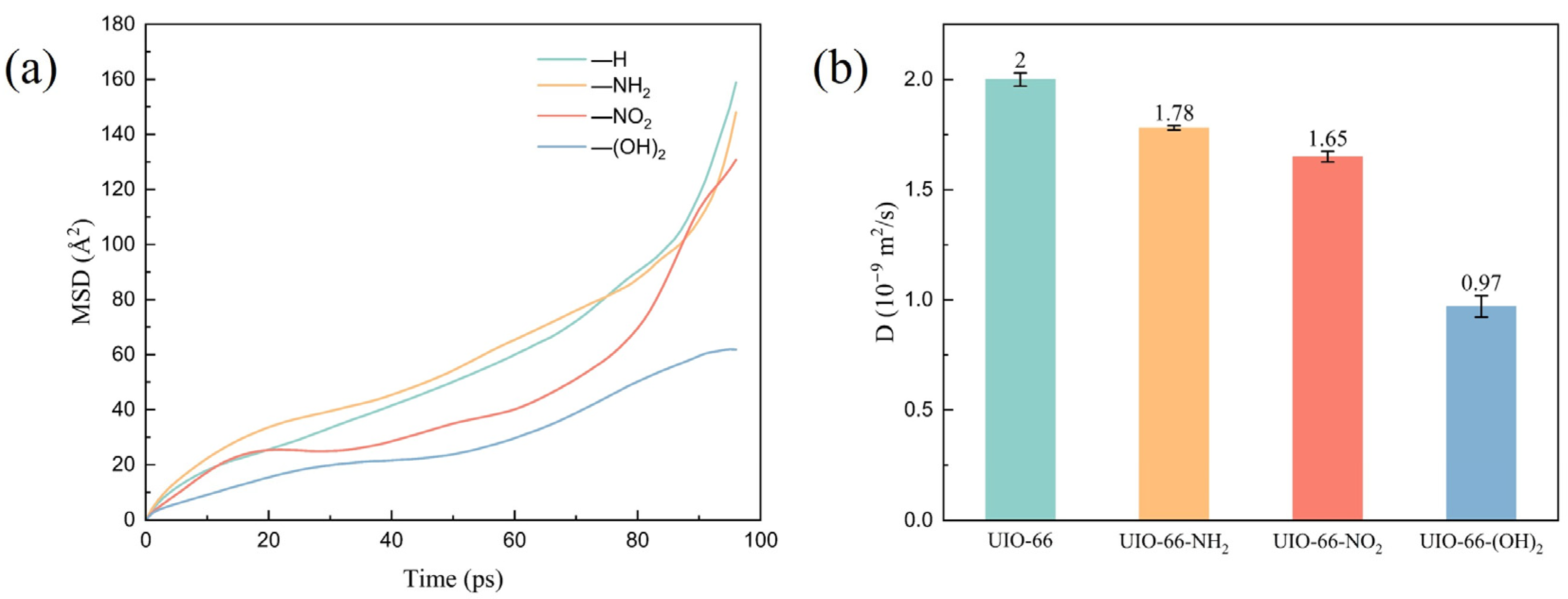
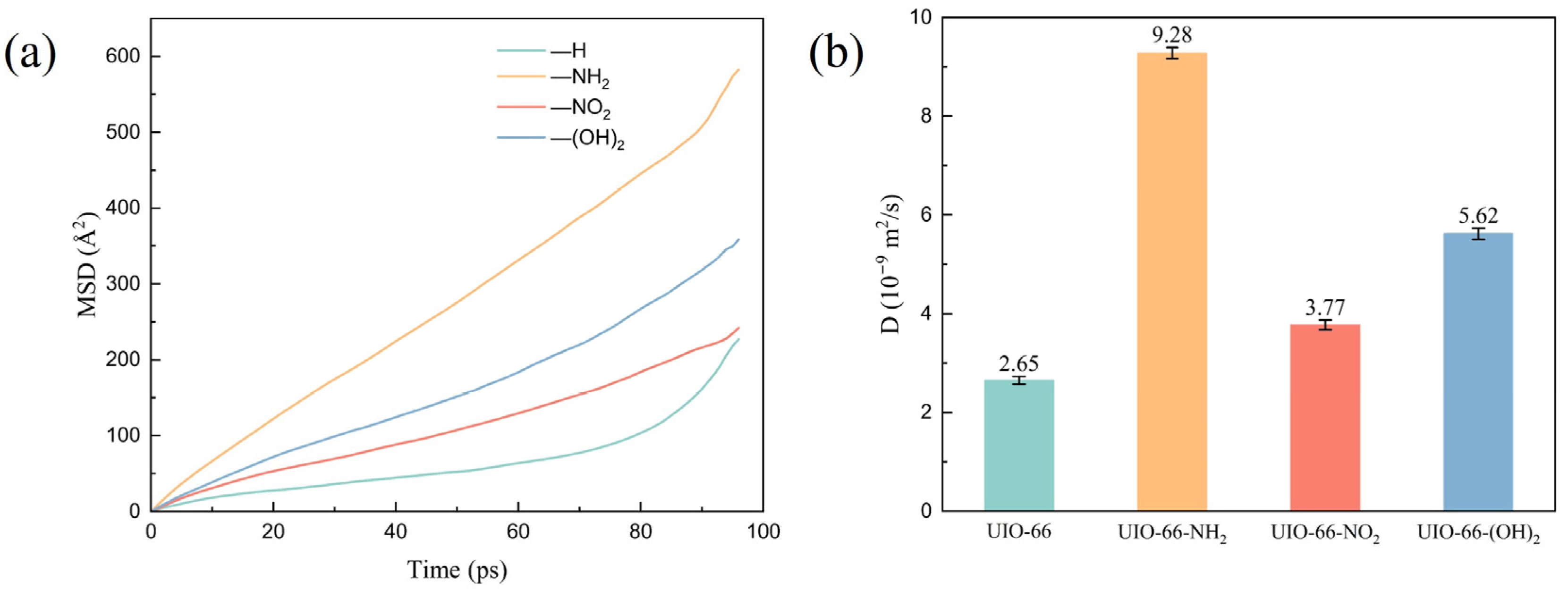
Figure 2 shows the mean square displacement of waste oil within the UiO-66-X (X = H, NH2, NO2, (OH)2) systems. The diffusivity of waste oil, which is directly derived from the slope of the MSD curve, follows the order UiO-66 > UiO-66-NH2 > UiO-66-NO2 > UiO-66-(OH)2. Functionalization modifies the framework and reduces the diffusivity of waste oil, with the -(OH)2 group exhibiting the most pronounced effect. This can be attributed to several factors. Firstly, the -(OH)2 groups likely occupy additional space within the metal–organic framework pores, resulting in a further reduction in the effective pore aperture. The consequent increased confinement enhances the diffusion resistance for oleic acid molecules within the narrowed channels due to greater steric hindrance. Secondly, strong hydrogen bonding interactions can form between the polar -(OH)2 groups of the framework and the -COOH groups of the oleic acid molecules. This enhanced adsorption strength between the framework and the oil impedes desorption and subsequent diffusion. Furthermore, the -OH group is highly polar. Its introduction creates a polar pore environment within the modified UiO-66, which may lead to thermodynamic incompatibility with the hydrophobic alkyl chain of oleic acid. The hydrophobic chain tends to minimize contact with the polar pore walls, thereby increasing the energy barrier for molecular movement and indirectly hindering diffusion.
Figure 3 shows the mean squared displacement of UiO-66-X (X = H, NH2, NO2, (OH)2) in various systems. The diffusivity of the metal–organic framework follows the order UiO-66-NH2 > UiO-66-(OH)2 > UiO-66-NO2 > UiO-66. A comparison of the diffusion coefficients indicates that functionalization modification enhances the diffusivity of UiO-66. This enhancement may be attributed to the introduction of functional groups, which optimizes the dynamic adjustment of bond lengths and angles within the framework, reduces the vibrational energy barrier of metal–ligand bonds, and amplifies the local vibrational amplitude of the Zr6 clusters. The -NH2 functional group exhibits the most pronounced enhancement effect on the diffusivity of UiO-66. As an electron-donating group, the -NH2 moiety weakens the strength of the Zr-O bonds, thereby increasing the amplitude of the oscillatory modes of the Zr6 clusters and enhancing the rotational freedom of the ligands.
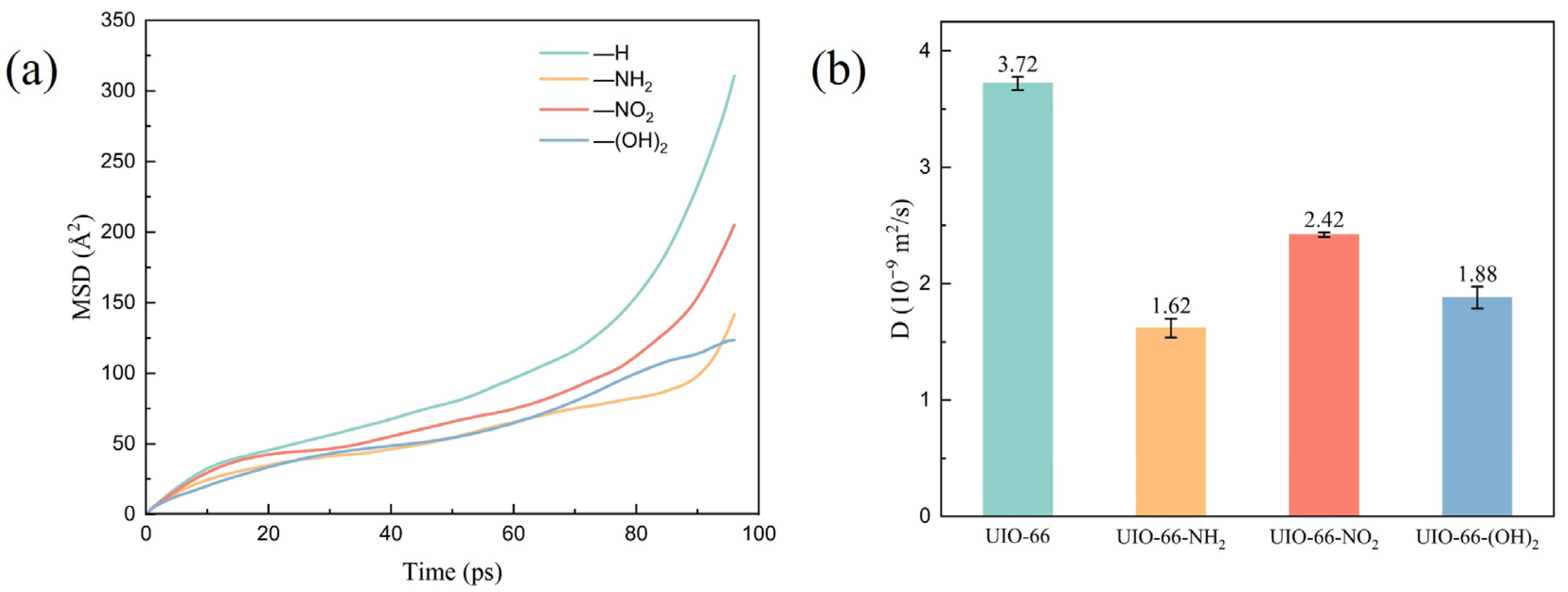
Figure 4 presents the mean squared displacement of ethanol within the UiO-66-X (X = H, NH2, NO2, (OH)2) systems. The diffusion coefficients follow the order UiO-66 > UiO-66-NO2 > UiO-66-(OH)2 > UiO-66-NH2. The effect of functionalization modification on ethanol diffusion is consistent with that observed for waste oil, namely, a reduction in diffusivity. As a small molecule, ethanol can be adsorbed within the pores of UiO-66. The impact of functional groups on reducing the diffusion rate of ethanol in the pore channels is less pronounced compared to their effect on waste oil. Among these functional groups, the -NH2 group exerts the most significant hindrance on ethanol diffusion, primarily due to the strong hydrogen bonding interactions between the -NH2 group and the -OH group of ethanol, leading to a molecular retention effect.
In summary, the diffusivity within the three-layer interface system follows the order UiO-66-X > ethanol > waste oil. In the entire system, the MOF exhibits the strongest diffusivity; however, as the MOF was not constrained to be rigid in the system, molecular interactions may induce changes in bond lengths and angles of the framework, along with inherent vibrations of the framework itself. Functionalization modifications generally suppress the diffusion of both ethanol and waste oil. Ethanol diffusion is predominantly constrained by strong hydrogen bonding interactions with the functional groups, while waste oil diffusion is mainly limited by the reduction in the effective pore aperture caused by the functional groups. The establishment of the three-layer interface model further impedes the penetration of large molecules, such as oleic acid, through the metal–organic framework. The UiO-66-(OH)2 and UiO-66-NO2 systems exhibit relatively balanced overall diffusivity profiles. In contrast, the pristine UiO-66 system is characterized by the diffusion of waste oil and ethanol, whereas the UiO-66-NH2 system MOF exhibits the strongest diffusivity [30,31].

2.3. Radial Distribution Function

g r = d N ( r ) 4 π r 2 ρ d r
where ρ represents the average atomic number density of the system; dr denotes the thickness of a thin spherical shell between radius r and radius r + dr; dN(r) indicates the number of atoms within this spherical shell of thickness dr at distance r.
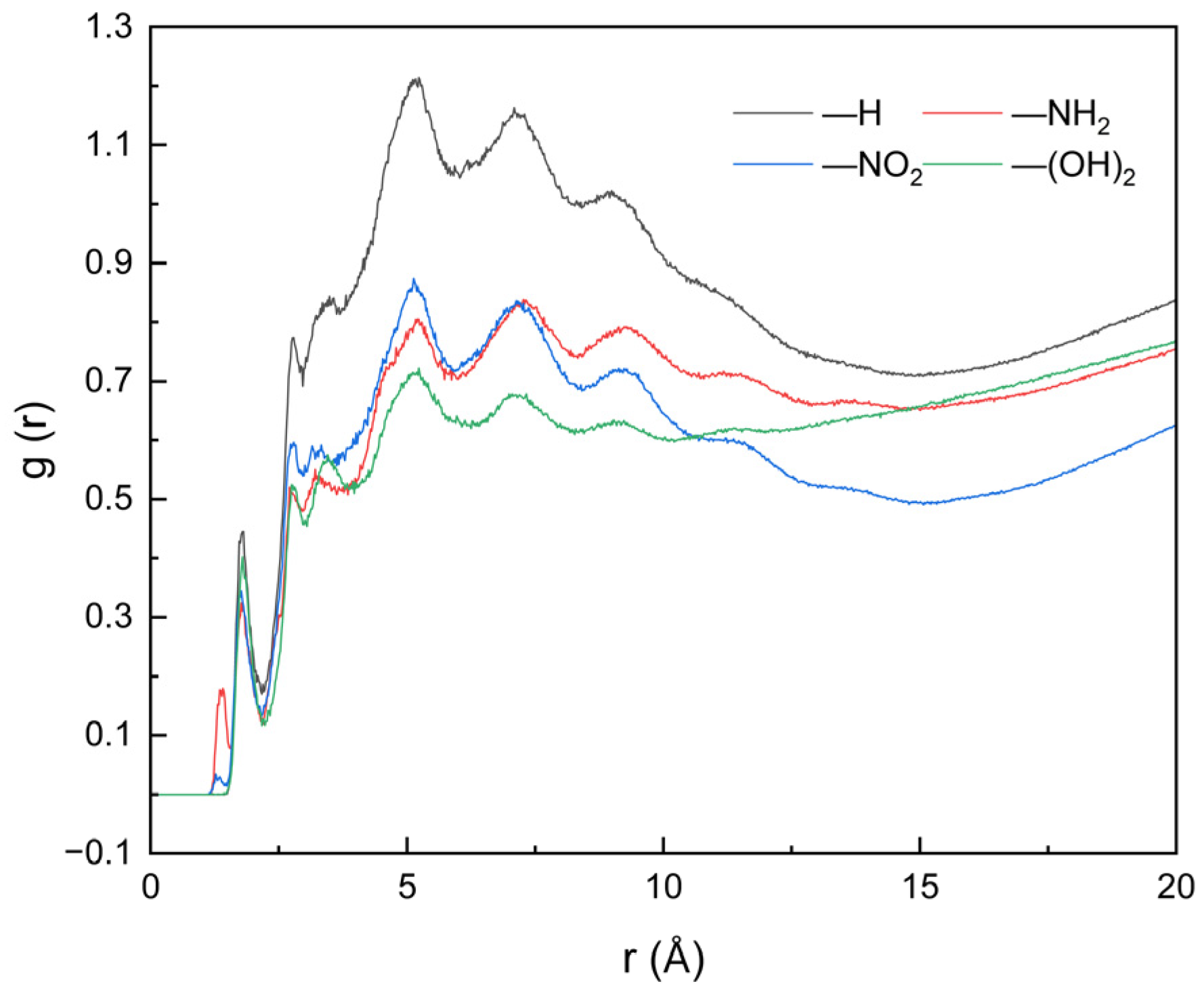
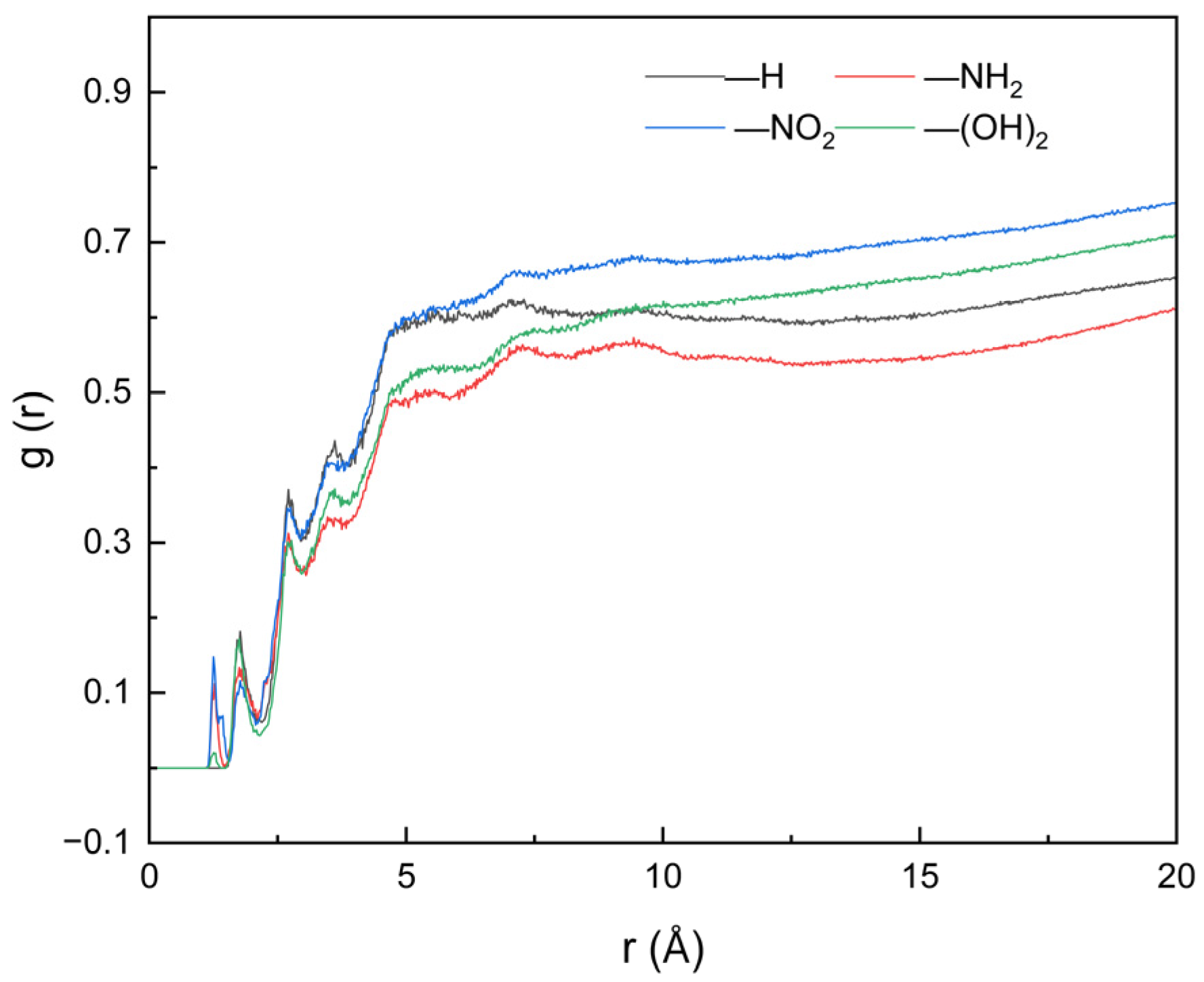
Figure 5 presents the radial distribution function between waste oil and UiO-66-X. In the region of 1.5–3 Å, which corresponds to hydrogen bonding and metal coordination interactions, the dihydroxy group of -(OH)2 can act as both a hydrogen bond donor and acceptor, forming multiple hydrogen bonds with the carboxyl group of oleic acid. The -NH2 group can also serve as a hydrogen bond donor and acceptor, though its capability is weaker than that of -(OH)2. Thus, a pronounced peak appears near 2.3 Å for -(OH)2, indicating strong hydrogen bonding. The similar peak height observed for the -H functionalized material may be attributed to the relatively high diffusivity of waste oil in this system. Although waste oil diffusion is weakest in the -(OH)2 functionalized framework, its strong hydrogen bonding capability results in a comparable RDF peak intensity. The electron-withdrawing effect of -NO2 enhances the positive charge on the Zr nodes, strengthening coordination with the carboxyl oxygen atoms of oleic acid. In contrast, -(OH)2 may weaken direct coordination due to steric hindrance or competitive binding, so the peak near 1.8 Å likely corresponds to metal coordination bonds with Zr. In the region of 3.5–4.5 Å, which reflects hydrophobic interactions, polar groups (-(OH)2, -NH2) weaken hydrophobic effects, while non-polar groups slightly enhance them. Near 3.5 Å, the peaks for -H and -NO2 are higher than those for -NH2 and -(OH)2, as the latter two increase the polarity of the pore channels, leading to strong repulsion between the hydrophobic chain of oleic acid and polar groups such as -NH2.
Overall, the molecular interactions between waste oil and UiO-66-X are primarily dominated by coordination and hydrophobic effects, with hydrogen bonding playing a relatively minor role.
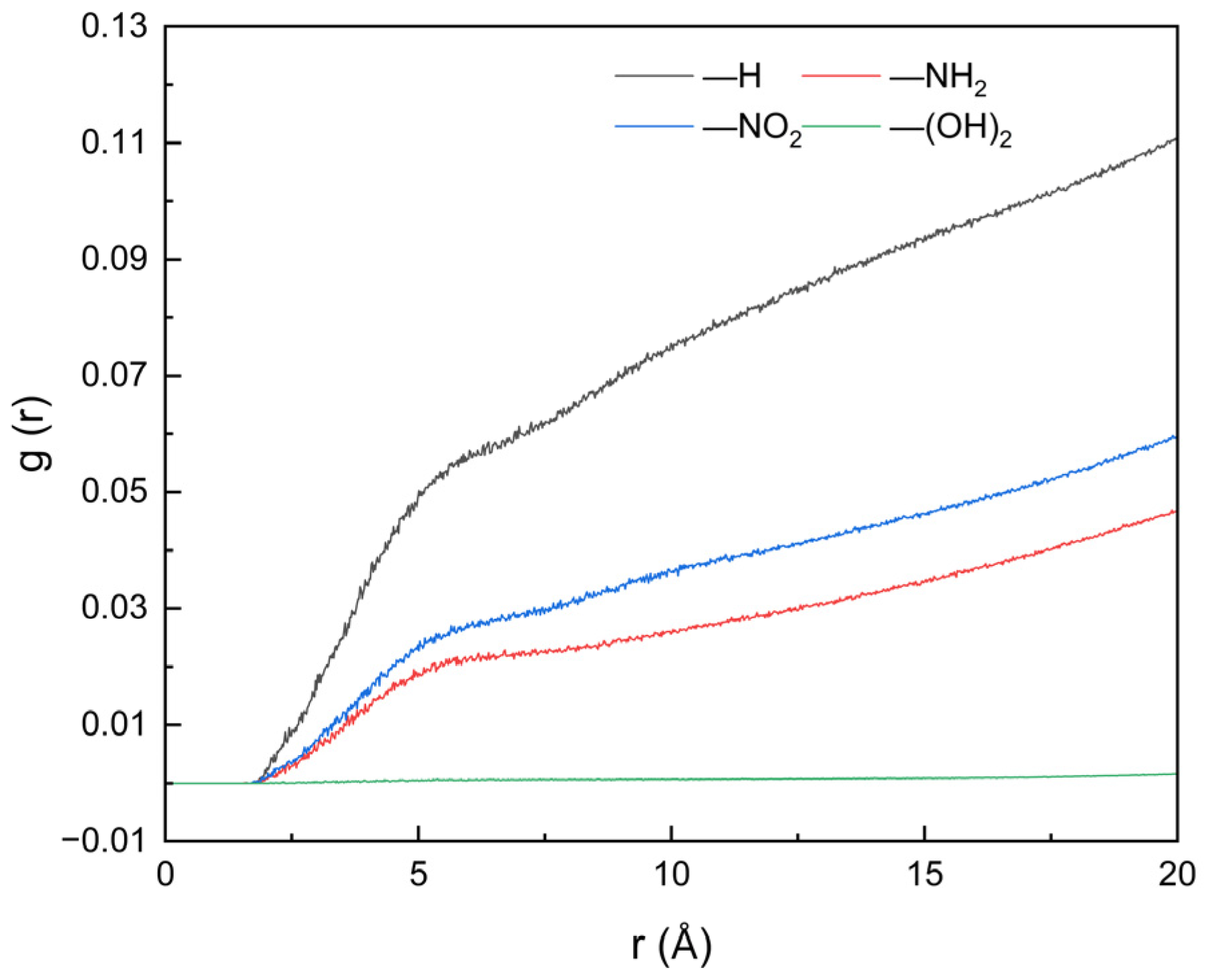
Figure 6 shows the radial distribution function between waste oil and ethanol. The interaction between waste oil and ethanol is nearly negligible, with no significant hydrogen bonding observed. This is primarily due to the structure of the three-layer interface model, where the metal–organic framework is situated between the ethanol and oil models, preventing direct contact and interaction between ethanol and oil molecules across the framework. This result indirectly reflects the overall diffusion strength of waste oil and ethanol in the different UiO-66-X systems, which follows the order UiO-66 > UiO-66-NO2 > UiO-66-NH2 > UiO-66-(OH)2.
Figure 7 presents the radial distribution function between ethanol and UiO-66-X. A pronounced peak near 2.3 Å indicates the presence of hydrogen bonding interactions, which is consistent with the behavior observed between waste oil and UiO-66-X. The intrinsic strength of hydrogen bonding follows the order -(OH)2 > -NH2 > -H > -NO2. However, the actual peak intensities are influenced by the diffusivity of ethanol within each system. In the -H functionalized framework, the high diffusivity of ethanol contributes to an increased peak magnitude at 2.3 Å. Conversely, in the -NH2 system, the restricted diffusion of ethanol results in a reduced peak height, despite the relatively strong hydrogen bonding capability of the -NH2 group. Beyond 5 Å, the RDF curves exhibit more pronounced features compared to those between waste oil and UiO-66-X, suggesting a greater diversity and strength of interactions—such as coordination and longer-range electrostatic forces—between ethanol and the functionalized frameworks. At distances greater than 10 Å, the loss of structural order indicates the decay of correlated interactions [32,33].
Overall, the molecular interactions between ethanol and UiO-66-X are primarily dominated by hydrogen bonding.

2.4. Adsorption Isotherm

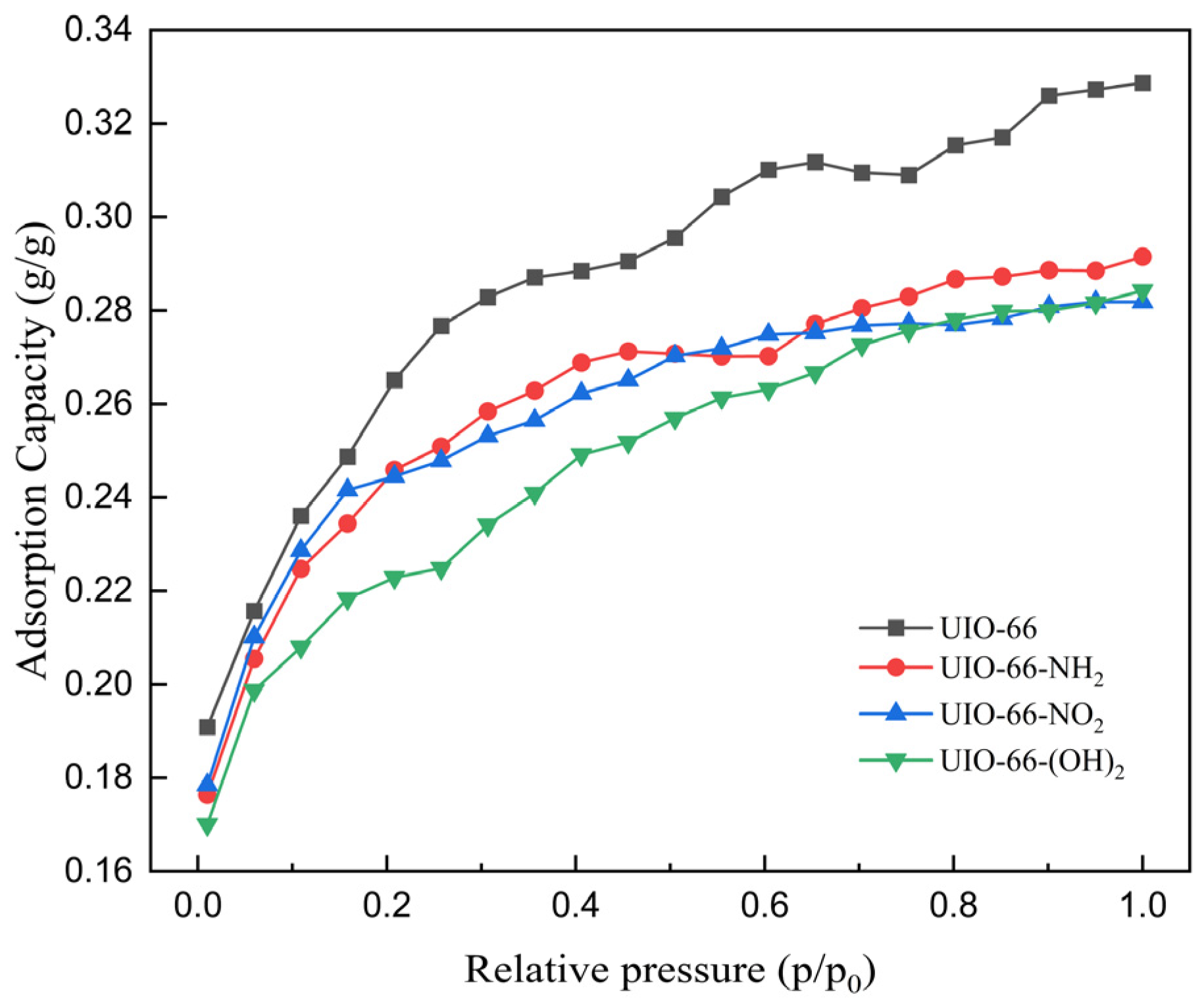
The calculated adsorption isotherms of ethanol on UiO-66-X at 50 °C are presented in Figure 8. Simulation results indicate that both the pristine UiO-66 and functionalized UiO-66-X materials exhibit typical type I adsorption behavior, characterized by a sharp increase in adsorption at low pressure and a more gradual uptake at higher pressures. The functionalized UiO-66-X materials show lower ethanol adsorption capacities compared to the parent UiO-66. Although the inherent hydrogen bonding capability of the functional groups with ethanol follows the order: -OH > -NH2 > -NO2, this trend is not reflected in the observed adsorption capacities. The adsorption isotherms reveal that the non-functionalized framework possesses the highest adsorption capacity, exceeding that of all functionalized variants. Furthermore, UiO-66-NH2 exhibits a higher adsorption capacity than UiO-66-(OH)2. This phenomenon indicates that for ethanol adsorption within UiO-66, the influence of pore size alteration—induced by functionalization—exerts a greater impact than the strength of hydrogen bonding interactions. The introduction of functional groups reduces the effective pore size and available volume, leading to the observed trend where the di-functional -(OH)2 group results in lower adsorption than the mono-functional -NH2, which in turn is lower than the non-functionalized parent framework [34].
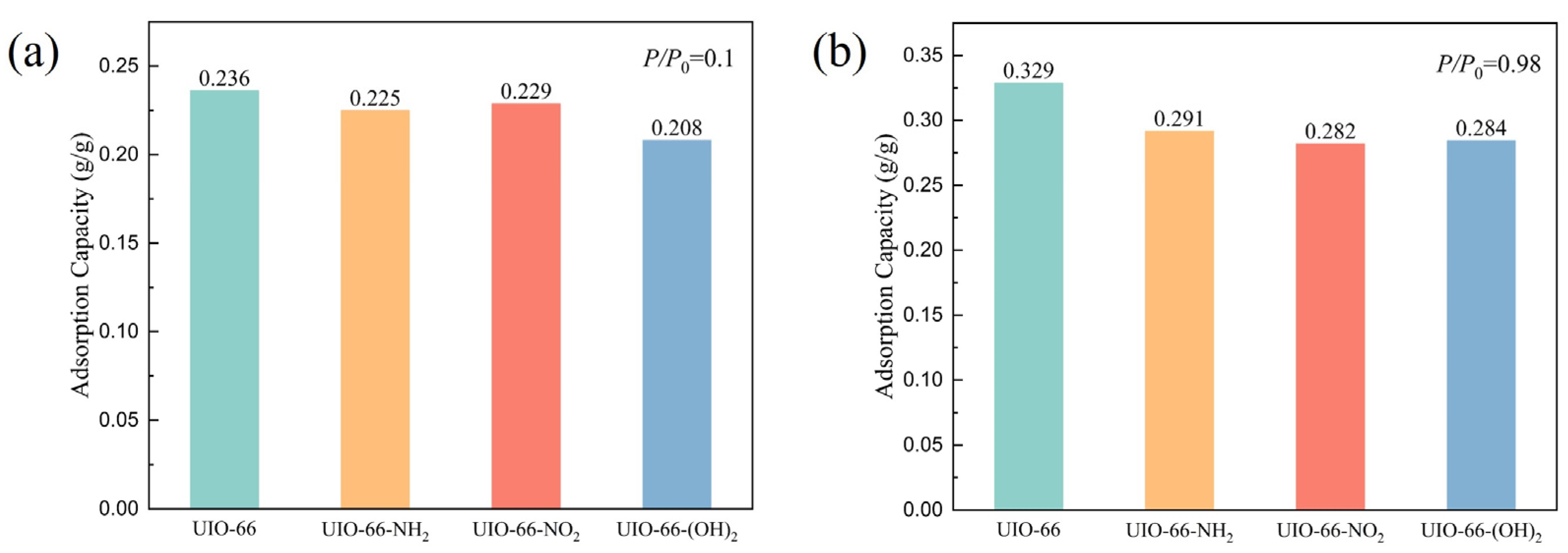
Figure 9a,b show the ethanol uptake capacities at relative pressures of 0.1 and 0.98, respectively. Regardless of pressure conditions (low or high), UiO-66 exhibits the highest adsorption capacity, which can be attributed to its high porosity in the absence of functionalization, enabling the accommodation of a greater number of ethanol molecules.
At a relative pressure of 0.1, UiO-66-NO2 exhibits a higher adsorption capacity compared to UiO-66-NH2 and UiO-66-(OH)2. However, at a relative pressure of 0.98, its adsorption capacity becomes lower than that of UiO-66-NH2 and UiO-66-(OH)2. This indicates that UiO-66-NO2 possesses a stronger adsorption affinity at low pressures, likely due to the high electronegativity of the -NO2 group, which can interact with the methyl group of ethanol molecules, enabling more efficient adsorption under low-pressure conditions. At high pressures, however, the increase in adsorption capacity for UiO-66-NO2 is less pronounced compared to UiO-66-NH2 and UiO-66-(OH)2. This may be attributed to the fact that as pressure rises, hydrogen bonding interactions between the functional groups and ethanol become more dominant. In contrast, the -NO2 group primarily relies on weaker van der Waals forces for additional adsorption, resulting in its lower overall uptake at high relative pressures compared to the more hydrogen bond-capable functionalized frameworks [35,36,37].

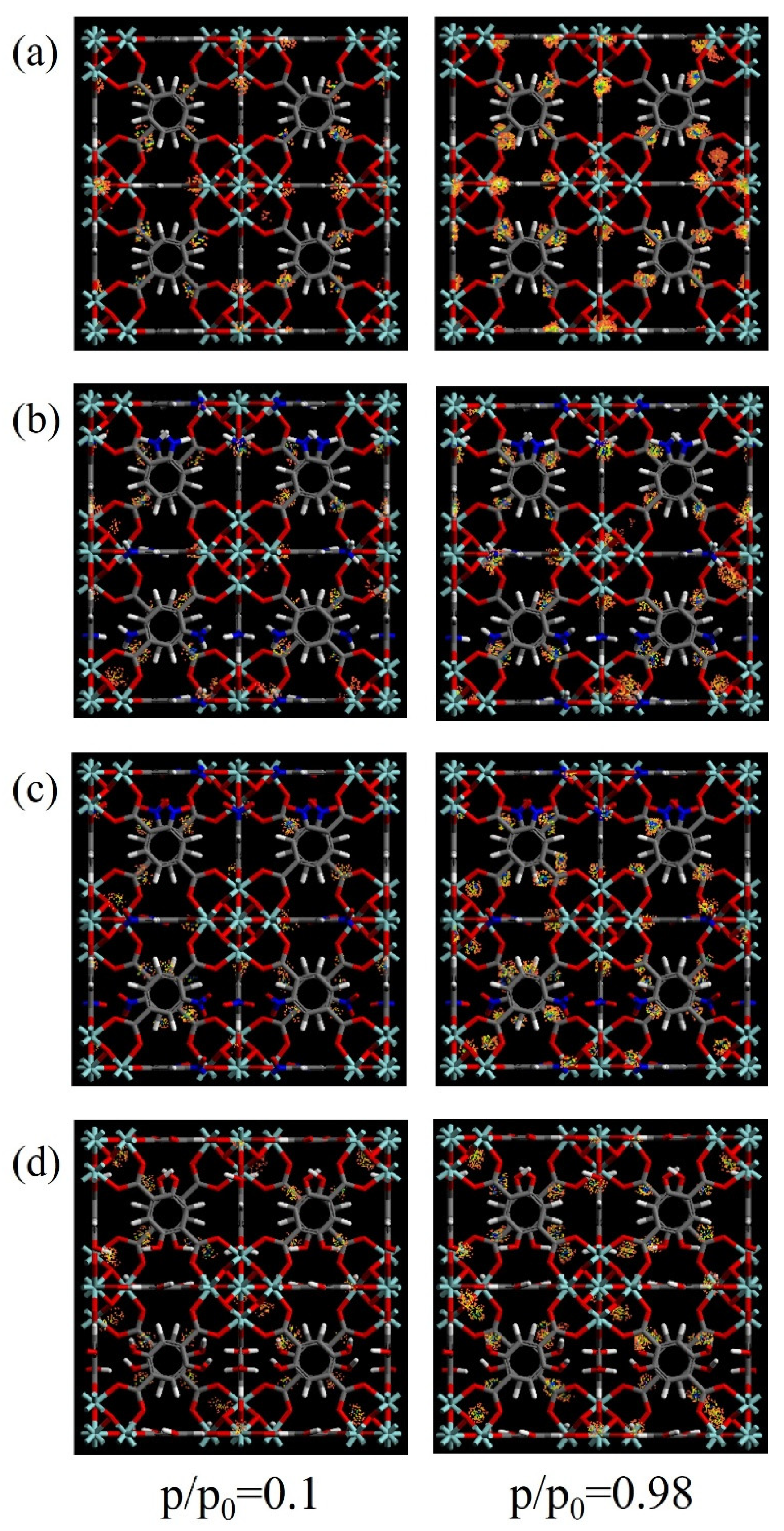
2.5. Adsorption Density Distribution

Figure 10 presents the ethanol adsorption density distribution in UiO-66-X at relative pressures of 0.1 and 0.98. The results indicate that the density of ethanol increases with rising pressure, consistent with the adsorption capacities derived from the adsorption isotherms. At high pressure, the ethanol density within UiO-66 reaches its maximum. Under low-pressure conditions, ethanol molecules preferentially occupy the smaller tetrahedral cages, primarily clustering around the Zr6 clusters. This behavior can be attributed to the coordination interaction between the Lewis acidic Zr4+ sites in the Zr6O4 clusters and the oxygen atoms of ethanol, forming strong adsorption sites. The strong electron-withdrawing effect of the -NO2 group enhances the Lewis acidity of Zr4+, thereby improving the ethanol capture ability of the zirconium clusters. As a result, the adsorption density of UiO-66-NO2 is slightly higher than that of UiO-66-NH2 and UiO-66-(OH)2 under low-pressure conditions.
At high pressure, a larger number of ethanol molecules are adsorbed within UiO-66. Due to the limited availability of zirconium cluster sites, once these sites are saturated, ethanol molecules are forced to diffuse toward the organic ligand regions of the tetrahedral cages. Consequently, these molecules accumulate around the organic linkers within the cages.

2.6. Adsorption Energy

The surface adsorption energy reflects the strength of interaction between two substances and serves as an indicator for evaluating the stability of multiple systems [38]. A more negative value of the interaction energy corresponds to a lower adsorption energy, indicating a more stable adsorption state. The calculation formula is as follows:
E = E A B E A E B
where E represents the interaction energy of the system; E A B denotes the total energy of the system after substance A is adsorbed onto substance B; E A is the energy of substance A alone; E B is the energy of substance B alone.
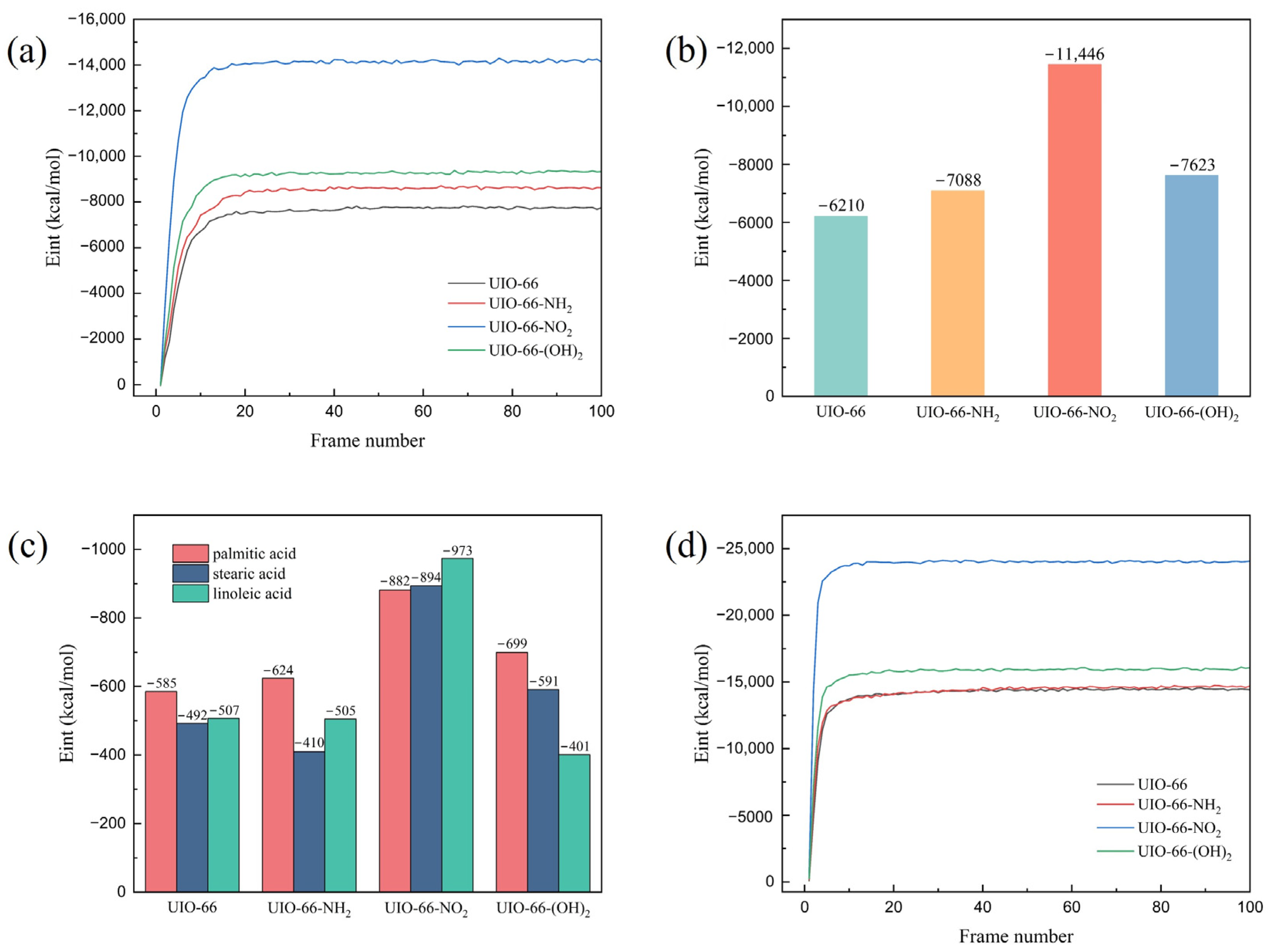
This study computationally investigated the adsorption energies of waste oil on the (002) facet of UiO-66-X. The (002) facet was selected primarily to amplify the influence of functional groups and enhance their interaction with adsorbates. As shown in Figure 11a, the calculated adsorption energies are negative, indicating that the adsorption process is exothermic and spontaneous. The adsorption capability follows the order UiO-66-NO2 > UiO-66-(OH)2 > UiO-66-NH2 > UiO-66. The distinct advantage of the -NO2 functionalized material arises from its strong dipole–ion interactions. The high electronegativity of -NO2 attracts the proton (H+) of the carboxylic acid group, forming an R–COO+H–NO2 ion pair. Furthermore, -NO2 acts synergistically with the zirconium cluster to enhance the Lewis acidity of Zr6O4, facilitating bidentate coordination with the oxygen atoms of the carboxyl group.
The -(OH)2 group can form a dual hydrogen bonding network with the carboxylic group, with each hydroxyl group capable of capturing one fatty acid molecule. However, since hydrogen bonding is weaker than ionic interactions, its adsorption energy is lower than that of the -NO2 modified material. The -NH2 group may undergo partial protonation, yet the resulting ionic interaction remains relatively weak. The weakest adsorption observed for the pristine UiO-66 is likely due to its reliance solely on van der Waals forces and the absence of strong polar adsorption sites.
Figure 11b,c present a comparison of the adsorption energies of different functionalized UiO-66 (002) surfaces for various components in waste oil. The adsorption energy trends are consistent with those observed earlier, with the UiO-66-NO2 surface exhibiting the highest adsorption energy for all oil components. Since oleic acid constitutes the major fraction of the waste oil, its adsorption energy is significantly higher than that of other components. Thus, the strength of adsorption toward oleic acid ultimately determines the overall adsorption performance for waste oil. The superior adsorption capability of UiO-66-NO2 can be attributed to its strong electron-withdrawing effect, which maximizes electrostatic attraction while preserving the accessibility of Zr active sites. In contrast, the -(OH)2 functionalized surface relies on hydrogen bonding but is limited by its hydrophilic nature and steric hindrance. The -NH2 functionalized surface exhibits reduced adsorption capacity due to partial self-inhibition caused by coordination with metal sites. The unfunctionalized UiO-66 demonstrates the weakest adsorption, as it lacks specific strong interactions with the adsorbates.
Figure 11c compares the adsorption energies of stearic acid, palmitic acid, and linoleic acid on various functionalized UiO-66 surfaces. In the adsorption of stearic acid, the order of adsorption strength shows that the pristine UiO-66 surpasses UiO-66-NH2. Stearic acid is more hydrophobic than oleic acid, leading to a greater contribution from van der Waals interactions. The pure benzene ring framework of pristine UiO-66 provides an optimal hydrophobic environment, efficiently accommodating long alkyl chains. In contrast, the strongly hydrophilic nature of the -NH2 group disrupts this environment, making the hydrophobic pores of the unmodified MOF unexpectedly advantageous. The excessive hydrophilicity of the amino functional group becomes particularly detrimental for long-chain molecules, resulting in its lowest performance. This indicates that hydrophobicity of the material becomes a critical competing factor when the alkyl chain length of the adsorbate increases. For the adsorption of linoleic acid, the order of adsorption strength changes significantly. The core mechanism lies in the interplay among spatial compatibility, electronic interactions, and competition for a hydrophobic environment between linoleic acid’s unique molecular structure (long chain + two non-conjugated double bonds) and the functional groups. Compared to oleic or stearic acid, the bent configuration and higher hydrophobicity of linoleic acid lead to distinct adsorption behavior. The key insight is that the demand for a hydrophobic environment far exceeds that for polar interactions, and molecular conformation compatibility emerges as a decisive factor: -NO2 remains the optimal functional group due to its balanced polarity and hydrophobic compatibility; pristine UiO-66 outperforms all heteroatom-functionalized materials owing to its purely hydrophobic pores and high conformational adaptability; -NH2 slightly surpasses -(OH)2 due to its relatively weaker hydrophilic repulsion and greater spatial flexibility; -(OH)2 forms a “hydrophilic trap”, leading to a triple conflict (electronic repulsion + steric hindrance + hydrophilic interface) with the hydrophobic regions and bent structure of linoleic acid, unexpectedly resulting in the lowest adsorption energy.
Therefore, for the adsorption of polyunsaturated fatty acids, priority should be given to ensuring compatibility between the hydrophobic pores and the bent molecular configuration. Strong polar functional groups, especially dihydroxy groups, may prove counterproductive.
Figure 11d presents a comparison of the adsorption energies of ethanol on functionalized UiO-66 materials. The order of ethanol adsorption capacity is determined as UiO-66-NO2 > UiO-66-(OH)2 > UiO-66-NH2 ≈ UiO-66. The underlying mechanism stems from differences in the strength of polar interactions and hydrogen bonding network formation capability between the functional groups and the hydroxyl group (-OH) of ethanol. As a small polar molecule, ethanol exhibits adsorption behavior fundamentally distinct from that of long-chain fatty acids: hydrophobic effects contribute minimally, while hydrogen bonding, dipole interactions, and metal coordination play dominant roles. The variation in ethanol adsorption capacity arises from a hierarchy in the effectiveness of strong polar interaction sites: The dominant advantage of -NO2 lies in its ability to simultaneously provide enhanced Lewis acidic sites (via electron withdrawal) and serve as a hydrogen bond acceptor (O=N), enabling synergistic adsorption. -(OH)2 specializes in hydrogen bonding, relying on an extensive hydrogen bond network, but its lack of direct metal site enhancement imposes a clear performance ceiling. Both -NH2 and the non-functionalized framework share common weaknesses: The -NH2 group consumes metal coordination sites while offering inefficient hydrogen bonding, creating an interaction “vacuum”. The pristine UiO-66 relies solely on unenhanced metal sites and lacks hydrogen bonding capability, resulting in weak single-site adsorption.
This adsorption order reveals a core principle for MOF functionalization: For small polar adsorbates like ethanol, priority should be given to constructing a synergistic “metal site–polar functional group” dual-functional system. Optimal strategy (-NO2): Strong electron-withdrawing groups activate metal sites while providing hydrogen bond acceptors (nitro oxygen). Suboptimal strategy (-OH): captures molecules via a hydrogen bond network but must avoid excessive occupation of metal sites. Ineffective strategy (-NH2): Basic functional groups readily coordinate with metal nodes, leading to self-inhibition of activity. Baseline strategy (no functional group): This relies solely on unenhanced metal sites, exhibiting limited performance.
These results emphasize the importance of tailoring functional group selection to the specific properties of the adsorbate—such as the strong polarity and hydrogen bonding capability of ethanol—where the nitro group demonstrates an irreplaceable dual-functional advantage.

3. Structural Models and Simulation Methods

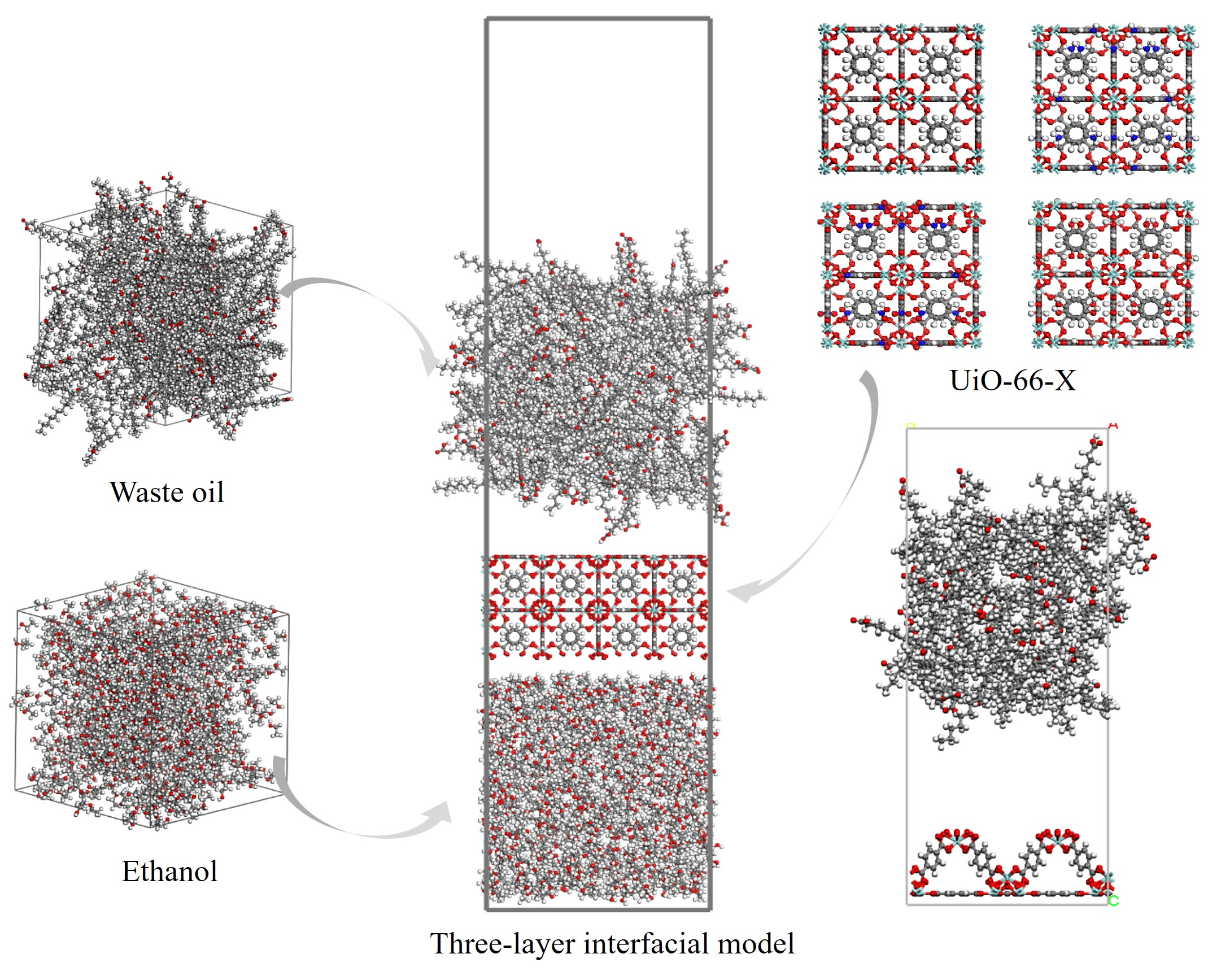
The present study involves the construction of three primary molecular models: the functionalized UiO-66-X framework, ethanol, and waste oil systems. Based on these foundational models, a comprehensive three-layer interface model and cross-sectional analysis model were subsequently developed to investigate the adsorption behavior.
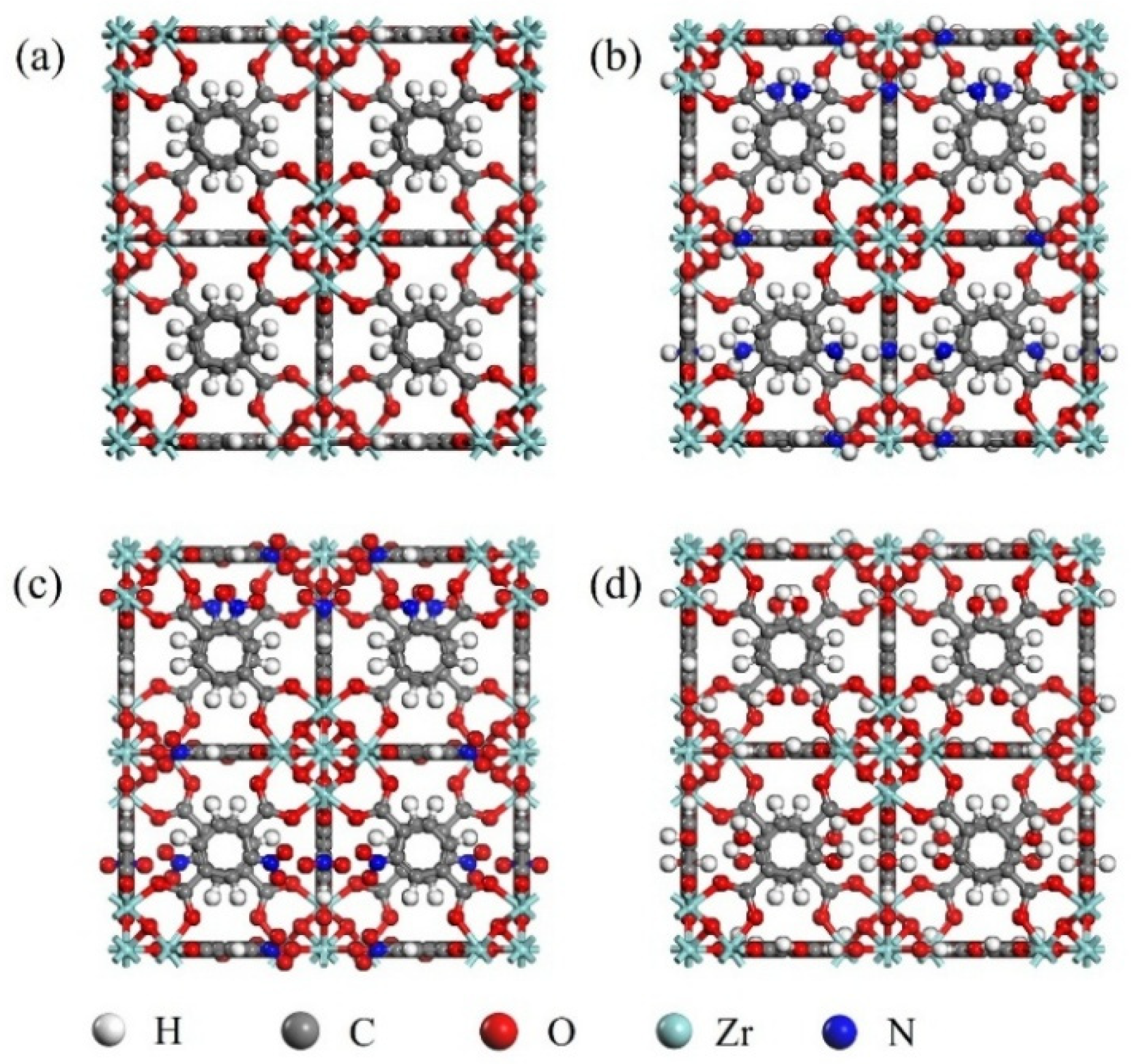
The pristine UiO-66 crystal structure (Figure 12a) was retrieved from the Cambridge Crystallographic Data Centre. Structural optimization was performed in Materials Studio’s Forcite module using the Universal force field, wherein only the introduced functional groups (-OH, -NH2, -NO2) were allowed to relax while maintaining the fixed positions of the original framework atoms [39]. The UiO-66 architecture forms through coordination between zirconium-based metal clusters (Zr6O4(OH)4) and terephthalic acid ligands, where benzene rings bridge adjacent clusters. The structural distinction between functionalized UiO-66 and pristine UiO-66 lies in the nature of the functional groups appended to the benzene rings of the organic linkers. Thus, the functionalization process involved systematically replacing hydrogen atoms on the terephthalic acid linker with designated functional groups X through the Sketch module [40], yielding stable low-energy configurations for subsequent simulations.
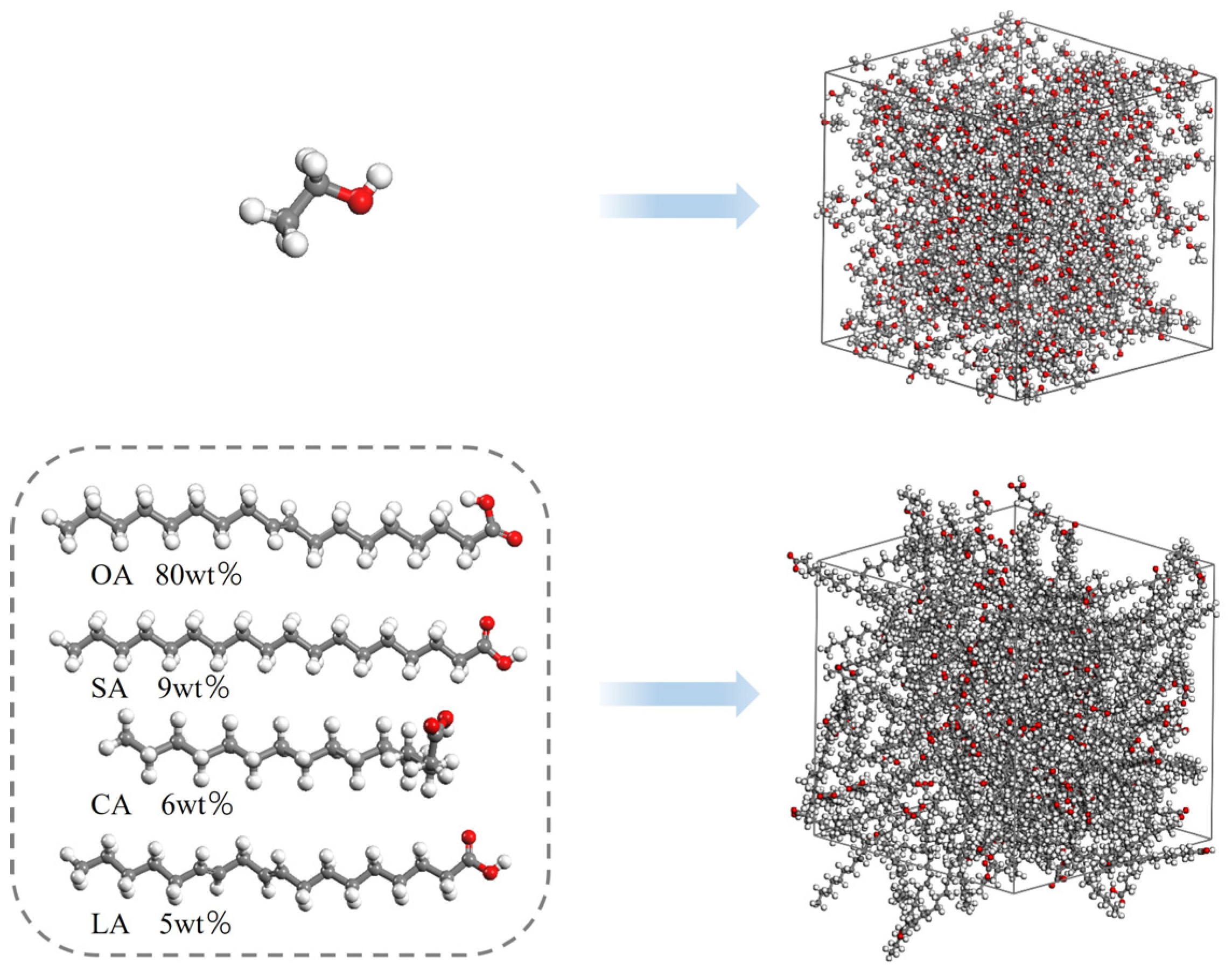
The molecular structures of waste oil and ethanol (Figure 13) were optimized using the COMPASS III force field within the Forcite module [41,42]. Cubic models with side lengths of 30 Å and 40 Å were constructed using the Amorphous Cell tool, corresponding to the surface model of UiO-66-X and a 2 × 2 × 1 supercell model of UiO-66-X, respectively. These models were energy-minimized to ensure stability for subsequent simulations. The waste oil composition was carefully parameterized according to experimental GC-MS data (Figure S1) from our previous studies, maintaining realistic component distributions. A three-layer interfacial model (Figure S2) was constructed for subsequent molecular dynamics simulations.
The sorption module was utilized to study the intracrystalline adsorption of ethanol by UiO-66-X. Sorption simulations were performed using a 2 × 2 × 1 supercell to minimize finite-size effects and reduce computational error. Throughout the simulation, the UiO-66-X framework was treated as rigid. Given the low-pressure conditions, the fugacity was approximately equal to the pressure. The fugacity range was set from 0 to the saturated vapor pressure of ethanol at 323 K.
The (002) surface of UiO-66-X (Figure S3) was cleaved and used to construct bilayer models with the waste oil and ethanol amorphous cells. During MD simulations, the cleaved surface was fixed and considered rigid to evaluate adsorption interactions [43,44]. The Figure S4 shows the molecular dynamics simulation process of UIO-66 (002) adsorbing waste oil.
The parameter settings are shown in Table 1. The COMPASS force field is the first molecular force field to unify the force fields for organic and inorganic molecular systems. It was developed by employing quantum mechanical ab initio calculations to determine intramolecular bond parameters, while utilizing empirical methods based on liquid-phase molecular dynamics to measure van der Waals potential energy parameters. This approach, which considers both experimental references and liquid density as parameterization standards, results in a more accurate force field for condensed phases. The COMPASS force field is capable of simulating organic and inorganic small molecules, polymers, metal ions, metal oxides, and metal halides. For the simulation content of this article, the COMPASS III force field can provide realistic charge distribution for Zr in zirconium clusters. The canonical ensemble (NVT) maintains constant particle number (N), volume (V), and temperature (T), and is commonly used to study system behavior under constant temperature conditions.

4. Conclusions

This study investigates the influence mechanisms of functionalized UiO-66 materials on the pre-reaction stages of adsorption and mass transport in transesterification reactions through multi-scale microscopic simulations. The main findings are as follows:
(1) In the three-layer interface model, the diffusion capability follows the order: UiO-66-X > ethanol > oil. UiO-66-X exhibits the strongest diffusivity, This may be attributed to inherent framework vibrations under the non-rigid framework setting. Functionalization modifications universally inhibit the diffusion of both ethanol and waste oil: the restricted diffusion of ethanol mainly originates from strong hydrogen bonding with the functional groups, while the reduced diffusion of waste oil is attributed to functional group-induced pore narrowing and steric hindrance, preventing large molecules such as oleic acid from penetrating the metal–organic framework. The non-rigid structure of MOFs can lead to dynamic fluctuations in pore size, which may significantly influence the diffusion behavior of both ethanol and waste oil. Within the three-phase interface, the diffusivities of these three components mutually influence and constrain each other, creating a complex interplay that governs overall mass transport phenomena.
(2) Within the three-layer interface model, the adsorption mechanisms are characterized as follows: the adsorption of waste oil by UiO-66-X relies primarily on coordination and hydrophobic interactions, whereas the adsorption of ethanol depends mainly on hydrogen bonding.
(3) The intracrystalline adsorption of ethanol in UiO-66-X does not correlate with the hydrogen bonding capability of the functional groups. The non-functionalized framework exhibits higher adsorption capacity than the mono-functionalized materials, which in turn outperform the di-functionalized variant. This indicates that the influence of pore size alteration outweighs that of hydrogen bond strength on ethanol adsorption within UiO-66.
(4) Based on adsorption energy comparisons of waste oil, its components, and ethanol on the UiO-66-X (002) surface, the adsorption of polyunsaturated fatty acids requires priority assurance of compatibility between the hydrophobic pore channels and the bent molecular configuration. For ethanol adsorption, hydrogen bonding and dipole interactions play dominant roles. The functionalization-induced enhanced adsorption and diffusion suppression create a competitive effect: strong adsorption (e.g., -NO2) benefits reactant enrichment, but may cause pore blockage and mass transfer limitations. Therefore, a balance between adsorption and diffusion can be achieved by optimizing functional group density or increasing MOF pore size. The optimal catalyst should simultaneously possess high adsorption capacity and rapid mass transfer, avoiding reduced utilization efficiency of active sites due to excessive adsorption enhancement.

Supplementary Materials

The following supporting information can be downloaded at: https://www.mdpi.com/article/10.3390/catal16040351/s1, Figure S1: GC-MS Chromatogram of Waste Oil; Figure S2: Three-layer interfacial model; Figure S3: UIO-66-X(002) (a) UIO-66; (b) UIO-66-NH2; (c) UIO-66-NO2; (d) UIO-66-(OH)2; Figure S4: UIO-66 (002) adsorption process.

Author Contributions

D.W.: Simulation, data analysis and writing the manuscript. J.W.: Data. X.H.: Supervision. All authors have read and agreed to the published version of the manuscript.

Funding

This research received no external funding.

Data Availability Statement

The data presented in this study are available on request from the corresponding author.

Conflicts of Interest

The authors declare no conflicts of interest.

References

  1. Youssef, O.; Khaled, E.; Aboelazayem, O.; Farrag, N. Glycerol-Free Biodiesel via Catalytic Interesterification: A Pathway to a NetZero Biodiesel Industry. Sustainability 2024, 16, 4994. [Google Scholar] [CrossRef]
  2. Mehedi, H.P.; Haeng, M. A comprehensive review of the evolution of biodiesel production technologies. Energy Convers. Manag. 2025, 328, 119623. [Google Scholar] [CrossRef]
  3. Asmaa, A.A.; Muhammad, A.; Abo, E.K. Advanced Biodiesel Production: Feedstocks, Technologies, Catalysts, Challenges, and Environmental Impacts. J. Environ. Chem. Eng. 2025, 13, 114966. [Google Scholar]
  4. Muhammad, A.; Sadaf, Z.; Muhammad, K.; Adeel, I.; Fayaz, H.; Hayati, Y.; Atika, Q. A review of major trends, opportunities, and technical challenges in biodiesel production from waste sources. Energy Convers. Manag. X 2024, 2, 100675. [Google Scholar]
  5. Catia, G.L.; Maria, G.P.; Vincenza, C. Importance of the properties, collection, and storage of waste cooking oils to produce high-quality biodiesel—An overview. Biomass Bioenergy 2024, 189, 107363. [Google Scholar]
  6. Christopher, S.D.; Devarajan, Y.; Raja, T.; Gautam, C.; Dinesh, B.M. Biodiesel production from shrimp shell lipids: Evaluating ZnO nanoparticles as a catalyst. Results Eng. 2024, 24, 103453. [Google Scholar] [CrossRef]
  7. Alexander, S.; Zhe, J.; Omar, M.Y. The role of metal–organic frameworks in a carbon-neutral energy cycle. Nat. Energy 2016, 1, 16034. [Google Scholar]
  8. Jiang, J.; Zhao, Y.; Omar, M.Y. Covalent Chemistry beyond Molecules. J. Am. Chem. Soc. 2016, 138, 3255–3265. [Google Scholar] [CrossRef]
  9. Christian, S.D.; Omar, M.Y. The atom, the molecule, and the covalent organic framework. Science 2017, 355, 1585. [Google Scholar] [CrossRef]
  10. Feng, X.; Himanshu, S.J.; Chidharth, K.; Karen, L.; Wang, G.; Chen, H.; Jia, C. Generating Catalytic Sites in UiO-66 through Defect Engineering. ACS Appl. Mater. Interfaces 2021, 13, 60715–60735. [Google Scholar] [CrossRef]
  11. Jaehyung, C.; Kye, S.Y.; Kim, D.; Kim, J.; Othman, M.R. Microporous Mo-UiO-66 Metal–Organic Framework Nanoparticles as Gas Adsorbents. ACS Appl. Nano Mater. 2021, 4, 4895–4901. [Google Scholar]
  12. Li, H.; Wang, T.; Chu, H.; Rokhum, S.L.; Zhang, Y.; Yu, H.; Xiao, Q.; Guo, M.; Ma, X.; Li, S. In–situ modification of UiO–66(Zr) organic ligand to synthesize highly recyclable solid acid for biodiesel production. Chem. Eng. Res. Des. 2024, 205, 713–721. [Google Scholar] [CrossRef]
  13. Lu, P.; Li, H.; Li, M.; Chen, J.; Ye, C.; Wang, H.; Qiu, T. Ionic liquid grafted NH2-UiO-66 as heterogeneous solid acid catalyst for biodiesel production. Fuel 2022, 324, 124537. [Google Scholar] [CrossRef]
  14. Omar, A.; Mawlid, H.; Abdelhady, H.; El-Deab, M.S. Recent Advances in Magnetic Nanoparticle-Based Heterogeneous Catalysts for Efficient Biodiesel Production: A Review. Energy Fuels 2024, 38, 20169–20195. [Google Scholar] [CrossRef]
  15. Ahmed, S.A.; Ebtehal, A.S.; Sun, Y.; El-Nahas, A.M.; Kashar, T.I. Solvent-Free Synthesis and Characterization of Bimetallic UiO-66(Zr/Sn) Heterogeneous Catalyst for Biodiesel Production. Ind. Eng. Chem. Res. 2023, 62, 9211–9220. [Google Scholar]
  16. Hazmi, B.; Rashid, U.; Moser, B.R.; Ghani, M.H.; Alharthi, F.A.; Han, J.; Yoo, J. Environmentally sustainable production of biodiesel from low-cost lipid feedstock using a zirconium-based metal-organic framework sulfonated solid catalyst. Green Chem. Eng. 2024, 7, 94–108. [Google Scholar] [CrossRef]
  17. Hannebauer, A.; Rohloff, E.; Schneider, A.M.; Schaate, A. Adsorption of Volatile Organic Compounds in Functionalized UiO-66: Insights from Experiment and Simulation. J. Phys. Chem. C 2025, 129, 10321–10328. [Google Scholar] [CrossRef]
  18. Ali, R.G.; Ali, R.S.N.; Mehrdad, F. Separation of arsenic from aqueous solutions via continuous adsorption in a packed-bed column utilizing an UiO-66@mesoporous carbon nitride/granular activated carbon composite. Mater. Sci. Eng. B 2026, 329, 119406. [Google Scholar]
  19. Deyko, G.S.; Vergun, V.V.; Kravtsov, L.A.; Glukhov, L.M.; Chernyshev, V.V.; Kapustin, G.I.; Nissenbaum, V.D.; Sinyashin, O.G.; Kustov, L.M. Effect of the metal center on selective adsorption of methane, ethane, and carbon dioxide on Hf, Zr, and Ce-based UiO-66 and MOF-808 frameworks. Microporous Mesoporous Mater. 2026, 407, 114118. [Google Scholar] [CrossRef]
  20. Wang, Y.; Yang, Z.; Wu, X.; Quan, W.; Chen, Q.; Wang, A. UiO-66 with Both Brønsted and Lewis Acid Sites for Catalytic Synthesis of Biodiesel. Molecules 2024, 29, 4195. [Google Scholar] [CrossRef]
  21. Macheli, L.; Leteba, G.M.; George, S.L.; Lang, C.I.; Jewell, L.L. Enhancing waste eggshell-derived CaO catalysts for biodiesel production through synergistic oxide modification: A comprehensive catalytic and kinetic study. RSC Adv. 2026, 16, 5990–6001. [Google Scholar] [CrossRef]
  22. Zhao, H.; Xie, W.; Li, H. Hierarchical micro-meso-macroporous xAIL@HP UIO-66-NH2 catalysts used for efficient biodiesel production from low-grade acidic oils. Chem. Eng. Res. Des. 2025, 213, 11–24. [Google Scholar] [CrossRef]
  23. Amira, K.F.S.; Liu, X.; Yuan, Y.; Kong, Y.; Fu, J.; Sun, Y. Enhancement on the catalytic performance of UiO-66(Zr) by solvent-free sulfurization for biodiesel production. Fuel 2026, 411, 138090. [Google Scholar]
  24. Ozcakir, G. Efficiency of Sulfonated UiO-66 on Biodiesel Production from Oleic Acid: An Optimization Study with ANCOVA. Eng. Proc. 2023, 56, 10. [Google Scholar]
  25. Gouda, S.P.; Shi, D.; Basumatary, S.; Li, H.; Ramón, P.R.; Rokhum, S.L. Sulfamic acid modified UiO-66 metal-organic framework for biodiesel production: Process optimization using response surface methodology, kinetics, and thermodynamic study. Chem. Eng. J. 2024, 480, 148154. [Google Scholar] [CrossRef]
  26. Wang, Y.; Luo, Y.; She, X.; Wang, L. Thermochemical adsorption heat storage performance of functionalized UiO-66: Molecular simulation method. Appl. Therm. Eng. 2024, 254, 123856. [Google Scholar] [CrossRef]
  27. Han, B.; Chakraborty, A. Highly efficient adsorption desalination employing protonated-amino-functionalized MOFs. Desalination 2022, 541, 116045. [Google Scholar] [CrossRef]
  28. Liu, Z.; Ma, C.; Zhang, J.; Sun, H.; Wang, L.; Wang, Y.; Mu, S.; Wang, N. High mechanical strength superhydrophobic colored sand prepared by a low-temperature strategy. J. Mater. Sci. Technol. 2024, 194, 203–215. [Google Scholar] [CrossRef]
  29. Xiong, W.; Zhao, X.; Luan, Y.; Wang, R.; Wu, S. Effect of the natural antioxidant ferulic acid and its ester derivatives on the oxidative stability of ester-based lubricants: Experimental and molecular simulation investigations. Thermochim. Acta 2023, 723, 179474. [Google Scholar] [CrossRef]
  30. Fu, Z.; Jia, B.; Li, H.; Wang, Y. Investigation of Methane Adsorption and Diffusion Behavior in Hydrogen Sulfide-Containing Coal Seams. Langmuir 2024, 40, 25509–25517. [Google Scholar] [CrossRef]
  31. Zhang, C.; Zhai, Y. Research on the Microscopic Adsorption Characteristics of Methane by Coals with Different Pore Sizes Based on Monte Carlo Simulation. Appl. Sci. 2025, 15, 2349. [Google Scholar] [CrossRef]
  32. Hu, M.; Sun, D.; Hofko, B.; Sun, Y.; Mirwald, J.; Xu, L. Multiscale optimization on polymer-based rejuvenators for the efficient recycling of aged high-viscosity modified asphalt: Molecular dynamics simulation experimental analysis. J. Clean. Prod. 2024, 449, 141736. [Google Scholar] [CrossRef]
  33. Hu, Y.; Zhai, D.; Liang, P.; Zheng, Z.; Wang, Z.; Jiang, C.; Guo, Y.; Chen, H.; Shen, C.; Wu, Y. Exploration of formation and in vitro release mechanism of supramolecular self-assembled Licochalcone A eutectogel for food application. Food Chem. 2024, 454, 139788. [Google Scholar] [CrossRef]
  34. Gore, P.M.; Khurana, L.; Siddique, S. Ion-imprinted electrospun nanofibers of chitosan/1-butyl-3-methylimidazolium tetrafluoroborate for the dynamic expulsion of thorium (IV) ions from mimicked effluents. Environ. Sci. Pollut. Res. 2018, 25, 3320–3334. [Google Scholar] [CrossRef]
  35. Li, J.; Wang, Y.; Chen, Y.; Xiong, Q.; Yang, J.; Li, L.; Li, J. Round-the-clock water harvesting from dry air using a metal organic framework. Chin. J. Chem. Eng. 2022, 49, 170–177. [Google Scholar] [CrossRef]
  36. Zhang, B.; Zhu, Z.; Wang, X.; Liu, X.; Kapteijn, F. Water Adsorption in MOFs: Structures and Applications. Adv. Funct. Mater. 2024, 34, 2304788. [Google Scholar] [CrossRef]
  37. Lee, J.S.; Yoon, J.W.; Mileo, P.G.M.; Cho, K.H.; Park, J.; Kim, K.; Kim, H.; Lange, M.F.; Kapteijn, F.; Maurin, G.; et al. Porous metal-organic framework CUK-1 for adsorption heat allocation toward green applications of natural refrigerant water. ACS Appl. Mater. Interfaces 2019, 11, 25778–25789. [Google Scholar] [CrossRef] [PubMed]
  38. Hao, M.; Qiao, Z.; Zhang, H.; Wang, Y.; Li, Y. Thermodynamic Analysis of CH4/CO2/N2 Adsorption on Anthracite Coal: Investigated by Molecular Simulation. Energy Fuels 2021, 35, 4246–4257. [Google Scholar] [CrossRef]
  39. Mozhgan, P.; Kamran, A.; Smart, M. UiO-66 Metal–Organic Framework Nanoparticles with Outstanding Drug-Loading/Release Potential for the Targeted Delivery of Quercetin. Inorg. Chem. 2022, 61, 14528–14543. [Google Scholar]
  40. Iman, S.; Ali, V.; Reza, J.; Mehdi, M.M. Molecular Simulation Studies of Pharmaceutical Pollutant Removal (Rosuvastatin and Simvastatin) Using Novel Modified-MOF Nanostructures (UiO-66, UiO-66/Chitosan, and UiO-66/Oxidized Chitosan). ACS Appl. Mater. Interfaces 2024, 16, 26685–26712. [Google Scholar]
  41. Ali, S.; Ali, G.; Mohammad, M. Metal-organic frameworks as cathode electrocatalysts for Li-O2 batteries: A computational study of NiBTC and CuBTC by molecular dynamic simulation. Chem. Phys. Lett. 2025, 862, 141862. [Google Scholar]
  42. Wang, Q.; Wang, W.; Zhang, K.; Wang, Z.; Su, K. Molecular simulation of polyacrylamide types on flocculation performance in oily wastewater. Chem. Phys. Lett. 2025, 867, 142023. [Google Scholar] [CrossRef]
  43. Wang, R.; Luo, L.; Zhao, Y.; Sun, Q.; Wang, Y. Effect of chloride salt migration at interfaces on asphalt-aggregate adhesion: A molecular dynamics study. Constr. Build. Mater. 2024, 428, 136310. [Google Scholar] [CrossRef]
  44. Kang, J.K.; Kim, M.G.; Kim, S.B.; Jeong, S.; Oh, J.E. Comparative study on Perfluoro(2-methyl-3-oxahexanoic) acid removal by quaternary ammonium functionalized silica gel and granular activated carbon from batch and column experiments and molecular simulation-based interpretation. Sci. Total Environ. 2024, 926, 171753. [Google Scholar] [CrossRef] [PubMed]
Figure 1. Comparison of simulated and experimental adsorption isotherms (this study; wang [26]; Han [27]).
Catalysts 16 00351 g001
Figure 2. (a) The mean square displacement of waste oil within the UiO-66-X; (b) diffusion coefficient.
Catalysts 16 00351 g002
Figure 3. (a) The mean square displacement of UiO-66-X; (b) diffusion coefficient.
Catalysts 16 00351 g003
Figure 4. (a) The mean square displacement of ethanol within the UiO-66-X; (b) diffusion coefficient.
Catalysts 16 00351 g004
Figure 5. RDF between waste oil and UiO-66-X.
Catalysts 16 00351 g005
Figure 6. RDF between waste oil and ethanol.
Catalysts 16 00351 g006
Figure 7. RDF between ethanol and UiO-66-X.
Catalysts 16 00351 g007
Figure 8. Adsorption isotherms of the UiO-66 series.
Catalysts 16 00351 g008
Figure 9. Adsorption capacity of the UiO-66 series (a) p/p0 = 0.1; (b) p/p0 = 0.98.
Catalysts 16 00351 g009
Figure 10. Adsorption density distribution of the UiO-66 series at p/p0 = 0.1, 0.98 (a) UiO-66; (b) UiO-66-NH2; (c) UiO-66-NO2; (d) UiO-66-(OH)2.
Catalysts 16 00351 g010
Figure 11. Adsorption energies for different adsorbates on the UiO-66-X (002) surface: (a) waste oil; (b) oleic acid in waste oil; (c) other fatty acids in waste oil; (d) ethanol.
Catalysts 16 00351 g011
Figure 12. UiO-66-X structure models: (a) UiO-66; (b) UiO-66-NH2; (c) UiO-66-NO2; (d) UiO-66-(OH)2.
Catalysts 16 00351 g012
Figure 13. Ethanol and waste oil model.
Catalysts 16 00351 g013
Table 1. Molecular dynamics simulation parameter settings.
ParameterSetting
Force fieldCOMPASSIII
ElectrostaticEwald
Van der WaalsAtom based
Cutoff distance12.5 A
EnsembleNVT
ThermostatVelocity Scale
Temperature323 K
Time step1 fs
Total simulation time100 ps
Number of steps100,000
Disclaimer/Publisher’s Note: The statements, opinions and data contained in all publications are solely those of the individual author(s) and contributor(s) and not of MDPI and/or the editor(s). MDPI and/or the editor(s) disclaim responsibility for any injury to people or property resulting from any ideas, methods, instructions or products referred to in the content.