Article

Dry-Mill Synthesis of Photocatalysts Based on Layered Double Hydroxides

by
Gabriel Soares Bento
1,2,
Pablo Rodríguez-Miguel
1,
Katlin Ivon Barrios Eguiluz
3,
Iara de Fátima Gimenez
2 and
Raquel Trujillano
1,*
1
Departamento de Química Inorgánica, Facultad de Ciencias Químicas, Universidad de Salamanca, 37008 Salamanca, Spain
2
Programa de Pós-Graduação em Ciência e Engenharia de Materiais, Departamento de Ciência e Engenharia de Materiais, Universidade Federal de Sergipe, São Cristóvão 49107-230, SE, Brazil
3
Programa de Pós-Graduação em Engenharia de Processos, Universidade Tiradentes, Aracaju 49032-490, SE, Brazil
*
Author to whom correspondence should be addressed.
Catalysts 2026, 16(4), 318; https://doi.org/10.3390/catal16040318
Submission received: 3 February 2026 / Revised: 4 March 2026 / Accepted: 5 March 2026 / Published: 2 April 2026

Abstract

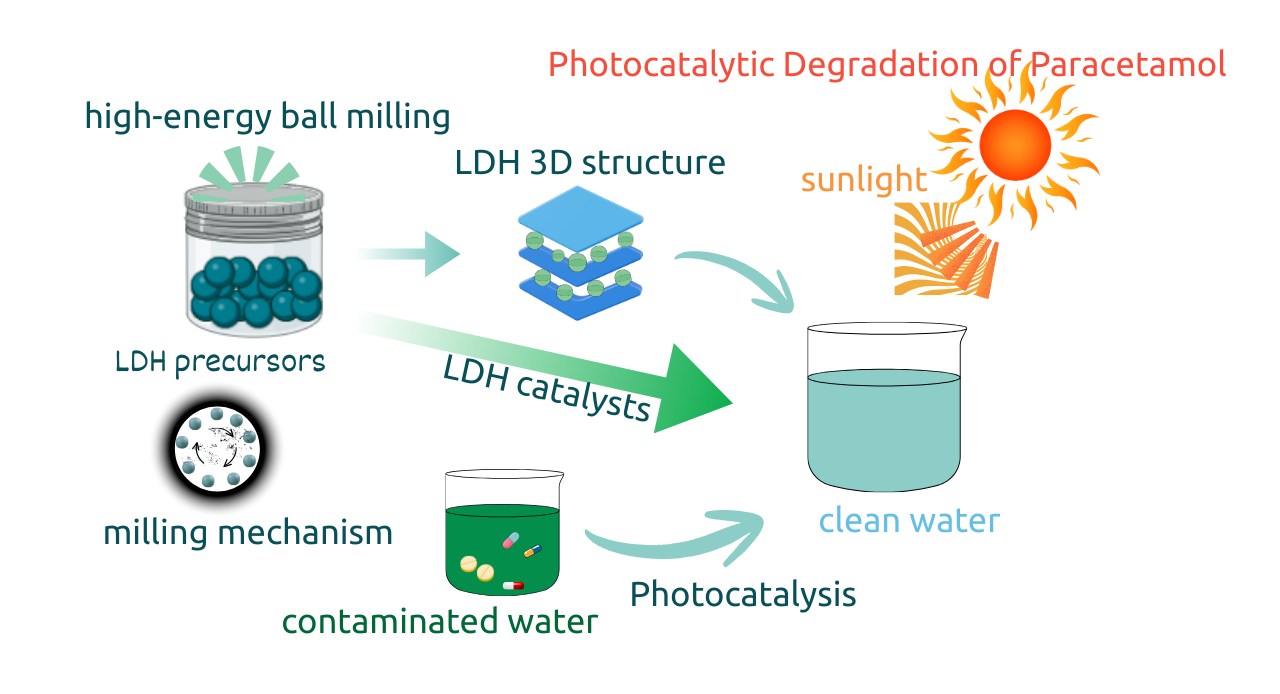
The mechanosynthesis by dry-milling and characterization of layered double hydroxides (LDH) containing Zn2+ in the layer and Cl as interlayer anion has been investigated. The solids were synthesized by mechanosynthesis, by means of a dry-milling method using a planetary mill. This kind of synthesis is totally ecological as the stoichiometric amounts of reactants have been used to obtain the original solids, so, there was no need for washing or calcination thus avoiding water or atmospheric contamination. To compare results and prove that Cl is the interlayer anion, a carbonate-LDH has been synthesized by the coprecipitation method. Original solids were calcined at 450 °C to obtain the oxides. Samples were fully characterized and used as catalysts in the paracetamol photodegradation to test the usefulness of these ecologically obtained solids as decontaminants. An assortment of techniques, such as XRD, FT-IR, TG-DTA, and N2 adsorption–desorption isotherms, has been utilized to prove the goodness of the dry-mill method applied. The X-ray diffraction data and the FT-IR and thermal results confirmed that the samples synthesized were hydrotalcites with the Cl as the interlayer anion. The paracetamol photodegradation tests indicated that the dry milling procedure enhances the reaction.

Graphical Abstract

1. Introduction

Mechanochemical synthesis has emerged as a promising route for the preparation of layered materials with unprecedented compositions, owing to its operational simplicity, reduced waste generation, and the ability to produce materials with high surface energy [1,2]. This method is based on solid-state chemical reactions induced by the application of mechanical energy to the precursor reagents. Although still under development, mechanochemical synthesis offers significant advantages, including accelerated fabrication processes, reduced water consumption during washing steps, and the elimination of pH control requirements [3,4]. In general, mechanochemical synthesis, typically driven by high-energy ball milling, represents an efficient approach to promote chemical reactions and constitutes a green and sustainable methodology for the preparation of layered materials [5].
Layered double hydroxides (LDHs) are materials analogous to natural hydrotalcite (HT), belonging to the class of anionic clays, and exhibit a two-dimensional structure described by the general formula [ M 1 x I I   M x I I I O H 2 ] x + [ A x / m m   n   H 2 O ] x , in which divalent cations M I I are partially substituted by trivalent cations M I I I . A m represents the interlayer anions with charge m , x corresponds to the molar ratio M I I I ( M I I + M I I I ) and n denotes the number of water molecules [6]. It is worth noting that the amount of water n may be located either within the interlayer space or adsorbed on the surface of the synthesized LDHs [7,8].
Two traditional strategies are commonly employed for the mechanochemical synthesis of layered double hydroxides: the one-step milling route and the two-step milling route. The two-step milling approach is generally more effective, in which the precursor materials, typically metal oxides or hydroxides, are first milled to form a highly reactive amorphous precursor. In the second step, wet milling or treatment in an aqueous solution is carried out to promote layered double hydroxide crystallization and intercalation of the desired anions [9,10]. Furthermore, the use of precursors containing molecular water in their composition to supply water molecules during layered double hydroxide formation in the second step eliminates the need for solvents and enables a fully dry high-energy ball-milling process. In this sense, mechanochemical synthesis is a green synthesis route that allows us to adjust the synthesis parameters, such as the milling time, ball to sample weight ratio, speed, etc., to obtain tailored solids with structural and textural properties previously defined [5].
Natural layered double hydroxides exhibit interlayer spaces occupied by carbonate anions and water molecules [11,12]. In contrast, mechanochemical approaches enable the manipulation of the interlayer region and its properties by varying the ratio between trivalent and divalent cations, as well as by incorporating additional metallic cations into the bimetallic matrix to obtain trimetallic or multimetallic high-entropy layered double hydroxides. Recent research reports the formation of ternary and quaternary layered double hydroxides [13,14,15,16], and strategies such as the introduction of Zn2+ for photocatalytic applications have been shown to confer enhanced catalytic properties [17]. The formation of trimetallic layered double hydroxides through the incorporation of Zn2+ via high-energy ball milling increases the number of active sites by expanding the diversity of chemically active elements within the layered double hydroxide matrix. Nevertheless, studies addressing the mechanochemical synthesis of ternary and quaternary layered double hydroxides remain scarce.
The incorporation of Zn into the layered double hydroxide matrix is particularly attractive due to the well-documented photocatalytic properties of this element. Theoretical studies indicate that the substitution of cations in the conventional layered double hydroxide framework by electrochemically active transition metals can reduce the band gap energy, thereby enhancing ultraviolet to visible light absorption [18]. While Mg2+ and Al3+ lack available d orbitals, Zn2+ possesses fully filled d orbitals; consequently, d–d electronic transitions are forbidden, and its photocatalytic activity is primarily associated with interband transitions and the electronic band structure of the material. Zhang et al. [19] demonstrated that Zn-containing layered double hydroxides, as well as the mixed oxides obtained after calcination under different conditions, exhibit significant activity in photocatalytic degradation processes in aqueous solutions. Therefore, the incorporation of Zn2+ into the MgAl layered double hydroxide matrix may combine the structural advantages of layered double hydroxides with the recognized catalytic performance of Zn, enabling the application of layered double hydroxides synthesized by dry high-energy ball milling in photocatalytic processes.
The increasing industrialization and urbanization have intensified water pollution, making the development of sustainable and environmentally friendly technologies for water treatment increasingly urgent [20]. In this context, photocatalysis has attracted considerable attention due to its ability to utilize renewable solar energy for the degradation of pollutants, particularly organic compounds [21,22]. One application of particular interest is the photocatalytic degradation of paracetamol [23,24], which highlights the need for efficient layered double hydroxides photocatalysts synthesized by dry high-energy ball milling
As mentioned by Trujillano et al. [24], paracetamol is a widely used analgesic and antipyretic drug that can reach the environment through urinary and fecal excretion. In aquatic environments, this compound may generate toxic metabolites, such as N-acetyl-p-benzoquinone imine, which exhibit potential for bioaccumulation within the food chain [25]. Studies have reported that prolonged exposure to paracetamol present in wastewater causes chronic effects on aquatic organisms, interfering with their growth and reproduction [26,27]. In addition, trace levels of this pharmaceutical have been detected in drinking water [28]. To mitigate the presence of pharmaceutical contaminants, advanced oxidation processes (AOP) have been developed and implemented in wastewater treatment plants. These processes rely on the generation of highly reactive hydroxyl radicals, which efficiently oxidize most organic molecules, ultimately converting them into carbon dioxide and water.
According to Belskaya and Likholobov [29], the advantages of layered double hydroxides in heterogeneous photocatalysis arise from their structural characteristics and the versatility of their derived mixed oxides.
The aim of this scientific work is to fine-tune the dry-milling method to obtain effective layered solids for photodegradation of contaminants. For this purpose, we have tested the mechanochemistry synthesis method by varying some parameters to obtain MgZnAl layered double hydroxides potentially useful as photocatalysts. These samples have been fully characterized and then tested in the photodegradation of paracetamol. A MgZnAl sample obtained by coprecipitation has been used as reference.

2. Results and Discussion

2.1. PXRD

2.1.1. PXRD of the Original Samples

Figure 1 shows the Powder X-ray diffractogram (PXRD) of samples obtained by dry milling together with those prepared by the coprecipitation method. The positions and relative intensities of the observed peaks in all diffractograms reveal the layered hydrotalcite-like structure of all the solids obtained. It is noteworthy that the sample prepared by co-precipitation exhibited higher peak intensities indicating greater crystallinity. Peak position and crystallographic parameters c and a are included in Table 1. Crystallographic parameters c and a have been calculated from the positions of the diffraction peaks due to planes (003) and (110), respectively, assuming a rhombohedral phase; then, c = 3 d (003) and a = 2 d (110) [30]. The values are rather similar for all samples.
The MgZnAl-CP sample showed the sharp (003) reflection corresponding to a basal spacing of 7.65 Å, which is characteristic of hydrotalcite with interlayered carbonate [31,32,33]. The basal spacing of the samples mechanochemically obtained was measured at about 8 Å which is slightly higher than the previously observed for sample MgZnAl-CP. This fact confirms that for these samples the interlayer anion is not CO32− but Cl, confirming the presence of the desired interlayer anion. These values coincide with those found by Bernard et al. [34] in their study about the stability of hydrotalcite in presence of different anions. Some peaks not belonging to the layered structure are recorded on the PXRD of sample MgZnAl-B, they are marked with an asterisk (*). To have mostly the layered phase, the milling time was augmented. The PXRD of sample MgZnAl-C confirms that the time of grinding enhances the reaction because the peaks not belonging to the hydrotalcite phase are much less intense.

2.1.2. PXRD of the Calcined Samples

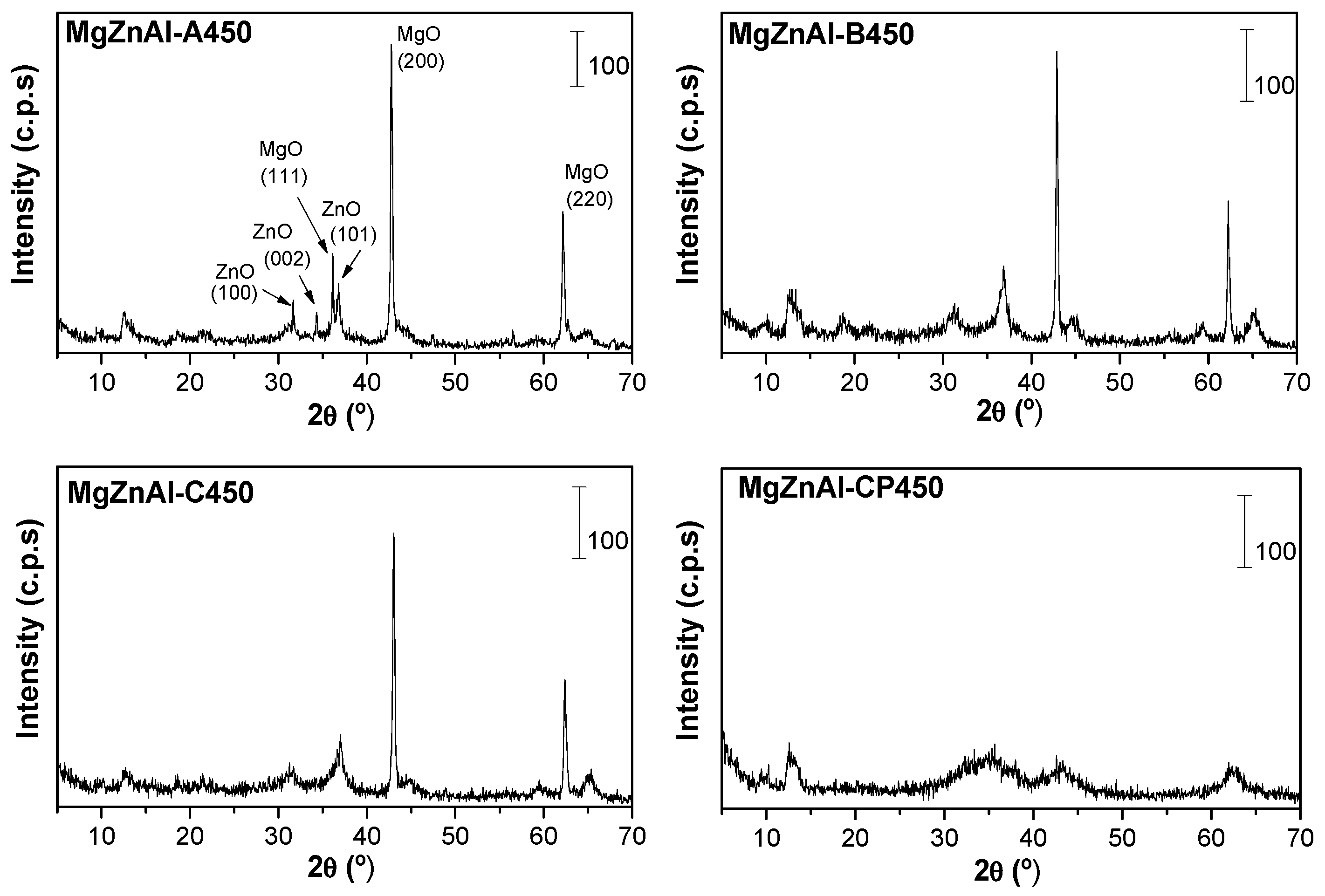
Figure 2 shows the X-ray diffraction patterns of all calcined samples with their corresponding phases marked. The positions of the intense peaks recorded coincide with those of the MgO and ZnO phases, as expected. The peaks from crystalline Al2O3 phase are not observed, remaining amorphous, and so the oxides of the divalent cations should be well dispersed on its surface. These findings are consistent with previous reports on calcined Zn-Al hydrotalcites and with studies on trimetallic Mg-Zn-Al systems [35,36,37,38].
It is noteworthy that the X-ray diffractogram of the MgZnAl-CP450 solid shows lower crystallinity and thus the diffraction peaks appear shifted compared to those of the MgZnAl-A450, MgZnAl-B450 and MgZnAl-CP450 diffractograms.

2.2. FT-IR

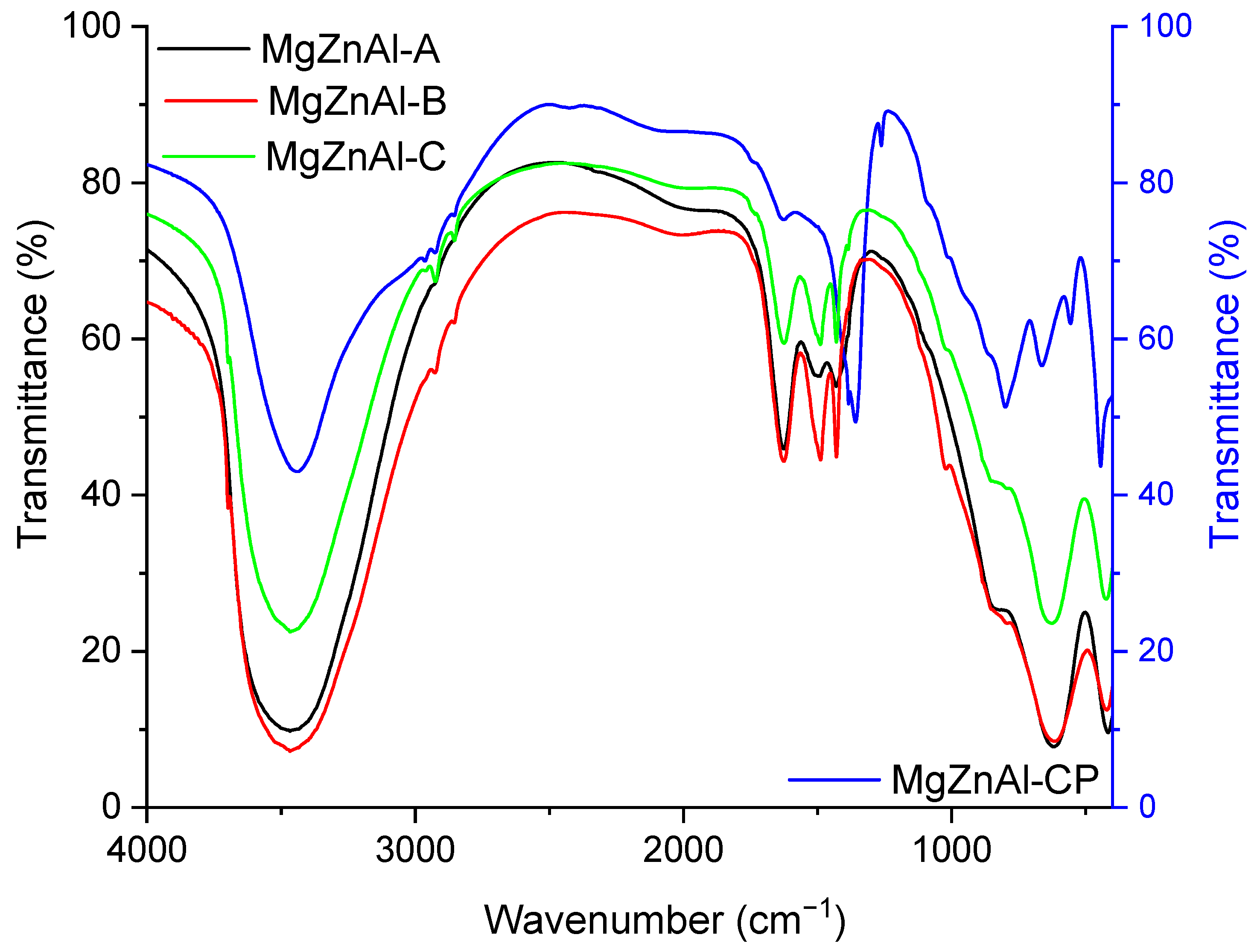
The FT-IR spectra of the original samples have been obtained mainly to ascertain the absence of undesired anions and to confirm that these solids have the typical bands of a layered compound with the hydrotalcite-like structure. Their graphics are included in Figure 3. All of them present at around 3500 cm−1 the band corresponding to the O-H stretching vibrational mode [39]. The broadness of this band is due to the presence of O-H bonds with different strengths and to hydrogen bonds between the hydroxyl groups and water molecules in the interlayer and probably adsorbed on the external surface of the crystallites.
The slight band at higher wavenumbers, around 3700 cm−1, is due to the free O-H stretching vibrational mode, indicating that perhaps an insignificant amount of the starting hydroxides remains. This band is not recorded in the Spectrum of MgZnAl-A, indicating the absence of free hydroxides and confirming a more efficient formation of the hydrotalcite phase.
Weak bands between 2900 and 2950 cm−1 are assigned to C-H stretching modes of organic vapors present in the environment, adsorbed on the spectrometer system. As the analysis chamber atmosphere is uncontrolled, differences in CO2 concentration between the background and sample spectra prevent complete cancelation of this signal, resulting in a very weak band around 2300 cm−1 [40].
The bending mode of the water molecules is recorded as a medium intensity band at 1625 cm−1 value consistent with those reported in the literature [41]. The very small peak around 1370–1400 cm−1 may be attributed to the carbonate group formed by the acid-base reaction between CO2 adsorbed on the hydroxyl surface groups due to the existence of CO2 from the atmosphere as milling was carried out under normal atmospheric conditions. The low relative intensity of this band confirms that the carbonate is not the anion that compensates for the layer charge. This fact together with the PXRD results support that the interlayer anion is the desired one, for samples MgZnAl-A, MgZnAl-B and MgZnAl-C, it is said, the Cl. This interpretation is consistent with the interlayer spacing values calculated from the X-ray diffraction patterns of these samples. Furthermore, it should be noted that Cl is a monoatomic ion and does not exhibit internal vibrational modes active in the infrared, so it does not generate characteristic bands in the FT-IR spectra [41,42,43,44]. On the other hand, sample MgZnAl-CP FT-IR spectrum shows a band centered at 1350 cm−1, which thus confirms the presence of carbonate as the interlayer anion in this sample.
In general, the bands recorded for MgZnAl-A, MgZnAl-B and MgZnAl-C are less symmetric, broader, and less well defined than those registered in the spectrum of MgZnAl-CP. This behavior is associated with a lower degree of structural ordering in both the layers and the interlayer regions, where anions and water molecules are distributed less regularly.
The presence of weak bands between 1000 and 1100 cm−1, observed in the spectra of mechanosynthesized samples, may be related to the vibrational mode of the carbonate ion that does not retain its symmetry when is in the interlayer space [45,46]. The relatively low intensity of this band confirms again the inexistence of carbonate as an interlayer anion [47].
The bands observed below 900 cm−1 correspond to the metal-oxygen, metal-oxygen-metal, and metal-oxygen-hydrogen stretching vibrational modes of the cations in the brucite-like layers [48,49]. The Al-OH stretching appears around 850 cm−1, while bands associated with Zn-OH and Mg-OH groups are observed around 420 cm−1. The positions of these bands are displaced with respect to those found in the literature for Mg-Al hydrotalcites; these shifts can be attributed to the partial incorporation of Zn2+ into the conventional Mg-Al matrix, the influence of the interlayer Cl anion on the metal-hydroxyl bond strength, and the lower crystallinity of the mechanosynthesized samples, which tends to produce broader and less defined bands. These observations support the successful incorporation of Zn2+ into the hydrotalcite structure and the presence of Cl as the interlayer anion [32].

2.3. Thermal Analysis, TG-DTA

Thermal Analysis of Samples LDH-Cl Obtained by Mechanosynthesis and LDH-CO3 by Coprecipitation

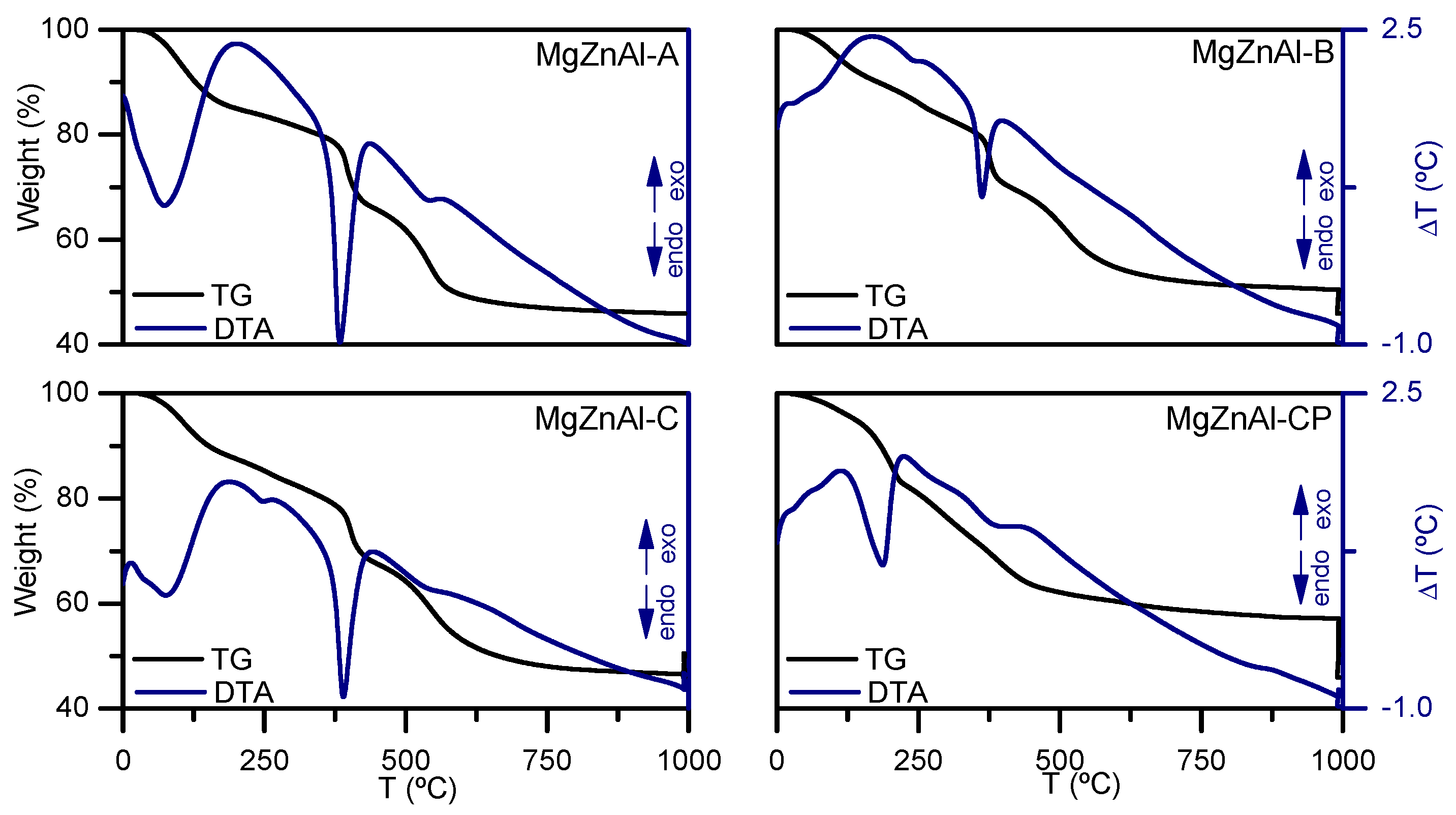
Thermal analyses of the samples were performed using thermogravimetric analysis (TG) and differential thermal analysis (DTA), and the resulting curves are shown in Figure 4. These techniques allow the quantification of mass losses and the identification of thermal events occurring within each temperature interval as the temperature increases. Thermal curves of compounds with a hydrotalcite-like structure are highly characteristic and provide valuable information about their structure and the strength of the chemical bonds present in the materials [47].
The TG curve of sample MgZnAl-A records a 15% mass loss between the initial temperature and 200 °C, in this interval an endothermic peak centered at 100 °C is observed in the DTA. This first mass loss is due to the removal of surface adsorbed water and interlayer water [50,51]. Between 200 and 380 °C a gradual mass loss of around 6% is observed, and then, the TG curve presents an inflection together with a mass loss of 11%. This second loss between 380 and 425 °C is accompanied by an endothermic peak centered at 385 in the DTA, which can be ascribed to the removal of water from the structural hydroxides.
At higher temperatures and centered at 550 °C a weak endothermic peak between 437 and 620 °C due to the removal of HCl coming from the Cl the interlayer anion and associated with a third mass loss of 17%. At higher temperature and till the end of the analysis a palatine weight loss is recorded without thermal effect associated, it is probably due to the removal of residual HCl or H2O molecules [51]. The total mass loss was 55%.
The thermal effects recorded for samples MgZnAl-B and MgZnAl-C are less defined than those explained for sample MgZnAl-A. This fact can be due to the difference in the steps followed during the synthesis of the samples. According to the PXRD data, sample MgZnAl-A presents the better crystallinity among the three prepared by dry milling and its more intense and symmetric thermal effects confirm the better order in the interlayer space. The total mass loss of the three samples is similar.
The differences between the MgZnAl-CP thermal curves and those of MgZnAl-A, MgZnAl-B and MgZnAl-C lie mainly in the composition of the interlayer and the different synthesis method. The total weight loss of MgZnAl-CP is 44% and the TG curve records two steps. The first one of 17% between TA and 200 °C accompanied by an endothermal effect at 185 °C is due to the surface adsorbed water. The second one reveals a 20% mass loss between 200 and 525 °C with a weak endothermic peak centered at 385 °C, this effect is due to the removal of water molecules (from condensation of hydroxyl groups from the brucite-like layers) and of carbon dioxide (from interlayer carbonate anions), dehydroxylation and decarbonization, that in this samples is accomplished in only one step [52]. From 525 °C onwards, no effect is observed on the DTA curve, and the TG reveals a small and gradual mass loss of 4% perhaps due to the removal of water from residual hydroxides.

2.4. Specific Surface Area Data

Table 2 summarizes the BET surface area (SBET) data.
The samples obtained by mechanosynthesis show lower surface areas compared to the sample synthesized by coprecipitation. This behavior is consistent with the specific surface area results reported by Pavel et al. [53]. Solids calcined at 450 °C presented higher specific surface areas than their respective parent samples, as expected, in agreement with results reported in the literature [54,55]. During the thermal calcination process, the lamellar structure collapses, and volatile species such as H2O and CO2 generated by thermal decomposition are responsible for the increase in specific surface area, as gas-phase molecules escape through the fine pores formed within the brucite-like layers [11,56,57].

2.5. Photodegradation Tests

To evaluate the photocatalytic activity of the prepared samples, the photodegradation of paracetamol was investigated in a UV quartz reactor using an aqueous paracetamol solution, in which the solids were dispersed under continuous stirring throughout the reaction. The reaction progress was monitored by recording the UV spectra of the solution at selected reaction times. The UV spectrum of paracetamol exhibits two characteristic absorption bands with λ at 208 nm and 243 nm, which are attributed to π–π * and n–π *, electronic transitions of the C=O group [58]. The decrease in the intensity of the absorption band at 243 nm was used to evaluate the photodegradation of paracetamol.
Prior to initiating the photodegradation reaction, the suspension was maintained in the dark, and aliquots were collected at predetermined time intervals until the paracetamol concentration reached equilibrium. This step was necessary to account for possible paracetamol adsorption onto the catalyst surface. Once this step was finished, the UV lamp was switched on and aliquots continued to be collected. These aliquots were kept in the dark until filtration through a syringe filter and subsequent analysis by UV-Vis spectrophotometry. To assess the contribution of photolysis, a paracetamol solution without a catalyst was subjected to UV irradiation under continuous stirring from the beginning of the experiment, and aliquots were periodically collected without filtration, since no solid catalyst was present.
Xu et al. studied, in 2015, LDH materials with MgAl or ZnAl in the layers as efficient photocatalysts, they calculated the band gap values for these solids at 4.631 and 3.495 eV, respectively [59]. Therefore, the results obtained by Xu et al. provide a theoretical basis for interpreting the photocatalytic performance observed in the samples synthesized in the present work.
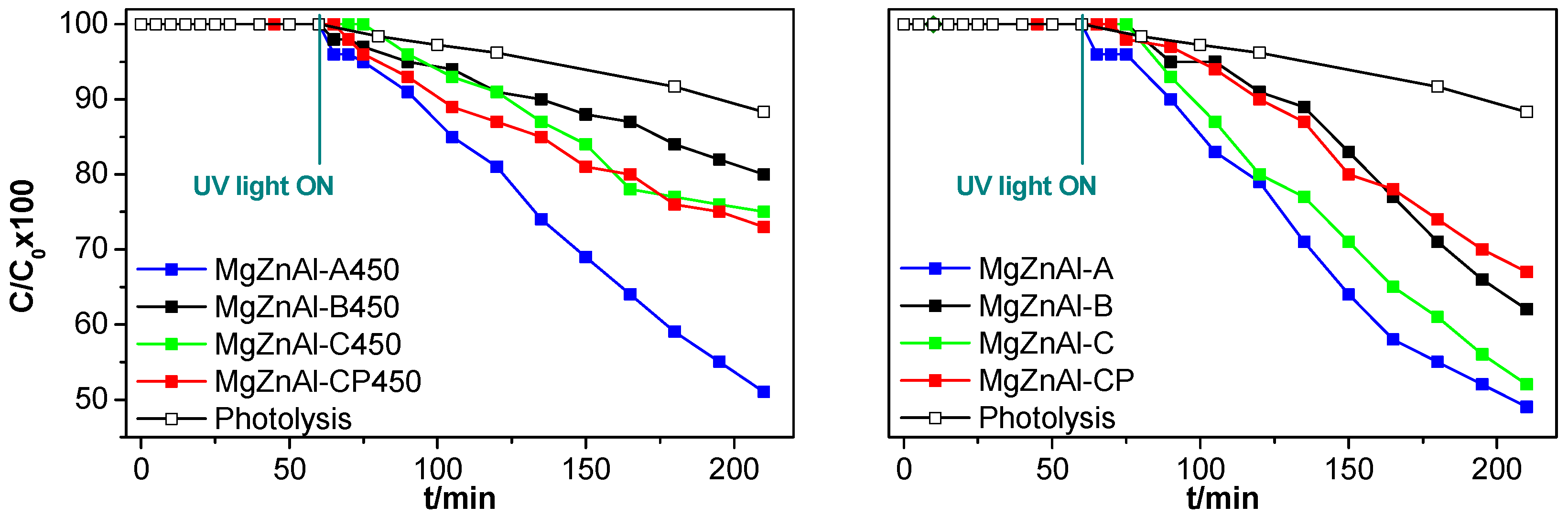
The photolysis and photocatalytic degradation results are shown in Figure 5. The plot represents the relative concentration of the contaminant (C/C0, where C0 is the initial concentration and C is the concentration at a given reaction time), calculated from the absorbance intensity at 243 nm, as a function of reaction time up to approximately 225 min. In the absence of a catalyst, no significant change in paracetamol concentration was observed, indicating that photolysis did not occur under the applied experimental conditions.
All prepared solids exhibited photocatalytic activity toward paracetamol degradation. However, significant differences in performance were observed depending on the synthesis method and thermal treatment applied. The MgZnAl-CP450, MgZnAl-B450 and MgZnAl-C450 samples showed similar photocatalytic performances, promoting approximately 20 at 25% degradation of the initial paracetamol concentration after 150 min of irradiation. The MgZnAl-B and MgZnAl-CP samples displayed comparable photocatalytic performances, achieving approximately 35% paracetamol degradation at the end of the time of reaction chosen. The MgZnAl-A, MgZnAl-A450 and MgZnAl-C samples exhibited the highest photocatalytic activities, achieving about 50% paracetamol degradation at around 150 min of irradiation. For the MgZnAl-A450 sample, this enhanced performance is perhaps due to the better crystallization of the ZnO, which can be attributed to the better crystallization of the ZnO as can be concluded from the PXRD results, where this sample shows the best definition of characteristic diffraction peaks corresponding to the (100), (002) and (101) crystallographic planes of the ZnO. The highest photodegradation results are presented by the of MgZnAl-A and MgZnAl-C samples; this fact can be due to the absence of phases other than hydrotalcite, as has been evidenced from the PXRD results.
The results obtained in this study differ from those reported by Tajizadegan et al. [60], in which the increase in paracetamol degradation efficiency was associated with enhancements in surface area. In this work, the increase in photocatalytic activity cannot be correlated with a higher specific surface area, as evidenced by the results obtained with either MgZnAl-A or MgZnAl-C catalysts. Thus, the photocatalytic performance of these materials should be ascribed to the milling procedure used for their synthesis. Consequently, we can confirm that the dry-mill method used for the obtention of these catalysts is a promising methodology for preparing photocatalysts effective in the degradation of paracetamol.

3. Materials and Methods

3.1. Materials

Magnesium hydroxide (Mg(OH)2, 95%), aluminum hydroxide (Al(OH)3, 90%), sodium hydroxide (NaOH, 98%), zinc chloride (ZnCl2, 97%), magnesium nitrate hexahydrate (Mg(NO3)2·6H2O, 98%), aluminum nitrate nonahydrate (Al(NO3)3·9H2O, 98%), zinc nitrate hexahydrate (Zn(NO3)2·6H2O, 98%), and sodium carbonate (Na2CO3, 99.5%) were supplied by Panreac (Castellar del Vallés, Barcelona, Spain) and used as received without further purification. Acetaminophen (so-called paracetamol, C8H9NO2, 99%) was purchased from Sigma-Aldrich (St. Louis, MO, USA).

3.2. Synthesis Procedure

Three layered solids containing Mg2+, Zn2+ and Al3+ with a (Mg2+ + Zn2+)/Al3+ cationic molar ratio of 2 and Mg2+/Zn2+ molar ratio of 3 were synthesized by means of the mechanosynthesis method developed in 2007 by Tongamp et al. [61] and also in 2017 by Li et al. [62], but with certain modifications. This method consisted of milling the reagents in the stoichiometric amounts in a Retsch PM100 planetary mill (Haan, Germany). For this purpose, a 50 mL vessel and twelve spheres of agate of 5 mm in diameter, maintaining a balls/reagents mass ratio of 40, were used. All mechanochemical reactions were carried out at 650 rpm. The mixture of stoichiometric amounts is exempt from subsequent washes that lead to water contamination and reduces spending on reagents.
Table 3 summarizes the synthesis procedures used to obtain the solids. For the two-step dry milling synthesis, 3.44 mmol of Mg(OH)2 and 2.28 mmol of Al(OH)3 were ground at 650 rpm for two hours; then 1.14 mmol of ZnCl2 was added to the hydroxide mixture and then milled for four hours. The sample obtained was labeled as MgZnAl-A.
To obtain a similar solid in one-step synthesis the same amounts of reactants were mixed for 6 h and the sample thus obtained was labeled as MgZnAl-B.
To study the evolution with the milling time of the structural and textural properties and the photodegradation results, the same amounts of reactants used for obtaining MgZnAl-B were milled for 8 h to obtain the sample MgZnAl-C.
For comparison, a layered solid with the same cations and ratios was synthesized by using the usual coprecipitation method, described by several authors [47,49,63]. For this purpose, 100 mL of an aqueous Mg(NO3)2, Al(NO3)3, and Zn(NO3)2 solution in the molar ratio 3:2:1 was slowly added to 100 mL of another one of Na2CO3, maintaining the pH at 9 using an automatic burette (pH-burette 24, Crison) with 1 M NaOH solution. After complete addition, the suspension was stirred under open-air conditions for 24 h, then washed and dried to obtain the sample MgZnAl-CP.
It is noteworthy to highlight that samples obtained by dry milling do not require post-synthesis washing as cations and anions have been added in their stoichiometric amounts. All the original samples were calcined at 450 °C for 2 h to obtain crystalline phases of ZnO and MgO, well dispersed on the amorphous surface of Al2O3 to enhance the catalytic activity. The calcination temperature has been chosen when the dehydroxylation was finished, according to the TG-DTA results. The samples obtained after calcination were identified by adding the number 450 at the end of the respective designations of the original samples, corresponding to those synthesized by mechanosynthesis and coprecipitation, resulting in the samples MgZnAl-A450, MgZnAl-B450, MgZnAl-C450 and MgZnAl-CP450.

3.3. Characterization Techniques

Powder X-ray diffraction (PXRD) was performed on a SIEMENS (Berlin, Germany) D-5000 diffractometer operating at 1200 W (30 mA and 40 kV), with a step size of 0.05° and a counting time of 1.5 s per step, corresponding to a scan rate of 2°/min. Fourier-transform infrared (FT-IR) spectra were obtained, from 4000 to 400 cm−1, using the KBr pellet method on a Perkin-Elmer (Waltham, MA, USA) Spectrum One Spectrometer, with a nominal resolution of 4 cm−1 and an average of 50 scans to improve the signal-to-noise ratio. The specific surface area and porosity analyses were determined from nitrogen adsorption–desorption isotherms at −196 °C, measured using a Micromeritics (Norcross, GA, USA) Gemini VII 2390t instrument. Thermogravimetric and differential thermal analyses (TGA/DTA) were conducted on an SDT Q600 (TA instruments, New Castle, DE, USA) under a continuous oxygen flow, heating up to 1000 °C at a rate of 10 °C/min.

3.4. Photocatalytic Activity

For running the photocatalysis tests 70 mg of catalysts were dispersed in 700 mL of a 40 ppm aqueous solution of paracetamol. The pH of the suspension was 8.8. The suspension was introduced in the photoreactor that also includes the lamp. The total volume of the photoreactor without the lamp is 1000 mL. Then, the suspension is submitted to continuous stirring during the reaction. Photocatalytic activity was evaluated using an MPDS-Basic system (Peschl Ultraviolet) equipped with a PhotoLAB (Berkeley, CA, USA) Batch-L reactor and a TQ150-Z0 lamp (150 W) coupled to the photonCABINET module (Castellón, Spain). UV-spectrophotometric analysis has been performed with aliquots of 2 mL of solution. The lamp provides a continuous spectrum with maximum emissions at 366 nm (radiant flux φ = 6.4 W) and 313 nm (φ = 4.3 W). The remaining concentration of paracetamol after the photocatalytic tests was determined by UV-VIS spectroscopy using a Perkin-Elmer Lambda 35 spectrophotometer connected to a computer with UV Winlab 2.85 software.

4. Conclusions

Mg-Zn-Al hydrotalcite-like compounds were successfully synthesized by the mechanosynthesis using the dry milling technique. The final solids were obtained without adding water. PXRD results allowed to confirm the hydrotalcite-like structure of the original samples, and the Cl as the interlayer anion. The absence of anions other than Cl was confirmed by FT-IR analysis.
Calcination of the samples led to the collapse of the layered structure and the formation of MgO and ZnO phases dispersed in an amorphous alumina matrix.
Photocatalytic tests using paracetamol as a pollutant demonstrated that the original mechanosynthesized hydrotalcites exhibited superior performance. And we can conclude that the sample obtained by two-step milling, MgZnAl-A, is the better one for photocatalytic degradation of paracetamol.
These findings validate the mechanosynthesis by dry-milling as an effective, ecological and versatile route for tailoring hydrotalcite-based photocatalysts with enhanced activity.

Author Contributions

Conceptualization, R.T. and G.S.B.; methodology, R.T. and G.S.B.; software, G.S.B. and R.T.; validation, R.T.; formal analysis, G.S.B., P.R.-M. and R.T.; investigation, G.S.B., P.R.-M. and R.T.; resources, R.T.; data curation, R.T. and G.S.B.; writing—original draft preparation, R.T. and G.S.B.; writing—review and editing, R.T. and G.S.B.; visualization, R.T. and G.S.B.; supervision, R.T.; project administration, R.T., I.d.F.G., K.I.B.E. and G.S.B.; funding acquisition, R.T. All authors have read and agreed to the published version of the manuscript.

Funding

This research was funded by the Spanish Ministry of Science, Innovation and Universities through the Spanish Research Agency (PID2023-146935OB-C22). G.S. acknowledges the Coordenação de Aperfeiçoamento de Pessoal de Nível Superior (CAPES—Finance Code 001) for a grant to research at the Universidad de Salamanca (USAL) and National Council for Scientific and Technological (CNPq—Process 308864/2022-0).

Data Availability Statement

The original contributions presented in this study are included in the article. Further inquiries can be directed to the corresponding author.

Conflicts of Interest

The authors declare no conflicts of interest.

References

  1. Barnard, B.A.; Labuschagné, F.J.W.J. Exploring the Influence of Milling Parameters on the Wet Mechanochemical Synthesis of Mg-Al Layered Double Hydroxides. Crystals 2021, 11, 276. [Google Scholar] [CrossRef]
  2. Qu, J.; Sha, L.; Wu, C.; Zhang, Q. Applications of Mechanochemically Prepared Layered Double Hydroxides as Adsorbents and Catalysts: A Mini-Review. Nanomaterials 2019, 9, 80. [Google Scholar] [CrossRef] [PubMed]
  3. Hosni, K.; Mahmoudi, K.; Haraketi, M.; Jellali, S.; Srasra, E. Mechanosynthesis, Characterization, and Adsorptive Properties of Mg–Al-LDH and Zn–Al-LDH for Olive Mill Wastewater Treatment. Comptes Rendus Chim. 2023, 26, 113–128. [Google Scholar] [CrossRef]
  4. Kameliya, J.; Verma, A.; Dutta, P.; Arora, C.; Vyas, S.; Varma, R.S. Layered Double Hydroxide Materials: A Review on Their Preparation, Characterization, and Applications. Inorganics 2023, 11, 121. [Google Scholar] [CrossRef]
  5. Hamzat, A.K.; Olarinoye, F.O.; Yusuf, B.O.; Tanimu, A. Mechanochemistry: A Powerful Tool to Engineer Catalyst’s Functionality. J. Energy Inst. 2026, 124, 102358. [Google Scholar] [CrossRef]
  6. Chaillot, D.; Bennici, S.; Brendlé, J. Layered Double Hydroxides and LDH-Derived Materials in Chosen Environmental Applications: A Review. Environ. Sci. Pollut. Res. 2020, 28, 24375–24405. [Google Scholar] [CrossRef] [PubMed]
  7. Wang, K.; Wang, T.; Islam, Q.A.; Wu, Y. Layered Double Hydroxide Photocatalysts for Solar Fuel Production. Chin. J. Catal. 2021, 42, 1944–1975. [Google Scholar] [CrossRef]
  8. Yan, K.; Lafleur, T.; Chai, J.; Jarvis, C. Facile Synthesis of Thin NiFe-Layered Double Hydroxides Nanosheets Efficient for Oxygen Evolution. Electrochem. Commun. 2016, 62, 24–28. [Google Scholar] [CrossRef]
  9. Barnard, B.A.; Jacobus Labuschagné, F.J.W. Exploring the Wet Mechanochemical Synthesis of Mg-Al, Ca-Al, Zn-Al and Cu-Al Layered Double Hydroxides from Oxides, Hydroxides and Basic Carbonates. Crystals 2020, 10, 954. [Google Scholar] [CrossRef]
  10. Qu, J.; He, X.; Lei, Z.; Zhang, Q.; Liu, X. Mechanochemical Synthesis of Dodecyl Sulfate Anion (DS−) Intercalated Cu-Al Layered Double Hydroxide. Solid State Sci. 2017, 74, 125–130. [Google Scholar] [CrossRef]
  11. De Roy, A. Lamellar Double Hydroxides. Mol. Cryst. Liq. Cryst. Sci. Technol. Sect. A Mol. Cryst. Liq. Cryst. 1998, 311, 173–193. [Google Scholar] [CrossRef]
  12. Mishra, G.; Dash, B.; Pandey, S. Layered Double Hydroxides: A Brief Review from Fundamentals to Application as Evolving Biomaterials. Appl. Clay Sci. 2018, 153, 172–186. [Google Scholar] [CrossRef]
  13. Chen, Y.; Ouyang, Y.; Yang, J.; Zheng, L.; Chang, B.; Wu, C.; Guo, X.; Chen, G.; Wang, X. Facile Preparation and Performances of Ni, Co, and Al Layered Double Hydroxides for Application in High-Performance Asymmetric Supercapacitors. Appl. Energy Mater. 2021, 4, 9384–9392. [Google Scholar] [CrossRef]
  14. Chen, Y.; Yang, J.; Yu, H.; Zeng, J.; Li, G.; Chang, B.; Wu, C.; Guo, X.; Chen, G.; Zheng, L.; et al. Design and Preparation of NiCoMn Ternary Layered Double Hydroxides with a Hollow Dodecahedral Structure for High-Performance Asymmetric Supercapacitors. Appl. Energy Mater. 2022, 5, 6772–6782. [Google Scholar] [CrossRef]
  15. Liao, F.; Yang, G.; Cheng, Q.; Mao, L.; Zhao, X.; Chen, L. Electrochimica Acta Rational Design and Facile Synthesis of Ni-Co-Fe Ternary LDH Porous Sheets for High-Performance Aqueous Asymmetric Supercapacitor. Electrochim. Acta 2022, 428, 140939. [Google Scholar] [CrossRef]
  16. Lu, Z.; Zhao, K.; Guo, H.; Duan, L.; Sun, H.; Chen, K. In Situ Construction of NiCoMn-LDH Derived from Zeolitic Imidazolate Framework on Eggshell-like Carbon Skeleton for High-Performance Flexible Supercapacitors. Small 2024, 20, 2309814. [Google Scholar] [CrossRef]
  17. Karami, Z.; Jouyandeh, M.; Ali, J.A.; Reza, M.; Aghazadeh, M.; Maadani, M.; Rallini, M.; Luzi, F.; Torre, L. Progress in Organic Coatings Development of Mg-Zn-Al-CO3 Ternary LDH and Its Curability in Epoxy/Amine System. Prog. Org. Coat. 2019, 136, 105264. [Google Scholar] [CrossRef]
  18. Ali Khan, A.; Tahir, M.; Khan, N. LDH-Based Nanomaterials for Photocatalytic Applications: A Comprehensive Review on the Role of Bi/Trivalent Cations, Anions, Morphology, Defect Engineering, Memory Effect, and Heterojunction Formation. J. Energy Chem. 2023, 84, 242–276. [Google Scholar] [CrossRef]
  19. Zhang, Z.; Hua, Z.; Lang, J.; Song, Y.; Zhang, Q.; Han, Q.; Fan, H.; Gao, M.; Li, X.; Yang, J. Eco-Friendly Nanostructured Zn-Al Layered Double Hydroxide Photocatalysts with Enhanced Photocatalytic Activity. CrystEngComm 2019, 21, 4607–4619. [Google Scholar] [CrossRef]
  20. Sun, H.; Heo, Y.J.; Park, J.H.; Rhee, K.Y.; Park, S.J. Advances in Layered Double Hydroxide-Based Ternary Nanocomposites for Photocatalysis of Contaminants in Water. Nanotechnol. Rev. 2021, 9, 1381–1396. [Google Scholar] [CrossRef]
  21. Tu, W.; Zhou, Y.; Zou, Z. Versatile Graphene-Promoting Photocatalytic Performance of Semiconductors: Basic Principles, Synthesis, Solar Energy Conversion, and Environmental Applications. Adv. Funct. Mater. 2013, 23, 4996–5008. [Google Scholar] [CrossRef]
  22. Zhang, X.; Wang, J.; Dong, X.-X.; Lv, Y.-K. Functionalized Metal-Organic Frameworks for Photocatalytic Degradation of Organic Pollutants in Environment. Chemosphere 2020, 242, 125144. [Google Scholar] [CrossRef]
  23. Jiménez, A.; Guerra, M.; Pascual, D.; Trujillano, R.; Rives, V.; Vicente, M.A.; Gil, A. Photodegradation of Paracetamol on CaAlGa and ZnAlTi Mixed Metal Oxides (MMO) Synthesized via LDH from Al–Saline Slags. J. Environ. Chem. Eng. 2025, 13, 116143. [Google Scholar] [CrossRef]
  24. Trujillano, R.; Rives, V.; García, I. Photocatalytic Degradation of Paracetamol in Aqueous Medium Using TiO2 Prepared by the Sol–Gel Method. Molecules 2022, 27, 2904. [Google Scholar] [CrossRef] [PubMed]
  25. Avramescu, S.M.; Fierascu, I.; Fierascu, R.C.; Brazdis, R.I.; Nica, A.V.; Butean, C.; Olaru, E.A.; Ulinici, S.; Verziu, M.N.; Dumitru, A. Removal of Paracetamol from Aqueous Solutions by Photocatalytic Ozonation over TiO2-MexOy Thin Films. Nanomaterials 2022, 12, 613. [Google Scholar] [CrossRef]
  26. Acevedo-Barrios, R.L.; Severiche-Sierra, C.A.; Morales, J.D.C.J. Toxic Effects of Paracetamol on Human Health and the Environment. Rev. Inv. Agr. Embaxaidor 2017, 8, 139–149. [Google Scholar]
  27. Koagouw, W.; Stewart, N.A.; Ciocan, C. Long-Term Exposure of Marine Mussels to Paracetamol: Is Time a Healer or a Killer? Environ. Sci. Pollut. Res. 2021, 28, 48823–48836. [Google Scholar] [CrossRef] [PubMed]
  28. Pereira, A.; Silva, L.; Laranjeiro, C.; Pena, A. Assessment of Human Pharmaceuticals in Drinking Water Catchments, Tap and Drinking Fountain Waters. Appl. Sci. 2021, 11, 7062. [Google Scholar] [CrossRef]
  29. Belskaya, O.B.; Likholobov, V.A. Mechanochemical Synthesis of Layered Double Hydroxides as a Promising Method for the Preparation of Adsorbents and Catalysts. Kinet. Catal. 2022, 63, 615–641. [Google Scholar] [CrossRef]
  30. Álvarez, A.; Trujillano, R.; Rives, V. Differently Aged Gallium-Containing Layered Double Hydroxides. Appl. Clay Sci. 2013, 80–81, 326–333. [Google Scholar] [CrossRef]
  31. Constantino, V.R.L.; Pinnavaia, T.J. Basic Properties of Mg2+1−xAl3+x Layered Double Hydroxides Intercalated by Carbonate, Hydroxide, Chloride, and Sulfate Anions. Inorg. Chem. 1995, 34, 883–892. [Google Scholar] [CrossRef]
  32. Kloprogge, J.T.; Kristóf, J.; Frost, R.L. Thermogravimetric Analysis-Mass Spectrometry (TGS-MS) of Hydrotalcites Containing CO32−, NO3, Cl, SO42−, or ClO4. In A Clay Odyssey, Proceedings of the 12th International Clay Conference, Bahía Blanca, Argentina, 22–28 July 2001; Elsevier: Amsterdam, The Netherlands, 2001; pp. 451–458. [Google Scholar]
  33. Constantino, V.R.L.; Pinnavaia, T.J. Structure-Reactivity Relationships for Basic Catalysts Derived from a Mg2+/A13+/CO Layered Double Hydroxide. Catal. Lett. 1994, 23, 361–367. [Google Scholar] [CrossRef]
  34. Bernard, E.; Jan, W.; Lothenbach, B.; Urs, M. Cement and Concrete Research Stability of Hydrotalcite (Mg-Al Layered Double Hydroxide) in Presence of Different Anions. Cem. Concr. Res. 2022, 152, 106674. [Google Scholar] [CrossRef]
  35. Benito, P.; Guinea, I.; Labajos, F.M.; Rocha, J.; Rives, V. Microwave-Hydrothermally Aged Zn,Al Hydrotalcite-like Compounds: Influence of the Composition and the Irradiation Conditions. Microporous Mesoporous Mater. 2008, 110, 292–302. [Google Scholar] [CrossRef]
  36. Kooli, F.; Kosuge, K.; Tsunashima, A. New Ni-Al-Cr and Ni-Al-Fe Carboante Hydrotalcite-like Compounds: Synthesis and Characterization. J. Solid State Chem. 1995, 118, 285–291. [Google Scholar] [CrossRef]
  37. Abderrazek, K.; Najoua, F.S.; Srasra, E. Synthesis and Characterization of [Zn-Al] LDH: Study of the Effect of Calcination on the Photocatalytic Activity. Appl. Clay Sci. 2016, 119, 229–235. [Google Scholar] [CrossRef]
  38. Becheri, A.; Durr, M.; Nostro, L.; Baglioni, P. Synthesis and Characterization of Zinc Oxide Nanoparticles: Application to Textiles as UV-Absorbers. J. Nanopart. Res. 2008, 10, 679–689. [Google Scholar] [CrossRef]
  39. Basile, F.; Benito, P.; Fornasari, G.; Rosetti, V.; Scavetta, E.; Tonelli, D.; Vaccari, A. Electrochemical Synthesis of Novel Structured Catalysts for H2 Production. Appl. Catal. B Environ. 2009, 91, 563–572. [Google Scholar] [CrossRef]
  40. Elhalil, A.; Qourzal, S.; Mahjoubi, F.Z.; Elmoubarki, R.; Farnane, M.; Tounsadi, H. De Fl Uoridation of Groundwater by Calcined Mg/Al Layered Double Hydroxide. Emerg. Contam. 2016, 2, 42–48. [Google Scholar] [CrossRef]
  41. López, T.; Bosch, P.; Asomoza, M.; Gmez, R.; Ramos, E. DTA-TG14 and FTIR Spectroscopies of Sol-Gel Hydrotalcites: Aluminum Source Effect on Physicochemical Properties. Mater. Lett. 1997, 31, 311–316. [Google Scholar]
  42. Beattie, J.K.; De Bruyn, H. Infrared Spectra of Solid Aluminium Chloride and Bromide. Vib. Spectrosc. 1995, 8, 461–463. [Google Scholar] [CrossRef]
  43. Vieira, A.C.; Moreira, R.L.; Dias, A. Raman Scattering and Fourier Transform Infrared Spectroscopy of Me6Al2(OH)16Cl2·4H2O (Me = Mg, Ni, Zn, Co, and Mn) and Ca2Al(OH)6Cl·2H2O Hydrotalcites. J. Phys. Chem. C 2009, 113, 13358–13368. [Google Scholar] [CrossRef]
  44. Wang, J.; Kalinichev, A.G.; Amonette, J.E.; Kirkpatrick, R.J. Interlayer Structure and Dynamics of Cl-Bearing Hydrotalcite: Far Infrared Spectroscopy and Molecular Dynamics Modeling. Am. Mineral. 2003, 88, 398–409. [Google Scholar] [CrossRef]
  45. Norman, C.; Lawrence, D.; Stephen, W. Carbonyl Com-Pounds. In Introduction to Infrared and Raman Spectroscopy, 3rd ed.; Academic Press: London, UK, 1990; pp. 289–326. [Google Scholar]
  46. Frost, R.L.; López, A.; Scholz, R.; Firmino, B. SEM, EDX and Vibrational Spectroscopic Study of the Carbonate Mineral Donnayite-(Y) NaCaSr3Y(CO3)6·3H2O. Carbonates Evaporites 2016, 31, 1–8. [Google Scholar] [CrossRef]
  47. de Roy, A.; Forano, C.; Besse, J.P. Layered Double Hydroxides: Synthesis and Post-Synthesis Modification. In Layered Double Hydroxides: Present and Future; Rives, V., Ed.; Nova Science Publishers: Hauppauge, NY, USA, 2001; pp. 1–39. ISBN 978-1-63482-212-1. [Google Scholar]
  48. Evans, D.G.; Slade, R.C.T. Structural Aspects of Layered Double Hydroxides. In Layered Double Hydroxide: Structure and Bonding; Mingos, D.M.P., Duan, X., Evans, D.G., Eds.; Springer: Berlin/Heidelberg, Germany; New York, NY, USA, 2006; pp. 1–87. ISBN 3540282793. [Google Scholar]
  49. Trujillano, R.; Morato, A.; Rives, V. Controlling the Synthesis Conditions for Tuning the Properties of Hydrotalcite-like Materials at the Nano Scale. ChemEngineering 2018, 2, 31. [Google Scholar] [CrossRef]
  50. Hosseini, S.; Ghasemi, E. Synthesis and Characterization of Hybrid MgAl-LDH@SiO2@CoAl2O4 Pigment with High NIR Reflectance for Sustainable Energy Saving Applications. Appl. Clay Sci. 2020, 193, 105674. [Google Scholar] [CrossRef]
  51. Kameda, T.; Yoshioka, T.; Watanabe, K.; Uchida, M.; Okuwaki, A. Dehydrochlorination Behavior of a Chloride Ion-Intercalated Hydrotalcite-like Compound during Thermal Decomposition. Appl. Clay Sci. 2007, 35, 173–179. [Google Scholar] [CrossRef]
  52. Labajos, F.M.; Rives, V. Thermal Evolution of Chromium(III) Ions in Hydrotalcite-like Compounds. Inorg. Chem. 1996, 35, 5313–5318. [Google Scholar] [CrossRef]
  53. Pavel, O.D.; Stamate, A.E.; Bacalum, E.; Cojocaru, B.; Zăvoianu, R.; Pârvulescu, V.I. Catalytic Behavior of Li-Al-LDH Prepared via Mechanochemical and Co-Precipitation Routes for Cyanoethylation Reaction. Catal. Today 2021, 366, 227–234. [Google Scholar] [CrossRef]
  54. Angelescu, E.; Pavel, O.D.; Bîrjega, R.; Florea, M.; Zǎvoianu, R. The Impact of the “Memory Effect” on the Catalytic Activity of Mg/Al; Mg,Zn/Al; Mg/Al,Ga Hydrotalcite-like Compounds Used as Catalysts for Cycloxene Epoxidation. Appl. Catal. A Gen. 2008, 341, 50–57. [Google Scholar] [CrossRef]
  55. Ionescu, R.; Pavel, O.D.; Bîrjega, R.; Zǎvoianu, R.; Angelescu, E. Epoxidation of Cyclohexene with H2O2 and Acetonitrile Catalyzed by Mg-Al Hydrotalcite and Cobalt Modified Hydrotalcites. Catal. Lett. 2010, 134, 309–317. [Google Scholar] [CrossRef]
  56. Qi, Y.; Cheng, Z.; Zhou, Z. Steam Reforming of Methane over Ni Catalysts Prepared from Hydrocite-Type Precursors: Catalytic Activity and Reaction Kinects. Chin. J. Chem. Eng. 2015, 23, 76–85. [Google Scholar] [CrossRef]
  57. Reichle, W.; Kang, S.Y.; Everhardt, D.S. The Nature of the Thermal Decomposition of a Catalytically Active Anionic Clay Mineral. J. Catal. 1986, 101, 352–359. [Google Scholar] [CrossRef]
  58. Moctezuma, E.; Leyva, E.; Aguilar, C.A.; Luna, R.A.; Montalvo, C. Photocatalytic Degradation of Paracetamol: Intermediates and Total Reaction Mechanism. J. Hazard. Mater. 2012, 243, 130–138. [Google Scholar] [CrossRef] [PubMed]
  59. Xu, S.M.; Pan, T.; Dou, Y.B.; Yan, H.; Zhang, S.T.; Ning, F.Y.; Shi, W.Y.; Wei, M. Theoretical and Experimental Study on MIIMIII-Layered Double Hydroxides as Efficient Photocatalysts toward Oxygen Evolution from Water. J. Phys. Chem. C 2015, 119, 18823–18834. [Google Scholar] [CrossRef]
  60. Tajizadegan, H.; Rashidzadeh, M.; Jafari, M.; Ebrahimi-kahrizsangi, R. Novel ZnO–Al2O3 Composite Particles as Sorbent for Low Temperature H2S Removal. Chin. Chem. Lett. 2013, 24, 167–169. [Google Scholar] [CrossRef]
  61. Tongamp, W.; Zhang, Q.; Saito, F. Preparation of Meixnerite (Mg–Al–OH) Type Layered Double Hydroxide by a Mechanochemical Route. J. Mater. Sci. 2007, 42, 9210–9215. [Google Scholar] [CrossRef]
  62. Li, Z.; Chen, M.; Zhang, Q.; Qu, J.; Ai, Z.; Li, Y. Mechanochemical Synthesis of Ultrafine ZnS/Zn-Al Layered Double Hydroxide Heterojunction and Their Photocatalytic Activities in Dye Degradation. Appl. Clay Sci. 2017, 144, 115–120. [Google Scholar] [CrossRef]
  63. Nope, E.; Sathicq, Á.G.; Martínez, J.J.; Alothman, Z.A.; Romanelli, G.P.; Nares, E.M.; Ivars-barceló, F.; Zuazo, J.R.; Luque, R.; Balu, A.M. Revisiting Hydrotalcite Synthesis: Efficient Combined Mechanochemical/Coprecipitation Synthesis to Design Advanced Tunable Basic Catalysts. Nanotechnol. Rev. 2024, 13, 20240042. [Google Scholar] [CrossRef]
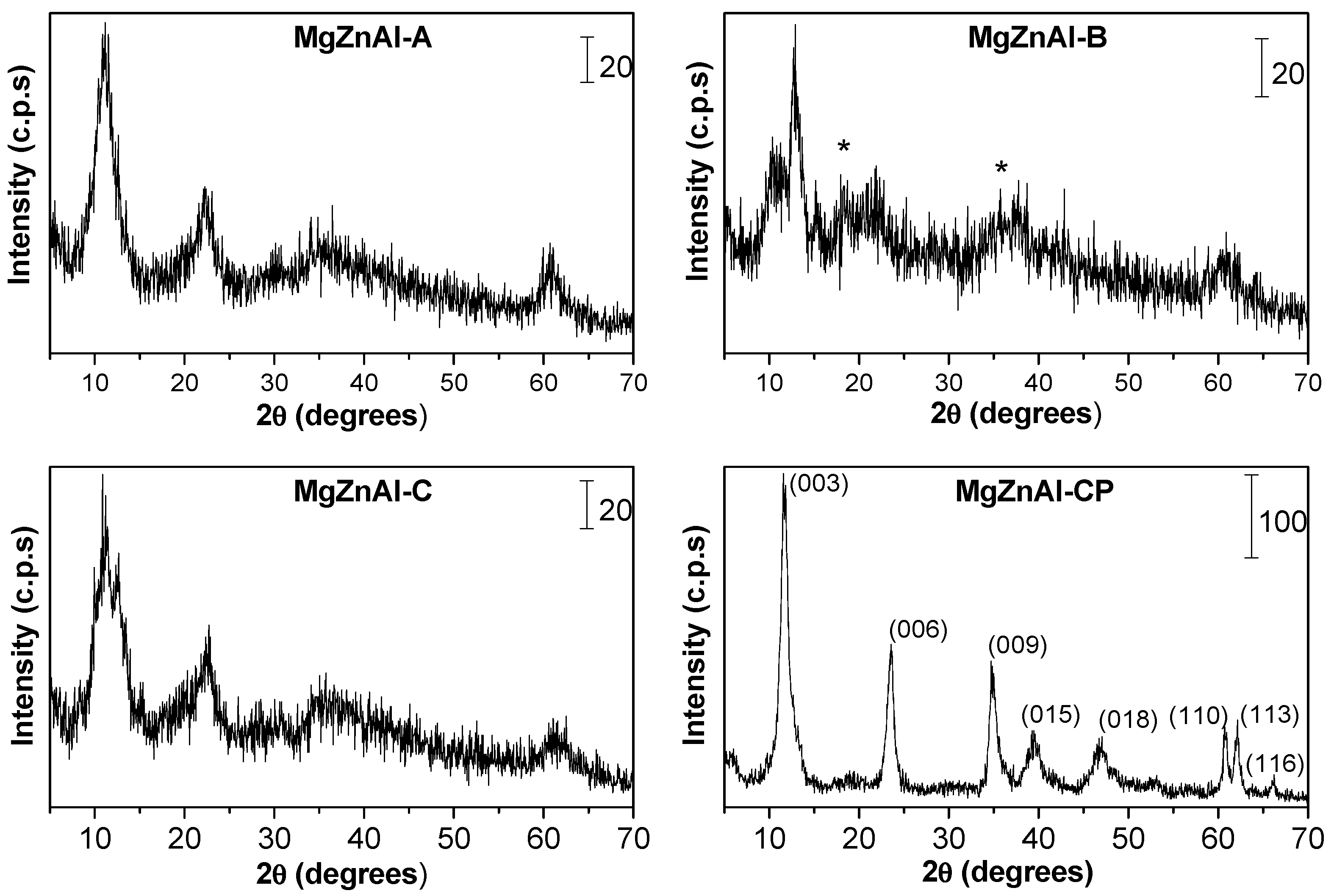
Figure 1. PXRD of the original samples (* Mg(OH)2 peaks).
Catalysts 16 00318 g001
Figure 2. PXRD of the calcined samples.
Catalysts 16 00318 g002
Figure 3. FT-IR of the original samples.
Catalysts 16 00318 g003
Figure 4. Thermogravimetric (TG) and DTA curves of the original samples.
Catalysts 16 00318 g004
Figure 5. Relative concentrations (C/C0) versus irradiation time of paracetamol of original and calcined samples.
Catalysts 16 00318 g005
Table 1. PXRD peaks position and crystallographic a and c parameters of the samples.
hklMgZnAl-AMgZnAl-BMgZnAl-CMgZnAl-CP
2θ (°)d (Å)2θ (°)d (Å)2θ (°)d (Å)2θ (°)d (Å)
00311.157.9210.608.3310.858.1411.607.61
00622.303.9621.904.0322.303.9623.503.77
00935.402.4935.602.4835.602.4834.802.53
015------------39.502.23
018------------46.901.88
11060.701.4560.501.4661.301.4460.801.45
113------------62.151.42
116------------66.151.33
c23.7524.5824.0822.68
a2.912.922.872.67
Table 2. Surface area (m2/g) of the samples.
SampleMgZnAl-AMgZnAl-BMgZnAl-CMgZnAl-CPMgZnAl-A450MgZnAl-B450MgZnAl-C450MgZnAl-CP450
SBET4.917.045.26106.5728.0439.7631.83110.10
Table 3. Synthesis conditions and sample identification.
SampleSynthesisSteps/HoursAnion (An−)
MgZnAl-ADry mill2/(2 + 4)Cl
MgZnAl-BDry mill1/6Cl
MgZnAl-CDry mill1/8Cl
MgZnAl-CPCoprecipitation24 hCO32−
Disclaimer/Publisher’s Note: The statements, opinions and data contained in all publications are solely those of the individual author(s) and contributor(s) and not of MDPI and/or the editor(s). MDPI and/or the editor(s) disclaim responsibility for any injury to people or property resulting from any ideas, methods, instructions or products referred to in the content.