Article

Iron Oxide-Modified Anode for Enhanced Sunset Yellow FCF Azo Dye Decolorization in Microbial Fuel Cell and Phytotoxicity Assessment

1
Department of Chemistry, University of Gujrat, Gujrat 50700, Pakistan
2
Department of Biological Sciences, College of Science, King Faisal University, Al Ahsa, Saudi Arabia
3
Institute of Industrial Biotechnology, GC University, Lahore 54000, Pakistan
4
School of Chemical and Materials Engineering, National University of Sciences and Technology, Islamabad 44000, Pakistan
5
Department of Public Health, College of Applied Medical Sciences, King Faisal University, Al Ahsa, Saudi Arabia
6
Department of Nursing, College of Applied Medical Sciences, King Faisal University, Al Ahsa, Saudi Arabia
7
Department of Chemistry, College of Science, King Faisal University, Al Ahsa, Saudi Arabia
*
Authors to whom correspondence should be addressed.
Catalysts 2026, 16(4), 313; https://doi.org/10.3390/catal16040313
Submission received: 6 February 2026 / Revised: 22 March 2026 / Accepted: 25 March 2026 / Published: 1 April 2026

Abstract

Microbial fuel cell (MFC) technology is emerging as an effective tool for bioelectricity generation and wastewater treatment. This work is aimed at investigating the impact of an Fe2O3-modified carbon felt (CF) anode in a dual-chamber MFC for the treatment of synthetic wastewater containing sunset yellow FCF dye (at different concentrations). The Fe2O3 nanoparticles were synthesized using a hydrothermal approach, characterized, and then used to modify CF as an MFC anode. The MFC experiments were performed using bare and Fe2O3-modified CF anodes to investigate their efficiency in decolorizing sunset yellow FCF dye while simultaneously generating bioelectricity. Furthermore, the phytotoxicity of synthetic wastewater containing the sunset yellow FCF dye on wheat plants (Triticum aestivum) was investigated before and after treatment in MFCs. MFCs 1, 3, and 5 were equipped with bare CF anodes and fed with synthetic wastewater containing sunset yellow FCF dye at 250 mg/L, 200 mg/L, and 150 mg/L, respectively. Whereas MFC-2, -4 and -6 were equipped with Fe2O3-modified CF anodes and fed with sunset yellow FCF dye at concentrations of 250 mg/L, 200 mg/L, and 150 mg/L, respectively. MFC-2, -4 and -6 demonstrated superior MFC operational characteristics regarding dye decolorization with simultaneous power generation. The power densities for MFC-2, -4 and -6 were calculated to be 303.03 mW/m2, 353.45 mW/m2, and 402.15 mW/m2, with dye decolorization efficiencies of 76 ± 3.0%, 80 ± 4.2%, and 93.3 ± 3.0%, respectively. Moreover, phytotoxicity studies revealed that the treated wastewater samples exhibited lower phytotoxicity than the untreated samples. Conclusively, MFCs fabricated with Fe2O3-modified CF displayed better operational performance characteristics compared to those equipped with an unmodified CF anode.

1. Introduction

One of the biggest issues that global civilization is facing this century is water pollution, and efforts are underway to improve water quality and reduce its effects on human and ecological health [1]. The presence of several harmful chemicals, including metallic ions, organic dyes, inorganic substances, and other pollutants, causes polluted water to have adverse effects. Industrial expansion and unchecked urbanization are contributing to rising water pollution, and hazardous discharges of both inorganic and organic toxins pose threats to people and other living things [2]. Azo dyes (ADs) are a family of synthetic dyes frequently utilized in many industries, most notably the textile industry. They can be identified by their chemical structure, which contains at least one azo group “–N=N–” [3]. In the commercial sector, more than 100,000 distinct types of synthetic dyes (SDs) are available, and an estimated 700,000 tons of SDs are produced annually worldwide [4]. With their wide colour spectrum and simplicity of use, ADs are often employed in industries which account for more than 70% of the global demand for industrial dyes [5]. According to estimates, almost one million tons of azo dyes are discharged annually into wastewater streams from various industries, of which 20–30% are toxic dyes with an average concentration of 2000 mg/L [6]. In textile wastewater, the azo dye concentration has been reported to range from 10 to 250 mg L−1 [7]. Over 250 ppm of dyes may be present in leather-dyeing wastewater, resulting in a high COD load [8]. Similarly, azo dye concentrations in wastewater from the dye industry may range from 10 to 200 mg/L [9].
Some azo dyes can produce toxic byproducts that are mutagenic or carcinogenic. This raises serious issues for the environment, plants, aquatic life and human health. Irrigating crops with untreated industrial wastewater containing dye may result in drastically lower yields, possibly due to restricted crop growth and development. Hence, numerous risks are associated with irrigating crops with untreated industrial wastewater [10,11]. Different physical, chemical, and/or biological water treatment options are in practice, which have potential for the removal/degradation/decolorization of azo dyes from the industrial effluents. These include adsorption, reverse osmosis, membrane filtration, chemical precipitation, coagulation/flocculation, and ion-exchange-based treatment strategies [12]. Although these methods are effective, they are still associated with disadvantages, i.e., expensive in nature, lengthy processing periods, complex treatment logistics, formation of hazardous byproducts, and production of sludge, which may necessitate additional treatment and render the process economically unfavourable [13].
On the other hand, microbial fuel cells (MFCs) are gaining acceptance as an effective and sustainable alternative to the aforementioned conventional treatment options. MFCs are promising, environmentally friendly bioelectrochemical technologies with multipurpose actions that generate electricity from the chemical energy of wastewater through biocatalysis. Hence, this approach is highly proficient not only in dye removal/decolorization but also in simultaneous power generation. This dual-purpose strategy can be applied to wastewater treatment, substantially reducing energy costs and making it a net energy producer rather than an energy-intensive process. MFCs utilize the capacity of electrogenic microorganisms to oxidize/degrade organic pollutants/azo dyes present in industrial effluents/wastewaters. This results in wastewater treatment along with simultaneous bioelectricity generation [14]. Hence, the potential of MFCs to cleanse dyes-containing wastewater while also producing power has attracted considerable interest and is the subject of intense research [15,16,17].
To make MFCs more technically feasible it is necessary to address the associated challenges, such as commercial scalability, design complexity, limited power outputs, regular maintenance, expensive electrode materials, and optimal microbial biofilm enrichment at the MFC anode [18]. Hence, to improve MFC performance characteristics for their future commercial scalability, various researchers have made attempts to optimize MFC designs, electrode modifications, and biocatalysts [19]. Among these, modification of MFC anode materials with oxide-based nanoparticles to provide more electrochemically active sites and a higher surface area for optimal anodic biofilm enrichment and improved microorganism adhesion has been a topic of key interest in recent years [20]. Additionally, modified MFC electrodes exhibit improved catalytic performance, durability, biocompatibility, and chemical/mechanical stability [21,22,23]. The main purpose of the current research study was therefore to enhance MFC performance using an Fe2O3-modified CF anode and evaluate its impact on the treatment of synthetic wastewater containing the sunset yellow FCF azo dye, while simultaneously generating bioelectricity. Sunset yellow FCF was chosen as the model azo dye because of its widespread use in everyday life, making it relevant to pollution studies. Its complex toxicity profile is resistant to conventional degradation methods, pushing the need for advanced processes [24,25]. Sunset yellow is widely found in wastewater streams, and due to its serious physiological effects it is selected as a representative pollutant for degradation studies [26]. Due to their high conductivity and large surface area, Fe2O3-modified MFC anodes are expected to improve not only electrocatalytic activity but also increase the electrode surface roughness, thereby enhancing microbial adhesion.

2. Results and Discussion

2.1. Material Characterization

2.1.1. X-Ray Diffraction Characterization (XRD)

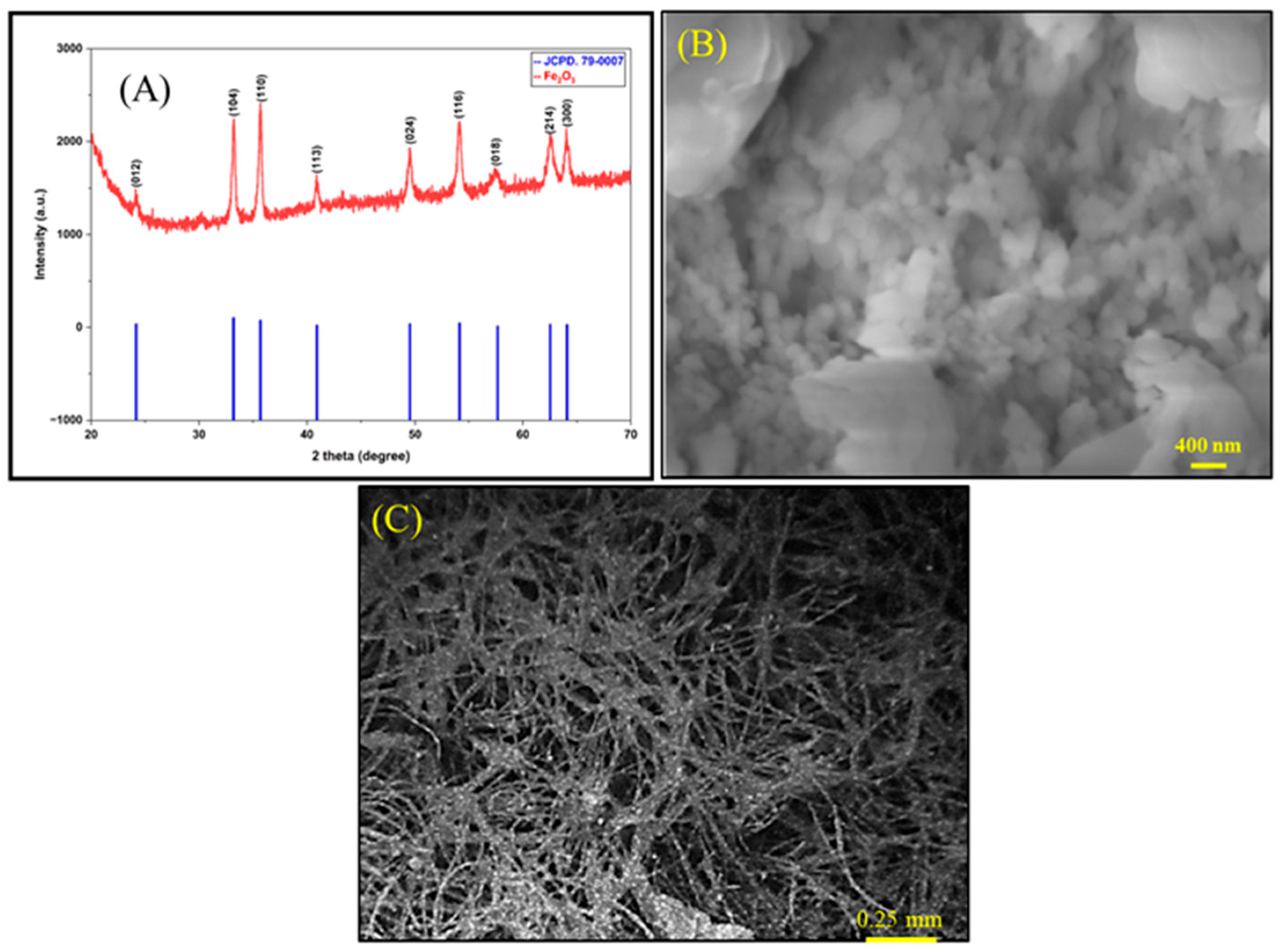
Each crystalline structure produces a unique pattern of diffracted X-rays. The XRD pattern is collected over a range of angles (2θ). The XRD pattern of the synthesized Fe2O3 nanoparticles depicted a monoclinic lattice, as shown in Figure 1A. The X-ray diffraction (XRD) pattern of the sample showed multiple diffraction peaks at angles corresponding to the (012), (104), (110), (113), (024), (116), (018), (214), and (300) reflection planes. These peaks can be attributed to the diffraction pattern of the α-Fe2O3, as indicated by the JCPDS card No: 79-0007 [27]. The results obtained from the X-ray diffraction analysis were consistent with previously reported findings, where similar peak positions were used to verify hematite crystalline phase (α-Fe2O3) formation in nanoparticles (Hjiri, 2020) [28].

2.1.2. Scanning Electron Microscopy (SEM)

An SEM image of the hematite (Fe2O3) NPs synthesized by the hydrothermal method is shown in Figure 1B. It is evident from the images that Fe2O3 nanoparticles exhibit nearly spherical shape with aggregation [29]. Because of the magnetic nature of Fe2O3 NPs, a few clumps also appeared in the SEM picture. The surface morphology of the Fe2O3-modified carbon felt anode was also checked by SEM examination. A considerably rougher and irregular surface of fibre was noted in the modified electrode, proving that the presence of Fe2O3 particles on the CF encourages roughness on the CF electrodes. Rough surfaces are known to promote greater microbial colonization and adherence, leading to improved electron transport (Figure 1C).

2.2. MFC Operation and Electrochemical Characteristics

2.2.1. COD Removal (%) and Change in Sunset Yellow FCF Concentration During MFC Experiments with Respect to Time and Decolorization Efficiency (%)

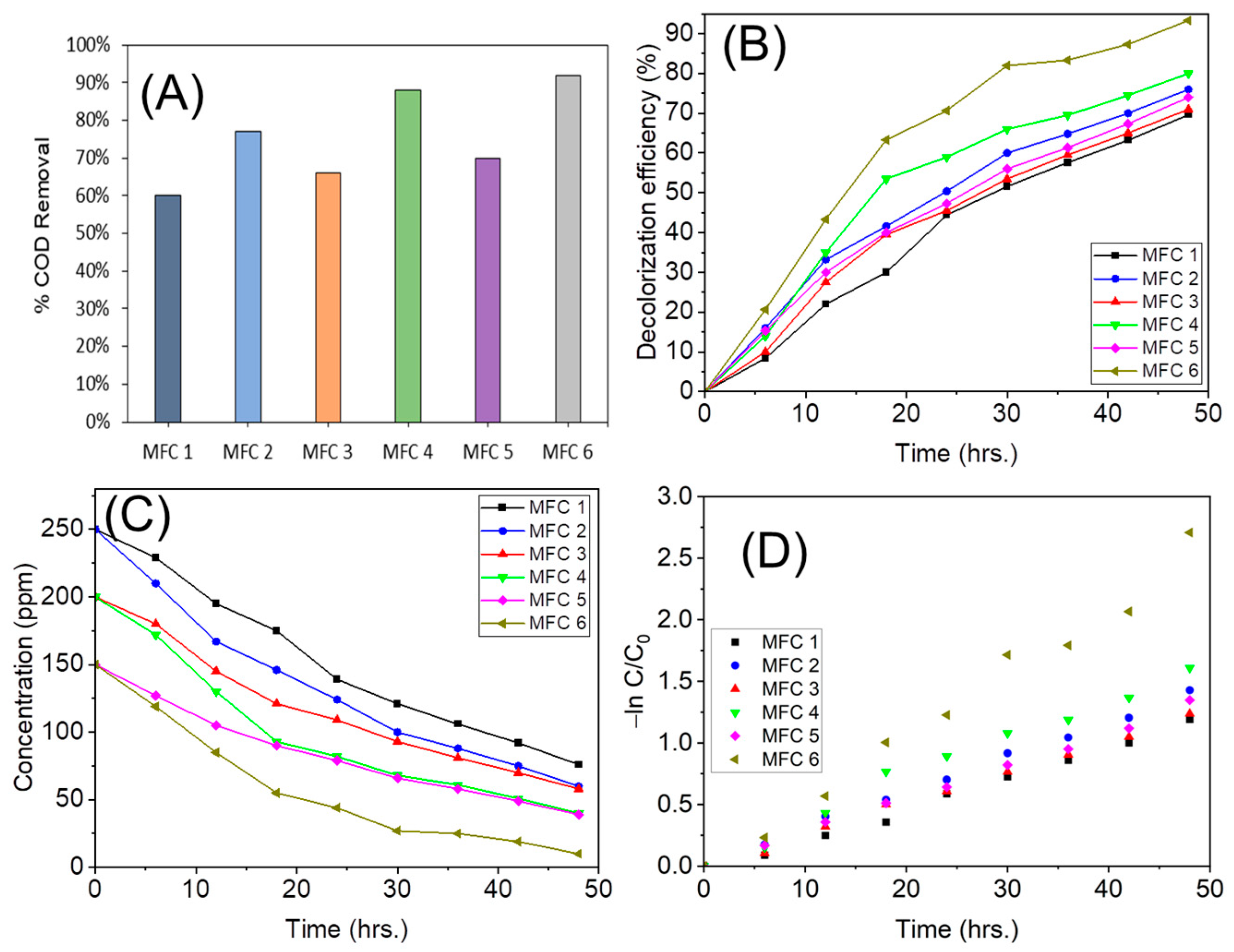
Percentage COD removal for all six MFC configurations without and with modified anodes and with different sunset yellow FCF concentrations are described in Figure 2A. The COD removal (%) for MFC configurations using an unmodified CF anode was 60% for MFC1, 66% for MFC 3, and 70% in the case of MFC 5; while for the MFCs with an Fe2O3-modified CF anode, the COD removal (%) was found to be 77%, 88%, and 92% for MFC 2, MFC 4, and MFC 6, respectively (Figure 2A). The results indicated that the maximum COD removal (%) was observed for MFC 6. The order of % COD removal for the different MFC configurations studied in the current work is MFC 6 > MFC 4 > MFC 2 > MFC 5 > MFC 3 > MFC 1. Superior performance of MFCs was observed when experiments were performed using Fe2O3-modified CF anode material. Surface modification can enhance the adherence and proliferation of electroactive bacteria by increasing surface area, thereby maximizing their metabolic pathways for COD removal. Higher dye concentrations, however, may result in less COD removal in MFCs. This is explained by the toxicological effects of concentrated dyes on microbial activity, which reduce the productivity of biological processes for COD removal [30].
It is revealed that the concentration of sunset yellow FCF azo dye in the MFC feed continuously decreased with respect to time (h) after being treated in MFCs (Figure 2B). At the start of experiments, the initial concentrations of sunset yellow FCF azo dye were 150, 200, and 250 mg/L. After a period of 48 h, the concentrations of sunset yellow FCF azo dye for MFC 1, MFC 3, and MFC 5 equipped with a CF anode were decreased to 76 mg/L, 58 mg/L, and 39 mg/L, respectively, while in case of MFC 2, MFC 4, and MFC 6, equipped with an Fe2O3-modified CF anode, they were found to be 60 mg/L, 40 mg/L, and 10 mg/L. The results indicated that the concentration of sunset yellow FCF dye decreased over time across different MFC configurations; however, the decrease was more pronounced for the MFC studied, which used an Fe2O3-modified CF anode. It has been ascertained that azo dyes can be significantly degraded in the MFC anodic compartment due to the cleavage of the azo bond by bacteria, either directly or indirectly at the anode, generating intermediate products [31].
Decolorization efficiencies of all six MFC configurations were also evaluated (Figure 2C). For a period of 48 h, the sunset yellow FCF azo dye decolorization efficiencies for MFC 1, MFC 3, and MFC 5 equipped with a CF anode were depicted to be 69.6 ± 3.01%, 71 ± 2.78%, and 74.0 ± 4.0%, respectively; meanwhile, the decolorization efficiencies for MFC 2, MFC 4, and MFC 6 equipped with an Fe2O3-modified CF anode were found to be 76 ± 3.03%, 80 ± 4.2%, and 93.3 ± 3.05%, respectively, which were significantly higher than those MFC configurations where anode was bare/unmodified CF. In a previous study, the decolorization extent of different dyes, i.e., sunset yellow FCF, Allura red, and Tartrazine, was investigated using the MFC technique, with reported values of 93%, 96.6%, and 91.41%, respectively [26]. According to a previous report, the impact of B. subtilis and A. hydrophila on the % decolorization efficiency of sunset yellow dye and Malachite green dye was investigated in Microbial Desalination Cells (MDCs). The percentage decolorization of sunset yellow dye was found to be 92 ± 4% using B. subtilis, while the percentage decolorization of Malachite green dye was revealed to be 56 ± 5%. However, lower % decolorization efficiencies were observed for A. hydrophila, which were 35 ± 6% for Malachite green dye and 41 ± 5% for sunset yellow dye [32]. The brilliant red (X-3B) azo dye decolorization has also been investigated previously using MFCs fabricated within a wetland system. With the above MFC configuration, the highest percentage decolorization of brilliant red azo dye was 91.24% [17]. Comparatively, in current studies, the % decolorization of sunset yellow dye while using the MFC equipped with an Fe2O3-modified CF anode and fed with 150 mg/L was 93.3 ± 3.0%, which was comparable to previously reported studies [26,32].

2.2.2. Decolorization Kinetics

The decolorization kinetics of sunset yellow FCF in MFCs followed first-order kinetics. Most of the azo dye degradation reactions in MFCs follow first-order or pseudo-first-order kinetics [3,33]. This study used first-order kinetics for modelling because the experimental findings showed a strong linear relationship (Figure 2D). The first-order model effectively described the degradation process. The rate constants of sunset yellow FCF degradation for MFCs fabricated with Fe2O3-modified CF, i.e., MFC 2, MFC 4, and MFC 6, were revealed to be 0.0349 (R2 = 0.9975), 0.0397 (R2 = 0.9842), and 0.065 (R2 = 0.9855), respectively. On the other hand, the rate constants for MFCs fabricated with bare CF, i.e., MFC 1, MFC 3, and MFC 5, were found to be 0.0303 (R2 = 0.995), 0.0307 (R2 = 0.9963), and 0.0325 (R2 = 0.9972), respectively (Figure 2D). These findings revealed that the efficiencies of MFCs in terms of sunset yellow FCF degradation were potentially enhanced after modification of the CF anode with Fe2O3 nanoparticles. An earlier investigation revealed that the azo dye decolorization process in an MFC’s anode chamber was an electron-consumption process and that the rate of azo dye decolorization was affected by the number of electrons transferred from the co-substrate to the sunset yellow FCF azo dye. In the case of MFCs in the experiment carried out with Fe2O3-modified anodes, the rate of electron production and transfer in MFCs was probably higher than that of MFC experiments carried out using a bare CF anode. This might be attributed to morphological changes in the anode surface (from smooth to rough) that result in biofilm enrichment and improved electron flow, along with faster dye decolourization [34].

2.2.3. Voltage Generation, Power, and Corresponding Current Densities

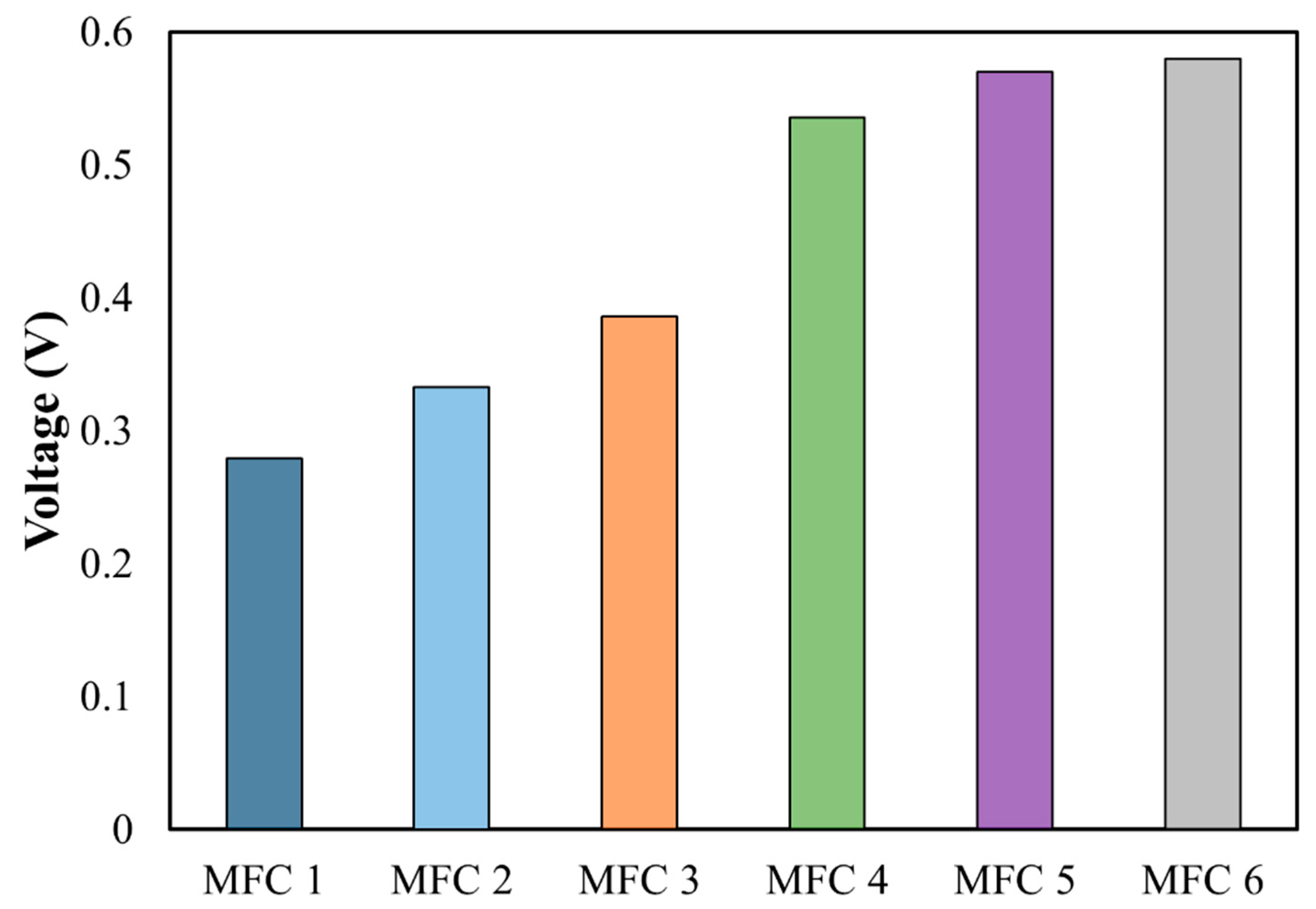
In present study, output voltages using various MFC electrode configurations were also investigated. The stable voltages generated in the case of MFC experiments carried out with a bare CF anode at an external resistance of 500 Ω were depicted to be 0.279 V for MFC 1, 0.386 V for MFC 3, and 0.570 V for MFC 5, respectively, while MFCs equipped with an Fe2O3-modified CF anode showed stable voltages of 0.333 V for MFC 2, 0.536 V for MFC 4, and 0.580 V for MFC 6, respectively. The voltage profile of the MFC equipped with synthetic wastewater containing sunset yellow FCF azo dye is shown in Figure 3. The MFC reached the highest voltage of 0.580 V in the case of MFC 6. Fe2O3 might be responsible for this high-voltage output. This implies that the greater conductivity of the Fe2O3-modified CF electrode likely contributes towards its ability to facilitate electron transport to the anode. The bioelectricity generation capability of an MFC fabricated with a wetland system fed with brilliant red (X-3B) azo dye was evaluated in a previous study, and the highest voltage (610 mV) was achieved [17].
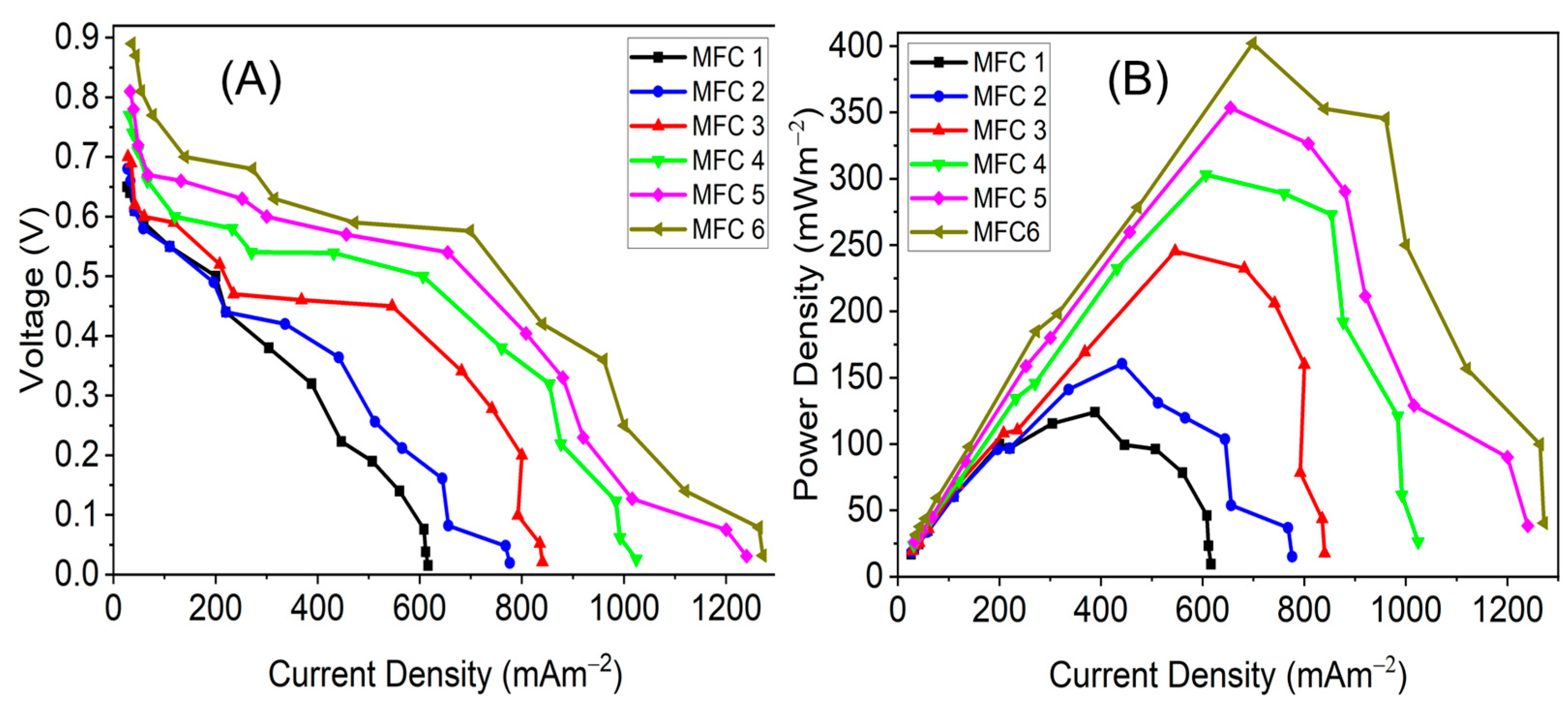
The most common electrochemical method for assessing the performance of MFCs is to construct polarization/power curves. These curves offer important information for characterizing the dynamics and chemistry of MFC operation. Based on the polarization/power curves, the maximum power density and corresponding current density in MFC 1, equipped with a CF anode and fed with synthetic wastewater containing sunset yellow dye, FCF concentration 250 mg/L, were 124.12 mW/m2 and 387.88 mAm−2, respectively. Whereas the maximum power density and current density in MFC 2 with Fe2O3@CF were found to be 303.03 mW/m2 and 606.06 mAm−2, respectively, represented in Figure 4A,B. On the other hand, MFC 3 with a CF anode and synthetic wastewater containing sunset yellow dye FCF concentration 200 mg/L in anolyte feed showed the maximum power density and current density, i.e., 160.60 mW/m2 and 441.21 mAm−2, which were lesser than those (353.45 mW/m2 and 654.54 mAm−2) observed for MFC 4 equipped with Fe2O3-modified CF. The Fe2O3-modified CF anode exhibited a higher power density due to the Fe2O3, which probably improved the anode’s capabilities regarding the microorganism’s adherence and facilitated the electron transfer. Likewise, the highest power density and corresponding current density were 245.45 mW/m2 and 545.45 mAm−2, respectively, for MFC 5 with a CF anode and a sunset yellow dye FCF concentration of 150 mg/L in the anolyte feed. Comparatively, 402.15 mW/m2 and 698.18 mAm−2 were the maximum power density and corresponding current density for MFC 6, utilizing an Fe2O3-modified CF anode and sunset yellow dye FCF concentration 150 mg/L in anolyte feed (Figure 4A,B). Compared with the others, MFC 6 exhibited optimal performance. The results showed that the highest power and current densities were achieved at low dye concentrations. The order of power density for the different MFC configurations studied in the current work is MFC 6 > MFC 4 > MFC 2 > MFC 5 > MFC 3 > MFC 1. In a previous study, MFCs fed with synthetic wastewater with an initial COD (550 mg/L) containing methyl orange azo dye (50 mg/L) resulted in 94.04 ± 2.87% COD removal and 94.22 ± 1.33% methyl orange azo dye removal, with a power density of 148.29 mW/m3 and corresponding current density of 544.6 mA/m3 [6].

2.3. Phytotoxicity Analysis Using Wheat Plants

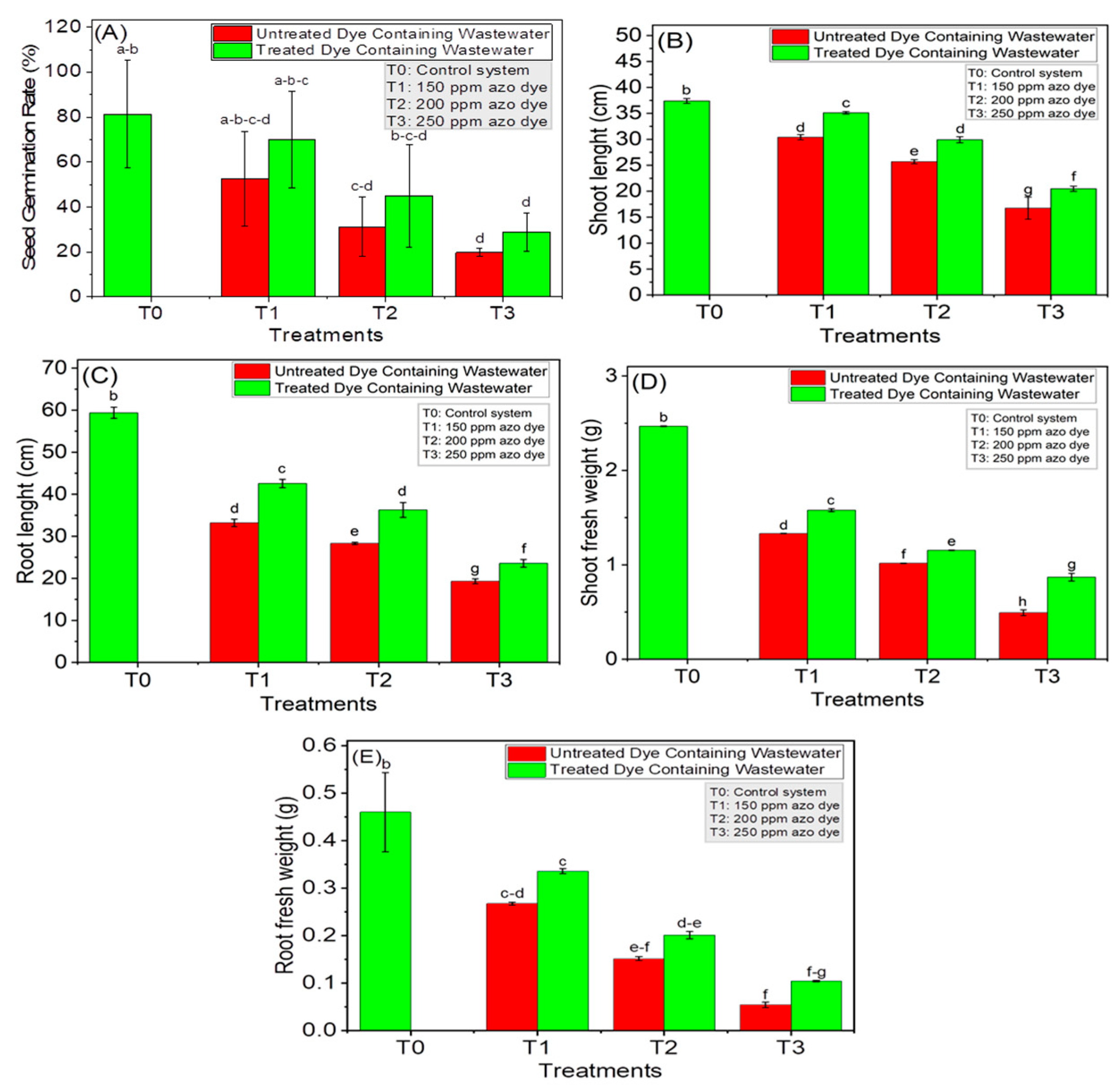
The seed germination rate (%) of different treatment groups is presented in Figure 5A. According to ANOVA, a significant difference (p < 0.001) in seed germination rate was observed for treatment groups T1, T2, and T3 compared to the control group T0. On the other hand, the seed germination rates for the treatment groups T1*, T2*, and T3* were higher but still lower than that of the control group T0. A decrease in shoot length (cm) was observed in wheat plants irrigated with untreated synthetic wastewater containing sunset yellow FCF compared with the control (anolyte without dye). The highest decrease in shoot length was noted in the case of treatment (T3) as compared to control (T0), while a minimum diminution in shoot length was observed in T1 as compared to control T0. The results of the analysis of variance (ANOVA) for the shoot length presented in Figure 5B revealed a significant difference (p < 0.001) between synthetic wastewater containing sunset yellow FCF stress and controlled irrigation of wheat plants. However, in the case of irrigation of wheat plants with treated wastewater (T1*, T2*, and T3*), an increase in shoot length was observed towards the normal shoot length. Similar trends were observed when the impact of treated and untreated wastewater on root length was evaluated (Figure 5C). The irrigation of the wheat plants with untreated sunset yellow FCF dye-containing wastewater treatments (T1, T2, and T3) also negatively impacted the shoot fresh weight (g) and root fresh weight (g) when compared with the control group (anolyte without dye), and as per ANOVA the difference was significant (p < 0.001). This decrease in shoot and root fresh weight in wheat plants may be attributed to stress caused by sunset yellow FCF present in the treatment wastewater. However, the decrease in the shoot fresh weight and root fresh weight of the wheat plants in the groups that were irrigated with wastewater treated through an MFC (T1*, T2*, and T3*) was revealed to be less than that of those irrigated with untreated wastewater (T1, T2, and T3). Comparable results were also obtained regarding the impact of treated and untreated sunset yellow FCF dye-containing wastewater on shoot fresh weight and root fresh weight (Figure 5D,E). Industrial effluents containing azo dyes have been known to cause toxicity to plants and aquatic life as well. The released dyes usually inhibit the penetration of sunlight in water bodies, resulting in declined photosynthesis followed by stunted growth, which affects both aquatic fauna and flora [35]. Many commonly employed dyes are composed of chemical compounds that are highly toxic to plants, thereby disrupting their metabolic processes, causing physical damage, and ultimately leading to plant death [36]. Accumulation of azo dyes in plants’ leaves and roots may also result in failure of cellular processes [37]. In a previous study, the direct red 28 (Congo red), a diazo dye displayed toxic effects on Lemna minor (an aquatic plant) such as reduction in root length, biomass and chlorophyll content in addition to the induction of nuclear aberrations, which might be attributed to the intercalation of the dye between DNA pairs, leading to apoptotic/necrotic cells and cytotoxicity [38].
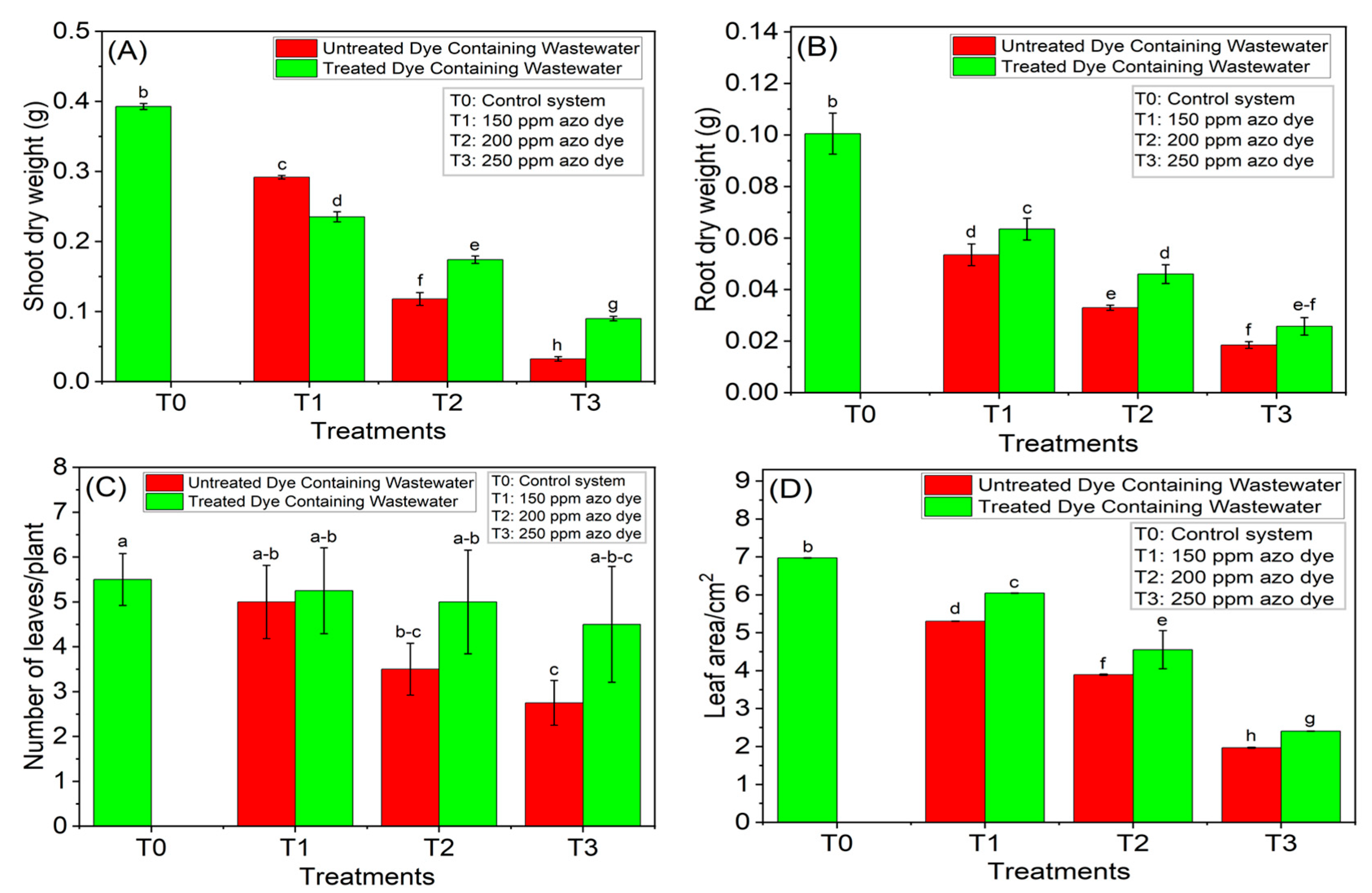
A significant decrease (p < 0.001) as per ANOVA was observed in the shoot dry weight and root dry weight (Figure 6A,B) of wheat plants in the case of treatment groups T1, T2, and T3 as compared with the control group (anolyte without dye). The observed decrease in shoot and root dry weight may be due to stress from higher levels of the sunset yellow FCF azo dye in untreated wastewater compared with treated wastewater. However, when irrigation was done while using treated wastewaters T1*, T2*, and T3*, an increase in the shoot dry weight and root dry weight of wheat plants was recorded.
The number of wheat leaves per plant decreased across all treatments (T1, T2, and T3), likely due to stress caused by the higher azo dye concentration in untreated wastewater (Figure 6C). The maximum reduction in the number of leaves/plant was observed in the T3 treatment compared with the control (T0), whereas the minimum reduction was observed in the T1 treatment compared with the control (T0). Likewise, a significant decrease (p < 0.001) in leaf area/plant was also observed (Figure 6D) for all the untreated wastewater treatment groups, i.e., T1, T2, and T3, and treated wastewater treatment groups, i.e., T1*, T2*, and T3*. However, the decrease was comparatively slight when wheat was irrigated with treated wastewater, containing lower sunset yellow FCF azo dye stress. An earlier investigation in 2018, reported that sunset yellow decreased both root and shoot length in maize plants [39]. Previous research on the harmful effects of azo dyes on plants has indicated that these substances induce DNA damage, programmed cell death, and abnormalities in somatic cell division. These adverse effects lead to reduced root growth and inhibition of cell division [40,41].

2.4. Biochemical Parameters

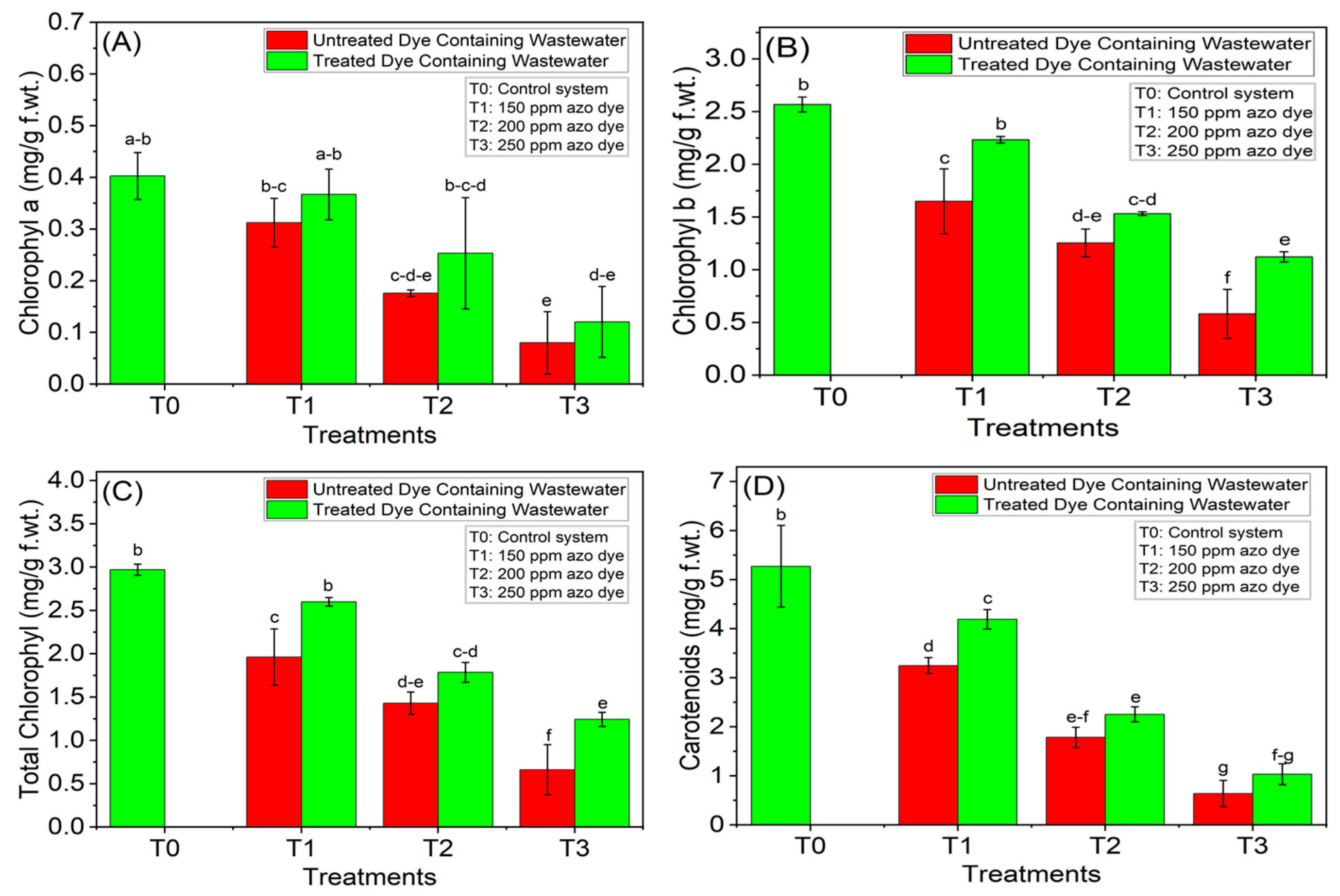
“Chlorophyll concentration” is often used as a measure of plant health because it decreases in stressed plants. The impact of treated and untreated wastewater containing sunset yellow FCF azo dye was also evaluated on the chlorophyll contents “a” and “b” of wheat plants. It is revealed in Figure 7A,B that irrigation of wheat plants with untreated wastewater (T1, T2, and T3) resulted in a decrease when compared with the control group (T0) in chlorophyll contents “a” and “b” of wheat plants. However, chlorophyll contents “a” and “b” were comparatively higher when irrigation of wheat plants was done with treated wastewater. According to ANOVA, a significant difference (p < 0.001) in chlorophyll a and b was observed for treatment groups T1, T2, and T3 compared to the control group T0. A significant difference in total chlorophyll content for the control group and groups T1, T2, and T3 was also ascertained (Figure 7C). It was noticed that the reduction in total chlorophyll content was comparatively lesser for T1*, T2*, and T3* groups than for T1, T2, and T3, which might be attributed to the lower concentrations of azo dye in treatments T1*, T2*, and T3*. Azo dyes, such as sunset yellow, are widely used in industry [42], but are most probably not biodegradable [43]. Studies have shown that exposure to various stresses can reduce chlorophyll levels in plants [44,45]. Sunset yellow, an anionic dye, is believed to interact with the magnesium in chlorophyll, thereby decreasing chlorophyll content [39].
Carotenoids also displayed a significant difference (p < 0.001) in wheat samples irrigated with treatments (untreated wastewater) T1, T2, and T3 as compared with those wheat plants with regular irrigation (Figure 7D). An increase in carotenoid content was found when irrigation was carried out with treated wastewater (T1*, T2*, and T3*), moving towards the normal values.
In the presented work, the impact of electrode modification on MFC performance in terms of dye decolorization, COD removal, and bioelectricity generation was evaluated, and based on the results it is ascertained that the performance of the MFC was considerably improved after modification of the MFC anode with Fe2O3 nanoparticles. Furthermore, the variation in the results of the current study with those of previous ones might be due to numerous factors, such as size/design of the MFC reactor and electrodes, anode/cathode material and their conductivity, spacing between the electrodes, electrode’s surface area to facilitate microbial adhesion, wastewater/anolyte composition and complexity, active microbial communities/microbial inoculum employed, catholyte and electron accepter, etc. The findings are highly significant, suggesting Fe2O3 as a cheap and efficient anode material that significantly enhances the performance of MFCs in dye decolorization and power generation. Moreover, based on phytotoxicity investigations, it was found that dye-containing industrial wastewaters/effluents treated in MFCs may be used for irrigation with minimal phytotoxicity. However, while there have been advancements in electrode materials, MFC technology for dye removal is still in the phase of optimization rather than widespread application. The performance limitations observed in this study indicate that further breakthroughs are required to render MFCs viable for large-scale dye-removal applications.

3. Materials and Methods

3.1. Reagents/Chemicals

The chemicals/reagents used in the research were of analytical grade and purchased from Sigma-Aldrich (St. Louis, MO, USA).

3.2. MFC Design and Operation

A dual-chamber (DC-MFC) was used in this research. Sunset yellow FCF dye containing organic waste was biodegraded in the anodic chamber, and the reduction of electron acceptors, i.e., O2 (supplied in the cathode department), was carried out at the cathode. A separator (pretreated proton exchange membrane (Nafion 117)) was used to separate both compartments of the MFC to avoid the intermixing of the two solutions and to help in the transfer of protons from the anode to the cathode. The resulting voltage (V) was measured across an external resistor (500 Ω) using a multimeter. Each chamber of the MFC had a maximum volume capacity of 200 mL. A carbon cloth was employed as the cathode, while CF before and after modification with Fe2O3 nanoparticles was utilized as the anode. Each electrode had a 5 × 5 cm2 area. Six MFC configurations were studied, i.e., an MFC equipped with a CF anode and synthetic wastewater containing 250 mg/L sunset yellow FCF azo dye (MFC1), an MFC equipped with an Fe2O3-modified CF anode and synthetic wastewater containing 250 mg/L sunset yellow FCF azo dye (MFC2), an MFC equipped with a CF anode and synthetic wastewater containing 200 mg/L sunset yellow FCF azo dye (MFC3), an MFC equipped with an Fe2O3-modified CF anode and synthetic wastewater containing 200 mg/L sunset yellow (MFC4), an MFC equipped with a CF anode and synthetic wastewater containing 150 mg/L sunset yellow FCF azo dye (MFC5), and an MFC equipped with an Fe2O3-modified CF anode and synthetic wastewater containing 150 mg/L sunset yellow (MFC6). All the MFCs were inoculated with sludge (as a source of mixed microbial communities) and operated under identical conditions to ensure consistency of the inoculum. The inoculum was enriched for biofilm formation over time until a stable voltage was achieved. Nutritional feed was also added to support the microbial growth. The dye concentrations were chosen to simulate realistic industrial conditions and to reflect the moderate to high levels of dye contamination typically found in dye-containing industrial wastewater [46].

3.3. Synthetic Wastewater Composition

Synthetic wastewater containing sunset yellow FCF dye consisted of 0.13 g/L of KCl, 0.15 g/L of sodium acetate (CH3COONa), 3.13 g/L of NaHCO3, 0.31 g/L of NH4Cl, 4.97 g/L of NaH2PO4, 2.75 g/L of Na2HPO4, along with 0.15 g/L glucose and different sunset yellow FCF dye concentrations, i.e., 150, 200, and 250 mg/L.

3.4. Synthesis and Characterization of Fe2O3 Nanomaterials

A hydrothermal approach was employed to prepare Fe2O3 nanoparticles [47]. Initially, a homogeneous solution was obtained by dissolving 4.052 g of FeCl3 6H2O in 100 mL of distilled H2O under continuous stirring at 80 °C for 30 min. The pH of the precursor solution was adjusted to 11 by adding 50 mL of ammonium hydroxide (NH4OH). This mixture was transferred to the autoclave and subjected to hydrothermal treatment at 160 °C for 12 h. The brown-coloured precipitates were formed and then separated by centrifugation at 6000 rpm. The product was thoroughly rinsed several times with distilled H2O and C2H5OH to remove residual reactants. Finally, the product was dried in air and calcined at 700 °C for 4 h. A previously reported dip-and-dry method was used to deposit Fe2O3 nanoparticles on carbon felt (CF) electrodes. Before deposition, CF was washed with distilled water, then with ethanol, and then dipped into an ultrasonically dispersed Fe2O3 suspension. After five minutes, the electrodes were withdrawn and dried. The process was repeated several times to ensure uniform coverage and adhesion [48,49]. By measuring the weight difference before and after coating, the quantity of iron oxide deposited on the anode was determined to be 6.3 mg. Although some studies report performance implications of Fe2O3 anodes, including leaching and performance decline in batteries, this aspect is not widely reported for MFCs. And this research did not explore the life cycle assessment of the said anodes [50]. SEM analysis (Evo LS 10, Zeiss, Berlin, Germany) was used to assess the surface morphology of produced nanoparticles (Fe2O3) at an accelerating voltage of 20 kV. Particle morphology was observed at a 12 mm working distance and 15.07 KX magnification. XRD analysis (Bruker D8 Advance, Berlin, Germany) was used to determine the diffraction angles, phase purity and crystal structure of the synthesized nanoparticles. XRD patterns were recorded at 40 kV and 30 mA using a Cu Kα radiation source (λ = 1.5406 Å) over a 2θ range of 20–80°.

3.5. Chemical Oxygen Demand & % COD Reduction

COD is one of the imperative water quality parameters. The American Public Health Association (APHA) method [51] and EPA Method 410.4, Revision 2.0, were used to assess COD values in the wastewater samples during the experiments. Additionally, % COD reduction was calculated using the following Equation (1):
%   C O D   R e d u c t i o n = C O D 0 C O D f C O D 0   × 100
where COD0 and CODf represent initial and final COD.

3.6. Decolorization Efficiency (%)

The sunset yellow FCF concentration was monitored at its λmax (482 nm) using a UV-Vis spectrophotometer (PEAK INSTRUMENT, C-7200, Shanghai, China). Samples from MFC reactors were removed after defined time intervals. To separate suspended biomass, the samples were initially centrifuged (5000× g, 30 min). After this, the supernatant liquid was analyzed in a 1 cm quartz cuvette. Where appropriate, dilutions were prepared with distilled water to keep absorbance readings within the instrument’s linear detection range, and the dilution factor was accounted for in calculations [52,53].
Contrarily, the fluctuation in sunset yellow FCF’s concentration in the synthetic wastewater samples was tracked by observing the variation in –N=N–-related absorbance at 482 nm. The decolorization efficiency of sunset yellow FCF during MFC operations was then calculated using the following Equation (2):
D E   ( % ) = ( A 0 A t ) A 0   ×   100
where A0, is the initial and At is the sunset yellow FCF absorbance at time t [54].

3.7. Kinetics Studies

The kinetics of sunset yellow FCF decolorization were investigated based on the first-order kinetic model given in Equation (3) [54]:
A = A 0 e kt
where A is the concentration of sunset yellow FCF at time t, A0 is the starting concentration of sunset yellow FCF (mg/L), and k is the rate constant.

3.8. Electrochemical Analysis

The voltage generated during MFC was measured with the help of a multimeter datalogger (PicoLog 1216, Cambridgeshire, UK), while the current (I) was calculated using Ohm’s law, i.e.,
I = V R
whereas the power density (P) was determined using the following expression:
P = V 2 R e x t A
where “V” is MFC voltage, “A” (m2) denotes the surface area of the anode, and “Rext” stands for the external circuit’s resistance. “Rext” was gradually changed from 10 KΩ to 10 Ω to draw the polarization and power curves.

3.9. Phytotoxicity Assessment

Phytotoxicity studies were carried out using wheat plants (T. aestivum) treated/irrigated with synthetic wastewater containing sunset yellow FCF azo dye, using different concentrations before treatment (T1 (150 ppm), T2 (200 ppm), and T3 (250 ppm)) and after treatment (T1* (150 ppm), T2* (200 ppm), and T3* (250 ppm)) using MFC technology. Each treatment had three replicates. Pots were filled with soil, and 6 seeds of wheat were sown in each pot. Treated and untreated wastewater samples were used without any dilution. Within one week, the seeds had germinated. Seed germination percentage (%) was measured, and after a 30-day trial, plant growth parameters such as root and shoot length, fresh and dry root and shoot biomass, number of leaves per plant, and leaf area per plant were analyzed. To determine the chlorophyll content (chlorophyll a, b) and carotenoids, the previously developed method was followed [55].

4. Conclusions

Conclusively, it has been ascertained that modifying the MFC anode with Fe2O3 has had a significant positive impact on the operational performance of MFCs. With a modified CF anode in MFCs, significantly higher % COD removal and sunset yellow dye decolorization efficiency (%) were recorded when compared with MFC operations carried out using a bare CF anode. Similar trends were observed in power generation. Performance efficiencies of different MFCs with modified electrodes were found to be MFC 6 > MFC 4 > MFC 2. The observed improvement in MFC performance characteristics may be attributed to the high conductivity and surface area of the Fe2O3 nanoparticles used to modify the MFC anode.

Author Contributions

Conceptualization, M.W.M., H.M. and M.E.O.; methodology, M.A. (Muneeba Arshad); software, M.A. (Mohammad Aatif); validation, G.M., M.A. (Muneeba Arshad) and M.A.R.; formal analysis, M.A.R.; investigation, M.A. (Muneeba Arshad); resources, M.W.M.; data curation, M.F.; writing—original draft preparation, H.S.K.; writing—review and editing, M.F. and M.A.R.; visualization, W.M.; supervision, M.W.M.; project administration, M.W.M. and H.M.; funding acquisition, M.E.O. All authors have read and agreed to the published version of the manuscript.

Funding

This work was supported by the Deanship of Scientific Research, Vice Presidency for Graduate Studies and Scientific Research, King Faisal University, Saudi Arabia [Grant No. KFU261019].

Data Availability Statement

Some of the models or code that support the findings of this study are available from the corresponding author upon reasonable request.

Acknowledgments

The authors express gratitude to the Higher Education Commission, Pakistan, for providing financial support for the presented work through NRPU project # 20-14751/NRPU/R&D/HEC/2021.

Conflicts of Interest

The authors declare no conflicts of interest.

References

  1. Zamora-Ledezma, C.; Negrete-Bolagay, D.; Figueroa, F.; Zamora-Ledezma, E.; Ni, M.; Alexis, F.; Guerrero, V.H. Heavy metal water pollution: A fresh look about hazards, novel and conventional remediation methods. Environ. Technol. Innov. 2021, 22, 101504. [Google Scholar] [CrossRef]
  2. Yaqoob, A.A.; Khatoon, A.; Mohd Setapar, S.H.; Umar, K.; Parveen, T.; Mohamad Ibrahim, M.N.; Ahmad, A.; Rafatullah, M. Outlook on the role of microbial fuel cells in remediation of environmental pollutants with electricity generation. Catalysts 2020, 10, 819. [Google Scholar] [CrossRef]
  3. Khan, M.D.; Li, D.; Tabraiz, S.; Shamurad, B.; Scott, K.; Khan, M.Z.; Yu, E.H. Integrated air cathode microbial fuel cell-aerobic bioreactor set-up for enhanced bioelectrodegradation of azo dye Acid Blue 29. Sci. Total Environ. 2021, 756, 143752. [Google Scholar] [CrossRef]
  4. Kalra, A.; Gupta, A. Recent advances in decolourization of dyes using iron nanoparticles: A mini review. Mater. Today Proc. 2021, 36, 689–696. [Google Scholar] [CrossRef]
  5. Vinayak, A.; Singh, G.B. Synthetic azo dye bio-decolorization by Priestia sp. RA1: Process optimization and phytotoxicity assessment. Arch. Microbiol. 2022, 204, 318. [Google Scholar] [CrossRef]
  6. Mittal, Y.; Dash, S.; Srivastava, P.; Mishra, P.M.; Aminabhavi, T.M.; Yadav, A.K. Azo dye containing wastewater treatment in earthen membrane based unplanted two chambered constructed wetlands-microbial fuel cells: A new design for enhanced performance. Chem. Eng. J. 2022, 427, 131856. [Google Scholar] [CrossRef]
  7. Rehman, K.; Shahzad, T.; Sahar, A.; Hussain, S.; Mahmood, F.; Siddique, M.H.; Siddique, M.A.; Rashid, M.I. Effect of Reactive Black 5 azo dye on soil processes related to C and N cycling. PeerJ 2018, 6, e4802. [Google Scholar] [CrossRef]
  8. Rafaqat, S.; Ali, N.; Torres, C.; Rittmann, B. Recent progress in treatment of dyes wastewater using microbial-electro-Fenton technology. RSC Adv. 2022, 12, 17104–17137. [Google Scholar]
  9. Qiu, H.; Shen, F.; Yin, A.; Liu, J.; Wu, B.; Li, Y.; Xiao, Y.; Hai, J.; Xu, B. Biodegradation and detoxification of azo dyes by halophilic/halotolerant microflora isolated from the salt fields of Tibet autonomous region China. Front. Microbiol. 2022, 13, 877151. [Google Scholar] [CrossRef]
  10. Mahmood, R.; Sharif, F.; Ali, S.; Hayyat, M. Bioremediation of textile effluent by indigenous bacterial consortia and its effects on Zea mays L. CV C1415. J. Anim. Plant Sci. 2013, 23, 1193–1199. [Google Scholar]
  11. Younas, S.; Rizvi, H.; Ali, S.; Abbas, F. Irrigation of Zea mays with UASB-treated textile wastewater; effect on early irrigation of Zea mays with UASB-treated textile wastewater; effect on early growth and physiology. Environ. Sci. Pollut. Res. 2020, 27, 15305–15324. [Google Scholar] [CrossRef]
  12. Ali, A.E.; Chowdhury, Z.Z.; Devnath, R.; Ahmed, M.M.; Rahman, M.M.; Khalid, K.; Wahab, Y.A.; Badruddin, I.A.; Kamangar, S.; Hussien, M. Removal of azo dyes from aqueous effluent using bio-based activated carbons: Toxicity aspects and environmental impact. Separations 2023, 10, 506. [Google Scholar] [CrossRef]
  13. Mancuso, A.; Mottola, S.; Sacco, O.; Vaiano, V.; De Marco, I. Photocatalytic degradation of ceftriaxone using TiO2 coupled with ZnO micronized by supercritical antisolvent route. Nanomaterials 2023, 13, 3130. [Google Scholar] [CrossRef]
  14. Rojas-Flores, S.J.; Liza, R.; Nazario-Naveda, R.; Díaz, F.; Delfin-Narciso, D.; Gallozzo Cardenas, M.; Alviz-Meza, A. Sustainable Energy and Simultaneous Remediation: A Review of the Synergy Between Microbial Fuel Cells and Textile Dye Decolorization. Processes 2025, 13, 3986. [Google Scholar] [CrossRef]
  15. Mani, P.; Fidal, V.; Bowman, K.; Breheny, M.; Chandra, T.; Keshavarz, T.; Kyazze, G. Degradation of azo dye (acid orange 7) in a microbial fuel cell: Comparison between anodic microbial-mediated reduction and cathodic laccase-mediated oxidation. Front. Energy Res. 2019, 7, 101. [Google Scholar] [CrossRef]
  16. Mier, A.A.; Olvera-Vargas, H.; Mejía-López, M.; Longoria, A.; Verea, L.; Sebastian, P.; Arias, D.M. A review of recent advances in electrode materials for emerging bioelectrochemical systems: From biofilm-bearing anodes to specialized cathodes. Chemosphere 2021, 283, 131138. [Google Scholar] [CrossRef]
  17. Fang, Z.; Song, H.-L.; Cang, N.; Li, X.-N. Performance of microbial fuel cell coupled constructed wetland system for decolorization of azo dye and bioelectricity generation. Bioresour. Technol. 2013, 144, 165–171. [Google Scholar] [CrossRef]
  18. Khan, S.S.; Amjad, M.; Shareef, H.; Larkin, S. Review of microbial fuel cell from a techno-economic perspective. Energy Explor. Exploit. 2024, 42, 373–398. [Google Scholar] [CrossRef]
  19. Agrahari, R.; Bayar, B.; Abubackar, H.N.; Giri, B.S.; Rene, E.R.; Rani, R. Advances in the development of electrode materials for improving the reactor kinetics in microbial fuel cells. Chemosphere 2022, 290, 133184. [Google Scholar] [CrossRef]
  20. Nosek, D.; Jachimowicz, P.; Cydzik-Kwiatkowska, A. Anode modification as an alternative approach to improve electricity generation in microbial fuel cells. Energies 2020, 13, 6596. [Google Scholar] [CrossRef]
  21. Hassan, N. Catalytic performance of nanostructured materials recently used for developing fuel cells’ electrodes. Int. J. Hydrogen Energy 2021, 46, 39315–39368. [Google Scholar] [CrossRef]
  22. Rong, Q.; Du, J.S.; Chen, X.; Liu, Q.; Dravid, V.P. A Bidirectional Nanomodification Approach for Synthesizing Hierarchically Architected Mixed Oxide Electrodes for Oxygen Evolution. Small 2021, 17, 2007287. [Google Scholar] [CrossRef]
  23. Yaqoob, A.A.; Ibrahim, M.N.M.; Umar, K. Electrode material as anode for improving the electrochemical performance of microbial fuel cells. In Energy Storage Battery Systems-Fundamentals and Applications; IntechOpen: London, UK, 2021. [Google Scholar]
  24. Baker, A.; Hamdaoui, O.; El Blidi, L.; Hadj-Kali, M.K.; Alghyamah, A. Ultrasound/Peracetic Acid Degradation of Sunset Yellow FCF: Scavenger-Mapped Radical Pathways and the Impact of Salts and Environmental Water Matrices. Catalysts 2025, 15, 1044. [Google Scholar] [CrossRef]
  25. Ciğeroğlu, Z.; El Messaoudi, N.; Miyah, Y.; Georgin, J.; Franco, D.S.P.; Benjelloun, M.; Şenol, Z.M.; Kazan-Kaya, E.S.; Temur Ergan, B. Recent advances in the removal of Sunset Yellow dye from wastewater: A review. Sustain. Mater. Technol. 2024, 42, e01187. [Google Scholar] [CrossRef]
  26. Tacas, A.C.J.; Tsai, P.-W.; Tayo, L.L.; Hsueh, C.-C.; Sun, S.-Y.; Chen, B.-Y. Degradation and biotoxicity of azo dyes using indigenous bacteria-acclimated microbial fuel cells (MFCs). Process Biochem. 2021, 102, 59–71. [Google Scholar] [CrossRef]
  27. Kumar, V.; Singh Ahlawat, D.; Kumar, P.; Singh, O.; Singh, A.; Kumar, S. Yttrium ion influence on the structural, electrical, dielectric, and magnetic properties of α-Fe2O3 nanoparticles synthesized via Sol-Gel method. Mater. Sci. Eng. B 2024, 304, 117351. [Google Scholar] [CrossRef]
  28. Hjiri, M.; Zahmouli, N.; Khouzami, K.; Mir, L.E.; Aida, M.S.; Moulaee, K.; Lemine, O.M.; Leonardi, S.G.; Neri, G. A comparison of NO2 sensing characteristics of α-and γ-iron oxide-based solid-state gas sensors. Appl. Phys. A 2020, 126, 788. [Google Scholar] [CrossRef]
  29. Asoufi, H.M.; Al-Antary, T.M.; Awwad, A.M. Green route for synthesis hematite (α-Fe2O3) nanoparticles: Toxicity effect on the green peach aphid, Myzus persicae (Sulzer). Environ. Nanotechnol. Monit. Manag. 2018, 9, 107–111. [Google Scholar]
  30. Tan, S.-M.; Ong, S.-A.; Ho, L.-N.; Wong, Y.-S.; Abidin, C.Z.A.; Thung, W.-E.; Teoh, T.-P. Biotreatment of sulfonated dyestuffs with energy recovery in microbial fuel cell: Influencing parameters, kinetics, degradation pathways, mechanisms, and phytotoxicity assessment. J. Environ. Chem. Eng. 2021, 9, 105525. [Google Scholar] [CrossRef]
  31. Oon, Y.-S.; Ong, S.-A.; Ho, L.-N.; Wong, Y.-S.; Oon, Y.-L.; Lehl, H.K.; Thung, W.-E.; Nordin, N. Disclosing the synergistic mechanisms of azo dye degradation and bioelectricity generation in a microbial fuel cell. Chem. Eng. J. 2018, 344, 236–245. [Google Scholar] [CrossRef]
  32. Kalleary, S.; Abbas, F.M.; Ganesan, A.; Meenatchisundaram, S.; Srinivasan, B.; Packirisamy, A.S.B.; krishnan Kesavan, R.; Muthusamy, S. Biodegradation and bioelectricity generation by microbial desalination cell. Int. Biodeterior. Biodegrad. 2014, 92, 20–25. [Google Scholar] [CrossRef]
  33. Das, A.; Mishra, S. Complete biodegradation of azo dye in an integrated microbial fuel cell-aerobic system using novel bacterial consortium. Int. J. Environ. Sci. Technol. 2019, 16, 1069–1078. [Google Scholar] [CrossRef]
  34. Nosek, D.; Mikołajczyk, T.; Cydzik-Kwiatkowska, A. Anode modification with Fe2O3 affects the anode microbiome and improves energy generation in microbial fuel cells powered by wastewater. Int. J. Environ. Res. Public Health 2023, 20, 2580. [Google Scholar] [CrossRef]
  35. Mehra, S.; Singh, M.; Chadha, P. Adverse impact of textile dyes on the aquatic environment as well as on human beings. Toxicol. Int. 2021, 28, 165. [Google Scholar] [CrossRef]
  36. Lellis, B.; Fávaro-Polonio, C.Z.; Pamphile, J.A.; Polonio, J.C. Effects of textile dyes on health and the environment and bioremediation potential of living organisms. Biotechnol. Res. Innov. 2019, 3, 275–290. [Google Scholar] [CrossRef]
  37. Tahir, U.; Yasmin, A.; Khan, U.H. Phytoremediation: Potential flora for synthetic dyestuff metabolism. J. King Saud Univ.-Sci. 2016, 28, 119–130. [Google Scholar] [CrossRef]
  38. Lobiuc, A.; Olaru, S.; Hancu, E.I.; Costica, N.; Fortuna, M.E.; Zamfirache, M.M.; Constantinescu, G. Toxicity and removal of Direct Red 28 diazo dye in living polymeric systems. Rev. Chim. 2018, 69, 1628–1635. [Google Scholar] [CrossRef]
  39. Dikilitaş, S.; Aksoy, Ö. The genotoxic effects of some food colorants on Zea mays L. var. saccharata Sturt. Caryologia 2018, 71, 438–445. [Google Scholar] [CrossRef]
  40. Dwivedi, K.; Kumar, G. Genetic damage induced by a food coloring dye (sunset yellow) on meristematic cells of Brassica campestris L. J. Environ. Public Health 2015, 2015, 319727. [Google Scholar]
  41. Vazhangat, P.; Thoppil, J.E. Apoptotic induction via membrane/DNA damage and metabolic inactivation by synthetic food colorants in Allium cepa root meristem. Turk. J. Biol. 2016, 40, 922–933. [Google Scholar] [CrossRef]
  42. Fitzgerald, S.W.; Bishop, P.L. Two stage anaerobic/aerobic treatment of sulfonated azo dyes. J. Environ. Sci. Health Part A 1995, 30, 1251–1276. [Google Scholar]
  43. Mohan, S.V.; Prasad, K.K.; Rao, N.C.; Sarma, P. Acid azo dye degradation by free and immobilized horseradish peroxidase (HRP) catalyzed process. Chemosphere 2005, 58, 1097–1105. [Google Scholar] [CrossRef]
  44. Soltangheisi, A.; Ishak, C.F.; Musa, H.M.; Zakikhani, H.; Rahman, Z.A. Phosphorus and zinc uptake and their interaction effect on dry matter and chlorophyll content of sweet corn (Zea mays var. saccharata). J. Agron. 2013, 12, 187–192. [Google Scholar] [CrossRef]
  45. Abd El-Ghany, T.; Masrahi, Y.; Mohamed, A.; Abboud, A.; Alawlaqi, M.; Elhussieny, N. Maize (Zea mays L.) growth and metabolic dynamics with plant growth promoting rhizobacteria under salt stresses. J. Plant Pathol. Microbiol. 2015, 6, 305. [Google Scholar]
  46. Yaseen, D.; Scholz, M. Textile dye wastewater characteristics and constituents of synthetic effluents: A critical review. Int. J. Environ. Sci. Technol. 2019, 16, 1193–1226. [Google Scholar] [CrossRef]
  47. Lassoued, A.; Lassoued, M.S.; Dkhil, B.; Ammar, S.; Gadri, A. Synthesis, photoluminescence and Magnetic properties of iron oxide (α-Fe2O3) nanoparticles through precipitation or hydrothermal methods. Phys. E Low-Dimens. Syst. Nanostructures 2018, 101, 212–219. [Google Scholar] [CrossRef]
  48. Tahir, K.; Miran, W.; Jang, J.; Maile, N.; Shahzad, A.; Moztahida, M.; Ghani, A.A.; Kim, B.; Jeon, H.; Lim, S.-R. Nickel ferrite/MXene-coated carbon felt anodes for enhanced microbial fuel cell performance. Chemosphere 2021, 268, 128784. [Google Scholar] [CrossRef] [PubMed]
  49. Tahir, K.; Miran, W.; Jang, J.; Shahzad, A.; Moztahida, M.; Kim, B.; Lee, D.S. A novel MXene-coated biocathode for enhanced microbial electrosynthesis performance. Chem. Eng. J. 2020, 381, 122687. [Google Scholar] [CrossRef]
  50. Liu, Y.; Li, K.; Dong, J.; Xu, L.; Li, Y.; Wang, N.; Li, S.; Ma, R. Enhancement of Stability and Conductivity of α-Fe2O3 Anodes by Doping with Cs+ for Lithium-Ion Battery. ACS Appl. Energy Mater. 2024, 7, 9953–9961. [Google Scholar] [CrossRef]
  51. Lamsal, B.; Wang, H.; Pinsirodom, P.; Dossey, A.T. Applications of insect-derived protein ingredients in food and feed industry. J. Am. Oil Chem. Soc. 2019, 96, 105–123. [Google Scholar] [CrossRef]
  52. Nawaz, A.; ul Haq, I.; Qaisar, K.; Gunes, B.; Raja, S.I.; Mohyuddin, K.; Amin, H. Microbial fuel cells: Insight into simultaneous wastewater treatment and bioelectricity generation. Process Saf. Environ. Prot. 2022, 161, 357–373. [Google Scholar] [CrossRef]
  53. Unsal, Y.E.; Soylak, M.; Tuzen, M. Column solid-phase extraction of sunset yellow and spectrophotometric determination of its use in powdered beverage and confectionery products. Int. J. Food Sci. Technol. 2012, 47, 1253–1258. [Google Scholar] [CrossRef]
  54. Mohamed, T.; El-Motlak, M.H.; Mamdouh, S.; Ashour, M.; Ahmed, H.; Qayyum, H.; Mahmoud, A. Excitation wavelength and colloids concentration-dependent nonlinear optical properties of silver nanoparticles synthesized by laser ablation. Materials 2022, 15, 7348. [Google Scholar] [CrossRef] [PubMed]
  55. Kumar, P.; Sharma, R. Development of SPAD value-based linear models for non-destructive estimation of photosynthetic pigments in wheat (Triticum aestivum L.). Indian J. Genet. Plant Breed. 2019, 79, 96–99. [Google Scholar] [CrossRef]
Figure 1. (A) XRD spectrum of synthesized Fe2O3 NPs, (B) SEM image of hematite (Fe2O3) nanoparticles, (C) SEM images of Fe2O3-coated carbon felt electrode.
Catalysts 16 00313 g001
Figure 2. (A) COD removal (%) for different MFCs operated on synthetic wastewater containing different sunset yellow FCF concentrations, (B) decolorization efficiency (%) of sunset yellow FCF, (C) variations in concentration of sunset yellow FCF during MFC operations, and (D) decolorization kinetics in MFC.
Catalysts 16 00313 g002
Figure 3. Voltage generation for MFCs using sunset yellow-containing wastewater with bare and Fe2O3-modified CF anodes.
Catalysts 16 00313 g003
Figure 4. (A) Polarization curve and (B) power density curve for MFC 1, MFC 2, MFC 3, MFC 4, MFC 5, and MFC 6.
Catalysts 16 00313 g004
Figure 5. (A) Seed germination rate (%), (B) shoot length, (C) root length, (D) shoot fresh weight and (E) root fresh weight of wheat plants, after irrigation with treated and untreated wastewater containing sunset yellow FCF azo dye. Different letters above the bars indicate statistically significant differences among treatments.
Catalysts 16 00313 g005
Figure 6. (A) Shoot dry weight, (B) root dry weight, (C) number of leaves, (D) leaf area of wheat plants after irrigation with treated and untreated wastewater containing sunset yellow FCF azo dye. Different letters above the bars indicate statistically significant differences among treatments.
Catalysts 16 00313 g006
Figure 7. (A) Chlorophyll “a” content, (B) chlorophyll “b” content, (C) total chlorophyll contents, (D) carotenoid content of a variety of wheat plants after irrigation with treated and untreated wastewater containing sunset yellow FCF azo dye. Different letters above the bars indicate statistically significant differences among treatments.
Catalysts 16 00313 g007
Disclaimer/Publisher’s Note: The statements, opinions and data contained in all publications are solely those of the individual author(s) and contributor(s) and not of MDPI and/or the editor(s). MDPI and/or the editor(s) disclaim responsibility for any injury to people or property resulting from any ideas, methods, instructions or products referred to in the content.