
Magnetically Recyclable Carbon-Nitride-Wrapped Nano-Fe0 as Active Catalyst for Acid Red G Dye Decoloration

 ,
,
Abstract
1. Introduction
2. Results and Discussion
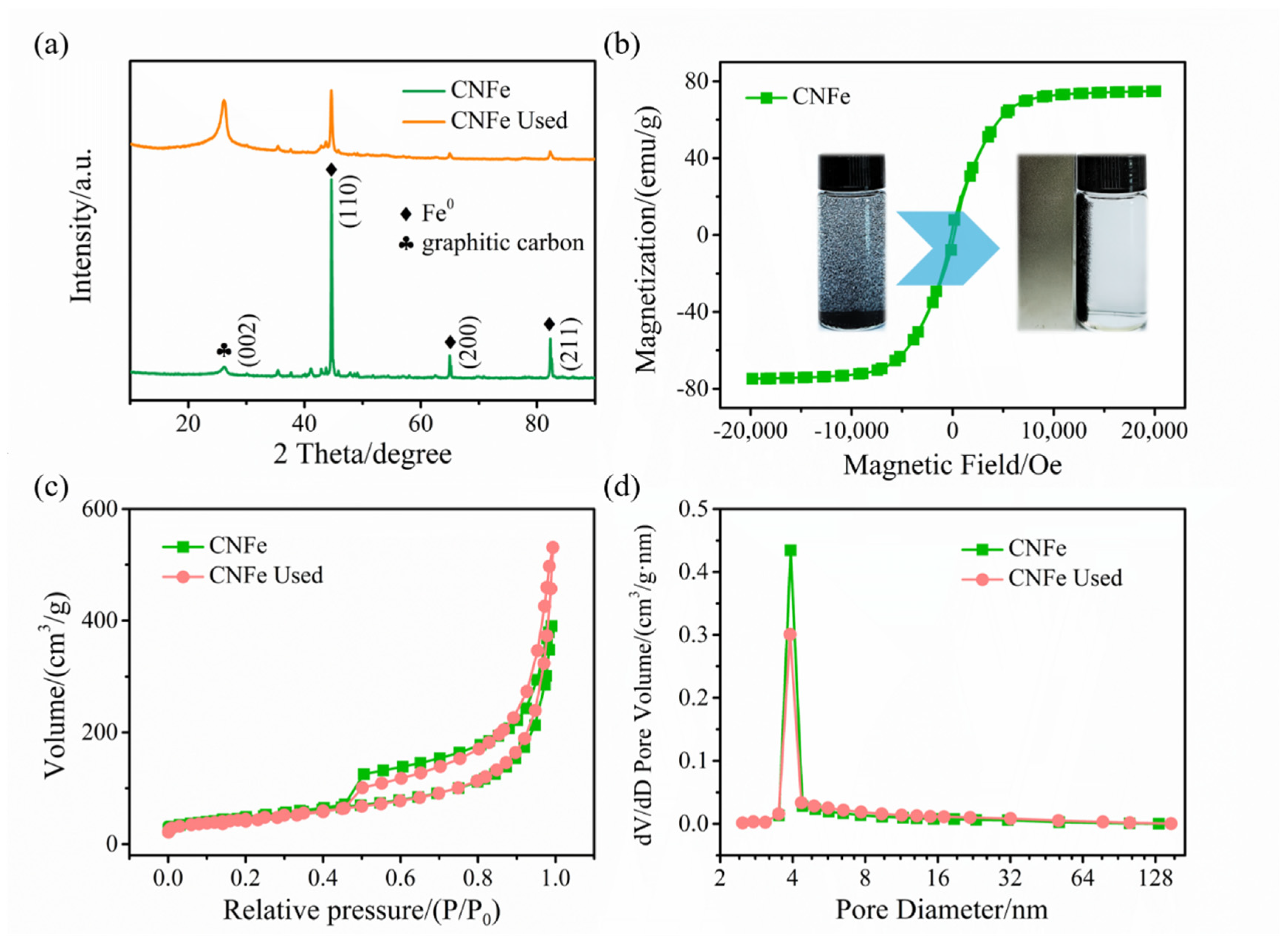
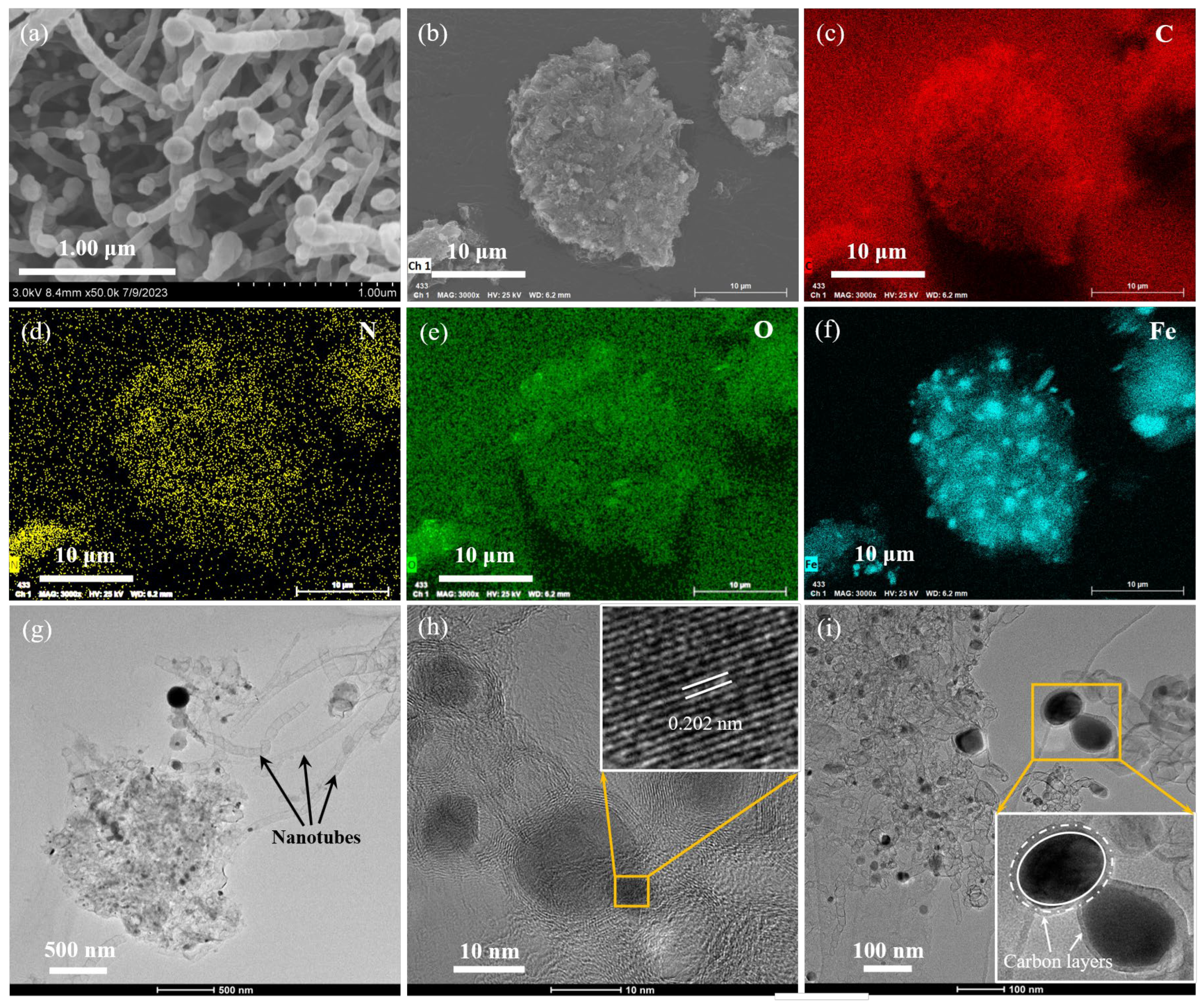
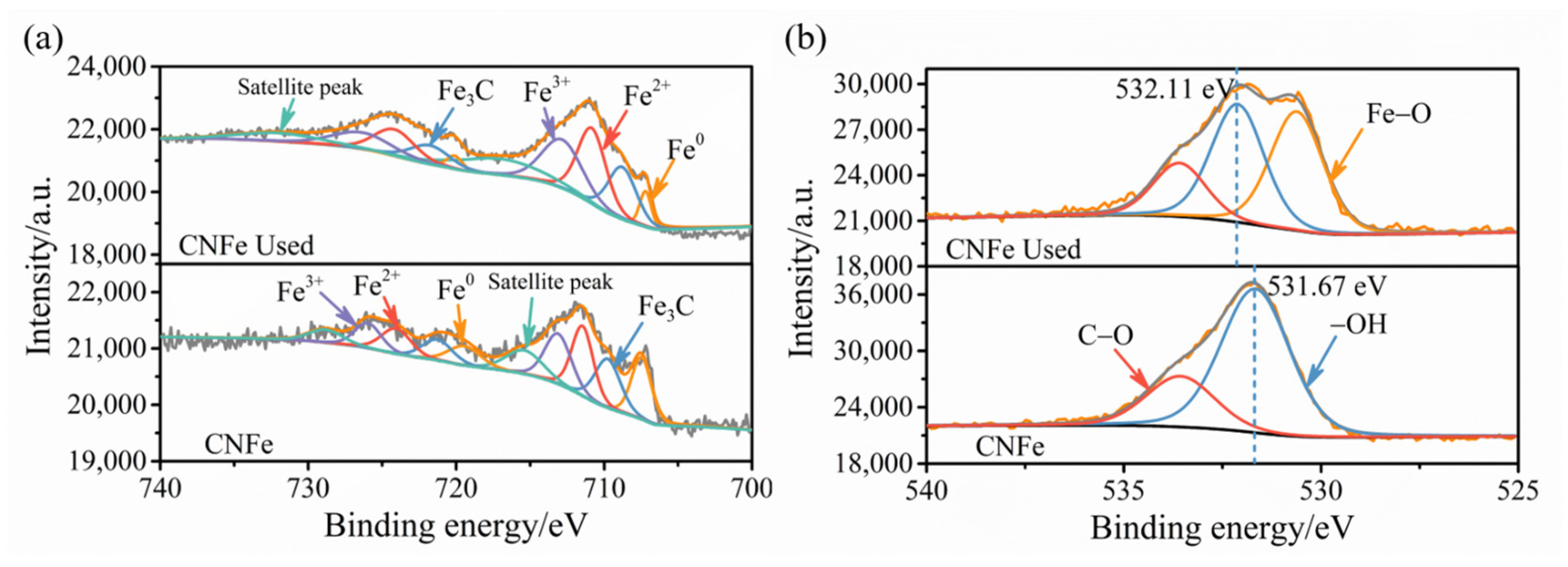
2.1. Characterization of CNFe
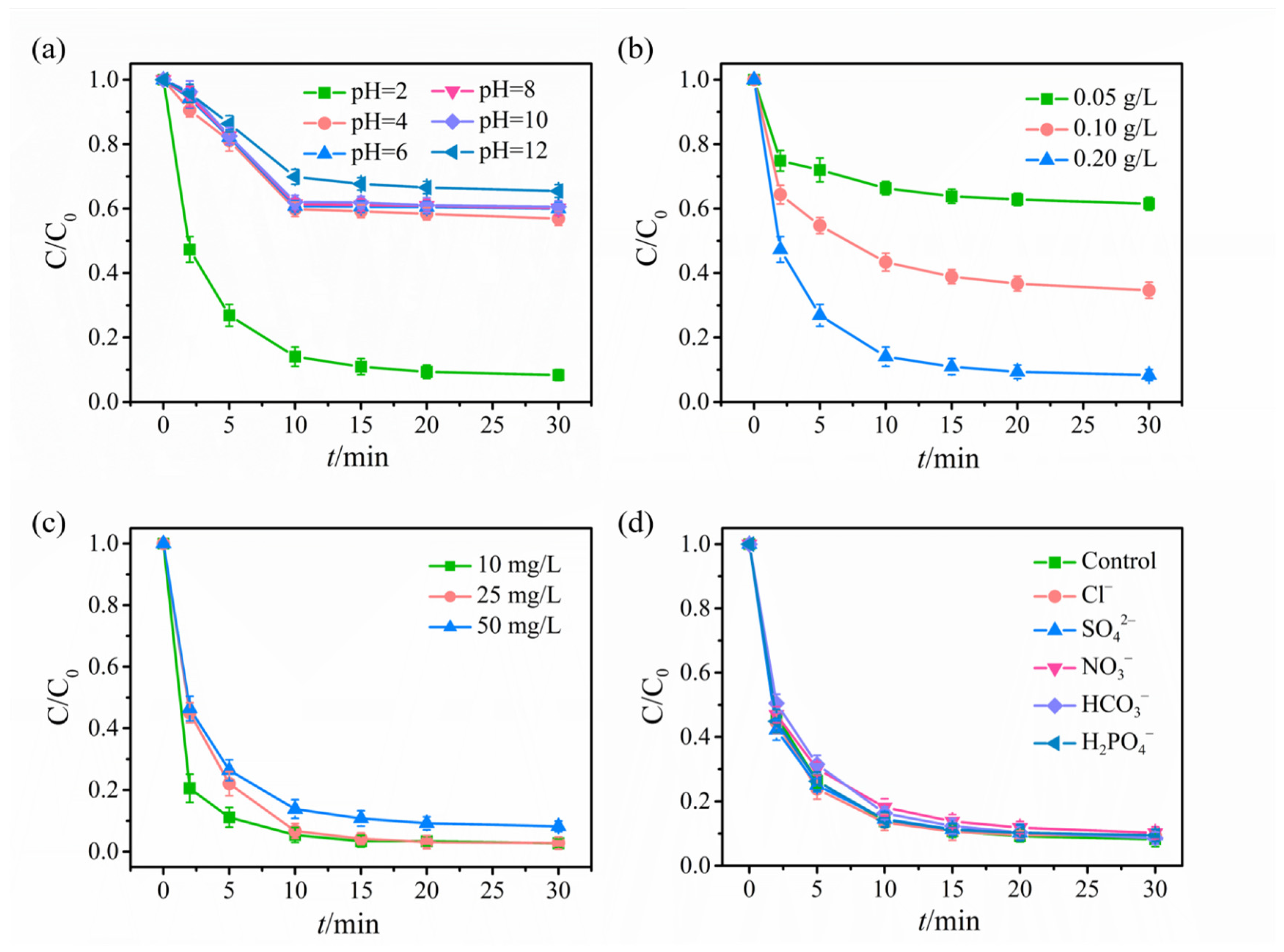
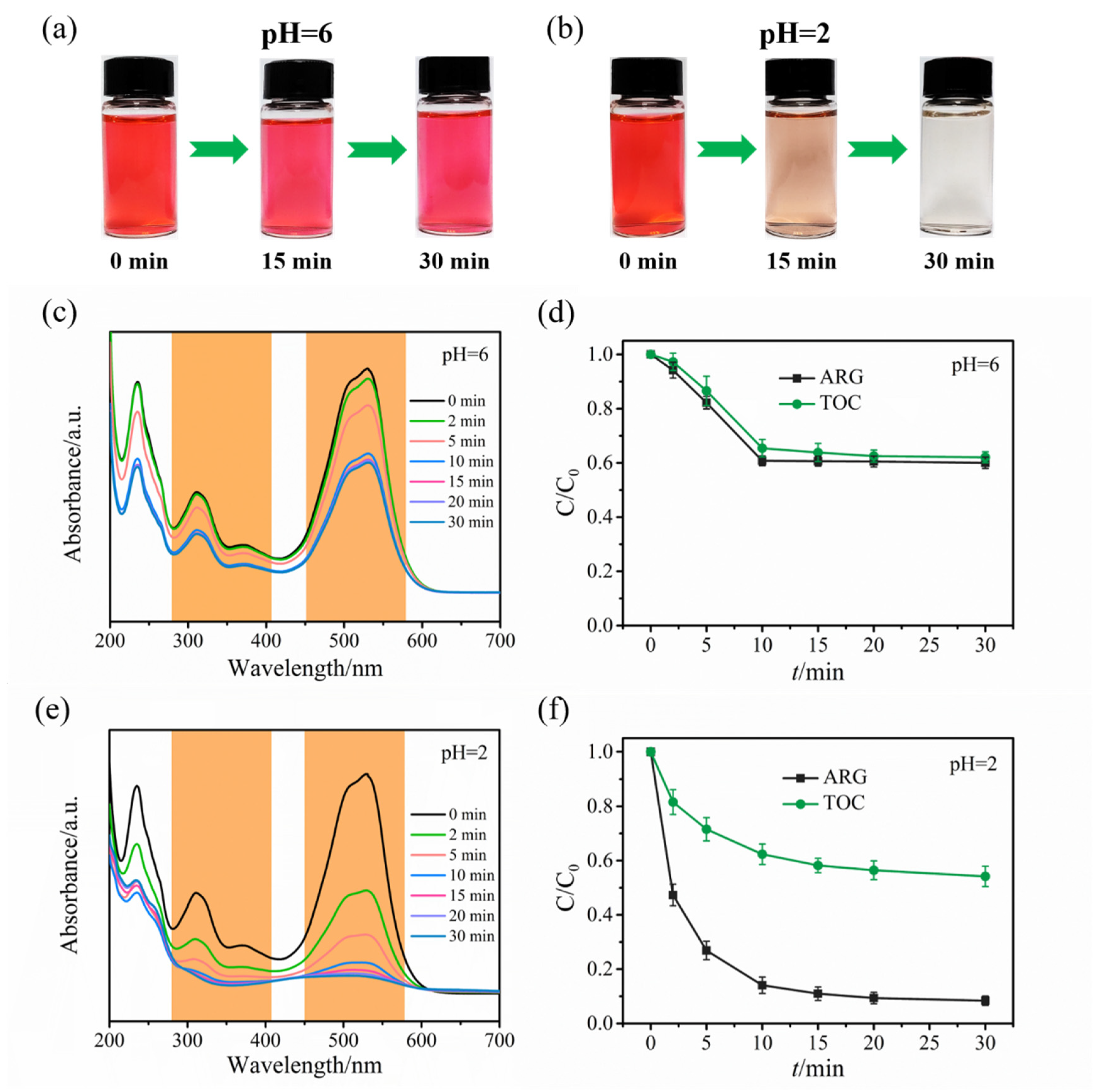
2.2. Removal of ARG
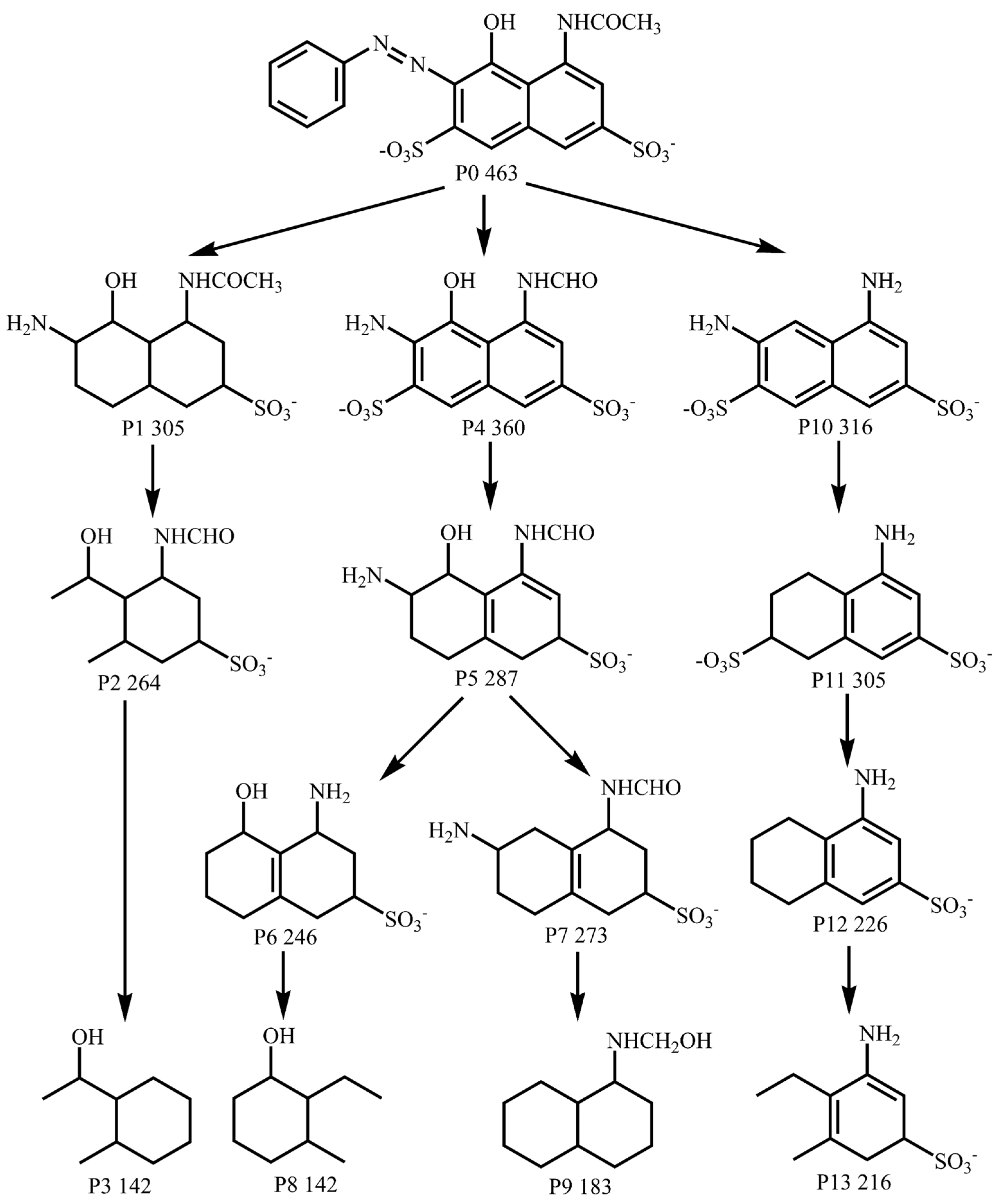
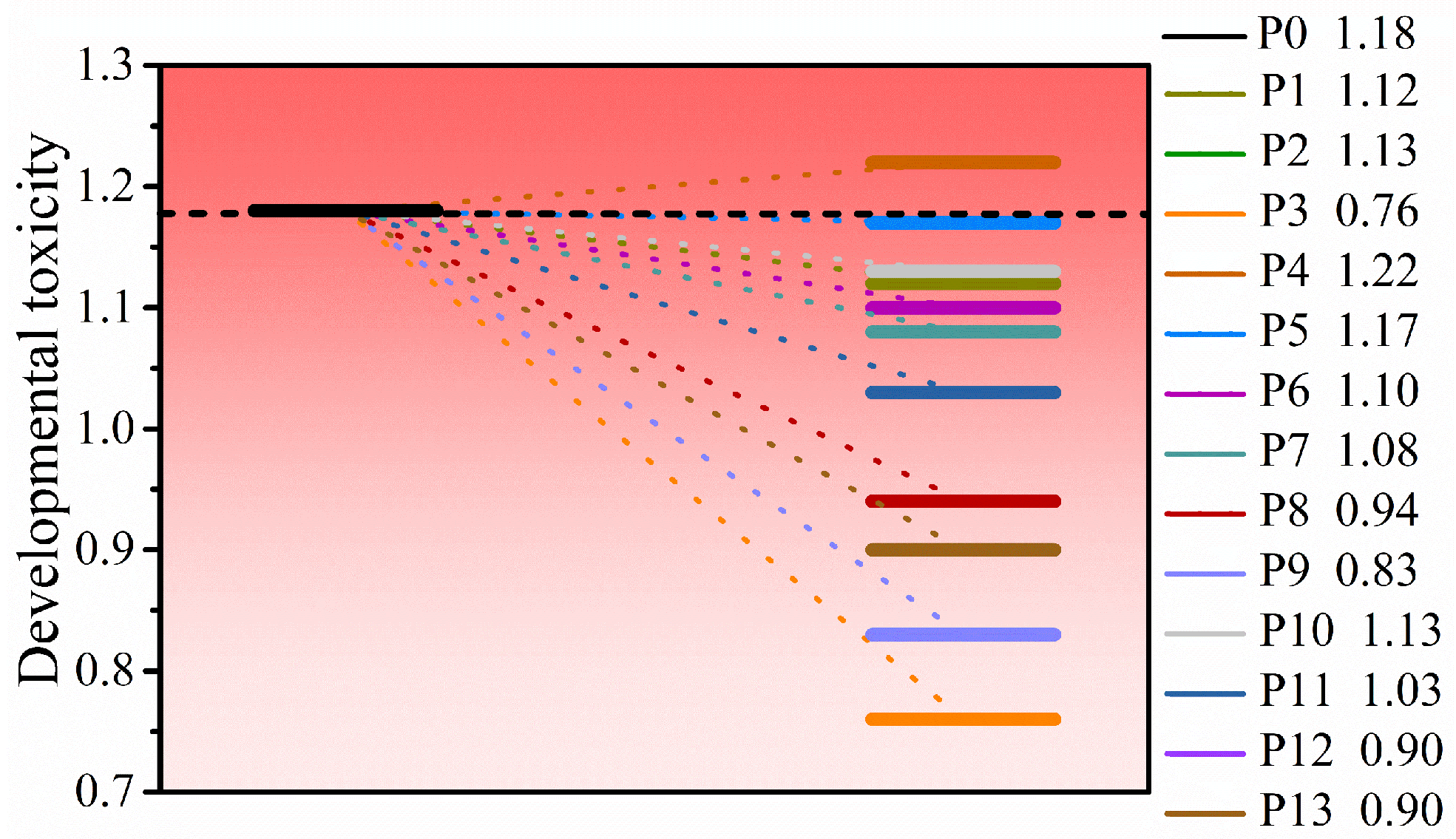
2.3. Pathways of ARG Degradation and Toxicity of the Intermediates
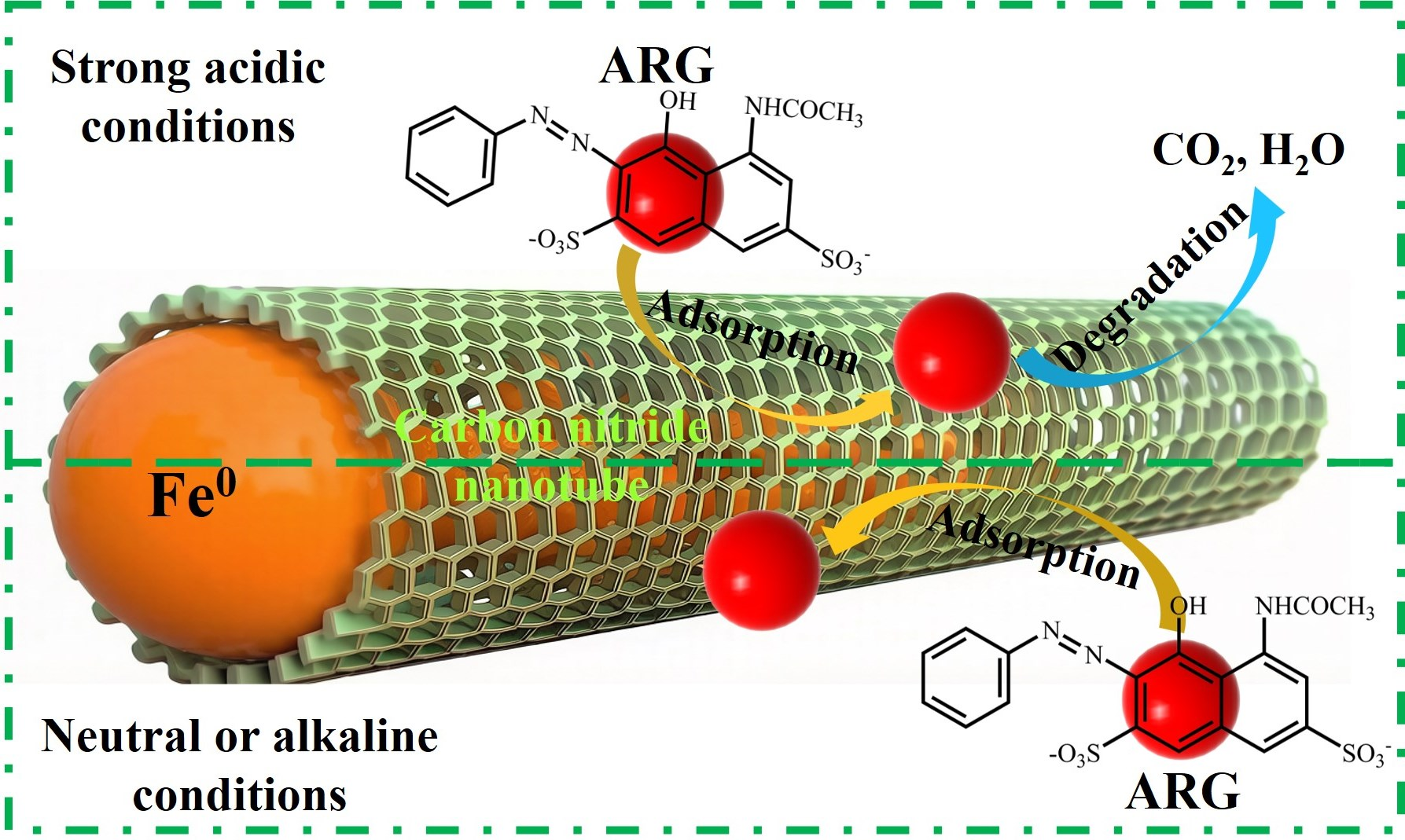
2.4. Reaction Mechanism of CNFe
3. Experimental
3.1. Chemicals
3.2. Synthesis of Carbon-Nitride-Wrapped Nano-Fe0 (CNFe)
3.3. Characterization
3.4. ARG Removal Experiment
4. Conclusions
Supplementary Materials
Author Contributions
Funding
Data Availability Statement
Conflicts of Interest
References
- Wang, Y.; Tong, Y.; Chen, D.; Zhou, T.; Zhang, Q.; Zou, J.-P. Activation of peroxymonosulfate by g-C3N4/ε-MnO2 microspheres for nonradical pathway degradation of organic pollutants in water: Catalytic mechanism and degradation path. Chem. Eng. J. 2023, 459, 141643. [Google Scholar] [CrossRef]
- Kamenická, B. Chemical degradation of azo dyes using different reducing agents: A review. J. Water Process Eng. 2024, 61, 105350. [Google Scholar] [CrossRef]
- Gupta, V.K.; Suhas. Application of low-cost adsorbents for dye removal—A review. J. Environ. Manag. 2009, 90, 2313–2342. [Google Scholar] [CrossRef]
- Zheng, Y.; Zhang, H. Boric acid bridged cyclodextrins-based polymers for selective adsorption of binary dyes. Polymer 2025, 320, 128091. [Google Scholar] [CrossRef]
- Oyarce, E.; Diaz, H.; Boulett, A.; Roa, K.; Sánchez, J.; Marambio, O.G.; Pizarro, G.d.C. Copolymeric hydrogels with high capacities of hydration and methylene blue adsorption in water. Polymer 2024, 315, 127761. [Google Scholar] [CrossRef]
- Katheresan, V.; Kansedo, J.; Lau, S.Y. Efficiency of various recent wastewater dye removal methods: A review. J. Environ. Chem. Eng. 2018, 6, 4676–4697. [Google Scholar] [CrossRef]
- Banat, I.M.; Nigam, P.; Singh, D.; Marchant, R. Microbial decolorization of textile-dye containing effluents A review. Bioresour. Technol. 1996, 58, 217–227. [Google Scholar] [CrossRef]
- Zhang, Y.; Cui, M.; Cui, J.; Yan, W.; Shao, D.; Rao, Y. Identification of reactive species and functional groups determining the selective oxidation of organic contaminants in Bismuth ferrate/peroxymonosulfate system. Appl. Catal. B Environ. Energy 2025, 376, 125447. [Google Scholar] [CrossRef]
- Deng, Z.; Ma, Y.; Zhu, J.; Zeng, C.; Liu, Y.; Zhang, Z. Enhanced oxidation of sulfonamides by low-valent Cu-based sludge biochar activating ferrate (VI): The roles of valence-dependent activation pathways. Appl. Catal. B Environ. Energy 2025, 371, 125208. [Google Scholar] [CrossRef]
- Bafana, A.; Devi, S.S.; Chakrabarti, T. Azo dyes: Past, present and the future. Environ. Rev. 2011, 19, 350–370. [Google Scholar] [CrossRef]
- Yuan, G.-E.; Qin, Y.; Feng, M.; Ru, X.; Zhang, X. Activation of peroxymonosulfate by natural molybdenite for dye degradation: Identification of reactive species and catalytic mechanism. Environ. Technol. Innov. 2021, 22, 101403. [Google Scholar] [CrossRef]
- Gan, R.; Huang, L.; Shao, W.; Wang, R.; Ye, Y.; Pei, X.; Li, Q.; Liu, W.; Deng, Y.; Pan, F. Tuning the electronic structure of carbon fibers and Fenton-like oxidation pathways via in situ generation of MnO nanoparticles. Appl. Catal. B Environ. Energy 2025, 371, 125287. [Google Scholar] [CrossRef]
- Elanthamilan, E.; Ramanathan, S.; Wang, S.F.; Poompradub, S. Polyalthia longifolia seeds derived carbon: As peroxymonosulfate activator for efficient degradation of Rhodamine B dye. Mater. Res. Bull. 2025, 190, 113513. [Google Scholar] [CrossRef]
- Wolski, L.; Sobańska, K.; Walkowiak, A.; Akhmetova, K.; Gryboś, J.; Frankowski, M.; Ziolek, M.; Pietrzyk, P. Enhanced adsorption and degradation of methylene blue over mixed niobium-cerium oxide—Unraveling the synergy between Nb and Ce in advanced oxidation processes. J. Hazard. Mater. 2021, 415, 125665. [Google Scholar] [CrossRef]
- Jin, X.; Wu, C.; Fu, L.; Tian, X.; Wang, P.; Zhou, Y.; Zuo, J. Development, dilemma and potential strategies for the application of nanocatalysts in wastewater catalytic ozonation: A review. J. Environ. Sci. (China) 2023, 124, 330–349. [Google Scholar] [CrossRef]
- Cuervo Lumbaque, E.; Lopes Tiburtius, E.R.; Barreto-Rodrigues, M.; Sirtori, C. Current trends in the use of zero-valent iron (Fe0) for degradation of pharmaceuticals present in different water matrices. Trends Environ. Anal. Chem. 2019, 24, e00069. [Google Scholar] [CrossRef]
- Yu, Y.; Rios-Valenciana, E.E.; Root, R.A.; Sierra-Alvarez, R.; Chorover, J.; Field, J.A. Continuous-flow columns packed with zero-valent iron and iron sulfide as a feasible strategy to remediate the persistent contaminant nitroguanidine. Def. Technol. 2025, 43, 26–34. [Google Scholar] [CrossRef]
- Li, K.; Wang, Y.; Li, X.; Huang, Y.; Niu, Q.; Meng, Q.; Yang, H.; Li, Q. In-situ generation of H2O2 by zero valent iron to control depolymerization of lignocellulose in composting niche. Chemosphere 2022, 302, 134908. [Google Scholar] [CrossRef] [PubMed]
- Fu, Y.; Peng, L.; Zeng, Q.; Yang, Y.; Song, H.; Shao, J.; Liu, S.; Gu, J. High efficient removal of tetracycline from solution by degradation and flocculation with nanoscale zerovalent iron. Chem. Eng. J. 2015, 270, 631–640. [Google Scholar] [CrossRef]
- Yan, W.; Herzing, A.A.; Kiely, C.J.; Zhang, W.X. Nanoscale zero-valent iron (nZVI): Aspects of the core-shell structure and reactions with inorganic species in water. J. Contam. Hydrol. 2010, 118, 96–104. [Google Scholar] [CrossRef]
- He, F.; Zhao, D. Manipulating the Size and Dispersibility of Zerovalent Iron Nanoparticles by Use of Carboxymethyl Cellulose Stabilizers. Environ. Sci. Technol. 2007, 41, 6216–6221. [Google Scholar] [CrossRef]
- Raman, C.D.; Kanmani, S. Textile dye degradation using nano zero valent iron: A review. J. Environ. Manag. 2016, 177, 341–355. [Google Scholar] [CrossRef]
- Chen, H.; Luo, H.; Lan, Y.; Dong, T.; Hu, B.; Wang, Y. Removal of tetracycline from aqueous solutions using polyvinylpyrrolidone (PVP-K30) modified nanoscale zero valent iron. J. Hazard. Mater. 2011, 192, 44–53. [Google Scholar] [CrossRef] [PubMed]
- Guo, S.; Chen, M.; Wei, Y.; You, L.; Cai, C.; Wei, Q.; Zhou, K. Designing hierarchically porous zero-valent iron via 3D printing to degrade organic pollutants by activating peroxymonosulfate using high-valent iron-oxo species. Chem. Eng. J. 2023, 476, 146523. [Google Scholar] [CrossRef]
- Greenlee, L.F.; Torrey, J.D.; Amaro, R.L.; Shaw, J.M. Kinetics of Zero Valent Iron Nanoparticle Oxidation in Oxygenated Water. Environ. Sci. Technol. 2012, 46, 12913–12920. [Google Scholar] [CrossRef]
- Fan, X.; Lin, Q.; Zheng, J.; Fu, H.; Xu, K.; Liu, Y.; Ma, Y.; He, J. Peroxydisulfate activation by nano zero-valent iron graphitized carbon materials for ciprofloxacin removal: Effects and mechanism. J. Hazard. Mater. 2022, 437, 129392. [Google Scholar] [CrossRef]
- Dong, Q.; Dong, H.; Li, Y.; Xiao, J.; Xiang, S.; Hou, X.; Chu, D. Degradation of sulfamethazine in water by sulfite activated with zero-valent Fe-Cu bimetallic nanoparticles. J. Hazard. Mater. 2022, 431, 128601. [Google Scholar] [CrossRef]
- Ji, Y.; Xu, F.; Yan, J.; Liu, X.; Li, X. Constructing carbon nitride embedded Fe0 for efficient activation of peroxymonosulfate towards organic pollutants degradation in water. J. Water Process Eng. 2024, 68, 106556. [Google Scholar] [CrossRef]
- He, Y.L.; He, C.S.; Lai, L.D.; Zhou, P.; Zhang, H.; Li, L.L.; Xiong, Z.K.; Mu, Y.; Pan, Z.C.; Yao, G.; et al. Activating peroxymonosulfate by N and O co-doped porous carbon for efficient BPA degradation: A re-visit to the removal mechanism and the effects of surface unpaired electrons. Appl. Catal. B Environ. 2022, 314, 121390. [Google Scholar] [CrossRef]
- Han, R.; Wang, X.; Lynch, I.; Ma, J. N-enriched covalent organic polymer derived nanoscale zero-valent iron for effective oxidative degradation of tetracycline. J. Environ. Chem. Eng. 2023, 11, 111388. [Google Scholar] [CrossRef]
- Wang, X.; Nan, Z. Highly efficient Fenton-like catalyst Fe-g-C3N4 porous nanosheets formation and catalytic mechanism. Sep. Purif. Technol. 2020, 233, 116023. [Google Scholar] [CrossRef]
- Yao, Y.; Lai, L.; Yu, Z.; Pan, Y.; Yu, Y.; Lo, V.; Roy, A.; Chivers, B.; Zhong, X.; Wei, L.; et al. Carbon/iron by-product from catalytic methane decomposition as recyclable Fenton catalyst for pollutant degradation. J. Hazard. Mater. 2022, 437, 129328. [Google Scholar] [CrossRef]
- Deng, J.; Li, F.; Qi, Z.; Huang, W.; Wan, Z.; Zhang, L.; Zheng, D.; Li, G.; Zhang, F. A novel redox synergistic mechanism of peroxymonosulfate activation using Pd-Fe3O4 for ultra-fast chlorinated hydrocarbon degradation. Appl. Catal. B Environ. Energy 2024, 359, 124499. [Google Scholar] [CrossRef]
- Rehman, A.; Park, S.J. Environmental remediation by microporous carbon: An efficient contender for CO2 and methylene blue adsorption. J. CO2 Util. 2019, 34, 656–667. [Google Scholar] [CrossRef]
- Wang, Y.; Lin, Y.; Yang, C.; Wu, S.; Fu, X.; Li, X. Calcination temperature regulates non-radical pathways of peroxymonosulfate activation via carbon catalysts doped by iron and nitrogen. Chem. Eng. J. 2023, 451, 138468. [Google Scholar] [CrossRef]
- Xie, D.H.; Guo, P.C.; Zhong, K.Q.; Sheng, G.P. Highly dispersed Co/Fe bimetal in carbonaceous cages as heterogeneous Fenton nanocatalysts for enhanced sulfamethoxazole degradation. Appl. Catal. B Environ. 2022, 319, 121923. [Google Scholar] [CrossRef]
- Ma, T.; Wu, Y.; Liu, N.; Wu, Y. Hydrolyzed polyacrylamide modified diatomite waste as a novel adsorbent for organic dye removal: Adsorption performance and mechanism studies. Polyhedron 2020, 175, 114227. [Google Scholar] [CrossRef]
- Ji, Y.; Zhang, W.; Yang, H.; Ma, F.; Xu, F. Green synthesis of poly(pyrrole methane) for enhanced adsorption of anionic and cationic dyes from aqueous solution. J. Colloid Interface Sci. 2021, 590, 396–406. [Google Scholar] [CrossRef] [PubMed]
- Rezaei, F.; Vione, D. Effect of pH on Zero Valent Iron Performance in Heterogeneous Fenton and Fenton-Like Processes: A Review. Molecules 2018, 23, 3127. [Google Scholar] [CrossRef]
- Benkhaya, S.; M’Rabet, S.; El Harfi, A. Classifications, properties, recent synthesis and applications of azo dyes. Heliyon 2020, 6, e03271. [Google Scholar] [CrossRef]
- Li, G.; Cai, Z.; Su, K.; Zhao, Y.; Zhu, Y.; Han, J.; Pan, Y.; Xing, W.; Wu, G. Peroxymonosulfate activation with Co3O4 by microstructure engineering for efficient degradation of tetracycline: Efficiency, mechanism and stability. Colloids Surf. A Physicochem. Eng. Asp. 2023, 677, 132353. [Google Scholar] [CrossRef]
- Keenan, C.R.; Sedlak, D.L. Factors Affecting the Yield of Oxidants from the Reaction of Nanoparticulate Zero-Valent Iron and Oxygen. Environ. Sci. Technol. 2008, 42, 1262–1267. [Google Scholar] [CrossRef] [PubMed]
- Yin, W.; Wu, J.; Li, P.; Wang, X.; Zhu, N.; Wu, P.; Yang, B. Experimental study of zero-valent iron induced nitrobenzene reduction in groundwater: The effects of pH, iron dosage, oxygen and common dissolved anions. Chem. Eng. J. 2012, 184, 198–204. [Google Scholar] [CrossRef]
- Cao, J.; Xiong, Z.; Lai, B. Effect of initial pH on the tetracycline (TC) removal by zero-valent iron: Adsorption, oxidation and reduction. Chem. Eng. J. 2018, 343, 492–499. [Google Scholar] [CrossRef]
- Chen, J.; Feng, J.; Yan, W. Influence of metal oxides on the adsorption characteristics of PPy/metal oxides for Methylene Blue. J. Colloid Interface Sci. 2016, 475, 26–35. [Google Scholar] [CrossRef]
- Ji, Y.; Xu, F.; Fang, K.; Liu, H.; Pan, X.; Jin, Z.; Zheng, L.; Wang, L. Facile synthesis of carbon nitride nanotube confined nano Fe0 for boosting activation of peroxymonosulfate towards tetracycline removal. Environ. Technol. Innov. 2025, 38, 104079. [Google Scholar] [CrossRef]





| Catalyst | SBET m2/g | Sexter m2/g | Vtotal cm3/g | Vmicro cm3/g | Vmeso cm3/g | D nm |
|---|---|---|---|---|---|---|
| CNFe | 169.19 | 165.36 | 0.34 | 0.00067 | 0.34 | 7.99 |
| CNFe Used | 161.83 | 156.90 | 0.38 | 0.00035 | 0.38 | 9.34 |
Disclaimer/Publisher’s Note: The statements, opinions and data contained in all publications are solely those of the individual author(s) and contributor(s) and not of MDPI and/or the editor(s). MDPI and/or the editor(s) disclaim responsibility for any injury to people or property resulting from any ideas, methods, instructions or products referred to in the content. |
© 2026 by the authors. Licensee MDPI, Basel, Switzerland. This article is an open access article distributed under the terms and conditions of the Creative Commons Attribution (CC BY) license.
Share and Cite
Xu, F.; Jin, Z.; Ji, Y.; Zheng, L.; Fang, K.; Liu, J.; Jiang, S.; Huo, Z.; Guo, T. Magnetically Recyclable Carbon-Nitride-Wrapped Nano-Fe0 as Active Catalyst for Acid Red G Dye Decoloration. Catalysts 2026, 16, 296. https://doi.org/10.3390/catal16040296
Xu F, Jin Z, Ji Y, Zheng L, Fang K, Liu J, Jiang S, Huo Z, Guo T. Magnetically Recyclable Carbon-Nitride-Wrapped Nano-Fe0 as Active Catalyst for Acid Red G Dye Decoloration. Catalysts. 2026; 16(4):296. https://doi.org/10.3390/catal16040296
Chicago/Turabian StyleXu, Feiya, Zihe Jin, Yajun Ji, Lingyun Zheng, Kun Fang, Jiawen Liu, Sendi Jiang, Zhiyao Huo, and Tianke Guo. 2026. "Magnetically Recyclable Carbon-Nitride-Wrapped Nano-Fe0 as Active Catalyst for Acid Red G Dye Decoloration" Catalysts 16, no. 4: 296. https://doi.org/10.3390/catal16040296
APA StyleXu, F., Jin, Z., Ji, Y., Zheng, L., Fang, K., Liu, J., Jiang, S., Huo, Z., & Guo, T. (2026). Magnetically Recyclable Carbon-Nitride-Wrapped Nano-Fe0 as Active Catalyst for Acid Red G Dye Decoloration. Catalysts, 16(4), 296. https://doi.org/10.3390/catal16040296