


Abstract
Antimony oxide nanoparticles (Sb2O3 NPs) were synthesized via a chemical vapor deposition (CVD) method and systematically characterized to evaluate their multifunctional performance. Powder X-ray diffraction (PXRD) confirmed the formation of an orthorhombic Sb2O3 phase with an average crystallite size of 53.50 nm, while SEM analysis revealed elongated nanostructures with diameters in the range of 20–100 nm. The stoichiometric composition of Sb2O3 (Sb:O ≈ 2:3) was verified by EDAX, and optical studies indicated a direct band gap of 3.10 eV. The electrochemical sensing capability of Sb2O3 NPs was investigated using a modified nickel mesh electrode for the detection of Metronidazole (MTZ) in 0.1 N KOH. The presence of Sb2O3 NPs resulted in an additional irreversible reduction peak at −0.14 V, confirming enhanced electrocatalytic activity toward MTZ, along with excellent cycling stability (94.36% retention after 10 cycles). In addition, the photocatalytic performance of Sb2O3 NPs was evaluated through the degradation of Acid Orange (AO) dye under UV-Vis irradiation, achieving a degradation efficiency of 73.31%. These results demonstrate that Sb2O3 nanoparticles are promising multifunctional materials for environmental remediation and electrochemical sensing applications, highlighting their potential for industrial implementation.
1. Introduction
Nanotechnology research has paid close attention to oxide nanoparticles in recent decades owing to their unique physicochemical properties, such as size, shape, high specific surface area, and high strength [1,2]. The manufacture of metal oxide nanowires and NPs is a focus of research because of their optical, electrical, and magnetic optoelectronic, semiconducting, and other characteristics [3,4]. As a result, scientists have extensively explored strategies to control the morphology of these materials at the nanoscale. Because of their distinct structural characteristics at the nanoscale in comparison to their bulk equivalents, metal oxides, including ZnO, TiO2, CdO, ZrO2, WO3, SnO2, and Sb2O3, have been the subject of extensive effort in their synthesis [5,6,7,8]. Numerous methods, including hydrothermal, thermal vapor condensation, solvothermal, electrochemical, chemical, and physical vapor deposition, are used to generate oxide nanoparticles [9,10,11]. The most suitable technique for creating non-agglomerated nanoparticles with smooth surfaces is thought to be vapor deposition.
Among all the other metal oxides from the V to VI groups, antimony oxides have attracted a lot of attention. According to the literature, there are three distinct phases: antimony pentoxide (Sb2O5), antimony tetroxide (Sb2O4), and antimony trioxide (Sb2O3). The formation of the desired phase is governed by Gibbs energy considerations. Above 525 °C; only Sb2O3 and Sb2O4 are thermodynamically stable, whereas Sb2O5 does not exist [12,13].
The potential of one-dimensional Sb2O3 nanostructures as humidity, phenolic, and ethanol sensors, as well as electrode materials, functional fillers, catalysts, fining agents, degassers, fillers, optical materials, semiconductor materials, and chemically sensitive materials, has drawn a lot of attention [14,15]. The majority of recent efforts have been directed to the synthesis of Sb2O3 NPs. The synthesis of Sb2O3 in various forms has been widely reported, although its optical properties have received limited attention [16]. The electrical, structural, and optical properties of thin films are greatly influenced by a number of factors, including spray solution concentration, spray solution volume, deposition temperature, film thickness, pressure, and others. According to the literature, antimony oxide nanoparticles are superior to bulk oxides in respect to their mechanical strength, absorbability, abrasion resistance, proton conductivity, and refractive index. The antimony oxide nanoparticles exhibit a thin, flat strip of ribbon-like structures with lengths ranging from 30 to 300 nm. According to reports, 1D super-long NPs with highly crystallographic surfaces and a trapezoidal cross-section have been created. These NPs allow for new optical confinement, microcavity, metabolic, and electrochemical effects.
As an environmentally friendly approach, photocatalysis has garnered a lot of interest for treating low concentrations of organic chemicals in wastewater [17]. Acid orange and other organic dyes are widespread pollutants that harm the environment since they are carcinogenic and dangerous. Detoxification of these organic contaminants, therefore, requires a quick and efficient procedure. Although a number of techniques have been employed, photo-catalytic degradation is among the most superior and alluring alternatives for the breakdown of these organic contaminants [18]. As a result, Sb2O3 NPs have been suggested as a catalyst for the detoxification of organic dyes under UV-Vis light irradiation.
Since azo-dyes are widely employed in dyeing procedures, a number of recent studies focus on treating model solutions containing different commercial dyes. These compounds are seldom aerobically biodegradable and have a stable chemical structure. They generate potentially more dangerous aromatic amines even though they are easily reduced in anaerobic environments [17]. The oxidative degradation of acid orange 7 (AO7), a typical mono-azo dye, using different advanced oxidation processes (AOPs) has received particular interest [19]. For the treatment of textile effluents, heterogeneous photocatalytic oxidation has been thoroughly investigated. TiO2-mediated degradation of Acid Orange (AO) and other azo dyes by visible, near-UV, and solar irradiation has been widely reported, including in a recent review article [20]. Most of these studies focus on the kinetics of AO mineralization and decolorization as a function of operating parameters; however, limited information is available on reaction pathways, intermediate by-products and the effects of photocatalytic treatment on subsequent toxicity and biodegradability [21]. TiO2 is an inexpensive, readily available, non-toxic, and chemically stable catalyst, and TiO2-based photocatalysis offers several key advantages, including the absence of mass transfer restrictions, operation at room temperature, and potential utilization of solar energy. This approach enables efficient reduction and decolorization of the organic load in dye-house effluents.
The nitroimidazole class of antibiotics includes metronidazole (MTZ), which is frequently used to treat infections caused by Helicobacter pylori and other microbes [22], as well as Trichomonas vaginalis and Giardia lamblia [23]. In more recent times, it has been used to treat Crohn’s disease, oral and dental infections, and respiratory tract infections [24]. Its effectiveness against anaerobic bacteria and other antiparasitic properties have led to its widespread usage in treating infections in both humans [24], and animals [23]. However, MTZ has shown mutagenic and genotoxic adverse effects [24]. Its accumulation in aquatic environments is of particular concern due to its potential toxicity to both aquatic organisms and humans. In aquatic environments, it can persist for a long time due to its high solubility in water, excellent stability, and limited biodegradability, photolysis, and hydrolysis. Indeed, metropolitan water sources have been shown to contain large concentrations of medicines, including MTZ [25]. Therefore, there is a chance that antimicrobial resistance will spread to these MTZ-contaminated areas. This issue directly impacts the United Nations Sustainable Development Goal of clean water and sanitation.
Therefore, there is considerable interest in developing techniques for the determination of MTZ in aquatic environments as well as in biological media. Compared with conventional analytical methods, such as HPLC, electrochemical sensors for MTZ detection offer several advantages. These advantages include mobility and ease of operation with minimal sample preparation. However, electrochemical sensors must exhibit high stability, great sensitivity, and selectivity. Consequently, electrode surface modifiers are widely used to develop MTZ sensors.
In this study, we describe a simple and efficient chemical vapor deposition (CVD) technique for the room temperature preparation of Sb2O3 NPs. These Sb2O3 NPs were efficiently applied to multifunctional applications, including photocatalytic degradation of AO dye and electrochemical sensing of metronidazole (MTZ). This study demonstrates the multifunctional catalytic potential of Sb2O3 nanoparticles by correlating their intrinsic physicochemical properties with both photocatalytic degradation of Acid Orange dye and electrocatalytic sensing of metronidazole.
2. Results and Discussion
2.1. Analysis of X-Ray Diffraction (XRD)
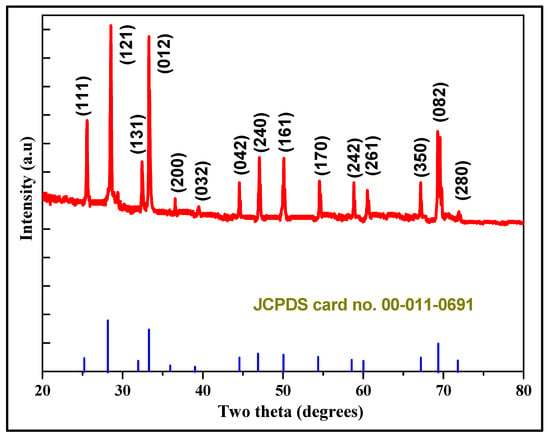
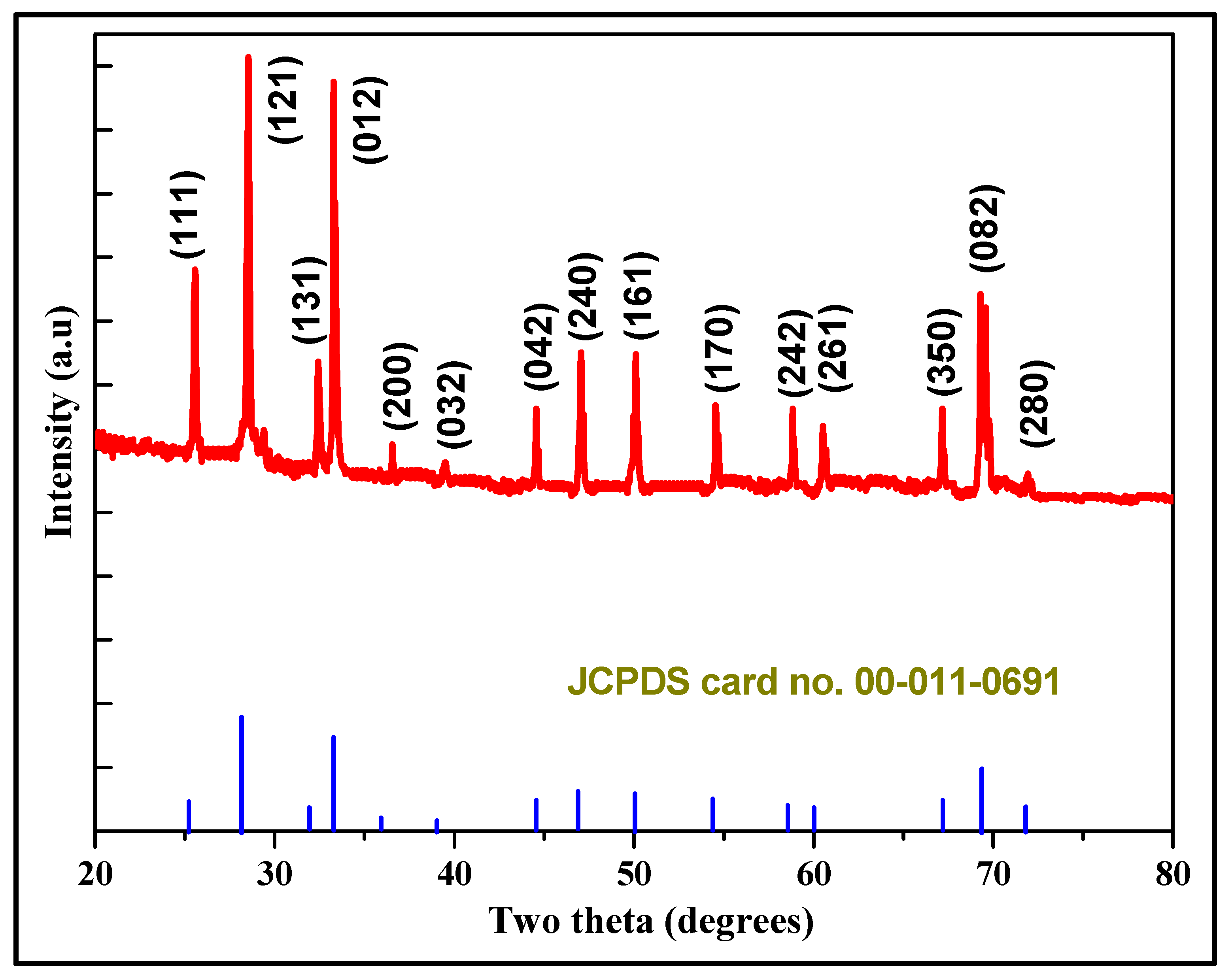
The XRD spectrum was used to determine the geometrical, structural, and physical characteristics of the nanoparticles that were being studied. XRD measurements can be used to examine the material’s phase and crystallinity, and peak locations and intensities offer structural data [26,27]. The XRD patterns of Sb2O3 NPs upon production were displayed in Figure 1. All the Bragg peaks of as-prepared Sb2O3 were perfectly matched with the JCPDS card no. 00-011-0691, the lattice planes (111), (121), (131), (012), (200), (032), (042), (240), (161), (170), (242), (261), (350), (082) and (280) obtained at 25.40, 28.30, 32.60, 33.80, 36.00, 39.60, 44.20, 47.10, 50.50, 54.80, 58.70, 60.80, 68.50, 69.60 and 71.70 were well-indexed to the orthorhombic form of the Sb2O3. Strong peaks in the spectra show that the product material is very crystalline, as can be seen. The (121) crystallographic plane, the most prominent peak among all the planes, indicated the direction of advancement of deposited Sb2O3 NPs. The cubic and orthorhombic polymorphs are the two crystallographic variations that Sb2O3 NPs mainly exhibit. The aforementioned findings demonstrate that Sb2O3 NPs have an orthorhombic crystal structure and an average size of 53.51 nm, as obtained from the Debye-Scherrer relation [28].
Figure 1.
XRD Spectra of Sb2O3 NPs.
The full width half maximum (FWHM in radians), , θ, k, and are the XRD wavelength (0.15418 nm), Bragg angle, and Scherrer constant and full width at half maximum, respectively. Equations (2)–(4) are used to calculate the additional structural parameters for each sample, such as dislocation density (δ), lattice strain (ε), and stacking fault (SF) [28].
2.2. SEM Analysis
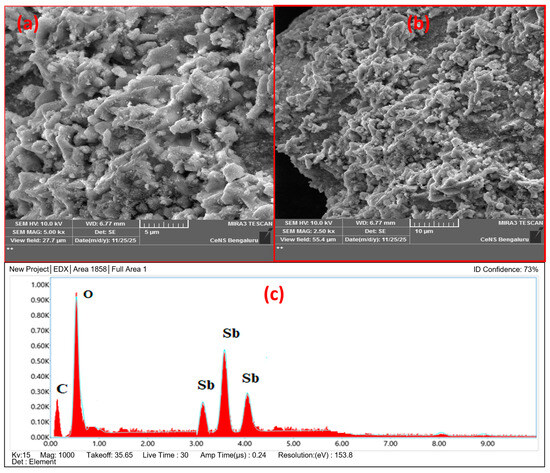
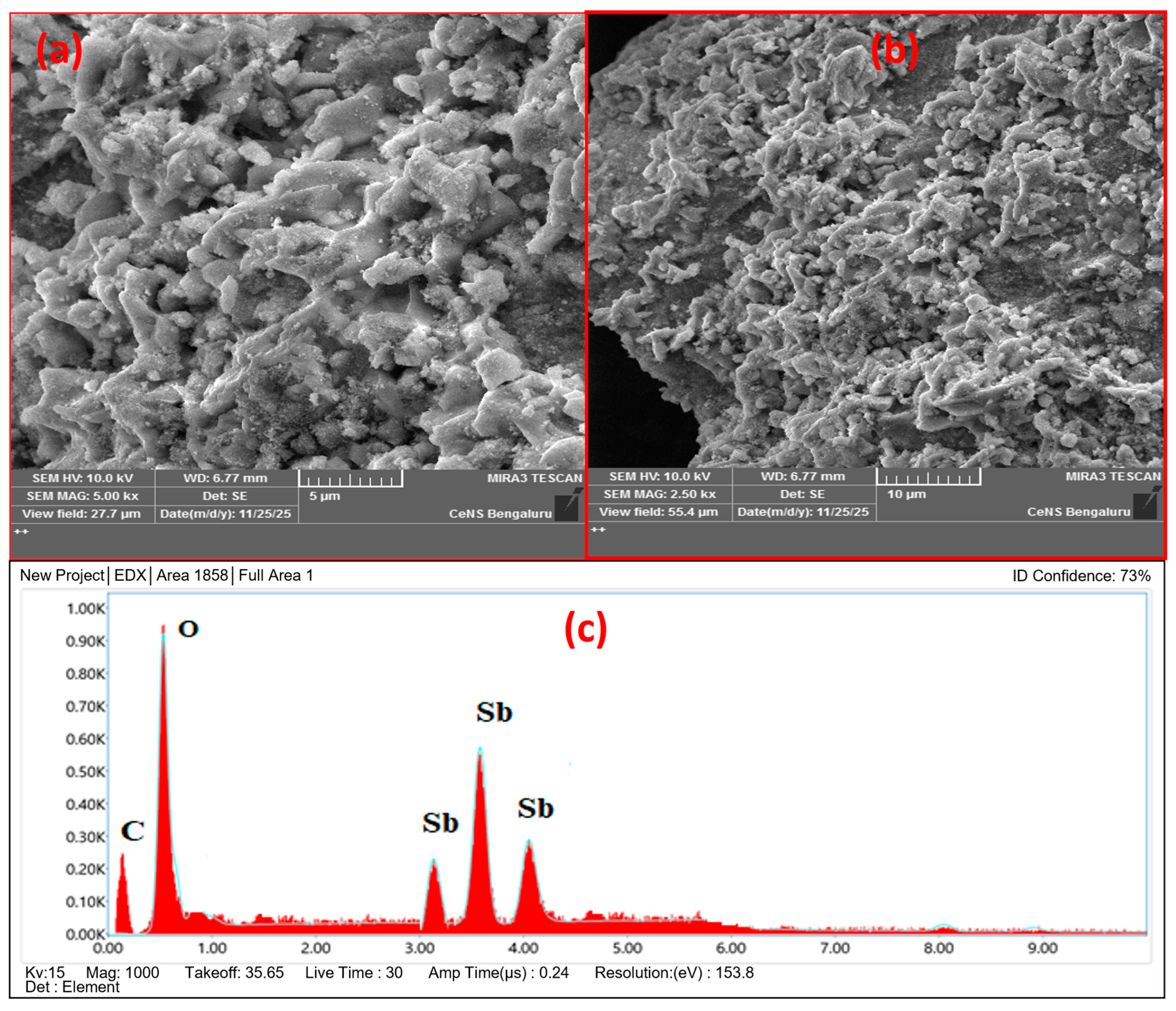
A scanning electron microscope (SEM) was used to analyze the surface morphologies of the synthesized samples. The SEM micrographs (SEM images) of Sb2O3 NPs are displayed in Figure 2. A well-dispersed morphology of Sb2a, ba, bNPs was observed with nanoparticles having a length of a few micrometers and a diameter ranging from 20 to 100 nm, as shown in Figure 2a. Sb2O3 nanoparticles show an agglomerated structure, as shown in Figure 2b. Further, the SEM images of Figure 2a,b depict a structure that is Rosette-like morphology of Sb2O3 nanoparticles, such morphology leads to enhanced surface area suitable for catalytic and electrochemical sensing activities due to abundant active sites on the surface.
Figure 2.
(a,b) SEM of Sb2O3 NPs synthesized via the CVD method (c) EDAX analysis of Sb2O3 NPs.
The percentage elemental compositions of Sb and O that were indexed in the EDAX spectrum at different oxygen flow rates are shown in Figure 2c. The EDAX spectrum of the synthesized sample was closely examined to show that the only elements present are the Sb, O, and a small trace of C peaks, suggesting that no further impurities were present in the final products. Oxygen and antimony make up roughly 58.46% and 41.54% of the produced nanoparticles’ quantitative elemental compositions, respectively. The composition of the synthesized Sb2O3 is shown by the stoichiometric ratio of Sb/O, which is roughly 0.7106 (Sb:O ≈ 2:3).
2.3. TEM Analysis
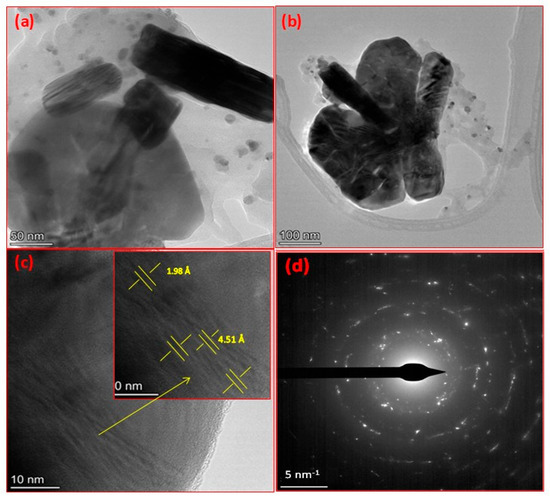
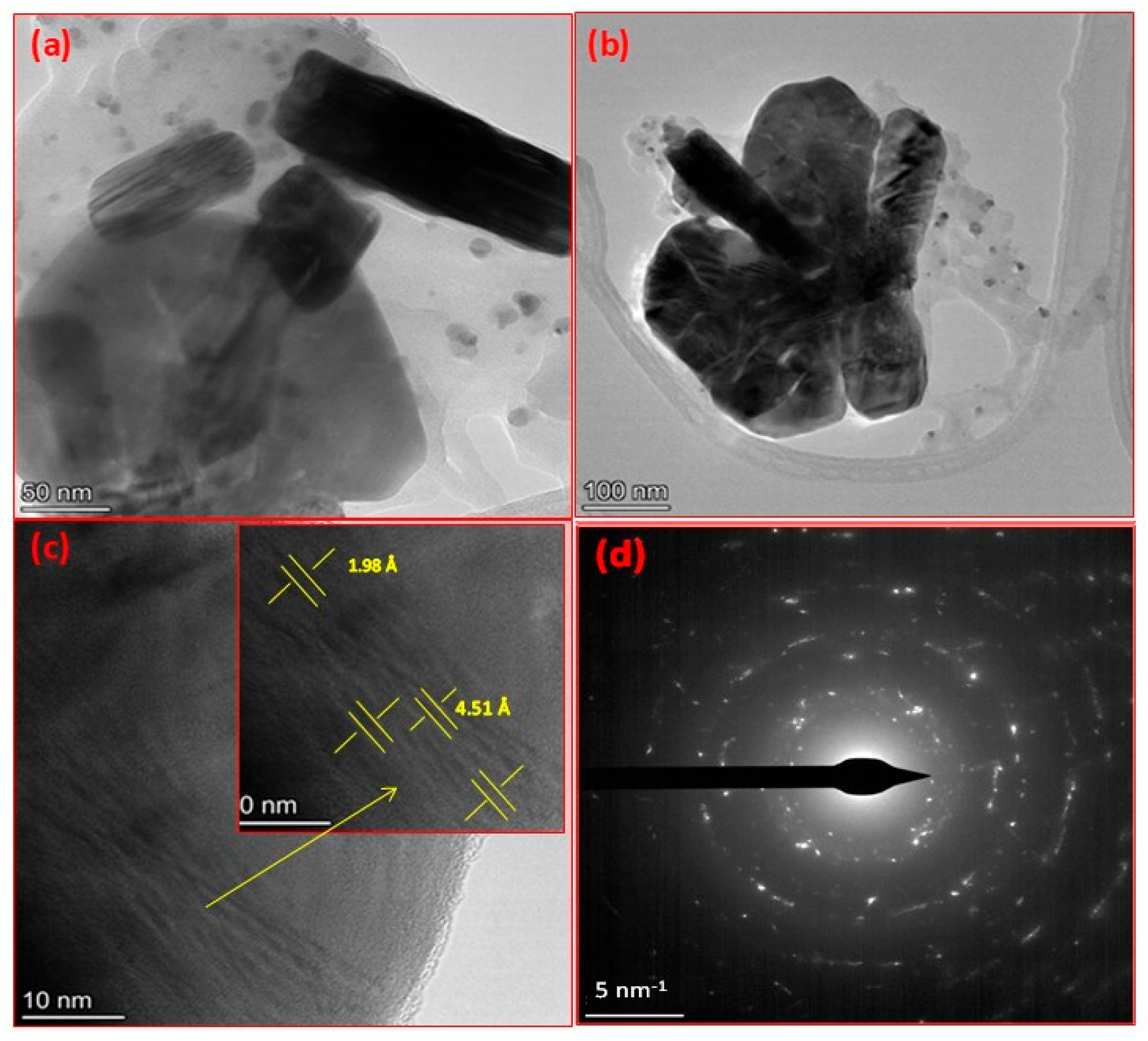
The Sb2O3 nanoparticle’s microstructure data were further examined using the TEM, HRTRM, and SAED to understand the morphological features. The core part of the Sb2O3 NPs formed under an oxygen environment confirms the successful oxidation of the Sb2O3 NPs shown in Figure 3a,b. A high-resolution TEM image shows well-resolved lattice fringes with interplanar spacing centered around 1.98 Å for the (111) plane and 4.51 Å for the (222) plane. Additionally, in an HRTEM image of the Sb2O3 sample taken in an oxygen atmosphere, the lattice fringes are 1.98 Å and 4.51 Å, which correspond to the (111) and (222) Miller planes, respectively (Figure 3c). The image corresponds to atomic lattice fringes shown in Figure 3c, further confirming the highly crystalline structure for Sb2O3 NPs. The creation of high-quality single crystalline NPs with (222) orientation is further confirmed by the presence of significant lattice diffraction spots along the zone axis (222) in the selected area electron diffraction (SAED) patterns of synthesized Sb2O3 particles (Figure 3d). Both the HRTEM image and the SAED pattern demonstrate the dominant distribution of nanoparticles along the (222) crystallographic planes.
Figure 3.
(a) TEM, (b) HRTEM (c) Atomic Lattice Fringe widths showing interplanar spacing (d) SAED images of Sb2O3 NPs synthesized via CVD method in an oxygen environment.
2.4. UV–Vis Spectroscopy Analysis
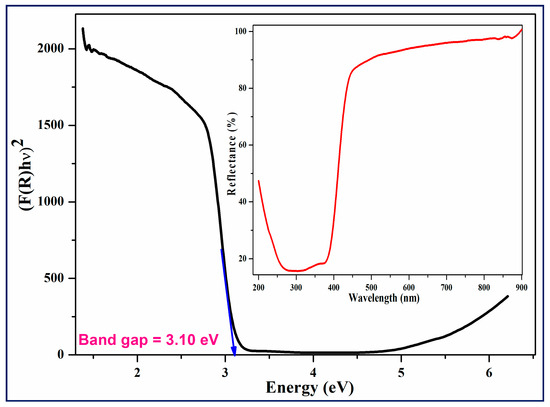
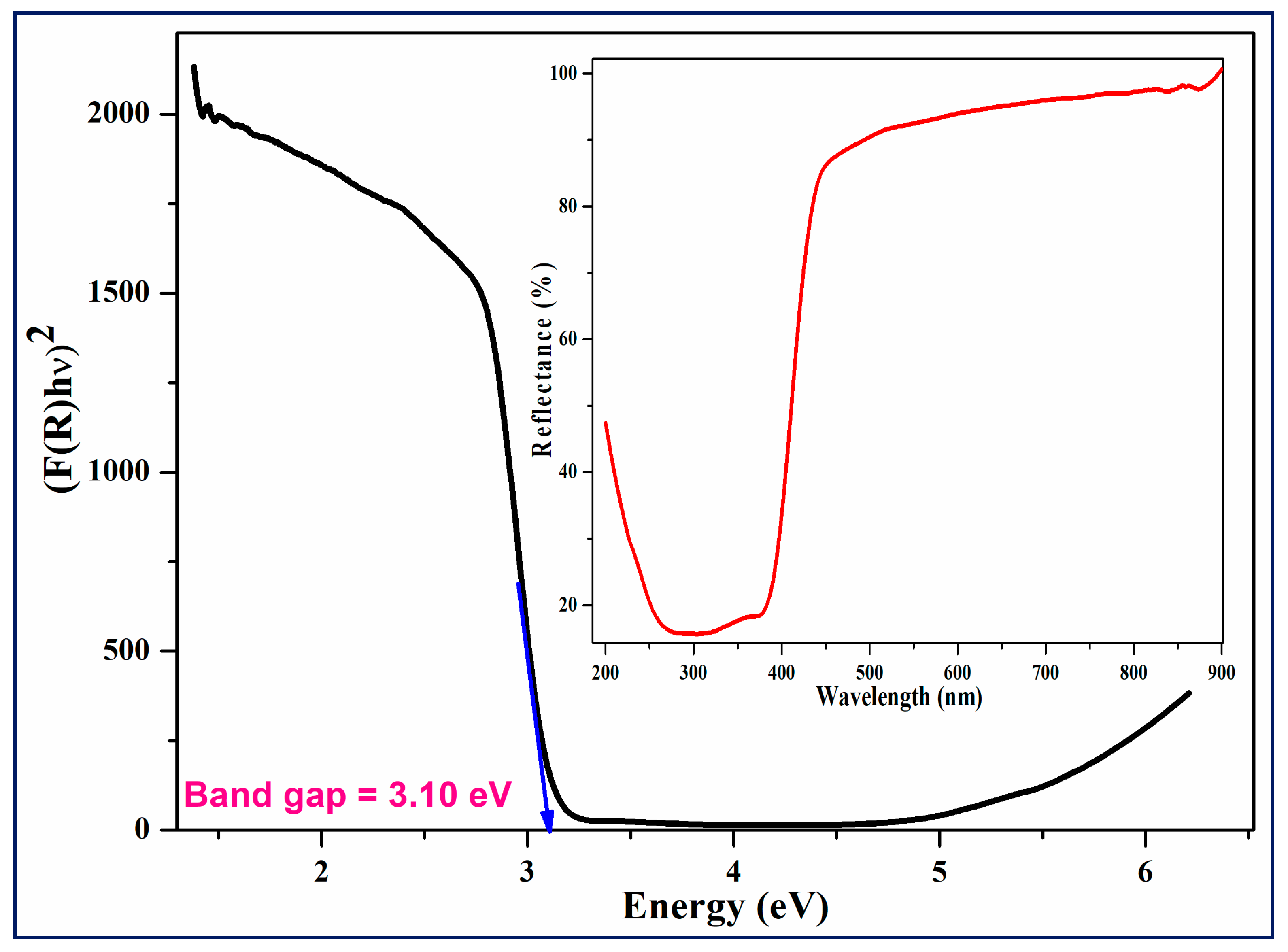
The UV-Vis DRS technique has been used to investigate the optical and absorption characteristics of the as-formed Sb2O3 NPs. The concentration-dependent room temperature UV-Vis DRS spectra of Sb2O3 show a characteristic absorption band at approximately 200–600 nm, as shown in Figure 4. There were no more prominent peaks in the spectrum of higher energy electronic transitions from the valence band to the conduction band. This blue shift is mostly caused by a drop in size when the energy gap between HOMO and LUMO widens.
Figure 4.
UV-Vis DRS spectrum and Energy gap plot of Sb2O3 NPs synthesized by CVD method (The blue arrow represents the optical band gap).
The retention coefficient near the band edge was determined by Wood and Tauc’s Equation (5), and the diffuse reflection was converted into the absorption coefficient “α” for the direct band gap calculation using the Kubelka-Munk method [29] is given by
(αhν)n = A (hν − Eg)
The Kubelka-Munk Equation (6) was utilized to measure the optical energy band gap (Eg) of synthesized nanoparticles [30] by optical reflectance values is given by
where n = 2
[F(R)hν]n = A[hν − Eg]
An optical energy band gap derived from the extrapolation of the linear area of plot [F(R)]2 = 0 and a graph drawn between [F(R)]2 v/s. hv.
Here,
where hv is the photon energy, Eg is the band gap, A is the constant, n is the exponent that varies depending on the kind of transition, K is the absorption, S is the scattering coefficients, and R is the reflectance equal to α, the absorption coefficient. Since the transition in Sb2O3 is straightforward, n = 2 is in close agreement with bulk Sb2O3, which normally has a band gap of about 3.0–3.8 eV, the computed optical energy band gap was found to be approximately 3.10 eV, validating the theoretical values. The NPs surface states and quantum confinement effects could be the cause of this band gap shift [31,32,33].
2.5. Raman Spectra Analysis
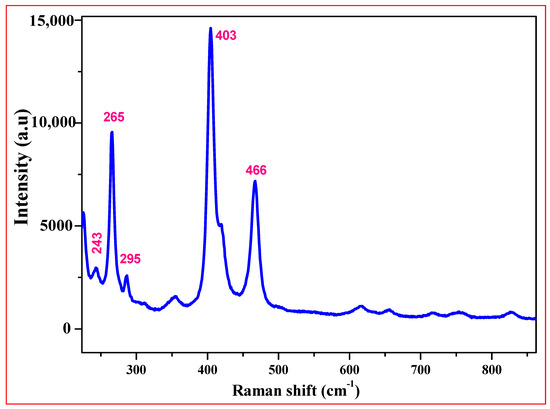
Furthermore, the structural modifications of Sb2O3 NPs synthesized under ambient conditions were investigated using Raman scattering. The Raman spectra of the synthesized Sb2O3 NPs are displayed in Figure 5.
Figure 5.
Raman spectrum of the prepared Sb2O3 NPs with Sb–O–Sb stretching and bending vibrations at a constant Argon mass flow control rate of 30 mL/min in an oxygen environment.
The Raman spectra exhibit the characteristic peaks at 243, 265, 295, 403, and 466 cm−1 represents the formation of a single crystalline orthorhombic form of Sb2O3 and are in good agreement with reported literature [34,35]. Compared with bulk Sb2O3, considerable variations are observed in the Raman modes at 265 and 466 cm−1, indicating size-dependent vibrational modifications in the synthesized nanoparticles. In contrast to bulk Sb2O3, which has a peak at 265 cm−1, Sb2O3 NPs show the formation of two peaks (splitting into two peaks) at 265 cm−1 and the other at 295 cm−1. Further, the intensity of the peak at 265 cm−1 decreases with increasing concentration of oxygen during synthesis, while the peak widths of the nanoparticles remain nearly unchanged, suggesting stable crystallite size with slight modulation in local bonding environments. The molecular vibration of Sb2O3 NPs splits into 2A1 + 2E + 2T1 + 4T2, with A1, E, and T2 being Raman active modes. Compared to bulk Sb2O3, the most affected modes in the nano-rods are the Sb–O–Sb bending, which appears at 403 cm−1, and the Sb-O-Sb stretching, which appears at 265 cm−1. Sb–O–Sb stretching with symmetry is also shown by another peak at 466 cm−1 [35].
The shape-dependent nature of Sb2O3 NPs is responsible for the fraction of modes. The cubic shape of Sb2O3 is compatible with the strong band seen at 403 cm−1 [35]. The symmetric (υs) and asymmetric (υas) Sb-O-Sb stretching modes are represented by two faint peaks that were seen at about 265 and 466 cm−1. Additionally, the sample shows slight Raman shifts at 225, 241, and 502 cm−1, which are attributed to the bending vibrations of Sb2O3 NPs, which are asymmetric (δas) and symmetric (δs) [34,35]. Consequently, the XRD and Raman analyses point to a distinct morphological shift in the Sb2O3 from bulk to NPs. The shift in optoelectronic characteristics is caused by structural alterations linked to morphological changes.
2.6. FTIR Analysis
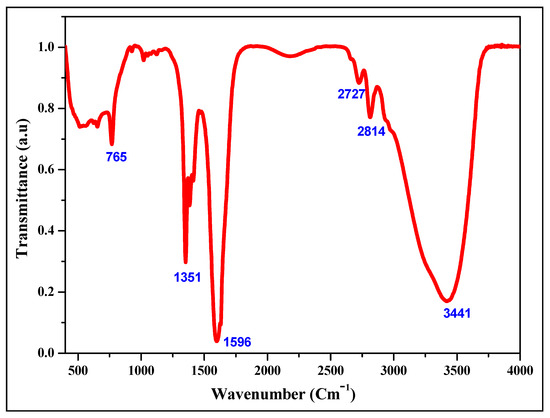
The FTIR was used to analyze the compositional characteristics of the synthesized antimony oxide nanoparticle, which was recorded using a KBr pellet. The FT-IR absorbance spectrum of Sb2O 3NPs, in the range 400 and 4000 cm−1, is shown in Figure 6. The spectrum analysis reveals a number of notable functional characteristics. The stretching vibrations of the -OH group of the water that has been absorbed or adsorbed are responsible for the broad absorption band at 3441 cm−1 [36]. It is interesting to note that the stretching vibrations of the C-H stretching of alkanes are responsible for two strong and sharp absorption peaks at 2814 cm−1 and 2727 cm−1. This may be attributed to the interaction between ambient carbon dioxide and water [37]. The O-H bending and C-O absorption vibrations, which are frequently caused by CO2 and water absorption from the environment, respectively, were also identified by IR analysis of the sample. These two strong vibrational bands were found at wave number regions 1596 cm−1 and 1351 cm−1. The Sb-O and Sb-O-Sb oxide bridge functional groups (O-Sb-O) of the produced antimony oxide nanoparticles were identified as the source of the adsorption bands at the lower frequency area, 765 and 500 cm−1, which illustrates the metal-oxygen stretching vibration of the synthesized oxide sample [38,39,40].
Figure 6.
FTIR spectra of prepared Sb2O3 NPs are consistent with an Argon mass flow control rate of 30 mL/min in an oxygen environment.
2.7. BET Analysis
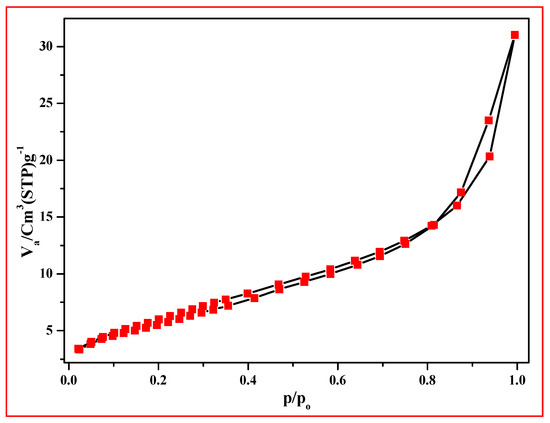
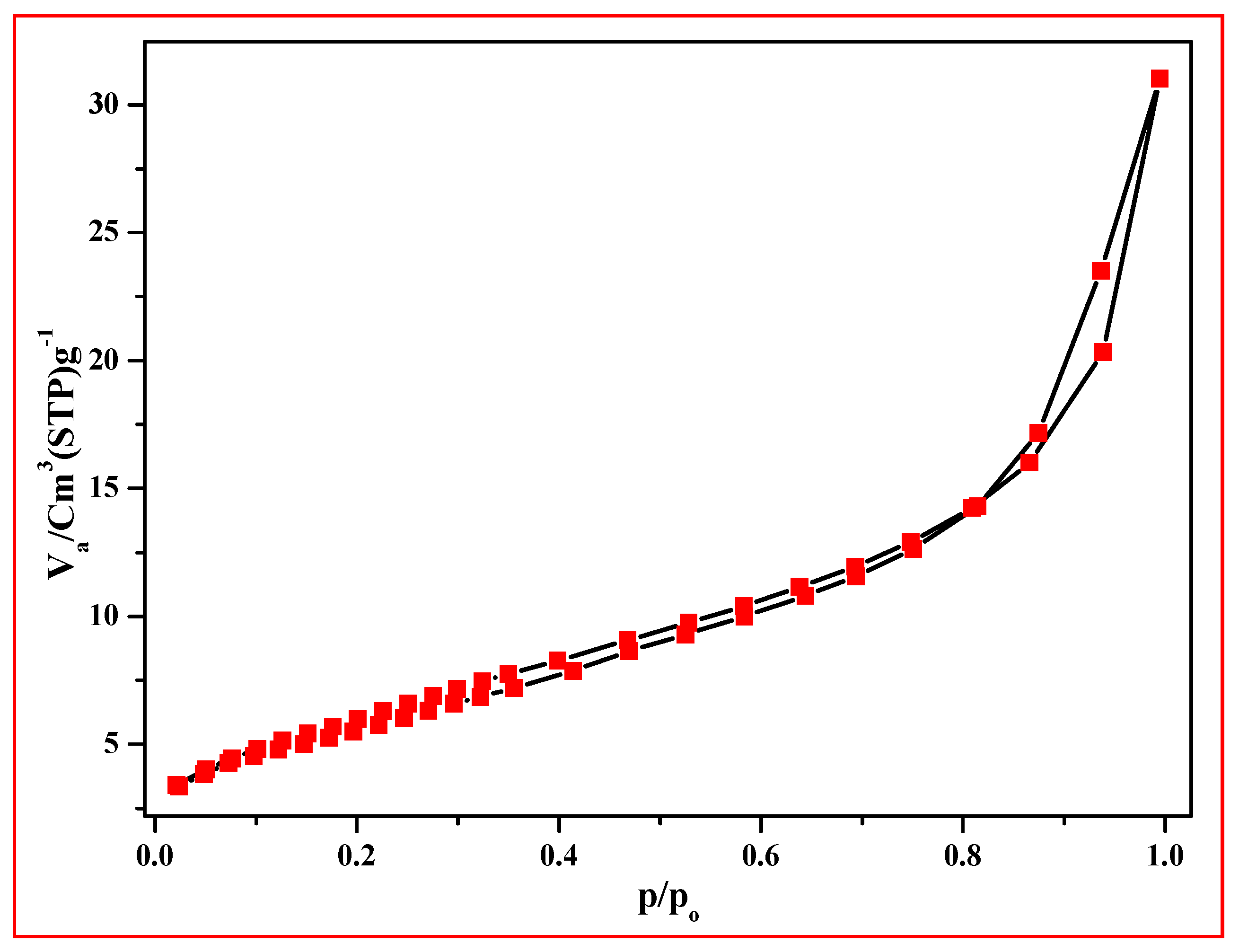
The specific surface area, pore characteristics, and porosity of materials are frequently ascertained via BET analysis (Figure 7). With a specific surface area of 10 m2/g, a pore volume of 0.02 cc/g, and a pore diameter of 10.52 nm for Sb2O3 NPs, the material has a comparatively high specific surface area, suggesting a larger surface area available for chemical reactions. Mesoporous material with a mean diameter of 10.52 nm is suggested by the pore volume and diameter statistics. Ultimately, the aforementioned result demonstrates the great purity, superior surface area, conductivity, and good specific binding energy values of our synthesized material. Therefore, these findings offer important information about the electrochemical characteristics and chemical states of the elements in the sample.
Figure 7.
BET Analysis of Sb2O3 NPs.
2.8. Photocatalytic Activity
In a disk-designed glass reactor with a 176.6 cm2 area, 250 mL of AO aqueous solution at a 20 ppm concentration and 20 mg of photocatalysts were used to perform the photocatalytic degradation. A 125-Watt mercury vapor lamp was used as a source of UV-Vis radiation, and a magnetic stirrer was used to maintain continuous stirring. Samples (5 mL) of the solution were taken out at 15 min intervals while the reaction mixture was exposed to UV light at room temperature for 120 min. Under open-air conditions, the UV light was directed from the top into the reaction mixture at a distance of 21 cm. Using a Shimadzu UV-Vis spectrophotometer model 2600, UV-Vis absorption spectroscopy was utilized to track the progress of photodegradation at room temperature in the wavelength range of 200–800 nm [41,42]. The initial pH of the solution under examination was found to be approximately 6.5, while the rate of centrifugation was maintained at ~5000 rpm for ~10 min. The lamp was placed directly above the reaction vessel at a distance of 15 cm.
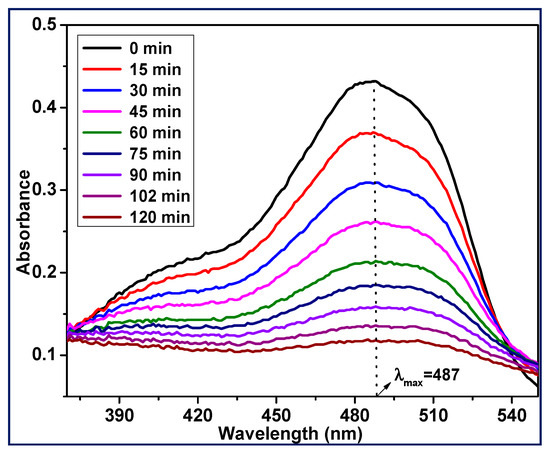
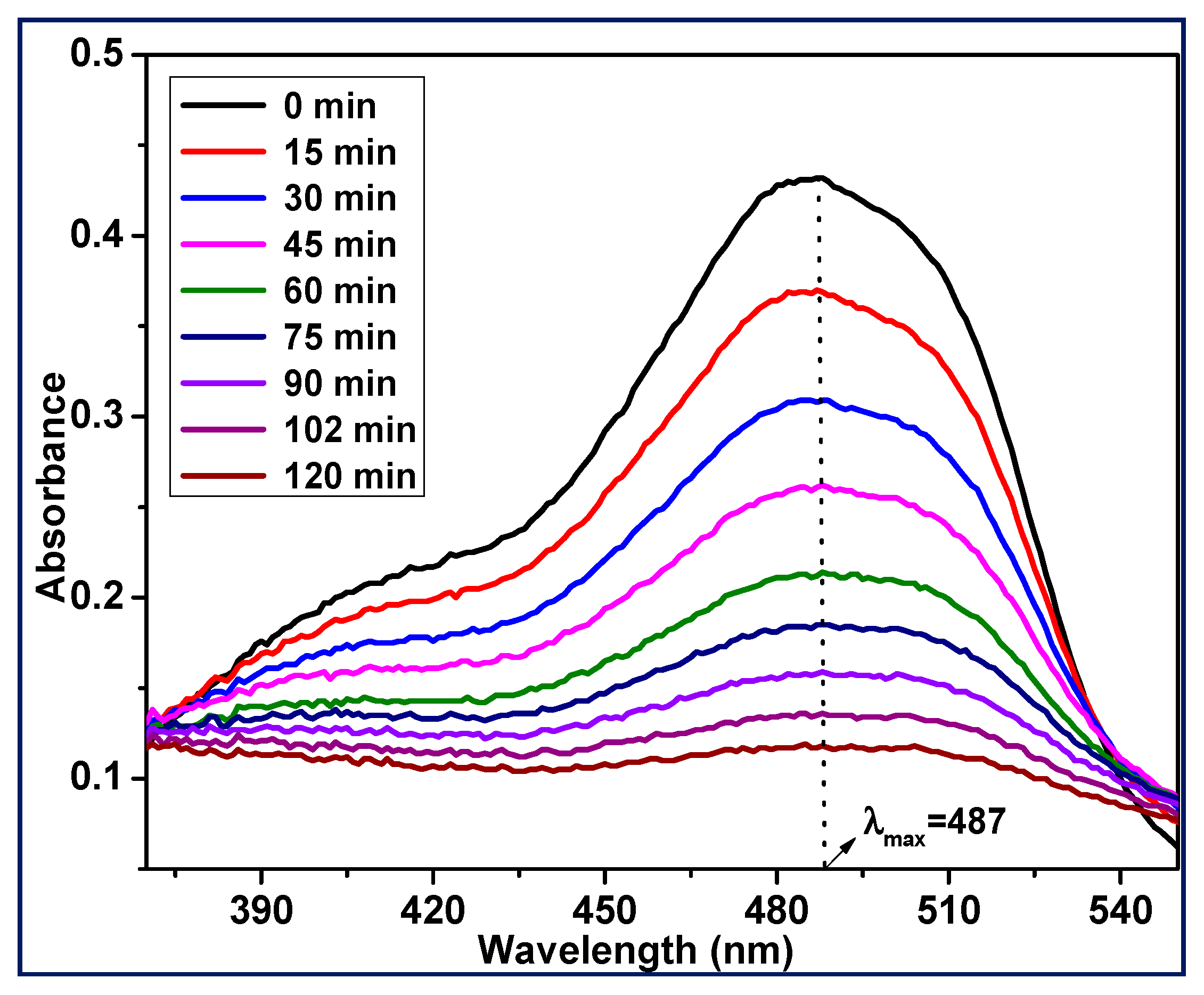
A 125 W mercury vapor lamp with continuous air bubbling was used to illuminate a solution containing the chemical (AO, 20 ppm) in UV-Vis and sunlight in order to assess the activity of the synthesized material as catalysts. To achieve agglutination stability, the catalyst-containing aqueous solution was well blended for 30 min in a dark environment before the light was irradiated. At predetermined intervals, synthesized material was investigated and analyzed. Calculating the absorbance under UV-Vis using the corresponding λmax values of 487 nm, as shown in Figure 8.
Figure 8.
The photocatalytic degradation of the AO.
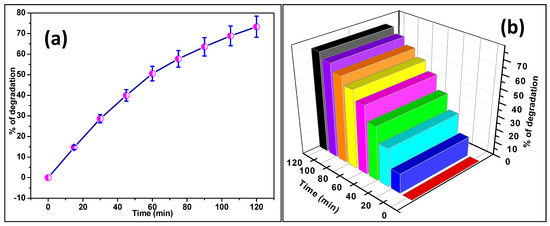
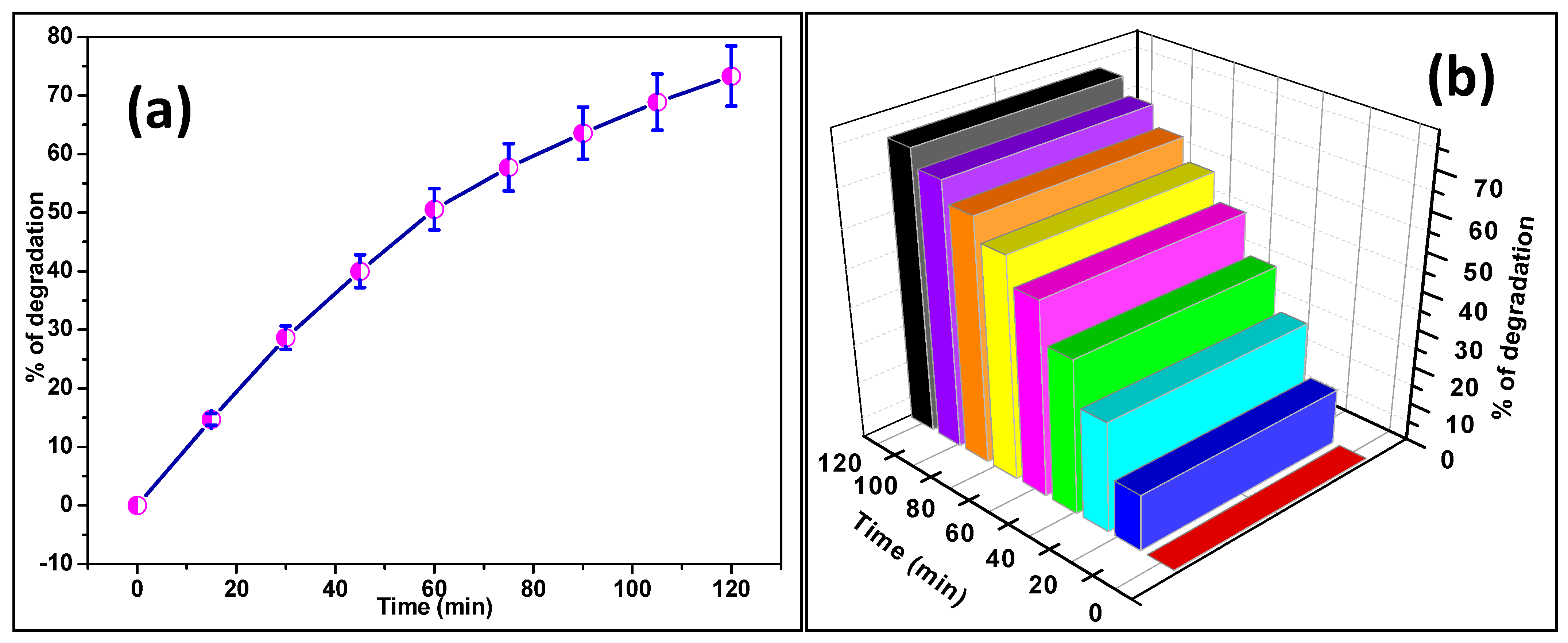
According to the data indicated in the above plot, AO degraded by roughly 73.31% in 120 min when exposed to UV-Vis light as shown in Figure 9a,b [42]. Under UV illumination, Sb2O3 NPs showed remarkable catalytic activity, attaining significant degradation percentages even at high AO dosages. The following equation was used to calculate the percentage degradation:
Figure 9.
(a) The percentage degradation of AO (b) 3D Pictorial representation of % degradation of AO.
Co and C are the initial and dye dose at time interval t, respectively [43]. To investigate the kinetics of dye degradation of dyes, pseudo-first order kinetics from Equation (8) to get
where, Co is the initial level concentration of AO dye achieved after aqueous solution and agglutination stability with photocatalyst, C is AO concentration at a certain irradiation duration in the system and k = apparent rate constant [44,45,46].
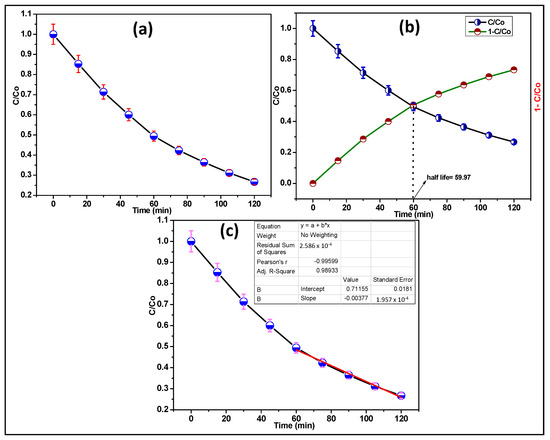
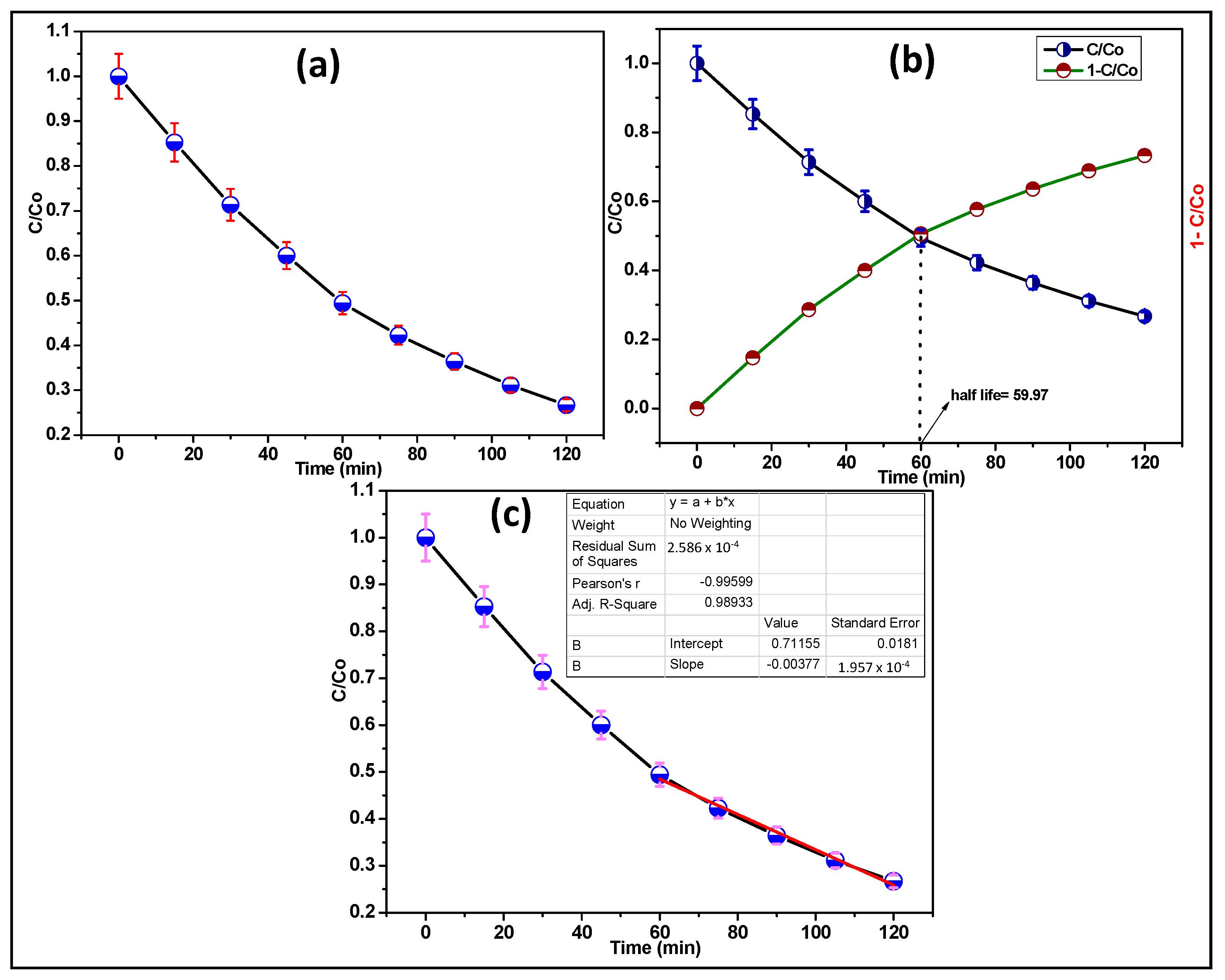
The concentration of AO dye (C/Co) clearly decreases with increasing irradiation period, as shown in Figure 10a. The dye concentrations of AO decreased from 1.0 to 0.15 over 120 min of photo-irradiation. Sb2O3 NPs have shown a half-life of 59.97 min. AO dye degradation is used to test the photocatalytic performance of Sb2O3 NPs catalysts. In Figure 10b, a plot of C/Co v/s time displayed the pseudo-first-order kinetics of the degrading process as a straight line. The graph’s slope revealed a rate constant (K) for AO dye of 0.0114 min−1 (R2 = 0.9893), Figure 10c.
Figure 10.
(a) Kinetic Studies ofSb2O3 NPs (b) half-life and (c) The plot of pseudo first-order kinetics of Sb2O3 NPs.
2.9. Degradation Mechanism
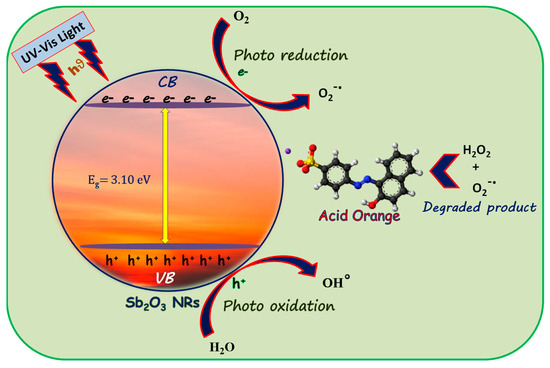
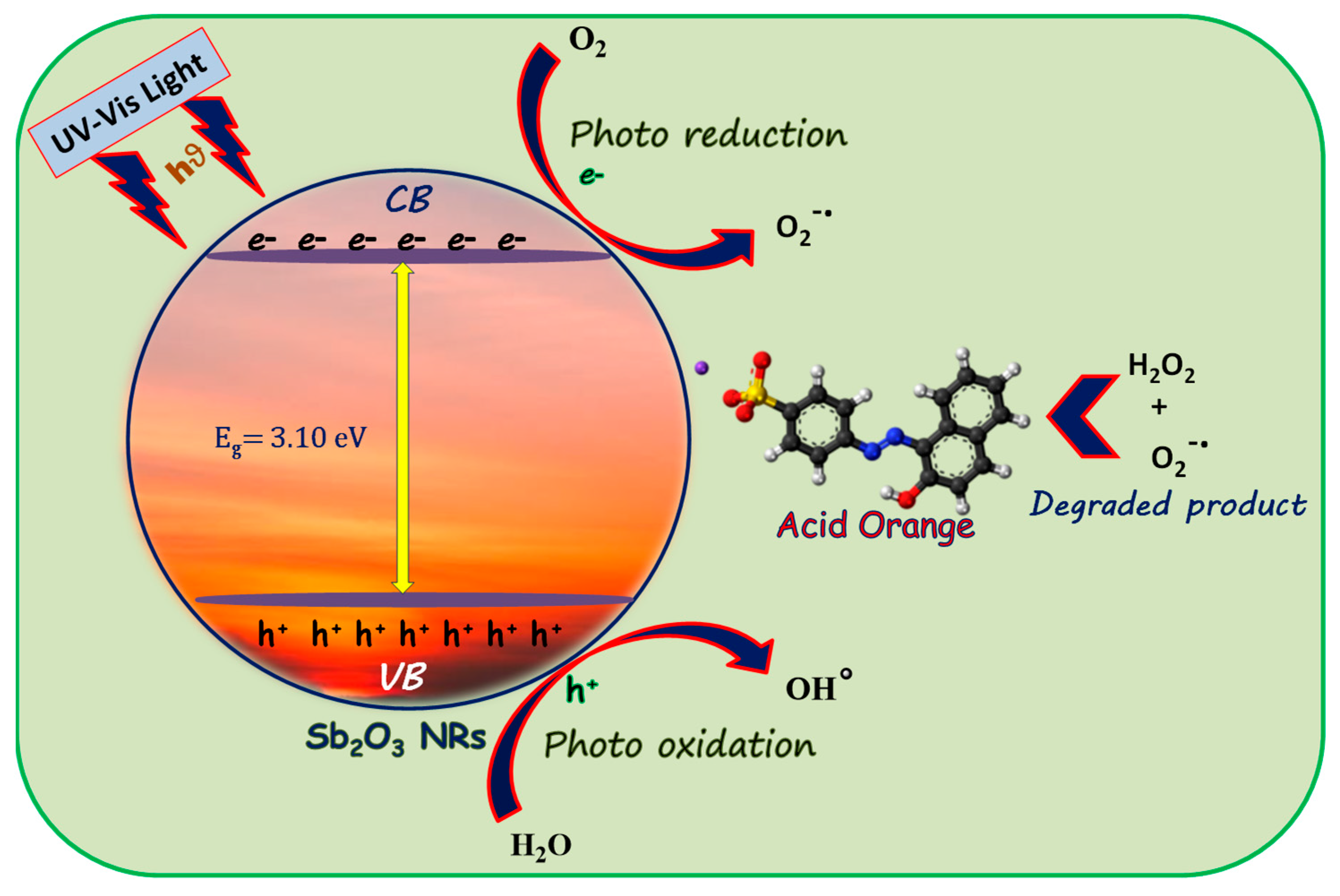
Three fundamental types of semiconductor band gap combinations are recognized in general: straddling (type-I), staggered (Type-II), and broken (Type-III) gaps. Among these, the Type II (staggered) band alignment is highly favorable for the photocatalytic applications as it promotes efficient spatial charge carrier separation of photogenerated charge carriers, as shown in Scheme 1. At the interface, the Fermi levels lead to the formation of a depletion region and an internal built-in electric field. This generated interfacial electric field leads to charge separation by driving electrons and holes in opposite directions around the junction. The separated charge carriers further participate in surface redox reactions that generate reactive species to drive photocatalytic processes. As a result, appropriate band gap matching in AO is essential to facilitate the procedure [47,48].
Scheme 1.
Photocatalytic degradation mechanism.
The internal electric field generated at the heterojunction interface plays an important role in enhancing the photocatalytic efficiency. Further, the electric field drives the photogenerated electron-hole (e−/h+) pairs away from the depletion region, facilitating their charge separation and preventing the rapid recombination. The availability of favorable band alignment results in photogenerated electrons migrating to energetically suitable levels, whereas holes increase in numbers in the valence band, promoting efficient charge separation and avoiding recombination. The electrons in the conduction band react with dissolved O2 to produce reactive oxygen species (ROS) such as superoxide radicals (•O2−) and H2O2, whereas the holes in the valence band oxidize hydroxyl groups of water at the surface or to generate hydroxyl radicals (•OH). These ROS collectively contribute to the effective degradation of dye molecules during the photocatalytic process [49,50].
Sb2O3 + UV-Vis light → Sb2O3 * (Energy)
Sb2O3 * (Energy) → Sb2O3 (h+ + e−)
Sb2O3 (e−) + O2 → O2−. (superoxide radical)
Sb2O3 (h+) + H2O → OH. (superoxide radical)
O2− + OH. (Dye AO) → Degradation Products
The photocatalytic degradation efficiency of Sb2O3 NPs (73.31%) reported in the present study is considered competitive, particularly as the material is a phase-pure, single-component photocatalyst synthesized through a simple and cost-effective route without noble metal loading, heterojunction formation or doping. In comparison to other high-performance systems that depend on complex modifications, these Sb2O3 NPs exhibit considerable intrinsic photocatalytic activity. On account of simple synthesis, scalability, and absence of other secondary co-catalysts, the degradation efficiency achieved in the present investigation represents a promising and environmentally sustainable alternative, leading to a strong baseline for further performance enhancement through future structural or compositional optimization.
2.10. Electrochemical Sensor
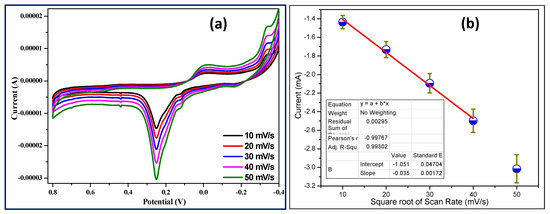
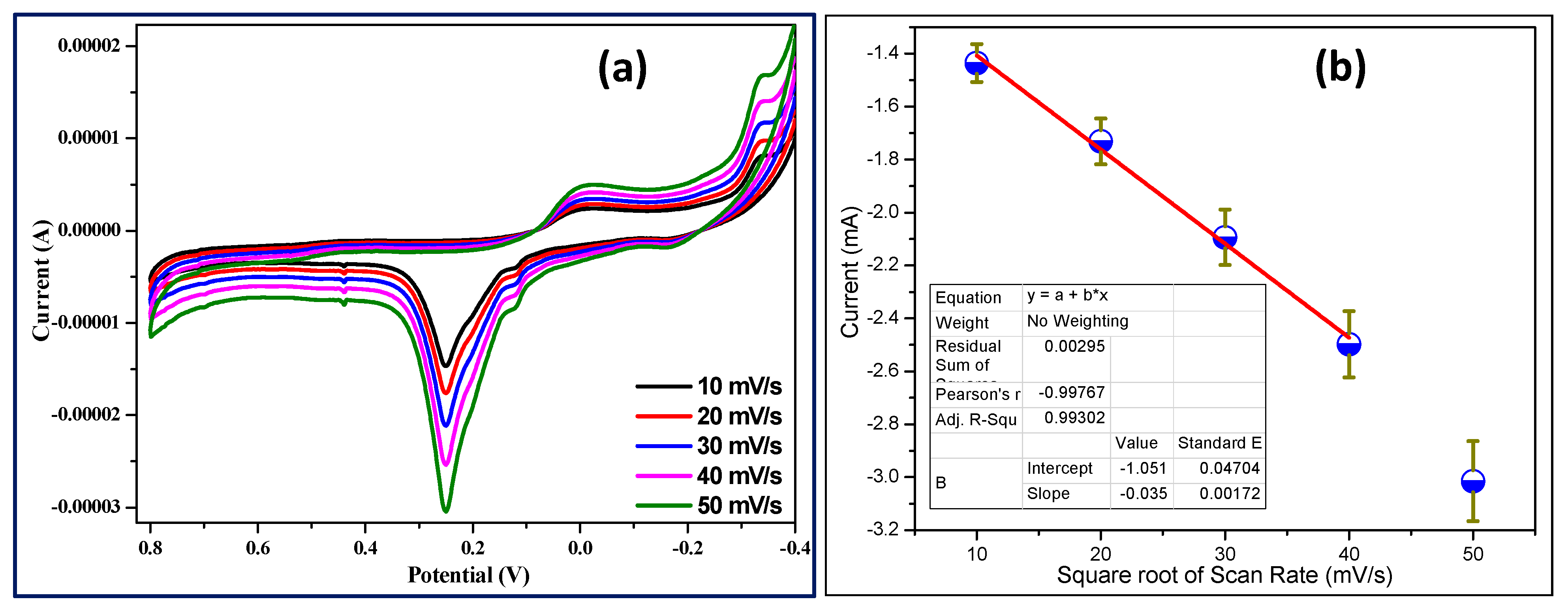
Figure 11a shows the cyclic voltametric studies of the Sb2O3 NPs electrode as a sensor for a range of scans from 10 mVs−1 to 50 mVs−1. The charge transfer efficiency of the material was examined using CV measurements. The material’s unique capacitance was influenced by the CV curve’s structure [42,51]. The oxidation and reduction peaks showed significant changes (an increase in peak current) with increasing scan rates (Figure 11a). According to the linear calibration equation and linear regression curve of the graph showing peak current response vs. the square root of scan rate (Figure 11b), peak potential increased linearly with each scan, ranging from 10 mVs−1 to 50 mVs−1.
Figure 11.
(a) Sb2O3 NPsfor MTZ detection in 0.1 N KOH at multiple scan rates ranging from 10 mVs−1 to 50 mVs−1 (b) Plotting the current response against the scan rate’s square root for calibration.
Figure 11a illustrates the effects of scan rate on peak current associated with MTZ for Sb2O3 NPs at a 5 µM concentration of MTZ. Plotting the peak current as a function of the square root of the scan rate produced a linear curve for the Sb2O3 NPs electrode (Figure 11b. The linear regression equation, I = −0.035 (µM) − 1.051, R2 = 0.9930, where v is in mVs−1, and I is in mA, indicating that diffusion control is in place for the MTZ reduction. The presence of Sb2O3 NPs clearly facilitates MTZ adsorption by changing the reduction in MTZ from a diffusion-controlled process at the Sb2O3 to an adsorption-controlled one.
The Randles-Sevick equation, Equation (4), governs the diffusion-controlled reactions seen with nickel mesh and nickel mesh/Sb2O3. D stands for the MTZ diffusion coefficient, α for the charge transfer coefficient, c for concentration, A for surface area, n for the total number of electrons transferred, and r for the number of electrons transferred at the rate-determining step. The total number of electrons transported during the reduction stage, denoted by nr, was 2.0, and the charge transfer coefficient, α, was found to be 0.55. Since the possibility of multiple electrons transferring at the same time is extremely unlikely, n was set to unity. Usually, a single electron transfer step determines the rate.
2.11. Impedance Studies
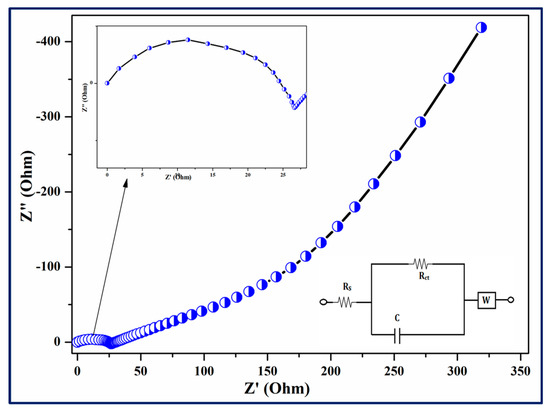
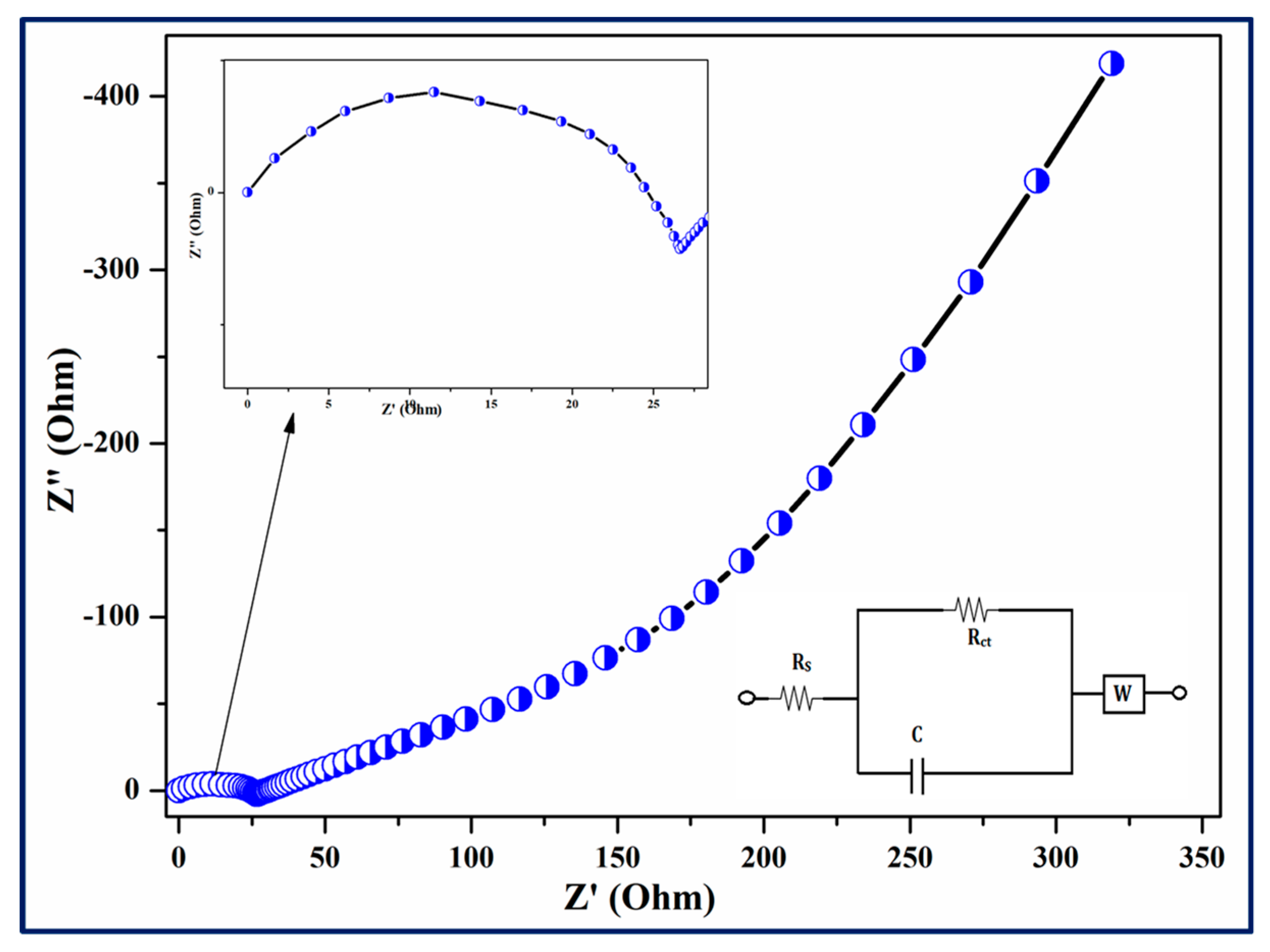
Figure 12 displays the Nyquist plot of the synthesized Sb2O3 electrode. The two main regions of the Nyquist plot that can be distinguished by the plot’s frequency are the semicircle, which depicts the charge transfer of the synthesized electrode material, and the straight line, which depicts the electrode capacitance, at low frequency zone. The charge transfer resistance is represented by the semicircle’s diameter, or Rct [42,51]. The prepared electrode had a small capacitance as well as a small charge transfer resistance. Sb2O3 NPs were found to be suitable for carrying out the electrochemical process based on electrochemical characterization and experimental CV data.
Figure 12.
Sb2O3 NPs electrode Nyquist plot with inserted circuit.
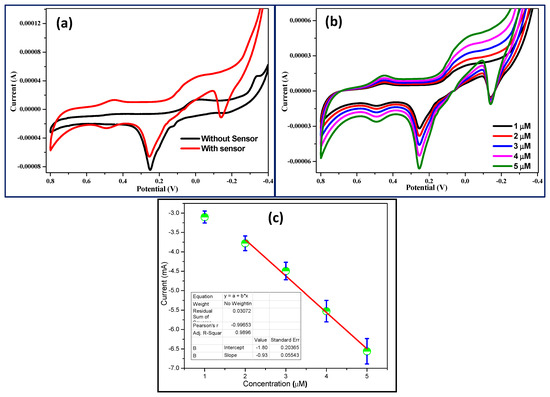
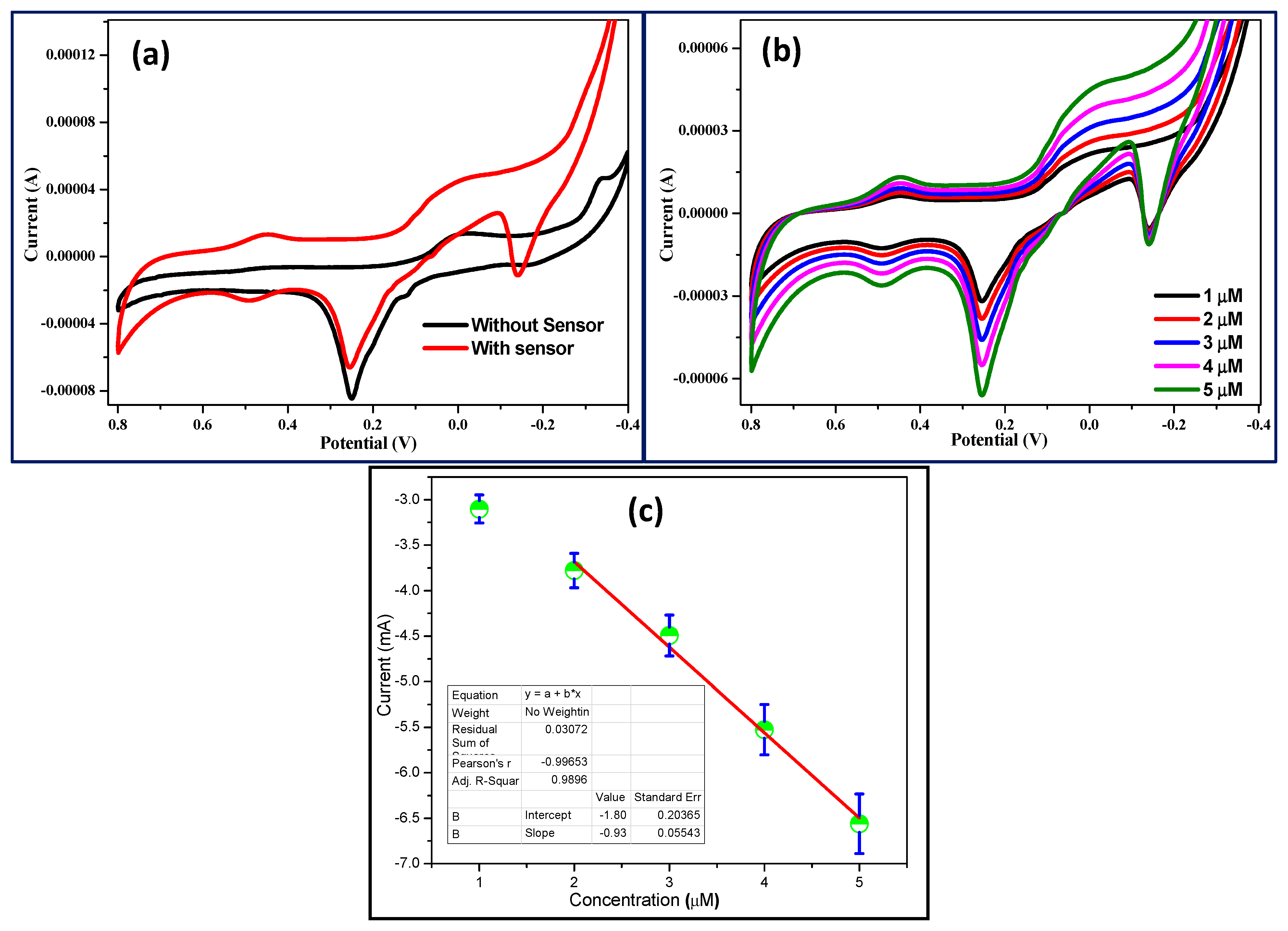
The CV curve shows that when MTZ was added, both sensors (with and without MZT) show the formation of an irreversible reduction peak at 0.25 V, due to the removal of an electron from the nitro group (-NO2) in its structure, which undergoes electrochemical reduction as shown in Figure 13a. In the presence of a sensor (with MZT), CV curves show an additional irreversible reduction peak at −0.14 V due to the further conversion of -NO2 to hydroxylamine (-NHOH) or amine (-NH2) due to the removal of an electron from the MTZ radical anion structure. This result (formation of an additional irreversible peak at −0.14 V in the presence of MZT of Figure 13a) confirms the electrode sensitivity towards the MTZ analyte. The CV results obtained from the fabrication of a modified electrode using Sb2O3 NPs against various concentrations of MTZ (1 to 5 µM) to determine its sensing capability are shown in Figure 13b. When each micromolar concentration of the MTZ solution was added to the electrolyte for each test, there was a significant change in peak intensity (reduction peak corresponds to 0.25 V) with the increase in concentration of MZT (Figure 13b). This indicates that the prepared electrode can detect the MTZ drug in basic media [23,24]. The linear calibration equation Y = −0.93(µM) − 1.80 µA nM−1 cm−2, with linear regression curves of R2 = 0.9896, was obtained from the plot between peak current vs. concentration. This demonstrates that injecting different concentrations of MTZ causes the peak potential to increase linearly (Figure 13c).
Figure 13.
CVs of the Sb2O3 NPs electrode for the detection of MTZ (a) CVs of the prepared Sb2O3 NPs electrode with and without MTZ analyte (b) Concentration variation from 1 to 5 µM at 10 mVs−1 scan rate. (c) Plotting the current response against the concentration of MTZ.
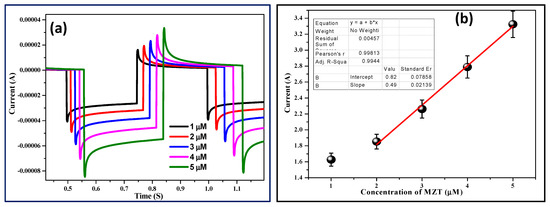
The amperometric studies employed Sb2O3 NPs; the i-t curve (potential range of 0.4 V to 1.2 V) is shown in Figure 14. The current response quickly stabilizes at the MTZ concentration after increasing linearly with it. These findings suggest that the fabricated electrode reacts amperometrically with MTZ in a robust and quick manner. The calibration curve in Figure 14a shows how the MTZ concentration affects the peak’s oxidation current. The Sb2O3 NPs electrode’s lowest limit of detection was determined to be 0.1 × 10⁻³ mol/L (~104 µM/L). The observed LOD was a little higher compared to the literature, as discussed in Table 1. As the present study reports cost-effective synthesis of Sb2O3 NPs, these NPs could be further engineered to tune their band gap structure either through doping or by forming a heterostructure with other nano materials, which could lead to fascinating results in their sensing performance. The linear plot generated by the calibration curve Y = 0.49 (µM) + 0.82 µA nM−1 cm−2 can be used to confirm the diffusion-controlled activity exhibited within the concentration range. A linear regression curve with R2 = 0.9944 is produced, demonstrating that peak potential increases linearly with the addition of various MTZ concentrations (Figure 14b).
Figure 14.
(a) Amperometric i-t curves of Sb2O3 NPs electrode sensing behaviors of MTZ concentration range from 1 to 5 μM at 10 mVs−1 scan rate, and (b) plot of the current response as a function of the concentration of MTZ.
Table 1.
Comparison of MTZ sensors based on a few metal oxide NPs published in the literature with that of Sb2O3 NPs reported in this study.
In the plots related to linear regression analysis of Figure 11b, Figure 13c and Figure 14b, the regression points have been excluded; this exclusion was performed to avoid distortion of the calibration curve in order to maintain the reliability and accuracy of the regression model. However, the inclusion of these points has a negligible effect on the correlation coefficient R2, and the conclusion of the study remains unaffected.
2.12. Stability
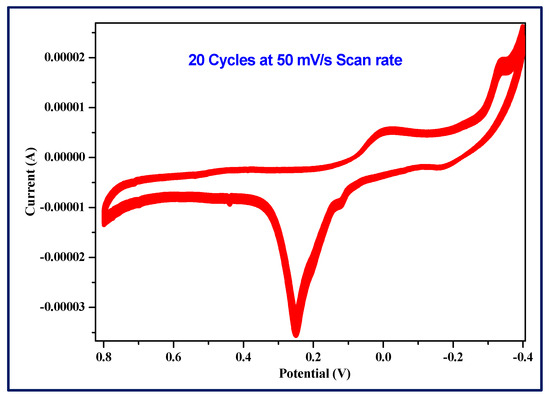
To check the stability of the Sb2O3 NPs electrode, the CV was carried out for 20 cycles using 0.1 N KOH and 1 μM MTZ at a sweep rate of 50 mVs−1, as shown in Figure 15. The peak potential (Epa) and peak current (Ipa) were found to be comparatively constant during each cycle of operation. With Ipn and Ip1 representing the peak current levels during the first and nth cycles, respectively, the electrode disintegration percentage is calculated using the formula = Ipn/Ip1 [23,42]. This ratio results into 94.36% of stability, demonstrating the exceptional stability and functionality of the Sb2O3 NPs electrode even after 20 cycles.
Figure 15.
CVs of 1 μM MTZ at a sweep rate of 50 mVs−1 for 20 cycles at the electrode of Sb2O3 NPs.
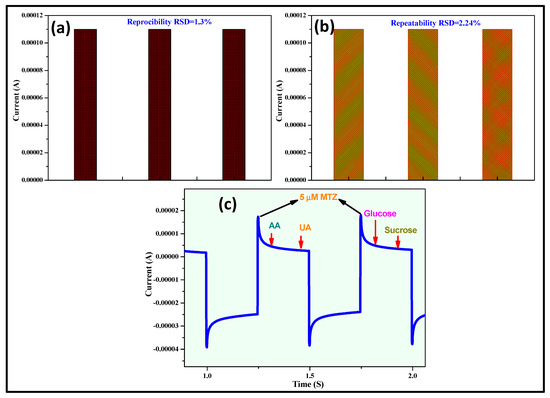
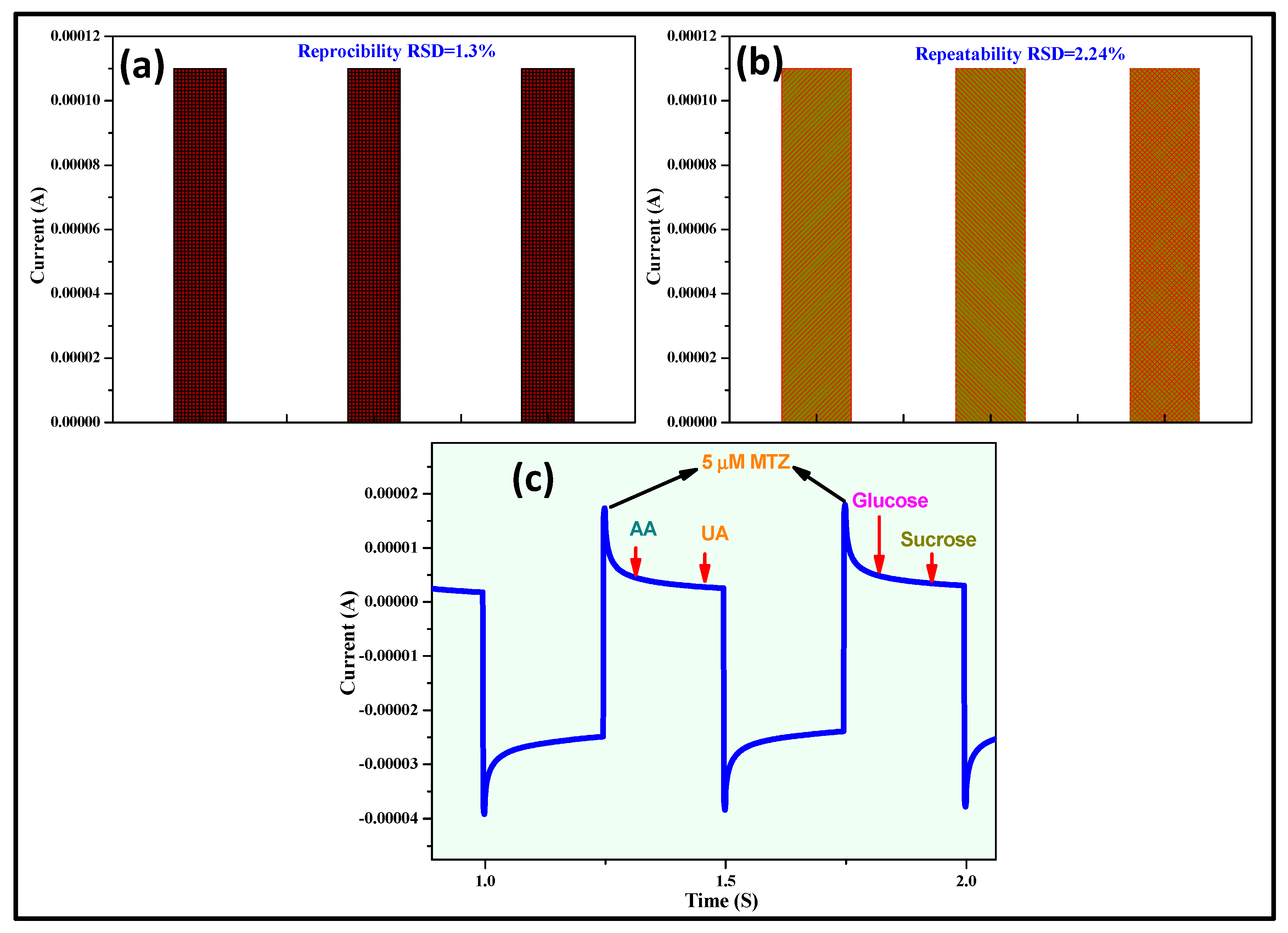
Repeatability, selectivity, and Reproducibility are crucial performance indicators for sensing devices. Repeatability is the ability of an electrochemical sensor to produce accurate and consistent findings when tested repeatedly using the same electrode and under the same conditions. For applications like industrial process control, medical diagnostics, and environmental monitoring, where precise and reliable data are needed, repeatability is a crucial aspect of sensor performance [23]. The current response from the Sb2O3 NPs electrode showed exceptional precision and dependability with a relative standard deviation (RSD) of less than 1.3%, as shown in Figure 16a. We tested the repeatability by making four observations in a single day with a single operational electrode. The calculated RSD of 2.24% for the repeatability was observed, as shown in Figure 16b, indicating that the suggested sensor has high repeatability. In order to assess the MTZ sensing selectivity using the Sb2O3 NPs electrode, we integrated some possible interfering molecules into the traditional amperometry detection process. Figure 16c illustrates the emergence of a steady-state current following the addition of 5 μM MTZ at 0.25 V. When 5 μM quantities of ascorbic acid (AA), uric acid (UA), glucose, and sucrose were added, no discernible change was seen. The Sb2O3 NPs electrode’s initially insensitive behavior, followed by a discernible increase in current at 5 μM MTZ, shows that it is highly selective for MTZ sensing. To ascertain the electrode’s long-term endurance and durability, we examined the electrode response using 5 μM MTZ in 0.1 N KOH at a scan rate of 10 mVs−1. The performance of the MTZ sensor used in the present investigation is compared with previously reported literature in Table 1.
Figure 16.
(a) Reproducibility, (b) repeatability and (c) selectivity of the electrode response of Sb2O3 NPs for 5 μM MTZ.
2.13. Sensing Mechanism
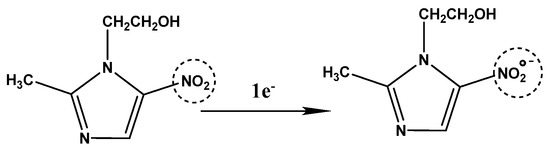
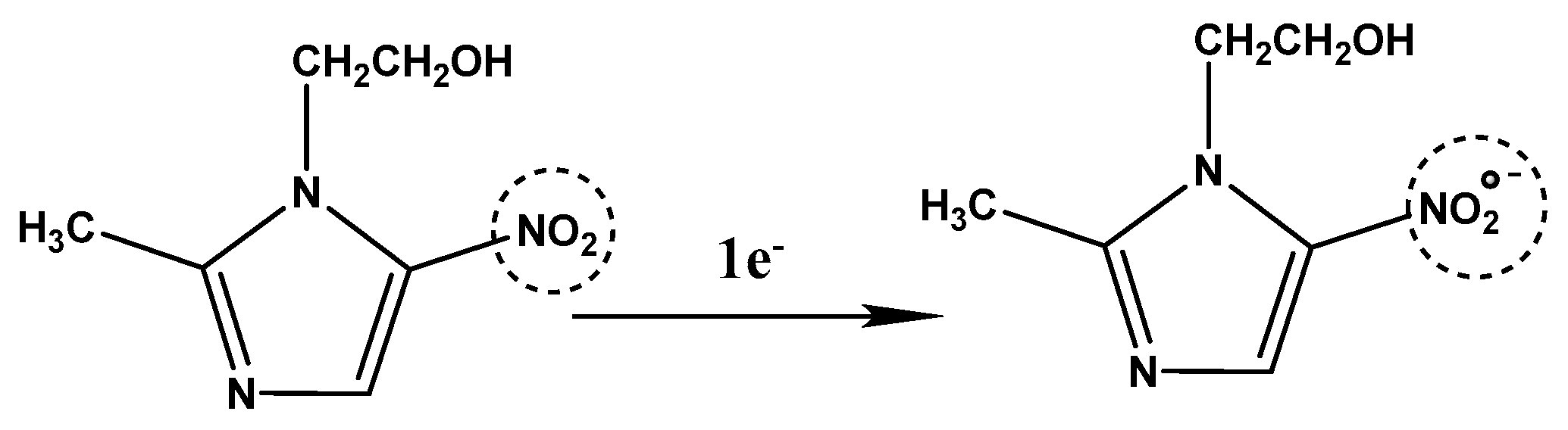
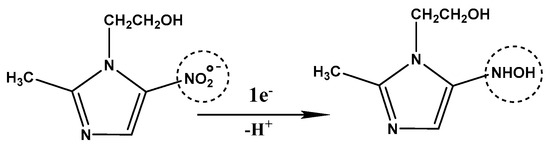
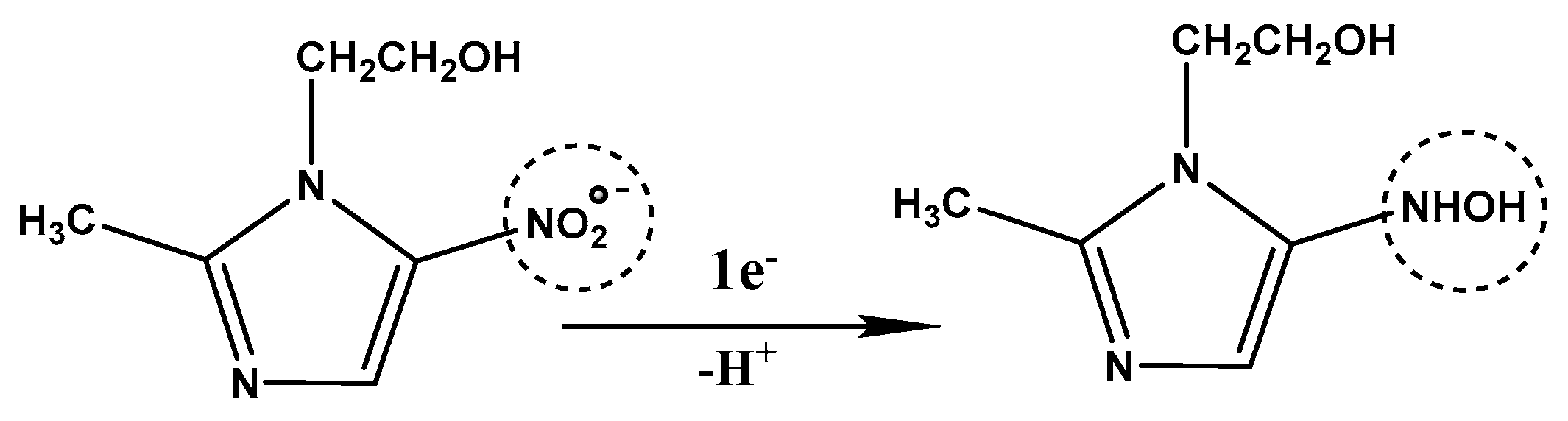
A nitro (-NO2) group is present in metronidazole, and its electrochemical reduction in CV Studies involves several proton-coupled electron transfer stages. In the CV, the two cathodic peaks that are seen line up with successive reduction processes as shown in Scheme 2.
Scheme 2.
The nitrogen group undergoes one-electron reduction to produce a nitro radical anion.
The electrochemical sensing of MTZ using Sb2O3 NPs is mainly based on the adsorption-assisted reduction in the nitro (-NO2) group of metronidazole at the surface of the modified electrode. The high surface area and defect-rich structure of Sb2O3 NPs provide a large number of active sites, facilitating strong interaction between Sb3+ centers on the surface and MTZ molecules, which enhances the adsorption and accelerates electron transfer. During the electrochemical interaction, the nitro group undergoes a proton-coupled multi-electron reduction to hydroxylamine, followed by the corresponding amine derivative (as shown in Scheme 3), resulting in a distinct cathodic peak current proportional to MTZ concentration. The presence of oxygen vacancies and improved conductivity in Sb2O3 reduces the potential and promotes faster charge transfer kinetics, thereby significantly enhancing the sensitivity and catalytic performance of the MTZ sensor compared to the bare electrode.
Scheme 3.
The removal of one more electron by the elimination of a proton, coupled with the reduction in the radical intermediate to a hydroxylamine.
3. Materials and Methods
3.1. Materials
Antimony (Sb), Aluminum boat (Al2O3), MTZ, nitrofurantoin (NFT), and deionized water. All the precursors with 99.9% purity were purchased from Sigma-Aldrich (Merck, Darmstadt, Germany), India and used without further purification. Acid Orange, 0.1 M KOH, double-distilled water.
3.2. Characterization
To characterize the prepared Sb2O3NPs, several techniques were utilized. To investigate the crystallinity of the nanoparticles, XRD patterns were recorded using a Panalytical Model X’Pert PRO diffractometer (Almelo, The Netherlands) with Cu-Kα radiation (λ = 1.54056 Å) at 45 kV and 40 mA. The morphology and elemental compositions of the nanomaterial were ascertained with the aid of a JEOL-JSM-7600F transmission electron microscope (TEM) (Tokyo, Japan) and Scanning electron microscopy (FEI-Quanta FEG 200F) (Hillsboro, OR, USA). A Shimadzu 1800 UV-Vis spectrophotometer (Kyoto, Japan) was used to measure the UV–visible absorption spectra of the generated nanoparticles in order to examine their properties. The optical characteristics of the nanoparticles were also investigated by performing room temperature photoluminescence (PL) measurements in the 300–800 nm range using a Perkin Elmer LS 55 fluorescence spectrophotometer (Waltham, MA, USA), with an excitation wavelength of 350–475 nm. The produced material was examined using a Fourier transform infrared spectrometer (FT/IR-4700 TYPE A) (Tokyo, Japan) operating between 4000 and 400 cm−1.
Electrochemical impedance spectroscopy (EIS) and cyclic voltammetry (CV) were performed using a three-electrode setup approach. All electrochemical characterizations were carried out using the IVIUM electrochemical workstation. Three electrodes were cleaned and applied: the reference electrode (Ag/AgCl), the working electrode (the as-prepared Sb2O3NPs), and the counter electrode (platinum (Pt)). A 1 M KOH electrolyte solution was used for the electrochemical characterizations. The CV experiments were conducted across the potential range of −0.8 to 0.8 V vs. Ag/AgCl at different scan rates and current densities. An alternating current (AC) voltage with an amplitude of 0.01 V was used to conduct the EIS test. The test’s frequency range was established, ranging from 0.01 Hz to 100 Hz.
3.3. Synthesis of Antimony Oxide Nanoparticles
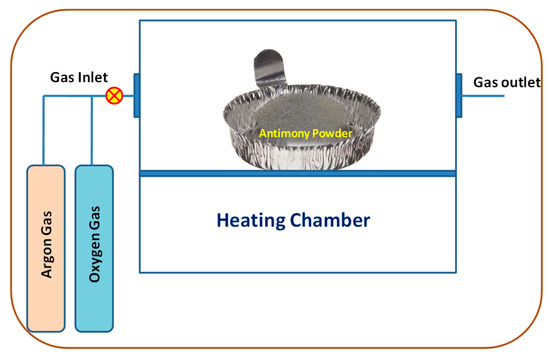
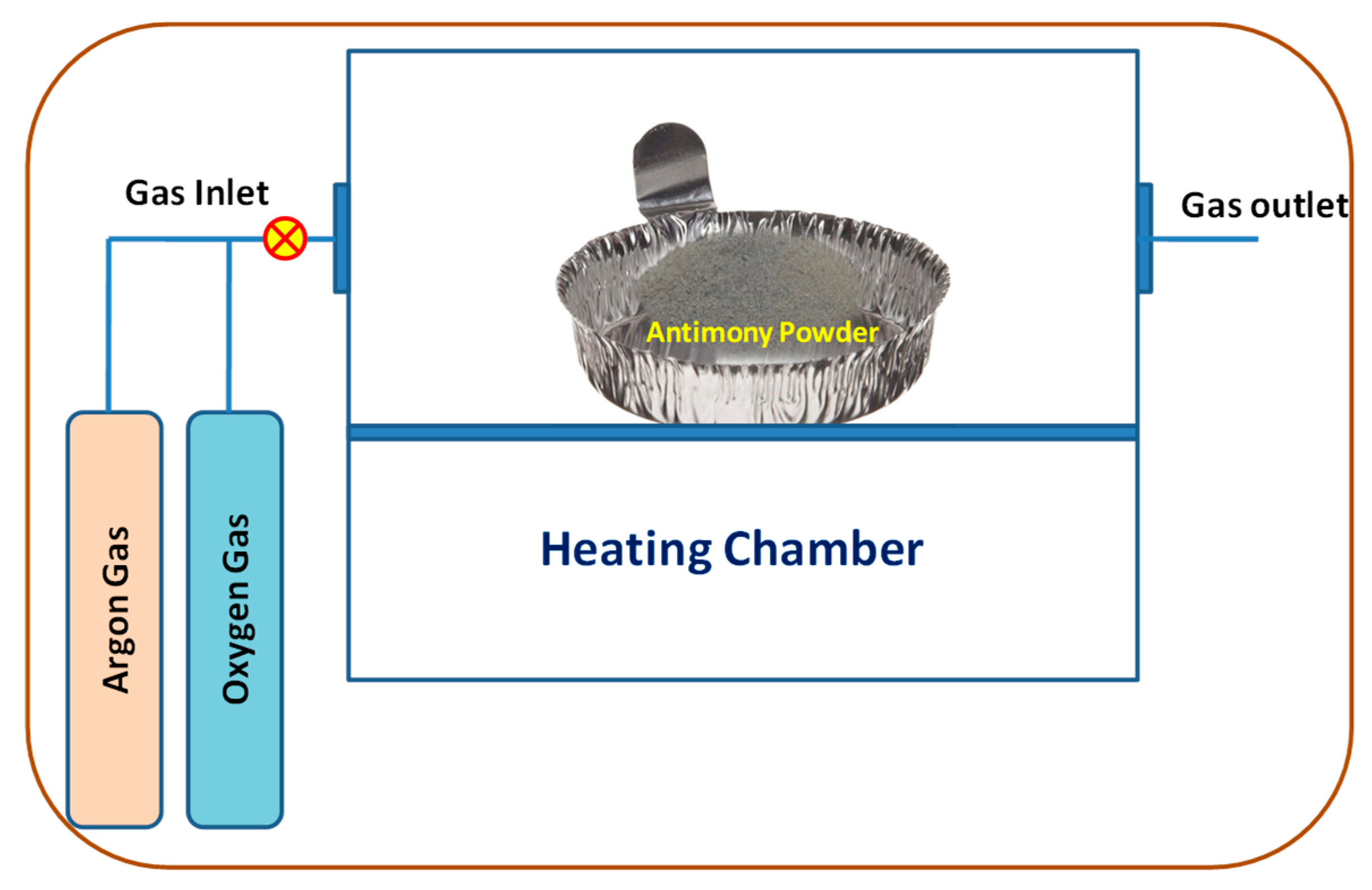
In a typical chemical vapor deposition (CVD) process, smaller antimony oxide (Sb2O3) NPs were synthesized in a high-temperature furnace with a temperature control unit. A Quartz tube is used as the reaction chamber, and Argon (Ar) gas is the carrier gas with a mass flow controller to control the gas flow. A schematic flow diagram for the preparation of Sb2O3NPs is shown in Figure 17.
Figure 17.
Schematic representation of the Sb2O3NPs synthesis.
In a typical synthesis procedure, 2 g of Antimony (Sb) powder was put into an Aluminum boat (Al2O3) and placed at the upstream, 15 cm away from the center of the heating zone. Ar gas with a flow rate of 30 standard cubic millimeters per minute (30 mL/min) was supplied to purge the growth tube for 1 h at a growth temperature of 900 °C. The next constant growth period time is 1 h under an oxygen (O2) environment. After the growth process, the furnace was rapidly cooled down to room temperature under Argon gas. The resulting white cotton-like product was formed on an alumina boat that can be used for further analysis [55]. The parameters used during the synthesis process are summarized as follows in Table 2.
Table 2.
Synthesis parameters followed during the formation of Sb2O3NPs.
3.4. Fabrication of Antimony Oxide Electrode
Graphite powder, synthesized Sb2O3 NPs, and PTFE solution were used in a 15:70:15% ratio to fabricate the working electrode. Sb2O3 NPs were mixed with a small quantity of PTFE and pressed under high mechanical pressure to obtain thin sheets of approximately 1 mm thickness. The obtained thin sheet of Sb2O3 NPs was further affixed to a nickel mesh using conductive carbon paste, creating a surface that was extremely conductive. The glued electrodes were subjected to a 20 Mpa pressure for three minutes to improve the electrode contact. The electrodes were soaked in 1 M KOH for 30 min before usage in order to promote a solid bond between them and the electrolyte. Teflon tape was used to insulate the electrode and wire on the negative side of the circuit [15,16,55].
3.5. Photocatalytic Analysis
Sb2O3 NPs were used to determine the photo-degradation of Acid Orange dye under UV light. 20 mg of photocatalyst was dissolved in 200 mL of a 10 ppm dye solution was subjected to illumination with UV-light while maintaining standard conditions. The reaction process was conducted using a Pyrex glass beaker, and the reaction mixture was magnetically stirred before being exposed to a UV-light source using a 400 W mercury (Hg) vapor lamp with a wavelength of 250 nm. The round-bottom glass reactor was used to transfer the Sb2O3NPs catalyst. For 120 min, the resulting combination was exposed to ultraviolet radiation in an oxygen environment. 5 mL of the tested sample was collected every 15 min throughout this period, to measure Sb2O3 NPs photocatalytic degradation of Acid Orange dye in a 200–800 nm UV-Vis range [56,57].
4. Conclusions
The present study demonstrates the successful synthesis of Antimony Oxide (Sb2O3) nanoparticles via a chemical vapor deposition (CVD) method, resulting in orthorhombic nanostructures with an average crystallite size of 53.51 nm. Morphological and compositional analyses confirmed elongated rod-like nanostructures (20–100 nm), stoichiometric Sb2O3 formation (Sb:O ≈ 2:3), and a direct optical band gap of 3.10 eV. The Sb2O3 NPs modified nickel mesh electrode shows enhanced electrocatalytic activity toward Metronidazole (MTZ) detection, evidenced by an additional irreversible reduction peak at −0.14 V and excellent cycling stability with 94.36% retention after 10 cycles, along with good stability, sensitivity and selectivity. Further, these nanoparticles demonstrated efficient photocatalytic performance, achieving 7 A.M.3.31% degradation of Acid Orange (AO) dye under UV-Vis irradiation.
These results highlight CVD-grown Sb2O3 nanoparticles as efficient multifunctional materials with strong potential for integrated electrochemical sensing and environmental remediation applications.
Author Contributions
Conceptualization, S.K., M.R. and T.A.H.; methodology, S.K., T.A.H. and M.R.; software, T.A.H., S.A.M.I. and S.A.; validation, S.K., T.A.H. and H.P.; formal analysis, T.A.H. and S.A.M.I.; investigation, S.K. and C.P.; resources, S.K.; data curation, S.A.; writing—original draft preparation, S.K.; writing—review and editing, S.K., H.P., S.A.M.I. and Z.U.H.K.; visualization, C.P.; supervision, S.K.; project administration, S.K.; funding acquisition, S.K. All authors have read and agreed to the published version of the manuscript.
Funding
This research was funded by the Deanship of Scientific research (DSR), University of Tabuk, Tabuk, Saudi Arabia [Grant No. S-1444-0038] and the APC was funded by the same grant.
Data Availability Statement
All the data related to the present research are included in this manuscript.
Acknowledgments
The authors would like to acknowledge financial support for this work from the Deanship of Scientific research (DSR), University of Tabuk, Tabuk, Saudi Arabia, under Grant No. S-1444-0038. Authors also acknowledge the support received from the students Ahmed Awad Alatawi and Abdullah A. Alghamdi towards conducting a literature survey.
Conflicts of Interest
The authors declare no conflicts of interest.
References
- Xu, J.; Kang, C.; Niu, L.; Xu, C.; Ren, S. Study on the Properties of Sb2O3 Nanoparticles Modified by Different Surfactants. Mater. Res. Express 2019, 6, 0950C1. [Google Scholar] [CrossRef] [Scilit]
- Wang, L.; Yang, X.; Yang, W.; Zhang, J.; Zhang, Q.; Song, B.; Wong, C. Surface Defect Modification of ZnO Quantum Dots Based on Rare Earth Acetylacetonate and Their Impacts on Optical Performance. Appl. Surf. Sci. 2017, 398, 97–102. [Google Scholar] [CrossRef] [Scilit]
- Chen, X.; Wang, X.; An, C.; Liu, J.; Qian, Y. Synthesis of Sb2O3 Nanoparticles under Hydrothermal Conditions. Mater. Res. Bull. 2005, 40, 469–474. [Google Scholar] [CrossRef] [Scilit]
- Ibrahim, R.S.; Azab, A.A.; Hameed, T.A. The Effective Role of Potassium Doping in Improving the Structural, Morphological, Optical, and Electrical Properties of CdO Thin Film for Optoelectronic Application. Opt. Mater. 2024, 149, 115100. [Google Scholar] [CrossRef] [Scilit]
- Choi, S.-Y.; Kim, M.-H.; Kwon, Y.-U. Effects of Cr2O3 Modification on the Performance of SnO2 Electrodes in DSSCs. Phys. Chem. Chem. Phys. 2012, 14, 3576–3582. [Google Scholar] [CrossRef] [Scilit] [PubMed]
- Kumar, S.; Bhunia, S.; Ojha, A.K. Effect of Calcination Temperature on Phase Transformation, Structural, and Optical Properties of Sol–Gel Derived ZrO2 Nanostructures. Phys. E 2015, 66, 74–80. [Google Scholar] [CrossRef] [Scilit]
- Agrahari, V.; Mathpal, M.C.; Kumar, M.; Agarwal, A. Investigations of Optoelectronic Properties in DMS SnO2 Nanoparticles. J. Alloys Compd. 2015, 622, 48–53. [Google Scholar] [CrossRef] [Scilit]
- Ahmed, A.S.; Muhamed, S.M.; Singla, M.L.; Tabassum, S.; Naqvi, A.H. Ameer Azam Band Gap Narrowing and Fluorescence Properties of Nickel Doped SnO2 Nanoparticles. J. Lumin. 2011, 131, 1–6. [Google Scholar] [CrossRef] [Scilit]
- Dong, X.; Wang, X.; Wang, J.; Song, H.; Li, X.; Wang, L.; Chan-Park, M.B.; Li, C.M.; Chen, P. Synthesis of a MnO2–Graphene Foam Hybrid with Controlled MnO2 Particle Shape and Its Use as a Supercapacitor Electrode. Carbon 2012, 50, 4865–4870. [Google Scholar] [CrossRef] [Scilit]
- Kaviyarasu, K.; Sajan, D.; Devarajan, P.A. A Rapid and Versatile Method for Solvothermal Synthesis of Sb2O3 Nanocrystals under Mild Conditions. Appl. Nanosci. 2013, 3, 529–533. [Google Scholar] [CrossRef] [Scilit]
- Zhang, L.; Wu, H.B.; Yan, Y.; Wang, X.; Lou, X.W. Hierarchical MoS2 Microboxes Constructed by Nanosheets with Enhanced Electrochemical Properties for Lithium Storage and Water Splitting. Energy Environ. Sci. 2014, 7, 3302–3306. [Google Scholar] [CrossRef] [Scilit]
- Wang, Z.L. Nanowires and Nanodiskettes of Semiconducting Oxides—From Materials to Nanodevices. Adv. Mater. 2003, 15, 432–436. [Google Scholar] [CrossRef] [Scilit]
- Li, L.; Zhang, Y.X.; Fang, X.S.; Zhai, T.Y.; Liao, M.Y.; Wang, H.Q.; Li, G.H.; Koide, Y.; Bando, Y.; Golberg, D. Sb2O3 Nanoparticle Networks for Excellent Visible-Light-Range Photodetectors. Nanotechnology 2011, 22, 165704. [Google Scholar] [CrossRef] [Scilit] [PubMed]
- Nayak, J.; Sahu, S.N. Synthesis and Characterization of Sb2O3 Cluster-Assembled Nanostructured Thin Films. Mater. Lett. 2007, 61, 1388–1391. [Google Scholar] [CrossRef] [Scilit]
- Qi, W.; Guo, S.; Sun, H.; Liu, Q.; Hu, H.; Liu, P.; Lin, W.; Zhang, M. Synthesis and Characterization of Sb2O3 Nanoparticles by Liquid Phase Method under Acidic Condition. J. Cryst. Growth 2022, 588, 126642. [Google Scholar] [CrossRef] [Scilit]
- Wang, Q.; Ge, S.; Shao, Q.; Zhao, Y. Self-Assembly of Sb2O3 Nanowires into Microspheres: Synthesis and Characterization. Physica B 2011, 406, 731–736. [Google Scholar] [CrossRef] [Scilit]
- Alamrani, N.A. Using chemically modified Ocimum tenuiflorum as an efficient and low-cost biosorbent for removing Congo red from aqueous solutions. J. Taibah Univ. Sci. 2023, 17, 2210973. [Google Scholar] [CrossRef] [Scilit]
- Yang, Y.; Du, Z.; Yang, H.; Bagchi, D.; Yang, R.; Menezes, P.W.; Meng, S. Facet-Engineered S-Scheme Heterostructure with Enhanced Active Sites for Efficient Photocatalytic Degradation of Organic Contaminants. Adv. Funct. Mater. 2026, e25991. [Google Scholar] [CrossRef] [Scilit]
- Li, G.; Wong, K.H.; Zhang, X.; Hu, C.; Yu, J.C.; Chan, R.C.Y.; Wong, P.K. Degradation of Acid Orange 7 Using Magnetic AgBr under Visible Light: The Roles of Oxidizing Species. Chemosphere 2009, 76, 1185–1191. [Google Scholar] [CrossRef] [Scilit]
- Behnajady, M.A.; Modirshahla, N.; Shokri, M. Photodestruction of Acid Orange 7 (AO7) in Aqueous Solutions by UV/H2O2: Influence of Operational Parameters. Chemosphere 2004, 55, 129–134. [Google Scholar] [CrossRef] [Scilit]
- Ismail, G.A.; Sakai, H. Review on effect of different type of dyes on advanced oxidation processes (AOPs) for textile color removal. Chemosphere 2022, 291, 132906. [Google Scholar] [CrossRef] [Scilit]
- Malfertheiner, P.; Megraud, F.; O’Morain, C.; Bazzoli, F.; El-Omar, E.; Graham, D.; Hunt, R.; Rokkas, T.; Vakil, N.; Kuipers, E.J. Current Concepts in the Management of Helicobacter pylori Infection: The Maastricht III Consensus Report. Gut 2007, 56, 772–781. [Google Scholar] [CrossRef] [Scilit] [PubMed]
- Freeman, C.D.; Klutman, N.E.; Lamp, K.C. Metronidazole: A Therapeutic Review and Update. Drugs 1997, 54, 679–708. [Google Scholar] [CrossRef] [Scilit] [PubMed]
- Hernández Ceruelos, A.; Romero-Quezada, L.C.; Ruvalcaba Ledezma, J.C.; López Contreras, L. Therapeutic Uses of Metronidazole and Its Side Effects: An Update. Eur. Rev. Med. Pharmacol. Sci. 2019, 23, 397–401. [Google Scholar] [CrossRef]
- Quincey, D.J.; Kay, P.; Wilkinson, J.; Carter, L.J.; Brown, L.E. High Concentrations of Pharmaceuticals Emerging as a Threat to Himalayan Water Sustainability. Environ. Sci. Pollut. Res. 2022, 29, 16749–16757. [Google Scholar] [CrossRef] [Scilit]
- Naik, R.L.; Narsaiah, T.B.; Justin, P.; Shwetha, H.N.; Sharanakuamr, T.M.; Somashekar, M.N.; Ravikumar, C.R. A Facile Synthesis of Zinc Metavanadate Nanocomposite for Enhanced Photocatalytic Degradation and Sensor Applications. Res. Chem. Intermed. 2025, 51, 1093–1112. [Google Scholar] [CrossRef] [Scilit]
- Sharanakumar, T.M.; Dileepkumar, V.G.; Ravikumar, C.R.; Kirthan, B.R.; Khened, B.S. Synthesis and Characterization of Decorated Co(II) Phthalocyanine: A Promising Material for Lead Sensor and Photocatalytic Applications. Anal. Chem. Lett. 2025, 15, 138–154. [Google Scholar] [CrossRef] [Scilit]
- Pratapkumar, C.; Prashantha, S.C.; Nagabhushana, H.; Anilkumar, M.R.; Ravikumar, C.R. White Light Emitting Magnesium Aluminate Nanophosphor: Near Ultraviolet Excited Photoluminescence, Photometric Characteristics, and Its UV Photocatalytic Activity. J. Alloys Compd. 2017, 728, 1124–1138. [Google Scholar] [CrossRef] [Scilit]
- Basavaraja, A.; Ravikumar, C.R.; Khan, A.A.; Khasim, S.; Vasudeva, B.; Sharma, S.; Santosh, M.S. A Sustainable Combustion Process for Green Synthesis of TiO2 Nanoparticles: Applications in Photocatalytic Degradation and Electrochemical Sensing for Environmental Remediation. ChemistrySelect 2024, 9, e202304910. [Google Scholar] [CrossRef] [Scilit]
- Girish, K.M.; Prashantha, S.C.; Nagabhushana, H.; Ravikumar, C.R.; Nagaswarupa, H.P.; Naik, R.; Premakumar, H.B.; Umesh, B. Multi-Functional Zn2TiO4:Sm3+ Nanopowders: Excellent Performance as an Electrochemical Sensor and a UV Photocatalyst. J. Sci. Adv. Mater. Devices 2018, 3, 151–160. [Google Scholar] [CrossRef] [Scilit]
- Ramavathu, L.N.; Narsaiah, T.B.; Justin, P.; Khasim, S.; Kumar, A.N.; Raghavendra, N.; Ramesh, R.; Ravikumar, C.R. Hydrothermal Synthesis and Characterization of Nanostructured Nickel Vanadate for Supercapacitor and Photocatalytic Applications. Mater. Res. Express 2023, 10, 125009. [Google Scholar] [CrossRef] [Scilit]
- Nasir Ahamed, N.; Pattar, J.; Anil Kumar, M.R.; Basavaraju, N.; Raghavendra, N.; Sharanakumar, T.M.; Ravikumar, C.R.; Murthy, H.C.A. Electrochemical Studies of Zn-Doped Nickel Oxide Nanoparticles Synthesized via Solution Combustion Method Using Green and Chemical Fuels. RSC Adv. 2024, 14, 17664–17674. [Google Scholar] [CrossRef] [Scilit] [PubMed]
- Jha, A.K.; Prasad, K.; Prasad, K. Biosynthesis of Sb2O3 Nanoparticles: A Low-Cost Green Approach. Biotechnol. J. 2009, 4, 1582–1585. [Google Scholar] [CrossRef] [Scilit]
- Liu, K.; Zhai, J.; Jiang, L. Fabrication and Characterization of Superhydrophobic Sb2O3 Films. Nanotechnology 2008, 19, 165604. [Google Scholar] [CrossRef] [Scilit] [PubMed]
- Wang, D.; Zhou, Y.; Song, C.; Shao, M. Phase- and Morphology-Controllable Synthesis of Sb2O3 Microcrystals. J. Cryst. Growth 2009, 311, 3948–3953. [Google Scholar] [CrossRef] [Scilit]
- Ge, S.; Wang, Q.; Zhao, Q.S.Y.; Yang, X.; Wang, X. Hydrothermal Synthesis of Morphology-Controllable Sb2O3 Microstructures: Hollow Spindle-Like and Cobblestone-Like Microstructures. Appl. Surf. Sci. 2011, 257, 3657–3665. [Google Scholar] [CrossRef] [Scilit]
- Song, L.; Zhang, S.; Wei, Q. Perfect, Sectorial, Branched Sb2O3 Microstructures Consisting of Prolate Microtubes: Controllable Seeded Growth Synthesis and Optical Properties. Cryst. Growth Des. 2012, 12, 764–770. [Google Scholar] [CrossRef] [Scilit]
- Slimani, H.; Nkele, A.C.; Dagher, S.; Alshoaibi, A.; Bessous, N.; Akhozheya, B.; Ezema, F.I. Investigating the optical properties of antimony oxide, Sb2O3 nanomaterials synthesized by spray pyrolysis. Opt. Mater. 2024, 157, 116405. [Google Scholar] [CrossRef] [Scilit]
- Fan, G.; Huang, Z.; Chai, C.; Liao, D. Synthesis of Micro-Sized Sb2O3 Hierarchical Structures by Carbothermal Reduction Method. Mater. Lett. 2011, 65, 1141–1144. [Google Scholar] [CrossRef] [Scilit]
- Ananda Murthy, H.C.; Zeleke, T.D.; Tan, K.B.; Ghotekar, S.; Alam, M.W.; Balachandran, R.; Chan, K.-Y.; Sanaulla, P.; Kumar, M.A.; Ravikumar, C. Enhanced Multifunctionality of CuO Nanoparticles Synthesized Using Aqueous Leaf Extract of Vernonia amygdalina Plant. Results Chem. 2021, 3, 100141. [Google Scholar] [CrossRef] [Scilit]
- Lakshmana Naik, R.; Bala Narsaiah, T.; Justin, P.; Dhanalakshmi, M.; Naveen Kumar, A.; Somashekar, M.N.; Sharanakumar, T.M.; Ravikumar, C.R.; Ananda Murthy, H.C. Enhanced Performance of Hydrothermally Synthesized Zinc Vanadium Oxide Nanoparticles for Supercapacitor and Photocatalytic Applications. J. Indian Chem. Soc. 2024, 101, 101247. [Google Scholar] [CrossRef] [Scilit]
- Lamba, R.; Umar, A.; Mehta, S.K.; Kansal, S.K. Sb2O3–ZnO Nanospindles: A Potential Material for Photocatalytic and Sensing Applications. Ceram. Int. 2015, 41, 5429–5438. [Google Scholar] [CrossRef] [Scilit]
- Duan, X.; Wang, S. Heterogeneous Catalysis for Environmental Remediation. Catalysts 2017, 7, 236. [Google Scholar] [CrossRef] [Scilit]
- Somashekar, M.N.; Dhanalakshmi, M.; Nagamani, T.S.; Chandra, T.S.; Sharanakumar, T.M.; Ravikumar, C.R. Photocatalytic and Electrochemical Sensor Detection of Ascorbic and Uric Acid Using Novel Plant Extract Green Synthesis of CaO Nanoparticles. Sens. Int. 2025, 6, 100308. [Google Scholar] [CrossRef] [Scilit]
- Patil, S.; Naik, H.B.; Nagaraju, G.; Viswanath, R.; Rashmi, S.; Kumar, M.V. Sugarcane Juice Mediated Eco-Friendly Synthesis of Visible Light Active Zinc Ferrite Nanoparticles: Application to Degradation of Mixed Dyes and Antibacterial Activities. Mater. Chem. Phys. 2018, 212, 351–362. [Google Scholar] [CrossRef] [Scilit]
- Vele, S.; Ravikumar, C.R.; Naveen Kumar, T.; Timi, D.; Chan, K.Y.; Tan, K.B.; Sharanakumar, T.M.; Ananda Murthy, H.C. Green Synthesis of Co3O4 Nanoparticles Using Aqueous Avocado (Persea americana) Fruit Peel Extract for Multifunctional Applications. Environ. Qual. Manag. 2025, 35, e70113. [Google Scholar] [CrossRef] [Scilit]
- Zhao, H.-Z.; Sun, Y.; Xu, L.-N.; Ni, J.-R. Removal of Acid Orange 7 in Simulated Wastewater Using a Three-Dimensional Electrode Reactor: Removal Mechanisms and Dye Degradation Pathway. Chemosphere 2010, 78, 46–51. [Google Scholar] [CrossRef] [Scilit]
- Sharma, M.; Sharma, S.; Akhtar, M.S. Microorganisms-Assisted Degradation of Acid Orange 7 Dye: A Review. Int. J. Environ. Sci. Technol. 2024, 21, 6133–6166. [Google Scholar] [CrossRef] [Scilit]
- Wanga, Y.; Yaoa, L.; Liua, X.; Chenga, J.; Liua, W.; Liub, T.; Suna, M.; Zhaoc, L.; Dingd, F.; Lua, Z.; et al. CuCo2O4/N-Doped CNTs loaded with molecularly imprinted polymer for electrochemical sensor: Preparation, characterization and detection of metronidazole. Biosens. Bioelectron. 2019, 142, 111483. [Google Scholar] [CrossRef] [Scilit] [PubMed]
- Gui, Y.; Ni, Y.N.; Kokot, S. Simultaneous determination of three 5-nitroimidazoles in foodstuffs by differential pulse voltammetry and chemometrics. Chin. Chem. Lett. 2011, 22, 591–594. [Google Scholar] [CrossRef] [Scilit]
- Li, Y.; Liu, Y.; Yang, Y.; Yu, F.; Liu, J.; Song, H.; Liu, J.; Tang, H.; Ye, B.-C.; Sun, Z. Novel Electrochemical Sensing Platform Based on a Molecularly Imprinted Polymer Decorated 3D Nanoporous Nickel Skeleton for Ultrasensitive and Selective Determination of Metronidazole. ACS Appl. Mater. Interfaces 2015, 7, 15474–15480. [Google Scholar] [CrossRef] [Scilit]
- Chen, H.; Wu, X.; Zhao, R.; Zheng, Z.; Yuan, Q.; Dong, Z.; Gan, W. Preparation of reduced graphite oxide loaded with cobalt(II) and nitrogen co-doped carbon polyhedrons from a metal-organic framework (type ZIF-67), and its application to electrochemical determination of metronidazole. Microchim. Acta 2019, 186, 623. [Google Scholar] [CrossRef] [Scilit]
- Liu, W.; Zhang, J.; Li, C.; Tang, L.; Zhang, Z.; Yang, M. A novel composite film derived from cysteic acid and PDDA-functionalized graphene: Enhanced sensing material for electrochemical determination of metronidazole. Talanta 2013, 104, 204–211. [Google Scholar] [CrossRef] [Scilit] [PubMed]
- Yang, M.; Guo, M.; Feng, Y.; Lei, Y.; Cao, Y.; Zhu, D.; Yu, Y.; Ding, L. Sensitive Voltammetric Detection of Metronidazole Based on Three-Dimensional Graphene-Like Carbon Architecture/Polythionine Modified Glassy Carbon Electrode. J. Electrochem. Soc. 2018, 165, B530–B535. [Google Scholar] [CrossRef] [Scilit]
- Hadia, N.M.A.; García-Granda, S.; García, J.R. Structural and Optical Properties of Hydrothermally Synthesized Single-Crystalline Sb2O3 Nanowires. J. Korean Phys. Soc. 2013, 63, 2143–2148. [Google Scholar] [CrossRef] [Scilit]
- Jabeen, S.; Veg, E.; Khan, S.B.T. Synthesis, Characterization, and Photocatalytic Activity of Sb2O3 Nanoparticles: A Step towards Environmental Sustainability. Eng. Proc. 2024, 67, 8. [Google Scholar] [CrossRef] [Scilit]
- Tanwade, P.D.; Sathe, B.R. Enhanced Electrochemical Degradation of Methylene Blue Using Sb/Sb2O3 Nanoparticles Decorated on Reduced Graphene Oxide. ACS Appl. Eng. Mater. 2025, 3, 1548–1560. [Google Scholar] [CrossRef] [Scilit]

Disclaimer/Publisher’s Note: The statements, opinions and data contained in all publications are solely those of the individual author(s) and contributor(s) and not of MDPI and/or the editor(s). MDPI and/or the editor(s) disclaim responsibility for any injury to people or property resulting from any ideas, methods, instructions or products referred to in the content. |
© 2026 by the authors. Licensee MDPI, Basel, Switzerland. This article is an open access article distributed under the terms and conditions of the Creative Commons Attribution (CC BY) license.