Article

Nano-Biocatalysis for Enhanced Lignocellulosic Bioethanol Fermentation: Synergistic Effects of Nanomaterials on Substrate-Induced Enzyme Activity


Department of Biotechnology (with Jointly Merged Institute of Bioinformatics and Biotechnology), Savitribai Phule Pune University, Pune 411007, India
*
Author to whom correspondence should be addressed.
These authors contributed equally to this work.
Catalysts 2026, 16(3), 237; https://doi.org/10.3390/catal16030237
Submission received: 23 September 2025 / Revised: 4 November 2025 / Accepted: 8 November 2025 / Published: 3 March 2026
(This article belongs to the Section Biocatalysis)

Abstract

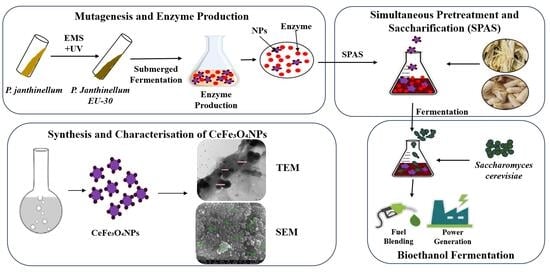
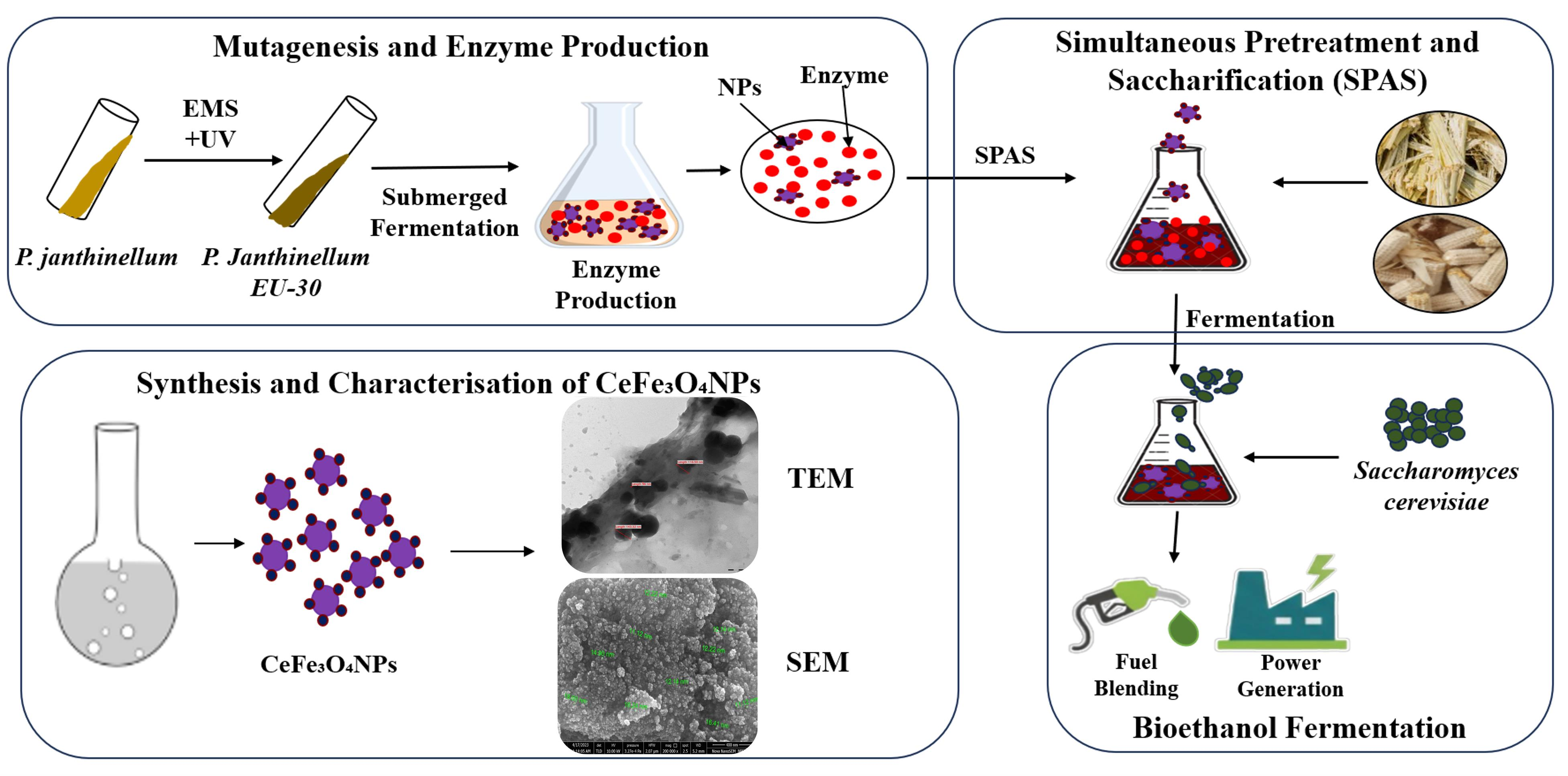
The conversion of lignocellulosic biomass (LCB) into biofuels is hindered by its inherent resistance and the drawbacks of conventional pretreatment, which include high cost, intensive energy use, and inhibitor formation. Here, we present a novel, one-pot bioconversion process that bypasses pretreatment by integrating cerium-doped iron oxide nanoparticles (CeFeO4NPs) with a specialized enzyme system. The system utilizes enzyme supernatant from Penicillium janthinellum mutant EU-30, a strain developed via chemical–physical mutagenesis, which exhibits stable hemicellulase activity and a 25–30% increase in cellulase activity. The integrated approach effectively saccharified raw sugarcane bagasse (SB) within 24 h, generating the highest yields of 12.8 ± 0.5 g/L glucose and 11.54 ± 0.5 g/L xylose compared to other substrates tested. Subsequent fermentation with Saccharomyces cerevisiae yielded 13.47 g/L ethanol (1.21 g/L/h productivity) and demonstrated concurrent consumption of both hexose and pentose sugars. We propose that residual CeFe3O4NPs in the hydrolysate mitigate carbon catabolite inhibition, thereby increasing xylose utilization. This was attributed to the residual CeFe3O4NPs in the hydrolysate, which are thought to upregulate xylose-metabolism-related genes in S. cerevisiae, thereby alleviating carbon catabolite inhibition. This method offers a streamlined, economical, and sustainable platform for producing carbon-neutral bioethanol from agricultural waste, eliminating costly pretreatment and simplifying downstream processing.

Graphical Abstract

1. Introduction

Growing global energy demand, driven by population growth and socioeconomic development, is confronting the finite supply of fossil fuels, which currently provide 85% of total energy. This unsustainable reliance, coupled with the escalating effects of global warming and greenhouse gas emissions, has intensified the search for renewable alternatives and increased awareness of volatile oil prices [1]. In 2024, the global value of biofuels was reported to be ~$176 billion and is estimated to increase to ~$326 billion by 2034 [2].
Lignocellulosic biomass (LCB) is a sustainable source for bio-based compounds, including carbon-neutral biofuels, food additives, and enzymes. Because the carbon dioxide released during biofuel combustion is reabsorbed by regrowing biomass, it is considered carbon neutral. LCB’s primary challenge is its inherent resistance to conversion into simple sugars due to the rigid structure formed by cellulose (40–60%), hemicellulose (20–40%), and lignin (10–25%) [3]. The synergistic action of enzymes like cellulase and hemicellulase is required for this conversion [3]. Cellulases break down lignocellulosic polysaccharides into simple sugars, which microorganisms can then ferment into biofuels or other value-added products [4,5].
To enable sugar extraction, LCB materials require pretreatment to overcome its inherent resistance. While various physical, chemical, and physicochemical methods exist, their application is limited by high costs, energy intensity, and the production of inhibitory compounds like furfural and hydroxymethylfurfural, which impede biocatalyst activity [6]. Chemical pretreatments also necessitate environmentally hazardous neutralization and washing steps [7]. Biological methods, though greener, are hampered by demanding catalyst conditions, limited stability, and high production costs [8]. These challenges highlight the need for a simple, efficient, and eco-friendly pretreatment strategy to produce fermentable sugars from LCB materials [9,10].
The growing field of nanobiotechnology has found broad application in the sustainable production of high-value goods like biofuels and other bioproducts. Integrating nanotechnology into the conversion of lignocellulosic biomass (LCB) is a powerful approach to overcome the structural recalcitrance of plant cell walls and significantly improve pretreatment and enzymatic hydrolysis processes [6,9]. The small size and large surface-to-volume ratio of nanoparticles (NPs) allow them to penetrate the dense biomass matrix, selectively depolymerize lignin, and thereby increase cellulose accessibility for subsequent sugar release. For example, magnetic NPs not only enhance delignification efficiency but also allow for up to 50% recovery and reuse over several cycles, making the process more economical [10]. Different types of nanomaterials offer unique advantages: magnetic NP supports enable quick and cost-effective separation of biocatalysts via an external magnetic field [11]; carbon-based nanomaterials, such as nanotubes and nanofibers, provide large surface areas that boost hydrolysis rates and temperature tolerance [11]; and metal–organic frameworks (MOFs) or polymeric nanocomposites (e.g., chitosan or alginate) offer adjustable pore architectures to protect enzymes from deactivation while maintaining substrate accessibility [12].
Engineered nanoparticles (NPs) are emerging as active catalysts, moving beyond their traditional role as passive carriers. Examples include acid-functionalized NPs that integrate chemical and biological catalysis, and “nanozymes” that replicate the functions of natural enzymes. These advanced systems drastically shorten processing times, with nanofibrillated cellulose being saccharified in h instead of the multi-day process required for untreated biomass [13]. Iron (Fe)-based NPs are known for their magnetic and enzyme-mimicking abilities [14]. Similarly, cerium oxide materials are valued for their high oxygen mobility, thermal stability, and excellent reducibility, which involves the rapid conversion between (Ce3+) and (Ce4+) states [15,16]. Doping iron oxide (Fe3O4) with cerium creates cerium-doped iron oxide nanoparticles (CeFe3O4NPs). These nanoparticles function as efficient “oxygen pumps,” accelerating the hydrolysis of lignocellulosic biomass (LCB) by donating and then replenishing lattice oxygen [17]. Since enzyme production and biomass pre-treatment account for a significant portion (50–70%) of biofuel manufacturing costs, this technology offers a compelling solution to improve process efficiency and cost-effectiveness [17]. This study presents a novel biorefinery process for commercially viable ethanol production by employing two primary strategies: the complete elimination of a pretreatment step and the use of minimal, in-house produced enzymes from inexpensive carbon sources. In this study, raw sugarcane bagasse (SB), a plentiful, sugar-rich agricultural residue, was used as the fermentation substrate. SB was chosen over other LCB materials, such as corn cob (CC), due to its global availability from large-scale sugarcane farming.
Effective cellulose–hemicellulose depolymerization requires the coordinated function of three cellulase types—exoglucanase, endoglucanase, and β-glucosidase and hemicellulose enzymes—known as glycoside hydrolases [18]. Previous research has focused on cellulase-producing fungi like Trichoderma and Aspergillus, with A. niger noted for its diverse cellulolytic enzyme profile [19]. However, the expense of these enzymes remains a major barrier to commercially viable cellulose-to-glucose conversion, fueling the demand for more cost-effective cellulase sources. This work specifically investigates enhancing the enzymatic activity of Penicillium janthinellum NCIM 1171, a proven cellulase producer, and its mutant strain, EU-30. The enhancement is achieved through the use of CeFe3O4NPs. The study compares the effects of CeFe3O4NPs on both the wild-type and the mutant strain, analyzing differences in enzyme production and its activity.

2. Results

2.1. Characterisation of Synthesized Nanoparticles

The synthesised CeFe3O4NPs were characterized using a suite of analytical techniques, including Transmission Electron Microscopy (TEM), Scanning Electron Microscopy (SEM), Energy Dispersive X-ray (EDX) analysis, Fourier-transform infrared spectroscopy (FTIR), and X-ray Diffraction (XRD) analysis.
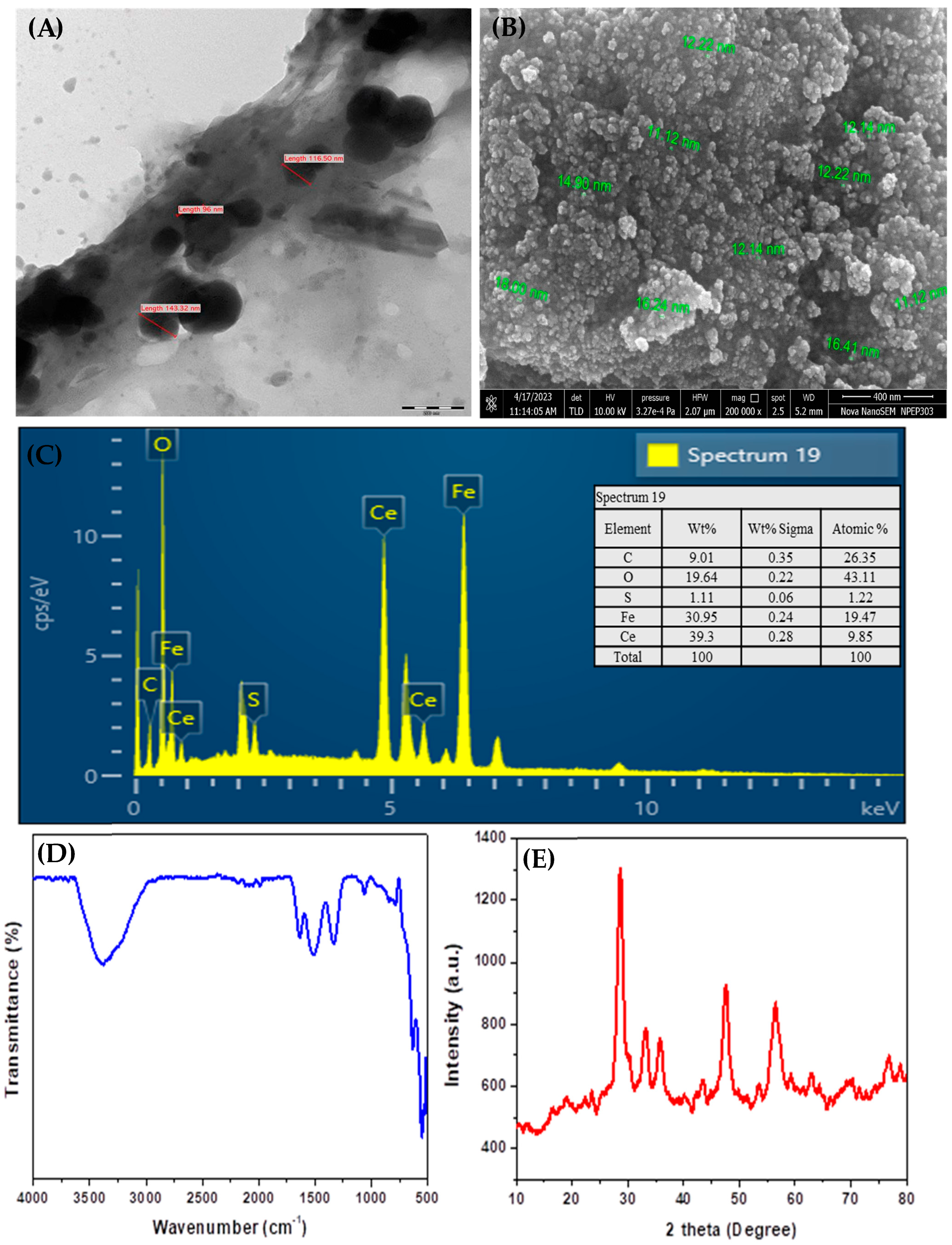
TEM and SEM analyses were performed to scrutinize the size and morphology of the CeFe3O4NPs. The synthesized nanoparticles exhibited a spherical shape with a size ranging from 10 to 20 nm, with an average size of approximately 15 nm (Figure 1A). SEM images further revealed the agglomerated and spherical nature of the synthesized NPs (Figure 1B). Elemental composition of the nanoparticles was determined by EDX analysis. As depicted in Figure 1C, the peaks at 4.8 keV and 6.3 keV confirmed the presence of cerium and iron, respectively. Additionally, carbon (9.01%) and oxygen (19.64%) were detected. EDX analysis further substantiated that CeFe3O4NPs consist of both cerium (39.3%) and iron (30.95%), with a higher mass percentage of cerium than iron.
FTIR analysis was conducted to identify the functional groups present in the nanoparticles. The FTIR spectra of CeFe3O4NPs exhibited distinctive peaks at 524 cm−1 and 551 cm−1, corresponding to Ce-O and Fe-O groups, respectively. Absorption peaks at 3379 cm−1 and 1636 cm−1, attributed to the stretching of –OH, –NH, and C=O groups, respectively, confirmed the conjugation of the nanoparticles. A broad band at 3379 cm−1 indicated the probable presence of water molecules on the surface of CeFe3O4NPs. This is slightly different from the provided paper which reports peaks at 510 cm−1 and 565 cm−1 for Ce-O and Fe-O groups, and 3420 cm−1 and 1645 cm−1 for -OH, -NH and C=O groups (Figure 1D).
XRD analysis was employed to assess the crystalline structure and crystallinity of the samples as shown in Figure 1E. The observation of a maximum intensity peak at 28.64 indicated the presence of a dominant crystalline phase in the sample. The computed crystallinity index of 77.41% suggests a reasonably high level of crystallinity for the sample. The XRD pattern of synthesized CeFe3O4NPs has been compared with the standard Fe3O4 reference pattern [20]. The major diffraction peaks at 2θ = 30.1°, 35.5°, 43.2°, 53.5°, 57.1°, and 62.7° have been indexed to the (220), (311), (400), (422), (511), and (440) planes, respectively, confirming the cubic inverse spinel structure of Fe3O4. The results indicate that cerium modification did not alter the crystal structure of Fe3O4, and the presence of Ce3+ in the lattice maintained the structure unchanged. The agglomeration observed is attributed to the magnetic properties of Fe3O4, which are retained even after cerium doping, aiding in the degradation of LCB substrates [21].

2.2. Mutant Generation and Selection

Mutagenesis of Penicillium janthinellum NCIM 1171 was carried out using ethyl methanesulfonate (EMS), followed by UV exposure. The treated spores were plated on cellulose agar to facilitate selection of cellulase-producing colonies. After incubation for 72 h, two distinct colonies were observed on cellulose agar plate showing bigger colonies with zone of cellulose hydrolysis. Both colonies were transferred to PDA slants for growth evaluation. Both colonies named as EU-20 and EU-30, were further evaluated for enzyme production in basal media which exhibited the better performance of EU-30 over EU-20. Hence, the mutant EU-30 strain was subsequently employed for enzyme production studies. The phenotypic characterization of mutant EU-30 strain was very distinct as compared to parent including their morphology as shown in Figure S1.

2.3. Comparative Studies on Enzyme Production by Parent and Mutant Strain Using Lignocellulosic Substrates

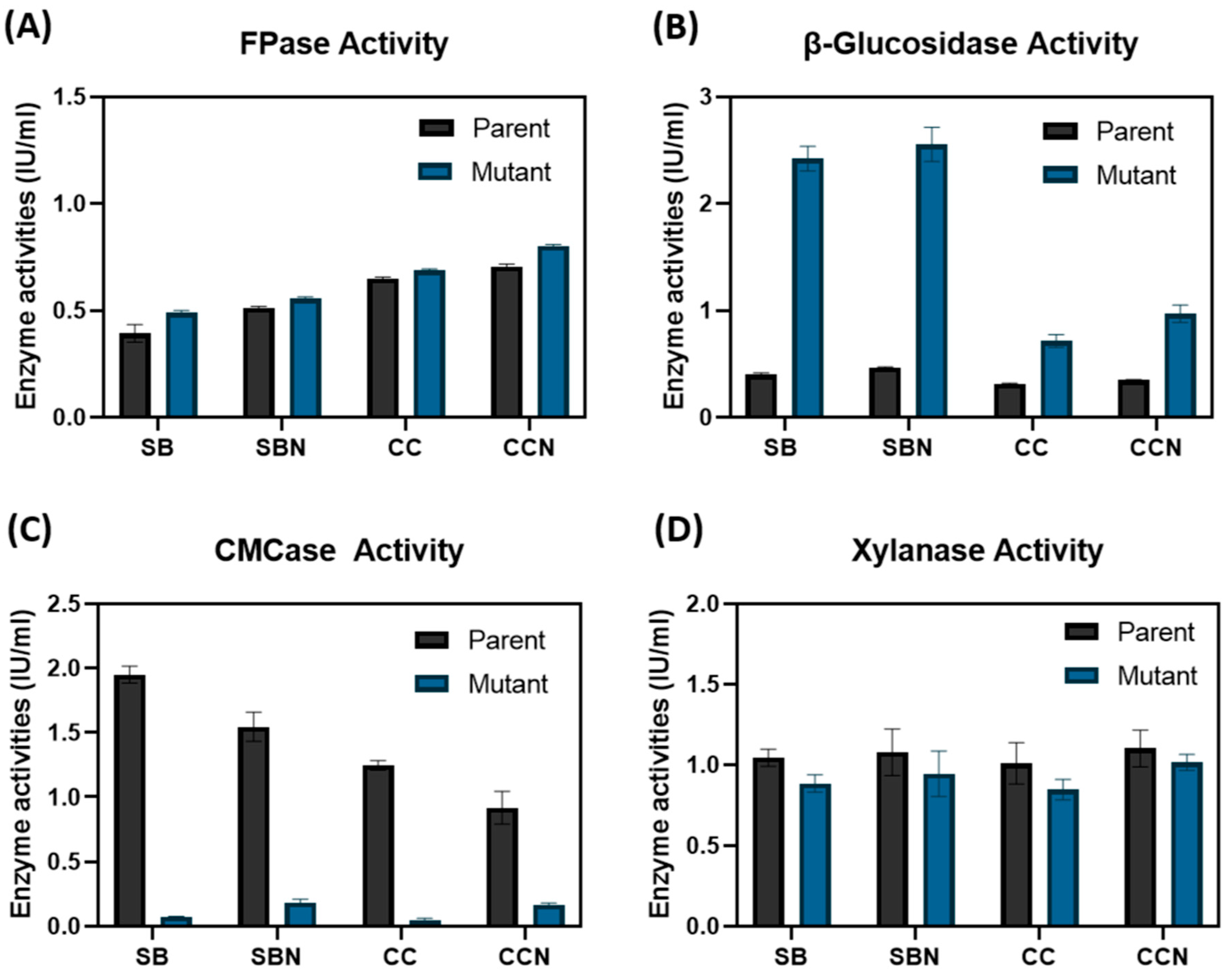
The enzymatic activities of the parent and mutant (EU-30) strains of Penicillium janthinellum were compared using two substrates under two different conditions, i.e., with and without CeFe3O4NPs: SB, SB with CeFe3O4NPs (SBN), CC, and CC with CeFe3O4NPs (CCN). As depicted in Figure 2, the mutant strain consistently showed higher filter paper cellulase (FPase, exoglucanase) activity on all substrates. Notably, the highest FPase activity was recorded for the mutant strain on CCN (0.87 ± 0.045 IU/mL), surpassing the parent on the same substrate (0.76 ± 0.024 IU/mL) and highlighting the positive effects of both mutagenesis and nanoparticles, with CC being the most effective substrate. The enhancement of β-glucosidase activity in the mutant strain was even more pronounced. While parent activity was consistently low (0.31–0.46 IU/mL), the mutant achieved activities of 2.4 ± 0.11 IU/mL (SB), 2.55 ± 0.15 IU/mL (SBN), 0.82 ± 0.06 IU/mL (CC), and 1.21 ± 0.08 IU/mL (CCN). The maximum β-glucosidase activity for the mutant was observed on SBNP, suggesting that SB is a potent inducer and mutagenesis significantly improved the production of this specific enzyme.
In contrast to FPase and β-glucosidase, carboxymethyl cellulase (CMCase, endoglucanase) activity was generally higher in the parent strain. In case of parent strain, CMCase activity ranged from 1.94 ± 0.06 IU/mL on sugarcane bagasse (SB) to 1.15 ± 0.08 IU/mL on corn cob with NPs (CCN). The mutant strain exhibited consistently low CMCase activity (0.24–0.44 IU/mL), suggesting a negative impact of the mutagenesis on CMCase production. The addition of NPs slightly reduced CMCase activity of the parent strain. Parent and mutant strains demonstrated comparable xylanase activities, with minor variations observed across substrates. In the case of the parent strain, xylanase activity varied from 1.00 ± 0.12 IU/mL when utilizing CC to 1.29 ± 0.02 IU/mL on SB in the presence of NPs. The incorporation of nanoparticles resulted in a slight enhancement of the xylanase activity in the parent strain; however, the effects observed on the mutant strain were less consistent. In case of both parent and mutant strains, the detected β-xylosidase activity was significantly lower compared to the β-glucosidase activity as shown in Supplementary Table S1. This result is likely due to the induction conditions used for enzyme production. Since cellulose was supplied as the primary inducer, the host organism preferentially upregulated the expression of cellulase-related genes, including β-glucosidase. In contrast, the expression of xylanolytic enzymes, such as β-xylosidase, was less strongly induced. Furthermore, the well-documented phenomenon of catabolite repression may have played a role, where the presence of readily available glucose or other simple sugars from cellulose hydrolysis repressed the production of other polysaccharide-degrading enzymes, including β-xylosidase.
In summary, the mutant strain (EU-30) showed significantly enhanced FPase and β-glucosidase activities. Conversely, the parent strain maintained higher CMCase activity, while xylanase activity remained stable between the two strains. CeFe3O4NPs positively influenced FPase and β-glucosidase activity (in case of the mutant) but had limited or slightly inhibitory effects on CMCase. These findings collectively highlight the complex interactions between genetic modification (mutagenesis), the lignocellulosic substrate, and the presence of CeFe3O4NPs in regulating the production and catalytic efficiency of different lignocellulolytic enzymes. As the mutant strain exhibited higher enzyme activities than the wild type using SB as substrate, its enzyme preparations were subsequently employed for the hydrolysis of LCB substrates.

2.4. Simultaneous Pretreatment and Saccharification (SPAS) of Lignocellulosic Substrates

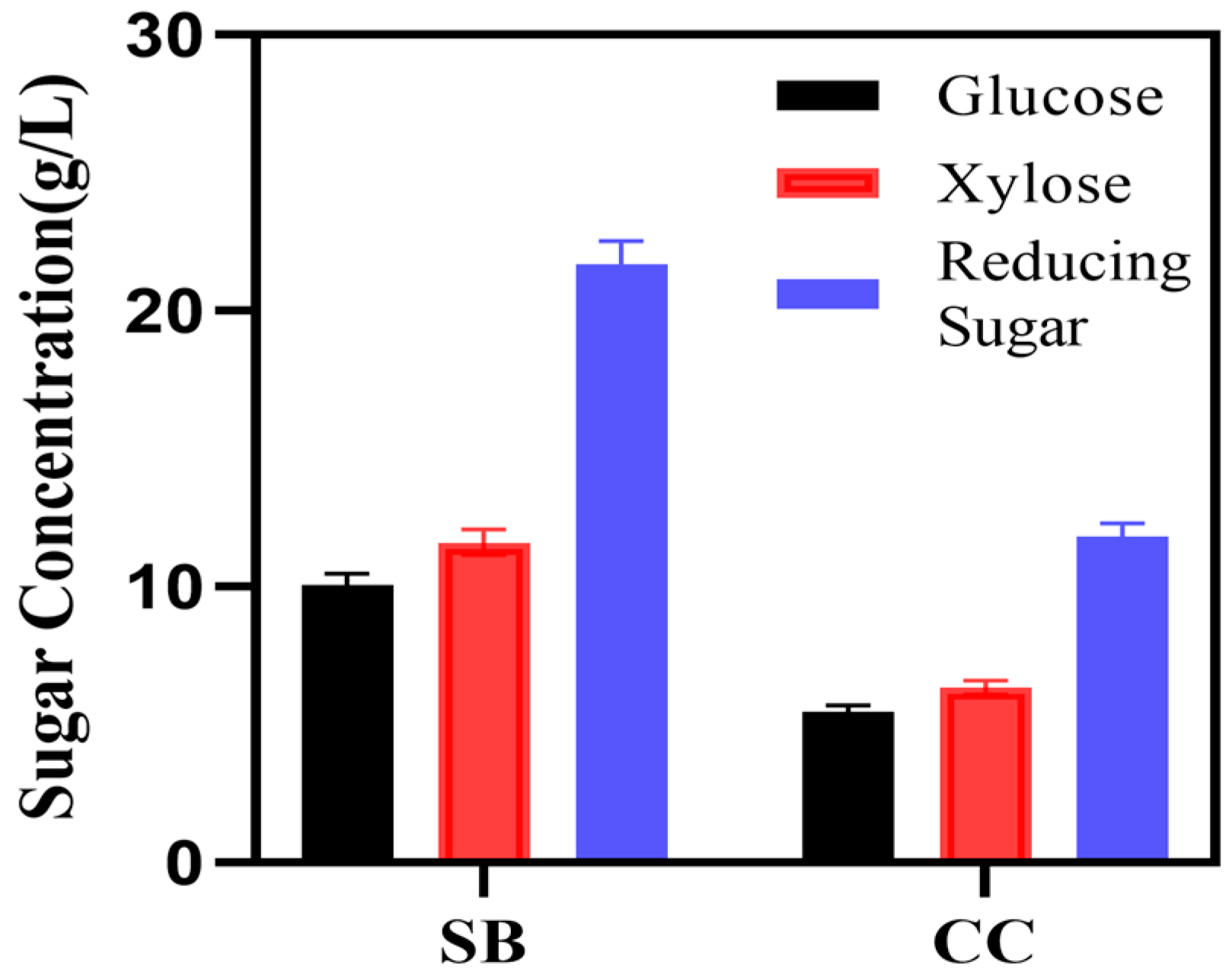
The study investigated the hydrolysis of sugarcane bagasse (SB) and corn cob (CC) using a high-activity enzyme preparation derived from mutant strain EU-30. The hydrolysis was carried out at a substrate loading of 10% (w/v), with either sugarcane bagasse (SB) or corn cob (CC). The synthesized CeFe3O4NPs were incorporated at 2% (w/w) based on the dry substrate weight. Reactions were incubated at 50 °C and 150 rpm, with samples taken at 12, 24, and 48 h for monitoring. The release of sugars in the hydrolyzed broth was initially examined by thin-layer chromatography (TLC) as described in Section 4.11. As shown in Figure S2, the hydrolysates obtained from the EU-30 mutant displayed spots corresponding to glucose and xylose standards, confirming the production of monomeric sugars Further the presence of exact concentration of sugar released was confirmed by HPLC analysis. HPLC chromatograms showing peaks of glucose of xylose obtained after SPAS process can be observed as shown in Figure S3. As displayed in Figure 3, the results exhibited that SB hydrolysis was significantly more effective, yielding maximum sugar concentrations of 12.87 g/L glucose and 11.59 g/L xylose after 24 h of SPAS reaction. This enhanced performance is attributed to improved enzyme–substrate contact and the catalytic effect of the nanoparticles.
For both SB and CC substrates, sugar release ceased after 24 h, leading to the selection of this period as the optimal reaction time. The absence of further sugar production suggests that the process was ultimately limited by factors such as enzyme instability or product inhibition. Hydrolysis of the more recalcitrant CC substrate resulted in considerably lower sugar yields, reaching only 7.47 g/L glucose and 6.34 g/L xylose at 24 h. The optimal 24 h SB hydrolysate, with its high concentration of fermentable sugars, was then used to evaluate the impact of residual NPs on the fermentation capabilities of wild-type Saccharomyces cerevisiae. This approach provides crucial insights into the integrated process of biomass hydrolysis and subsequent bioethanol production.

2.5. Bioethanol Fermentation

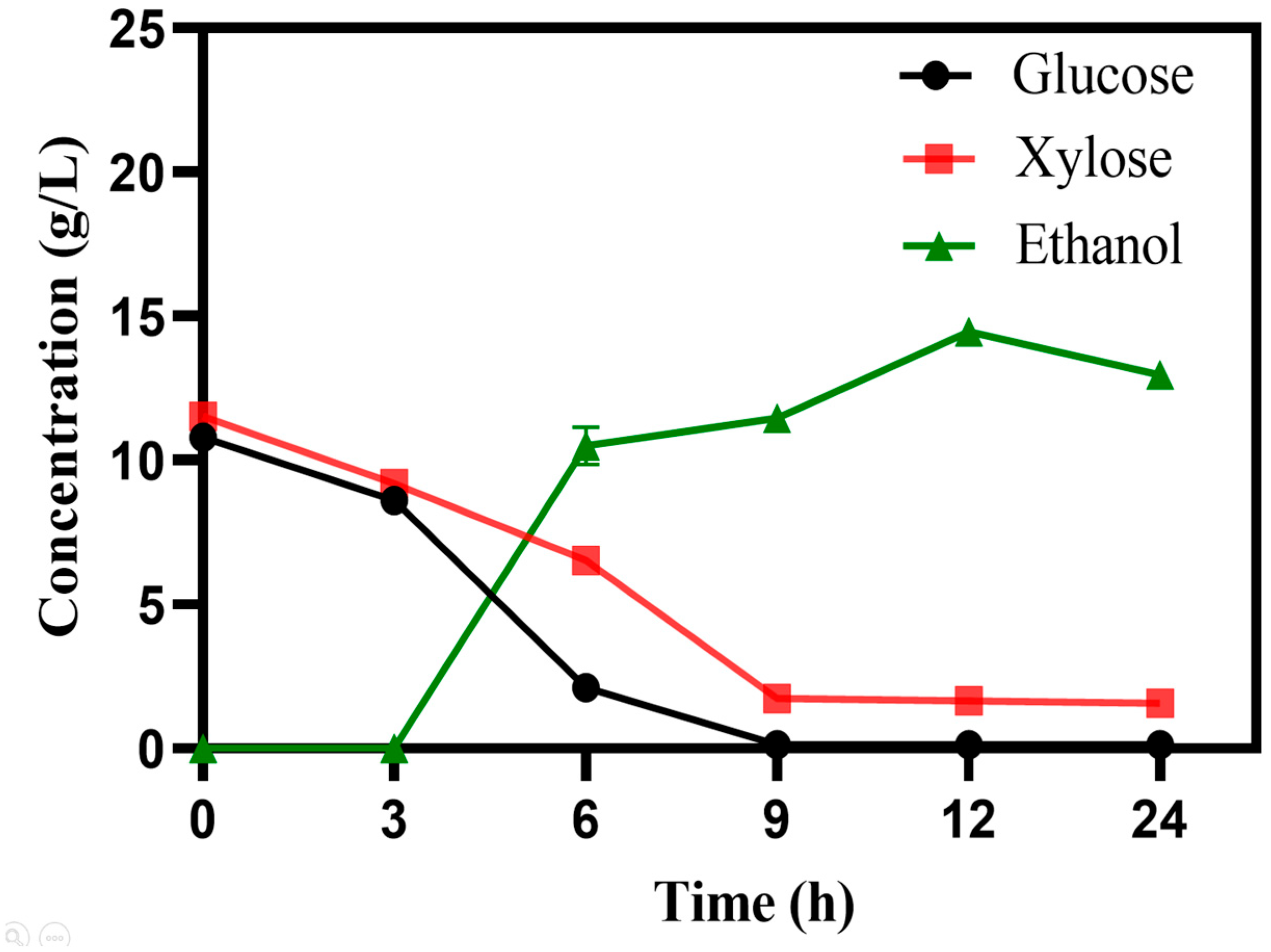
Using a mutant strain’s crude enzyme and CeFeO4NPs, SB substrates were saccharified to produce a glucose- and xylose-rich hydrolysate using SPAS process as mentioned above, which a wild-type Saccharomyces cerevisiae strain fermented into ethanol. Despite wild-type S. cerevisiae’s typical inability to ferment xylose, this strain efficiently utilized both sugars, though it preferentially consumed glucose initially before slowly beginning to use xylose after 3 h. As shown in Figure 4, the yeast achieved high utilization rates—98.7% for glucose and 86.3% for xylose—to produce 13.47 g/L of ethanol with a productivity of 1.12 g/L/h after 12 h of fermentation. From these results we can state that residual CeFeO4NPs in the hydrolysate may have activated xylose-utilization genes in the wild yeast, representing a significant advancement in engineering xylose metabolism.

2.6. Recycling Performance of CeFe3O4 Nanoparticles

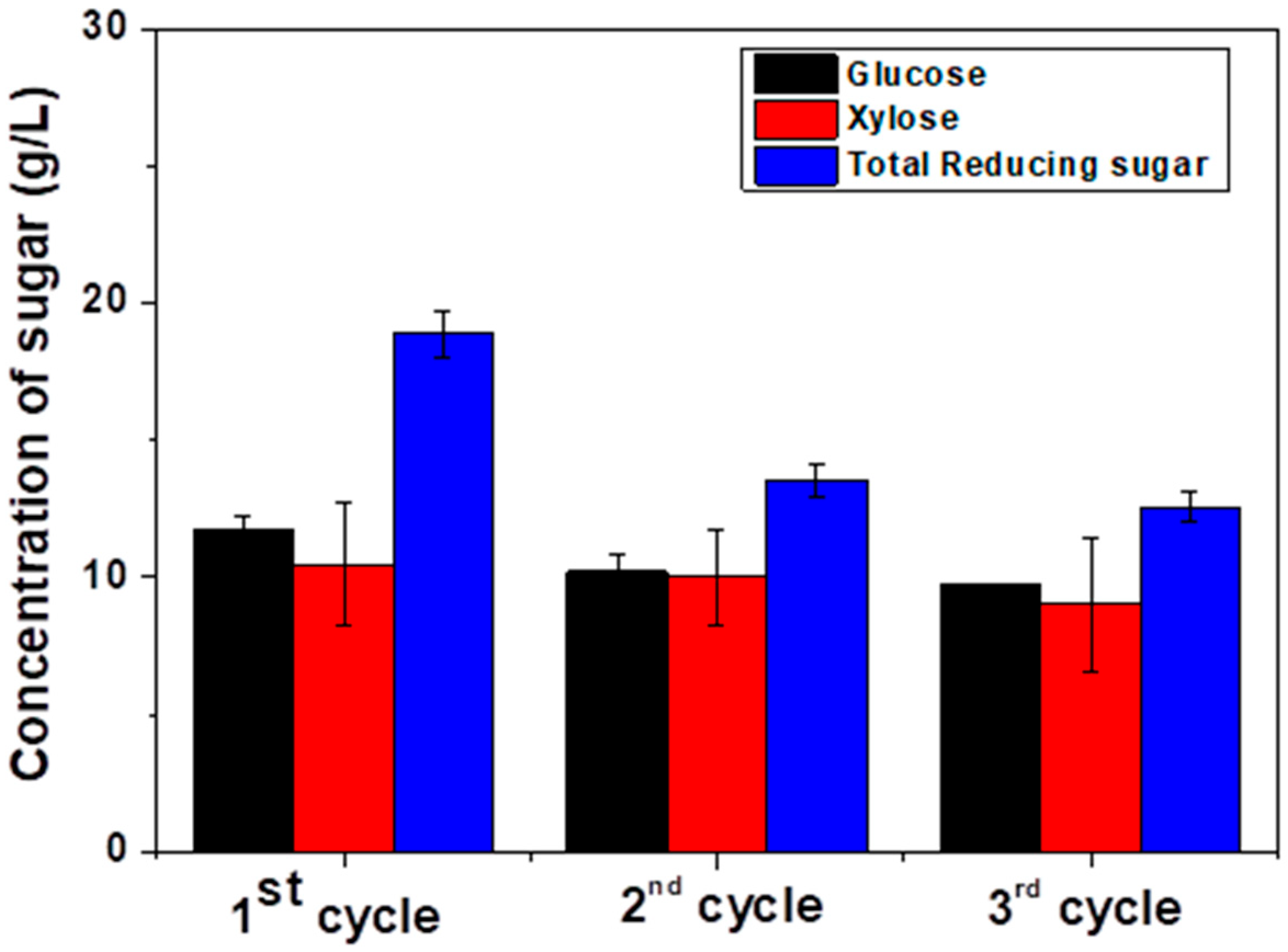
The recovered CeFe3O4NPs demonstrated good magnetic separation and reusability across multiple SPAS cycles. As shown in Figure S3, the total reducing sugar (TRS) yield after the first hydrolysis cycle was 76.5%, decreasing slightly to 71.0% in the second cycle. Correspondingly, glucose and xylose concentrations in the first cycle were 11.7 g/L and 10.5 g/L, respectively, while the second and third cycles yielded 10.2 g/L and 9.7 g/L, and 10.0 g/L and 9.7 g/L, respectively. Although a gradual decline in hydrolytic efficiency was observed with repeated use, the CeFe3O4NPs retained approximately 65–68% of their initial catalytic activity after three reuse cycles. This demonstrates that the nanoparticles maintained effective oxidase-like and catalytic functionality even after repeated exposure to biomass residues. The facile magnetic recovery and sustained activity highlight their potential as recyclable nanocatalysts for cost-effective lignocellulosic biomass conversion (Figure 5).

2.7. Native Polyacrylamide Gel Electrophoresis and Zymogram of β-Glucosidase

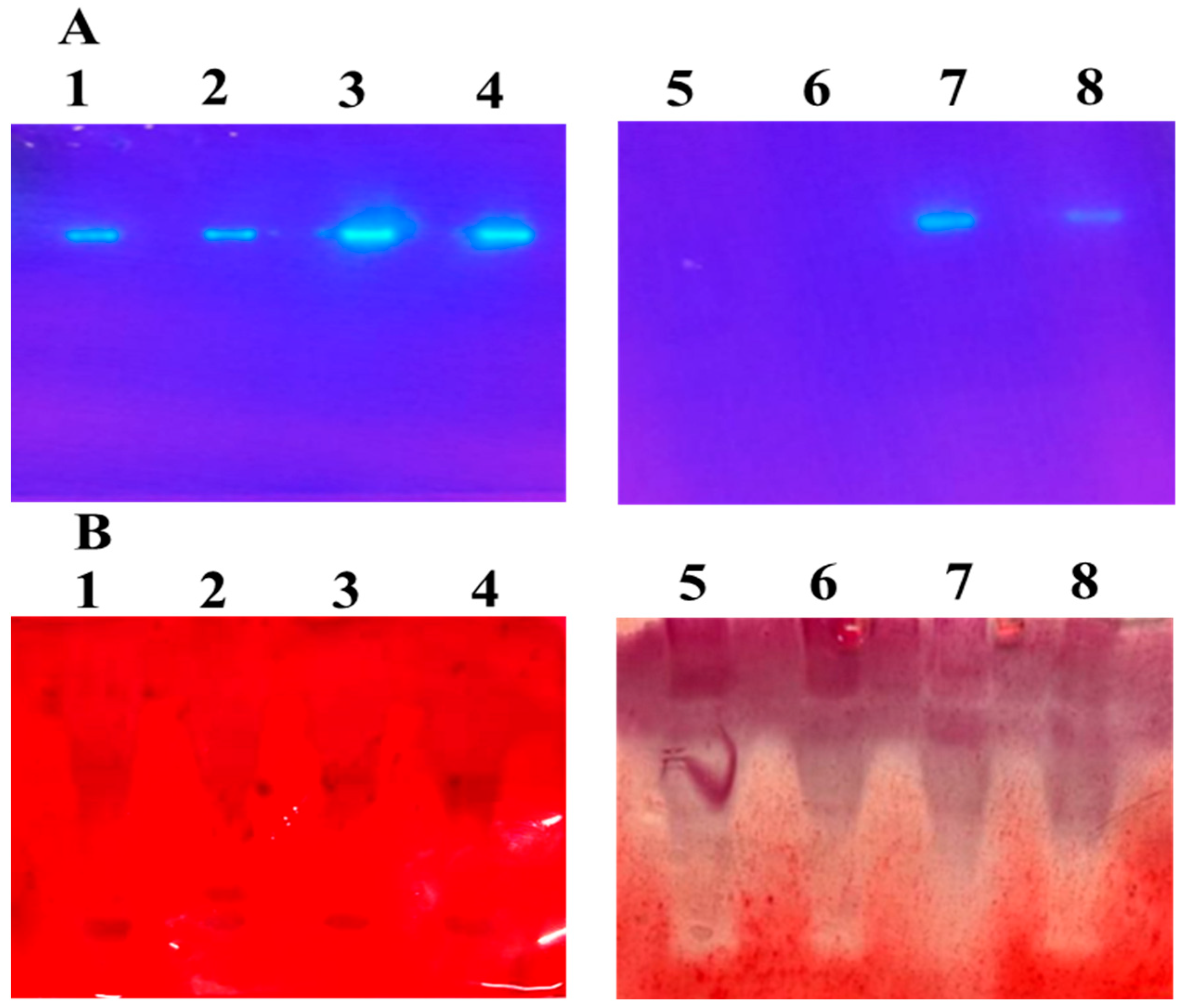
The β-glucosidase zymogram (Panel A, Figure 6) showed a faint band for the parent strain grown on SB (Lane 1), slightly increasing the intensity of band with NP (Lane 2). A significant increase in activity was observed for the mutant strain grown on SB (Lane 3), which was maintained or slightly enhanced with NP (Lane 4). On CC, parent strains (Lanes 5, 6) showed negligible β-glucosidase activity. However, the mutant strain on CC (Lane 7) displayed a clear, moderately intense band, comparable with NP (Lane 8). These qualitative findings corroborated well with pattern of enzyme activities determined by quantitative assays, confirming enhanced β-glucosidase activity in the mutant strain, particularly on using SB substrate.
The xylanase zymogram (Panel B, Figure 6) showed faint clearance zones for the parent strain on SB (Lane 1), slightly improved with NP (Lane 2). Mutant strains on SB (Lanes 3, 4) exhibited clear, moderately intense zones, indicating active xylanase production. In case of parent strains grown on CC (Lanes 5, 6) showed very low xylanase activity. In contrast, mutant strains on CC (Lanes 7, 8) displayed distinct clearance zones, comparable to those on SB. These results generally align with quantitative xylanase assays, confirming the mutant’s ability to produce xylanase on both substrates.

3. Discussion

The successful synthesis of CeFe3O4NPs was confirmed through SEM, TEM, EDX, FTIR, and XRD analyses, which collectively indicated spherical morphology (~15 nm), high crystallinity, and the presence of Ce–O and Fe–O bonds. Compared to previous reports where CeFe3O4NPs exhibited average sizes of 40–70 nm [22], the smaller size obtained in this study likely contributed to enhanced enzyme–substrate accessibility. The XRD pattern of our synthesized CeFe3O4 NPs displayed characteristic peaks of a cubic inverse spinel structure with a crystallinity index of 77.4%, whereas Atran et al. [23] reported a fluorite-type cubic structure for Fe-doped ceria. FTIR spectra of our CeFe3O4NPs showed Ce–O and Fe–O stretching vibrations at 524–551 cm−1, consistent with ceria-based systems where Fe doping induces lattice distortions and shifts in oxygen-related bands [24]. These structural properties are crucial, as small particle size, high surface area, and redox-active Ce3+/Ce4+ cycling directly influence catalytic efficiency and enzyme stabilization [25,26].
Incorporating these nanoparticles into saccharification experiments with P. janthinellum EMS UV-30 highlighted their synergistic effect with fungal mutagenesis. The combined strategy substantially enhanced the cellulolytic potential of the mutant strain, resulting in superior saccharification efficiency compared to previously reported fungal systems. For instance, Penicillium sp. FSDE15 cultivated on sugarcane bagasse achieved maximum CMCase and β-glucosidase activities of 1.38 U/mL and 0.55 U/mL after 120–168 h [27]. By contrast, our P. janthinellum EU-30 mutant supplemented with CeFe3O4NPs reached 1.87 U/mL CMCase and 2.55 U/mL β-glucosidase in just 72 h, representing a substantial improvement in both enzyme yield and process efficiency. Similarly, unlike P. echinulatum, which required delignified acid-pretreated bagasse (DAB), delignified steam-exploded bagasse (DSB), or hydrothermal bagasse (HB) to achieve FPase activities of 1.3–2.5 FPU/mL after 144 h [28]. P. janthinellum EU-30 mutant with CeFe3O4NPs achieved comparable FPase activity (~2.6 FPU/mL) on raw, untreated SB within only 72 h. These findings highlight the integration of fungal mutagenesis with nanoparticle supplementation, thus provides a robust strategy for achieving high saccharification efficiency from untreated lignocellulosic biomass, eliminating the need for costly chemical pretreatments while delivering superior enzyme activities.
The resulting hydrolysate from raw SB contained 12.87 g/L glucose and 11.59 g/L xylose after 24 h of SPAS reaction and was subsequently fermented by wild-type S. cerevisiae. Ethanol production reached 13.47 g/L within 24 h at a productivity of 1.21 g/L/h. Notably, the yeast exhibited co-consumption of both glucose and xylose, overcoming the typical sequential utilization pattern imposed by carbon catabolite repression (CCR). This finding is highly significant because most natural and engineered S. cerevisiae strains are unable to efficiently assimilate xylose, which generally remains unfermented in lignocellulosic hydrolysates [29,30,31]. When benchmarked against other lignocellulosic fermentation systems, the advantages of our approach become evident. Sorghum hydrolysates obtained via H2SO4 pretreatment achieved a higher absolute ethanol concentration (18.1 g/L), but only after 72 h of fermentation and with poor xylose utilization, leaving ~1 g/L unfermented [32]. Similarly, fermentation of enzymatically saccharified hydrolysates from S. cerevisiae (MTCC 174) and P. stipitis (NCIM 3497) yielded 16.8 g/L ethanol in 72 h with an ethanol yield [33]. In contrast, our system produced 13.47 g/L ethanol in just 24 h using a single wild-type S. cerevisiae strain, with glucose–xylose co-utilization and without chemical pretreatment or detoxification.
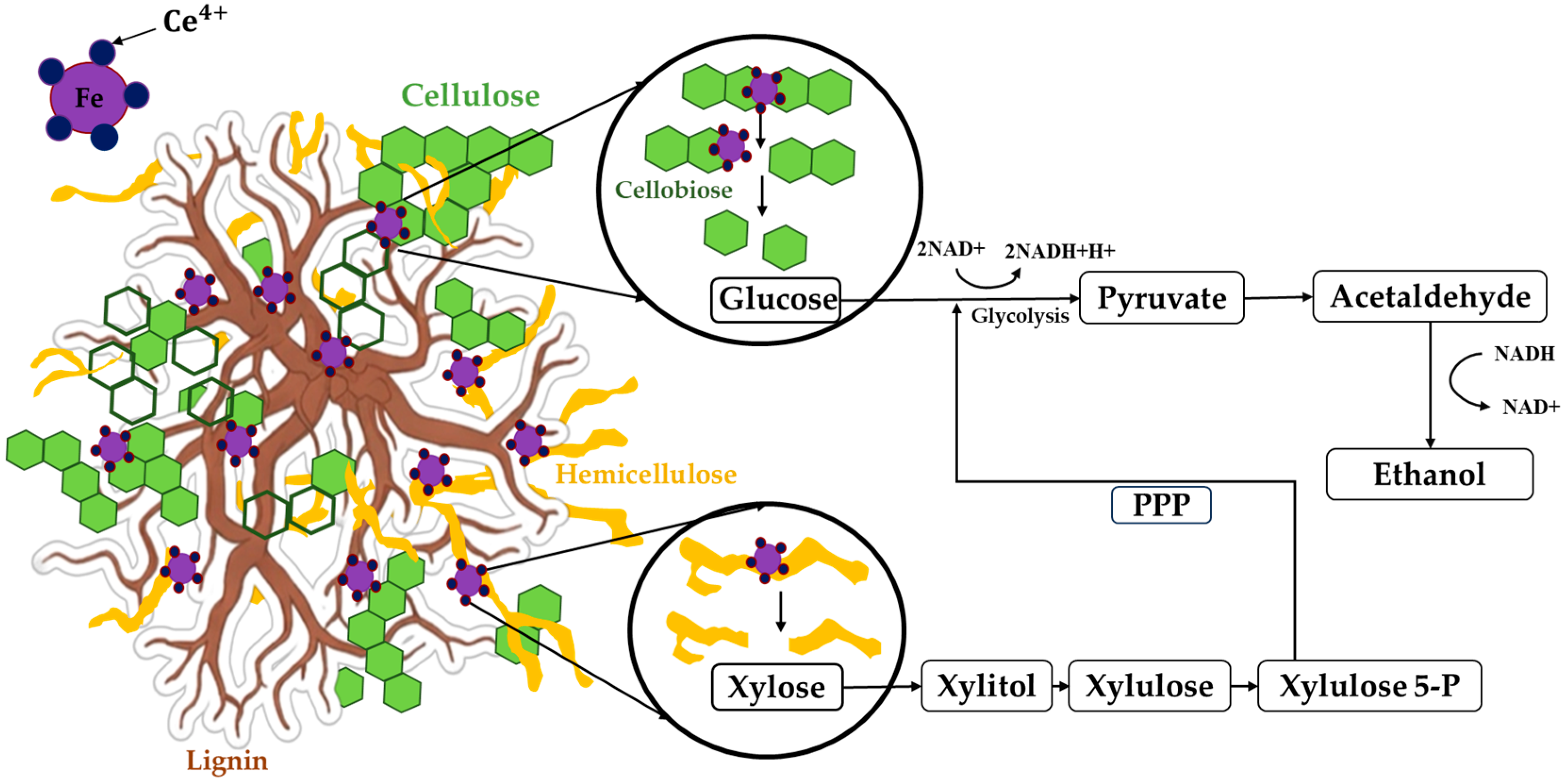
The superior saccharification and fermentation performance observed in this study can be attributed to the dual functional role of CeFe3O4NPs—enhancing both enzymatic hydrolysis and fermentation. As illustrated in Figure 7, CeFe3O4NPs improved cellulose and hemicellulose accessibility by disrupting lignin–carbohydrate complexes through partial depolymerization and bond weakening, which enhanced enzyme–substrate affinity and saccharification efficiency. This aligns with prior studies showing that nanostructured materials alleviate lignocellulosic recalcitrance and improve hydrolysis yields [5,34]. At the molecular level, the oxygen vacancies and redox-active Ce3+/Ce4+ sites within CeFe3O4NPs facilitate electron transfer and stabilize cellulolytic enzymes, thereby preventing oxidative deactivation during saccharification. Ce-based nanoparticles are known to exhibit enzyme-like redox activity and reactive oxygen species (ROS) scavenging through reversible redox cycling [35]. Furthermore, residual CeFe3O4NPs in the hydrolysate may influence the redox balance of the fermentation broth. Maintenance of intracellular NAD+/NADH homeostasis is essential for glycolysis and ethanol production; disruptions in this balance can significantly affect fermentation performance [36,37]. By modulating the redox environment, CeFe3O4NPs may alleviate CCR, facilitating the co-utilization of glucose and xylose—an uncommon trait in wild-type S. cerevisiae [38,39]. Additionally, Fe within CeFe3O4NPs may serve as a cofactor for Fe–S proteins and dehydrogenase enzymes, promoting electron transfer during ethanol biosynthesis. Although direct evidence linking CeFe3O4 to alcohol dehydrogenase activation remains limited, metallic cofactors are well known to modulate enzyme activity in anaerobic metabolism [40,41]. Collectively, these synergistic effects—improved hydrolysis efficiency, redox balance stabilization, CCR alleviation, and enhanced fermentative enzyme activity—resulted in higher ethanol yields from lignocellulosic biomass [29].

4. Materials and Methods

4.1. Chemicals

Lignocellulosic biomass, composed mainly of cellulose, hemicellulose, and lignin, represents a renewable substrate for enzymatic hydrolysis and bioethanol production. In this study, sugarcane bagasse (SB) and corn cob (CC) were used as lignocellulosic materials. Corncob (CC) and Sugarcane Bagasse (SB) were obtained locally from Pune, India and dried at 60 °C. The dried CC and SB were ground in the mixer-grinder to obtain them in powder form (particle size ~150–200 µm), which was further used in biomass degradation studies. p-Nitro phenyl β-glucopyranoside (pNPG) and DNS reagent were purchased from Sigma Aldrich, USA. Cellulose powder, carboxymethylcellulose (CMC), Xylan from beechwood and other chemicals were obtained locally from Himedia, Pune, India.

4.2. Synthesis and Characterization of Cerium-Doped Fe3O4 Nanoparticles (CeFe3O4-NPs)

The synthesis of CeFe3O4NPs was carried out using the hydrothermal process as reported earlier [22] with slight modifications. In a typical synthesis, 2.70 g of FeCl3·6H2O and 1.39 g of FeSO4·6H2O were dissolved in 100 mL of distilled water under continuous stirring for 5 min. Subsequently, 50 mL of ammonia solution (25%) was added dropwise to the mixture under constant stirring. Thereafter, Ce(NO3)3·6H2O solution (3 wt%), prepared by dissolving the appropriate amount in 10 mL of distilled water, was introduced into the reaction mixture. The solution was stirred for an additional 60 min at 60 °C and after that kept for stirring overnight at room temperature to ensure complete mixing and uniform incorporation of cerium ions. The solution was further centrifuged, and the obtained pellet was washed twice with distilled water, followed by ethanol. The washed pellet was kept for drying at 60 °C in dry air oven overnight. The synthesized CeFe3O4NPs stored at room temperature till further use.
The synthesis of CeFe3O4NPs was confirmed by performing different characterization techniques. Fourier transform-infrared spectroscopy (FTIR) analysis of the prepared nanoparticles was carried out using a FTIR spectrometer (Thermo Fisher Scientific, Waltham, MA, USA) by following the KBr pellet technique. The spectra were recorded in a range of 4000–400 cm−1 with a spectral resolution of 32 cm−1 and 64 scans. The synthesized and dried powder nanoparticles were further analysed using energy dispersive X-ray spectroscopy (EDS, Thermo Fisher Scientific, Resolution 128 eV) with an Al Kα = 1486.6 eV excitation source. Scanning electron microscopy (SEM, Carl Zeiss, Jena, Germany, LEO-1530, 20 KV) was performed to study the morphology of nanoparticles. The particles were also analysed for size determination by energy filtering transmission electron microscopy (TEM, Carl Zeiss, Libra 120), operated at 120 kV. The elemental composition of CeFe3O4NPs was determined by energy-dispersive X-ray spectroscopy (EDX). FT-IR was performed to confirm the presence of functional groups, while X-ray diffraction (XRD) analysis was used to study the crystallinity and phase structure of the nanoparticles. The X-ray diffraction (XRD) pattern of NPs was obtained using Cu-Kβ radiation, along with a scintillation counter detector. For smoothening the data, the Savitzky–Golay (SG) digital filtering method was applied [42,43]. Together, these characterization methods confirmed the successful synthesis of spherical CeFe3O4NPs with high crystallinity and the expected elemental composition.

4.3. Microorganisms and Culture Media

Penicillium janthinellum NCIM 1171 was obtained from the National Collection of Industrial Microorganisms (NCIM), National Chemical Laboratory, Pune, India. The wild type and the mutants were maintained on Potato Dextrose Agar (PDA) and sub-cultured once every three months. RSM-optimized Mendel and Weber’s Basal medium was used as a fermentation medium for enzyme production as reported earlier [44,45].

4.4. Mutagenesis of P. Janthinellum Strain

Penicillium janthinellum NCIM 1171 (wild type) was cultivated on potato dextrose agar (PDA) for 15 days at 30 °C. The spores produced on the slants were suspended in 10 mL of saline containing 0.1% Tween-80, and the concentration was adjusted to 107 spores/mL. To induce mutations, 20 mg of ethyl methanesulfonate (EMS), a chemical mutagen was added to a 10 mL suspension containing 108 spores and kept at room temperature for 24 h. The spores were then exposed to UV light at different intervals of 0, 5, 10, 20, and 30 min, resulting in varying levels of spore mortality. After treatment, 100 μL of the suspension was plated on cellulose agar and incubated at 30 °C for 3–4 days. The plate with the sample exposed to 30 min of UV radiation showed the isolated colonies were selected for further enzyme production studies [45].

4.5. Enzyme Production P. janthinellum and EU-30

Enzyme production was carried out under submerged fermentation (SmF) conditions using Mendel and Weber’s basal medium supplemented with a defined nutrient composition (g/L): KH2PO4, 2.0; (NH4)2SO4, 1.4; urea, 0.3; MgSO4·7H2O, 0.3; CaCl2, 0.3; FeSO4·7H2O, 0.005; MnSO4·H2O, 0.0016; ZnSO4·7H2O, 0.0014; and CoCl2·6H2O, 0.002. The medium was further supplemented with 2.5% (w/v) lignocellulosic biomass (sugarcane bagasse or corncob) and 1% (w/v) cellulose as an inducer to enhance cellulase enzyme synthesis. Lignocellulosic biomass, comprising cellulose, hemicellulose, and lignin as major structural polymers, was used in this study in the form of sugarcane bagasse (SB) and corncob (CC), which served as renewable carbon sources for cellulolytic enzyme production. The fermentation experiments were performed in 250 mL Erlenmeyer flasks containing 70 mL of the production medium, inoculated with approximately 107 spores/mL obtained from 7-day-old PDA slants. Cultivation was conducted at 30 °C and 150 rpm for 72 h, and samples were withdrawn every 48 h for enzyme activity assays.

4.6. Enzyme Activity Assay

Filter paper cellulase (FPase), endoglucanase, xylanase and β-glucosidase activities of the obtained supernatant during enzyme production were determined. Filter paper activity was assayed by incubating the suitable enzyme (0.1 mL) with 0.9 mL citrate buffer (50 mM, pH 4.5) containing filter paper Whatman no. 1 (25 mg). The reaction mixture was incubated at 50 °C for 60 min. Endoglucanase activity was carried out in the total reaction mixture of 1 mL containing 0.5 mL of suitably diluted enzyme and 0.5 mL of 1% (w/v) CMC solution in citrate buffer (50 mM, pH 4.5). The mixture was incubated at 50 °C for 30 min. Xylanase activity was determined under similar conditions as described above, except that 1% Xylan solution was used as substrate instead of CMC. β-glucosidase and β-xylosidase activity was estimated using pNPG and pNPX as substrate. The total of assay mixture (1 mL) consisting of 0.9 mL of pNPG/pNPX (1 mg/mL) and 0.1 mL of suitably diluted enzyme was incubated at 50 °C for 30 min. The p-nitrophenol liberated was measured at 410 nm after developing the colour with 2 mL of sodium carbonate (2%). One unit (IU) of enzyme activity was defined as the amount of enzyme required to liberate 1 µmol of glucose, xylose or p-nitrophenol produced from the appropriate substrates/min of crude filtrate under the assay

4.7. Simultaneous Pretreatment and Saccharification (SPAS) of Lignocellulosic Substrates

The enzyme preparations used for substrate hydrolysis were obtained from the mutant strain EU-30, as it exhibited significantly higher cellulolytic activity compared to the wild-type strain under shake flask culture conditions, as described earlier. Simultaneous Pretreatment and Saccharification (SPAS) experiments were carried out using two lignocellulosic biomasses, i.e., sugarcane bagasse (SB) and corn cob (CC) to evaluate substrate-dependent hydrolysis efficiency. For saccharification, lignocellulosic substrates (sugarcane bagasse and corn cob) were loaded at 10% (w/v) into 100 mL Erlenmeyer flasks with screw cap containing the enzyme supernatant. 2% (w/w) CeFe3O4NPs, based on the dry weight of the substrate, were added to evaluate the catalytic enhancement of hydrolysis. The flasks were incubated in a rotary shaker at 50 °C and 150 rpm, and samples were withdrawn after 24 h. The samples were centrifuged at 10,000 rpm for 10 min, and the supernatants were analyzed for the release of reducing sugars using the dinitrosalicylic acid (DNS) method [46].

4.8. Bioethanol Fermentation by Saccharomyces cerevisiae

Saccharomyces cerevisiae (ATCC 6037) strain purchased from American Type Culture Collection (ATCC, Manassas, VA, USA) was used for bioethanol fermentation investigations. The yeast strain was cultured on Yeast Malt (YM) plates at 30 °C for 24 h as reported previously [47]. The inoculum was generated by inoculating S. cerevisiae in YM medium and incubated at 30 °C with shaking at 150 rpm for 12 h. For fermentation, a 16 h-grown inoculum (5%, v/v) of S. cerevisiae was added to flasks containing the hydrolysate produced from 100 g/L (w/v) sugarcane bagasse (SB). The hydrolysate obtained after SPH was filtered through muslin cloth, combined with Yeast Extract–Malt Extract (YM) medium containing (g/L): yeast extract 3.0, malt extract 3.0, and peptone 5.0, and then autoclaved at 121 °C (15 psi) for 15 min to ensure sterility before inoculation. All fermentation studies were carried out at 30 °C with shaking at 150 rpm. The fermented broth samples were withdrawn at different time intervals and centrifuged at 15,000 rpm for 5 min to separate cells.

4.9. Recycling of CeFe3O4 Nanoparticles

The recyclability of CeFe3O4 nanoparticles (NPs) was evaluated after their application in the Simultaneous Pretreatment and Saccharification (SPAS) of raw sugarcane bagasse (SB). Following completion of each SPH cycle, the CeFe3O4NPs bound to the residual solid biomass were recovered using an external magnetic field. The separated NPs were washed several times with distilled water to remove residual substrate and reaction products, and subsequently dried overnight at 50 °C. The recovered nanoparticles were reused in subsequent SPH reactions conducted under identical conditions as described previously (substrate loading: 20% w/v untreated SB, temperature: 50 °C, agitation: 150 rpm, reaction time: 24 h). After each cycle, the hydrolysate was centrifuged and analyzed for total reducing sugars (TRS), glucose, and xylose concentrations using the DNS method. This process was repeated for three consecutive cycles to assess the reusability and catalytic stability of the CeFe3O4NPs.

4.10. Electrophoresis and Zymogram Analysis

Crude enzyme preparations were subjected to native polyacrylamide gel electrophoresis (PAGE). A 10% (w/v) acrylamide resolving gel and a 4% (w/v) stacking gel were utilized. Following electrophoresis, β-glucosidase activity was detected via zymogram development. The gel was immersed in a substrate solution containing 10 mM 4-methylumbelliferyl-β-D-glucoside (Sigma, St. Louis, MO, USA) in 50 mM sodium citrate buffer (pH 4.5) and incubated for 45 min at 50 °C in the dark. β-glucosidase bands were visualized under UV light using a Gel Documentation system (Biorad, Hercules, CA, USA) [46,48]. Enzymes corresponding to these zymogram bands were subsequently eluted from the gel with 50 mM citrate buffer (pH 4.5), and their thermostability was assessed by incubation at 50 °C, with residual activity determined under standard assay conditions. For xylanase activity, native PAGE was performed using a similar protocol, but with 1% (w/v) xylan incorporated as the substrate. After electrophoresis, the gel was incubated in 50 mM citrate buffer (pH 5.0) at the optimum temperature of 70 °C for 20 min. Subsequently, the gel was stained with 0.1% (w/v) Congo red solution for 30 min and destained in 1 M NaCl until clear bands, indicative of xylanase activity, were obtained [49].

4.11. Analytical Methods

Total reducing sugar concentration in samples was estimated by DNS method [46]. Glucose and ethanol concentrations were measured using a HPLC system (Shimadzu, Japan, Kyoto, Japan). All samples obtained during SPAS and ethanol fermentation were centrifuged and filtered through 0.2 μm filters for HPLC analysis. Each sample was run onto a Bio-Rad Aminex hpx-87h column (Hercules, CA, USA) using 5 mM H2SO4 mobile phase at a flow rate of 0.6 mL/min as reported earlier [50]. Thin-layer chromatography (TLC) was performed on silica gel plates using butanol:acetic acid:water (2:1:1, v/v/v) as the solvent system, and sugar spots were visualized under a UV chamber (Biobee, Bangalore, India).
The enzyme activities were calculated using the following equations:
Fpase, CMCase and Xylanase activities were calculated using the following equation: the general formula for calculating activity using the DNS method is:
Activity   ( U / mL ) = Amount   of   reducing   sugar   released   ( µ mol ) × Dilution   Factor Reaction   Time   ( min ) × Enzyme   Volume   ( mL )
In case of FPase and CMCase, the release of glucose and in case of xylanase, the release of xylose sugar was calculated to determine the enzyme activities as per mentioned in above Equation (1).
β-glucosidase and β-xylosidase activities were determined using p-nitrophenyl-β-D-glucopyranoside (pNPG) and p-nitrophenyl-β-D-xylopyranoside (pNPXez) as substrates, respectively. The amount of p-nitrophenol (pNP) released was measured spectrophotometrically at 410 nm. The enzyme activity was calculated using the following formula:
Activity   ( U / mL ) = Absorbance × Dilution   Factor ε × l × Reaction   Time   ( min ) × Enzyme   Volume   ( mL )
where
ε (Molar Extinction Coefficient): This is a specific constant for p-nitrophenol, typically ranging from 13,000 to 18,000 M−1 cm−1 at approximately 410 nm under alkaline conditions.
One International Unit (U) is defined as the amount of enzyme that catalyzes the release of 1 µmol of product (reducing sugar) per minute under the specified assay conditions.

5. Conclusions

The integration of mutagenesis and nanocatalyst augmentation significantly enhanced the enzymatic saccharification of lignocellulosic biomass and subsequent bioethanol fermentation. An EU-30 mutant of Penicillium janthinellum displayed notably improved exoglucanase and β-glucosidase activities, with the highest gains observed on SB combined with CeFe3O4NPs. While CMCase activity decreased, xylanase activity remained stable, indicating a targeted enhancement of key cellulolytic enzymes. The addition of 2% (w/w) CeFeO4NPs led to almost complete saccharification in just 24 h, yielding 12.87 g/L glucose and 11.59 g/L xylose, a significant acceleration over untreated biomass. The NPs also enhanced the mutant’s enzyme activity and boosted hydrolysis rates.
Crucially, the resulting hydrolysate supported robust ethanol fermentation by wild-type Saccharomyces cerevisiae. Overcoming typical carbon catabolite repression, the yeast efficiently co-utilized both glucose and xylose, producing 13.47 g/L ethanol with a productivity of 1.21 g/L/h. The authors hypothesize that residual CeFeO4NPs in the hydrolysate activated genes in the yeast related to xylose transport and metabolism, enabling pentose fermentation.
The study presents a simplified, single-pot approach that combines mutagenesis-enhanced fungal enzyme production with CeFeO4NPs. This strategy accelerates both hydrolysis and fermentation, reduces enzyme requirements, and streamlines downstream processing by promoting high-yield saccharification and mixed-sugar co-fermentation. By leveraging nanoparticle-mediated genetic upregulation, this method provides a viable and scalable pathway for producing carbon-neutral bioethanol from lignocellulosic residues.

Supplementary Materials

The following supporting information can be downloaded at: https://www.mdpi.com/article/10.3390/catal16030237/s1, Figure S1: Morphological comparison of Parent and mutant strain of Penicillium janthinellum strains grown on PDA plates at 30 °C for 72 h. (a) Wild-type strain showing normal colony morphology. (b) Mutant strain EU-30; Figure S2: Thin-layer chromatography (TLC) analysis of hydrolysates obtained after saccharification of sugarcane bagasse by Penicillium janthinellum strains. Lane: Glucose (standard), Xylose (standard) and EU-30 mutant; Figure S3: HPLC chromatogram of hydrolysates obtained after saccharification of sugarcane bagasse by Penicillium janthinellum mutant EU-30 strains; Table S1: Comparison of enzyme activities of P. janthinellum NCIM 1171 and its mutant.

Author Contributions

Conceptualization, M.S.S.; methodology, C.H., S.S. and M.S.S.; software, M.S.S. and S.S.; validation, M.S.S.; formal analysis, S.S. and M.S.S.; investigation, C.H. and S.S.; resources, M.S.S.; data curation, M.S.S.; writing—original draft preparation, C.H. and S.S.; writing—review and editing, M.S.S.; visualization, M.S.S.; supervision, M.S.S.; project administration, M.S.S.; funding acquisition, M.S.S. All authors have read and agreed to the published version of the manuscript.

Funding

This work is funded by the Ramalingaswami Re-entry Fellowship (BT/RLF/Re-entry/27/2021) Department of Biotechnology (DBT), New Delhi, Government of India.

Institutional Review Board Statement

Not applicable.

Informed Consent Statement

Not applicable.

Data Availability Statement

The raw data supporting the conclusions of this article will be made available by the authors upon request.

Acknowledgments

The authors acknowledge Department of Biotechnology (DBT), Government of India for providing funds for this study.

Conflicts of Interest

The authors declare no conflicts of interest.

Abbreviations

The following abbreviations are used in this manuscript:
ADHAlcohol Dehydrogenase
CCCorn Cob
CCN/CCNPCorn Cob with Nanoparticles
CCRCarbon Catabolite Repression
CMCCarboxymethyl Cellulose
CMCaseCarboxymethyl Cellulase (endoglucanase)
DNSDinitrosalicylic Acid
EDXEnergy Dispersive X-ray Spectroscopy
EMSEthyl Methane Sulfonate
FpaseFilter Paper Cellulase (exoglucanase)
FTIRFourier Transform Infrared Spectroscopy
IU/mLInternational Units per millilitre
LCBLignocellulosic Biomass
MOFMetal–Organic Framework
NPNanoparticles
PAGEPolyacrylamide Gel Electrophoresis
PDAPotato Dextrose Agar
pNPGp-Nitrophenyl β-D-glucopyranoside
ROSReactive Oxygen Species
SBSugarcane Bagasse
SBNSugarcane Bagasse with Nanoparticles
SEMScanning Electron Microscopy
SBN/SBNPSimultaneous Pretreatment and Saccharification
TEMTransmission Electron Microscopy
XRDX-ray Diffraction

References

  1. Kumar, A.; Umair, R. Global Warming from Fossil Fuels: Causes, Impacts, and Pathways to Sustainability. Int. J. Sci. Res. Eng. Trends 2025, 12, 1666–1673. [Google Scholar]
  2. Biofuels Market Size to Exceed USD 326.42 Bn by 2034. Available online: https://www.globenewswire.com/news-release/2025/07/02/3109323/0/en/Biofuels-Market-Size-to-Exceed-USD-326-42-Bn-by-2034-Growing-Need-for-Clean-Energy-is-Driving-Biofuels-Adoption.html (accessed on 26 August 2025).
  3. Tao, J.; Song, S.; Qu, C. Recent Progress on Conversion of Lignocellulosic Biomass by MOF-Immobilized Enzyme. Polymers 2024, 16, 1010. [Google Scholar] [CrossRef]
  4. Nargotra, P.; Sharma, V.; Lee, Y.C.; Tsai, Y.H.; Liu, Y.C.; Shieh, C.J.; Tsai, M.L.; Dong, C.D.; Kuo, C.H. Microbial Lignocellulolytic Enzymes for the Effective Valorization of Lignocellulosic Biomass: A Review. Catalysts 2022, 13, 83. [Google Scholar] [CrossRef]
  5. Basera, P.; Chakraborty, S.; Sharma, N. Lignocellulosic Biomass: Insights into Enzymatic Hydrolysis, Influential Factors, and Economic Viability. Discov. Sustain. 2024, 5, 311. [Google Scholar] [CrossRef]
  6. Srivastava, N.; Singh, R.; Srivastava, M.; Mohammad, A.; Harakeh, S.; Pratap Singh, R.; Pal, D.B.; Haque, S.; Tayeb, H.H.; Moulay, M.; et al. Impact of Nanomaterials on Sustainable Pretreatment of Lignocellulosic Biomass for Biofuels Production: An Advanced Approach. Bioresour. Technol. 2023, 369, 128471. [Google Scholar] [CrossRef] [PubMed]
  7. Hussain, A.; Parveen, F.; Saxena, A.; Ashfaque, M. A Review of Nanotechnology in Enzyme Cascade to Address Challenges in Pre-Treating Biomass. Int. J. Biol. Macromol. 2024, 270, 132466. [Google Scholar] [CrossRef]
  8. Qamar, S.A.; Qamar, M.; Bilal, M.; Bharagava, R.N.; Ferreira, L.F.R.; Sher, F.; Iqbal, H.M.N. Cellulose-Deconstruction Potential of Nano-Biocatalytic Systems: A Strategic Drive from Designing to Sustainable Applications of Immobilized Cellulases. Int. J. Biol. Macromol. 2021, 185, 1–19. [Google Scholar] [CrossRef]
  9. Guo, R.; Long, H.; Su, E.; Cao, F.; Wang, J. Advanced Nanocatalytic Strategies for Pretreatment and Saccharification of Lignocellulosic Biomass towards Green-like Processing. Sustain. Energy Fuels 2024, 8, 5768–5784. [Google Scholar] [CrossRef]
  10. Kaur, G.; Taggar, M.S.; Kalia, A. Cellulase-Immobilized Chitosan-Coated Magnetic Nanoparticles for Saccharification of Lignocellulosic Biomass. Environ. Sci. Pollut. Res. 2023, 30, 111627–111647. [Google Scholar] [CrossRef] [PubMed]
  11. Kotwal, N.; Pathania, D.; Singh, A.; Din Sheikh, Z.U.; Kothari, R. Enzyme Immobilization with Nanomaterials for Hydrolysis of Lignocellulosic Biomass: Challenges and Future Perspectives. Carbohydr. Res. 2024, 543, 109208. [Google Scholar] [CrossRef]
  12. Kaur, P.; Thakur, M.; Tondan, D.; Bamrah, G.K.; Misra, S.; Kumar, P.; Pandohee, J.; Kulshrestha, S. Nanomaterial Conjugated Lignocellulosic Waste: Cost-Effective Production of Sustainable Bioenergy Using Enzymes. 3 Biotech. 2021, 11, 480. [Google Scholar] [CrossRef]
  13. Martin-Sampedro, R.; Filpponen, I.; Hoeger, I.C.; Zhu, J.Y.; Laine, J.; Rojas, O.J. Rapid and Complete Enzyme Hydrolysis of Lignocellulosic Nanofibrils. ACS Macro Lett. 2012, 1, 1321–1325. [Google Scholar] [CrossRef]
  14. Singh, S. Nanomaterials Exhibiting Enzyme-like Properties (Nanozymes): Current Advances and Future Perspectives. Front. Chem. 2019, 7, 438937. [Google Scholar] [CrossRef]
  15. Wu, Z.; Li, M.; Overbury, S.H. On the Structure Dependence of CO Oxidation over CeO2 Nanocrystals with Well-Defined Surface Planes. J. Catal. 2012, 285, 61–73. [Google Scholar] [CrossRef]
  16. Bruix, A.; Neyman, K.M. Modeling Ceria-Based Nanomaterials for Catalysis and Related Applications. Catal. Lett. 2016, 146, 2053–2080. [Google Scholar] [CrossRef]
  17. Singh, A.; Kim, B.S. Nanoparticle-Assisted Bioethanol Production From Various Lignocellulosic Biomass. Int. J. Energy Res. 2025, 2025, 1937931. [Google Scholar] [CrossRef]
  18. Zhao, C.; Deng, L.; Fang, H. Mixed Culture of Recombinant Trichoderma Reesei and Aspergillus Niger for Cellulase Production to Increase the Cellulose Degrading Capability. Biomass Bioenergy 2018, 112, 93–98. [Google Scholar] [CrossRef]
  19. Chandra, M.S.; Viswanath, B.; Reddy, B.R. Cellulolytic Enzymes on Lignocellulosic Substrates in Solid State Fermentation by Aspergillus Niger. Indian J. Microbiol. 2007, 47, 323–328. [Google Scholar] [CrossRef] [PubMed][Green Version]
  20. Namikuchi, E.A.; Gaspar, R.D.L.; Da Silva, D.S.; Raimundo, I.M.; Mazali, I.O. PEG size effect and its interaction with Fe3O4 nanoparticles synthesized by solvothermal method: Morphology and effect of pH on the stability. Nano Express 2021, 2, 020022. [Google Scholar] [CrossRef]
  21. Haldar, A.; Singh, N.K.; Mudryk, Y.; Suresh, K.G.; Nigam, A.K.; Pecharsky, V.K. Temperature and Magnetic Field Induced Structural Transformation in Si-Doped CeFe2: An in-Field X-Ray Diffraction Study. Solid. State Commun. 2010, 150, 879–883. [Google Scholar] [CrossRef]
  22. Kim, M.; Singhvi, M.S.; Kim, B.S. Eco-Friendly and Rapid One-Step Fermentable Sugar Production from Raw Lignocellulosic Biomass Using Enzyme Mimicking Nanomaterials: A Novel Cost-Effective Approach to Biofuel Production. Chem. Eng. J. 2023, 465, 142879. [Google Scholar] [CrossRef]
  23. Atran, A.A.; Ibrahim, F.A.; Awwad, N.S.; Hamdy, M.S. Iron Incorporated Porous Cerium Oxide Nanoparticles as an Efficient Photocatalyst for Different Hazardous Elimination. J. Rare Earths 2025, 43, 726–735. [Google Scholar] [CrossRef]
  24. Taniguchi, A.; Kumabe, Y.; Kan, K.; Ohtani, M.; Kobiro, K. Ce3+-Enriched Spherical Porous Ceria with an Enhanced Oxygen Storage Capacity. RSC Adv. 2021, 11, 5609. [Google Scholar] [CrossRef]
  25. Putri, G.E.; Labanni, A.; Arief, S.; Dafriani, P.; Darma, I.Y.; Handayani, S.; Widyastuti; Jaffar, N.; Mahmud, M.; Ritonga, A.H. Green Synthesis of Cerium Oxide Nanoparticles Using Citrus Nobilis Lour. Peel Extract and Evaluation of Their Potential as Antibacterial and Antioxidant Agents. Case Stud. Chem. Environ. Eng. 2025, 11, 101062. [Google Scholar] [CrossRef]
  26. Khan, S.B.; Faisal, M.; Rahman, M.M.; Akhtar, K.; Asiri, A.M.; Khan, A.; Alamry, K.A. Effect of Particle Size on the Photocatalytic Activity and Sensing Properties of CeO2 Nanoparticles. Int. J. Electrochem. Sci. 2013, 8, 7284–7297. [Google Scholar] [CrossRef]
  27. Coêlho, M.d.C.; Rocha, J.d.C.; Santos, F.A.; Gonçalves, J.C.R.; Vasconcelos, S.M.d.; Grisi, T.C.S.d.L.; Santos, S.F.d.M.; Araújo, D.A.M.d.; Carvalho-Gonçalves, L.C.T.d.; Coêlho, M.d.C.; et al. Use of Agroindustrial Wastes for the Production of Cellulases by Penicillium Sp. FSDE15. J. King Saud Univ. Sci. 2021, 33, 101553. [Google Scholar] [CrossRef]
  28. Pereira, B.M.P.; Alvarez, T.M.; da Silva Delabona, P.; Dillon, A.J.P.; Squina, F.M.; da Cruz Pradella, J.G. Cellulase On-Site Production from Sugar Cane Bagasse Using Penicillium Echinulatum. Bioenergy Res. 2013, 6, 1052–1062. [Google Scholar] [CrossRef]
  29. Kumar, V.; Binod, P.; Sindhu, R.; Gnansounou, E.; Ahluwalia, V. Bioconversion of Pentose Sugars to Value Added Chemicals and Fuels: Recent Trends, Challenges and Possibilities. Bioresour. Technol. 2018, 269, 443–451. [Google Scholar] [CrossRef]
  30. Dien, B.S.; Cotta, M.A.; Jeffries, T.W. Bacteria Engineered for Fuel Ethanol Production: Current Status. Appl. Microbiol. Biotechnol. 2003, 63, 258–266. [Google Scholar] [CrossRef]
  31. Fernández-Sandoval, M.T.; Huerta-Beristain, G.; Trujillo-Martinez, B.; Bustos, P.; González, V.; Bolivar, F.; Gosset, G.; Martinez, A. Laboratory Metabolic Evolution Improves Acetate Tolerance and Growth on Acetate of Ethanologenic Escherichia Coli under Non-Aerated Conditions in Glucose-Mineral Medium. Appl. Microbiol. Biotechnol. 2012, 96, 1291–1300. [Google Scholar] [CrossRef] [PubMed]
  32. Kreetachat, T.; Suriyachai, N.; Khongchamnan, P.; Suwannahong, K.; Wongcharee, S.; Sakulthaew, C.; Chokejaroenrat, C.; Imman, S. Optimization of Acid-Catalyzed Hydrolysis and Simultaneous Saccharification and Fermentation for Enhanced Ethanol Production from Sweet Stalk Sorghum. Catalysts 2025, 15, 379. [Google Scholar] [CrossRef]
  33. Punia, P.; Kumar, S. Study of Bioethanol Production from Sorghum Residue by Optimization of Pre-Treatment and Enzymatic Degradation: Co-Culturing of Saccharomyces cerevisiae and Pichia Stipitis as Fermentation Approach. Next Sustain. 2025, 5, 100131. [Google Scholar] [CrossRef]
  34. Saini, J.K.; Himanshu; Hemansi; Kaur, A.; Mathur, A. Strategies to Enhance Enzymatic Hydrolysis of Lignocellulosic Biomass for Biorefinery Applications: A Review. Bioresour. Technol. 2022, 360, 127517. [Google Scholar] [CrossRef] [PubMed]
  35. Baldim, V.; Nisha, Y.; Bia, N.; Graillot, A.; Loubat, C.; Singh, S.; Karakoti, A.S.; Berret, J.-F. Polymer Coated Cerium Oxide Nanoparticles as Oxidoreductase-like Catalysts. ACS Appl. Mater. Interfaces 2020, 12, 42056–42066. [Google Scholar] [CrossRef]
  36. Tyibilika, V.; Setati, M.E.; Bloem, A.; Divol, B.; Camarasa, C. Exploring Fermentative Metabolic Response to Varying Exogenous Supplies of Redox Cofactor Precursors in Selected Wine Yeast Species. FEMS Yeast Res. 2024, 24, foae029. [Google Scholar] [CrossRef]
  37. Kwolek-Mirek, M.; Maslanka, R.; Bednarska, S.; Przywara, M.; Kwolek, K.; Zadrag-Tecza, R. Strategies to Maintain Redox Homeostasis in Yeast Cells with Impaired Fermentation-Dependent NADPH Generation. Int. J. Mol. Sci. 2024, 25, 9296. [Google Scholar] [CrossRef]
  38. Görke, B.; Stülke, J. Carbon Catabolite Repression in Bacteria: Many Ways to Make the Most out of Nutrients. Nat. Rev. Microbiol. 2008, 6, 613–624. [Google Scholar] [CrossRef] [PubMed]
  39. Singhvi, M.; Kim, B.S. Elucidating the Potential Role of Cerium-Based Nanomaterial in Triggering Activation of Xylose-Utilizing Genes in Saccharomyces cerevisiae to Convert Lignocellulosic Biomass into Bioethanol. Res. Sq. 2024. [Google Scholar] [CrossRef]
  40. Singhvi, M.; Maharjan, A.; Thapa, A.; Jun, H.B.; Soo Kim, B. Nanoparticle-Associated Single Step Hydrogen Fermentation for the Conversion of Starch Potato Waste Biomass by Thermophilic Parageobacillus Thermoglucosidasius. Bioresour. Technol. 2021, 337, 125490. [Google Scholar] [CrossRef]
  41. Cui, P.; Wang, S.; Su, H. Enhanced Biohydrogen Production of Anaerobic Fermentation by the Fe3O4 Modified Mycelial Pellets-Based Anaerobic Granular Sludge. Bioresour. Technol. 2022, 366, 128144. [Google Scholar] [CrossRef]
  42. Koul, S.; Singhvi, M.; Kim, B.S. Green Synthesis of Cobalt-Doped CeFe2O5 Nanocomposites Using Waste Gossypium Arboreum L. Stalks and Their Application in the Removal of Toxic Water Pollutants. Nanomaterials 2024, 14, 1339. [Google Scholar] [CrossRef]
  43. Singhvi, M.; Kim, M.; Kim, B.S. Production of Therapeutically Significant Genistein and Daidzein Compounds from Soybean Glycosides Using Magnetic Nanocatalyst: A Novel Approach. Catalysts 2022, 12, 1107. [Google Scholar] [CrossRef]
  44. Adsul, M.G.; Bastawde, K.B.; Varma, A.J.; Gokhale, D.V. Strain Improvement of Penicillium janthinellum NCIM 1171 for Increased Cellulase Production. Bioresour. Technol. 2007, 98, 1467–1473. [Google Scholar] [CrossRef]
  45. Nagraj, A.K.; Singhvi, M.; Kumar, V.R.; Gokhale, D. Optimization Studies for Enhancing Cellulase Production by Penicillium janthinellum Mutant EU2D-21 Using Response Surface Methodology. Bioresources 2014, 9, 1914–1923. [Google Scholar] [CrossRef]
  46. Miller, G.L. Use of Dinitrosalicylic Acid Reagent for Determination of Reducing Sugar. Anal. Chem. 1959, 31, 426–428. [Google Scholar] [CrossRef]
  47. Zheng, J.; Negi, A.; Khomlaem, C.; Kim, B.S. Comparison of Bioethanol Production by Candida Molischiana and Saccharomyces cerevisiae from Glucose, Cellobiose, and Cellulose. J. Microbiol. Biotechnol. 2019, 29, 905–912. [Google Scholar] [CrossRef] [PubMed]
  48. Singhvi, M.S.; Adsul, M.G.; Gokhale, D.V. Comparative Production of Cellulases by Mutants of Penicillium janthinellum NCIM 1171 and Its Application in Hydrolysis of Avicel and Cellulose. Bioresour. Technol. 2011, 102, 6569–6572. [Google Scholar] [CrossRef] [PubMed]
  49. Dhaver, P.; Pletschke, B.; Sithole, B.; Govinden, R. Optimization, Purification, and Characterization of Xylanase Production by a Newly Isolated Trichoderma Harzianum Strain by a Two-Step Statistical Experimental Design Strategy. Sci. Rep. 2022, 12, 17791. [Google Scholar] [CrossRef] [PubMed]
  50. Singhvi, M.; Zendo, T.; Iida, H.; Gokhale, D.; Sonomoto, K. Stimulation of D- and L-Lactate Dehydrogenases Transcriptional Levels in Presence of Diammonium Hydrogen Phosphate Resulting to Enhanced Lactic Acid Production by Lactobacillus Strain. J. Biosci. Bioeng. 2017, 124, 674–679. [Google Scholar] [CrossRef]
Figure 1. Characterization of cerium-doped iron oxide (CeFe3O4) nanoparticles. (A) Transmission Electron Microscopy (TEM) image confirming nanoscale particle size (10–20 nm). (B) Scanning Electron Microscopy (SEM) image showing spherical morphology and partial agglomeration (C) Energy-Dispersive X-ray Spectroscopy (EDX) confirming the presence of Ce, Fe, and O elements. (D) Fourier Transform Infrared (FTIR) spectrum showing Ce–O and Fe–O bands at 524–551 cm−1. (E) X-ray Diffraction (XRD) pattern indexed to standard Fe3O4.
Catalysts 16 00237 g001
Figure 2. Comparative activities of enzyme supernatant produced by parent and mutant (EU-30) strain of Penicillium janthinellum on various lignocellulosic substrates. (A) FPase activity, (B) β-Glucosidase activity, (C) CMCase activity, and (D) Xylanase activity. Substrates include sugarcane bagasse (SB), sugarcane bagasse with CeFe3O4 nanoparticles (SBN), corn cob (CC), and corn cob with CeFe3O4 nanoparticles (CCN). Error bars represent the standard deviation of replicate measurements.
Catalysts 16 00237 g002
Figure 3. HPLC profile of sugar released during Simultaneous Pretreatment and saccharification (SPAS) reaction using SB and CC substrates at 50 °C, using enzymes derived from the EU-30 mutant in the presence of NPs.
Catalysts 16 00237 g003
Figure 4. Profile of bioethanol fermentation using hydrolysate obtained after SPAS process from 10% (w/v) of SB biomass by Saccharomyces cerevisiae.
Catalysts 16 00237 g004
Figure 5. Recycling of recovered CeFe3O4NPs and their effect on glucose, xylose, and reducing sugar release during SPAS process.
Catalysts 16 00237 g005
Figure 6. Native PAGE zymogram analysis of β-glucosidase and xylanase activities from Penicillium janthinellum parent and mutant strains. The top (panel A) shows β-glucosidase activity (blue fluorescence), and the bottom (panel B) shows xylanase activity (clearance zones against a red background). Lanes are as follows: Parent grown in media containing: (1) Sugarcane bagasse (SB) and (2) Sugarcane bagasse with Nanoparticles (SBN); Mutant grown in media containing: (3) Sugarcane bagasse (SBM), (4) Sugarcane bagasse with Nanoparticles (SBMN); Parent grown in media containing: (5) Corn cob (CC), (6) Corn cob with Nanoparticles (CCN); Mutant grown in media containing: (7) Corn cob (CCM), and (8) Corn cob with Nanoparticles (CCMN).
Catalysts 16 00237 g006
Figure 7. A possible mechanism of CeFe3O4 nanoparticle-assisted enzymatic hydrolysis of lignocellulosic biomass.
Catalysts 16 00237 g007
Disclaimer/Publisher’s Note: The statements, opinions and data contained in all publications are solely those of the individual author(s) and contributor(s) and not of MDPI and/or the editor(s). MDPI and/or the editor(s) disclaim responsibility for any injury to people or property resulting from any ideas, methods, instructions or products referred to in the content.