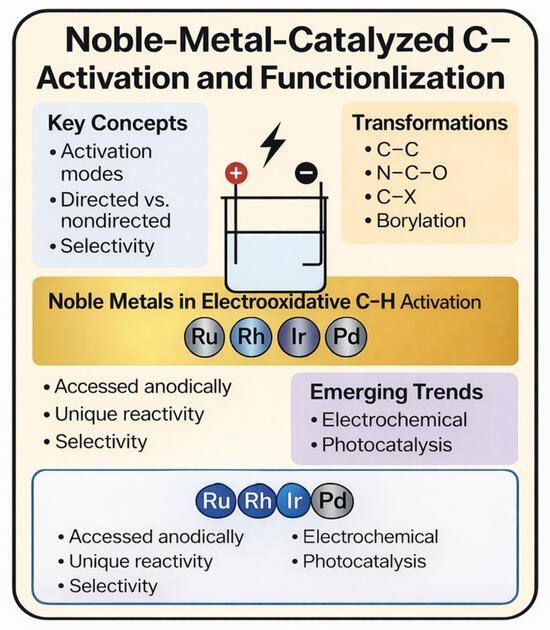
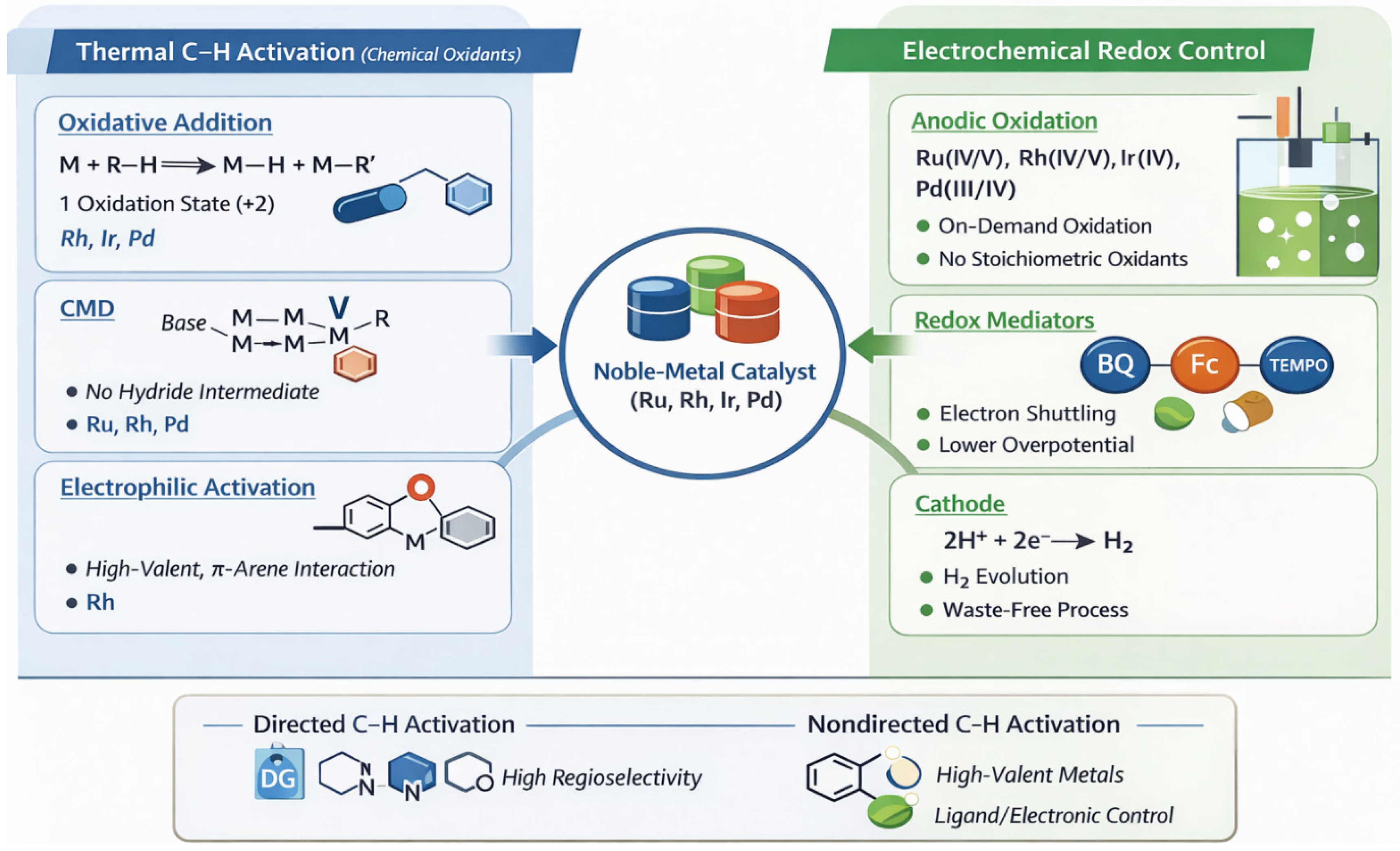
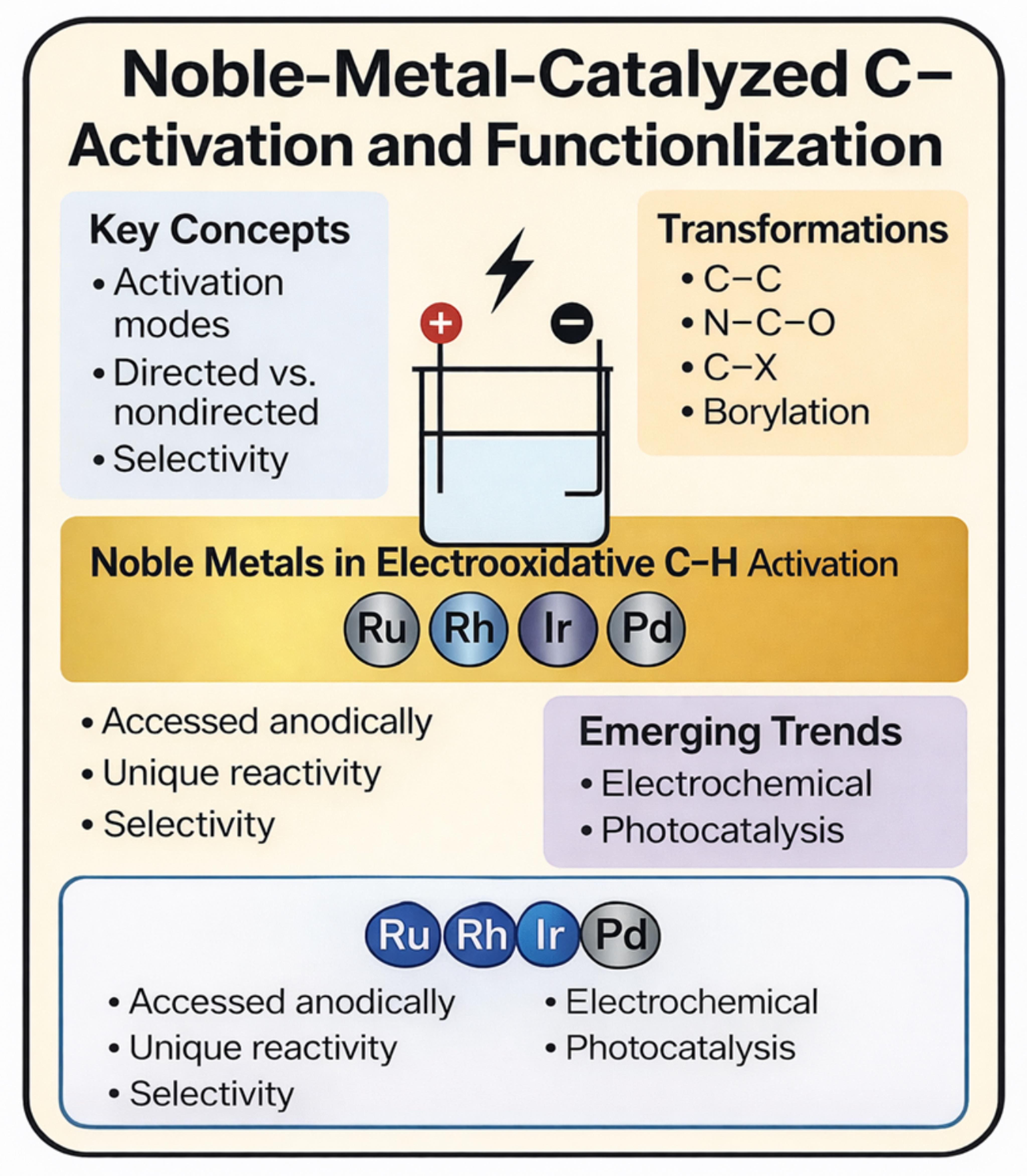
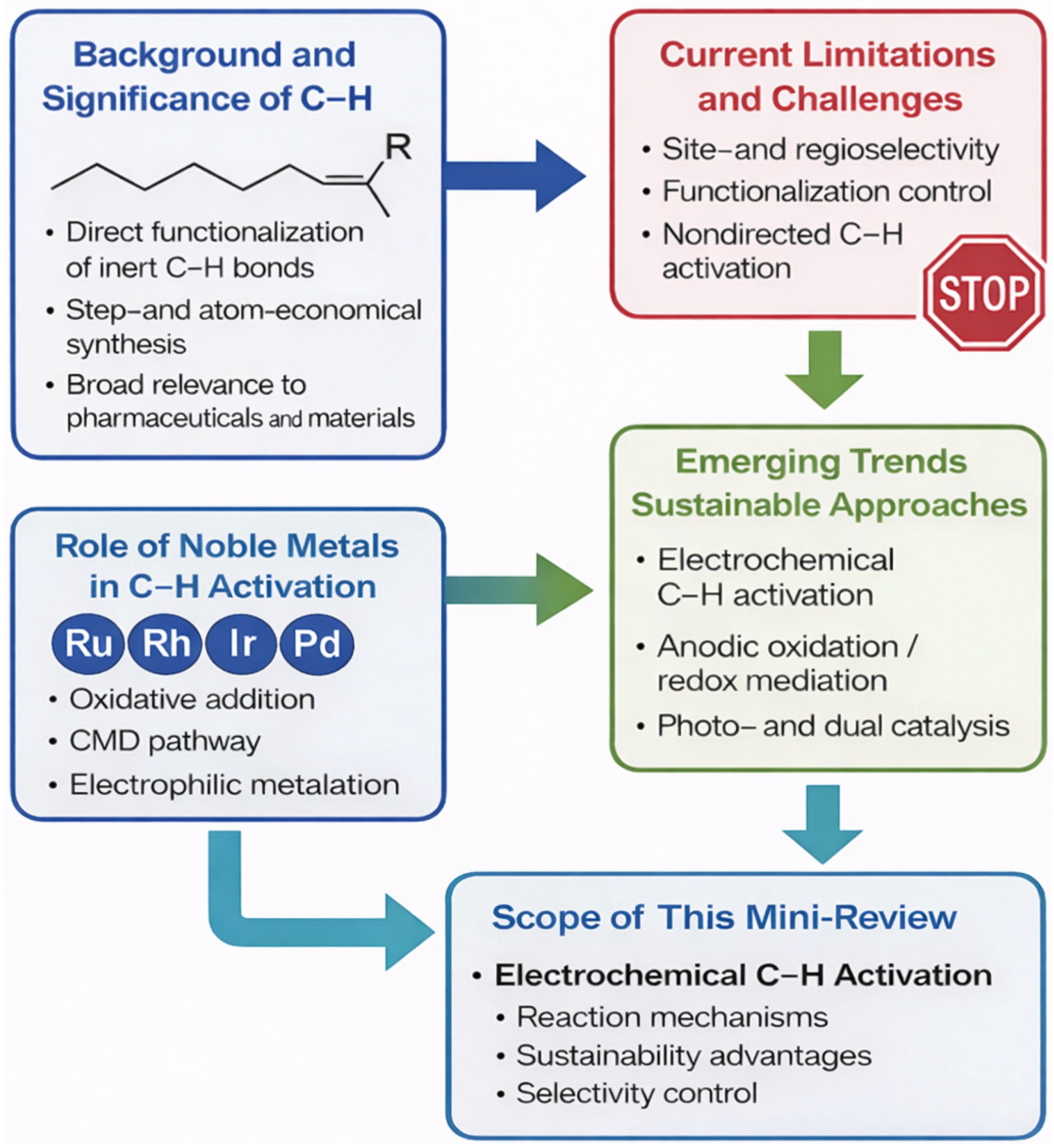
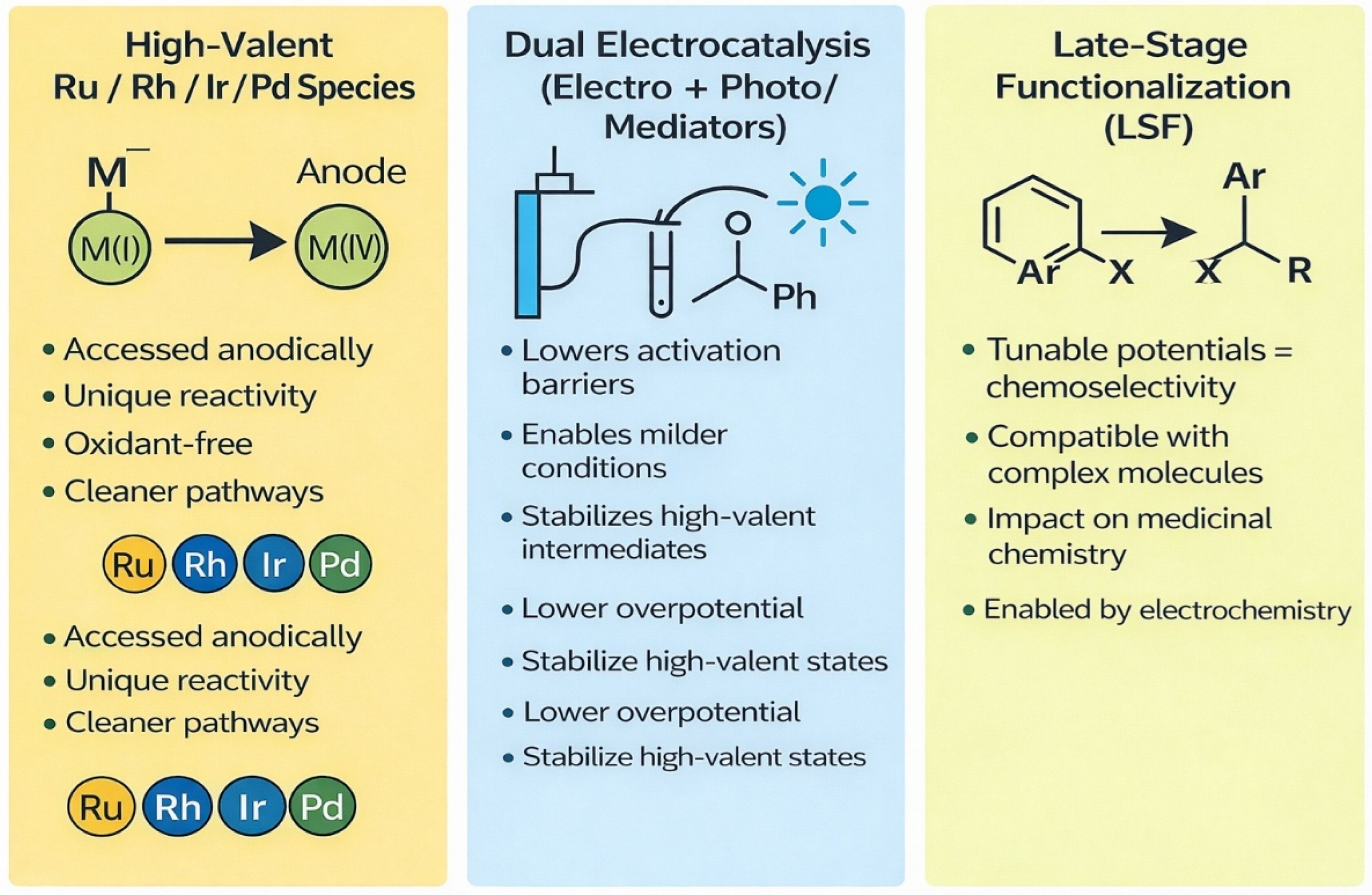
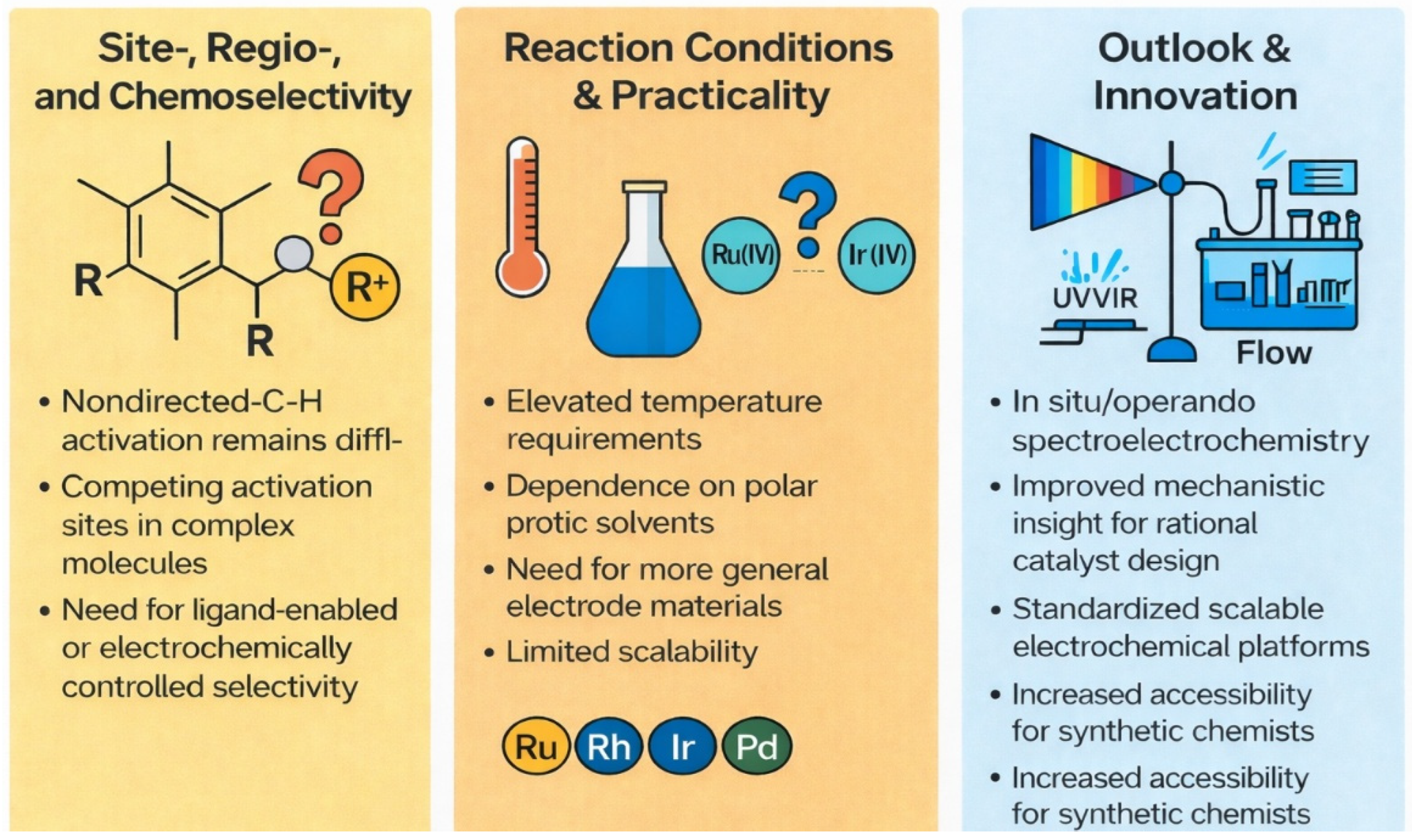
Noble transition metals particularly ruthenium, iridium, and rhodium remain foundational to the development of C–H activation chemistry. Their rich redox flexibility, ability to stabilize high-valent organometallic intermediates, and well-established mechanistic profiles make them exceptionally powerful for oxidative and electrooxidative C–H functionalization. Under electrochemical conditions, these metals benefit from precise anodic control of oxidation state, enabling selective access to high-valent species that are often difficult to generate using conventional oxidants. This redox tunability enhances reactivity and selectivity while eliminating the need for stoichiometric metal-based oxidants, thereby improving sustainability and functional group compatibility. In the context of electrooxidative C–H activation, Ru, Ir, and Rh continue to define benchmark reactivity, engaging in oxidative addition, (CMD), and electrophilic C–H activation pathways that support a broad range of C–C and C–heteroatom bond-forming reactions. The following subsections highlight key advances that illustrate the unique reactivity of each noble metal.
3.1. Ruthenium
Ruthenium has emerged as one of the most versatile noble metals for electrooxidative C–H activation, offering distinctive reactivity patterns enabled by access to high-valent Ru(IV/V) intermediates under anodic oxidation. Although traditionally viewed as a complementary alternative to palladium, electrochemical Ru catalysis has evolved into a mechanistically distinct platform capable of mediating C–C, C–N, and C–O bond formation across a broad substrate scope. Nevertheless, challenges remain, including catalyst stability, sensitivity to ligand environment, and incomplete mechanistic understanding of high-valent Ru species. In this context, Mei and co-workers [
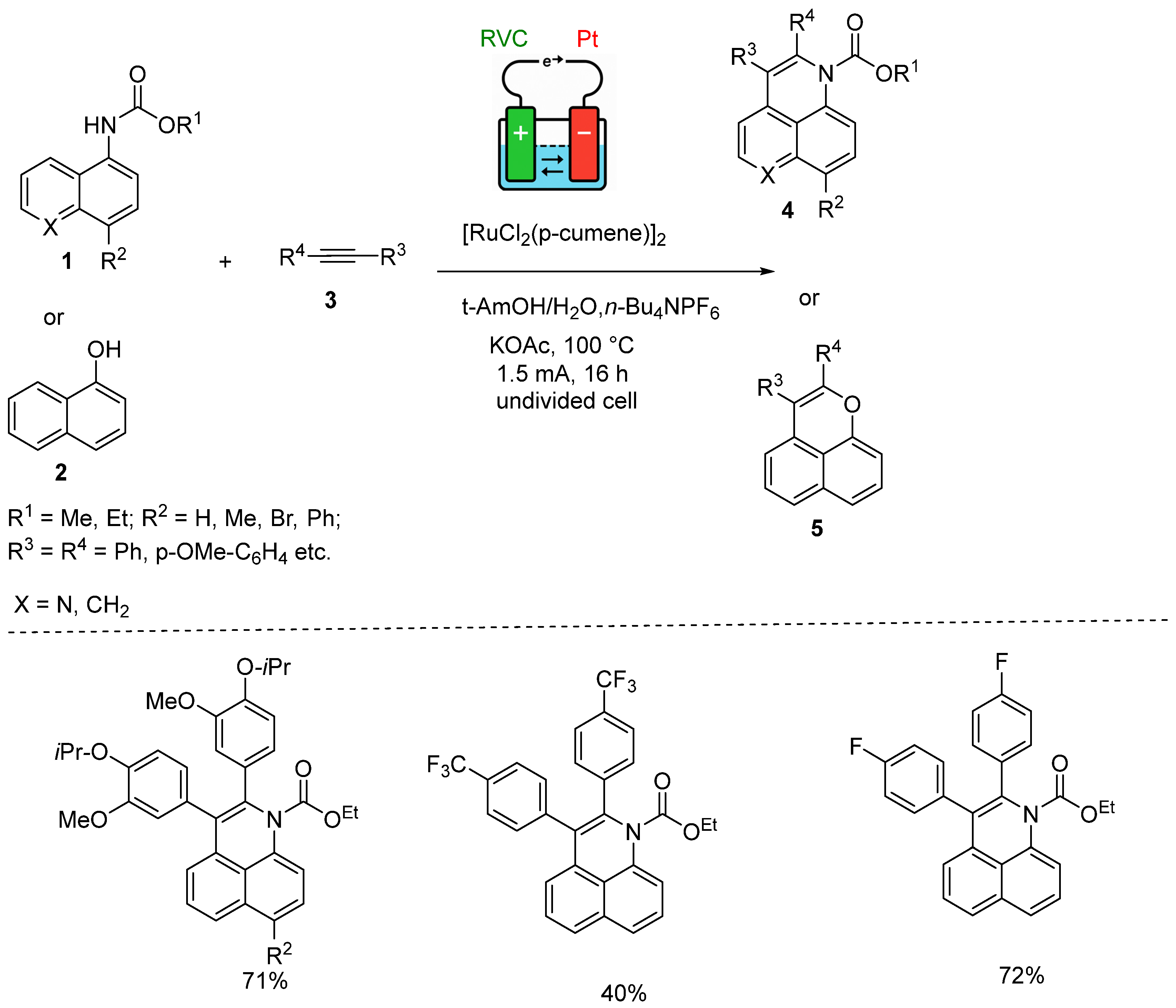
42] reported in 2018 the first example of ruthenium-catalyzed electrooxidative peri-C–H activation of aromatic carbamates
1 with phenols
2. The synthesis of benzo[de]quinolines
4 and benzo[de]chromenes
5 using an alkyne
3 as electrophile, demonstrates excellent regio- and chemoselectivity in protic alcohol/H
2O mixtures (
Scheme 1). While the reaction elegantly avoids chemical oxidants, it requires relatively forcing conditions and relies on pre-coordination geometry to achieve site-selectivity underscoring the persistent dependence of Ru(II)/Ru(IV) cycles on strong chelation control. The electrolysis was carried out in an undivided cell equipped with a reticulated vitreous carbon (RVC) anode and a Pt-plate cathode, using n-Bu
4NPF
6 as the supporting electrolyte. The reaction was conducted at 100 °C for 16 h under a constant current of 1.5 mA. Under these conditions, the transformation proved to be well tolerated across a wide range of diaryl- and dialkyl-substituted alkynes. Consequently, the broadly applicable ruthenium(II) catalyst enabled their efficient conversion. Notably, the ruthenium electrocatalytic system exhibited excellent functional group tolerance, accommodating ester, fluoro, chloro, and bromo substituents, thereby providing a valuable platform for further late-stage diversification. According to the mechanistic proposal in
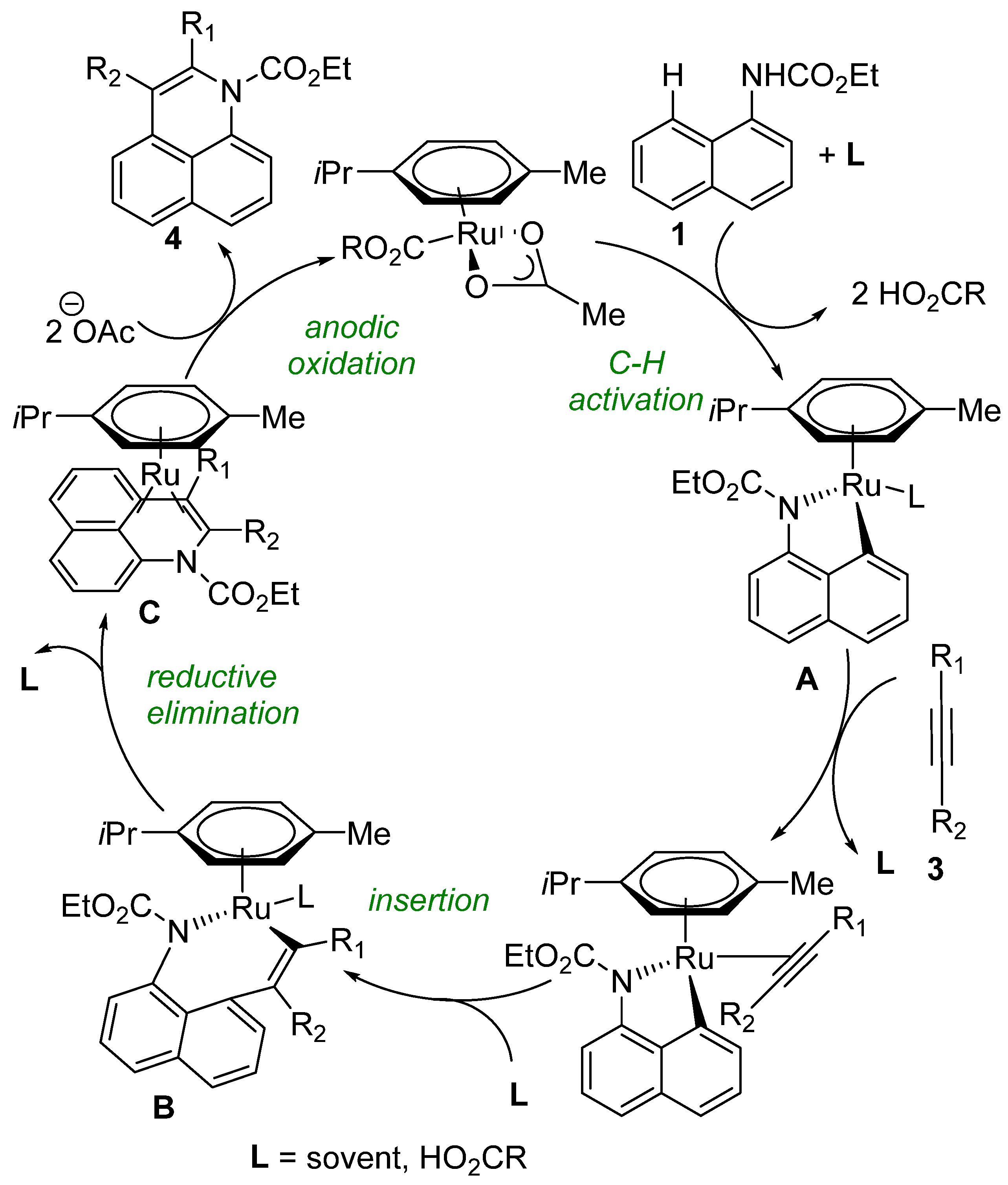
Scheme 2, the reaction proceeds via initial C–H activation of
1 to form intermediate
A. Migratory insertion of the alkyne
3 generates intermediate
B, followed by reductive elimination to give intermediate C. Oxidation of C at the anode completes the catalytic cycle and provides the products
4. This seminal work illustrates both the promise and remaining challenges of Ru electrocatalysis: while ruthenium offers unique selectivity and functional group tolerance under electrochemical conditions, the mechanistic landscape particularly involving high-valent Ru(IV/V) remains relatively underexplored compared to its palladium counterparts.
Shortly thereafter, Qiu and co-workers [
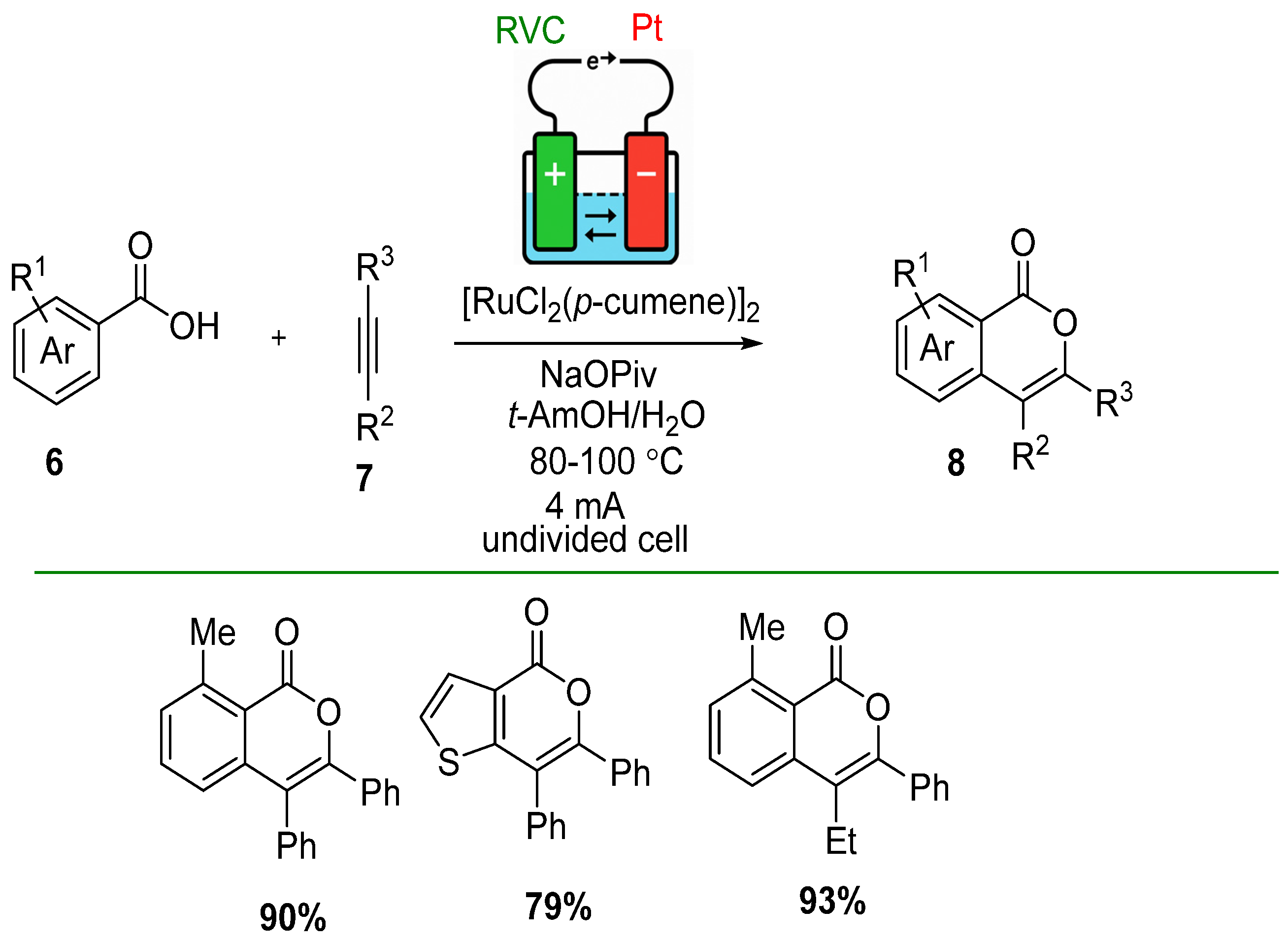
43] reported the first weak O-coordination-assisted Ru-electrocatalyzed C–H/O–H annulation (
Scheme 3). This work is notable for expanding directing-group flexibility, demonstrating that relatively weak carboxylate
6 coordination is sufficient to enable annulation to isocoumarins
8. However, the reaction still requires 100 °C, protic solvents, and noble metal (RVC)/Pt), raising questions about scalability and sustainability. Electrolysis was performed in an undivided cell under constant-current conditions (4 mA), with NaOPiv employed as base and t-AmOH/H
2O used as the solvent system. The authors evaluated the versatility of the ruthenium(II) catalyst using a set of representative benzoic acids (
Scheme 3). Accordingly, the ruthenium catalytic manifold proved to be compatible with both electron-rich and electron-deficient arenes. The mechanistic proposal largely mirrors that of Mei’s system (
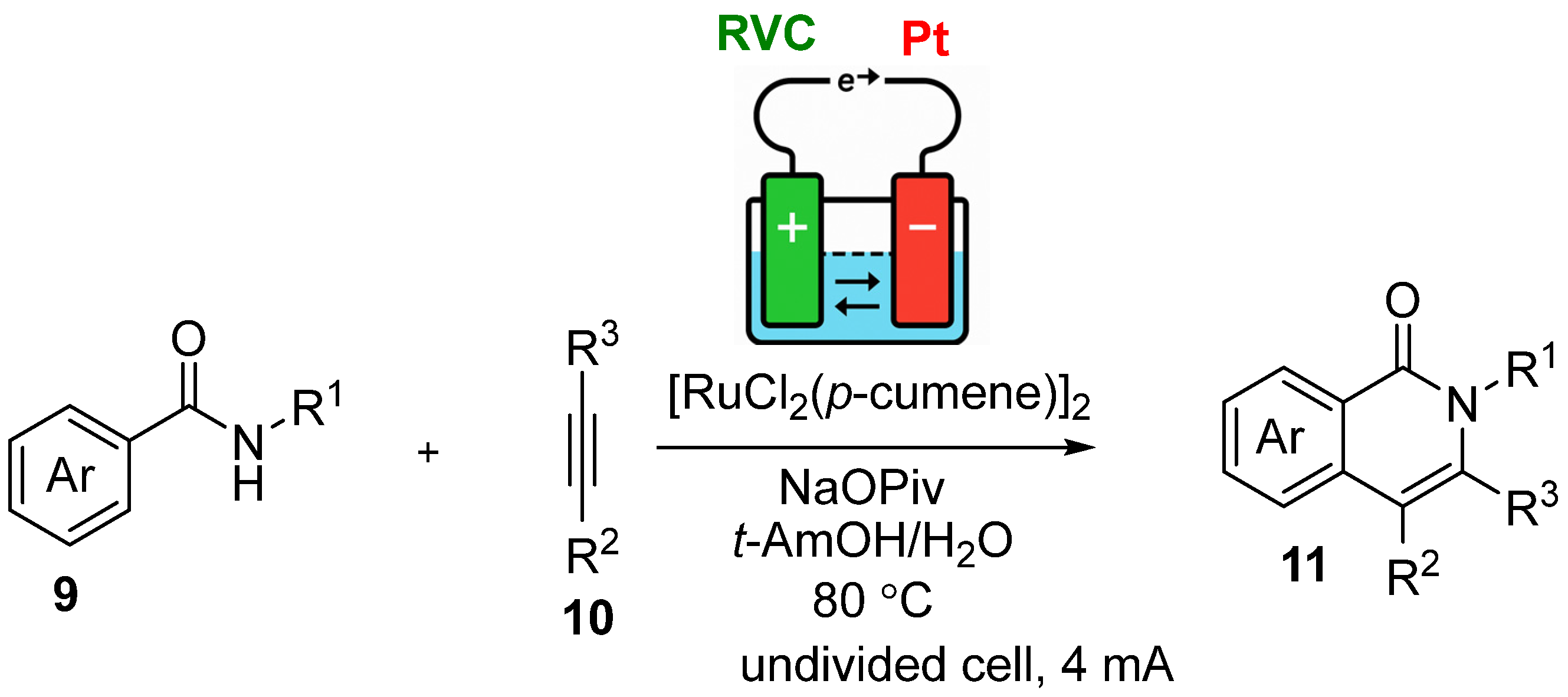
Scheme 2), further highlighting the lack of experimentally validated Ru(II)/Ru(IV) intermediates across Ru electrocatalytic platforms. The protocol was not limited to benzoic acids, and several benzamides
9 were transformed into isoquinolones
11 under the same conditions (
Scheme 4).
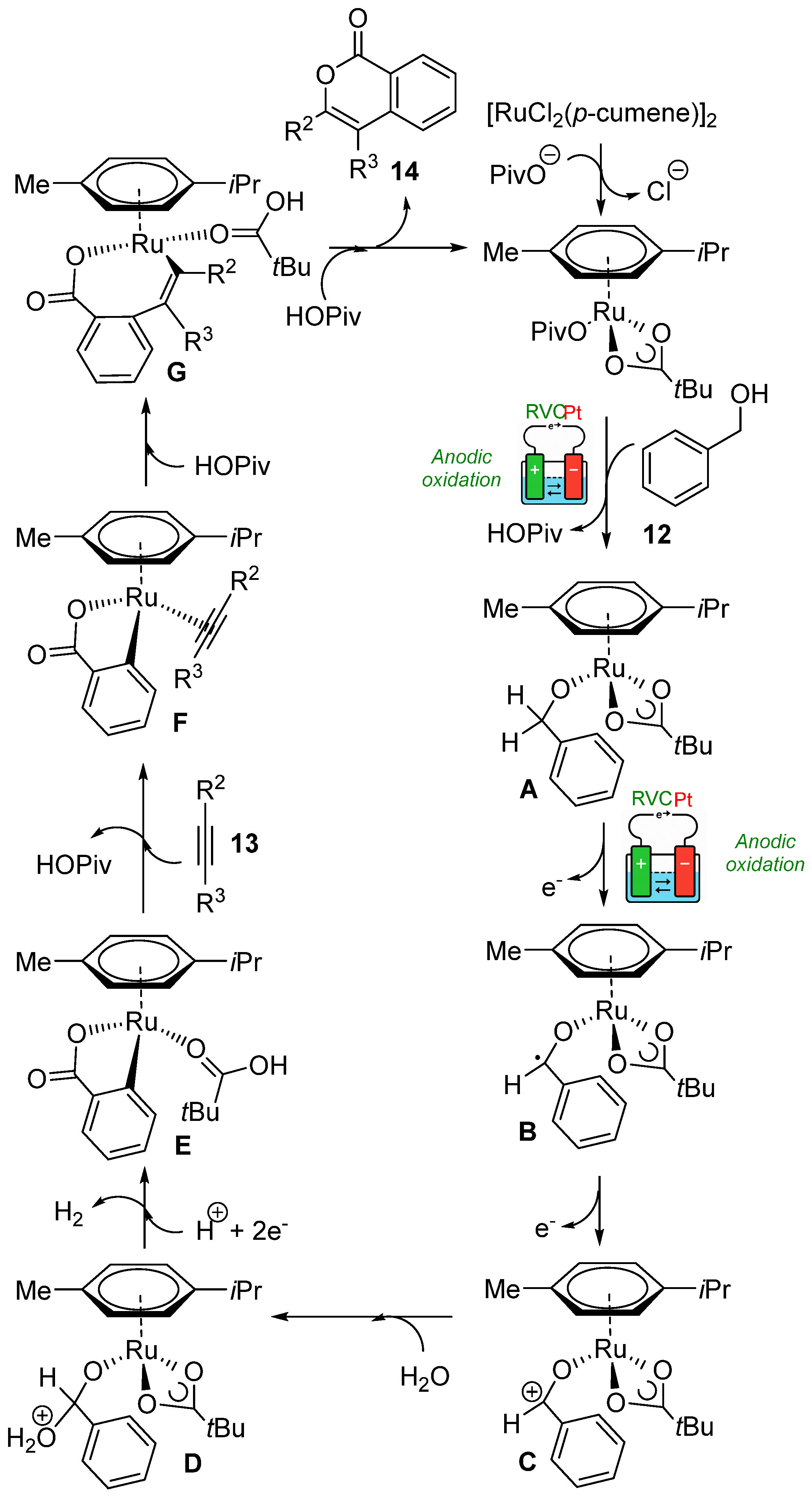
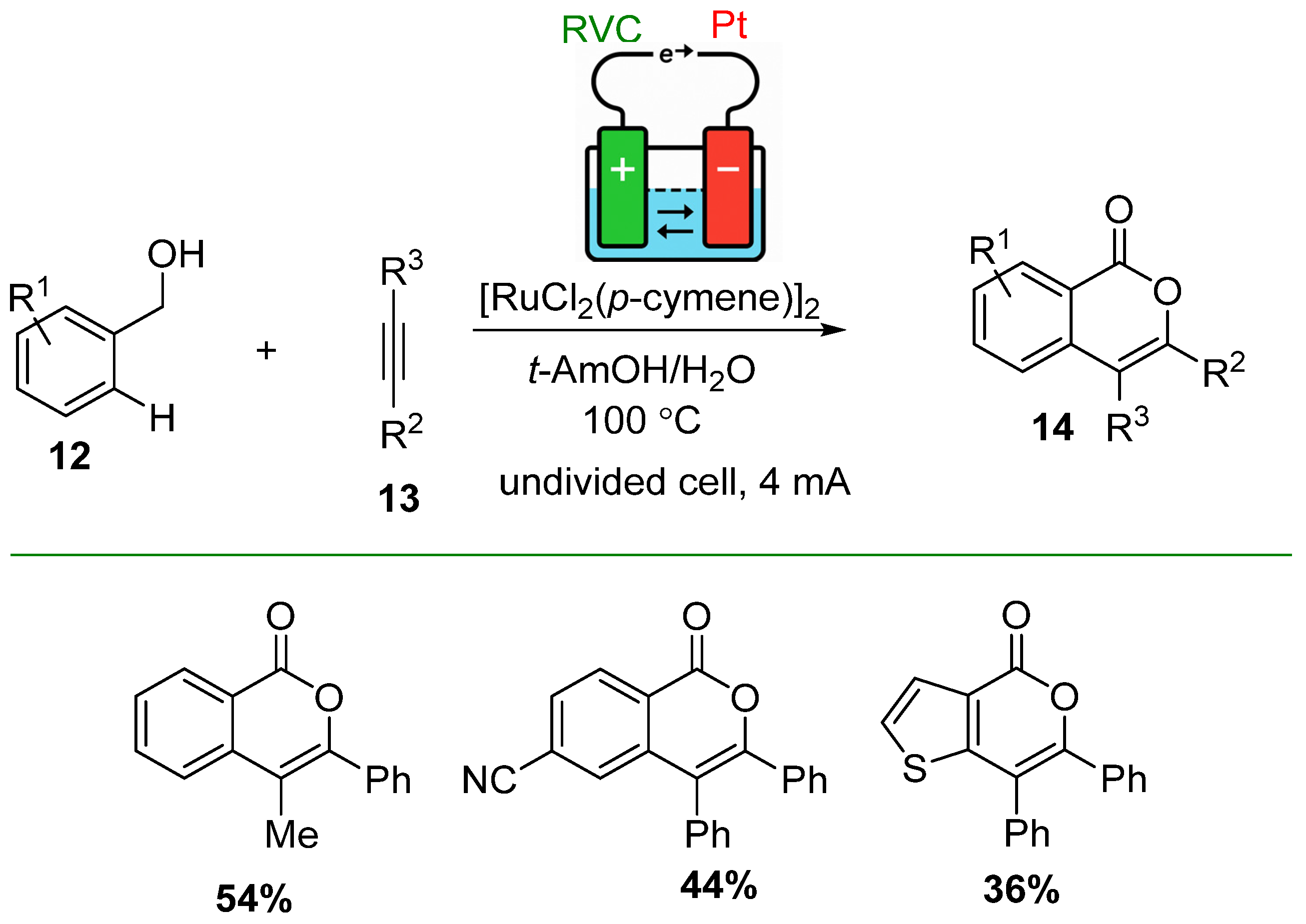
A further conceptual advance came from Luo and co-workers [
44], who exploited benzoyloxy–Ru(II) intermediates generated in situ from benzylic alcohols
12 under electrochemical oxidation (
Scheme 5). Their electrooxidative [4 + 2] annulation delivers isocoumarins 14 with excellent site-selectivity. This study is particularly instructive because it shows how electrochemistry can create unique Ru intermediates unlikely to arise in purely chemical oxidations. The reaction was conducted in an undivided cell equipped with a graphite rod anode and a platinum plate cathode under constant-current conditions (4 mA), using
as the catalyst in t-AmOH/H
2O at 100 °C. The reaction proceeded efficiently with a broad range of internal alkynes affording the desired products with moderate to good yields, whereas terminal alkynes were not compatible. In the case of diaryl alkynes, various substituents on the aryl rings including Me, t-Bu, MeO, Cl, and F were well tolerated, with the electronic nature of the substituents exerting a pronounced influence on the reaction yields. A plausible mechanism is depicted in
Scheme 6. Coordination of benzylic alcohol
12 to an in situ formed PivO–Ru(II) species yields the key benzoyloxy–Ru(II) intermediate
A. Subsequent anodic oxidation forms intermediate
C, which undergoes sequential water addition, oxidation, and C–H activation, giving intermediate
E. Migratory insertion of the alkyne affords cyclic intermediate
G, followed by reductive elimination to provide the desired isocoumarin
14. Final anodic oxidation regenerates the active Ru(II) species, thereby closing the catalytic cycle.
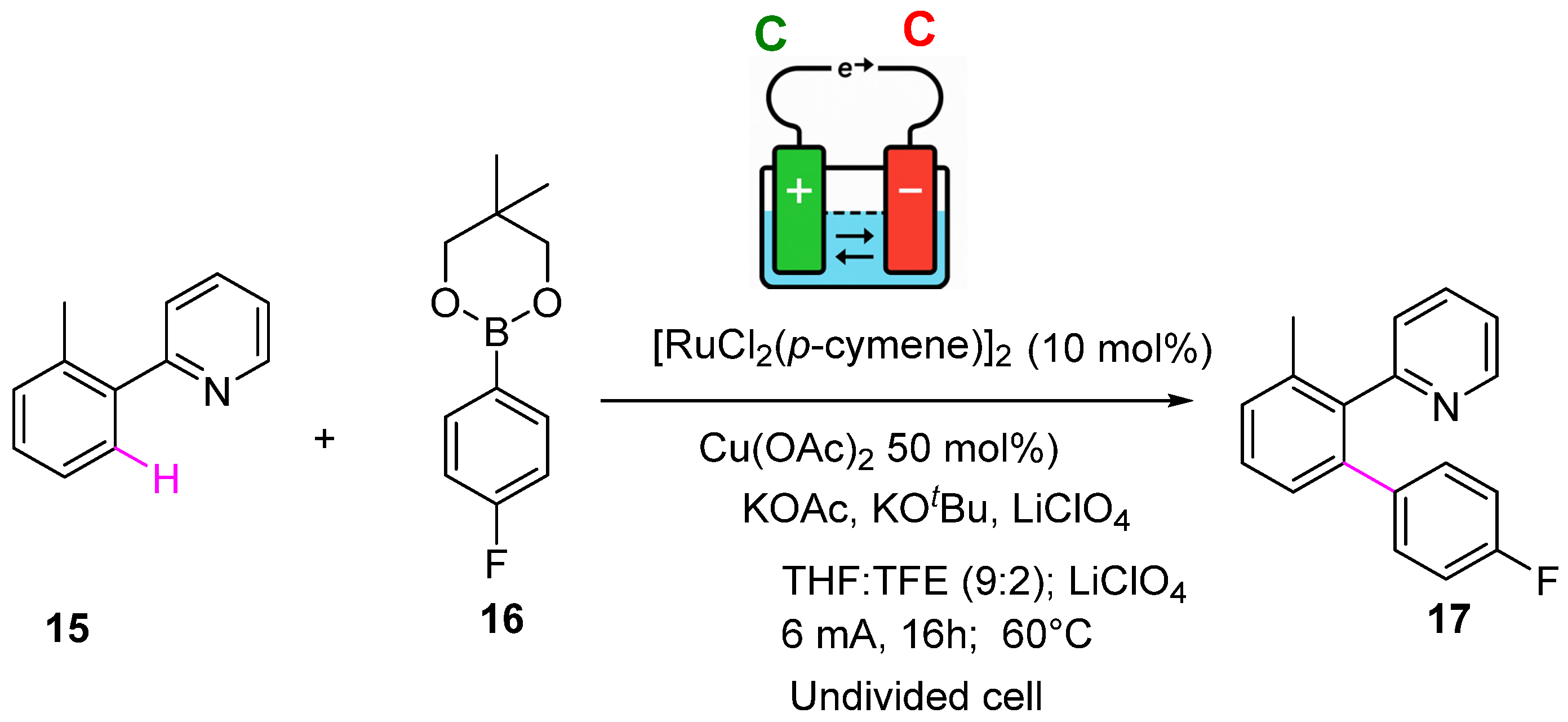
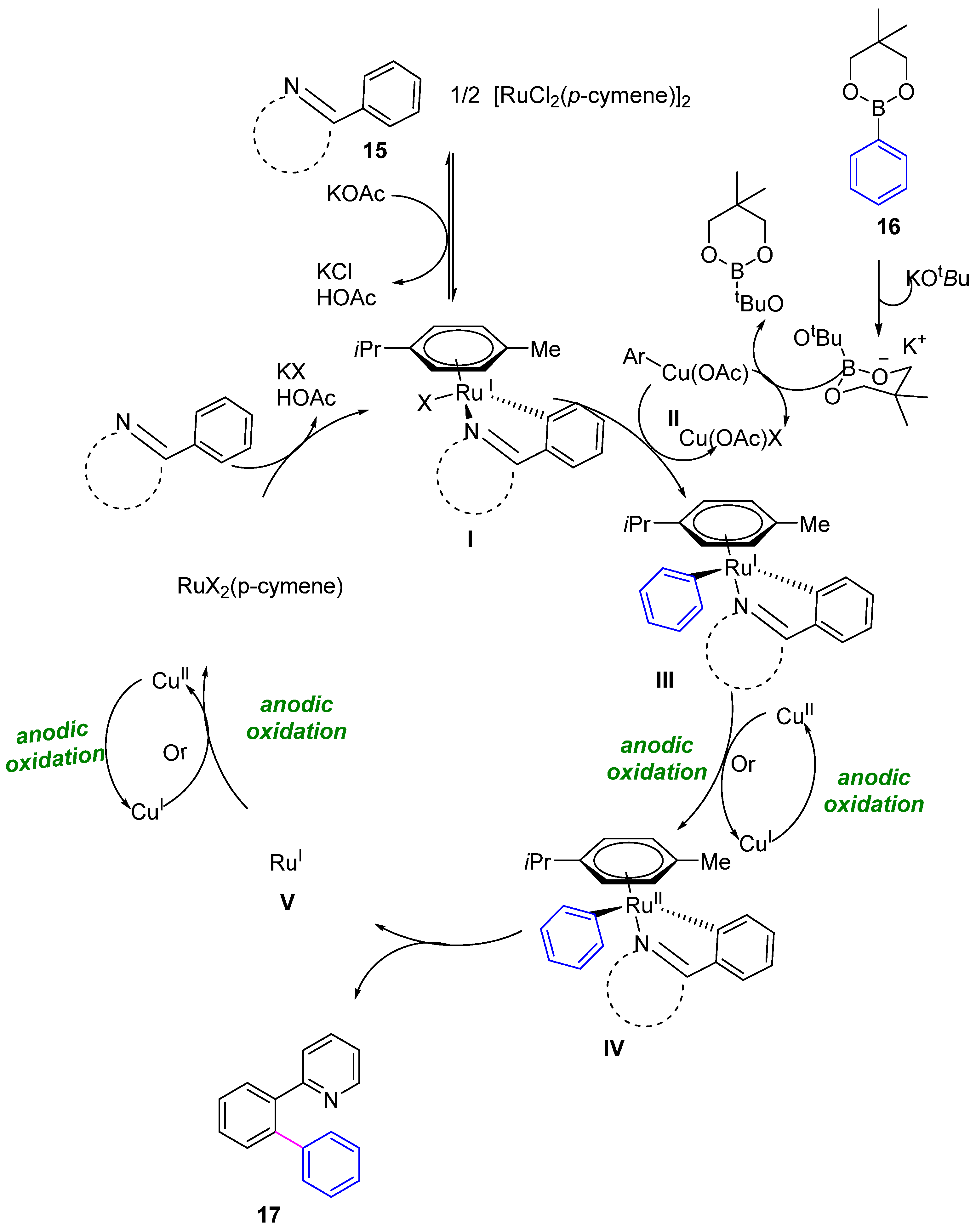
More recently, Larrosa and co-workers [
45] reported a highly versatile ortho-directed electrochemical C–H functionalization of arenes
15 using boron-based
16 coupling partners under ruthenium catalysis (
Scheme 7). Their method operates through an oxidatively induced reductive elimination mechanism, enabling a single set of electrochemical conditions to promote C–H arylation, alkenylation, and methylation with excellent ortho-selectivity. This protocol exhibits broad functional group tolerance and accommodates late-stage diversification of complex molecules in synthetically useful yields. By employing electricity as a green oxidant, the transformation avoids stoichiometric chemical oxidants altogether, significantly improving the sustainability profile compared to traditional Ru(II)/Ru(IV)-based oxidative systems. This work further underscores the adaptability of ruthenium in electrooxidative C–H activation and highlights its capacity to mediate diverse bond-forming events through anodically driven redox cycles. Electrolysis was performed in an undivided cell equipped with a graphite working electrode and a graphite counter electrode at 60 °C under constant-current conditions (6.0 mA) for 16 h. Optimal results were obtained using
as the catalyst, with KOAc and KOtBu as bases, Cu(OAc)
2 as an additive, and LiClO
4 as the supporting electrolyte. According to the mechanism proposed in
Scheme 8, the arene substrate undergoes (CMD) with [Ru(p-cymene)Cl
2]
2, generating the cyclometalated ruthenium intermediate
I. In parallel, the arylboronic ester is activated by KOtBu to form a boronate species, which undergoes transmetalation with Cu(OAc)
2 to furnish the aryl–copper intermediate
II. This copper intermediate subsequently engages in transmetalation with ruthenium intermediate
I, producing the ruthenium–aryl complex
III. Anodic oxidation of
III triggers reductive elimination via intermediate
IV, delivering the ortho-functionalized product and generating the reduced ruthenium(I) species
V. Reoxidation of
V to ruthenium(II) restores the active catalytic species capable of engaging in a new CMD event, thereby completing the cycle. To maintain charge balance at the counter electrode, the cathodic process likely involves reduction of Cu(II) to Cu(I/0) a pathway that may necessitate the use of alternating polarity together with the reduction in available proton sources in the reaction medium, such as the TFE co-solvent.
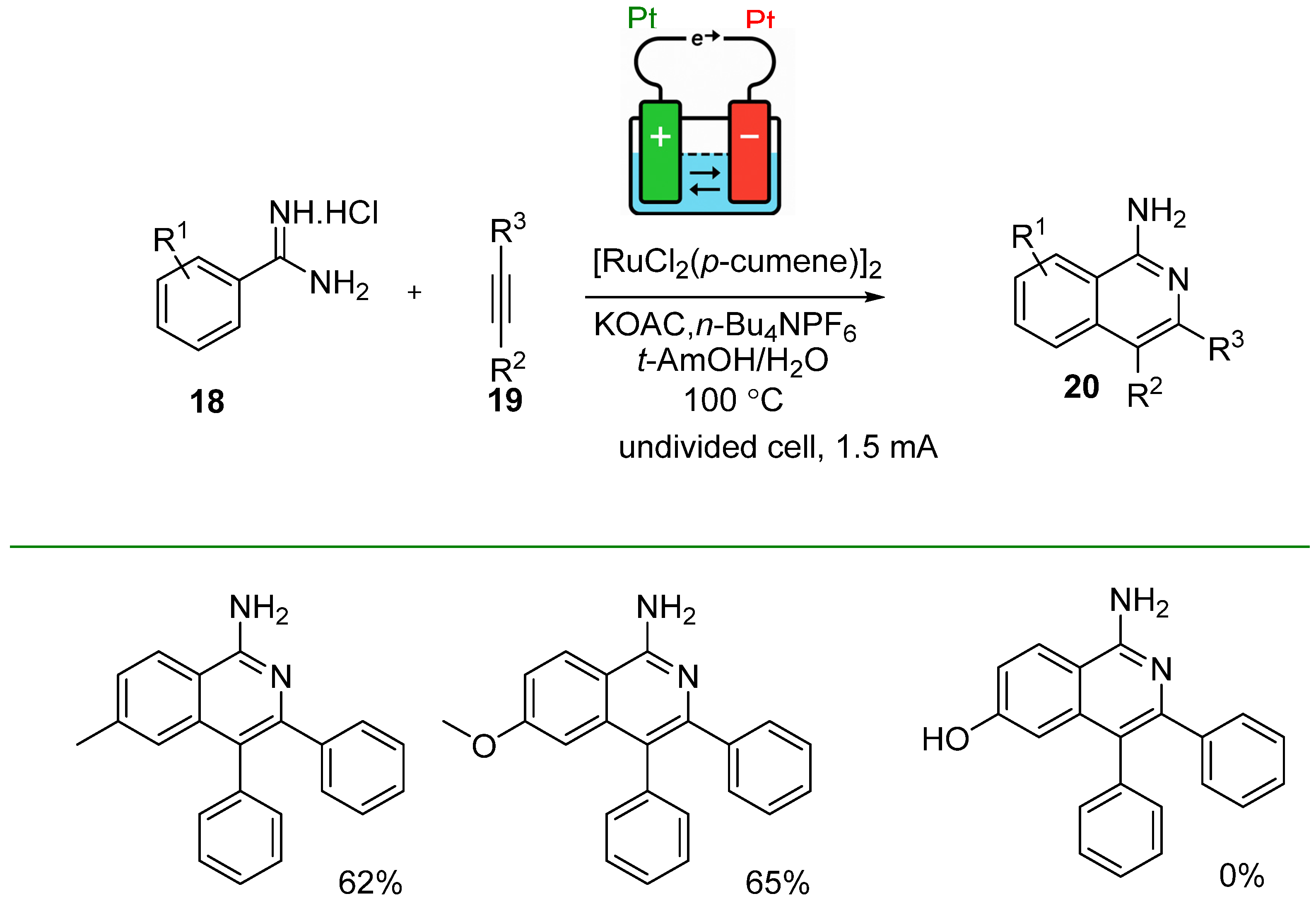
In another significant contribution, Bhanage and co-workers [
46] developed a constant-current electrochemical strategy for the synthesis of 1-aminoisoquinoline derivatives
20 via +Ru(II)-catalyzed annulation of benzamidine hydrochlorides 18 with alkynes
19 (
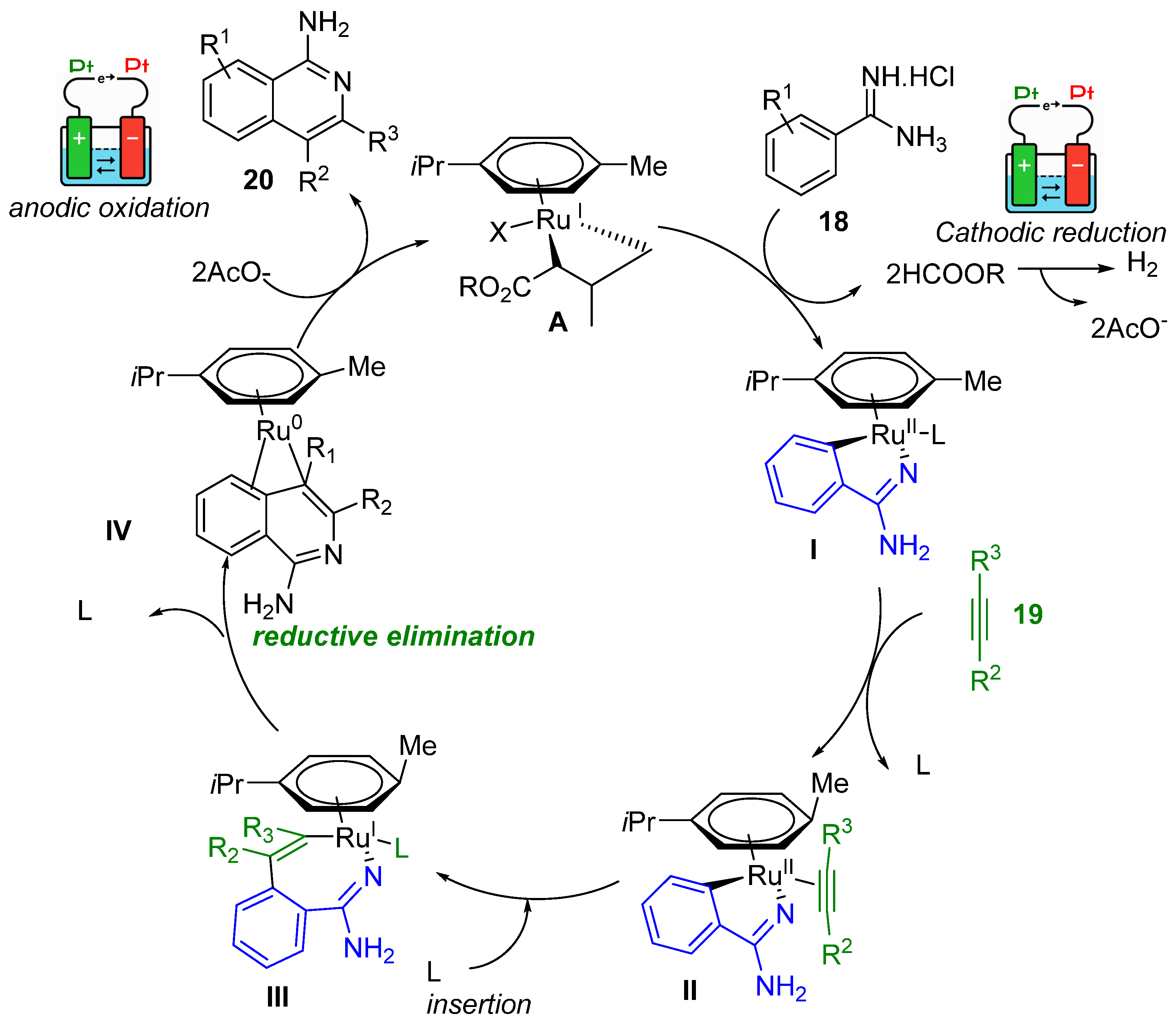
Scheme 9). This method delivers naphthyridine-based scaffolds in good yields, proceeding through Ru(II)-mediated C–H bond cleavage followed by sequential C–C and C–N bond formation in a one-pot fashion. Importantly, the combination of electricity and Ru catalysis enables broad substrate tolerance, effectively accommodating a wide range of benzamidines and alkynes with diverse steric and electronic features. As with other electrooxidative Ru systems, the protocol operates without stoichiometric chemical oxidants, highlighting once again the sustainability advantage of anodic oxidation in accessing high-valent ruthenium species essential for catalytic turnover. based on experimental observations and prior literature precedent, a plausible catalytic cycle for the Ru-electrocatalyzed C–H annulation mechanism is outlined in
Scheme 10.
Electrolysis was conducted in an undivided cell equipped with a Pt anode and a Pt cathode under constant-current conditions (1.5 mA) at 100 °C, using n-Bu4NPF6 as the supporting electrolyte and KOAc as the base. The catalyst was dissolved in a t-AmOH/H2O solvent system. The authors find that Benzamidine hydrochlorides bearing para-electron-donating substituents afforded the corresponding products in moderate to satisfactory yields of 65%. In contrast, no product formation was observed when a para-hydroxy-substituted benzamidine hydrochloride was subjected to the optimized conditions. Overall, benzamidines containing electron-withdrawing groups delivered higher yields of 1-aminoisoquinolines, indicating that the reaction is preferentially promoted by electron-withdrawing substituents rather than electron-donating ones. In the presence of KOAc, the dimeric precatalyst undergoes ligand exchange to generate the catalytically active ruthenium diacetate species A. Coordination of this Ru(II) complex with substrate 18 initiates cyclometalation, forming the key five-membered ruthenacycle I through C–H activation. Subsequent alkyne insertion and sequential C–C/C–N bond-forming steps furnish the annulated product. Crucially, anodic oxidation regenerates the active Ru(II) species, thereby sustaining the catalytic cycle without the need for external chemical oxidants, while proton reduction at the cathode simultaneously produces H2 as the only stoichiometric byproduct. This electrochemically driven redox balance underscores the operational sustainability and efficiency of the Ru-catalyzed annulation process.
Despite these advances, several challenges limit broader adoption of Ru electrocatalysis. First, mechanistic ambiguity remains pervasive: high-valent Ru intermediates central to catalytic turnover are rarely observed directly, and many mechanistic proposals rely heavily on analogy to palladium. Second, many reported protocols require elevated temperatures (often ≥100 °C) and polar protic solvents, which partially offset the sustainability and scalability advantages of electrochemical oxidation. Third, truly nondirected C–H activation remains rare; most Ru systems still rely on strong directing groups or rigid chelation geometries. Finally, dependence on specific electrode materials (such as RVC or platinum), narrow potential windows, and sensitivity to electrochemical parameters can complicate large-scale or industrial implementation.
3.2. Iridium-Based Catalysts
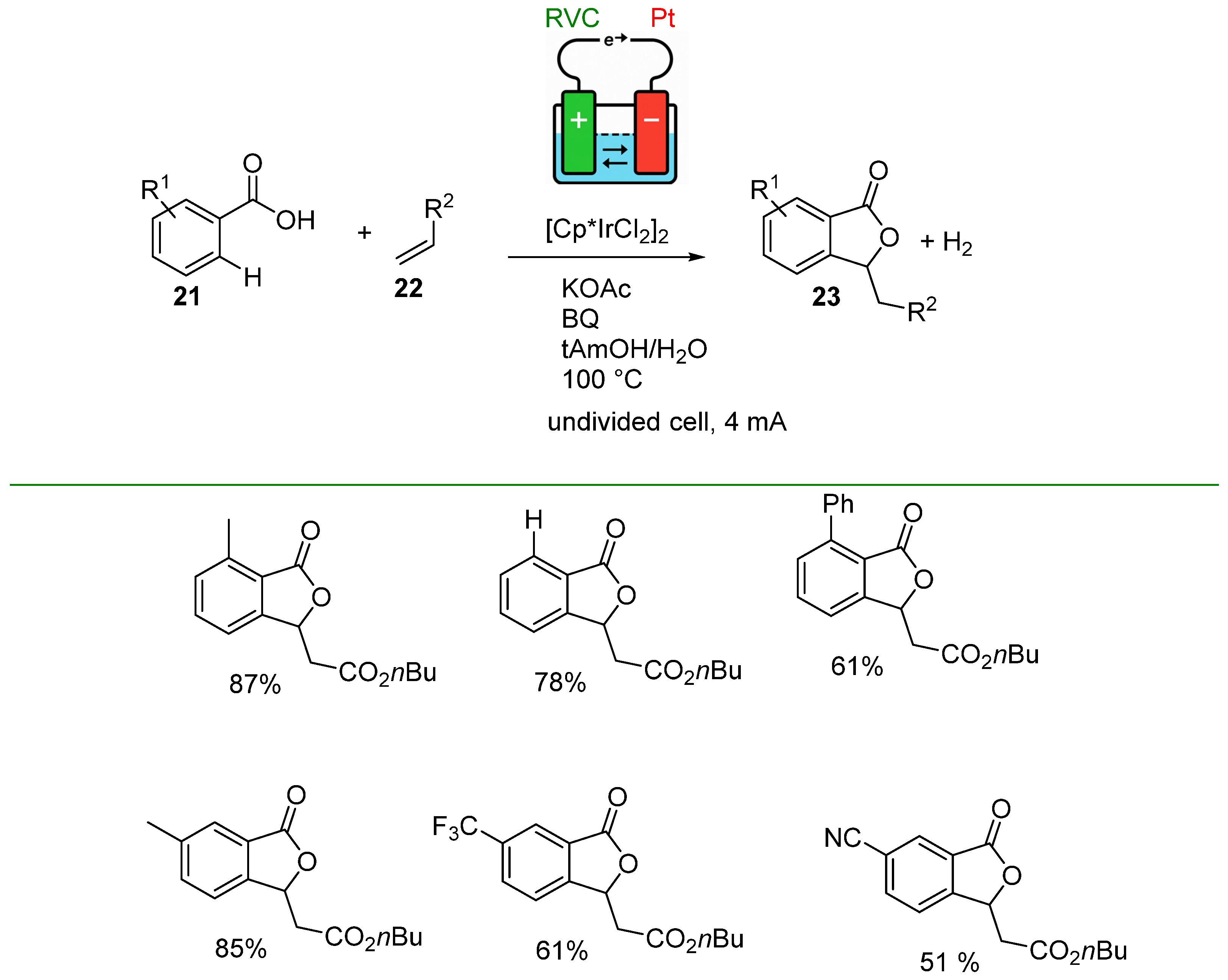
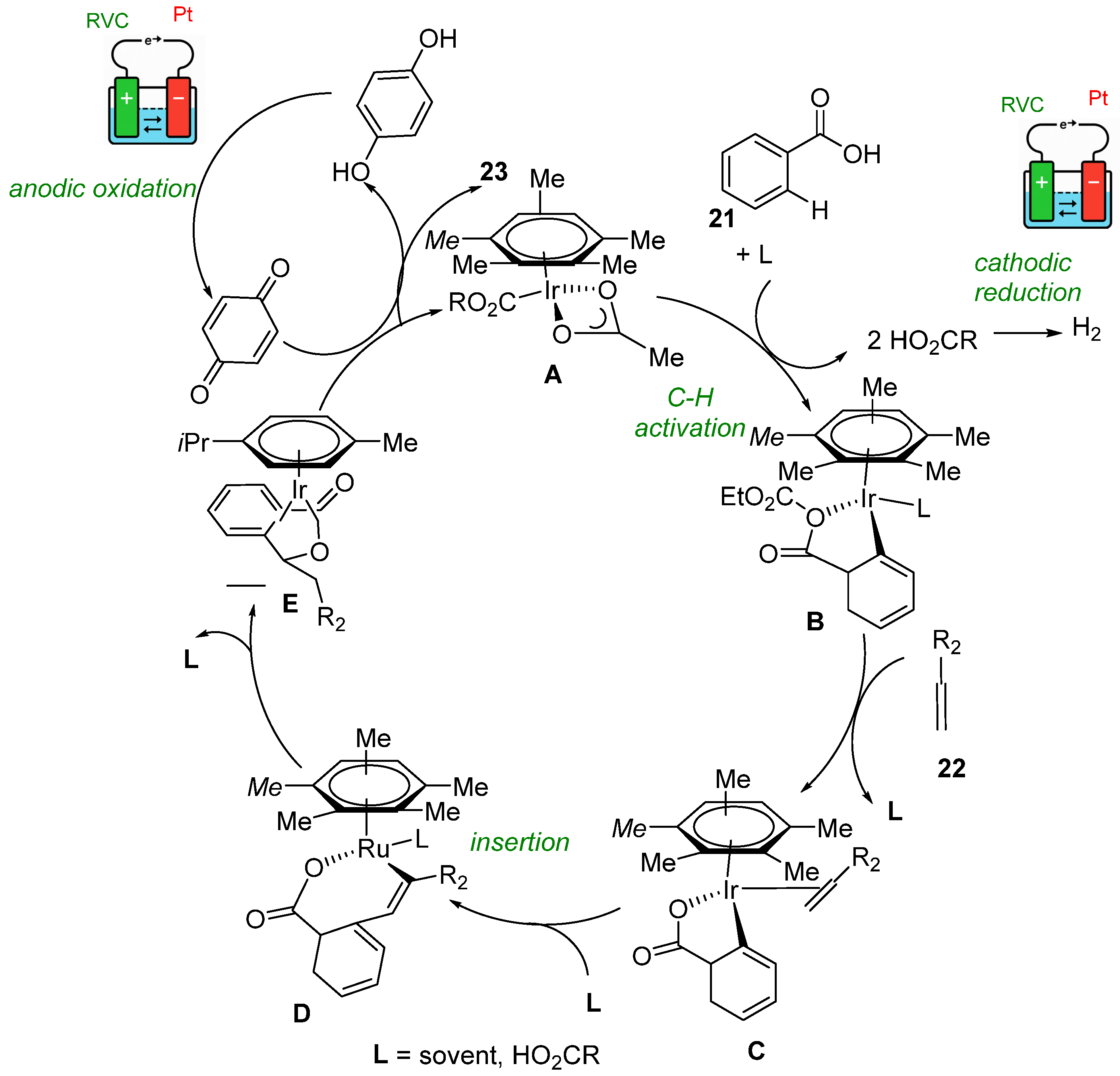
Iridium, although less explored than ruthenium or palladium in electrochemical C–H activation, has demonstrated unique reactivity under anodic conditions. In 2018, Qiu and co-workers [
47] employed an Ir-based catalyst to achieve electrooxidative C–H alkenylation of arenes
21, enabling the synthesis of isobenzofurans
23 from readily available substrates
21 and
22 (
Scheme 11). This transformation proceeds via Ir-mediated activation of the aromatic C–H bond, followed by alkyne insertion and cyclization, ultimately affording the benzannulated heterocycles
23 in moderate yields (
Scheme 11). Electrolysis was conducted in an undivided cell equipped with an RVC anode and a Pt cathode under constant-current conditions (4.0 mA), using
(2.5 mol %) as the catalyst, KOAc as the base, and p-benzoquinone (BQ, 10 mol %) as the redox catalyst. The iridium catalyst proved broadly applicable to arenes
21 bearing either electron-donating or electron-withdrawing substituents. Notably, sensitive electrophilic functional groups, including cyano, ester, chloro, bromo, and even reactive iodo substituents, were well tolerated, underscoring the potential of this methodology for further late-stage diversification (
Scheme 11). An important feature of this system is the use of p-benzoquinone (BQ) as a redox mediator, which significantly improves reaction efficiency. BQ likely facilitates electron shuttling between the Ir catalyst and the anode, enabling smoother access to the high-valent Ir intermediates necessary for C–H activation. This highlights a recurring theme in electrooxidative Ir chemistry: external redox mediators often compensate for the limited intrinsic redox flexibility of Ir under electrochemical conditions. Mechanistically, this work represents one of the most comprehensively elucidated Ir-based electrocatalytic systems reported to date. As outlined in
Scheme 12, the proposed catalytic cycle for the cooperative iridium-electrocatalyzed C–H/C–H functionalization begins with a facile organometallic C–H activation step. Subsequent migratory alkene insertion generates the seven-membered Ir(III) metallacycle
D, which then undergoes β-hydride elimination followed by reductive elimination to deliver the key Ir(I) intermediate. The resulting Ir(I) species is reoxidized by p-benzoquinone, regenerating the catalytically active Ir(III) complex
A. Finally, the hydroquinone formed in this step is returned to p-benzoquinone via anodic oxidation at the electrode surface, thereby closing the electrocatalytic cycle. Despite its synthetic utility, the method still relies on relatively high reaction temperatures and stoichiometric BQ additives, pointing to the ongoing challenge of achieving efficient Ir redox cycling solely through anodic control. Nevertheless, this study represents a valuable demonstration of iridium’s potential in electrochemical C–H functionalization and underscores the broader applicability of anodic oxidation to expand the reactivity of traditionally noble metal catalytic manifolds.
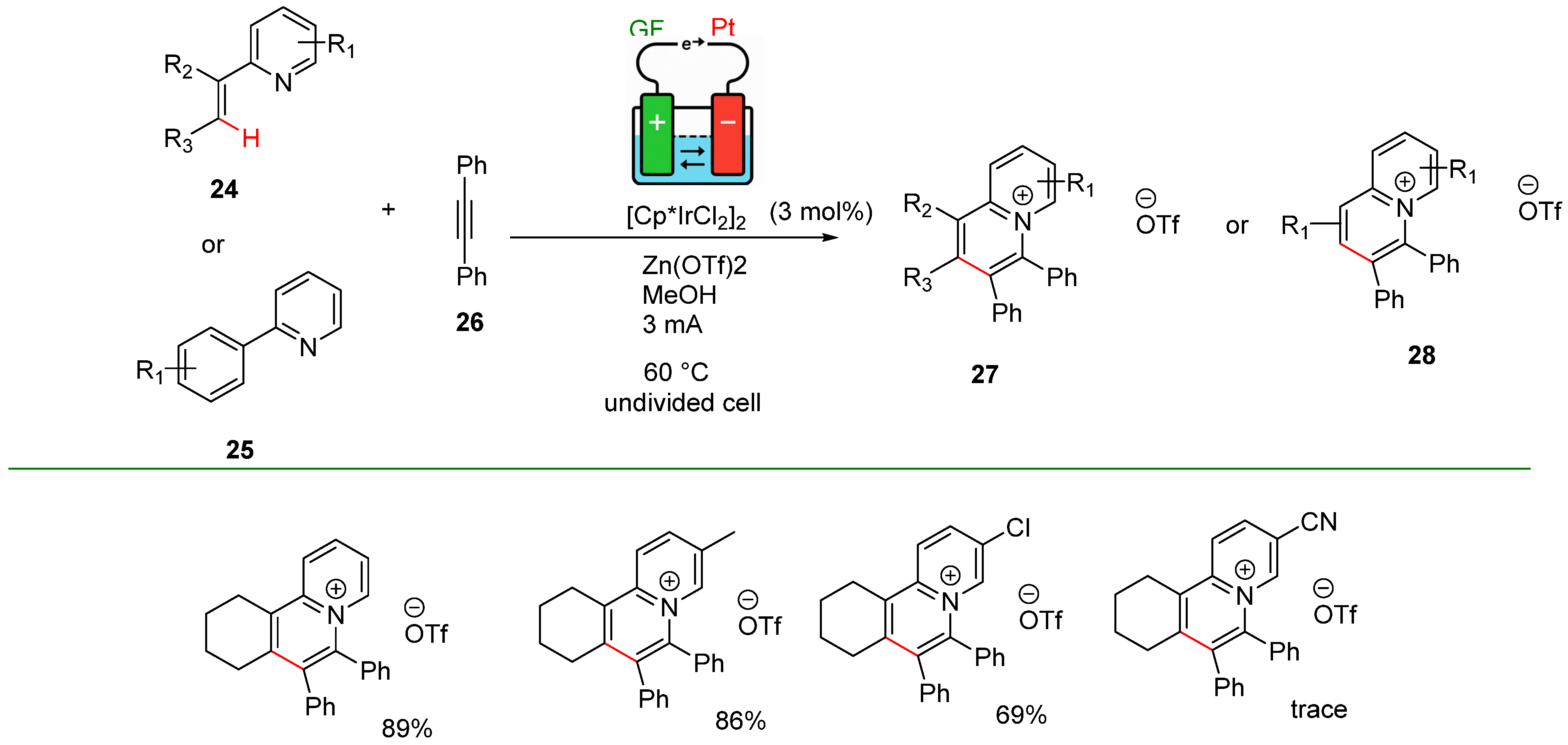
Building on this foundation, Guo and co-workers [
48] reported an electrochemically driven Ir(III)-catalyzed C(sp
2)–H activation and annulation platform that significantly expands the scope of iridium electrocatalysis. Their method enables pyridine
24, and (hetero)arene
25, followed by regioselective annulation with alkynes
26 to deliver a range of biologically relevant quaternary ammonium salts
27 or
28 under mild electrolysis conditions (
Scheme 13). Electrolysis was conducted in an undivided cell using
as the catalyst and Zn(OTf)
2 as an additive in MeOH (3 mL) at 60 °C under constant-current conditions (3 mA). Using a GF (graphite felt) anode and a Pt cathode, the desired products were obtained in good yields, demonstrating broad functional group tolerance. Substrates bearing electron-donating groups (5-Me, 5-MeO) as well as mildly electron-withdrawing substituents (5-F, 5-Cl) on the pyridyl ring afforded the corresponding products in moderate to good yields (67–86%). In contrast, the presence of a strongly electron-withdrawing group (5-CN) completely inhibited the reaction, and no formation of product was observed.
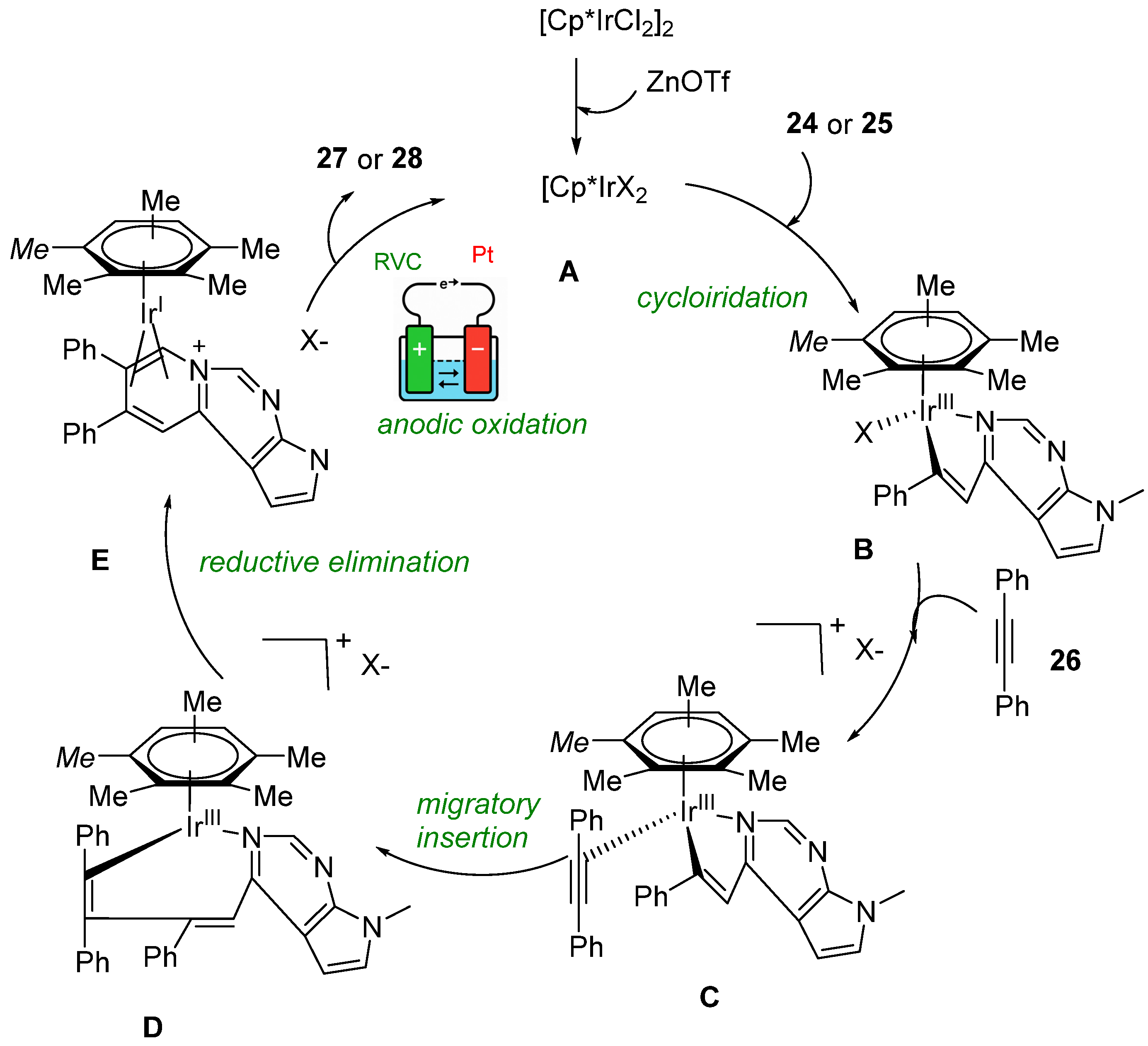
A key advantage of this approach is the complete elimination of external stoichiometric oxidants, in sharp contrast to traditional Ir-based C–H activation protocols that commonly rely on strong, often hazardous, oxidants. The electrochemical system also provides broader substrate tolerance and improved regioselectivity, illustrating how anodic control can modulate iridium redox chemistry more gently and selectively than classical methods. The authors successfully isolated and structurally characterized Ir(III) B and Ir(I) intermediates E, and supported these observations with cyclic voltammetry. These data provide compelling evidence for an Ir(III)/Ir(I) redox cycle, rather than the more commonly assumed Ir(III)/Ir(V) pathway. Such detailed mechanistic elucidation not only validates the proposed catalytic cycle but also highlights the potential for precise electrochemical tuning of Ir oxidation states, offering a rare level of mechanistic clarity in the field of electrooxidative C–H activation.
Based on the abovementioned results, a plausible mechanism for the Cp*Ir(III)-catalyzed oxidative annulation reaction is outlined in
Scheme 14. Initially, the dimeric precatalyst [CpIrCl
2]
2 undergoes activation by Zn(OTf)
2 to generate the cationic Ir(III) species [CpIr]
2+ (
A), which then facilitates cyclometalation of substrate
23, affording the five-membered iridacycle intermediate
B. Subsequent π-coordination of the alkyne produces intermediate
C, followed by regioselective migratory insertion to furnish the seven-membered iridacycle
D. Reductive elimination from
D rapidly delivers the key iridium(I) sandwich complex
E. Finally, the reduced Ir(I) species is anodically reoxidized to Ir(III), completing the catalytic cycle and releasing the quaternary ammonium product
27, while molecular hydrogen is produced at the cathode as a benign byproduct. Throughout the catalytic sequence, the presence of an equivalent amount of OTf
− is crucial for stabilizing and isolating the final salt.
Taken together, the few but impactful studies on iridium demonstrate that Ir-based electrocatalysis remains underdeveloped yet mechanistically rich. Qiu’s early work established the feasibility of Ir-mediated electrooxidative C–H alkenylation, though its reliance on redox mediators and elevated temperatures highlights intrinsic challenges in achieving efficient Ir redox cycling anodically. Guo’s more recent contribution significantly advances the field, showcasing mild and oxidant-free Ir(III)-catalyzed annulations with broad directing group compatibility and improved regioselectivity. Notably, the isolation and electrochemical characterization of Ir(III) and Ir(I) intermediates provides one of the clearest mechanistic pictures available for any Ir electrocatalytic system, firmly establishing a functional Ir(III)/Ir(I) redox manifold. Despite these promising developments, Ir-based C–H electrocatalysis remains limited in scope, often dependent on strong directing groups, and still constrained by catalyst cost and sustainability concerns. Continued mechanistic exploration and expansion to more general substrates will be key for unlocking iridium’s full potential under electrochemical control.
Collectively, ruthenium and iridium define the current benchmark for non–earth-abundant metal catalysis in electrooxidative C–H activation. Ruthenium offers broad synthetic versatility, enabling peri-C–H activation, O-coordination–assisted annulations, electrooxidative [4 + 2] cycloadditions, and ortho-directed C–H functionalization, while tolerating diverse functional groups and enabling the construction of heterocycles such as benzo[de]quinolines, isocoumarins, isoquinolones, benzochromenes, and naphthyridines. However, Ru chemistry still relies heavily on high temperatures, protic solvents, strong directing groups, and mechanistically inferred high-valent intermediates that remain largely uncharacterized.
Iridium, although less widely explored, provides complementary reactivity and unusually clear mechanistic insight. Early Ir-electrocatalyzed alkenylations demonstrated the viability of Ir(III) under anodic control, but required redox mediators and forcing conditions. More recent work by Guo and co-workers significantly broadened Ir’s synthetic utility, enabling oxidant-free annulations under mild conditions and, importantly, providing direct structural and electrochemical evidence for an Ir(III)/Ir(I) catalytic cycle a rare level of mechanistic precision in electrocatalytic C–H activation.
While iridium provides valuable mechanistic insight into electrochemical C–H activation, rhodium offers a more expansive and synthetically flexible reactivity landscape. The following section highlights key advances in Rh-catalyzed electrooxidative C–H transformations.
3.3. Rhodium Based Catalyst
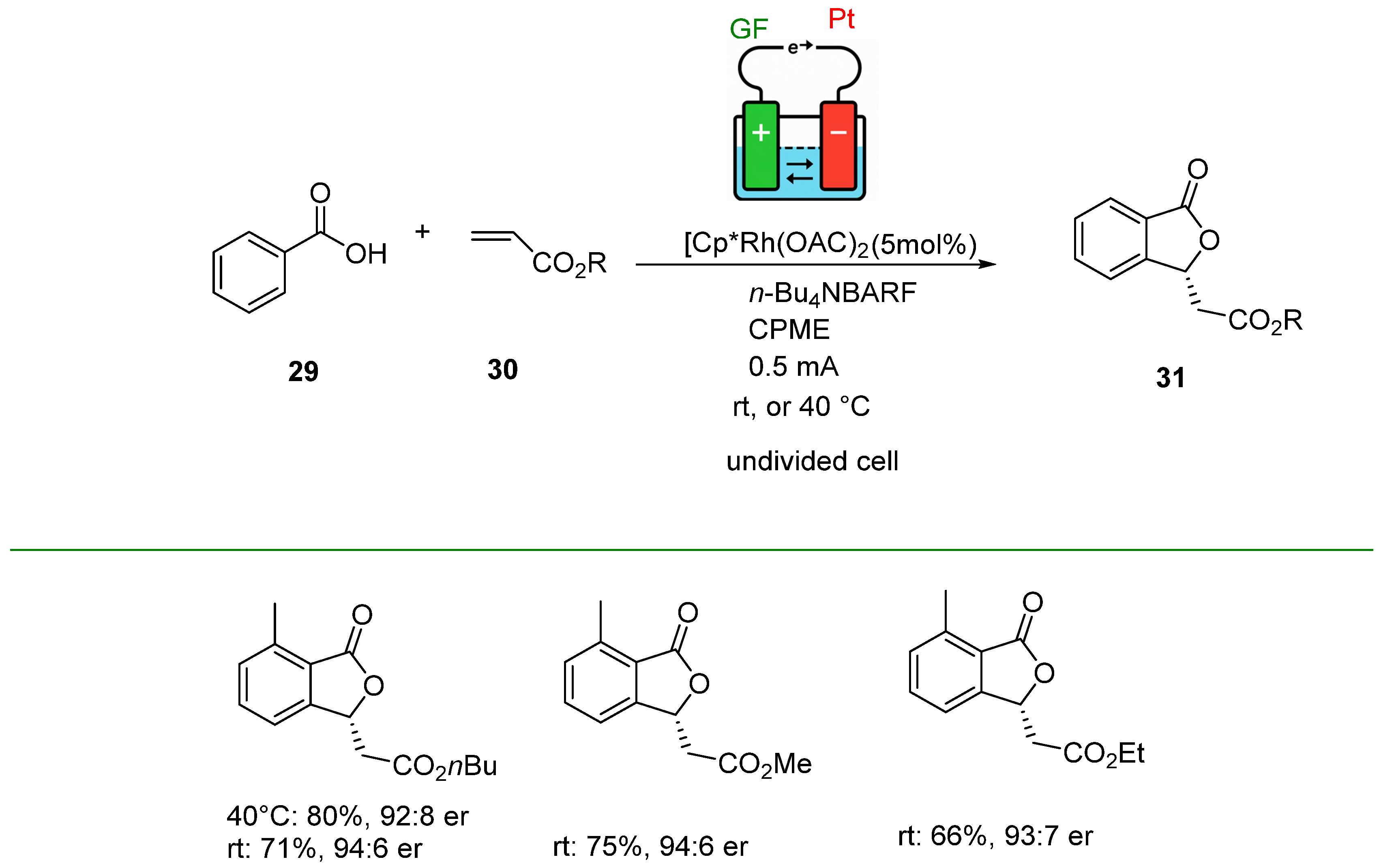
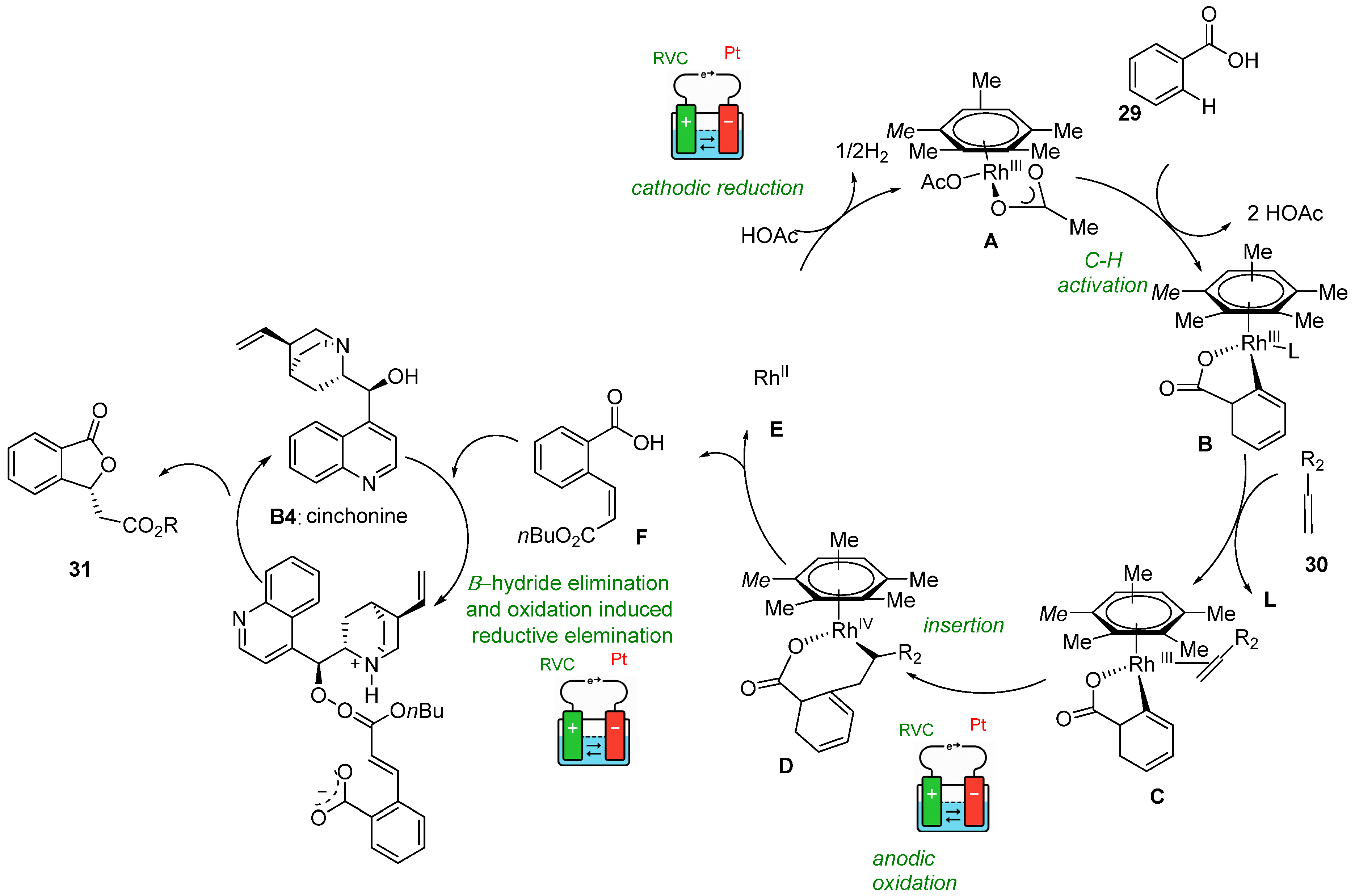
Rhodium occupies an intermediate position among the noble metals used in electrooxidative C–H activation: less explored than ruthenium and palladium, yet often capable of unique reactivity due to its flexible coordination behavior and efficient migratory insertion chemistry. Although Rh-based systems traditionally rely on strong chemical oxidants to access high-valent Rh(III)/Rh(I) or Rh(III)/Rh(V) redox manifolds, the incorporation of electrochemical oxidation has begun to offer milder, more sustainable alternatives. Recent studies demonstrate that anodic control can effectively regenerate active Rh(III) species while reducing the need for stoichiometric oxidants, thereby broadening substrate generality and enabling transformations difficult to achieve under conventional conditions. The following examples highlight emerging advances in Rh-catalyzed electrooxidative C–H activation and illustrate the distinctive opportunities as well as persistent challenges associated with Rh under electrochemical conditions. A notable recent advancement in rhodium electrocatalysis addresses a long-standing limitation of Rh(III)-catalyzed enantioselective C–H activation, namely, the reliance on complex, synthetically demanding chiral Cp*Rh catalysts. These bespoke chiral ligands have traditionally restricted the accessibility and scalability of Rh-based asymmetric C–H functionalization. In sharp contrast, a recent study [
49] introduced an electrochemical domino catalysis platform that circumvents this bottleneck by pairing an achiral Cp*Rh(III) catalyst with a readily available chiral Brønsted base to achieve enantioselective C–H activation/annulation of alkenes
30 with benzoic acids
29. This strategy provides an elegant and conceptually distinct approach in which chirality is induced not through expensive chiral Rh complexes, but through cooperative catalysis between rhodium and a chiral organic base.
The method delivers synthetically valuable chiral phthalides in good enantioselectivities while operating under mild electrolysis conditions and using electricity as the sole oxidant, thereby eliminating the need for stoichiometric chemical oxidants commonly required in asymmetric Rh(III) catalysis. Beyond its operational simplicity, the study highlights how electrochemical oxidation can enable enantioselective C–H activations that are otherwise difficult to achieve with conventional oxidants due to competing overoxidation or racemization pathways.
The electrolysis was carried out in an undivided cell charged with Cp*Rh catalyst (5 mol %), a chiral Brønsted base (20 mol %), and an additive (20 mol %). The reaction was conducted at 40 °C under constant-current conditions (0.5 mA) for 20 h, using a graphite felt (GF) and a Pt-plate cathode. The authors found that acrylates bearing a variety of substituents furnished the desired chiral phthalides with good enantiomeric ratios (up to 94:6 er). Notably, acrylate delivered product with a higher enantiomeric ratio at ambient temperature than at 40 °C (
Scheme 15). Based on the authors’ experimental observations, a plausible catalytic cycle is depicted in
Scheme 16. The mechanism commences with facile C−H activation by carboxylate assistance, which forms rhodacycle
B. Thereafter, coordination followed by migratory insertion of the acrylate takes place, which enables the formation of the seven-membered intermediate
D. Then, an anodic oxidation of rhodium(III), β-hydride elimination and reductive elimination sequence delivers the rhodium(II) complex
E and the intermediate
F. Finally, the anodic oxidation regenerates the active catalytic rhodium(III) complex
A, while the intermediate
F undergoes enantioselective oxa-Michael addition in the presence of B4 to afford the chiral product
31 through the shown transition state. Critically, this work illustrates a broader conceptual shift: electrochemistry can decouple enantioselectivity control from metal-centered chirality, opening the door to more practical, sustainable, and modular asymmetric C–H activation strategies using Rh(III). However, challenges remain, including expanding the substrate scope and understanding the cooperative mechanism between the Rh catalyst and the chiral Brønsted base at a deeper mechanistic level.
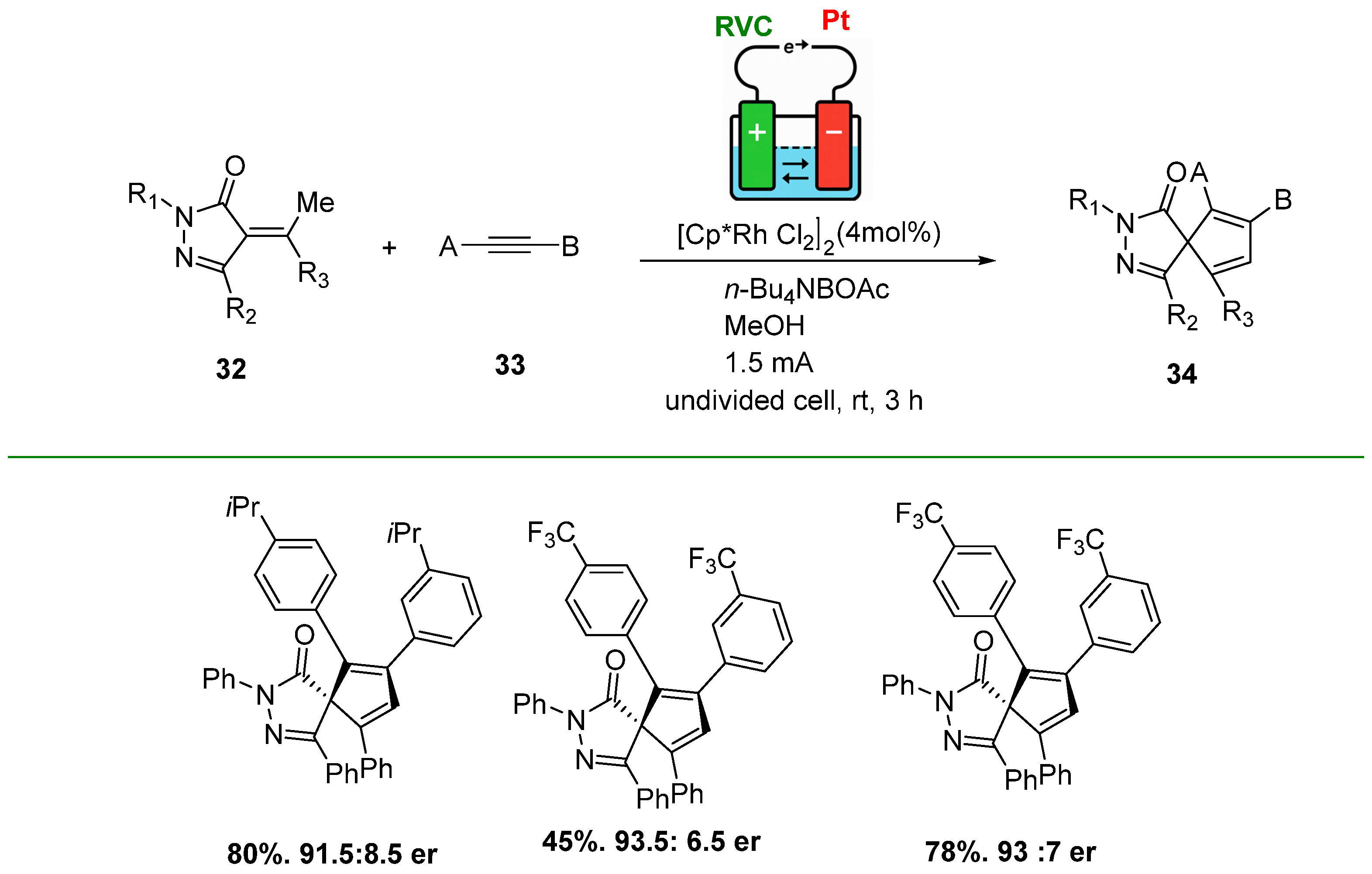
In another important contribution to asymmetric rhodium electrocatalysis, Mei and co-workers [
50] reported an electrochemically tuned Rh(III)-catalyzed enantioselective C–H annulation with alkynes
33, delivering a diverse array of spiro-pyrazolones
34 in high yields and good enantioselectivities under remarkably mild conditions (
Scheme 17). The reaction proceeds at room temperature, highlighting the ability of electrochemical oxidation to modulate Rh redox states without the thermal or oxidative stress typically required in asymmetric Rh(III) catalysis. A particularly compelling aspect of this method is its proficiency in transforming unsymmetrical alkylaryl acetylenes
32, which are often challenging substrates due to their inherent regioselectivity issues. The system provides excellent regioselectivity alongside good enantioselectivity, underscoring the finely tuned reactivity profile achievable through careful electrochemical control. The reaction was conducted in an undivided cell using
(4 mol %) as the catalyst and n-Bu
4NOAc as the supporting electrolyte (3.0 equiv) in MeOH (4.0 mL) under constant-current conditions (1.5 mA) for 3 h. In this transformation, acetylenes bearing a range of electronic properties were all compatible with the reaction, furnishing products
34 in moderate to good yields and enantioselectivities (45–82%) for example para-substitution with i-Pr and t-Bu groups afforded the desired products (in good yields (80%) with moderate enantioselectivities (91.5:8.5). Ortho- and meta-substituted substrates provided comparable outcomes under the standard conditions, delivering the corresponding products in 6078% yields and enantiomeric ratios ranging from 91:9. A plausible catalytic cycle is depicted in
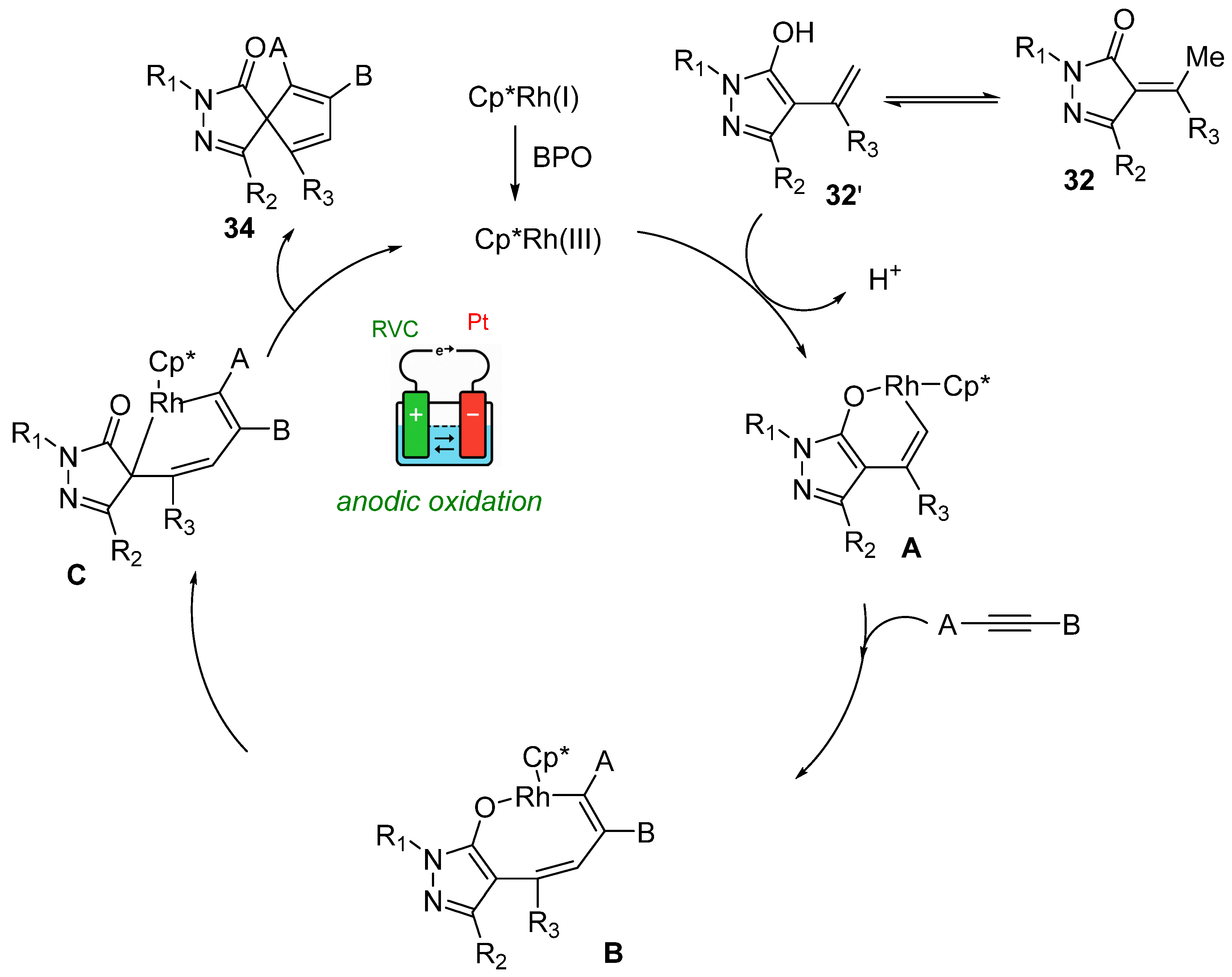
Scheme 18. The process begins with tautomerization of substrate
32 to form the corresponding dienol
32′, which subsequently undergoes C–H activation to generate the six-membered cyclometalated CpxRh(III) intermediate
A. Coordination of alkyne
33 to the rhodium center, followed by regioselective migratory insertion into the Rh–C bond, furnishes the eight-membered rhodacyclic intermediate
B. Owing to steric repulsion between substituents R
1 and R
3, intermediate
B may isomerize to give intermediate
C. Subsequent C–C reductive elimination from
C delivers the spirocyclic product
34. Finally, anodic oxidation regenerates the active CpxRh(III) catalyst, thereby completing the catalytic cycle.
This protocol offers a practical and environmentally benign strategy for constructing chiral spiro-pyrazolones, a privileged structural framework frequently found in pharmaceuticals and biologically active molecules. The combination of room-temperature operation, broad substrate tolerance, and electrochemical oxidation (eliminating stoichiometric oxidants) further demonstrates how anodic tuning can expand the scope of enantioselective Rh(III) catalysis beyond what is typically accessible under traditional oxidative conditions.
From a critical perspective, this study reinforces the emerging theme that electrochemistry can serve as a powerful lever for both reactivity and stereocontrol in Rh-catalyzed C–H activation, though a deeper mechanistic understanding of how the applied potential influences enantioselective induction would be valuable for future design.
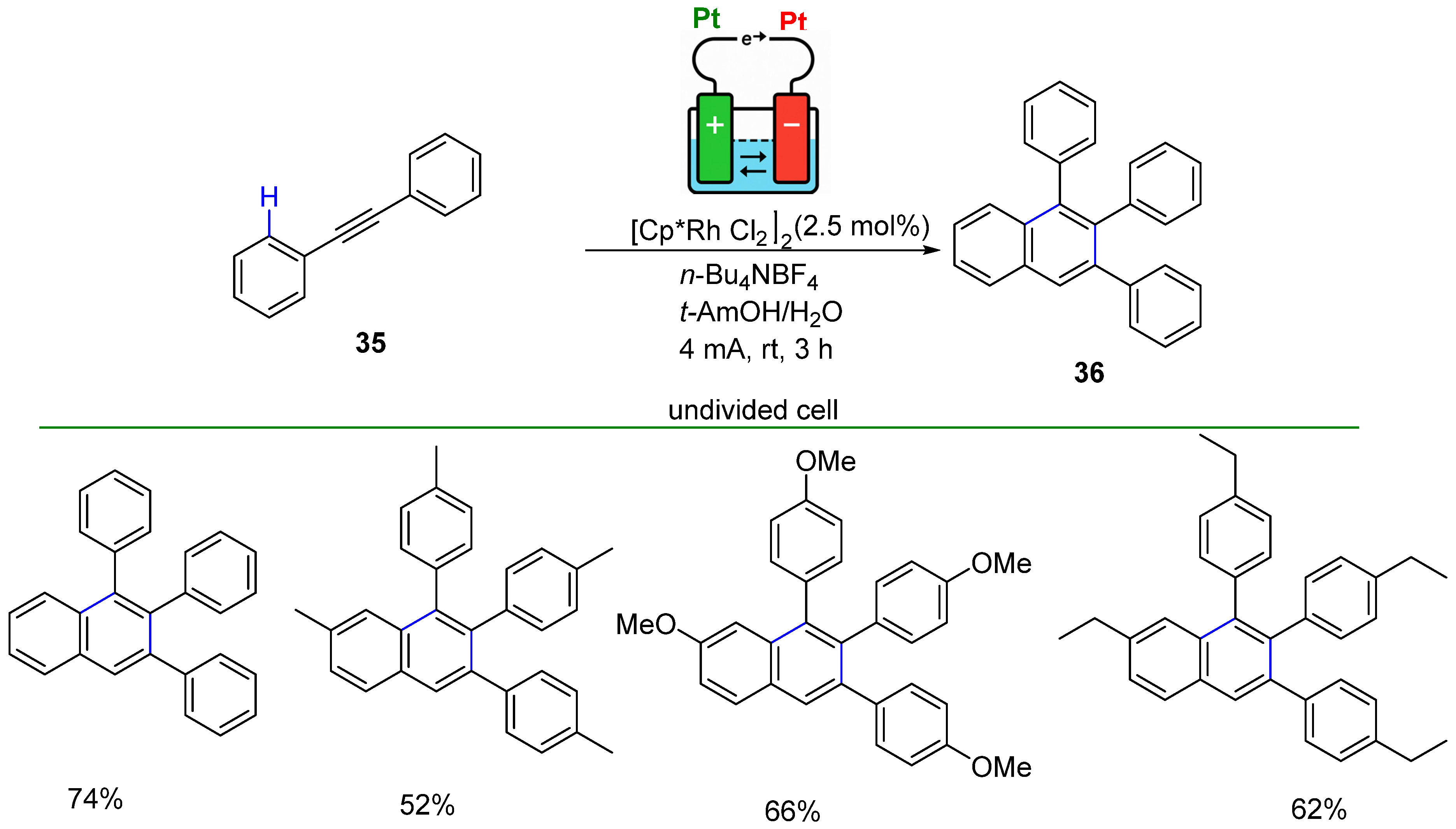
Xie and co-workers [
51] developed the first electrochemical Rh-catalyzed C–H cyclodimerization of alkynes
35 for the direct synthesis of functionalized naphthalenes
36 (
Scheme 19). This method offers a rare and synthetically powerful C–C bond-forming manifold, enabling the construction of polycyclic aromatic frameworks under mild electrochemical conditions. The practicality of the protocol was demonstrated through scalable reactions and downstream derivatization, underscoring its potential applicability in synthetic and materials chemistry.
Electrolysis was carried out in an undivided cell charged with KOAc as the base and (2.5 mol %) as the catalyst, with n-Bu4NBF4 employed as the supporting electrolyte. The reaction was conducted at 90 °C under constant-current conditions (4 mA) using platinum electrodes. Under these conditions, both electron-donating and electron-withdrawing substituents at the para position of the benzene ring were well tolerated, affording the corresponding products 36 in moderate to good yields (52–74%). Mechanistically, this study is particularly noteworthy. Detailed investigations revealed that electricity is not merely a terminal oxidant, but plays an active role in enabling an electrochemical disproportionation (ECD) process that generates and sustains the catalytically relevant high-valent Rh(IV)/Rh(V) species alongside Rh(I). The coexistence of these oxidation states was shown to be essential for direct C–H activation, highlighting a redox regime that is challenging if not impossible to achieve using traditional chemical oxidants. This mechanistic insight provides one of the clearest cases in which electrochemical control unlocks unique rhodium oxidation states, offering concrete evidence for how anodic tuning can fundamentally reshape Rh-catalyzed C–H activation pathways. From a critical perspective, the work illustrates the distinctive capability of electrochemistry to access unusual high-valent Rh species, but also raises questions about catalytic longevity, electrode dependence, and the generality of ECD-enabled catalysis beyond alkyne cyclodimerization. Nonetheless, it establishes a conceptual and mechanistic foundation for future exploration of Rh(IV)/Rh(V) systems under electrochemical control.
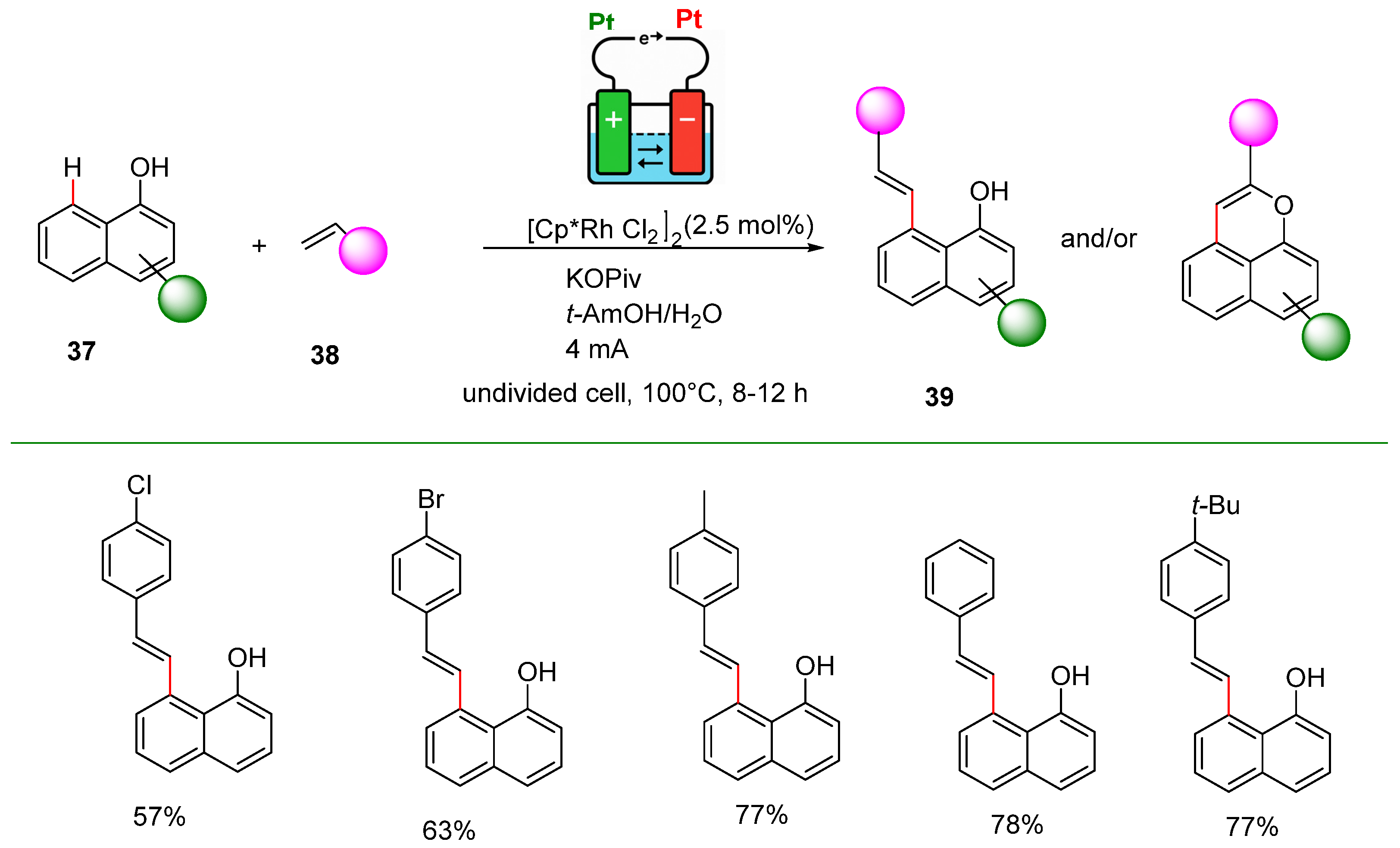
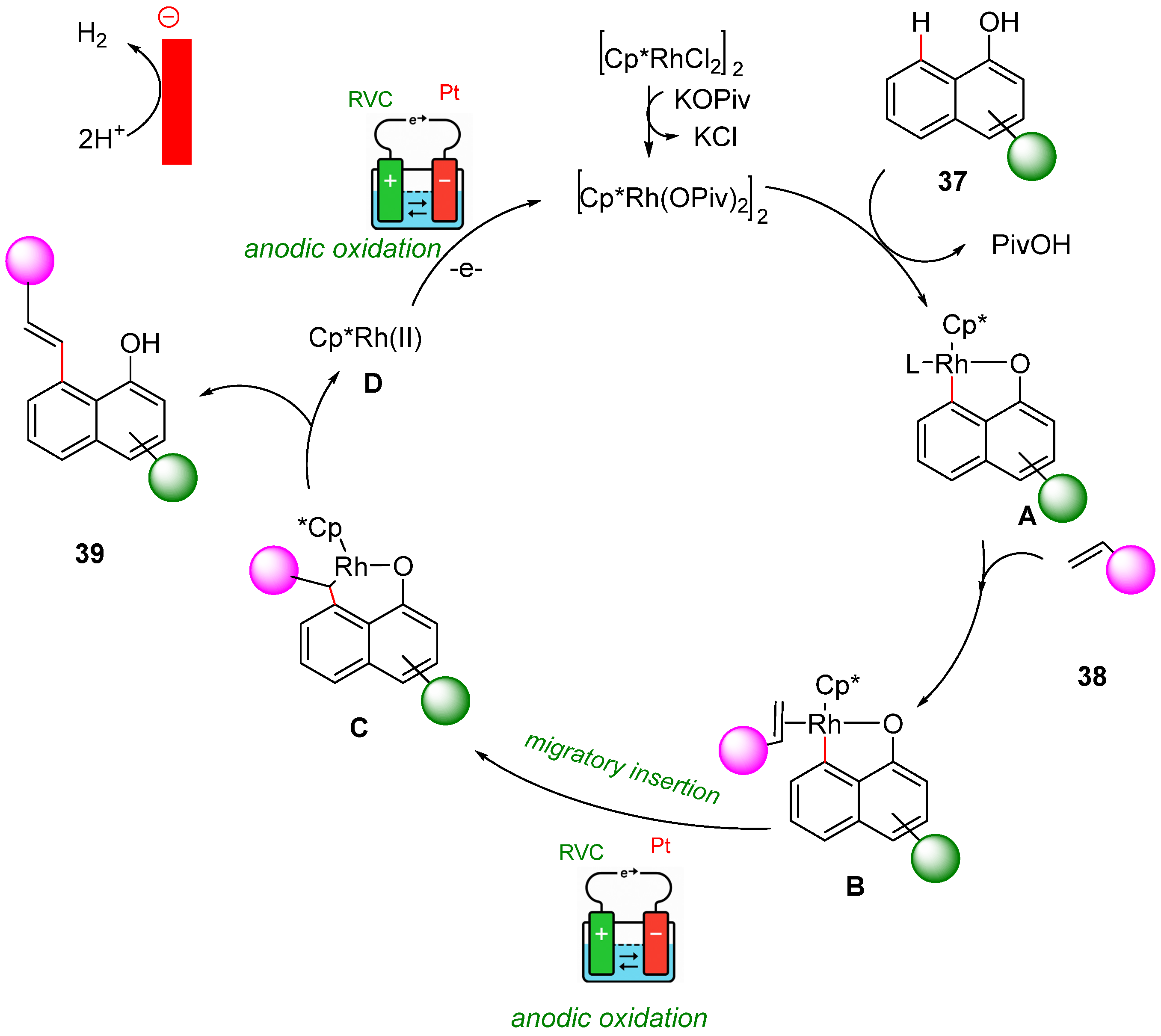
Ackerman and co-workers [
52] reported electrooxidative peri C-H alkenylations of challenging 1-naphthols
37 were achieved by versatile rhodium(III) catalysis via user friendly constant current electrolysis (
Scheme 20). The rhodium electrocatalysis employed readily available alkenes
38 and a protic reaction medium and features ample scope, good functional group tolerance and high site- and stereoselectivity. The strategy was successfully applied to high-value, nitrogen-containing heterocycles
39, thereby providing direct access to uncommon heterocyclic motifs based on the dihydropyranoquinoline skeleton.
Electrolysis was performed in an undivided cell equipped with a graphite felt (GF) anode and a Pt-plate cathode under constant-current electrolysis (CCE, 4.0 mA), using NaOPiv and (2.5 mol %) in t-AmOH/H2O under a nitrogen atmosphere for 18 h. Under these conditions, a broad range of differently substituted styrenes 38, bearing para-, meta-, and even sterically hindered ortho-substituents, were efficiently converted into the desired products 39. Notably, sensitive electrophilic functional groups, such as chloro and bromo substituents (57% and 63%), were well tolerated, underscoring the utility of this method for further synthetic diversification.
On the basis of the authors’ experimental findings, a plausible catalytic cycle is presented for the rhodium(III)-catalyzed electrochemical C-H alkenylation. As depicted in
Scheme 21, O-type coordination of deprotonated 1-naphthol
37 to rhodium species and subsequent directed cyclorhodation at the peri position leads to rhodacycle
A. Thereafter, migratory alkene insertion followed by an anodic oxidation furnish the seven-membered, high-valent rhodacycle
C, which subsequently undergoes β-H elimination to afford the desired product
39 and rhodium(II) species
D. Finally, the rhodium(II) species is reoxidized at the anode, generating molecular hydrogen as the byproduct at the cathode. Recent advances firmly position rhodium as a promising yet still underdeveloped platform for electrooxidative C–H activation. Across these studies, a unifying theme is the strategic use of anodic redox control to modulate Rh oxidation states, thereby avoiding the strong chemical oxidants that traditionally limit Rh(III)-based C–H functionalization.
Electrochemical methods have particularly advanced enantioselective Rh catalysis. One approach employs an achiral Cp*Rh(III) catalyst in conjunction with a chiral Brønsted base, enabling asymmetric C–H activation/annulation without relying on synthetically laborious chiral Cp ligands. This cooperative system delivers chiral phthalides in good ee and illustrates how electrochemistry can decouple enantioinduction from metal-centered chirality. Complementing this, Mei and co-workers demonstrated that electrochemically tuned Rh(III) catalysis enables the room-temperature construction of spiropyrazolones with excellent regioselectivity and good enantioselectivity, even from unsymmetrical alkylaryl acetylenes an area where traditional Rh(III) systems often struggle. Perhaps the most mechanistically revealing contribution comes from Xie and co-workers, who reported the first electrochemical Rh-catalyzed C–H cyclodimerization of alkynes to form functionalized naphthalenes. Their detailed studies established that electrochemistry drives an electrochemical disproportionation (ECD) process, generating and maintaining catalytically active Rh(IV)/Rh(V) species alongside Rh(I). These uncommon oxidation states play a direct role in C–H activation, providing rare experimental validation for high-valent Rh species under electrochemical control. This mechanistic clarity underscores electrochemistry’s unique ability to access redox regimes unattainable by classical oxidants.
3.4. Palladium-Based Catalyst
Palladium has long occupied a central position in C–H activation chemistry [
53], owing to its well-established Pd(II)/Pd(IV) and Pd(II)/Pd(0) redox manifolds, broad ligand compatibility, and exceptional functional group tolerance. Traditionally, Pd-catalyzed C–H functionalization has relied heavily on stoichiometric chemical oxidants such as Ag(I), Cu(II), or hypervalent iodine reagents to sustain catalytic turnover. While effective, these oxidants often compromise sustainability, generate waste, and complicate mechanistic interpretation. In this context, electrochemical oxidation has emerged as a powerful alternative, enabling direct, tunable access to high-valent palladium intermediates while eliminating the need for external oxidants. Under electrochemical conditions, palladium catalysis benefits from precise anodic control of oxidation state, which facilitates key steps such as C–H activation [
54], reductive elimination, and catalyst regeneration. Anodic oxidation can selectively promote the formation of Pd(III) or Pd(IV) species that are difficult to access cleanly under purely chemical conditions, thereby unlocking new reactivity patterns and improving chemo- and site-selectivity. At the same time, proton reduction at the cathode often furnishes molecular hydrogen as a benign byproduct, rendering Pd electrocatalysis intrinsically aligned with green chemistry principles.
Recent advances have demonstrated that electrochemical Pd catalysis is particularly powerful for C–C, C–N, and C–O bond formation, including arylation, acetoxylation, amination, and annulation processes. In this context, Mei and co-workers [
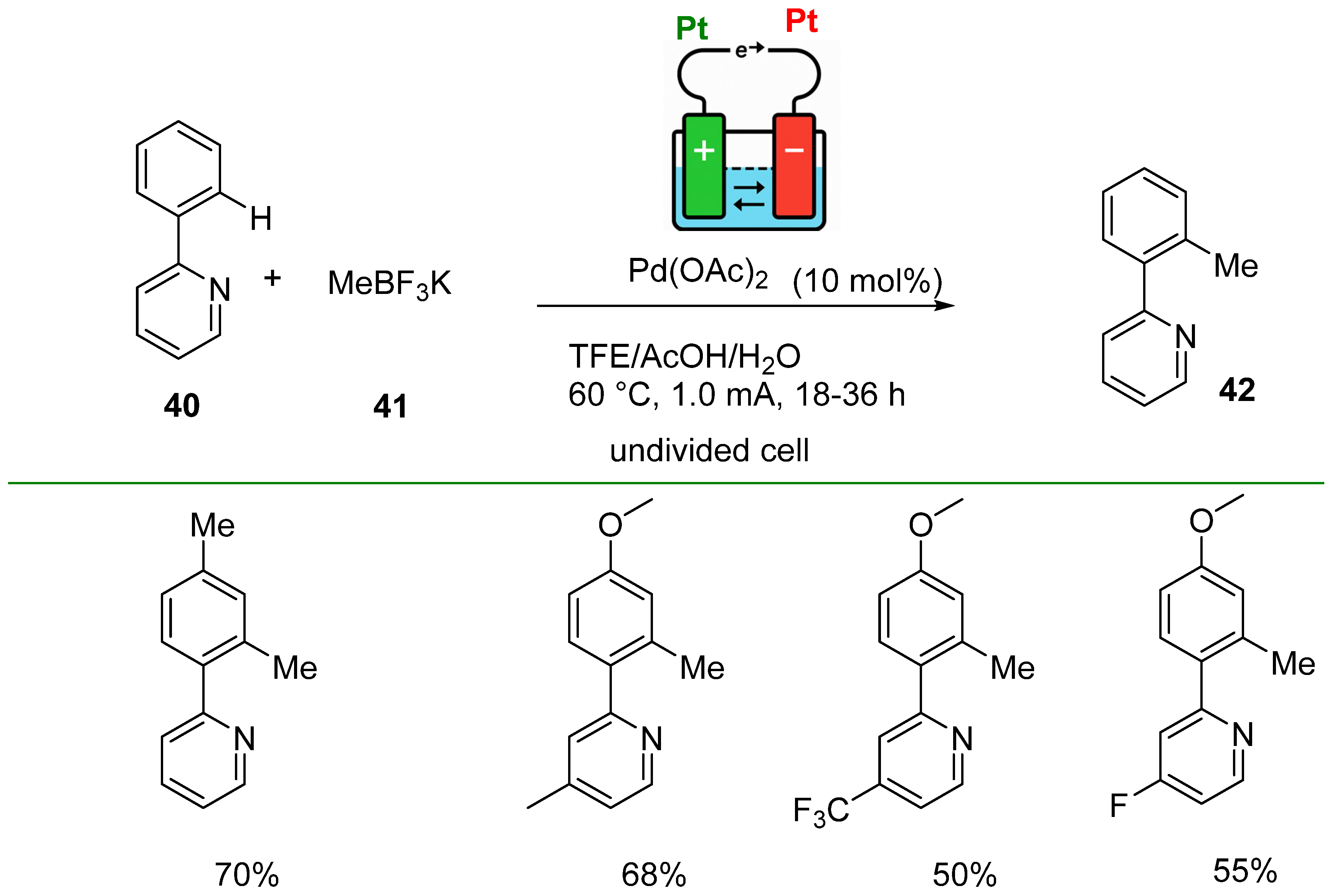
55] demonstrated that palladium-catalyzed electrochemical C–H functionalization reactions represent attractive alternatives to conventional oxidative methods that rely on harsh chemical oxidants. While many Pd-electrocatalytic protocols require divided cells to prevent catalyst deactivation via cathodic reduction, the authors reported the first example of palladium-catalyzed electrochemical C–H alkylation of arenes
40 by potassium trifluoromethylborate (MeBF3K)
41 conducted in an undivided cell using water as the solvent (
Scheme 22). This advance provides a practical and operationally simple solution for the direct introduction of alkyl groups into arenes, highlighting how judicious electrochemical design can overcome catalyst deactivation issues and further expand the scope and sustainability of Pd-catalyzed C–H functionalization. The reaction was carried out in an undivided electrochemical cell equipped with two platinum electrodes at 60 °C under constant-current conditions for 18 h. Trifluoroethanol (TFE) and water were used as the solvent. Under these conditions, arenes bearing a variety of functional groups, including alkyl, ether, fluoro, and trifluoromethyl substituents, were well tolerated under the standard reaction conditions. In general, substrates containing electron-rich substituents (Me, Et, i-Pr, t-Bu, and OMe) exhibited particularly high reactivity. In contrast, the presence of a strongly electron-withdrawing group, such as CF
3, resulted in a lower yield owing to reduced conversion. Expanding on this, Baroliya and co-workers [
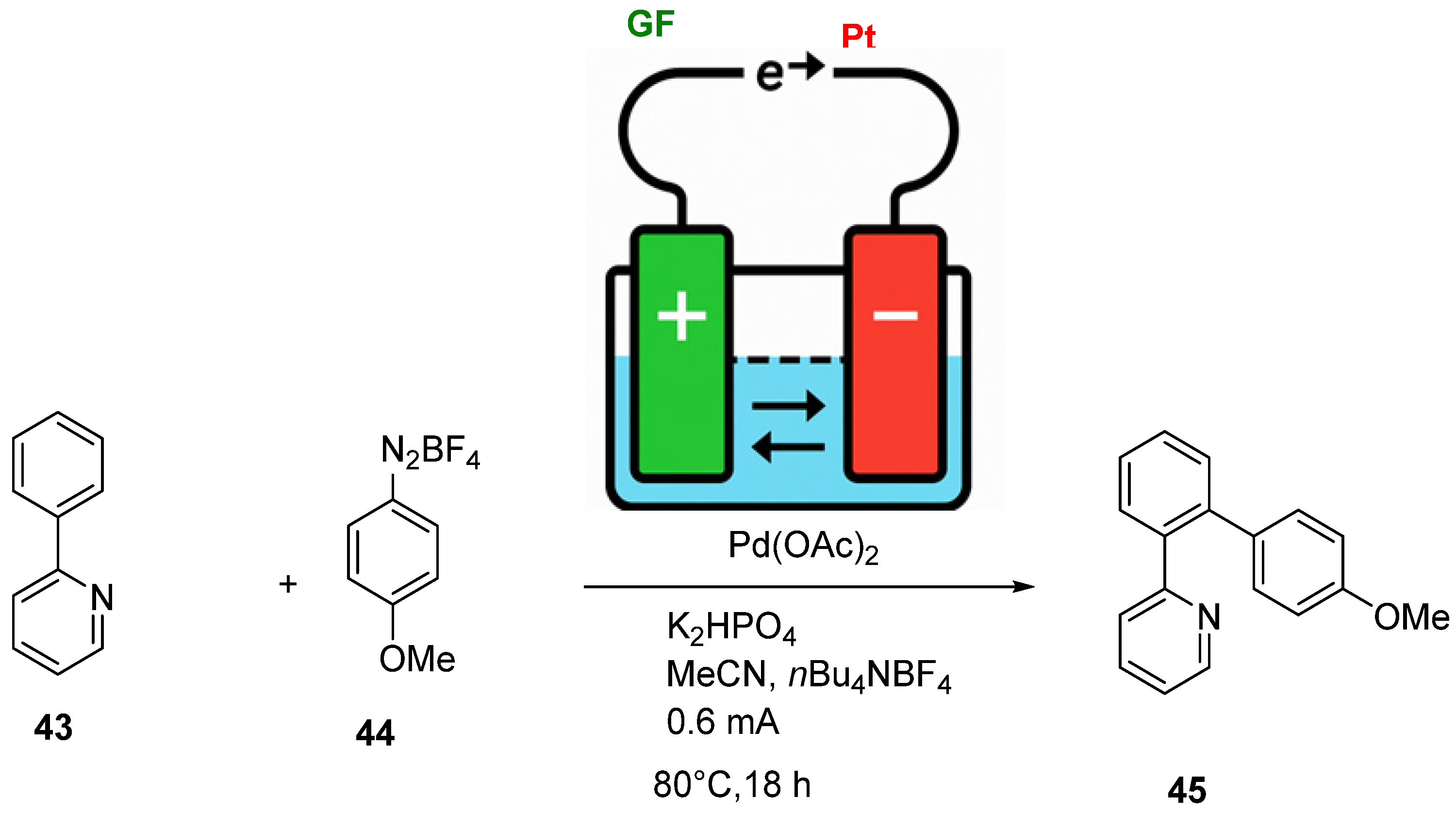
56] disclosed in 2025an electrochemical Pd-catalyzed ortho-arylation of 2-phenylpyridine
43 with substituted arenediazonium salts
44 under silver-free conditions (
Scheme 23). The reaction proceeds with high ortho-selectivity directed by the pyridyl auxiliary and features mild conditions, broad substrate scope, and good functional group tolerance. Using Pd(OAc)
2, K
2HPO
4, and nBu
4NBF
4 in an undivided cell, the mono-arylated product
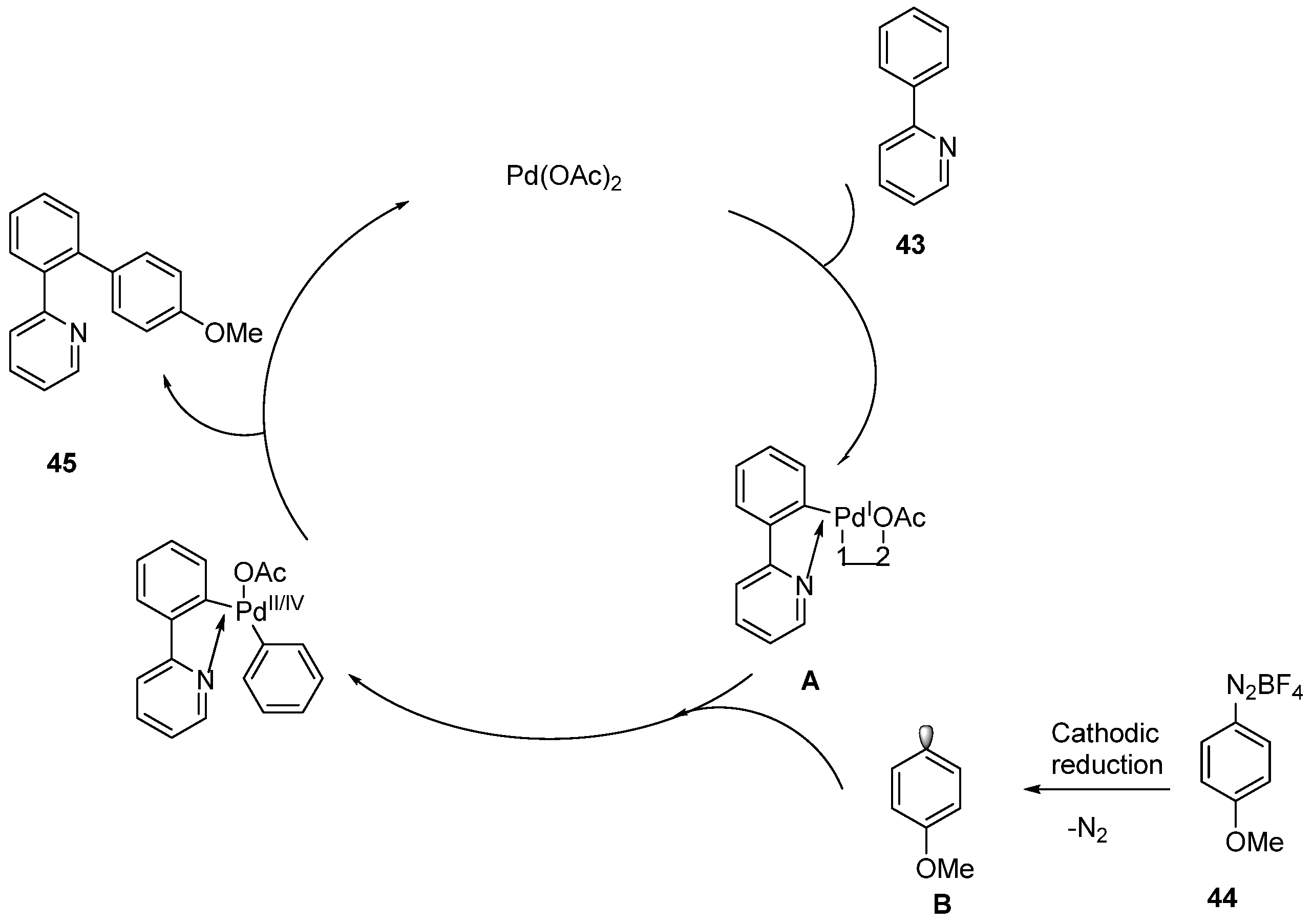
45 was obtained in up to 75% yield. Control experiments confirmed that both the applied current and electrode material are critical, and that electricity plays a dual role in catalyst reoxidation and arenediazonium activation, eliminating the need for external oxidants. The proposed mechanism (
Scheme 24) involves an initial pyridine directed ortho-cyclopalladation to generate the cyclopalladium intermediate
A. Concurrently, cathodic reduction of the aryldiazonium salt 41 produces an aryl radical
B, which subsequently engages with intermediate A to form the cyclometalated species
C. Reductive elimination from
C furnishes the arylated phenylpyridine product
42, along with a reduced Pd(I) or Pd(0) species. The palladium catalyst is then reoxidized anodically to Pd(II) either during aryl radical coordination or after reductive elimination thereby regenerating the active catalyst and sustaining the electrocatalytic cycle.
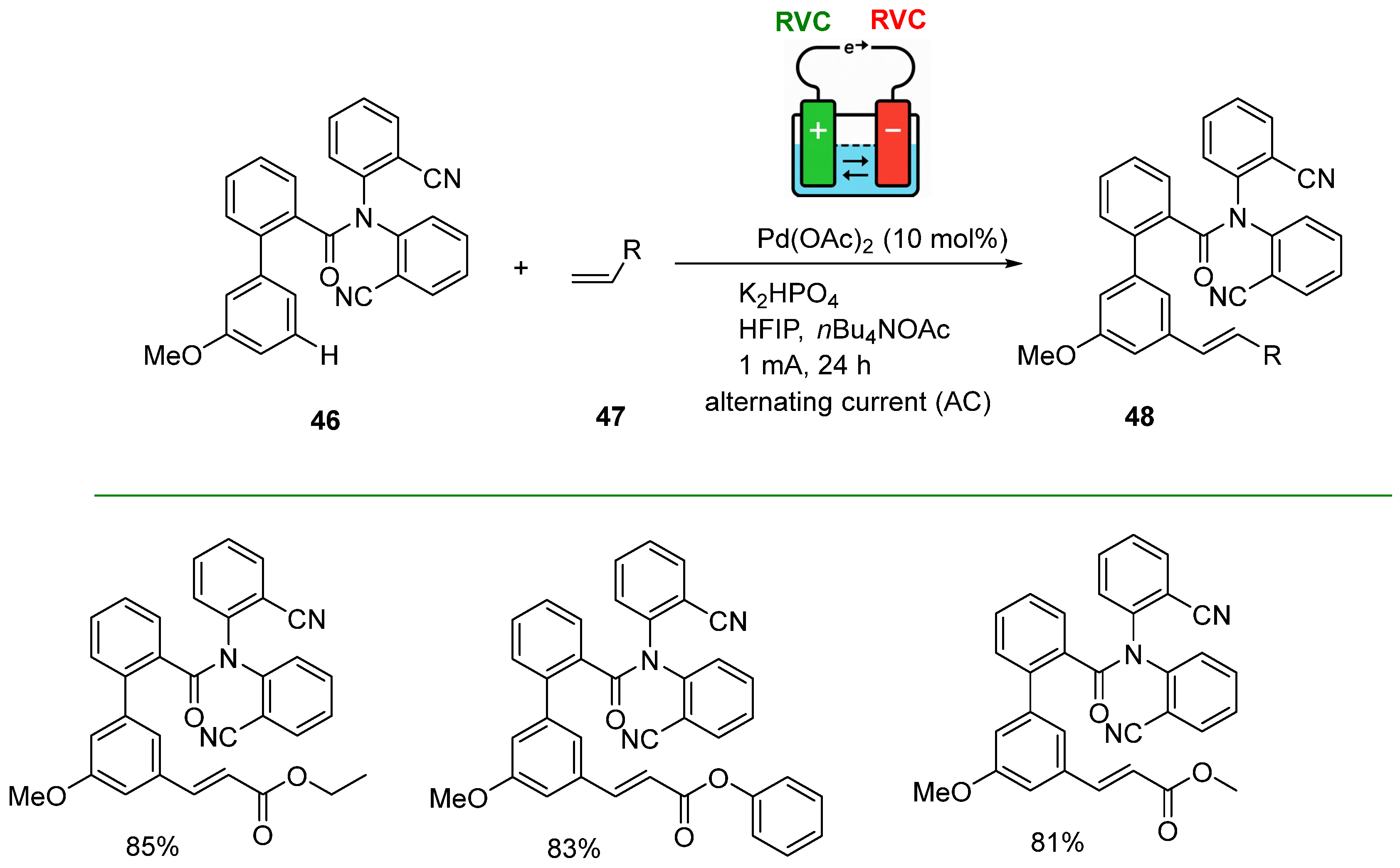
In the same year, Xu and co-workers [
57] first disclosed a Pd-electrocatalyzed meta-C–H alkenylation of benzoic acid derivatives
46 under alternating-current (AC) electrolysis. The use of rapidly alternating polarity proved crucial for enhancing reaction efficiency, as it effectively suppressed cathodic black fouling, thereby preserving electrode activity and significantly extending electrode lifetime. Starting from benzoic acid derivatives 46 and alkene
47, the corresponding olefin derivatives
48 were obtained in good yields. The reaction was conducted under alternating-current (AC) electrolysis using RVC as electrodes at 1 mA for 24 h (
Scheme 25). The authors demonstrated that various electron-deficient olefins are well tolerated in this transformation, leading to E-selective alkenylated products with excellent meta-selectivity. A range of acrylate esters, including methyl, ethyl, 2-methoxyethyl, and phenethyl acrylates, performed efficiently and furnished the corresponding products in good yields. Although no detailed catalytic cycle was proposed, XPS and cyclic voltammetry (CV) studies provided important mechanistic insight. Under DC (Direct Current) conditions, Pd(0) was found to dominate and accumulate on the cathode surface, leading to electrode deactivation and suggesting operation via a Pd(0)/Pd(II) redox cycle. In contrast, AC electrolysis effectively suppressed Pd(0) deposition and promoted the formation of Pd(II) and Pd(IV) species, consistent with a Pd(II)/Pd(IV) redox manifold, which rationalizes both the enhanced reactivity and improved electrode stability observed under AC conditions.
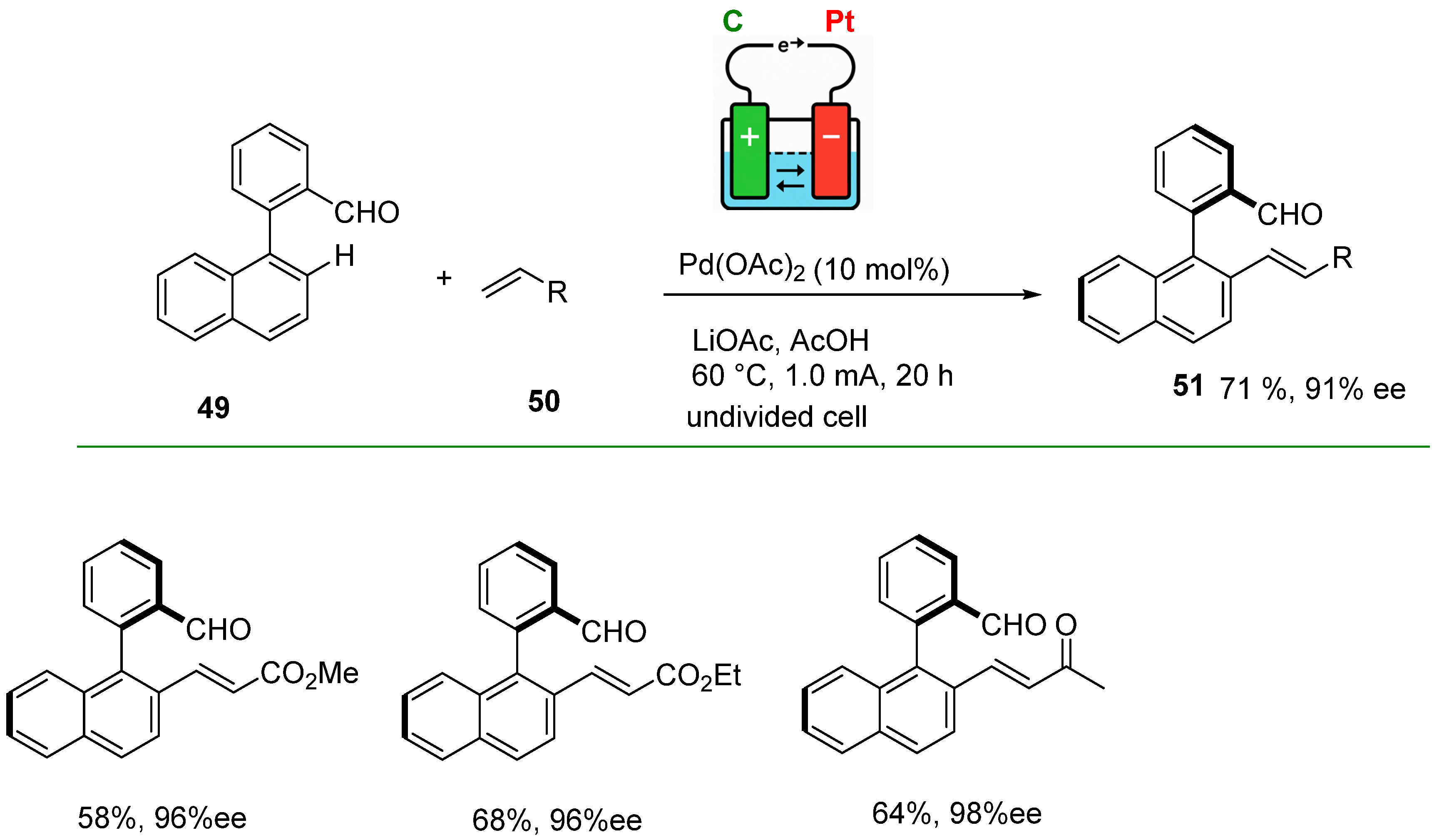
In a landmark contribution, Lutz Ackermann and co-workers reported in 2020 the first example of asymmetric C–H bond activation/C–C bond formation enabled by electrochemical Pd catalysis [
58]. By employing L-tert-leucine as a transient directing group, the authors achieved an atroposelective C–H olefination of biaryl aldehydes
49 with Michael acceptors
50, delivering the desired products with high enantioinduction and good yields (
Scheme 26). The protocol exhibited broad substrate scope, tolerating both electron-rich and electron-deficient biaryls
51, as well as a wide range of alkenes bearing nitro, carbonyl, sulfone, or phosphonate substituents. Notably, the strategy could be extended to N-aryl pyrrole aldehydes, enabling access to N–C axially chiral frameworks. The reaction was conducted in an undivided electrochemical cell using a palladium catalyst ([Pd], 10 mol%), a transient directing group (TDG, 20 mol%), and LiOAc (2.0 equiv) as an additive in AcOH as the solvent. Electrolysis was performed at 60 °C under constant-current conditions (1.0 mA) for 14 h, employing a graphite felt (GF) anode and a platinum plate cathode.
This study highlights the potential of electrochemical Pd catalysis combined with transient directing groups to achieve enantioselective C–H functionalization under oxidant-free conditions. Although no detailed catalytic cycle was proposed, computational mechanistic studies revealed that C–H activation across the prochiral axis via a seven-membered transition state is energetically favored over the experimentally unobserved ortho-C–H activation adjacent to the aldehyde (imine) functionality, which would proceed through a less favorable five-membered transition state. Furthermore, the authors demonstrated the synthetic utility of this methodology by transforming the obtained products into enantiopure [
5] and helicenes [
6], as well as novel enantiopure BINOL derivatives.
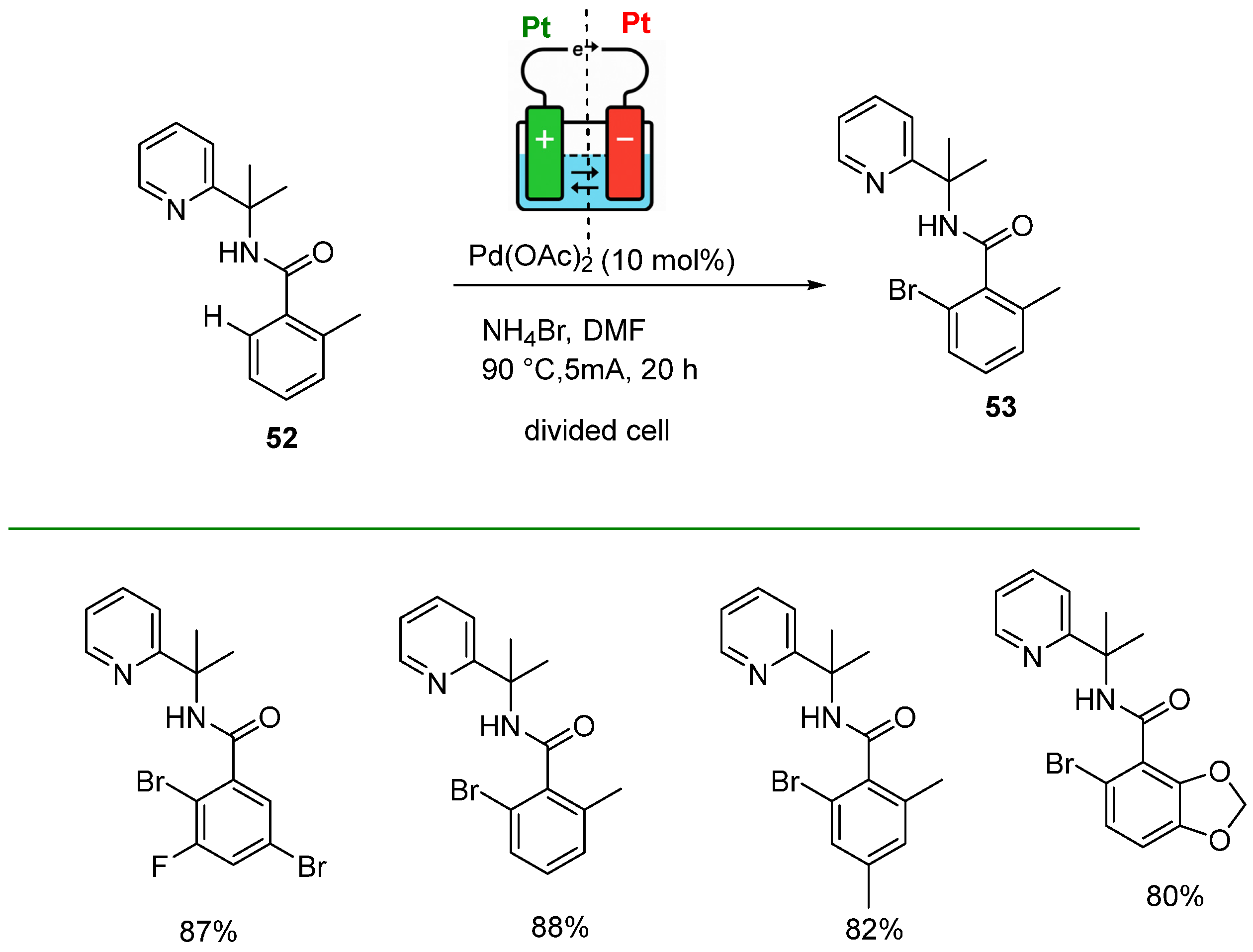
In 2019, Wu, Mei, and co-workers [
59] expanded the scope of benzamide derivatives by introducing a more readily cleavable 2-(pyridin-2-yl)isopropyl amine (PIP) directing group, which enabled ortho-selective bromination of benzamides
52 using NH
4Br. The authors proposed that bromination proceeds via electrophilic Br
2 or Br
3− species, generated through anodic oxidation of bromide ions under electrochemical conditions (
Scheme 27). The reaction was carried out in a divided cell equipped with platinum electrodes, with NH
4Br serving as both the brominating reagent and the supporting electrolyte.
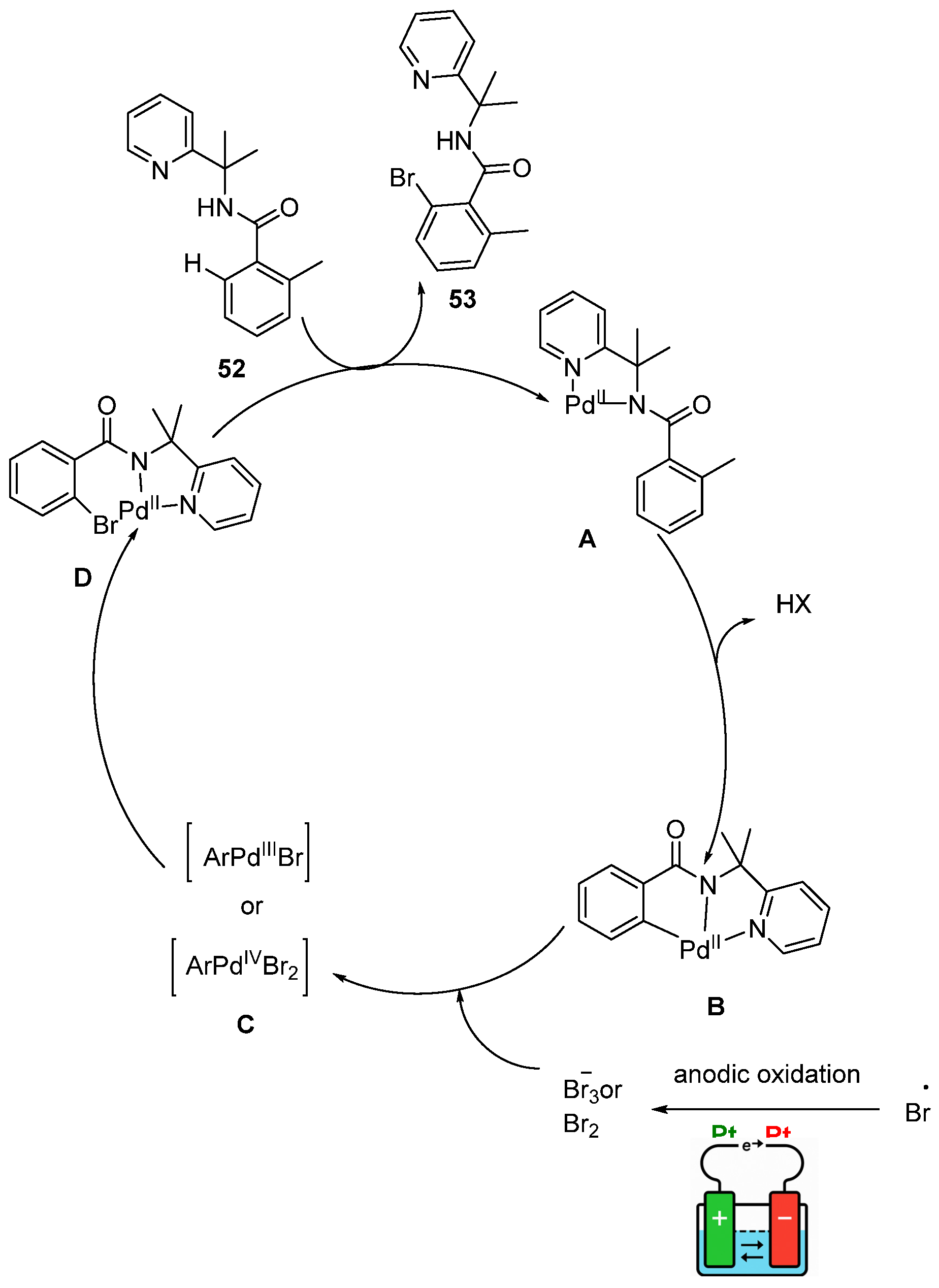
A plausible reaction mechanism is outlined in
Scheme 28. Initially, the palladium catalyst coordinates with substrate 1a to form a Pd(II) complex
A, which undergoes electrophilic palladation to generate intermediate
B. Subsequently, B reacts with electrophilic brominating species (Br
2 or Br
3−), formed in situ, to afford a high-valent palladium intermediate
C. Reductive elimination from
C furnishes intermediate
D, and subsequent ligand exchange releases the brominated product, thereby completing the catalytic cycle. Under these conditions, arenes bearing a wide range of substituents including alkyl, ether, fluoro, trifluoromethyl, bromo, nitrile, ester, sulfonyl, nitro, and chloro groups were well tolerated, affording the corresponding products
53 in good to excellent yields.
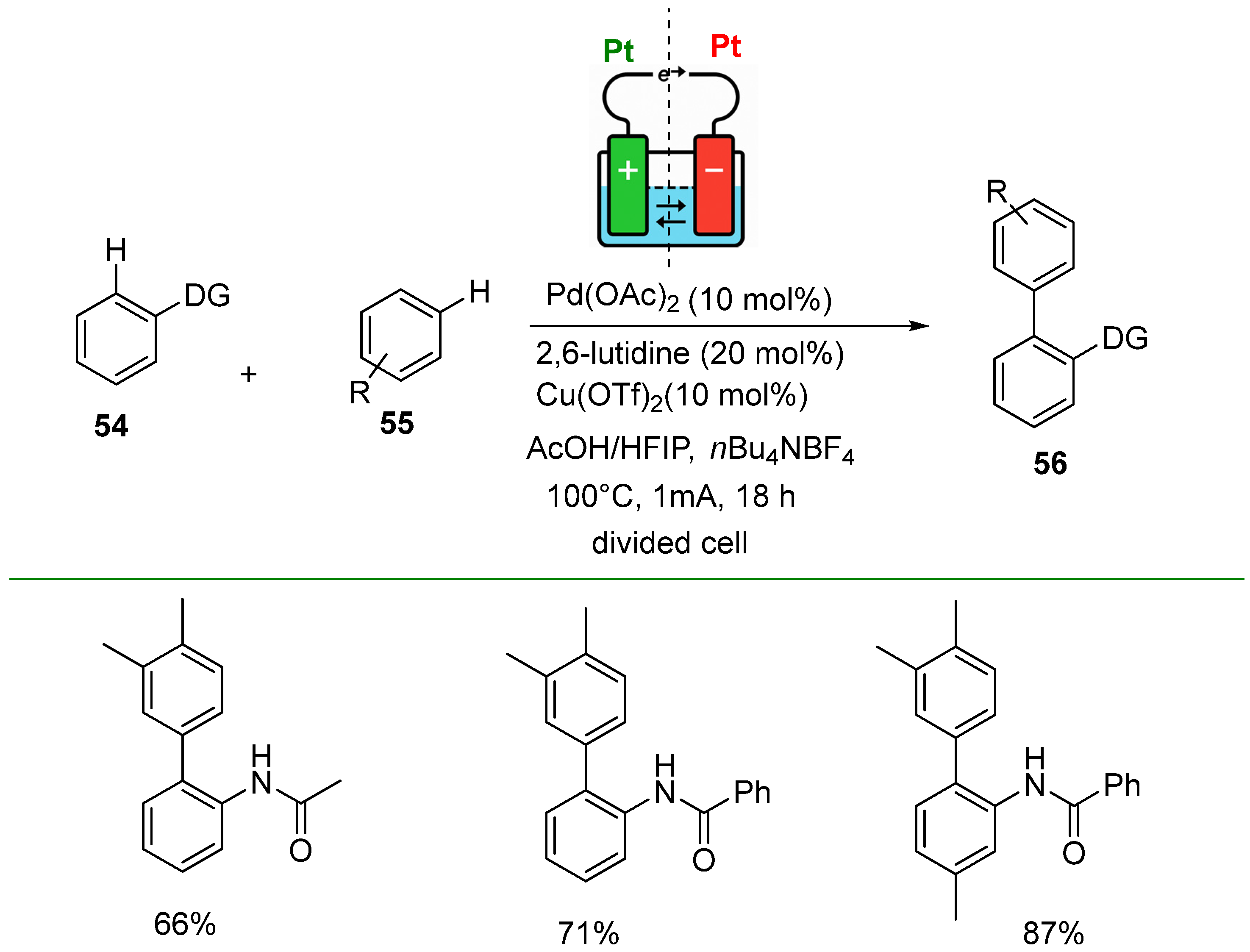
In 2023, Ackermann and coworkers [
60] reported an electrochemical palladium-catalyzed oxidative coupling strategy for the construction of biaryl motifs
56 in the absence of stoichiometric chemical oxidants strating from acetamide
54 and arene
55 (
Scheme 29). This robust palladaelectrocatalytic system effectively suppresses undesired homocoupling and oxygenation pathways and exhibits broad functional group tolerance, including compatibility with electron-deficient arenes. Its synthetic utility was further demonstrated through late-stage functionalization and the synthesis of a Boscalid precursor. Notably, comprehensive mechanistic investigations including variable time normalization analysis (VTNA), initial rate analysis, H/D exchange experiments, kinetic isotope effect studies, and stoichiometric organopalladium experiments provided strong evidence that intermolecular transmetalation between two organopalladium intermediates constitutes the turnover-limiting step of the catalytic cycle. These findings indicate that matching the concentrations or lifetimes of distinct organopalladium species is critical for efficient electrooxidative catalysis. Moreover, cationic Cu(II) species were found to stabilize the Pd(0) catalyst rather than serving as the primary oxidant. The electrolysis was carried out in a divided cell under constant-current conditions using Pd(OAc)
2 (10 mol%) as the catalyst, 2,6-lutidine (20 mol%) and Cu(OTf)
2 (10 mol%) as additives, and nBu
4NBF
4 as the supporting electrolyte in an HFIP/AcOH solvent mixture. Electrolysis was performed at 100 °C for 18 h with a constant current of 1.0 mA, employing a graphite felt (GF) anode and a platinum plate cathode.
Under these conditions, a broad range of electronically diverse arenes 55 proved compatible with the robust electrochemical system, delivering products 56 in moderate to excellent yields. Acetanilide and benzanilide afforded both mono- and bis-arylated products. In contrast, anilide derivatives bearing a methyl substituent at the meta position significantly suppressed difunctionalization, thereby selectively furnishing monoarylated with excellent site selectivity.
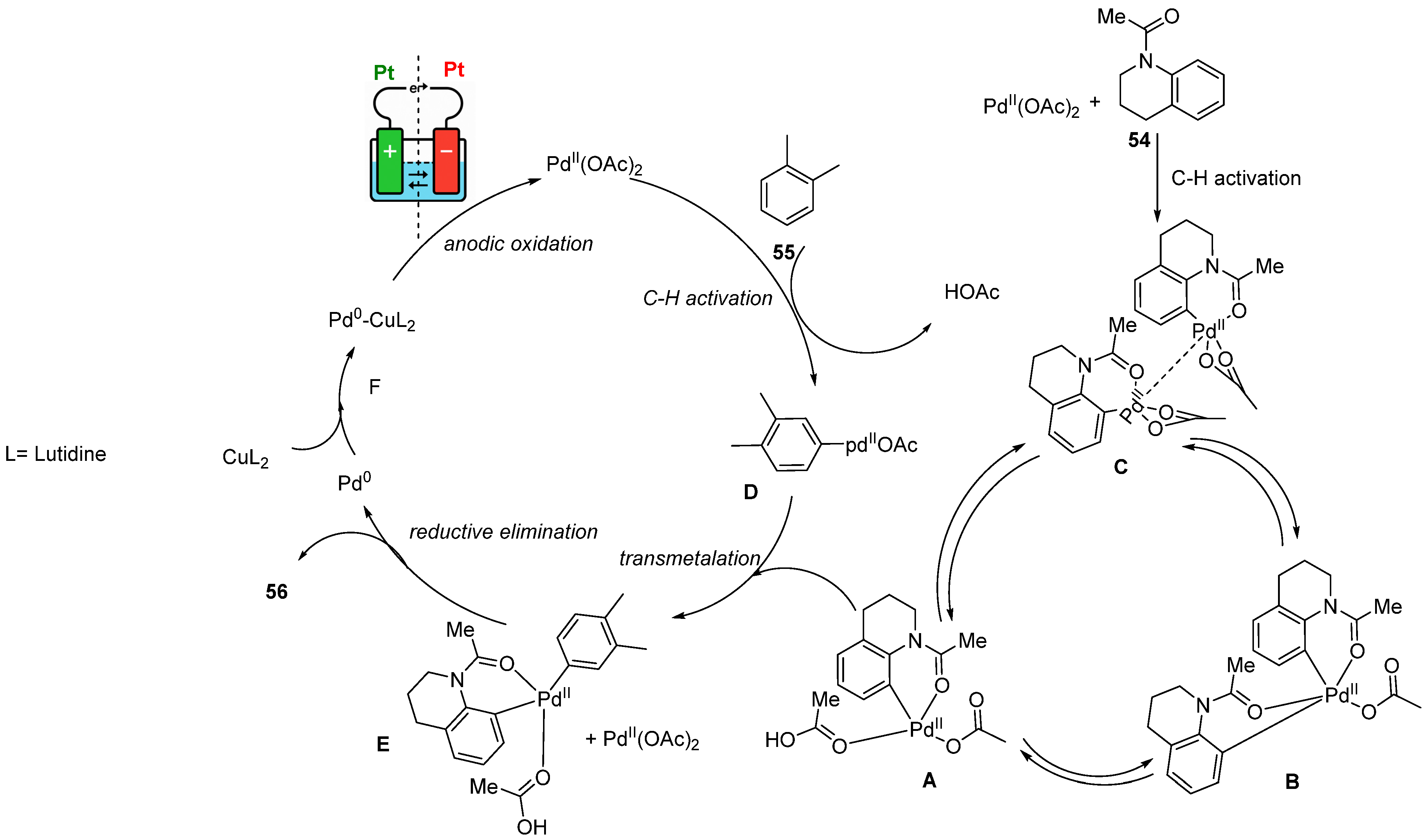
Based on mechanistic investigations, a plausible catalytic cycle is proposed in
Scheme 30. Concurrent C–H activation of substrates
54 and
55 generates palladacyclic intermediates
A and
D, respectively. In this scenario, the dimeric species
C is proposed to act as a precatalyst for the formation of the monomeric palladacycle
A, while off-cycle species
B may be present at varying concentrations depending on the relative amounts of substrates
54,
55 and Pd(OAc)
2. Subsequent intermolecular transmetalation between intermediates
A and
D affords species
E, which then undergoes reductive elimination to deliver the desired product
56. Kinetic and stoichiometric analyses indicate that transmetalation between the two organopalladium intermediates constitutes the turnover-limiting step of the catalytic cycle. The Pd(0) species formed during product release is stabilized by copper complexes and subsequently reoxidized anodically to the catalytically active Pd(II) state, thereby closing the catalytic cycle.
In 2024, Loro and co-workers [
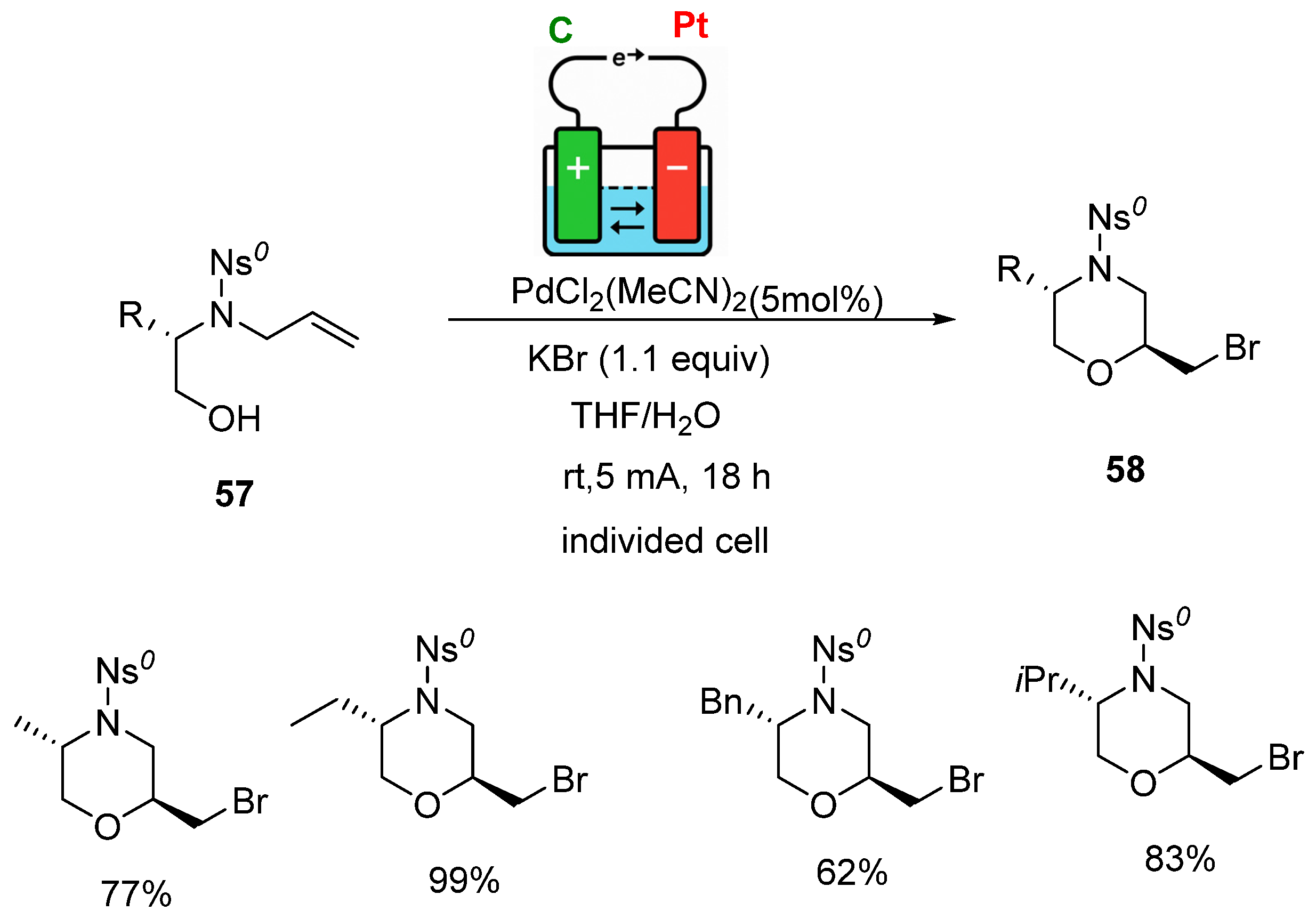
61] reported an efficient synthetic strategy for accessing a new class of enantiopure morpholino homonucleosides
58 starting from readily available 1,2-amino alcohols or glycidol
57, using PdCl
2(MeCN)
2 as the catalyst (
Scheme 31). The approach relies on 2-bromomethyl morpholines as key intermediates, which are formed diastereoselectively via Pd-electrocatalyzed alkoxybromination of unactivated alkenols.
The authors demonstrated that these brominated intermediates can be subsequently functionalized with various nucleobases, enabling a straightforward and versatile synthesis of morpholino homonucleosides.
The electrochemical alkoxybromination protocol proved broadly applicable to a range of alkenol substrates. Under constant-current electrolysis (I = 5 mA) in an undivided cell equipped with a platinum plate cathode and a graphite plate anode, treatment of the substrates with catalytic PdCl
2(MeCN)
2 and KBr efficiently delivered the desired products. Notably, the corresponding trans-2,5-disubstituted morpholines were obtained as single diastereoisomers in 62–99% yield (
Scheme 31).
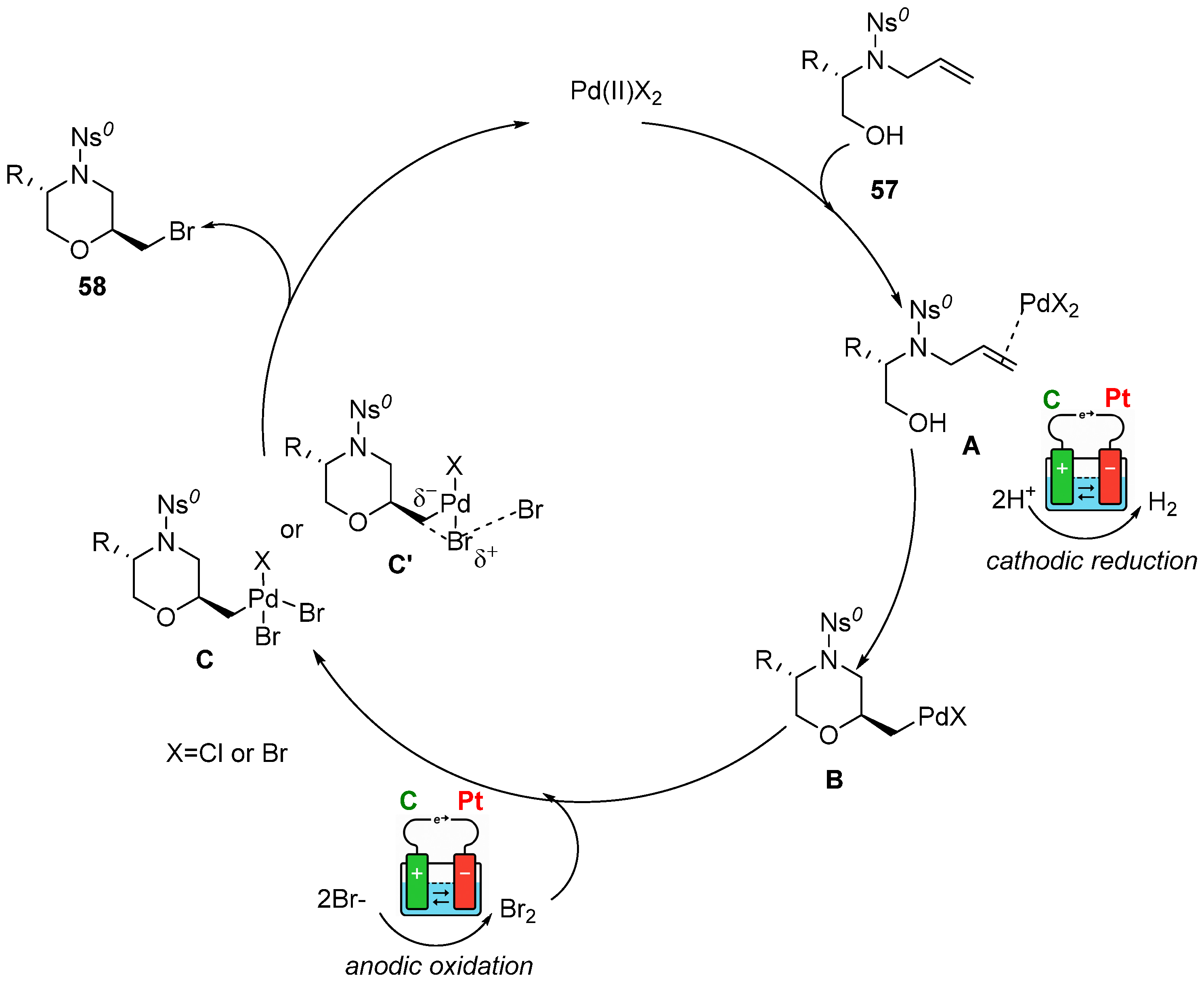
To support the proposed mechanism, the authors performed cyclic voltammetry (CV) studies to clarify the role of each component. In the presence of KBr, anodic oxidation of Br
− occurs above 0.8 V, likely via a multistep process involving Br
3− formation. A weaker cathodic wave at 0.1 V corresponds to the Br
2/Br
− couple, and the large peak-to-peak separation indicates an irreversible process. Increasing Br
− concentration enhances both anodic and cathodic currents, confirming that Br
2 is generated in situ at the graphite anode. Substrate
57 does not alter the electrochemical response, indicating no direct electron transfer at the electrode. In contrast, PdCl
2(MeCN)
2 shows significant electrochemical activity, and the increase in current upon the addition of 1a suggests substrate coordination to Pd(II). these observations are consistent with the mechanistic proposal depicted in
Scheme 32. Initial coordination of the substrate to Pd(II) generates intermediate
A, which undergoes intramolecular 6-exo-alkoxypalladation to afford intermediate
B. From this point, two plausible pathways may operate: either a Pd(II)/Pd(IV) manifold involving oxidative halogenation by electrogenerated bromine to form intermediate
C, followed by reductive elimination, or a Pd(II)/Pd(II) pathway in which bromine promotes concerted electrophilic cleavage of the C–Pd bond via transition state
C′. Intermediate
C (or
C′) then undergoes product-forming transformation to afford
58, concomitantly regenerating the Pd(II)X catalyst.
From a broader perspective, electrochemical palladium catalysis has emerged as a powerful and versatile platform for C–H functionalization, enabling access to Pd(II)/Pd(IV) and Pd(0)/Pd(II) redox manifolds under oxidant-free conditions. The ability to precisely control palladium oxidation states electrochemically has unlocked new reactivity patterns, improved selectivity, and mitigated long-standing challenges such as catalyst deactivation and Pd black formation. Despite these advances, remaining challenges include controlling competing redox pathways, expanding nondirected C–H activation, and improving mechanistic resolution. Continued innovation in electrochemical design, ligand development, and reactor engineering is expected to further broaden the scope and sustainability of Pd-mediated C–H activation, positioning palladium as a critical bridge between traditional noble metal catalysis and next-generation electrosynthetic strategies. Despite these promising developments, noble metal electrocatalysis still exhibits notable limitations. For rhodium-based systems, these include a strong dependence on directing groups, limited substrate generality, high catalyst cost, and a relative scarcity of fully mechanistically resolved catalytic cycles. Moreover, many Rh-electrocatalytic protocols remain sensitive to solvent and electrode choice, and scalability has only been demonstrated in select cases. Nevertheless, the growing body of work highlights that rhodium electrocatalysis offers distinctive strengths, particularly for enantioselective C–H activation and access to high-valent Rh redox chemistry. Future progress will likely depend on expanding nondirected reactivity, improving mechanistic understanding of Rh(III)/Rh(I)/Rh(IV)/Rh(V) cycles, and reducing operational barriers to make Rh electrocatalysis more broadly accessible. We can conclude that ruthenium, iridium, rhodium, and palladium now define the current state of the art in non-earth-abundant transition metal electrocatalysis for C–H activation. Each metal contributes distinct reactivity profiles and mechanistic insights, while also revealing persistent limitations that increasingly motivate the shift toward earth-abundant alternatives.
Ruthenium remains the most synthetically versatile among the noble metals, enabling peri-C–H activation, weak O-coordination-assisted annulations, electrooxidative [4 + 2] cycloadditions, and ortho-directed functionalizations. Its broad substrate tolerance and anodic access to high-valent Ru intermediates facilitate the construction of complex heterocycles. However, Ru-based systems often require elevated temperatures, protic media, and strong directing groups, and mechanistic proposals frequently lack direct observation of Ru(IV)/Ru(V) species, limiting mechanistic certainty. Iridium, although comparatively less explored, has delivered some of the clearest mechanistic insights in the field. Early Ir-catalyzed C–H alkenylations relied on redox mediators, whereas more recent oxidant-free Ir(III)-catalyzed annulations proceed under mild conditions with broad substrate scope and excellent regioselectivity. Notably, Guo’s structural and electrochemical characterization of Ir(III)/Ir(I) intermediates provides rare experimental validation of a complete Ir redox cycle. Nonetheless, iridium catalysis remains constrained by high catalyst cost and a continued reliance on strong directing groups. Rhodium has emerged as a particularly powerful platform for enantioselective C–H activation, with electrochemistry enabling chirality transfer through cooperative catalysis between achiral Cp*Rh(III) complexes and chiral Brønsted bases, as well as finely tuned stereocontrol in room-temperature spiropyrazolone synthesis. Mechanistic innovation is exemplified by Xie’s work, in which electrochemical disproportionation generates unique Rh(IV)/Rh(V) species in tandem with Rh(I), unlocking transformations inaccessible under classical oxidative conditions. Despite these advances, rhodium catalysis continues to face challenges related to cost, directing-group dependence, and limited substrate diversity. Palladium, by contrast, occupies a unique and strategically important position at the interface between traditional noble metal catalysis and modern electrosynthesis. Electrochemical control enables palladium to operate across Pd(0)/Pd(II) and Pd(II)/Pd(IV) manifolds without stoichiometric oxidants, allowing for direct access to reactivity patterns long sought in thermal Pd catalysis. Recent studies including undivided-cell C–H alkylation, AC-enabled meta-selective functionalization, and asymmetric electrochemical C–H activation demonstrate that electrocatalysis not only mitigates Pd black formation but also expands selectivity, sustainability, and mechanistic tunability. Nevertheless, Pd electrocatalysis still faces challenges in controlling competing redox pathways and achieving broad nondirected reactivity. Taken together, these noble metal electrocatalytic platforms showcase both the transformative power and inherent constraints of non–earth-abundant metals. They provide benchmark reactivity, access to unusual high-valent intermediates, and deep mechanistic insight, yet often rely on expensive catalysts, directing groups, and carefully optimized electrochemical conditions. These lessons now serve as a critical foundation for the rapidly expanding field of earth-abundant metal electrocatalysis (Fe, Co, Ni, Mn), where sustainability, cost reduction, and new mechanistic paradigms are driving the next wave of innovation in electroxidative C–H activation.