Article

Constructing Spatially Separated Ru Nanoparticles on Basic Support for the Hydrogenation of Ethyl Levulinate to γ-Valerolactone


1
College of Mathematics and Physics, Shanghai University of Electric Power, Changyang Road 2588, Shanghai 200090, China
2
Shanghai Key Laboratory of Green Chemistry and Chemical Processes, School of Chemistry and Molecular Engineering, East China Normal University, North Zhongshan Road 3663, Shanghai 200062, China
*
Authors to whom correspondence should be addressed.
Catalysts 2026, 16(2), 185; https://doi.org/10.3390/catal16020185
Submission received: 10 January 2026 / Revised: 7 February 2026 / Accepted: 10 February 2026 / Published: 13 February 2026
(This article belongs to the Topic Advances in Biomass Conversion, 2nd Edition)

Abstract

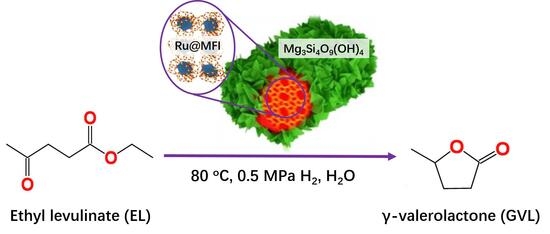
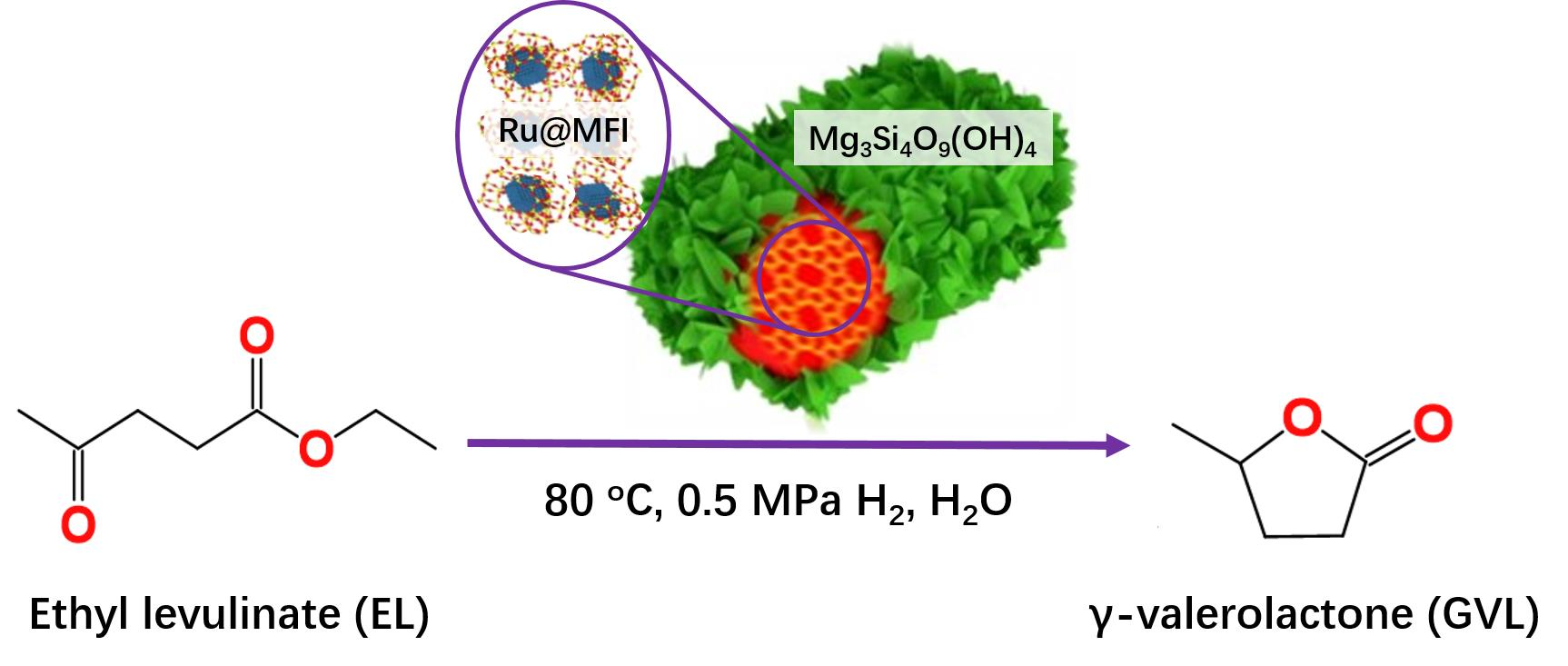
Gamma-valerolactone (GVL) can be used as a renewable solvent, flavoring agent, and precursor to produce liquid fuels and fine chemicals. GVL is mainly produced by the efficient hydrogenation of levulinic acid and its esters over a wide range of bifunctional catalysts under harsh conditions because high temperature is generally required for GVL formation. So far, the hydrogenation of levulinic acids/esters under mild conditions remains a great challenge. In this study, 2 wt.% Ru was loaded onto ZSM-5 zeolite (MFI) via a deposition–precipitation method and further wrapped by crystallization, forming a core–shell structure. Moreover, the wrapped Ru catalyst was coated with a petal-like layer of Mg3Si4O9(OH)4 (MgSiO3) via a hydrothermal reaction in a Mg(NO3)2 solution, thereby introducing alkalinity and achieving spatial separation of Mg and Ru. This dual-functional catalyst reduces the inhibitory effect of Mg on the Ru active center and enables efficient preparation of GVL from ethyl levulinate (EL) under mild conditions, achieving 100% EL conversion and 98% GVL selectivity in the aqueous phase at 80 °C in 2 h under 0.5 MPa of H2.

Graphical Abstract

1. Introduction

With the rapid economic development, the growing demand for coal, oil, and other energy resources has exacerbated energy shortages and environmental pollution [1,2,3]. To achieve net-zero carbon emissions, high-energy fuels and valuable chemicals produced from renewable carbon sources, namely biomass rather than petroleum, are highly desirable [4,5,6]. γ-Valerolactone (GVL), a renewable solvent and an essential intermediate for high-value chemicals and liquid biofuels, has emerged as a significant research topic in biomass conversion [1,2,7,8]. GVL can be produced via the high-efficiency hydrogenation of levulinic acid (LA) and its esters as feedstocks [9,10]. The production of GVL from LA and its esters (LEs) involves two steps. Taking EL as an example, EL is first hydrogenated to ethyl 4-hydroxylpentanoate (EHP) over metal sites, and then EHP is converted to GVL over acidic/basic sites. To date, metal catalysts, such as Co [11,12], Ni [13], Ru [14,15], Pd [16], and various alloy catalysts [17,18], have been widely used for the high-efficiency hydrogenation of levulinates under suitable conditions. It is noted that ring opening of GVL is prone to occur at high temperatures; therefore, catalysts showing high catalytic performance under mild conditions are desired to achieve high GVL selectivity. Among metal catalysts, Ru catalysts have been shown to suppress the formation of by-products during the hydrogenation of levulinates in the aqueous phase under mild conditions. Gao [15] and co-workers reported a Ru/CeO2-rod catalyst, which showed that the conversion of EL is 99.7% and the maximum yield of GVL is over 90% at 100 °C, 4 MPa of H2 and 8 h. Single-atom Ru on a TiO2/CN catalyst can also catalyze the hydrogenation of levulinic acid at room temperature in water, with a turnover frequency (TOF) of 278 molGVL mol−1Ru h−1 [19]. Kuwahara et al. [20] reported a GVL yield of 95.6% in aqueous medium at 70 °C, 0.5 MPa, and 4 h by using Ru nanoparticles confined in Zr-containing spherical mesoporous silica. In such hydrogenation processes, water, as a green solvent, facilitates activation of both hydrogen and carbonyl groups owing to its hydrogen-bond network [21].
Previous studies have shown that the presence of acidic or basic sites in catalysts improves the selectivity of GVL for the hydrogenation of levulinates. Li et al. [22] found that cooperation between Lewis and Brønsted acid sites is responsible for the efficient conversion of EL to GVL via adjustable zirconium phosphate. Subsequently, they used a basic zirconium carbonate composed of Lewis acid sites (zirconium ions) and base sites (carbonates and hydroxides) as a transfer hydrogenation catalyst, achieving 100% ethyl levulinate conversion and 96.3% GVL yield at 180 °C, 3.0 h, and 1.0 MPa N2 [23]. Ma et al. [24] used simple basic zirconium carbonate (BZC) to convert ethyl levulinate into GVL at 140 °C for 14 h. The conversion was 97.7%, and the GVL selectivity was 91.3%. One can see that temperatures above 140 °C and very long reaction periods were consistently employed in these processes. Nadgeri et al. [14] studied the liquid phase hydrogenation of methyl levulinate by employing graphite-supported ruthenium (Ru/graphite) and zeolite-supported ruthenium as catalysts in water at 70 °C. They found that the Ru/graphite-ZSM-5 mixture exhibited the highest activity among Ru/graphite, Ru/ZSM-5, and Ru/graphite mixtures with several zeolites, attributable to the synergistic effect of highly dispersed ruthenium particles and acid sites. Therefore, to achieve high levulinate conversion and high GVL selectivity, catalysts containing metal sites and materials with acidic or basic sites are required. From a practical perspective, developing a bifunctional catalyst containing both Ru and acidic/basic sites for a green process significantly benefits levulinic acid/ester transformations. In this study, a bifunctional catalyst was prepared by coating petal-like Mg3Si4O9(OH)4 (MgSiO3) layers on a crystallized Ru-wrapped ZSM-5 zeolite (also called MFI) catalyst (Ru@MFI) with a core–shell structure. Such a specific structure enables the spatial distribution of alkaline Mg species and Ru nanoparticles, which is crucial for achieving satisfactory hydrogenation performance. The resultant bifunctional catalyst (5%MgSiO3@2%Ru@MFI) showed 100% EL conversion and 98% selectivity for GVL in water at 80 °C under 0.5 MPa of H2 after 2 h of reaction. The activity of 5%MgSiO3@2%Ru@MFI was retained after two cycles.

2. Results and Discussion

2.1. The Characterization of the Ru Catalysts

A bifunctional catalyst 5%MgSiO3@/2%Ru@MFI composed of highly dispersed Ru nanoparticles spatially separated by alkaline Mg species was designed for the hydrogenation of levulinate to GVL under mild conditions. Scheme 1 shows the preparation procedure of the bifunctional catalyst (5%MgSiO3@2%Ru@MFI) via a three-step synthesis. First, highly dispersed Ru nanoparticles were loaded onto MFI via a deposition method (2%Ru/MFI). Second, the 2%Ru/MFI sample was added to a mixture of TEOS, TPAOH, and NaOH to form 2%Ru@MFI via recrystallization. At last, 2%Ru@MFI was hydrothermally treated in a solution containing Mg(NO3)2·6H2O, NH4Cl, and NH3·H2O, leading to a petal-shaped MgSiO3 layer covering the 2%Ru@MFI surface.
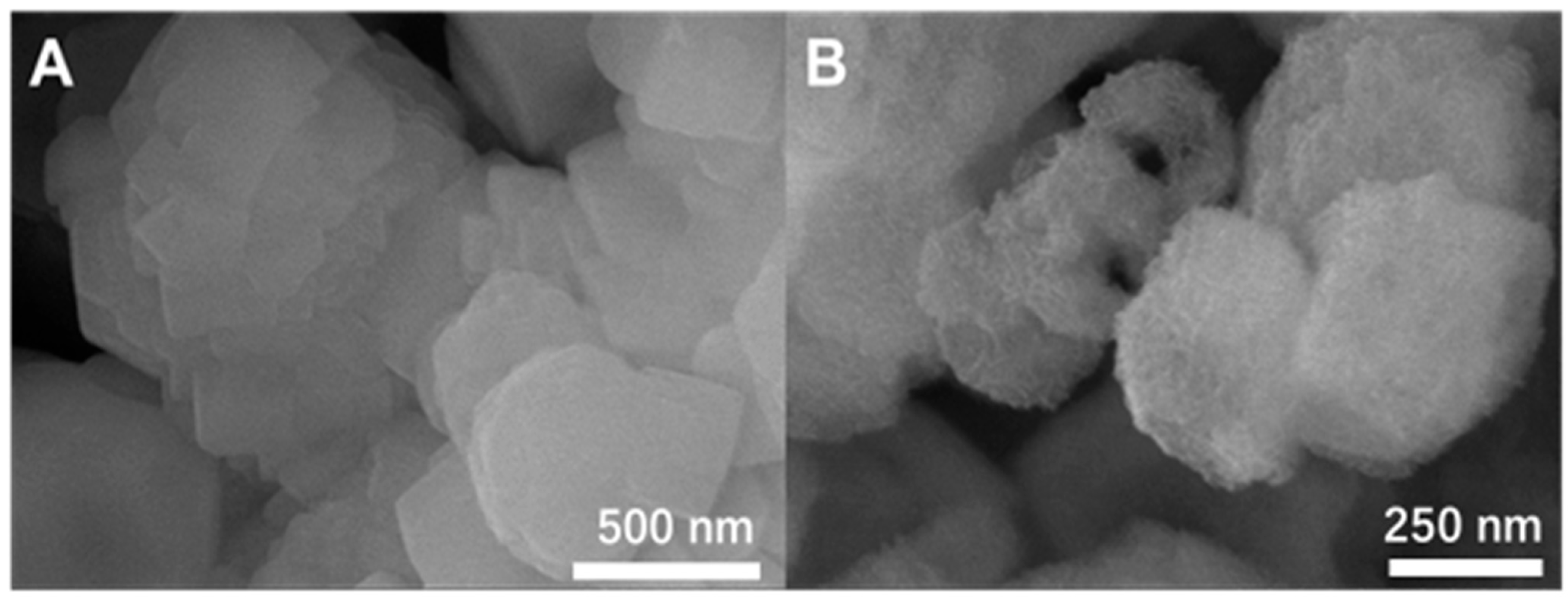
The SEM images of 5%MgSiO3@2%Ru@MFI are shown in Figure 1. 2%Ru@MFI was also characterized for comparison. 2%Ru@MFI gave a uniform morphology, a smooth surface, and a higher degree of crystallinity. After covering with MgSiO3, the particle size of 2%Ru@MFI did not change significantly, but the surface of 2%Ru@MFI became rough and was covered by a shell of petal-like MgSiO3 nanoflakes.
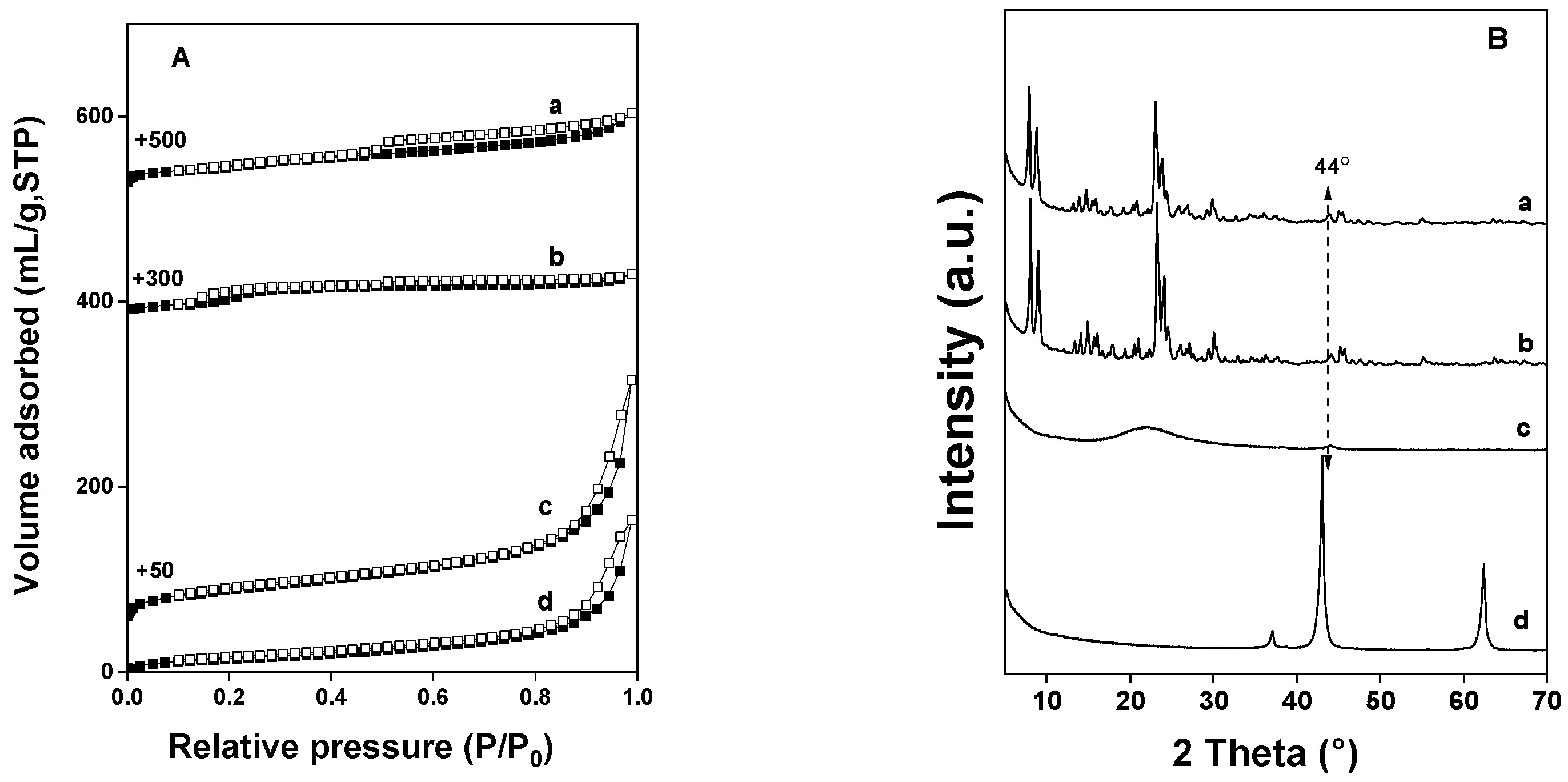
The N2 adsorption–desorption isotherms of 5%MgSiO3@2%Ru@MFI and 2%Ru@MFI are shown in Figure 2. It is clear that 5%MgSiO3@2%Ru@MFI and 2%Ru@MFI exhibit typical type IV(a) isotherms with a capillary condensation in the relative pressure (P/P0) from 0.4 to 0.8. This condensation is associated with the intercrystalline mesopores. The BET surface areas and pore volumes of 5%MgSiO3@2%Ru@MFI and 2%Ru@MFI are listed in Table 1. The specific surface area of 5%MgSiO3@2%Ru@MFI is 282 m2/g, which is 68 m2/g lower than that of 2%Ru@MFI. The decrease can be attributed to the loss of microporosity, from 317 to 87 m2/g during the hydrothermal treatment. The total pore volume of 5%MgSiO3@2%Ru@MFI is 0.31 cm3/g, which is 55% higher than that of 2%Ru@MFI, which is consistent with the appearance of mesopores. For comparison, 2%Ru/MgO and 2%Ru/SiO2 were also prepared and exhibited a characteristic Type H3 loop related to macropores.
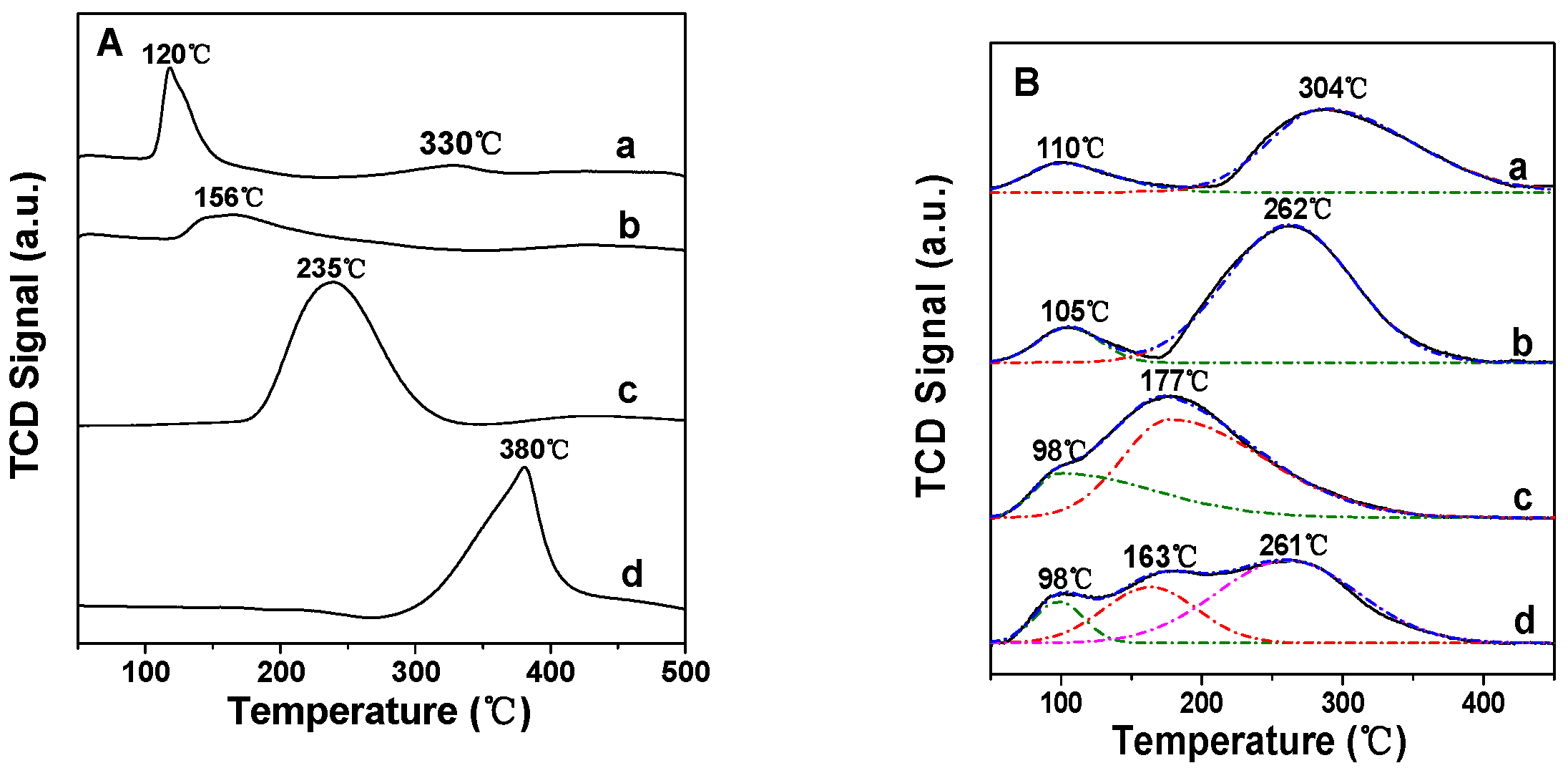
Figure 2B shows the XRD patterns of all Ru catalysts investigated. 2%Ru@MFI exhibited the typical MFI diffraction pattern, and a weaker Ru diffraction peak at 44° was observed. 5%MgSiO3@2%Ru@MFI displayed a similar XRD pattern to that of 2%Ru@MFI, revealing a retained structure after covering MgSiO3 layers on 2%Ru@MFI. H2-TPR curves of the Ru catalysts upon air exposure are shown in Figure 3A. It has been reported that there are three temperature ranges for the reduction of Ru species in H2-TPR curves [25,26]. The low-temperature region (<150 °C) is associated with the reduction of small RuOx particles, likely the surface oxide layer formed in air. The medium temperature range (150–300 °C) is assigned to larger RuOx. The high-temperature range (>300 °C) is attributed to RuOx clusters, which interact strongly with the support via the strong metal-support interaction (SMSI) effect [27,28]. The reduction peaks of 2%Ru@MFI and 5%MgSiO3@2%Ru@MFI appeared in the low-temperature range, that is, 156 °C for 2%Ru@MFI and 120 °C for 5%MgSiO3@2%Ru@MFI, indicating the formation of small RuOx, which weakly interacts with the carrier MFI. By contrast, larger RuOx clusters formed on Ru/SiO2 exhibited a reduction peak at 235 °C. Strong interaction between RuOx and MgO results in a much higher reduction temperature of 380 °C, as observed for Ru/MgO. It should be noted that a very weak reduction peak at 330 °C was seen on 5%MgSiO3@2%Ru@MFI. This result means that very few Ru nanoparticles interact with MgSiO3 due to the presence of the MFI shell.
The CO2-TPD curves of the Ru catalysts are displayed in Figure 3B. The desorption of CO2 on 2%Ru@MFI occurred at 105 °C and 262 °C. After loading the MgSiO3 shells on 2%Ru@MFI, the desorption temperature of CO2 increased to 110 °C and 304 °C. The higher temperature indicates an enhanced interaction between CO2 and 5%MgSiO3@2%Ru@MFI, which is attributed to the increased alkali strength owing to the introduction of MgSiO3 shells containing a large amount of Mg-OH [29]. The lower CO2 desorption temperatures of 98 °C and 177 °C in the CO2-TPD curve of 2%Ru/SiO2 (Figure 3B) reveal the weaker basic strength of 2%Ru/SiO2. The CO2 desorption peaks for 2% Ru/MgO are observed at 98, 163, and 261 °C, which are similar to those of the MgSiO3 shell. For 2%Ru@MFI, a broad desorption peak is observed at 262 °C, which might be associated with the interaction between CO2 and the porous structure.
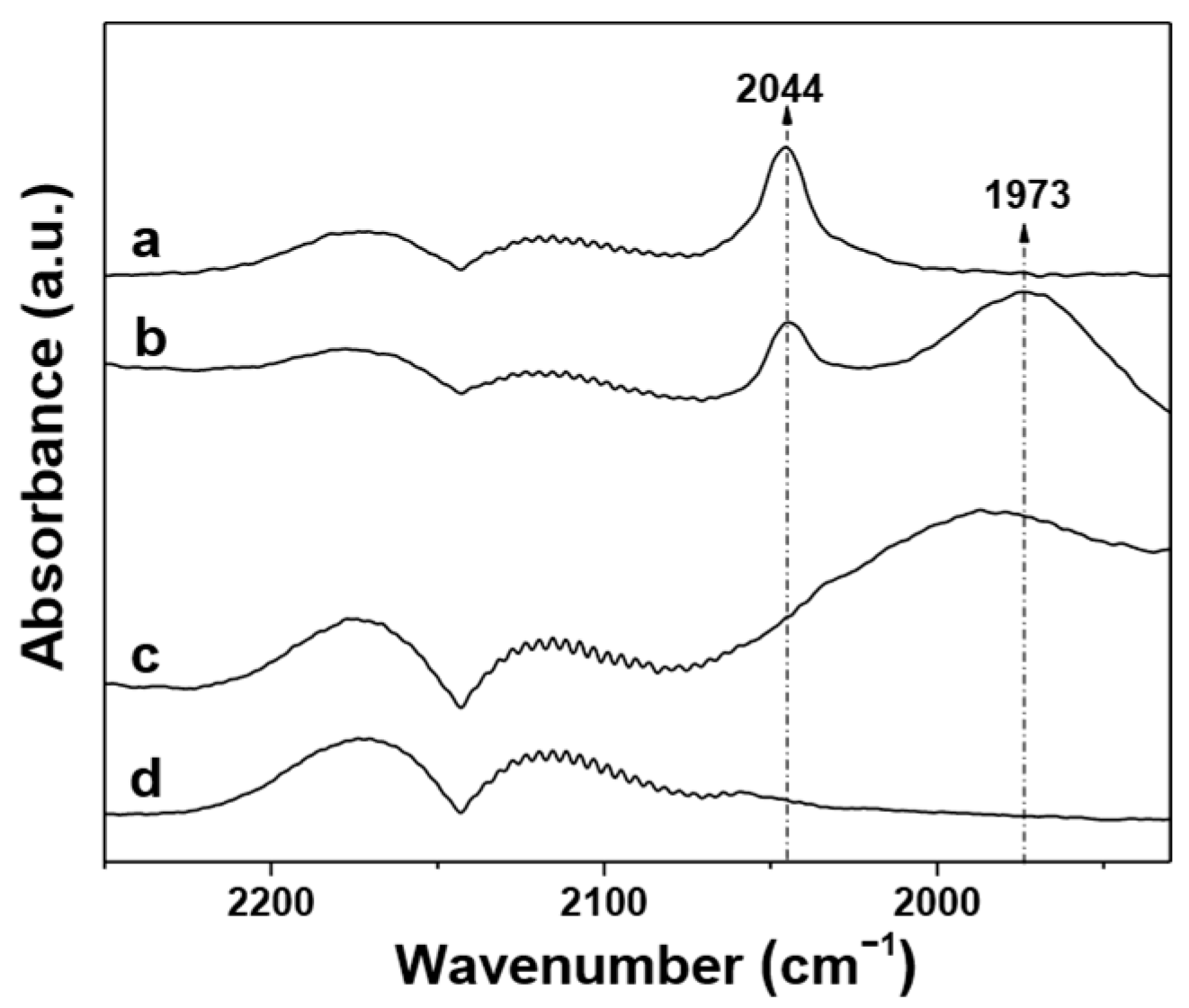
We next investigated the electronic structures of these Ru catalysts using CO-IR spectroscopy. The CO-IR spectra of 2%Ru@MFI and 5%MgSiO3@2%Ru@MFI are demonstrated in Figure 4. The IR bands of CO adsorbed on 2%Ru@MFI appear at 2044 cm−1 and 1973 cm−1. It has been reported that the band at ~2040 cm−1 can be assigned to linearly adsorbed CO on small Ru clusters, and the band at ~1980 cm−1 can be assigned to bridge-bonded CO on larger Ru nanoparticles [30,31,32,33,34]. The band at 1980 cm−1 is nearly dominant upon CO adsorption on Ru/SiO2 (spectrum 4c). Interestingly, only one peak at 2044 cm−1 is found for 5%MgSiO3@2%Ru@MFI, meaning that some of the Ru surface was coordinated by MgSiO3 species, which is consistent with the TPR result. However, when Ru interacts directly with MgO, no CO adsorption at room temperature is observed (spectrum 4d). These results reveal that bifunctional catalysts (5%MgSiO3@2%Ru@MFI) with spatially distributed Ru nanoparticles and basic species (Mg) have been successfully prepared in this study.

2.2. The Catalytic Activities of the Ru Catalysts in the Hydrogenation of EL

We investigated the catalytic activity of this bifunctional catalyst in the hydrogenation of EL using water as a solvent at 80 °C and 0.5 MPa of H2 after 2 h of reaction. The EL conversions and selectivities of GVL and HEP on these catalysts are displayed in Table 2. The conversion of EL on 5%MgSiO3@2%Ru@MFI reached 100%, and the selectivity to GVL was as high as 98% after 2 h at 80 °C in water. 2%Ru@MFI achieved an EL conversion of 100% and a GVL selectivity of 21% under identical conditions. We also compared the catalytic activity of Ru on MgO and SiO2 supports (2%Ru/MgO and 2%Ru/SiO2). The 2% Ru/MgO catalyst did not catalyze the hydrogenation of EL, which warrants further study. We surmise that its low catalytic activity stems from the strong interaction between Ru and the MgO support, which inhibits EL hydrogenation. 2%Ru/SiO2 displayed EL conversion of 78%, which was lower than those on 2%Ru@MFI and 5%MgSiO3@2%Ru@MFI under identical conditions. The higher EL conversion on 2%Ru@MFI and 5%MgSiO3@2%Ru@MFI could be attributed to the core–shell structure. 2%Ru/SiO2 showed GVL selectivity of 16%, comparable to that on 2%Ru@MFI. This result indicates that the Brønsted acid sites do not effectively catalyze GVL formation from EHP at low reaction temperature. By contrast, the 5%MgSiO3@2%Ru@MFI catalyst with basic sites achieved 98% GVL selectivity, which is 4.6 times that of 2%Ru@MFI. It can be concluded that 5%MgSiO3@2%Ru@MFI showed both high EL conversion and GVL selectivity, thanks to the spatial separation of Ru nanoparticles and petal-like MgSiO3.
To explore the impact of MgSiO3′s spatial distribution on the Ru catalyst for the hydrogenation of EL, we prepared a 5%MgO/SiO2 support by impregnation and then loaded 2 wt.% Ru onto it. The resulting 2%Ru/5%MgO/SiO2 was tested for the hydrogenation of EL under conditions identical to those used for other Ru catalysts, and the results are also shown in Table 2. The EL conversion on 2%Ru/5%MgO/SiO2 is 100% after 2 h of reaction, which is the same as that on 2%Ru@MFI and 5%MgSiO3@2%Ru@MFI. Meanwhile, 66% GVL selectivity was achieved on 2%Ru/5%MgO/SiO2. This result confirms that the GVL formation rate over MgSiO3 is higher than that on MgO/SiO2 prepared by the impregnation method. We further compared the catalytic properties of 2%Ru/5%MgO/SiO2 and 5%MgSiO3@2%Ru@MFI at a lower reaction temperature, i.e., 80 °C. The hydrogenation activity as a function of the reaction time is shown in Table 3. After 30 min of reaction, the EL conversion and GVL selectivity on 2%Ru/5%MgO/SiO2 were 23% and 52%, respectively. Compared to 2%Ru/5%MgO/SiO2, 5%MgSiO3@2%Ru@MFI showed a higher EL conversion (42%) but a lower GVL selectivity (21%). When the reaction time was prolonged to 60 min, the EL conversion on 2%Ru/5%MgO/SiO2 and 5%MgSiO3@2%Ru@MFI increased to 60% and 100%, respectively. Obviously, 5%MgSiO3@2%Ru@MFI with spatially distributed MgSiO3 and Ru showed better hydrogenation activity. For 2%Ru/5%MgO/SiO2, the strong interaction of Ru with MgO may explain the lower hydrogenation activity of EL, as observed for Ru/MgO. In contrast, Ru nanoparticles and alkaline Mg sites were well isolated in 5%MgSiO3@2%Ru@MFI, resulting in superior catalytic performance. Upon further increasing the reaction time to 120 min, the EL conversion on 2%Ru/5%MgO/SiO2 reached 100%, which was the same as that on 5%MgSiO3@2%Ru@MFI. Notably, the GVL selectivity of 2%Ru/5%MgO/SiO2 (66%) was much less than that of 5%MgSiO3@2%Ru@MFI (98%).
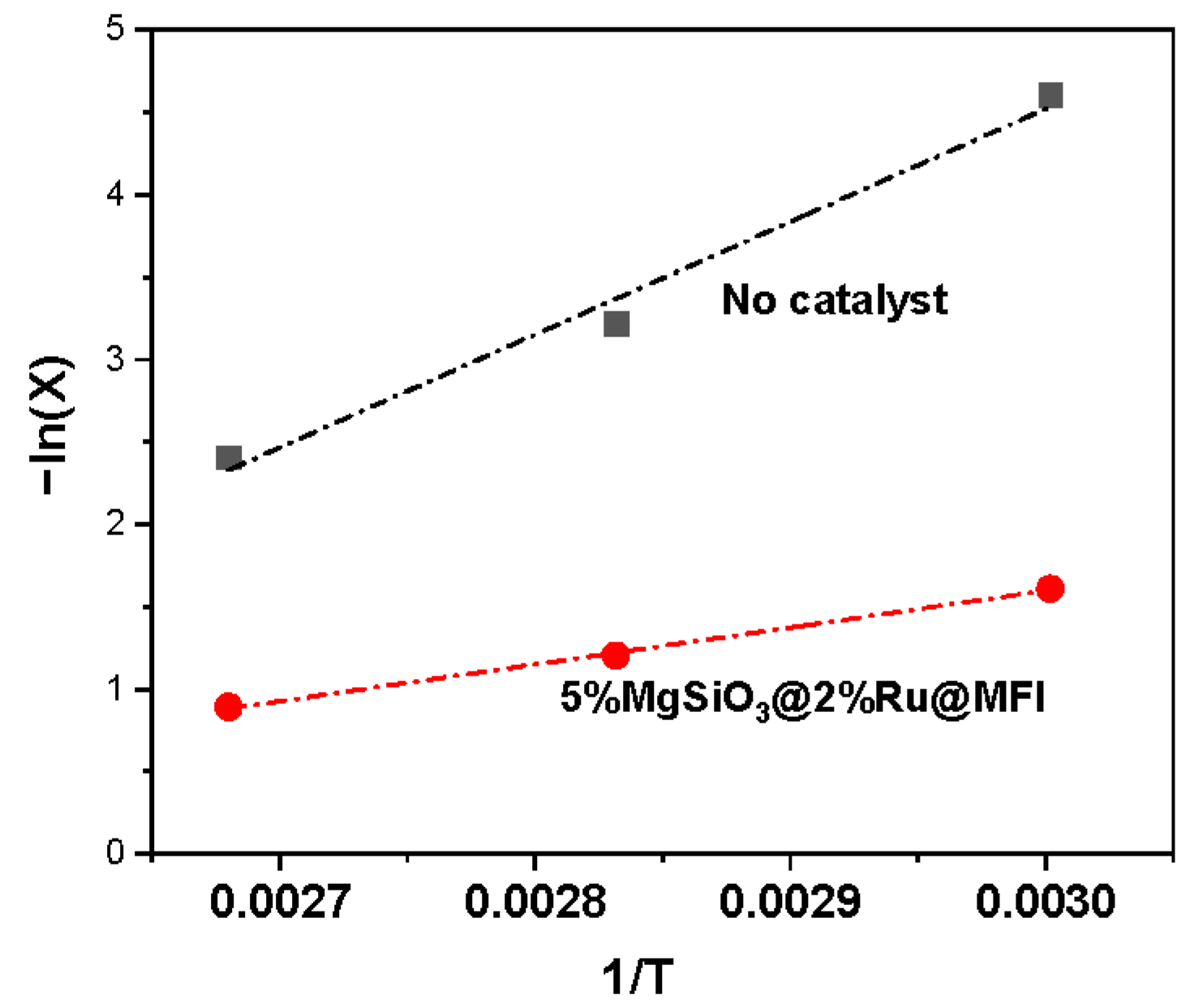
To reveal the enhancement of basic sites on GVL formation rate, we investigated the conversion of EHP to GVL over 5%MgSiO3@2%Ru@MFI to estimate the activation energy. The results are displayed in Table 4 and Figure 5. The activation energy for the conversion of EHP to GVL is 57 kJ/mol in the absence of a catalyst, consistent with previous literature [35,36]. Notably, the activation energy of EHP to GVL was reduced to 18 kJ/mol in the presence of 5%MgSiO3@2%Ru@MFI. This result indicates that the catalyst’s alkalinity can significantly reduce the activation energy of the reaction from EHP to GVL, thereby accelerating the overall reaction progress.
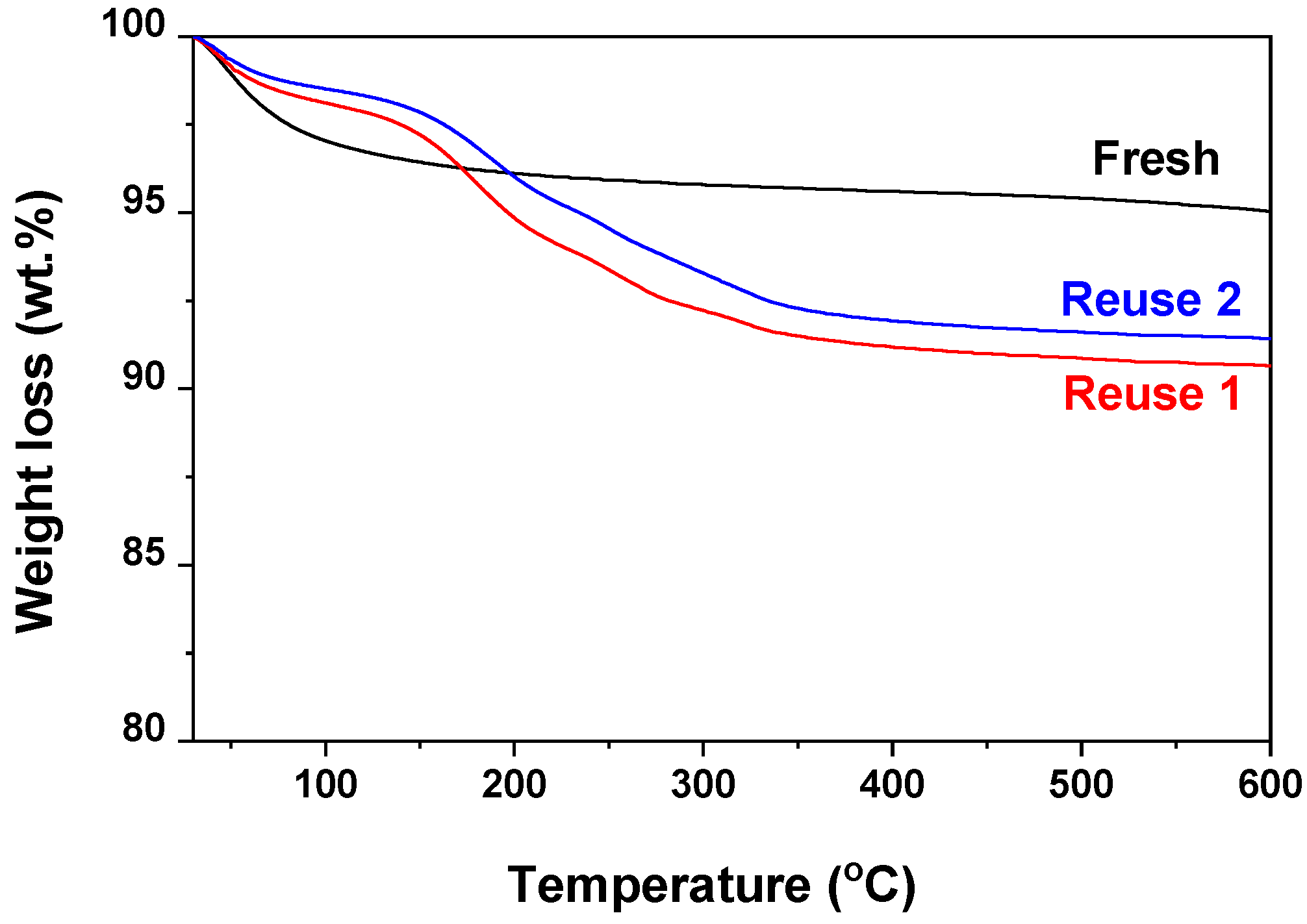
Given the high activity of 5%MgSiO3@2%Ru@MFI in the hydrogenation of EL, we investigated its recyclability at 80 °C and 0.5 MPa. Table 5 shows that the activity of 5%MgSiO3@2%Ru@MFI did not change after two cycles, but the selectivity of GVL dropped to approximately half of that on the fresh catalyst after one cycle. Based on the ICP test, no loss of Ru was observed, but a 0.5% loss of Mg was detected. TG curves of the fresh and used 5%MgSiO3/2%Ru@MFI (Figure 6) reveal that no significant weight loss was found in the range of 150–400 °C on the fresh catalyst, while 7 wt.% of weight loss occurred in the same range, indicating that organic carbonaceous species were deposited on 5%MgSiO3@2%Ru@MFI during reactions. Therefore, we calcined 5%MgSiO3@2%Ru@MFI at 550 °C and reduced it at 200 °C prior to the subsequent test. The selectivity of GVL increased to 68%, and the recovered selectivity can be attributed to the removal of coke by calcination. It should be noted that the GVL selectivity of reuse tests was lower than that of the fresh catalyst. This result may be related to Mg loss, and further studies on how to preserve the basic sites are desirable for practical applications.

3. Materials and Methods

3.1. Synthesis of the Ru Catalysts

3.1.1. Synthesis of the Bifunctional Catalyst 5%MgSiO3@2%Ru@MFI

A bifunctional catalyst combining highly dispersed Ru nanoparticles and the spatial separation of alkaline Mg species was prepared in the following three steps.
Step 1: Ru was loaded on MFI (Nankai Catalyst Company, Tianjin, China) by a deposition–precipitation method. MFI (0.5 g) was dispersed in 60 mL of H2O under vigorous stirring, and 0.46 mL of RuCl3 (J&K Scientific, Beijing, China) solution (21.303 g·L−1) was added to the mixture, which was stirred for 3 h. Subsequently, the pH was adjusted to 10.3 by adding 1 M NaOH (J&K Scientific, China) and stirring for an additional 3 h. Subsequently, the material was filtered, washed with water, dried at 80 °C for 10 h, and calcined at 550 °C in air for 5 h. The resultant material was reduced at 350 °C under H2/N2 (Pujiang Gases, Shanghai, China) flow for 2 h. The sample was denoted as 2%Ru/MFI.
Step 2: Concentrated sulfuric acid was added slowly to a solution containing 6.94 g of TEOS (J&K Scientific, China) and 22.0 g of H2O under vigorous stirring until the pH of the solution reached 1.0. The mixture was then stirred at room temperature for 20 h. TPAOH (2.0 g) was added to the above solution, and then NaOH solution (1 M) was added to adjust the pH of the solution to 10, resulting in a wet gel. 2.0 g of 2% Ru/MFI was added to the wet gel. The mixture was stirred at room temperature for 10 min, and the solvent was removed at 90 °C, yielding a dry gel. TPAOH (J&K Scientific, China, 4.0 g) was further added to the dry gel, and the mixture was then heated at 140 °C for 3 days to crystallize. The resultant solid was dried at 80 °C for 8 h, calcined at 550 °C for 5 h, and treated at 350 °C for 2 h under an H2/N2 flow. The sample was labeled 2%Ru@MFI.
Step 3: 0.26 g of Mg (NO3)2·6H2O (Aladdin Scientific, Shanghai, China), 0.5 g of NH4Cl (Aladdin Scientific, Shanghai), and 0.91 g NH3·H2O (Aladdin Scientific, Shanghai, 28 wt.%) were dissolved in 50 g of distilled water under stirring. 0.5 g of 2%Ru@MFI was added to the solution. The mixture was sonicated for 30 min, then transferred to an autoclave and stirred at 120 °C for 3 h. After cooling, the mixture was filtered. The resultant material was dried, calcined at 400 °C for 2 h, and reduced at 350 °C under an H2/N2 flow for 2 h. The sample was denoted as 5%MgSiO3@2%Ru@MFI.

3.1.2. Synthesis of 2%Ru/MgO, 2%Ru/SiO2 and 2%Ru/5%MgO/SiO2

For comparison, 2% Ru was loaded on MgO, SiO2, and MgO/SiO2. Ru was loaded on MgO by a deposition–precipitation method. MgO (0.5 g) was dispersed in 60 mL of H2O under vigorous stirring. 0.46 mL of RuCl3 solution (21.303 g·L−1) was added to the above solution, and the mixture was stirred for 3 h. Subsequently, the pH was adjusted to 10.3 by adding 1 M NaOH and stirring for an additional 3 h. Subsequently, the material was filtered, washed with water, dried at 80 °C for 10 h, and calcined at 550 °C in air for 5 h. The resultant material was reduced at 350 °C under H2/N2 flow for 2 h and labeled 2% Ru/MgO.
Ru was loaded onto SiO2 and 5%MgO/SiO2 using a procedure similar to that for 2% Ru/MgO. The resulting materials were denoted as 2%Ru/SiO2 and 2%Ru/5%MgO/SiO2.

3.2. Characterization of the Ru Catalysts

Scanning electron microscopy (SEM) was used to characterize the morphology and crystal size. Measurements were conducted using a Hitachi S-4800 instrument (Hitachi, Tokyo, Japan) with a beam voltage of 15 kV. The nitrogen adsorption/desorption isotherms at −196 °C were obtained using a BELFOR Max automatic physical adsorption instrument (Microtrac, Haan, Germany). The samples were degassed at 150 °C for 6 h prior to measurement. The specific surface area (SSA) was calculated according to the Brunauer–Emmett–Teller (BET) method with five relative pressure points in the interval of 0.05–0.30. Powder X-ray diffraction (XRD) was performed using a RIGAKU Ultima IV X-Ray diffractometer (Rigaku, Tokyo, Japan). Cu Ka radiation (λ = 1.5405 Å) at 35 kV and 25 mA was used. Temperature-programmed reduction/desorption (TPR/TPD) experiments were performed using a Micromeritics AutoChem II 2920 (Micromeritics, Norcross, GA, USA). For H2-TPR, before each experiment, 100 mg of catalyst (40–60 mesh) was placed in a U-shaped glass tube, pretreated in helium at 150 °C, and then cooled to room temperature. The catalyst was purged in a 5% H2/Ar mixture until the TCD detector signal was constant. The sample was then heated to 300 °C at a ramp rate of 10 K min−1. For CO2-TPD, before CO2 adsorption, 100 or 300 mg of catalyst (40–60 mesh) was pretreated in helium at 150 °C and then cooled to room temperature. The 10% CO2/He mixture was dosed for 10 min, and the physisorbed CO2 was removed by flowing He at room temperature for 30 min. Then, the sample was heated to 600 °C at a ramp rate of 10 K/min, and the TCD signal was recorded. Thermogravimetric analysis (TG) was performed using a NETZSCH STA449F3 TGA instrument (NETZSCH, Selb, Germany). The samples were heated from room temperature to 800 °C at a heating rate of 10 °C/min under air flow. For CO adsorption on the samples, the wafer was dehydrated in nitrogen at a flow rate of 30 mL min−1 at 120 °C for 30 min, and then cooled to room temperature. Subsequently, flowing CO was introduced into the IR cell for 10 min to achieve saturation adsorption. Subsequently, the gas-phase CO was removed by flushing with N2. Fourier-transform infrared (FT-IR) spectroscopy was performed on a Nicolet iS50 spectrometer (Thermo Fisher Scientific, Waltham, MA, USA) equipped with a homemade in situ cell (32 scans with a resolution of 4 cm−1).

3.3. Catalytic Activity Measurements

The catalytic hydrogenation of EL was conducted in a Teflon-lined (60 mL) steel batch reactor. The hydrogenation reactions were conducted at 80 °C under a H2 pressure of 0.5 MPa in a solution containing 0.2 mL of ethyl levulinate (EL), 10 mL of water, and 50 mg of catalysts. After the reaction time, the remaining H2 was released, and the products were collected and diluted with ethanol. 1 μL solution was analyzed on a TianMei GC7900 (Tianmei, Beijing, China) equipped with a flame ionization detector (FID) with a DB-FFAP capillary column (30 m × 0.25 mm × 0.25 μm). The EL conversion and GVL selectivity were calculated using the area normalization method, with cyclohexanol as an internal standard. The EHP selectivity is calculated by the following equation:
Sel.EHP = 100% − Sel.GVL.
In all experiments, no other organic compounds were detected by GC except for EL, EHP, and GVL.
The recycling test was performed in the same manner as for the fresh sample. After the first use, the catalyst was filtered from the reaction mixture, washed with methanol (30 mL × 3), and dried at 120 °C overnight for subsequent use.

4. Conclusions

In summary, this study designed Ru catalysts to facilitate the efficient synthesis of γ-valerolactone (GVL) from levulinate ester under mild conditions. The catalyst 2%Ru@MFI was synthesized by loading Ru onto MFI using a deposition–precipitation method, followed by further crystallization to encapsulate Ru within MFI. This process significantly enhanced the catalytic efficiency for the hydrogenation of ethyl levulinate (EL) and improved Ru stability, achieving 100% EL conversion and 21% GVL selectivity after 2 h at 80 °C in water. Additionally, a dual-functional catalyst, 5%MgSiO3@2%Ru@MFI, was developed by coating petal-like MgSiO3 layers onto 2%Ru@MFI. This modification introduced alkaline Mg sites into the catalyst and enabled spatial separation of Mg and Ru, resulting in a rapid reaction and a reduction in the activation energy for the conversion from EHP to GVL (18 kJ/mol). Consequently, 5%MgSiO3@2%Ru@MFI achieved a 100% conversion of EL and 98% selectivity for GVL after 2 h of reaction at 80 °C in water. After two cycles, the EL conversion on 5%MgSiO3@2%Ru@MFI remained stable, attributable to the spatial separation of Mg and Ru, which mitigated the inhibitory effect of Mg on the Ru active center. However, the selectivity for GVL decreased to 68% after two cycles, potentially due to the loss of alkaline Mg during the reaction. Nonetheless, the development of bifunctional catalysts with exceptional catalytic performance and notable reusability presents significant practical potential for the production of GVL.

Author Contributions

J.Y.: Investigation, Data curation, Funding, Supervision, Writing—original draft, review, and editing. Y.L.: Review. Q.Y.: Investigation. X.G.: Investigation. Y.G.: Supervision, Writing—review. All authors have read and agreed to the published version of the manuscript.

Funding

This research was funded by the National Natural Science Foundation of China 22172050; the Science and Technology Commission of Shanghai Municipality grant number 13ZR1417900.

Data Availability Statement

The data that support the findings of this study are available from the corresponding author upon reasonable request.

Conflicts of Interest

The authors declare that they have no known competing financial interest or personal relationships that could have appeared to influence the work reported in this paper.

References

  1. Luo, H.Y.; Consoli, D.F.; Gunther, W.R.; Roman-Leshkov, Y. Investigation of the reaction kinetics of isolated Lewis acid sites in Beta zeolites for the Meerwein–Ponndorf–Verley reduction of methyl levulinate to γ-valerolactone. J. Catal. 2014, 320, 198–207. [Google Scholar] [CrossRef]
  2. Kuwahara, Y.; Kango, H.; Yamashita, H. Catalytic transfer hydrogenation of biomass-derived levulinic acid and its esters to γ-valerolactone over sulfonic acid-functionalized UiO-66. ACS Sustain. Chem. Eng. 2017, 5, 1141–1152. [Google Scholar] [CrossRef]
  3. Stocker, M. Biofuels and biomass-to-liquid fuels in the biorefinery: Catalytic conversion of lignocellulosic biomass using porous materials. Angew. Chem. Int. Ed. 2008, 47, 9200–9211. [Google Scholar]
  4. Sun, D.; Zhang, Y.; Zhou, Y.; Nie, Y.; Ban, L.; Wu, D.; Yang, S.; Zhang, H.; Li, C.; Zhang, K. Photocatalytic and electrochemical synthesis of biofuel via efficient valorization of biomass. Adv. Energy Mater. 2025, 15, 2406098. [Google Scholar] [CrossRef]
  5. Bozell, J.J.; Petersen, G.R. Technology development for the production of biobased products from biorefinery carbohydrates—The US Department of Energy’s “Top 10” revisited. Green Chem. 2010, 12, 539–554. [Google Scholar] [CrossRef]
  6. Lange, J.P.; Price, R.; Ayoub, P.M.; Louis, J.; Petrus, L.; Clarke, L.; Gosselink, H. Valeric biofuels: A platform of cellulosic transportation fuels. Angew. Chem. Int. Ed. 2010, 49, 4479–4483. [Google Scholar] [CrossRef] [PubMed]
  7. Cavuoto, D.; Ardemani, L.; Ravasio, N.; Zaccheria, F.; Scotti, N. Some insights into the use of heterogeneous copper catalysts in the hydroprocessing of levulinic acid. Catalysts 2023, 13, 697. [Google Scholar] [CrossRef]
  8. Yu, Z.; Lu, X.; Liu, C.; Han, Y.; Ji, N. Synthesis of γ-valerolactone from different biomass-derived feedstocks: Recent advances on reaction mechanisms and catalytic systems. Renew. Sustain. Energy Rev. 2019, 112, 140–157. [Google Scholar] [CrossRef]
  9. Dutta, S.; Yu, I.K.M.; Tsang, D.C.W.; Ng, Y.H.; Ok, Y.S.; Sherwood, J.; Clark, J.H. Green synthesis of gamma-valerolactone (GVL) through hydrogenation of biomass-derived levulinic acid using non-noble metal catalysts: A critical review. Chem. Eng. J. 2019, 372, 992–1006. [Google Scholar]
  10. Liguori, F.; Moreno-Marrodan, C.; Barbaro, P. Environmentally friendly synthesis of γ-valerolactone by direct catalytic conversion of renewable sources. ACS Catal. 2015, 5, 1882–1894. [Google Scholar] [CrossRef]
  11. Ren, D.; Zhao, C.; Zhang, N.; Norinaga, K.; Zeng, X.; Huo, Z. Catalytic transfer hydrogenation of ethyl levulinate into γ-valerolactone over air-stable skeletal cobalt catalyst. J. Environ. Chem. Eng. 2022, 10, 107188. [Google Scholar] [CrossRef]
  12. Wu, J.; Gao, G.; Peng, S.; Long, X.; Li, F. Synergetic catalysis of bimetallic CuCo nanocomposites for selective hydrogenation of bioderived esters. ACS Catal. 2017, 7, 7890–7901. [Google Scholar] [CrossRef]
  13. Sun, M.; Xia, J.; Wang, H.; Liu, X.; Xia, Q.; Wang, Y. An efficient NixZryO catalyst for hydrogenation of bio-derived methyl levulinate to γ-valerolactone in water under low hydrogen pressure. Appl. Catal. B Environ. 2018, 227, 488–498. [Google Scholar] [CrossRef]
  14. Nadgeri, J.M.; Hiyoshi, N.; Yamaguch, A.; Sato, O.; Shirai, M. Liquid phase hydrogenation of methyl levulinate over the mixture of supported ruthenium catalyst and zeolite in water. Appl. Catal. A Gen. 2014, 470, 215–220. [Google Scholar] [CrossRef]
  15. Gao, X.; Zhu, S.; Dong, M.; Wang, J.; Fan, W. Ru/CeO2 catalyst with optimized CeO2 morphology and surface facet for efficient hydrogenation of ethyl levulinate to γ-valerolactone. J. Catal. 2020, 389, 60–70. [Google Scholar]
  16. Ye, F.; Zhang, D.; Teng, X.; Wang, Y.; Guan, Y. Enhanced hydrogenation of ethyl levulinate by Pd–AC doped with Nb2O5. Green Chem. 2014, 16, 3951–3957. [Google Scholar] [CrossRef]
  17. Luo, L.; Han, X.; Zeng, Q. Hydrogenative cyclization of levulinic acid to γ-valerolactone with methanol and Ni-Fe bimetallic catalysts. Catalysts 2020, 10, 1096. [Google Scholar] [CrossRef]
  18. Huang, X.; Liu, K.; Vrijburg, W.L.; Ouyang, X.; Dugulan, A.I.; Liu, Y.; Verhoeven, M.W.G.M.T.; Kosinov, N.A.; Pidko, E.A.; Hensen, E.J.M. Hydrogenation of levulinic acid to γ-valerolactone over Fe-Re/TiO2 catalysts. Appl. Catal. B Environ. 2020, 278, 119314. [Google Scholar] [CrossRef]
  19. Zhang, K.; Meng, Q.; Wu, H.; Yuan, T.; Han, S.; Zhai, J.; Zheng, B.; Xu, C.; Wu, W.; He, M.; et al. Levulinic acid hydrogenation to γ-valerolactone over single Ru atoms on a TiO2@nitrogen doped carbon support. Green Chem. 2021, 23, 1621–1627. [Google Scholar] [CrossRef]
  20. Kuwahara, Y.; Magatani, Y.; Yamashita, H. Ru nanoparticles confined in Zr-containing spherical mesoporous silica containers for hydrogenation of levulinic acid and its esters into γ-valerolactone at ambient conditions. Catal. Today 2015, 258, 262–269. [Google Scholar]
  21. Michel, C.; Zaffran, J.; Ruppert, A.M.; Matras-Michalska, J.; Jedrzejczyk, M.; Grams, J.; Sautet, P. Role of water in metal catalyst performance for ketone hydrogenation: A joint experimental and theoretical study on levulinic acid conversion into gamma-valerolactone. Chem. Commun. 2014, 50, 12450–12453. [Google Scholar] [CrossRef]
  22. Li, F.; France, L.J.; Cai, Z.; Li, Y.; Liu, S.; Lou, H.; Long, J.; Li, X. Catalytic transfer hydrogenation of butyl levulinate to γ-valerolactone over zirconium phosphates with adjustable Lewis and Brønsted acid sites. Catal. B Environ. 2017, 214, 67–77. [Google Scholar] [CrossRef]
  23. Li, F.; Li, Z.; France, L.J.; Mu, J.; Song, C.; Chen, Y.; Jiang, L.; Long, J.; Li, X. Highly efficient transfer hydrogenation of levulinate esters to γ-valerolactone over basic zirconium carbonate. Ind. Eng. Chem. Res. 2018, 57, 10126–10136. [Google Scholar] [CrossRef]
  24. Ma, M.; Hou, P.; Cao, J.; Liu, H.; Yan, X.; Xu, X.; Yue, H.; Tian, G.; Feng, S. Simple basic zirconium carbonate: Low temperature catalysis for hydrogen transfer of biomass-derived carboxides. Green Chem. 2019, 21, 5969–5979. [Google Scholar] [CrossRef]
  25. Insyani, R.; Barus, A.F.; Gunawan, R.; Park, J.; Jaya, G.T.; Cahyadi, H.S.; Sibi, M.G.; Kwak, S.K.; Verma, D.; Kim, J. RuO2–Ru/Hβ zeolite catalyst for high-yield direct conversion of xylose to tetrahydrofurfuryl alcohol. Appl. Catal. B Environ. 2021, 291, 120120. [Google Scholar] [CrossRef]
  26. Manyar, H.G.; Weber, D.; Daly, H.; Thompson, J.M.; Rooney, D.W.; Gladden, L.F.; Stitt, E.H.; Delgado, J.J.; Bernal, S.; Hardacre, C. Deactivation and regeneration of ruthenium on silica in the liquid-phase hydrogenation of butan-2-one. J. Catal. 2009, 265, 80–88. [Google Scholar] [CrossRef]
  27. Xie, S.; Ye, K.; Du, J.S.; Zhang, X.; Kim, D.; Loukusa, J.; Ma, L.; Ehrlich, S.N.; Marinkovic, N.S.; Yoreo, J.D.; et al. Ru/MgO catalyst with dual Ru structure sites for efficient CO production from CO2 hydrogenation. Chem. Eng. J. 2024, 487, 150486. [Google Scholar] [CrossRef]
  28. Ju, X.; Liu, L.; Yu, P.; Guo, J.; Zhang, X.; He, T.; Wu, G.; Chen, P. Mesoporous Ru/MgO prepared by a deposition-precipitation method as highly active catalyst for producing COX-free hydrogen from ammonia decomposition. Appl. Catal. B Environ. 2017, 211, 167–175. [Google Scholar]
  29. Wang, D.; Wang, B.; Ding, Y.; Wu, H.; Wu, P. A novel acid-base bifunctional catalyst (ZSM-5@Mg3Si4O9(OH)4) with core/shell hierarchical structure and superior activities in tandem reactions. Chem. Commun. 2016, 52, 12817–12820. [Google Scholar] [CrossRef]
  30. Yokomizo, G.H.; Louis, C.; Bell, A.T. An infrared study of CO adsorption on reduced and oxidized RuSiO2. J. Catal. 1989, 120, 1–14. [Google Scholar] [CrossRef]
  31. Chandra, D.; Inoue, Y.; Sasase, M.; Kitano, M.; Bhaumik, A.; Kamata, K.; Hosono, H.; Hara, M. A high performance catalyst of shape-specific ruthenium nanoparticles for production of primary amines by reductive amination of carbonyl compounds. Chem. Sci. 2018, 9, 5949–5956. [Google Scholar] [CrossRef]
  32. Komanoya, T.; Kinemura, T.; Kita, Y.; Kamata, K.; Hara, M. Electronic effect of ruthenium nanoparticles on efficient reductive amination of carbonyl compounds. J. Am. Chem. Soc. 2017, 139, 11493–11499. [Google Scholar] [CrossRef]
  33. Chin, S.Y.; Williams, C.T.; Amiridis, M.D. FTIR studies of CO adsorption on Al2O3- and SiO2-supported Ru catalysts. J. Phys. Chem. B 2006, 110, 871–882. [Google Scholar] [CrossRef] [PubMed]
  34. Gonzalez-A, E.; Rangel, R.; Solis-Garcia, A.; Venezia, S.A.M.; Zepeda, T.A. FTIR investigation under reaction conditions during CO oxidation over Ru(x)-CeO2 catalysts. Mol. Catal. 2020, 493, 111086. [Google Scholar]
  35. Protsenko, I.I.; Nikoshvili, L.Z.; Matveeva, V.G.; Sulman, E.M. Kinetic modelling of levulinic acid hydrogenation over Ru-containing polymeric catalyst. Top. Catal. 2020, 63, 243–253. [Google Scholar] [CrossRef]
  36. Negahdar, L.; Al-Shaal, M.G.; Holzhäuser, F.J.; Palkovits, R. Kinetic analysis of the catalytic hydrogenation of alkyl levulinates to c-valerolactone. Chem. Eng. Sci. 2017, 158, 545–551. [Google Scholar] [CrossRef]

Scheme 1. A schematic illustration of the preparation procedures of 5%MgSiO3@2%Ru@MFI.
Catalysts 16 00185 sch001
Figure 1. The SEM image of (A) 2%Ru@MFI and (B) 5%MgSiO3@2%Ru@MFI.
Catalysts 16 00185 g001
Figure 2. (A) Nitrogen adsorption (solid symbols) and desorption (open symbols) curves at 77 K and (B) the XRD patterns of Ru catalysts. a: 5%MgSiO3@2%Ru@MFI; b: 2%Ru@MFI; c: 2%Ru/SiO2; d: 2%Ru/MgO.
Catalysts 16 00185 g002
Figure 3. H2-TPR curves (A) and CO2-TPD curves (B) of the Ru catalysts. a: 5%MgSiO3@2%Ru@MFI; b: 2%Ru@MFI; c: 2%Ru/SiO2; d: 2%Ru/MgO.
Catalysts 16 00185 g003
Figure 4. CO-IR spectra of the Ru catalysts. a: 5%MgSiO3@2%Ru@MFI; b: 2%Ru@MFI; c: 2%Ru/SiO2; d: 2%Ru/MgO.
Catalysts 16 00185 g004
Figure 5. Arrhenius plots and fitting results based on EHP conversion and reaction temperature as listed in Table 4.
Catalysts 16 00185 g005
Figure 6. TG curves of 5%MgSiO3@2%Ru@MFI before and after reuse.
Catalysts 16 00185 g006
Table 1. BET surface areas and pore volumes of the Ru catalysts.
CatalystVtotal 1
(cm3/g)
SBET 2
(m2/g)
Smicro 3
(m2/g)
Smeso 3
(m2/g)
2%Ru@MFI0.2035031733
5%MgSiO3@2%Ru@MFI0.3128287194
2%Ru/MgO0.2654054
2%Ru/SiO20.4114518127
1 Obtained at P/P0 = 0.95. 2 Calculated by N2 adsorption in relative pressure range (P/P0) of 0.05–0.20 using the BET method. 3 Evaluated from the t-plot method.
Table 2. The activity of various Ru catalysts in the hydrogenation of EL 1.
CatalystsCon. (%)Sel.EHP (%)Sel.GVL (%)
2%Ru@MFI1007921
5%MgSiO3@2%Ru@MFI100298
2%Ru/MgO000
2%Ru/SiO2788416
2%Ru/5%MgO/SiO21003466
1 Reaction conditions: 0.2 mL of EL in 10 mL of H2O, 50 mg catalyst, 80 °C, 0.5 MPa H2, 2 h.
Table 3. The activity of 5%MgSiO3@2%Ru@MFI and 2%Ru/5%MgO/SiO2 in hydrogenation of EL as a function of reaction time 1.
CatalystTimeCon. (%)Sel.EHP (%)Sel.GVL (%)
5%MgSiO3@2%Ru@MFI30427921
601002377
120100298
2%Ru/5%MgO/SiO230204852
60603862
1201003466
1 Reaction conditions: 0.2 mL of EL in 10 mL of H2O, 50 mg catalyst, 80 °C, 0.5 MPa H2.
Table 4. The measurement of activation energy of EHP to GVL on 5%MgSiO3@2%Ru@MFI and in the absence of a catalyst 1.
CatalystTemp. (°C)Con.EHP 2 (X, %)Ea (kJ/mol)
no60157
804
1009
5%MgSiO3@2%Ru@MFI602018
8030
10041
1 Reaction conditions: 0.2 mL of EL in 10 mL of H2O, 50 mg catalyst, 0.5 MPa H2, 15 min. 2 The EHP was prepared by hydrogenation of EL over Ru catalyst at room temperature until EL conversion reached 100%. The resulting solution was used without further purification.
Table 5. Recycle study of 5%MgSiO3@2%Ru@MFI 1.
CatalystsCon. (%)Sel.EHP (%)Sel.GVL (%)
fresh100199
reuse 11005248
reuse 2 21003268
1 Reaction conditions: 0.2 mL of EL in 10 mL of H2O, 50 mg catalyst, 80 °C, 0.5 MPa H2, 2 h. 2 The catalyst was regenerated by calcination and reduction prior to the test.
Disclaimer/Publisher’s Note: The statements, opinions and data contained in all publications are solely those of the individual author(s) and contributor(s) and not of MDPI and/or the editor(s). MDPI and/or the editor(s) disclaim responsibility for any injury to people or property resulting from any ideas, methods, instructions or products referred to in the content.