CO2 Hydrogenation to Methanol over Novel Melamine-Based Polyaminal Porous Polymer Coordinated to Cu-Based Catalyst

 ,
,  ,
,  , and
, and
Abstract
1. Introduction
2. Results and Discussion
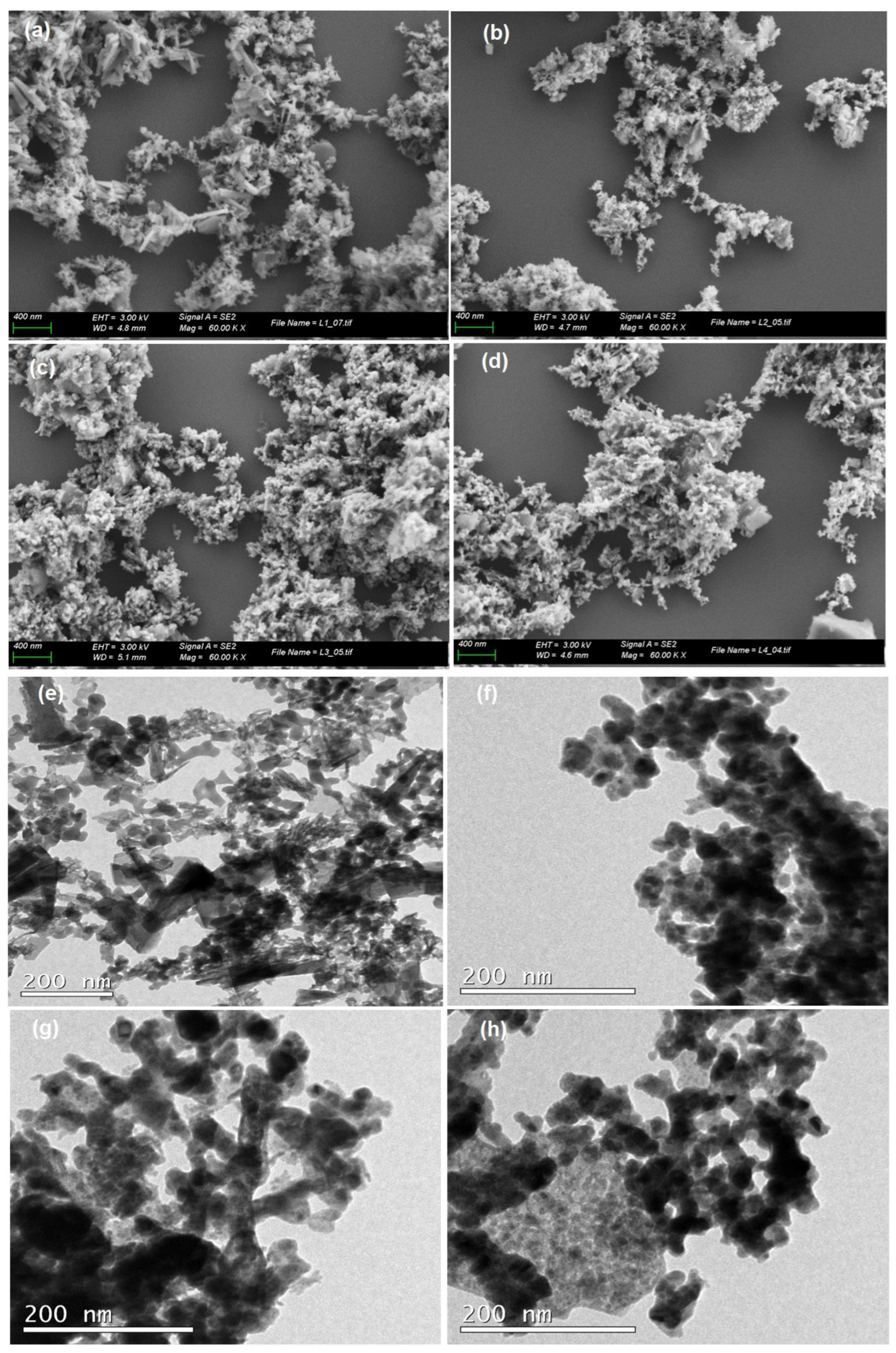
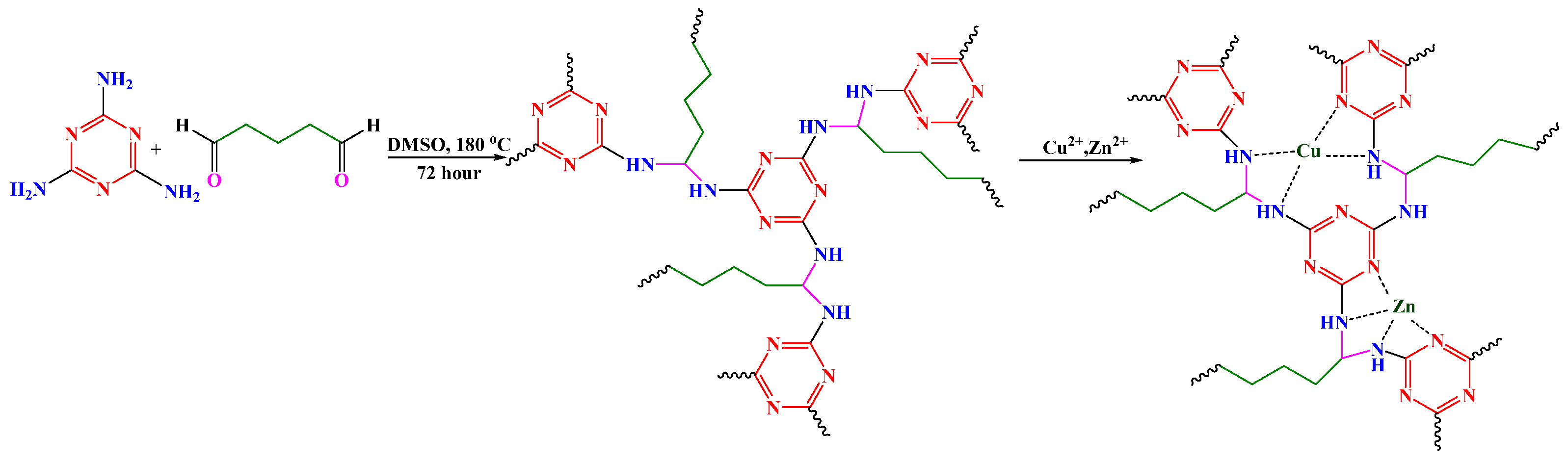
2.1. Materials Synthesis and Characterization
2.2. Catalyst’s Performance in Methanol Synthesis
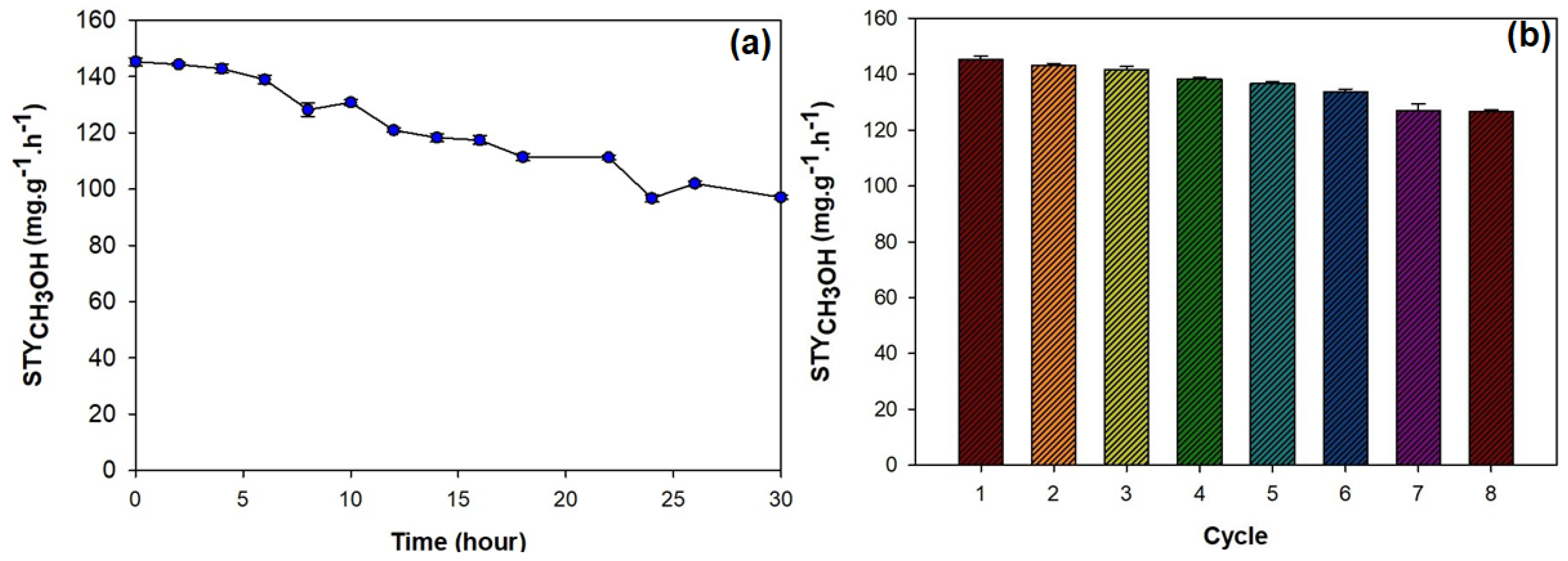
2.3. The Stability and Reusability of the Catalyst
2.4. Comparison with Alternative Catalysts
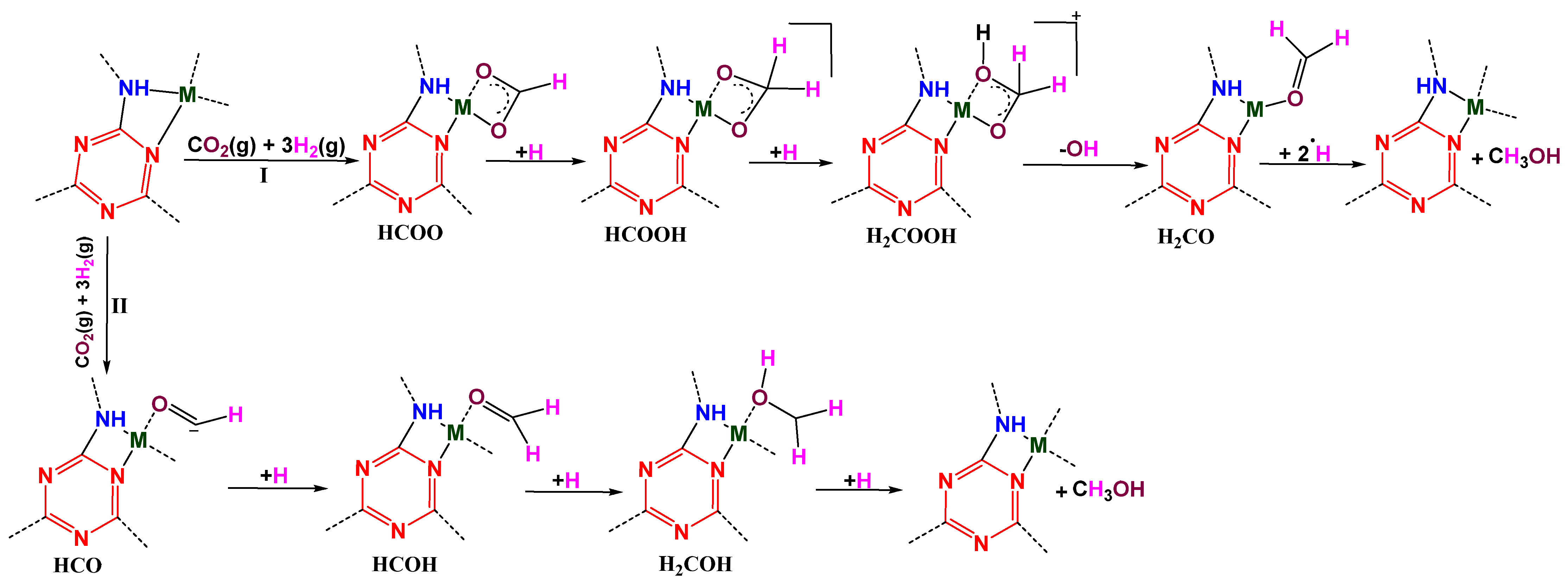
2.5. CO2 Hydrogenation Proposed Mechanism
3. Materials and Methods
3.1. Materials
3.2. Catalyst Preparation
3.2.1. Synthesis of Melamine Glutaraldehyde Polymer Network (MGPN)
3.2.2. Synthesis of MGPN@CZA Catalyst
3.2.3. Synthesis of CZA Catalyst
3.3. Materials Characterization
3.4. Catalytic Experiments
4. Conclusions
Supplementary Materials
Author Contributions
Funding
Data Availability Statement
Conflicts of Interest
References
- Ramakrishnan, A.; Rathod, S.; Tucho, W.M.; Chavan, S.M.; Yu, Z. MOF-808 as Effective Support for Cu-Based Catalyst for CO2 Hydrogenation to Methanol. Catalysts 2025, 15, 324. [Google Scholar] [CrossRef]
- Olah, G.A.; Prakash, G.K.S.; Goeppert, A. Anthropogenic Chemical Carbon Cycle for a Sustainable Future. J. Am. Chem. Soc. 2011, 133, 12881–12898. [Google Scholar] [CrossRef]
- Aresta, M.; Dibenedetto, A. Utilisation of CO2 as a chemical feedstock: Opportunities and challenges. Dalton Trans. 2007, 28, 2975–2992. [Google Scholar] [CrossRef] [PubMed]
- Sakakura, T.; Choi, J.-C.; Yasuda, H. Transformation of Carbon Dioxide. Chem. Rev. 2007, 107, 2365–2387. [Google Scholar] [CrossRef]
- Aresta, M.; Dibenedetto, A.; Angelini, A. Catalysis for the Valorization of Exhaust Carbon: From CO2 to Chemicals, Materials, and Fuels. Technological Use of CO2. Chem. Rev. 2014, 114, 1709–1742. [Google Scholar] [CrossRef] [PubMed]
- Saeidi, S.; Amin, N.A.S.; Rahimpour, M.R. Hydrogenation of CO2 to value-added products—A review and potential future developments. J. CO2 Util. 2014, 5, 66–81. [Google Scholar] [CrossRef]
- Dalena, F.; Senatore, A.; Marino, A.; Gordano, A.; Basile, M.; Basile, A. Chapter 1—Methanol Production and Applications: An Overview. In Methanol Science and Engineering; Basile, A., Dalena, F., Eds.; Elsevier: Amsterdam, The Netherlands, 2018; pp. 3–28. [Google Scholar] [CrossRef]
- Guil-López, R.; Mota, N.; Llorente, J.; Millán, E.; Pawelec, B.; Fierro, J.L.G.; Navarro, R.M. Methanol Synthesis from CO2: A Review of the Latest Developments in Heterogeneous Catalysis. Materials 2019, 12, 3902. [Google Scholar] [CrossRef]
- Yuan, Z.; Eden, M.R.; Gani, R. Toward the Development and Deployment of Large-Scale Carbon Dioxide Capture and Conversion Processes. Ind. Eng. Chem. Res. 2016, 55, 3383–3419. [Google Scholar] [CrossRef]
- Rodriguez, J.A.; Liu, P.; Stacchiola, D.J.; Senanayake, S.D.; White, M.G.; Chen, J.G. Hydrogenation of CO2 to Methanol: Importance of Metal–Oxide and Metal–Carbide Interfaces in the Activation of CO2. ACS Catal. 2015, 5, 6696–6706. [Google Scholar] [CrossRef]
- Vali, S.A.; Markeb, A.A.; Moral-Vico, J.; Font, X.; Sánchez, A. A novel Cu-based catalyst supported in chitosan nanoparticles for the hydrogenation of carbon dioxide to methanol: From the optimization of the catalyst performance to the reaction mechanism. Catal. Commun. 2023, 182, 106747. [Google Scholar] [CrossRef]
- Díez-Ramírez, J.; Dorado, F.; de la Osa, A.R.; Valverde, J.L.; Sánchez, P. Hydrogenation of CO2 to Methanol at Atmospheric Pressure over Cu/ZnO Catalysts: Influence of the Calcination, Reduction, and Metal Loading. Ind. Eng. Chem. Res. 2017, 56, 1979–1987. [Google Scholar] [CrossRef]
- Gao, P.; Li, F.; Xiao, F.; Zhao, N.; Wei, W.; Zhong, L.; Sun, Y. Effect of hydrotalcite-containing precursors on the performance of Cu/Zn/Al/Zr catalysts for CO2 hydrogenation: Introduction of Cu2+ at different formation stages of precursors. Catal. Today 2012, 194, 9–15. [Google Scholar] [CrossRef]
- Shesterkina, A.; Zhdanova, C.; Davshan, N.; Medvedev, A.; Kalmykov, K.; Dunaev, S.; Kustov, L.; Kustov, A. CO2 hydrogenation to methanol on the incapsulated Cu-Zn catalyst: Effect of the MCM-41 and SBA-15 supports and the method of preparation on catalytic activity. Green Synth. Catal. 2025, 16, 4223–4233. [Google Scholar] [CrossRef]
- Zhang, X.; Lu, J.; Zhang, J. Porosity Enhancement of Carbazolic Porous Organic Frameworks Using Dendritic Building Blocks for Gas Storage and Separation. Chem. Mater. 2014, 26, 4023–4029. [Google Scholar] [CrossRef]
- Puthiaraj, P.; Pitchumani, K. Palladium nanoparticles supported on triazine functionalised mesoporous covalent organic polymers as efficient catalysts for Mizoroki–Heck cross coupling reaction. Green Chem. 2014, 16, 4223–4233. [Google Scholar] [CrossRef]
- San, X.; Li, X.; Jin, Q.; Dai, B.; Zhang, L.; Meng, D.; Qi, J. Comprehensive insight into Cu-based catalysts for CO2 hydrogenation to methanol. Sustain. Mater. Technol. 2025, 45, e01437. [Google Scholar] [CrossRef]
- Vertepov, A.E.; Fedorova, A.A.; Batkin, A.M.; Knotko, A.V.; Maslakov, K.I.; Doljenko, V.D.; Vasiliev, A.V.; Kapustin, G.I.; Shatalova, T.B.; Sorokina, N.M.; et al. CO2 Hydrogenation to Methanol on CuO-ZnO/SiO2 and CuO-ZnO/CeO2-SiO2 Catalysts Synthesized with β-Cyclodextrin Template. Catalysts 2023, 13, 1231. [Google Scholar] [CrossRef]
- Puthiaraj, P.; Cho, S.-M.; Lee, Y.-R.; Ahn, W.-S. Microporous covalent triazine polymers: Efficient Friedel–Crafts synthesis and adsorption/storage of CO2 and CH4. J. Mater. Chem. A 2015, 3, 6792–6797. [Google Scholar] [CrossRef]
- Gong, Y.-N.; Guan, X.; Jiang, H.-L. Covalent organic frameworks for photocatalysis: Synthesis, structural features, fundamentals and performance. Coord. Chem. Rev. 2023, 475, 214889. [Google Scholar] [CrossRef]
- Schwab, M.G.; Fassbender, B.; Spiess, H.W.; Thomas, A.; Feng, X.; Müllen, K. Catalyst-free Preparation of Melamine-Based Microporous Polymer Networks through Schiff Base Chemistry. J. Am. Chem. Soc. 2009, 131, 7216–7217. [Google Scholar] [CrossRef]
- Shao, L.; Liu, M.; Sang, Y.; Huang, J. One-pot synthesis of melamine-based porous polyamides for CO2 capture. Microporous Mesoporous Mater. 2019, 285, 105–111. [Google Scholar] [CrossRef]
- Zhang, N.; Zou, B.; Yang, G.-P.; Yu, B.; Hu, C.-W. Melamine-based mesoporous organic polymers as metal-Free heterogeneous catalyst: Effect of hydroxyl on CO2 capture and conversion. J. CO2 Util. 2017, 22, 9–14. [Google Scholar] [CrossRef]
- Liu, Y.; Li, S.; Pudukudy, M.; Lin, L.; Yang, H.; Li, M.; Shan, S.; Hu, T.; Zhi, Y. Melamine-based nitrogen-heterocyclic polymer networks as efficient platforms for CO2 adsorption and conversion. Sep. Purif. Technol. 2024, 331, 125645. [Google Scholar] [CrossRef]
- Ravi, S.; Choi, Y.; Bae, Y.-S. Melamine-functionalized aromatic carbonyl-based polymer with high surface area for efficient CO2 capture. Sep. Purif. Technol. 2023, 317, 123828. [Google Scholar] [CrossRef]
- Zhang, D.; Wang, J.; Wang, Y.; Cao, Y.; Li, J.; Zhou, F.; Huang, J.; Liu, Y.-N. Aromatic ketone-based melamine-knitted polymers for CO2 capture and Hg2+ removal. Chem. Eng. J. 2023, 452, 139275. [Google Scholar] [CrossRef]
- Park, J.M.; Woo, H.C.; Jhung, S.H. Effective CO2 adsorption at low pressure over nitrogen-enriched porous carbons, derived from melamine-loaded polyaniline. Chem. Eng. J. 2021, 412, 128641. [Google Scholar] [CrossRef]
- Bavykina, A.V.; Rozhko, E.; Goesten, M.G.; Wezendonk, T.; Seoane, B.; Kapteijn, F.; Makkee, M.; Gascon, J. Shaping Covalent Triazine Frameworks for the Hydrogenation of Carbon Dioxide to Formic Acid. ChemCatChem 2016, 8, 2217–2221. [Google Scholar] [CrossRef]
- Jaleel, A.; Kim, S.-H.; Natarajan, P.; Gunasekar, G.H.; Park, K.; Yoon, S.; Jung, K.-D. Hydrogenation of CO2 to formates on ruthenium(III) coordinated on melamine polymer network. J. CO2 Util. 2020, 35, 245–255. [Google Scholar] [CrossRef]
- Park, K.; Gunasekar, G.H.; Prakash, N.; Jung, K.D.; Yoon, S. A Highly Efficient Heterogenized Iridium Complex for the Catalytic Hydrogenation of Carbon Dioxide to Formate. ChemSusChem 2015, 8, 3410–3413. [Google Scholar] [CrossRef]
- Li, G.; Zhang, B.; Yan, J.; Wang, Z. The cost-effective synthesis of furan- and thienyl-based microporous polyaminals for adsorption of gases and organic vapors. Chem. Commun. 2016, 52, 1143–1146. [Google Scholar] [CrossRef]
- Ibrahim, M.; Tashkandi, N.; Hadjichristidis, N.; Alkayal, N.S. Synthesis of Naphthalene-Based Polyaminal-Linked Porous Polymers for Highly Effective Uptake of CO2 and Heavy Metals. Polymers 2022, 14, 1136. [Google Scholar] [CrossRef]
- Taskin, O.; Ersoy, N.; Aksu, A.; Kiskan, B.; Balkis, N.; Yagci, Y. Melamine-based Microporous Polymer for Highly Efficient Removal of Copper (II) from the Aqueous Solution. Polymer Int. 2016, 65, 439–445. [Google Scholar] [CrossRef]
- Rohan, R.; Pareek, K.; Cai, W.; Zhang, Y.; Xu, G.; Gao, Z.; Zhao, D.; Cheng, H. Melamine-terephthalaldehyde-lithium complex: A porous organic network based single ion electrolyte for lithium ion batteries. J. Mater. Chem. A 2015, 3, 5132–5139. [Google Scholar] [CrossRef]
- Anjali, K.; Nishana, L.; Christopher, J.; Sakthivel, A. Zinc-tetraphenylporphyrin grafted on functionalised mesoporous SBA-15: Synthesis and utilisation for nitroaldol condensation. J. Porous Mater. 2020, 27, 1191–1201. [Google Scholar] [CrossRef]
- Du, J.; Zhao, Y.; Chen, J.; Zhang, P.; Gao, L.; Wang, M.; Cao, C.; Wen, W.; Zhu, C. Difunctional Cu-doped carbon dots: Catalytic activity and fluorescence indication for the reduction reaction of p-nitrophenol. RSC Adv. 2017, 7, 33929–33936. [Google Scholar] [CrossRef]
- Yang, G.; Han, H.-Y.; Du, C.; Luo, Z.; Wang, Y. Facile synthesis of melamine-based porous polymer networks and their application for removal of aqueous mercury ions. Polymer 2010, 51, 6193–6202. [Google Scholar] [CrossRef]
- Alkayal, N.S.; Alotaibi, M.M.; Tashkandi, N.Y.; Alrayyani, M.A. Synthesis and Characterization of Bipyridine-Based Polyaminal Network for CO2 Capture. Polymers 2022, 14, 3746. [Google Scholar] [CrossRef]
- Thommes, M.; Kaneko, K.; Neimark, A.; Olivier, J.; Rodriguez-Reinoso, F.; Rouquerol, J.; Sing, K. Physisorption of gases, with special reference to the evaluation of surface area and pore size distribution (IUPAC Technical Report). Pure Appl. Chem. 2015, 87, 1051–1069. [Google Scholar] [CrossRef]
- Mukhtar, A.; Mellon, N.; Saqib, S.; Lee, S.-P.; Bustam, M.A. Extension of BET theory to CO2 adsorption isotherms for ultra-microporosity of covalent organic polymers. SN Appl. Sci. 2020, 2, 1232. [Google Scholar] [CrossRef]
- Zhang, L.; Cui, J.; Zhang, Y.; San, X.; Meng, D. Surface conversion of CuO–ZnO to ZIF-8 to enhance CO2 adsorption for CO2 hydrogenation to methanol. New J. Chem. 2023, 47, 6700–6707. [Google Scholar] [CrossRef]
- Sandín, R.; González-Lucas, M.; Sobarzo, P.A.; Terraza, C.A.; Maya, E.M. Microwave-assisted melamine-based polyaminals and their application for metal cations adsorption. Eur. Polym. J. 2021, 155, 110562. [Google Scholar] [CrossRef]
- Ahouari, H.; Soualah, A.; Le Valant, A.; Pinard, L.; Magnoux, P.; Pouilloux, Y. Methanol synthesis from CO2 hydrogenation over copper based catalysts. React. Kinet. Mech. Catal. 2013, 110, 131–145. [Google Scholar] [CrossRef]
- Han, F.; Liu, H.; Cheng, W.; Xu, Q. Highly selective conversion of CO2 to methanol on the CuZnO–ZrO2 solid solution with the assistance of plasma. RSC Adv. 2020, 10, 33620–33627. [Google Scholar] [CrossRef] [PubMed]
- Shunmughanathan, M.; Puthiaraj, P.; Pitchumani, K. Melamine-Based Microporous Network Polymer Supported Palladium Nanoparticles: A Stable and Efficient Catalyst for the Sonogashira Coupling Reaction in Water. ChemCatChem 2015, 7, 666–673. [Google Scholar] [CrossRef]
- Bae, J.W.; Kang, S.-H.; Murali Dhar, G.; Jun, K.-W. Effect of Al2O3 content on the adsorptive properties of Cu/ZnO/Al2O3 for removal of odorant sulfur compounds. Int. J. Hydrogen Energy 2009, 34, 8733–8740. [Google Scholar] [CrossRef]
- Kang, S.-H.; Bae, J.W.; Prasad, P.S.S.; Oh, J.-H.; Jun, K.-W.; Song, S.-L.; Min, K.-S. Influence of Ga addition on the methanol synthesis activity of Cu/ZnO catalyst in the presence and absence of alumina. J. Ind. Eng. Chem. 2009, 15, 665–669. [Google Scholar] [CrossRef]
- Jeong, H.; Kim, K.I.; Kim, T.H.; Ko, C.H.; Park, H.C.; Song, I.K. Hydrogen production by steam reforming of methanol in a micro-channel reactor coated with Cu/ZnO/ZrO2/Al2O3 catalyst. J. Power Sources 2006, 159, 1296–1299. [Google Scholar] [CrossRef]
- Lim, H.-W.; Park, M.-J.; Kang, S.-H.; Chae, H.-J.; Bae, J.W.; Jun, K.-W. Modeling of the Kinetics for Methanol Synthesis using Cu/ZnO/Al2O3/ZrO2 Catalyst: Influence of Carbon Dioxide during Hydrogenation. Ind. Eng. Chem. Res. 2009, 48, 10448–10455. [Google Scholar] [CrossRef]
- Lei, H.; Hou, Z.; Xie, J. Hydrogenation of CO2 to CH3OH over CuO/ZnO/Al2O3 catalysts prepared via a solvent-free routine. Fuel 2016, 164, 191–198. [Google Scholar] [CrossRef]
- Wang, L.-C.; Liu, Y.-M.; Chen, M.; Cao, Y.; He, H.-Y.; Wu, G.-S.; Dai, W.-L.; Fan, K.-N. Production of hydrogen by steam reforming of methanol over Cu/ZnO catalysts prepared via a practical soft reactive grinding route based on dry oxalate-precursor synthesis. J. Catal. 2007, 246, 193–204. [Google Scholar] [CrossRef]
- Mani, M.; Kadam, G.G.; Konwar, L.J.; Panda, A.B. Ru-supported mesoporous melamine polymers as efficient catalysts for selective hydrogenation of aqueous 5-hydroxymethylfurfural to 2,5-bis-(hydroxymethyl)furan. Biomass Convers. Biorefinery 2024, 14, 6267–6284. [Google Scholar] [CrossRef]
- Refaat, Z.; Saied, M.E.; Naga, A.O.A.E.; Shaban, S.A.; Hassan, H.B.; Shehata, M.R.; Kady, F.Y.E. Mesoporous carbon nitride supported MgO for enhanced CO2 capture. Environ. Sci. Pollut. Res. Int. 2023, 30, 53817–53832. [Google Scholar] [CrossRef]
- Zhou, G.; He, Z.; Dong, X. Role of Metal Oxides in Cu-Based Catalysts with NaBH4 Reduction for the Synthesis of Methanol from CO2/H2. Catal. Lett. 2021, 151, 1091–1101. [Google Scholar] [CrossRef]
- Guo, X.; Mao, D.; Lu, G.; Wang, S.; Wu, G. The influence of La doping on the catalytic behavior of Cu/ZrO2 for methanol synthesis from CO2 hydrogenation. J. Mol. Catal. A Chem. 2011, 345, 60–68. [Google Scholar] [CrossRef]
- Wang, L.-C.; Liu, Q.; Chen, M.; Liu, Y.-M.; Cao, Y.; He; Fan, K.-N. Structural Evolution and Catalytic Properties of Nanostructured Cu/ZrO2 Catalysts Prepared by Oxalate Gel-Coprecipitation Technique. J. Phys. Chem. C 2007, 111, 16549–16557. [Google Scholar] [CrossRef]
- Avgouropoulos, G.; Ioannides, T.; Matralis, H. Influence of the preparation method on the performance of CuO–CeO2 catalysts for the selective oxidation of CO. Appl. Catal. B Environ. 2005, 56, 87–93. [Google Scholar] [CrossRef]
- Guo, X.; Mao, D.; Lu, G.; Wang, S.; Wu, G. CO2 hydrogenation to methanol over Cu/ZnO/ZrO2 catalysts prepared via a route of solid-state reaction. Catal. Commun. 2011, 12, 1095–1098. [Google Scholar] [CrossRef]
- Lei, H.; Nie, R.; Wu, G.; Hou, Z. Hydrogenation of CO2 to CH3OH over Cu/ZnO catalysts with different ZnO morphology. Fuel 2015, 154, 161–166. [Google Scholar] [CrossRef]
- Tedeeva, M.A.; Kustov, A.L.; Batkin, A.M.; Garifullina, C.; Zalyatdinov, A.A.; Yang, D.; Dai, Y.; Yang, Y.; Kustov, L.M. Catalytic systems for hydrogenation of CO2 to methanol. Mol. Catal. 2024, 566, 114403. [Google Scholar] [CrossRef]
- Carrasco-García, A.; Vali, S.A.; Ben-Abbou, Z.; Moral-Vico, J.; Abo Markeb, A.; Sánchez, A. Synthesis of Cobalt-Based Nanoparticles as Catalysts for Methanol Synthesis from CO2 Hydrogenation. Materials 2024, 17, 697. [Google Scholar] [CrossRef]
- García, A.C.; Moral-Vico, J.; Abo Markeb, A.; Sánchez, A. Conversion of Carbon Dioxide into Methanol Using Cu–Zn Nanostructured Materials as Catalysts. Nanomaterials 2022, 12, 999. [Google Scholar] [CrossRef] [PubMed]
- Zachopoulos, A.; Heracleous, E. Overcoming the equilibrium barriers of CO2 hydrogenation to methanol via water sorption: A thermodynamic analysis. J. CO2 Util. 2017, 21, 360–367. [Google Scholar] [CrossRef]
- Ma, F.; Liu, J.; Chen, K.; Cheng, Z. Thermal Stability Improvement of Cu-Based Catalyst by Hydrophobic Modification in Methanol Synthesis. Processes 2024, 12, 2008. [Google Scholar] [CrossRef]
- Warmuth, L.; Steurer, M.; Schild, D.; Zimina, A.; Grunwaldt, J.-D.; Pitter, S. Reversible and Irreversible Structural Changes in Cu/ZnO/ZrO2 Catalysts during Methanol Synthesis. ACS Appl. Mater. Interfaces 2024, 16, 8813–8821. [Google Scholar] [CrossRef]
- Kanari, N.; Mishra, D.; Gaballah, I.; Dupré, B. Thermal decomposition of zinc carbonate hydroxide. Thermochim. Acta 2004, 410, 93–100. [Google Scholar] [CrossRef]
- Zhang, L.-x.; Zhang, Y.-c.; Chen, S.-y. Effect of promoter TiO2 on the performance of CuO-ZnO-Al2O3 catalyst for CO2 catalytic hydrogenation to methanol. J. Fuel Chem. Technol. 2011, 39, 912–917. [Google Scholar] [CrossRef]
- Chen, D.; Mao, D.; Wang, G.; Guo, X.; Yu, J. CO2 hydrogenation to methanol over CuO-ZnO-ZrO2 catalyst prepared by polymeric precursor method. J. Sol-Gel Sci. Technol. 2019, 89, 686–699. [Google Scholar] [CrossRef]
- Phongamwong, T.; Chantaprasertporn, U.; Witoon, T.; Numpilai, T.; Poo-arporn, Y.; Limphirat, W.; Donphai, W.; Dittanet, P.; Chareonpanich, M.; Limtrakul, J. CO2 hydrogenation to methanol over CuO–ZnO–ZrO2–SiO2 catalysts: Effects of SiO2 contents. Chem. Eng. J. 2017, 316, 692–703. [Google Scholar] [CrossRef]
- Fan, Y.J.; Wu, S.F. A graphene-supported copper-based catalyst for the hydrogenation of carbon dioxide to form methanol. J. CO2 Util. 2016, 16, 150–156. [Google Scholar] [CrossRef]
- Arena, F.; Barbera, K.; Italiano, G.; Bonura, G.; Spadaro, L.; Frusteri, F. Synthesis, characterization and activity pattern of Cu–ZnO/ZrO2 catalysts in the hydrogenation of carbon dioxide to methanol. J. Catal. 2007, 249, 185–194. [Google Scholar] [CrossRef]
- Vali, S.A.; Moral-Vico, J.; Font, X.; Sánchez, A. Cu/ZnO/CeO2 Supported on MOF-5 as a Novel Catalyst for the CO2 Hydrogenation to Methanol: A Mechanistic Study on the Effect of CeO2 and MOF-5 on Active Sites. Catal. Lett. 2024, 154, 3157–3173. [Google Scholar] [CrossRef]
- Rosado, A.; Popa, I.; Abo Markeb, A.; Moral-Vico, J.; Naughton, E.; Eckhardt, H.-G.; Ayllon, J.A.; Lopez-Periago, A.M.; Domingo, C.; Negahdar, L. Multifunctionalized zirconium-based MOF as a novel support for dispersed copper: Application in CO2 adsorption and catalytic conversion. J. Mater. Chem. A 2024, 12, 21758–21771. [Google Scholar] [CrossRef]
- Zhao, Y.-F.; Yang, Y.; Mims, C.; Peden, C.H.F.; Li, J.; Mei, D. Insight into methanol synthesis from CO2 hydrogenation on Cu(111): Complex reaction network and the effects of H2O. J. Catal. 2011, 281, 199–211. [Google Scholar] [CrossRef]







| Test | Time (Hour)/ Cycle Number | Selectivity (%) | ||
|---|---|---|---|---|
| CH3OH | CH4 | CO | ||
| Stability | 1 | 98.57 | 1.43 | N.D. * |
| 2 | 98.40 | 1.45 | 0.15 | |
| 4 | 98.54 | 1.45 | N.D. | |
| 6 | 98.73 | 1.26 | N.D. | |
| 8 | 98.51 | 1.48 | N.D. | |
| 10 | 98.20 | 1.79 | N.D. | |
| 12 | 98.32 | 1.67 | N.D. | |
| 14 | 97.97 | 2.02 | N.D. | |
| 16 | 98.32 | 1.67 | N.D. | |
| 18 | 98.15 | 1.84 | N.D. | |
| 22 | 97.68 | 2.14 | 0.17 | |
| 23 | 97.97 | 2.02 | N.D. | |
| 25 | 98.10 | 1.89 | N.D. | |
| 30 | 97.68 | 2.31 | N.D. | |
| Reusability | 1 | 98.36 | 0.89 | 0.76 |
| 2 | 98.35 | 0.85 | 0.85 | |
| 3 | 98.10 | 0.86 | 0.86 | |
| 4 | 97.83 | 0.86 | 0.86 | |
| 5 | 96.42 | 2.25 | 2.25 | |
| 6 | 96.19 | 2.48 | 2.48 | |
| 7 | 95.23 | 3.22 | 3.22 | |
| 8 | 96.01 | 2.60 | 2.60 | |
| Element | Before Catalysis | After Catalysis | After Stability | After Reusability | ||||
|---|---|---|---|---|---|---|---|---|
| Wt% | At.% | Wt% | At.% | Wt% | At.% | Wt% | At.% | |
| C | 32.05 | 40.47 | 32.64 | 38.39 | 30.31 | 36.79 | 31.70 | 40.27 |
| N | 18.78 | 22.09 | 13.51 | 20.00 | 20.32 | 21.34 | 15.52 | 16.18 |
| O | 15.35 | 16.46 | 11.84 | 13.40 | 18.00 | 9.46 | 18.37 | 8.26 |
| Al | 2.24 | 1.18 | 3.16 | 2.20 | 1.97 | 2.11 | 4.09 | 3.13 |
| Cu | 30.41 | 19.54 | 28.95 | 18.09 | 20.17 | 21.81 | 21.77 | 24.82 |
| Zn | 1.17 | 0.26 | 8.91 | 7.92 | 9.23 | 8.49 | 8.55 | 7.34 |
| Catalyst | T a (°C) | P b (Bar) | STYCH3OH (mg·gcat−1·h−1) | SCH3OH (%) | Reference |
|---|---|---|---|---|---|
| TiO2/CuO-ZnO-Al2O3 | 260 | 26 | 97.7 | 30.98 | [67] |
| CuO-ZnO-ZrO2 | 240 | 30 | 4.9 | 54.1 | [68] |
| Cu/ZnO/ZrO2 | 270 | 50 | 213.0 | 56.8 | [69] |
| CuO-ZnO-ZrO2-Al2O3 | 240 | 20 | 262.7 | 74.2 | [70] |
| Cu-ZnO/ZrO2 | 240 | 30 | 225.5 | 75.0 | [71] |
| CuO-ZnO-ZrO2-Al2O3/rGO | 240 | 20 | 310.7 | 78.9 | [70] |
| [CuCs@FeBTC]aa@rGO}H2 | 260 | 10 | 86 | 92 | [72] |
| CuO/ZnO/Al2O3@chitosan | 260 | 10 | 92.44 | 90 | [11] |
| MGPN@CZA-2 | 260 | 10 | 145.43 | 98.36 | This work |
| NU-1000-NH2/PrS-Cu | 280 | 10 | 100 | 100 | [73] |
Disclaimer/Publisher’s Note: The statements, opinions and data contained in all publications are solely those of the individual author(s) and contributor(s) and not of MDPI and/or the editor(s). MDPI and/or the editor(s) disclaim responsibility for any injury to people or property resulting from any ideas, methods, instructions or products referred to in the content. |
© 2026 by the authors. Licensee MDPI, Basel, Switzerland. This article is an open access article distributed under the terms and conditions of the Creative Commons Attribution (CC BY) license.
Share and Cite
Ali, L.S.A.; Abo Markeb, A.; Moral-Vico, J.; Font, X.; Artola, A. CO2 Hydrogenation to Methanol over Novel Melamine-Based Polyaminal Porous Polymer Coordinated to Cu-Based Catalyst. Catalysts 2026, 16, 170. https://doi.org/10.3390/catal16020170
Ali LSA, Abo Markeb A, Moral-Vico J, Font X, Artola A. CO2 Hydrogenation to Methanol over Novel Melamine-Based Polyaminal Porous Polymer Coordinated to Cu-Based Catalyst. Catalysts. 2026; 16(2):170. https://doi.org/10.3390/catal16020170
Chicago/Turabian StyleAli, Laila S. A., Ahmad Abo Markeb, Javier Moral-Vico, Xavier Font, and Adriana Artola. 2026. "CO2 Hydrogenation to Methanol over Novel Melamine-Based Polyaminal Porous Polymer Coordinated to Cu-Based Catalyst" Catalysts 16, no. 2: 170. https://doi.org/10.3390/catal16020170
APA StyleAli, L. S. A., Abo Markeb, A., Moral-Vico, J., Font, X., & Artola, A. (2026). CO2 Hydrogenation to Methanol over Novel Melamine-Based Polyaminal Porous Polymer Coordinated to Cu-Based Catalyst. Catalysts, 16(2), 170. https://doi.org/10.3390/catal16020170