
Article

Study of the Cathodic Catalytic Mechanisms of Microalgae-Based Microbial Fuel Cells

by
Carolina Montoya-Vallejo
1,
Juan Carlos Quintero Díaz
1 and
Francisco Jesús Fernández-Morales
2,*
1
Grupo de Bioprocesos, Facultad de Ingeniería, Universidad de Antioquia, Calle 70 # 52-21. C. P., Medellin 1226, Colombia
2
Chemical Engineering Department, Chemical and Environmental Technologies Institute (ITQUIMA), University of Castilla-La Mancha, 13071 Ciudad Real, Spain
*
Author to whom correspondence should be addressed.
Catalysts 2026, 16(2), 159; https://doi.org/10.3390/catal16020159
Submission received: 4 January 2026 / Revised: 18 January 2026 / Accepted: 26 January 2026 / Published: 3 February 2026

Abstract

Microbial fuel cells (MFC) are promising systems for wastewater treatment and electricity production; however, many technical and economic challenges must be overcome. One approach to improve MFC performance is the use of photosynthetic microorganisms at the cathode to supply oxygen and reduce aeration requirements. In this work, Chlorella sorokiniana was used as a cathodic biocatalyst, in order to supply oxygen while simultaneously obtaining high-value products. At the anode, an anaerobic mixed microbial culture was used as a biocatalyst. Different cathodic configurations were studied to evaluate the different cathodic catalytic mechanisms. Electrochemical characterization through cyclic voltammetry, polarization curves, biochemical analysis and SEM images was performed. Superior performance was achieved when employing microalgae as the cathodic oxygen source compared to systems relying on external aeration (128.7 mA/m2 vs. 45.2 mA/m2). The addition of methylene blue and sodium bicarbonate improved the current density (194.8 mA/m2 and 128.7 mA/m2). Results indicate that microalgae in the cathodic chamber could enhance MFC electrochemical performance and biomass production, boosting sustainable energy generation.

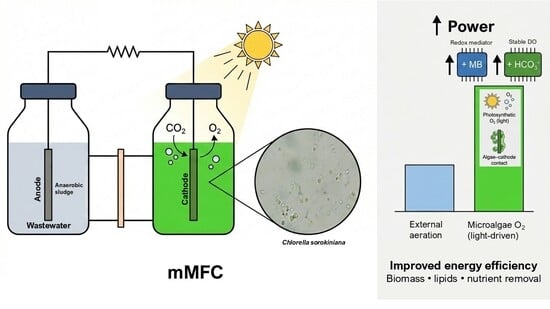
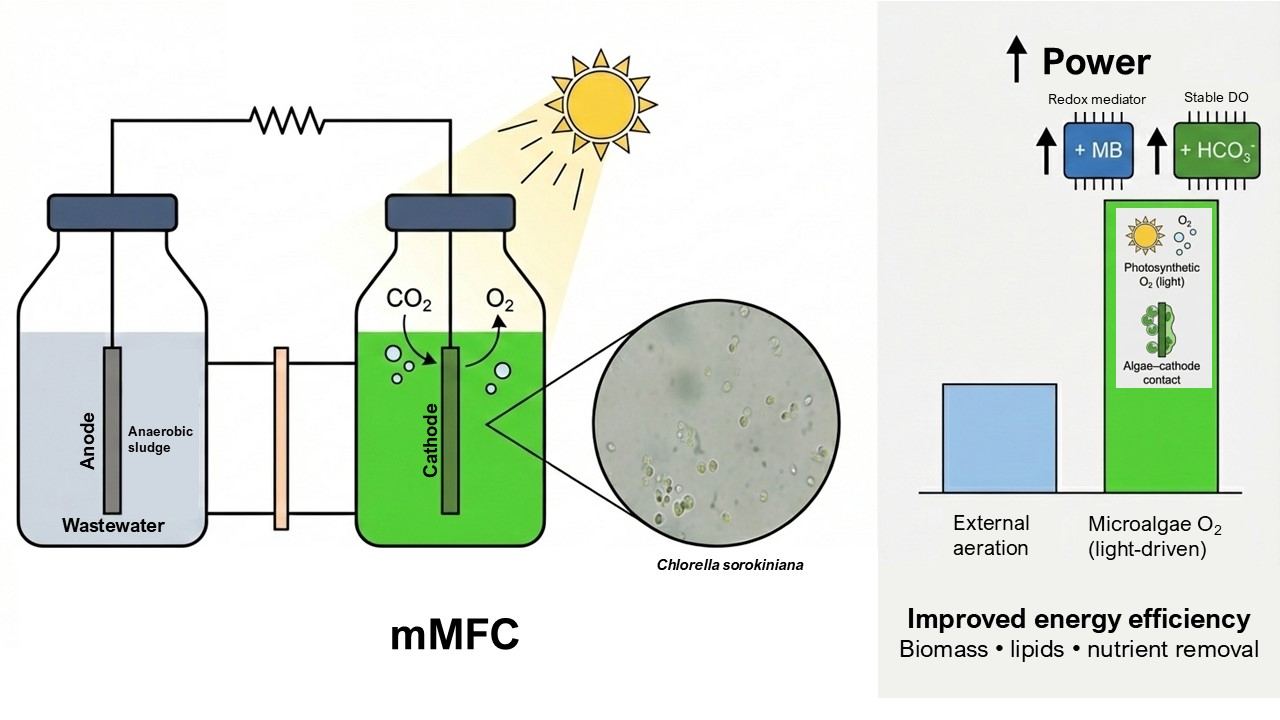
Graphical Abstract

1. Introduction

Alternative technologies to produce energy are of great interest today, due to the decreasing supplies and increasing costs of petroleum and other sources of energy [1]. Microbial fuel cells (MFCs) are innovative technologies that generate electrical current from the oxidation–reduction reactions that occur within living microorganisms. A typical MFC comprises an anode chamber, where a microorganism culture degrades organic matter into CO2 and produces electrons and protons, and a cathode chamber that receives electrons from the anode through an external circuit [2]. Although MFCs are promising systems for wastewater treatment and electricity production, many technical and economic hurdles still need to be overcome for their large-scale application to be feasible [3,4,5]. One significant cost factor in traditional MFCs is the use of platinum as a catalyst for oxygen reduction [2]. Recently, there has been interest in biocathodes as a cost-effective and sustainable alternative [6]. Biocathodes include aerobic, anaerobic and algae-based systems, with the latter supplying oxygen via photosynthesis and reducing aeration costs [7,8,9]. In algae-based MFCs, also called microalgae microbial fuel cells (mMFCs), photosynthetic cultures utilize sunlight and CO2 to produce oxygen, which acts as the electron acceptor, thus generating electricity while simultaneously reducing CO2 [10,11,12]. The mMFCs were originally tested in the 1960s with metal electrocatalysts and in the 1980s with artificial electron mediators at the anode. However, continuous research on the topic barely takes a decade [12,13,14]. The integration of microalgae in the cathode chamber offers additional advantages. Microalgae can produce biomass and lipids, which have applications as biofuels and other value-added products. Algae also contribute to oxygen production and CO2 capture, which improve MFC performance while simultaneously mitigating greenhouse gas emissions [15,16,17]. Microalgae are diverse photoautotrophic organisms producing biofuels, nutritional supplements and pharmaceuticals [18]. The advantages of microalgae include their capacity to remove contaminants from wastewater, generate value-added products and tolerate a variety of environmental conditions. Additionally, they grow on non-arable land with high biomass productivity, photosynthetic efficiency and fast growth [19,20,21].
Several configurations of mMFCs have been described in the literature—column [22], membrane [23] and photobioreactors cathodic half-cells—reaching power densities from 1.3 mWm−2 using Synechocystis + lagoon microorganisms in a single-chamber mMFCs [24] to 1926 mWm−2 using Chlorella vulgaris in a closed-loop system [25]. One of the most used microalgal species is Chlorella sp., due to its ease of cultivation, high growth rates and lipid composition [26]. Chlorella vulgaris was studied in a double chamber mMFC with plain graphite electrodes, which showed that increasing light intensity (96 µEm−2s−1) enhanced power density by 600% [27]. A novel single-chamber mMFC configuration, with C. vulgaris biofilm exposed to air, was used to treat real dye textile wastewater [28]. A double-chamber mMFC with graphite plate electrodes operated for 32 days with C. vulgaris and a bacterial community showed good efficiency in the production of bioelectricity and the bioremediation of oils [29]. Tubular polyethylene bags with graphite felt electrodes were used in a 10 liter outdoor mMFC, demonstrating the feasibility of using low-cost materials to obtain high power densities (1200 mW/m3) using Chlorella vulgaris [30]. mMFCs could be applied as closed systems; for example, microalgae could be used as a substrate in an anode for bacteria and as a live culture in the cathode [31]. The anodic effluent of the mMFC can be utilized in the cathode chamber as a growth medium for microalgae with recirculation [32].
Considering that mechanical aeration in MFCs accounts for approximately 50% of the total operating cost [33,34], the use of microalgae for oxygen production is one of the most important approaches to use mMFCs. This is because the cathode is one of the factors that affect MFC performance, due to the oxygen reduction reaction (ORR) influencing the onset potential (V) value [35]. On the other hand, photosynthesis is not a continuous process and depends on the photoperiod; thus, power production is limited by oxygen production during the light phase of the metabolism [36].
Microbial fuel cells (MFCs) are a promising technology for wastewater treatment, CO2 capture and sustainable energy production. Although the use of microalgae in the cathode has been explored for oxygen production via photosynthesis, the catalytic mechanisms and operational conditions of these integrated systems are not yet fully described. Furthermore, few studies have evaluated the simultaneous production of energy and lipids in these combined systems. Thus, it is essential to investigate alternative cathode configurations and assess their performance to enhance the feasibility and effectiveness of MFCs coupled with microalgae. While mMFCs have significant potential perspectives, several limitations remain, including infrastructure costs, voltage generation stability, membrane costs and the need for optimized light and nutrient conditions. Addressing these factors, along with selecting strains for high-value product generation and CO2 sequestration, could enhance mMFCs performance and viability [10,11,12,33,37].
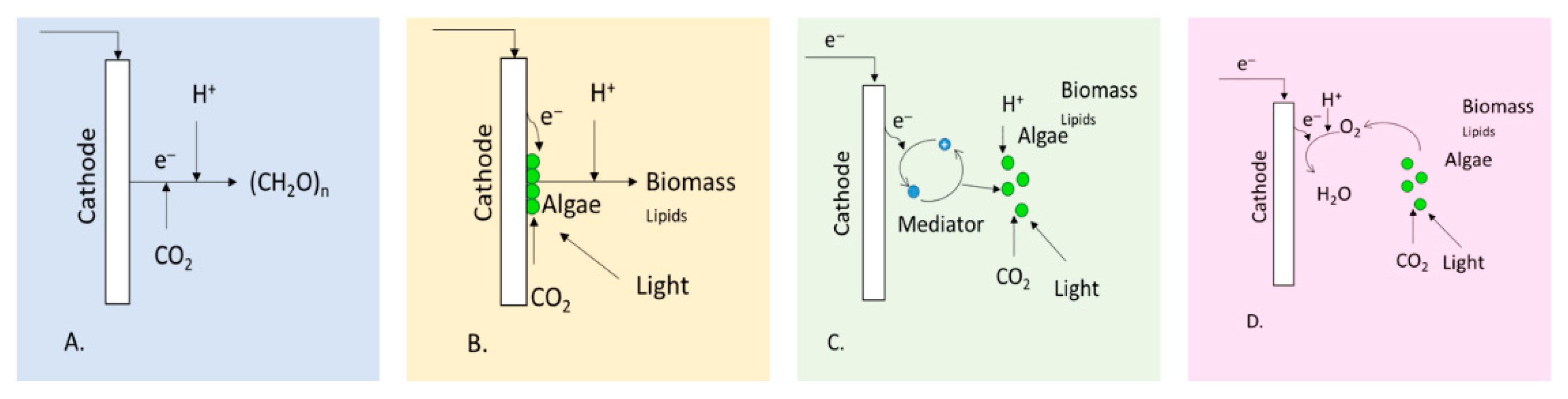
In the literature, the mechanisms of electron uptake for microalgae at the cathode have not been completely elucidated [38]. Four possible mechanisms have been proposed: (a) direct CO2 reduction when CO2 is reduced without the action of microalgae or their metabolic products; (b) direct electron transfer from cathode to algae occurs when algae receive the electrons directly from the cathode and CO2 is used as an electron acceptor [39]; (c) mediator-assisted electron transfer [40,41,42,43]; and (d) oxygen reduction or indirect electron transfer occurs due to the reduction of oxygen produced during photosynthesis [43]. Several approaches have been proposed in order to explain the microalgal effect in the cathodic system: (i) exchanging media to understand if the process is based on planktonic or biofilm cultures; (ii) testing spent (filtered) media to understand if liquid bulk mediators are involved in the process; (iii) testing abiotic electrodes; (iv) varying concentrations of mediators to understand if there is a dose–response relationship between current and substrate removal rates; and (v) testing dead microorganisms to understand the influence of biotic/enzymatic/chemical catalysis [44]. Among the proposed uptake routes, mediator-assisted electron transfer can be examined, using redox mediators as mechanistic probes. Mediators are reversibly reduced compounds that shuttle electrons between cellular redox carriers and an electrode; accordingly, artificial mediators such as methylene blue (MB) have been used to enable extracellular electron transfer in non-electrogenic systems [45]. In addition, the broader relevance of redox-active interfaces in aqueous electrochemical technologies, such as electroadsorption and capacitive deionization, has also been highlighted in the recent literature [46].
Despite the increasing number of studies on microalgal microbial fuel cells, recent analyses indicate that most reports still emphasize overall electrochemical performance, while experimental discrimination among oxygen reduction, direct electron transfer and mediator-assisted pathways remains limited and often indirect [47]. In this context, the present work addresses this gap by comparing different cathodic configurations within the same two-chamber mMFC architecture. Consequently, the aim of this study is to evaluate different cathodic operational modes in a two-chamber mMFC coupled with Chlorella sorokiniana and to analyze the possible cathodic electron uptake mechanisms through a comparative electrochemical assessment of the tested configurations.

2. Results and Discussion

2.1. Effects of O2 and CO2 in mMFCs

In photosynthesis, O2 is a byproduct generated during the light-dependent reactions through water photolysis, which supplies electrons for the photosynthetic electron transport chain. Conversely, CO2 serves as the primary carbon source for the Calvin–Benson cycle, where it is enzymatically fixed into organic molecules, enabling carbohydrate synthesis [48]. While CO2 assimilation is essential for biomass production, O2 release is ecologically significant; however, elevated O2 concentrations can promote photorespiration, thereby reducing the overall efficiency of the carbon fixation. Because of the importance of both gases in photosynthesis, the effect of the most commonly used electron acceptor in MFCs, O2 [34], as well as the effect of CO2, were studied in this work.
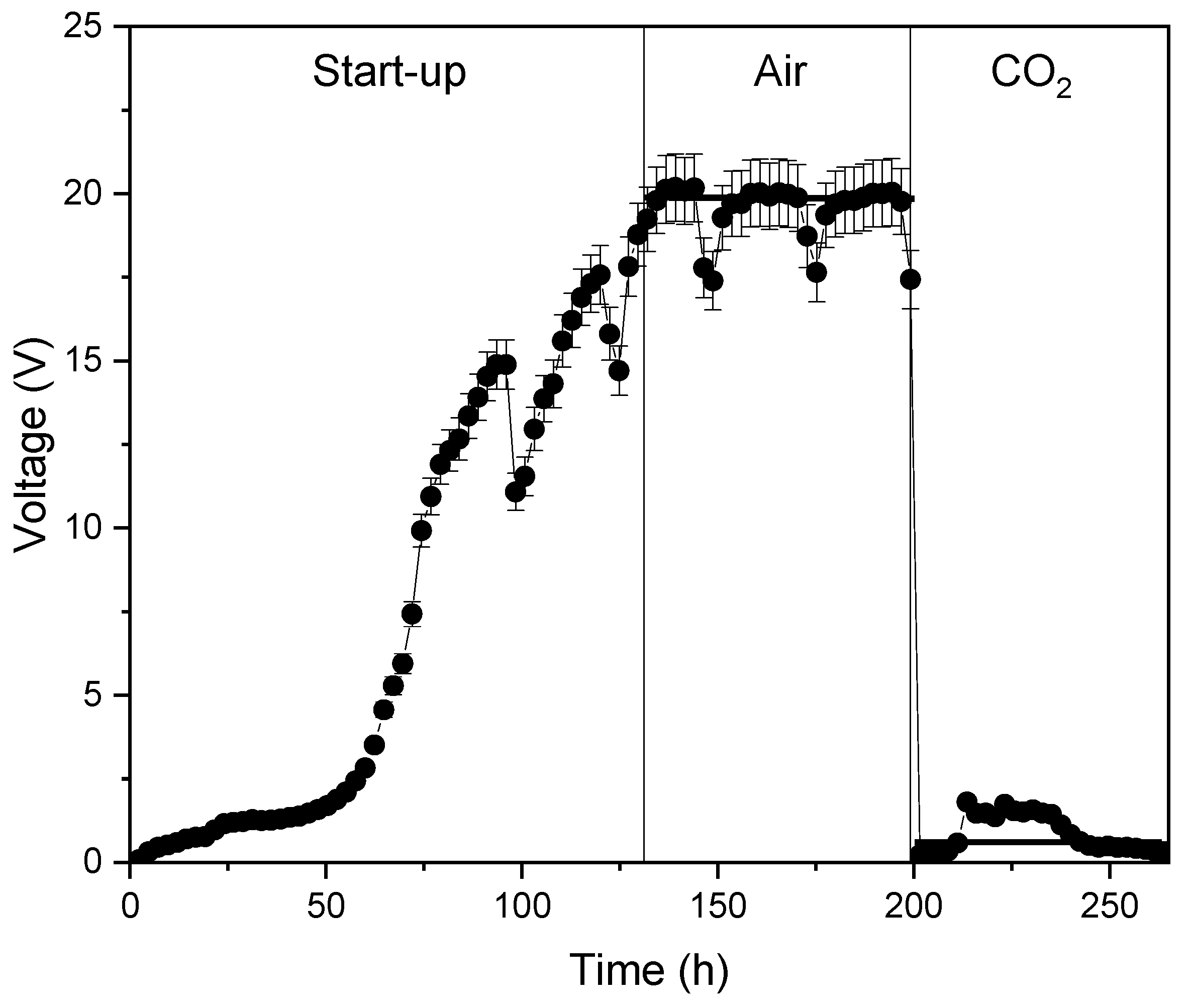
Figure 1 presents the voltage evolution in the mMFC with different conditions in the cathodic chamber. In this Figure, the different contributions to the current generation can be seen. A daily replenishment of 80% of the culture medium was made to maintain the stable conditions in the anodic chamber. During the first week, the system was operated in order to reach stationary behavior. At that moment, the steady-state operation of the MFC feeding atmospheric air was recorded and established as the reference performance of the MFC. When operating with this configuration, a voltage generation of about 20 mV was obtained during the steady-state performance of the cycles. This performance shows current generation, due to the oxidation carried out by the electrogenic anodic sludge and the oxygen reduction reaction at the cathode of the MFC. After that, atmospheric oxygen was substituted by CO2, with the aim of evaluating the effect of CO2. As previously stated, it is important to determine the CO2 effect because the metabolic route of the photosynthesis leads to the release of CO2 as a byproduct, which could affect the electrochemical performance of the mMFC. As expected, see Figure 1, a very low current generation was observed when feeding CO2 (SII), indicating that the CO2 reduction reaction hardly takes place. This result indicates negligible reduction reactions taking place at the cathode of the MFC. This behavior during the dark reaction could limit the voltage generation, making this kind of MFC configuration less convenient. This behavior can be explained by the fact that the standard reduction potential for converting CO2 to more reduced products (like formic, acetic or propionic acids) is quite negative, requiring a high overpotential to perform the reaction [49,50]. However, the presence of CO2 could facilitate the reactions of the chemical components of the medium used for algae growth.
Once the contributions to the reduction process of the main products generated during the light and dark phases of the photosynthesis (O2 and CO2) were studied, several experiments were performed with the aim of evaluating the different catalytic mechanisms of the algae-based cathode.

2.2. Identification of the Main Catalytic Mechanisms in mMFCs

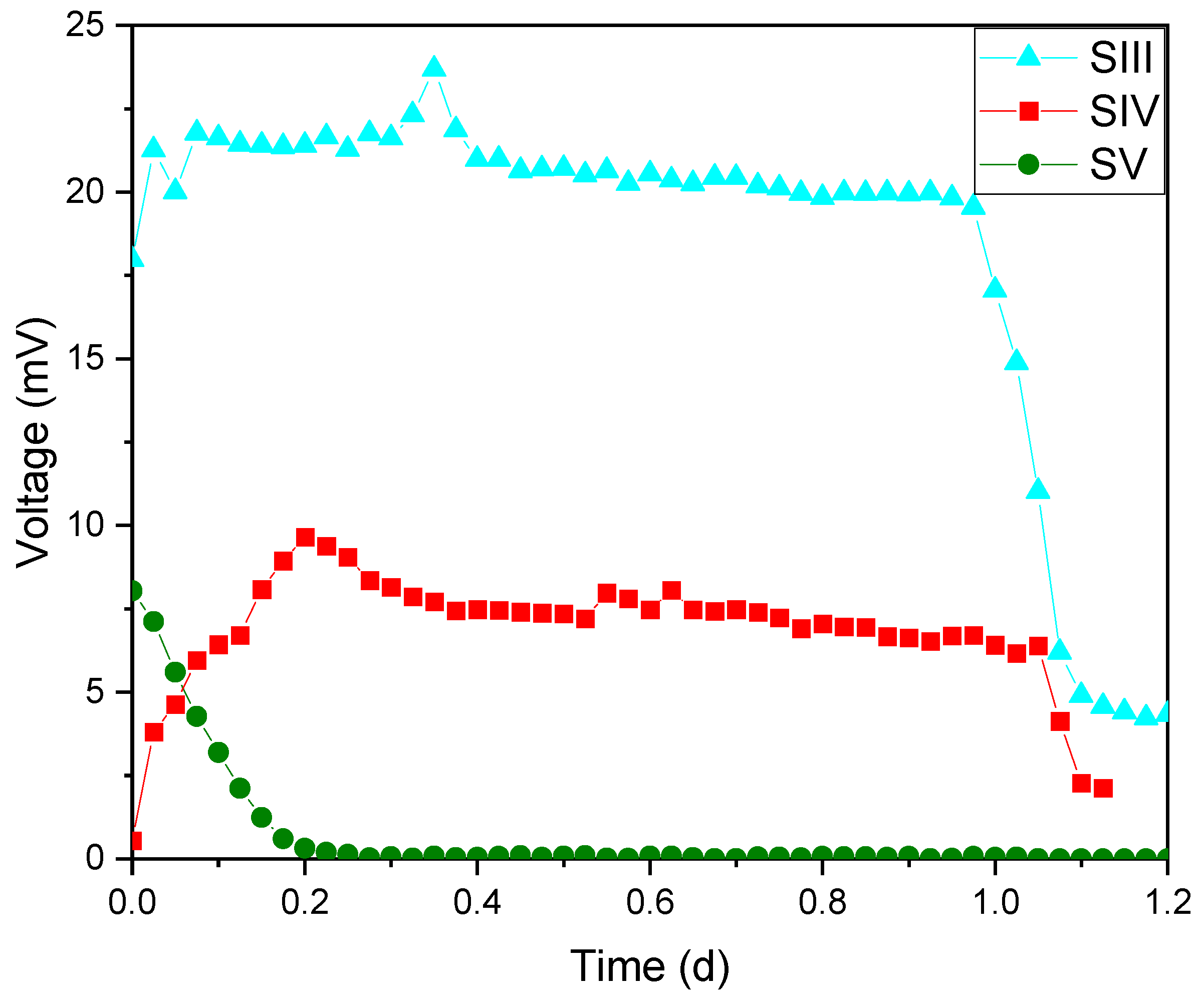
In order to identify the main catalytic mechanisms taking place in mMFCs, different experiments were performed. To study the global contribution of the mMFC, an experiment with the global contributions of the suspended algae culture, the algae biofilm on the electrode and the internal mediators was carried out (SIII). Once the global mMFC system was characterized, the isolated contributions of the biofilm (SIV), as well as the internal mediators generated by the algae metabolisms (SV) were studied. In Figure 2, the steady-state cycle voltages exerted by the mMFC under the three different configurations are presented.
As shown in Figure 2, the configurations studied exhibited markedly different voltage outputs. The highest voltage, approximately 20 mV, was generated by the global mMFC system (SIII). This elevated voltage can be attributed to the combined effects of internal electron acceptors released into the culture medium by the algae, as well as contributions from the algae attached to the cathode as a biofilm and those remaining in suspension [51]. In the experiment that was conducted exclusively with the algae biofilm—where suspended algae were removed and replaced with clear water, thereby avoiding the contributions of the suspended algae—a voltage of about 8 mV was sustained during the cycle. Similar behaviors have been described by other authors that explain power reduction in relation to limited oxygen diffusion, due to lower microalgae concentration [9,52,53]. In the literature, lower performance has also been described when dealing with very thick biofilms, which could reduce the oxygen and organic matter transfer to the cathodic surface, contributing to the drop in voltage [54].
When solely operating with a filtered spent algae medium (SV), a significant voltage was exerted at the beginning, approximately 8 mV, but the voltage decreased as the mediators were consumed, exerting a negligible voltage after about 5 h. These findings suggest that certain chemicals that were contained, previously released to the medium by the algae culture, may act as an internal mediator. The isolated contributions of internal mediators (8 mV) and biofilm (8 mV) do not fully account for the total voltage produced by the mMFC, which can be explained by the additional contribution from the suspended algae culture, estimated at around 5 mV. It must be highlighted that there is a higher voltage exerted by the mMFC system (SIII) when it is compared with an abiotic configuration operating with mechanical aeration (SI). The superior performance of the mMFC can be attributed to the high oxygen availability resulting from the oversaturation conditions that are commonly achieved in microalgal cultures [48,51].
One of the main differences between the aerated cathode (SI) and algal cathodes (SIII, SIV and SV) is the source and availability of oxygen for the reduction reaction; in this sense, the oxygen transport process could have an important role in voltage differences. Oxygen must pass through a series of transport resistances to reach the cathode surface: 1. Oxygen diffuses from the bulk gas to the gas–liquid interface. Then, the oxygen dissolves at the gas–liquid interface and subsequently diffuses through the relatively stagnant liquid region next to the bubble. Later, the oxygen is transported through the bulk liquid to the stagnant region surrounding the cathode and, finally, diffuses to the cathode surface, where the ORR takes place. On the one hand, in the mechanically aerated catholyte, a combination of all the resistances takes place. On the other hand, since algae generates pure oxygen during photosynthesis, the first resistance does not take place [55].
Once the contributions of the microalgae, suspended and attached, as well as that of the internal mediators excreted by the microalgae were identified, the effect of different enhancers that are usually used when operating mMFCs were studied. The enhancers studied were the addition of a commonly used external mediator, methylene blue (MB), at a concentration of 30 mM, with the aim to facilitate the electron transfer to the electrode, and the addition of sodium bicarbonate (12 mM) as an external carbon source, with the aim to facilitate microalgae growth. The results obtained in these tests are presented in Figure 3.
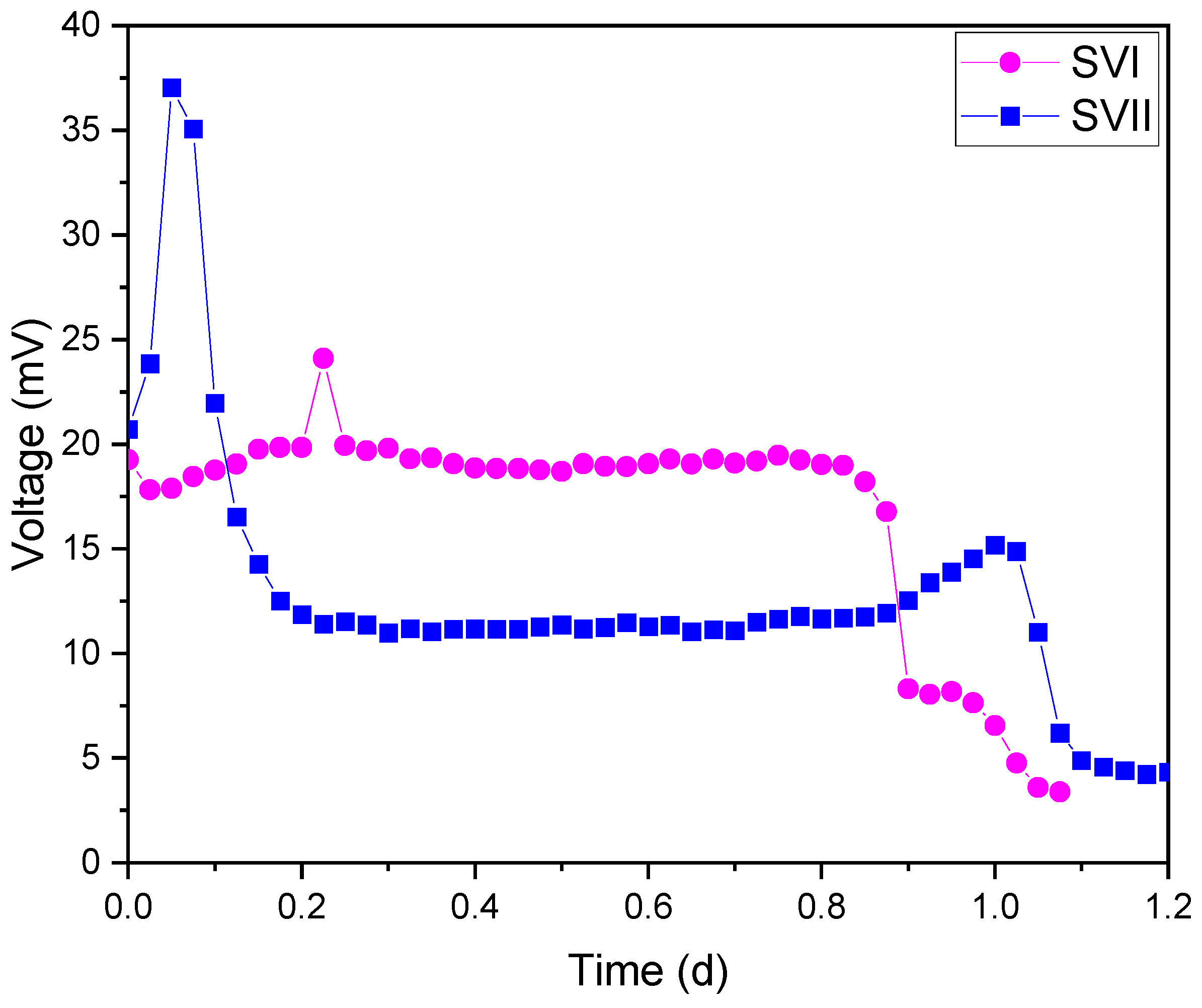
In the literature, it has been described that the use of MB as a mediator in the cathodic chamber is an approach that increases electric generation in mMFC [42]. Accordingly, MB was used in this study as a model redox mediator to support mechanistic discrimination and to assess whether mediated pathways contribute to the cathodic electron uptake under our operating conditions. This rationale aligns with the prior evidence that MB can modulate electricity generation in a concentration-dependent manner [56]. In this work, when the mMFC was enhanced with the contribution of the MB as cathodic external electron transfer mediator (SVI), the highest voltage obtained was about 24 mV, slightly higher than the voltage obtained in the mMFC (SIII), which was about 20 mV. Anyway, the average voltages in both cases were very similar. This result indicates that the external mediator slightly increased the voltage output. Additionally, the application of artificial mediators is unsustainable and not environmentally friendly, because it increases the salinity in the medium, leading to higher subsequent treatment costs once the catholyte requires a replacement. Because of that, the popularity of external mediators has drastically decreased and now, they are scarcely used [36].
Subsequently, the addition of sodium bicarbonate (12 mM) as an external carbon source for the microalgae was evaluated (SVII). The addition of sodium bicarbonate increased the voltage output, as the maximum voltage reached 37 mV, but then decreased to about 13 mV. It is important to remark that the stability of the system was reduced. Similar results were obtained by other authors that demonstrated that mixed microalgal cultures in the cathodic chamber facilitate the oxygen reduction reaction (ORR), with no need for an external carbon source [57]. In the literature, it has also been described by other authors that the addition of sodium bicarbonate (24 mM) caused a quick drop in cathode potential from 110 mV to 5 mV. In an mMFC using Scenedesmus obliquus, the cathode potential was primarily diminished by the deposition or adsorption of carbonate/bicarbonate ions on the active sites of the electrode, limiting oxygen reduction [58]. The slight difference observed in this work could be explained by the fact that the concentration of sodium bicarbonate was 12 mM: a value lower than that reported in the study presenting the drastic voltage reduction [57].

2.3. Electrochemical Characterization

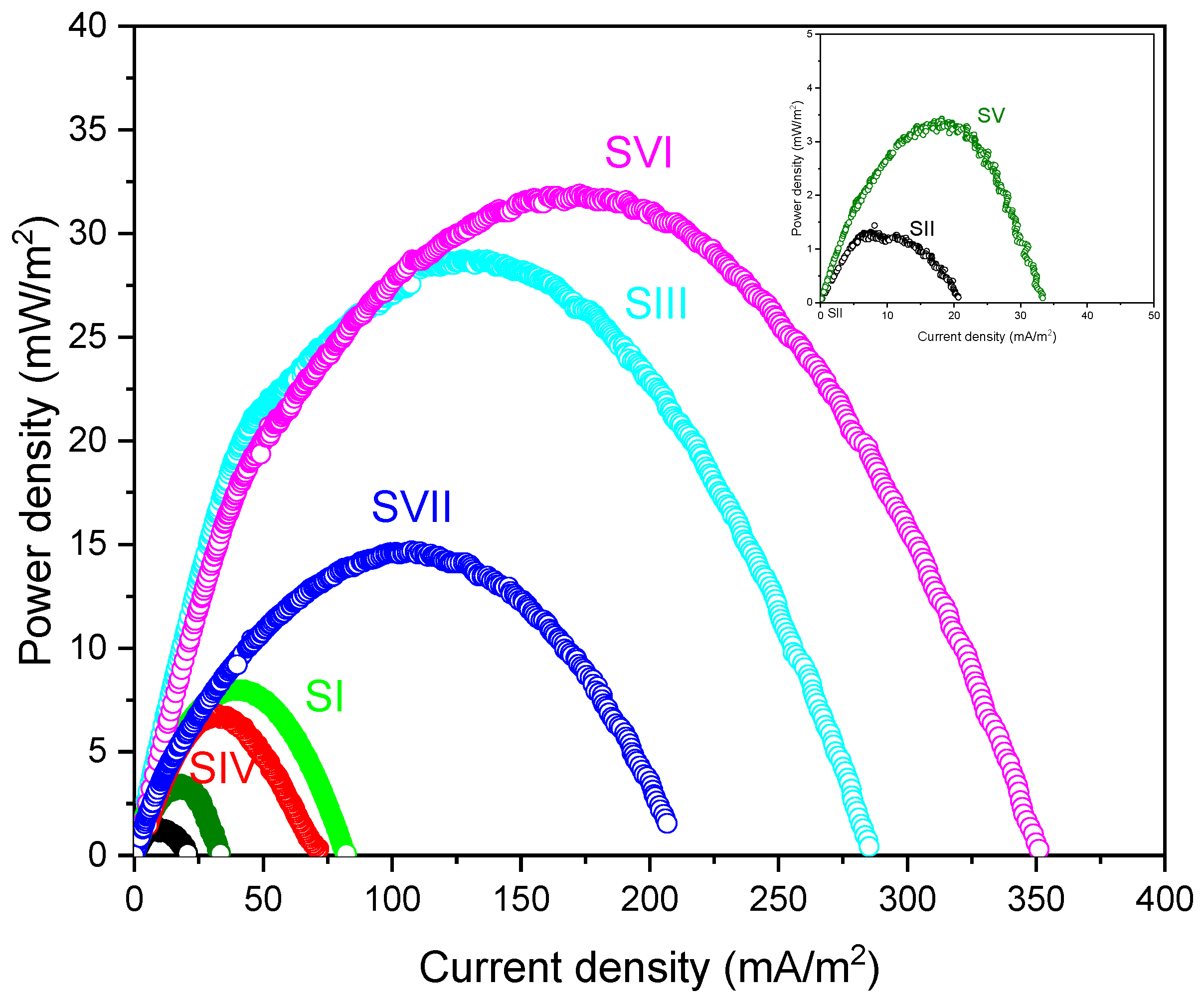
In order to electrochemically characterize the behavior of the different contributions of the catalytic mechanisms in mMFCs, polarization and power curves were performed. The results obtained are presented in Figure 4.
Power curves (see Figure 4) allow us to determine the maximum power generated in each treatment and the internal resistance in ohms, which accounts for the potential drops. The highest power density was obtained in the presence of MB (SVI) with a power density of 32.9 mW/m2, followed by the algal system (SIII) with a power density of 28.6 mW/m2. The use of bicarbonate (SVII) in the cathodic chamber allows us to reach a power density of 15.2 mW/m2; the system with mechanical aeration (SI) presented a power density of 7.8 mW/m2, like that presented by the microalgae biofilm (SIV). Finally, the abiotic systems operating with cathodic CO2 (SII) and spent medium (SV) presented the lowest generated power, in agreement with the exerted voltage values. Although the system with an external mediator exhibits higher power generation, the higher voltage and current are generated without the external mediator. This behavior could be explained by the inhibitory effect of the external mediators on algae growth and, therefore, of oxygen generation. Possible reasons for the increased power density obtained when operating with the algal system, compared with the abiotic system operated with mechanical aeration, include the formation of an algal biofilm on the cathode, which leads to a higher DO concentration, which is reached due to the activity of the microalgal culture, as well as the direct electron transfer to the electrode [58].
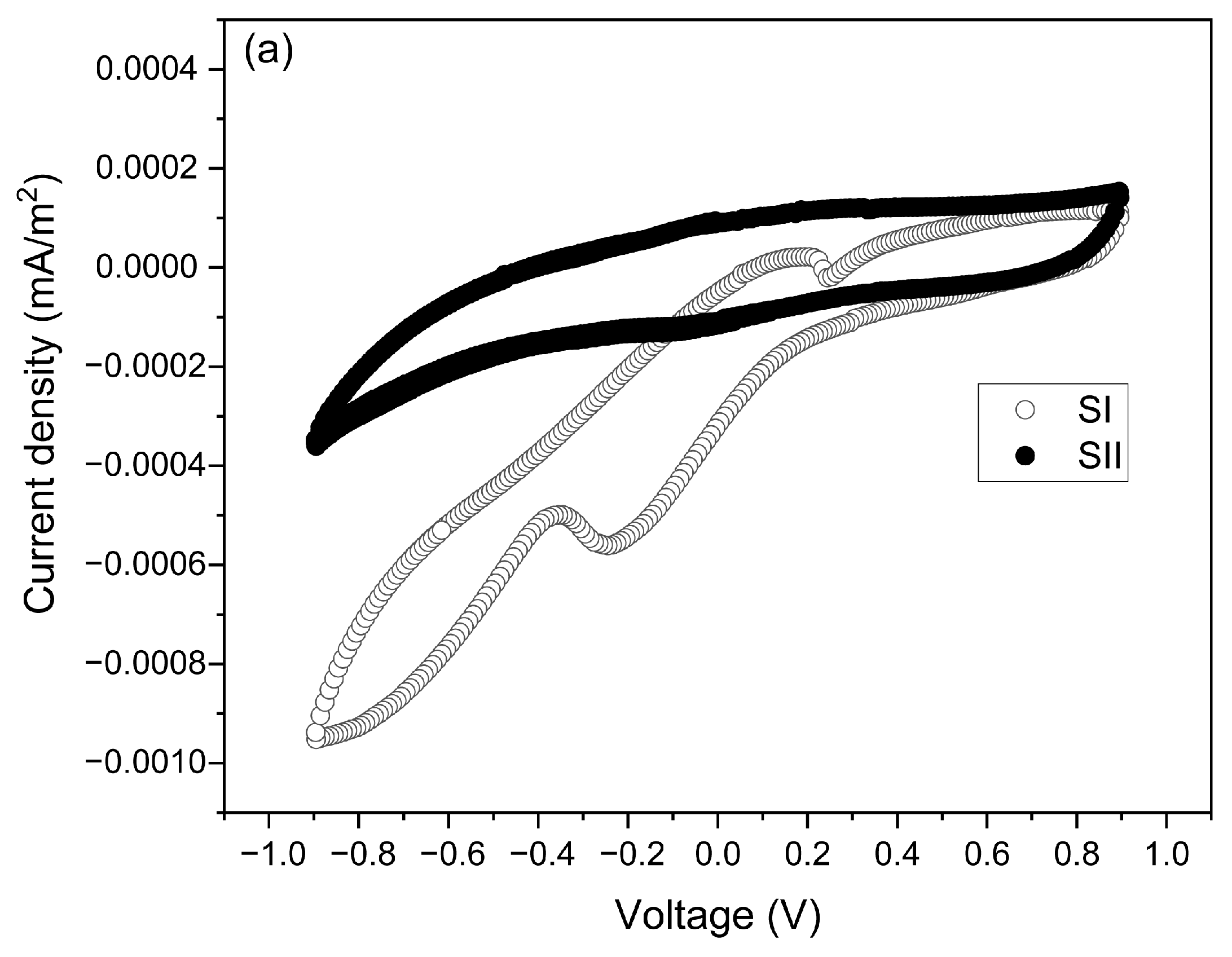
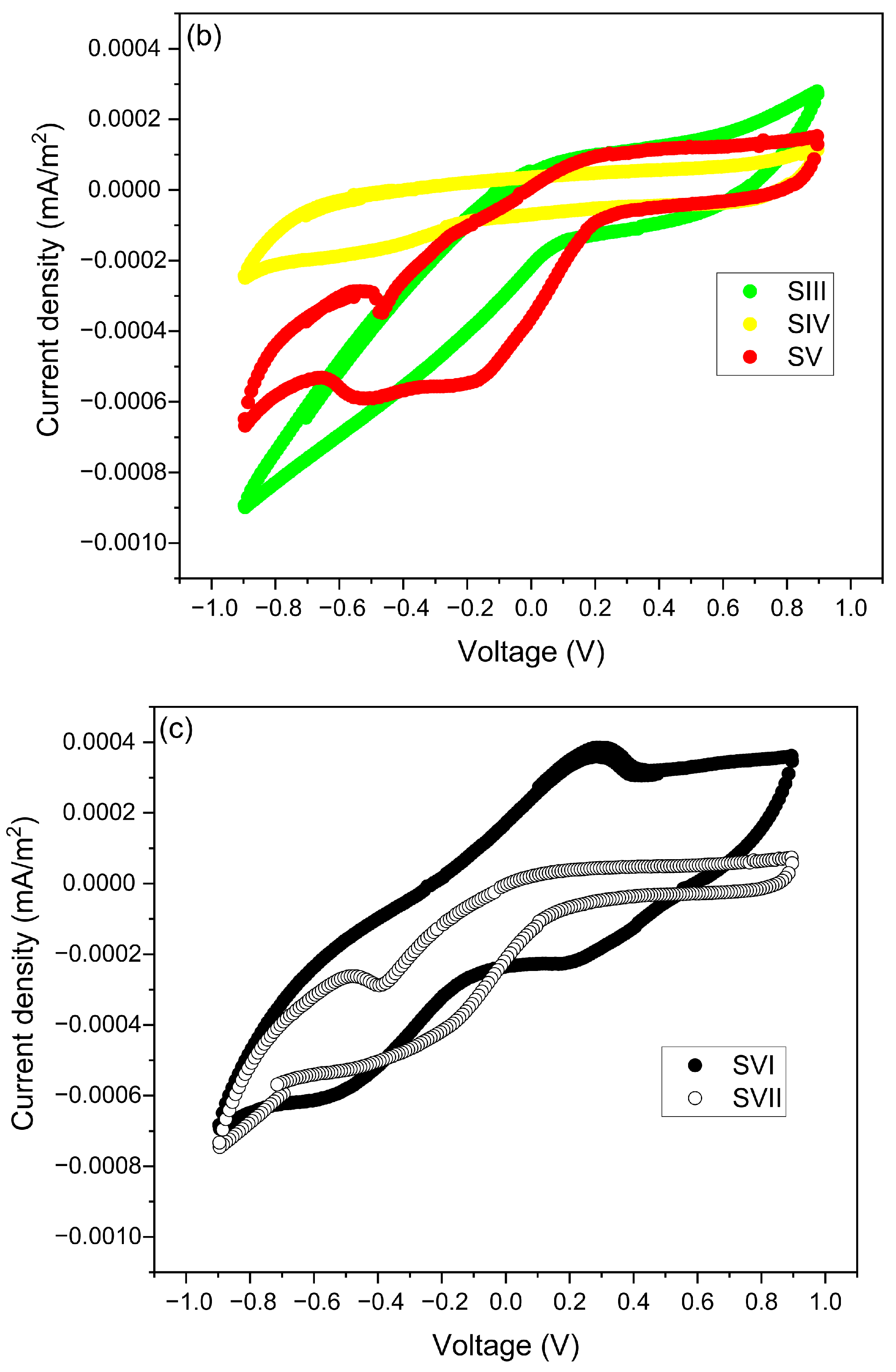
With the aim to gain deeper insight into the electrochemical performance, and to compare electrogenic activity in the different systems studied in this work, cyclic voltammetry tests were performed. The obtained results are presented in Figure 5. Open curves were obtained for biotic systems, revealing that the mMFC had higher electrochemical activity than an abiotic cathode MFC, as was reported in the literature [59]. In cyclic voltammetry, open curves represent more redox activity. Exact values of the peaks cannot be compared with other authors, as the conditions of the reference electrode were not the same; however, the trend of the curves could be analyzed. In aerated abiotic systems, a reduction current of 0.94 mA was obtained. It is also possible to see an oxidation wave at 0.25 V and a reduction peak at −0.25 V; this reversible redox peak must be associated with a redox couple with a half wave potential (E1/2) of −0.1 V, as was found by other authors [60]. A very closed curve and no peaks were obtained for CO2 in an abiotic cathode (SII), with a reduction current of 3.5 mA, indicating the absence of redox compounds in the catholyte. For the biotic mMFC system (SIII), no reduction peaks were found; however, the width of the curve is similar to SI. In relation to the similar electrochemical behavior, a wave at 0.08 V can be observed, related to ORR as it was found in a highly active biocathode with Gammaproteobacteria as the dominant Class [60]; a reduction current of 8.9 mV was reached. For the biofilm system (SIV), a very closed curve was obtained, with a reduction peak at −0.27 mV and a reduction current of 2.4 mA, which could be related to redox compounds in a microalgae cell wall. For the culture medium as catholyte (SV), it was possible to see a reduction peak and a reduction wave at −0.5 V, and a reduction current of 6.6 mA. System SVI, which has MB as an external mediator, has an oxidation peak at 0.25 V and a reduction peak at −0.43 V, which could be related to the presence of the mediator. System SVII (with sodium bicarbonate) has a reduction peak at −0.37 V and a reduction current of 7.3 mV. The formation of reduction peaks at similar potentials after both mechanical and algal aerations indicated that the same reducing species were involved in the reduction reaction.
The anodic performance was comparable across all evaluated systems, suggesting that the anodic chamber exhibited uniform behavior and did not constitute the rate-limiting step in any of the configurations studied. This result can be attributed to the superior electrogenic activity of the mixed microbial consortium employed as an anodic biocatalyst, which surpassed that of the algal culture utilized in the cathodic compartment [38].
The reduction currents generated at the cathode were within the range reported by other authors when operating with algae-based MFCs. Cyclic voltammetry of the cathode during algal aeration revealed a reduction current of −9.3 mA with a platinized carbon cathode [58]. The magnitude of the reduction and oxidation currents must be consistent with the power generation of the systems [61]. Reduction peaks and waves were also within the same range reported by other authors. A reduction wave of around −0.27 V with biotic origin was found in oxygen-reducing biocathodes formed from compost leachate [62]; a peak at −0.412 V can be ascribed to the reduction of dissolved oxygen in a pristine cathode made of stainless-steel mesh with an algal biofilm formed on the surface [63].
The CV spectra for a highly active biocathode with Gammaproteobacteria as a dominant class show two distinct electrochemical processes: one related to an electron transfer pathway coupled with oxygen reduction in a conventional ATP generating an electron transport chain (oxidation wave at 0.035 V), and a second reversible process, which may be a parallel electron transfer pathway or some other unknown surface reaction occurring within the biofilm, which is otherwise not directly involved in oxygen reduction (oxidation peak at 0.05 V and reduction peak at −0.05 V) [60].
The results reported in the literature are still contradictory in defining the mechanism of ORR in microalgal biocathodes. On the one hand, in a study carried out with a C. vulgaris biocathode, the electrochemical performance was evaluated by means of a CV analysis; in this test, no peak was observed from the CV curve, indicating that the algal cells had no electrochemical activity, and that the cathode terminal electron acceptor is the photosynthetic oxygen released by the C. vulgaris cultivated at the cathode [64]. Alternatively, regarding the electrochemical activity of the biofilm of Desmodesmus sp. with an oxidation peak in the potential range of +100 to +200 mV, no electrochemical activity was found in the supernatant, proposing that some proteins, such as cytochromes, may be involved in direct electron transfer [65].

2.4. Electrode Characteristics

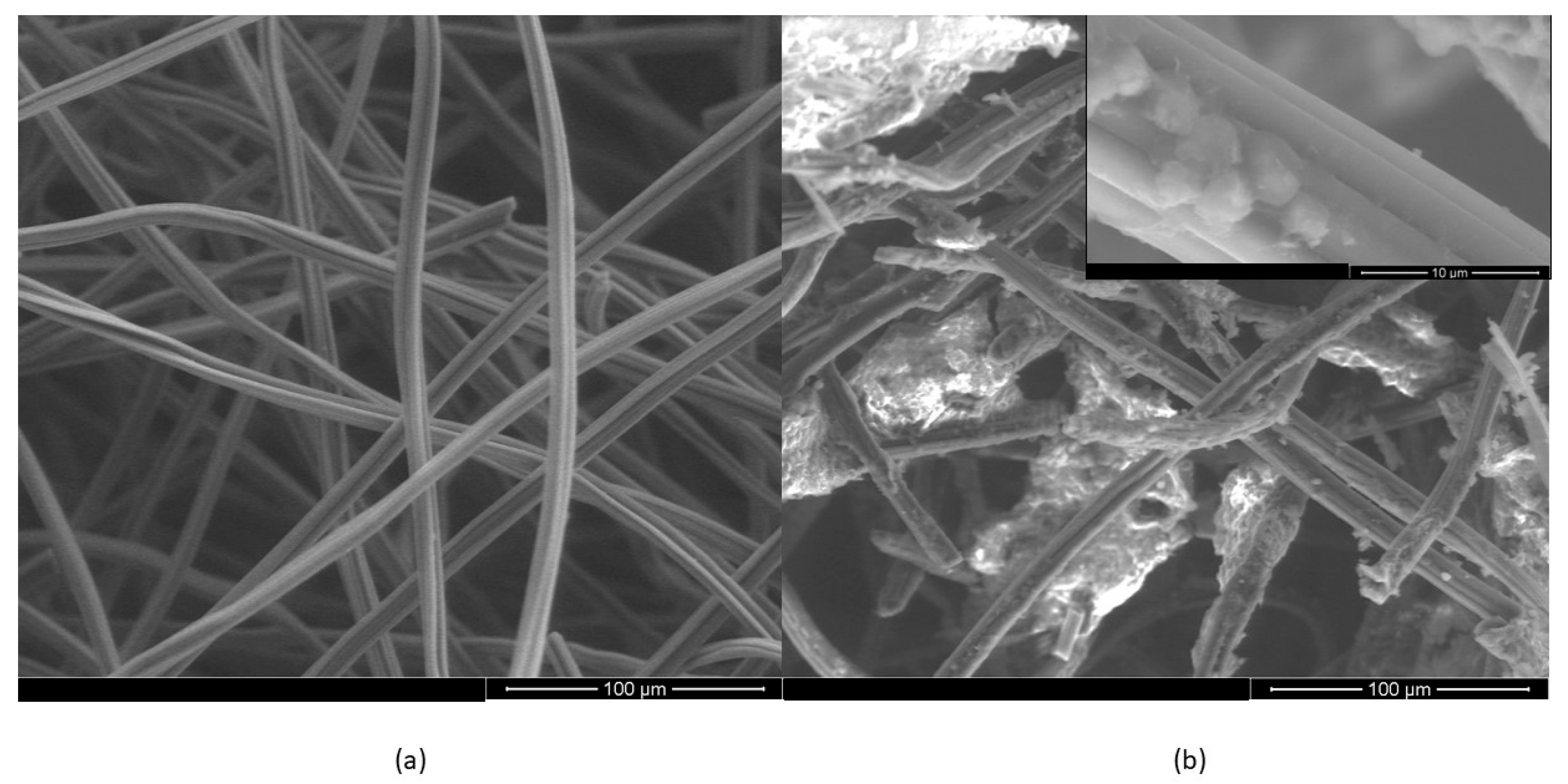
To investigate the mMFC device, scanning electron microscopy (SEM) images of the cathode were obtained and presented in Figure 6.
As shown in Figure 6a, the cathodic surface was clean and smooth before the operation. However, after the operation, a biofilm developed on the fibers of the cathode. In Figure 6, it is also possible to observe the spherical microalgal cells of Chlorella sorokiniana in the cathode, with a magnification of 2000×. The cells form a biofilm over the fibers and, according to the image, it is possible to infer that the secretion of polysaccharides contributes to biofilm formation. Green microalgae, such as Nannochloris sp. and Chlorella sp., have hydrophilic surfaces, because their cell walls are cellulose-based and form a hydrophilic surface. Moreover, microalgae produce extracellular polymeric substances (EPS) that are secreted and adhere the cells to surfaces. EPS production and adhesion strength increase with time. The EPS secretion by cells plays an important role and can dominate the surface interactions of some microalgae [66]. Similar observations have been analyzed in other mMFCs, where a layer of microorganisms embedded in a microbial EPS matrix was formed on the electrode surface [67]. C. sorokiniana was randomly chosen, and their diameters were determined as of 2.9 ± 0.6 µm, which corresponds to the characteristics of other Chlorella species; Chlorella sp. QB-102 was also observed by SEM as being spherical with a diameter of 2 µm [68] and C. vulgaris cell diameters were determined as ranging from 2.49 to 2.70 µm [28].

2.5. General Performance of the Different Cathodic Systems

The general performance of the different cathodic systems studied in this work is presented in Table 1.
The trends of open circuit voltages (OCVs), current densities and coulombs produced per day of the MFCs are similar because of the relationship among these parameters. The highest and lowest OCV values of 510 mV and 168 mV were measured for SIII and SI, respectively. Furthermore, the maximum current density generated by SVI during the polarization test (194.8 mA/m2) is significantly higher than the others, indicating its remarkable potential to produce higher currents at low external resistances, using mediators. However, this trend is not reflected in the maximum voltage. In addition, the lowest internal resistances of 9.22 kΩ and 9.8 kΩ were determined for SVI and SVII, respectively, as were observed in the CV curves, which have the highest electrogenic activity, because of the presence of MB and bicarbonate as redox compounds. It should be mentioned that limitations in mass transfer of oxygen in SI were the reason for its higher internal resistance compared to the algal mMFC configurations studied in this work [55]. The highest internal resistances were presented in abiotic systems, SII and SV, indicating that the cathode cannot directly reduce carbon dioxide, and that there were not enough redox mediators in the spent medium. Finally, the external resistance of the biofilm, SIV, could be related to the thickness of the biofilm in the cathode.
Regarding the electric charge produced, and measured as coulombs per day, similar trends were obtained, but the best performances were obtained with SVI and SVII because of the presence of chemicals that could act as redox mediators: MB and bicarbonate. The Coulombic efficiencies (CE) obtained in this work were very low compared to other results published in the literature, where CE of 6.3% for mMFC with C. vulgaris was suspended [25] and within the range of 3.3% to 9.4% when operating with immobilized algae cultures [69,70]. In the present study, a relationship between cell voltage and COD removal by microorganisms was not observed. This can be justified, considering that the anaerobic culture used as an anodic catalyst is a mixture of electrogenic and non-electrogenic microorganisms, and most of the organic matter is consumed by non-electrogenic microorganisms, leading to a coulombic efficiency of lower than 1%. This coulombic efficiency is a direct measure of the competition for the substrate between electrogens and non-electrogens in the mixed culture [53].
Current densities obtained in the present study are within the range reported in the literature for mMFC, ranging from 13.5 mA/m2 [71] to 20.5 mA/m2 [72]. In the present study, the maximum power density obviously increased with the decrease in internal resistance, suggesting that the ohmic resistance might be the limiting step of the whole performance of the systems [69]. With the aim of comparing results that were previously published in the literature, Table 2 presents the key characteristics of polarization analysis reported in the literature when working with mMFCs. As can be seen in Table 2, the power densities were, in general, low when compared to other mMFC studies reported in the literature [48,51].
The low power densities obtained in this work could be related to the cathodic electrodes used. In the literature, it has been reported that modified electrodes yield power densities that are 10 times higher; for example, modifying the cathode with nickel foam/graphene. The power density increased from 4 to 36.4 mW/m2 [68]. In terms of volume, in this work, the maximum power densities were obtained when operating mMFCs, yielding 1240 mW/m3 and 1050 mW/m3 for systems with MB in the cathode SVI and SIII, respectively. Power densities in the literature are very variable, depending on the structural and operational conditions of each mMFC. In a very similar study, using an anodic anaerobic culture and C. vulgaris (4 g/L) as a cathodic culture, a power density of 126 mW/m3 was reached with a carbon removal of 5.47% [75]. In the literature, an mMFC with bacteria from dairy wastewater in the anode and Chlorella sp. in the cathode, with 800 g of granular graphite in each chamber as electrodes, reached power densities of 2.8 ± 0.9 W/m3 and COD removal of 65–91% [91], using Proteobacteria alicyliphilus (5.46%) and Dechloromonas (4.74%) in the cathode and C. vulgaris at a high biomass concentration (4.6 g/L) in the anode, power densities of 1200 mW/m3 were reached [30]. The lowest COD removals in this work were obtained when operating with abiotic systems (27%, 37.5% and 38%, for SII, SV and SI, respectively). In the biotic systems, higher carbon removal was obtained, which could be explained because the whole performance of the mMFC is controlled by the biotic cathodic reactions. The COD removal in the biotic systems ranges from an average of 53% in the systems with microalgae to 87% for the system with microalgae and MB as mediator (SVI).
According to the results obtained in this work, it is possible to analyze the cathodic electron transfer mechanisms for each tested system in the context of the pathways illustrated in Figure 7.
  • Direct CO2 reduction at the cathode was not a dominant pathway under the evaluated conditions, as indicated by the low power density (Figure 1) and the absence of defined redox peaks in the cyclic voltammetry response of the SII configuration (Figure 5), suggesting a limited contribution of this mechanism.
  • Extracellular electrogenic compounds were not detected in significant amounts in the spent medium of Chlorella sorokiniana, which is consistent with the low electrochemical performance observed for the SV configuration and suggests a minor role of freely soluble endogenous mediators.
  • Chlorella sorokiniana was able to form a biofilm on the cathode surface, as confirmed by SEM observations (Figure 6), in which the presence of extracellular polymeric substances appears to contribute to the biofilm stability. However, the low voltage output and the absence of characteristic redox peaks in cyclic voltammetry indicate that direct electron transfer from the cathode to the microalgal cells was not the predominant electron uptake mechanism under the studied conditions.
  • Oxygen reduction emerged as a relevant cathodic pathway. The dissolved oxygen concentrations in the presence of microalgae were significantly higher than those achieved by oxygen bubbling alone. Moreover, photosynthetic activity during the light phase was associated with increased current output in biocathode systems, indicating that oxygen produced by microalgae effectively supported the cathodic oxygen reduction reaction and enhanced voltage generation.
  • Mediator-assisted electron transfer was supported by the addition of methylene blue (MB) to the biocathode, which resulted in increased power density and reduced internal resistance. These results suggest that the external artificial mediator played a significant role as a redox facilitator, enhancing electron transfer between the electrode and the algal cells, without observable inhibitory effects on the microalgal activity.

3. Materials and Methods

3.1. Anodic System and MFC Configuration

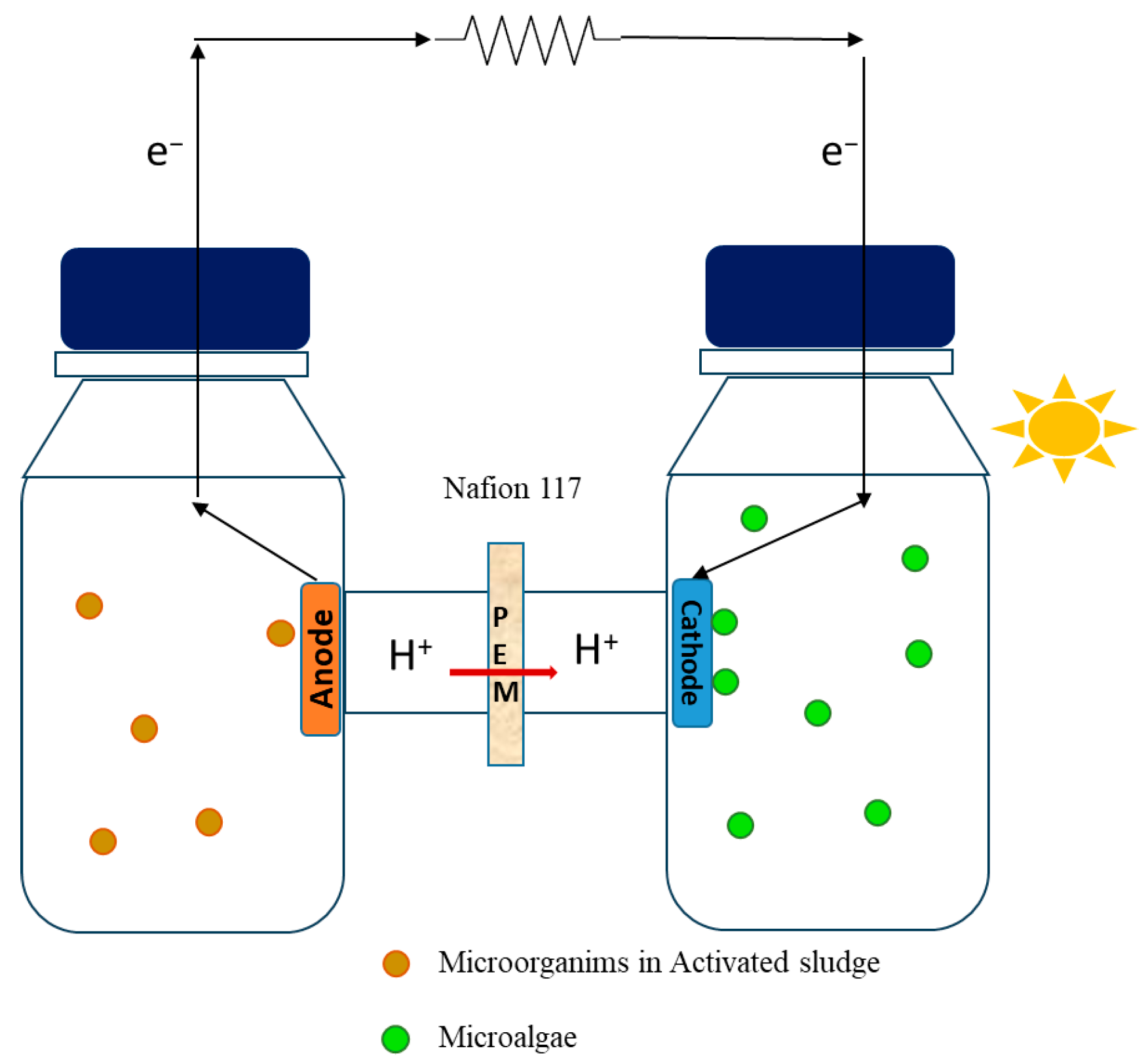
A two-chambered H-type microbial fuel cell was fabricated using two 250 mL Pyrex bottles (Figure 8). The anode and cathode electrodes (9.4 cm2) were made of carbon felt (KFA10, SGL Carbon Group, Wiesbaden, Germany). The distance between the anode and the cathode was 2 cm. The anode and cathode were externally connected by means of a 120 Ω resistance. Both chambers were separated by a proton exchange membrane (3.1 cm2, Nafion117, Dupont Co., Wilmington, NC, USA). The Nafion membrane was pretreated in H2O2 (3%, v/v) for 1 h at 80 °C, washed with distilled water for 1 h at 80 °C, immersed in H2SO4 (0.5 M) for 1 h at 80 °C and washed again with distilled water for 1 h at 80 °C, according to the literature [2].
A conventional anaerobic sludge was used as an anodic microbial seed. The seed was obtained from the anaerobic reactor of a conventional activated sludge facility; more information about this facility can be found elsewhere [92]. The anolyte formulation was CH3COONa 1 g L−1, Na2HPO4 3 g L−1, KH2PO4 0.7 g L−1, (NH4)2SO4 0.8 g L−1, MgSO4·7H2O 0.2 g L−1 and (NH4)2Fe(SO4)2·6H2O 0.04 g L−1 [92]. In order to characterize the chemical properties of the anolyte, daily samples of 1 mL were collected.
At the start of operation, the anodic reservoir was filled with anaerobic sludge. For the acclimatization of the electroactive biofilm, 80% of the volume was replaced by fresh medium: first daily and then after the drop of the cell voltage to negligible values due to the depletion of sodium acetate (cycle length of around three days). During the start-up stage, the anode and the cathode were connected with a 120 Ω resistor. The catholyte was aerated to ensure O2 saturation, working as an electron acceptor to facilitate the anodic biofilm development and to reach the voltage generation of stationary cycles in every charge–discharge stage. Once the electrogenic biofilm at the anode was developed and operated under a steady-state, the cathodic reaction of O2 was substituted by the different systems studied in this work.

3.2. Cathodic Chamber

Chlorella sorokiniana microalgae was used as a cathodic culture. This microalgae culture was previously isolated and identified according to the literature [93]. The microalgae Chlorella sorokiniana was cultured in Chu13 medium [94]. The medium composition was as follows: FeCl3·6H2O 0.0073 g·L−1 in EDTA 0.00916 g·L−1; K2HPO4 0.04g·L−1; MgSO4·7H2O 0.05 g·L−1; CaCl2·2H2O 0.04 g·L−1; KNO3 0.1 g·L−1; H3BO3 0.002859 mg·L−1; Na2MoO4·2H2O 0.05 mg·L−1; ZnSO4 0.1234 mg·L−1; CoCl2·2H2O 0.05 mg·L−1; MnCl2 1.146 mg·L−1; and CuCl2·2H2O 0.054 mg·L−1. Light was provided by natural sunlight.

3.3. Experiments Planification

The contributions of cathodic reactions were isolated by modifying the operational cathodic conditions. To do this, several tests were performed according to the information presented in Table 3.

3.4. Chemical Analysis

Dry microalgae biomass was determined gravimetrically. Nitrate concentration was measured using the salicylic acid method at 410 nm, as reported in the literature [95]. Phosphate concentration was determined using the ascorbic acid method reported by the Standard Methods for the Examination of Water and Wastewater [96]. The glucose concentration was quantified by a glucose oxidase kit (BioSystems®, Barcelona, Spain) at 500 nm. The total fatty acids were gravimetrically determined by using the method of Bligh and Dyer [97] after the mechanical rupture of cells by sonication. The chemical oxygen demand (COD) was determined by using a Velp ECO-16 (Fisher Scientific, Madrid, Spain) digester and a Pharo 100 Merck spectrophotometer (Merck, Darmstadt, Germany) in accordance with the Standard Methods for the Examination of Water and Wastewater [96]. The dissolved oxygen concentration was continuously determined using a DO meter WTW Oxi 340i (Xylem Analytics, Weilheim, Germany) and the pH of the cathode solution was continuously measured with a pH meter GLP22 Crison (Crison, Barcelona, Spain) [92].

3.5. Electrochemical Analysis

The voltage generated by the mMFC during the experiments was recorded at 15 min intervals by using a precision multimeter and a data acquisition system (Keithley Instruments 2000, Solon, OH, USA). The performance of the systems was determined using cyclic voltammetry (CV) in the potential range of −0.9 to +0.9 V at a scan rate of 10 mV/s, using a Nanoelectra NEV3 potentiostat (Nanoelectra, Madrid, Spain). The open circuit voltage was determined after 30 min of stabilization and the polarization curve was obtained using a Nanoelectra NEV3 potentiostat at a scan rate of 1 mV/s. The power curves describing the power density as a function of the current density were obtained based on the polarization curve. The currents and power densities were calculated based on the area of the anode. Current (I) was calculated using Ohm’s law (Equation (1)):
U = I·R
where U is the voltage (V) and R is the external resistance (Ohm) of the cell. Power (P) was calculated using Equation (2):
P = I·U
The total internal resistance was calculated as the external resistance that causes the maximum power. The performance of the mMFC in terms of the electrons produced or the amount of charge produced ( Q e in C/d) over time is presented in Equation (3):
Q e = I   d t ,

3.6. Electrode Characterization

To characterize the cathode morphology, as well as the biofilm, scanning electron microscopy (SEM) images were obtained before and after the experiments, using a FEI QUANTA 250 (Thermo Fisher Scientific, Waltham, MA, USA). To enhance the accuracy of the images, the samples were pretreated according to the literature [98].

4. Conclusions

The energy efficiency of an MFC incorporating a microalgal culture in the cathodic chamber showed improvements compared to an MFC operated with external aeration, particularly in terms of biomass growth and nutrient removal. This enhanced performance can be attributed to the combined contribution of oxygen production via photosynthesis, mediator-assisted electron transfer and the interaction between microalgal cells and the cathode surface.
Systems operated with biofilm formation and external aeration exhibited higher internal resistances, whereas lower resistances were consistently observed in mMFC configurations. Coulombic efficiencies remained low, which can be explained by the complexity of the anodic microbial community, where non-electrogenic microorganisms compete with electrogenic populations for substrate utilization. Nevertheless, the incorporation of Chlorella sorokiniana into the cathodic chamber led to an overall improvement in electrochemical performance.
The addition of sodium bicarbonate positively influenced the electrochemical behavior of the system, likely by promoting more stable and elevated dissolved oxygen concentrations. Comparative analysis of the different cathodic operational modes suggests that both indirect electron transfer mediated by photosynthetically produced oxygen and mediator-assisted pathways contribute to cathodic performance, while direct electron transfer appears to play a minor role under the evaluated conditions. Overall, the systematic comparison of cathodic configurations within the same mMFC architecture provides indirect but consistent evidence of the dominant mechanisms governing microalgal biocathode operation.

Author Contributions

Conceptualization, C.M.-V. and F.J.F.-M., methodology, C.M.-V., F.J.F.-M. and J.C.Q.D.; software, C.M.-V.; validation, C.M.-V., J.C.Q.D. and F.J.F.-M.; formal analysis, C.M.-V. and J.C.Q.D.; investigation, C.M.-V.; resources, J.C.Q.D. and F.J.F.-M.; data curation, C.M.-V., J.C.Q.D. and F.J.F.-M.; writing—original draft preparation, C.M.-V. and J.C.Q.D.; writing—review and editing, C.M.-V., J.C.Q.D. and F.J.F.-M.; visualization, C.M.-V. and J.C.Q.D.; supervision, J.C.Q.D. and F.J.F.-M.; project administration, J.C.Q.D.; funding acquisition, J.C.Q.D. All authors have read and agreed to the published version of the manuscript.

Funding

The authors would like to acknowledge funding from Ministerio de Ciencia, Tecnología e Innovación of Colombia, by research contract No. 80740-177.2019. Carolina Montoya Vallejo wants to acknowledge the Ministry of Science, Technology, and Innovation of Colombia for studentship (Grant No. 727 of 2015), and Alcaldía de Medellín and the Programa Enlazamundos (2021) for their support through SAPIENCIA, which enabled this internship.

Data Availability Statement

Data are contained within the article.

Acknowledgments

C.M-V. would like to express our gratitude to the Chemical Engineering Department and the Chemical and Environmental Technologies Institute (ITQUIMA) at the University of Castilla-La Mancha for providing the necessary facilities and materials to carry out this study.

Conflicts of Interest

The authors declare no conflicts of interest.

References

  1. Ahmed, S.F.; Kabir, M.; Mehjabin, A.; Oishi, F.T.Z.; Ahmed, S.; Mannan, S.; Mofijur, M.; Almomani, F.; Badruddin, I.A.; Kamangar, S. Waste Biorefinery to Produce Renewable Energy: Bioconversion Process and Circular Bioeconomy. Energy Rep. 2023, 10, 3073–3091. [Google Scholar] [CrossRef]
  2. Mateo, S.; Cañizares, P.; Rodrigo, M.A.; Fernandez-Morales, F.J. Driving Force of the Better Performance of Metal-Doped Carbonaceous Anodes in Microbial Fuel Cells. Appl. Energy 2018, 225, 52–59. [Google Scholar] [CrossRef]
  3. Rosenbaum, M.; He, Z.; Angenent, L.T. Light Energy to Bioelectricity: Photosynthetic Microbial Fuel Cells. Curr. Opin. Biotechnol. 2010, 21, 259–264. [Google Scholar] [CrossRef]
  4. Jadhav, D.A.; Mungray, A.K.; Arkatkar, A.; Kumar, S.S. Recent Advancement in Scaling-up Applications of Microbial Fuel Cells: From Reality to Practicability. Sustain. Energy Technol. Assess. 2021, 45, 101226. [Google Scholar] [CrossRef]
  5. de los Ángeles Fernandez, M.; de los Ángeles Sanromán, M.; Marks, S.; Makinia, J.; Gonzalez del Campo, A.; Rodrigo, M.; Fernandez, F.J. A Grey Box Model of Glucose Fermentation and Syntrophic Oxidation in Microbial Fuel Cells. Bioresour. Technol. 2016, 200, 396–404. [Google Scholar] [CrossRef]
  6. Saratale, R.G.; Kuppam, C.; Mudhoo, A.; Saratale, G.D.; Periyasamy, S.; Zhen, G.G.; Koók, L.; Bakonyi, P.; Nemestóthy, N.; Kumar, G. Bioelectrochemical Systems Using Microalgae—A Concise Research Update. Chemosphere 2017, 177, 35–43. [Google Scholar] [CrossRef]
  7. Sharma, V.; Kundu, P.P. Biocatalysts in Microbial Fuel Cells. Enzym. Microb. Technol. 2010, 47, 179–188. [Google Scholar] [CrossRef]
  8. Vishwanathan, A.S. Microbial Fuel Cells: A Comprehensive Review for Beginners. 3 Biotech 2021, 11, 248. [Google Scholar] [CrossRef] [PubMed]
  9. Mateo, S.; Gonzalez del Campo, A.; Cañizares, P.; Lobato, J.; Rodrigo, M.A.; Fernandez, F.J. Bioelectricity Generation in a Self-Sustainable Microbial Solar Cell. Bioresour. Technol. 2014, 159, 451–454. [Google Scholar] [CrossRef] [PubMed]
  10. Jaiswal, K.K.; Kumar, V.; Vlaskin, M.S.; Sharma, N.; Rautela, I.; Nanda, M.; Arora, N.; Singh, A.; Chauhan, P.K. Microalgae Fuel Cell for Wastewater Treatment: Recent Advances and Challenges. J. Water Process Eng. 2020, 38, 101549. [Google Scholar] [CrossRef]
  11. Lee, D.J.; Chang, J.S.; Lai, J.Y. Microalgae-Microbial Fuel Cell: A Mini Review. Bioresour. Technol. 2015, 198, 891–895. [Google Scholar] [CrossRef]
  12. Kusmayadi, A.; Leong, Y.K.; Yen, H.W.; Huang, C.Y.; Dong, C.D.; Chang, J.S. Microalgae-Microbial Fuel Cell (MMFC): An Integrated Process for Electricity Generation, Wastewater Treatment, CO2 Sequestration and Biomass Production. Int. J. Energy Res. 2020, 44, 9254–9265. [Google Scholar] [CrossRef]
  13. Cho, Y.K.; Donohue, T.J.; Tejedor, I.; Anderson, M.A.; McMahon, K.D.; Noguera, D.R. Development of a Solar-Powered Microbial Fuel Cell. J. Appl. Microbiol. 2008, 104, 640–650. [Google Scholar] [CrossRef]
  14. Tanaka, K.; Vega, C.A.; Tamamushi, R. Hionine and ferric chelate compounds as coupled mediators in microbial fuel cells. J. Electroanal. Chem. Interfacial Electrochem. 1983, 156, 289–297. [Google Scholar] [CrossRef]
  15. Sayre, R. Microalgae: The Potential for Carbon Capture. Bioscience 2010, 60, 722–727. [Google Scholar] [CrossRef]
  16. Huang, C.H.; Tan, C.S. A Review: CO2 Utilization. Aerosol Air Qual. Res. 2014, 14, 480–499. [Google Scholar] [CrossRef]
  17. Elshobary, M.E.; Zabed, H.M.; Yun, J.; Zhang, G.; Qi, X. Recent Insights into Microalgae-Assisted Microbial Fuel Cells for Generating Sustainable Bioelectricity. Int. J. Hydrogen Energy 2021, 46, 3135–3159. [Google Scholar] [CrossRef]
  18. Montoya-Vallejo, C.; Acosta-cárdenas, A. Crecimiento de Tetraselmis sp. Empleando Fertilizante Como Medio de Cultivo. Rev. ION 2021, 5, 53–64. [Google Scholar] [CrossRef]
  19. Kim, J.G.; Son, B.; Mukherjee, S.; Schuppert, N.; Bates, A.; Kwon, O.; Choi, M.J.; Chung, H.Y.; Park, S. A Review of Lithium and Non-Lithium Based Solid State Batteries. J. Power Sources 2015, 282, 299–322. [Google Scholar] [CrossRef]
  20. Abu-Ghosh, S.; Fixler, D.; Dubinsky, Z.; Iluz, D. Energy-Input Analysis of the Life-Cycle of Microalgal Cultivation Systems and Best Scenario for Oil-Rich Biomass Production. Appl. Energy 2014, 154, 1082–1088. [Google Scholar] [CrossRef]
  21. Abdur Razzak, S.; Bahar, K.; Islam, K.M.O.; Haniffa, A.K.; Faruque, M.O.; Hossain, S.M.Z.; Hossain, M.M. Microalgae Cultivation in Photobioreactors: Sustainable Solutions for a Greener Future. Green Chem. Eng. 2024, 5, 418–439. [Google Scholar] [CrossRef]
  22. Powell, E.E.; Hill, G.A. Economic Assessment of an Integrated Bioethanol-Biodiesel-Microbial Fuel Cell Facility Utilizing Yeast and Photosynthetic Algae. Chem. Eng. Res. Des. 2009, 87, 1340–1348. [Google Scholar] [CrossRef]
  23. Tse, H.T.; Luo, S.; Li, J.; He, Z. Coupling Microbial Fuel Cells with a Membrane Photobioreactor for Wastewater Treatment and Bioenergy Production. Bioprocess Biosyst. Eng. 2016, 39, 1703–1710. [Google Scholar] [CrossRef] [PubMed]
  24. Zou, Y.; Pisciotta, J.; Billmyre, R.B.; Baskakov, I.V. Photosynthetic Microbial Fuel Cells with Positive Light Response. Biotechnol. Bioeng. 2009, 104, 939–946. [Google Scholar] [CrossRef] [PubMed]
  25. Cui, Y.; Rashid, N.; Hu, N.; Rehman, M.S.U.; Han, J.I. Electricity Generation and Microalgae Cultivation in Microbial Fuel Cell Using Microalgae-Enriched Anode and Bio-Cathode. Energy Convers. Manag. 2014, 79, 674–680. [Google Scholar] [CrossRef]
  26. Aguirre, A.M.; Bassi, A. Investigation of Biomass Concentration, Lipid Production, and Cellulose Content in Chlorella Vulgaris Cultures Using Response Surface Methodology. Biotechnol. Bioeng. 2013, 110, 2114–2122. [Google Scholar] [CrossRef]
  27. Gouveia, L.; Neves, C.; Sebastião, D.; Nobre, B.P.; Matos, C.T. Effect of Light on the Production of Bioelectricity and Added-Value Microalgae Biomass in a Photosynthetic Alga Microbial Fuel Cell. Bioresour. Technol. 2014, 154, 171–177. [Google Scholar] [CrossRef]
  28. Logroño, W.; Pérez, M.; Urquizo, G.; Kadier, A.; Echeverría, M.; Recalde, C.; Rákhely, G. Single Chamber Microbial Fuel Cell (SCMFC) with a Cathodic Microalgal Biofilm: A Preliminary Assessment of the Generation of Bioelectricity and Biodegradation of Real Dye Textile Wastewater. Chemosphere 2017, 176, 378–388. [Google Scholar] [CrossRef]
  29. Huarachi-Olivera, R.; Dueñas-Gonza, A.; Yapo-Pari, U.; Vega, P.; Romero-Ugarte, M.; Tapia, J.; Molina, L.; Lazarte-Rivera, A.; Pacheco-Salazar, D.G.; Esparza, M. Bioelectrogenesis with Microbial Fuel Cells (MFCs) Using the Microalga Chlorella Vulgaris and Bacterial Communities. Electron. J. Biotechnol. 2018, 31, 34–43. [Google Scholar] [CrossRef]
  30. Khandelwal, A.; Chhabra, M.; Yadav, P. Performance Evaluation of Algae Assisted Microbial Fuel Cell under Outdoor Conditions. Bioresour. Technol. 2020, 310, 123418. [Google Scholar] [CrossRef]
  31. Yadav, G.; Sharma, I.; Ghangrekar, M.; Sen, R. A Live Bio-Cathode to Enhance Power Output Steered by Bacteria-Microalgae Synergistic Metabolism in Microbial Fuel Cell. J. Power Sources 2020, 449, 227560. [Google Scholar] [CrossRef]
  32. Yahampath Arachchige Don, C.D.Y.; Babel, S. Circulation of Anodic Effluent to the Cathode Chamber for Subsequent Treatment of Wastewater in Photosynthetic Microbial Fuel Cell with Generation of Bioelectricity and Algal Biomass. Chemosphere 2021, 278, 130455. [Google Scholar] [CrossRef] [PubMed]
  33. Arun, S.; Sinharoy, A.; Pakshirajan, K.; Lens, P.N.L. Algae Based Microbial Fuel Cells for Wastewater Treatment and Recovery of Value-Added Products. Renew. Sustain. Energy Rev. 2020, 132, 110041. [Google Scholar] [CrossRef]
  34. Mateo, S.; Rodrigo, M.; Fonseca, L.P.; Cañizares, P.; Fernandez-Morales, F.J. Oxygen Availability Effect on the Performance of Air-Breathing Cathode Microbial Fuel Cell. Biotechnol. Prog. 2015, 31, 900–907. [Google Scholar] [CrossRef] [PubMed]
  35. Christwardana, M.; Hadiyanto, H.; Motto, S.A.; Sudarno, S.; Haryani, K. Performance Evaluation of Yeast-Assisted Microalgal Microbial Fuel Cells on Bioremediation of Cafeteria Wastewater for Electricity Generation and Microalgae Biomass Production. Biomass Bioenergy 2020, 139, 105617. [Google Scholar] [CrossRef]
  36. Mekuto, L.; Olowolafe, A.V.A.; Pandit, S.; Dyantyi, N.; Nomngongo, P.; Huberts, R. Microalgae as a Biocathode and Feedstock in Anode Chamber for a Self-Sustainable Microbial Fuel Cell Technology: A Review. S. Afr. J. Chem. Eng. 2020, 31, 7–16. [Google Scholar] [CrossRef]
  37. Bardarov, I.; Mitov, M.; Ivanova, D.; Hubenova, Y. Light-Dependent Processes on the Cathode Enhance the Electrical Outputs of Sediment Microbial Fuel Cells. Bioelectrochemistry 2018, 122, 1–10. [Google Scholar] [CrossRef]
  38. Venkata Mohan, S.; Srikanth, S.; Chiranjeevi, P.; Arora, S.; Chandra, R. Algal Biocathode for in Situ Terminal Electron Acceptor (TEA) Production: Synergetic Association of Bacteria-Microalgae Metabolism for the Functioning of Biofuel Cell. Bioresour. Technol. 2014, 166, 566–574. [Google Scholar] [CrossRef]
  39. Revelo, D.M.; Hurtado, N.H.; Ruiz, J.O. Celdas de Combustible Microbianas (CCMs): Un Reto Para la Remoción de Materia Orgánica y la Generación de Energía Eléctrica. Inf. Tecnol. 2013, 24, 17–28. [Google Scholar] [CrossRef]
  40. ElMekawy, A.; Hegab, H.M.; Mohanakrishna, G.; Elbaz, A.F.; Bulut, M.; Pant, D. Technological Advances in CO2 Conversion Electro-Biorefinery: A Step toward Commercialization. Bioresour. Technol. 2016, 215, 357–370. [Google Scholar] [CrossRef]
  41. Elmekawy, A.; Hegab, H.M.; Vanbroekhoven, K.; Pant, D. Techno-Productive Potential of Photosynthetic Microbial Fuel Cells through Different Configurations. Renew. Sustain. Energy Rev. 2014, 39, 617–627. [Google Scholar] [CrossRef]
  42. Powell, E.E.; Mapiour, M.L.; Evitts, R.W.; Hill, G.A. Growth Kinetics of Chlorella Vulgaris and Its Use as a Cathodic Half Cell. Bioresour. Technol. 2009, 100, 269–274. [Google Scholar] [CrossRef] [PubMed]
  43. Nagendranatha Reddy, C.; Nguyen, H.T.H.H.; Noori, T.; Min, B.; Nguyen, H.T.H.H.; Noori, M.T.; Min, B. Potential Applications of Algae in the Cathode of Microbial Fuel Cells for Enhanced Electricity Generation with Simultaneous Nutrient Removal and Algae Biorefinery: Current Status and Future Perspectives. Bioresour. Technol. 2019, 292, 122010. [Google Scholar] [CrossRef] [PubMed]
  44. Scott, K.; Philips, J.; Verbeeck, K.; Rabaey, K.; Arends, J.B.A.; Dumitru, A.; Bajracharya, S.; ElMekawy, A.; Srikanth, S.; Pant, D.; et al. Microbial Electrochemical and Fuel Cells: Fundamentals and Applications; Woodhead Publishing: Cambridge, UK, 2016; Volume 88. [Google Scholar]
  45. Montoya-Vallejo, C.; Gil Posada, J.O.; Quintero-Díaz, J.C. Enhancement of Electricity Production in Microbial Fuel Cells Using a Biosurfactant-Producing Co-Culture. Molecules 2023, 28, 7833. [Google Scholar] [CrossRef]
  46. Huang, Q.; Sheng, L.; Wu, T.; Huang, L.; Yan, J.; Li, M.; Chen, Z.; Zhang, H. Research Progress on the Application of Carbon-Based Composites in Capacitive Deionization Technology. Desalination 2025, 593, 118197. [Google Scholar] [CrossRef]
  47. Montoya-Vallejo, C.; Quintero Díaz, J.C.; Yepes, Y.A.; Fernández-Morales, F.J. Microalgal Microbial Fuel Cells: A Comprehensive Review of Mechanisms and Electrochemical Performance. Appl. Sci. 2025, 15, 3335. [Google Scholar] [CrossRef]
  48. González Del Campo, A.; Cañizares, P.; Rodrigo, M.A.; Fernández, F.J.; Lobato, J. Microbial Fuel Cell with an Algae-Assisted Cathode: A Preliminary Assessment. J. Power Sources 2013, 242, 638–645. [Google Scholar] [CrossRef]
  49. Logan, B.E.; Call, D.; Cheng, S.; Hamelers, H.V.M.; Sleutels, T.H.J.A.; Jeremiasse, A.W.; Rozendal, R.A. Microbial Electrolysis Cells for High Yield Hydrogen Gas Production from Organic Matter. Environ. Sci. Technol. 2008, 42, 8630–8640. [Google Scholar] [CrossRef]
  50. Zhao, H.; Zhang, Y.; Zhao, B.; Chang, Y.; Li, Z. Electrochemical Reduction of Carbon Dioxide in an MFC-MEC System with a Layer-by-Layer Self-Assembly Carbon Nanotube/Cobalt Phthalocyanine Modified Electrode. Environ. Sci. Technol. 2012, 46, 5198–5204. [Google Scholar] [CrossRef]
  51. Lobato, J.; González del Campo, A.; Fernández, F.J.; Cañizares, P.; Rodrigo, M.A. Lagooning Microbial Fuel Cells: A First Approach by Coupling Electricity-Producing Microorganisms and Algae. Appl. Energy 2013, 110, 220–226. [Google Scholar] [CrossRef]
  52. Gonzalez del Campo, A.; Perez, J.F.; Cañizares, P.; Rodrigo, M.A.; Fernandez, F.J.; Lobato, J. Study of a Photosynthetic MFC for Energy Recovery from Synthetic Industrial Fruit Juice Wastewater. Int. J. Hydrogen Energy 2014, 39, 21828–21836. [Google Scholar] [CrossRef]
  53. Gonzalez Del Campo, A.; Perez, J.F.; Cañizares, P.; Rodrigo, M.A.; Fernandez, F.J.; Lobato, J. Characterization of Light/Dark Cycle and Long-Term Performance Test in a Photosynthetic Microbial Fuel Cell. Fuel 2015, 140, 209–216. [Google Scholar] [CrossRef]
  54. Behera, M.; Jana, P.S.; Ghangrekar, M.M. Performance Evaluation of Low Cost Microbial Fuel Cell Fabricated Using Earthen Pot with Biotic and Abiotic Cathode. Bioresour. Technol. 2010, 101, 1183–1189. [Google Scholar] [CrossRef]
  55. Abazarian, E.; Gheshlaghi, R.; Mahdavi, M.A. Impact of Light/Dark Cycle on Electrical and Electrochemical Characteristics of Algal Cathode Sediment Microbial Fuel Cells. J. Power Sources 2020, 475, 228686. [Google Scholar] [CrossRef]
  56. Montoya-Vallejo, C.; Gil Posada, J.O.; Quintero-Díaz, J.C. Effect of Glucose and Methylene Blue in Microbial Fuel Cells Using E. coli. Energies 2023, 16, 7901. [Google Scholar] [CrossRef]
  57. Gajda, I.; Stinchcombe, A.; Greenman, J.; Melhuish, C.; Ieropoulos, I. Algal “lagoon” Effect for Oxygenating MFC Cathodes. Int. J. Hydrogen Energy 2014, 39, 21857–21863. [Google Scholar] [CrossRef]
  58. Kakarla, R.; Min, B. Photoautotrophic Microalgae Scenedesmus Obliquus Attached on a Cathode as Oxygen Producers for Microbial Fuel Cell (MFC) Operation. Int. J. Hydrogen Energy 2014, 39, 10275–10283. [Google Scholar] [CrossRef]
  59. Li, M.; Zhou, M.; Luo, J.; Tan, C.; Tian, X.; Su, P.; Gu, T. Carbon Dioxide Sequestration Accompanied by Bioenergy Generation Using a Bubbling-Type Photosynthetic Algae Microbial Fuel Cell. Bioresour. Technol. 2019, 280, 95–103. [Google Scholar] [CrossRef]
  60. Milner, E.M.; Popescu, D.; Curtis, T.; Head, I.M.; Scott, K.; Yu, E.H. Microbial Fuel Cells with Highly Active Aerobic Biocathodes. J. Power Sources 2016, 324, 8–16. [Google Scholar] [CrossRef]
  61. Wang, D.B.; Song, T.S.; Guo, T.; Zeng, Q.; Xie, J. Electricity Generation from Sediment Microbial Fuel Cells with Algae-Assisted Cathodes. Int. J. Hydrogen Energy 2014, 39, 13224–13230. [Google Scholar] [CrossRef]
  62. Rimboud, M.; Bergel, A.; Erable, B. Multiple Electron Transfer Systems in Oxygen Reducing Biocathodes Revealed by Different Conditions of Aeration/Agitation. Bioelectrochemistry 2016, 110, 46–51. [Google Scholar] [CrossRef] [PubMed]
  63. Ma, J.; Wang, Z.; Zhang, J.; Waite, T.D.; Wu, Z. Cost-Effective Chlorella Biomass Production from Dilute Wastewater Using a Novel Photosynthetic Microbial Fuel Cell (PMFC). Water Res. 2017, 108, 356–364. [Google Scholar] [CrossRef] [PubMed]
  64. Wu, X.; Song, T.; Zhu, X.; Wei, P.; Zhou, C.C. Construction and Operation of Microbial Fuel Cell with Chlorella Vulgaris Biocathode for Electricity Generation. Appl. Biochem. Biotechnol. 2013, 171, 2082–2092. [Google Scholar] [CrossRef] [PubMed]
  65. Wu, Y.; Guan, K.; Wang, Z.; Xu, B.; Zhao, F. Isolation, Identification and Characterization of an Electrogenic Microalgae Strain. PLoS ONE 2013, 8, e73442. [Google Scholar] [CrossRef]
  66. Ozkan, A.; Berberoglu, H. Physico-Chemical Surface Properties of Microalgae. Colloids Surf. B Biointerfaces 2013, 112, 287–293. [Google Scholar] [CrossRef]
  67. Gajda, I.; Greenman, J.; Melhuish, C.; Ieropoulos, I. Self-Sustainable Electricity Production from Algae Grown in a Microbial Fuel Cell System. Biomass Bioenergy 2015, 82, 87–93. [Google Scholar] [CrossRef]
  68. Zhang, Y.; He, Q.; Xia, L.; Li, Y.; Song, S. Algae Cathode Microbial Fuel Cells for Cadmium Removal with Simultaneous Electricity Production Using Nickel Foam/Graphene Electrode. Biochem. Eng. J. 2018, 138, 179–187. [Google Scholar] [CrossRef]
  69. Zhou, M.; He, H.; Jin, T.; Wang, H. Power Generation Enhancement in Novel Microbial Carbon Capture Cells with Immobilized Chlorella Vulgaris. J. Power Sources 2012, 214, 216–219. [Google Scholar] [CrossRef]
  70. Wang, Y.; Lin, Z.; Su, X.; Zhao, P.; Zhou, J.; He, Q.; Ai, H. Cost-Effective Domestic Wastewater Treatment and Bioenergy Recovery in an Immobilized Microalgal-Based Photoautotrophic Microbial Fuel Cell (PMFC). Chem. Eng. J. 2019, 372, 956–965. [Google Scholar] [CrossRef]
  71. Elakkiya, E.; Niju, S. Simultaneous Treatment of Lipid Rich Ghee Industry Wastewater and Power Production in Algal Biocathode Based Microbial Fuel Cell. Energy Sources Part A Recovery Util. Environ. Eff. 2020, 47, 252–262. [Google Scholar] [CrossRef]
  72. Kumar, S.S.; Basu, S.; Gupta, S.; Sharma, J.; Bishnoi, N.R. Bioelectricity Generation Using Sulphate-Reducing Bacteria as Anodic and Microalgae as Cathodic Biocatalysts. Biofuels 2018, 10, 81–86. [Google Scholar] [CrossRef]
  73. Polontalo, N.F.; Joelyna, F.A.; Hadiyanto, H. Production of Bioelectricity from Microalgae Microbial Fuel Cell (MMFC) Using Chlorella pyrenoidosa and Batik Wastewater. IOP Conf. Ser. Mater. Sci. Eng. 2021, 1053, 012096. [Google Scholar] [CrossRef]
  74. Aiyer, K.S. Synergistic Effects in a Microbial Fuel Cell between Co-Cultures and a Photosynthetic Alga Chlorella Vulgaris Improve Performance. Heliyon 2021, 7, e05935. [Google Scholar] [CrossRef] [PubMed]
  75. Bazdar, E.; Roshandel, R.; Yaghmaei, S.; Mardanpour, M.M. The Effect of Different Light Intensities and Light/Dark Regimes on the Performance of Photosynthetic Microalgae Microbial Fuel Cell. Bioresour. Technol. 2018, 261, 350–360. [Google Scholar] [CrossRef]
  76. Wang, X.; Feng, Y.; Liu, J.; Lee, H.; Li, C.; Li, N.; Ren, N. Sequestration of CO2 Discharged from Anode by Algal Cathode in Microbial Carbon Capture Cells (MCCs). Biosens. Bioelectron. 2010, 25, 2639–2643. [Google Scholar] [CrossRef]
  77. Powell, E.E.; Hill, G.A. Carbon Dioxide Neutral, Integrated Biofuel Facility. Energy 2010, 35, 4582–4586. [Google Scholar] [CrossRef]
  78. Pan, K.; Zhou, P. A Hermetic Self-Sustained Microbial Solar Cell Based on Chlorella Vulgaris and a Versatile Charge Transfer Chain. J. Power Sources 2015, 293, 467–474. [Google Scholar] [CrossRef]
  79. He, H.; Zhou, M.; Yang, J.; Hu, Y.; Zhao, Y. Simultaneous Wastewater Treatment, Electricity Generation and Biomass Production by an Immobilized Photosynthetic Algal Microbial Fuel Cell. Bioprocess Biosyst. Eng. 2014, 37, 873–880. [Google Scholar] [CrossRef]
  80. Hadiyanto, H.; Christwardana, M.; da Costa, C. Electrogenic and Biomass Production Capabilities of a Microalgae–Microbial Fuel Cell (MMFC) System Using Tapioca Wastewater and Spirulina Platensis for COD Reduction. Energy Sources Part A Recovery Util. Environ. Eff. 2019, 45, 3409–3420. [Google Scholar] [CrossRef]
  81. Da Costa, C. Hadiyanto Bioelectricity Production from Microalgae-Microbial Fuel Cell Technology (MMFC). MATEC Web Conf. 2018, 156, 01017. [Google Scholar] [CrossRef]
  82. Lin, C.C.; Wei, C.H.; Chen, C.I.; Shieh, C.J.; Liu, Y.C. Characteristics of the Photosynthesis Microbial Fuel Cell with a Spirulina Platensis Biofilm. Bioresour. Technol. 2013, 135, 640–643. [Google Scholar] [CrossRef] [PubMed]
  83. Colombo, A.; Marzorati, S.; Lucchini, G.; Cristiani, P.; Pant, D.; Schievano, A. Assisting Cultivation of Photosynthetic Microorganisms by Microbial Fuel Cells to Enhance Nutrients Recovery from Wastewater. Bioresour. Technol. 2017, 237, 240–248. [Google Scholar] [CrossRef] [PubMed]
  84. Hou, Q.; Nie, C.; Pei, H.; Hu, W.; Jiang, L.; Yang, Z. The Effect of Algae Species on the Bioelectricity and Biodiesel Generation through Open-Air Cathode Microbial Fuel Cell with Kitchen Waste Anaerobically Digested Effluent as Substrate. Bioresour. Technol. 2016, 218, 902–908. [Google Scholar] [CrossRef] [PubMed]
  85. Wu, Y.C.; Wang, Z.J.; Zheng, Y.; Xiao, Y.; Yang, Z.H.; Zhao, F. Light Intensity Affects the Performance of Photo Microbial Fuel Cells with Desmodesmus sp. A8 as Cathodic Microorganism. Appl. Energy 2014, 116, 86–90. [Google Scholar] [CrossRef]
  86. Nguyen, H.T.H.; Min, B. Leachate Treatment and Electricity Generation Using an Algae-Cathode Microbial Fuel Cell with Continuous Flow through the Chambers in Series. Sci. Total Environ. 2020, 723, 138054. [Google Scholar] [CrossRef]
  87. Yahampath Arachchige Don, C.D.Y.; Babel, S. Comparing the Performance of Microbial Fuel Cell with Mechanical Aeration and Photosynthetic Aeration in the Cathode Chamber. Int. J. Hydrogen Energy 2020, 46, 2–12. [Google Scholar] [CrossRef]
  88. Jiang, H.M.; Luo, S.J.; Shi, X.S.; Dai, M.; Guo, R.B. A System Combining Microbial Fuel Cell with Photobioreactor for Continuous Domestic Wastewater Treatment and Bioelectricity Generation. J. Cent. South Univ. 2013, 20, 488–494. [Google Scholar] [CrossRef]
  89. Gajda, I.; Greenman, J.; Melhuish, C.; Ieropoulos, I. Photosynthetic Cathodes for Microbial Fuel Cells. Int. J. Hydrogen Energy 2013, 38, 11559–11564. [Google Scholar] [CrossRef]
  90. Xu, C.; Poon, K.; Choi, M.M.F.; Wang, R. Using Live Algae at the Anode of a Microbial Fuel Cell to Generate Electricity. Environ. Sci. Pollut. Res. 2015, 22, 15621–15635. [Google Scholar] [CrossRef]
  91. Bolognesi, S.; Cecconet, D.; Callegari, A.; Capodaglio, A.G. Combined Microalgal Photobioreactor/Microbial Fuel Cell System: Performance Analysis under Different Process Conditions. Environ. Res. 2021, 192, 110263. [Google Scholar] [CrossRef]
  92. Leon-Fernandez, L.F.; Medina-Díaz, H.L.; Pérez, O.G.; Romero, L.R.; Villaseñor, J.; Fernández-Morales, F.J. Acid Mine Drainage Treatment and Sequential Metal Recovery by Means of Bioelectrochemical Technology. J. Chem. Technol. Biotechnol. 2021, 96, 1543–1552. [Google Scholar] [CrossRef]
  93. Lugo-De Ossa, C.A.; Gómez-Vanegas, N.A.; Peñuela-Vásquez, M. Evaluation of the Carbon to Nitrogen and Carbon to Phosphorus Ratios for Improving the Production of Biomass and Fatty Acids in Chlorella sorokiniana. Hidrobiológica 2022, 32, 25–31. [Google Scholar] [CrossRef]
  94. Yeesang, C.; Cheirsilp, B. Effect of Nitrogen, Salt, and Iron Content in the Growth Medium and Light Intensity on Lipid Production by Microalgae Isolated from Freshwater Sources in Thailand. Bioresour. Technol. 2011, 102, 3034–3040. [Google Scholar] [CrossRef]
  95. Palomino, F. Nueva Técnica Colorimétrica Para la Determinación de Nitratos en El Plasma. Rev. Fac. Med. 1997, 45, 63–69. [Google Scholar]
  96. The American Public Health Association (Ed.) Methods for the Examination of Water and Wastewater; The American Public Health Association: Washington, DC, USA, 2015. [Google Scholar]
  97. Bligh, E.G.; Dyer, W.J. A rapid method of total lipid extraction and purification. Can. J. Biochem. Physiol. 1959, 37, 911–917. [Google Scholar] [CrossRef]
  98. Mateo, S.; Cañizares, P.; Rodrigo, M.A.; Fernandez-Morales, F.J. Biofilm and Planktonic Population Distribution. Key Aspects in Carbonaceous Anodes for Microbial Fuel Cells. J. Chem. Technol. Biotechnol. 2018, 93, 3436–3443. [Google Scholar] [CrossRef]
Figure 1. Voltage evolution in the MFC when operating under different gas operational conditions in the cathodic chamber.
Catalysts 16 00159 g001
Figure 2. Voltage evolution of the different systems studied in this work.
Catalysts 16 00159 g002
Figure 3. Voltage evolution in the MFC when operating under different cathodic enhancers.
Catalysts 16 00159 g003
Figure 4. Power curves when operating with the different systems studied in this work.
Catalysts 16 00159 g004
Figure 5. Cyclic voltammetry when operating with the different systems studied in this work. (a) Systems I and II, (b) Systems 3-5, and (c) Systems 6 and 7.
Catalysts 16 00159 g005aCatalysts 16 00159 g005b
Figure 6. SEM images of carbon felt cathodes: (a) clean fibers and (b) biocathode after operation with Chlorella sorokiniana. Insets show higher-magnification details of biomass attachment. Scale bars: 100 µm and 10 µm.
Catalysts 16 00159 g006
Figure 7. Possible mechanisms of cathode reaction in an mMFC. (A) Direct CO2 reduction. (B) Direct electron transfer from cathode to algae. (C) Mediator-assisted electron transfer. (D) Oxygen reduction.
Catalysts 16 00159 g007
Figure 8. Experimental setup. Dual chamber MFC with anaerobic sludge in the anodic chamber.
Catalysts 16 00159 g008
Table 1. Key characteristics of polarization analysis for the different systems of MFC with anaerobic sludge in the anodic chamber.
SystemVoltage (mV)Maximum Power Density (mW/m2)Maximum Current Density (mA/m2)Internal
Resistance (kΩ)
Anodic COD
Removal (%)
Electric Charge
(Coulombs/Day)
SI–Air207.845.240.644.17.5
SII–CO223.913.5227.731.55.8
SIII–mMFC2928.6139.315.754.38.0
SIV–biofilm106.934.561.743.43.3
SV–spent media141.37.1274.342.94.2
SVI–mMFC-MB2632.9194.89.286.913.8
SVII–mMFC-NaHCO33715.2128.79.854.98.6
Table 2. Key characteristics of polarization analysis for the different systems of mMFC reported in the literature.
Anodic CatalystsBiocathode
Catalysts
Power Density (mW/m2)Pollutants Removal
%
Microalgae (g/L)Algae Lipids (%)Ref.
Yeast + bacteria C. pyrenoidosa100048% C [73]
Anaerobic sludgeC. vulgaris1.114 60% C0.649 [32]
E. coli-P. aeruginosaC. vulgaris248 - [74]
Anaerobic sludgeC. vulgaris54.4 75% C, 90% N1.34 [31]
Anaerobic sludgeC. vulgaris285 1.6935.8[59]
Anaerobic sludgeC. vulgaris126 (mW/m3)5.47% C4 [75]
SludgeC. vulgaris2.2–6.42 92–98% C, 54% N [28]
Activated sludgeC. vulgaris42.98 75% C, 70% N, 26% P [53]
Bacterial consortiumC. vulgaris62.7 2.8 [27]
Sediments C. vulgaris21 [61]
Activated sludgeC. vulgaris13.5 46–60% C0.4 [48]
Pre-acclimated bacteriaC. vulgaris24.4 [64]
Pre-acclimated bacteria C. vulgaris5.6 W/m3 [76]
Activated sludge. C. vulgaris1926 57% C1.24 [25]
FerricyanideC. vulgaris2.7 [42,77]
C. vulgaris + methylene blueC. vulgaris
+ Ferricyanide
477.3 [78]
Anaerobic sludgeImmobilized C. vulgaris2485.35 mW/m384.8% C, 95% N [69]
Anaerobic sludgeImmobilized C. vulgaris142 W/m292.1% C106 cell/mL [79]
Anaerobic sludge Immobilized C. vulgaris466.9 mW/m393% C, 95% N, 82% P2.532[70]
Sediments Chlorella sp.19.6 60% C0.7 [55]
Activated sludgeChlorella sp. 36.4 [68]
S. cerevisiaeS. platensis98 0.74 [35]
Tapioca wastewaterS. platensis14.467.5% C, 76% N0.5 [80]
S. platensis44.3363%C [81]
S. platensisS. platensis10 [82]
Activated sludgeSpirulina sp.98089% C, 83% N [83]
Anaerobic sludge Golenkinia sp.6255 mW/m343.59% C, 37% N, 98% P0.32538[84]
Wastewater S. obliquos153 [58]
Desmodesmus sp.64.2 [85]
Sulphate-reducing bacteriaPure microalgal culture7.2 0.957.48[72]
Anaerobic sludgeAlgal culture 80.8% C, 53% N, 12% P3.5–6.5 [63]
Proteobacteria, Cyanobacteria, Bacteroidetes and Chloro-phyta-26% C, 58% N, 86.4% P [86]
Anaerobic sludge Mixed-culture microalgae24.25 82% C4.11 [87]
Ghee wastewater Consortium of microalgae 3.33 96% C [71]
Anaerobic sludgeMixture of algae and bacteria5.5 mW/m392–97% C0.133 [23]
Activated anaerobic sludgeMix from a pond4.4 0.4 [67]
Anaerobic mixed consortia Mixed microalgal culture5779% C4.2 [38]
Activated sludge A mixed culture of microalgae481 mW/m377.9% C, 97% N 23% P [88]
Anaerobic sludge Mixed consortia with36.7 [54]
Anaerobic activated sludgePond water 7.00 [89]
C. pyrenoidosaFerricyanide 2.15 5.94 × 10⁶ cells/mL [90]
Table 3. Experimental design of the systems to be studied. All systems were evaluated with the same anode chamber medium.
SystemsCathodic ChamberPurpose
SI–AirMilli-Q water continuously aerated (pH = 7.0) MFC (control test)
SII–CO2Milli-Q water (pH = 7) with pure CO2 bubble Contribution of CO2 as electron acceptor
SIII–mMFCmMFC: Fresh Chu 13 medium and microalgaeContribution of attached and suspended microalgae, as well as internal mediators
SIV–biofilmmMFC: Milli-Q water with microalgae biofilm-coated cathodeContribution of attached microalgae
SV–spent mediaSpent Chu 13 medium. Supernatant of microalgae culture, separated by centrifugationContribution of internal mediators
SVI–mMFC-MBmMFC: SIII + Methylene Blue 30 mM Contribution of external mediator
SVII–mMFC-NaHCO3mMFC: SIII + sodium bicarbonate 12 mMContribution of sodium bicarbonate as external carbon source
Disclaimer/Publisher’s Note: The statements, opinions and data contained in all publications are solely those of the individual author(s) and contributor(s) and not of MDPI and/or the editor(s). MDPI and/or the editor(s) disclaim responsibility for any injury to people or property resulting from any ideas, methods, instructions or products referred to in the content.