Article

Governing the Efficiency of Ni/SiO2-Al2O3 Catalyst for Methane Dry Reforming via Strategic Calcination Conditions


by
Dalal A. Alshammari
1,*,
Ahmed A. Ibrahim
2,
Fekri Abdulraqeb Ahmed Ali
3,
Sara E. AbdElhafez
4,
Maryam EL Marouani
1,
Naglaa A. El-Naggar
1,
Fawaz S. Alharbi
5,
Abdullah A. Alsayed
1 and
Ahmed S. Al-Fatesh
2,*
1
Department of Chemistry, College of Science, University of Hafr Al Batin, P.O. Box 1803, Hafr Al Batin 39524, Saudi Arabia
2
Chemical Engineering Department, College of Engineering, King Saud University, P.O. Box 800, Riyadh 11421, Saudi Arabia
3
Chemical Engineering Department, College of Engineering, Imam Mohammad Ibn Saud Islamic University (IMSIU), Riyadh 11432, Saudi Arabia
4
Fabrication Technology Research Department, Advanced Technology and New Materials Research Institute (ATNMRI), City of Scientific Research and Technological Applications (SRTA-City), New Borg El-Arab City 21934, Alexandria, Egypt
5
Department of Mechanical Engineering, College of Engineering, University of Hafr Al Batin, P.O. Box 1803, Hafr Al Batin 39524, Saudi Arabia
*
Authors to whom correspondence should be addressed.
Catalysts 2026, 16(2), 118; https://doi.org/10.3390/catal16020118
Submission received: 27 December 2025 / Revised: 15 January 2026 / Accepted: 22 January 2026 / Published: 26 January 2026

Abstract

This study investigates the improvement of Ni/SiO2-Al2O3 catalysts in the dry reforming of methane (DRM) process by detailed adjustments of calcination temperature (600–900 °C) and duration (1–9 h). N2 physisorption, H2-TPR, XRD, TGA, and TEM show that elevated calcination temperatures result in increased surface roughness and reduced specific surface areas. The present investigation indicates that the ideal calcination parameters are 900 °C and 3 h. This helps the catalyst work better. This condition gave the best initial activity (54% CH4 conversion and 61% CO2 conversion) and the best long-term stability and resistance to carbon deposition. Using MATLAB R2025b (ODE45) for kinetic analysis, it was found that these factors have a big effect on activation energy. Shorter calcination of 1 h gave high initial activity, but it quickly lost its effectiveness. On the other hand, a longer calcination time of 9 h made the material more stable but less able to condition convert because it sintered too much. These results show that it is very important to carefully control the conditions of calcination in order to make long-lasting, high-performance catalysts for making syngas. Moreover, a 20-h DRM stability run of the optimum catalyst exhibited nearly constant activity, highlighting its strong structural integrity and superior ability to alleviate rapid coke formation.

1. Introduction

The increasing global warming issue caused by the buildup of CO2, CH4, and other greenhouse gases is one of the most pressing issues we are currently confronting [1,2]. From a chemical point of view, CH4 and CO2 absorb a huge amount of infrared radiation [3]. Currently, CO2 conversion can be achieved using photocatalysis [4], electrocatalysis [5], and other chemical processes, but dry reforming of methane (DRM) reactions have unique efficiency benefits [6]. DRM reactions cannot only convert CH4 and CO2 at the same time but also produce syngas (H2 + CO) with an H2/CO ratio close to one during the reforming process. The syngas provides critical industrial raw materials for the synthesis of long-chain hydrocarbons, light olefins [7], methanol [2], and other valuable industrial products [8]. However, DRM reactions still face various challenges in practical applications, such as catalyst sintering and coke deposition [9]. Over the last few decades, significant effort has been put into studying active centers suited for DRM reactions. Undoubtedly, precious metal catalysts such as Ru, Pt, and Pd offer superior catalytic characteristics and resistance to carbon deposition in DRM processes, but their scarcity and high cost limit their use on a broad scale [10,11]. Compared to noble metals, Ni metal in Group VIII has high catalytic activity in practical applications, although it is prone to sintering and carbon deposition during the reaction process, as well as deactivation [12,13,14]. Several studies have emphasized the critical importance of the catalyst’s structural and chemical characteristics in clarifying the deactivation mechanisms of Ni-based catalysts in DRM procedures. The choice of support material has a considerable impact on Ni’s catalytic performance [15]. Pizzolitto et al. [16] reported that a variety of outcomes were obtained depending on the characteristics of the various supports used for the Ni catalyst in the DRM process, including ceria, alumina, silica, zirconia, and titania. The low dispersion of Ni over silica limits its catalytic application for reforming reactions [17], whereas alumina support attains good dispersion of Ni. Using a small amount of alumina along with silica may offer good dispersion of Ni. The silica-alumina dual support was also reported to increase the reducibility of NiO [18]. A mixture of 10% Ni/SiO2-Al2O3 (75:25) was chosen to achieve the best structural benefits from both supports. Al2O3’s acid-base properties make it more thermally stable and help activate CO2, while SiO2 provides a framework with a large surface area for better Ni dispersion. The 10 wt.% Ni loading is an industry standard for achieving the right balance between cost and performance. It establishes an optimal threshold that guarantees enough active sites for high conversion while avoiding excessive metal agglomeration related to bigger loadings. This combination makes the metal and the support stick together really well, which stops Ni particles from sintering and making carbon filaments. These are the two main things that cause catalysts to halt working when the hard dry reforming process is going on. As critical controls in governing the efficiency of Ni/SiO2-Al2O3 catalysts for DRM, the present work explores how calcination temperature and duration affect the efficiency. The study’s novelty lies in detecting a precise ideal calcination at 900 °C for 3 h, which produces an optimal balance between high initial activity and long-term structural stability. Unlike typical investigations that focus mainly on temperature, this work delivers a comprehensive dual-parameter analysis, depicting that extended calcination time (up to 9 h) can actually improve stability by creating deactivation-resistant Ni crystallites, in spite of a reduction in total surface area. Furthermore, the paper integrates a strong kinetic dimension using MATLAB (ODE45) to solve ordinary differential equations based on the Arrhenius equation, which permits the exact determination of activation energies, linking physical catalyst properties directly to chemical performance metrics. A delicate framework for designing industrial catalysts that resist carbon deposition and sintering, ultimately providing a clearer roadmap for efficient syngas production, was specified via the transition from unstable, high-surface-area states at low calcination times to stable, coarsened states at higher durations.
In this study, a 10 wt.% Ni catalyst supported on a mixed silica–alumina support (75% SiO2 and 25% Al2O3) was investigated, with the catalyst prepared using the impregnation method. The catalyst will be subjected to different calcination temperatures (600, 700, 800, and 900 °C) for a fixed duration of 3 h. Following the determination of the optimal calcination temperature, the effect of calcination time (1, 6, and 9 h) at this selected temperature will be further investigated. Characterization of the produced catalysts, their calcined forms, and the spent catalysts will be performed using N2 adsorption, H2-TPR, XRD, TGA, and TEM. A vertical fixed-bed reactor operating at 700 °C will be used to assess the materials’ catalytic performance in terms of activity and stability for the DRM process.

2. Results and Discussion

2.1. Catalyst Activity Evaluation

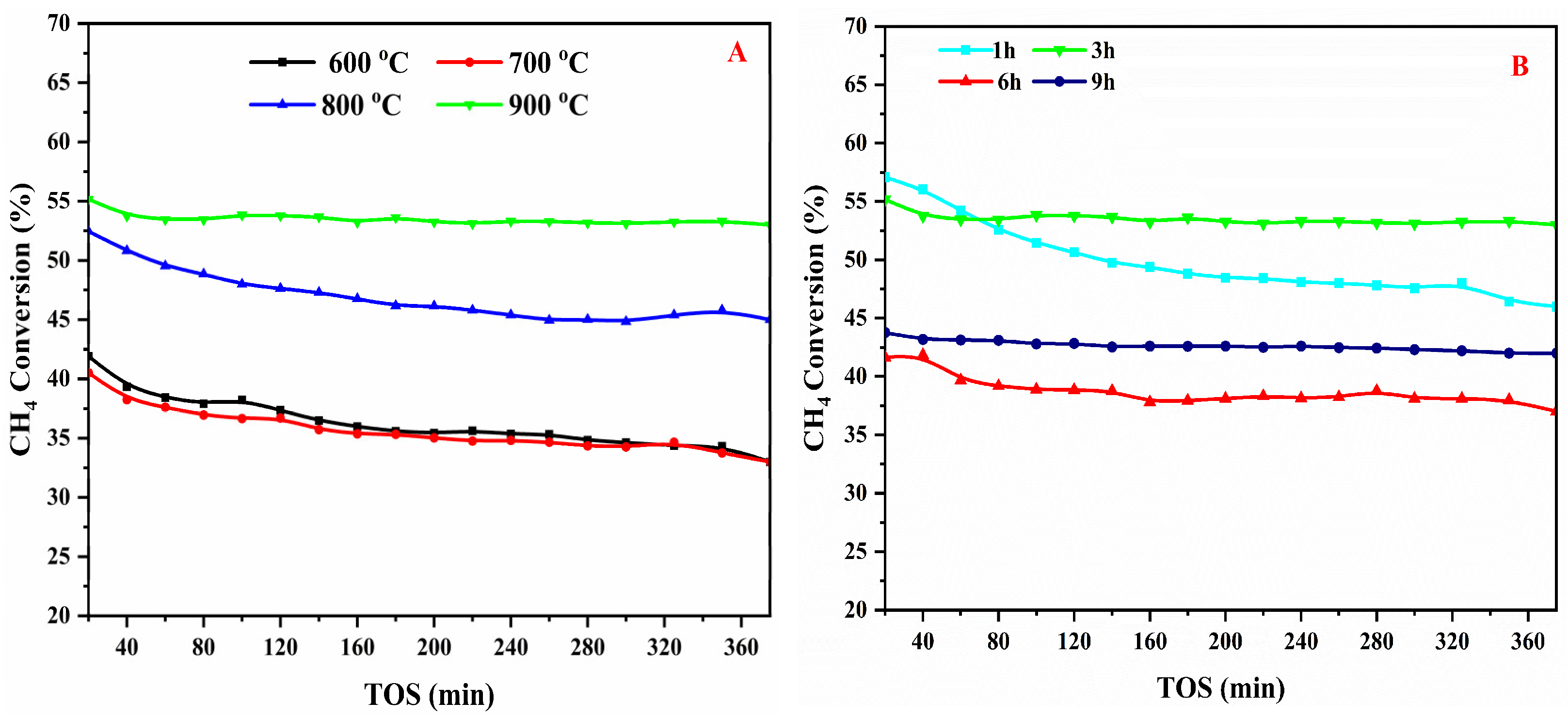
Figure 1A shows that a higher calcination temperature generally leads to better initial CH4 conversion over Ni/SiO2-Al2O3 catalysts. The catalyst calcined at 900 °C exhibits the highest initial CH4 conversion (55%) and the best stability over 360 min Time on Stream (TOS), with only a minor decline. In contrast, catalysts calcined at 600 °C and 700 °C exhibited lower initial CH4 conversions of approximately 42% and 41%, respectively, and experienced more pronounced deactivation during TOS. The catalyst calcined at 800 °C shows intermediate initial activity (52%) and a moderate deactivation trend. Figure 1B, which focuses on the effect of calcination duration on CH4 conversion for catalysts calcined at a fixed temperature of 900 °C, reveals a non-linear relationship between calcination time (1–9 h) and catalytic performance. The 1 h calcination yields the highest initial CH4 conversion (58%) but the least stability, dropping to 46% after 360 min. A 3 h calcination provides a good balance of initial activity (55%) and the best stability (54%). Longer calcination durations (6 and 9 h) lead to lower initial methane conversions of 42% and 44%, respectively. The catalyst calcined for 6 h exhibits noticeable deactivation during TOS, whereas the 9 h-calcined catalyst demonstrates markedly improved stability. Although methane conversion initially decreases with increasing calcination time, a relative improvement in performance is observed upon further prolongation of calcination beyond 6 h. This behavior is attributed to structural equilibration of Ni species and enhanced resistance to carbon deposition, which together improve the effective catalytic activity. Previous studies have demonstrated that methane conversion does not vary linearly with calcination time; instead, intermediate calcination durations can reduce activity, whereas prolonged calcination enhances structural stability and partially restores catalytic performance [19].
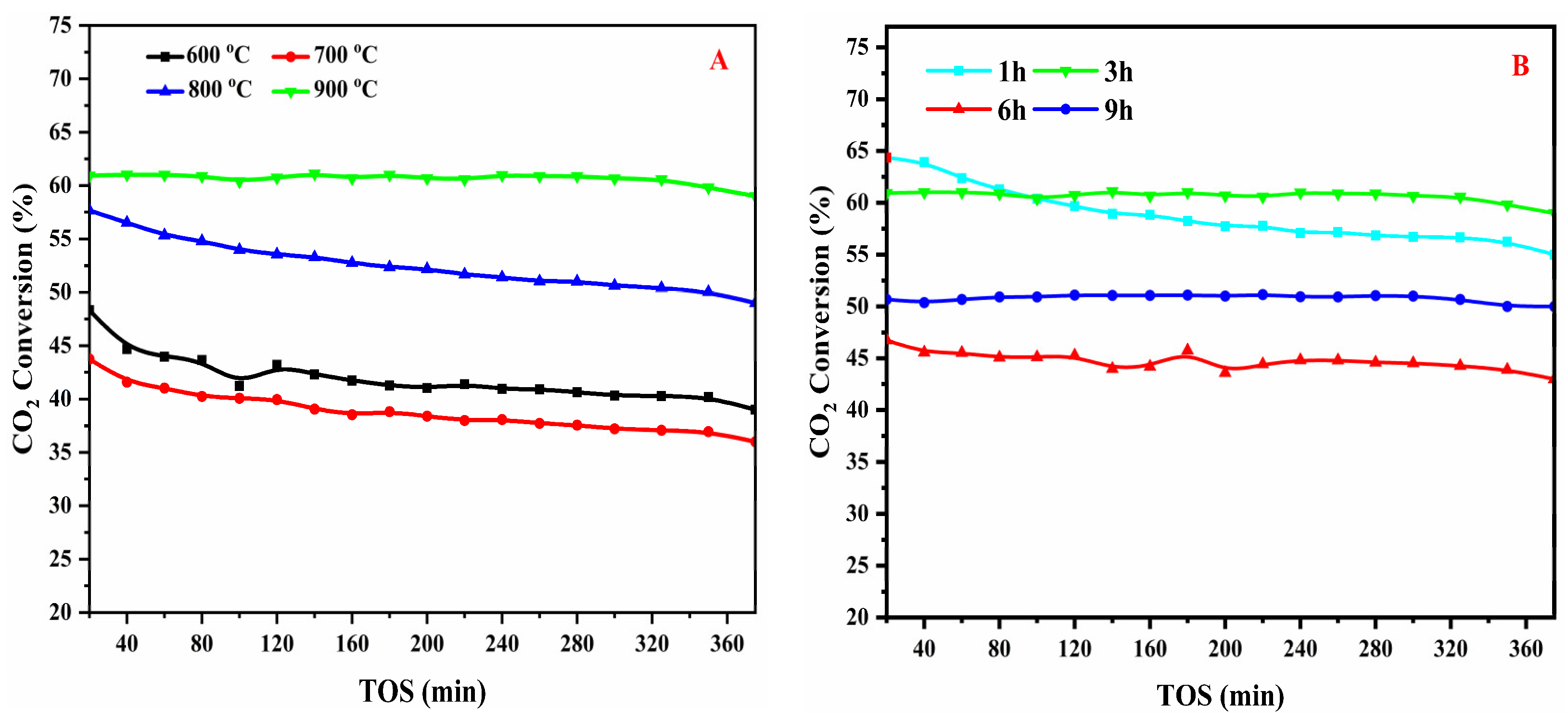
As shown in Figure 2A, the catalyst calcined at 900 °C exhibited the highest initial CO2 conversion (61%) and the best stability over time. The catalyst treated at 800 °C showed slightly lower initial activity (58%) and more pronounced deactivation. In contrast, the catalysts calcined at 700 °C (44%) and 600 °C (49%) demonstrated the lowest initial conversions and suffered from steady deactivation. Although conversion generally decreases with decreasing calcination temperature, the trend is not linear between 700 and 600 °C. The difference in conversion level can therefore be attributed to variations in the stability and effectiveness of the active Ni sites rather than to differences in deactivation kinetics. Similar non-linear trends in the DRM process with calcination temperature have been reported in the literature due to competing effects of Ni stabilization and metal–support interaction [20].
Figure 2B shows how the CO2 conversion is affected by calcination times of 1, 3, 6, and 9 h at 900 °C. The highest initial conversion (about 65%) and mild deactivation are displayed by the 1 h catalyst. High initial activity (61%) and good stability are well-balanced by the 3 h catalyst. The catalyst with the lowest initial activity (around 47%) and least stable performance is the 6 h catalyst. The 9 h catalyst shows good stability but a reduced first conversion (50%). At 900 °C, the effect of calcination time on CO2 conversion is non-linear. The catalyst calcined for 6 h exhibits a lower conversion profile compared to the catalyst calcined for 9 h, because the 6 h sample has inadequate stabilization of Ni species and increased carbon deposition that lowers the effective availability of active Ni0 sites, resulting in lower methane conversion. The longer 9 h calcination makes stronger active sites that are less likely to become inactive and can better handle carbon production than the 6 h treatment [19]. A period of 3 h seems to be ideal for striking a balance between initial activity and stability.
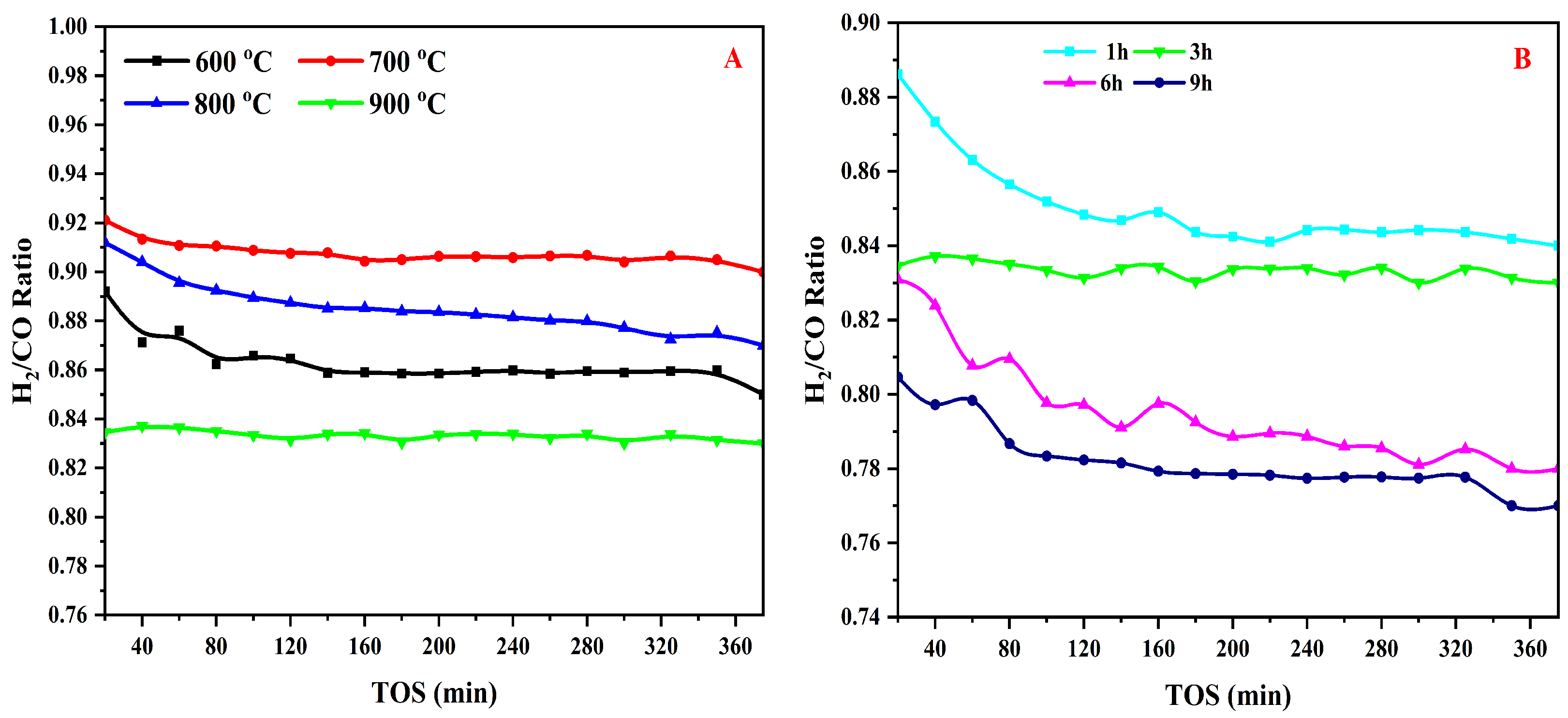
The 900 °C catalyst’s greater stability for both processes suggests that the higher temperature encourages the development of stronger, more deactivation-resistant active sites. Higher CO2 conversion than CH4 conversion suggests the reverse water-gas shift (RWGS) reaction (CO2 + H2 ⇌ CO + H2O) is active. In the presence of H2 (likely from methane reforming), RWGS consumes CO2, increasing its apparent conversion beyond that of CH4 in the primary reaction over the Ni catalyst [21]. Overall, increasing the calcination temperature notably enhances both the initial CO2 conversion and the long-term stability of the catalyst, with 900 °C yielding the most favorable results. Figure 3A illustrates how far the ratio of H2/CO reached in the product stream over the Ni/SiO2-Al2O3 catalyst. The outcomes are displayed for catalysts calcined at 600, 700, 800, and 900 °C. The catalyst with the highest initial H2/CO ratio (0.92) and the best stability is the one that is calcined at 700 °C. The catalyst at 800 °C begins at about 0.915 and gradually drops. With oscillations and a downward trend, the 600 °C catalyst exhibits the least stable ratio, starting at about 0.89. Despite having the lowest initial H2/CO ratio (0.84), the catalyst at 900 °C exhibits good stability. In short, the relative positions of the H2/CO ratio profiles in Figure 3A reflect the competing contributions of dry reforming of methane and the reverse water–gas shift (RWGS) reaction. Calcination at 700 °C provides an optimal balance between methane reforming activity and suppression of RWGS, resulting in the highest and most stable H2/CO ratio. At higher calcination temperatures, particularly 900 °C, enhanced RWGS activity consumes H2 and increases CO formation, thereby lowering the H2/CO ratio despite high CH4 conversion. In contrast, the catalyst calcined at 600 °C exhibits an unstable H2/CO ratio due to weaker resistance to carbon deposition, leading to fluctuating syngas composition.
Figure 3B shows the H2/CO ratio in the product stream over TOS for a Ni/SiO2-Al2O3 catalyst that was calcined for 1, 3, 6, and 9 h at 900 °C. The catalyst that has been calcined for 1 h has the highest initial H2/CO ratio (0.885), but it rapidly decreases and stabilizes at 0.84. The 3 h calcined-catalyst displays a relatively high starting ratio (0.838) and the highest stability, varying minimally around 0.835–0.84. After a brief decline, the 9 h calcined-catalyst retains good stability between 0.78 and 0.79. It begins at about 0.805. With H2/CO varying between 0.77 and 0.84, the 6 h calcined-catalyst exhibits the least steady performance and the lower H2/CO ratio (0.785). Generally, the gradual decrease in the H2/CO ratio with increasing TOS is mainly attributed to the progressive contribution of the reverse water gas shift reaction, which consumes H2 while producing additional CO. Furthermore, surface carbon accumulation during prolonged operation can alter the availability of active Ni sites, resulting in a relative reduction of H2 formation compared to CO. Consequently, catalysts with insufficient structural stabilization exhibit a more pronounced decline in the H2/CO ratio over time. Also, before the system stabilizes, the amount of H2 made compared to CO can be lowered by quickly turning off the system and letting carbon build up on the catalyst surface. A divergent trend was reported by Nouf A. Bamatraf et al., where enhanced catalytic performance of the NiO-based catalyst for syngas production was achieved when the catalyst was calcined at lower temperatures [22].

2.2. Characterization of the Catalyst

2.2.1. N2 Physisorption

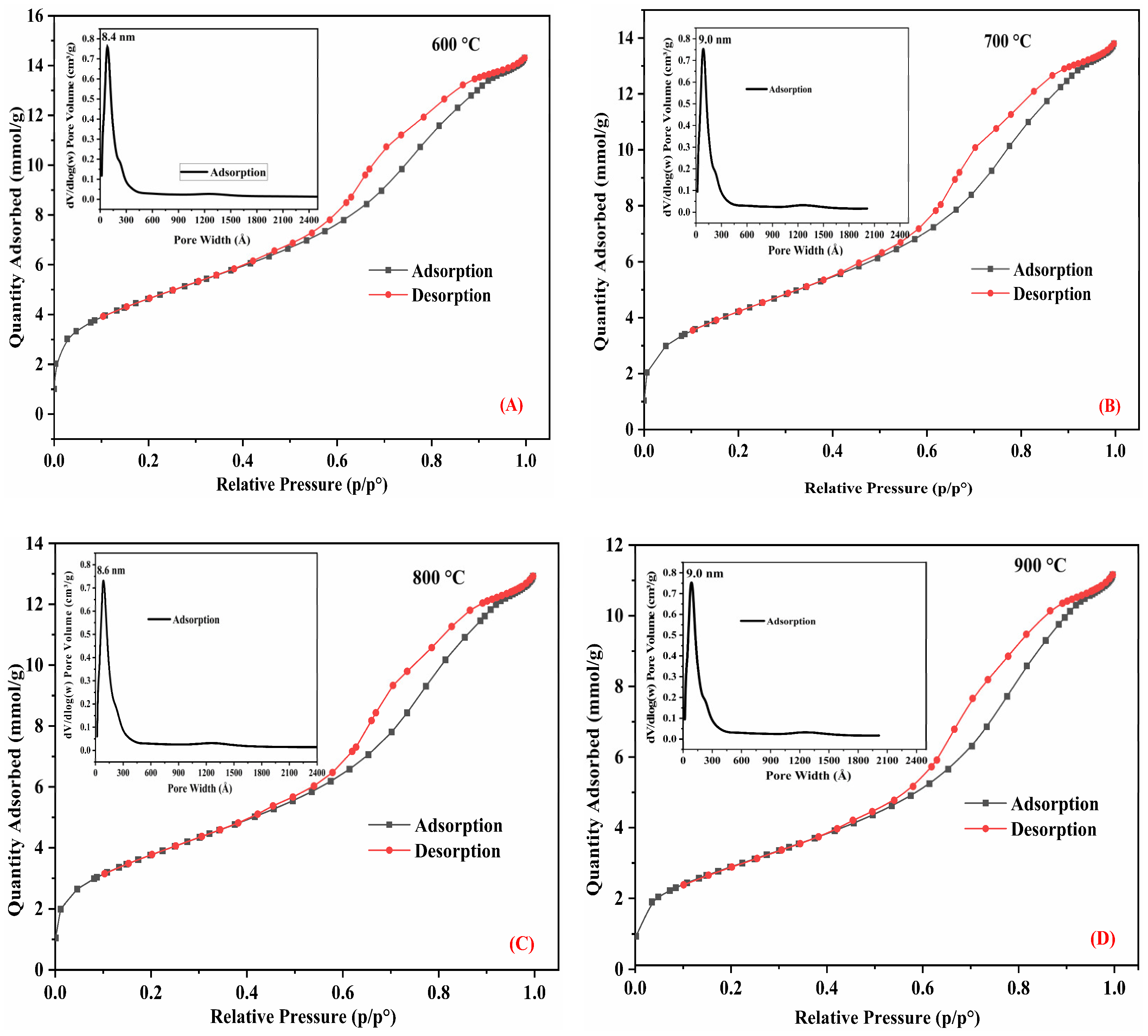
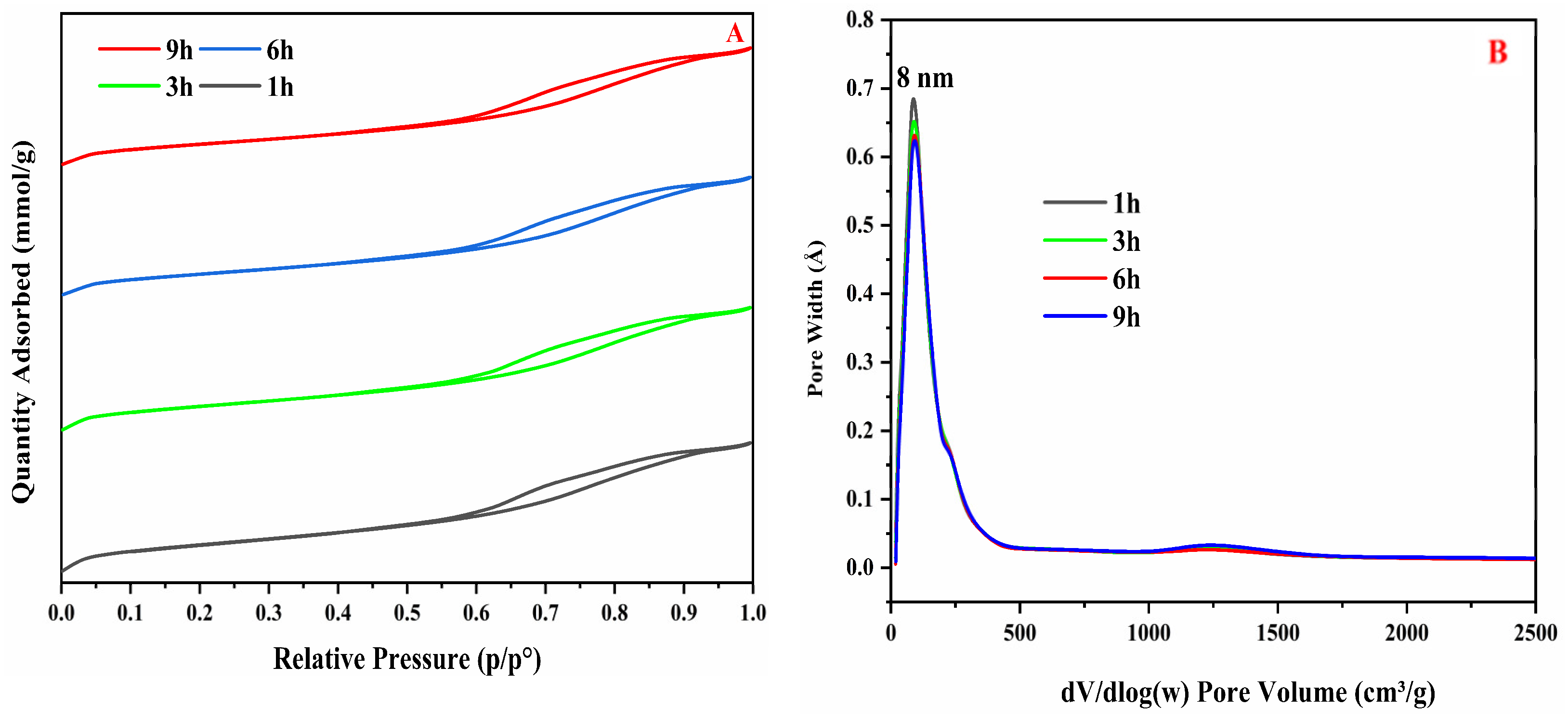
To investigate the influence of calcination conditions (temperature and duration) on the porosity and surface properties of the Ni/SiO2-Al2O3 catalyst, the N2 adsorption–desorption isotherms of catalysts calcined at different temperatures (Figure 4) and different durations (Figure 5) were presented. All samples of the Ni/SiO2-Al2O3 catalyst exhibited Type IV isotherms with H1 hysteresis loops, indicating mesoporous structures with cylindrical pores. The pore size distribution over the catalyst remains monomodal in the size range 8.4 nm to 9 nm upon different calcination temperatures. As the calcination temperature and duration increased, a consistent decrease in the volume of N2 adsorbed was observed. This decline in N2 uptake suggests a reduction in specific surface area (SA) and specific pore volume (PV). Interestingly, SA and PV are decreased, but the pore diameter is increased upon increasing the calcination temperature. It indicates the structural degradation or collapse of smaller pores into larger pores upon increasing calcination temperature/time [22].
Table 1 and Table 2 show that increasing either calcination temperature or duration has a similar impact on the porosity of the Ni/SiO2-Al2O3 catalyst, with pore diameter increases, while specific surface area and pore volume decrease. This suggests that prolonged thermal treatment, whether by higher temperature or extended time, leads to structural coarsening and reduced accessible surface area. The catalyst calcined at 900 °C for 3 h facilitates gas diffusion and improves access to active sites through pores of average size 6.85 nm. These pore features will help attain high catalytic activity over the 900 °C calcined catalyst.
Achieved optimum catalytic activity towards the DRM reaction by facilitating. However, further pore enlargement to 72.1 Å after 9 h of calcination at the same temperature affects diminished activity, likely due to fewer accessible active sites at a lower specific surface area [23]. The pore size distribution does not change upon increasing the calcination time. It remains monomodal in the size range of 8.4 nm. The adsorbed quantity profiles in Figure 5A are in order from 9 h to 1 h because the amount of N2 adsorbed always goes down as the calcination time goes up. This trend shows a steady decrease in specific surface area and pore volume because the structure becomes coarser, and smaller pores collapse into bigger ones when they are heated for a long time. The 9 h sample has the least pore volume and surface area (213 m2/g) compared to the 1 h sample (261 m2/g). This means that its adsorption profile is near the bottom of the graph.

2.2.2. Temperature-Programmed Reduction TPR

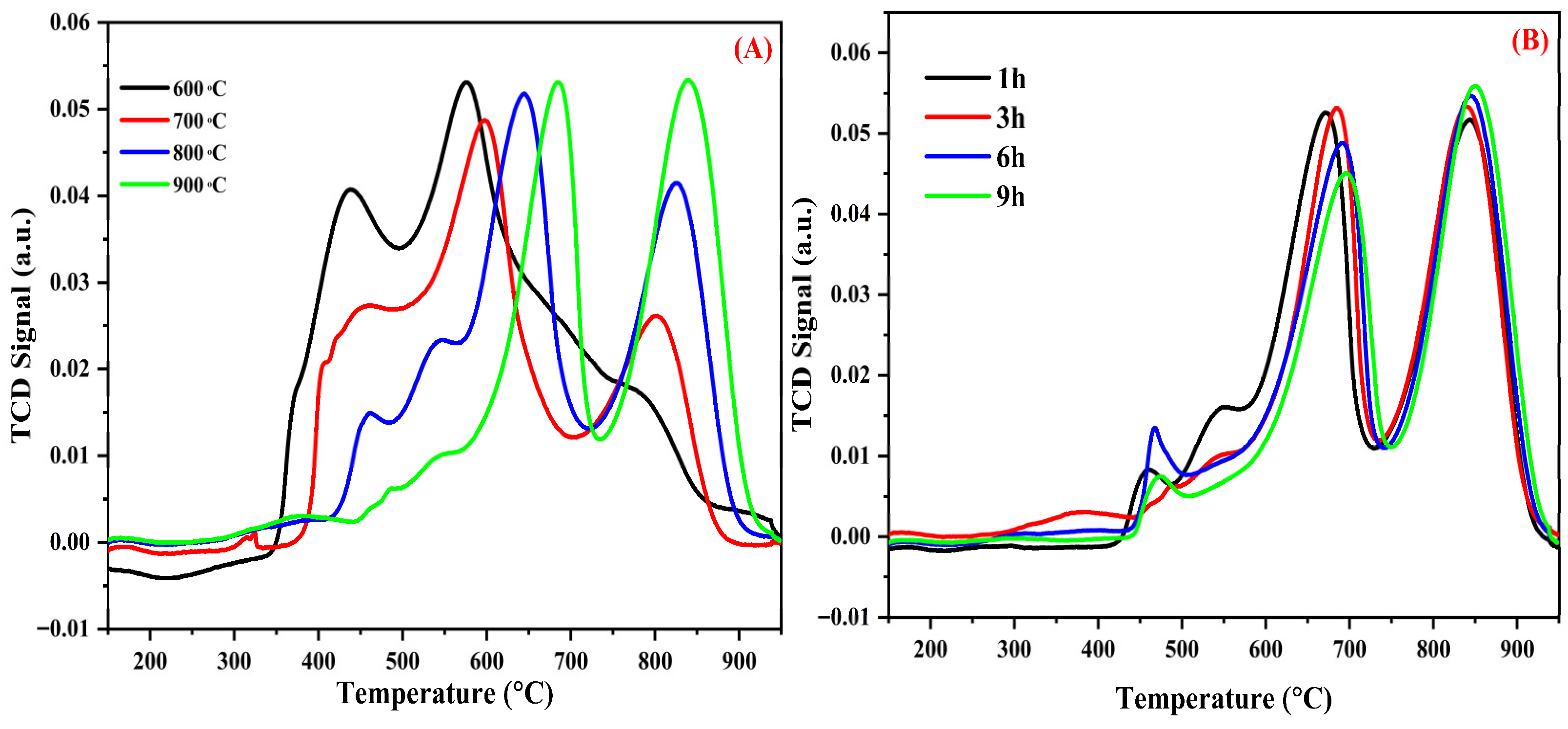
The TPR profile for a Ni/SiO2-Al2O3 catalyst that has been calcined at 600 °C, 700 °C, 800 °C, and 900 °C is shown in Figure 6A. The presence of many Ni oxide species with differing reducibility is indicated by the multiple peaks in the TPR profiles for all calcination temperatures. These species are ascribed to variations in levels of interaction between the support material (SiO2-Al2O3) and the NiO phase. The 600 °C calcined sample has a notable three reduction peaks that begin at about 450 °C, peak at about 600 °C, and peak at 800 °C. This implies that the reduction in dispersed Ni2+ interacts with the support under weak to strong interaction, respectively [24]. NiO under strong interaction generates stable active sites upon reduction. Upon increasing the calcination temperature, the intensity of the low temperature reduction peak decreases, the intermediate temperature reduction peak is shifted towards relatively higher temperatures, and the reduction peak’s intensity at high temperature is increased. Clearly, upon increasing the calcination temperature, the interaction of NiO with the support is translating from weak to a stronger level, and the concentration of stable active sites is also growing [25]. Figure 6B shows that the TPR profiles of Ni/SiO2-Al2O3 calcined at 900 °C for different durations (1, 3, 6, and 9 h) show minimal variation in the position and intensity of the reduction peaks, which consistently appear around 700 °C and 850 °C. This suggests that the calcination time has little effect on the nature of the reducible species. At a 900 °C calcination temperature, thermally stable phases are already formed during the early stages of calcination. As a result, the metal-support interactions and reducibility remain largely unchanged with increasing time, leading to nearly identical TPR profiles.

2.2.3. XRD Analysis

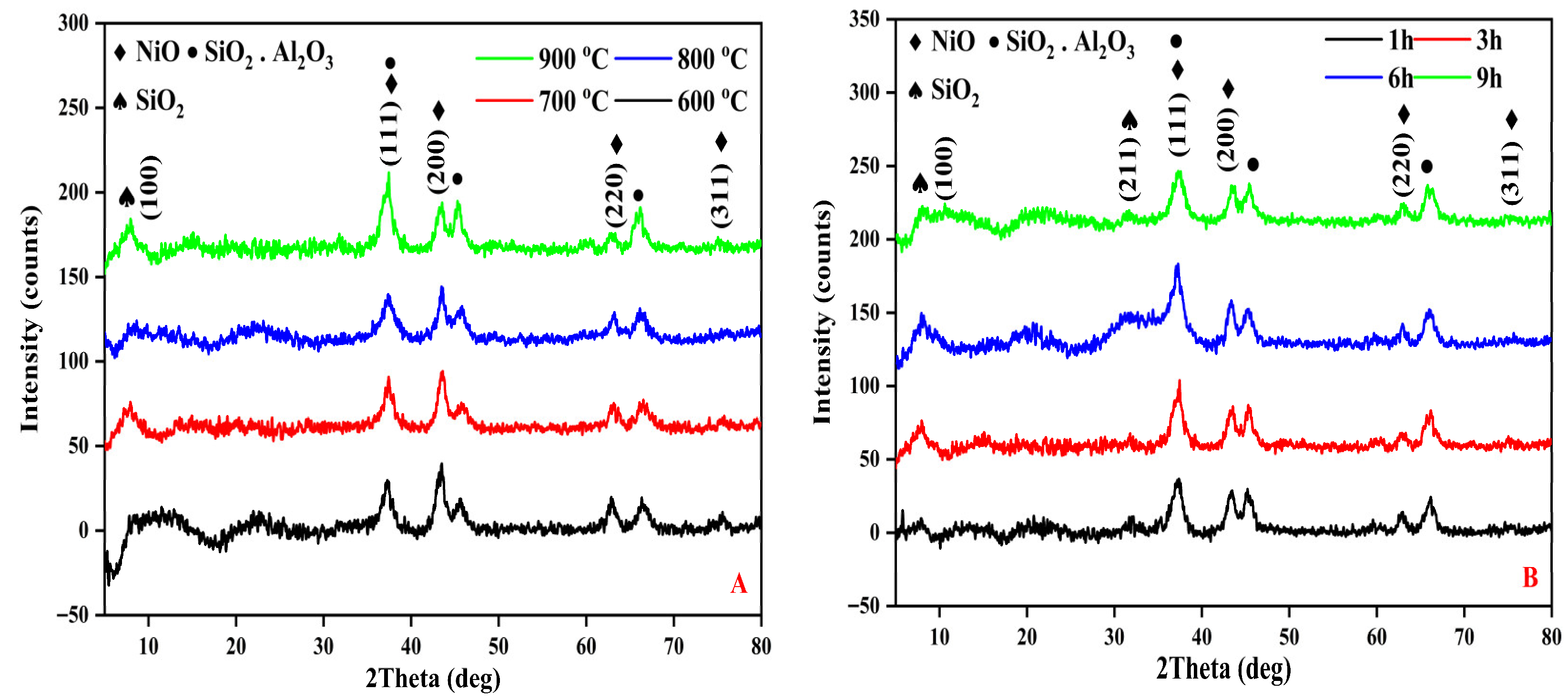
The structural evolution of Ni/SiO2-Al2O3 catalysts was investigated using X-ray diffraction (XRD), as presented in Figure 7A,B. The identified crystalline phases include cubic NiO, with prominent reflections at 2θ = 43.3°, 62.9°, and 75.4°, corresponding to the (200), (220), and (311) planes, respectively, as indexed to (Code 01-071-1179). While reflections at 2θ = 45° and 67° may be assigned to a poorly crystalline solid solution of SiO2·Al2O3 (Code 00-048-0276). At 2θ = 37°, diffraction peaks for SiO2·Al2O3 solid solution and cubic NiO overlap with each other. Catalyst calcined at 600 °C showed a broad hump around 2θ = 22°, which is attributed to amorphous SiO2 (Code 01-083-2465) [22].
Increasing the calcination temperature from 600 °C to 900 °C induced only minor changes in the XRD profiles, suggesting that significant crystallization and NiO phase formation occurred predominantly at lower temperatures, with higher temperatures contributing little further structural change. As shown in Figure 7B, extending the calcination time from 1 to 6 h led to organization of a more crystalline NiO. The peaks corresponding to SiO2 and SiO2·Al2O3 are present across all catalysts calcined at different times, indicating that these phases are relatively stable under the applied calcination conditions. The increase in peak intensity and sharpness at higher calcination time (up to 6 h) indicates enhanced crystallinity and better-defined NiO domains. However, a slight reduction in intensity was observed at 9 h, which may be attributed to particle agglomeration or surface sintering effects that reduce the effective crystallite dispersion. Overall, the changes in diffraction peak positions and intensities across the different treatments were not substantial, indicating that the NiO phase was relatively stable and well-formed under all conditions. The catalyst calcined for 3 h showed the best performance in methane dry reforming, likely due to a balanced combination of crystallinity, dispersion, and phase purity.

2.2.4. TGA

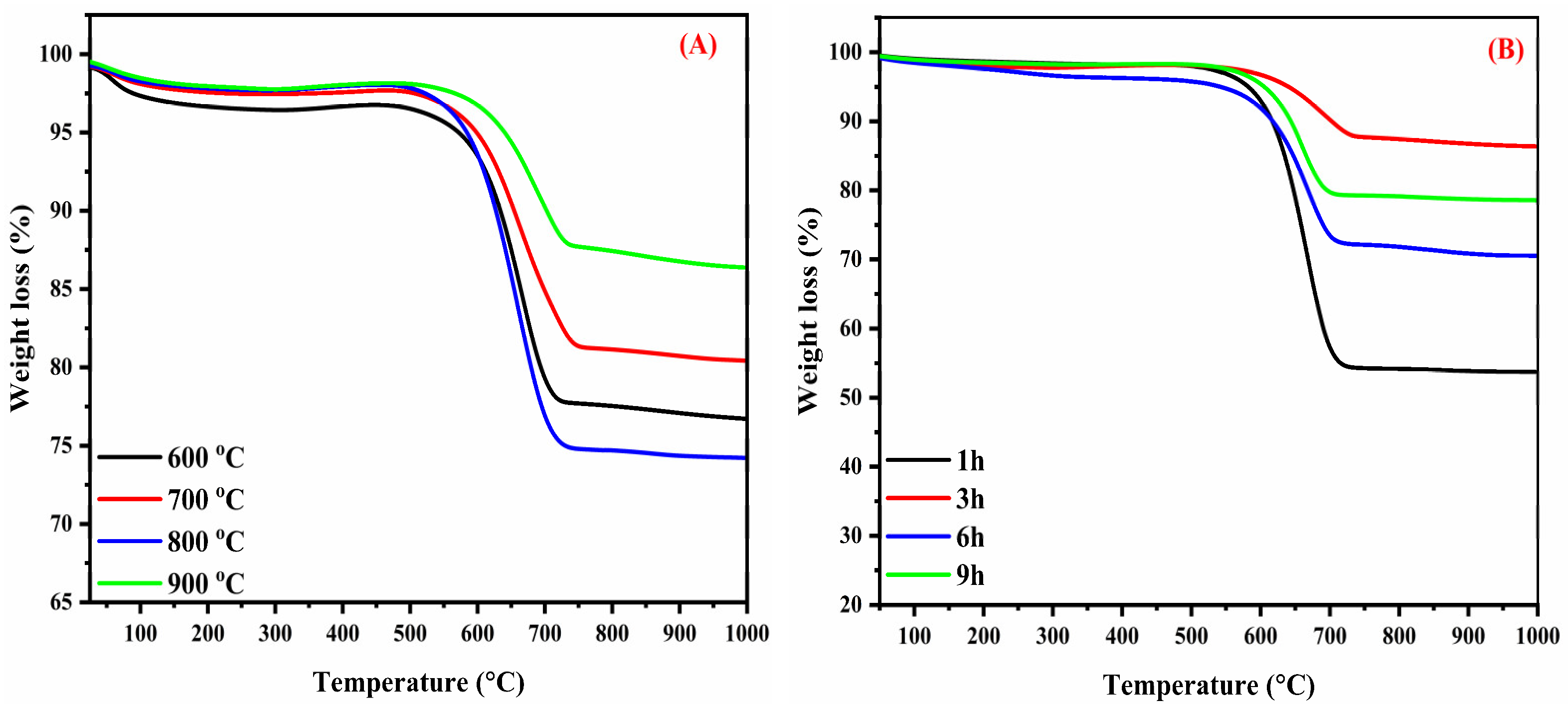
Figure 8A presents a thermogravimetric analysis (TGA) plot illustrating the impact of different calcination temperatures (600 °C, 700 °C, 800 °C, and 900 °C), each maintained for a 3 h duration, on the thermal stability of the catalyst. The Ni/SiO2-Al2O3 catalysts show a mass loss profile as they are heated up to 1000 °C. There is a minor mass loss initially, due to volatile impurities, followed by a significant mass loss region at 600 °C, attributed to the oxidation of the carbon formed on the surface of the catalyst. Higher calcination temperatures generally result in lower overall mass loss and a slight shift in the major decomposition towards higher temperatures, suggesting that increased calcination promotes the oxidation of coke deposited on its surface. Figure 8B presents the thermogravimetric analysis (TGA) of Ni/SiO2-Al2O3 catalysts calcined at 900 °C for varying durations (1, 3, 6, and 9 h). The results indicate a general decrease in total weight loss with increasing calcination time, reflecting improved thermal stability. The catalyst calcined for only 1 h exhibits the highest total mass loss (55%), suggesting huge mass deposition over the improperly calcined catalyst sample. Increasing the calcination duration to 3 h reduces the weight loss to approximately 10%, indicating more effective removal of coke. This improvement is attributed to the enhanced crystallinity of NiO and stronger interactions between NiO particles and the SiO2·Al2O3 support, which improve structural integrity and thermal resistance. However, further extending the calcination time to 6 and 9 h results in increased mass retention (80%) but reduced catalytic performance. Overall, catalyzed at 900 °C for 3 h, it is found to attain an impressive coke resistance property [26].

2.2.5. TEM Analysis

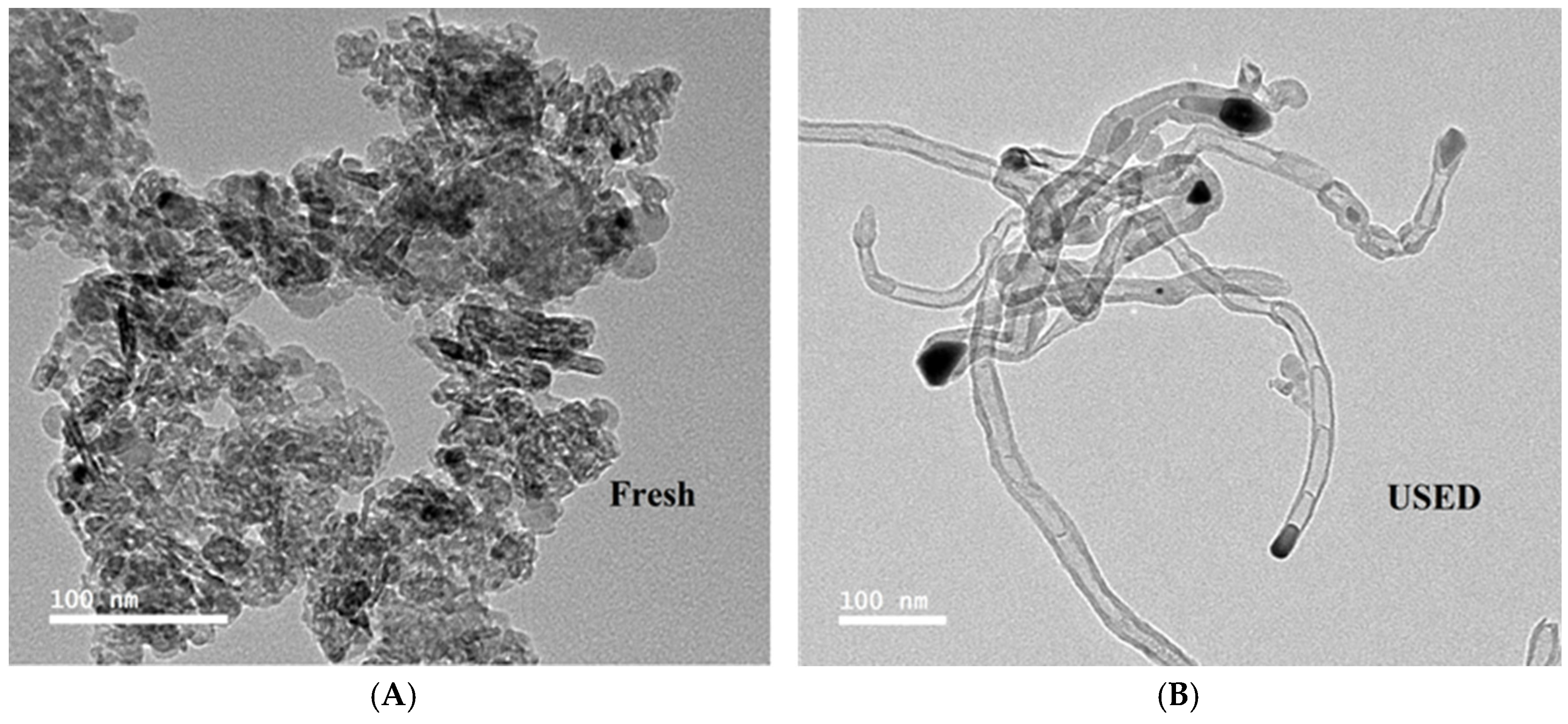
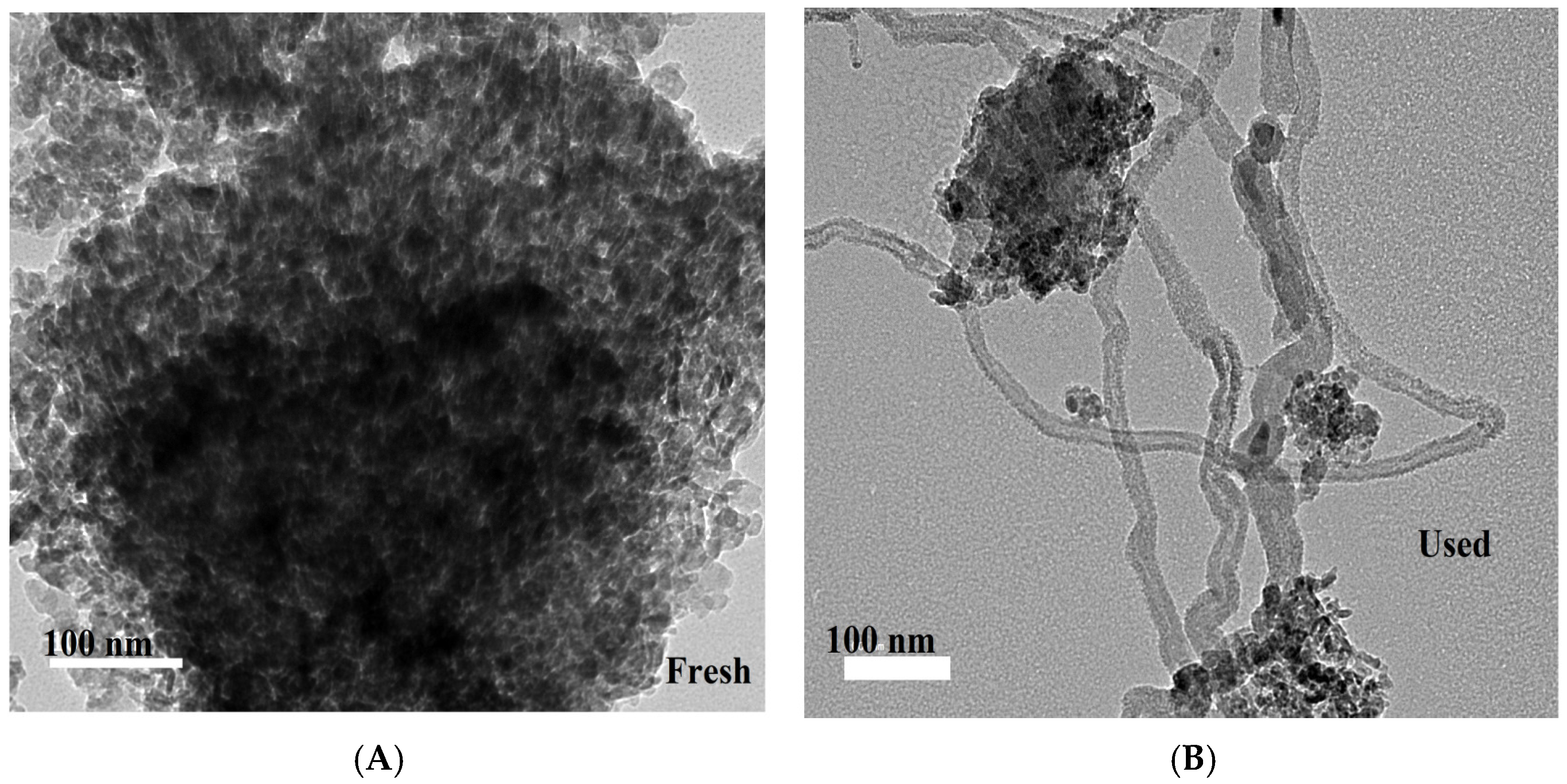
To study the effect of both dry reforming and calcination temperature on catalyst morphology, TEM characterizations were carried out for Ni/SiO2-Al2O3 catalysts calcined at 600 °C and 900 °C for 3 h before and after reaction (Figure 9A,B and Figure 10A,B). In the fresh state, in both catalysts, the particles are agglomerated on a porous support; the catalyst calcined at 600 °C shows a little better dispersion than the catalyst calcined at 900 °C. Images after reaction depict the presence of filamentous carbon (CNFs/CNTs), a common product of methane decomposition on Ni surfaces [27].
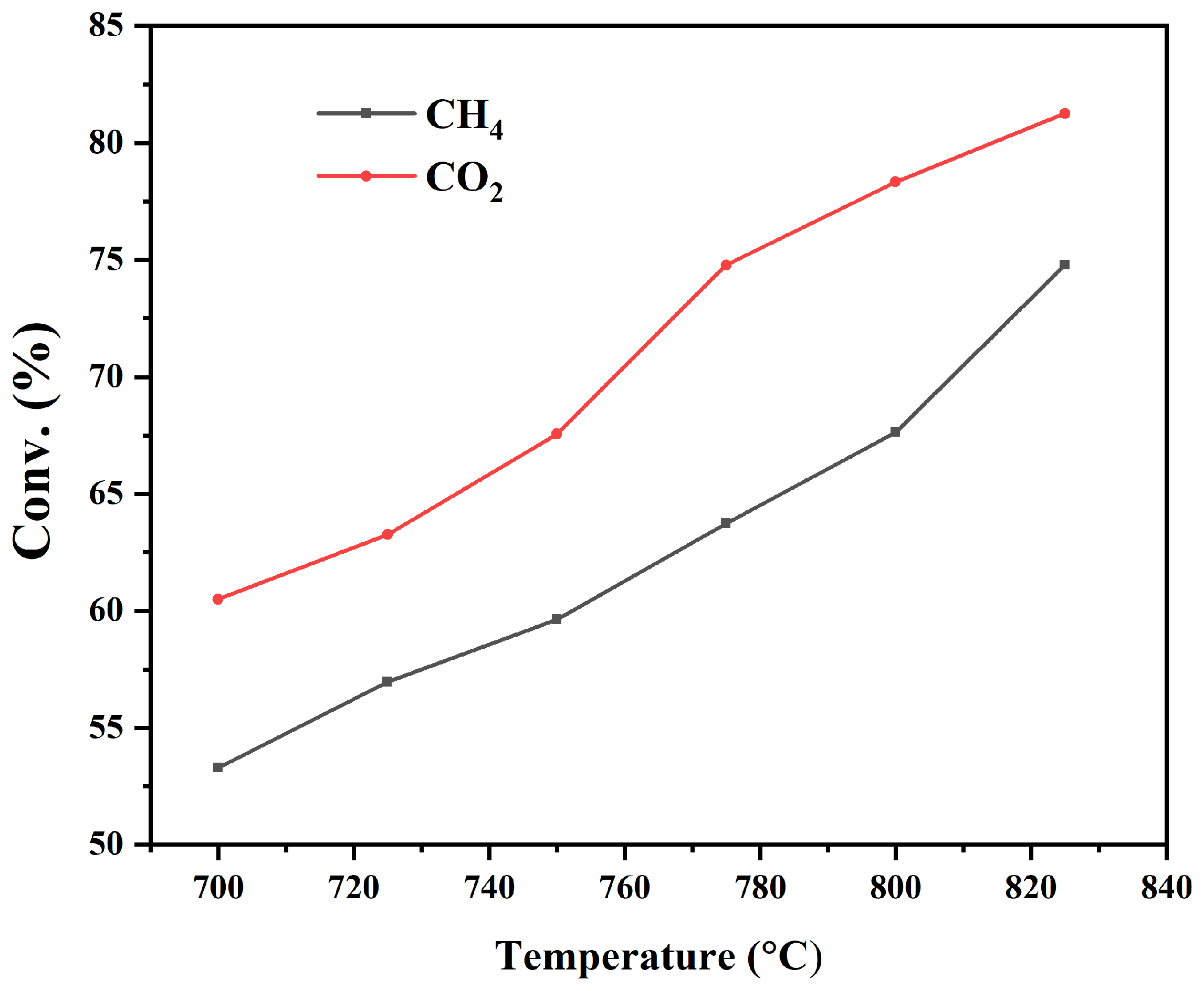
Figure 11 explores how temperature affects the conversion of CH4 and CO2 for the optimal catalyst (Ni/SiO2-Al2O3 calcined at 900 °C for 3 h). As the reaction temperature rises from 700 to 825 °C, conversion rates for both CH4 and CO2 rise. This improvement is attributed to the endothermic nature of the DRM process. Raised temperatures provide reactant molecules with greater kinetic energy, facilitating collisions and aiding in the breaking of bonds, thereby increasing product formation. The Arrhenius equation (Equation (1)) permits us to calculate the activation energy (Ea) for the system using reaction temperature data and matching conversion rates. This equation relates the (r) rate constant (mol.g−1.s−1), (A) pre-exponential factor (mol.g−1.s−1.bar−(a+b)), (PCH4 and PCO2) partial pressures of CH4 and CO2 (bar), and b are the apparent reaction orders (dimensionless), (Ea) activation energy (KJ.mol −1), (R) universal gas constant (8.314 J.mol−1.K−1), and (T) temperature (K) [28].
r = A P C H 4 a P C O 2 b e E a / R T
The Arrhenius equation is solved using ordinary differential equations via MATLAB (ODE45) to obtain the activation energy of the system based on Equation (1). Experimental data are used to solve the numerical ordinary differential equations that show how fast methane and carbon dioxide change into other substances. A linear regression analysis is adopted on the Arrhenius plot (ln k versus 1/T) by changing the temperatures (600–900 °C) and measuring the reaction rates (k) that happen at those temperatures. The rate law is probably shown by Equation (1), with the unknown parameter being the pre-exponential factor A and activation energy Ea. The ODE45 algorithm changes the kinetic parameters over and over again to make the differences between the predicted and experimental concentration profiles as small as possible over time. The slope of the resulting linear fit (−Ea/R) gives the exact activation energy needed for the dry reforming process. This lets the researchers measure the catalytic efficiency and the energetic barrier for each calcination condition.
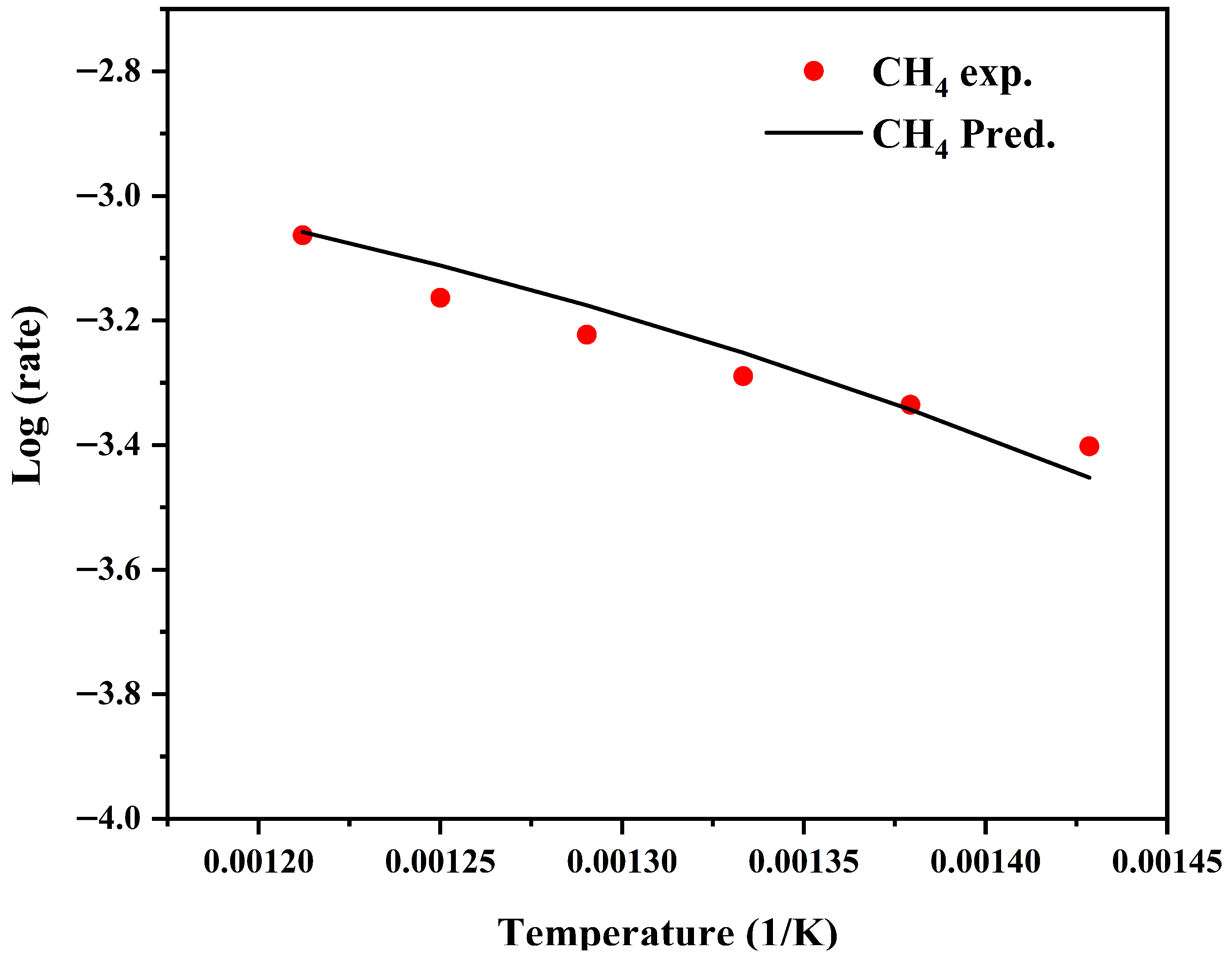
The rates are derived from the given conversions at different temperatures. These values can be used in the method above to determine the activation energy for the system. Activation energy was estimated from the Arrhenius equation [1]. The approximate value of 99.1138 kJ/mol was determined based on the data presented in Figure 11. Figure 12 illustrates the Arrhenius plot of the temperature dependence of CH4 reaction rates. The experimental data align closely with the predicted model line.
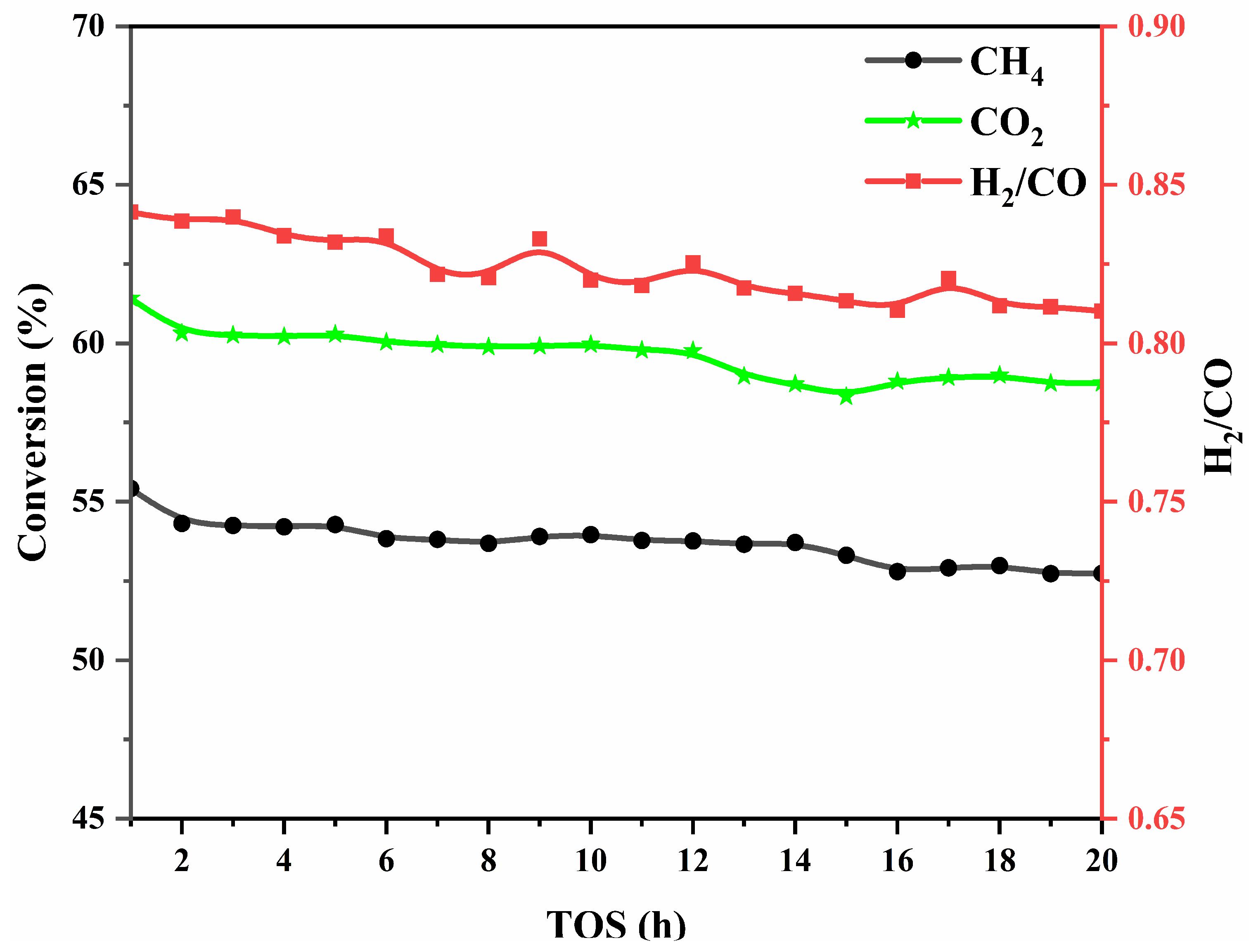
Figure 13 graph illustrates what happened after a 20-h stability test of the DRM. It shows how the conversion of reactants and the quality of syngas change over time on stream (TOS). The performance profile has gotten worse because the reverse water-gas shift reaction happened at the same time. The catalyst’s catalytic activity stays the same throughout the experiment because it works well and can handle quick coking.

3. Experimental

3.1. Catalyst Preparation

A catalyst containing 10 wt.% NiO supported on commercial SiO2-Al2O3 (75 wt.% SiO2 + 25 wt.% Al2O3) was prepared by gradually adding 30 mL of a 0.1 M aqueous solution of nickel (II) nitrate hexahydrate (Ni (NO3)2·6H2O, 98%, Alfa Aesar) to 2.441 g of SiO2-Al2O3. The mixture is subjected to heating and stirring until it turns into a paste, and the fluid evaporates. It went through two calcination processes. A portion was calcined at 600 °C, 700 °C, 800 °C, and 900 °C for 3 h. While the other part was calcined at 900 °C for periods ranging from 1 to 9 h. Catalyst is abbreviated in the article as Ni/SiO2-Al2O3.

3.2. Catalyst Activity Test

0.1 g of catalyst was utilized in a tubular stainless-steel fixed-bed reactor (D = 9.1 mm and H = 300 mm). The catalyst bed’s center has a K-type thermocouple. The catalyst was reduced with hydrogen at a flow rate of 30 mL/min for an hour at 700 °C. N2 was also used to remove the hydrogen gas from the reactor’s catalyst bed. The temperature of the reactor is 700 °C. The total flow rate of the feed was 70 mL/min. A gas chromatograph fitted with a PropakQ column, molecular sieve columns, and a thermal conductivity detector was used to examine the products. The conversions of CH4, CO2, and H2/CO were all calculated using Equations (2)–(4) [29].
C H 4   ( c o n v e r s i o n   % ) = C H 4 , i n C H 4 , o u t C H 4 , i n
C O 2   % = C O 2 , i n C O 2 , o u t   C O 2 , i n × 100
H 2 C O = m o l e   o f   H 2   p r o d u c e d m o l e   o f   C O   p r o d u c e d

3.3. Catalyst Characterization

The Micromeritics Tristar II 3020 instrument (Micromeritics, GA, USA) was used to determine the catalyst sample’s N2 adsorption–desorption profile versus relative pressure (P/Po), specific surface area, specific pore volume, and pore diameter. The Brunauer–Emmet–Teller equation estimates the specific surface area, while the nonlocal density function model estimates the pore size distribution. On a Micromeritics AutoChem II 2920 system (Malvern Panalytical, Westborough, MA, USA) with a thermal conductivity detector (TCD), the reducibility, basicity, and acidity of the catalysts were investigated using H2-temperature-programmed reduction (H2-TPR). Hydrogen temperature-programmed reduction (H2-TPR) was performed using 70 mg of catalyst under a 10% H2/Ar gas mixture (40 mL/min). The sample was heated from room temperature to 900 °C at a linear ramp rate of 10 °C/min. Water produced during the process was eliminated using a cold trap. Changes in conductivity corresponding to gas desorption or H2 consumption were measured by the TCD. X-ray diffraction (XRD) analysis of the fresh catalyst was conducted using a Rigaku MiniFlex diffractometer (MiniFlex, Rigaku, Akishima City, Japan), equipped with Cu Kα1 radiation (λ = 0.15406 nm), operated at 40 kV and 40 mA. Thermogravimetric analysis (TGA) was performed in air using a Shimadzu TGA-51 thermobalance (Shimadzu, Kyoto, Japan) to evaluate the thermal stability and compositional characteristics of the spent catalysts based on their mass change as a function of temperature. Inside the apparatus, a platinum pan containing 10–15 mg of the utilized catalysts is carefully placed. In an air environment, it is heated from room temperature to 1000 °C at a rate of 20 °C/min. As the heating process advanced, the mass change was continuously recorded. TEM analysis was performed to investigate the morphological and structural features of the Ni/SiO2-Al2O3 catalysts. Samples calcined at 600 °C and 900 °C were examined both before and after the methane dry reforming reaction. The measurements were carried out using a JEOL JEM-100CX transmission electron microscope (Akishima, Japan) operated at an accelerating voltage of 80 kV.

4. Conclusions

This study investigated the impact of calcination temperature (600–900 °C) and duration (1–9 h) on the performance of a Ni/SiO2-Al2O3 catalyst in methane dry reforming (DRM). The results highlighted the critical role of these pre-treatment conditions in shaping the catalyst’s structural and chemical properties, thereby influencing its catalytic behavior. Higher calcination temperatures generally enhanced both initial activity and long-term stability. Calcination conditions significantly influenced the H2/CO product ratio. The optimal temperature for achieving a high and stable output was determined to be 700 °C. Among all samples, the catalyst calcined at 900 °C demonstrated the highest initial methane conversion (54%) and exhibited remarkable resistance to deactivation. This enhanced behavior correlated with increased NiO crystallite size (XRD), stronger metal-support interactions (TPR, indicating less reducible NiO), and improved resistance to carbon deposition, as shown by the TGA. However, calcination also induced NiO sintering, resulting in a reduction in specific surface area and pore volume (N2 physisorption). While both the 1 h and 3 h calcined samples exhibited high initial catalytic activity, the 3 h calcined catalyst proved more effective at maintaining long-term performance. Extended calcination times (6 and 9 h) resulted in lower initial activity but enhanced stability, likely due to further evolution of NiO crystallites and increased resistance to carbon formation. The TEM study of used catalysts gave direct evidence of carbon deposition, a major cause of catalyst deactivation. Interestingly, a lower calcination temperature of 600 °C appeared to increase carbon production compared to the higher 900 °C treatment. The higher rate of CO2 conversion compared to CH4 indicates that the reverse water–gas shift reaction is occurring concurrently. Additionally, calcination conditions affected the product’s H2/CO ratio; at 700 °C, the calcination temperature was identified as optimal for achieving a high, stable yield. The study established [30] the activation energies (Ea) for the best catalyst (Ni/SiO2-Al2O3 calcined at 900 °C for 3 h), predicting around 99.1138 kJ/mol using the Arrhenius equation (Equation (1)). The activation energy aligns with the endothermic nature of the DRM process, in which the conversion rates of both CH4 and CO2 increase at higher reaction temperatures (500 to 825 °C).

Supplementary Materials

The following supporting information can be downloaded at https://www.mdpi.com/article/10.3390/catal16020118/s1. Table S1: Comparison of catalytic performance for CH4 dry reforming over various Ni-based catalysts [31,32,33,34,35,36]; Table S2: Hydrogen consumption during TPR at different calcination temperatures and Times.

Author Contributions

D.A.A., A.A.I. and A.S.A.-F.: methodology, data curation, conceptualization, investigation, writing—review and editing; F.A.A.A., S.E.A., M.E.M. and N.A.E.-N.: writing—original draft preparation, formal analysis, resources, investigation; F.S.A. and A.A.A.: formal analysis, resources, software, validation. All authors have read and agreed to the published version of the manuscript.

Funding

This research has been funded by the Deputyship for Research & Innovation, Ministry of Education—Saudi Arabia, through the project number [S-0011-1446].

Data Availability Statement

Data are contained within the article and Supplementary Materials.

Acknowledgments

The authors extend their appreciation to the Deputyship for Research & Innovation, Ministry of Education in Saudi Arabia, for funding this research work through the project number [S-0011-1446].

Conflicts of Interest

The authors declare no conflicts of interest.

References

  1. Song, Y.; Ozdemir, E.; Ramesh, S.; Adishev, A.; Subramanian, S.; Harale, A.; Albuali, M.; Fadhel, B.A.; Jamal, A.; Moon, D.; et al. Dry Reforming of Methane by Stable Ni–Mo Nanocatalysts on Single-Crystalline MgO. Science 2020, 367, 777–781. [Google Scholar] [CrossRef]
  2. Lu, Y.; Kang, L.; Guo, D.; Zhao, Y.; Zhao, Y.; Wang, S.; Ma, X. Double-Site Doping of a V Promoter on Nix-V-MgAl Catalysts for the DRM Reaction: Simultaneous Effect on CH4 and CO2 Activation. ACS Catal. 2021, 11, 8749–8765. [Google Scholar] [CrossRef]
  3. Wang, L.; Wang, F. Design Strategy, Synthesis, and Mechanism of Ni Catalysts for Methane Dry Reforming Reaction: Recent Advances and Future Perspectives. Energy Fuels 2022, 36, 5594–5621. [Google Scholar] [CrossRef]
  4. Li, L.; Han, Q.; Tang, L.; Zhang, Y.; Li, P.; Zhou, Y.; Zou, Z. Flux Synthesis of Regular Bi4TaO8Cl Square Nanoplates Exhibiting Dominant Exposure Surfaces of {001} Crystal Facets for Photocatalytic Reduction of CO2 to Methane. Nanoscale 2018, 10, 1905–1911. [Google Scholar] [CrossRef]
  5. Jin, L.; Liu, B.; Wang, P.; Yao, H.; Achola, L.A.; Kerns, P.; Lopes, A.; Yang, Y.; Ho, J.; Moewes, A.; et al. Ultrasmall Au Nanocatalysts Supported on Nitrided Carbon for Electrocatalytic CO2 Reduction: The Role of the Carbon Support in High Selectivity. Nanoscale 2018, 10, 14678–14686. [Google Scholar] [CrossRef]
  6. Bao, L.; Zhu, S.; Chen, Y.; Wang, Y.; Meng, W.; Xu, S.; Lin, Z.; Li, X.; Sun, M.; Guo, L. Anionic Defects Engineering of Co3O4 Catalyst for Toluene Oxidation. Fuel 2022, 314, 122774. [Google Scholar] [CrossRef]
  7. Zhang, S.; Muratsugu, S.; Ishiguro, N.; Tada, M. Ceria-Doped Ni/SBA-16 Catalysts for Dry Reforming of Methane. ACS Catal. 2013, 3, 1855–1864. [Google Scholar] [CrossRef]
  8. Hansen, S.I.; Sjølin, B.H.; Castelli, I.E.; Vegge, T.; Jensen, A.D.; Christensen, J.M. The Importance of Gas Purity in Catalytic Ammonia Synthesis. J. Catal. 2025, 450, 116223. [Google Scholar] [CrossRef]
  9. Naidu, B.N.; Kumar, K.D.P.L.; Saini, H.; Kumar, M.; Kumar, T.N.; Prasad, V.V.D.N. Coke Deposition over Ni-Based Catalysts for Dry Reforming of Methane: Effects of MgO-Al2O3 Support and Ceria, Lanthana Promoters. J. Environ. Chem. Eng. 2022, 10, 106980. [Google Scholar] [CrossRef]
  10. Takami, D.; Yamamoto, A.; Yoshida, H. Dry Reforming of Methane over Alumina-Supported Rhodium Catalysts at Low Temperatures under Visible and near-Infrared Light. Catal. Sci. Technol. 2020, 10, 5811–5814. [Google Scholar] [CrossRef]
  11. Lian, Z.; Olanrele, S.O.; Si, C.; Yang, M.; Li, B. Critical Role of Interfacial Sites between Nickel and CeO2 Support in Dry Reforming of Methane: Revisit of Reaction Mechanism and Origin of Stability. J. Phys. Chem. C 2020, 124, 5118–5124. [Google Scholar] [CrossRef]
  12. Sheng, K.; Cui, K. Highly Dispersed Ni Nanoparticles Supported by Porous Al2O3 Rods for Catalytic Dry Reforming of Methane. New J. Chem. 2023, 47, 15226–15235. [Google Scholar] [CrossRef]
  13. Yusuf, M.; Farooqi, A.S.; Keong, L.K.; Hellgardt, K.; Abdullah, B. Contemporary Trends in Composite Ni-Based Catalysts for CO2 Reforming of Methane. Chem. Eng. Sci. 2021, 229, 116072. [Google Scholar] [CrossRef]
  14. Wang, W.-Y.; Wang, G.-C. Nickel/Molybdenum Bimetallic Alloy for Dry Reforming of Methane: A Coverage-Dependence Microkinetic Model Simulation Based on the First-Principles Calculation. J. Phys. Chem. C 2021, 125, 18653–18664. [Google Scholar] [CrossRef]
  15. Taherian, Z.; Gharahshiran, V.S.; Fazlikhani, F.; Yousefpour, M. Catalytic Performance of Samarium-Modified Ni Catalysts over Al2O3–CaO Support for Dry Reforming of Methane. Int. J. Hydrogen Energy 2021, 46, 7254–7262. [Google Scholar] [CrossRef]
  16. Pizzolitto, C.; Pupulin, E.; Menegazzo, F.; Ghedini, E.; Di Michele, A.; Mattarelli, M.; Cruciani, G.; Signoretto, M. Nickel Based Catalysts for Methane Dry Reforming: Effect of Supports on Catalytic Activity and Stability. Int. J. Hydrogen Energy 2019, 44, 28065–28076. [Google Scholar] [CrossRef]
  17. Riani, P.; Spennati, E.; Garcia, M.V.; Escribano, V.S.; Busca, G.; Garbarino, G. Ni/Al2O3 Catalysts for CO2 Methanation: Effect of Silica and Nickel Loading. Int. J. Hydrogen Energy 2023, 48, 24976–24995. [Google Scholar] [CrossRef]
  18. Garbarino, G.; Chitsazan, S.; Phung, T.K.; Riani, P.; Busca, G. Preparation of Supported Catalysts: A Study of the Effect of Small Amounts of Silica on Ni/Al2O3 Catalysts. Appl. Catal. A Gen. 2015, 505, 86–97. [Google Scholar] [CrossRef]
  19. He, L.; Ren, Y.; Yue, B.; Tsang, S.C.E.; He, H. Tuning Metal–Support Interactions on Ni/Al2O3 Catalysts to Improve Catalytic Activity and Stability for Dry Reforming of Methane. Processes 2021, 9, 706. [Google Scholar] [CrossRef]
  20. Ibrahim, A.A.; Fakeeha, A.H.; Lanre, M.S.; Al-Awadi, A.S.; Alreshaidan, S.B.; Albaqmaa, Y.A.; Adil, S.F.; Al-Zahrani, A.A.; Abasaeed, A.E.; Al-Fatesh, A.S. The Effect of Calcination Temperature on Various Sources of ZrO2 Supported Ni Catalyst for Dry Reforming of Methane. Catalysts 2022, 12, 361. [Google Scholar] [CrossRef]
  21. Li, B.; Yuan, X.; Li, L.; Li, B.; Wang, X. Reforming Methane with CO2 over Hierarchical Porous Silica-Supported Nickel Catalysts Modified with Lanthanum Oxide. Int. J. Energy Res. 2023, 2023, 4201987. [Google Scholar] [CrossRef]
  22. Bamatraf, N.A.; Alreshaidan, S.B.; Ibrahim, A.A.; Fakeeha, A.H.; Abasaeed, A.E.; Abahussain, A.A.M.; Alotibi, M.F.; Bagabas, A.A.; Al-Fatesh, A.S. Different Supported Ni Catalysts for Dry Reforming of Methane: Effect of Calcination Temperature. J. King Saud Univ.—Sci. 2023, 35, 102958. [Google Scholar] [CrossRef]
  23. Al-Fatesh, A.S.; Bamatraf, N.A.; Alreshaidan, S.B.; Abu-Dahrieh, J.K.; Patel, N.; Ibrahim, A.A.; Fakeeha, A.H.; Jumah, A.; bin Kumar, R. Cost-Effective Single-Step Synthesis of Metal Oxide-Supported Ni Catalyst for H2-Production Through Dry Reforming of Methane. Arab. J. Sci. Eng. 2024, 49, 8031–8047. [Google Scholar] [CrossRef]
  24. Anjaneyulu, C.; Kumar, V.V.; Bhargava, S.K.; Venugopal, A. Characteristics of La-Modified Ni-Al2O3 and Ni-SiO2 Catalysts for COx-Free Hydrogen Production by Catalytic Decomposition of Methane. J. Energy Chem. 2013, 22, 853–860. [Google Scholar] [CrossRef]
  25. Al-Fatesh, A.S.; Abu-Dahrieh, J.K.; Atia, H.; Armbruster, U.; Ibrahim, A.A.; Khan, W.U.; Abasaeed, A.E.; Fakeeha, A.H. Effect of Pre-Treatment and Calcination Temperature on Al2O3-ZrO2 Supported Ni-Co Catalysts for Dry Reforming of Methane. Int. J. Hydrogen Energy 2019, 44, 21546–21558. [Google Scholar] [CrossRef]
  26. Zakariyaou, S.Y.; Ye, H.; Oumarou, A.D.M.; Abdoul Aziz, M.S.; Ke, S. Characterization of Equilibrium Catalysts from the Fluid Catalytic Cracking Process of Atmospheric Residue. Catalysts 2023, 13, 1483. [Google Scholar] [CrossRef]
  27. Mandal, S.; Kumar, S.; Kumar, N.; Wakudkar, H.; Meena, B.S.; Gangil, S.; Kumar, R. Structure and morphology of carbon nano-tubes formed on Ni and Fe−impregnated sawdust biochar during methane pyrolysis. Int. J. Hydrogen Energy 2026, 201, 152956. [Google Scholar] [CrossRef]
  28. Pino, L.; Italiano, C.; Laganà, M.; Vita, A.; Recupero, V. Kinetic Study of the Methane Dry (CO2) Reforming Reaction over the Ce0.70La0.20Ni0.10O2−δ Catalyst. Catal. Sci. Technol. 2020, 10, 2652–2662. [Google Scholar] [CrossRef]
  29. Gao, Z.; Cai, M.; Zhang, J.; Wang, J.; Liu, C.; Guo, P.; Mou, X.; Lin, R.; Liu, J. Design of Technical Ni@Silicate-1 Catalysts for Dry Reforming of Methane. Chem. Eng. J. 2025, 512, 162223. [Google Scholar] [CrossRef]
  30. ul Hasnain, S.M.W.; Farooqi, A.S.; Ahmed, U.; Farooqi, A.S.; Ayodele, B.V.; Ahmad, F.; Abdullah, B. Enhanced Syngas Generation from CO2 and CH4: A Sustainable Approach Using Zr-Promoted Ni/POFA-SBA-15 for Environmental Benefit. Results Eng. 2025, 28, 107920. [Google Scholar] [CrossRef]
  31. Xu, Y.; Du, X.H.; Li, J.; Wang, P.; Zhu, J.; Ge, F.J.; Zhou, J.; Song, M.; Zhu, W.Y. A Comparison of Al2O3 and SiO2 Supported Ni-Based Catalysts in Their Performance for the Dry Reforming of Methane. Ranliao Huaxue Xuebao/J. Fuel Chem. Technol. 2019, 47, 199–208. [Google Scholar] [CrossRef]
  32. Mabaleha, S.S.; Gholizadeh, F.; Kalita, P. Recent Advances in Ni-Based Stable Catalysts for Methane Dry Reforming: Stable Catalysts’ Preparation Review. Mol. Catal. 2023, 547, 113398. [Google Scholar] [CrossRef]
  33. Taherian, Z.; Yousefpour, M.; Tajally, M.; Khoshandam, B. Promotional Effect of Samarium on the Activity and Stability of Ni-SBA-15 Catalysts in Dry Reforming of Methane. Microporous Mesoporous Mater. 2017, 251, 9–18. [Google Scholar] [CrossRef]
  34. Morales Anzures, F.; Salinas Hernández, P.; Mondragón Galicia, G.; Gutiérrez Martínez, A.; Tzompantzi Morales, F.; Romero Romo, M.A.; Pérez Hernández, R. Synthetic Gas Production by Dry Reforming of Methane over Ni/Al2O3–ZrO2 Catalysts: High H2/CO Ratio. Int. J. Hydrogen Energy 2021, 46, 26224–26233. [Google Scholar] [CrossRef]
  35. Lucas, J.; Padmanabha Naveen, N.S.; Janik, M.J.; Alexopoulos, K.; Noh, G.; Aireddy, D.; Ding, K.; Dorman, J.A.; Dooley, K.M. Improved Selectivity and Stability in Methane Dry Reforming by Atomic Layer Deposition on Ni-CeO2-ZrO2/Al2O3 Catalysts. ACS Catal. 2024, 14, 9115–9133. [Google Scholar] [CrossRef]
  36. Toscani, L.M.; Zimicz, M.G.; Casanova, J.R.; Larrondo, S.A. Ni-Cu/Ce0.9Zr0.1O2 Bimetallic Cermets for Electrochemical and Catalytic Applications. Int. J. Hydrogen Energy 2014, 39, 8759–8766. [Google Scholar] [CrossRef]
Figure 1. CH4 conversion activity of Ni/SiO2-Al2O3 catalyst operated at 700 °C for 360 min: (A) calcined at different temperatures for 3 h; (B) calcined at 900 °C for different times.
Catalysts 16 00118 g001
Figure 2. CO2 conversion activity of Ni/SiO2-Al2O3 catalyst operated at 700 °C for 360 min: (A) calcined at different temperatures for 3 h; (B) calcined at 900 °C for different times.
Catalysts 16 00118 g002
Figure 3. H2/CO ratio for Ni/SiO2-Al2O3 catalyst operated at 700 °C for 360 min (A) calcined at different temperatures for 3 h; (B) calcined at 900 °C for different times.
Catalysts 16 00118 g003
Figure 4. BET for fresh samples of Ni/SiO2-Al2O3 calcined for 3 h at different calcination temperatures: (A) 600 °C; (B) 700 °C; (C) 800 °C; (D) 900 °C.
Catalysts 16 00118 g004
Figure 5. BET for fresh samples of Ni/SiO2-Al2O3 calcined at 900 °C, (A) different calcination times, (B) their pore distribution.
Catalysts 16 00118 g005
Figure 6. H2-TPR for fresh samples of Ni/SiO2-Al2O3 (A) calcined at different temperatures for 3 h; (B) calcined at 900 °C for different times.
Catalysts 16 00118 g006
Figure 7. X-ray diffraction of Ni/SiO2-Al2O3 catalyst (A) calcined at different temperatures for 3 h (B) calcined at 900 °C for different times.
Catalysts 16 00118 g007
Figure 8. TGA of used Ni/SiO2-Al2O3 catalyst (A) calcined at different temperatures for 3 h and (B) calcined at 900 °C for different times.
Catalysts 16 00118 g008
Figure 9. TEM of (A) Fresh and (B) Used samples calcined at 600 °C for 3 h.
Catalysts 16 00118 g009
Figure 10. TEM for (A)Fresh and (B) Used samples calcined at 900 °C for 3 h.
Catalysts 16 00118 g010
Figure 11. The effect of reaction temperature on conversion for the best catalyst (Ni/SiO2-Al2O3, calcined at 900 °C for 3 h).
Catalysts 16 00118 g011
Figure 12. Log rate versus inverse temperature for the CH4 component of the best catalyst (Ni/SiO2-Al2O3 calcined at 900 °C for 3 h).
Catalysts 16 00118 g012
Figure 13. Catalytic Stability and Syngas Composition Over Time on Stream (TOS) for the DRM at 700 °C, catalyst calcined at 900 C for 3 h.
Catalysts 16 00118 g013
Table 1. Textural properties of fresh catalysts of Ni/SiO2-Al2O3 during 3 h calcination time.
Calcination Temperature
(°C)
SA
(m2/g)
PV
(cm3/g)
PS
(nm)
6003740.515.9
7003430.506.1
8003080.476.3
9002380.416.9
Table 2. Textural properties for fresh catalysts of Ni/SiO2-Al2O3 calcined at 900 °C.
Calcination
Time (h)
SA (m2/g)PV (cm3/g)PS (nm)
12610.436.6
32380.416.9
62200.397.1
92130.397.2
Disclaimer/Publisher’s Note: The statements, opinions and data contained in all publications are solely those of the individual author(s) and contributor(s) and not of MDPI and/or the editor(s). MDPI and/or the editor(s) disclaim responsibility for any injury to people or property resulting from any ideas, methods, instructions or products referred to in the content.