Article

Direct Liquid Phase Hydroxylation of Benzene to Phenol over Iron-Containing Mordenite Catalysts: Combined DLS–EPR Study and Thermodynamic–Stability Analysis

1
Institute of Catalysis and Inorganic Chemistry Named after Academician M. Nagiyev, 113 H. Javid Ave., AZ1143 Baku, Azerbaijan
2
Institute of Petrochemical Processes Named after Academician Y. Mammadaliyev, 30 Khojaly Ave., AZ1025 Baku, Azerbaijan
3
Chemistry and Chemical Engineering Department, Khazar University, 41 Mahsati Str., AZ1096 Baku, Azerbaijan
4
Department of Technical Sciences, Baku Branch of Moscow State University, AZ1146 Khojasan, Azerbaijan
5
Chemical Technology Faculty, Azerbaijan State Oil and Industry University, 10 Azadlig Ave., AZ1010 Baku, Azerbaijan
*
Authors to whom correspondence should be addressed.
Catalysts 2026, 16(1), 89; https://doi.org/10.3390/catal16010089
Submission received: 9 November 2025 / Revised: 7 January 2026 / Accepted: 8 January 2026 / Published: 13 January 2026

Abstract

Direct hydroxylation of benzene to phenol using hydrogen peroxide is a cornerstone of sustainable green chemistry. This paper presents the results of a stability study of an iron-containing mordenite catalyst in the liquid-phase hydroxylation of benzene to phenol with a 30% aqueous hydrogen peroxide solution. The study utilizes a combination of catalytic activity measurements, dynamic light scattering (DLS), and electron paramagnetic resonance (EPR) spectra. The system is initially shown to exhibit high phenol selectivity; however, over time, DLS measurements indicate aggregation of the catalyst particles with an increase in the average particle diameter from 1.8 to 2.6 μm and the formation of byproducts–dihydroxybenzenes. Iron is present predominantly as magnetite nanoparticles (Fe3O4) ~10 nm in diameter, stabilized on the outer surface of mordenite, with minor leaching (<10%) due to the formation of iron ion complexes with ascorbic acid as a result of the latter’s interaction with magnetite particles. Using a thermodynamic approach based on the Ulich formalism (first and second approximations), it is shown that the reaction of benzene hydroxylation H2O2 in the liquid phase is thermodynamically quite favorable (ΔG° = −(289–292) kJ·mol−1 in the range of 293–343 K, K = 1044–1052). It is shown that ascorbic acid acts as a redox mediator (reducing Fe3+ to Fe2+) and a regulator of the catalytic medium activity. The stability of the catalytic system is examined in terms of the Lyapunov criterion: it is shown that the total Gibbs free energy (including the surface contribution) can be considered as a Lyapunov functional describing the evolution of the system toward a steady state. Ultrasonic (US) treatment of the catalytic system is shown to redisperse aggregated particles and restore its activity. It is established that the catalytic activity is due to nanosized Fe3O4 particles, which react with H2O2 to form hydroxyl radicals responsible for the selective hydroxylation of benzene to phenol.

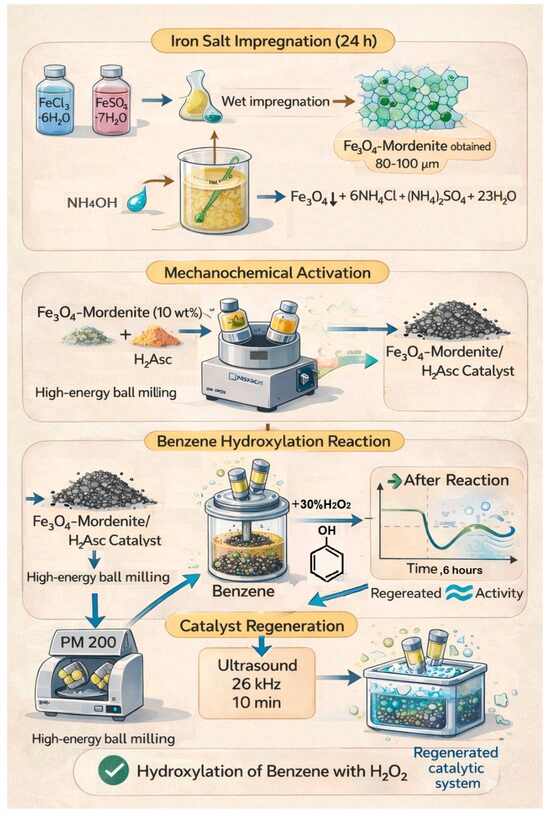
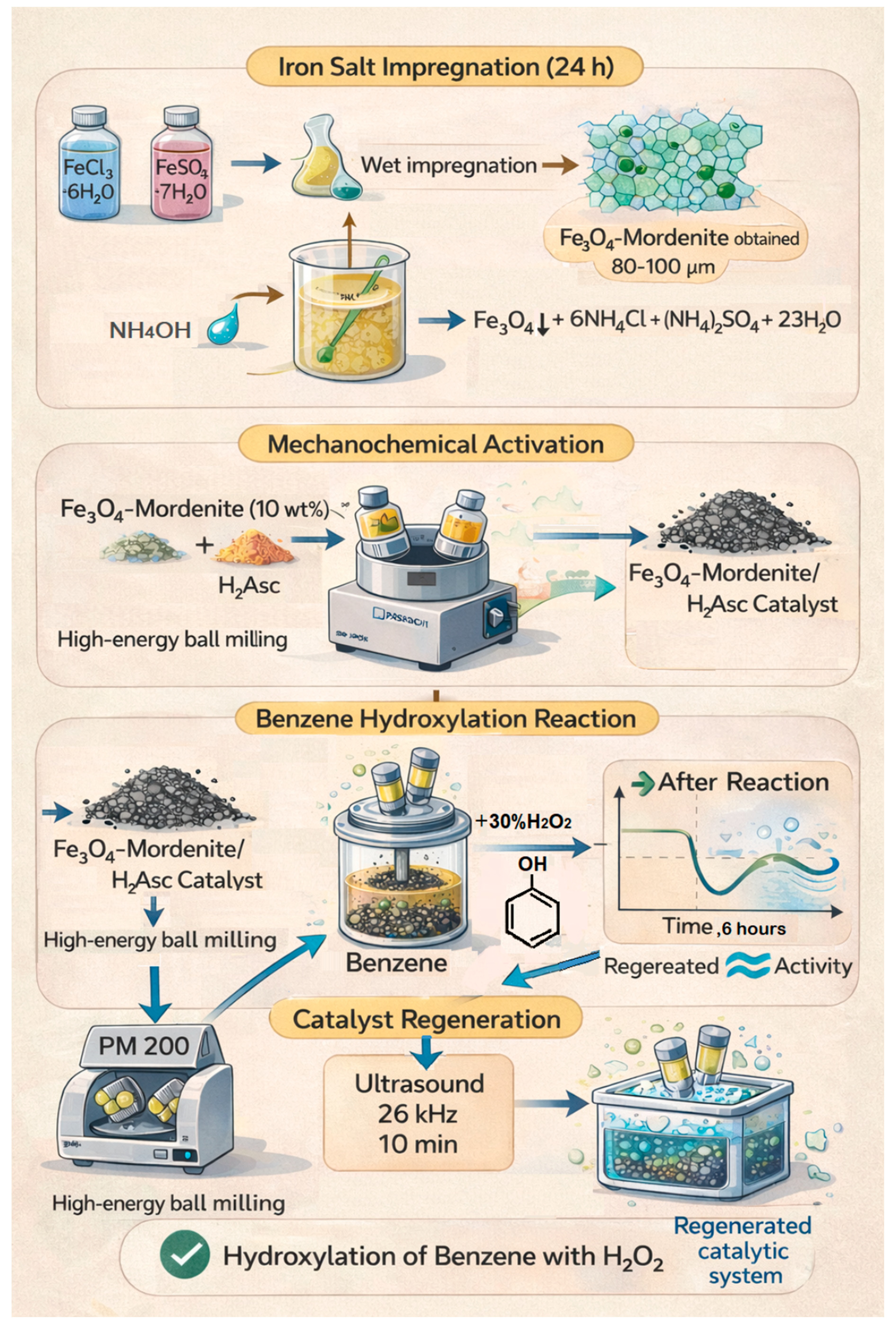
Graphical Abstract

1. Introduction

The direct oxidation of benzene to phenol remains one of the most challenging and attractive transformations in green chemistry due to its potential to simplify the industrial production of phenol by eliminating the multistep cumene process. Hydrogen peroxide, as a mild and environmentally friendly oxidizing agent, offers a sustainable alternative to traditional oxidizing agents such as nitrous oxide or molecular oxygen [1,2]. Transition metal-containing zeolites, particularly modified Fe and Ti systems, have shown promise for this reaction due to their ability to generate hydroxyl radicals in situ via Fenton-type mechanisms [3,4]. Selective hydroxylation of benzene directly to phenol remains a key challenge in modern industrial organic synthesis, as phenol serves as an important precursor for resins, fibers, and numerous fine and bulk chemicals. The use of hydrogen peroxide as a “green” oxidizing agent significantly increases the environmental attractiveness of the process but also places high demands on the catalyst: the system must effectively activate H2O2, while suppressing its unproductive decomposition and ensuring high selectivity towards phenol formation. Currently, industrial phenol is predominantly produced by a three-stage cumene process, which is energy-intensive due to high pressure and leads to the formation of acetone as an inevitable by-product via intermediate cumene hydroperoxides [5,6]. In contrast, the direct one-stage hydroxylation of benzene to phenol represents a more environmentally friendly and atomically efficient alternative. However, this reaction is inherently complex due to the high thermodynamic stability of the aromatic ring and the fact that the benzene oxidation products are more reactive than benzene itself [7]. Both gas-phase and liquid-phase versions of this transformation have been investigated. Molecular oxygen, nitrous oxide, and hydrogen peroxide are commonly used as oxidizing agents, and a wide range of catalytic systems have been proposed for this reaction [8,9,10,11,12,13]. Among these, benzene oxidation with molecular oxygen is the most attractive from an industrial point of view; however, suitable, inexpensive, and durable catalysts for this process remain difficult to access. Benzene hydroxylation can be achieved using Fenton’s reagent, a mixture of hydrogen peroxide and iron(II) salts. In this system, the reaction between H2O2 and Fe2+ generates highly reactive hydroxyl radicals according to the classical Fenton mechanism: Fe2+ + H2O2 → Fe3+ + OH + OH; Fe3+ + H2O2 → Fe2+ + OOH + H+. The hydroxyl radical subsequently adds to the benzene ring to form hydroxyl-cyclohexadienyl intermediates, which are oxidized by Fe3+ ions to form phenol. The yield of phenol increases with increasing Fe2+ concentration and the presence of auxiliary oxidants such as O2 or Cu2+, while fluoride ions inhibit the reaction by complexing Fe3+ and suppressing radical oxidation [14,15,16]. The efficiency of the Fe2+–H2O2 system for the direct hydroxylation of benzene has been described in several studies [17,18,19]. Despite subsequent improvements in Fenton-based catalytic systems, a number of technological limitations remain, in particular the difficulty of separating homogeneous catalysts from the reaction medium [20]. Consequently, considerable efforts have been focused on the development of heterogeneous catalysts that allow for the one-step hydroxylation of benzene using oxidants such as N2O, O2 or H2O2. Among them, hydrogen peroxide has clear advantages in terms of environmental safety and process efficiency due to mild reaction conditions and the absence of harmful by-products. However, achieving high selectivity remains challenging because phenol is easily overoxidized to dihydroxybenzenes under typical reaction conditions. Although several systems have demonstrated selective hydroxylation of benzene without overoxidation, many questions regarding the mechanism of catalytic hydroxylation remain unexplored [21,22,23,24]. Catalysts containing rare or noble metals, such as Pt(Pd)–VOx/SiO2, and Pd-based systems [25,26], have shown high activity, but their application is limited by cost considerations. Therefore, iron-containing catalysts are of particular interest due to their abundance, low cost, and high intrinsic activity. Numerous studies have been devoted to increasing the selectivity and activity of iron-based catalysts by using heterogeneous supports and incorporation into mesoporous matrices. For example, manganese complexes immobilized in Al-MCM-41 demonstrate higher efficiency compared to their homogeneous analogs, which is explained by the stabilization of active species and the prevention of phenol overoxidation by the acidic framework of Al-MCM-41 [27]. External physical influences, such as magnetic and electric fields, ultraviolet radiation, ultrasound, microwave irradiation, or high pressure, are increasingly used to intensify and improve the efficiency of catalytic transformations [28,29,30,31,32].
This paper presents the results of a study of the direct liquid-phase hydroxylation of benzene to phenol with a 30% aqueous solution of hydrogen peroxide H2O2 in the presence of iron-containing mordenite particles as a catalyst and ascorbic acid. Catalytic measurements were combined with in situ DLS and EPR/FMR studies and thermodynamic-kinetic analysis. In particular, the following were investigated: (I) the effect of the reaction medium during the reaction on the DLS and FMR spectra; (II) the structural and colloidal stability of the catalyst under ultrasonication; (III) the thermodynamic driving force of the reaction was estimated using the Uhlich formalism (first and second approximations with ΔCp(T)); (IV) the kinetic behavior of the catalytic system with an interpretation within the framework of the TPS and a proposal of a mechanism emphasizing the role of ascorbic acid. An approach based on the Lyapunov criterion is also proposed, in which the Gibbs free energy (taking into account the surface contribution) is considered as a Lyapunov functional for describing the stability of the catalytic system.

2. Results and Discussion

2.1. Control Experiments and Key Requirements for Benzene Hydroxylation

Preliminary experiments showed that in the absence of a catalyst under the specified reaction conditions, only traces of the target product were detected, while without hydrogen peroxide, benzene was not converted to phenol in the presence of the catalyst. Thus, it can be concluded that, under the studied conditions, the simultaneous presence of both the catalyst and hydrogen peroxide is necessary for effective oxidative conversion of benzene.

2.2. Catalytic Performance: Conversion, H2O2 Utilization, and Product Selectivity

Table 1 presents data on the liquid-phase catalytic hydroxylation of benzene to phenol with hydrogen peroxide in the presence of iron-containing catalyst particles.
The control experiments highlight the roles of iron, ascorbic acid and the mordenite support. In the absence of any iron-containing catalyst, H2O2 is only weakly decomposed at 60 °C (≈5% over 20 min), whereas in the presence of Fe–mordenite and ascorbic acid but without benzene, the expected H2O2 conversion reaches ≈93%. This clearly indicates that Fenton-type Fe2+/Fe3+–ascorbate cycles are responsible for the predominant share of H2O2 consumption. Removing ascorbic acid lowers the model H2O2 conversion to ≈65%, confirming its function as a redox mediator that regenerates Fe2+, stabilizes iron centers and suppresses their rapid deactivation via the formation of less active FeOOH-like species. The experiments with a finely ground Fe3O4–ascorbate powder used without mordenite support (Fe3O4–H2Asc dispersed in benzene followed by addition of H2O2) demonstrate even faster H2O2 consumption (≈98–99% after 20 min) and somewhat higher benzene conversion; however, this occurs at a substantially lower phenol selectivity (45–50%) and increased fractions of hydroquinone, benzoquinone and residual products. This behavior is characteristic of a more aggressive, combined heterogeneous/partly homogeneous Fenton environment in which up to ~10% of surface iron is leached as soluble Fe(II/III)–ascorbate complexes, while the majority of iron remains as surface Fe–ascorbate sites on Fe3O4. According to AAS and XRD (as expected), in the Fe–mordenite system most of the iron remains in the solid phase (≥90% of the initial Fe loading), the mordenite framework is preserved, and the Fe3O4 phase is partially transformed into more oxidized FeOx/FeOOH species against a background of accumulating amorphous coke-/resin-like deposits. In contrast, the Fe3O4–ascorbate system without mordenite support is expected to show more pronounced Fe leaching and a stronger evolution of the Fe oxide phase composition, consistent with a more aggressive, partly homogeneous Fenton medium and with the broader distribution of oxidation products in the liquid phase. Taken together, these observations indicate that the mordenite support does not simply increase the intrinsic Fenton activity of iron but mainly provides a microenvironment that moderates the effective oxidizing strength of the Fe–ascorbate/H2O2 system and suppresses non-selective bulk radical chemistry. As a result, the Fe–mordenite catalyst offers a more favorable compromise between benzene conversion and phenol selectivity compared to the Fe3O4–ascorbate system without support. The experiments with the finely ground Fe3O4–ascorbate powder without mordenite support show even faster H2O2 consumption (≈98–99% after 20 min) and somewhat higher benzene conversion, but at a substantially lower phenol selectivity (45–50%) and increased fractions of hydroquinone, benzoquinone and residual products. This product pattern, compared to the supported Fe–mordenite system, is indicative of a more aggressive, partly homogeneous Fenton environment in the presence of the free Fe3O4–ascorbate powder and highlights the key role of the mordenite support in moderating the effective oxidizing strength of the Fe–ascorbate/H2O2 system and suppressing non-selective bulk radical chemistry. Mordenite was selected as the support for the iron–oxide phase because it provides a combination of hydrothermal stability, microporous confinement and suitable acidity that is beneficial for directing the Fe–ascorbate/H2O2 chemistry towards selective benzene hydroxylation. The high-silica mordenite framework is stable under aqueous oxidizing conditions at 60 °C, so that the zeolite structure is preserved during repeated contact with H2O2. Its one-dimensional 12-membered-ring channels and side pockets impose a geometric confinement on Fe3O4/FeOx species, limiting particle growth and mobility and thereby reducing iron leaching compared to a free Fe3O4–ascorbate powder. In addition, the Bronsted and Lewis acid sites of mordenite provide a moderately acidic microenvironment that can adsorb benzene and phenol and stabilize surface Fe sites, while avoiding overly strong acidity that would promote non-selective deep oxidation. As a result, a significant fraction of H2O2 is decomposed at well-defined Fe sites within or near the zeolite pores rather than in the bulk aqueous phase, which suppresses highly non-selective Fenton pathways. This picture is consistent with AAS and XRD data, which show that ≥90% of the initial iron loading remains on the Fe–mordenite catalyst and that the mordenite framework is retained, and with catalytic measurement evidence that the Fe3O4–ascorbate system without mordenite support operates as a more aggressive, partly homogeneous Fenton medium with higher H2O2 consumption but lower phenol selectivity.
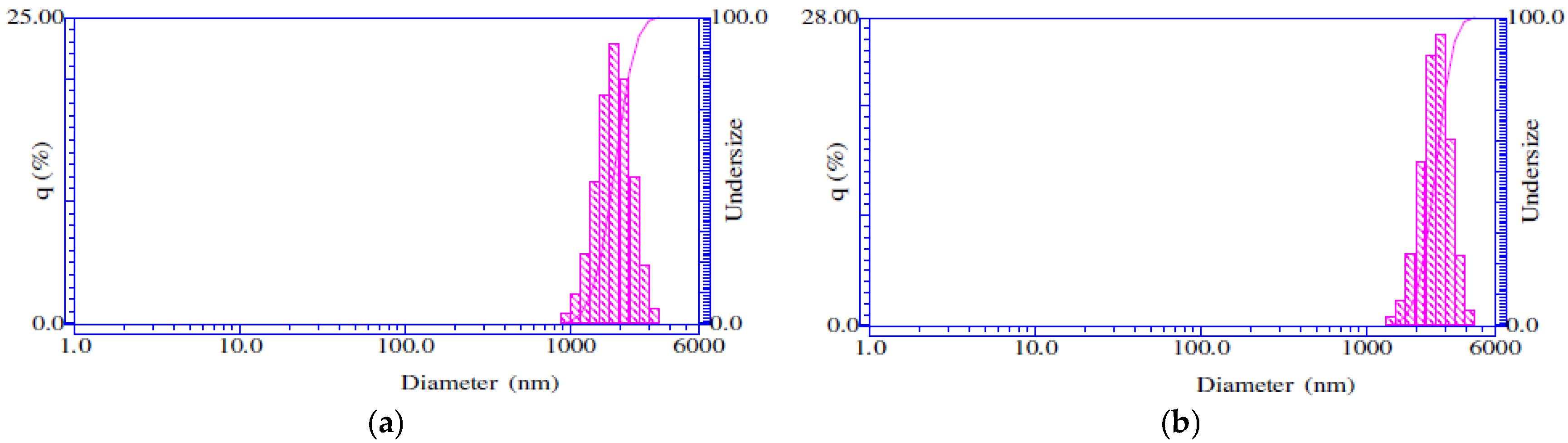
The data in Table 1 show that in the Fe-mordenite-ascorbic acid system, hydrogen peroxide is consumed significantly faster than benzene is converted. After just 20 min at C6H6/H2O2 = 1/2, H2O2 conversion reaches approximately 93%, while benzene conversion is only 9.47%. With an increase in reaction time to 240 min, H2O2 conversion changes only slightly (to 94.2%), while phenol selectivity decreases monotonically from 70.2 to 51.1%. At the same time, the share of total “residual products” increases from 26.6 to 43.7%. The experiment at C6H6/H2O2 = 1/6 (20 min) shows a similar or slightly higher benzene conversion (13.08%) with a lower H2O2 conversion (86.2%) and the highest phenol selectivity (80.1%), indicating the existence of an “optimal” range of oxidative capacity and residence time in which phenol formation predominates over its further overoxidation. Below are the results of studies of liquid-phase dispersions of catalytic systems for benzene hydroxylation with a 30% aqueous hydrogen peroxide solution in the presence of iron-containing mordenite particles as a catalyst and ascorbic acid using in situ electron magnetic resonance (EMR) and dynamic light scattering (DLS). Figure 1 shows DLS histograms of a liquid-phase catalytic system with dispersed iron-containing mordenite: (a) before and (b) after the reaction.
Table 2 presents the DLS data of a liquid-phase catalytic system for the hydroxylation of benzene to phenol with hydrogen peroxide in the presence of mordenite-based oxide catalysts before and after the reaction.

2.3. In Situ Diagnostics of the Liquid-Phase Catalyst Slurry: DLS and EMR/EPR Overview

Below is a detailed analysis of the above DLS histograms for a suspension of magnetite-containing mordenite particles in a liquid-phase catalyst slurry before and after 6 h at 60 °C, as well as the theoretical histograms calculated by the Monte Carlo method with a detailed procedure and comparison of the number of particles. What do the experimental DLS histograms show. According to the data in Table 2, before the reaction: mode ~1858 nm, median ~1844 nm, geom. mean ~1827 nm, diffusion coefficient ~1.4229 × 10⁻¹³ m2/s. This is a narrow, coarsely dispersed maximum of about 1.8–1.9 μm, after 6 h of catalyst operation at 60 °C: mode ~2727 nm, median ~2613 nm, geom. The average wavelength is ~2588 nm, the diffusion coefficient is ~1.0029 × 10⁻¹³ m2/s. The maximum is shifted to the region of ~2.6–2.7 μm. This clearly indicates an increase in the hydrodynamic size (aggregation of mordenite clusters containing magnetite): when operating in the presence of 30% H2O2 at 60 °C, the median increased from about 1.84 μm to 2.61 μm, and the diffusion decreased approximately proportionally to 1/d, which is consistent with the Stokes-Einstein estimate (the ratio Dafter/Dbefore = 0.705 D practically coincides with dbefore/dafter ≈ 0.706).
Thus, it can be emphasized that the DLS method can be used as a criterion of structural and colloidal stability. The DLS data for samples 1–4 allow us to characterize the aggregative state of the catalyst. In the absence of a catalyst (sample 1), the scattering intensity is negligible, the estimated diameters are <1 nm, which indicates the absence of significant colloidal particles in the reaction medium. For a freshly prepared Fe–MOR suspension (sample 2), the median, mode, and geometric mean of the hydrodynamic diameter are 1843.7, 1857.8, and 1826.5 nm, respectively. The geometric dispersion (1.0248) and geometric standard deviation (1.2682) indicate a narrow, close to monodisperse distribution of micron-sized particles. The diffusion coefficient (1.42 × 10⁻¹³ m2·s−1) corresponds to compact aggregates of 1–2 μm in size, which is consistent with the size of mordenite crystallites with Fe3O4 nanoparticles attached to the surface. After 6 h of reaction (sample 3), the median, mode, and geometric mean increase to 2613.2, 2727.3, and 2587.7 nm. The geometric dispersion (1.0181) and standard deviation (1.2255) remain close to the initial values; the distribution is still unimodal. The diffusion coefficient decreases to 1.00 × 10⁻¹³ m2·s−1. Thus, the considered catalytic suspension undergoes moderate aggregation (an increase in the characteristic size by ~40–50%), while maintaining structural homogeneity without the appearance of additional macro- or nanophases. Sample 4, obtained after ultrasonic treatment of the spent suspension, is characterized by a median of 1887.7 nm and a mode of 2398.0 nm (close to the initial values), but the geometric mean drops to 928.3 nm, and the geometric dispersion (1.817) and standard deviation increase sharply, indicating a wide polydisperse distribution with a significant proportion of submicron particles. The diffusion coefficient increases to 1.38 × 10⁻¹³ m2·s−1. This suggests that ultrasound partially disrupts the aggregates formed during the reaction, generating a mixture of submicron fragments and remaining large aggregates. In fact, the aggregation is partially reversible. Overall, DLS shows that iron containing mordenite is structurally stable under the reaction conditions: the size distribution remains unimodal and relatively narrow, with only moderate aggregation observed over 6 h, which is partially reversible under mechanical action.

2.4. Modeled Particle Size Distributions and Reaction Thermodynamics

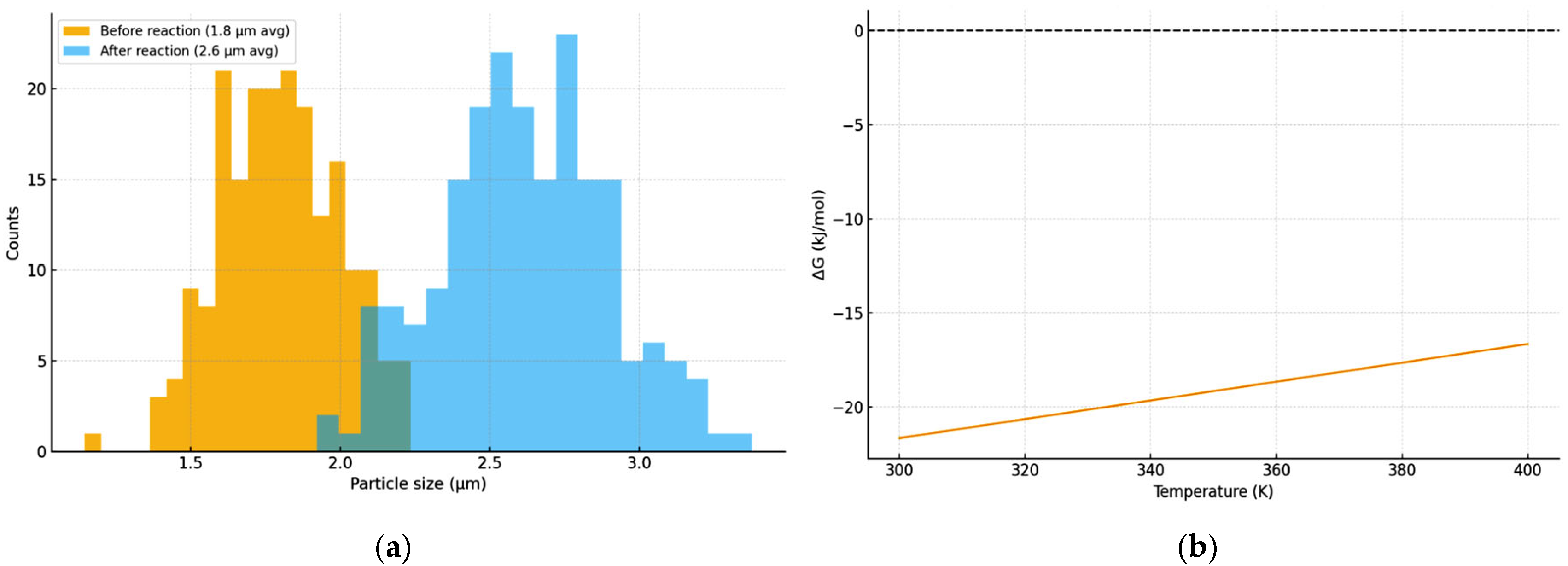
Below in Figure 2 are shown (a) the calculated particle size distributions in the catalytic system for the hydroxylation of benzene to phenol with hydrogen peroxide in the presence of iron-containing mordenite particles before and after 6 h of operation of the catalytic system and (b) the temperature dependence of the Gibbs free energy ΔG(T) for the hydroxylation of benzene, calculated using the Uhlich equation.
Figure 2a,b show: (a) the calculated particle size distribution in the catalytic system for the hydroxylation of benzene to phenol with hydrogen peroxide in the presence of iron-containing mordenite particles before and after 6 h of operation; (b) the temperature dependence of the Gibbs free energy ΔG(T) for benzene hydroxylation, calculated using the Uhlich equation.

2.5. EPR/EMR Evidence for Iron Speciation and Magnetic Phases

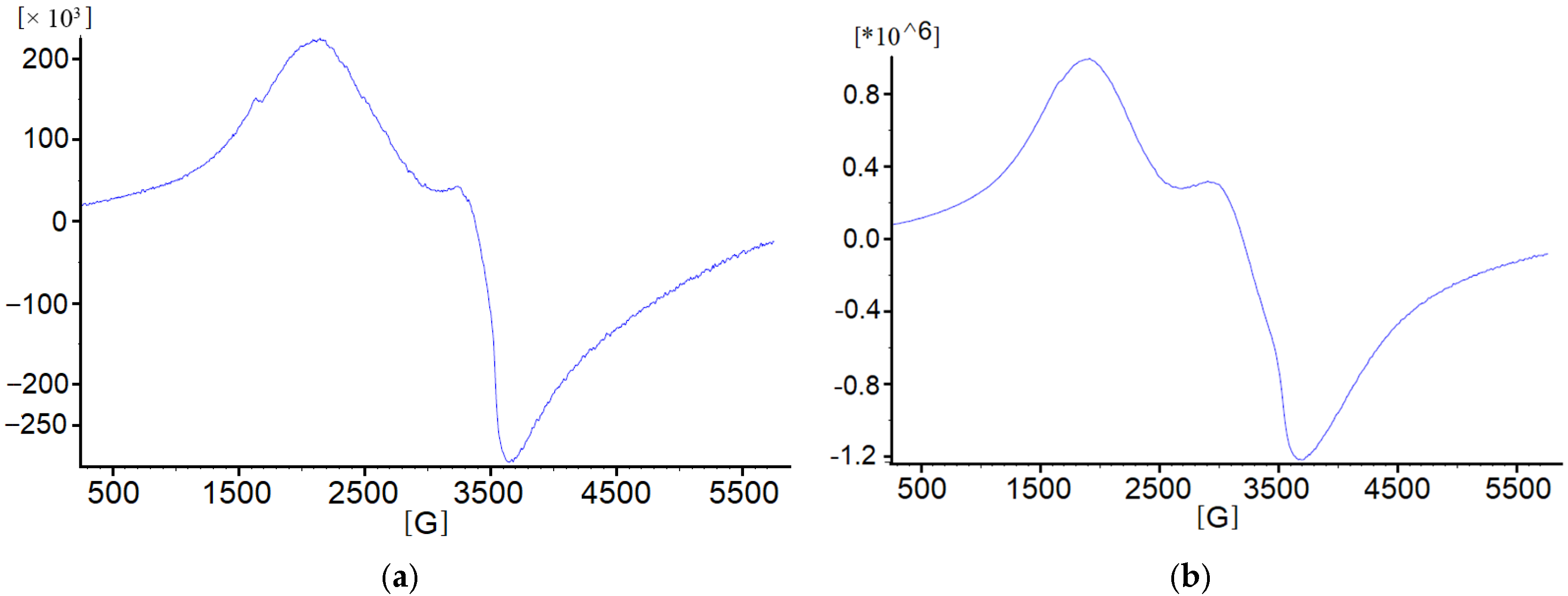
Figure 3 shows the EPR spectra of the liquid-phase catalytic system: (a) before and (b) after the liquid-phase hydroxylation of benzene to phenol in the presence of iron-containing mordenite particles.
As can be seen from Figure 3, a superposition of signals from superpara/ferromagnetic iron oxide particles and paramagnetic isolated Fe3+ ions with g ≈ 4.3 (∼1640 G) is observed. The EPR spectrum with g ≈ 4.3 is due to high-spin Fe3+ iron ions (S = 5/2) in a strongly orthorhombic local field (E/D ≈ 1/3); these are Al–O–Fe(III) framework centers in mordenite channels or nearby extraframework centers. They do not participate in the collective ferromagnetic precession of Fe3O4 and are therefore separated from the FMR background; their contribution is clearly visible precisely in the weak field region. The change in the intensity of the EPR signal of this center is due to the reaction of iron ions and magnetite particles with ascorbic acid and the transition of some of the iron ions into solution.

2.6. Mass-Balance Estimate of Iron Content and Upper Bound on Potential Active Centers

Since the mass of the catalyst (mordenite + magnetite) is 42.5 mg, the mass of magnetite in the catalyst sample will be 4.25 mg, since the magnetite content in the catalyst sample is 10% by mass. And since the molar mass of magnetite M(Fe3O4) = 231.5 g/mol, Avogadro’s number: NA = 6.0221 × 10²³ mol−1 and the stoichiometry of Fe3O4: per 1 formula unit there is 1 Fe2+ and 2 Fe3+ (a total of 3 Fe ions), then the amount of substance Fe3O4 will be equal to n(Fe3O4) = 0.00425/231.5 = 1.8356 × 10⁻⁵ mol, The number of “molecules” (formula units) of Fe3O4, N(Fe3O4) = nNA = 1.8356 × 10−5 × 6.0221 × 1023 = 1.1 × 10¹⁹ formula units, The number of iron ions (the maximum possible “active centers”, if you count each ion potentially active): total number of Fe ions: 3 × N(Fe3O4) = 3.3 × 10¹⁹ Fe ions (in moles: 3 × n = 5.5 × 10⁻⁵ mol = 55.1 μmol), Fe3+ ions: 2 × N(Fe3O4) = 2.21 × 10¹⁹ ions (in moles: 2 × n = 3.67 × 10⁻⁵ mol = 36.7 μmol, Fe2+ ions: 1 × N(Fe3O4) = 1.1 × 10¹⁹ ions (in moles: n = 1.84 × 10⁻⁵ mol = 18.4 μmol). Note that 42.5 mg of mordenite with 10 wt.% Fe3O4 contains ~1.1 × 10¹⁹ formula units of Fe3O4. This corresponds to ~2.2 × 10¹⁹ Fe3+ ions and ~1.1 × 10¹⁹ Fe2+ ions (total ~3.3 × 10¹⁹ ions). These values represent an upper estimate of the potential active sites, but in reality only the surface fraction of iron ions is available (depending on the particle size, their shape, and the degree of leaching/complexation in the hydrogen peroxide/ascorbic acid medium).

2.7. Surface-Accessible Fe Sites from DLS-Derived Geometry and Implications for Homo-/Heterogeneous Contributions

The number of surface iron sites (before and after the reaction) can be determined from dynamic light scattering (DLS) measurements and under the assumption that the particles are spherical and have a lognormal distribution. In what follows, we use standard relationships for the average volume ⟨V⟩ = (π/6)⟨d3⟩ and area ⟨S⟩ = π⟨d2⟩, where ⟨dk⟩ is analytically taken for a lognormal distribution. Below, the calculation for three reasonable variants of the surface density of Fe cation sites is presented σ(Fe) = 3, 6, 9 Fe/nm2 (different faces/ends of magnetite give exactly this range). As expected, due to particle coarsening, the total surface area decreases (~2.34 → 1.72 cm2), and the number of surface Fe sites drops by about 25–30% at a fixed mass of Fe3O4. If we take into account that not all surface iron is actually accessible (shielding, coating with hydroxylation reaction products, immersion in pores), then, for example, at 30% availability: “Before”, 6 Fe/nm2 → ~7.0 × 10⁻⁶ mol of accessible Fe sites; “After”, 6 Fe/nm2 → ~5.1 × 10⁻¹ mol. For example, choosing σ(Fe) = 6 Fe/nm2 and 30% availability for the “at the initial moment of the reaction” case, we obtain a base denominator of ~7 nmol sites. To estimate the contribution of the homogeneous Fenton pathway, we compare “surface Fe” with “dissolved Fe ions”, which allows us to separate homo- and hetero-contributions by rate/selectivity. Below, we present an estimate of the fraction of the homogeneous pathway (with 10–15% Fe leaching). The results show that if 10–15% of all Fe ions go into solution, then 5.51–8.26 μmol Fe ends up in water. We then compared this amount with the amount of surface Fe available on the solid phase, calculated from dynamic light scattering distributions (“before”/”after”), assuming a surface density of Fe(l) = 3;6;9 Fe/nm2 and an accessibility coefficient of 15–50%. The results show that if the specific activity of dissolved iron is lower/higher than the surface one, the actual fraction will be lower/higher, respectively. The value strongly depends on the assumed site density and accessibility. An increase in accessibility (σ) proportionally reduces the frequency turnover of funds (TOF) (the greater the number of sites in the denominator).

2.8. Origin and Evolution of the Ferrimagnetic Component: Formation, Redistribution, and Ultrasonic Effects

Since magnetite Fe3O4 is formed as a result of the reaction of iron(II, III) salts with ammonium hydroxide (2FeCl3 × 6H2O + FeSO4 × 7H2O + 8NH4OH →Fe3O4↓ + 6NH4Cl + (NH4)2SO4 + 23H2O; Fe2+ + 2Fe3+ + 8OH ↔ Fe3O4↓ + 4H2O), the broad signals observed in the FMR spectra in the region of 2.2–3.2 kG can be attributed to nanosized magnetite particles [33,34]. After 6 h of operation, the initially observed broad signal broadens and shifts slightly toward lower fields, which is associated with the redistribution of iron in the catalytic system and the transfer of some of the iron ions into solution as a result of the reaction of ascorbic acid with nanosized magnetite particles. These magnetite particles, as well as iron ions transferred to an aqueous solution, can be considered catalytically active, which initially react with hydrogen peroxide, forming the OH radical [35]. Numerous studies show that this radical has a very high reactivity and oxidizes hydrocarbons even at room temperature [36,37]. The appearance of these radicals in the reaction system suggests the occurrence of chemical transformations both on the catalyst surface and in the reaction volume. From the above it follows that centers capable of effectively activating H2O2 and minimally catalyzing the decomposition of H2O2 to O2 and H2O should be formed on the surface of the selective catalyst. Studies show that ultrasound is a good tool for modifying the surface of oxide catalysts and, thereby, activating hydrogen peroxide. It can be concluded that ultrasonic treatment of a liquid-phase catalytic system disperses catalyst particles, forming fine particles with coordinatively unsaturated ions exhibiting increased reactivity. Ultrasound has a positive effect on the benzene hydroxylation reaction to phenol, increasing and maintaining its catalytic activity over a long period. Research shows that particle dispersion increases with increasing ultrasonic exposure time. High dispersion with a narrow particle distribution range for this system is achieved after 45–50 min of ultrasonic treatment of the catalytic system. It should be noted that, in addition to dispersing catalyst particles, ultrasonic treatment also cleans the catalyst particle surface of reaction products. Thus, ultrasonic treatment can increase catalyst activity both by dispersing catalyst particles and by cleaning their surfaces of reaction products that passivate the active catalyst sites.

2.9. Quantifying Coarsening via a Lyapunov Stability Criterion (DLS + EPR/FMR Markers)

Below is a quantitative description of the observed increase in particle size in the benzene/hydrogen peroxide/iron-containing mordenite/ascorbic acid catalytic system using the Lyapunov stability criterion based on the DLS and EPR/FMR data obtained above. According to the lognormal reconstruction (Monte Carlo) of the before/after distributions (6 h, 60 °C): the geometric median (GM) increased: 1.83 μm → 2.59 μm (×1.42). The geometric width (GW) narrowed slightly: 1.268 → 1.226. With a fixed Fe3O4 mass of 4.25 mg (10 wt.% of 42.5 mg catalyst), the particle number decreased: N ≈ 1.99 × 10⁸ → 7.51 × 10⁷ (approximately 2.6–2.7 times less). The total surface area decreased: from 2.34 cm2 to 1.72 cm2 (−26%). The average rate of surface area decrease over the first 6 h: ΔA/Δt = (1.72 − 2.34)/6 ≈ −0.10 cm2/h. Thus, it can be concluded that the system moves toward coarsening (coagulation/sticking) with a decrease in the specific surface area.
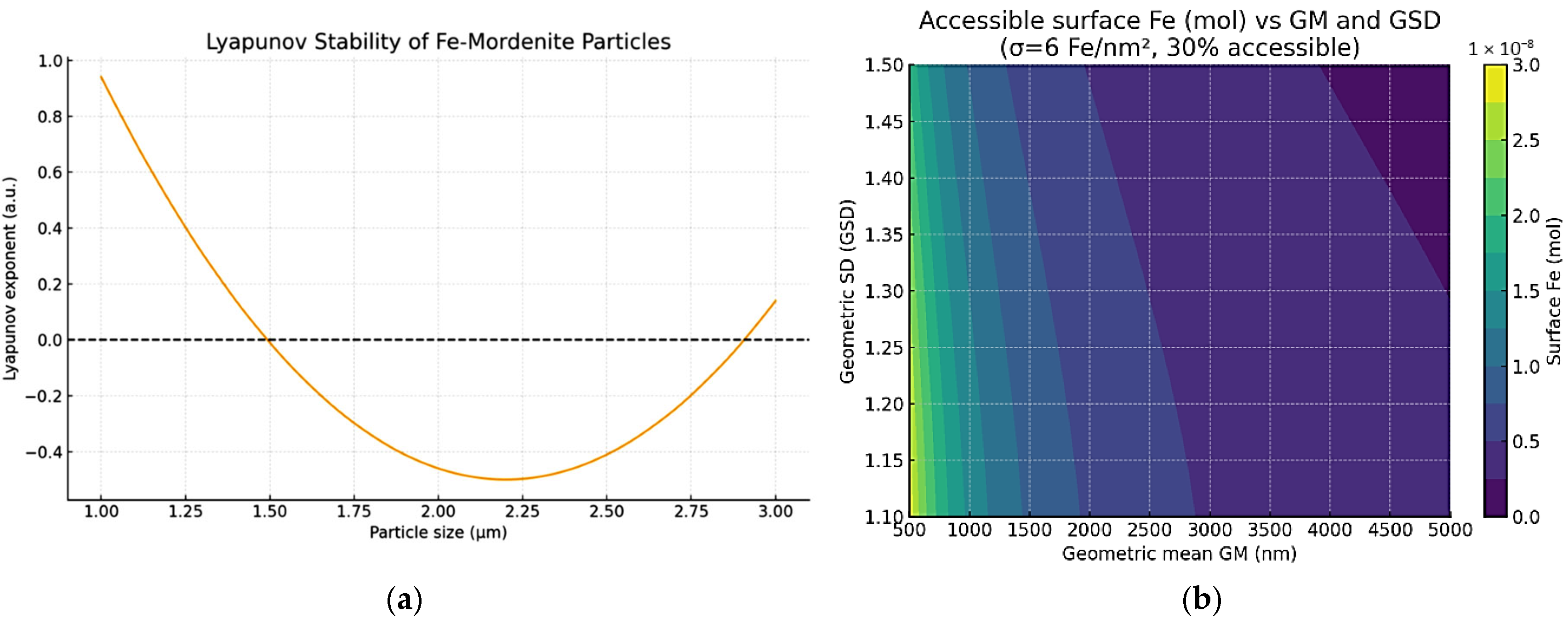
For an aggregating suspension, a natural candidate for the Lyapunov function is the total interfacial free energy: V(A) = γAtot, where γ is the specific surface energy (Fe3O4/H2O) and Atot is the total particle area. During adhesion/coalescence, Atot decreases, and V ≤ 0 (V˙ ≤ 0). In the presence of stabilization (charge, adsorption), the decrease slows, but for a given composition (H2O2 + ascorbic acid), our data show that Atot decreases monotonically and drops by approximately 26% over 6 h. Taking the typical range γ ∼ 0.05−0.2 J/m2, we obtain an estimate of the “decay rate”: V˙ ≈ γΔA/Δt ∼ (0.05  −  0.2) × (−1.03 × 10⁻⁵)J/h = −(5 × 10⁻⁷  −  2 × 10⁻⁶) W. The sign is negative, i.e., the system spontaneously moves toward a state with lower interfacial energy (larger aggregates). In Figure 4 shows: (a) the Lyapunov stability curve of ensembles of iron-containing mordenite particles, demonstrating stable (negative exponent) and unstable (positive exponent) regimes, and (b) heat maps PDI(T,τ) + DI_EPR(T,τ) allow us to determine the stability optimum.
Thus, it can be concluded that the results obtained using DLS and EPR/FMR are consistent and confirm the thesis of a monotonic decrease in V(A), i.e., stable coarsening. To describe the coarsening kinetics by a single “effective” quantity, it is convenient to use the expression: A(t) = A + (A0 − A) exp(−kaggt), where A0 and A6h are known from DLS; assuming that A6h is close to A, we obtain the lower estimate kagg ≳ 1tlnA0 − A. A similar expression can be written for GM(t) or (⟨d3⟩(t)). This kagg enters into the expression V˙ = −γkagg(A(t) − A) ≤ 0, which yields a linearized stability index near the steady-state size. Thus, it can be concluded that, for a fixed mass of Fe3O4, the number of particles decreases, and the specific surface area decreases. This, on the one hand, reduces the density of surface Fe-centers (can reduce the initial TOF per active site), but, on the other hand, reduces the contribution of the homogeneous component of the reaction due to the “overlap” of small clusters in solution. Ascorbic acid can most likely be used as a “regulator”: small doses will enhance the Fe-cycle (Fe3+/Fe2+) and accelerate coarsening, while large doses will stabilize dissolved complexes and alter the aggregation/dissolution balance. In terms of stability: under our conditions (30% H2O2, 60 °C, ascorbic acid), the system is already in the “attraction basin” for coarsening—V = γA decreases; to reverse this tendency (to retain small particles), measures are necessary to increase the collision energy barrier: increase the ionic strength/pH adjustment/ligand stabilization, reduce magnetic interactions (dilution, viscosity, absence of an external field). That is, the actual value of kagg lies in the range of 0.05–0.6 h−1, and most often (based on experience with such systems)—0.1–0.2 h−1. For any A in this range, A(t) decreases monotonically: V(t) = γA(t) is the Lyapunov function (V˙ ≤ 0), which records a stable tendency towards coarsening [38]. Thus, Lyapunov stability for our catalytic suspension means that under small perturbations (particle size fluctuations, pH and concentration shifts, etc.), the system spontaneously returns to the trajectory of particle coarsening and to a state with a smaller total surface area. Formally, this is proven by the existence of an “energy function” V(x), which decreases monotonically with time. The Lyapunov function for an aggregating colloidal system is V(x) = γ Atot, where γ is the specific interfacial energy of Fe3O4/H2O. During the adhesion/coalescence process, Atot decreases (V˙ ≤ 0). In all cases, under our conditions, the trend is the same—decreasing. According to DLS data (6 h, 60 °C): GM increased 1.83 → 2.59 μm (coarsening), GSD narrowed slightly. With the same Fe3O4 mass, the particle number decreased by approximately 2.6 times, and Atot by 26% (from ~2.34 to ~1.72 cm2). V = γAtot also decreased—this is a direct “Lyapunov” criterion: the system transitions to a state with lower interfacial energy. According to EPR/FMR data, the broad ferrimagnetic component expanded and shifted toward lower fields, increasing domain anisotropy and coarsening of magnetic domains are observed [39]. The proportion of isolated Fe3+ ions (g~4.3) in the paramagnetic fraction decreases, likely due to their transition to aqueous solution. Thus, V(t) decreases monotonically: the state of coarsened particles is asymptotically stable under the current conditions (30% aqueous H2O2 solution, 3.27 mg of ascorbic acid, temperature 60 °C). Local stability is realized: small perturbations (small shift in pH/ionic strength) do not change the trend: Atot continues to decrease, the system returns to the “coarsening trajectory”. Under asymptotic stability: under fixed conditions x(t)→x\* (distribution with larger GM and smaller Atot), where x\* is the limiting (steady-state, equilibrium) state of the system, which the system approaches over time under fixed conditions. In the case of the approximation A(t) = A + (A0 − A)e−kt we have: kagg ∼ 0.1–0.2 h−1.
Under our conditions of the H2O2/ascorbic acid reaction medium (60 °C), the V = γAtot function decreases, and spectroscopic markers (FMR broadening, drop in the g~4.3 fraction) consistently indicate a steady coarsening of the particles. According to the Lyapunov criterion, this means that the current dispersed state is unstable, while the aggregated state is asymptotically stable; the system will tend toward it until the external parameters change in such a way that V(x) and the attraction region change. However, the scale itself (μmol in solution versus nmol of accessible surface sites) shows that at 10–15% Fe leaching, the homogeneous contribution becomes dominant. Preferably, small superparamagnetic particles/regions with high surface energy dissolve; Fe(II/III) ions/complexes migrate and/or react in solution and can then precipitate on larger nuclei (or form stable complexes with ascorbic acid). This explains the increase in GM (coarsening) with a simultaneous decrease in the total mass of the solid phase. Dissolution of magnetite and formation of Fe2+/Fe3+–ascorbate complexes makes some of the Fe EPR-silent (for Fe2+ ions). The V = γAtot function continues to decrease (Atot decreases over 6 h); taking into account the mass loss, the decrease becomes even more monotonic. This confirms the asymptotic stability of the coarsening trajectory. Thus, for 10–15% Fe leaching, the homogeneous pathway (Fe2+/Fe3+ in solution, activated by H2O2/ascorbic acid) will be significant/dominant; To suppress coarsening and reduce the homogeneous contribution, it is necessary to reduce the ascorbate dose, adjust the pH/ionic strength (increase the zeta potential |ζ|), introduce a stabilizer (ligand/surfactant), lower the temperature, and decrease the hydrogen peroxide concentration. At micron DLS sizes (GM ≈ 1.83 → 2.59 μm) and even at 70% availability, the amount of available surface iron ions is at the nanomolar level, whereas at 10% dissolved iron, it is at the micromolar level (5.51 μmol). Therefore, the upper estimate of the contribution of the homogeneous pathway (at equal specific activity of iron in solution and on the surface) remains quite high. This is consistent with the EPR/FMR data and our refinements: it is the superpara/ferromagnetic domains of Fe3O4 that dissolve, enhancing homogeneous catalysis involving iron ions (Fe2+/Fe3+ cycles in water with hydrogen peroxide/ascorbic acid) and, simultaneously, leading to coarsening of the remaining solid phase.

2.10. Mechanistic Picture of H2O2 Activation and Benzene Hydroxylation: Surface vs. Homogeneous Pathways

Two main scenarios of H2O2 activation are possible: Fenton-like radical pathway on surface iron ions Fe2+/Fe3+: formation of OH/HO2, which attack benzene to form phenol; Non-radical pathway through high-valent iron ions FeIV = O/FeV = O in framework/extraframework centers of mordenite (selective electrophilic attack) [40]. A “hybrid” scheme is often adequate: radicals control the rate at low pH and high Fe2O2 activity, whereas at moderate pH and “dry” conditions, oxo forms of Fe predominate. At pH ≲ 4, Fenton-like decomposition of hydrogen peroxide accelerates and growth of FeOx nanoclusters is observed, the width of the broad signal in the EPR/FMR spectra increases, and the particle distribution according to dynamic light scattering (DLS) shifts. Buffering (pH~5–6) and control of the organic phase reduce hydrogen peroxide decomposition and iron leaching. Increasing the temperature to 353 K accelerates both the target pathway and H2O2 decomposition; heat maps PDI(T,τ) + DI_EPR(T,τ) allow us to identify the stability optimum (Figure 4). Fragmentation of agglomerates is observed at early stages (downward shift in the large DLS peak); At long times, an increase in Fe3O4 is observed (an increase in the amplitude of the broad signal in the FMR spectra). The effect of mechanical treatment of the catalyst and its mechanism of action. Mechanical treatment forms a mordenite– Fe3O4–ascorbate composite with a high specific surface area, a defective oxide subsystem, and a “shell” of coordinated ascorbate ligands, ensuring efficient Fe2+/Fe3+ cycling. Dispersing the composite in benzene and subsequently adding 30% H2O2 results in the formation of a two-phase system: an organic phase (benzene/phenol), an aqueous phase (H2O2, H2O, ascorbate/oxidized forms, Fe2+/Fe3+), and a solid phase of mordenite–Fe3O4–ascorbate particles at the phase boundary. Ascorbic acid passes into the aqueous phase, dissociates, and acidifies the interface, facilitating the partial dissolution of near-surface Fe3O4 and the mobilization of off-site Fe-centers. Under these conditions, a dynamic redox pair, Fe2+/Fe3+–ascorbate, is formed, initiating Fenton-like cycles:
Fe2+ +H2O2 → Fe3+ +OH + OH; Fe3+ +H2O2 → Fe2+ + OOH + H+; Fe3+ + H2O2 → Fe2+ + OOH + H+; Fe3+ + H2Asc → Fe2+ + Asc•– +2H+
In parallel, high-valent iron-oxo species, FeIV = O, are formed at the Fe-sites: Fe2+ + H2O2 → FeIV = O + H2O, which mediate a non-radical, electrophilic oxidation pathway.
Benzene hydroxylation occurs predominantly in the benzene/water/solid catalyst near-surface region via two competing pathways: 1. Radical pathway (OH): C6H6 + OH → C6H5 + H2O; → C6H5+ OH → C6H5OH; 2. Electrophilic pathway (FeIV = O): FeIV = O + C6H6 → FeII + C6H5OH. Mordenite matrix: disperses and stabilizes Fe3O4/FeOx nanoclusters, maintaining their high availability; adsorbs phenol via Brønsted and Lewis acid sites and partially shields it from ROS, reducing the rate of peroxidation; defines a porous architecture that controls the local distribution of benzene, H2O2, and ROS between the outer surface and the internal pores. Ascorbic acid: maintains a high proportion of Fe2+ by reducing Fe3+; complexes Fe centers, fine-tuning their redox properties; partially intercepts OH/OOH, competing with phenol for radicals. With excess H2O2 and a long contact time, phenol, however, undergoes further oxidation to catechol, hydroquinone, benzoquinone, and ring-opening products. The observed DLS coarsening of particles and changes in the shape/width of EPR signals are consistent with progressive aggregation and redistribution of FeOx domains and the transition of the system to a state with a predominance of coarse-grained superparamagnetic/ferromagnetic phases. Taken together, these data indicate that mechanically activated iron-bearing mordenite functions as a dynamic Fenton-like system in which phenol selectivity is determined by the balance between: the rate of Fe2+/Fe3+ cycling (H2O2/ascorbate), the structural dispersion of Fe3O4/FeOx on mordenite, and the residence time of phenol in the reactive oxygen species-saturated interface zone.

2.11. Kinetic Interpretation Despite Favorable Thermodynamics: Time Dependence and Selectivity Loss

Despite the very negative ΔrG° value, the observed benzene conversions and phenol selectivities are moderate and time- and conditions-dependent, indicating kinetic control. The rate-limiting step is generally considered to be the electrophilic attack of the high-valent Fe = O species on the benzene molecule. Within the framework of the TPS, this step is characterized by the enthalpy and entropy of activation (ΔH, ΔS). Qualitatively, a moderate ΔH is expected, significantly lower than for the uncatalyzed benzene hydroxylation reaction, reflecting the high oxidizing power of the FeIV = O/FeV = O species and stabilization of the transition state due to the environment in the mordenite channel. ΔS is generally negative, which is associated with the formation of an ordered transition complex “benzene–Fe = O–environment” in a limited pore volume. As catalyst particles aggregate and multicore Fe3O4 clusters form, the effective ΔH and ΔS values for the selective pathway via Fe = O may deteriorate: the proportion of optimal active sites decreases, and the entropic penalty for transition state formation increases. At the same time, the Fenton radical pathway has its own activation parameters and becomes more competitive, leading to an increase in the proportion of overoxidation reactions and a decrease in phenol selectivity over long reaction times.

3. Experimental and Theoretical Methods

3.1. Catalyst Preparation

The starting materials were iron(III) salts FeCl3·6H2O and FeSO4·7H2O, as well as H-mordenite, hydrogen peroxide H2O2 (30% aqueous solution), benzene, and ascorbic acid. Samples of the iron-containing catalyst H-mordenite were obtained by impregnating finely dispersed H-mordenite powder with a particle diameter of 80–100 μm with aqueous solutions of iron salts under constant stirring and temperature for 24 h. After impregnation, an alkali solution was added to the reaction mixture, and the mixture was maintained under constant stirring and at a temperature according to the experimental conditions. Nanosized magnetite particles were formed inside the pores according to the reaction:
2FeCl3 × 6H2O + FeSO4 × 7H2O + 8NH4OH → Fe3O4↓ + 6NH4Cl + (NH4)2SO4 + 23H2O;
Fe2+ + 2Fe3+ + 8OH → Fe3O4↓ + 4H2O.
A mechanochemically activated powder mixture of mordenite containing 10 wt% magnetite and ascorbic acid was used as the catalyst. To prepare this catalyst, 42.5 mg of magnetite (Fe3O4)-containing mordenite powder was initially mixed with 3.27 mg of ascorbic acid (H2Asc) powder. The mixture was then thoroughly dry-mixed and transferred to the grinding chamber of a PM 200 planetary mill (Retsch, Haan, Germany) equipped with a ball mill (the material and number of balls were selected to ensure high-energy impact milling). Dispersion was carried out under dry conditions for 10 min at high speed, corresponding to the intense impact-shear mode of the mill. After completion of the process, the resulting powder was a uniform, blackish-grayish dispersion without visible individual white crystals of ascorbic acid. This mechanochemically activated mixture (Fe3O4-Mordenite/H2Asc) was subsequently introduced into liquid benzene as a solid catalyst/redox agent for benzene hydroxylation reactions involving a 30% aqueous hydrogen peroxide solution. The ratio of the amounts of the substance was approximately Fe3O4-mordenite/H2Asc~30:1, meaning that ascorbic acid acted primarily as a surface modifier and redox mediator, rather than as an independent bulk phase.

3.2. Catalytic Tests

Catalytic tests were carried out in the liquid phase using a glass reactor at 60 °C and a benzene/H2O2 molar ratio of 1:2 and 1:6. Ascorbic acid was introduced as a redox mediator to maintain the Fe3+/Fe2+ cycle. The yield of phenol was determined as the ratio of the amount (mmol) of phenol to the amount (mmol) of the initial benzene, and the selectivity for phenol was determined as the ratio of the amount (mmol) of phenol to the total amount (mmol) of the initial benzene. The mixture (phenol + hydroquinone + benzoquinone) was analyzed. In addition to hydro- and benzoquinones, tar was detected as a by-product of the reaction. The residual mass of the reaction products was approximately 95–96%. The amount of self-decomposed H2O2 was determined by the volume of molecular oxygen released during the reaction, the conversion was defined as the ratio of consumed H2O2 (including the amount of self-decomposed H2O2) to the initial amount of H2O2, the selectivity for H2O2 was defined as the ratio of the amount (mmol) of H2O2 spent on phenol formation to the total amount (mmol) of consumed hydrogen peroxide. Basic conditions: benzene/H2O2 = 1:1, 1:6 (mol/mol), T = 283–383 K, pH = 3–9, medium: benzene/water (two-phase, emulsion). Reaction time τ = 0.5–6 h. The reaction products were analyzed using a Specord 50 plus UV/Vis spectrophotometer (Analytik Jena, Jena, Germany) and GC Phocus (Thermo Fisher Scientific, Waltham, MA, USA). The Thermo Scientific iCETM 3500 AAS analyzer (Thermo Fisher Scientific, Waltham, MA, USA) is used to determine the amount of iron in catalyst dispersion and residual solids.

3.3. DLS and EPR Characterization

The average size of catalyst particles and size distribution before and after the reaction were determined by dynamic light scattering using a Horiba LB 550 analyzer (HORIBA Ltd., Kyoto, Japan) [41,42]. This analyzer allows one to study the processes of formation and disintegration of particles, aggregates and complexes in the temperature range of 278–343 K. The range of measured particle sizes is 0.001–6 μm. The radiation source power was 5 mW, and the wavelength was 650 nm. EPR spectra were recorded at room temperature on a Bruker EMXmicro spectrometer (Bruker Corporation, Billerica, MA, USA) with an operating frequency of 9.8 GHz.

3.4. Thermodynamic Modeling

The Gibbs free energy of the benzene hydroxylation reaction in the liquid phase: C6H6(l) + H2O2(l) → C6H5OH(l) + H2O(l) was calculated using the Ulrich equations in the temperature range of 293–343 K. The standard values of ΔG°, ΔH° and S° at 298 K for benzene, phenol, H2O2(l) and H2O(l) were taken from reference tables. In the first Ulich approximation, the temperature dependence of the standard Gibbs energy of the reaction ΔrG°(T) in the range of 293–343 K is described by the expression: ΔrG(T) = ΔrH298 − TΔrS298, and the equilibrium constant: lnK(T) = −ΔrG(T)/RT. In the second Ulich approximation, the temperature dependence ΔCp(T) is taken into account, representing it as a third-order polynomial: ΔCp(T) = Ar + BrT + CrT2 + DrT3.
Where the coefficients Ar, Br, Cr, Dr are obtained from the known polynomial dependences of heat capacity for the substances in question. Then:
ΔrH(T) = ΔrH298 + Ar(T − 298) + Br2(T2 − 2982) + Cr3(T3 − 2983) + Dr4(T4 − 2984),
ΔrS∘(T) = ΔrS298 + ArlnT298 + Br(T − 298) + Cr2(T2 − 2982) + Dr3(T3 − 2983),
and, accordingly [43,44,45],
ΔrG(T) = ΔrH(T) − T ΔrS(T).

3.5. Stability Analysis

The dynamic stability of the catalyst particles was assessed using the Lyapunov criterion, using the time derivative of the particle radius (dr/dt) as the perturbation parameter. The negative-definite Lyapunov function indicated the onset of morphological instability when aggregation exceeded the critical radius, which is consistent with the observed growth (1.8 → 2.6 μm) in dynamic light scattering data.

3.6. Kinetic Analysis (Transition State Theory)

Within the framework of Eyring’s transition state theory, the rate constant of the reaction of benzene with iron ions is written as:
k(T) = κ (kBT/h)exp(−ΔG(T)/RT) = κ (kBT/h)exp(ΔS/R)exp(−ΔH/RT),
where ΔH and ΔS—enthalpy and entropy of activation, κ~1 is the transfer coefficient, kB is the Boltzmann constant, h is Planck’s constant.
The linearized Eyring equation has the form:
ln(k/T) = ln(κkB/h) + ΔSR − (ΔH/R)(1/T),
which allows us to determine the values based on the temperature dependence k(T) ΔH and ΔS.

4. Conclusions

This work presents a study of the stability of an iron-containing mordenite-based catalyst in the liquid-phase hydroxylation of benzene to phenol with a 30% aqueous hydrogen peroxide solution, using a combination of dynamic light scattering (DLS) and EPR/FMR techniques. It is shown that the DLS histograms are strongly dependent on the reaction conditions (temperature and duration). In particular, at 333 K and a reaction time of 6 h, the average particle size of the mordenite-based catalytic system, according to the DLS histograms, increases from 1.8 to 2.6 μm, which is interpreted as a result of aggregation of iron-containing mordenite particles. At the same time, changes are observed in the FMR spectra of the catalyst, caused by transitions of superparamagnetic and ferromagnetic particles into different magnetic states under the influence of the reaction medium. It is assumed that the catalytic activity decreases over this period due to blocking of iron oxide particles by reaction products. It has been established that the activity can be restored by applying ultrasound at a frequency of 26 kHz for 10 min to a system that has operated for 6 h and can be maintained over extended times by cleaning the catalyst surface from reaction products. A positive effect of ultrasound is observed when it is applied both before and after catalyst deactivation. The developed integrated approach (DLS–EPR/FMR–thermodynamics–TTS–Lyapunov stability analysis) represents a rigorous and universal methodology for describing the interrelationships between the structure, thermodynamics, kinetics, and mechanism in iron-containing zeolite catalysts for liquid-phase oxidation reactions. This approach can be extended to other liquid-phase dispersed catalytic systems in which stability, aggregation, and local redox environments significantly affect the catalytic performance.

Author Contributions

Conceptualization, E.H.I.; catalyst synthesis and formal analysis, L.K.Q. and S.N.O.; investigation, A.I.R. and S.F.T.; writing—original draft preparation, E.H.I.; writing—review and editing, E.H.I., L.K.Q. and S.N.O.; software, L.V.H. and S.A.M. All authors have read and agreed to the published version of the manuscript.

Funding

This research received no external funding.

Data Availability Statement

The original contributions presented in this study are included in the article. Further inquiries can be directed to the corresponding authors.

Conflicts of Interest

The authors declare that they have no conflict of interest related to this study—financial, personal, authorial or otherwise—that could influence the study or its results presented in this article.

References

  1. Fukuzumi, S.; Ohkubo, K. One-step selective hydroxylation of benzene to phenol. Asian J. Org. Chem. 2015, 4, 836–845. [Google Scholar] [CrossRef]
  2. Balducci, L.; Bianchi, D.; Bortolo, R.; D’Aloisio, R.; Ricci, M.; Tassinari, R.; Ungarelli, R. Direct oxidation of benzene to phenol with hydrogen peroxide over a modified titanium silicalite. Angew. Chem. 2003, 115, 5087–5090. [Google Scholar] [CrossRef]
  3. Meyerstein, D. What Are the Oxidizing Intermediates in the Fenton and Fenton-like Reactions? A Perspective. Antioxidants 2022, 11, 1368. [Google Scholar] [CrossRef] [PubMed]
  4. Mancuso, A.; Sacco, O.; Sannino, D.; Venditto, V.; Vaiano, V. One-Step Catalytic or Photocatalytic Oxidation of Benzene to Phenol: Possible Alternative Routes for Phenol Synthesis? Catalysts 2020, 10, 1424. [Google Scholar] [CrossRef]
  5. Zakoshansky, V.M. The Cumene Process for Phenol—Acetone Production. Pet. Chem. 2007, 47, 307. [Google Scholar] [CrossRef]
  6. Schmidt, R.J. Industrial catalytic processes-phenol production. Appl. Catal A Gen. 2005, 280, 89–103. [Google Scholar] [CrossRef]
  7. Wang, X.; Zhang, T.; Li, B.; Yang, Q.; Jiang, S. Efficient hydroxylation of aromatic compounds catalyzed by an iron(II) complex with H2O2. Appl. Organomet. Chem. 2014, 28, 666–672. [Google Scholar] [CrossRef]
  8. Li, Y.; Feng, Z.; van Santen, R.A.; Hensen, E.J.M.; Li, C. Surface functionalization of SBA-15-ordered mesoporous silicas: Oxidation of benzene to phenol by nitrous oxide. J. Catal. 2008, 255, 190–196. [Google Scholar] [CrossRef]
  9. Yuranov, I.; Bulushev, D.A.; Renken, A.; Kiwi-Minsker, L. Benzene to phenol hydroxylation with N2O over Fe-β and Fe-ZSM-5: Comparison of activity per Fe-Site. Appl. Catal. A Gen. 2007, 319, 128–136. [Google Scholar] [CrossRef]
  10. Arab, P.; Badiei, A.; Koolivand, A.; Ziarani, G.M. Direct hydroxylation of benzene to phenol over Fe3O4 supported on nanoporous carbon. Chin. J. Catal. 2011, 32, 258–263. [Google Scholar] [CrossRef]
  11. Jiang, T.; Wang, W.; Han, B. Catalytic hydroxylation of benzene to phenol with hydrogen peroxide using catalysts based on molecular sieves. New J. Chem. 2013, 37, 1654–1664. [Google Scholar] [CrossRef]
  12. Wang, C.; Hu, L.Y.; Hu, Y.C.; Ren, Y.H.; Chen, X.Y.; Yue, B.; He, H.Y. Direct hydroxylation of benzene to phenol over metal oxide supported graphene oxide catalysts. Catal. Commun. 2015, 68, 1–5. [Google Scholar] [CrossRef]
  13. Kremer, M.L. Initial Steps in the Reaction of H2O2 with Fe2+ and Fe3+ Ions: Inconsistency in the Free Radical Theory. Reactions 2023, 4, 171–175. [Google Scholar] [CrossRef]
  14. Conde, A.; Diaz-Requejo, M.M.; Pérez, J. Direct, copper-catalyzed oxidation of aromatic C–H bonds with hydrogen peroxide under acid-free conditions. Chem. Commun. 2011, 47, 8154–8156. [Google Scholar] [CrossRef]
  15. Tsuji, T.; Zaoputra, A.A.; Hitomi, Y.; Mieda, K.; Ogura, T.; Shiota, Y.; Yoshizawa, K.; Sato, H.; Kodera, M. Specific enhancement of catalytic activity by a dicopper core: Selective hydroxylation of benzene to phenol with hydrogen peroxide. Angew. Chem. Int. Ed. 2017, 56, 7779–7782. [Google Scholar] [CrossRef]
  16. Morimoto, Y.; Bunno, S.; Fujieda, N.; Sugimoto, H.; Itoh, S. Direct Hydroxylation of Benzene to Phenol Using Hydrogen Peroxide Catalyzed by Nickel Complexes Supported by Pyridylalkylamine Ligands. J. Am. Chem. Soc. 2015, 137, 5867–5870. [Google Scholar] [CrossRef]
  17. Carneiro, L.; Silva, A.R. Selective direct hydroxylation of benzene to phenol with hydrogen peroxide by iron and vanadyl based homogeneous and heterogeneous catalysts. Catal. Sci. Technol. 2016, 6, 8166–8176. [Google Scholar] [CrossRef]
  18. Chen, X.F.; Zhang, J.S.; Fu, X.Z.; Antonietti, M.; Wang, X.C. Fe-g-C3N4-catalyzed oxidation of benzene to phenol using hydrogen peroxide and visible light. J. Am. Chem. Soc. 2009, 131, 11658–11659. [Google Scholar] [CrossRef]
  19. Ziembowicz, S.; Kida, M. Limitations and future directions of application of the Fenton-like process in micropollutants degradation in water and wastewater treatment: A critical review. Chemosphere 2022, 296, 134041. [Google Scholar] [CrossRef]
  20. Borah, P.; Ma, X.; Nguyen, K.T.; Zhao, Y. A vanadyl complex grafted to periodic mesoporous organosilica: A green catalyst for selective hydroxylation of benzene to phenol. Angew. Chem. 2012, 124, 7876–7881. [Google Scholar] [CrossRef]
  21. Li, S.; Ma, J.; Xu, F.; Wei, L.; He, D. Fundamental principles and environmental applications of electrochemical hydrogen peroxide production: A review. Chem. Eng. J. 2023, 452, 139371. [Google Scholar] [CrossRef]
  22. Luo, G.; Lv, X.; Wang, X.; Yan, S.; Gao, X.; Xu, J.; Ma, H.; Jiao, Y.; Li, F.; Chen, J. Direct hydroxylation of benzene to phenol with molecular oxygen over vanadium oxide nano-spheres and study of its mechanism. RSC-Adv. 2015, 5, 94164–94170. [Google Scholar] [CrossRef]
  23. Vitillo, J.G.; Choudhary, M.; Simons, M.C.; Gagliardi, L.; Bhan, A. Mechanism of Benzene Hydroxylation on Tri-Iron Oxo-Centered Cluster–Based Metal–Organic Frameworks. J. Phys. Chem. C 2023, 127, 23246–23257. [Google Scholar] [CrossRef]
  24. Dong, Y.; Niu, X.; Song, W.; Wang, D.; Chen, L.; Yuan, F.; Zhu, Y. Facile synthesis of vanadium oxide/reduced graphene oxide composite catalysts for enhanced hydroxylation of benzene to phenol. Catalysts 2016, 6, 74. [Google Scholar] [CrossRef]
  25. Niwa, S.; Eswaramoorthy, M.; Nair, J.; Raj, A.; Itoh, N.; Shoji, H.; Namba, T.; Mizukami, F. A one-step conversion of benzene to phenol with a palladium membrane. Science 2002, 295, 105–107. [Google Scholar] [CrossRef] [PubMed]
  26. Gao, L.; Wang, C.; Ren, L.; Ran, L.; Chen, Q. The effect of external magnetic fields on the catalytic activity of Pd nanoparticles in Suzuki cross-coupling reactions. Nanoscale 2016, 8, 8355–8362. [Google Scholar] [CrossRef]
  27. Martínez-Edo, G.; Balmori, A.; Pontón, I.; Martí del Rio, A.; Sánchez-García, D. Functionalized Ordered Mesoporous Silicas (MCM-41): Synthesis and Applications in Catalysis. Catalysts 2018, 8, 617. [Google Scholar] [CrossRef]
  28. Sulman, M.G. Effects of ultrasound on catalytic processes. Russ. Chem. Rev. 2000, 69, 165–177. [Google Scholar] [CrossRef]
  29. Suslick, K.S.; Fang, M.M.; Hyeon, T.; Mdleleni, M.M. Applications of Sonochemistry to Materials Synthesis. Sonochem. Sonolumin. 1999, 291–320. [Google Scholar] [CrossRef]
  30. Baranchikov, A.E.; Ivanov, V.K.; Tretyakov, Y.D. Sonochemical synthesis of inorganic materials. Russ. Chem. Rev. 2007, 76, 133–151. [Google Scholar] [CrossRef]
  31. Zhilin, D.; Borretto, E.; Medlock, J.; Bonrath, W.; Cravotto, G. Effects of Ultrasound and Microwaves on Selective Reduction: Catalyst Preparation and Reactions. ChemCatChem 2014, 6, 2741–30265. [Google Scholar] [CrossRef]
  32. Mancuso, A.; Diglio, M.; Impemba, S.; Venditto, V.; Vaiano, V.; Buonerba, A.; Sacco, O. Dual-Function Bare Copper Oxide (Photo) Catalysts for Selective Phenol Production via Benzene Hydroxylation and Low-Temperature Hydrogen Generation from Formic Acid. Catalysts 2025, 15, 866. [Google Scholar] [CrossRef]
  33. Kubiak, T.; Dobosz, B. Road Map for the Use of Electron Spin Resonance Spectroscopy in the Study of Functionalized Magnetic Nanoparticles. Materials 2025, 18, 2841. [Google Scholar] [CrossRef] [PubMed] [PubMed Central]
  34. Orudzhev, F.F.; Alikhanov, N.M.-R.; Ramazanov, S.M.; Sobola, D.S.; Murtazali, R.K.; Ismailov, E.H.; Gasimov, R.D.; Aliev, A.S.; Ţălu, Ş. Morphotropic Phase BoundaryEnhanced Photocatalysis in SmDoped BiFeO3. Molecules 2022, 27, 7029. [Google Scholar] [CrossRef]
  35. Yin, R.; Zhang, Q.; Yang, W.; Hou, X.; Xie, M.; Tian, Y. Catalyst-free one-step oxidation of benzene to phenol using nanobubbles. Green Chem. 2025, 27, 11216–11221. [Google Scholar] [CrossRef]
  36. Xie, J.; Li, X.; Guo, J.; Luo, L.; Delgado, J.J.; Martsinovich, N.; Tang, J. Highly selective oxidation of benzene to phenol with air at room temperature promoted by water. Nat. Commun. 2023, 14, 4431. [Google Scholar] [CrossRef]
  37. Wang, Z.; Hojo, H.; Einaga, H. Photocatalytic hydroxylation of benzene to phenol with dioxygen using sodium decatungstate. Mol. Catal. 2021, 515, 111933. [Google Scholar] [CrossRef]
  38. Seligman, M. Introduction to Stability Theory of Dynamical Systems; Springer: Berlin/Heidelberg, Germany, 2015. [Google Scholar]
  39. Rustamova, A.; Huseynova, L.; Osmanova, S.; Ahmadov, V.; Ismailov, E. Impact of Thermal Reduction in an Hydrogen Stream on the Composition of Ferrocene Degradation Products. Phys. Chem. Solid State 2025, 26, 912–922. [Google Scholar] [CrossRef]
  40. Ensing, B.; Buda, F.; Baerends, E.J. Fenton-like chemistry in water: Oxidation catalysis by Fe(III) and H2O2. J. Phys. Chem. A 2003, 107, 5722–5731. [Google Scholar] [CrossRef]
  41. Available online: https://www.horiba.com/int/scientific/products/particle-characterization/particle-characterization-legacy-instruments/lb-500-550-analyzer-retired/ (accessed on 4 October 2025).
  42. Stetefeld, J.; McKenna, S.A.; Patel, T.R. Dynamic Light Scattering: A Practical Guide and Applications in Biomedical Sciences. Biophys. Rev. 2016, 8, 409–427. [Google Scholar] [CrossRef]
  43. Rustamova, A.; Muradxanov, R.; Osmanova, S.; Pashayeva, F.; Mammadov, A.; Tagiyev, D.; Ismailov, E. Heteronuclear Fe-Mn Cyclopentadienyl Complexes Supported on Boehmite. Thermochemistry and Thermodynamics of their Decomposition. Eurasian Chem.-Technol. J. 2024, 26, 161–168. [Google Scholar] [CrossRef]
  44. Rustamova, A.I.; Gurbanov, Z.G.; Mammadova, Z.M.; Osmanova, S.N.; Guluzade, A.K.; Mammadov, A.N.; Ismailov, E.H. Thermal stability and thermodynamics of pyrolysis of mono, bi, and trinuclear carbinol derivatives of ferrocene. Chem. Probl. 2023, 21, 251–261. [Google Scholar] [CrossRef]
  45. Linstrom, P.; Mallard, W. The NIST Chemistry WebBook: A Chemical Data Resource on the Internet. J. Chem. Eng. Data 2001, 46, 1059–1063. [Google Scholar] [CrossRef]
Figure 1. DLS histograms of a liquid-phase catalytic system with dispersed iron-containing mordenite: (a) before and (b) after the reaction.
Catalysts 16 00089 g001
Figure 2. (a,b) shows: (a) the calculated distribution of particle sizes in the catalytic system for the hydroxylation of benzene to phenol with hydrogen peroxide in the presence of iron-containing mordenite particles before and after 6 h of operation; (b) the temperature dependence of the Gibbs free energy ΔG(T) for the hydroxylation of benzene, calculated using the Uhlich equation. The black dotted line is the ΔG = 0 level (the spontaneity limit). If the curve is below this line (ΔG < 0), the reaction is thermodynamically favorable (in the forward direction). If it is above it (ΔG > 0), the reaction is unfavorable (in the forward direction). At the intersection with this line, equilibrium would exist (ΔG = 0, K = 1); The yellow line is the calculated dependence of ΔG(T) on temperature for our reaction. On the graph, it is entirely below zero (approximately from −22 to −17 kJ/mol in the range of 300–400 K), meaning the reaction is thermodynamically possible in this range, although ΔG becomes less negative as the temperature increases.
Catalysts 16 00089 g002
Figure 3. EPR spectra of a liquid-phase catalytic system: (a) before and (b) after the reaction of liquid-phase hydroxylation of benzene to phenol in the presence of iron-containing mordenite particles.
Catalysts 16 00089 g003
Figure 4. (a) Lyapunov stability curve of iron-containing mordenite particle ensembles, demonstrating stable (negative exponent) and unstable (positive exponent) regimes. The yellow line is the calculated value of the Lyapunov exponent λ(d) as a function of particle size. It shows how the system behaves under small perturbations: if λ < 0, the perturbations decay, and the system is stable; if λ > 0, the perturbations grow, and the system is unstable; the more negative the value, the "stronger" the stability (the more quickly the perturbations decay); the black dotted line is the λ = 0 level (the stability boundary). This is the "watershed" between the stable and unstable regions. (b) Heat maps PDI(T,τ) + DI_EPR(T,τ) allow us to identify the stability optimum; in the early stages, fragmentation of agglomerates is observed (downward shift in the large DLS peak).
Catalysts 16 00089 g004
Table 1. Results of liquid-phase catalytic hydroxylation of benzene to phenol with the participation of an iron-containing catalyst (reaction conditions: 42.5 mg of catalyst, 2 mL (22.4 mmol) of benzene, 5 mL (49 mmol) of H2O2 and 3.27 mg of ascorbic acid, reaction duration from 20 to 240 min, reaction temperature 60 °C).
Time, min.C6H6/H2O2Conversion, %Selectivity, %
C6H6H2O2PhenolHydro-
Quinone
Benzo-
Quinone
Residual Products
20 (a)without H2O2-----*
20 (b) -5- -*
20 (c) -93 --*
20 (d) -65---*
20 (e)½12.598.144.87.212.935.1 **
20 (f)½9.4792.870.21.12.126.6
60 (f)½11.993.365.11.92.330.7
120 (f)½12.893.959.52.32.635.6
240 (f)½13.1294.251.12.42.843.7
20 (f)1/613.0886.280.12.12.415.4
20 (g)1/617.498.946.810.315.527.4 **
(a) Control experiment without oxidizer: benzene + supported catalyst + ascorbic acid, no H2O2 (60 °C, 20 min); no conversion of benzene was observed; (b) Control experiment containing only 5 mL of 30 wt.% H2O2 in water (no catalyst, no benzene), 60 °C, 20 min; (c) X(H2O2) = 5% is the thermal decomposition of 30 wt.% H2O2 at 60 °C in glassware; (d) Experiment with supported catalyst and ascorbic acid, but without benzene: 42.5 mg Fe-containing mordenite (10 wt.% Fe3O4), 3.27 mg ascorbic acid, 5 mL 30 wt.% H2O2, 60 °C, 20 min; (e) X(H2O2) = 93% is the value obtained for the decomposition of H2O2 in the catalytic experiment with benzene after 20 min (C6H6/H2O2 = 1/2)—reflects the predominant decomposition of H2O2 by the Fenton type in the Fe-ascorbate-mordenite system; (f) reaction conditions: 42.5 mg of catalyst, 2 mL (22.4 mmol) of benzene, 5 mL (49 mmol) of H2O2 and 3.27 mg of ascorbic acid, reaction duration from 20 to 240 min, reaction temperature 60 °C; (g) Finely ground Fe3O4-ascorbic acid powder without mordenite support: a physical mixture of Fe3O4 and H2Asc with a total iron loading corresponding to 5.5 × 10⁻⁵ mol Fe (equivalent to 4.25 mg Fe3O4) dispersed in 2 mL (22.4 mmol) benzene; then 5 mL (49 mmol) of 30 wt% H2O2 were added to form a benzene/aqueous biphasic system, 60 °C, 20 min, without mordenite support. Only up to 10% of the Fe2+/Fe3+ surface sites are expected to leach into the aqueous phase as Fe(II/III)–ascorbate complexes, while most of the Fe remains as surface-bound Fe–ascorbate compounds on Fe3O4; homogeneous Fenton mechanism (surface Fe–ascorbate on Fe3O4 plus up to 10% dissolved Fe(II/III)–ascorbate complexes) and expected dominance of non-selective bulk Fenton chemistry in the absence of mordenite matrix; these serve as a reference; * The residual product is an inorganic substance (the catalyst is iron-containing mordenite). ** The residual product consists of inorganic (catalyst—iron-containing mordenite) and organic (most likely phenol + dihydroxybenzenes + benzoquinone + residual oxygen-containing products) components.
Table 2. DLS parameter values of a liquid-phase catalytic system for the hydroxylation of benzene to phenol with hydrogen peroxide in the presence of an iron-containing mordenite-based catalyst before and after the reaction.
SampleParticle Diameter in the Liquid Phase, nmGeo.Variance, nm2Geo.S.D., nmDif.coef.,
10−13 m2/s
MedianModaGeo.Mean
1<1.0<1.0<1.0---
21843.71857.81826.51.02481.26821.4229
32613.22727.32587.71.01811.22551.0029
41887.72398.0928.31.8173.23071.3757
1—without catalyst, 2—system with catalyst before reaction, 3—system with catalyst after 6 h of reaction; 4—after exposure to ultrasound for 10 min on the system with catalyst, which was used in this reaction for 6 h.
Disclaimer/Publisher’s Note: The statements, opinions and data contained in all publications are solely those of the individual author(s) and contributor(s) and not of MDPI and/or the editor(s). MDPI and/or the editor(s) disclaim responsibility for any injury to people or property resulting from any ideas, methods, instructions or products referred to in the content.