Review

Catalytic Combustion of Low-Concentration Methane: From Mechanistic Insights to Industrial Applications

College of Environmental Science and Engineering, Beijing University of Technology, Beijing 100124, China
*
Author to whom correspondence should be addressed.
Catalysts 2026, 16(1), 56; https://doi.org/10.3390/catal16010056
Submission received: 5 November 2025 / Revised: 7 December 2025 / Accepted: 17 December 2025 / Published: 3 January 2026

Abstract

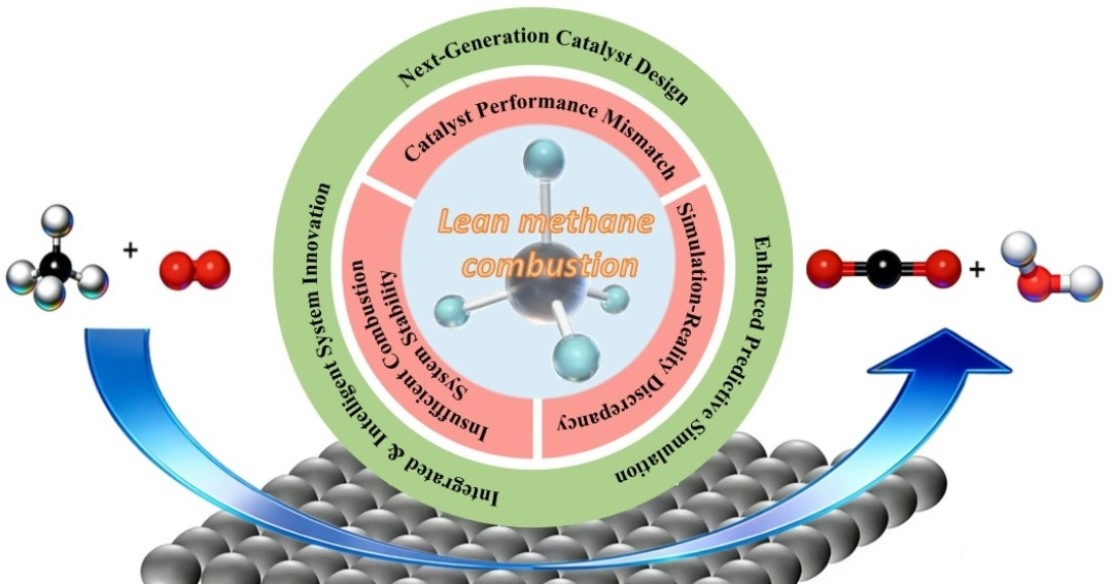
Coal mining releases large amounts of low-concentration methane. Its global warming potential per unit mass is about 21 times that of carbon dioxide. Approximately 13.5 billion cubic meters are directly emitted each year without utilization. This results in both energy waste and environmental issues. Technologies for utilizing methane with concentrations ≥8% are already mature. However, stable treatment of low-concentration methane remains challenging. Issues include unsustainable combustion and interference from impurities. This review provides a comprehensive overview of recent advances in the catalytic combustion of low-concentration methane, systematically examining reaction mechanisms, catalyst development (including noble metal catalysts, non-noble metal catalysts, and the role of supports), combustion methods, and numerical simulations. The analysis reveals that current research faces challenges such as mismatched catalyst performance under real conditions, insufficient combustion system stability, and gaps between numerical simulations and practice. Future work should focus on molecular-level catalyst design, integrated system innovation, and enhancing simulation predictive capabilities, thereby strengthening the link between basic research and engineering applications. This will promote the industrialization of efficient low-concentration methane utilization technologies, ultimately achieving both energy recovery and greenhouse gas emission reduction.

1. Introduction

Large amounts of coalbed methane are released during coal mining. This ventilation air methane (VAM) stream contains methane at low concentrations, posing utilization challenges [1]. Methane is a potent greenhouse gas with a global warming potential approximately 21 times greater than carbon dioxide over a 100-year period [2]. In China, coalbed methane and shale gas are typically found in coal mines or seams. These unconventional gas resources are primarily composed of methane. Coalbed methane (CBM) is typically adsorbed on the coal surface or exists freely in coal fractures. As an unconventional natural gas, CBM is formed during the coalification process of organic matter. It has attracted considerable international interest in recent years due to its potential as a clean energy source and chemical feedstock [3].
Abbreviations used in this review include: VAM (ventilation air methane), CBM (coalbed methane), CMM (coal mine methane), T90/T50 (temperatures at which 90%/50% methane conversion is achieved), DLP (dual-stage lean premixed) flame, LES (Large Eddy Simulation), RANS (Reynolds-Averaged Navier–Stokes), LPP (lean premixed pre-vaporized), and CRN (chemical reactor network).
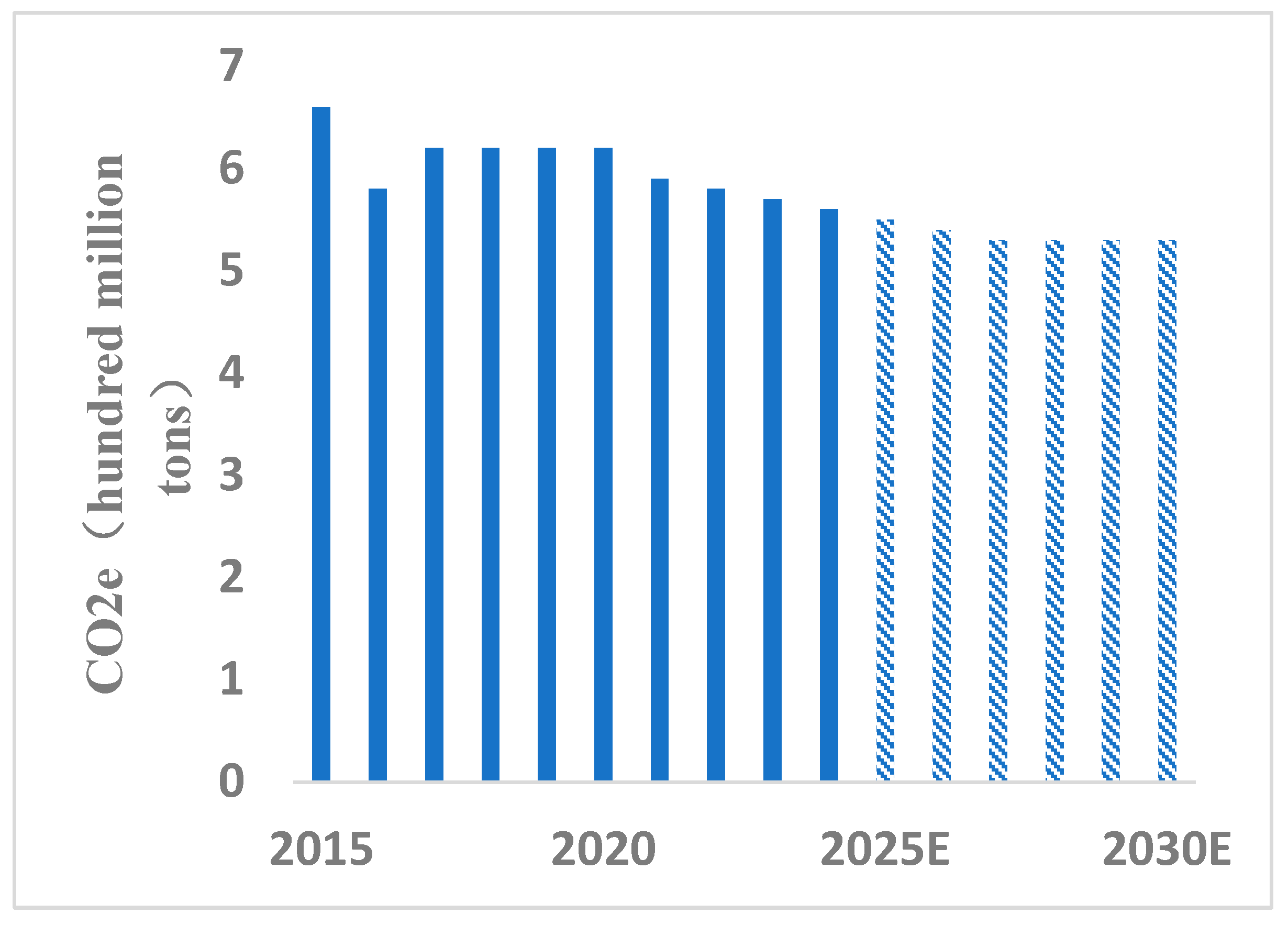
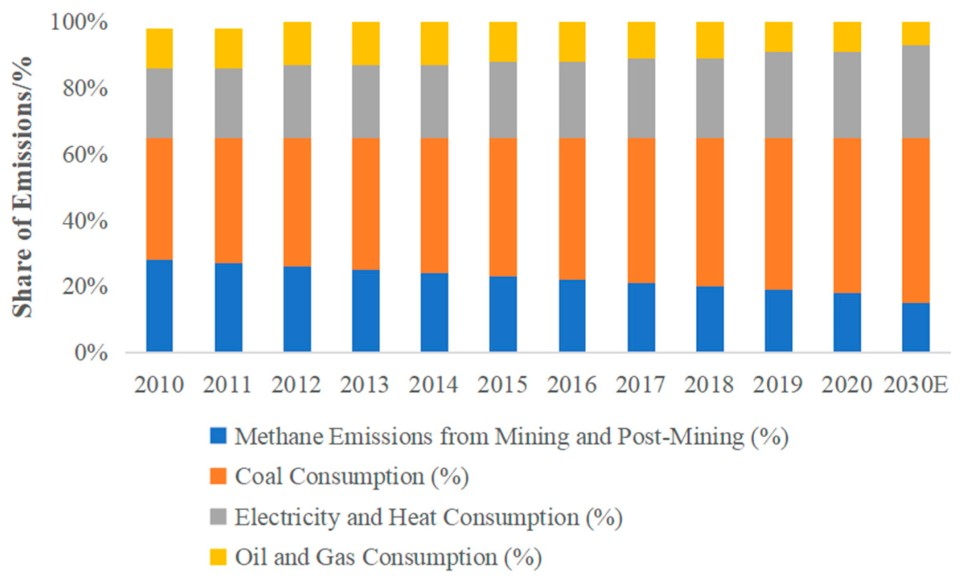
China possesses abundant coal resources, with proven (CBM) reserves of nearly 10 trillion cubic meters, ranking third globally (see Figure 1). Over the past decade, China has witnessed improvements in coal mine methane (CMM) emissions, utilization volume, and utilization efficiency. However, the overall utilization rate remains low due to challenges in sustaining combustion at low methane concentrations, particularly within the 3–9% range [4]. There are significant fluctuations in gas flow and concentration, along with the presence of impurities such as coal dust, sulfides, and moisture. These factors hinder stable treatment using conventional combustion technologies. Consequently, constrained by both technical and operational factors, approximately 13.5 billion cubic meters of CBM are directly vented annually in China [5] (see Figure 2 for related emission sources and trends).
In the context of global energy transition and carbon neutrality goals, the efficient utilization of low-concentration methane offers substantial environmental and resource benefits. Technological advancements have significantly expanded China’s coalbed methane (CBM) extraction capacity [6]. Its energy equivalent is nearly 100 billion tons of standard coal, highlighting its substantial potential for recovery and utilization [7,8]. Furthermore, growing international emphasis on emission reduction and energy efficiency underscores the urgency of mitigating these emissions. While technologies for utilizing methane at concentrations above 8% are now mature, the stable combustion and efficient conversion of low-concentration methane (<8%) remain technically challenging.
In practice, the threshold of approximately 8 vol% reflects the lower flammability limit of methane–air mixtures (around 5 vol%) together with safety margins and concentration fluctuations in industrial streams; below this level, conventional thermal combustors struggle to maintain stable flames without auxiliary measures such as preheating, enrichment, or catalytic assistance [9,10,11,12].
Breakthroughs in this area are urgently required. Therefore, developing reliable treatment technologies for low-concentration methane is crucial, serving as a critical step towards achieving energy recovery and deep greenhouse gas emission reductions. This effort holds significant practical importance for advancing green and low-carbon development within the industry.

2. Research on the Reaction Mechanism of Catalytic Combustion of Low-Concentration Methane

Low-concentration methane (typically <5% by volume), present in various sources such as coal mine ventilation air and chemical tail gases, poses dual challenges of energy waste and intensified greenhouse effects when directly emitted. Catalytic combustion has emerged as a core technology for methane treatment, enabling complete oxidation at low temperatures. The theoretical foundation for optimizing this technology relies on a comprehensive understanding of its thermodynamic feasibility, kinetic principles, and multi-step reaction mechanisms.
The combustion reaction of methane on a catalyst surface is an irreversible heterogeneous reaction. The chemical equation for complete combustion is [13]:
CH4 + 2O2 = CO2 + 2H2O, ΔH = −891 kJ/mol
The catalytic combustion of methane may involve up to five elementary steps: (1) diffusion of reactants, (2) adsorption, (3) surface reaction, (4) desorption of products, and (5) diffusion of products.
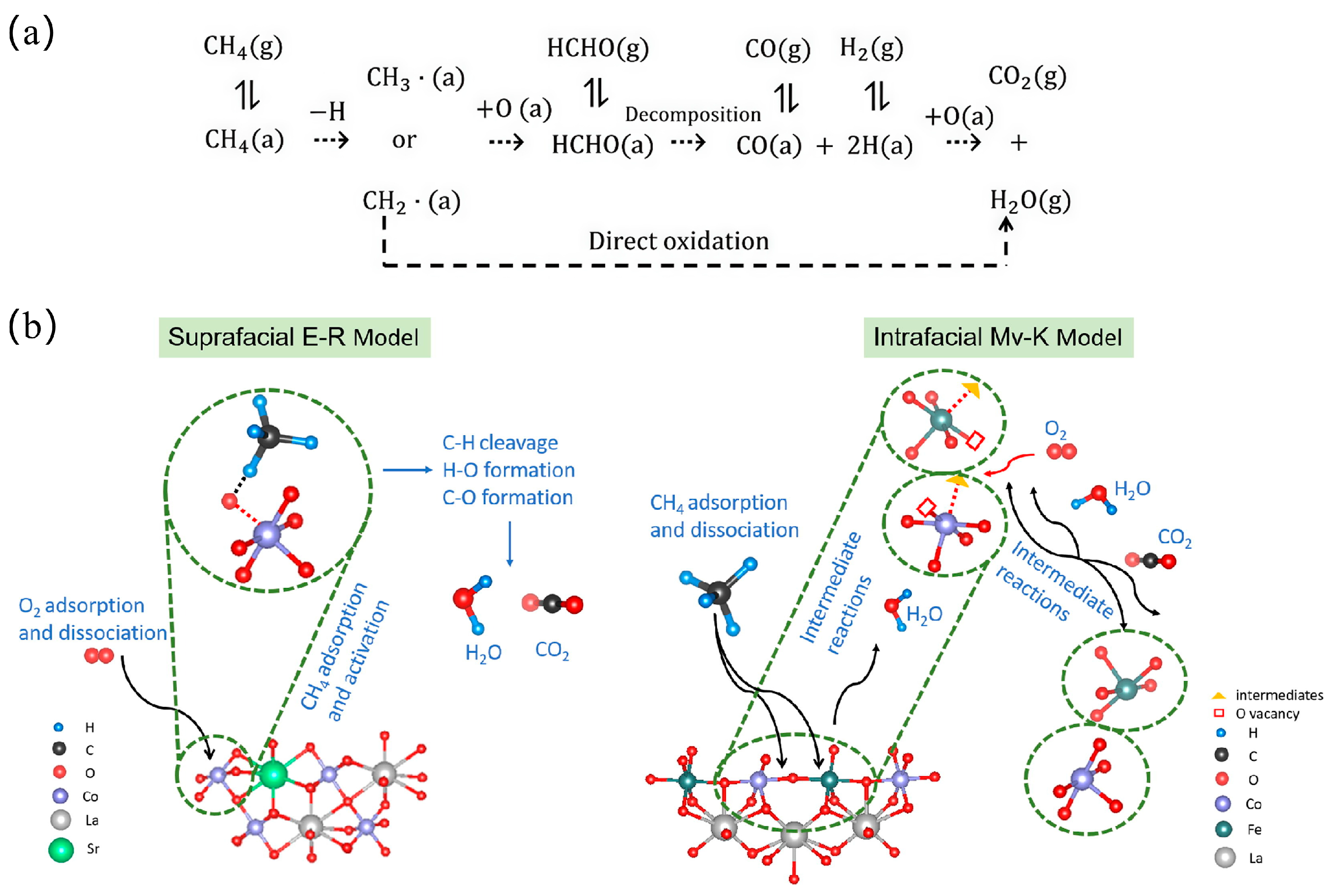
Specifically, methane and oxygen molecules adsorb onto and are activated by the catalyst surface. The activated methane species are often described generically as CHx (x = 1–3) fragments, which can exist either as adsorbed intermediates or, in some cases, as CH3 radicals released into the gas phase. These intermediates then react with activated oxygen to form CO2 and H2O [14,15]. Alternatively, an unstable formaldehyde (HCHO) intermediate may form and be rapidly oxidized to CO2 and H2O. This reaction pathway is schematically illustrated in Figure 3a. Compared to conventional thermal combustion, catalytic combustion achieves complete methane oxidation at significantly lower temperatures and substantially reduces the activation energy required for the reaction [16].
Currently, the reaction mechanisms for methane catalytic combustion are mainly explained by three theories.
The MvK mechanism emphasizes the redox cycle between oxidized and reduced forms of the active sites, as shown in Figure 3b. In this conceptual model, the reducing agent (here methane) converts oxidized surface sites into reduced ones while forming oxygen-containing products, and gas-phase O2 then re-oxidizes the reduced sites. Other elementary events (such as adsorption and desorption) are typically treated as kinetically irrelevant within the simplified MvK description [17,18,19].
The ER mechanism involves a “collision-type” process in which a gaseous reactant (e.g., methane) reacts directly with adsorbed species of the other reactant (e.g., lattice or adsorbed oxygen) on the catalyst surface, without prior chemisorption of methane. A methane molecule collides with surface oxygen, breaking the C-H bond and generating radicals, which then further react with gaseous oxygen molecules to form the final products. This mechanism is more common in non-noble metal catalysts, where surface oxygen species play a key role [20].
The LH mechanism proposes that both reactants—oxygen and methane—first form chemisorbed species on the catalyst surface and then react via surface reactions between these adsorbed intermediates. C-H bond activation produces CHx fragments that subsequently react with oxygen-containing surface species, ultimately generating CO2 and H2O. This mechanism typically applies to noble metal catalysts, whose active sites effectively promote methane adsorption and activation [21].
Figure 3. (a) The catalytic combustion reaction mechanism of methane on metal catalysts. (b) Schematic diagrams of the suprafacial ER mechanism (left panel) and intrafacial MVK mechanism (right panel) [22].
Catalysts 16 00056 g003

3. Research on Catalysts for Methane Catalytic Combustion

An effective methane oxidation catalyst must possess a robust structure to ensure high-temperature stability and prevent structural collapse, maintain catalytic efficiency across a wide temperature range, achieve complete conversion of methane to CO2 and H2O even in the presence of water vapor and SO2, and suppress NOx formation. Additionally, it needs to exhibit strong resistance to poisoning, high water tolerance, and maintain low cost. Current methane combustion catalysts are primarily divided into two categories: noble metal catalysts and non-noble metal catalysts [23,24,25,26,27].

3.1. Noble Metal Catalysts

Noble metal catalysts are widely recognized for their high activity and selectivity in methane catalytic oxidation. Among these, platinum (Pt) demonstrates the highest catalytic activity, followed by Ir, Os, Rh, Pd and Ru. However, Ir, Os, Rh, and Ru exhibit inferior stability, which limits their practical application. Consequently, current research on noble metal catalysts primarily focuses on Pd- and Pt-based systems [28,29,30].

3.1.1. Pd-Based Catalysts

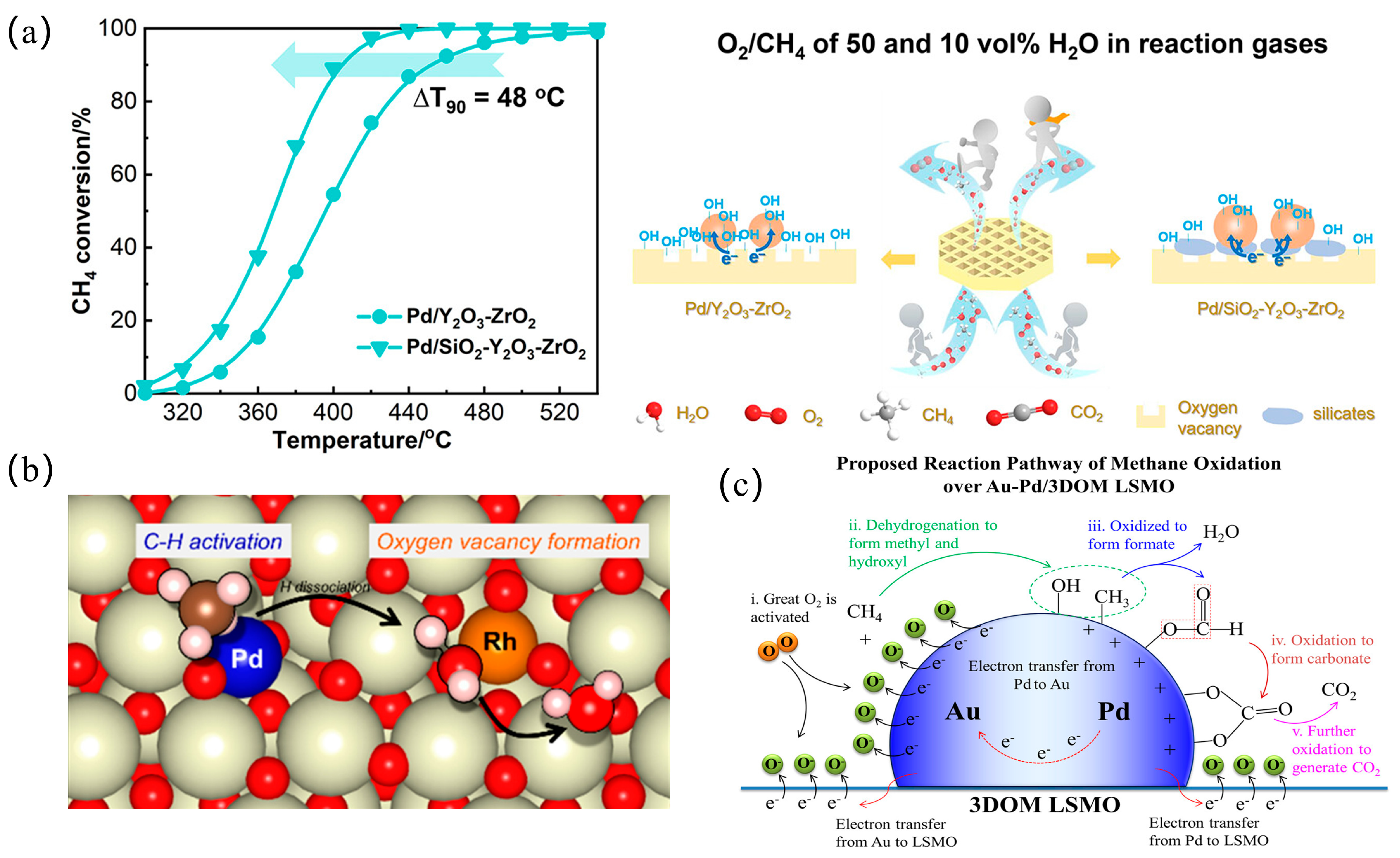
Noble metal catalysts, particularly Pd-based systems, often incorporate promoters to enhance their methane oxidation activity. The catalytic mechanism involves methane activation on Pd sites, where Pd facilitates C-H bond cleavage and promotes the formation of reactive intermediates that ultimately oxidize to CO2 and H2O. To optimize this process, various promoters have been investigated. As shown in Figure 4a, Wu et al. [31] proposed an ingenious “inert silicate patch” modification to mitigate water vapor-induced deactivation of Pd/Y2O3–ZrO2 catalysts at low temperatures. They constructed a silicate layer on the surface of a yttrium-stabilized zirconia (YSZ) support. This modification yielded a dual synergistic effect: (1) silicate hindered electron transfer from oxygen vacancies to Pd, optimizing the Pd chemical state and enhancing PdO reducibility, thereby improving CH4 combustion activity under dry conditions and lowering T90 from 386 °C to 309 °C; (2) silicate reduced support oxygen vacancies, enhancing surface hydrophobicity, inhibiting hydroxyl group accumulation, and mitigating water poisoning of active sites. Under harsh conditions with 10 vol% water vapor, the modified catalyst maintained a T90 of 404 °C, significantly lower than the 452 °C of the unmodified catalyst. This work provides a novel strategy for designing high-performance Pd catalysts for low-temperature wet methane combustion through the simultaneous control of Pd chemistry and support hydrophobicity. Fan et al. [32] doped the catalyst with Ce, resulting in a Pd–Pt/Ce/Al2O3 system that exhibited superior activity and stability. In this system, Ce promotes the maintenance of Pd in its oxidized state and inhibits PdO particle sintering. Other studies have introduced La or Mn into Pd/Al2O3, where Mn enhances methane combustion activity but accelerates high-temperature phase transformation, whereas La suppresses phase transformation and improves high-temperature stability [33].
It is worth emphasizing that the high activity of Pd-based methane combustion catalysts arises from a delicate balance between metallic Pd0 and oxidized PdO species. Metallic Pd0 sites are generally regarded as crucial for the initial dissociative activation of the C–H bond in methane, whereas PdO provides lattice oxygen and stabilizes surface oxygen species that participate in Mars–van Krevelen-type redox cycles. Both particle size and dispersion strongly influence this balance: highly dispersed PdO or PdO–PdOx domains on supports such as γ-A2O3 and CeO2 often show superior low-temperature activity, while excessive sintering leads to large particles with reduced specific activity. The historical development of Pd catalysts for total methane oxidation has therefore focused on tuning the Pd0/PdO ratio, particle size, and metal–support interaction (e.g., with CeO2, ZrO2, or zeolites), as also reflected in the support discussion in Section 3.1.4 and in the comparative data summarized in Table 1.
Table 1. Representative catalysts and supports for low-concentration methane combustion, including typical methane concentration ranges, T50/T90 values, and qualitative assessments of activity, stability, and resistance to poisoning.
Catalyst SystemSupport TypeTypical CH4 Concentration Range
(vol%)
T50/T90 (°C)Notable Features
(Activity, Stability, Poisoning Resistance)
Pd/PdOγ-Al2O3, CeO2, zeolites0.1–1.0; up to a few vol%320–380/380–450Very high low—T activity; sensitive to H2O/SO2; sintering—prone
Pt-basedAl2O3, CeO20.1–1.0; few vol%380–450/450–550Lower activity than Pd; excellent sulfur and thermal stability
Rh-basedZeolites, CeO20.1–1.0; few vol%360–430/430–520High tolerance to H2O/SO2; good NOx removal
Perovskites (LaBO3)Self-supported/monolith0.1–1.0; few vol%450–520/520–600Good thermal stability; moderate low—T activity
Spinels (AB2O4)Self-supported/monolith0.1–1.0; few vol%360–430/430–520Good low—T activity; sintering at high T
HexaaluminatesSelf-supported/monolith0.1–1.0500–580/580–700Excellent high—T stability; limited low—T activity
Carbon-supported metalActivated carbon, CNTs0.1–1.0360–430/430–520Hydrophobic; resistant to H2O/SO2 at moderate T
Note: Data summarized from Refs. [31,32,33,34,35,36,37,38,39,40,41,42,43,44,45,46,47,48,49,50,51,52,53,54,55,56,57,58,59,60,61,62,63,64].
Figure 4. (a) Boosting Methane Combustion over Pd/Y2O3–ZrO2 Catalyst by Inert Silicate Patches Tuning Both Palladium Chemistry and Support Hydrophobicity [31]. (b) The synthesis and characterizations of various PM SACs [42]. (c) Methane combustion over a AuPd catalyst supported on three-dimensionally ordered mesoporous perovskite (3DOM LSMO). Au enriches adsorbed oxygen and modulates the binding strength between reaction intermediates and Pd [44].
Catalysts 16 00056 g004

3.1.2. Pt-Based Catalysts

Although less active than Pd-based catalysts for methane oxidation, Pt-based catalysts offer distinct advantages, including exceptional sulfur poisoning resistance and superior hydrothermal stability, rendering them suitable for harsh reaction environments [34]. In contrast to Pd, which is highly susceptible to water vapor and deactivates via palladium hydroxide formation [35], Pt maintains its structural integrity under moist conditions.
Given their complementary properties, Pt and Pd are often combined to form bimetallic catalysts that synergistically integrate their respective advantages. Hoque et al. directly compared Pd-Pt bimetallic catalysts with their monometallic counterparts, confirming the superior overall activity of the bimetallic system [35]. This enhancement is attributed to the role of Pt in improving the thermal stability of Pd. Strobela R et al. [36] demonstrated this effect by synthesizing a series of Pd-Pt/Al2O3 catalysts via flame spray pyrolysis. They found that Pt enhances the thermal stability of Pd particles, effectively inhibiting their sintering at high temperatures and consequently decelerating catalyst deactivation.

3.1.3. Rh and Au Catalysts

Supported Rh catalysts are extensively investigated for methane dry reforming, CO2 hydrogenation, and CO oxidation, and serve as key components in three-way catalysts [37,38,39]. Rh exhibits high activity for NOx elimination, but pure Rh suffers from poor thermal stability and volatility at elevated temperatures. Consequently, its application in methane combustion is limited. In methane catalytic combustion, Rh demonstrates superior resistance to H2O and SO2. Zhang et al. [40] investigated the influence of different supports on the performance of Rh-based catalysts for methane combustion. They compared porous SiO2, γ-Al2O3, ZSM-5, and SSZ-13 zeolites. Their results revealed that the support significantly influences Rh dispersion, with RhOx nanoparticles exhibiting significantly higher activity than single-atom Rh species. Under co-exposure to H2O and SO2, the ZSM-5 supported catalyst demonstrated the best performance. Its lower acidity reduced the formation of less active single-atom Rh species. A subsequent study by the same group confirmed the superior catalytic performance of Rh over Pd under co-exposure to H2O and SO2 [41]. Rh is also frequently employed as a promoter to enhance catalytic activity and water resistance. Pu et al. [42] synthesized CeO2-supported PdRh catalysts via a hydrothermal method (Figure 4b). The bimetallic active sites exhibited higher activity than monometallic Pd or Rh catalysts. The incorporation of Rh enhanced the redox capability of the CeO2 support. Similarly, a study on Pt-Rh bimetallic catalysts confirmed the promoting effect of Rh. The Rh-Pt/Al2O3 catalyst demonstrated improved stability and activity compared to the monometallic Pt catalyst [43].
Another noble metal, Au, has been extensively investigated for alkane and CO oxidation. In contrast to Rh, pure Au exhibits negligible activity for methane partial oxidation. Generally, Au demonstrates lower activity for methane combustion and is typically employed as a promoter. Wang et al. [31] supported Au and Pd on a three-dimensionally ordered mesoporous (3DOM) perovskite, obtaining a catalyst that exhibited excellent methane combustion performance. This catalyst achieved complete methane conversion at approximately 400 °C. As shown in Figure 4c, the incorporation of Au into the bimetallic system enhanced the reaction rate, enriched adsorbed oxygen species, and weakened the bonding between reaction intermediates and Pd atoms. This also altered the reaction pathway for methane oxidation.
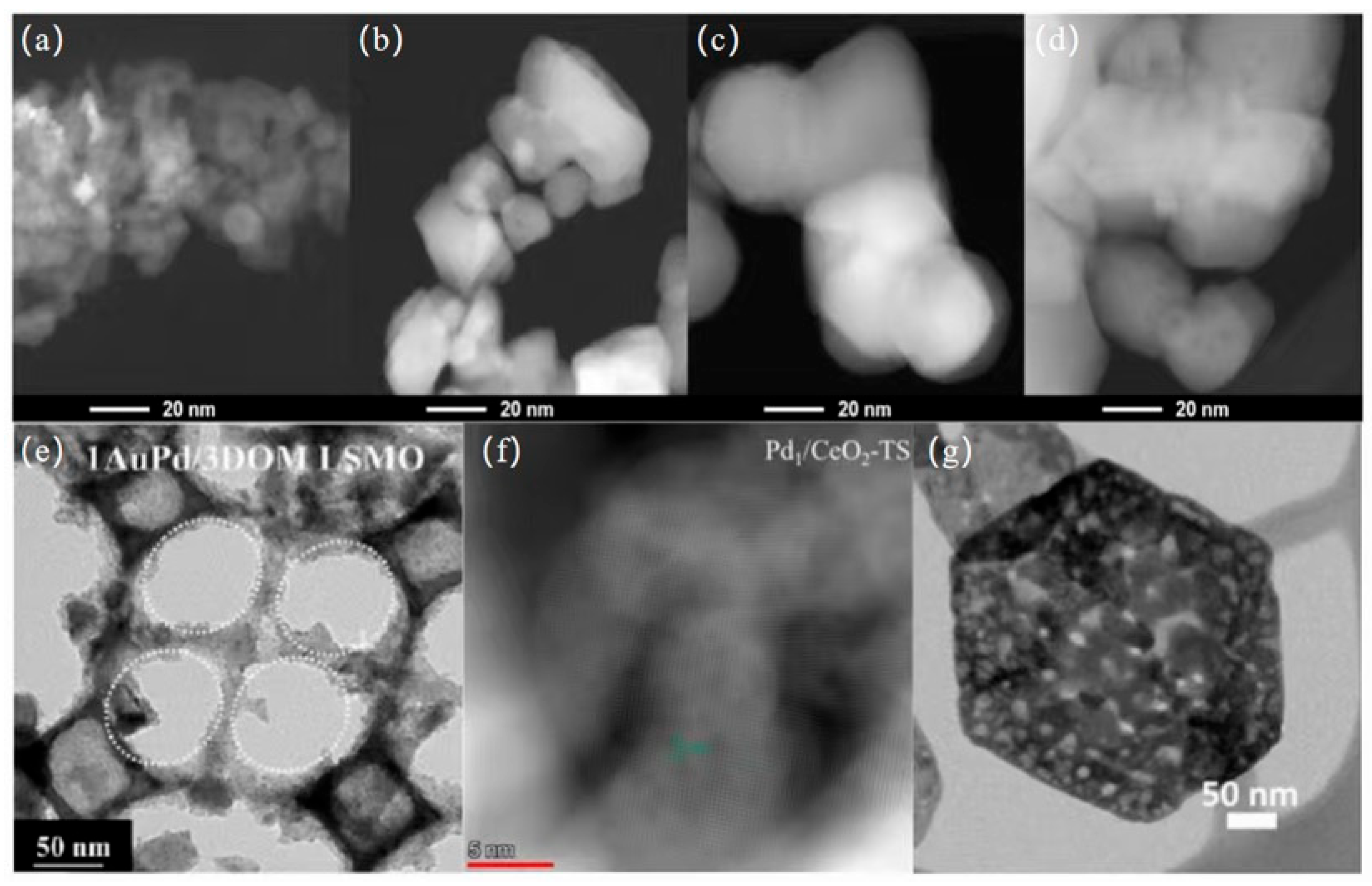
The methane combustion catalysts discussed in this section span a wide range of well-defined morphologies. Typical PdO and Pd/PdO nanoparticles with diameters of ca. 2–5 nm are finely dispersed on fluorite-type oxides (e.g., CeO2–ZrO2 solid solutions), providing abundant metal–oxygen interfacial sites [45,46]. Pt- and Pd-based single-atom centers are atomically anchored on high-surface-area supports (such as γ-Al2O3 or CeO2) in the form of positively charged, low-coordinate species stabilized by oxygen ligands or anionic vacancies [47,48]. RhOx nanoclusters (1–2 nm) and isolated Rh sites are preferentially located within the cages and channels of small-pore and medium-pore zeolites (e.g., SSZ-13, ZSM-5), where the confinement and framework acidity modulate their dispersion and redox properties [41]. Au–Pd bimetallic nanoparticles (3–8 nm) are uniformly embedded in the walls of three-dimensionally ordered mesoporous perovskites (3DOM LSMO), forming a continuous metal–oxide contact that enhances oxygen activation [44,49]. In addition, nanostructured transition-metal oxides such as LaBO3 perovskites and Co3O4 or NiCo2O4 spinels are frequently prepared as nanorods, nanocubes, or nanosheets exposing specific facets (e.g., (100), (110)), thereby tuning the density and nature of surface oxygen species [50,51,52,53,54,55]. In the corresponding TEM/SEM and HAADF-STEM images (Figure 5), these systems exemplify, respectively, nanoparticulate, single-atom, confined zeolitic, mesoporous, and facet-engineered oxide architectures, which facilitates a clearer comparison of structure–activity relationships among Pd-, Pt-, Rh-, Au-based and transition-metal-oxide catalysts.

3.1.4. Supports

Methane catalytic combustion is a heterogeneous catalytic process in which the catalyst support plays a crucial role. The support facilitates the dispersion of noble metal active sites, increases the specific surface area, and provides a thermally stable framework. Furthermore, metal–support interactions significantly influence the catalytic activity. Common supports for methane combustion catalysts include zeolites and metal oxides.
(1)
Zeolite Supports
Zeolites are a class of microporous aluminosilicates characterized by regular crystalline structures. They possess tunable acidity and excellent hydrothermal stability, making them widely applicable in adsorption, energy chemistry, and environmental catalysis. Their applications leverage structural properties such as well-defined pore structures, high surface area, and selective adsorption capabilities. As catalytic materials, although zeolites cannot independently catalyze methane combustion, they effectively serve as supports for dispersing noble metal nanoparticles. Studies demonstrate that modulating the Si/Al ratio, which governs zeolite hydrophobicity/hydrophilicity, can enhance the activity and water tolerance of supported noble metal catalysts. Losch et al. [56] investigated Pd nanoparticles supported on zeolites with varying hydrophobicity. They observed an inverse volcano-shaped relationship between the catalyst’s T50 and the Si/Al ratio of the zeolite support. The optimal catalyst featured 3.2 nm Pd particles on a mesoporous Beta zeolite with a Si/Al ratio of 40. They confirmed that enhanced hydrophobicity promotes H2O desorption from the catalyst surface, thereby facilitating the reaction. Other studies indicate that Bronsted acid sites in zeolites can synergize with Pd active sites to promote C-H bond activation. For instance, Gao et al. [57] demonstrated that H-ZSM-5 zeolite with strong Bronsted acidity promotes Pd-catalyzed C-H activation more effectively than basic Na-ZSM-5, thereby lowering the reaction energy barrier.
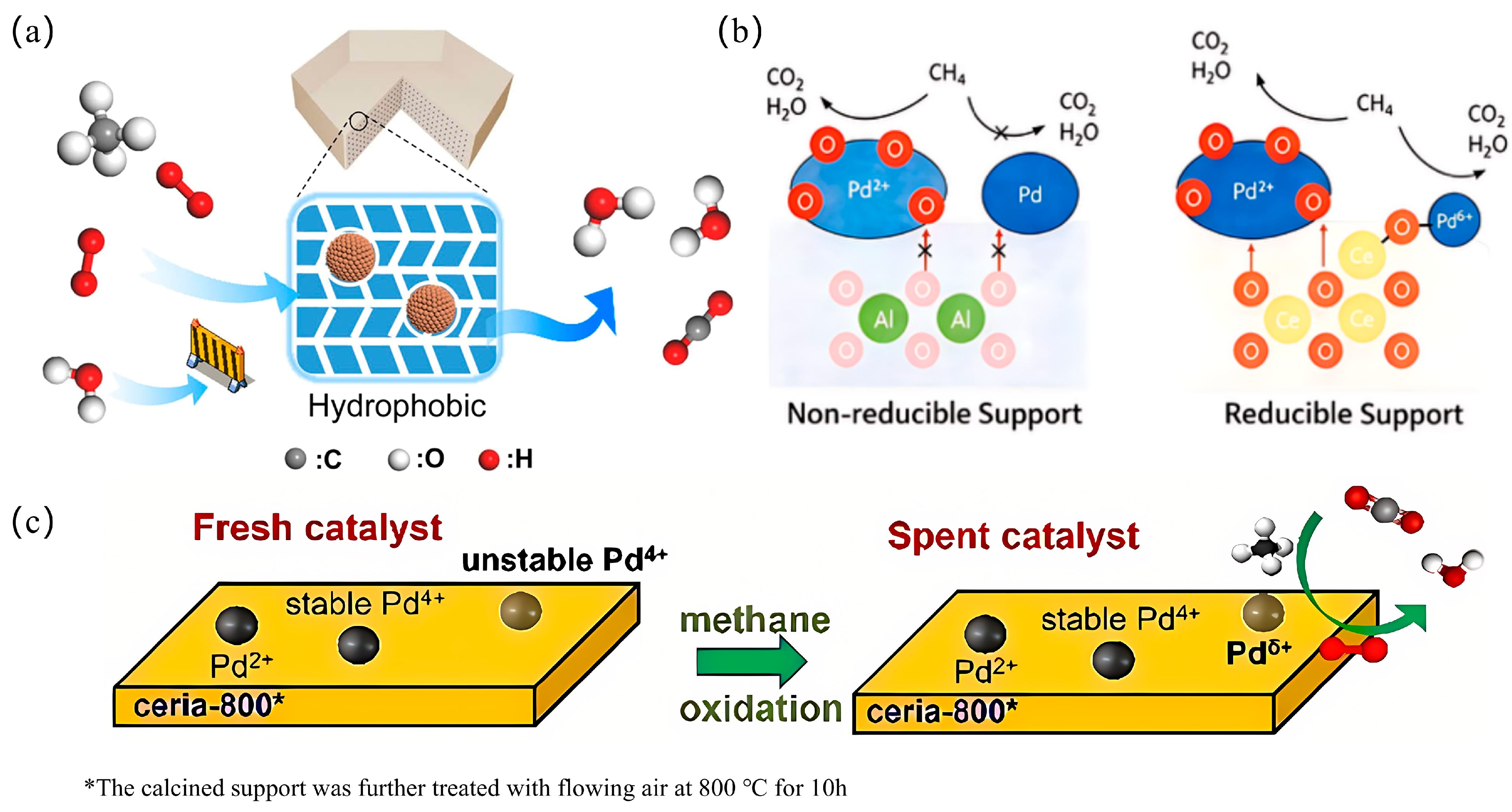
The unique pore structure of zeolites effectively suppresses the diffusion and agglomeration of noble metal particles, thereby significantly enhancing their stability under high-temperature conditions. As demonstrated by Lim et al. [58], strongly acidic SSZ-13 zeolite effectively stabilizes PdO particles during methane combustion via strong PdO-zeolite framework interactions, thereby improving both the catalytic performance and water resistance. Another promising strategy involves the design of core–shell zeolite composites. For instance, Wang et al. [59] constructed a core–shell structure by supporting Pd on a hydrophobic all-silica MFI zeolite (Silicalite-1, S-1). This structure effectively restricted Pd agglomeration through spatial confinement, as illustrated in Figure 6a. The resulting 0.6 wt% Pd@S-1 catalyst exhibited exceptional stability under high-temperature reaction conditions. Moreover, the intrinsic hydrophobicity of the pure silica framework selectively impedes water vapor diffusion toward the Pd active sites, thereby conferring excellent water tolerance.
Despite their promising performance in mitigating sintering and water-induced deactivation, zeolites exhibit high sensitivity to SO2, which remains a major challenge [60]. In practical applications, feed streams for methane combustion often contain both water vapor and sulfur compounds. Although increasing the Si/Al ratio of zeolites can significantly improve their performance under humid conditions, SO2 readily competes with methane and oxygen for adsorption on active sites, leading to irreversible activity loss [61].
(2)
Metal Oxide Supports
The distinct roles of non-reducible and reducible supports are exemplified by Al2O3 and CeO2, respectively. For Pd catalysts supported on Al2O3, most studies identify a mixed Pd/PdO phase as the active sites [62]. Goodman et al. used quick-scanning EXAFS to investigate the valence states of Pd on Al2O3 [63]. Their results demonstrated that Pd/Al2O3 becomes catalytically active only after the Pd species are at least partially oxidized. This indicates that lattice oxygen from the Al2O3 support cannot directly participate in the reaction, highlighting the crucial role of oxidized Pd for activity on non-reducible supports. The catalytic processes for supported Pd catalysts on non-reducible and reducible supports are detailed in Figure 6b.
In contrast, reducible supports such as CeO2 facilitate oxygen exchange between lattice oxygen and PdO via the Ce3+/Ce4+ redox. This property enables reducible supports to function as an “oxygen reservoir”, which mitigates PdO deactivation at high temperatures through continuous oxygen vacancy formation and replenishment. This dynamic process also promotes the re-oxidation of metallic Pd during cooling cycles. Furthermore, reducible supports induce stronger metal–support interactions (SMSIs), which help stabilize highly dispersed noble metal species. Yang et al. proposed that CeO2 stabilizes atomically dispersed Pd better than Al2O3 under high-temperature conditions [64]. The structural evolution of two potential Pd4+ sites on an 800 °C calcined CeO2 support under reaction conditions is schematically illustrated in Figure 6c. Through specific thermal treatments, they created unique anchoring sites on the CeO2 surface. The resulting structure exhibited high efficiency in catalyzing methane combustion, indicating that the rational design of atomically dispersed noble metal sites on reducible supports can maximize metal utilization efficiency. This strategy provides a viable approach to reducing noble metal loading in methane combustion catalysts.
In addition to oxide and zeolite supports, carbon-based materials (such as activated carbon, carbon nanotubes, and carbon nanofibers) have also been explored as supports for methane combustion catalysts [65]. Although carbon is thermally oxidizable at high temperatures, under moderate conditions relevant to low-temperature catalytic methane oxidation, these materials can remain stable and provide hydrophobic surfaces with outstanding resistance to water vapor and SO2, offering an attractive complementary support family.

3.2. Non-Precious Metal Catalysts

A comparative summary of representative noble-metal and non-precious-metal catalysts for methane combustion, together with their supports, operating temperature windows, and typical methane concentration ranges, is provided in Table 1.
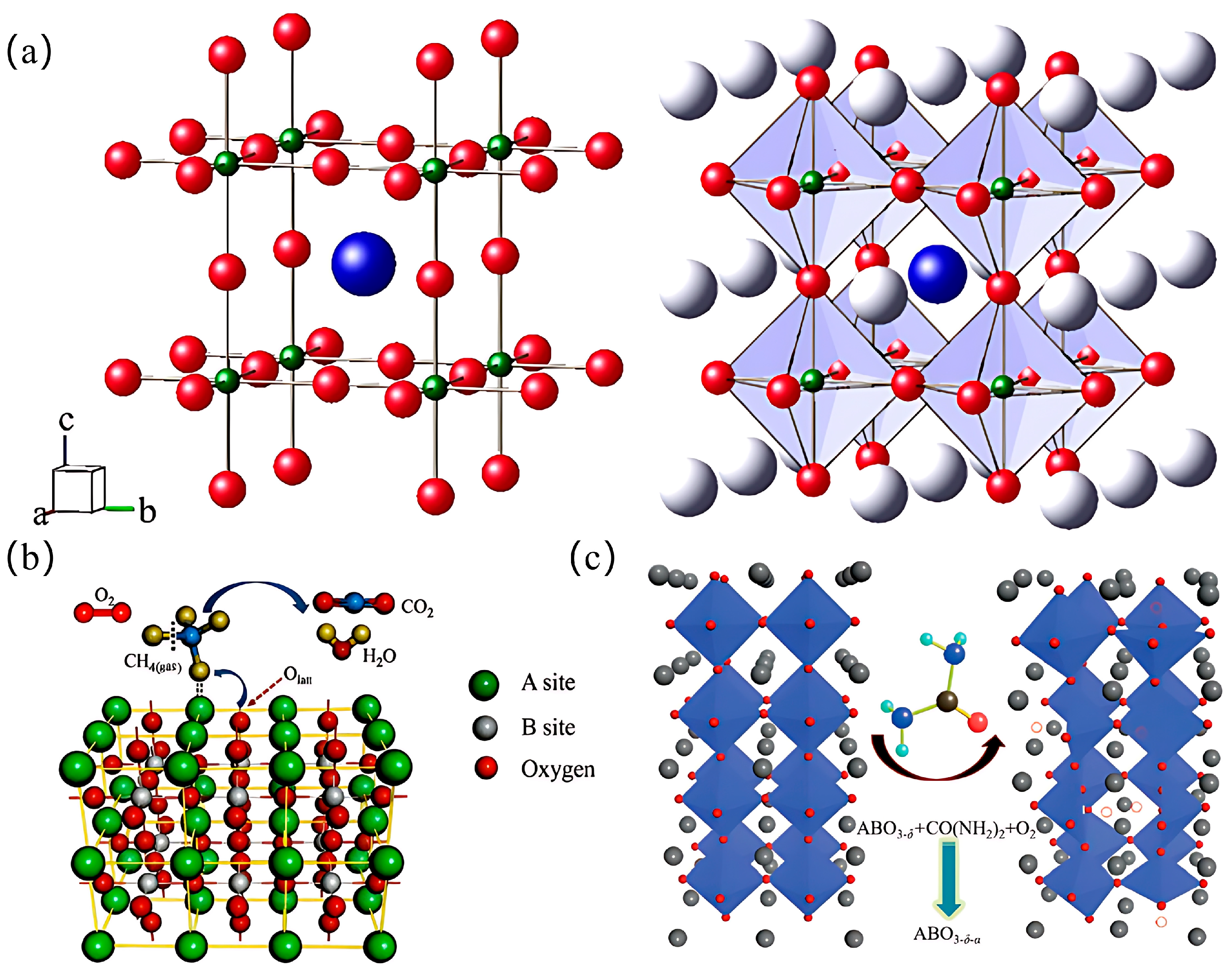
Perovskite-type oxides, with the general formula ABO3 [51], feature an alternating distribution of A-site and B-site cations within their crystal lattice. Their structure and the mechanism for methane oxidation are illustrated in Figure 7 [50]. Due to this unique structure, they exhibit remarkable activity and stability in methane combustion, ranking them among the most promising catalysts for this reaction.
Wang et al. [66] prepared LaMnO3-x catalysts with different La/Mn molar ratios. LaMnO3-90 (La/Mn = 90:100) showed superior catalytic performance and stability. This enhancement was attributed to its larger specific surface area (24.6 m2/g) and higher ratio of lattice to surface oxygen (Olatt/Osurf = 2.17). In another study, Wang et al. [67] synthesized LaCoO3 perovskite oxides using different methods. The sample prepared via the template method exhibited the highest activity, which was attributed to the generation of oxygen vacancies and mobile lattice oxygen during the synthesis process.
However, the practical application of perovskite catalysts is constrained by inherent limitations, including low specific surface area, susceptibility to sintering at elevated temperatures, and inferior low-temperature activity [68]. To address these challenges, the introduction of rare-earth or transition metals has been demonstrated to significantly enhance both the activity and stability of perovskite catalysts [69].
Transition metal catalysts play a crucial role in methane catalytic conversion. These catalysts primarily comprise metals such as Ni, Co, Fe, Cr, and Mn. The activity sequence for methane combustion follows: Co3O4 > NiO > Cr2O3 > Fe2O3 > ZnO > V2O3 > TiO2 > Sc2O3 [70,71]. Spinel is a class of transition metal oxides characterized by a specific crystal structure, with a general formula of AB2O4 [72]. Mihai et al. prepared MnCo2O4, NiCo2O4, and CuCo2O4 spinel catalysts via a co-precipitation method and evaluated their performance in total methane oxidation [73]. The catalytic activity order was CuCo2O4 > NiCo2O4 > MnCo2O4.
Transition metal oxide catalysts demonstrate good low-temperature activity and effectively promote methane oxidation reactions. However, they are prone to agglomeration at elevated temperatures [74], resulting in a reduction of active sites and a decline in catalytic efficiency. High temperatures also compromise the structural stability of these catalysts, making it challenging for them to maintain long-term stability under continuous high-temperature conditions, such as in coal-fired boilers [75]. Therefore, developing catalysts with enhanced thermal stability or improving existing catalysts is imperative.
Hexaaluminates are a class of complex oxides with the general formula MAl12O19 [76], characterized by unique structural properties, excellent thermal stability, and notable catalytic activity at high temperatures. However, their catalytic activity at low temperatures is generally limited. To address this limitation, their performance is often enhanced through doping with transition metal elements. For example, Feng et al. [77] synthesized a series of Ba1-mLamCoAl11O19-δ catalysts using a co-precipitation method. Among these, the catalyst with x = 0.06 (6.0% La) exhibited the largest specific surface area and optimal catalytic performance for methane combustion. It was demonstrated that increasing the La substitution level significantly enhanced the catalytic activity, thermal stability, specific surface area, and combustion efficiency.
Despite progress in enhancing their low-temperature activity, the practical catalytic performance of hexaaluminates remains inferior to that of precious metal and perovskite-based catalysts. Precious metal catalysts play a crucial role in numerous catalytic processes due to their exceptional activity, selectivity, and stability. They typically exhibit high effectiveness in promoting reactions at relatively low temperatures, and maintain long-term stability with high resistance to poisoning.
It should be noted that the available data on perovskites, spinels, and hexaaluminates for methane combustion are still somewhat fragmented, with catalytic performance being simultaneously affected by composition, crystal structure, and synthesis protocol. Readers interested in a more systematic separation of these factors are referred to dedicated reviews on perovskite and spinel-type catalysts for methane and VOC combustion [50,51,69,76].
Moreover, many of the oxide catalysts summarized above have been evaluated over methane concentrations in the range of 0.1–1.0 vol% for ventilation air methane treatment and up to a few vol% in model feeds, highlighting both their potential and the need for further optimization specifically targeted at ultra-lean methane streams.

4. Advancements and Numerical Insights in Combustion Utilization of Low-Concentration Methane

Although this review focused on catalytic technologies, the discussion of non-catalytic combustion strategies and numerical simulations for low-calorific-value methane-containing gases remains highly relevant. These studies provide reference flame stabilization mechanisms, flow and temperature fields, and emission characteristics that serve as important baselines and design constraints for subsequent development and optimization of catalytic combustors, particularly under ultra-lean conditions.

4.1. Research on Combustion Utilization Methods for Low-Concentration Methane

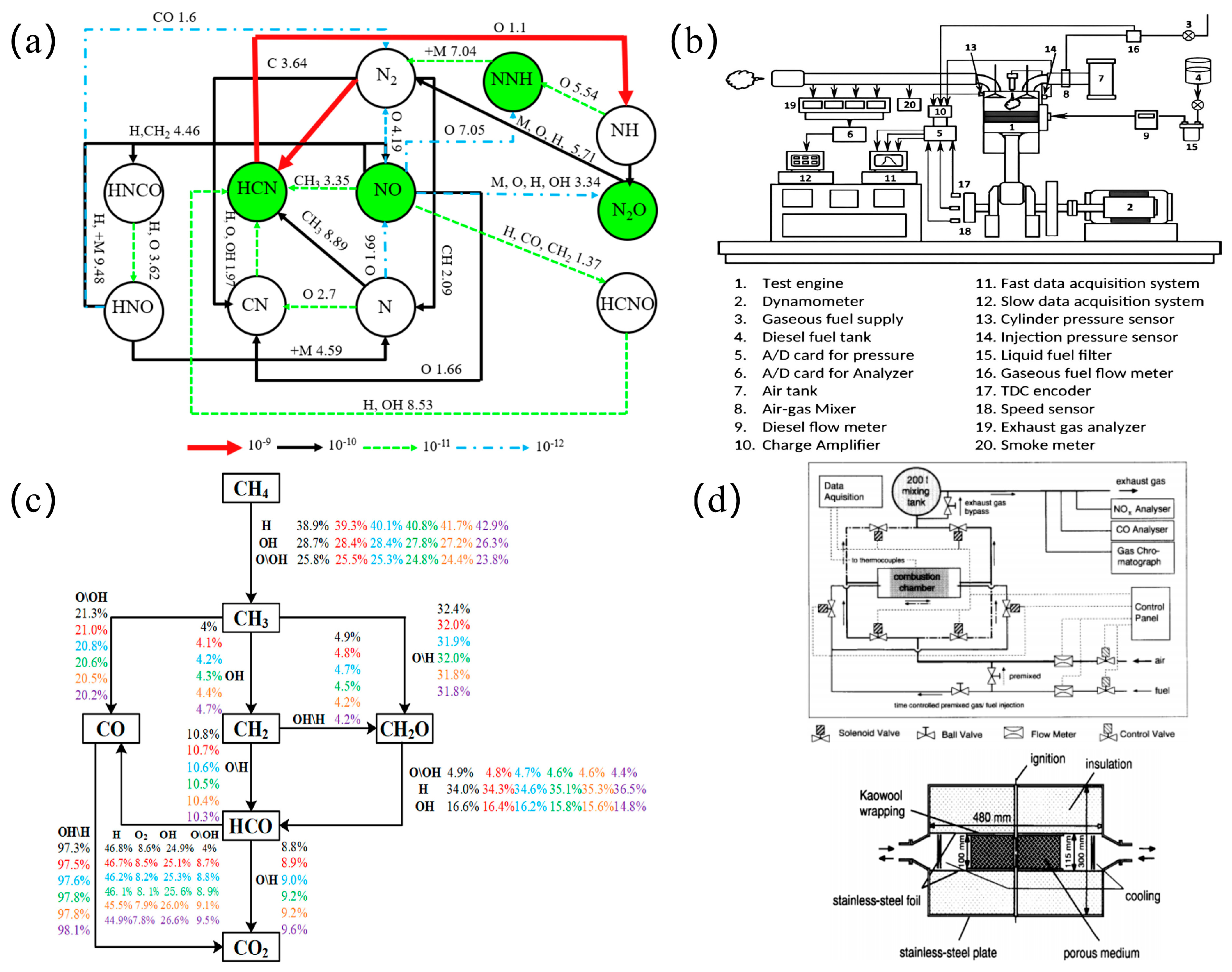
The direct combustion of low-concentration methane presents significant challenges. Common mitigation strategies include catalytic combustion, swirl burners, porous media combustion, and co-firing with high-heating-value fuels. These approaches enable stable combustion under low methane concentrations. Ali et al. [78] conducted a comprehensive investigation into low-heating-value gas combustion, reviewing both fundamental studies and engineering applications. Their work examined gas composition, flame chemistry, pollutant emissions, flammability limits, and burning velocity, along with critical velocity gradient and flame stabilization mechanisms such as recirculation zone heat recycling and catalytic wall effects. The impacts of imperfect mixing and strong turbulence on combustor operation were also investigated. Their analysis of NO formation pathways and reaction fluxes for coke oven gas (COG: 40% CH4 + 60% H2) at 1400 K (units: kmol/(m3·s)) is presented in Figure 8a.
Zhang et al. [79] employed a fluidized bed reactor loaded with a novel metal catalyst, achieving catalytic combustion of methane at concentrations ranging from 0.3% to 2%. Results demonstrated over 95% methane conversion at concentrations below 1 vol% when the bed temperature reached 650 °C. However, catalyst selection for such applications must prioritize high-temperature resistance to maintain high activity and stability during prolonged operation. Additionally, noble metal nanoparticles are susceptible to sintering under high-temperature conditions, where surface diffusion and Ostwald ripening promote particle coarsening, loss of dispersion, and a corresponding decrease in the number of accessible active sites [80,81,82,83].
Figure 8. (a) NO formation pathways and reaction flux analysis for COG (CH4 40% + H2 60%) at 1400 K, units (kmol/(m3·s)) [78]. (b) Experimental setup scheme [84]. (c) Reaction paths for generating CO and CO2 by the H2–CH4-air mixtures with different H2 blending ratios (black, red, blue, green, orange, and purple separately represent λ = 0%, λ = 10%, λ = 20%, λ = 30%, λ = 40%, and λ = 50%) [85]. (d) Design of the combustion chamber [86].
Catalysts 16 00056 g008
Beyond catalytic combustion and low-heating-value gas combustion, hydrogen enrichment of natural gas has emerged as a promising strategy for optimizing fuel combustion performance, offering valuable insights for improving low-concentration methane combustion. Benbellil et al. [84] investigated the effects of hydrogen enrichment (20%, 30%, 40%, and 50% by volume) in natural gas on the combustion characteristics, engine performance, exhaust emissions, and knock behavior in a dual-fuel compression-ignition engine. Their results demonstrated that hydrogen addition enhances gaseous fuel combustion by increasing the heat release rate during the premixed phase and elevating the pressure peak, particularly under high loads. The 50% hydrogen blend yielded the highest pressure peak and heat release rate. Hydrogen enrichment also shortened the combustion duration and improved the brake thermal efficiency (up to 16% increase with 50% H2 compared to pure natural gas) while reducing unburned hydrocarbon and carbon monoxide emissions at medium to high loads. However, hydrogen enrichment reduced NOx emissions only at low-to-medium loads and induced intense knock at engine loads exceeding 80%. The experimental setup is illustrated in Figure 8b.
Dong et al. [85] studied the chemical kinetics of natural gas combustion with varying hydrogen blending ratios using CHEMKIN-PRO 19.0 software and the GRI-Mech 3.0 mechanism. They found that increasing the hydrogen blending ratio gradually decreased the concentrations of key species (CH4, CO, and CO2), shortened the reaction duration, and accelerated the reaction rate. The significant increase in H, O, and OH radicals further intensified the combustion reactions. Sensitivity analysis indicated that a limited number of chain-branching and chain-terminating elementary reactions dominated the formation and consumption of CO and CO2 (for example H + O2 ⇌ O + OH, CO + OH ⇌ CO2 + H, and HCO + M ⇌ CO + H + M), and that the influence of these key steps decreased as the hydrogen fraction increased, in line with the detailed reaction scheme reported in Ref. [85]. The reaction pathways for CO and CO2 formation in H2–CH4–air mixtures with different hydrogen blending ratios are presented in Figure 8c, with colors representing λ values from 0% to 50%.
Furthermore, Guo et al. [86] compared jet burners and swirl burners. Jet burners have strong jet rigidity but poor flame stability and mixing. Swirl burners have better flame stability. However, their jet rigidity is weaker due to swirl vanes, leading to poorer performance in the flame rear. For low-heating-value fuels below 1500 kcal/m3, research focuses on stable combustion. Swirl burners are often used to ensure stable and safe operation, with the specific design of the combustion chamber employed in this comparative study detailed in Figure 8d.
In addition to the above concepts, reversed-flow catalytic oxidation has been widely recognized as one of the most efficient technologies for treating low-concentration methane mixtures [87,88,89,90,91,92,93]. In a typical reversed-flow reactor, the gas flow periodically switches direction through a packed bed coated with a combustion catalyst, enabling effective storage and recovery of sensible heat from the hot solid phase. This configuration allows methane concentrations well below the conventional flammability limit to be oxidized with high thermal efficiency and near-complete conversion, and has been successfully demonstrated for ventilation air methane and other dilute hydrocarbon streams [94,95].

4.2. Numerical Simulation of Low-Concentration Methane Combustion

The selection of appropriate models is crucial for the numerical simulation of burners. Essential models include those for turbulence, combustion, and chemical reaction mechanisms. Validation against experimental data from established burner designs is necessary to ensure the accuracy and reliability of simulations for burners with analogous configurations. Zhao et al. [96] investigated the combustion characteristics of a dual-stage lean premixed (DLP) flame using a combined experimental and numerical simulation approach. In the experiments, the flame was introduced into the combustion chamber as coaxial jets. Flame structure, temperature distribution, and NOx emissions were measured. The numerical simulations employed the GRI-Mech 3.0 chemical reaction mechanism, enabling the determination of product distributions and temperature fields. Comparative analysis demonstrated that the simulations accurately reproduced the DLP flame behavior, with the original work reporting quantitative agreement between measured and simulated temperature and NOx profiles within acceptable statistical deviations. This integrated approach provides a reliable tool for investigating DLP flame combustion characteristics.
Shahsavari et al. [97] employed Large Eddy Simulation (LES) to investigate flame–flow interactions in a low-swirl stabilized, lean premixed lifted flame. They found that heat release not only induces vortex motion but also reduces the axial velocity of the reactant stream through thermal expansion effects. The simulation of flame surface dynamics elucidates the interaction between turbulence and chemical reactions.
Gao et al. [98] conducted numerical simulations of premixed combustion for low-calorific-value gases in a tubular flame burner, using methane diluted with nitrogen as the fuel. By varying the nitrogen dilution ratio, they simulated gases with different heating values. The simulated flame shape and temperature field showed good agreement with the experimental results. The study revealed that the flame comprises two distinct segments, whose lengths correlate with the inlet velocity. Furthermore, they compared the flow fields under cold and heated conditions to gain deeper insight into the flow–flame interaction within the tubular burner. The results demonstrated that combustion heat release redirects the primary pressure gradient axially, causing the tangential velocity to decrease preferentially near the swirling axis and transforming the axial velocity profile into a trapezoidal shape. Additionally, reducing the gas heating value positively influenced combustion stability, whereas variations in flow rate showed negligible effects.
While lean premixed combustion effectively reduces emissions and improves combustion efficiency in gas turbines, it necessitates modifications to conventional combustor structures. Targeting this requirement, Verma et al. [99] investigated a novel lean premixed pre-vaporized (LPP) combustor configuration. They modified a conventional gas turbine can-type combustor by incorporating a fuel-air premixer chamber upstream of the flame tube. Using the commercial CFD software Fluent v16.0, they performed reactive flow analysis on both the modified LPP combustor and the conventional diffusion combustor. The results confirmed that the LPP configuration achieved significant emissions reduction. However, they also identified challenges inherent to lean combustion, including flashback and lean blowout. Their research specifically addressed these critical issues in the LPP combustor while noting that the methodology could be adapted to other combustor types following further refinement.
For predicting combustion pollutant emissions, Nguyen [100] developed a chemical reactor network (CRN) model to predict nitrogen oxide emissions from an industrial combustion chamber fueled by liquefied petroleum gas (LPG). The model incorporated typical industrial combustion chamber boundary conditions and operating parameters, with its reaction mechanism based on GRI-Mech 3.0 implemented in the UW code. Comparison with experimental data verified that the CRN model can accurately predict NOx emissions.

5. Limitations and Challenges

Significant progress has been achieved in current research on low-concentration methane combustion, particularly in technological pathways, catalyst development, and numerical simulation. However, the transition from laboratory-scale research to industrial application faces numerous limitations and challenges.

5.1. Mismatch Between Catalyst Performance and Operational Conditions

Existing catalysts face challenges in simultaneously achieving multiple critical performance metrics, including high efficiency, long-term stability, and strong anti-poisoning capability. Precious metal catalysts, particularly Pd- and Pt-based systems, exhibit excellent low-temperature activity, but suffer from several major limitations:
(1) susceptibility of noble metal nanoparticles to sintering at elevated temperatures, resulting in active site loss; (2) poor poisoning resistance, where sulfur compounds in coal mine gas strongly adsorb onto active sites; and (3) deactivation by water vapor, wherein Pd species transform into inactive Pd(OH)2, further diminishing catalytic efficiency. Although non-precious metal catalysts are cost-effective, their low-temperature activity is generally inadequate. For perovskite catalysts, the temperature required for complete methane conversion typically exceeds 450 °C. They also experience significant surface area reduction due to crystalline phase transformations at high temperatures. Transition metal oxide catalysts are prone to agglomeration under high-temperature conditions, making long-term stable operation in applications such as coal-fired boilers challenging. In summary, noble-metal catalysts (especially Pd-based systems) currently offer the highest low-temperature activity and total oxidation selectivity but are vulnerable to sintering and poisoning; perovskites, spinels, and hexaaluminates provide superior thermal stability at the expense of higher light-off temperatures; and carbon- or oxide-supported transition metals represent cost-effective alternatives with promising but still less mature performance profiles. This trade-off between activity, stability, and resistance to H2O/SO2 underscores the need for integrated catalyst and reactor design tailored to specific methane concentration ranges and impurity levels.

5.2. Insufficient Stability and Adaptability of Combustion Systems

Low-concentration methane streams exhibit significant fluctuations in concentration and contain various impurities, posing challenges for the stable operation of existing combustion systems. Firstly, the methane concentration typically falls within the 1–5% range, which corresponds to unstable combustion conditions. Conventional burners are prone to flame blow-off or flashback under these conditions. Although swirl burners provide improved flame stability, their jet rigidity is compromised by the swirl vanes, leading to incomplete reactions in the downstream flame region. Secondly, impurities such as coal dust and moisture in coal mine gas accelerate equipment wear and impair the oxygen species cycle on catalyst surfaces. Coal dust can clog reactor pores, thereby reducing the mass transfer efficiency. Technologies such as porous media combustion and catalytic combustion can enhance stability, but face inherent challenges including the thermal stability of porous media and heat transfer uniformity in catalytic reactors. Furthermore, scaling these technologies for industrial applications of varying sizes remains difficult.

5.3. Discrepancies Between Numerical Simulation and Actual Conditions

Numerical simulations of low-concentration methane combustion face several limitations. Specifically, model selection, parameter configuration, and reaction mechanism accuracy often deviate from actual combustion processes. Firstly, limitations exist in the compatibility between turbulence and combustion models. While Large Eddy Simulation (LES) accurately captures flow field details, its high computational cost hinders its application to complex combustor geometries. In contrast, Reynolds-Averaged Navier–Stokes (RANS) models are computationally efficient but inadequately describe turbulence–chemistry interactions in lean premixed flames. Secondly, the simplification of chemical reaction mechanisms introduces errors. Simulations are typically conducted under idealized conditions, whereas dynamic factors present in real-world environments are difficult to replicate. These factors include methane concentration fluctuations and impurity interference, leading to deviations between simulated results and experimental data.
To further address these challenges, future efforts should prioritize a multi-faceted strategy. In catalyst development, the focus should be on creating hybrid and hierarchically structured materials, such as core–shell nanoparticles or doped perovskites, engineered to synergistically combine high low-temperature activity, robust thermal stability, and inherent resistance to poisoning. For combustion systems, the design must evolve towards intelligent, integrated configurations. This includes implementing robust pre-treatment units for impurity removal and developing hybrid combustors that synergistically combine catalytic and porous media combustion for stable operation across fluctuating methane concentrations. Advanced sensors and adaptive control algorithms should be integrated to enable real-time adjustments. Furthermore, numerical simulations must be enhanced by developing multi-scale models that couple detailed surface chemistry with turbulent flow, validated extensively against dynamic, impurity-laden experimental data to create predictive digital twins. This holistic approach, bridging materials science, reactor engineering, and computational modeling, is essential for transitioning low-concentration methane combustion from a laboratory phenomenon to a practical, efficient, and reliable industrial technology.

6. Conclusions

This review systematically summarizes recent advances in low-concentration methane catalytic combustion, focusing on four key aspects: reaction mechanisms, catalyst development, combustion technologies, and numerical simulations. The developmental trajectory, centered on catalytic mechanisms and advanced catalyst design, is elucidated.
Studies indicate that methane catalytic combustion primarily follows the Mars-van Krevelen (MvK) and Langmuir–Hinshelwood (L–H) mechanisms. The fundamental process involves the adsorption and subsequent activation of methane molecules on catalyst active sites.
Catalyst development has evolved from precious metals to non-precious metal systems, and from single-component to multi-component composite architectures. Although precious metal catalysts exhibit excellent low-temperature activity, they are constrained by high-temperature sintering and susceptibility to sulfur/water poisoning. Stability can be enhanced by constructing bimetallic structures (e.g., Pd-Pt, Pd-Rh) or employing specific supports such as zeolites and reducible oxides. Non-precious metal catalysts (e.g., perovskites, hexaaluminates) offer advantages in cost and thermal stability, though their low-temperature activity remains inadequate. Current research focuses on A/B-site doping to optimize redox properties and enhance surface oxygen mobility.
Regarding combustion technologies, various approaches have been developed to stabilize lean methane combustion. Catalytic combustion, swirl combustion, porous media combustion, and fuel blending utilize distinct heat recirculation and flame stabilization mechanisms to effectively extend the flammability limits. Numerical simulation serves as a vital complement to experimental research, playing a key role in elucidating turbulence–chemistry interactions and optimizing combustor design. However, the applicability and predictive accuracy of these models under realistic, complex conditions require further enhancement.
For industrial applications, future technological breakthroughs should concentrate on three key directions: First, the precise molecular-level design of next-generation catalyst active sites to integrate high activity across low and high temperatures, long-term stability, and robust poisoning resistance. Second, fostering integrated system innovation, which includes developing intelligent combustion systems capable of adapting to concentration fluctuations and exploring hybrid technologies such as catalytic-plasma and catalytic-adsorption systems. Third, comprehensive enhancement of simulation predictive capabilities, which necessitates the development of high-precision, efficient computational models and the construction of reaction mechanisms that accurately account for impurity effects and dynamic processes. This approach will provide reliable tools for scale-up and engineering optimization.
Deep interdisciplinary integration is essential for synergistically combining expertise from materials science, chemical engineering, and computational modeling. This integrated approach aims to systematically overcome the technical bottlenecks in low-concentration methane combustion, ultimately yielding significant environmental and economic benefits. These include deep greenhouse gas emission reductions and the efficient utilization of unconventional energy resources.

Author Contributions

L.S.: Conceptualization, data curation, investigation, writing—original draft, writing—review and editing. B.C. and N.W.: Conceptualization, resources and supervision. All authors have read and agreed to the published version of the manuscript.

Funding

This study was financially supported by the National Natural Science Foundation of China (22278008), Beijing Natural Science Foundation (2232001) and the open research fund of Suzhou Laboratory (SZLAB-1308-2024-TS009).

Data Availability Statement

The raw data supporting the conclusions of this article will be made available by the authors on request.

Conflicts of Interest

The authors declare no conflicts of interest.

References

  1. Yuan, L. Theoretical and technological considerations for the safe and high-quality development of coal as China’s main energy source. Bull. Chin. Acad. Sci. 2023, 38, 12. [Google Scholar]
  2. Jia, Q.S.; Si, R.J.; Li, R.Z.; Wang, L. Experimental study on the influence of initial gas concentration on explosion temperature. J. Saf. Sci. Technol. 2021, 17, 37–42. [Google Scholar]
  3. Li, Q.Z.; Liu, J.F.; Zhang, G.Y. Distribution law of combustion temperature of low-concentration gas in porous media. J. Heilongjiang Univ. Sci. Technol. 2018, 28, 581–586. [Google Scholar]
  4. Rocky Mountain Institute. Prospects for Gas Recovery and Utilization Technology Development. October 2024. Available online: https://rmi.org.cn/insights/coal-mine-methane-recovery-and-utilization-technologies-development-trends-and-outlook/ (accessed on 21 November 2024).
  5. Zhang, Z.G.; Huo, C.X. Research progress on coal mine methane utilization technologies. Min. Saf. Environ. Prot. 2022, 49, 59–64. [Google Scholar] [CrossRef]
  6. Zhi, Y.; Tang, S.; Chen, S.; Tang, D.; Li, Z. Deep coalbed methane production potential based on isothermal adsorption curves in the Ordos Basin of China. Energy Fuels 2025, 39, 7254–7267. [Google Scholar] [CrossRef]
  7. Pan, Y.; Li, R.; Zhang, L.; Liu, J.; Wang, W.; Zhang, G. Catalyst-free partial oxidation of methane under ambient conditions boosted by mechanical stirring-enhanced ultrasonic cavitation. Nat. Commun. 2025, 16, 7506. [Google Scholar] [CrossRef]
  8. Xiong, H.; Dai, Z.; Fu, C.; Ji, X.; Dong, Y.; Ge, M.; Long, R.; Bi, Y.; Xiong, Y. Constructing dynamic Rhδ+–Ov–Ti interfacial sites for highly efficient and stable photothermal catalytic methane dry reforming. J. Am. Chem. Soc. 2025, 147, 38204–38214. [Google Scholar] [CrossRef]
  9. Amez, I.; Paredes, R.; León, D.; Bolonio, D.; Pantelakis, D.; Castells, B. New Experimental Approaches for the Determination of Flammability Limits in Methane–Hydrogen Mixtures with CO2 Inertization Using the Spark Test Apparatus. Fire 2024, 7, 403. [Google Scholar] [CrossRef]
  10. Krikunova, A.I.; Cheshko, A.D. Effect of Hydrogen Addition on the Methane-Air Combustion under Normal and Reversed Gravity. Acta Astronaut. 2025, 228, 1–6. [Google Scholar] [CrossRef]
  11. Yang, X.; Gao, J.; Wang, H.; Xie, M.; Du, Q.; Zhang, Y.; Feng, D.; Dong, H.; Zhao, Z. Investigation of instability characteristics and lean-burn limit of methane/air laminar premixed flames at sub-atmospheric pressure. Fuel 2025, 384, 133788. [Google Scholar] [CrossRef]
  12. Zhang, Y.; Liang, H.; Zhang, Q.; Ren, S. Propagation characteristics of methane/air explosions in pipelines under high temperature and pressure. Process Saf. Environ. Prot. 2025, 196, 106914. [Google Scholar] [CrossRef]
  13. Han, G.Z. Design of High-Efficiency Catalysts for Catalytic Combustion of Methane and Study of Their Catalytic Performance. Master’s Thesis, Beijing University of Chemical Technology, Beijing, China, 2018. [Google Scholar]
  14. Tian, Y. Study on Catalytic Combustion of Methane and Kinetic Characteristics over Mn-Ce-Cu Catalyst Under Pressure Conditions. Master’s Thesis, Chongqing University, Chongqing, China, 2021. [Google Scholar]
  15. Pi, D. Experimental Study on Catalytic Combustion of Low-Concentration Methane over Pd-Based Catalysts. Master’s Thesis, University of Science and Technology of China, Hefei, China, 2016. [Google Scholar]
  16. Chu, P.Q.; Wang, S.F.; Zhao, S.G.; Zhang, Y.; Deng, J.G.; Liu, Y.X.; Guo, M.; Duan, R.H. Research progress on reaction mechanism and catalysts for catalytic combustion of methane. J. Fuel Chem. Technol. 2022, 50, 180–194. [Google Scholar]
  17. Zasada, F.; Gryboś, J.; Hudy, C.; Janas, J.; Sojka, Z. Total oxidation of lean methane over cobalt spinel nanocubes—Mechanistic vistas gained from DFT modeling and catalytic isotopic investigations. Catal. Today 2020, 354, 183–195. [Google Scholar] [CrossRef]
  18. Lee, J.E.; Ok, Y.S.; Tsang, D.C.; Song, J.H.; Jung, S.C.; Park, Y.K. Recent advances in volatile organic compounds abatement by catalysis and catalytic hybrid processes: A critical review. Sci. Total Environ. 2020, 719, 137405. [Google Scholar] [CrossRef]
  19. Specchia, S.; Conti, F.; Specchia, V. Kinetic studies on Pd/CexZr1−xO2 catalyst for methane combustion. Ind. Eng. Chem. Res. 2010, 49, 11101–11111. [Google Scholar] [CrossRef]
  20. Huang, H.; Xu, Y.; Feng, Q.; Leung, D. Low temperature catalytic oxidation of volatile organic compounds: A review. Catal. Sci. Technol. 2015, 5, 2649–2669. [Google Scholar] [CrossRef]
  21. Qiu, Y.; Ye, N.; Situ, D.; Zuo, S.; Wang, X. Study of catalytic combustion of chlorobenzene and temperature programmed reactions over CrCeOx/AlFe pillared clay catalysts. Materials 2019, 12, 728. [Google Scholar] [CrossRef]
  22. Wang, T.; Zhang, C.; Wang, J.; Li, H.; Duan, Y.; Liu, Z.; Lee, J.; Hu, X.; Xi, S.; Du, Y.; et al. The interplay between the suprafacial and intrafacial mechanisms for methane complete oxidation on substituted LaCoO3 perovskite oxides. J. Catal. 2020, 390, 126–135. [Google Scholar] [CrossRef]
  23. Wu, L.Y.; Wang, Y.; Chen, Z.Y.; Tian, Q.L.; Wang, L.R.; Fu, Z.J.; Zhao, N.; Wang, X.B.; Huang, X. Study on performance of Pd-Pt/CeO2 catalysts prepared by flame spray pyrolysis for methane combustion. J. Fuel Chem. Technol. 2024, 52, 725–734. [Google Scholar]
  24. Huang, X.; Jiao, X.; Huang, G.B.; Wu, Y.L.; Song, Y.W.; Wang, X.B.; Wang, J.C. Research progress on Pd-based catalysts for catalytic combustion of methane. Low-Carbon Chem. Chem. Eng. 2023, 48, 147–154. [Google Scholar]
  25. Tian, Q.; Wang, Z.; Yuan, M.; Zhao, S.; Chen, H.; Li, L.; Cui, M.; Qiao, X.; Fei, Z. Plasma-induced construction of defect-enriched perovskite oxides for catalytic methane combustion. Environ. Sci. Nano 2021, 8, 2386–2395. [Google Scholar] [CrossRef]
  26. Zasada, F.; Janas, J.; Piskorz, W.; Gorczynska, M.; Sojka, Z. Total Oxidation of Lean Methane over Cobalt Spinel Nanocubes Controlled by the Self-Adjusted Redox State of the Catalyst: Experimental and Theoretical Account for Interplay between the Langmuir–Hinshelwood and Mars–Van Krevelen Mechanisms. ACS Catal. 2017, 7, 2853–2867. [Google Scholar] [CrossRef]
  27. Yu, J.; Sun, X.; Tong, X.; Zhang, J.; Li, J.; Li, S.; Liu, Y.; Tsubaki, N.; Abe, T.; Sun, J. Ultra-high thermal stability of sputtering reconstructed Cu-based catalysts. Nat. Commun. 2021, 12, 7209. [Google Scholar] [CrossRef] [PubMed]
  28. Zhao, Y. Study on the Reaction Performance of Pd-Based CH4 Combustion Catalysts in High Concentration CO2 Atmosphere. Master’s Thesis, Taiyuan University of Technology, Taiyuan, China, 2020. [Google Scholar]
  29. Qiu, R.; Wang, W.; Wang, Z.; Wang, H. Advancement of modification engineering in lean methane combustion catalysts based on defect chemistry. Catal. Sci. Technol. 2023, 13, 2556–2584. [Google Scholar] [CrossRef]
  30. Wu, M.W. Study on Catalytic Oxidation of Low-Concentration Methane over Ce-Based Catalysts. Ph.D. Thesis, University of Science and Technology of China, Hefei, China, 2023. [Google Scholar]
  31. Wu, Y.; Yang, W.H.; Zhang, H.L.; Xu, H.D.; Jiao, Y.; Zhong, L.; Wang, J.L.; Chen, Y.Q. Boosting methane combustion over Pd/Y2O3–ZrO2 catalyst by inert silicate patches tuning both palladium chemistry and support hydrophobicity. ACS Appl. Mater. Interfaces 2023, 15, 44887–44898. [Google Scholar] [CrossRef]
  32. Fan, X.; Wang, F.; Zhu, T.; He, H. Effects of Ce on catalytic combustion of methane over Pd-Pt/Al2O3 catalyst. J. Environ. Sci. 2012, 24, 507–511. [Google Scholar] [CrossRef]
  33. Sun, L.S.; Qin, X.N.; Pang, P.; Xiang, J.; Hu, S.; Wang, Y.; Qiu, J.R.; Xu, M.H. Effect of La/Mn modification on Pd/γ-Al2O3 catalyst for methane catalytic combustion. Proc. CSEE 2009, 29, 26–31. [Google Scholar]
  34. Nguyen, T.S.; McKeever, P.; Arechavala, M.A.; Wang, Y.C.; Slater, T.J.A.; Haigh, S.J.; Beale, A.M.; Thompsom, J.M. Correlation of the ratio of metallic to oxide species with activity of PdPt catalysts for methane oxidation. Catal. Sci. Technol. 2020, 10, 1408–1421. [Google Scholar] [CrossRef]
  35. Hoque, M.A.; Lee, S.B.; Park, N.K.; Kim, K. Pd–Pt bimetallic catalysts for combustion of SOFC stack flue gas. Catal. Today 2012, 185, 66–72. [Google Scholar] [CrossRef]
  36. Strobela, R.; Grunwaldtb, J.D.; Camenzinda, A.; Pratsinisa, S.E.; Baikerb, A. Flame-made alumina supported Pd–Pt nanoparticles: Structural properties and catalytic behavior in methane combustion. Catal. Today 2008, 137, 42–47. [Google Scholar] [CrossRef]
  37. Wu, J.; Qiao, L.-Y.; Zhou, Z.-F.; Cui, G.-J.; Zong, S.-S.; Xu, D.-J.; Ye, R.-P.; Chen, R.-P.; Si, R.; Yao, Y.-G. Revealing the Synergistic Effects of Rh and Substituted La2B2O7 (B = Zr or Ti) for Preserving the Reactivity of Catalyst in Dry Reforming of Methane. ACS Catal. 2019, 9, 932–945. [Google Scholar] [CrossRef]
  38. Almeida, M.P.; Mattos, L.V.; Walker, S.; Ayala, M.; Watson, C.D.; Jacobs, G.; Rabelo-Neto, R.C.; Akri, M.; Paul, S.; Noronha, F.B. Unveiling the effect of support on the mechanism of CO2 hydrogenation over supported Ru catalysts. Appl. Catal. B Environ. Energy 2025, 365, 124986. [Google Scholar] [CrossRef]
  39. Jeong, H.; Lee, G.; Kim, B.S.; Bae, J.; Han, J.W.; Lee, H. Fully Dispersed Rh Ensemble Catalyst to Enhance Low-Temperature Activity. J. Am. Chem. Soc. 2018, 140, 9558–9565. [Google Scholar] [CrossRef]
  40. Zhang, Y.; Glarborg, P.; Andersson, M.P.; Johansen, K.; Torp, T.K.; Jensen, A.D.; Christensen, J.M. Influence of the Support on Rhodium Speciation and Catalytic Activity of Rhodium-Based Catalysts for Total Oxidation of Methane. Catal. Sci. Technol. 2020, 10, 6035–6044. [Google Scholar] [CrossRef]
  41. Zhang, Y.; Glarborg, P.; Johansen, K.; Andersson, M.P.; Torp, T.K.; Jensen, A.D.; Christensen, J.M. A rhodium-based methane oxidation catalyst with high tolerance to H2O and SO2. ACS Catal. 2020, 10, 1821–1827. [Google Scholar] [CrossRef]
  42. Pu, T.; Ding, J.; Tang, X.; Yang, K.; Wang, K.; Huang, B.; Dai, S.; He, Y.; Shi, Y.; Xie, P. Rational design of precious-metal single-atom catalysts for methane combustion. ACS Appl. Mater. Interfaces 2022, 14, 43141–43150. [Google Scholar] [CrossRef] [PubMed]
  43. Neuberg, S.; Pennemann, H.; Shanmugam, V.; Zapf, R.; Kolb, G. Promoting effect of Rh on the activity and stability of Pt-based methane combustion catalyst in microreactors. Catal. Commun. 2021, 149, 106202. [Google Scholar] [CrossRef]
  44. Wang, Y.; Arandiyan, H.; Scott, J.; Akia, M.; Dai, H.; Deng, J.; Aguey-Zinsuo, K.F.; Amal, R. High performance Au–Pd supported on 3D hybrid strontium-substituted lanthanum manganite perovskite catalyst for methane combustion. ACS Catal. 2016, 6, 6935–6947. [Google Scholar] [CrossRef]
  45. Keller, K.; Lott, P.; Tischer, S.; Casapu, M.; Grunwaldt, J.-D.; Deutschmann, O. Methane Oxidation over PdO: Towards a Better Understanding of the Influence of the Support Material. ChemCatChem 2023, 15, e202300366. [Google Scholar] [CrossRef]
  46. Huang, X.; Zhang, X.; Deng, C.; Wang, X.; Guo, X. Boosting methane catalytic combustion by confining PdO-Pd interfaces in zeolite nanosheets. Fuel 2023, 344, 7. [Google Scholar] [CrossRef]
  47. Cargnello, M.; Delgado Jaen, J.J.; Hernandez Garrido, J.C.; Bakhmutsky, K.; Montini, T.; Calvino Gamea, J.J.; Gorte, R.J.; Fornasiero, P. Exceptional Activity for Methane Combustion over Modular Pd@CeO2 Subunits on Functionalized Al2O3. Science 2012, 337, 713–717. [Google Scholar] [CrossRef]
  48. Tian, J.; Kong, R.; Wang, Z.; Fang, L.; He, T.; Jiang, D.; Peng, H.; Sun, T.; Zhu, Y.; Wang, Y. Enhancing Methane Combustion Activity by Modulating the Local Environment of Pd Single Atoms in Pd1/CeO2 Catalysts. ACS Catal. 2024, 14, 183–191. [Google Scholar] [CrossRef]
  49. Zhao, X.; Zhang, R.; Liu, Y.; Deng, J.; Xu, P.; Yang, J.; Han, Z.; Huo, Z.; Dai, H.; Au, C.-T. In-situ reduction-derived Pd/3DOM La0.6Sr0.4MnO3: Good catalytic stability in methane combustion. Appl. Catal. A Gen. 2018, 568, 202–212. [Google Scholar] [CrossRef]
  50. Yang, J.; Guo, Y. Nanostructured perovskite oxides as promising substitutes of noble metals catalysts for catalytic combustion of methane. Chin. Chem. Lett. 2018, 29, 252–260. [Google Scholar] [CrossRef]
  51. Bashan, V.; Ust, Y. Perovskite catalysts for methane combustion: Applications, design, effects for reactivity and partial oxidation. Int. J. Energy Res. 2019, 43, 7755–7789. [Google Scholar] [CrossRef]
  52. Kucharczyk, B.; Tylus, W. Metallic monolith supported LaMnO3 perovskite-based catalysts in methane combustion. Catal. Lett. 2007, 115, 122–132. [Google Scholar] [CrossRef]
  53. Hu, W.; Lan, J.; Guo, Y.; Cao, X.-M.; Hu, P. Origin of Efficient Catalytic Combustion of Methane over Co3O4(110): Active Low-Coordination Lattice Oxygen and Cooperation of Multiple Active Sites. ACS Catal. 2016, 6, 5508–5519. [Google Scholar] [CrossRef]
  54. Boyjoo, Y.; Jin, Y.; Mao, X.; Zhao, G.; Gengenbach, T.; Du, A.; Guo, H.; Liu, J. Crystal Facet Engineering of Spinel NiCo2O4 with Enhanced Activity and Water Resistance for Tuneable Catalytic Methane Oxidation. EES Catal. 2024, 2, 638–646. [Google Scholar] [CrossRef]
  55. Tao, F.F.; Shan, J.J.; Nguyen, L.; Wang, Z.; Zhang, S.; Zhang, L.; Wu, Z.; Huang, W.; Zeng, S.; Hu, P. Understanding complete oxidation of methane on spinel oxides at a molecular level. Nat. Commun. 2015, 6, 7798. [Google Scholar] [CrossRef]
  56. Losch, P.; Huang, W.; Vozniuk, O.; Goodman, E.D.; Schmidt, W.; Cargnello, M. Modular Pd/zeolite composites demonstrating the key role of support hydrophobic/hydrophilic character in methane catalytic combustion. ACS Catal. 2019, 9, 4742–4753. [Google Scholar] [CrossRef]
  57. Gao, M.; Gong, Z.; Weng, X.; Shang, W.; Chai, Y.; Dai, W.; Wu, G.; Guan, N.; Li, L. Methane combustion over palladium catalyst within the confined space of MFI zeolite. Chin. J. Catal. 2021, 42, 1689–1699. [Google Scholar] [CrossRef]
  58. Lim, J.B.; Jo, D.; Hong, S.B. Palladium-exchanged small-pore zeolites with different cage systems as methane combustion catalysts. Appl. Catal. B Environ. 2017, 219, 155–162. [Google Scholar] [CrossRef]
  59. Wang, W.; Zhou, W.; Li, W.; Xiong, X.; Wang, Y.; Cheng, K.; Kang, J.; Zhang, Q.; Wang, Y. In-situ confinement of ultrasmall palladium nanoparticles in silicalite-1 for methane combustion with excellent activity and hydrothermal stability. Appl. Catal. B Environ. 2020, 276, 119142. [Google Scholar] [CrossRef]
  60. Friberg, N.O.L. The effect of Si/Al ratio of zeolite supported Pd for complete CH4 oxidation in the presence of water vapor and SO2. Appl. Catal. B Environ. 2019, 250, 229–241. [Google Scholar] [CrossRef]
  61. Mortensen, R.L.; Noack, H.D.; Pedersen, K.; Mossin, S.; Mielby, J. The effect of zeolite counter ion on a Pd/H-CHA methane oxidation catalyst with remarkable tolerance towards SO2. Top. Catal. 2025, 68, 2408–2417. [Google Scholar] [CrossRef]
  62. Banerjee, A.; McGuire, J.; Lawnick, O.; Bozack, M. Low-temperature activity and PdO-PdOx transition in methane combustion by a PdO-PdOx/γ-Al2O3 catalyst. Catalysts 2018, 8, 266. [Google Scholar] [CrossRef]
  63. Goodman, E.D.; Ye, A.A.; Aitbekova, A.; Mueller, O.; Riscoe, A.R.; Taylor, T.N.; Hoffman, A.S.; Boubnov, A.; Bustillo, K.C.; Nachtegaal, M.; et al. Palladium oxidation leads to methane combustion activity: Effects of particle size and alloying with platinum. J. Chem. Phys. 2019, 151, 154703. [Google Scholar] [CrossRef]
  64. Yang, W.; Polo-Garzon, F.; Zhou, H.; Chi, M.; Meyer, H.; Yu, X.; Li, Y.; Wu, Z. Boosting the activity of Pd single atoms by tuning their local environment on ceria for methane combustion. Angew. Chem. Int. Ed. 2023, 62, e202217323. [Google Scholar] [CrossRef]
  65. Liew, R.K.; Chong, M.Y.; Osazuwa, O.U.; Nam, W.L.; Phang, X.Y.; Su, M.H.; Cheng, C.K.; Chong, C.T.; Lam, S.S. Production of activated carbon as catalyst support by microwave pyrolysis of palm kernel shell: A comparative study of chemical versus physical activation. Res. Chem. Intermed. 2018, 44, 17. [Google Scholar] [CrossRef]
  66. Wang, X.B.; Deng, C.B.; Deng, H.Z.; Wang, X. Combustion performance of ventilation air methane over defect perovskite LaMnO3 catalyst. J. China Coal Soc. 2022, 47, 1588–1595. [Google Scholar]
  67. Wang, S.; Xu, X.L.; Zhu, J.J.; Tang, D.H.; Zhao, Z. Effect of preparation method on physicochemical properties and catalytic performances of LaCoO3 perovskite for CO oxidation. J. Rare Earths 2019, 37, 970–977. [Google Scholar] [CrossRef]
  68. Safdar, M.; Shezad, N.; Akhtar, F.; Arellano-Garcia, H. Development of Ni-doped A-site lanthanides-based perovskite-type oxide catalysts for CO2 methanation by auto-combustion method. RSC Adv. 2024, 14, 20240–20253. [Google Scholar] [CrossRef]
  69. Zang, M.; Zhao, C.C.; Wang, Y.Q.; Chen, S.Q. A review of recent advances in catalytic combustion of VOCs on perovskite-type catalysts. J. Saudi Chem. Soc. 2019, 23, 645–654. [Google Scholar] [CrossRef]
  70. Miao, F.F.; Mao, D.S.; Guo, X.M.; Yu, M.; Huang, H.J. Research progress on catalysts for catalytic combustion of methane. J. Technol. 2019, 19, 242–248. [Google Scholar]
  71. Pu, Z.Y.; Liu, Y.; Zhou, H.; Zheng, Y.; Li, X. Catalytic combustion of lean methane at low temperature over ZrO2-modified Co3O4 catalysts. Appl. Surf. Sci. 2017, 422, 85–93. [Google Scholar] [CrossRef]
  72. Wang, Z.Y.; Ma, K.D.; Wang, J.; Pan, L.W. Research progress on non-noble metal catalysts for catalytic combustion of methane. China Biogas 2019, 37, 9–14. [Google Scholar]
  73. Mihai, M.A.; Culita, D.C.; Atkinson, I.; Papa, F.; Popescu, L.; Marcu, L.-C. Unraveling mechanistic aspects of the total oxidation of methane over Mn, Ni and Cu spinel cobaltites via in situ electrical conductivity measurements. Appl. Catal. A Gen. 2021, 611, 117901. [Google Scholar] [CrossRef]
  74. Li, S.; Luo, X.; Wang, Y.; Wang, C.; Zhang, G.; Xiang, H.; Yan, Y.; Ke, X.; Lu, Y.; Yao, C.; et al. Strong oxide-support interaction induced thermal stabilization of Pt single atoms for durable catalytic CO oxidation. Angew. Chem. Int. Ed. 2025, 64, e202504551. [Google Scholar] [CrossRef]
  75. Yang, Y.; Xu, Y.; Liu, H.; Zhang, Q.; Liu, B.; Yang, M.; Dai, H.; Ke, Z.; He, D.; Feng, X.; et al. Unraveling the modulation essence of p bands in Co-based oxide stability on acidic oxygen evolution reaction. Nano Res. 2024, 17, 5922–5929. [Google Scholar] [CrossRef]
  76. Zhang, H.Y.; Du, S.L.; Wang, X.F. Research progress on non-noble metal oxide catalysts for catalytic combustion of methane. Nat. Gas Chem. Ind. (C1 Chem. Chem. Eng.) 2021, 46, 10–14. [Google Scholar]
  77. Feng, X.B.; Qu, Z.G. Methane combustion with cobalt-substituted barium-lanthanum hexaaluminate catalysts supported on porous monolithic honeycombs. J. Energy Eng. 2018, 144, 04018015. [Google Scholar] [CrossRef]
  78. Ali, G.; Zhou, Y. A detailed numerical analysis of NOx formation and destruction during MILD combustion of CH4/H2 blends using a skeletal mechanism. Int. J. Hydrogen Energy 2025, 103, 119–131. [Google Scholar] [CrossRef]
  79. Zhang, L.; Zhang, J.G.; Yang, Z.Q.; Tang, Q. Combustion characteristics of ultra-low concentration methane in a fluidized bed with Cu/γ-Al2O3 catalytic particles. J. Fuel Chem. Technol. 2012, 40, 886–891. [Google Scholar]
  80. Farrauto, R.J. Low-Temperature Oxidation of Methane. Science 2012, 337, 659–660. [Google Scholar] [CrossRef]
  81. Willis, J.J.; Goodman, E.D.; Wu, L.H.; Riscoe, A.R.; Martins, P.; Tassone, C.J.; Cargnello, M. Systematic Identification of Promoters for Methane Oxidation Catalysts Using Size- and Composition-Controlled Pd-Based Bimetallic Nanocrystals. J. Am. Chem. Soc. 2017, 139, 11989–11997. [Google Scholar] [CrossRef]
  82. Zhang, S.; Chen, C.; Cargnello, M.; Fornasiero, P.; Gorte, R.J.; Graham, G.W.; Pan, X.Q. Dynamic structural evolution of supported palladium–ceria core–shell catalysts revealed by in situ electron microscopy. Nat. Commun. 2015, 6, 7778. [Google Scholar] [CrossRef]
  83. Park, J.H.; Cho, J.H.; Kim, Y.J.; Kim, E.S.; Han, H.S.; Shin, C.-H. Hydrothermal stability of Pd/ZrO2 catalysts for high temperature methane combustion. Appl. Catal. B Environ. 2014, 160–161, 135–143. [Google Scholar] [CrossRef]
  84. Benbellil, M.A.; Lounici, M.S.; Loubar, K.; Tazerout, M. Investigation of natural gas enrichment with high hydrogen participation in dual fuel diesel engine. Energy 2022, 243, 123056. [Google Scholar] [CrossRef]
  85. Dong, H.; Li, R.; Zhao, W.; Zhang, Y.; Chen, X.; Zhang, Q.; Cao, M.; Liu, F. Chemical kinetics properties and the influences of different hydrogen blending ratios on reactions of natural gas. Case Stud. Therm. Eng. 2023, 41, 102641. [Google Scholar] [CrossRef]
  86. Guo, X.; Zhang, J.; Zhang, Z.; Bai, H.; Fan, J.; Yu, J.; Bi, D.; Zhu, Z.; Gao, P. Research status and development of low-nitrogen burner for low calorific value gas fuel. IOP Conf. Ser. Earth Environ. Sci. 2019, 252, 042048. [Google Scholar] [CrossRef]
  87. Zhu, J.; Li, J.; Wei, J.; Li, C. Application of catalytic oxidation technology adopting the reverse flow reactor. J. Beijing Univ. Chem. Technol. (Nat. Sci. Ed.) 2018, 45, 1–7. [Google Scholar]
  88. Wang, Y.; Zhu, J.; Li, P.; Wei, J.; Li, C. Investigation of catalytic combustion of low concentration methane in reverse flow reactor. J. Fuel Chem. Technol. 2005, 33, 723–728. [Google Scholar]
  89. Ramos, H.S.F.; Mmbaga, J.P.; Hayes, R.E. Catalyst optimization in a catalytic flow reversal reactor for lean methane combustion. Catal. Today 2023, 407, 182–193. [Google Scholar] [CrossRef]
  90. Gao, P.F.; Gou, X.L. Experimental Research on the Thermal Oxidation of Ventilation Air Methane in a Thermal Reverse Flow Reactor. ACS Omega 2019, 4, 14886–14894. [Google Scholar] [CrossRef] [PubMed]
  91. Haynes, T.N.; Georgakis, C.; Caram, H.S. The Design of Reverse Flow Reactors for Catalytic Combustion Systems. Chem. Eng. Sci. 1995, 50, 401–416. [Google Scholar] [CrossRef]
  92. Matros, Y.S.; Bunimovich, G.A. Reverse-Flow Operation in Fixed Bed Catalytic Reactors. Catal. Rev. 1996, 38, 1–68. [Google Scholar] [CrossRef]
  93. Matros, Y.S.; Bunimovich, G.A.; Noskov, A.S. The decontamination of gases by unsteady-state catalytic method: Theory and practice. Catal. Today 1993, 17, 261–273. [Google Scholar] [CrossRef]
  94. Pawlaczyk-Kurek, A.; Suwak, M. Will It Be Possible to Put into Practice the Mitigation of Ventilation Air Methane Emissions? Review on the State-of-the-Art and Emerging Materials and Technologies. Catalysts 2021, 11, 1141. [Google Scholar] [CrossRef]
  95. Gosiewski, K.; Pawlaczyk, A. Catalytic or thermal reversed flow combustion of coal mine ventilation air methane: What is better choice and when? Chem. Eng. J. 2014, 238, 78–85. [Google Scholar] [CrossRef]
  96. Zhao, W.; Liu, L.; Shen, W.; Lyu, Y.; Qui, P. Experimental and computational study of combustion characteristic of dual-stage lean premixed flame. Energy Fuels 2019, 33, 2394–2404. [Google Scholar] [CrossRef]
  97. Shahsavari, M.; Farshchi, M.; Arabnejad, M.H.; Wang, B. The role of flame–flow interactions on lean premixed lifted flame stabilization in a low swirl flow. Combust. Sci. Technol. 2023, 195, 897–922. [Google Scholar] [CrossRef]
  98. Gao, N.; Zhao, D.Q.; Wang, X.H.; Yang, H.L.; Zhang, L.Z.; Yang, W.B. Numerical research of premixed combustion of diluted methane in a tubular flame burner. In Proceedings of the 2013 International Conference on Materials for Renewable Energy and Environment, Chengdu, China, 19–21 August 2013; pp. 770–773. [Google Scholar]
  99. Verma, H.K.; Kumar, A.; Kumar, K.; Mohammed, R. Flashback and lean blow out study of a lean premixed pre-vaporized can combustor. In Proceedings of the ASME GTIndia, Bangalore, India, 7–8 December 2017. [Google Scholar]
  100. Nguyen, T.H. Improved chemical reactor network application for predicting the emission of nitrogen oxides in a lean premixed gas turbine combustor. Combust. Explos. Shock Waves 2019, 55, 267–273. [Google Scholar] [CrossRef]
Figure 1. Emissions and trends from China’s coal production process, with the vertical axis indicating the volume of coal-related methane emissions and utilization (109 m3·a−1) over time.
Catalysts 16 00056 g001
Figure 2. Sources and Trends of Greenhouse Gas Emissions from China’s Coal. Source: Rocky Mountain Institute. Prospects for Gas Recovery and Utilization Technology Development.
Catalysts 16 00056 g002
Figure 5. STEM images of the freshly prepared catalyst samples, (a) PdO/Al2O3, (b) PdO/CeO2, (c) PdO/SnO2, and (d) PdO/ZrO2 [45]. (e) HRTEM images of bimetallic AuPd/3DOM LSMO catalysts [44]. (f) HAADF-STEM image of Pd1/CeO2-TS [48]. (g) STEM for NiCo2O4 with {112} exposed surface [54].
Catalysts 16 00056 g005
Figure 6. (a) Schematic illustration of palladium nanoparticles confined in hydrophobic silicalite-1 for the combustion of methane [59]. (b) Schematic diagram of the catalytic process for supported Pd catalysts on non-reducible and reducible supports [63]. (c) The schematic demonstrates two possible Pd4+ sites on the surface of 800 °C-calcined ceria support and their structural evolution under the reaction condition [64].
Catalysts 16 00056 g006
Figure 7. (a) The perovskite structure of CaTiO3 (ABO3) [51]. (b) Schematic diagram of the perovskite structure and the mechanism for methane catalytic oxidation [50]. (c) Scheme of synthetic approach for oxygen-deficient perovskite La1-xSrxCoO3; the red spheres represent oxygen atoms; gray spheres represent La/Sr atoms; white spheres with red dotted lines represent oxygen vacancies. Copied with permission [50].
Catalysts 16 00056 g007
Disclaimer/Publisher’s Note: The statements, opinions and data contained in all publications are solely those of the individual author(s) and contributor(s) and not of MDPI and/or the editor(s). MDPI and/or the editor(s) disclaim responsibility for any injury to people or property resulting from any ideas, methods, instructions or products referred to in the content.