

Comparative Analysis of G-Quadruplex DNAzyme Scaffolds and Split Modes for Programmable Biosensing


Abstract
1. Introduction
2. Results
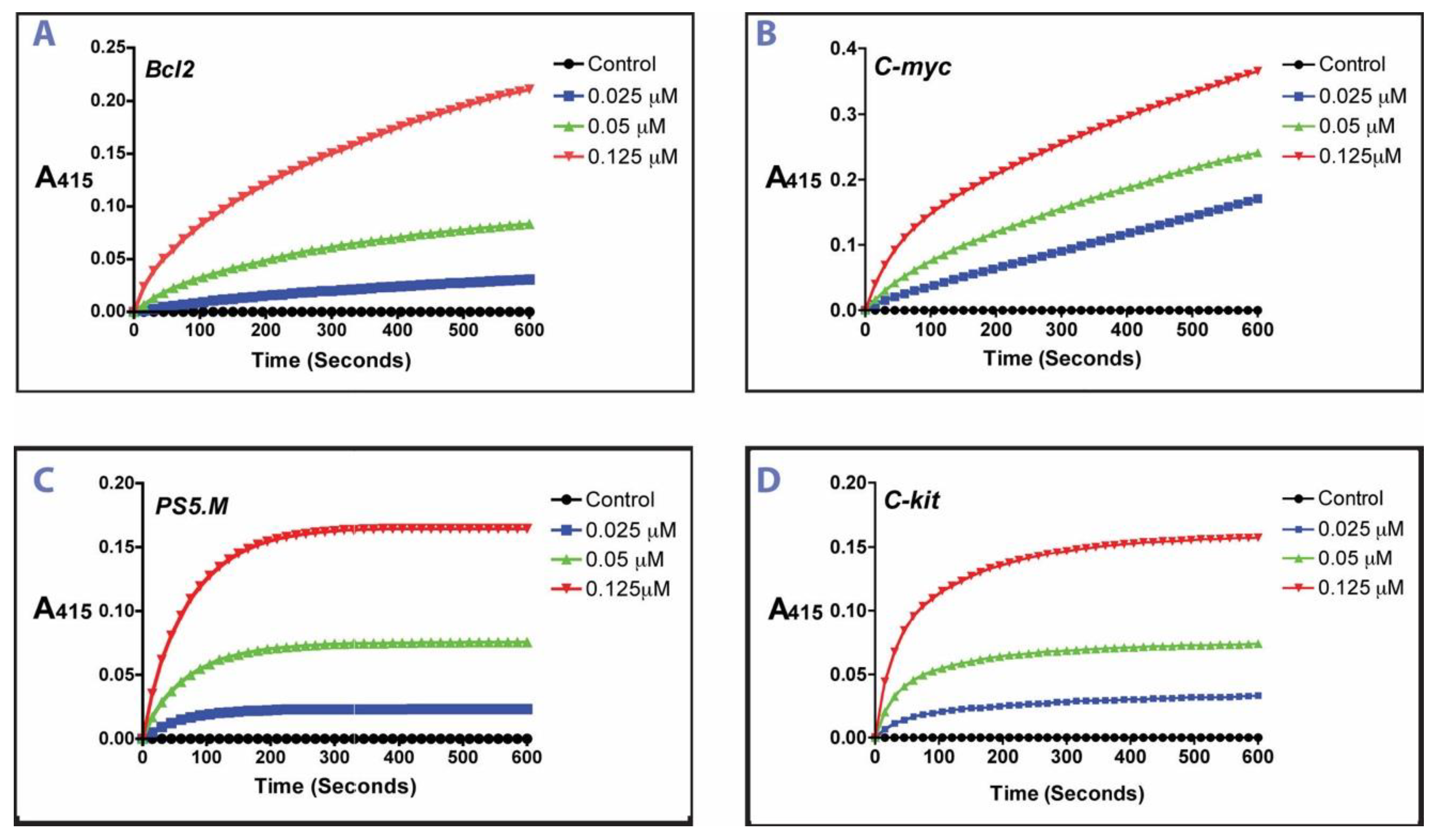
2.1. Overall Activities of G4-Quadruplex DNAzymes and Concentration Dependence
2.2. Sequence-Specific Peroxidase Activities of G-Quadruplex DNAzymes
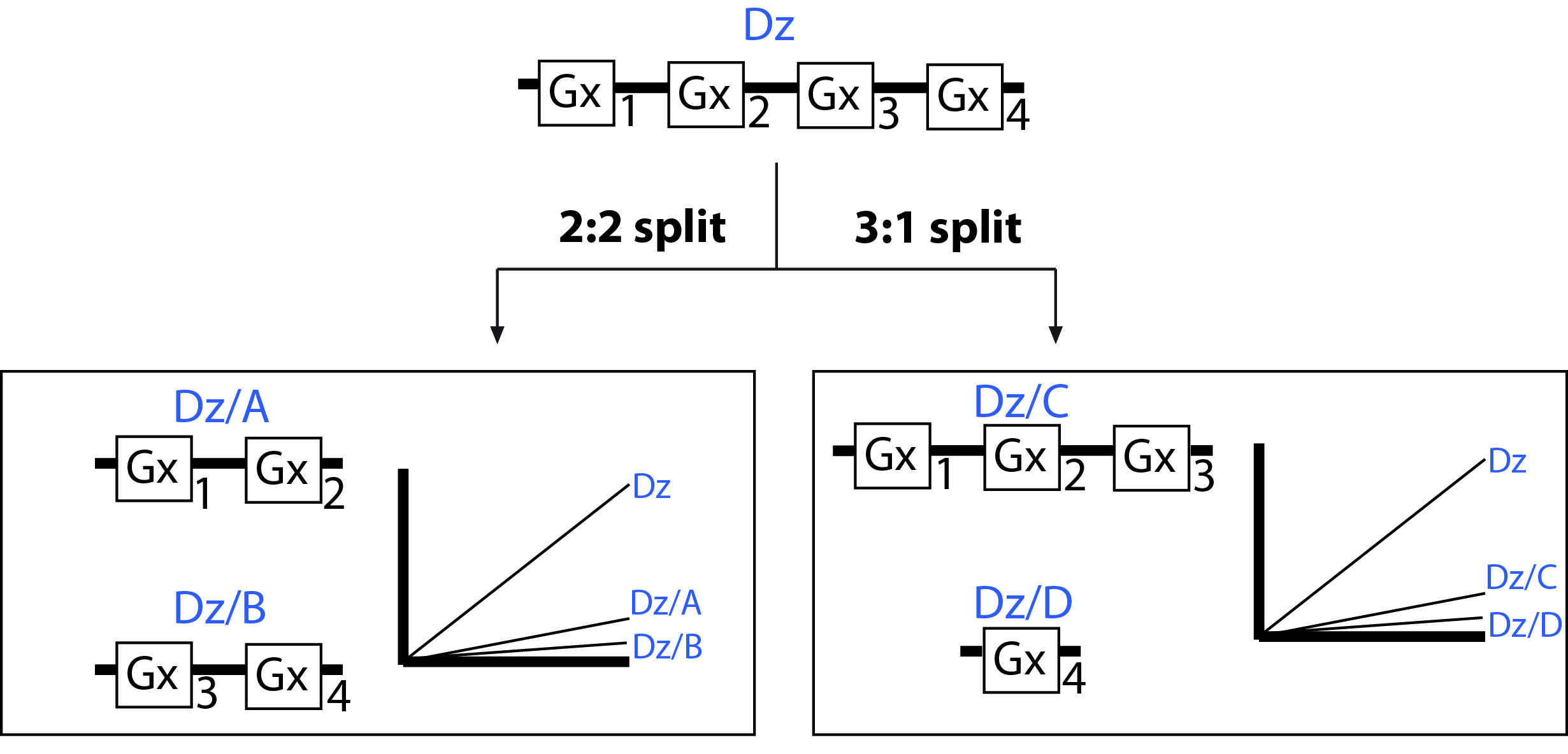
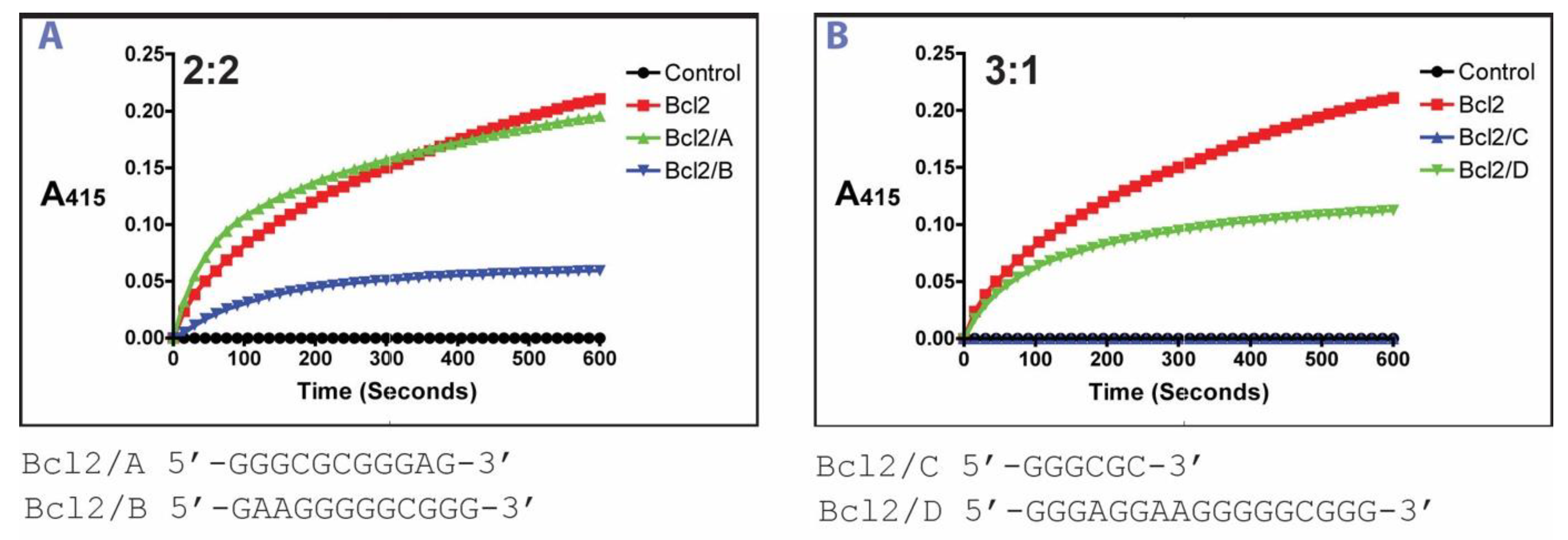
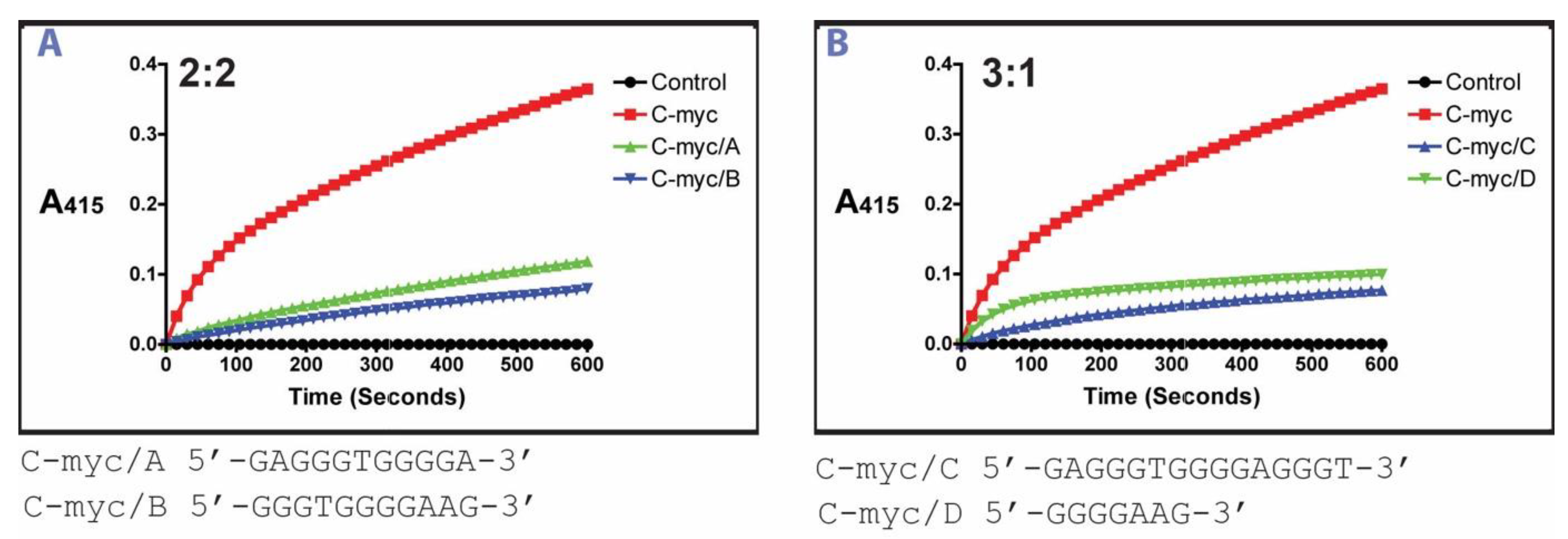
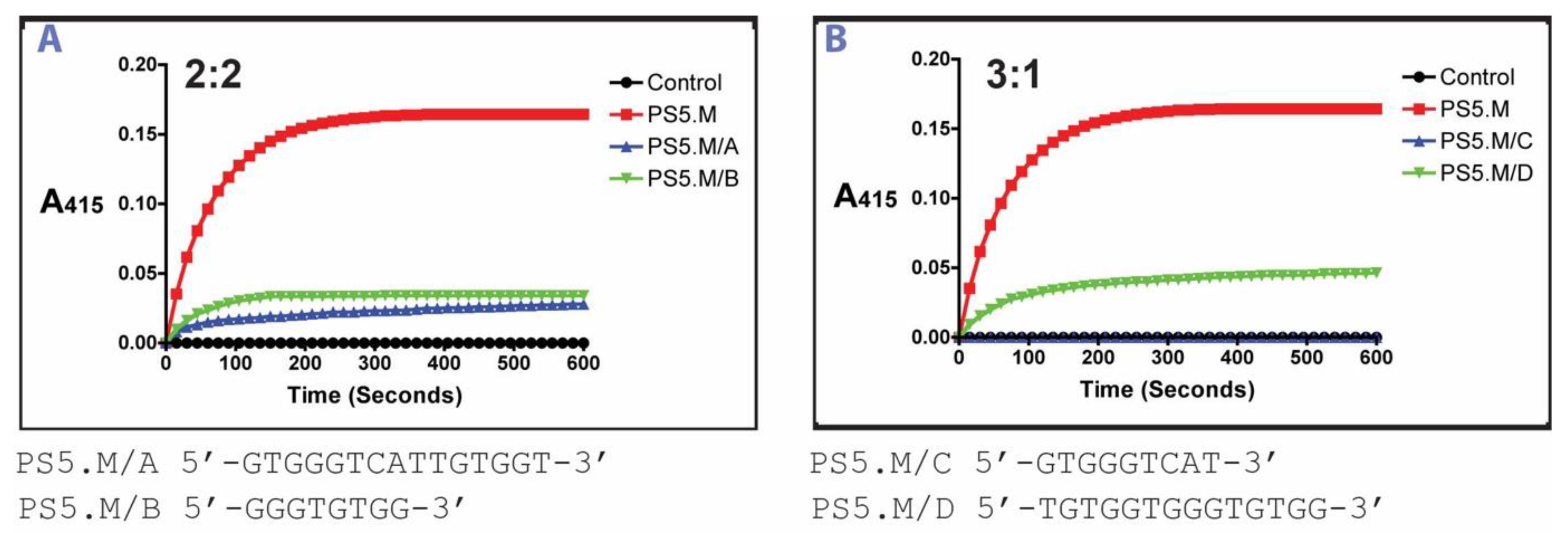
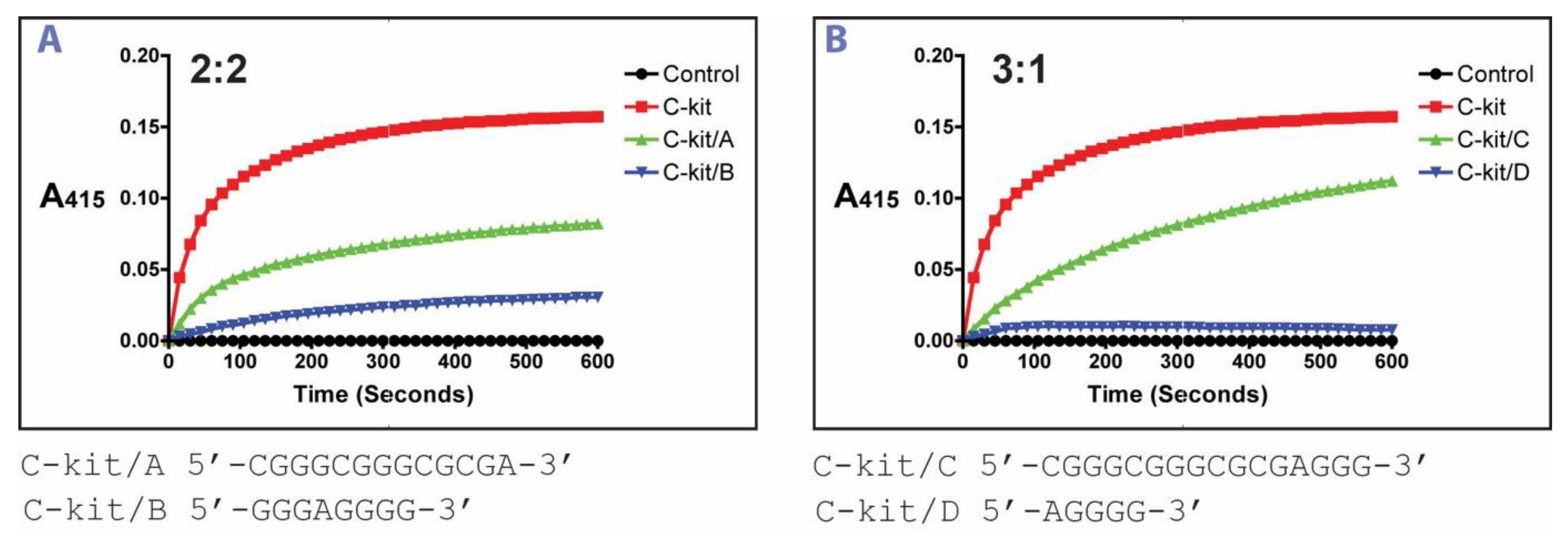
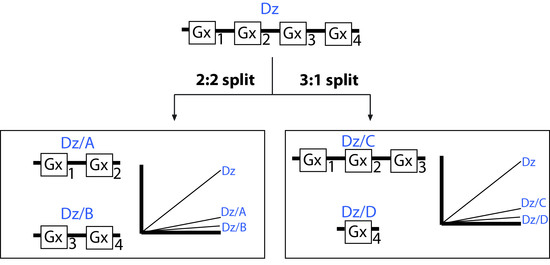
2.3. Peroxidase Activities of G-Quadruplex Split Fragments
3. Discussion
3.1. Sequence-Specific Activities of G4-Quadruplex DNAzymes
3.2. Suitability of G4-Quadruplex DNAzymes for Use in Biosensing Applications
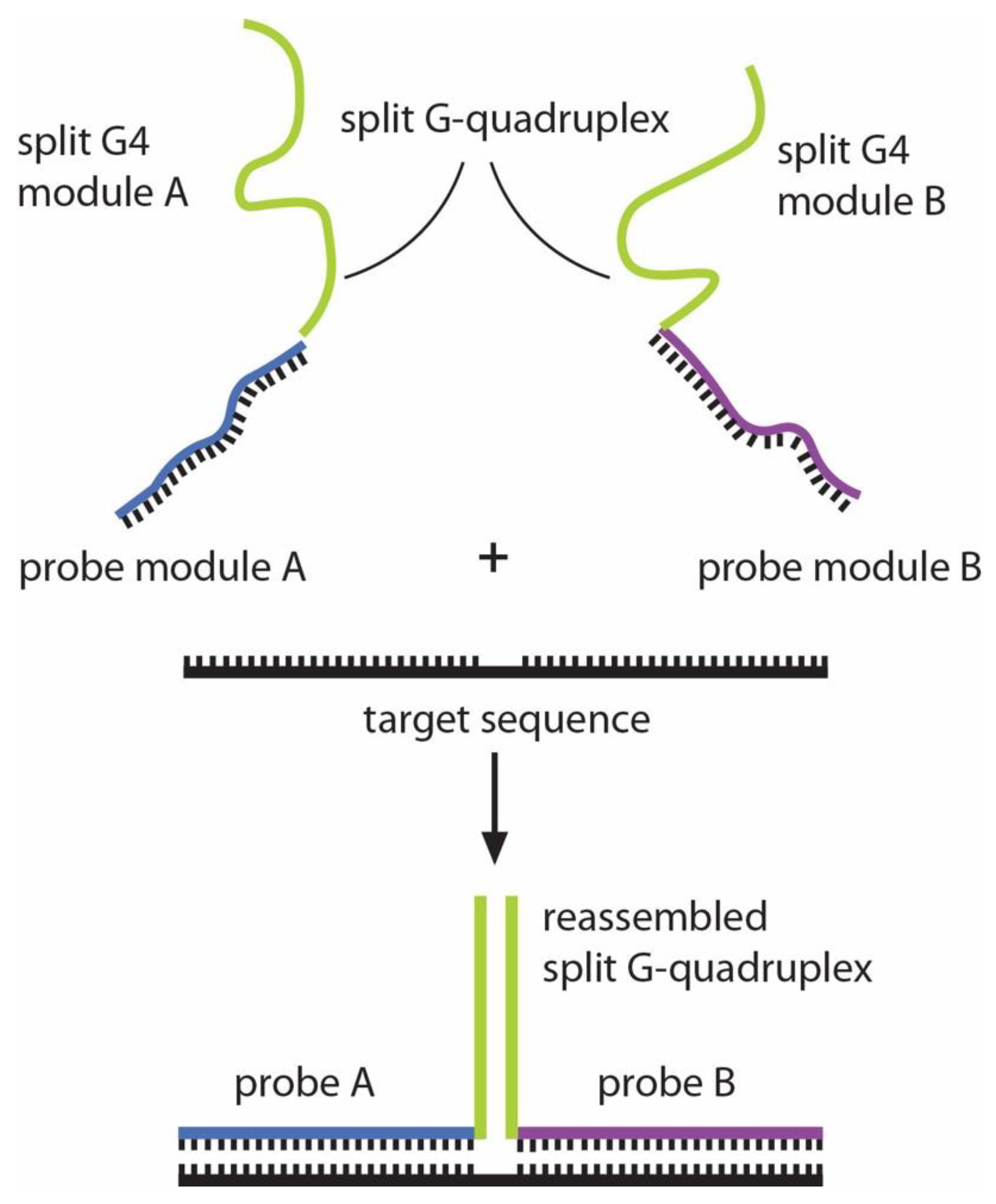
3.3. Suitability of the Tested Split Pairs for Construction of Biosensing Gates
3.4. Design Implications and Approaches to Design Leak-Proof Split G-Quadruplexes
4. Materials and Methods
4.1. Experimental Design Rationale
4.2. Materials
4.3. Methods
5. Conclusions and Future Prospects
Author Contributions
Funding
Data Availability Statement
Conflicts of Interest
References
- Travascio, P.; Li, Y.; Sen, D. DNA-Enhanced Peroxidase Activity of a DNA Aptamer-Hemin Complex. Chem. Biol. 1998, 5, 505–517. [Google Scholar] [CrossRef]
- Li, W.; Li, Y.; Liu, Z.; Lin, B.; Yi, H.; Xu, F.; Nie, Z.; Yao, S. Insight into G-Quadruplex-Hemin DNAzyme/RNAzyme: Adjacent Adenine as the Intramolecular Species for Remarkable Enhancement of Enzymatic Activity. Nucleic Acids Res. 2016, 44, 7373–7384. [Google Scholar] [CrossRef]
- Cao, Y.; Ding, P.; Yang, L.; Li, W.; Luo, Y.; Wang, J.; Pei, R. Investigation and Improvement of Catalytic Activity of G-Quadruplex/Hemin DNAzymes Using Designed Terminal G-Tetrads with Deoxyadenosine Caps. Chem. Sci. 2020, 11, 6896–6906. [Google Scholar] [CrossRef]
- Lv, M.; Guo, Y.; Ren, J.; Wang, E. Exploration of Intramolecular Split G-Quadruplex and Its Analytical Applications. Nucleic Acids Res. 2019, 47, 9502–9510. [Google Scholar] [CrossRef]
- Ida, J.; Kuzuya, A.; Choong, Y.S.; Lim, T.S. An Intermolecular-Split G-Quadruplex DNAzyme Sensor for Dengue Virus Detection. RSC Adv. 2020, 10, 33040–33051. [Google Scholar] [CrossRef]
- Shumayrikh, N.; Sen, D. Heme•G-Quadruplex DNAzymes: Conditions for Maximizing Their Peroxidase Activity. In G-Quadruplex Nucleic Acids: Methods and Protocols; Springer: New York, NY, USA, 2019; pp. 357–368. [Google Scholar] [CrossRef]
- Adeoye, R.I.; Osalaye, D.S.; Ralebitso-Senior, T.K.; Boddis, A.; Reid, A.J.; Fatokun, A.A.; Powell, A.K.; Malomo, S.O.; Olorunniji, F.J. Catalytic Activities of Multimeric G-Quadruplex Dnazymes. Catalysts 2019, 9, 613. [Google Scholar] [CrossRef]
- Connelly, R.P.; Fonseca, V.; Gerasimova, Y.V. Peroxidase-like Activity of G-Quadruplex/Hemin Complexes for Colorimetric Nucleic Acid Analysis: Loop and Flanking Sequences Affect Signal Intensity. DNA 2025, 5, 12. [Google Scholar] [CrossRef]
- Li, J.; Wu, H.; Yan, Y.; Yuan, T.; Shu, Y.; Gao, X.; Zhang, L.; Li, S.; Ding, S.; Cheng, W. Zippered G-Quadruplex/Hemin DNAzyme: Exceptional Catalyst for Universal Bioanalytical Applications. Nucleic Acids Res. 2021, 49, 13031–13044. [Google Scholar] [CrossRef]
- Kuryavyi, V.; Phan, A.T.; Patel, D.J. Solution Structures of All Parallel-Stranded Monomeric and Dimeric G-Quadruplex Scaffolds of the Human c-Kit2 Promoter. Nucleic Acids Res. 2010, 38, 6757–6773. [Google Scholar] [CrossRef]
- Liu, B.; Li, D.; Shang, H. General Peroxidase Activity of a Parallel G-Quadruplex-Hemin DNAzyme Formed by Pu39WT-a Mixed G-Quadruplex Forming Sequence in the Bcl-2 P1 Promoter. Chem. Cent. J. 2014, 8, 43. [Google Scholar] [CrossRef][Green Version]
- Monte Carlo, A.R., III; Fu, J. Inactivation Kinetics of G-Quadruplex/Hemin Complex and Optimization for More Reliable Catalysis. Chempluschem 2022, 87, e202200090. [Google Scholar] [CrossRef]
- Cao, Y.; Li, W.; Pei, R. Exploring the Catalytic Mechanism of Multivalent G-Quadruplex/Hemin DNAzymes by Modulating the Position and Spatial Orientation of Connected G-Quadruplexes. Anal. Chim. Acta 2022, 1221, 340105. [Google Scholar] [CrossRef]
- Stefan, L.; Denat, F.; Monchaud, D. Insights into How Nucleotide Supplements Enhance the Peroxidase-Mimicking DNAzyme Activity of the G-Quadruplex/Hemin System. Nucleic Acids Res. 2012, 40, 8759–8772. [Google Scholar] [CrossRef]
- Adeoye, R.I.; Ralebitso-Senior, T.K.; Boddis, A.; Reid, A.J.; Giuntini, F.; Fatokun, A.A.; Powell, A.K.; Ihekwaba-Ndibe, A.; Malomo, S.O.; Olorunniji, F.J. Spermine Enhances the Peroxidase Activities of Multimeric Antiparallel G-Quadruplex DNAzymes. Biosensors 2025, 15, 12. [Google Scholar] [CrossRef]
- Wei, D.; Husby, J.; Neidle, S. Flexibility and Structural Conservation in a C-KIT G-Quadruplex. Nucleic Acids Res. 2015, 43, 629–644. [Google Scholar] [CrossRef]
- Connelly, R.P.; Verduzco, C.; Farnell, S.; Yishay, T.; Gerasimova, Y.V. Toward a Rational Approach to Design Split G-Quadruplex Probes. ACS Chem. Biol. 2019, 14, 2701–2712. [Google Scholar] [CrossRef]
- Zhang, X.; Zhu, C.; Wang, Y.; Zhao, Y.; Tang, H.; Li, X.; Wu, P. Impact of NH4+ on the Catalytic Activity of G-Quadruplex/Hemin DNAzyme for Chemiluminescent Sensing. Anal. Bioanal. Chem. 2025, 1–10. [Google Scholar] [CrossRef]
- Stump, S.; Mou, T.C.; Sprang, S.R.; Natale, N.R.; Beall, H.D. Crystal structure of the major quadruplex formed in the promoter region of the human c-MYC oncogene. PLoS ONE 2018, 13, e0205584. [Google Scholar] [CrossRef]
- Rosu, F.; Gabelica, V.; Poncelet, H.; De Pauw, E. Tetramolecular G-quadruplex formation pathways studied by electrospray mass spectrometry. Nucleic Acids Res. 2010, 38, 5217–5225. [Google Scholar] [CrossRef]
- Zhu, J.; Zhangc, L.; Dong, S.; Wang, E. How to split a G-quadruplex for DNA detection: New insight into the formation of DNA split G-quadruplex. Chem. Sci. 2015, 6, 4822–4827. [Google Scholar] [CrossRef]
- Li, J.; Jiang, L.; Wu, H.; Zou, Y.; Zhu, S.; Huang, Y. Self-contained G-quadruplex/hemin DNAzyme: A superior ready-made catalyst for in situ imaging analysis. Nucleic Acids Res. 2025, 53, gkaf227. [Google Scholar] [CrossRef] [PubMed]
- Chen, J.; Zhang, Y.; Cheng, M.; Guo, Y.; Šponer, J.; Monchaud, D.; Mergny, J.L.; Ju, H.; Zhou, J. How Proximal Nucleobases Regulate the Catalytic Activity of G-Quadruplex/Hemin DNAzymes. ACS Catal. 2018, 8, 11352–11361. [Google Scholar] [CrossRef]
- Agustin, D.F.; Vianney, Y.M.; Weisz, K.; Wahjudi, M. Structural Aspects of Split G-Quadruplexes in Quadruplex-Duplex Hybrid Systems. ChemistrySelect 2024, 9, e202304286. [Google Scholar] [CrossRef]



| G4/Hemin | Vo (Abs/s) (×10−3) | A415 (600 s) | T50 (s) |
|---|---|---|---|
| C-myc | 1.289 ± 0.059 | 0.365 ± 0.025 | 152 ± 7 |
| PS5.M | 1.066 ± 0.031 | 0.164 ± 0.006 | 46 ± 3 |
| c-Kit | 8.82 ± 0.220 | 0.157 ± 0.007 | 40 ± 2 |
| Bcl2 | 7.11 ± 0.390 | 0.211 ± 0.005 | 155 ± 5 |
| Scaffold/Variant | A415 @ 600 s (Mean ± SD) | Leakage (% of Bcl2) | S/L Ratio (Bcl2/Variant) | Qualitative Classification |
|---|---|---|---|---|
| Bcl2 | ||||
| Bcl2 (intact) | 0.211 ± 0.005 | – | – | Baseline |
| Bcl2/A (2:2) | 0.196 ± 0.001 | 92.9% | 1.08 | Unacceptable |
| Bcl2/B (2:2) | 0.059 ± 0.004 | 28.1% | 3.56 | Unacceptable |
| Bcl2/C (3:1) | 0.000 ± 0.000 | 0.0% | ∞ | Acceptable |
| Bcl2/D (3:1) | 0.112 ± 0.003 | 53.2% | 1.88 | Unacceptable |
| C-myc | ||||
| C-myc (intact) | 0.365 ± 0.025 | – | – | Baseline |
| C-myc/A (2:2) | 0.119 ± 0.003 | 32.5% | 3.08 | Unacceptable |
| C-myc/B (2:2) | 0.080 ± 0.002 | 21.8% | 4.58 | Unacceptable |
| C-myc/C (3:1) | 0.077 ± 0.000 | 21.1% | 4.74 | Unacceptable |
| C-myc/D (3:1) | 0.100 ± 0.005 | 27.3% | 3.66 | Unacceptable |
| PS5.M | ||||
| PS5.M (intact) | 0.164 ± 0.006 | – | – | Baseline |
| PS5.M/A (2:2) | 0.028 ± 0.002 | 17.0% | 5.87 | Unacceptable (strict ≤10%) Borderline (under ≤20%) |
| PS5.M/B (2:2) | 0.034 ± 0.000 | 20.7% | 4.83 | Unacceptable (strict ≤10%) Borderline (about ≤20%) |
| PS5.M/C (3:1) | 0.000 ± 0.000 | 0.0% | ∞ | Acceptable |
| PS5.M/D (3:1) | 0.046 ± 0.002 | 28.2% | 3.55 | Unacceptable |
| C-kit | ||||
| C-kit (intact) | 0.157 ± 0.007 | – | – | Baseline |
| C-kit/A (2:2) | 0.082 ± 0.002 | 52.3% | 1.91 | Unacceptable |
| C-kit/B (2:2) | 0.031 ± 0.003 | 19.5% | 5.13 | Unacceptable (strict ≤10%) Borderline (under ≤20%) |
| C-kit/C (3:1) | 0.112 ± 0.003 | 71.4% | 1.40 | Unacceptable |
| C-kit/D (3:1) | 0.008 ± 0.002 | 4.9% | 20.52 | Acceptable |
Disclaimer/Publisher’s Note: The statements, opinions and data contained in all publications are solely those of the individual author(s) and contributor(s) and not of MDPI and/or the editor(s). MDPI and/or the editor(s) disclaim responsibility for any injury to people or property resulting from any ideas, methods, instructions or products referred to in the content. |
© 2025 by the authors. Licensee MDPI, Basel, Switzerland. This article is an open access article distributed under the terms and conditions of the Creative Commons Attribution (CC BY) license.
Share and Cite
Osalaye, D.S.; Adeoye, R.I.; Malomo, S.O.; Olorunniji, F.J. Comparative Analysis of G-Quadruplex DNAzyme Scaffolds and Split Modes for Programmable Biosensing. Catalysts 2026, 16, 27. https://doi.org/10.3390/catal16010027
Osalaye DS, Adeoye RI, Malomo SO, Olorunniji FJ. Comparative Analysis of G-Quadruplex DNAzyme Scaffolds and Split Modes for Programmable Biosensing. Catalysts. 2026; 16(1):27. https://doi.org/10.3390/catal16010027
Chicago/Turabian StyleOsalaye, Dunsin S., Raphael I. Adeoye, Sylvia O. Malomo, and Femi J. Olorunniji. 2026. "Comparative Analysis of G-Quadruplex DNAzyme Scaffolds and Split Modes for Programmable Biosensing" Catalysts 16, no. 1: 27. https://doi.org/10.3390/catal16010027
APA StyleOsalaye, D. S., Adeoye, R. I., Malomo, S. O., & Olorunniji, F. J. (2026). Comparative Analysis of G-Quadruplex DNAzyme Scaffolds and Split Modes for Programmable Biosensing. Catalysts, 16(1), 27. https://doi.org/10.3390/catal16010027