Article

Flow Field Structure Optimization and Inlet Parameters in Tubular Photocatalytic Reactors: A CFD-Based Study


1
College of Engineering, South China Agricultural University, Guangzhou 510642, China
2
School of Mechanical Engineering, Guangdong Ocean University, Zhanjiang 524088, China
*
Author to whom correspondence should be addressed.
Catalysts 2025, 15(9), 798; https://doi.org/10.3390/catal15090798
Submission received: 21 July 2025 / Revised: 15 August 2025 / Accepted: 19 August 2025 / Published: 22 August 2025
(This article belongs to the Section Photocatalysis)

Abstract

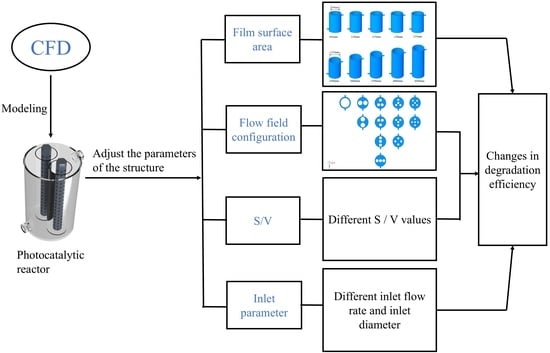
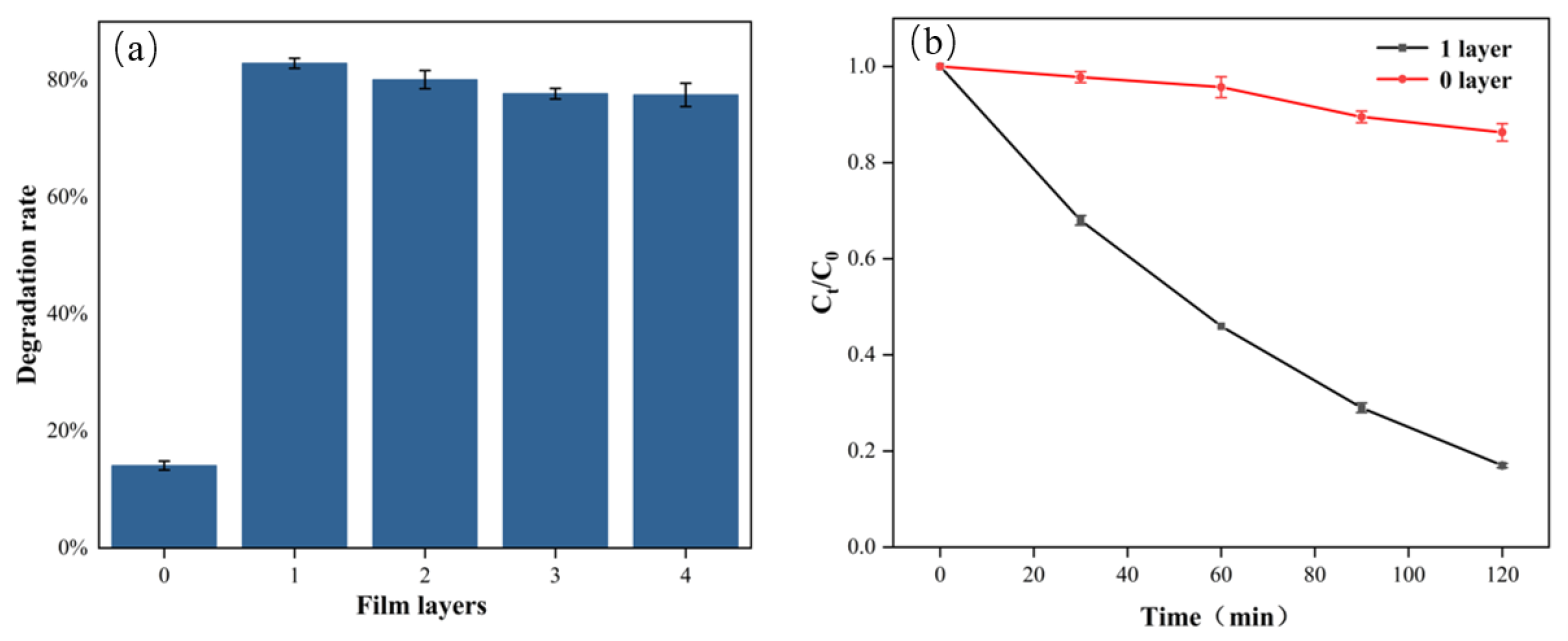
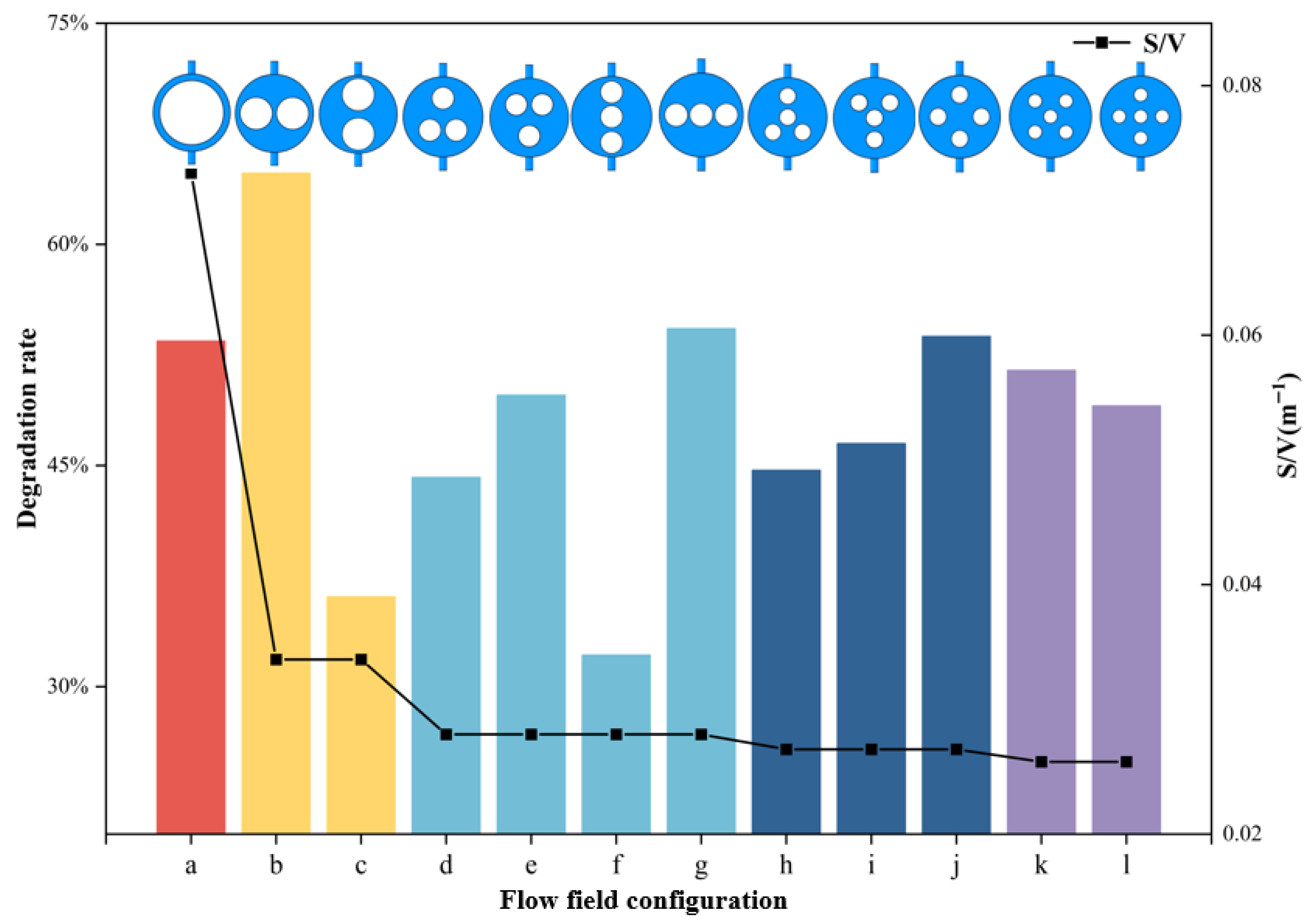
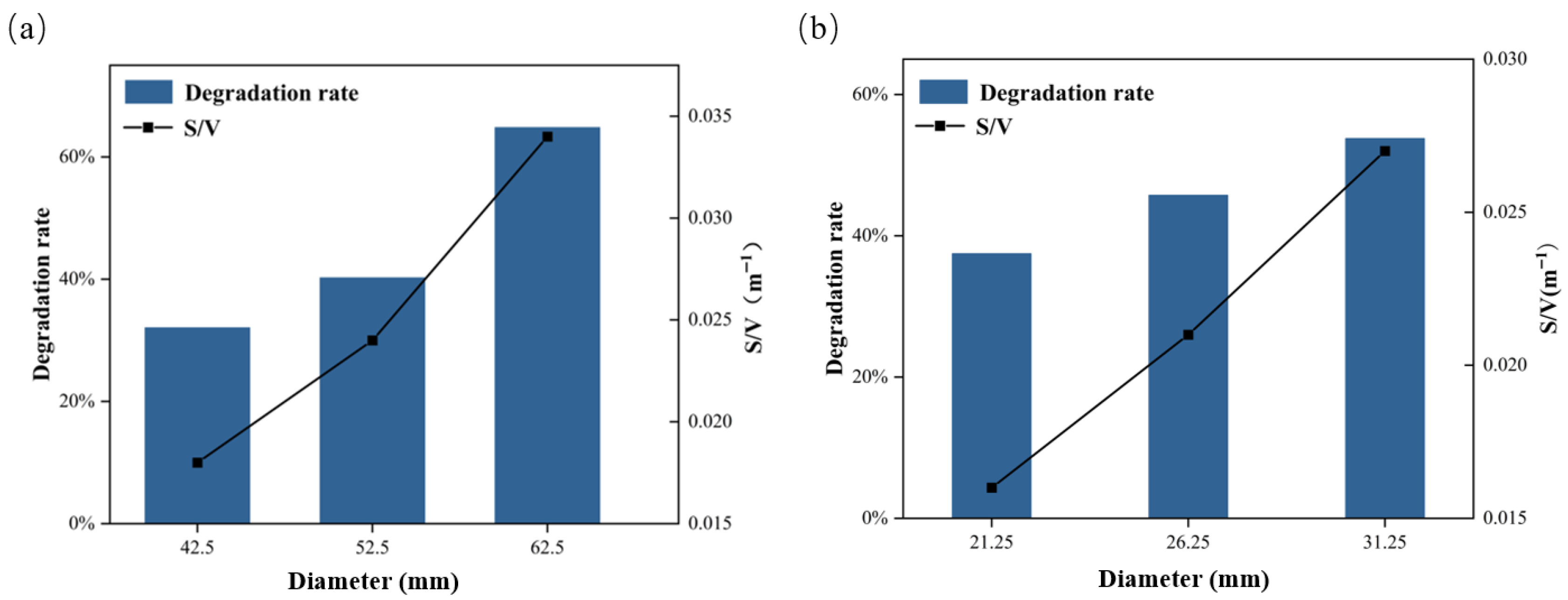
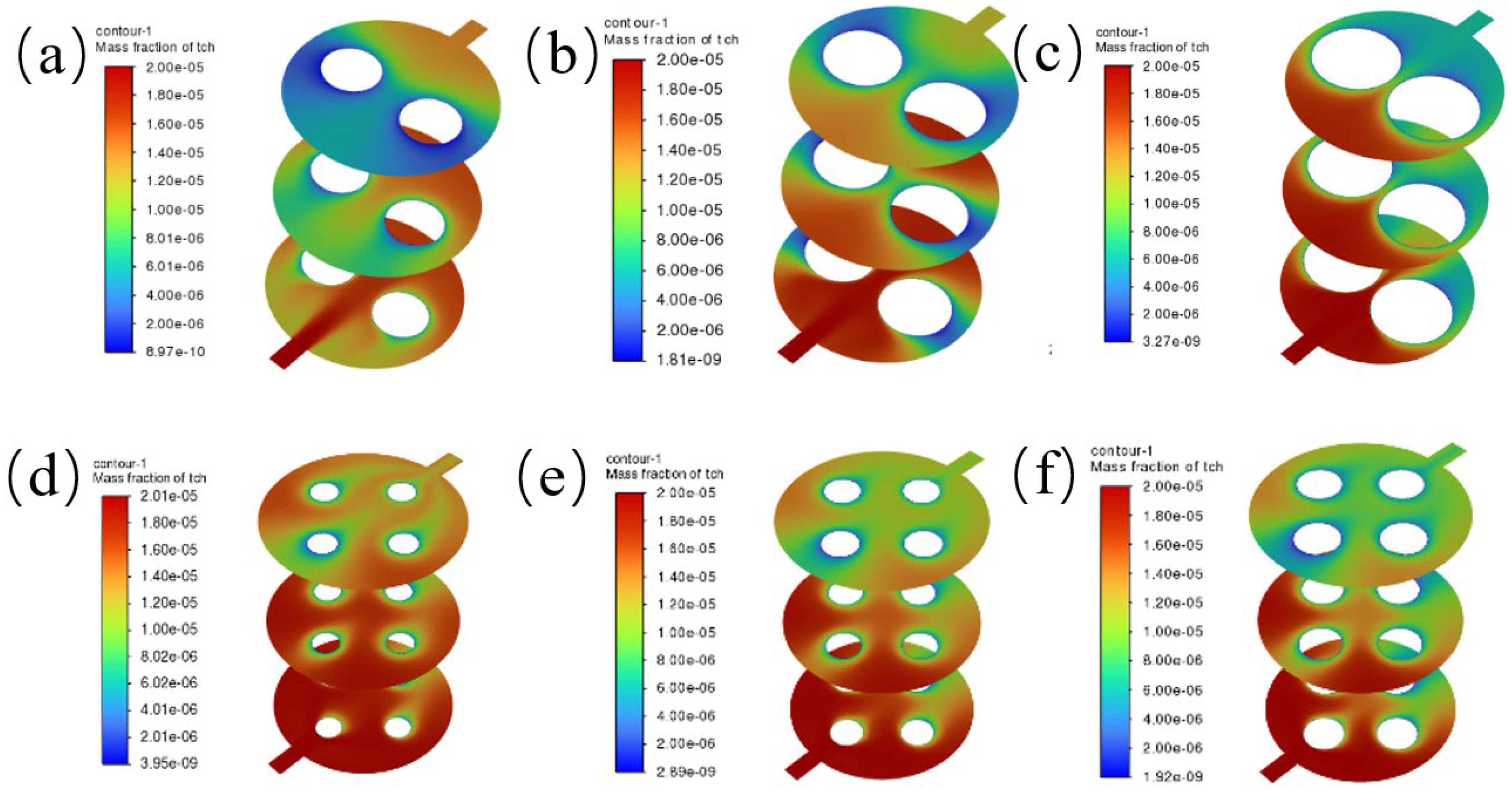
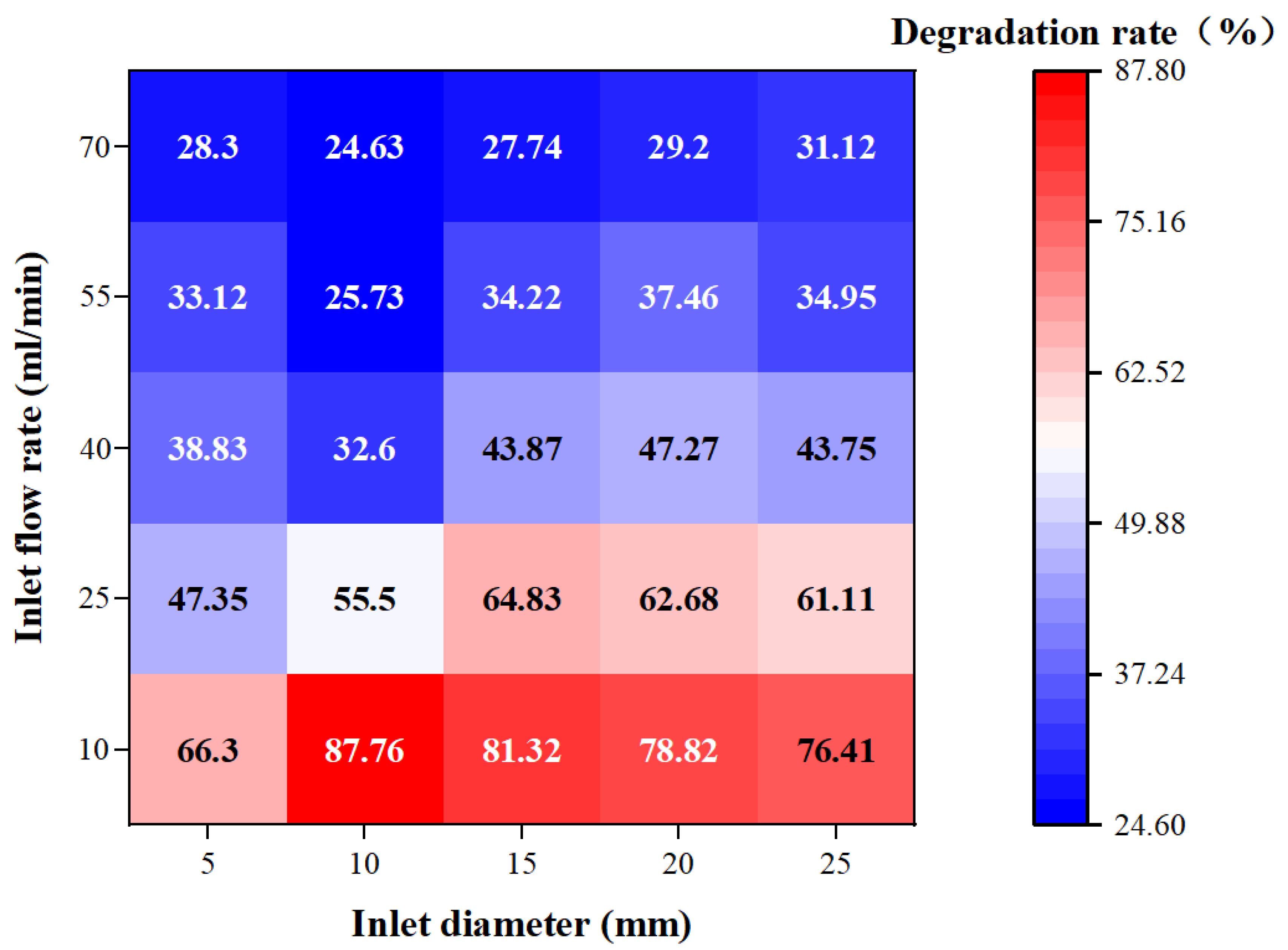
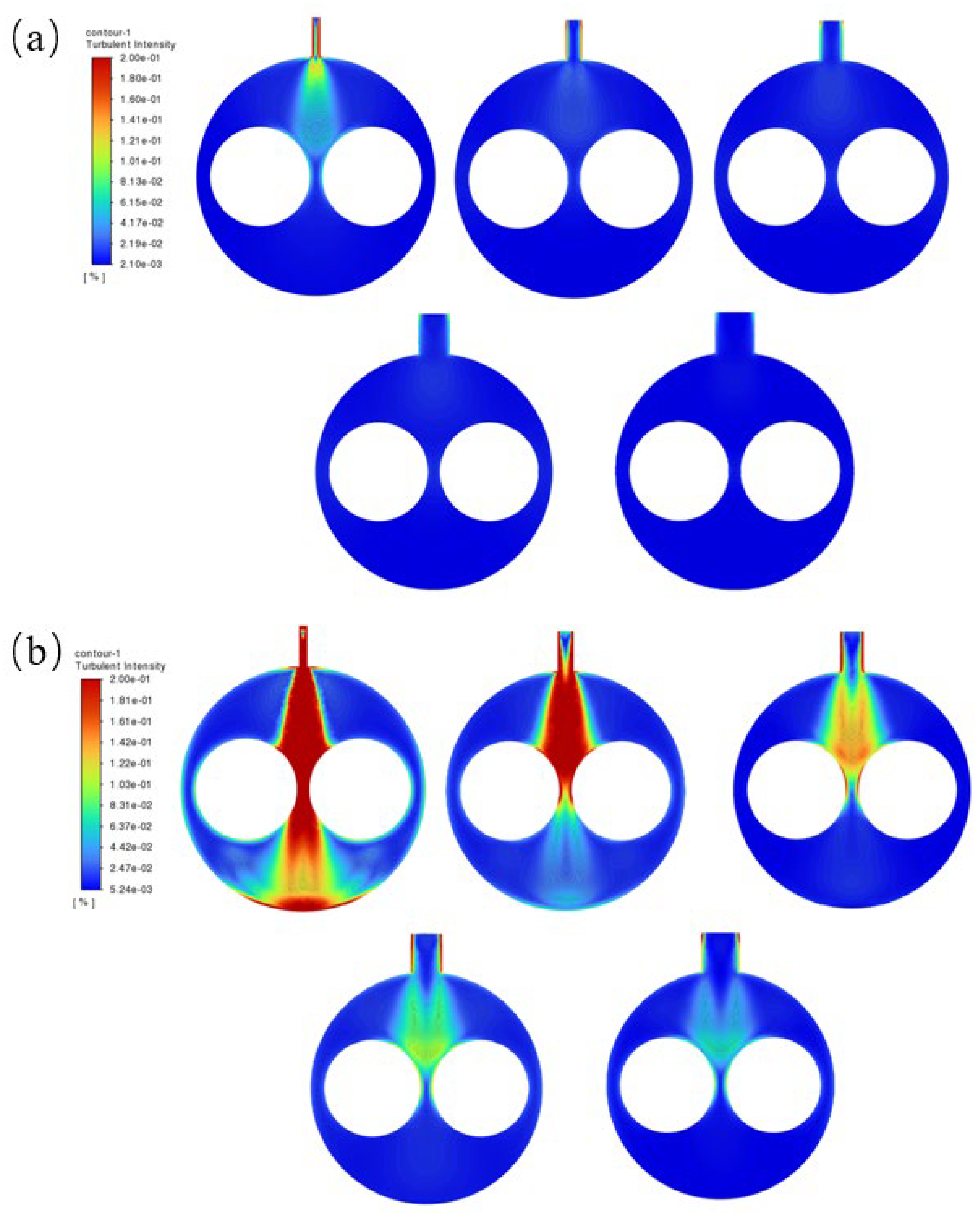
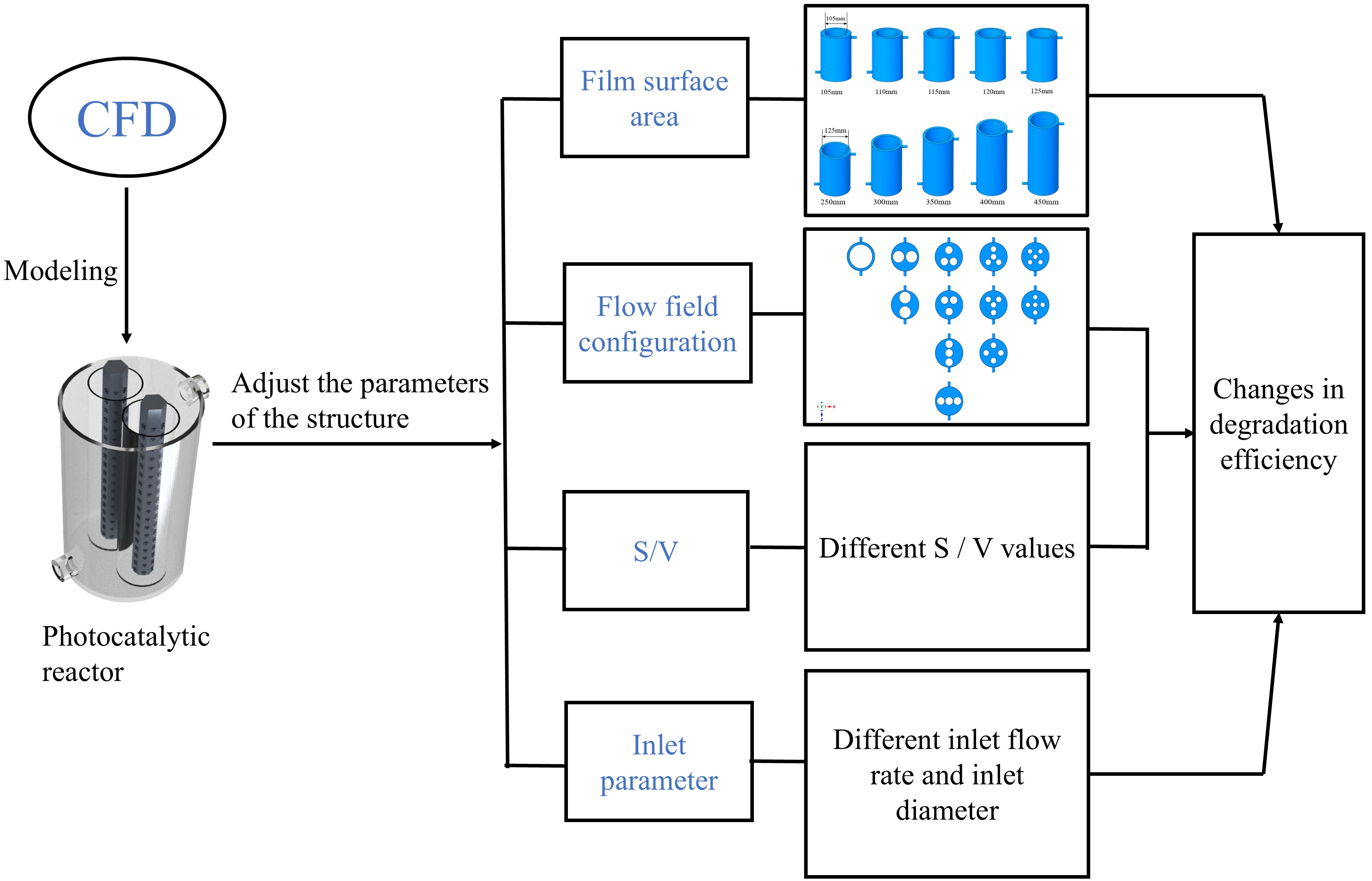
The internal flow field and hydrodynamic properties of a photocatalytic reactor are crucial for the enhancement of degradation performance. In this study, TiO2 films were loaded on the surface of quartz glass tubes and activated with UV-LEDs. Combining the degradation experiments with computational fluid dynamics (CFD) numerical simulations, the regulation laws of film surface area, flow field configuration, ratio of film surface area to solution volume (S/V), inlet flow rate and diameter on the reaction process were systematically evaluated. The results showed that the film surface area was positively correlated with the degradation efficiency of tetracycline hydrochloride (TCH). The degradation rate of TCH ranged between 32.15% and 64.83% in 12 equal film area flow field configurations. It was further found that the S/V value was positively correlated with the degradation efficiency only for the same flow field configuration, and the degradation rate of TCH was enhanced by 32.73% when the S/V value was increased from 0.018 m−1 to 0.034 m−1. In addition, as the flow rate increases, the optimal inlet diameter increases accordingly (10, 25, 40, 55, and 70 mL/min corresponded to 10, 15, 20, 20, and 25 mm, respectively). The optimum structural parameters of the reactor were determined as follows: inlet flow rate of 10 mL/min, inlet diameter of 10 mm, flow field configuration type b, S/V value of 0.034 m−1, and height of 450 mm. The degradation rate of TCH under these conditions was 96.34%. The relationship between the film-reactor flow field and degradation efficiency of the photocatalytic reactor established in this study provides a reference for optimizing the design of tubular catalytic reactors.
Keywords: photocatalytic; tetracycline hydrochloride; TiO2 film; flow field analysis; structural optimization photocatalytic; tetracycline hydrochloride; TiO2 film; flow field analysis; structural optimization
Graphical Abstract