Article

First-Principles Study of Sn-Doped RuO2 as Efficient Electrocatalysts for Enhanced Oxygen Evolution

1
School of Physics, Nankai University, Tianjin 300071, China
2
Key Laboratory of Advanced Electrode Materials for Novel Solar Cells for Petroleum and Chemical Industry of China, School of Chemistry and Life Sciences, Suzhou University of Science and Technology, Suzhou 215009, China
*
Author to whom correspondence should be addressed.
Catalysts 2025, 15(8), 770; https://doi.org/10.3390/catal15080770
Submission received: 9 July 2025 / Revised: 7 August 2025 / Accepted: 11 August 2025 / Published: 13 August 2025

Abstract

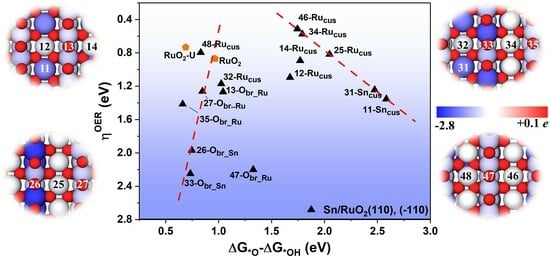
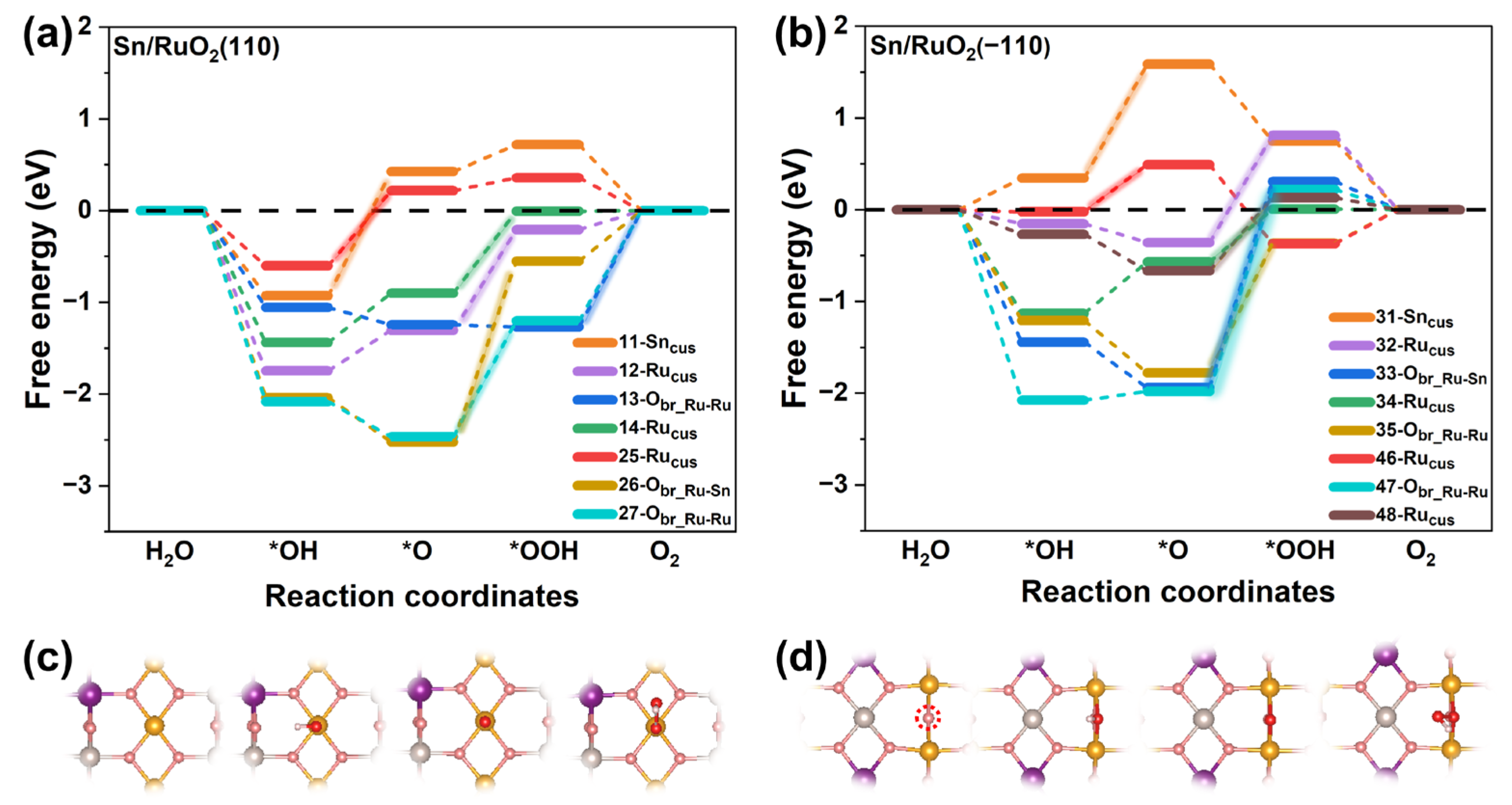
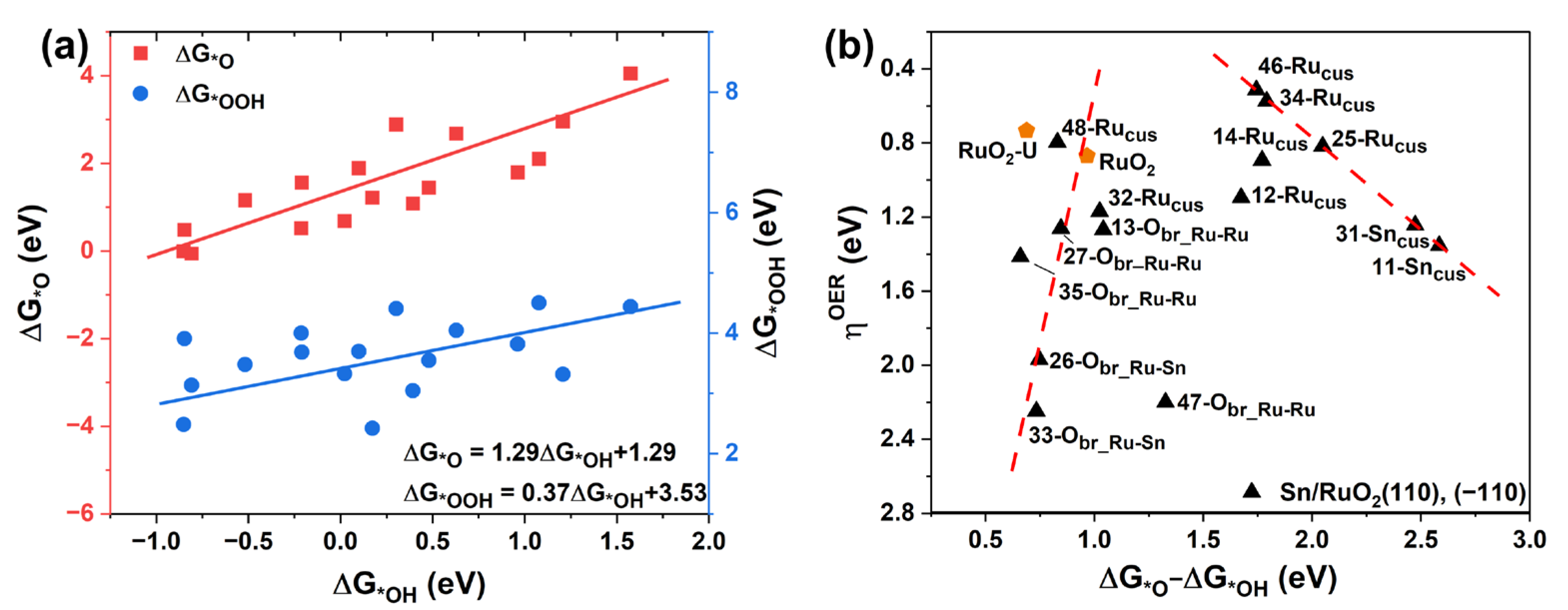
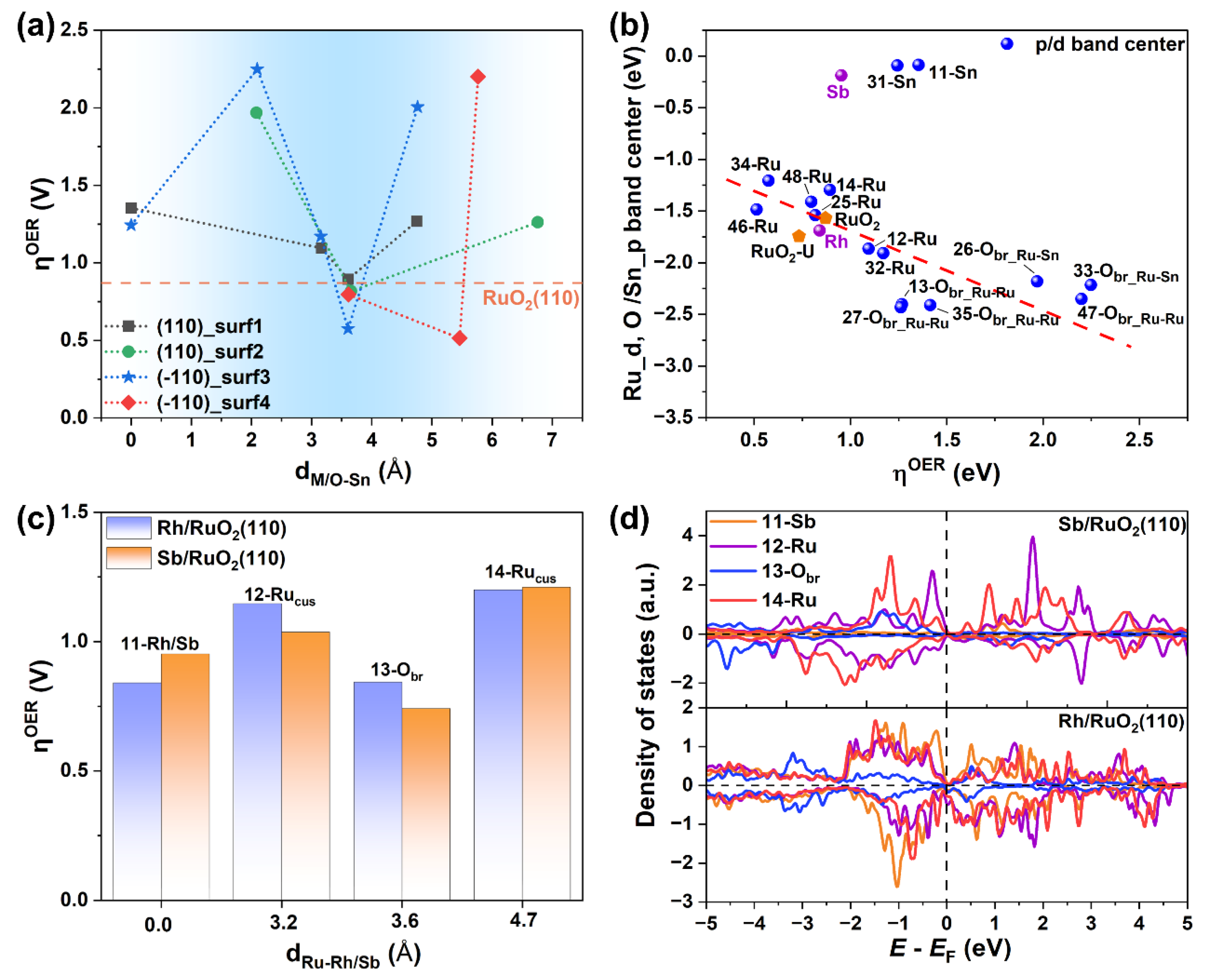
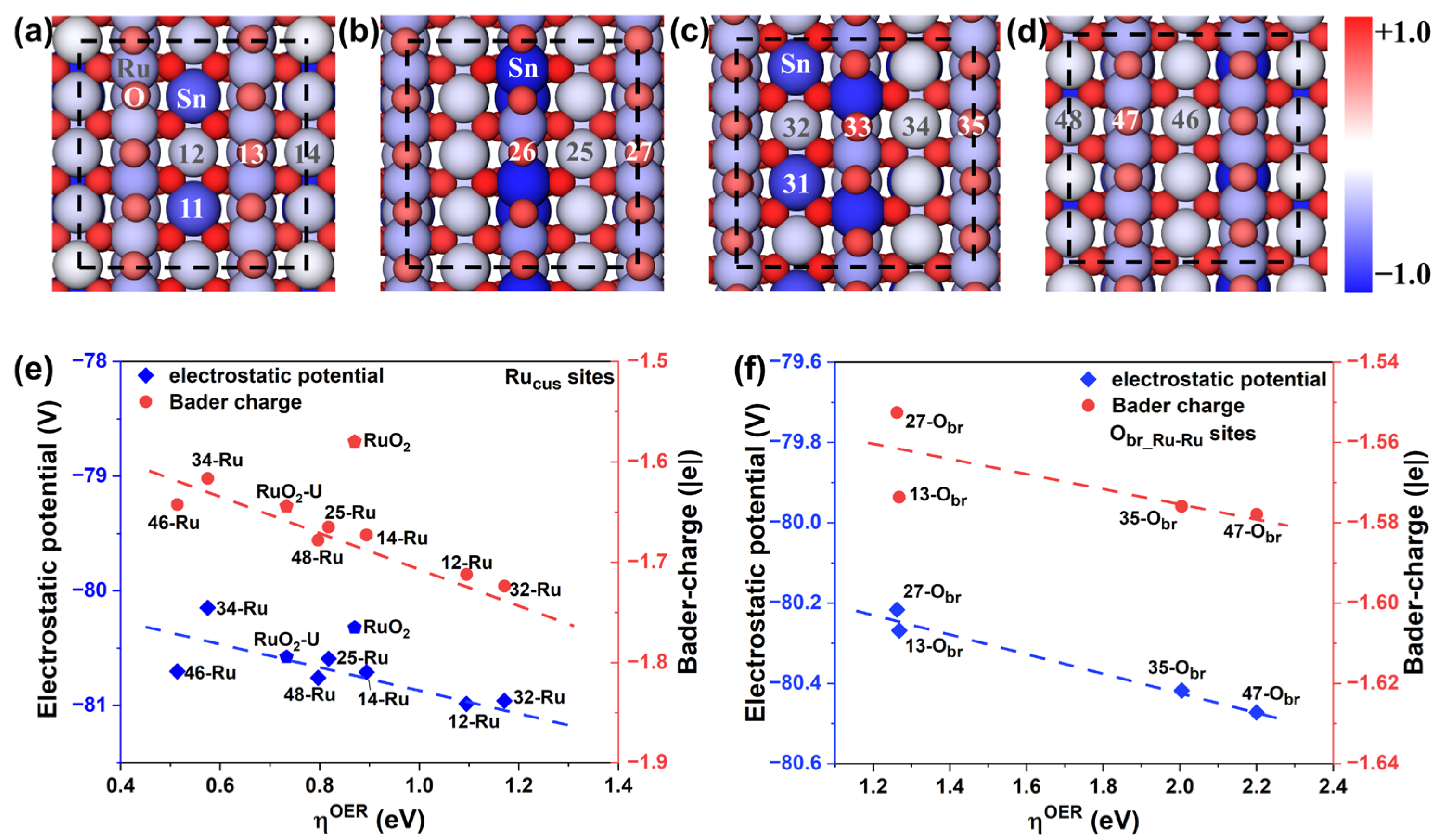
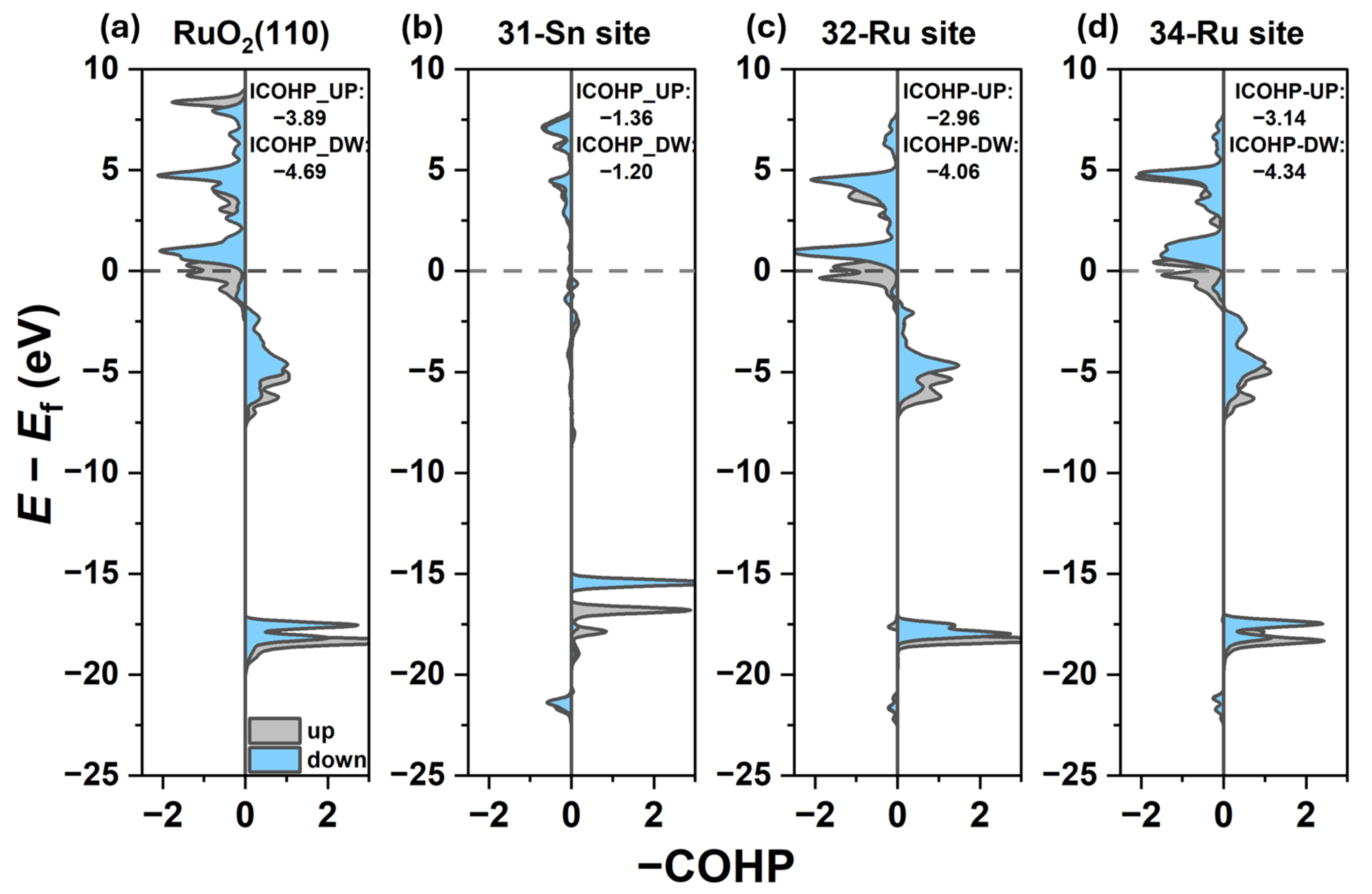
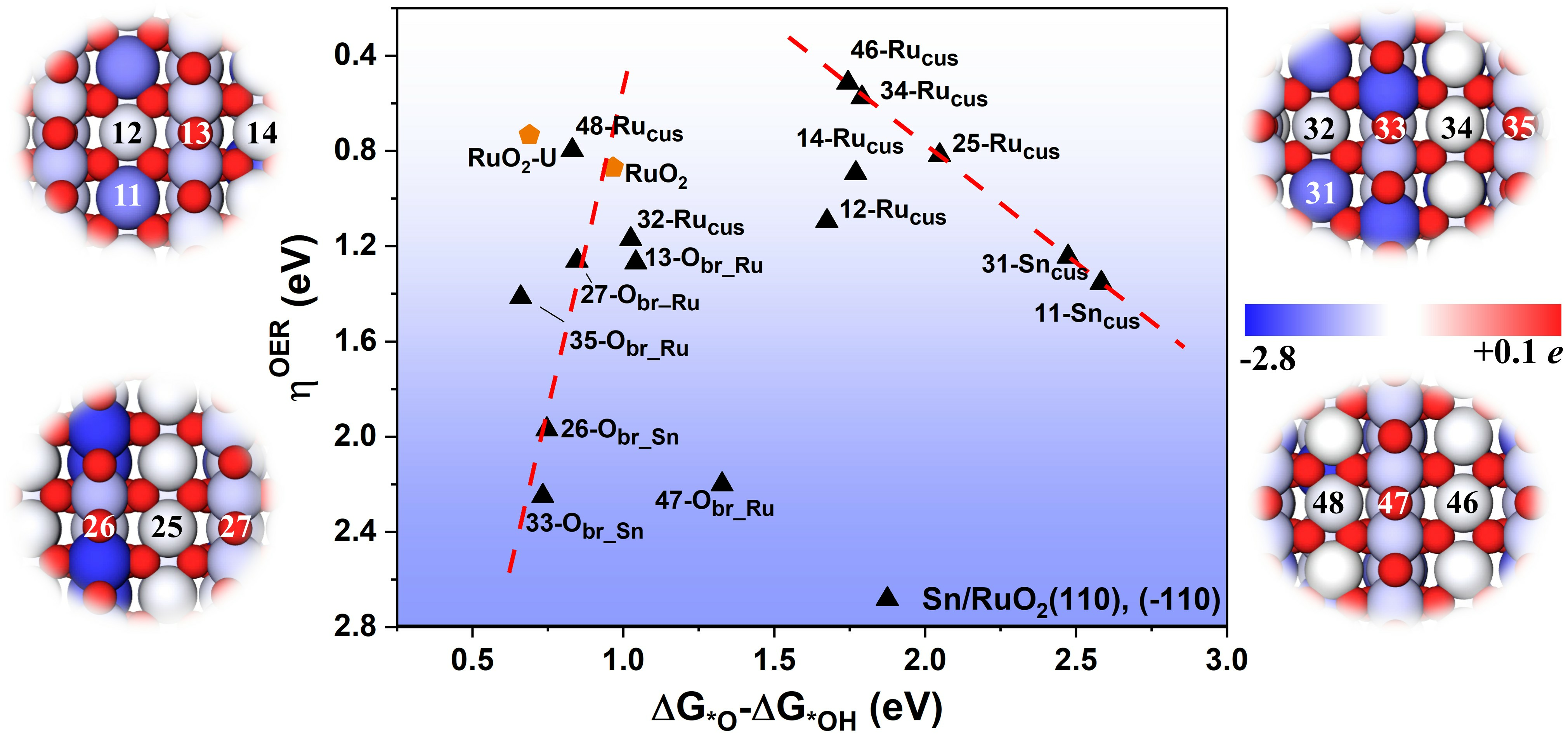
Improving the catalytic performance of the oxygen evolution reaction (OER) for water splitting in acidic media is crucial for the production of clean and renewable hydrogen energy. Herein, we study the OER electrocatalytic properties of various active sites on four exposed (110) and (1¯10) surfaces of Sn-doped RuO2 (Sn/RuO2) with antiferromagnetic arrangements in acidic environments. The Sn/RuO2 bulk structure with the Cm space group exhibits favorable thermodynamic stability. The coordinatively unsaturated metal (Mcus) sites distributed on the right branch of the volcano plot are generally more active than the bridge-bonded lattice oxygen (Obr) sites located on the left. Different from the conventional knowledge that the most active site is located in the nearest neighbor of the doped atom, it has a lower OER overpotential when the active site is 3.6 Å away from the doped Sn atom. Among the sites studied, the 46-Rucus site exhibits the optimal OER catalytic performance. The inherent factors affecting the OER activity of each site on the Sn/RuO2 surface are further analyzed, including the center of the d/p band at the active sites, the average electrostatic potential of the ions, and the number of transferred electrons. This work provides a reminder for the selection of active sites used to evaluate catalytic performance, which will benefit the development of efficient OER electrocatalysts.
Keywords: density functional theory; oxygen evolution reaction; antiferromagnetic RuO2; Sn-doping; active site density functional theory; oxygen evolution reaction; antiferromagnetic RuO2; Sn-doping; active site
Graphical Abstract