Article

Effect of Solar Irradiation on the Electrooxidation of a Dye Present in Aqueous Solution and in Real River Water

by
Anabel Ramos-García
1,
Carlos E. Barrera-Díaz
1,*,
Bernardo A. Frontana-Uribe
1,2,
Jorge Vazquez-Arenas
3 and
Liliana I. Ávila-Córdoba
4
1
Centro Conjunto de Investigación en Química Sustentable, UAEMéx-UNAM, Carretera Toluca-Atlacomulco km. 14.5, Unidad San Cayetano, Toluca 50200, Mexico
2
Instituto de Química, Universidad Nacional Autónoma de México, Circuito Exterior, Ciudad Universitaria, Coyoacán, Ciudad de México 04510, Mexico
3
Centro Mexicano para la Producción más Limpia, Instituto Politécnico Nacional, Av. Acueducto S/N, Col. La Laguna Ticomán, Ciudad de México 07340, Mexico
4
Facultad de Ingeniería, Universidad Autónoma del Estado de México, Cerro de Coatepec S/N, Toluca 50100, Mexico
*
Author to whom correspondence should be addressed.
Catalysts 2025, 15(12), 1171; https://doi.org/10.3390/catal15121171
Submission received: 31 October 2025 / Revised: 28 November 2025 / Accepted: 12 December 2025 / Published: 16 December 2025

Abstract

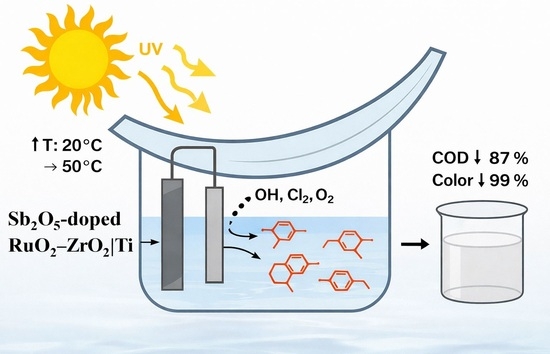
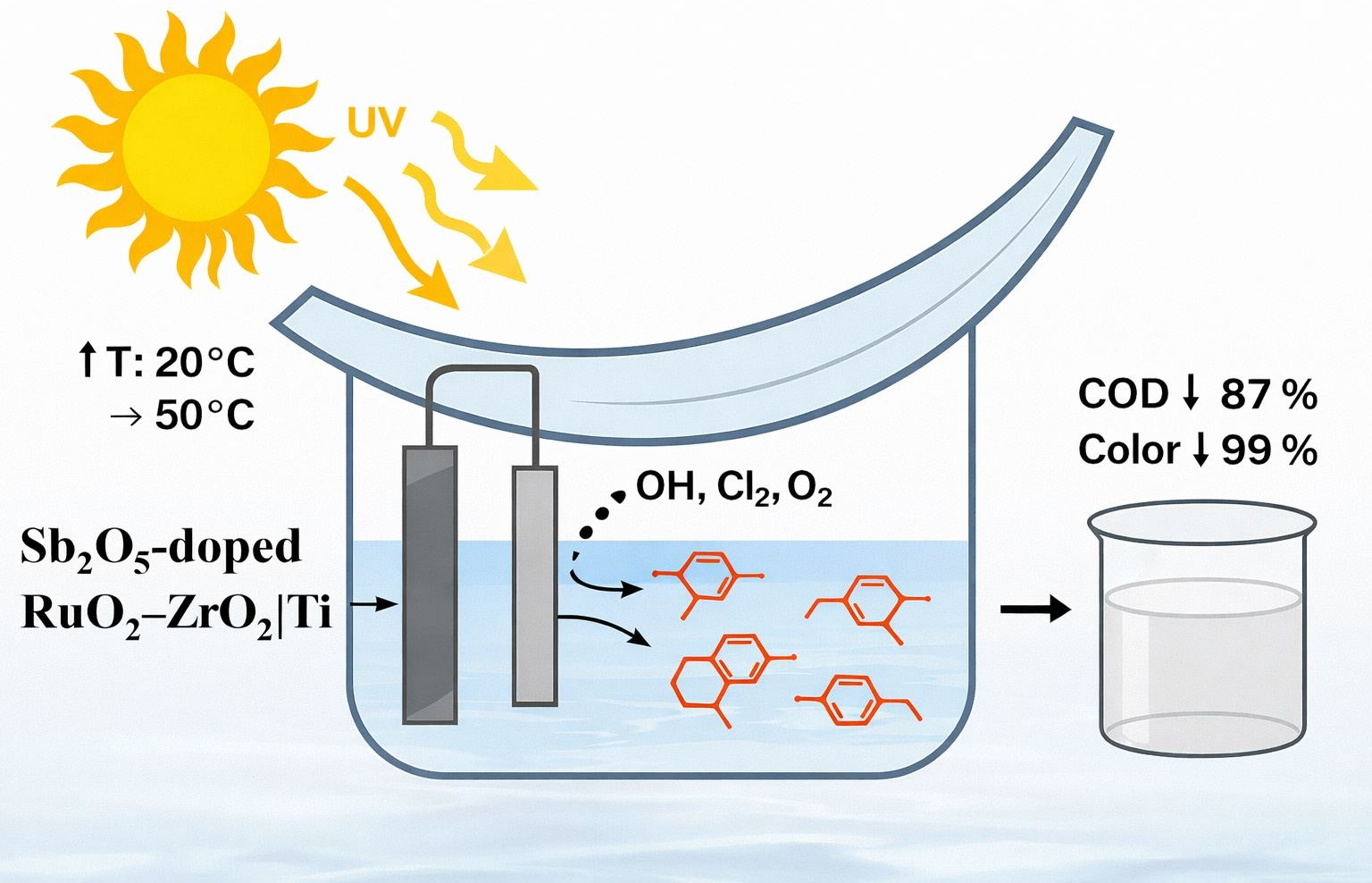
This study investigates the performance of an electrooxidation (EO) process employing Sb2O5-doped RuO2–ZrO2|Ti anodes integrated into a concave-cover solar still for the degradation of Allura Red dye in aqueous solution and real river water. The anode was synthesized and characterized via scanning electron microscopy (SEM) and X-ray diffraction (XRD) to confirm its porous morphology and crystalline structure. Operational parameters—including supporting electrolyte concentration, initial solution pH, and current density—were systematically optimized. Under optimal conditions (pH 2–3 and 5 mA cm−2), the EO process was evaluated under natural solar irradiation. Sunlight exposure increased the solution temperature from approximately 20 °C to 50 °C, enhancing molecular diffusion and mass transport, thereby accelerating decolorization kinetics. Compared to EO performed under laboratory conditions, the solar-assisted system achieved an additional 20% increase in chemical oxygen demand (COD) removal and a fast reduction in color. When applied to real Lerma River water samples under these optimal conditions, the treatment achieved approximately 50% reduction in both COD and true color, demonstrating its applicability to complex environmental matrices. These results confirm that coupling electrooxidation with solar thermal input significantly improves pollutant degradation efficiency and energy performance, establishing this integrated approach as a promising and sustainable technology for advanced wastewater treatment.

1. Introduction

Electrochemical advanced oxidation processes (EAOPs) are new and powerful technologies currently used to abate recalcitrant organic contaminants in wastewater. They rely on the in situ generation of highly reactive oxidants, principally hydroxyl radicals (•OH), in chloride-containing matrices in the presence of active chlorine species such as HOCl/OCl. These oxidants can mineralize pollutants to CO2, H2O, thereby overcoming the limited biodegradability of complex molecules such as synthetic dyes and pharmaceuticals [1,2,3].
Electrochemical oxidation proceeds via two principal pathways: direct oxidation at the anode and indirect oxidation by electrogenerated mediators, which takes place in solution.
In direct oxidation, organics are oxidized at the electrode surface either by outer-surface electron transfer or by surface-bound hydroxyl species—commonly described as physisorbed •OH (•OHads) on “non-active” anodes (e.g., boron-doped diamond, BDD) and chemisorbed oxo/lattice oxygen species (MOx+1) on “active” anodes (e.g., RuO2, IrO2). In indirect oxidation, oxidants—predominantly active chlorine formed from chloride—are generated in situ (Equations (1)–(3)). Chlorine species have a lower standard potential than hydroxy radical (1.36, 1.49 and 0.89 V for Cl2, HClO and ClO, respectively), but they are more selective and can react rapidly with specific electron-rich groups in contaminants. The predominant species are pH dependent: Cl2 at pH < 3, HClO between 3 and 8, and ClO at pH > 8 [2,4,5].
2 C l C l 2 + 2 e
C l 2 + H 2 O H C l O + H + + C l
H C l O H + + C l O
Two canonical classes of anodes are recognized in EAOPs: active and nonactive. Active anodes—such as graphite, IrO2/Ti, RuO2/Ti, and Pt/Ti—exhibit strong interaction with reaction intermediates; surface •OH is rapidly converted into chemisorbed “active oxygen” (MOx+1), and lower-potential inorganic mediators are formed, so oxidation tends to be selective/partial.
In contrast, nonactive anodes—including PbO2/Ti, SnO2/Ti, and boron-doped diamond (BDD)—possess a high oxygen-evolution overpotential, enabling sustained generation of weakly bound physisorbed hydroxyl radicals (•OHads) that promote extensive mineralization to CO2. Among nonactive materials, BDD routinely affords the highest mineralization efficiencies, albeit at substantially higher capital cost [5,6,7].
Alternatively, mixed-metal-oxide (MMO/MOx) coatings—exemplified by RuO2-based layers deposited on Ti—are widely employed as dimensionally stable anodes (DSAs) owing to their high catalytic activity, large electrochemically active surface area, and excellent corrosion resistance. Their predominant reaction depends on the electrolyte: in chloride-free media they favor the oxygen evolution reaction (OER), whereas in chloride-containing electrolytes they catalyze the chlorine evolution reaction (CER). Incorporation of dopants such as Sb2O5 can enhance electronic conductivity and operational stability, thereby extending service life, while addition of ZrO2—despite its inert, poorly conductive character—improves corrosion resistance and thermo-chemical robustness, markedly increasing dimensionally stable anode (DSA) durability under OER conditions [1,8,9,10].
Recent investigations into the degradation of organic pollutants using DSA electrodes have reported moderate removal efficiencies. For instance, methylene blue achieved up to 73% COD removal [5], whereas tartrazine exhibited only a 71% reduction in color [11], and Red 23 showed a 25% decrease in total organic carbon (TOC) [12]. In the case of phenol, COD removal reached approximately 40% [1], while olive oil wastewater achieved about 60% COD reduction [13]. These findings highlight the inherent recalcitrance of such contaminants, which are not readily mineralized under standard electrochemical conditions and thus pose a persistent environmental risk when discharged into riverine systems without adequate treatment.
Solar energy, recognized as a clean and renewable source, drives most natural processes, and can be applied to water purification through solar stills, which artificially replicate the hydrological cycle by inducing water evaporation and subsequent condensation, thereby enabling the separation of dissolved salts and the removal of microorganisms [14,15,16,17].
In Mexico, average daily solar radiation ranges from 4.4 to 6.3 kWh m−2·day. In Toluca, the annual average is about 5.4 kWh m−2·day, equivalent to 500–600 W m−2 during effective sunshine hours, with peaks of 900–1100 W m−2 at midday. The UVA radiation averages of 1.7–2.3 mW cm−2, with daily maxima of 5.4–6.4 mW cm−2 [18,19].
This study evaluates the effectiveness of the electrochemical oxidation (EO) using a RuO2–ZrO2/Ti anode doped with Sb2O5, coupled to a solar distiller (solar still), as a strategy for degrading the azo dye Allura Red (AR) in aqueous solution. Allura Red is widely used in foods, cosmetics, textiles, and other consumer products; however, it exhibits mutagenic, genotoxic, and carcinogenic effects, making it an emerging contaminant of concern. Its presence in wastewater, surface water, and groundwater—primarily originating from industrial effluents and landfill leachates—poses significant risks to aquatic ecosystems. Reported effects include interference with algal photosynthesis, reductions in dissolved oxygen levels, and chronic toxicity in aquatic organisms, such as oxidative stress and tissue damage [20]. Due to its azo structure and the presence of sulfonic groups, its oxidative degradation is particularly challenging, and AR has been shown to display high resistance to light, temperature, and environmental conditions, with degradation times ranging from 48 to 100 h under UV irradiation [21,22].
The Lerma River is one of the most important hydrological systems in Mexico; however, its water quality has progressively deteriorated over recent decades due to continuous discharges from municipal, industrial, and agricultural sources. Once the optimal electrooxidation operating conditions were established under controlled laboratory tests, the process was applied to real river water samples to evaluate its treatment efficiency under natural conditions. This experiment allowed the assessment of the system’s performance in the presence of the complex matrix and background pollutants characteristic of the Lerma River.
Custom electrodes were fabricated and integrated into the solar distillation system [23]. Process performance was studied, considering current density, NaCl concentration (as the supporting electrolyte), initial pH, and temperature. Under optimized conditions, specific energy consumption (SEC) and chemical oxygen demand (COD) removal were quantified as the principal performance metrics.
The main aim of this work is to demonstrate that coupling a mixed-metal-oxide (RuO2–ZrO2–Sb2O5/Ti) dimensionally stable anode with a solar unit can significantly enhance contaminant removal efficiency. Although conventional DSA-based electrooxidation typically achieves only moderate degradation of recalcitrant pollutants, the synergistic integration of electrochemical oxidation with solar-assisted heating and irradiation has not been thoroughly investigated. This hybrid configuration improves reaction kinetics through the combined effects of elevated temperature and photonic activation under solar irradiation, thereby reducing energy consumption and positioning this approach as a promising and sustainable environmental treatment technology.

2. Results and Discussion

2.1. Anode Surface Characterization and Structural Analysis

The surface morphology of the Sb2O5-doped RuO2–ZrO2|Ti electrode is shown in Figure 1, which includes two scanning electron microscopy (SEM) images at magnifications of 1000× and 3000×. The micrographs reveal a highly porous cracked surface, which significantly enhances the electrode’s active surface area. This morphological structure is attributed to the presence of ZrO2, which acts as a dispersing agent, and Sb2O5, which functions as a dopant within the mixed metal oxide matrix.
Electrodes with this type of morphology typically exhibit two distinct surface characteristics: (i) an internal surface composed of interconnected pores and mud-crack structures, and (ii) an external, relatively flat surface that maintains direct contact with the electrolyte [12]. Energy-dispersive X-ray spectroscopy (EDS) analysis of the outer active layer confirmed the presence of oxygen (73.2 wt%), titanium (1.2 wt%), antimony (1.3 wt%), zirconium (15 wt%), and ruthenium (9.3 wt%). Previous characterization of electrodes produced in our group has demonstrated that the used procedure results in a high degree of dispersity [24].
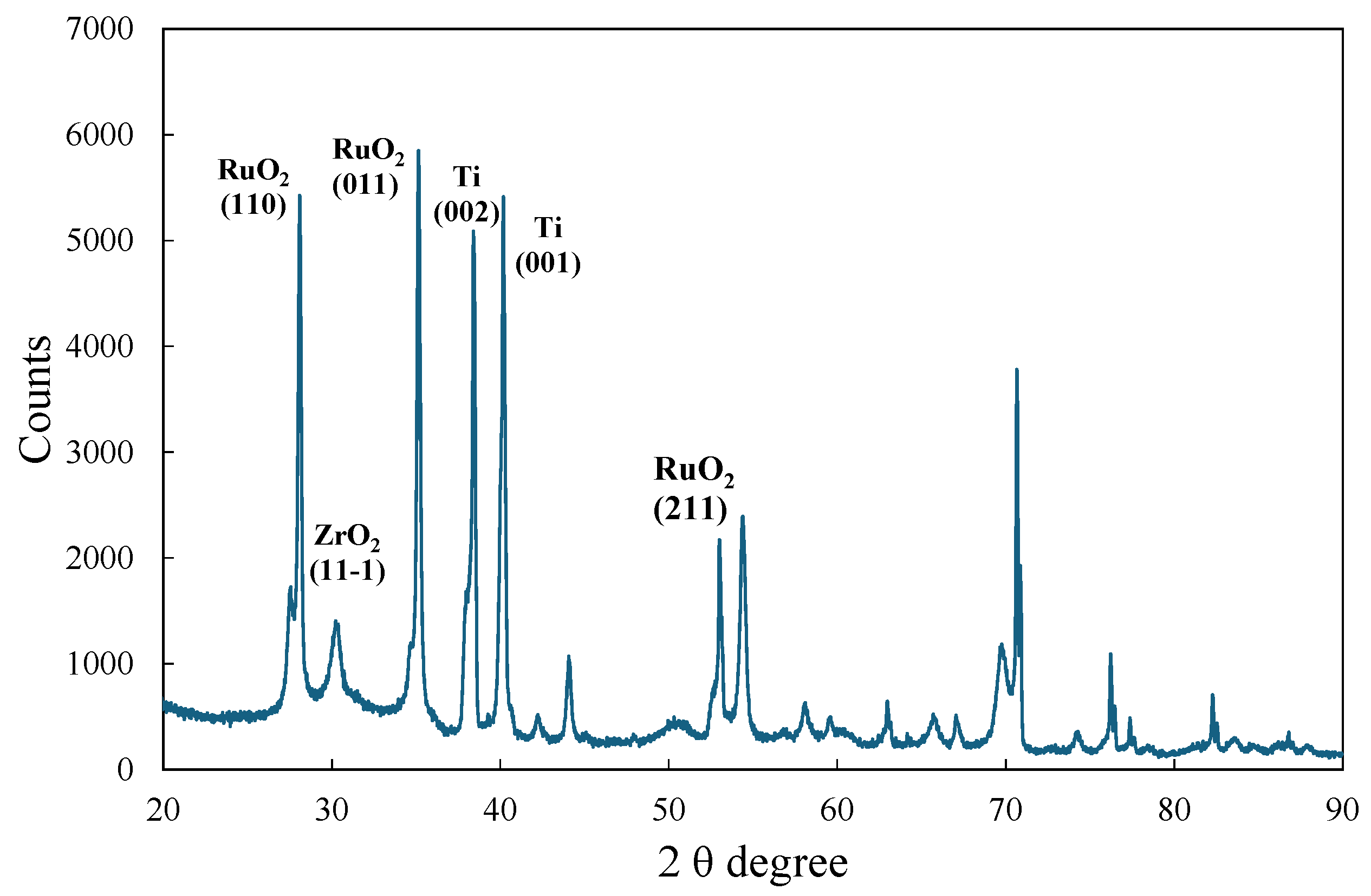
Figure 2 shows the X-ray diffraction (XRD) pattern of the Sb2O5-doped RuO2-ZrO2|Ti electrode. The prominent diffraction peaks at 2θ ≈ 28° and 36° correspond to the rutile-type tetragonal phase of RuO2 (space group: P42/mnm), indicating its successful incorporation into the oxide layer. Additional reflections at 2θ ≈ 31°, 39°, and 41° are attributed to tetragonal ZrO2 (P42/mnm) and hexagonal Ti (P63/mmc), confirming the presence of these crystalline phases. Notably, no distinct peaks related to Sb2O3 were observed, likely due to its low molar concentration and high dispersion within the oxide matrix. The identification of these diffraction features aligns with previously reported data by Palma-Goyes [10], supporting the structural integrity and multiphase composition of the electrode coating.

2.2. Electrochemical Anode Characterization

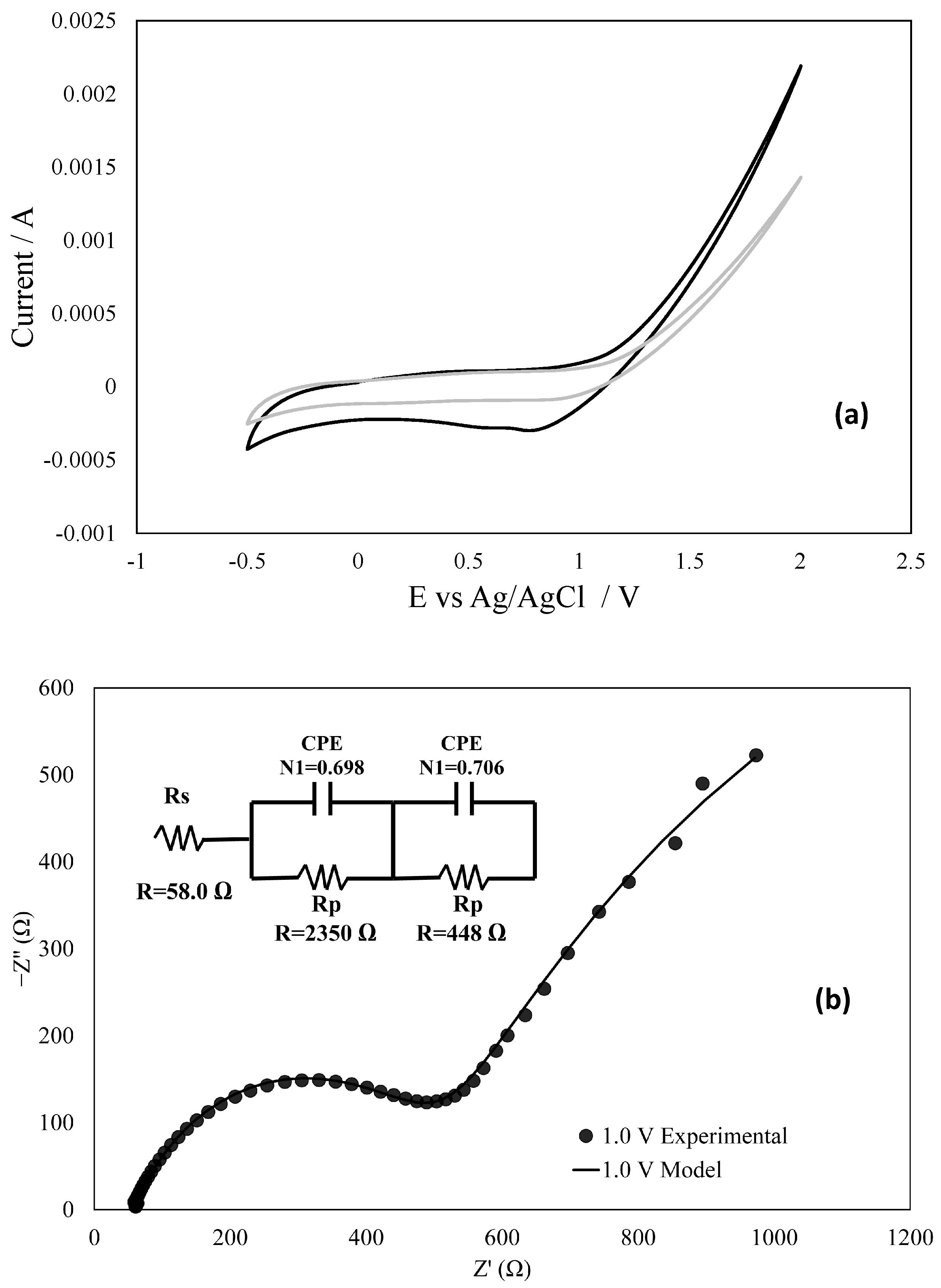
The cyclic voltammetry of the Sb2O5-doped RuO2–ZrO2|Ti electrode used as anode in our experiments showed the signature of chloride oxidation after 1.25 V, indicating that active chloride species are generated; therefore, the reaction rate for Cl2-active formation is high with this ternary oxide (Figure 3a). On the other side, the EIS showed after fitting analysis using a [R(RQ)(RQ] circuit gave a value of Rp of 448 Ω (Figure 3b). Both experiments exhibit characteristics similar to those of the previously reported anodes prepared by the group.
Estimation of the electrochemically active surface area (ECSA) using EIS cannot be obtained from the fitting of experimental EIS spectra. As previously reported, complex interfacial processes occur alongside double-layer formation, attributed to the large polycrystalline Ti plates relative to typical electrode sizes and to the mixture of co-deposited phases (e.g., RuO2, ZrO2, Sb2O5) with different capacitive and charge-transfer properties [24].

2.3. pH Effect During Dye Degradation

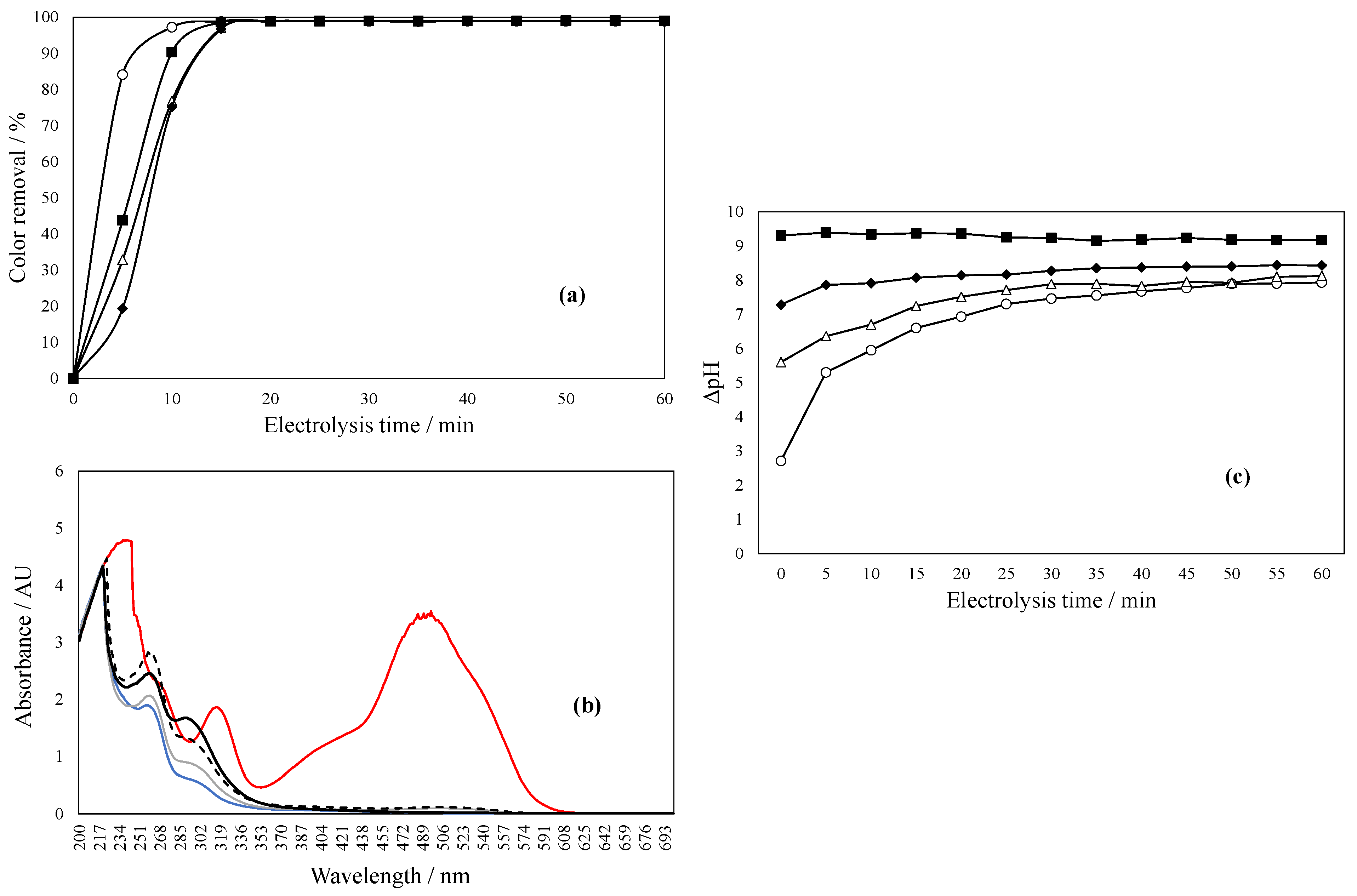
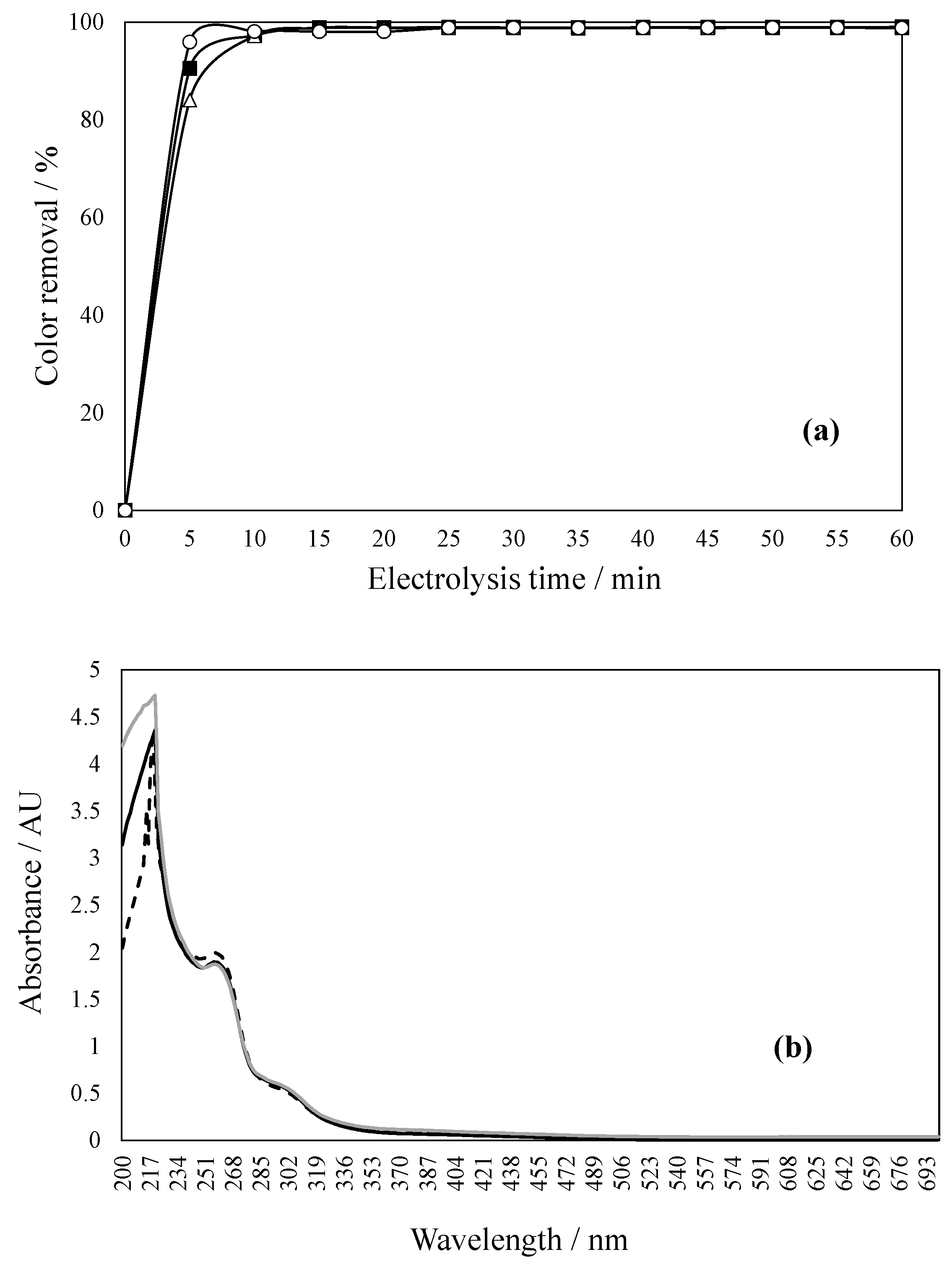
The influence of initial pH on the electrocatalytic degradation of Allura Red (AR) dye is presented in Figure 4. As shown in Figure 4a, color removal efficiencies after 15 min of electrolysis were 98.7%, 96.9%, 96.7%, and 98.6% at initial pH ranges of 2–3, 5–6, 7–8, and 9–10, respectively. Beyond the 15 min mark, only minimal improvements in decolorization efficiency were observed up to 60 min. Figure 4b shows the UV-Vis spectra of AR before and after 15 min of electrolysis at different pH levels. A notable absorption peak at approximately 316 nm corresponds to the π → π* transition of the azo group conjugated with aromatic rings. The primary absorption maximum at 505 nm, characteristic of the azo chromophore, decreases significantly during treatment, indicating the cleavage of the –N=N– bond.
Figure 4c depicts the evolution of pH over time. At pH < 3, the system becomes enriched in H+ ions, promoting the generation of free chlorine (Cl2) via chloride hydrolysis. In the pH range 3–8, hypochlorous acid (HOCl) predominates, functioning as a strong oxidant that degrades chromophores and organic compounds. Furthermore, in dimensionally stable anode (DSA) systems, pH plays a pivotal role in the oxygen evolution reaction (OER). Under acidic conditions, the generation of adsorbed hydroxyl radicals (•OH_ads) is favored over O2 formation, enhancing oxidation efficiency [2].

2.4. Current Density Effect During Dye Degradation

Current density is a critical experimental parameter that significantly influences the performance of the electro-oxidation (EO) process, as the generation of hydroxyl radicals (OH) largely depends on the amount of electrical energy delivered to the anode surface [25]. To investigate the influence of current density on dye effluent oxidation, the electrocatalytic degradation was carried out with current densities ranging from 5 to 13.33 mA cm−2 at 1 L of dye aqueous solution containing 100 mg L−1 of RA dye.
To evaluate its effect on dye degradation, electrochemical experiments were conducted using current densities ranging from 5.00 to 13.33 mA cm−2 in a 1 L aqueous solution containing 100 mg L−1 of Allura Red (AR) dye.
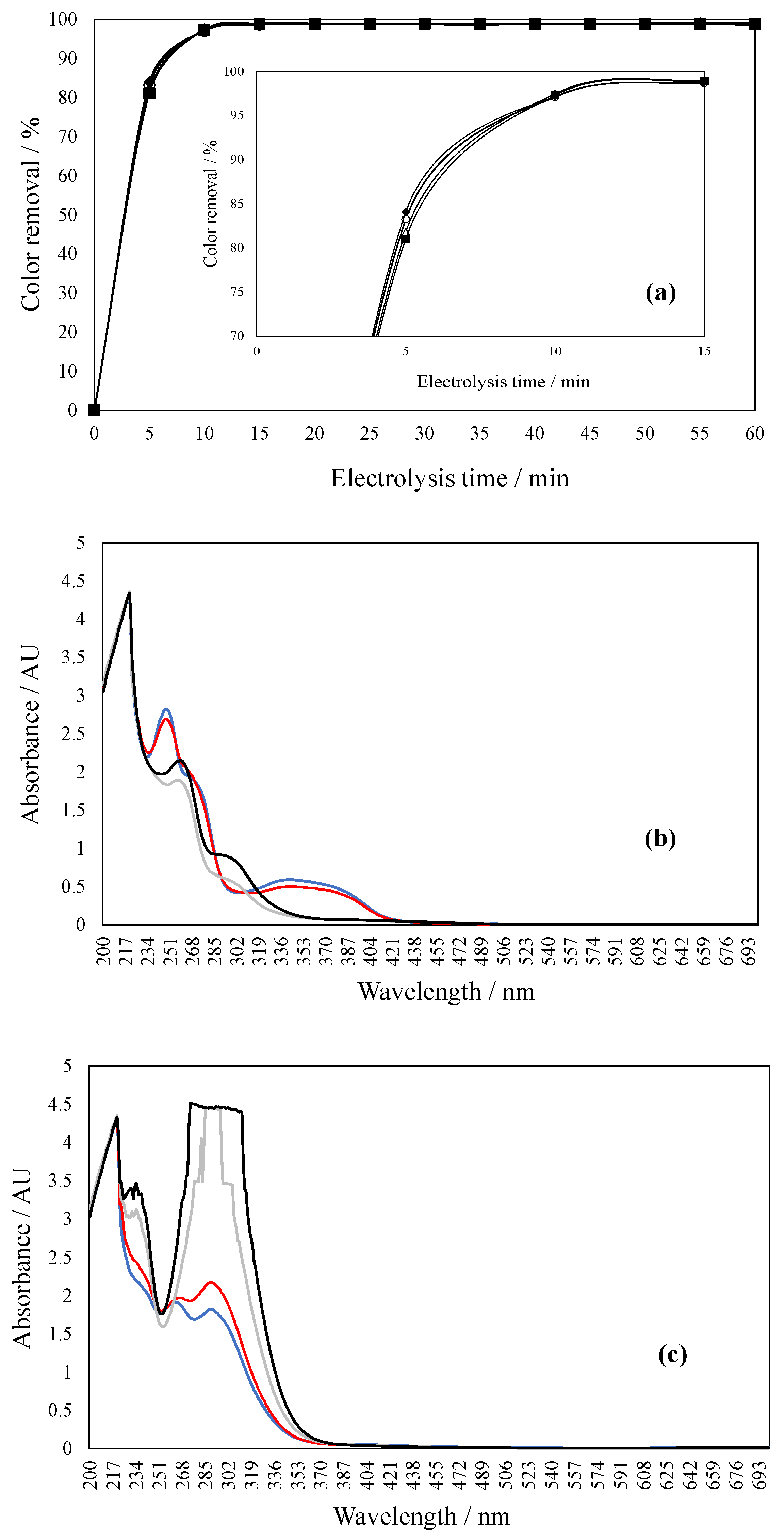
Figure 5a presents the color removal efficiencies achieved under different current densities (5.00, 6.67, 10.00, and 13.33 mA cm−2). Remarkably, color removal efficiencies exceeding 98% were obtained after only 15 min of electrolysis across all current densities tested. As shown in Figure 5b,c, moderate current densities (10.00 and 13.33 mA cm−2) led to more rapid degradation kinetics during the initial phase of the process. However, prolonged electrolysis at higher current densities may enhance the formation of undesirable oxidation by-products. Therefore, operating at lower current densities appears to be more suitable for maintaining high efficiency while minimizing secondary contamination in this EO system.

2.5. NaCl Concentration Effect During Dye Degradation

In this study, sodium chloride (NaCl) was employed as the supporting electrolyte. The generation rate of oxidizing species such as chlorine gas (Cl2) and hypochlorite ions (ClO) is closely linked to NaCl concentration. To assess this effect, the influence of NaCl concentration on color removal efficiency was evaluated using three electrolyte concentrations: 0.05, 0.10, and 0.20 mol L−1. The experiments were conducted with an initial dye concentration of 100 mg L−1, an initial pH of 2–3, and an applied current density of 10 mA cm−2.
As shown in Figure 6a, higher NaCl concentrations accelerated the color removal rate during the first 5 min of electrolysis. However, after 10 min, the removal efficiencies converged, with all conditions achieving values above 98%. Notably, the 0.05 M NaCl condition was sufficient to promote the generation of oxidizing species, ensuring efficient dye degradation without detectable by-product formation.

2.6. Optimal Conditions Under Ambient Temperature for Dye Degradation

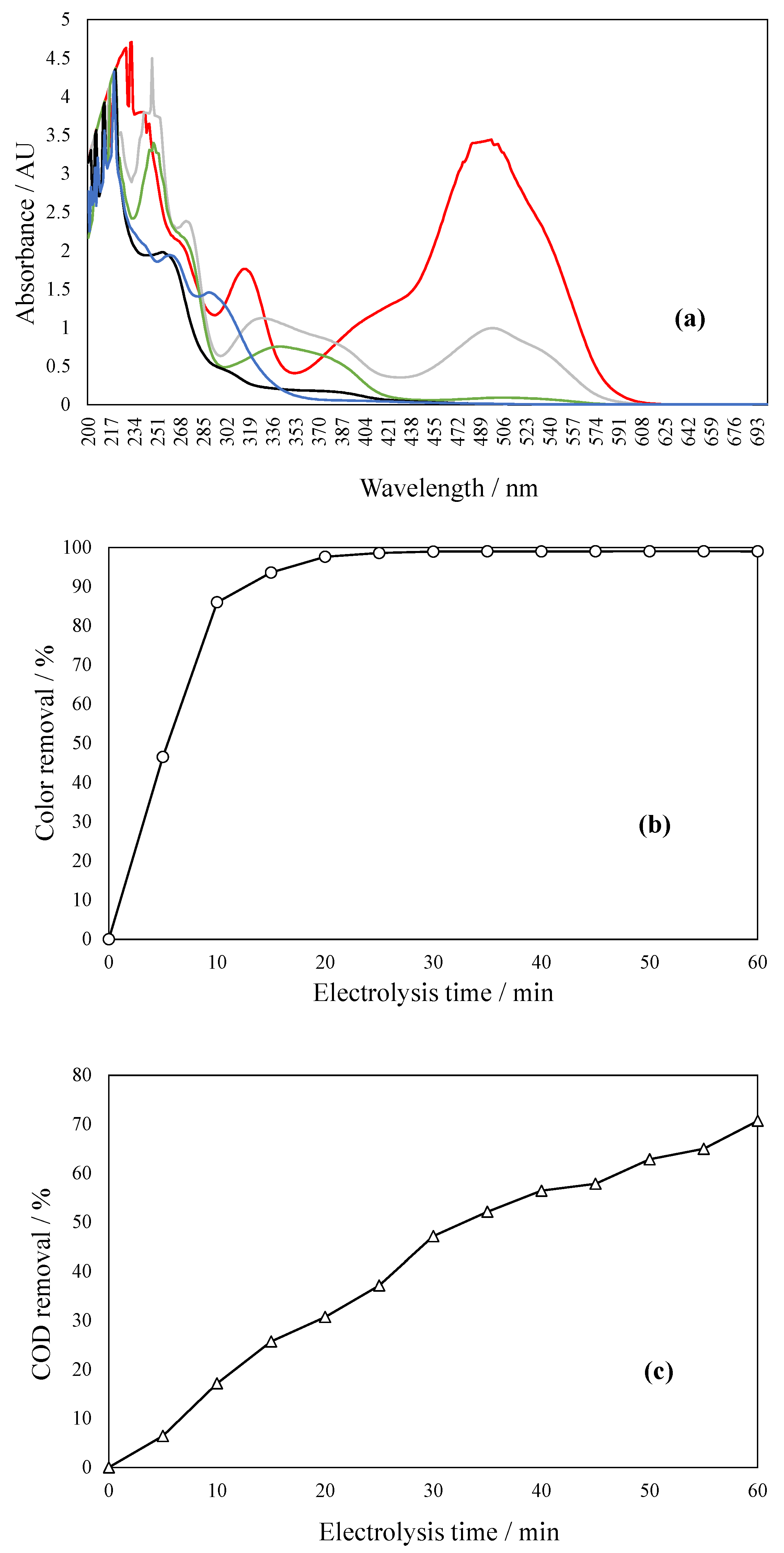
According to the previous evaluations, the optimal operating conditions for the degradation of a 100 mg L−1 Allura Red dye solution were determined to be: an initial pH of 2–3, a supporting electrolyte concentration of 0.05 M NaCl, and an applied current density of 5 mA cm−2. Under these conditions, a color removal efficiency of 99% and a chemical oxygen demand (COD) reduction of 71% were achieved after 60 min of electrolysis (Figure 7b,c). Figure 7a present the UV-Vis absorption spectra recorded at different time intervals throughout the electrolysis process. A 99% decrease in dye concentration was observed within the first 15 min, corresponding to a substantial reduction in the absorbance peak at 505 nm. Additionally, in the wavelength regions of 220–300 nm and 300–400 nm, a progressive decrease in absorbance was observed, indicating the stepwise degradation of intermediate by-products over 60 min.
The high removal efficiency obtained in this study—99% decolorization and 71% COD reduction under optimal EO conditions—closely aligns with previous research on electrochemical oxidation using dimensionally stable anodes (DSA). For example, Abilaji S et al. (2023) reported COD removal values of 60–85% for azo dye wastewater using RuO2-Ti anodes at comparable current densities and NaCl concentrations [26]. Similarly, Montenegro-Ayo et al. (2023) demonstrated that low to moderate current densities (5–10 mA cm−2) enhance the formation of active chlorine species and hydroxyl radicals (•OH_ads), resulting in efficient degradation of organic pollutants while minimizing energy use and by-product formation [27].
Mechanistically, the electrooxidation process involves direct and indirect pathways. On the anode surface, adsorbed hydroxyl radicals are generated via water oxidation:
H 2 O O H ads + H + + e
These •OH_ads species act as potent oxidants and can directly degrade dye molecules. Simultaneously, chloride ions in the electrolyte are electrochemically oxidized [28,29]:
2 C l C l 2 + 2 e C l 2 + H 2 O H O C l + H + + C l
The resulting free chlorine species (Cl2, HOCl, OCl) further contribute to pollutant breakdown via indirect oxidation. This dual mechanism enables fast decolorization and partial mineralization, as observed in the progressive reduction of UV-Vis absorbance and COD values. These findings confirm that electrooxidation with Sb2O5-doped RuO2-ZrO2|Ti is a highly effective strategy for the treatment of dye-contaminated water [30,31].

2.7. Effect of Solar Radiation on Dye Effluent Degradation

To assess the influence of solar radiation on the electrochemical oxidation of Allura Red dye, experiments were conducted under previously optimized conditions. The tests were performed between 8:00 and 11:00 a.m., during which the incident solar irradiance ranged from 900 to 1100 W m−2, and the UV (UVA and UVB) intensity was between 7 and 9 mW cm−2. During the first hour, the water temperature increased gradually, reaching 50 °C, at which point electrolysis was initiated and maintained at 45–55 °C.
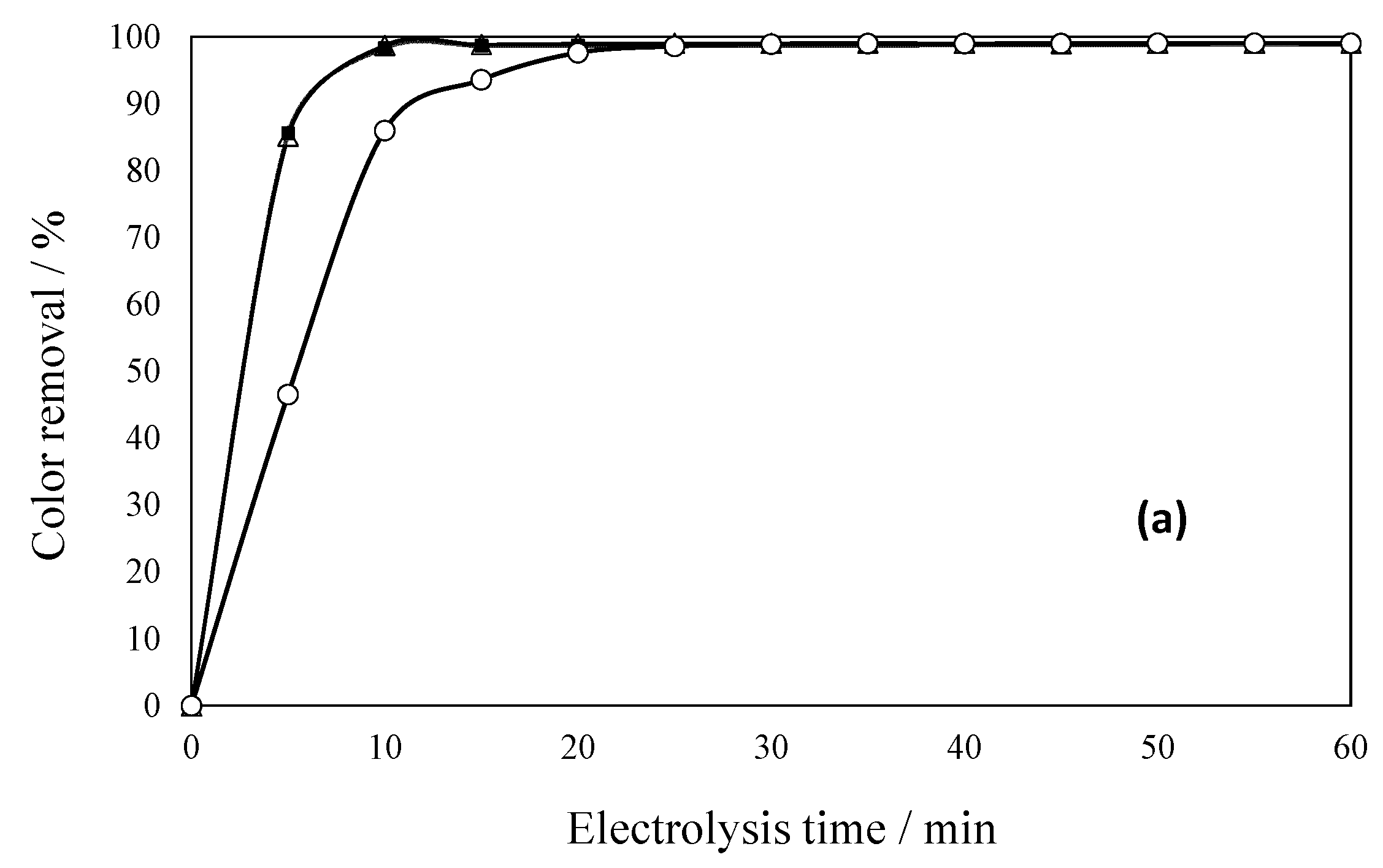
Noticeable changes were observed within the first 5 min of the process, characterized by a rapid decolorization of the solution. After 15 min, the treated water became completely transparent. For comparison, an additional experiment was conducted under identical thermal conditions using a heating plate (under dark conditions, without solar radiation). This test exhibited a similar decolorization trend to that obtained under solar radiation, as shown in Figure 8a. However, some differences were evident during the first 15 min of electrolysis when compared with the process carried out at ambient temperature.
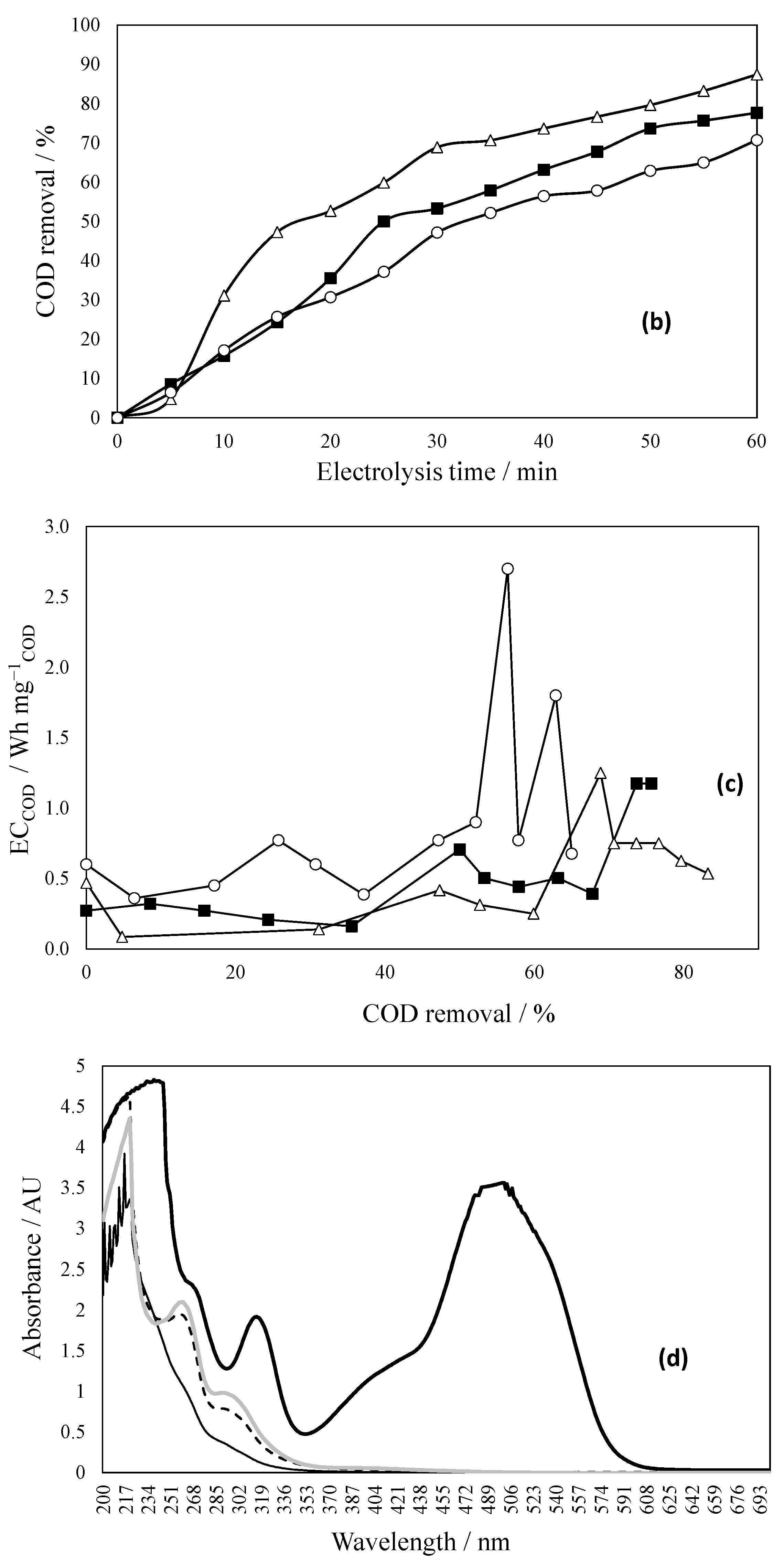
Furthermore, the chemical oxygen demand (COD) removal efficiency was evaluated for the three systems: ambient temperature (AT), heating plate (HP), and solar radiation (SR), yielding values of 71%, 77.6%, and 87.4%, respectively (Figure 8b). These differences in COD removal are also reflected in the UV-Vis spectra of each process (Figure 8d), particularly in the wavelength range of 200–300 nm. Likewise, Figure 8c shows the energy consumption, where the systems operated at higher temperatures (HP and SR) exhibit lower energy demand.
In aqueous dye systems exposed to light or oxidative treatment, an increase in temperature from ~20 °C toward 35–50 °C can accelerate decolorization kinetics via several interrelated effects. Elevated temperature enhances molecular mobility and diffusion rates, reducing mass-transfer limitations to the catalytic or reactive surfaces. It also increases the collision frequency of dye molecules with reactive species (e.g., •OH, radicals) and facilitates desorption of intermediates from electrode surfaces, thus maintaining active sites [32,33].
Increasing temperature can improve charge-carrier mobility and interfacial charge transfer, thereby lowering recombination rates and improving oxidant generation efficiency (e.g., •OH formation). However, above an optimal threshold, higher temperature may reduce the lifetime or solubility of reactive radicals, or promote non-productive radical recombination, thus limiting further gains. For example, Chen et al. (2021) observed that increasing the temperature up to ~55 °C improved photodegradation rates of organic pollutants over Ag/TiO2, but beyond that, performance declined due to radical instability and thermal desorption effects [34].
Groeneveld et al. (2023) reviewed that for many nanoparticle systems, moderate temperature rises increase dye photodegradation rates, though for some morphologies (e.g., nanofibers) the effect may reverse at higher temperatures [35].
These findings suggest that a moderate temperature elevation (20 → 35–50 °C) can favor decolorization in dye-containing aqueous systems. However, this must be balanced against possible radical decay or non-productive side reactions at higher temperatures.
Exposing the dye-containing aqueous solution to solar irradiation induces three synergistic effects:
(a)
Thermal enhancement, whereby the gradual rise in solution temperature (from ambient to ~50 °C) improves molecular motion and diffusion rates. This reduces external mass-transfer limitations and facilitates more effective interaction between dye molecules and reactive sites at the electrode surface, enhancing COD removal from 71% to 77.6%.
(b)
Photo activation involves UV and near-UV solar radiation which stimulates direct photolysis of dye chromophores and promotes the generation of reactive oxygen species (ROS), such as hydroxyl radicals (•OH), via photochemical reactions in water or through excitation of surface-bound species. Even in the absence of photocatalysts, dyes such as azo compounds may undergo bond cleavage upon UV exposure, particularly in the presence of auxiliary oxidants or chloride ions that yield secondary oxidants (e.g., Cl•, Cl2, HOCl). This results in a significantly improved degradation pathway, increasing COD removal to 87.4% and making the treated water visually transparent [36,37]. The combined effect of thermally enhanced diffusion and photo-induced oxidation mechanisms highlights the advantages of using natural solar energy for water treatment applications.
(c)
The architecture of the Ti|RuO2–ZrO2–Sb2O5 anode enables solar irradiation to promote the generation and extraction of useful carriers, thereby enhancing the formation of reactive oxidizing species and improving pollutant degradation efficiency. The inclusion of ZrO2 and Sb2O5 increases the dispersion of the active layer, decreases crystallite size, and improves coating morphology, resulting in a larger electroactive area [24]. Although RuO2 is not a classical semiconductor capable of generating electron–hole pairs from direct band-to-band excitation, under illumination it acts as an efficient conductive co-catalyst. RuO2 facilitates the extraction and transport of photogenerated carriers arising from interfacial or electrolyte-induced photo-processes, thus minimizing recombination and enhancing the overall electro-photocatalytic activity [38].

2.8. Evaluation of Electrooxidation Coupled to Solar Radiation on Real Wastewater Degradation

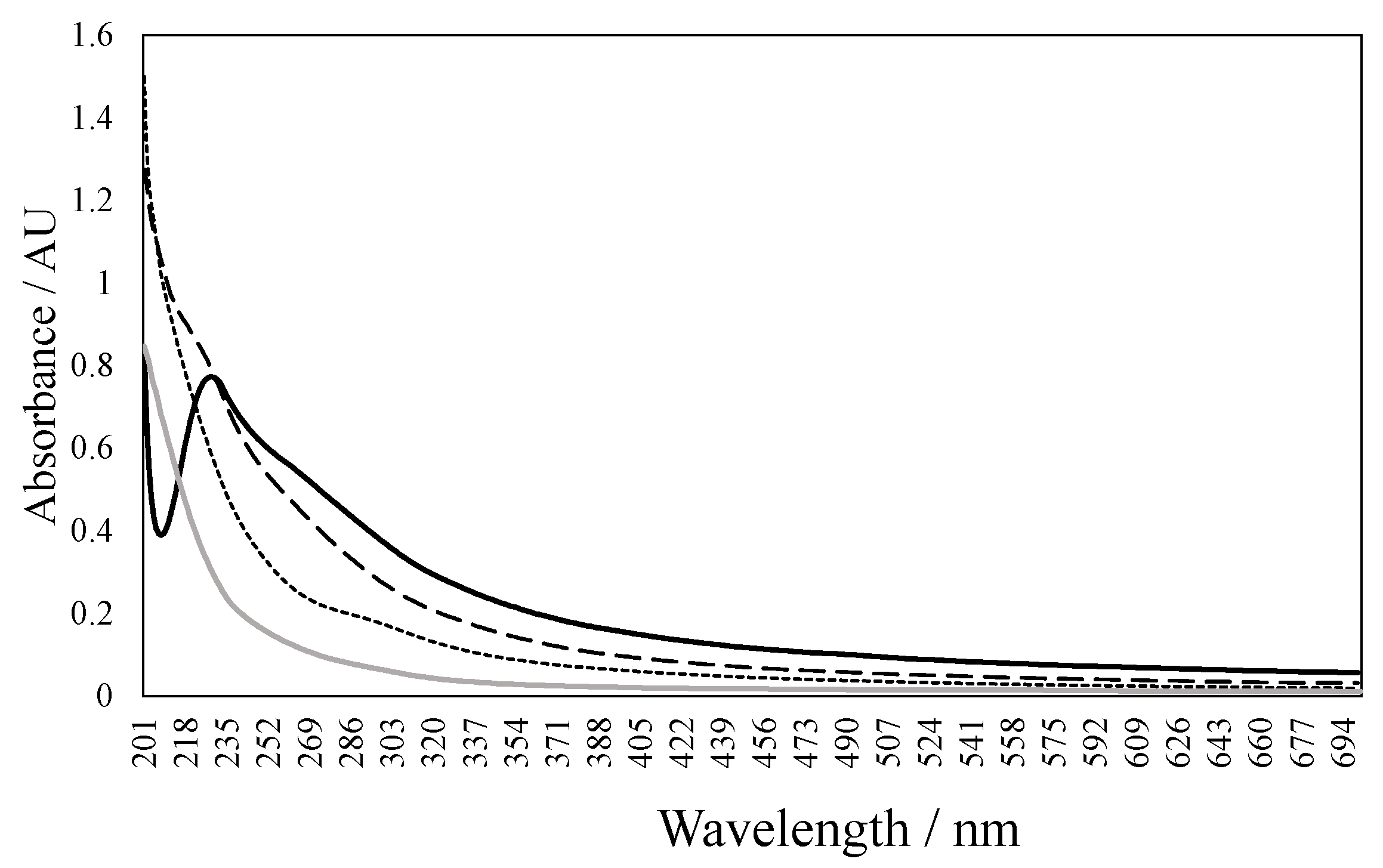
The electro-oxidation process assisted by solar radiation was evaluated for pollutant degradation of real wastewater under the previously optimized conditions established for the synthetic dyed effluent (LRP1: pH 2–3, 0.05 M NaCl, j = 5 mA cm−2). Additionally, the process was assessed and compared using the original properties of the wastewater (LRP2: pH 7–8, j = 5 mA cm−2) and without the addition of a supporting electrolyte (LRP3: pH 2–3, j = 5 mA cm−2). Figure 9 presents the UV-Vis spectra obtained at the end of the process (60 min). In comparison with the initial wastewater, the system operated without the supporting electrolyte and at an initial pH of 2–3 exhibited superior degradation performance. The evaluated water quality parameters are summarized in Table 1.
The evaluated sample exhibited a conductivity of 507 µS cm−1. In the Lerma River, chloride is part of the natural ionic composition, with an average concentration of 1.974 meq L−1 (≈70 mg L−1) [39]. When NaCl is added, the chloride concentration increases, shifting the redox chemistry toward greater accumulation of HOCl/Cl2 and resulting in decreased electrochemical efficiency, with COD removal reduced to 23% [40]. Conversely, when operating at the natural conductivity (without added NaCl), moderate Cl levels promote the formation of reactive chlorine species (RCS), enhancing degradation rates for specific organic contaminants [41].
Beyond chloride, the Lerma River contains an ionic mixture including Ca2+, Mg2+, Na+, K+, CO32−, HCO3, and SO42−, with HCO3 as the dominant anion. These species can act as radical scavengers, reducing the contribution of ·OH and other reactive oxidant species, thereby shifting degradation pathways. They may also inhibit or alter active-chlorine formation mechanisms on DSA-type anodes [42,43].

3. Materials and Methods

3.1. Chemicals

Hydrogen chloride (HCl, CAS:7647-01-0, analytical grade), sodium chloride (NaCl, CAS: 7647-14-5, analytical grade), and Allura Red Ac dye content 80% (CAS: 25956-17-6) were obtained from Sigma-Aldrich (St. Louis, MO 63178, USA). Distilled water was used to prepare all synthetic solutions.

3.2. Anode Preparation, Characterization and Morphological Studies

The mixed-oxide catalytic layer (Sb2O5-doped RuO2–ZrO2) was synthesized in our laboratory and deposited onto a perforated circular Ti substrate using the Pechini method, as detailed in reference [24]. The resulting electrocatalytic coating was homogeneously deposited and subsequently characterized as described below. The surface morphology and elemental composition and Ti electrodes were characterized using scanning electron microscopy coupled with energy-dispersive X-ray spectroscopy (SEM-EDS). Imaging and microanalytical measurements were conducted with a JEOL JSM-6510LV (3-1-2 Musashino, Akishima, Tokyo 196-8558, JAPAN) scanning electron microscope operated at an accelerating voltage of 15 kV, equipped with a Bruker XFlash 6|10 EDX detector. XRD analyses were performed using a Panalytical X’Pert Pro (Malvern Panalytical B.V., Lelyweg 17602 EA Almelo, The Netherlands) diffractometer configured for GIXRD, with a step size of 0.02°. The measurements were carried out over a 2θ range of 20–80°, using Cu Kα radiation (λ = 1.5406 Å).

3.3. Experimental Setup

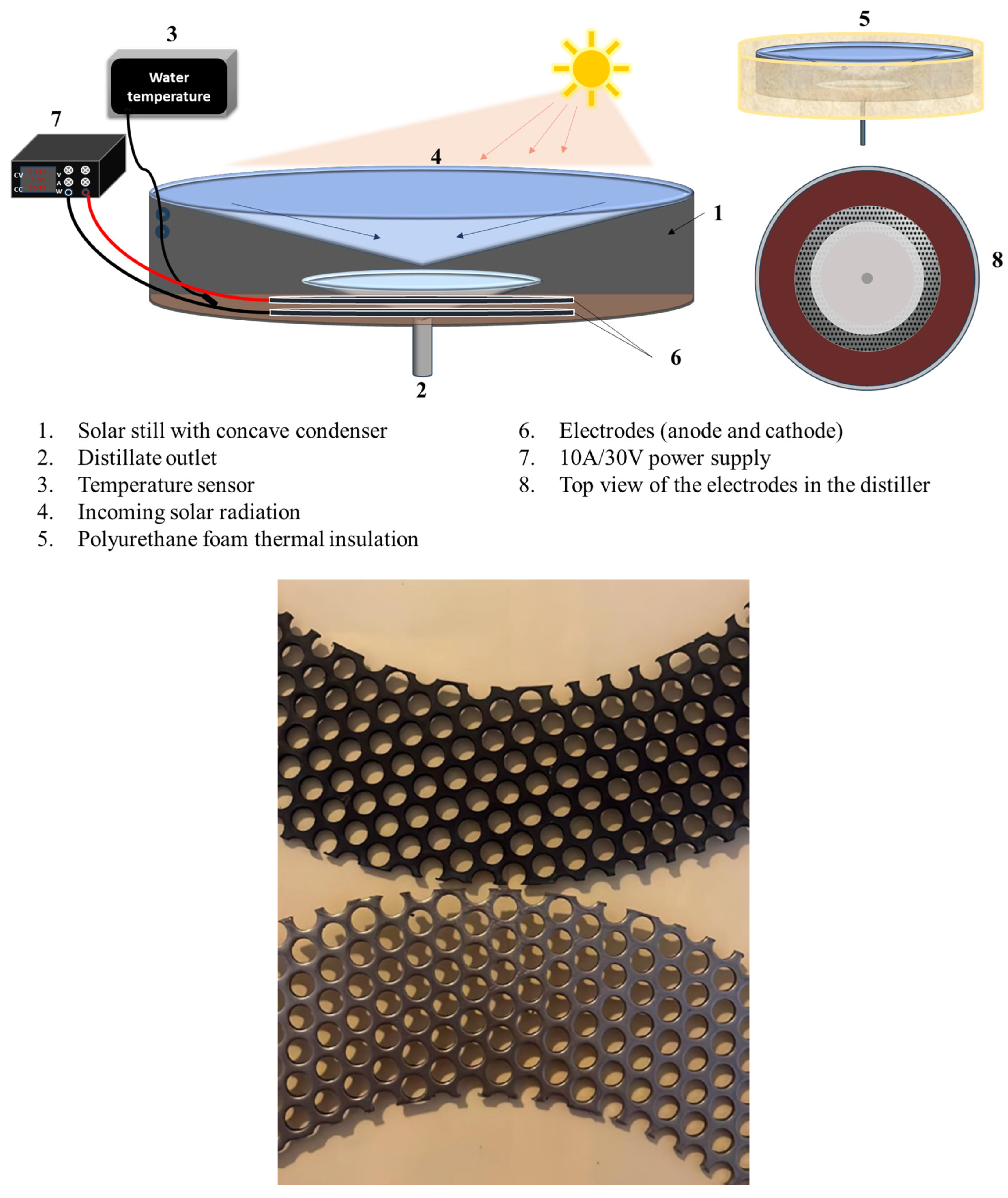
The electrolysis of the aqueous solution with Allura red dye (at 100 mg L−1) was performed in a solar still with a volume of 1 L using two electrodes, Sb2O5-doped RuO2-ZrO2|Ti (Centro Mexicano para la Producción más Limpia IPN, Ciudad de Mexico, Mexico) as anode and Ti (TEPSA, México) as cathode. Each electrode has an approximate geometric area of 150 cm2 and an interelectrode distance of 0.5 cm (Figure 10). Electrolysis was carried out at constant current using a power supply (SPS-W3010, 30 V, 10 A). Before the test, the electrodes were subjected to electrochemical activation with 0.50 M of NaCl, adjusting the pH in a range of 2 to 3 with HCl, applying a current density (j) of 0 mA cm−2 for 30 min. The Ag/AgCl electrode was used as a reference electrode to maintain a stable potential between 1.2 V and 1.4 V. The objective of the activation was to form a more stable and conductive surface layer of RuO2, create active sites for the absorption and oxidation of Cl ions, and avoid passive or poorly formed zones in the electrode that reduce the efficiency of the Cl evolution reaction.
The solar still was instrumented with two DS18B20 digital temperature sensors connected to an Arduino Uno microcontroller to monitor water and internal air temperatures. Ambient environmental parameters—including air temperature, relative humidity, and wind speed—were measured using a Metoluar MXDAP-001 (VentDepot, Ciudad López Mateos, Mexico) portable weather station, which offers a temperature accuracy of ±1 °C and a relative humidity accuracy of ±5%. Incident solar radiation (W m−2) was quantified using an SM206 solar power meter. See Figure 10.

3.4. Dye Mineralization in the EO Process

The electrochemical oxidation (EO) process using an Sb2O5-doped RuO2–ZrO2|Ti anode was evaluated in a solar still system for the treatment of aqueous solutions containing Allura Red (AR) dye at an initial concentration of 100 mg L−1, prepared in distilled water. Color removal was assessed through measurements of chemical oxygen demand (COD) and reductions in UV-Vis absorbance. Electrolysis was performed for 60 min under varying current densities (5.00–13.33 mA cm−2), pH ranges (2–3, 5–6, 7–8, 9–10), and NaCl concentrations (0.05, 0.10, and 0.20 M) as the supporting electrolyte. The experiments aimed to compare the efficiency of the EO process under solar irradiation versus non-irradiated conditions, particularly in terms of AR dye mineralization. Tests under solar exposure were conducted over a 3 h period (08:00 to 11:00), during which operational parameters such as water temperature, incident solar radiation, ambient temperature, and relative humidity were continuously monitored. To isolate the thermal effect associated with the increase in kinetic energy during electrolysis, experiments were conducted under previously established optimal conditions. The water temperature was maintained between 45 and 50 °C to simulate heating induced by solar radiation, using a heating plate as the thermal source.

3.5. Monitoring of Color Removal

During the electrochemical treatment, the concentration of Allura Red (AR) dye was monitored by measuring the decrease in absorbance at the maximum wavelength (λmax = 505 nm), using a UV-Visible spectrophotometer (PerkinElmer Lambda 365). The color removal efficiency (%) was calculated based on the relative change in absorbance before and after treatment, according to the following equation:
%   C o l o r   r e m o v a l = A 0 A t A 0 × 100
where A0 is the initial absorbance and At is the absorbance at time t. This method allowed for a rapid, non-destructive quantification of dye removal efficiency throughout the treatment process.

3.6. Monitoring of Degradation by Chemical Oxygen Demand (COD)

The COD of the samples was determined using Merck COD tubes. To do this, 3 mL of sample was taken, placed in a COD tube, and heated in a digester (HACH) at 150 °C for 120 min. After cooling, the COD value was read directly using a DR/6000 spectrophotometer (HACH). The COD removal efficiency and energy consumption (Wh mg−1COD) were calculated by using the following formulas:
%   C O D   r e m o v a l = C O D 0 C O D t C O D 0 × 100
E C C O D = E c e l l × I × t V C O D 0 C O D t
where COD0 is the COD value of initial aqueous solution (mg L−1), CODt is the COD value after electrochemical treatment (mg L−1), Ecell was the cell voltage (V), I the actual current (A), t the electrolysis time (h) and V the solution volume (L).

3.7. Real Wastewater Treatment

A wastewater sample was collected from the Lerma River, located in the State of Mexico (19°17′11″ N, 99°31′18″ W). The sample was collected in plastic containers, maintained at 4 °C during transport, and subsequently stored in the laboratory for characterization and treatment using the electrochemical process. The process is proposed as a tertiary treatment for the removal of recalcitrant contaminants, such as dyes, as well as for reducing residual COD. For this reason, the suspended solids present in the water were removed by filtration prior to the treatment. The evaluation of water quality was determined by COD removal efficiency, color (Pt/Co scale) and pH, as indicated in NMX-AA-038-SCFI-2001, NMX-AA-008 SCFI-2016, NMX-AA-093-SCFI-2000 and NMX-AA-030/2-SCFI-2011 standards [44,45,46,47].

4. Conclusions

In this study, the electrochemical degradation of Allura Red dye was systematically investigated using an Sb2O5-doped RuO2–ZrO2|Ti anode integrated into a solar-assisted electrooxidation system. The effects of current density, initial pH, and supporting electrolyte concentration were evaluated to determine the optimal operational parameters for pollutant degradation. Under the best experimental conditions—current density of 5 mA cm−2, initial pH of 2–3, NaCl concentration of 0.05 M, and electrolysis time of 60 min—the process achieved 87.4% chemical oxygen demand (COD) removal and 99% color elimination. The gradual disappearance of the absorption peaks in the UV-Vis spectra confirmed the oxidative breakdown of the dye’s chromophoric and aromatic structures.
When the optimized electrooxidation process was applied to real Lerma River water samples, the system achieved approximately 50% reduction in both COD and true color, highlighting its practical applicability to complex environmental matrices. These findings confirm that the Sb2O5-doped RuO2–ZrO2|Ti anode exhibits high electrocatalytic activity and stability, enabling efficient mineralization of organic pollutants. Overall, the integration of solar energy with electrooxidation provides a sustainable, energy-efficient, and scalable approach for the remediation of industrial and natural water systems impacted by persistent contaminants.

Author Contributions

Conceptualization, C.E.B.-D.; investigation, A.R.-G. and J.V.-A.; writing, B.A.F.-U. and L.I.Á.-C. All authors have read and agreed to the published version of the manuscript.

Funding

This research was funded by the Universidad Autonoma del Estado de México: project No. 7158/2024ECON.

Data Availability Statement

The raw data supporting the conclusions of this article will be made available by the authors upon request.

Conflicts of Interest

The authors declare no conflicts of interest.

References

  1. Treviño-Reséndez, J.; Medel, A.; Cárdenas, J.; Meas, Y. Electrooxidation using SnO2–RuO2–IrO2|Ti and IrO2–Ta2O5|Ti anodes as tertiary treatment of oil refinery effluent. Appl. Res. 2024, 3, e202300038. [Google Scholar] [CrossRef]
  2. García-Espinoza, J.D.; Mijaylova-Nacheva, P.; Avilés-Flores, M. Electrochemical carbamazepine degradation: Effect of the generated active chlorine, transformation pathways and toxicity. Chemosphere 2018, 192, 142–151. [Google Scholar] [CrossRef]
  3. Zhu, X.; Hu, W.; Feng, C.; Chen, N.; Chen, H.; Kuang, P.; Deng, Y.; Ma, L. Electrochemical oxidation of aniline using Ti/RuO2-SnO2 and Ti/RuO2-IrO2 as anode. Chemosphere 2021, 269, 128734. [Google Scholar] [CrossRef]
  4. Valero, D.; García-García, V.; Expósito, E.; Aldaz, A.; Montiel, V. Electrochemical treatment of wastewater from almond industry using DSA-type anodes: Direct connection to a PV generator. Sep. Purif. Technol. 2014, 123, 15–22. [Google Scholar] [CrossRef]
  5. Baddouh, A.; El Ibrahimi, B.; Rguitti, M.M.; Mohamed, E.; Hussain, S.; Bazzi, L. Electrochemical removal of methylene bleu dye in aqueous solution using Ti/RuO2–IrO2 and SnO2 electrodes. Sep. Sci. Technol. 2020, 55, 1852–1861. [Google Scholar] [CrossRef]
  6. Zhang, Y.; He, P.; Jia, L.; Zhang, T.; Liu, H.; Wang, S.; Li, C.; Dong, F.; Zhou, S. Dimensionally stable Ti/SnO2-RuO2 composite electrode based highly efficient electrocatalytic degradation of industrial gallic acid effluent. Chemosphere 2019, 224, 707–715. [Google Scholar] [CrossRef] [PubMed]
  7. Zhang, G.; Huang, X.; Ma, J.; Wu, F.; Zhou, T. Ti/Ruo2-Iro2-Sno2 anode for electrochemical degradation of pollutants in pharmaceutical wastewater: Optimization and degradation performances. Sustainability 2021, 13, 126. [Google Scholar] [CrossRef]
  8. Pouladvand, I.; Asl, S.K.; Hoseini, M.G.; Rezvani, M. Characterization and electrochemical behavior of Ti/TiO2–RuO2–IrO2–SnO2 anodes prepared by sol–gel process. J. Solgel Sci. Technol. 2019, 89, 553–561. [Google Scholar] [CrossRef]
  9. Costa, C.R.; Botta, C.M.R.; Espindola, E.L.G.; Olivi, P. Electrochemical treatment of tannery wastewater using DSA® electrodes. J. Hazard. Mater. 2008, 153, 616–627. [Google Scholar] [CrossRef]
  10. Palma-Goyes, R.E.; Vazquez-Arenas, J.; Ostos, C.; Torres-Palma, R.A.; González, I. The Effects of ZrO2 on the Electrocatalysis to Yield Active Chlorine Species on Sb2O5-Doped Ti/RuO2 Anodes. J. Electrochem. Soc. 2016, 163, H818–H825. [Google Scholar] [CrossRef]
  11. González–Fuentes, M.A.; Bruno–Mota, U.; Méndez–Albores, A.; Teutli–Leon, M.; Medel, A.; Agustín, R.; Feria, R.; Hernández, A.A.; Méndez, E. Synthesis and Characterization of Uncracked IrO2-SnO2-Sb2O3 Oxide Films Using Organic Precursors and Their Application for the Oxidation of Tartrazine and Dibenzothiophene. Int. J. Electrochem. Sci. 2021, 16, 210327. [Google Scholar] [CrossRef]
  12. Titchou, F.E.; Zazou, H.; Afanga, H.; El Gaayda, J.; Akbour, R.A.; Lesage, G.; Rivallin, M.; Cretin, M.; Hamdani, M. Electrochemical oxidation treatment of Direct Red 23 aqueous solutions: Influence of the operating conditions. Sep. Sci. Technol. 2022, 57, 1501–1520. [Google Scholar] [CrossRef]
  13. Chatzisymeon, E.; Dimou, A.; Mantzavinos, D.; Katsaounis, A. Electrochemical oxidation of model compounds and olive mill wastewater over DSA electrodes: 1. The case of Ti/IrO2 anode. J. Hazard. Mater. 2009, 167, 268–274. [Google Scholar] [CrossRef]
  14. Rubio, E.; Fernández-Zayas, J.L.; Porta-Gándara, M.A. Current Status of Theoretical and Practical Research of Seawater Single-Effect Passive Solar Distillation in Mexico. J. Mar. Sci. Eng. 2020, 8, 94. [Google Scholar] [CrossRef]
  15. Arunkumar, T.; Sathyamurthy, R.; Denkenberger, D.; Lee, S.J. Solar Distillation Meets the Real World: A Review of Solar Stills Purifying Real Wastewater and Seawater; Springer Science and Business Media: Berlin, Germany, 2022. [Google Scholar] [CrossRef]
  16. Hermosillo-Villalobos, J.J. Destilación solar, ITESO, 16. Tlaquepaque, Jalisco, 1989. Available online: https://rei.iteso.mx/items/02bb8b46-4fb7-4c75-9517-b2209022815a (accessed on 10 October 2025).
  17. Minmin, G.; Liangliang, Z.; Connor-Kangnuo, P.; Ghim-Wei, H. Solar Absorber Material and System Designs for Photothermal Water Vaporization towards Clean Water and Energy Production. Energy Env. Sci. 2019, 12, 841–864. [Google Scholar]
  18. Fernández, C.H.Z.; Ramírez-Cerón, M.; Cancino-Rojas, X.; Barbosa, E.M.; Arredondo-Velázquez, M.; Hernández-López, J.M. Solar irradiance statistical analysis in Mexico City from 2018 to 2021. arXiv 2025, arXiv:2501.13934. [Google Scholar] [CrossRef]
  19. NREL. NSRDB: National Solar Radiation Database. Available online: https://nsrdb.nrel.gov/ (accessed on 22 September 2025).
  20. El Messaoudi, N.; Miyah, Y.; Singh, N.; Gubernat, S.; Fatima, R.; Georgin, J.; El Mouden, A.; Saghir, S.; Knani, S.; Hwang, Y. A critical review of Allura Red removal from water: Advancements in adsorption and photocatalytic degradation technologies, and future perspectives. J. Environ. Chem. Eng. 2024, 12, 114843. [Google Scholar] [CrossRef]
  21. Boyles, C.; Sobeck, S.J.S. Photostability of organic red food dyes. Food Chem. 2020, 315, 126249. [Google Scholar] [CrossRef]
  22. Guerra, E.; Gosetti, F.; Marengo, E.; Llompart, M.; Garcia-Jares, C. Study of photostability of three synthetic dyes commonly used in mouthwashes. Microchem. J. 2019, 146, 776–781. [Google Scholar] [CrossRef]
  23. Ramos-Garcia, A.; Barrera-Diaz, C.E.; Frontana-Uribe, B.A.; Ávila-Córdoba, L.I. Low-Cost Solar Still System with Concave Condensing Cover for the Distillation of Synthetic Water Polluted with Allura Red Dye. J. Sustain. Res. 2024, 6, e240036. [Google Scholar] [CrossRef]
  24. Palma-Goyes, R.E.; Vazquez-Arenas, J.; Ostos, C.; Ferraro, F.; Torres-Palma, R.A.; Gonzalez, I. Microstructural and electrochemical analysis of Sb2O5 doped-Ti/RuO2-ZrO2 to yield active chlorine species for ciprofloxacin degradation. Electrochim. Acta 2016, 213, 740–751. [Google Scholar] [CrossRef]
  25. Martínez-Sánchez, C.; Robles, I.; Godínez, L.A. Review of recent developments in electrochemical advanced oxidation processes: Application to remove dyes, pharmaceuticals, and pesticides. Int. J. Environ. Sci. Technol. 2022, 19, 12611–12678. [Google Scholar] [CrossRef]
  26. Abilaji, S.; Narenkumar, J.; Das, B.; S, S.; Rajakrishnan, R.; Sathishkumar, K.; Rajamohan, R.; Rajasekar, A. Electrochemical oxidation of azo dyes degradation by RuO2–IrO2–TiO2 electrode with biodegradation Aeromonas hydrophila AR1 and its degradation pathway: An integrated approach. Chemosphere 2023, 345, 140516. [Google Scholar] [CrossRef]
  27. Montenegro-Ayo, R.; Pérez, T.; Lanza, M.R.V.; Brillas, E.; Garcia-Segura, S.; Santos, A.J.D. New electrochemical reactor design for emergent pollutants removal by electrochemical oxidation. Electrochim. Acta 2023, 458, 142551. [Google Scholar] [CrossRef]
  28. Li, G.; Zhu, M.; Chen, J.; Li, Y.; Zhang, X. Production and contribution of hydroxyl radicals between the DSA anode and water interface. J. Environ. Sci. 2011, 23, 744–748. [Google Scholar] [CrossRef]
  29. Xie, J.; Zhang, C.; Waite, T.D. Hydroxyl radicals in anodic oxidation systems: Generation, identification and quantification. Water Res. 2022, 217, 118425. [Google Scholar] [CrossRef]
  30. Martínez-Huitle, C.A.; Panizza, M. Electrochemical oxidation of organic pollutants for wastewater treatment. Curr. Opin. Electrochem. 2018, 11, 62–71. [Google Scholar] [CrossRef]
  31. Panizza, M.; Cerisola, G. Direct and Mediated Anodic Oxidation of Organic Pollutants. Chem. Rev. 2009, 109, 6541–6569. [Google Scholar] [CrossRef]
  32. Khan, S.; Noor, T.; Iqbal, N.; Yaqoob, L. Photocatalytic Dye Degradation from Textile Wastewater: A Review. ACS Omega 2024, 9, 21751–21767. [Google Scholar] [CrossRef]
  33. Tan, S.N.; Yuen, M.L.; Ramli, R.A. Photocatalysis of dyes: Operational parameters, mechanisms, and degradation pathway. Green Anal. Chem. 2025, 12, 100230. [Google Scholar] [CrossRef]
  34. Chen, Y.-W.; Hsu, Y.-H. Effects of Reaction Temperature on the Photocatalytic Activity of TiO2 with Pd and Cu Cocatalysts. Catalysts 2021, 11, 966. [Google Scholar] [CrossRef]
  35. Groeneveld, I.; Kanelli, M.; Ariese, F.; van Bommel, M.R. Parameters that affect the photodegradation of dyes and pigments in solution and on substrate—An overview. Dye. Pigment. 2023, 210, 110999. [Google Scholar] [CrossRef]
  36. Suliman, Z.A.; Mecha, A.C.; Mwasiagi, J.I. Enhanced solar photodegradation of reactive blue dye using synthesized codoped ZnO and TiO2. Discov. Chem. 2025, 2, 32. [Google Scholar] [CrossRef]
  37. Zaaboul, F.; Canle, M.; Haoufazane, C.; Santaballa, J.A.; Hammouti, B.; Azzaoui, K.; Jodeh, S.; Hadjadj, A.; El Hourch, A. Sunlight-Driven Photodegradation of RB49 Dye Using TiO2-P25 and TiO2-UV100: Performance Comparison. Coatings 2024, 14, 1270. [Google Scholar] [CrossRef]
  38. Uddin, T.; Babot, O.; Thomas, L.; Olivier, C.; Redaelli, M.; D’aRienzo, M.; Morazzoni, F.; Jaegermann, W.; Rockstroh, N.; Junge, H.; et al. New Insights into the Photocatalytic Properties of RuO/TiO Mesoporous Heterostructures for Hydrogen Production and Organic Pollutant Photodecomposition. J. Phys. Chem. C 2015, 119, 7006–7015. [Google Scholar] [CrossRef]
  39. Pérez-Díaz, J.P.; Ortega-Escobar, H.M.; Ramírez-Ayala, C.; Flores-Magdaleno, H.; Sánchez-Bernal, E.I.; Can-Chulim, Á.; Mancilla-Villa, O.R. Concentración de nitrato, fosfato, boro y cloruro en el agua del río Lerma. Ecosis. Recur. Agropec. 2019, 6, 175–182. [Google Scholar] [CrossRef]
  40. Wang, L.; Wang, Y.; Sui, Y.; Lu, J.; Hu, B.; Huang, Q. Formation of chlorate and perchlorate during electrochemical oxidation by Magnéli phase Ti4O7 anode: Inhibitory effects of coexisting constituents. Sci. Rep. 2022, 12, 15880. [Google Scholar] [CrossRef]
  41. Zöllig, H.; Remmele, A.; Fritzsche, C.; Morgenroth, E.; Udert, K.M. Formation of Chlorination Byproducts and Their Emission Pathways in Chlorine Mediated Electro-Oxidation of Urine on Active and Nonactive Type Anodes. Environ. Sci. Technol. 2015, 49, 11062–11069. [Google Scholar] [CrossRef]
  42. Kim, C.; Thao, T.T.; Kim, J.-H.; Hwang, I. Effects of the formation of reactive chlorine species on oxidation process using persulfate and nano zero-valent iron. Chemosphere 2020, 250, 126266. [Google Scholar] [CrossRef]
  43. Liao, C.-H.; Kang, S.-F.; Wu, F.-A. Hydroxyl radical scavenging role of chloride and bicarbonate ions in the H2O2/UV process. Chemosphere 2001, 44, 1193–1200. [Google Scholar] [CrossRef] [PubMed]
  44. NMX-AA-008-SCFI; Análisis de Agua.-Medición del pH en Aguas Naturales, Residuales y Residuales Tratadas.-Método de Prueba. Diario Oficial de la Federación: Ciudad de México, México, 2016.
  45. NMX-AA-030/2-SCFI; Determinación de la Demanda Química de Oxígeno en Aguas Naturales, Residuales y Residuales Tratadas-Método de Prueba-Parte 2–Determinación del Índice de la Demanda Química de Oxígeno–método de Tubo Sellado a Pequeña Escala. Diario Oficial de la Federación: Ciudad de México, México, 2011.
  46. NMX-AA-038-SCFI; Análisis de Agua–Determinación de Turbiedad en Aguas Naturales, Residuales y Residuales Tratadas–método de Prueba. Diario Oficial de la Federación: Ciudad de México, México, 2001.
  47. NMX-AA-093-SCFI; Determinación de la conductividad electrolítica-método de prueba. Diario Oficial de la Federación: Ciudad de México, México, 2000.
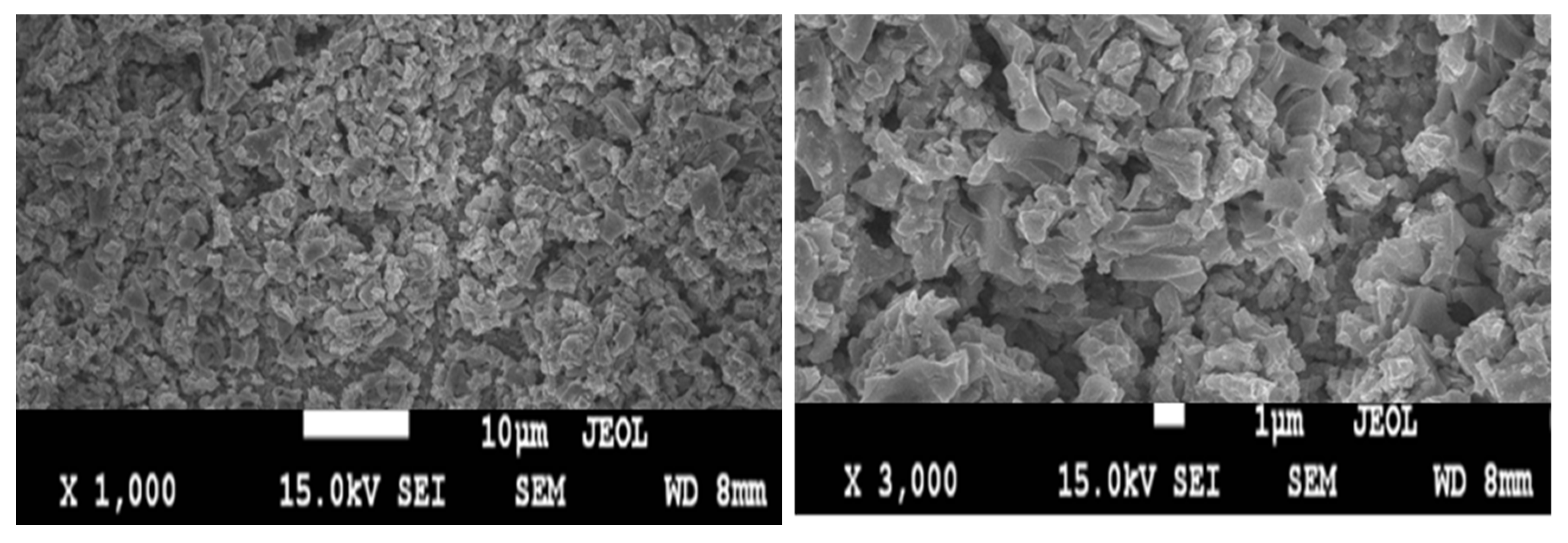
Figure 1. Scanning electron microscopy image of the Sb2O5-doped RuO2-ZrO2|Ti electrode at (left) ×1000 and (right) ×3000.
Catalysts 15 01171 g001
Figure 2. XRD patterns of Sb2O5-doped RuO2–ZrO2|Ti electrode.
Catalysts 15 01171 g002
Figure 3. Electrochemical characterization of the Sb2O5-doped RuO2–ZrO2|Ti electrode (a) Cyclic voltammetry conducted in Na2SO4 0.1M (gray line) and NaCl 0.1 M (black line) using a scan rate of 20 mV s−1. (b) Nyquist plot in 0.1 M NaCl E = 1.2 V vs. Ag/AgCl ν 1 MHz to 0.01 Hz at 10 points per decade.
Catalysts 15 01171 g003
Figure 4. Effects of (a) initial pH ranges 2–3 (○), 5–6 (∆), 7–8 (♦) and 9–10 (■) on color removal efficiencies, (b) UV-Vis spectra at 15 min of electrolysis at different pH values (──) initial, (▬▬) 9–10, (▬ ▬) 7–8, (──) 5–6, and (──) 2–3 and (c) ΔpH value respect to electrolysis time at different initial pH ranges 2–3 (○), 5–6 (∆), 7–8 (♦) and 9–10 (■).
Catalysts 15 01171 g004
Figure 5. Effects of (a) different current densities 5 (○), 6.67 (∆), 10 (♦) and 13.33 mA cm−2 (■) on color removal efficiencies, UV-Vis spectra of different current densities 5 (──), 6.67 (──), 10 (──) and 13.33 mA cm−2 (──) at (b) 15 min of electrolysis and (c) 60 min of electrolysis.
Catalysts 15 01171 g005
Figure 6. Effects of (a) different NaCl concentrations 0.05 (■), 0.10 (∆) and (○) 0.20 M on color removal efficiencies and (b) UV-Vis spectra at 15 min of electrolysis at different NaCl concentrations 0.05 (▬ ▬), 0.10 (▬▬) and (──) 0.20 M.
Catalysts 15 01171 g006
Figure 7. (a) UV-Vis spectra at 0 (──), 5 (──), 15 (──), 25 (──) and 60 (──) min of electrolysis under optimal operating conditions, (b) color removal efficiency and (c) COD removal efficiency.
Catalysts 15 01171 g007
Figure 8. Solar radiation effect of HP (■), SR (∆) and AT (○) on (a) color removal efficiencies, (b) COD removal efficiencies, (c) energy consumptions and (d) UV-Vis spectra for Initial (▬▬), SR (──), HP (─ ─) and AT (▬▬) at 60 min of electrolysis under optimal operating conditions.
Catalysts 15 01171 g008aCatalysts 15 01171 g008b
Figure 9. UV-Vis spectra for Lerma River (──), LRP1 (- - -), LRP2 (─ ─) and LRP3 (──) at 60 min of electrolysis and solar radiation exposure.
Catalysts 15 01171 g009
Figure 10. (Top): Experimental device. (Bottom): Sb2O5-doped RuO2–ZrO2|Ti anode and Ti cathode used.
Catalysts 15 01171 g010
Table 1. Water quality results.
Sample% COD RemovalpHColor (Pt-Co Scale)
Lerma River-7.23424
LRP1 (pH 2–3, 0.05 NaCl, 5 mA cm−2)23%7.3200
LRP2 (pH 7–8, 5 mA cm−2)15%7.85183
LRP3 (pH 2–3, 5 mA cm−2)47%7.5102
Disclaimer/Publisher’s Note: The statements, opinions and data contained in all publications are solely those of the individual author(s) and contributor(s) and not of MDPI and/or the editor(s). MDPI and/or the editor(s) disclaim responsibility for any injury to people or property resulting from any ideas, methods, instructions or products referred to in the content.