Article

Methanol Oxidation over Pd-Doped Co- and/or Ag-Based Catalysts: Effect of Impurities (H2O and CO)
Chemical Process and Energy Resources Institute (CPERI), Centre for Research and Technology Hellas (CERTH), Thermi, GR-57001 Thessaloniki, Greece
*
Author to whom correspondence should be addressed.
Catalysts 2025, 15(12), 1129; https://doi.org/10.3390/catal15121129
Submission received: 15 October 2025 / Revised: 14 November 2025 / Accepted: 19 November 2025 / Published: 2 December 2025
(This article belongs to the Section Environmental Catalysis)

Abstract

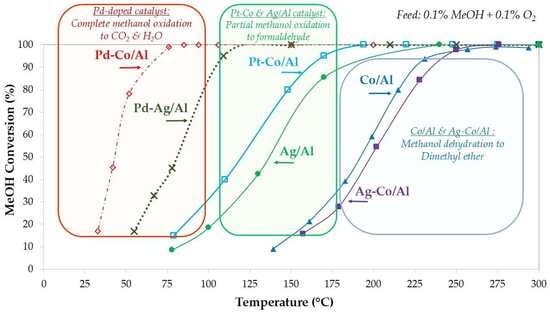
The methanol oxidation reaction was investigated on Co- and/or Ag-based γ-Al2O3 catalysts, which were prepared by different methods (WI: wet impregnation and SI: spray impregnation) and further doped with noble metals (Pd, Pt). During the present study, three different reaction pathways were revealed. The complete oxidation of methanol to CO2 and H2O was achieved on Pd-doped catalysts prepared by the spray impregnation method (Pd-Co/Al-SI and Pd-Ag/Al-SI), while partial oxidation to intermediates such as formaldehyde was observed for Ag/alumina catalysts. The dehydration reaction of methanol to dimethyl ether was carried out on Co/alumina, Ag-Co/alumina, and Pt-Co/alumina catalysts. The improved reducibility of the 5Co/Al-SI catalyst with the incorporation of Pd, combined with the easier surface oxygen desorption, resulted in higher catalytic activity compared to the Pt-doped catalyst. On the other hand, the incorporation of Pd into Ag/Al-SI enhanced the well-dispersed Ag2O species, mainly affecting the structural properties of the catalyst, thus resulting in partial oxidation of methanol. The 0.5 wt.% Pd-5 wt.% Co/γ-Al2O3 catalyst, prepared by the spray impregnation method, exhibited the highest methanol oxidation efficiency (T50: 43 °C) and was further evaluated in the presence of H2O and CO in the feed for several hours on stream and at reaction temperature of 230 °C. The presence of impurities initially reduced the catalyst’s activity from 100% methanol conversion (in the absence of H2O and CO in the feed) to 80%; however, over time complete methanol oxidation was regained (achieving again 100% methanol conversion after 12 h on stream). Characterization of the used catalyst (after the stability experiment) revealed that in addition to the Co3O4 phase, initially formed in the fresh, as-prepared catalyst, some Co3O4 species were reduced to CoO under the reaction conditions, suggesting that the active phase of the 0.5Pd-5Co/Al-SI catalyst for the methanol oxidation reaction in the presence of the impurities (such as H2O and CO) is probably a mixture of Co3O4 and CoO phases.

Graphical Abstract

1. Introduction

Methanol (MeOH or CH3OH) has received considerable attention in different fields worldwide due to its low production cost, safety, and properties [1,2,3,4]. In the petrochemical industry, methanol is used as a feedstock for the production of chemicals, such as formaldehyde [5], acetic acid [6], plastics and resins like poly(ethene) and poly(propene) [7,8]. Furthermore, CH3OH is considered an excellent candidate for hydrogen generation and has received global attention as an alternative environmentally friendly fuel in industries, transportation, shipping, and fuel cell applications due to its lower flammability and toxicity, which are comparable to or even better than gasoline [3,9,10,11,12,13,14].
From an environmental perspective, methanol has many benefits, such as lower greenhouse gas emissions compared to gasoline and diesel, and reduced air pollution. CH3OH combustion produces less particulate matter, soot, SOx, and NOx [15]. However, it is worth mentioning that partial methanol combustion can lead to the emission of other harmful products, such as formaldehyde (HCHO), carbon monoxide (CO), and unburned methanol vapors [16]. The complete methanol oxidation reaction (MOR) produces CO2 and H2O, so it is a great challenge to develop catalysts resistant to water vapor, as it can affect the active sites of the catalysts [17]. Hence, the composition of exhaust gases can be complex and may contain impurities like unburnt methanol, CO, H2O, and CO2 [18,19,20,21]. Therefore, it is very important to develop a catalyst with the appropriate properties that will allow the complete oxidation of methanol even in the presence of these impurities in exhaust gases.
Transition metals (Co, Fe, Mn, Au, Ag, etc.) supported on catalytic carriers (such as Al2O3, CeO2, or Al2O3 doped with CeOx or Li2O), or on mixed oxides like perovskites (such as LaCoOx), seem to be promising catalysts for the oxidation of volatile organic compounds (VOCs) [6,21,22,23,24,25]. The redox properties, metal–support interaction, and promotion with noble metals (e.g., Pd, Pt) play a crucial role in catalyst performance [20,21,26,27]. Cobalt (Co), due to its electronic and magnetic properties, is used in a variety of reactions in energy and environmental sectors [28]. Concerning the methanol oxidation reaction, the reaction mechanism depends on the oxidation state of cobalt (Co3O4, CoO) and the CH3OH-to-O2 ratio. Zafeiratos et al. [24] revealed that over Co3O4 species, methanol is oxidized to CO2 and H2O, while over CoO partial oxidation to HCHO takes place; metallic cobalt is oxidized to CoO in methanol-rich environments. Silver (Ag), on the other hand, is widely used in various selective catalytic oxidation reactions carried out in the chemical industry, like catalytic oxidation of methanol to HCHO [29,30]. Jablonska et al. [31] tested different metals like Cu, Mn, Ag, and bimetallic systems on γ-Al2O3 support for methanol incineration, and concluded that samples loaded with 1 wt.% Ag presented the highest activity due to the dispersed Ag+ species on alumina.
Among the catalytic supports studied, CeO2 has received considerable attention due to its unique characteristics, such as high oxygen storage capacity, oxygen mobility, and redox properties [20,32,33]. On the other hand, γ-Al2O3 is cheaper and has a high surface area, while the synergy potential between metal active sites and the support, combined with dispersion of metal species on alumina, tends to enhance final catalytic efficiency [34]. Noble metals, especially Pt and Pd, have also shown high activity for oxidation reactions at low temperatures due to their synergy with the support, which increases catalyst reducibility [21,26,35,36]. For the combustion of VOCs, Pd-based catalysts are preferred since they also present resistance to moisture and sintering [36,37,38,39].
In a recent study [40], we investigated the catalytic oxidation of CO and CH3OH over Pd/Co-alumina catalysts. The catalysts were prepared using different cobalt loadings (1 wt.% and 5 wt.%) and synthesis methods (comparing the conventional wet impregnation WI with the advanced spray impregnation SI technique). The superiority of the spray impregnation method was clear for both oxidation reactions due to the formation of core–shell catalytic nanostructures and the deposition of Co3O4 on the outer surface of the γ-Al2O3 support, securing the chemical/thermal stability of active sites on the catalyst carrier. Palladium (0.5 wt.%) incorporation on 5 wt.% Co/γ-Al2O3 prepared by spray impregnation boosted the MOR, achieving a light-off temperature of 48 °C (T50), and a complete conversion temperature of 64 °C (T90).
The present work aims to investigate further the performance of doped Co-based catalysts in MOR via incorporation of noble metals (0.1 wt.%, 0.5 wt.% loading), like Pt or Pd, and transition metals such as Ag (2 wt.%). In addition, bare Ag-based alumina catalysts were prepared applying either wet and/or spray impregnation methods to compare them with the bare Co-based catalysts. The optimum catalyst was further tested concerning its stability in the presence of impurities, such as H2O and CO, and for time-on-stream performance. The catalysts were fully characterized fresh (as-prepared) and used (after reaction) in order to evaluate the effect of synthesis method, reaction conditions, and impurity presence on their catalytic properties.

2. Results

2.1. Textural and Structural Properties of Fresh Catalysts

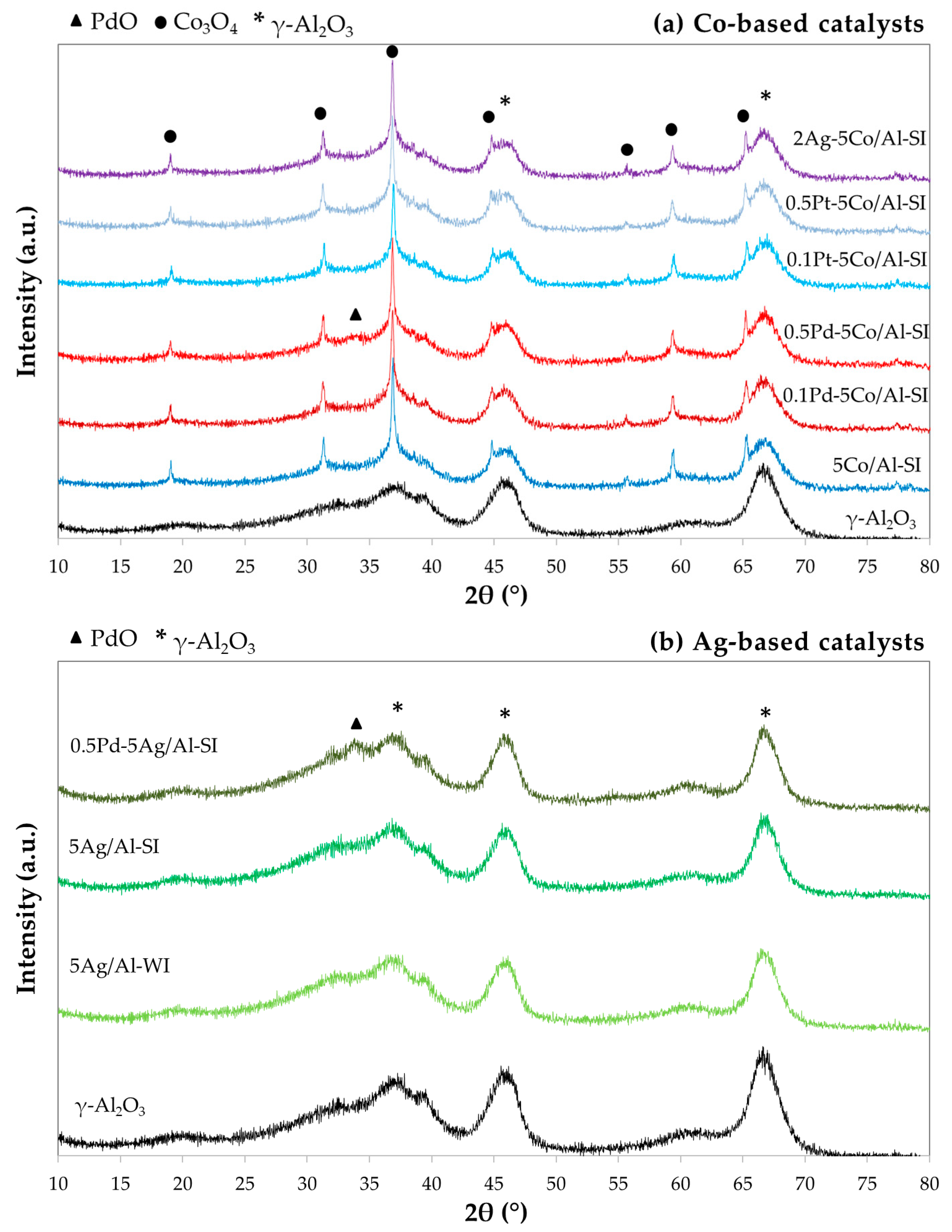
Table 1 presents the physicochemical properties of all as-received/prepared catalytic materials (γ-Al2O3 support, Ag- and/or Co-based alumina catalysts doped with Pt or Pd), such as metal content, surface area, pore volume, pore size, and the crystallite size of the formed Co3O4, calculated by applying the Scherrer Equation from the peak at 2θ: 35–38° from the XRD patterns (Figure 1a). The metal content measured by ICP revealed a Co content of approximately ~5.5 wt.%, while the high- and low-Pd-doped catalysts contained 0.58 wt.% and 0.12 wt.%, respectively, and the corresponding Pt loadings were 0.60 wt.% and 0.17 wt.%. The silver content ranged between ~5.5–5.9 wt.%, with 0.47 wt.% Pd. It is worth to mention the difference between the Pd loadings in the 0.5Pd-5Co/Al-SI and 0.5Pd-5Ag/Al-SI catalysts (0.58 wt.% and 0.47 wt.%, respectively). Regarding surface area, as expected, the addition of metals over alumina reduced the surface area of the carrier and increased the pore size of the derived catalyst.
In the case of Co-based catalysts, the crystallite size of Co3O4 was estimated from the XRD diffractograms (Figure 1a). In addition to the classic peaks of γ-alumina carrier (at 2θ: 37.2°, 45.6°, and 67.2° based on JCPDS reference no. 00-010-0425 for γ-Al2O3), the Co-based catalysts exhibit intense peaks due to the formation of Co3O4 at 2θ: 19°, 31.3°, 36.8°, 44.8°, 55.6°, 59.3°, and 65.2° [41]. For the undoped Co/Al catalyst prepared with the SI method, the crystallite size was calculated to be 37 nm, while the addition of Pt decreased the crystallite size to 35 nm and 32 nm for the catalysts with 0.1 wt.% and 0.5 wt.% Pt, respectively. Further reduction in the size of Co3O4 was revealed for the Pd-doped cobalt catalysts, with crystallite sizes 32 nm for the 0.1Pd-5Co/Al-SI and 30 nm for the 0.5Pd-5Co/Al-SI. One the other hand, the XRD patterns of the Ag-based catalyst (Figure 1b) did not reveal any peak due to any silver phase (Ag2O, Ag0), possibly due to the efficient dispersion of Ag over the alumina carrier or the formation of small Ag-based particles. Even the different synthesis method did not affect the metal deposition on γ-Al2O3. Furthermore, the XRD pattern of the Ag-doped Co catalyst (2Ag-5Co/Al-SI), did not show any Ag peak, while the Co3O4 crystallite size was the highest (38 nm) measured. For the noble metal-doped catalysts (Pt or Pd), only one low-intensity peak was observed for the catalysts with a Pd content of 0.5 wt.% at 2θ: 33.8°, attributed to the formation of PdO phase [42].
So far, the synthesis method (WI vs. SI) has not shown any effect on the properties of the derived silver-based catalysts. As is well known, SEM images provide a better understanding of the metals’ deposition on the alumina carrier. Indeed, in our previous study [40], the SEM image of 5Co/Al-SI revealed the formation of a core–shell nanostructure, where Co3O4 was deposited on the outer surface of the alumina particle. Besides Pd addition at different loadings, the catalyst in the current study was also doped with Ag (2 wt.%) and Pt (0.1 wt.% and 0.5 wt.%Pt).
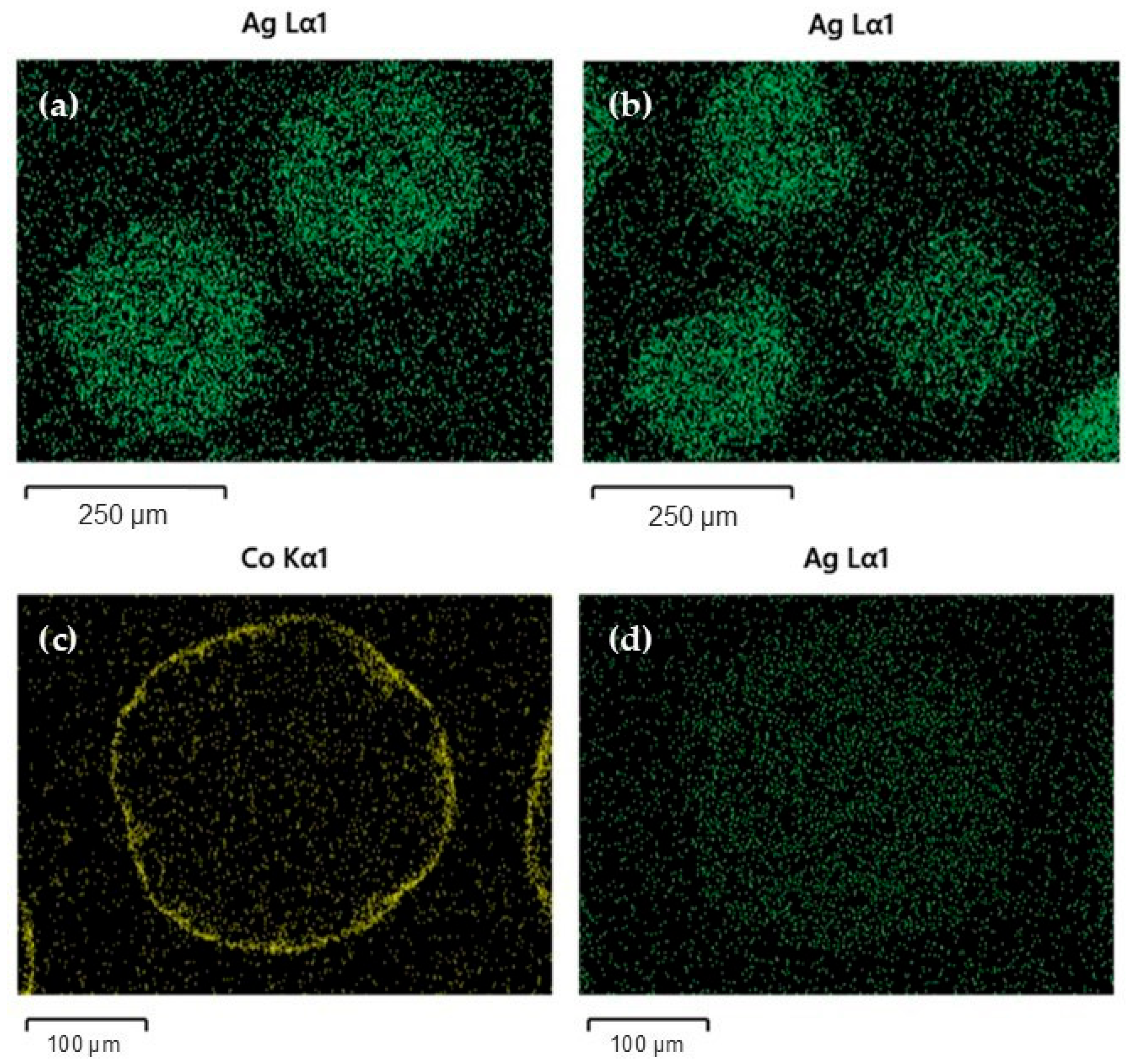
In the case of Ag-based catalyst prepared by WI and SI methods, no significant differences were observed in SEM images concerning Ag deposition on the alumina carrier (Figure 2a and Figure 2b, respectively). The silver deposition occurred homogeneously on the alumina particle, presenting well-dispersed silver species, without creating the core–shell structure formed via spray impregnation method, as in the case of 5Co/Al-SI catalyst (Figure 2c). This is probably related to the mobility of Ag over the alumina particle during synthesis and, more specifically, during the thermal treatment (calcination at 500 °C under air flow) of the material. Keijzer et al. [43] showed an increase in Ag particle size during oxidative thermal treatment up to 400 °C. Even during a reaction/process, such as ethylene epoxidation [43] or methanol oxidation to formaldehyde [44], changes in the morphology of the silver active sites are possible due to the mobility of Ag species. SEM images of the 2Ag-5Co/Al-SI catalyst revealed the formation of a core–shell structure of Co deposition on the alumina carrier, while Ag species (via dry impregnation method) were widely and uniformly dispersed over the alumina carrier.

2.2. Reducibility of Fresh Catalysts

Structural characterization revealed the formation of Co3O4 species over cobalt-based catalysts, while in the case of silver-based catalysts the oxidation state of Ag is not clear. Thus, the reducibility of the Ag-based catalysts was investigated via TPR-H2, and the reduction profiles are presented in Figure 3. The corresponding reduction profiles for the cobalt catalysts were presented in Iliopoulou et al. [40], where two main reduction peaks were observed, related to the reduction of Co3O4 to CoO (low-temperature peak) and the reduction of CoO to Co0 (high-temperature peak), respectively. Moreover, the addition of Pd shifted the reduction profiles to lower temperatures, indicating a significant increase in the reducibility of the catalysts.
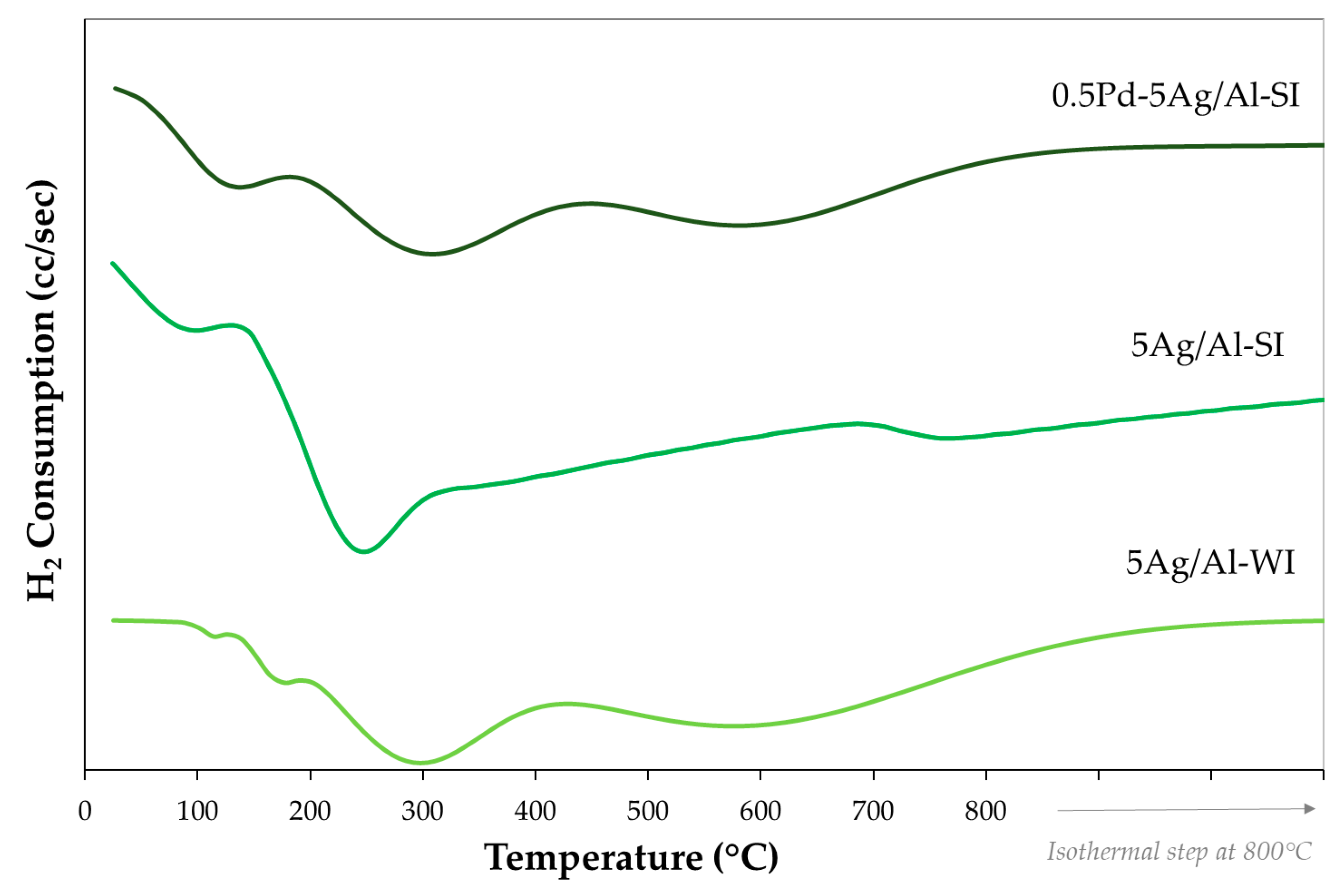
As shown in Figure 3, the 5Ag/Al-WI catalyst exhibits two low-intensity peaks at 110 °C and 170 °C, and two broad peaks at 300 °C and 600 °C. The low-temperature peaks are related to the reduction in large Ag2O clusters, while at higher temperatures (>300 °C) the reduction in small Ag2O clusters takes place. The silver-based catalysts prepared with WI (5Ag/Al-WI) and SI methods (5Ag/Al-SI) and the Pd-doped catalyst (0.5Pd-5Ag/Al-SI) present similar reduction profiles, with some differences in peak intensity. One main low-temperature broad peak with a maximum at 100–130 °C and two broad peaks centered at 250–300 °C and above 500 °C are observed, attributed to large Ag2O clusters and well-dispersed smaller Ag2O clusters, respectively [45,46].
The intensity of the peaks reveals that a higher amount of large Ag2O clusters exists over 5Ag/Al-SI, as more H2 was consumed for the reduction of these species (temperature area: RT—450 °C), while the amount of well-dispersed smaller Ag2O species is lower. On the other hand, the opposite was observed for the catalyst prepared via the wet impregnation method (5Ag/Al-WI), where more well-dispersed Ag2O and fewer large clusters were formed. This fact revealed that the synthesis method (WI vs. SI) has an impact on the catalyst structural properties. Moreover, the incorporation of Pd into 5Ag/Al-SI via the dry impregnation method and the calcination process enhanced Ag mobility, resulting in a decrease in the amount of large Ag2O clusters and an increase in well-dispersed smaller Ag2O species.

2.3. Methanol Oxidation Reaction

2.3.1. Effect of Noble and Transition Metals on Co-Based Catalysts

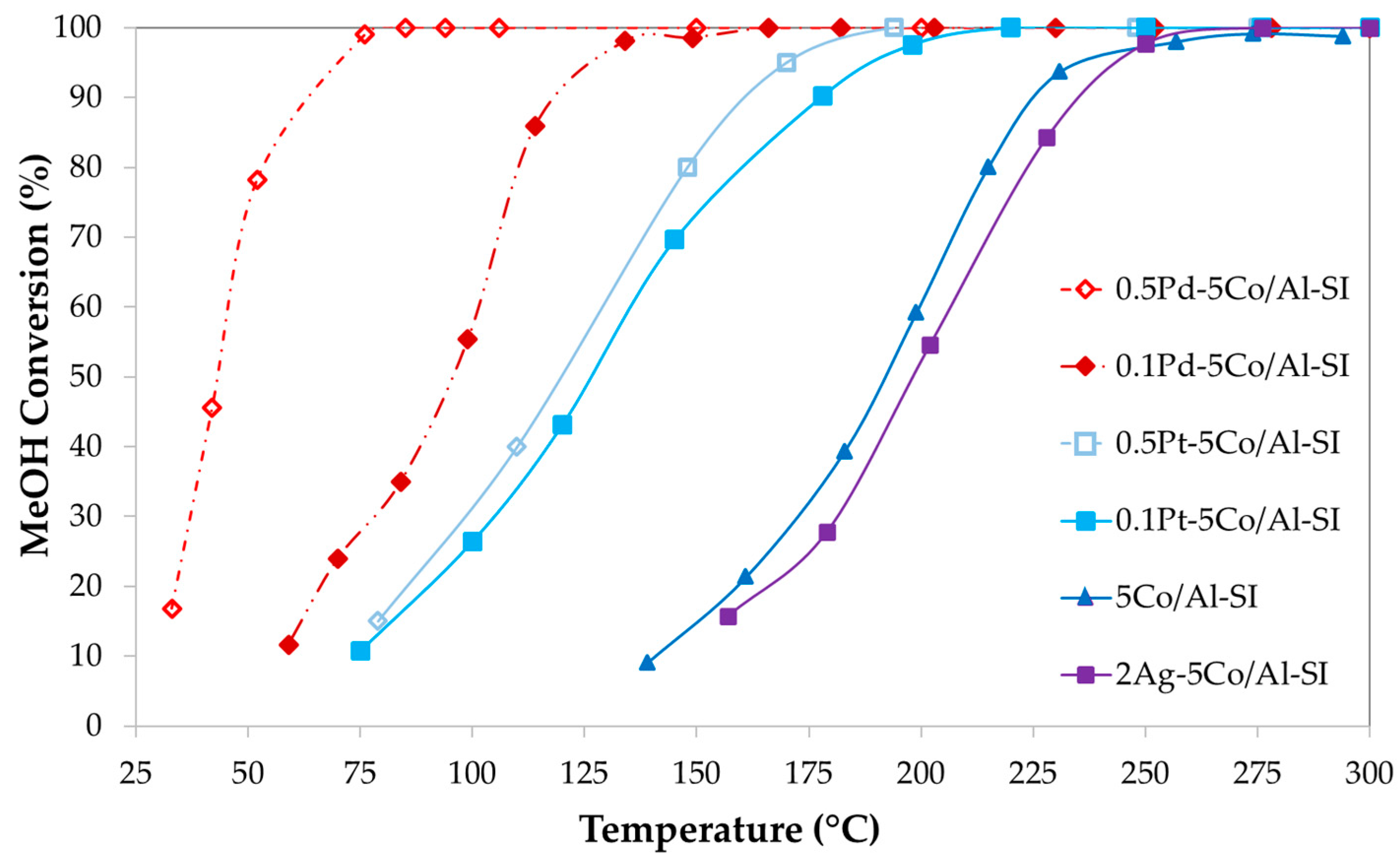
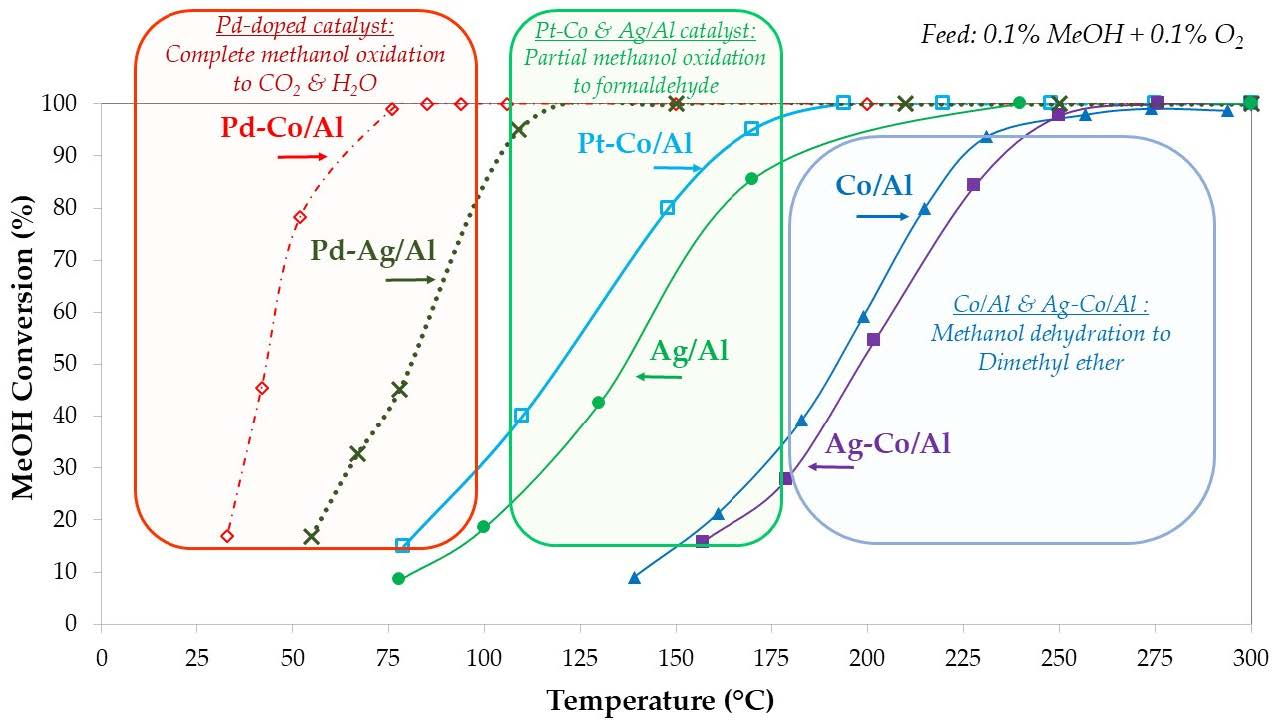
Methanol oxidation performance of doped cobalt-based catalysts is shown in Figure 4. The superiority of the 0.5Pd-5Co/Al-SI catalyst is obvious, achieving 50% methanol conversion at 43 °C (T50), while the decrease in the Pd content in the Pd-Co catalyst to 0.1 wt.% (0.1Pd-5Co/Al-SI) shifted the conversion plot to higher temperatures with T50: 95 °C, maintaining, however, superiority even compared to the Pt-doped Co/Al catalyst (Pt content of 0.5 wt.%) which presented T50: 119 °C. Decreasing the Pt content to 0.1 wt.% did not affect the catalyst performance, presenting almost similar plots (T50: 126 °C). On the other hand, the incorporation of 2 wt.% Ag did not improve the methanol oxidation activity of 5Co/Al-SI, which remained the same or was slightly reduced, shifting T50 from 191 °C for 5Co/Al-SI to 198 °C for 2Ag-5Co/Al-SI. In the literature, the combination of silver and cobalt on an alumina carrier resulted in a synergistic interaction of these metals, demonstrating high activity for the CO oxidation reaction, which was affected by catalyst synthesis method [47]. In the methanol oxidation reaction, the combination of Ag and Co did not have the same effect. Probably, the deposition of Co on the outer surface of the alumina particles (when applying spray impregnation) and then the incorporation of 2 wt.% Ag using the dry impregnation method dispersed silver all over the alumina particles, as revealed by the SEM images (Figure 2c,d), without creating the expected synergy between Co-Ag.
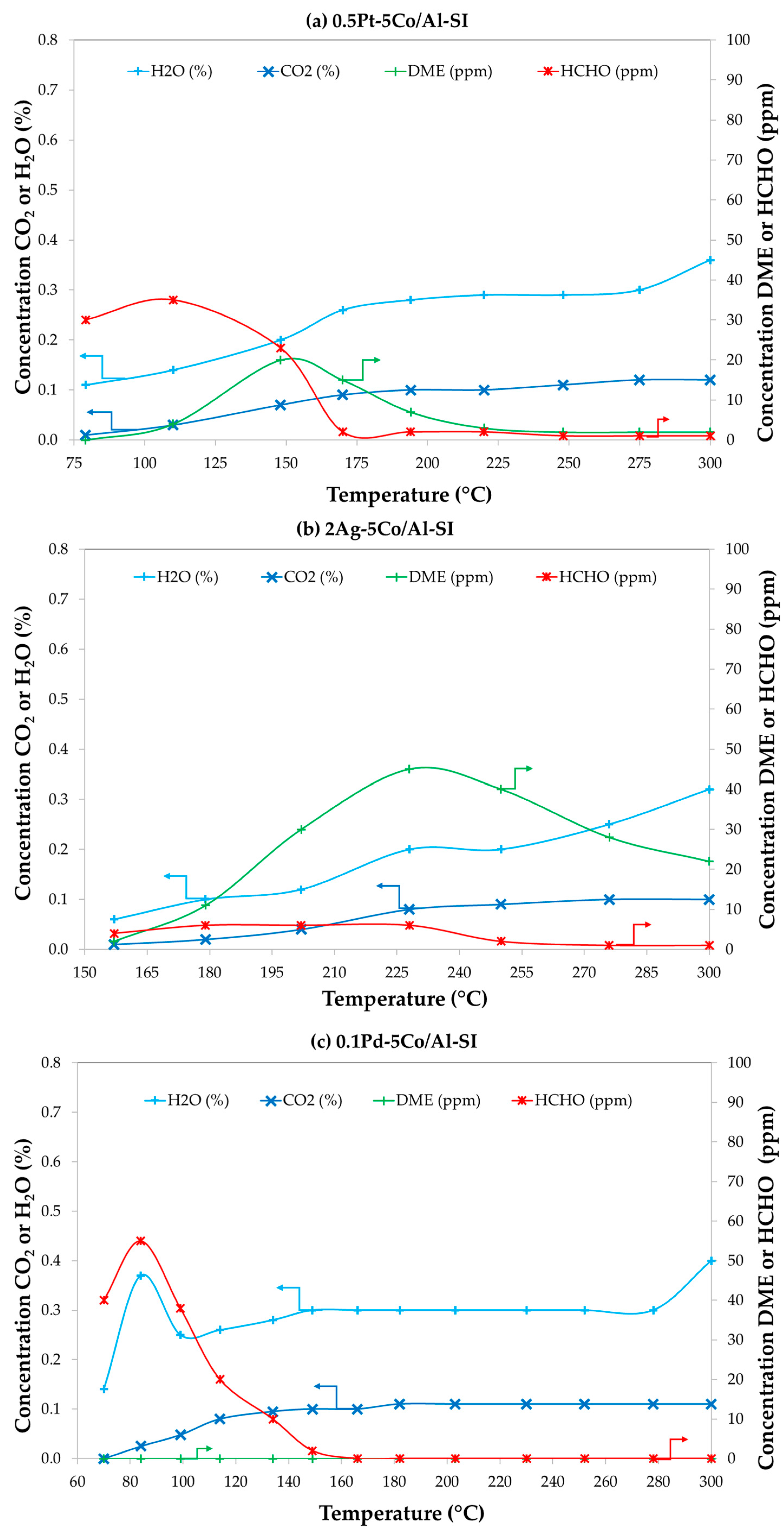
Figure 5 presents the MOR products for 0.5Pt-5Co/Al-SI, 2Ag-5Co/Al-SI, and 0.1Pt-5Co/Al-SI (Figure 5a, Figure 5b, and Figure 5c, respectively). Different reaction pathways appear to be followed by each catalyst. The Pt-doped cobalt catalysts (same products despite different Pt loading) at high reaction temperatures of 225–300 °C oxidized methanol to CO2 and H2O, while at lower temperatures (T < 225 °C) dimethyl ether and formaldehyde were produced from MOR. The addition of Ag to Co/Al catalyst presented similar products to the bare 5Co/Al-SI catalyst [40], but with a lower concentration of DME and a similar concentration of HCHO. This implies that the reaction follows the same mechanism as the 5Co/Al-SI catalyst, despite the addition of Ag. The catalyst with low Pd content of 0.1 wt.% (Figure 5c) mainly produced CO2 and H2O during the methanol oxidation reaction at the temperature range of 115–300 °C, while at lower temperatures the formation of HCHO (maximum concentration of 55 ppm) was observed in higher concentrations than the corresponding catalyst with 0.5 wt.% Pd, where only traces of formaldehyde were detected [40].

2.3.2. Effect of Synthesis Method and Pd-Doping on Ag-Based Catalysts

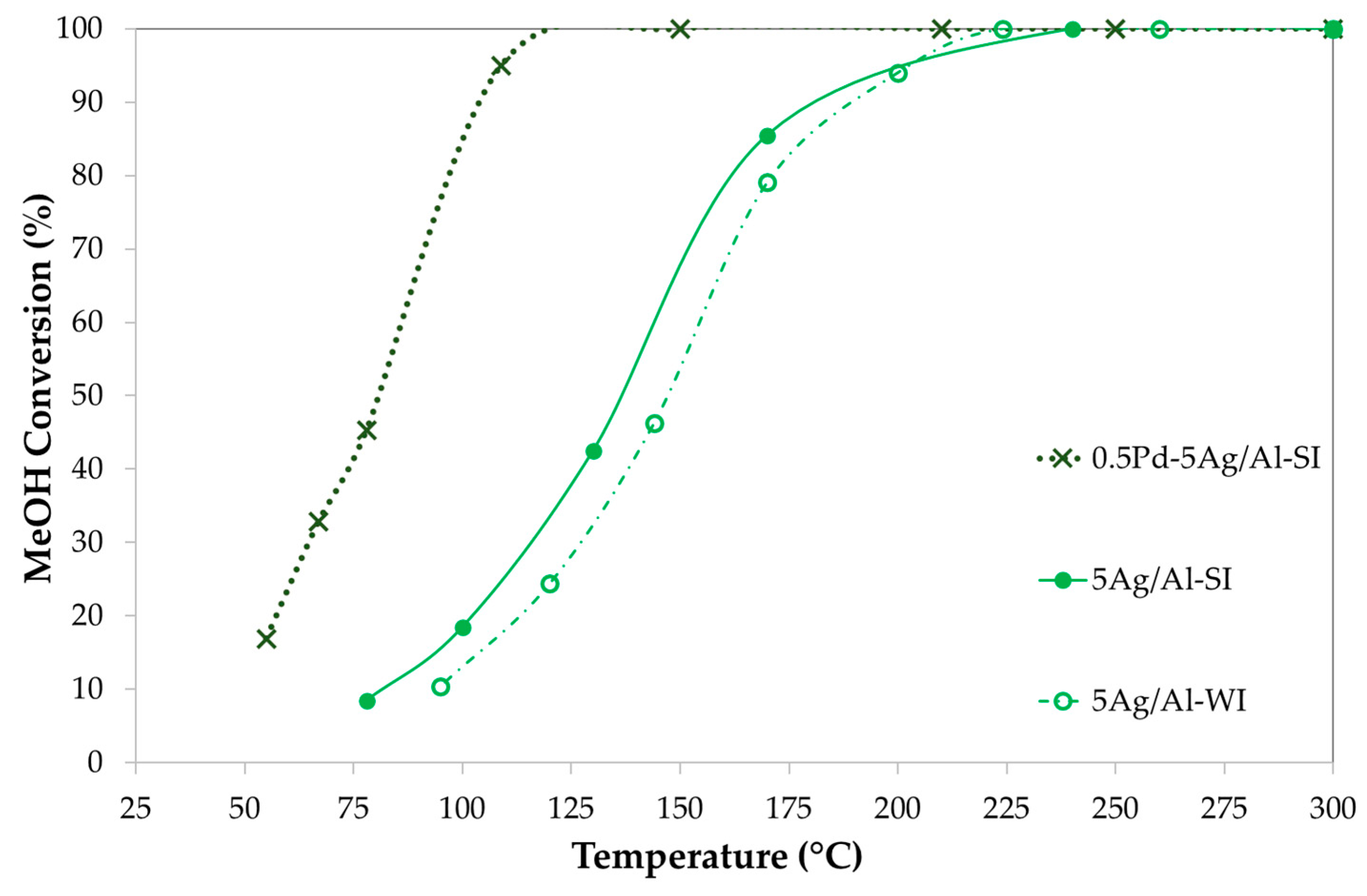
Silver is widely used for methanol oxidation to formaldehyde, but has also been studied for the oxidation of volatiles organic compounds to CO2 and H2O, like formic acid, acetic acid, ethanol, etc. [48]. Thus, instead of using silver as a dopant for the Co/Al catalyst, bare Ag-based alumina catalysts were also prepared applying both wet and spray impregnation methods. In Figure 6, it seems that the 5Ag/Al-WI and 5Ag/Al-SI catalysts present similar conversion plots. In the case of Co-based catalysts, important differences were observed between the catalysts, and the difference in T50 was ~23 °C between the two differently synthesized Co-based samples [40], while for the silver-based catalysts the temperature difference is only 10 °C. However, the silver-based catalysts present higher methanol oxidation performance than the cobalt-based catalysts, with 50% MeOH conversion at 137 °C for 5Ag/Al-SI as compared to 191 °C for 5Co/Al-SI.
Incorporation of 0.5 wt.% Pd on 5Ag/Al-SI catalyst shifted the conversion plots to lower temperatures, enhancing the oxidation performance of bare silver catalysts, achieving T50 at 81 °C. As compared with the doped cobalt catalyst, the 0.5Pd-5Co/Al-SI (T50: 43 °C) presented the highest activity, followed by the 0.5Pd-5Ag/Al-SI (T50: 81 °C) and the 0.1Pd-5Co/Al-SI (T50: 95 °C). It seems that Pd incorporation improved the performance of the Co-based catalyst more than the Ag/alumina catalyst, despite the higher Pd content in the catalysts, as shown in Table 1, as the difference in ΔT50 between the 0.1Pd-5Co/Al-SI catalyst with 0.12 wt.% Pd content and the 0.5Pd-5Ag/Al-SI catalyst is only 14 °C.
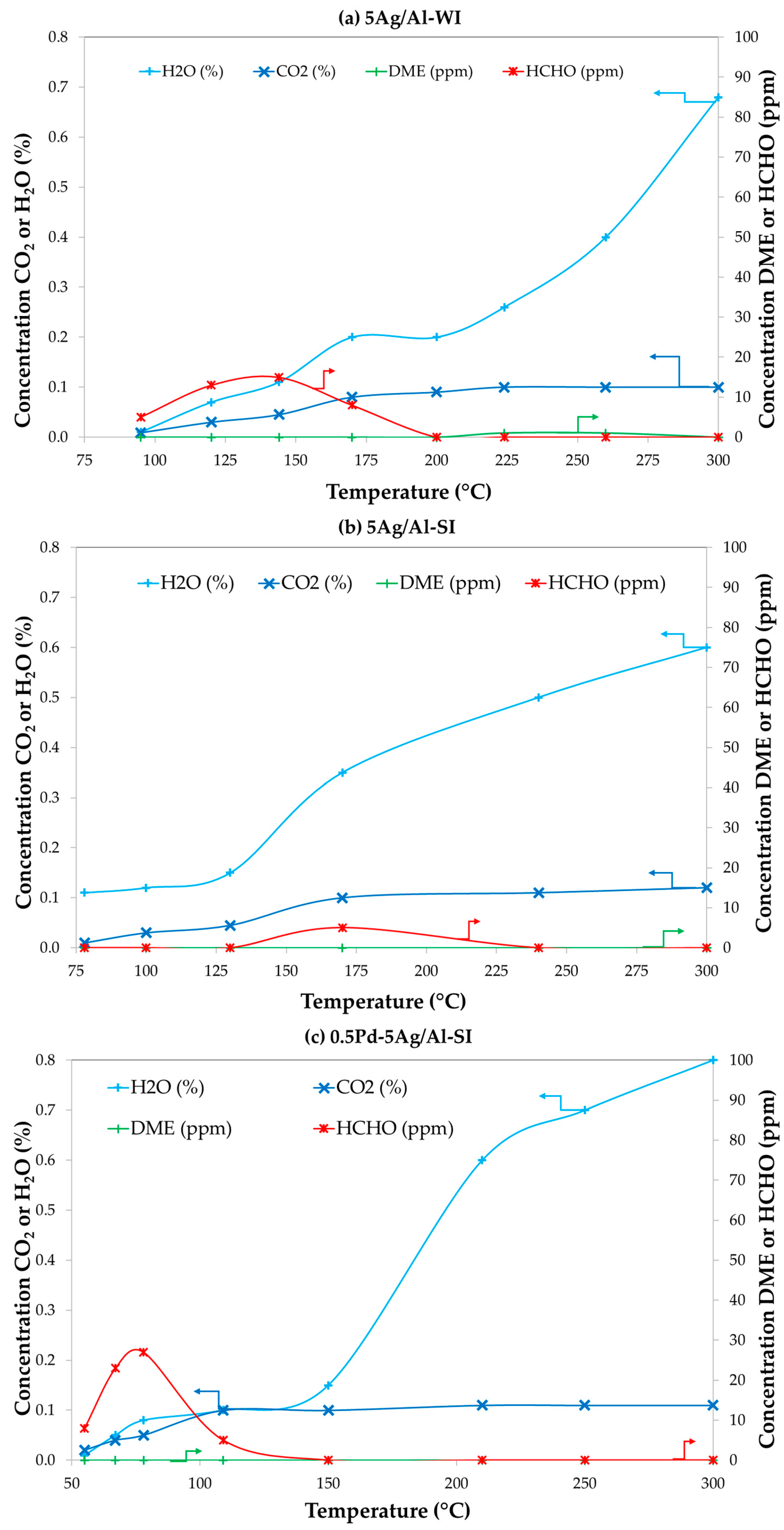
In the case of Ag-based catalysts, a different reaction mechanism seemed to take place based on the MOR products (Figure 7). The production of CO2 and H2O was observed in the high-temperature area (175–300 °C), while at lower temperatures formaldehyde was detected, without the production of DME. The incorporation of Pd (Figure 7c) into the 5Ag/Al-SI catalyst changed the reaction mechanism and appears to be similar to the corresponding 0.5Pd-5Co/Al-SI catalyst. When the methanol conversion started to decrease (T < 100 °C), formaldehyde production was observed during MOR. So, it seems that the increase in catalytic activity of 5Ag/Al-SI catalyst was likely due to Pd, with Ag promoting, however, formaldehyde formation, probably due to the increase in well-dispersed Ag2O species, as revealed by the reduction profiles in Figure 3.

2.4. Effect of Impurities (H2O and CO) and Catalysts Stability with Time-on-Stream

2.4.1. Effect of CO and/or H2O on Optimum 0.5Pd-5Co/Al-SI Catalyst Activity

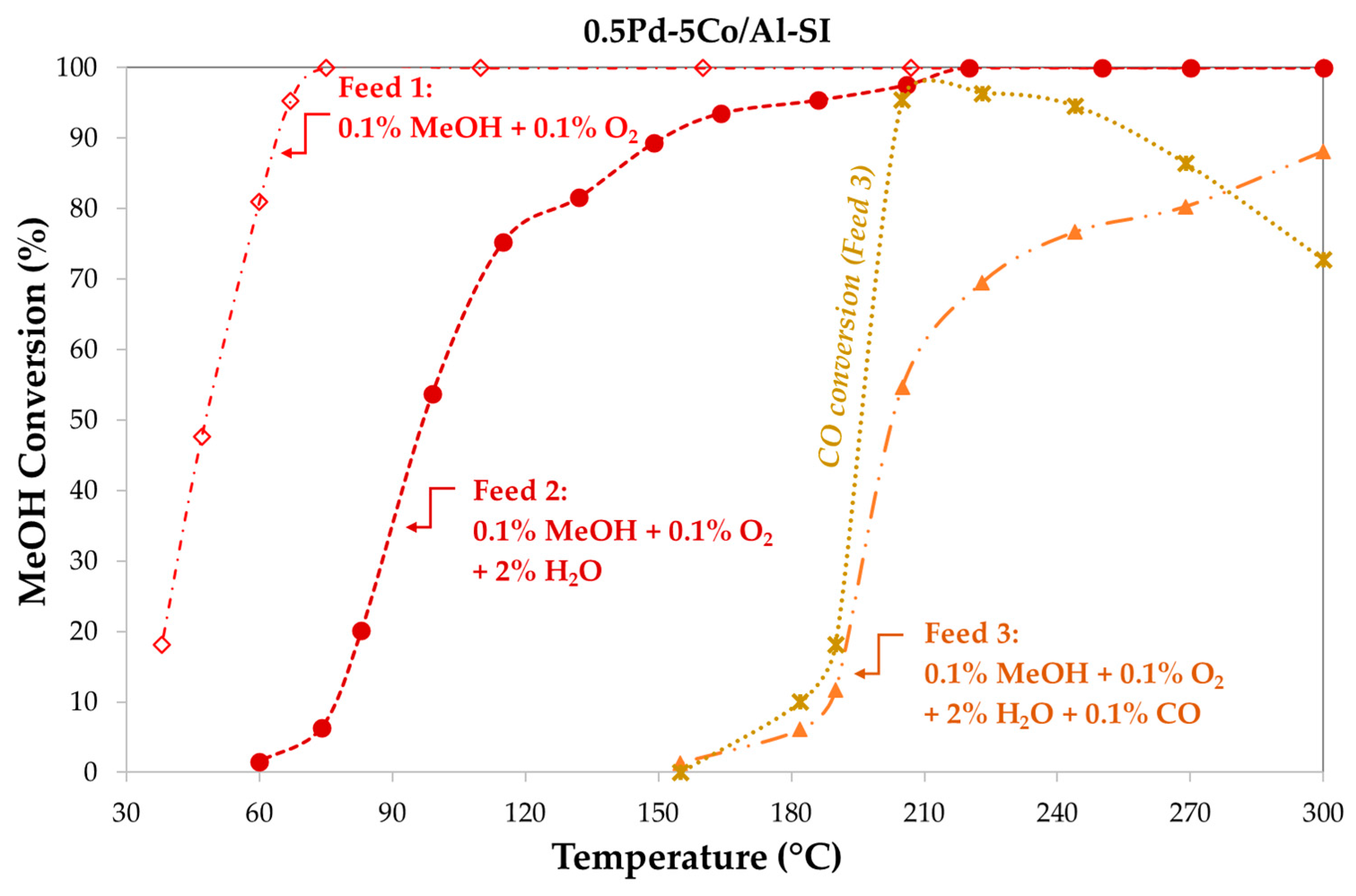
The catalyst with the highest activity, 0.5Pd-5Co/Al-SI, was further tested for methanol oxidation in the presence of CO and/or H2O. Figure 8 presents the effect of impurities on catalyst activity during light-off experiments. The addition of 2 vol.% H2O in the feed (Feed 2) shifted conversion plots to higher temperatures and increased T50 from 43 °C to 97 °C, possibly due to the competitive adsorption of methanol and water on the catalyst active sites, resulting in partial loss of activity [34]. Feed 3, besides CH3OH, O2, and H2O, also contains 0.1 vol.% CO, and the catalytic performance of 0.5Pd-5Co/Al-SI is further diminished, presenting 50% methanol conversion at 203 °C. In the presence of CO, it seems that CO and methanol are also competing for the catalyst’s active sites, and probably the adsorption of methanol is weaker than that of CO, based on the CO conversion results (Figure 8). At T < 300 °C, methanol conversion started to decrease, while CO conversion increased, achieving almost complete oxidation (~96%) at 220 °C. This catalyst has also been tested for CO oxidation, showing high activity [40]. The coexistence of CO and MeOH (along with O2 and H2O) indicates weaker sorption of methanol on the active sites of the 0.5Pd-5Co/Al-SI catalyst compared to CO adsorption, which seems to be stronger, hindering methanol adsorption and reaction.

2.4.2. Catalyst Stability with Time-on-Stream

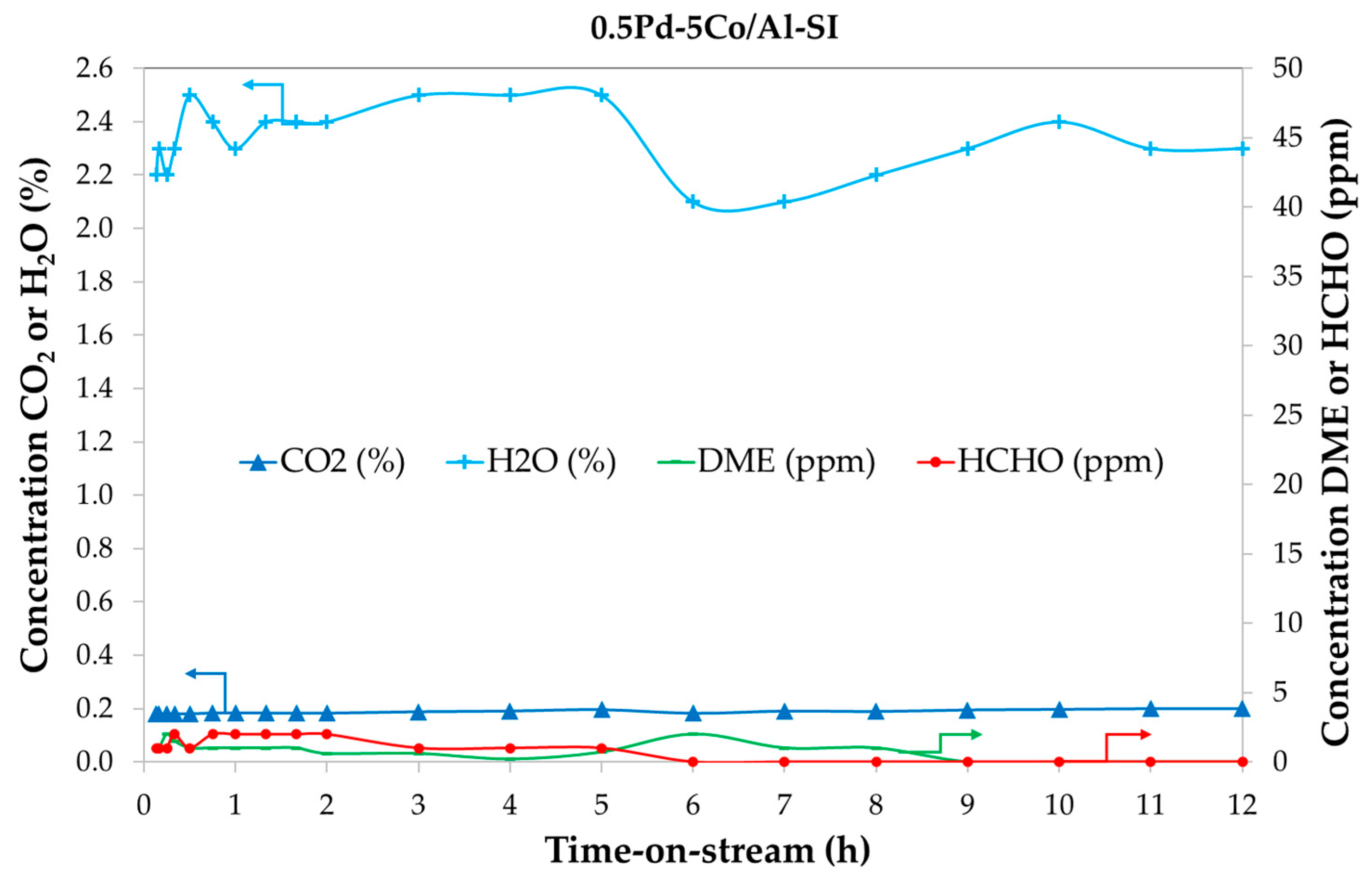
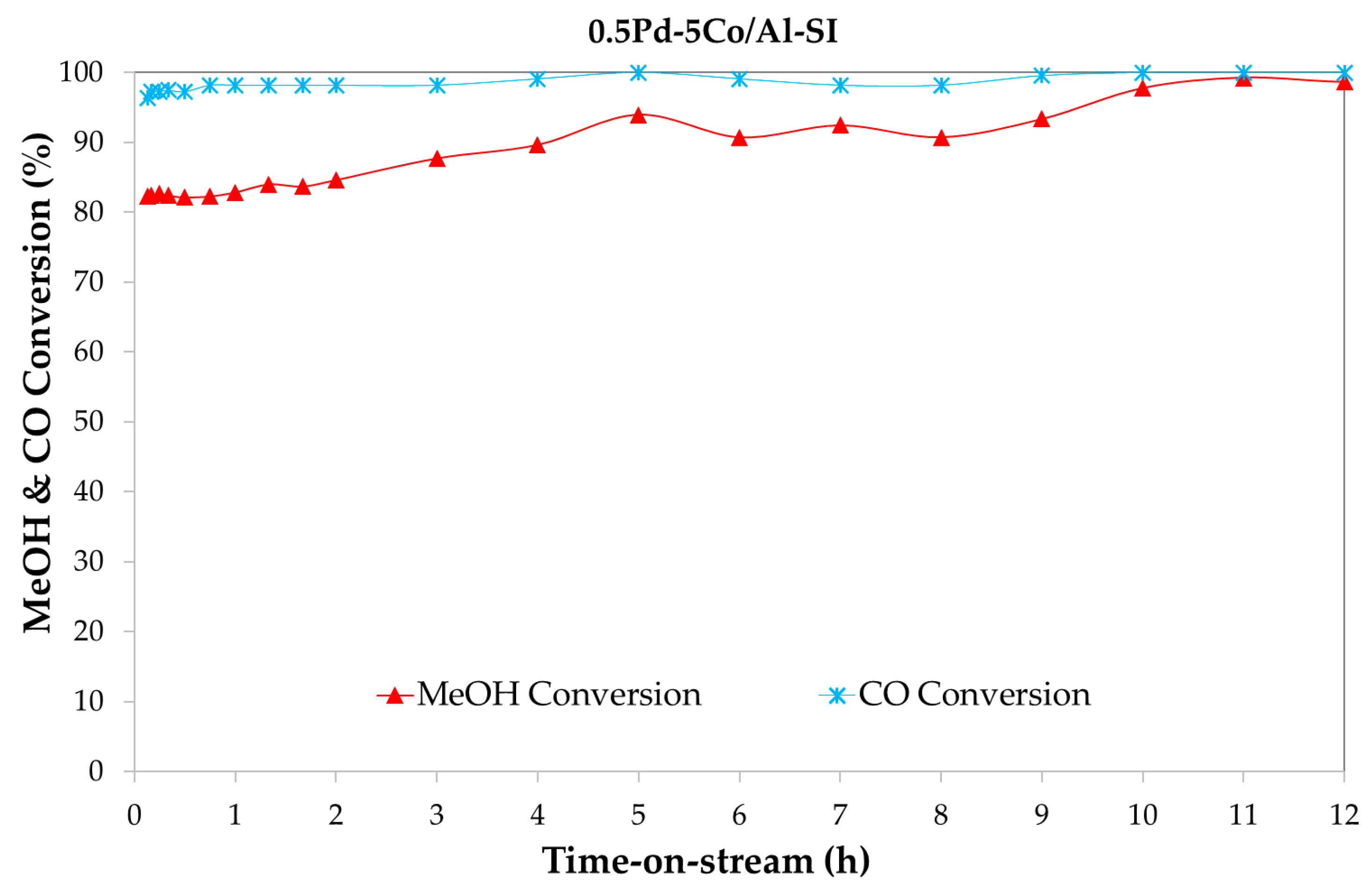
Figure 9 shows the stability performance of the 0.5Pd-5Co/Al-SI catalyst for 12 h TOS under (Feed 3) 0.1 vol.% CH3OH-0.1 vol.% O2-2 vol.% H2O-0.1 vol.% CO at 230 °C. The reaction temperature was chosen based on the catalyst performance in Figure 8 (under Feed 3), where the methanol conversion was approximately 75%. In the first 1 h of the reaction, the methanol conversion was 80%, and with TOS the conversion increased, reaching 94% after 9 h MOR. In the last 3 h of the reaction (t: 9–12 h), the methanol conversion further increased, finally achieving complete methanol conversion (100%). CO conversion ranged between 97 and 100% during the experiment, and the main reaction products were CO2 and H2O, while only traces (less than 3 ppm) of DME and formaldehyde were detected (Figure 10).

2.5. Physicochemical Characteristics of Used Catalysts

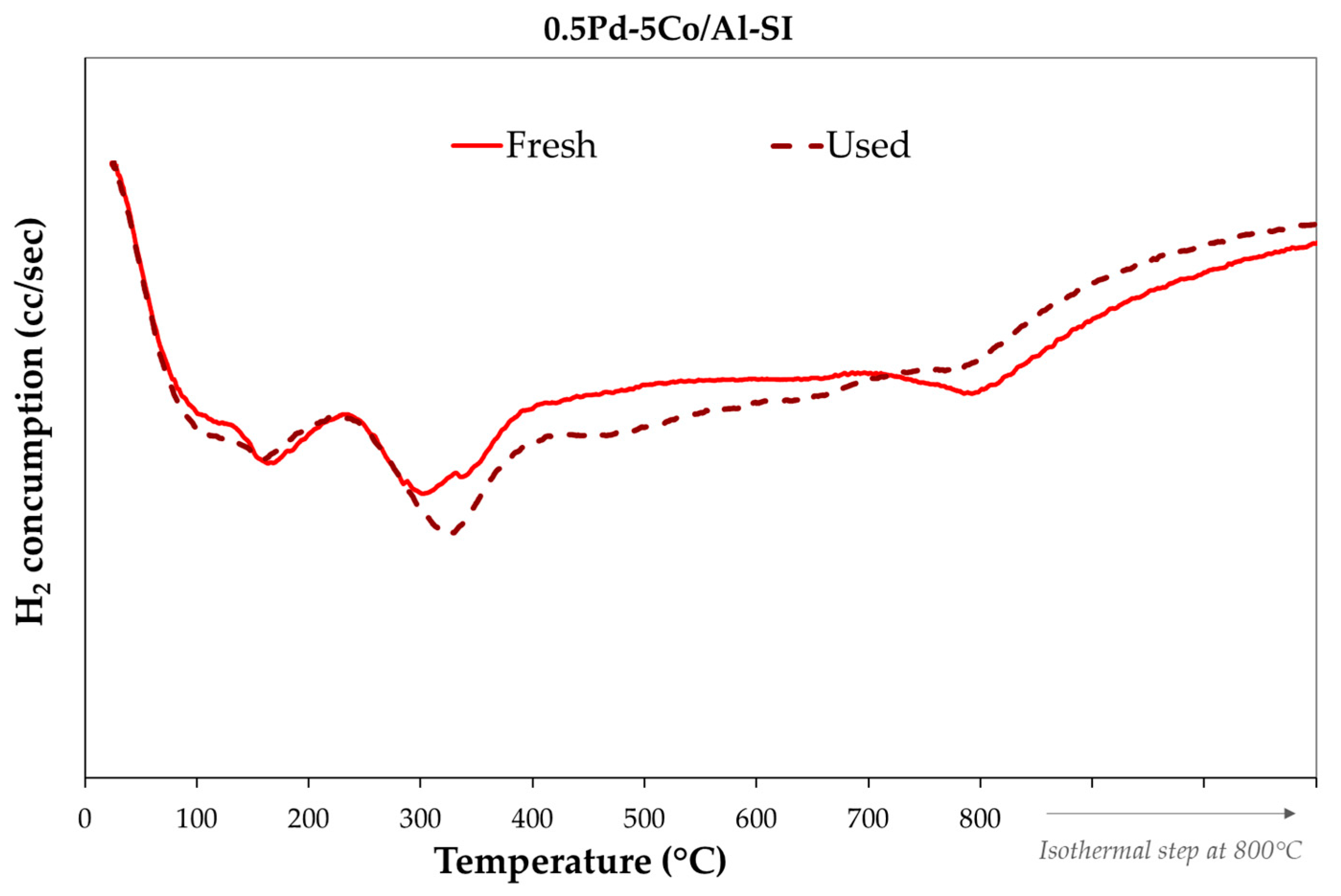
The improvement in the activity of the 0.5Pd-5Co/Al-SI catalyst during the stability experiment was investigated by characterizing the used catalyst via TPR-H2 and XRD methods. The reduction profiles of fresh and used (after stability experiment) Pd-Co/Al-SI catalysts are shown in Figure 11. The fresh catalyst presents three peaks, with maxima at 160 °C, 310 °C, and at 800 °C. The first two peaks are assigned to the reduction of Co3O4 to CoO and then to metallic Co0, and are shifted towards lower temperatures compared to bare Co3O4 [33] or Co/γ-Al2O3 reduction profiles [40], due to the incorporation of Pd, which enhanced catalyst reducibility. The high-temperature peak is assigned to the reduction of Co-Al species, like CoAl2O4, where strong interaction occurs between cobalt and the alumina carrier [49]. The reduction profile of the used catalyst presents the same peaks as the fresh one but with differences in the intensities of H2 consumption peaks. The intensity of the first peak (reduction of Co3O4 → CoO) is similar to the fresh one, while the intensity of the second peak (reduction of CoO → Co0) is higher, which means that more CoO species existed in the used sample than in the fresh one, which were probably formed in situ during the stability experiment.
The H2 consumption results revealed similar consumption for the first peak, assigned to the reduction of Co3O4 to CoO, while differences were observed in the H2 consumption of the second peak (reduction of CoO to Co0) and the high-temperature peak of Co-Al species, where the consumed H2 was slightly higher for the fresh catalyst.
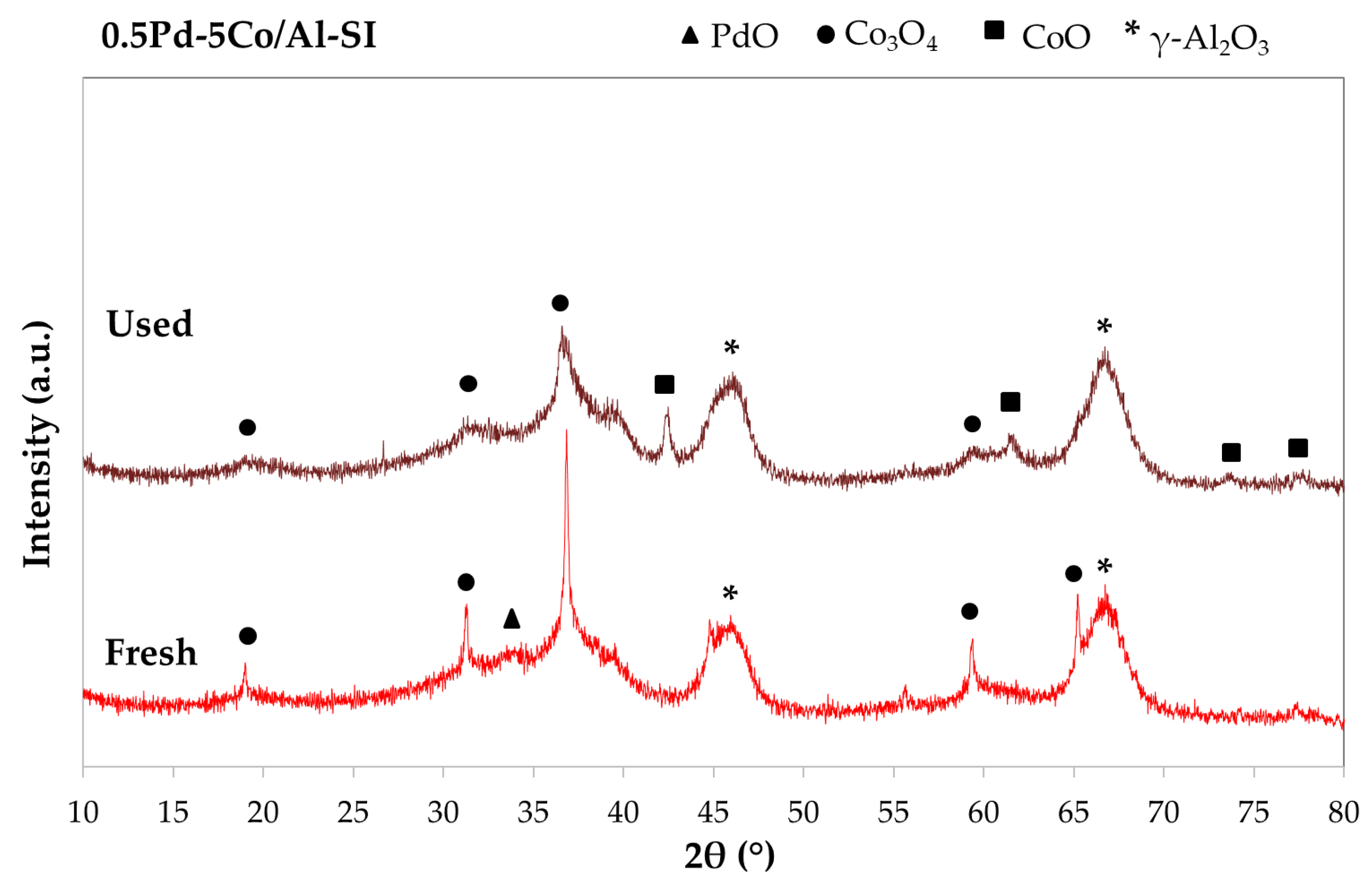
The XRD patterns of fresh and used catalysts are compared in Figure 12 and confirm the conclusions from the reduction profiles. Significant differences are identified in the XRD diffractograms related to the oxidation state of both Co and Pd. The fresh catalyst, in addition to the peaks of γ-Al2O3, also showed peaks due to the formation of Co3O4 and PdO. The used catalyst presents lower-intensity Co3O4 peaks and no PdO peak, while new peaks were formed due to the CoO phase at 2θ: 42.4°, 61.7°, 73.5°, and 77.5° [50]. It seemed that under the reaction conditions (0.1 vol.% CH3OH-0.1 vol.% O2-2 vol.% H2O-0.1 vol.% CO) and with TOS, significant structural changes occurred. Thus, it is likely that the active phase of the 0.5Pd-5Co/Al-SI catalyst for MOR is a mixture of Co3O4 and CoO phases. Zafeiratos et al. [24] studied two important parameters for the methanol oxidation reaction: (i) the active phase of cobalt and (ii) the CH3OH/O2 mixing ratio. The methanol-to-O2 ratio strongly affected the oxidation state of Co, which is a mixture of CoO and Co3O4 (CoOx), and consequently the reaction mechanism.

3. Discussion

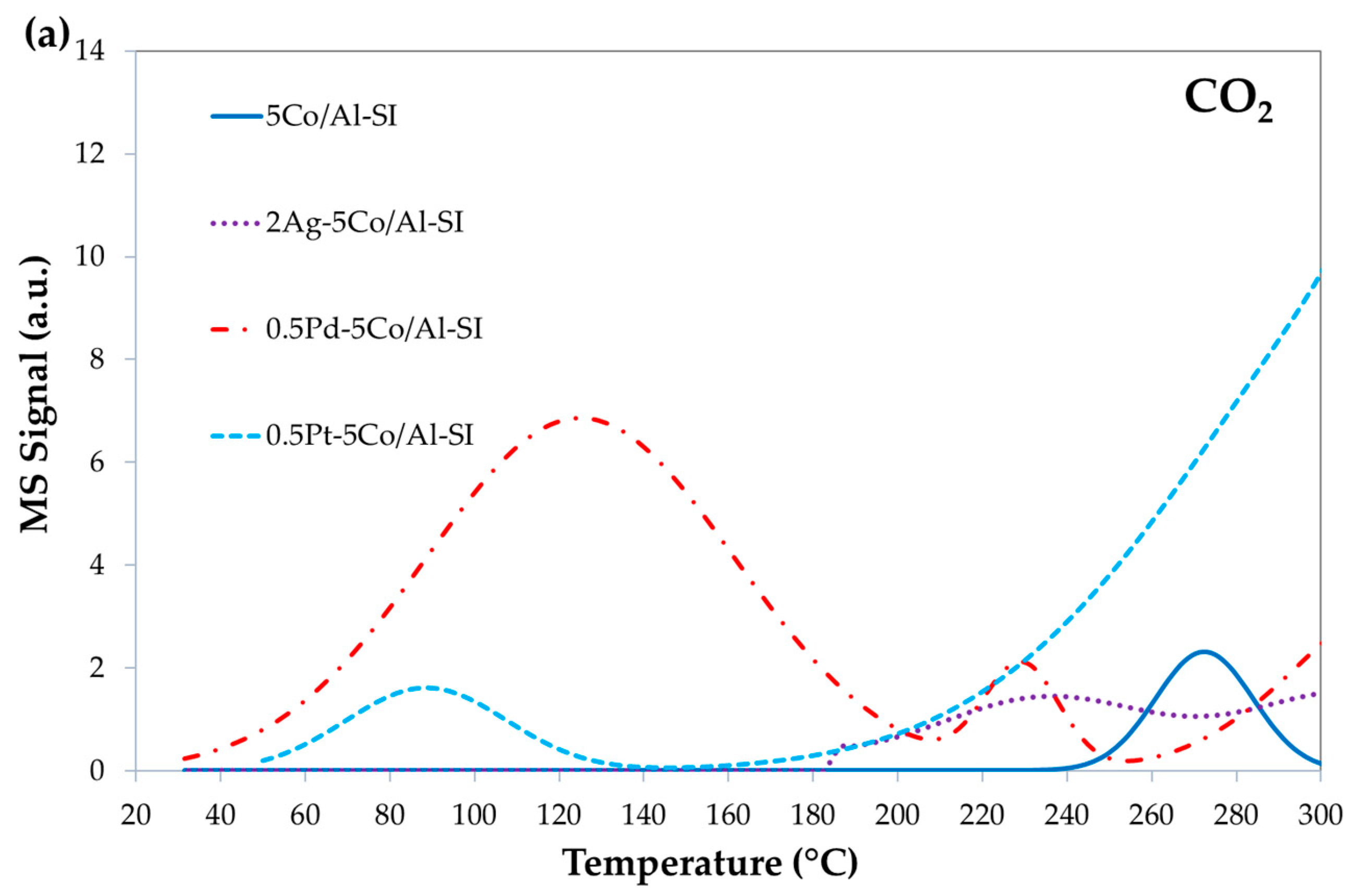
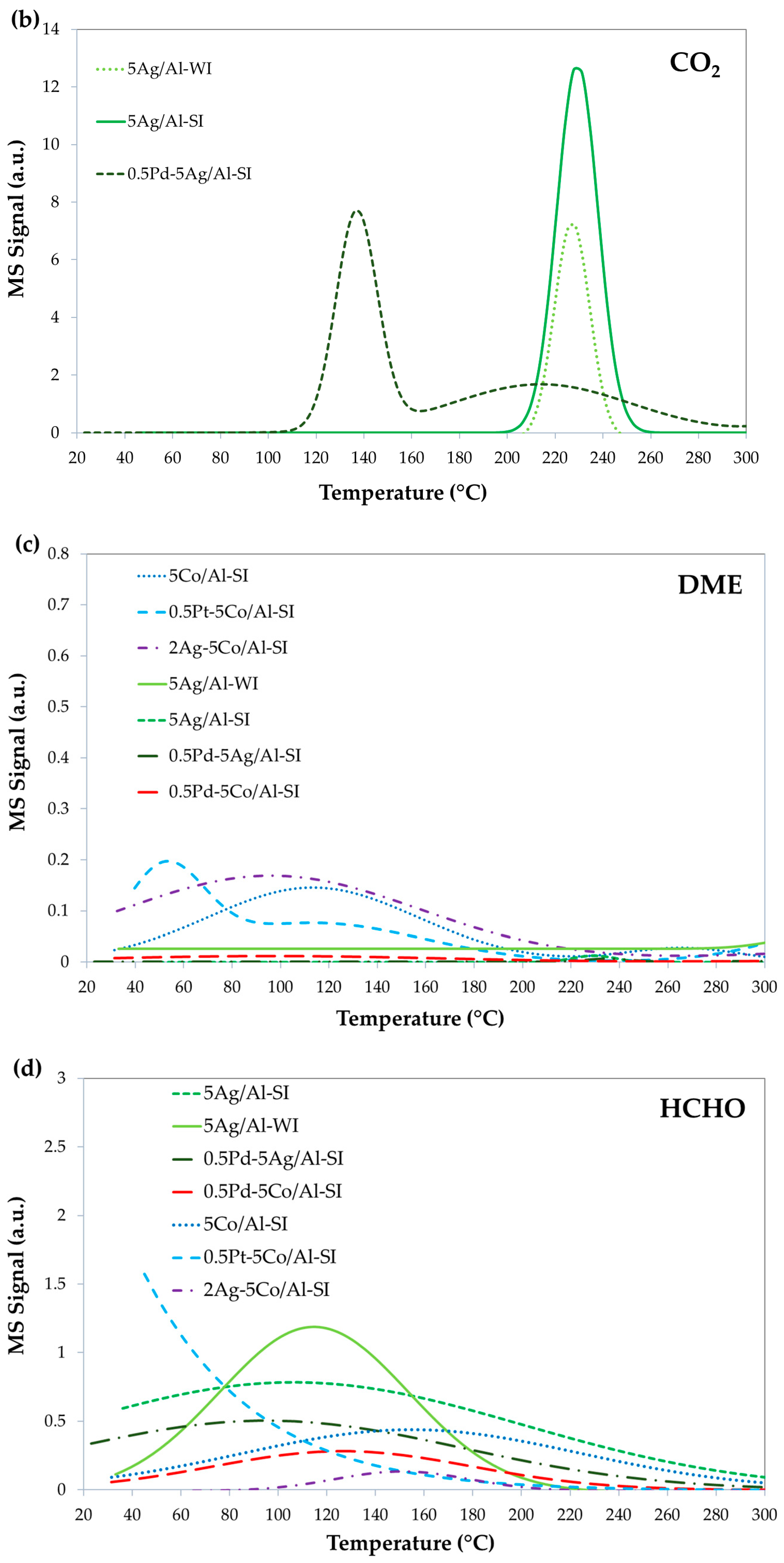
The doping of Co/γ-Al2O3 catalyst prepared with the spray impregnation method with noble metals (Pd or Pt) and/or a transition metal (Ag) revealed that each “combination” results in a different reaction pathway. The methanol desorption study offered insight into the MOR mechanism, where the results are in full agreement with the results from the catalysts’ evaluation performance. Figure 13a–d show the MS signals of CO2 (a,b), DME (c), and HCHO (d) desorbed from methanol-saturated catalysts under 0.1 vol.% O2/He. The CO2 desorption profiles of Co- (Figure 13a) and Ag-based (Figure 13b) catalysts present higher intensities as compared with the DME and HCHO profiles. Bare 5Co/Al-SI catalyst exhibit one low-intensity CO2 peak at high temperatures (T > 220 °C), similar to the 2Ag-5Co/Al-SI catalyst. The Pt- and Pd-doped cobalt catalyst present CO2 desorption across the whole temperature range (RT—300 °C). The Pt-Co/Al catalyst present two temperature areas of CO2 desorption, at 50–140 °C and 160–300 °C (with the maximum CO2 signal desorption occurring at T > 300 °C), while Pd-Co/Al desorbs CO2 throughout the entire temperature range, with different peak intensities.
The bare 5Ag/Al catalyst prepared either with WI or SI method presents similar desorption profiles of CO2 (T > 200 °C), while the addition of Pd results in CO2 desorption at lower temperatures, starting from 100 °C. The DME signal (Figure 13c) was detected for the 5Co/Al-SI, 2Ag-5Co/Al-SI, and 0.5Pt-5Co/Al-SI catalysts, with similar intensities and temperature ranges (RT—200 °C), while the formaldehyde (Figure 13d) signal was detected for all catalysts, with higher intensities for Ag-based catalysts and 0.5Pt-5Co/Al-SI.
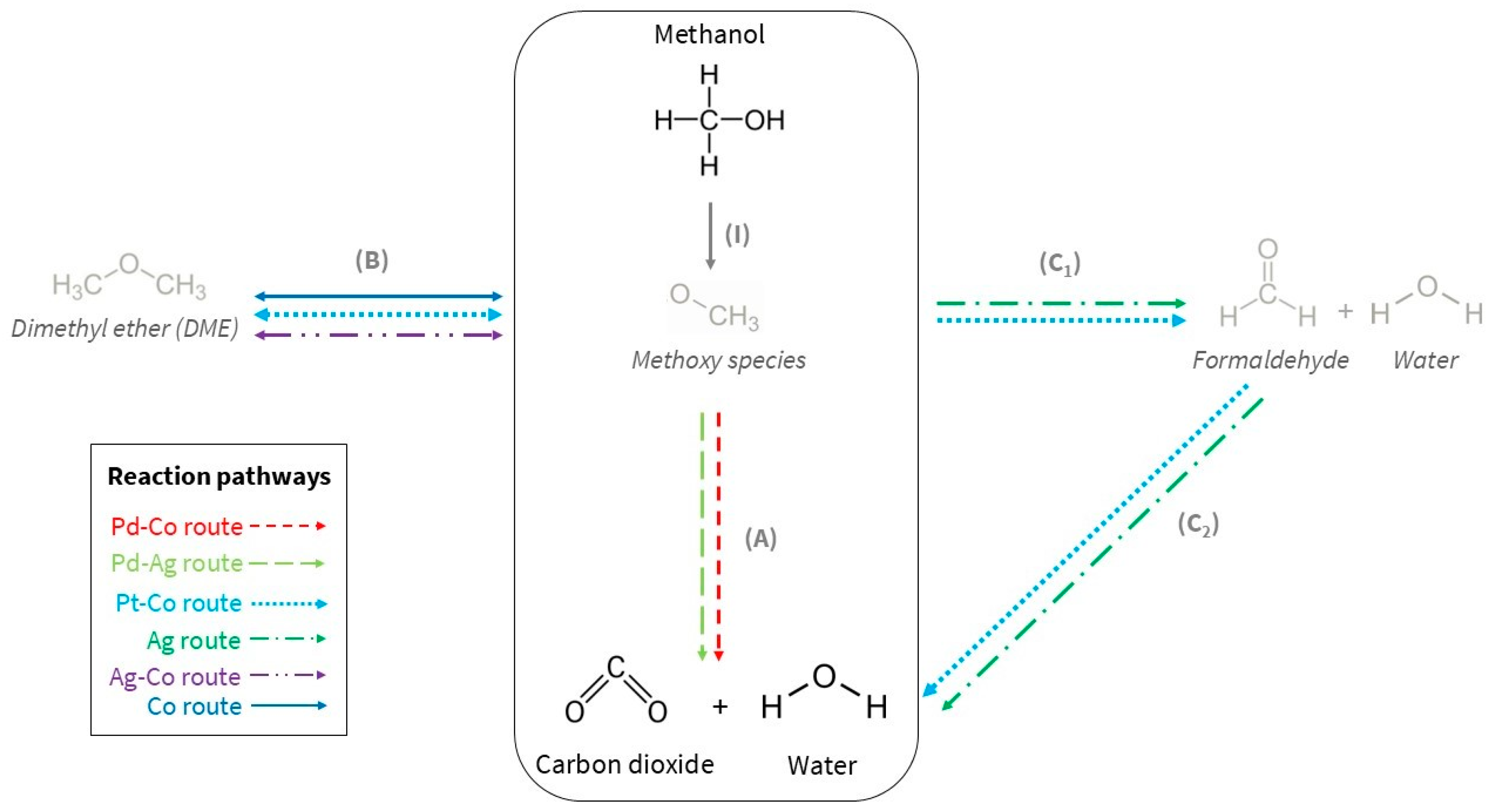
Based on the literature, the initial step (Ι) during MOR is the formation of methoxy species (CH3O-) through CH3OH adsorption and dissociation on the catalyst [24,34,51], while the next step and the different intermediates of MOR strongly depend on the metal and its oxidation state [24]. Thus, three different reaction pathways were observed during the current study (Figure 14). The first (A) is the complete oxidation of methanol to CO2 and H2O through dehydrogenation of methoxy species (complete oxidation), which takes place on Pd-doped catalysts (0.5Pd-5Co/Al-SI and 0.5Pd-5Ag/Al-SI), where the main reaction products were CO2 and H2O [44]. A second pathway (B) is the reaction of methoxy species with another methanol molecule (CH3OH dehydration) producing DME, observed for the 5Co/Al-SI, 2Ag-5Co/Al-SI, and 0.5Pt-5Co/Al-SI catalysts [34,52]. The last pathway (C) that may take place during MOR is the dehydrogenation of methoxy species to intermediates like formaldehyde, which can be followed by dehydrogenation/oxidation of intermediates to CO2 and H2O, as observed for Ag/Al and Pt-Co/Al catalysts [34,44].
It seems that Pd incorporation in the Co-based catalyst enhances the initial mechanistic step, that is, the formation of more methoxy species. More significantly, it increases the reducibility of the Co/Al-SI catalyst, shifting the reduction profile to lower temperatures and revealing more reducible species by facilitating the reduction of Co3O4 and Co-Al oxides formed through interaction of Co with the alumina carrier [40], thus improving the catalytic activity of the 5Co/Al-SI catalyst. A different mechanism occurs when using a different noble metal like Pt. MOR over the 0.5Pt-5Co/Al-SI catalyst revealed 100% methanol conversion (Figure 4) at high temperatures (225–300 °C), with T50 at 119 °C, while at temperatures lower than 225 °C the reaction resulted in the production of DME and formaldehyde (Figure 5).
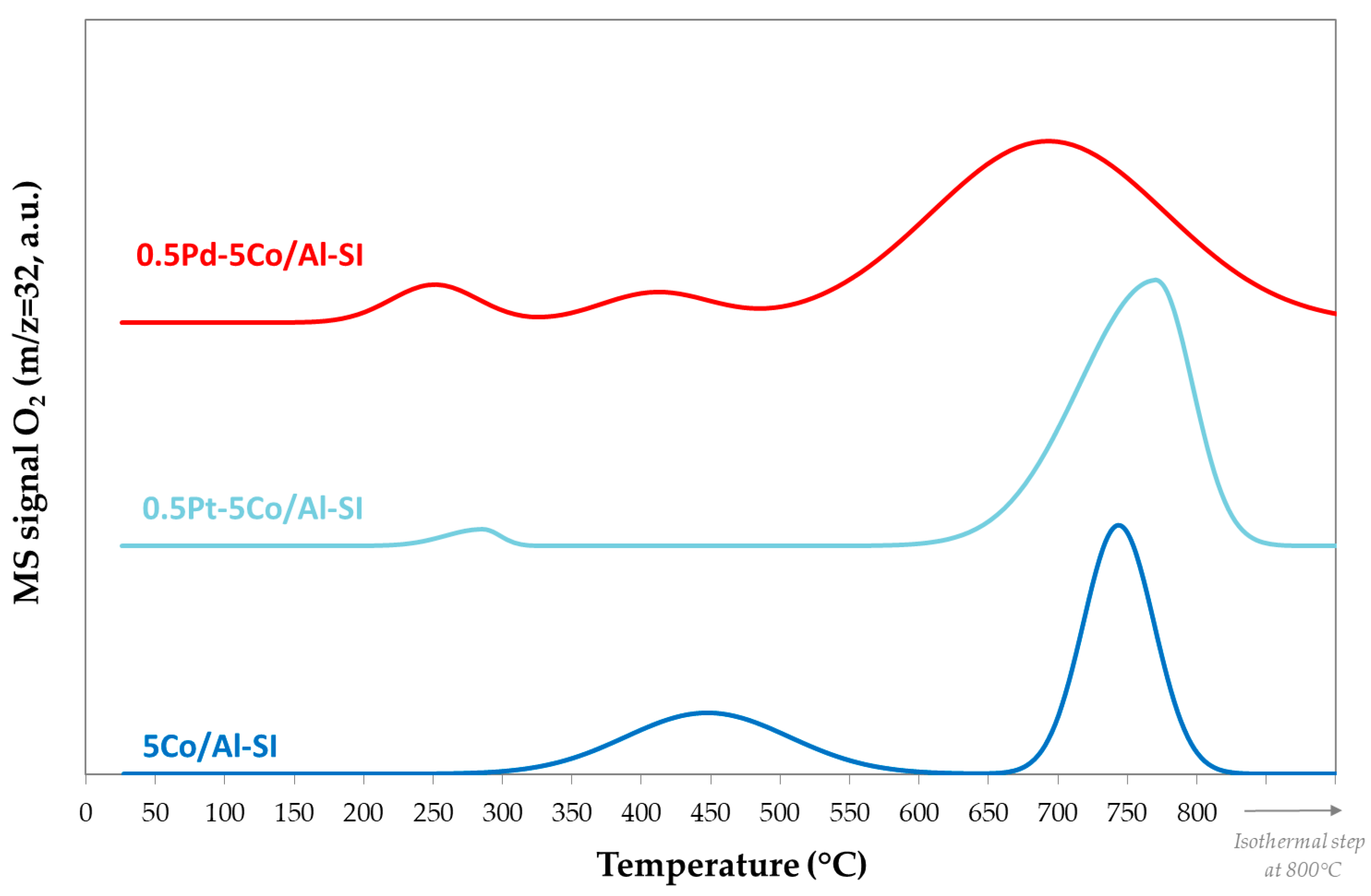
In order to further investigate the different reaction mechanisms followed by Pd and Pt, a series of O2-TPD studies were realized, and the corresponding desorption profiles of O2 are shown in Figure 15 for the bare Co/Al-SI catalyst and the Pt- or Pd-doped catalyst. The bare Co/Al-SI catalyst displayed two peaks at 450 °C and 750 °C attributed to the desorption of the surface-adsorbed oxygen and lattice oxygen of the oxide phase, respectively [33]. The addition of Pt resulted in a very low-intensity peak at 280 °C, while the high-temperature peak was the same as the bare Co/alumina catalyst. The incorporation of Pd shifted the whole O2 desorption profile to lower temperatures, exhibiting two peaks due to desorption of surface-adsorbed oxygen from Pd and Co3O4 (maximum at 250 °C and 415 °C, respectively) and a second peak due to lattice oxygen desorption at 690 °C from bulk cobalt oxides. Thus, the improved reducibility of the 5Co/Al-SI catalyst upon the incorporation of Pd, combined with the increased amount of adsorbed oxygen, resulted in higher catalytic activity compared with the Pt-doped catalyst. Enhanced formation of methoxy species combined with higher availability of adsorbed oxygen facilitates reaction pathway A, that is, the full oxidation of methanol towards the desired formation of CO2 and water.
In the case of the Ag-based catalyst, Pd incorporation affected the formation of Ag2O species, decreasing the amount of large Ag2O clusters and increasing the number of well-dispersed smaller species, as revealed by the reduction profiles in Figure 3. The decrease in large Ag2O species and the enhanced Ag dispersion shifted the methanol oxidation plot to lower temperatures compared with 5Ag/Al-SI, achieving 50% conversion at 81 °C for 0.5Pd-5Ag/Al-SI (T50 for 5Ag/Al-SI was 137 °C), while also shifting the dehydrogenation of methoxy species to formaldehyde to lower temperatures, based on the MOR products in Figure 7 (T: 125–250 °C for 5Ag/Al-SI and T: RT-150 °C for 0.5Pd-5Ag/Al-SI).

4. Materials and Methods

4.1. Catalyst Preparation

Different synthesis methods were used to prepare catalytic materials. Wet impregnation (WI) and spray impregnation (SI) were used to impregnate 5 wt.% of the transition metal Co or Ag on the alumina support (supplied by Saint Gobain NorPro, Stow, OH, USA), while the incipient wetness impregnation method (dry impregnation, DI) was used for the incorporation of the transition metal Ag (2 wt.%) and low amounts (either 0.1 wt.% or 0.5 wt.%) of noble metals such as Pd and Pt. The precursor salts used were Co(CH3CO2)2∙4H2O (purchased from Sigma-Aldrich, located in St. Louis, MI, USA, with purity > 99%), AgNO3 (supplied by Honeywell-Fluka, in Seelze, in Germany and purity ≥ 99.8%), Pd(NO3)2∙2H2O (from Sigma-Aldrich), and Pt(NH3)2(NO2)2 (from Sigma-Aldrich). The wet impregnation method was performed in a rotary evaporator, where an aqueous solution of the Co or Ag precursor salt and alumina carrier was mixed and stirred at 72 °C for 1 h (without vacuum). Then, the temperature was increased to 82 °C and the water was evaporated under vacuum. For dry impregnation, an aqueous solution of the metal salt was impregnated on the alumina carrier in successive stages with intermediate drying in an oven at 100 °C for 30 min. The spray impregnation method was performed using a Romace Innojet Ventilus V2/2.5 (manufactured by Romaco Innojet GmbH, a company located in Steinen, Germany) with a vertical nozzle (nozzle code name INR-2). The alumina carrier, with particle size 300 μm, was loaded and pretreated at 100 °C under dry air (air pressure 6 bar), and then an aqueous solution of the Co or Ag precursor was sprayed on the alumina at a rate of 3 g/min. All the derived materials were dried at 110 °C overnight (heating rate 5 °C/min) and then calcined at 500 °C (heating rate 5 °C/min) for 5 h under air flow (100 cc/min). The catalysts are labeled as xN-5M/Al-z, where x is the noble/transition metal loading (0.1 wt.%, 0.5 wt.%, or 2 wt.%), N is the noble/transition metal (Pd, Pt, or Ag), 5 M is the transition metal (5 wt.% Co or Ag), and z is the preparation method (WI or SI). The 5Co/Al-SI and 0.5Pd-5Co/Al-SI catalysts used in the present study constitute the second batch, which was characterized and evaluated for MOR and compared with results from the first batch presented previously, showing great repeatability during methanol oxidation [40].

4.2. Catalyst Characterization

All catalytic materials were fully characterized regarding their textural and structural properties via Inductively Coupled Plasma–Atomic Emission Spectroscopy (ICP-AES) in order to measure the metal content (wt.% Co, Ag, Pd, and Pt). The surface area, pore volume, and pore size of the catalysts were measured using a 300 DV PerkinElmer Optima spectrometer via N2 adsorption/desorption experiments (BET method) at −196 °C, using an Automatic Volumetric Sorption Analyzer (Nova2200e Quantachrome flow apparatus, manufactured by Quantachrome, a company that is now part of Anton Paar, in Austria). The samples were outgassed overnight at 250 °C under vacuum. The X-ray Diffraction (XRD) diffractograms were accumulated in the range of 10–80° 2θ, with a counting time of 2 sec per step, using a D8 ADVANCE BRUKER (manufactured by Bruker AXS GmbH, which is located in Karlsruhe, Germany) diffractometer, employing CuKa radiation (λ = 0.15 nm), Ni filter (K_beta), and operating at 40 kV and 40 mA, in order to determine the structure of the catalysts and the formed metal oxide species (fresh and used catalysts). The Scherrer Equation (1) was used to calculate the crystallite size of the Co3O4 phase (DXRD) based on the most intense diffraction peak of Co3O4 at 2θ: 35–38°.
D X R D = K λ β   c o s θ
where K is the Scherrer constant, λ is the X-ray wavelength in nm, β is the line broadening, and θ is the Bragg angle [53].
Morphological characterization was performed via Scanning Electron Microscope (SEM) imaging using a JEOL JSM-IT500 microscope (manufactured by JEOL EUROPE SAS, in Croissy-sur-Seine, France). EDS spectra and mapping were obtained using an Oxford Instruments x-Act detector (manufactured by Oxford Instruments, a UK-based company headquartered in Abingdon, England). The samples were embedded in resin, which were grounded and polished, and then gold-plated. The analysis was carried out by applying a voltage of 20 kV.
The reaction mechanism was investigated via temperature-programmed desorption of methanol (TPD-CH3OH) under 0.1 vol.% O2/He. Initially, the catalysts were saturated with liquid methanol, and then the desorption was performed in a fixed-bed reactor connected to a mass spectrometer (MS) (manufactured by Pfeiffer Vacuum GmbH, a company headquartered in Germany), starting from room temperature (RT) up to 300 °C (with a heating rate 10 °C/min). The recorded MS signals were m/z = 31 for CH3OH, m/z = 45 for DME, m/z = 29 for HCHO, and m/z = 44 for CO2. In addition, O2 temperature-programmed desorption (O2-TPD) was performed in the same unit. The sorption step was performed with 20% vol. O2/N2 (50 cm3/min), and the temperature was increased to 400 °C (heating rate 5 °C/min), followed by an isothermal step for 30 min, then cooled to room temperature for oxygen adsorption for 30 min. Then, the samples were purged under He flow for 1 h in order to remove physically adsorbed oxygen, and the desorption step was conducted under He flow (50 cm3/min) up to 800 °C (heating rate 10 °C/min), while O2 (m/z = 32) was detected by the mass spectrometer.
Temperature-programmed reduction with H2 (TPR-H2) was also used to investigate the reducibility of the catalysts and to identify the oxidation states of the metal phases in the fresh and used (after reaction) catalysts. Experiments were performed in the same unit as the desorption studies, and detailed methodology is described in [40].

4.3. Performance Evaluation

The evaluation of catalyst performance for methanol oxidation was performed in a bench-scale unit equipped with a quartz fixed-bed reactor. The reactor was loaded with 0.4 g, using a total gas flow of 600 cm3/min, corresponding to 40,000 h1 Gas Hour Space Velocity (GHSV). All catalysts were initially screened for methanol oxidation with the following feed composition: 0.1 vol.% CH3OH and 0.1 vol.% O2 balanced with He (Feed 1), in the temperature range 30–300 °C (decreasing temperature mode). The effluent gas composition was analyzed using an MKS FT-IR gas analyzer MG2030 (manufactured by MKS Instruments in the Andover, MA, in USA), continuously monitoring CH3OH and possible reaction products, such as CO2, H2O, DME, HCHO, CO, etc. Methanol conversion (XMeOH, %) was calculated by the following equation:
X M e O H = [ M e O H ] i n [ M e O H ] o u t [ M e O H ] i n × 100
where [MeOH]in and [MeOH]out are the methanol concentration (ppm) in the inlet and outlet gas streams, respectively.
The optimum catalysts were further evaluated to test their stability in the presence of impurities (CO and/or H2O) and time-on-stream (TOS). Feed compositions were as follows: 0.1 vol.% CH3OH-0.1 vol.% O2-2 vol.% H2O (Feed 2) and 0.1 vol.% CH3OH-0.1 vol.% O2-2 vol.% H2O-0.1 vol.% CO (Feed 3) balanced with He. Light-off experiments were performed under the same unit and reaction conditions, while TOS experiments were performed at a constant temperature (T: 230 °C) for several hours (TOS: 12 h). Water was introduced into the blend of other gases using a saturation bath under controlled temperature conditions of He flow.

5. Conclusions

The present study advanced the investigation of Pd-Co/alumina catalysts for the catalytic oxidation of atmospheric pollutants [40], focusing on the methanol oxidation reaction and further exploring/improving the catalyst’s performance and stability. The effect of the noble metal (Pd vs. Pt) and its content (0.5 wt.% vs. 0.1 wt.%) was investigated on Co/alumina catalyst prepared via the spray impregnation method. The results revealed the superior performance of Pd versus Pt; even at 0.1 wt.% loading, Pd had a higher catalytic activity than 0.5 wt.% Pt on the 5Co/Al-SI catalyst. Different reaction pathways were followed for each noble metal. The Pd-Co/Al-SI catalyst promoted the formation of methoxy species and oxygen-adsorbed species, thereby enhancing the complete oxidation of methanol to CO2 and H2O. This is not the case for the Pt-Co/Al-SI sample, as Pt does not differentiate oxygen desorption and thus methanol oxidation, instead promoting partial oxidation to formaldehyde and dehydration to dimethyl ether.
The addition of 2 wt.% Ag to 5Co/Al-SI did not improve catalyst activity, while the bare 5 wt.% Ag/alumina catalyst showed higher activity than the 5 wt.% Co/alumina catalyst (both prepared via SI method). The synthesis method (spray impregnation versus wet impregnation) has an impact on the structural properties of the Ag-based catalyst, in combination with the enhanced Ag mobility during thermal treatments. Moreover, Pd incorporation into 5Ag/Al-SI via the dry impregnation method decreased the amount of large Ag2O clusters and increased the number of well-dispersed smaller species, which further increased the oxidation activity of the catalyst, but did not achieve better performance than that of Pd-Co/Al-SI. This is probably related to the interaction and synergistic effect of Pd metal according to the reduction profiles of the Co-based catalyst, while in the case of Ag-based catalyst palladium seems to enhance the dispersion of Ag2O species, which promotes the formation of formaldehyde.
Therefore, the stability of the optimum 0.5Pd-5Co/Al-SI catalyst was finally tested in the presence of CO and/or H2O. Catalyst performance decreased during light-off experiments in the presence of impurities but gradually improved over time, achieving complete methanol conversion (100%) after 12 h of MOR at T: 230 °C. Characterization of the used catalyst (after the stability experiment) revealed that, in addition to the Co3O4 phase initially present in the fresh catalyst, a CoO phase was formed under reaction conditions, as some Co3O4 species were reduced to CoO. In conclusion, the active phase of the 0.5Pd-5Co/Al-SI catalyst for methanol oxidation is probably a mixture of Co3O4 and CoO phases.

Author Contributions

Conceptualization and methodology, E.I. and E.P.; investigation and validation, E.P.; resources, A.L.; supervision, E.I. and A.L.; writing—original draft preparation, E.P.; writing—review and editing, E.I. All authors have read and agreed to the published version of the manuscript.

Funding

This research received no external funding.

Data Availability Statement

Data are contained within the article.

Conflicts of Interest

The authors declare no conflicts of interest.

Abbreviations

The following abbreviations are used in this manuscript:
MeOHMethanol
STPStandard temperature and pressure
VOCsVolatile organic compounds
MORMethanol oxidation reaction
WIWet impregnation
DIDry impregnation
SISpray impregnation
XRDX-ray diffraction
ICP-AESInductively coupled plasma–atomic emission spectroscopy
TPD-CH3OHTemperature-programmed desorption of methanol
SEMScanning electron microscope
TPR-H2Temperature-programmed reduction with H2
GHSVGas hour space velocity
DMEDimethyl ether
TOSTime-on-stream
JCPDSJoint Committee on Powder Diffraction Standards
MSMass spectrometer
RTRoom temperature
O2-TPDOxygen temperature-programmed desorption

References

  1. Ott, J.; Gronemann, V.; Pontzen, F.; Fiedler, E.; Grossmann, G.; Kersebohm, D.B.; Weiss, G.; Witte, C. Methanol. In ULLMANN’S Encyclopedia of Industrial Chemistry; Wiley-VCH: Weinheim, Germany, 2012. [Google Scholar] [CrossRef]
  2. Olah, G.A. Beyond Oil and Gas: The Methanol Economy. Angew. Chem. Int. Ed. 2005, 44, 2636–2639. [Google Scholar] [CrossRef]
  3. Dalena, F.; Senatore, A.; Basile, M.; Knani, S.; Basile, A.; Iulianelli, A. Advances in Methanol Production and Utilization, with Particular Emphasis toward Hydrogen Generation via Membrane Reactor Technology. Membranes 2018, 8, 98. [Google Scholar] [CrossRef]
  4. Leonzio, G.; Zondervan, E. Carbon Dioxide to Methanol: A Green Alternative to Fueling the Future. Comp. Methanol Sci. 2025, 4, 595–622. [Google Scholar] [CrossRef]
  5. Malik, M.I.; Abatzoglou, N.S.; Achouri, I.E. Methanol to Formaldehyde: An Overview of Surface Studies and Performance of an Iron Molybdate Catalyst. Catalysts 2021, 11, 893. [Google Scholar] [CrossRef]
  6. Qian, Q.; Zhang, J.; Cui, M. Synthesis of acetic acid via methanol hydrocarboxylation with CO2 and H2. Nat. Commun. 2016, 7, 11481. [Google Scholar] [CrossRef] [PubMed]
  7. Mufarrij, F.; Navarri, P.; Khojasteh, Y. Development and comparative eco-techno-economic analysis of two carbon capture and utilization pathways for polyethylene production. J. Environ. Chem. Eng. 2025, 13, 115920. [Google Scholar] [CrossRef]
  8. Zadeh, G.R.K.; Panahi, M.; Yasari, E.; Rafiee, A.; Ali Fanaei, M.; Alae, H. Plantwide Simulation and Operation of a Methanol to Propylene (MTP) Process. J. Taiwan Inst. Chem. Eng. 2023, 153, 105204. [Google Scholar] [CrossRef]
  9. Bromberg, L.; Cheng, W.K. Methanol as an Alternative Transportation Fuel in the US: Options for Sustainable and/or Energy-Secure Transportation, Report, Prepared by the Sloan Automotive Laboratory Massachusetts Institute of Technology Cambridge MA 02139. 2010. Available online: https://afdc.energy.gov/files/pdfs/mit_methanol_white_paper.pdf (accessed on 28 November 2010).
  10. Çelebi, Y.; Aydın, H. An overview on the light alcohol fuels in diesel engines. Fuel 2019, 236, 890–911. [Google Scholar] [CrossRef]
  11. Wang, Y.; Wright, L.A. Comparative Review of Alternative Fuels for the Maritime Sector: Economic, Technology, and Policy Challenges for Clean Energy Implementation. World 2021, 2, 456–481. [Google Scholar] [CrossRef]
  12. Parris, D.; Spinthiropoulos, K.; Ragazou, K.; Giovou, A.; Tsanaktsidis, C. Methanol, a Plugin Marine Fuel for Green House Gas Reduction—A Review. Energies 2024, 17, 605. [Google Scholar] [CrossRef]
  13. Giddey, S.; Badwal, S.P.S.; Kulkarni, A.; Munnings, C. Comprehensive review of direct carbon fuel cell technology. Prog. Energy Combust. Sci. 2012, 38, 360–399. [Google Scholar] [CrossRef]
  14. Verhelst, S.; Turner, J.W.G.; Sileghem, L.; Vancoillie, J. Methanol as a fuel for internal combustion engines. Prog. Energy Combust. Sci. 2019, 70, 43–88. [Google Scholar] [CrossRef]
  15. Tian, Z.; Wang, Y.; Zhen, X.; Liu, Z. The effect of methanol production and application in internal combustion engines on emissions in the context of carbon neutrality: A review. Fuel 2022, 320, 123902. [Google Scholar] [CrossRef]
  16. Ninomiya, J.S.; Golovoy, A.; Labana, S.S. Effect of Methanol on Exhaust Composition of a Fuel Containing Toluene, n-Heptane, and Isooctane. J. Air Pollut. Control Assoc. 1970, 20, 314–317. [Google Scholar] [CrossRef] [PubMed]
  17. Wang, Y.; Jiang, Z.; Wu, Y.; Ai, C.; Dang, F.; Xu, H.; Wan, J.; Guan, W.; Albilali, R.; He, C. Simultaneously Promoted Water Resistance and CO2 Selectivity in Methanol Oxidation Over Pd/CoOOH: Synergy of Co−OH and the Pd−Olatt−Co Interface. Environ. Sci. Technol. 2024, 58, 18414–18425. [Google Scholar] [CrossRef]
  18. Wang, J.; Aguilar-Rios, G.; Wang, R. Inhibition of carbon monoxide on methanol oxidation over g-alumina supported Ag, Pd and Ag–Pd catalysts. Appl. Surf. Sci. 1999, 147, 44–51. [Google Scholar] [CrossRef]
  19. Yang, Y.; Yu, Y.; Tang, S. Microscopic oxidation reaction mechanism of methanol in H2O/CO2 impurities: A ReaxFF molecular dynamics study. Int. J. Hydrogen Energy 2023, 48, 26058–26071. [Google Scholar] [CrossRef]
  20. Fujita, O.; Ito, K. Catalytic oxidation of unburned methanol with presence of engine exhaust components from a methanol-fueled engine. Trans. Jpn. Soc. Mech. Eng. 1988, 53, 3454–3458. [Google Scholar] [CrossRef]
  21. Luo, Y.; Xiao, Y.; Cai, G.; Zheng, Y.; Wei, K. Complete methanol oxidation in carbon monoxide streams over Pd/CeO2 catalysts: Correlation between activity and properties. Appl. Catal. B Environ. 2013, 136, 317–324. [Google Scholar] [CrossRef]
  22. Manzoli, M.; Vindigni, F.; Tabakova, T.; Lamberti, C.; Dimitrov, D.; Ivanov, K.; Agostini, G. Structure-reactivity relationship in Co3O4 promoted Au/CeO2 catalysts for the CH3OH oxidation reaction revealed by in situ FTIR and operando EXAFS studies. J. Mater. Chem. A 2017, 5, 2083–2094. [Google Scholar] [CrossRef]
  23. Lippits, M.J. Catalytic Behavior of Cu, Ag and Au Nanoparticles. A Comparison. Ph.D. Thesis, Universiteit Leiden, Leiden, The Netherlands, 2010. Available online: https://hdl.handle.net/1887/16220 (accessed on 7 December 2010).
  24. Zafeiratos, S.; Dintzer, T.; Teschner, D.; Blume, R.; Hävecker, M.; Knop-Gericke, A.; Schlögl, R. Methanol oxidation over model cobalt catalysts: Influence of the cobalt oxidation state on the reactivity. J. Catal. 2010, 269, 309–317. [Google Scholar] [CrossRef]
  25. Kustov, A.L.; Tkachenko, O.P.; Kustov, L.M.; Romanovsky, B.V. Lanthanum cobaltite perovskite supported onto mesoporous zirconium dioxide: Nature of active sites of VOC oxidation. Environ. Int. 2011, 37, 1053–1056. [Google Scholar] [CrossRef]
  26. Zhang, X.; Chen, X.; Liu, Y.; Guo, M. Effects of Support on Performance of Methanol Oxidation over Palladium-Only Catalysts. Water Air Soil. Pollut. 2020, 231, 277. [Google Scholar] [CrossRef]
  27. Santoveña-Uribe, A.; Ledesma-Durán, A.; Torres-Enriquez, J.; Santamaría-Holek, I. Theoretical Insights into Methanol Electro-Oxidation on NiPd Nanoelectrocatalysts: Investigating the Carbonate–Palladium Oxide Pathway and the Role of Water and OH Adsorption. Catalysts 2025, 15, 101. [Google Scholar] [CrossRef]
  28. Gupta, S.; Fernandes, R.; Patel, R.; Spreitzer, M.; Patel, N.H. A review of cobalt-based catalysts for sustainable energy and environmental applications. Appl. Catal. A Gen. 2023, 661, 119254. [Google Scholar] [CrossRef]
  29. Karatok, M.; Sensoy, M.G.; Vovk, E.I.; Ustunel, H.; Toffoli, D.; Ozensoy, E. Formaldehyde Selectivity in Methanol Partial Oxidation on Silver: Effect of Reactive Oxygen Species, Surface Reconstruction, and Stability of Intermediates. ACS Catal. 2021, 11, 6200–6209. [Google Scholar] [CrossRef]
  30. Quaglio, M.; Bezzo, F.; Gavriilidis, A.; Cao, E.; Al-Rifai, N.; Galvanin, F. Identification of kinetic models of methanol oxidation on silver in the presence of uncertain catalyst behavior. AIChE J. 2019, 65, 16707. [Google Scholar] [CrossRef]
  31. Jabłonska, M.; Nocun, M.; Bidzinska, E. Silver–Alumina Catalysts for Low-Temperature Methanol Incineration. Catal. Lett. 2016, 146, 937–944. [Google Scholar] [CrossRef]
  32. Lykaki, M.; Pachatouridou, E.; Iliopoulou, E.; Carabineiro, S.A.C.; Konsolakis, M. Impact of the synthesis parameters on the solid-state properties and the CO oxidation performance of ceria nanoparticles. RSC Adv. 2017, 7, 6160. [Google Scholar] [CrossRef]
  33. Darda, S.; Pachatouridou, E.; Lappas, A.; Iliopoulou, E. Effect of Preparation Method of Co-Ce Catalysts on CH4 Combustion. Catalysts 2019, 9, 219. [Google Scholar] [CrossRef]
  34. Akarmazya, S.S.; Panagiotopoulou, P.; Kambolis, A.; Papadopoulou, C.; Kondarides, D.I. Methanol dehydration to dimethylether over Al2O3 catalysts. Appl. Catal. B Environ. 2014, 145, 136–148. [Google Scholar] [CrossRef]
  35. Luo, Y.; Qian, Q.; Chen, Q. On the promoting effect of the addition of CexZr1-xO2 to palladium based alumina catalysts for methanol deep oxidation. Mater. Res. Bull. 2015, 62, 65–70. [Google Scholar] [CrossRef]
  36. Guo, Y.; Zhang, S.; Mu, W.; Li, X.; Li, Z. Methanol total oxidation as model reaction for the effects of different Pd content on Pd-Pt/CeO2-Al2O3-TiO2 catalysts. J. Mol. Catal. A Chem. 2017, 429, 18–26. [Google Scholar] [CrossRef]
  37. Cordi, E.M.; Falconer, J.L. Oxidation of Volatile Organic Compounds on Al2O3, Pd/Al2O3, and PdO/Al2O3 Catalysts. J. Catal. 1996, 162, 104–117. [Google Scholar] [CrossRef]
  38. Jabłońska, M.; Król, A.; Kukulska-Zając, E.; Tarach, K.; Girman, V.; Chmielarz, L.; Góra-Marek, K. Zeolites Y modified with palladium as effective catalysts for low-temperature methanol incineration. Appl. Catal. B Environ. 2015, 166–167, 353–365. [Google Scholar] [CrossRef]
  39. Brewer, T.F.; Abraham, M.A.; Silver, R.G. Mixture Effects and Methanol Oxidation Kinetics over a Palladium Monolith Catalyst. Ind. Eng. Chem. Res. 1994, 33, 526–533. [Google Scholar] [CrossRef]
  40. Iliopoulou, E.F.; Pachatouridou, E.; Lappas, A.A. Novel Nanostructured Pd/Co-Alumina Materials for the Catalytic Oxidation of Atmospheric Pollutants. Nanomaterials 2024, 14, 124. [Google Scholar] [CrossRef] [PubMed]
  41. Sun, J.; Wang, H.; Zhao, M. Porous Co3O4 column as a high-performance Lithium anode material. J. Porous Mater. 2021, 28, 889–894. [Google Scholar] [CrossRef]
  42. Baylet, A.; Marecot, P.; Duprez, D.; Castellazzi, P.; Groppi, G.; Forzatti, P. In situ Raman and in situ XRD analysis of PdO reduction and Pd0 oxidation supported on γ-Al2O3 catalyst under different atmospheres. Phys. Chem. Chem. Phys. 2011, 13, 4607–4613. [Google Scholar] [CrossRef]
  43. Keijzer, P.H.; van den Reijen, J.E.; Keijzer, C.J.; de Jong, K.P.; de Jongh, P.E. Influence of atmosphere, interparticle distance and support on the stability of silver on a-alumina for ethylene epoxidation. J. Catal. 2022, 405, 534–544. [Google Scholar] [CrossRef]
  44. Das, S.; Kahnt, M.; van Valen, Y.; Bergh, T.; Blomberg, S.; Lyubomirskiy, M.; Schroer, C.G.; Venvik, H.J.; Sheppard, T.L. Restructuring of Ag catalysts for methanol to formaldehyde conversion studied using in situ X-ray ptychography and electron microscopy. Catal. Sci. Technol. 2024, 14, 5885. [Google Scholar] [CrossRef]
  45. Chanerika, R.; Shozi, M.L.; Friedrich, H.B. Synthesis and Characterization of Ag/Al2O3 Catalysts for the Hydrogenation of 1--Octyne and the Preferential Hydrogenation of 1-Octyne vs 1-Octene. ACS Omega 2022, 7, 4026–4040. [Google Scholar] [CrossRef]
  46. Ousji, R.; Ksibi, Z.; Ghorbel, A.; Fontaine, C. Ag-Based Catalysts in Different Supports: Activity for Formaldehyde Oxidation. Adv. Mater. Phys. Chem. 2022, 12, 163–176. [Google Scholar] [CrossRef]
  47. Guldur, C.; Balikci, F. Catalytic oxidation of CO over Ag-Co/alumina catalysts. Chem. Eng. Comm. 2003, 190, 986998. [Google Scholar] [CrossRef]
  48. Cordi, E.M.; Falconer, J.L. Oxidation of volatile organic compounds on a Ag/A12O3 catalyst. Appl. Catal. A Gen. 1997, 151, 179–191. [Google Scholar] [CrossRef]
  49. James, O.O.; Maity, S. Temperature programme reduction (TPR) studies of cobalt phases in γ-alumina supported cobalt catalysts. J. Pet. Technol. Altern. Fuels 2016, 7, 1–12. [Google Scholar] [CrossRef]
  50. Deori, K.; Deka, S. Morphology oriented surfactant dependent CoO and reaction time dependent Co3O4 nanocrystals from single synthesis method and their optical and magnetic properties. Cryst. Eng. Comm. 2013, 15, 8465. [Google Scholar] [CrossRef]
  51. Natile, M.M.; Glisenti, A. Study of Surface Reactivity of Cobalt Oxides: Interaction with Methanol. Chem. Mater. 2002, 14, 3090–3099. [Google Scholar] [CrossRef]
  52. Wang, W.; Seiler, M.; Hunger, M. Role of Surface Methoxy Species in the Conversion of Methanol to Dimethyl Ether on Acidic Zeolites Investigated by in Situ Stopped-Flow MAS NMR Spectroscopy. J. Phys. Chem. B 2001, 105, 12553–12558. [Google Scholar] [CrossRef]
  53. Patterson, A.L. The Scherrer Formula for I-Ray Particle Size Determination. Phys. Rev. 1939, 56, 978–982. [Google Scholar] [CrossRef]
Figure 1. XRD patterns of the fresh (a) Co-based and (b) Ag-based catalytic materials.
Catalysts 15 01129 g001
Figure 2. SEM images of metals deposition (Co: yellow dots, Ag: green dots) on the alumina particles for (a) 5Ag/Al-WI, (b) 5Ag/Al-SI, and for 2Ag-5Co/Al-SI, deposition of (c) Co and (d) Ag.
Catalysts 15 01129 g002
Figure 3. Reduction profiles of the Ag-based catalysts (5Ag/Al-WI, 5Ag/Al-SI, and 0.5Pd-5Ag/Al-SI).
Catalysts 15 01129 g003
Figure 4. Methanol conversion plots for doped Co/γ-Al2O3-SI catalysts (experimental conditions: 0.1 vol.% CH3OH-0.1 vol.% O2).
Catalysts 15 01129 g004
Figure 5. Products from the methanol oxidation reaction for (a) 0.5 wt.% Pt-, (b) 2 wt.% Ag-, and (c) 0.1 wt.% Pt-doped 5Co/Al-SI catalysts (experimental conditions: 0.1 vol.% CH3OH-0.1 vol.% O2).
Catalysts 15 01129 g005
Figure 6. Methanol conversion plots for Ag/γ-Al2O3 prepared with WI and SI methods and Pd-doped Ag-based catalysts (experimental conditions: 0.1 vol.% CH3OH-0.1 vol.% O2).
Catalysts 15 01129 g006
Figure 7. Products from methanol oxidation for (a) 5Ag/Al-WI, (b) Ag/Al-SI, and (c) 0.5Pd-5Ag/Al-SI (experimental conditions: 0.1 vol.% CH3OH-0.1 vol.% O2).
Catalysts 15 01129 g007
Figure 8. Methanol conversion plots for 0.5 wt.% Pd-5 wt.% Co/γ-Al2O3-SI in the presence of CO and/or H2O (experimental conditions—Feed 1: 0.1 vol.% CH3OH-0.1 vol.% O2, Feed 2: 0.1 vol.% CH3OH-0.1 vol.% O2-2 vol.% H2O, and Feed 3: 0.1 vol.% CH3OH-0.1 vol.% O2-2 vol.% H2O-0.1 vol.% CO).
Catalysts 15 01129 g008
Figure 9. The stability of 0.5 wt.% Pd-5 wt.% Co/γ-Al2O3-SI catalyst in the presence of impurities (experimental conditions: 0.1 vol.% CH3OH-0.1 vol.% O2-2 vol.% H2O-0.1 vol.% CO, reaction temperature: 230 °C, and TOS: 12 h).
Catalysts 15 01129 g009
Figure 10. Products from stability experiment with 0.5 wt.% Pd-5 wt.% Co/γ-Al2O3-SI catalyst in the presence of impurities (experimental conditions: 0.1 vol.% CH3OH-0.1 vol.% O2-2 vol.% H2O-0.1 vol.% CO, reaction temperature: 230 °C, and TOS: 12 h).
Catalysts 15 01129 g010
Figure 11. Reduction profiles of the fresh and used 0.5Pd-5Co/Al-SI catalyst after stability experiment for 12 h TOS.
Catalysts 15 01129 g011
Figure 12. XRD patterns of the fresh and used 0.5Pd-5Co/Al-SI catalyst after stability experiment for 12 h TOS.
Catalysts 15 01129 g012
Figure 13. Methanol desorption study under 0.1 vol.% O2/He of the signals: (a) CO2 for the Co-based catalysts, (b) CO2 for the Ag-based catalysts, and (c) DME and (d) HCHO for all catalysts.
Catalysts 15 01129 g013aCatalysts 15 01129 g013b
Figure 14. Main reaction pathways of the methanol oxidation reaction for the investigated catalysts (I: formation of methoxy species, A: complete methanol oxidation, B: methanol dehydration, C1: partial methanol oxidation and C2: dehydrogenation/oxidation of intermediates to CO2 & H2O).
Catalysts 15 01129 g014
Figure 15. Oxygen desorption profiles of the 5Co/Al-SI, 0.5Pt-5Co/Al-SI, and 0.5Pd-5Co/Al-SI catalysts.
Catalysts 15 01129 g015
Table 1. Physicochemical properties of fresh catalytic materials.
CatalystMetal Content (wt.%)Surface Area (m2/g)Pore Volume (cm3/g)Pore Size (nm)Co3O4 Crystallite Size (nm) (ii)
CoAgPdPt
γ-Al2O3----2380.6110.3-
5Co/Al-SI (i)5.50---2030.5611.137
0.1Pd-5Co/Al-SI5.40-0.12-2080.5810.832
0.5Pd-5Co/Al-SI (i)5.46-0.58-2100.5710.830
0.1Pt-5Co/Al-SI5.40--0.172030.5610.835
0.5Pt-5Co/Al-SI5.40--0.602030.5610.732
2Ag-5Co/Al-SI5.101.80--2040.5610.738
5Ag/Al-WI-5.90--2030.5810.0-
5Ag/Al-SI-5.48--2000.5711.4-
0.5Pd-5Ag/Al-SI-5.470.47-2100.5610.6-
(i) second batch of the fresh 5Co/Al-SI and 0.5Pd-5Co/Al-SI catalysts presented in [40]. (ii) calculated by applying Scherrer Equation (1) to the X-ray diffractograms (peak at 2θ: 35–38°).
Disclaimer/Publisher’s Note: The statements, opinions and data contained in all publications are solely those of the individual author(s) and contributor(s) and not of MDPI and/or the editor(s). MDPI and/or the editor(s) disclaim responsibility for any injury to people or property resulting from any ideas, methods, instructions or products referred to in the content.