Article

Synergistic Stabilization of Horseradish Peroxidase by Green-Synthesized Silver-Decorated Magnetite Nanoparticles: Toward Sustainable Enzyme Technology

by
Laila S. Alqarni
1,
Yaaser Q. Almulaiky
2,
Elham N. Bifari
3 and
Reda M. El-Shishtawy
4,*
1
Department of Chemistry, College of Science, Imam Mohammad Ibn Saud Islamic University (IMSIU), P.O. Box 5701, Riyadh 11432, Saudi Arabia
2
The Applied College, University of Jeddah, Jeddah 21589, Saudi Arabia
3
Department of Chemistry, College of Science, Taif University, Taif 21944, Saudi Arabia
4
Chemistry Department, Faculty of Science, King Abdulaziz University, Jeddah 21589, Saudi Arabia
*
Author to whom correspondence should be addressed.
Catalysts 2025, 15(12), 1098; https://doi.org/10.3390/catal15121098
Submission received: 6 October 2025 / Revised: 4 November 2025 / Accepted: 19 November 2025 / Published: 21 November 2025
(This article belongs to the Special Issue Green Chemistry and Catalysis, 2nd Edition)

Abstract

In this study, silver-decorated magnetite nanoparticles (Ag@Fe3O4) were synthesized via a green method using Brachychiton populneus leaf extract and employed as an efficient support matrix for immobilization of horseradish peroxidase (HRP). The biosynthesized nanocomposite exhibited magnetic properties that facilitated easy separation and reuse, while the silver loading imparted enhanced stability and potential antimicrobial activity. Comprehensive physicochemical characterizations, including XRD, FTIR, FESEM, EDX, BET, and VSM, confirmed the successful formation of Ag@Fe3O4 and effective enzyme loading. The immobilization yield of HRP on Ag@Fe3O4 reached 93%, and the immobilized enzyme showed improved tolerance toward temperature and pH variations, with an optimal pH of 7.5 and optimal temperature of 60 °C, compared to 7.0 and 50 °C for the free enzyme. Kinetic studies revealed a moderate increase in Km but maintained or slightly increased Vmax, indicating preserved catalytic efficiency. The immobilized enzyme demonstrated excellent reusability over 15 cycles (66% residual activity) and long-term storage stability (81% activity after 60 days at 4 °C). These enhancements are attributed to the protective microenvironment provided by the Ag@Fe3O4 matrix, which mitigates denaturation and leaching. This work highlights the potential of Ag@Fe3O4 as a sustainable and reusable platform for enzyme immobilization in biocatalytic applications, particularly in environmental remediation and industrial bioprocessing.

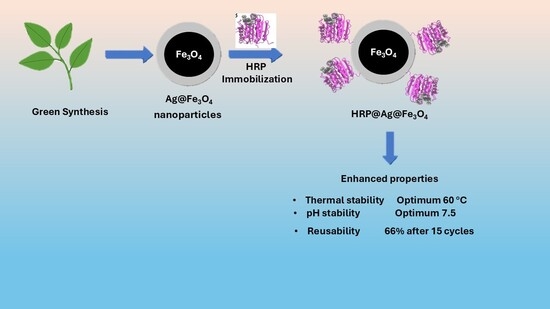
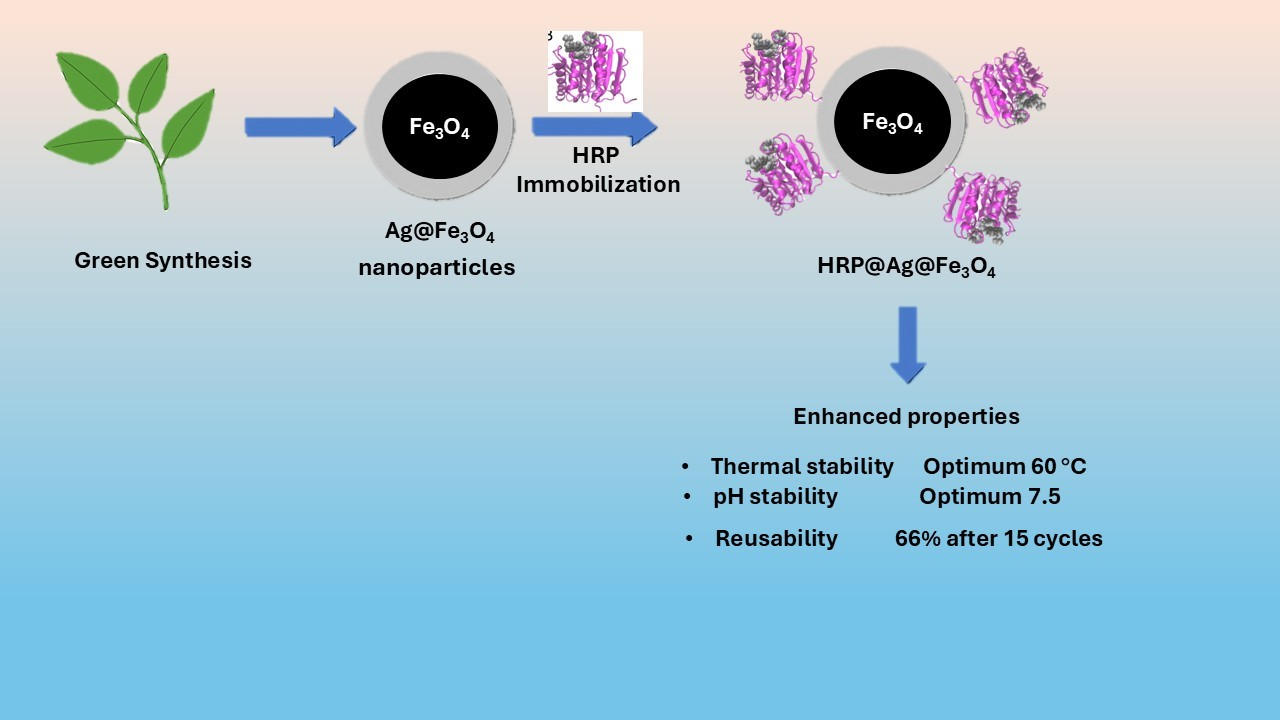
Graphical Abstract

1. Introduction

Horseradish peroxidase (HRP) is a widely utilized oxidoreductase enzyme in environmental, clinical, and industrial applications owing to its high catalytic activity, substrate specificity, and operational versatility under mild conditions [1]. It catalyzes the oxidation of a wide range of phenolic and aromatic amine substrates in the presence of hydrogen peroxide, making it indispensable in biosensors, immunoassays, wastewater treatment, and biocatalysis processes [2,3]. Despite its advantageous catalytic properties, the practical deployment of free HRP in industrial and environmental processes is hampered by several intrinsic limitations. These include poor stability under harsh pH or thermal conditions, and the inability to recover and reuse the enzyme efficiently [4]. Furthermore, the enzyme’s susceptibility to denaturation and leaching during repetitive use restricts its application in continuous or large-scale systems, emphasizing the need for stabilization strategies. HRP-catalyzed oxidation reactions play a crucial role in various industrial and environmental applications such as the degradation of synthetic dyes, detoxification of phenolic pollutants, and oxidation of lignin derivatives in pulp and paper effluents. These systems often operate under elevated temperatures (50–70 °C) and slightly alkaline conditions (pH 7.5–8.5), where the free enzyme typically loses activity. Hence, developing immobilized HRP systems with enhanced stability under these conditions is essential for continuous and high-efficiency wastewater treatment and biorefinery operations [5].
Enzyme immobilization has proven to be a powerful approach to overcome these issues by anchoring the enzyme onto solid supports, thereby enhancing its operational stability, reusability, and resistance to environmental stresses [6,7]. In recent years, a wide array of materials has been employed as support for enzyme immobilization, including natural and modified polymers [8,9,10], carbon-based nanostructures [11], and various nanocomposite systems [12,13]. These support materials have been shown to enhance both the catalytic activity and structural stability of enzymes while also minimizing the inhibitory effects of reaction products. Among the available immobilization platforms, magnetic nanoparticles (MNPs), especially those based on magnetite (Fe3O4), have emerged as particularly attractive candidates. Magnetite (Fe3O4) nanoparticles possess a unique inverse spinel structure that enables superparamagnetic behavior, high surface-to-volume ratio, and biocompatibility, making them ideal candidates for magnetic separability and reuse in catalytic systems. Additionally, their surface hydroxyl groups allow facile functionalization and strong interactions with biomolecules, enhancing their applicability in enzyme immobilization and biomedical technologies. Recent studies have shown that Fe3O4-based magnetic nanomaterials exhibit excellent performance in catalysis, environmental remediation, and composite development due to their tunable magnetism and surface chemistry [14,15,16]. Among the various dopants explored to modify Fe3O4 nanoparticles, silver (Ag) was selected in this study for its distinctive combination of physicochemical and functional properties that align with the development of a robust, reusable biocatalyst. While dopants such as gadolinium (Gd) and nickel (Ni) can effectively tune the structural, magnetic, and optical features of Fe3O4—with Gd inhibiting magnetite-to-hematite phase transformation and altering magnetic response (Serga et al., 2020) [17], and Ni influencing crystallite size and band gap relevant to electronic applications (Kamakshi et al., 2019) [18]—these studies did not investigate their potential for enzyme immobilization or catalytic performance, which however would be of interest in this context. On the other hand, Ag offers a unique set of synergistic benefits: it enhances electron transfer rates, provides high-affinity binding sites for enzymes (particularly those with sulfur-containing residues), and imparts antimicrobial activity [19,20]. Furthermore, Ag@Fe3O4 nanocomposites exhibit combined magnetic and plasmonic properties that facilitate improved charge separation and radical generation during oxidation reactions, thereby enhancing catalytic efficiency in enzyme-mediated and dye degradation processes [21]. In alignment with green chemistry principles, plant-mediated synthesis of nanomaterials has emerged as an environmentally friendly and cost-effective alternative to conventional chemical methods. In this study, silver-decorated magnetite nanoparticles (Ag@Fe3O4) were biosynthesized using Brachychiton populneus leaf extract, rich in natural polyphenolic compounds that act as reducing and stabilizing agents [13]. This approach avoids the use of hazardous chemical reductants such as NaBH4 and hydrazine, which typically generate toxic byproducts during silver nanoparticle synthesis. In addition, the reaction is conducted under mild conditions (70 °C), eliminating the need for high-energy hydrothermal processing or inert gas protection. The magnetic recoverability of Ag@Fe3O4 further reduces material loss and unnecessary solid waste during downstream separation, supporting its environmental compatibility and sustainable production potential.
The novelty of this work lies in combining an eco-friendly synthesis route with the development of Ag@Fe3O4 as an efficient and reusable support for horseradish peroxidase immobilization. To the best of our knowledge, this is among the first studies to demonstrate that green-synthesized Ag@Fe3O4 can significantly improve immobilization yield, operational stability, storage longevity, and reusability of HRP. While previous research has predominantly focused on antibacterial and photocatalytic applications [22,23], this work extends the applicability of Ag@Fe3O4 toward sustainable enzyme technology for environmental and industrial biocatalysis.

2. Results and Discussion

In this study, Ag@Fe3O4 nanocomposites were synthesized via a green route using B. populneus leaf extract as a natural reducing and stabilizing agent. The extract, rich in polyphenols and flavonoids, facilitated the reduction of Fe3+/Fe2+ and Ag+ ions while preventing nanoparticle aggregation, thus ensuring colloidal stability and uniform silver deposition. HRP was successfully immobilized onto Ag@Fe3O4, achieving a high immobilization yield of 93%, which demonstrates the strong affinity between the enzyme and the nanocomposite surface. Optimization studies (Tables S1 and S2, Supporting Information) confirmed that immobilization is strongly pH-dependent near the HRP isoelectric point (pI ≈ 7.2), achieving maximal binding at pH 7.0. Increasing enzyme concentration above 50 units produced no further significant gain, likely due to surface site saturation. Contact time optimization showed that equilibrium was reached at 12 h. This enhancement arises from the synergistic interaction of Ag and Fe3O4: silver nanoparticles display high reactivity and strong affinity toward sulfur- and nitrogen-containing amino acid residues (e.g., cysteine and lysine), while the magnetic Fe3O4 core supports strong surface attachment and prevents enzyme leaching [24,25]. These cooperative effects restrict conformational flexibility, mitigate unfolding under elevated temperature, and modulate the local pH microenvironment, thereby enhancing binding stability. A complete protein mass balance confirmed that 93% of the added HRP was successfully immobilized onto Ag@Fe3O4, with <2% detected in combined washing fractions, demonstrating minimal leaching. The corresponding enzyme loading capacity was 121 mg protein per g of support, indicating an efficient utilization of surface binding sites. Furthermore, no detectable desorption occurred during repeated washing under assay conditions, suggesting strong and predominantly irreversible chemisorption of HRP to Ag and Fe3O4 surface functionalities. The obtained immobilization yield is competitive with or superior to many immobilization platforms reported in the literature, such as Fe3O4@chitosan nanoparticles (75%) [26], amidoximated acrylic fabric–magnetite composites (89%) [27], and hydroxyapatite-loaded Fe3O4 nanoparticles [28]. Furthermore, the results align well with previously reported high immobilization efficiencies on silver-based materials, confirming the strong binding potential and multifunctionality of Ag-supported systems in designing robust and reusable biocatalysts [19].

2.1. Magnetic Properties of Fe3O4, Ag@Fe3O4, and HRP@Ag@Fe3O4 Nanocomposites

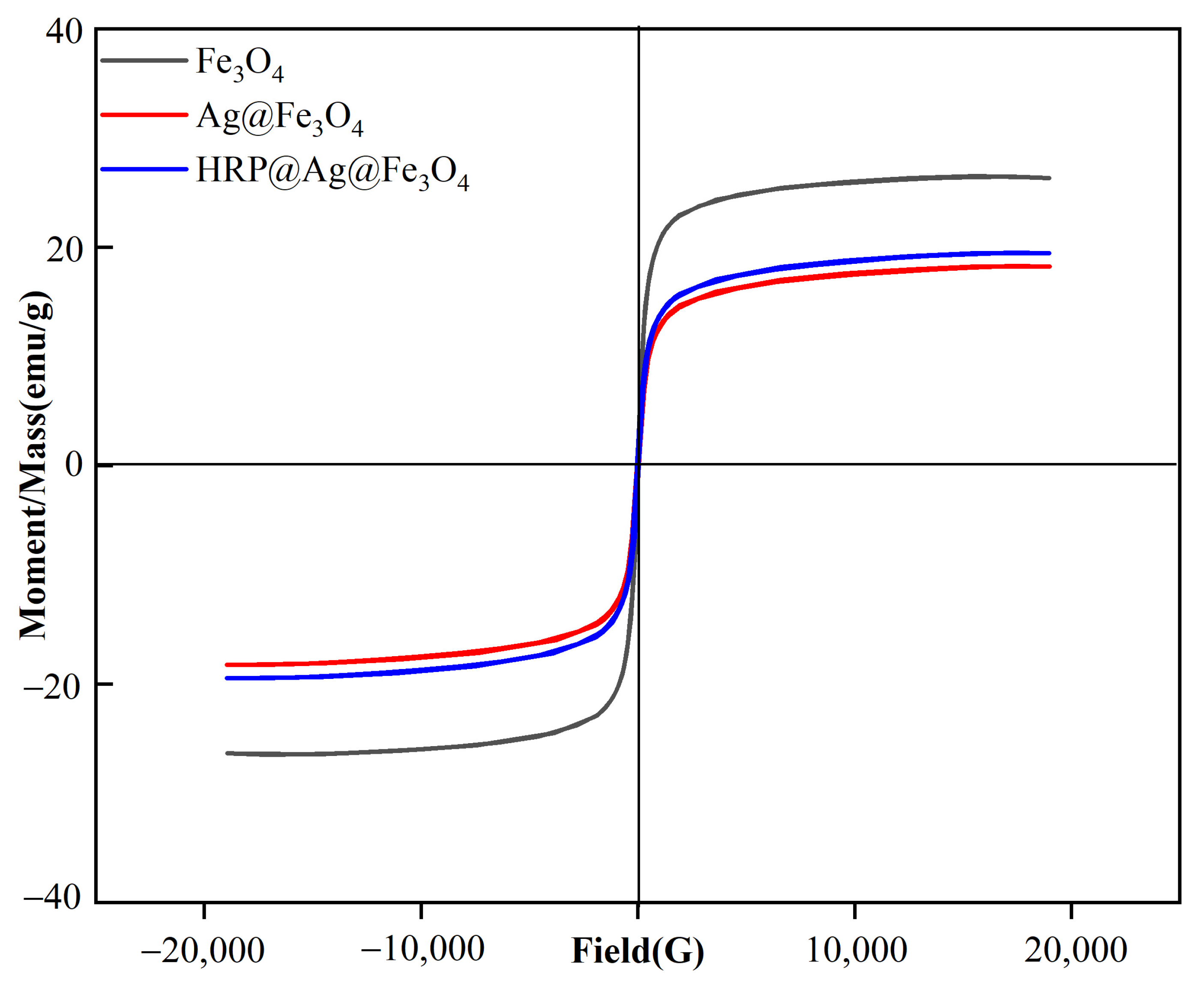
The magnetic behavior of Fe3O4, Ag@Fe3O4, and HRP@Ag@Fe3O4 nanocomposites was analyzed using VSM at room temperature, and the corresponding magnetization curves are shown in Figure 1. All samples present standard superparamagnetic characteristics, evidenced by the lack of significant hysteresis and remanence. This superparamagnetic property is valuable for enzyme immobilization systems, as it enables straightforward magnetic separation without residual magnetism following the removal of the external field. The saturation magnetization (Ms) decreased from 26.4 emu/g for Fe3O4 to 18.25 emu/g for Ag@Fe3O4 due to the introduction of non-magnetic silver. Interestingly, a slight increase to 19.47 emu/g was observed after HRP immobilization, which may be attributed to the protein layer reducing surface spin disorder and enhancing interfacial magnetic ordering. In addition, improved particle dispersion upon enzyme adsorption may reduce interparticle cancelation effects during VSM measurement. Comparable tendencies have been documented in the literature regarding the functionalization of magnetic carriers with noble metals or biomolecules [29,30]. Interestingly, the coercivity (Hc) increased from 14.74 G for bare Fe3O4 to 40.13 G after Ag loading, with a minimal change (39.98 G) upon enzyme immobilization. This increase implies that surface interactions and possible crystal structure modifications due to Ag integration contribute to enhanced magnetic anisotropy. The high saturation magnetization and soft magnetic behavior observed in VSM are characteristic of magnetite rather than hematite, further confirming Fe3O4 phase retention after calcination. The remanent magnetization (Mr) also followed a similar trend, rising from 0.77 emu/g (Fe3O4) to 1.38 emu/g (HRP@Ag@Fe3O4), reflecting stronger magnetic retention possibly related to structural modifications. As an overall, despite the drop in Ms, the magnetism of HRP@Ag@Fe3O4 persisted to be sufficient for rapid and effective separation with the application of an external magnetic field. Accordingly, the Ag@Fe3O4 nanocomposite reveals favorable magnetic features for reusable, magnetically separable biocatalyst systems, combining superparamagnetism with the surface advantages of silver for improved enzyme immobilization and stability.

2.2. XRD Analysis and Crystalline Structure of Ag@Fe3O4 Nanocomposites

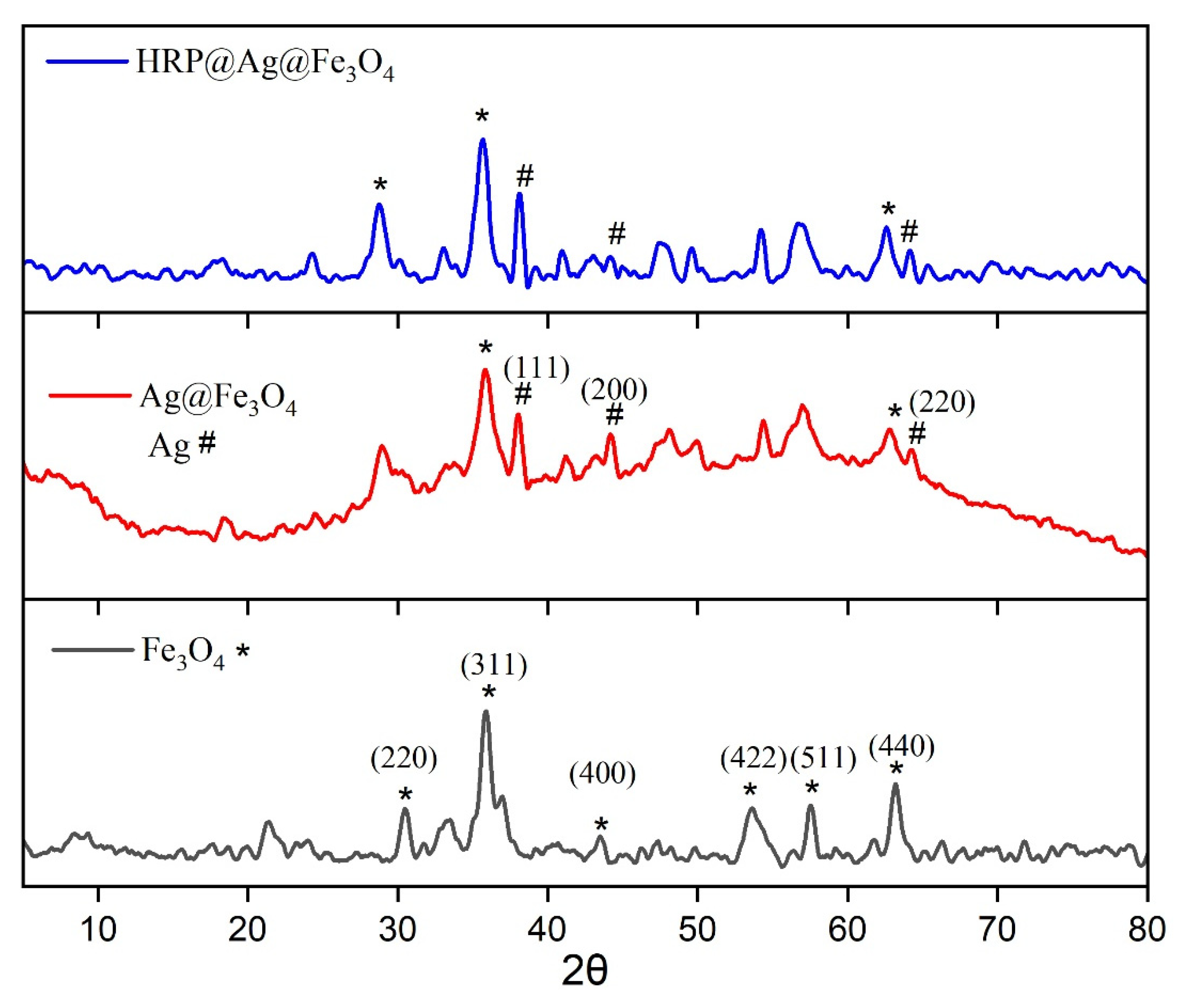
The crystalline phase and structural properties of the synthesized nanomaterials were examined by X-ray diffraction (XRD), as shown in Figure 2. The diffraction pattern of Fe3O4 exhibited characteristic reflections at 2θ = 30.6°, 35.8°, 43.7°, 53.6°, 57.0°, and 63.1°, corresponding to the (220), (311), (400), (422), (511), and (440) planes of the cubic spinel magnetite structure (JCPDS No. 11-0614), confirming its high crystallinity and phase purity. Upon incorporation of silver, the Ag@Fe3O4 nanocomposite retained all magnetite diffraction peaks and displayed additional reflections at 38.1°, 44.2°, and 64.4°, which correspond to the (111), (200), and (220) facets of face-centered cubic Ag (JCPDS No. 04-0783), verifying the successful deposition of metallic silver nanoparticles on the Fe3O4 surface. All diffraction peaks observed after calcination perfectly index to magnetite Fe3O4 (JCPDS No. 11-0614). No characteristic reflections related to hematite α-Fe2O3 (e.g., 2θ ≈ 33.2° and 35.6°) or vacancy-ordered structures of maghemite γ-Fe2O3 were detected, confirming that the thermal step did not induce an oxidation-driven phase transformation. The refined lattice spacing and peak intensities remain consistent with pure magnetite. Notably, slight shifts in magnetite peaks toward higher 2θ angles (e.g., 220 and 440 planes) were observed in Ag@Fe3O4, indicating lattice strain and surface structural distortion due to interfacial interactions between Ag nanoparticles and the Fe3O4 crystal lattice. Similar behavior has been reported in noble-metal-modified iron oxide systems, where partial lattice integration or strong surface bonding induces interplanar spacing alterations [30]. Furthermore, the sharp Fe3O4 peaks and distinct Ag reflections suggest that silver is present as dispersed nanoclusters rather than forming a continuous coating. A complete metallic shell typically causes peak suppression, broadening, or masking of the iron oxide reflections, which is not evident here [31]. The presence of the intense Ag (111) reflection also implies high-energy exposed facets that provide abundant active sites beneficial for enzyme anchoring and catalytic interactions [32]. Collectively, the XRD data confirm the effective synthesis of Ag@Fe3O4 and support its suitability as a magnetically recoverable platform for horseradish peroxidase immobilization.

2.3. The Surface Morphology of Ag@Fe3O4 Nanocomposites

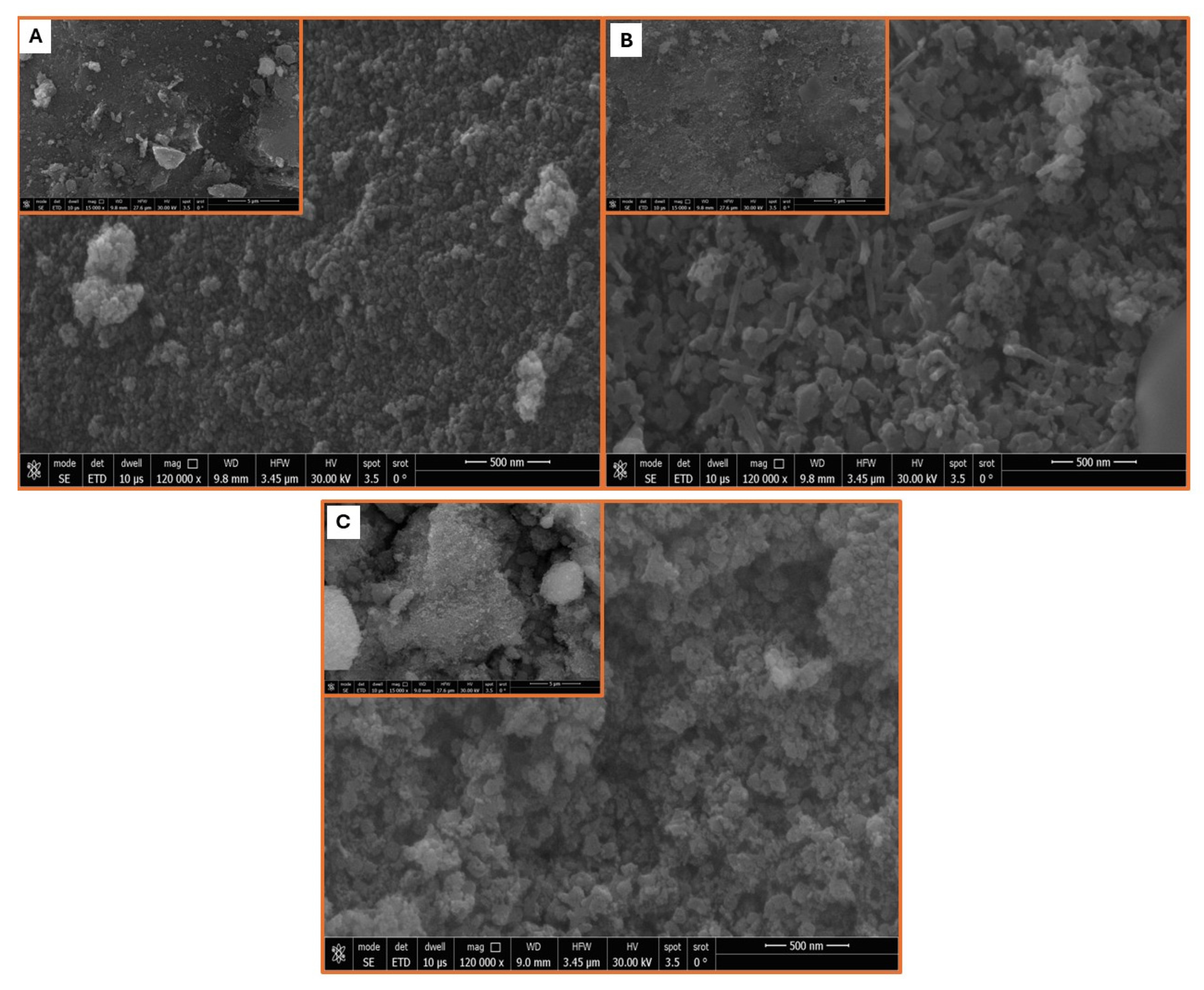
As depicted in Figure 3, Field Emission Scanning Electron Microscopy (FESEM) was used to explore the surface morphology and structural evolution of the synthesized nanomaterials. The Fe3O4 nanoparticles (Figure 3A) revealed a relatively homogeneous, spherical morphology with slight aggregation attributed to magnetic interactions, consistent with features reported in the literature for magnetite nanoparticles [33]. Upon silver decoration (Figure 3B), Ag@Fe3O4 renders more heterogeneous and roughened surface, with distinct granular silver clusters layering the Fe3O4 particles. This structural alteration verifies the effective deposition of Ag nanoparticles and enhances the surface area and active sites for consequent enzyme immobilization. In Figure 3C, the immobilized HRP@Ag@Fe3O4 material exhibited a markedly textured and dense surface, characterized by a significant increase in surface granularity and cluster formation. This morphological conversion indicates the effective immobilization of horseradish peroxidase onto the Ag-functionalized magnetite, aided by both electrostatic and covalent interactions. The agglomeration evident in the immobilized material could be ascribed to enzyme coating and interparticle binding. These results affirm the subsequent structural transition from Fe3O4 to Ag@Fe3O4 and ultimately to HRP@Ag@Fe3O4, emphasizing the morphological evidence of silver loading and enzyme immobilization. As shown in Figure 3A–C, Fe3O4 nanoparticles display relatively uniform nanoscale features with distinct boundaries. After silver incorporation, Ag@Fe3O4 particles exhibit slightly increased dimensions and roughened surfaces, consistent with Ag nanocluster deposition. HRP immobilization leads to more compact and aggregated features, indicating the presence of a protein layer that bridges adjacent nanoparticles and contributes to a denser surface texture. Additional high-resolution FESEM micrographs obtained from randomly selected areas are provided in the Supporting Information (Figures S1–S3) to ensure reproducibility and enhanced visualization of nanoscale surface features.
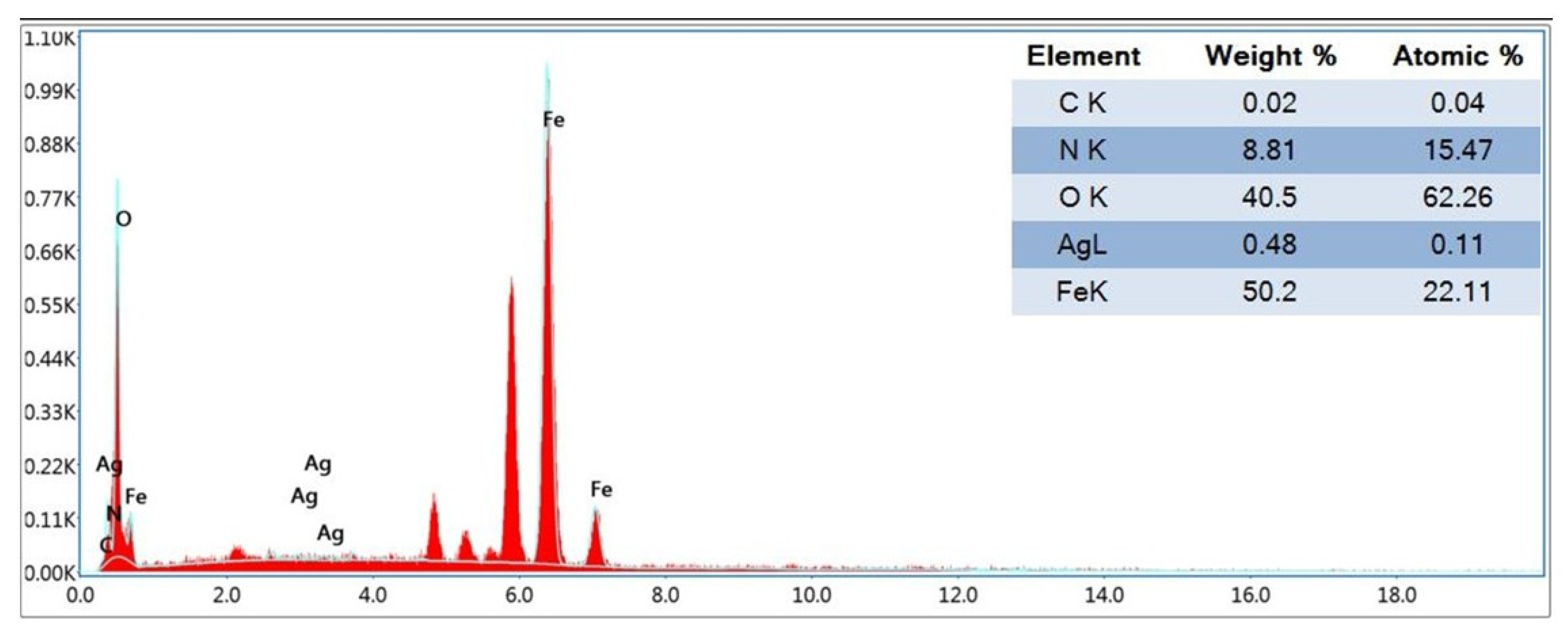
Meanwhile, the Energy-Dispersive X-ray Spectroscopy (EDS) spectrum validates the elemental composition of the synthesized Ag@Fe3O4 nanocomposite (Figure 4). Prominent peaks corresponding to Fe and O confirmed the presence of magnetite (Fe3O4), whereas distinct Ag signals verified the successful deposition of Ag nanoparticles on the magnetite surface. The inserted table in Figure 4 showed Fe as the predominant element (50.2%), followed by O (40.5%) and Ag (0.48%), in accordance with the core–shell structure. The detection of nitrogen (8.81%) was probably attributed to residual plant-based or synthetic precursors. The EDS elemental ratios are shown as semi-quantitative indicators of composition and distribution rather than absolute bulk values. Future studies will include ICP-OES or XPS analysis to accurately determine silver wt% and surface atomic ratios.

FTIR Analysis

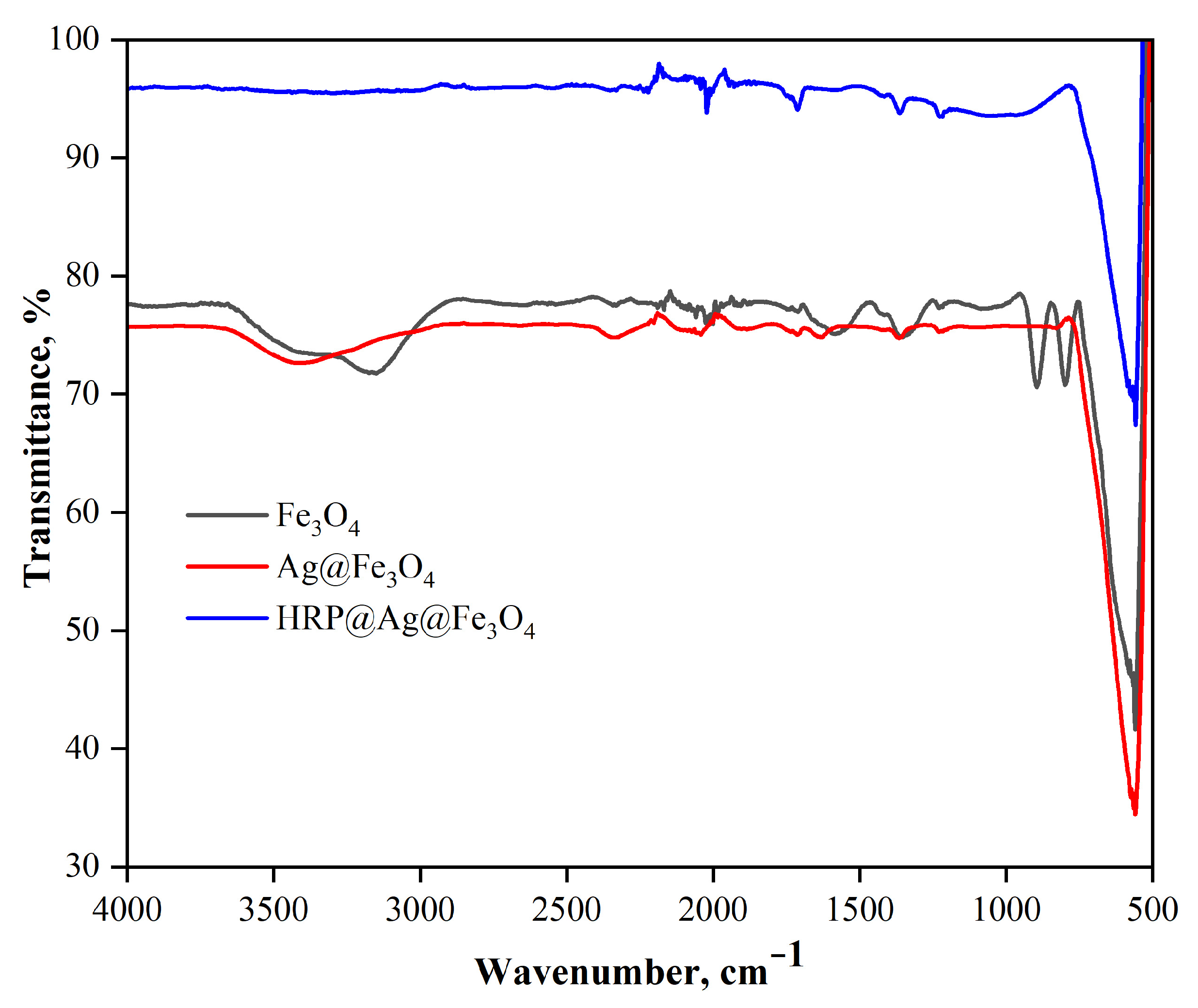
The FTIR spectra of Fe3O4, Ag@Fe3O4, and HRP@Ag@Fe3O4 nanocomposites were used to demonstrate notable changes in the functional groups, validating the successful synthesis and enzyme immobilization (Figure 5). In Fe3O4 spectrum, a prominent absorption band at 559 cm−1 corresponds to the Fe–O stretching vibration in the spinel structure. Additional minor bands at 3148 cm−1, 1584 cm−1, and 1353 cm−1 suggest the presence of adsorbed surface hydroxyl and carboxyl groups. Upon silver doping (Ag@Fe3O4), the appearance of a broad band around 3411 cm−1 indicates O–H stretching from absorbed water or surface hydroxyls, while the persistence of the Fe–O band (~558 cm−1) affirms structural integrity. After HRP immobilization, the HRP@Ag@Fe3O4 spectrum exhibited additional band at 1708 cm−1, attributed to C=O stretching vibrations from amide I groups in the enzyme backbone. Moreover, the bands at 1374 cm−1 and 1218 cm−1 correspond to C–N stretching and amide III vibrations, respectively, offering compelling evidence of covalent binding of the enzyme. Notably, the Fe–O band at 558 cm−1 persists across all spectra confirms the structural stability of the magnetic core. Free HRP shows characteristic protein absorption bands in the ATR-FTIR spectrum that are attributed to amide vibrations of the polypeptide backbone. Typically, the amide I band arises from C=O stretching, whereas the amide II band corresponds to N–H bending coupled with C–N stretching; the tertiary amide vibrations appear near 1300 cm−1. As reported, native HRP usually exhibits the amide II band around 1540 cm−1 and the tertiary amide close to 1300 cm−1 [34]. In the present study, and as shown in Figure 5, immobilized HRP exhibited noticeable shifts in these characteristic amide regions, where the amide I and II/III vibration bands shifted to 1682 cm−1 and 1341 cm−1, respectively. These shifts are indicative of changes in the enzyme microenvironment due to covalent and/or hydrogen-bond interactions with the support material, thereby confirming the successful immobilization of HRP onto the nanocomposite surface. It is noteworthy to mention the clearly observed bands at 780 and 865 cm−1, which correspond to the commonly formed goethite during the formation of magnetite in an aqueous medium in open air and at low temperature [35], disappear after Ag capping and HRP immobilization, with observed broadening in this region for the latter case due to the formation of hydrogen bonding with HRP, indicating the success of the formation of HRP@Ag@Fe3O4.

2.4. BET Surface Area, Pore Size Distribution, and Zeta Potential Analysis

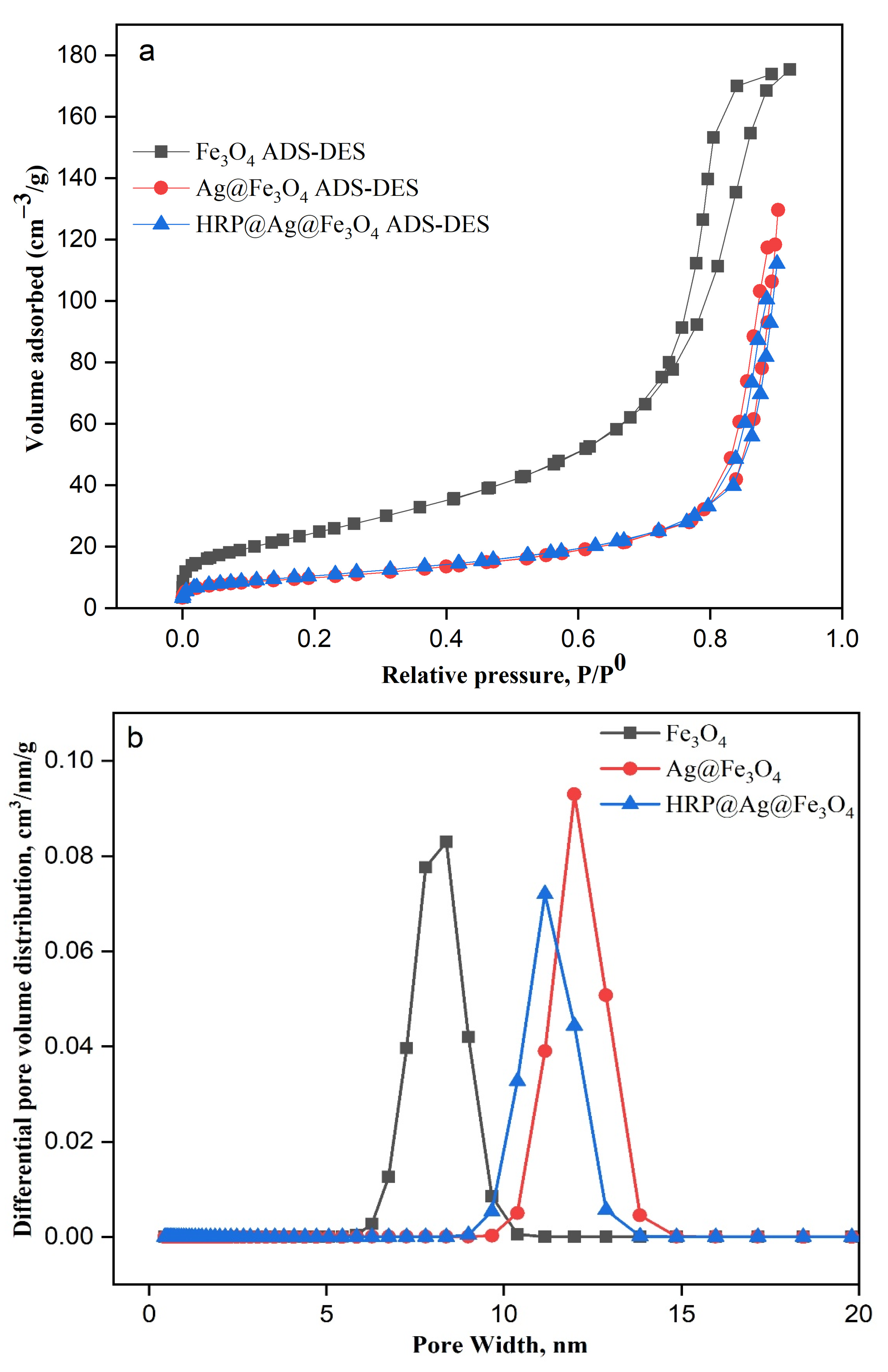
Valuable insights into the surface textural features and porosity of Fe3O4, Ag@Fe3O4, and HRP@Ag@Fe3O4 composites were provided via nitrogen adsorption–desorption isotherms (Figure 6a) and pore size distribution profiles (Figure 6b). All samples exhibited type IV isotherms with H3-type hysteresis loops, which are indicative of mesoporous structures. BET surface area (SBET) measurements revealed that unmodified Fe3O4 nanoparticles possess a relatively high specific surface area of 97 m2/g, which drastically diminishes to 36 m2/g upon silver incorporation (Ag@ Fe3O4), while experiences a slight increase to 39 m2/g upon horseradish peroxidase (HRP) immobilization (HRP@Ag@Fe3O4). The reduction in surface area upon Ag loading is because the surface and pore entrances were partially occupied by silver nanoparticles, which block the sites for effective nitrogen adsorption. The minor rise upon HRP immobilization may result from the enzyme’s conformational stacking on the surface of nanoparticle, which may lead to an increase in surface roughness or the prevention of complete pore blockage. These tendencies were further supported by pore volume and diameter analyses. The total pore volume decreases from 0.27 cm3/g (Fe3O4) to 0.20 cm3/g (Ag@Fe3O4) and then to 0.17 cm3/g (HRP@Ag@Fe3O4), consistent with enzyme immobilization reducing free accessible voids. The average BJH pore diameter increases markedly from 12.46 nm (Fe3O4) to 18.92 nm after silver doping, which can be attributed to reorganization of the porous framework and the development of larger voids due to Ag nanoparticle decoration. Interestingly, the pore size remains unchanged at 18.92 nm even after HRP immobilization, implying that the enzyme molecules preferentially bind to surface and inner pore walls without affecting the overall mesoporous system.
Zeta potential measurements (Table 1) provide insight into surface charge variations among the samples. The Fe3O4 nanoparticles exhibited a moderately positive value of +13.6 mV, indicating acceptable colloidal stability. Upon silver deposition, the zeta potential sharply decreased to +0.2 mV, suggesting a substantial reduction in electrostatic repulsion and a tendency toward aggregation or flocculation, consistent with FESEM observations of local agglomeration. The near-neutral charge of Ag@Fe3O4 can be attributed to the partial neutralizing effect of metallic silver on the magnetite surface. Interestingly, after HRP immobilization, the zeta potential increased again to +14.0 mV due to the presence of positively charged amino groups from the enzyme at pH 7.0 (close to its pI ≈ 7.2), providing renewed electrostatic repulsion and additional steric stabilization through the protein corona. Although the hydrodynamic size may increase slightly after immobilization due to mild clustering, the overall colloidal stability of HRP@Ag@Fe3O4 in aqueous medium is improved.

2.5. Reusability and Storage Stability of HRP@Ag@Fe3O4 Nanobiocatalyst

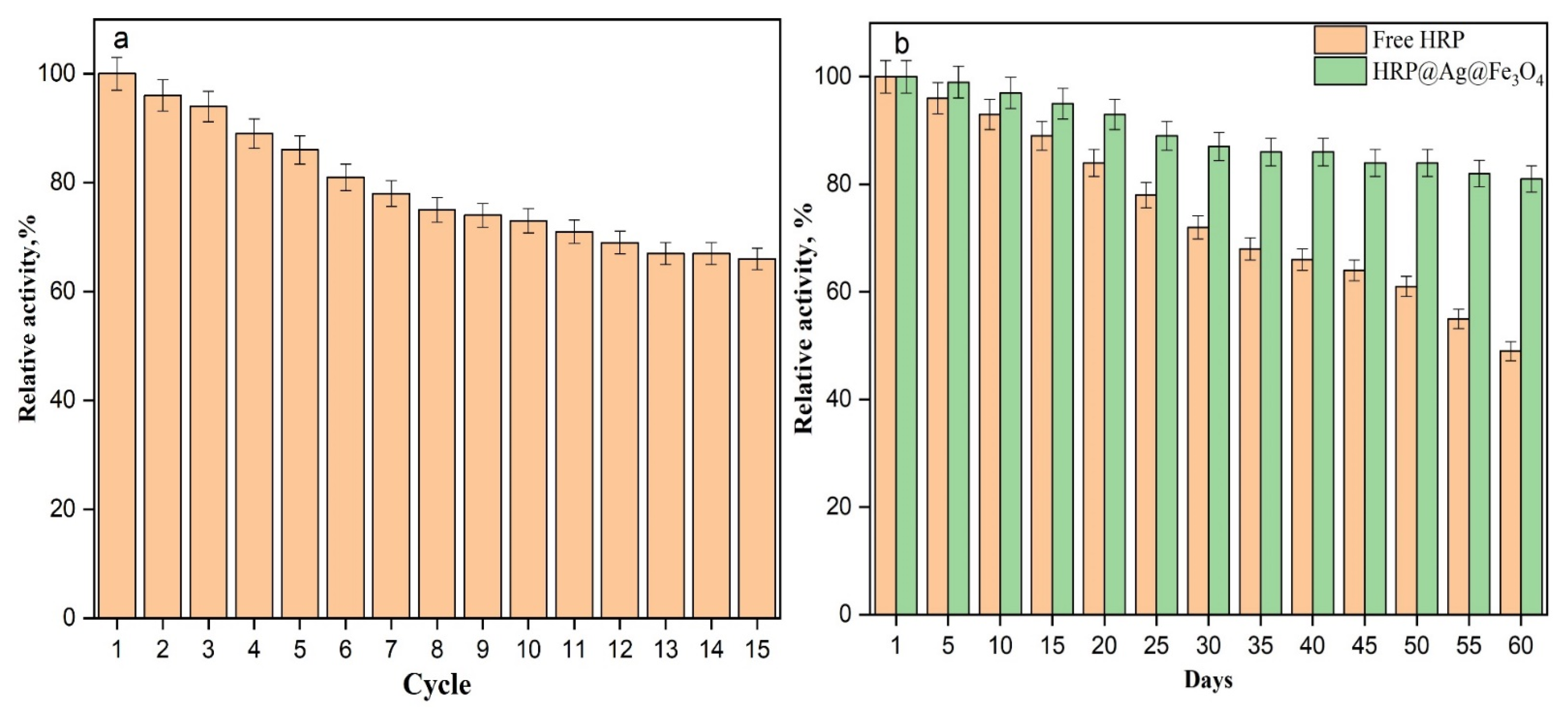
The reusability of the HRP@Ag@Fe3O4 biocatalyst was assessed by evaluating its operational stability over 15 consecutive catalytic cycles. As shown in Figure 7a, the immobilized enzyme retained 73% of its initial activity after 10 cycles and still preserved 66% of its activity after 15 cycles. This gradual loss in relative activity may be attributed to partial enzyme leaching, conformational changes during frequent use, or surface fouling of the support. Nevertheless, the remarkable reusability of the system indicates a strong enzyme-support interactions and structural robustness of the Ag@Fe3O4 nanocomposite. These findings highlight the potential of this hybrid material for repeated biocatalytic applications, particularly in continuous or batch processing setups. Previous studies for magnetically recoverable enzyme systems have shown comparable patterns aligned with this work. A study stated that HRP immobilized on unmodified Fe3O4 nanoparticles preserved only 55% of its initial activity after 10 cycles [14], demonstrating a significant improvement upon silver incorporation. Meanwhile, when HRP immobilized on lysine-functionalized gum Arabic-coated Fe3O4, the system showed 60% of its initial activity after eight consecutive reuse cycles [36]. Similarly, the immobilization of other enzymes such as immobilization of laccase on hydroxyapatite-coated Fe3O4 nanoparticles showed 79% activity after 10 cycles [12]. These finding combined demonstrate that the Ag@Fe3O4 support boosts immobilization efficiency and imparts superior durability to the biocatalyst under repeated operational conditions, making it a promising platform for sustainable and affordable biocatalysis.
The storage stability of enzymes is a crucial aspect influencing their practical utilization, especially in prolonged biocatalytic processes and industrial applications. In this study, the relative activities of both free HRP and HRP@Ag@Fe3O4 were assessed during a 60-day storage period at 4 °C. Figure 7b illustrated that free HRP exhibited a substantial reduction in catalytic performance, retaining only 49% of its original activity after 60 days. Conversely, the immobilized HRP@Ag@Fe3O4 system retained 81% of its initially generated activity, indicating a significant improvement in stability over the long term. The Ag@Fe3O4 nanocomposite support with a stabilizing microenvironment property was able to provide a superior storage stability for the immobilized HRP. This might be attributed to the physical confinement and surface interactions offered by immobilization, which restrict conformational flexibility and reduce unfolding or denaturation of the enzyme. Apparently, the incorporation of silver on the Fe3O4 surface provides further protective features by imparting antimicrobial and antioxidative properties, which limit protein degradation and oxidation during storage. These findings aligned with previously reported studies, where the activity percentage of the HRP enzyme was maintained after a prolonged time of storge when immobilized on surfaces such as Fe3O4/carbon nanotube composites [37] or mesoporous magnetic hybrid nanoflowers [38] rather for free HRP under the same conditions. Hence, it demonstrates that immobilization could significantly enhance enzyme stability, enabling sustained catalytic performance during extended storage. Collectively, the current results emphasize the effectiveness of Ag@Fe3O4 as a biocompatible and protective immobilization matrix for HRP, extending its shelf-life and operational durability without the use of crosslinking agents. This enhanced storage performance supports the potential of HRP@Ag@Fe3O4 systems for sustained or prolonged utilization in environmental and industrial biocatalysis. To further validate the effectiveness of Ag@Fe3O4 as an immobilization platform, a quantitative comparison was made with recently reported HRP supports (Table 2). The present system exhibited a high immobilization yield of 93%, which surpasses HRP immobilized on Fe3O4 nanoparticles alone (78% efficiency; 55% activity retained after 10 cycles) [14] and lysine–gum Arabic-coated Fe3O4 (84% retention after 8 cycles) [35]. Additionally, the excellent operational stability of HRP@Ag@Fe3O4, with 66% activity preserved after 15 cycles and 81% after 60 days at 4 °C, is superior to the 45–60% activity retention typically reported for magnetic hybrid systems over similar durations and reuse cycles [12,37,38]. These performance advantages highlight the beneficial role of silver loading, which improves both enzyme–surface interactions and resistance to leaching or denaturation, thus positioning Ag@Fe3O4 as a highly competitive and sustainable biocatalyst support compared with contemporary materials.

2.6. Effect of Immobilization on the Optimal pH and Temperature of HRP Catalysis

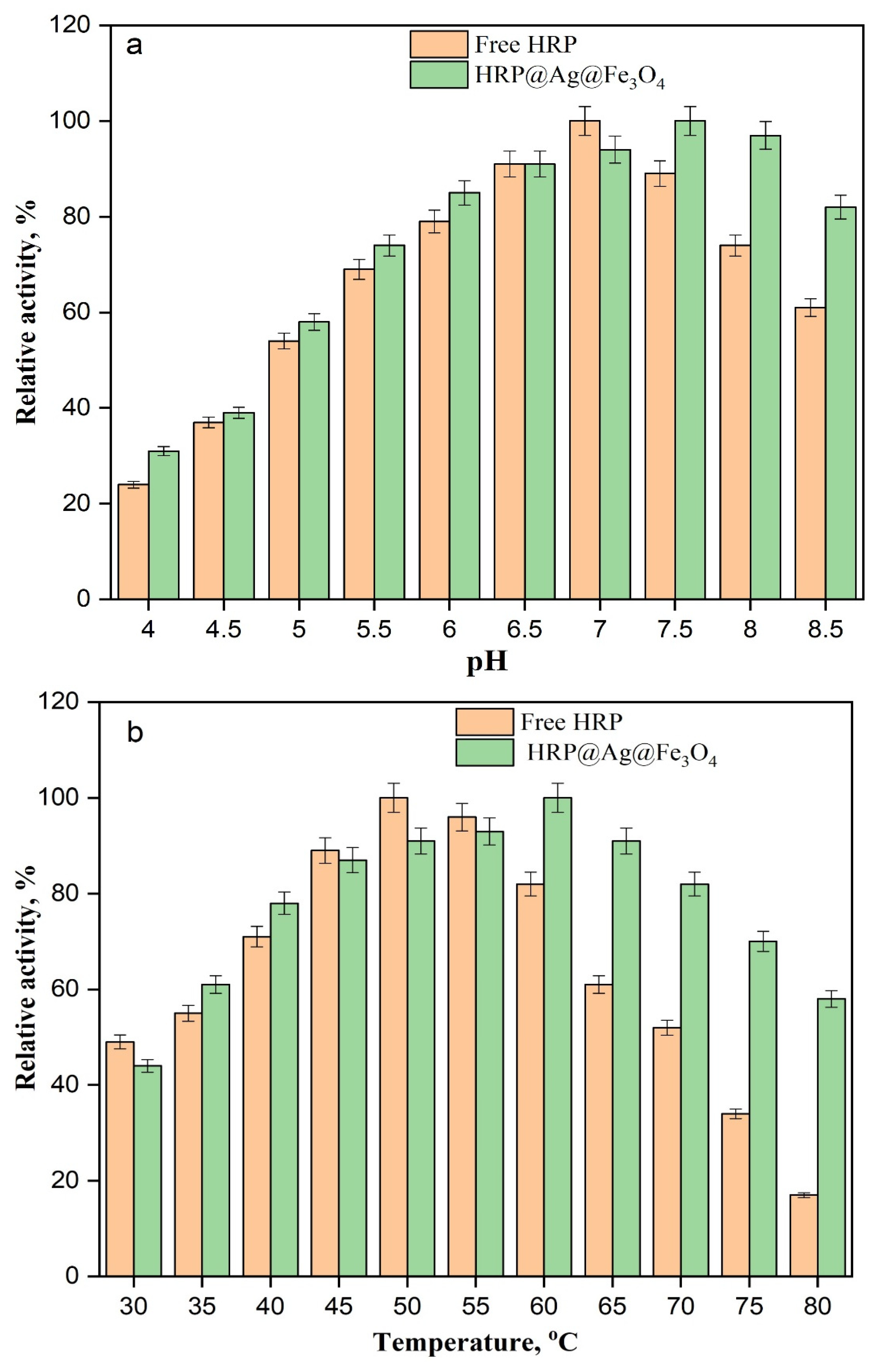
The pH profile depicted in Figure 8a illustrates that the catalytic activity of both free HRP and HRP immobilized on Ag@Fe3O4 is significantly affected by the pH of the reaction medium. Free HRP has optimum activity at pH 7.0, consistent with previous literature, suggesting enzyme’s structural stability and effective ionization state near neutrality. The optimal pH shifts to a slightly alkaline medium, pH 7.5, upon immobilization, indicating that the Ag@Fe3O4 matrix induces microenvironmental deviations that affect the local pKa of catalytic residues and substrate accessibility. This upward shift in optimal pH is a well-documented phenomena in enzyme immobilization, which is explained by the altered surface charge distribution, steric effects, and localized pH buffering [39,40]. The slightly more alkaline optimum for HRP@Ag@Fe3O4 might be attributed to the interactions with the silver-loaded magnetite surface, which provides a stabilizing and protective environment for the enzyme, while reducing the risk of conformational denaturation under mildly basic conditions. Thus, the immobilized enzyme retains higher relative activity across both acidic (pH 4.0–5.5) and alkaline (pH 8.0–8.5) regions compared to the free form, highlighting enhanced operational stability. Similar trends have been observed in other studies. While HRP immobilized on CuO nanosheets exhibited a broadened optimal pH range (7.0–7.5) [41], HRP immobilized on chia gum–alginate beads shifted to pH 6.0 [42], emphasizing the role of the support matrix in modulating enzyme activity.
Figure 8b illustrates the thermal activity profiles of free HRP and HRP immobilized on Ag@Fe3O4. Free HRP exhibited a typical behavior of a native enzyme, showing a maximum catalytic activity at 50 °C, which rapidly declined beyond this point due to thermal denaturation. In contrast, HRP@Ag@Fe3O4 displayed a shift in optimal temperature to higher degree, 60 °C, and sustained significantly higher relative activity at these elevated temperatures. This enhanced thermal tolerance indicates that the immobilization matrix provides conformational stabilization and prevents thermal unfolding of the enzyme. The Ag component offers antioxidant and antimicrobial effects, reducing oxidative damage and preserving catalytic residues during prolonged operation. Such behavior is consistent with previous literature, where immobilization of HRP on either CuO nanosheet [41], chia gum-alginate beads [42] or even polyvinyl alcohol-chitosan [43] caused an improved thermal stability of the enzyme activity and a broader activity range for immobilized HRP. Hence, immobilization of enzymes to inorganic or polymeric support restricts enzyme mobility under thermal stress, enhanced its rigidity, reduced unfolding, and offered thermal insulation due to the crosslinked structure of the hybrid matrix. In this system, the Ag@Fe3O4 nanocomposite combines the features gained from incorporating silver to Fe3O4. Hence it combines the antioxidative and antimicrobial properties of silver with the magnetic, thermally stable nature of Fe3O4, offering a protective microenvironment that shields the enzyme from heat-induced denaturation. Consequently, HRP@Ag@Fe3O4 retained >80% activity even at 70 °C, in contrast to the rapid activity loss observed for free HRP, making it a promising biocatalyst for thermally demanding industrial applications.

2.7. Kinetic Evaluation of Free and Immobilized HRP

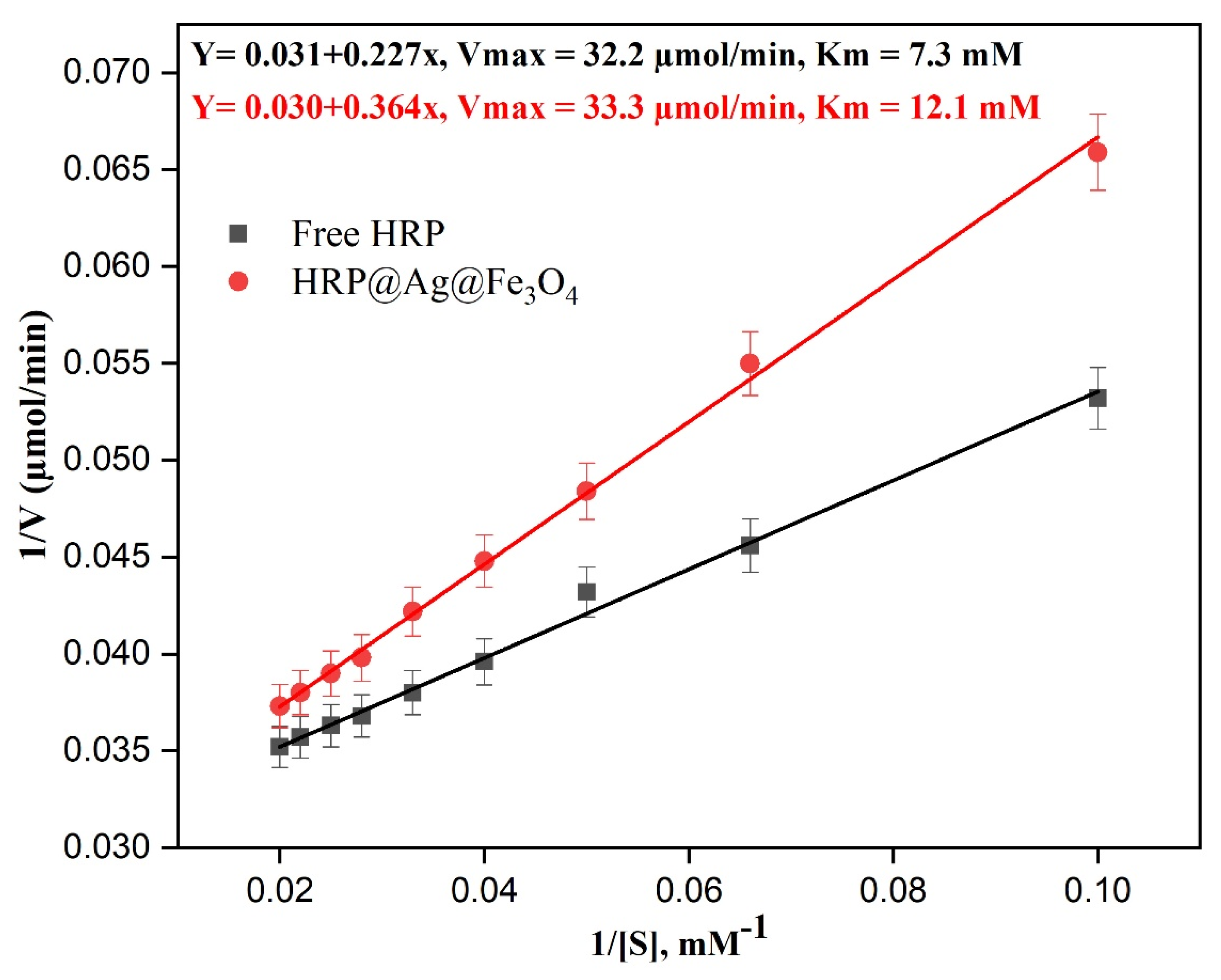
Figure 9 displays the Lineweaver–Burk plots that describe the kinetic characteristics of free HRP and HRP immobilized on Ag@Fe3O4. As shown, free HRP exhibited a Vmax of 32.2 ± 1.1 µmol·min−1 and a Km of 7.3 ± 0.4 mM, whereas immobilized HRP retained a statistically similar Vmax of 33.3 ± 1.3 µmol·min−1 (p > 0.05) but demonstrated a significantly higher Km value of 12.1 ± 0.6 mM (p < 0.05). This indicates that the intrinsic catalytic turnover rate of HRP remains unaffected once the substrate is bound, while the substrate affinity decreases after immobilization. Such behavior is typically attributed to steric hindrance and limited substrate accessibility caused by the nanoparticle surface, along with diffusional constraints and localized microenvironmental effects surrounding the immobilized enzyme [44]. The turnover number (kcat) of free HRP was 236.6 s−1, while HRP@Ag@Fe3O4 exhibited a slightly higher value of 244.6 s−1, confirming that the immobilization process did not negatively impact catalytic turnover once the substrate reaches the enzyme’s active site. Similar kinetic trends have been reported for HRP immobilized on polysaccharide-based matrices, where diffusional barriers contribute to increased Km without compromising Vmax [42]. Despite this shift in apparent affinity, the immobilized enzyme benefits from enhanced stability, reusability, and resistance to denaturation, supporting the effectiveness of Ag@Fe3O4 as a robust and sustainable platform for biocatalytic applications. Although EPR spectroscopy could provide additional molecular-level proof of heme integrity, the preserved Vmax and enhanced operational stability suggest that the enzyme’s active site remains functionally intact after immobilization.

3. Materials and Methods

Iron (III) nitrate nonahydrate (Fe(NO3)3·9H2O ≥99%), Iron (II) chloride tetrahydrate (FeCl2·4H2O, ≥98%), silver nitrate (AgNO3, ≥99.8%), sodium carbonate (Na2CO3, ≥99%), guaiacol (≥99%), hydrogen peroxide (H2O2, 30% w/v), and horseradish peroxidase (HRP) were purchased from Sigma-Aldrich (Merck), St. Louis, MO, USA.

3.1. Preparation of Brachychiton Populneus Extract

The extract of Brachychiton populneus was obtained using a method reported by Alotaibi et al. [12]. In this method, 2 g of dried and finely ground leaves were combined with 20 milliliters of distilled water and heated at 70 °C for 20 min. After heating, the mixture was filtered to remove plant residues, and the freshly prepared extract was used immediately for the subsequent synthesis steps.

3.2. Biogenic Synthesis of Ag@Fe3O4

The Ag@Fe3O4 nanocomposites were prepared using a modified version of the method described by Zhang et al. [45]. Initially, 10 mmol of iron (III) nitrate nonahydrate and 7 mmol of iron (II) chloride tetrahydrate were dissolved in 70 mL of distilled water and heated at 70 °C for 15 min. Following this, 20 mL of Brachychiton populneus extract was added to the solution, and the mixture was maintained at 70 °C for an additional hour. Subsequently, 10 mL of a 5 mmol silver nitrate solution was introduced, and the pH was adjusted to 8 using 1 M sodium carbonate. The reaction was then allowed to proceed under the same temperature for another 3 h. The resulting precipitate was collected by filtration, washed three times with distilled water and once with ethanol, and dried at 100 °C. To obtain the final nanocomposite, the dried material was subjected to calcination at 600 °C. For comparison, Fe3O4 nanoparticles were synthesized using the same procedure but omitting the addition of silver nitrate. The Ag@Fe3O4 nanocomposite was calcined at 600 °C for 2 h prior to enzyme immobilization. This step was used to remove residual phytochemical components originating from the green synthesis and to improve crystallinity and interfacial bonding between Ag nanoparticles and the Fe3O4 core, thus ensuring magnetic stability during repeated catalytic cycles.

3.3. Immobilization of HRP onto Ag@Fe3O4 Nanocomposites

The Ag@Fe3O4 nanocomposite was dispersed in phosphate buffer (50 mM, pH 7.0) containing 50 units of horseradish peroxidase (HRP). The suspension was gently agitated using end-over-end rotation at room temperature for 12 h to facilitate uniform attachment of the enzyme onto the nanoparticle surface. After the incubation period, the material was washed three times with phosphate buffer (50 mM, pH 7.0), centrifuged at 8000 rpm for 10 min, until the supernatant showed no protein content by Bradford assay. The resulting HRP-loaded Ag@Fe3O4 nanocomposite was stored at 4 °C until further analysis. The residual protein concentration in the supernatant and washing solutions was quantified by the Bradford method, with bovine serum albumin (BSA) as the calibration standard [46]. The immobilization efficiency was calculated using the following equation:
Immobilization yield (%) = [(Protein introduced − Protein in the supernatant)/Protein introduced] × 100
Enzyme loading capacity (mg/g) was determined as the amount of bound HRP per gram of dried Ag@Fe3O4 support. All measurements were performed in triplicate (n = 3, mean ± SD).

3.4. Enzyme Activity Assay

The catalytic activity of HRP was assessed based on the protocol described by Yuan and Jiang [47], with slight modifications. Each 1 mL reaction mixture consisted of 40 mM guaiacol, 8 mM hydrogen peroxide (H2O2), and 50 mM Tris–HCl buffer at pH 7.0. Either a small volume of free HRP or a measured quantity of HRP immobilized on Ag@Fe3O4 was added to initiate the reaction. The oxidation of guaiacol was tracked by measuring the increase in absorbance at specific time intervals. One unit of enzymatic activity was defined as the amount of HRP that caused an increase in optical density (OD) of 1.0 per minute under the assay conditions.

3.5. Characterization of Materials

A comprehensive suite of analytical techniques was employed to evaluate the structural, morphological, and physicochemical properties of the synthesized Fe3O4 nanoparticle and Ag@Fe3O4 nanocomposite. Magnetic properties were investigated using a vibrating sample magnetometer (VSM, Model 7400, Lake Shore Cryotronics, Westerville, OH, USA) to assess the magnetic response of materials. The crystalline structures were identified through X-ray diffraction (XRD) analysis performed with a Bruker Advance D8 diffractometer (Bruker AXS GmbH, Karlsruhe, Germany), operating with Cu Kα radiation (λ = 1.5418 Å). Functional groups present in the samples were examined by recording Fourier-transform infrared (FTIR) spectra using a PerkinElmer Spectrum 100 spectrometer (PerkinElmer Inc., Waltham, MA, USA). Surface morphology was observed through field-emission scanning electron microscopy (FESEM), while the elemental composition and distribution were analyzed using energy-dispersive X-ray spectroscopy (EDX) (Bruker Nano GmbH, Berlin, Germany). The specific surface area was measured using the Brunauer–Emmett–Teller (BET) method, with nitrogen adsorption–desorption isotherms obtained at 77 K using a Quantachrome Touchwin v1.21 instrument. (Quantachrome Instruments, Boynton Beach, FL, USA). Pore characteristics, including size distribution and volume, were derived from the adsorption data using the Barrett–Joyner–Halenda (BJH) model and the Density Functional Theory (DFT) approach, processed via the ASiQwin software (version 3.01, Quantachrome Instruments, Boynton Beach, FL, USA). Furthermore, surface charge analysis was conducted by measuring the zeta potential with a Malvern Zetasizer (Malvern Panalytical Ltd., Malvern, Worcestershire, UK).

3.6. Stability and Reusability Assessment of HRP

To evaluate the effectiveness of the immobilization strategy, the long-term stability and reusability of HRP immobilized on Ag@Fe3O4 were systematically examined. For storage stability, both free and immobilized enzyme samples were maintained at 4 °C in 50 mM Tris–HCl buffer (pH 7.0) for a period of eight weeks. Enzymatic activity was measured at regular intervals to monitor retention over time.
The reusability of the immobilized HRP was assessed under the same standard assay conditions described for activity determination. After each catalytic run, the nanocomposite was magnetically separated, rinsed thoroughly with fresh Tris–HCl buffer (pH 7.0), and reused in subsequent cycles. This process was repeated for fifteen consecutive cycles, and the residual activity at each cycle was calculated relative to the initial activity recorded in the first use, which was considered 100%.

3.7. Determination of Kinetic Parameters

To determine the catalytic efficiency of both free and immobilized HRP, enzyme activity was assessed using guaiacol as the substrate at varying concentrations ranging from 10 to 50 mM. The Michaelis–Menten constant (Km) and the maximum reaction velocity (Vmax) were derived from the resulting data. These kinetic parameters were calculated by fitting the experimental values to the Michaelis–Menten equation using nonlinear regression analysis performed in Origin/OriginPro 2018 software.

3.8. Effect of pH and Temperature on Enzymatic Activity

The impact of pH on enzymatic activity was assessed to determine the optimal operating conditions for both free and immobilized HRP. A series of 50 mM buffer systems were employed across a broad pH range: acetate buffer for pH 4.0 to 6.0 and Tris–HCl buffer for pH 6.5 to 9.0. The effect of temperature was investigated by incubating samples of free HRP and HRP@Ag@Fe3O4 at varying temperatures (30–80 °C) for 15 min prior to initiating the enzymatic reaction by substrate addition. Activity measurements were then conducted using the standard assay method described earlier. This evaluation enabled identification of the optimal pH and temperature conditions for maximal catalytic performance.

3.9. Statistical Analysis

All experiments were performed in triplicate (n = 3), and the obtained data are presented as mean ± standard deviation (SD). The statistical significance of differences in enzymatic activity between free and immobilized HRP under different conditions (pH, temperature, reusability, and storage period) was evaluated using one-way analysis of variance (ANOVA). Statistical significance was considered at p < 0.05. All statistical calculations and graphical plots were performed using OriginPro 2018 software (Version 2018b, OriginLab Corporation, Northampton, MA, USA; 2018). Error bars shown in Figure 7, Figure 8 and Figure 9 represent SD of the experimental measurements.

4. Conclusions

This study successfully demonstrated the green synthesis of silver-loaded magnetite nanoparticles (Ag@Fe3O4) using B. populneus extract and their application as an innovative support for horseradish peroxidase (HRP) immobilization. The biosynthesized nanocomposite exhibited a high immobilization yield (93%), enhanced thermal and pH stability, remarkable storage longevity (81% residual activity after 60 days at 4 °C), and excellent reusability (66% activity after 15 cycles), outperforming many conventional supports. Comprehensive characterizations (XRD, VSM, FTIR, FESEM, BET) confirmed the successful incorporation of Ag and efficient enzyme attachment, while kinetic analysis showed a modest increase in Km but preserved or slightly improved Vmax, indicating maintained catalytic turnover. The originality of this work lies in combining a sustainable plant-mediated synthesis with the development of Ag@Fe3O4 as a multifunctional, magnetically separable biocatalyst support. The enhanced durability and reusability reduce operational waste and downstream processing energy, positioning this nanocomposite as an eco-efficient catalytic platform. Overall, this work supports the UN Sustainable Development Goals (SDG 6: Clean Water and SDG 12: Responsible Consumption & Production), establishing green-synthesized Ag@Fe3O4 as a promising material for industrial biocatalysis and environmental remediation.

Supplementary Materials

The following supporting information can be downloaded at: https://www.mdpi.com/article/10.3390/catal15121098/s1, Table S1: Effect of pH on the immobilization yield of HRP on Ag@Fe3O4 nanocomposite (mean ± SD, n = 3); Table S2: Effect of time on the immobilization yield of HRP on Ag@Fe3O4 nanocomposite (mean ± SD, n = 3); Figure S1: SEM images of Fe3O4; Figure S2: SEM images of Ag@Fe3O4 and c).HRP@Ag@Fe3O4; Figure S3: SEM images of HRP@Ag@Fe3O4.

Author Contributions

Y.Q.A.: conceptualization, methodology, investigation, formal analysis, writing—original draft, writing—review and editing. R.M.E.-S.: conceptualization, methodology, investigation, formal analysis, writing—review and editing. L.S.A. and E.N.B.: investigation, formal analysis, writing—review and editing, supervision, project administration. All authors have read and agreed to the published version of the manuscript.

Funding

This work was supported and funded by the Deanship of Scientific Research at Imam Mohammad Ibn Saud Islamic University (IMSIU) (grant number IMSIU-DDRSP2502).

Data Availability Statement

The data presented in this study are available on request from the corresponding author.

Conflicts of Interest

The authors declare no conflicts of interest.

Abbreviations

The following abbreviations are used in this manuscript:
XRDX-ray diffraction
FTIRFourier-transform infrared spectroscopy
FESEMField-emission scanning electron microscopy
EDXEnergy-dispersive X-ray spectroscopy
BETBrunauer–Emmett–Teller surface area analysis
VSMVibrating sample magnetometry

References

  1. Sellami, K.; Couvert, A.; Nasrallah, N.; Maachi, R.; Abouseoud, M.; Amrane, A. Peroxidase enzymes as green catalysts for bioremediation and biotechnological applications: A review. Sci. Total Environ. 2022, 806, 150500. [Google Scholar] [CrossRef] [PubMed]
  2. Pantić, N.; Prodanović, R.; Đurđić, K.I.; Polović, N.; Spasojević, M.; Prodanović, O. Optimization of phenol removal with horseradish peroxidase encapsulated within tyramine-alginate micro-beads. Environ. Technol. Innov. 2021, 21, 101211. [Google Scholar] [CrossRef]
  3. Emamdadi, N.; Gholizadeh, M.; Housaindokht, M.R. The effect of magnetized water on the oxidation reaction of phenol derivatives and aromatic amines by horseradish peroxidase enzyme. Biotechnol. Prog. 2020, 36, e3035. [Google Scholar] [CrossRef]
  4. Atiroğlu, V.; Atiroğlu, A.; Atiroğlu, A.; Al-Hajri, A.S.; Özacar, M. Green immobilization: Enhancing enzyme stability and reusability on eco-friendly support. Food Chem. 2024, 448, 138978. [Google Scholar] [CrossRef]
  5. Singh, A.K.; Bilal, M.; Iqbal, H.M.; Meyer, A.S.; Raj, A. Bioremediation of lignin derivatives and phenolics in wastewater with lignin modifying enzymes: Status, opportunities and challenges. Sci. Total Environ. 2021, 777, 145988. [Google Scholar] [CrossRef]
  6. Maghraby, Y.R.; El-Shabasy, R.M.; Ibrahim, A.H.; Azzazy, H.M.E.S. Enzyme immobilization technologies and industrial applications. ACS Omega 2023, 8, 5184–5196. [Google Scholar] [CrossRef] [PubMed]
  7. Almulaiky, Y.Q. Acrylic modification as an environmentally acceptable supporter for improving peroxidase enzyme: Stability and reusability. Biocatal. Biotransform. 2024, 42, 726–740. [Google Scholar] [CrossRef]
  8. Khan, R.S.; Rather, A.H.; Wani, T.U.; Rather, S.U.; Amna, T.; Hassan, M.S.; Sheikh, F.A. Recent trends using natural polymeric nanofibers as supports for enzyme immobilization and catalysis. Biotechnol. Bioeng. 2023, 120, 22–40. [Google Scholar] [CrossRef] [PubMed]
  9. Almulaiky, Y.Q.; Al-Harbi, S.A. A sustainable approach to dye degradation: Horseradish peroxidase immobilization on hybrid chitosan-coated magnesium manganese oxide materials. Int. J. Biol. Macromol. 2025, 314, 144277. [Google Scholar] [CrossRef]
  10. El-Shishtawy, R.M.; Al Angari, Y.M.; Alotaibi, M.M.; Almulaiky, Y.Q. Acrylic fabric and nanomaterials to enhance α-amylase-based biocatalytic immobilized systems for industrial food applications. Int. J. Biol. Macromol. 2023, 233, 123539. [Google Scholar] [CrossRef]
  11. Singh, R.S.; Chauhan, K. Functionalization of multiwalled carbon nanotubes for enzyme immobilization. In Methods in Enzymology; Academic Press: San Diego, CA, USA, 2020; Volume 630, pp. 25–38. [Google Scholar]
  12. Almulaiky, Y.Q.; Alkabli, J.; El-Shishtawy, R.M. Improving enzyme immobilization: A new carrier-based magnetic polymer for enhanced covalent binding of laccase enzyme. Int. J. Biol. Macromol. 2024, 282, 137362. [Google Scholar] [CrossRef]
  13. Alotaibi, A.N.; Al-Dakhil, A.; Alwabsi, H.A.; Althobaiti, I.O.; El-Shishtawy, R.M.; Almulaiky, Y.Q. Sustainable synthesis of alginate–cobalt ferrite nanocomposites for horseradish peroxidase immobilization: Enhanced stability, reusability, and catalytic efficiency. Bioprocess Biosyst. Eng. 2025, 48, 1207–1219. [Google Scholar] [CrossRef]
  14. Mohamed, S.A.; Al-Harbi, M.H.; Almulaiky, Y.Q.; Ibrahim, I.H.; El-Shishtawy, R.M. Immobilization of horseradish peroxidase on Fe3O4 magnetic nanoparticles. Electron. J. Biotechnol. 2017, 27, 84–90. [Google Scholar] [CrossRef]
  15. Liu, M.; Ye, Y.; Ye, J.; Gao, T.; Wang, D.; Chen, G.; Song, Z. Recent advances of magnetite (Fe3O4)-based magnetic materials in catalytic applications. Magnetochemistry 2023, 9, 110. [Google Scholar] [CrossRef]
  16. Khonina, T.Y.G.; Demin, A.M.; Tishin, D.S.; Germov, A.Y.; Uimin, M.A.; Mekhaev, A.V.; Krasnov, V.P. Magnetic nanocomposite materials based on Fe3O4 nanoparticles with iron and silica glycerolates shell: Synthesis and characterization. Int. J. Mol. Sci. 2023, 24, 12178. [Google Scholar] [CrossRef]
  17. Serga, V.; Burve, R.; Maiorov, M.; Krumina, A.; Skaudžius, R.; Zarkov, A.; Popov, A.I. Impact of gadolinium on the structure and magnetic properties of nanocrystalline powders of iron oxides produced by the extraction-pyrolytic method. Materials 2020, 13, 4147. [Google Scholar] [CrossRef] [PubMed]
  18. Kamakshi, T.; Sundari, G.S.; Erothu, H.; Singh, R.S. Effect of nickel dopant on structural, morphological and optical characteristics of Fe3O4 nanoparticles. Rasayan J. Chem. 2019, 12, 531–536. [Google Scholar] [CrossRef]
  19. Almulaiky, Y.Q.; Alkabli, J.; El-Shishtawy, R.M. Sustainable immobilization of β-glucosidase onto silver ions and AgNPs-loaded acrylic fabric with enhanced stability and reusability. Polymers 2023, 15, 4361. [Google Scholar] [CrossRef]
  20. Almalki, N.A.R.; Aldhahri, M.M.; Al-Maaqar, S.M.; Almulaiky, Y.Q. Gelatin Assisted Green Synthesis of Silver Ferrite Nanoparticles Using Capparis Cartilaginea Extract for Enhanced Antimicrobial Activity. Chem. Sel. 2025, 10, e202405149. [Google Scholar] [CrossRef]
  21. Jiao, Y.; Xing, M.; Ding, X.; Zhang, N. Effectively synthesized plasmonic-magnetic Ag@ Fe3O4 selective absorbing nanofluid for spectral beam splitting in full spectrum utilization. Sol. Energy Mater. Sol. Cells 2025, 284, 113491. [Google Scholar] [CrossRef]
  22. Saravanan, K.; Ilayaraja, M.; Muthukrishnan, P.; Ananthakrishnan, S.; Ravichandiran, P. Green synthesis and characterization of Ag and Ag/Fe3O4 nanocomposites for antimicrobial effect and rhodamine-B dye degradation. J. Indian Chem. Soc. 2022, 99, 100575. [Google Scholar] [CrossRef]
  23. Saeed, M.; Usman, M.; Muneer, M.; Akram, N.; ul Haq, A.; Tariq, M.; Akram, F. Synthesis of Ag-Fe3O4 nanoparticles for degradation of methylene blue in aqueous medium. Bull. Chem. Soc. Ethiop. 2020, 34, 123–134. [Google Scholar] [CrossRef]
  24. Poblete, H.; Agarwal, A.; Thomas, S.S.; Bohne, C.; Ravichandran, R.; Phopase, J.; Alarcon, E.I. New insights into peptide–silver nanoparticle interaction: Deciphering the role of cysteine and lysine in the peptide sequence. Langmuir 2016, 32, 265–273. [Google Scholar] [CrossRef]
  25. Xia, G.H.; Liu, W.; Jiang, X.P.; Wang, X.Y.; Zhang, Y.W.; Guo, J. Surface modification of Fe3O4@ SiO2 magnetic nanoparticles for immobilization of lipase. J. Nanosci. Nanotechnol. 2017, 17, 370–376. [Google Scholar] [CrossRef]
  26. Wang, X.Y.; Jiang, X.P.; Li, Y.; Zeng, S.; Zhang, Y.W. Preparation Fe3O4@ chitosan magnetic particles for covalent immobilization of lipase from Thermomyces lanuginosus. Int. J. Biol. Macromol. 2015, 75, 44–50. [Google Scholar] [CrossRef]
  27. Almulaiky, Y.Q.; Al-Harbi, S.A. Innovative immobilization of β-glucosidase on amidoximated acrylic fabric integrated with magnetite Fe3O4 nanoparticles. Int. J. Biol. Macromol. 2025, 306, 141172. [Google Scholar] [CrossRef]
  28. El-Shishtawy, R.M.; Hussein, M.A.; Almulaiky, Y.Q. Advanced catalytic systems: Hydroxyapatite-coated Fe3O4 MNPs for laccase enzyme immobilization. Mater. Today Commun. 2025, 46, 112931. [Google Scholar] [CrossRef]
  29. Fadl, A.M.; Abdou, M.I. Effect of surface modification on magnetization of nanoparticles. In Green Magnetic Nanoparticles (GMNPs); 2024; Elsevier: Amsterdam, The Netherlands; pp. 91–124. [Google Scholar]
  30. Ghaseminezhad, S.M.; Shojaosadati, S.A. Evaluation of the antibacterial activity of Ag/Fe3O4 nanocomposites synthesized using starch. Carbohydr. Polym. 2016, 144, 454–463. [Google Scholar] [CrossRef] [PubMed]
  31. Zeyadi, M.; Aldhahri, M.M.; Salwati, H.M.; Al-Maaqar, S.M.; Almulaiky, Y.Q. Citric acid-optimized green synthesis of AgNPs: A sustainable approach for effective antimicrobial agents. Biocatal. Biotransform. 2025, 43, 384–394. [Google Scholar] [CrossRef]
  32. Chang, M.; Lin, W.S.; Xiao, W.; Chen, Y.N. Antibacterial effects of magnetically-controlled Ag/Fe3O4 nanoparticles. Materials 2018, 11, 659. [Google Scholar] [CrossRef]
  33. Lu, W.; Shen, Y.; Xie, A.; Zhang, W. Green synthesis and characterization of superparamagnetic Fe3O4 nanoparticles. J. Magn. Magn. Mater. 2010, 322, 1828–1833. [Google Scholar] [CrossRef]
  34. Melo, M.N.; Pereira, F.M.; Rocha, M.A.; Ribeiro, J.G.; Diz, F.M.; Monteiro, W.F.; Fricks, A.T. Immobilization and characterization of horseradish peroxidase into chitosan and chitosan/PEG nanoparticles: A comparative study. Process Biochem. 2020, 98, 160–171. [Google Scholar] [CrossRef]
  35. Stoia, M.; Istratie, R.; Păcurariu, C. Investigation of magnetite nanoparticles stability in air by thermal analysis and FTIR spectroscopy. J. Therm. Anal. Calorim. 2016, 125, 1185–1198. [Google Scholar] [CrossRef]
  36. Varamini, M.; Zamani, H.; Hamedani, H.; Namdari, S.; Rastegari, B. Immobilization of horseradish peroxidase on lysine-functionalized gum Arabic-coated Fe3O4 nanoparticles for cholesterol determination. Prep. Biochem. Biotechnol. 2022, 52, 737–747. [Google Scholar] [CrossRef]
  37. Zhang, C.; Cai, X. Immobilization of horseradish peroxidase on Fe3O4/nanotubes composites for biocatalysis-degradation of phenol. Compos. Interfaces 2019, 26, 379–396. [Google Scholar] [CrossRef]
  38. Bakar, B.; Akbulut, M.; Ulusal, F.; Ulu, A.; Ozdemir, N.; Ateş, B. Horseradish Peroxidase Immobilized onto Mesoporous Magnetic Hybrid Nanoflowers for Enzymatic Decolorization of Textile Dyes: A Highly Robust Bioreactor and Boosted Enzyme Stability. ACS Omega 2024, 9, 24558–24573. [Google Scholar] [CrossRef]
  39. Kienle, D.F.; Chaparro Sosa, A.F.; Kaar, J.L.; Schwartz, D.K. Polyelectrolyte multilayers enhance the dry storage and pH stability of physically entrapped enzymes. ACS Appl. Mater. Interfaces 2020, 12, 22640–22649. [Google Scholar] [CrossRef] [PubMed]
  40. Weber, A.C.; da Silva, B.E.; Cordeiro, S.G.; Henn, G.S.; Costa, B.; Dos Santos, J.S.H.; Hoehne, L. Immobilization of commercial horseradish peroxidase in calcium alginate-starch hybrid support and its application in the biodegradation of phenol red dye. Int. J. Biol. Macromol. 2023, 246, 125723. [Google Scholar] [CrossRef] [PubMed]
  41. Aldhahri, M.; Almulaiky, Y.Q.; El-Shishtawy, R.M.; Al-Shawafi, W.M.; Salah, N.; Alshahrie, A.; Alzahrani, H.A. Ultra-thin 2D CuO nanosheet for HRP immobilization supported by encapsulation in a polymer matrix: Characterization and dye degradation. Catal. Lett. 2021, 151, 232–246. [Google Scholar] [CrossRef]
  42. Mohamed, S.A.; Elsayed, A.M.; Salah, H.A.; Barakat, A.Z.; Bassuiny, R.I.; Abdel-Mageed, H.M.; Abdel-Aty, A.M. Development of chia gum/alginate-polymer support for horseradish peroxidase immobilization and its application in phenolic removal. Sci. Rep. 2024, 14, 1362. [Google Scholar] [CrossRef]
  43. Savic, S.; Petrovic, S.; Savic, S.; Petronijevic, Z. Immobilization of horseradish peroxidase on modified cellulose carriers via hydrophobic interactions: Catalytic properties and stability. Iran. J. Sci. Technol. Trans. A Sci. 2021, 45, 55–63. [Google Scholar] [CrossRef]
  44. Zeyadi, M.; Almulaiky, Y.Q. Amino functionalized metal–organic framework as eco-friendly support for enhancing stability and reusability of horseradish peroxidase for phenol removal. Biomass Convers. Biorefin. 2024, 14, 25823–25835. [Google Scholar] [CrossRef]
  45. Zhang, L.; Dou, Y.H.; Gu, H.C. Synthesis of Ag–Fe3O4 heterodimeric nanoparticles. J. Colloid Interface Sci. 2006, 297, 660–664. [Google Scholar] [CrossRef] [PubMed]
  46. Bradford, M.M. A rapid and sensitive method for the quantitation of microgram quantities of protein utilizing the principle of protein-dye binding. Anal. Biochem. 1976, 72, 248–254. [Google Scholar] [CrossRef]
  47. Yuan, Z.Y.; Jiang, T.J. Horseradish peroxidase. In Handbook of Food Enzymology; CRC Press: Boca Raton, FL, USA, 2002; pp. 418–427. [Google Scholar]
Figure 1. Magnetic hysteresis loops of Fe3O4, Ag@Fe3O4 and HRP@Ag@Fe3O4.
Catalysts 15 01098 g001
Figure 2. XRD spectrum and elemental composition of Fe3O4, Ag@Fe3O4 and HRP@Ag@Fe3O4. (* Fe3O4, and # Ag).
Catalysts 15 01098 g002
Figure 3. SEM images of (A) Fe3O4, (B) Ag@Fe3O4 and (C) HRP@Ag@Fe3O4.
Catalysts 15 01098 g003
Figure 4. EDX spectrum and elemental composition of HRP@Ag@Fe3O4.
Catalysts 15 01098 g004
Figure 5. FTIR spectra of material support before and after treatment.
Catalysts 15 01098 g005
Figure 6. (a) N2 adsorption–desorption isotherms (b) pore size distribution of material support before and after treatment.
Catalysts 15 01098 g006
Figure 7. (a) Reusability of immobilized HRP and (b) storage stability of free and immobilized HRP. Error bars represent standard deviation (±SD) from triplicate experiments (n = 3).
Catalysts 15 01098 g007
Figure 8. (a) Effect of pH and (b) temperature on HRP activity. Error bars represent standard deviation (±SD) from triplicate experiments (n = 3).
Catalysts 15 01098 g008
Figure 9. Kinetic behavior of free and immobilized HRP. Error bars represent standard deviation (±SD) from triplicate experiments (n = 3).
Catalysts 15 01098 g009
Table 1. Surface area (SBET), pore properties, and zeta potential of material support.
SBET m2/gPore Volume cm3/gPore Diameter (BJH) (nm)Total Pore
Volume (DFT) (cm3/g)
Zeta Potential
(mV)
Fe3O4970.2712.460.2713.6
Ag@Fe3O4360.2018.920.190.2
HRP@Ag@Fe3O4390.1718.920.1614
Table 2. Comparative performance of HRP immobilized on different support materials.
Immobilization SupportEnzymeImmobilization YieldReusabilityRef.
Fe3O4 MNPsHRP78%55% after 10 cycles[14]
Gum arabic–Fe3O4HRP60% after 8 cycles[34]
Hybrid magnetic nanoflowersHRP79% after 10 cycles[37]
This workHRP93%66% after 15 cyclesThis study
Disclaimer/Publisher’s Note: The statements, opinions and data contained in all publications are solely those of the individual author(s) and contributor(s) and not of MDPI and/or the editor(s). MDPI and/or the editor(s) disclaim responsibility for any injury to people or property resulting from any ideas, methods, instructions or products referred to in the content.