Article

Deactivation of Cu/ZSM-5 Catalysts during the Conversion of 2,3-Butanediol to Butenes

by
Ziyuan Wang
,
Pawel Chmielniak
and
Carsten Sievers
*
School of Chemical & Biomolecular Engineering, Georgia Institute of Technology, Atlanta, GA 30332, USA
*
Author to whom correspondence should be addressed.
Catalysts 2024, 14(9), 634; https://doi.org/10.3390/catal14090634
Submission received: 29 August 2024 / Revised: 13 September 2024 / Accepted: 16 September 2024 / Published: 19 September 2024
(This article belongs to the Special Issue Zeolites and Zeolite-Based Catalysis)

Abstract

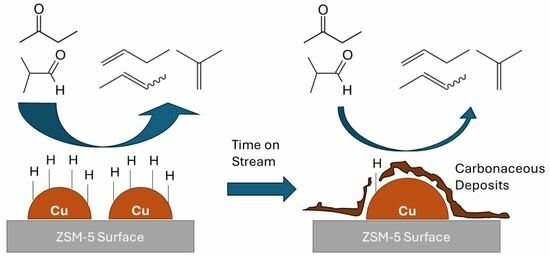
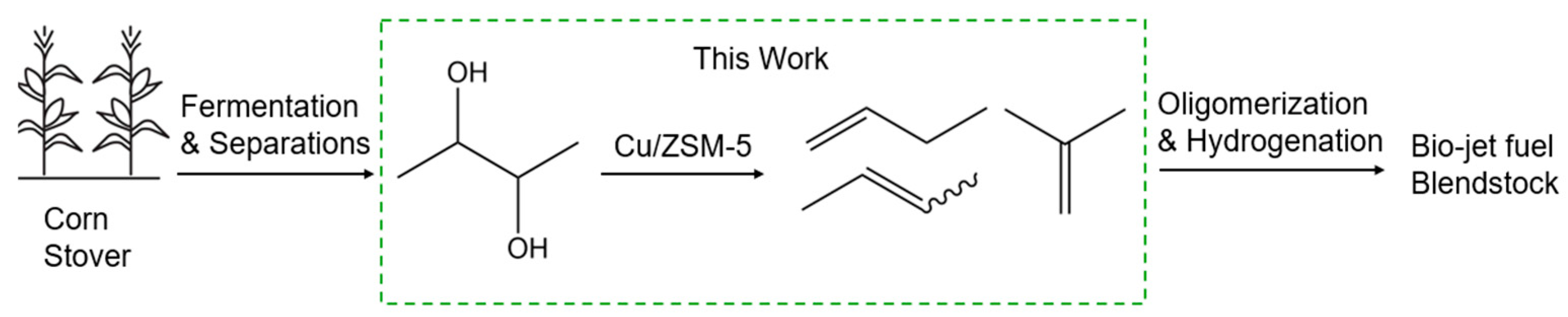
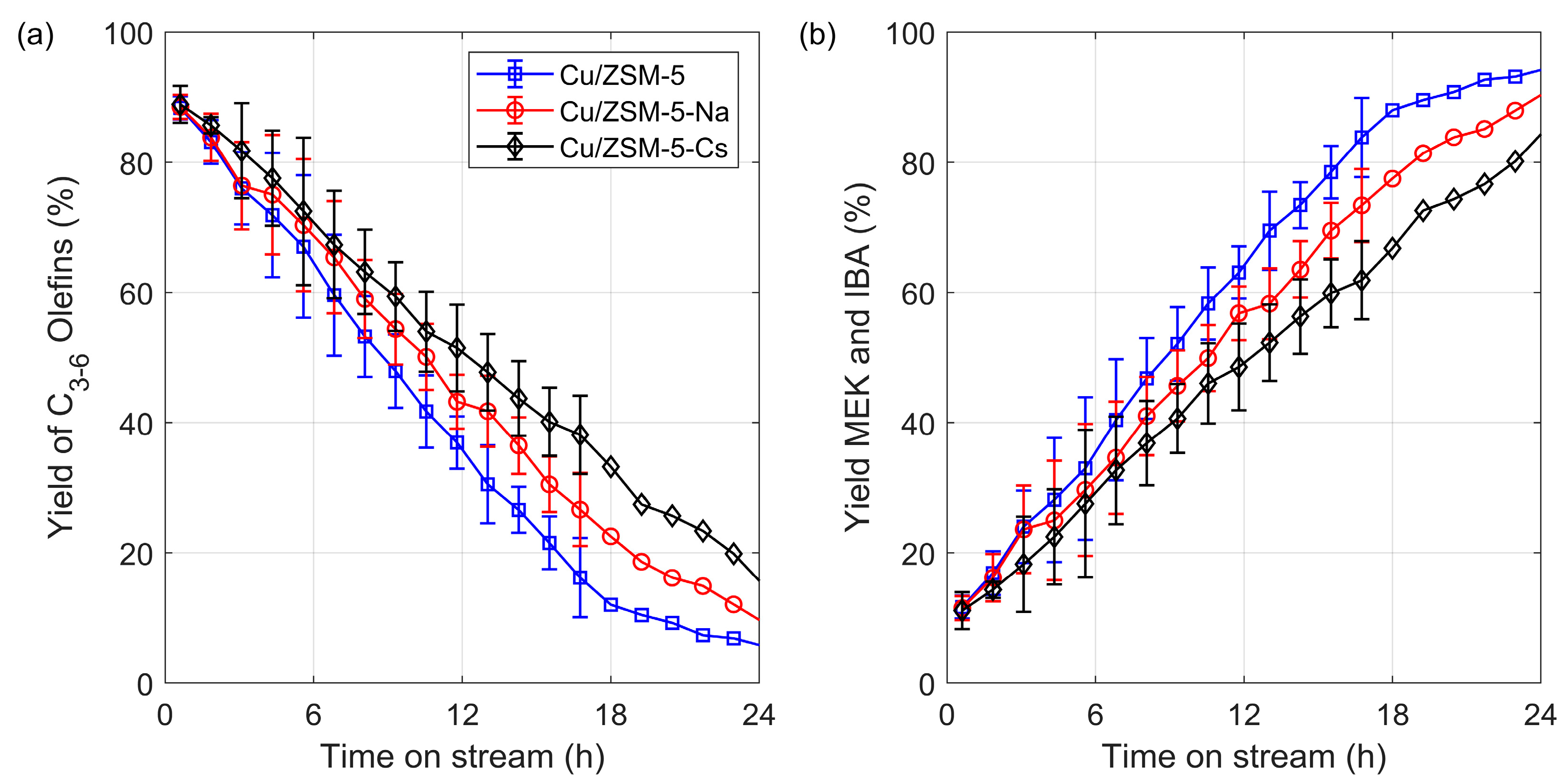
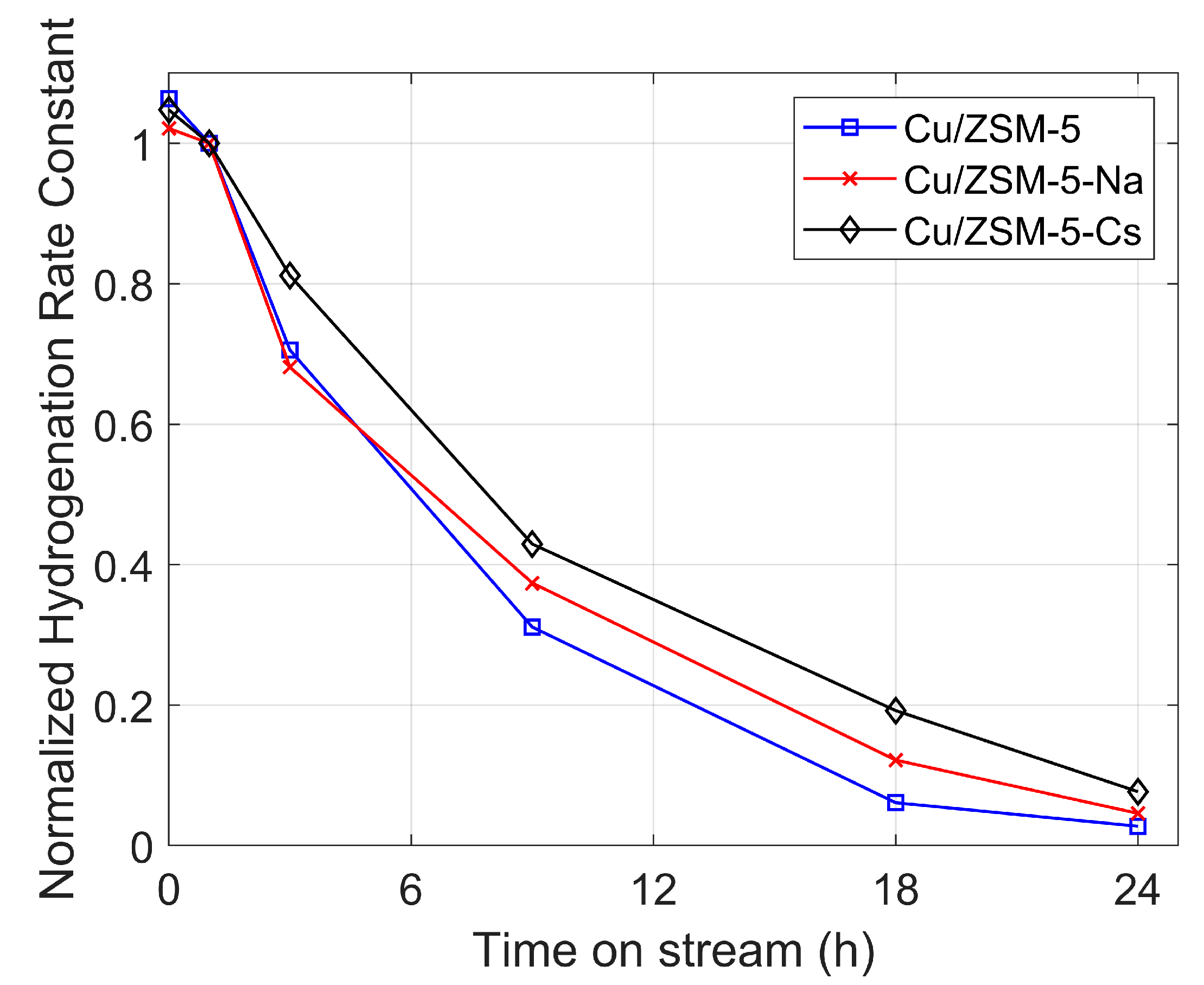
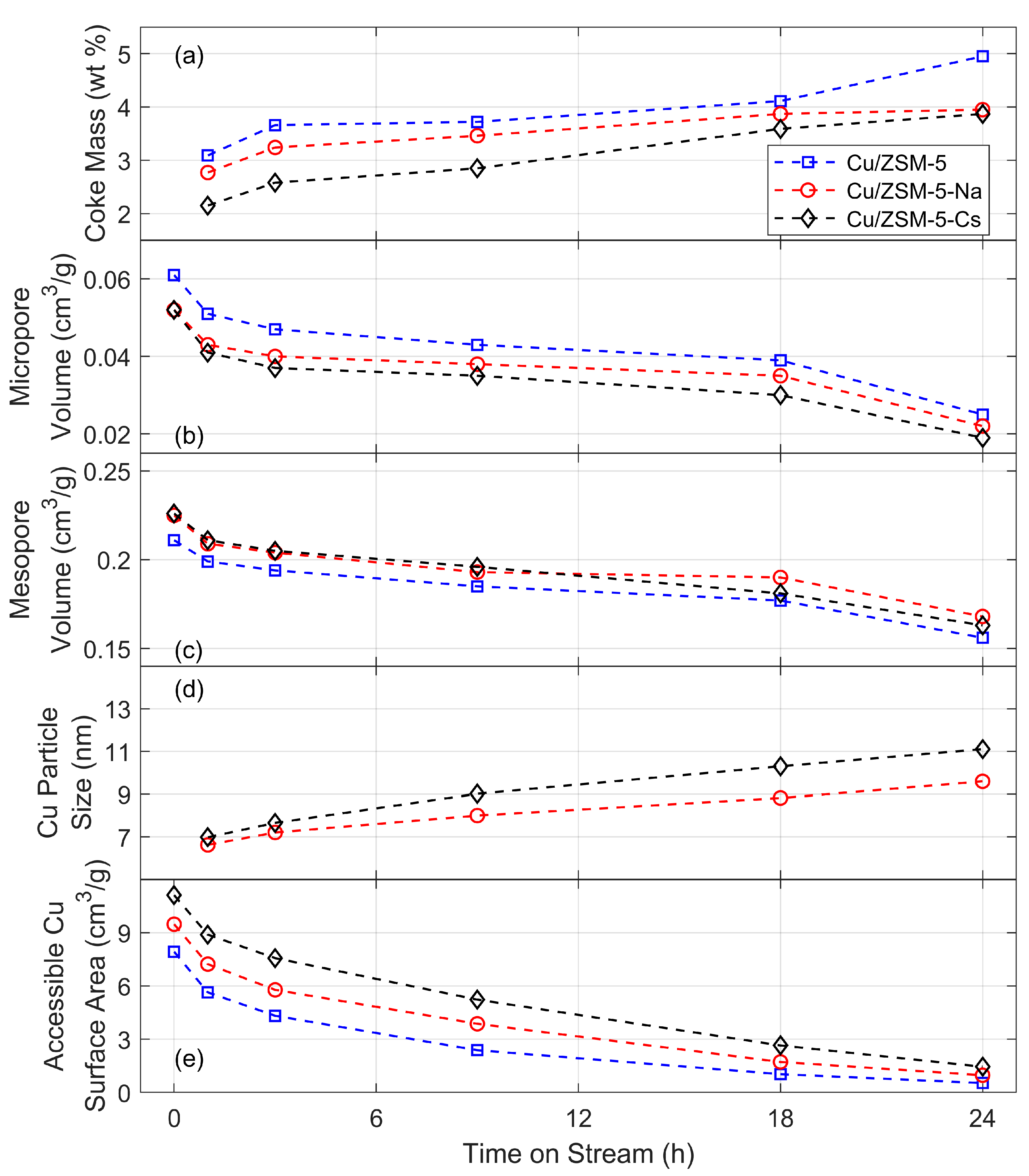
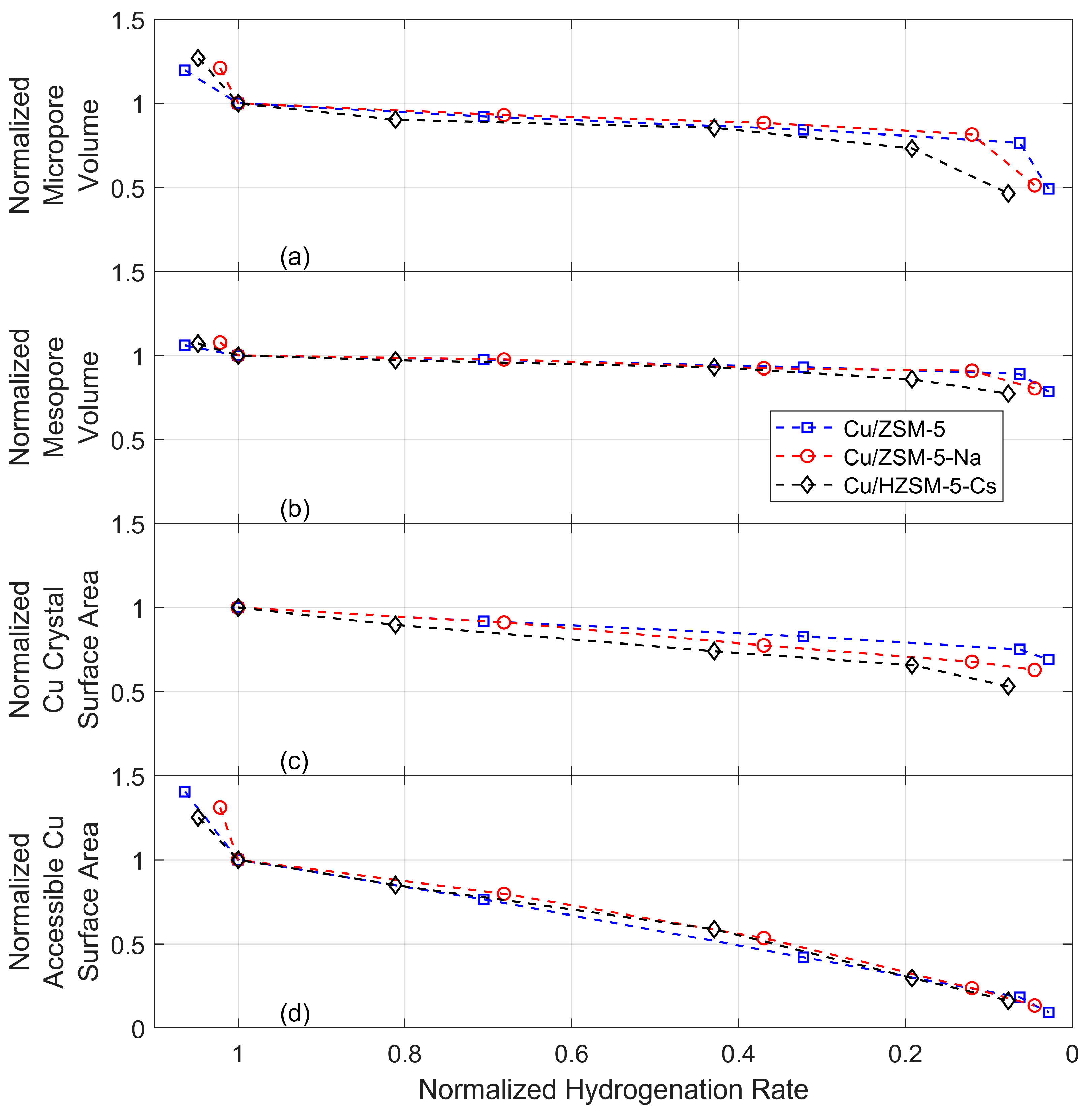
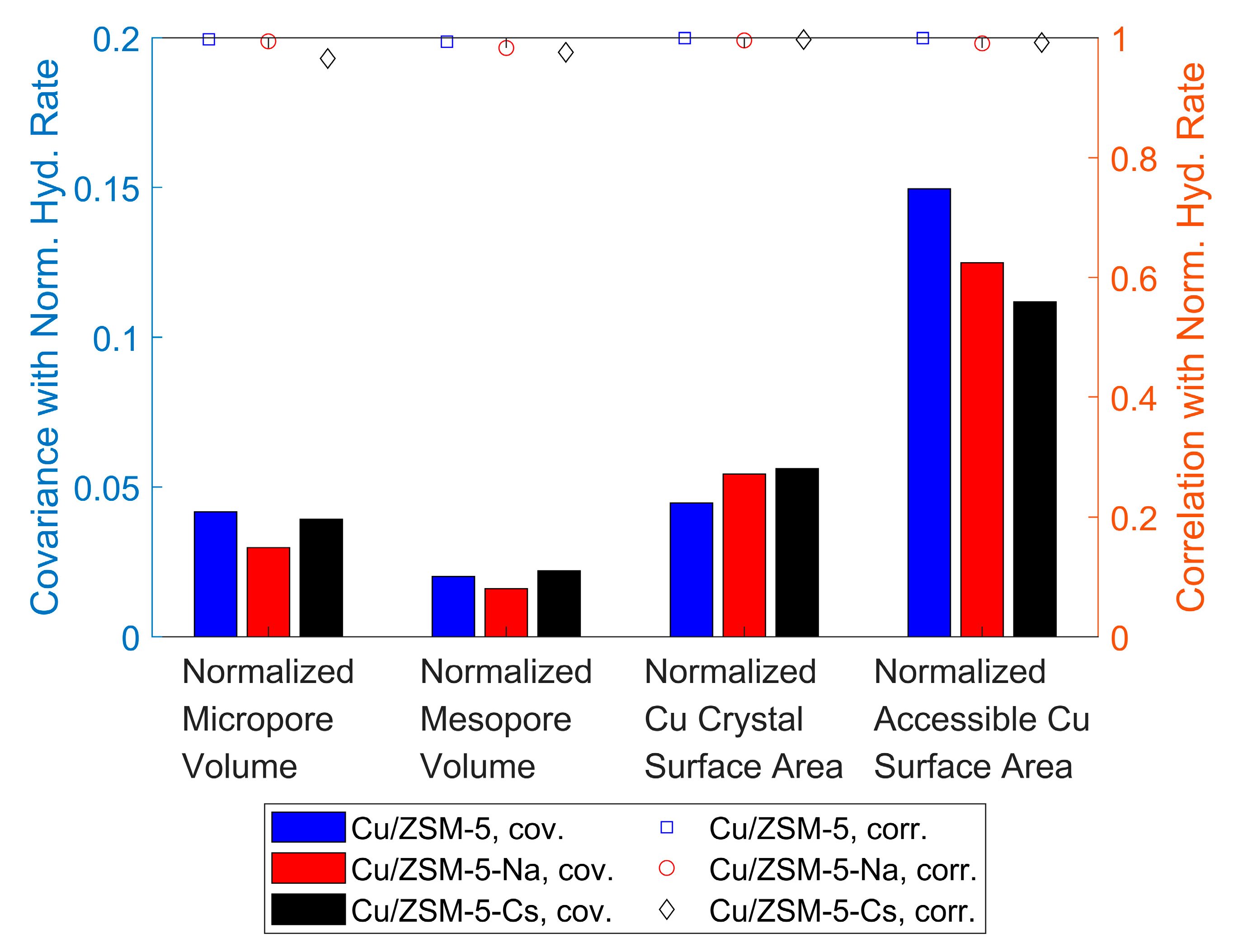
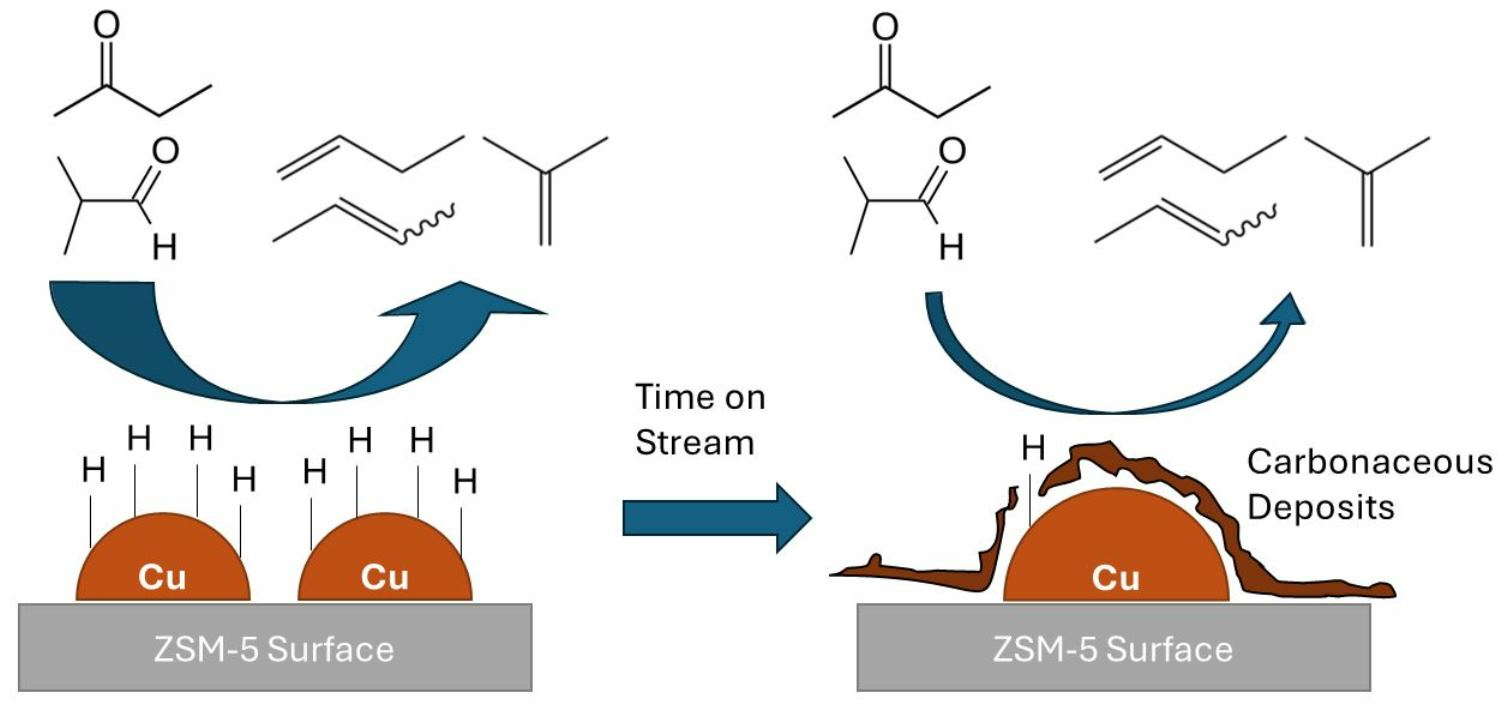
This work determines the deactivation mechanisms of Cu/ZSM-5 catalysts used for the conversion of 2,3-butanediol to butene as part of an alcohol-to-jet route. The deactivation of the catalyst, reflected by a drop in the rate of the limiting hydrogenation step by over 90% in 24 h at a weight hourly space velocity of 5.92 h−1, proceeds via both the agglomeration of copper particles and the obstruction of copper surfaces due to carbonaceous deposits, although the former has less impact on the decrease in the hydrogenation rate. To reduce the detrimental effect of carbonaceous deposits on catalytic activity, ZMS-5 is modified through desilication of the HZSM-5 support with NaOH and CsOH solutions to generate a hierarchical structure with mesopores. The catalyst with the CsOH-treated support generates the highest overall yield of desired olefin products and experiences the slowest deactivation. This is a result of the lower Brønsted acidity and larger mesopores found in the CsOH-treated catalyst, leading to the slower formation of carbonaceous deposits and the faster diffusion of their precursors out of the pores.
Keywords: biofuels; sustainable aviation fuels; sintering; encapsulation; hierarchical zeolites biofuels; sustainable aviation fuels; sintering; encapsulation; hierarchical zeolites
Graphical Abstract