Article

Novel Approach to Organization of Structured Cobalt-Based Fischer–Tropsch Catalyst

1
OOO INFRA, 125009 Moscow, Russia
2
Federal State Budgetary Institution “Technological Institute for Superhard and Novel Carbon Materials” of National Research Centre “Kurchatov Institute”, 108840 Moscow, Russia
*
Author to whom correspondence should be addressed.
Catalysts 2024, 14(9), 628; https://doi.org/10.3390/catal14090628
Submission received: 16 July 2024 / Revised: 11 September 2024 / Accepted: 16 September 2024 / Published: 17 September 2024
(This article belongs to the Section Catalysis in Organic and Polymer Chemistry)

Abstract

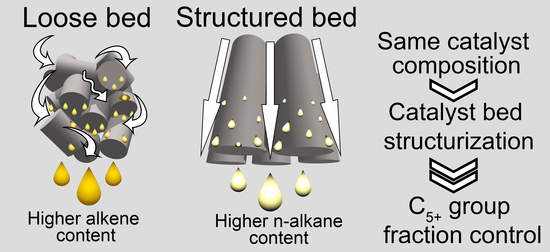
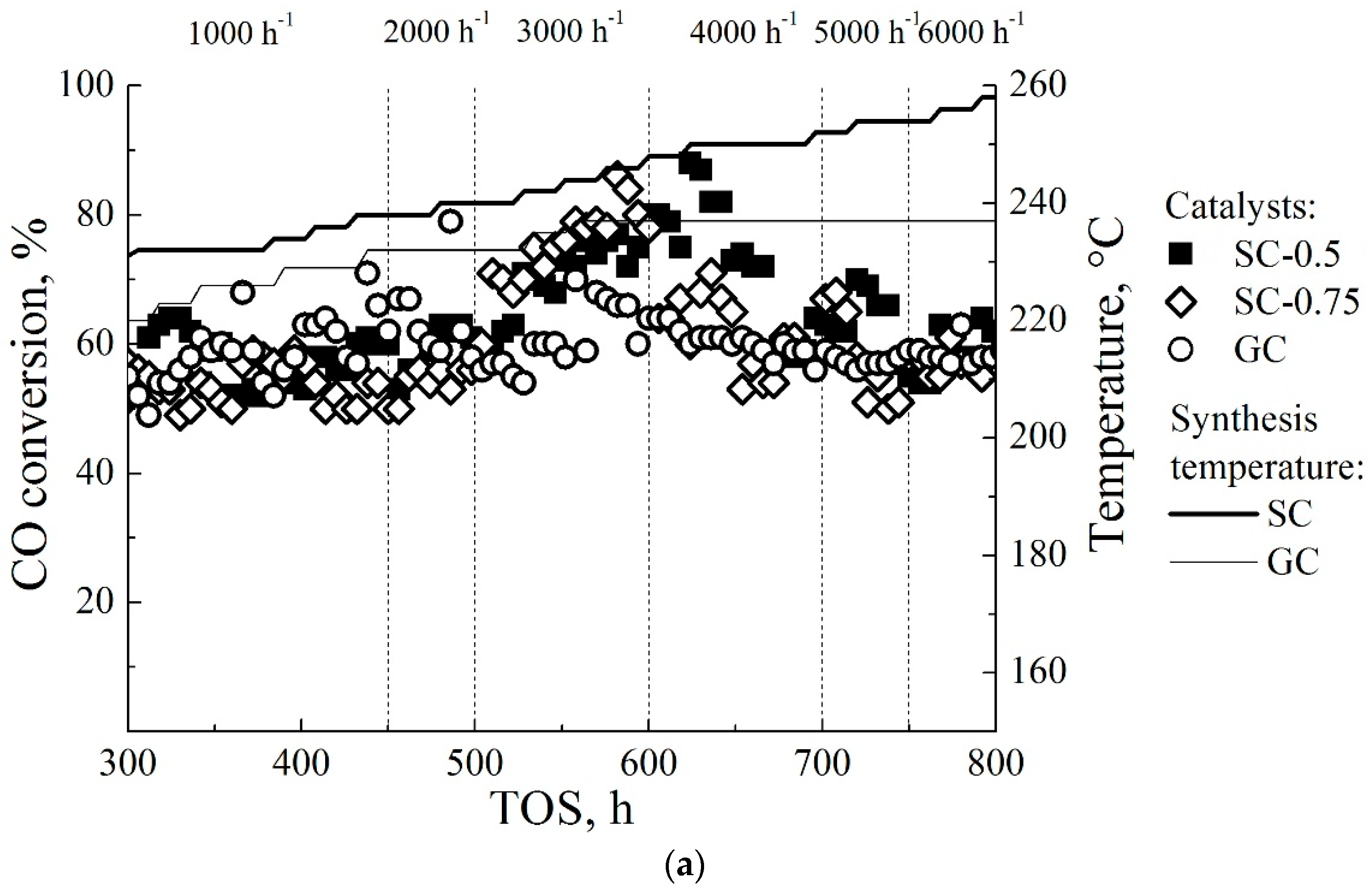
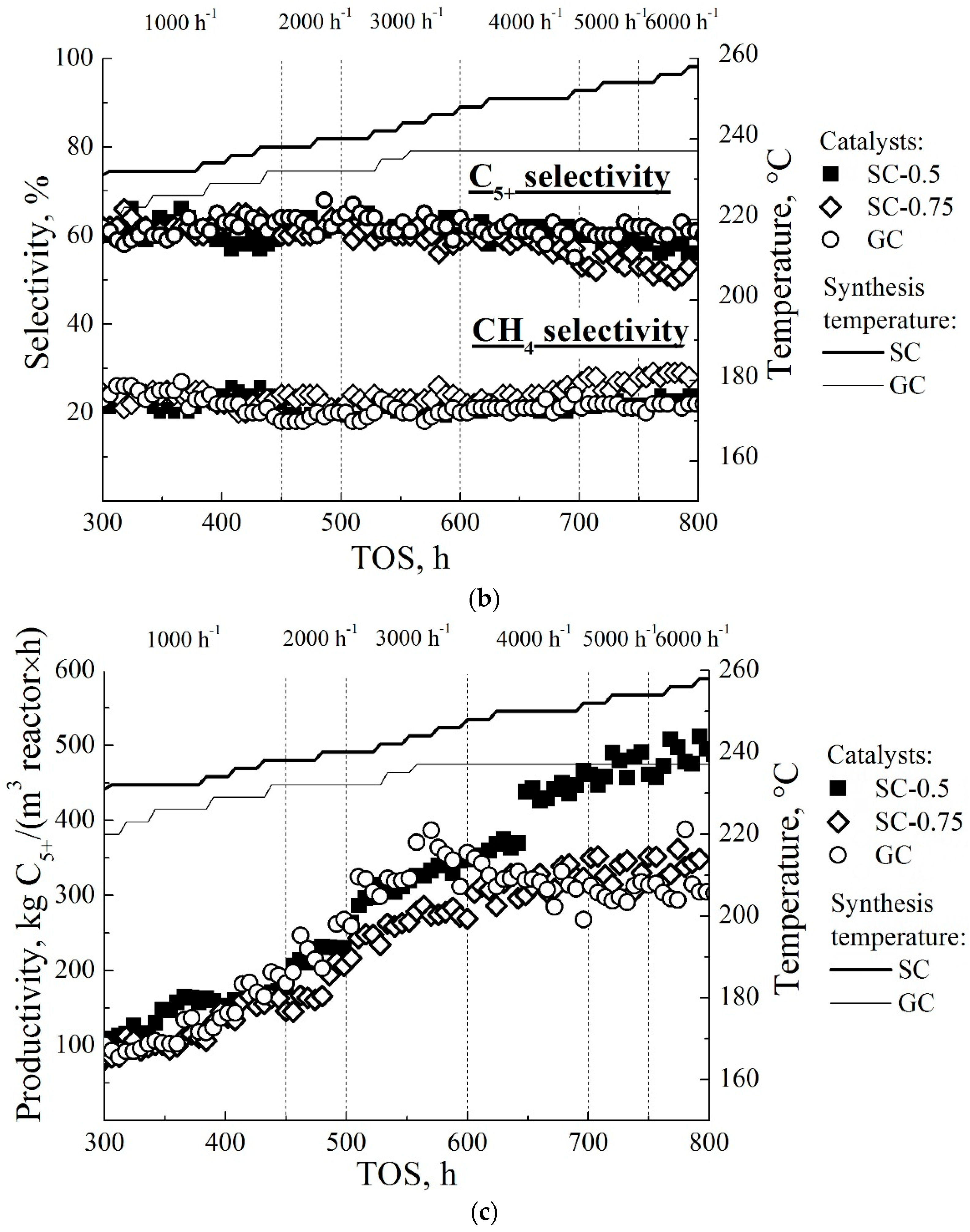
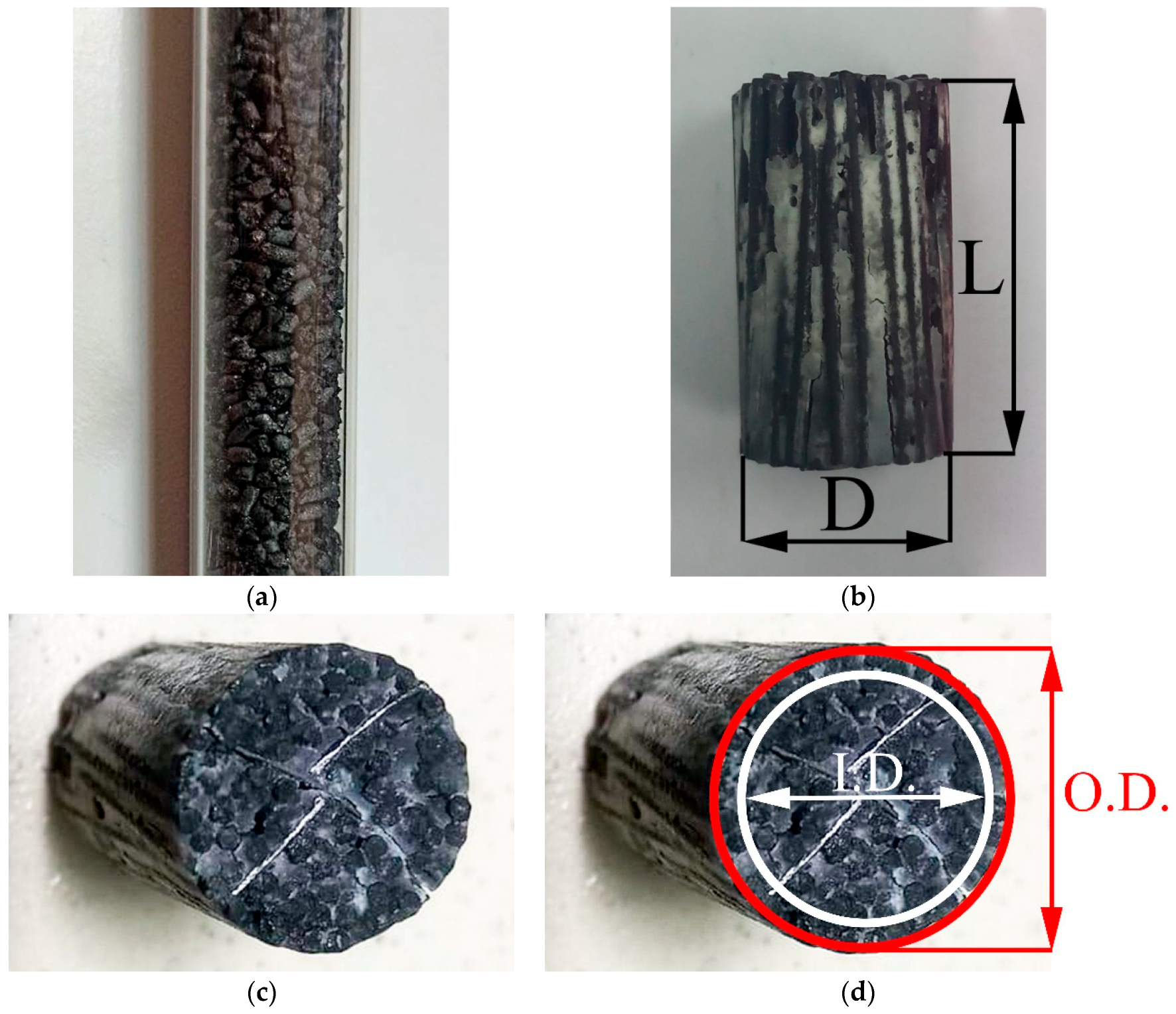
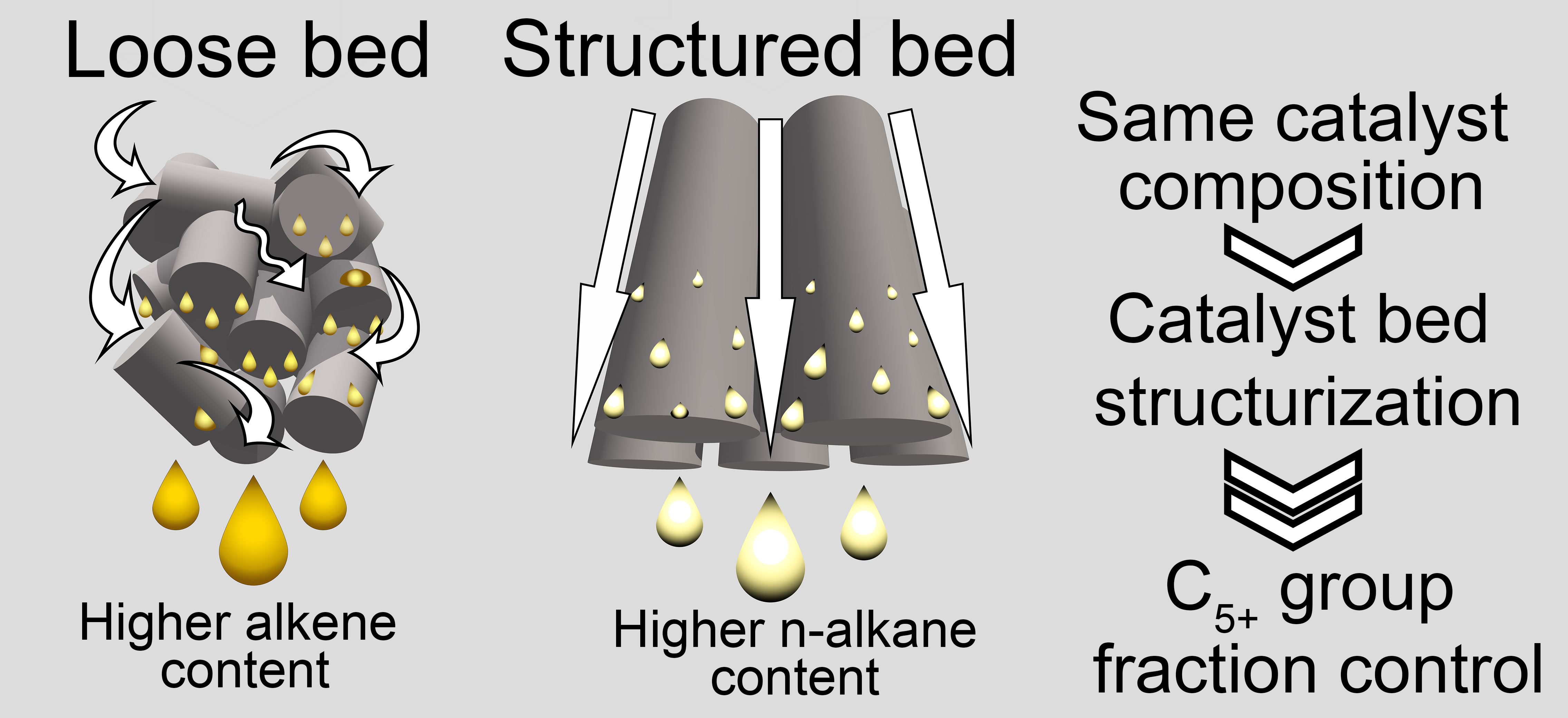
Structured Fischer–Tropsch synthesis catalysts were tested in tubular reactors of industry-standard diameters of 0.5 or 0.75 inches. The structured catalyst bed was manufactured by the obturation of a straight bunch of graphite-based extrudates (D = 1.5 mm, L = 30 mm). A conventional loose bed of granulated catalyst (D = 1.5 mm, L = 3 mm) was tested as a reference. In a 1000–3000 h−1 syngas space velocity range, structured and loose catalyst bed testing showed no significant differences in their main catalytic parameters. Nevertheless, their C5+ hydrocarbon group composition was quite different, i.e., the alkene fraction rose from 9 to 23%, while n-alkanes dropped from 81 to 64%. This could be a result of secondary reaction intensification in the conventional loose bed due to its zeolite acid site’s higher availability. Further FTS testing of the structured catalysts in 4000–6000 h−1 manifested distinctive limits in C5+ productivity for 0.5 and 0.75 inches of 512 kg C5+/(m3 reactor·h) and 362 kg C5+/(m3 reactor·h), respectively. This may be explained by limitations in structured bed thermal conductivity. It suggests that the arrangement of extrudates in the structured catalyst can significantly affect the reaction heat and mass transfer conditions and affords new opportunities for group composition control by means of catalyst bed organization.
Keywords: Fischer–Tropsch synthesis; cobalt catalyst; graphite-based catalyst; structured catalyst; fixed bed; tubular reactor Fischer–Tropsch synthesis; cobalt catalyst; graphite-based catalyst; structured catalyst; fixed bed; tubular reactor
Graphical Abstract