


Abstract
Water pollution is considered a serious threat to human life. An advanced oxidation process in the presence of semiconductor photocatalysts is a popular method for the effective decomposition of organic pollutants from wastewater. TiO2 nanoparticles are widely used as photocatalysts due to their low cost, chemical stability, environmental compatibility and significant efficiency. The aim of this study is to review the photocatalytic processes and their mechanism, reaction kinetics, optical and electrical properties of semiconductors and unique characteristics of titanium as the most widely used photocatalyst; and to compare the photocatalytic activity between different titania phases (anatase, rutile, and brookite) and between colorful and white TiO2 nanoparticles. Photocatalytic processes are based on the creation of electron–hole pairs. Therefore, increasing stability and separation of charge carriers could improve the photocatalytic activity. The synthesis method has a significant effect on the intensity of photocatalytic activity. The increase in the density of surface hydroxyls as well as the significant mobility of the electron–hole pairs in the anatase phase increases its photocatalytic activity compared to other phases. Electronic and structural changes lead to the synthesis of colored titania with different photocatalytic properties. Among colored titania materials, black TiO2 showed promising photocatalytic activity due to the formation of surface defects including oxygen vacancies, increasing the interaction with the light irradiation and the lifetime of photogenerated electron–hole pairs. Among non-metal elements, nitrogen doping could be effectively used to drive visible light-activated TiO2.
1. Introduction
Water scarcity is known as the greatest threat to natural ecosystems and human health, especially in arid areas of the world. Economic development and population growth have led to an increase in water demand and reduction of water availability consequently [1]. It is estimated that there will be one billion people living in the arid area suffering from absolute water scarcity by 2025. Thus, people living in such areas will be forced into a reduction of water consumption in agricultural sectors and transmitting water to other parts, which could reduce their domestic food production. Organic wastes, which originate from different industrial products such as dyes, plastics, pesticides, and detergents, are toxic pollutants that could lead to serious diseases in humans. Although wastewater treatment has been extensively used for the degradation of organic pollutants, persistent organic pollutants (POPs) are resistant to degradation and could remain in the treated water [2]. In addition, there are different indoor air pollutants, which could result in wide-ranging health problems.
Different methods have been used for the degradation of organic pollutants in water, including sonochemical degradation [3,4], advanced oxidation process (AOP) [5,6,7,8,9,10], adsorption [11,12], micellar-enhanced ultrafiltration (MEUF) [13,14], electrochemical oxidation (EO) [15,16], precipitation [17], coagulation [17,18], biodegradation [19], ion exchange [20,21] and forward/reverse osmosis [22,23]. It is notable that each of these processes has advantages and disadvantages. AOPs are divided into various techniques including photo-Fenton process, heterogeneous photocatalysis, ozonation, Fenton process and H2O2 photolysis [24]. In general, AOPs have been proposed for poorly biodegradable organic pollutants [2]. Extremely highly reactive hydroxyl radicals (•OH), which are known as the (secondary) oxidant agents in these processes, are formed by primary oxidants (such as ozone or hydrogen peroxide) and are capable of oxidizing various organic pollutants. The hydroxyl radicals, which are the common aspect of all AOPs, are among the non-selective and powerful oxidants that could react through three mechanisms: the transfer of electrons, the abstraction of hydrogen and the addition of radicals. Thus, they can be potentially used for the degradation of complex chemical structures such as refractory species [25,26]. Although AOPs need input of chemicals and energy [27], they are becoming more efficient processes, e.g., photocatalysis. Around 60% of the expenses of photocatalytic reactors could be allocated to the energy consumption [28]. AOPs have a major advantage, as they are capable of partial or even complete degradation of pollutants. In comparison, coagulation, flocculation and membrane processes concentrate pollutants within one phase or transfer them from one phase to another [29].
Environmental photocatalysis has received remarkable attention since the discovery of the TiO2 photocatalytic activity in 1972 [30]. The oil crisis was one of the reasons that encouraged research in non-fossil fuels in the early 1970s. Moreover, searching for renewable energy sources is another major driver [31]. After their first observation over water splitting by TiO2, the photocatalytic reduction of CO2 by different inorganic photocatalysts was reported by Fujishima et al. in 1979 [32]. SnO2, TiO2, and ZnO have been extensively used for photocatalytic decomposition of organic pollutants. Despite its several advantages, the removal efficiency of organic pollutants in the presence of a tin semiconductor is not that promising, limiting its use compared to main semiconductors [33,34,35,36], whereas TiO2 and ZnO semiconductor nanoparticles are widely used for the photocatalytic removal of organic pollutants. In general, TiO2 and ZnO might act as electron acceptors/donors when irradiated [37]. Because of its transparency, compatibility with the environment, and suitable band gap, ZnO has attracted the attention of many researchers for photocatalytic activities [38,39]. ZnO has three main crystallite structures including wurtzite, rocksalt, and zinc blend. Noteworthy, wurtzite is its most stable polymorph at ambient temperature and pressure [40]. Although ZnO has shown higher photo-absorption ability than TiO2, it suffers from photocorrosion while exposed to UV irradiation [10]. Overall, TiO2 (as an ideal semiconductor) has attracted the attention of many researchers due to its unique properties such as significant physicochemical stability, low cost, non-toxicity, electronic and optical properties, as well as abundance, in various fields such as pigments, catalysts, mineral membranes, dielectric materials and removal of pollutants [41,42]. TiO2 nanoparticles have shown higher photocatalytic activity than bulk TiO2 (due to larger surface area). The properties of TiO2 nanoparticles, including morphology, crystal structure, composition of phases, degree of crystallinity, specific surface area, and band gap are influenced by the synthesis method [43,44,45]. TiO2 nanoparticles have three major crystal structures including anatase, rutile, and brookite with unique band gap energies of 3.2, 3.0, and 3.1 eV, respectively. Notably, anatase phase with its wider band gap energy than other titania polymorphs has received more attention for photocatalytic activities [44]. The crystal structure of the main phases of titania, i.e., anatase, rutile, and brookite, could be explained by various arrangements of TiO6 octahedra (Ti4+ surrounded by six O2−). Hence, 3-D assembly of TiO6 octahedra and different degrees of distortion are differences between these crystal structures. Crustal structures of anatase, rutile, and brookite TiO2 are exhibited in Figure 1 [46]. Noteworthy, the blue and red balls represent Ti and O atoms, respectively.
Figure 1.
Crystal structures of brookite, rutile, and anatase TiO2. Reprinted with permission from Ref. [46]. Copyright 2015, Elsevier.
Photocatalysis is a branch of research that uses photons’ energy to initiate chemical reactions, which has been inspired by natural photosynthesis [31]. Photocatalytic (PC) and photosynthetic (PS) devices are different technologies that show sensitivity to charge-transfer kinetics, carrier mobility and specific surface area though at varying degrees [47].
From the viewpoint of thermodynamics, chemical reactions are divided into uphill and downhill categories. The schematic of these reactions is illustrated in Figure 2 (the ‘*’ sign could represent the transition state). Uphill reactions that are powered by light could not be considered as photocatalysis [31]. Thermodynamically uphill reactions are nonspontaneous, and the use of a canonical catalyst could not initiate these reactions [31]. Usually, photocatalysis is considered as an appropriate terminology to describe a large number of spontaneous chemical reactions (downhill reactions) that are hindered by high activation energies. Thus, the introduction of light, as a source of energy, could enable these reactions [31,47]. Notably, there is another group of reactions that borrows the photocatalysis term. These reactions that use external potentials, usually, are referred to as photo-electrocatalytic/photo-electrochemical reactions [31]. Unlike photocatalysis, the photo-electrochemical water splitting is a thermodynamically uphill reaction [48,49,50]. Thus, during the process of photocatalytic water splitting, the energy of photons is converted to chemical energy (by using a photocatalytic material) [50].
Figure 2.
The schematic illustration of (a) uphill and (b) downhill reactions. Reprinted with permission from Ref. [51]. Copyright 2018, American Chemical Society.
The fundamental principles of photocatalysis and photocatalytic activity of various kinds of semiconducting materials have been widely evaluated by researchers, especially in recent years. Although this process is well-known as an efficient process for water and wastewater treatment, several key points should be further considered to facilitate the use of this process for practical applications. Firstly, the use of promising photocatalytic materials increasing the proficiency of this process is of high importance. Moreover, the expansion of the scope of reactions should receive more attention. For example, TiO2 has found applications in building materials (for antifogging and self-cleaning properties) and antibacterial materials since the discovery of its super hydrophilicity [52]. Super hydrophilicity is an effect observed for materials whose surfaces display water contact angles (WCAs) below 10° [53]. Super hydrophilicity and photocatalysis are two simultaneous phenomena occurring upon the illumination of TiO2 [54]. The attempt to degrade emerging pollutants plays an important role in the development and practical applications of this process. However, broad applications of this process would be unlikely without consideration of an appropriate method of photocatalyst immobilization. Another key point is that 3–6% of the solar spectrum is from the ultraviolet radiation [55], while TiO2, as the most common photocatalytic material, has negligible visible-light adsorption. Since about 43% of the solar spectrum is allocated to visible light [56], attempts are intensifying currently to drive visible-light activated photocatalysts. In recent years, photocatalytic processes in the presence of semiconductors have attracted the attention of many researchers for the removal and decomposition of organic pollutants. Several factors such as photocatalyst type, structure, synthesis method and doping with metallic or non-metallic elements could affect the efficiency of semiconductors. Therefore, the main goal of this study is to review the kinetics of photocatalytic reactions and specifically clarify the photocatalytic properties of TiO2 with different phases and colors.
2. Photocatalysis
2.1. Principles
Overall, semiconductor photocatalysis relies on four steps as follows [31]:
- Absorption of photons with equal/larger energy than the bandgap energy of semiconductor under irradiation of light that results in the photogeneration of electron and hole pairs;
- Charge carrier separation;
- Transfer of charge carriers to the surface of semiconducting material;
- Redox reactions initiated by charge carriers.
The photogeneration of electron and hole pairs could be followed by the generation of active species [57,58]. These highly reactive oxygen species (ROSs), including hydroxyl radicals (•OH), superoxide radical ions (•O2−), hydrogen peroxide (H2O2), hydroperoxy radicals (•HO2) and singlet oxygen (1O2), are responsible for further reactions [55,59,60,61]. The oxidation potential of hydroxyl radical (Eº(•OH/H2O = 2.8 V) is just below that of fluorine [62]. Notably, the photogenerated e−/h+ pairs could migrate through various pathways, as they could migrate to the surface of the semiconductor material. The electron acceptors (A) such as O2 could receive the photogenerated electrons, and the photogenerated holes could result in the oxidation of donor species (D) under these circumstances. The redox potential levels of the adsorbed species and the position of conduction band (CB) and valence band (VB) play an important role in the rate and probability of the charge transfer processes for photogenerated e−/h+ pairs. The more is the lifetime of photogenerated e−/h+ pairs, the more quantity of ROS should be produced, which leads to the higher efficiency of photodegradation of organic contaminations in air and water. On the other hand, the recombination of photogenerated e−/h+ pairs, which could happen either at the surface or in the bulk of the semiconductor, prevents electron transfer processes and could result in the emission of light or release of heat [63,64]. To yield the highest photocatalytic activity, the recombination rate of charge carriers should be restricted. For such a purpose, several techniques such as heterojunction formation [65], metal deposition [66], creation of oxygen vacancies [67], and non-metal/metal ion doping [68] have been employed. It is noteworthy that surface reactions take place only if the reduction and oxidation potentials are more positive and negative than CB and VB levels, respectively [69].
The mechanism of an ideal heterogeneous photocatalytic process is based on the Equations (1)–(12) [70,71,72].
Semiconductor + hυ → Semiconductor (h+VB + e−CB)
h+VB + e−CB → heat
OH− + h+VB → •OH
H2O + h+VB → •OH + H+
•OH + •OH → H2O2
e− + H+ + O2 → •HO2
•HO2 + •HO2 → O2 + H2O2
O2 + e− → •O2−
•O2− + H+ + •HO2 → O2 + H2O2
H2O2 + e− → •OH + OH−
H2O2 + •OH → H2O + •HO2
•OH + organic substances → intermediate → product
The photocatalytic process in water could be carried out as follows [30]:
- Transfer of the pollutants from the liquid phase to the surface of catalyst;
- Pollutants adsorption onto the surface of the activated catalyst;
- Photogeneration of ROSs, including •OH, followed by pollutants degradation;
- Desorption of intermediates from the surface of catalyst;
- Transferring intermediates into the liquid phase.
Due to the crucial role of surface reactions in the photocatalysis mechanism, the adsorption of reactants on the surface of the semiconducting material is of great importance [31]. For instance, various mechanisms of oxidation have been observed for the degradation of phenol, benzene, and formic acid using TiO2 [73]. Formic acid could be chemisorbed strongly on titania in water, which leads to direct oxidation by trapping photogenerated holes. In comparison, benzene is physisorbed on titania and has been photo-oxidized by an indirect transfer mechanism. When it comes to phenol, both chemisorption and physisorption processes could take place, and its photooxidation mechanism depends on the solvent used [31]. In addition to the reactants, the relative binding strength of products/intermediates to the surface of photocatalytic material is of high importance. For instance, the photocurrent decrease of WO3 in HClO4 has been allocated to the bond of photogenerated species on it, which could hinder the water oxidation of active sites [31]. Another key point is the probable interactions between water and the photocatalysts, which should be considered to determine the mechanism of photocatalytic processes.
2.2. Kinetic Analysis
The classical equation of Langmuir–Hinshelwood (L-H) has been widely used for the kinetic analysis of both liquid-phase and gas-phase photocatalysis [55,74,75,76,77,78]. Using this model, the relationship between the oxidation rate and the concentration of reactant is shown in Equation (13) (when the concentrations of oxygen and water remain constant) [77,78]:
where r and [D] are the oxidation rate (mg m−3 min−1) and the concentration of reactant (mg m−3), respectively [78]. Langmuir–Hinshelwood parameters are and rL that are identified as the apparent Langmuir adsorption constant (m3 min−1) and the apparent L-H rate constant of the reaction, respectively [78,79].
Equation (13) can be transformed as Equation (14) [77]:
The time dependence of the concentration of the adsorbed reactant is given in Equation (15) [77]:
where [SD], ka, kd, and ki are the total concentration of the adsorption site for reactant, adsorption rate constant in the dark, desorption rate constant in the dark, and photoinduced desorption rate constant, respectively. There are some concerns for robotic application of L-H model to interpret the kinetic data [73,79]:
- Adsorption–desorption equilibrium of substrate species is not disturbed under illumination (as a pre-assumption);
- Ambiguous photon flow intervention (as an experimental parameter);
- Issues in intervening physical meaning;
- Chemical nature of the semiconductor surface does not change during photocatalysis (as a pre-assumption);
- Disregarding the electronic interaction of surface with substrate species;
- Considering that chemisorption of organic species onto the surface of catalyst is vital for photocatalysis.
The dark Langmuir adsorption constant (KL) is not the same as (). It has been shown that is a function of absorbed light intensity (Iβ) where β equals 1.0 (at low absorbed light intensity) or 0.5 (at high absorbed light intensity) [80]. After reevaluation of the semiconductor photo-assisted reactions, another simple mechanism has been suggested as follows [80]:
It is assumed that the reaction of a surface hydroxyl radical and the absorbed reactant takes place in the latter step, Equation (17), which results in the formation of products. Based on the relationship between this step and absorbed light intensity (and the incident light intensity, consequently) correlation between and Iβ has been proposed as follows [80]:
In which α is proportionality constant and β equals 1.0 or 0.5 as discussed above. The surface coverage of the reactant (θD) is defined as follows by consideration of a pseudo-steady-state hypothesis [80]:
where is given by Equation (20) as follows [80]:
is defined as the apparent dissociation constant. Thus, the oxidation rate, r, is given as follows by considering that [80]:
Boulamanti et al. have proposed the following equation by studying the photocatalytic activity of target gas and by considering the effect of water vapor [81]:
where Kw is a Langmuir adsorption constant proportional to the adhered water molecules to the surface of the catalyst, and Dw is the concentration of water in the gas-phase.
3. Band Gap Estimation and Quantum Size Effect
Inorganic/organic semiconductors display various physical properties, and thus can be used for a variety of purposes [82]. The optical properties of semiconducting nanomaterials are their band gap energy (Eg) as well as absorption coefficient (K), potentially. The band gap energy of semiconductors is a crucial characteristic of their electronic structure, which determines their potential applications [83]. Although it could be affected by the synthesis/processing method, the exact determination of its value is a challenge in materials science and engineering. In direct band gap semiconductors, the recombination of e−/h+ pairs could be radiative, if the VB maximum and CB minimum are aligned in the momentum space, which results in photoluminescence [82]. When it comes to the indirect band gap semiconductors, phonons (lattice vibrations) that are involved in the emission and absorption of light allow the semiconductor to convert the light energy into mechanical (photoacoustic) or thermal (photothermal) responses [82]. When a semiconductor is exposed to photons of energy larger than its band gap, the transfer of electrons from the valence band to the conduction band leads to an abrupt increase in the absorbency of the semiconductor to the wavelength, which corresponds to the band gap energy. The relationship between the incidental photon energy and the absorption coefficient is dependent on the type of band gap (direct or indirect). The electronic properties of semiconductors are usually studied by conversion of DR spectra to pseudo-absorption spectra, , using the Kubelka–Munk function as follows [83,84]:
where is the Kubelka–Munk function and is the diffused reflectance of the non-transparent material with infinite thickness. Thus, the supporting material is not contributed (in the case of semiconductors deposited on a substrate). The and parameters are the scattering and absorption K-M coefficients, respectively. It is notable that does not depend on the wavelength for particles larger than 5 µm. Therefore, S could be considered as a constant and could be considered as a pseudo-absorption function, consequently [83]. By far, a combination of absorption-based spectroscopic methods, including diffuse reflectance spectroscopy (DRS) on bulk samples or transmission measurements on thin films and coatings and the Tauc method, is the most common procedure of determination of band gap energy [83]. Since absorption-based spectroscopic methods do not confound bulk properties with surface effects, they are preferable for the measurement of bulk properties [83]. The Tauc method was proposed by Tauc et al. as a method for determination of band gap energy by plotting an optical absorption coefficient against energy while evaluating the electronic and optical properties of amorphous germanium. The strength of optical absorption is dependent on the difference between the energy of photons and the band gap energy as follows [84]:
where is the photon/light frequency, is the linear absorption coefficient, is the band gap energy, is the Planck’s constant, A is a proportionality constant, and n is a constant that depends on the nature of the electronic transition [84]:
- For direct allowed transitions: n = 1/2;
- For indirect allowed transitions: n = 2;
- For direct forbidden transitions: n = 3/2;
- For indirect forbidden transitions: n = 3.
The ‘’ term is the incident photon energy and is calculated as follows:
It is notable that the majority of basic absorption processes are allowed transitions (n = 2 or n = 1/2 for indirect and direct transitions, respectively) [84]. Finally, the graph of vs. is plotted, and the band gap energy is easily extrapolated by the interception of the linear region to the X-axis. Usually, different values of n (usually 1, and 1/2) are used to identify the correct type of transition. As an example, the Tauc plot of TiO2 is shown in Figure 3 [85]. Noteworthy, the straight blue line has been plotted to estimate Eg.
Figure 3.
The Tauc plot of TiO2. Reprinted with permission from Ref. [85]. Copyright 2015, Royal Society of Chemistry.
It is notable that the size of particles could change the band gap energy of semiconductors [55,86]. The planetary model of the Bohr hydrogen atom is generally used for description of the movement of the bonded electron–hole pair originated by photoexcitation. The exciton Bohr radius, , is used for calculation of the region of delocalization of the electron hole pair as follows [86]:
where is the dielectric constant of the semiconductor, e is the charge of an electron, is the reduced Planck’s constant, is the effective mass of electron, is the effective mass of hole, and is the rest mass of an electron. The steric limitation of photoexcited charges is observed in the bulk of a semiconductor whose nanocrystals are smaller than the region of delocalization of exciton. This could change some characteristic features of semiconductors. However, the degree of changes depends on the ratio of nanoparticle radius, R, and the value of . In this case, two different modes could be considered [86]:
≤ R: There is a weak restriction in this region so that a similar electronic structure is observed for both the bulk crystal and the nanoparticle.
> R: There is a strong quantum confinement in the region so that a radical rearrangement is observed for the electronic structure of semiconductor nanoparticle. For example, energy of the exciton excitation increases. Moreover, discrete electronic levels are provided by gradual change in the energy bands of the semiconductor.
This phenomenon, in which the top of VB and the bottom of CB shift in positive and negative directions, respectively, is called a quantum-size effect and could result in the expansion of band gap energy. The Bohr radius of rutile and anatase TiO2 is around 0.3 and 2.5 nm, respectively. Thus, interpreting the results by using quantum-size effect needs deep evaluations, in cases such as TiO2, since synthesis of such a small size might be difficult [55]. It is noteworthy that the band gap energy of semiconducting nanomaterials could be highly dependent on their morphology. For instance, titania particles with nanoburrs or lateral organization could have lower band gap energies [87]. Based on the band gap energy, semiconductors are divided into two major categories: wide band gap semiconductors and narrow band gap semiconductors. Band gap energies of some major semiconductors are illustrated in Figure 4 [88]. Among different photocatalysts, TiO2 is used as the most common semiconductor for photocatalytic applications and is discussed in the following part.
Figure 4.
Band gap of major semiconductors (with respect to the redox potential of various chemical species measured at pH 7). Reprinted with permission from Ref. [88]. Copyright 2015, Elsevier.
4. TiO2
4.1. General Properties and Applications
TiO2 has found several applications in toothpaste, sunscreens, plastics, printing ink, condensers, paper, electronic components, leather, cosmetics, ceramics, food, and pigmentation since its commercial production [89,90,91]. High refractive indices of anatase and rutile phases, which lead to high reflectivity from surfaces, takes account for its several applications where white coloration is desired [42,92]. Since the discovery of the photocatalytic water splitting on a titanium oxide electrode under UV illumination by Fujishima and Honda, serious efforts have been allocated to the study of its efficiency in photocatalysis, photovoltaics, sensors, and photoelectrochemical applications, which can be generally divided into two discrete categories of environmental and energy [93,94]. TiO2 is non-toxic and earth abundant, and has high photostability [94,95]. It is the most common semiconducting material used for photocatalytic applications and has been employed as a benchmark photocatalyst in many research works (especially commercial Degussa P-25 powder, which consists of both anatase and rutile phases) [96,97,98]. Although there are various semiconducting materials, an overwhelming majority of researchers (around 60%) have focused on different TiO2 phases in photocatalytic works during the 2000s [99]. The position of the top valence band of TiO2 is ca. 3 V vs. NHE (at pH 0). Therefore, the potential of its positive holes is remarkably more positive than oxidation potential of ordinary organic compounds. The valence bands of the majority of metal oxides are composed of the same orbitals (O2p). Thus, most of them possess the same potential of the top valence band and the same oxidation ability is expected for all of them [55]. In addition, the surface chemistry of water and oxygen is fundamental to important processes such as the oxygen reduction reaction (ORR) and photocatalytic water oxidation. These reactions are mediated by photoexcited electrons and holes, respectively. Water oxidation is a hole-mediated process as follows [100]:
2H2O + 4h+→ 4H+ + O2
The ORR is a process mediated by photoexcited electrons that is followed by reactions with coadsorbed water as follows [100]:
O2 + e−→ (O2)−
OOH− + e−→ OH− + (Oad)−
(Oad)− + e− + H2O → 2OH−
H2O + OOH−→ OH− + H2O2
(O2)− + e− + H2O → OH− + OOH−
H2O2 + 2e−→ 2OH−
Although both the ORR and water oxidation involve the same intermediate species (H2O2, OH−, or OOH−), the identification of the reaction intermediates is not simple (since they are usually short-lived) [100]. To illustrate this point, characteristic times for different photo-reactions in the heterogeneous photocatalysis on TiO2 are shown in Table 1 [101].
Table 1.
Characteristic times for heterogeneous photocatalysis on TiO2: where ecb− is the conduction band electron, hvb+ is the valence band hole, etr− is the trapped conduction band electron, >TiOH shows the primary hydrated surface functionality of titania, >TiIVOH•+ is the surface-bound hydroxyl radical, >TiIIIOH is the surface-trapped conduction band electron, Red is the reductant, and OX is the oxidant [101].
Therefore, one of the probable reasons for high photocatalytic activity of TiO2 could be its high reduction potential that is responsible for the injection of photogenerated electrons into the molecular O2 on its surface [55]. Notably, equal numbers of positive holes and electrons must be consumed for completion of photocatalytic reactions. Thus, positive holes cannot be used for oxidation reactions, despite of their high potentials, unless the photogenerated electrons are consumed simultaneously. Most other metal oxides have high oxidation ability; however, their low reduction ability may result in their lower photocatalytic activity compared with TiO2 [55].
4.2. Optical and Electrical Properties of TiO2
In general, rutile TiO2 is more anisotropic than anatase TiO2 in the range from infrared to visible spectra. On the other hand, an important anisotropy is observed for anatase phase in the band gap region [102]. Since titania is known as an n-type semiconductor, donor-type defects (e.g., titanium interstitials and oxygen vacancies) are responsible for its conductivity [103]. The excessive electrons in the solid, introduced by oxygen vacancies, could enhance the electrical conductivity [102]. However, oxidized titania may show p-type properties as a result of concurrent presence of acceptor-type defects including titanium vacancies. Ti1−xO2 or TiO2+x could be applied, instead of TiO2, where titanium vacancies could make a remarkable contribution to the defect disorder (under prolonged oxidation conditions) [103]. Doping is an efficient method that could be used to form both n-type and p-type titania. For example, manganese-doped TiO2 has shown p-type electrical conduction [104,105]. In addition to manganese, iron, nickel, chromium and cobalt could act as electron acceptors. Thus, Fe-doped [106,107], Ni-doped [108], Cr-doped [109,110,111] and Co-doped [112,113] TiO2 could show p-type electrical conduction. The ratio between the concentration of metal dopants and that of oxygen vacancies could be crucial to the reduction or augment of the electrical conductivity. In addition to the concentration of oxygen vacancies, their contribution should also be taken into account for evaluation of the electrical conductivity [102]. On the other hand, niobium and tantalum could act as electron donors. Therefore, W-doped [114], Ta-doped [115], and Nb-doped [116,117] TiO2 could show n-type electrical conduction.
Various non-metal elements including N, P, S, B, and I have been extensively employed to drive visible-light-activated TiO2. Among those, N-doping has received remarkable attention as a method efficiently used for driving visible-light activated TiO2 [118,119,120,121,122]. It has been shown that nitrogen-doping could remarkably reduce the formation energy of oxygen vacancies as confirmed by DFT calculations. Thus, N-doped TiO2 can take advantage of the presence of oxygen vacancies (especially on its surface) [123]. By far, various methods have been used for the synthesis of N-doped TiO2 including sputtering, sol-gel, chemical vapor deposition, decomposition of nitrogen-containing metal-organic precursors, spray pyrolysis, pulsed laser deposition, combustion reaction, high-energy milling, and implantation. Schematic illustrations of models for doping of different nitrogen species including substitutional N-doping, interstitial N-doping, substitutional NO-doping, substitutional NO2-doping, and interstitial NO-doping are shown in Figure 5.
Figure 5.
Schematic models for (a) substitutional N-doping, (b) interstitial N-doping, (c) substitutional NO-doping, (d) substitutional NO2-doping, and (e) interstitial NO-doping. Reprinted with permission from Ref. [124]. Copyright 2007, Elsevier.
Thus, nitrogen doping into a TiO2 lattice structure could be either interstitial or substitutional. Peng et al. synthesized both interstitial and substitutional N-doped TiO2 for photocatalytic degradation of methyl orange and phenol. They suggested that although both interstitial and substitutional nitrogen doping could drive visible-light activated TiO2, interstitial N-doped TiO2 could show a higher photocatalytic activity than that of substitutional N-doped TiO2 [125]. Zeng et al. compared the photocatalytic activity of visible-light activated interstitial and substitutional N-doped TiO2 toward degradation of benzene under the same conditions (similar grain size, crystallinity, and specific surface area of the as-prepared samples) [126]. Unlike Peng et al., they concluded that substitutional N-doped TiO2 could show higher photocatalytic activity than that of interstitial N-doped TiO2. Lower recombination rate of the photogenerated e−/h+ pairs and higher proportion of surface hydroxyl groups have accounted for the higher photocatalytic activity of substitutional N-doped TiO2. The higher photocatalytic activity of interstitial N-doped TiO2 than that of substitutional N-doped TiO2, as reported by Peng et al. [125], could originate from different methods used by Peng et al. for the synthesis of interstitial and substitutional N-doped TiO2 [126]. It should be noted that the photocatalytic activity of semiconductors could be highly influenced by their grain/particle size [127,128,129], specific surface area [130,131,132], and crystallinity/polymorph [133,134,135]. Of note, nitrogen doping could be achieved through simultaneous interstitial and substitutional doping as confirmed by XPS analysis [136]. In substitutional doping, either oxygen atoms or titanium atoms can be substituted by nitrogen atoms. Therefore, TiO2−xNx (titanium oxynitride) and Ti1-yO2−xNx+y are the results of the substitution of oxygen atoms and substitution of both oxygen and titanium atoms by nitrogen atoms, respectively. As suggested by Peng et al., Ti1−yO2−xNx+y could be formed at high concentrations of nitrogen (as high as 21 mol%) [137]. Valentin et al. suggested that nitrogen doping is likely accompanied by the formation of oxygen vacancies. Besides, they proposed that the abundance of nitrogen-doping species is dependent on the preparation conditions including the annealing temperature and the oxygen concentration (in the atmosphere) [138]. As for the substitutional N-doped TiO2 (N-Ti-O and Ti-O-N), localized N 2p states (slightly above the VB of pure TiO2) could be responsible for the visible-light response [139]. Migration of photo-excited electrons from VB to the N 2p states could reduce the band gap energy of TiO2 [136]. Notably, NO bond with π-character that generates new localized states (slightly above the VB of pure TiO2) accounts for the visible-light response of interstitial N-doped TiO2 [139]. Valentin et al. suggested that the highest localized states for the interstitial and substitutional nitrogen species are 0.73 and 0.14 eV above the top of the valence band, respectively [140]. Not only could interstitial and substitutional nitrogen doping increase the visible-light harvest, but it could also intensify the absorption of UV-light, which originates from the appearance of defect energy levels in the band gap [126].
It has been shown that the photocatalytic efficiency of titania could be strongly correlated to its (micro) structure and semiconducting properties [103,141]. Additionally, the electrical properties of titania nanostructures depend on the crystallographic directions [102]. It is why the evaluation of the electrical properties of TiO2 is of high importance for photocatalytic applications, as shown in Table 2.
Table 2.
Comparison of the crystal structural, optical and electrical properties for TiO2 nanostructures. Adapted with permission from Ref. [102]. Copyright 2018, Royal Society of Chemistry. This article is licensed under a Creative Commons Attribution-NonCommercial 3.0 Unported Licence (https://creativecommons.org/licenses/by-nc/3.0/) (Accessed on 1 December 2022).
When defects are electrically charged, defect disorder could largely affect the electrical properties. There are several reports on the investigation of the electrical properties of rutile TiO2 at high temperatures and in nanocrystalline form [142,143,144,145,146]. Although evaluation of the electrical properties of anatase TiO2 is of interest, several experimental problems, owing to its grain growth and partial phase transformation into rutile at elevated temperatures, has prevented its widespread studies [141]. The electrical properties of oxide semiconductors including titania are generally temperature dependent. This dependency is generally considered by the activation energy of electrical conductivity [103,147]. It is notable that the oxygen partial pressure could play a crucial role in the activation energy of electrical conductivity of single-crystal (SC) and polycrystalline (PC) TiO2 [147]. The electrical conductivity of metals and n-type semiconductors including TiO2 is the reciprocal of their resistivity and could be expressed as follows [147,148]:
in which σ is the electrical conductivity, is the resistivity, n is the concentration of electrons, µn is the mobility of electrons, and e is the elementary charge [147]. Based on the four probe method, sample dimensions are required to determine the resistivity and/or electrical conductivity as follows [148]:
where R, A, and L are resistance, surface area of the cross section, and distance between voltage electrodes, respectively [148]. The mobility is defined as follows [149]:
The mobility is usually determined by scattering with photons (in an intrinsic semiconductor). The mobility’s of electrons (µn) for some semiconductors such as Si, Ge, GaAs, GaN, InSb, InAs, InP, and ZnO are 1300, 4500, 8800, 300, 77,000, 33,000, 4600, and 230 cm2/Vs, respectively, and the mobilities of holes (µp) for the same semiconductors are 500, 3500, 400, 180, 750, 460, 150, and 8 cm2/Vs, respectively. Usually, semiconductors possess a much higher mobility than that of metals including Cu (i.e., 35 cm2/Vs) [149]. In the case of TiO2, the slope of log σ versus log p (O2), which is dependent on the oxygen activity, is −1/6 and −1/4 in highly reduced conditions (p(O2) < 10−5 Pa) and in oxidized conditions (p(O2) > 10 Pa), respectively (at elevated temperatures).
4.3. Promising Phases of TiO2 for Photocatalytic Applications
Titanium dioxide, which is an n-type semiconductor owing to the presence of oxygen vacancies, crystalizes naturally in three major different phases including anatase (tetragonal), brookite (orthorhombic) and rutile (tetragonal). Among all TiO2 polymorphs, anatase and rutile phases are generally used in photocatalytic applications [150]. However, brookite TiO2 could also find applications in photocatalysis [151,152,153,154]. It has shown a higher photocatalytic activity than that of rutile TiO2 in some cases. For instance, hydrothermally synthesized brookite TiO2 has exhibited superior photocatalytic activity than that of hydrothermally synthesized rutile TiO2 in degradation of some hazardous pharmaceuticals (ibuprofen, diatrizoic acid, and cinnamic acid) and phenol as model organic pollutant. The higher efficiency of the brookite phase (in this case study) has been devoted to the existence of highly active species, superoxide radicals and valence band holes, in the photocatalytic treatment [155]. In another study, titania nanoparticles (including pure anatase, anatase-rich, pure brookite, and brookite-rich phases) have been synthesized by Kandiel et al. for photocatalytic purposes.
Interestingly, higher photocatalytic activity was observed by using as-prepared brookite titania nanoparticles compared with as-prepared anatase TiO2 nanoparticles. The surface area of the latter has been three times higher than that of the former. The higher photocatalytic efficiency of brookite titania nanoparticles for methanol photooxidation has been devoted to their higher crystallinity and/or to the cathodic shift of the CB of brookite TiO2 compared with that of anatase TiO2, which could facilitate the transfer of interfacial electrons to the molecular oxygen [156]. Although anatase and rutile TiO2 are the most common titania polymorphs used for photocatalytic applications, it has been shown that brookite TiO2 could exhibit markedly high photocatalytic activity, even higher than the anatase phase, in some cases (e.g., for degradation of ibuprofen, cinnamic acid, and phenol, and photooxidation of methanol) [152,156]. However, brookite titania has not received great attention due to some limitations such as its difficult synthesis procedure to generate high purities [157]. Of note, rutile TiO2 is thermodynamically stable at ambient conditions [156] while anatase is a meta-stable phase. The band gap energy of rutile phase is lower than that of the anatase phase with the band gap energy of ~3.2 eV [158]. The phase transition between titania polymorphs depends on several factors. For instance, particle size, surface area, heating rate, particle shape (aspect ratio), volume of sample, atmosphere, measurement technique, soaking time, nature of sample container, and impurities are among various factors that affect the phase transformation of undoped anatase to rutile TiO2 [92]. The transition of anatase to rutile is a reconstructive process in which the Ti-O bonds are ruptured. Afterwards, a structural rearrangement and formation of new Ti-O bonds occur which result in the formation of rutile phase. It is worth mentioning that the phase transformation of anatase to rutile is a nucleation and growth process [92]. However, it has been shown that this transition is limited by nucleation stage and not by growth. It should be considered that when it comes to the phase transition of nanocrystalline anatase, both surface and interface nucleation processes could be observed though at varying rates. The experiments have confirmed that interface nucleation is more rapid than surface nucleation [159]. Usually, rutile phase nucleates at (112) twin interfaces, in pure anatase, because of similar structure of these sites to rutile phase [92]. Upon heating, both meta-stable brookite and anatase phases could transform to rutile phase, irreversibly, though at different temperatures [92,158,160]. Notably, this transformation could take place at different temperatures and various attempts have been made to promote/inhibit it [92]. When it comes to the pure synthetic TiO2, it could occur between 600–700 °C [160]. According to the report of Wu et al. [161], the effect of temperature on the phase stability and crystallite size of TiO2 is shown in Figure 6.
Figure 6.
Effect of thermal treatment temperature on crystallite size of TiO2. Reprinted with permission from Ref. [161]. Copyright 2007, Elsevier.
As evident, an increase in the temperature could result in an increase in the crystallite size of both anatase and rutile TiO2 (though at different degrees). Although the transformation of anatase to rutile has been widely studied, the transformation of brookite to anatase or vice versa is a bit controversial. The transformation of anatase to rutile could be carried out either directly or indirectly. However, some reports suggest that the brookite phase transforms to the anatase phase at first. Then, anatase TiO2 transforms to rutile TiO2. On the other hand, there are some reports suggesting that the anatase phase transforms to the brookite and/or rutile phases prior to the transformation of brookite to rutile [156].
Accordingly, the anatase and brookite phases are not stable at large crystallite sizes. In another words, the most thermodynamically stable phases of TiO2 are rutile, brookite, and anatase, respectively (by increasing the crystallite sizes). Thermodynamic studies have also confirmed the higher stability of the rutile phase than the anatase phase at all positive temperatures and pressures. The results are shown in Figure 7.
Figure 7.
Plots of Gibbs free energy of anatase and rutile versus (a) temperature and (b) pressure (at room temperature). Reprinted with permission from Ref. [92]. Copyright 2011, Springer.
Bulk and/or surface doping of TiO2 could affect the stability of anatase and rutile phases and change the temperature of the transition of anatase to rutile, which has been explained by a ceased crystal growth as the result of the formation of Ti-O-M bonds. For instance, doping with metal cations including Nd [162], La [163], Ni [164], Si, W, Cr [165], Al, Nb, Ga, and Ta [166] could retard the grain/particle growth of anatase and rutile phases and delays the transition of anatase to rutile. The addition of molybdenum and tungsten could completely eliminate the anatase phase at temperatures between 680 and 830 °C, respectively [102]. Doping with V, Ag, Mn [165], Zn, Fe and Cu [166] could generally promote this transformation. However, there are some dual behaviors which should be considered. For example, Wang et al. have reported the acceleration of anatase to rutile phase transition for Nb-doped TiO2. It is while a depression effect has been observed on the grains growth of anatase for Nb-doped TiO2 [165]. Using cationic/anionic dopants [167] and non-metal dopants, including carbon [168], nitrogen [169], fluorine [170,171] and chlorine [171] could affect the phase transformation of titania. Unlike interstitial atoms that could increase the strain energy that must be overcome and the bonds that must be broken, the creation of oxygen vacancies, originated from the incorporation of ions with relatively small ionic radius and lower valence than that of Ti4+, could facilitate the phase transformation by reduction of the strain energy needed for the rearrangement of the Ti-O octahedra. The rate of the transition of anatase to rutile strongly depends on the incorporated dopants [172].
4.4. Photocatalytic Activity of Anatase Titania Compared with Its Other Polymorphs
It is generally believed that among the anatase, rutile, and brookite phases, the anatase phase is responsible for photocatalytic reactions. There are some statements that a pure rutile phase could not have any photocatalytic activity at all. However, some believe that it could possess photocatalytic activity, which depends on the nature of the organic reactant, preparation method of the photocatalyst and the nature of the precursor materials [150]. Considering pure phases, the anatase phase could provide higher photocatalytic activity than rutile TiO2 [46,98]. The higher photocatalytic activity of anatase phase than other polymorphs could be attributed to its higher mobility of charge pairs and density of surface hydroxyl [46]. Notably, discrepancy with the recombination kinetics of e−/h+ pairs might also play an important role in the superior photocatalytic efficiency of anatase phase as photoluminescence (PL) studies for anatase TiO2 have clarified its lower recombination rate of charge carriers than that of rutile phase under similar condition [173]. Brookite and rutile TiO2 are direct band gap semiconductors, while anatase TiO2 belongs to the category of indirect band gap semiconductors [174]. For indirect band gap semiconductors, the electronic transition from the VB to the CB is electrical dipole forbidden. Under these circumstances, the transition results in the change of both momentum and energy of the photogenerated e−/h+ pairs (transition is phonon assisted). On the other hand, the valence band to the conduction band electronic transition is electrical dipole allowed for direct band gap semiconductors. Due to the momentum change, the electronic absorption/emission of indirect band gap semiconductors is weaker than that of direct band gap semiconductors [175]. Thus, direct band gap semiconductors, such as rutile TiO2, have more efficient absorption of solar energy than indirect ones (such as anatase TiO2) [174,175]. However, a longer diffusion length as well as lifetime of photogenerated e−/h+ pairs could result in better photocatalytic performance of anatase TiO2 than its rutile phase [174]. In addition, it has been reported that the anatase phase is more active than the rutile phase in absorption of hydroxyl groups and water [150] that could play an important role in photocatalysis. A schematic of recombination processes of photoexcited e−/h+ pairs within anatase TiO2 (indirect gap) and rutile TiO2 (direct gap) is shown in Figure 8 [174].
Figure 8.
Schematic of recombination processes of photoexcited e−/h+ pairs within (a) anatase TiO2 and (b) rutile TiO2. Reprinted with permission from Ref. [174]. Copyright 2014, Royal Society of Chemistry.
In addition to the band gap nature, the diffusion of free charge carriers is of remarkable importance. To achieve appropriate photocatalytic efficiency, the photoexcited e−/h+ pairs should migrate to the active sites where they are used prior to the recombination process. In this context, the diffusion of photogenerated e−/h+ pairs is strongly linked to their mobility, which is in turn related to their effective mass. The ratio of the effective mass of electrons to effective mass of holes is used to predict the stability of photogenerated e−/h+ pairs with respect to their recombination. In this case, a larger effective mass difference could enhance the photocatalytic activity as the result of the reduction of the e−/h+ pair recombination [176]. In general, the transfer rate of photoexcited e−/h+ pairs that affects the quantum efficiency of photocatalysts could be assessed by the effective mass of electrons and holes [174].
As evident, there is an inverse relationship between the transfer rate of photoexcited e−/h+ pairs and the effective mass of charge carriers. To sum up, the smaller the effective mass of charge carriers, the faster the transfer rate of charge carriers. Anatase TiO2 has a lighter average effective mass of photoexcited e−/h+ pairs than that of both the brookite and rutile phases, which leads to the faster migration of e−/h+ pairs from bulk titania to its surface. This results in its lower recombination rate of photoexcited e−/h+ pairs [174]. It should be noted that there is not yet consensus on the reasons for higher photocatalytic activity of the anatase phase than that of the rutile and brookite phases [177]. It is worth mentioning that there are various factors, including method of synthesis, concentration of defects, purity of phases, surface crystallographic orientation, particle size, dopants, specific surface area, and its crystal structure (type of polymorph), that could remarkably affect the photocatalytic activity of TiO2 [46,98].
4.5. Colorful TiO2 versus White TiO2
Recently, colored titania materials such as green, red, yellow, blue, brown and grey of various shades have been developed. The colorful titania could be synthesized by electronic and structural changes such as the incorporation of Ti-OH and Ti-H species, formation of oxygen vacancies, formation of disordered surface layers, reduction of Ti4+ to Ti3+, narrowed band gap energy, and the modified electron density [178]. These could result in the synthesis of green, red, black, and grey materials [179]. Black TiO2, synthesized by Chen et al. using high pressure hydrogenation, has shown a largely narrowed band gap energy (for massive visible light absorption) and an enhanced photocatalytic activity. Since then, it has received remarkable attention in visible light utilization. Notably, the optical absorption of black titania could be extended to the IR region (approximately 1150 nm) [178]. The importance of black titania has resulted in its various applications in photocatalytic water splitting, photoelectron chemical water splitting, photocatalysis, fuel cells, Li-ion batteries, Na-ion batteries, Al-ion batteries, surface enhanced Raman active scattering substrate, supercapacitors, cancer photothermal therapy, solar desalination, microwave absorption, field emission, and dye sensitized solar cells (DSSC) [180,181]. Various methods, such as low pressure hydrogen treatment, high pressure hydrogen treatment, argon treatment, hydrogen–nitrogen treatment, hydrogen–argon treatment, hydrogen–plasma treatment, chemical oxidation, chemical reduction, electrochemical reduction, pulsed laser ablation, and hydroxylation, have been used to synthesize black titania nanomaterials [180].
Black titania, synthesized by hydrogenation, was firstly used for photocatalytic degradation of methylene blue and phenol [182]. Since then, photodegradation of methylene blue, as a model of organic pollutants, has been studied by many researchers using this polymorph of titania [182,183,184]. It is worth mentioning that black TiO2 has shown a higher photocatalytic activity than that of white TiO2 in several cases [184,185].
It has been stated that the formation of some surface defects, including oxygen vacancies and/or Ti3+ oxidation states, and disordered layers in the surface of highly crystalline TiO2, could increase the interaction to the light irradiation and the lifetime of photogenerated electron/hole pairs [184]. However, Ti3+ ions have not been observed in some samples of black TiO2. Thus, oxygen vacancies could be known as the main factor responsible for black coloration of titania [186]. The superior photocatalytic activity and/or photo electrochemical properties of black TiO2 than pristine TiO2 or P25 have also been reported by other researchers some of which are given in Table 3.
Table 3.
Superior photocatalytic and photoelectrochemical properties of black TiO2 than white TiO2 in some case studies.
Oxygen vacancies are among the most important/common point defects originated by removal of some neutral oxygen atoms from the lattice structure of metal oxides including TiO2 [194]. However, the major defect could become tetravalent titanium interstitials under extremely reduced conditions that are experimentally difficult to achieve [103]. In general, the driving force for the creation of vacancies is minimizing the Helmholtz free energy to establish thermodynamic equilibrium at a specific temperature. Cations and anions are two different types of vacancy defects in ionic crystals that lead to the formation of localized energy levels over the VB maximum and below the CB minimum, respectively [194]. The formation of oxygen vacancies could result in the development of Ti3+ species (by filling the empty states of titanium ions using excesses electrons originated from removal of oxygen atoms) [195,196] and the formation of shallow donor states under the CB of titania originating from Ti 3d orbits [195]. Owing to the higher active surface area of nanomaterials than that of bulk materials, a higher number of oxygen vacancies could be stimulated in the surface and subsurface regions of nanostructured titania than bulk titania. In addition, titania nanocrystals have less formation energy of oxygen vacancies than their bulk counterpart, which is why the creation of oxygen vacancies and evaluation of their effect in TiO2 nanomaterials have received greater attention. Oxygen vacancies possess the minimum formation energy among the defects that could act as donors. Therefore, they have received great attention in defining chemical and physical properties of materials (including superconductivity, ferromagnetism, photocatalysis, resistive switching, phase transitions, redox activity, piezoelectric response, and photoelectrochemical performance) [194]. Hydrogen thermal treatment, high energy particle bombardment, doping of metal or non-metal ions, thermal treatment under oxygen depleted conditions, and some special reaction conditions are common methods used for development of TiO2 with oxygen vacancies [195]. Thermal treatment under oxygen deficient conditions could be considered as an efficient method for creation of oxygen vacancies in TiO2-based nanomaterials [194]. This process is performed at elevated temperatures, usually > 400 °C, in vacuum or pure Ar, He, and N2 gas atmosphere [195].
The decrease of oxygen pressure results in an increase of the concentration of oxygen vacancies; hence, thermal treatment of titania under oxygen deficient conditions could facilitate the creation of oxygen vacancies. Therefore, the exposure of titania to air leads to the gradual removal of oxygen vacancies [195]. Doping with accept-type foreign ions, including Fe and Zn, could stabilize the as-formed oxygen vacancies [95,195]. Oxygen vacancies on anatase phase and rutile phase have been widely studied since they could be engineered/generated at mild conditions [196]. The calculation of the formation energy of oxygen vacancies has confirmed that creation of oxygen vacancies at the top surface of anatase (101) and (001) planes is more probable than other planes (because of their lower formation energies of vacancies). In comparison, rutile (110) planes have lower vacancy formation energy than that of other rutile crystalline planes [194]. Oxygen vacancies are capable of introducing localized states into the band gap structure (instead of the change of positions of valence band and conduction band). The driving force for development of these localized states is the Madelung potential of highly ionic crystal [195]. Transition of electrons from the oxygen vacancies to the valence band and/or from the valence band to the oxygen vacancies leads to infrared- and visible-light absorption [185,186]. Additionally, they act as potential shallow traps for significant improvement of the efficiency of electron–hole separation [184,186]. The energy level position of oxygen vacancies, which form a donor level under the conduction band of TiO2, is from 0.75 to 1.18 eV [185,186,195]. It is worth mentioning that experimental and theoretical studies show that the excess electrons, originated from the formation of the oxygen vacancies, could affect the reactivity and surface absorption of important adsorbents including H2O and O2 on titania. These are some reasons why development of TiO2 with the desired amount of oxygen vacancies is of great importance [195].
In addition to black TiO2, other colored titania materials (including red, green, blue, yellow, and various shades of grey titania) have also found applications in photocatalysis and photoelectrochemical water splitting due to their specific features. For instance, Liu et al. have synthesized anatase titania microspheres with an interstitial Bσ+ (σ ≤ 3) gradient shell, red TiO2, that are capable of absorbing the full visible light spectrum. UV-visible absorption of the white TiO2 and these red TiO2 microspheres are compared in Figure 9 (black and red graphs, respectively) [197]. Noteworthy, the colorful region represents the visible light spectrum ranged from 400 to 700 nm.
Figure 9.
Comparison of UV-visible absorption of the white TiO2 and red TiO2 microspheres. Reprinted with permission from Ref. [197]. Copyright 2012, Royal Society of Chemistry.
As evident, red titania microspheres possess much higher photo absorption ability than white titania in the visible light range. These microspheres have provided a gradient of absorption band gap energy from 1.94 eV (on their surface) to 3.22 eV (in their core) [179,197]. It has also been reported that red anatase TiO2-based materials could show an unusual visible-light absorption that is representative of new types of visible light absorption bands of titania [198]. Thus, red titania-based photoanodes could be used for photoelectrochemical water splitting under visible-light irradiation [197,198]. Some other colorful titania-based photoanodes, including blue TiO2, could be inactive in photoelectrochemical water oxidation under visible-light irradiation [198].
5. Conclusions and Perspectives
The application of TiO2 semiconductor nanoparticles for the photocatalytic decomposition of pollutants in wastewater has been considered in this study. Considering that TiO2 has three different structures (anatase, rutile and brookite), their stability and photocatalytic efficiency were compared. It should be noted that the band gap energy of these three crystal structures is different. In addition to the effect of band gap energy, the photocatalytic activity is influenced by the degree of stability and separation of the produced electron–hole pairs which could be dependent on the mobility as well as the mass ratio of the electron to the hole. Among the existing phases, the rutile phase has relatively high stability at different temperatures and pressures. The photocatalytic activity of titanium depends on its structure and morphology. Investigations show that the photocatalytic activity of anatase phase is higher than that of rutile and brookite. Although some studies indicate that the rutile phase does not have any photocatalytic activity, studies show that the rutile phase can be used for photocatalytic processes, which depends on the structure of the pollutant, the preparation method, and the precursor material of the photocatalyst. In general, the photocatalytic activity depends on the stability of the produced electron–hole pairs. Increasing the stability and separation of the created charges leads to a decrease in their recombination and an increase in the photocatalytic efficiency. Studies show that the photocatalytic activity of titania is also dependent on its color. Electronic and structural changes such as the combination of Ti-OH and Ti-H species, the formation of oxygen vacancies, the formation of irregular surface layers, and the reduction of Ti4+ to Ti3+ are among the effective factors in the formation of colored titania. Black titania has a largely narrowed band gap energy which leads to the enhancement of photocatalytic activity.
Due to their stability and adverse effects on human health and environment, the application of colorful TiO2 in the degradation of persistent organic pollutants is worth studying. It should be noted that photocatalysis cannot find practical applications without immobilization of catalysts, due to the several issues encountered by using nanoparticles including agglomeration and difficulty of recovery. Moreover, immobilization could facilitate the application of photoelectrocatalysis with its superior efficiency than custom photocatalysis. Hence, the application of surface engineering methods in the deposition of colorful TiO2 films for photocatalytic degradation of persistent organic pollutants is of high importance in future studies.
Author Contributions
A.H.N.: conceptualization, writing—original draft, writing—review and editing; S.A.: writing—original draft, D.L.: writing—review and editing; A.M.: writing—review and editing; J.L.Z.: supervision, writing—review and editing. All authors have read and agreed to the published version of the manuscript.
Funding
This research received no external funding.
Data Availability Statement
Not applicable.
Acknowledgments
This work is supported by the University of Technology Sydney. The author Sedigheh Abbasi is grateful for the support by the Esfarayen University of Technology.
Conflicts of Interest
All authors undertake that they have no conflict of interest.
References
- Liu, J.; Yang, H.; Gosling, S.N.; Kummu, M.; Flörke, M.; Pfister, S.; Hanasaki, N.; Wada, Y.; Zhang, X.; Zheng, C.; et al. Water scarcity assessments in the past, present, and future. Earth’s Future 2017, 5, 545–559. [Google Scholar] [CrossRef] [Scilit] [PubMed]
- Ong, C.B.; Ng, L.Y.; Mohammad, A.W. A review of ZnO nanoparticles as solar photocatalysts: Synthesis, mechanisms and applications. Renew. Sustain. Energy Rev. 2018, 81, 536–551. [Google Scholar] [CrossRef] [Scilit]
- Wei, Z.; Spinney, R.; Ke, R.; Yang, Z.; Xiao, R. Effect of pH on the sonochemical degradation of organic pollutants. Environ. Chem. Lett. 2016, 14, 163–182. [Google Scholar] [CrossRef] [Scilit]
- Debabrata, P.; Sivakumar, M. Sonochemical degradation of endocrine-disrupting organochlorine pesticide Dicofol: Investigations on the transformation pathways of dechlorination and the influencing operating parameters. Chemosphere 2018, 204, 101–108. [Google Scholar] [CrossRef] [Scilit] [PubMed]
- Deng, Y.; Zhao, R. Advanced oxidation processes (AOPs) in wastewater treatment. Curr. Pollut. Rep. 2015, 1, 167–176. [Google Scholar] [CrossRef] [Scilit]
- Navidpour, A.H.; Hosseinzadeh, A.; Huang, Z.; Li, D.; Zhou, J.L. Application of machine learning algorithms in predicting the photocatalytic degradation of perfluorooctanoic acid. Catal. Rev. Sci. Eng. 2022, 1–26. [Google Scholar] [CrossRef] [Scilit]
- Navidpour, A.H.; Fakhrzad, M. Photocatalytic activity of Zn2SnO4 coating deposited by air plasma spraying. Appl. Surf. Sci. Adv. 2021, 6, 100153. [Google Scholar] [CrossRef] [Scilit]
- Navidpour, A.H.; Fakhrzad, M. Photocatalytic and magnetic properties of ZnFe2O4 nanoparticles synthesised by mechanical alloying. Int. J. Environ. Anal. Chem. 2022, 102, 690–706. [Google Scholar] [CrossRef] [Scilit]
- Navidpour, A.H.; Salehi, M.; Amirnasr, M.; Salimijazi, H.R.; Azarpour Siahkali, M.; Kalantari, Y.; Mohammadnezhad, M. Photocatalytic iron oxide coatings produced by thermal spraying process. J. Therm. Spray Technol. 2015, 24, 1487–1497. [Google Scholar] [CrossRef] [Scilit]
- Navidpour, A.H.; Salehi, M.; Salimijazi, H.R.; Kalantari, Y.; Azarpour Siahkali, M. Photocatalytic activity of flame-sprayed coating of zinc ferrite powder. J. Therm. Spray Technol. 2017, 26, 2030–2039. [Google Scholar] [CrossRef] [Scilit]
- Dai, Y.; Zhang, N.; Xing, C.; Cui, Q.; Sun, Q. The adsorption, regeneration and engineering applications of biochar for removal organic pollutants: A review. Chemosphere 2019, 223, 12–27. [Google Scholar] [CrossRef] [Scilit] [PubMed]
- Wang, J.; Zhuang, S. Removal of various pollutants from water and wastewater by modified chitosan adsorbents. Crit. Rev. Environ. Sci. Technol. 2017, 47, 2331–2386. [Google Scholar] [CrossRef] [Scilit]
- Schwarze, M. Micellar-enhanced ultrafiltration (MEUF)—State of the art. Environ. Sci. Water Res. Technol. 2017, 3, 598–624. [Google Scholar] [CrossRef] [Scilit]
- Hussain, K.I.; Usman, M.; Siddiq, M.; Rasool, N.; Nazar, M.F.; Ahmad, I.; Holder, A.A.; Altaf, A.A. Application of micellar enhanced ultrafiltration for the removal of sunset yellow dye from aqueous media. J. Dispers. Sci. Technol. 2017, 38, 139–144. [Google Scholar] [CrossRef] [Scilit]
- Mojiri, A.; Ohashi, A.; Ozaki, N.; Shoiful, A.; Kindaichi, T. Pollutant removal from synthetic aqueous solutions with a combined electrochemical oxidation and adsorption method. Int. J. Environ. Res. Public Health 2018, 15, 1443. [Google Scholar] [CrossRef] [Scilit]
- Parsa, J.B.; Shojaat, R. Removal of organic dye pollutants from wastewater by electrochemical oxidation. Phys. Chem. Liq. 2007, 45, 479–485. [Google Scholar] [CrossRef] [Scilit]
- Kim, Y.; Osako, M.; Lee, D. Removal of hydrophobic organic pollutants by coagulation-precipitation process with dissolved humic matter. Waste Manag. Res. 2002, 20, 341–349. [Google Scholar] [CrossRef] [Scilit]
- Ren, X.; Xu, X.; Xiao, Y.; Chen, W.; Song, K. Effective removal by coagulation of contaminants in concentrated leachate from municipal solid waste incineration power plants. Sci. Total Environ. 2019, 685, 392–400. [Google Scholar] [CrossRef] [Scilit]
- Belhaj, D.; Baccar, R.; Jaabiri, I.; Bouzid, J.; Kallel, M.; Ayadi, H.; Zhou, J.L. Fate of selected estrogenic hormones in an urban sewage treatment plant in Tunisia (North Africa). Sci. Total Environ. 2015, 505, 154–160. [Google Scholar] [CrossRef] [Scilit]
- Jorgensen, T.C.; Weatherley, L.R. Ammonia removal from wastewater by ion exchange in the presence of organic contaminants. Water Res. 2003, 37, 1723–1728. [Google Scholar] [CrossRef] [Scilit]
- Feng, Y.; Yang, S.; Xia, L.; Wang, Z.; Suo, N.; Chen, H.; Long, Y.; Zhou, B.; Yu, Y. In-situ ion exchange electrocatalysis biological coupling (i-IEEBC) for simultaneously enhanced degradation of organic pollutants and heavy metals in electroplating wastewater. J. Hazard. Mater. 2019, 364, 562–570. [Google Scholar] [CrossRef] [Scilit] [PubMed]
- Cui, Y.; Liu, X.-Y.; Chung, T.-S.; Weber, M.; Staudt, C.; Maletzko, C. Removal of organic micro-pollutants (phenol, aniline and nitrobenzene) via forward osmosis (FO) process: Evaluation of FO as an alternative method to reverse osmosis (RO). Water Res. 2016, 91, 104–114. [Google Scholar] [CrossRef] [Scilit]
- Zhang, A.; Gu, Z.; Chen, W.; Li, Q.; Jiang, G. Removal of refractory organic pollutants in reverse-osmosis concentrated leachate by Microwave–Fenton process. Environ. Sci. Pollut. Res. 2018, 25, 28907–28916. [Google Scholar] [CrossRef] [Scilit] [PubMed]
- Rasalingam, S.; Peng, R.; Koodali, R.T. Removal of hazardous pollutants from wastewaters: Applications of TiO2-SiO2 mixed oxide materials. J. Nanomater. 2014, 2014, 617405. [Google Scholar] [CrossRef] [Scilit]
- Dewil, R.; Mantzavinos, D.; Poulios, I.; Rodrigo, M.A. New perspectives for advanced oxidation processes. J. Environ. Manag. 2017, 195, 93–99. [Google Scholar] [CrossRef] [Scilit]
- Kurniawan, T.A.; Lo, W.-h. Removal of refractory compounds from stabilized landfill leachate using an integrated H2O2 oxidation and granular activated carbon (GAC) adsorption treatment. Water Res. 2009, 43, 4079–4091. [Google Scholar] [CrossRef] [Scilit] [PubMed]
- Oller, I.; Malato, S.; Sánchez-Pérez, J.A. Combination of advanced oxidation processes and biological treatments for wastewater decontamination—A review. Sci. Total Environ. 2011, 409, 4141–4166. [Google Scholar] [CrossRef] [Scilit] [PubMed]
- Bandara, J.; Pulgarin, C.; Peringer, P.; Kiwi, J. Chemical (photo-activated) coupled biological homogeneous degradation of p-nitro-o-toluene-sulfonic acid in a flow reactor. J. Photochem. Photobiol. A Chem. 1997, 111, 253–263. [Google Scholar] [CrossRef] [Scilit]
- Paździor, K.; Bilińska, L.; Ledakowicz, S. A review of the existing and emerging technologies in the combination of AOPs and biological processes in industrial textile wastewater treatment. Chem. Eng. J. 2019, 376, 120597. [Google Scholar] [CrossRef] [Scilit]
- Ahmed, S.N.; Haider, W. Heterogeneous photocatalysis and its potential applications in water and wastewater treatment: A review. Nanotechnology 2018, 29, 342001. [Google Scholar] [CrossRef] [Scilit]
- Zhu, S.; Wang, D. Photocatalysis: Basic principles, diverse forms of implementations and emerging scientific opportunities. Adv. Energy Mater. 2017, 7, 1700841. [Google Scholar] [CrossRef] [Scilit]
- Inoue, T.; Fujishima, A.; Konishi, S.; Honda, K. Photoelectrocatalytic reduction of carbon dioxide in aqueous suspensions of semiconductor powders. Nature 1979, 277, 637–638. [Google Scholar] [CrossRef] [Scilit]
- Ghaderi, A.; Abbasi, S.; Farahbod, F. Synthesis, characterization and photocatalytic performance of modified ZnO nanoparticles with SnO2 nanoparticles. Mater. Res. Express 2018, 5, 065908–065918. [Google Scholar] [CrossRef]
- Abbasi, S.; Hasanpour, M. The effect of pH on the photocatalytic degradation of methyl orange using decorated ZnO nanoparticles with SnO2 nanoparticles. J. Mater. Sci. Mater. Electron. 2017, 28, 1307–1314. [Google Scholar] [CrossRef] [Scilit]
- Abbasi, S.; Ekrami-Kakhki, M.-S.; Tahari, M. Modeling and predicting the photodecomposition of methylene blue via ZnO–SnO2 hybrids using design of experiments (DOE). J. Mater. Sci. Mater. Electron. 2017, 28, 15306–15312. [Google Scholar] [CrossRef] [Scilit]
- Xu, B.; Liu, S.; Zhou, J.L.; Zheng, C.; Jin, W.; Chen, B.; Zhang, T.; Qiu, W. PFAS and their substitutes in groundwater: Occurrence, transformation and remediation. J. Hazard. Mater. 2021, 412, 125159. [Google Scholar] [CrossRef] [Scilit]
- Nur, H.; Misnon, I.I.; Wei, L.K. Stannic oxide-titanium dioxide coupled semiconductor photocatalyst loaded with polyaniline for enhanced photocatalytic oxidation of 1-Octene. Int. J. Photoenergy 2007, 2007, 098548. [Google Scholar] [CrossRef] [Scilit]
- Roozban, N.; Abbasi, S.; Ghazizadeh, M. The experimental and statistical investigation of the photo degradation of methyl orange using modified MWCNTs with different amount of ZnO nanoparticles. J. Mater. Sci. Mater. Electron. 2017, 28, 7343–7352. [Google Scholar] [CrossRef] [Scilit]
- Abbasi, S.; Hasanpour, M.; Ekrami-Kakhki, M.-S. Removal efficiency optimization of organic pollutant (methylene blue) with modified multi-walled carbon nanotubes using design of experiments (DOE). J. Mater. Sci. Mater. Electron. 2017, 28, 9900–9910. [Google Scholar] [CrossRef] [Scilit]
- Navidpour, A.H.; Hosseinzadeh, A.; Zhou, J.L.; Huang, Z. Progress in the application of surface engineering methods in immobilizing TiO2 and ZnO coatings for environmental photocatalysis. Catal. Rev. Sci. Eng. 2021, 1–52. [Google Scholar] [CrossRef] [Scilit]
- Abbasi, S. Investigation of the enhancement and optimization of the photocatalytic activity of modified TiO2 nanoparticles with SnO2 nanoparticles using statistical method. Mater. Res. Express 2018, 5, 066302. [Google Scholar] [CrossRef] [Scilit]
- Abbasi, S. The degradation rate study of methyl orange using MWCNTs@TiO2 as photocatalyst, application of statistical analysis based on Fisher’s F distribution. J. Clust. Sci. 2022, 33, 593–602. [Google Scholar] [CrossRef] [Scilit]
- Mazinani, B.; Masrom, A.K.; Beitollahi, A.; Luque, R. Photocatalytic activity, surface area and phase modification of mesoporous SiO2–TiO2 prepared by a one-step hydrothermal procedure. Ceram. Int. 2014, 40, 11525–11532. [Google Scholar] [CrossRef] [Scilit]
- Réti, B.; Major, Z.; Szarka, D.; Boldizsár, T.; Horváth, E.; Magrez, A.; Forró, L.; Dombi, A.; Hernádi, K. Influence of TiO2 phase composition on the photocatalytic activity of TiO2/MWCNT composites prepared by combined sol–gel/hydrothermal method. J. Mol. Catal. A Chem. 2016, 414, 140–147. [Google Scholar] [CrossRef] [Scilit]
- Siah, W.R.; Lintang, H.O.; Shamsuddin, M.; Yuliati, L. High photocatalytic activity of mixed anatase-rutile phases on commercial TiO2 nanoparticles. IOP Conf. Ser. Mater. Sci. Eng. 2016, 107, 012005. [Google Scholar] [CrossRef] [Scilit]
- Etacheri, V.; Valentin, C.D.; Schneider, J.; Bahnemann, D.; C.Pilla, S. Visible-light activation of TiO2 photocatalysts: Advances in theory and experiments. J. Photochem. Photobiol. C Photochem. Rev. 2015, 25, 1–29. [Google Scholar] [CrossRef] [Scilit]
- Osterloh, F.E. Photocatalysis versus photosynthesis: A sensitivity analysis of devices for solar energy conversion and chemical transformations. ACS Energy Lett. 2017, 2, 445–453. [Google Scholar] [CrossRef] [Scilit]
- Zhou, X.; Dong, H.; Ren, A.-M. Exploring the mechanism of water-splitting reaction in NiOx/β-Ga2O3 photocatalysts by first-principles calculations. Phys. Chem. Chem. Phys. 2016, 18, 11111–11119. [Google Scholar] [CrossRef] [Scilit]
- Yu, F.; Zhou, H.; Huang, Y.; Sun, J.; Qin, F.; Bao, J.; Goddard, W.A.; Chen, S.; Ren, Z. High-performance bifunctional porous non-noble metal phosphide catalyst for overall water splitting. Nat. Commun. 2018, 9, 2551. [Google Scholar] [CrossRef] [Scilit]
- Leung, D.Y.C.; Fu, X.; Wang, C.; Ni, M.; Leung, M.K.H.; Wang, X.; Fu, X. Hydrogen production over titania-based photocatalysts. ChemSusChem 2010, 3, 681–694. [Google Scholar] [CrossRef] [Scilit]
- Yang, X.; Wang, D. Photocatalysis: From fundamental principles to materials and applications. ACS Appl. Energy Mater. 2018, 1, 6657–6693. [Google Scholar] [CrossRef] [Scilit]
- Wang, R.; Hashimoto, K.; Fujishima, A.; Chikuni, M.; Kojima, E.; Kitamura, A.; Shimohigoshi, M.; Watanabe, T. Light-induced amphiphilic surfaces. Nature 1997, 388, 431–432. [Google Scholar] [CrossRef] [Scilit]
- Otitoju, T.A.; Ahmad, A.L.; Ooi, B.S. Superhydrophilic (superwetting) surfaces: A review on fabrication and application. J. Ind. Eng. Chem. 2017, 47, 19–40. [Google Scholar] [CrossRef] [Scilit]
- Kazemi, M.; Mohammadizadeh, M.R. Simultaneous improvement of photocatalytic and superhydrophilicity properties of nano TiO2 thin films. Chem. Eng. Res. Des. 2012, 90, 1473–1479. [Google Scholar] [CrossRef] [Scilit]
- Ohtani, B. Preparing articles on photocatalysis—Beyond the illusions, misconceptions, and speculation. Chem. Lett. 2008, 37, 216–229. [Google Scholar] [CrossRef] [Scilit]
- Kong, D.; Zheng, Y.; Kobielusz, M.; Wang, Y.; Bai, Z.; Macyk, W.; Wang, X.; Tang, J. Recent advances in visible light-driven water oxidation and reduction in suspension systems. Mater. Today 2018, 21, 897–924. [Google Scholar] [CrossRef] [Scilit]
- Abbasi, S.; Dastan, D.; Ţălu, Ş.; Tahir, M.B.; Elias, M.; Tao, L.; Li, Z. Evaluation of the dependence of methyl orange organic pollutant removal rate on the amount of titanium dioxide nanoparticles in MWCNTs-TiO2 photocatalyst using statistical methods and Duncan’s multiple range test. Int. J. Environ. Anal. Chem. 2022, 1–15. [Google Scholar] [CrossRef] [Scilit]
- Abbasi, S. Improvement of photocatalytic decomposition of methyl orange by modified MWCNTs, prediction of degradation rate using statistical models. J. Mater. Sci. Mater. Electron. 2021, 32, 14137–14148. [Google Scholar] [CrossRef] [Scilit]
- Gui, M.M.; Chai, S.-P.; Xu, B.-Q.; Mohamed, A.R. Enhanced visible light responsive MWCNT/TiO2 core–shell nanocomposites as the potential photocatalyst for reduction of CO2 into methane. Sol. Energy Mater. Sol. Cells 2014, 122, 183–189. [Google Scholar] [CrossRef] [Scilit]
- Wang, D.; Li, Y.; Li Puma, G.; Wang, C.; Wang, P.; Zhang, W.; Wang, Q. Mechanism and experimental study on the photocatalytic performance of Ag/AgCl @ chiral TiO2 nanofibers photocatalyst: The impact of wastewater components. J. Hazard. Mater. 2015, 285, 277–284. [Google Scholar] [CrossRef] [Scilit]
- Gentili, P.L.; Penconi, M.; Costantino, F.; Sassi, P.; Ortica, F.; Rossi, F.; Elisei, F. Structural and photophysical characterization of some La2xGa2yIn2zO3 solid solutions, to be used as photocatalysts for H2 production from water/ethanol solutions. Sol. Energy Mater. Sol. Cells 2010, 94, 2265–2274. [Google Scholar] [CrossRef] [Scilit]
- Babu, D.S.; Srivastava, V.; Nidheesh, P.V.; Kumar, M.S. Detoxification of water and wastewater by advanced oxidation processes. Sci. Total Environ. 2019, 696, 133961. [Google Scholar] [CrossRef] [Scilit]
- Wang, W.; Huang, G.; Yu, J.C.; Wong, P.K. Advances in photocatalytic disinfection of bacteria: Development of photocatalysts and mechanisms. J. Environ. Sci. 2015, 34, 232–247. [Google Scholar] [CrossRef] [Scilit] [PubMed]
- Linsebigler, A.L.; Lu, G.; Yates, J.T. Photocatalysis on TiO2 surfaces: Principles, mechanisms, and selected results. Chem. Rev. 1995, 95, 735–758. [Google Scholar] [CrossRef] [Scilit]
- Peng, L.; Xie, T.; Lu, Y.; Fan, H.; Wang, D. Synthesis, photoelectric properties and photocatalytic activity of the Fe2O3/TiO2 heterogeneous photocatalysts. Phys. Chem. Chem. Phys. 2010, 12, 8033–8041. [Google Scholar] [CrossRef] [Scilit]
- Guo, H.; Kemell, M.; Heikkilä, M.; Leskelä, M. Noble metal-modified TiO2 thin film photocatalyst on porous steel fiber support. Appl. Catal. B Environ. 2010, 95, 358–364. [Google Scholar] [CrossRef] [Scilit]
- Liu, L.; Gao, F.; Zhao, H.; Li, Y. Tailoring Cu valence and oxygen vacancy in Cu/TiO2 catalysts for enhanced CO2 photoreduction efficiency. Appl. Catal. B Environ. 2013, 134–135, 349–358. [Google Scholar] [CrossRef] [Scilit]
- Akpan, U.G.; Hameed, B.H. The advancements in sol–gel method of doped-TiO2 photocatalysts. Appl. Catal. A Gen. 2010, 375, 1–11. [Google Scholar] [CrossRef] [Scilit]
- Wen, J.; Xie, J.; Chen, X.; Li, X. A review on g-C3N4-based photocatalysts. Appl. Surf. Sci. 2017, 391, 72–123. [Google Scholar] [CrossRef] [Scilit]
- Diesen, V.; Jonsson, M. Formation of H2O2 in TiO2 photocatalysis of oxygenated and deoxygenated aqueous systems: A probe for photocatalytically produced hydroxyl radicals. J. Phys. Chem. C 2014, 118, 10083–10087. [Google Scholar] [CrossRef] [Scilit]
- Zhang, J.; Nosaka, Y. Mechanism of the OH radical generation in photocatalysis with TiO2 of different crystalline types. J. Phys. Chem. C 2014, 118, 10824–10832. [Google Scholar] [CrossRef] [Scilit]
- Navidpour, A.H.; Kalantari, Y.; Salehi, M.; Salimijazi, H.R.; Amirnasr, M.; Rismanchian, M.; Azarpour Siahkali, M. Plasma-sprayed photocatalytic zinc oxide coatings. J. Therm. Spray Technol. 2017, 26, 717–727. [Google Scholar] [CrossRef] [Scilit]
- Montoya, J.F.; Peral, J.; Salvador, P. Comprehensive kinetic and mechanistic analysis of TiO2 photocatalytic reactions according to the direct–indirect model: (I) Theoretical approach. J. Phys. Chem. C 2014, 118, 14266–14275. [Google Scholar] [CrossRef] [Scilit]
- Monllor-Satoca, D.; Gómez, R.; González-Hidalgo, M.; Salvador, P. The “Direct–Indirect” model: An alternative kinetic approach in heterogeneous photocatalysis based on the degree of interaction of dissolved pollutant species with the semiconductor surface. Catal. Today 2007, 129, 247–255. [Google Scholar] [CrossRef] [Scilit]
- Ollis, D.F. Kinetics of liquid phase photocatalyzed reactions: An illuminating approach. J. Phys. Chem. B 2005, 109, 2439–2444. [Google Scholar] [CrossRef] [Scilit] [PubMed]
- Ollis, D.F. Kinetics of photocatalyzed reactions: Five lessons learned. Front. Chem. 2018, 6, 1–7. [Google Scholar] [CrossRef] [Scilit]
- Nosaka, Y.; Nosaka, A.Y. Langmuir–Hinshelwood and light-intensity dependence analyses of photocatalytic oxidation rates by two-dimensional-ladder kinetic simulation. J. Phys. Chem. C 2018, 122, 28748–28756. [Google Scholar] [CrossRef] [Scilit]
- Tseng, T.-K.; Lin, Y.; Chen, Y.; Chu, H. A review of photocatalysts prepared by sol-gel method for VOCs removal. Int. J. Mol. Sci. 2010, 11, 2336–2361. [Google Scholar] [CrossRef] [Scilit]
- Emeline, A.V.; Ryabchuk, V.K.; Serpone, N. Dogmas and misconceptions in heterogeneous photocatalysis. Some enlightened reflections. J. Phys. Chem. B 2005, 109, 18515–18521. [Google Scholar] [CrossRef] [Scilit]
- Mills, A.; Wang, J.; Ollis, D.F. Kinetics of liquid phase semiconductor photoassisted reactions: Supporting observations for a pseudo-steady-state model. J. Phys. Chem. B 2006, 110, 14386–14390. [Google Scholar] [CrossRef] [Scilit]
- Boulamanti, A.K.; Philippopoulos, C.J. Photocatalytic degradation of C5–C7 alkanes in the gas–phase. Atmos. Environ. 2009, 43, 3168–3174. [Google Scholar] [CrossRef] [Scilit]
- Jiang, Y.; Tian, B. Inorganic semiconductor biointerfaces. Nat. Rev. Mater. 2018, 3, 473–490. [Google Scholar] [CrossRef] [Scilit] [PubMed]
- Dolgonos, A.; Mason, T.O.; Poeppelmeier, K.R. Direct optical band gap measurement in polycrystalline semiconductors: A critical look at the Tauc method. J. Solid State Chem. 2016, 240, 43–48. [Google Scholar] [CrossRef] [Scilit]
- Viezbicke, B.D.; Patel, S.; Davis, B.E.; Birnie Iii, D.P. Evaluation of the Tauc method for optical absorption edge determination: ZnO thin films as a model system. Phys. Status Solidi B 2015, 252, 1700–1710. [Google Scholar] [CrossRef] [Scilit]
- Bansal, A.; Kumar, A.; Kumar, P.; Bojja, S.; Chatterjee, A.K.; Ray, S.S.; Jain, S.L. Visible light-induced surface initiated atom transfer radical polymerization of methyl methacrylate on titania/reduced graphene oxide nanocomposite. RSC Adv. 2015, 5, 21189–21196. [Google Scholar] [CrossRef] [Scilit]
- Stroyuk, O.; Kryukov, A.; Kuchmii, S.; Pokhodenko, V. Quantum size effects in semiconductor photocatalysis. Theor. Exp. Chem. 2005, 41, 207–228. [Google Scholar] [CrossRef] [Scilit]
- Zhang, H.; Zhang, H.; Zhu, P.; Huang, F. Morphological effect in photocatalytic degradation of direct blue over mesoporous TiO2 catalysts. ChemistrySelect 2017, 2, 3282–3288. [Google Scholar] [CrossRef] [Scilit]
- Ola, O.; Maroto-Valer, M.M. Review of material design and reactor engineering on TiO2 photocatalysis for CO2 reduction. J. Photochem. Photobiol. C Photochem. Rev. 2015, 24, 16–42. [Google Scholar] [CrossRef] [Scilit]
- Al-Kattan, A.; Wichser, A.; Vonbank, R.; Brunner, S.; Ulrich, A.; Zuin, S.; Nowack, B. Release of TiO2 from paints containing pigment-TiO2 or nano-TiO2 by weathering. Environ. Sci. Process. Impacts 2013, 15, 2186–2193. [Google Scholar] [CrossRef] [Scilit]
- Jacobs, J.; Poel, I.; Osseweijer, P. Sunscreens with titanium dioxide (TiO2) nano-particles: A societal experiment. Nanoethics 2010, 4, 103–113. [Google Scholar] [CrossRef] [Scilit]
- Rompelberg, C.; Heringa, M.B.; van Donkersgoed, G.; Drijvers, J.; Roos, A.; Westenbrink, S.; Peters, R.; van Bemmel, G.; Brand, W.; Oomen, A.G. Oral intake of added titanium dioxide and its nanofraction from food products, food supplements and toothpaste by the Dutch population. Nanotoxicology 2016, 10, 1404–1414. [Google Scholar] [CrossRef] [Scilit] [PubMed]
- Hanaor, D.A.H.; Sorrell, C.C. Review of the anatase to rutile phase transformation. J. Mater. Sci. 2011, 46, 855–874. [Google Scholar] [CrossRef] [Scilit]
- Chen, X.; Mao, S.S. Titanium dioxide nanomaterials: Synthesis, properties, modifications, and applications. Chem. Rev. 2007, 107, 2891–2959. [Google Scholar] [CrossRef] [Scilit] [PubMed]
- Abbasi, S. Photocatalytic activity study of coated anatase-rutile titania nanoparticles with nanocrystalline tin dioxide based on the statistical analysis. Environ. Monit. Assess. 2019, 191, 206–218. [Google Scholar] [CrossRef] [Scilit] [PubMed]
- Pei, D.-N.; Gong, L.; Zhang, A.-Y.; Zhang, X.; Chen, J.-J.; Mu, Y.; Yu, H.-Q. Defective titanium dioxide single crystals exposed by high-energy {001} facets for efficient oxygen reduction. Nat. Commun. 2015, 6, 8696. [Google Scholar] [CrossRef] [Scilit] [PubMed]
- Ye, F.X.; Ohmori, A.; Tsumura, T.; Nakata, K.; Li, C.J. Microstructural analysis and photocatalytic activity of plasma-sprayed titania-hydroxyapatite coatings. J. Therm. Spray Technol. 2007, 16, 776–782. [Google Scholar] [CrossRef] [Scilit]
- Ren, K.; Liu, Y.; He, X.; Li, H. Suspension plasma spray fabrication of nanocrystalline titania hollow microspheres for photocatalytic applications. J. Therm. Spray Technol. 2015, 24, 1213–1220. [Google Scholar] [CrossRef] [Scilit]
- Luttrell, T.; Halpegamage, S.; Tao, J.; Kramer, A.; Sutter, E.; Batzill, M. Why is anatase a better photocatalyst than rutile?—Model studies on epitaxial TiO2 films. Sci. Rep. 2014, 4, 4043. [Google Scholar] [CrossRef] [Scilit]
- Fresno, F.; Portela, R.; Suárez, S.; Coronado, J.M. Photocatalytic materials: Recent achievements and near future trends. J. Mater. Chem. A 2014, 2, 2863–2884. [Google Scholar] [CrossRef] [Scilit]
- Setvin, M.; Aschauer, U.; Hulva, J.; Simschitz, T.; Daniel, B.; Schmid, M.; Selloni, A.; Diebold, U. Following the reduction of oxygen on TiO2 anatase (101) step by step. J. Am. Chem. Soc. 2016, 138, 9565–9571. [Google Scholar] [CrossRef] [Scilit]
- Hoffmann, M.R.; Martin, S.T.; Choi, W.; Bahnemann, D.W. Environmental applications of semiconductor photocatalysis. Chem. Rev. 1995, 95, 69–96. [Google Scholar] [CrossRef] [Scilit]
- Ali, I.; Suhail, M.; Alothman, Z.A.; Alwarthan, A. Recent advances in syntheses, properties and applications of TiO2 nanostructures. RSC Adv. 2018, 8, 30125–30147. [Google Scholar] [CrossRef] [Scilit] [PubMed]
- Nowotny, M.K.; Bak, T.; Nowotny, J. Electrical properties and defect chemistry of TiO2 single crystal. I. Electrical conductivity. J. Phys. Chem. B 2006, 110, 16270–16282. [Google Scholar] [CrossRef] [Scilit] [PubMed]
- Fujitsu, S.; Hamada, T. Electrical properties of manganese-doped titanium dioxide. J. Am. Ceram. Soc. 1994, 77, 3281–3283. [Google Scholar] [CrossRef] [Scilit]
- Lu, L.; Xia, X.; Luo, J.K.; Shao, G. Mn-doped TiO2 thin films with significantly improved optical and electrical properties. J. Phys. D Appl. Phys. 2012, 45, 485102. [Google Scholar] [CrossRef] [Scilit]
- Wang, Y.; Cheng, H.; Hao, Y.; Ma, J.; Li, W.; Cai, S. Preparation, characterization and photoelectrochemical behaviors of Fe(III)-doped TiO2 nanoparticles. J. Mater. Sci. 1999, 34, 3721–3729. [Google Scholar] [CrossRef] [Scilit]
- Bally, A.R.; Korobeinikova, E.; Schmid, P.; Lévy, F.; Bussy, F. Structural and electrical properties of Fe-doped TiO2 thin films. J. Phys. D Appl. Phys. 1999, 31, 1149. [Google Scholar] [CrossRef] [Scilit]
- Li, Z.; Ding, D.; Liu, Q.; Ning, C.; Wang, X. Ni-doped TiO2 nanotubes for wide-range hydrogen sensing. Nanoscale Res. Lett. 2014, 9, 118. [Google Scholar] [CrossRef] [Scilit]
- Li, Y.; Wlodarski, W.; Galatsis, K.; Moslih, S.; Cole, J.; Russo, S.; Rockelmann, N. Gas sensing properties of P-type semiconducting Cr-doped TiO2 thin films. Sens. Actuators B Chem. 2002, 83, 160–163. [Google Scholar] [CrossRef] [Scilit]
- Ruiz, A.; Cornet, A.; Sakai, G.; Shimanoe, K.; Morante, J.; Yamazoe, N. Preparation of Cr-doped TiO2 thin film of p-type conduction for gas sensor application. Chem. Lett. 2002, 31, 892–893. [Google Scholar] [CrossRef] [Scilit]
- Cao, J.; Zhang, Y.; Liu, L.; Ye, J. A p-type Cr-doped TiO2 photo-electrode for photo-reduction. Chem. Commun. 2013, 49, 3440–3442. [Google Scholar] [CrossRef] [Scilit] [PubMed]
- Shao, B.; Feng, M.; Zuo, X. Carrier-dependent magnetic anisotropy of cobalt doped titanium dioxide. Sci. Rep. 2014, 4, 7496. [Google Scholar] [CrossRef] [Scilit] [PubMed]
- Lontio Fomekong, R.; Saruhan, B. Synthesis of Co3+ doped TiO2 by co-precipitation route and its gas sensing properties. Front. Mater. 2019, 6, 1–6. [Google Scholar] [CrossRef] [Scilit]
- Sathasivam, S.; Bhachu, D.S.; Lu, Y.; Chadwick, N.; Althabaiti, S.A.; Alyoubi, A.O.; Basahel, S.N.; Carmalt, C.J.; Parkin, I.P. Tungsten doped TiO2 with enhanced photocatalytic and optoelectrical properties via aerosol assisted chemical vapor deposition. Sci. Rep. 2015, 5, 10952. [Google Scholar] [CrossRef] [Scilit]
- He, S.; Meng, Y.; Cao, Y.; Huang, S.; Yang, J.; Tong, S.; Wu, M. Hierarchical Ta-doped TiO2 nanorod arrays with improved charge separation for photoelectrochemical water oxidation under FTO side illumination. Nanomaterials 2018, 8, 983. [Google Scholar] [CrossRef] [Scilit] [PubMed]
- Biedrzycki, J.; Livraghi, S.; Giamello, E.; Agnoli, S.; Granozzi, G. Fluorine- and niobium-doped TiO2: Chemical and spectroscopic properties of polycrystalline n-type-doped anatase. J. Phys. Chem. C 2014, 118, 8462–8473. [Google Scholar] [CrossRef] [Scilit]
- Eguchi, R.; Takekuma, Y.; Ochiai, T.; Nagata, M. Improving interfacial charge-transfer transitions in Nb-doped TiO2 electrodes with 7,7,8,8-Tetracyanoquinodimethane. Catalysts 2018, 8, 367. [Google Scholar] [CrossRef] [Scilit]
- Ansari, S.; Khan, M.M.; Ansari, M.; Cho, M.H. Nitrogen-doped titanium dioxide (N-doped TiO2) for visible light photocatalysis. New J. Chem. 2016, 40, 3000–3009. [Google Scholar] [CrossRef] [Scilit]
- Asahi, R.; Morikawa, T.; Irie, H.; Ohwaki, T. Nitrogen-doped titanium dioxide as visible-light-sensitive photocatalyst: Designs, developments, and prospects. Chem. Rev. 2014, 114, 9824–9852. [Google Scholar] [CrossRef] [Scilit]
- Kim, T.H.; Go, G.-M.; Cho, H.-B.; Song, Y.; Lee, C.-G.; Choa, Y.-H. A novel synthetic method for N doped TiO2 nanoparticles through plasma-assisted electrolysis and photocatalytic activity in the visible region. Front. Chem. 2018, 6, 458. [Google Scholar] [CrossRef] [Scilit]
- Yang, G.; Jiang, Z.; Shi, H.; Xiao, T.; Yan, Z. Preparation of highly visible-light active N-doped TiO2 photocatalyst. J. Mater. Chem. 2010, 20, 5301–5309. [Google Scholar] [CrossRef] [Scilit]
- Zhang, X.; Zhou, J.; Gu, Y.; Fan, D. Visible-light photocatalytic activity of N-doped TiO2 nanotube arrays on acephate degradation. J. Nanomater. 2015, 2015, 527070. [Google Scholar] [CrossRef] [Scilit]
- Agyeman, D.A.; Song, K.; Kang, S.H.; Jo, M.R.; Cho, E.; Kang, Y.-M. An improved catalytic effect of nitrogen-doped TiO2 nanofibers for rechargeable Li–O2 batteries; the role of oxidation states and vacancies on the surface. J. Mater. Chem. A 2015, 3, 22557–22563. [Google Scholar] [CrossRef] [Scilit]
- Asahi, R.; Morikawa, T. Nitrogen complex species and its chemical nature in TiO2 for visible-light sensitized photocatalysis. Chem. Phys. 2007, 339, 57–63. [Google Scholar] [CrossRef] [Scilit]
- Peng, F.; Cai, L.; Yu, H.; Wang, H.; Yang, J. Synthesis and characterization of substitutional and interstitial nitrogen-doped titanium dioxides with visible light photocatalytic activity. J. Solid State Chem. 2008, 181, 130–136. [Google Scholar] [CrossRef] [Scilit]
- Zeng, L.; Song, W.; Li, M.; Jie, X.; Zeng, D.; Xie, C. Comparative study on the visible light driven photocatalytic activity between substitutional nitrogen doped and interstitial nitrogen doped TiO2. Appl. Catal. A Gen. 2014, 488, 239–247. [Google Scholar] [CrossRef] [Scilit]
- Lee, J.; Lee, S.J.; Han, W.B.; Jeon, H.; Park, J.; Kim, H.; Yoon, C.S.; Jeon, H. Effect of crystal structure and grain size on photo-catalytic activities of remote-plasma atomic layer deposited titanium oxide thin film. ECS J. Solid State Sci. Technol. 2012, 1, Q63–Q69. [Google Scholar] [CrossRef] [Scilit]
- Retamoso, C.; Escalona, N.; González, M.; Barrientos, L.; Allende-González, P.; Stancovich, S.; Serpell, R.; Fierro, J.L.G.; Lopez, M. Effect of particle size on the photocatalytic activity of modified rutile sand (TiO2) for the discoloration of methylene blue in water. J. Photochem. Photobiol. A Chem. 2019, 378, 136–141. [Google Scholar] [CrossRef] [Scilit]
- Kočí, K.; Obalová, L.; Matějová, L.; Plachá, D.; Lacný, Z.; Jirkovský, J.; Šolcová, O. Effect of TiO2 particle size on the photocatalytic reduction of CO2. Appl. Catal. B Environ. 2009, 89, 494–502. [Google Scholar] [CrossRef] [Scilit]
- Amano, F.; Nogami, K.; Tanaka, M.; Ohtani, B. Correlation between surface area and photocatalytic activity for acetaldehyde decomposition over bismuth tungstate particles with a hierarchical structure. Langmuir 2010, 26, 7174–7180. [Google Scholar] [CrossRef] [Scilit]
- Vorontsov, A.V.; Kabachkov, E.N.; Balikhin, I.L.; Kurkin, E.N.; Troitskii, V.N.; Smirniotis, P.G. Correlation of surface area with photocatalytic activity of TiO2. J. Adv. Oxid. Technol. 2018, 21, 127–137. [Google Scholar] [CrossRef] [Scilit]
- Cheng, H.; Wang, J.; Zhao, Y.; Han, X. Effect of phase composition, morphology, and specific surface area on the photocatalytic activity of TiO2 nanomaterials. RSC Adv. 2014, 4, 47031–47038. [Google Scholar] [CrossRef] [Scilit]
- Elgh, B.; Yuan, N.; Cho, H.S.; Magerl, D.; Philipp, M.; Roth, S.V.; Yoon, K.B.; Müller-Buschbaum, P.; Terasaki, O.; Palmqvist, A.E.C. Controlling morphology, mesoporosity, crystallinity, and photocatalytic activity of ordered mesoporous TiO2 films prepared at low temperature. APL Mater. 2014, 2, 113313. [Google Scholar] [CrossRef] [Scilit]
- Tanaka, K.; Capule, M.F.V.; Hisanaga, T. Effect of crystallinity of TiO2 on its photocatalytic action. Chem. Phys. Lett. 1991, 187, 73–76. [Google Scholar] [CrossRef] [Scilit]
- Chen, W.-T.; Chan, A.; Jovic, V.; Sun-Waterhouse, D.; Murai, K.-i.; Idriss, H.; Waterhouse, G.I.N. Effect of the TiO2 crystallite size, TiO2 polymorph and test conditions on the photo-oxidation rate of aqueous methylene blue. Top. Catal. 2015, 58, 85–102. [Google Scholar] [CrossRef] [Scilit]
- Yuan, B.; Wang, Y.; Bian, H.; Shen, T.; Wu, Y.; Chen, Z. Nitrogen doped TiO2 nanotube arrays with high photoelectrochemical activity for photocatalytic applications. Appl. Surf. Sci. 2013, 280, 523–529. [Google Scholar] [CrossRef] [Scilit]
- Peng, F.; Cai, L.; Huang, L.; Yu, H.; Wang, H. Preparation of nitrogen-doped titanium dioxide with visible-light photocatalytic activity using a facile hydrothermal method. J. Phys. Chem. Solids 2008, 69, 1657–1664. [Google Scholar] [CrossRef] [Scilit]
- Di Valentin, C.; Pacchioni, G.; Selloni, A.; Livraghi, S.; Giamello, E. Characterization of paramagnetic species in N-Doped TiO2 powders by EPR spectroscopy and DFT calculations. J. Phys. Chem. B 2005, 109, 11414–11419. [Google Scholar] [CrossRef] [Scilit]
- Dong, F.; Zhao, W.; Wu, Z.; Guo, S. Band structure and visible light photocatalytic activity of multi-type nitrogen doped TiO2 nanoparticles prepared by thermal decomposition. J. Hazard. Mater. 2009, 162, 763–770. [Google Scholar] [CrossRef] [Scilit]
- Di Valentin, C.; Finazzi, E.; Pacchioni, G.; Selloni, A.; Livraghi, S.; Paganini, M.C.; Giamello, E. N-doped TiO2: Theory and experiment. Chem. Phys. 2007, 339, 44–56. [Google Scholar] [CrossRef] [Scilit]
- Weibel, A.; Bouchet, R.; Knauth, P. Electrical properties and defect chemistry of anatase (TiO2). Solid State Ion. 2006, 177, 229–236. [Google Scholar] [CrossRef] [Scilit]
- Byl, O.; Yates, J.T. Anisotropy in the electrical conductivity of rutile TiO2 in the (110) plane. J. Phys. Chem. B 2006, 110, 22966–22967. [Google Scholar] [CrossRef] [Scilit] [PubMed]
- Demetry, C.; Shi, X. Grain size-dependent electrical properties of rutile (TiO2). Solid State Ion. 1999, 118, 271–279. [Google Scholar] [CrossRef] [Scilit]
- Johnson, G.; Weyl, W.A. Influence of minor additions on color and electrical properties of rutile*. J. Am. Ceram. Soc. 1949, 32, 398–401. [Google Scholar] [CrossRef] [Scilit]
- Dang, Y.; West, A.R. Oxygen stoichiometry, chemical expansion or contraction, and electrical properties of rutile, TiO2±δ ceramics. J. Am. Ceram. Soc. 2019, 102, 251–259. [Google Scholar] [CrossRef] [Scilit]
- Hong, M.; Dai, L.; Li, H.; Hu, H.; Liu, K.; Linfei, Y.; Pu, C. Structural phase transition and metallization of nanocrystalline rutile investigated by high-pressure raman spectroscopy and electrical conductivity. Minerals 2019, 9, 441. [Google Scholar] [CrossRef] [Scilit]
- Bak, T.; Nowotny, J.; Stranger, J. Electrical properties of TiO2: Equilibrium vs dynamic electrical conductivity. Ionics 2010, 16, 673–679. [Google Scholar] [CrossRef] [Scilit]
- Nowotny, J. Oxide Semiconductors for Solar Energy Conversion; CRC Press: Boca Raton, FL, USA, 2016. [Google Scholar]
- Grundmann, M. The Physics of Semiconductors: An Introduction Including Nanophysics and Applications; Springer: Berlin/Heidelberg, Germany, 2010. [Google Scholar]
- Ding, Z.; Lu, G.Q.; Greenfield, P.F. Role of the crystallite phase of TiO2 in heterogeneous photocatalysis for phenol oxidation in water. J. Phys. Chem. B 2000, 104, 4815–4820. [Google Scholar] [CrossRef] [Scilit]
- Li, Z.; Cong, S.; Xu, Y. Brookite vs anatase TiO2 in the photocatalytic activity for organic degradation in water. ACS Catal. 2014, 4, 3273–3280. [Google Scholar] [CrossRef] [Scilit]
- Tran, H.T.T.; Kosslick, H.; Ibad, M.F.; Fischer, C.; Bentrup, U.; Vuong, T.H.; Nguyen, L.Q.; Schulz, A. Photocatalytic performance of highly active brookite in the degradation of hazardous organic compounds compared to anatase and rutile. Appl. Catal. B Environ. 2017, 200, 647–658. [Google Scholar] [CrossRef] [Scilit]
- Kaplan, R.; Erjavec, B.; Pintar, A. Enhanced photocatalytic activity of single-phase, nanocomposite and physically mixed TiO2 polymorphs. Appl. Catal. A Gen. 2015, 489, 51–60. [Google Scholar] [CrossRef] [Scilit]
- Vequizo, J.J.M.; Matsunaga, H.; Ishiku, T.; Kamimura, S.; Ohno, T.; Yamakata, A. Trapping-induced enhancement of photocatalytic activity on brookite TiO2 powders: Comparison with anatase and rutile TiO2 powders. ACS Catal. 2017, 7, 2644–2651. [Google Scholar] [CrossRef] [Scilit]
- Tran, T.T.H.; Kosslick, H.; Schulz, A.; Nguyen, Q.L. Photocatalytic performance of crystalline titania polymorphs in the degradation of hazardous pharmaceuticals and dyes. Adv. Nat. Sci. Nanosci. Nanotechnol. 2017, 8, 015011. [Google Scholar] [CrossRef] [Scilit]
- Kandiel, T.A.; Robben, L.; Alkaim, A.; Bahnemann, D. Brookite versus anatase TiO2 photocatalysts: Phase transformations and photocatalytic activities. Photochem. Photobiol. Sci. 2013, 12, 602–609. [Google Scholar] [CrossRef] [Scilit]
- Fischer, K.; Gawel, A.; Rosen, D.; Krause, M.; Latif, A.; Griebel, J.; Prager, A.; Schulze, A. Low-temperature synthesis of anatase/rutile/brookite TiO2 nanoparticles on a polymer membrane for photocatalysis. Catalysts 2017, 7, 209. [Google Scholar] [CrossRef] [Scilit]
- Farhadian Azizi, K.; Bagheri-Mohagheghi, M.M. Transition from anatase to rutile phase in titanium dioxide (TiO2) nanoparticles synthesized by complexing sol–gel process: Effect of kind of complexing agent and calcinating temperature. J. Sol-Gel Sci. Technol. 2013, 65, 329–335. [Google Scholar] [CrossRef] [Scilit]
- Zhou, Y.; Fichthorn, K.A. Microscopic view of nucleation in the anatase-to-rutile transformation. J. Phys. Chem. C 2012, 116, 8314–8321. [Google Scholar] [CrossRef] [Scilit]
- Byrne, C.; Fagan, R.; Hinder, S.; McCormack, D.E.; Pillai, S.C. New approach of modifying the anatase to rutile transition temperature in TiO2 photocatalysts. RSC Adv. 2016, 6, 95232–95238. [Google Scholar] [CrossRef] [Scilit]
- Wu, Q.; Li, D.; Hou, Y.; Wu, L.; Fu, X.; Wang, X. Study of relationship between surface transient photoconductivity and liquid-phase photocatalytic activity of titanium dioxide. Mater. Chem. Phys. 2007, 102, 53–59. [Google Scholar] [CrossRef] [Scilit]
- Bokare, A.; Pai, M.; Athawale, A.A. Surface modified Nd doped TiO2 nanoparticles as photocatalysts in UV and solar light irradiation. Sol. Energy 2013, 91, 111–119. [Google Scholar] [CrossRef] [Scilit]
- Zhang, W.; Li, X.; Jia, G.; Gao, Y.; Wang, H.; Cao, Z.; Li, C.; Liu, J. Preparation, characterization, and photocatalytic activity of boron and lanthanum co-doped TiO2. Catal. Commun. 2014, 45, 144–147. [Google Scholar] [CrossRef] [Scilit]
- Alijani, M.; Najibi ilkhechi, N. Effect of Ni doping on the structural and optical properties of TiO2 nanoparticles at various concentration and temperature. Silicon 2018, 10, 2569–2575. [Google Scholar] [CrossRef] [Scilit]
- Wang, G.Q.; Lan, W.; Han, G.J.; Wang, Y.; Su, Q.; Liu, X.Q. Effect of Nb doping on the phase transition and optical properties of sol–gel TiO2 thin films. J. Alloys Compd. 2011, 509, 4150–4153. [Google Scholar] [CrossRef] [Scilit]
- Fernández-García, M.; Martínez-Arias, A.; Hanson, J.C.; Rodriguez, J.A. Nanostructured oxides in chemistry: Characterization and properties. Chem. Rev. 2004, 104, 4063–4104. [Google Scholar] [CrossRef] [Scilit]
- Akhtar, M.K.; Pratsinis, S.E.; Mastrangelo, S.V.R. Dopants in vapor-phase synthesis of titania powders. J. Am. Ceram. Soc. 1992, 75, 3408–3416. [Google Scholar] [CrossRef] [Scilit]
- Nyamukamba, P.; Tichagwa, L.; Greyling, C. The influence of carbon doping on TiO2 nanoparticle size, surface area, anatase to rutile phase transformation and photocatalytic activity. Mater. Sci. Forum 2012, 712, 49–63. [Google Scholar] [CrossRef] [Scilit]
- Bu, X.; Zhang, G.; Zhang, C. Effect of nitrogen doping on anatase–rutile phase transformation of TiO2. Appl. Surf. Sci. 2012, 258, 7997–8001. [Google Scholar] [CrossRef] [Scilit]
- Yu, J.C.; Yu, J.; Ho, W.; Jiang, Z.; Zhang, L. Effects of F- doping on the photocatalytic activity and microstructures of nanocrystalline TiO2 powders. Chem. Mater. 2002, 14, 3808–3816. [Google Scholar] [CrossRef] [Scilit]
- Singh, V.; Rao, A.; Tiwari, A.; Yashwanth, P.; Lal, M.; Dubey, U.; Aich, S.; Roy, B. Study on the effects of Cl and F doping in TiO2 powder synthesized by a sol-gel route for biomedical applications. J. Phys. Chem. Solids 2019, 134, 262–272. [Google Scholar] [CrossRef] [Scilit]
- Shannon, R.D.; Pask, J.A. Kinetics of the anatase-rutile transformation. J. Am. Ceram. Soc. 1965, 48, 391–398. [Google Scholar] [CrossRef] [Scilit]
- Qian, R.; Zong, H.; Schneider, J.; Zhou, G.; Zhao, T.; Li, Y.; Yang, J.; Bahnemann, D.W.; Pan, J.H. Charge carrier trapping, recombination and transfer during TiO2 photocatalysis: An overview. Catal. Today 2019, 335, 78–90. [Google Scholar] [CrossRef] [Scilit]
- Zhang, J.; Zhou, P.; Liu, J.; Yu, J. New understanding of the difference of photocatalytic activity among anatase, rutile and brookite TiO2. Phys. Chem. Chem. Phys. 2014, 16, 20382–20386. [Google Scholar] [CrossRef] [Scilit] [PubMed]
- Madhusudan Reddy, K.; Manorama, S.V.; Ramachandra Reddy, A. Bandgap studies on anatase titanium dioxide nanoparticles. Mater. Chem. Phys. 2003, 78, 239–245. [Google Scholar] [CrossRef] [Scilit]
- Soares, G.B.; Ribeiro, R.A.P.; de Lazaro, S.R.; Ribeiro, C. Photoelectrochemical and theoretical investigation of the photocatalytic activity of TiO2:N. RSC Adv. 2016, 6, 89687–89698. [Google Scholar] [CrossRef] [Scilit]
- Odling, G.; Robertson, N. Why is anatase a better photocatalyst than rutile? The importance of free hydroxyl radicals. ChemSusChem 2015, 8, 1838–1840. [Google Scholar] [CrossRef] [Scilit]
- Chatzitakis, A.; Sartori, S. Recent advances in the use of black TiO2 for production of hydrogen and other solar fuels. ChemPhysChem 2019, 20, 1272–1281. [Google Scholar] [CrossRef] [Scilit]
- Zhou, X.; Liu, N.; Schmuki, P. Photocatalysis with TiO2 nanotubes: “Colorful” reactivity and designing site-specific photocatalytic centers into TiO2 nanotubes. ACS Catal. 2017, 7, 3210–3235. [Google Scholar] [CrossRef] [Scilit]
- Ullattil, S.G.; Narendranath, S.B.; Pillai, S.C.; Periyat, P. Black TiO2 nanomaterials: A review of recent advances. Chem. Eng. J. 2018, 343, 708–736. [Google Scholar] [CrossRef] [Scilit]
- Liu, Y.; Tian, L.; Tan, X.; Li, X.; Chen, X. Synthesis, properties, and applications of black titanium dioxide nanomaterials. Sci. Bull. 2017, 62, 431–441. [Google Scholar] [CrossRef] [Scilit]
- Chen, X.; Liu, L.; Yu, P.Y.; Mao, S.S. Increasing solar absorption for photocatalysis with black hydrogenated titanium dioxide nanocrystals. Science 2011, 331, 746. [Google Scholar] [CrossRef] [Scilit]
- Naldoni, A.; Altomare, M.; Zoppellaro, G.; Liu, N.; Kment, Š.; Zbořil, R.; Schmuki, P. Photocatalysis with reduced TiO2: From black TiO2 to cocatalyst-free hydrogen production. ACS Catal. 2019, 9, 345–364. [Google Scholar] [CrossRef] [Scilit] [PubMed]
- Coto, M.; Divitini, G.; Dey, A.; Krishnamurthy, S.; Ullah, N.; Ducati, C.; Kumar, R.V. Tuning the properties of a black TiO2-Ag visible light photocatalyst produced by a rapid one-pot chemical reduction. Mater. Today Chem. 2017, 4, 142–149. [Google Scholar] [CrossRef] [Scilit]
- Song, H.; Li, C.; Lou, Z.; Ye, Z.; Zhu, L. Effective formation of oxygen vacancies in black TiO2 nanostructures with efficient solar-driven water splitting. ACS Sustain. Chem. Eng. 2017, 5, 8982–8987. [Google Scholar] [CrossRef] [Scilit]
- Chen, S.; Xiao, Y.; Wang, Y.; Hu, Z.; Zhao, H.; Xie, W. A Facile Approach to prepare black TiO2 with oxygen vacancy for enhancing photocatalytic activity. Nanomaterials 2018, 8, 245. [Google Scholar] [CrossRef] [Scilit] [PubMed]
- Cui, H.; Zhao, W.; Yang, C.; Yin, H.; Lin, T.; Shan, Y.; Xie, Y.; Gu, H.; Huang, F. Black TiO2 nanotube arrays for high-efficiency photoelectrochemical water-splitting. J. Mater. Chem. A 2014, 2, 8612–8616. [Google Scholar] [CrossRef] [Scilit]
- Lepcha, A.; Maccato, C.; Mettenbörger, A.; Andreu, T.; Mayrhofer, L.; Walter, M.; Olthof, S.; Ruoko, T.P.; Klein, A.; Moseler, M.; et al. Electrospun black titania nanofibers: Influence of hydrogen plasma-induced disorder on the electronic structure and photoelectrochemical performance. J. Phys. Chem. C 2015, 119, 18835–18842. [Google Scholar] [CrossRef] [Scilit]
- Singh, A.P.; Kodan, N.; Mehta, B.R.; Dey, A.; Krishnamurthy, S. In-situ plasma hydrogenated TiO2 thin films for enhanced photoelectrochemical properties. Mater. Res. Bull. 2016, 76, 284–291. [Google Scholar] [CrossRef] [Scilit]
- Xu, C.; Song, Y.; Lu, L.; Cheng, C.; Liu, D.; Fang, X.; Chen, X.; Zhu, X.; Li, D. Electrochemically hydrogenated TiO2 nanotubes with improved photoelectrochemical water splitting performance. Nanoscale Res. Lett. 2013, 8, 391. [Google Scholar] [CrossRef] [Scilit]
- Wang, J.; Yang, P.; Huang, B. Self-doped TiO2−x nanowires with enhanced photocatalytic activity: Facile synthesis and effects of the Ti3+. Appl. Surf. Sci. 2015, 356, 391–398. [Google Scholar] [CrossRef] [Scilit]
- Teng, F.; Li, M.; Gao, C.; Zhang, G.; Zhang, P.; Wang, Y.; Chen, L.; Xie, E. Preparation of black TiO2 by hydrogen plasma assisted chemical vapor deposition and its photocatalytic activity. Appl. Catal. B Environ. 2014, 148–149, 339–343. [Google Scholar] [CrossRef] [Scilit]
- Tian, J.; Leng, Y.; Cui, H.; Liu, H. Hydrogenated TiO2 nanobelts as highly efficient photocatalytic organic dye degradation and hydrogen evolution photocatalyst. J. Hazard. Mater. 2015, 299, 165–173. [Google Scholar] [CrossRef] [Scilit] [PubMed]
- Sarkar, A.; Khan, G.G. The formation and detection techniques of oxygen vacancies in titanium oxide-based nanostructures. Nanoscale 2019, 11, 3414–3444. [Google Scholar] [CrossRef] [Scilit] [PubMed]
- Pan, X.; Yang, M.-Q.; Fu, X.; Zhang, N.; Xu, Y.-J. Defective TiO2 with oxygen vacancies: Synthesis, properties and photocatalytic applications. Nanoscale 2013, 5, 3601–3614. [Google Scholar] [CrossRef] [Scilit]
- Zhao, H.; Pan, F.; Li, Y. A review on the effects of TiO2 surface point defects on CO2 photoreduction with H2O. J. Materiomics 2017, 3, 17–32. [Google Scholar] [CrossRef] [Scilit]
- Liu, G.; Yin, L.-C.; Wang, J.; Niu, P.; Zhen, C.; Xie, Y.; Cheng, H.-M. A red anatase TiO2 photocatalyst for solar energy conversion. Energy Environ. Sci. 2012, 5, 9603–9610. [Google Scholar] [CrossRef] [Scilit]
- Yang, Y.; Yin, L.-C.; Gong, Y.; Niu, P.; Wang, J.-Q.; Gu, L.; Chen, X.; Liu, G.; Wang, L.; Cheng, H.-M. An unusual strong visible-light absorption band in red anatase TiO2 photocatalyst induced by atomic hydrogen-occupied oxygen vacancies. Adv. Mater. 2018, 30, 1704479. [Google Scholar] [CrossRef] [Scilit] [PubMed]
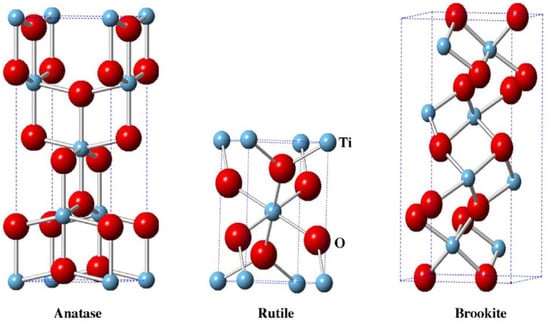
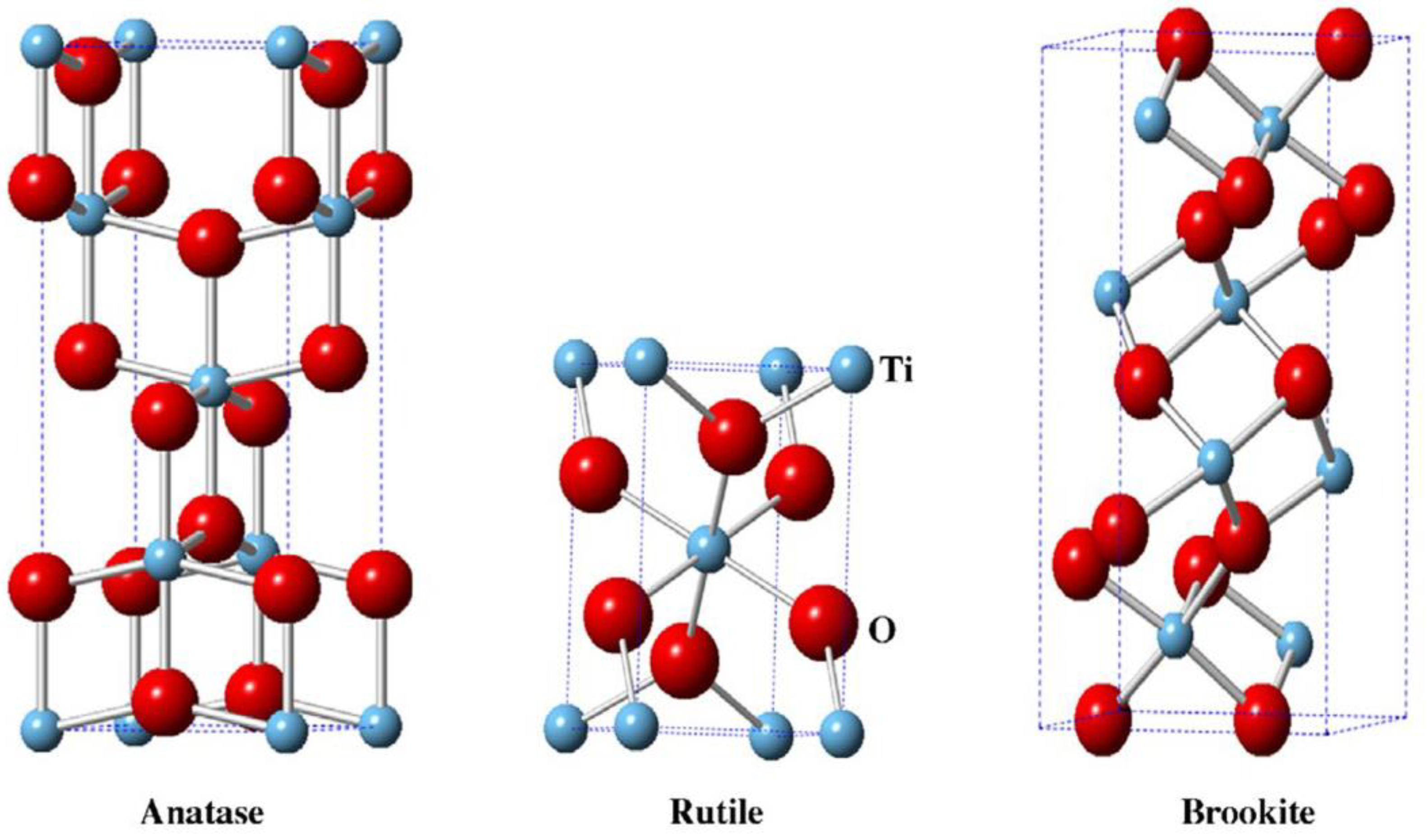
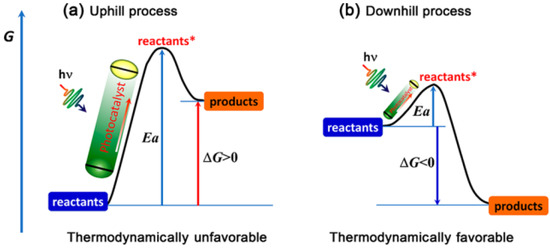
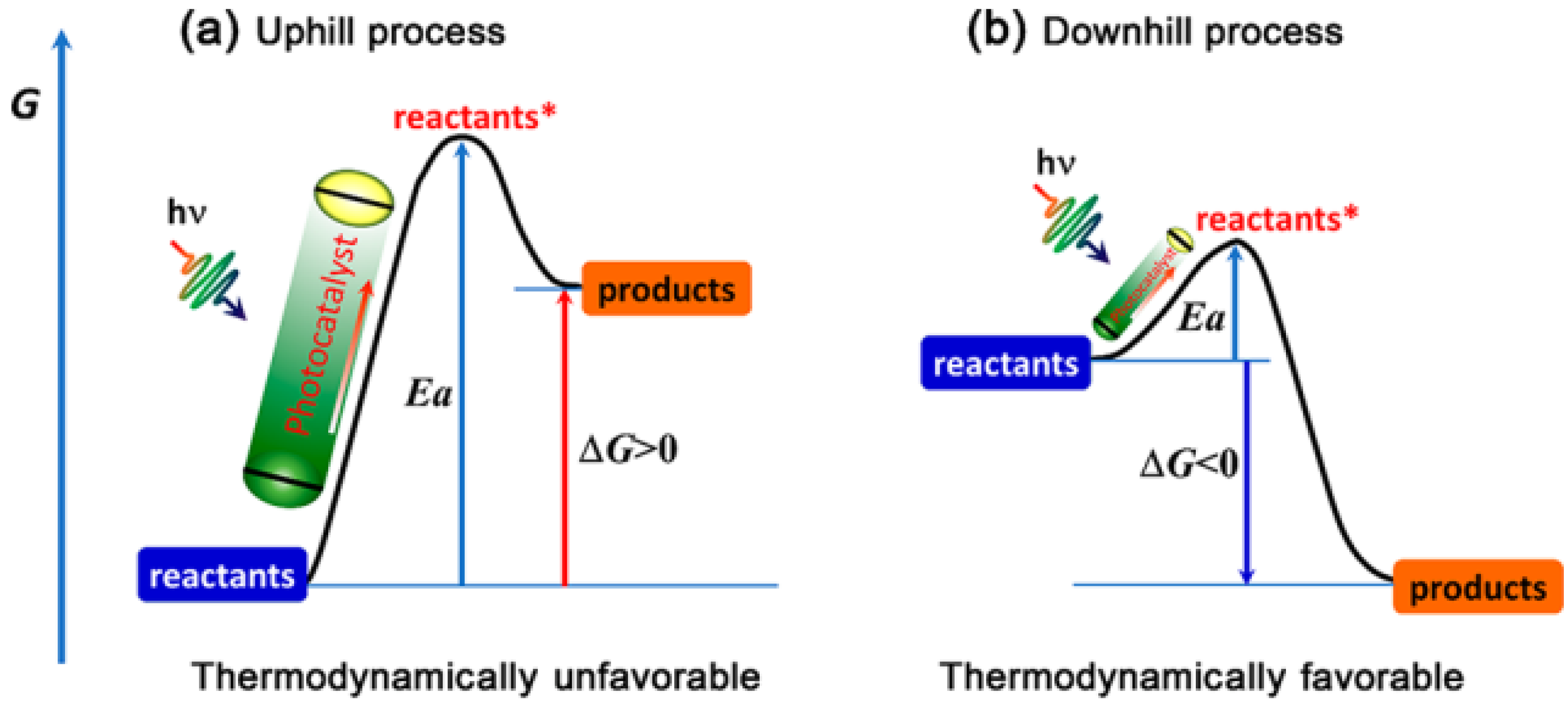
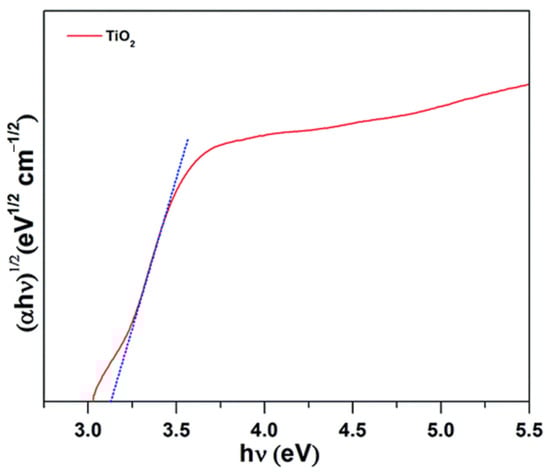
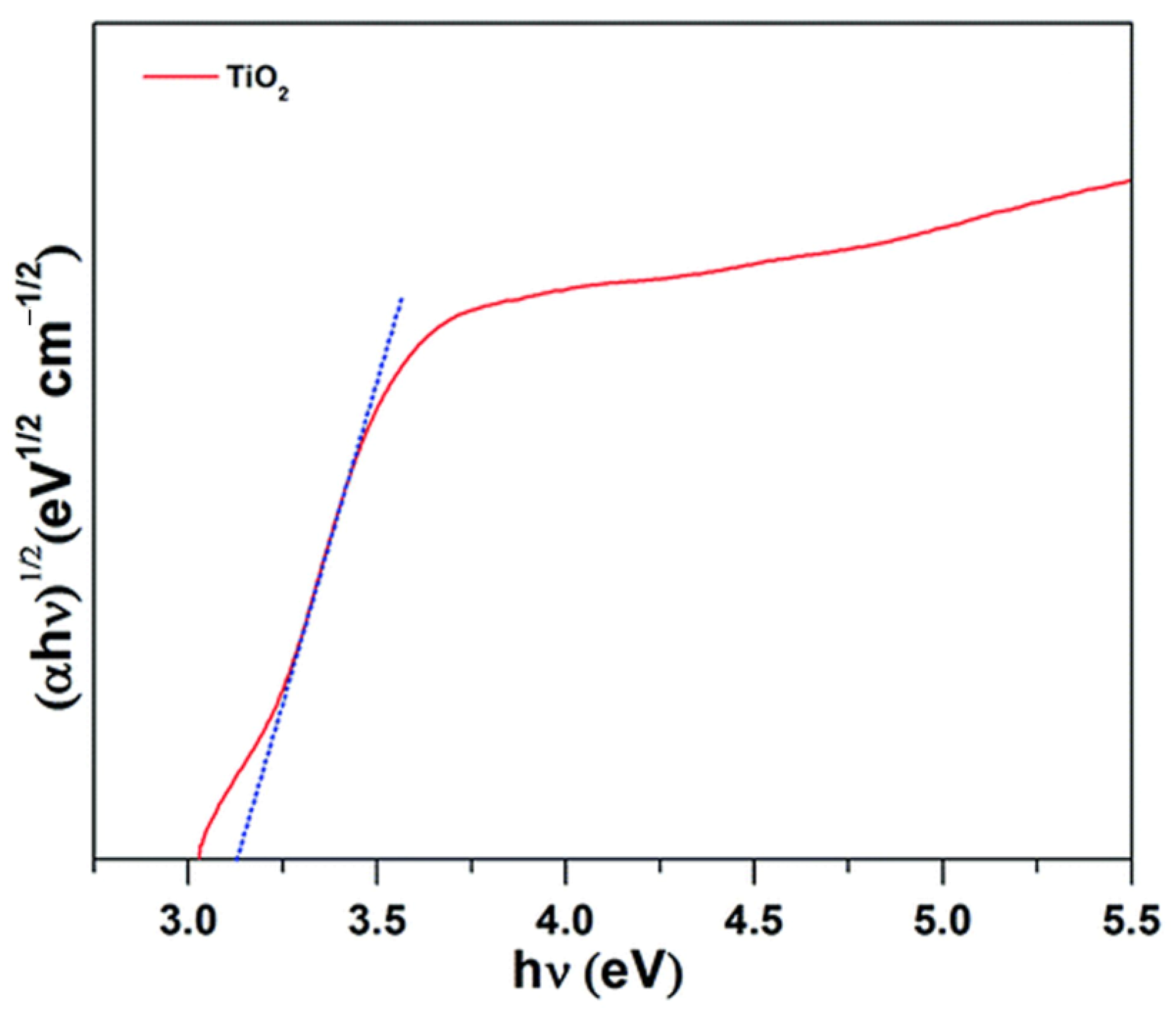
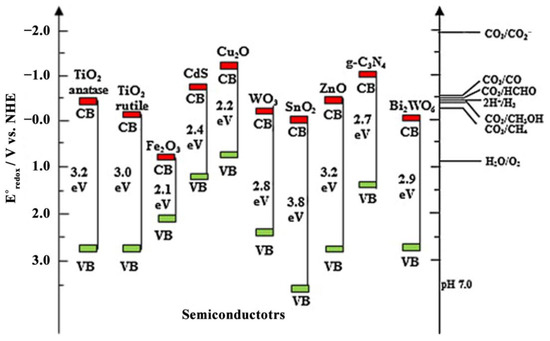
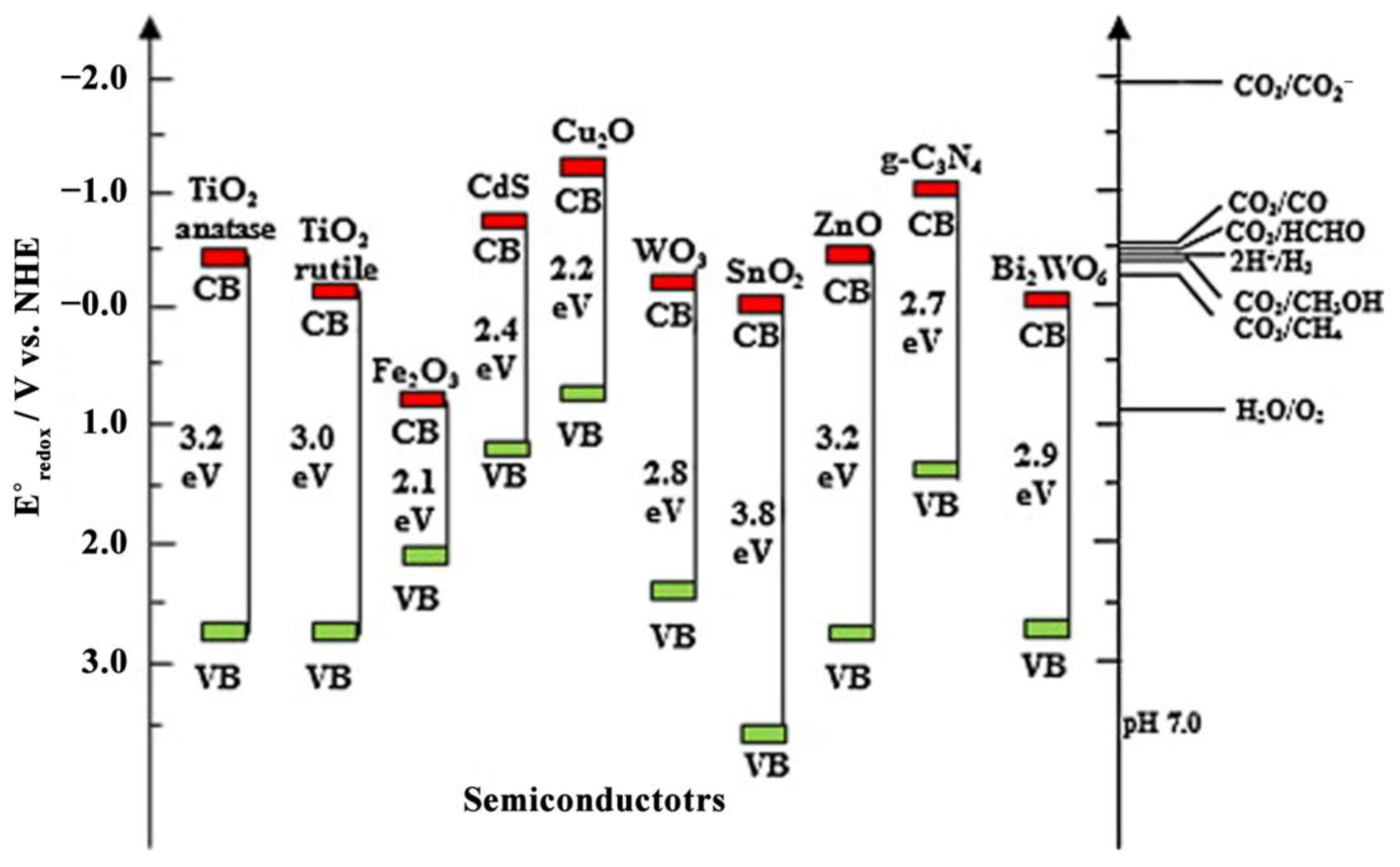
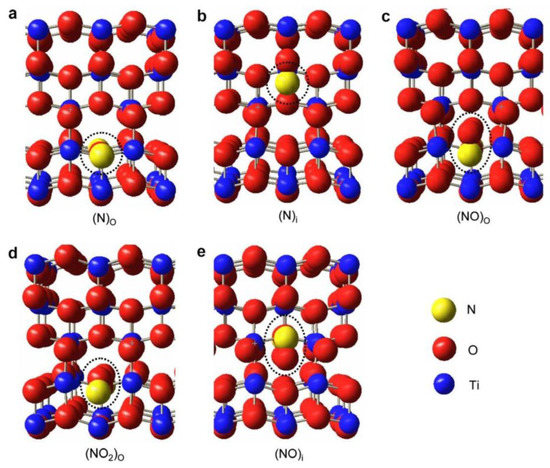
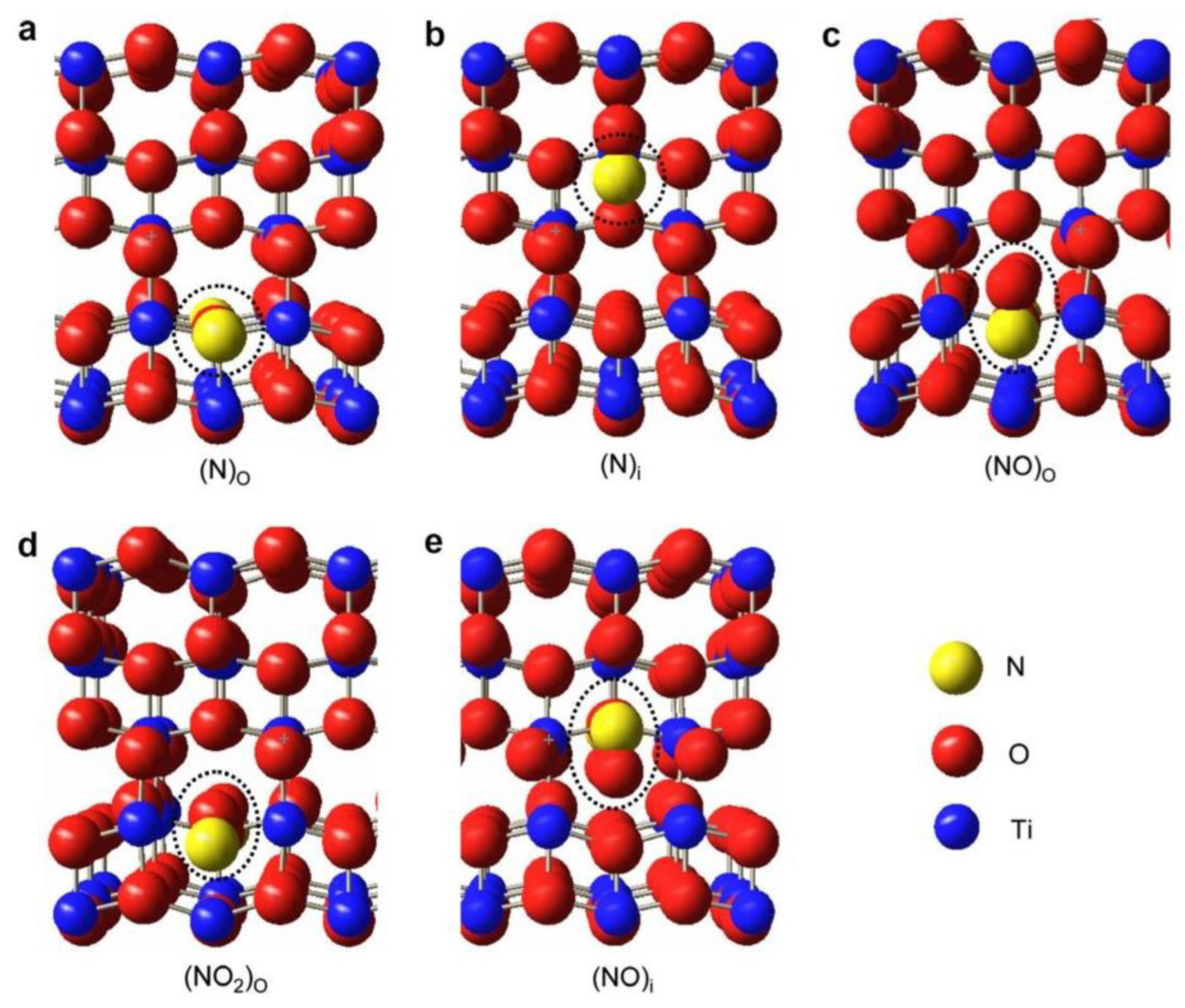
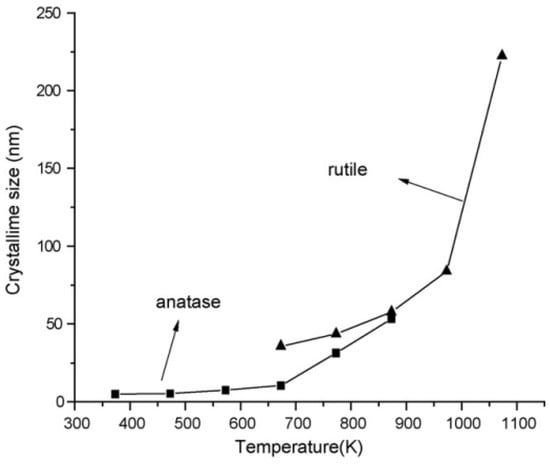
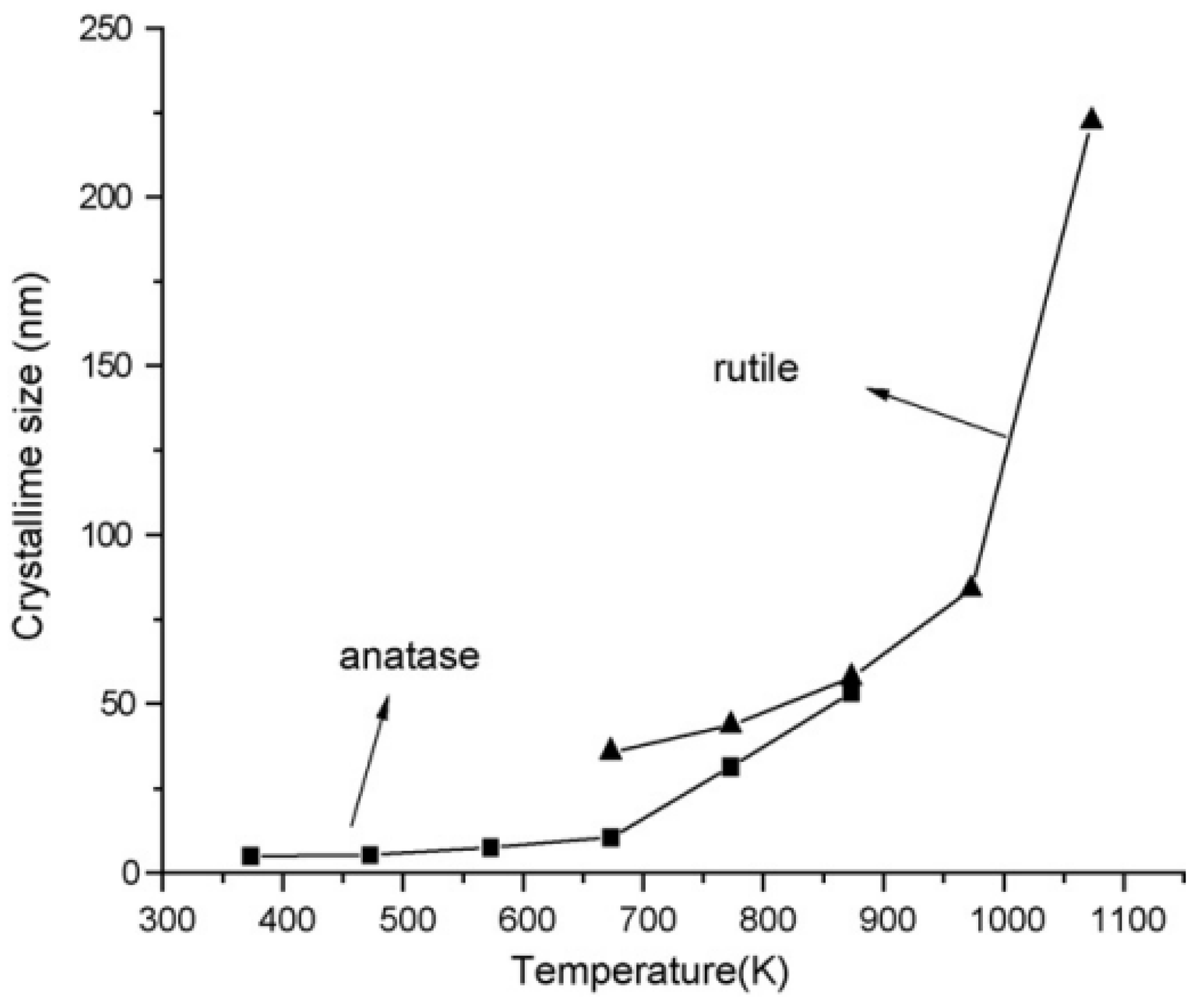
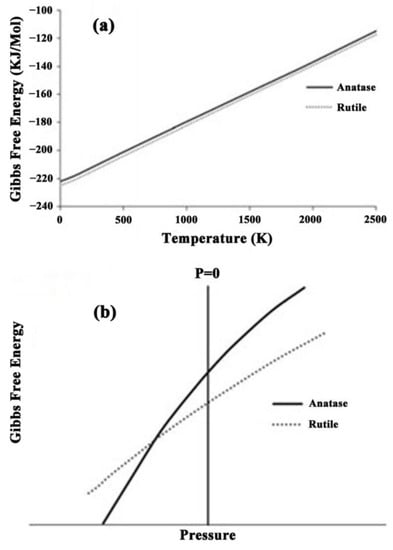
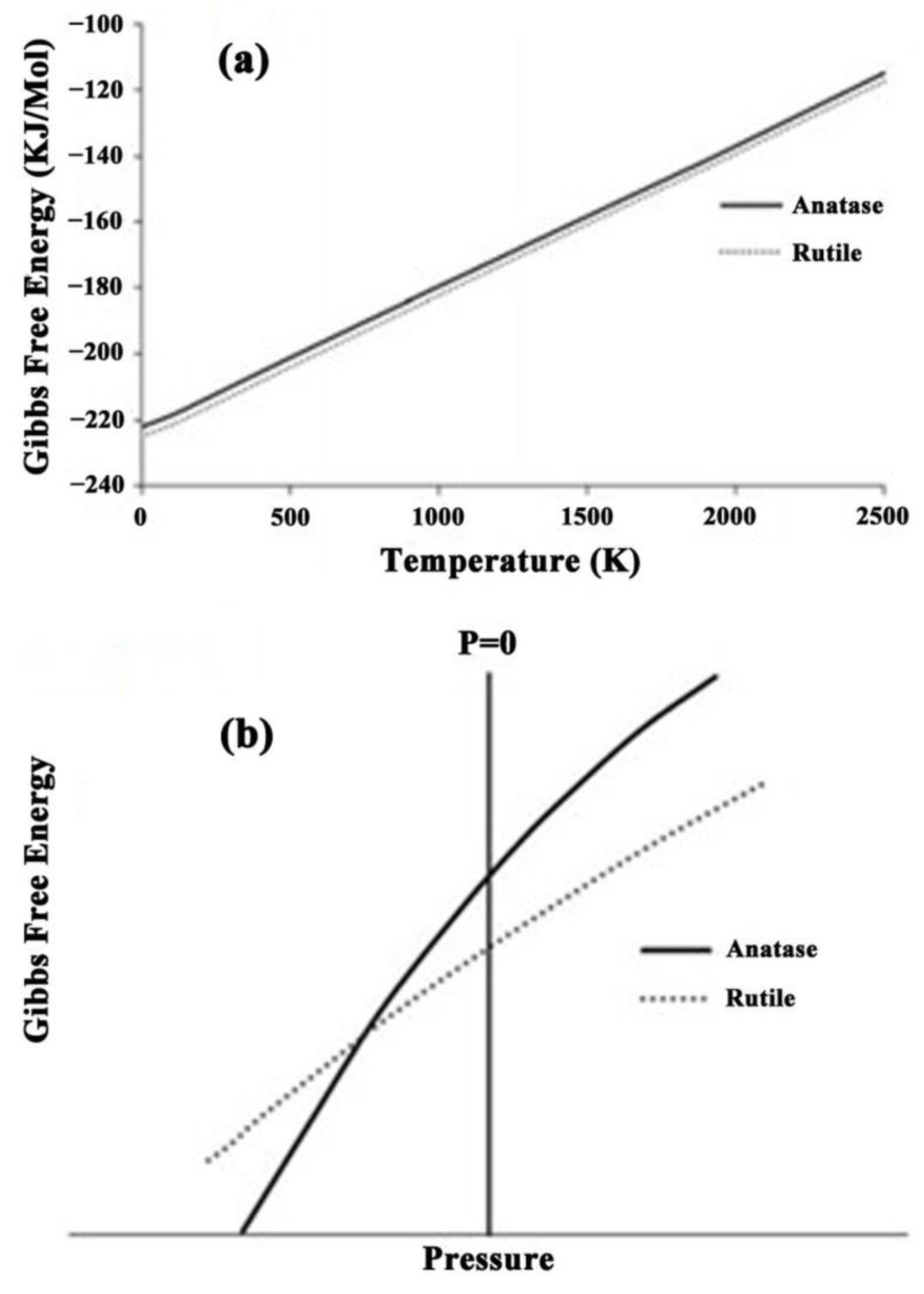
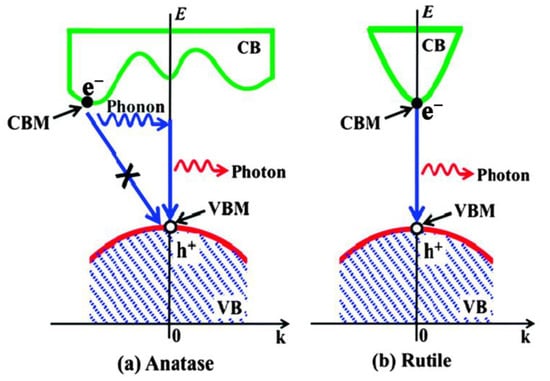
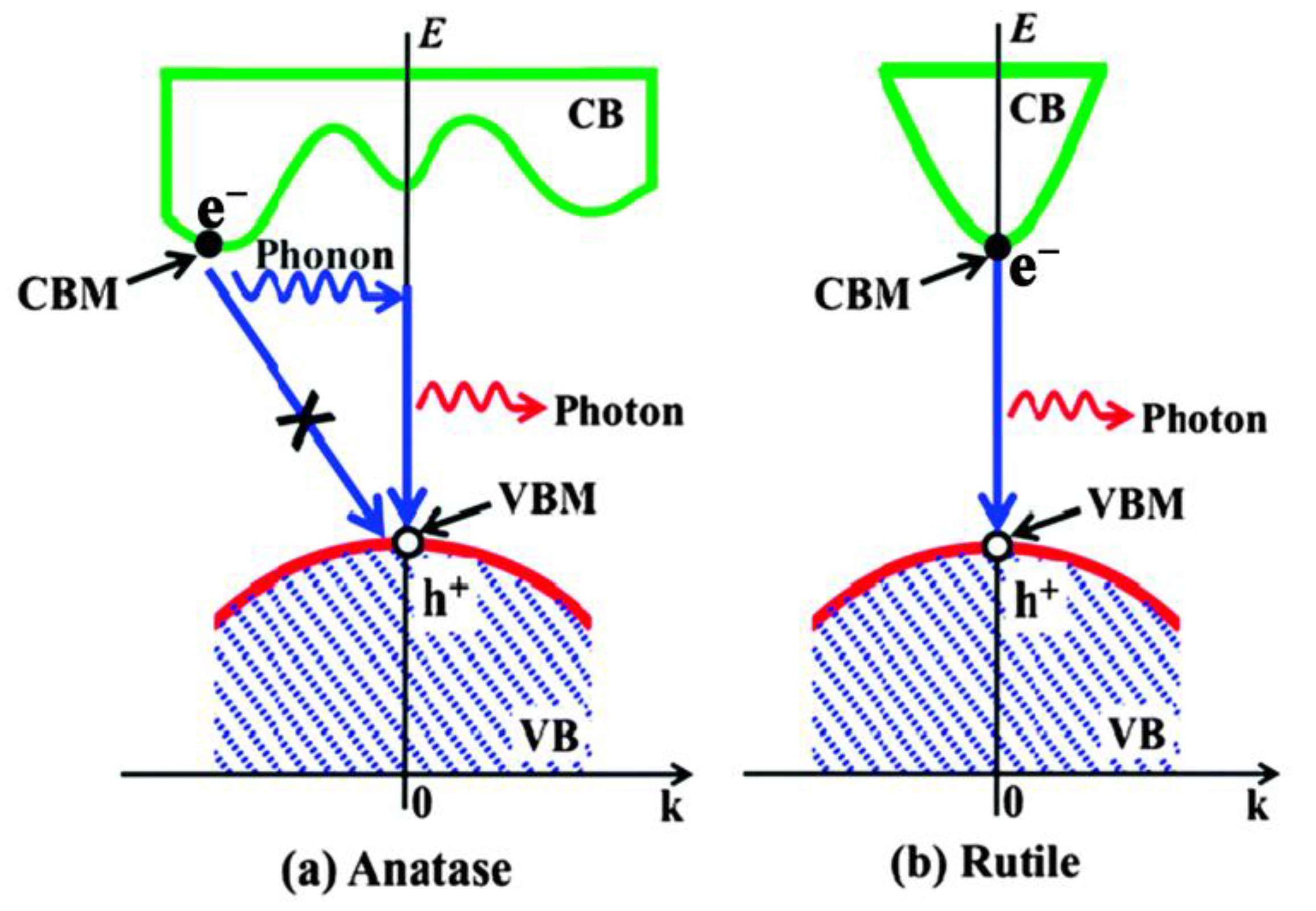
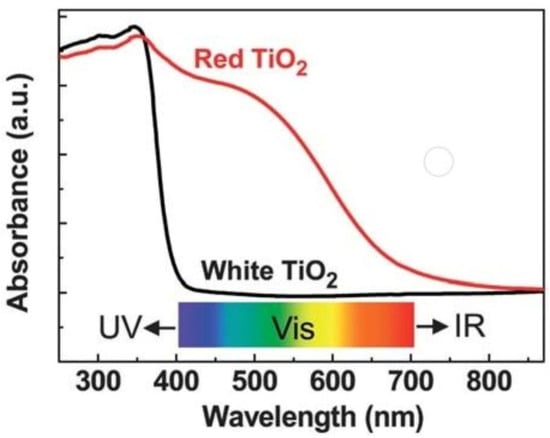
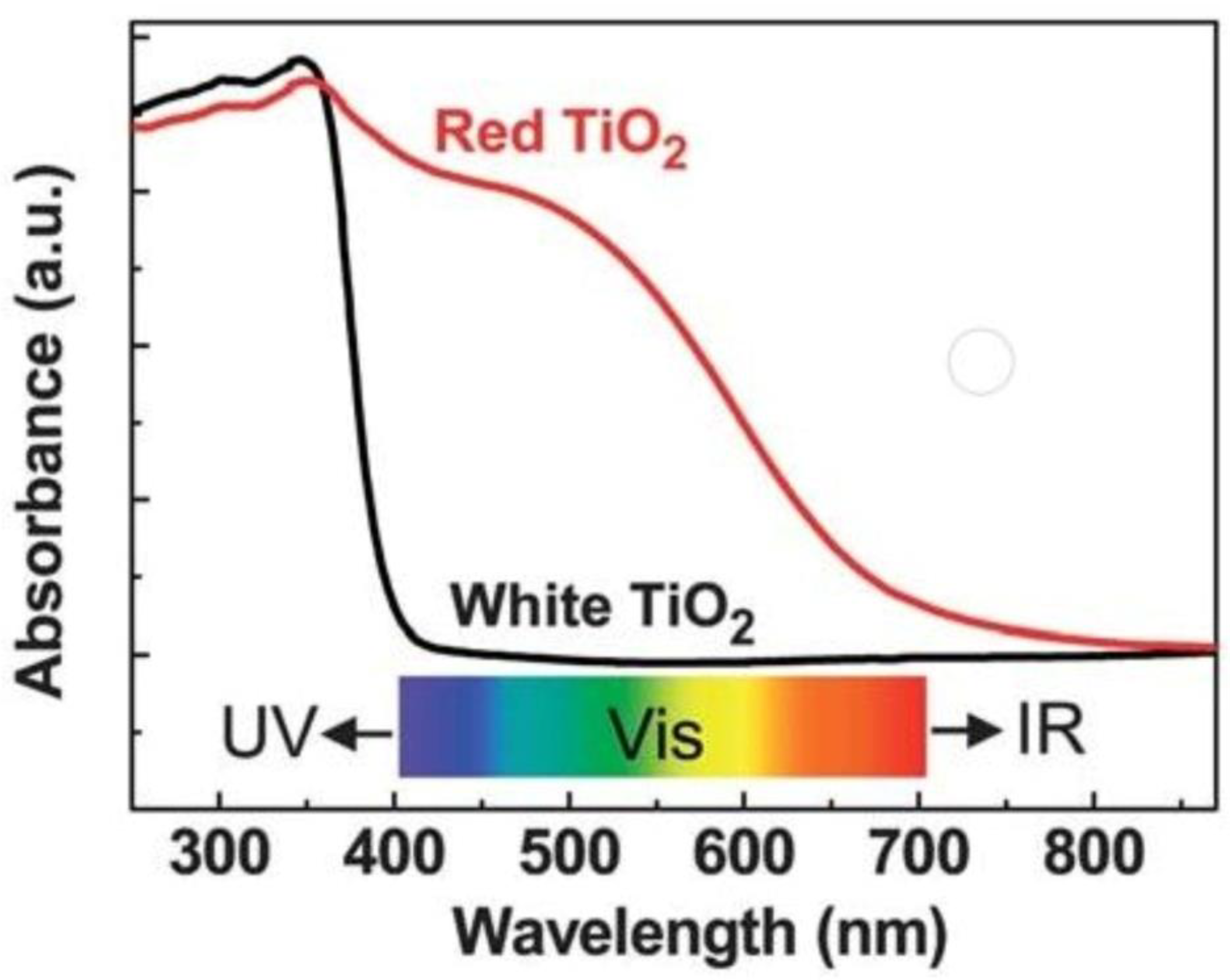

Disclaimer/Publisher’s Note: The statements, opinions and data contained in all publications are solely those of the individual author(s) and contributor(s) and not of MDPI and/or the editor(s). MDPI and/or the editor(s) disclaim responsibility for any injury to people or property resulting from any ideas, methods, instructions or products referred to in the content. |
© 2023 by the authors. Licensee MDPI, Basel, Switzerland. This article is an open access article distributed under the terms and conditions of the Creative Commons Attribution (CC BY) license (https://creativecommons.org/licenses/by/4.0/).