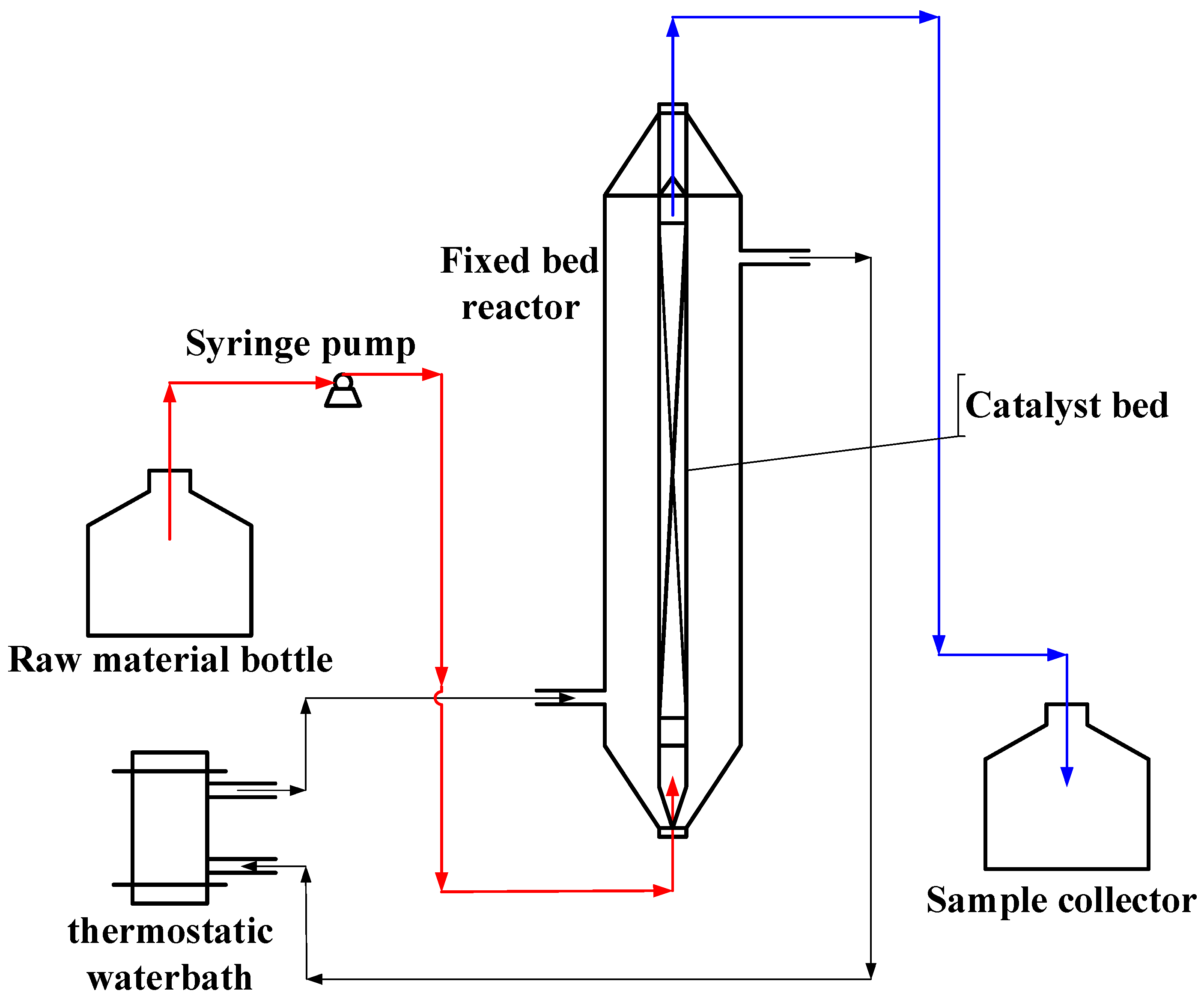

Investigation of the Hβ Molecular Sieve Inactivation Caused by Reactants and Products and Improvement of Continuous Thiophene Acylation
Abstract
Share and Cite
Yang, S.; Zeng, A. Investigation of the Hβ Molecular Sieve Inactivation Caused by Reactants and Products and Improvement of Continuous Thiophene Acylation. Catalysts 2021, 11, 298. https://doi.org/10.3390/catal11030298
Yang S, Zeng A. Investigation of the Hβ Molecular Sieve Inactivation Caused by Reactants and Products and Improvement of Continuous Thiophene Acylation. Catalysts. 2021; 11(3):298. https://doi.org/10.3390/catal11030298
Chicago/Turabian StyleYang, Shunjin, and Aiwu Zeng. 2021. "Investigation of the Hβ Molecular Sieve Inactivation Caused by Reactants and Products and Improvement of Continuous Thiophene Acylation" Catalysts 11, no. 3: 298. https://doi.org/10.3390/catal11030298
APA StyleYang, S., & Zeng, A. (2021). Investigation of the Hβ Molecular Sieve Inactivation Caused by Reactants and Products and Improvement of Continuous Thiophene Acylation. Catalysts, 11(3), 298. https://doi.org/10.3390/catal11030298