
A Provable Semi-Infinite Programming Approach for Solving Constrained Dynamic Games

Abstract
1. Introduction
2. Approach and Benchmark Results
| Algorithm 1 Algorithm to solve SIP. |
| Input: Finite subsets and Threshold values and Update rate Output: SIP solution, Begin Set fL = −∞, fU = ∞, YL = YL,0, YU = YU,0. While Do Solve the lower-bounding problem, set to the solution. Solve the lower-level problem. If the lower-level problem objective value is non-positive and . End Add the lower-level problem solution to . Solve the upper-bounding problem, set the solution equal to . If feasible Set to the solution. Solve the lower-level problem. If the lower-level problem objective value is non-positive If fdum ≤ fU fU = fL x* = End ϵg = ϵg/r. Else Add lower-level problem solution to YU. End Else ϵg = ϵg/r. End End End End |
2.1. Benchmark Problems and Results
2.1.1. Location Game
2.1.2. Heat Transfer Game
2.2. Summary of Benchmark Results
3. Convex Linear Quadratic Dynamic Games
3.1. Two Player
- Player One Optimality Conditions
- Player Two Optimality Conditions
3.1.1. Closed-Loop Information Structure
3.1.2. Open-Loop Information Structure
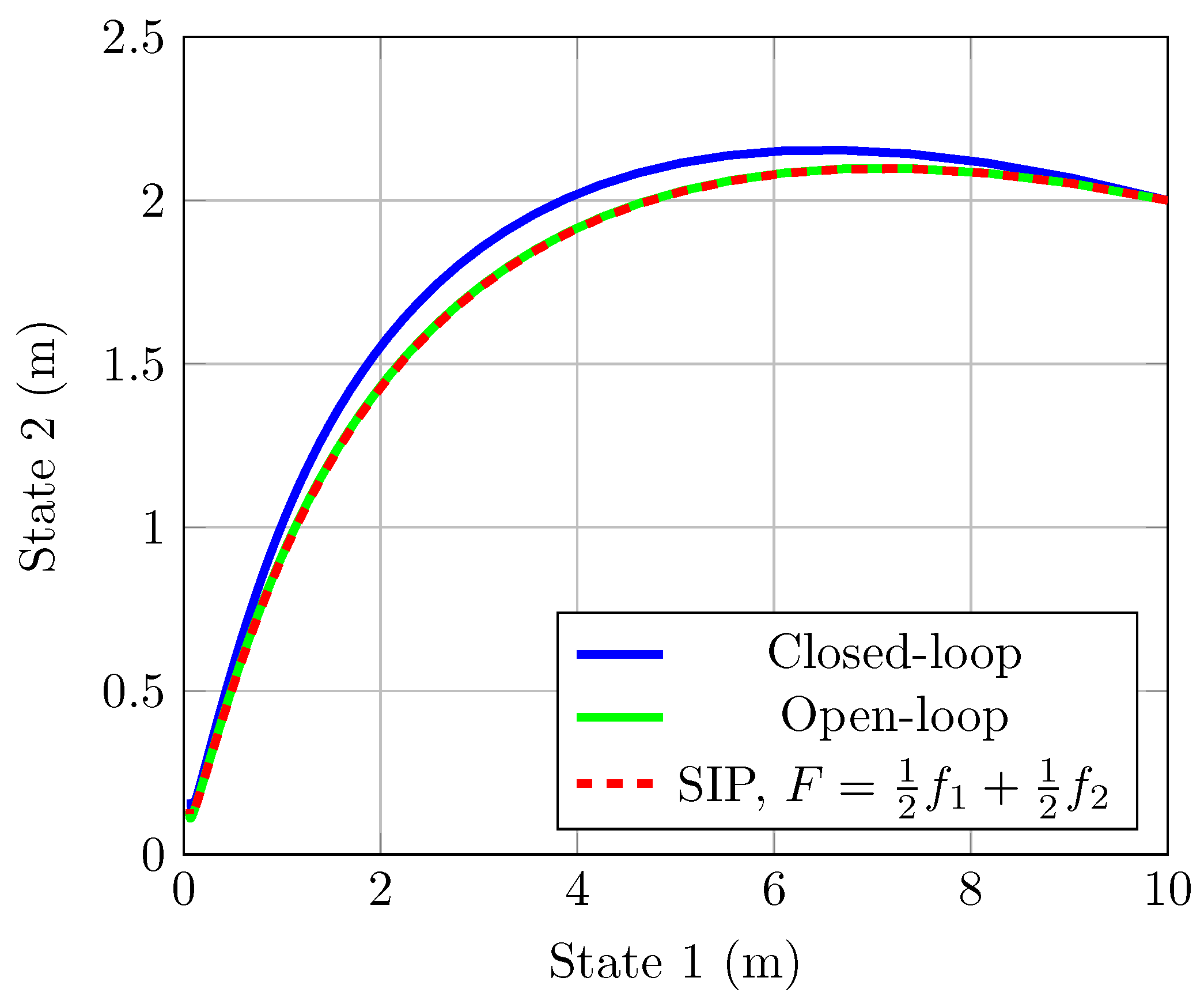
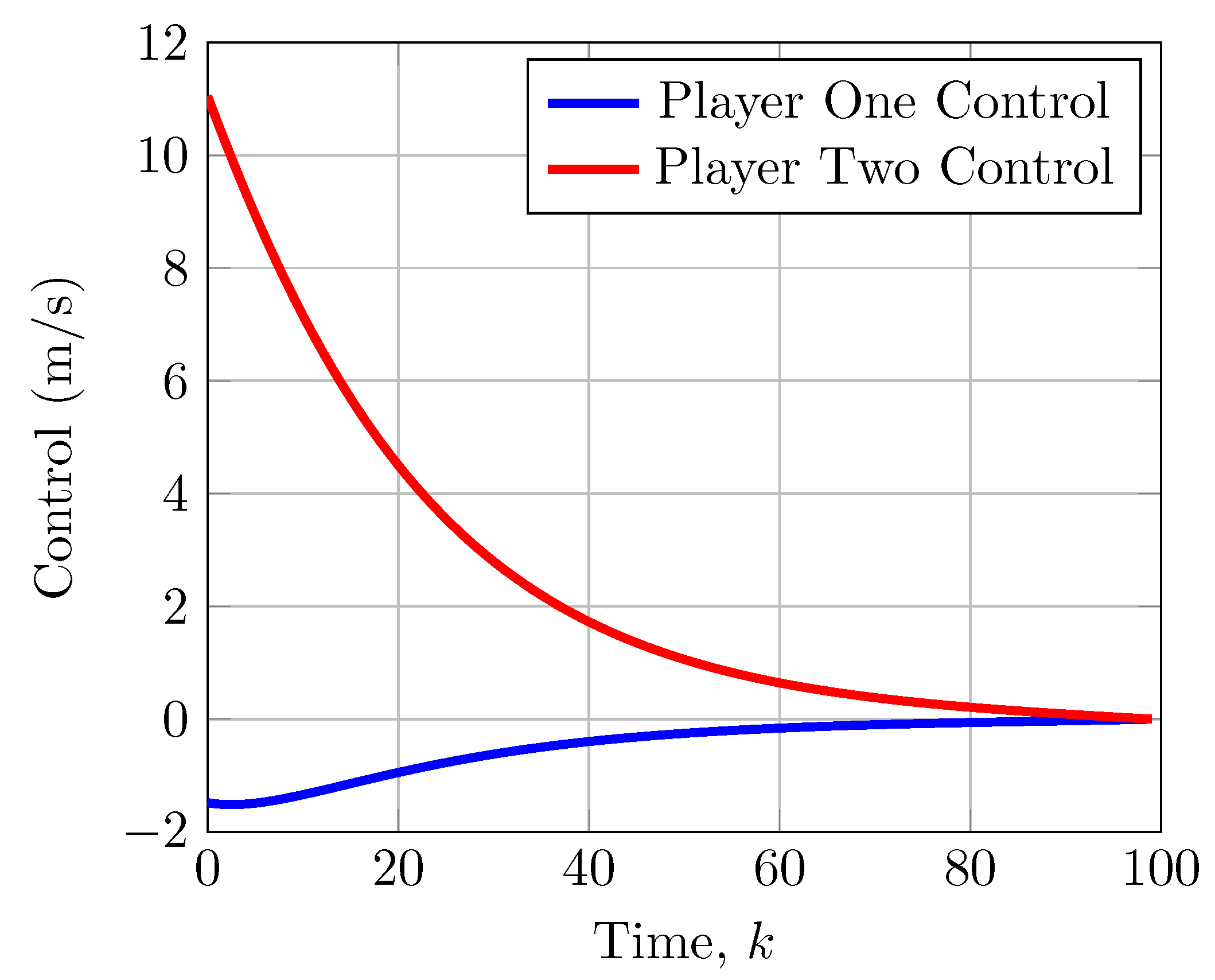
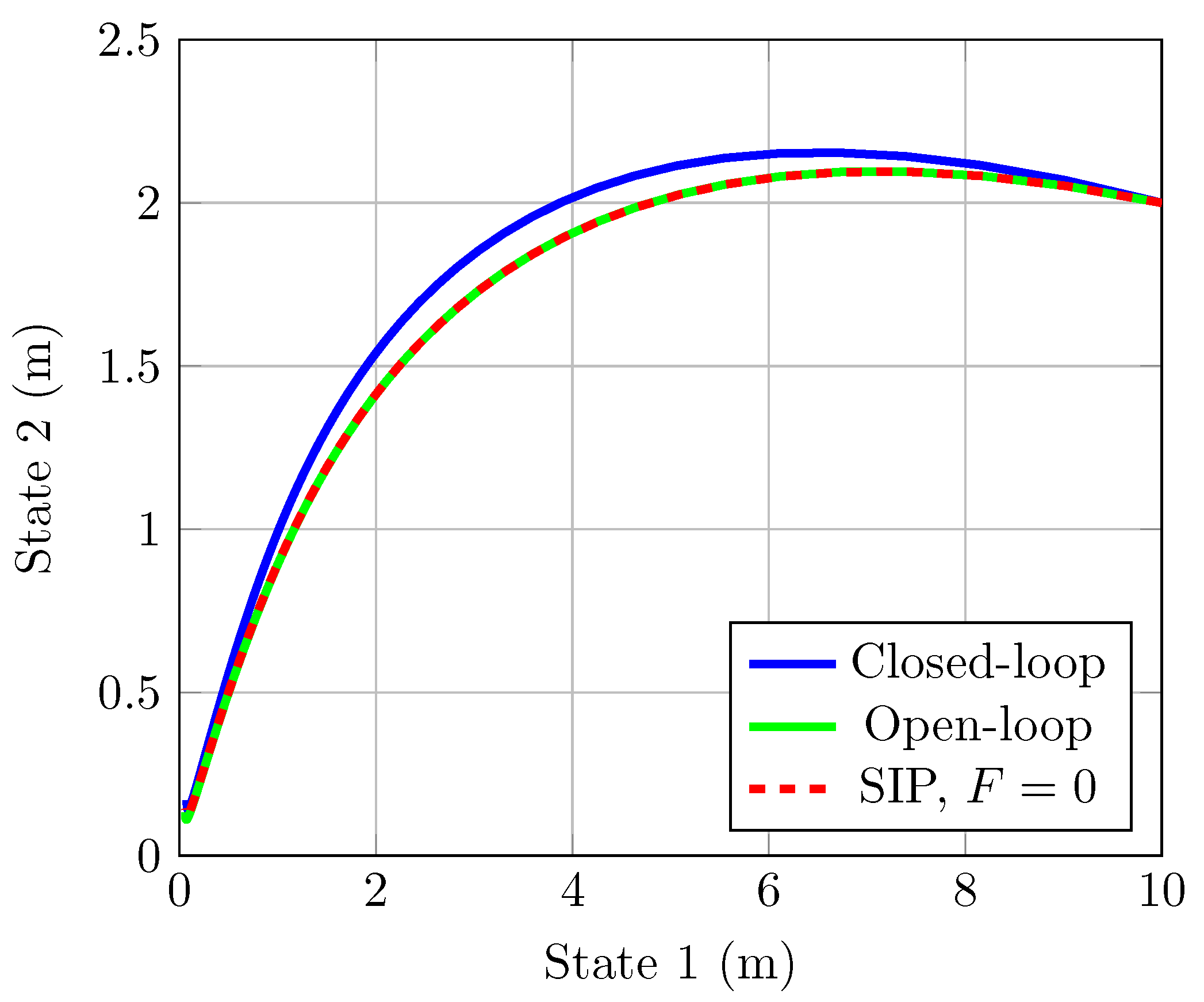
3.1.3. SIP Numerical Results with Unconstrained Control
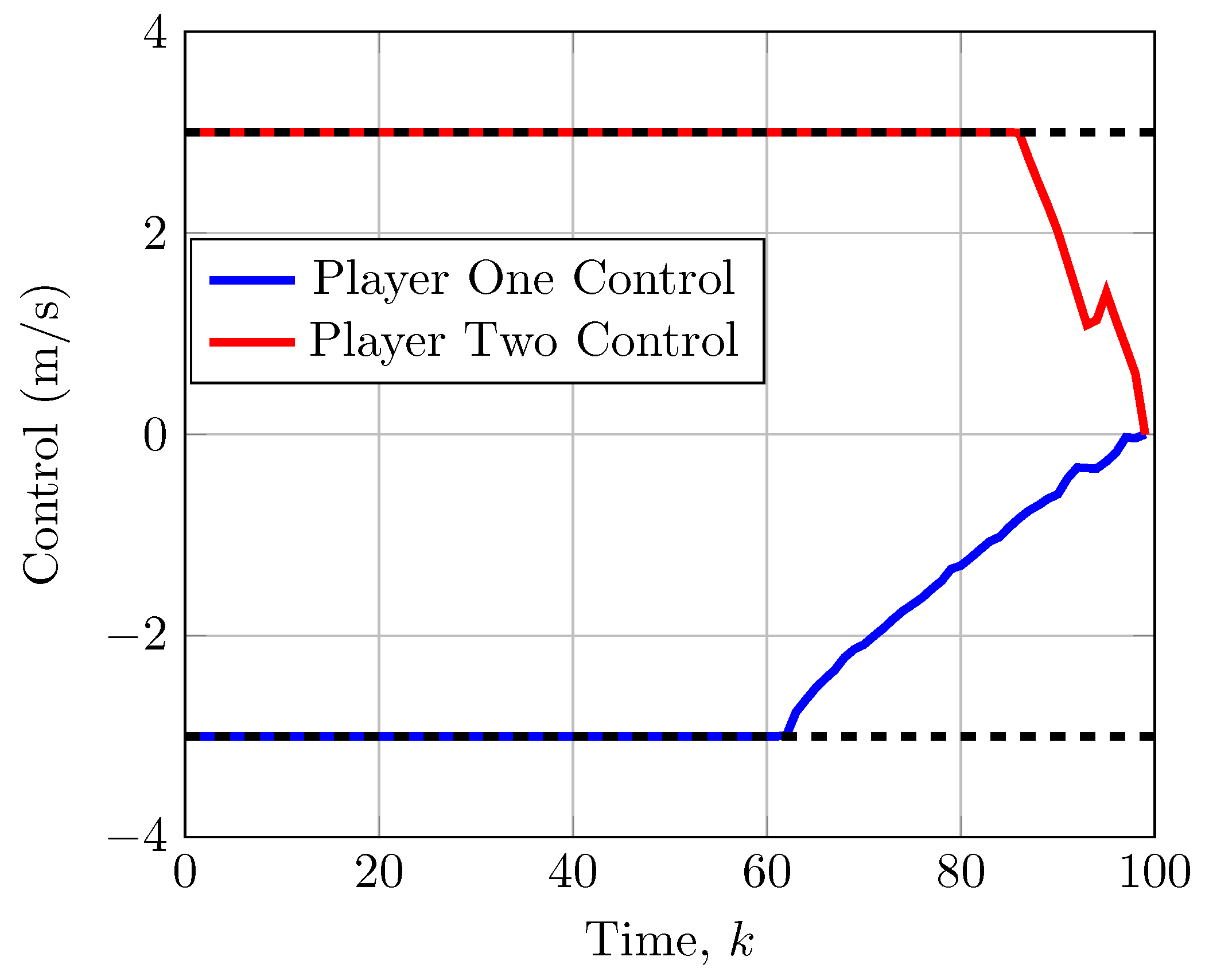
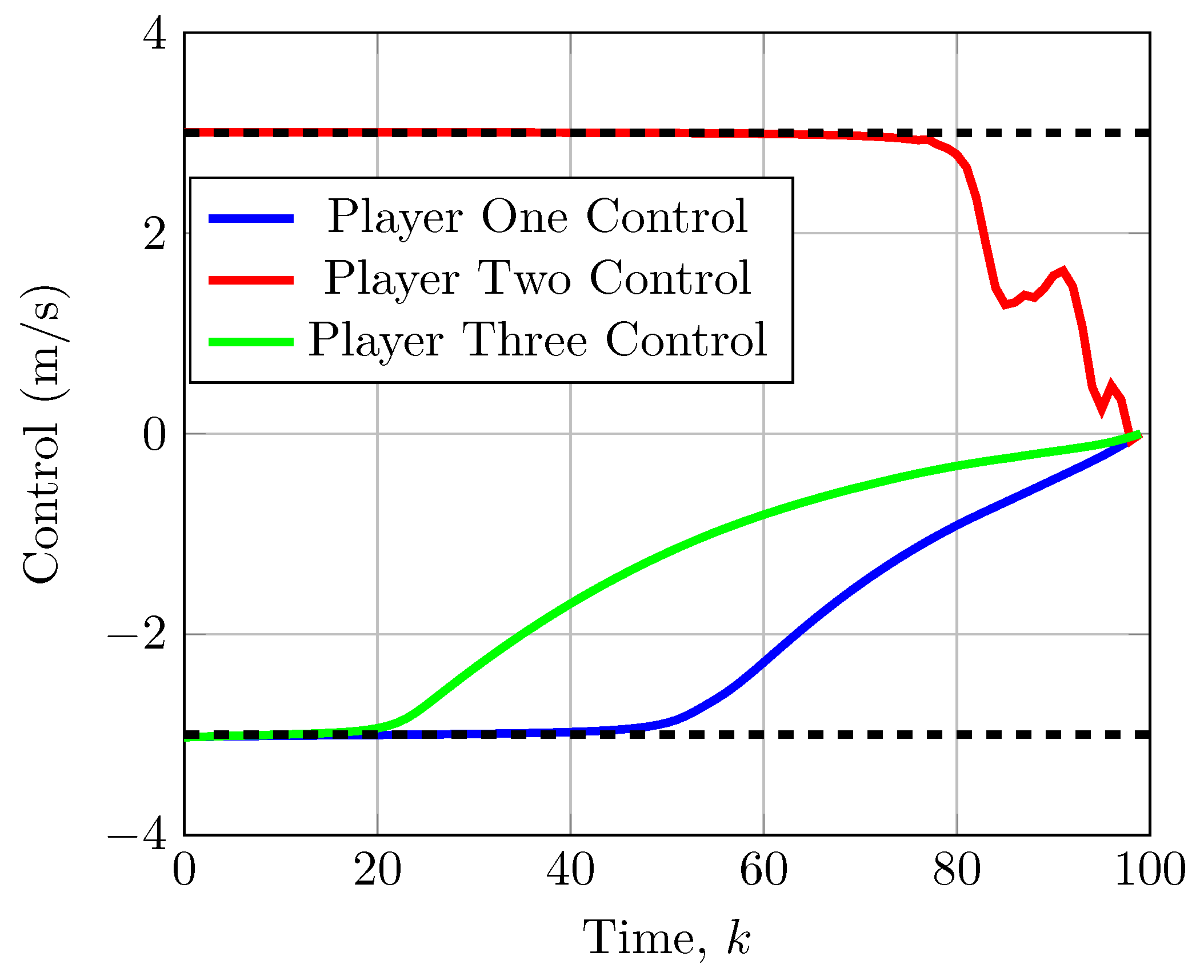
3.1.4. SIP Numerical Results with Constrained Control
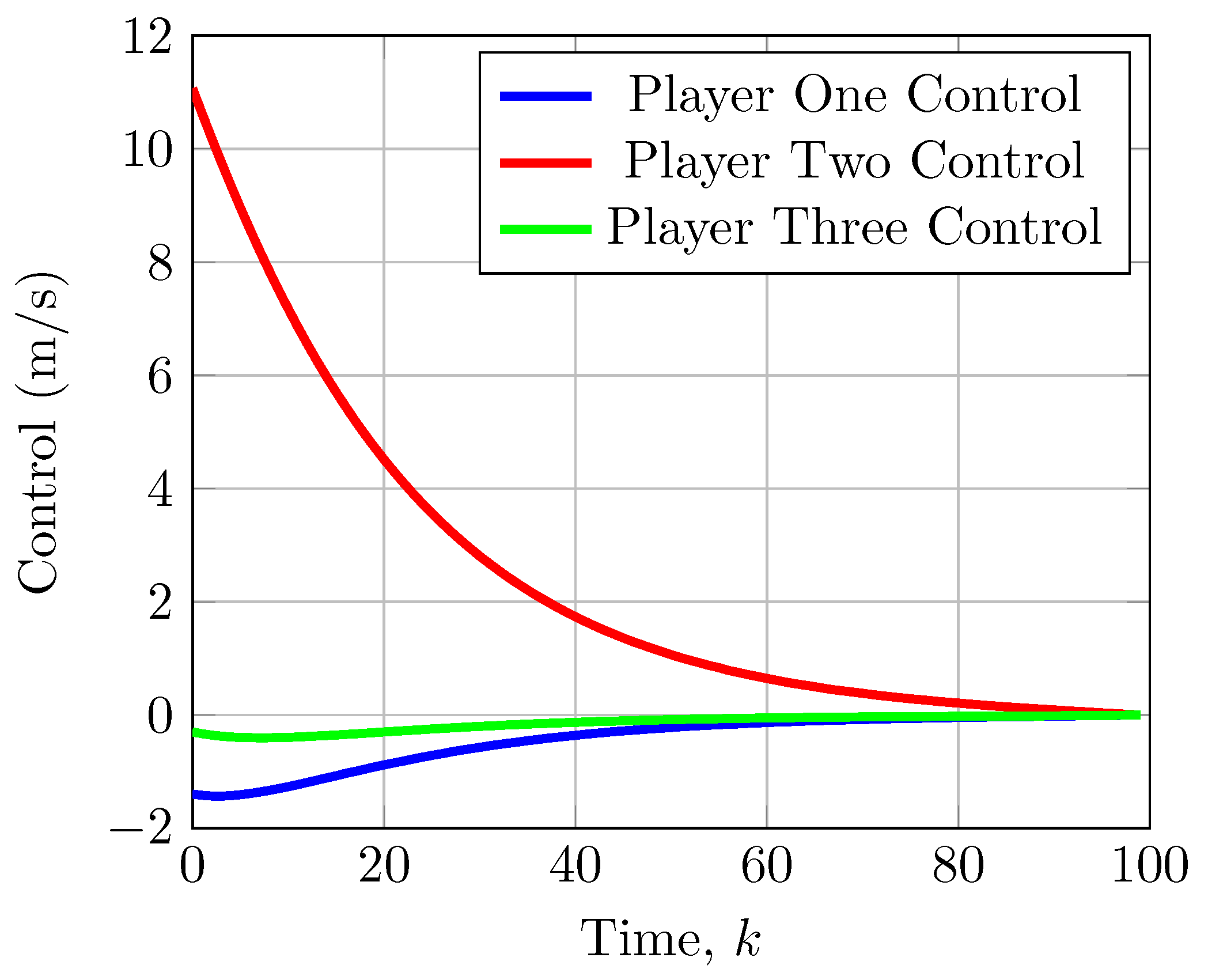
3.2. Three Player
3.3. Summary of Convex Game Results
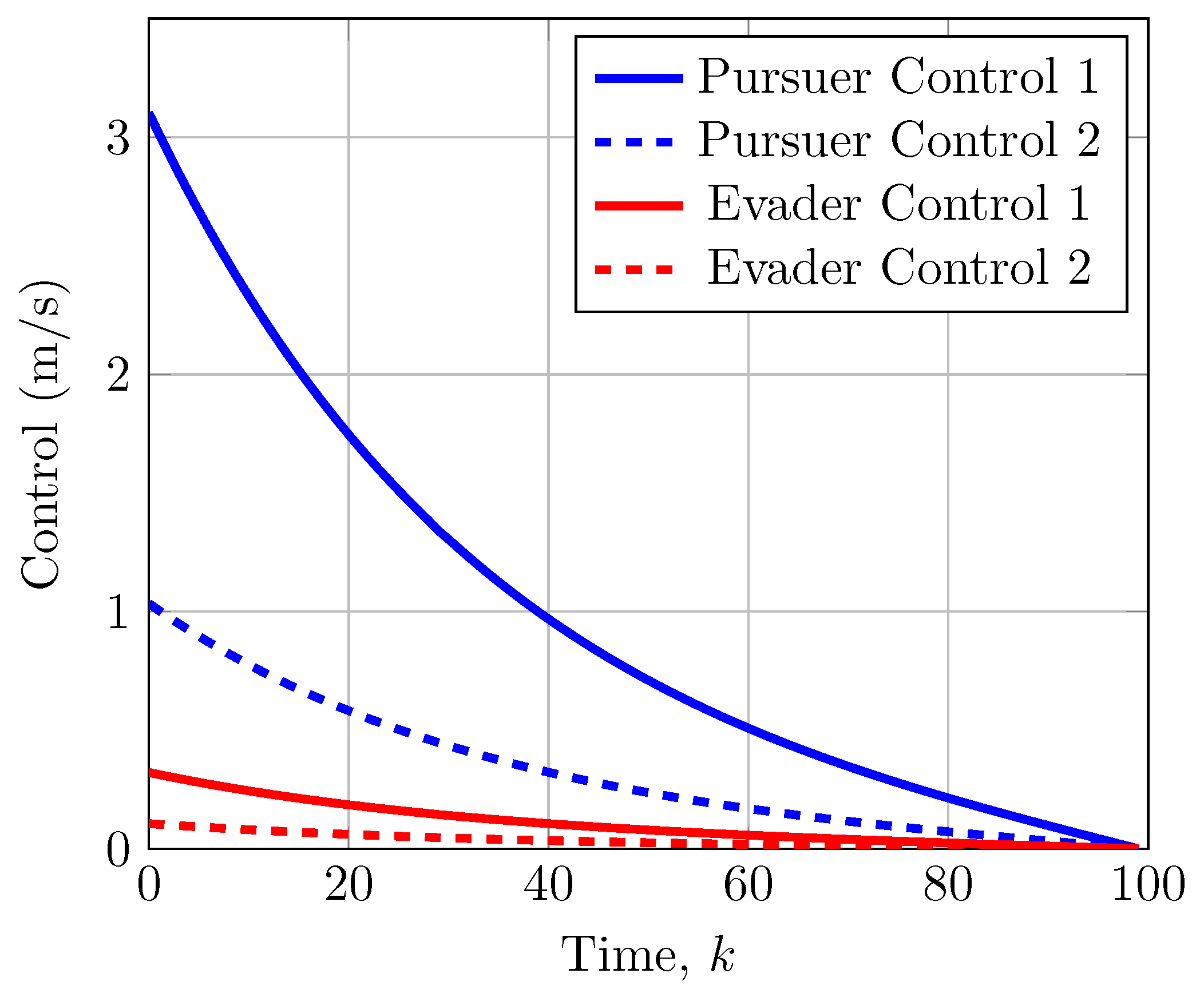
4. Nonconvex Pursuit and Evasion Dynamic Games
4.1. Running and Terminal Cost
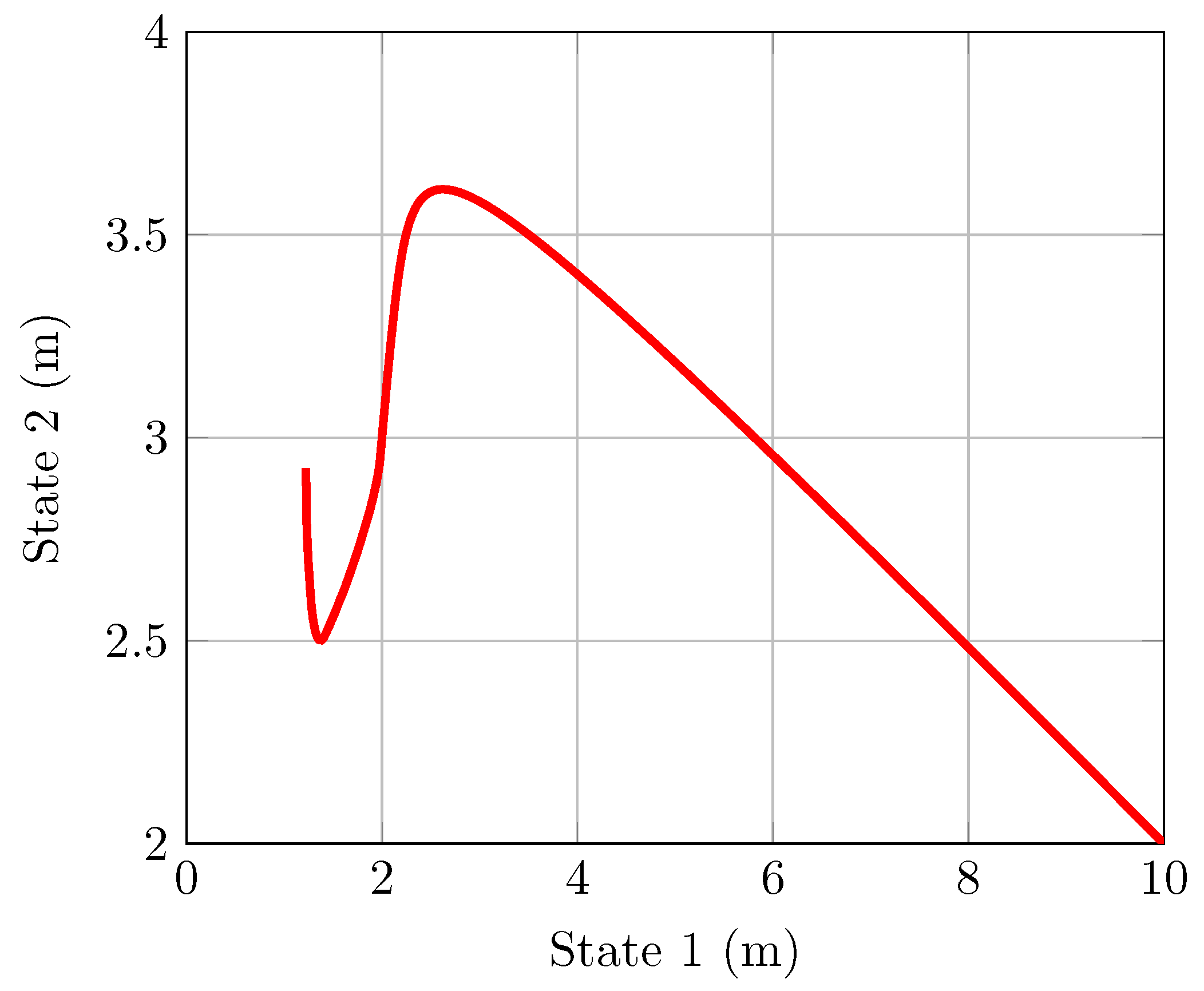
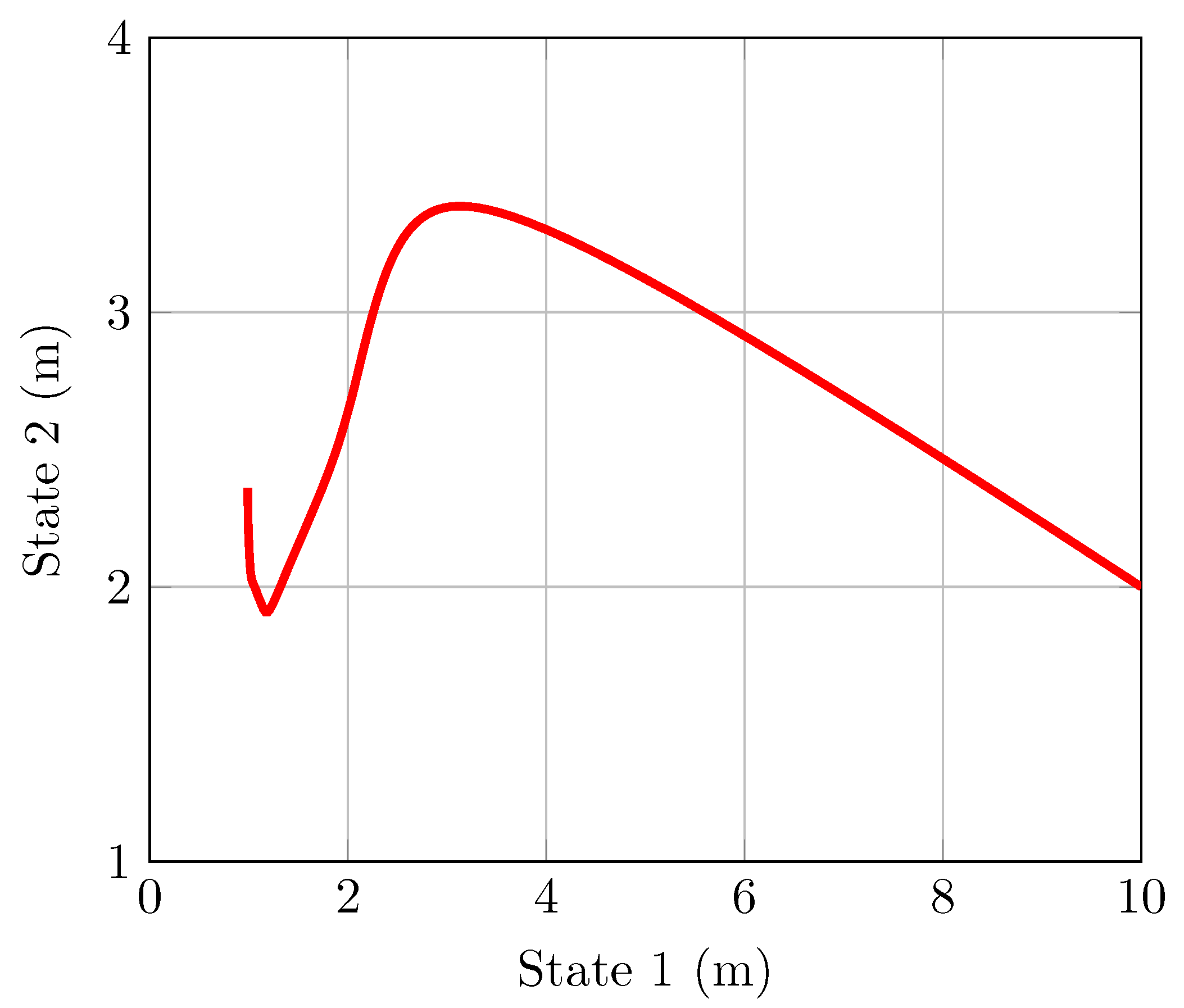
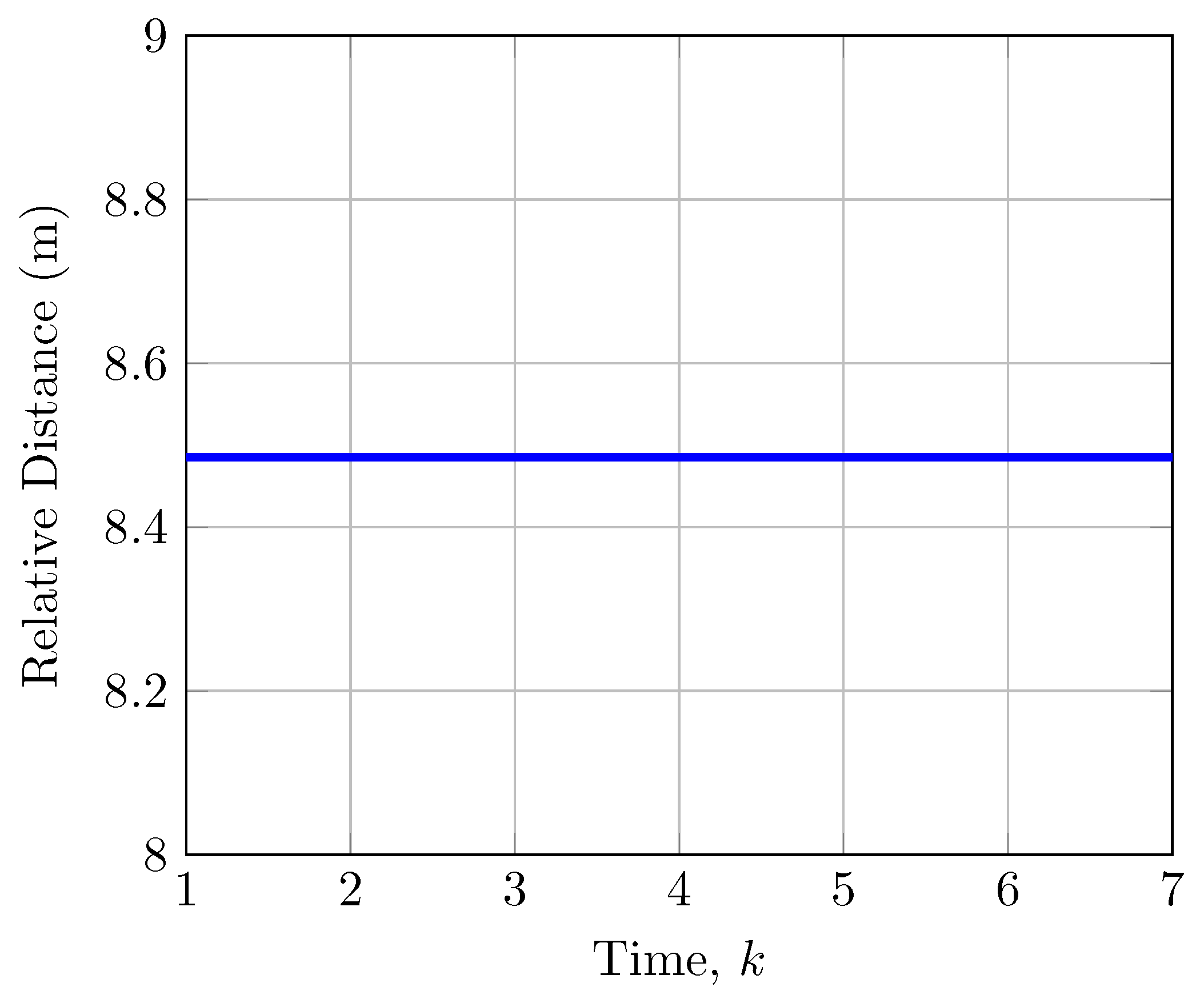
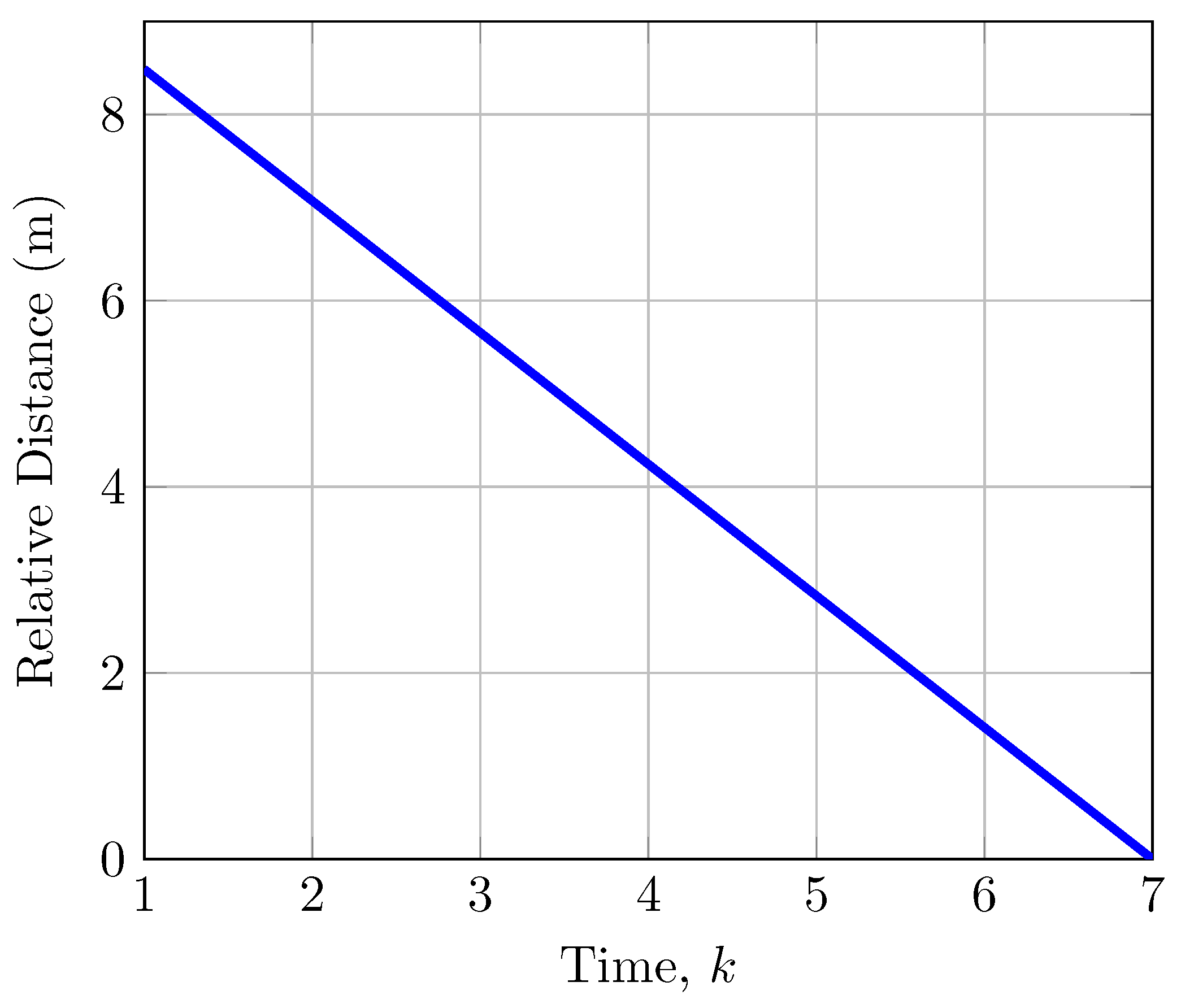
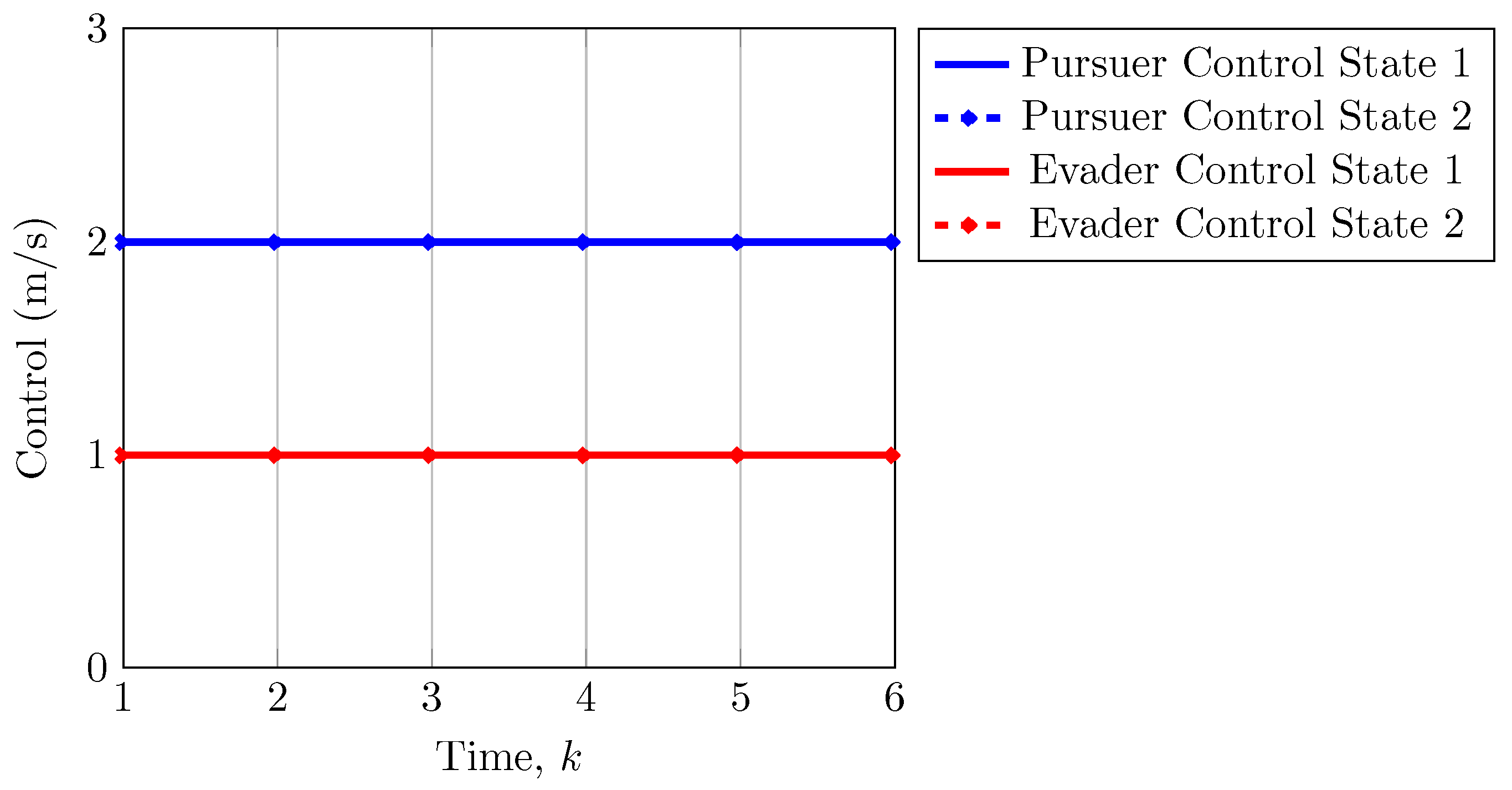
4.2. Terminal Cost
4.3. Summary of Nonconvex Game Results
5. Conclusions
Author Contributions
Funding
Data Availability Statement
Conflicts of Interest
References
- Başar, T., & Olsder, G. J. (1999). Dynamic noncooperative game theory. SIAM. [Google Scholar]
- Ben-Tal, A., & Nemirovski, A. (1999). Robust solutions of uncertain linear programs. Operations Research Letters, 25(1), 1–13. [Google Scholar] [CrossRef] [Scilit]
- Berkovitz, L. D. (2002). Convexity and optimization in ℝn. John Wiley and Sons, Inc. [Google Scholar]
- Bhattacharjee, B., Green, W. H., & Barton, P. I. (2005a). Interval methods for semi-infinite programs. Computational Optimization and Applications, 30(1), 63–93. [Google Scholar] [CrossRef] [Scilit]
- Bhattacharjee, B., Lemonidis, P., Green, W. H., Jr., & Barton, P. I. (2005b). Global solution of semi-infinite programs. Mathematical Programming, 103(2), 283–307. [Google Scholar] [CrossRef] [Scilit]
- Bryson, A. E., & Ho, Y.-C. (1975). Applied optimal control. Hemisphere. [Google Scholar]
- Cerulli, M., Oustry, A., D’Ambrosio, C., & Liberti, L. (2022). Convergent algorithms for a class of convex semi-infinite programs. SIAM Journal on Optimization, 32(4), 2493–2526. [Google Scholar] [CrossRef] [Scilit]
- Chenchene, E., Huang, H., & Qiu, J. (2025). A consensus-based algorithm for non-convex multiplayer games. Journal of Optimization Theory and Applications, 206(2), 45. [Google Scholar] [CrossRef] [Scilit]
- Colombo, R. M., Giuzzi, L., & Marcellini, F. (2025). Nash equilibria in traffic networks with multiple populations and origins–destinations. Journal of Optimization Theory and Applications, 206(2), 31. [Google Scholar] [CrossRef] [Scilit]
- Djelassi, H., Mitsos, A., & Stein, O. (2021). Recent advances in nonconvex semi-infinite programming: Applications and algorithms. EURO Journal on Computational Optimization, 9, 100006. [Google Scholar] [CrossRef] [Scilit]
- Engwerda, J. (2018). Stabilization of an uncertain simple fishery management game. Fisheries Research, 203, 63–73. [Google Scholar] [CrossRef] [Scilit]
- Feng, Z., Chen, F., Chen, L., & Yiu, K. F. C. (2020). Optimality analysis of a class of semi-infinite programming problems. Journal of Optimization Theory and Applications, 186(2), 398–411. [Google Scholar] [CrossRef] [Scilit]
- Floudas, C. A., & Stein, O. (2008). The adaptive convexification algorithm: A feasible point method for semi-infinite programming. SIAM Journal on Optimization, 18(4), 1187–1208. [Google Scholar] [CrossRef] [Scilit]
- Garagic, D., & Cruz, J., Jr. (2003). An approach to fuzzy noncooperative Nash games. Journal of Optimization Theory and Applications, 118(3), 475–491. [Google Scholar] [CrossRef] [Scilit]
- Guo, P., Wang, Y., & Li, H. (2013). A semi-tensor product approach to finding Nash equilibria for static games. In Proceedings of the 32nd Chinese control conference (pp. 107–112). IEEE. [Google Scholar]
- Gurobi Optimization, LLC. (2024). Gurobi optimizer reference manual, version 11.0.3. Available online: https://www.gurobi.com (accessed on 28 May 2026).
- Harris, M. W., & Rose, M. B. (2023). Optimal spacecraft guidance. Utah State University. [Google Scholar]
- Hayashi, S., & Wu, S.-Y. (2010). An explicit exchange algorithm for linear semi-infinite programming problems with second-order cone constraints. SIAM Journal on Optimization, 20(3), 1527–1546. [Google Scholar] [CrossRef] [Scilit]
- Hettich, R., & Kortanek, K. O. (1993). Semi-infinite programming: Theory, methods, and applications. SIAM Review, 35(3), 380–429. [Google Scholar] [CrossRef] [Scilit]
- Huang, Y., & Zhao, J. (2021). Socially optimal Nash equilibrium of switched linear quadratic differential games. In 2021 40th Chinese control conference (CCC) (pp. 1425–1430). IEEE. [Google Scholar] [CrossRef] [Scilit]
- Isaacs, R. (1965). Differential games: A mathematical theory with applications to warfare and pursuit, control and optimization. John Wiley and Sons. [Google Scholar]
- Krieg, H., Seidel, T., Schwientek, J., & Küfer, K.-H. (2022). Solving continuous set covering problems by means of semi-infinite optimization. Mathematical Methods of Operations Research, 96(1), 39–82. [Google Scholar] [CrossRef] [Scilit]
- Lin, T., Jin, C., & Jordan, M. (2020). On gradient descent ascent for nonconvex-concave minimax problems. In Proceedings of the 37th international conference on machine learning (pp. 6083–6093). PMLR. [Google Scholar]
- Ling, C., Qi, L. Q., Zhou, G. L., & Wu, S. Y. (2006). Global convergence of a robust smoothing SQP method for semi-infinite programming. Journal of Optimization Theory and Applications, 129(1), 147–164. [Google Scholar] [CrossRef] [Scilit]
- López, M., & Still, G. (2007). Semi-infinite programming. European Journal of Operational Research, 180(2), 491–518. [Google Scholar] [CrossRef] [Scilit]
- Mitsos, A. (2011). Global optimization of semi-infinite programs via restriction of the right-hand side. Optimization, 60(10–11), 1291–1308. [Google Scholar] [CrossRef] [Scilit]
- Mitsos, A., Lemonidis, P., Lee, C. K., & Barton, P. I. (2008). Relaxation-based bounds for semi-infinite programs. SIAM Journal on Optimization, 19(1), 77–113. [Google Scholar] [CrossRef] [Scilit]
- Mylvaganam, T., & Astolfi, A. (2015). Control of microgrids using a differential game theoretic framework. In 2015 54th IEEE conference on decision and control (CDC) (pp. 5839–5844). IEEE. [Google Scholar] [CrossRef] [Scilit]
- Nouiehed, M., Sanjabi, M., Huang, T., Lee, J. D., & Razaviyayn, M. (2019). Solving a class of non-convex min-max games using iterative first order methods. In Advances in neural information processing systems 32 (NeurIPS 2019). Curran Associates, Inc. [Google Scholar]
- Pang, L.-P., & Wu, Q. (2022). A feasible proximal bundle algorithm with convexification for nonsmooth, nonconvex semi-infinite programming. Numerical Algorithms, 90(1), 387–422. [Google Scholar] [CrossRef] [Scilit]
- Polak, E., & Stimler, D. (1988). Majorization: A computational complexity reduction technique in control system design. IEEE Transactions on Automatic Control, 33(11), 1010–1021. [Google Scholar] [CrossRef] [Scilit]
- Pontani, M., & Conway, B. A. (2009). Numerical solution of the three-dimensional orbital pursuit-evasion game. Journal of Guidance, Control, and Dynamics, 32(2), 474–487. [Google Scholar] [CrossRef] [Scilit]
- Ratliff, L. J., Burden, S. A., & Sastry, S. S. (2013). Characterization and computation of local Nash equilibria in continuous games. In 2013 51st annual allerton conference on communication, control, and computing (Allerton) (pp. 917–924). IEEE. [Google Scholar] [CrossRef] [Scilit]
- Ratliff, L. J., Burden, S. A., & Sastry, S. S. (2016). On the characterization of local Nash equilibria in continuous games. IEEE Transactions on Automatic Control, 61(8), 2301–2307. [Google Scholar] [CrossRef] [Scilit]
- Stein, O. (2006). A semi-infinite approach to design centering. In Optimization with multivalued mappings: Theory, applications, and algorithms (pp. 209–228). Springer US. [Google Scholar] [CrossRef] [Scilit]
- Tang, W., & Daoutidis, P. (2023). Optimal design of control-Lyapunov functions by semi-infinite stochastic programming. In 2023 62nd IEEE conference on decision and control (CDC) (pp. 7277–7284). IEEE. [Google Scholar] [CrossRef] [Scilit]
- Taylor, P. D., & Jonker, L. B. (1978). Evolutionary stable strategies and game dynamics. Mathematical Biosciences, 40(1), 145–156. [Google Scholar] [CrossRef] [Scilit]
- The MathWorks Inc. (2024). MATLAB R2024a (Version 24.1). The MathWorks Inc. Available online: https://www.mathworks.com (accessed on 28 May 2026).



| Initial Guess | Solution | CPU Time (s) | Iter | |
|---|---|---|---|---|
| fmincon | (2, −2) | (1.0169, −1.1053) | 0.585 | 1 |
| (−2, 2) | (−1.0173, 1.1058) | 0.446 | 1 | |
| (0, −2) | (1.0164, −1.1057) | 2.444 | 2 | |
| (0, 2) | (−1.0171, 1.1043) | 3.759 | 1 | |
| (0, 0) | (−1.0186, 1.1040) | 1.019 | 1 | |
| (2, 2) | (1.0167, −1.1046) | 3.923 | 2 | |
| (−2, −2) | (−1.0209, 1.1016) | 4.267 | 2 | |
| Gurobi | N/A | (1.0177, −1.1023) | 0.7442 | 1 |
| fseminf | (2, −2) | (−1.0189, 1.1038) | 0.029 | 64 |
| (−2, 2) | (1.0170, −1.1059) | 0.029 | 64 | |
| (0, −2) | (1.0166, −1.1061) | 0.007 | 12 | |
| (0, 2) | (−1.0166, 1.1062) | 0.007 | 11 | |
| (0, 0) | (4.362, −4.362) | 0.010 | 12 | |
| (2, 2) | (0.0844, −0.0339) | 0.005 | 3 | |
| (−2, −2) | (−0.1056, 0.0138) | 0.005 | 3 |
| Initial Guess | Solution | CPU Time (s) | Iter | |
|---|---|---|---|---|
| fmincon | (1, 1) | (0.252, 0.252) | 0.831 | 1 |
| (0, 0) | (0.391, −0.360) | 0.562 | 1 | |
| (−1, −1) | (−0.6618, −0.6618) | 0.726 | 1 | |
| (−1, 1) | (0.331, 0.691) | 0.796 | 1 | |
| (1, −1) | (−0.604, −0.046) | 0.759 | 1 | |
| Gurobi | N/A | (0, 0) | 0.241 | 1 |
| fseminf | (1, 1) | (0.2929, 0.2929) | 0.007 | 3 |
| (0, 0) | (0, 0) | 0.013 | 2 | |
| (−1, −1) | (−0.2927, −0.2929) | 0.064 | 2 | |
| (−1, 1) | (−0.1335, −0.1347) | 0.083 | 26 | |
| (1, −1) | (0.5331, 0.5277) | 0.087 | 35 |
| CPU Time | Iter | ||||
|---|---|---|---|---|---|
| Closed-loop | Theoretical | 97.730 | 162.330 | N/A | N/A |
| Open-loop | Theoretical | 97.567 | 160.298 | N/A | N/A |
| SIP | 97.660 | 159.898 | 16.811 (h) | 646 | |
| Objective | 97.683 | 159.786 | 3.072 (h) | 275 |
| CPU Time | Iter | |||||
|---|---|---|---|---|---|---|
| Closed-loop | 97.968 | 162.116 | 113.252 | N/A | N/A | |
| Open-loop | 98.001 | 160.210 | 112.113 | N/A | N/A | |
| SIP | 97.710 | 160.237 | 111.977 | 33.033 (min) | 93 | |
| Initialization | 97.918 | 160.221 | 111.973 | 10.264 (min) | 40 |
| CPU Time | Iter | ||||
|---|---|---|---|---|---|
| Closed-loop | 172.774 | 8.924 | N/A | N/A | |
| Open-loop | 176.819 | 9.478 | N/A | N/A | |
| SIP | 172.149 | 8.975 | 2.427 (min) | 3 | |
| Objective | 174.125 | 9.066 | (min) | 7 | |
| 176.760 | 9.484 | 37.6793 (min) | 21 | ||
| 177.490 | 9.692 | 220.440 (min) | 26 |
Disclaimer/Publisher’s Note: The statements, opinions and data contained in all publications are solely those of the individual author(s) and contributor(s) and not of MDPI and/or the editor(s). MDPI and/or the editor(s) disclaim responsibility for any injury to people or property resulting from any ideas, methods, instructions or products referred to in the content. |
© 2026 by the authors. Licensee MDPI, Basel, Switzerland. This article is an open access article distributed under the terms and conditions of the Creative Commons Attribution (CC BY) license.
Share and Cite
Gardner, T.C.; Harris, M.W.; Lancaster, L. A Provable Semi-Infinite Programming Approach for Solving Constrained Dynamic Games. Games 2026, 17, 29. https://doi.org/10.3390/g17030029
Gardner TC, Harris MW, Lancaster L. A Provable Semi-Infinite Programming Approach for Solving Constrained Dynamic Games. Games. 2026; 17(3):29. https://doi.org/10.3390/g17030029
Chicago/Turabian StyleGardner, Tyler C., Matthew W. Harris, and Logan Lancaster. 2026. "A Provable Semi-Infinite Programming Approach for Solving Constrained Dynamic Games" Games 17, no. 3: 29. https://doi.org/10.3390/g17030029
APA StyleGardner, T. C., Harris, M. W., & Lancaster, L. (2026). A Provable Semi-Infinite Programming Approach for Solving Constrained Dynamic Games. Games, 17(3), 29. https://doi.org/10.3390/g17030029