
Cooperation or Confrontation? An Evolutionary Game Study on Content Clipping Authorization in Live Streaming E-Commerce Under Platform Regulation



Abstract
1. Introduction
2. Literature Review
2.1. Research on Live E-Commerce Operational Strategy Selection
2.2. Research on Live E-Commerce Marketing Strategy Selection
2.3. Research on the Regulation of Live-Streaming E-Commerce
2.4. Live-Streaming Revenue Distribution
2.5. Research Review
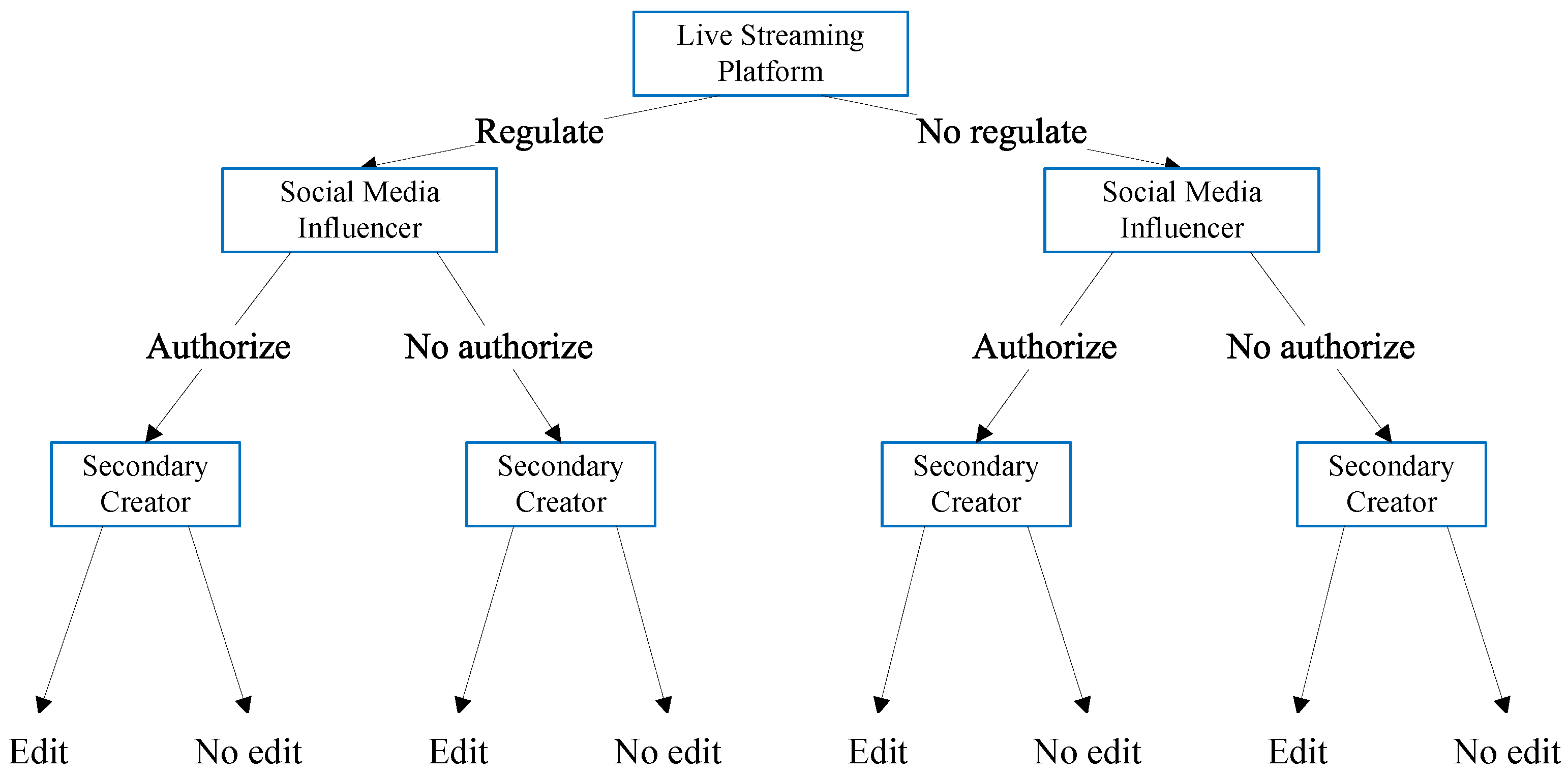
3. Model and Equilibrium Analysis
3.1. Assumptions and Parameters
3.1.1. Constructing the Payoff Function
3.1.2. Replicator Dynamics Equations of the Three-Party Game
3.1.3. Stability Analysis of Evolutionary Game
- ,
- ,
- ,
- ,
- .
3.1.4. Evolutionary Stability Analysis
4. Case Study
4.1. Simulation Setup
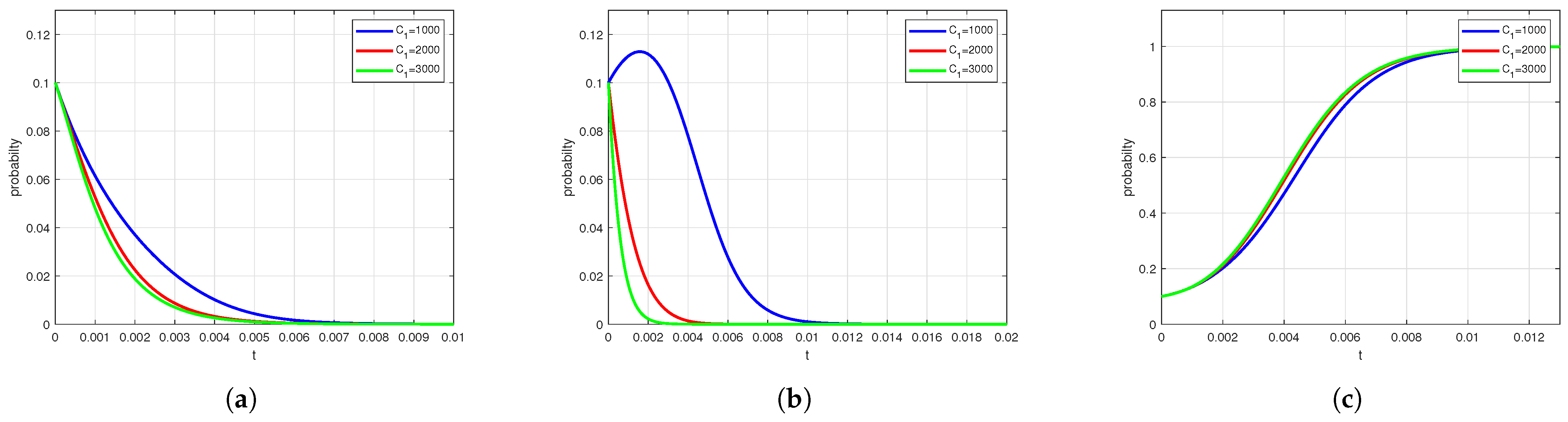
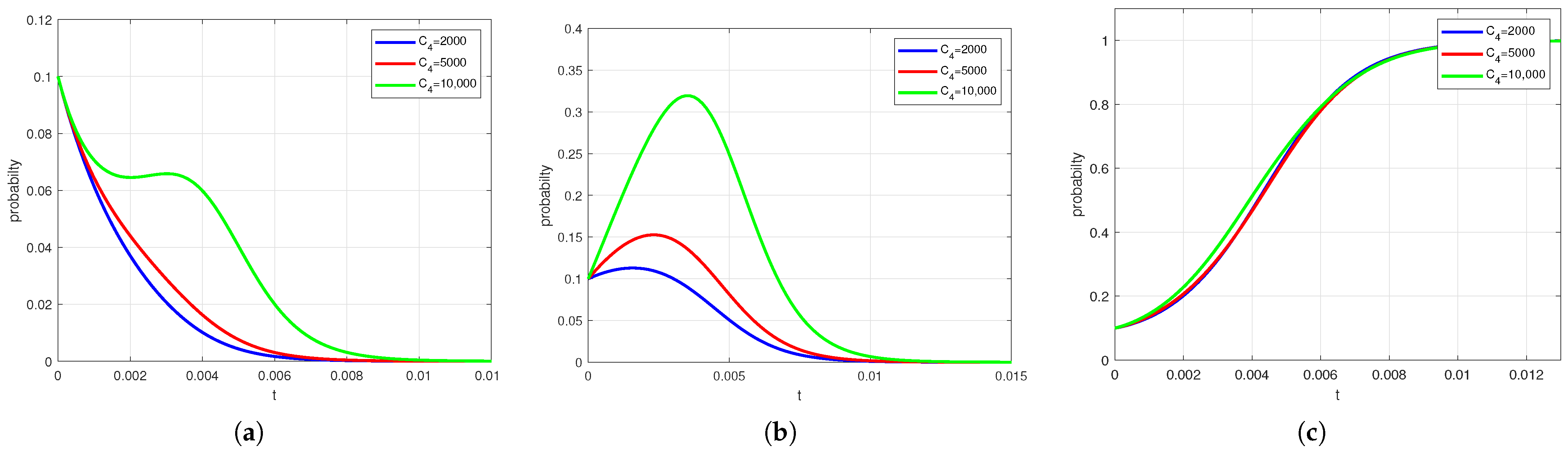
4.2. Impact of the Anchor’s Authorization Cost
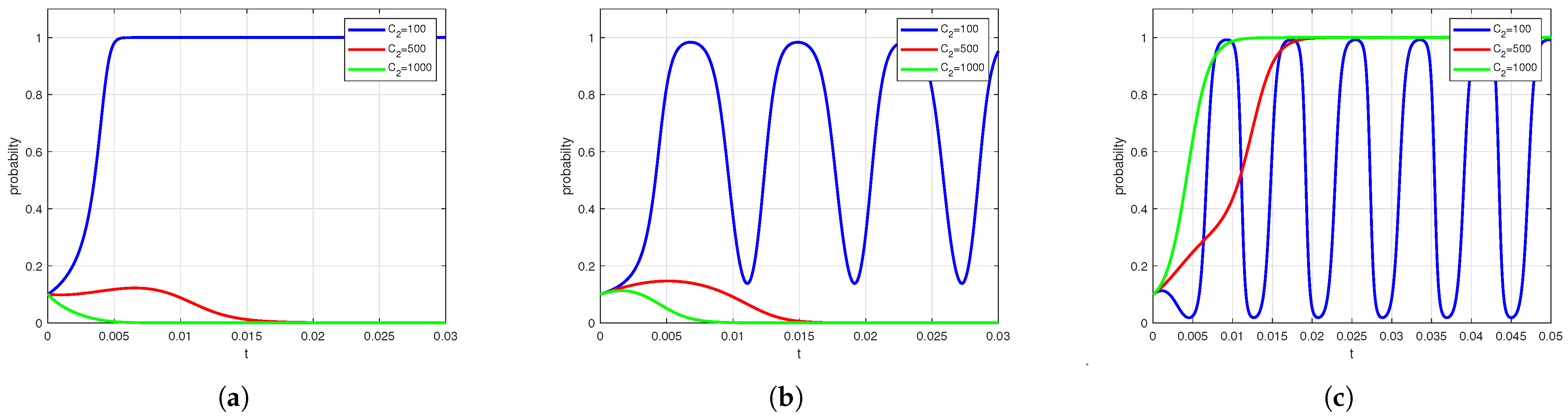
4.3. Impact of Live-Streaming Platform Regulatory Costs
4.4. Impact of Live-Streaming Platform Fines on Secondary Creators
4.5. Impact of Penalty for Breach of Contract
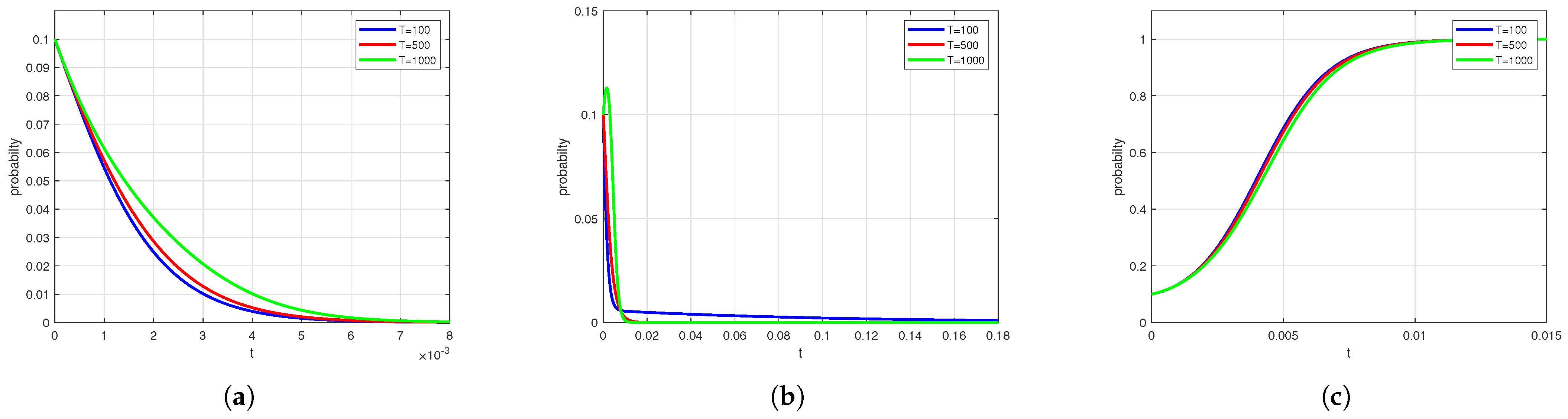
4.6. Impact of Secondary Creators’ Revenue for Anchors
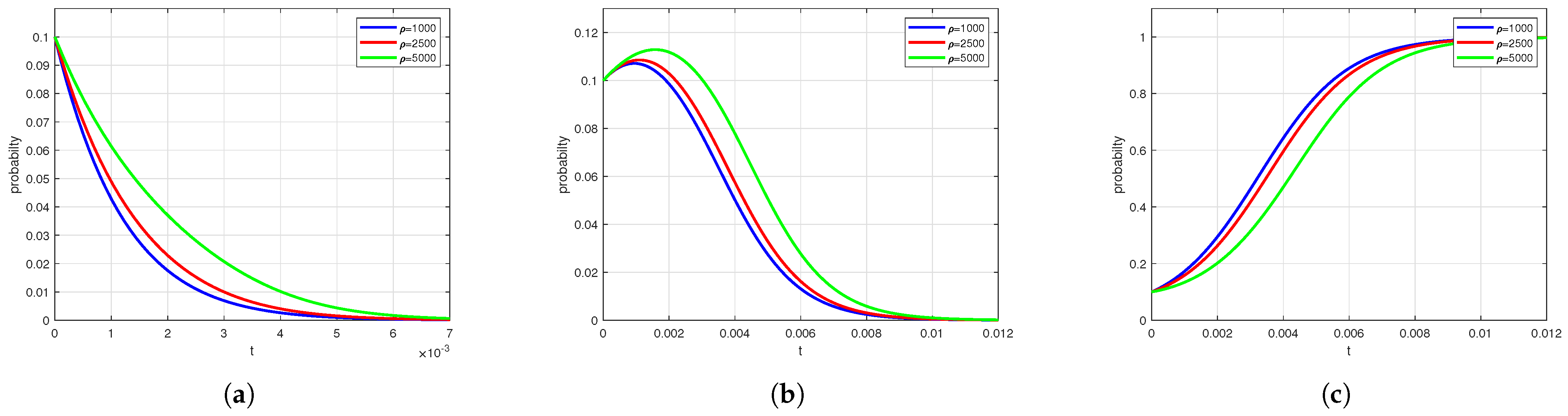
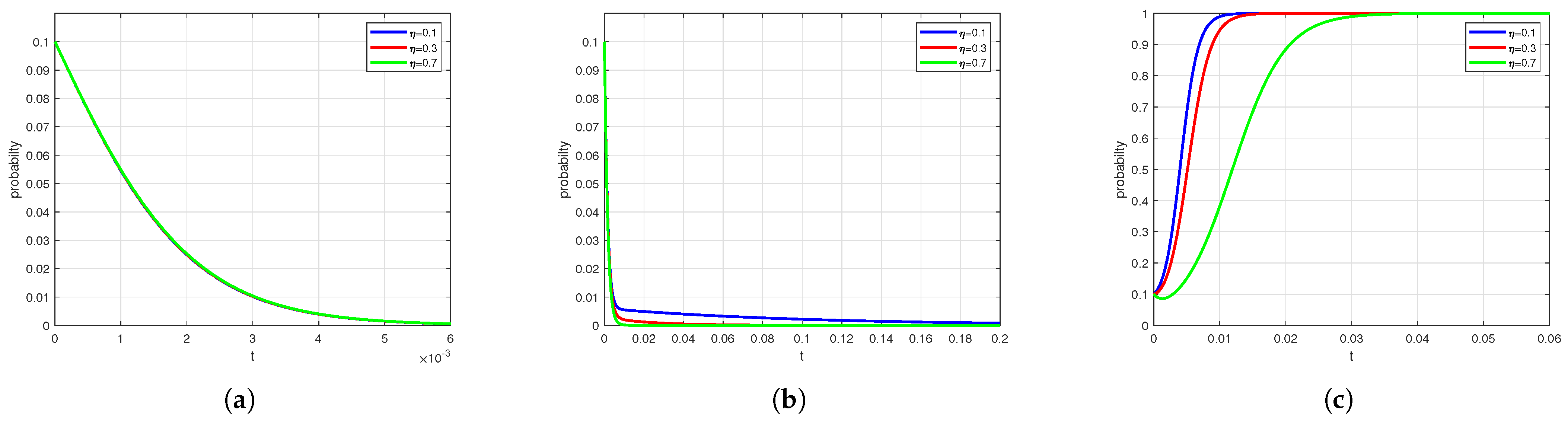
4.7. Impact of Live-Streaming Platform Commission Rate
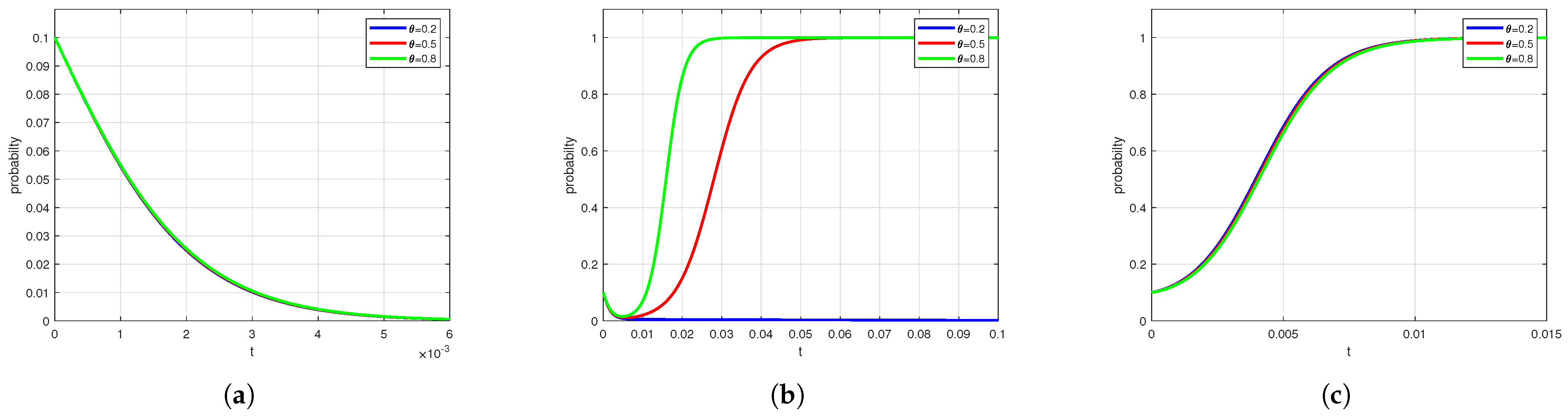
4.8. Impact of Anchor’s Commission Rate
5. Suggestions
5.1. Recommendations for Live-Streaming Platforms: Implement Differentiated and Incentive-Compatible “Moderate Regulation”
5.2. Recommendations for Anchors: Transform Authorization into a Structured and Long-Term Value Mechanism
5.3. Recommendations for Secondary Creators: Balance Revenue Opportunities with Compliance Sustainability
6. Discussion
6.1. Interpretation of ESS Conditions
6.2. Regulation Effectiveness and Platform Governance
6.3. Authorization as a Substitute for Regulation
6.4. Revenue Distribution and Creator Behavior
6.5. Theoretical Implications and Contribution
7. Conclusions
7.1. Contributions
7.2. Limitations
7.3. Future Research
Author Contributions
Funding
Data Availability Statement
Conflicts of Interest
Abbreviation
| ESS | Evolutionary Stable Strategy |
Appendix A. Derivation of Payoff Functions
Appendix A.1. Derivation of the Live-Streaming Platform’s Payoff Function
Appendix A.2. Derivation of the Anchor’s Payoff Function
Appendix A.3. Derivation of the Secondary Creator’s Payoff Function
Appendix A.4. Illustration of Payoff Construction with Expected Payoffs
Appendix B. Derivation of the Replicator Dynamic Equations
Appendix B.1. Derivation of the Platform’s Replicator Dynamic Equation
Appendix B.2. Derivation of the Anchor’s Replicator Dynamic Equation
Appendix B.3. Derivation of the Secondary Creator’s Replicator Dynamic Equation
Appendix C. Stability Analysis of Equilibrium Points
Appendix C.1. Evolutionary System and Jacobian Matrix
Appendix C.2. Eigenvalue Analysis of Boundary Equilibrium
- 1.
- Equilibrium : (Non-regulation, Authorization, No clipping)Substituting into the Jacobian matrix yields the eigenvalues:Since , equilibrium is unstable.
- 2.
- Equilibrium : (Non-regulation, No authorization, Clipping)Substituting givesEquilibrium is locally asymptotically stable if and only if
- 3.
- Equilibrium : (Non-regulation, Authorization, Clipping)Substituting givesEquilibrium is locally asymptotically stable if and only if
- 4.
- Equilibrium : (Regulation, No authorization, No clipping)Substituting givesSince , equilibrium is unstable.
- 5.
- Equilibrium : (Regulation, Authorization, No clipping)Substituting givesEquilibrium is locally asymptotically stable if and only if
- 6.
- Equilibrium : (Regulation, No authorization, Clipping)Substituting givesSince , equilibrium is unstable.
- 7.
- Equilibrium : (Regulation, Authorization, Clipping)Substituting givesSince , equilibrium is unstable.
References
- Barkatullah, A. H., & Djumadi. (2018). Does self-regulation provide legal protection and security to e-commerce consumers? Electronic Commerce Research and Applications, 30, 94–101. [Google Scholar] [CrossRef] [Scilit]
- Chen, H., Chen, H., & Tian, X. (2022). The dual-process model of product information and habit in influencing consumers’ purchase intention: The role of live streaming features. Electronic Commerce Research and Applications, 53, 101150. [Google Scholar] [CrossRef] [Scilit]
- Chen, L., Tong, T. W., Tang, S., & Han, N. (2021). Governance and design of digital platforms: A review and future research directions on a meta-organization. Journal of Management, 48(1), 147–184. [Google Scholar] [CrossRef] [Scilit]
- Cui, L., Li, X., Yan, K., & Cheng, T. C. E. How should brand manufacturer cooperate with influencer in live streaming e-commerce? Journal of Theoretical and Applied Electronic Commerce Research, 25(1), 121–146.
- Fan, J., Peng, L., Chen, T., & Cong, G. (2024). Regulation strategy for behavioral integrity of live streamers: From the perspective of the platform based on evolutionary game in China. Electronic Markets, 34, 21. [Google Scholar] [CrossRef] [Scilit]
- Fan, X., & Zhang, L. (2026). Social e-commerce operations: Is it wise to adopt short video and live-streaming together? Omega, 138, 103440. [Google Scholar] [CrossRef] [Scilit]
- Gong, H., Zhao, M., Ren, J., & Hao, Z. (2022). Live streaming strategy under multi-channel sales of the online retailer. Electronic Commerce Research and Applications, 55, 101184. [Google Scholar] [CrossRef] [Scilit]
- He, D., Cai, Y., Zhao, H., & Wang, Z. (2026). Regulatory innovation for digital platforms in the data-intelligence era and its implications for e-commerce. Journal of Theoretical and Applied Electronic Commerce Research, 21(1), 2. [Google Scholar] [CrossRef] [Scilit]
- He, Y. (2024). Optimal contract design for live streaming shopping in a manufacturer–retailer–streamer supply chain. Electronic Commerce Research, 24(2), 1071–1093. [Google Scholar] [CrossRef] [Scilit]
- Ji, G., Fu, T., & Li, S. (2023). Optimal selling format considering price discount strategy in live-streaming commerce. European Journal of Operational Research, 309(2), 529–544. [Google Scholar] [CrossRef] [Scilit]
- Li, Z., Liu, D., Zhang, J., Wang, P., & Guan, X. (2024). Live streaming selling strategies of online retailers with spillover effects. Electronic Commerce Research and Applications, 63, 101330. [Google Scholar] [CrossRef] [Scilit]
- Liu, C., Chen, T., Pu, Q., & Jin, Y. (2025). Text mining for consumers’ sentiment tendency and strategies for promoting cross-border e-commerce marketing using consumers’ online review data. Journal of Theoretical and Applied Electronic Commerce Research, 20(2), 125. [Google Scholar] [CrossRef] [Scilit]
- Liu, H., & Liu, S. (2021). Optimal decisions and coordination of live streaming selling under revenue-sharing contracts. Managerial and Decision Economics, 42(4), 1022–1036. [Google Scholar] [CrossRef] [Scilit]
- Niu, Y., & Ma, B. (2024). Strategies for online market entry: The role of network anchors in China’s live streaming sales ecosystem. Journal of Business-to-Business Marketing, 32(2), 227–246. [Google Scholar] [CrossRef] [Scilit]
- Peng, L. (2024). Optimal coordination contracts for manufacturer and streamer joint emission reduction and low-carbon publicity in a live-streaming supply chain. Environment, Development and Sustainability, 28, 3985–4017. [Google Scholar] [CrossRef] [Scilit]
- Qian, L. (2021, March 5–7). Analysis of short video marketing strategy under the background of social e-commerce. 2021 2nd International Conference on E-Commerce and Internet Technology (ECIT), Hangzhou, China. [Google Scholar] [CrossRef] [Scilit]
- Shou, M., Yu, J., & Dai, R. (2023). Identify the effect of government regulations on the live streaming e-commerce. Industrial Management & Data Systems, 123(11), 2909–2928. [Google Scholar] [CrossRef] [Scilit]
- Sprott, S., Wang, F., & Yuan, Y. (2023). Influencer marketing: A perspective of the elaboration likelihood model of persuasion. Journal of Electronic Commerce Research, 24(2), 127–145. [Google Scholar]
- Wan, Q. (2024). Optimal marketing strategies for live streaming rooms in livestream e-commerce. Electronic Commerce Research, 25(6), 4655–4688. [Google Scholar] [CrossRef] [Scilit]
- Wang, B., Tong, C., Chen, T., Yang, J., & Cong, G. (2024). Evaluation of China’s live streaming e-commerce industry policies based on a three-dimensional analysis framework. PLoS ONE, 19(5), e0301451. [Google Scholar] [CrossRef] [Scilit]
- Wang, T. Y., Chen, Y., Mardani, A., & Chen, Z.-S. (2024). Live streaming service introduction and optimal contract selection in an e-commerce supply chain. IEEE Transactions on Engineering Management, 71, 8088–8102. [Google Scholar] [CrossRef] [Scilit]
- Wongkitrungrueng, A., & Assarut, N. (2020). The role of live streaming in building consumer trust and engagement with social commerce sellers. Journal of Business Research, 117, 543–556. [Google Scholar] [CrossRef] [Scilit]
- Wu, X., & Xiong, W. (2012, October 12–14). Evolutionary game analysis of the reverse supply chain based on the government subsidy mechanism. 2012 Second International Conference on Business Computing and Global Informatization (pp. 99–102), Shanghai, China. [Google Scholar] [CrossRef] [Scilit]
- Xu, Y., Jiang, W., Li, Y., & Guo, J. (2022). The influences of live streaming affordance in cross-border e-commerce platforms: An information transparency perspective. Journal of Global Information Management, 30(3), 1–24. [Google Scholar] [CrossRef] [Scilit]
- Xu, Y., Qi, J., Kong, J., & Zhang, W. (2024). Strategic decision making in live streaming e-commerce through tripartite evolutionary game analysis. PLoS ONE, 19(7), e0305427. [Google Scholar] [CrossRef] [Scilit]
- Yang, W., Liu, L., Yang, W., & Xu, S. (2025). Strategies for live-streaming e-commerce in an e-platform supply chain: Key opinion leader live-streaming or manufacturer self-broadcasting? Journal of Theoretical and Applied Electronic Commerce Research, 20(4), 333. [Google Scholar] [CrossRef] [Scilit]
- Ye, F., Ji, L., Ning, Y., & Li, Y. (2024). Influencer selection and strategic analysis for live streaming selling. Journal of Retailing and Consumer Services, 77, 103673. [Google Scholar] [CrossRef] [Scilit]
- Zhang, C., Wang, Y., & Zhang, J. (2025). Risk assessment of live-streaming marketing based on hesitant fuzzy multi-attribute group decision-making method. Journal of Theoretical and Applied Electronic Commerce Research, 20(2), 120. [Google Scholar] [CrossRef] [Scilit]
- Zhang, X., Chen, H., & Liu, Z. (2022). Operation strategy in an e-commerce platform supply chain: Whether and how to introduce live streaming services? International Transactions in Operational Research, 31(2), 1093–1121. [Google Scholar] [CrossRef] [Scilit]
- Zhang, Y., & Xu, Q. (2024). Consumer engagement in live streaming commerce: Value co-creation and incentive mechanisms. Journal of Retailing and Consumer Services, 81, 103987. [Google Scholar] [CrossRef] [Scilit]
- Zhao, X., & Luo, P. (2022). Hybrid platform operation decision of retail enterprises. Journal of Theoretical and Applied Electronic Commerce Research, 17(2), 42. [Google Scholar] [CrossRef] [Scilit]
- Zhou, L., Jin, F., Wu, B., Wang, X., Wang, V. L., & Chen, Z. (2022). Understanding the role of influencers on live streaming platforms: When tipping makes the difference. European Journal of Marketing, 56(10), 2677–2697. [Google Scholar] [CrossRef] [Scilit]



| Dimension | Live-Streaming | Content Clipping |
|---|---|---|
| Content format | Real-time, continuous | Short-video, edited segments |
| Interaction | High (real-time interaction) | Low (asynchronous viewing) |
| Distribution | Platform-dependent, time-sensitive | Multi-channel, persistent |
| Value creation | Immediate sales conversion | Traffic expansion and delayed conversion |
| Content ownership | Primarily controlled by anchors | Shared or contested among multiple actors |
| Governance focus | Real-time moderation | Copyright protection and reuse regulation |
| Notation | Explanation |
|---|---|
| x | probability that the live-streaming platform chooses to regulate secondary creators () |
| y | probability that the anchor chooses to authorize secondary creators () |
| z | probability that the secondary creator chooses to edit anchor’s video () |
| Authorization fee for content clippings | |
| Cost for the anchor to authorize clippings creation | |
| Cost of live-streaming platform regulation | |
| Loss to the anchor from secondary creators’ illegal creations in the absence of regulation by live-streaming platforms | |
| Penalty for breach of contract by the secondary creator under live-streaming platform regulation | |
| Quantity of products sold by the anchor in their shop window | |
| Quantity of products sold by the secondary creator through their shop window | |
| P | Product price |
| T | Additional revenue brought by the secondary creator to the anchor |
| L | Compensation paid by secondary creator to anchor for unauthorized clippings creation under live-streaming platform regulation |
| Cost price of the product | |
| Fine for unauthorized clippings creation | |
| Live-streaming platform commission rate | |
| Anchor’s commission rate |
| Strategy Portfolio | Platform | Anchor | Secondary Creator |
|---|---|---|---|
| (S, A, E) | |||
| (S, A, NE) | |||
| (S, NA, E) | |||
| (S, NA, NE) | 0 | ||
| (NS, A, E) | |||
| (NS, A, NE) | |||
| (NS, NA, E) | |||
| (NS, NA, NE) | 0 |
| Equilibrium | Eigenvalue 1 | Eigenvalue 2 | Eigenvalue 3 |
|---|---|---|---|
| Stability Condition | ESS | Practical Implication |
|---|---|---|
| High authorization cost, high platform regulatory cost, and low risk of violations | The platform chooses to turn a blind eye, the anchor chooses non-authorization, and secondary creators gain revenue through low-cost clipping, forming a “tacitly permitted gray ecosystem”. | |
| Authorization revenue exceeds authorization cost, while the platform lacks sufficient incentives to regulate | The anchor benefits from authorization-induced clipping-driven sales, while the platform continues to earn commission revenue without engaging in regulation. Consequently, a content diffusion model characterized by “platform tacit approval + anchor commercial authorization” emerges. | |
| High combined authorization benefits, significant risk of violations, and regulatory gains exceeding regulatory costs | In a high-risk and effectively regulated environment, the platform and anchor form institutional cooperation. Content clipping activities are suppressed due to increased compliance costs, driving the market back toward normative operation. |
Disclaimer/Publisher’s Note: The statements, opinions and data contained in all publications are solely those of the individual author(s) and contributor(s) and not of MDPI and/or the editor(s). MDPI and/or the editor(s) disclaim responsibility for any injury to people or property resulting from any ideas, methods, instructions or products referred to in the content. |
© 2026 by the authors. Licensee MDPI, Basel, Switzerland. This article is an open access article distributed under the terms and conditions of the Creative Commons Attribution (CC BY) license.
Share and Cite
Luo, F.; Zhao, X.; Xu, T. Cooperation or Confrontation? An Evolutionary Game Study on Content Clipping Authorization in Live Streaming E-Commerce Under Platform Regulation. Games 2026, 17, 17. https://doi.org/10.3390/g17020017
Luo F, Zhao X, Xu T. Cooperation or Confrontation? An Evolutionary Game Study on Content Clipping Authorization in Live Streaming E-Commerce Under Platform Regulation. Games. 2026; 17(2):17. https://doi.org/10.3390/g17020017
Chicago/Turabian StyleLuo, Feng, Xinmiao Zhao, and Tiantong Xu. 2026. "Cooperation or Confrontation? An Evolutionary Game Study on Content Clipping Authorization in Live Streaming E-Commerce Under Platform Regulation" Games 17, no. 2: 17. https://doi.org/10.3390/g17020017
APA StyleLuo, F., Zhao, X., & Xu, T. (2026). Cooperation or Confrontation? An Evolutionary Game Study on Content Clipping Authorization in Live Streaming E-Commerce Under Platform Regulation. Games, 17(2), 17. https://doi.org/10.3390/g17020017