

Adaptive Architectures for Gamified Learning in Software Engineering: A Systematic Review



Abstract
1. Introduction
- RQ1 (Architectures): What software architectures and platforms are used to implement adaptive gamification in Software Engineering Education (SEE)?
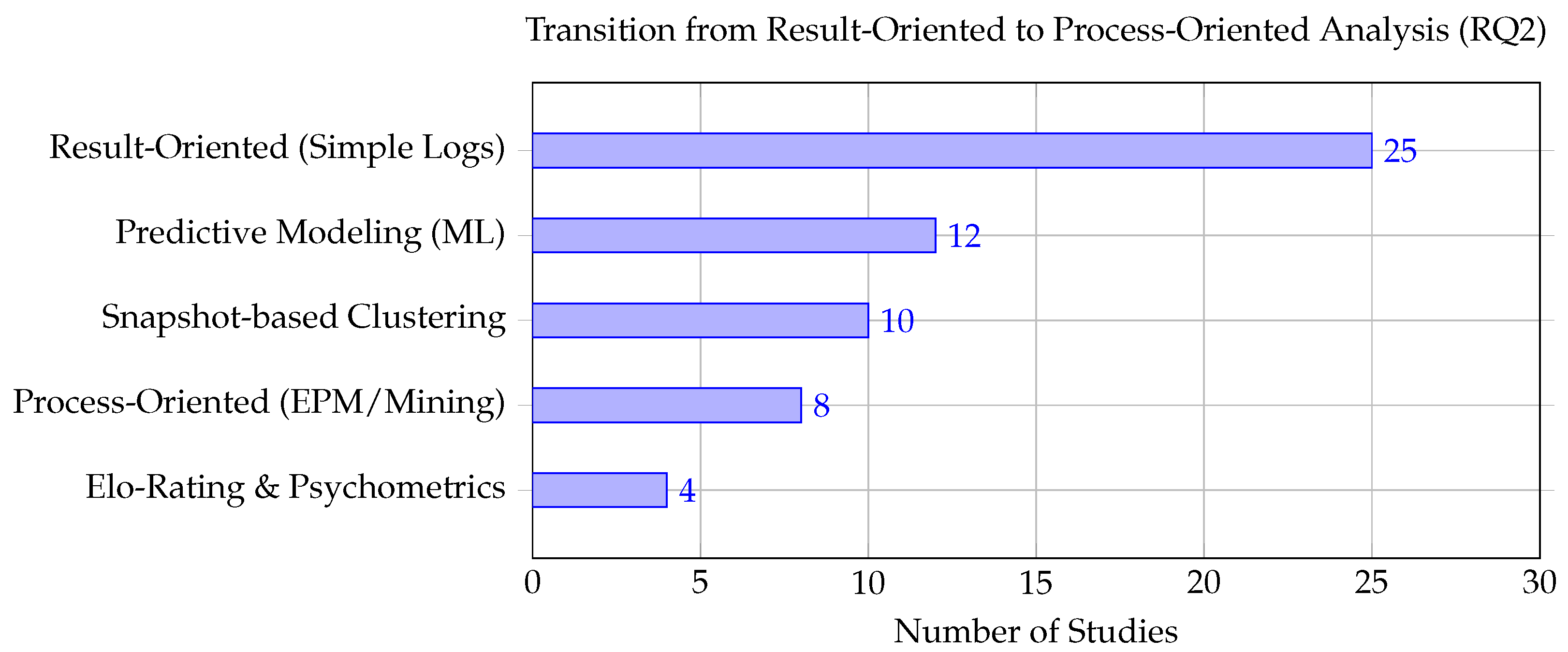
- RQ2 (Process Mining): How can process mining be integrated into gamified platforms to monitor learning processes?
- RQ3 (Techniques): What adaptive mechanisms (e.g., AI, Rule-based) are employed to personalize the experience?
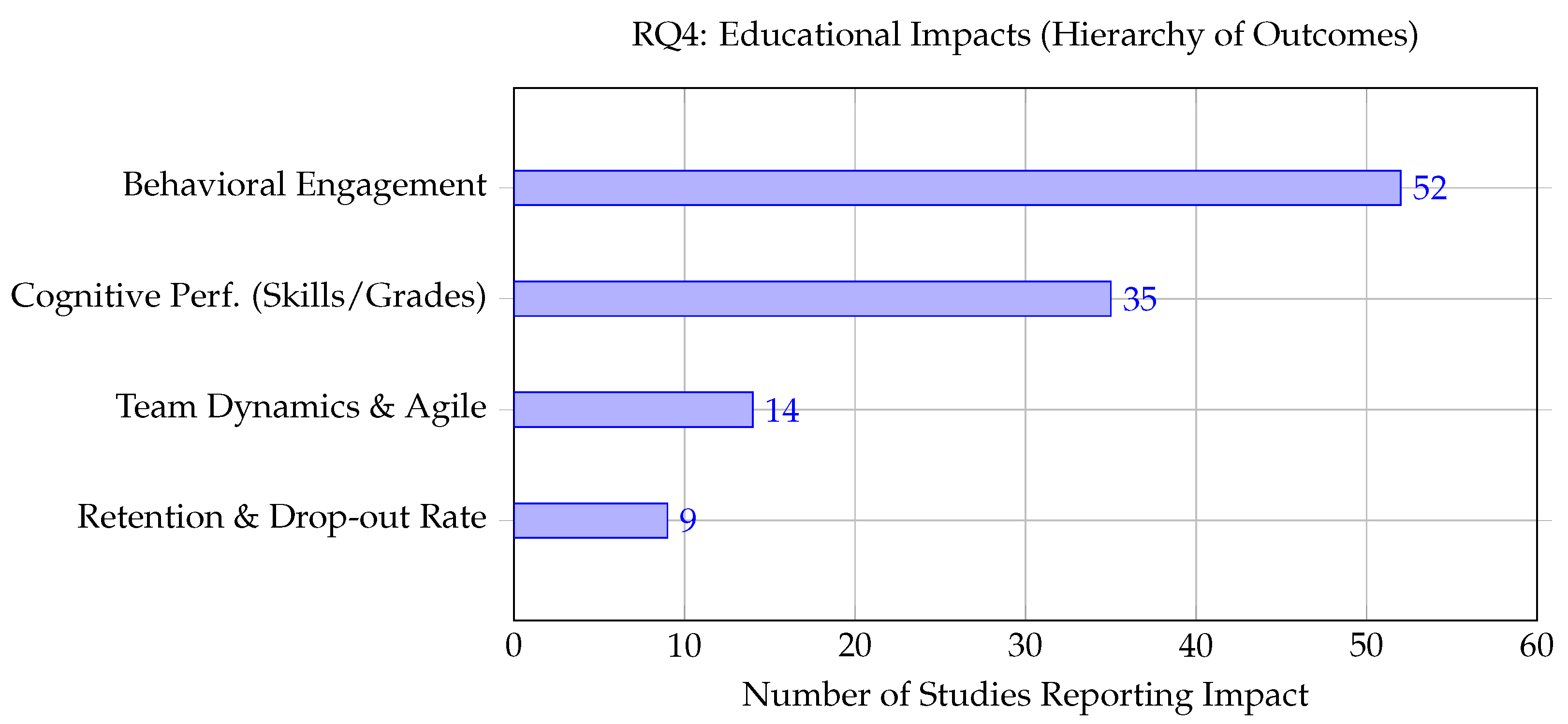
- RQ4 (Impact): What is the documented impact of these systems on academic performance and engagement?
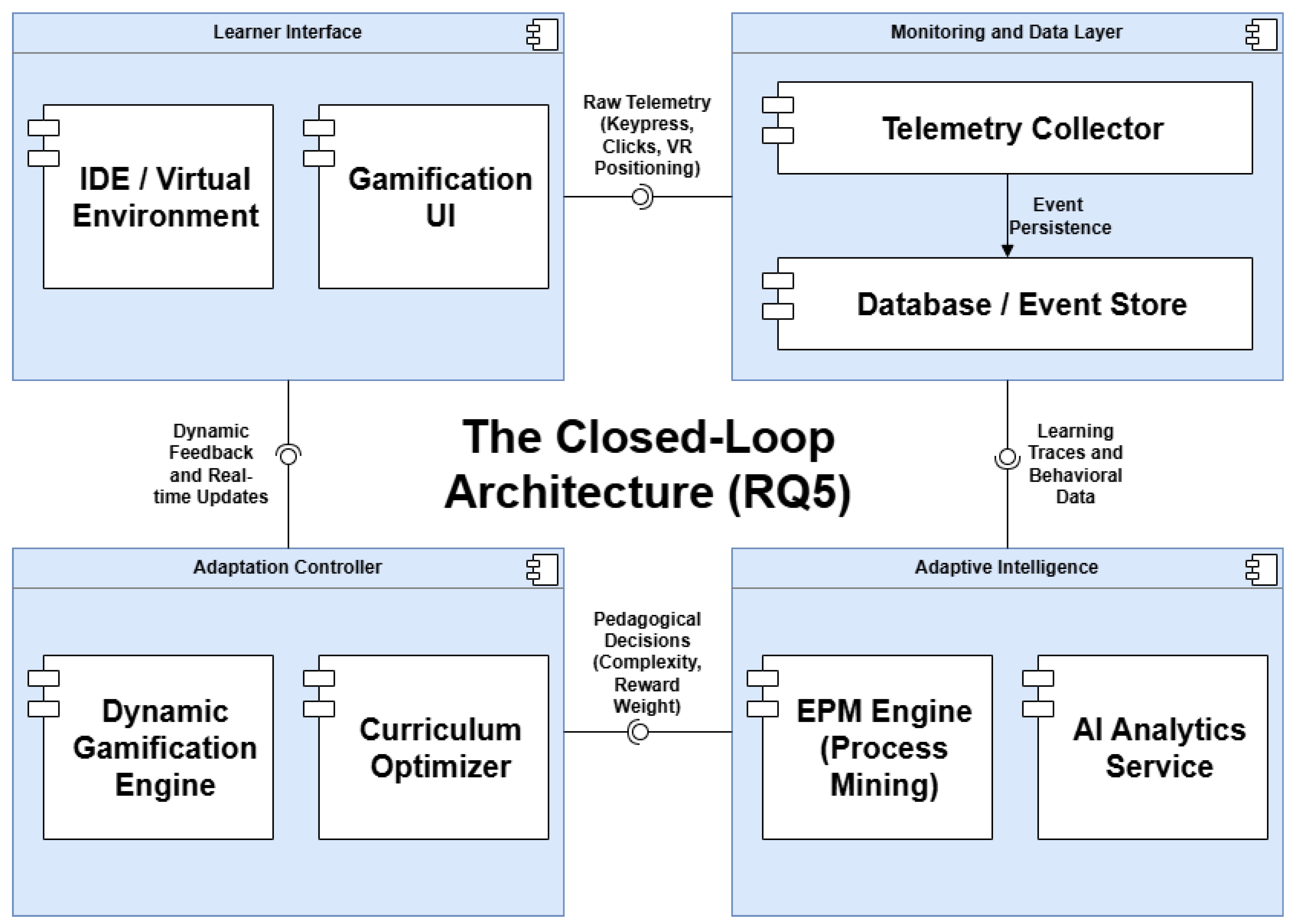
- RQ5 (Optimization): How can platforms combine gamification and data analytics to optimize learning?
- RQ6 (Challenges): What are the main technical and pedagogical challenges in integrating these technologies?
2. Research Methodology
2.1. Search Strategy
2.2. Inclusion and Exclusion Criteria
- IC1: Papers describing software architectures, tools, or platforms for SEE.
- IC2: Studies integrating gamification elements (e.g., points, leaderboards, serious games).
- IC3: Studies proposing or evaluating adaptive mechanisms, AI integration, or data-driven personalization (including Process Mining).
- IC4: Peer-reviewed articles published in journals or conference proceedings in English.
- EC1: Studies focusing solely on K-12 (primary/secondary) education without relevance to higher SEE concepts.
- EC2: Papers discussing gamification without any software implementation or architectural details.
- EC3: Short papers, posters, editorials, and non-peer-reviewed material.
2.3. Study Selection Process
2.4. Data Extraction and Analysis
- General Information: Title, Year, Venue, Authors.
- Architecture (RQ1): Platform type (e.g., Web, VR, Plugin), architectural patterns, and integration with Learning Management Systems (LMSs).
- Process Mining & Optimization (RQ2, RQ5): Usage of educational data mining, process mining techniques, and strategies for learning optimization.
- Adaptive Techniques (RQ3): Adaptation logic (Rule-based vs. AI/ML), personalization algorithms, and feedback mechanisms.
- Evaluation (RQ4): Methodology (Case study, Experiment), sample size, and reported impact on student engagement and performance.
- Challenges (RQ6): Reported limitations, technical barriers, and open issues in implementation.
2.5. Quality Assessment
3. Answering Researching Questions
3.1. RQ1: Architectural Patterns and Platforms
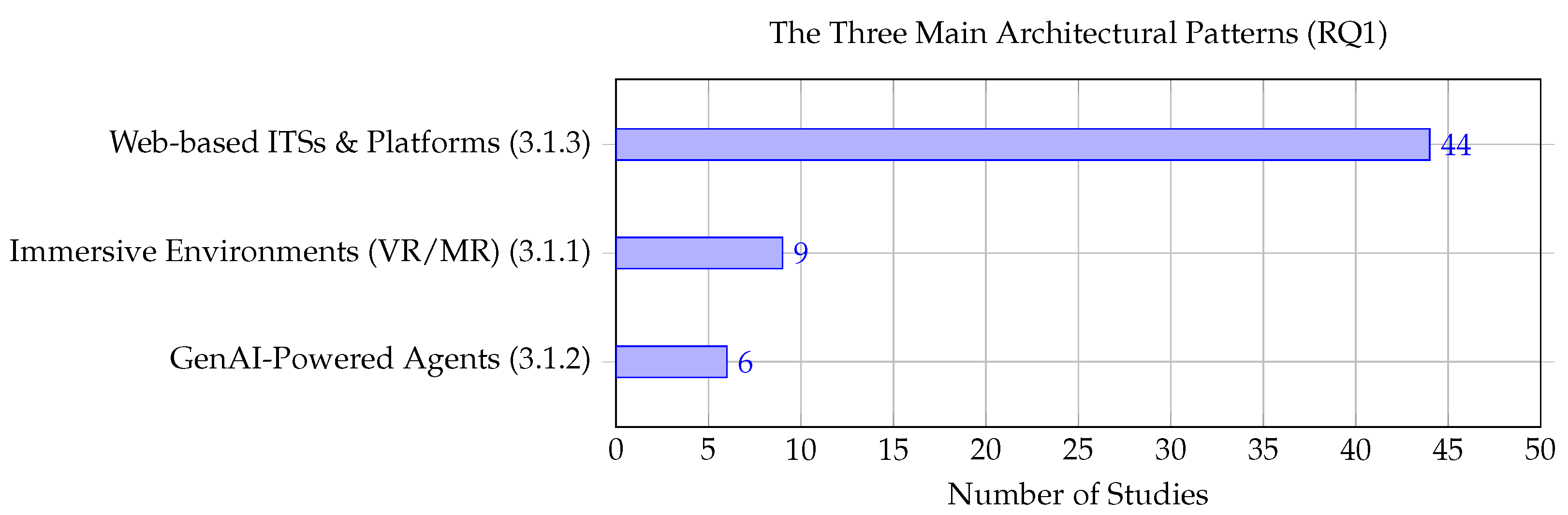
3.1.1. Immersive Environments (VR/MR)
- Constructivist Frameworks (TeachVR): Wee et al. [7] implement the TeachVR framework through a constructivist approach, prioritizing learner autonomy. The system transforms the virtual environment into an adaptive space where students manipulate 3D logic blocks. This architectural choice facilitates knowledge construction via direct interaction, aligning the learning process with student preferences for contextualized activities. A notable drawback, however, is that the framework’s evaluation primarily relies on subjective student preferences; furthermore, the authors acknowledge that the high cost of VR hardware and the potential “novelty effect” remain significant barriers to verifying long-term pedagogical effectiveness in standard classrooms.
- Spatial Programming (MR-LEAP): The MR-LEAP system [8] aims to reduce the abstraction of programming by projecting code structures into the physical environment. By representing instructions as tangible 3D objects, the architecture bridges the gap between conceptual logic and spatial perception, potentially lowering the cognitive barrier for novices. While MR-LEAP offers significant portability, its reliance on high end devices like Microsoft HoloLens limits its accessibility. Additionally, while the visual editor simplifies initial learning, it is yet to be determined if the spatial representation scales effectively for complex, large scale software architectures without inducing extraneous cognitive load.
- Narrative-Driven VR (AdLer, MoonBase): Holder et al. [9] demonstrate how integrating coherent storytelling within 3D environments supports autonomous learning. In these systems, the narrative structure acts as a functional context that guides the student through programming challenges, facilitating the transition from passive reception to active exploration of abstract concepts. Nonetheless, the study’s findings are limited by a relatively small sample size (), and the researchers note that the immersive nature of the game may lead to “gamification distraction”, where the entertainment value of the narrative potentially overshadows the focus on underlying technical competencies.
3.1.2. GenAI-Powered Agents and Chatbots
- Virtual Team Simulation (DevCoach): Wang et al. [10] utilize GenAI to simulate a multi-agent software development team (e.g., Product Manager, Tester, Senior Developer). This architecture enables students to engage with the social and collaborative dynamics of the software lifecycle, framing learning as a dialogic process consistent with the Community of Inquiry framework. Conversely, the empirical validation of DevCoach was limited to a small sample size () and a short-term study. Furthermore, the authors note that the non deterministic nature of LLMs can lead to “hallucinations” or inconsistent feedback, which might confuse novice students if not carefully monitored by an instructor.
- Motivational Scenario Design (GhostCoder): Shum et al. [6] integrate Keller’s ARCS model (Attention, Relevance, Confidence, Satisfaction) directly into the game engine. The system dynamically adapts both narrative elements and programming difficulty based on the learner’s detected motivational state, providing a calibrated learning curve. However, the researchers concede that the system’s effectiveness was tested on a small cohort within a specific vocational IT diploma program focusing on foundational programming concepts, limiting the generalizability of the findings. Additionally, there is a risk that students may become overly reliant on AI-generated hints, potentially undermining the development of independent problem solving skills.
- Evolution of Conversational Tutors: The scoping review by Barzanji and Loitsch [11] identifies a transition from command-based chatbots to LLM-driven digital tutors. These contemporary agents exhibit contextual understanding and provide targeted code explanations, shifting the pedagogical focus toward personalized, guided instruction. Nevertheless, the review highlights critical gaps in current research, such as the lack of longitudinal studies to assess long-term knowledge retention. The study also warns that fragmented pedagogical foundations and the risk of generating incorrect or biased code explanations remain significant technical and ethical challenges for the widespread adoption of AI tutors.
3.1.3. Web-Based Intelligent Tutoring Systems
- Many of the systems examined rely on a classic web architecture, the client-server model, which allows students to be easily reached and content to be updated without complications. In these platforms, gamification elements are not just decorative: points, badges, and leaderboards are managed directly by the backend, which tracks students’ progress and adjusts activities based on their performance. The result is a more engaging learning environment, capable not only of motivating but also of effectively monitoring each individual’s learning journey [12]. Despite these benefits, the study highlights critical hurdles in current LMS implementations, such as poor interoperability with specialized Software Engineering tools and the significant effort required by lecturers to individualize content for diverse student groups. Furthermore, the authors acknowledge a geographical bias in their findings, as the participants were primarily from Western, industrialized countries, which may limit the generalizability of the results to other global contexts.
- In the field of vertical skills, QueryCompetition represents a very concrete example of how gamification can specialize in a technical domain. Morales-Trujillo and García-Mireles [13] show, through a almost-experimental study focused on SQL, that a simple competitive web architecture consisting of points, challenges, and leaderboards does more than just make the activity more enjoyable. On the contrary, it leads to a real and measurable improvement in academic performance. Students who used the gamified version achieved significantly better results compared to those who worked without game elements, demonstrating that competition can become a powerful driver of learning. Yet, the authors caution that the competitive nature of the system can trigger increased anxiety and stress among students who are less comfortable with public recognition or time pressure. Additionally, the study identifies a lack of independent, invigilated assessment items as a threat to the objective validation of learning gains.
- In the field of software quality assurance, Sojourner under Sabotage offers a completely new way of learning [14]. Instead of presenting abstract or fragmented exercises, the game immerses students in a sci-fi story: you are a member of a spaceship crew, and your task is to discover and repair sabotaged components using testing and debugging. The fact that everything happens directly in the browser makes the experience immediate and accessible, while the narrative transforms activities often perceived as monotonous into a high-stakes mission, with clear objectives and a sense of urgency that keeps motivation high. However, the researchers note that the highly tailored game context may not fully reflect real world professional testing scenarios. Moreover, while over 80% of participants enjoyed the experience, less experienced students occasionally felt overwhelmed by the debugging tasks, and the study’s reliance on proxies like test coverage may not fully capture the depth of students’ cognitive effort or long-term knowledge retention.
3.2. RQ2: Process Mining and Learning Analytics Integration
3.2.1. Predictive Modeling and Early Warning Systems
3.2.2. Dynamic Difficulty Adjustment via Psychometrics
3.3. RQ3: Adaptive Mechanisms and AI Techniques
3.3.1. Rule-Based vs. AI-Driven Adaptation
3.3.2. Multi-Agent Systems and Intelligent Tutors
3.3.3. Narrative and Affective Adaptation
3.4. RQ4: Educational Impact and Student Outcomes
3.4.1. Impact on Engagement and Team Dynamics
- Voluntary Practice and Engagement: Balla et al. [23] investigated the efficacy of game-based learning environments in SQL programming education. By replacing traditional, abstract exercises with narrative-driven mini-games (e.g., Star Wars or Harry Potter themes), the authors observed a reduction in students’ perceived complexity of the subject matter. Quantitative assessments integrated within these gamified modules demonstrated superior performance compared to conventional testing methods. The data suggests that gamification facilitates a cognitive context conducive to sustained focus and reduced performance anxiety, thereby aligning pedagogical delivery with intrinsic motivational drivers rather than merely providing entertainment. Furthermore, a five year longitudinal study by Hamann et al. [24] reinforces this by demonstrating that voluntary participation in incentive-based e-learning programs correlates with significantly higher exam performance in software engineering, suggesting that continuous feedback loops are a scalable strategy for improving academic success.
- Social Transparency and Agile Dynamics: To address the common challenge of disparate contribution levels in collaborative software projects, Meißner et al. [25] introduced DinoDev. This system implements “social transparency” by visualizing individual contributions through real-time activity feeds and merit-based badges. The empirical results indicate that such transparency fosters a self-regulating social effect, where lower-contributing students increased their engagement, thereby reinforcing Agile best practices through shared accountability. Building on the importance of such interactive frameworks, Masson et al. [26] demonstrate that gamified dynamics such as the Scrum Game Challenge are crucial for bridging the gap between theoretical knowledge and the practical application of methodologies. Their findings suggest that these simulations provide a “realistic experience” of industry standards, an essential component for Computer Science curricula. Together, these studies highlight that integrating visibility of labor with hands-on, gamified simulations not only enhances cohort coordination but also prepares students for the professional rigors of the software industry.
- Emotional Valence and Affective States: Beyond performance metrics, recent research has pivoted toward the granular mapping of student emotions during gamified interventions. Paredes-Velasco et al. [27] conducted a comprehensive taxonomical analysis of affective responses to the synergistic use of Augmented Reality (AR) and data visualization. Their findings, synthesized into a table of emotinos, reveal a complex psychological profile: while students reported a predominance of positive over negative emotions characterized by high levels of stimulation and agitation rather than passivity the intervention also triggered a persistent and escalating state of anxiety associated with the use of AR. Furthermore, the study highlights that the pedagogical medium (face-to-face vs. online) acts as a significant moderator for both emotional valence and learning outcomes. This underscores the necessity of balancing “flow” and engagement with the potential cognitive and emotional load induced by immersive technologies. Complementing this perspective, El Hassan et al. [28] demonstrate the transformative potential of AR-based gamification in bridging the gap between theoretical instruction and practical observation. Through a case study in a botanical context, the authors argue that the integration of AR serves as a pivotal catalyst for fostering immersive learning experiences, effectively reshaping traditional pedagogical methods into dynamic environments that significantly deepen student understanding of complex, multi-dimensional subjects.
3.4.2. Impact on Skill Acquisition and Grades
- Conceptualization of Abstract Processes: Understanding the Software Development Life Cycle (SDLC) presents significant cognitive hurdles due to the interdependence of roles and decision-making processes. Wang et al. [10] addressed this via DevCoach, an experiment comparing a control group using static materials with an experimental group interacting with AI agents simulating professional roles (e.g., tester, product manager, architect). Post-test analysis revealed a significant increase in scores for the DevCoach group. The authors attribute this improvement to the transition from passive memorization to active, role-based interaction, which enables students to internalize the collaborative nature of software engineering through simulated professional discourse.
- Efficiency in Testing and Debugging: To mitigate the perceived monotony of debugging, Straubinger et al. [14] developed Sojourner, a tool that embeds unit testing within a security-themed narrative. The study results indicate that this narrative framework functions as a cognitive anchor, enhancing both the speed and effectiveness of bug identification. By contextualizing abstract vulnerabilities within a coherent story, students demonstrated improved long-term retention of debugging patterns compared to traditional instructional methods.
- Immersive Learning and Spatial Reasoning: Wee et al. [7] explored the role of Virtual Reality (VR) through the TeachVR platform. While VR implementation did not result in increased coding speed, it significantly aided the visualization of three-dimensional data structures and object-oriented relationships. Qualitative feedback suggests that VR facilitates the reification of abstract concepts. However, the authors maintain a cautious stance, noting that a portion of the observed student enthusiasm may be attributed to the “novelty effect” of the technology, necessitating further longitudinal research to confirm sustained learning outcomes.
- Internalization of Software Quality Standards: Beyond functional correctness, the acquisition of professional competencies involves a shift toward structural and qualitative rigor. De Luca et al. [29] addressed the common educational gap where software quality is overshadowed by project functionality. By implementing an automated pipeline utilizing ArchUnit and SonarQube within Object-Oriented Programming (OOP) courses, the study demonstrates that integrating quality metrics directly into assessment criteria effectively highlights recurrent structural flaws in student projects. This approach suggests that pedagogical tools facilitating immediate feedback on code quality are essential for transitioning students from basic coding to professional-grade engineering.
3.5. RQ5: Optimization of Learning Paths via Data-Driven Gamification
3.5.1. The “Smart Gamification” Feedback Loop
- Adaptive Feedback Mechanisms: Despite methodological variations across the analyzed projects, a consistent trend involves the deployment of data-driven feedback to modulate student engagement. For instance, the KINAITICS platform [15] utilizes Capture The Flag (CTF) challenges and scoring algorithms that prioritize both accuracy and longitudinal progression. In the context of Test-Driven Development (TDD) gamification, Ren [30] proposes a multi-dimensional scoring system that evaluates procedural integrity including commit frequency, TDD cycle adherence, and test-first sequencing rather than solely final outputs. Furthermore, the Experience–Simulation–Debrief–Reflection model in Requirements Engineering leverages hierarchical badges and real-time feedback to enhance meta-cognitive awareness. These empirical findings suggest that by incentivizing the learning process (the “how”) alongside the learning outcome (the “what”), systems can effectively discourage minimal-effort strategies in favor of procedural mastery [31].
- Equilibrium between Challenge and Proficiency: Marougkas et al. [22] investigate the maintenance of the Flow state a cognitive equilibrium where task difficulty aligns with user skill to prevent both boredom and anxiety. This is operationalized through Fuzzy Cognitive Maps, enabling Extended Reality (XR) systems to calibrate task complexity in real-time based on performance metrics. While other studies may not explicitly address affective states, they converge on the principle of personalized content adaptation: Vesin et al. [17] employ an Elo-based adaptive assessment, while Logacheva et al. [32] demonstrate that contextual customization significantly increases learner engagement. Collectively, these studies indicate that responsive, individualized learning environments correlate with sustained motivation and cognitive focus.
3.5.2. Curriculum Optimization (Test-Driven Learning)
3.5.3. Optimization in Immersive Spaces
4. Findings
4.1. RQ6: Challenges and Limitations
4.1.1. Technical Integration and Interoperability
4.1.2. Pedagogical Alignment and Assessment
4.1.3. Cognitive Load in Immersive Spaces
4.1.4. Inclusivity and Resource Constraints
4.2. Comparison with Related Work
4.3. The Fragmented Landscape of Software Engineering Games
5. Conclusions
Author Contributions
Funding
Data Availability Statement
Acknowledgments
Conflicts of Interest
Abbreviations
| AI | Artificial Intelligence |
| EC | Exclusion Criteria |
| EPM | Educational Process Mining |
| GenAI | Generative Artificial Intelligence |
| IC | Inclusion Criteria |
| ITSs | Intelligent Tutoring Systems |
| LLMs | Large Language Models |
| LMSs | Learning Management Systems |
| MAS | Multi-Agent Systems |
| MR | Mixed Reality |
| PRISMA | Preferred Reporting Items for Systematic Reviews and Meta-Analyses |
| RQs | Research Questions |
| SEE | Software Engineering Education |
| VR | Virtual Reality |
| XR | Extended Reality |
Appendix A. Mapping of the 59 Primary Studies

| Study Reference | Architecture | Software Engineering Focus Area | Adaptation Level |
|---|---|---|---|
| [15] | Web-based ITSs | Software Security | Feedback-driven |
| [45] | Web-based ITSs | Programming | Rule-based/Adaptive |
| [36] | Immersive (VR/MR) | Software Design (UML) | Collaborative-based |
| [40] | Web-based ITSs | General SEE | Adaptive/Scaffolded |
| [1] | Web-based ITSs | Software Lifecycle/Management | Scenario-based |
| [20] | Web-based ITSs | General SEE | Feedback-driven |
| [7] | Immersive (VR/MR) | Computational Thinking | Constructivist |
| [10] | GenAI & Agents | Agile | Multi-agent |
| [21] | Web-based ITSs | General SEE | Data-driven/Adaptive |
| [53] | Web-based ITSs | Programming | Peer-based |
| [58] | Web-based ITSs | General SEE | Narrative-based |
| [17] | Web-based ITSs | Programming | Elo-rating/Adaptive |
| [31] | Web-based ITSs | Requirements Engineering | Rule-based |
| [47] | Web-based ITSs | Computational Thinking | Meta-adaptive |
| [34] | Web-based ITSs | Software Testing | Multi-tool Integration |
| [33] | Web-based ITSs | Mobile Programming | Test-driven |
| [4] | Web-based ITSs | Software Security | Data-driven |
| [14] | Web-based ITSs | Software Testing | Narrative-based |
| [35] | Web-based ITSs | Software Testing | Rule-based |
| [6] | GenAI & Agents | Programming | ARCS |
| [8] | Immersive (VR/MR) | Programming | Spatial-based |
| [39] | Web-based ITSs | Requirements Engineering | Scenario-based |
| [18] | Web-based ITSs | Programming | Rule-based |
| [30] | Web-based ITSs | Software Testing | Rule-based |
| [27] | Immersive (VR/MR) | Programming | Immersive/Affective |
| [44] | Web-based ITSs | Programming | AI-assisted |
| [13] | Web-based ITSs | SQL/Database | Rule-based |
| [12] | Web-based ITSs | General SEE | Descriptive/Technical |
| [25] | Web-based ITSs | Agile | Rule-based |
| [26] | Web-based ITSs | Agile/Scrum | Simulation-based |
| [55] | Web-based ITSs | Programming | Pareto-optimized/Adaptive |
| [22] | Immersive (VR/MR) | Programming | Flow-based |
| [16] | Web-based ITSs | Programming | Data-driven |
| [32] | GenAI & Agents | Programming | LLM-based |
| [3] | Immersive (VR/MR) | General SEE | Biosignal-adaptive |
| [50] | Web-based ITSs | Software Architecture | Simulation-based |
| [46] | Web-based ITSs | General SEE | AI-Personalized |
| [48] | Web-based ITSs | Programming | Personalized-learning |
| [19] | GenAI & Agents | Programming | Deep Learning |
| [9] | Immersive (VR/MR) | Programming | Narrative-based |
| [24] | Web-based ITSs | Modeling/Programming | Feedback-driven |
| [42] | Web-based ITSs | Programming | Feedback-driven |
| [43] | GenAI & Agents | General SEE | Chatbot-driven |
| [52] | Web-based ITSs | Cloud Security | Challenge-based |
| [28] | Immersive (VR/MR) | General SEE | Resource-based |
| [38] | Web-based ITSs | General SEE | Narrative-based |
| [29] | Web-based ITSs | Software Quality/Architecture | Static Analysis/Feedback |
| [51] | Web-based ITSs | Modeling | Rule-based |
| [54] | Web-based ITSs | Programming | ML-based |
| [11] | GenAI & Agents | Programming | Pedagogical Scaffolding |
| [2] | Web-based ITSs | Computer Science/General SEE | Multi-technique |
| [41] | Web-based ITSs | General SEE | Multi-model |
| [23] | Web-based ITSs | Databases/SQL | Game-based |
| [5] | Web-based ITSs | General SEE | Player-modeling |
| [49] | Web-based ITSs | Project Management (Risk) | Simulation-based |
| [56] | Web-based ITSs | Programming | Adaptive Pathways |
| [59] | Web-based ITSs | Requirements Engineering | Model-driven |
| [37] | Immersive (VR/MR) | Computational Thinking | Interactive |
| [57] | Web-based ITSs | Computational Thinking | Co-design/Collaborative |
References
- Wilson, K.N.; Ghansah, B.; Ananga, P.; Oppong, S.O.; Essibu, W.K.; Essibu, E.K. Exploring the efficacy of computer games as a pedagogical tool for teaching and learning programming: A systematic review. Educ. Inf. Technol. 2025, 30, 4157–4184. [Google Scholar] [CrossRef]
- Barbosa, P.L.S.; Carmo, R.A.F.D.; Gomes, J.P.P.; Viana, W. Adaptive learning in computer science education: A scoping review. Educ. Inf. Technol. 2024, 29, 9139–9188. [Google Scholar] [CrossRef]
- Liu, S.; Toreini, P.; Maedche, A. Mixed Reality Learning Systems with Head-Mounted Displays in Higher Education: A Systematic Review. Technol. Knowl. Learn. 2025. [Google Scholar] [CrossRef]
- Švábenský, V.; Vykopal, J.; Čeleda, P.; Kraus, L. Applications of educational data mining and learning analytics on data from cybersecurity training. Educ. Inf. Technol. 2022, 27, 12179–12212. [Google Scholar] [CrossRef]
- Aydin, M.; Karal, H.; Nabiyev, V. Examination of adaptation components in serious games: A systematic review study. Educ. Inf. Technol. 2023, 28, 6541–6562. [Google Scholar] [CrossRef]
- Shum, L.C.; Rosunally, Y.; Munir, K. Transforming Programming Education: The Effectiveness of Motivational Scenario-Based Design in Serious Games. IEEE Trans. Educ. 2025, 68, 394–406. [Google Scholar] [CrossRef]
- Wee, C.; Wang, L.Y.K.; Ong, H.F. TeachVR: An Immersive Virtual Reality Framework for Computational Thinking Based on Student Preferences. ACM Trans. Comput. Educ. 2025, 25, 1–36. [Google Scholar] [CrossRef]
- Schez-Sobrino, S.; García, F.M.; Albusac, J.A.; Glez-Morcillo, C.; Castro-Schez, J.J.; Vallejo, D. MR-LEAP: Mixed-Reality Learning Environment for Aspirational Programmers. Softw. Impacts 2024, 20, 100648. [Google Scholar] [CrossRef]
- Holder, R.; Carey, M.; Walder, P.; Keir, P. MoonBase VR: Learning to program in a virtual reality game. In Proceedings of the 2023 the 8th International Conference on Information and Education Innovations, Manchester, UK, 13–15 April 2023; pp. 74–80. [Google Scholar] [CrossRef]
- Wang, T.; Trimble, M.; Brown, C. DevCoach: Supporting Students Learning the Software Development Life Cycle with a Generative AI powered Multi-Agent System. In Proceedings of the 33rd ACM International Conference on the Foundations of Software Engineering, Clarion Hotel Trondheim, Trondheim, Norway, 23–28 June 2025; pp. 987–998. [Google Scholar] [CrossRef]
- Barzanji, C.; Loitsch, C. Exploring conversational agents for novice programmers: A scoping review. Discov. Artif. Intell. 2025, 5, 271. [Google Scholar] [CrossRef]
- Meißner, N.; Koch, N.; Speth, S.; Breitenbücher, U.; Becker, S. Unveiling Hurdles in Software Engineering Education: The Role of Learning Management Systems. In Proceedings of the 46th International Conference on Software Engineering: Software Engineering Education and Training, Lisbon, Portugal, 14–20 April 2024; pp. 242–252. [Google Scholar] [CrossRef]
- Morales-Trujillo, M.E.; García-Mireles, G.A. Gamification and SQL: An Empirical Study on Student Performance in a Database Course. ACM Trans. Comput. Educ. 2021, 21, 1–29. [Google Scholar] [CrossRef]
- Straubinger, P.; Greller, T.; Fraser, G. Sojourner under Sabotage: A Serious Testing and Debugging Game. In Proceedings of the 33rd ACM International Conference on the Foundations of Software Engineering, Clarion Hotel Trondheim, Trondheim, Norway, 23–28 June 2025; pp. 738–748. [Google Scholar] [CrossRef]
- Zola, F.; Echeberria, X.; Petisco, J.; Vakakis, N.; Voulgaridis, A.; Votis, K. KINAITICS: Enhancing Cybersecurity Education Using AI-Based Tools and Gamification. In Proceedings of the 2024 16th International Conference on Education Technology and Computers, Porto, Portugal, 18–21 September 2024; pp. 138–147. [Google Scholar] [CrossRef]
- Lokkila, E.; Christopoulos, A.; Laakso, M.J. A Clustering Method to Detect Disengaged Students from Their Code Submission History. In Proceedings of the 27th ACM Conference on on Innovation and Technology in Computer Science Education, Dublin, Ireland, 8–13 July 2022; Volume 1, pp. 228–234. [Google Scholar] [CrossRef]
- Vesin, B.; Mangaroska, K.; Akhuseyinoglu, K.; Giannakos, M. Adaptive Assessment and Content Recommendation in Online Programming Courses: On the Use of Elo-rating. ACM Trans. Comput. Educ. 2022, 22, 1–27. [Google Scholar] [CrossRef]
- Sanal Kumar, T.S.; Thandeeswaran, R. An improved adaptive personalization model for instructional video-based e-learning environments. J. Comput. Educ. 2024, 12, 267–313. [Google Scholar] [CrossRef]
- Hong, Z. Research on the Innovative Application of AIGC in Programming Education: A Case Study of Code Generation and Intelligent Feedback System Design. In Proceedings of the 2nd Guangdong–Hong Kong–Macao Greater Bay Area International Conference on Digital Economy and Artificial Intelligence, Dongguan, China, 28–30 March 2025; pp. 1368–1373. [Google Scholar] [CrossRef]
- Willert, N.; Eriksson, J. Towards a feature-based didactic framework for generating individualized programming tasks for an e-learning environment. In Proceedings of the 5th European Conference on Software Engineering Education, Bavaria Germany, 19–21 June 2023; pp. 246–255. [Google Scholar] [CrossRef]
- Wang, H.; Tlili, A.; Huang, R.; Cai, Z.; Li, M.; Cheng, Z.; Yang, D.; Li, M.; Zhu, X.; Fei, C. Examining the applications of intelligent tutoring systems in real educational contexts: A systematic literature review from the social experiment perspective. Educ. Inf. Technol. 2023, 28, 9113–9148. [Google Scholar] [CrossRef]
- Marougkas, A.; Troussas, C.; Krouska, A.; Sgouropoulou, C. An adaptive virtual reality game for programming education using fuzzy cognitive maps and pedagogical models. Smart Learn. Environ. 2025, 12, 62. [Google Scholar] [CrossRef]
- Balla, T.; Kiraly, S.; Kiraly, R. Enhancing SQL programming assessments through educational games: A gamified approach. Discov. Educ. 2025, 4, 365. [Google Scholar] [CrossRef]
- Hamann, M.; Götz, S.; Domanowski, A.; Marx, R.; Aßmann, U. The Influence of Incentives and Continuous Feedback in Combined Modeling and Programming Education. In Proceedings of the 6th European Conference on Software Engineering Education, Seeon, Germany, 2–4 June 2025; pp. 135–144. [Google Scholar] [CrossRef]
- Meißner, N.; Bredl, P.; Speth, S.; Becker, S. Enhancing Motivation in Software Engineering Education through Gamified Agile Project-based Learning. In Proceedings of the 33rd ACM International Conference on the Foundations of Software Engineering, Clarion Hotel Trondheim, Trondheim, Norway, 25–28 June 2025; pp. 835–846. [Google Scholar] [CrossRef]
- Masson, E.T.S.; Calazans, A.T.S.; Bandeira, I.N.; Silva, G.R.S.; Canedo, E.D. Scrum in Practice: City Reconstruction as a Pedagogical Game Challenge. In Proceedings of the XXII Brazilian Symposium on Software Quality, Brasília, Brazil, 7–10 November 2023; pp. 321–331. [Google Scholar] [CrossRef]
- Paredes-Velasco, M.; Velázquez-Iturbide, J.á.; Gómez-Ríos, M. Augmented reality with algorithm animation and their effect on students’ emotions. Multimed. Tools Appl. 2023, 82, 11819–11845. [Google Scholar] [CrossRef]
- El Hassan, A.; Nabou, A.; Jaouar, M.; Ez-Zarzouri, H.; Qazdar, I.; Belfarji, K. Toward a Gamified Approach Based on Augmented Resources in Education. In Proceedings of the 7th International Conference on Networking, Intelligent Systems and Security, Meknes, Morocco, 18–19 April 2024; pp. 1–7. [Google Scholar] [CrossRef]
- De Luca, M.; Di Meglio, S.; Fasolino, A.R.; Starace, L.L.L.; Tramontana, P. Automatic Assessment of Architectural Anti-patterns and Code Smells in Student Software Projects. In Proceedings of the 28th International Conference on Evaluation and Assessment in Software Engineering, Salerno, Italy, 18–21 June 2024; pp. 565–569. [Google Scholar] [CrossRef]
- Ren, W. Gamification in Test-Driven Development Practice. In Proceedings of the 2nd International Workshop on Gamification in Software Development, Verification, and Validation, San Francisco, CA, USA, 4 December 2023; pp. 38–46. [Google Scholar] [CrossRef]
- Unkelos-Shpigel, N. Elicit, specify, require, revise: Enhancing requirements engineering process using gamification. Softw. Qual. J. 2025, 33, 27. [Google Scholar] [CrossRef]
- Logacheva, E.; Hellas, A.; Prather, J.; Sarsa, S.; Leinonen, J. Evaluating Contextually Personalized Programming Exercises Created with Generative AI. In Proceedings of the 2024 ACM Conference on International Computing Education Research, Melbourne, Australia, 13–15 August 2024; Volume 1, pp. 95–113. [Google Scholar] [CrossRef]
- Syaifudin, Y.W.; Funabiki, N.; Kaswar, A.B.; Sunandar, A.; Fatmawati, T.; Saputra, P.Y.; Wijaya, D.C.; Irawanto, M.F. Implementing Data Integration Self-Study: A Curriculum Development for Android Programming Learning Assistance System. SN Comput. Sci. 2025, 6, 559. [Google Scholar] [CrossRef]
- Tavares, P.; Paiva, A.; Amalfitano, D.; Just, R. FRAFOL: FRAmework FOr Learning mutation testing. In Proceedings of the 33rd ACM SIGSOFT International Symposium on Software Testing and Analysis, Vienna, Austria, 16–20 September 2024; pp. 1846–1850. [Google Scholar] [CrossRef]
- Silva, M.; Paiva, A.C.R.; Mendes, A. GAMFLEW: Serious game to teach white-box testing. Softw. Qual. J. 2025, 33, 5. [Google Scholar] [CrossRef]
- Yigitbas, E.; Gorissen, S.; Weidmann, N.; Engels, G. Design and evaluation of a collaborative UML modeling environment in virtual reality. Softw. Syst. Model. 2023, 22, 1397–1425. [Google Scholar] [CrossRef]
- Agbo, F.J.; Oyelere, S.S.; Suhonen, J.; Tukiainen, M. Design, development, and evaluation of a virtual reality game-based application to support computational thinking. Educ. Technol. Res. Dev. 2023, 71, 505–537. [Google Scholar] [CrossRef] [PubMed]
- Dörringer, A.; Klopp, M.; Rossmann, R. Digital Storytelling in Serious Games: Empirical Research on the Impact of Narrative in 3D Learning Worlds. In Proceedings of the 6th European Conference on Software Engineering Education, Seeon, Germany, 2–4 June 2025; pp. 96–105. [Google Scholar] [CrossRef]
- Santana, T.S.; Kudo, T.N.; Bulcao-Neto, R.F. Undergraduates’ perspective on a pedagogical architecture to requirements engineering education. In Proceedings of the XXXVII Brazilian Symposium on Software Engineering, Campo Grande, Brazil, 25–29 September 2023; pp. 422–431. [Google Scholar] [CrossRef]
- Wünsche, B.C.; Hooper, S.; Whalley, J.; Straand, I.; Denny, P.; Crow, T.; Lange-Nawka, D.; Luxton-Reilly, A.; Thompson, S.E.R. Leveling up Learning: Serious Games for Computing Education - Long-Term Opportunities and Risks. In Proceedings of the 27th Australasian Computing Education Conference, Brisbane, Australia, 12–13 February 2025; pp. 134–143. [Google Scholar] [CrossRef]
- Barbosa Monteiro, R.H.; De Almeida Souza, M.R.; Bezerra Oliveira, S.R.; Dos Santos Portela, C.; De Cristo Lobato, C.E. The Diversity of Gamification Evaluation in the Software Engineering Education and Industry: Trends, Comparisons and Gaps. In Proceedings of the 2021 IEEE/ACM 43rd International Conference on Software Engineering: Software Engineering Education and Training (ICSE-SEET), Virtual, 25–28 May 2021; pp. 154–164. [Google Scholar] [CrossRef]
- Frankford, E.; Antensteiner, T.; Vierhauser, M.; Sauerwein, C.; Wallner, V.; Groher, I.; Plösch, R.; Breu, R. A Survey on Feedback Types in Automated Programming Assessment Systems. ACM Trans. Comput. Educ. 2025, 26, 1–35. [Google Scholar] [CrossRef]
- Fernandez-y Fernandez, C.A.; Sánchez-Soto, E.; Cisnero, J.R.A.; Juárez-Ramírez, R. Exploring the Frontier of Software Engineering Education with Chatbots. Program. Comput. Softw. 2024, 50, 796–815. [Google Scholar] [CrossRef]
- Omeh, C.B.; Ayanwale, M.A.; Mnguni, L.E.; Olelewe, C.J. Fostering programming skill and critical thinking through AI-assisted PBL integration. J. New Approaches Educ. Res. 2025, 14, 22. [Google Scholar] [CrossRef]
- Zhu, M.; Zhang, K. Artificial Intelligence for Computer Science Education in Higher Education: A Systematic Review of Empirical Research Published in 2003–2023. Technol. Knowl. Learn. 2025, 30, 2417–2441. [Google Scholar] [CrossRef]
- Li, S.; Zeng, C.; Liu, H.; Jia, J.; Liang, M.; Cha, Y.; Lim, C.P.; Wu, X. A meta-analysis of AI-enabled personalized STEM education in schools. Int. J. STEM Educ. 2025, 12, 58. [Google Scholar] [CrossRef]
- Triantafyllou, S.A.; Sapounidis, T.; Stamovlasis, D. Gamification and Computational Thinking in Education: A Review and a Meta-Analysis. Technol. Knowl. Learn. 2025. [Google Scholar] [CrossRef]
- Ishaq, K.; Alvi, A.; Haq, M.I.U.; Rosdi, F.; Choudhry, A.N.; Anjum, A.; Khan, F.A. Level up your coding: A systematic review of personalized, cognitive, and gamified learning in programming education. PeerJ Comput. Sci. 2024, 10, e2310. [Google Scholar] [CrossRef]
- Annunziata, G.; Lambiase, S.; Palomba, F.; Ferrucci, F. SERGE—Serious Game for the Education of Risk Management in Software Project Management. In Proceedings of the 46th International Conference on Software Engineering: Software Engineering Education and Training, Lisbon, Portugal, 14–20 April 2024; pp. 264–273. [Google Scholar] [CrossRef]
- Lima Caminha, L.O.; Marques, A.B. D-LEARN: A digital game for Software Architecture education. In Proceedings of the 20th Brazilian Symposium on Information Systems, Juiz de Fora, Brazil, 20–23 May 2024; pp. 1–10. [Google Scholar] [CrossRef]
- Bucchiarone, A.; Savary-Leblanc, M.; Le Pallec, X.; Cicchetti, A.; Gérard, S.; Bassanelli, S.; Gini, F.; Marconi, A. Gamifying model-based engineering: The PapyGame experience. Softw. Syst. Model. 2023, 22, 1369–1389. [Google Scholar] [CrossRef]
- Espinha Gasiba, T.; Andrei-Cristian, I.; Lechner, U.; Pinto-Albuquerque, M. Raising Security Awareness of Cloud Deployments using Infrastructure as Code through CyberSecurity Challenges. In Proceedings of the 16th International Conference on Availability, Reliability and Security, Vienna, Austria, 17–20 August 2021; pp. 1–8. [Google Scholar] [CrossRef]
- Wang, A.Y.; Chen, Y.; Chung, J.J.Y.; Brooks, C.; Oney, S. PuzzleMe: Leveraging Peer Assessment for In-Class Programming Exercises. Proc. ACM Hum. Comput. Interact. 2021, 5, 1–24. [Google Scholar] [CrossRef]
- Branthôme, M.; Lallé, S. Impact of Adaptive Feedback on Learning Programming with a Serious Game in High Schools’ Classes. In Proceedings of the 33rd ACM Conference on User Modeling, Adaptation and Personalization, New York, NY, USA, 16–19 June 2025; pp. 104–113. [Google Scholar] [CrossRef]
- Maskeliūnas, R.; Damaševičius, R.; Blažauskas, T.; Swacha, J.; Queirós, R.; Paiva, J.C. FGPE+: The Mobile FGPE Environment and the Pareto-Optimized Gamified Programming Exercise Selection Model—An Empirical Evaluation. Computers 2023, 12, 144. [Google Scholar] [CrossRef]
- Alshalabi, I.A.; Alrawashdeh, T.; AbuKaraki, A.; Alksasbeh, M.Z. A Mobile-Enabled Adaptive Gamification Framework for Programming Education. Int. J. Interact. Mob. Technol. (IJIM) 2025, 19, 42–69. [Google Scholar] [CrossRef]
- Agbo, F.J.; Oyelere, S.S.; Suhonen, J.; Laine, T.H. Co-design of mini games for learning computational thinking in an online environment. Educ. Inf. Technol. 2021, 26, 5815–5849. [Google Scholar] [CrossRef]
- Vieira, B.R.; Santos, C.Q. Learning through play: Design and creation of a narrative Game-Based Learning experience. In Proceedings of the XXII Brazilian Symposium on Human Factors in Computing Systems, Maceió, Brazil, 16–20 October 2023; pp. 1–11. [Google Scholar] [CrossRef]
- Albaghajati, A.; Hassine, J. A use case driven approach to game modeling. Requir. Eng. 2022, 27, 83–116. [Google Scholar] [CrossRef]
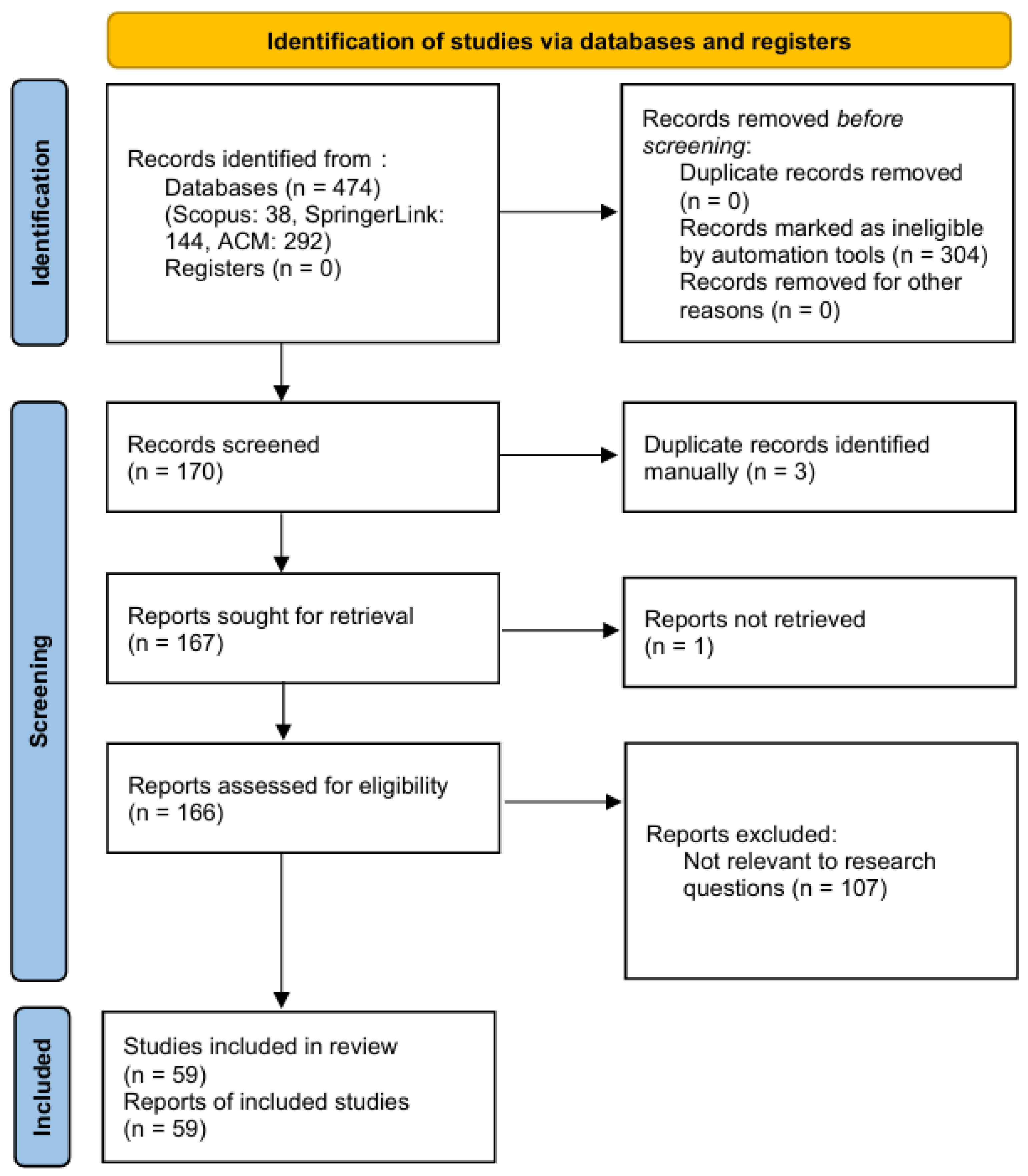


| Digital Library | Raw Search Hits | Records Removed (Automation Filters) | Records Remaining |
|---|---|---|---|
| ACM Digital Library | 292 | 202 | 90 |
| SpringerLink | 144 | 73 | 71 |
| Scopus | 38 | 29 | 9 |
| Total | 474 | 304 | 170 |
| Feature | Rule-Based [18] | Template-Based [20] | GenAI-Driven [19] |
|---|---|---|---|
| Mechanism | Deterministic Decision Trees | Feature-Oriented DSL | NLP/Deep Learning |
| Complexity | Low ( logic) | Moderate (Static parsing) | Very High (Probabilistic) |
| Robustness | High (Zero hallucinations) | High (Formal constraints) | Moderate (Potential bias) |
| Personalization | Level-based coarse tuning | Feature-based modularity | Semantic/Intent-aware |
| Resource Cost | Very Low (4 GB Disk/Standard CPU) | Moderate (High initial modeling) | High (API Tokens/GPU) |
Disclaimer/Publisher’s Note: The statements, opinions and data contained in all publications are solely those of the individual author(s) and contributor(s) and not of MDPI and/or the editor(s). MDPI and/or the editor(s) disclaim responsibility for any injury to people or property resulting from any ideas, methods, instructions or products referred to in the content. |
© 2026 by the authors. Licensee MDPI, Basel, Switzerland. This article is an open access article distributed under the terms and conditions of the Creative Commons Attribution (CC BY) license.
Share and Cite
Quartulli, A.A.; Mignogna, G.; Zizzo, V.; Mongiello, M. Adaptive Architectures for Gamified Learning in Software Engineering: A Systematic Review. Computers 2026, 15, 235. https://doi.org/10.3390/computers15040235
Quartulli AA, Mignogna G, Zizzo V, Mongiello M. Adaptive Architectures for Gamified Learning in Software Engineering: A Systematic Review. Computers. 2026; 15(4):235. https://doi.org/10.3390/computers15040235
Chicago/Turabian StyleQuartulli, Aurora Annamaria, Giovanni Mignogna, Vera Zizzo, and Marina Mongiello. 2026. "Adaptive Architectures for Gamified Learning in Software Engineering: A Systematic Review" Computers 15, no. 4: 235. https://doi.org/10.3390/computers15040235
APA StyleQuartulli, A. A., Mignogna, G., Zizzo, V., & Mongiello, M. (2026). Adaptive Architectures for Gamified Learning in Software Engineering: A Systematic Review. Computers, 15(4), 235. https://doi.org/10.3390/computers15040235