

Usage of Gamification Techniques in Software Engineering Education and Training: A Systematic Review

 ,
,  and
and
Abstract
1. Introduction
2. Research Methodology
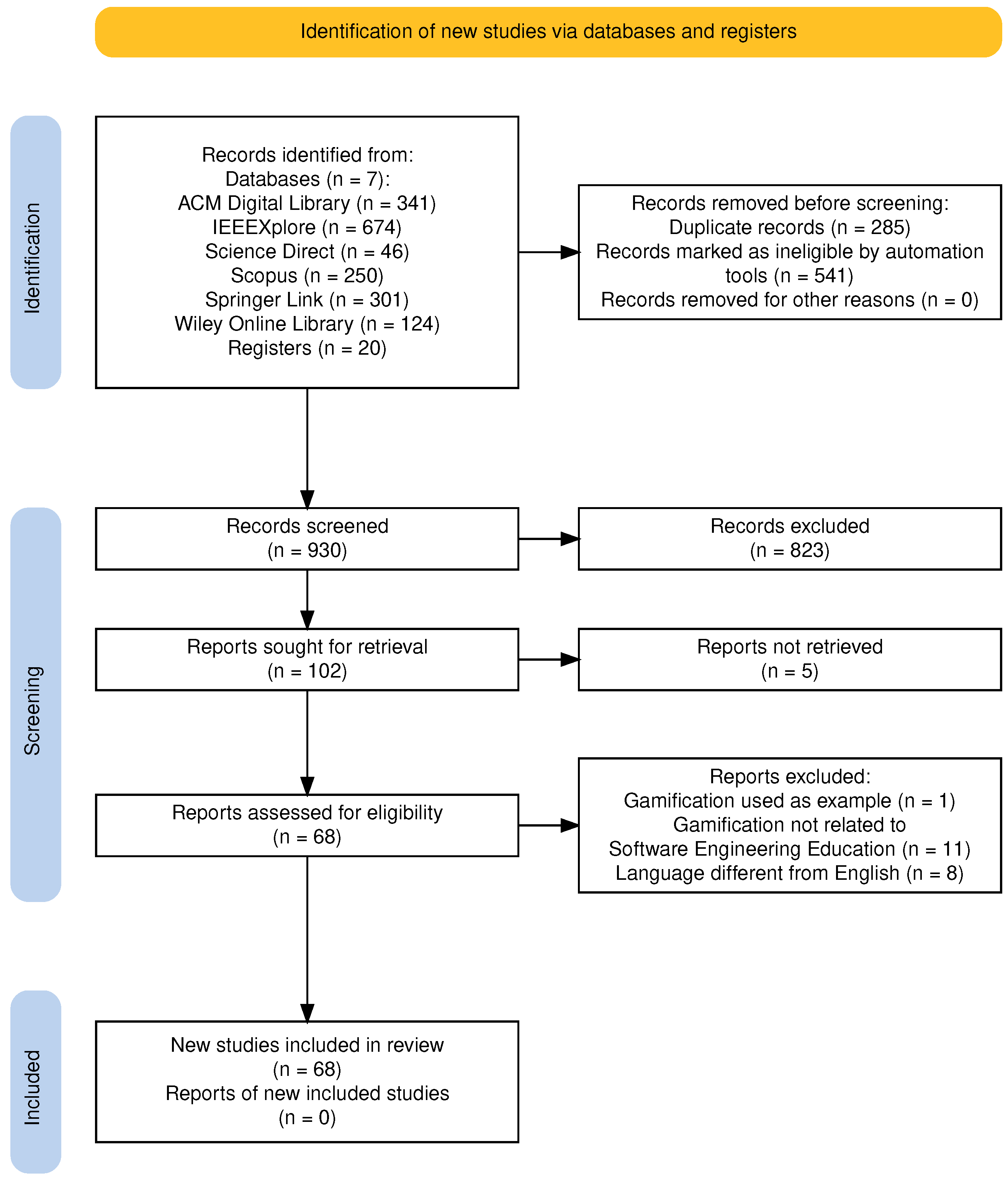
2.1. PRISMA Methodology
- Population: the group or individuals targeted by the intervention.
- Intervention: the specific intervention or exposure being investigated.
- Comparison: the control or comparison group, if applicable.
- Outcome: the outcomes or effects measured in this study.
2.2. Research Questions Definition
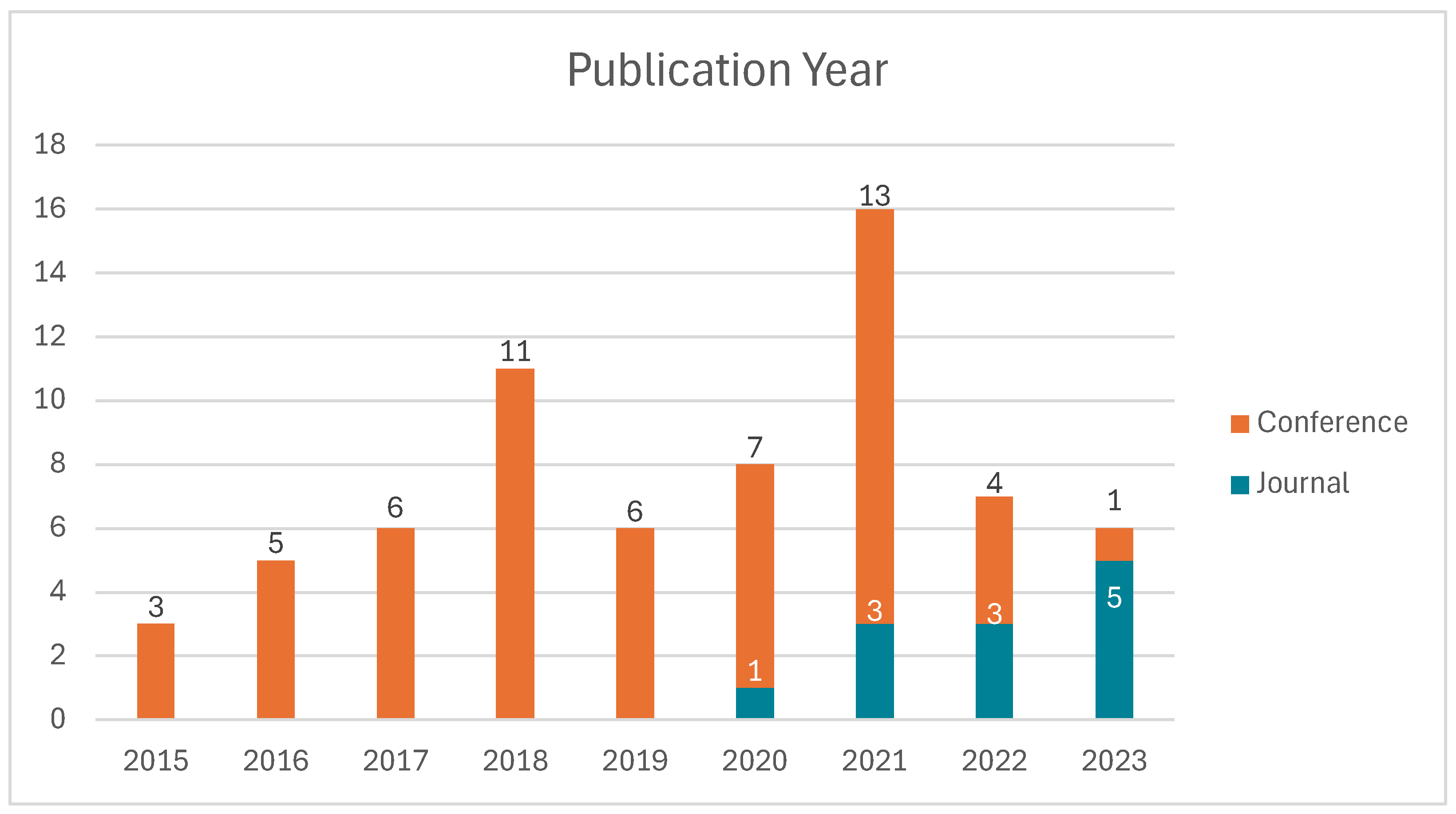
- RQ1: What is the publication trend in the area of gamification applied to SEET?This question investigates the trend in publication quantity and the structure of publication venues, which are useful for understanding the progression of this topic.
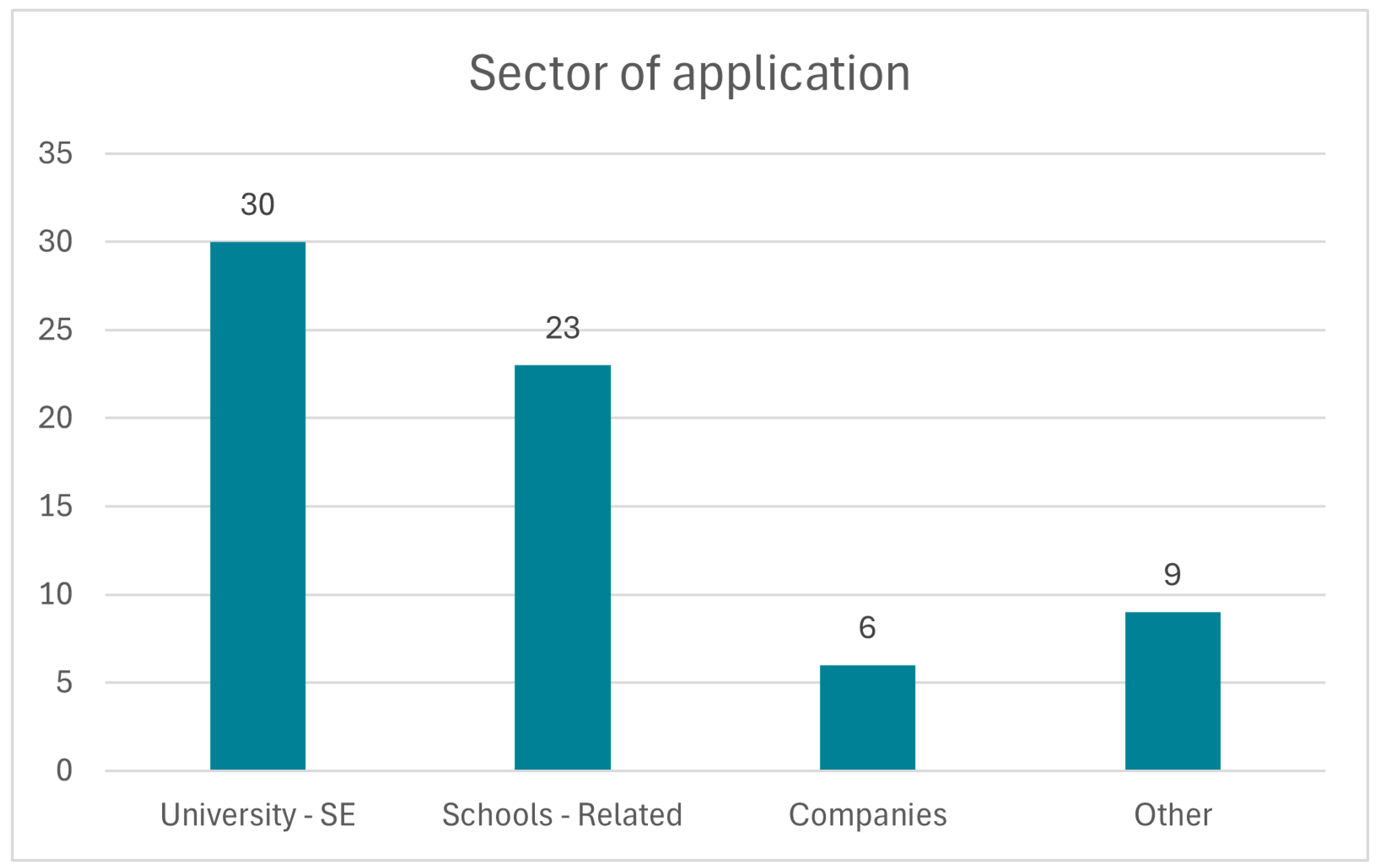
- RQ2: In which areas of software engineering is gamification used?This question aims to identify the key areas of study and their contributions to the scientific community.
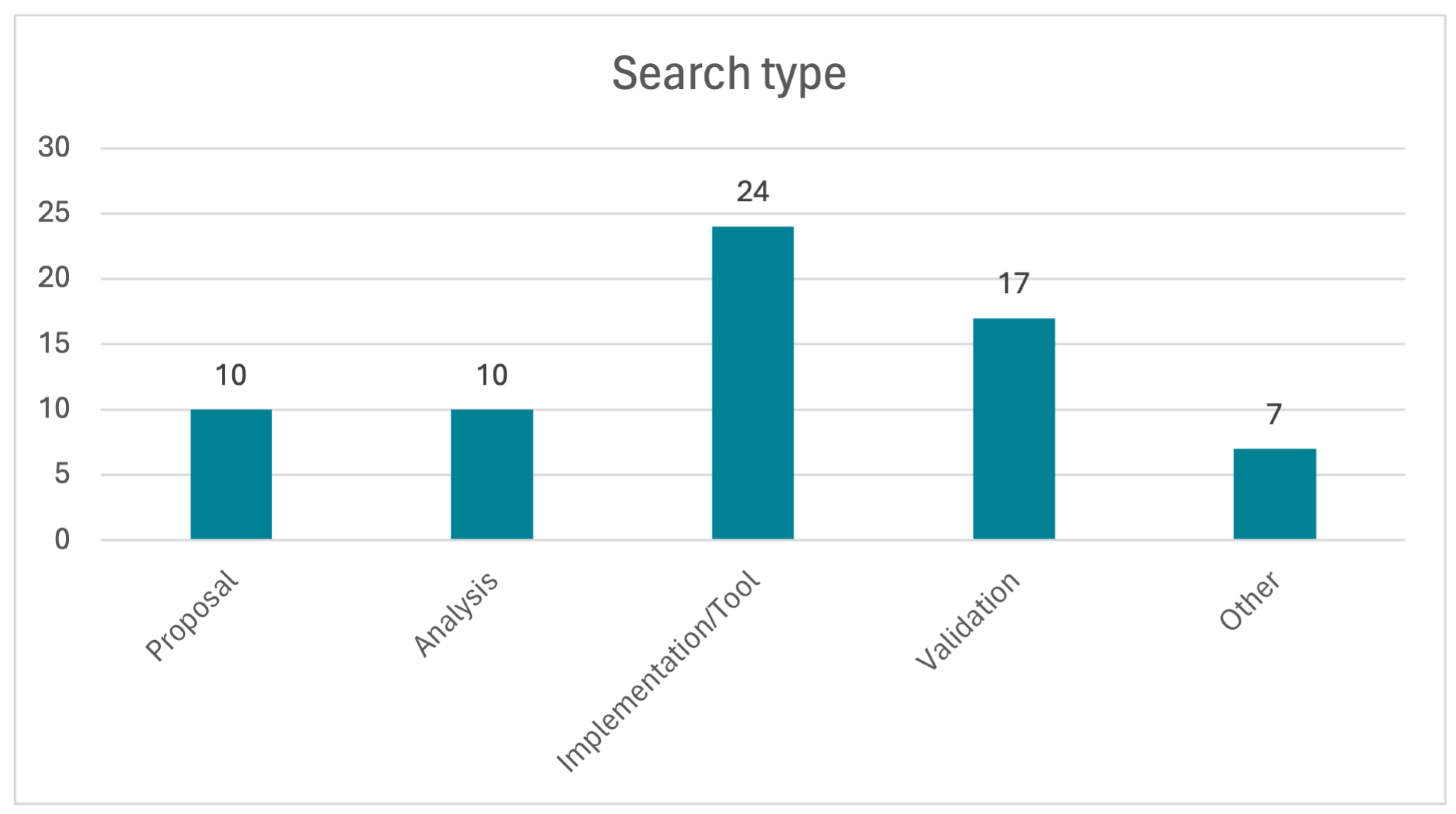
- RQ3: What are the analyzed application areas?This question explores the benefits of using gamification, considering its impact on learner engagement and performance.
- RQ4: What contribution does gamification offer when it is applied to SEET?This question examines the specific contribution and integration of gamification into educational practices.
- RQ5: On which continents is gamification mostly analyzed?This question aims to identify the continents that are most interested into gamification applied to SEET.
- RQ6: What are the advantages and disadvantages of gamification when applied to SEET?This question seeks to understand the the pros and cons to evaluate the success of gamification in educational settings.
2.3. Paper Selection
- Population-related search terms: “Software Engineering education”, “training”.
- Intervention-related search terms: “gamification”, “game-based learning”.
2.4. Inclusion and Exclusion Criteria
- Studies published between 2015 and 2023.
- Studies written in English.
- Studies published in peer-reviewed journals or conference proceedings.
- Studies focused on the application of gamification in software engineering education or training.
- Studies that present empirical evidence or substantial theoretical contributions.
- Studies for which the full text is not available (e.g., article not available online or DOI not found or not readable without subscriptions): 364 studies.
- Secondary or tertiary studies (e.g., reviews or surveys): 175 studies.
- Studies where gamification is not the main focus but is only mentioned: 284 studies.
3. Background
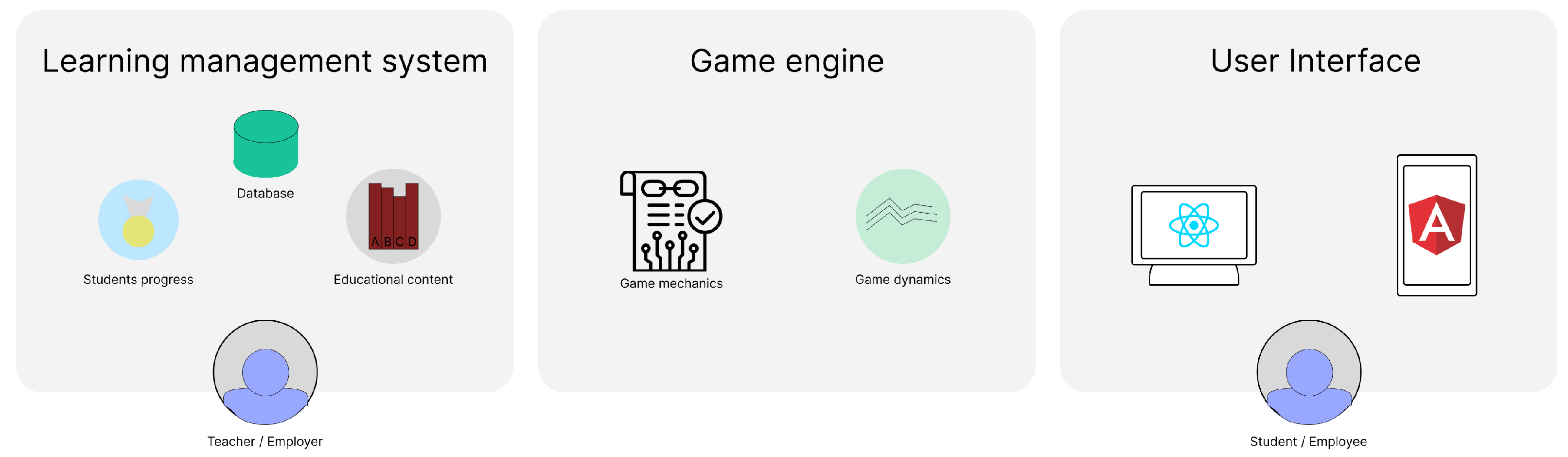
- Game mechanics refer to the rules and feedback systems that drive gameplay, such as scoring, levels, and rewards.
- Game dynamics involve the emotions and behaviors induced by the mechanics, such as competition, collaboration, and achievement.
- Aesthetics pertain to the overall look and feel of the gamified experience, which can enhance its appeal and immersion.
Application of Gamification in Software Engineering Education
4. Results and Discussion
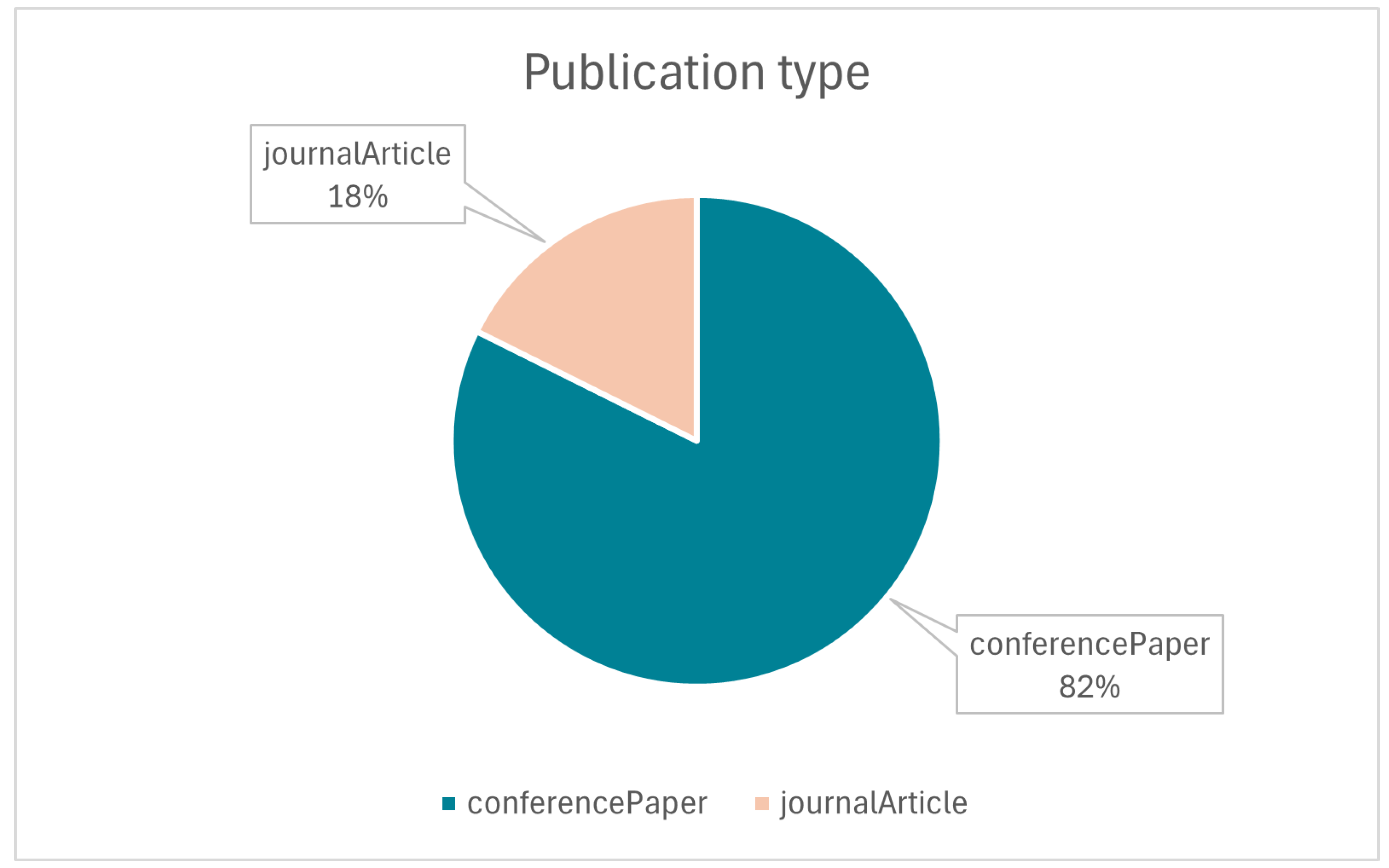
4.1. RQ1: What Is the Publication Trend in the Area of Gamification Applied to SEET?
4.2. RQ2: In Which Areas of Software Engineering Is Gamification Used?
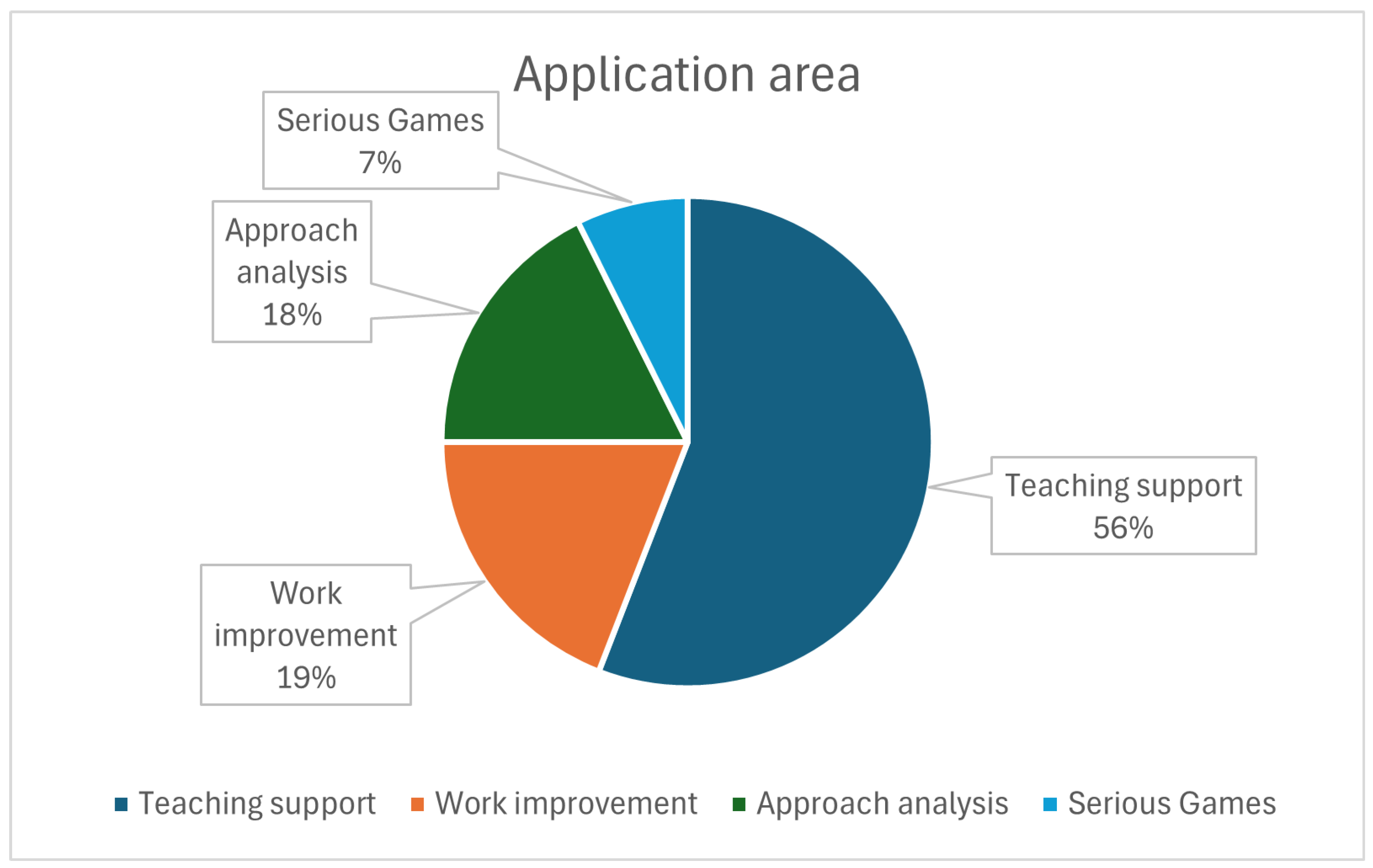
4.3. RQ3: What Are the Analyzed Application Areas?
- Proposal: This category includes studies that introduce new concepts, frameworks, or methodologies for applying gamification in SEET. We identified 10 papers that primarily focus on theoretical foundations and suggest innovative approaches to integrating gamification into educational contexts.
- Analysis: In this category, 10 studies provide detailed examinations of existing gamification techniques and their impacts on learning outcomes.
- Implementation/Tool: The largest category, with 24 studies, focuses on the practical aspects of implementing gamification. These papers describe the development and deployment of specific tools, platforms, or software that incorporate gamification elements into SEET. They often include case studies or reports on pilot projects.
- Validation: Comprising 17 studies, this category includes empirical research that evaluates the effectiveness of gamification through experiments, surveys, or longitudinal studies. These papers provide evidence-based insights into how gamification influences student engagement, motivation, and learning outcomes.
- Other: The remaining seven studies cover various other aspects of gamification that do not fit neatly into the above categories. This includes research on the broader impacts of gamification, such as its effects on educational policy, its role in lifelong learning, and interdisciplinary applications.
4.4. RQ4: What Contribution Does Gamification Offer When It Is Applied to SEET?
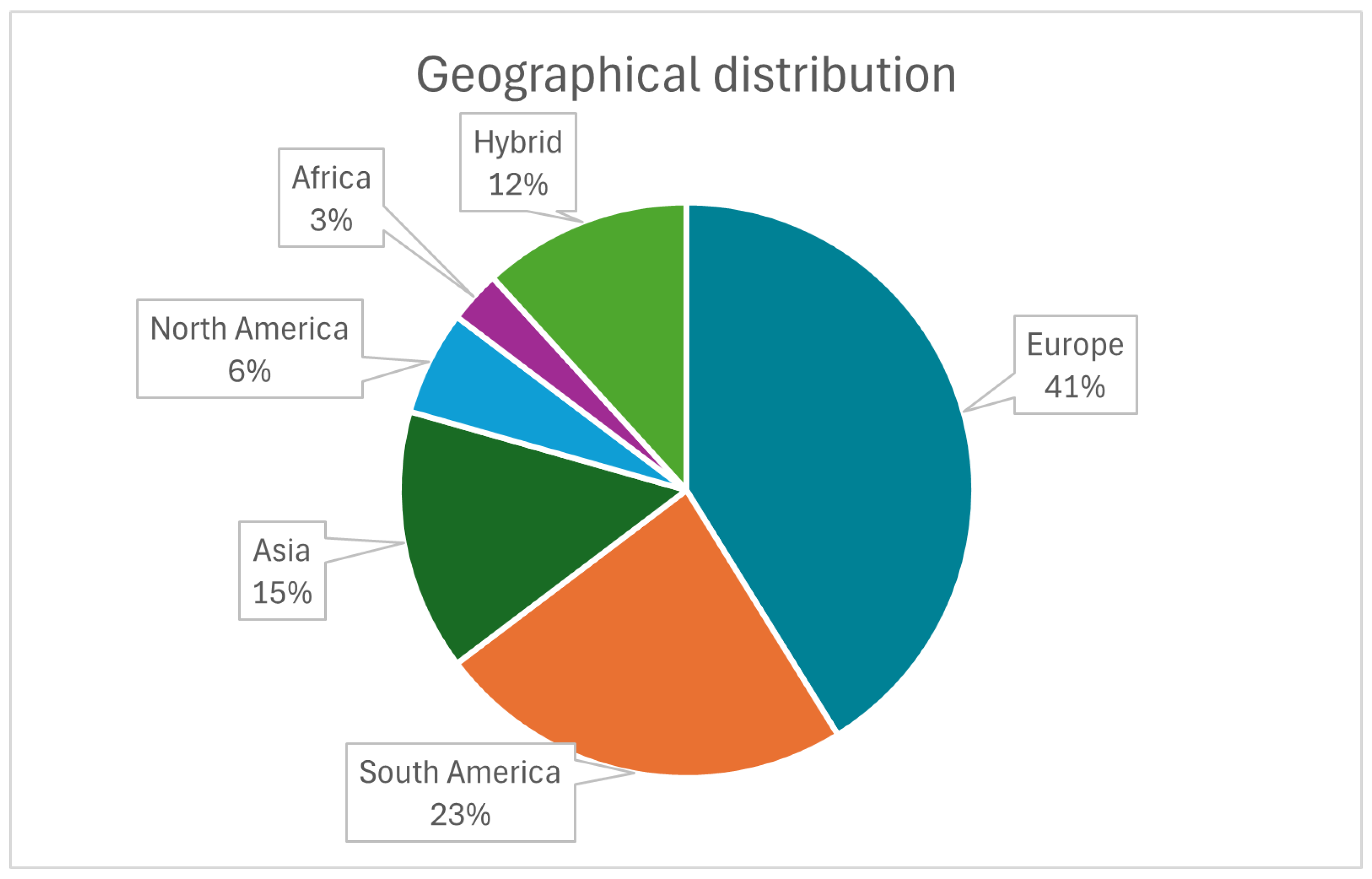
4.5. RQ5: In Which Continents Is Gamification Mostly Analyzed?
4.6. RQ6: What Are the Advantages and Disadvantages of Gamification When Applied to SEET?
- Difficulty in measuring performance improvements;
- Increased workload for educators [75];
- Lack of digital platforms to implement gamified techniques [36];
- Challenges in engaging all students;
- Difficulty for some students to understand the gamification method;
- Lack of appreciation for the method by some students;
- Difficulty for students in gaining human feedback, for platforms in which gamification is used alongside Artificial Intelligence [25];
- Insufficient knowledge of gamification approaches;
- Limited time and interest: students can sometimes become annoyed or disengaged by gamification elements if they find them distracting [90];
- Scarcity of materials and resources [75];
- Ensuring proper use of gamification by students.
5. Comparison with Other Review Papers
6. Conclusions
Author Contributions
Funding
Conflicts of Interest
Correction Statement
Abbreviations
| SEET | Software Engineering Education and Training |
| PRISMA | Preferred Reporting Items for Systematic Reviews and Meta-Analyses |
| PICO | Population, Intervention, Comparison, Outcome |
References
- Malhotra, R.; Massoudi, M.; Jindal, R. An Innovative Approach: Coupling Project-Based Learning and Game-Based Learning Approach in Teaching Software Engineering Course. In Proceedings of the 2020 IEEE International Conference on Technology, Engineering, Management for Societal Impact Using Marketing, Entrepreneurship and Talent (TEMSMET), Bengaluru, India, 10 December 2020; pp. 1–5. [Google Scholar] [CrossRef]
- Kim, M.K.; Kim, S.M. Dynamic learner engagement in a wiki-enhanced writing course. J. Comput. High. Educ. 2020, 32, 582–606. [Google Scholar] [CrossRef]
- Ng, D.T.K.; Xinyu, C.; Leung, J.K.L.; Chu, S.K.W. Fostering students’ AI literacy development through educational games: AI knowledge, affective and cognitive engagement. J. Comput. Assist. Learn. 2024; online version of record before inclusion in an issue. [Google Scholar] [CrossRef]
- Magioli Sereno, M.; Ang, H.B. The impact of gamification on training, work engagement, and job satisfaction in banking. Int. J. Train. Dev. 2024, 28, 362–384. [Google Scholar] [CrossRef]
- Mongiello, M.; Nocera, F.; Parchitelli, A.; Patrono, L.; Rametta, P.; Riccardi, L.; Sergi, I. A smart iot-aware system for crisis scenario management. J. Commun. Softw. Syst. 2018, 14, 91–98. [Google Scholar] [CrossRef]
- Cavalera, G.; Rosito, R.C.; Lacasa, V.; Mongiello, M.; Nocera, F.; Patrono, L.; Sergi, I. An innovative smart system based on IoT technologies for fire and danger situations. In Proceedings of the 2019 4th International Conference on Smart and Sustainable Technologies (SpliTech), Split, Croatia, 18–21 June 2019; pp. 1–6. [Google Scholar] [CrossRef]
- Moher, D.; Liberati, A.; Tetzlaff, J.; Altman, D.G. Preferred reporting items for systematic reviews and meta-analyses: The PRISMA statement. Int. J. Surg. 2010, 8, 336–341. [Google Scholar] [CrossRef] [PubMed]
- Petersen, K.; Feldt, R.; Mujtaba, S.; Mattsson, M. Systematic mapping studies in software engineering. In Proceedings of the 12th International Conference on Evaluation and Assessment in Software Engineering (EASE), Bari, Italy, 26–27 June 2008; BCS Learning & Development: Swindon, UK, 2008. [Google Scholar]
- Haddaway, N.R.; Page, M.J.; Pritchard, C.C.; McGuinness, L.A. PRISMA2020: An R package and Shiny app for producing PRISMA 2020-compliant flow diagrams, with interactivity for optimised digital transparency and Open Synthesis. Campbell Syst. Rev. 2022, 18, e1230. [Google Scholar] [CrossRef] [PubMed]
- Tsunoda, M.; Yumoto, H. Applying Gamification and Posing to Software Development. In Proceedings of the 2018 25th Asia-Pacific Software Engineering Conference (APSEC), Nara, Japan, 4–7 December 2018; pp. 638–642. [Google Scholar] [CrossRef]
- Takbiri, Y.; Amini, A.; Bastanfard, A. A Structured Gamification Approach for Improving Children’s Performance in Online Learning Platforms. In Proceedings of the 2019 5th Iranian Conference on Signal Processing and Intelligent Systems (ICSPIS), Shahrood, Iran, 18–19 December 2019; pp. 1–6. [Google Scholar] [CrossRef]
- Molins-Ruano, P.; Jurado, F.; Rodríguez, P.; Atrio, S.; Sacha, G.M. An Approach to Gamify an Adaptive Questionnaire Environment. In Proceedings of the 2016 IEEE Global Engineering Education Conference (EDUCON), Abu Dhabi, United Arab Emirates, 10–13 April 2016; pp. 1129–1133. [Google Scholar] [CrossRef]
- Ortega-Arranz, A.; Kalz, M.; Martínez-Monés, A. Creating Engaging Experiences in MOOCs through In-Course Redeemable Rewards. In Proceedings of the 2018 IEEE Global Engineering Education Conference (EDUCON), Canary Islands, Spain, 17–20 April 2018; pp. 1875–1882. [Google Scholar] [CrossRef]
- Monteiro, R.H.B.; Oliveira, S.R.B.; De Almeida Souza, M.R. A Standard Framework for Gamification Evaluation in Education and Training of Software Engineering: An Evaluation from a Proof of Concept. In Proceedings of the 2021 IEEE Frontiers in Education Conference (FIE), Lincoln, NE, USA, 13–16 October 2021; pp. 1–7. [Google Scholar] [CrossRef]
- Nistor, G.C.; Iacob, A. The advantages of gamification and game-based learning and their benefits in the development of education. In Proceedings of the International Scientific Conference eLearning and Software for Education, Bucharest, Romania, 19–20 April 2018; “Carol I” National Defence University: București, Romania, 2018; Volume 1, pp. 308–312. [Google Scholar]
- Fiore, M.; Gattullo, M.; Mongiello, M. First Steps in Constructing an AI-Powered Digital Twin Teacher: Harnessing Large Language Models in a Metaverse Classroom. In Proceedings of the 2024 IEEE Conference on Virtual Reality and 3D User Interfaces Abstracts and Workshops (VRW), Orlando, FL, USA, 16–21 March 2024; pp. 939–940. [Google Scholar] [CrossRef]
- Limantara, N.; Gaol, F.L.; Prabowo, H. Mechanics, dynamics, and aesthetics Framework on gamification at university. In Proceedings of the 2020 International Conference on Informatics, Multimedia, Cyber and Information System (ICIMCIS), Jakarta, Indonesia, 19–20 November 2020; pp. 34–39. [Google Scholar]
- Strmecki, D.; Bernik, A.; Radosevic, D. Gamification in E-Learning: Introducing Gamified Design Elements into E-Learning Systems. J. Comput. Sci. 2015, 11, 1108–1117. [Google Scholar] [CrossRef]
- Zichermann, G.; Cunningham, C. Gamification by Design: Implementing Game Mechanics in Web and Mobile Apps; O’Reilly Media, Inc.: Sebastopol, CA, USA, 2011. [Google Scholar]
- Alsawaier, R.S. The effect of gamification on motivation and engagement. Int. J. Inf. Learn. Technol. 2018, 35, 56–79. [Google Scholar] [CrossRef]
- Apandi, A.M. Gamification meets mobile learning: Soft-skills enhancement. In Research Anthology on Developments in Gamification and Game-Based Learning; IGI Global: Hershey, PA, USA, 2022; pp. 1280–1299. [Google Scholar]
- Kabilan, M.K.; Annamalai, N.; Chuah, K.M. Practices, purposes and challenges in integrating gamification using technology: A mixed-methods study on university academics. Educ. Inf. Technol. 2023, 28, 14249–14281. [Google Scholar] [CrossRef] [PubMed]
- Mongiello, M.; Pelliccione, P.; Sciancalepore, M. AC-Contract: Run-Time Verification of Context-Aware Applications. In Proceedings of the 2015 IEEE/ACM 10th International Symposium on Software Engineering for Adaptive and Self-Managing Systems, Florence, Italy, 18–19 May 2015; Volume 15, pp. 24–34. [Google Scholar] [CrossRef]
- Bistarelli, S.; Di Noia, T.; Mongiello, M.; Nocera, F. Pronto: An ontology driven business process mining tool. Procedia Comput. Sci. 2017, 112, 306–315. [Google Scholar] [CrossRef]
- Fulcini, T.; Torchiano, M. Is ChatGPT Capable of Crafting Gamification Strategies for Software Engineering Tasks? In Proceedings of the 2nd International Workshop on Gamification in Software Development, Verification, and Validation, San Francisco, CA, USA, 4 December 2023; pp. 22–28. [Google Scholar] [CrossRef]
- Ren, W.; Barrett, S. An Empirical Investigation on the Benefits of Gamification in Communication within University Development Teams. Comput. Appl. Eng. Educ. 2023, 31, 1808–1822. [Google Scholar] [CrossRef]
- Miljanovic, M.A.; Bradbury, J.S. Robobug: A serious game for learning debugging techniques. In Proceedings of the 2017 ACM Conference on International Computing Education Research, Tacoma, WA, USA, 18–20 August 2017; pp. 93–100. [Google Scholar]
- Navarro, E.O.; van der Hoek, A. SIMSE: An Interactive Simulation Game for Software Engineering Education. In Proceedings of the CATE, Kauai, HI, USA, 16–18 August 2004; Volume 1, pp. 12–17. [Google Scholar]
- Esper, S.; Foster, S.R.; Griswold, W.G. CodeSpells: Embodying the metaphor of wizardry for programming. In Proceedings of the 18th ACM Conference on Innovation and Technology in Computer Science Education, Canterbury, UK, 1–3 July 2013; pp. 249–254. [Google Scholar]
- Arif, R.F.; Rosyid, H.A.; Pujianto, U. Design and Implementation of Interactive Coding with Gamification for Web Programming Subject for Vocational High School Students. In Proceedings of the 2019 International Conference on Electrical, Electronics and Information Engineering (ICEEIE), Bali, Indonesia, 3–4 October 2019; Volume 6, pp. 177–182. [Google Scholar] [CrossRef]
- Rahim, R.H.A.; Tanalol, S.H.; Ismail, R.; Baharum, A.; Rahim, E.A.; Noor, N.A.M. Development of Gamification Linear Algebra Application Using Storytelling. In Proceedings of the 2019 International Conference on Information and Communication Technology Convergence (ICTC), Jeju Island, Republic of Korea, 16–18 October 2019; pp. 133–137. [Google Scholar] [CrossRef]
- Hajarian, M.; Diaz, P. Effective Gamification: A Guideline for Gamification Workshop of WEEF-GEDC 2021 Madrid Conference. In Proceedings of the 2021 World Engineering Education Forum/Global Engineering Deans Council (WEEF/GEDC), Madrid, Spain, 15–18 November 2021; pp. 506–510. [Google Scholar] [CrossRef]
- Iquira, D.; Galarza, M.; Sharhorodska, O. Enhancing Software Engineering Courses with a Mobile Gamified Platform: Results of a Mixed Approach. In Proceedings of the 2021 XVI Latin American Conference on Learning Technologies (LACLO), Arequipa, Peru, 19–21 October 2021; pp. 534–537. [Google Scholar] [CrossRef]
- Robledo-Rella, V.; de Lourdes Quezada Batalla, M.; Ramírez-de-Arellano, J.M.; Acosta, R.D.S. Gam-Mate: Gamification Applied to an Undergrad Discrete Math Course. In Proceedings of the 2022 10th International Conference on Information and Education Technology (ICIET), Matsue, Japan, 9–11 April 2022; pp. 135–139. [Google Scholar] [CrossRef]
- Gomes Fernandes Matsubara, P.; Lima Corrêa Da Silva, C. Game Elements in a Software Engineering Study Group: A Case Study. In Proceedings of the 2017 IEEE/ACM 39th International Conference on Software Engineering: Software Engineering Education and Training Track (ICSE-SEET), Buenos Aires, Argentina, 20–28 May 2017; pp. 160–169. [Google Scholar] [CrossRef]
- Rodrigues, P.; Souza, M.; Figueiredo, E. Games and Gamification in Software Engineering Education: A Survey with Educators. In Proceedings of the 2018 IEEE Frontiers in Education Conference (FIE), San Jose, CA, USA, 3–6 October 2018; pp. 1–9. [Google Scholar] [CrossRef]
- Quinde, C.P.; Paredes, R.I.; Maldonado, S.A.; Guerrero, J.S.; Toro, M.F.V. Gamification as a Didactic Strategy in a Digital Literancy: Case Study for Incacerated Individuals. In Proceedings of the 2018 IEEE Global Engineering Education Conference (EDUCON), Canary Islands, Spain, 17–20 April 2018; pp. 1314–1319. [Google Scholar] [CrossRef]
- John, I.; Fertig, T. Gamification for Software Engineering Students—An Experience Report. In Proceedings of the 2022 IEEE Global Engineering Education Conference (EDUCON), Tunis, Tunisia, 28–31 March 2022; pp. 1942–1947. [Google Scholar] [CrossRef]
- Ivanova, G.; Kozov, V.; Zlatarov, P. Gamification in Software Engineering Education. In Proceedings of the 2019 42nd International Convention on Information and Communication Technology, Electronics and Microelectronics (MIPRO), Opatija, Croatia, 20–24 May 2019; pp. 1445–1450. [Google Scholar] [CrossRef]
- Gasca-Hurtado, G.P.; Gómez-Álvarez, M.C.; Hincapié, J.A.; Zepeda, V.V. Gamification of an Educational Environment in Software Engineering: Case Study for Digital Accessibility of People with Disabilities. IEEE Rev. Iberoam. Tecnol. Aprendiz. 2021, 16, 382–392. [Google Scholar] [CrossRef]
- Carreño-León, M.; Sandoval-Bringas, A.; Álvarez-Rodríguez, F.; Camacho-González, Y. Gamification Technique for Teaching Programming. In Proceedings of the 2018 IEEE Global Engineering Education Conference (EDUCON), Canary Islands, Spain, 17–20 April 2018; pp. 2009–2014. [Google Scholar] [CrossRef]
- Sherif, E.; Liu, A.; Nguyen, B.; Lerner, S.; Griswold, W.G. Gamification to Aid the Learning of Test Coverage Concepts. In Proceedings of the 2020 IEEE 32nd Conference on Software Engineering Education and Training (CSEE&T), Munich, Germany, 9–12 November 2020; pp. 1–5. [Google Scholar] [CrossRef]
- Norsanto, D.; Rosmansyah, Y. Gamified Mobile Micro-Learning Framework: A Case Study of Civil Service Management Learning. In Proceedings of the 2018 International Conference on Information and Communications Technology (ICOIACT), Yogyakarta, Indonesia, 6–7 March 2018; pp. 146–151. [Google Scholar] [CrossRef]
- Call, M.W.; Fox, E.; Sprint, G. Gamifying Software Engineering Tools to Motivate Computer Science Students to Start and Finish Programming Assignments Earlier. IEEE Trans. Educ. 2021, 64, 423–431. [Google Scholar] [CrossRef]
- Trinidad, M.; Calderón, A.; Ruiz, M. GoRace: A Multi-Context and Narrative-Based Gamification Suite to Overcome Gamification Technological Challenges. IEEE Access 2021, 9, 65882–65905. [Google Scholar] [CrossRef]
- Prasetya, W.; Leek, C.; Melkonian, O.; ten Tusscher, J.; van Bergen, J.; Everink, J.; van der Klis, T.; Meijerink, R.; Oosenbrug, R.; Oostveen, J.; et al. Having Fun in Learning Formal Specifications. In Proceedings of the 2019 IEEE/ACM 41st International Conference on Software Engineering: Software Engineering Education and Training (ICSE-SEET), Montreal, QC, Canada, 25–31 May 2019; pp. 192–196. [Google Scholar] [CrossRef]
- Bucchiarone, A.; Cicchetti, A.; Bassanelli, S.; Marconi, A. How to Merge Gamification Efforts for Programming and Modelling: A Tool Implementation Perspective. In Proceedings of the 2021 ACM/IEEE International Conference on Model Driven Engineering Languages and Systems Companion (MODELS-C), Fukuoka, Japan, 10–15 October 2021; pp. 721–726. [Google Scholar] [CrossRef]
- Lema Moreta, L.; Gamboa, A.C.; Palacios, M.G. Implementing a Gamified Application for a Risk Management Course. In Proceedings of the 2016 IEEE Ecuador Technical Chapters Meeting (ETCM), Guayaquil, Ecuador, 12–14 October 2016; pp. 1–6. [Google Scholar] [CrossRef]
- Ouhbi, S.; Pombo, N. Software Engineering Education: Challenges and Perspectives. In Proceedings of the 2020 IEEE Global Engineering Education Conference (EDUCON), Porto, Portugal, 27–30 April 2020; pp. 202–209. [Google Scholar] [CrossRef]
- Villagra, S.; De Benedetti, G.; Bruno, T.; Fernández, L.; Outeda, N. Teaching Software Engineering: An Active Learning Experience. In Proceedings of the 2020 IEEE Congreso Bienal de Argentina (ARGENCON), Resistencia, Argentina, 1–4 December 2020; pp. 1–6. [Google Scholar] [CrossRef]
- Moser, G.; Vallon, R.; Bernhart, M.; Grechenig, T. Teaching Software Quality Assurance with Gamification and Continuous Feedback Techniques. In Proceedings of the 2021 IEEE Global Engineering Education Conference (EDUCON), Vienna, Austria, 21–23 April 2021; pp. 505–509. [Google Scholar] [CrossRef]
- Rattadilok, P.; Roadknight, C.; Li, L. Teaching Students About Machine Learning Through a Gamified Approach. In Proceedings of the 2018 IEEE International Conference on Teaching, Assessment, and Learning for Engineering (TALE), Wollongong, NSW, Australia, 4–7 December 2018; pp. 1011–1015. [Google Scholar] [CrossRef]
- Bucchiarone, A.; Cicchetti, A.; Loria, E.; Marconi, A. Towards a Framework to Assist Iterative and Adaptive Design in Gameful Systems. In Proceedings of the 2021 36th IEEE/ACM International Conference on Automated Software Engineering Workshops (ASEW), Melbourne, Australia, 15–19 November 2021; pp. 78–84. [Google Scholar] [CrossRef]
- Ebert, C.; Vizcaino, A.; Grande, R. Unlock the Business Value of Gamification. IEEE Softw. 2022, 39, 15–22. [Google Scholar] [CrossRef]
- Maxim, B.R.; Brunvand, S.; Decker, A. Use of Role-Play and Gamification in a Software Project Course. In Proceedings of the 2017 IEEE Frontiers in Education Conference (FIE), Indianapolis, IN, USA, 18–21 October 2017; pp. 1–5. [Google Scholar] [CrossRef]
- Jiménez-Hernández, E.M.; Jiménez-Murillo, J.A.; Segura-Castruita, M.A.; González-Leal, I. Using a Serious Video Game to Support the Learning of Tree Traversals. In Proceedings of the 2021 9th International Conference in Software Engineering Research and Innovation (CONISOFT), San Diego, CA, USA, 25–29 October 2021; pp. 238–244. [Google Scholar] [CrossRef]
- Nagaria, B.; Evans, B.C.; Mann, A.; Arzoky, M. Using an Instant Visual and Text Based Feedback Tool to Teach Path Finding Algorithms: A Concept. In Proceedings of the 2021 Third International Workshop on Software Engineering Education for the Next Generation (SEENG), Virtual, 24 May 2021; pp. 11–15. [Google Scholar] [CrossRef]
- Margalit, O. Using Computer Programming Competition for Cyber Education. In Proceedings of the 2016 IEEE International Conference on Software Science, Technology and Engineering (SWSTE), Beer Sheva, Israel, 23–24 June 2016; pp. 104–107. [Google Scholar] [CrossRef]
- Stol, K.J.; Schaarschmidt, M.; Goldblit, S. Gamification in Software Engineering: The Mediating Role of Developer Engagement and Job Satisfaction. Empir. Softw. Eng. 2022, 27, 35. [Google Scholar] [CrossRef] [PubMed]
- Đambić, G.; Keščec, T.; Kučak, D. A Blended Learning with Gamification Approach for Teaching Programming Courses in Higher Education. In Proceedings of the 2021 44th International Convention on Information, Communication and Electronic Technology (MIPRO), Opatija, Croatia, 27 September–1 October 2021; pp. 843–847. [Google Scholar] [CrossRef]
- Mi, Q.; Keung, J.; Mei, X.; Xiao, Y.; Chan, W.K. A Gamification Technique for Motivating Students to Learn Code Readability in Software Engineering. In Proceedings of the 2018 International Symposium on Educational Technology (ISET), Osaka, Japan, 31 July–2 August 2018; pp. 250–254. [Google Scholar] [CrossRef]
- Skalka, J.; Drlík, M.; Obonya, J.; Cápay, M. Architecture Proposal for Micro-Learning Application for Learning and Teaching Programming Courses. In Proceedings of the 2020 IEEE Global Engineering Education Conference (EDUCON), Porto, Portugal, 27–30 April 2020; pp. 980–987. [Google Scholar] [CrossRef]
- Silvis-Cividjian, N. Awesome Bug Manifesto: Teaching an Engaging and Inspiring Course on Software Testing (Position Paper). In Proceedings of the 2021 Third International Workshop on Software Engineering Education for the Next Generation (SEENG), Madrid, Spain, 24 May 2021; pp. 16–20. [Google Scholar] [CrossRef]
- Makarova, I.; Pashkevich, A.; Shubenkova, K. Blended Learning Technologies in the Automotive Industry Specialists’ Training. In Proceedings of the 2018 32nd International Conference on Advanced Information Networking and Applications Workshops (WAINA), Krakow, Poland, 16–18 May 2018; pp. 319–324. [Google Scholar] [CrossRef]
- de Paula Porto, D.; de Jesus, G.M.; Ferrari, F.C.; Fabbri, S.C.P.F. Initiatives and Challenges of Using Gamification in Software Engineering: A Systematic Mapping. J. Syst. Softw. 2021, 173, 110870. [Google Scholar] [CrossRef]
- Vlahu-Gjorgievska, E.; Videnovik, M.; Trajkovik, V. Computational Thinking and Coding Subject in Primary Schools: Methodological Approach Based on Alternative Cooperative and Individual Learning Cycles. In Proceedings of the 2018 IEEE International Conference on Teaching, Assessment, and Learning for Engineering (TALE), Wollongong, NSW, Australia, 4–7 December 2018; pp. 77–83. [Google Scholar] [CrossRef]
- Chan, Y.C.; Min Gan, C.; Lim, C.Y.; Hwa Tan, T.; Cao, Q.; Seow, C.K. Learning CS Subjects of Professional Software Development and Team Projects. In Proceedings of the 2022 IEEE International Conference on Teaching, Assessment and Learning for Engineering (TALE), Hung Hom, Hong Kong, 4–7 December 2022; pp. 71–77. [Google Scholar] [CrossRef]
- Figueiredo, J.; García-Peñalvo, F.J. Increasing Student Motivation in Computer Programming with Gamification. In Proceedings of the 2020 IEEE Global Engineering Education Conference (EDUCON), Porto, Portugal, 27–30 April 2020; pp. 997–1000. [Google Scholar] [CrossRef]
- Pratama, F.A.; Silitonga, R.M.; Jou, Y.T. Rimigs: The Impact of Gamification on Students’ Motivation and Performance in Programming Class. Indones. J. Electr. Eng. Comput. Sci. 2021, 24, 1789–1795. [Google Scholar] [CrossRef]
- Naik, N.; Jenkins, P. Relax, It’sa Game: Utilising Gamification in Learning Agile Scrum Software Development. In Proceedings of the 2019 IEEE Conference on Games (CoG), London, UK, 20–23 August 2019; pp. 1–4. [Google Scholar]
- Swacha, J.; Szydłowska, J. Does Gamification Make a Difference in Programming Education? Evaluating FGPE-Supported Learning Outcomes. Educ. Sci. 2023, 13, 984. [Google Scholar] [CrossRef]
- Sousa-Vieira, M.E.; López-Ardao, J.C.; Fernández-Veiga, M.; Rodríguez-Rubio, R.F. Study of the Impact of Social Learning and Gamification Methodologies on Learning Results in Higher Education. Comput. Appl. Eng. Educ. 2023, 31, 131–153. [Google Scholar] [CrossRef]
- Monteiro, R.; Souza, M.; Oliveira, S.; Soares, E. The Adoption of a Framework to Support the Evaluation of Gamification Strategies in Software Engineering Education. In Proceedings of the 14th International Conference on Computer Supported Education, Online, 22–24 April 2022; pp. 450–457. [Google Scholar] [CrossRef]
- Jusas, V.; Barisas, D.; Jančiukas, M. Game Elements towards More Sustainable Learning in Object-Oriented Programming Course. Sustainability 2022, 14, 2325. [Google Scholar] [CrossRef]
- Maher, Y.; Moussa, S.M.; Khalifa, M.E. Learners on Focus: Visualizing Analytics through an Integrated Model for Learning Analytics in Adaptive Gamified E-Learning. IEEE Access 2020, 8, 197597–197616. [Google Scholar] [CrossRef]
- Bachtiar, F.A.; Pradana, F.; Priyambadha, B.; Bastari, D.I. CoMa: Development of Gamification-based E-learning. In Proceedings of the 2018 10th International Conference on Information Technology and Electrical Engineering (ICITEE), Bali, Indonesia, 24–26 July 2018; pp. 1–6. [Google Scholar] [CrossRef]
- Laskowski, M. Implementing Gamification Techniques into University Study Path - A Case Study. In Proceedings of the 2015 IEEE Global Engineering Education Conference (EDUCON), Tallinn, Estonia, 18–20 March 2015; pp. 582–586. [Google Scholar] [CrossRef]
- Fuchs, M.; Wolff, C. Improving Programming Education through Gameful, Formative Feedback. In Proceedings of the 2016 IEEE Global Engineering Education Conference (EDUCON), Abu Dhabi, United Arab Emirates, 10–13 April 2016; pp. 860–867. [Google Scholar] [CrossRef]
- Bucchiarone, A.; Cooper, K.M.L.; Lin, D.; Melcer, E.F.; Sung, K. Games and Software Engineering: Engineering Fun, Inspiration, and Motivation. ACM SIGSOFT Softw. Eng. Notes 2023, 48, 85–89. [Google Scholar] [CrossRef]
- Bucchiarone, A.; Martorella, T.; Colombo, D.; Cicchetti, A.; Marconi, A. POLYGLOT for Gamified Education: Mixing Modelling and Programming Exercises. In Proceedings of the 2021 ACM/IEEE International Conference on Model Driven Engineering Languages and Systems Companion (MODELS-C), Fukuoka, Japan, 10–15 October 2021; pp. 605–609. [Google Scholar] [CrossRef]
- Poecze, F.; Tjoa, A.M. Meta-Analytical Considerations for Gamification in Higher Education: Existing Approaches and Future Research Agenda. In Proceedings of the 2020 4th International Conference on Informatics and Computational Sciences (ICICoS), Semarang, Indonesia, 10–11 November 2020; pp. 1–6. [Google Scholar] [CrossRef]
- Cabezas, I. On Combining Gamification Theory and ABET Criteria for Teaching and Learning Engineering. In Proceedings of the 2015 IEEE Frontiers in Education Conference (FIE), Washington, DC, USA, 21–24 October 2015; pp. 1–9. [Google Scholar] [CrossRef]
- Bucchiarone, A.; Cooper, K.M.L.; Lin, D.; Smith, A.; Wanick, V. Fostering Collaboration and Advancing Research in Software Engineering and Game Development for Serious Contexts. ACM SIGSOFT Softw. Eng. Notes 2023, 48, 46–50. [Google Scholar] [CrossRef]
- Ristov, S.; Ackovska, N.; Kirandziska, V. Positive Experience of the Project Gamification in the Microprocessors and Microcontrollers Course. In Proceedings of the 2015 IEEE Global Engineering Education Conference (EDUCON), Tallinn, Estonia, 18–20 March 2015; pp. 511–517. [Google Scholar] [CrossRef]
- Bernik, A.; Radošević, D.; Bubaš, G. Introducing Gamification into E-Learning University Courses. In Proceedings of the 2017 40th International Convention on Information and Communication Technology, Electronics and Microelectronics (MIPRO), Opatija, Croatia, 22–26 May 2017; pp. 711–716. [Google Scholar] [CrossRef]
- Schäfer, U. Training Scrum with Gamification: Lessons Learned after Two Teaching Periods. In Proceedings of the 2017 IEEE Global Engineering Education Conference (EDUCON), Athens, Greece, 25–28 April 2017; pp. 754–761. [Google Scholar] [CrossRef]
- Petrov, E.; Mustafina, J.; Alloghani, M. Overview on Modern Serious Games for Regional and Minority Languages Promotion. In Proceedings of the 2017 10th International Conference on Developments in eSystems Engineering (DeSE), Paris, France, 14–16 June 2017; pp. 120–123. [Google Scholar] [CrossRef]
- Tsalikidis, K.; Pavlidis, G. jLegends: Online Game to Train Programming Skills. In Proceedings of the 2016 7th International Conference on Information, Intelligence, Systems & Applications (IISA), Chalkidiki, Greece, 13–15 July 2016; pp. 1–6. [Google Scholar] [CrossRef]
- Gamarra, M.; Dominguez, A.; Velazquez, J.; Páez, H. A Gamification Strategy in Engineering Education—A Case Study on Motivation and Engagement. Comput. Appl. Eng. Educ. 2022, 30, 472–482. [Google Scholar] [CrossRef]
- Kadar, R.; Wahab, N.A.; Othman, J.; Shamsuddin, M.; Mahlan, S.B. A study of difficulties in teaching and learning programming: A systematic literature review. Int. J. Acad. Res. Progress. Educ. Dev. 2021, 10, 591–605. [Google Scholar] [CrossRef] [PubMed]
- Fiore, M.; Mongiello, M. Using Peer Assessment Leveraging Large Language Models in Software Engineering Education. Int. J. Softw. Eng. Knowl. Eng. 2024, 34. [Google Scholar] [CrossRef]
- Dal Sasso, T.; Mocci, A.; Lanza, M.; Mastrodicasa, E. How to gamify software engineering. In Proceedings of the 2017 IEEE 24th International Conference on Software Analysis, Evolution and Reengineering (SANER), Klagenfurt, Austria, 20–24 February 2017; pp. 261–271. [Google Scholar] [CrossRef]
- Pedreira, O.; García, F.; Brisaboa, N.; Piattini, M. Gamification in software engineering—A systematic mapping. Inf. Softw. Technol. 2015, 57, 157–168. [Google Scholar] [CrossRef]
- Barreto, C.F.; França, C. Gamification in software engineering: A literature review. In Proceedings of the 2021 IEEE/ACM 13th International Workshop on Cooperative and Human Aspects of Software Engineering (CHASE), Madrid, Spain, 20–21 May 2021; pp. 105–108. [Google Scholar]
- Ngandu, M.R.; Risinamhodzi, D.; Dzvapatsva, G.P.; Matobobo, C. Capturing student interest in software engineering through gamification: A systematic literature review. Discov. Educ. 2023, 2, 47. [Google Scholar] [CrossRef]
- Chamorro-Atalaya, O.; Morales-Romero, G.; Trinidad-Loli, N.; Caycho-Salas, B.; Guía-Altamirano, T.; Auqui-Ramos, E.; Rocca-Carvajal, Y.; Arones, M.; Arévalo-Tuesta, J.A.; Gonzales-Huaytahuilca, R. Gamification in engineering education during COVID-19: A systematic review on design considerations and success factors in its implementation. Int. J. Learn. Teach. Educ. Res. 2023, 22, 301–327. [Google Scholar] [CrossRef]
- Barbosa Monteiro, R.H.; de Almeida Souza, M.R.; Bezerra Oliveira, S.R.; dos Santos Portela, C.; de Cristo Lobato, C.E. The Diversity of Gamification Evaluation in the Software Engineering Education and Industry: Trends, Comparisons and Gaps. In Proceedings of the 2021 IEEE/ACM 43rd International Conference on Software Engineering: Software Engineering Education and Training (ICSE-SEET), Virtual Event, 25–28 May 2021; pp. 154–164. [Google Scholar] [CrossRef]





| Paper | Contribution |
|---|---|
| Ortega-Arranz et al. [13] | This paper discusses the use of gamification in MOOCs for a large number of students, using automatic tools to assign rewards (flipped-classroom tickets, quiz benefits, extra learning content) for a course on Spanish history from the 11th to the 16th century. |
| Arif et al. [30] | This paper covers the use of gamification for web programming in high schools, specifically for learning HTML, CSS, and JavaScript. The gamification involves a web app with rewards such as avatars, lives, and time constraints. |
| Rahim et al. [31] | This paper focuses on using gamification to learn linear algebra, with storytelling as the main gamified element, along with avatars (king or queen), levels representing different topics, and scoring. |
| Hajarian and Diaz [32] | This paper describes creating an application with gamification techniques, emphasizing a reward-based system with customizable items, score saving, and leaderboards. |
| Iquira et al. [33] | This paper presents a mobile application using gamification to understand software engineering, particularly extreme programming (XP), with points and level progression as elements. Positive results were achieved in testing. |
| Robledo-Rella et al. [34] | This paper describes a mobile and web application for learning discrete math, physics, and chemistry through gamification, using quizzes, points, customizations, and avatars, with positive feedback from students. |
| Gomes Fernandes Matsubara and Lima Corrêa Da Silva [35] | This paper mentions using a gamified platform to learn software engineering, utilizing missions, experience points (XPs), and level progression. |
| Rodrigues et al. [36] | This paper surveys software engineering professors to determine if GBL and gamification improve learning outcomes, with positive results and gamified elements such as quizzes, points, levels, and badges. |
| Quinde et al. [37] | This paper uses gamification in a penitentiary for digital literacy, with tutorials guiding inmates through basic literacy and computing concepts. |
| John and Fertig [38] | This paper uses Moodle for gamification in agile and scrum model learning, with points, badges, anonymous leaderboards, quizzes, and storytelling, though the latter was less engaging over time. |
| Ivanova et al. [39] | This paper utilizes various existing platforms with gamification for software engineering learning, including Kahoot and “Who Wants to Be a Millionaire?” for theoretical testing, and platforms for project role division and coding. |
| Gasca-Hurtado et al. [40] | This paper describes creating a tool for educators to develop educational content with gamification elements, tested on a software engineering course using Happy Faces for points and Kahoot for web 2.0. |
| Carreño-León et al. [41] | This paper applies gamification to basic programming learning using playing cards with commands, forming groups to solve assigned algorithms, with different difficulty levels. |
| Sherif et al. [42] | This paper describes a platform (CoverBot) using gamification to teach code debugging, with levels, graphics, and sounds to enhance user experience. |
| Norsanto and Rosmansyah [43] | This paper applies gamification to civil service training with a custom application using missions, points, ranking systems, levels, and badges. |
| Call et al. [44] | This paper uses gamification for understanding algorithms and data structures in C++, with Moodle incorporating points and leaderboards to motivate faster assignment completion, and a Q&A forum for extra points. |
| Trinidad et al. [45] | This paper analyzes a multi-context, narrative-based platform (GoRace) for educational and workplace use, with storytelling, challenges, rewards, penalties, rankings, and a shop for advantageous items. |
| Prasetya et al. [46] | This paper uses a tower defense game for learning formal languages, where users defend a processor from bugs while creating abstract syntax trees for assigned commands. |
| Bucchiarone et al. [47] | This paper discusses gamification in programming and modeling (UML diagrams) using PolyGlot and PapyGame platforms with points, XP, levels, coins, and rewards. |
| Lema Moreta et al. [48] | This paper applies gamification to a risk management course with a web app using points, levels, and leaderboards for competition, with positive results. |
| Ouhbi and Pombo [49] | This review surveys instructors, identifying gaps in SEE teaching and proposing solutions like SWEBOK guidance, Mentimeter, and Flipped Classroom. |
| Villagra et al. [50] | This paper provides gamification implementation examples like Flipped Classroom, recorded short lessons, and group projects. |
| Moser et al. [51] | This paper uses gamification for university project development, suggesting characteristics like negative points for wrong code and positive points for solving software quality issues. |
| Rattadilok et al. [52] | This paper presents “iGaME”, a bot for teaching machine learning algorithms in classrooms using gamification. |
| Bucchiarone et al. [53] | This paper uses gamification in “Minecraft” to teach Scrum development methods to electrical engineering students. |
| Ebert et al. [54] | This paper describes applying gamification in Vector to develop software applications, enhancing user engagement and learning. |
| Maxim et al. [55] | This paper describes teachers using gamification principles like realistic stories for students to immerse in software creation tasks. |
| Jiménez-Hernández et al. [56] | This paper presents the serious game “Tree Legend” for studying trees/graphs. |
| Nagaria et al. [57] | This paper describes MOOC platforms like Moodle using the “CodeRunner” plugin for coding questions and “Pacman” for pathfinding algorithms. |
| Margalit [58] | This paper describes “Capture the Flag” for understanding AI, machine learning, and microprocessor decoding. |
| Stol et al. [59] | This paper discusses gamification in software engineering training to expand knowledge of new development technologies, with younger SWE more receptive than seniors. Stackoverflow’s gamification with badges and reputation is also mentioned. |
| Fulcini and Torchiano [25] | This paper proposes using ChatGPT to find strategies for implementing gamification in software engineering Education. |
| Đambić et al. [60] | This paper presents an experiment in a Croatian university during COVID-19, using a mobile app for short lessons and gamified elements like leaderboards, points, and rewards. |
| Mi et al. [61] | This paper discusses GamiCRS, a web application using PBL (Points-Badges-Levels) for coding skill improvement and student motivation, tested in a Hong Kong university with positive feedback. |
| Monteiro et al. [14] | This paper presents MEEGA+, a framework for evaluating educational games in software engineering using the GQIM approach, evaluated by three researchers in five phases. |
| Takbiri et al. [11] | This paper discusses gamification’s impact on students and teachers in software engineering, education, and psychology, highlighting improvements in individual skills and teamwork. |
| Molins-Ruano et al. [12] | This paper discusses e-valUAM, an adaptive gamified system tested in a Madrid university using the MUD model to enhance engagement. |
| Tsunoda and Yumoto [10] | This paper compares the PRBL (points-ranking-badges-levels) gamification method with traditional teaching, highlighting its advantages and disadvantages. |
| Skalka et al. [62] | This paper discusses Microlearning, an action-oriented approach with short lessons, combined with interactive gamification elements using the Octalysis Framework. |
| Silvis-Cividjian [63] | This paper discusses a course for medical, aerospace, and IT equipment testers using gamification to address various teaching challenges and enhance realism. |
| Makarova et al. [64] | This paper highlights the advantages and disadvantages of e-learning, showing how gamification can improve teaching and training with role-playing, exercise games, and simulation games. |
| de Paula Porto et al. [65] | This paper characterizes how gamification has been applied in software engineering, identifying benefits and challenges. |
| Vlahu-Gjorgievska et al. [66] | This paper discusses the inclusion of computational thinking in curricula and the need for an educational approach involving various stakeholders. |
| Chan et al. [67] | This paper examines a course on professional software development and the integration of gamification to enhance learning outcomes. |
| Figueiredo and García-Peñalvo [68] | This paper highlights the motivational power of games and explores gamification’s potential to increase student engagement in programming courses. |
| Pratama et al. [69] | This paper describes the development and impact of Rimigs, a gamification system aimed at improving student engagement and learning outcomes. |
| Naik and Jenkins [70] | This paper reviews the role of agile methodologies in software development education and how gamification can enhance collaborative learning. |
| Swacha and Szydłowska [71] | This paper evaluates the effectiveness of gamification in computer programming education through various case studies and learning outcomes. |
| Sousa-Vieira et al. [72] | This paper analyzes the impact of social learning and gamification on higher education, focusing on activity levels and learning results. |
| Ren and Barrett [26] | This paper explores the importance of communication in software management and how gamification can improve team interactions and project outcomes. |
| Monteiro et al. [73] | This paper presents the recurring theme of gamification in software engineering education literature and its influence on student engagement. |
| Jusas et al. [74] | This paper assesses the potential of gamification to enhance student engagement, drive learning, and support sustainable educational practices. |
| Maher et al. [75] | This paper introduces the Personalized Adaptive Gamified E-learning (PAGE) model, which extends MOOCs with enhanced learning analytics and visualization to support learner intervention. The results indicate a positive potential for learning adaptation and the necessity of focusing on gamification. |
| Bachtiar et al. [76] | This paper develops an e-learning system named Code Mania (CoMa) that integrates gamification elements like leaderboards and badges to increase student engagement in a Java Programming course. The system performs well as specified, demonstrating the potential of gamification in enhancing e-learning environments. |
| Laskowski [77] | This paper investigates the applicability of gamification across different higher education courses through an experiment involving computer science students. The study shows the comparative results of gamified and non-gamified groups, indicating the impact of gamification on student performance. |
| Fuchs and Wolff [78] | This paper presents an online learning platform with gamification elements designed for software engineering education. It combines formative assessment with gamification to enhance learning experiences, providing detailed examples and system design. |
| Bucchiarone et al. [79] | This paper reports on the outcomes of the 6th International Workshop on Games and Software Engineering, highlighting the growing complexity and need for theoretical frameworks in gamification. The workshop covered perspectives on software projects, testing, and design, with insights from keynotes and panel discussions. |
| Bucchiarone et al. [80] | This paper presents POLYGLOT, a gamified programming environment targeting programming languages education and text-based modeling languages like SysML v2. The approach allows for the creation of heterogeneous gamification scenarios, enhancing the learning experience. |
| Poecze and Tjoa [81] | This paper explores the relevance of publication bias tests in meta-analytical approaches to gamification in higher education. It discusses the challenges in conducting meta-analyses due to heterogeneity and compares methods for correcting publication bias. |
| Cabezas [82] | This paper introduces a continuous improvement cycle for teaching scenarios in engineering, combining gamification theory and ABET criteria. The proposed cycle is applied in a computer programming course, showing a positive impact on student engagement and learning outcomes. |
| Bucchiarone et al. [83] | This paper discusses the convergence of game engineering, software engineering, and user experience to create solutions blending game strengths with real-world applications. It highlights the potential benefits of gamification and serious games in various domains such as education and healthcare. |
| Ristov et al. [84] | This paper presents a gamification approach in a hardware-based course on microprocessors and microcontrollers for computer science students. The approach improved course grades and motivated students to enroll in other hardware courses, demonstrating the positive impact of gamification on student interest and performance. |
| Bernik et al. [85] | This paper presents empirical research on the use of gamification in online programming courses. A gamified e-course was designed, and its impact on student engagement and use of learning materials was examined, showing potential benefits of gamification in e-learning. |
| Schäfer [86] | This paper reports on a gamification approach using Minecraft to train students in Scrum, an agile project management method. The study compares two teaching periods, highlighting findings and lessons learned from using game-based learning to teach Scrum principles. |
| Petrov et al. [87] | This paper analyzes gamification software for promoting minority languages. It provides an overview of current educational software and assesses the need for new gamification solutions to support regional and minority languages. |
| Tsalikidis and Pavlidis [88] | This paper presents jLegends, an online multiplayer platform game designed to teach programming with JavaScript. The game employs a role-playing approach to enhance learning through game mechanics, demonstrating the effectiveness of game-based learning in programming education. |
| Reference | Keywords | Systematic Approach | Main Application Field | Industrial Applications | Findings |
|---|---|---|---|---|---|
| Dal Sasso et al. [92] | Games, Software Engineering, Context, Psychology, Computer Bugs, Collaboration, Systematics | No | Universities | No | No findings |
| Pedreira et al. [93] | Gamification, Software Engineering, Systematic Mapping | Yes | Universities | No | No findings |
| Barreto and França [94] | Motivation, Engagement, Gamification, Software Engineering | Mixed | Universities | No | Unclear practical results |
| Ngandu et al. [95] | Gamification, Software Engineering, Student Interest, Game Elements, Engagement, Motivation, Participation | Yes | Student engagement | No | No findings |
| Chamorro-Atalaya et al. [96] | Gamification, Engineering Education, Design, Success Factors, Motivation | Yes | Universities after COVID-19 pandemics | No | No findings |
| Barbosa Monteiro et al. [97] | Gamification, Systematic Mapping, Evaluation, Software Engineering, Education | Yes | Universities | Yes | Yes |
| Our proposal | Gamification, Software Engineering, Education, Learning, Literature Review | Yes | Universities and companies | Yes | Yes |
Disclaimer/Publisher’s Note: The statements, opinions and data contained in all publications are solely those of the individual author(s) and contributor(s) and not of MDPI and/or the editor(s). MDPI and/or the editor(s) disclaim responsibility for any injury to people or property resulting from any ideas, methods, instructions or products referred to in the content. |
© 2024 by the authors. Licensee MDPI, Basel, Switzerland. This article is an open access article distributed under the terms and conditions of the Creative Commons Attribution (CC BY) license (https://creativecommons.org/licenses/by/4.0/).
Share and Cite
Di Nardo, V.; Fino, R.; Fiore, M.; Mignogna, G.; Mongiello, M.; Simeone, G. Usage of Gamification Techniques in Software Engineering Education and Training: A Systematic Review. Computers 2024, 13, 196. https://doi.org/10.3390/computers13080196
Di Nardo V, Fino R, Fiore M, Mignogna G, Mongiello M, Simeone G. Usage of Gamification Techniques in Software Engineering Education and Training: A Systematic Review. Computers. 2024; 13(8):196. https://doi.org/10.3390/computers13080196
Chicago/Turabian StyleDi Nardo, Vincenzo, Riccardo Fino, Marco Fiore, Giovanni Mignogna, Marina Mongiello, and Gaetano Simeone. 2024. "Usage of Gamification Techniques in Software Engineering Education and Training: A Systematic Review" Computers 13, no. 8: 196. https://doi.org/10.3390/computers13080196
APA StyleDi Nardo, V., Fino, R., Fiore, M., Mignogna, G., Mongiello, M., & Simeone, G. (2024). Usage of Gamification Techniques in Software Engineering Education and Training: A Systematic Review. Computers, 13(8), 196. https://doi.org/10.3390/computers13080196